CBSE Class 12 History Exam Pattern, Preparation & Exam Day Tips are given below.
CBSE Class 12 History Important Questions 2027 PDF
Download the latest CBSE Class 12 History important questions for the 2027 board exam as a free PDF, then read the chapter-wise questions and tips below.
| Document | Download |
|---|---|
| CBSE Class 12 Important Questions 2027 History | View PDF |
Read Online
CBSE Class 12 Important Questions 2027 History
Open PDF
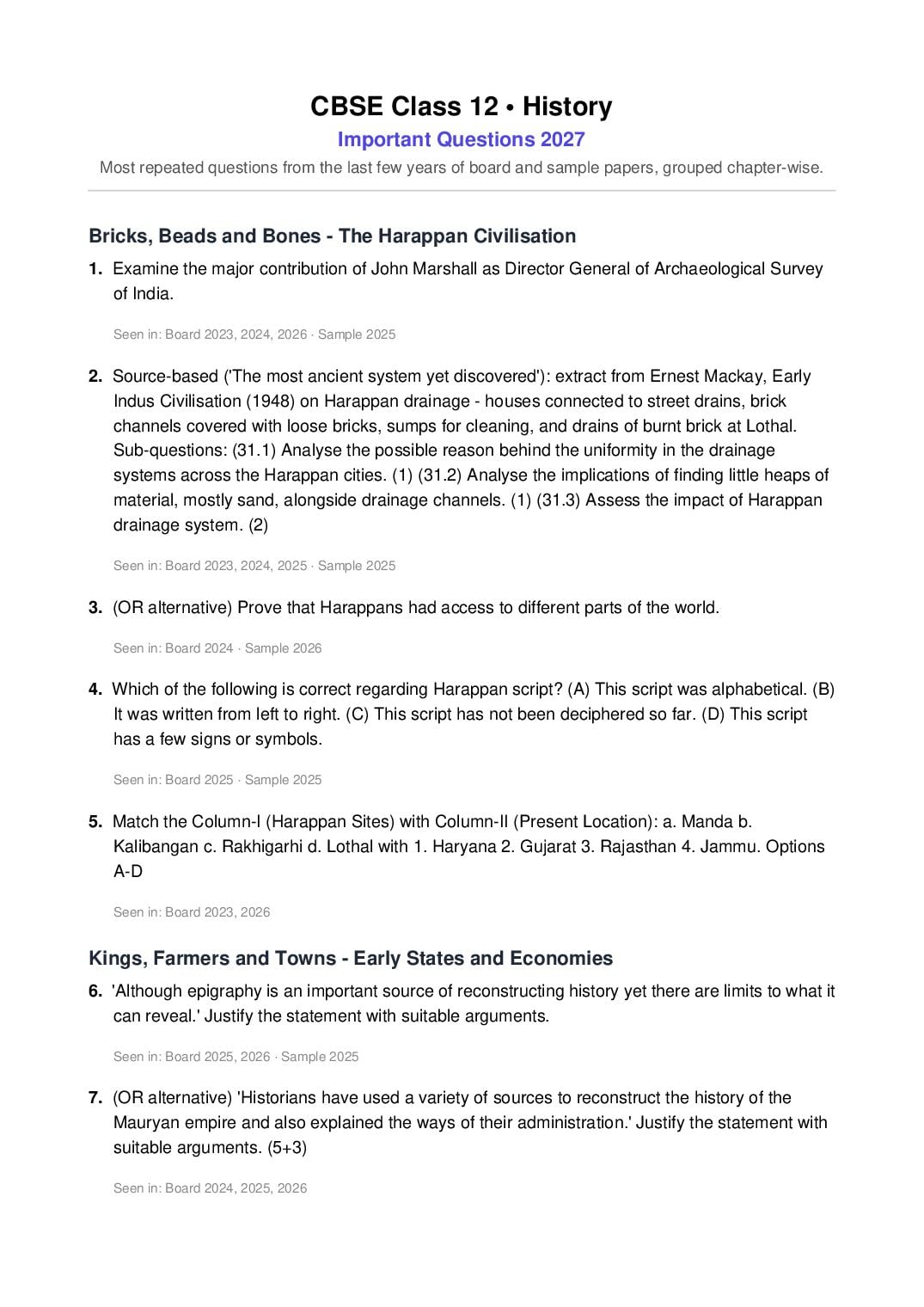
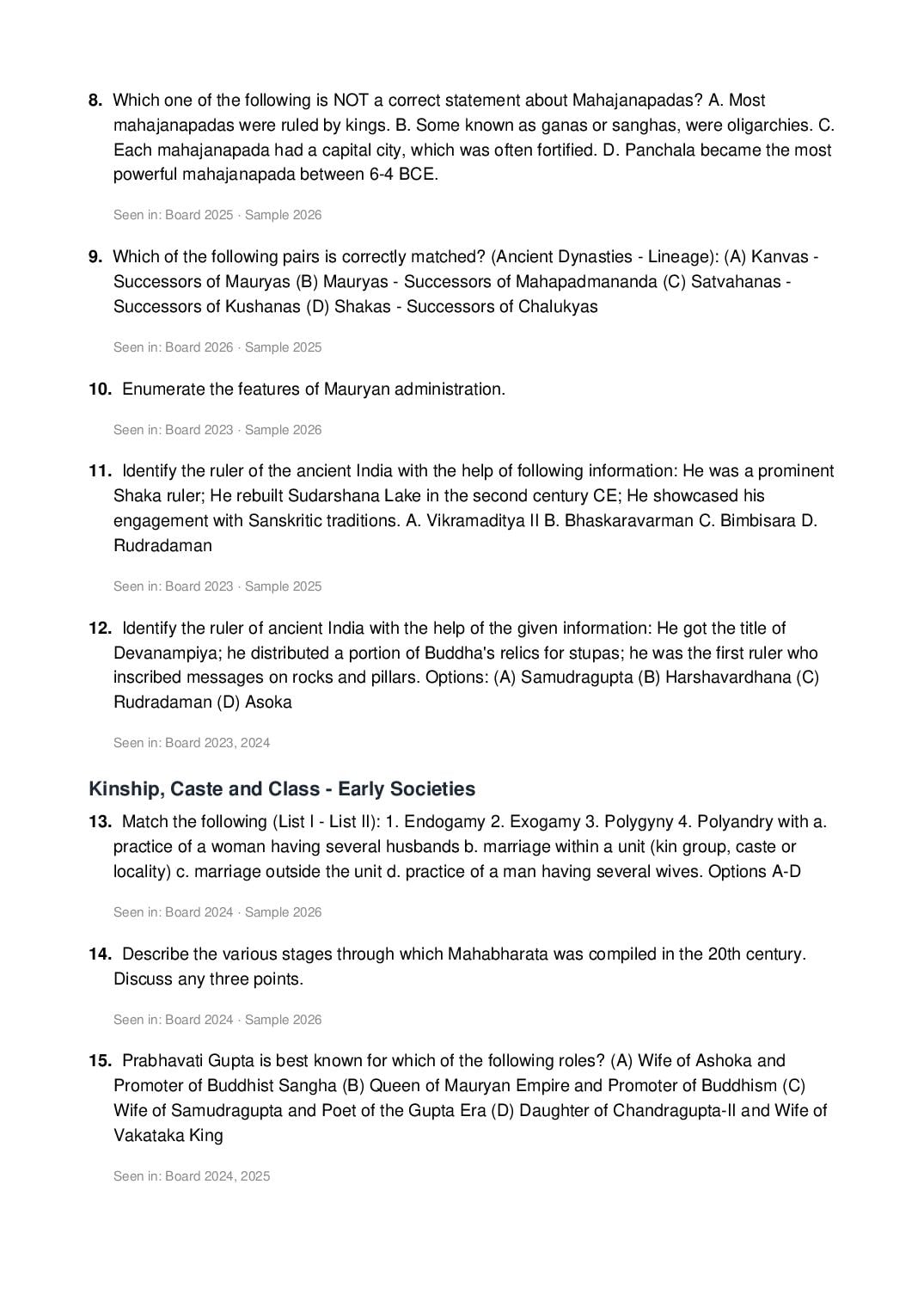
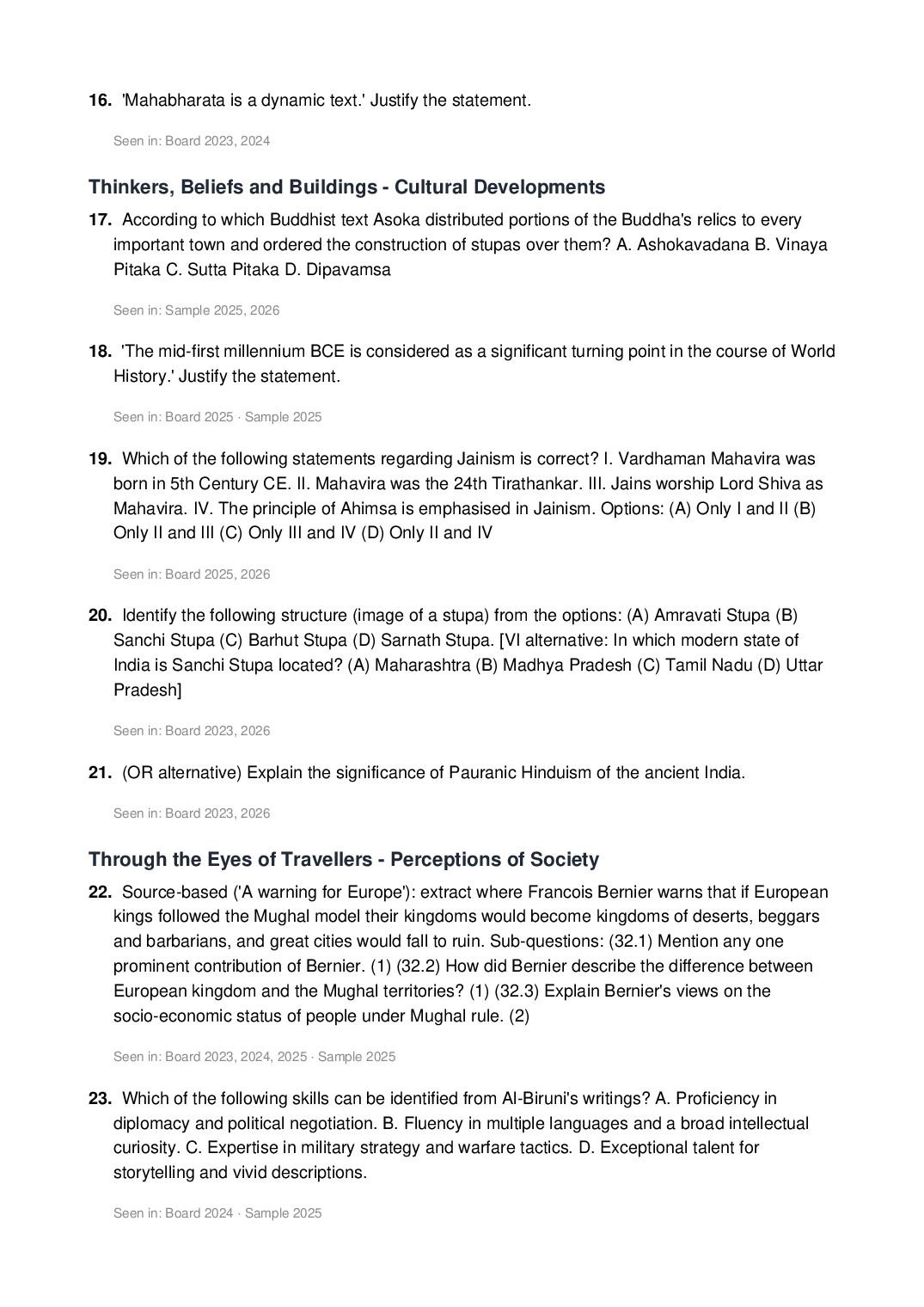
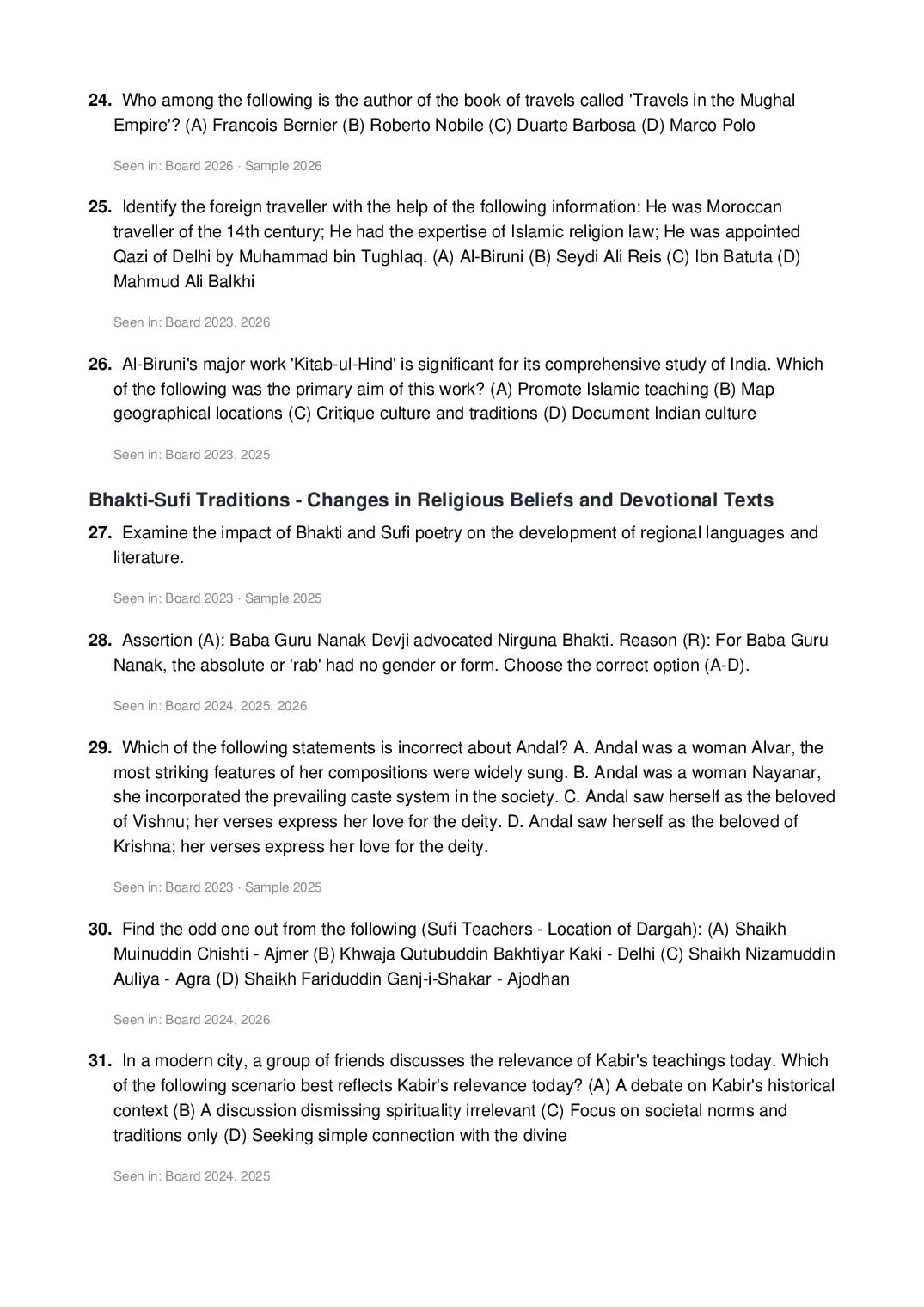
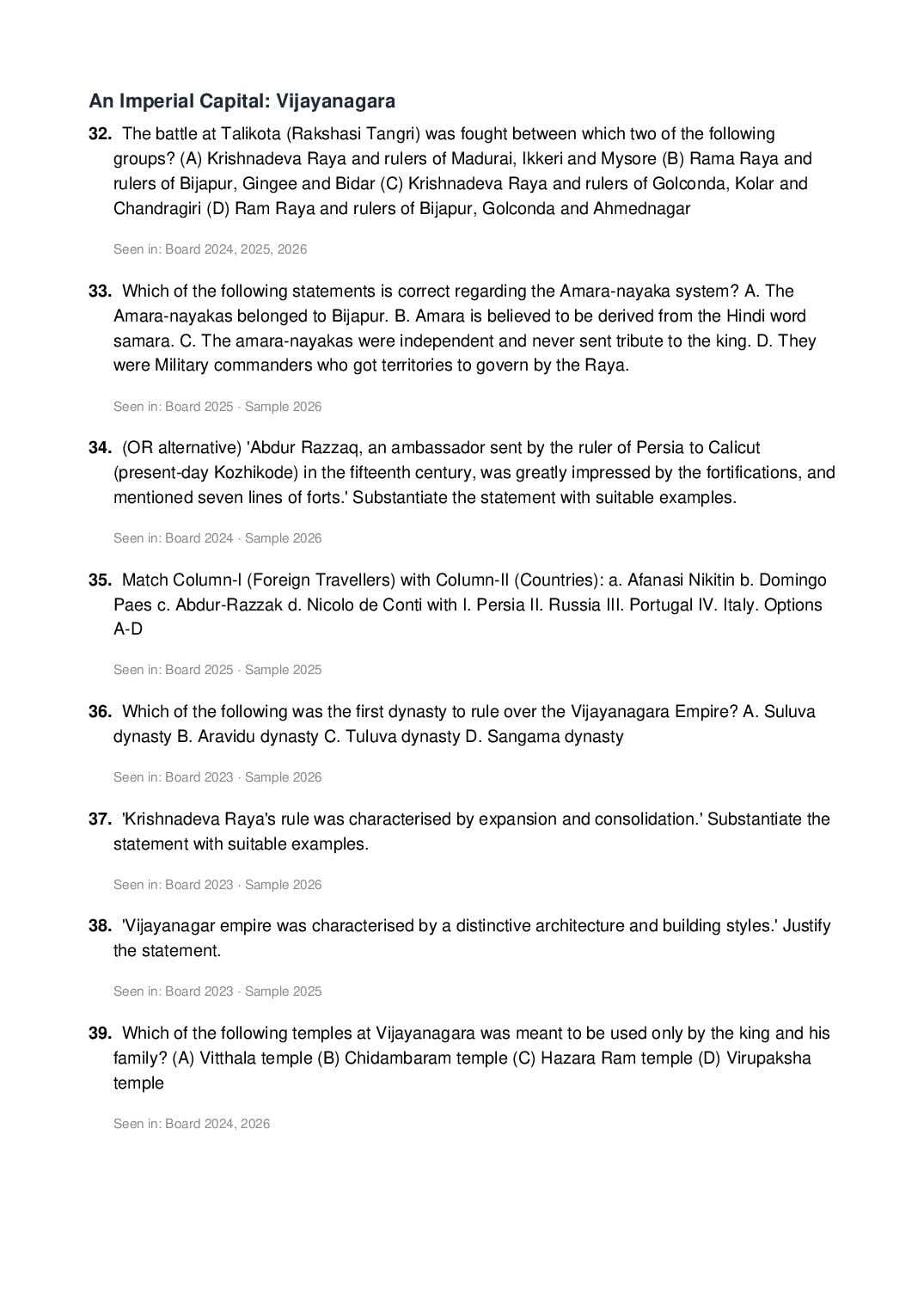
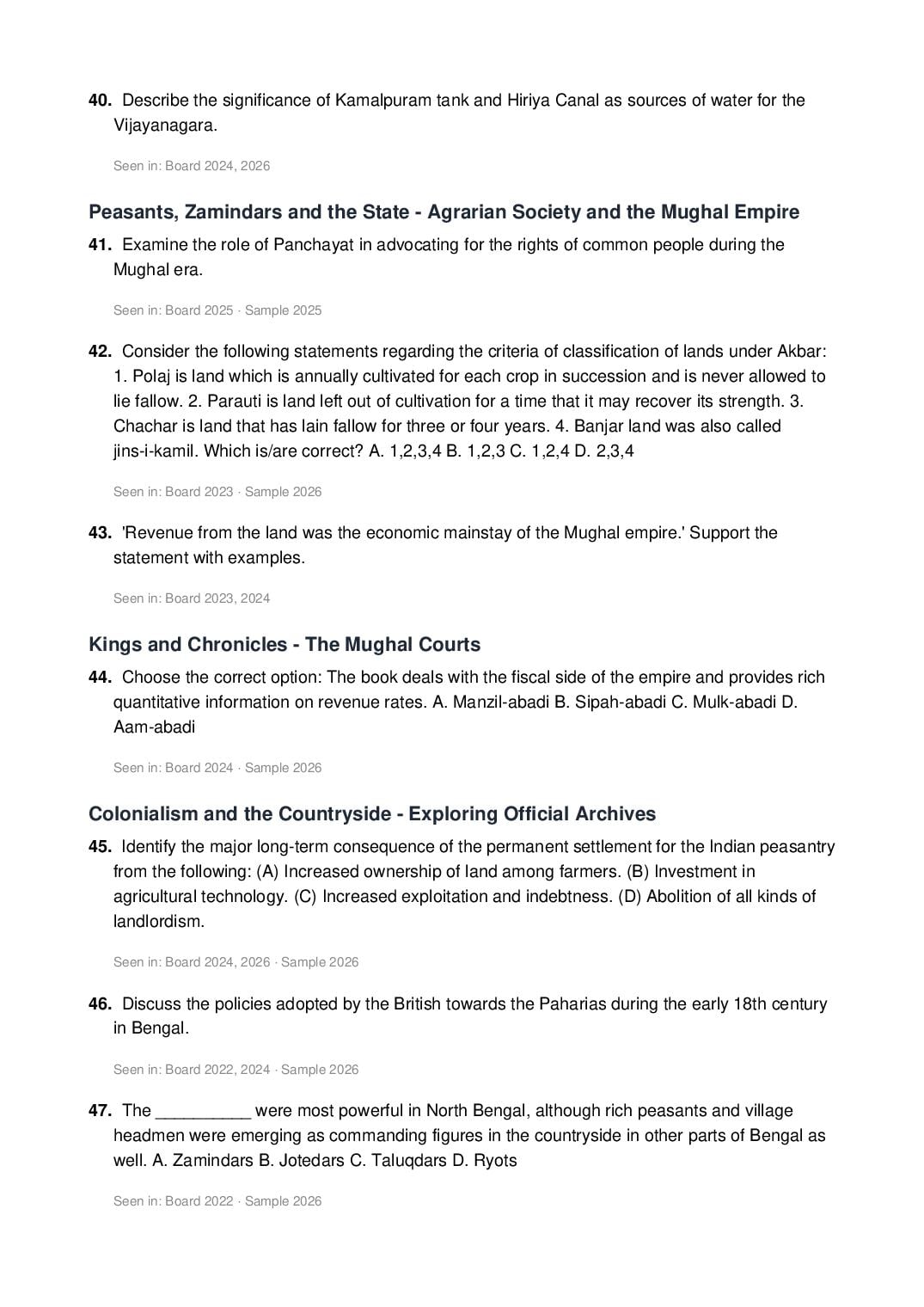
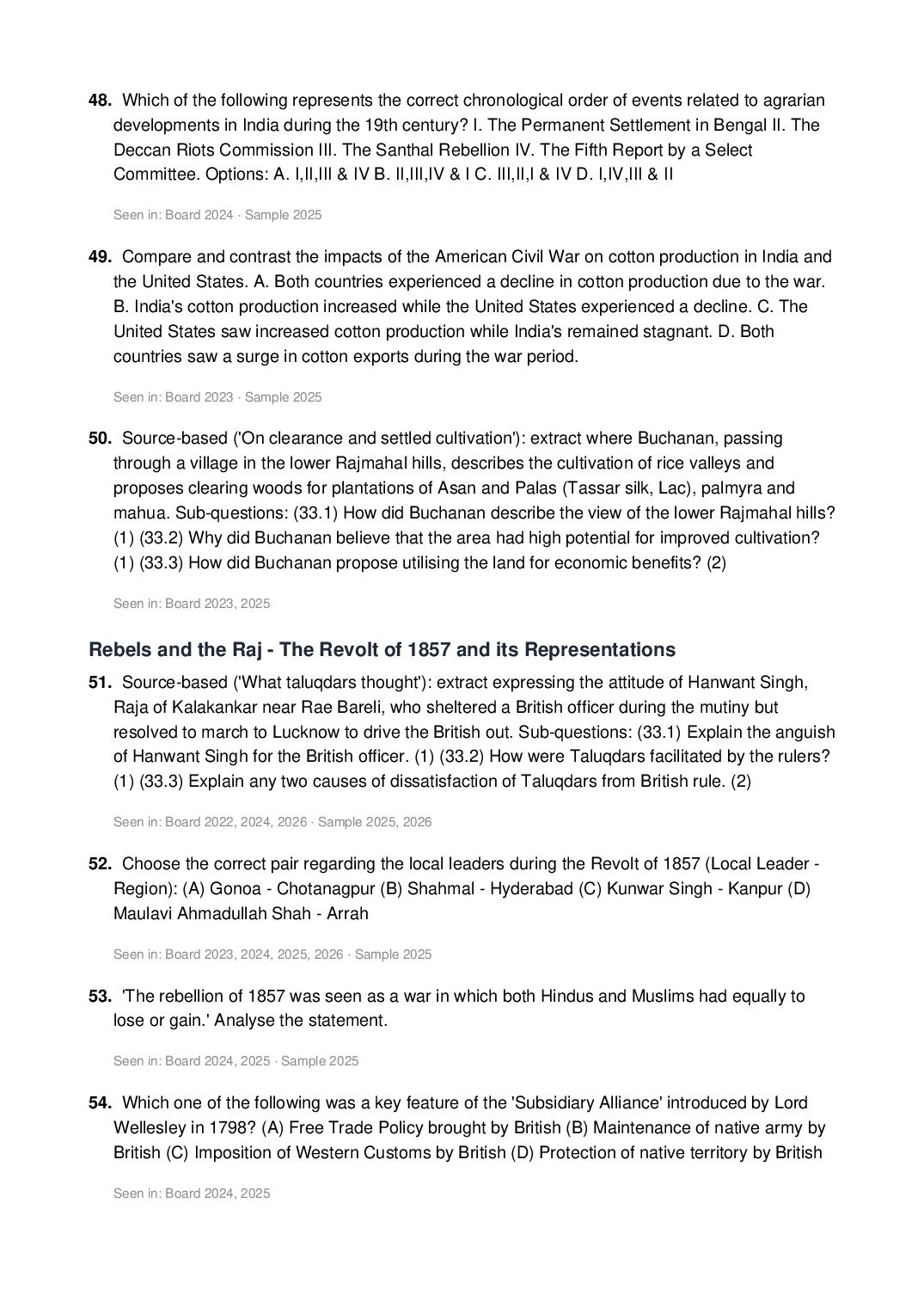
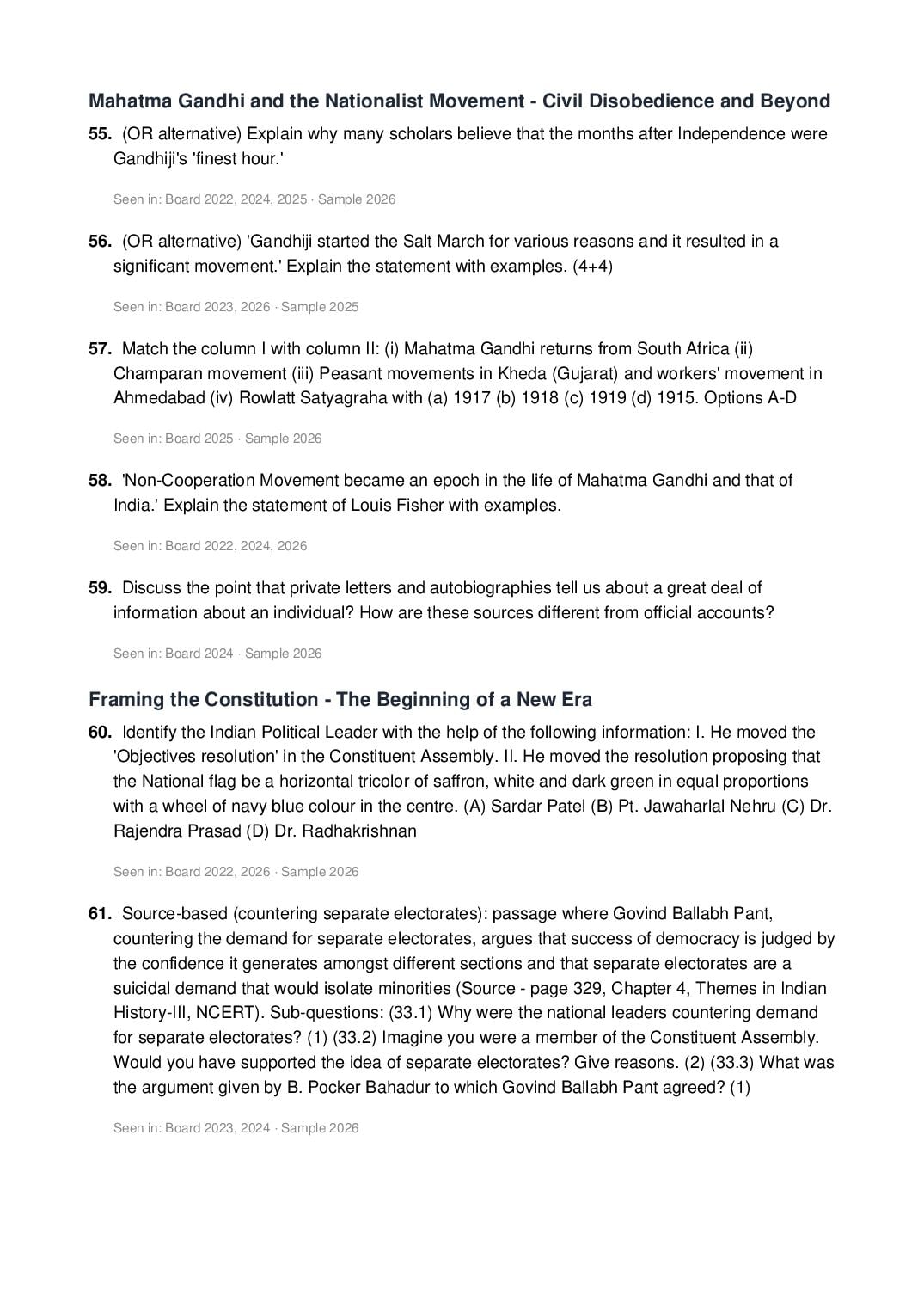
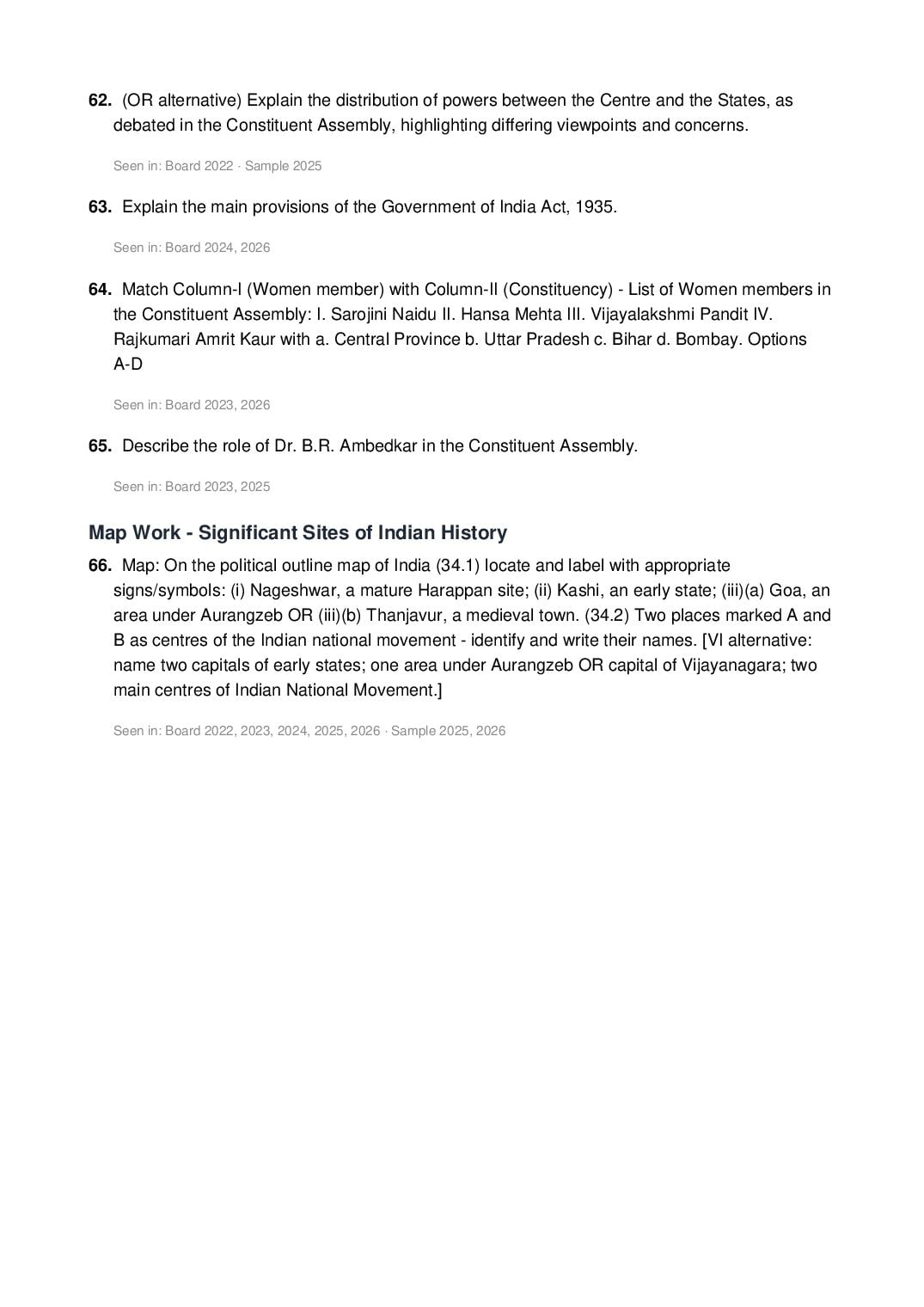
Most Important Questions in Text Format
- What was strategies that were used to increase agricultural production from the 6th century BC?
- Why is Akbar considered as the greatest of all the mughals?
- Explain the factors that should be kept in mind by the historian while handling textual traditions?
- ‘Rumours circulate only when they resonate, with the deep fears and suspicion of the people’. How was this statement true in the context of the Revolt of 1857?
- Explain how the fortification and roads in the city of Vijayanagara were unique and impressive?
- Analyse how the Mughal Emperor’s Court procedures reflected his status and power.
- Why do we call Mahabharat “ A Dynamic Text”.
- Describe the features of settlement of the Harappan civilization.
- Explain the resolution passed by the congress at the initiative of Nehru and Gandhiji on the rights of minorities.
- Describe the life style of the Pahariyas in the late 19th century.
- Describe the agricultural technologies followed by the Harappans.
- Explain the growth of Puranic Hinduism from 600 BCE to 600 CE.
- Explain how Krishanadeva Raya was able to expand and consolidate his empire of Vijayanagara ? Explain the causes of the decline of Vijaynagara after his death.
- What measures were taken to keep the unity among the rebels during 1857 ? How did the British try to suppress the rebellion ? Explain.
- Bernier’s accounts influenced western theorists from the 18th century’.Give arguments to support the statement
- Assess the impact of partition of India on Indian women.
- Describe any two architectural styles used by the British in the construction of public buildings in Bombay.
- What are the distinctive features of the Mughal mobility?
- Why do you think that the traditions of Baba Guru Nanak remain significant even in the 21st century?
Some Important Maps Practices.
Book (I)
- Mature Harappan Sites
- Mahajanapadas and cities
- Distribution of Ashokan inscriptions
- Buddhist sites
- Kingdoms and Towns: Satvahana, Guptas, Mathura, Kannauj, Shravasti, Rajgir, Vaishali
Book (II)
- Bidar, Golkunda, Mysore, Kaanchipuram, Quilon, Vijayanagar.
- Territories under Babur, Akbar and Aurangzeb.
Book (III)
- Territories under British control ( 1857 )
- Important centres of the national movement : Champaran, Kheda, Ahmedabad, Benaras, Amritsar, Chauri Chaura, Lahore, Bardoli,Dandi, Bombay (Quit India Resolution), Karachi.