Download Taking Charge of Waste – NCERT Class 3 EVS Chapter 12 PDF from the new NCERT Class 3 EVS book Our Wondrous World (2026-27). Read the chapter online or download the free PDF. Waste comes from the things we do every day. We throw away old clothes, tins, bottles, paper, peels of vegetables and fruits, plastic wrappers, pencil shavings and old batteries. When this waste is not thrown properly, it makes garbage piles near…
Taking Charge of Waste PDF – Chapter 12 of Our Wondrous World
Read the chapter online or download the PDF.
| Chapter | Download | |
|---|---|---|
| Chapter 12 PDF | Taking Charge of Waste | View PDF |
| Full book | NCERT Class 3 EVS – Our Wondrous World | View Book |
Read Online
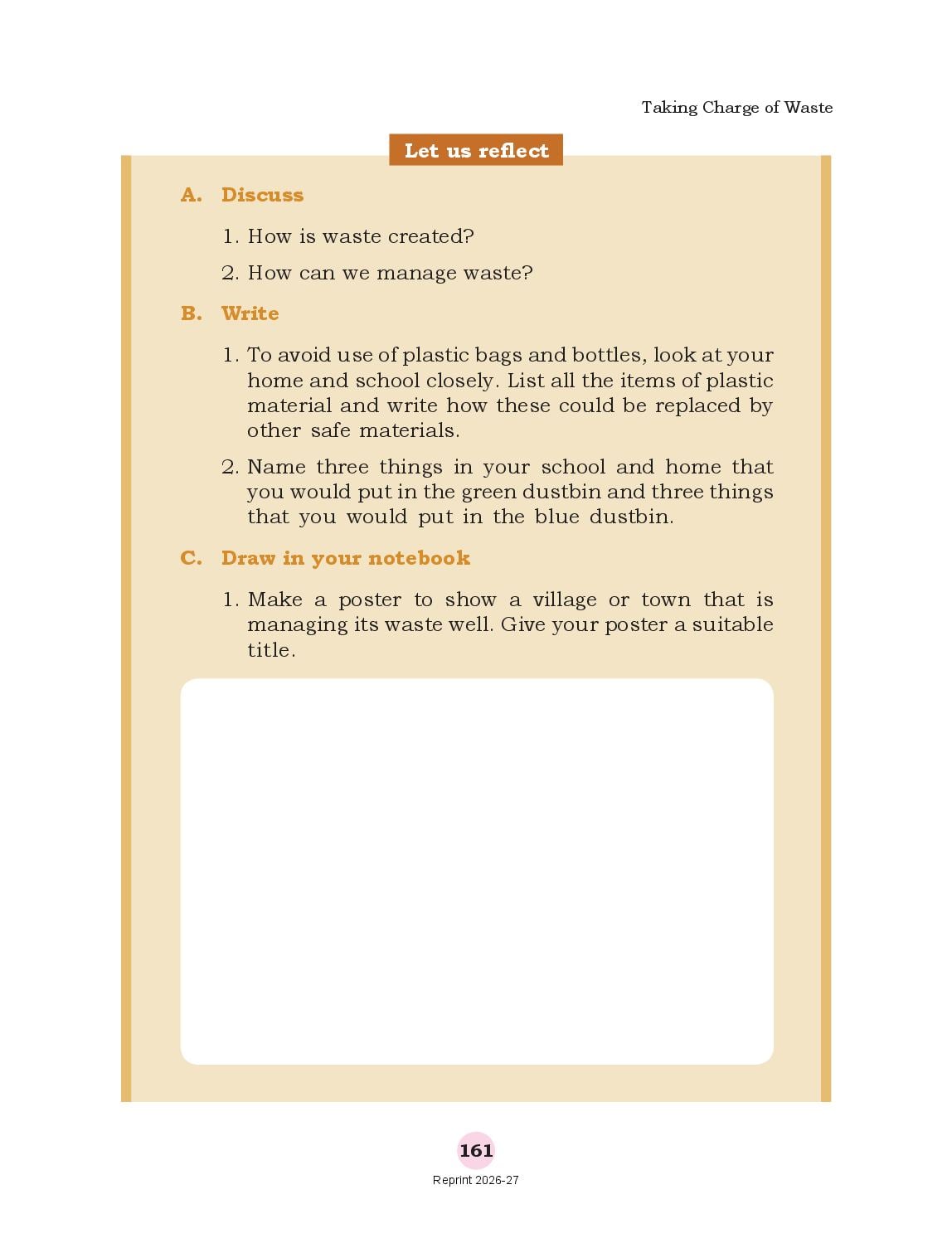
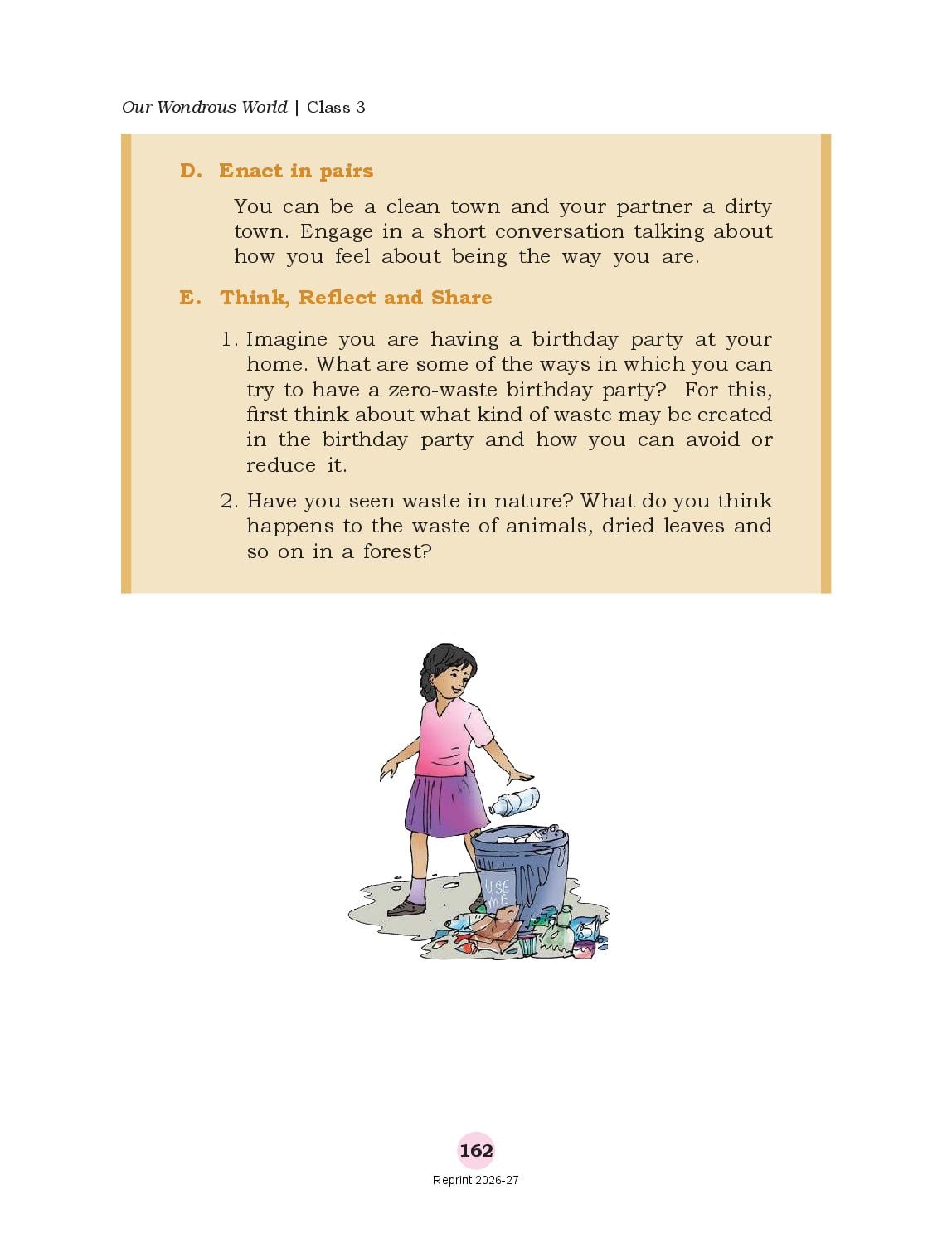
What Is in Taking Charge of Waste? (Class 3 EVS Chapter 12)
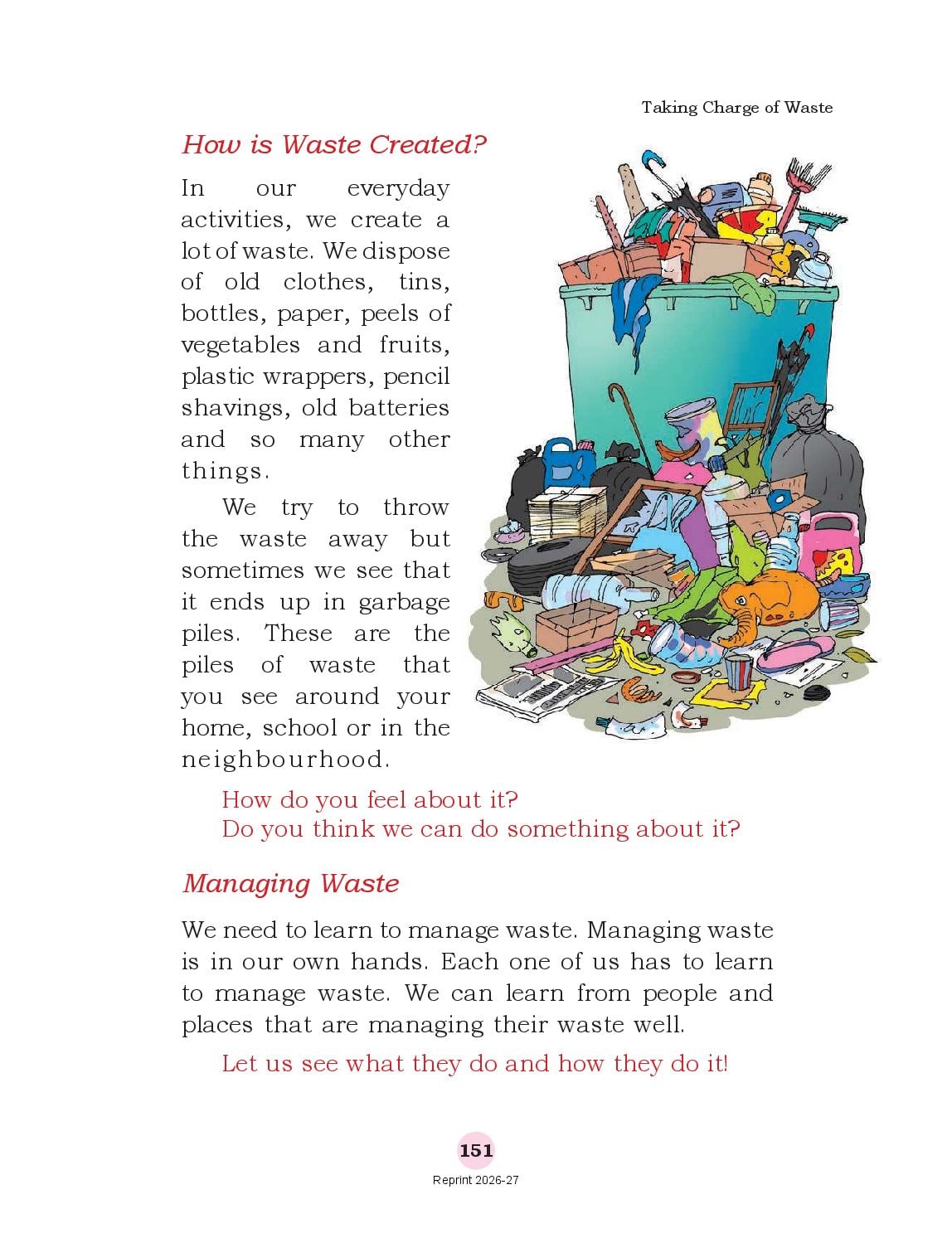
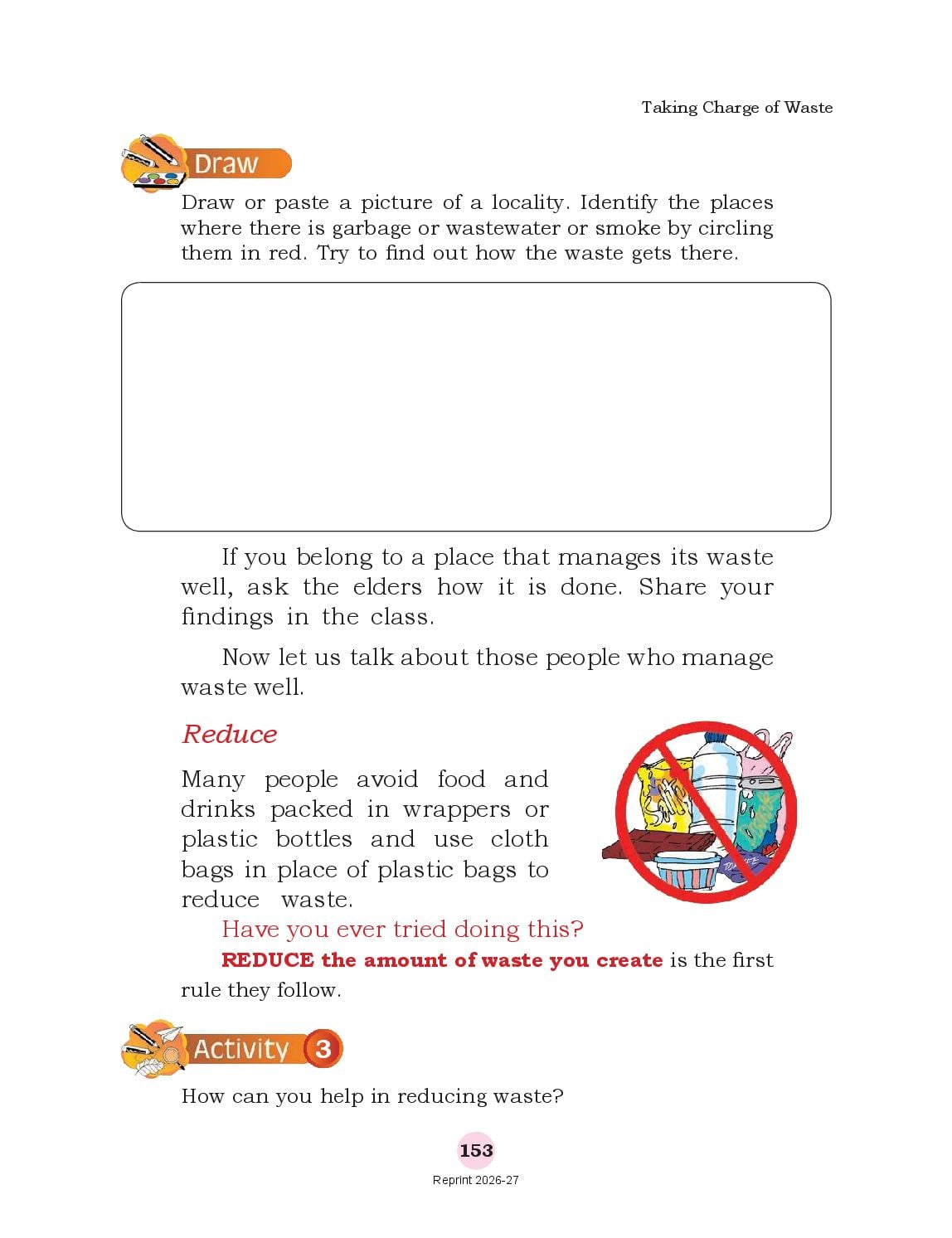
- Waste comes from the things we do every day. We throw away old clothes, tins, bottles, paper, peels of vegetables and fruits, plastic wrappers, pencil shavings and old batteries. When this waste is not thrown properly, it makes garbage piles near our home, school or neighbourhood.
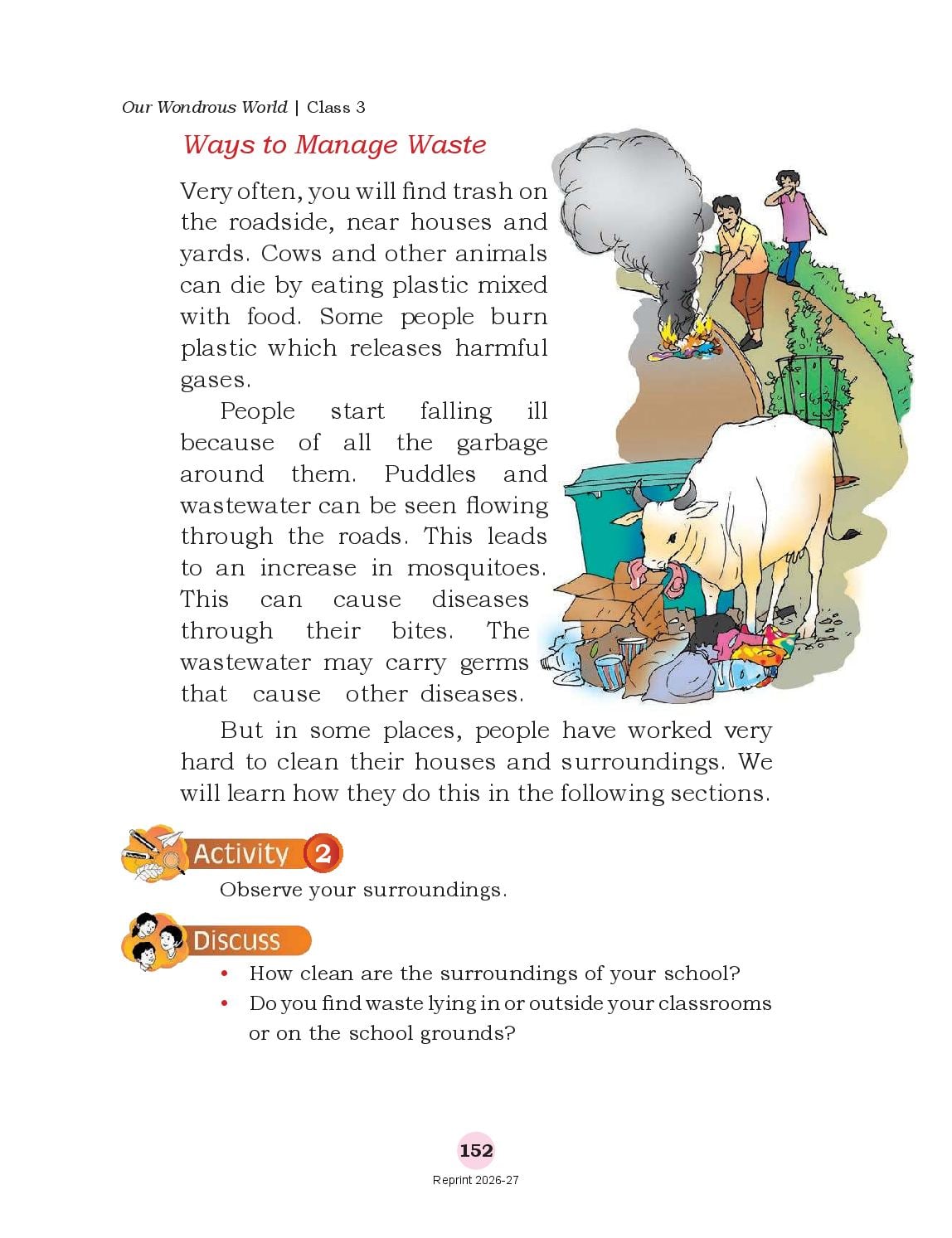
- Waste lying in the open harms people and animals. Cows and other animals can die by eating plastic mixed with food. Burning plastic releases harmful gases. Garbage makes people fall ill, and wastewater on the road brings mosquitoes and germs.
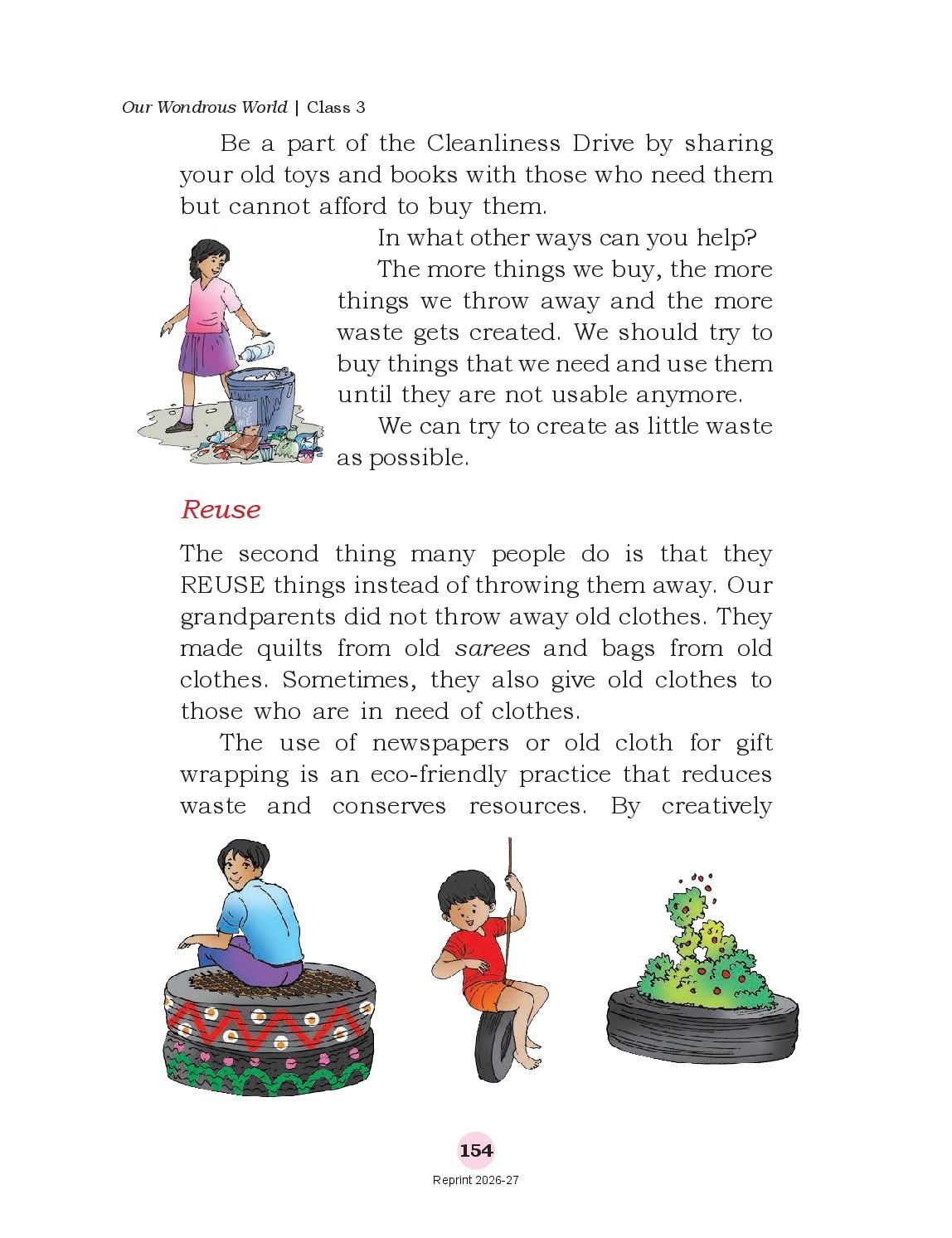
- The first rule is REDUCE. Many people avoid food and drinks packed in wrappers or plastic bottles, and use cloth bags in place of plastic bags. The more we buy, the more we throw away — so we should buy what we need and use it until it is not usable anymore.
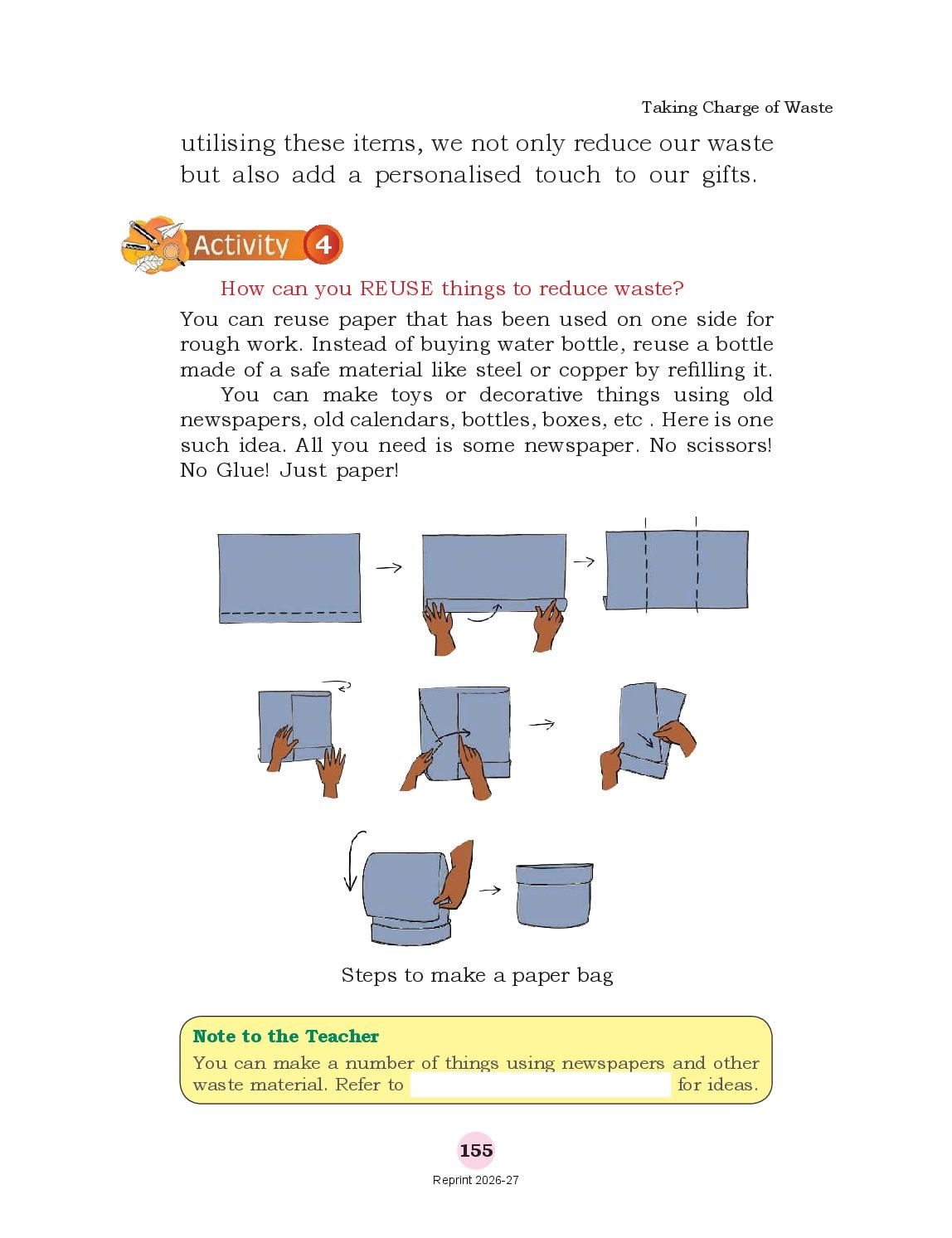
- The second thing people do is REUSE. Our grandparents made quilts from old sarees and bags from old clothes. Paper used on one side does for rough work. A steel or copper bottle can be refilled. Newspaper and old cloth make good gift wrapping, and a paper bag needs no scissors and no glue.
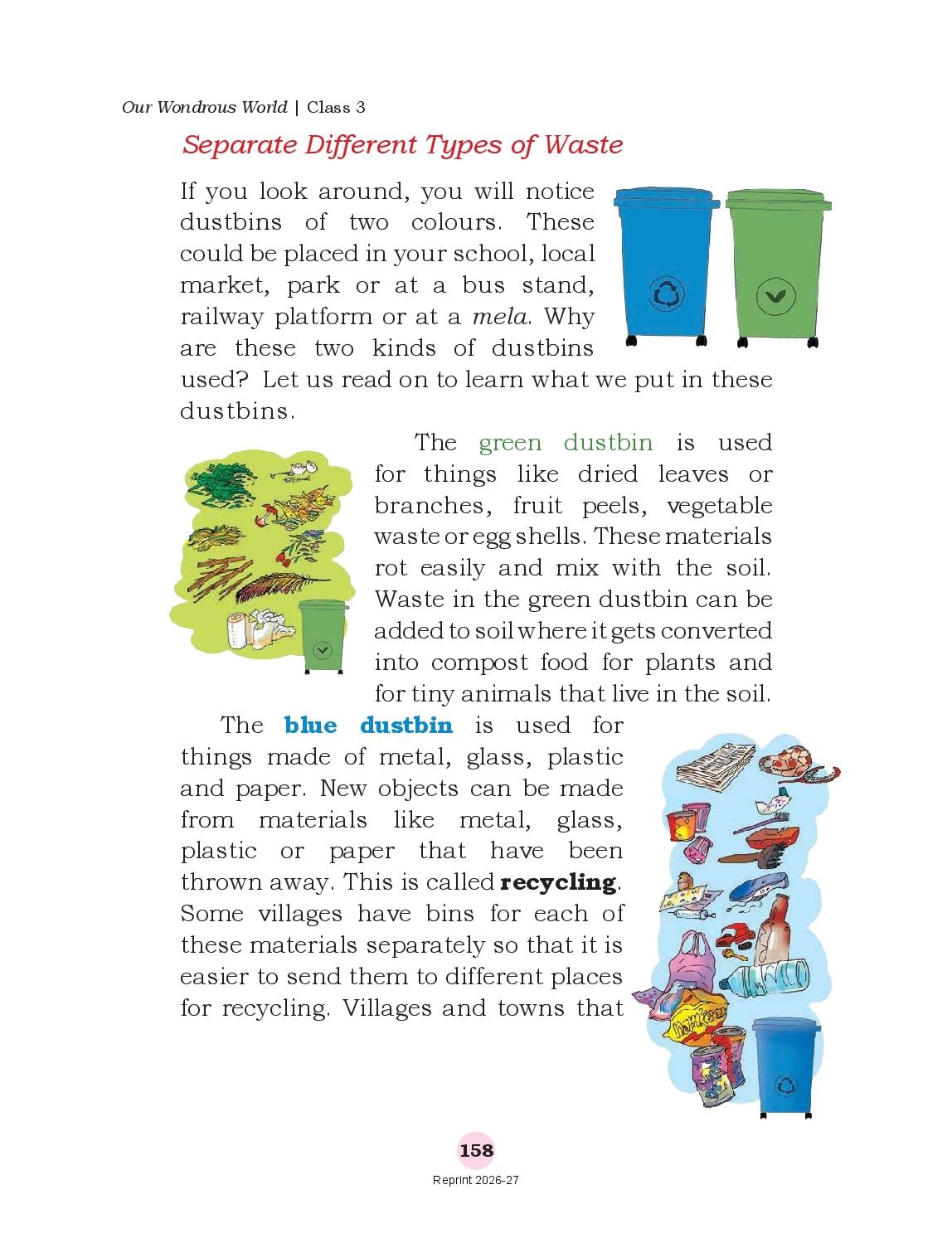
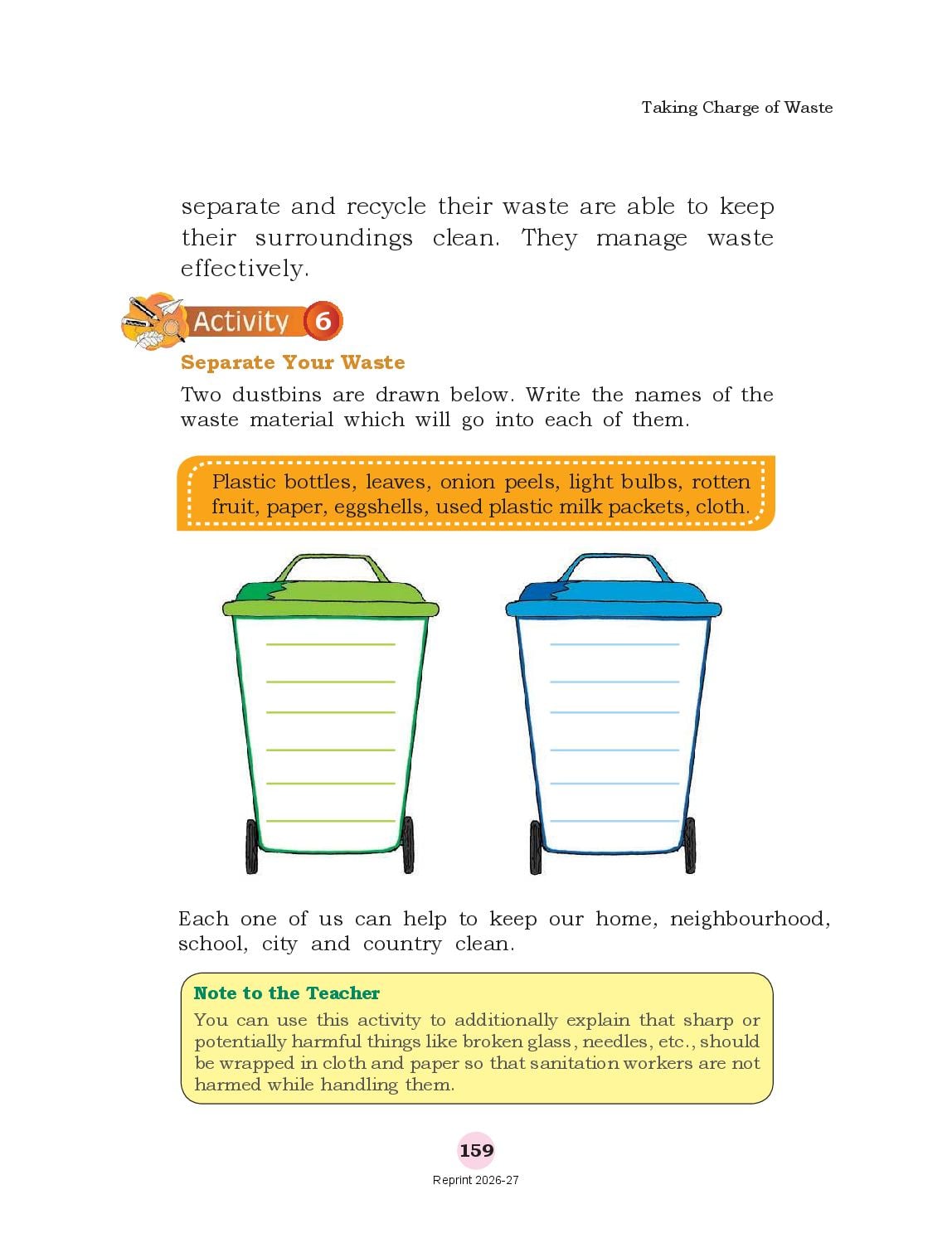
- Waste is kept apart in two dustbins. The green dustbin takes dried leaves or branches, fruit peels, vegetable waste and egg shells — these rot easily, mix with the soil and become compost. The blue dustbin takes metal, glass, plastic and paper, from which new objects are made. That is called recycling.
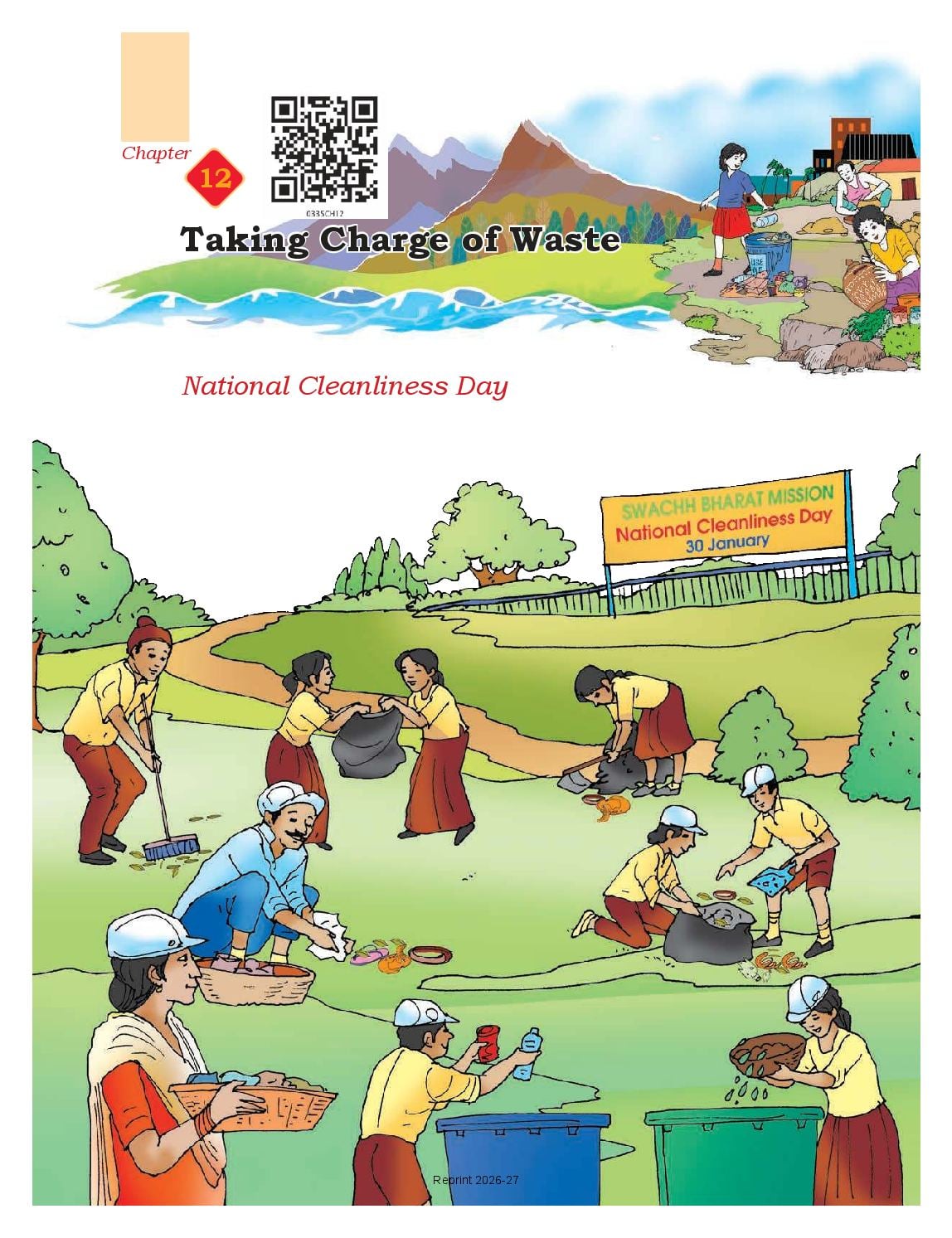
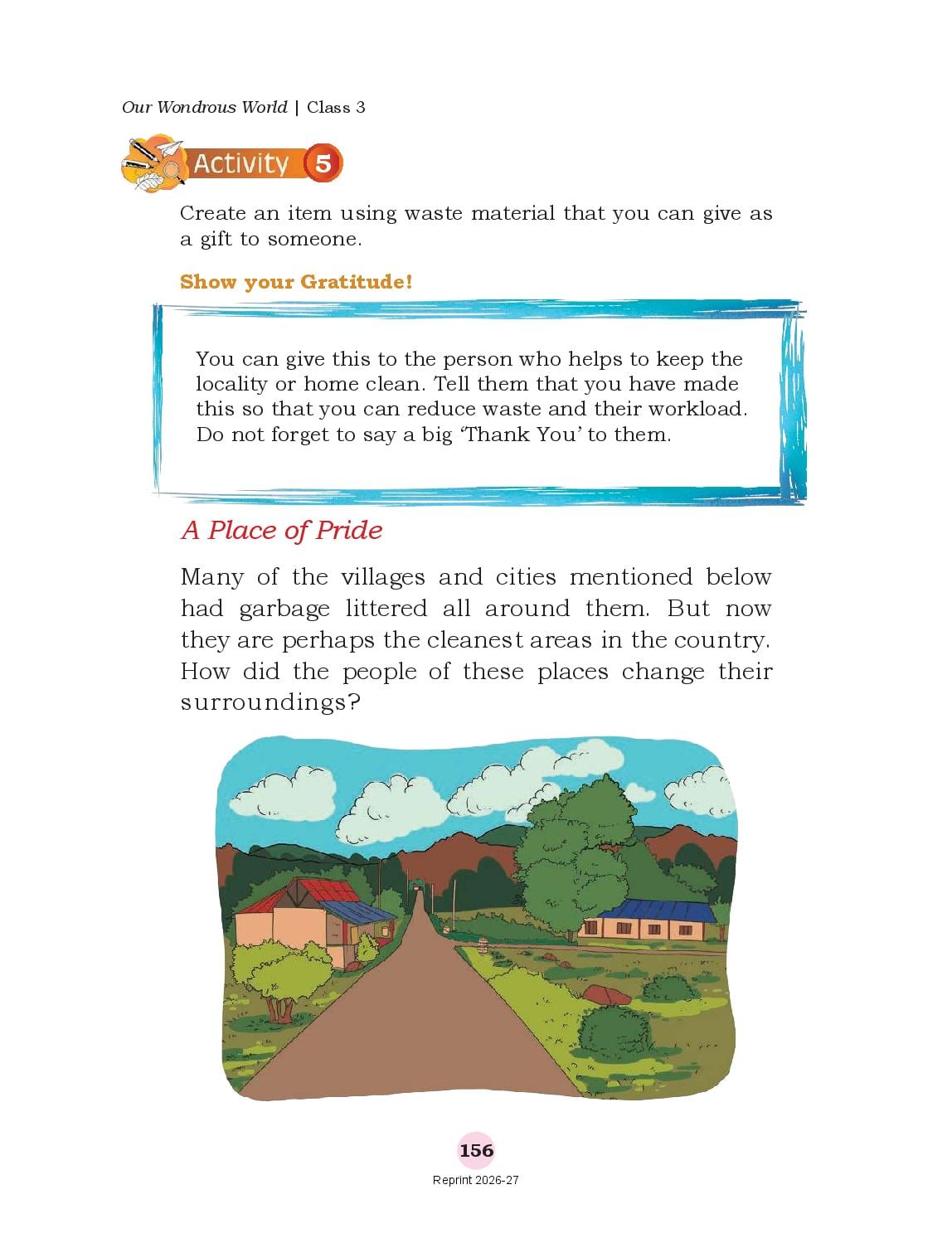
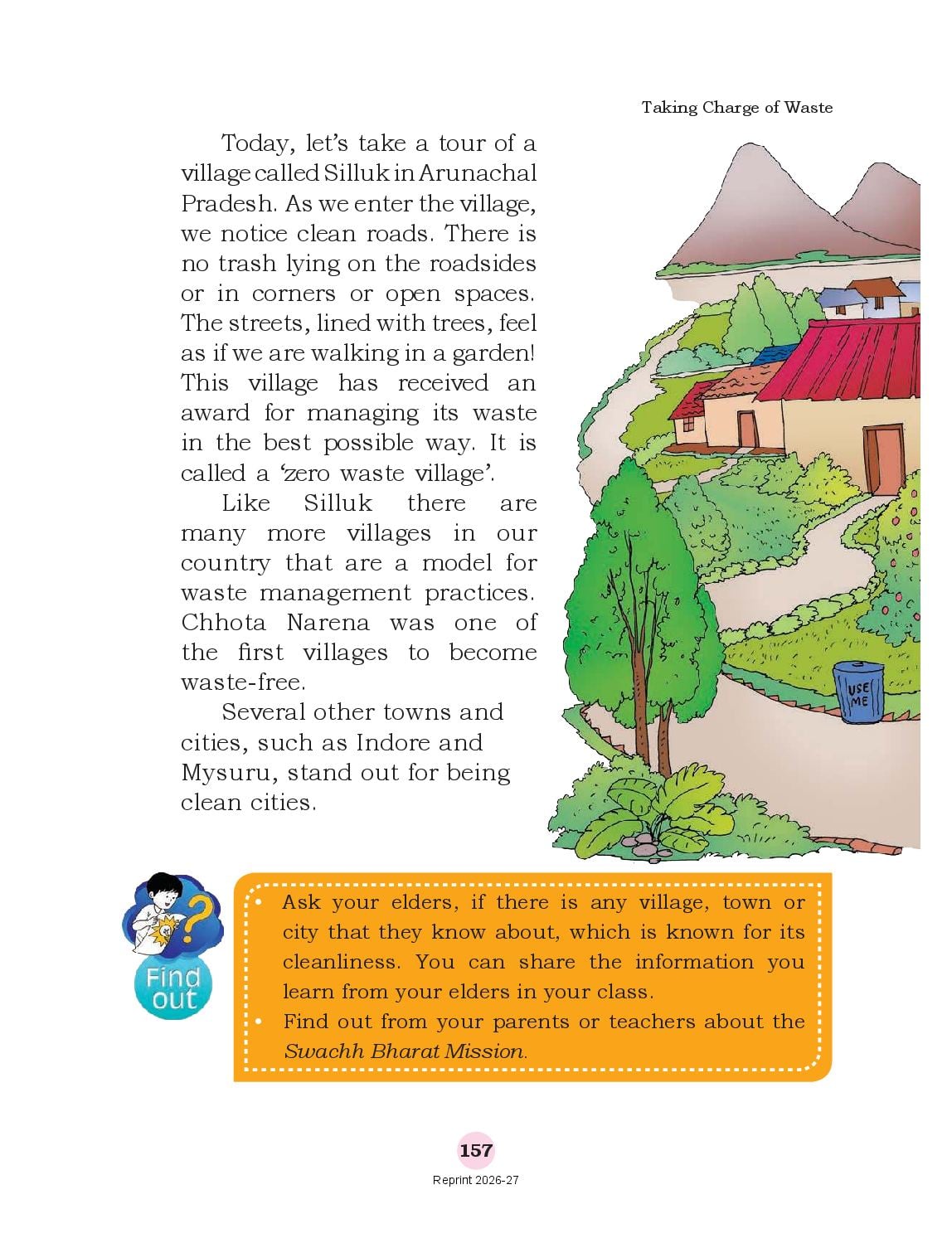
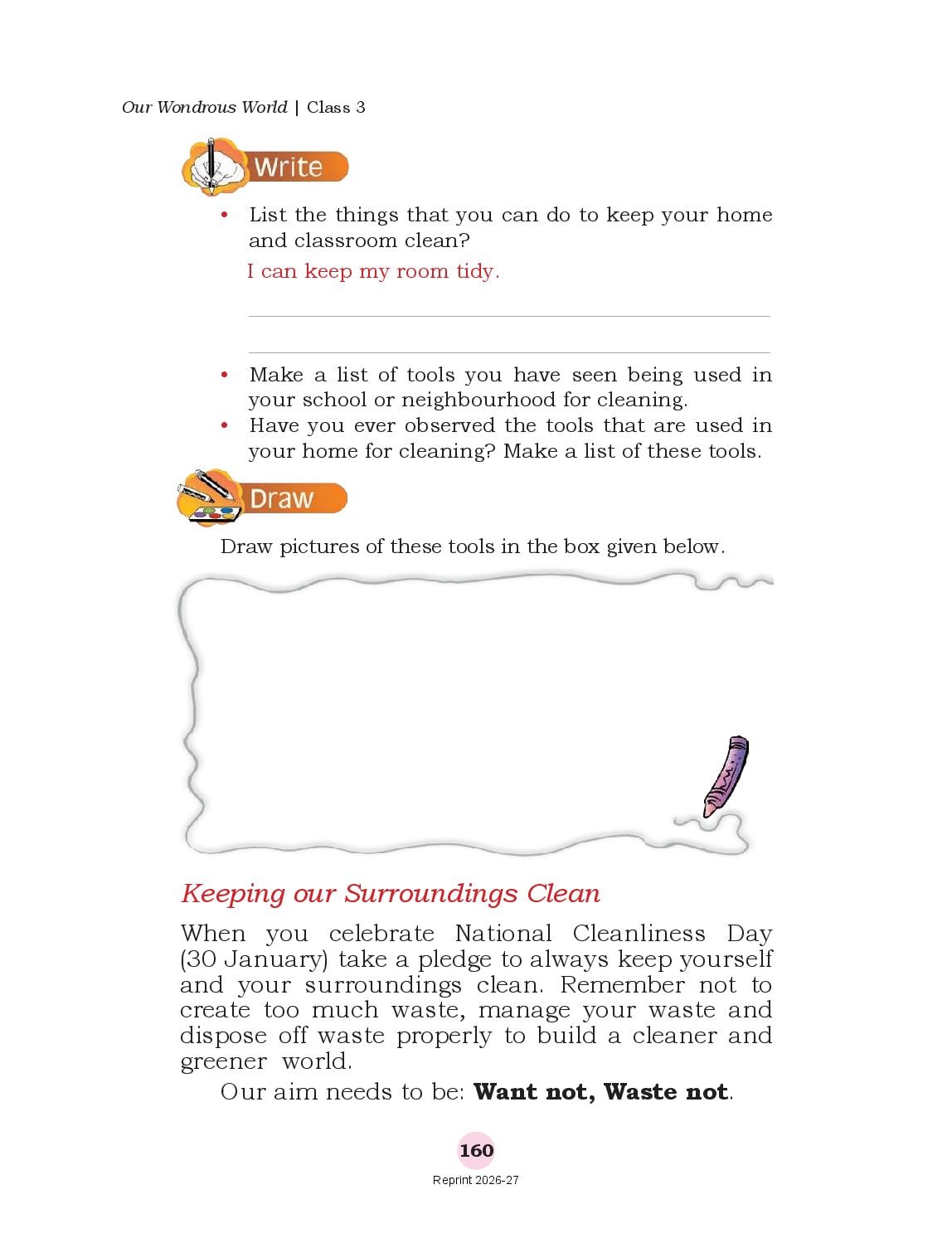
- Whole villages and cities have changed. Silluk in Arunachal Pradesh has received an award for managing its waste in the best possible way and is called a ‘zero waste village’. Chhota Narena became waste-free, and Indore and Mysuru stand out as clean cities. On National Cleanliness Day (30 January) we take the pledge: Want not, Waste not.
Quick revision – Taking Charge of Waste
| Word | What it means | Where it comes in the chapter | Page |
|---|---|---|---|
| Waste | The things we throw away after using them | Old clothes, tins, bottles, paper, peels, plastic wrappers, pencil shavings, old batteries | 151 |
| Garbage pile | A heap of waste lying in the open | The piles you see around your home, school or neighbourhood | 151 |
| Managing waste | Making less waste, using things again, and putting waste in the right dustbin | “Managing waste is in our own hands.” | 151 |
| Reduce | Making as little waste as possible | People use cloth bags in place of plastic bags | 153 |
| Reuse | Using a thing again instead of throwing it away | Quilts from old sarees, bags from old clothes, a paper bag from newspaper | 154–155 |
| Green dustbin | For dried leaves or branches, fruit peels, vegetable waste, egg shells | These materials rot easily and mix with the soil | 158 |
| Compost | Food for plants, made when green waste is added to the soil | It also feeds the tiny animals that live in the soil | 158 |
| Blue dustbin | For things made of metal, glass, plastic and paper | New objects can be made from them | 158 |
| Recycling | Making new objects from material that was thrown away | Some villages keep a separate bin for each material | 158 |
| Zero waste village | A village that manages its waste in the best possible way | Silluk, Arunachal Pradesh — it has received an award | 157 |
| Chhota Narena | A village named in the chapter for becoming waste-free | One of the first villages to become waste-free | 157 |
| National Cleanliness Day | 30 January — the day of the cleanliness pledge | Our aim needs to be: Want not, Waste not | 160 |
Old NCERT vs New – Class 3 EVS
This chapter is from Our Wondrous World, the new NCERT Class 3 EVS book (NCF-SE 2023, used from 2024-25). It replaced the old book “Looking Around”, so chapter numbers and names differ from older PDFs.
Solutions and All Chapters
Answers to the exercises and the full chapter list of Our Wondrous World:
Taking Charge of Waste – Overview
| Class | Class 3 |
| Subject | EVS |
| Book | Our Wondrous World – new NCERT book |
| Chapter | 12 of 12 – Taking Charge of Waste |
| Book pages | 149 – 162 |
| Edition | NCERT Reprint 2026-27 |
| Session | 2026-27 |
| Free – read online or download |
Class 3 EVS Chapter 12 – FAQs
Where can I download Taking Charge of Waste Class 3 PDF?
From the download table on this page – the chapter PDF is free, and the full book is linked too.
What is Class 3 EVS Chapter 12 about?
Waste comes from the things we do every day. We throw away old clothes, tins, bottles, paper, peels of vegetables and fruits, plastic wrappers, pencil shavings and old batteries. When this waste is not thrown properly, it makes garbage piles near our home, school or neighbourhood.
Is Taking Charge of Waste from the new NCERT Class 3 EVS book?
Yes. It is chapter 12 of our wondrous world, the new NCERT Class 3 EVS book for 2026-27.
Is this the latest NCERT edition for 2026-27?
Yes – the PDF is NCERT’s latest edition for the 2026-27 session.
Where are the NCERT Solutions for Class 3 EVS Chapter 12?
Open the NCERT Solutions link above for answers to the exercise questions.