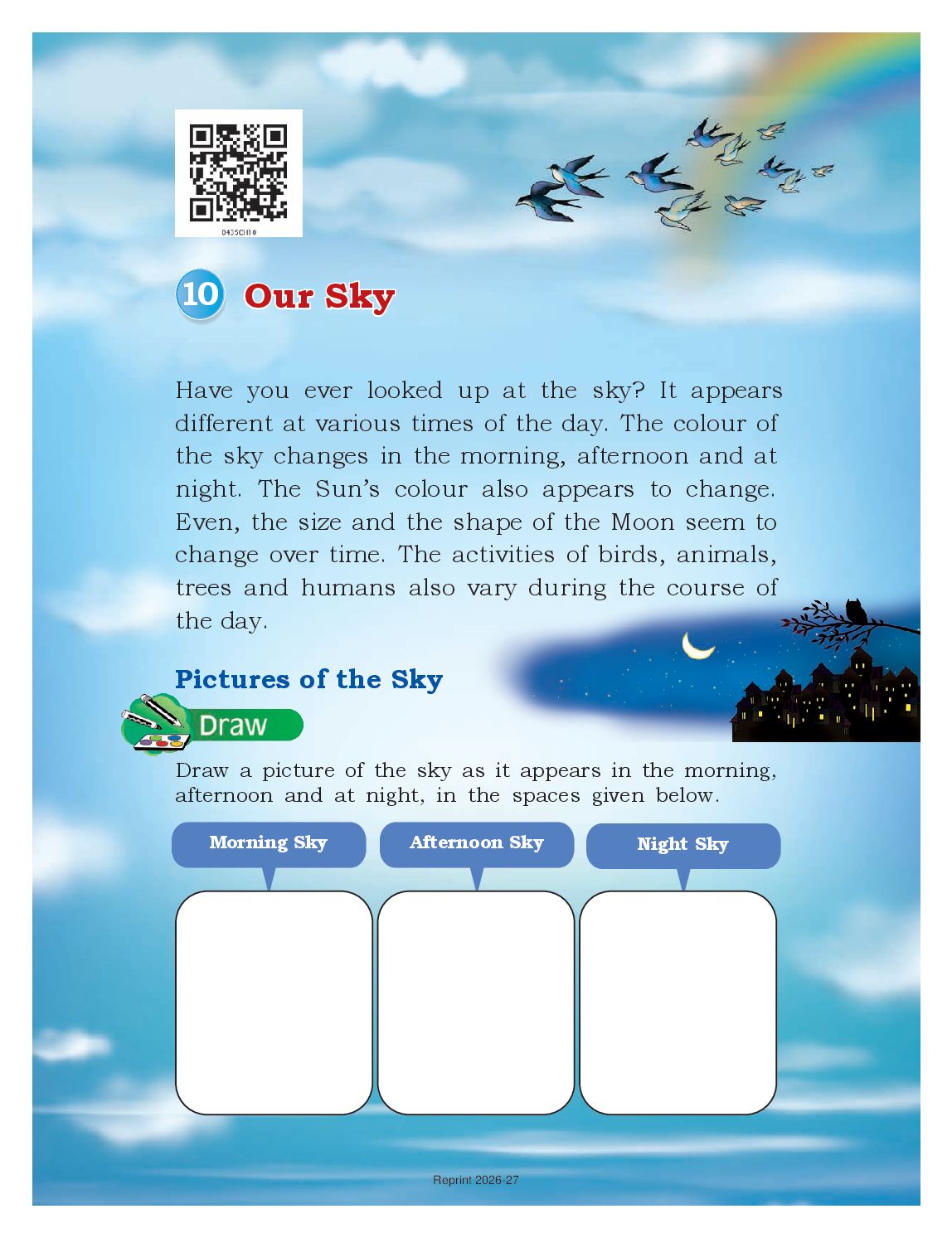
Download Our Sky – NCERT Class 4 EVS Chapter 10 PDF from the new NCERT Class 4 EVS book Our Wondrous World (2026-27). Read the chapter online or download the free PDF. The sky looks different at different times of the day. The colour of the sky changes in the morning, afternoon and at night. Even the Sun’s colour appears to change. The activities of birds, animals, trees and humans change too.
Our Sky PDF – Chapter 10 of Our Wondrous World
Read the chapter online or download the PDF.
| Chapter | Download | |
|---|---|---|
| Chapter 10 PDF | Our Sky | View PDF |
| Full book | NCERT Class 4 EVS – Our Wondrous World | View Book |
Read Online
What Is in Our Sky? (Class 4 EVS Chapter 10)
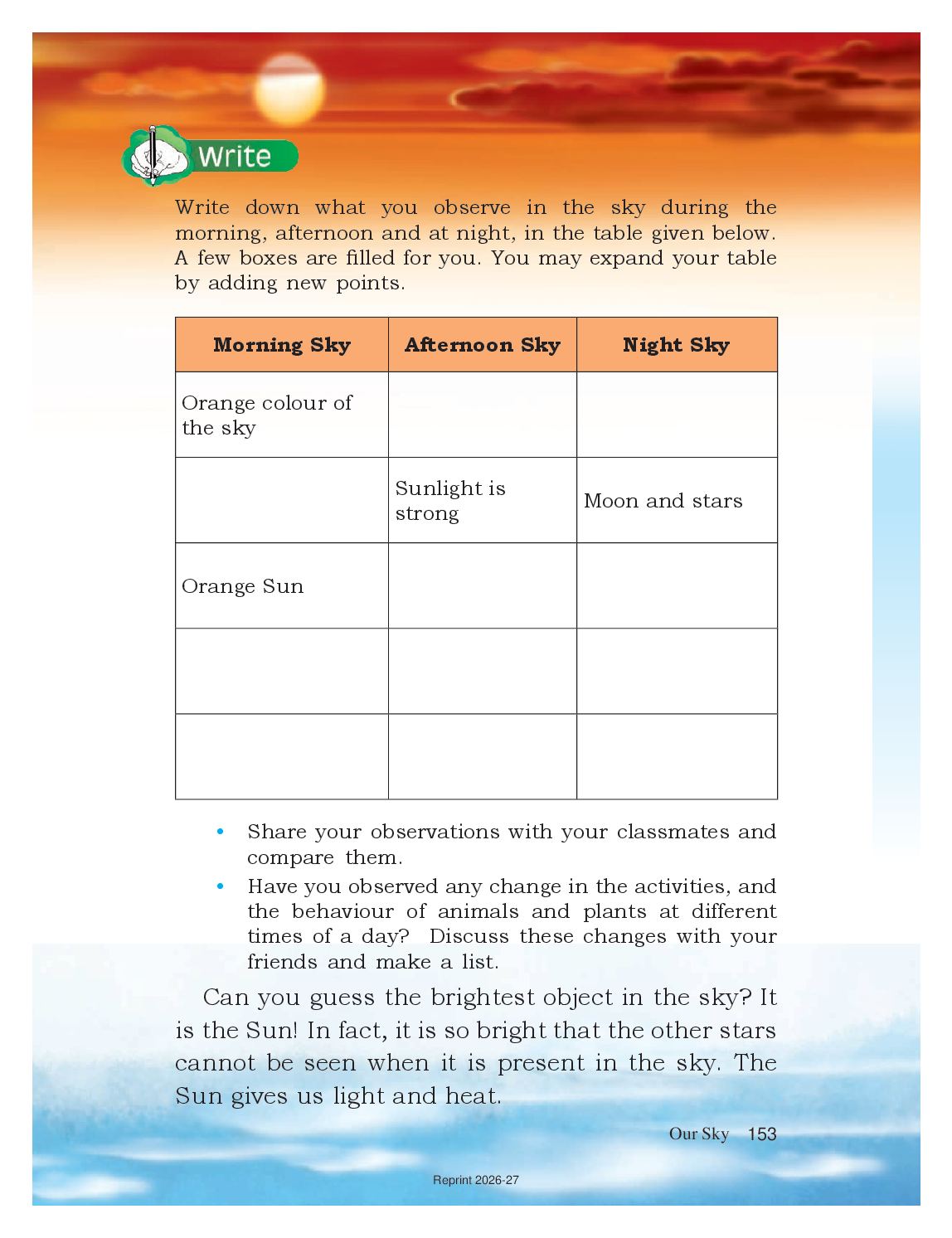
- The sky looks different at different times of the day. The colour of the sky changes in the morning, afternoon and at night. Even the Sun’s colour appears to change. The activities of birds, animals, trees and humans change too.
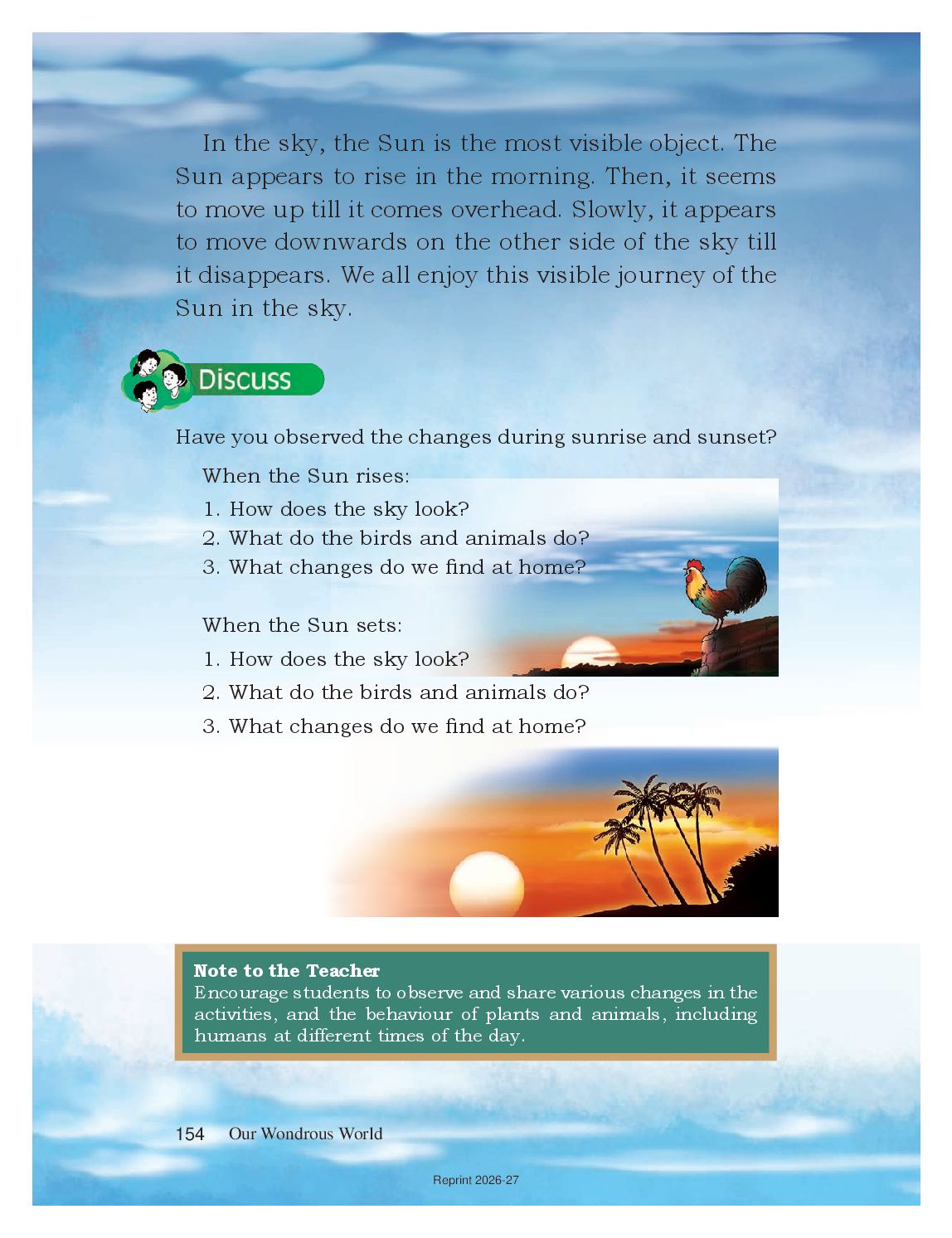
- The Sun is the brightest object in the sky. It is so bright that other stars cannot be seen when it is in the sky. It gives us light and heat. It appears to rise, move up till it is overhead, and then go down on the other side.
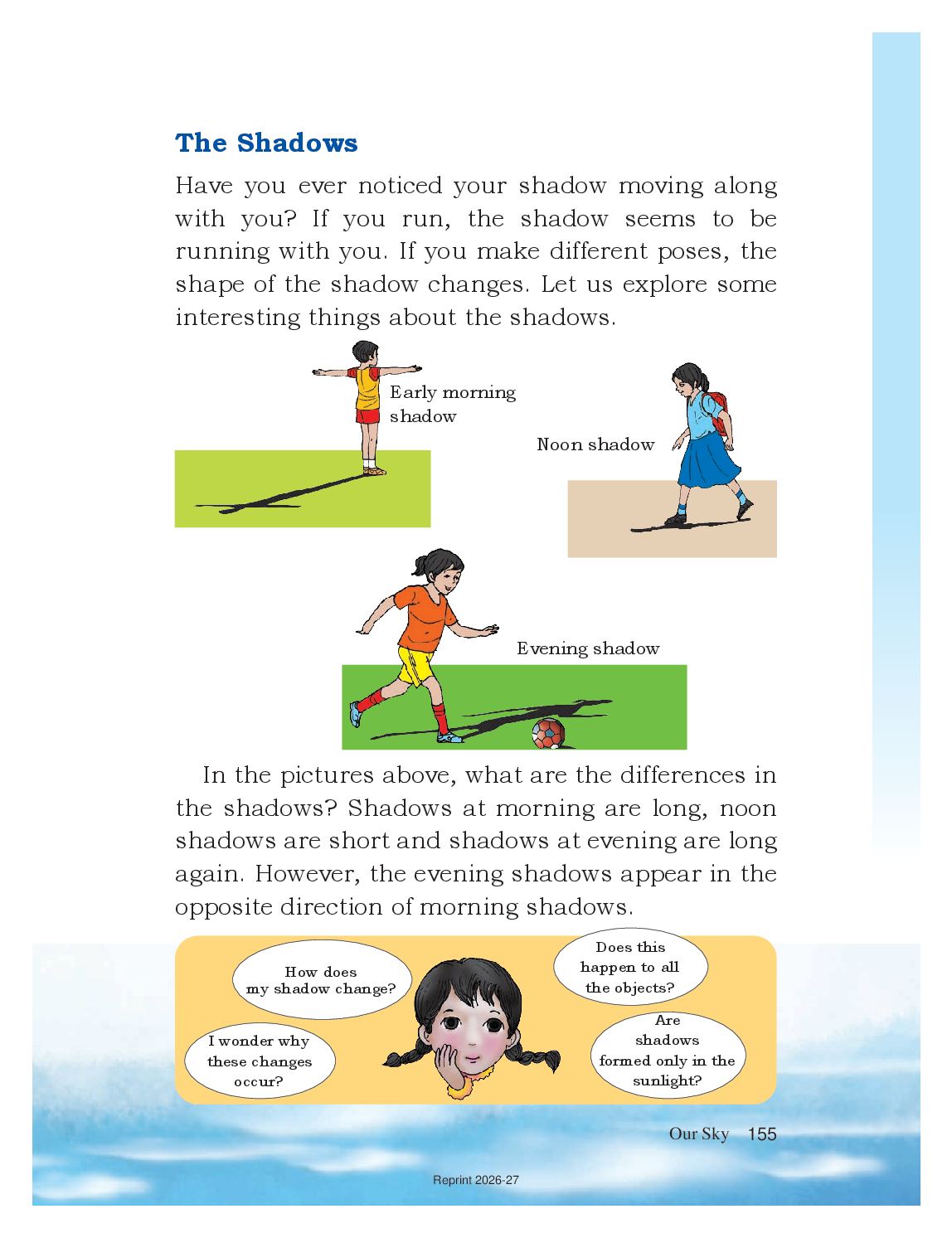
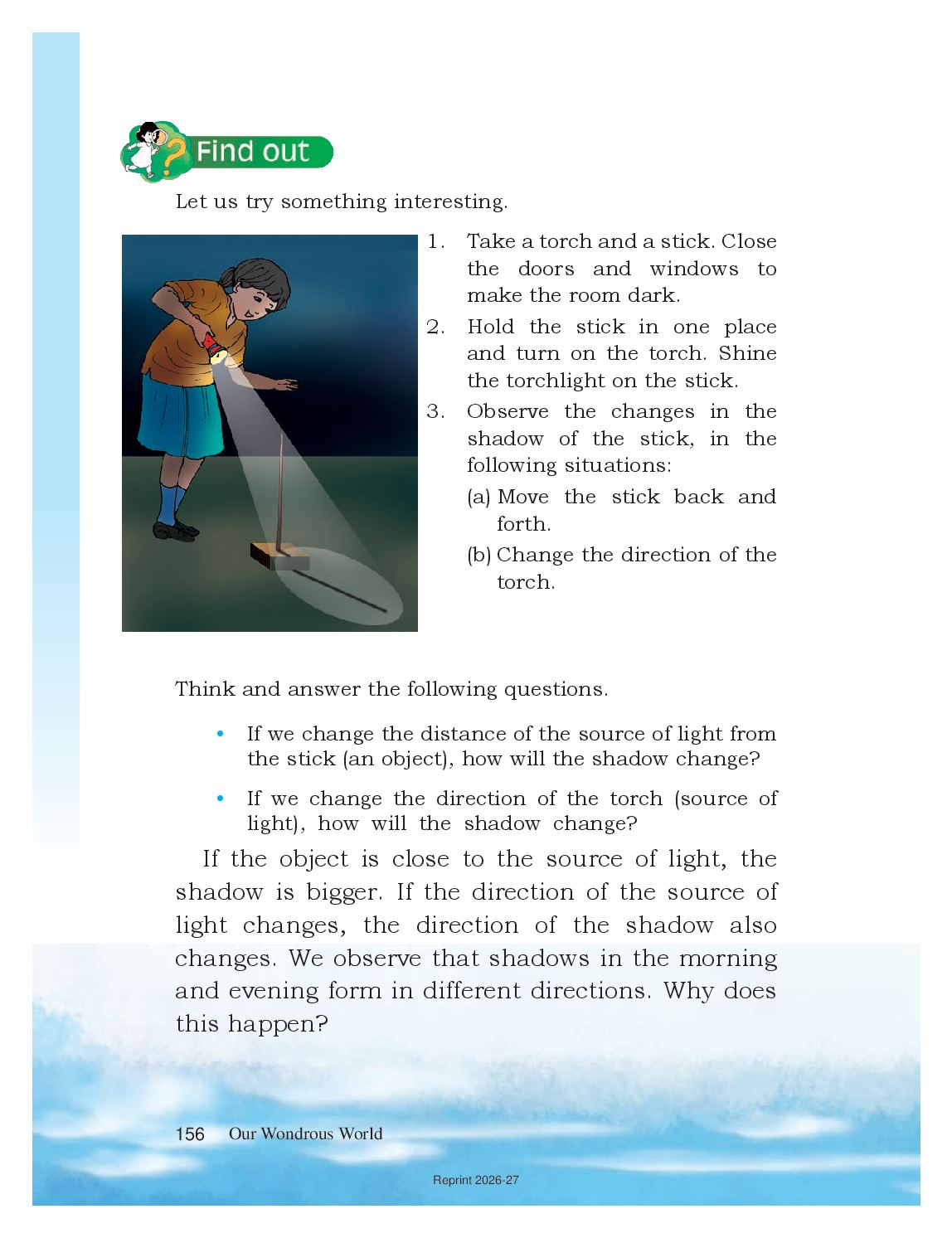
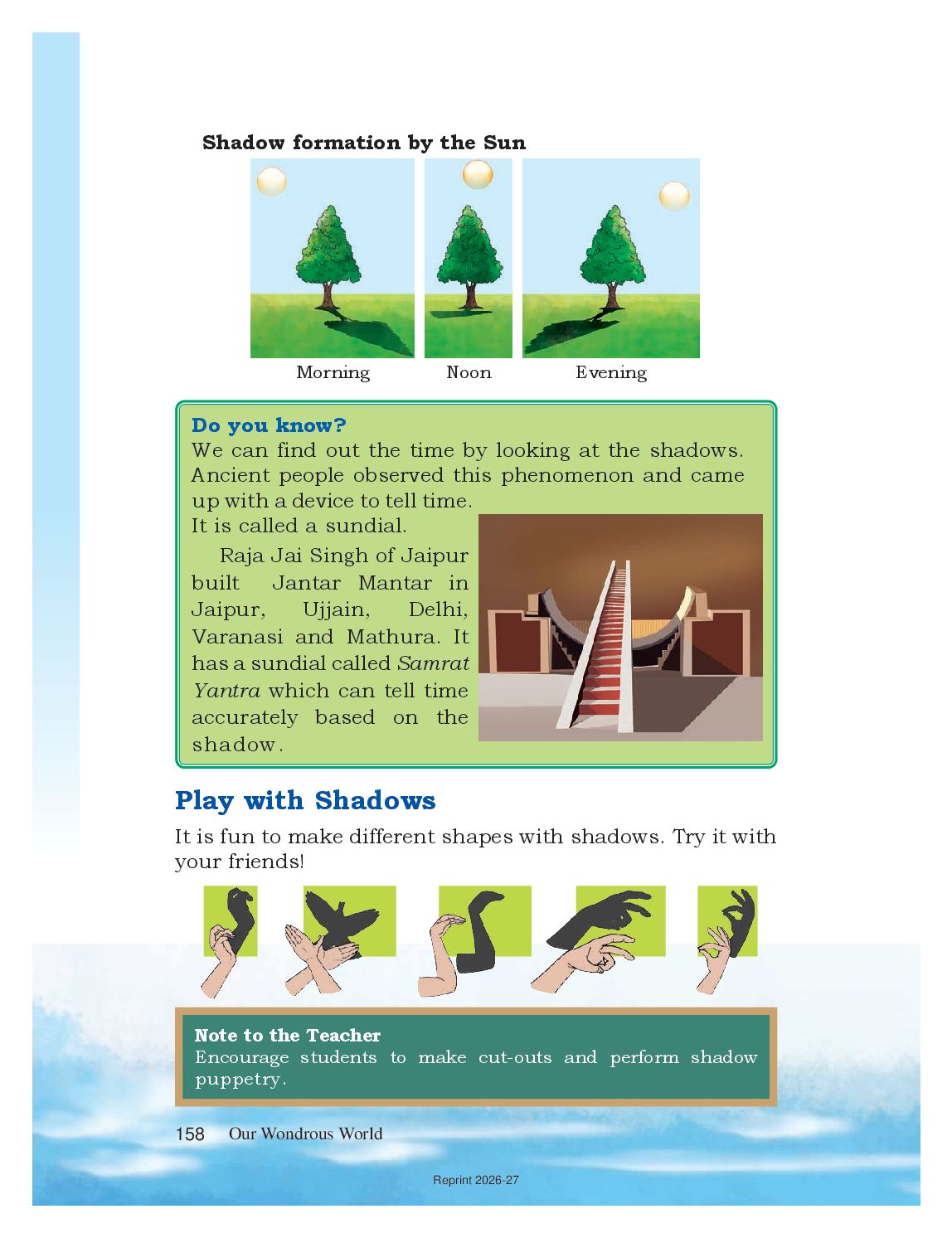
- Shadows change through the day. Morning shadows are long, noon shadows are short and evening shadows are long again. Evening shadows fall in the opposite direction to morning shadows.
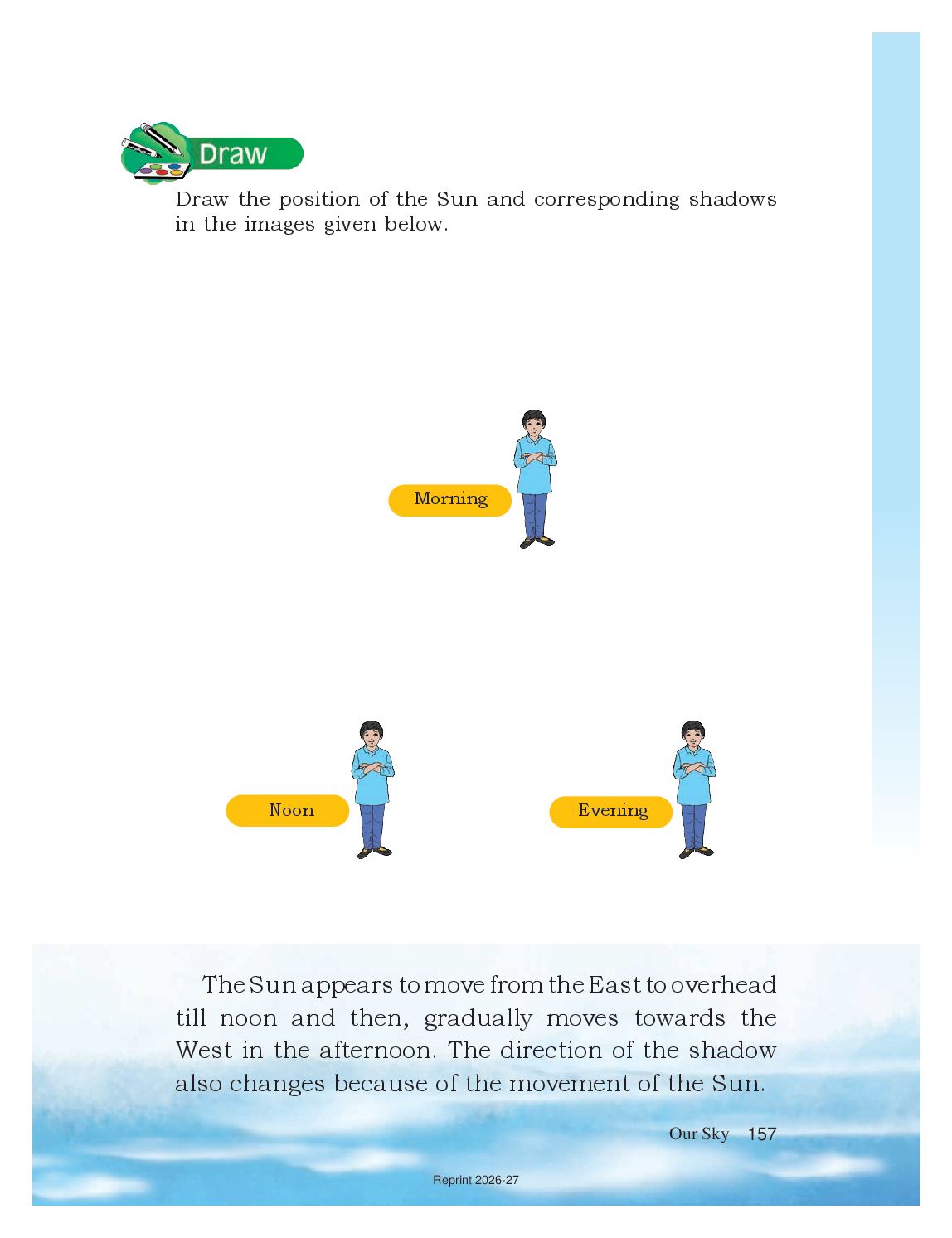
- A shadow follows the light. If the object is close to the source of light, the shadow is bigger. If the direction of the light changes, the direction of the shadow changes too. The Sun appears to move from the East to overhead at noon and then towards the West, so the shadow turns as the day goes on.
- Shadows can tell the time. Ancient people made a device called a sundial. Raja Jai Singh of Jaipur built Jantar Mantar in Jaipur, Ujjain, Delhi, Varanasi and Mathura. Its sundial is called Samrat Yantra.
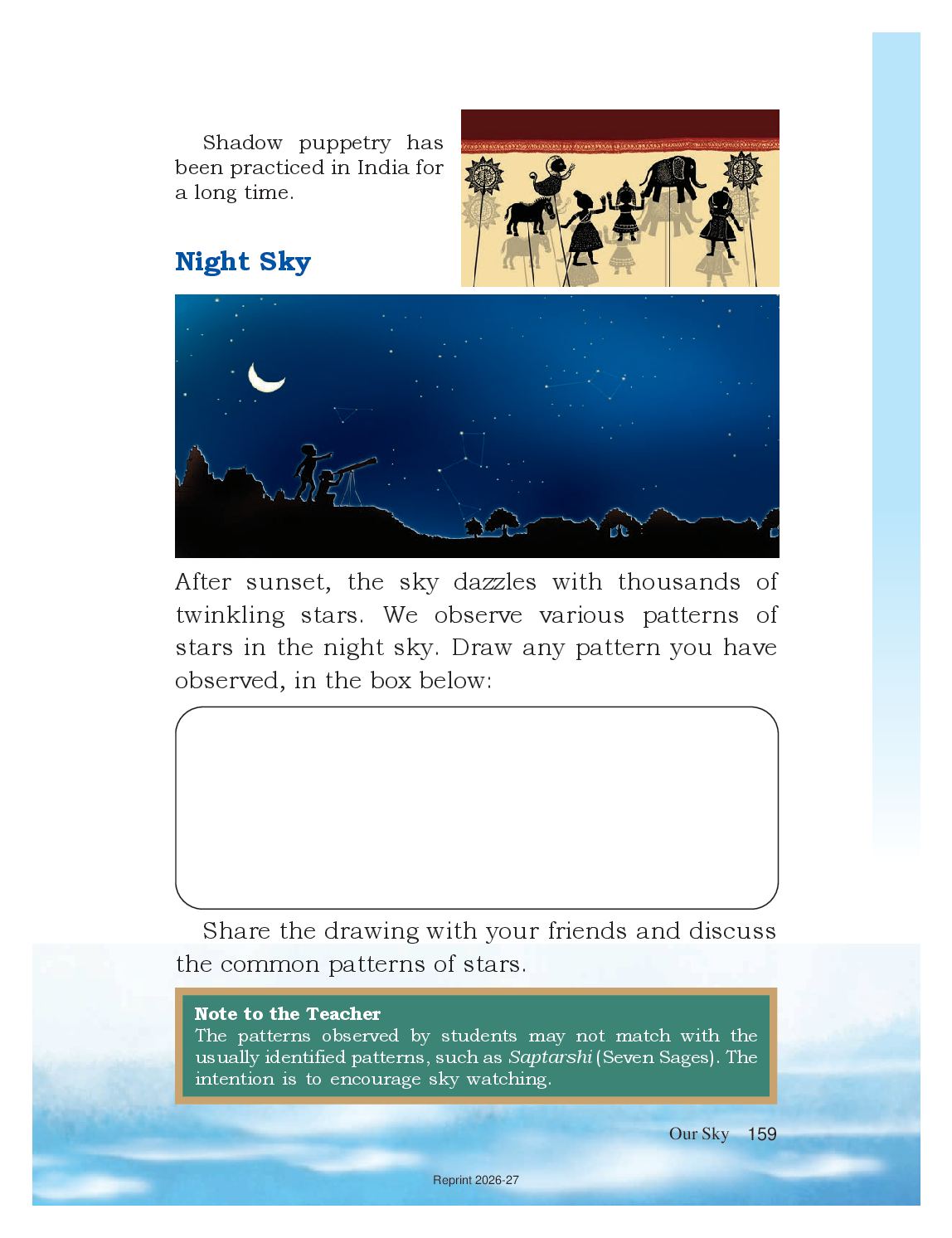
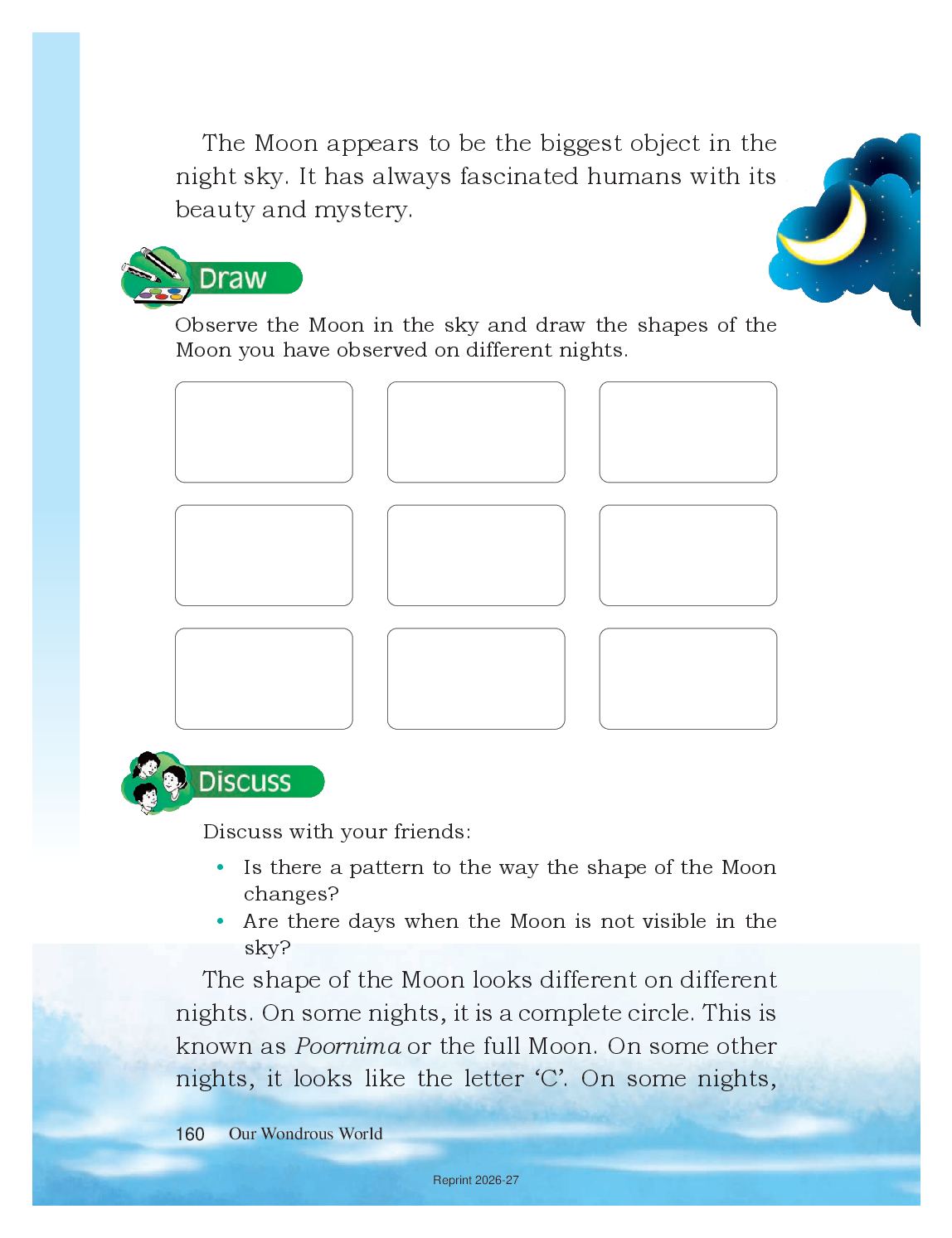
- The night sky has thousands of twinkling stars and we see them in patterns. The Moon appears to be the biggest object in the night sky, and its shape looks different on different nights.
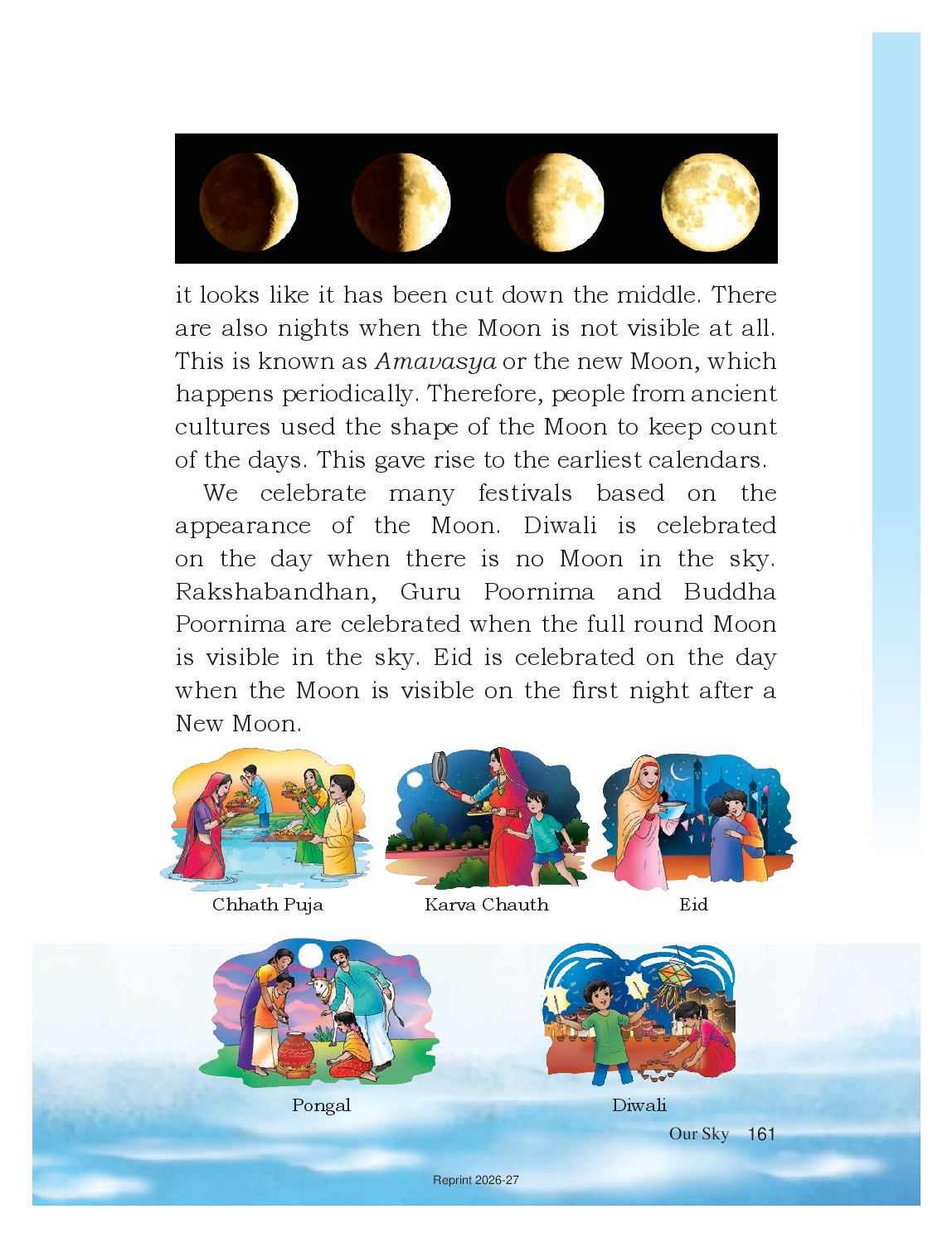
- Poornima and Amavasya. A complete round Moon is Poornima, the full Moon. A night with no Moon at all is Amavasya, the new Moon. Ancient people counted days by the Moon’s shape, and that gave us the earliest calendars. Diwali falls on a no-Moon night; Rakshabandhan, Guru Poornima and Buddha Poornima fall on a full-Moon night; Eid is on the day the Moon is seen on the first night after a New Moon.
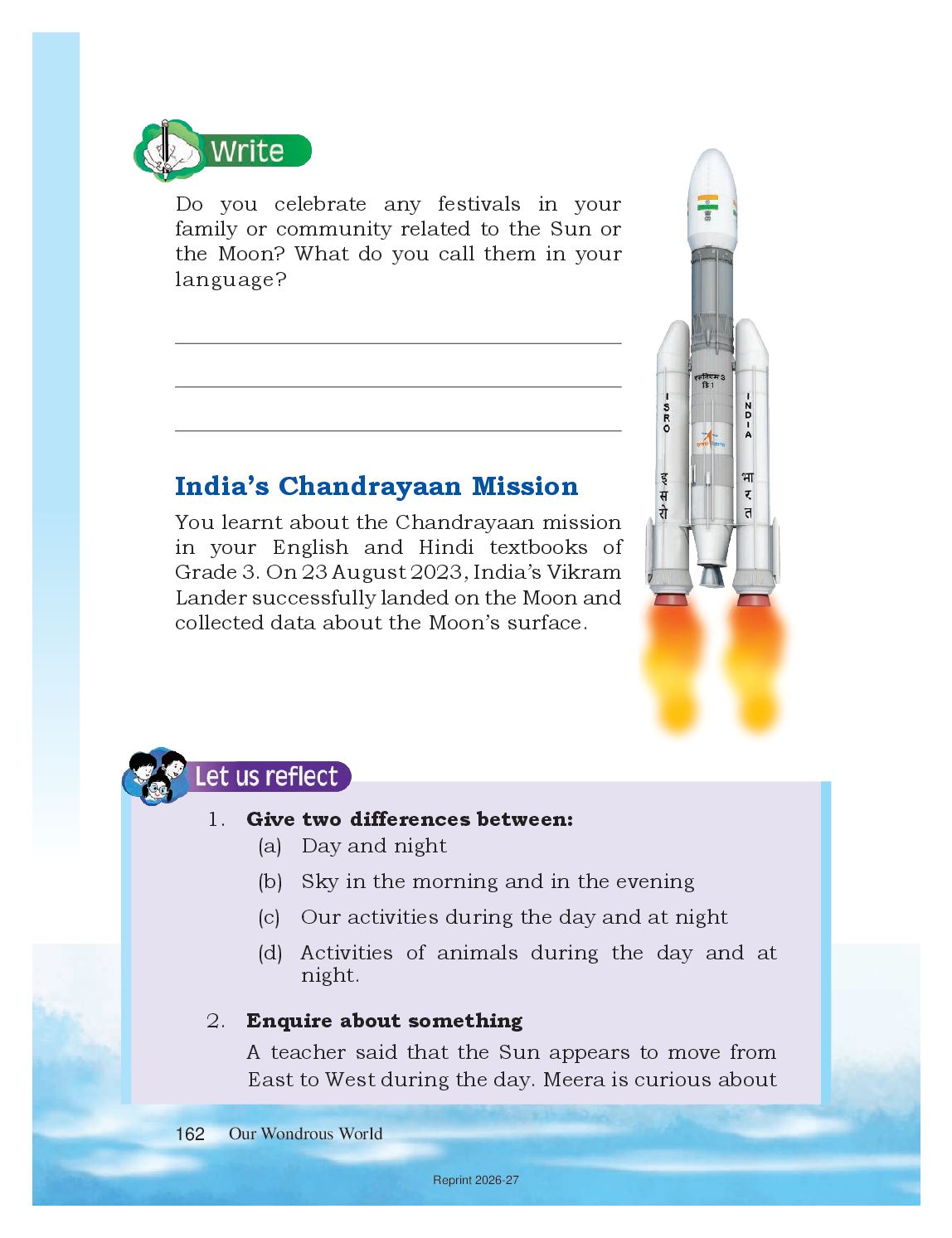
- India has been to the Moon. On 23 August 2023, India’s Vikram Lander landed on the Moon and collected data about the Moon’s surface.
Quick revision – Our Sky
| Word | What it means | Where it comes in the chapter | Page |
|---|---|---|---|
| Sun | The brightest object in our sky; it gives us light and heat | Other stars cannot be seen while the Sun is in the sky | 153 |
| Sunrise | The time when the Sun appears in the morning | The sky turns orange and birds fly out of their nests | 154 |
| Sunset | The time when the Sun goes down in the evening | Birds return, lamps are lit and stars begin to appear | 154 |
| Shadow | The dark shape made when an object blocks the light | Your shadow runs with you and changes when you change your pose | 155 |
| Morning shadow | A long shadow, made when the Sun is low | The first of the three shadow pictures | 155 |
| Noon shadow | A short shadow, made when the Sun is overhead | The second of the three shadow pictures | 155 |
| East and West | The side the Sun appears from, and the side it goes down | The Sun appears to move from the East to overhead to the West | 157 |
| Sundial | A device that tells the time from a shadow | Samrat Yantra at Jantar Mantar, built by Raja Jai Singh of Jaipur | 158 |
| Pattern of stars | A shape we see when we join bright stars in the night sky | You draw a pattern you have seen and compare it with your friends’ | 159 |
| Poornima | The night when the Moon is a complete circle | Rakshabandhan, Guru Poornima and Buddha Poornima are full-Moon festivals | 160 |
| Amavasya | The night when the Moon is not visible at all | Diwali is celebrated on the day when there is no Moon in the sky | 161 |
| Chandrayaan | India’s mission to the Moon | The Vikram Lander landed on 23 August 2023 and collected data | 162 |
Old NCERT vs New – Class 4 EVS
This chapter is from Our Wondrous World, the new NCERT Class 4 EVS book (NCF-SE 2023, used from 2025-26). It replaced the old book “Looking Around”, so chapter numbers and names differ from older PDFs.
Solutions and All Chapters
Answers to the exercises and the full chapter list of Our Wondrous World:
Our Sky – Overview
| Class | Class 4 |
| Subject | EVS |
| Book | Our Wondrous World – new NCERT book |
| Chapter | 10 of 10 – Our Sky |
| Book pages | 152 – 163 |
| Edition | NCERT Reprint 2026-27 |
| Session | 2026-27 |
| Free – read online or download |
Class 4 EVS Chapter 10 – FAQs
Where can I download Our Sky Class 4 PDF?
From the download table on this page – the chapter PDF is free, and the full book is linked too.
What is Class 4 EVS Chapter 10 about?
The sky looks different at different times of the day. The colour of the sky changes in the morning, afternoon and at night. Even the Sun’s colour appears to change. The activities of birds, animals, trees and humans change too.
Is Our Sky from the new NCERT Class 4 EVS book?
Yes. It is chapter 10 of our wondrous world, the new NCERT Class 4 EVS book for 2026-27.
Is this the latest NCERT edition for 2026-27?
Yes – the PDF is NCERT’s latest edition for the 2026-27 session.
Where are the NCERT Solutions for Class 4 EVS Chapter 10?
Open the NCERT Solutions link above for answers to the exercise questions.