Download How Things are Made – NCERT Class 4 EVS Chapter 8 PDF from the new NCERT Class 4 EVS book Our Wondrous World (2026-27). Read the chapter online or download the free PDF. Paper is made from trees. Wood is turned into wood pulp and rolled into thin sheets.
How Things are Made PDF – Chapter 8 of Our Wondrous World
Read the chapter online or download the PDF.
| Chapter | Download | |
|---|---|---|
| Chapter 8 PDF | How Things are Made | View PDF |
| Full book | NCERT Class 4 EVS – Our Wondrous World | View Book |
Read Online
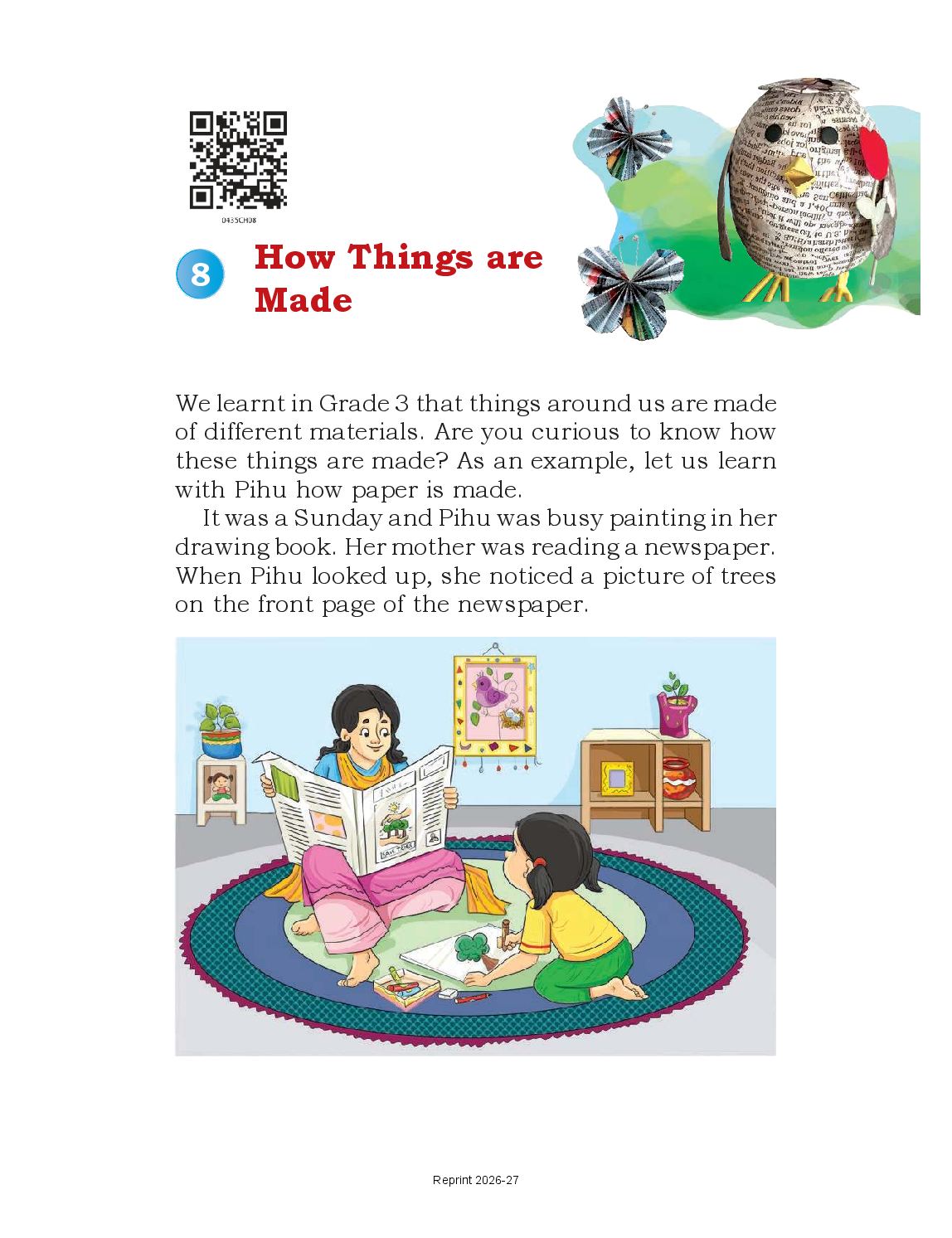
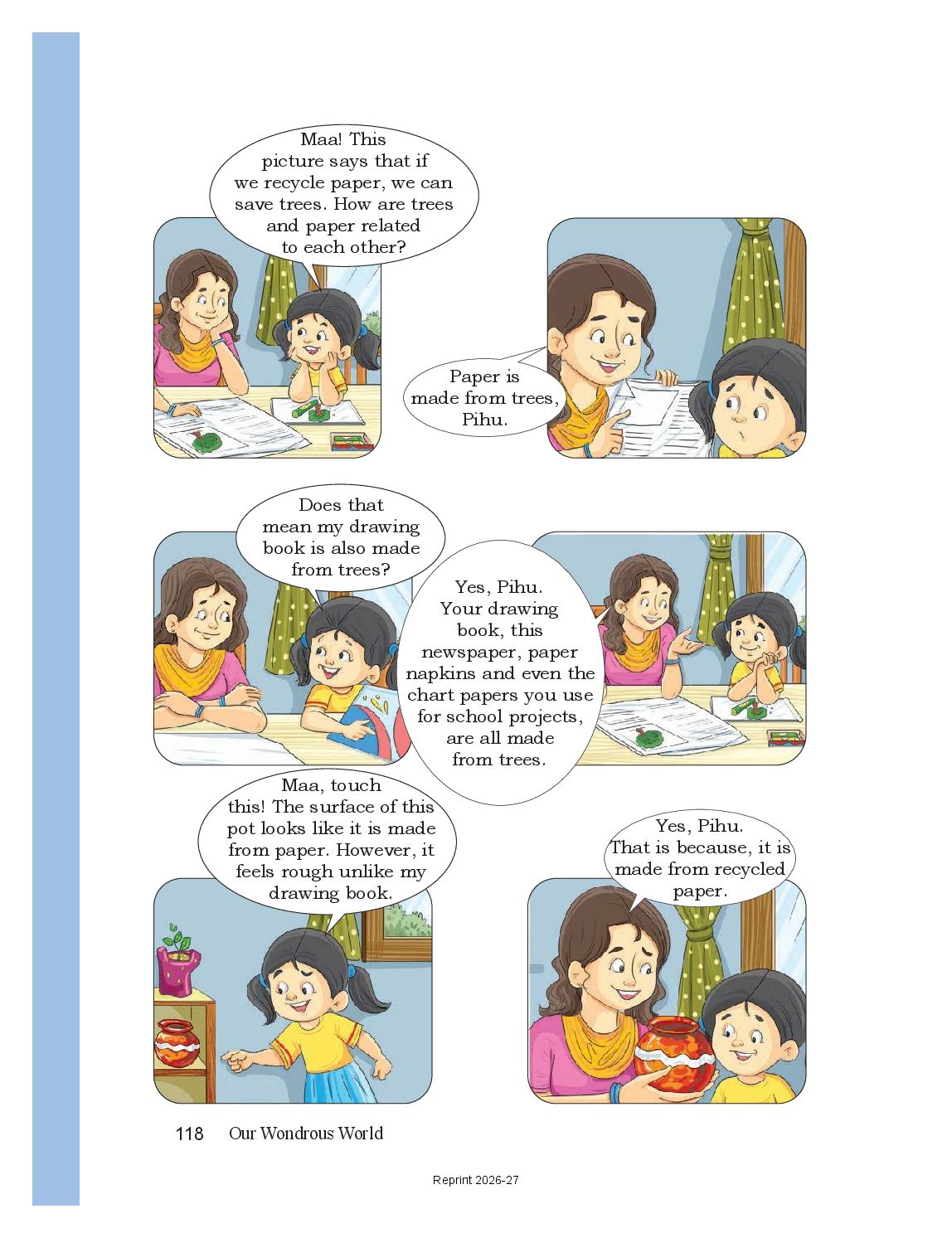
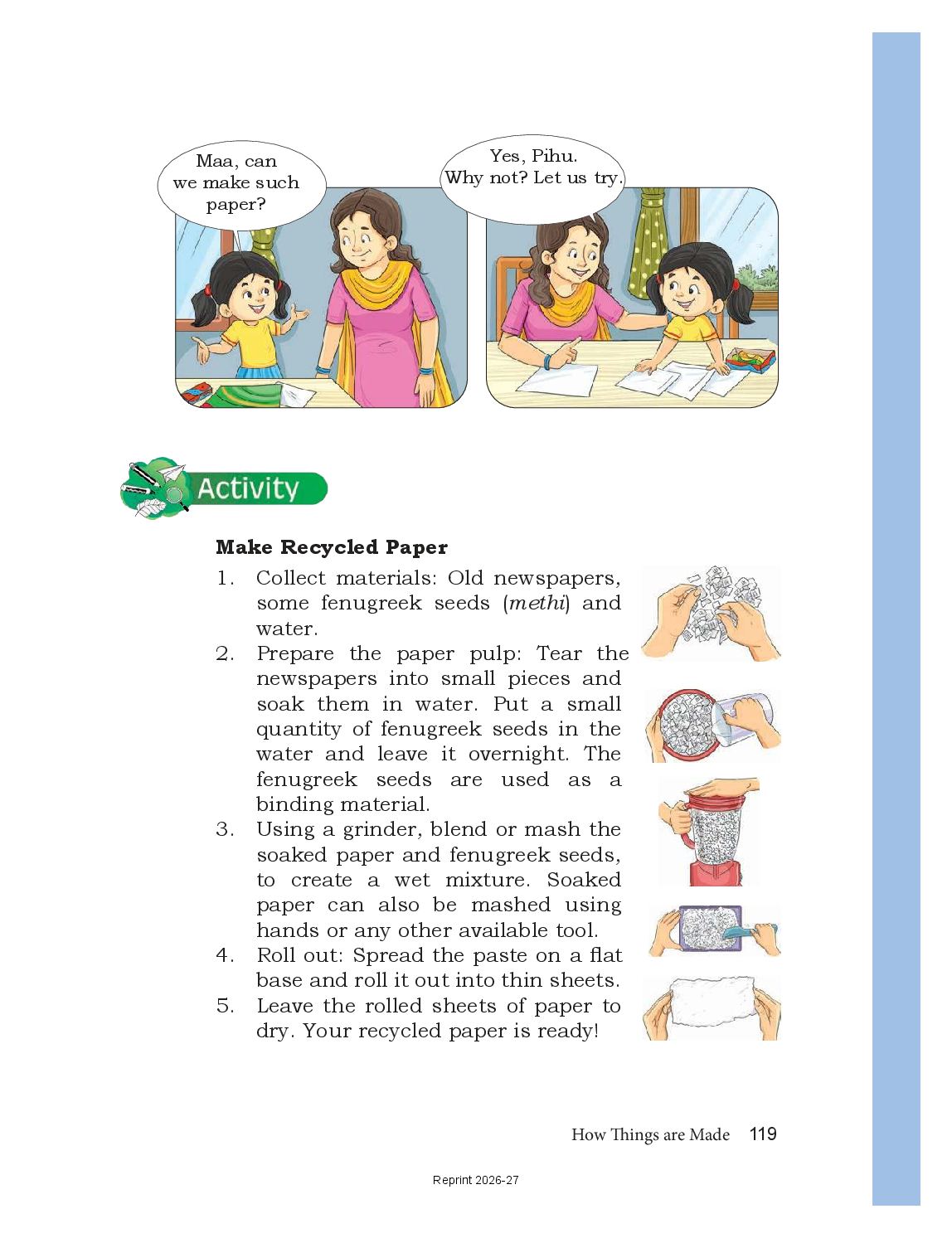
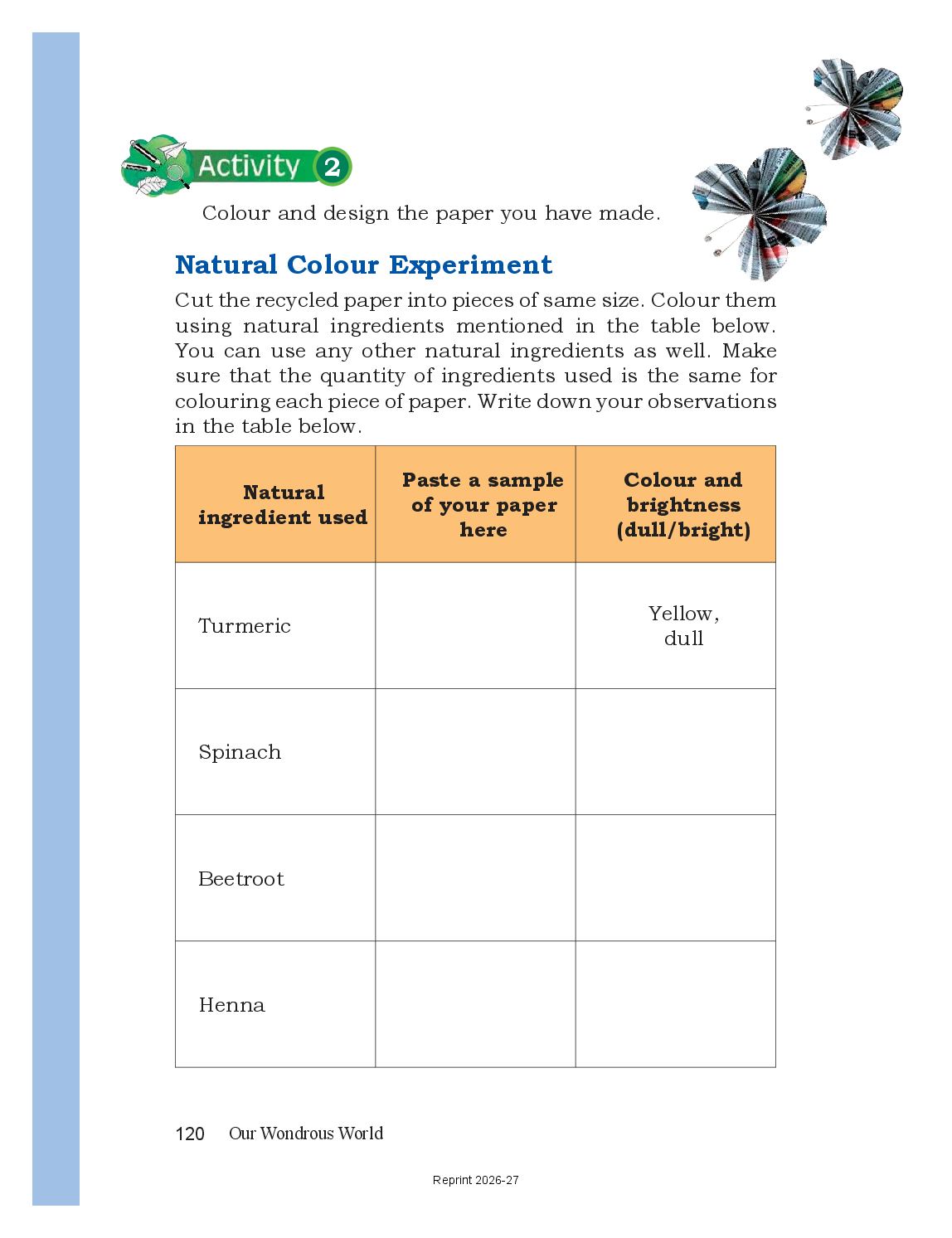
What Is in How Things are Made? (Class 4 EVS Chapter 8)
- Paper is made from trees. Wood is turned into wood pulp and rolled into thin sheets.
- Old paper can be recycled at home: soak it with methi seeds, mash it, roll it and dry it.
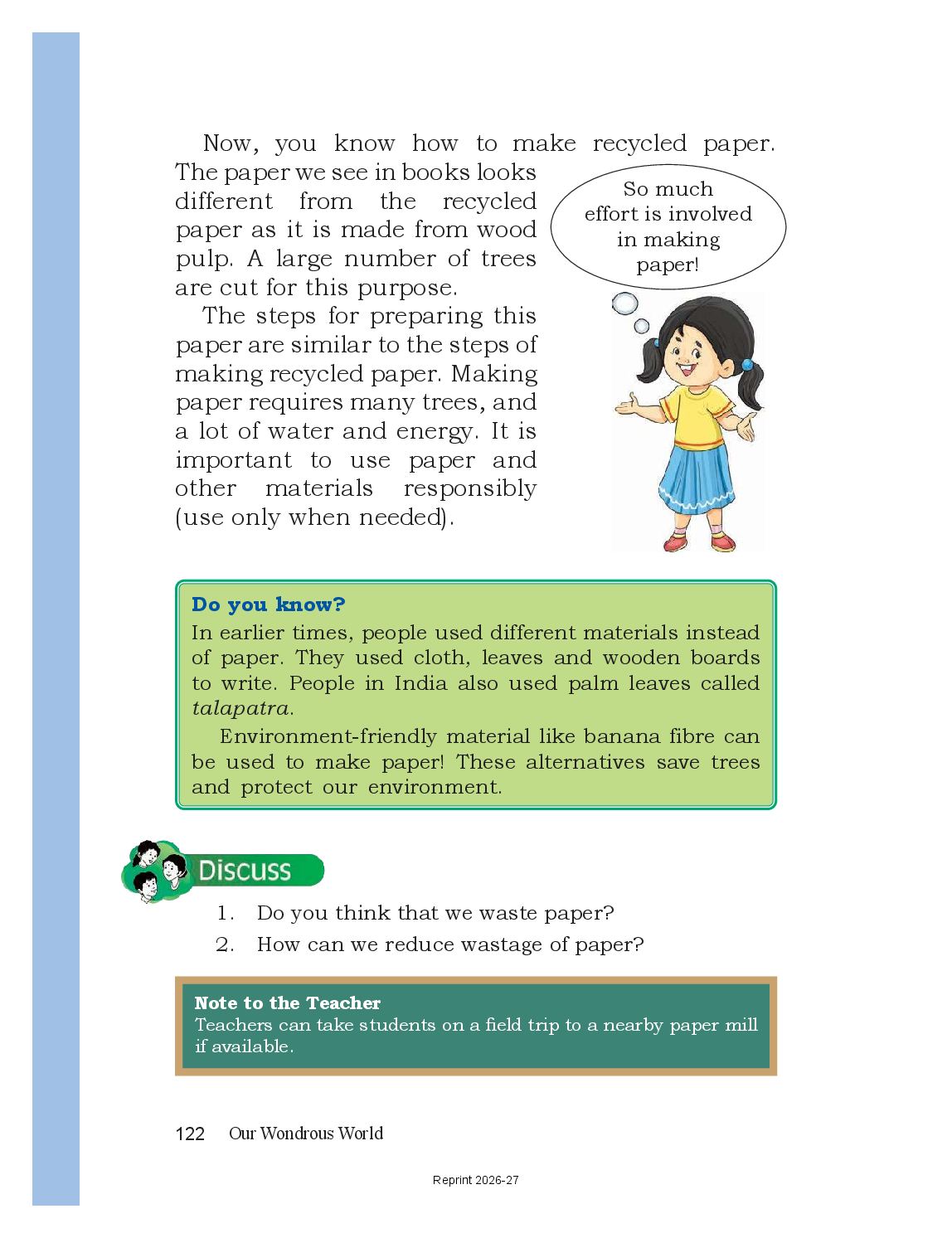
- Recycled paper feels rough. The paper in our books is smooth because it is made from fresh wood pulp.
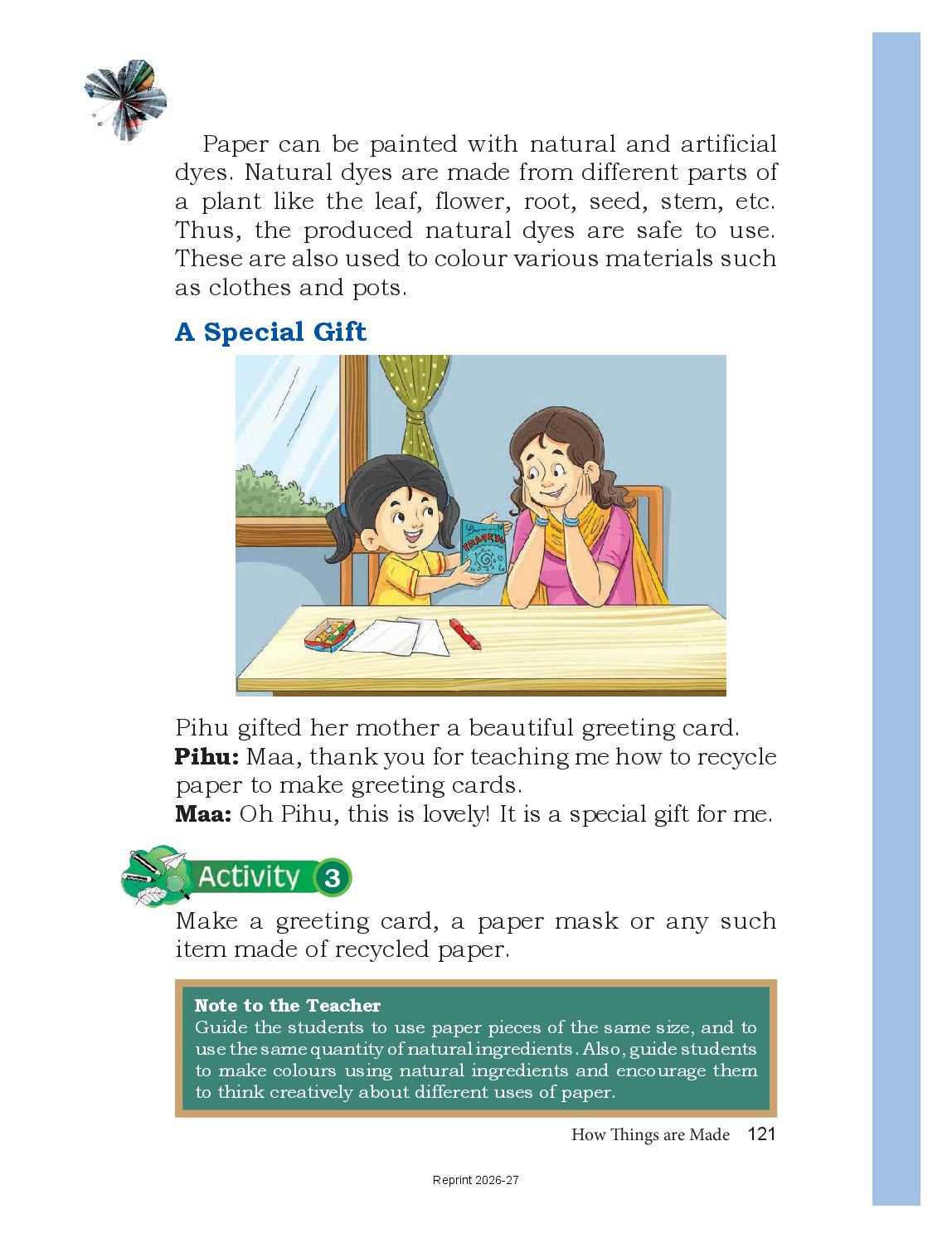
- Natural dyes come from parts of a plant — leaf, flower, root, seed and stem — and are safe to use.
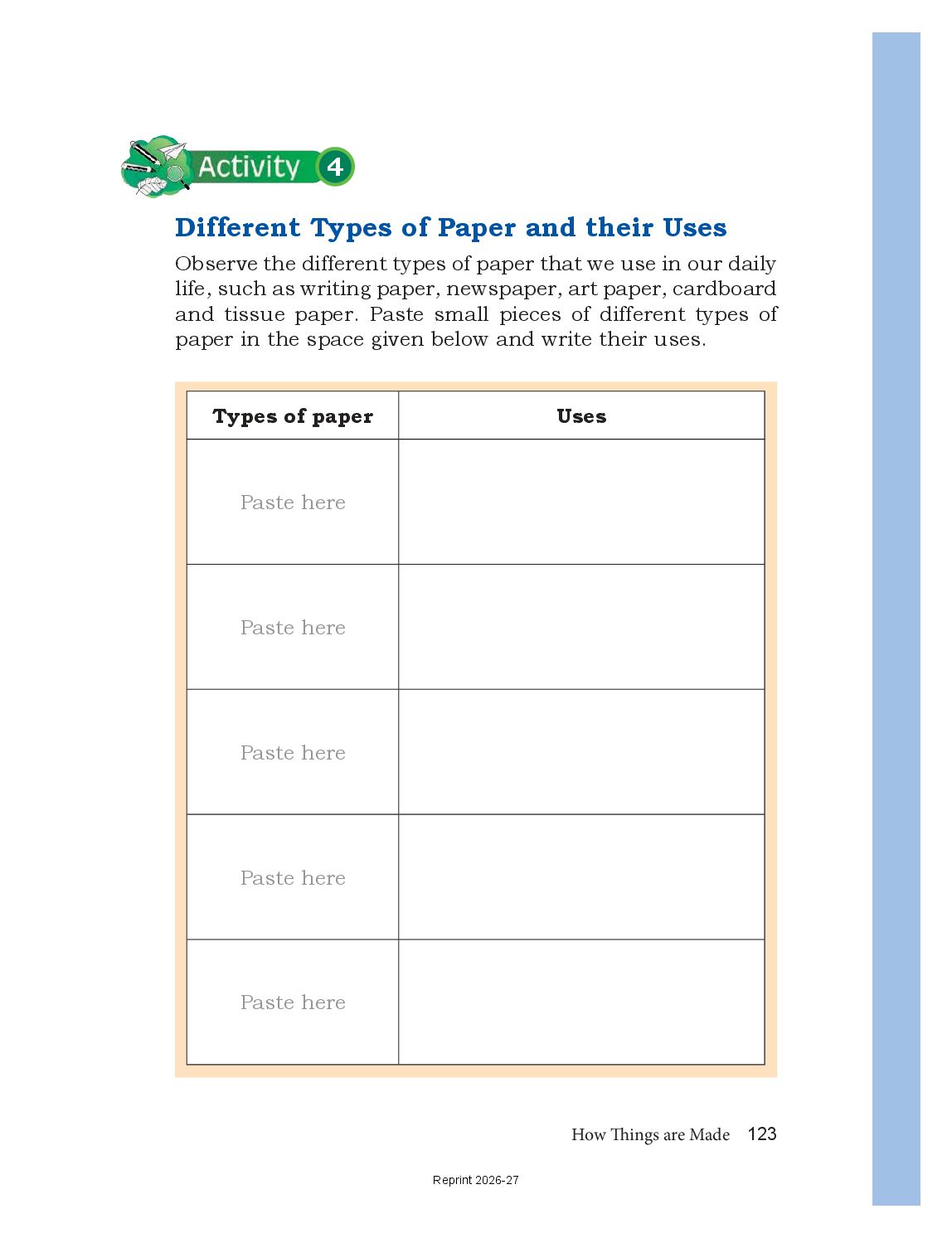
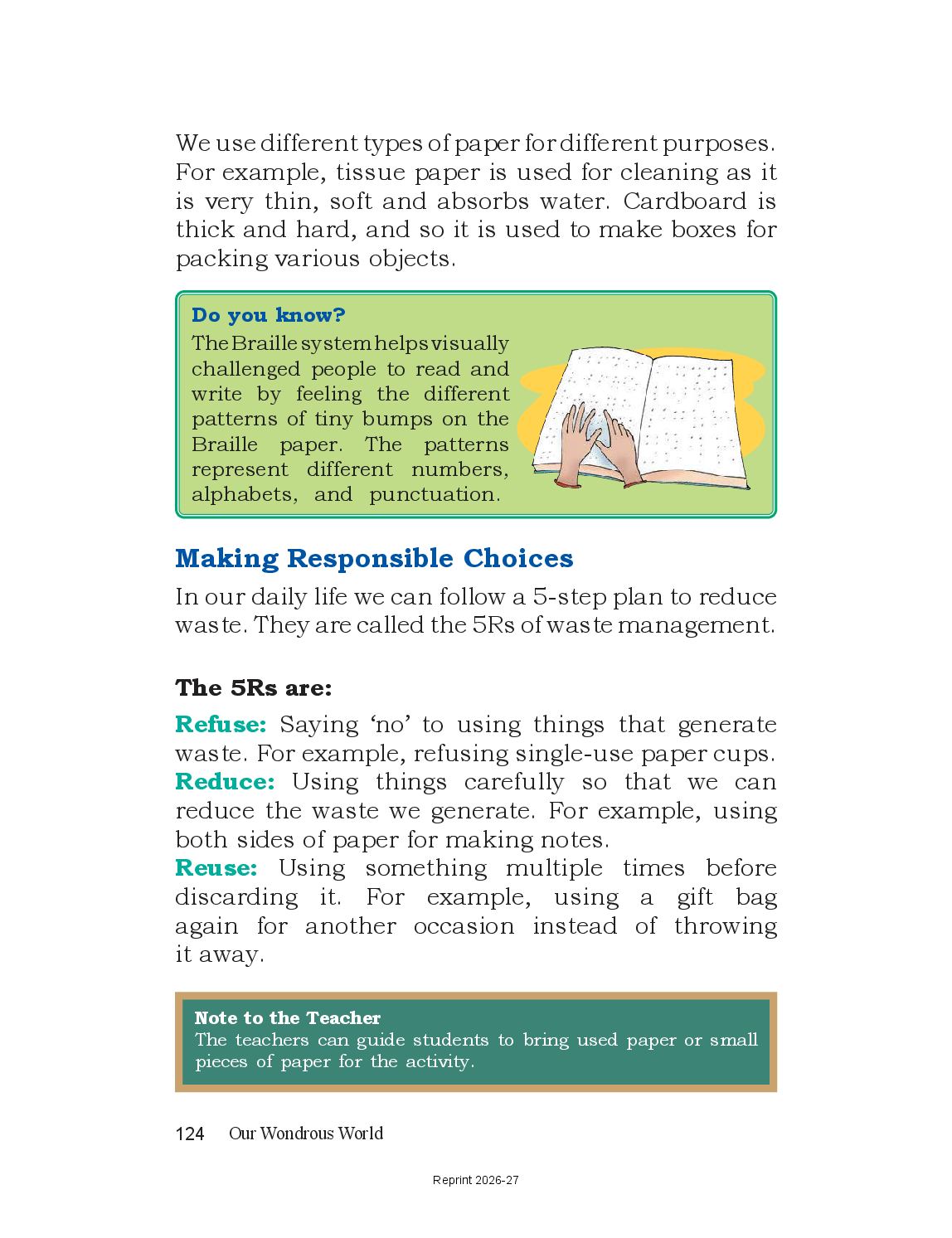
- Different types of paper have different uses: tissue paper cleans, cardboard makes strong boxes.
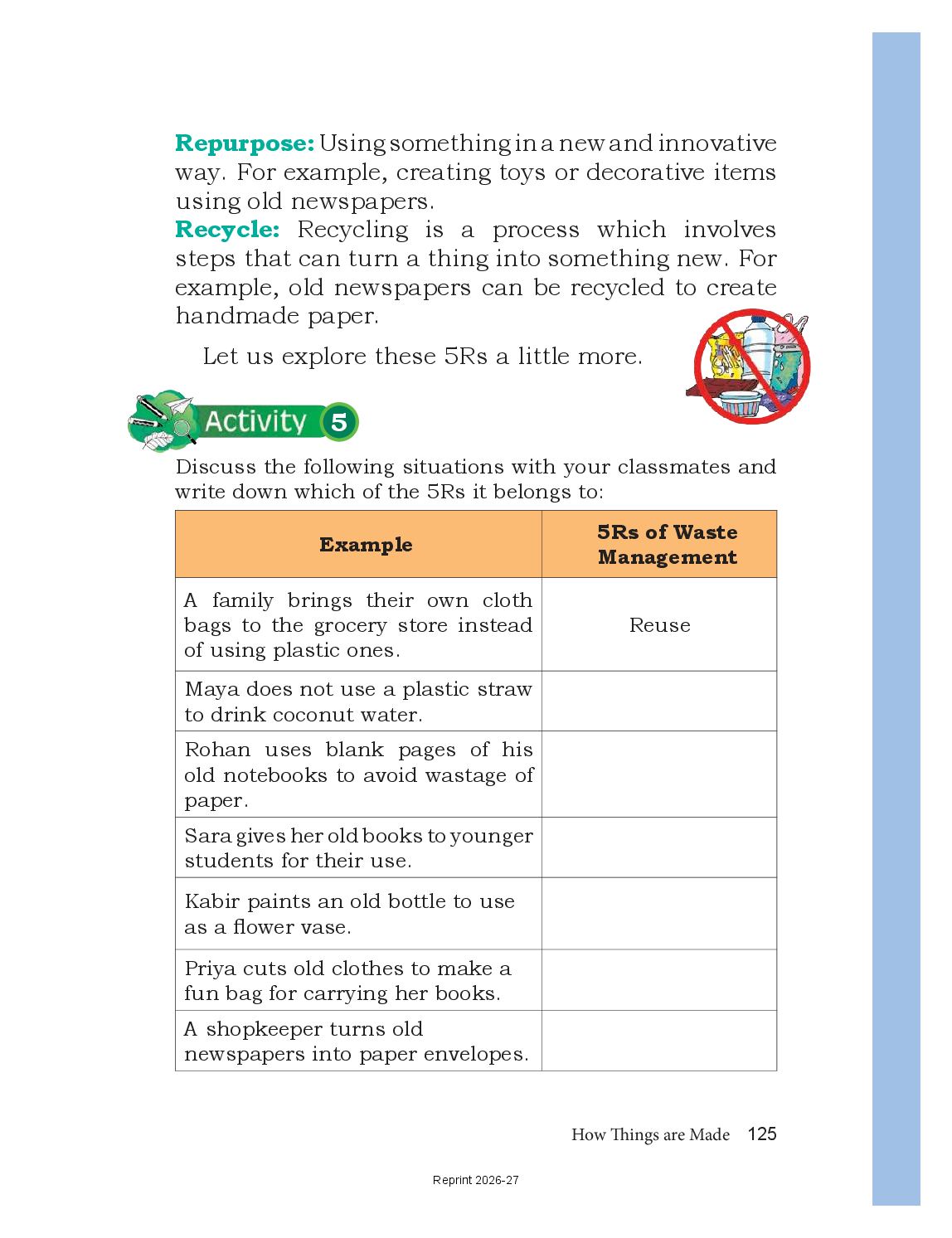
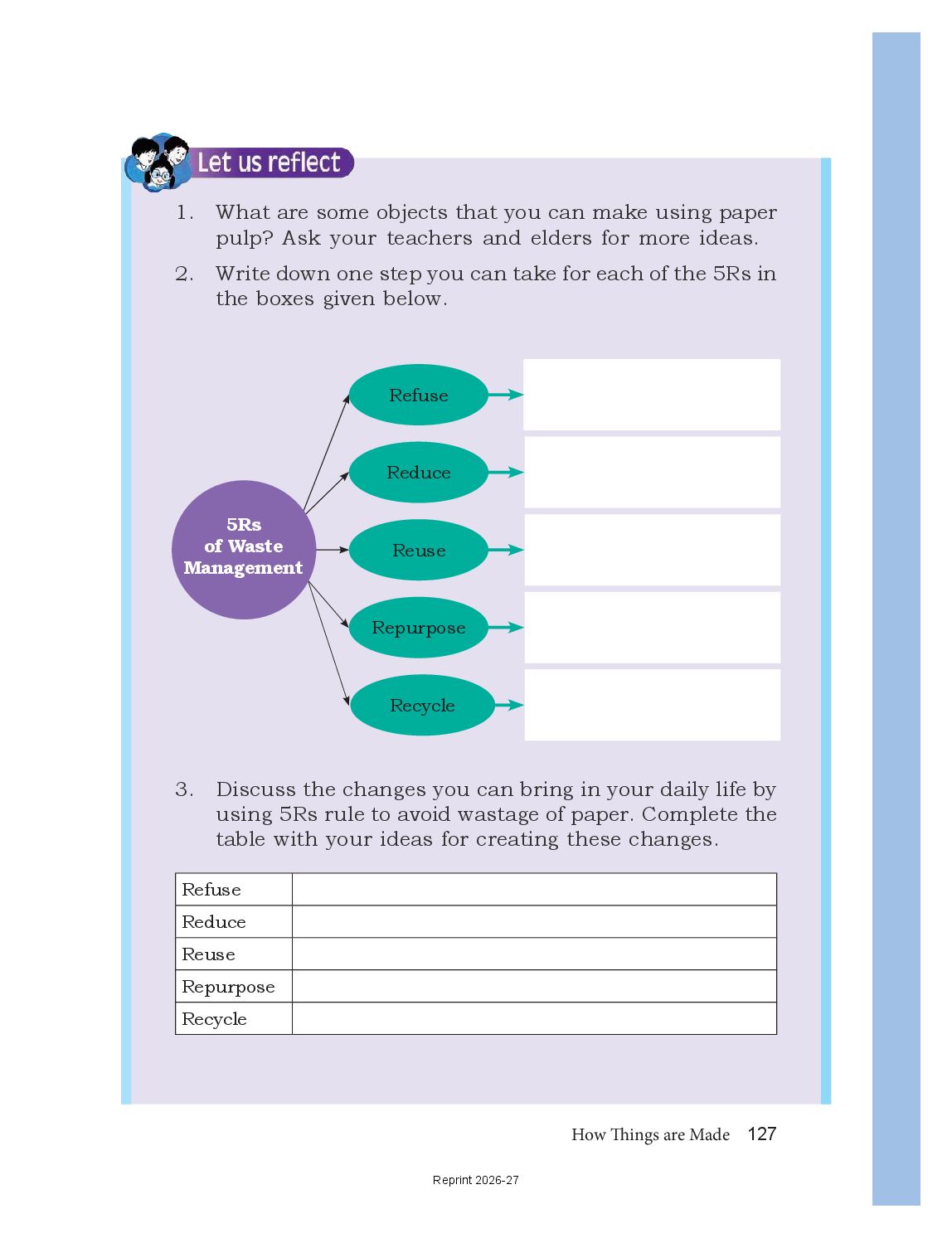
- The 5Rs of waste management are Refuse, Reduce, Reuse, Repurpose and Recycle.
Quick revision – How Things are Made
| Term | What it means | Example in the chapter | Page |
|---|---|---|---|
| Recycled paper | New paper made again from old paper | Pihu makes it from old newspapers | 119 |
| Paper pulp | Wet, mashed paper used to make new paper | Soaked paper ground with methi seeds | 119 |
| Binding material | Something that holds the pulp together | Fenugreek (methi) seeds | 119 |
| Wood pulp | Pulp made from the wood of trees | The paper we see in books | 122 |
| Natural dye | Colour made from a part of a plant | Turmeric, spinach, beetroot, henna | 120–121 |
| Artificial dye | Colour that is not made from plants | Also used to paint paper | 121 |
| Talapatra | Palm leaves people once wrote on | Used in India before paper | 122 |
| Banana fibre | A plant fibre that can be made into paper | An environment-friendly choice | 122 |
| Braille paper | Paper with tiny bumps that can be felt | Helps visually challenged people read | 124 |
| Cardboard | Thick and hard paper | Used to make packing boxes | 124 |
| Tissue paper | Very thin, soft paper that absorbs water | Used for cleaning | 124 |
| 5Rs | Refuse, Reduce, Reuse, Repurpose, Recycle | A 5-step plan to reduce waste | 124–125 |
Old NCERT vs New – Class 4 EVS
This chapter is from Our Wondrous World, the new NCERT Class 4 EVS book (NCF-SE 2023, used from 2025-26). It replaced the old book “Looking Around”, so chapter numbers and names differ from older PDFs.
Solutions and All Chapters
Answers to the exercises and the full chapter list of Our Wondrous World:
How Things are Made – Overview
| Class | Class 4 |
| Subject | EVS |
| Book | Our Wondrous World – new NCERT book |
| Chapter | 8 of 10 – How Things are Made |
| Book pages | 117 – 127 |
| Edition | NCERT Reprint 2026-27 |
| Session | 2026-27 |
| Free – read online or download |
Class 4 EVS Chapter 8 – FAQs
Where can I download How Things are Made Class 4 PDF?
From the download table on this page – the chapter PDF is free, and the full book is linked too.
What is Class 4 EVS Chapter 8 about?
Paper is made from trees. Wood is turned into wood pulp and rolled into thin sheets.
Is How Things are Made from the new NCERT Class 4 EVS book?
Yes. It is chapter 8 of our wondrous world, the new NCERT Class 4 EVS book for 2026-27.
Is this the latest NCERT edition for 2026-27?
Yes – the PDF is NCERT’s latest edition for the 2026-27 session.
Where are the NCERT Solutions for Class 4 EVS Chapter 8?
Open the NCERT Solutions link above for answers to the exercise questions.