Download Constructions and Tilings – NCERT Class 7 Maths Chapter 14 PDF from the new NCERT Class 7 Maths book Ganita Prakash (2026-27). Read the chapter online or download the free PDF. Cutting a line segment (or any figure) into two identical parts is called bisection. A line that bisects a segment and is perpendicular to it is the perpendicular bisector.
Constructions and Tilings PDF – Chapter 14 of Ganita Prakash (Part II)
Read the chapter online or download the PDF.
| Chapter | Download | |
|---|---|---|
| Chapter 14 PDF | Constructions and Tilings | View PDF |
| Full book | NCERT Class 7 Maths – Ganita Prakash | View Book |
Read Online
What Is in Constructions and Tilings? (Class 7 Maths Chapter 14)
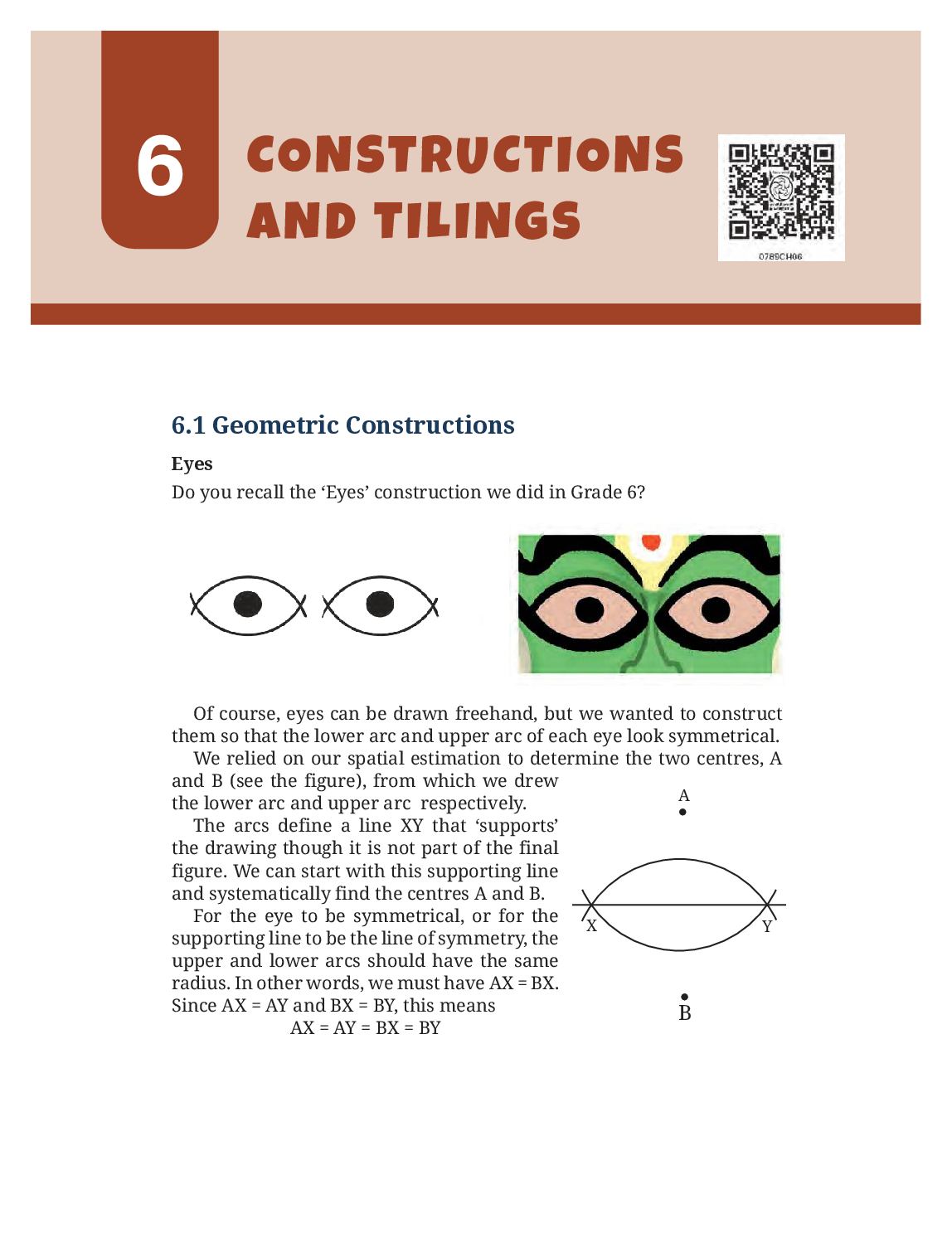
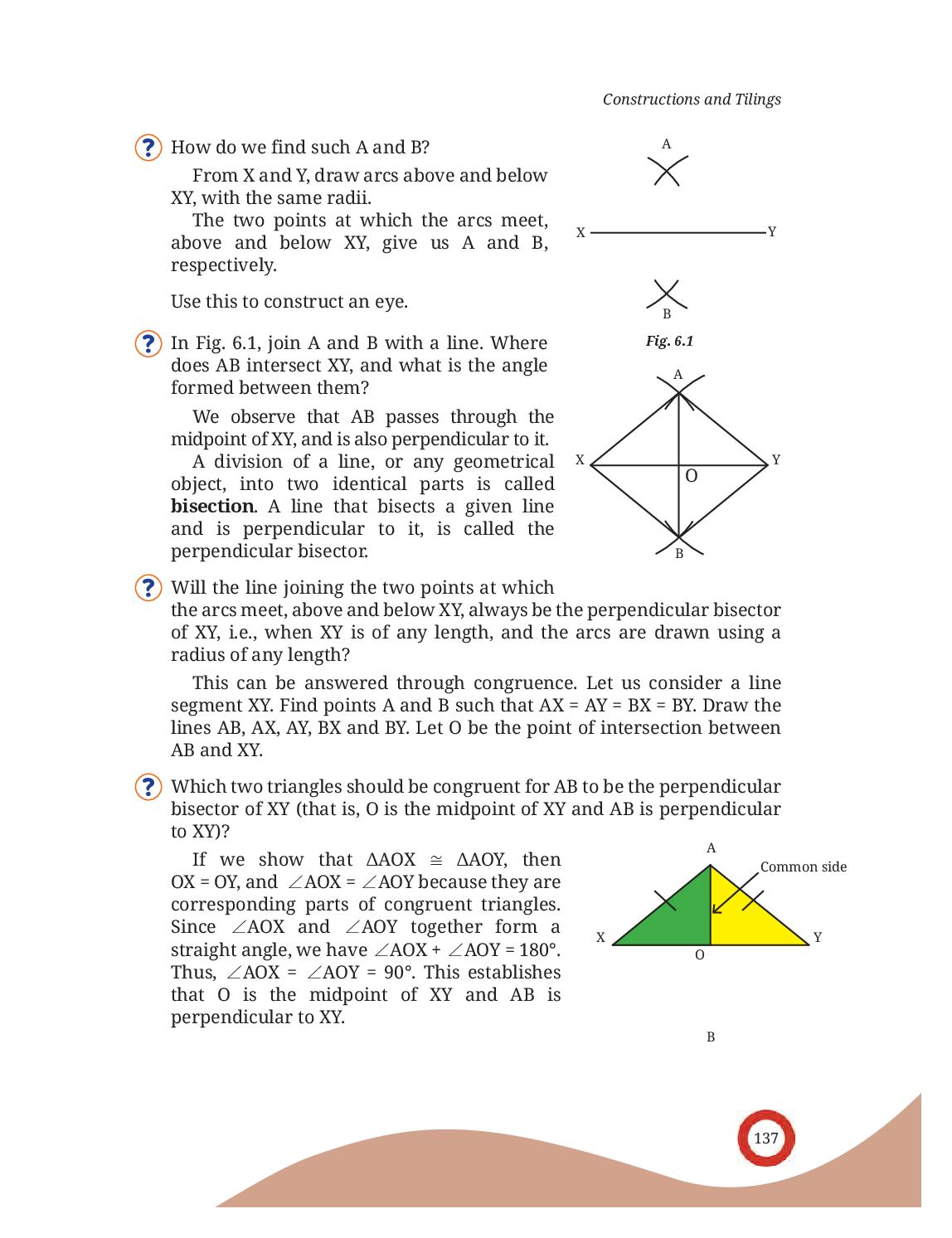
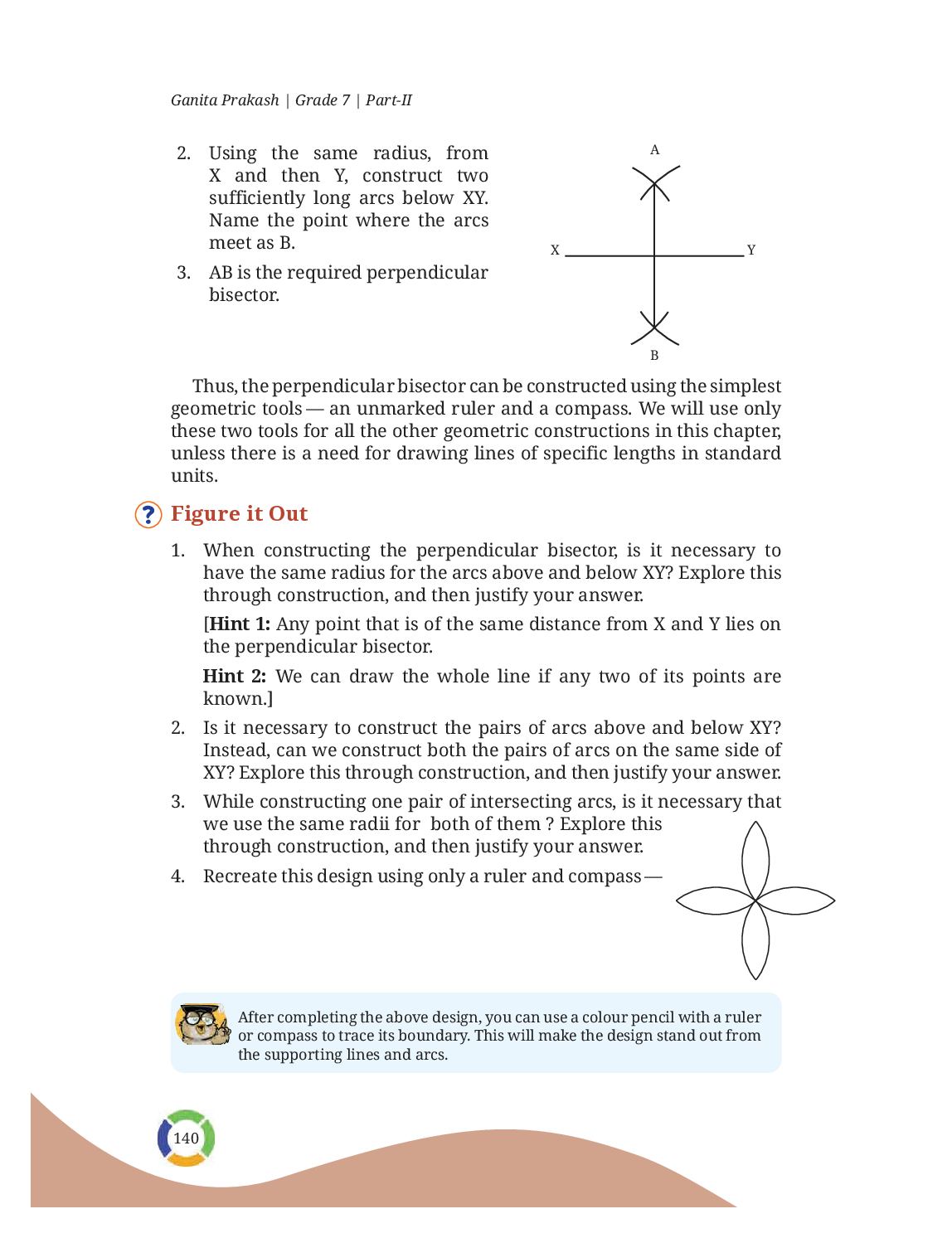
- Cutting a line segment (or any figure) into two identical parts is called bisection. A line that bisects a segment and is perpendicular to it is the perpendicular bisector.
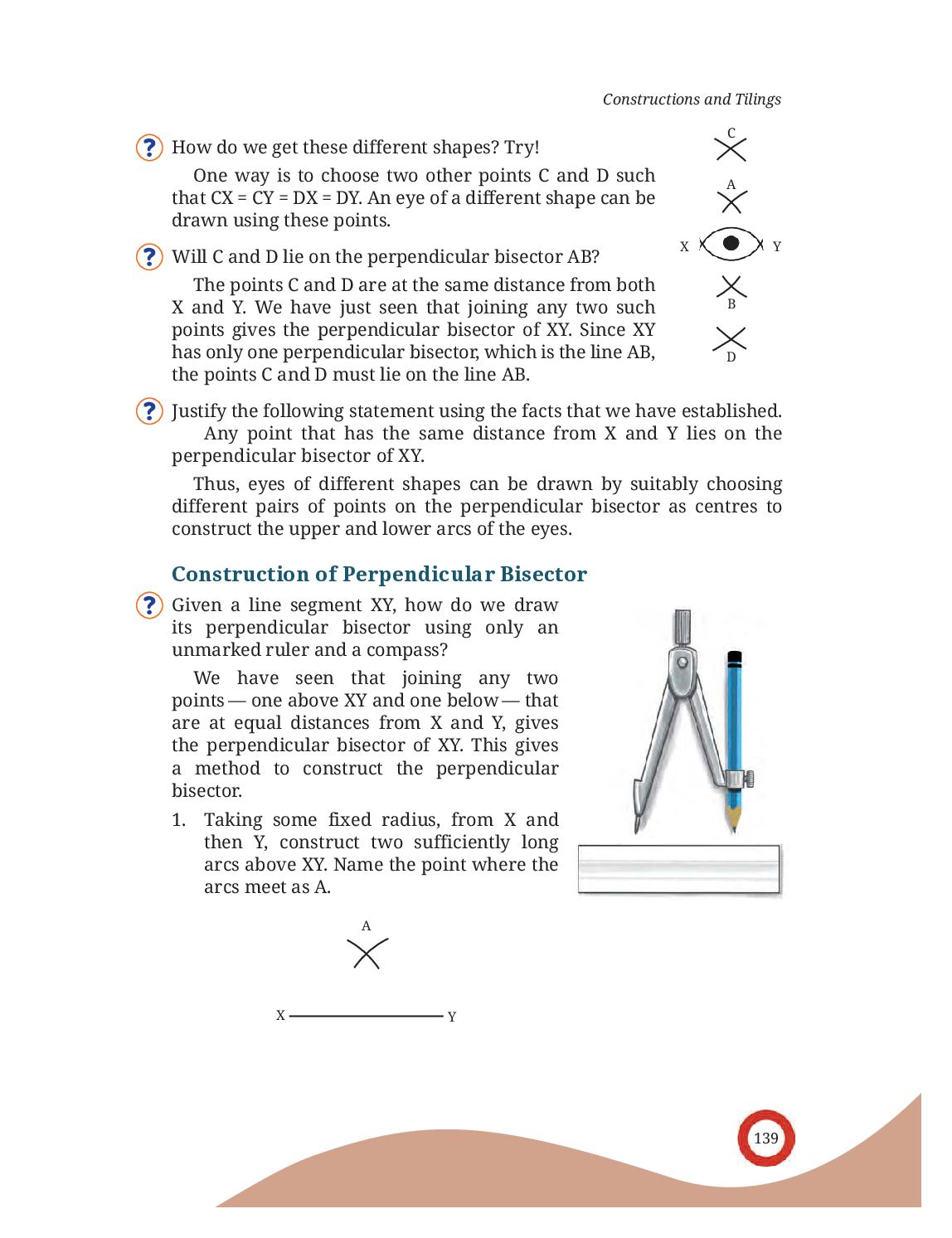
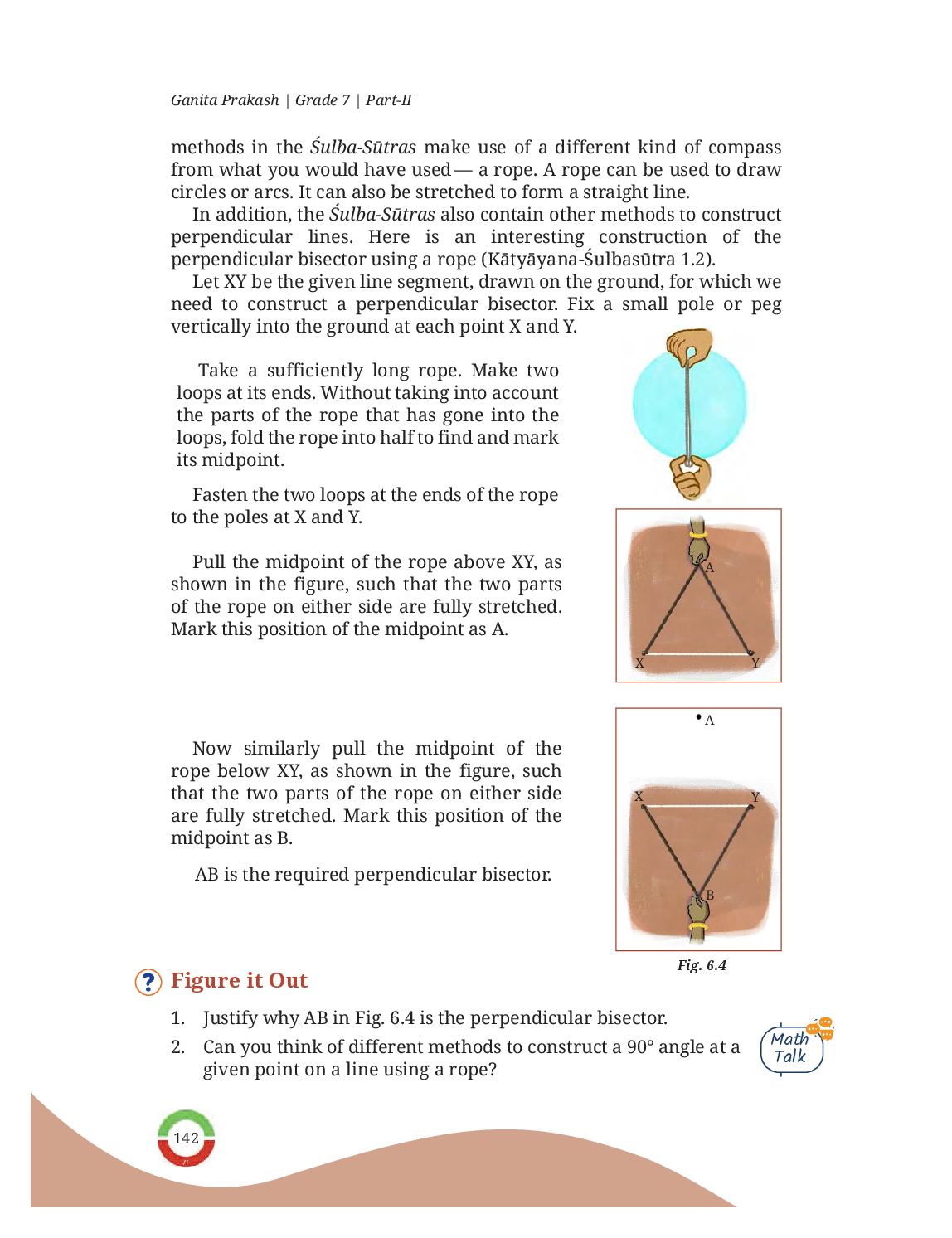
- Key property: a point is at the same distance from X and Y exactly when it lies on the perpendicular bisector of XY. Two such points are enough to draw the whole line — that is why the compass construction works.
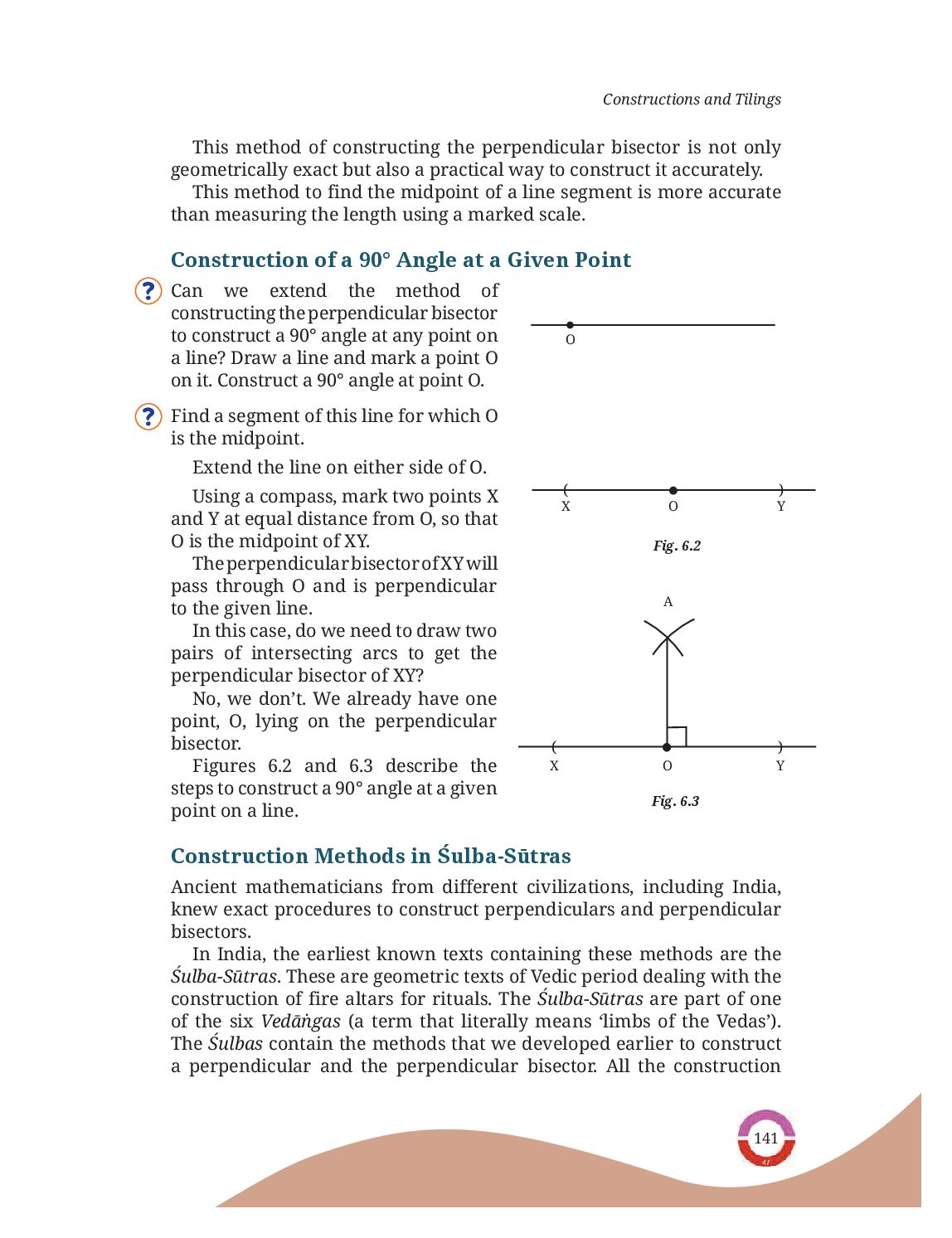
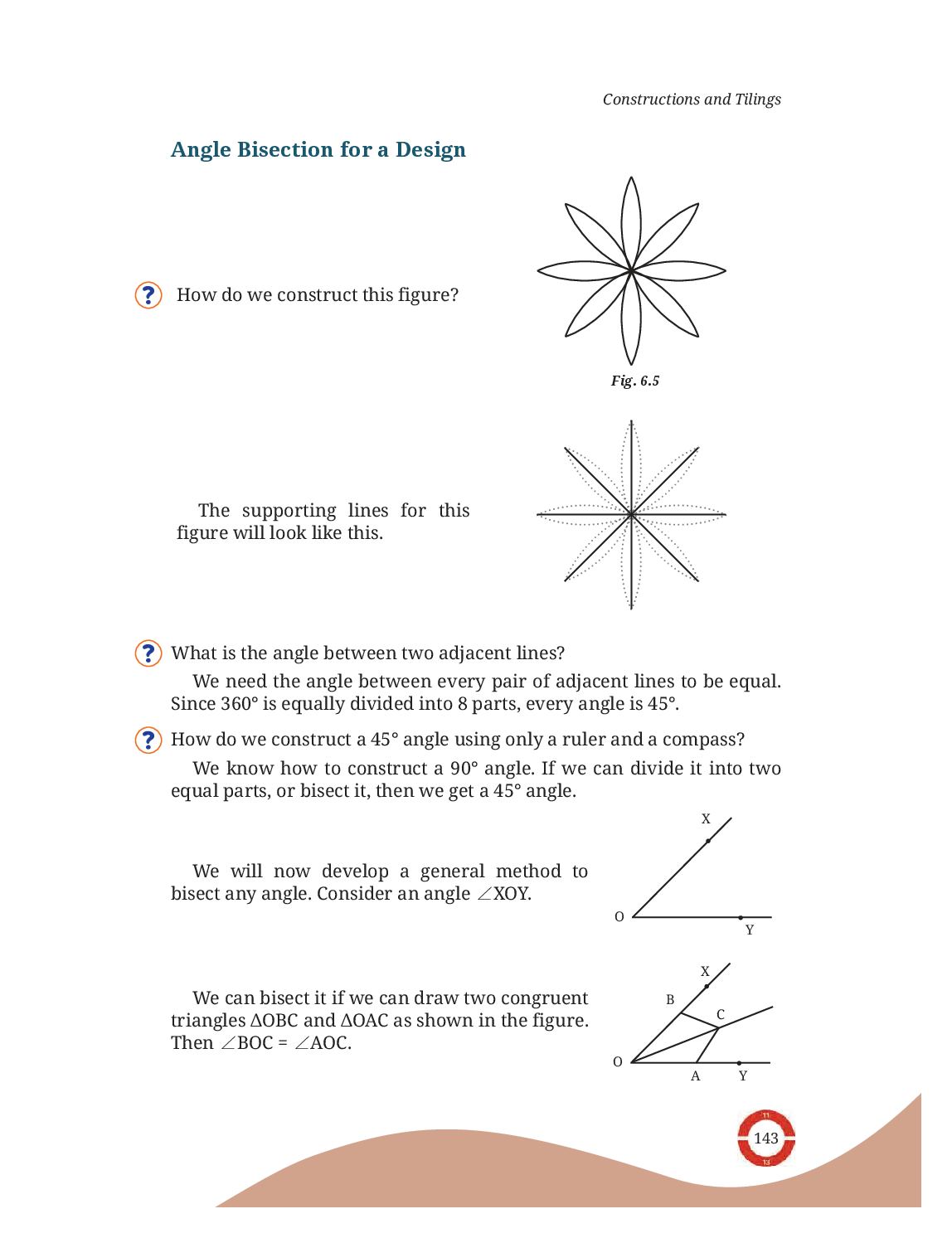
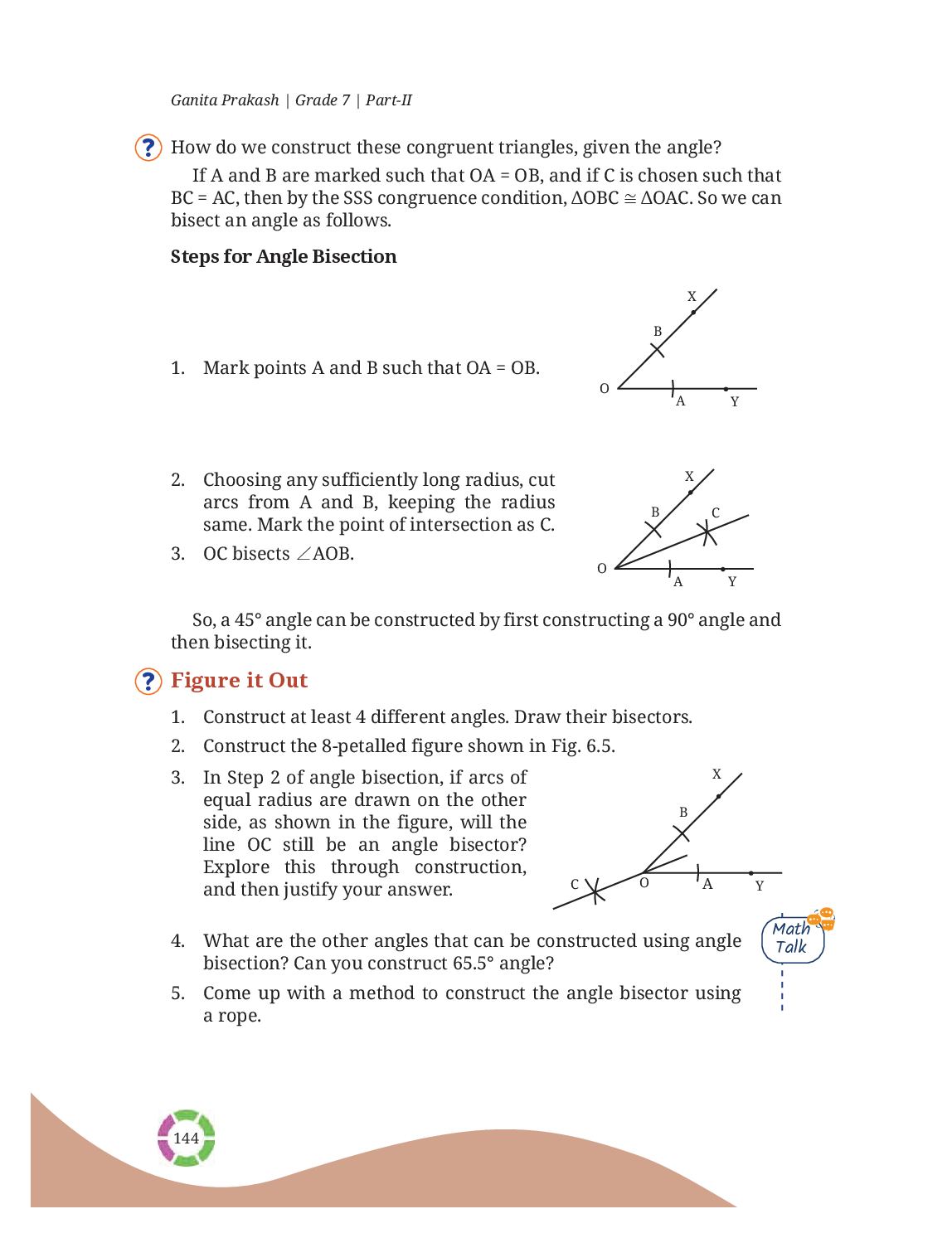
- The same idea, applied to a segment whose midpoint is O, gives a 90° angle at O. Bisecting 90° gives 45°; an equilateral triangle gives 60°; bisecting 60° gives 30° and then 15°.
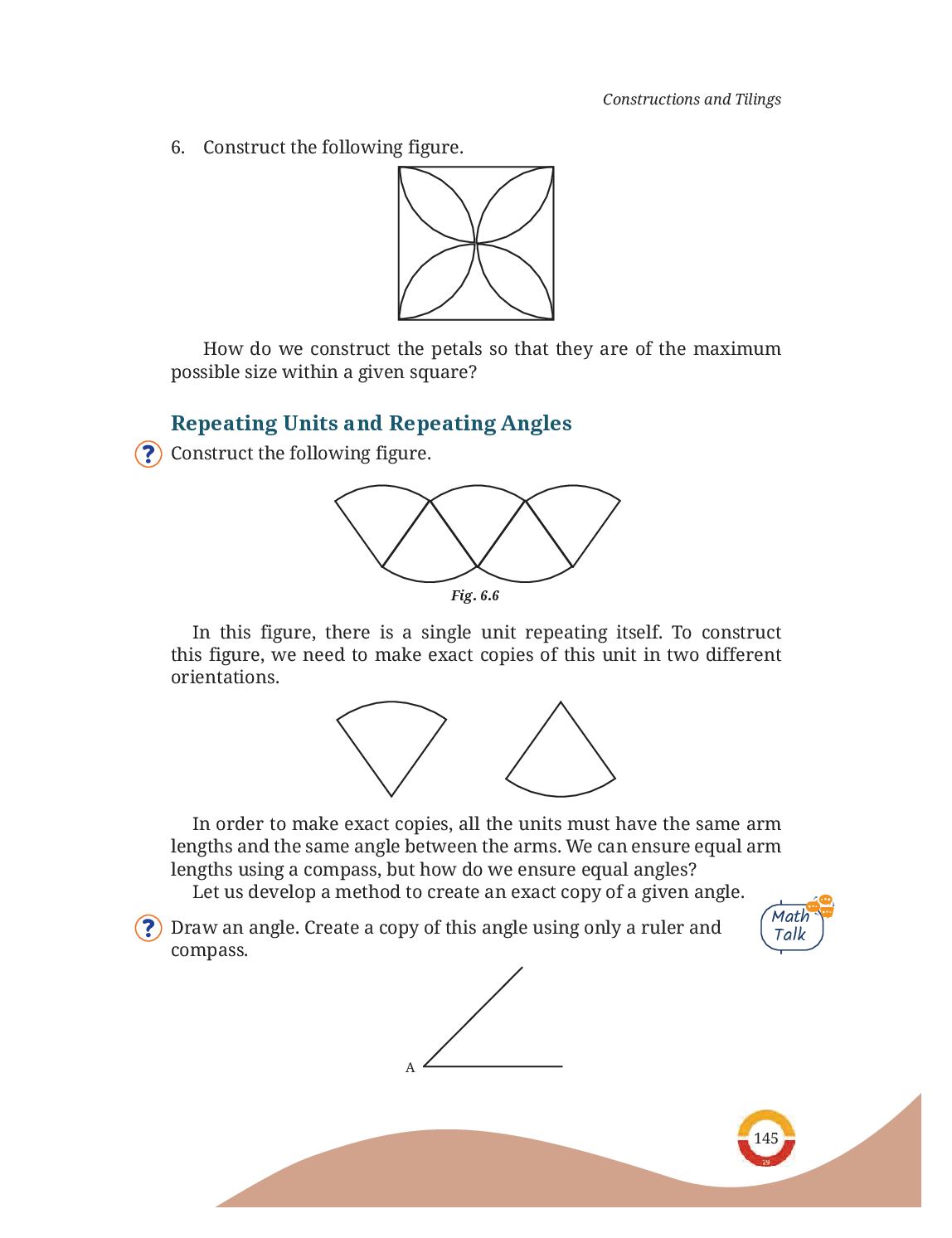
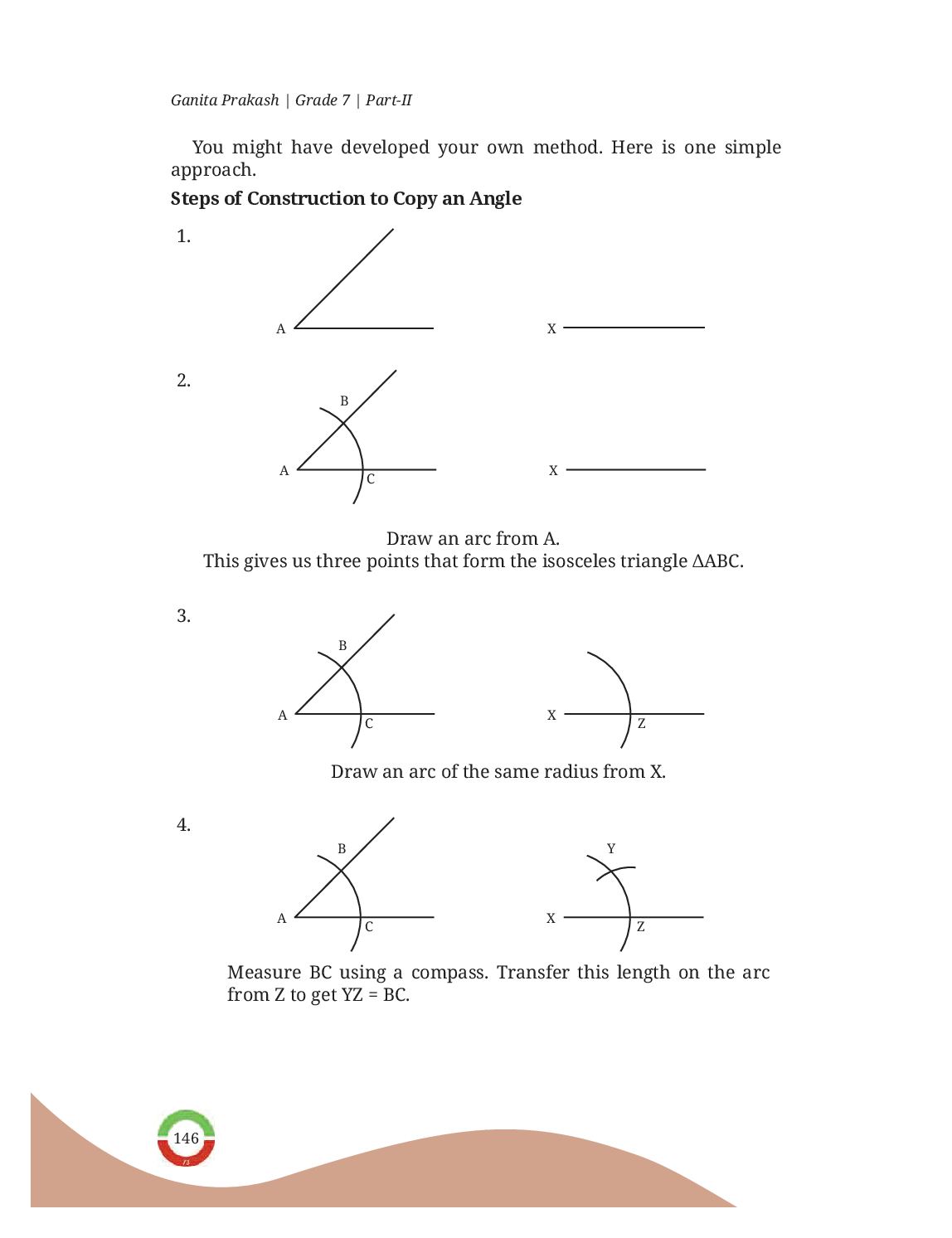
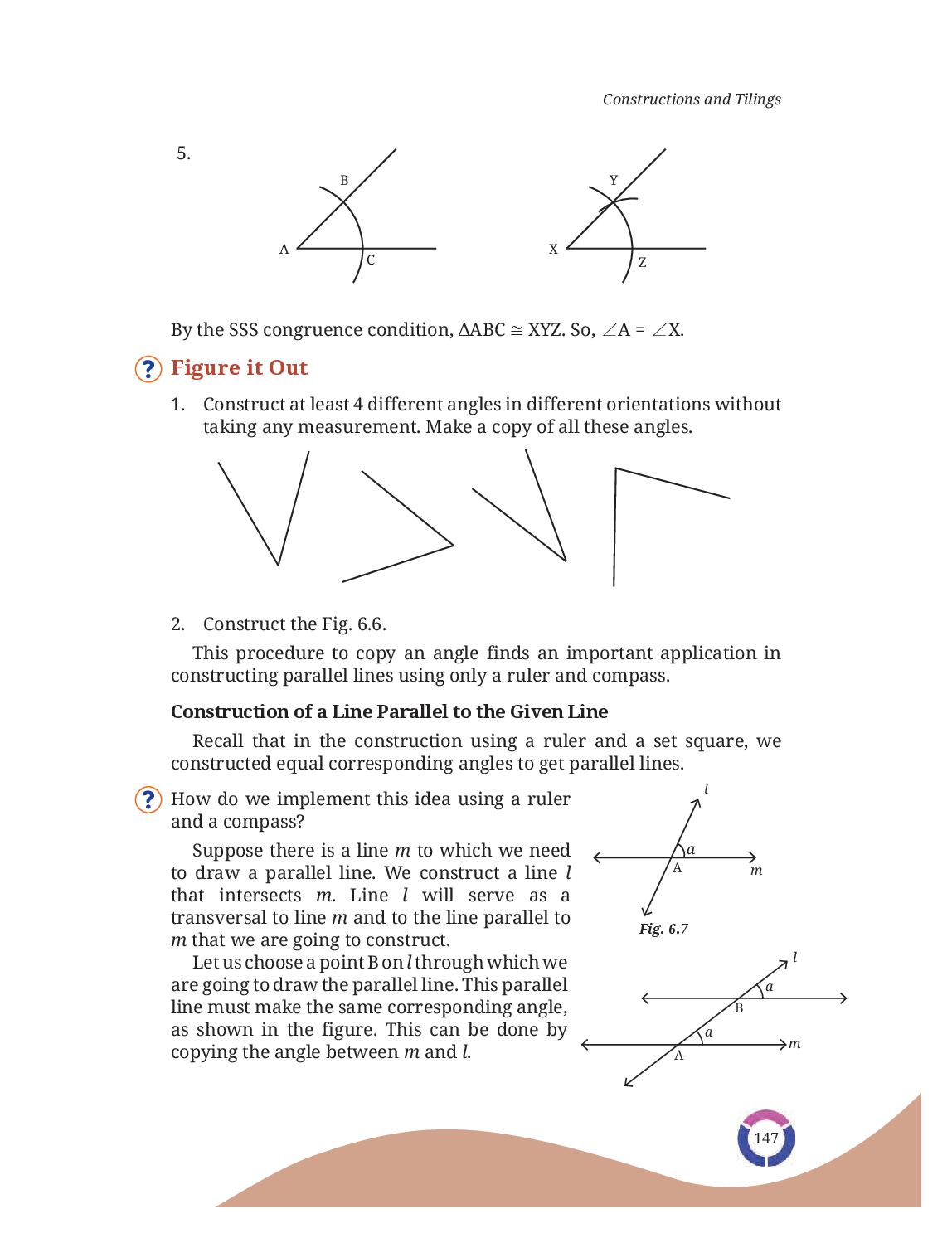
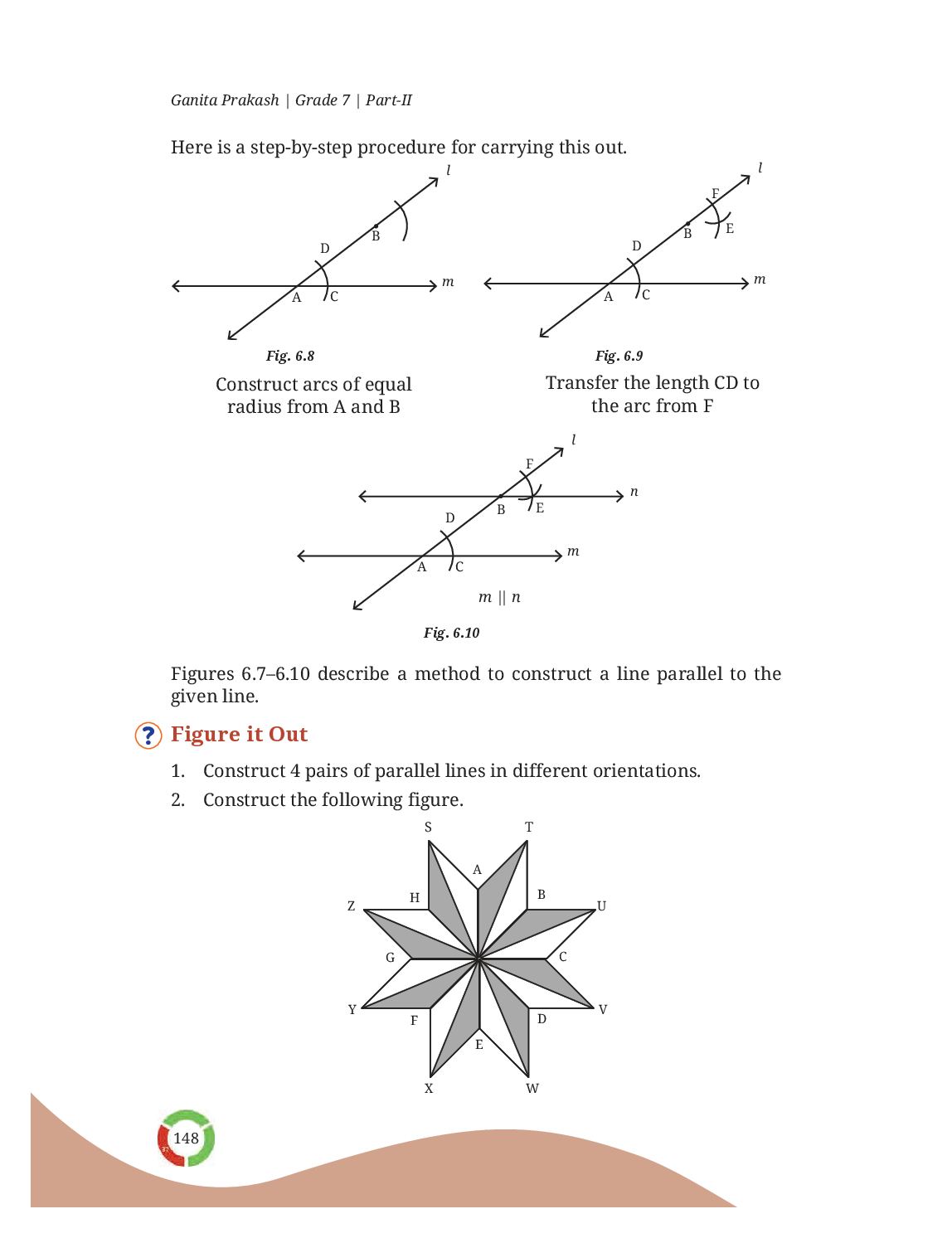
- An angle is copied by transferring a chord (SSS congruence) and bisected by cutting equal arcs (SSS congruence). Copying an angle is what lets you construct parallel lines — equal corresponding angles.
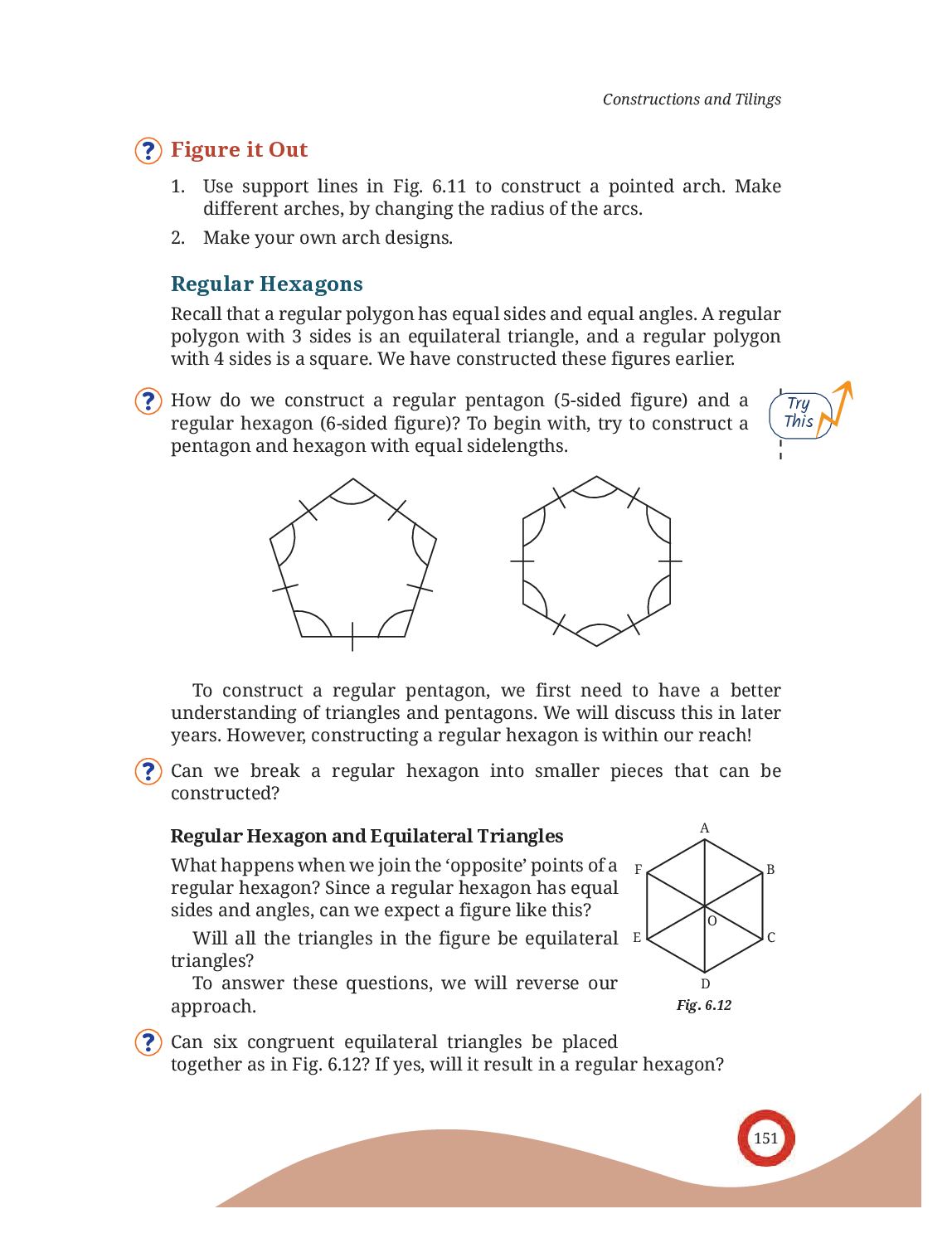
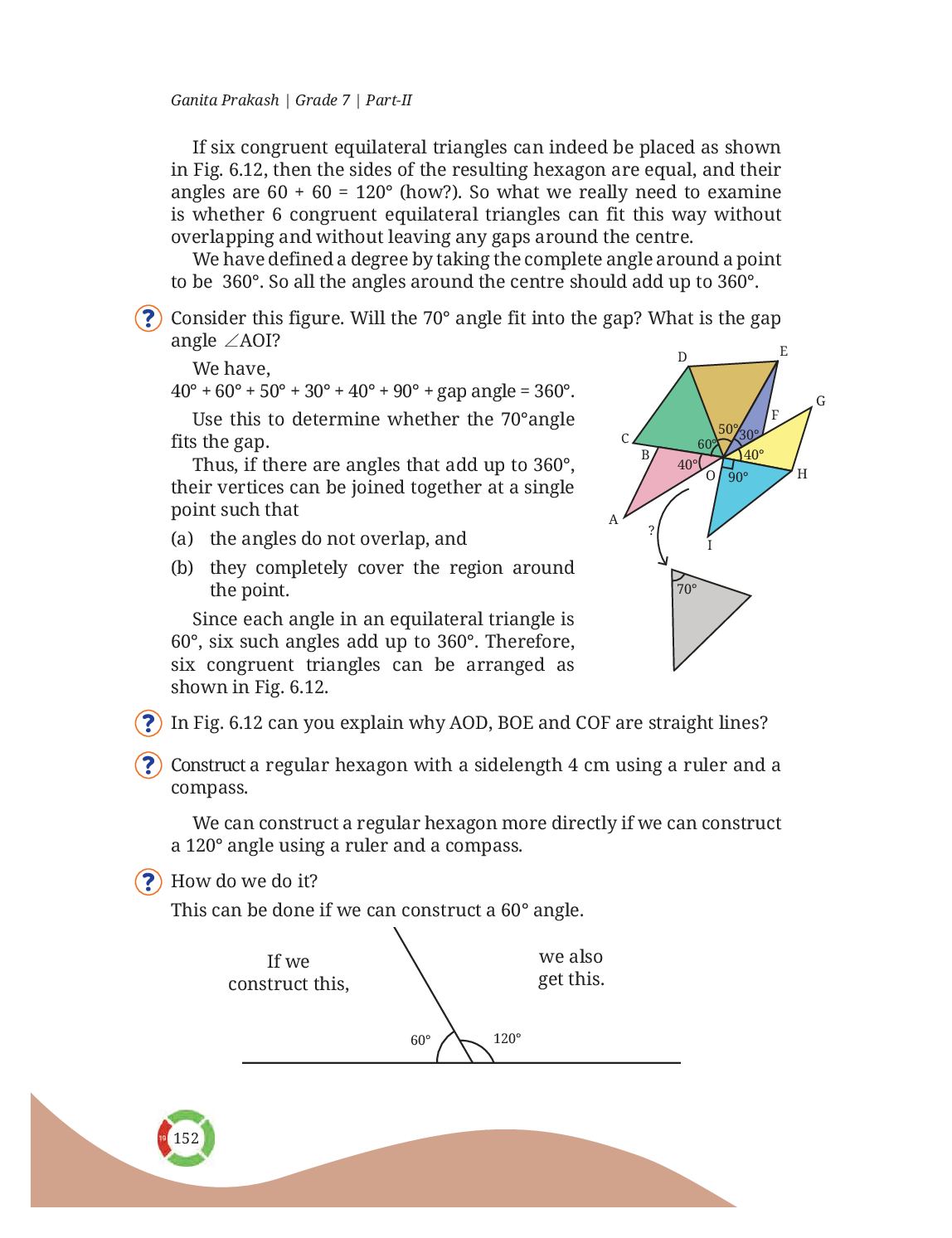
- Angles that add to 360° can be packed around a point with no gap and no overlap. Six 60° angles do it, so six equilateral triangles make a regular hexagon, whose angles are 60° + 60° = 120°.
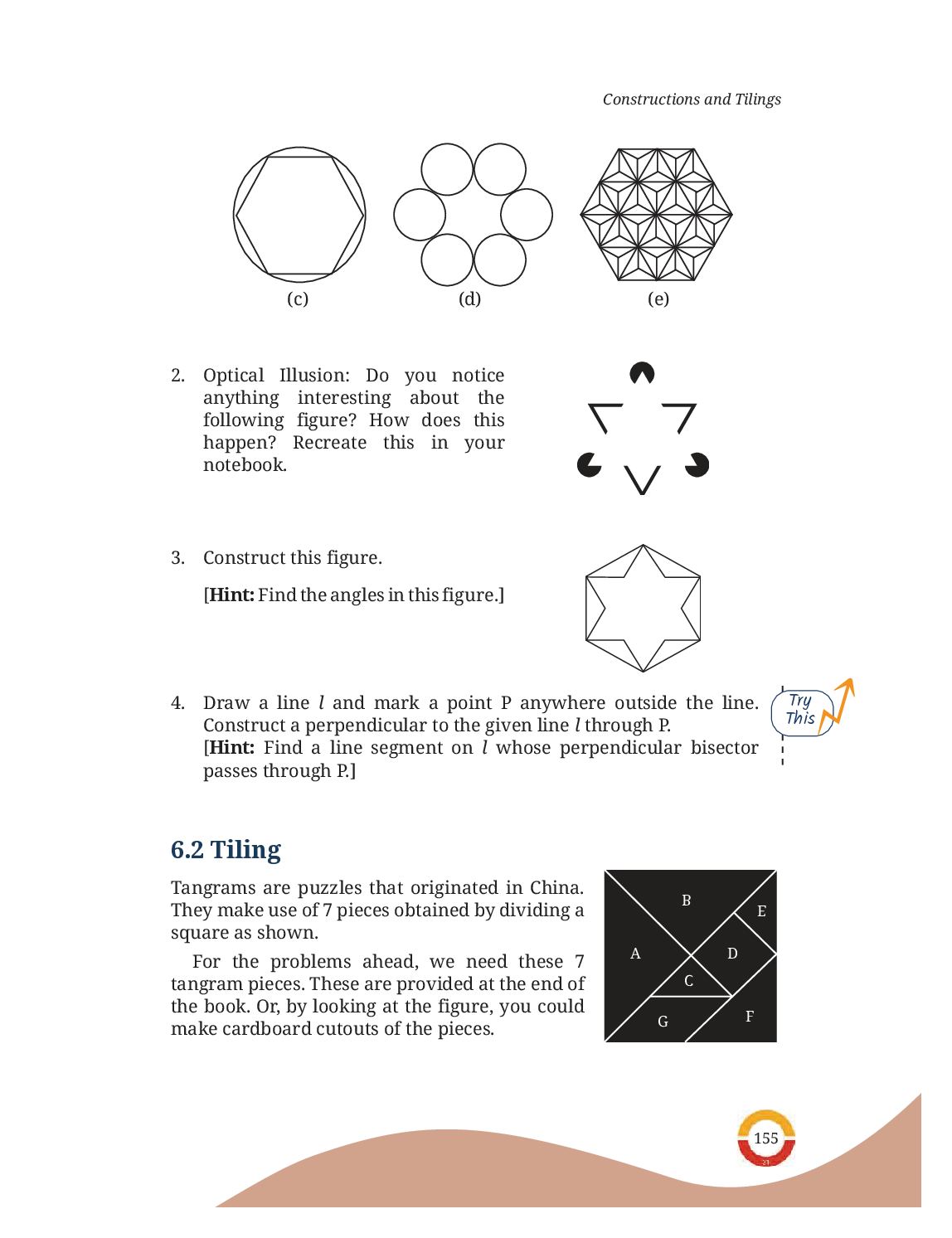
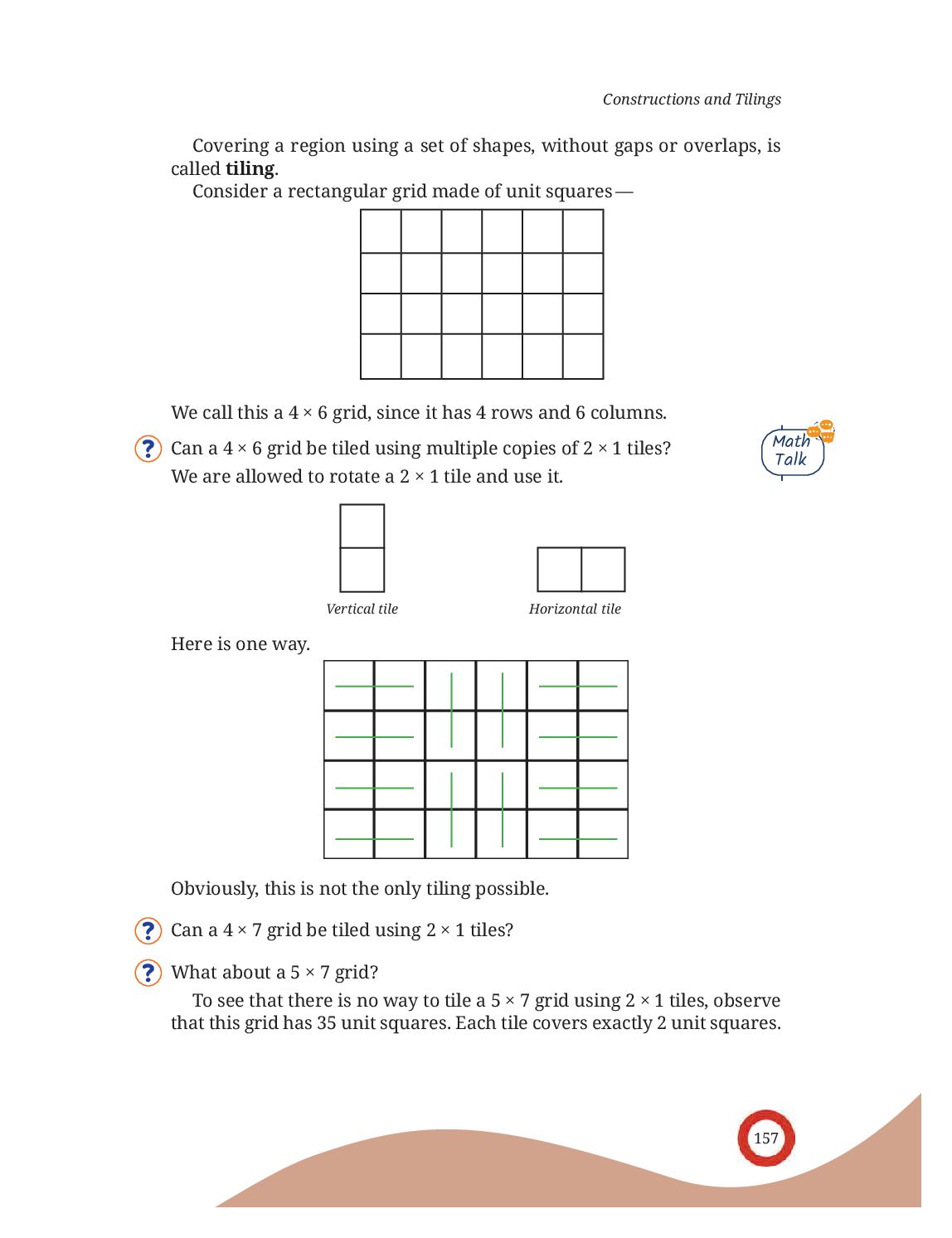
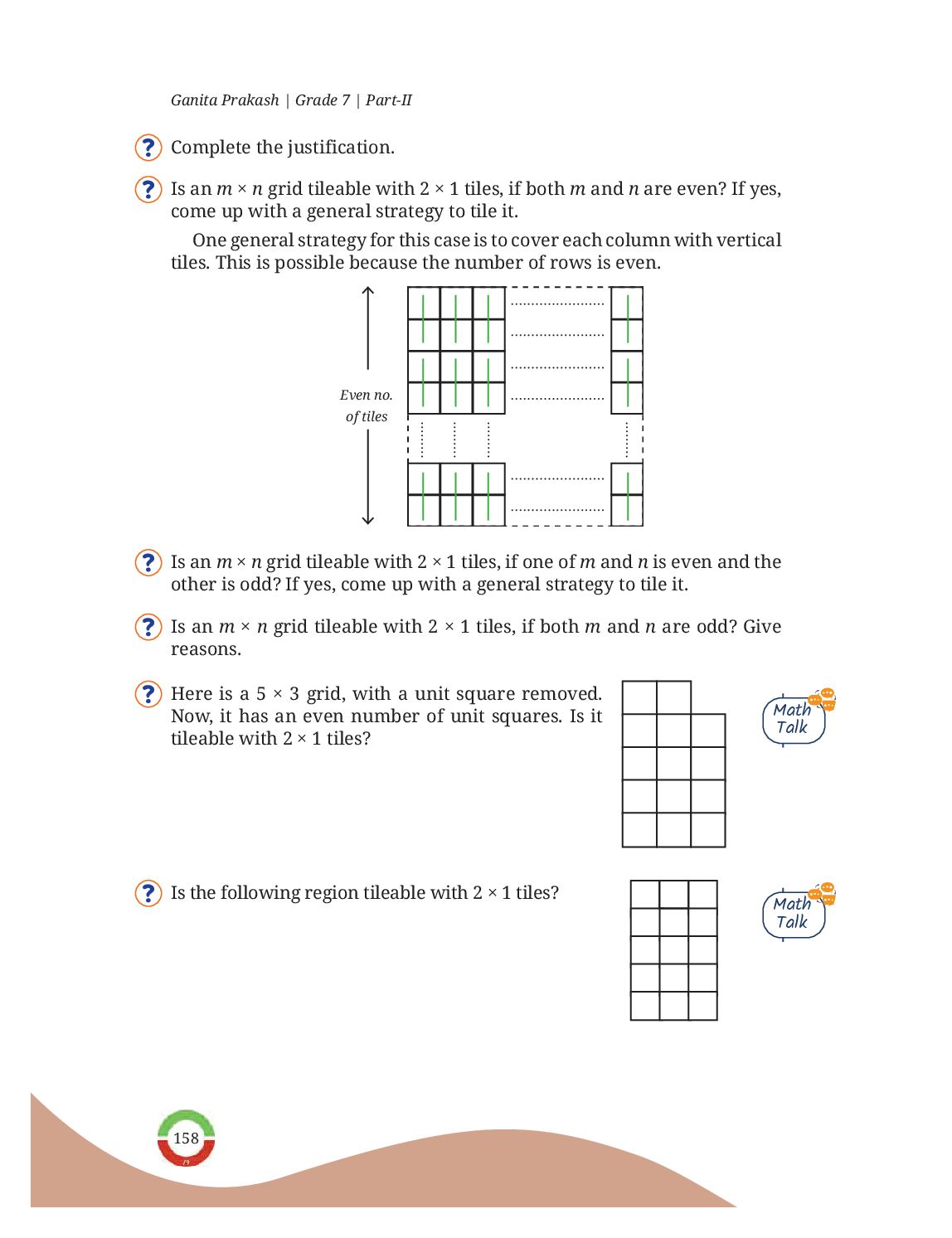
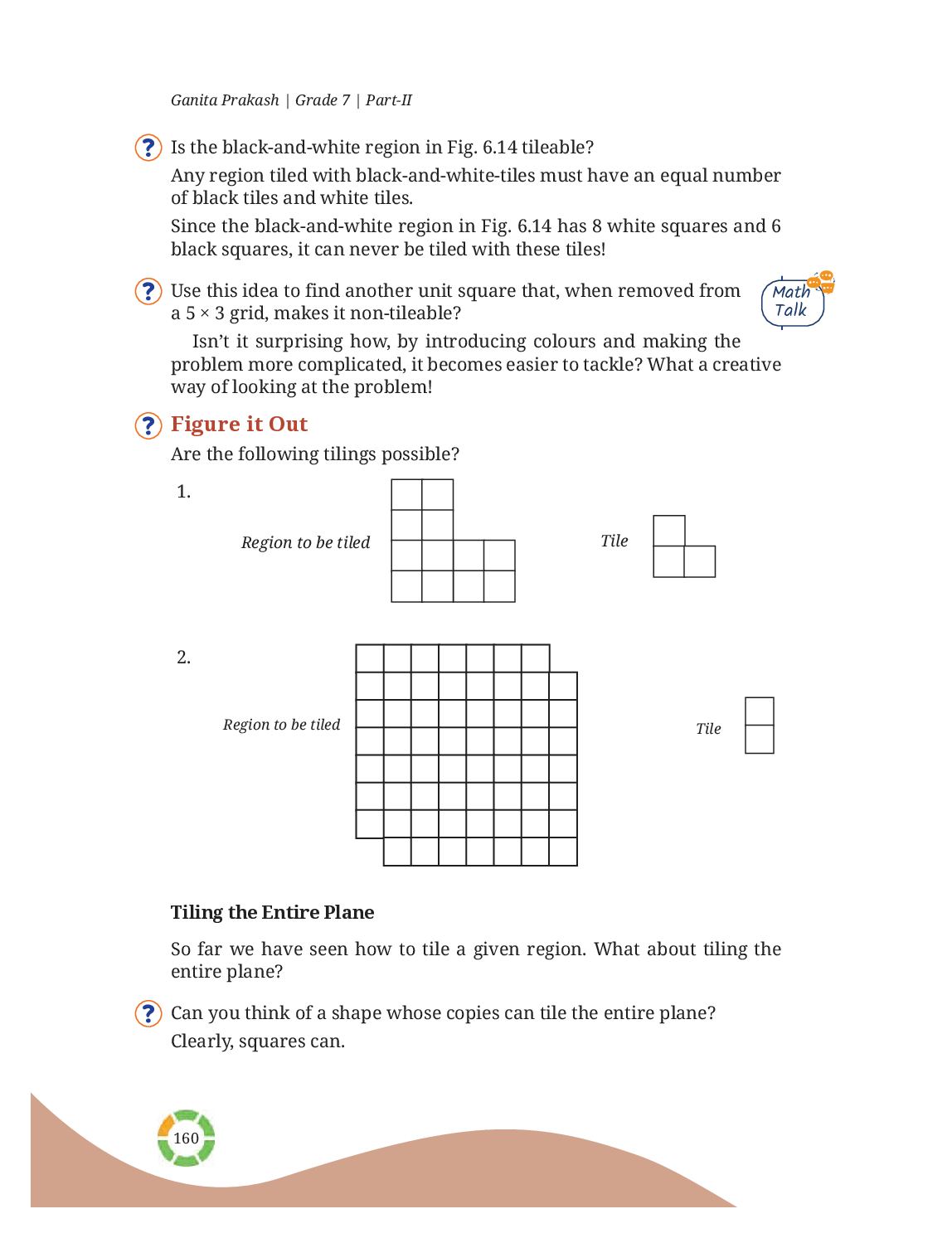
- Covering a region with shapes, without gaps or overlaps, is called tiling. A region with an odd number of unit squares can never be tiled by 2 × 1 tiles.
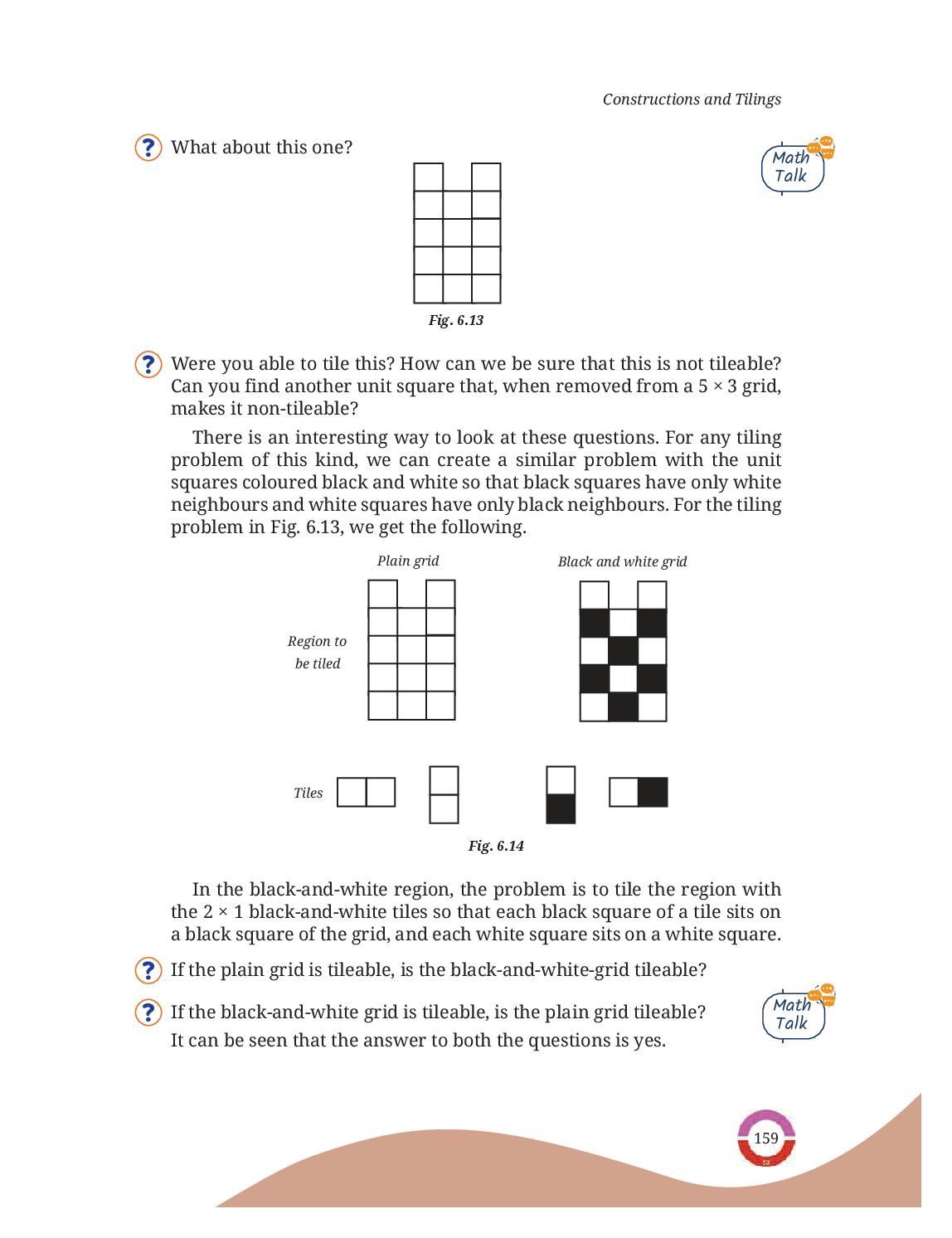
- The black-and-white argument: colour the grid like a chessboard. Every 2 × 1 tile covers one black and one white square, so a tileable region must have equal numbers of each. Unequal counts prove tiling is impossible.
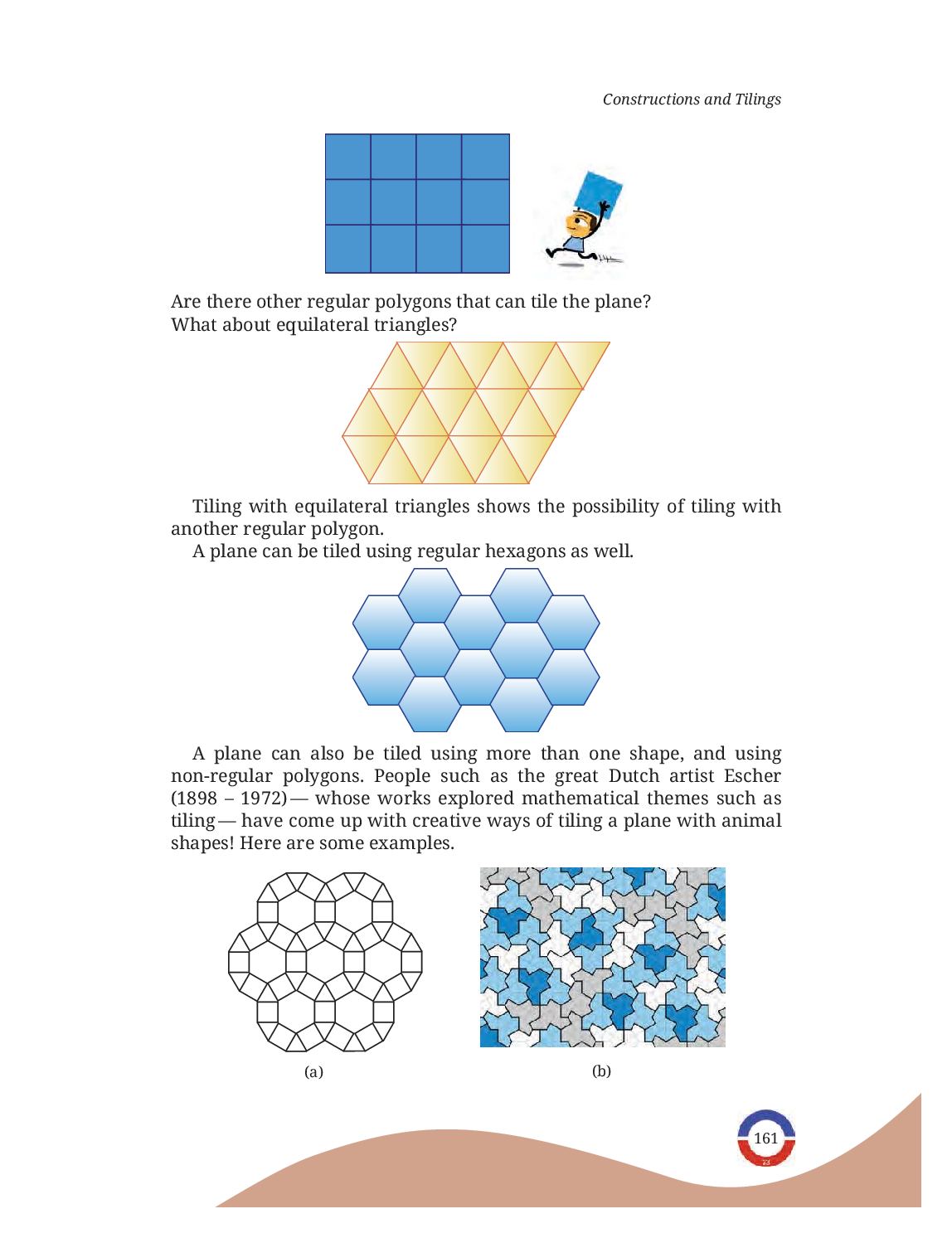
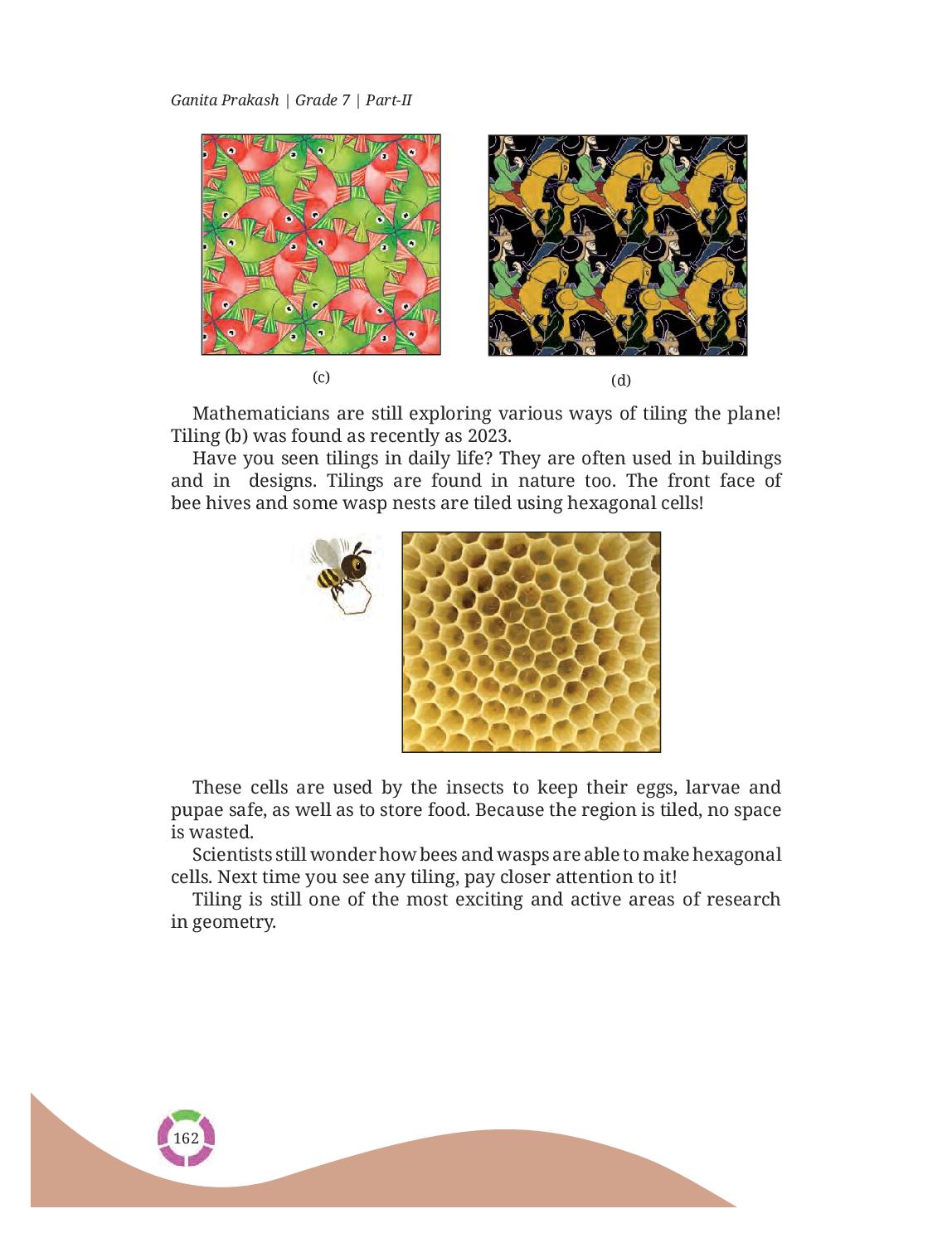
- Squares, equilateral triangles and regular hexagons each tile the whole plane, because 4 × 90°, 6 × 60° and 3 × 120° all equal 360°.
Quick revision – Constructions and Tilings
| Construction | How it is done | What guarantees it | Result |
|---|---|---|---|
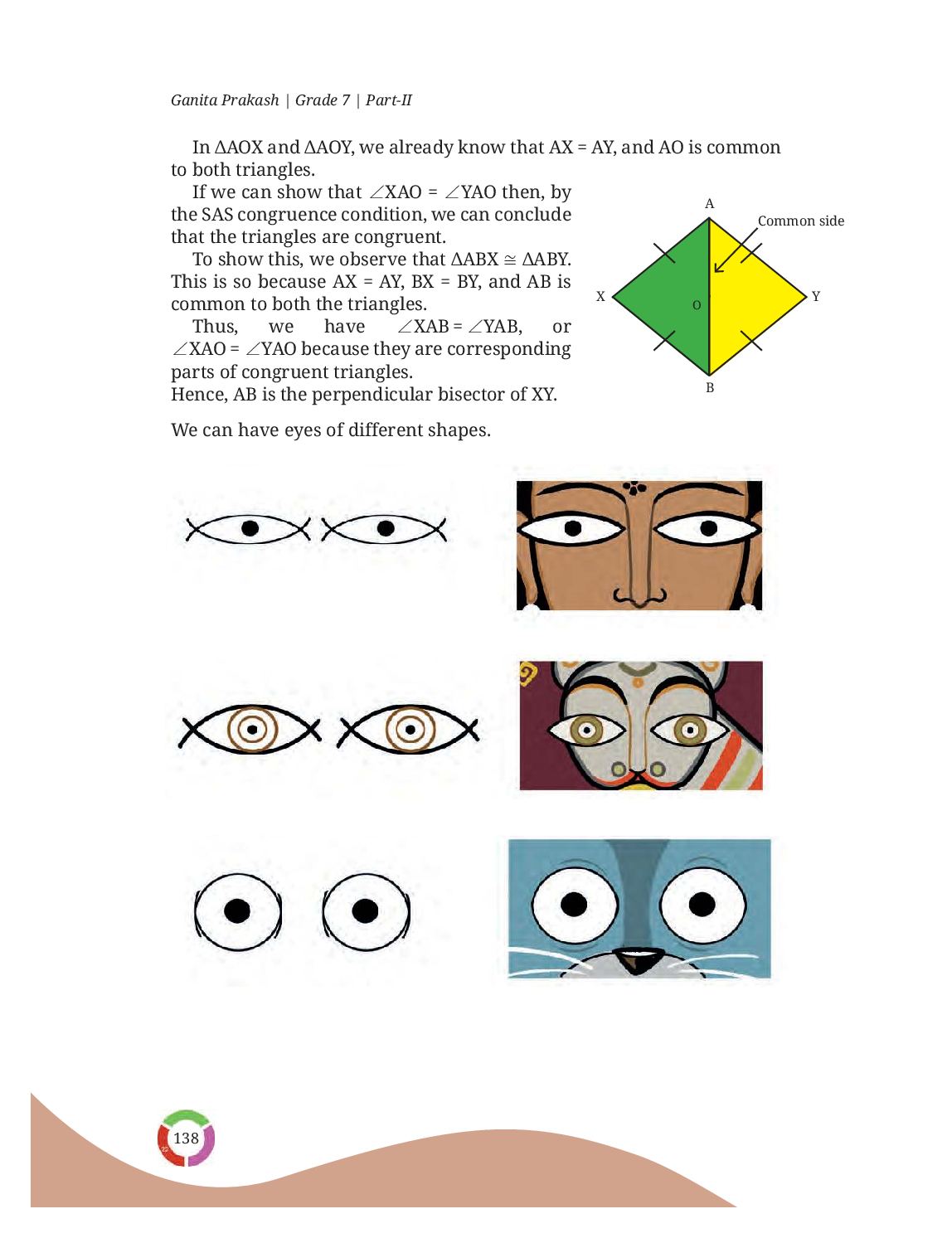
| Perpendicular bisector of XY | Equal arcs from X and from Y, above and below; join the two crossing points | ΔABX ≅ ΔABY (SSS), then ΔAOX ≅ ΔAOY (SAS) | OX = OY and ∠AOX = 90° |
| 90° at a point O on a line | Cut X and Y equally on either side of O; one pair of arcs above; join to O | O already lies on the perpendicular bisector of XY | ∠ = 90° |
| 45° angle | Construct 90°, then bisect it | 90° ÷ 2 | 45° |
| Angle bisector of ∠AOB | Mark OA = OB, cut equal arcs from A and B meeting at C, join OC | ΔOBC ≅ ΔOAC (SSS) | ∠BOC = ∠AOC |
| Copy of an angle | Arc from A gives ΔABC; same arc from X; transfer the chord BC to get YZ | ΔABC ≅ ΔXYZ (SSS) | ∠A = ∠X |
| Line parallel to m through B | Copy the angle that transversal l makes with m, at B | Equal corresponding angles ⇒ parallel | M ∥ n |
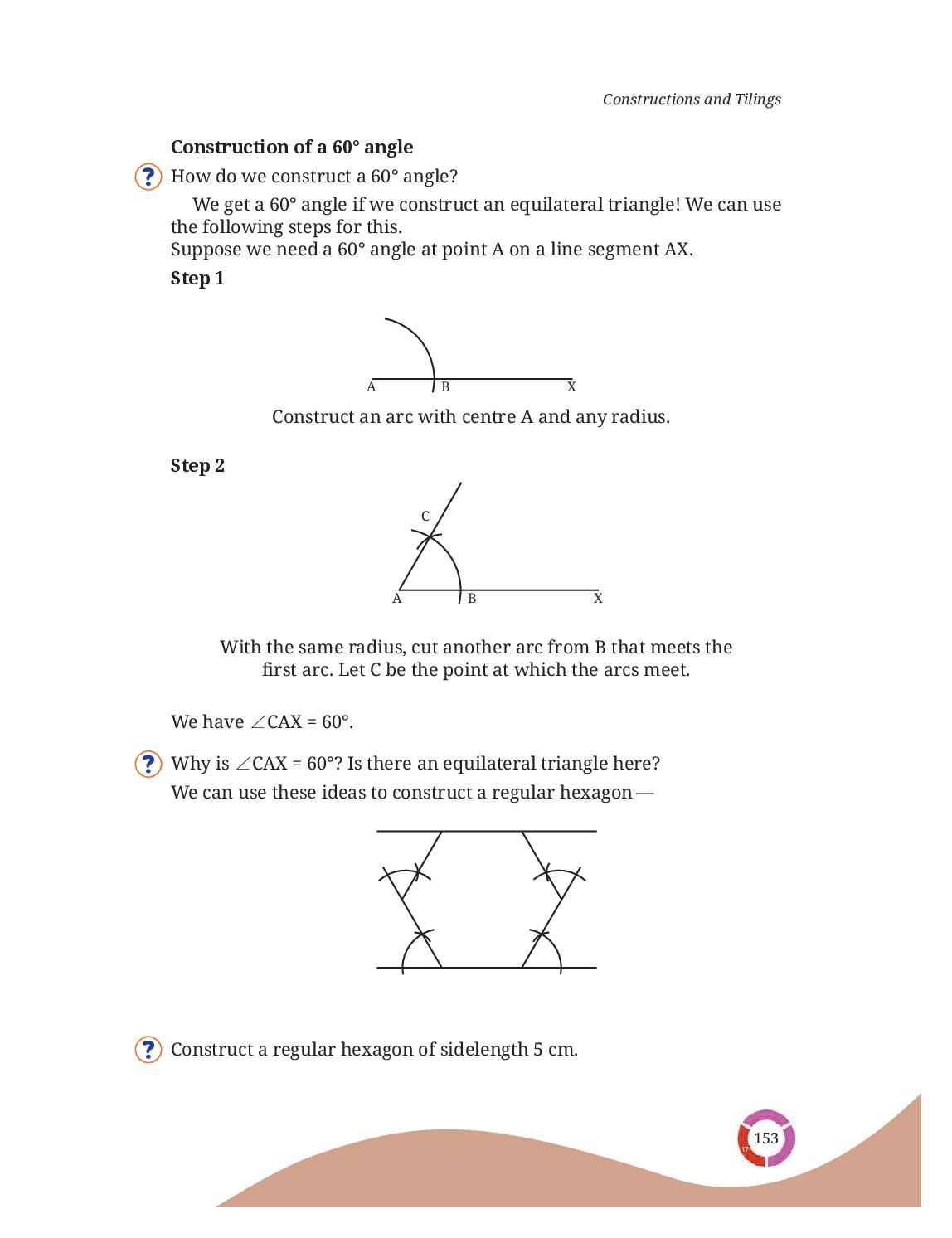
| 60° angle | Arc from A cuts AX at B; same radius from B cuts the arc at C | ΔABC is equilateral | ∠CAX = 60° |
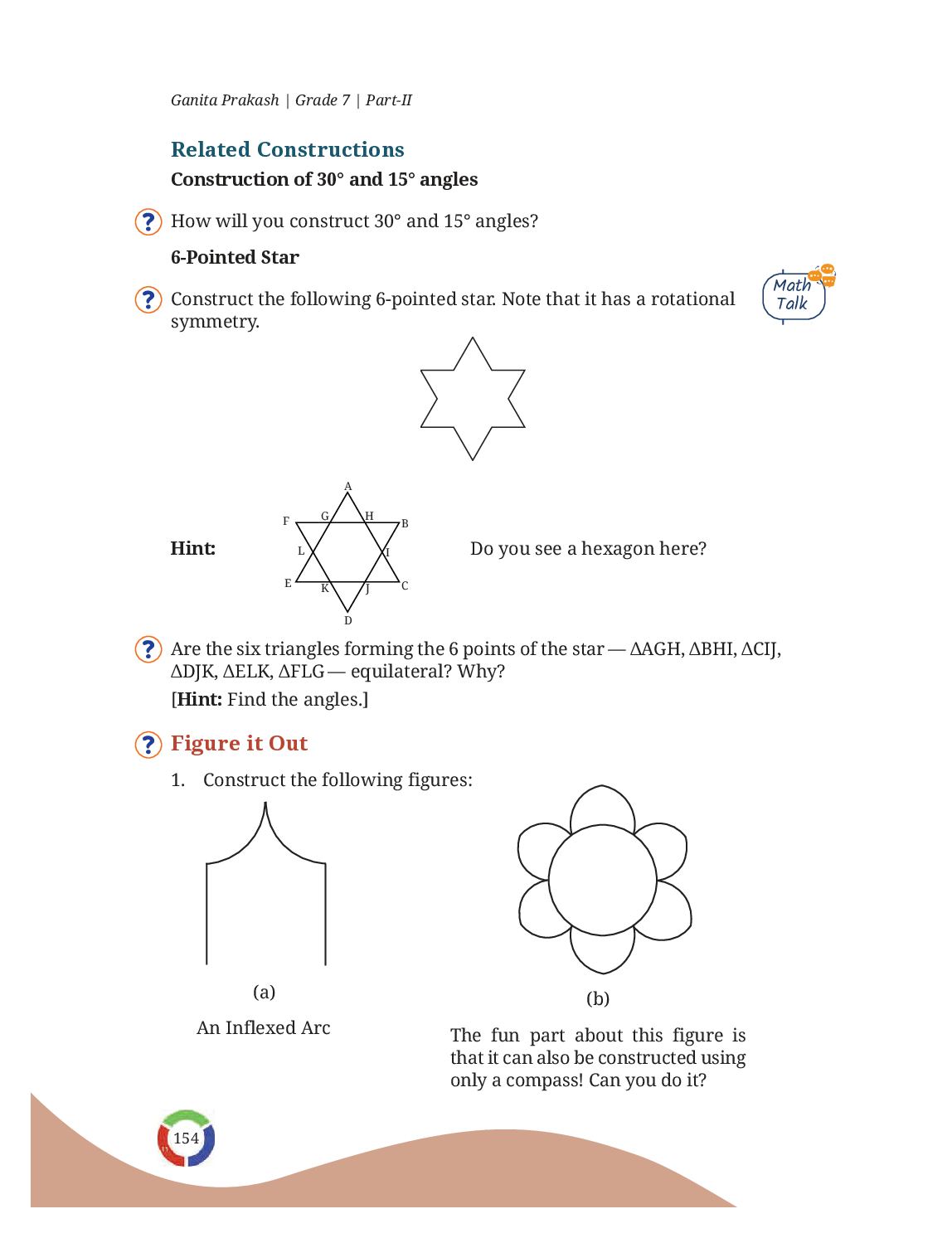
| 30° and 15° | Bisect 60°, then bisect 30° | Each bisection halves the angle | 30°, 15° |
| Regular hexagon, side s | Six equilateral triangles of side s around one point | 6 × 60° = 360° | Angles all 120° |
| Tiling a grid with 2 × 1 tiles | Cover each column (or row) of even length with tiles | Every tile covers exactly 2 squares | Needs an even number of squares |
| Proving a tiling impossible | Colour black/white like a chessboard and count | Each tile takes one of each colour | Counts must be equal |
| Tiling the plane | Fit copies around every point | 4 × 90° = 6 × 60° = 3 × 120° = 360° | Square, triangle, hexagon |
Old NCERT vs New – Class 7 Maths
This chapter is from Ganita Prakash, the new NCERT Class 7 Maths book (NCF-SE 2023, used from 2025-26). It replaced the old book “Mathematics”, so chapter numbers and names differ from older PDFs.
Solutions and All Chapters
Answers to the exercises and the full chapter list of Ganita Prakash:
Constructions and Tilings – Overview
| Class | Class 7 |
| Subject | Maths |
| Book | Ganita Prakash – new NCERT book |
| Part | Part II |
| Chapter | 14 of 15 – Constructions and Tilings |
| Book pages | Part II, 137 – 162 |
| Edition | NCERT Reprint 2026-27 |
| Session | 2026-27 |
| Free – read online or download |
Class 7 Maths Chapter 14 – FAQs
Where can I download Constructions and Tilings Class 7 PDF?
From the download table on this page – the chapter PDF is free, and the full book is linked too.
What is Class 7 Maths Chapter 14 about?
Cutting a line segment (or any figure) into two identical parts is called bisection. A line that bisects a segment and is perpendicular to it is the perpendicular bisector.
Is Constructions and Tilings from the new NCERT Class 7 Maths book?
Yes. It is chapter 14 of ganita prakash (part ii), the new NCERT Class 7 Maths book for 2026-27.
Is this the latest NCERT edition for 2026-27?
Yes – the PDF is NCERT’s latest edition for the 2026-27 session.
Where are the NCERT Solutions for Class 7 Maths Chapter 14?
Open the NCERT Solutions link above for answers to the exercise questions.