Download Tales by Dots and Lines – NCERT Class 8 Maths Chapter 12 PDF from the new NCERT Class 8 Maths book Ganita Prakash (2026-27). Read the chapter online or download the free PDF. The mean is the balance point of the data: the distances of the values below it add up to exactly the same total as the distances of the values above it. That is why there is only one mean.
Tales by Dots and Lines PDF – Chapter 12 of Ganita Prakash (Part II)
Read the chapter online or download the PDF.
| Chapter | Download | |
|---|---|---|
| Chapter 12 PDF | Tales by Dots and Lines | View PDF |
| Full book | NCERT Class 8 Maths – Ganita Prakash | View Book |
Read Online
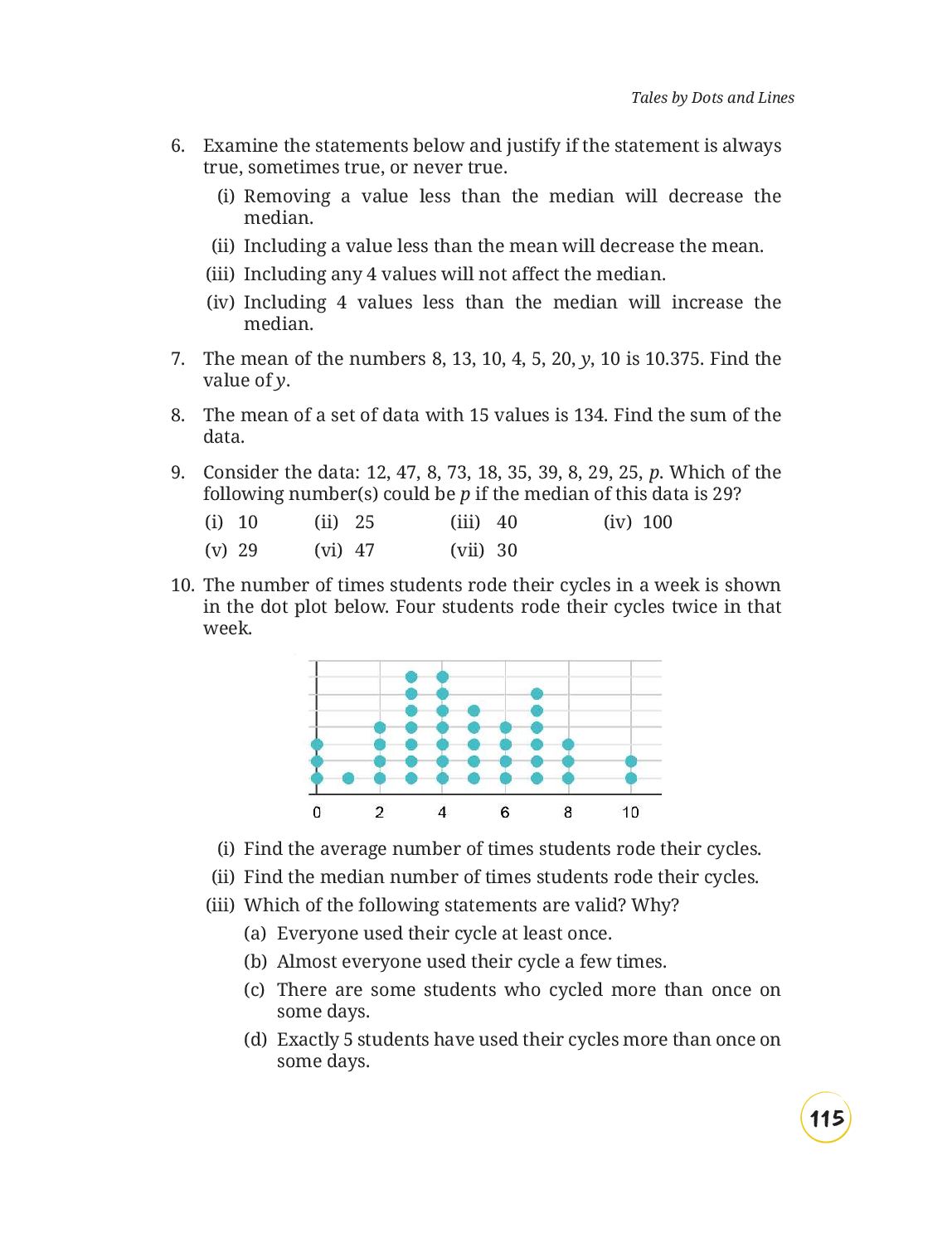
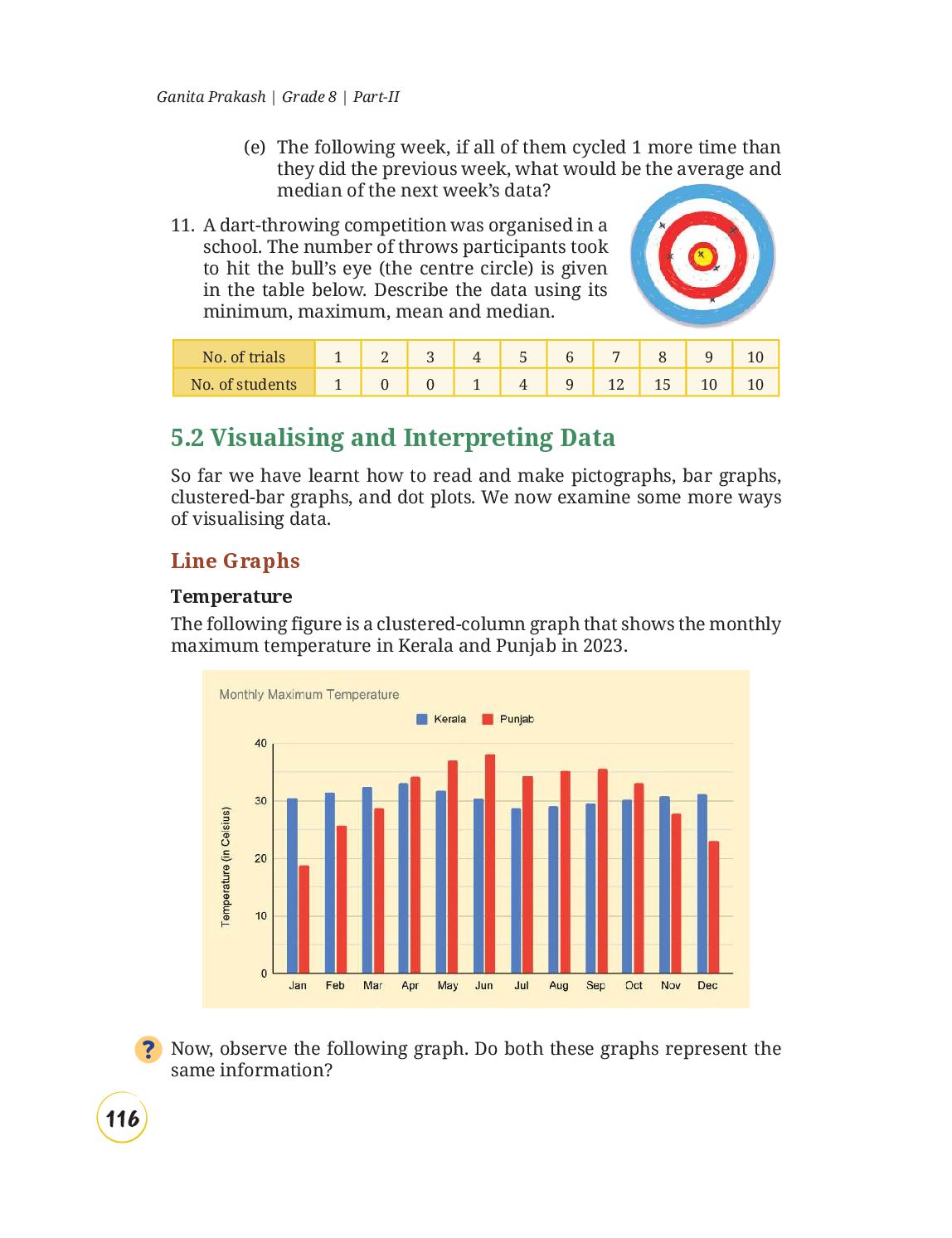
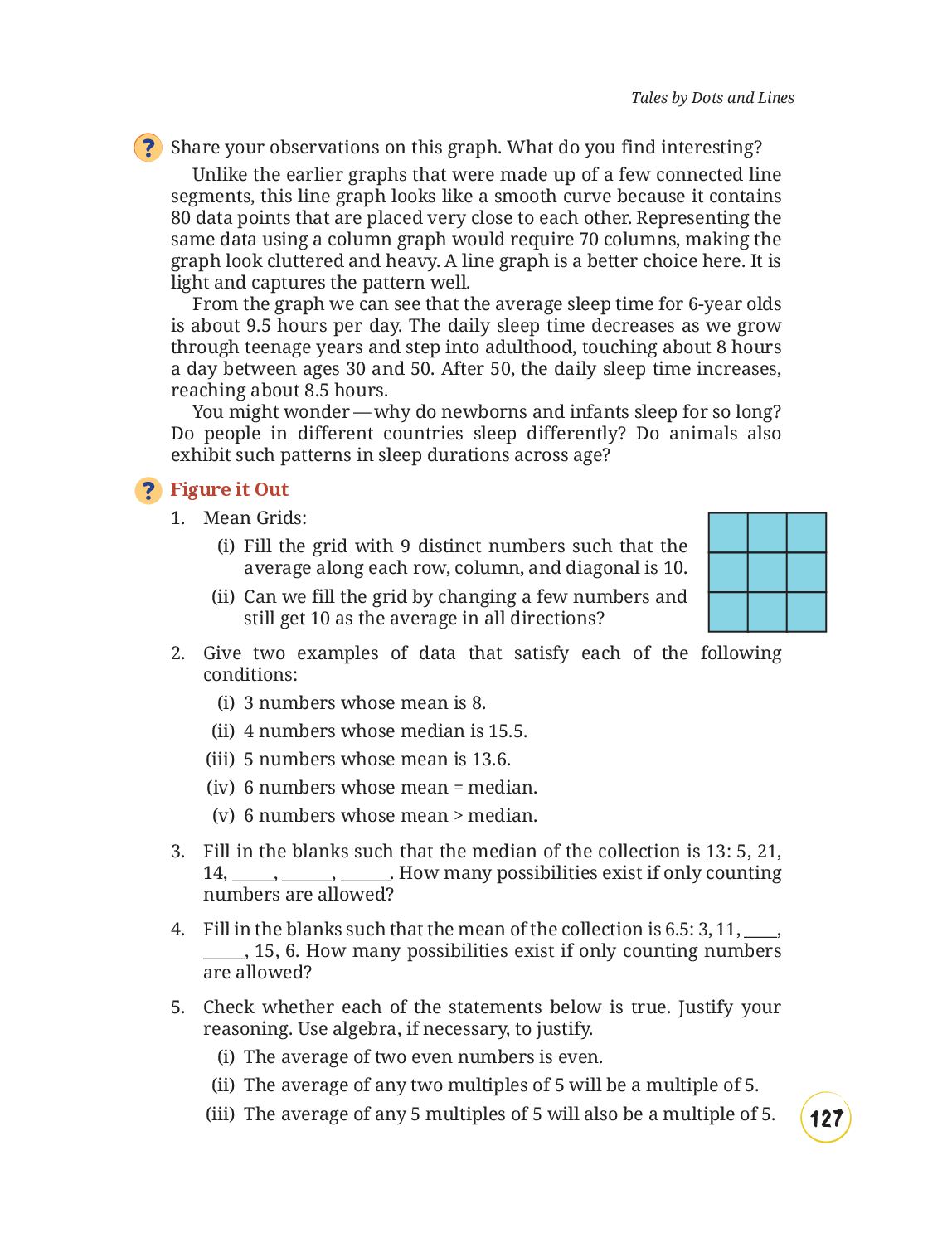
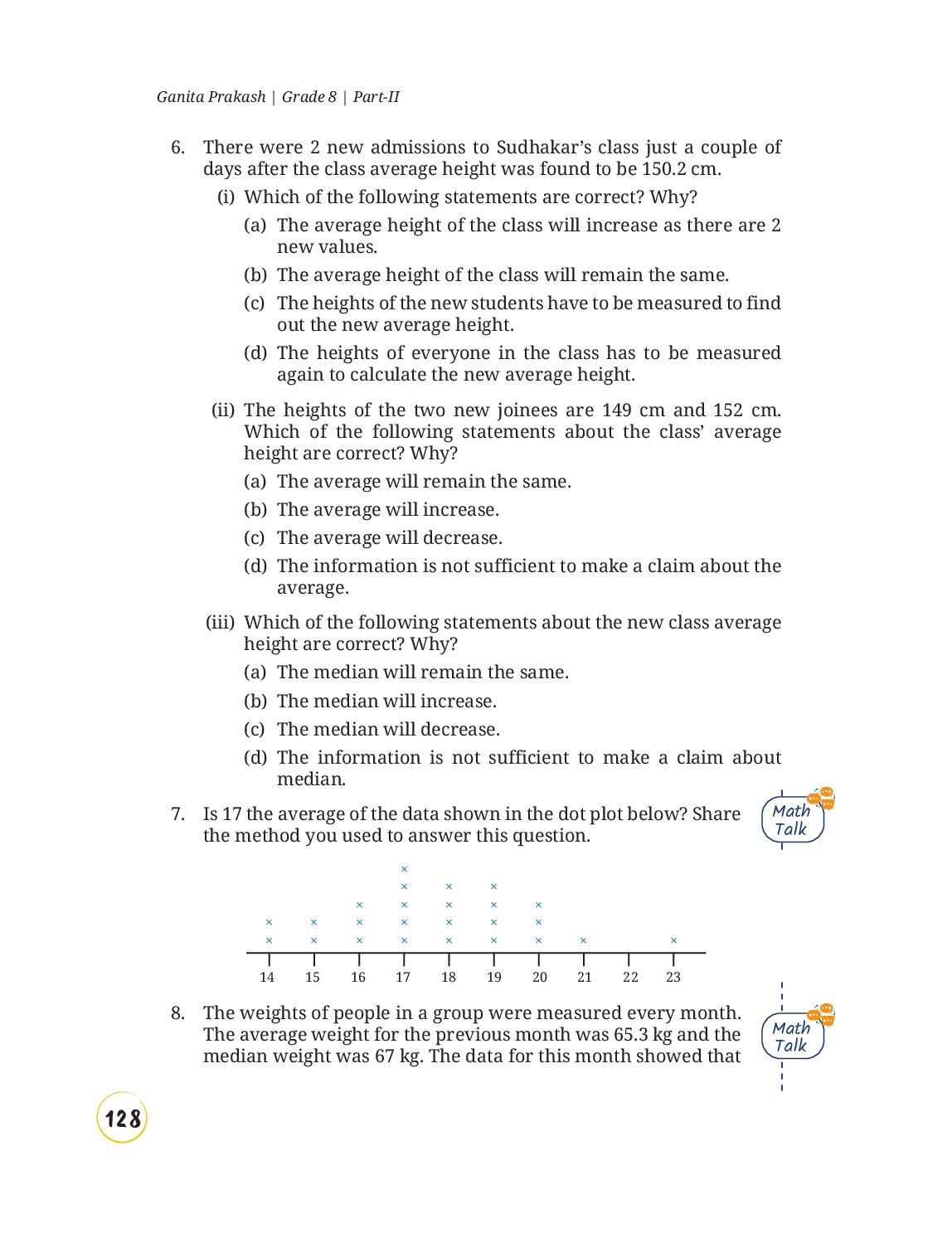
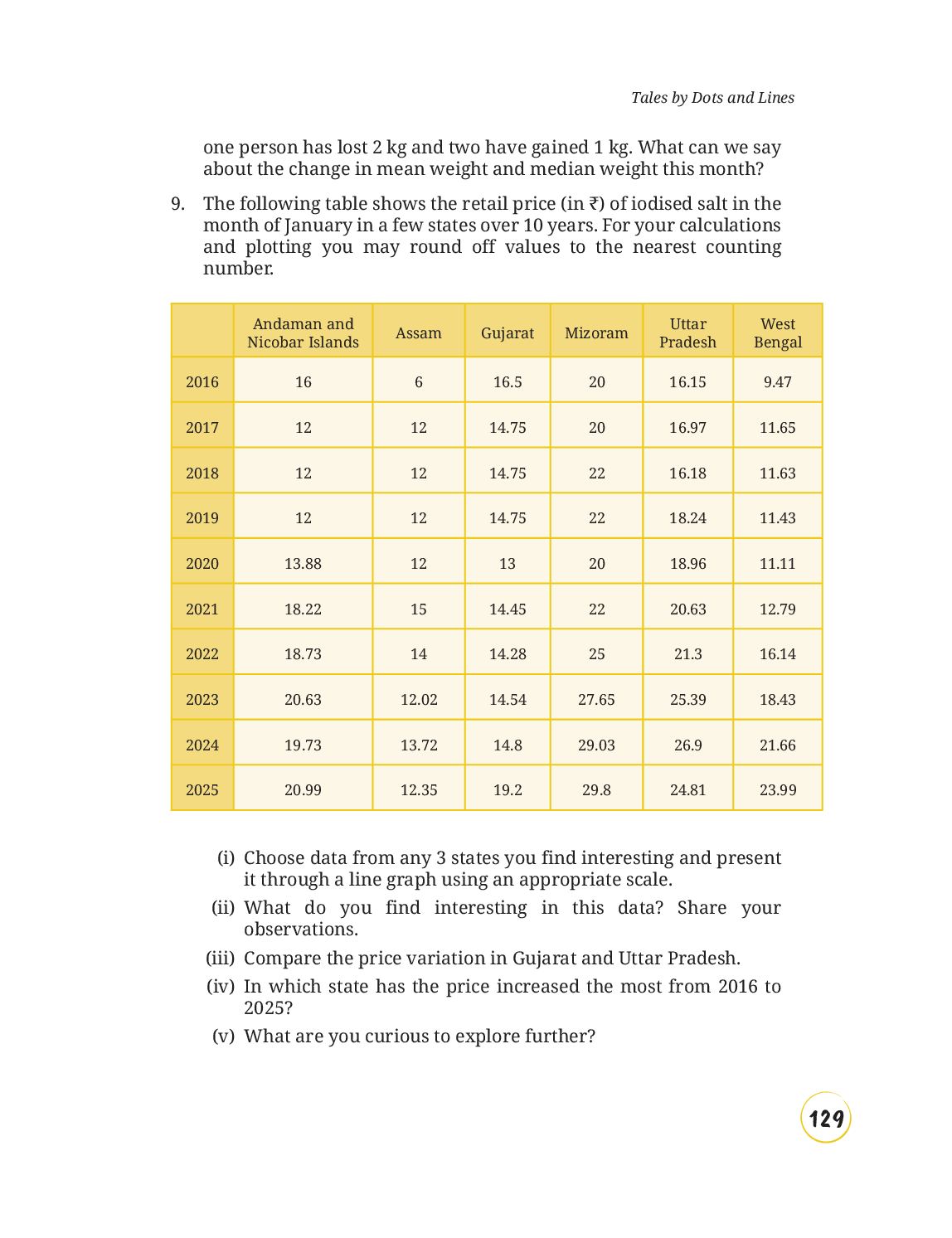
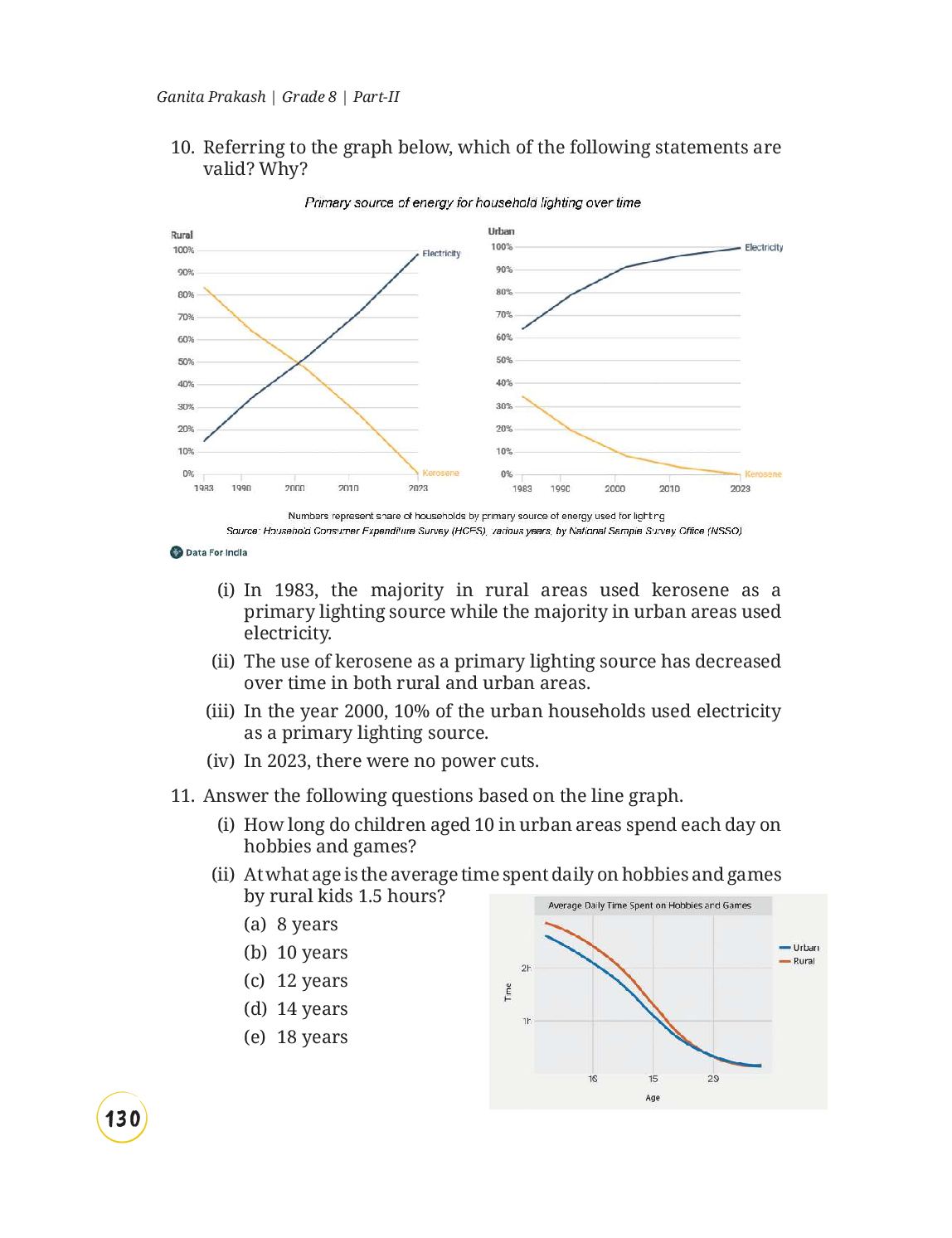
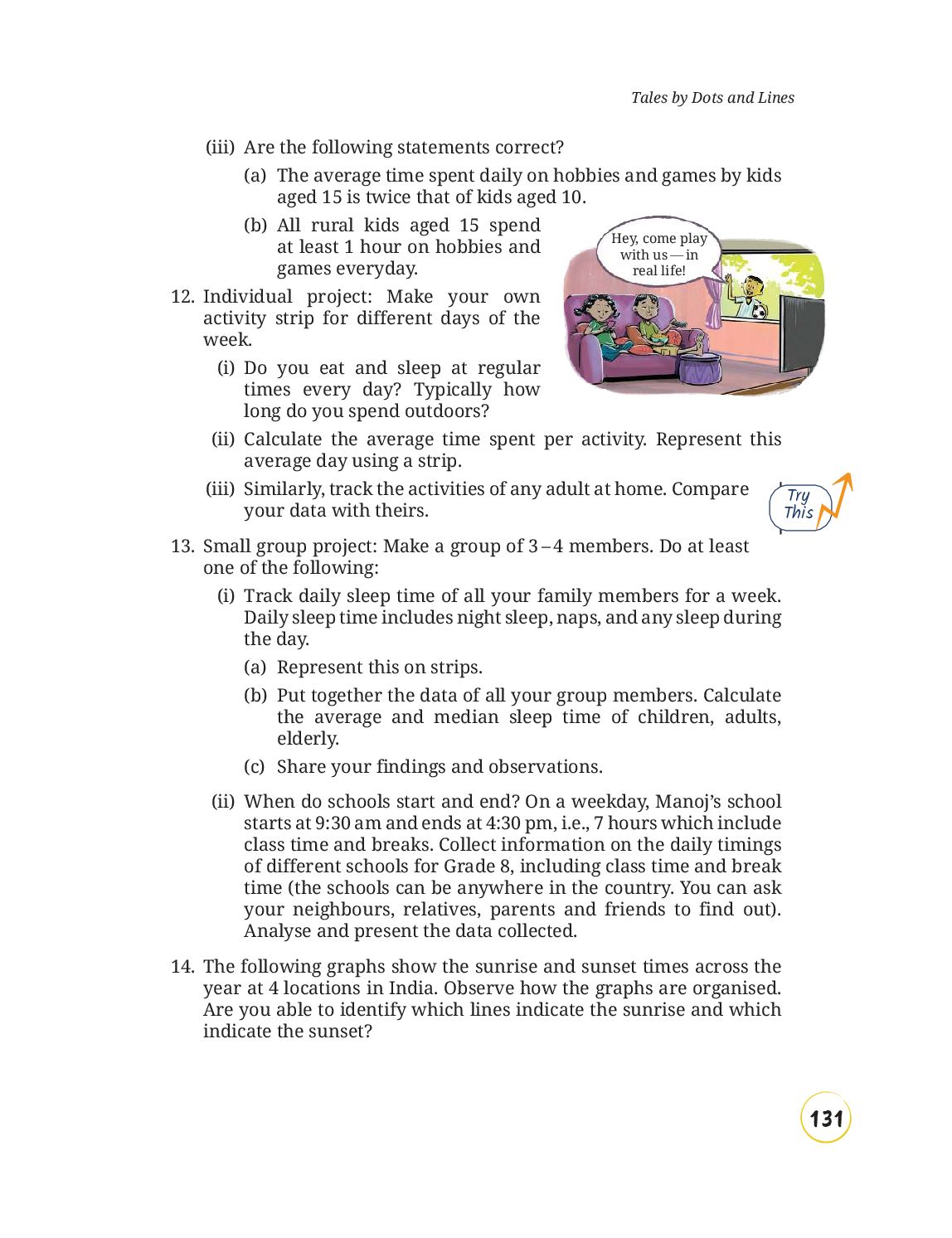
What Is in Tales by Dots and Lines? (Class 8 Maths Chapter 12)
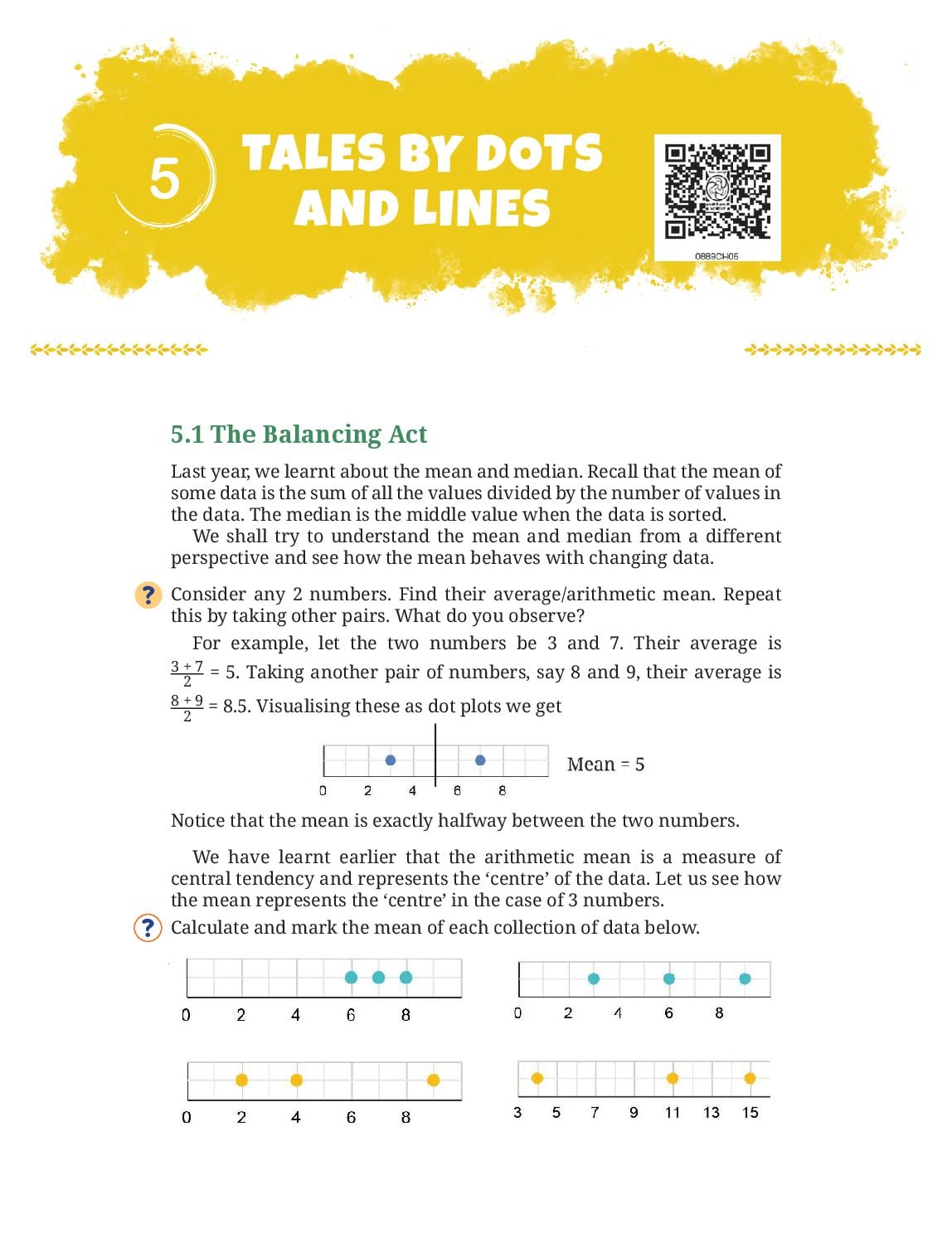
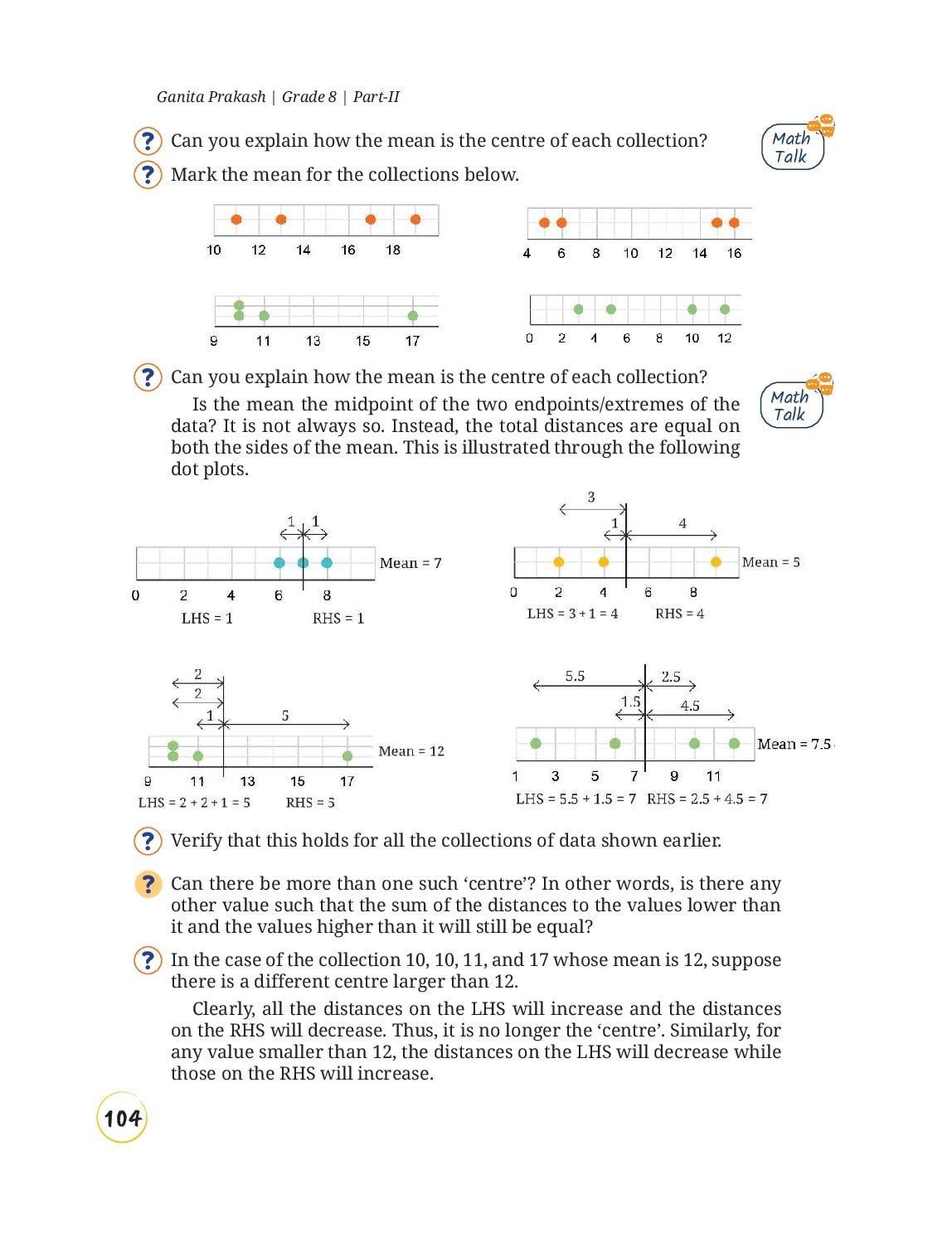
- The mean is the balance point of the data: the distances of the values below it add up to exactly the same total as the distances of the values above it. That is why there is only one mean.
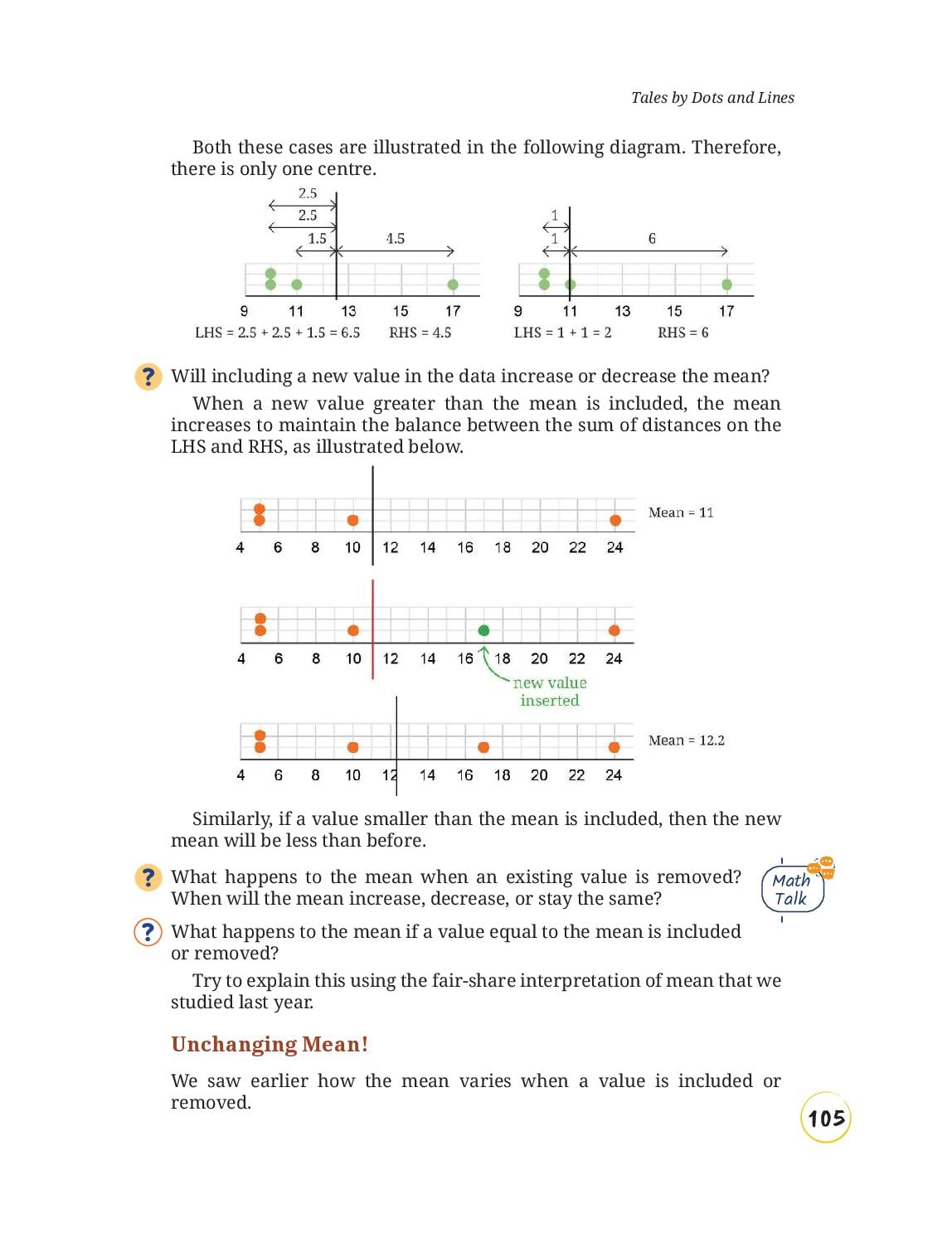
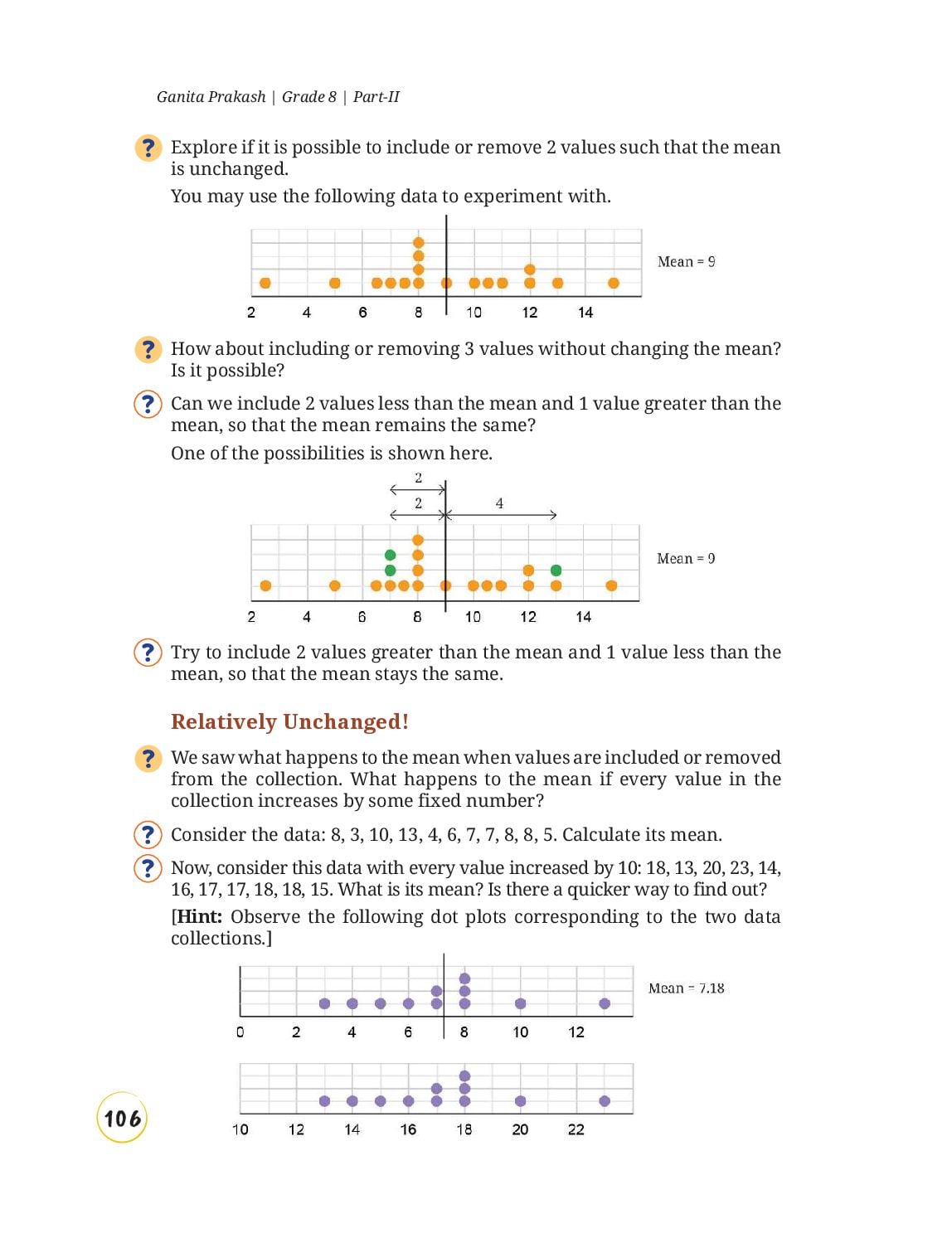
- Adding a value bigger than the mean pulls the mean up; a smaller one pulls it down; a value equal to the mean changes nothing. Two values can be added on opposite sides so that the mean does not move at all.
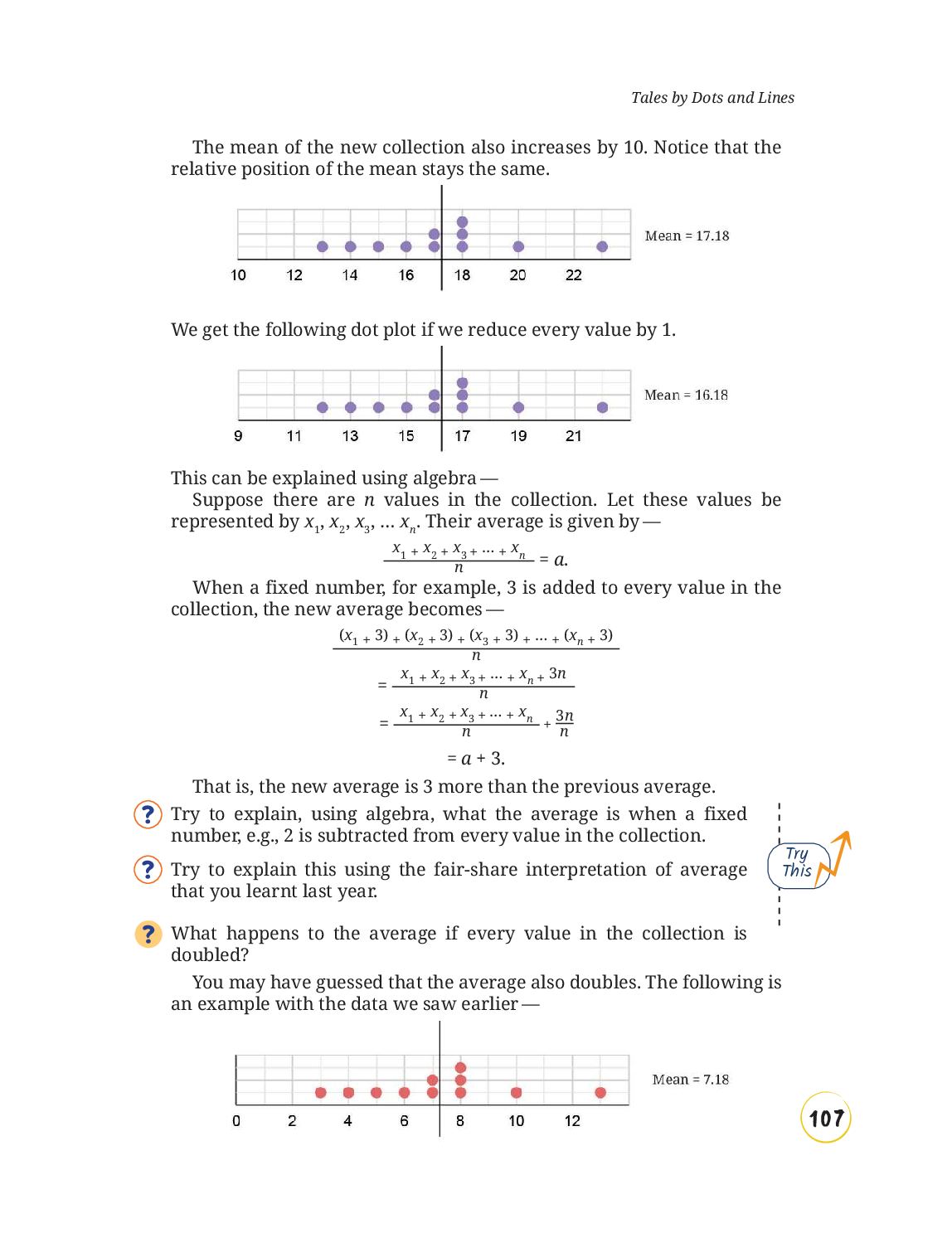
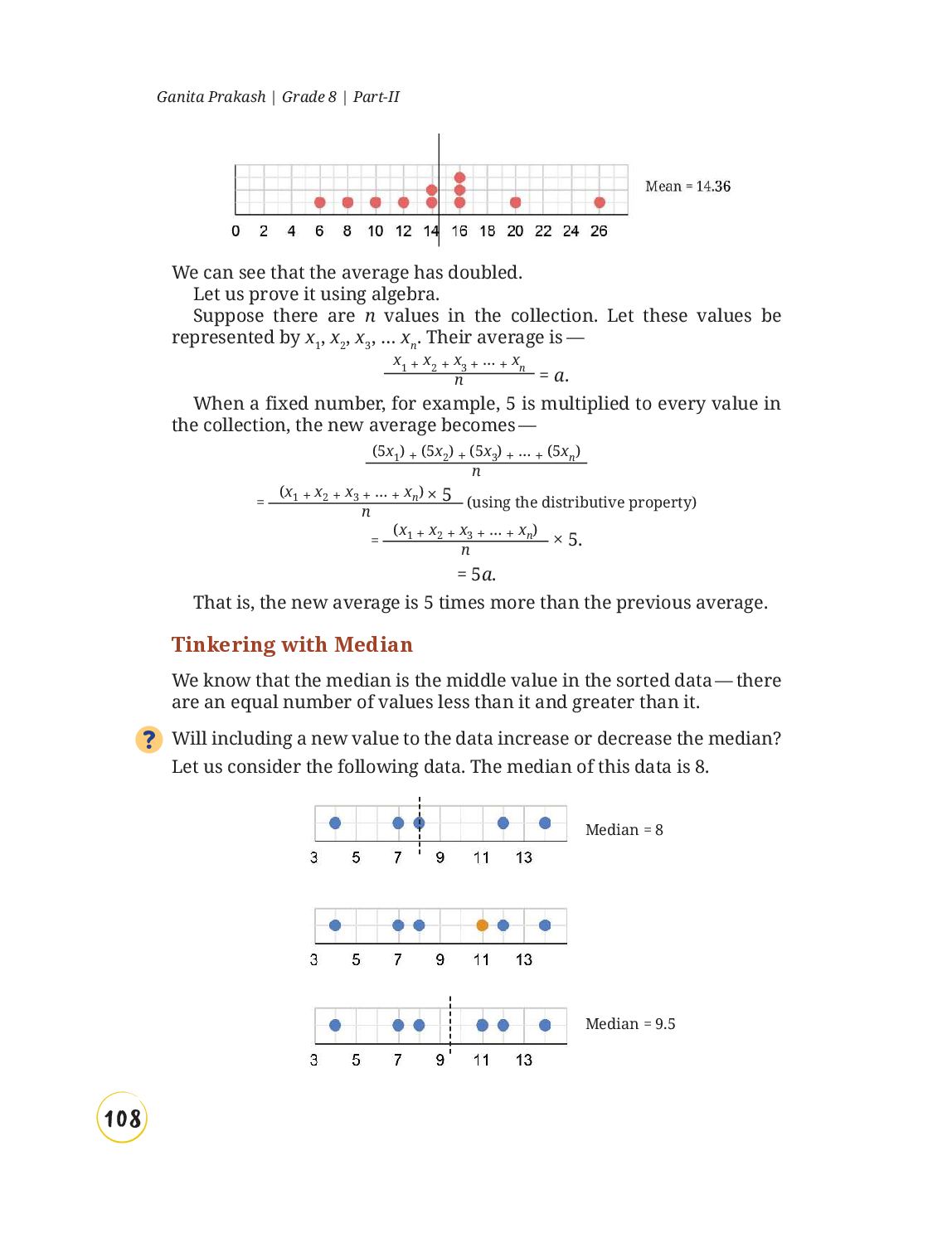
- If every value goes up by k, the mean goes up by k. If every value is multiplied by k, the mean is multiplied by k. Both facts are proved with algebra in the chapter.
- The median is the middle value of the sorted data. Because it only counts positions, one stray extreme value barely moves it, while the same value can swing the mean a lot.
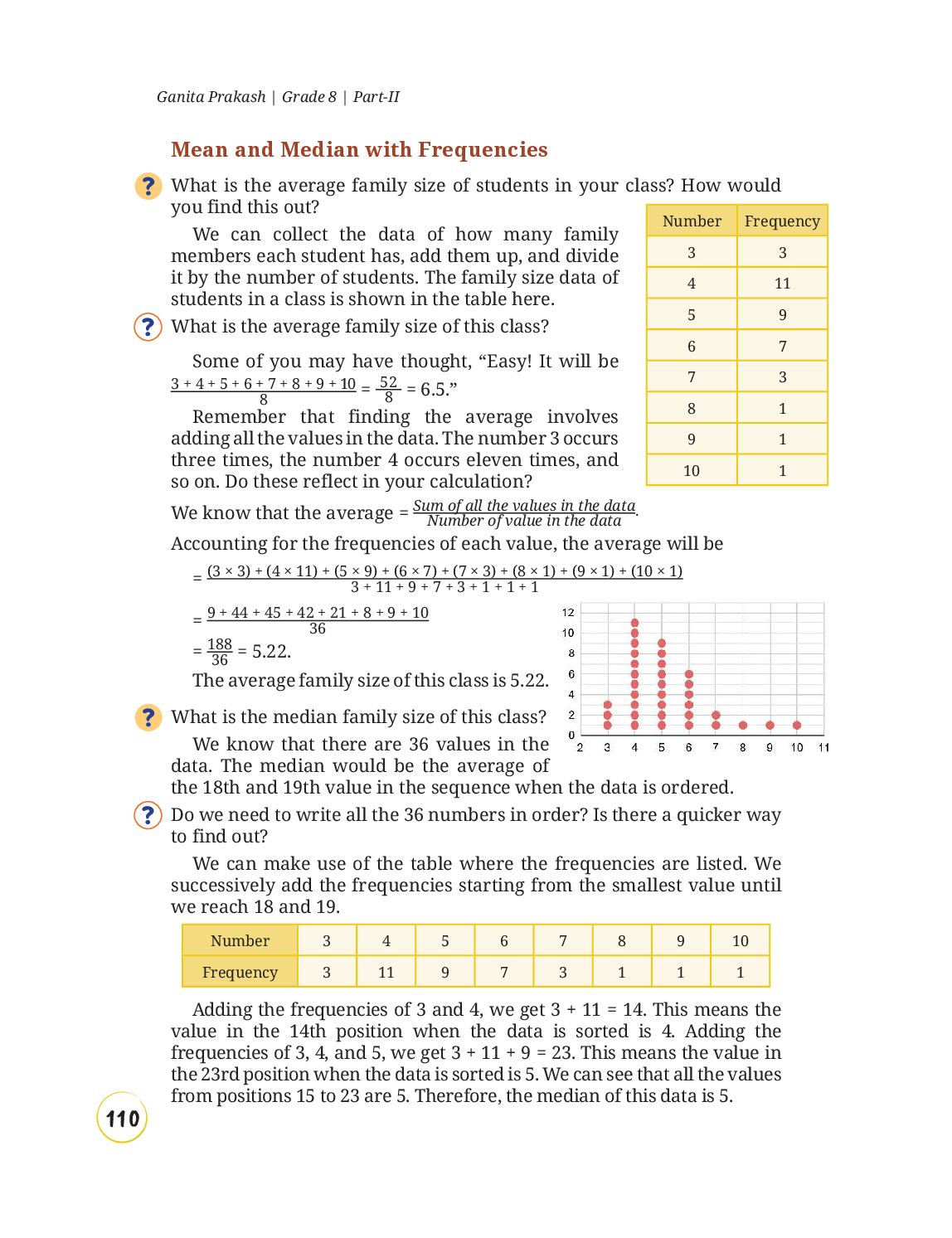
- With a frequency table, the mean is (sum of value × frequency) ÷ (total frequency), and the median is found by adding up frequencies until you reach the middle position.
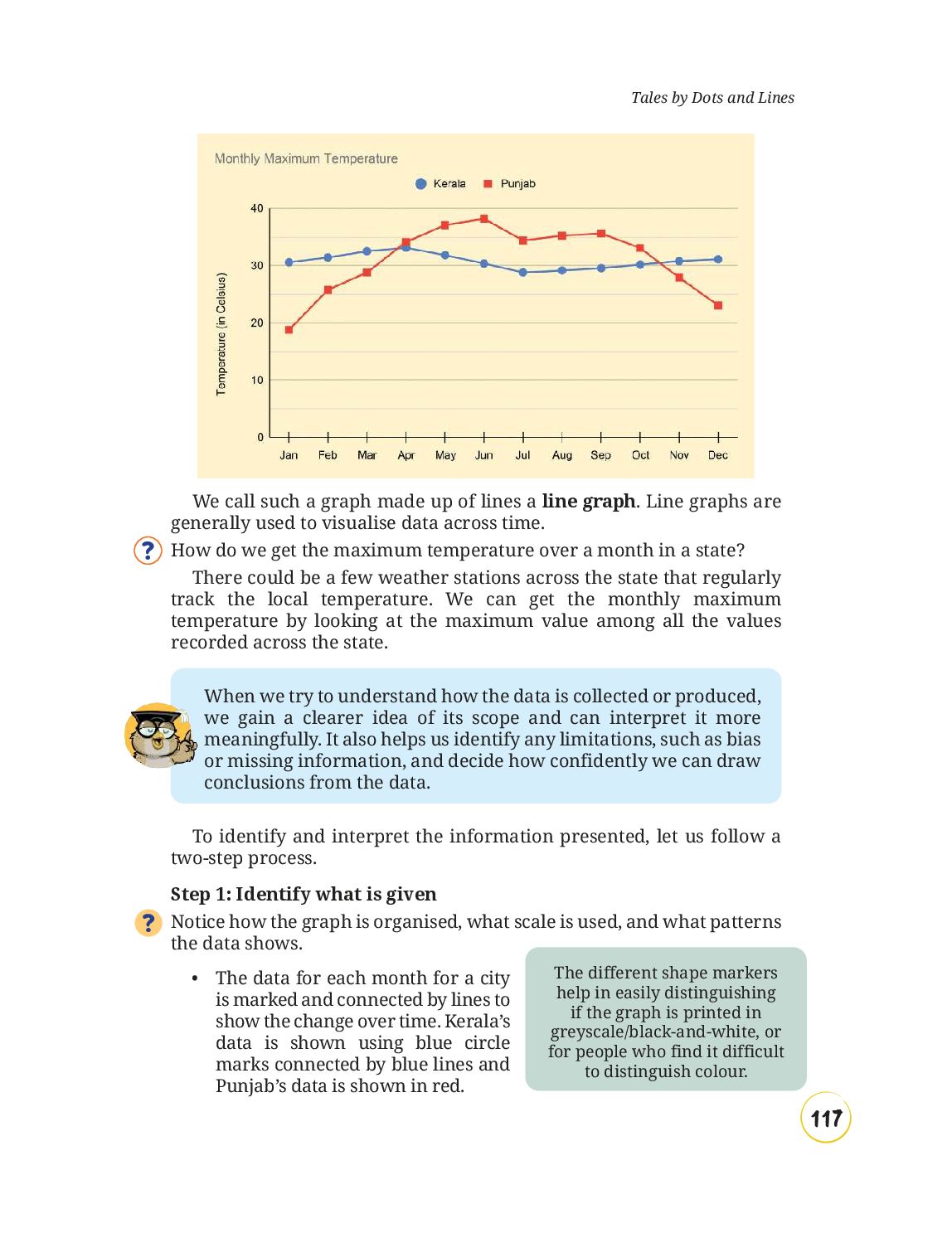
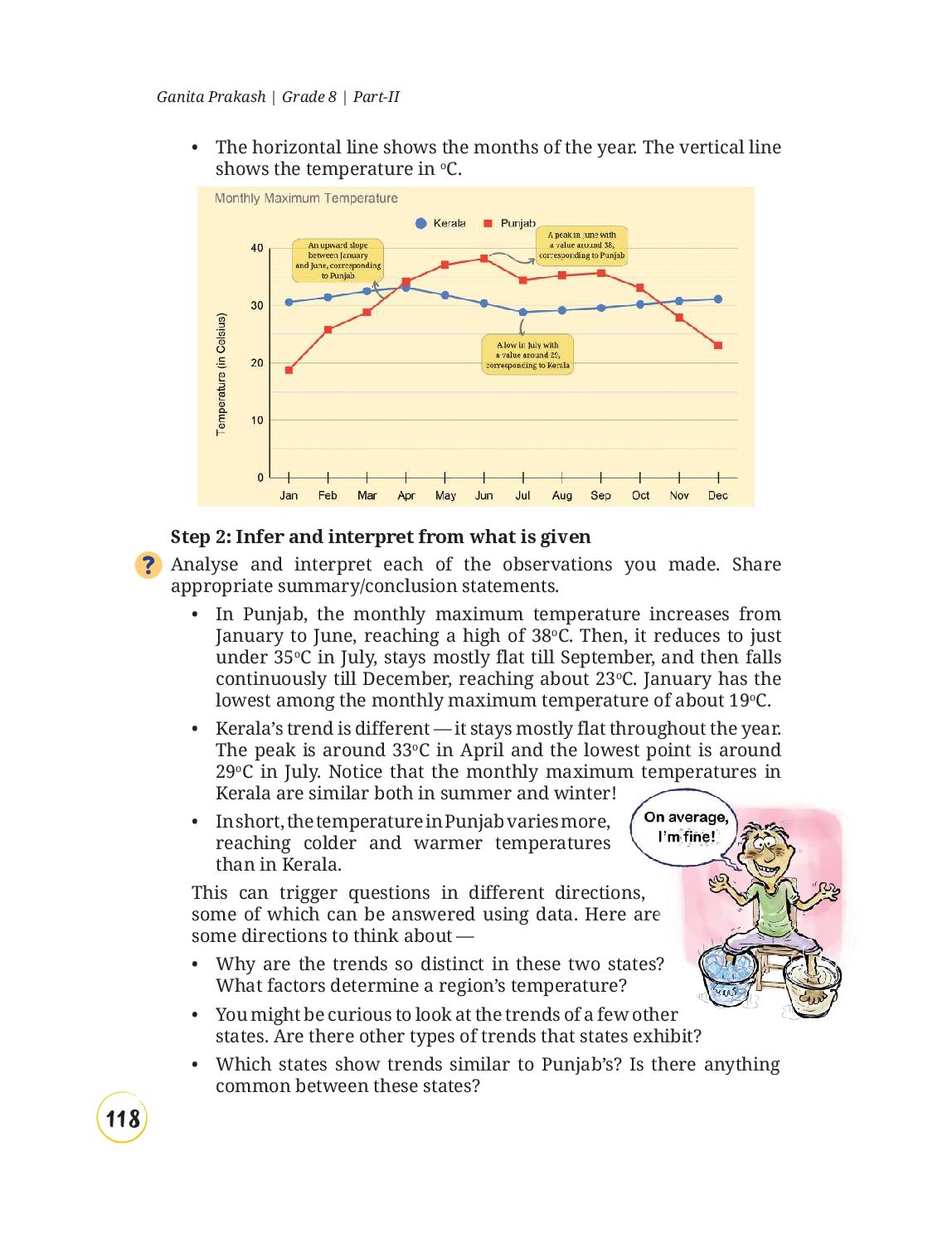
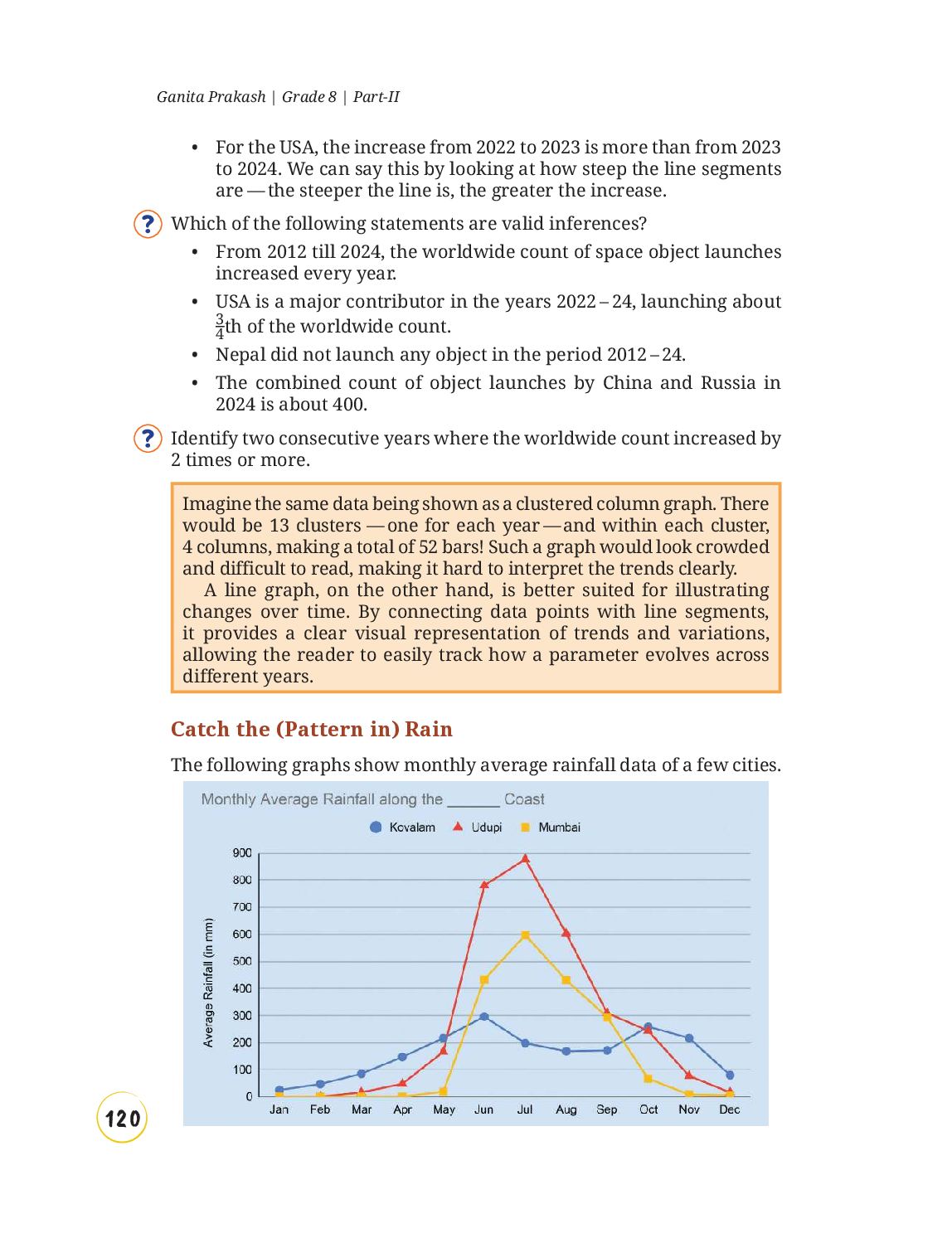
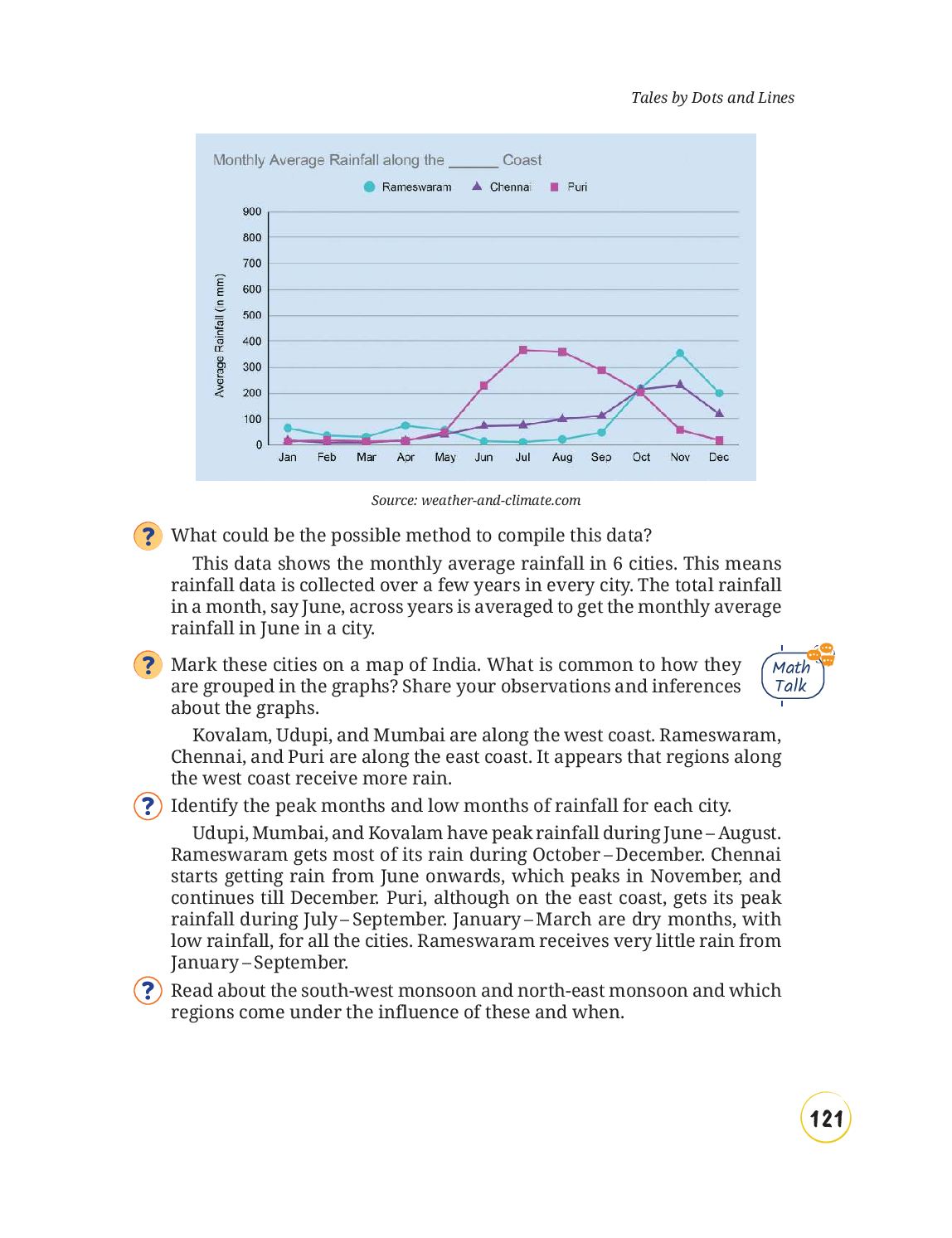
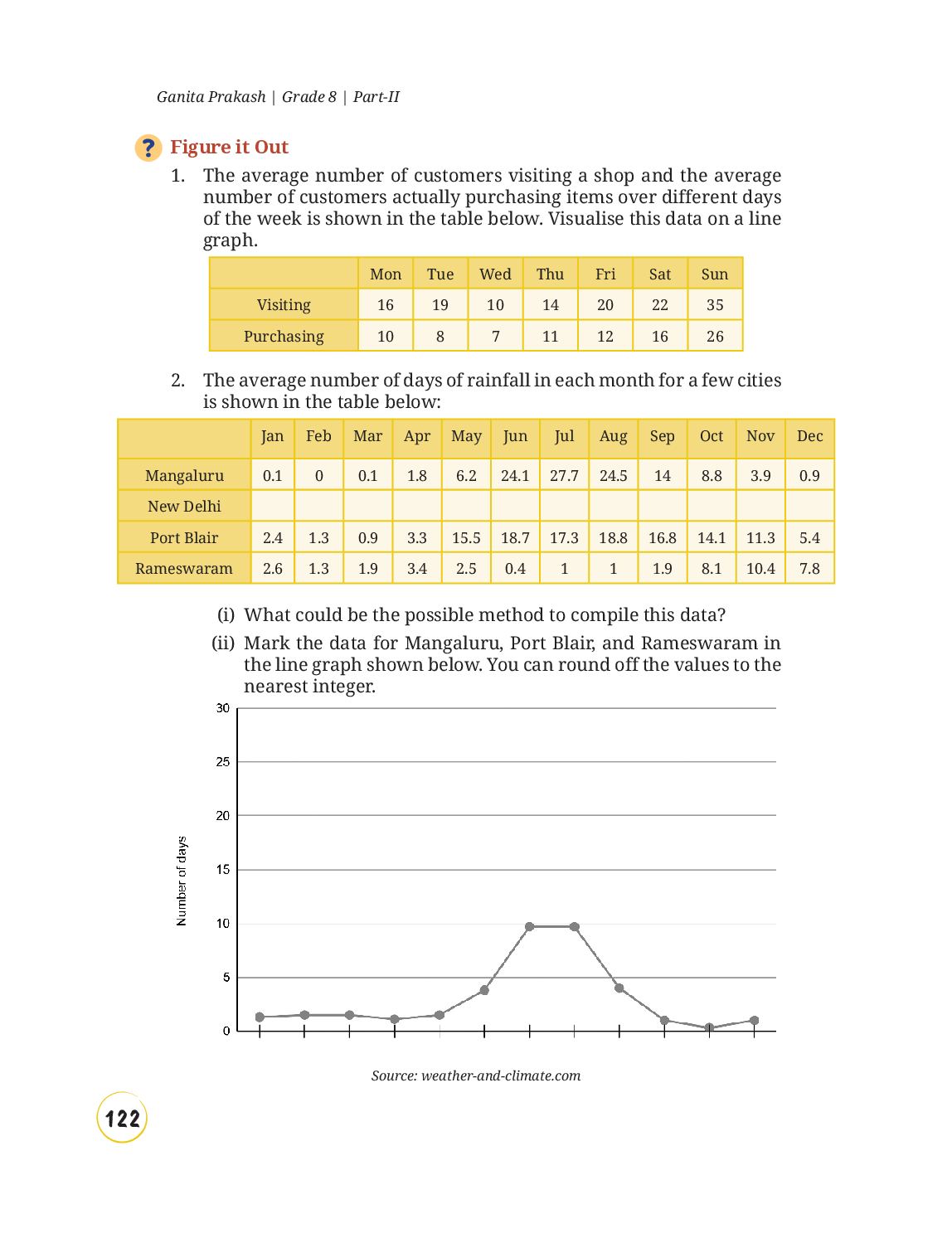
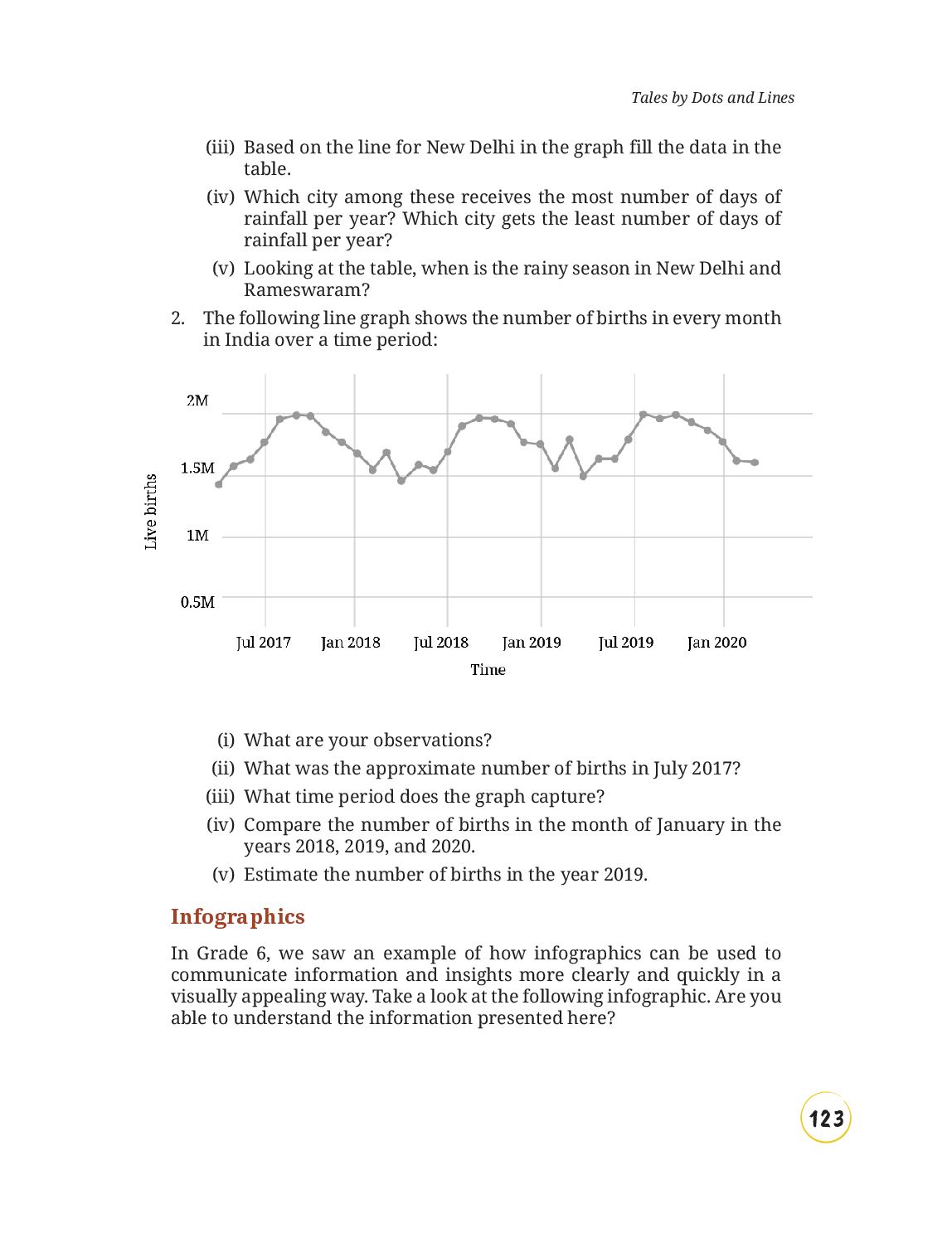
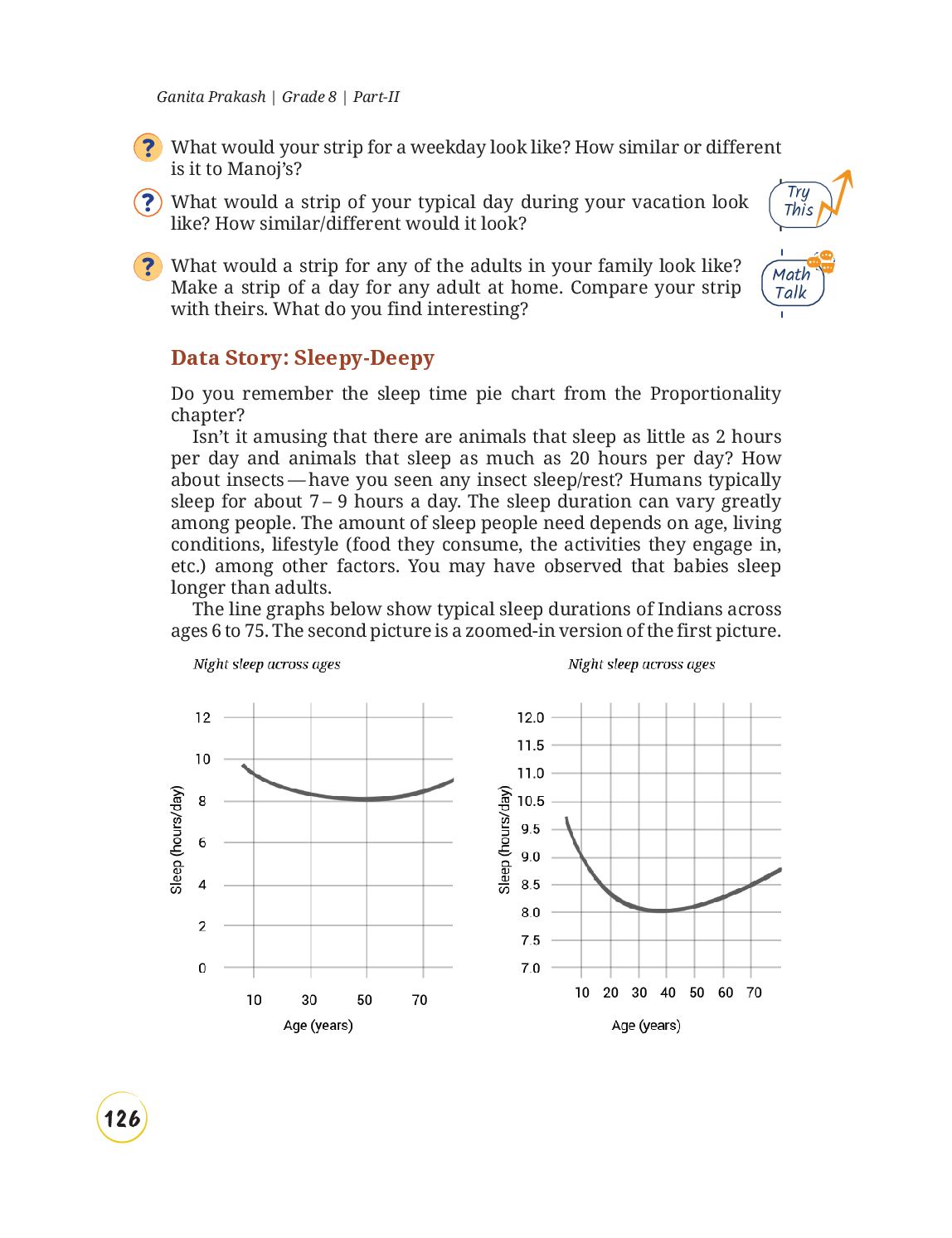
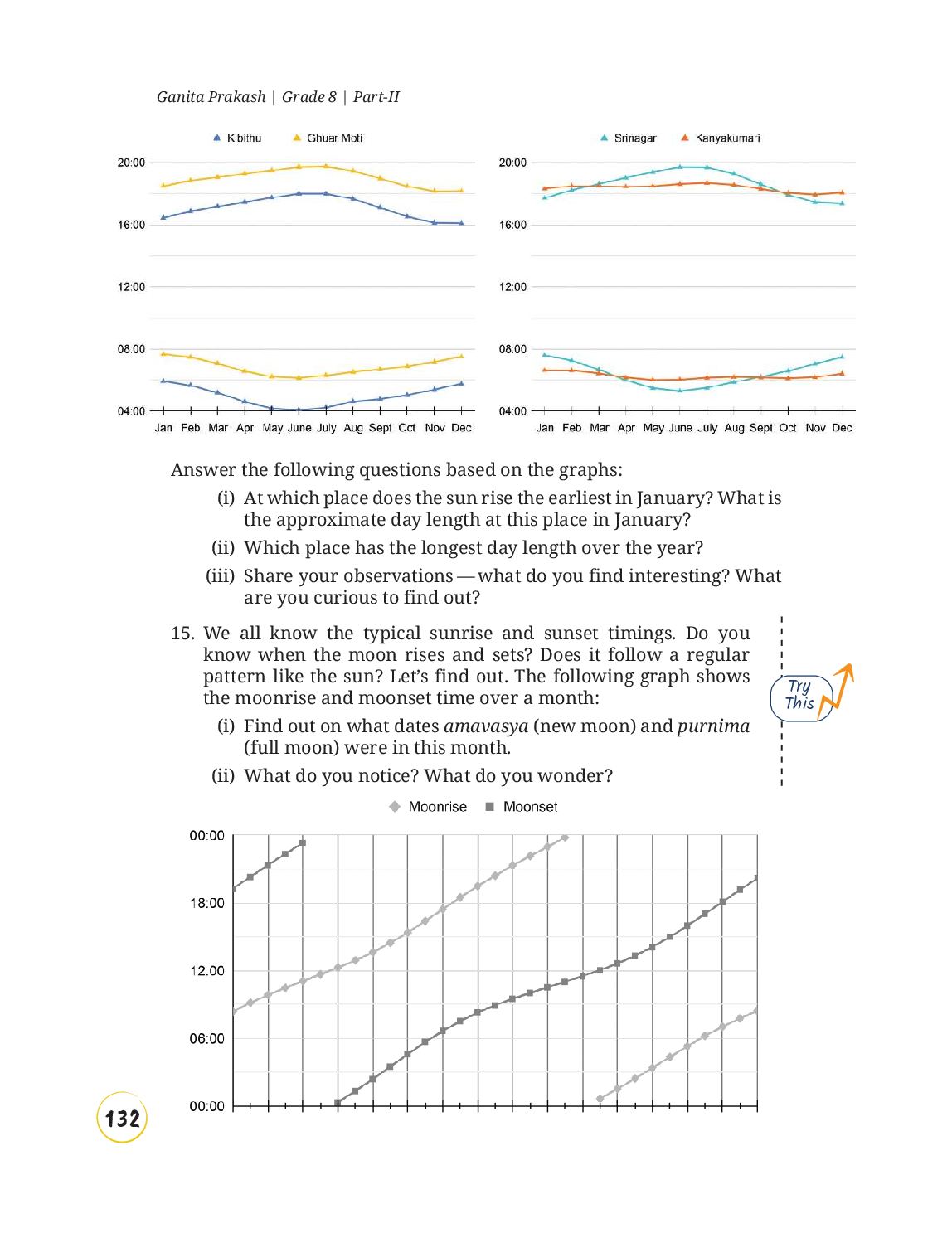
- Line graphs show change over time far more clearly than a crowded column graph. Reading one means two steps: first identify what is given (scale, axes, series), then infer — carefully, without claiming more than the graph shows.
Quick revision – Tales by Dots and Lines
| Idea | What it means | Worked example | Why it matters |
|---|---|---|---|
| Mean | Sum of values ÷ number of values | 3, 5, 10, 12 → 30 ÷ 4 = 7.5 | Uses every value, so every value can move it |
| Mean as balance point | Total distance on the left = total distance on the right | For 3, 5, 10, 12 about 7.5: 4.5 + 2.5 = 2.5 + 4.5 | Explains why there is exactly one mean |
| Adding a value | Above the mean → mean rises; below → mean falls; equal → no change | New mean − old mean = (x − a) ÷ (n + 1) | Predict the shift without recomputing |
| Shifting all values | Add k to every value → mean increases by k | Mean of 8, 3, 10, … is 7.18; add 10 → 17.18 | Turns a long sum into one addition |
| Scaling all values | Multiply every value by k → mean is multiplied by k | 7.18 × 2 = 14.36 | Change of units needs no fresh calculation |
| Median | Middle value of the sorted data | 4, 7, 8, 12, 14 → median 8 | Ignores how far away the extremes are |
| Median with an even count | Average of the two middle values | 4, 7, 8, 11, 12, 14 → (8 + 11) ÷ 2 = 9.5 | Keeps the middle honest when n is even |
| Mean from a frequency table | Σ(value × frequency) ÷ Σ(frequency) | 188 ÷ 36 = 5.22 family members | Repeated values must be counted every time |
| Median from a frequency table | Add frequencies until you pass the middle position | 18th and 19th of 36 values are both 5 | No need to write out all the values |
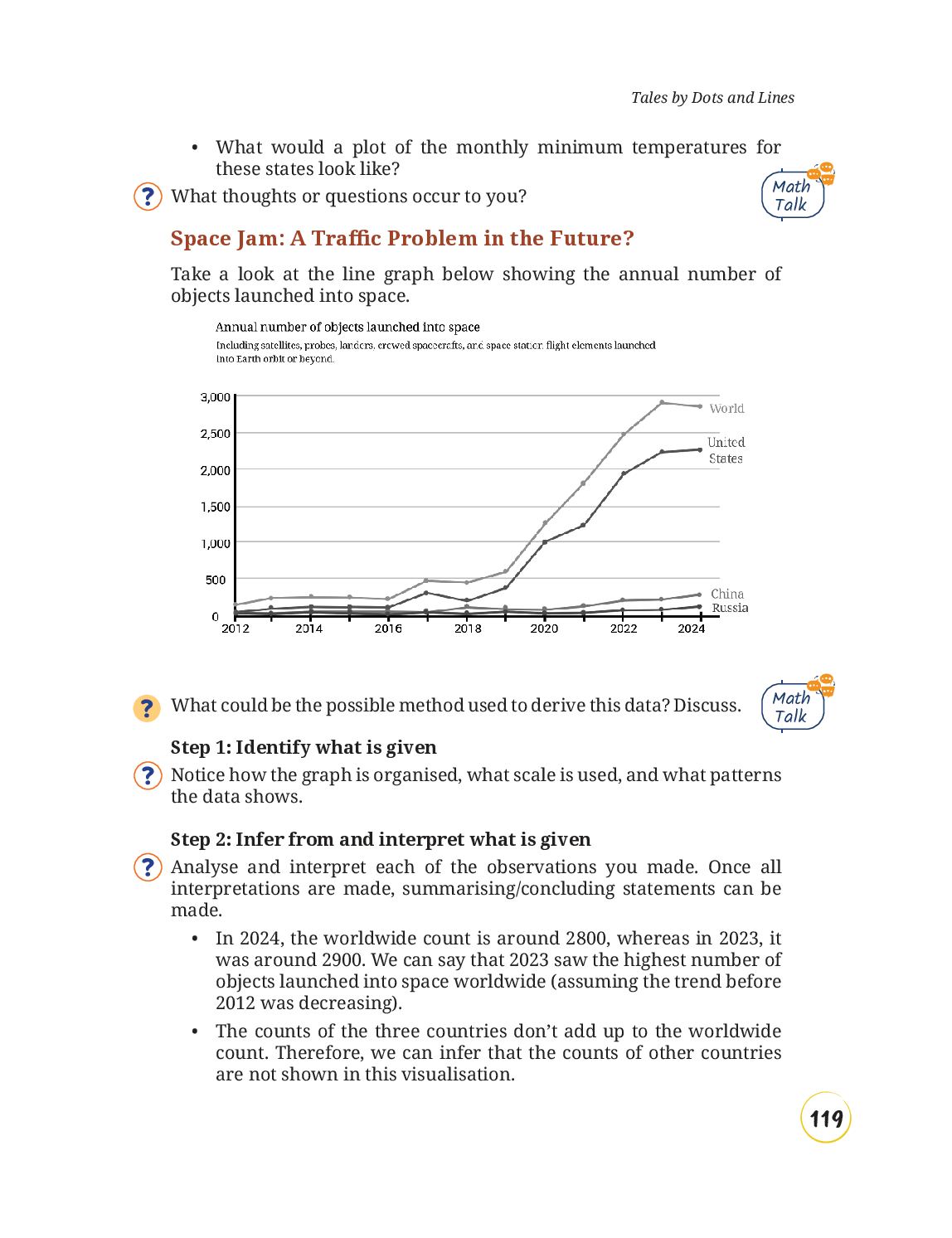
| Line graph | Points joined in time order; steepness shows the rate of change | Objects launched into space, 2012–2024 | Shows a trend that 52 bars would hide |
| Reading a graph | Step 1: identify what is given. Step 2: infer only what is supported | “In 2023 there were no power cuts” is not supported | Guards against reading in what is not there |
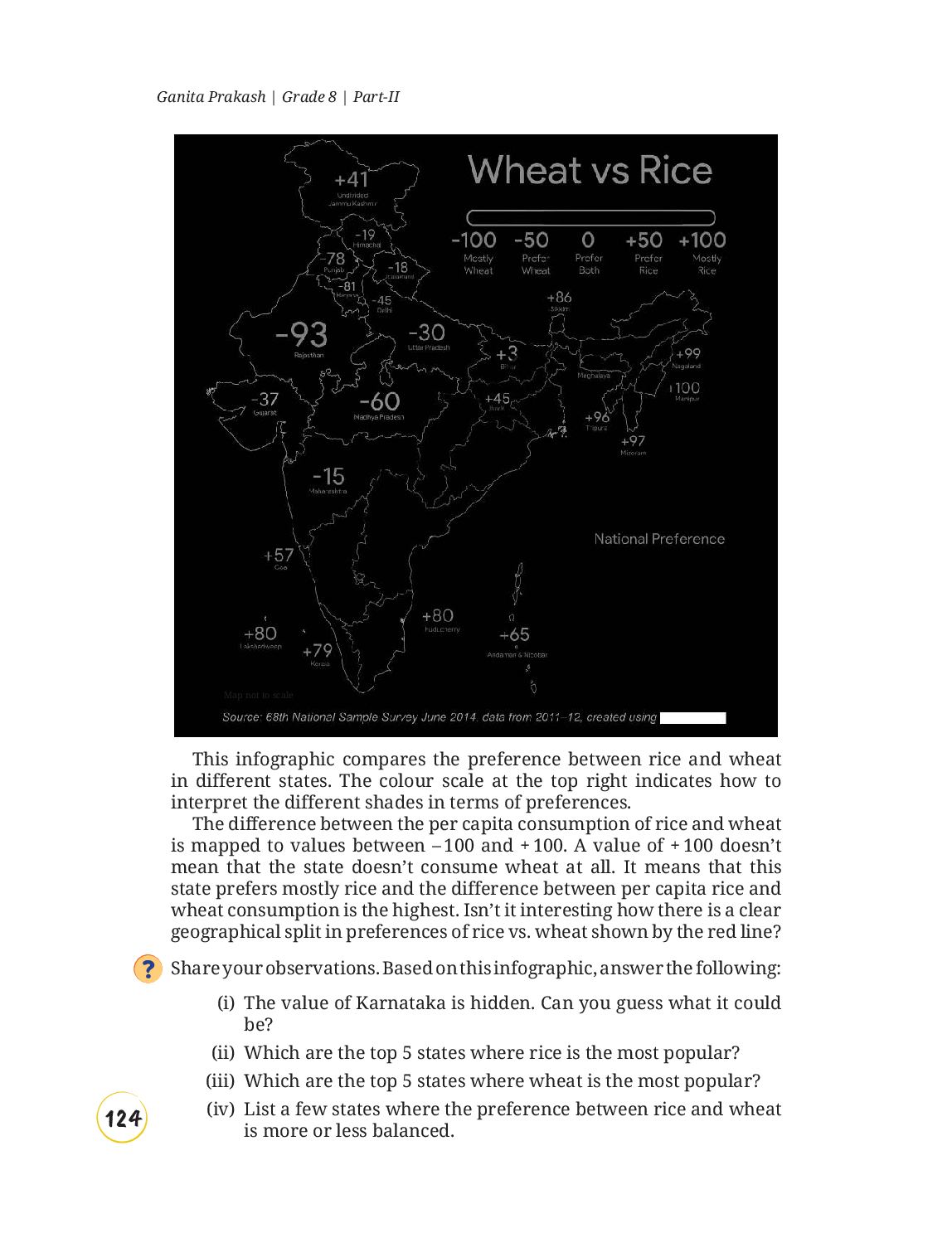
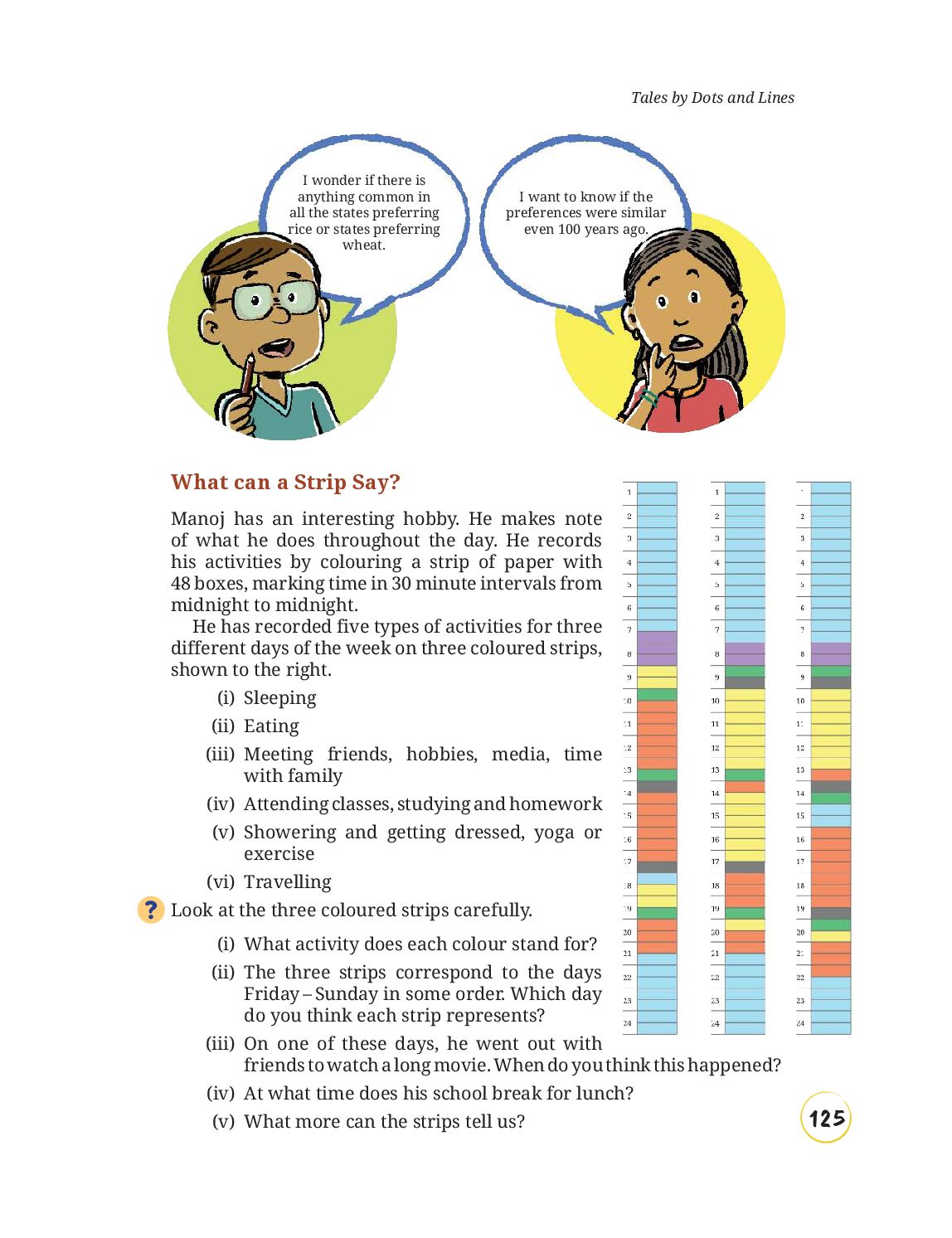
| Infographic / strip | A picture where colour or shade carries the number | 48 half-hour boxes = one full day | A whole day, or a whole country, at a glance |
Old NCERT vs New – Class 8 Maths
This chapter is from Ganita Prakash, the new NCERT Class 8 Maths book (NCF-SE 2023, used from 2025-26). It replaced the old book “Mathematics”, so chapter numbers and names differ from older PDFs.
Solutions and All Chapters
Answers to the exercises and the full chapter list of Ganita Prakash:
Tales by Dots and Lines – Overview
| Class | Class 8 |
| Subject | Maths |
| Book | Ganita Prakash – new NCERT book |
| Part | Part II |
| Chapter | 12 of 14 – Tales by Dots and Lines |
| Book pages | Part II, 103 – 133 |
| Edition | NCERT Reprint 2026-27 |
| Session | 2026-27 |
| Free – read online or download |
Class 8 Maths Chapter 12 – FAQs
Where can I download Tales by Dots and Lines Class 8 PDF?
From the download table on this page – the chapter PDF is free, and the full book is linked too.
What is Class 8 Maths Chapter 12 about?
The mean is the balance point of the data: the distances of the values below it add up to exactly the same total as the distances of the values above it. That is why there is only one mean.
Is Tales by Dots and Lines from the new NCERT Class 8 Maths book?
Yes. It is chapter 12 of ganita prakash (part ii), the new NCERT Class 8 Maths book for 2026-27.
Is this the latest NCERT edition for 2026-27?
Yes – the PDF is NCERT’s latest edition for the 2026-27 session.
Where are the NCERT Solutions for Class 8 Maths Chapter 12?
Open the NCERT Solutions link above for answers to the exercise questions.