NCERT Solutions for Class 6 English Chapter 1 Fables and Folk Tales provide clear, step-by-step answers to every exercise and in-text question from the chapter Fables and Folk Tales of the NCERT textbook Poorvi. Prepared by subject experts as per the latest NCERT (CBSE) syllabus for 2026-27, these NCERT Solutions for Class 6 English help you understand each concept, write exam-ready answers, and check your own solutions. You can read them online below or download the free Class 6 English Chapter 1 question-answer PDF.
NCERT Solutions for Class 6 English Chapter 1 Fables and Folk Tales
- Class: Class 6
- Subject: English
- Chapter: Chapter 1 – Fables and Folk Tales
- Textbook: Poorvi (NCERT)
- Study material: NCERT Solutions – questions with answers, free PDF
These solutions answer all the exercise questions of Chapter 1 Fables and Folk Tales — including the in-text questions, short-answer and long-answer questions, and activities — with complete explanations so you can follow the method, not just the final answer. Read the full solutions below.
NCERT Solutions Class 6 English Unit 1 Fables and Folk Tales View Download
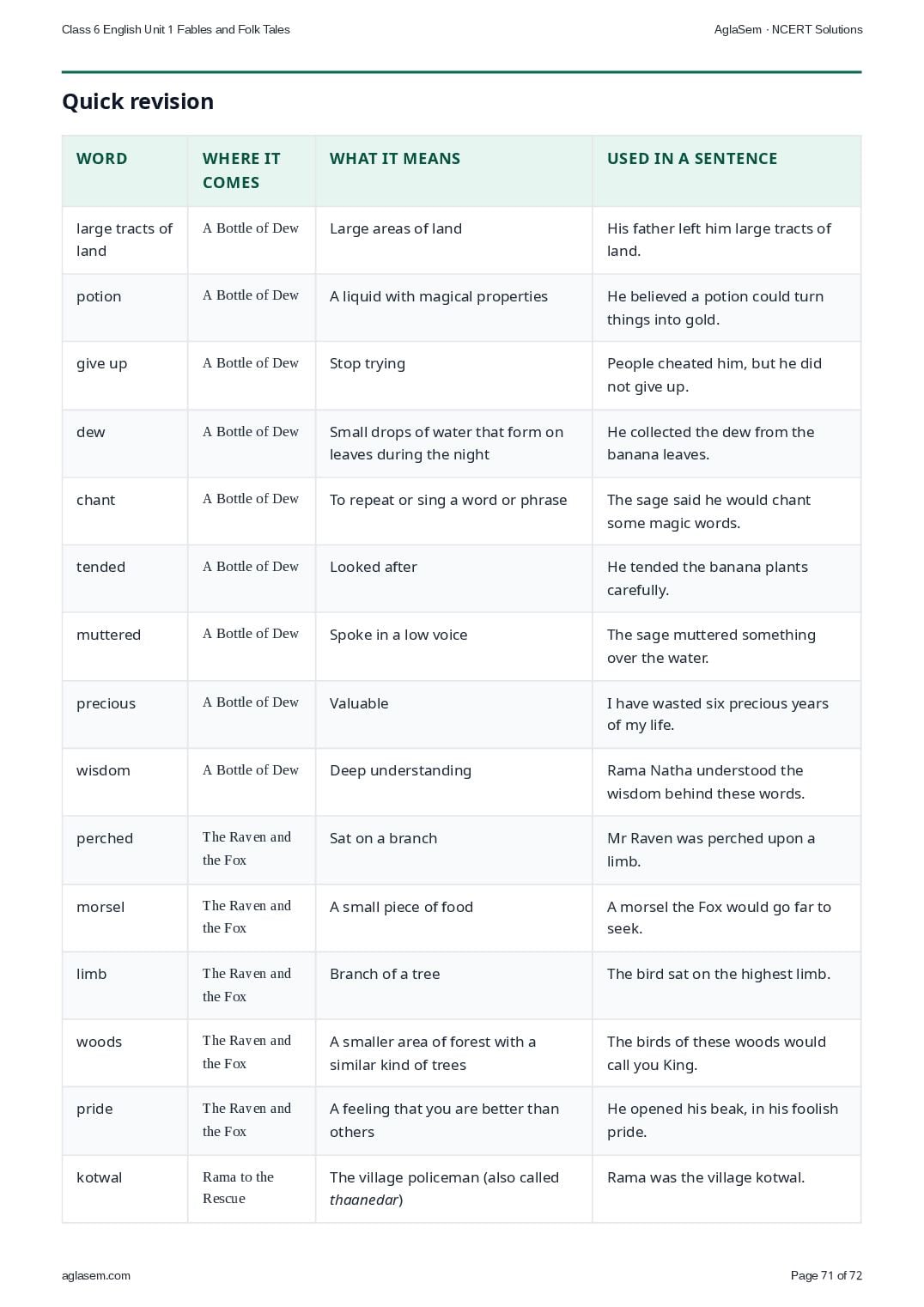
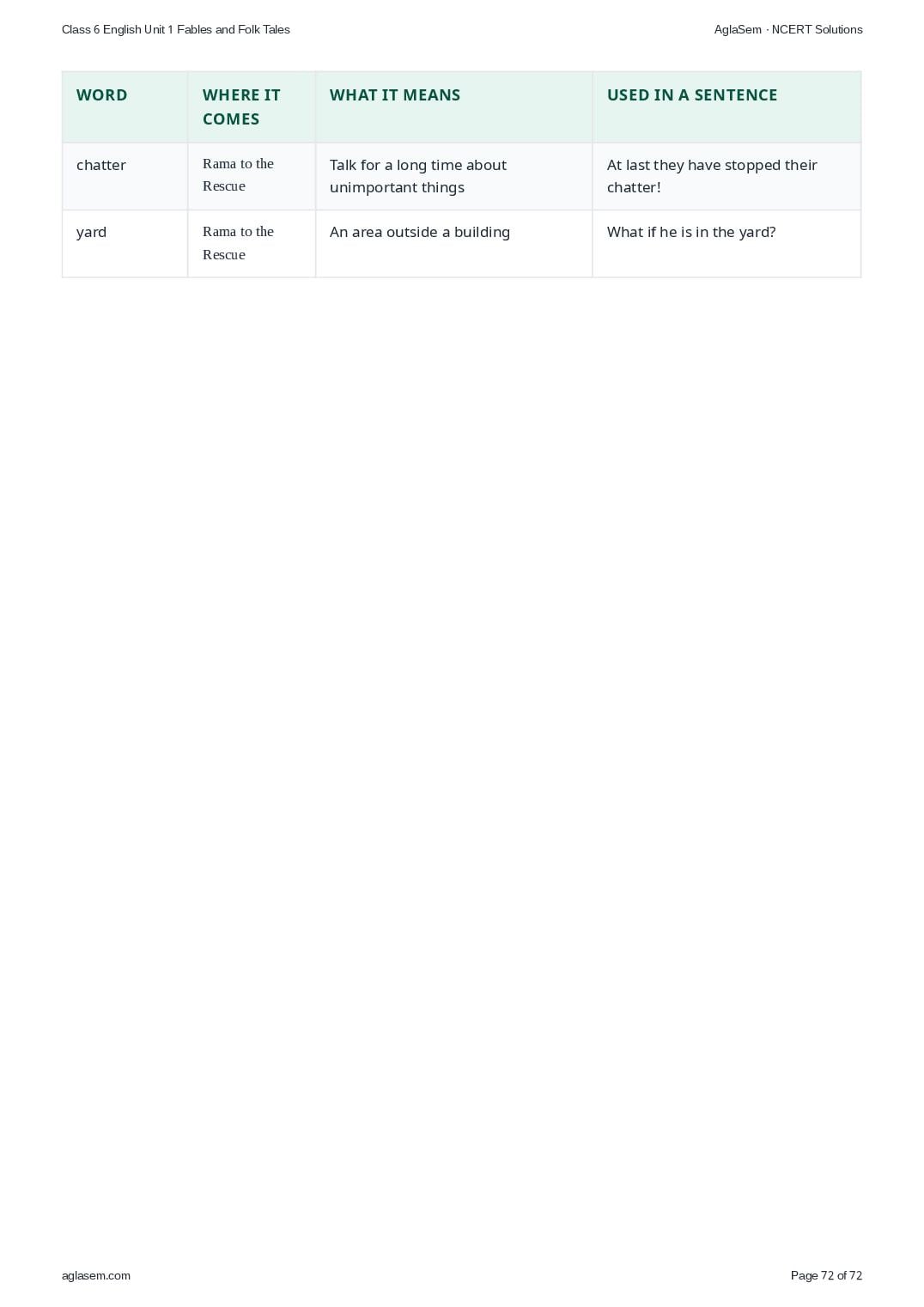
NCERT Solutions for Class 6 English Chapter 1 PDF Download
You can read the NCERT Solutions for Class 6 English Chapter 1 online above, or download the complete question-answer PDF to study Fables and Folk Tales offline at any time.
NCERT Solutions for Class 6 English Chapter 1 PDF Download Link – Click Here to Download Solutions PDF
Questions Covered in This Chapter
These NCERT Solutions answer all 100 questions of this chapter. The questions solved are:
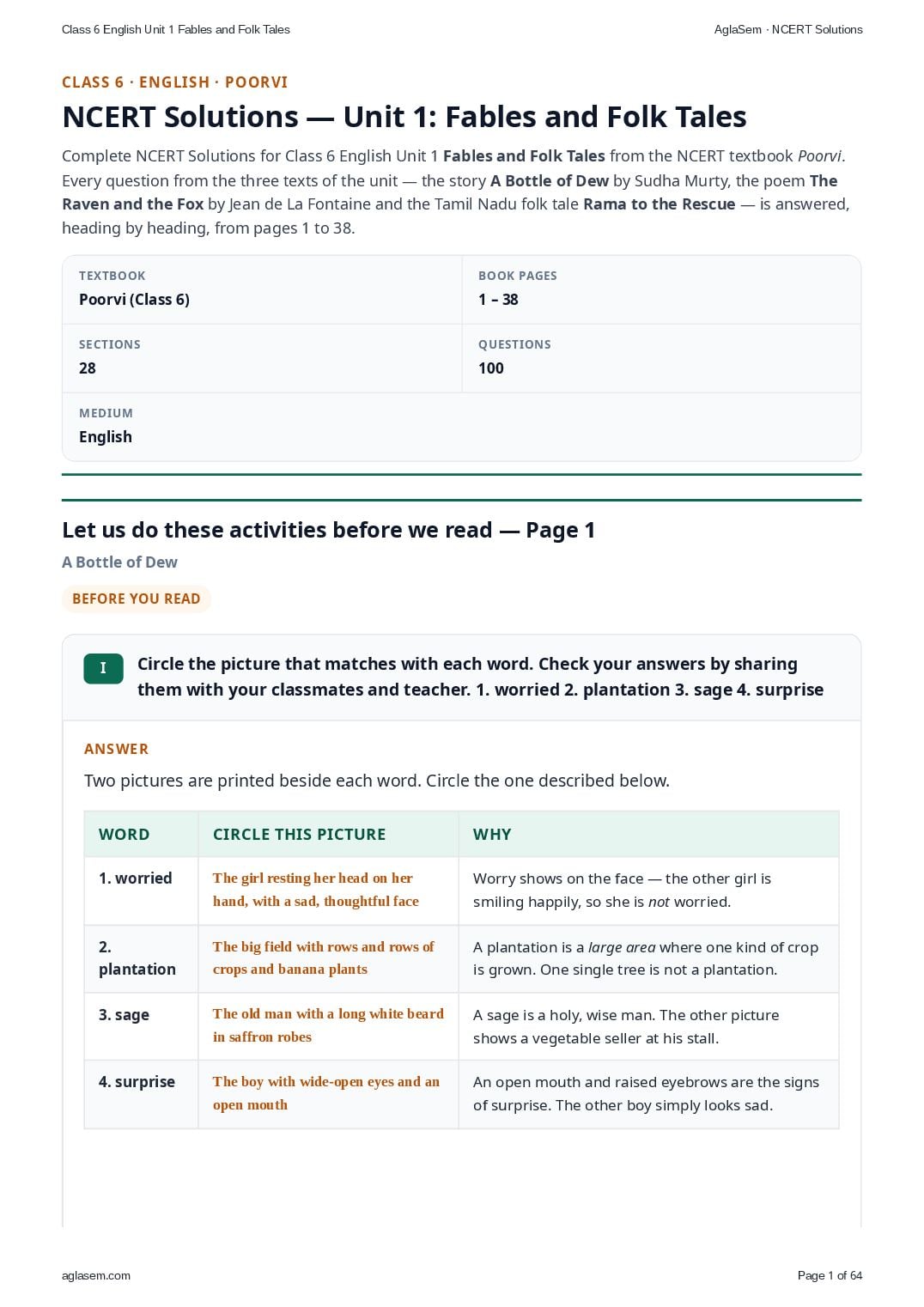
- Circle the picture that matches with each word. Check your answers by sharing them with your classmates and teacher. 1. worried 2. plantation 3. sage 4. surprise
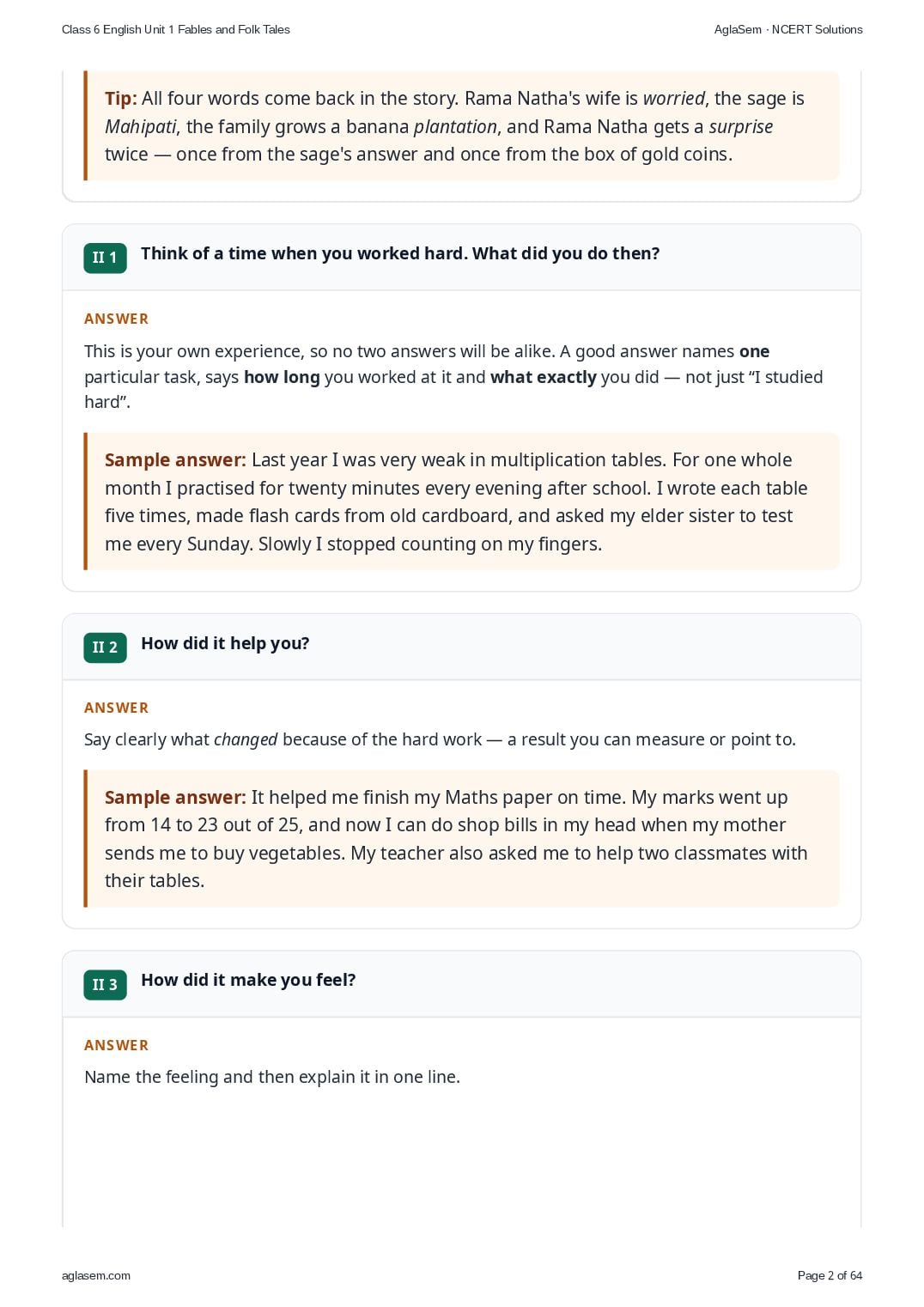
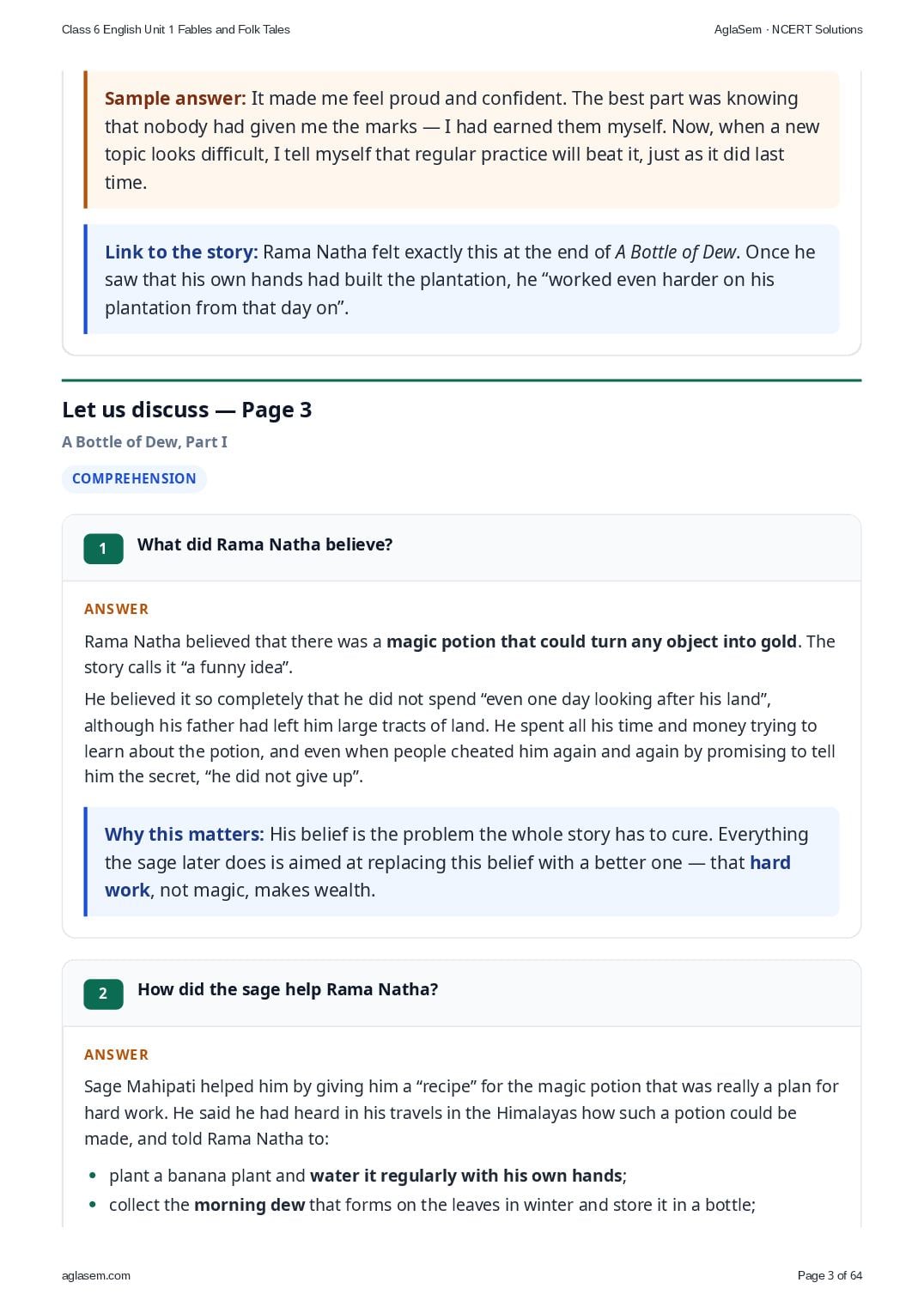
- Think of a time when you worked hard. What did you do then?
- How did it help you?
- How did it make you feel?
- What did Rama Natha believe?
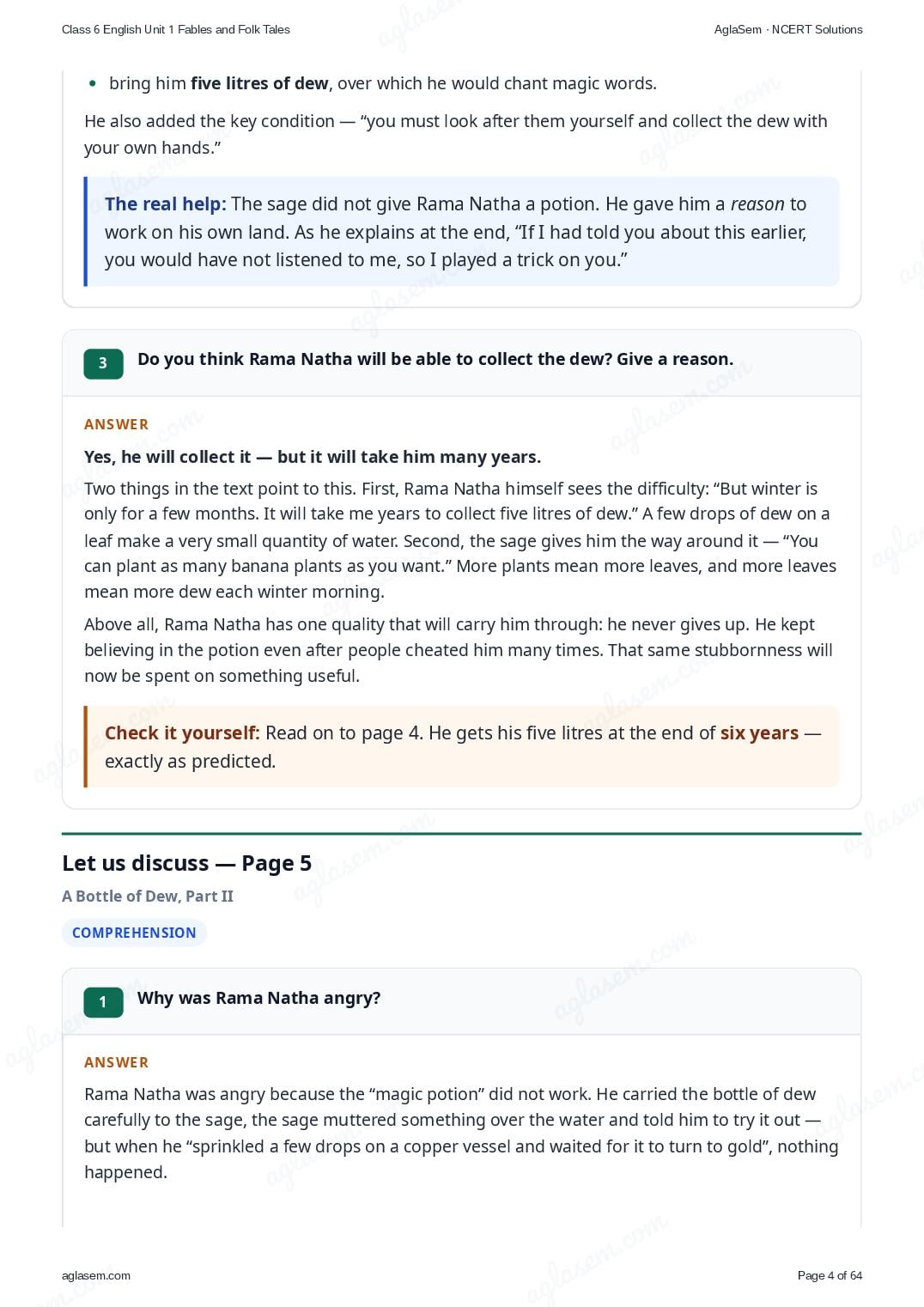
- How did the sage help Rama Natha?
- Do you think Rama Natha will be able to collect the dew? Give a reason.
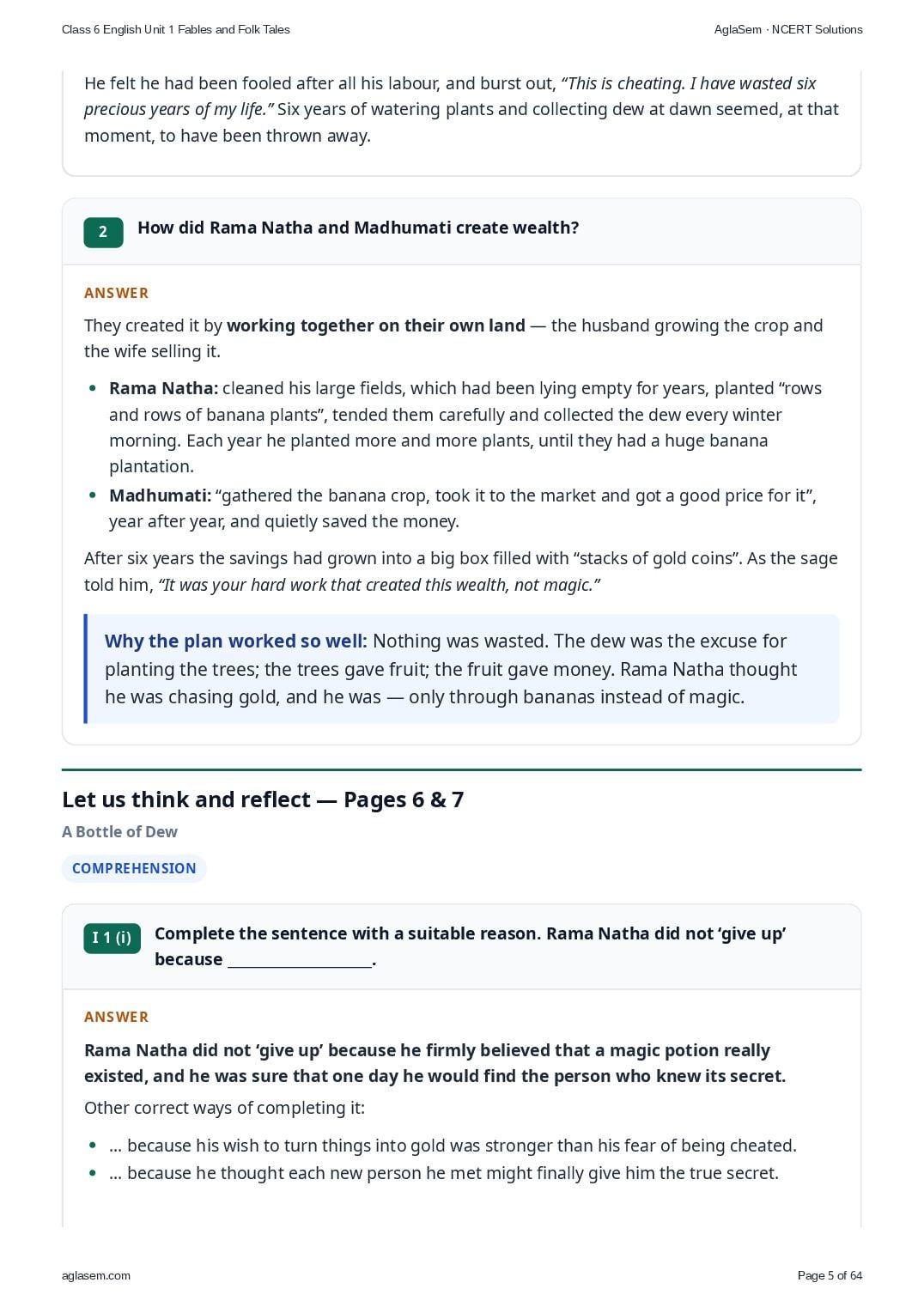
- Why was Rama Natha angry?
- How did Rama Natha and Madhumati create wealth?
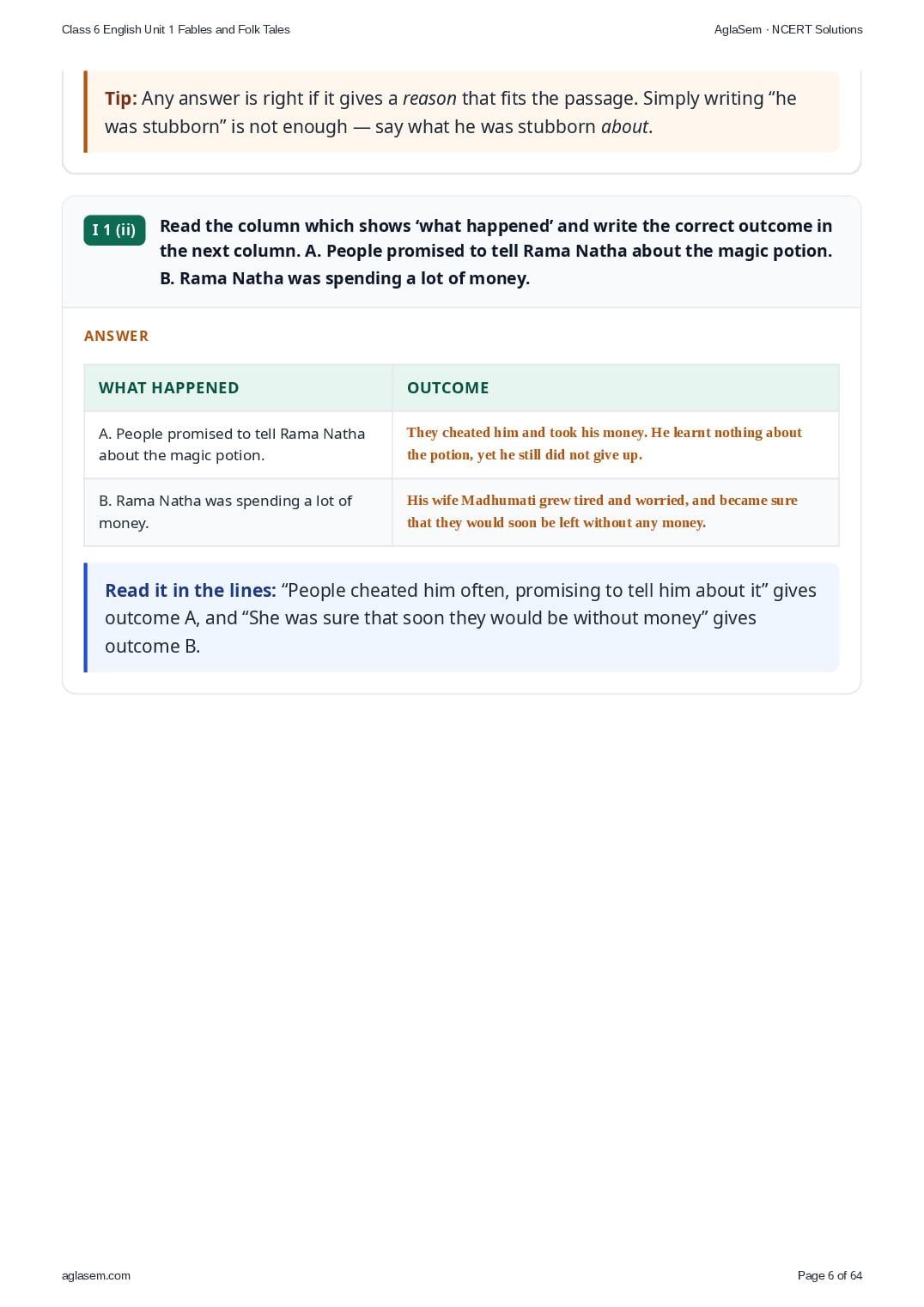
- Complete the sentence with a suitable reason. Rama Natha did not ‘give up’ because _____________________.
- Read the column which shows ‘what happened’ and write the correct outcome in the next column. A. People promised to tell Rama Natha about the magic potion. B. Rama Natha was spending a lot of money.
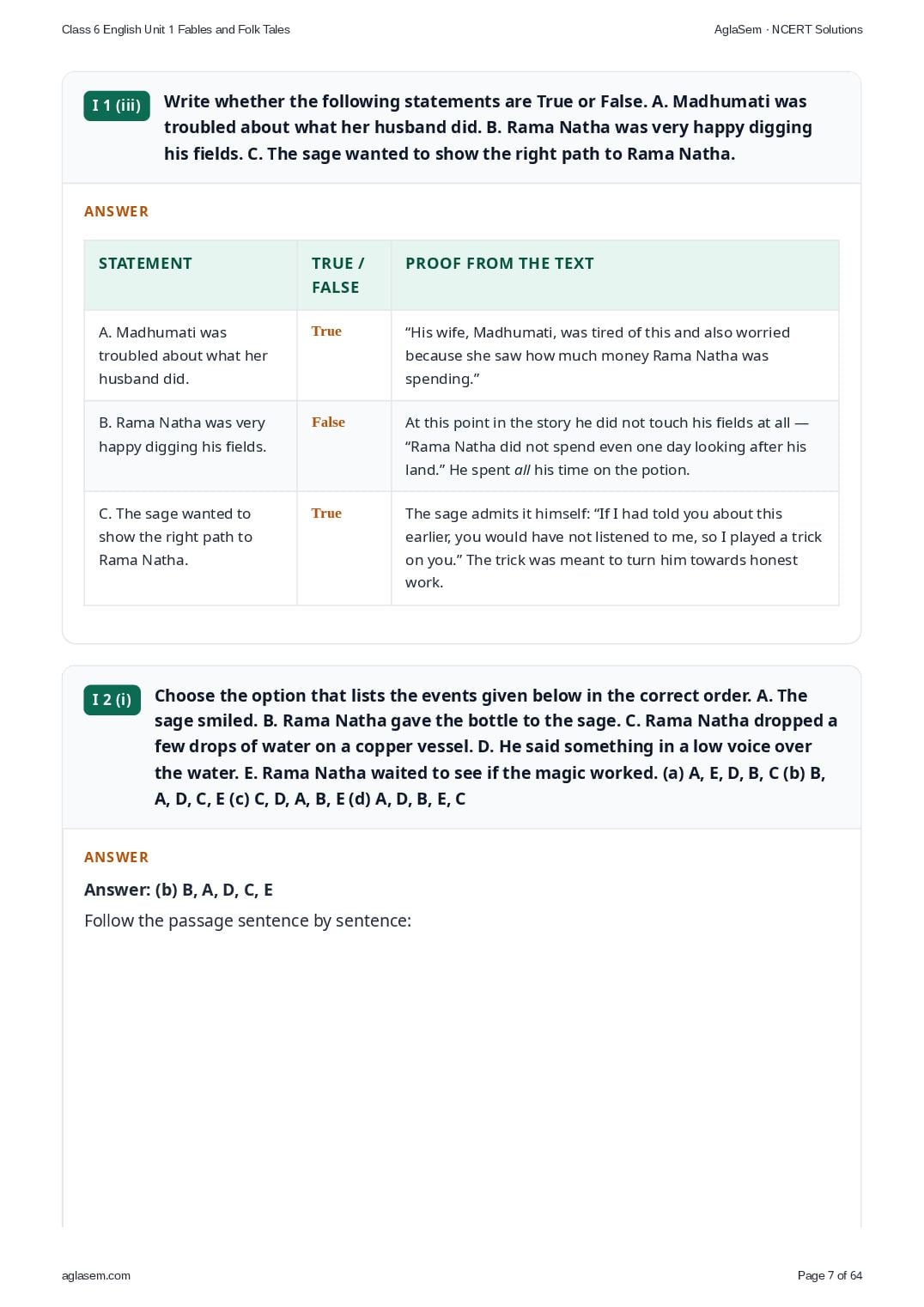
- Write whether the following statements are True or False. A. Madhumati was troubled about what her husband did. B. Rama Natha was very happy digging his fields. C. The sage wanted to show the right path to Rama Natha.
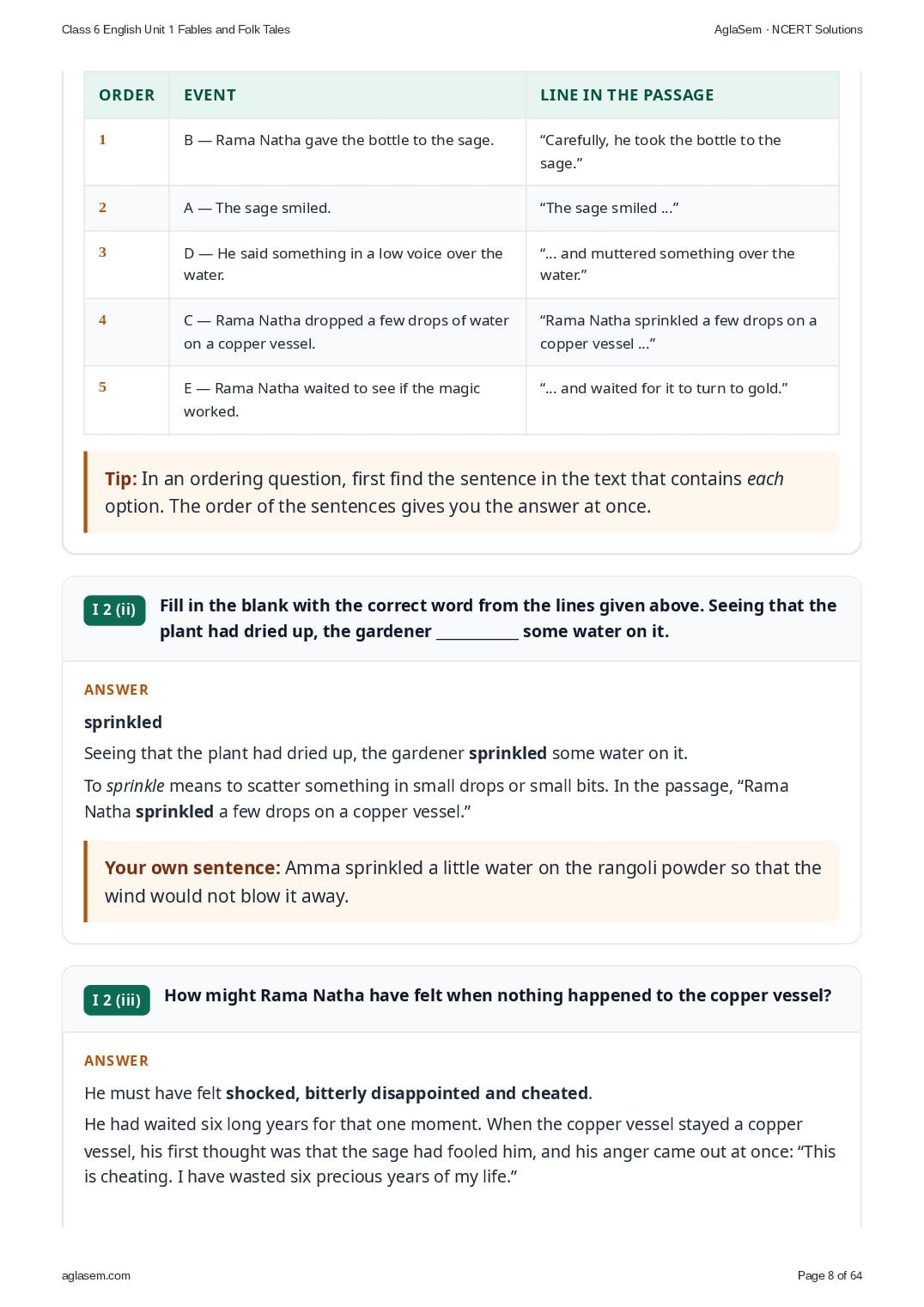
- Choose the option that lists the events given below in the correct order. A. The sage smiled. B. Rama Natha gave the bottle to the sage. C. Rama Natha dropped a few drops of water on a copper vessel. D. He said something in a low voice over the water. E. Rama Natha waited to see if the magic worked. (a) A, E, D, B, C (b) B, A, D, C, E (c) C, D, A, B, E (d) A, D, B, E, C
- Fill in the blank with the correct word from the lines given above. Seeing that the plant had dried up, the gardener ____________ some water on it.
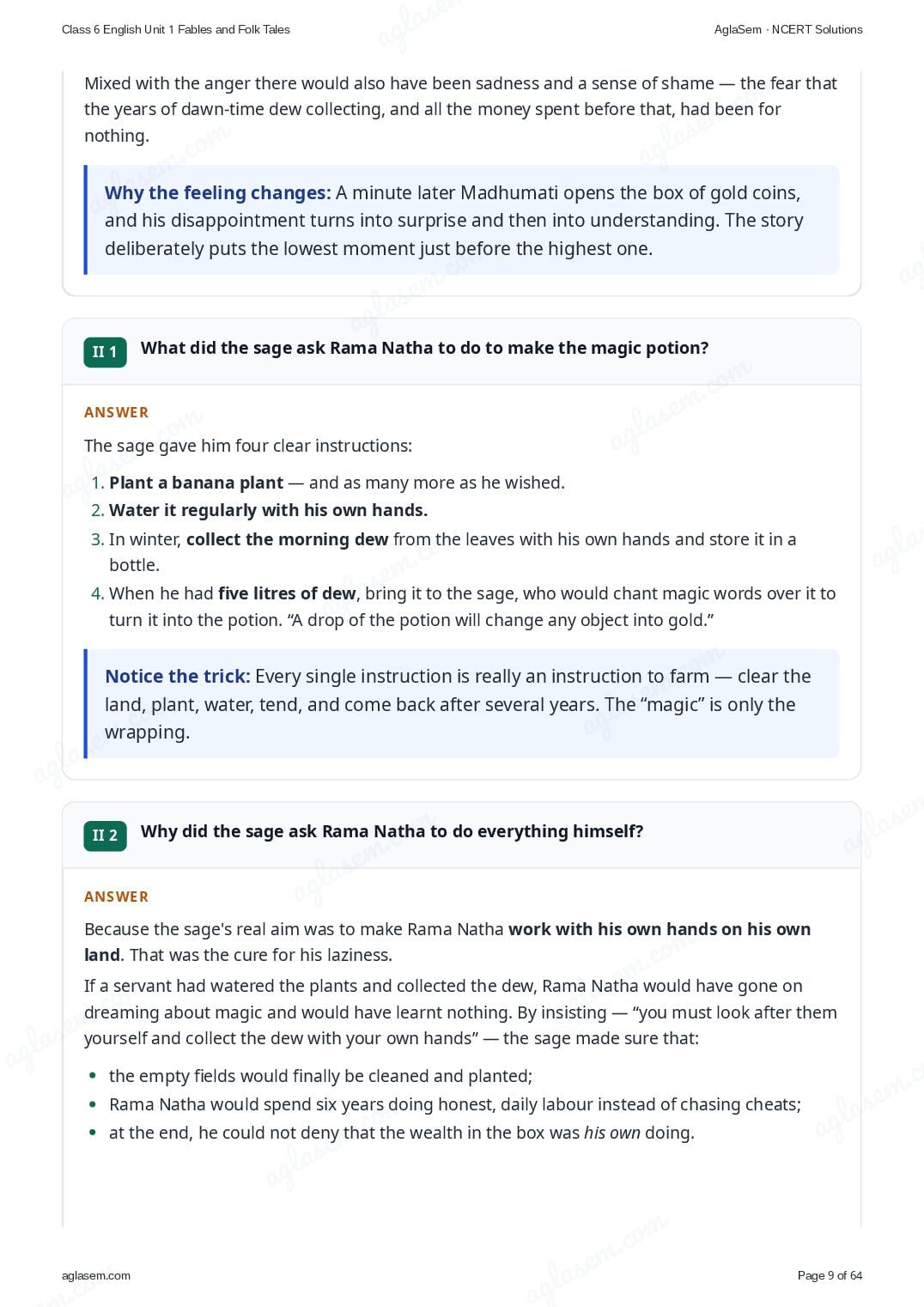
- How might Rama Natha have felt when nothing happened to the copper vessel?
- What did the sage ask Rama Natha to do to make the magic potion?
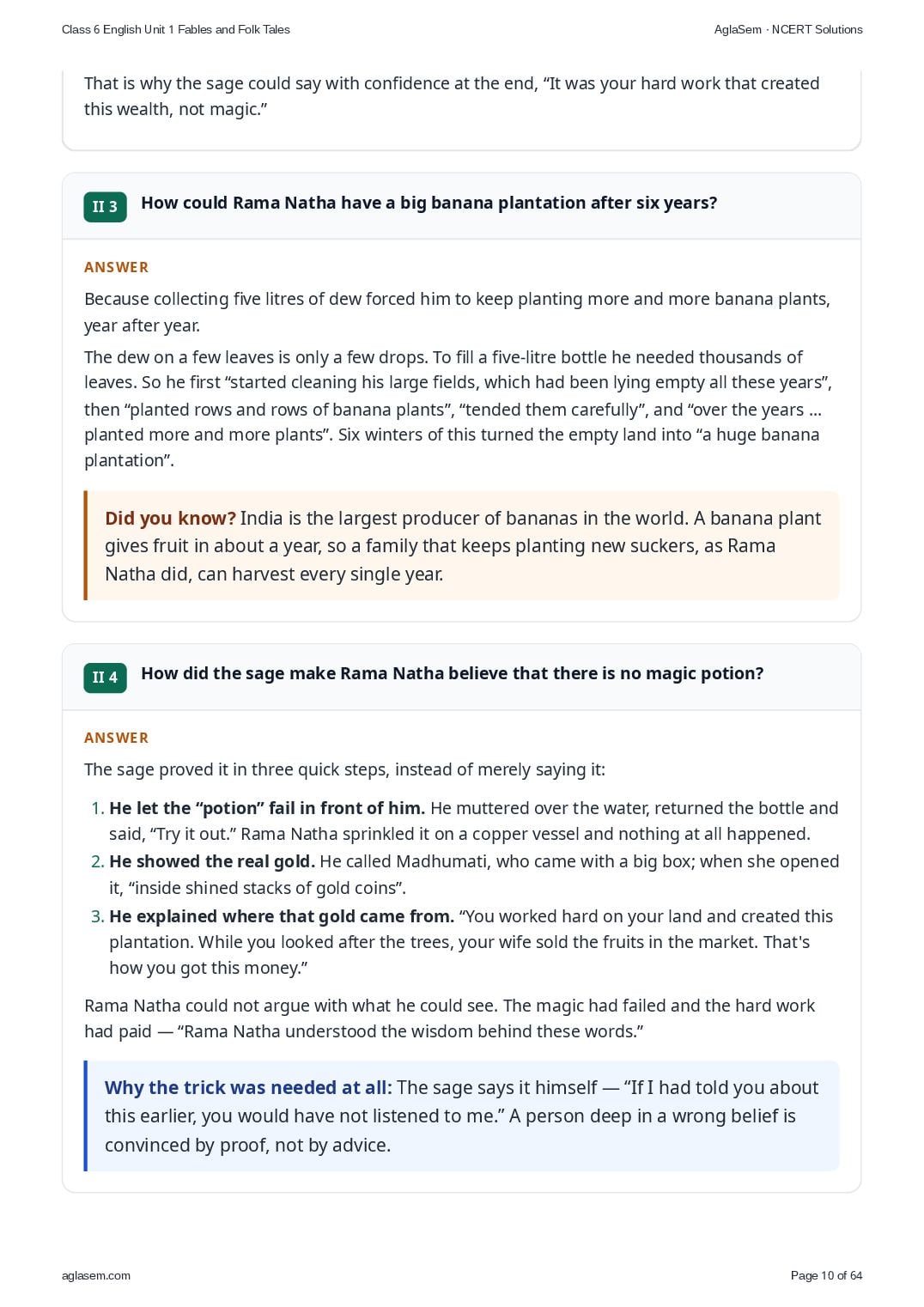
- Why did the sage ask Rama Natha to do everything himself?
- How could Rama Natha have a big banana plantation after six years?
- How did the sage make Rama Natha believe that there is no magic potion?
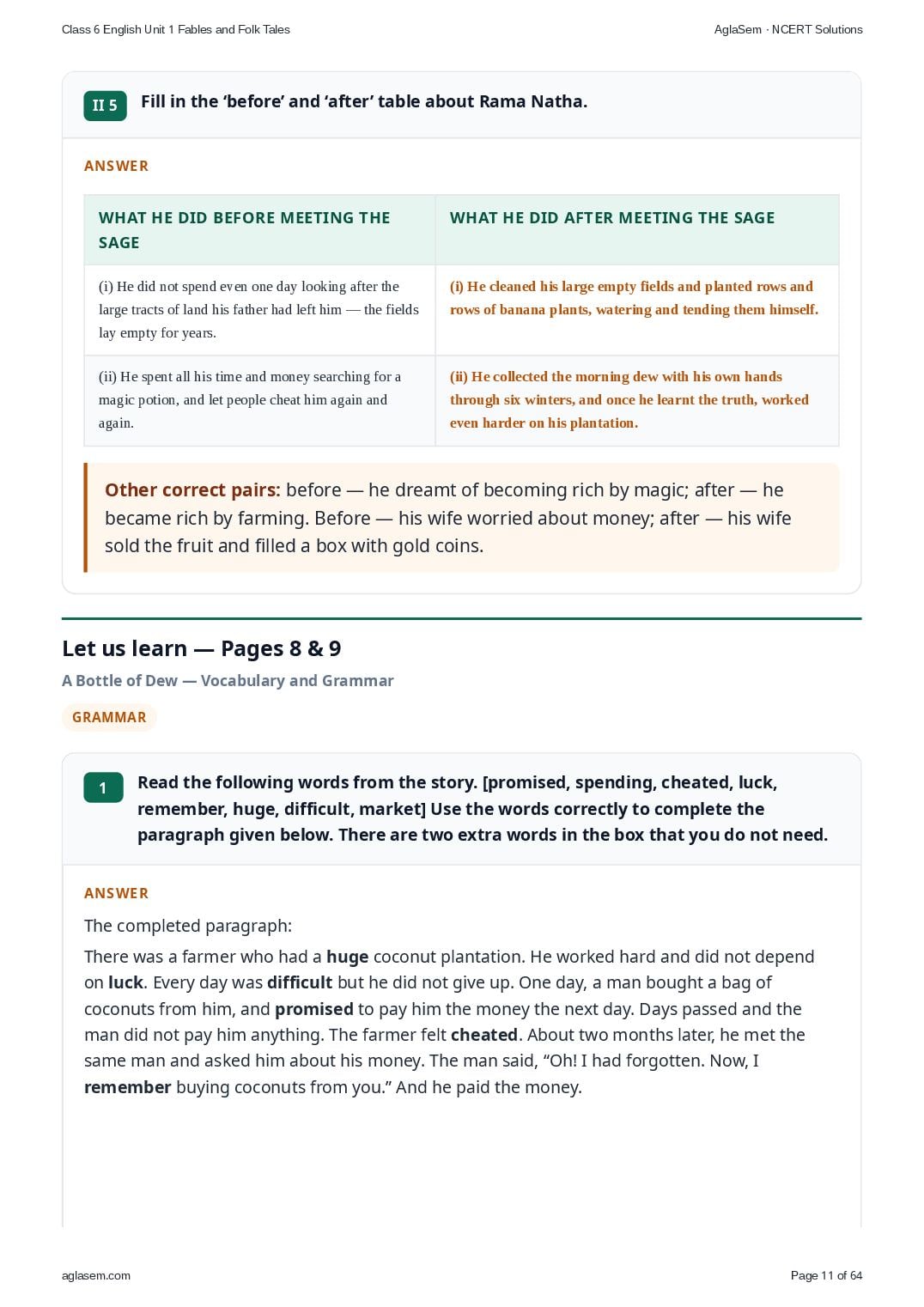
- Fill in the ‘before’ and ‘after’ table about Rama Natha.
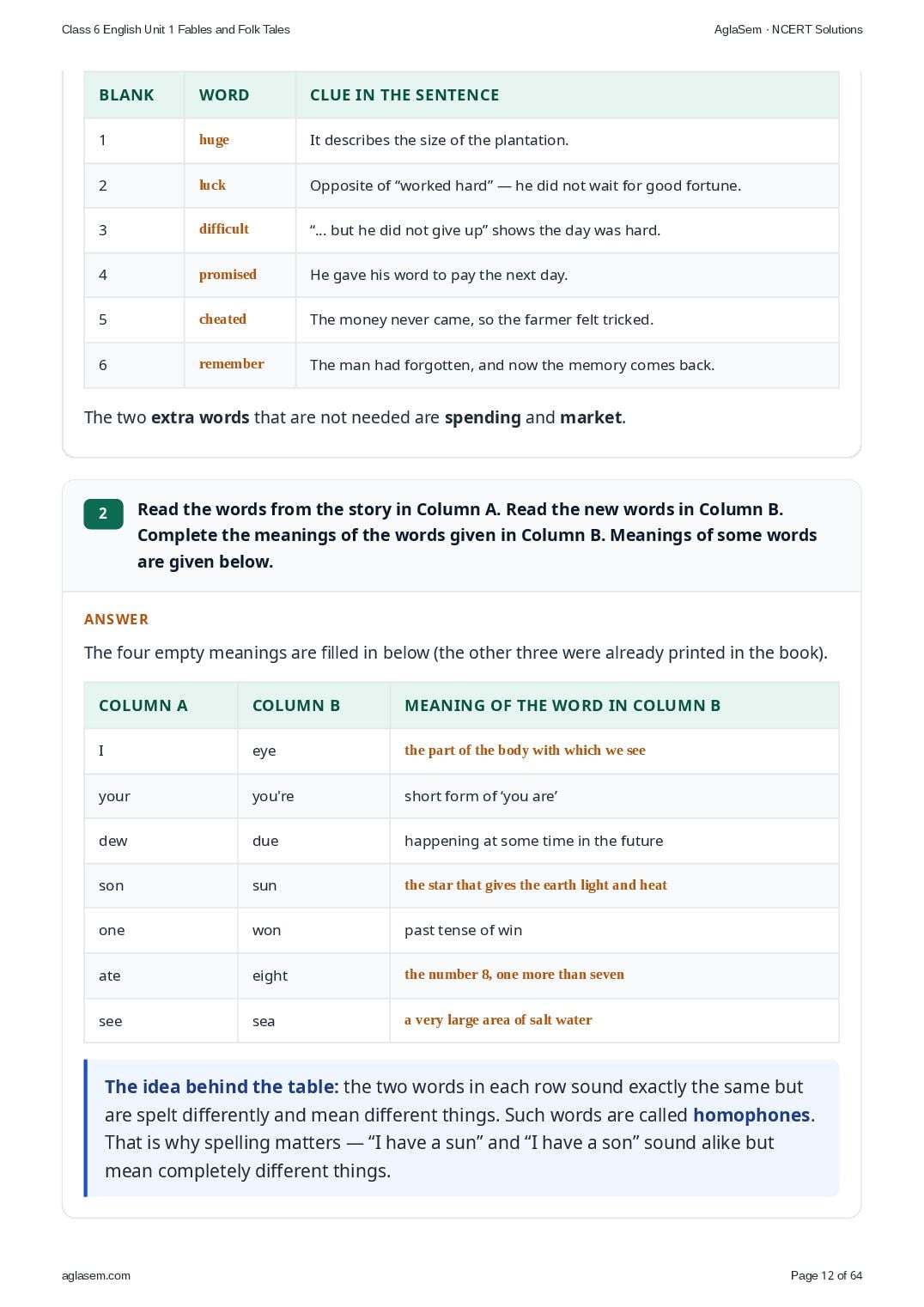
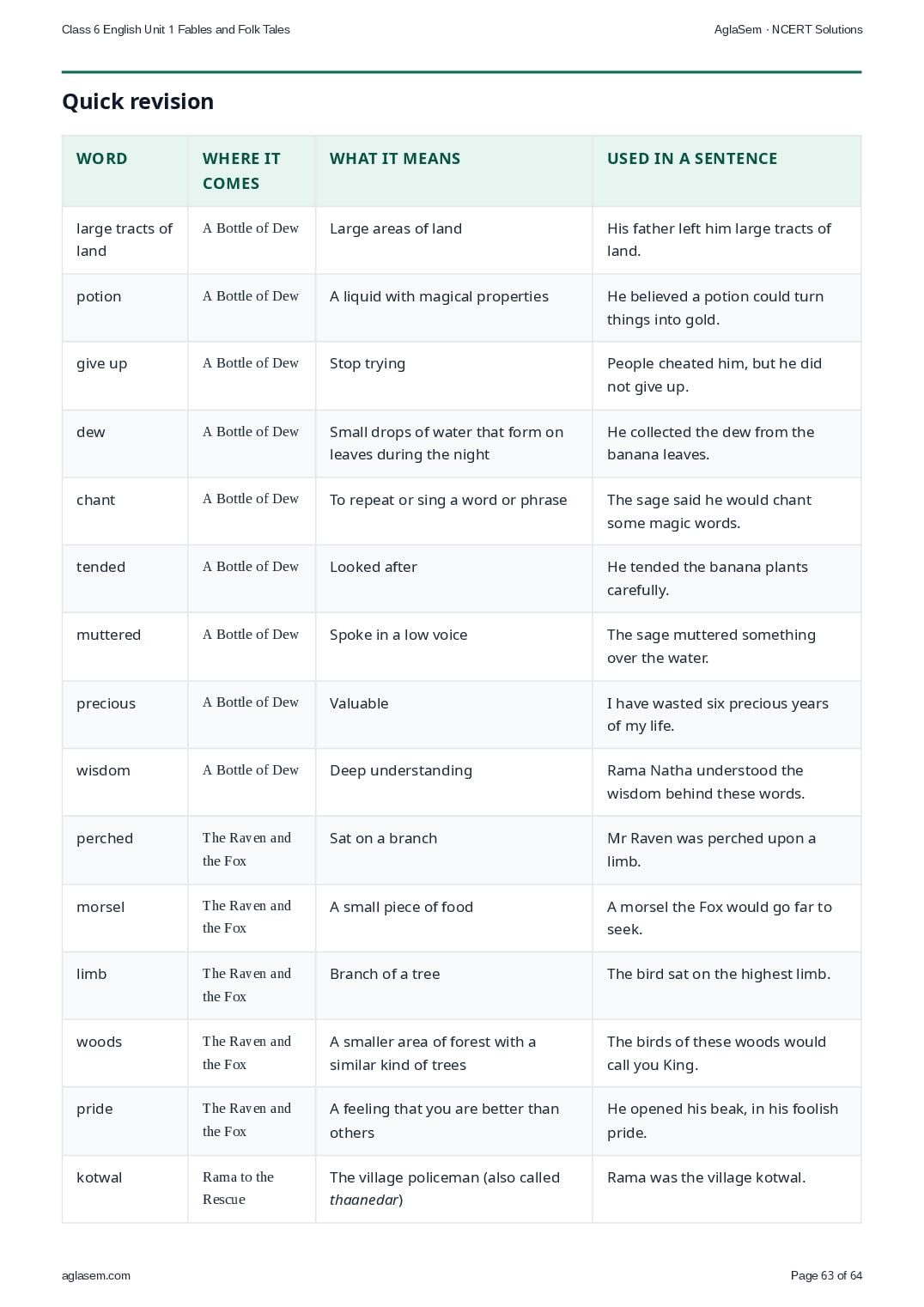
- Read the following words from the story. [promised, spending, cheated, luck, remember, huge, difficult, market] Use the words correctly to complete the paragraph given below. There are two extra words in the box that you do not need.
- Read the words from the story in Column A. Read the new words in Column B. Complete the meanings of the words given in Column B. Meanings of some words are given below.
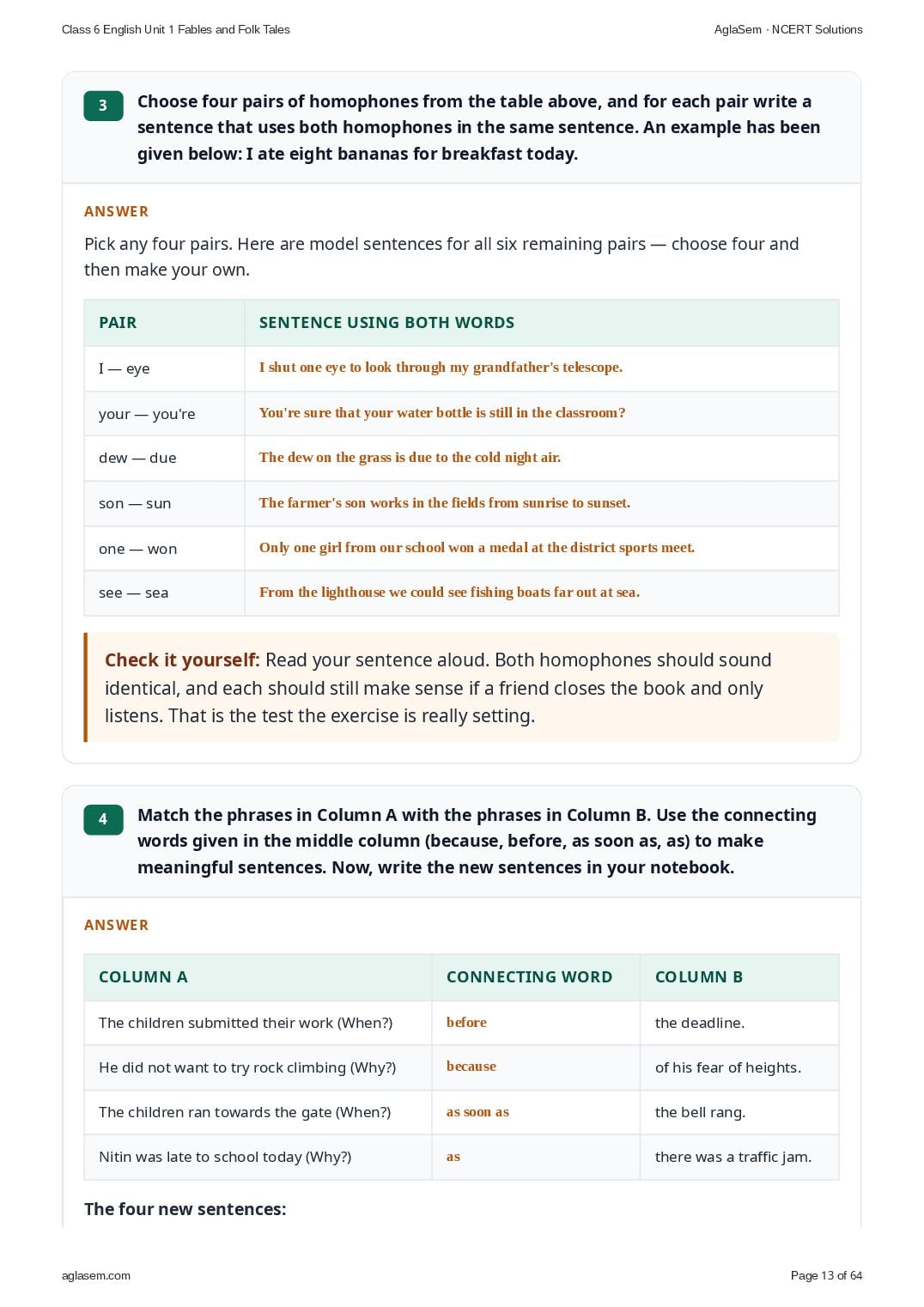
- Choose four pairs of homophones from the table above, and for each pair write a sentence that uses both homophones in the same sentence. An example has been given below: I ate eight bananas for breakfast today.
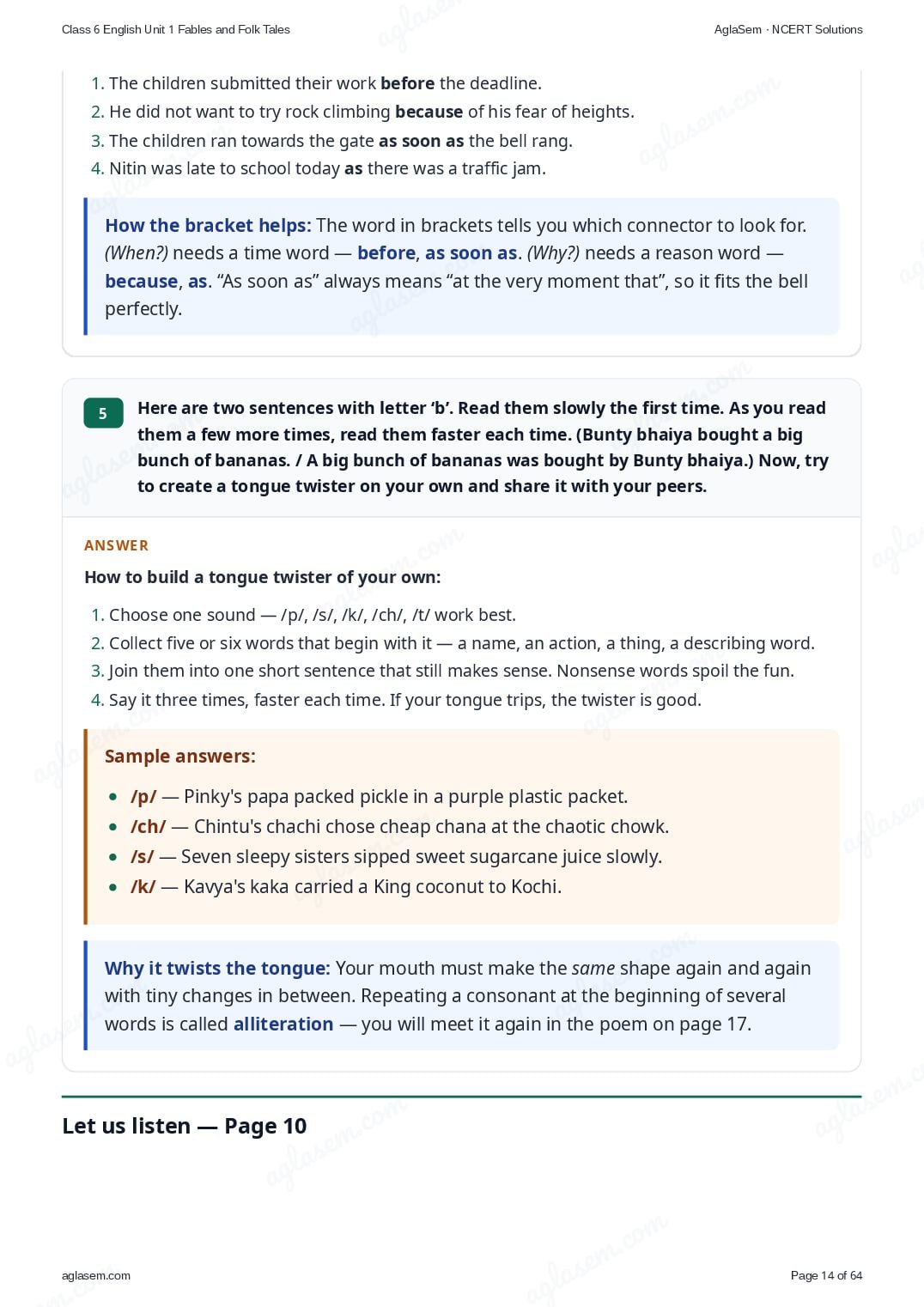
- Match the phrases in Column A with the phrases in Column B. Use the connecting words given in the middle column (because, before, as soon as, as) to make meaningful sentences. Now, write the new sentences in your notebook.
- Here are two sentences with letter ‘b’. Read them slowly the first time. As you read them a few more times, read them faster each time. (Bunty bhaiya bought a big bunch of bananas. / A big bunch of bananas was bought by Bunty bhaiya.) Now, try to create a tongue twister on your own and share it with your peers.
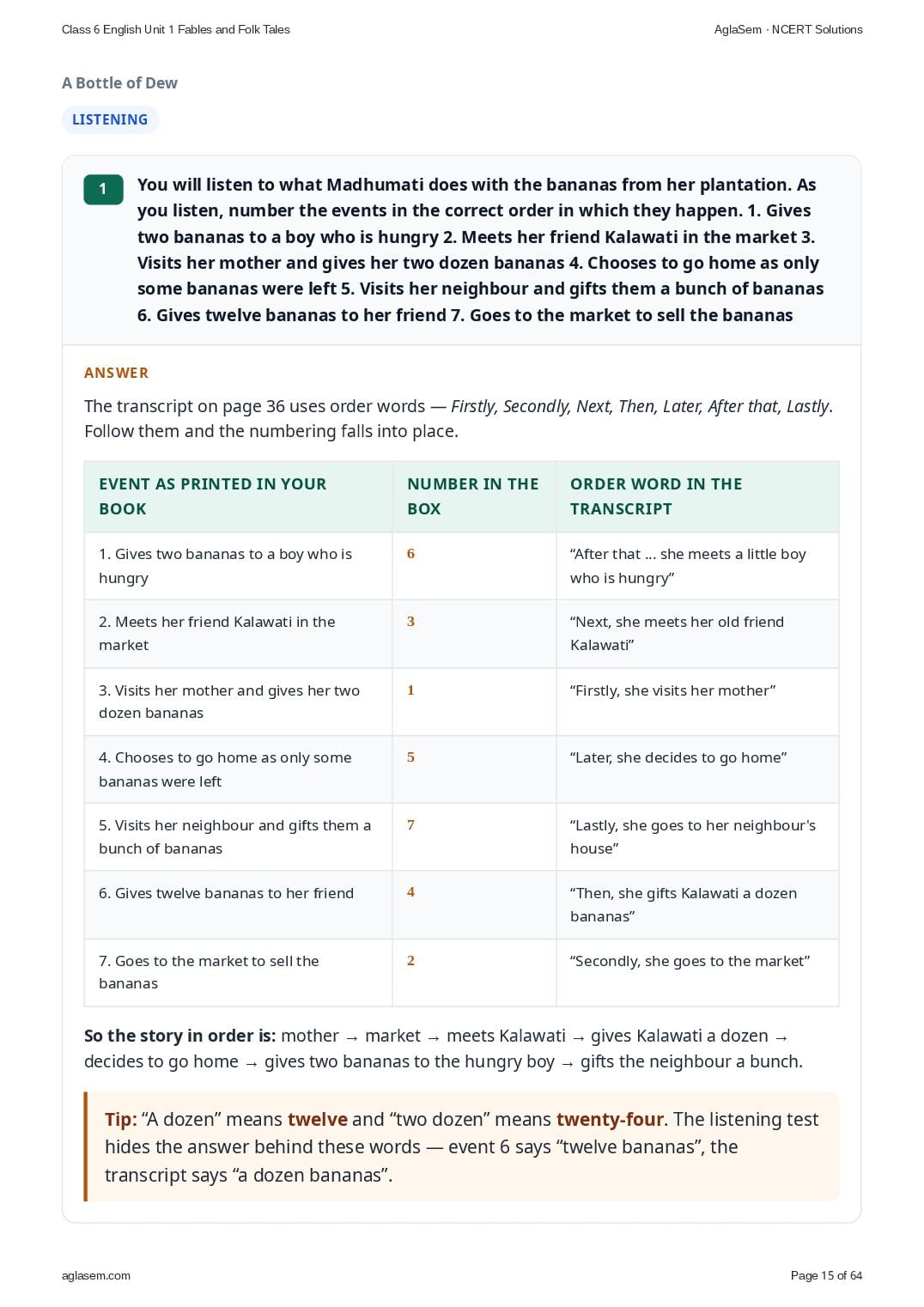
- You will listen to what Madhumati does with the bananas from her plantation. As you listen, number the events in the correct order in which they happen. 1. Gives two bananas to a boy who is hungry 2. Meets her friend Kalawati in the market 3. Visits her mother and gives her two dozen bananas 4. Chooses to go home as only some bananas were left 5. Visits her neighbour and gifts them a bunch of bananas 6. Gives twelve bananas to her friend 7. Goes to the market to sell the bananas
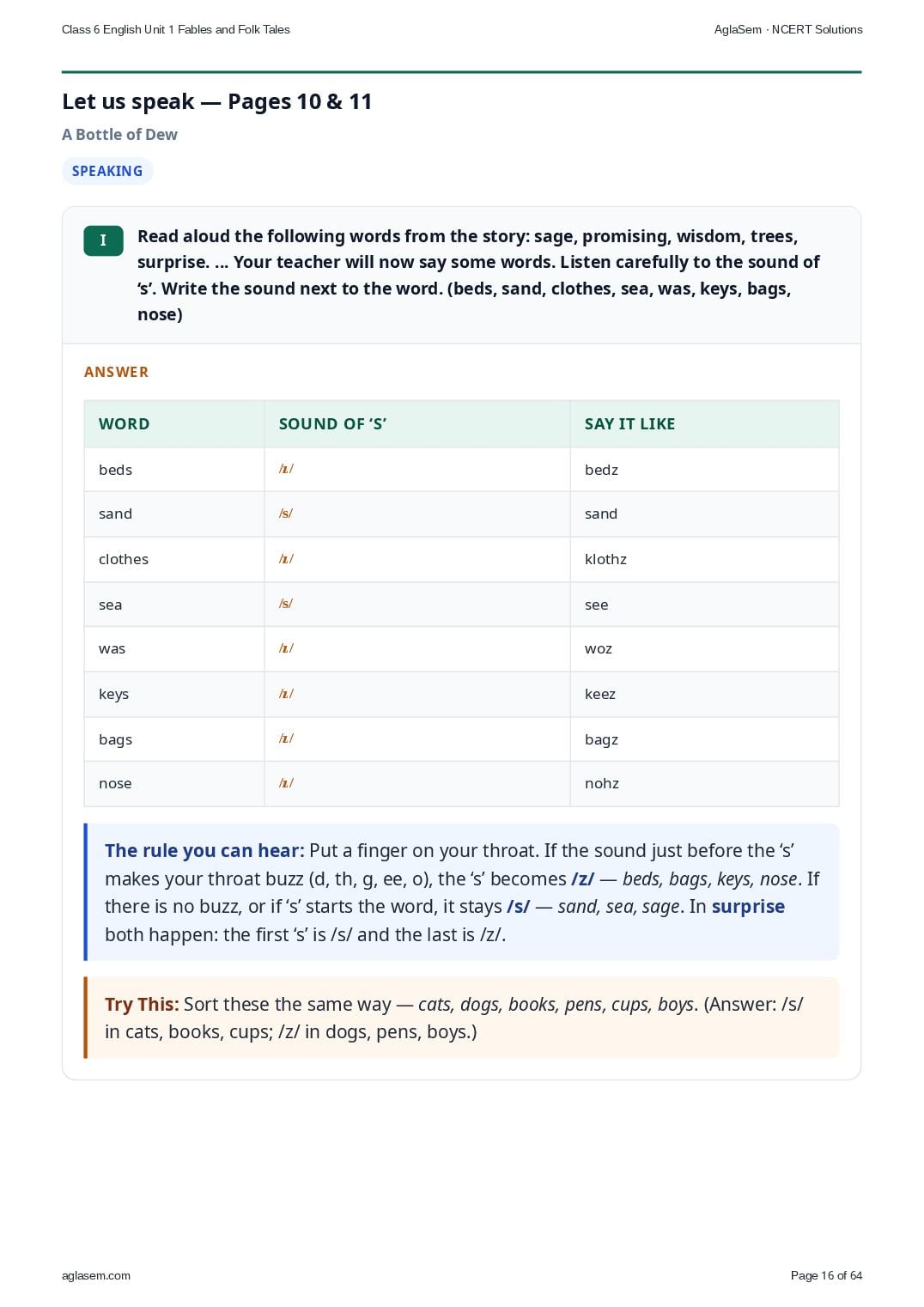
- Read aloud the following words from the story: sage, promising, wisdom, trees, surprise. … Your teacher will now say some words. Listen carefully to the sound of ‘s’. Write the sound next to the word. (beds, sand, clothes, sea, was, keys, bags, nose)
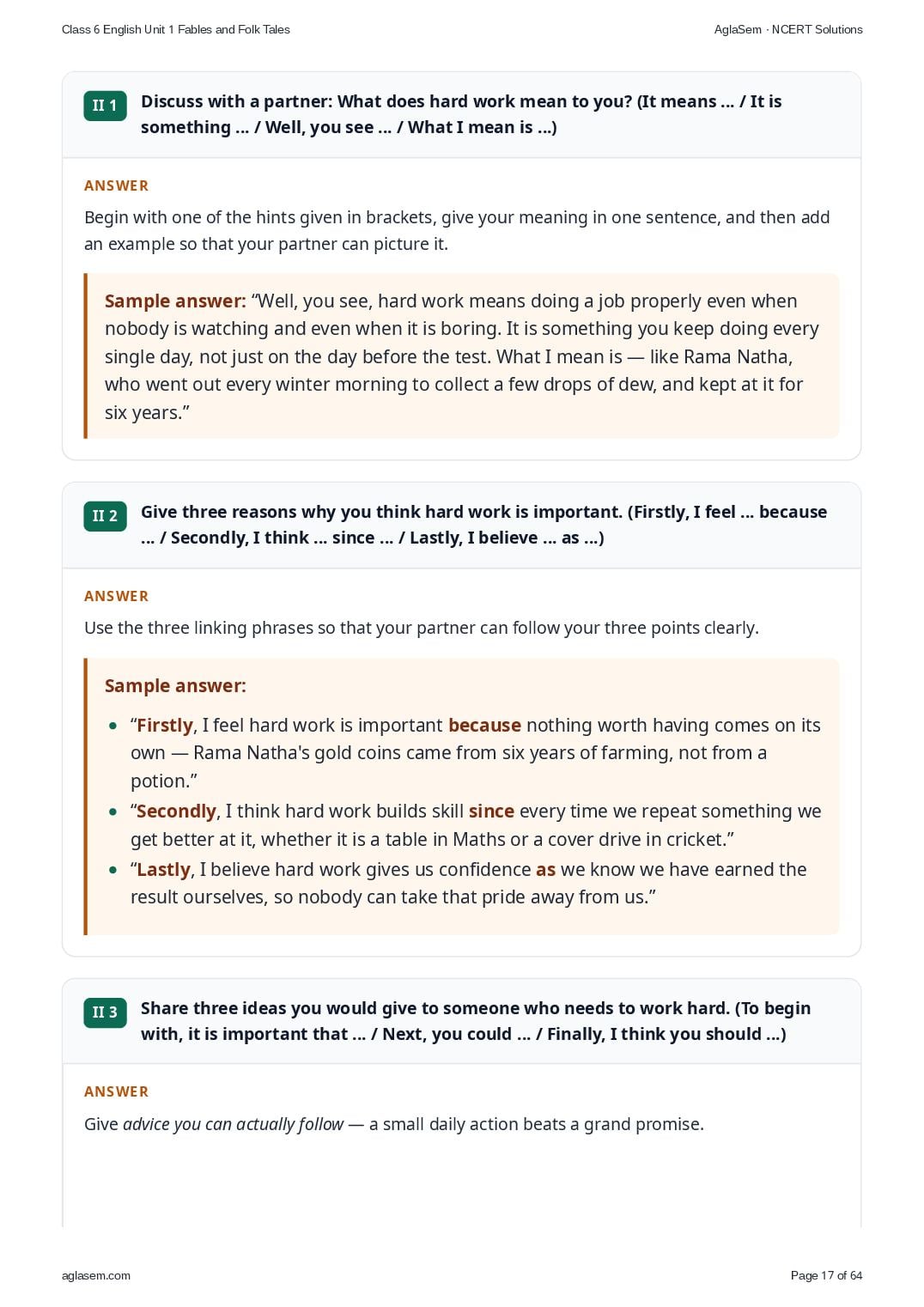
- Discuss with a partner: What does hard work mean to you? (It means … / It is something … / Well, you see … / What I mean is …)
- Give three reasons why you think hard work is important. (Firstly, I feel … because … / Secondly, I think … since … / Lastly, I believe … as …)
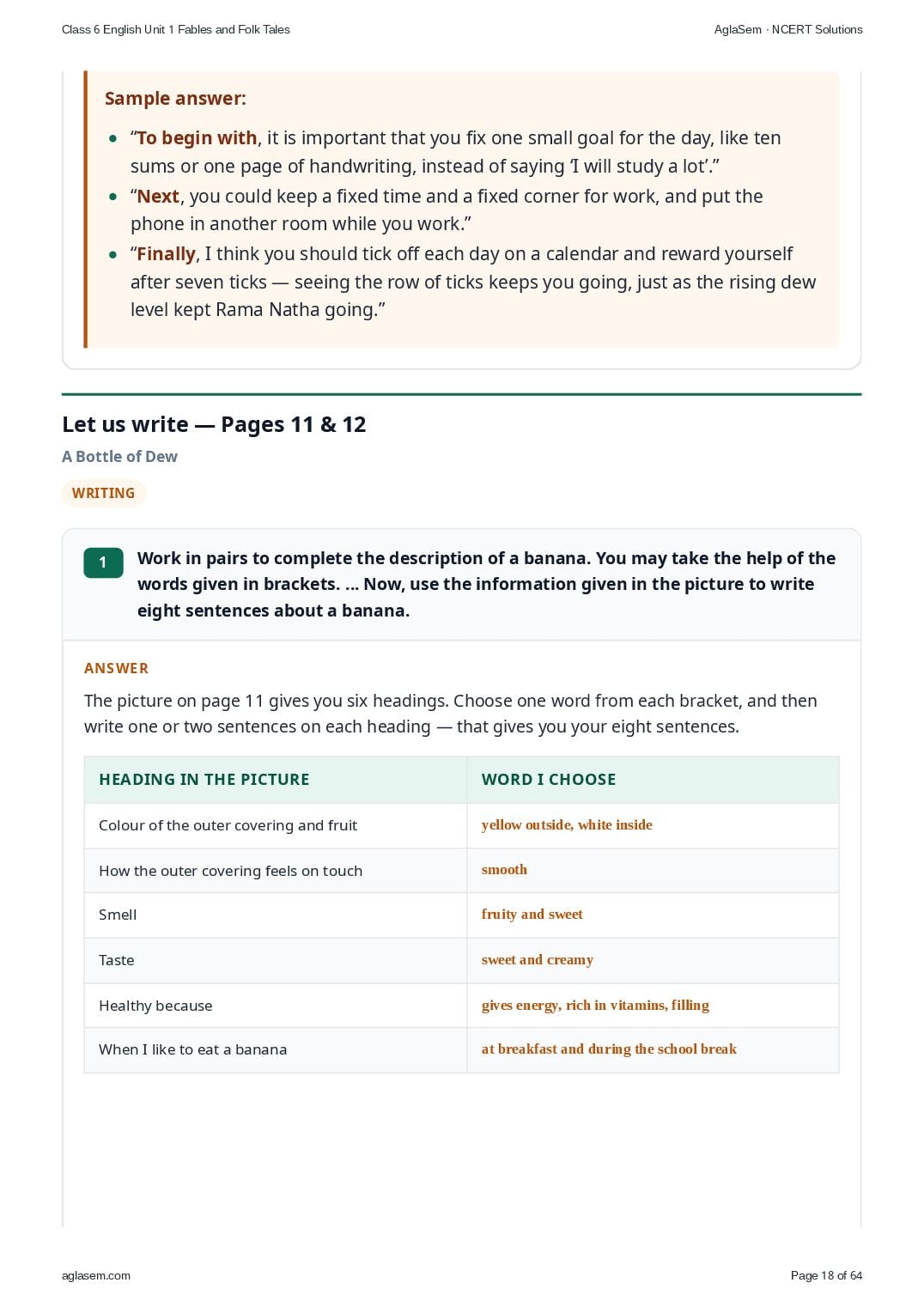
- Share three ideas you would give to someone who needs to work hard. (To begin with, it is important that … / Next, you could … / Finally, I think you should …)
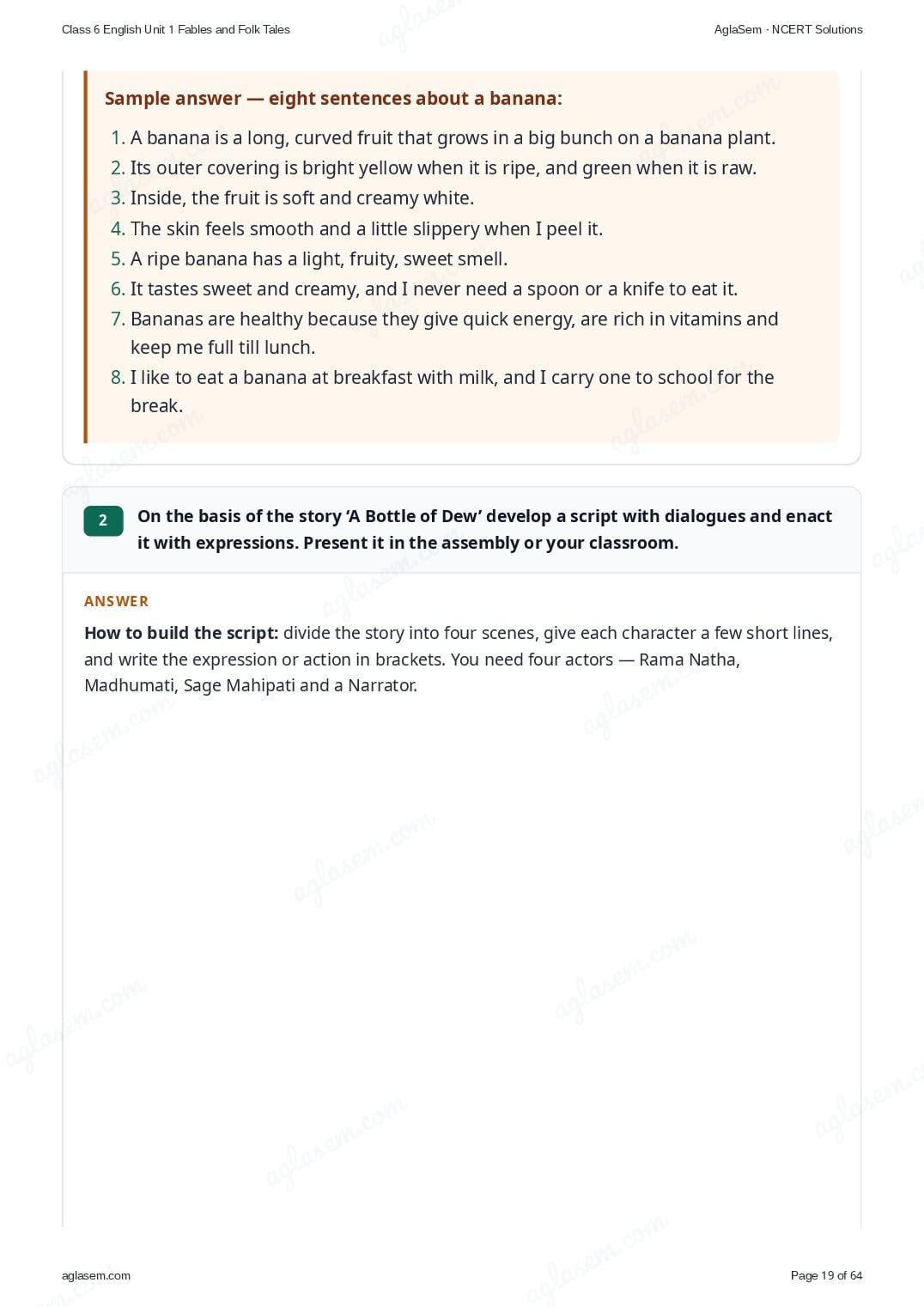
- Work in pairs to complete the description of a banana. You may take the help of the words given in brackets. … Now, use the information given in the picture to write eight sentences about a banana.
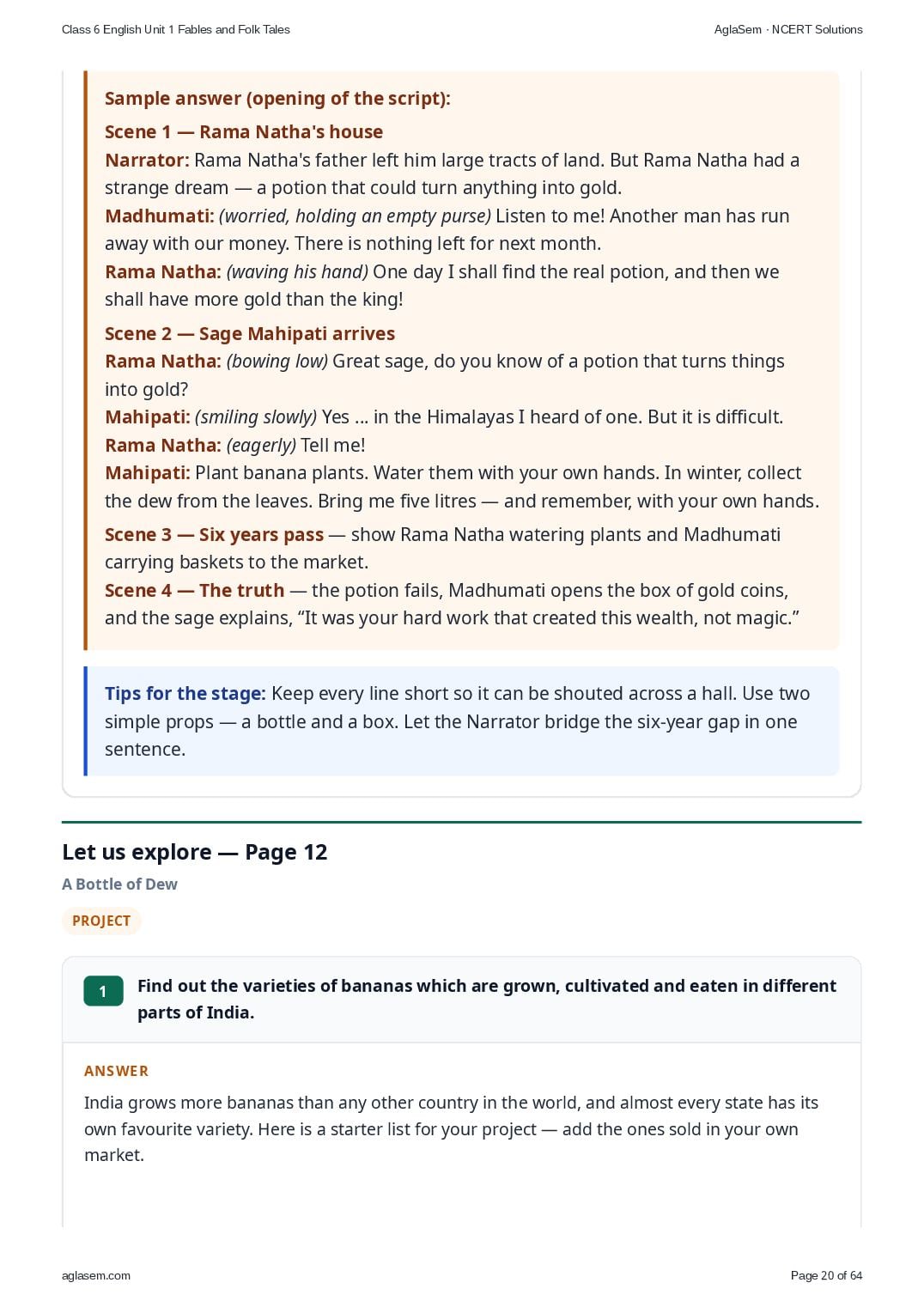
- On the basis of the story ‘A Bottle of Dew’ develop a script with dialogues and enact it with expressions. Present it in the assembly or your classroom.
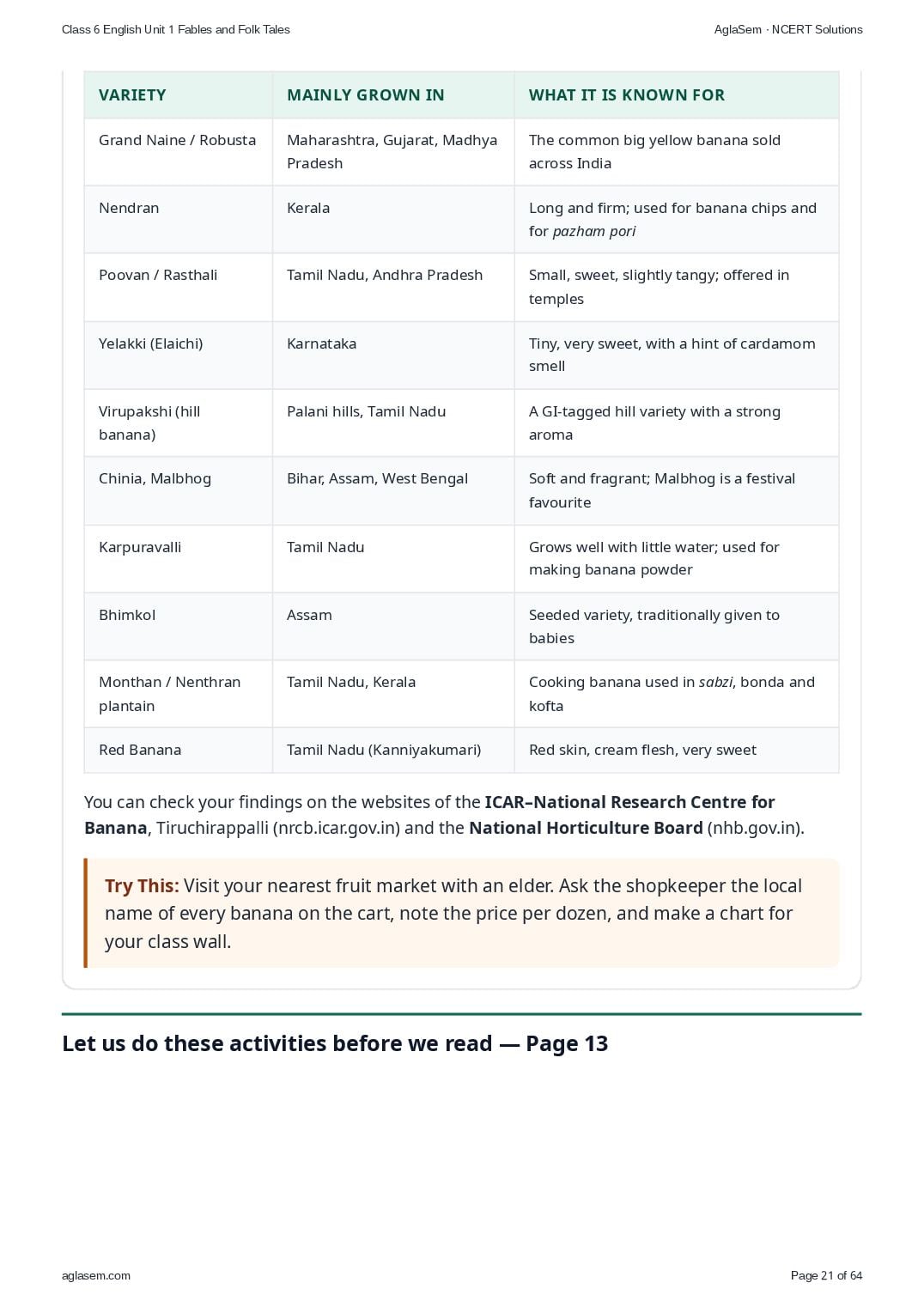
- Find out the varieties of bananas which are grown, cultivated and eaten in different parts of India.
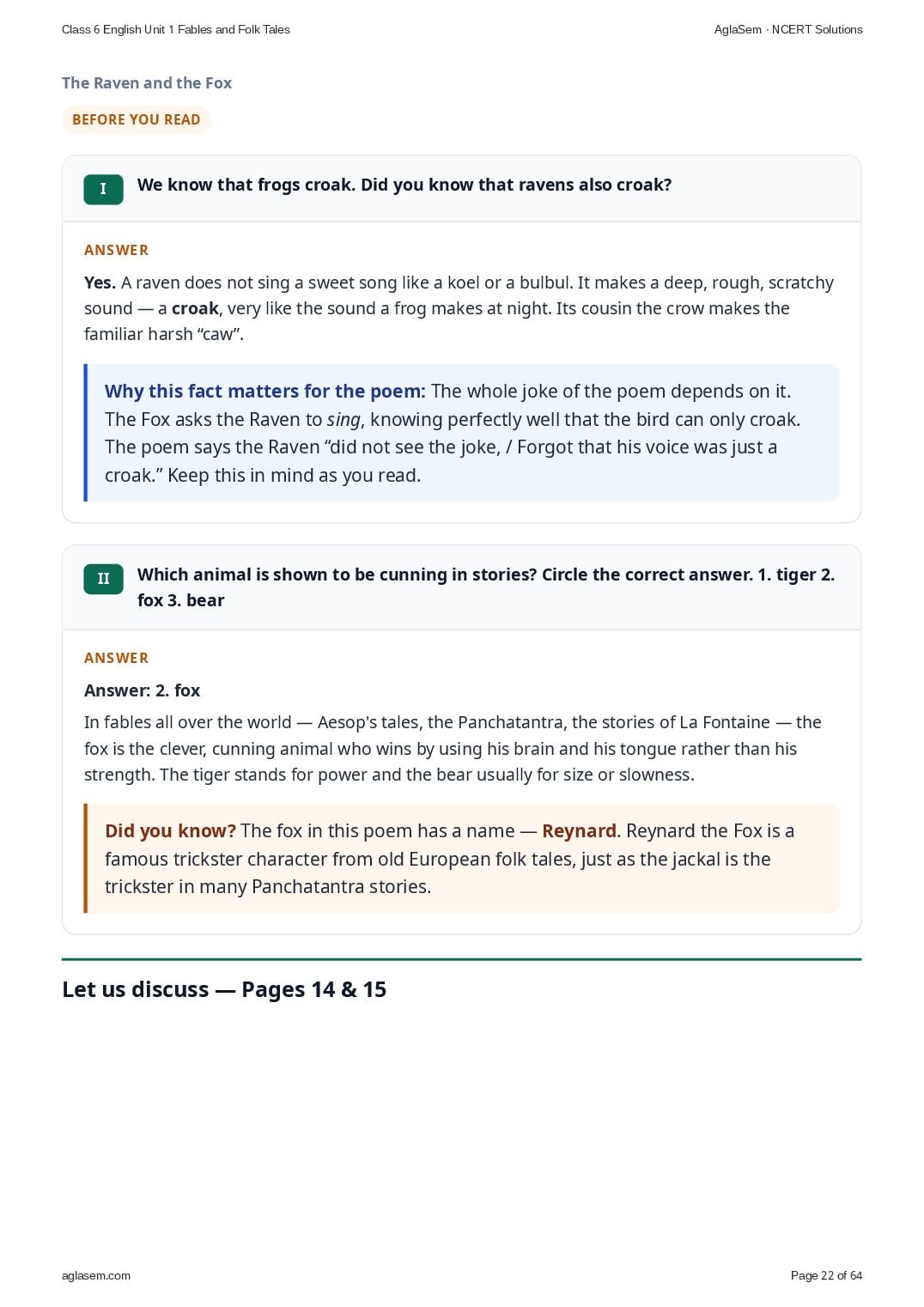
- We know that frogs croak. Did you know that ravens also croak?
- Which animal is shown to be cunning in stories? Circle the correct answer. 1. tiger 2. fox 3. bear
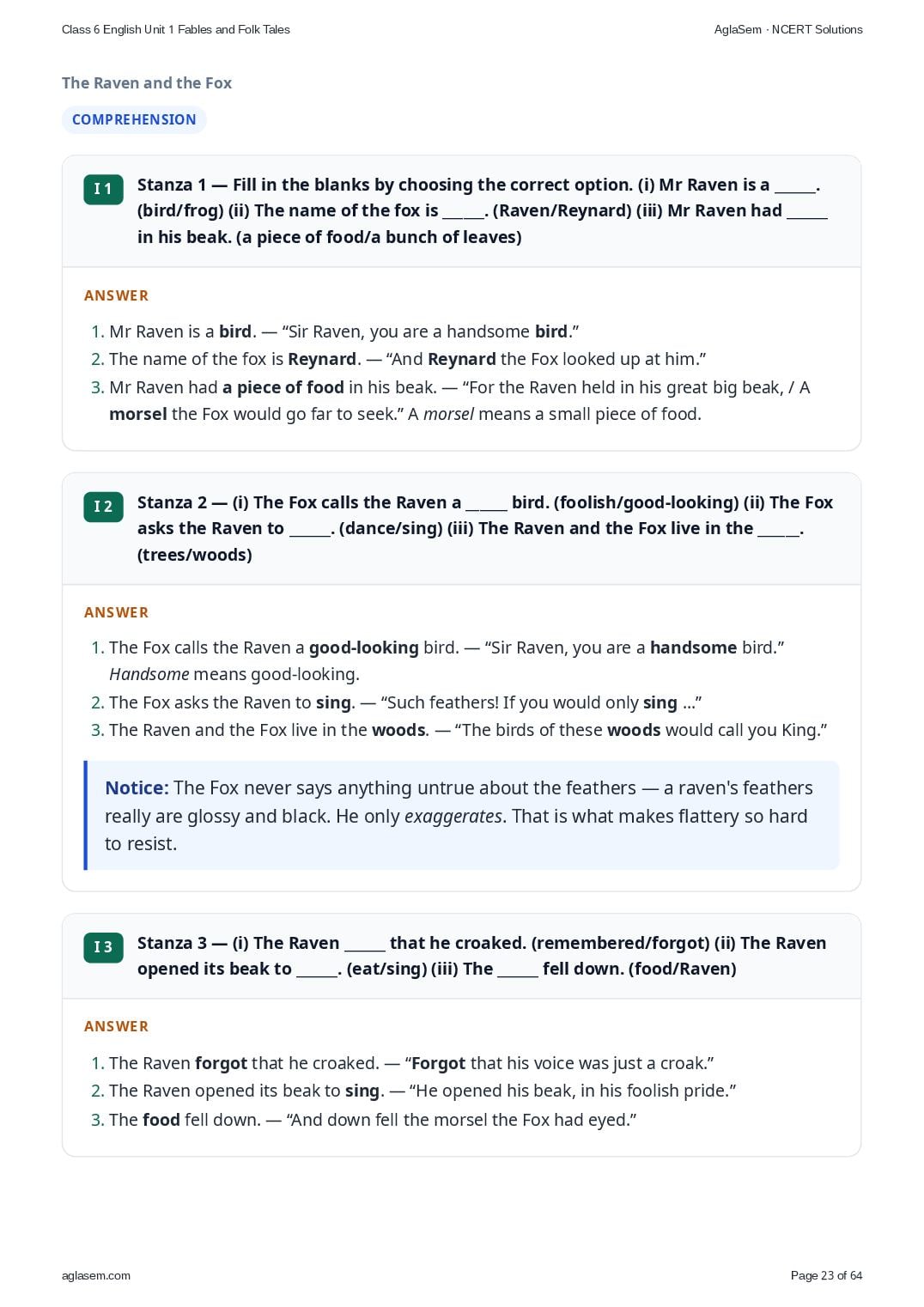
- Stanza 1 — Fill in the blanks by choosing the correct option. (i) Mr Raven is a ______. (bird/frog) (ii) The name of the fox is ______. (Raven/Reynard) (iii) Mr Raven had ______ in his beak. (a piece of food/a bunch of leaves)
- Stanza 2 — (i) The Fox calls the Raven a ______ bird. (foolish/good-looking) (ii) The Fox asks the Raven to ______. (dance/sing) (iii) The Raven and the Fox live in the ______. (trees/woods)
- Stanza 3 — (i) The Raven ______ that he croaked. (remembered/forgot) (ii) The Raven opened its beak to ______. (eat/sing) (iii) The ______ fell down. (food/Raven)
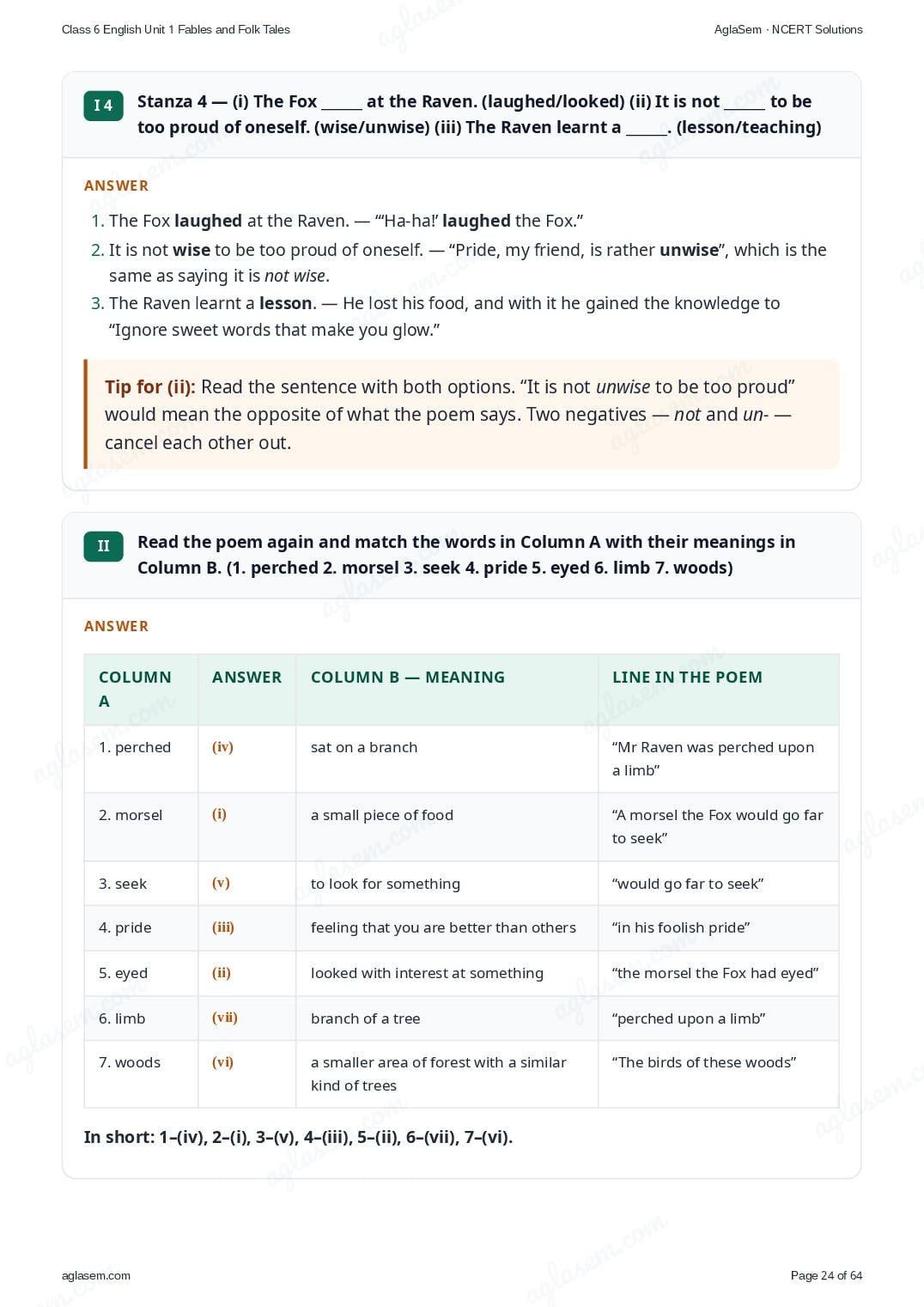
- Stanza 4 — (i) The Fox ______ at the Raven. (laughed/looked) (ii) It is not ______ to be too proud of oneself. (wise/unwise) (iii) The Raven learnt a ______. (lesson/teaching)
- Read the poem again and match the words in Column A with their meanings in Column B. (1. perched 2. morsel 3. seek 4. pride 5. eyed 6. limb 7. woods)
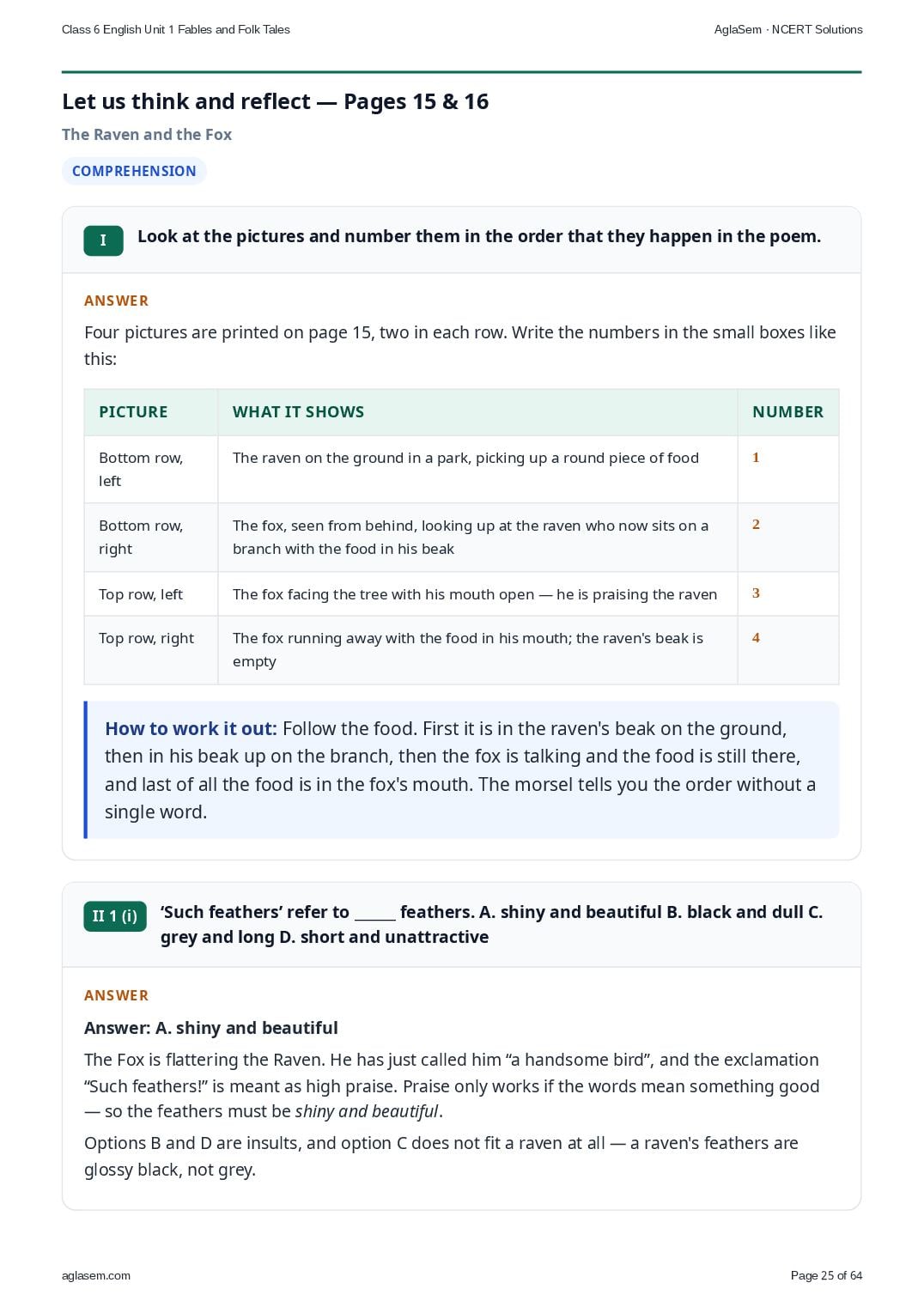
- Look at the pictures and number them in the order that they happen in the poem.
- ‘Such feathers’ refer to ______ feathers. A. shiny and beautiful B. black and dull C. grey and long D. short and unattractive
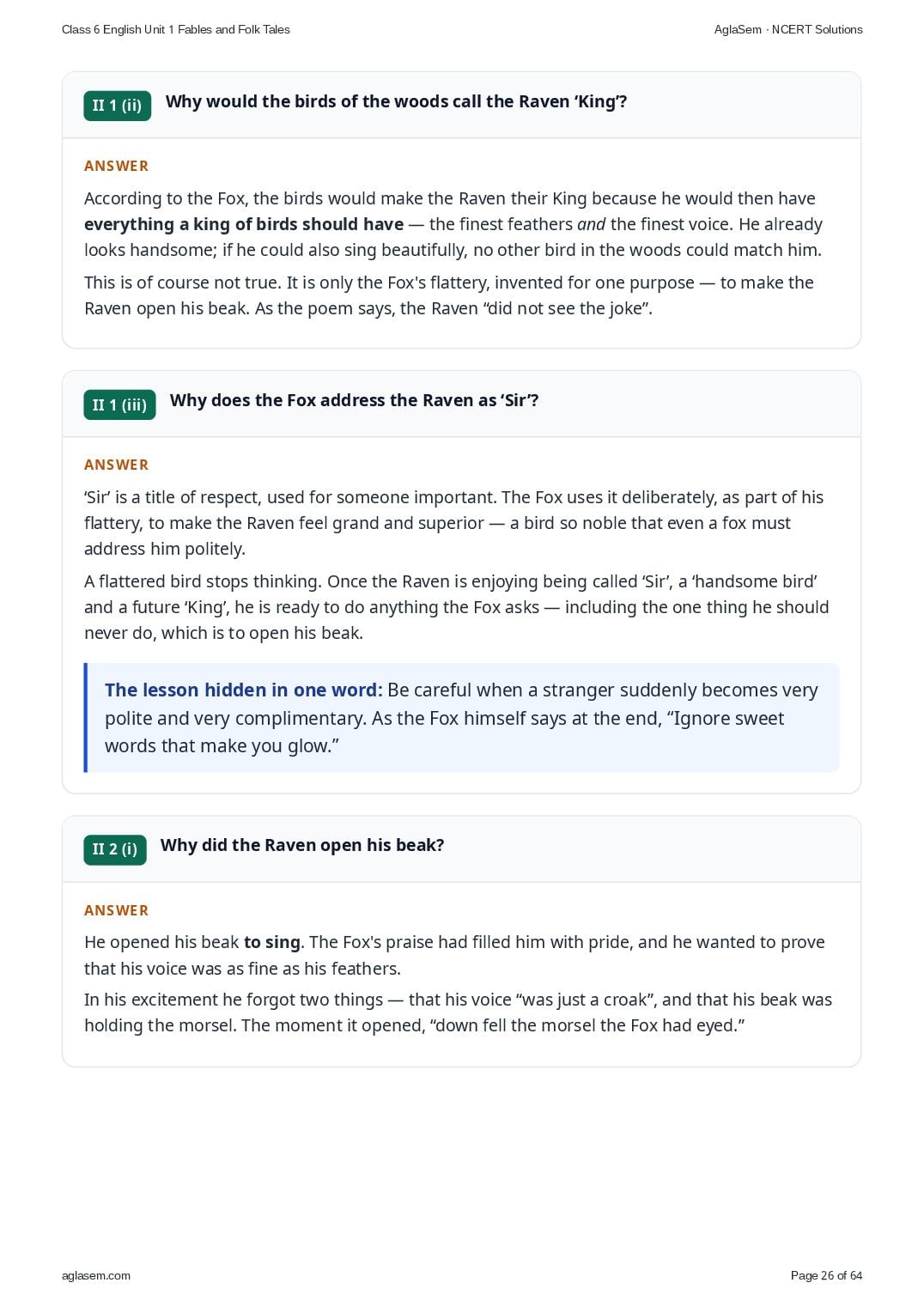
- Why would the birds of the woods call the Raven ‘King’?
- Why does the Fox address the Raven as ‘Sir’?
- Why did the Raven open his beak?
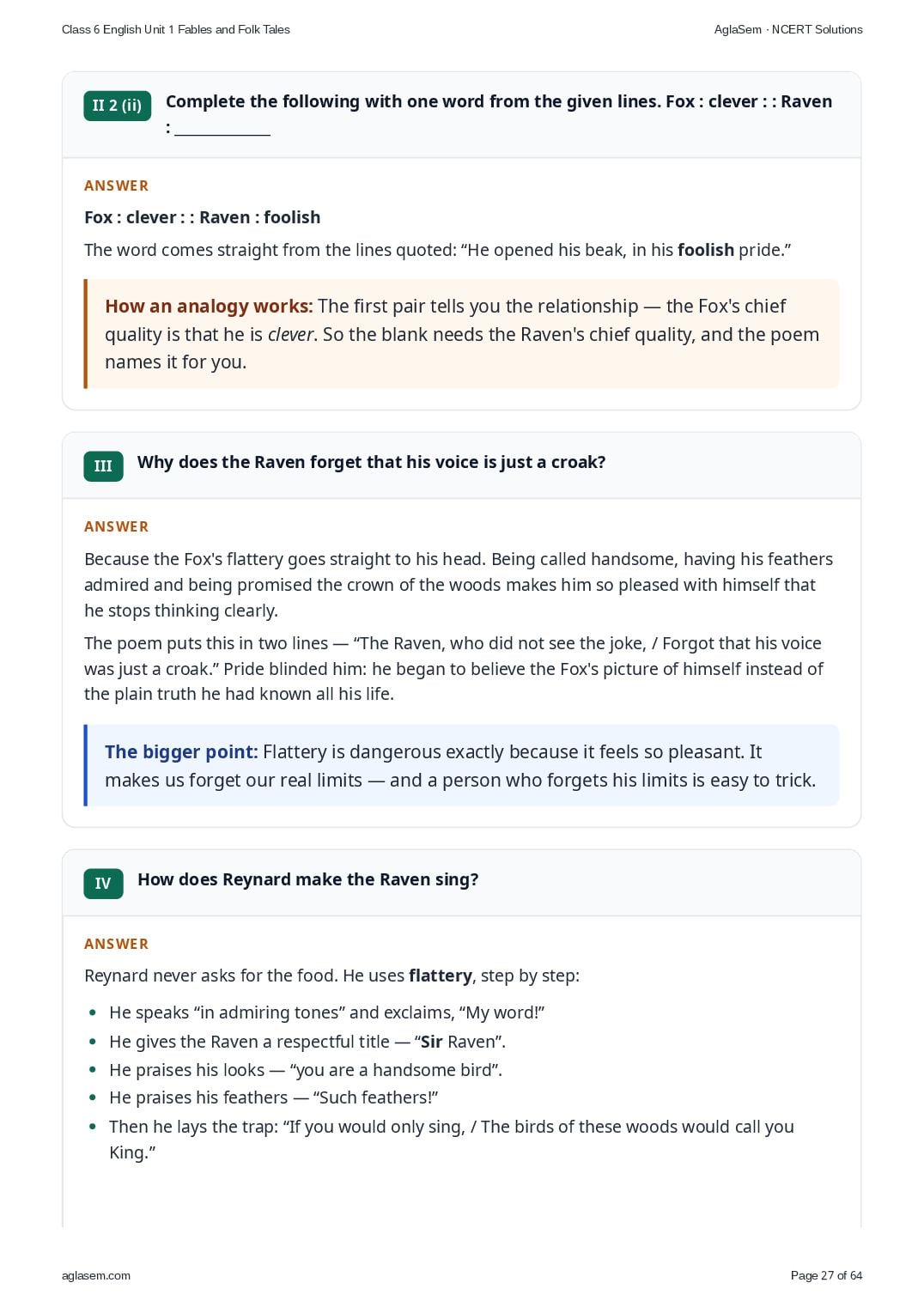
- Complete the following with one word from the given lines. Fox : clever : : Raven : ______________
- Why does the Raven forget that his voice is just a croak?
- How does Reynard make the Raven sing?
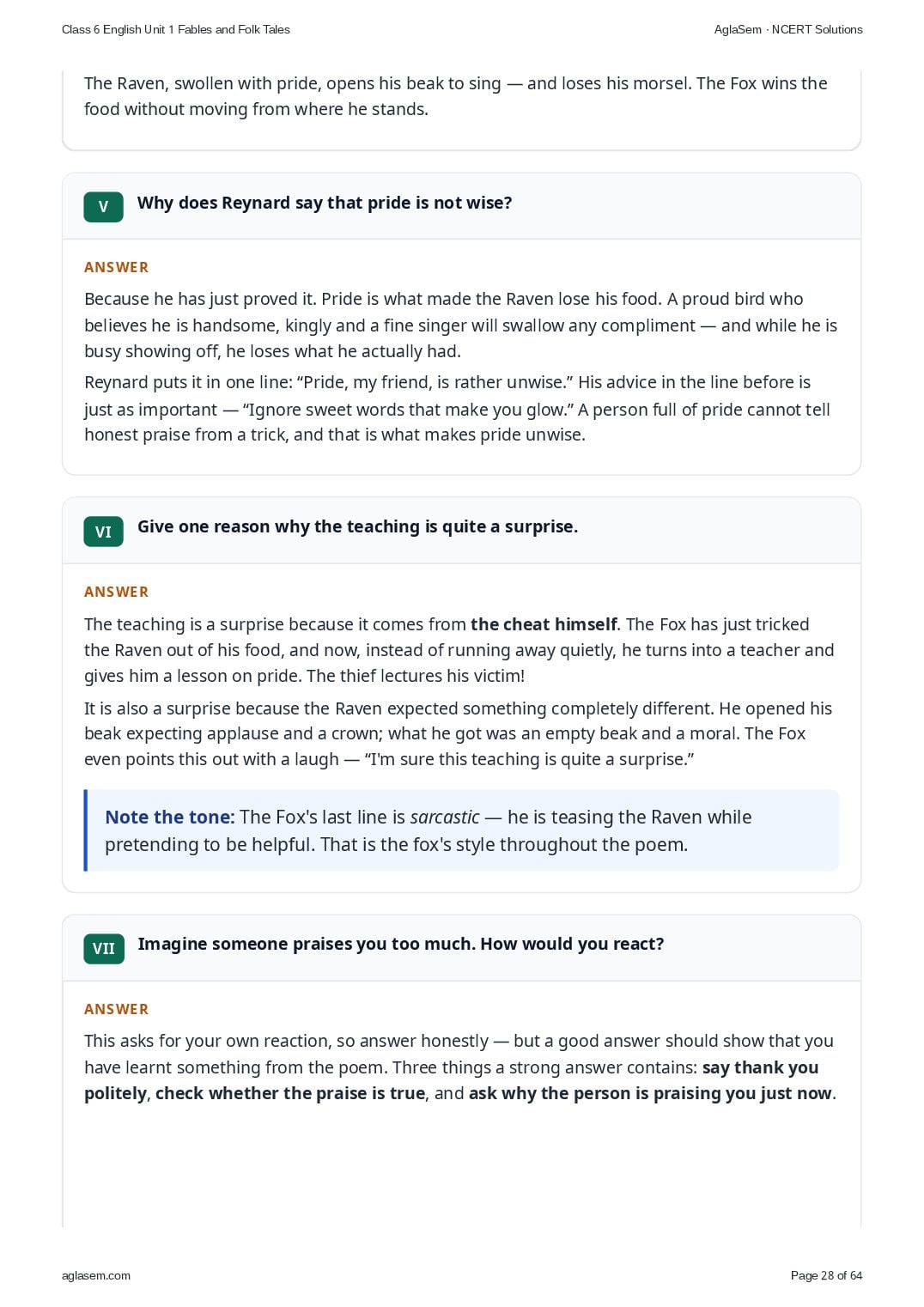
- Why does Reynard say that pride is not wise?
- Give one reason why the teaching is quite a surprise.
- Imagine someone praises you too much. How would you react?
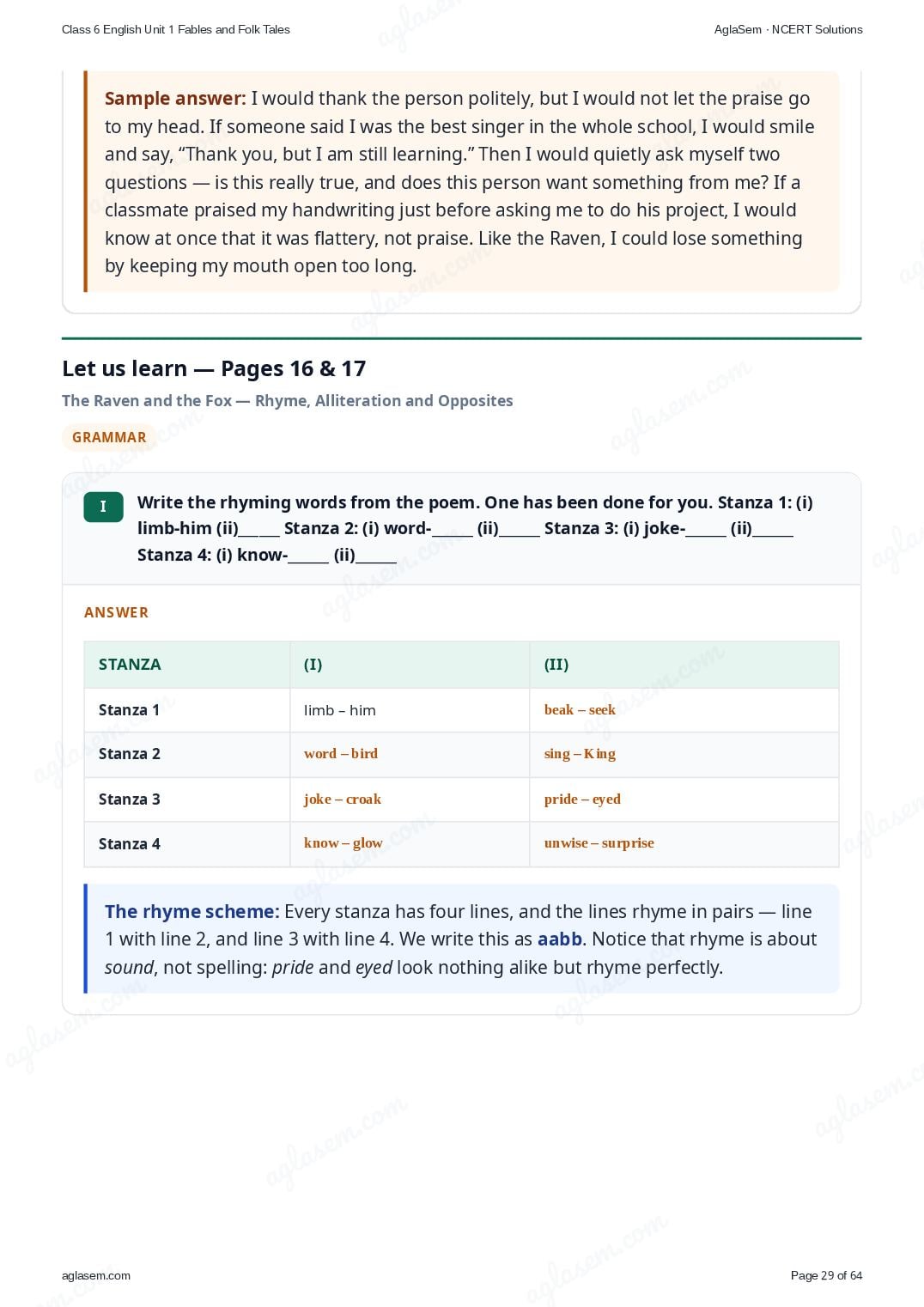
- Write the rhyming words from the poem. One has been done for you. Stanza 1: (i) limb-him (ii)______ Stanza 2: (i) word-______ (ii)______ Stanza 3: (i) joke-______ (ii)______ Stanza 4: (i) know-______ (ii)______
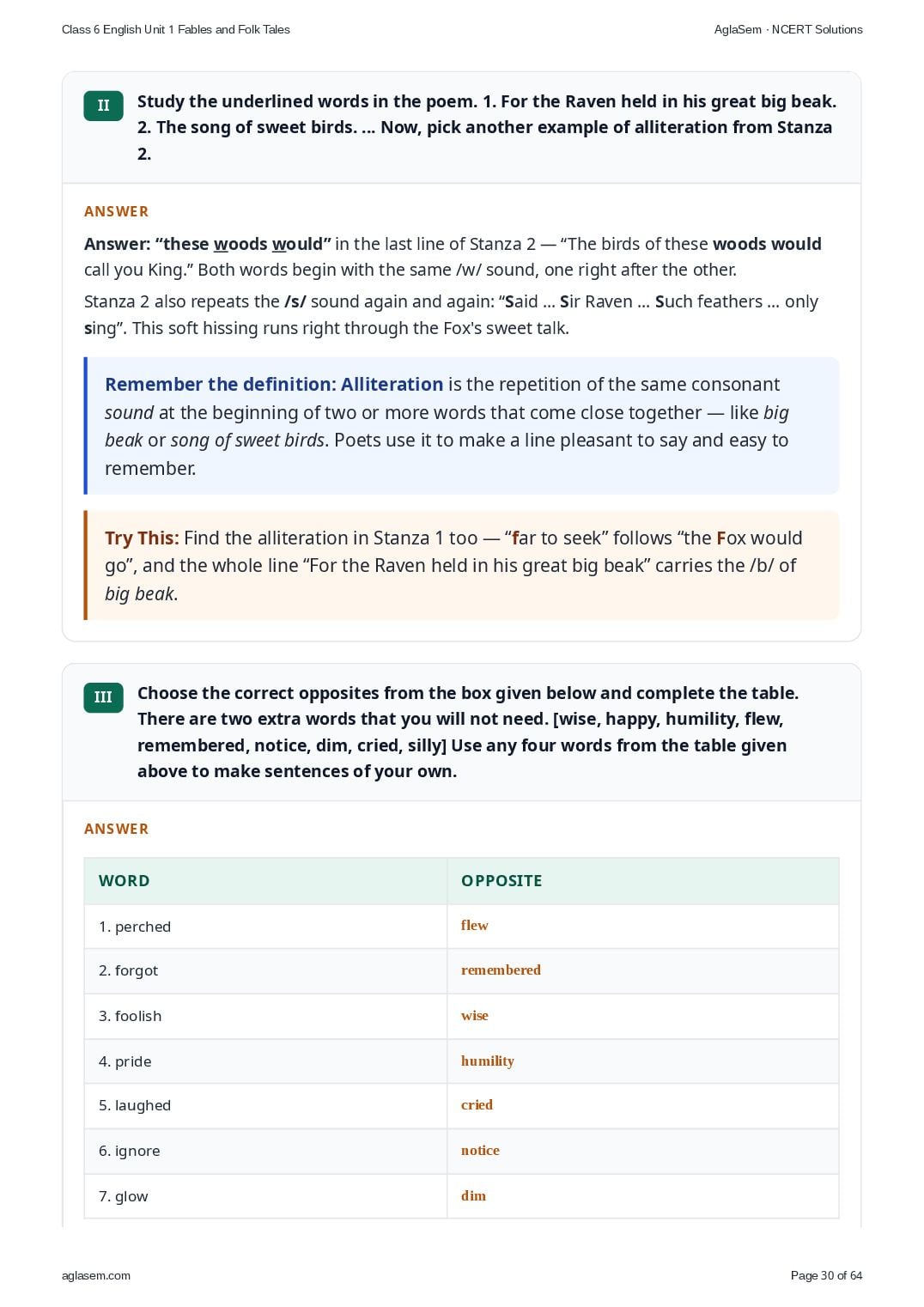
- Study the underlined words in the poem. 1. For the Raven held in his great big beak. 2. The song of sweet birds. … Now, pick another example of alliteration from Stanza 2.
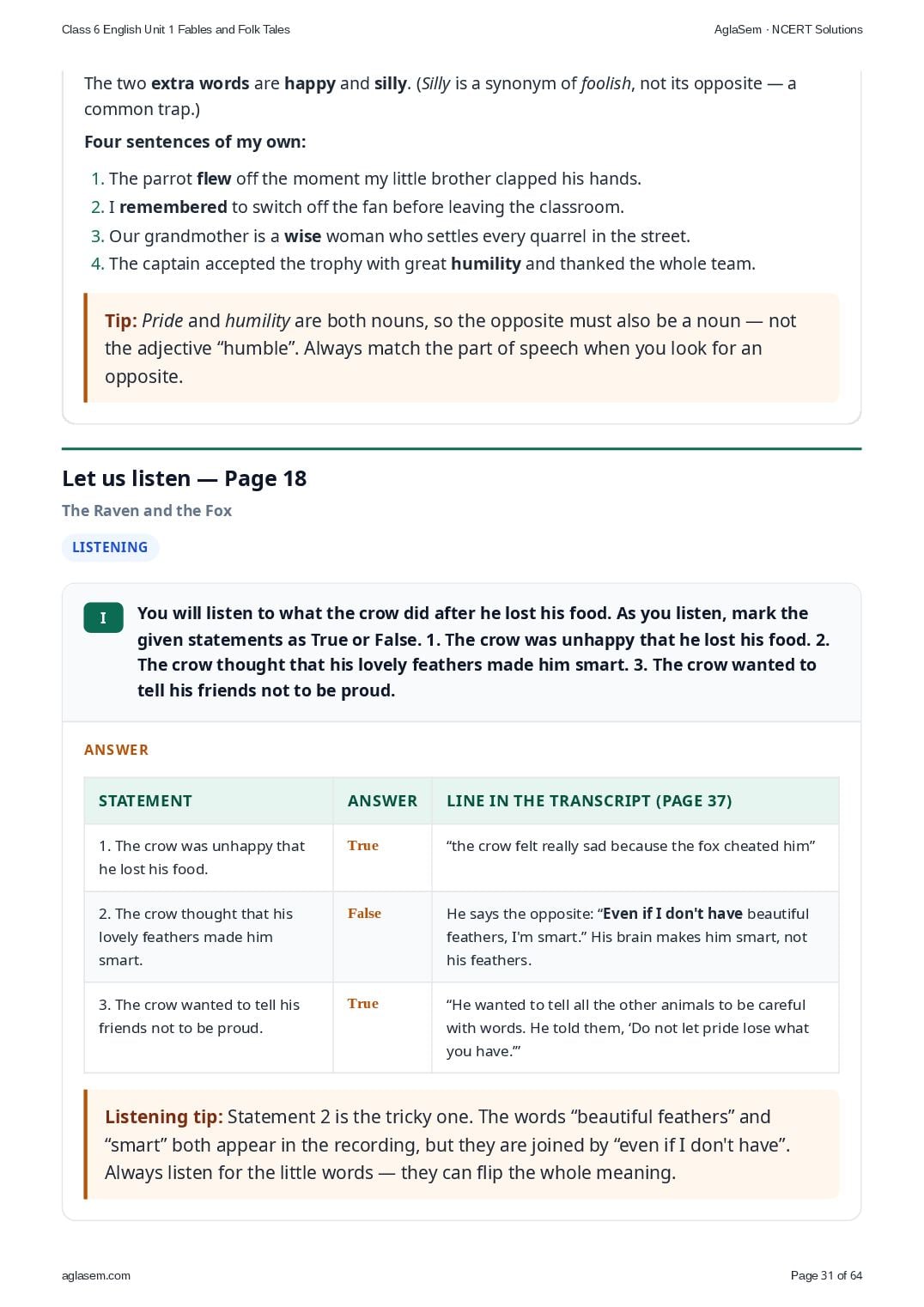
- Choose the correct opposites from the box given below and complete the table. There are two extra words that you will not need. [wise, happy, humility, flew, remembered, notice, dim, cried, silly] Use any four words from the table given above to make sentences of your own.
- You will listen to what the crow did after he lost his food. As you listen, mark the given statements as True or False. 1. The crow was unhappy that he lost his food. 2. The crow thought that his lovely feathers made him smart. 3. The crow wanted to tell his friends not to be proud.
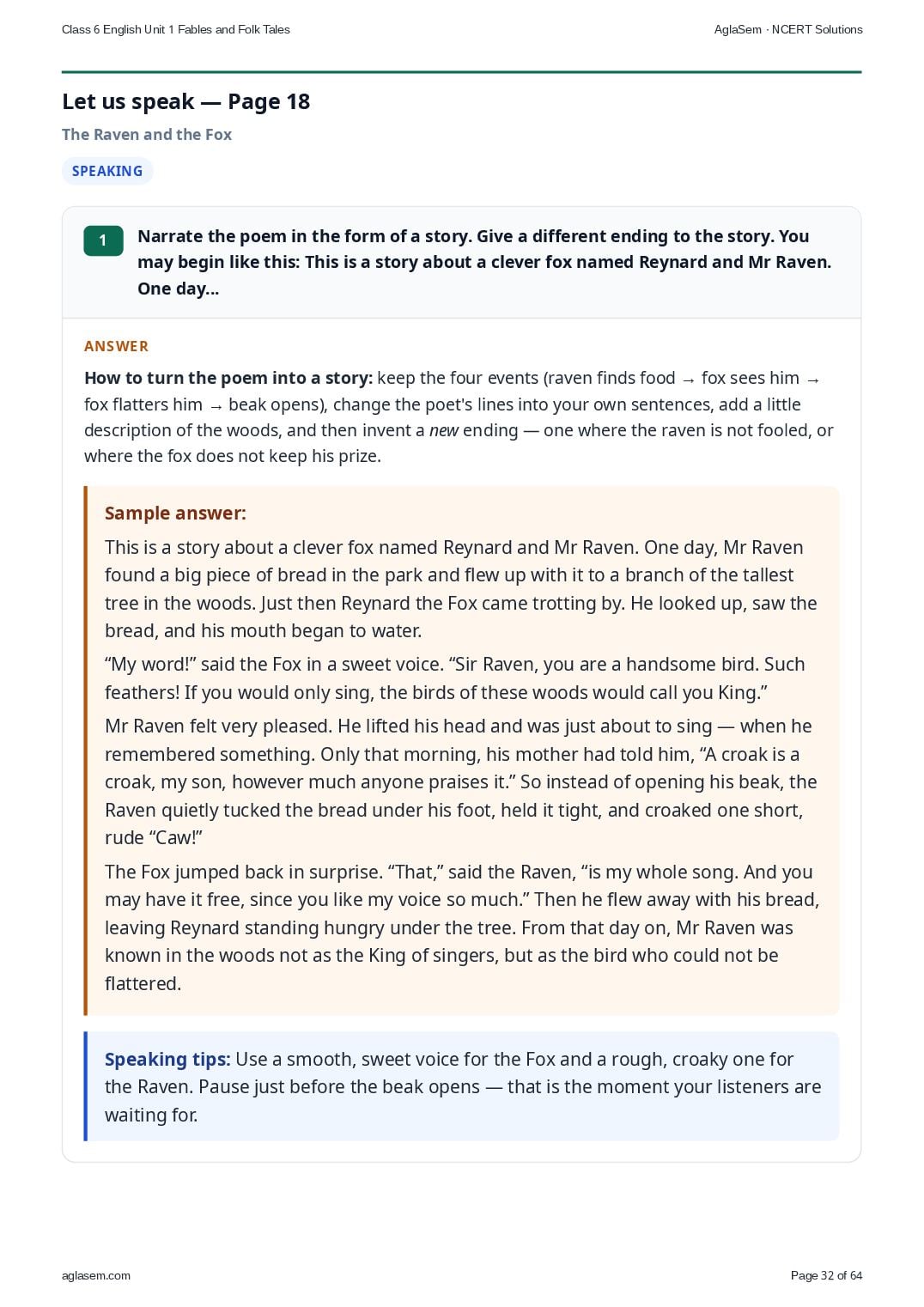
- Narrate the poem in the form of a story. Give a different ending to the story. You may begin like this: This is a story about a clever fox named Reynard and Mr Raven. One day…
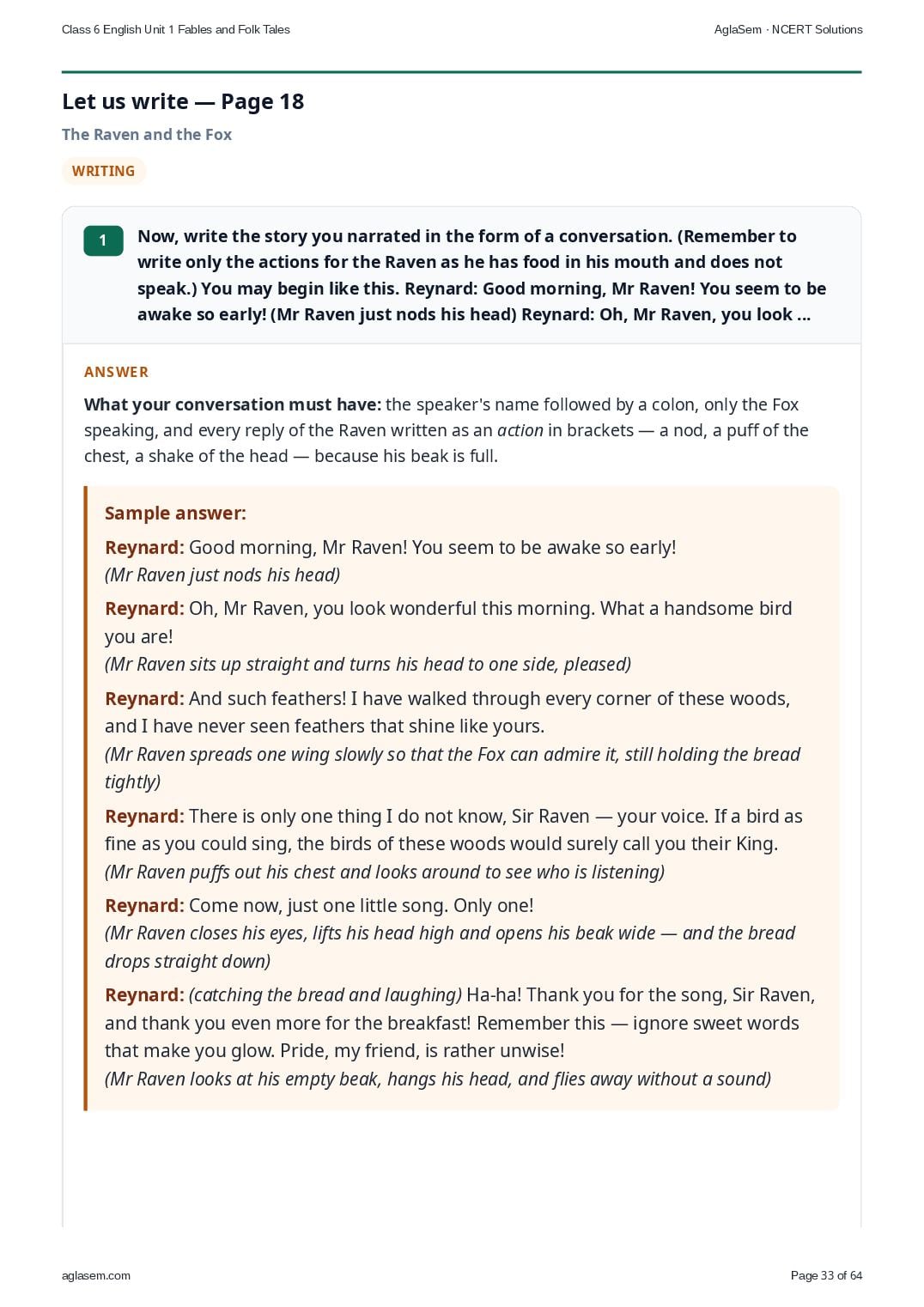
- Now, write the story you narrated in the form of a conversation. (Remember to write only the actions for the Raven as he has food in his mouth and does not speak.) You may begin like this. Reynard: Good morning, Mr Raven! You seem to be awake so early! (Mr Raven just nods his head) Reynard: Oh, Mr Raven, you look …
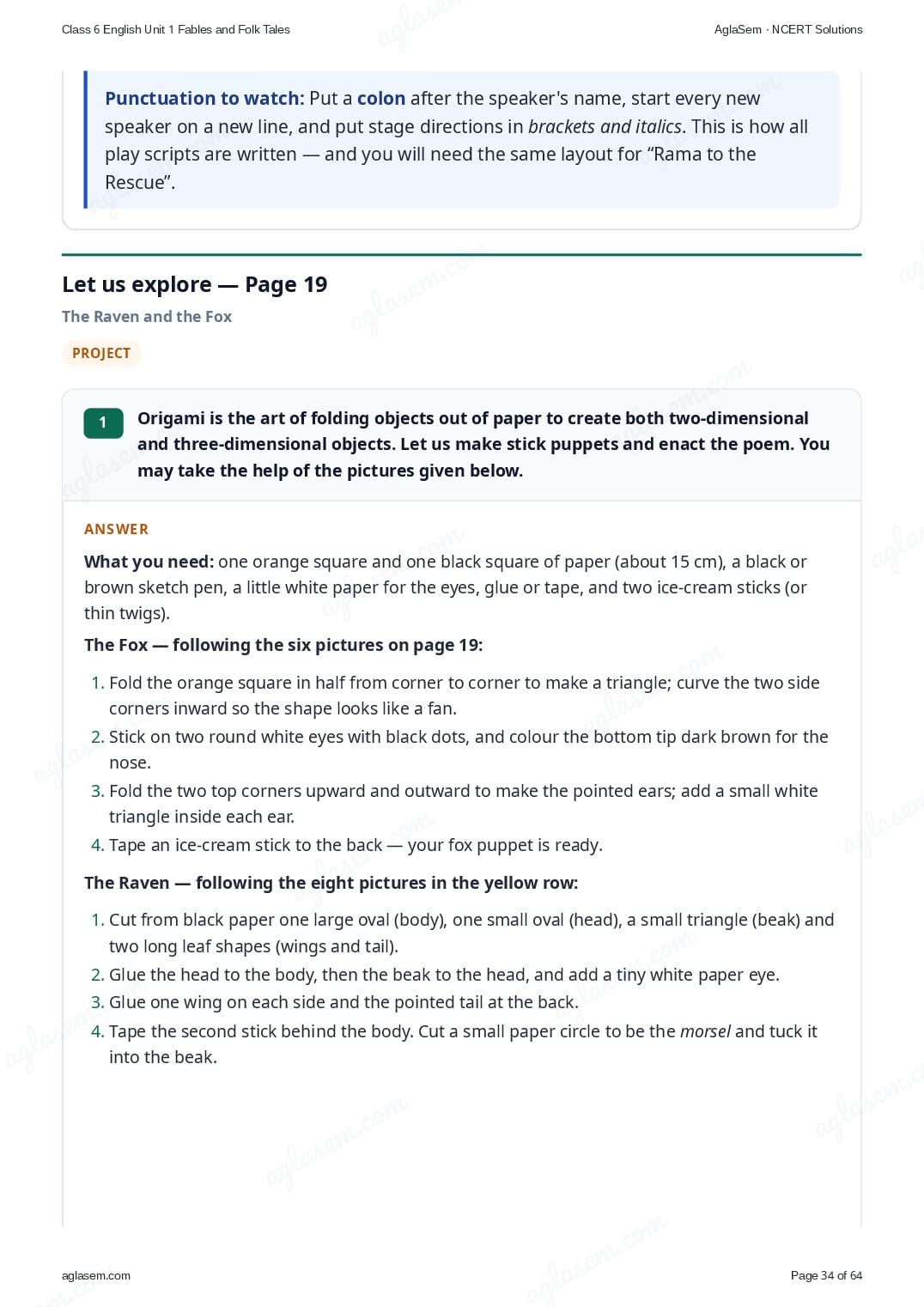
- Origami is the art of folding objects out of paper to create both two-dimensional and three-dimensional objects. Let us make stick puppets and enact the poem. You may take the help of the pictures given below.
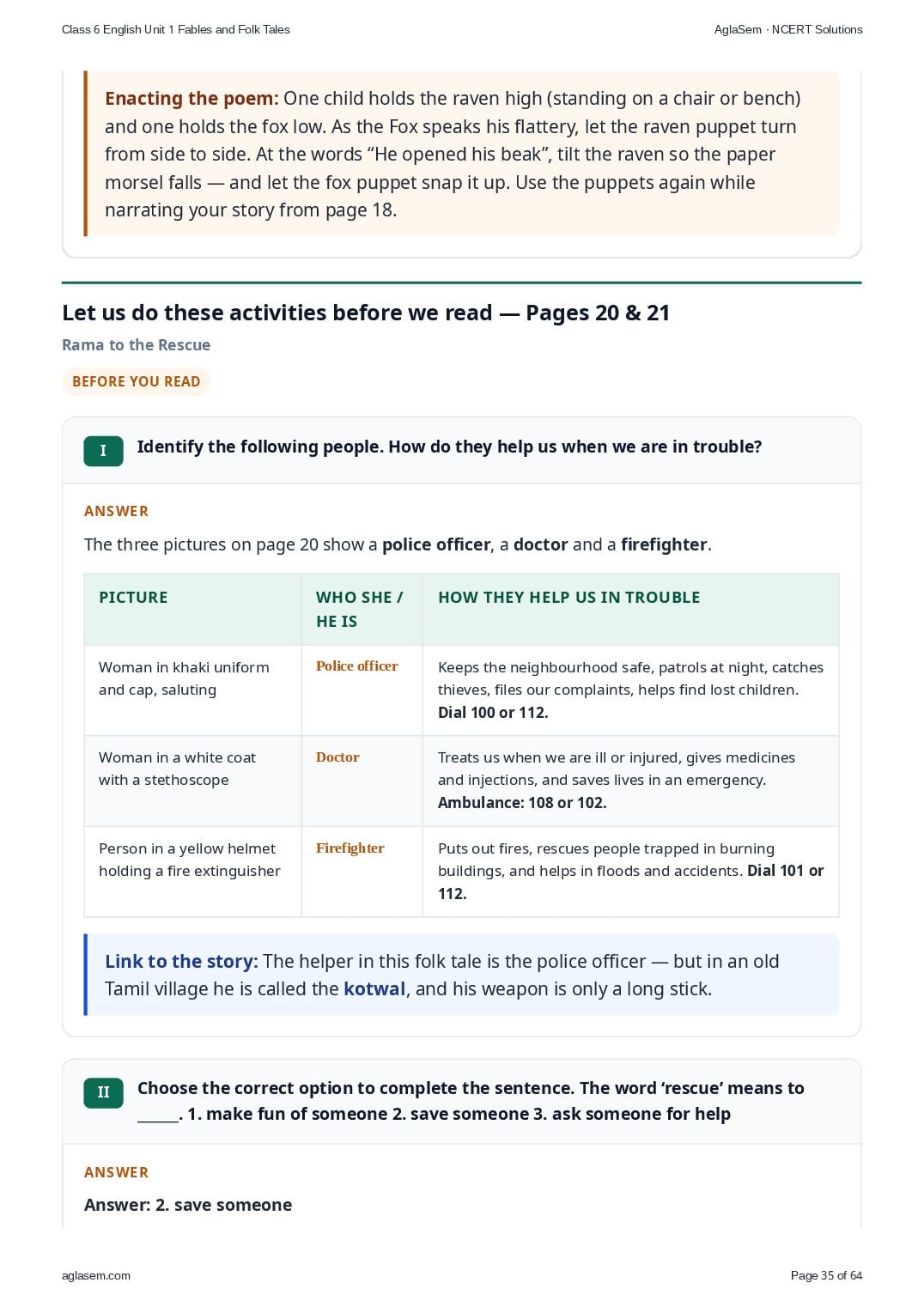
- Identify the following people. How do they help us when we are in trouble?
- Choose the correct option to complete the sentence. The word ‘rescue’ means to ______. 1. make fun of someone 2. save someone 3. ask someone for help
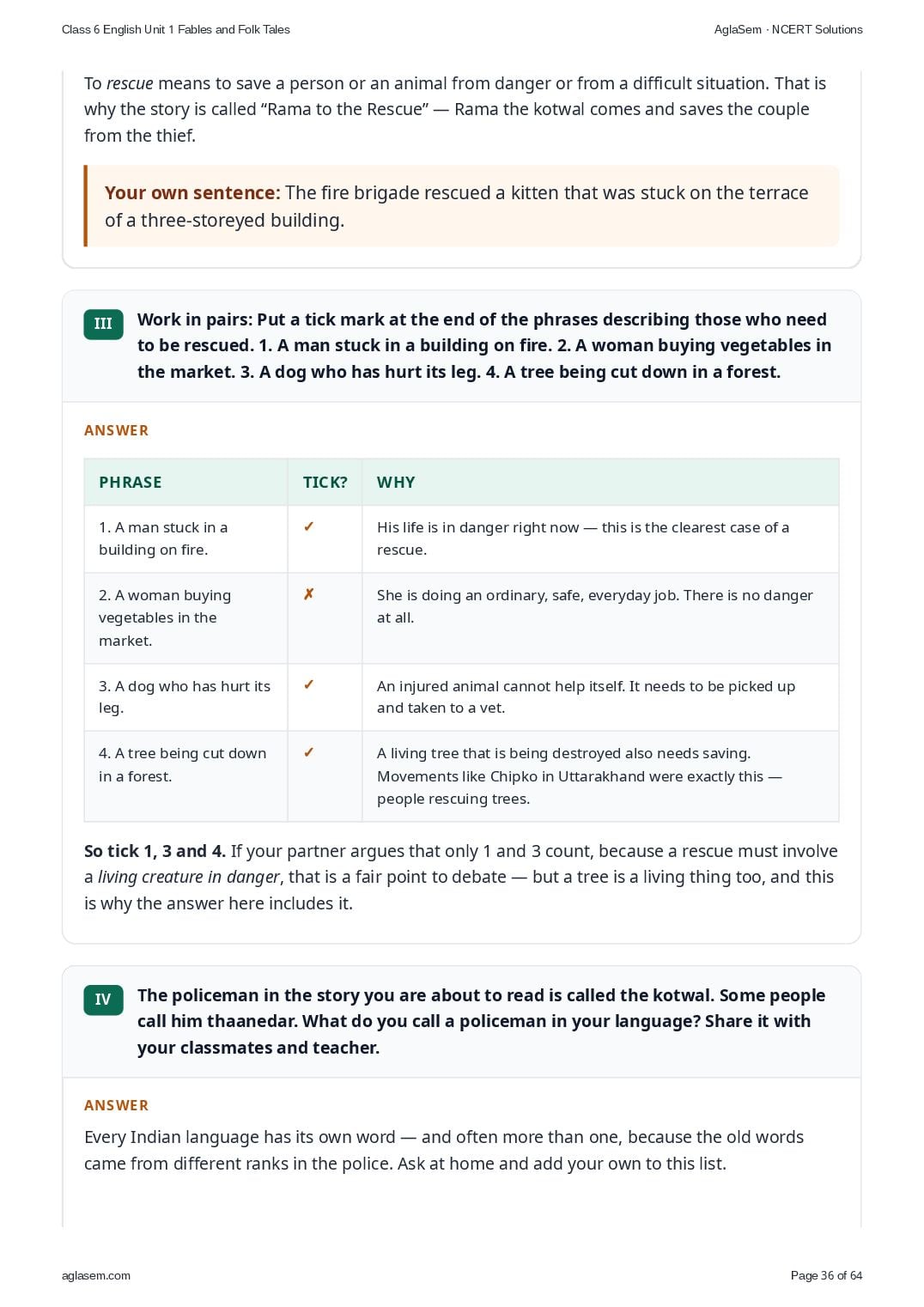
- Work in pairs: Put a tick mark at the end of the phrases describing those who need to be rescued. 1. A man stuck in a building on fire. 2. A woman buying vegetables in the market. 3. A dog who has hurt its leg. 4. A tree being cut down in a forest.
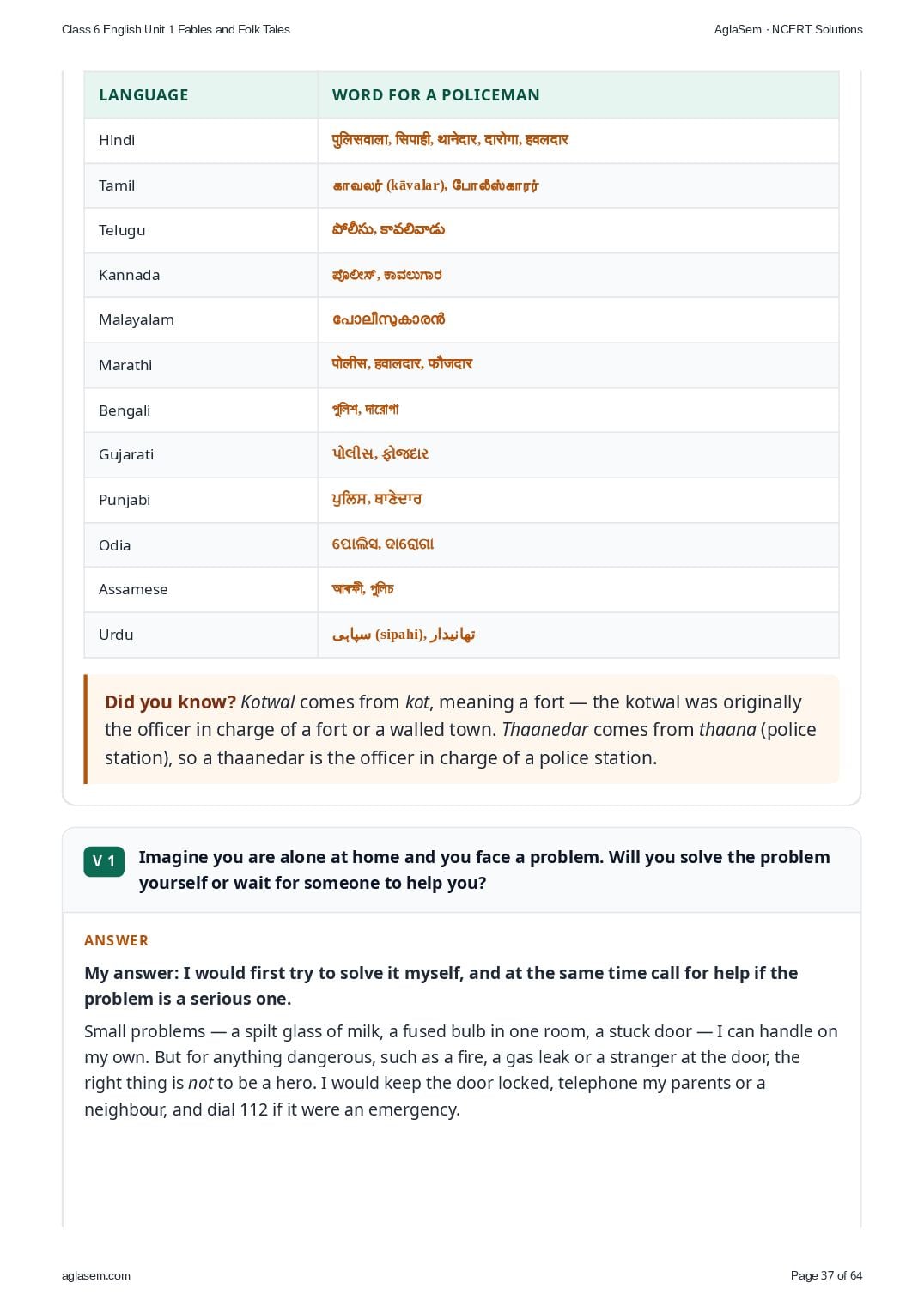
- The policeman in the story you are about to read is called the kotwal. Some people call him thaanedar. What do you call a policeman in your language? Share it with your classmates and teacher.
- Imagine you are alone at home and you face a problem. Will you solve the problem yourself or wait for someone to help you?
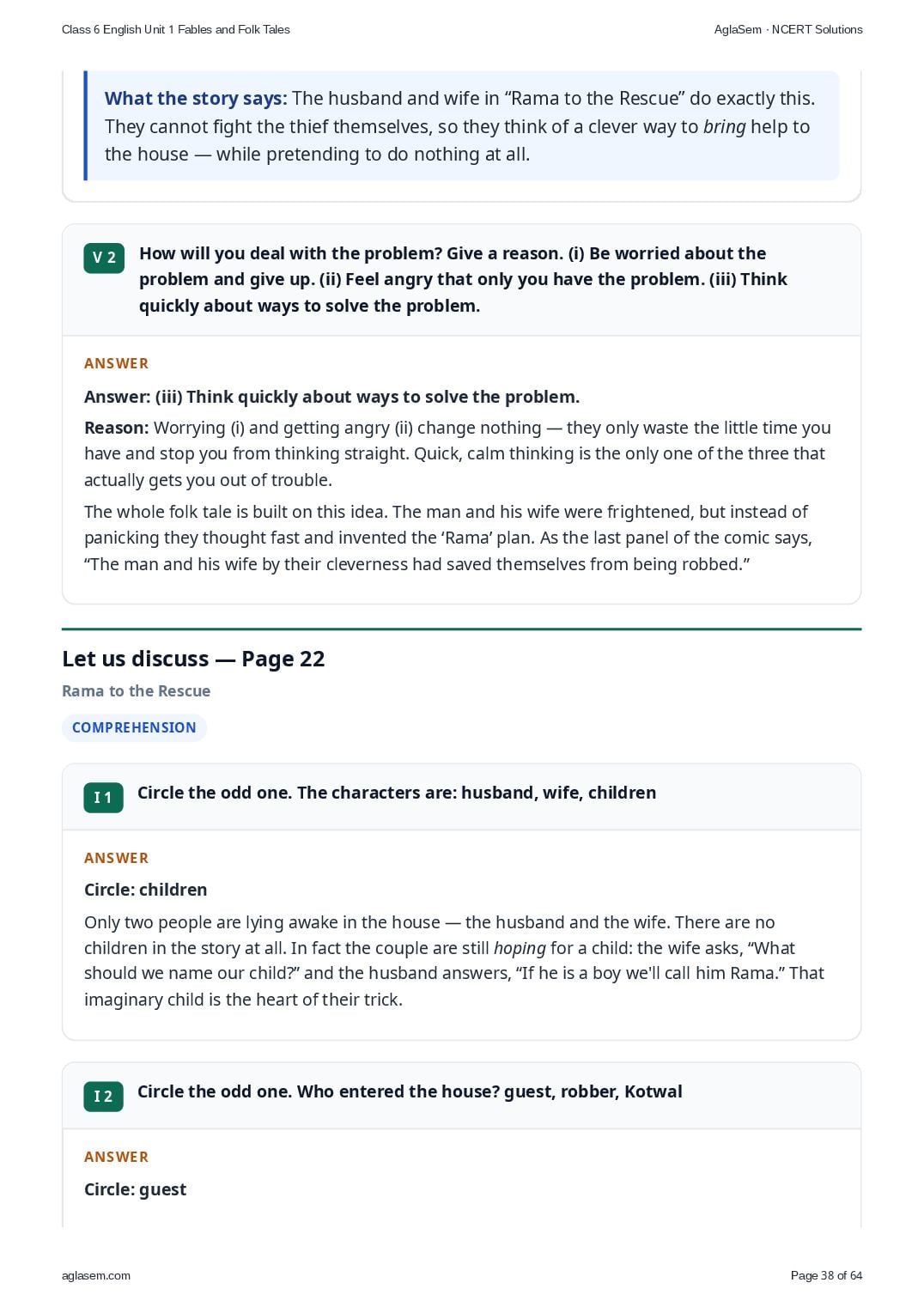
- How will you deal with the problem? Give a reason. (i) Be worried about the problem and give up. (ii) Feel angry that only you have the problem. (iii) Think quickly about ways to solve the problem.
- Circle the odd one. The characters are: husband, wife, children
- Circle the odd one. Who entered the house? guest, robber, Kotwal
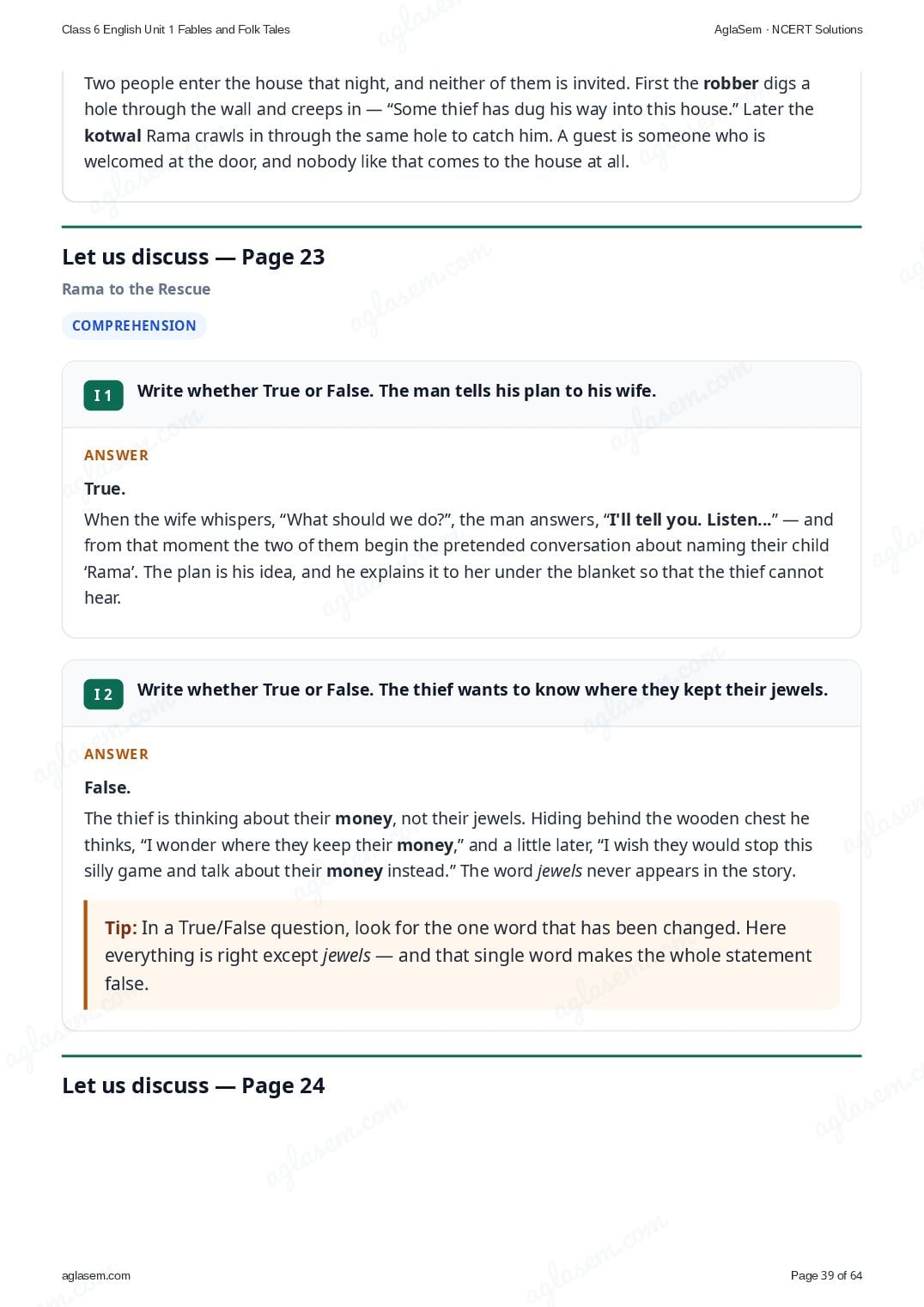
- Write whether True or False. The man tells his plan to his wife.
- Write whether True or False. The thief wants to know where they kept their jewels.
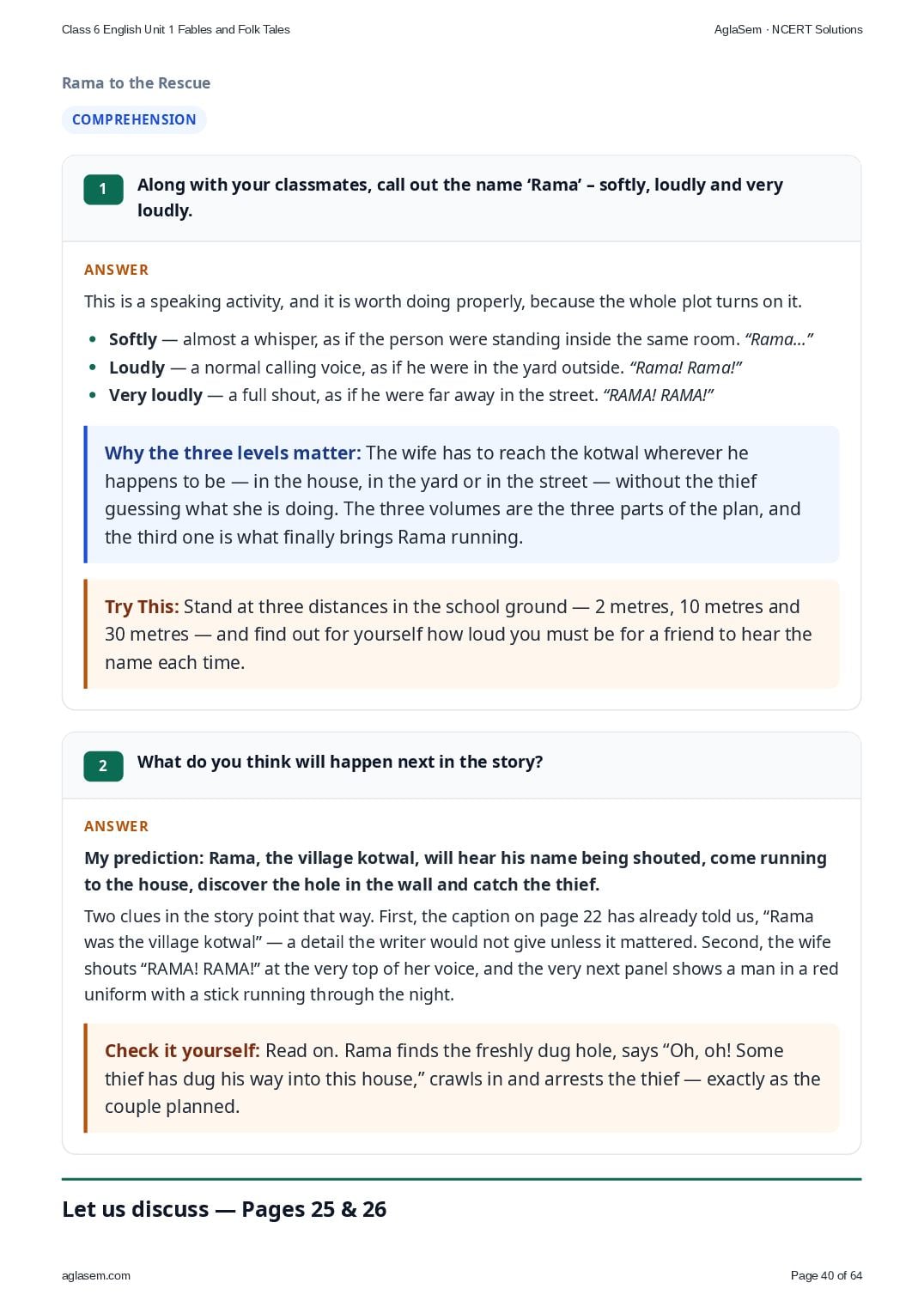
- Along with your classmates, call out the name ‘Rama’ – softly, loudly and very loudly.
- What do you think will happen next in the story?
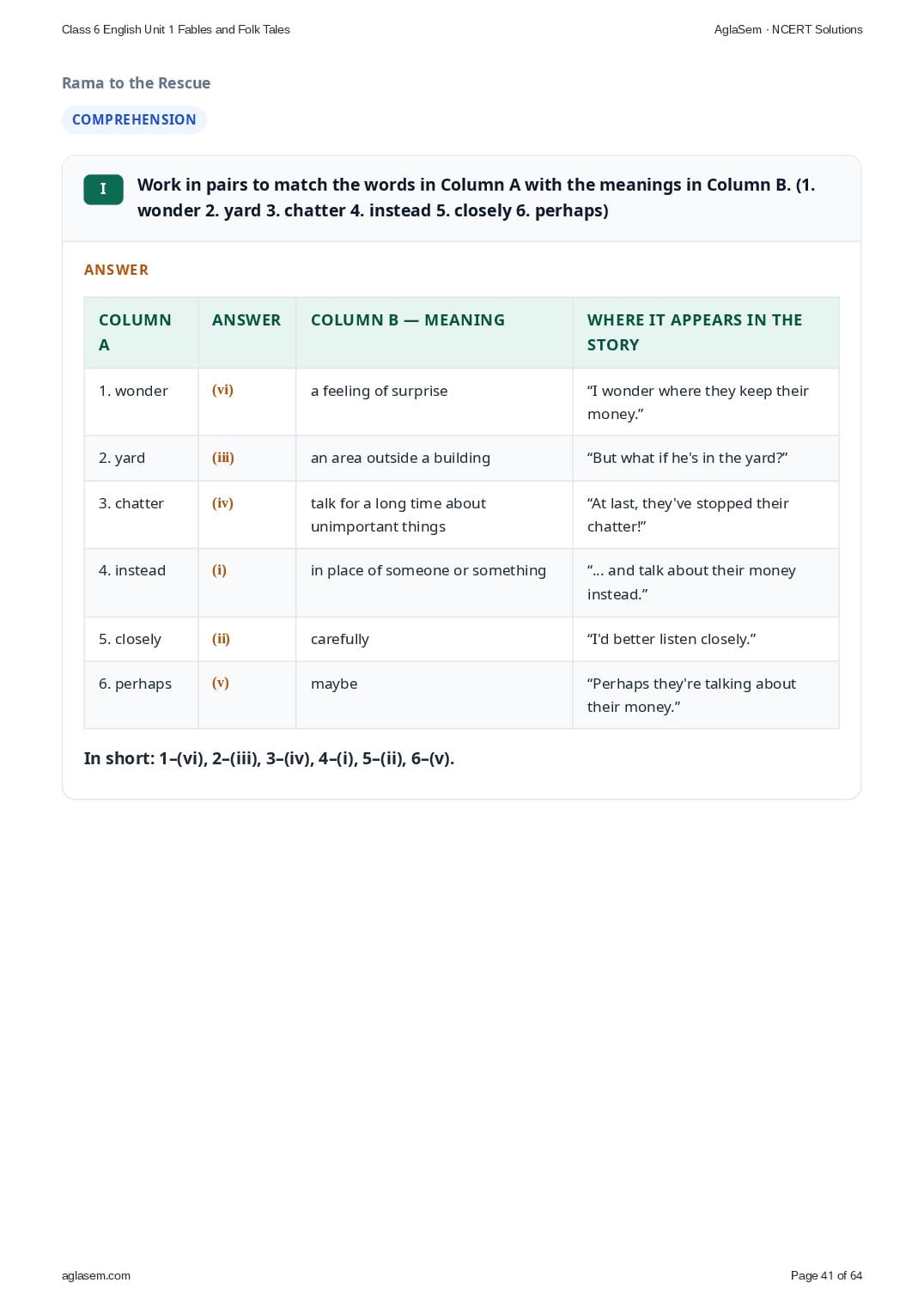
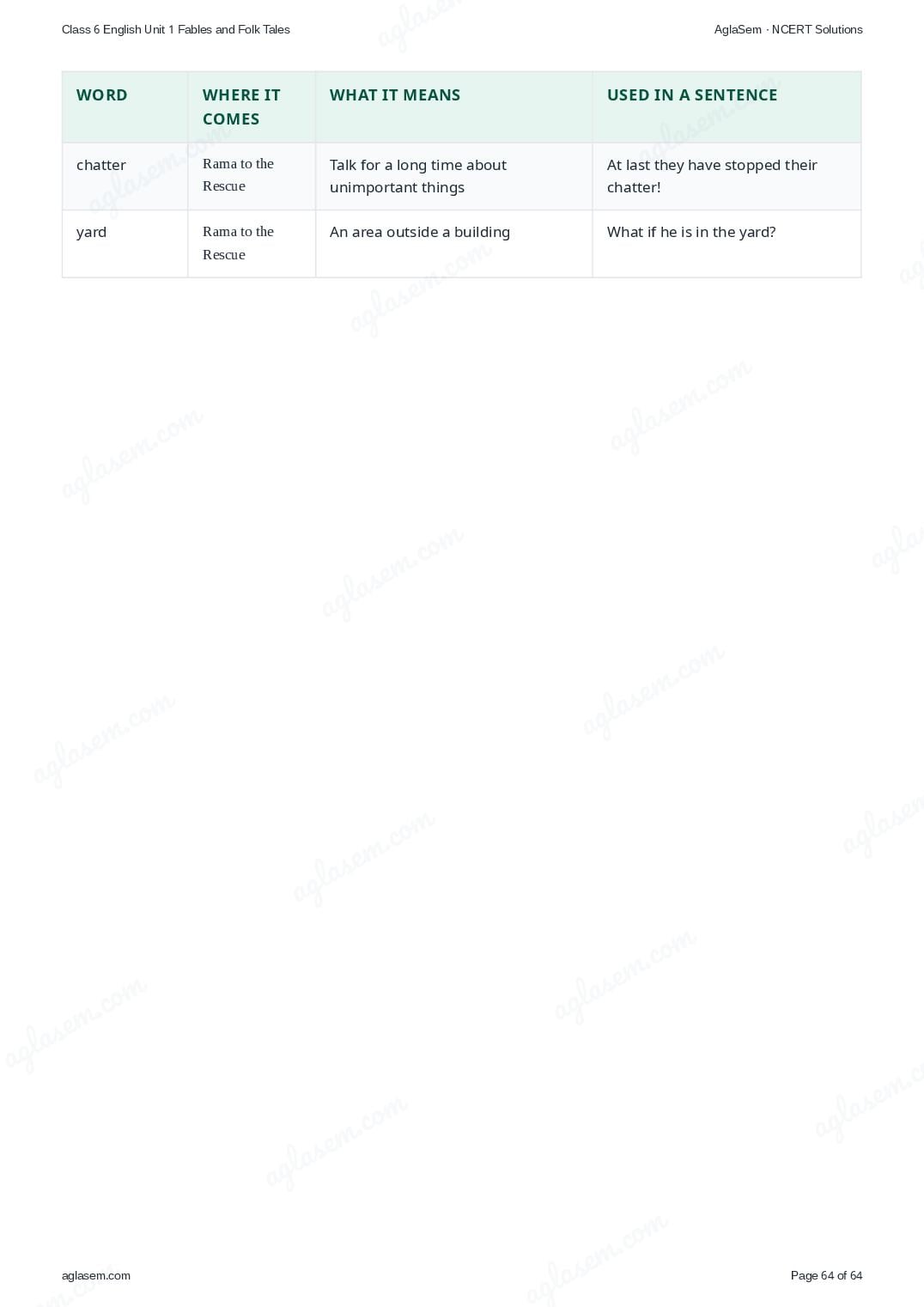
- Work in pairs to match the words in Column A with the meanings in Column B. (1. wonder 2. yard 3. chatter 4. instead 5. closely 6. perhaps)
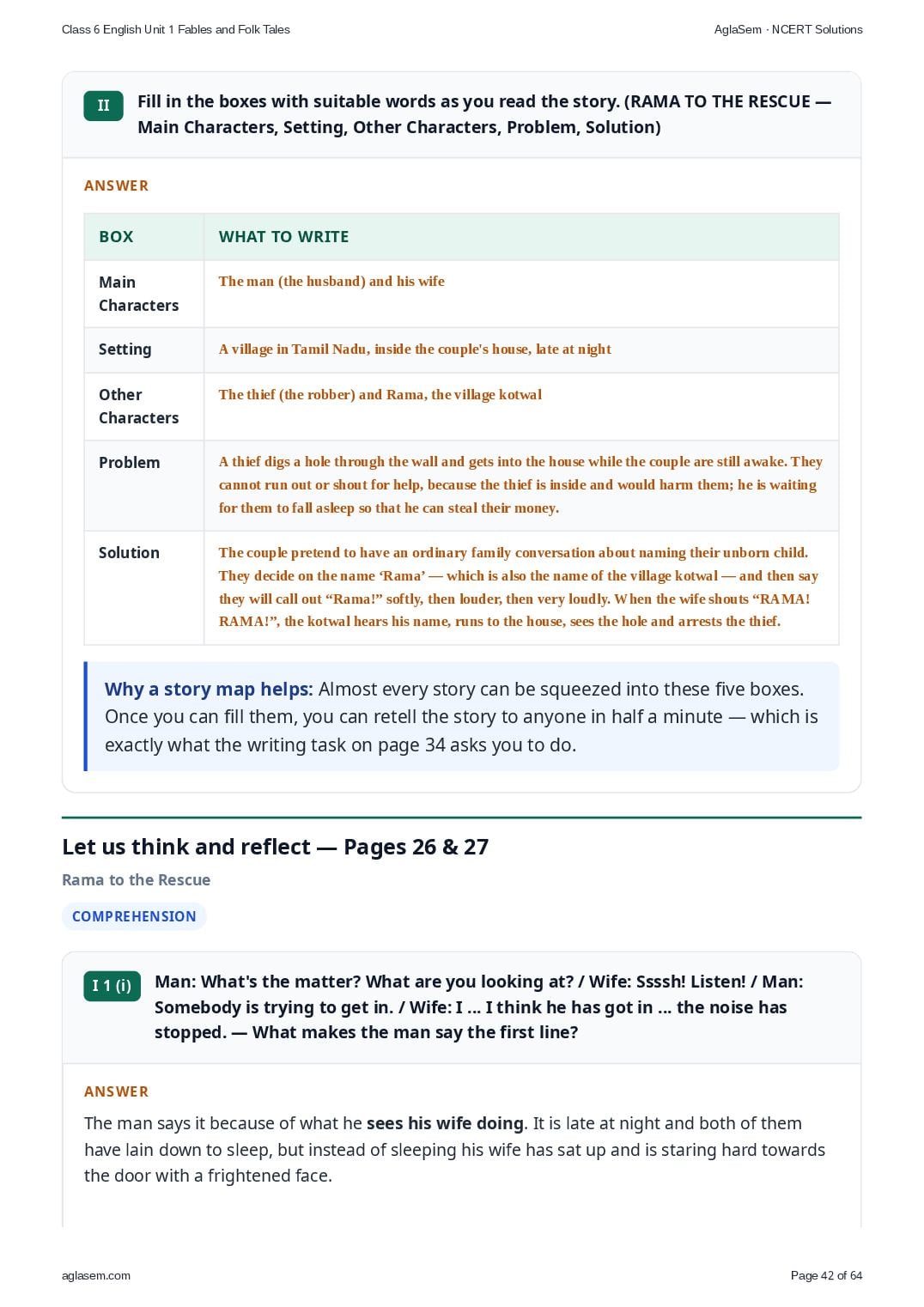
- Fill in the boxes with suitable words as you read the story. (RAMA TO THE RESCUE — Main Characters, Setting, Other Characters, Problem, Solution)
- Man: What's the matter? What are you looking at? / Wife: Ssssh! Listen! / Man: Somebody is trying to get in. / Wife: I … I think he has got in … the noise has stopped. — What makes the man say the first line?
- Choose the correct option. The wife says ‘Ssssh! Listen!’. What does the word ‘Ssssh’ mean here? A. sleep B. help C. rest D. be silent
- How can you tell that the wife was listening carefully?
- Rama, the village kotwal, ran to the house from which he heard his name being called. / Rama: Oh, Oh! Some thief has dug his way into this house. — Fill in the blank with the correct word from the given lines. The villagers caught the thief and took him to the _____________________.
- Choose the correct option. What do the words “Oh, Oh!” show here? A. surprise B. anger C. pain D. happiness
- How can you tell that the kotwal was good at his job?
- Give one reason why the man and his wife were not able to fall asleep.
- What did the thief wish would happen? Did it happen?
- How did the man and his wife get help from the kotwal?
- Do you think cleverness can help us solve our problems? Why do you say so?
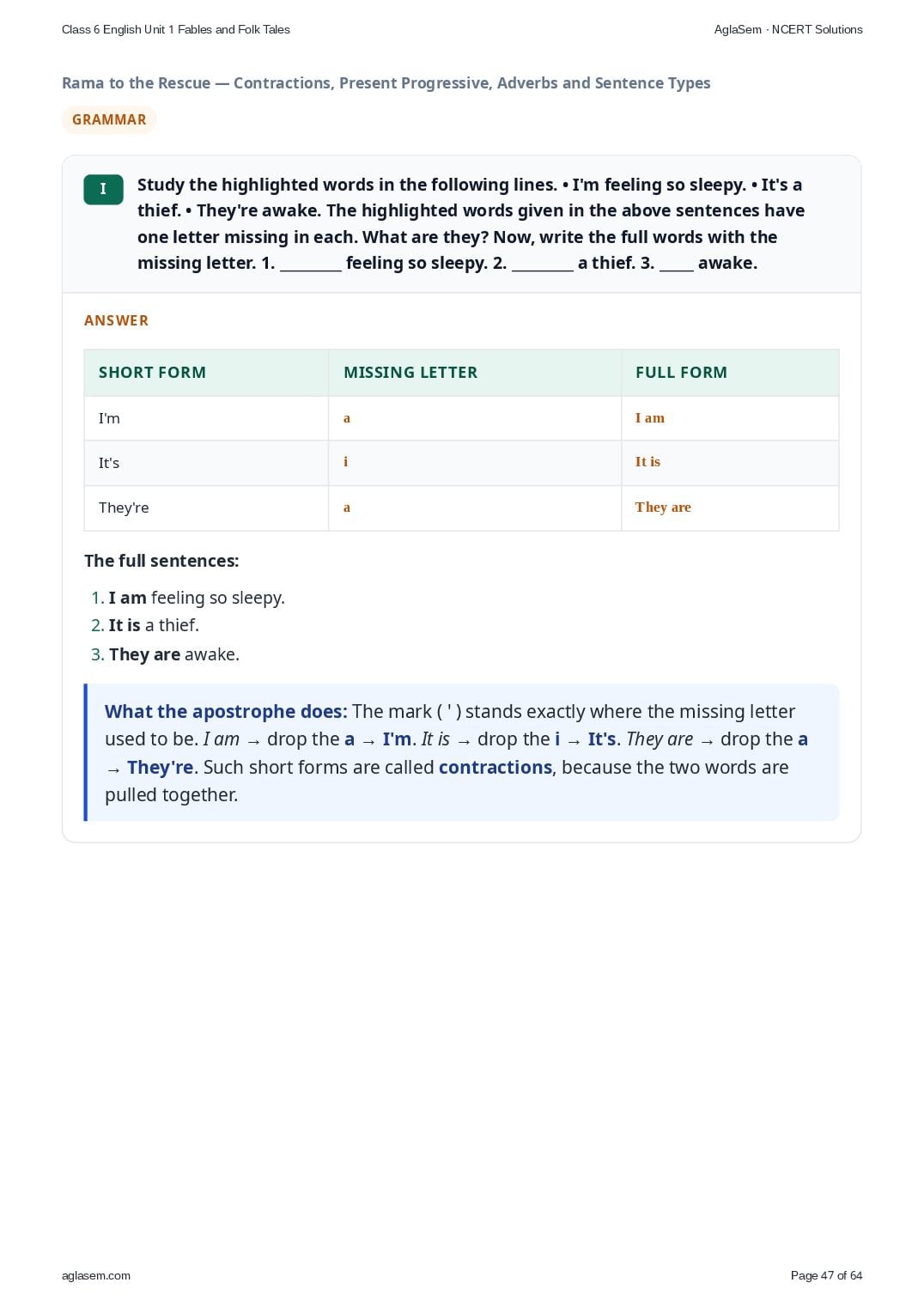
- Study the highlighted words in the following lines. • I'm feeling so sleepy. • It's a thief. • They're awake. The highlighted words given in the above sentences have one letter missing in each. What are they? Now, write the full words with the missing letter. 1. _________ feeling so sleepy. 2. _________ a thief. 3. _____ awake.
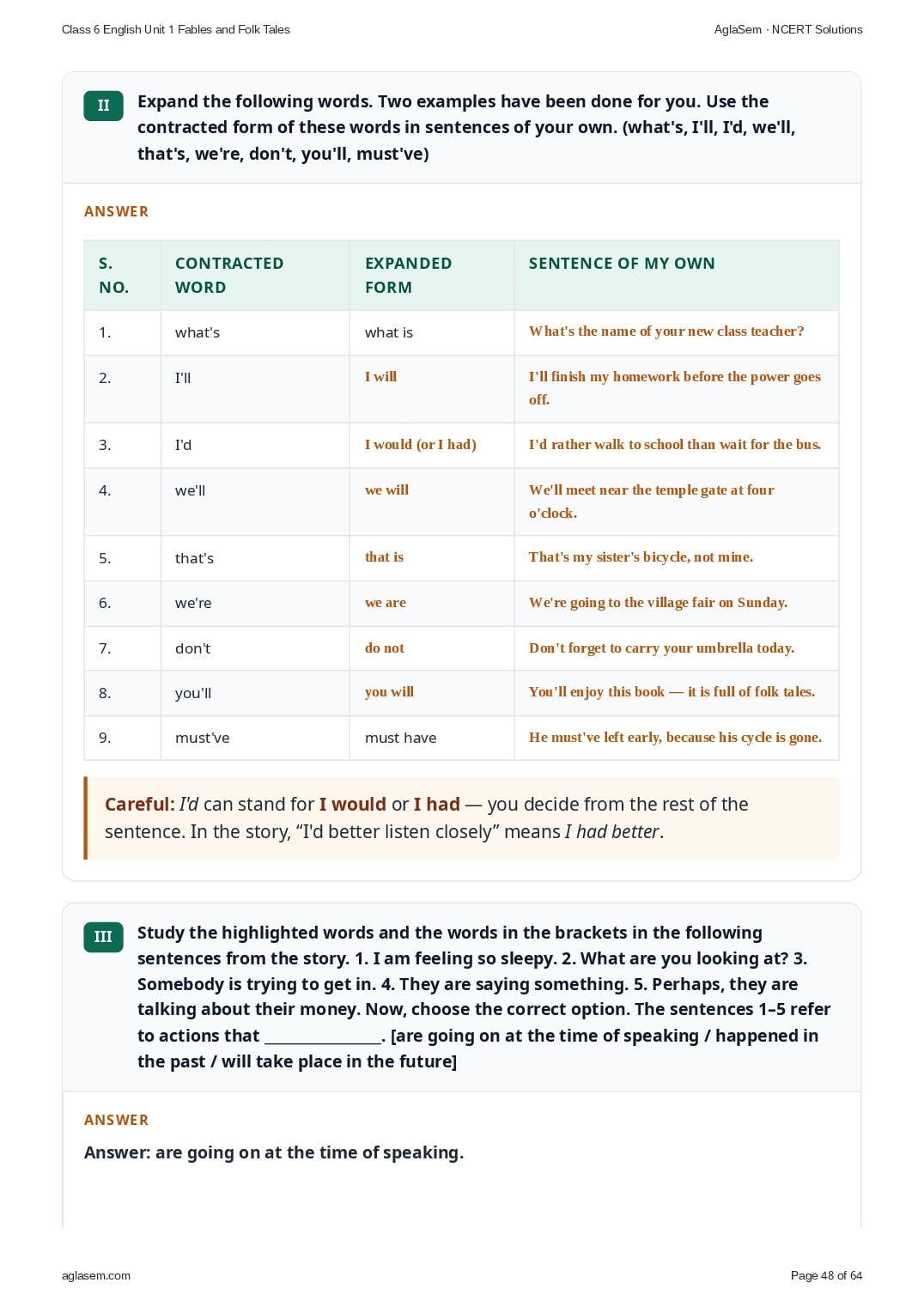
- Expand the following words. Two examples have been done for you. Use the contracted form of these words in sentences of your own. (what's, I'll, I'd, we'll, that's, we're, don't, you'll, must've)
- Study the highlighted words and the words in the brackets in the following sentences from the story. 1. I am feeling so sleepy. 2. What are you looking at? 3. Somebody is trying to get in. 4. They are saying something. 5. Perhaps, they are talking about their money. Now, choose the correct option. The sentences 1–5 refer to actions that _________________. [are going on at the time of speaking / happened in the past / will take place in the future]
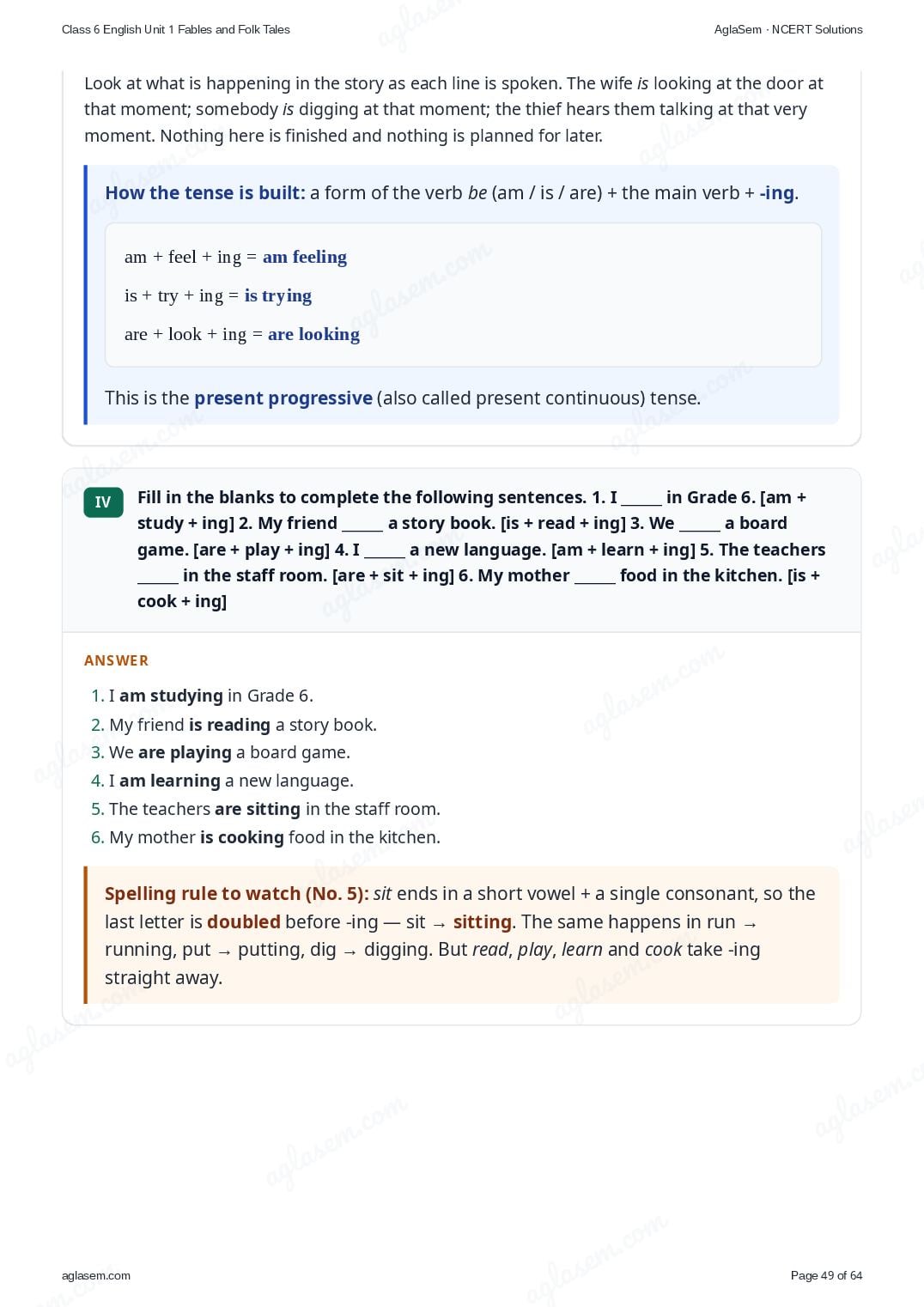
- Fill in the blanks to complete the following sentences. 1. I ______ in Grade 6. [am + study + ing] 2. My friend ______ a story book. [is + read + ing] 3. We ______ a board game. [are + play + ing] 4. I ______ a new language. [am + learn + ing] 5. The teachers ______ in the staff room. [are + sit + ing] 6. My mother ______ food in the kitchen. [is + cook + ing]
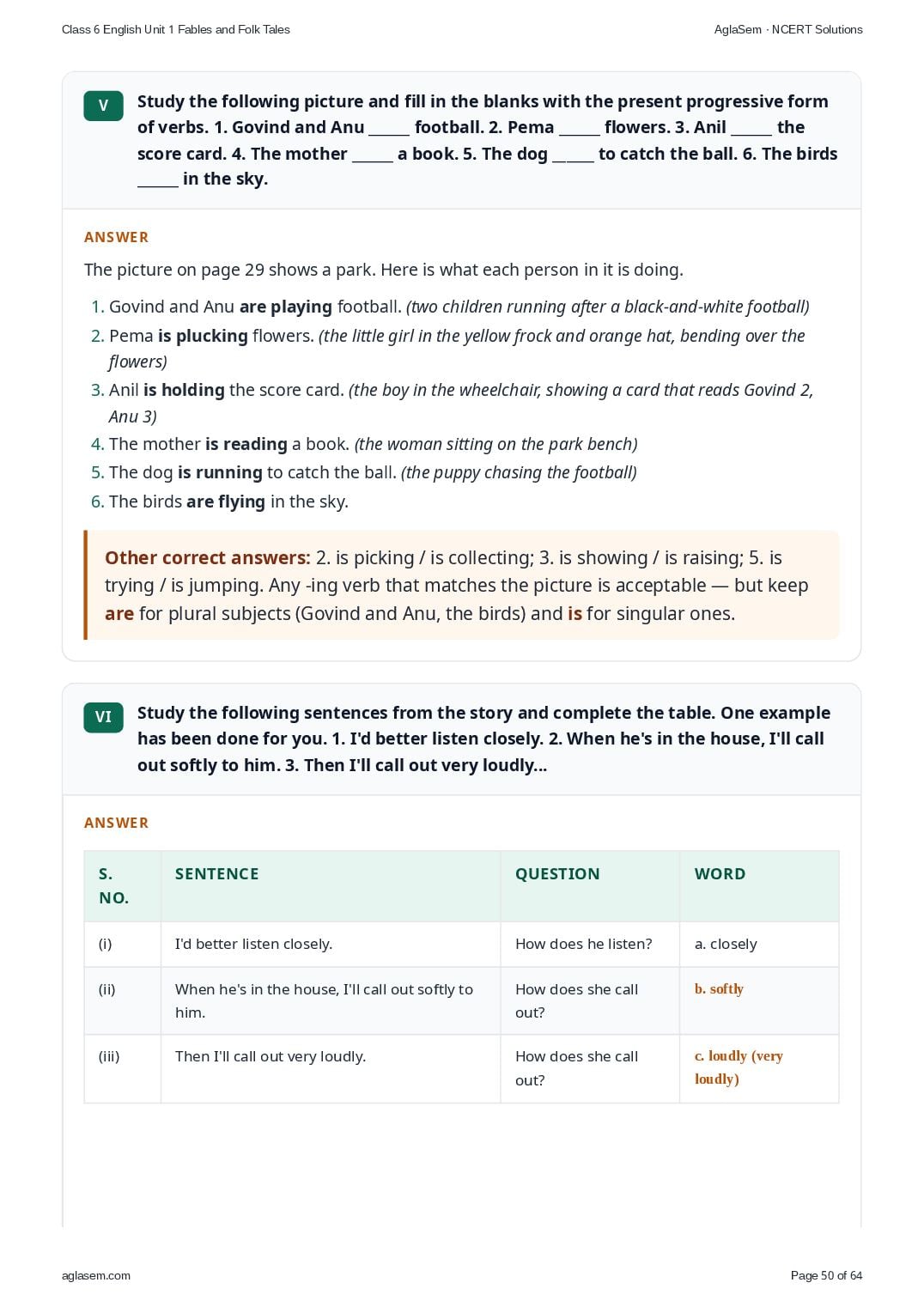
- Study the following picture and fill in the blanks with the present progressive form of verbs. 1. Govind and Anu ______ football. 2. Pema ______ flowers. 3. Anil ______ the score card. 4. The mother ______ a book. 5. The dog ______ to catch the ball. 6. The birds ______ in the sky.
- Study the following sentences from the story and complete the table. One example has been done for you. 1. I'd better listen closely. 2. When he's in the house, I'll call out softly to him. 3. Then I'll call out very loudly…
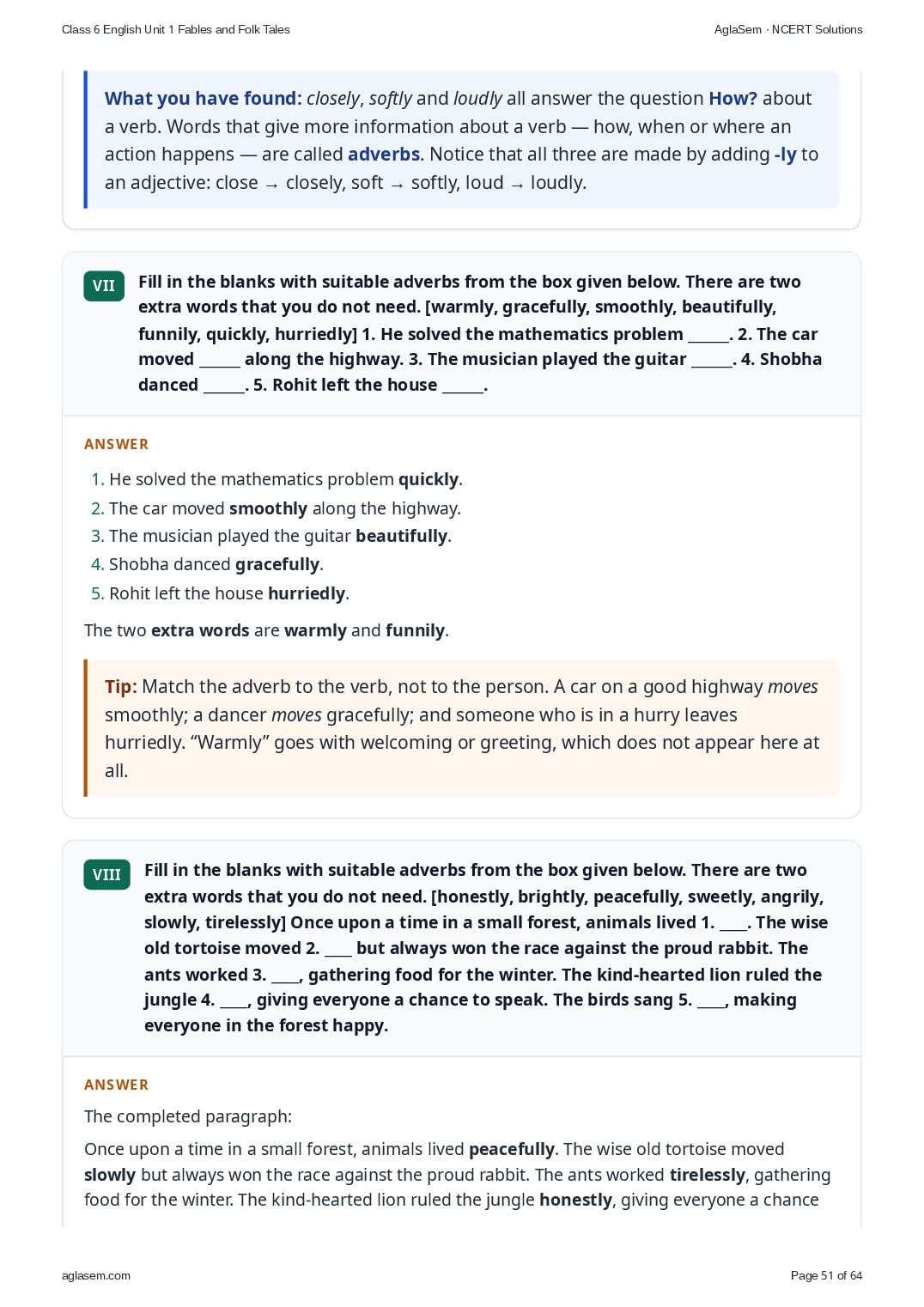
- Fill in the blanks with suitable adverbs from the box given below. There are two extra words that you do not need. [warmly, gracefully, smoothly, beautifully, funnily, quickly, hurriedly] 1. He solved the mathematics problem ______. 2. The car moved ______ along the highway. 3. The musician played the guitar ______. 4. Shobha danced ______. 5. Rohit left the house ______.
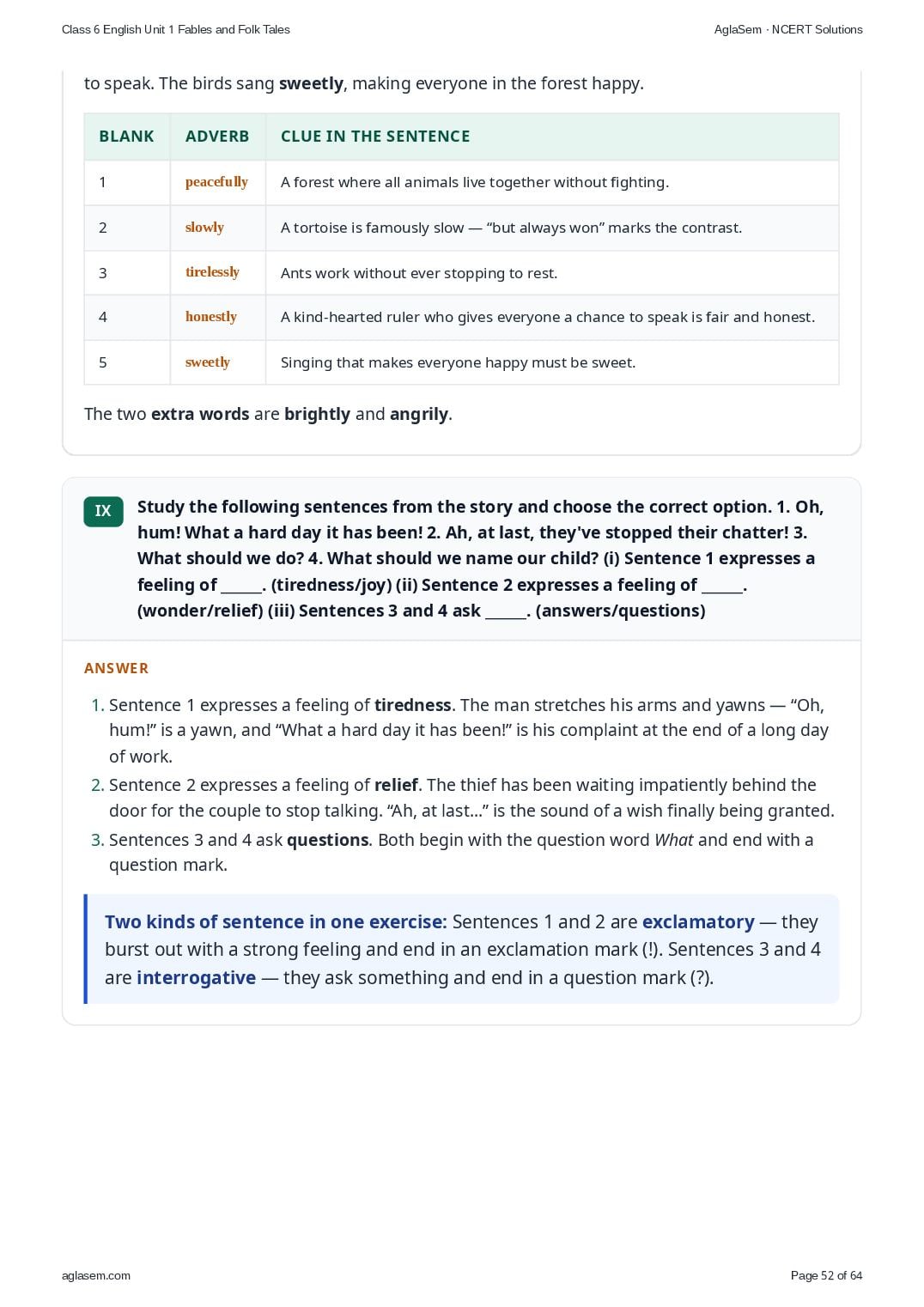
- Fill in the blanks with suitable adverbs from the box given below. There are two extra words that you do not need. [honestly, brightly, peacefully, sweetly, angrily, slowly, tirelessly] Once upon a time in a small forest, animals lived 1. ____. The wise old tortoise moved 2. ____ but always won the race against the proud rabbit. The ants worked 3. ____, gathering food for the winter. The kind-hearted lion ruled the jungle 4. ____, giving everyone a chance to speak. The birds sang 5. ____, making everyone in the forest happy.
- Study the following sentences from the story and choose the correct option. 1. Oh, hum! What a hard day it has been! 2. Ah, at last, they've stopped their chatter! 3. What should we do? 4. What should we name our child? (i) Sentence 1 expresses a feeling of ______. (tiredness/joy) (ii) Sentence 2 expresses a feeling of ______. (wonder/relief) (iii) Sentences 3 and 4 ask ______. (answers/questions)
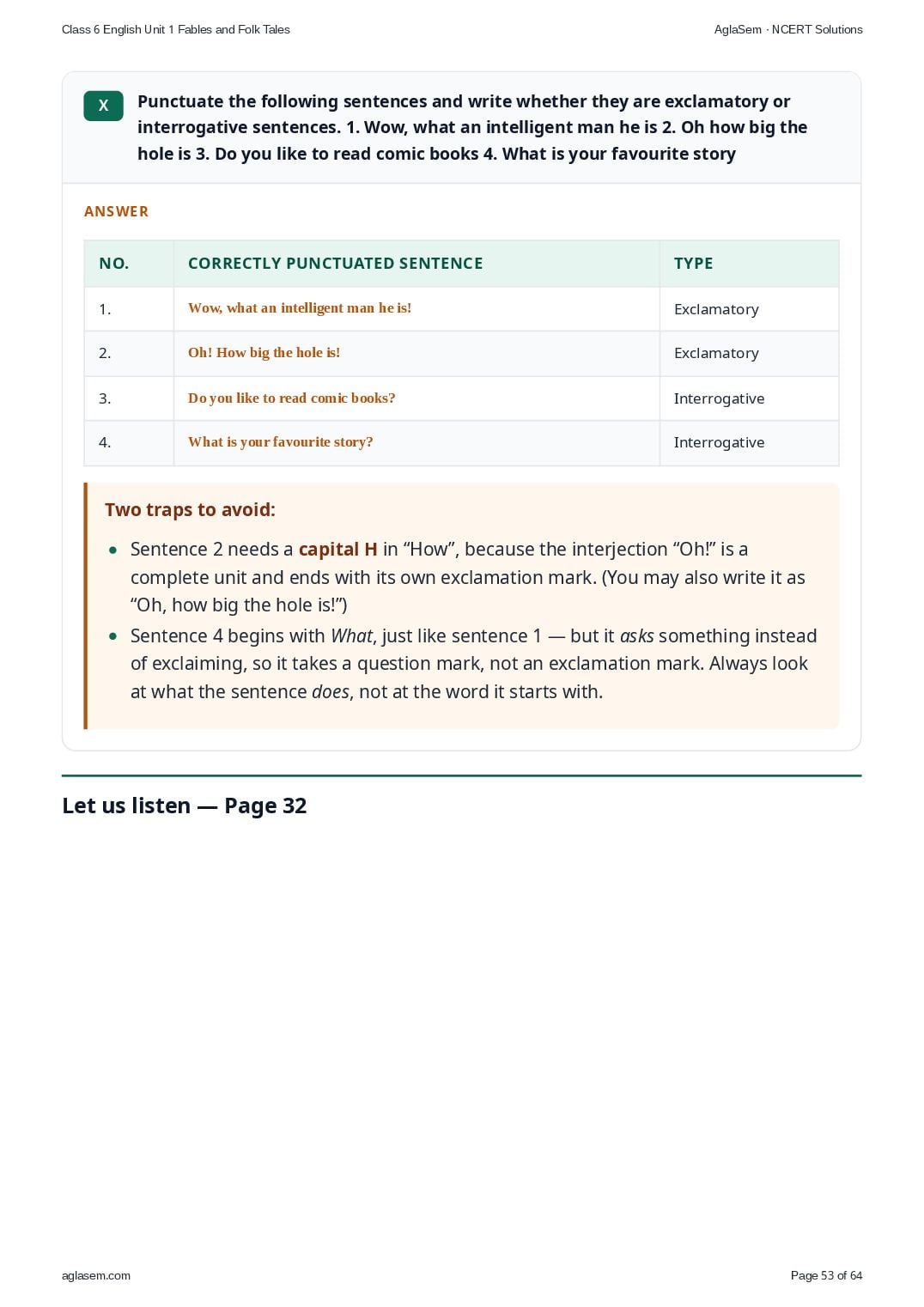
- Punctuate the following sentences and write whether they are exclamatory or interrogative sentences. 1. Wow, what an intelligent man he is 2. Oh how big the hole is 3. Do you like to read comic books 4. What is your favourite story
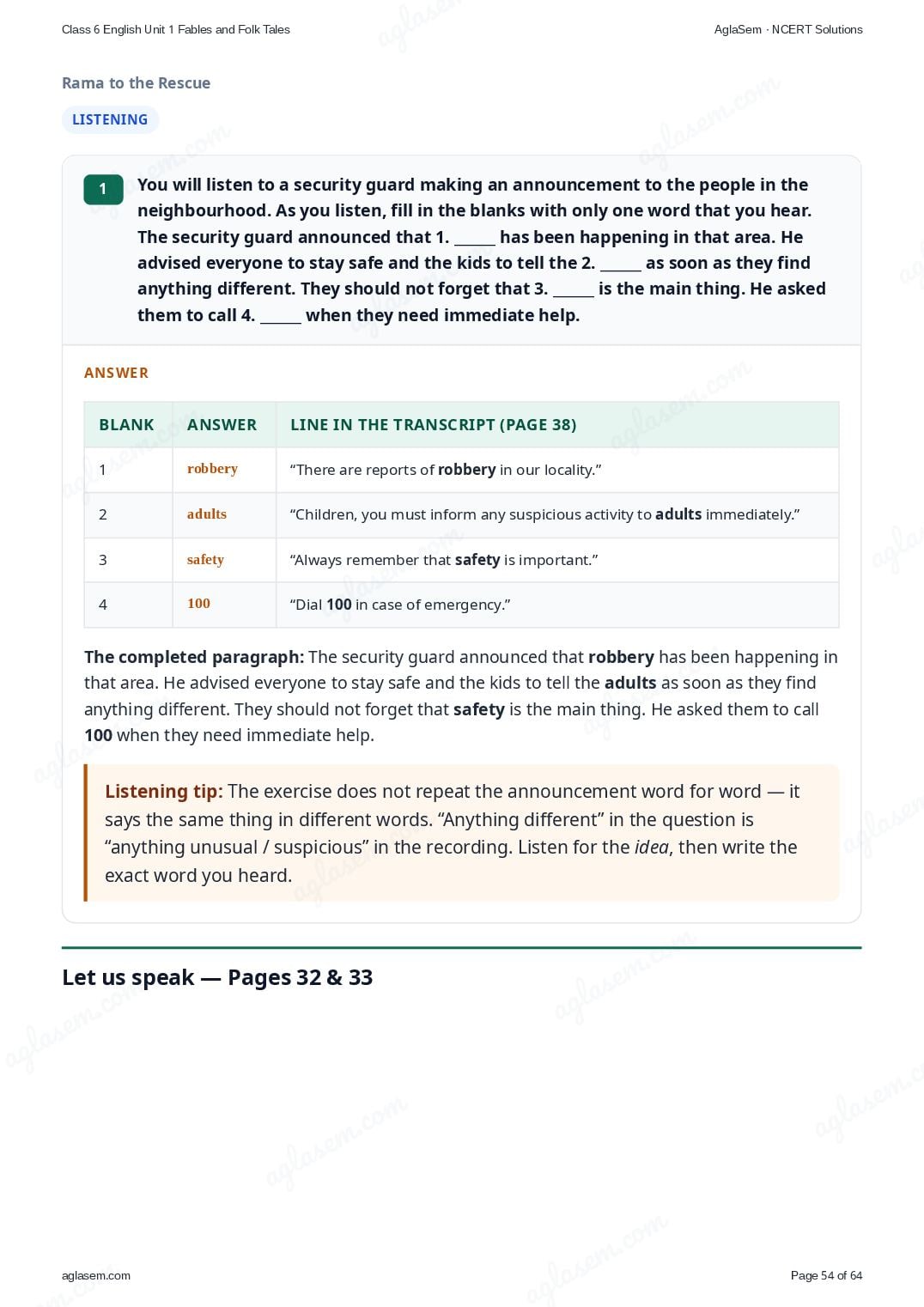
- You will listen to a security guard making an announcement to the people in the neighbourhood. As you listen, fill in the blanks with only one word that you hear. The security guard announced that 1. ______ has been happening in that area. He advised everyone to stay safe and the kids to tell the 2. ______ as soon as they find anything different. They should not forget that 3. ______ is the main thing. He asked them to call 4. ______ when they need immediate help.
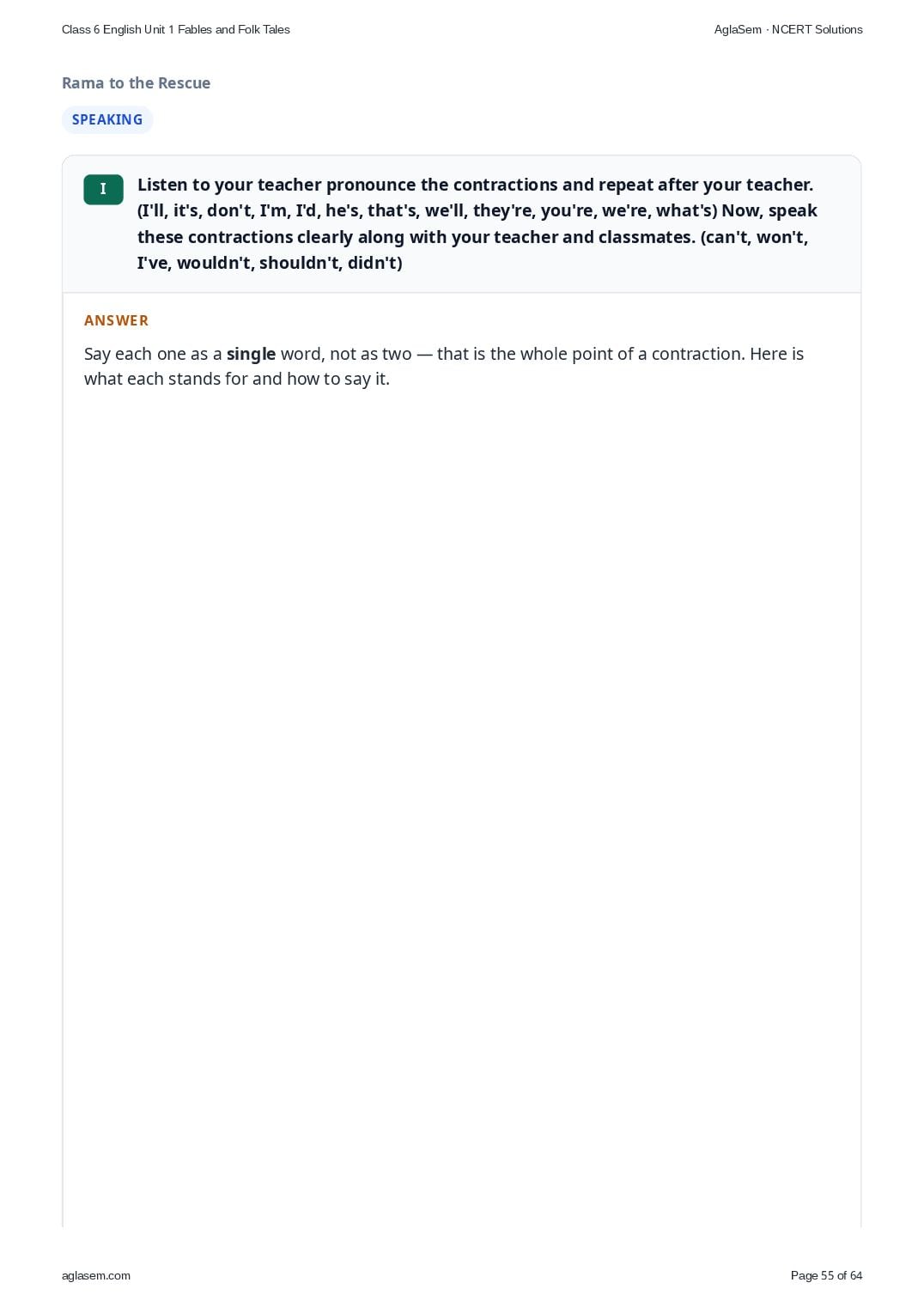
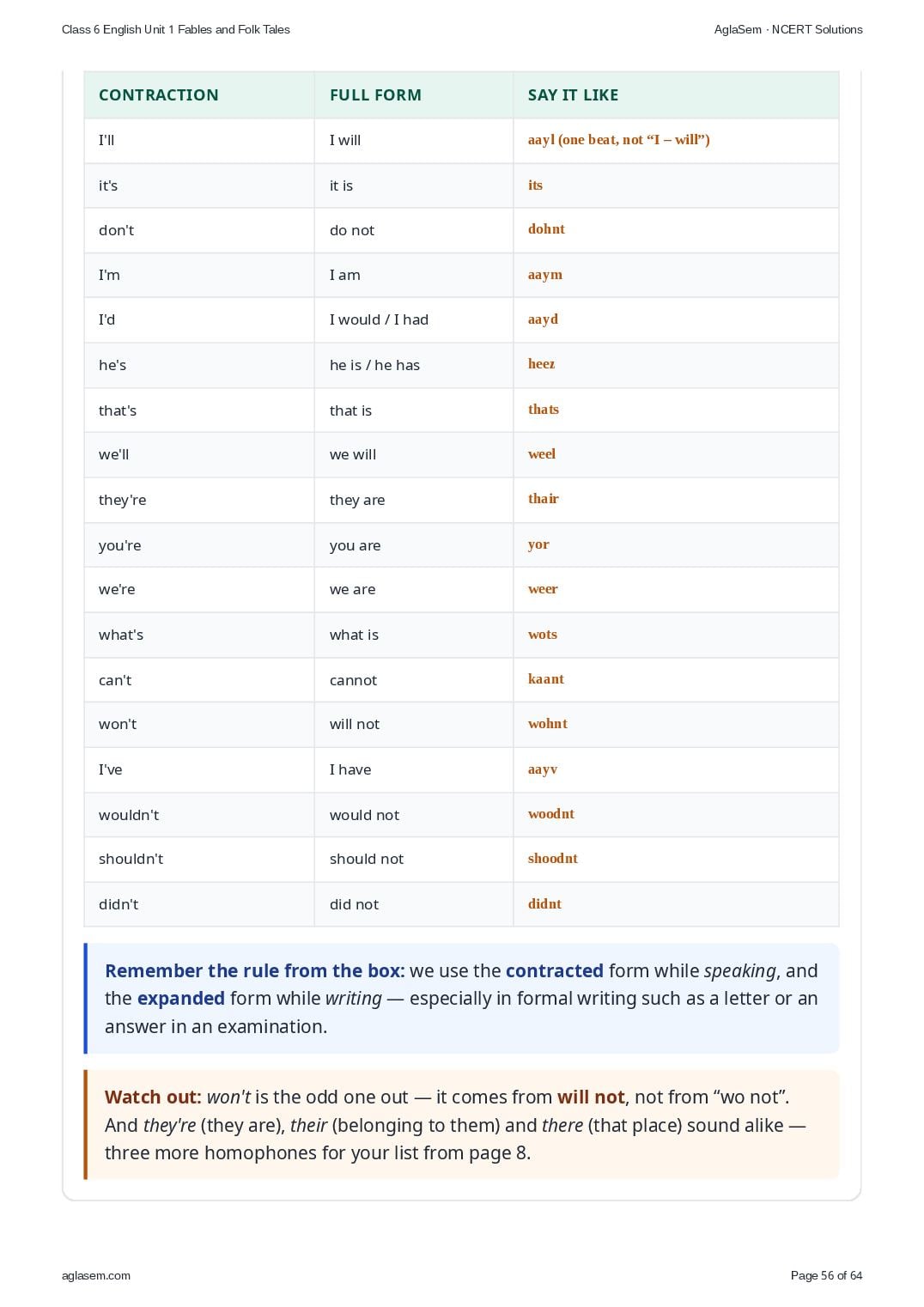
- Listen to your teacher pronounce the contractions and repeat after your teacher. (I'll, it's, don't, I'm, I'd, he's, that's, we'll, they're, you're, we're, what's) Now, speak these contractions clearly along with your teacher and classmates. (can't, won't, I've, wouldn't, shouldn't, didn't)
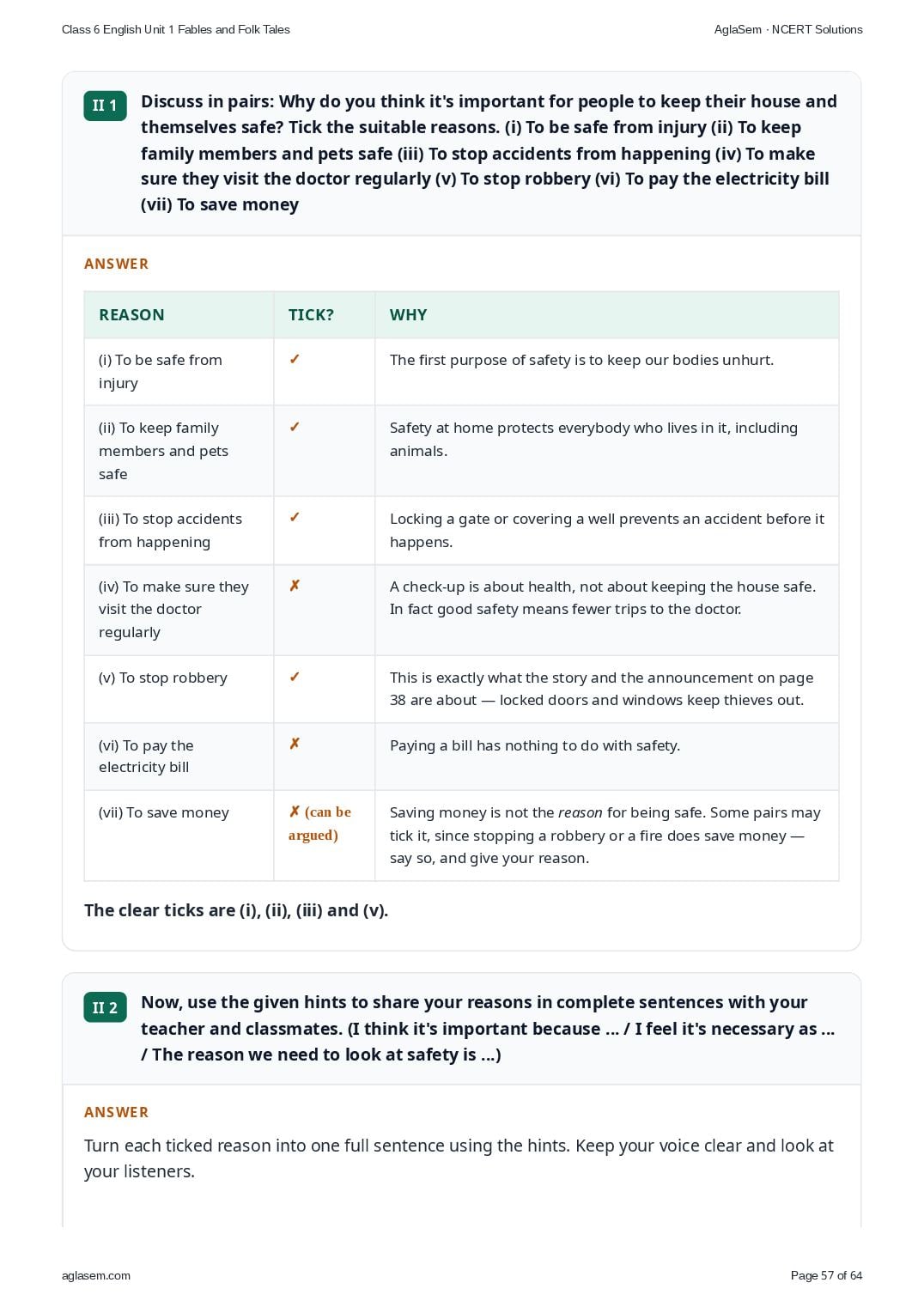
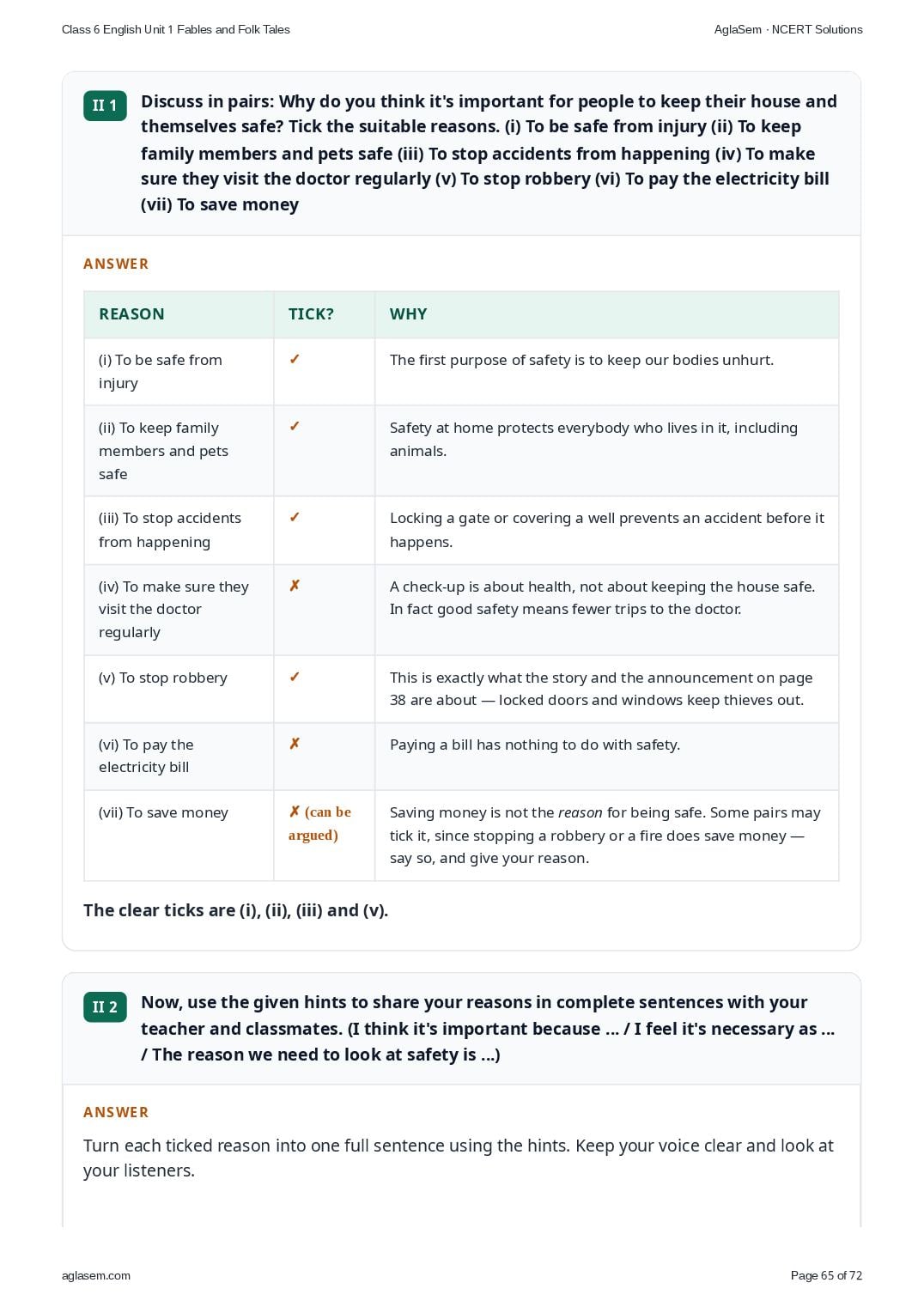
- Discuss in pairs: Why do you think it's important for people to keep their house and themselves safe? Tick the suitable reasons. (i) To be safe from injury (ii) To keep family members and pets safe (iii) To stop accidents from happening (iv) To make sure they visit the doctor regularly (v) To stop robbery (vi) To pay the electricity bill (vii) To save money
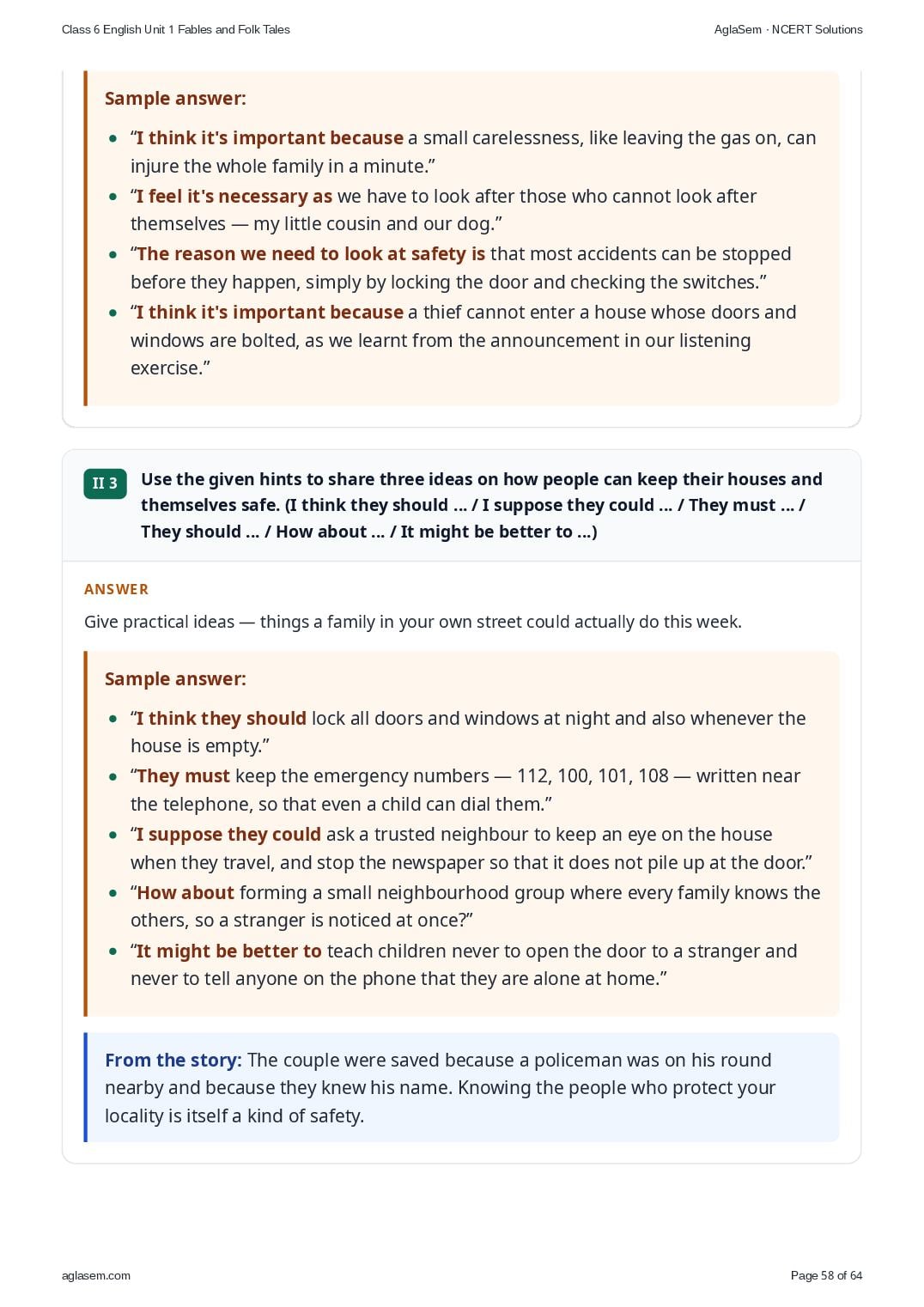
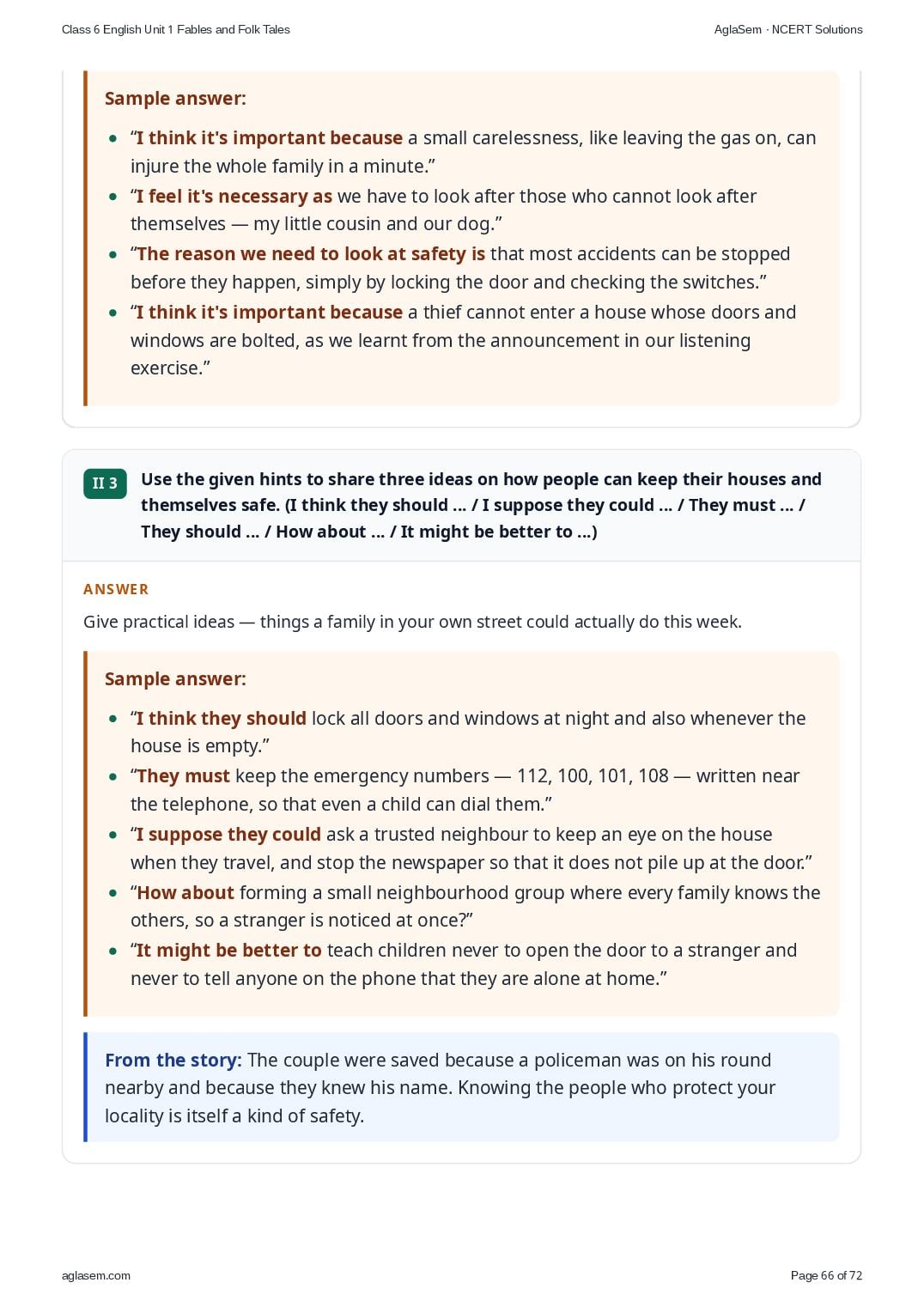
- Now, use the given hints to share your reasons in complete sentences with your teacher and classmates. (I think it's important because … / I feel it's necessary as … / The reason we need to look at safety is …)
- Use the given hints to share three ideas on how people can keep their houses and themselves safe. (I think they should … / I suppose they could … / They must … / They should … / How about … / It might be better to …)
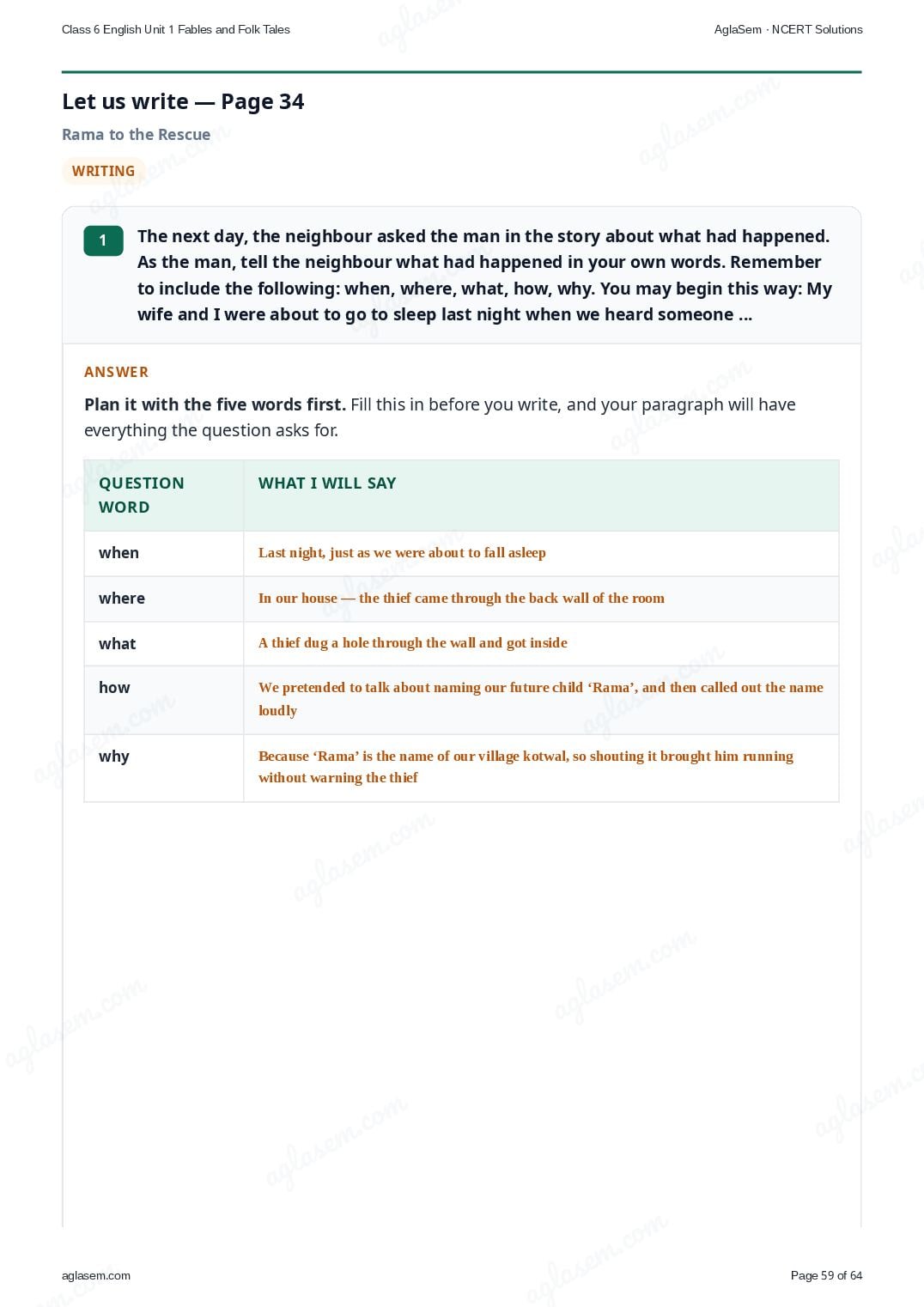
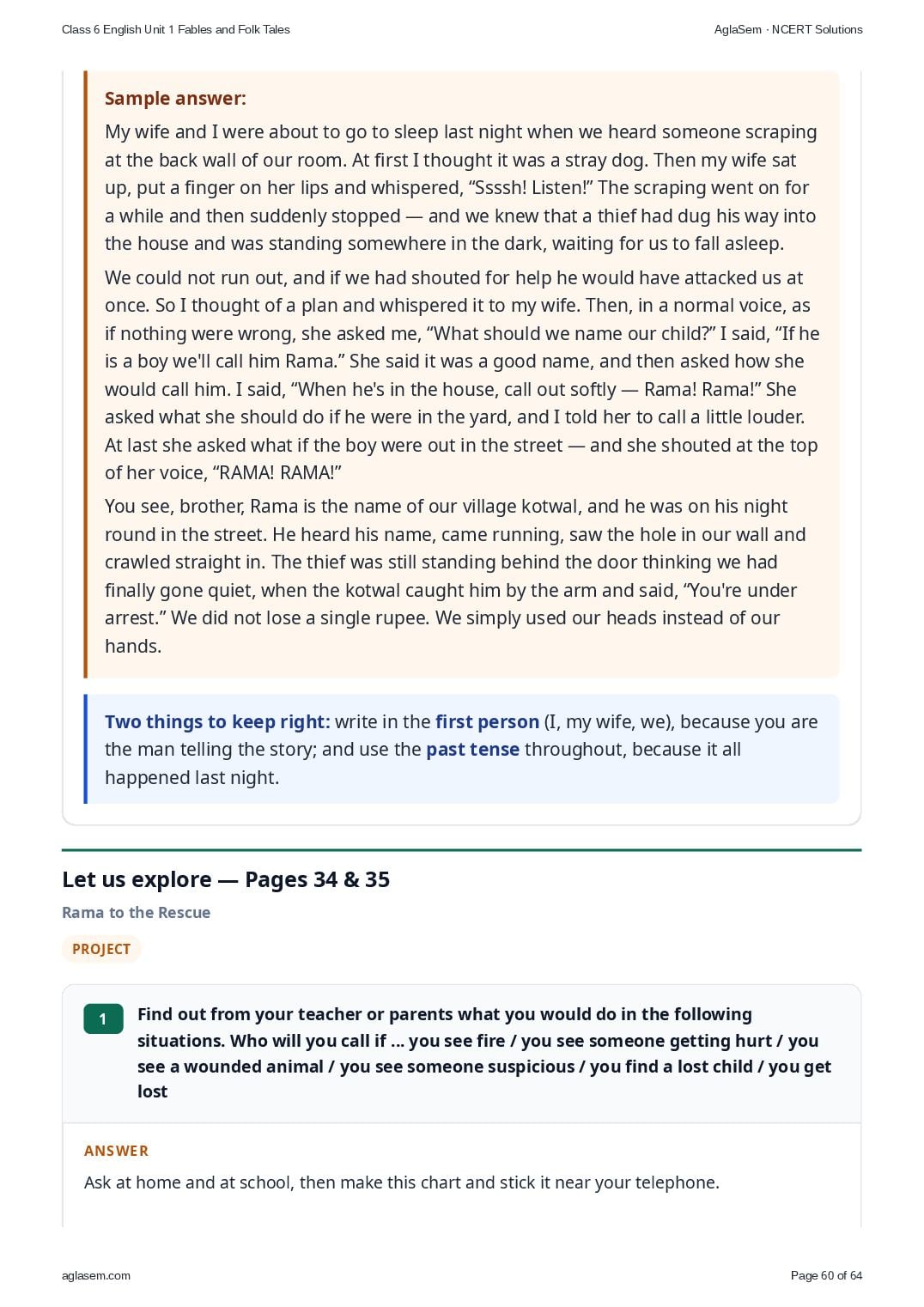
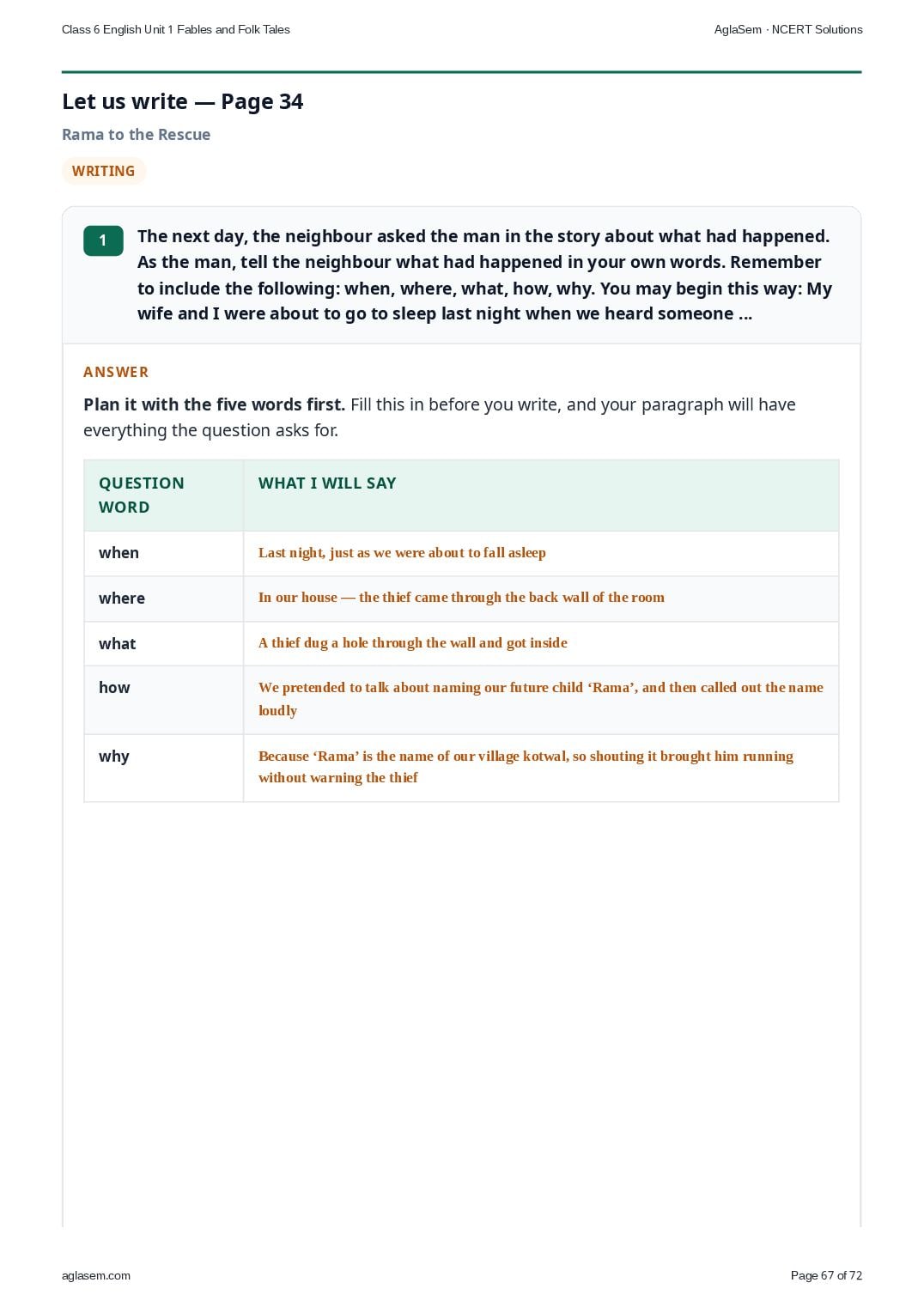
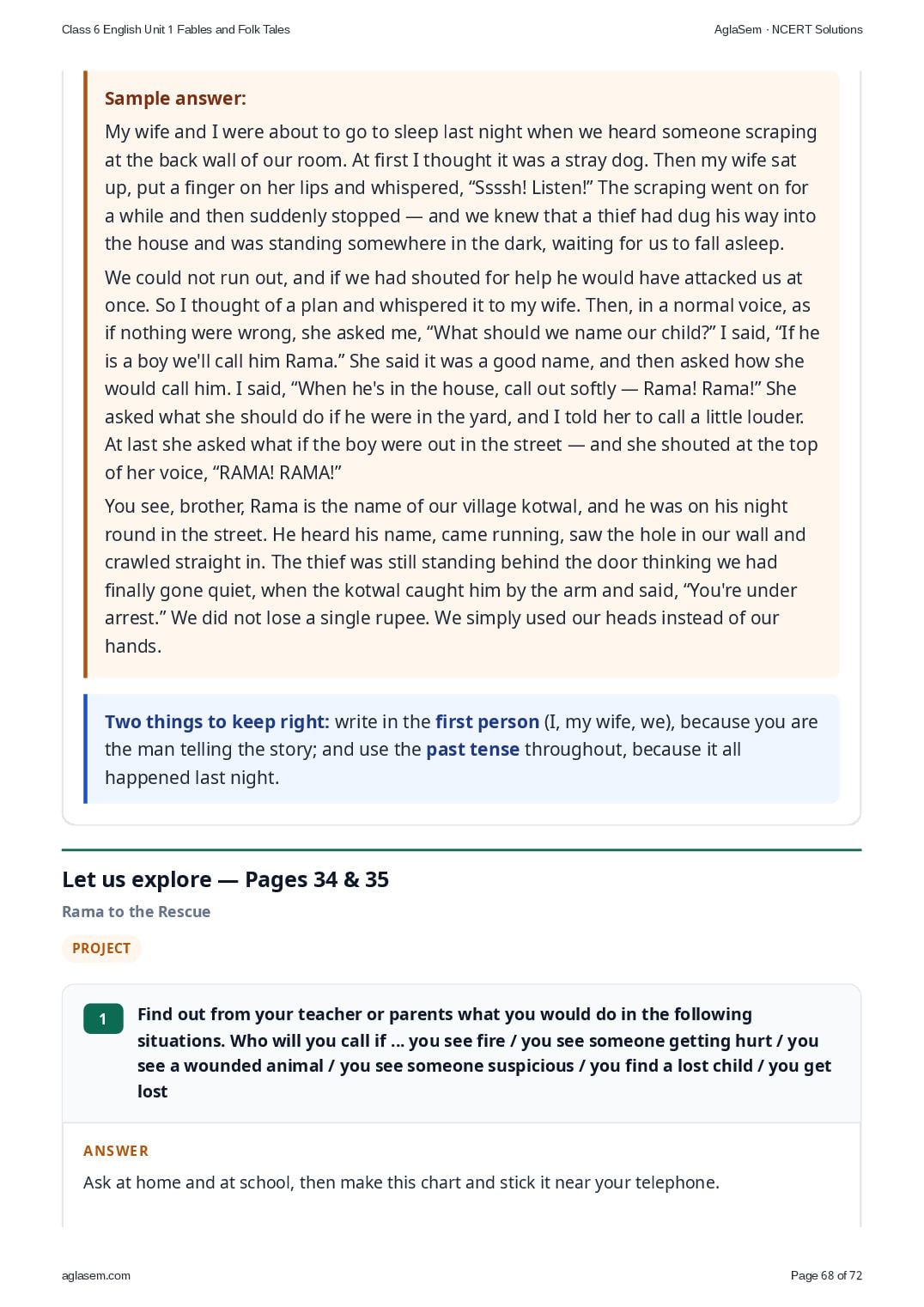
- The next day, the neighbour asked the man in the story about what had happened. As the man, tell the neighbour what had happened in your own words. Remember to include the following: when, where, what, how, why. You may begin this way: My wife and I were about to go to sleep last night when we heard someone …
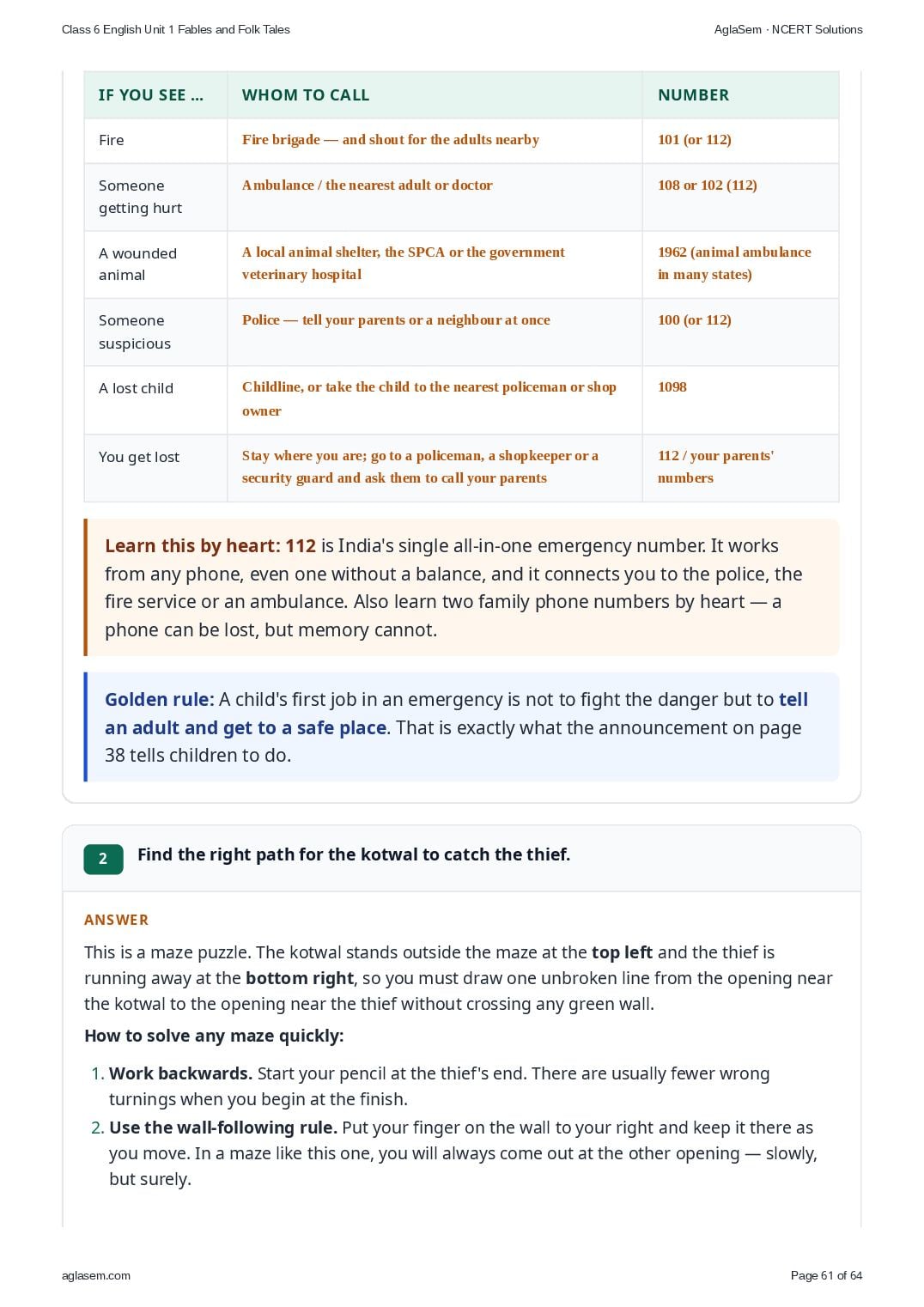
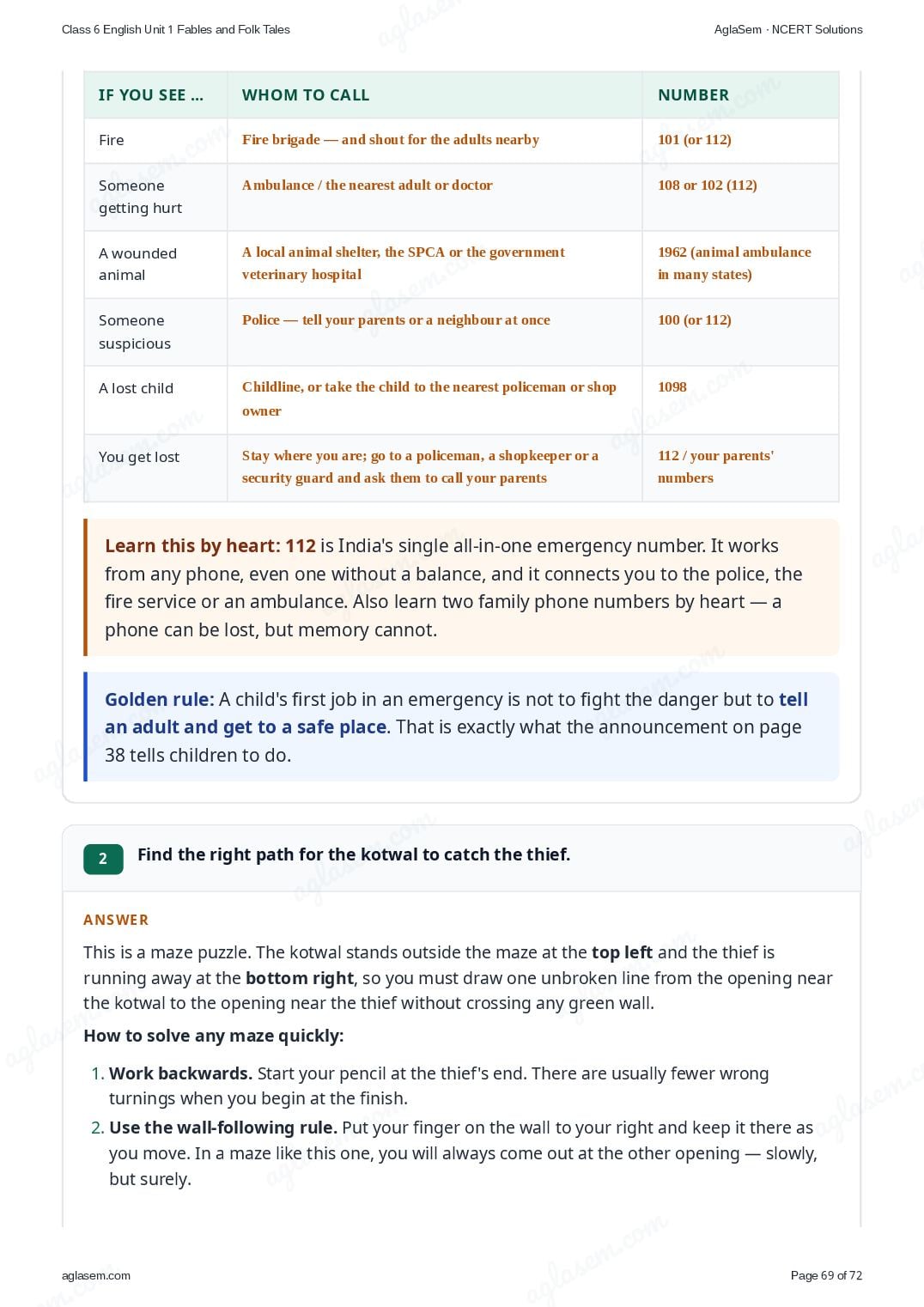
- Find out from your teacher or parents what you would do in the following situations. Who will you call if … you see fire / you see someone getting hurt / you see a wounded animal / you see someone suspicious / you find a lost child / you get lost
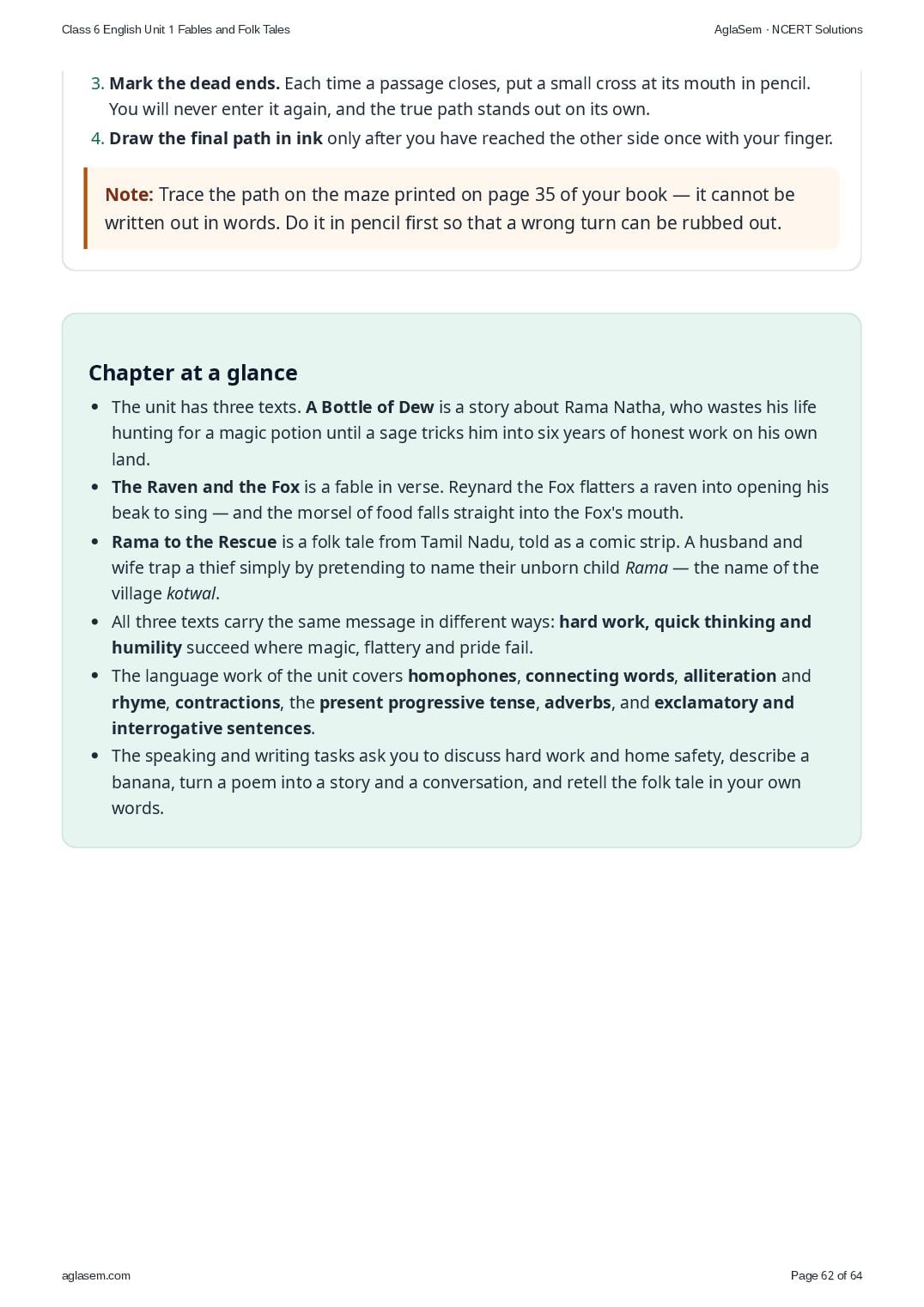
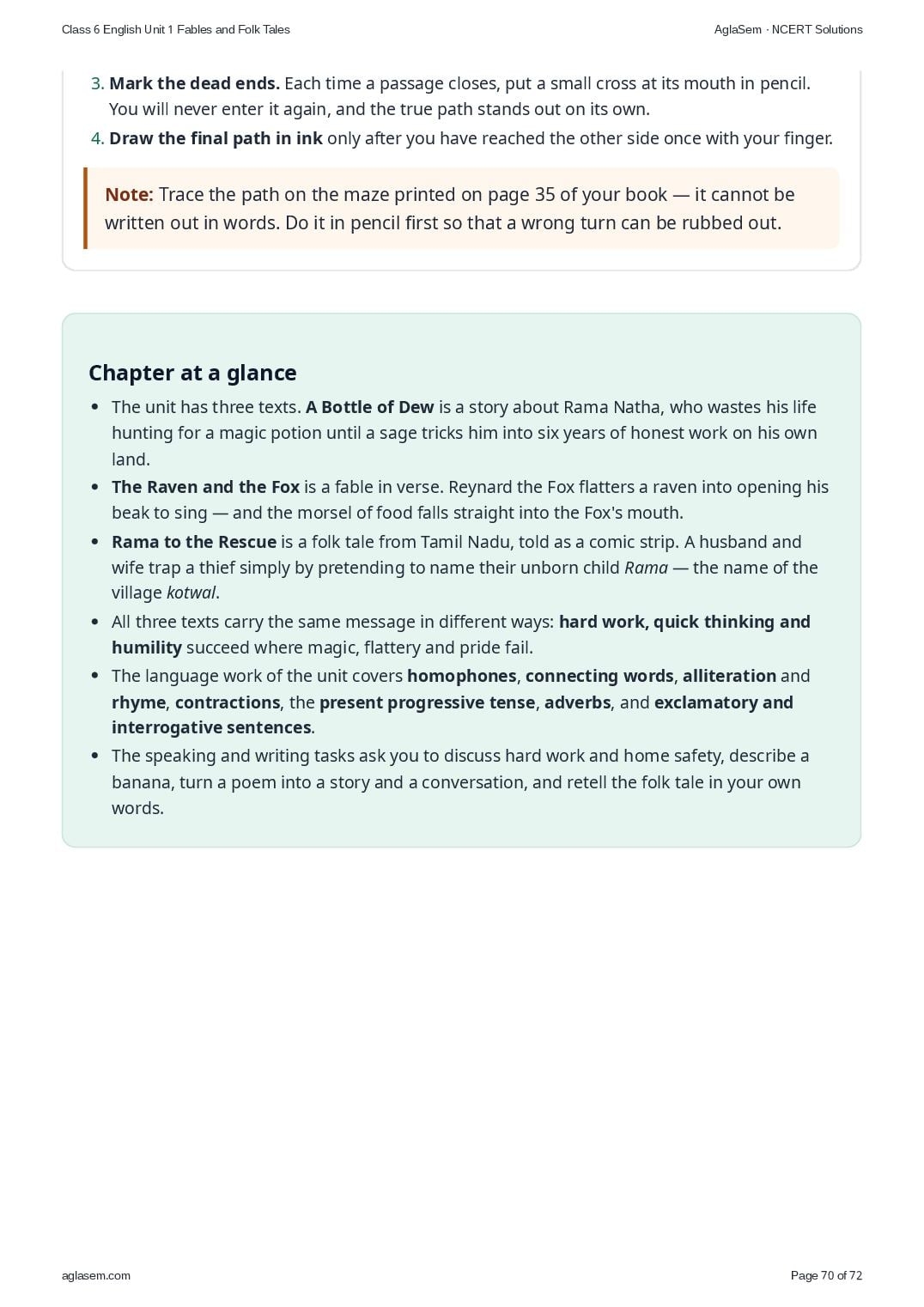
- Find the right path for the kotwal to catch the thief.
Chapter at a Glance
- The unit has three texts. A Bottle of Dew is a story about Rama Natha, who wastes his life hunting for a magic potion until a sage tricks him into six years of honest work on his own land.
- The Raven and the Fox is a fable in verse. Reynard the Fox flatters a raven into opening his beak to sing — and the morsel of food falls straight into the Fox's mouth.
- Rama to the Rescue is a folk tale from Tamil Nadu, told as a comic strip. A husband and wife trap a thief simply by pretending to name their unborn child Rama — the name of the village kotwal .
- All three texts carry the same message in different ways: hard work, quick thinking and humility succeed where magic, flattery and pride fail.
- The language work of the unit covers homophones , connecting words , alliteration and rhyme , contractions , the present progressive tense , adverbs , and exclamatory and interrogative sentences .
- The speaking and writing tasks ask you to discuss hard work and home safety, describe a banana, turn a poem into a story and a conversation, and retell the folk tale in your own words.
How to Download NCERT Solutions for Class 6 English Chapter 1 PDF
Follow these simple steps to get the Fables and Folk Tales questions-and-answers PDF from Poorvi.
- Search NCERT Solutions for Class 6 English Chapter 1 aglasem and open this page.
- Read the exercise questions with answers for Fables and Folk Tales shown above.
- Click the Download PDF link to save the Fables and Folk Tales solutions to your device.
NCERT Solutions for Class 6 English – All Chapters
There are more chapters to study besides Fables and Folk Tales in English. Here are the NCERT Solutions for all chapters of Class 6 English.
- Chapter 1 Fables and Folk Tales
- Chapter 2 Friendship
- Chapter 3 Nurturing Nature
- Chapter 4 Sports and Wellness
- Chapter 5 Culture and Tradition
NCERT Solutions for Class 6 – All Subjects
Just like Chapter 1 of English, you can get the exercise questions with answers for every other subject of Class 6. Here are the NCERT Solutions for all subjects of Class 6.
NCERT Solutions for Class 6 English Chapter 1 – An Overview
The key highlights of this study material are as follows.
| Aspects | Details |
|---|---|
| Class | Class 6 |
| Subject | English |
| Chapter Number | Chapter 1 |
| Chapter Name | Fables and Folk Tales |
| Book Name | Poorvi |
| Book By | NCERT (National Council of Educational Research and Training) |
| Educational Resource Here | NCERT Solutions of Class 6 English Chapter 1 for all exercises |
| More Questions Answers of This Subject | NCERT Solutions for Class 6 English |
| Download Book Chapter | NCERT Book Class 6 English |
| All Questions Answers For This Class | NCERT Solutions for Class 6 |
| Complete Solutions | NCERT Solutions |
NCERT Solutions for Class 6 English Chapter 1 Fables and Folk Tales – FAQs
What are the NCERT Solutions for Class 6 English Chapter 1 Fables and Folk Tales?
They are the complete, step-by-step answers to all the exercise and in-text questions of Chapter 1 Fables and Folk Tales from the NCERT Class 6 English textbook Poorvi, written by experts as per the latest NCERT syllabus.
How can I download the Class 6 English Chapter 1 solutions PDF for free?
Open this page on aglasem, read the Fables and Folk Tales questions with answers, and click the “Download Solutions PDF” link. The Class 6 English Chapter 1 NCERT Solutions PDF is completely free to download.
Are these NCERT Solutions as per the latest 2026-27 syllabus?
Yes. The NCERT Solutions for Class 6 English Chapter 1 are based on the latest NCERT textbook Poorvi and the current 2026-27 CBSE syllabus, so the questions and answers match what you study in class.
Where can I get NCERT Solutions for the other chapters of Class 6 English?
You can find the answers to every chapter on the NCERT Solutions for Class 6 English page, and solutions for every subject on the NCERT Solutions for Class 6 page.
How do NCERT Solutions help in exam preparation?
They show the correct method to solve each question, help you write answers the way they are expected in exams, let you check and correct your own work, and save revision time — which together improve your marks in Class 6 English.
If you have any queries on NCERT Solutions for Class 6 English Chapter 1 Fables and Folk Tales, then please ask in the comments below.