NCERT Solutions for Class 8 English Chapter 5 Science and Curiosity provide clear, step-by-step answers to every exercise and in-text question from the chapter Science and Curiosity of the NCERT textbook Poorvi. Prepared by subject experts as per the latest NCERT (CBSE) syllabus for 2026-27, these NCERT Solutions for Class 8 English help you understand each concept, write exam-ready answers, and check your own solutions. You can read them online below or download the free Class 8 English Chapter 5 question-answer PDF.
NCERT Solutions for Class 8 English Chapter 5 Science and Curiosity
- Class: Class 8
- Subject: English
- Chapter: Chapter 5 – Science and Curiosity
- Textbook: Poorvi (NCERT)
- Study material: NCERT Solutions – questions with answers, free PDF
These solutions answer all the exercise questions of Chapter 5 Science and Curiosity — including the in-text questions, short-answer and long-answer questions, and activities — with complete explanations so you can follow the method, not just the final answer. Read the full solutions below.
NCERT Solutions Class 8 English Unit 5 Science and Curiosity View Download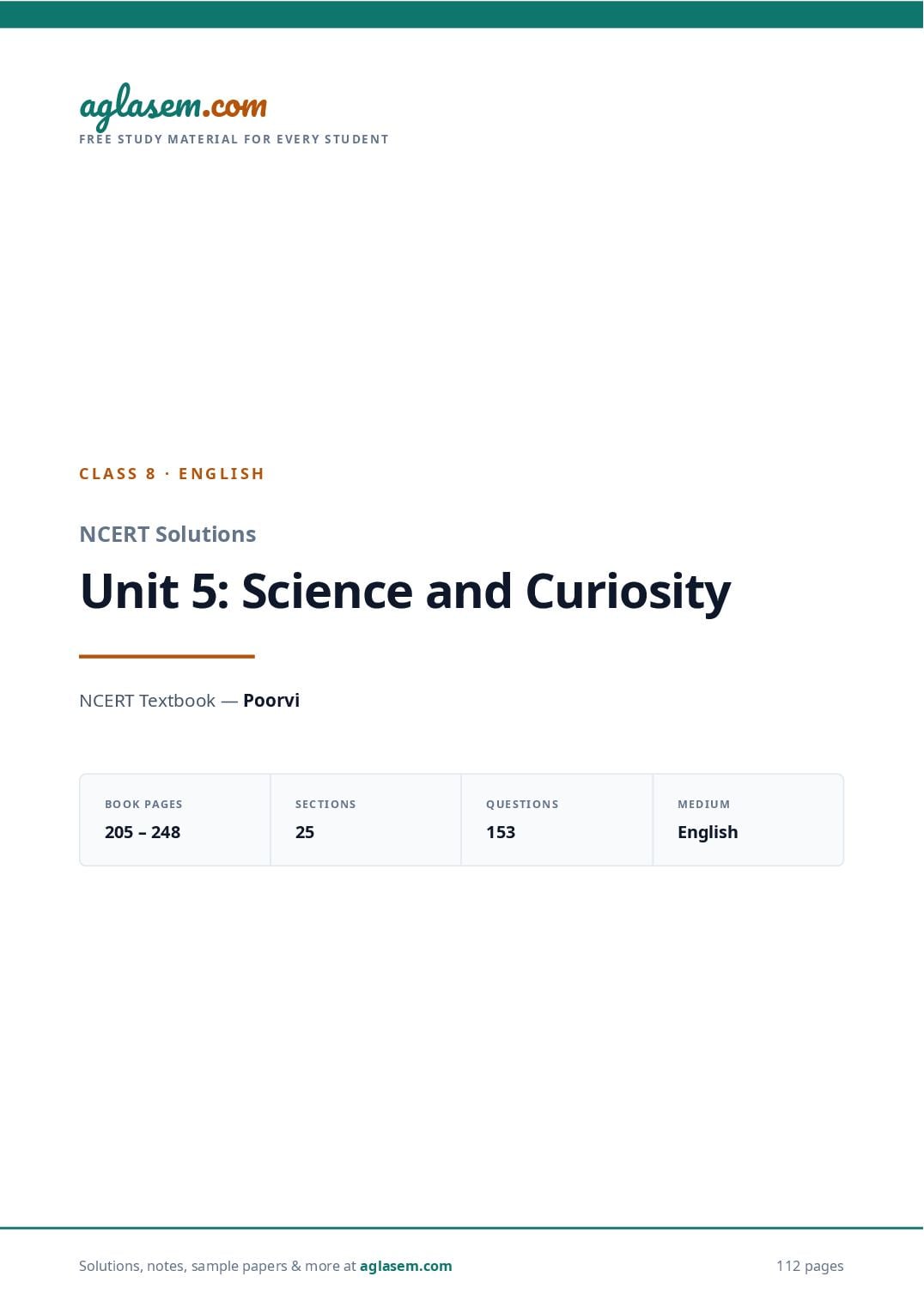
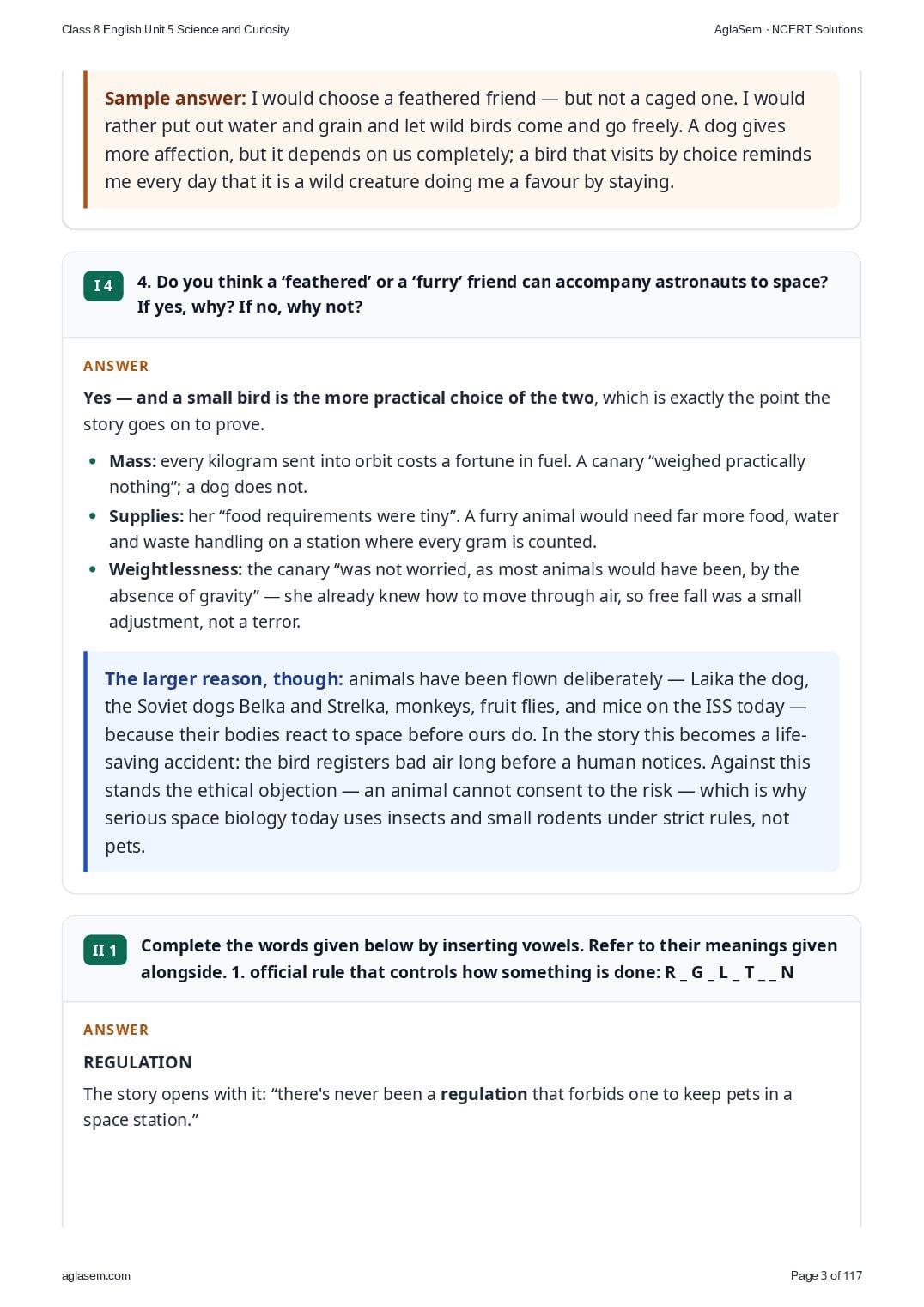
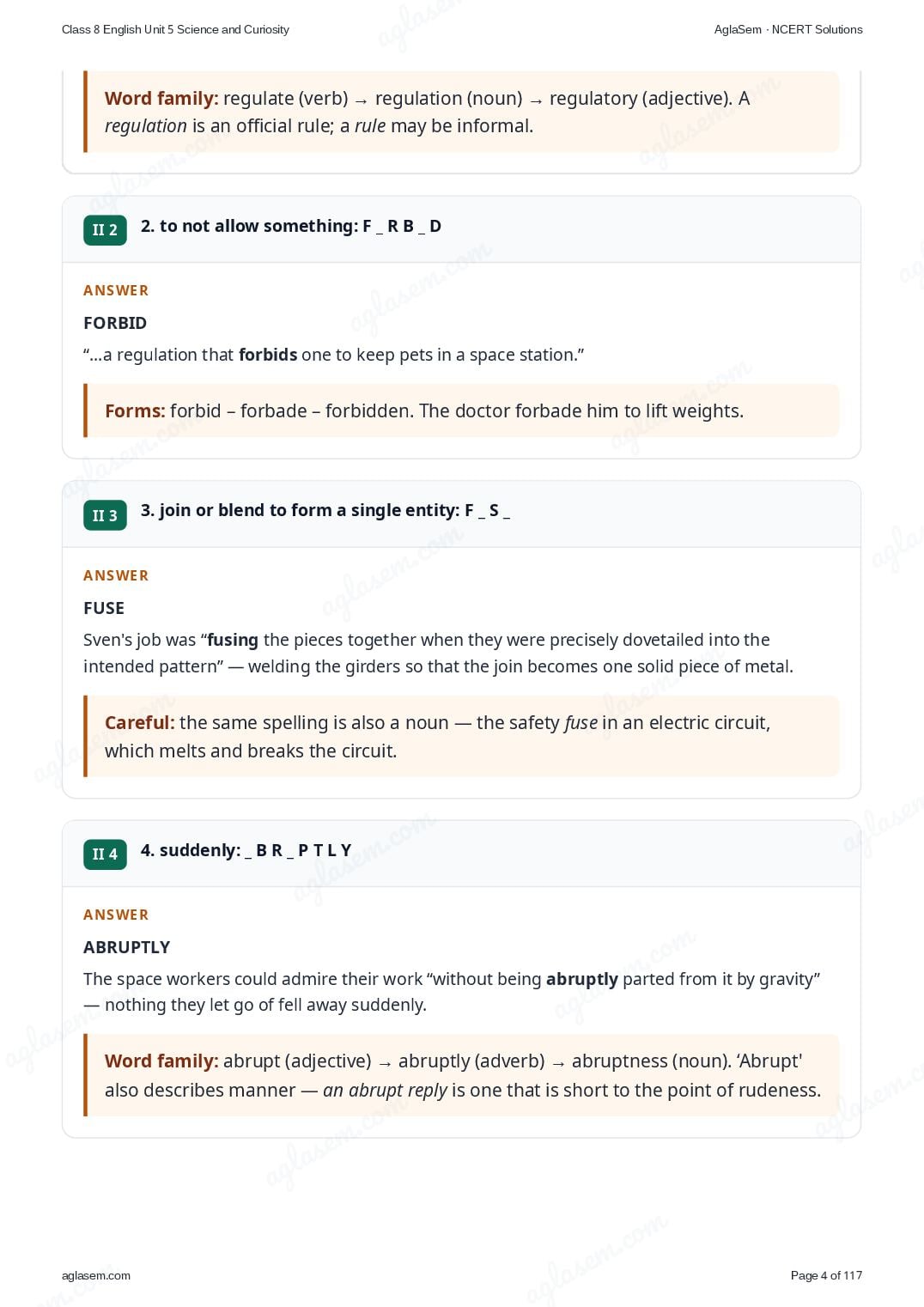
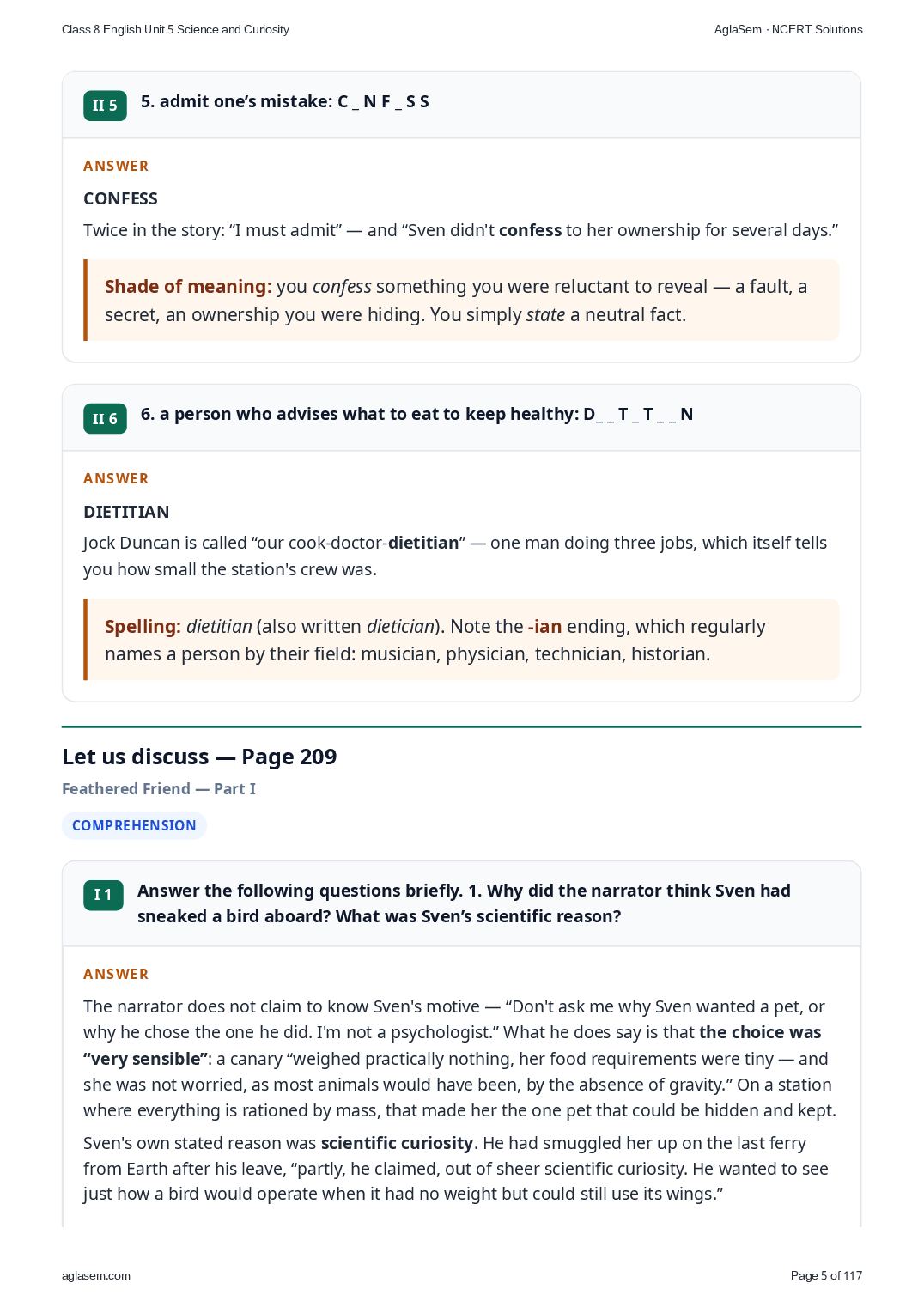
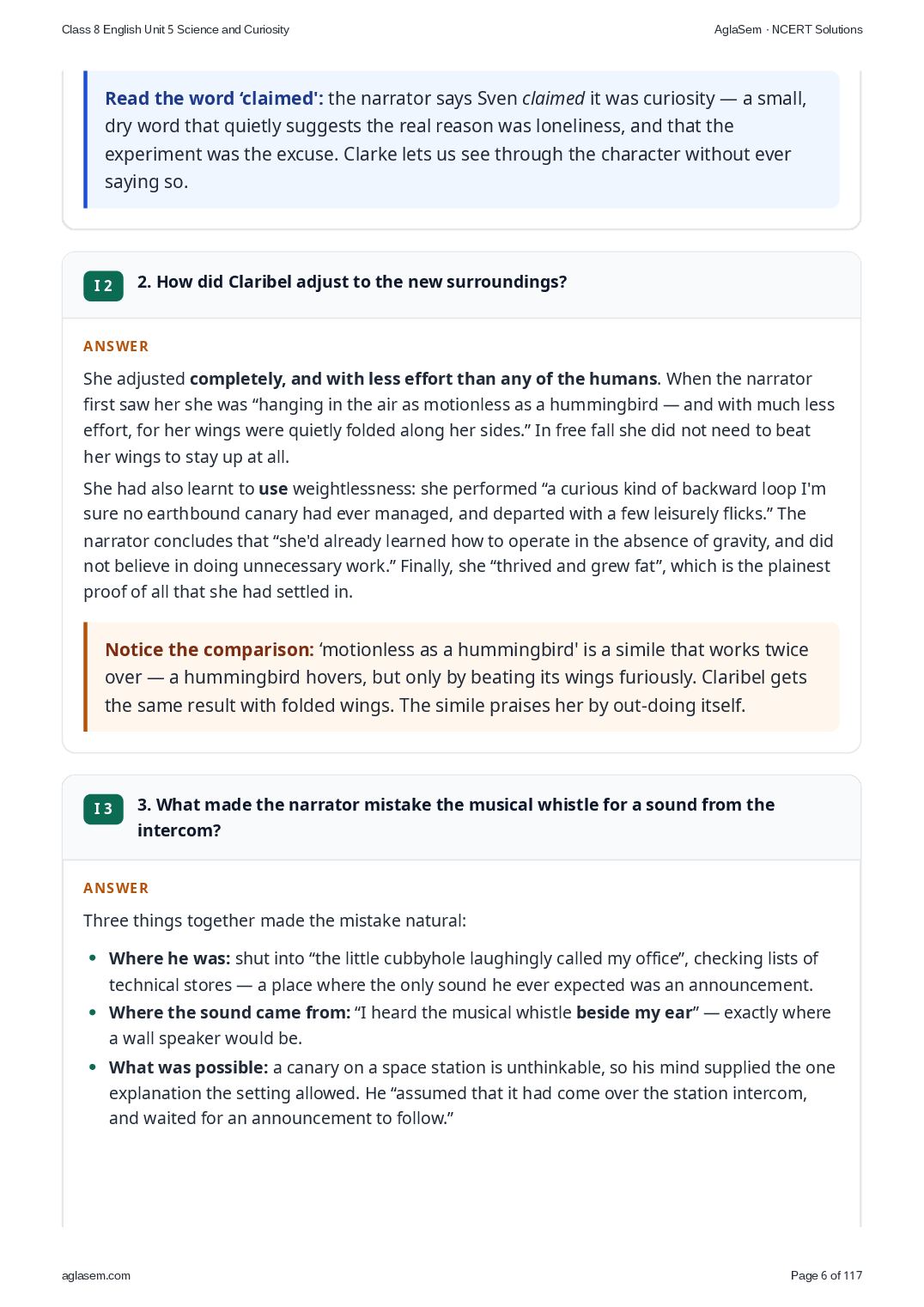
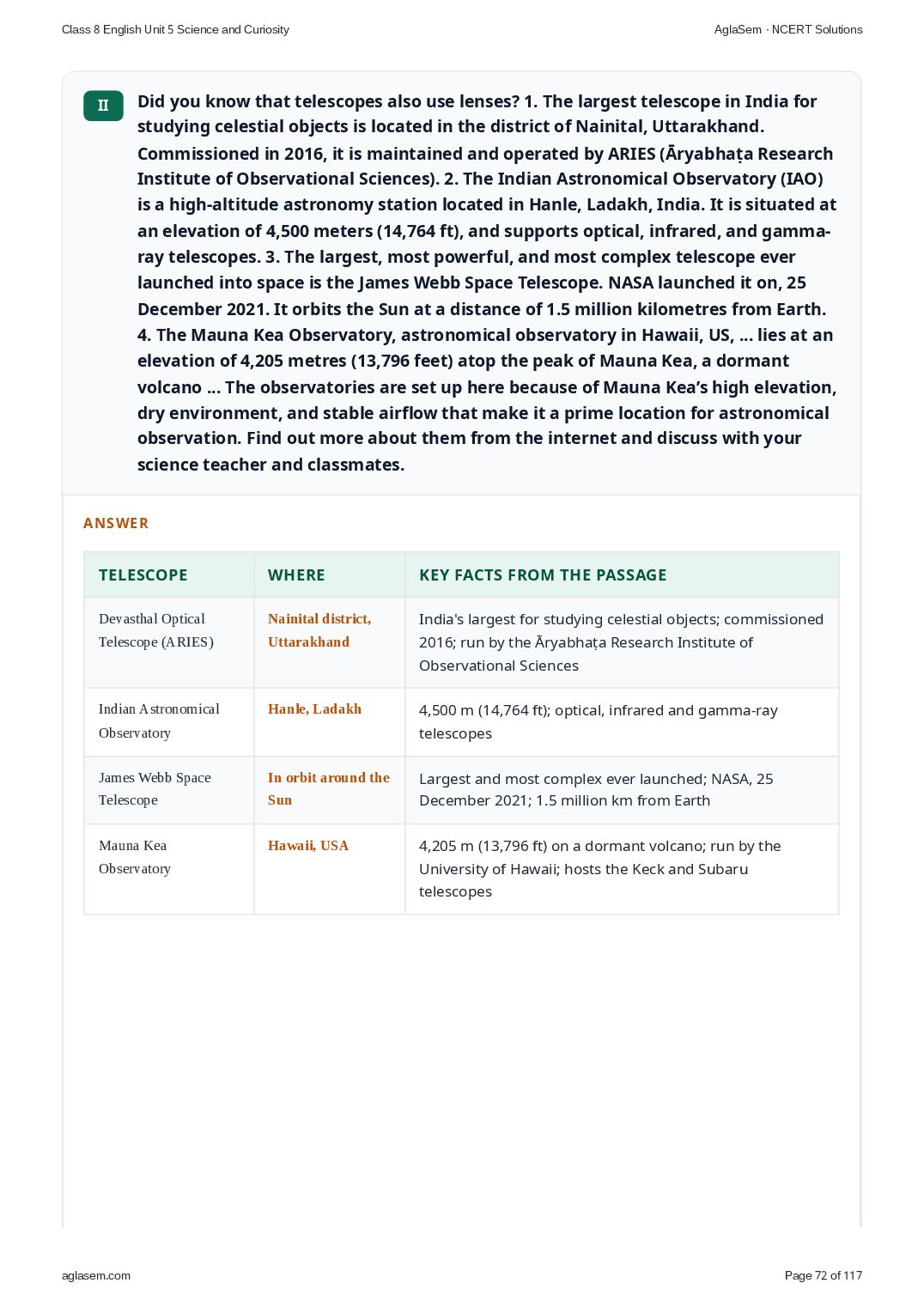
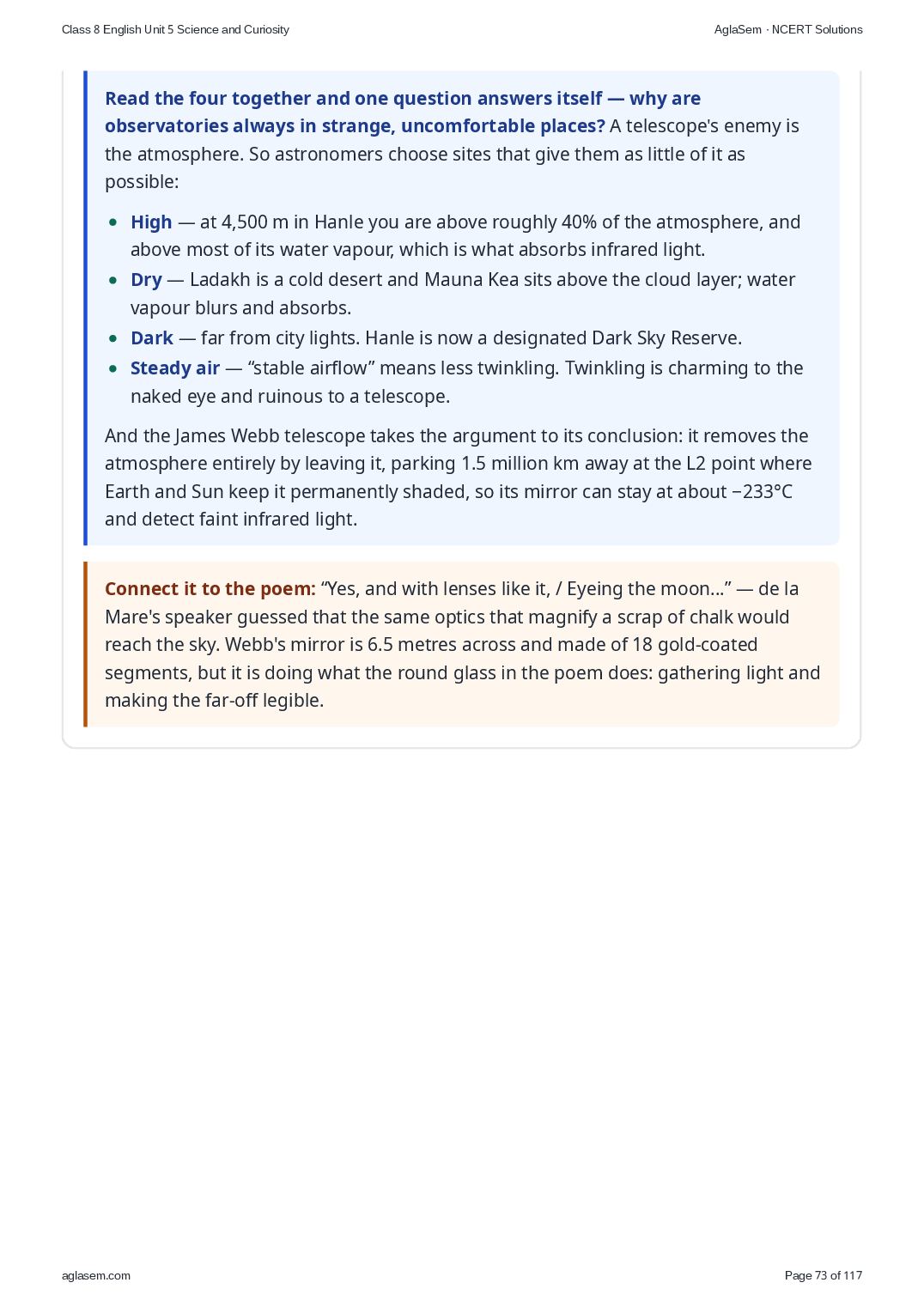
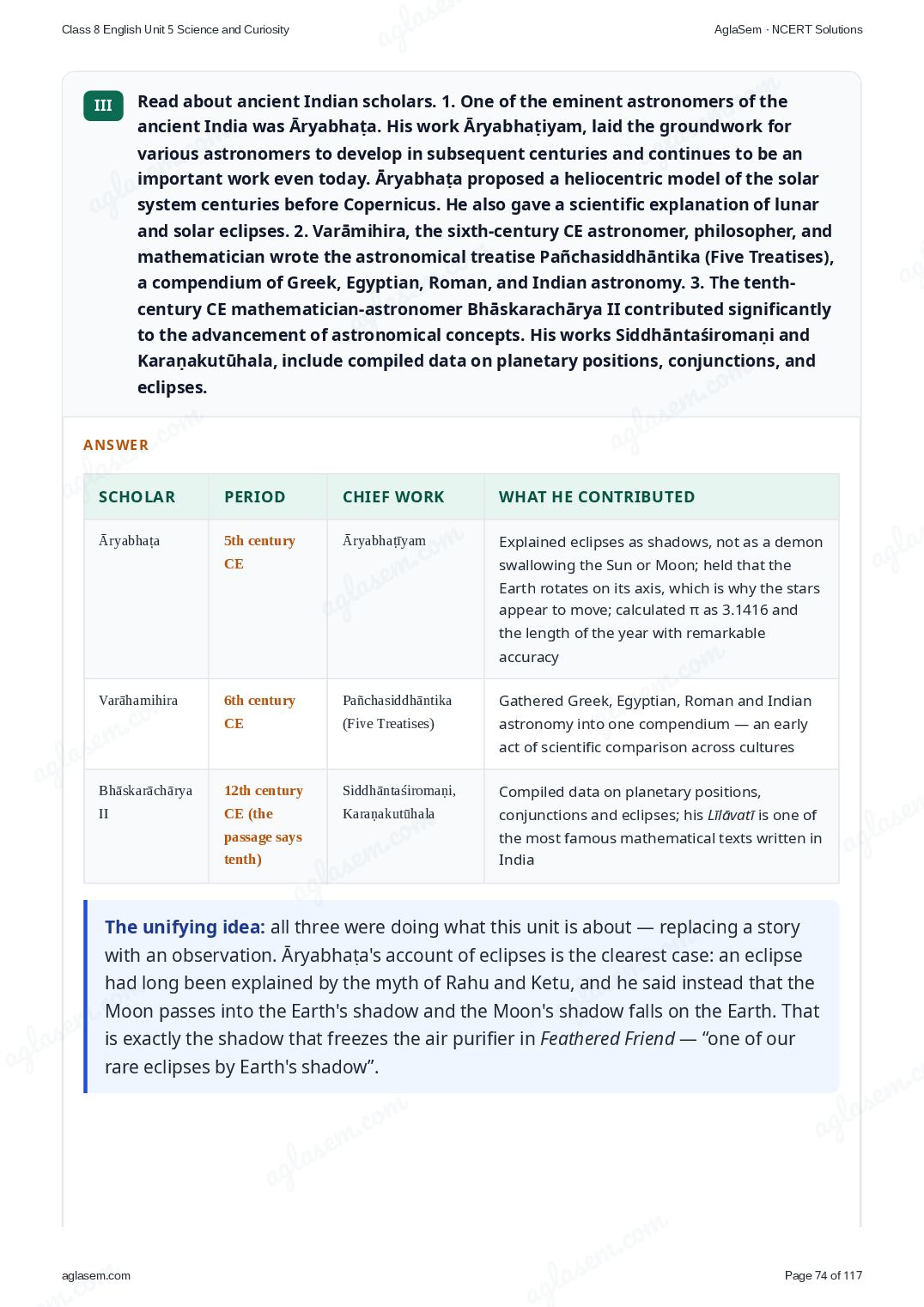
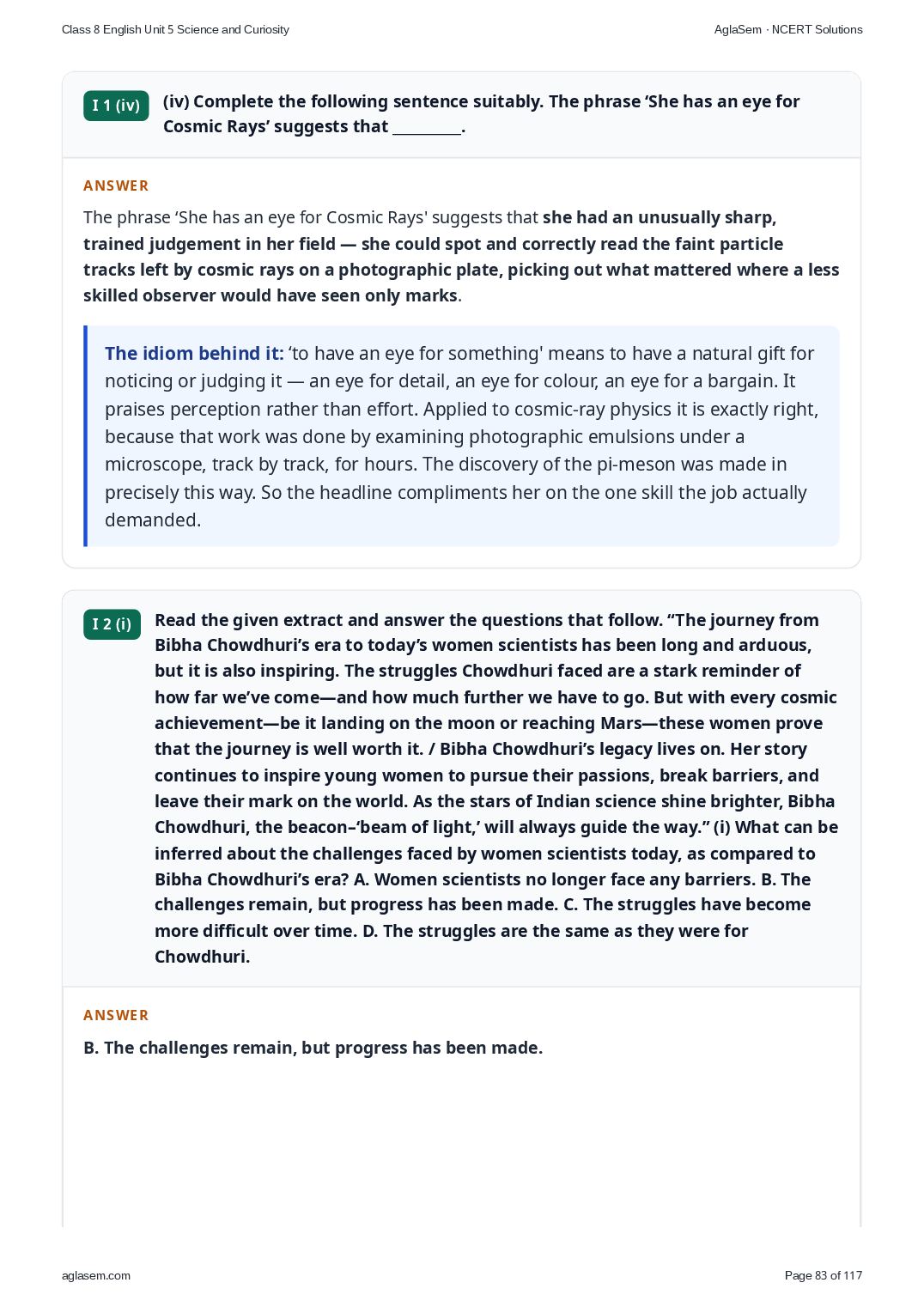
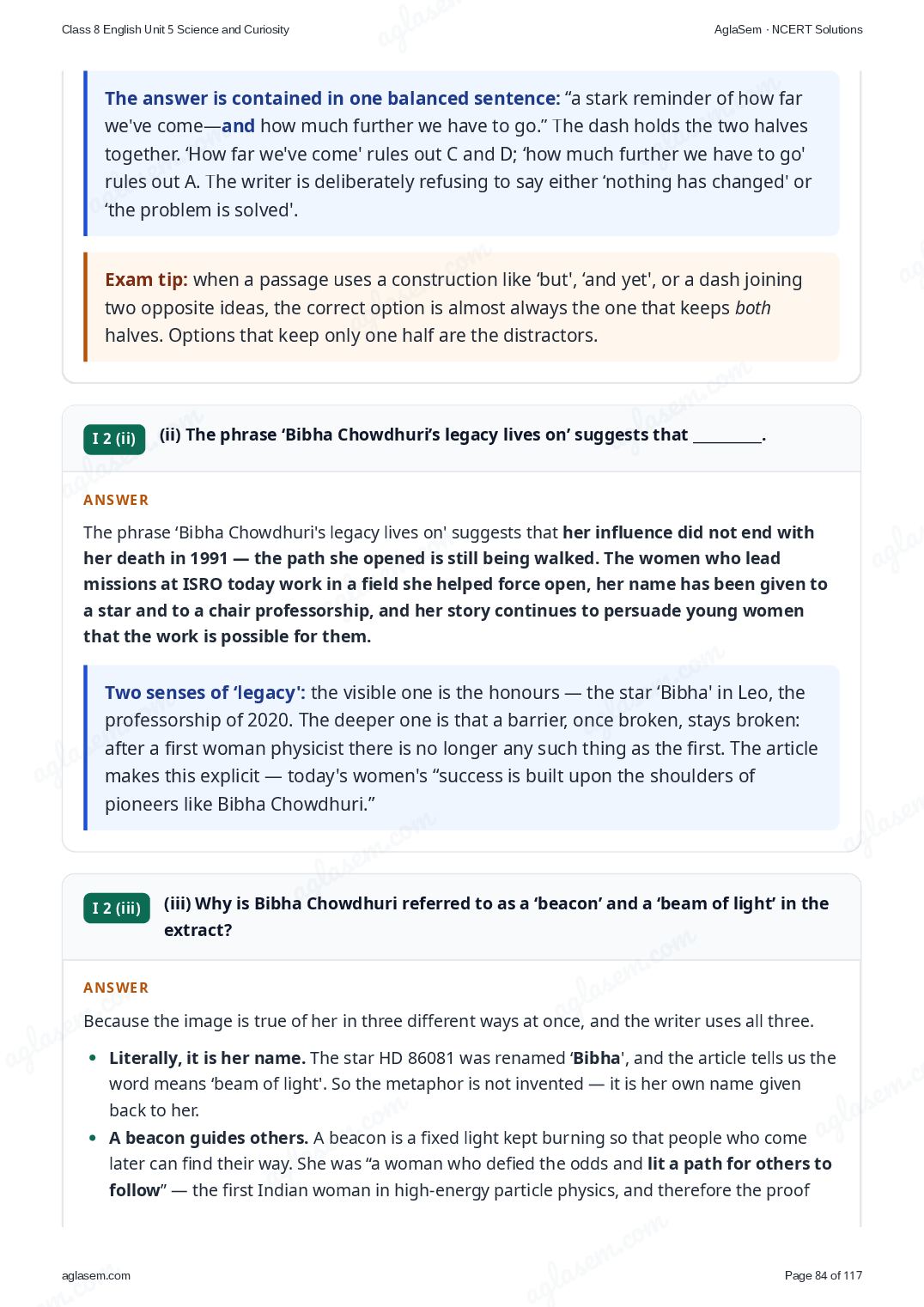
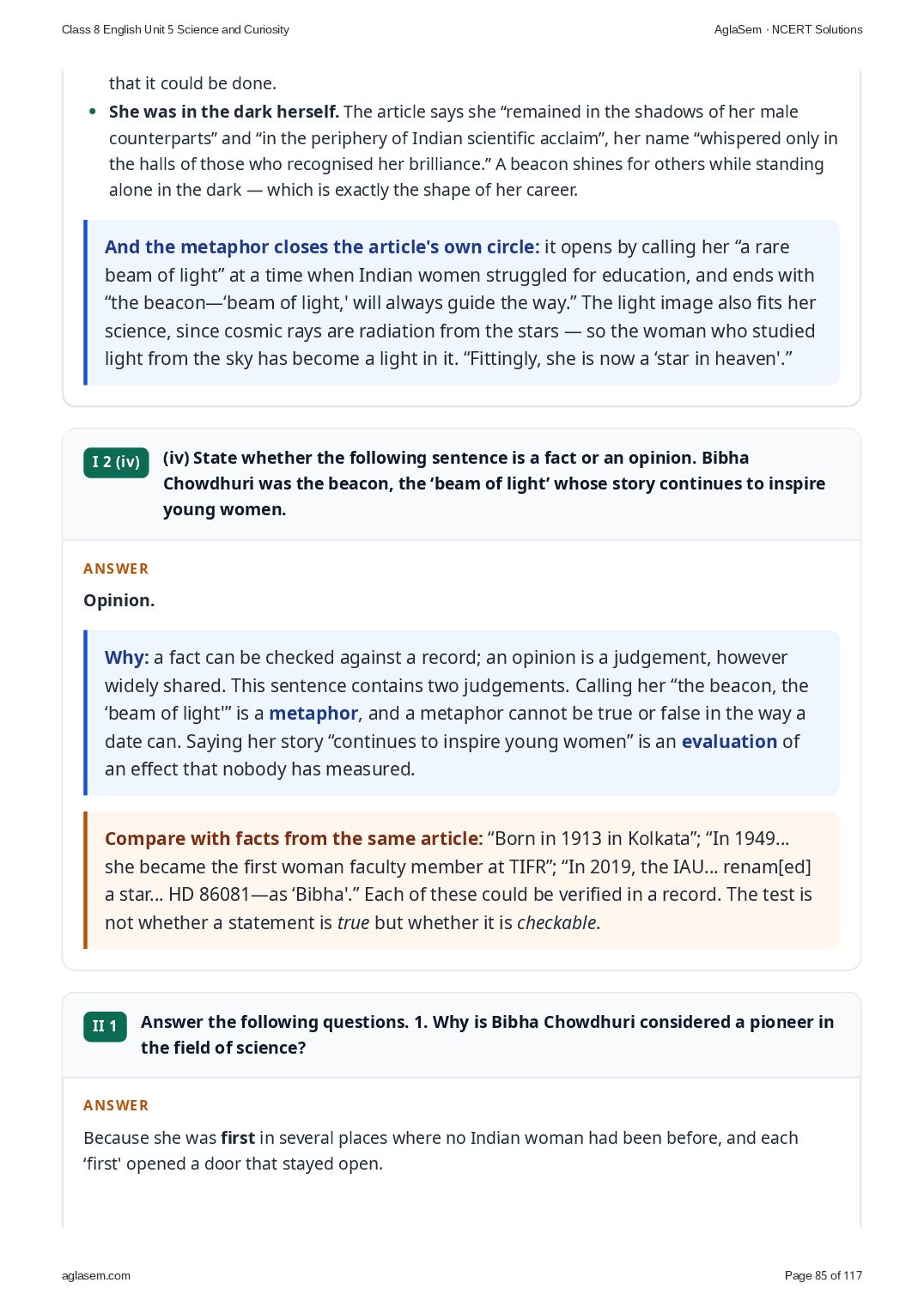
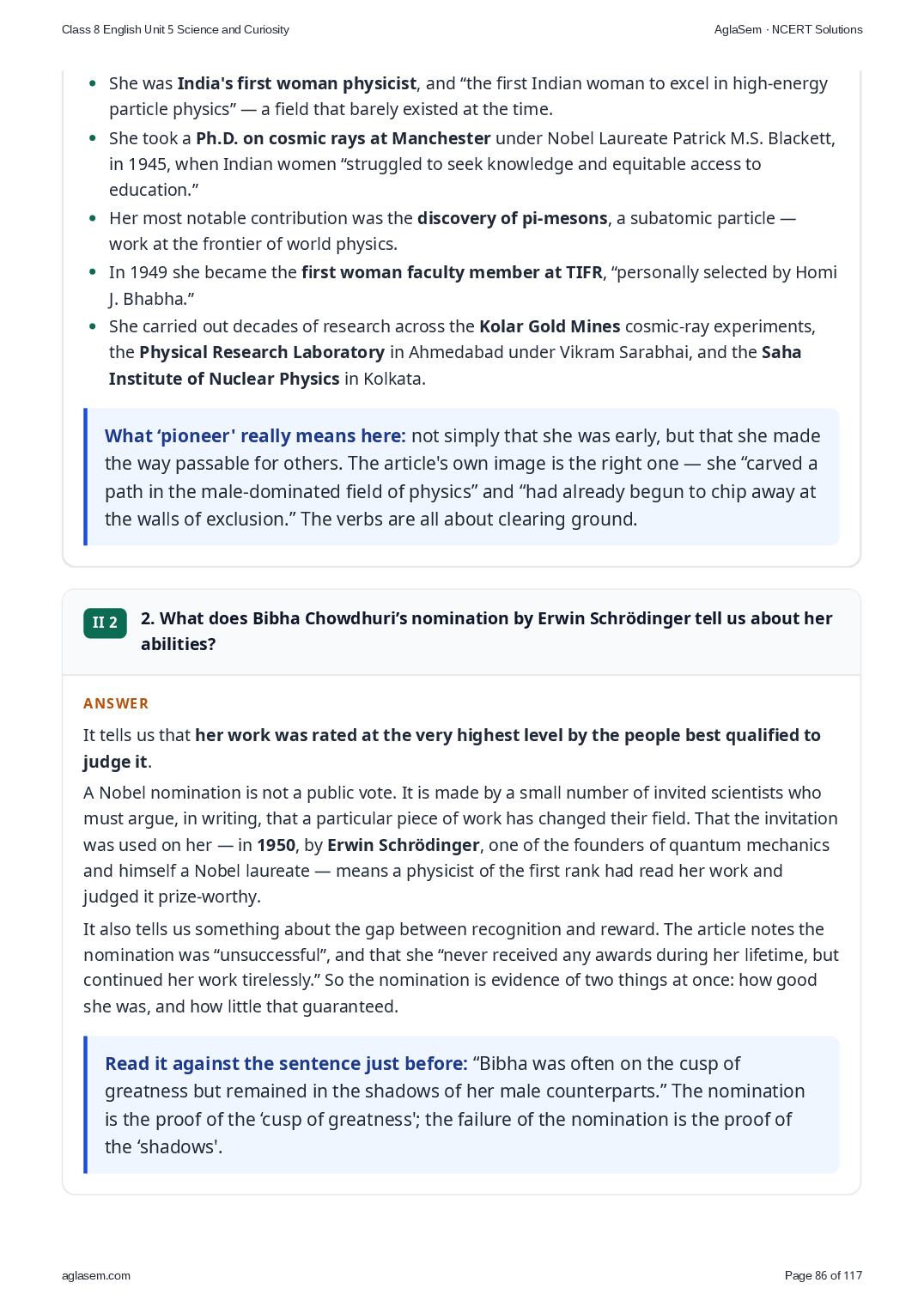
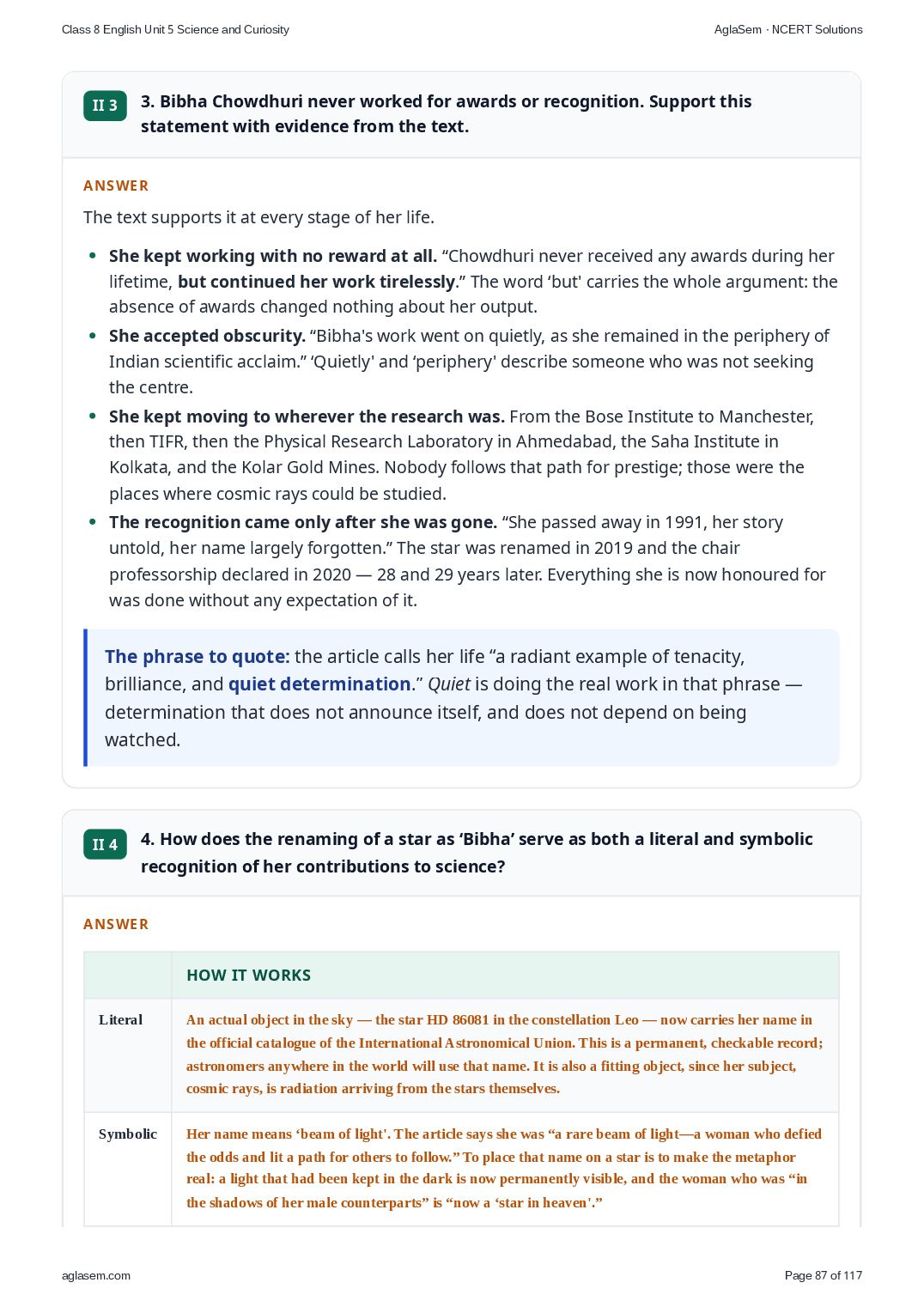
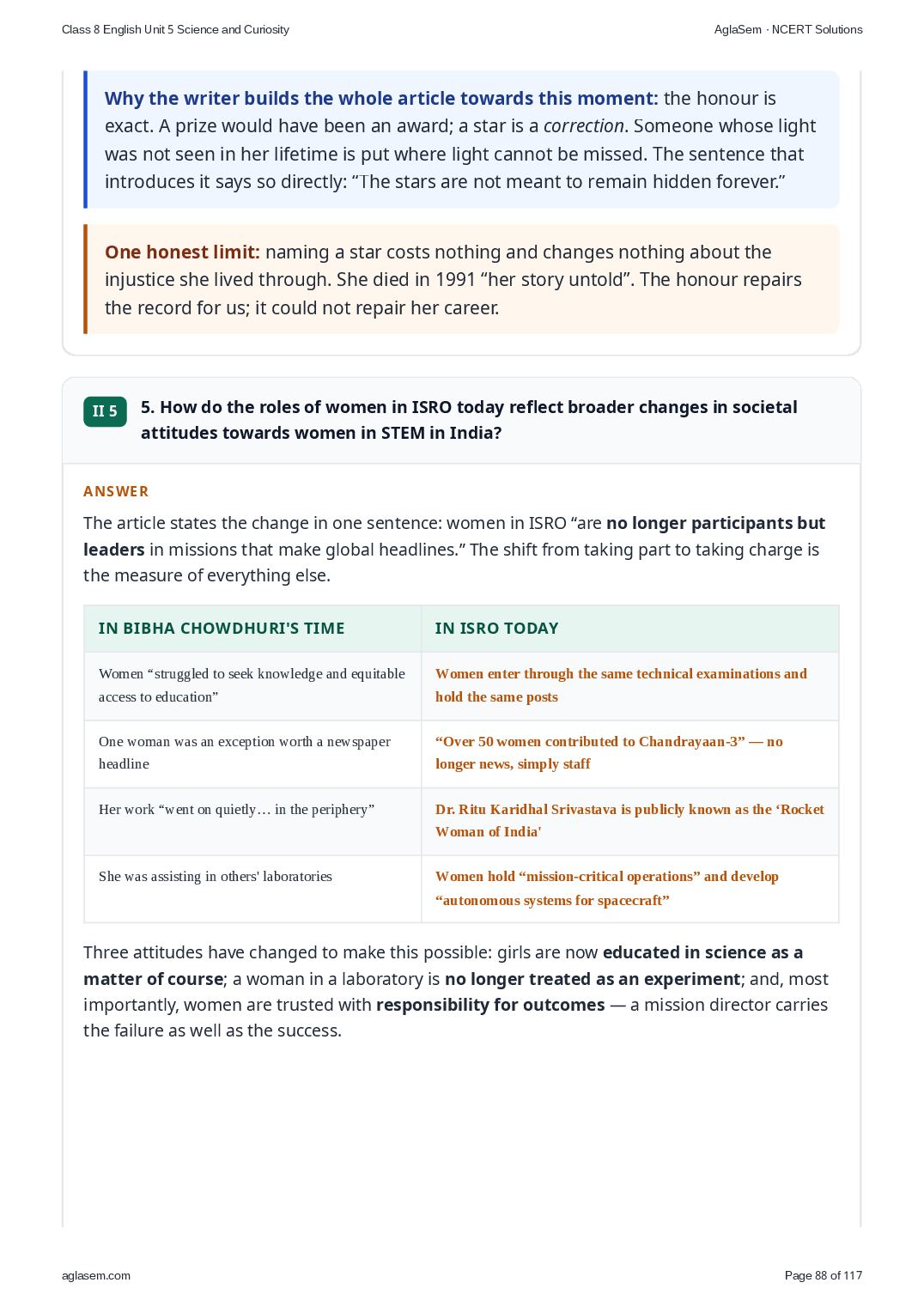
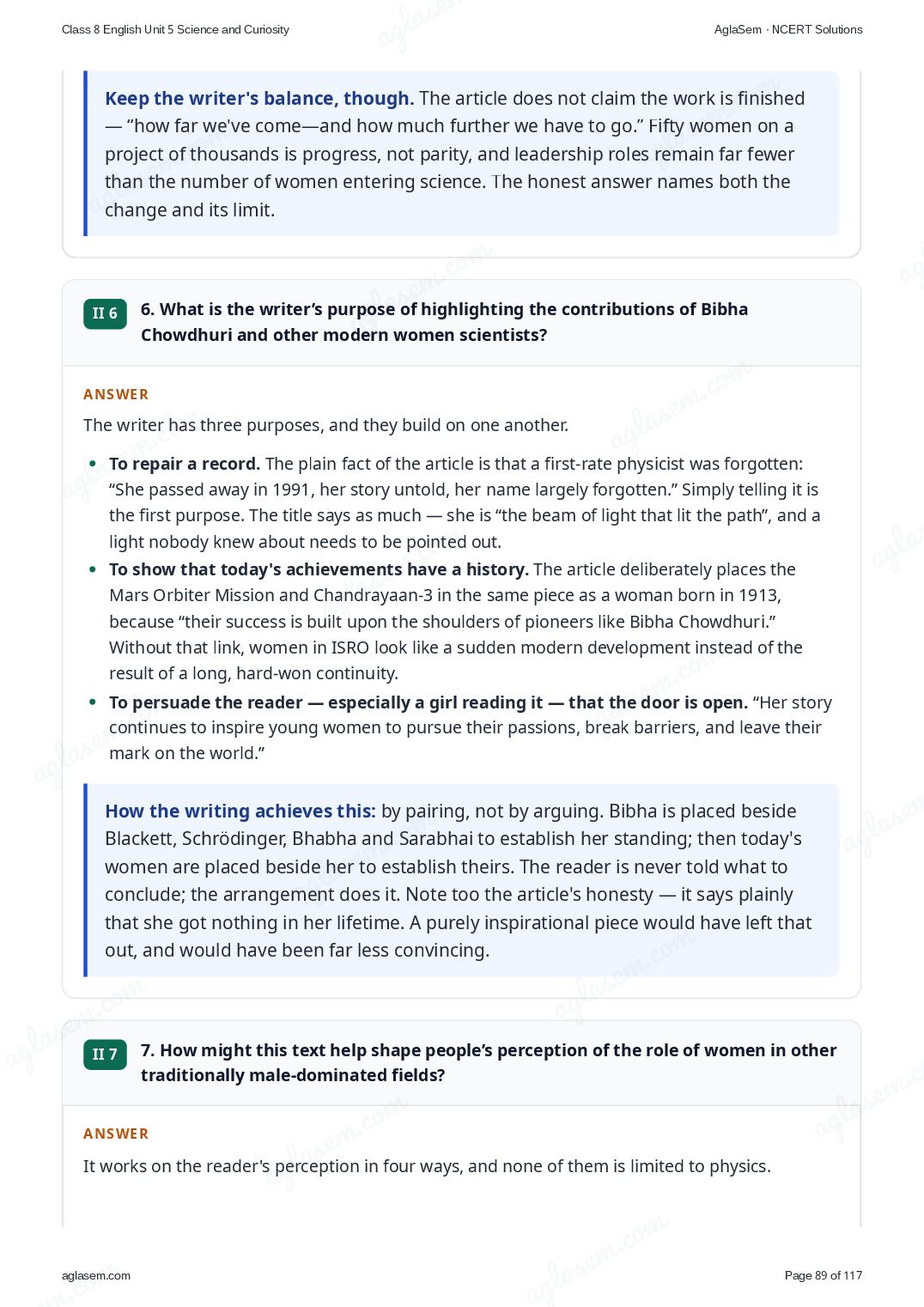
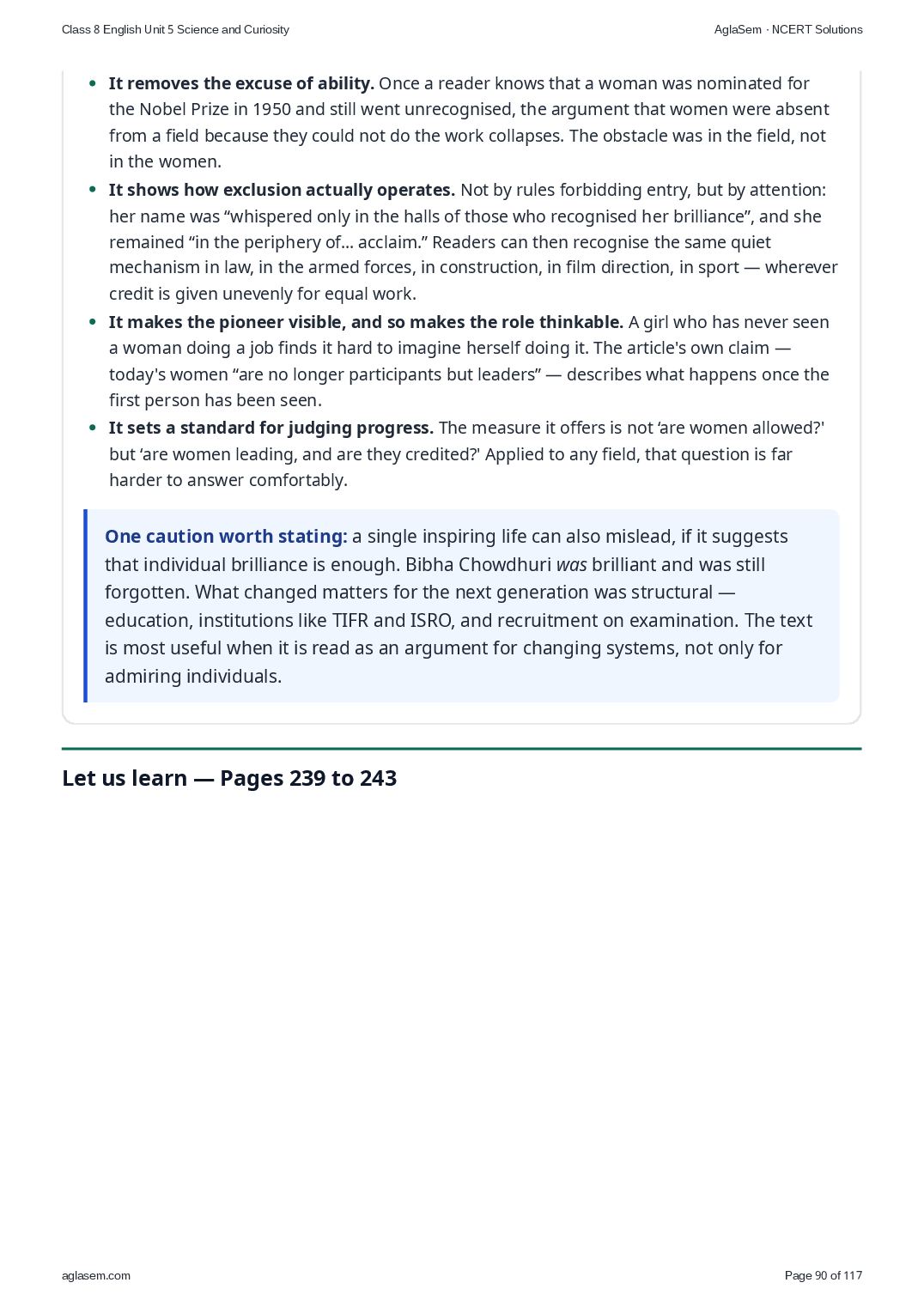

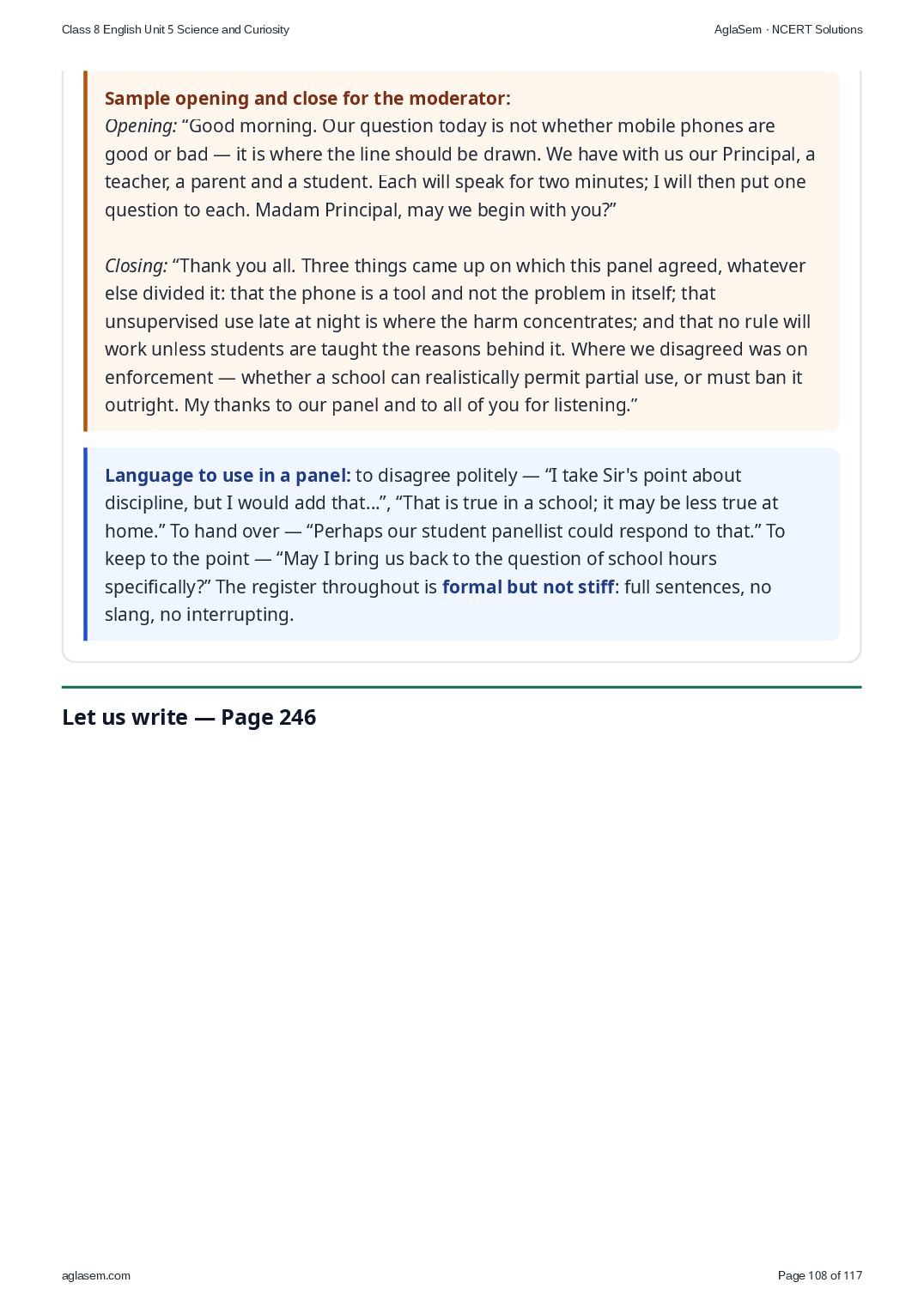
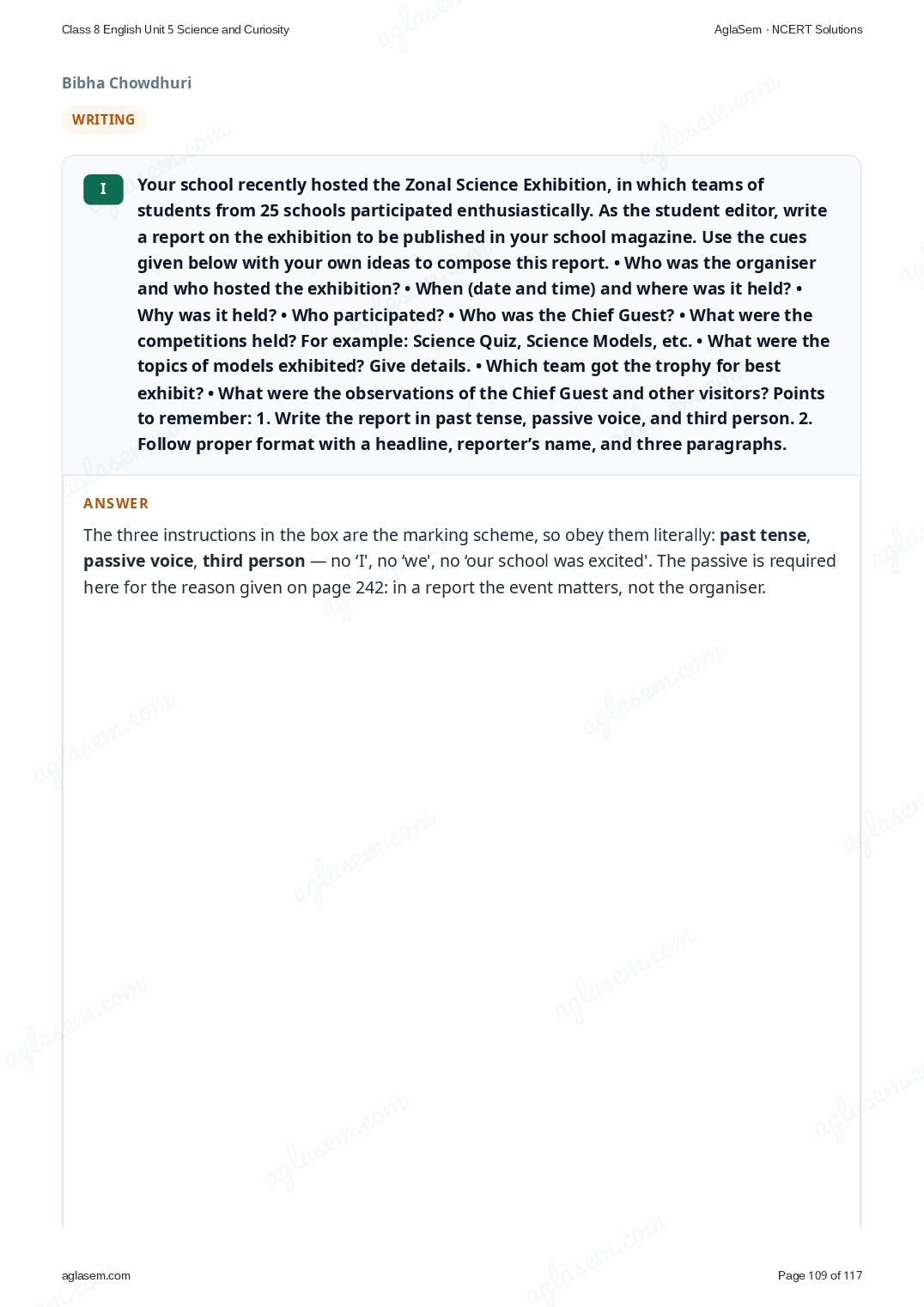
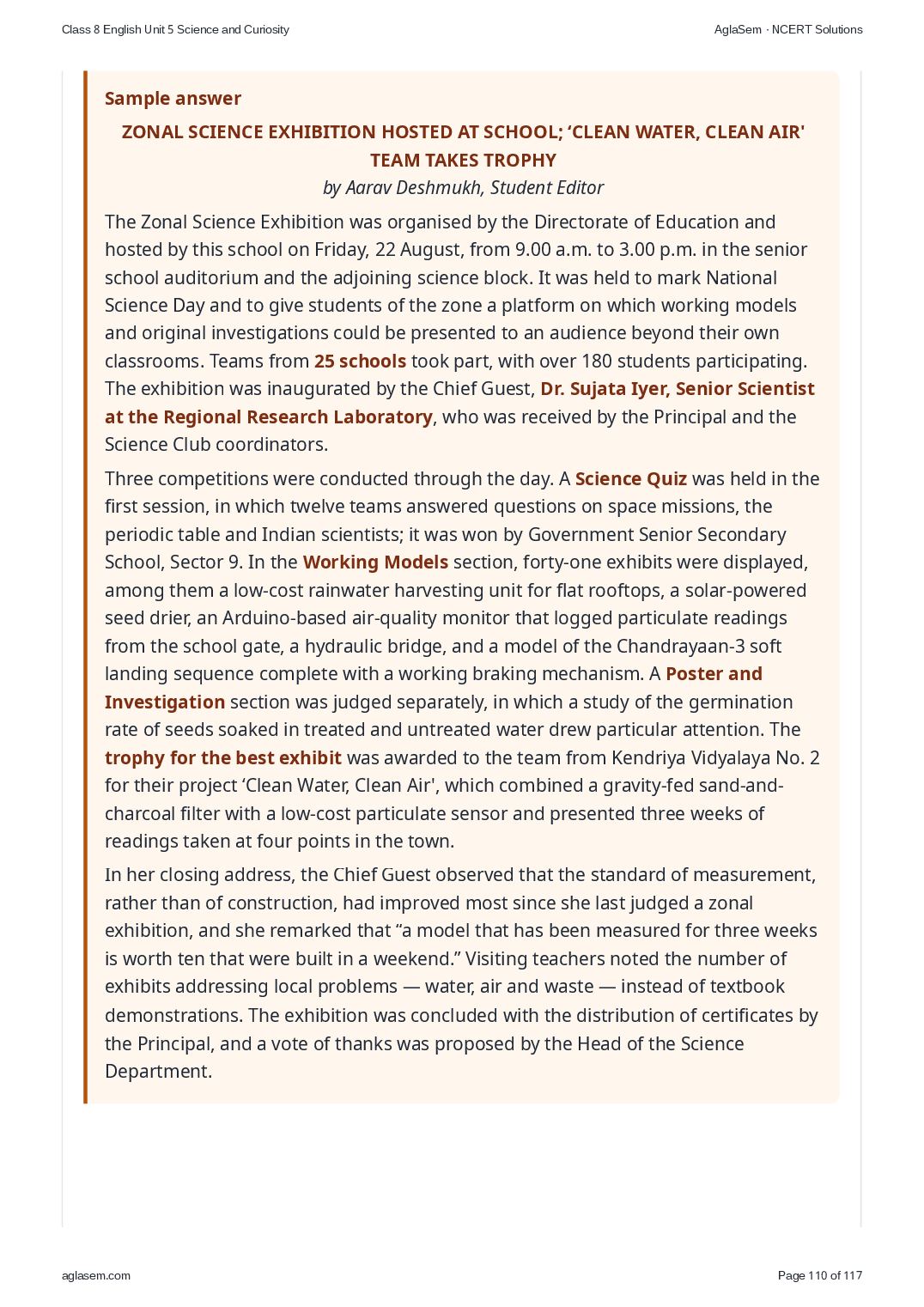
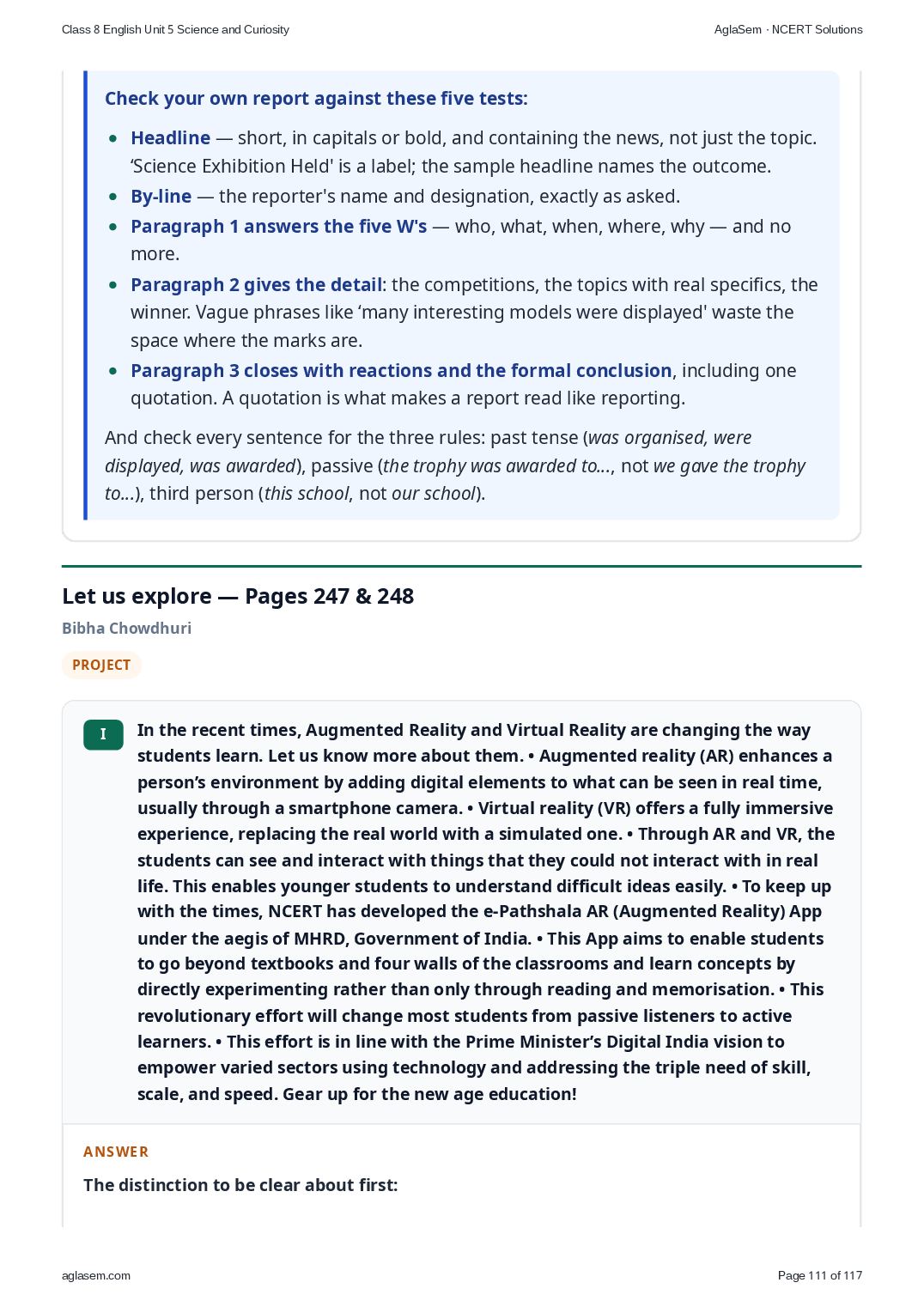
NCERT Solutions for Class 8 English Chapter 5 PDF Download
You can read the NCERT Solutions for Class 8 English Chapter 5 online above, or download the complete question-answer PDF to study Science and Curiosity offline at any time.
NCERT Solutions for Class 8 English Chapter 5 PDF Download Link – Click Here to Download Solutions PDF
Questions Covered in This Chapter
Key questions solved in this chapter include:
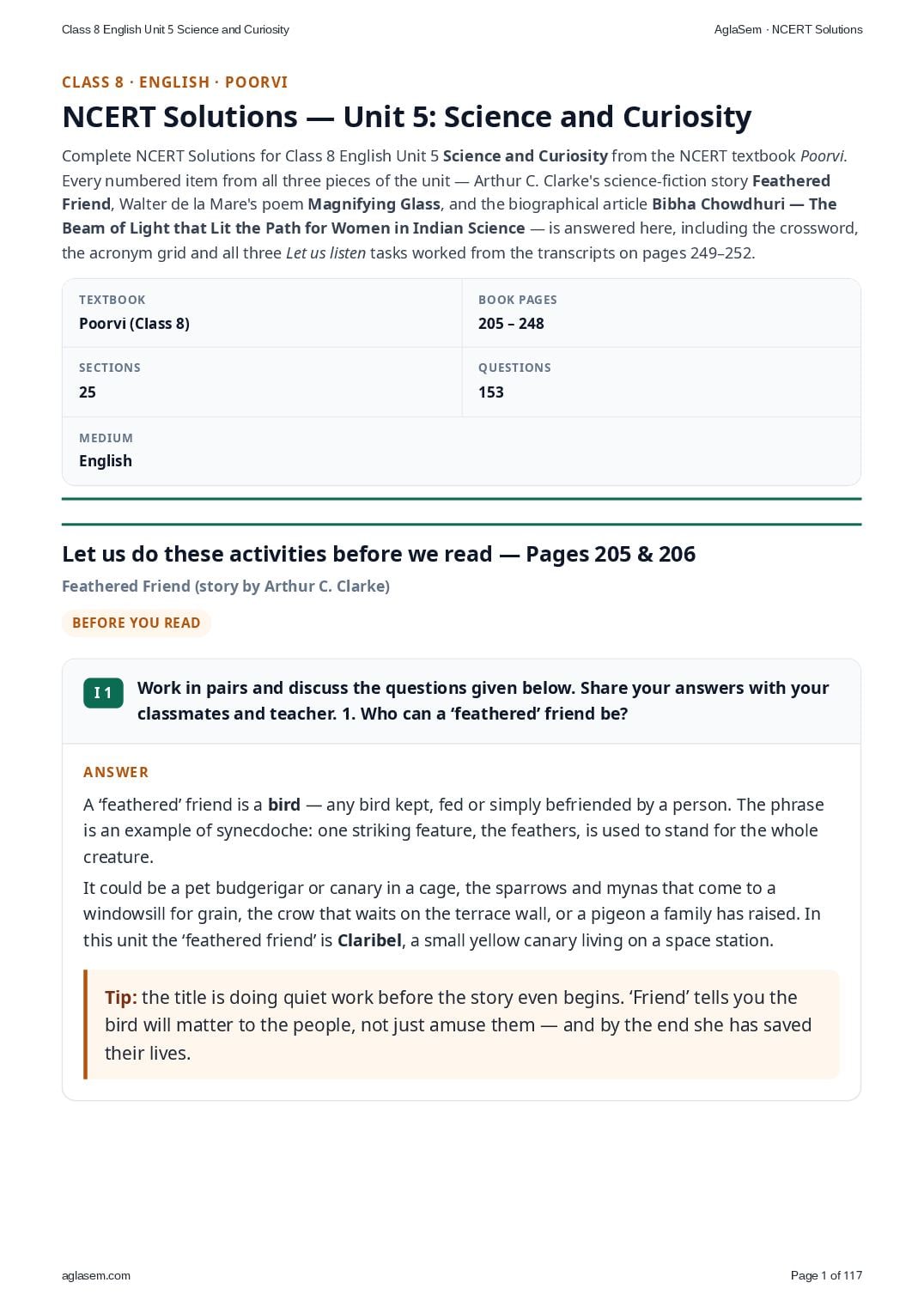
- Work in pairs and discuss the questions given below. Share your answers with your classmates and teacher. 1. Who can a ‘feathered’ friend be?
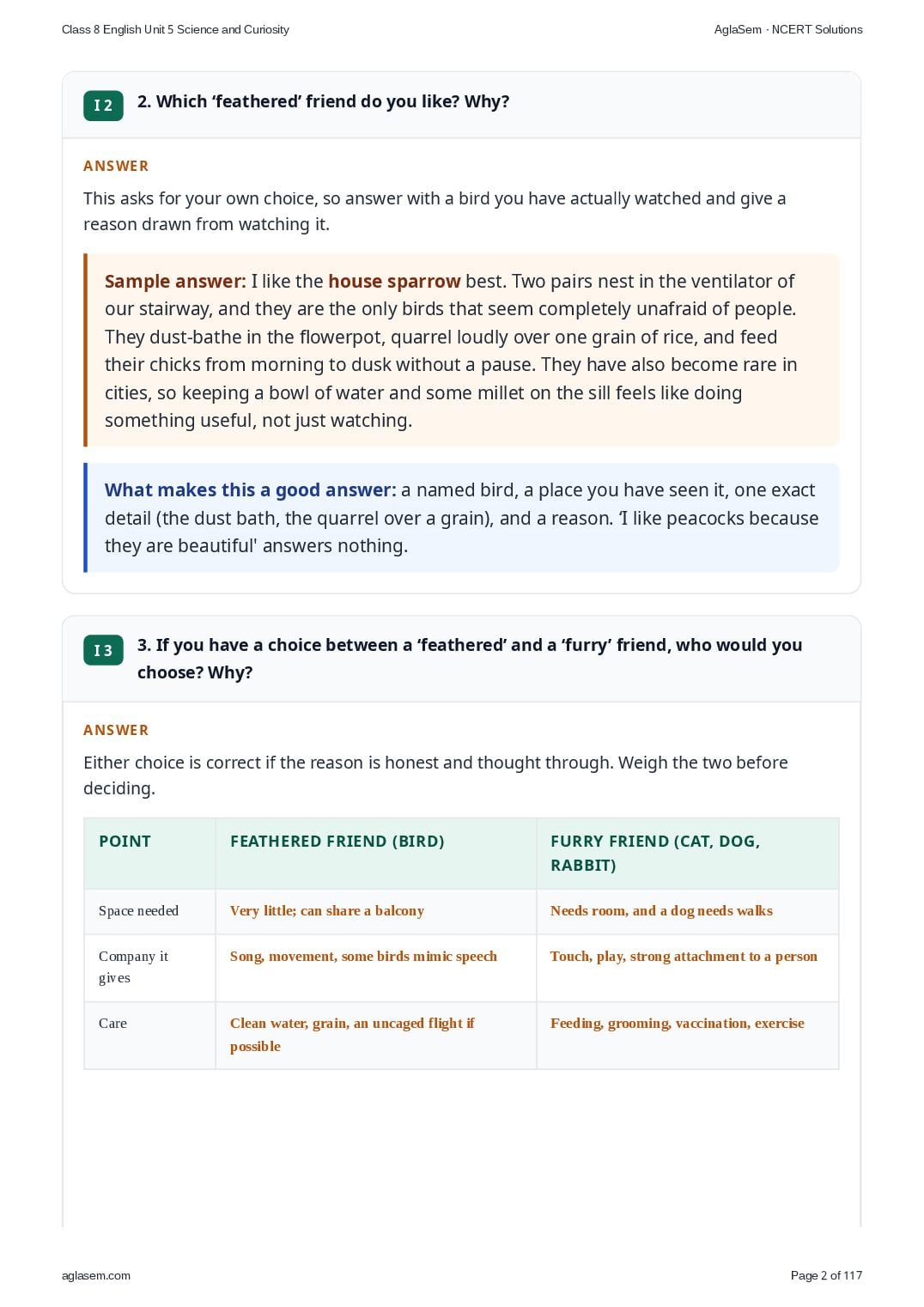
- 2. Which ‘feathered’ friend do you like? Why?
- 3. If you have a choice between a ‘feathered’ and a ‘furry’ friend, who would you choose? Why?
- 4. Do you think a ‘feathered’ or a ‘furry’ friend can accompany astronauts to space? If yes, why? If no, why not?
- Complete the words given below by inserting vowels. Refer to their meanings given alongside. 1. official rule that controls how something is done: R _ G _ L _ T _ _ N
- 2. to not allow something: F _ R B _ D
- 3. join or blend to form a single entity: F _ S _
- 4. suddenly: _ B R _ P T L Y
- 5. admit one’s mistake: C _ N F _ S S
- 6. a person who advises what to eat to keep healthy: D_ _ T _ T _ _ N
- Answer the following questions briefly. 1. Why did the narrator think Sven had sneaked a bird aboard? What was Sven’s scientific reason?
- 2. How did Claribel adjust to the new surroundings?
- 3. What made the narrator mistake the musical whistle for a sound from the intercom?
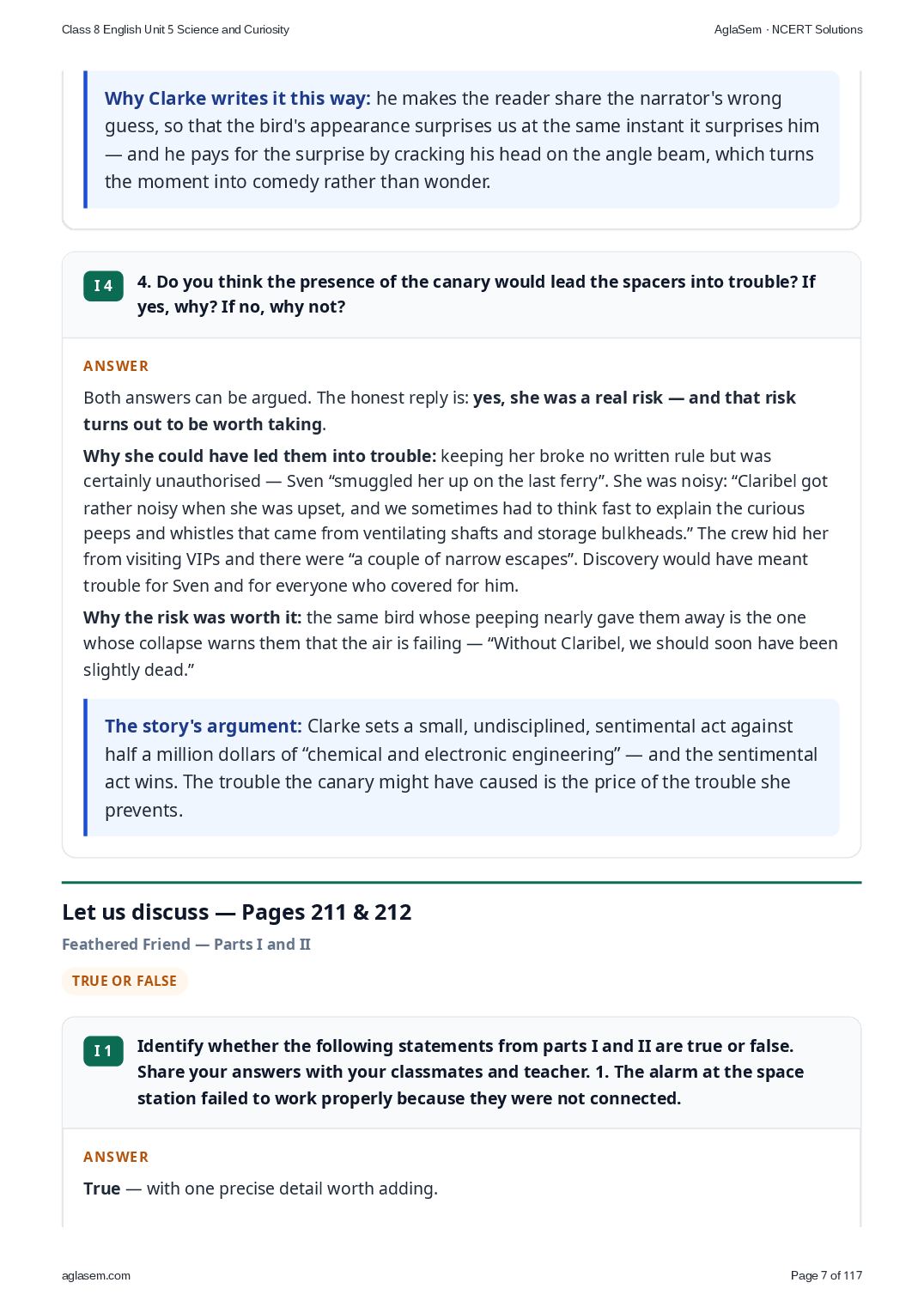
- 4. Do you think the presence of the canary would lead the spacers into trouble? If yes, why? If no, why not?
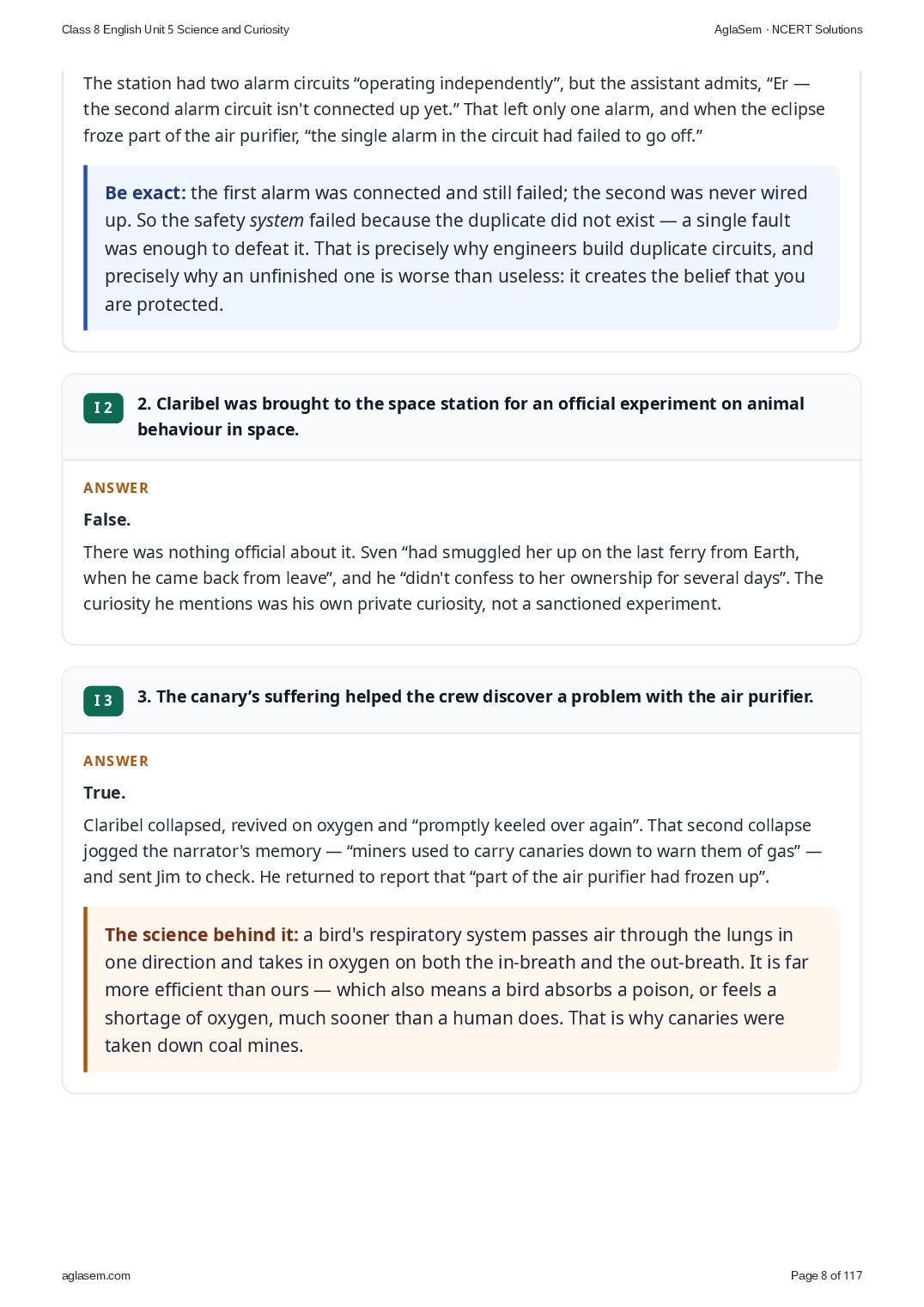
- Identify whether the following statements from parts I and II are true or false. Share your answers with your classmates and teacher. 1. The alarm at the space station failed to work properly because they were not connected.
- 2. Claribel was brought to the space station for an official experiment on animal behaviour in space.
- 3. The canary’s suffering helped the crew discover a problem with the air purifier.
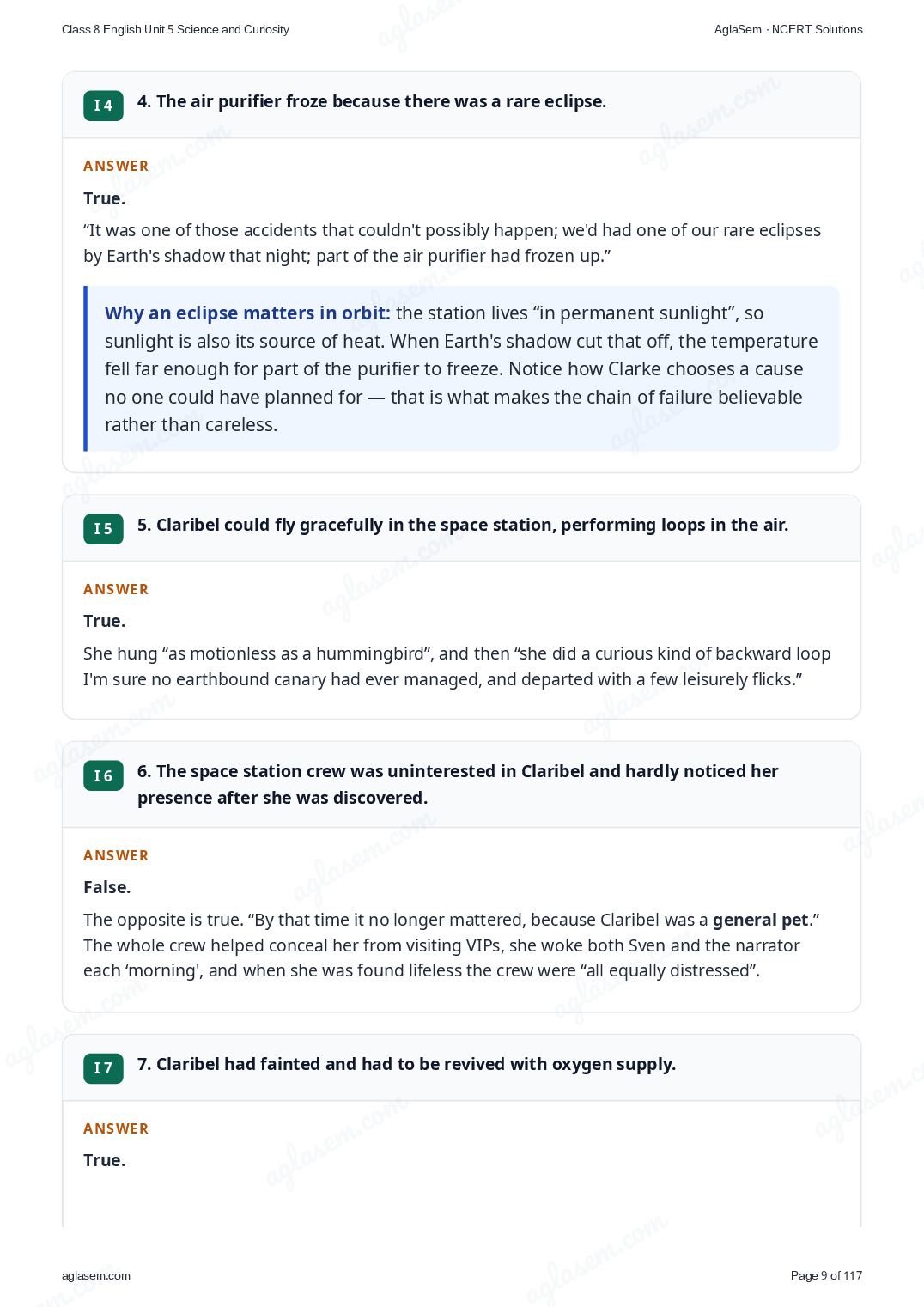
- 4. The air purifier froze because there was a rare eclipse.
- 5. Claribel could fly gracefully in the space station, performing loops in the air.
- 6. The space station crew was uninterested in Claribel and hardly noticed her presence after she was discovered.
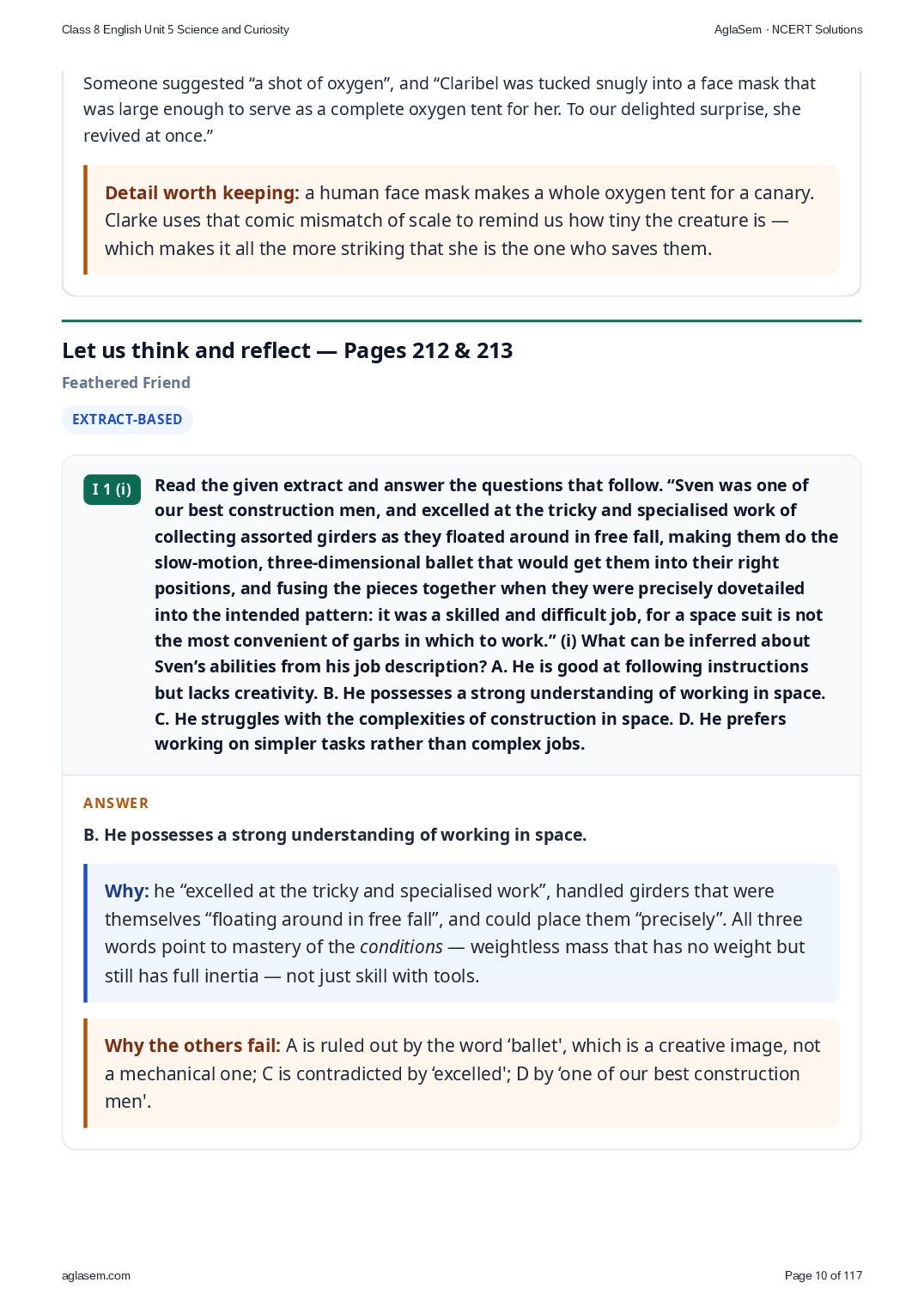
- 7. Claribel had fainted and had to be revived with oxygen supply.
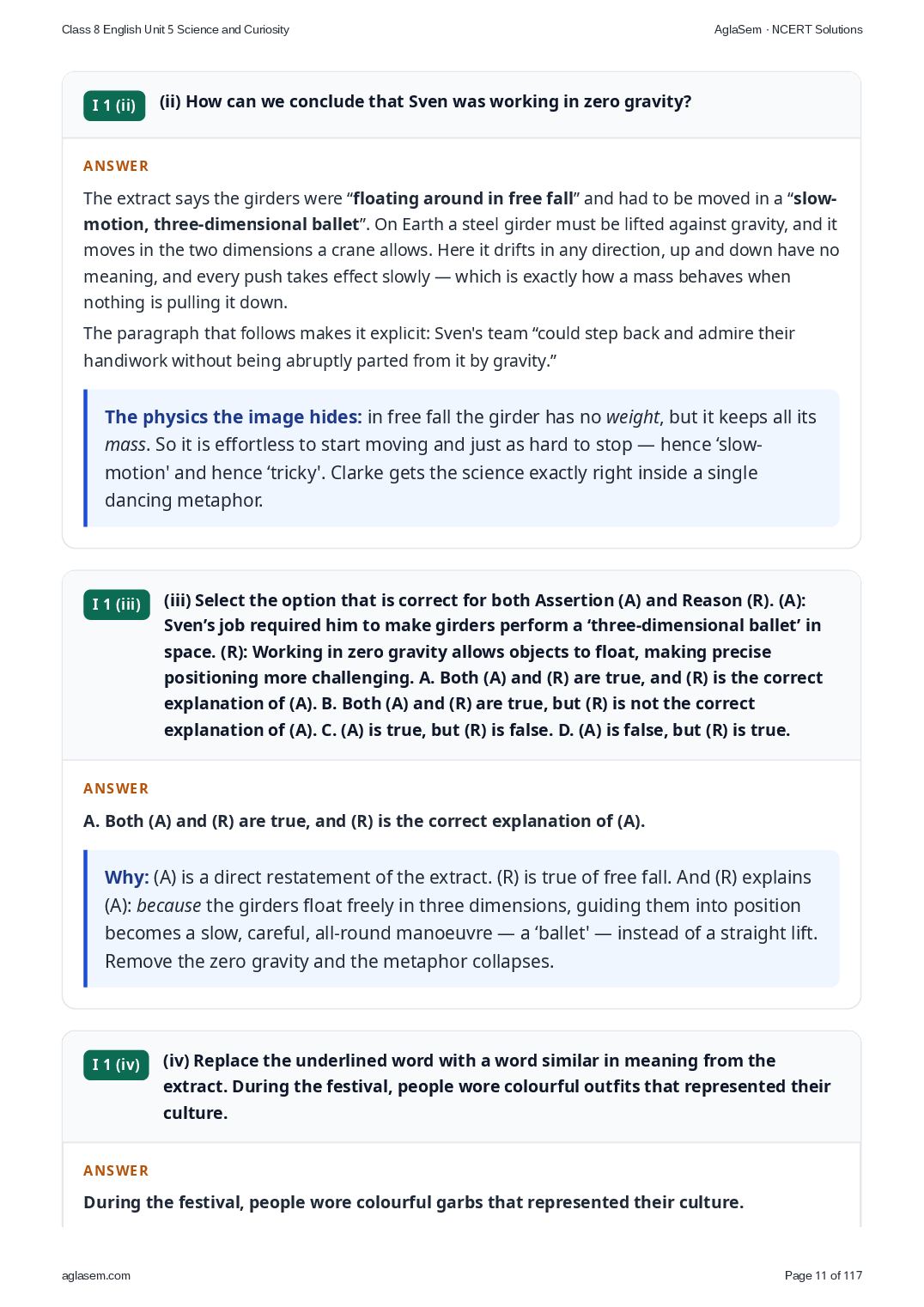
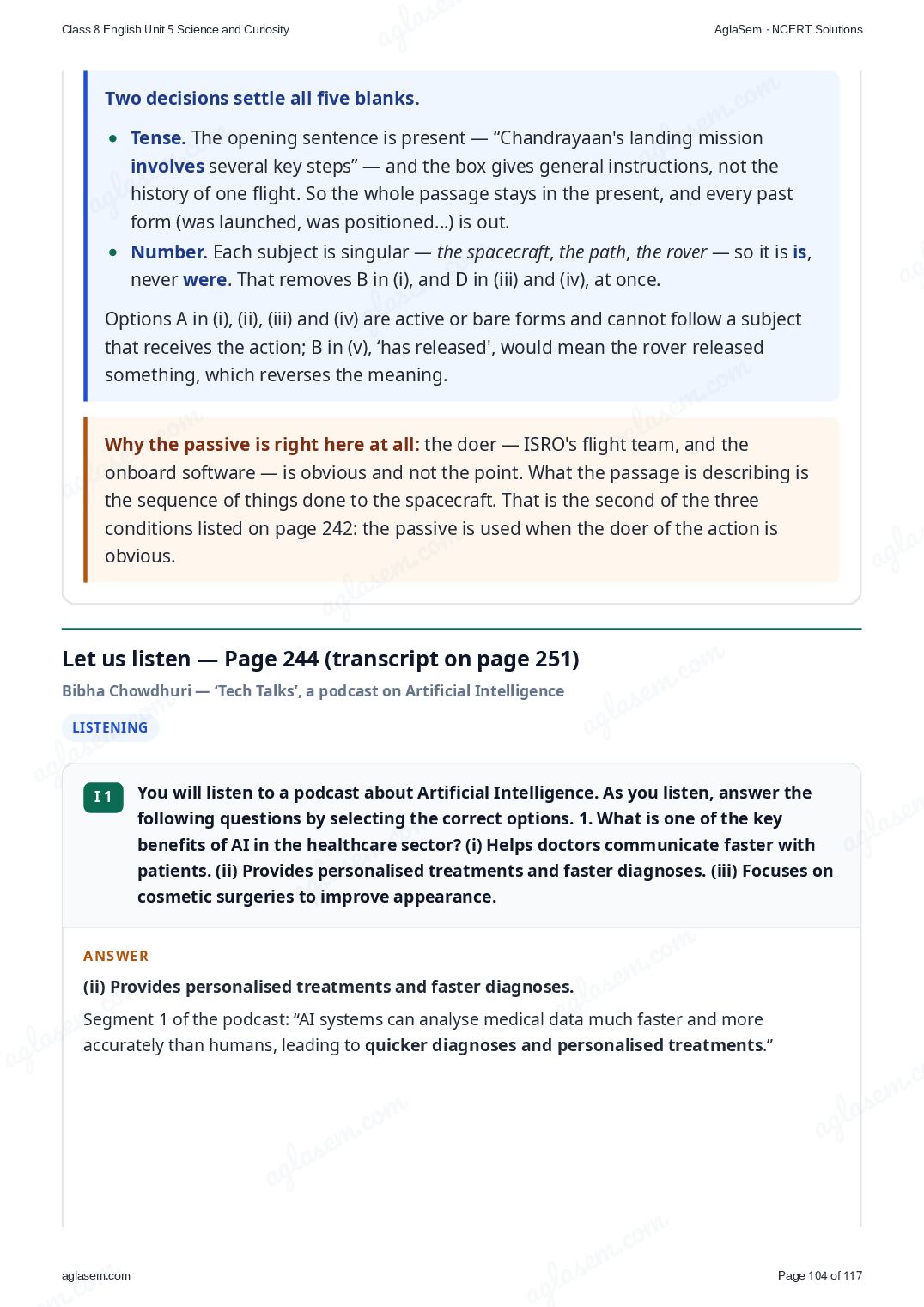
- Read the given extract and answer the questions that follow. “Sven was one of our best construction men, and excelled at the tricky and specialised work of collecting assorted girders as they floated around in free fall, making them do the slow-motion, three-dimensional ballet that would get them into their right positions, and fusing the pieces together when they were precisely dovetailed into the intended pattern: it was a skilled and difficult job, for a space suit is not the most convenient of garbs in which to work.” (i) What can be inferred about Sven’s abilities from his job description? A. He is good at following instructions but lacks creativity. B. He possesses a strong understanding of working in space. C. He struggles with the complexities of construction in space. D. He prefers working on simpler tasks rather than complex jobs.
- (ii) How can we conclude that Sven was working in zero gravity?
- (iii) Select the option that is correct for both Assertion (A) and Reason (R). (A): Sven’s job required him to make girders perform a ‘three-dimensional ballet’ in space. (R): Working in zero gravity allows objects to float, making precise positioning more challenging. A. Both (A) and (R) are true, and (R) is the correct explanation of (A). B. Both (A) and (R) are true, but (R) is not the correct explanation of (A). C. (A) is true, but (R) is false. D. (A) is false, but (R) is true.
- (iv) Replace the underlined word with a word similar in meaning from the extract. During the festival, people wore colourful outfits that represented their culture.
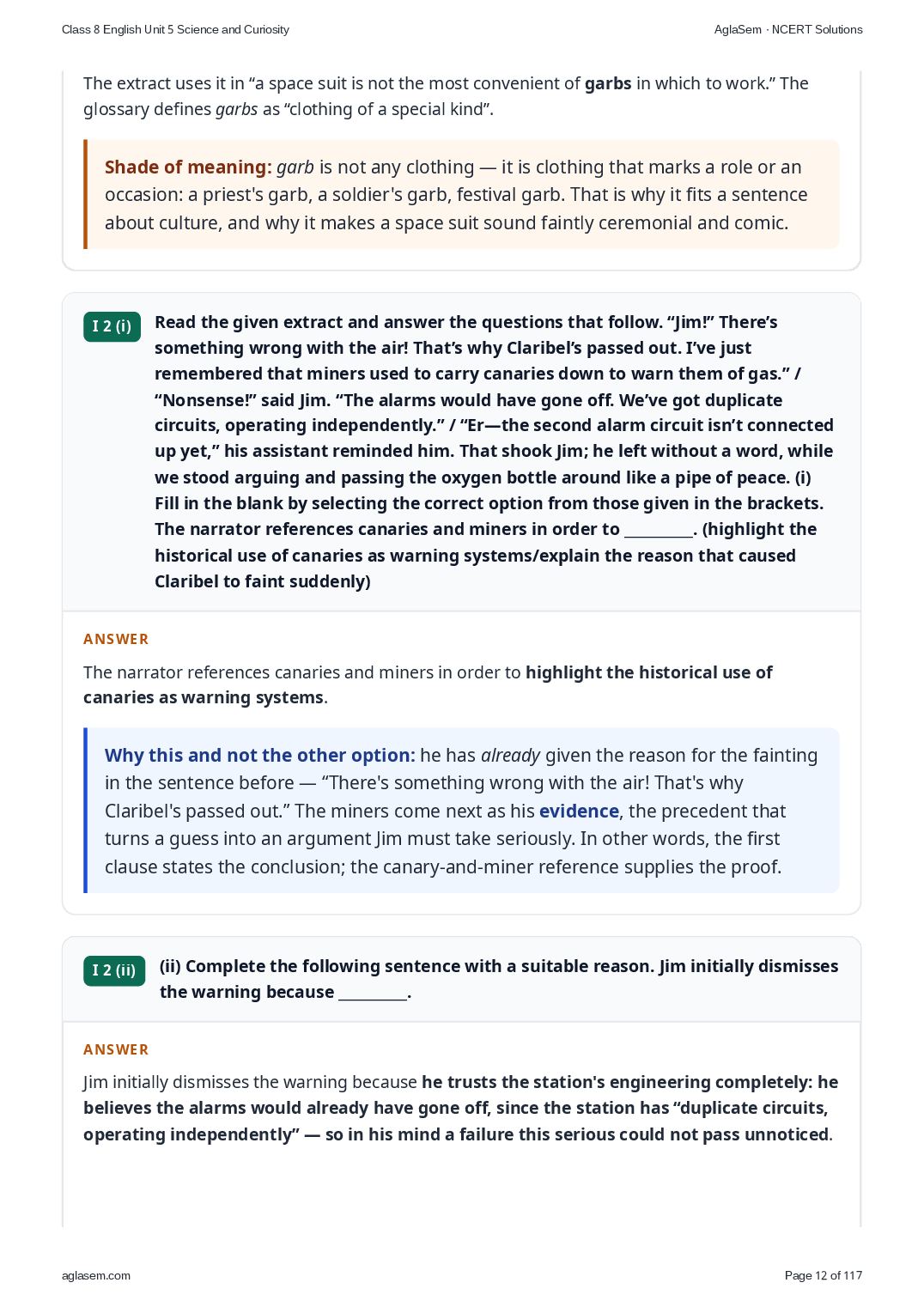
- Read the given extract and answer the questions that follow. “Jim!” There’s something wrong with the air! That’s why Claribel’s passed out. I’ve just remembered that miners used to carry canaries down to warn them of gas.” / “Nonsense!” said Jim. “The alarms would have gone off. We’ve got duplicate circuits, operating independently.” / “Er—the second alarm circuit isn’t connected up yet,” his assistant reminded him. That shook Jim; he left without a word, while we stood arguing and passing the oxygen bottle around like a pipe of peace. (i) Fill in the blank by selecting the correct option from those given in the brackets. The narrator references canaries and miners in order to __________. (highlight the historical use of canaries as warning systems/explain the reason that caused Claribel to faint suddenly)
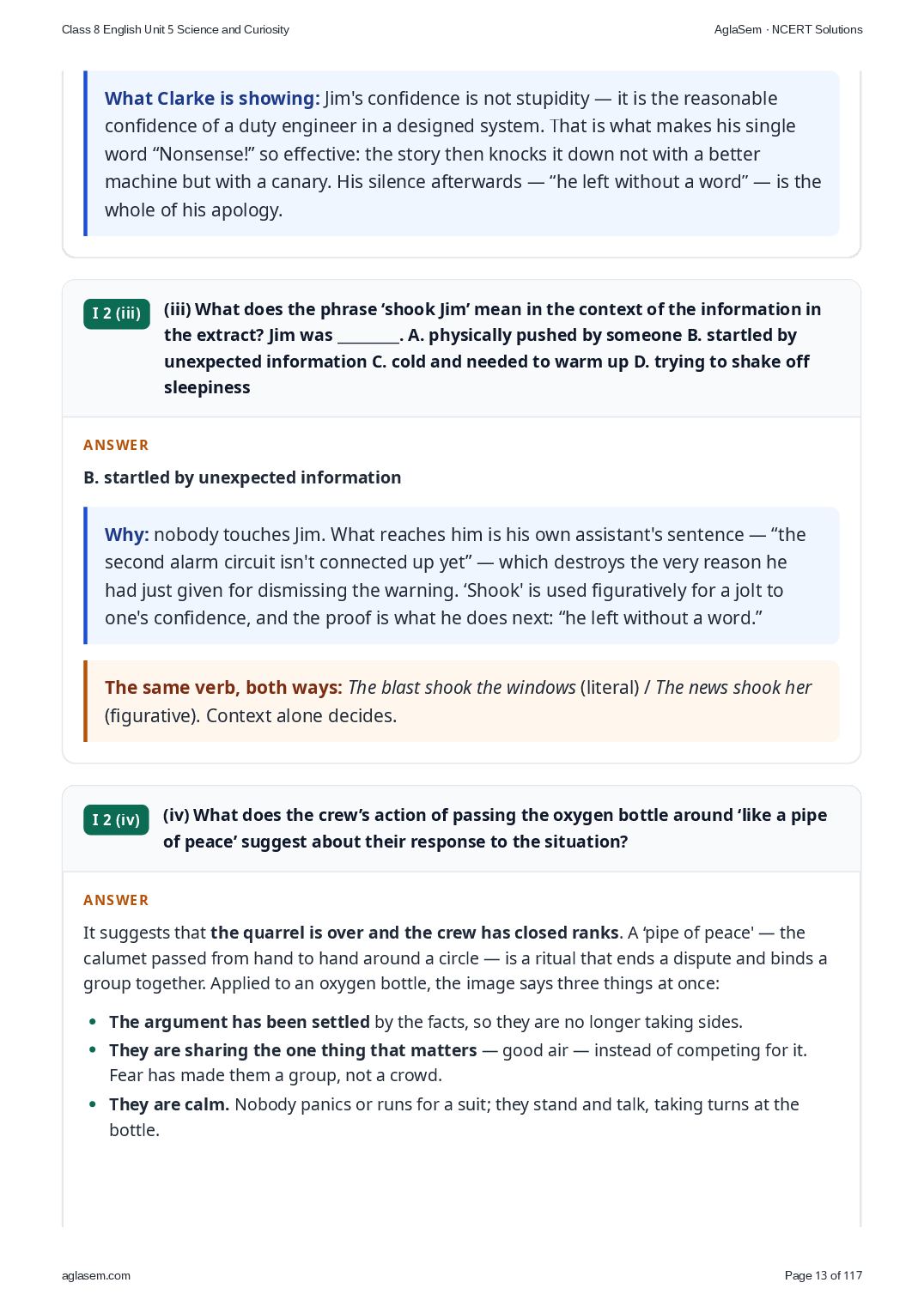
- (ii) Complete the following sentence with a suitable reason. Jim initially dismisses the warning because __________.
- (iii) What does the phrase ‘shook Jim’ mean in the context of the information in the extract? Jim was _________. A. physically pushed by someone B. startled by unexpected information C. cold and needed to warm up D. trying to shake off sleepiness
- (iv) What does the crew’s action of passing the oxygen bottle around ‘like a pipe of peace’ suggest about their response to the situation?
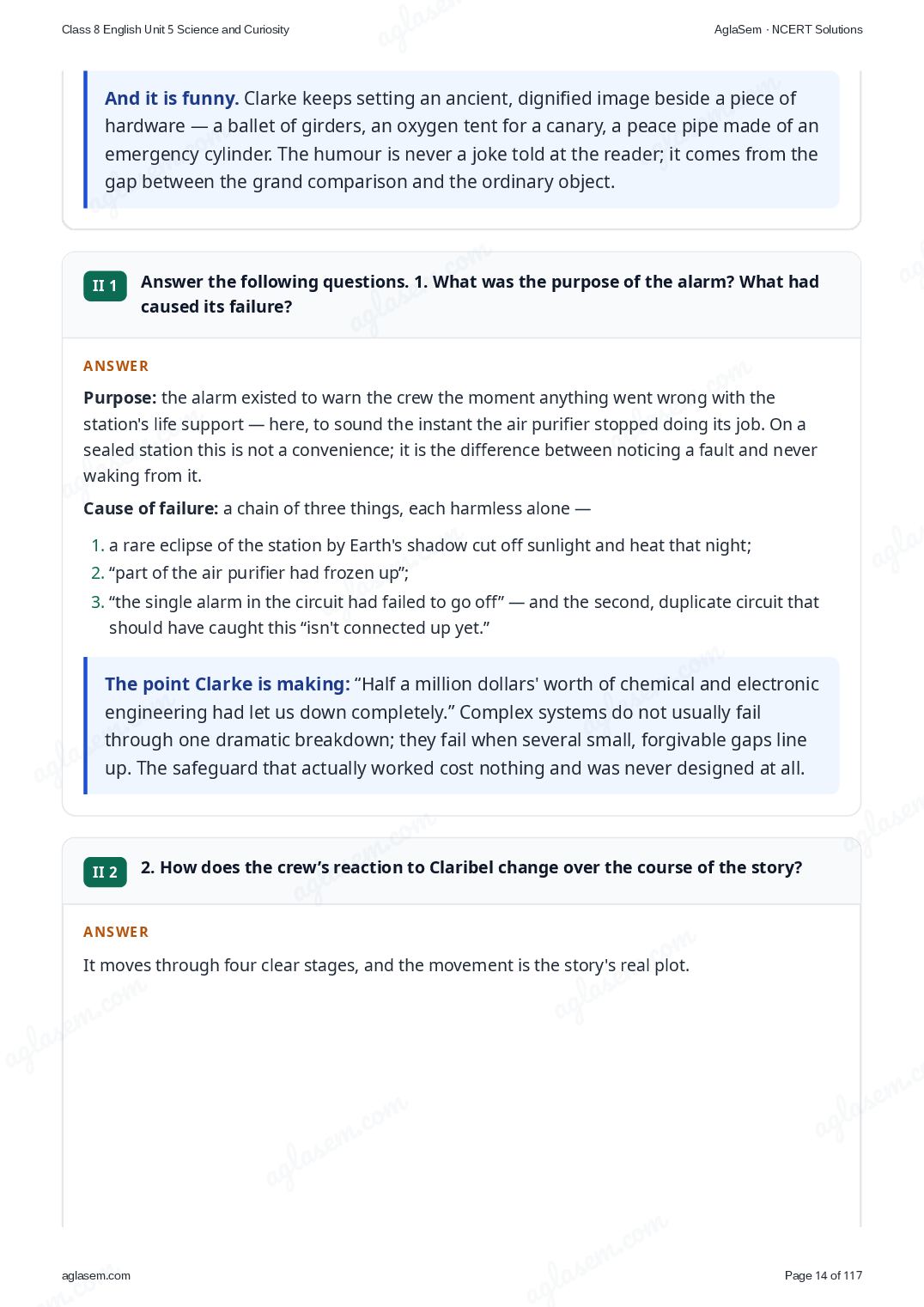
- Answer the following questions. 1. What was the purpose of the alarm? What had caused its failure?
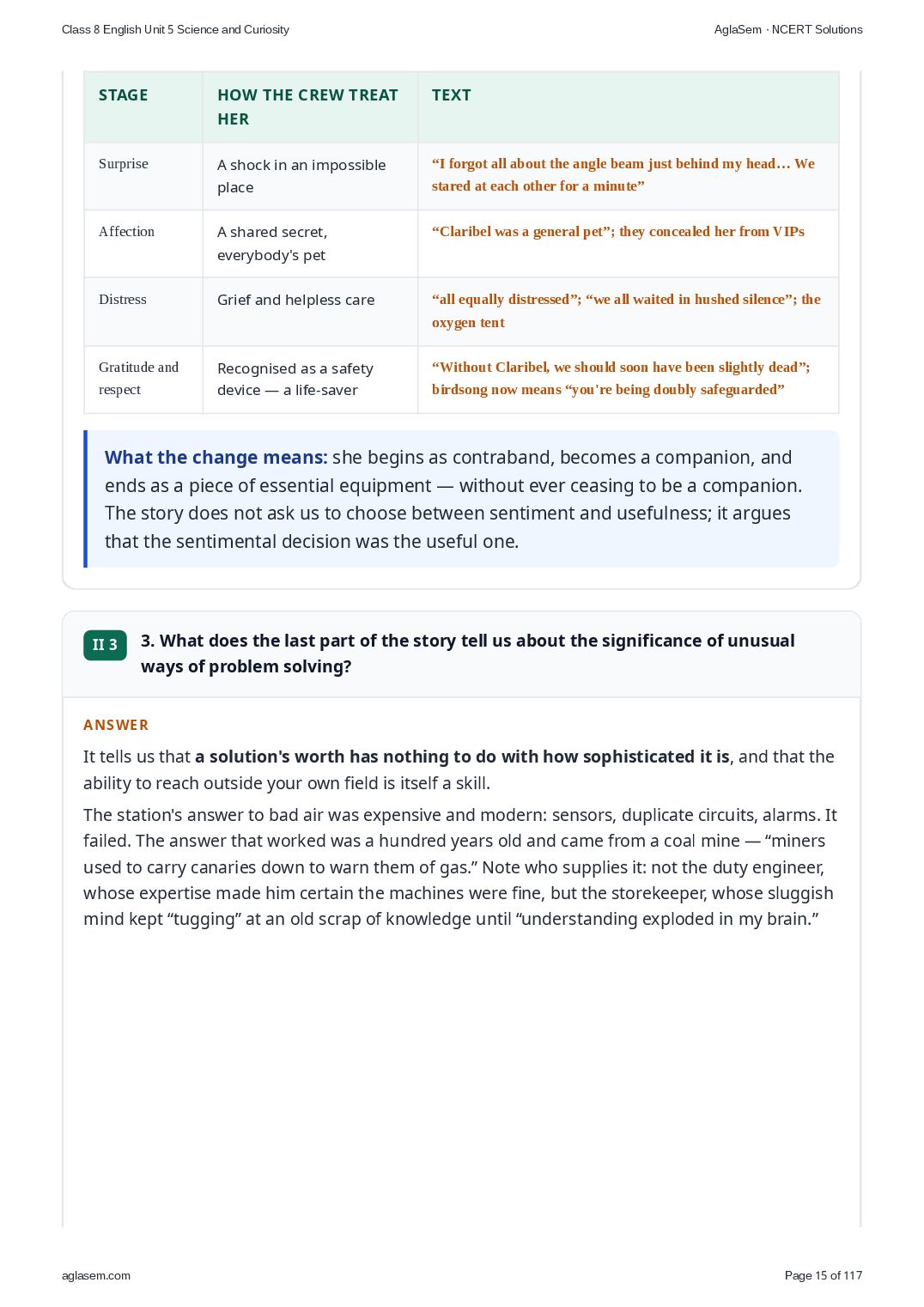
- 2. How does the crew’s reaction to Claribel change over the course of the story?
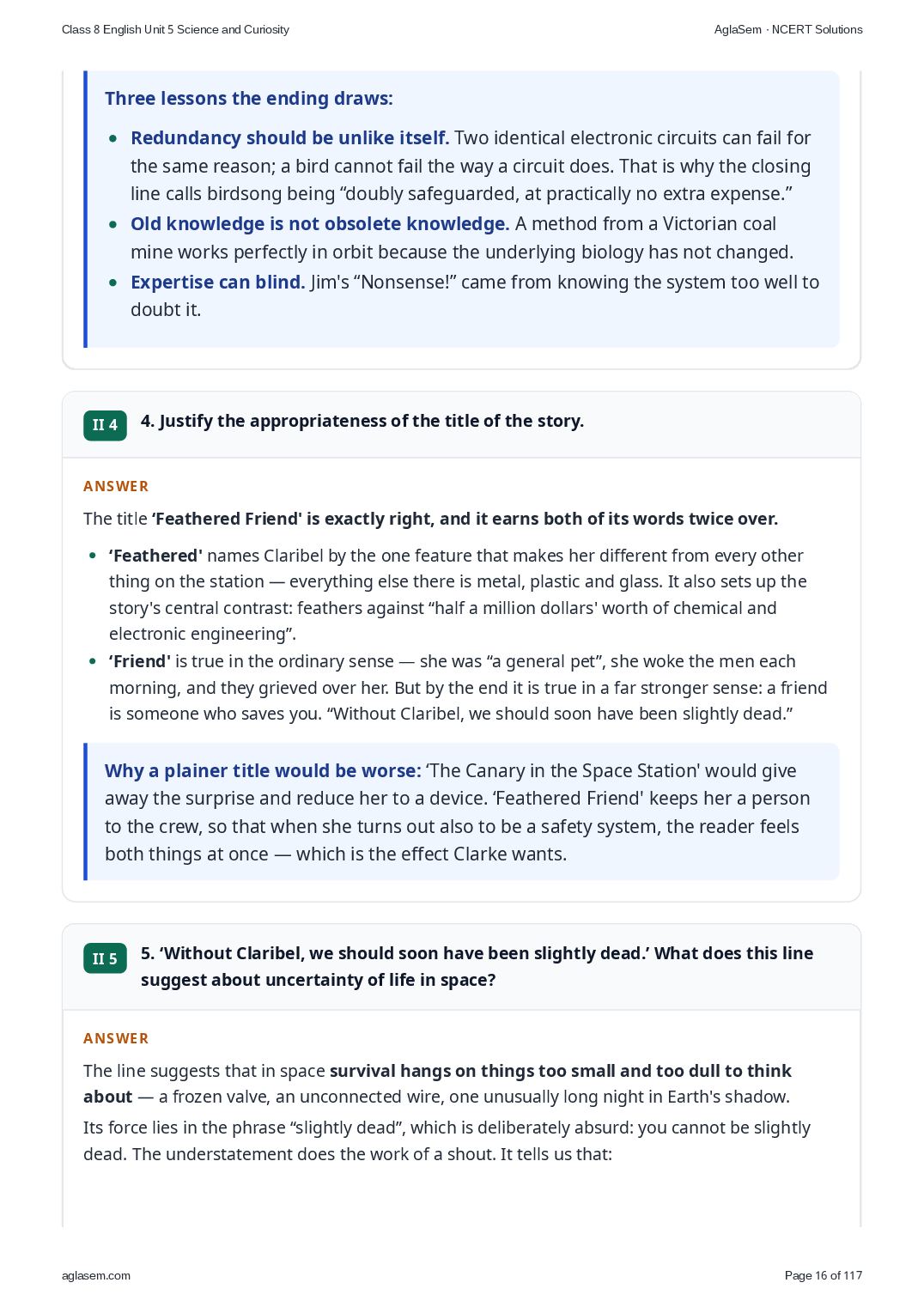
- 3. What does the last part of the story tell us about the significance of unusual ways of problem solving?
- 4. Justify the appropriateness of the title of the story.
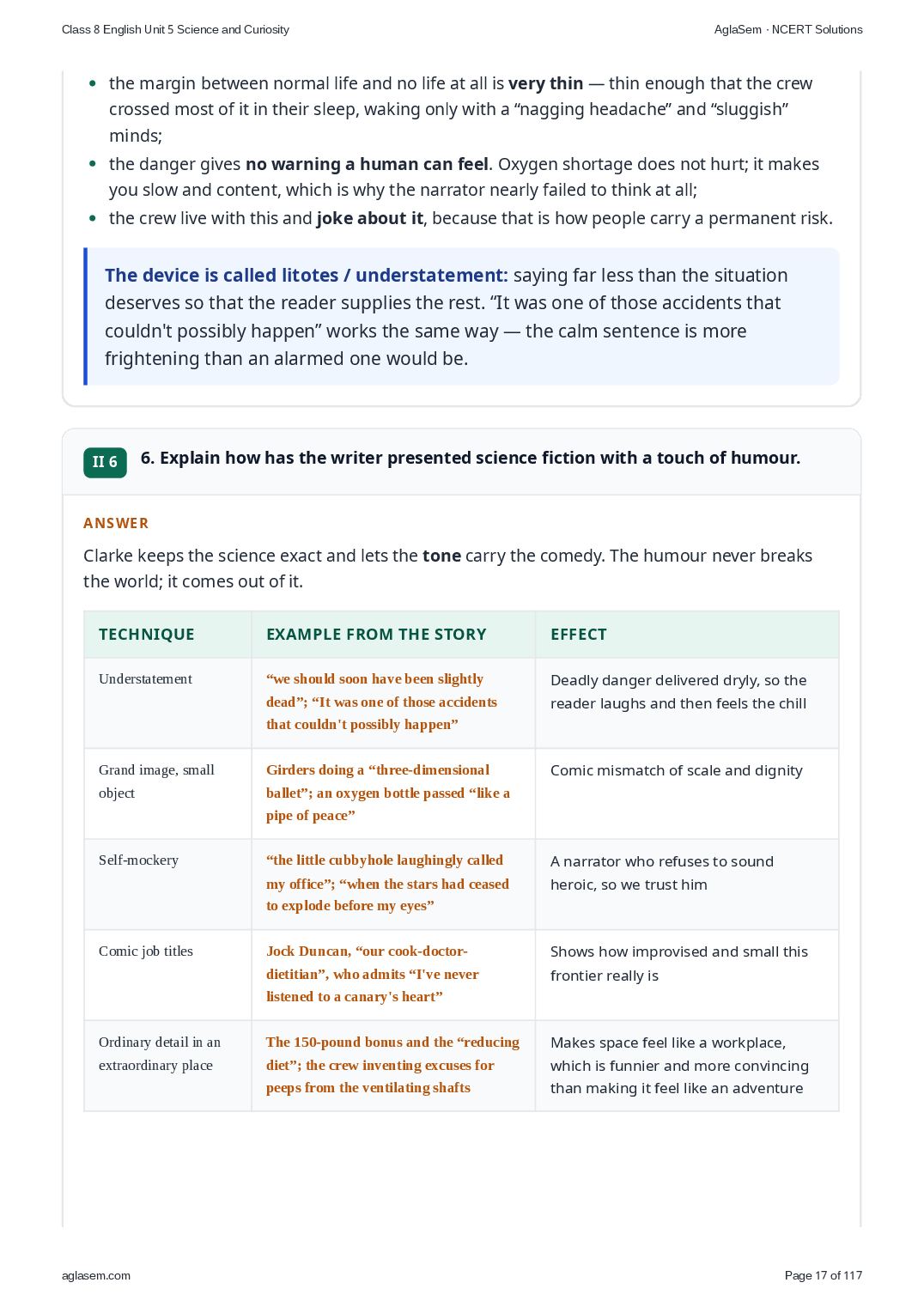
- 5. ‘Without Claribel, we should soon have been slightly dead.’ What does this line suggest about uncertainty of life in space?
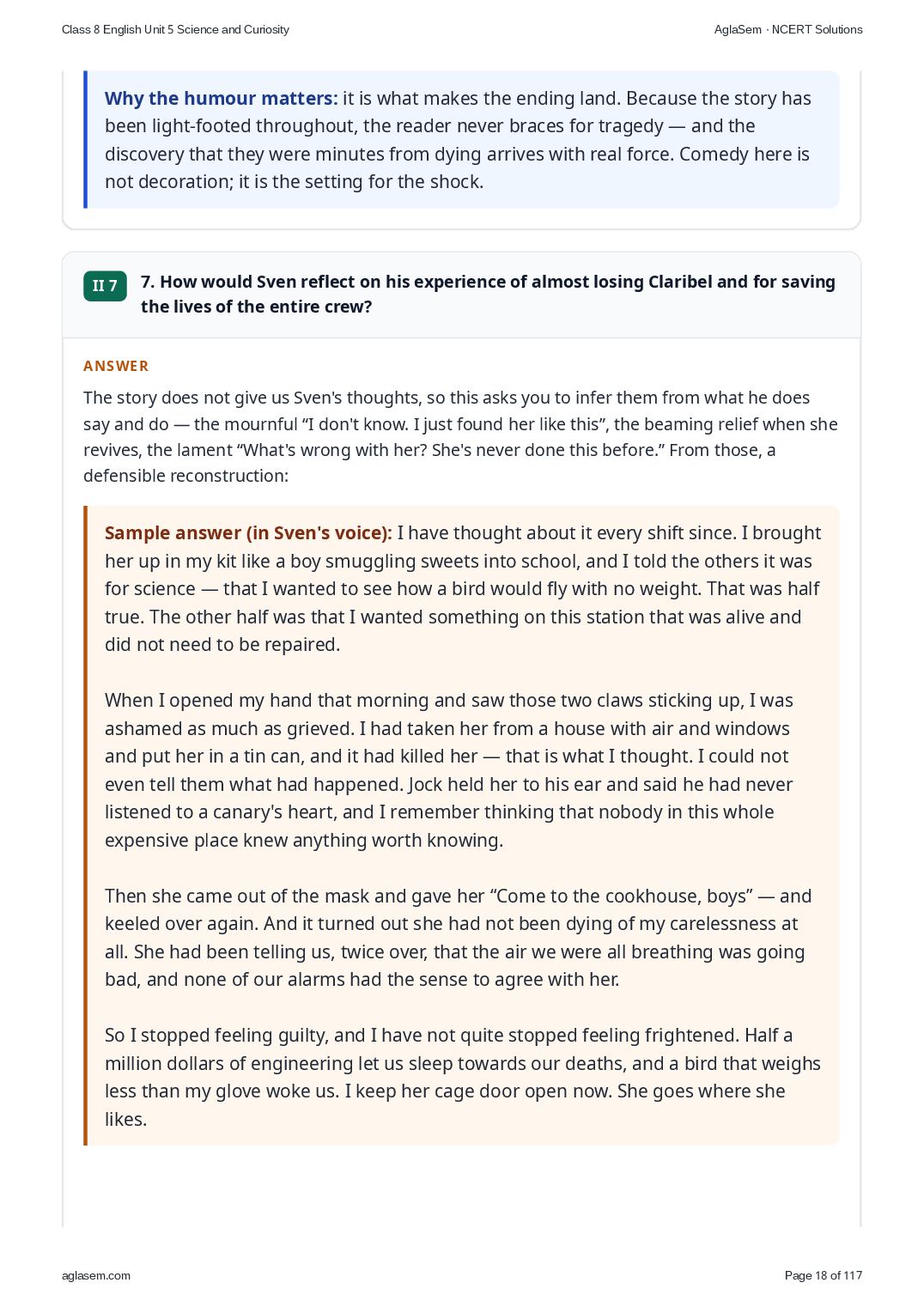
- 6. Explain how has the writer presented science fiction with a touch of humour.
- 7. How would Sven reflect on his experience of almost losing Claribel and for saving the lives of the entire crew?
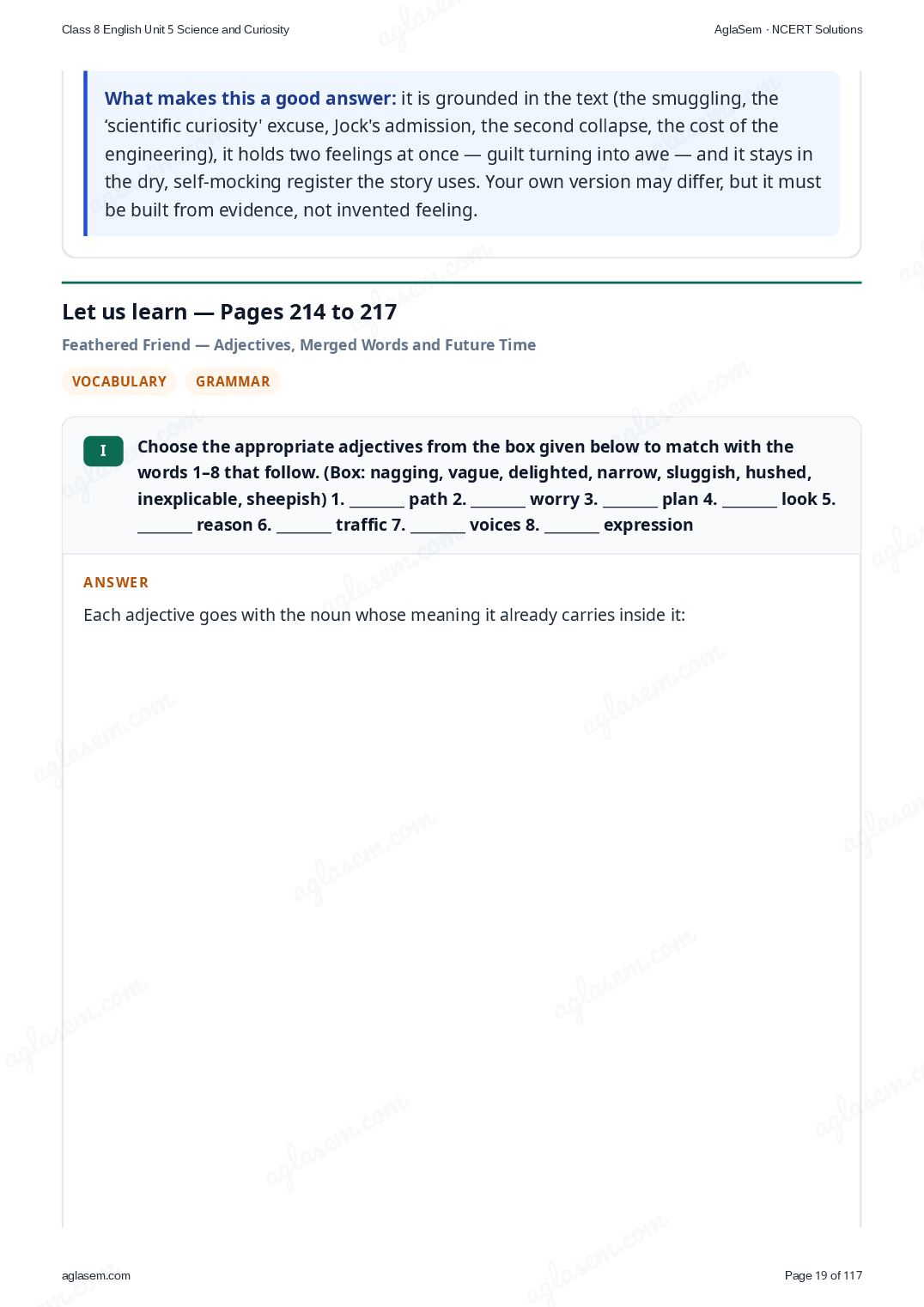
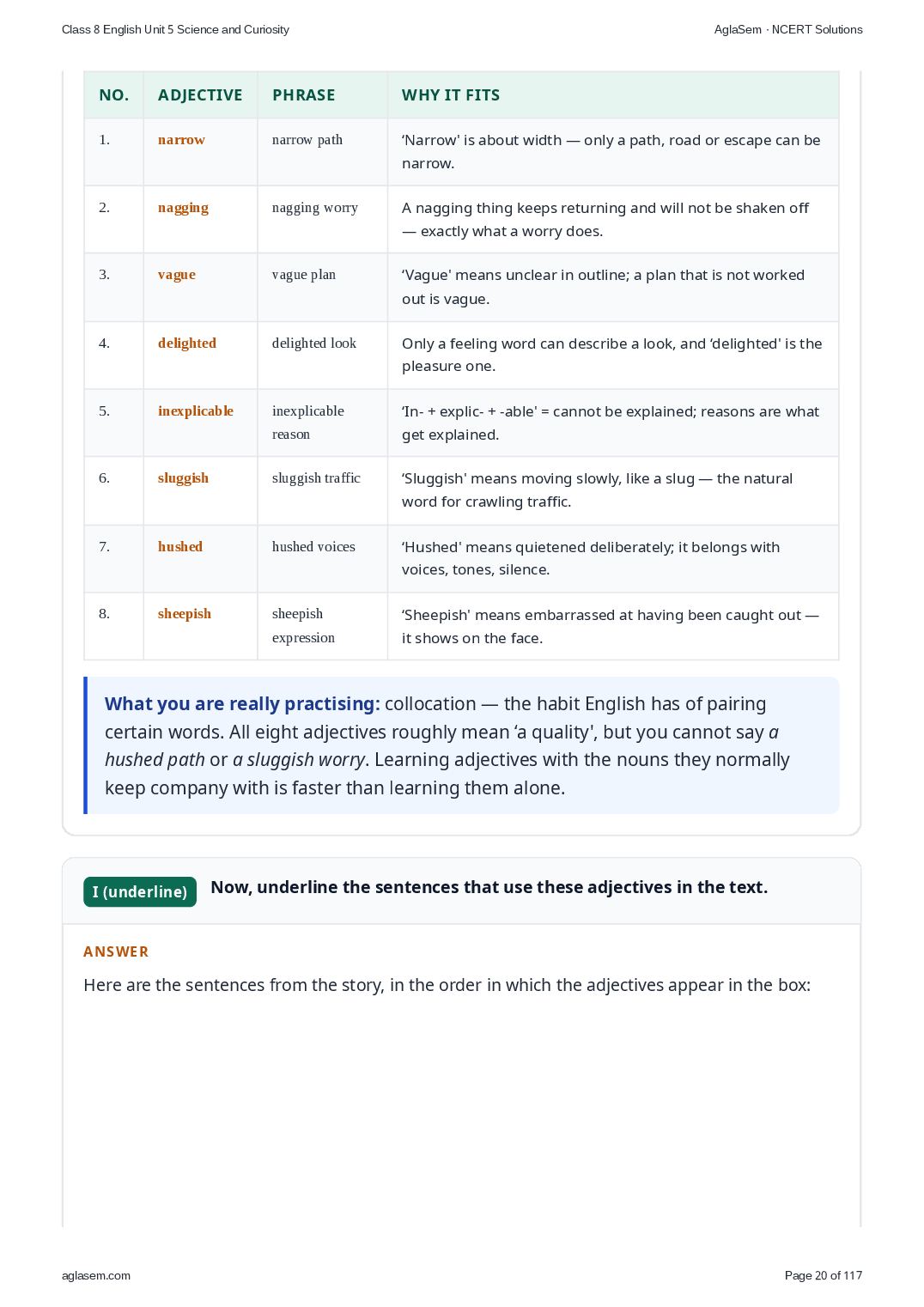
- Choose the appropriate adjectives from the box given below to match with the words 1–8 that follow. (Box: nagging, vague, delighted, narrow, sluggish, hushed, inexplicable, sheepish) 1. ________ path 2. ________ worry 3. ________ plan 4. ________ look 5. ________ reason 6. ________ traffic 7. ________ voices 8. ________ expression
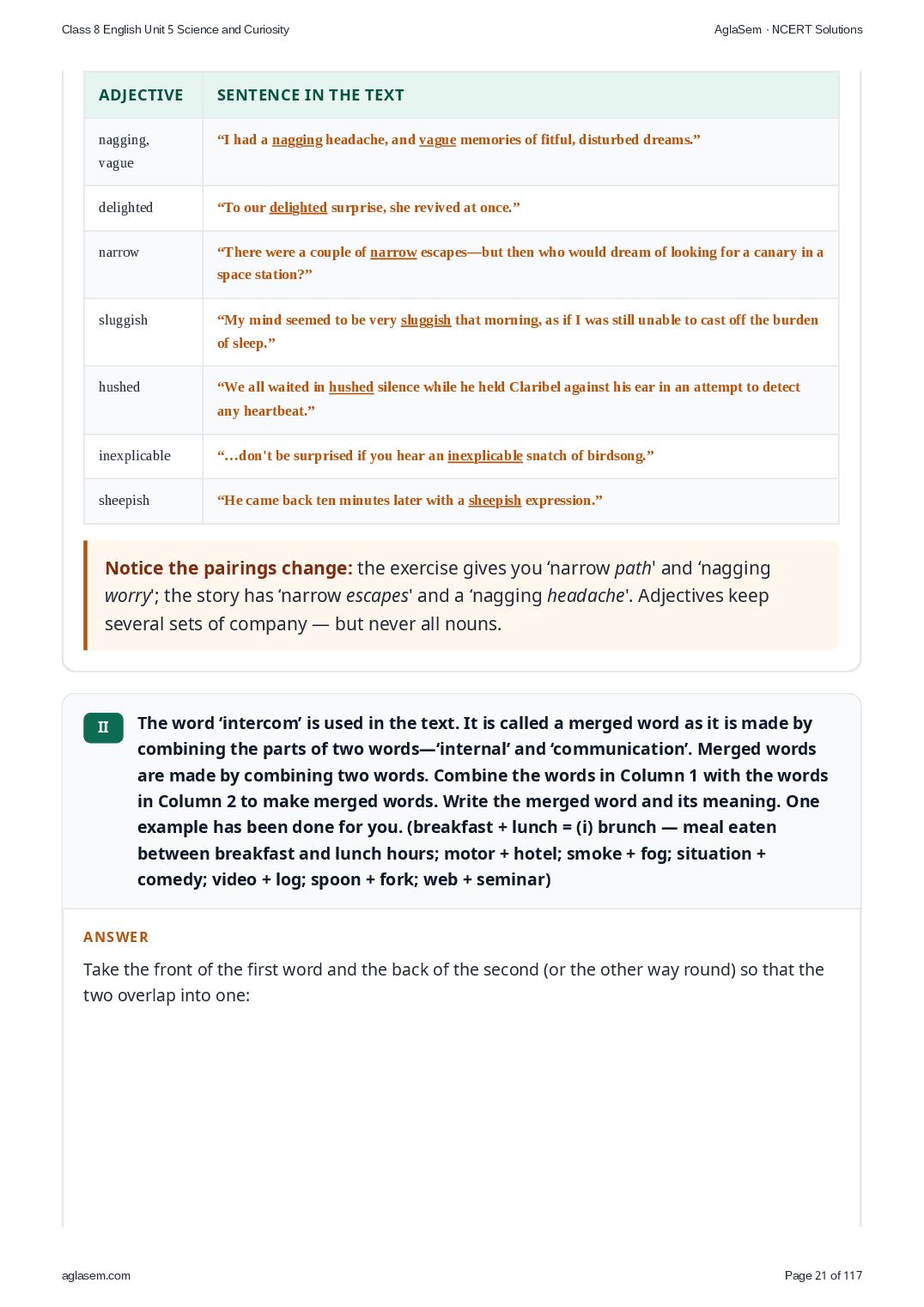
- Now, underline the sentences that use these adjectives in the text.
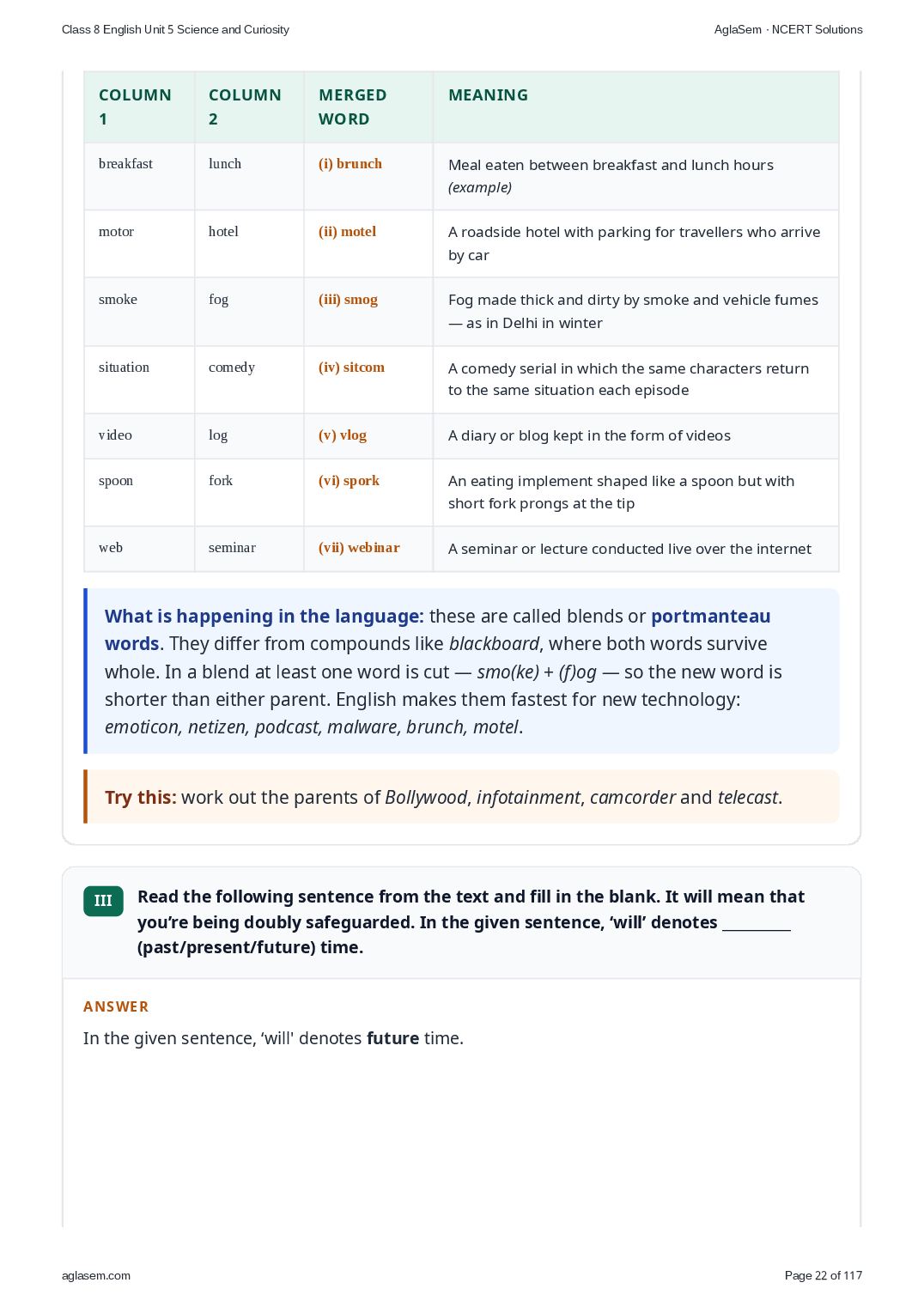
- The word ‘intercom’ is used in the text. It is called a merged word as it is made by combining the parts of two words—‘internal’ and ‘communication’. Merged words are made by combining two words. Combine the words in Column 1 with the words in Column 2 to make merged words. Write the merged word and its meaning. One example has been done for you. (breakfast + lunch = (i) brunch — meal eaten between breakfast and lunch hours; motor + hotel; smoke + fog; situation + comedy; video + log; spoon + fork; web + seminar)
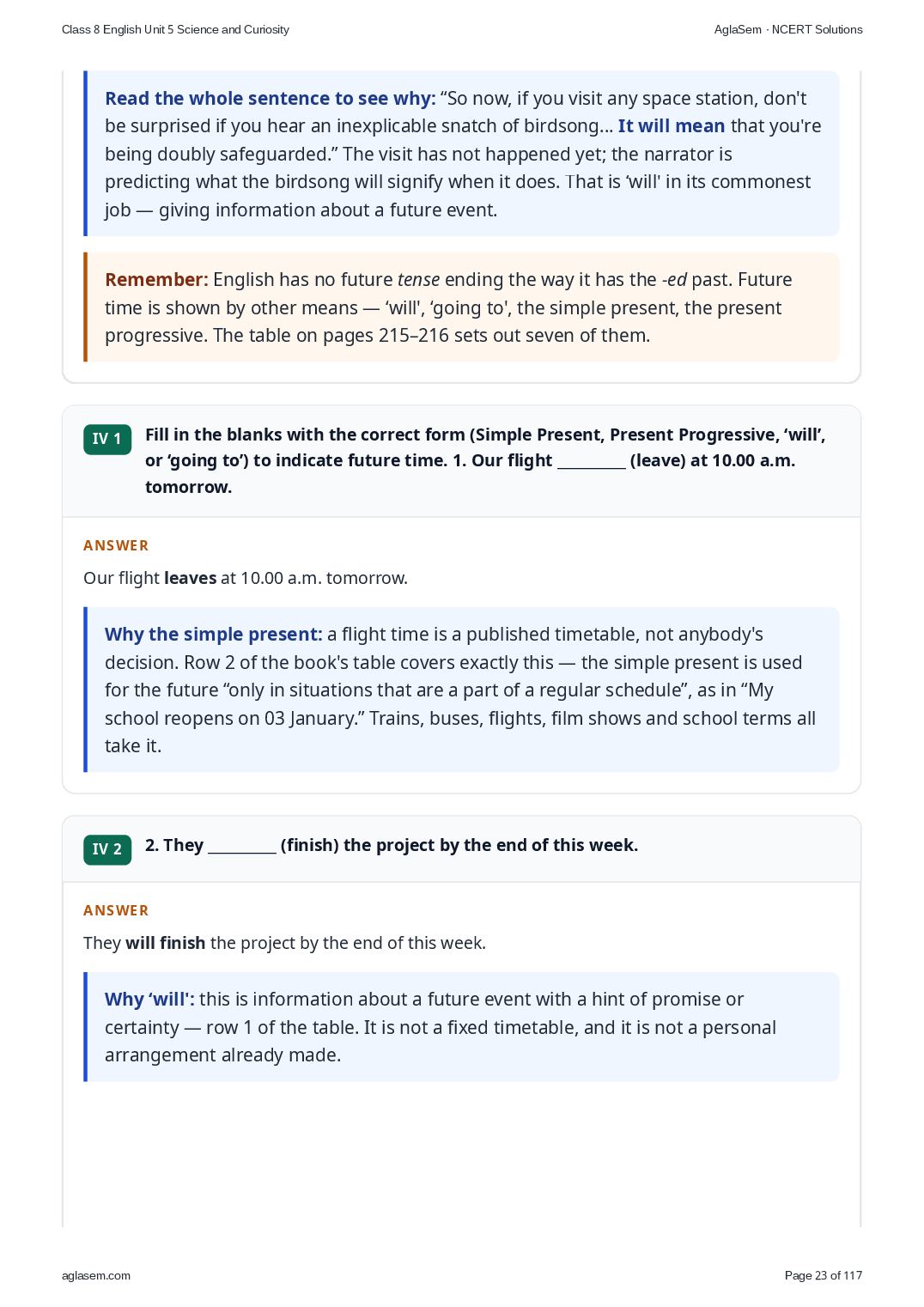
- Read the following sentence from the text and fill in the blank. It will mean that you’re being doubly safeguarded. In the given sentence, ‘will’ denotes __________ (past/present/future) time.
- Fill in the blanks with the correct form (Simple Present, Present Progressive, ‘will’, or ‘going to’) to indicate future time. 1. Our flight __________ (leave) at 10.00 a.m. tomorrow.
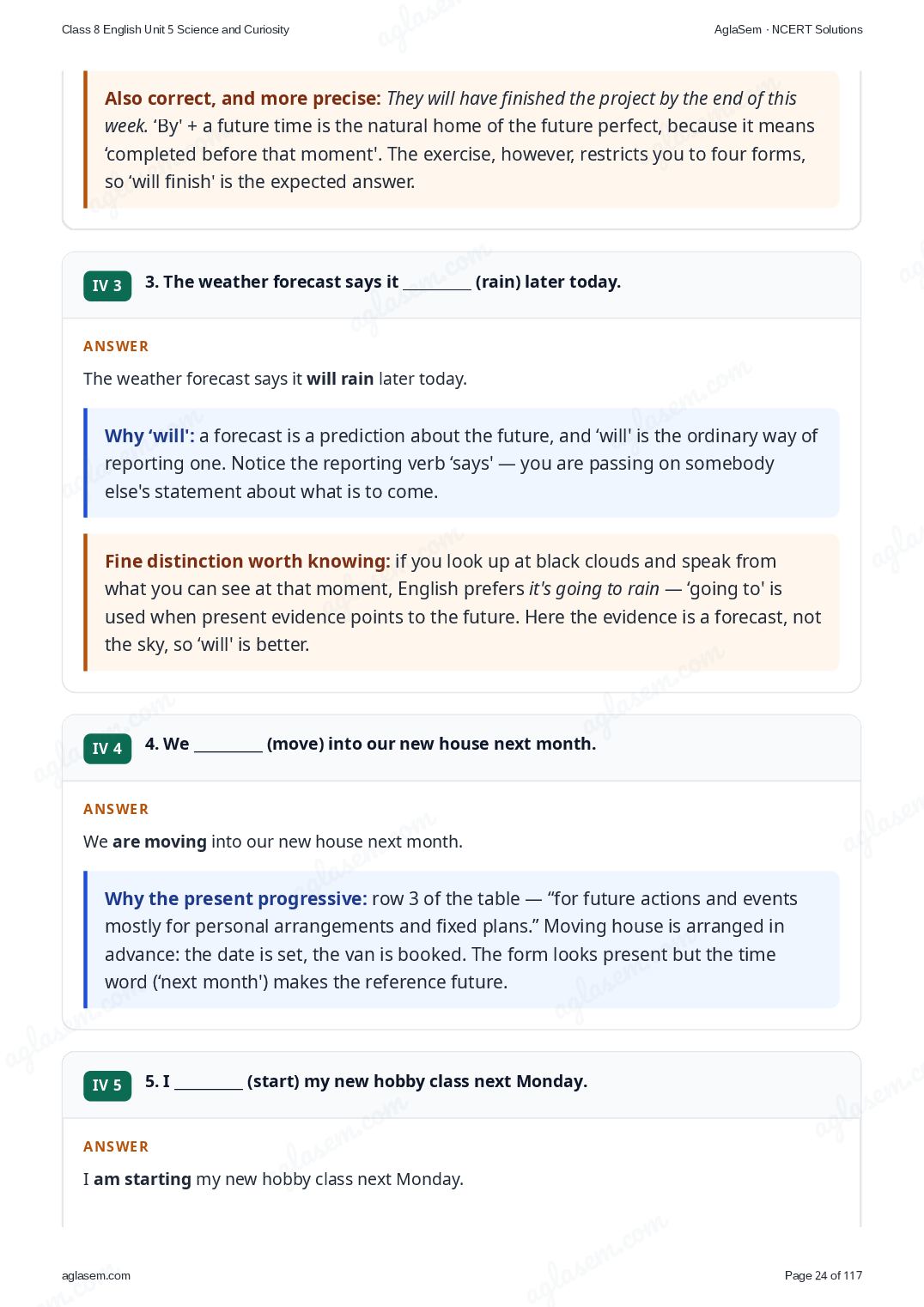
- 2. They __________ (finish) the project by the end of this week.
- 3. The weather forecast says it __________ (rain) later today.
- 4. We __________ (move) into our new house next month.
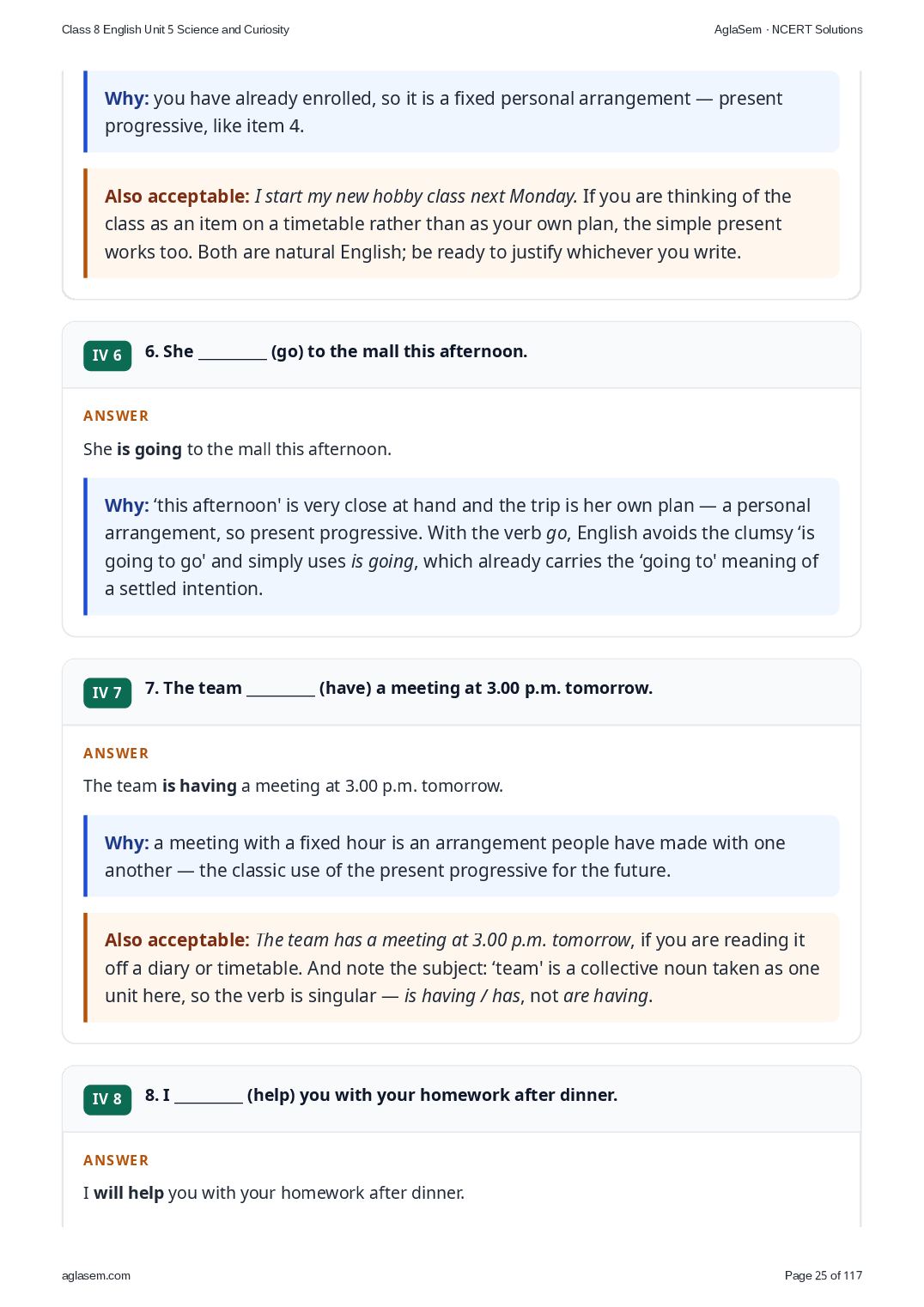
- 5. I __________ (start) my new hobby class next Monday.
- 6. She __________ (go) to the mall this afternoon.
- 7. The team __________ (have) a meeting at 3.00 p.m. tomorrow.
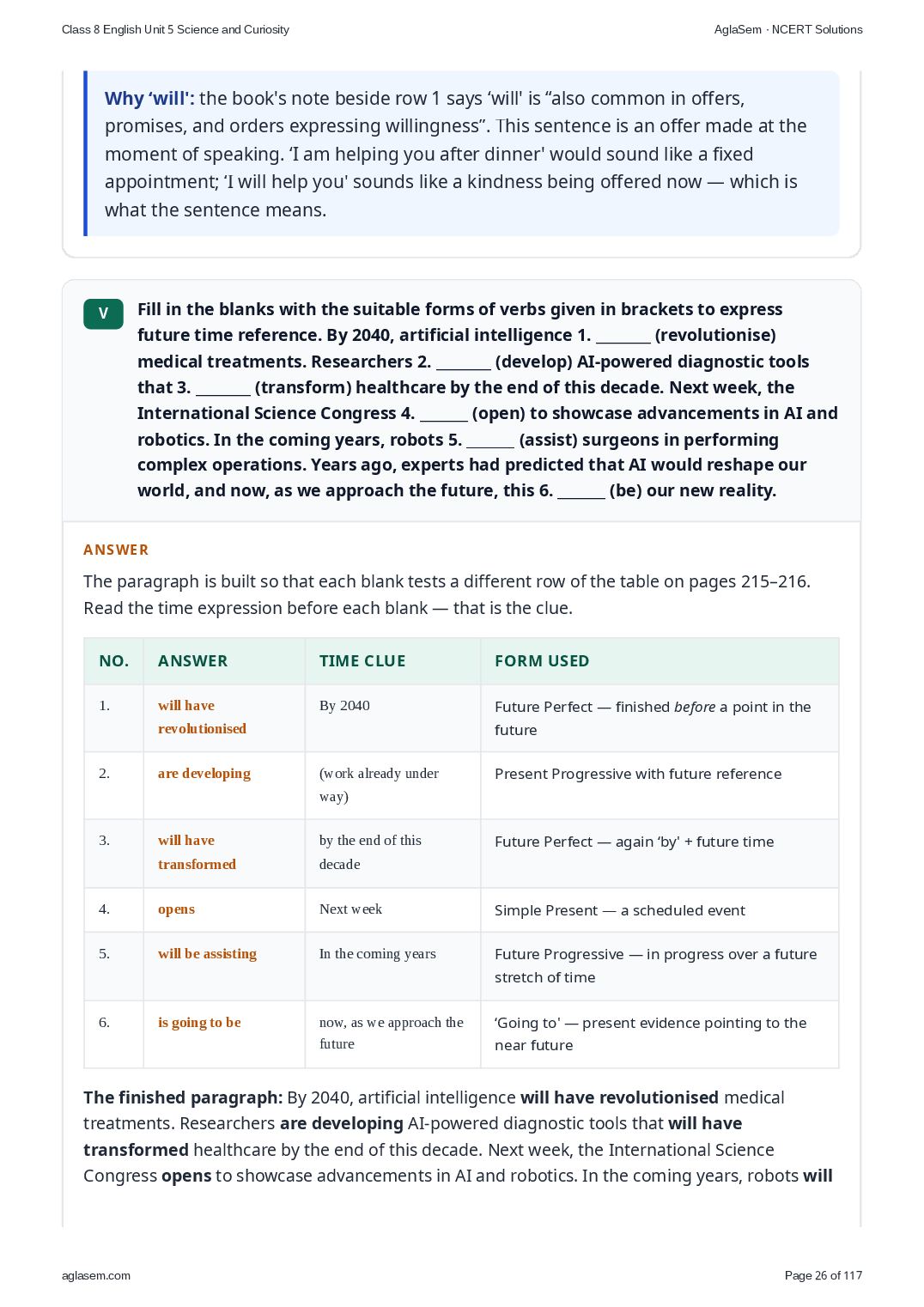
- 8. I __________ (help) you with your homework after dinner.
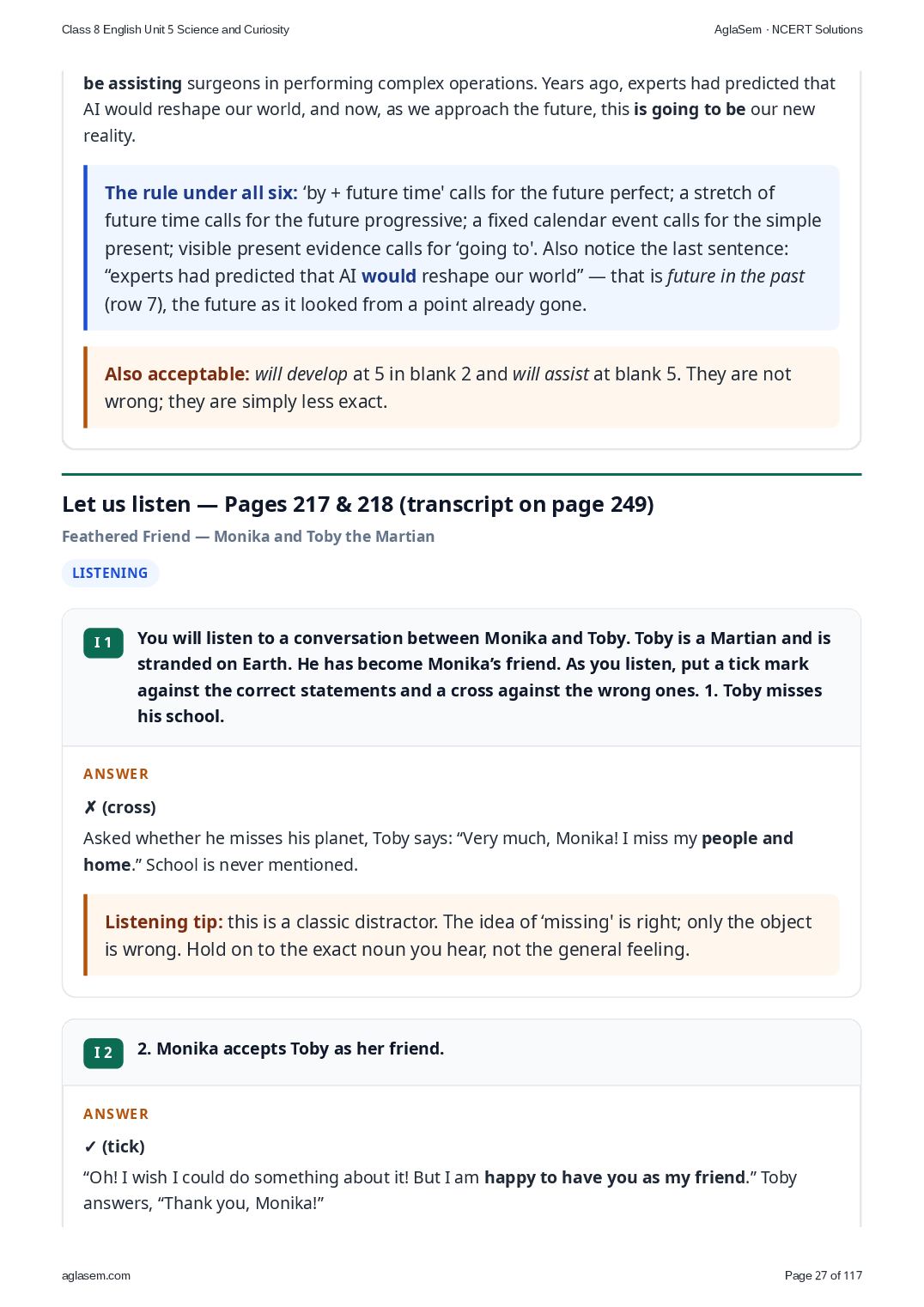
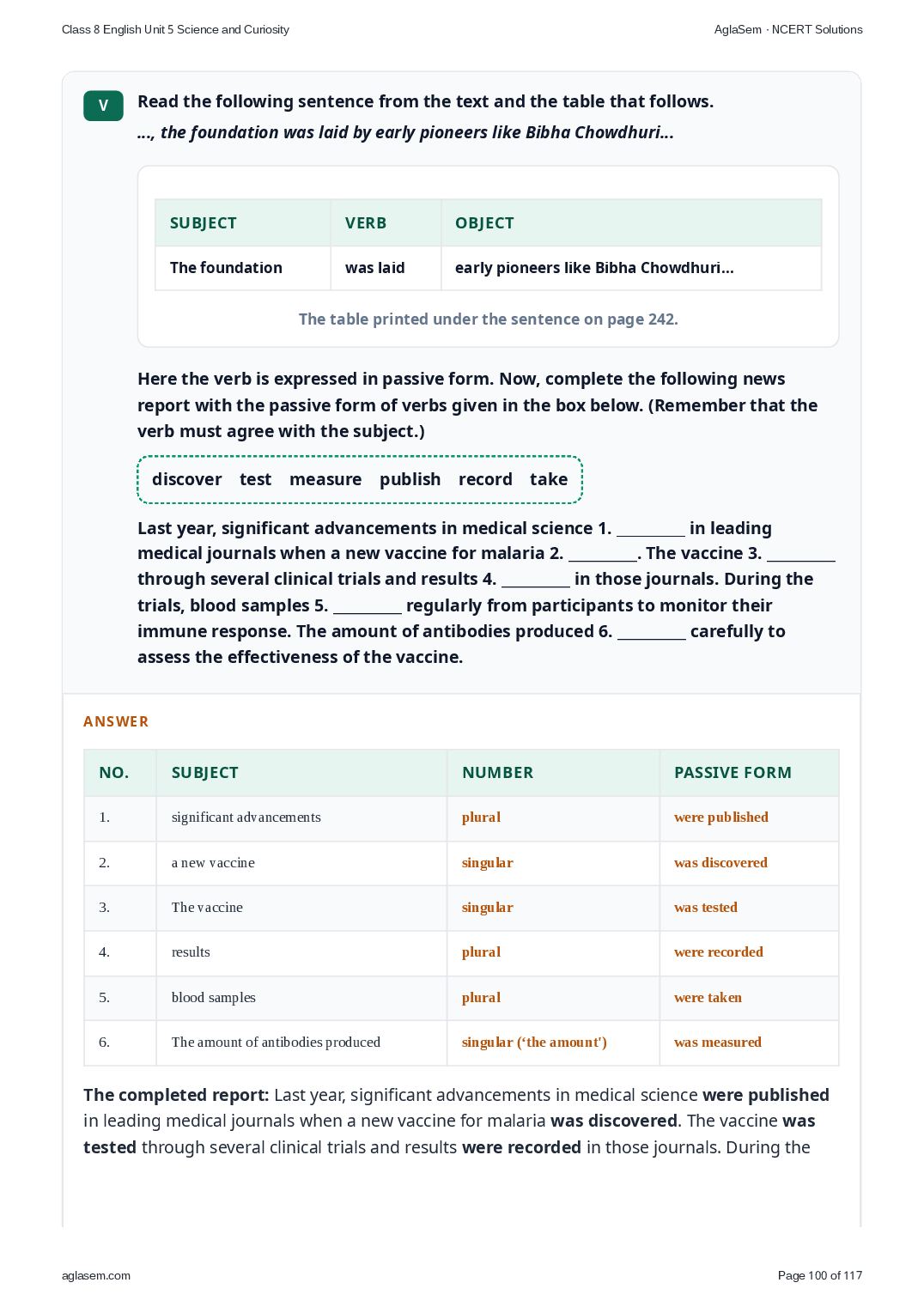
- Fill in the blanks with the suitable forms of verbs given in brackets to express future time reference. By 2040, artificial intelligence 1. ________ (revolutionise) medical treatments. Researchers 2. ________ (develop) AI-powered diagnostic tools that 3. ________ (transform) healthcare by the end of this decade. Next week, the International Science Congress 4. _______ (open) to showcase advancements in AI and robotics. In the coming years, robots 5. _______ (assist) surgeons in performing complex operations. Years ago, experts had predicted that AI would reshape our world, and now, as we approach the future, this 6. _______ (be) our new reality.
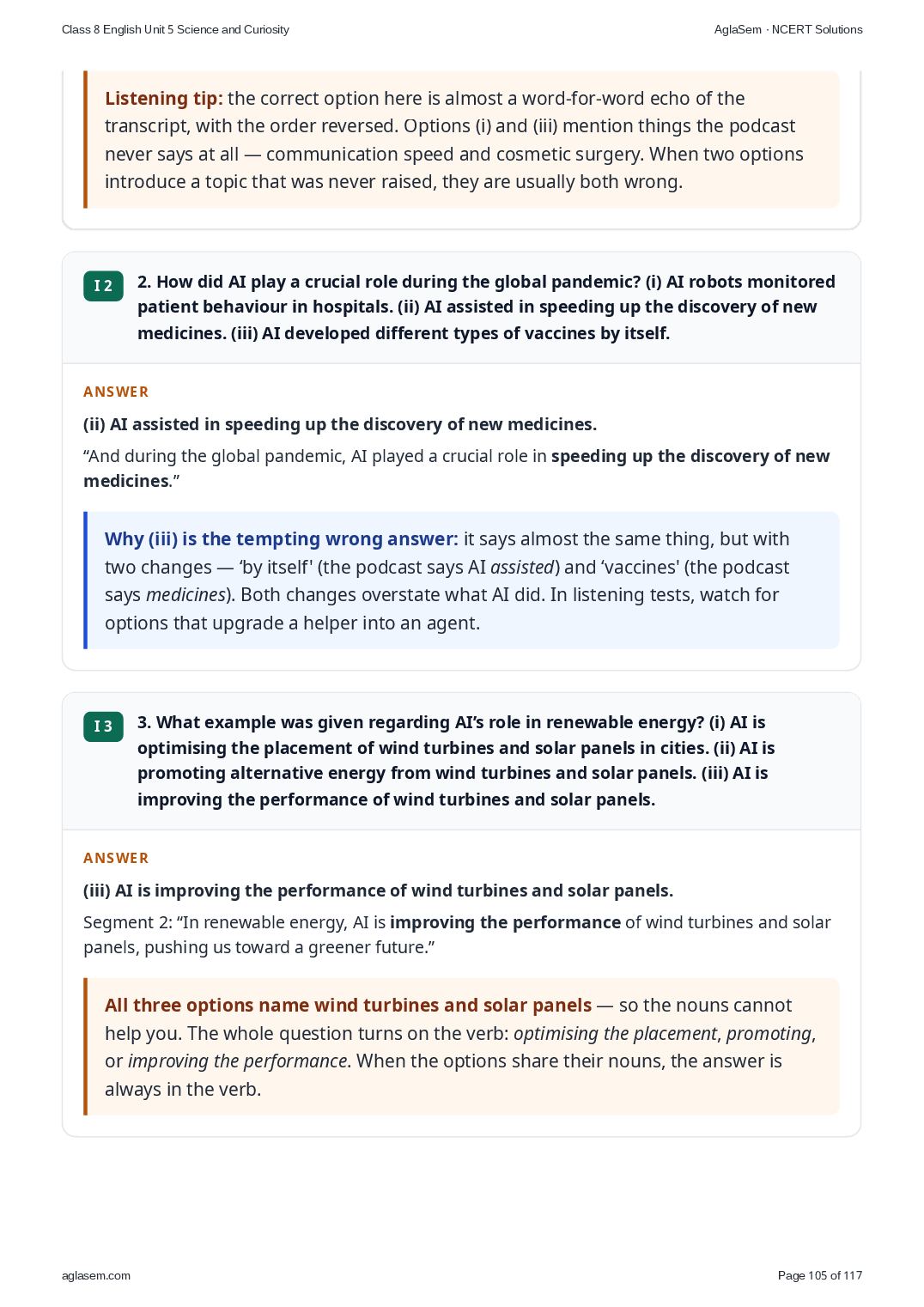
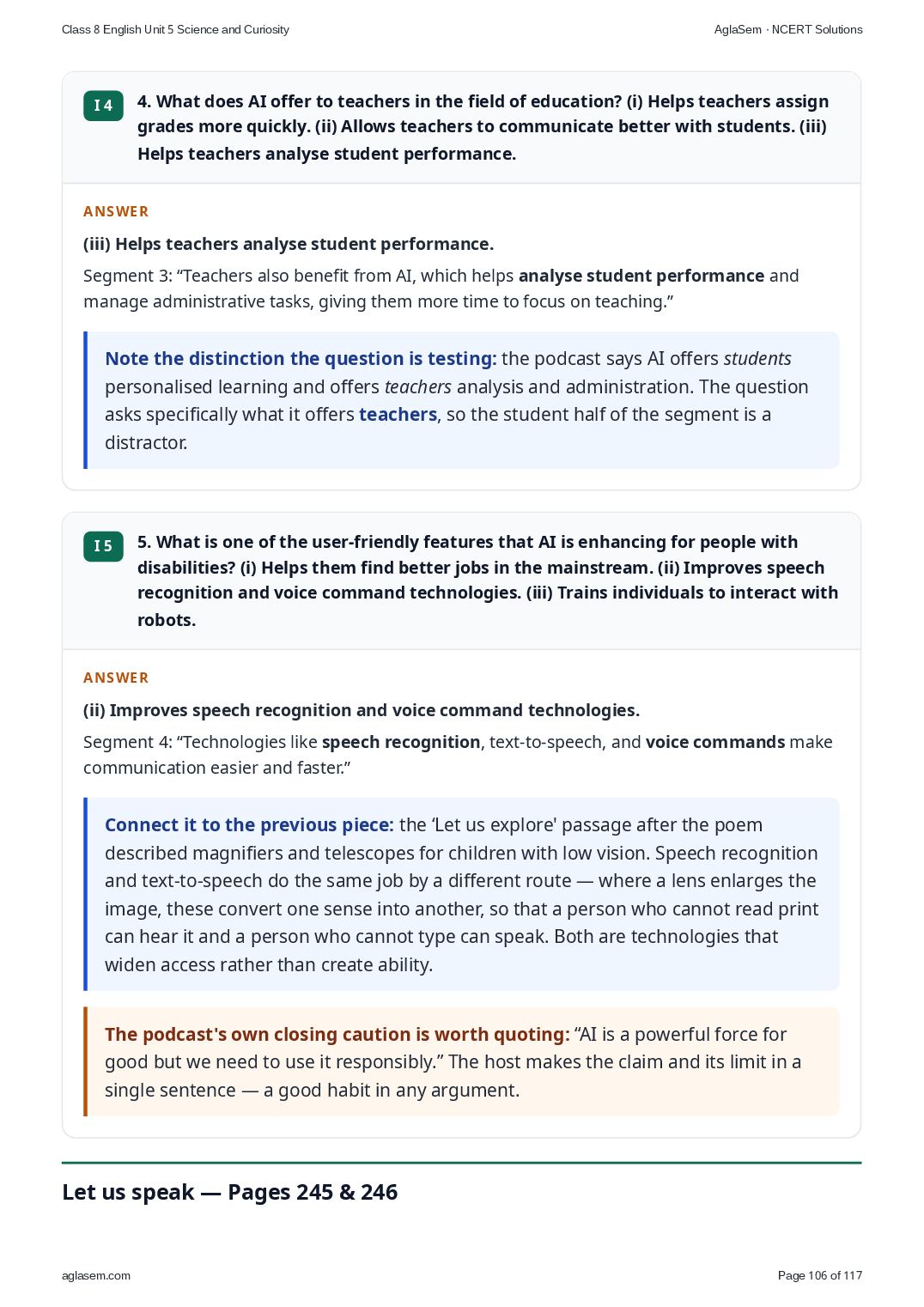
- You will listen to a conversation between Monika and Toby. Toby is a Martian and is stranded on Earth. He has become Monika’s friend. As you listen, put a tick mark against the correct statements and a cross against the wrong ones. 1. Toby misses his school.
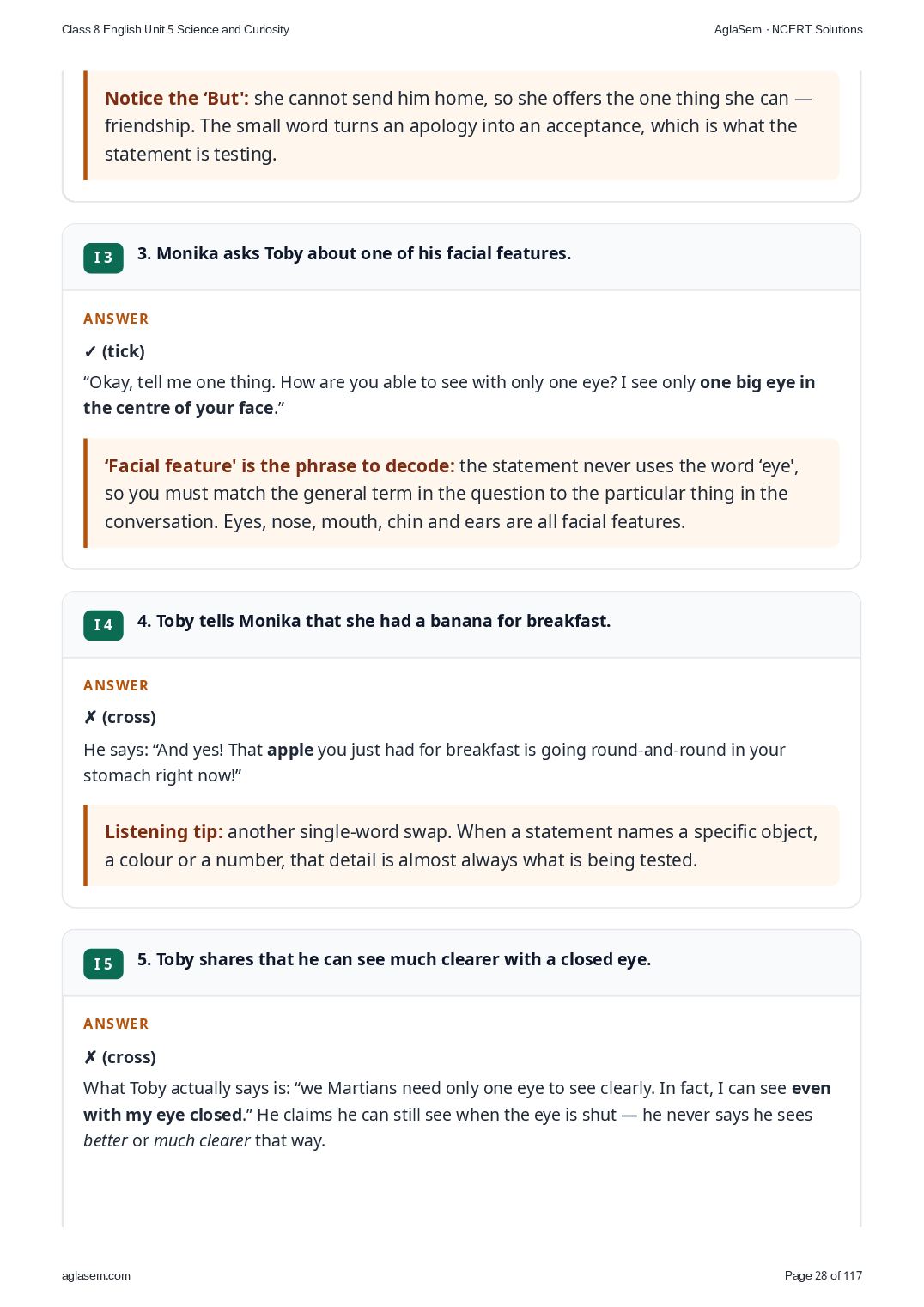
- 2. Monika accepts Toby as her friend.
- 3. Monika asks Toby about one of his facial features.
- 4. Toby tells Monika that she had a banana for breakfast.
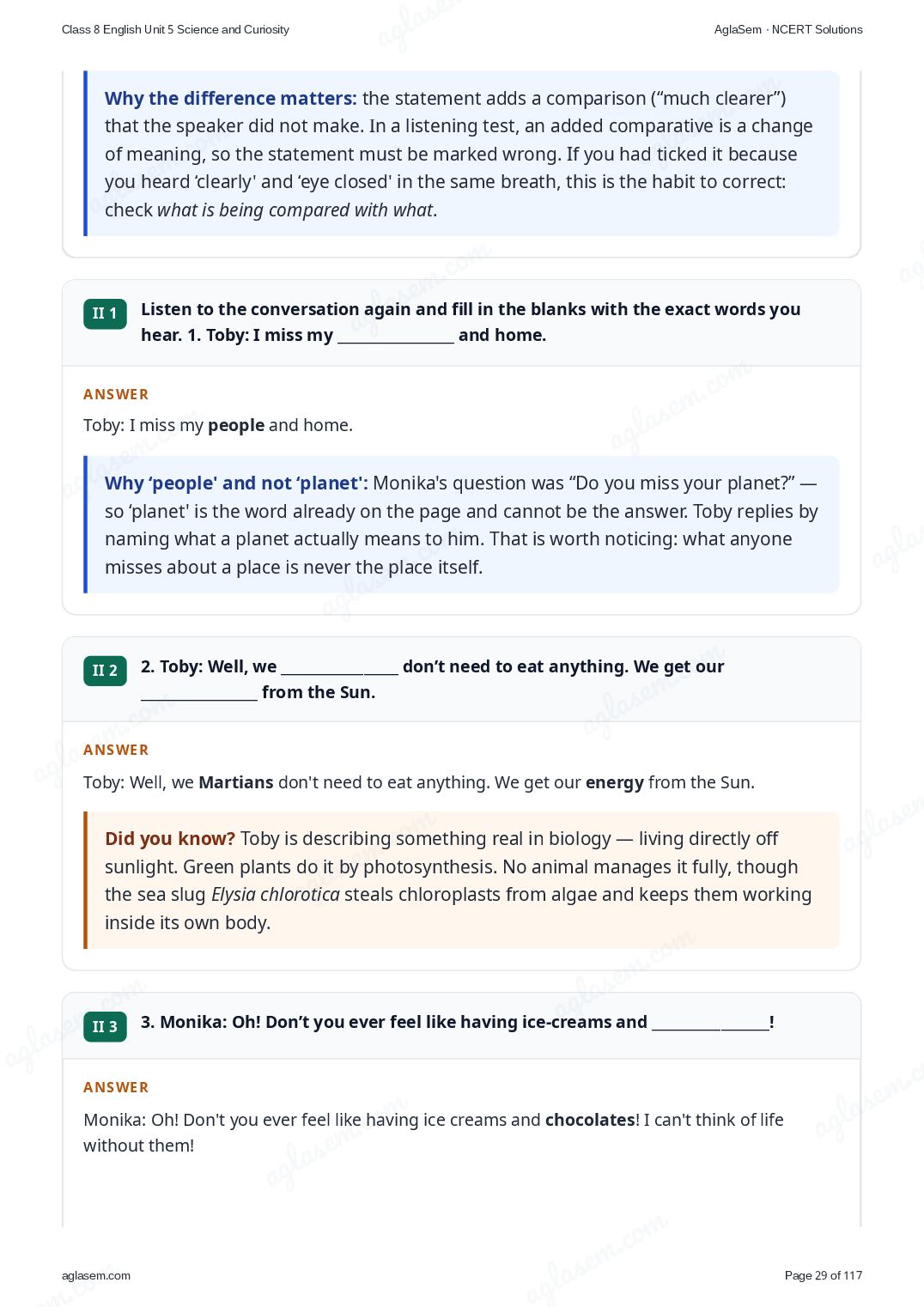
- 5. Toby shares that he can see much clearer with a closed eye.
- Listen to the conversation again and fill in the blanks with the exact words you hear. 1. Toby: I miss my _________________ and home.
- 2. Toby: Well, we _________________ don’t need to eat anything. We get our _________________ from the Sun.
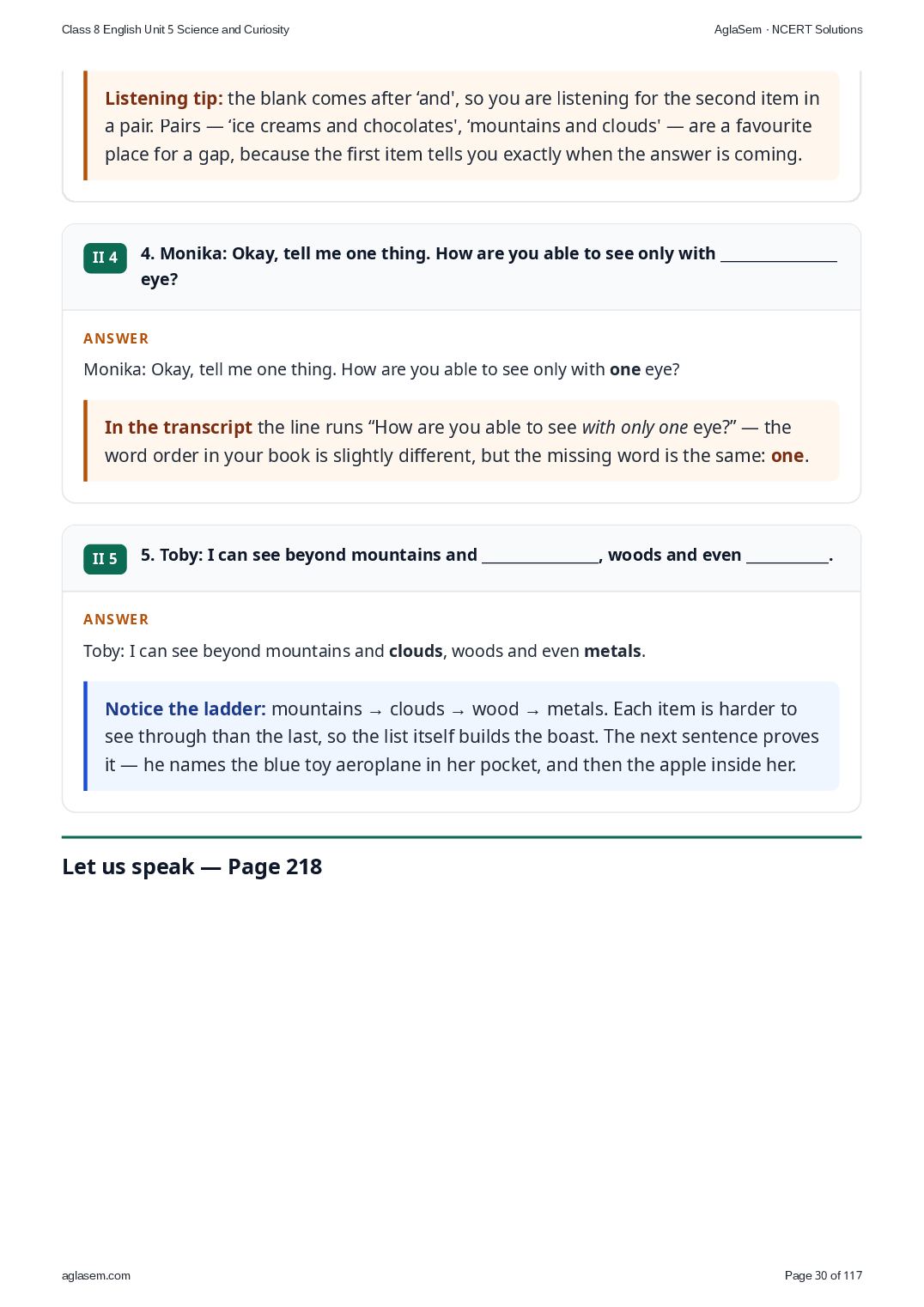
- 3. Monika: Oh! Don’t you ever feel like having ice-creams and _________________!
- 4. Monika: Okay, tell me one thing. How are you able to see only with _________________ eye?
- 5. Toby: I can see beyond mountains and _________________, woods and even ____________.
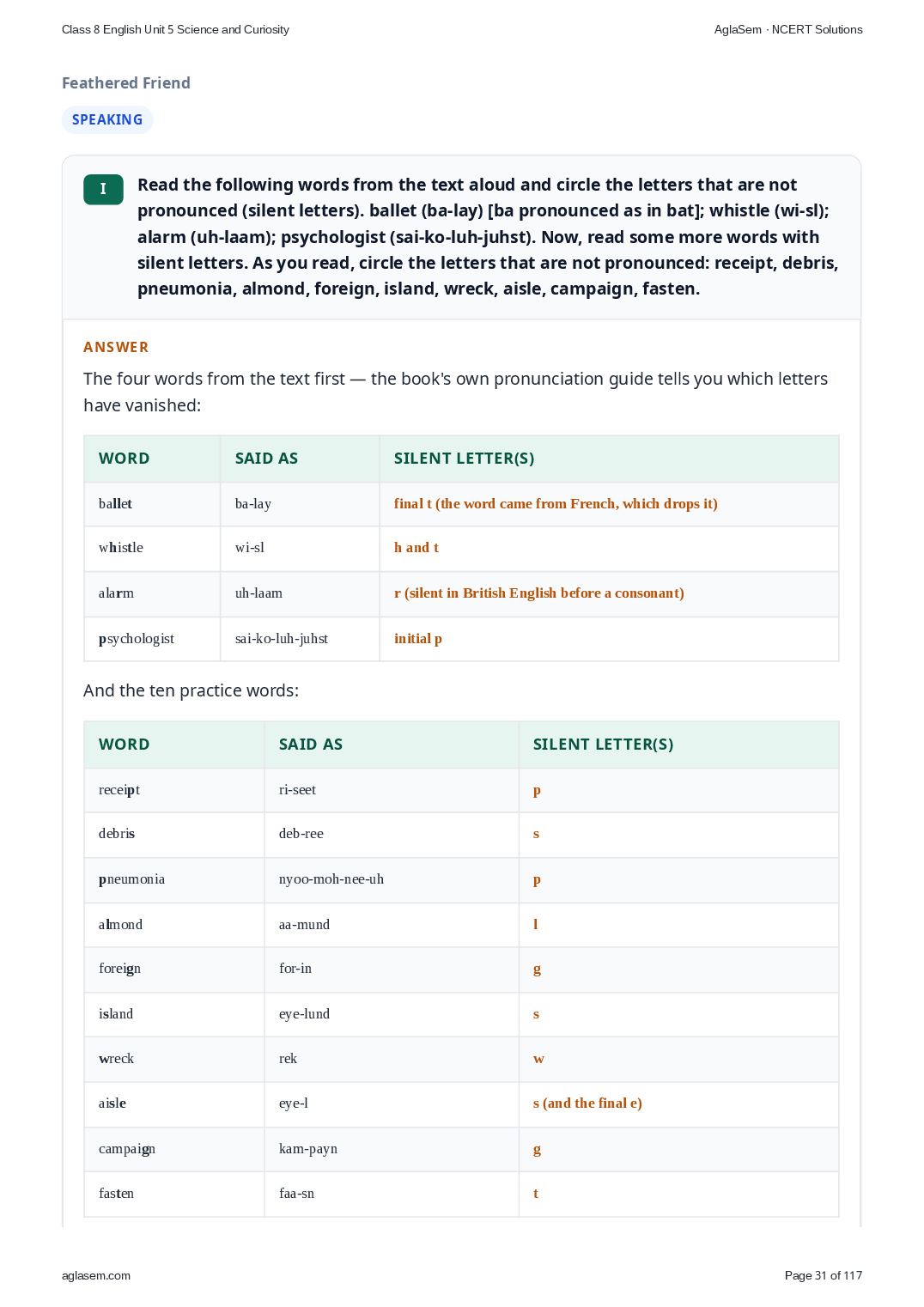
- Read the following words from the text aloud and circle the letters that are not pronounced (silent letters). ballet (ba-lay) [ba pronounced as in bat]; whistle (wi-sl); alarm (uh-laam); psychologist (sai-ko-luh-juhst). Now, read some more words with silent letters. As you read, circle the letters that are not pronounced: receipt, debris, pneumonia, almond, foreign, island, wreck, aisle, campaign, fasten.
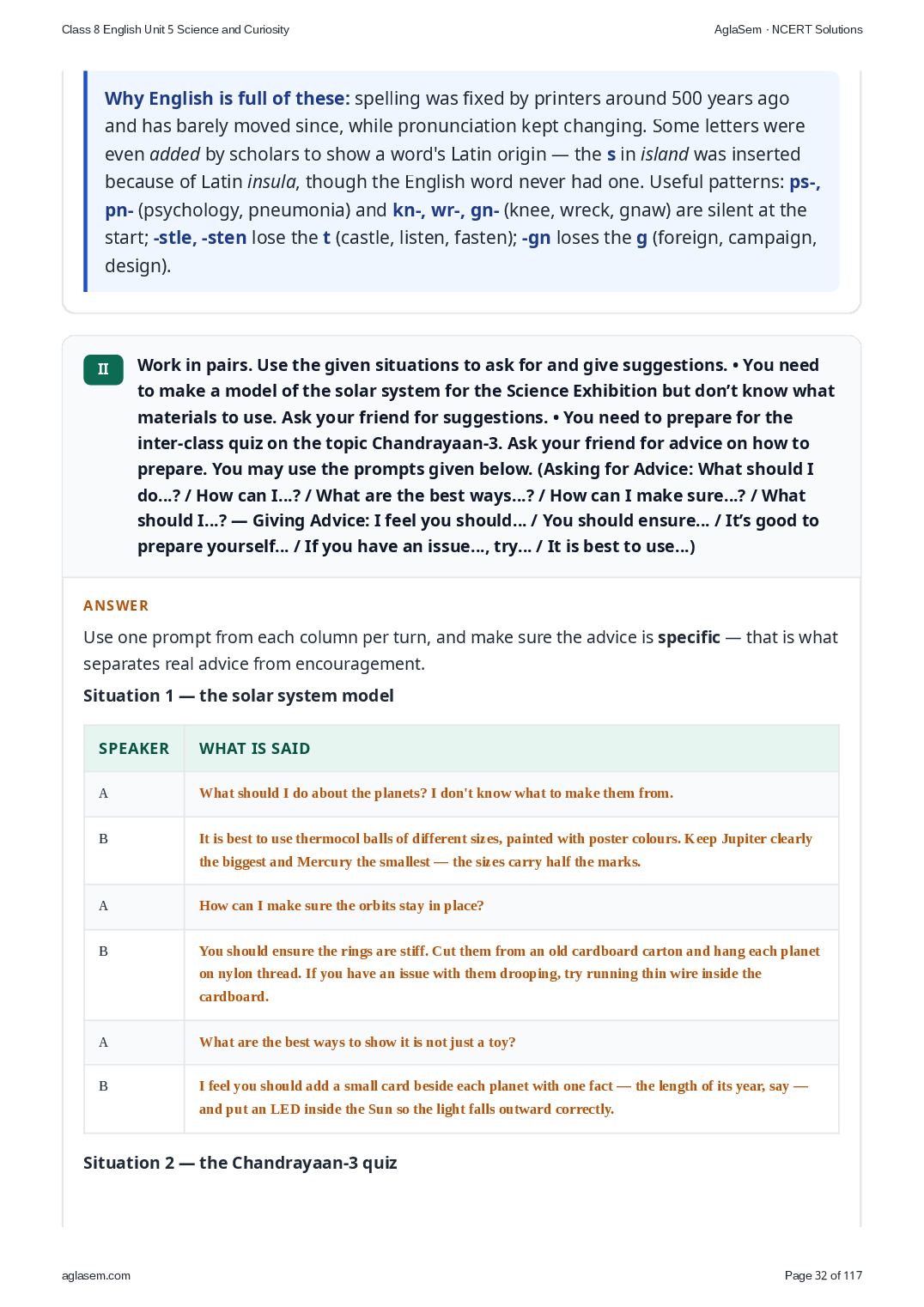
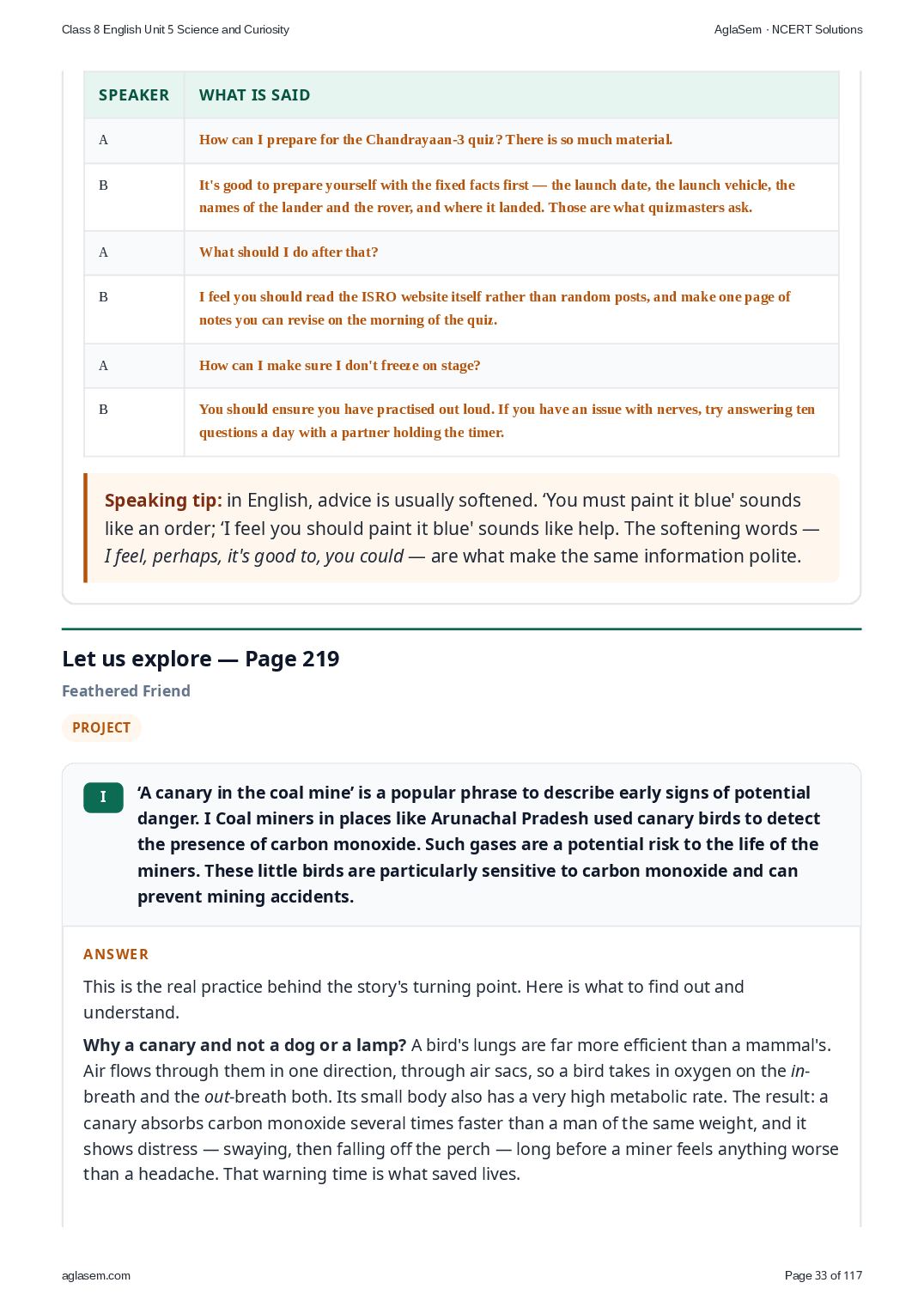
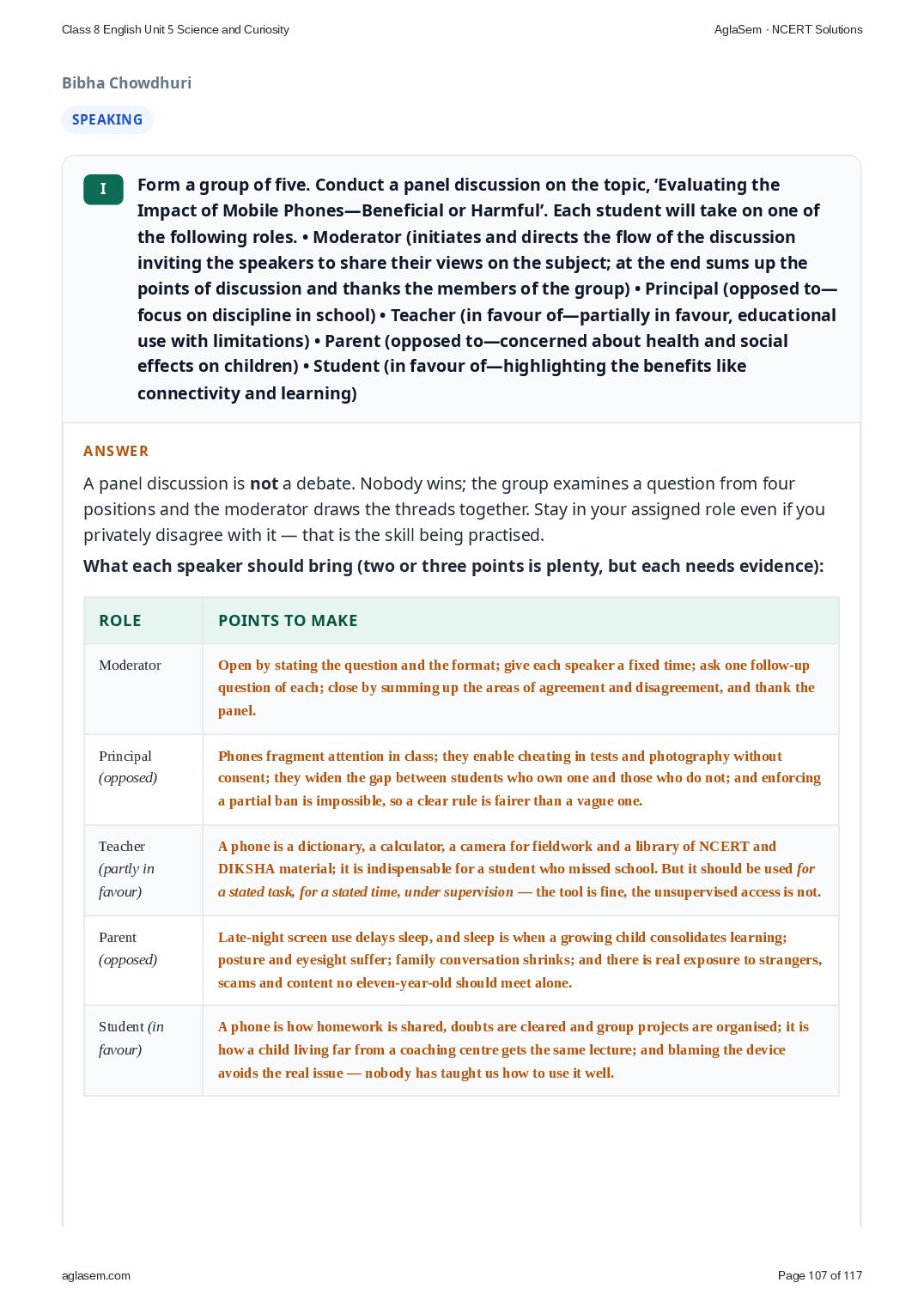
- Work in pairs. Use the given situations to ask for and give suggestions. • You need to make a model of the solar system for the Science Exhibition but don’t know what materials to use. Ask your friend for suggestions. • You need to prepare for the inter-class quiz on the topic Chandrayaan-3. Ask your friend for advice on how to prepare. You may use the prompts given below. (Asking for Advice: What should I do…? / How can I…? / What are the best ways…? / How can I make sure…? / What should I…? — Giving Advice: I feel you should… / You should ensure… / It’s good to prepare yourself… / If you have an issue…, try… / It is best to use…)
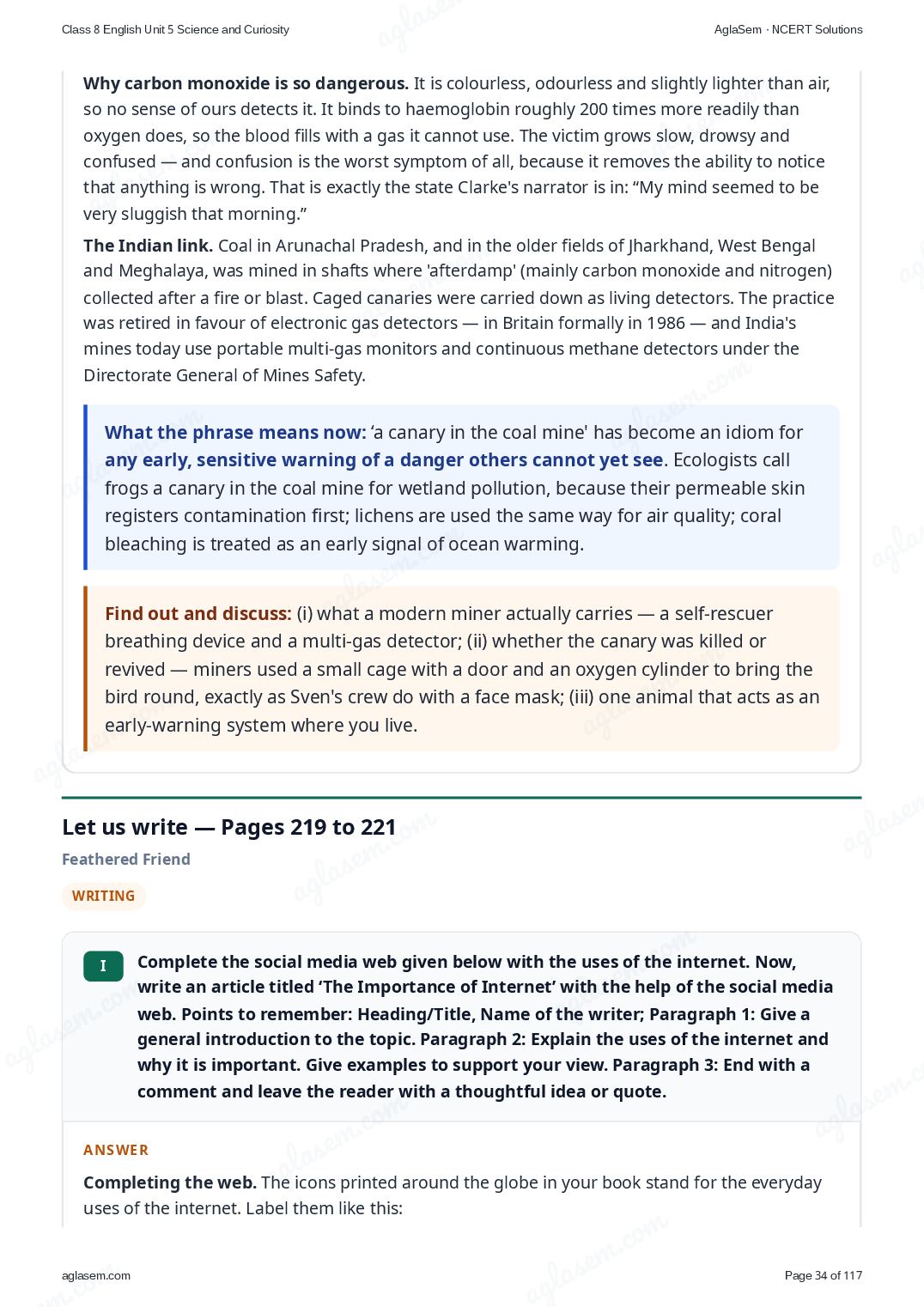
- ‘A canary in the coal mine’ is a popular phrase to describe early signs of potential danger. I Coal miners in places like Arunachal Pradesh used canary birds to detect the presence of carbon monoxide. Such gases are a potential risk to the life of the miners. These little birds are particularly sensitive to carbon monoxide and can prevent mining accidents.
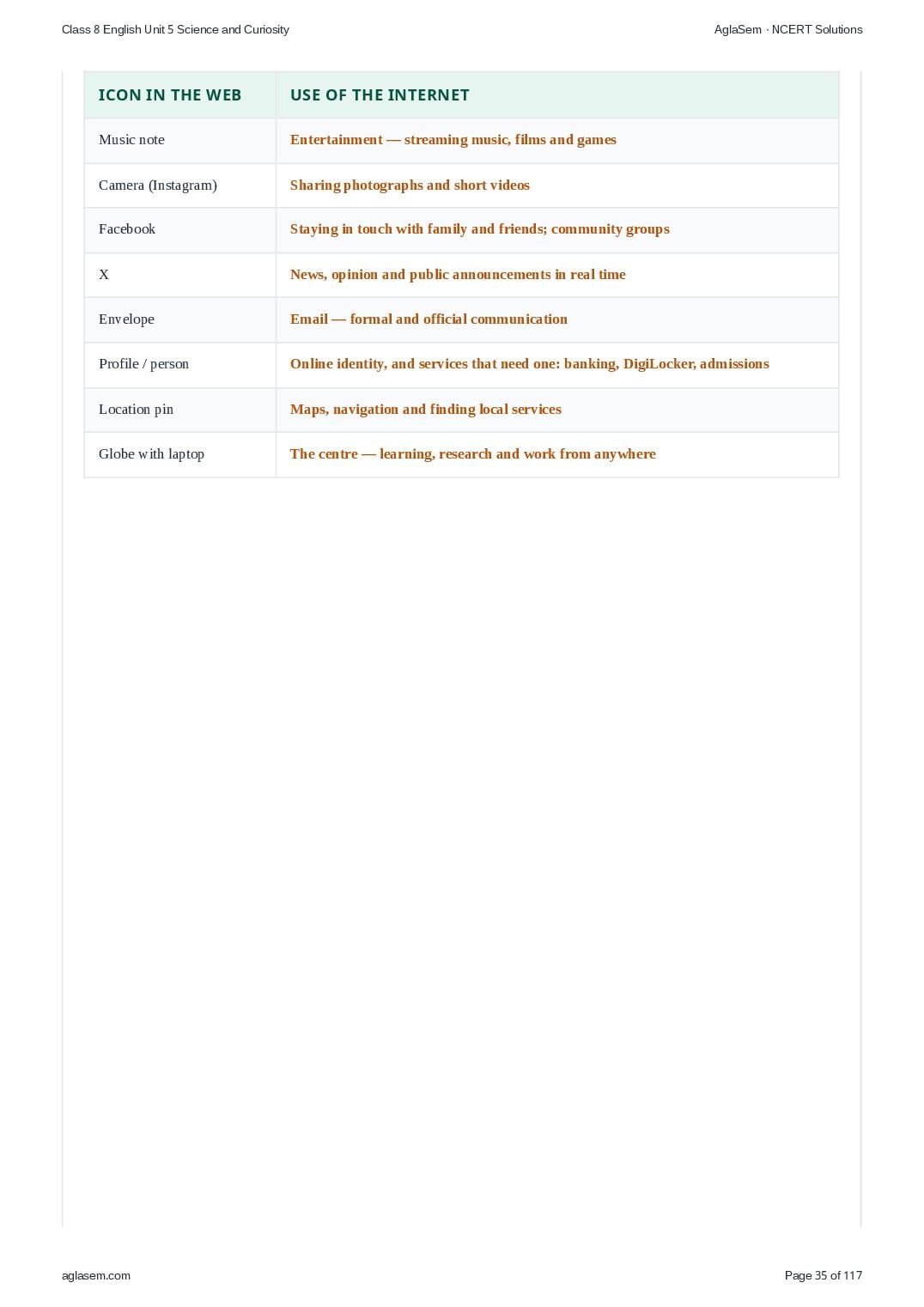
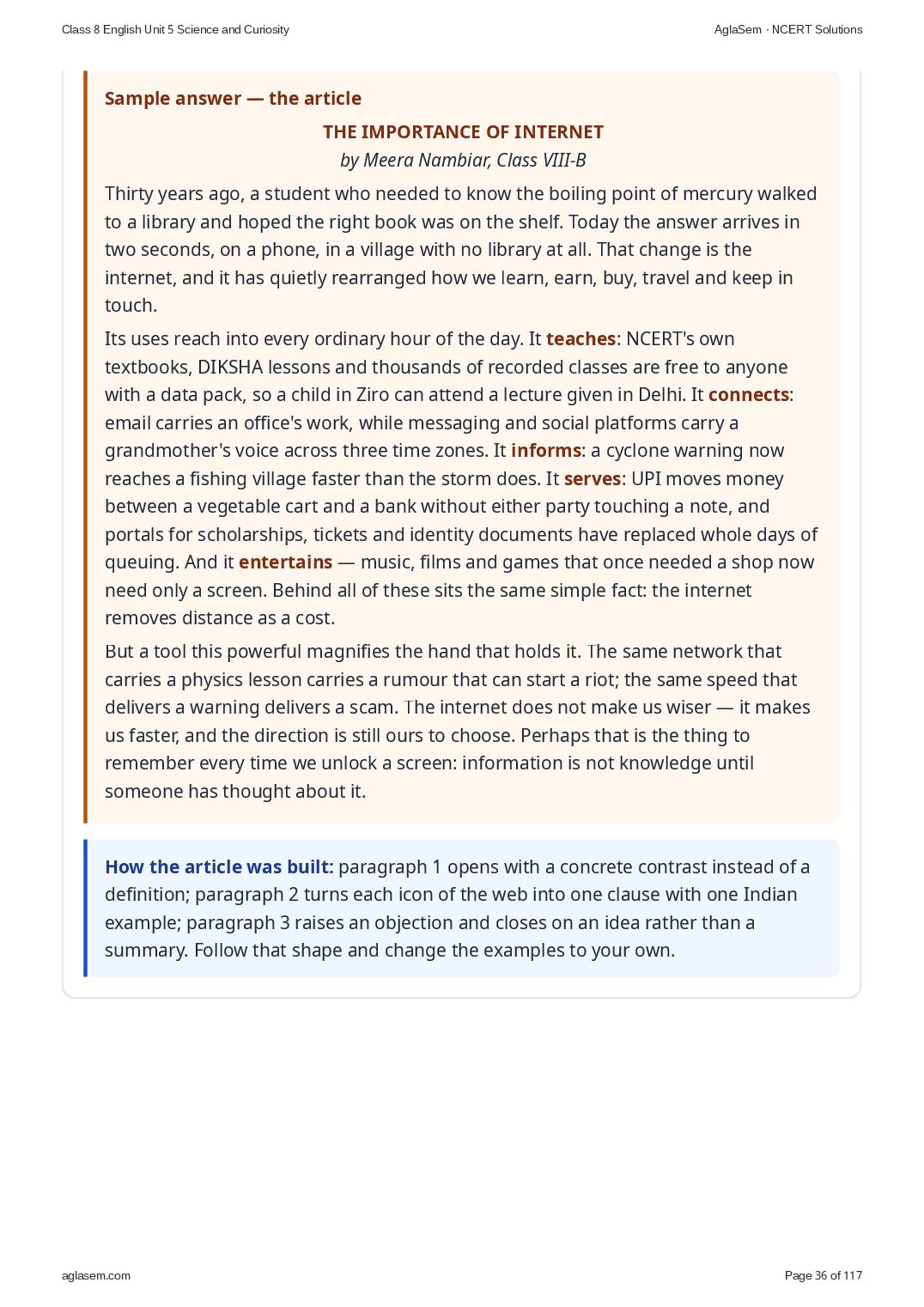
- Complete the social media web given below with the uses of the internet. Now, write an article titled ‘The Importance of Internet’ with the help of the social media web. Points to remember: Heading/Title, Name of the writer; Paragraph 1: Give a general introduction to the topic. Paragraph 2: Explain the uses of the internet and why it is important. Give examples to support your view. Paragraph 3: End with a comment and leave the reader with a thoughtful idea or quote.
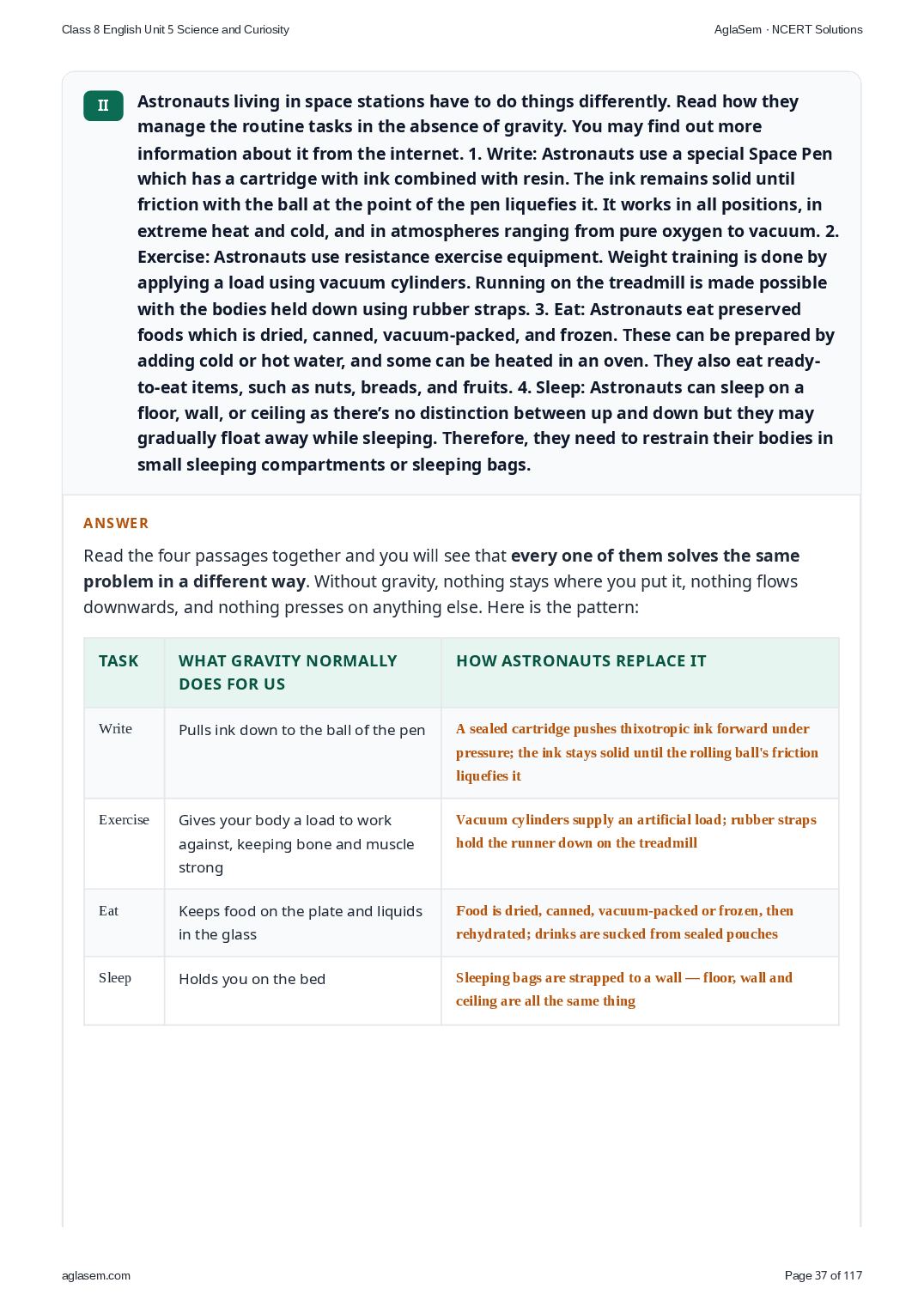
- Astronauts living in space stations have to do things differently. Read how they manage the routine tasks in the absence of gravity. You may find out more information about it from the internet. 1. Write: Astronauts use a special Space Pen which has a cartridge with ink combined with resin. The ink remains solid until friction with the ball at the point of the pen liquefies it. It works in all positions, in extreme heat and cold, and in atmospheres ranging from pure oxygen to vacuum. 2. Exercise: Astronauts use resistance exercise equipment. Weight training is done by applying a load using vacuum cylinders. Running on the treadmill is made possible with the bodies held down using rubber straps. 3. Eat: Astronauts eat preserved foods which is dried, canned, vacuum-packed, and frozen. These can be prepared by adding cold or hot water, and some can be heated in an oven. They also eat ready-to-eat items, such as nuts, breads, and fruits. 4. Sleep: Astronauts can sleep on a floor, wall, or ceiling as there’s no distinction between up and down but they may gradually float away while sleeping. Therefore, they need to restrain their bodies in small sleeping compartments or sleeping bags.
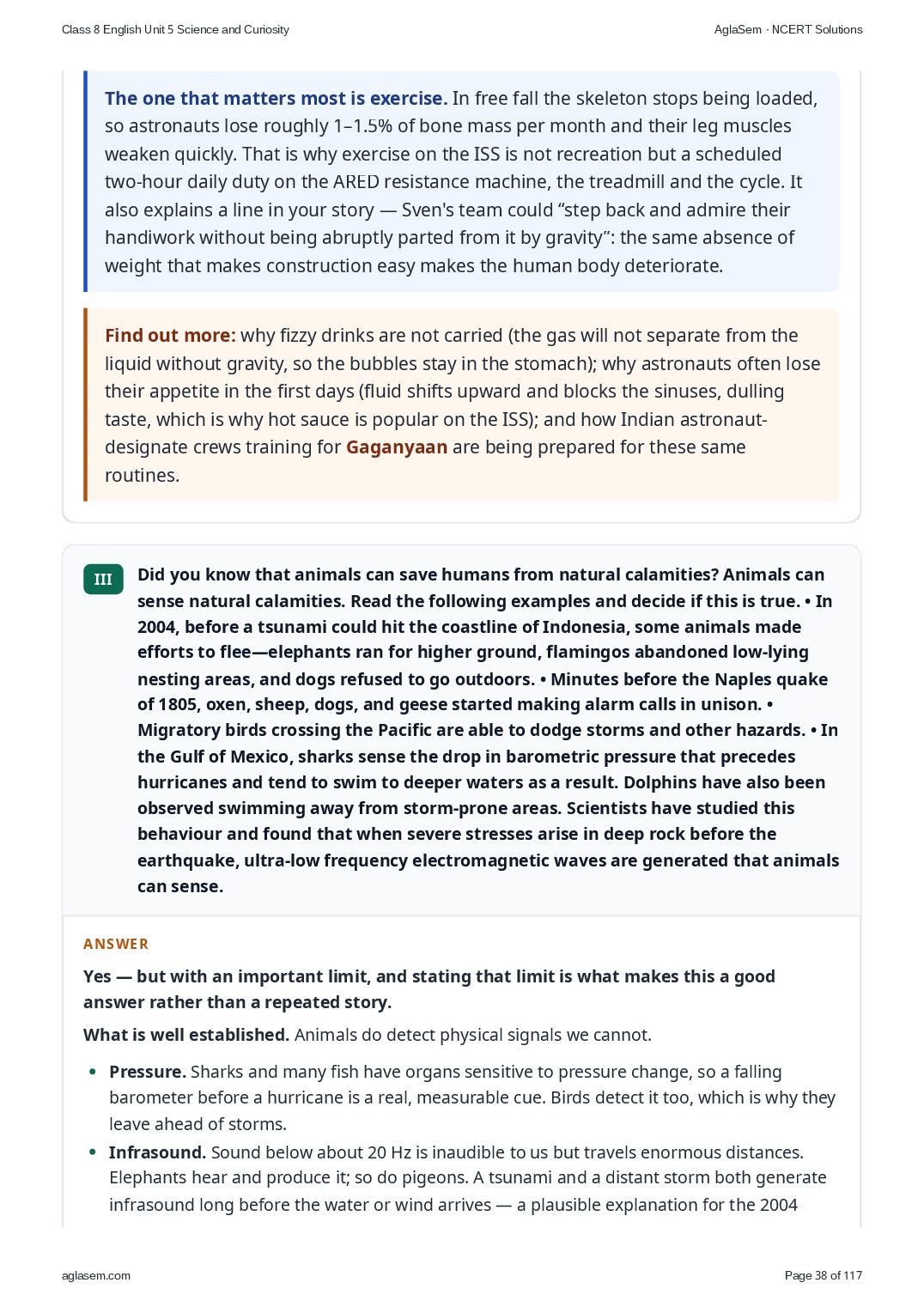
- Did you know that animals can save humans from natural calamities? Animals can sense natural calamities. Read the following examples and decide if this is true. • In 2004, before a tsunami could hit the coastline of Indonesia, some animals made efforts to flee—elephants ran for higher ground, flamingos abandoned low-lying nesting areas, and dogs refused to go outdoors. • Minutes before the Naples quake of 1805, oxen, sheep, dogs, and geese started making alarm calls in unison. • Migratory birds crossing the Pacific are able to dodge storms and other hazards. • In the Gulf of Mexico, sharks sense the drop in barometric pressure that precedes hurricanes and tend to swim to deeper waters as a result. Dolphins have also been observed swimming away from storm-prone areas. Scientists have studied this behaviour and found that when severe stresses arise in deep rock before the earthquake, ultra-low frequency electromagnetic waves are generated that animals can sense.
- Salim Ali, the ‘Birdman of India’, was an Indian ornithologist (a person who studies birds). He was the first Indian to conduct systematic bird surveys across India and wrote several books on birds. He was awarded the Padma Bhushan in 1958 and the Padma Vibhushan in 1976.
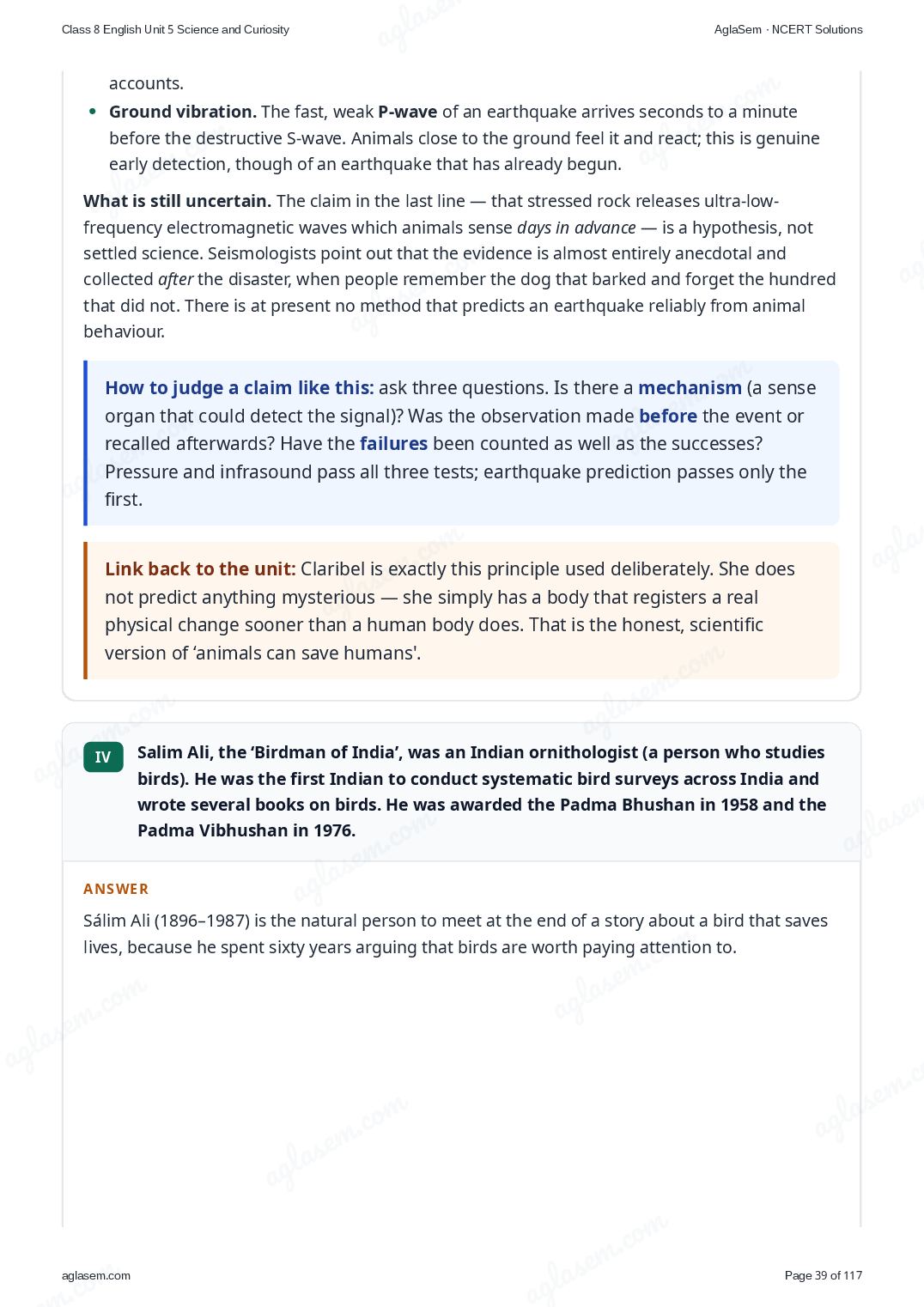
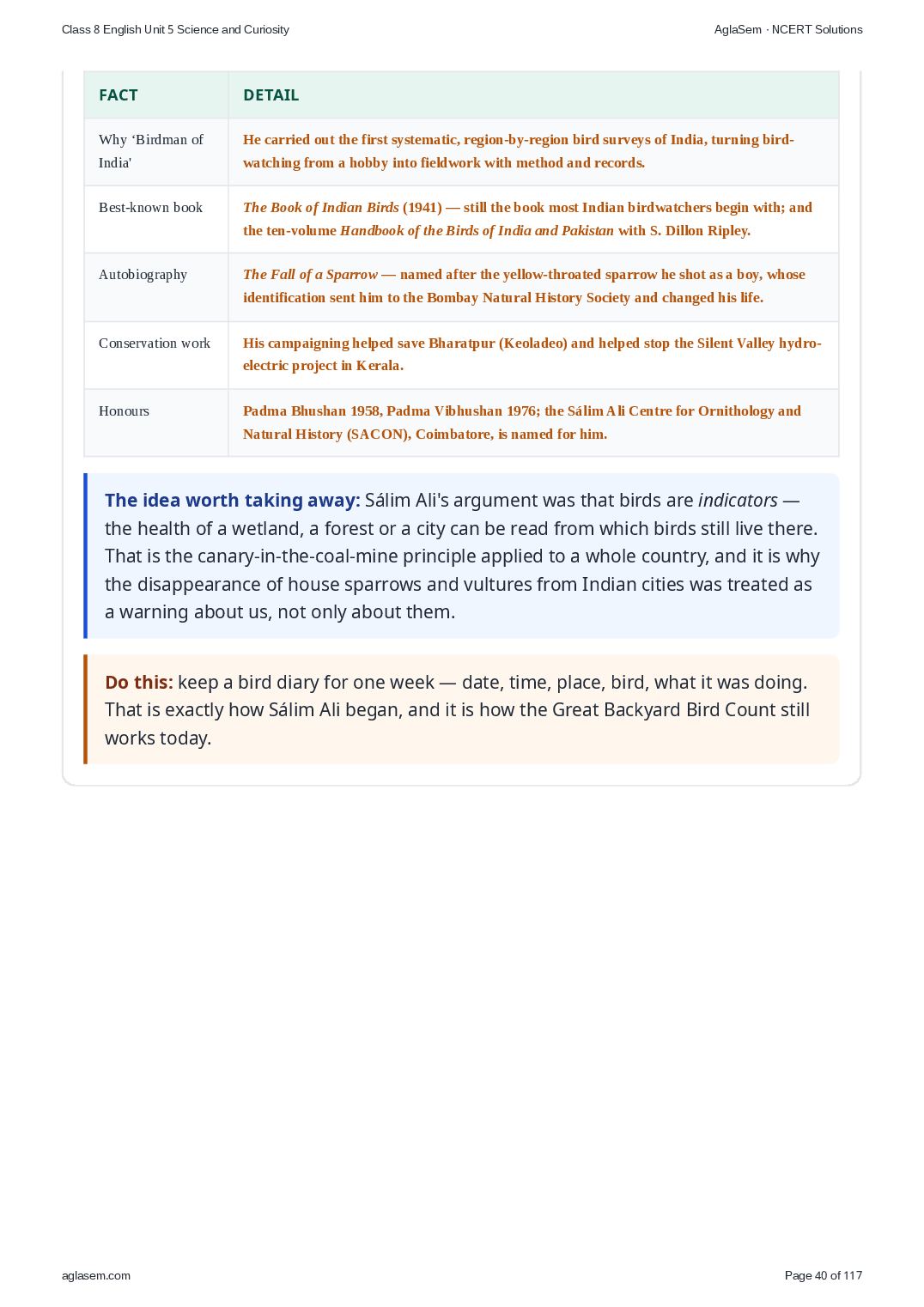
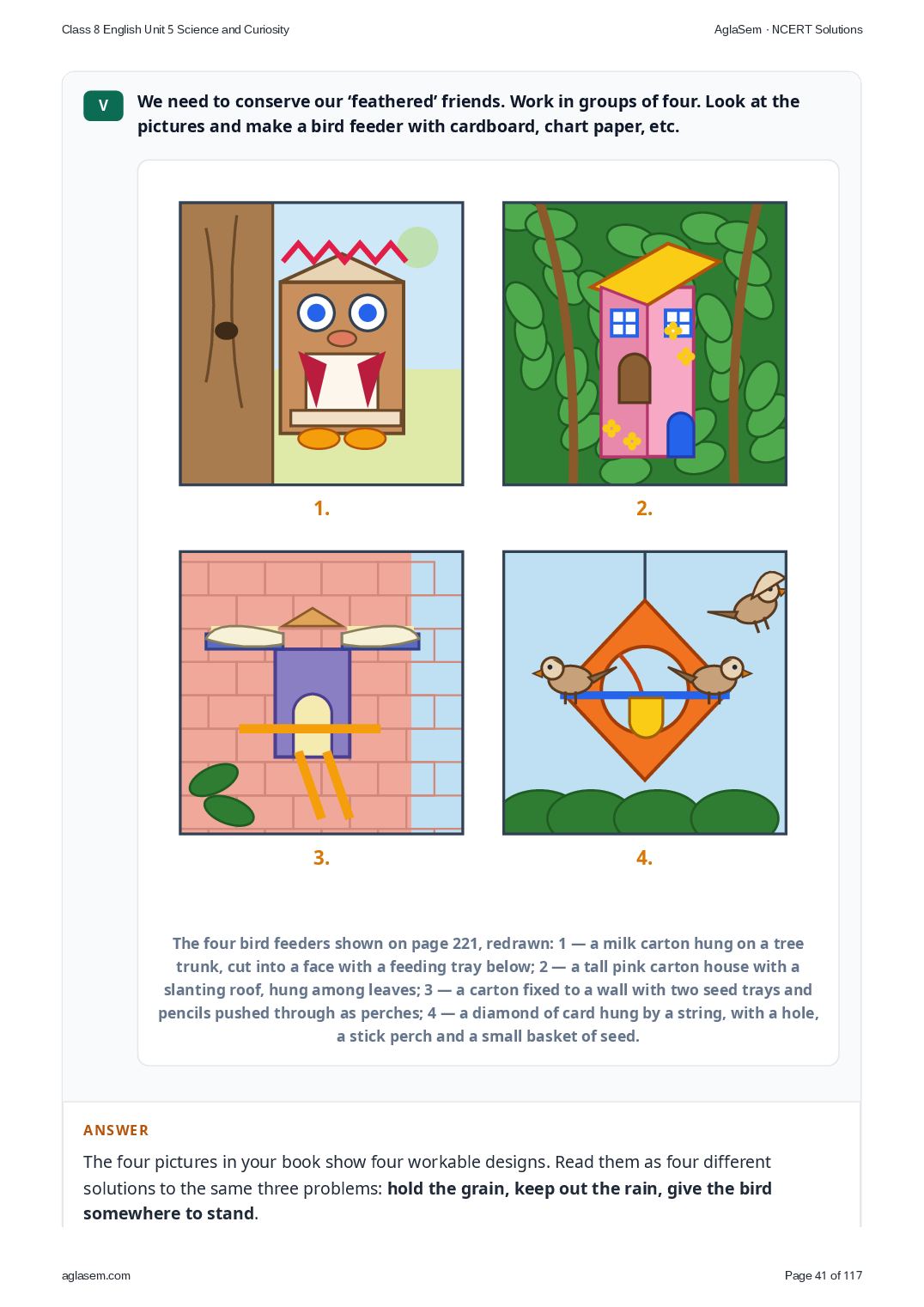
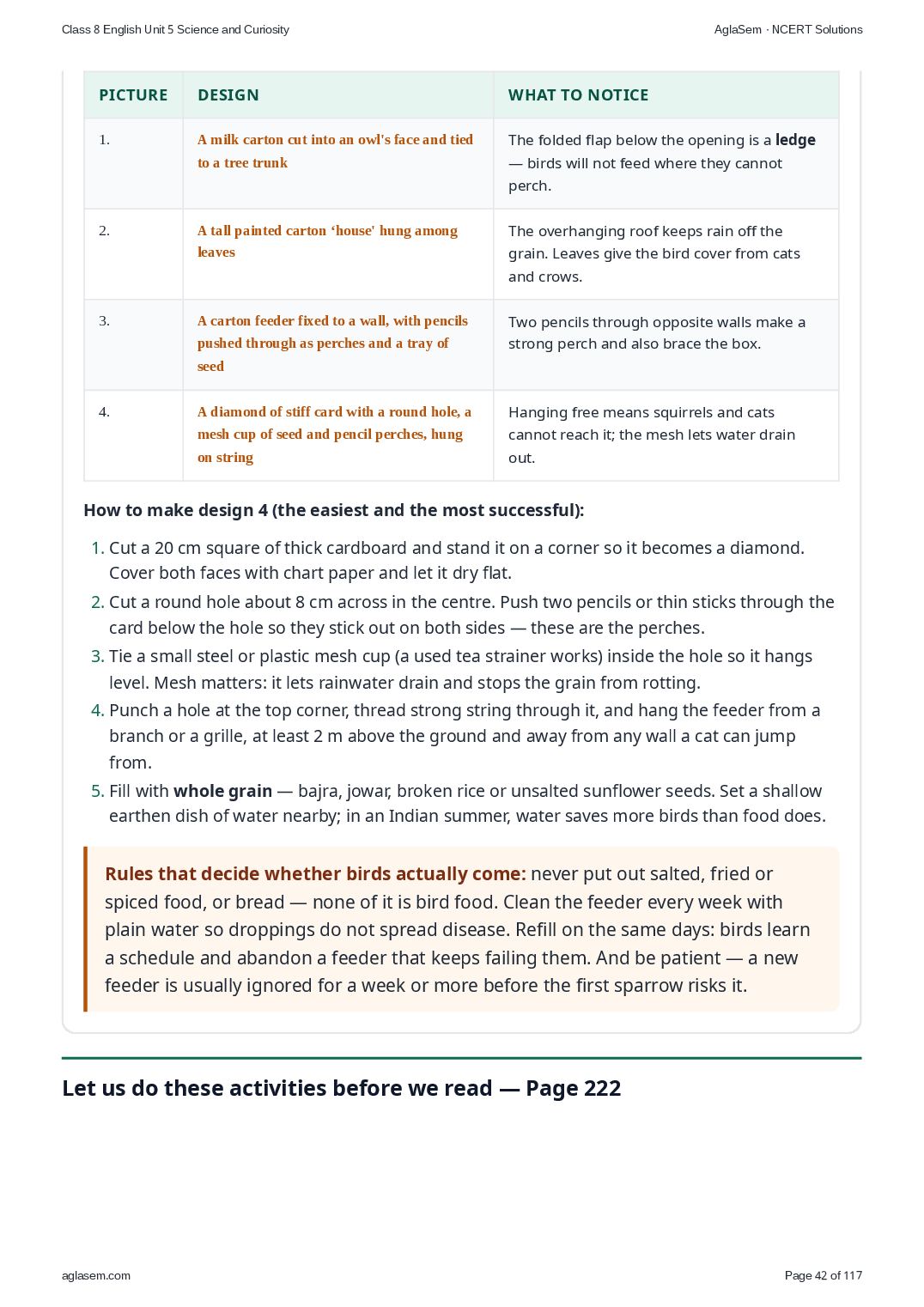
- We need to conserve our ‘feathered’ friends. Work in groups of four. Look at the pictures and make a bird feeder with cardboard, chart paper, etc.
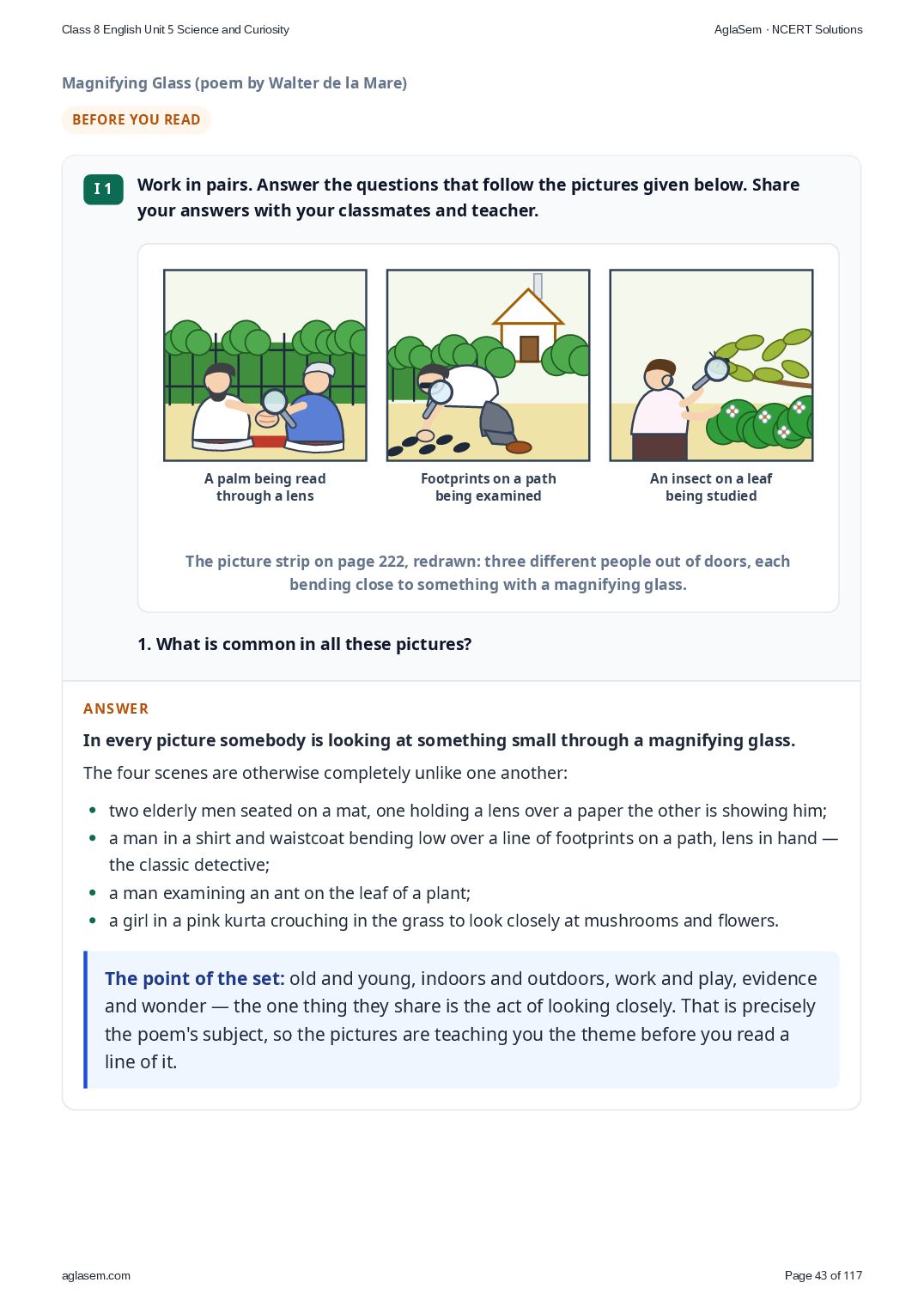
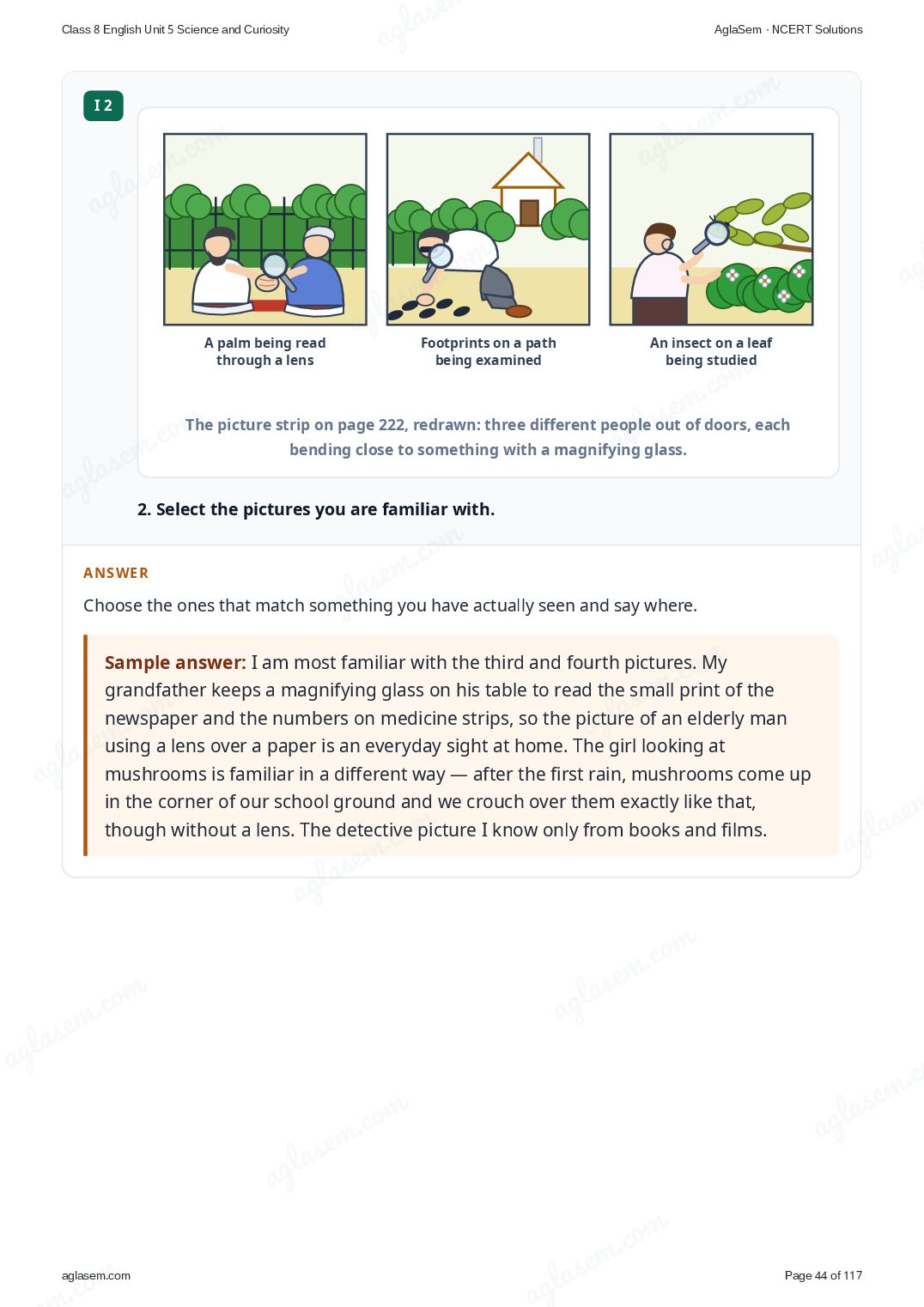
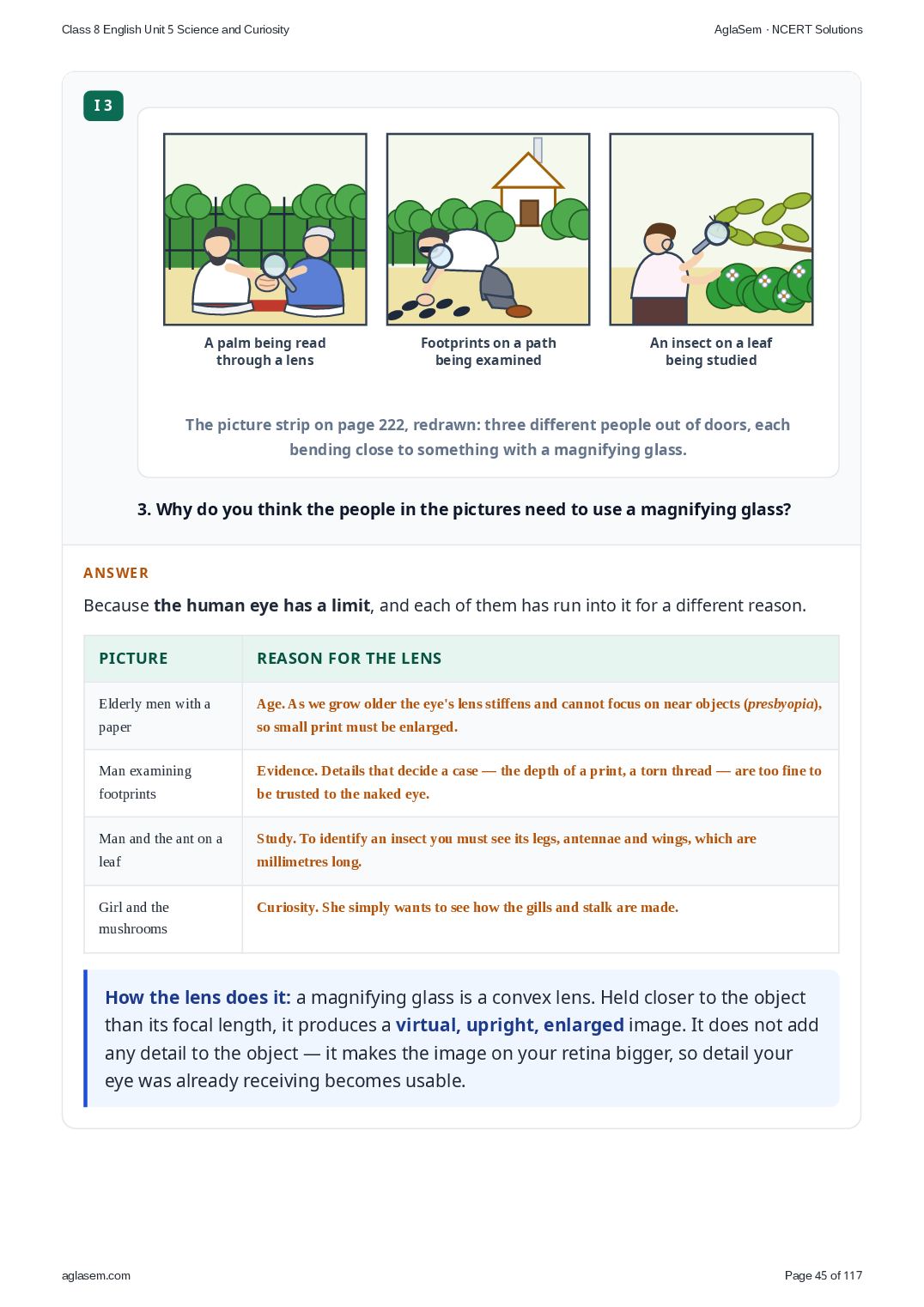
- Work in pairs. Answer the questions that follow the pictures given below. Share your answers with your classmates and teacher. 1. What is common in all these pictures?
- 2. Select the pictures you are familiar with.
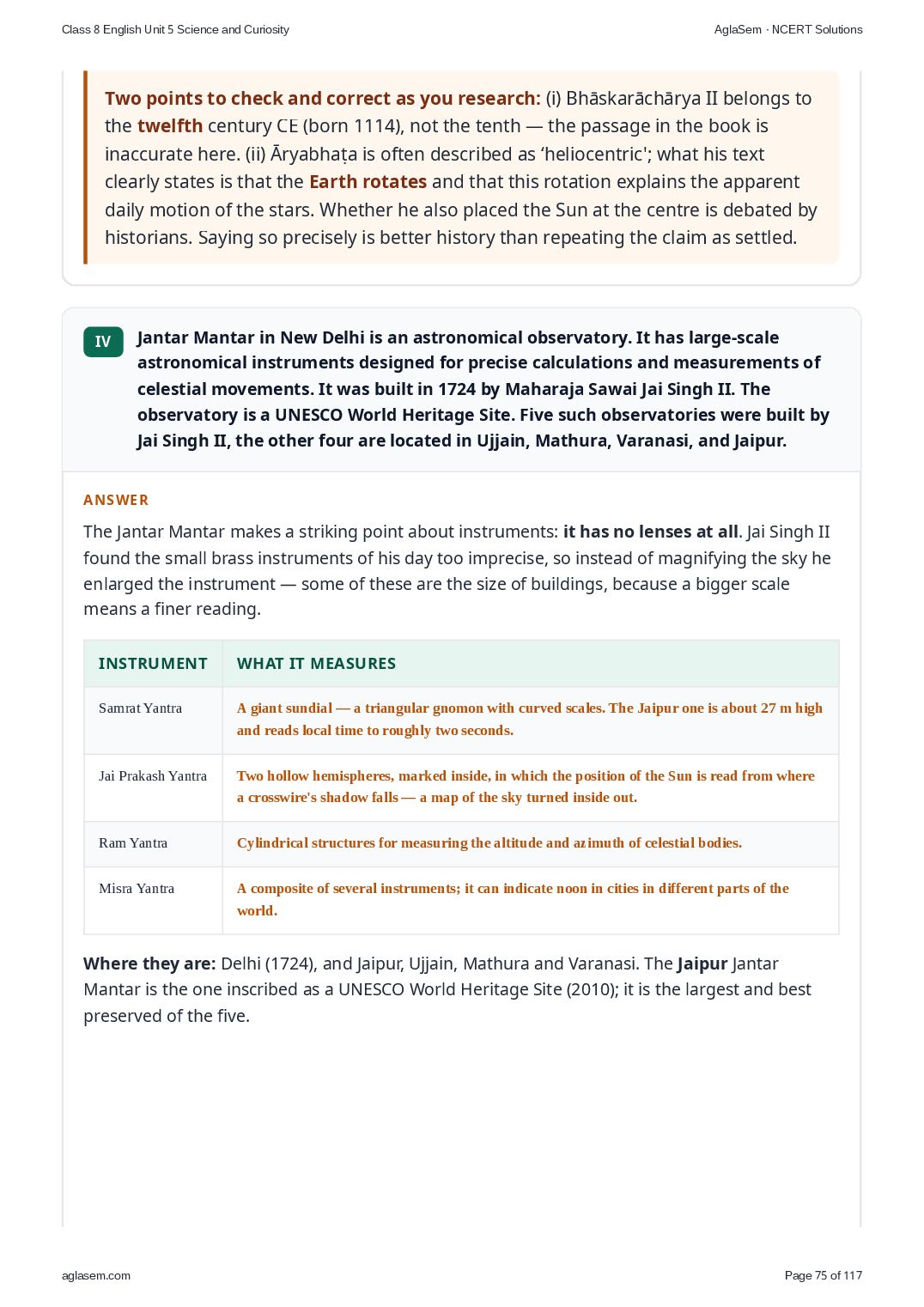
- 3. Why do you think the people in the pictures need to use a magnifying glass?
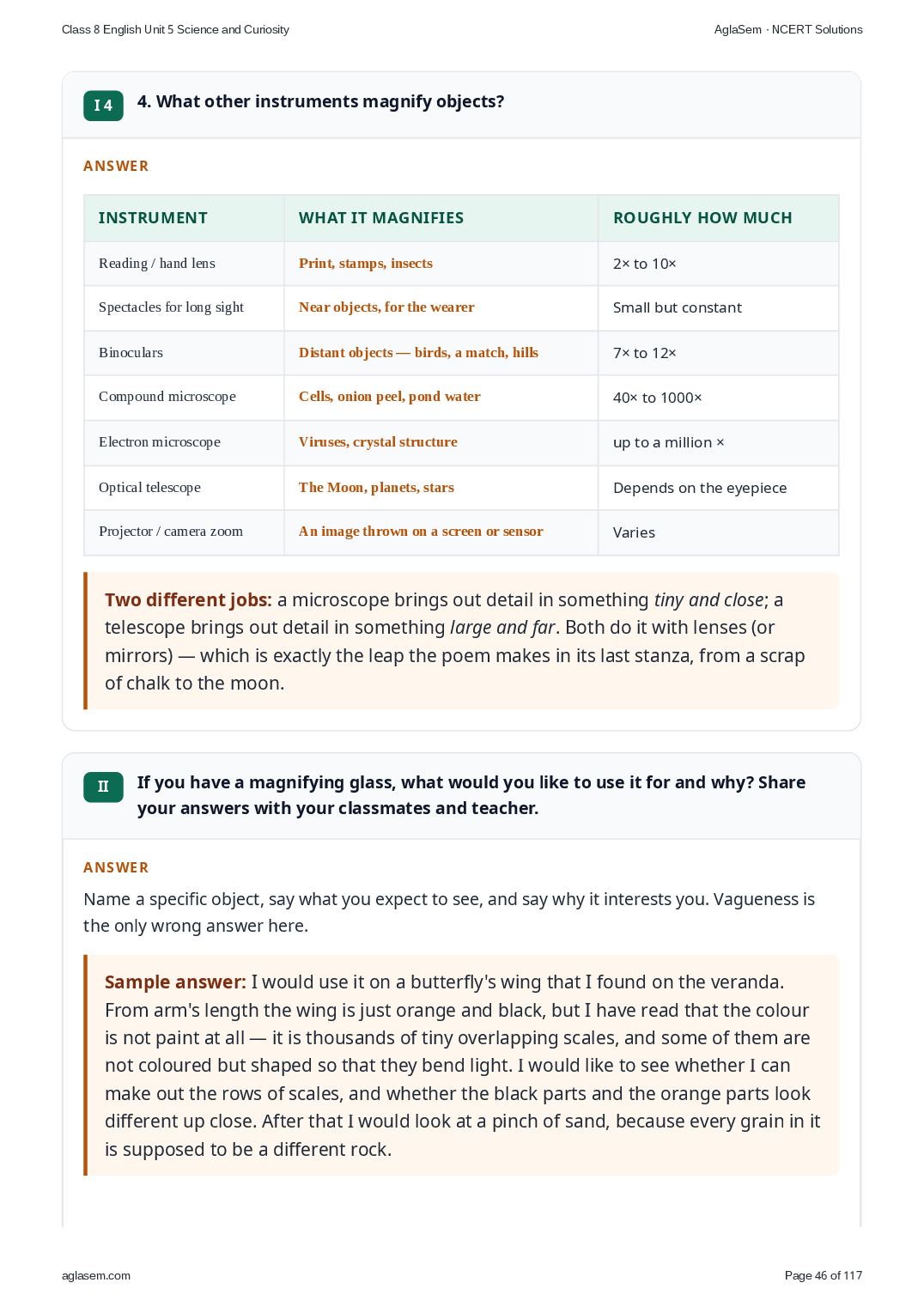
- 4. What other instruments magnify objects?
- If you have a magnifying glass, what would you like to use it for and why? Share your answers with your classmates and teacher.
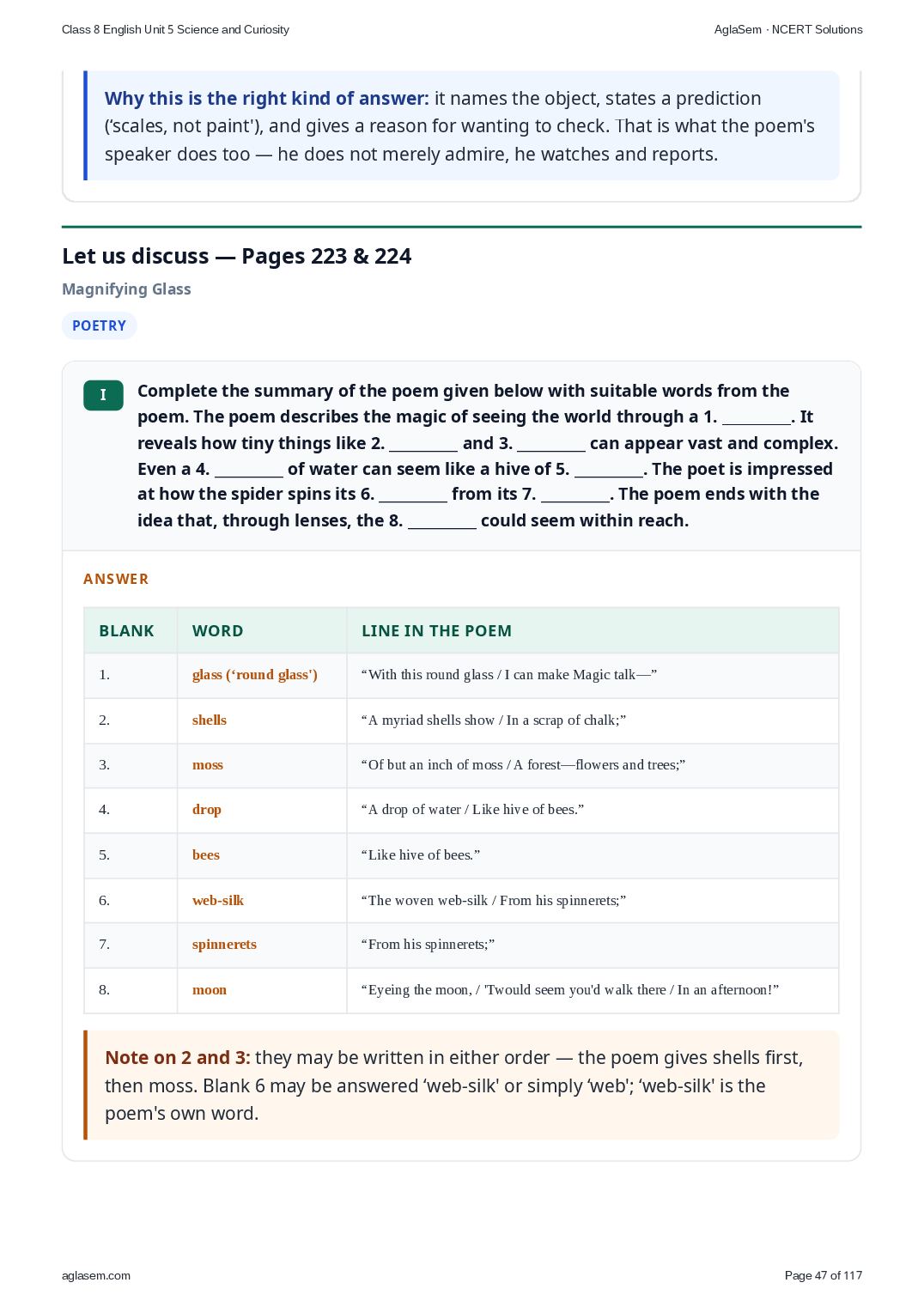
- Complete the summary of the poem given below with suitable words from the poem. The poem describes the magic of seeing the world through a 1. __________. It reveals how tiny things like 2. __________ and 3. __________ can appear vast and complex. Even a 4. __________ of water can seem like a hive of 5. __________. The poet is impressed at how the spider spins its 6. __________ from its 7. __________. The poem ends with the idea that, through lenses, the 8. __________ could seem within reach.
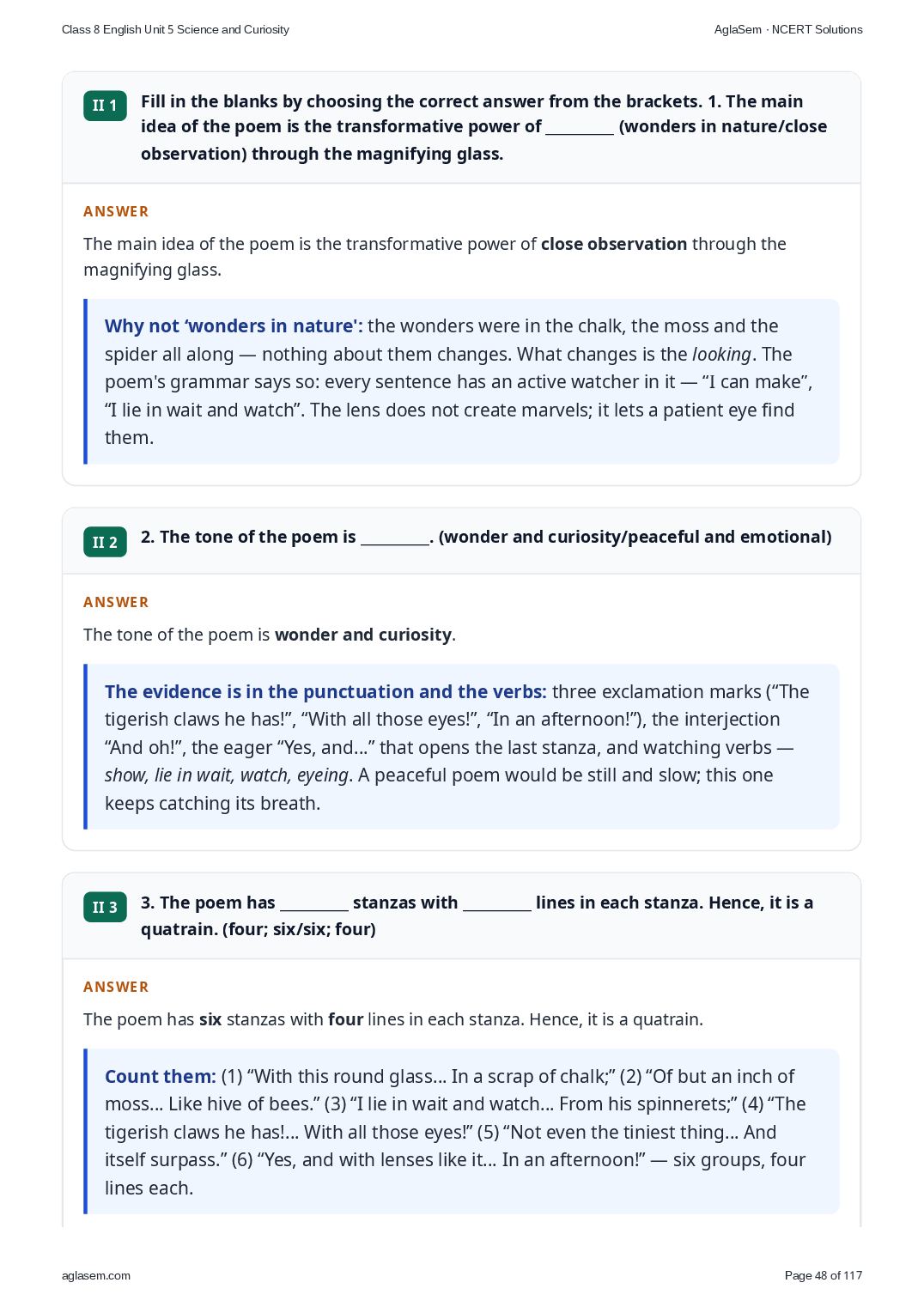
- Fill in the blanks by choosing the correct answer from the brackets. 1. The main idea of the poem is the transformative power of __________ (wonders in nature/close observation) through the magnifying glass.
- 2. The tone of the poem is __________. (wonder and curiosity/peaceful and emotional)
- 3. The poem has __________ stanzas with __________ lines in each stanza. Hence, it is a quatrain. (four; six/six; four)
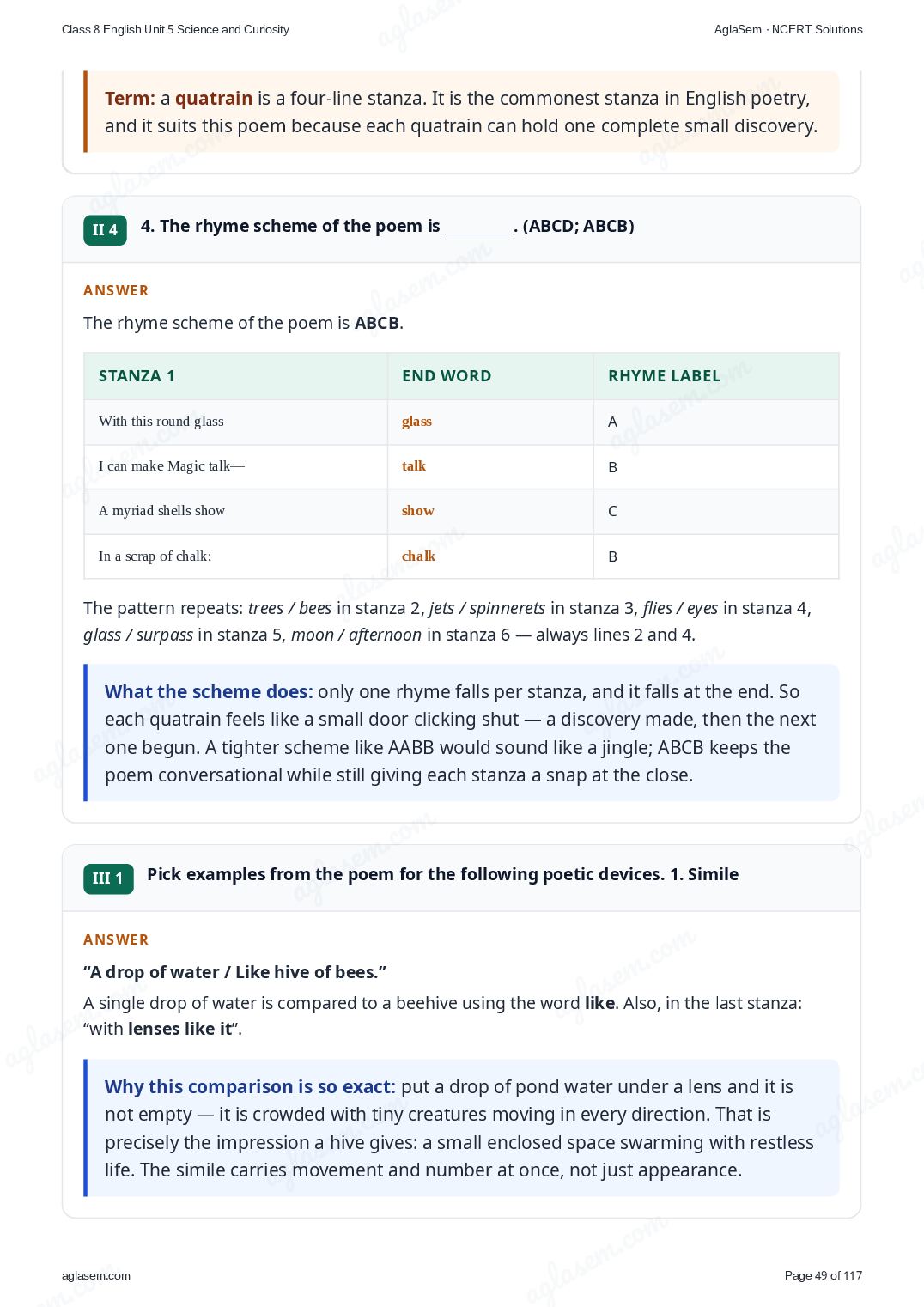
- 4. The rhyme scheme of the poem is __________. (ABCD; ABCB)
- Pick examples from the poem for the following poetic devices. 1. Simile
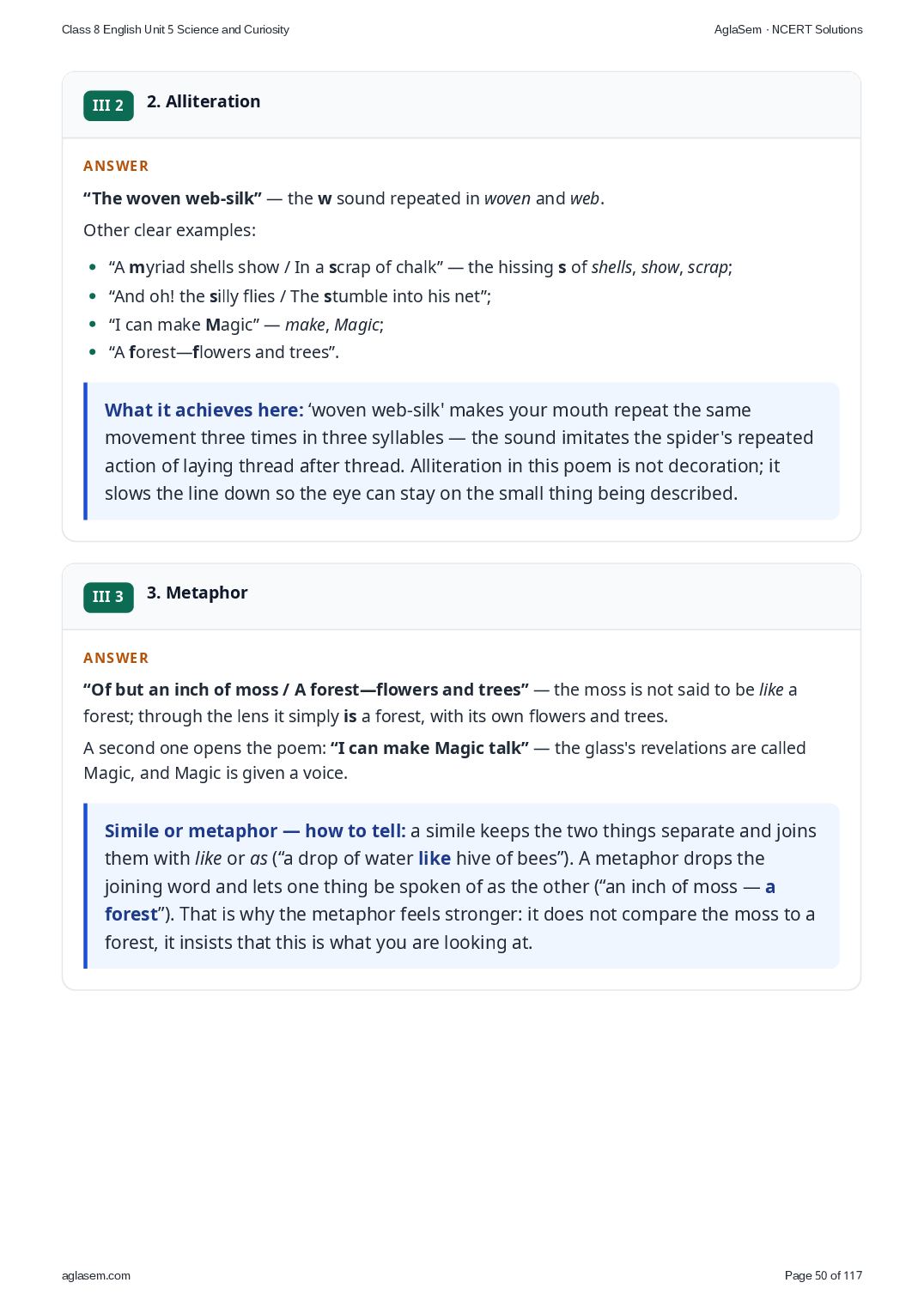
- 2. Alliteration
- 3. Metaphor
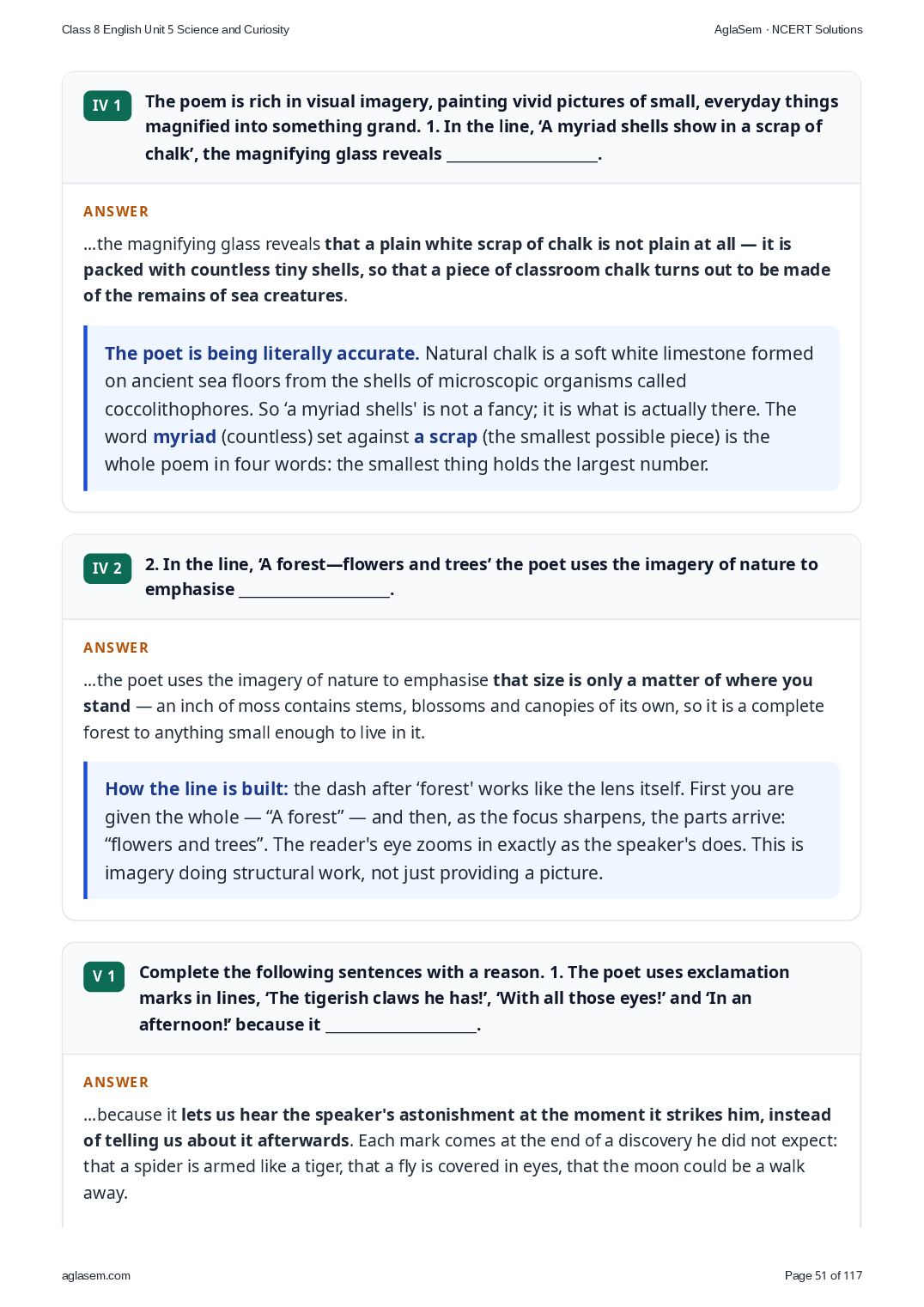
- The poem is rich in visual imagery, painting vivid pictures of small, everyday things magnified into something grand. 1. In the line, ‘A myriad shells show in a scrap of chalk’, the magnifying glass reveals ______________________.
- 2. In the line, ‘A forest—flowers and trees’ the poet uses the imagery of nature to emphasise ______________________.
- Complete the following sentences with a reason. 1. The poet uses exclamation marks in lines, ‘The tigerish claws he has!’, ‘With all those eyes!’ and ‘In an afternoon!’ because it ______________________.
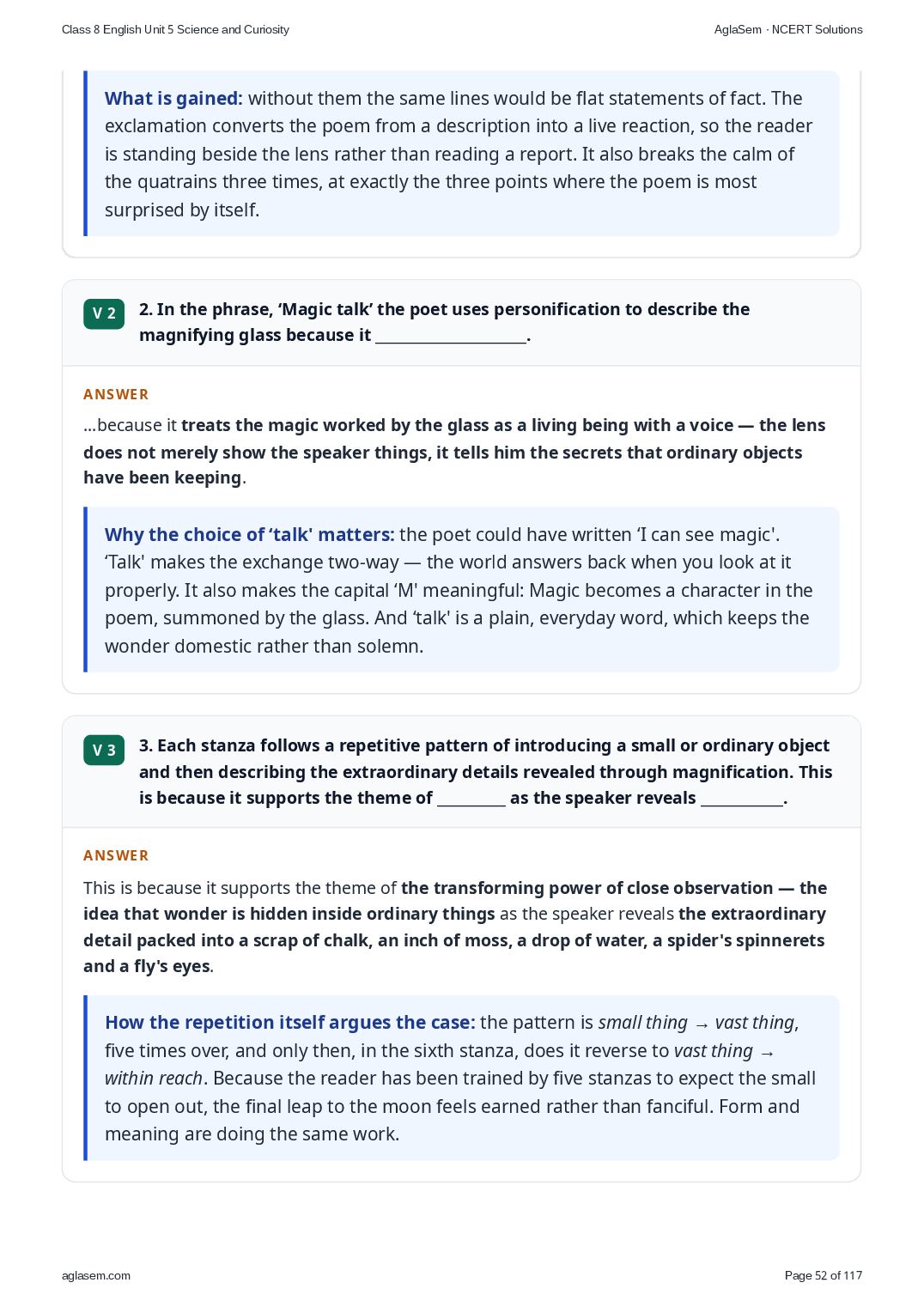
- 2. In the phrase, ‘Magic talk’ the poet uses personification to describe the magnifying glass because it ______________________.
- 3. Each stanza follows a repetitive pattern of introducing a small or ordinary object and then describing the extraordinary details revealed through magnification. This is because it supports the theme of __________ as the speaker reveals ____________.
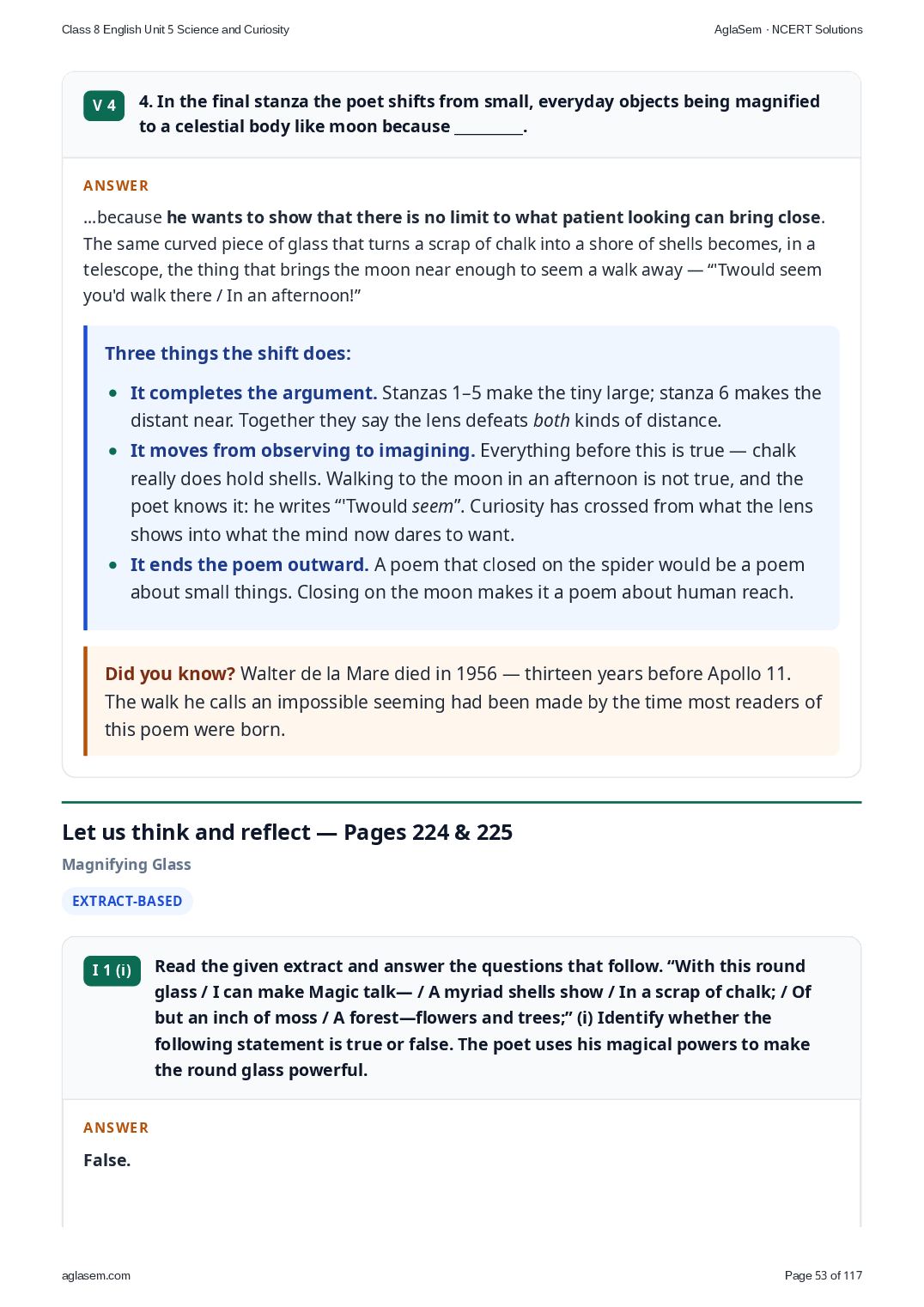
- 4. In the final stanza the poet shifts from small, everyday objects being magnified to a celestial body like moon because __________.
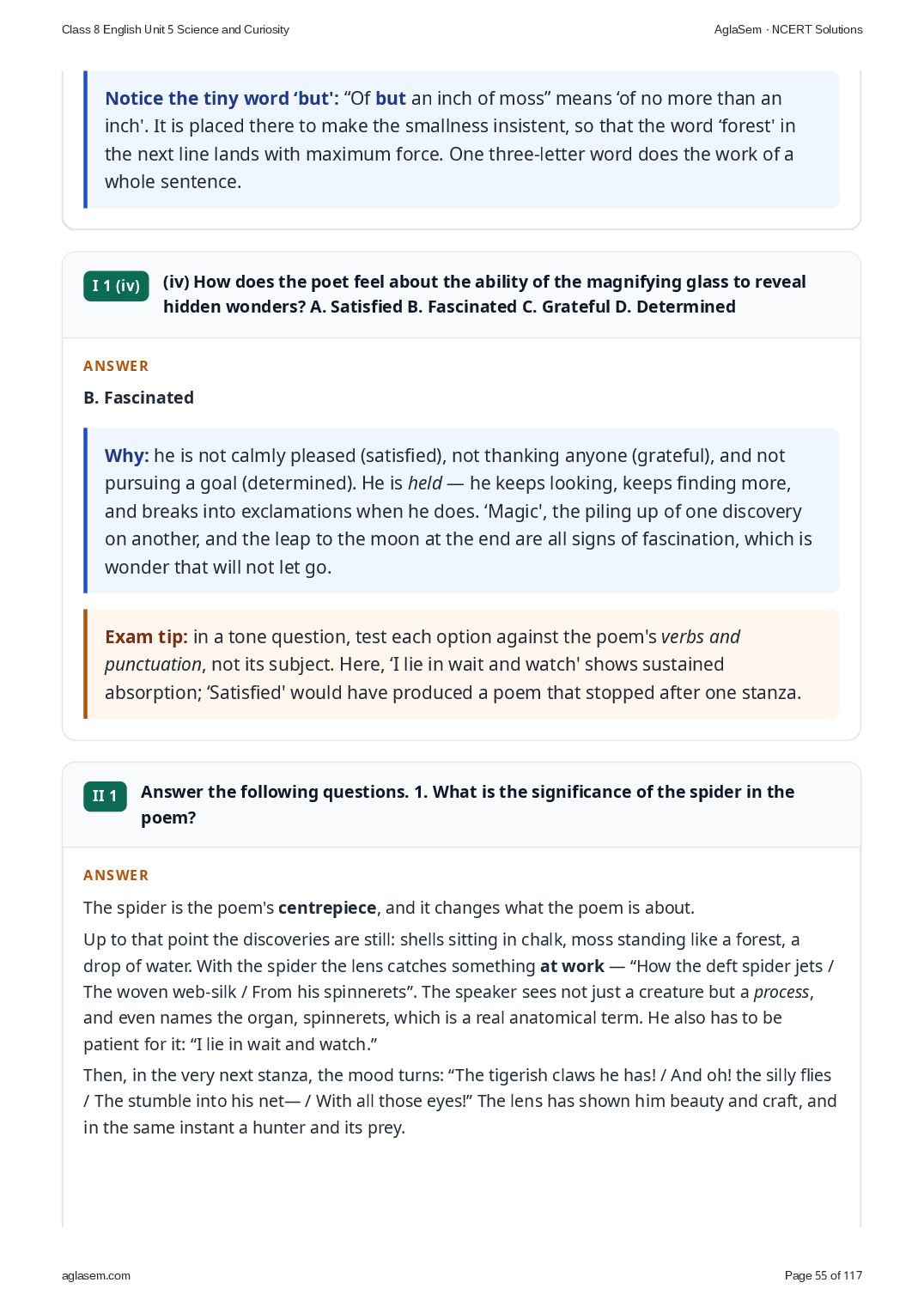
- Read the given extract and answer the questions that follow. “With this round glass / I can make Magic talk— / A myriad shells show / In a scrap of chalk; / Of but an inch of moss / A forest—flowers and trees;” (i) Identify whether the following statement is true or false. The poet uses his magical powers to make the round glass powerful.
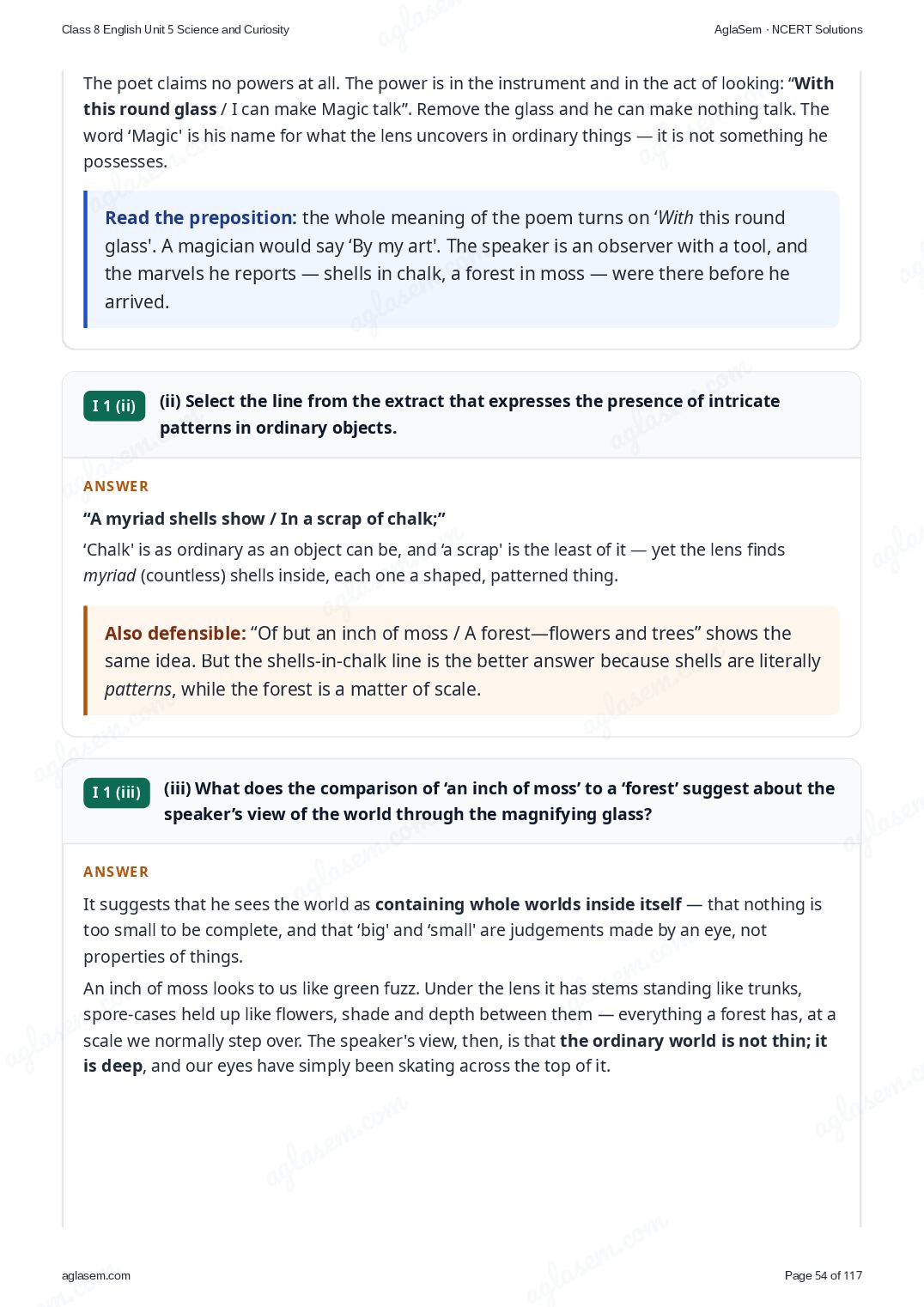
- (ii) Select the line from the extract that expresses the presence of intricate patterns in ordinary objects.
- (iii) What does the comparison of ‘an inch of moss’ to a ‘forest’ suggest about the speaker’s view of the world through the magnifying glass?
- (iv) How does the poet feel about the ability of the magnifying glass to reveal hidden wonders? A. Satisfied B. Fascinated C. Grateful D. Determined
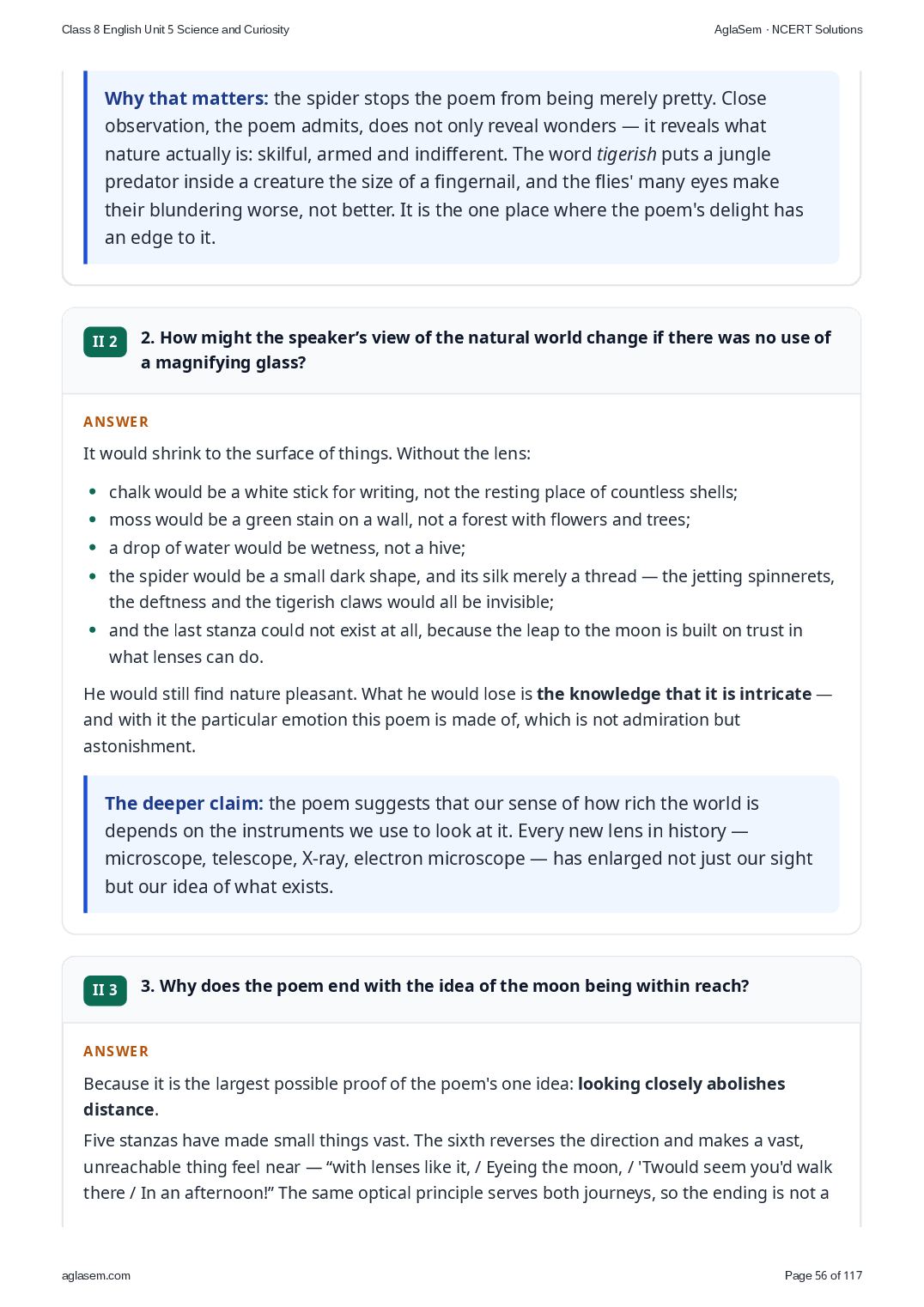
- Answer the following questions. 1. What is the significance of the spider in the poem?
- 2. How might the speaker’s view of the natural world change if there was no use of a magnifying glass?
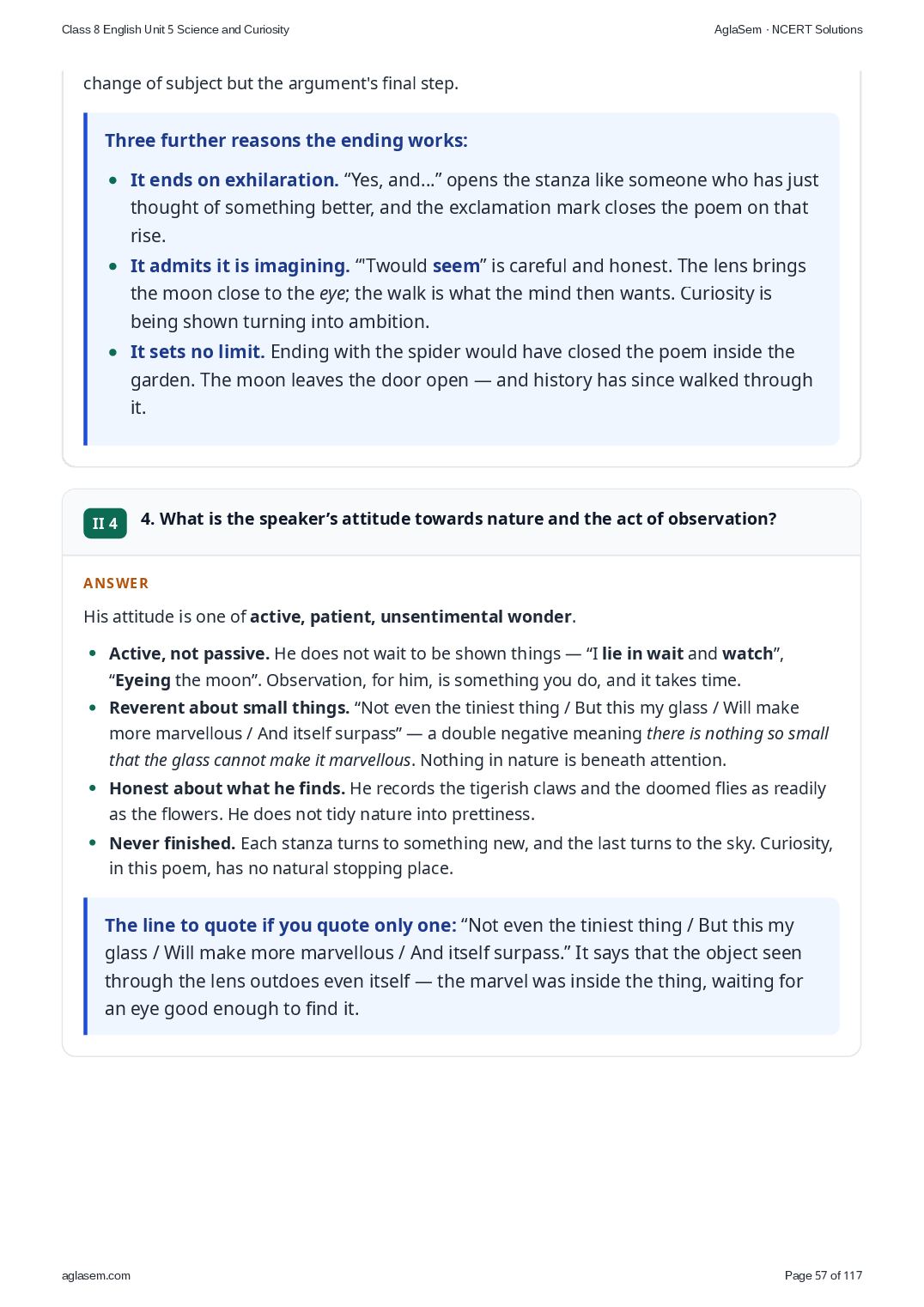
- 3. Why does the poem end with the idea of the moon being within reach?
- 4. What is the speaker’s attitude towards nature and the act of observation?
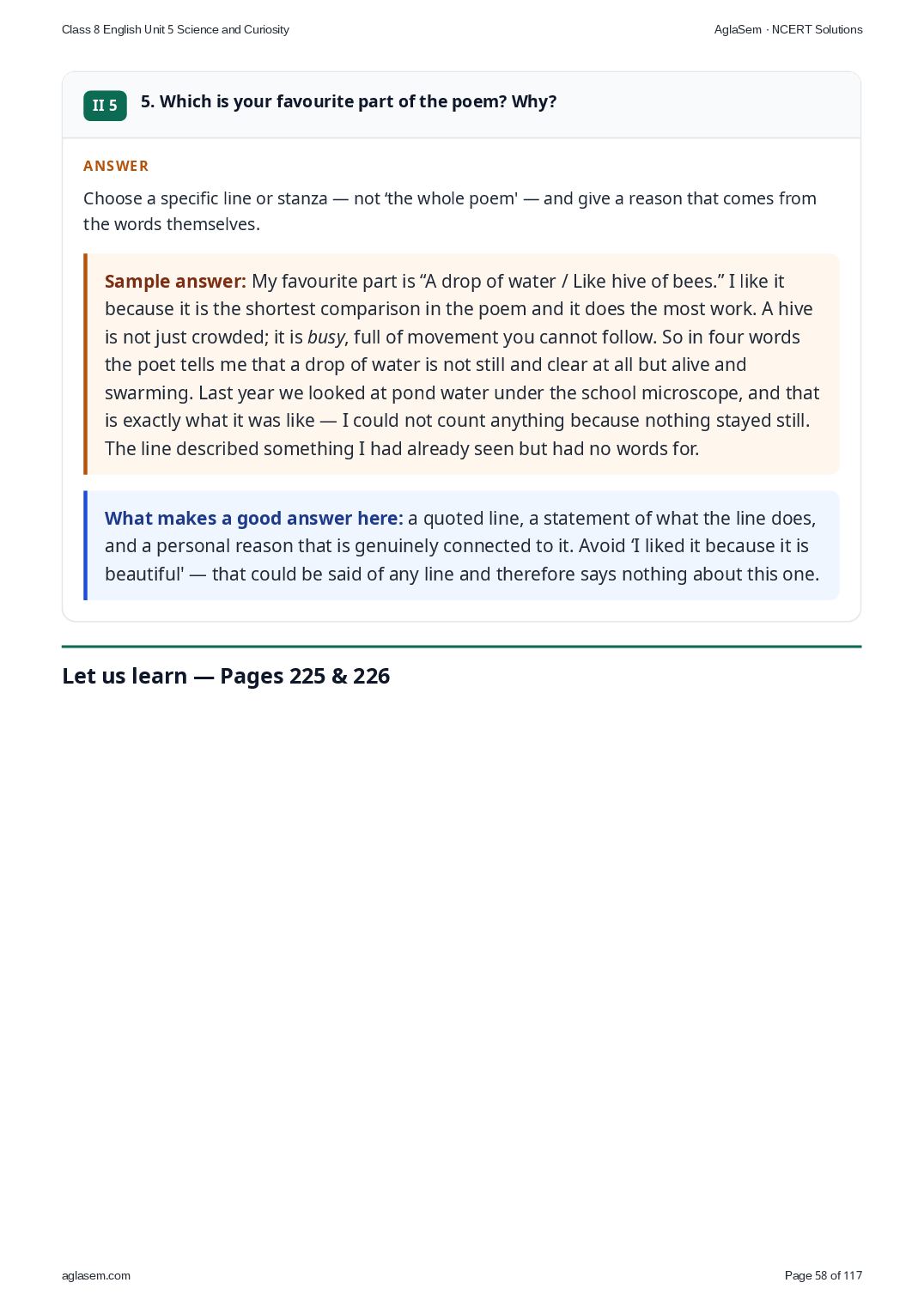
- 5. Which is your favourite part of the poem? Why?
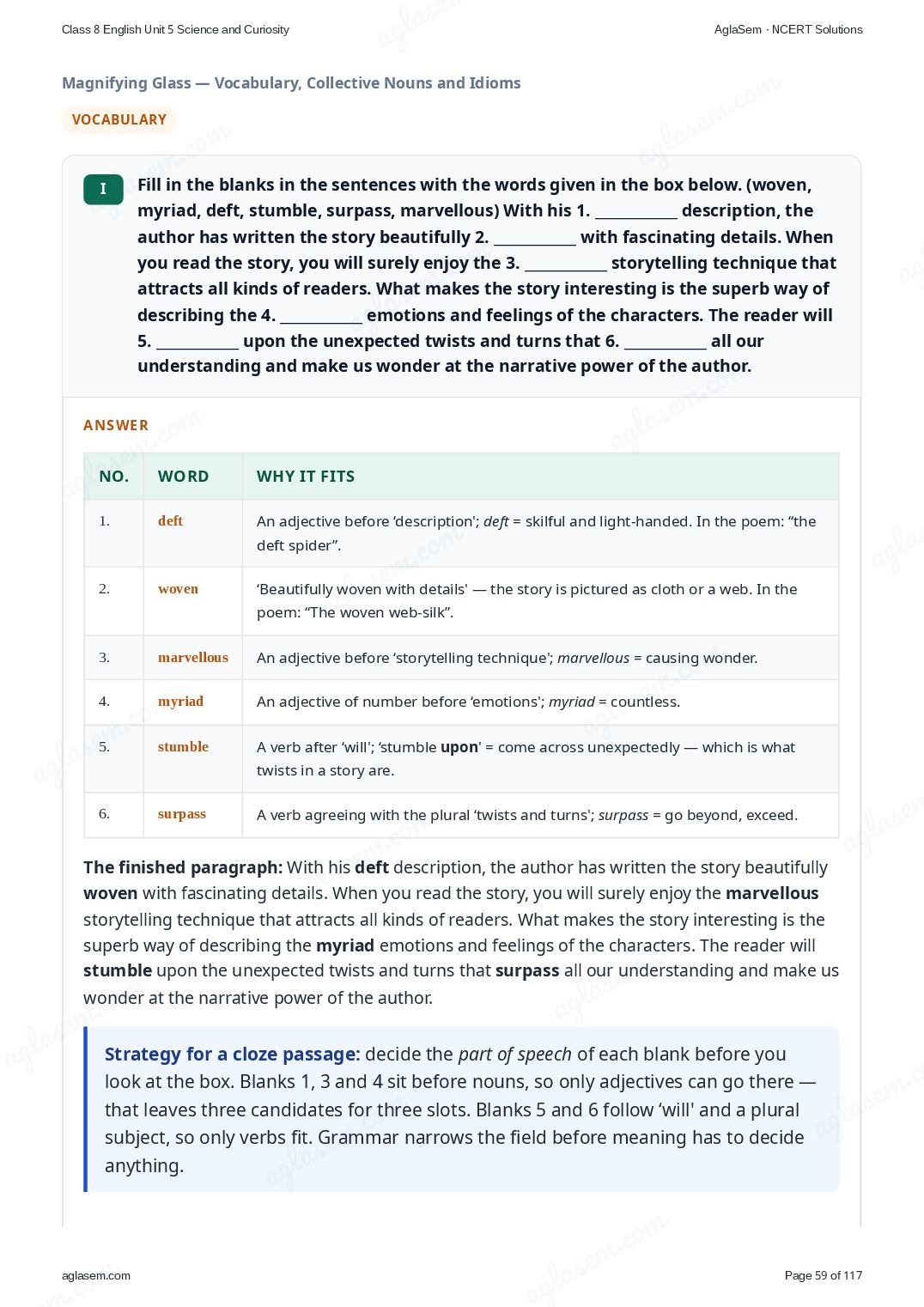
- Fill in the blanks in the sentences with the words given in the box below. (woven, myriad, deft, stumble, surpass, marvellous) With his 1. ____________ description, the author has written the story beautifully 2. ____________ with fascinating details. When you read the story, you will surely enjoy the 3. ____________ storytelling technique that attracts all kinds of readers. What makes the story interesting is the superb way of describing the 4. ____________ emotions and feelings of the characters. The reader will 5. ____________ upon the unexpected twists and turns that 6. ____________ all our understanding and make us wonder at the narrative power of the author.
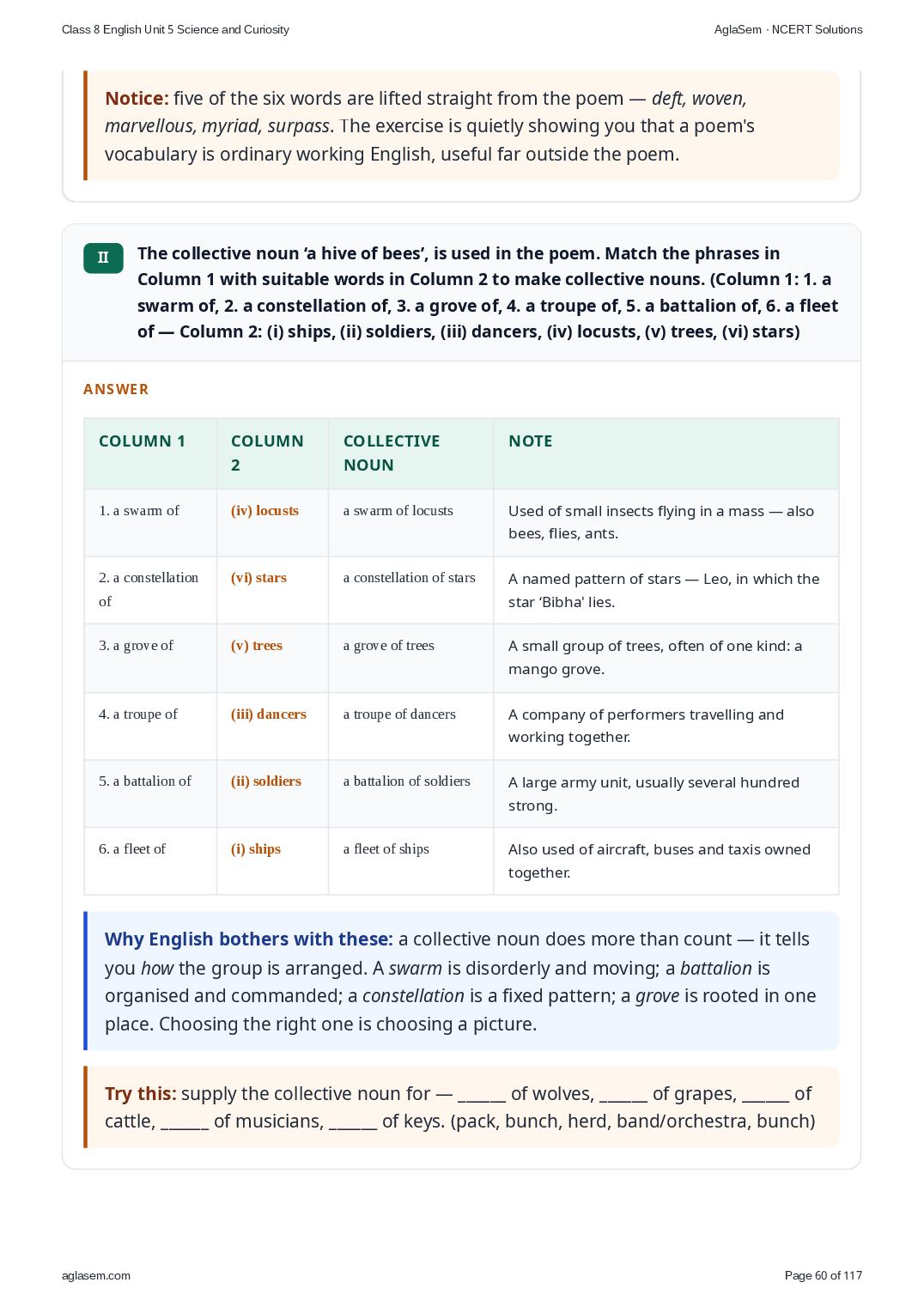
- The collective noun ‘a hive of bees’, is used in the poem. Match the phrases in Column 1 with suitable words in Column 2 to make collective nouns. (Column 1: 1. a swarm of, 2. a constellation of, 3. a grove of, 4. a troupe of, 5. a battalion of, 6. a fleet of — Column 2: (i) ships, (ii) soldiers, (iii) dancers, (iv) locusts, (v) trees, (vi) stars)
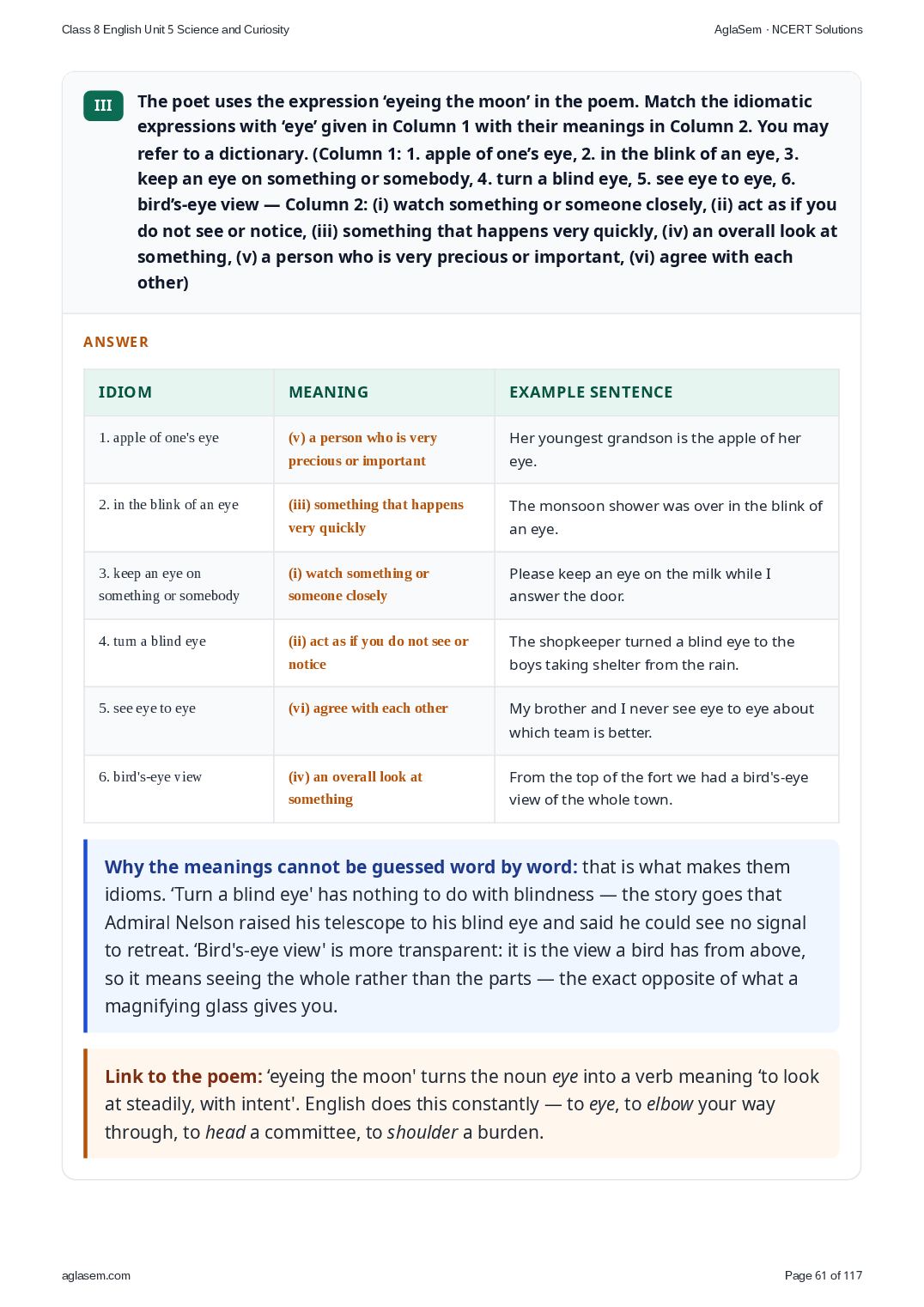
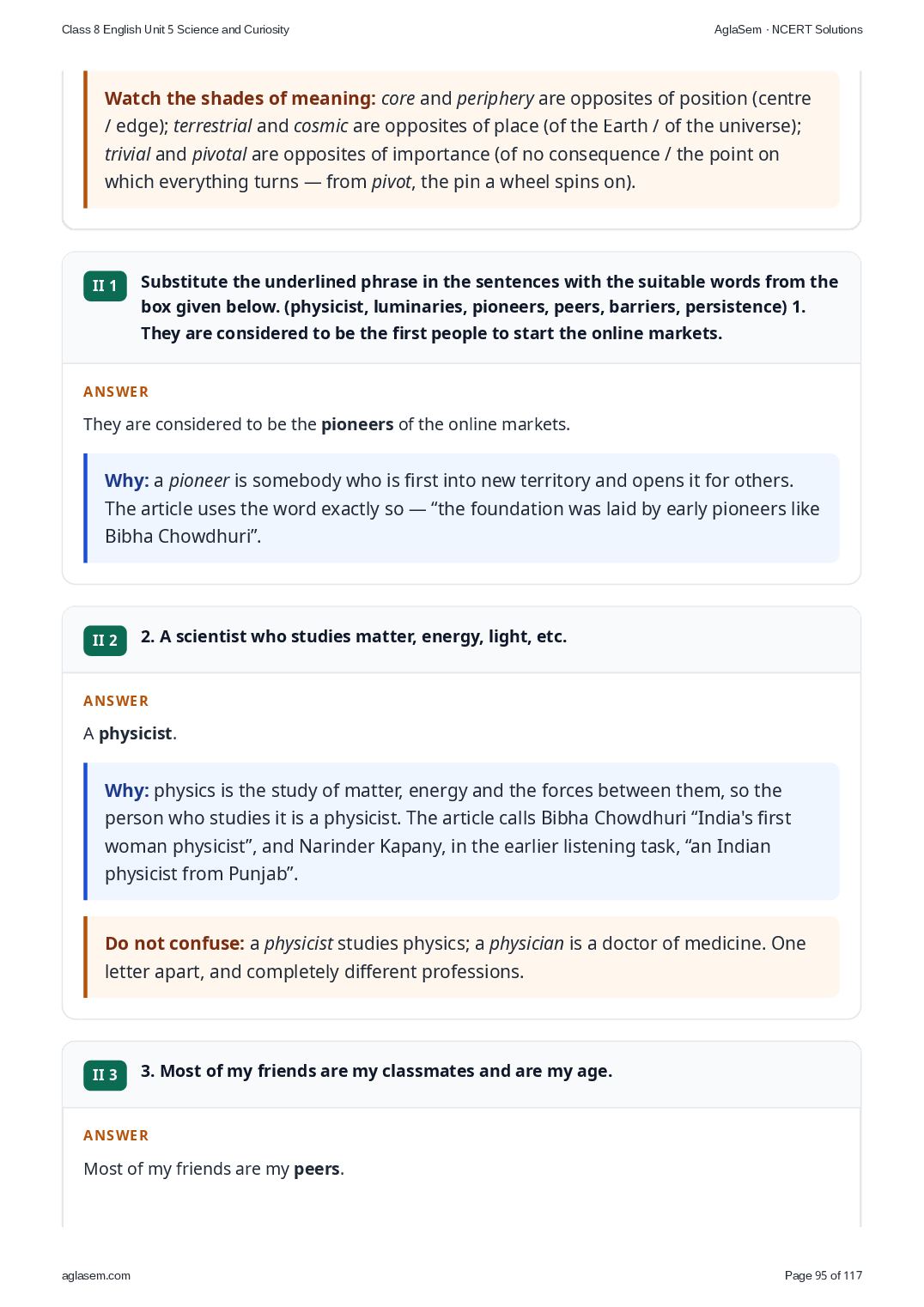
- The poet uses the expression ‘eyeing the moon’ in the poem. Match the idiomatic expressions with ‘eye’ given in Column 1 with their meanings in Column 2. You may refer to a dictionary. (Column 1: 1. apple of one’s eye, 2. in the blink of an eye, 3. keep an eye on something or somebody, 4. turn a blind eye, 5. see eye to eye, 6. bird’s-eye view — Column 2: (i) watch something or someone closely, (ii) act as if you do not see or notice, (iii) something that happens very quickly, (iv) an overall look at something, (v) a person who is very precious or important, (vi) agree with each other)
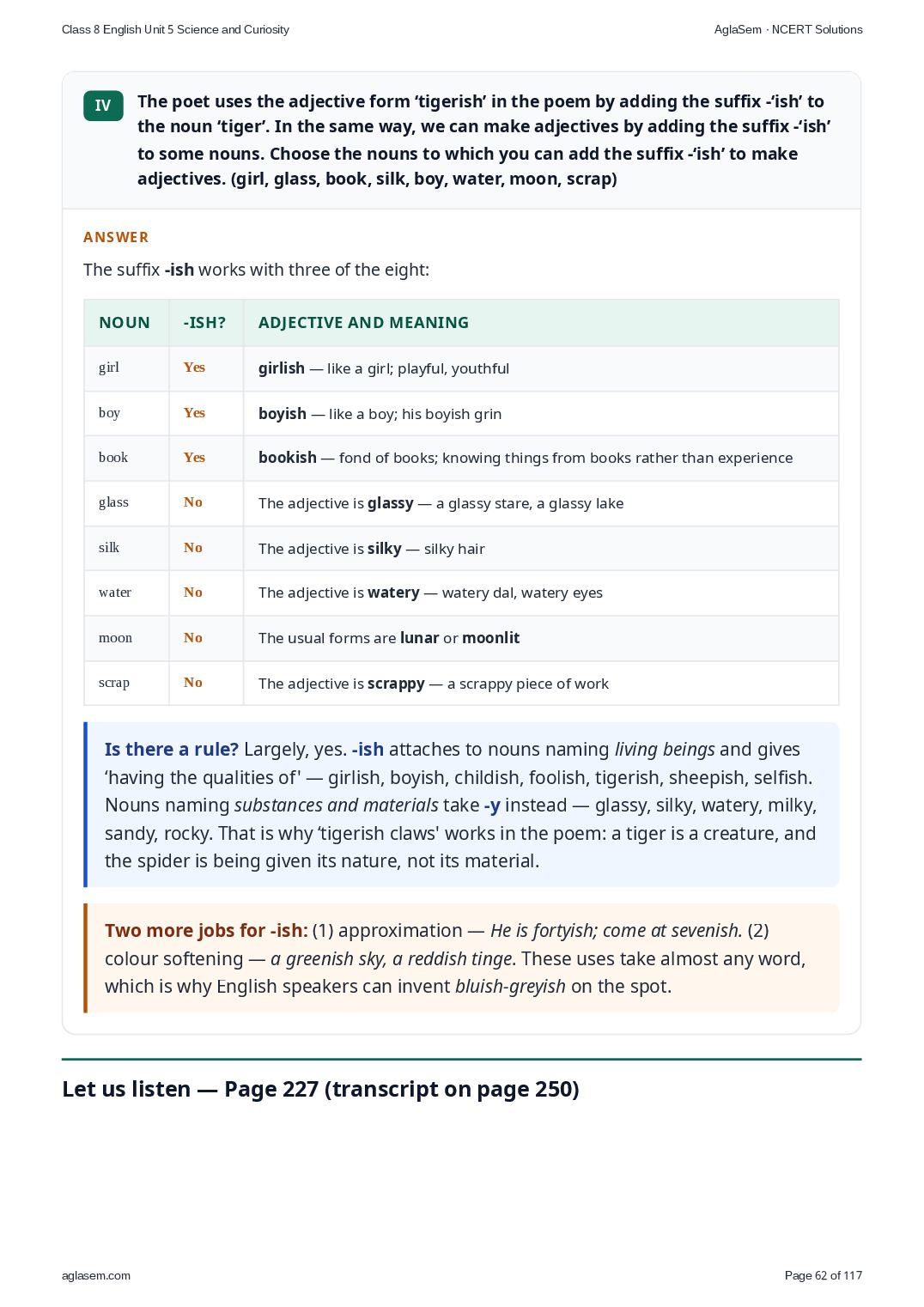
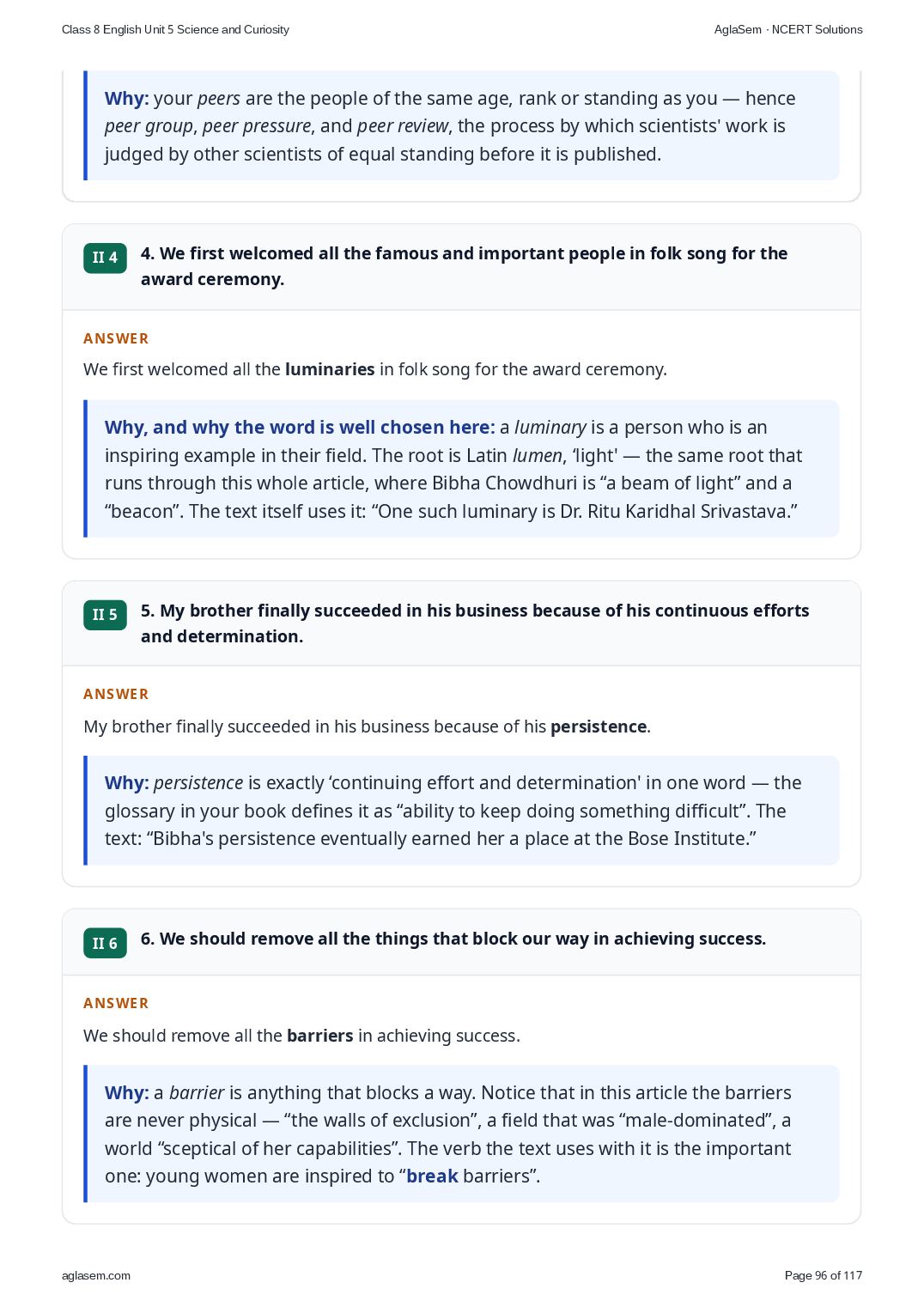
- The poet uses the adjective form ‘tigerish’ in the poem by adding the suffix -‘ish’ to the noun ‘tiger’. In the same way, we can make adjectives by adding the suffix -‘ish’ to some nouns. Choose the nouns to which you can add the suffix -‘ish’ to make adjectives. (girl, glass, book, silk, boy, water, moon, scrap)
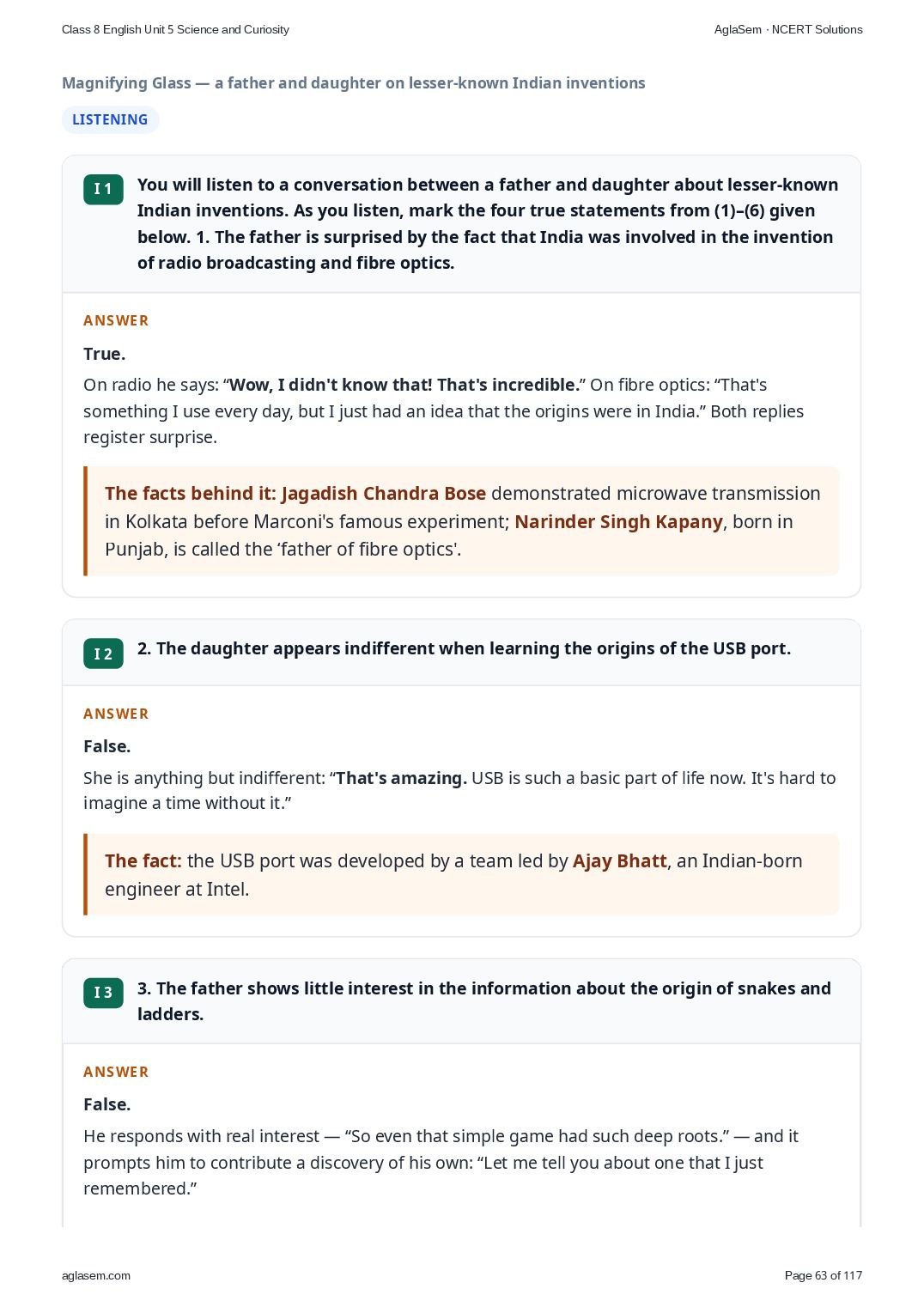
- You will listen to a conversation between a father and daughter about lesser-known Indian inventions. As you listen, mark the four true statements from (1)–(6) given below. 1. The father is surprised by the fact that India was involved in the invention of radio broadcasting and fibre optics.
- 2. The daughter appears indifferent when learning the origins of the USB port.
- 3. The father shows little interest in the information about the origin of snakes and ladders.
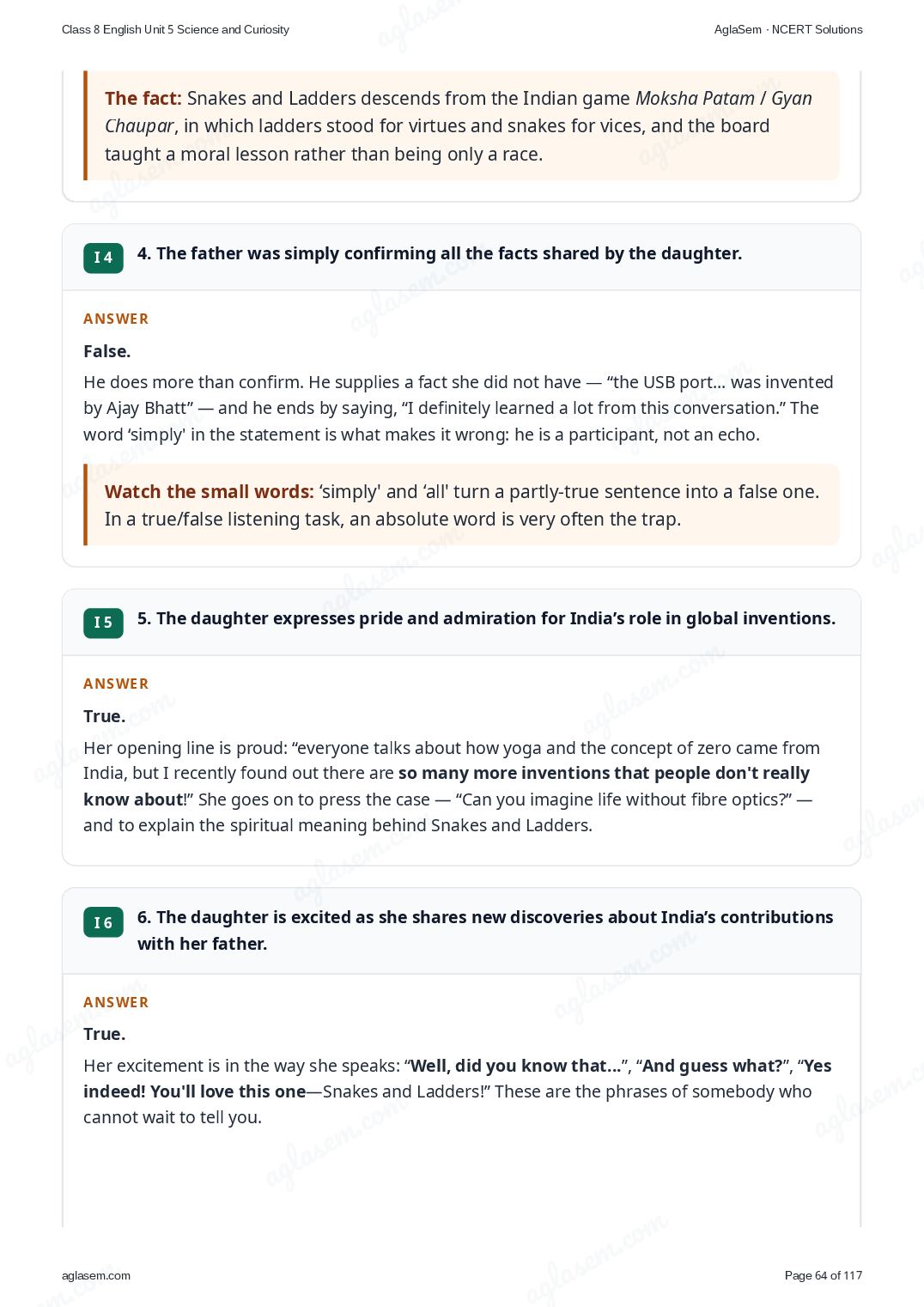
- 4. The father was simply confirming all the facts shared by the daughter.
- 5. The daughter expresses pride and admiration for India’s role in global inventions.
- 6. The daughter is excited as she shares new discoveries about India’s contributions with her father.
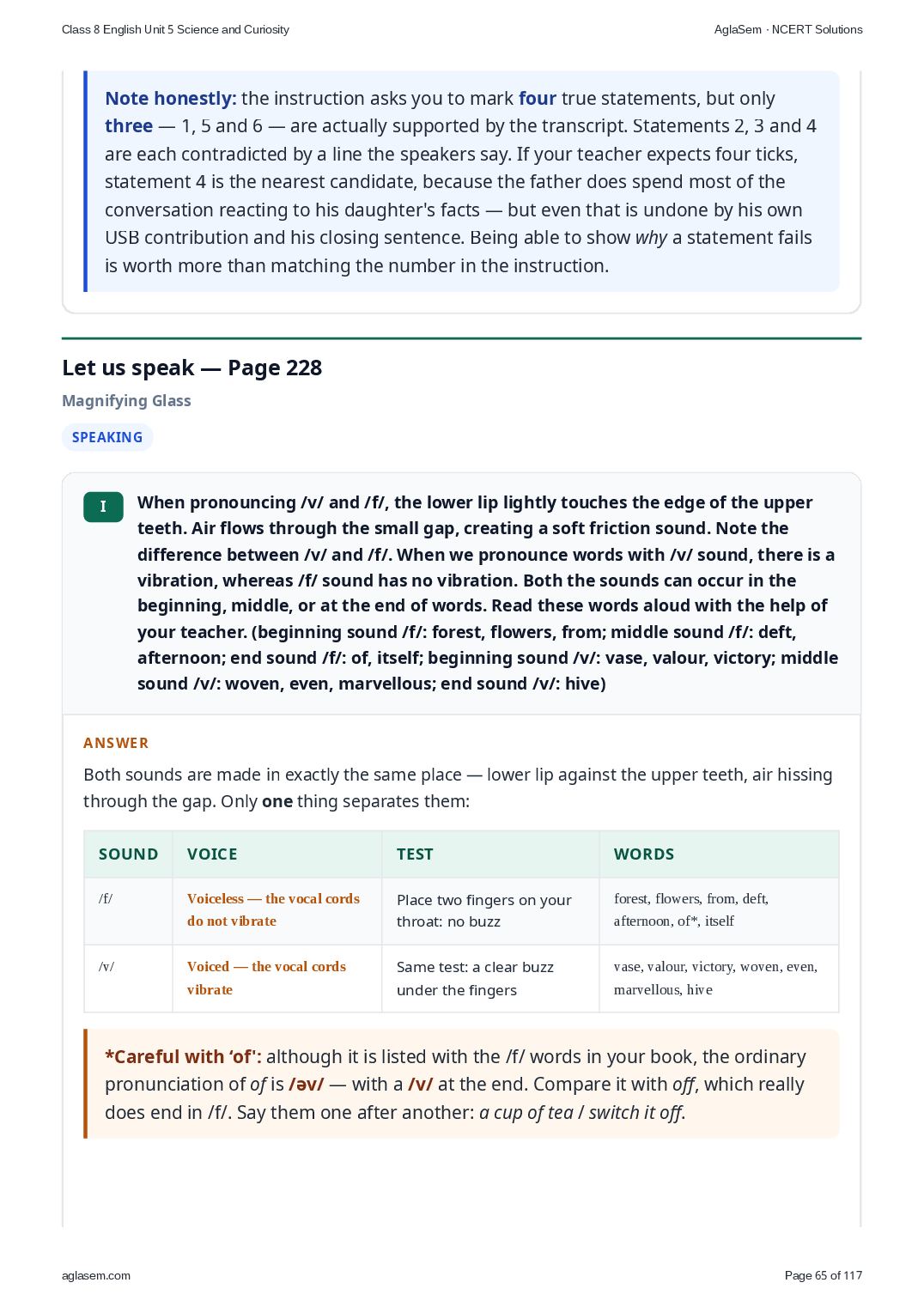
- When pronouncing /v/ and /f/, the lower lip lightly touches the edge of the upper teeth. Air flows through the small gap, creating a soft friction sound. Note the difference between /v/ and /f/. When we pronounce words with /v/ sound, there is a vibration, whereas /f/ sound has no vibration. Both the sounds can occur in the beginning, middle, or at the end of words. Read these words aloud with the help of your teacher. (beginning sound /f/: forest, flowers, from; middle sound /f/: deft, afternoon; end sound /f/: of, itself; beginning sound /v/: vase, valour, victory; middle sound /v/: woven, even, marvellous; end sound /v/: hive)
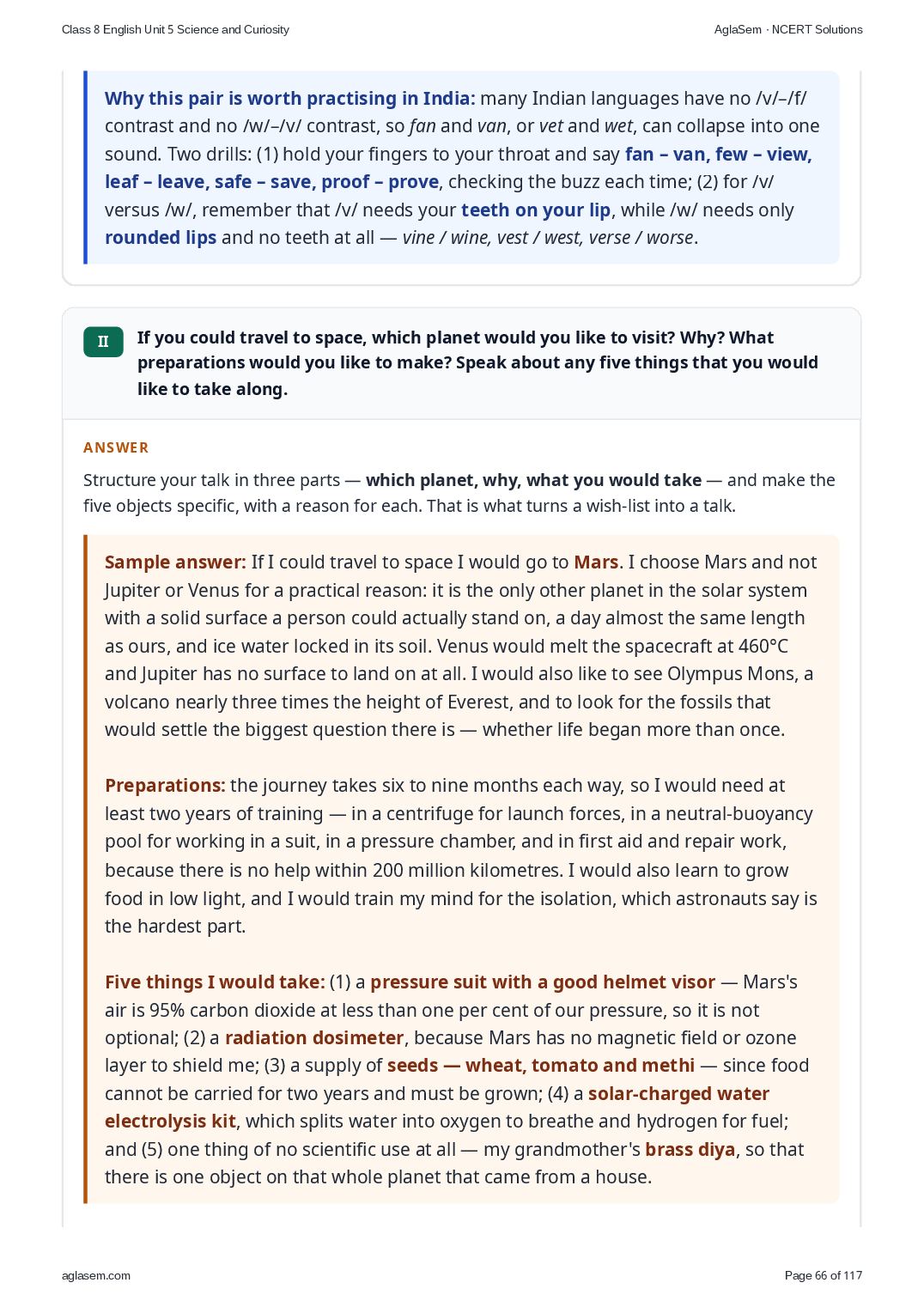
- If you could travel to space, which planet would you like to visit? Why? What preparations would you like to make? Speak about any five things that you would like to take along.
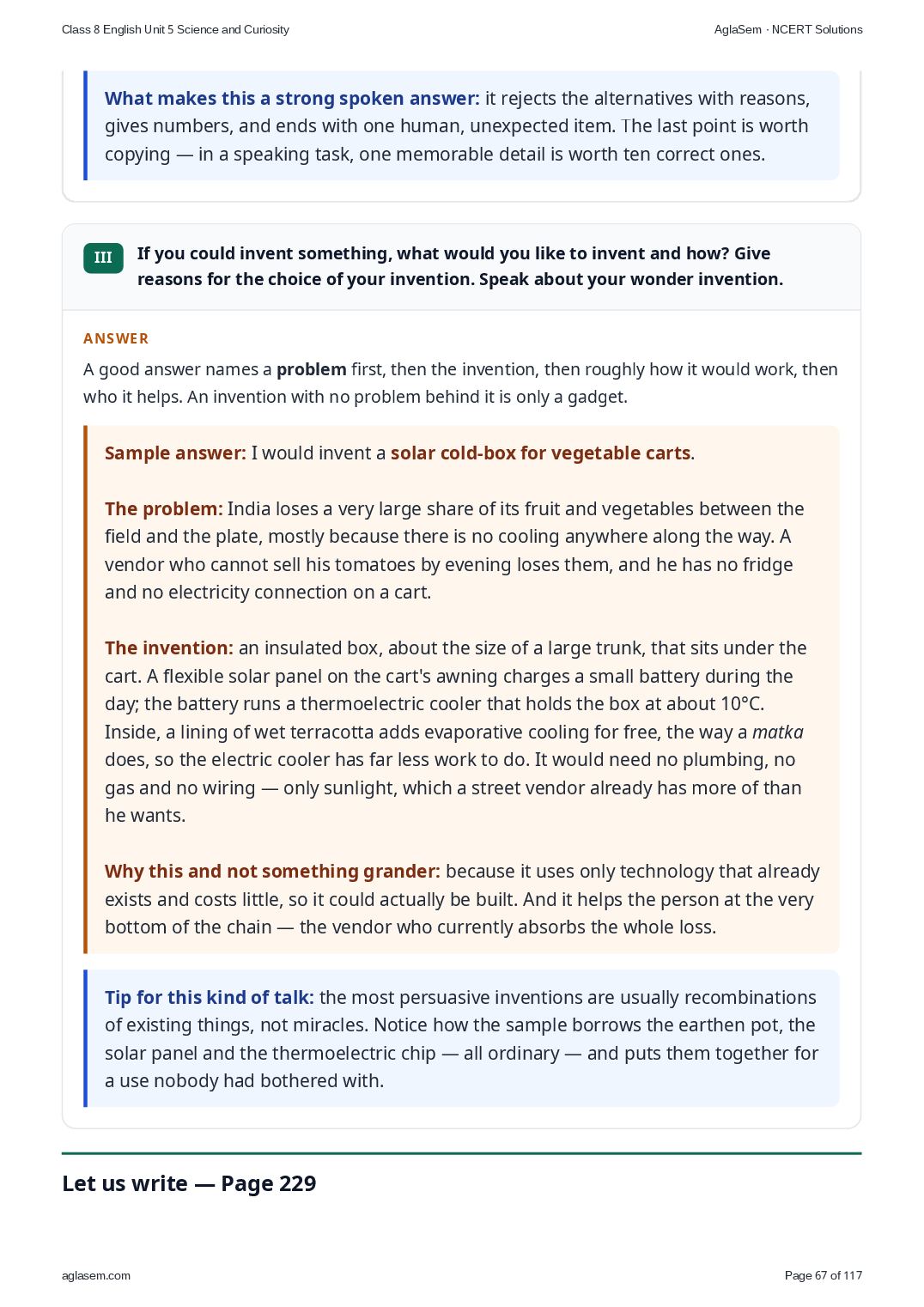
- If you could invent something, what would you like to invent and how? Give reasons for the choice of your invention. Speak about your wonder invention.
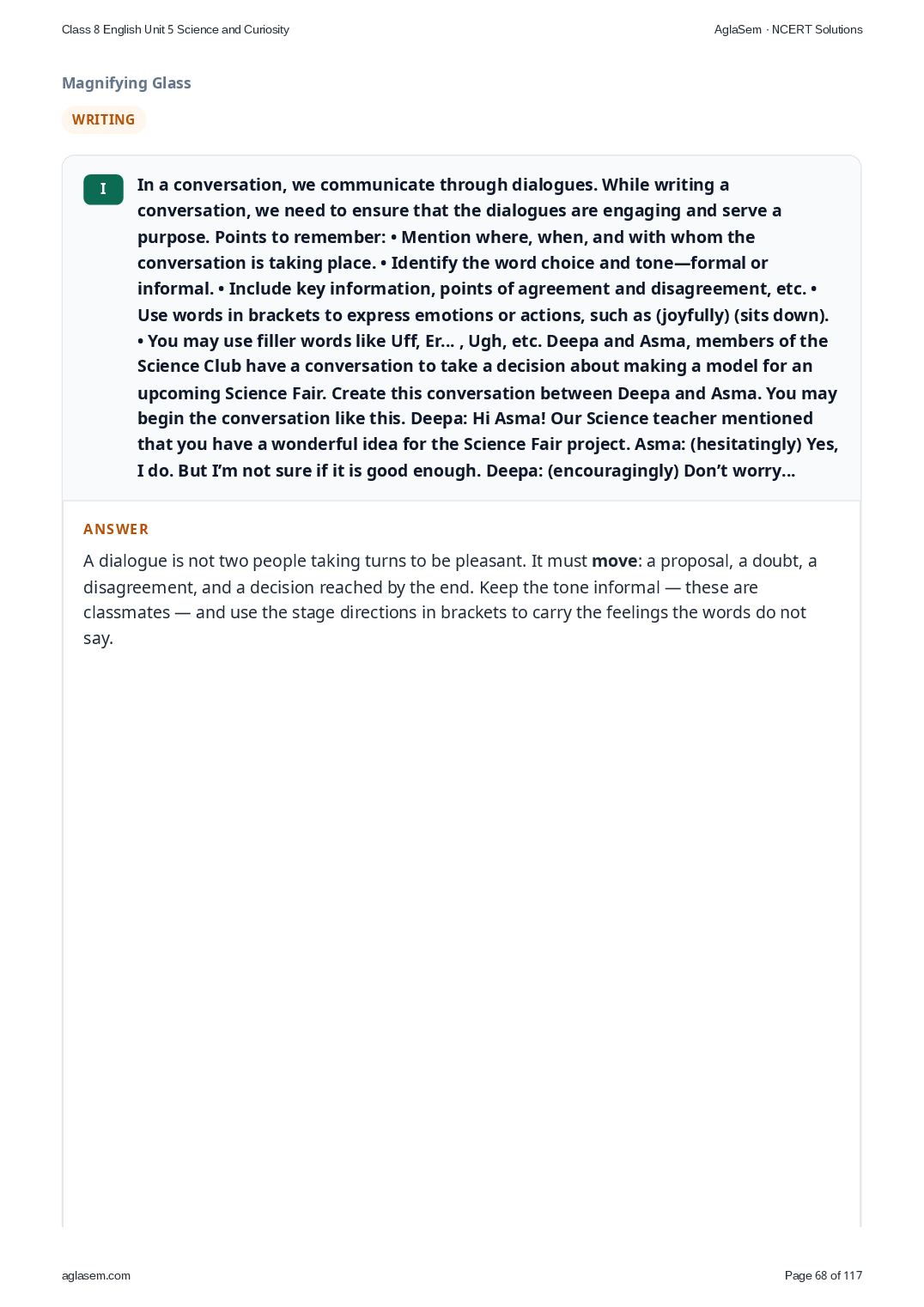
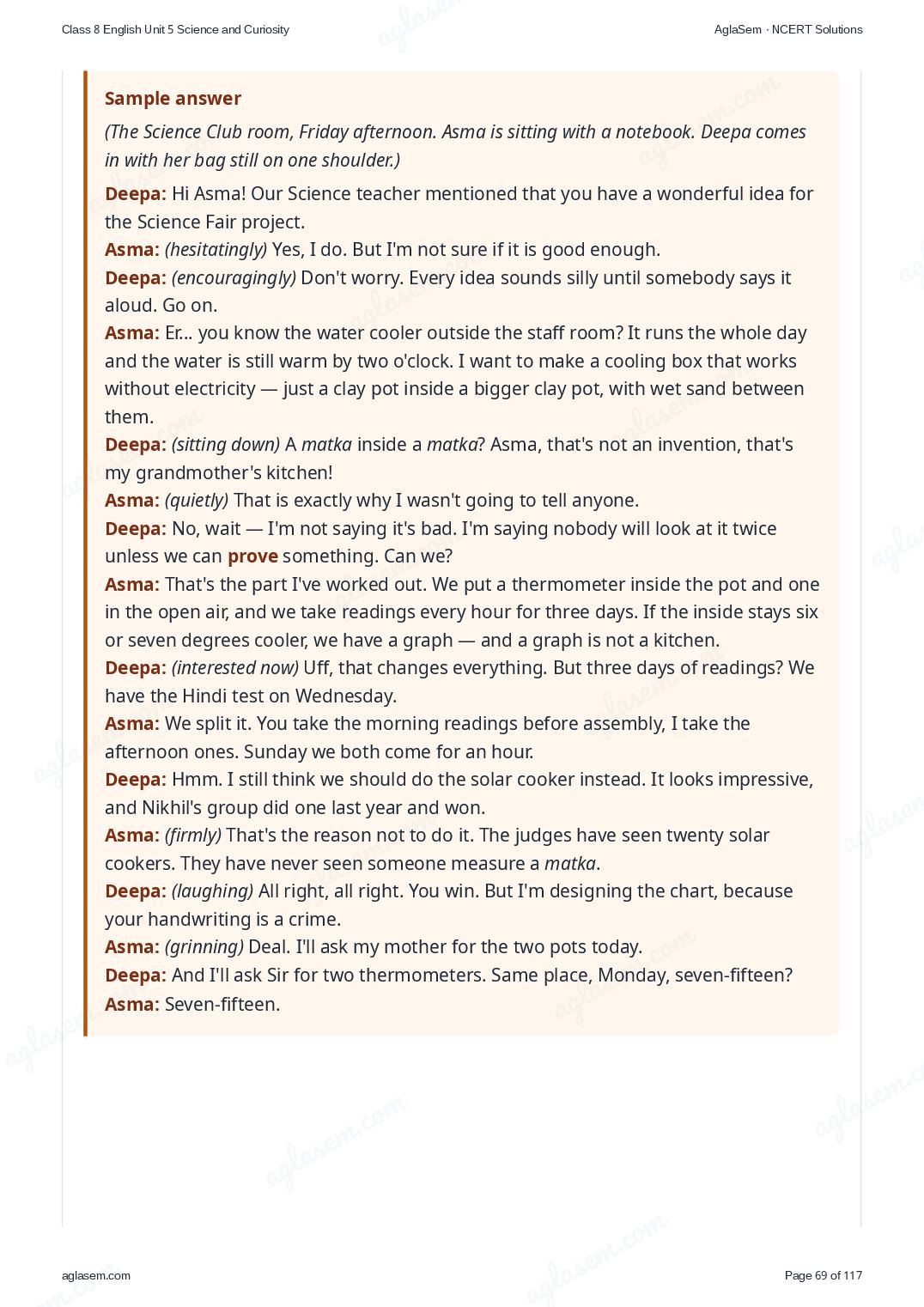
- In a conversation, we communicate through dialogues. While writing a conversation, we need to ensure that the dialogues are engaging and serve a purpose. Points to remember: • Mention where, when, and with whom the conversation is taking place. • Identify the word choice and tone—formal or informal. • Include key information, points of agreement and disagreement, etc. • Use words in brackets to express emotions or actions, such as (joyfully) (sits down). • You may use filler words like Uff, Er… , Ugh, etc. Deepa and Asma, members of the Science Club have a conversation to take a decision about making a model for an upcoming Science Fair. Create this conversation between Deepa and Asma. You may begin the conversation like this. Deepa: Hi Asma! Our Science teacher mentioned that you have a wonderful idea for the Science Fair project. Asma: (hesitatingly) Yes, I do. But I’m not sure if it is good enough. Deepa: (encouragingly) Don’t worry…
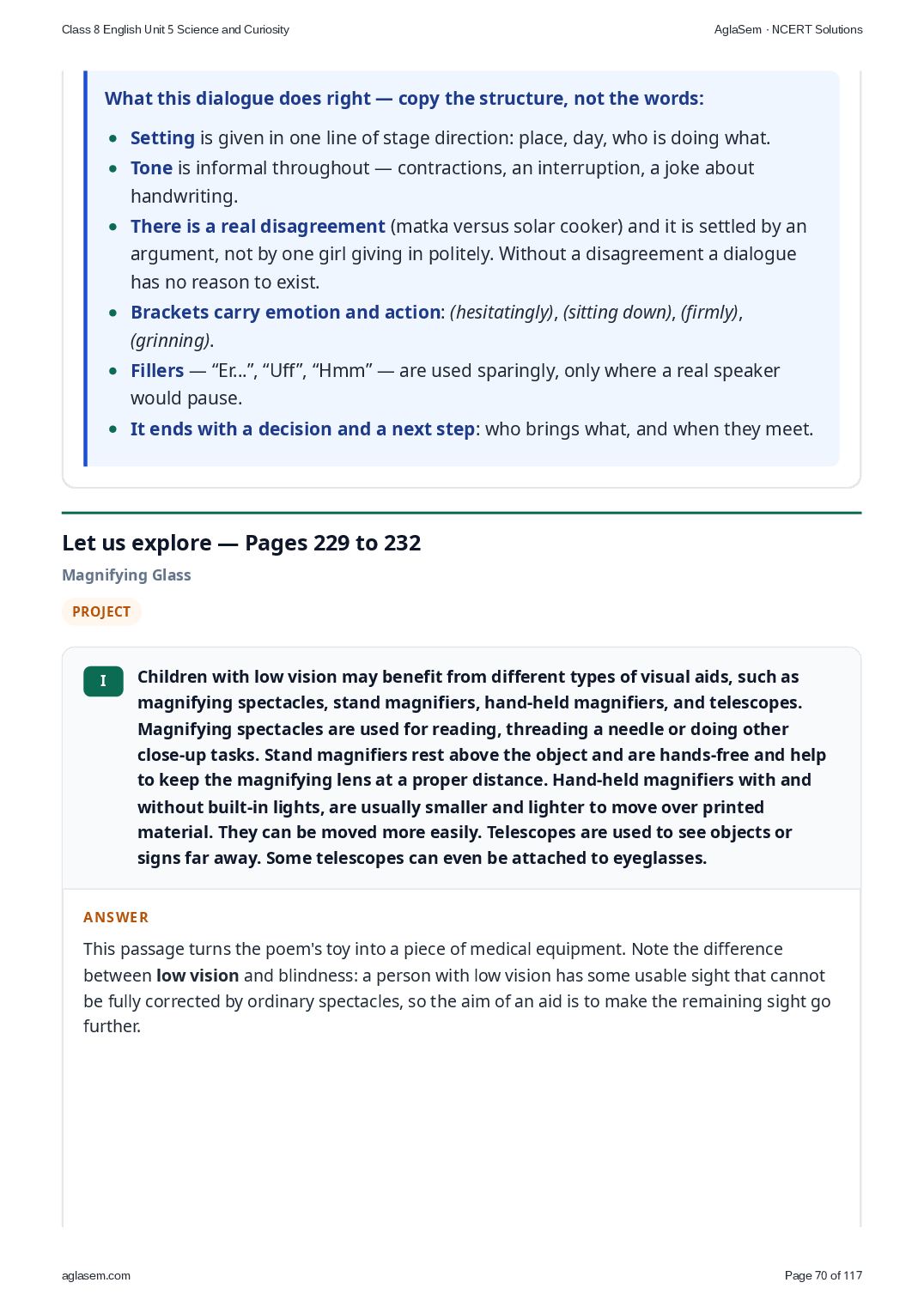
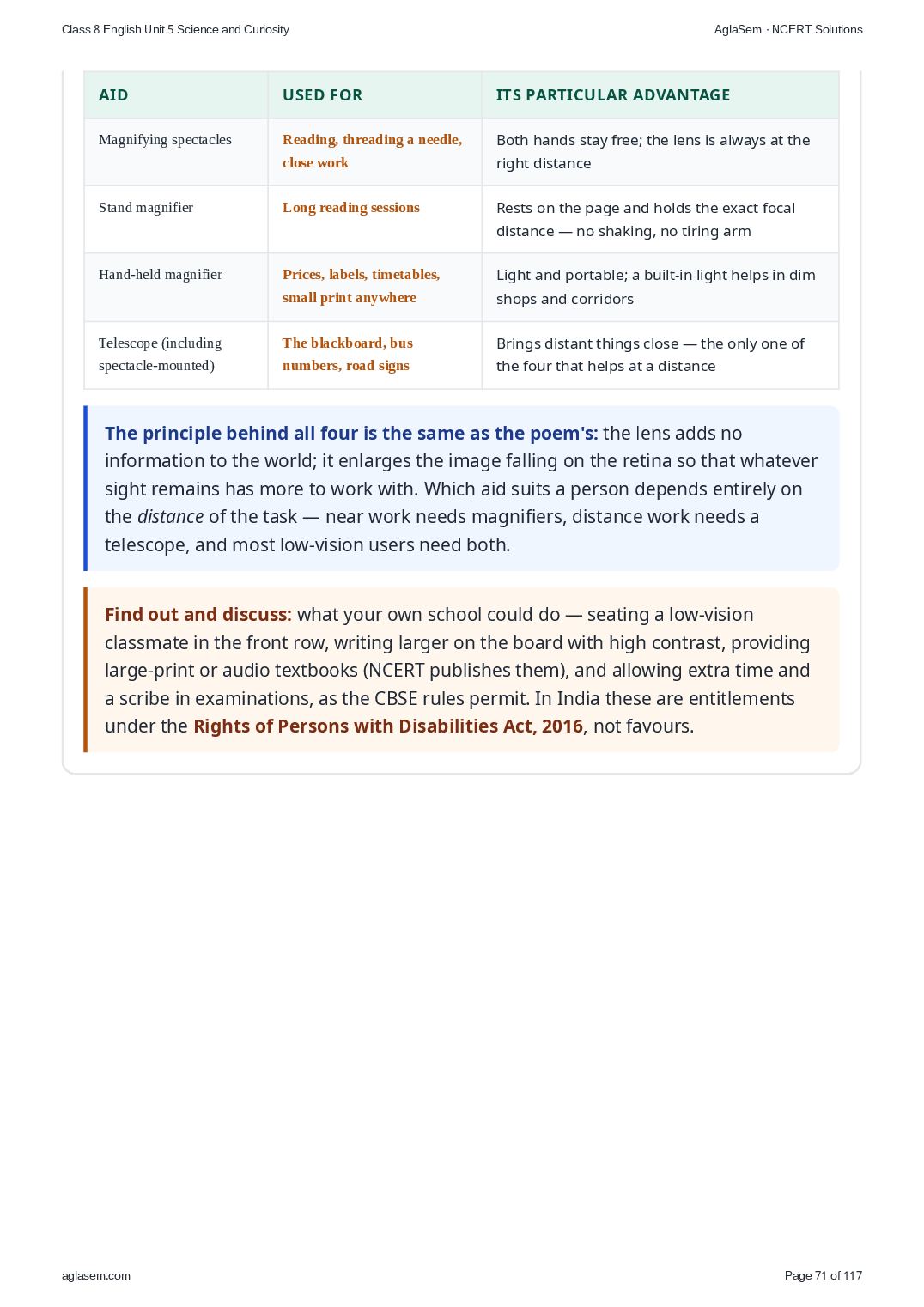
- Children with low vision may benefit from different types of visual aids, such as magnifying spectacles, stand magnifiers, hand-held magnifiers, and telescopes. Magnifying spectacles are used for reading, threading a needle or doing other close-up tasks. Stand magnifiers rest above the object and are hands-free and help to keep the magnifying lens at a proper distance. Hand-held magnifiers with and without built-in lights, are usually smaller and lighter to move over printed material. They can be moved more easily. Telescopes are used to see objects or signs far away. Some telescopes can even be attached to eyeglasses.
- … and more questions are solved in the complete PDF above.
Chapter at a Glance
- Feathered Friend by Arthur C. Clarke is told by an unnamed narrator on an early space station. Sven Olsen , a wiry construction man, smuggles a canary called Claribel up on a ferry from Earth. She weighs almost nothing, eats almost nothing and is untroubled by the absence of gravity, so she becomes the crew's secret pet.
- One 'morning' Claribel is found collapsed. Oxygen revives her, then she keels over again. The narrator remembers that miners once carried canaries down to warn them of gas and realises the station air is bad. An eclipse by Earth's shadow had frozen part of the air purifier ; the one connected alarm failed and the duplicate circuit had never been wired up. A bird saves the crew that half a million dollars of engineering could not.
- Magnifying Glass by Walter de la Mare is a six-stanza quatrain poem rhyming ABCB . Through 'this round glass' a scrap of chalk shows myriad shells, an inch of moss becomes a forest, a drop of water looks like a hive of bees, and the deft spider is seen jetting web-silk from its spinnerets. The last stanza turns the same lens on the moon.
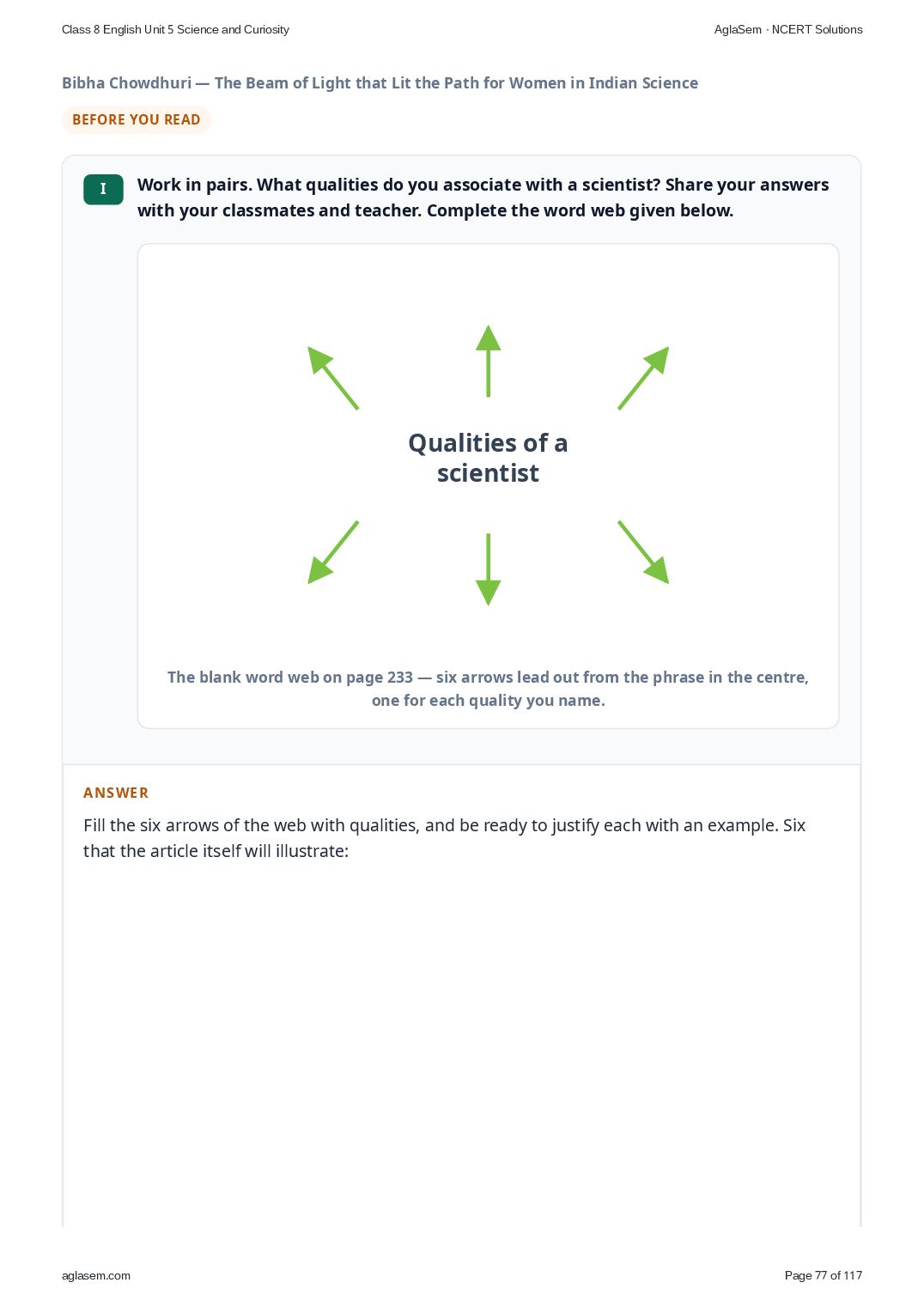
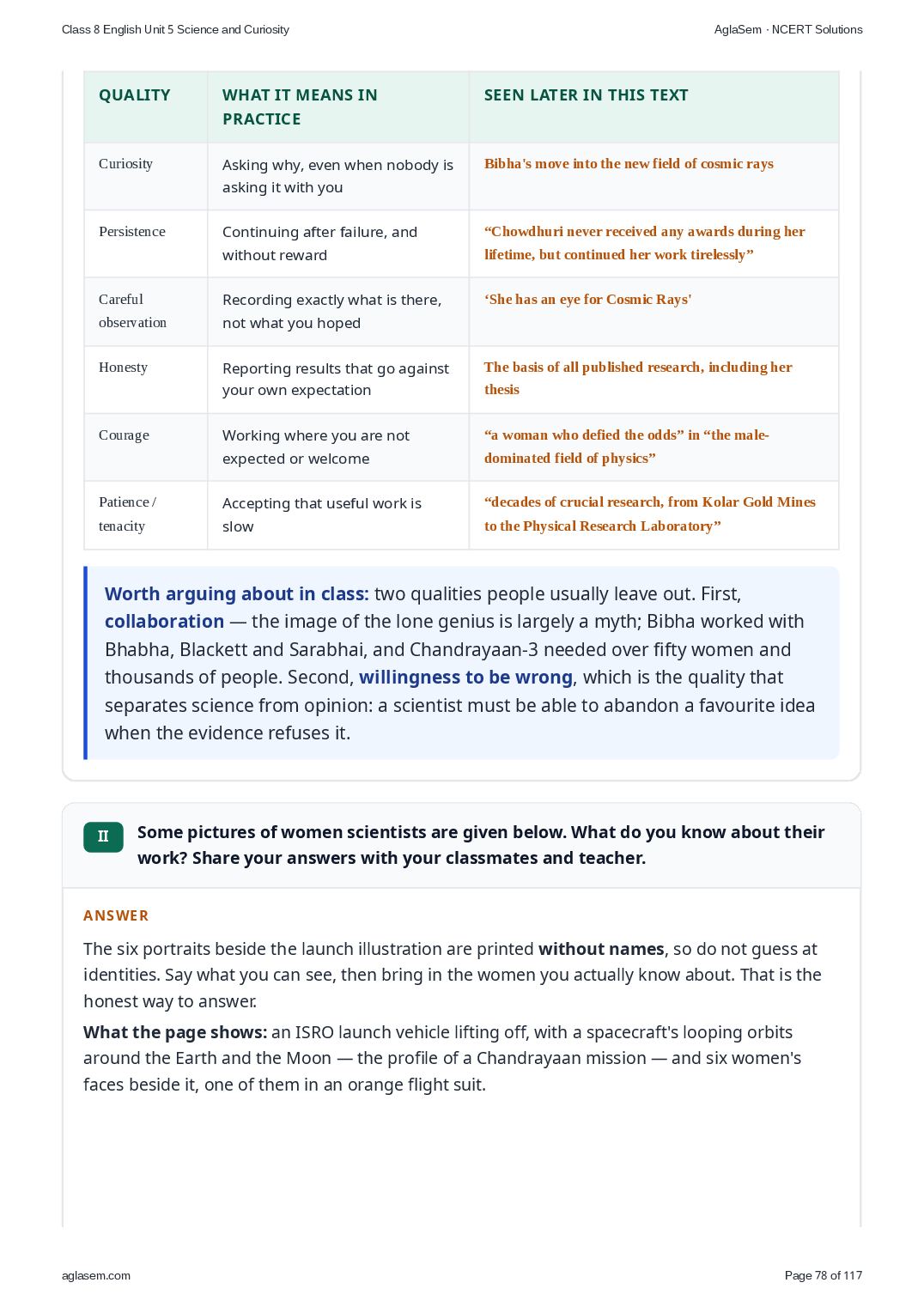
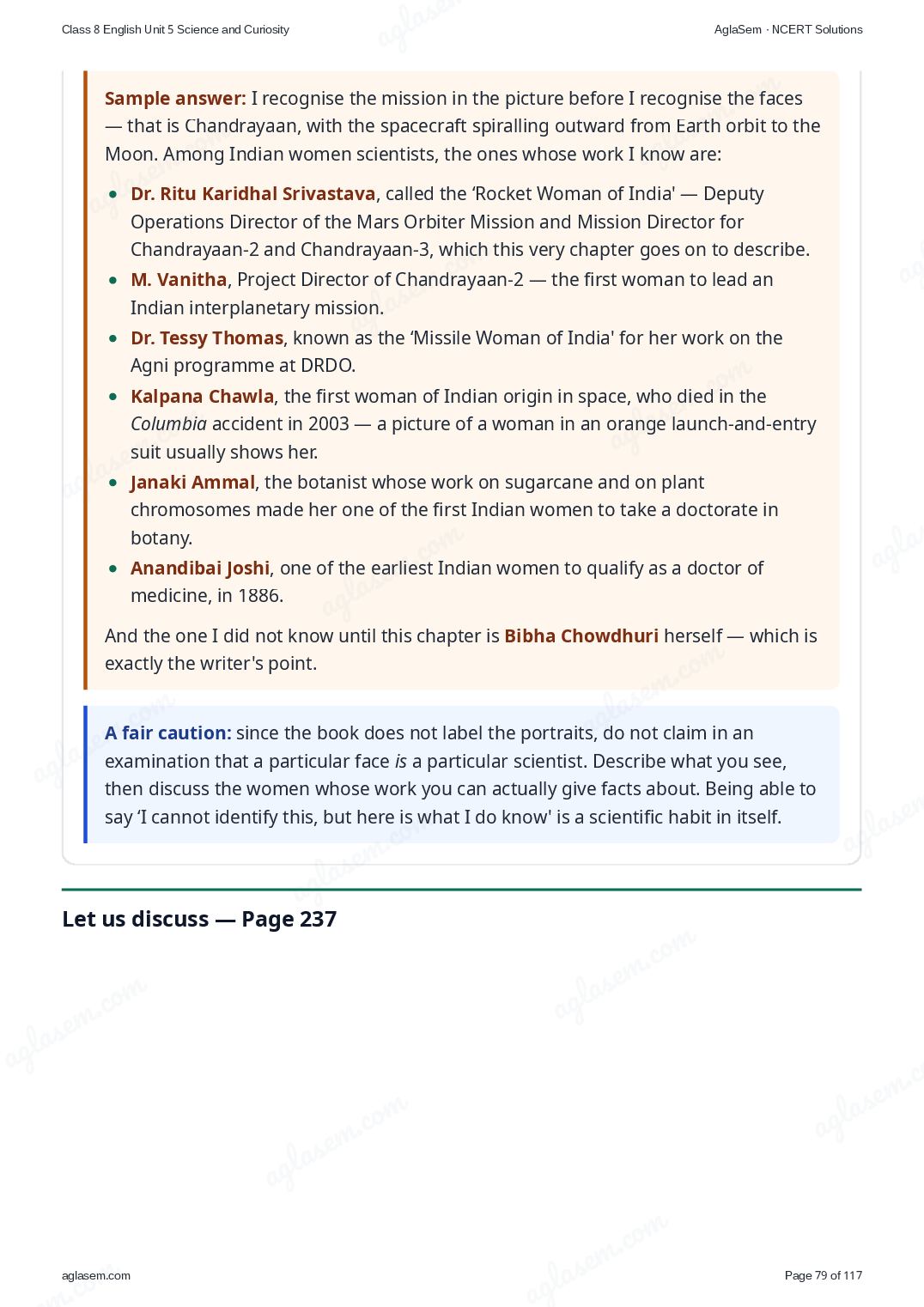
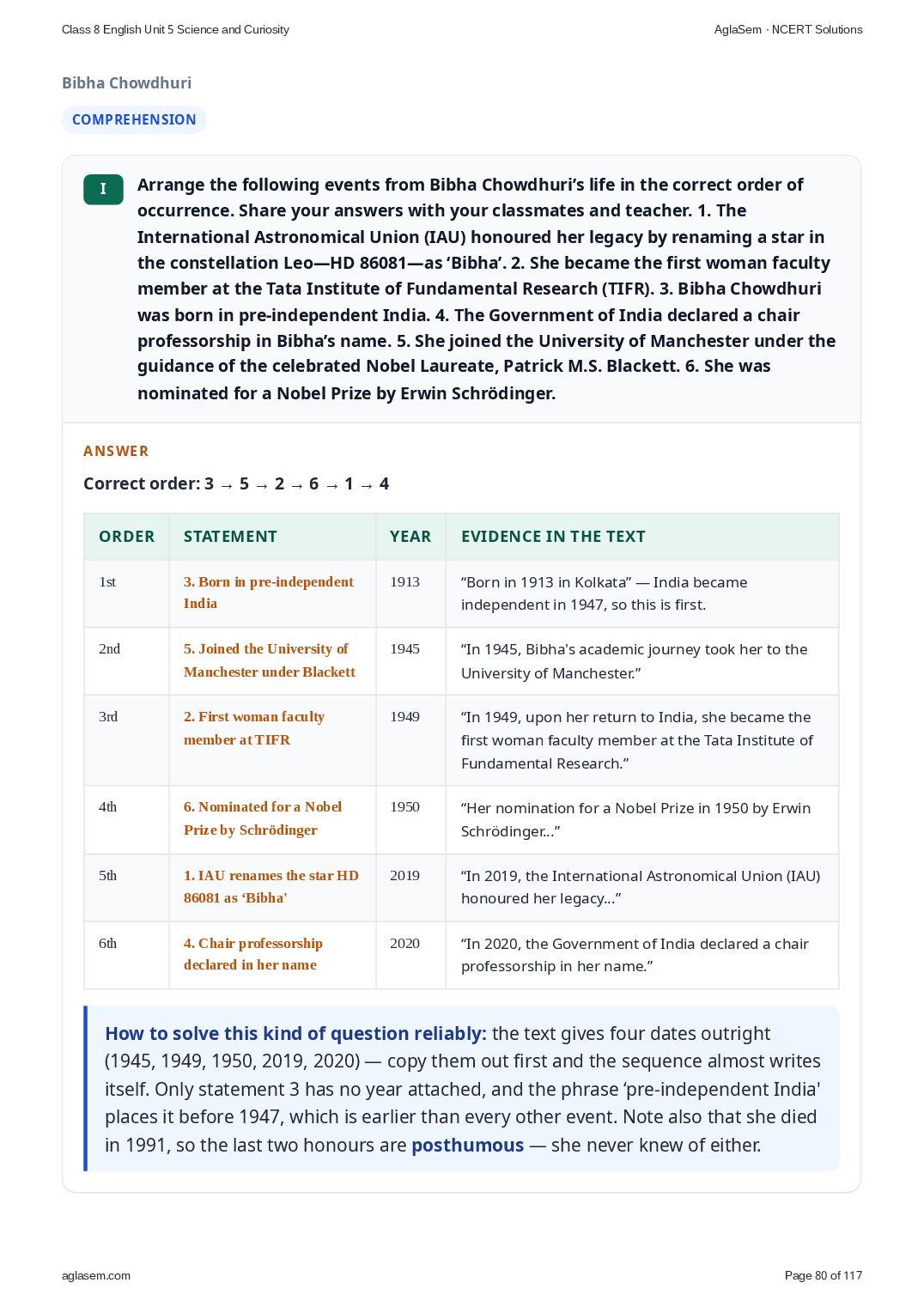
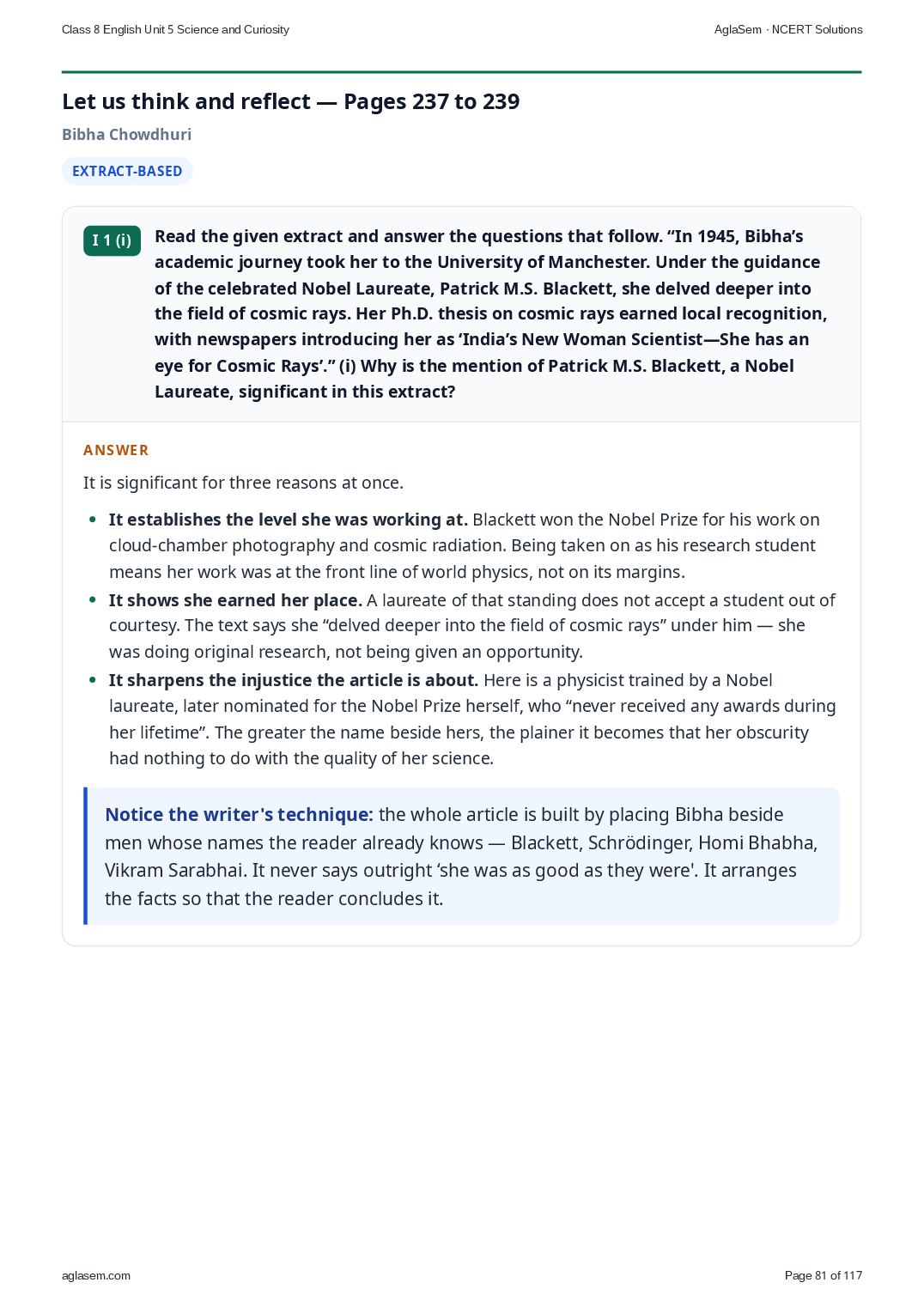
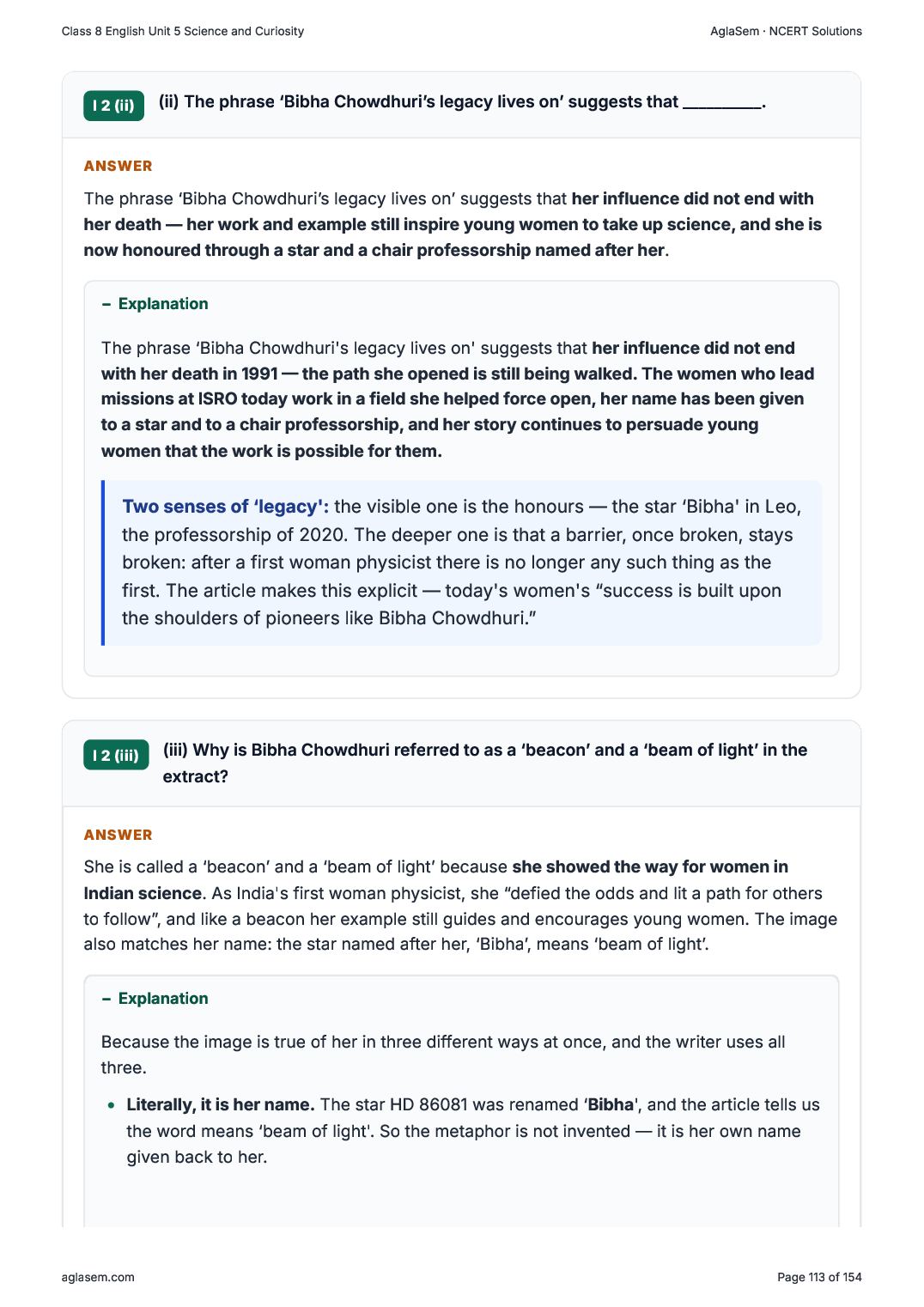
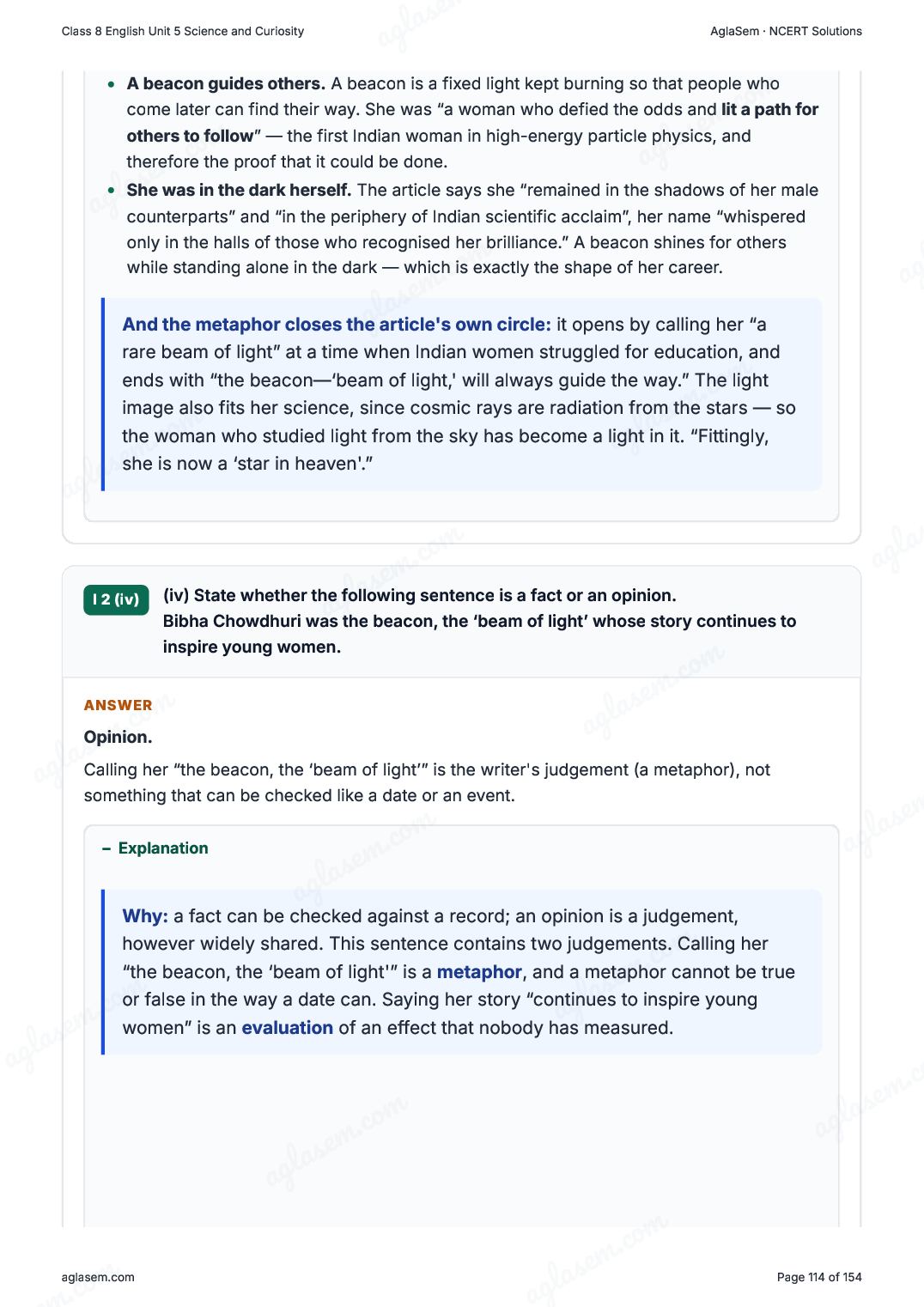
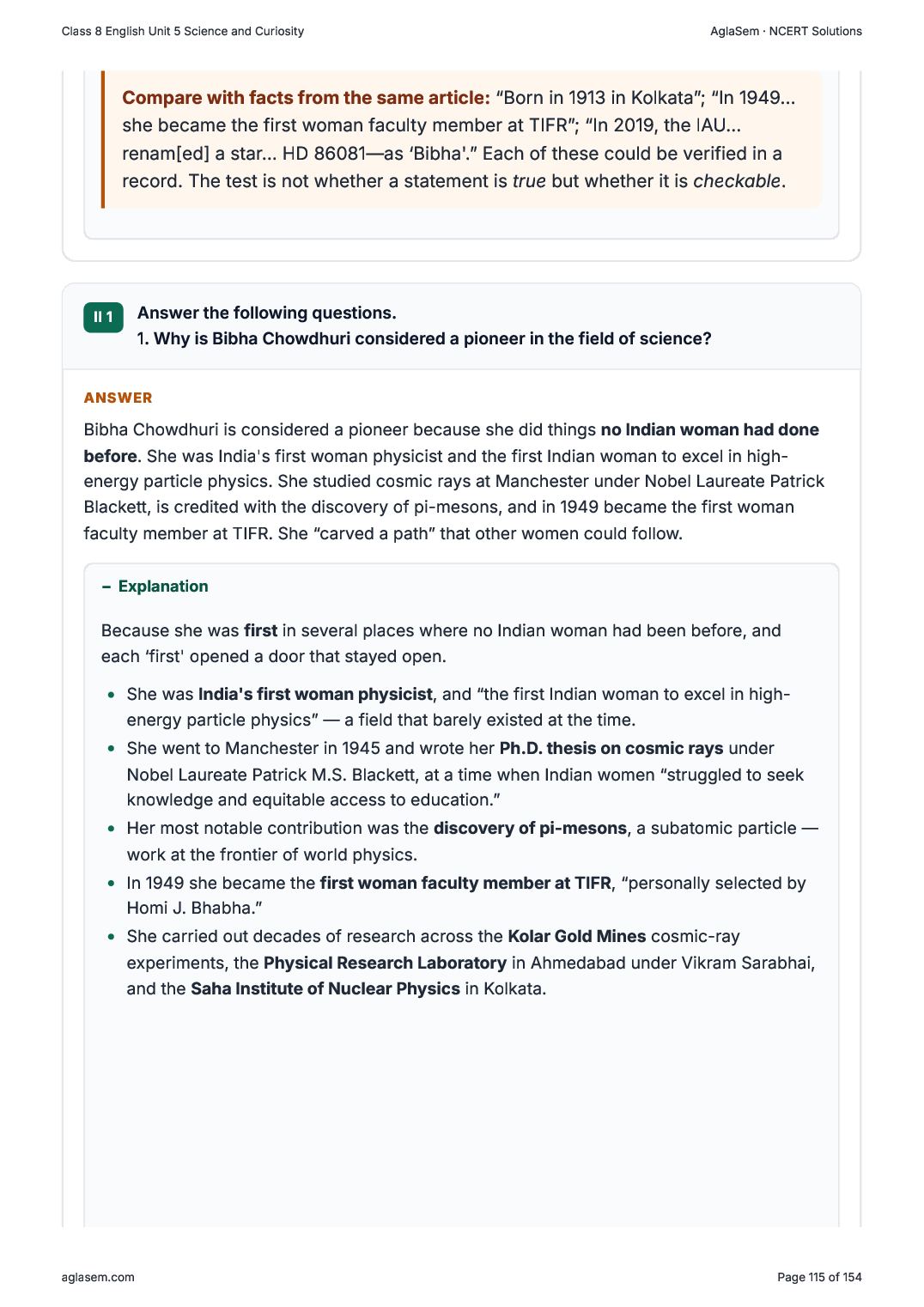
- Bibha Chowdhuri (1913–1991) was India's first woman physicist . She worked at the Bose Institute , took her Ph.D. on cosmic rays at Manchester under Nobel Laureate Patrick M.S. Blackett , contributed to the discovery of pi-mesons , was nominated for the Nobel Prize by Erwin Schrödinger in 1950, and in 1949 became the first woman faculty member at TIFR , chosen by Homi J. Bhabha .
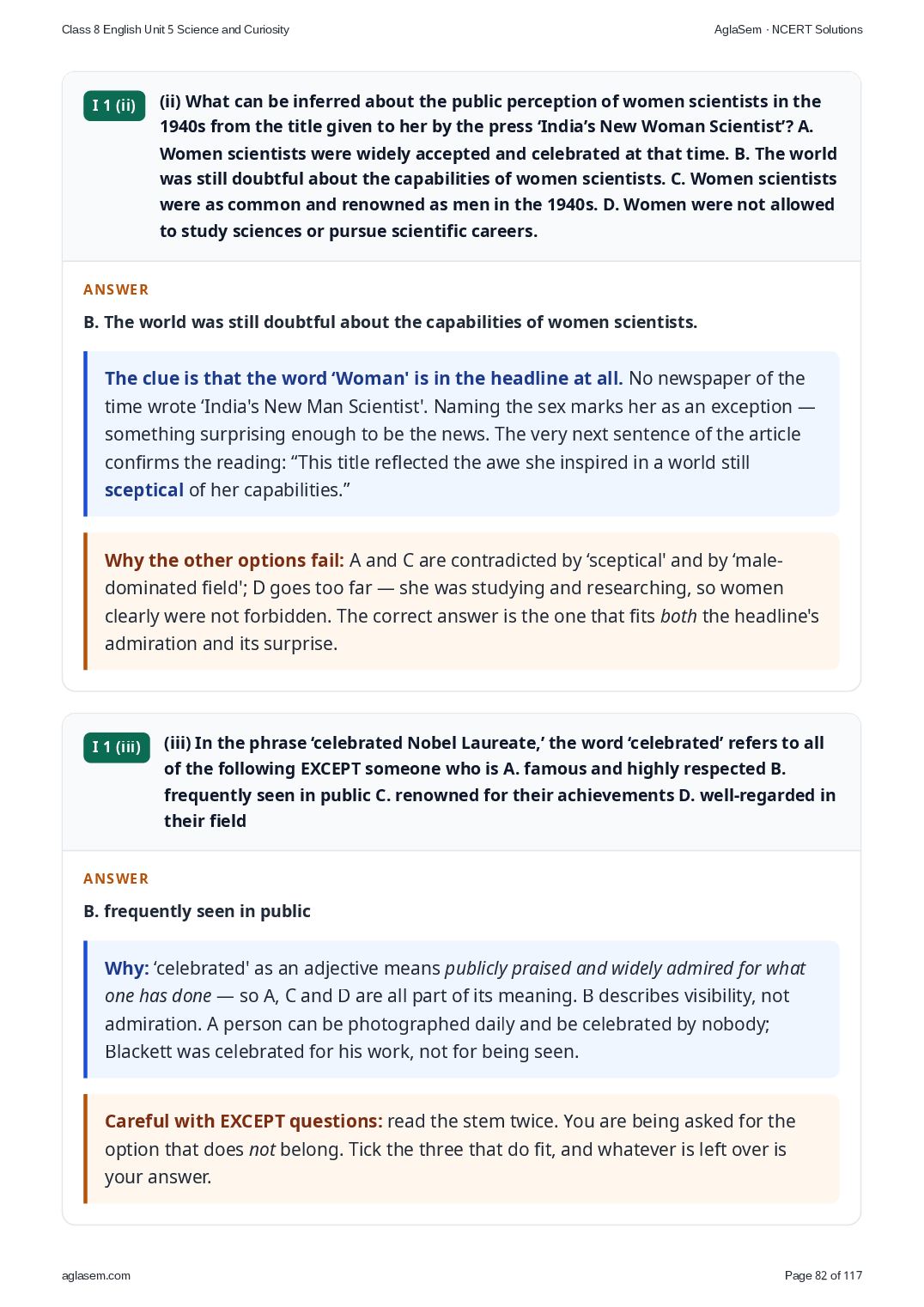
- She received no award in her lifetime. In 2019 the International Astronomical Union renamed the star HD 86081 in Leo as 'Bibha' — the word means 'beam of light' — and in 2020 the Government of India declared a chair professorship in her name. Her line runs on to Dr. Ritu Karidhal Srivastava , the 'Rocket Woman of India', and the 50-plus women of Chandrayaan-3 .
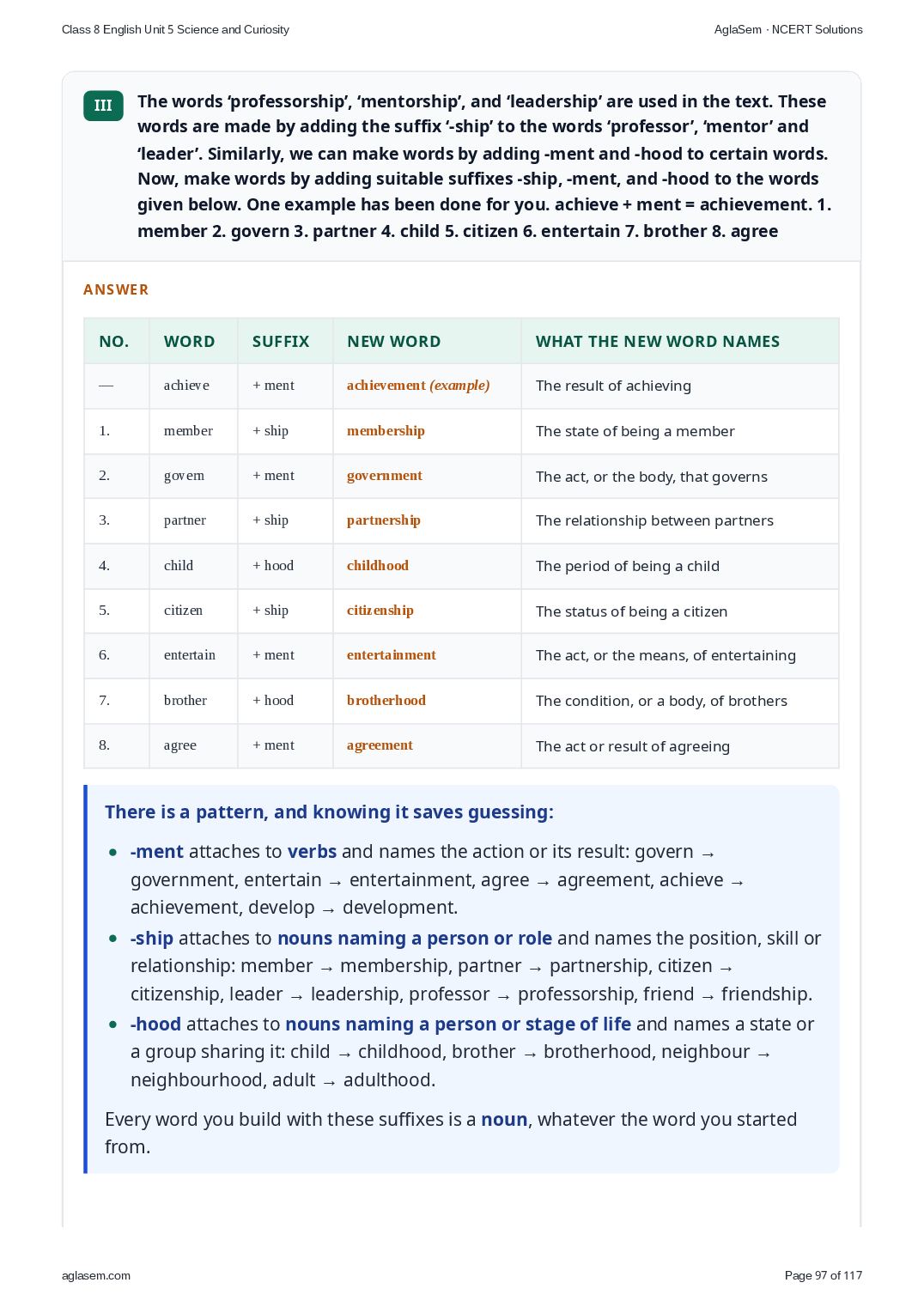
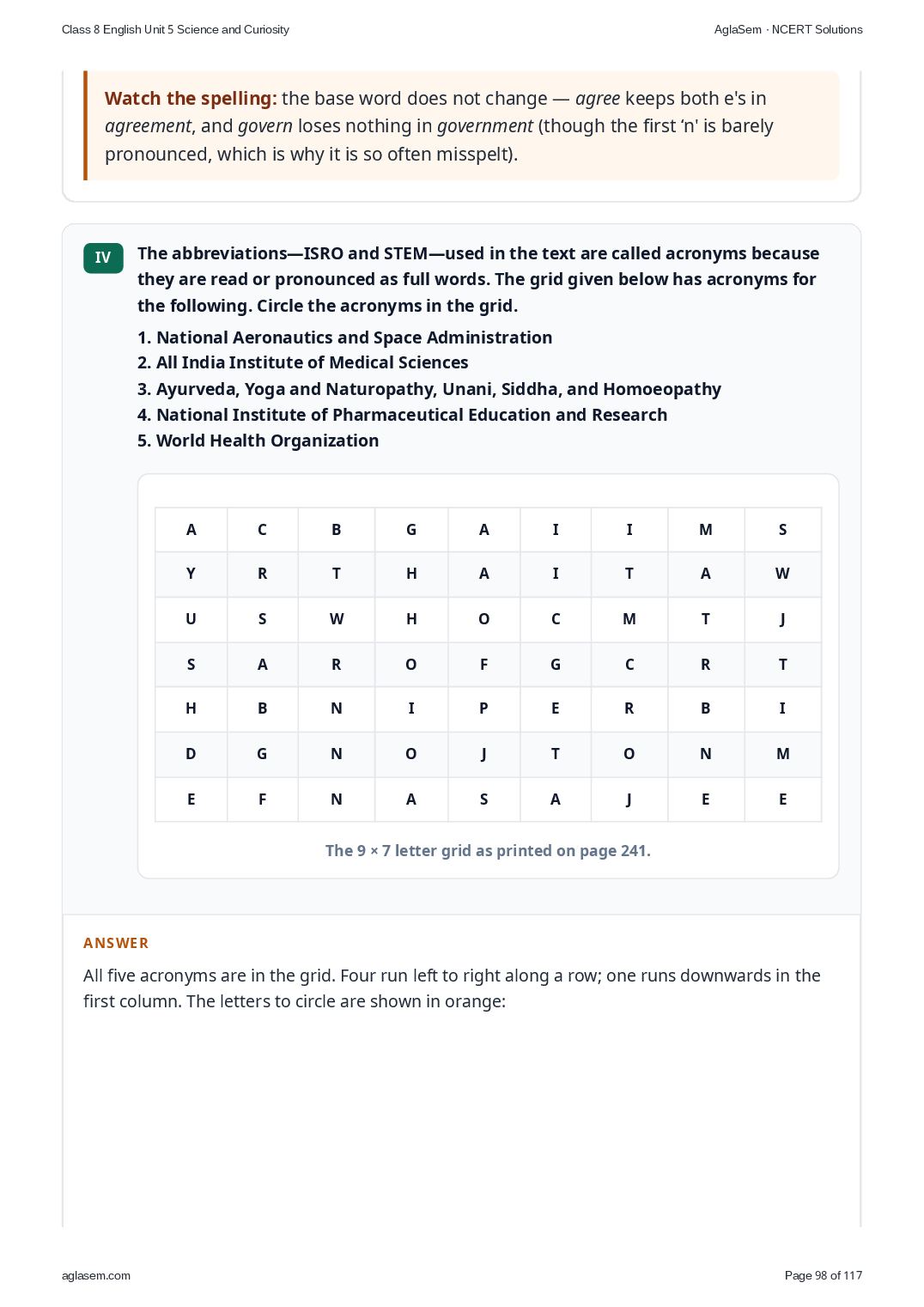
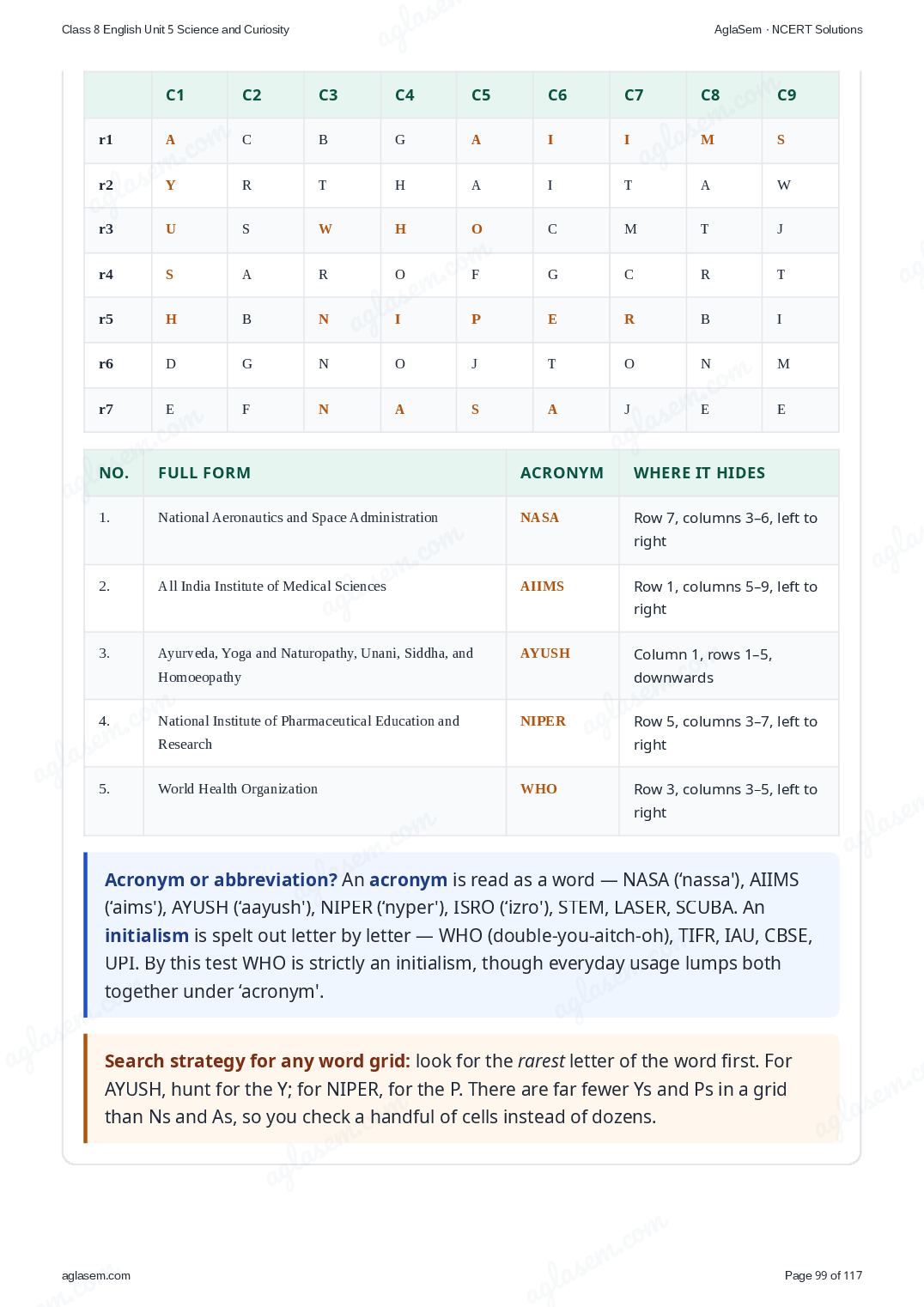
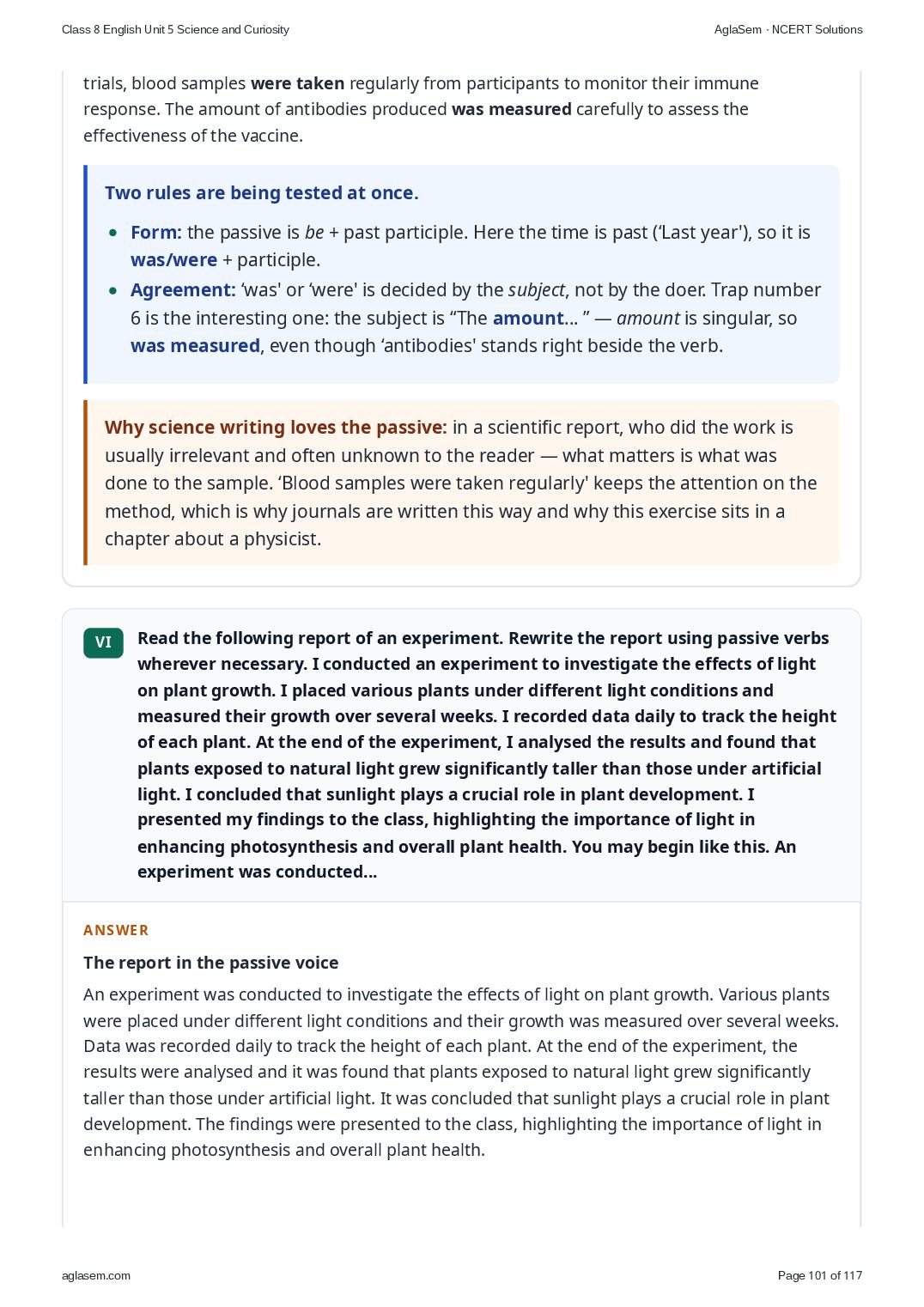
- The language work of the unit covers adjective–noun collocation , merged (blended) words , the many ways English marks future time , silent letters , collective nouns , idioms with 'eye' , the suffixes -ish, -ship, -ment, -hood , acronyms and clipping , and the passive voice .
How to Download NCERT Solutions for Class 8 English Chapter 5 PDF
Follow these simple steps to get the Science and Curiosity questions-and-answers PDF from Poorvi.
- Search NCERT Solutions for Class 8 English Chapter 5 aglasem and open this page.
- Read the exercise questions with answers for Science and Curiosity shown above.
- Click the Download PDF link to save the Science and Curiosity solutions to your device.
NCERT Solutions for Class 8 English – All Chapters
There are more chapters to study besides Science and Curiosity in English. Here are the NCERT Solutions for all chapters of Class 8 English.
- Chapter 1 Wit and Wisdom
- Chapter 2 Values and Dispositions
- Chapter 3 Mystery and Magic
- Chapter 4 Environment
- Chapter 5 Science and Curiosity
NCERT Solutions for Class 8 – All Subjects
Just like Chapter 5 of English, you can get the exercise questions with answers for every other subject of Class 8. Here are the NCERT Solutions for all subjects of Class 8.
NCERT Solutions for Class 8 English Chapter 5 – An Overview
The key highlights of this study material are as follows.
| Aspects | Details |
|---|---|
| Class | Class 8 |
| Subject | English |
| Chapter Number | Chapter 5 |
| Chapter Name | Science and Curiosity |
| Book Name | Poorvi |
| Book By | NCERT (National Council of Educational Research and Training) |
| Educational Resource Here | NCERT Solutions of Class 8 English Chapter 5 for all exercises |
| More Questions Answers of This Subject | NCERT Solutions for Class 8 English |
| Download Book Chapter | NCERT Book Class 8 English |
| All Questions Answers For This Class | NCERT Solutions for Class 8 |
| Complete Solutions | NCERT Solutions |
NCERT Solutions for Class 8 English Chapter 5 Science and Curiosity – FAQs
What are the NCERT Solutions for Class 8 English Chapter 5 Science and Curiosity?
They are the complete, step-by-step answers to all the exercise and in-text questions of Chapter 5 Science and Curiosity from the NCERT Class 8 English textbook Poorvi, written by experts as per the latest NCERT syllabus.
How can I download the Class 8 English Chapter 5 solutions PDF for free?
Open this page on aglasem, read the Science and Curiosity questions with answers, and click the “Download Solutions PDF” link. The Class 8 English Chapter 5 NCERT Solutions PDF is completely free to download.
Are these NCERT Solutions as per the latest 2026-27 syllabus?
Yes. The NCERT Solutions for Class 8 English Chapter 5 are based on the latest NCERT textbook Poorvi and the current 2026-27 CBSE syllabus, so the questions and answers match what you study in class.
Where can I get NCERT Solutions for the other chapters of Class 8 English?
You can find the answers to every chapter on the NCERT Solutions for Class 8 English page, and solutions for every subject on the NCERT Solutions for Class 8 page.
How do NCERT Solutions help in exam preparation?
They show the correct method to solve each question, help you write answers the way they are expected in exams, let you check and correct your own work, and save revision time — which together improve your marks in Class 8 English.
If you have any queries on NCERT Solutions for Class 8 English Chapter 5 Science and Curiosity, then please ask in the comments below.