NCERT Solutions for Class 9 Science Chapter 1 Exploration Entering the World of Secondary Science provide clear, step-by-step answers to every exercise and in-text question from the chapter Exploration Entering the World of Secondary Science of the NCERT textbook Exploration. Prepared by subject experts as per the latest NCERT (CBSE) syllabus for 2026-27, these NCERT Solutions for Class 9 Science help you understand each concept, write exam-ready answers, and check your own solutions. You can read them online below or download the free Class 9 Science Chapter 1 question-answer PDF.
NCERT Solutions for Class 9 Science Chapter 1 Exploration Entering the World of Secondary Science
- Class: Class 9
- Subject: Science
- Chapter: Chapter 1 – Exploration Entering the World of Secondary Science
- Textbook: Exploration (NCERT)
- Study material: NCERT Solutions – questions with answers, free PDF
These solutions answer all the exercise questions of Chapter 1 Exploration Entering the World of Secondary Science — including the in-text questions, short-answer and long-answer questions, and activities — with complete explanations so you can follow the method, not just the final answer. Read the full solutions below.
NCERT Solutions Class 9 Science Chapter 1 Exploration Entering the World of Secondary Science View Download
NCERT Solutions for Class 9 Science Chapter 1 PDF Download
You can read the NCERT Solutions for Class 9 Science Chapter 1 online above, or download the complete question-answer PDF to study Exploration Entering the World of Secondary Science offline at any time.
NCERT Solutions for Class 9 Science Chapter 1 PDF Download Link – Click Here to Download Solutions PDF
Questions Covered in This Chapter
These NCERT Solutions answer all 13 questions of this chapter. The questions solved are:
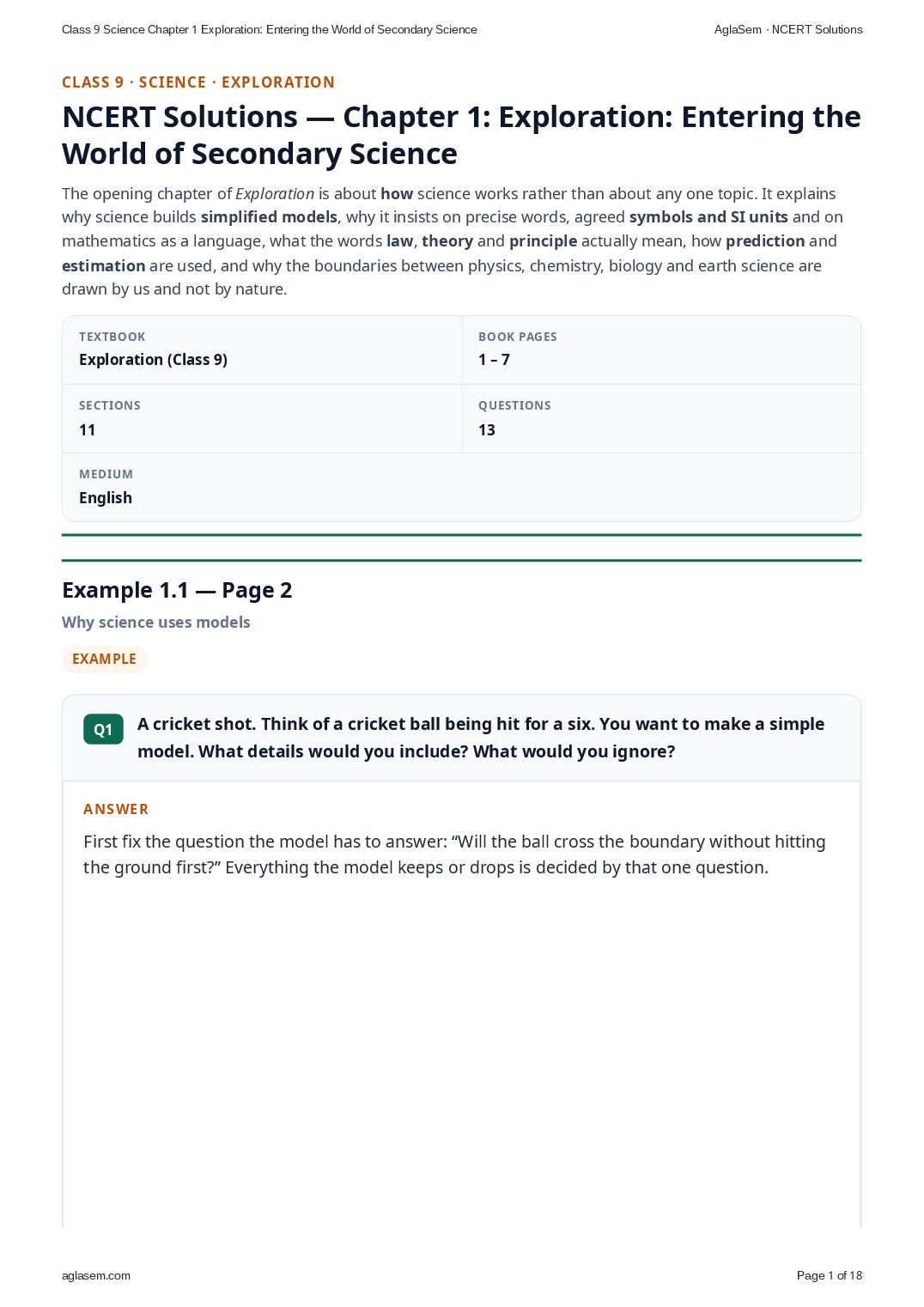
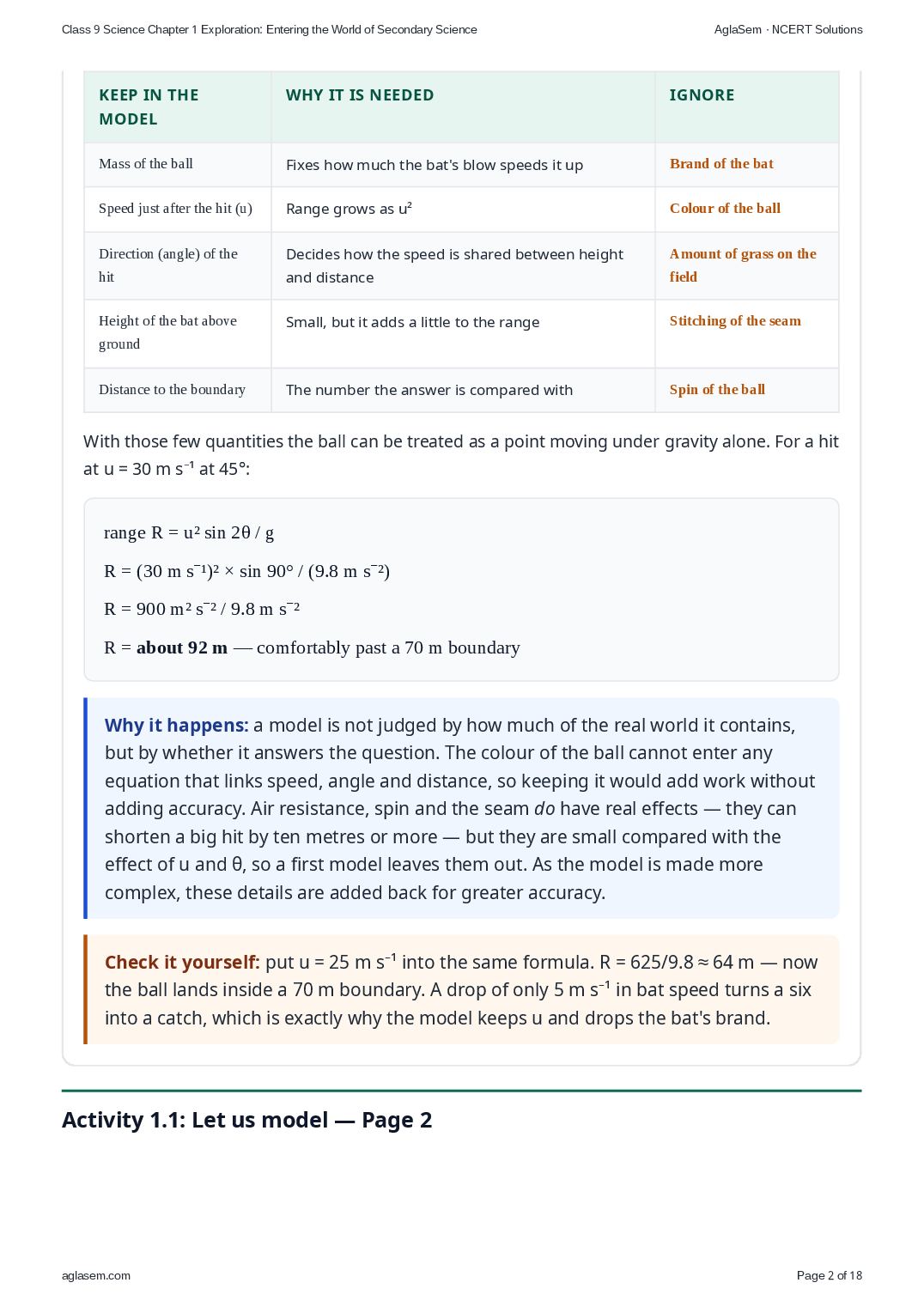
- A cricket shot. Think of a cricket ball being hit for a six. You want to make a simple model. What details would you include? What would you ignore?
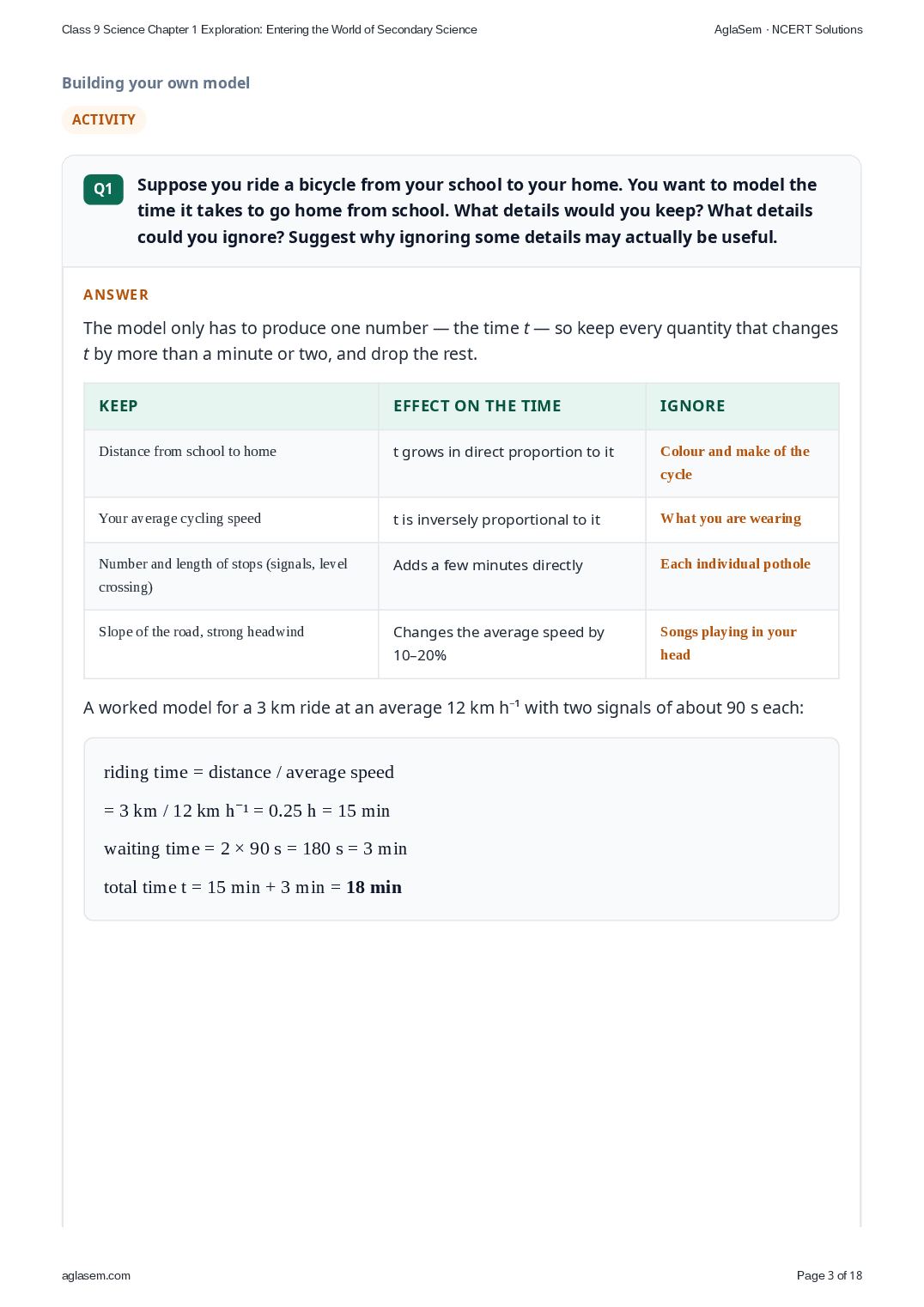
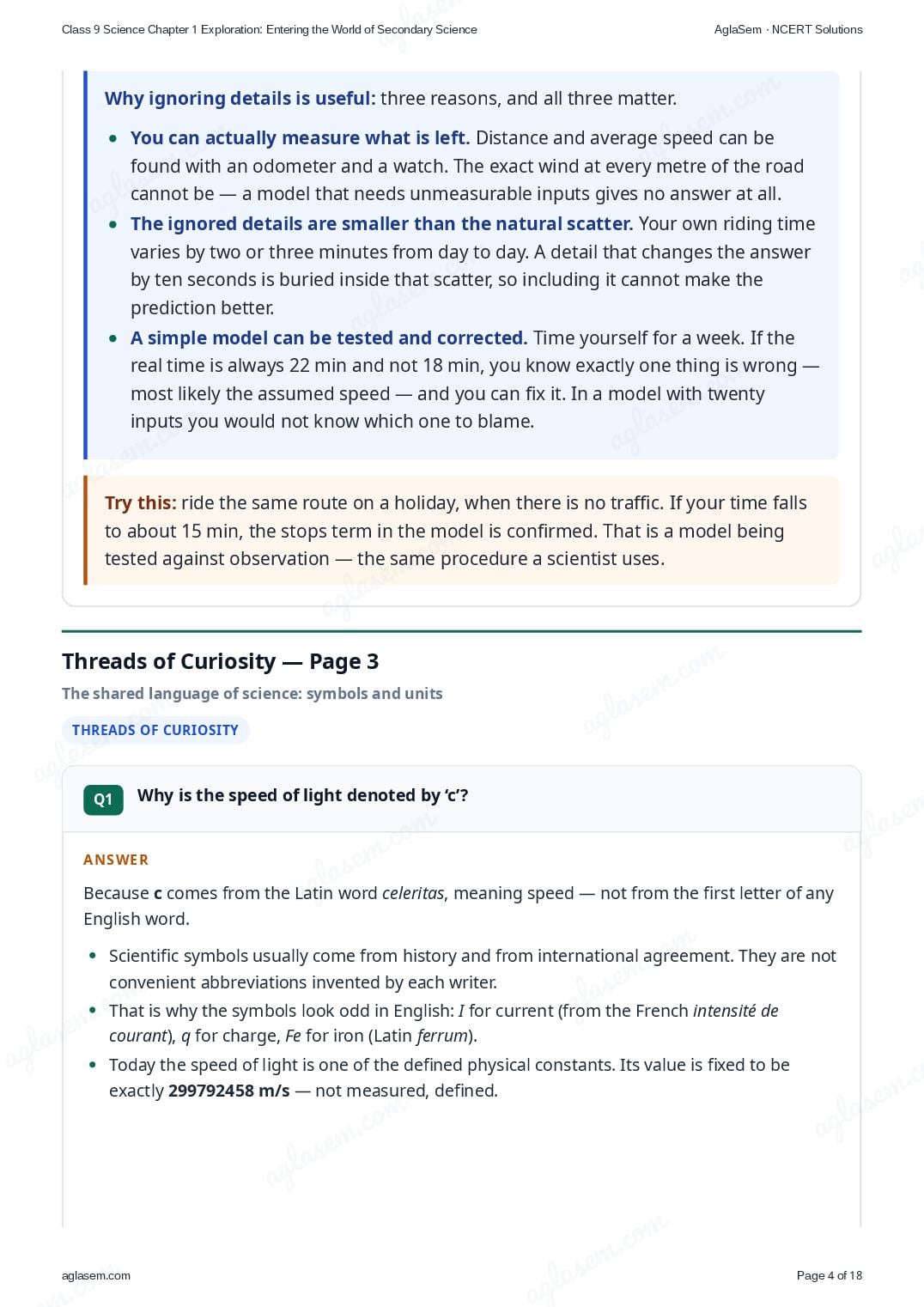
- Suppose you ride a bicycle from your school to your home. You want to model the time it takes to go home from school. What details would you keep? What details could you ignore? Suggest why ignoring some details may actually be useful.
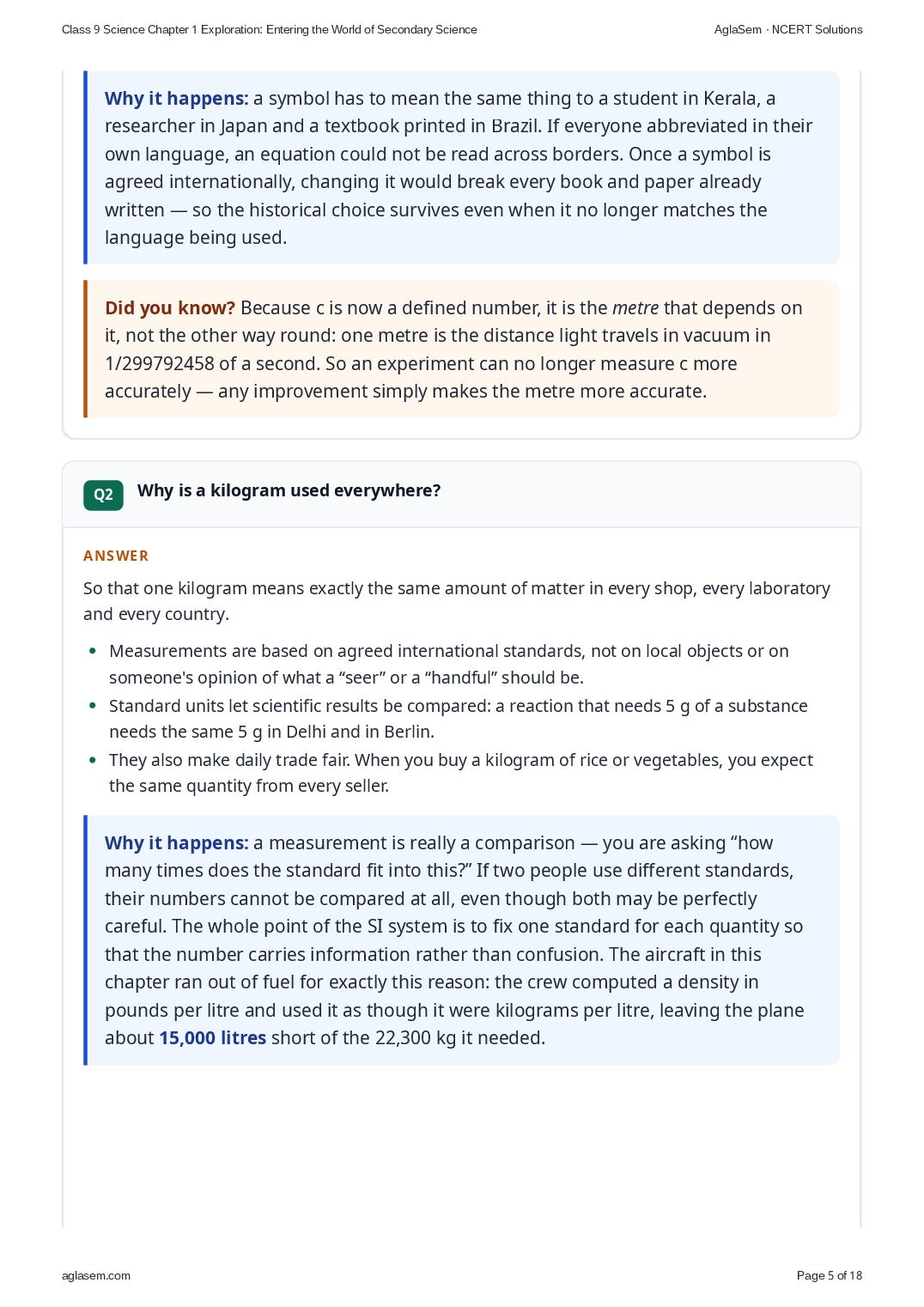
- Why is the speed of light denoted by ‘c’?
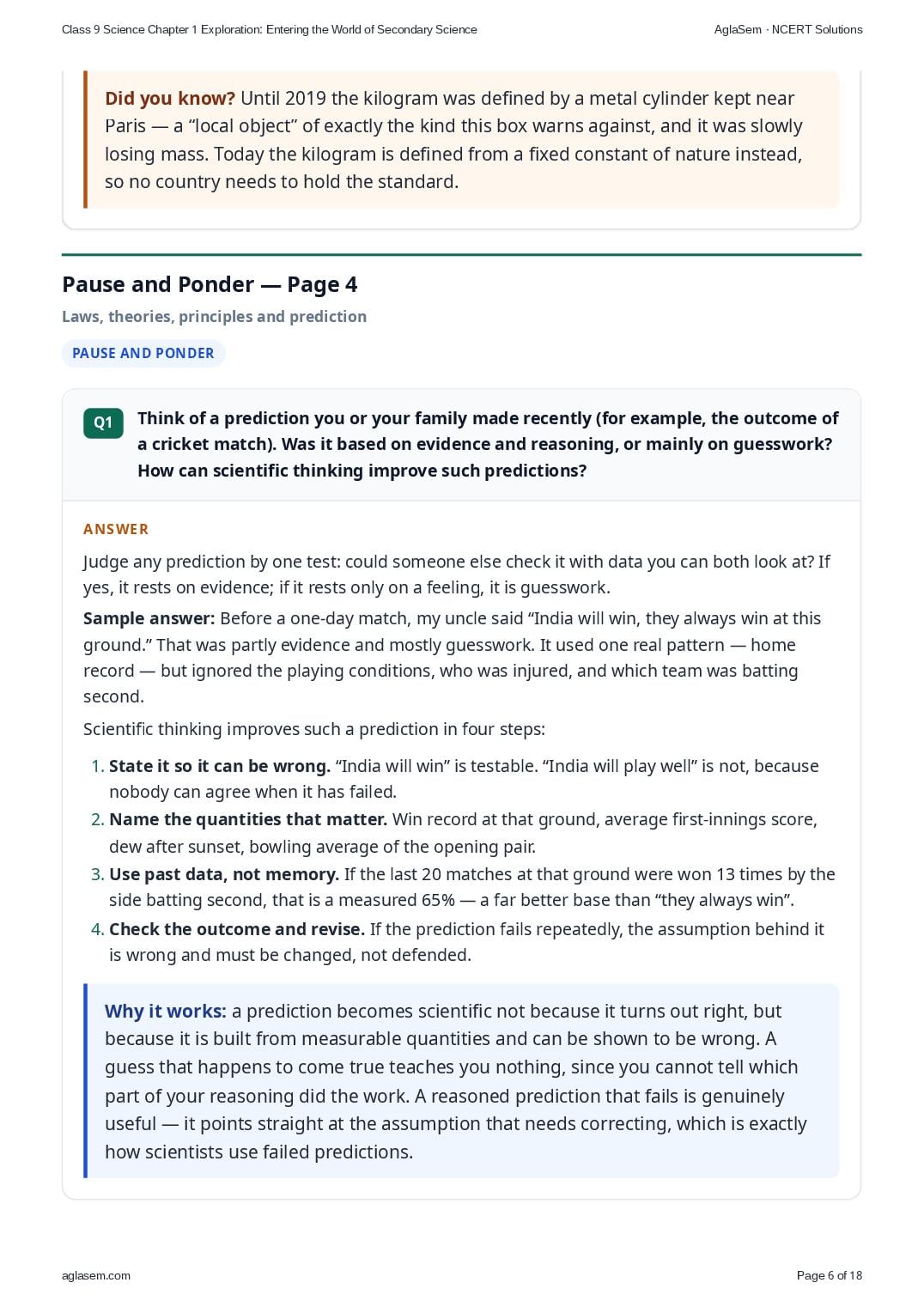
- Why is a kilogram used everywhere?
- Think of a prediction you or your family made recently (for example, the outcome of a cricket match). Was it based on evidence and reasoning, or mainly on guesswork? How can scientific thinking improve such predictions?
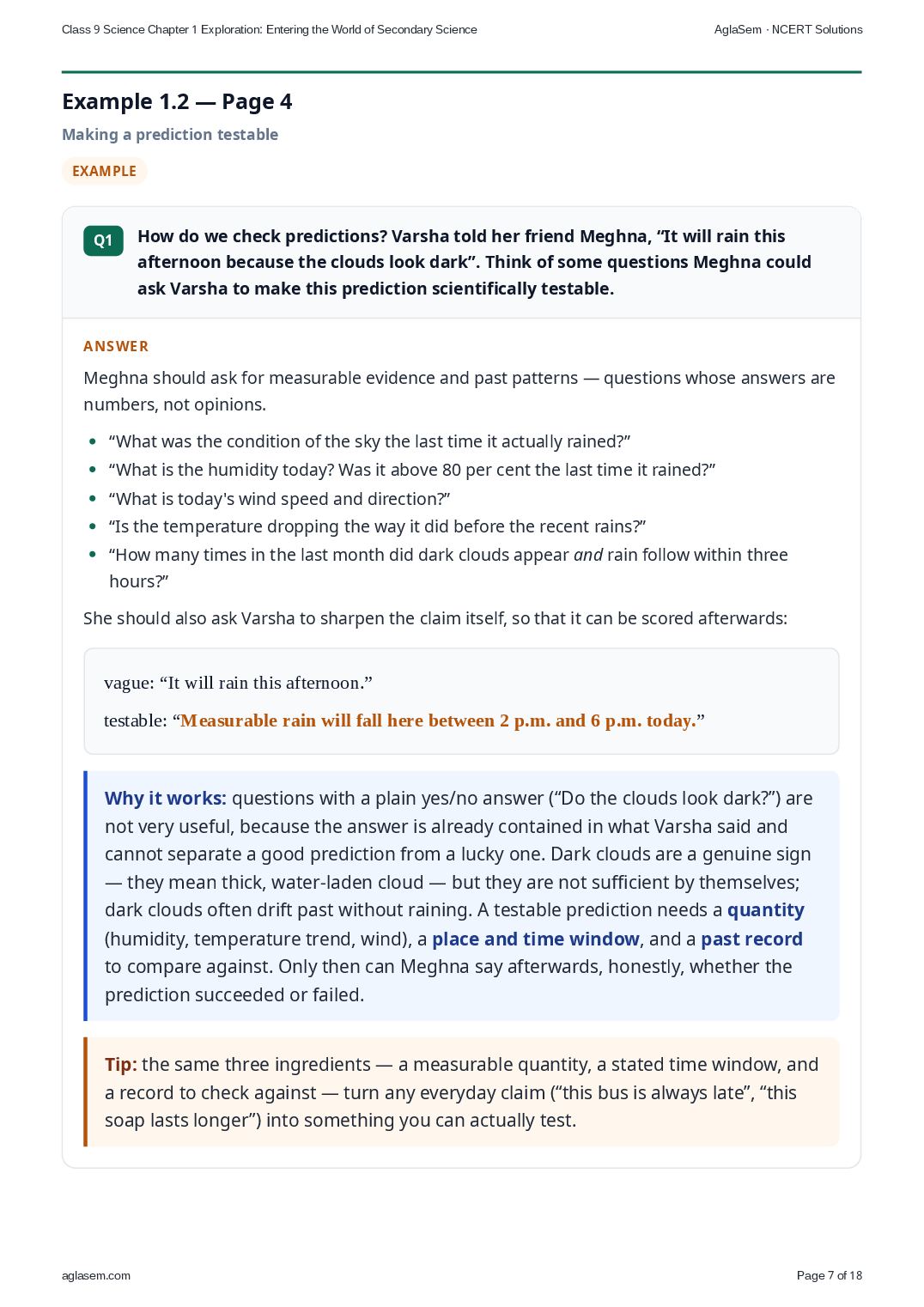
- How do we check predictions? Varsha told her friend Meghna, “It will rain this afternoon because the clouds look dark”. Think of some questions Meghna could ask Varsha to make this prediction scientifically testable.
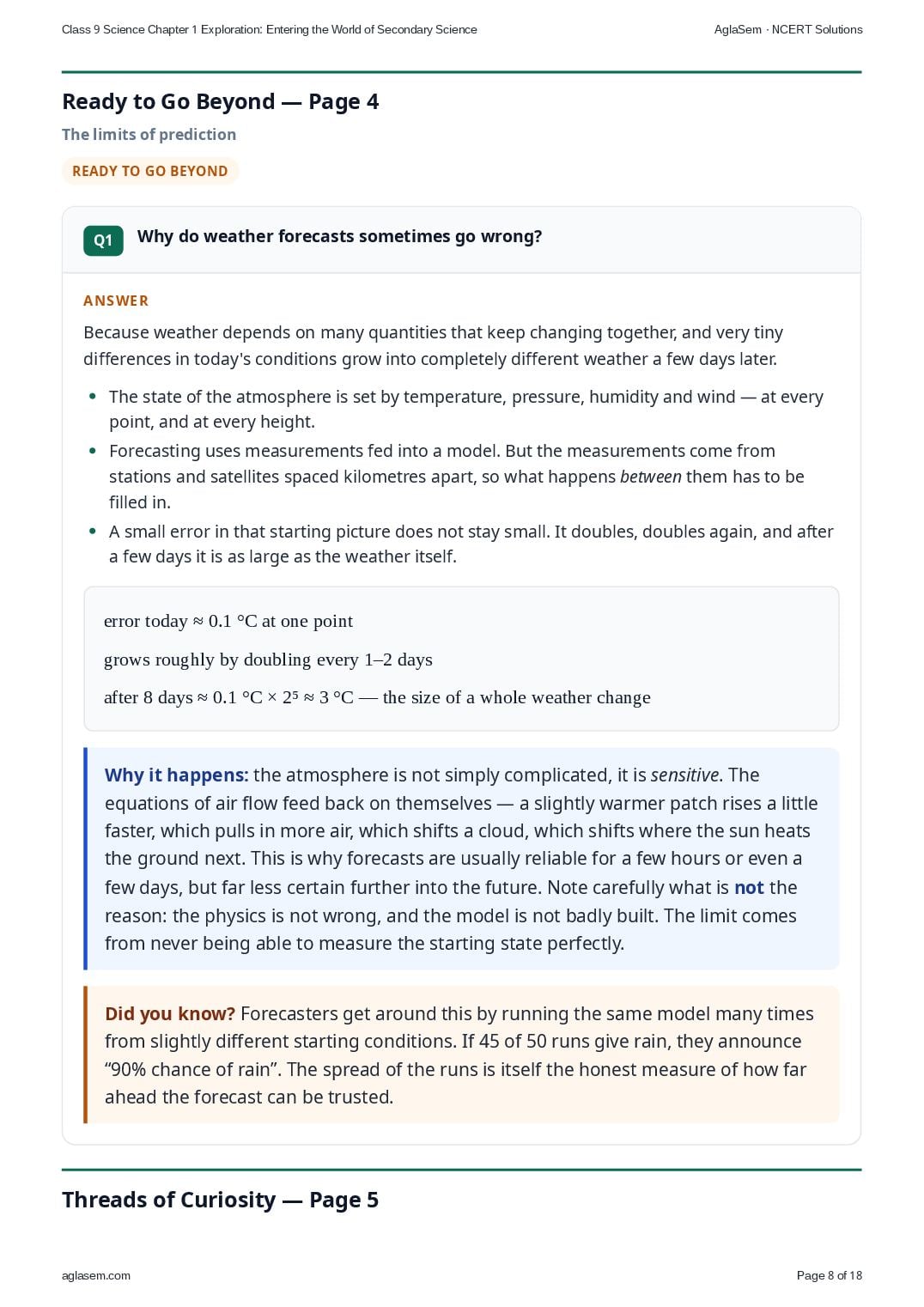
- Why do weather forecasts sometimes go wrong?
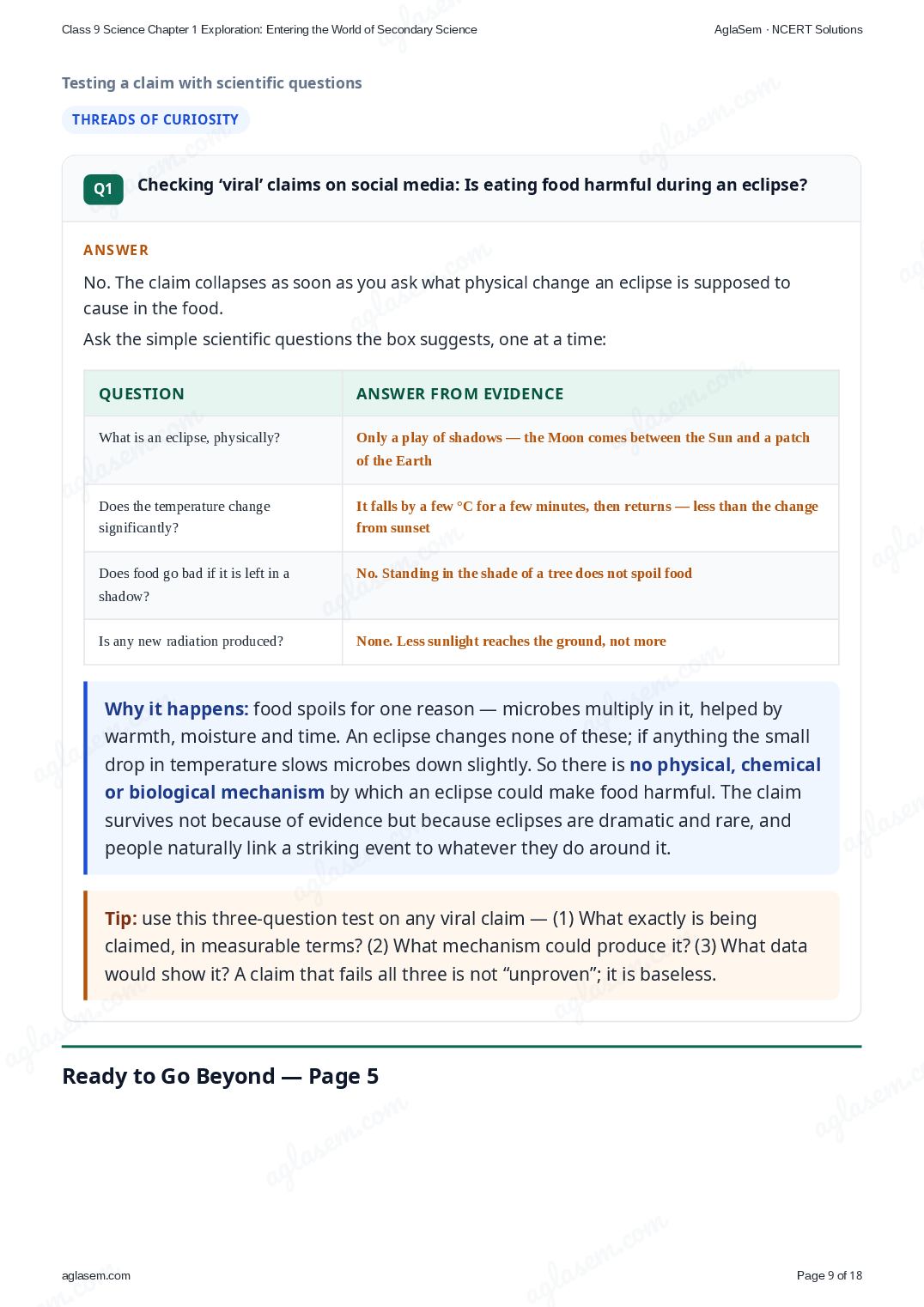
- Checking ‘viral’ claims on social media: Is eating food harmful during an eclipse?
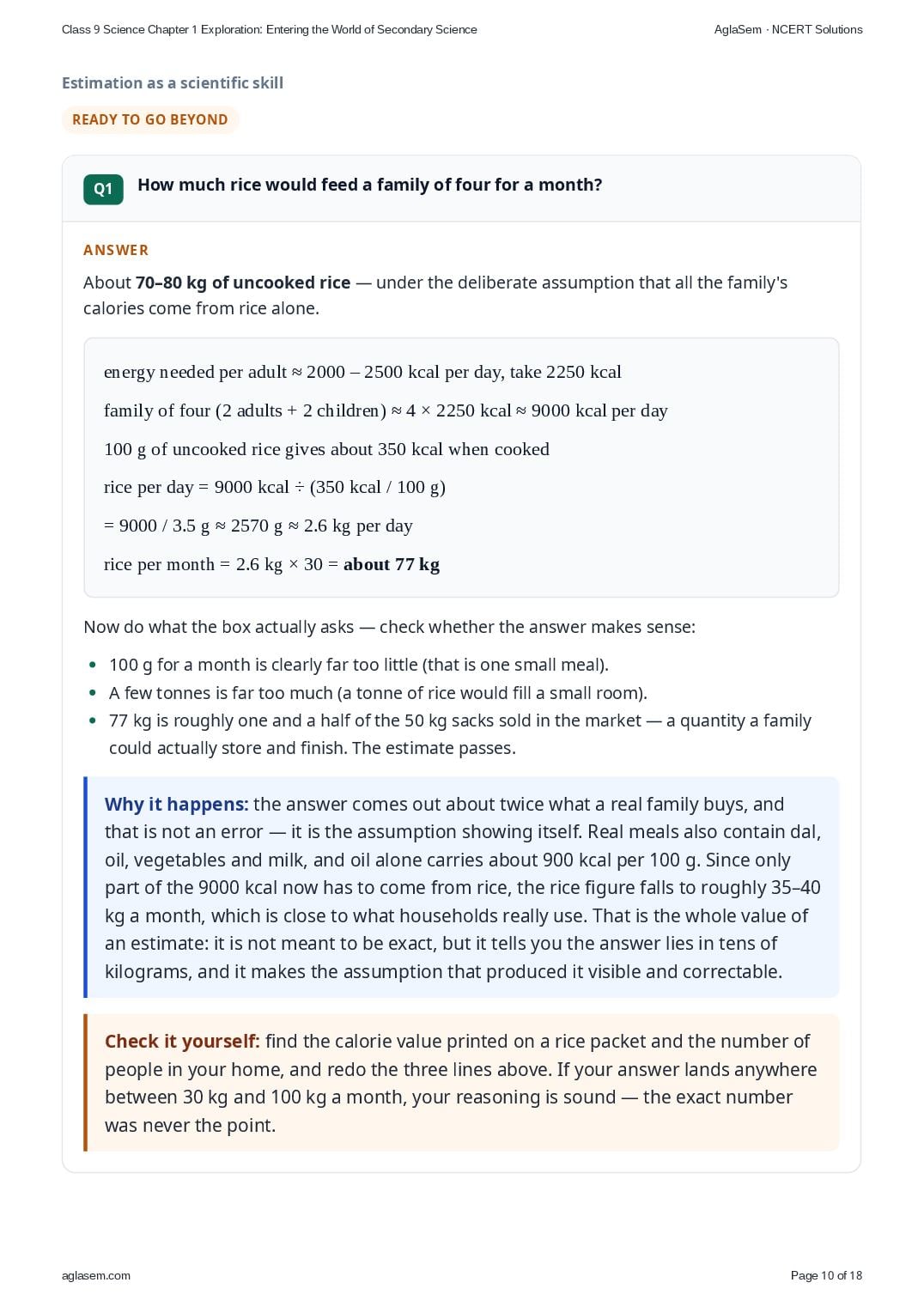
- How much rice would feed a family of four for a month?
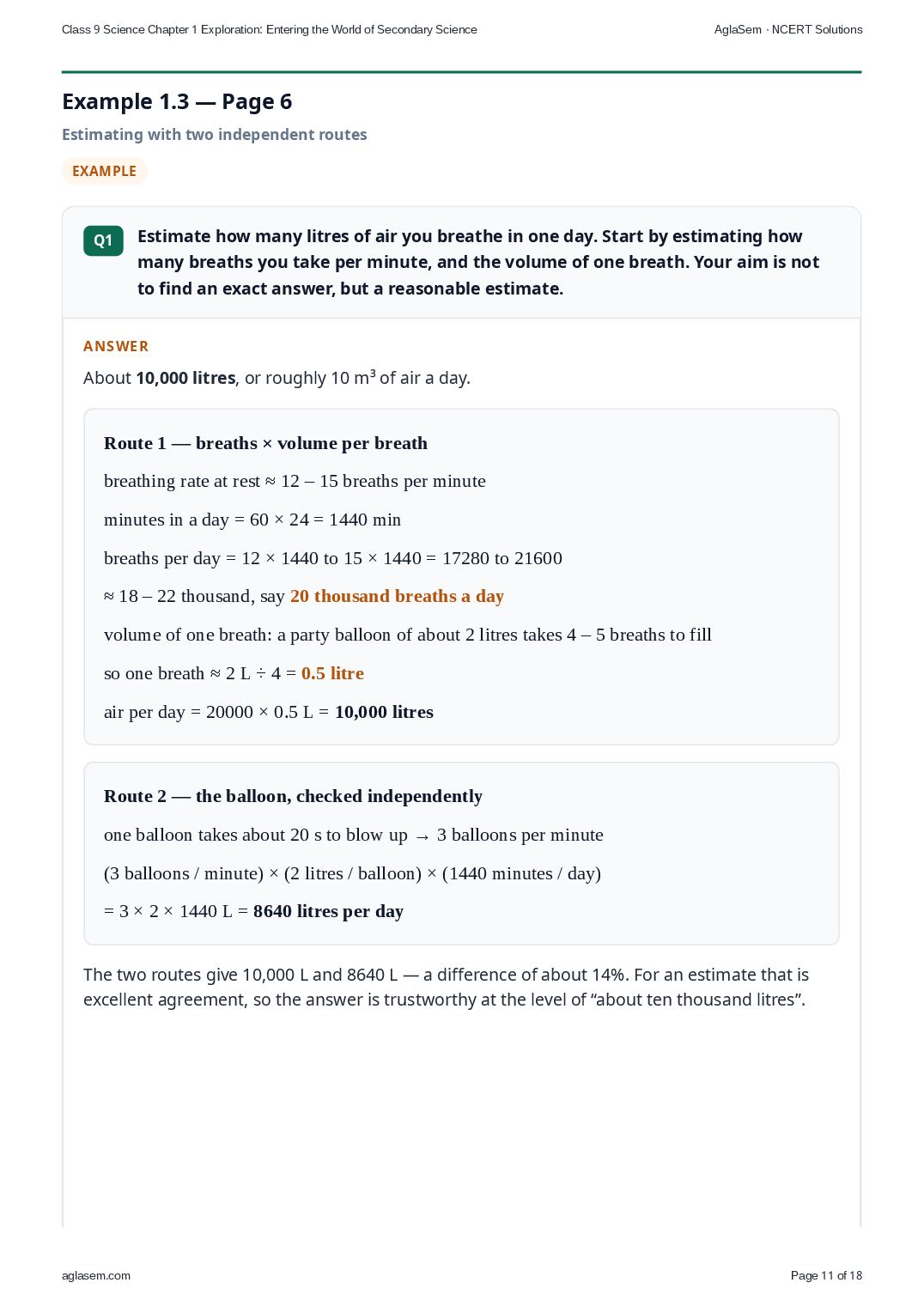
- Estimate how many litres of air you breathe in one day. Start by estimating how many breaths you take per minute, and the volume of one breath. Your aim is not to find an exact answer, but a reasonable estimate.
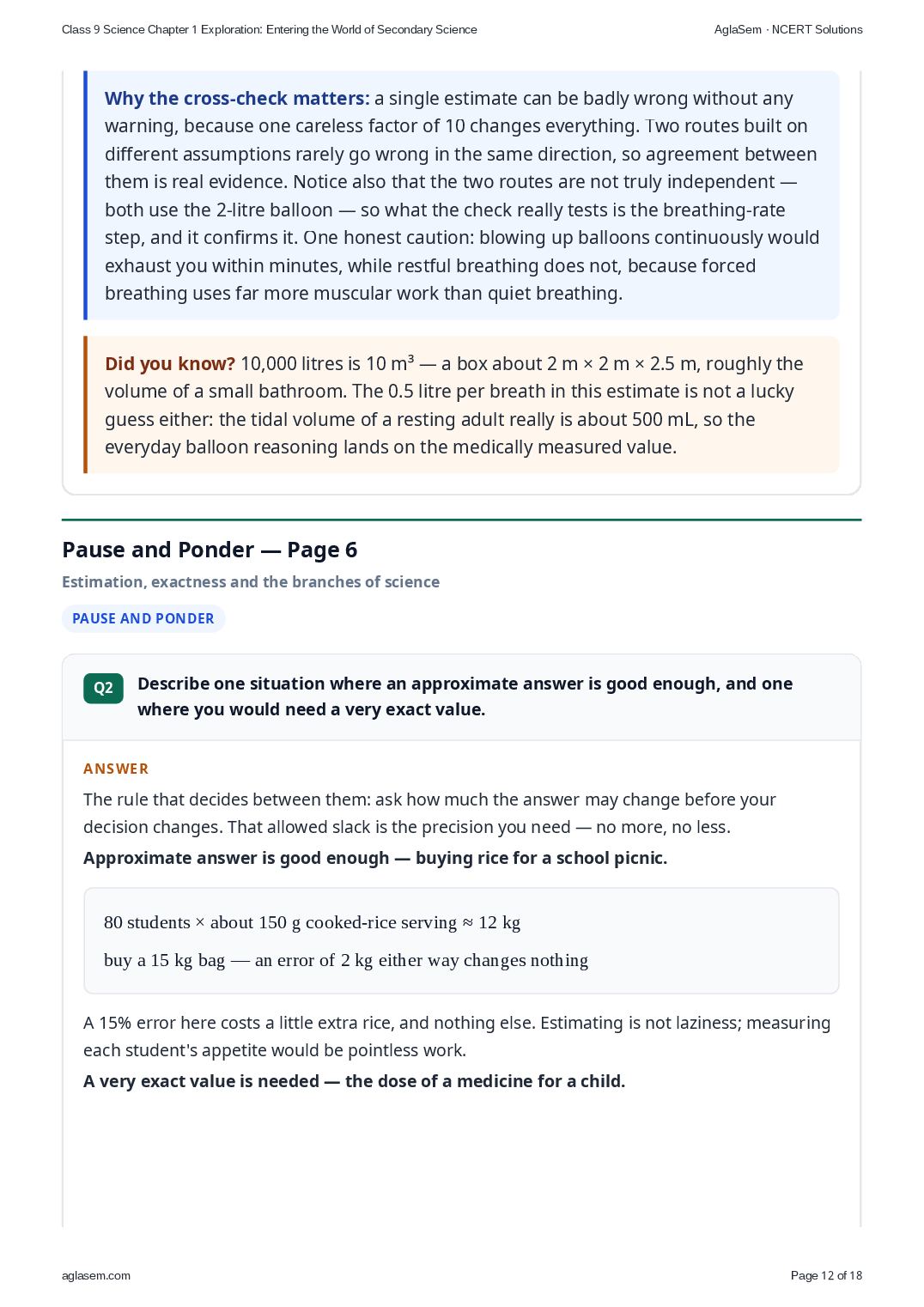
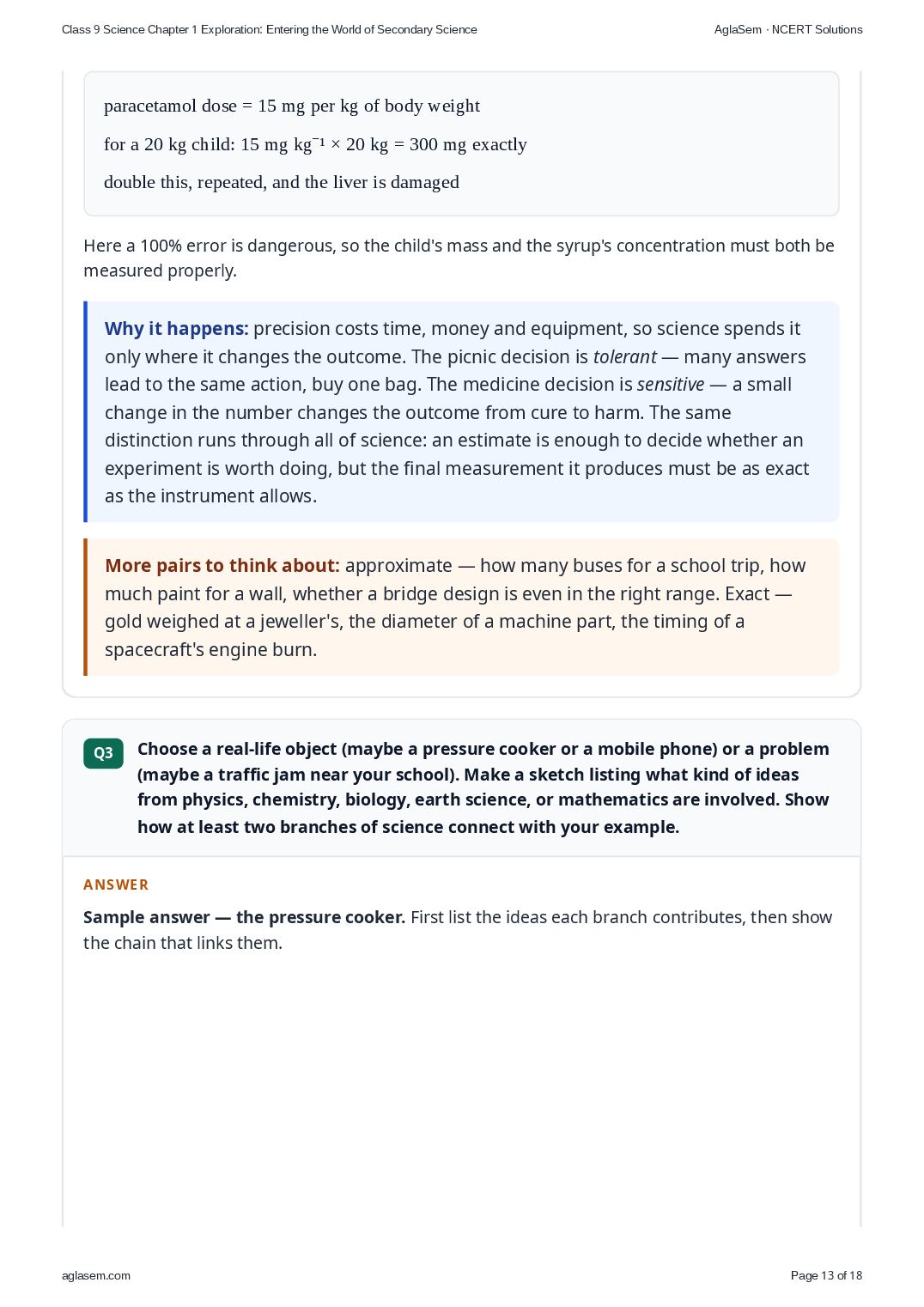
- Describe one situation where an approximate answer is good enough, and one where you would need a very exact value.
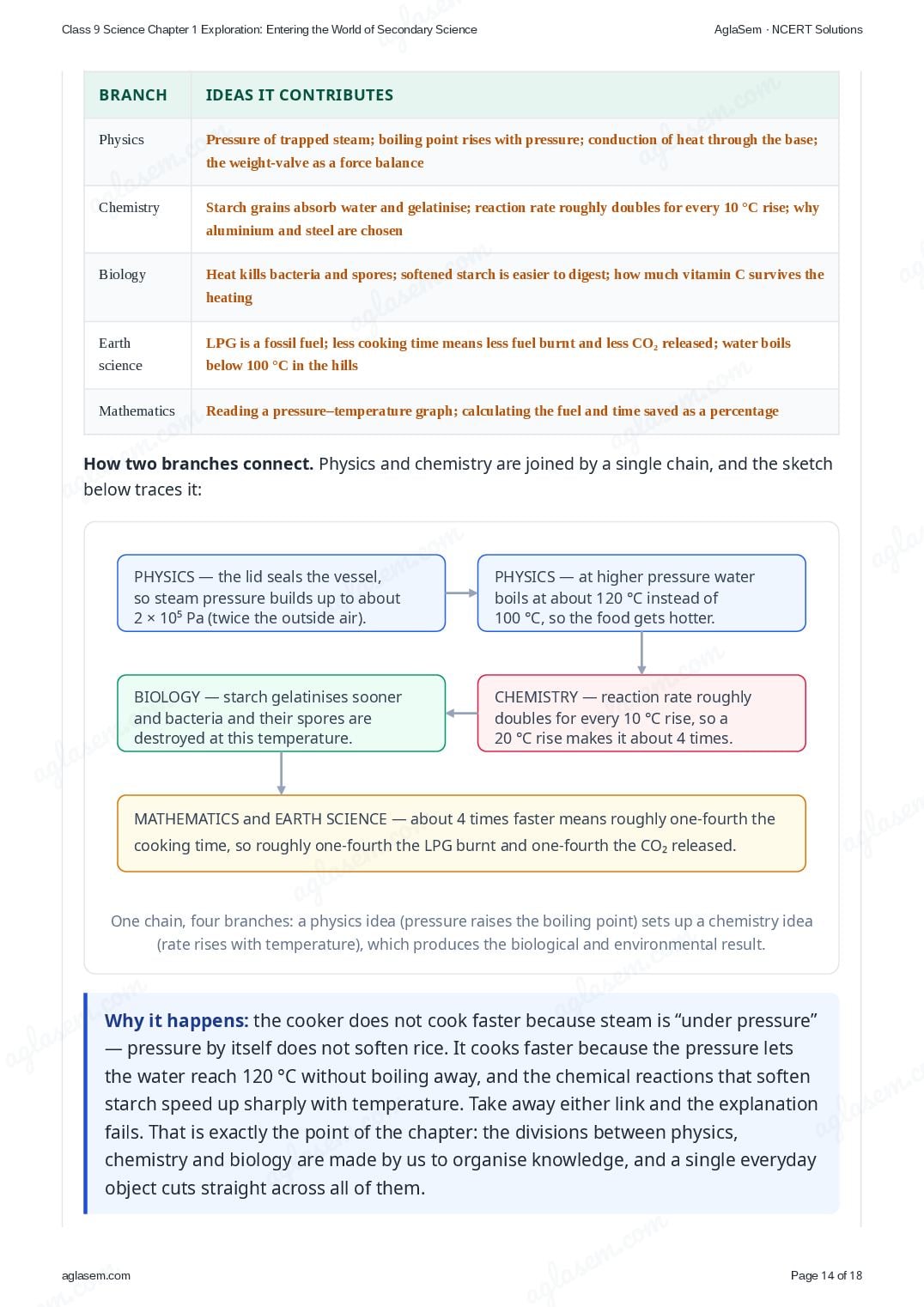
- Choose a real‑life object (maybe a pressure cooker or a mobile phone) or a problem (maybe a traffic jam near your school). Make a sketch listing what kind of ideas from physics, chemistry, biology, earth science, or mathematics are involved. Show how at least two branches of science connect with your example.
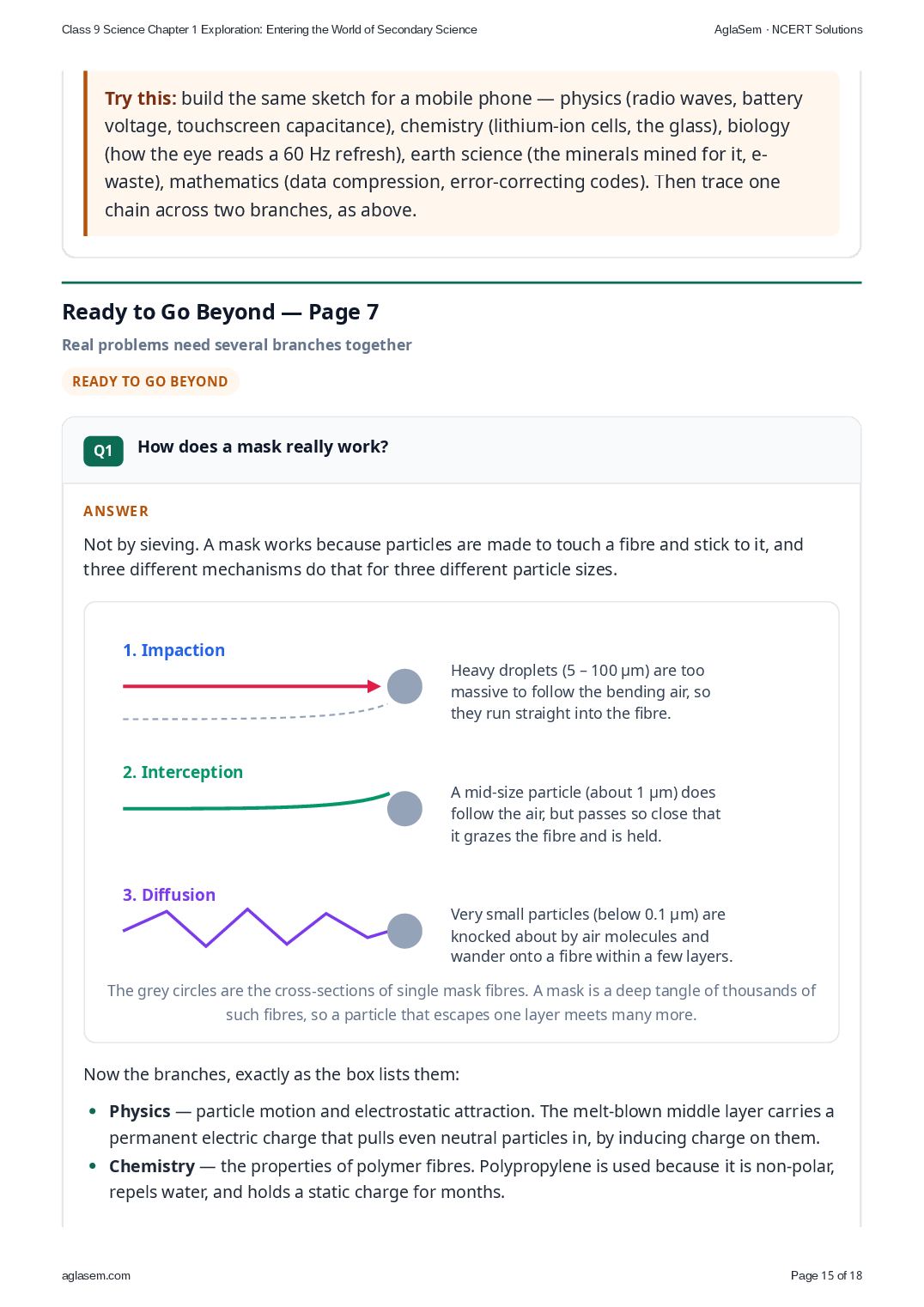
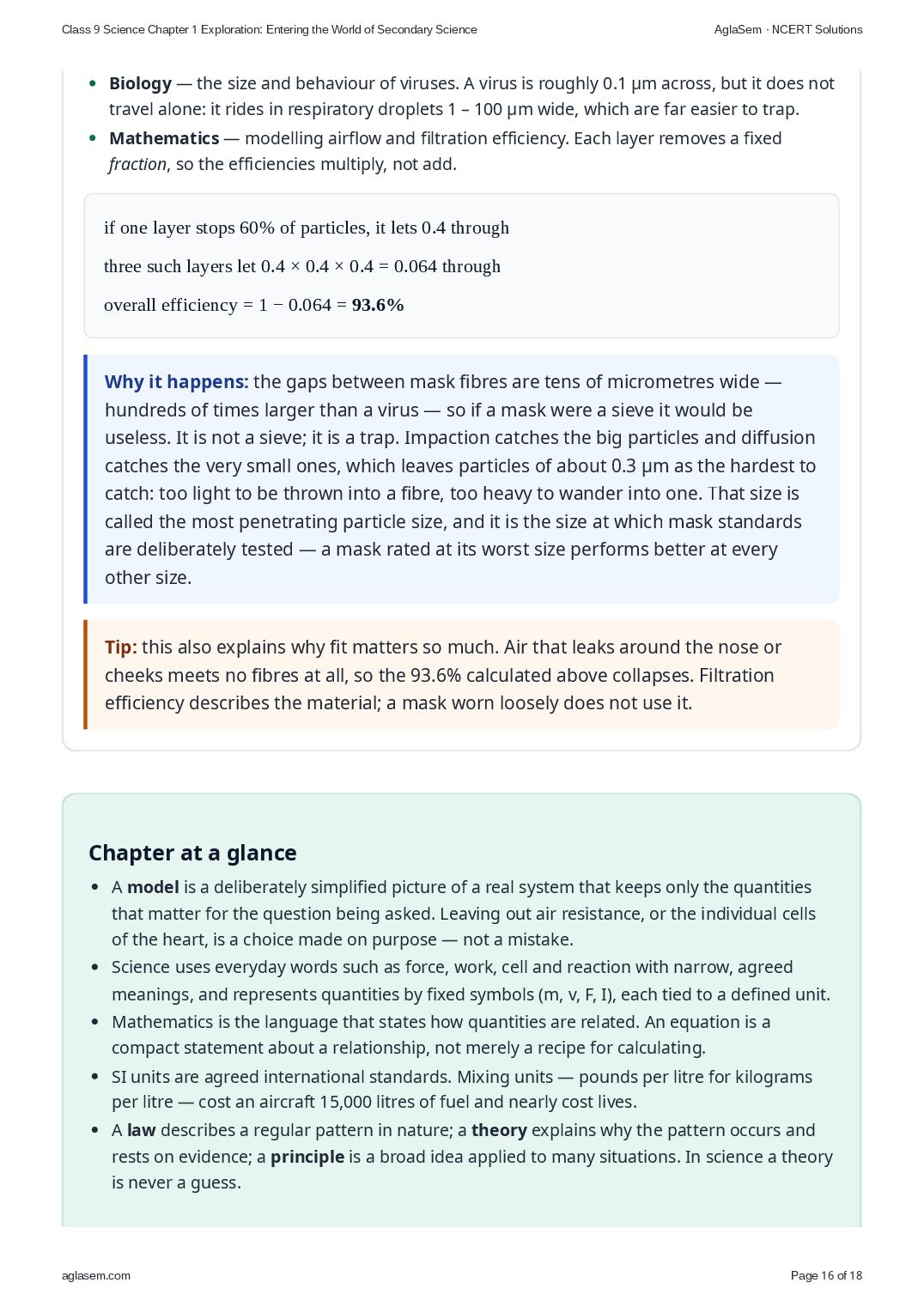
- How does a mask really work?
Chapter at a Glance
- A model is a deliberately simplified picture of a real system that keeps only the quantities that matter for the question being asked. Leaving out air resistance, or the individual cells of the heart, is a choice made on purpose — not a mistake.
- Science uses everyday words such as force, work, cell and reaction with narrow, agreed meanings, and represents quantities by fixed symbols (m, v, F, I), each tied to a defined unit.
- Mathematics is the language that states how quantities are related. An equation is a compact statement about a relationship, not merely a recipe for calculating.
- SI units are agreed international standards. Mixing units — pounds per litre for kilograms per litre — cost an aircraft 15,000 litres of fuel and nearly cost lives.
- A law describes a regular pattern in nature; a theory explains why the pattern occurs and rests on evidence; a principle is a broad idea applied to many situations. In science a theory is never a guess.
- Well-tested laws, theories and models let us predict what will happen in new conditions. When a prediction fails, scientists re-examine the assumptions, the model or the measurement — and that openness is science's strength, not its weakness.
- Estimation — a rough calculation to check whether an answer is even possible — is a genuine scientific skill. Careful reasoning matters more than a precise number in the early stages.
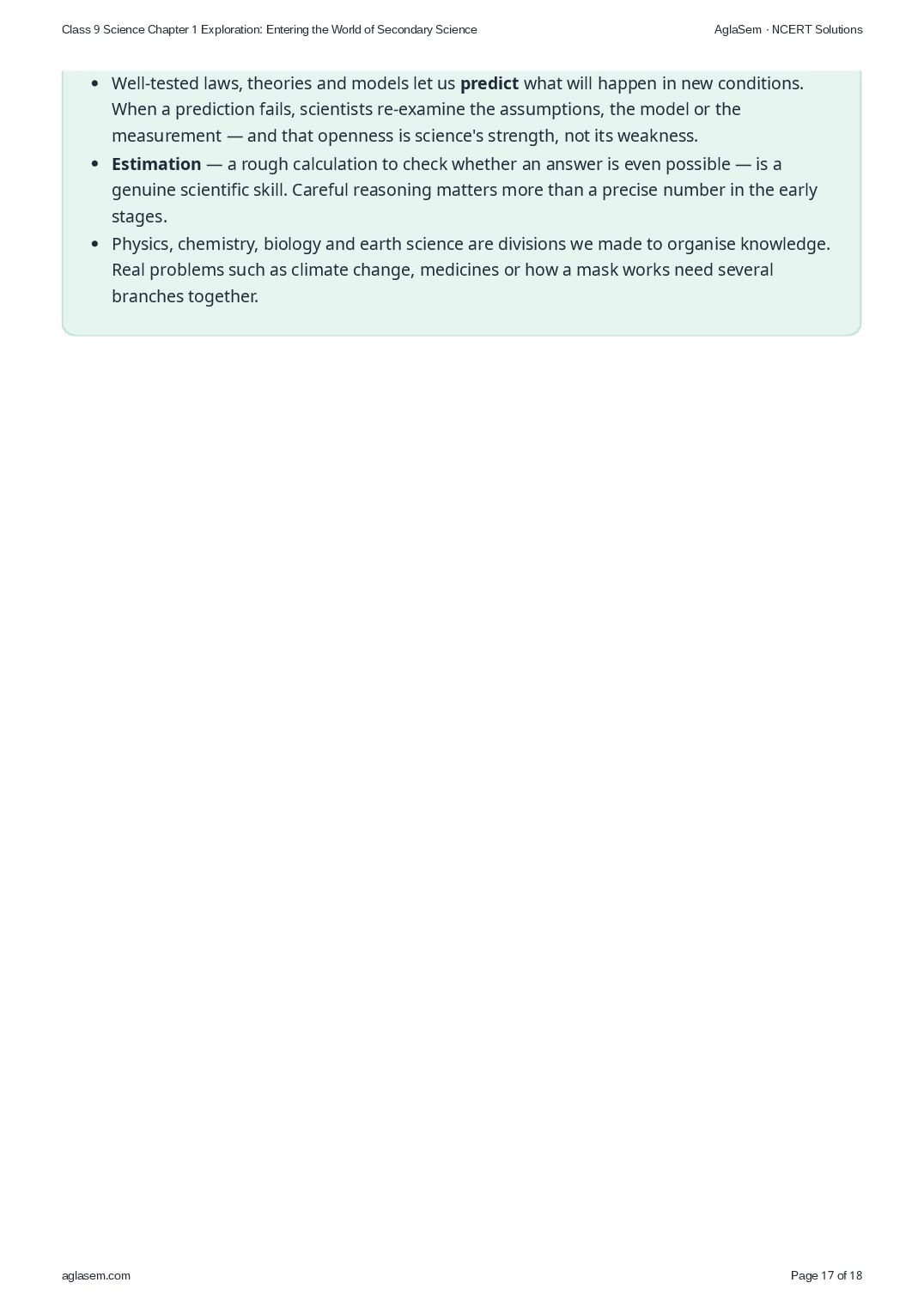
- Physics, chemistry, biology and earth science are divisions we made to organise knowledge. Real problems such as climate change, medicines or how a mask works need several branches together.
How to Download NCERT Solutions for Class 9 Science Chapter 1 PDF
Follow these simple steps to get the Exploration Entering the World of Secondary Science questions-and-answers PDF from Exploration.
- Search NCERT Solutions for Class 9 Science Chapter 1 aglasem and open this page.
- Read the exercise questions with answers for Exploration Entering the World of Secondary Science shown above.
- Click the Download PDF link to save the Exploration Entering the World of Secondary Science solutions to your device.
NCERT Solutions for Class 9 Science – All Chapters
There are more chapters to study besides Exploration Entering the World of Secondary Science in Science. Here are the NCERT Solutions for all chapters of Class 9 Science.
- Chapter 1 Exploration Entering the World of Secondary Science
- Chapter 2 Cell the Building Block of Life
- Chapter 3 Tissues in Action
- Chapter 4 Describing Motion Around Us
- Chapter 5 Exploring Mixtures and Their Separation
- Chapter 6 How Forces Affect Motion
- Chapter 7 Work Energy and Simple Machines
- Chapter 8 Journey Inside the Atom
- Chapter 9 Atomic Foundations of Matter
- Chapter 10 Sound Waves Characteristics and Applications
- Chapter 11 Reproduction How Life Continues
- Chapter 12 Patterns in Life Diversity and Classification
- Chapter 13 Earth As a System Energy Matter and Life
NCERT Solutions for Class 9 – All Subjects
Just like Chapter 1 of Science, you can get the exercise questions with answers for every other subject of Class 9. Here are the NCERT Solutions for all subjects of Class 9.
NCERT Solutions for Class 9 Science Chapter 1 – An Overview
The key highlights of this study material are as follows.
| Aspects | Details |
|---|---|
| Class | Class 9 |
| Subject | Science |
| Chapter Number | Chapter 1 |
| Chapter Name | Exploration Entering the World of Secondary Science |
| Book Name | Exploration |
| Book By | NCERT (National Council of Educational Research and Training) |
| Educational Resource Here | NCERT Solutions of Class 9 Science Chapter 1 for all exercises |
| More Questions Answers of This Subject | NCERT Solutions for Class 9 Science |
| Download Book Chapter | NCERT Book Class 9 Science |
| All Questions Answers For This Class | NCERT Solutions for Class 9 |
| Complete Solutions | NCERT Solutions |
NCERT Solutions for Class 9 Science Chapter 1 Exploration Entering the World of Secondary Science – FAQs
What are the NCERT Solutions for Class 9 Science Chapter 1 Exploration Entering the World of Secondary Science?
They are the complete, step-by-step answers to all the exercise and in-text questions of Chapter 1 Exploration Entering the World of Secondary Science from the NCERT Class 9 Science textbook Exploration, written by experts as per the latest NCERT syllabus.
How can I download the Class 9 Science Chapter 1 solutions PDF for free?
Open this page on aglasem, read the Exploration Entering the World of Secondary Science questions with answers, and click the “Download Solutions PDF” link. The Class 9 Science Chapter 1 NCERT Solutions PDF is completely free to download.
Are these NCERT Solutions as per the latest 2026-27 syllabus?
Yes. The NCERT Solutions for Class 9 Science Chapter 1 are based on the latest NCERT textbook Exploration and the current 2026-27 CBSE syllabus, so the questions and answers match what you study in class.
Where can I get NCERT Solutions for the other chapters of Class 9 Science?
You can find the answers to every chapter on the NCERT Solutions for Class 9 Science page, and solutions for every subject on the NCERT Solutions for Class 9 page.
How do NCERT Solutions help in exam preparation?
They show the correct method to solve each question, help you write answers the way they are expected in exams, let you check and correct your own work, and save revision time — which together improve your marks in Class 9 Science.
If you have any queries on NCERT Solutions for Class 9 Science Chapter 1 Exploration Entering the World of Secondary Science, then please ask in the comments below.