NCERT Solutions for Class 9 Science Chapter 3 Tissues in Action provide clear, step-by-step answers to every exercise and in-text question from the chapter Tissues in Action of the NCERT textbook Exploration. Prepared by subject experts as per the latest NCERT (CBSE) syllabus for 2026-27, these NCERT Solutions for Class 9 Science help you understand each concept, write exam-ready answers, and check your own solutions. You can read them online below or download the free Class 9 Science Chapter 3 question-answer PDF.
NCERT Solutions for Class 9 Science Chapter 3 Tissues in Action
- Class: Class 9
- Subject: Science
- Chapter: Chapter 3 – Tissues in Action
- Textbook: Exploration (NCERT)
- Study material: NCERT Solutions – questions with answers, free PDF
These solutions answer all the exercise questions of Chapter 3 Tissues in Action — including the in-text questions, short-answer and long-answer questions, and activities — with complete explanations so you can follow the method, not just the final answer. Read the full solutions below.
NCERT Solutions Class 9 Science Chapter 3 Tissues in Action View Download
NCERT Solutions for Class 9 Science Chapter 3 PDF Download
You can read the NCERT Solutions for Class 9 Science Chapter 3 online above, or download the complete question-answer PDF to study Tissues in Action offline at any time.
NCERT Solutions for Class 9 Science Chapter 3 PDF Download Link – Click Here to Download Solutions PDF
Questions Covered in This Chapter
These NCERT Solutions answer all 52 questions of this chapter. The questions solved are:
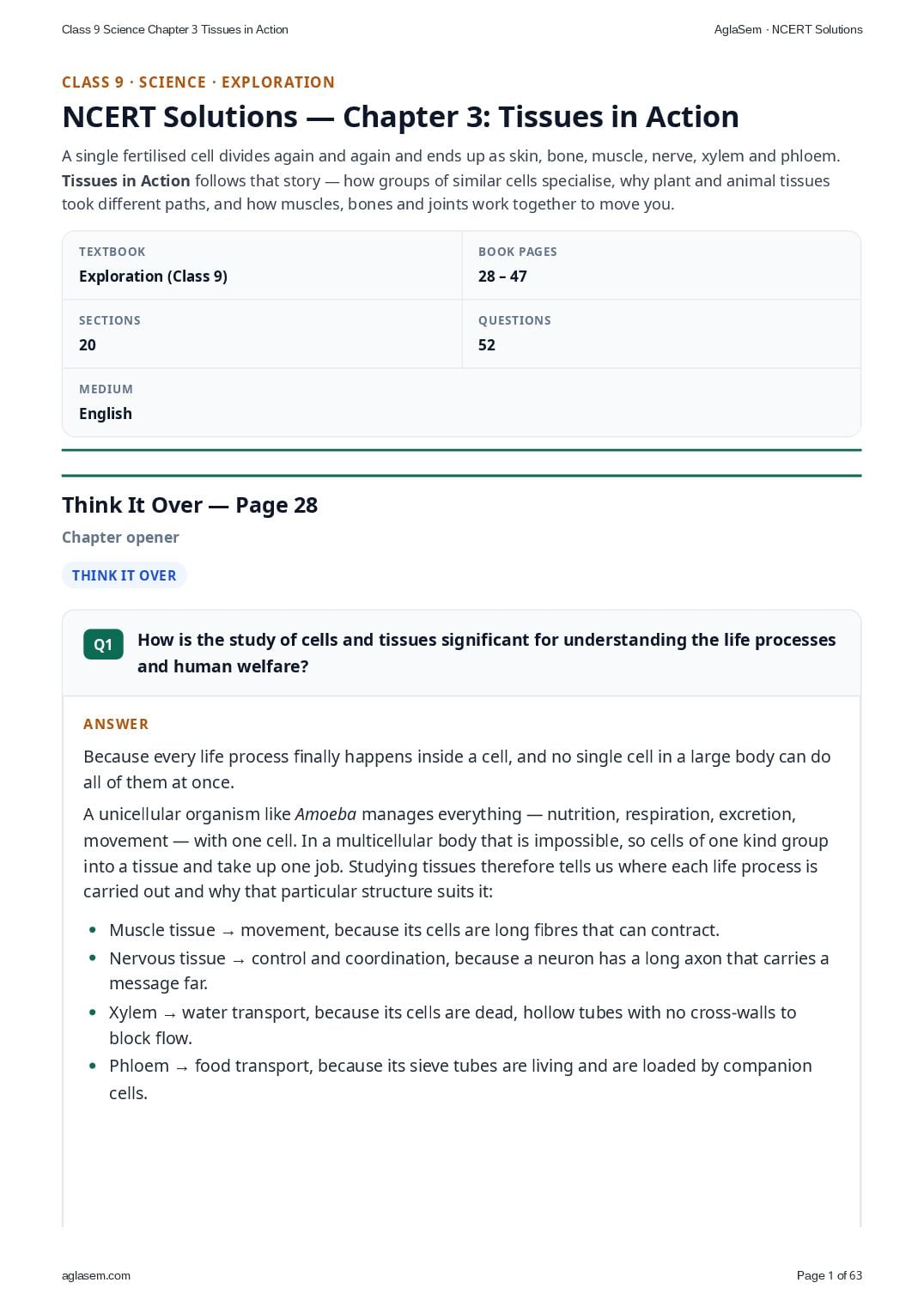
- How is the study of cells and tissues significant for understanding the life processes and human welfare?
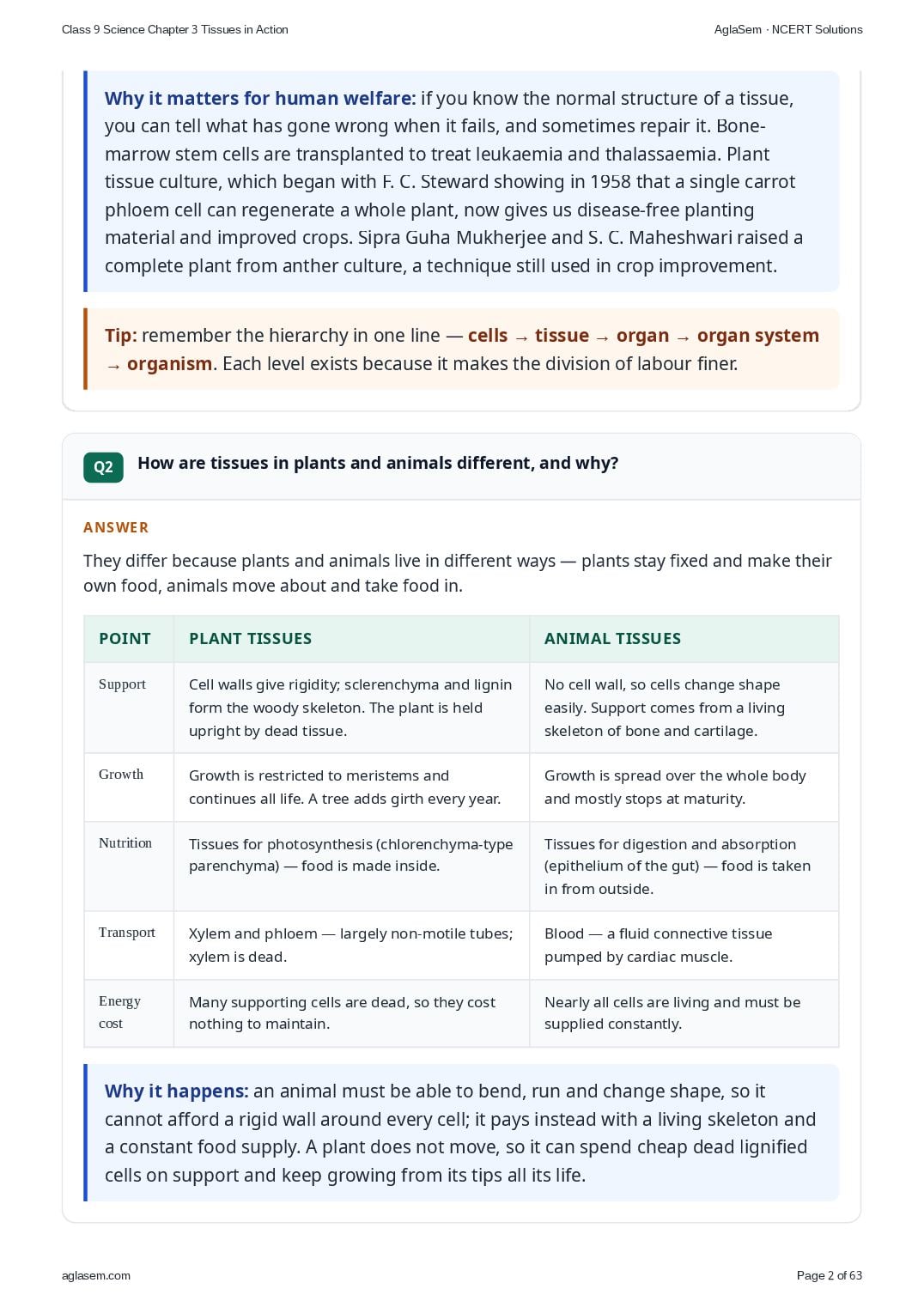
- How are tissues in plants and animals different, and why?
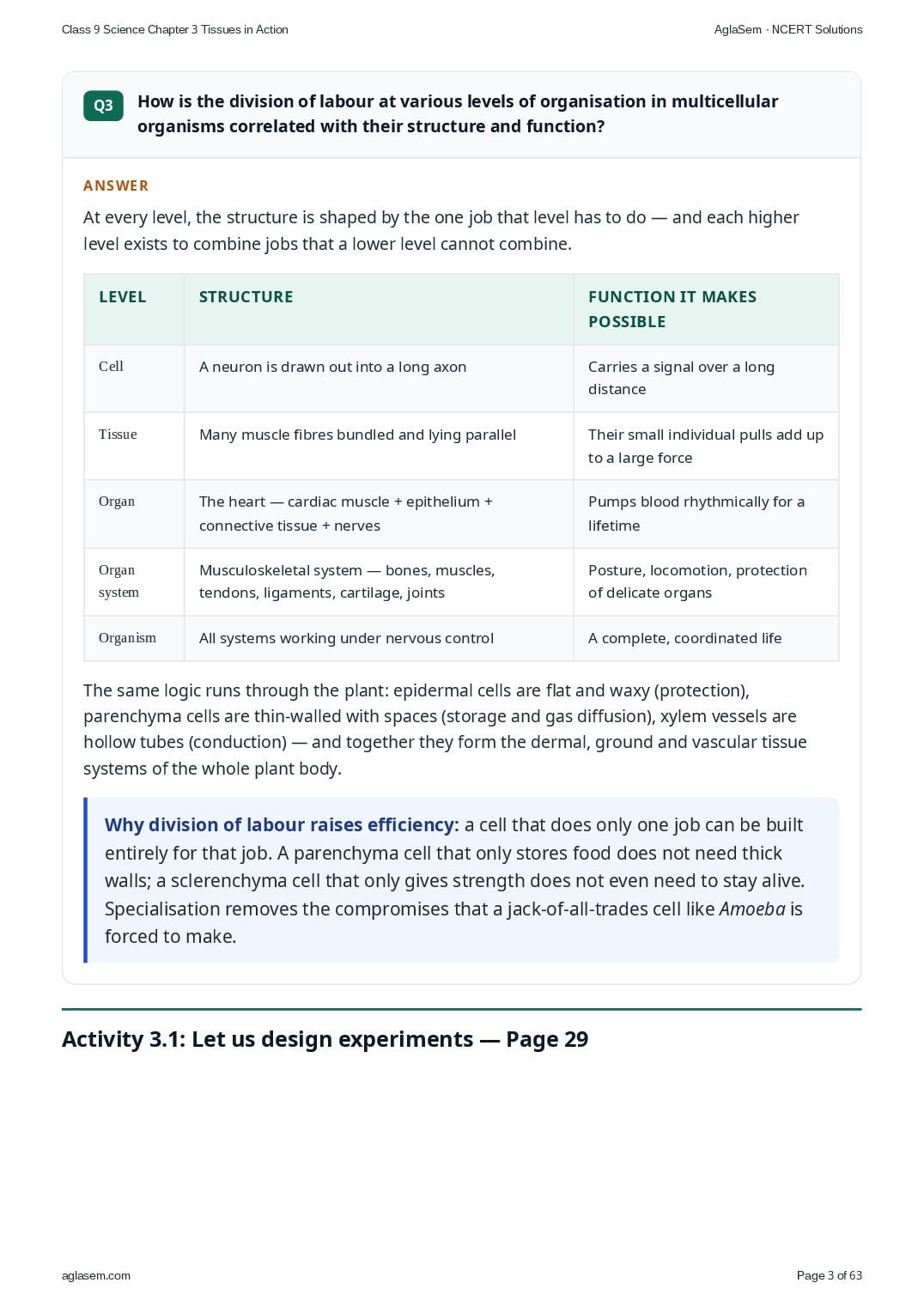
- How is the division of labour at various levels of organisation in multicellular organisms correlated with their structure and function?
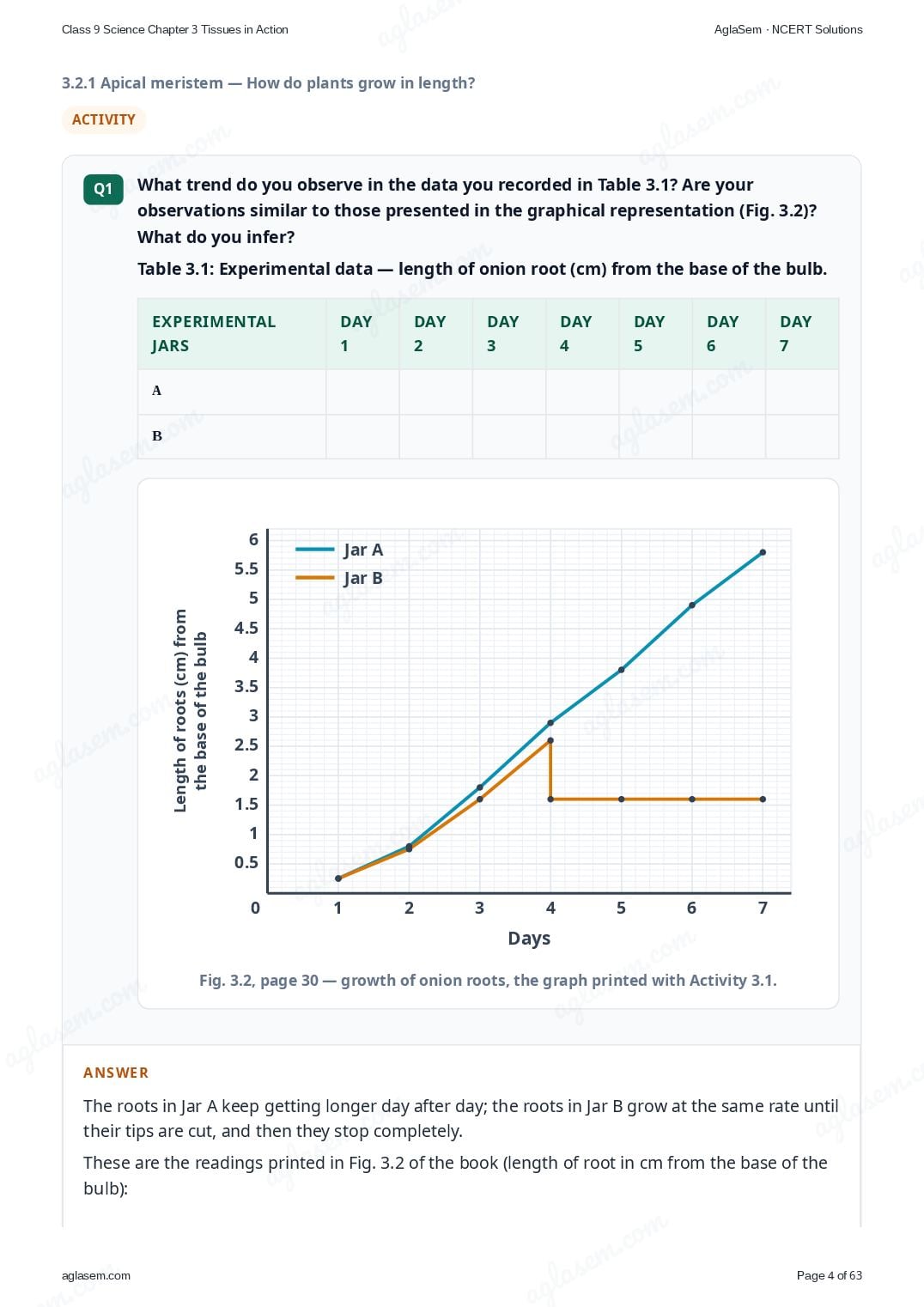
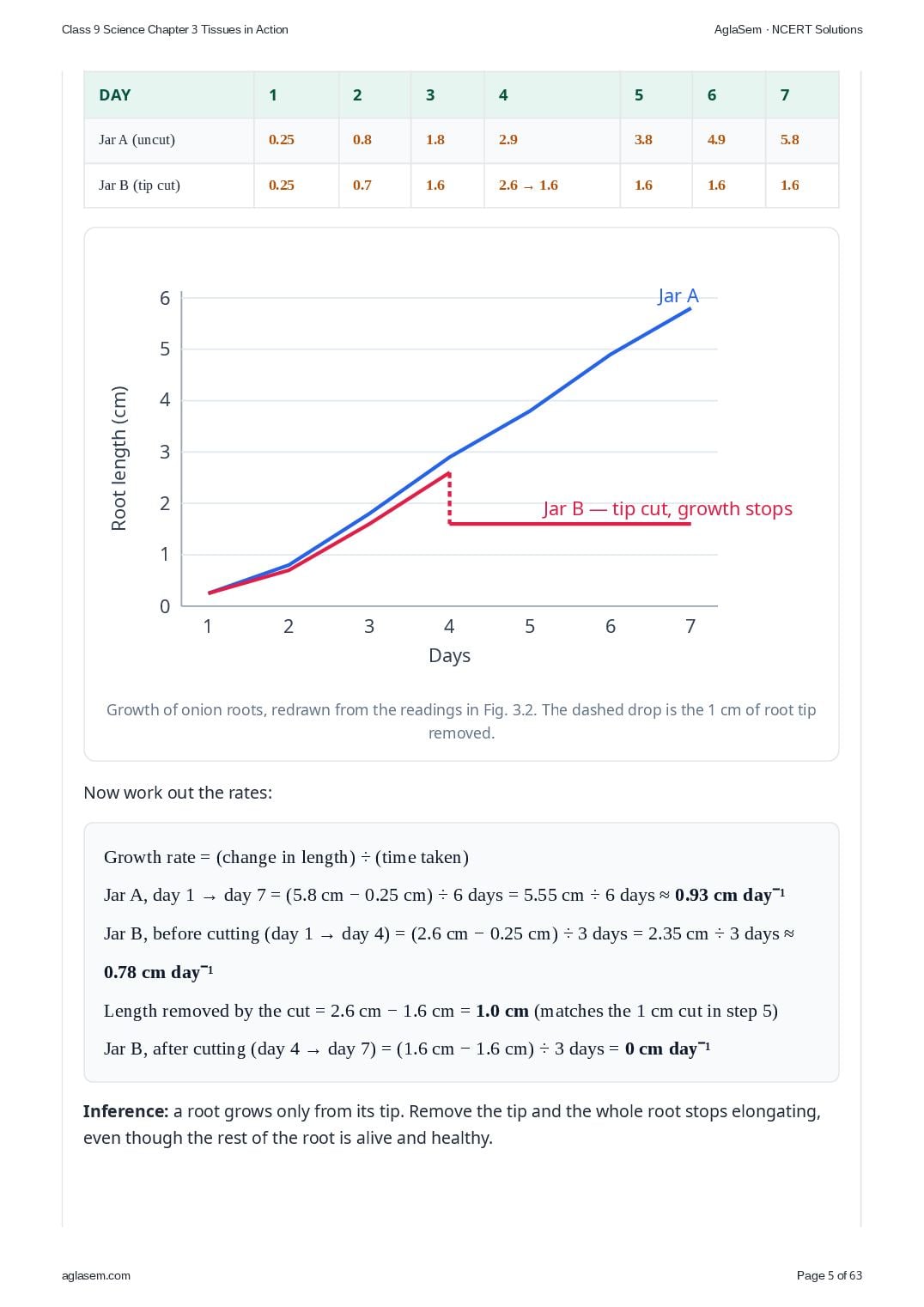
- What trend do you observe in the data you recorded in Table 3.1? Are your observations similar to those presented in the graphical representation (Fig. 3.2)? What do you infer?
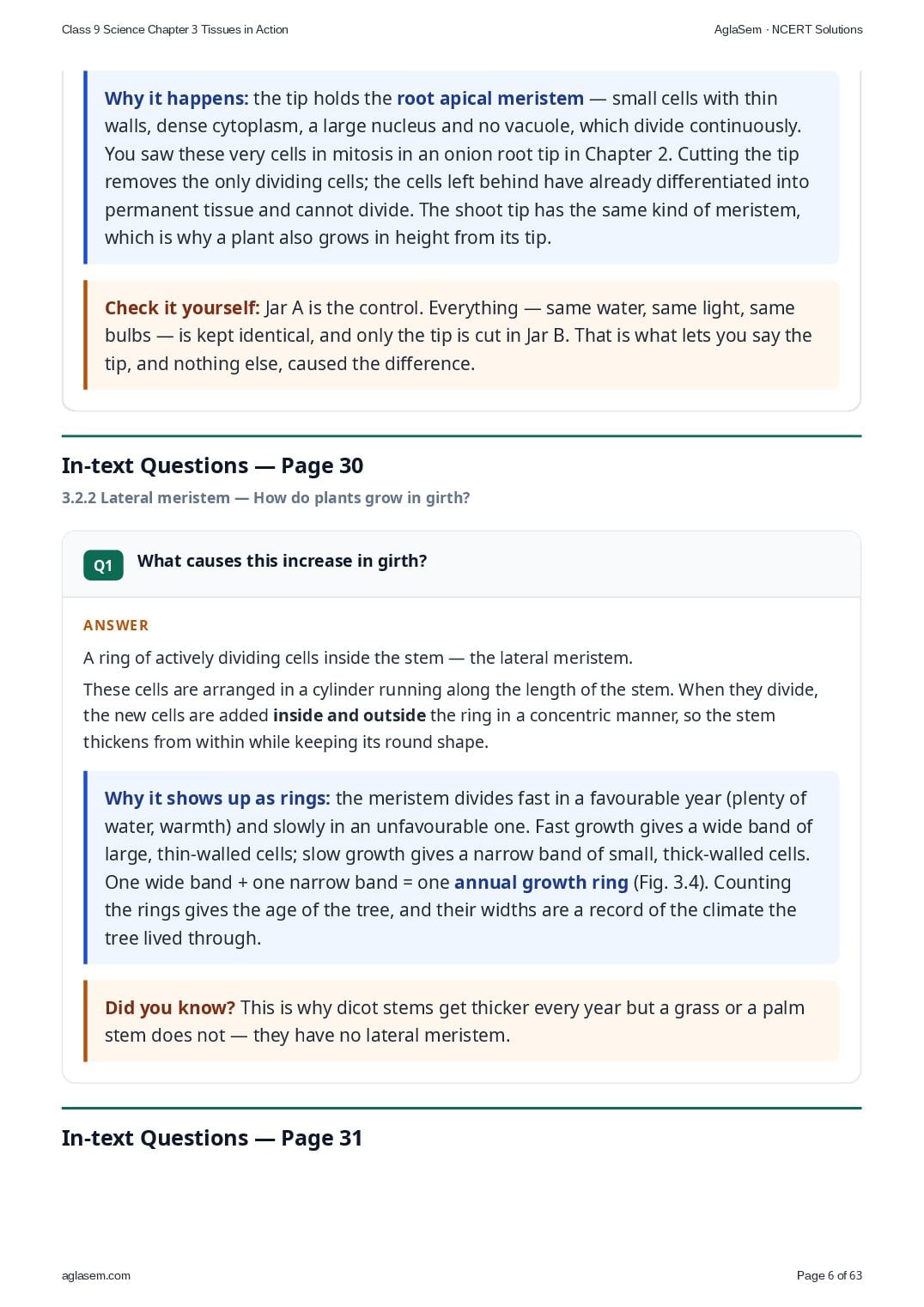
- What causes this increase in girth?
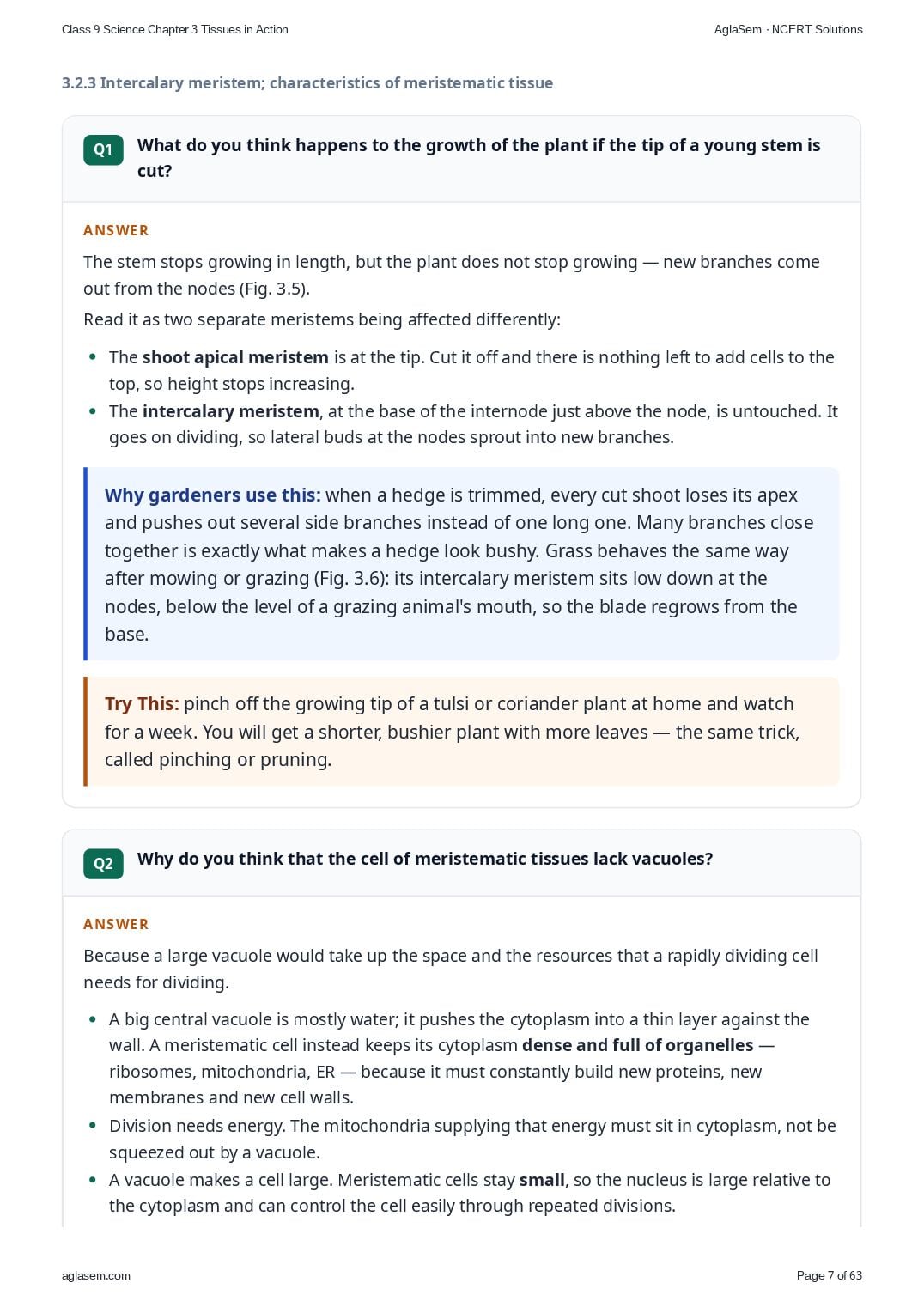
- What do you think happens to the growth of the plant if the tip of a young stem is cut?
- Why do you think that the cell of meristematic tissues lack vacuoles?
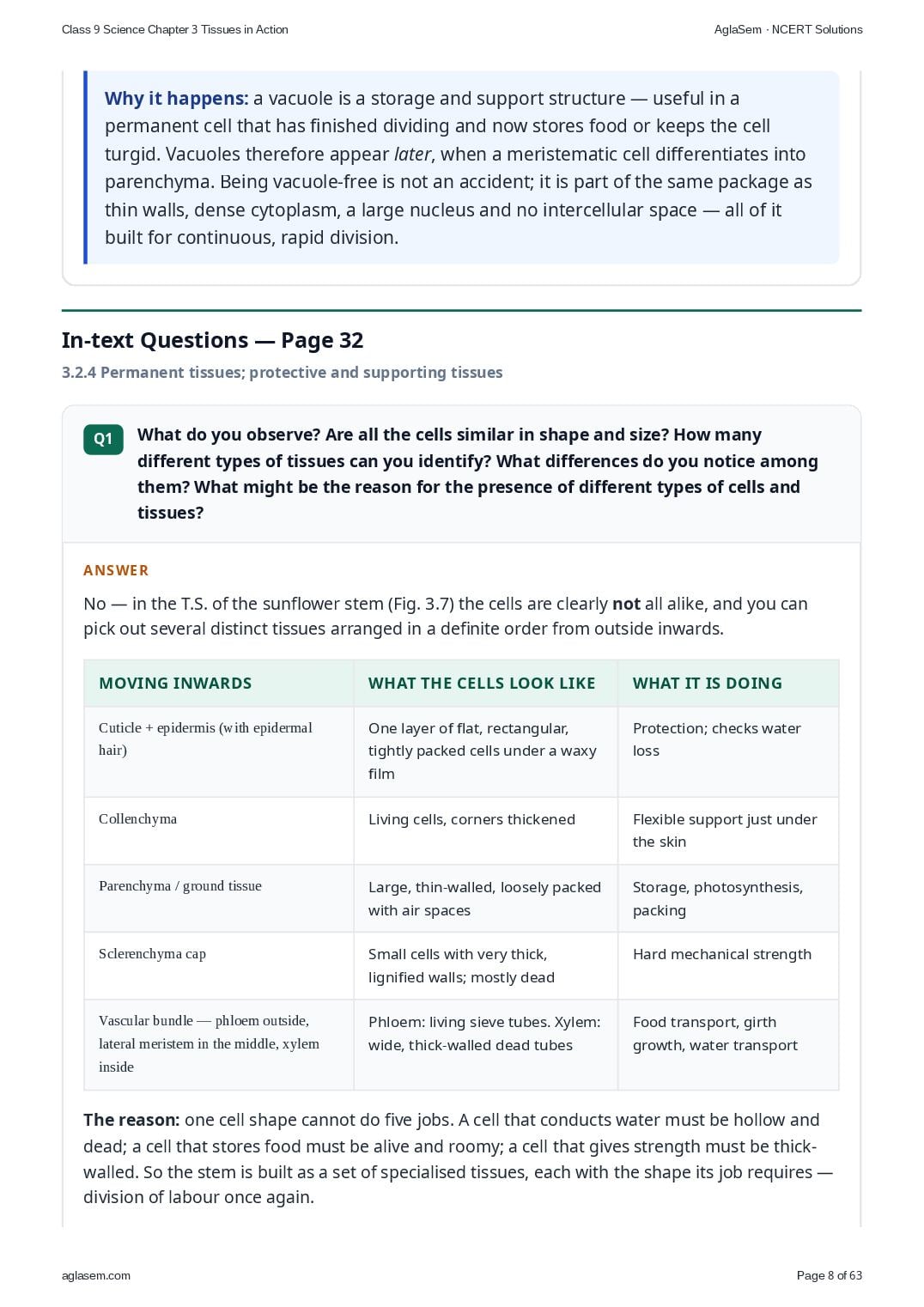
- What do you observe? Are all the cells similar in shape and size? How many different types of tissues can you identify? What differences do you notice among them? What might be the reason for the presence of different types of cells and tissues?
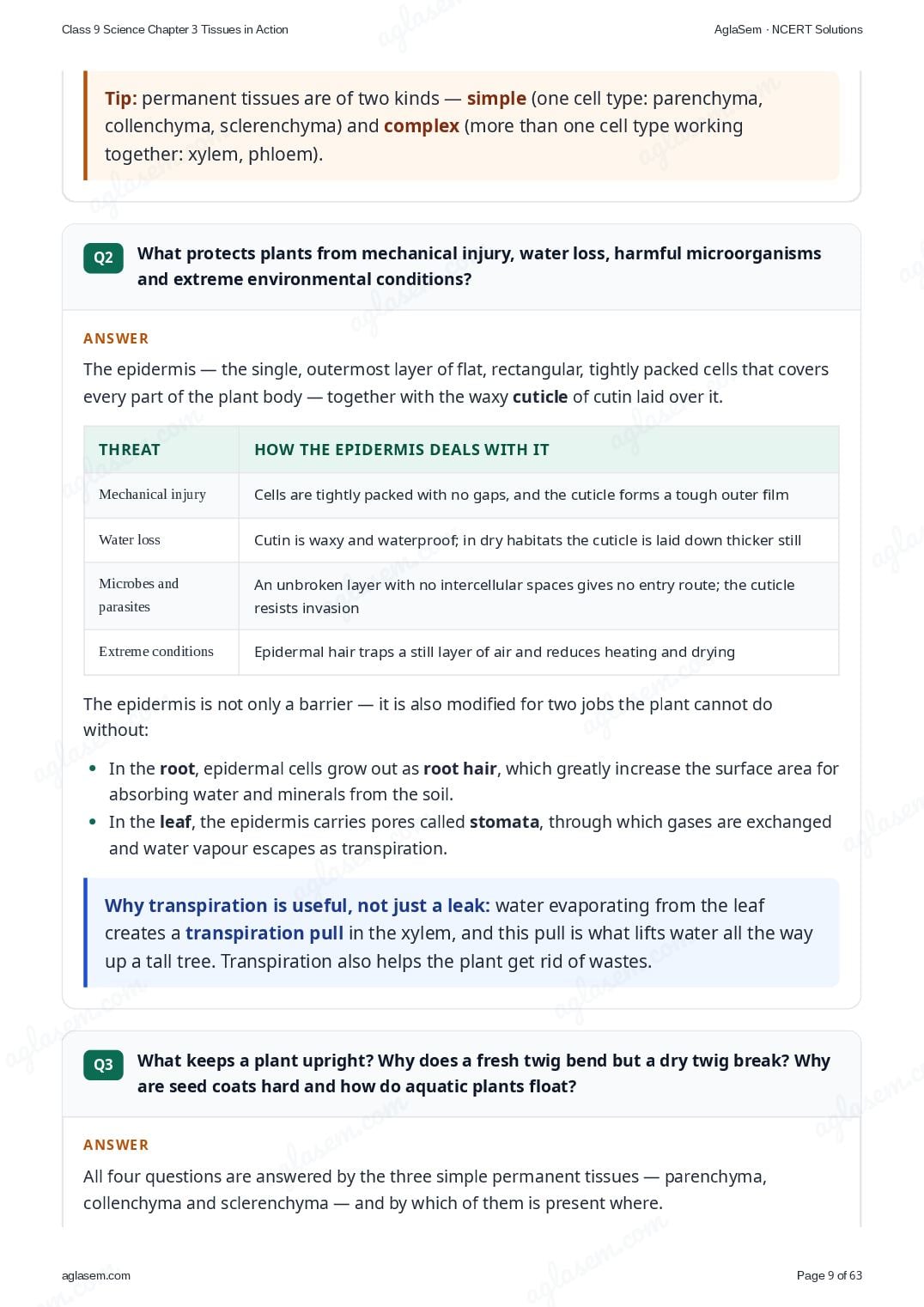
- What protects plants from mechanical injury, water loss, harmful microorganisms and extreme environmental conditions?
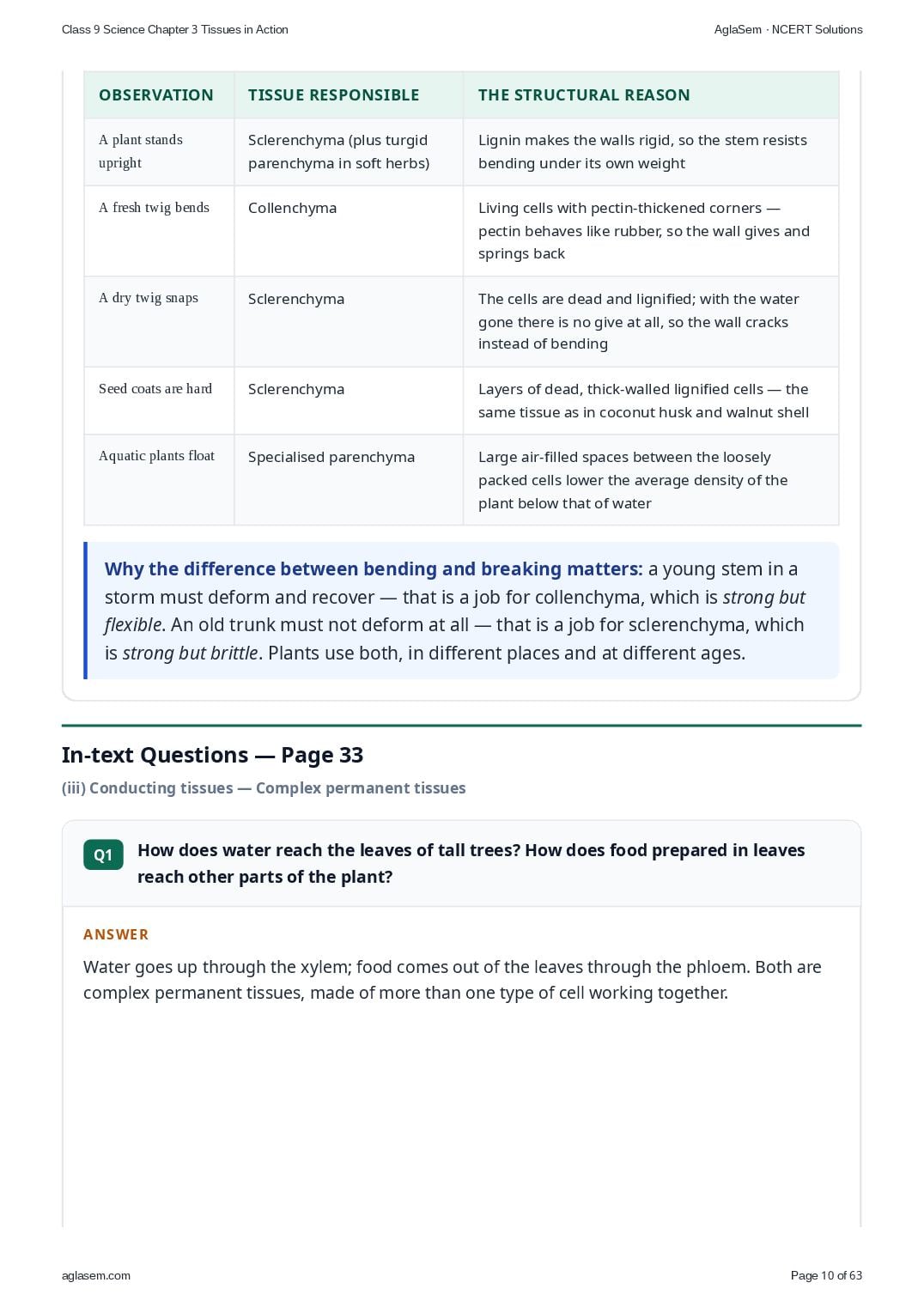
- What keeps a plant upright? Why does a fresh twig bend but a dry twig break? Why are seed coats hard and how do aquatic plants float?
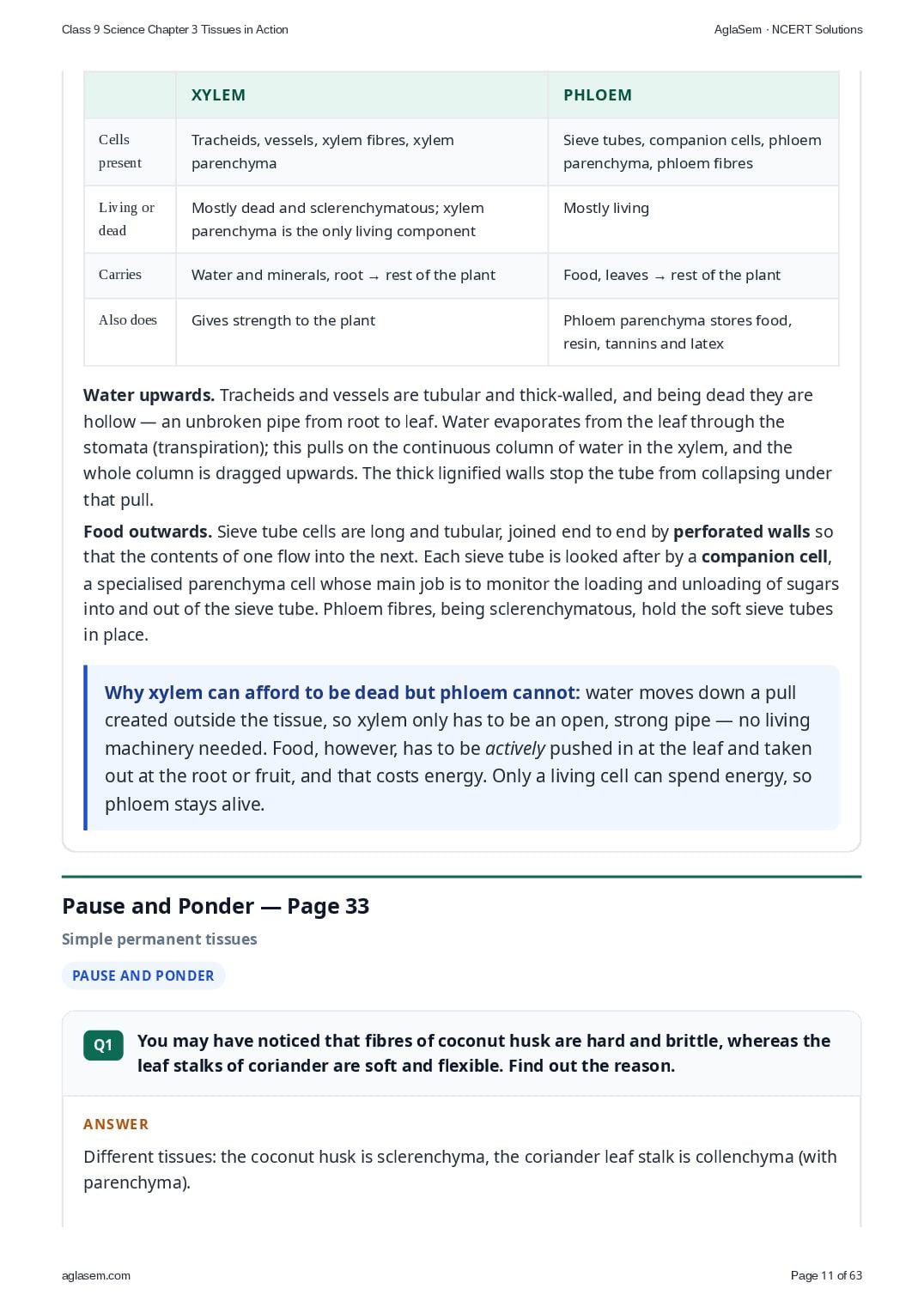
- How does water reach the leaves of tall trees? How does food prepared in leaves reach other parts of the plant?
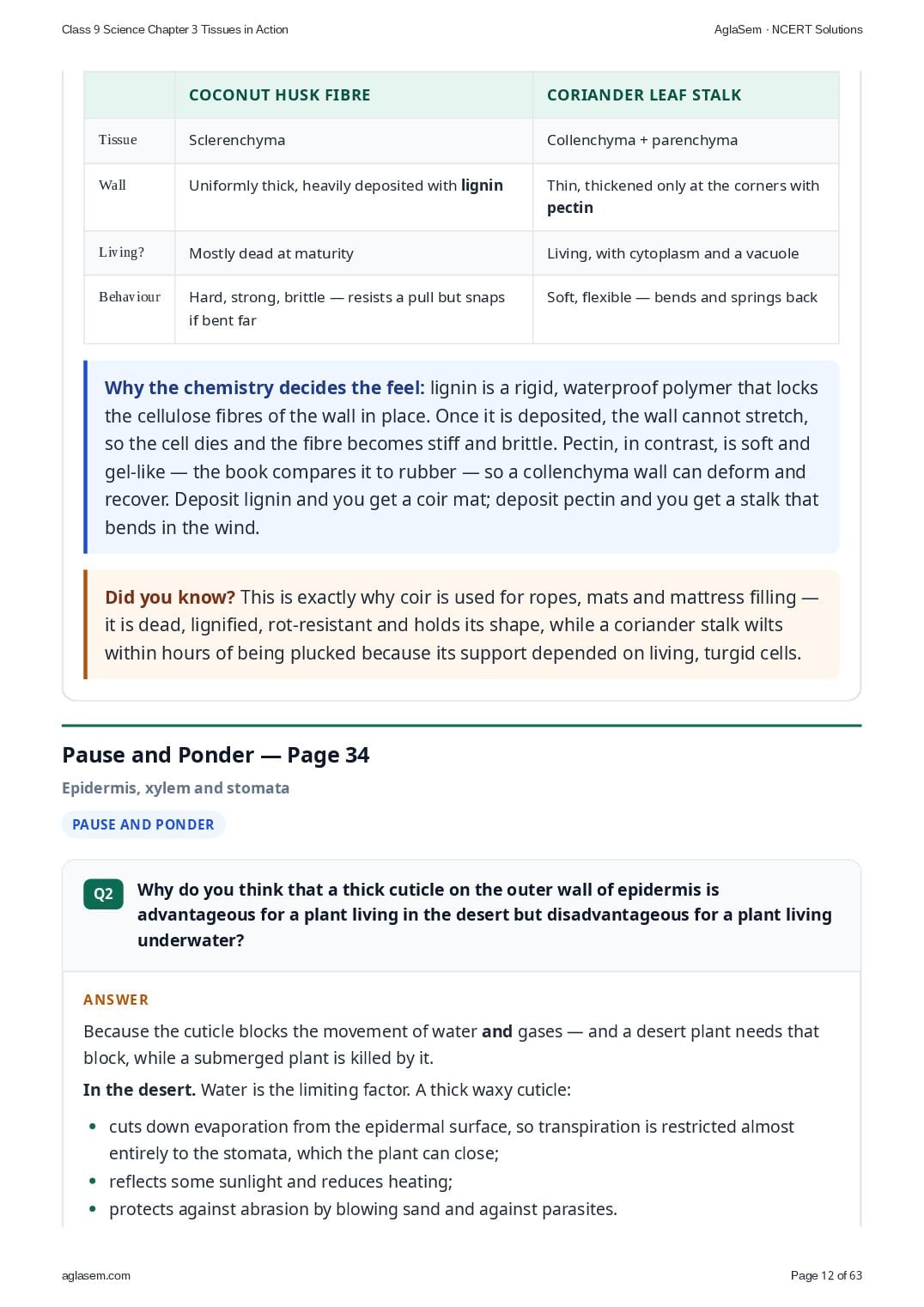
- You may have noticed that fibres of coconut husk are hard and brittle, whereas the leaf stalks of coriander are soft and flexible. Find out the reason.
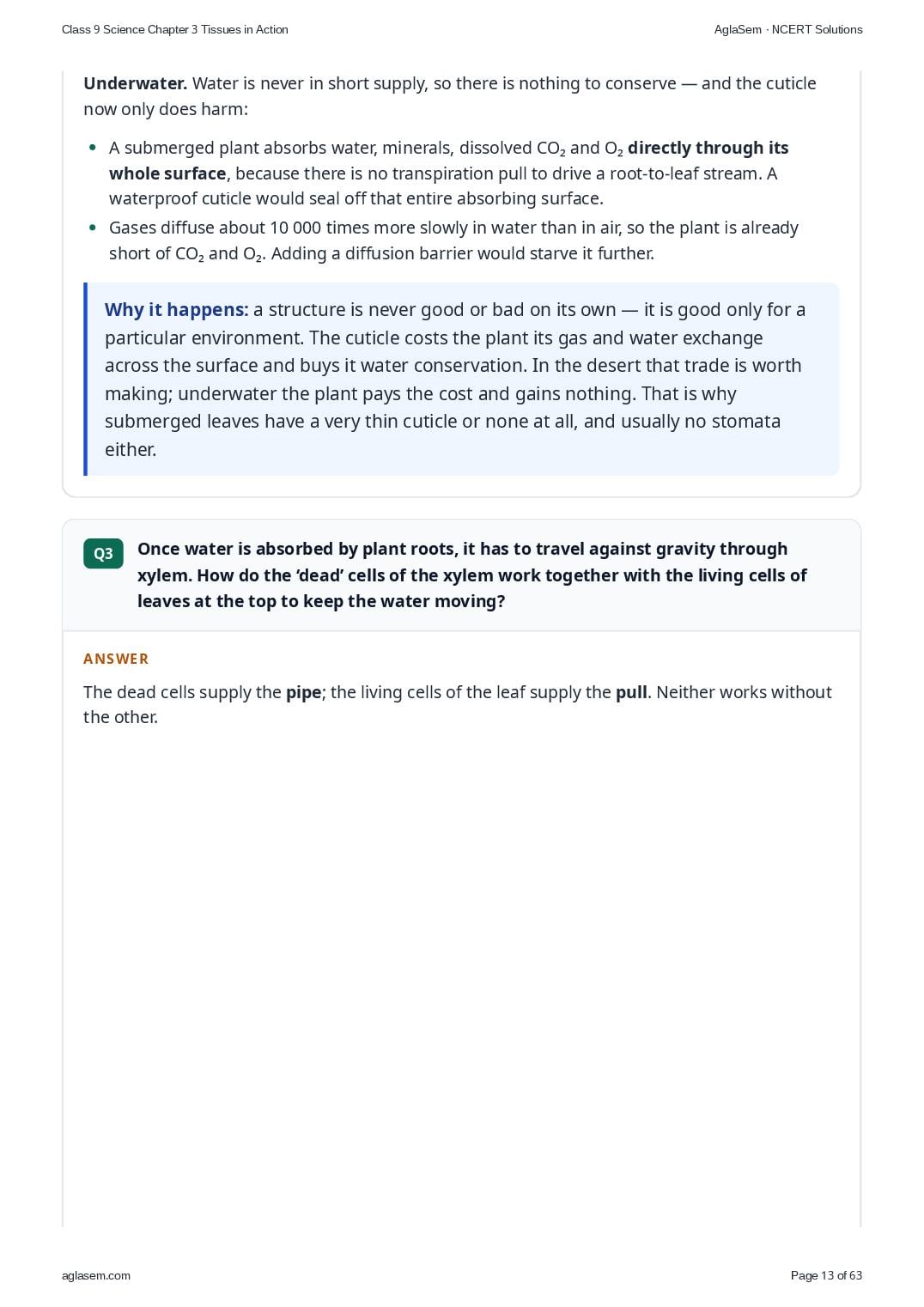
- Why do you think that a thick cuticle on the outer wall of epidermis is advantageous for a plant living in the desert but disadvantageous for a plant living underwater?
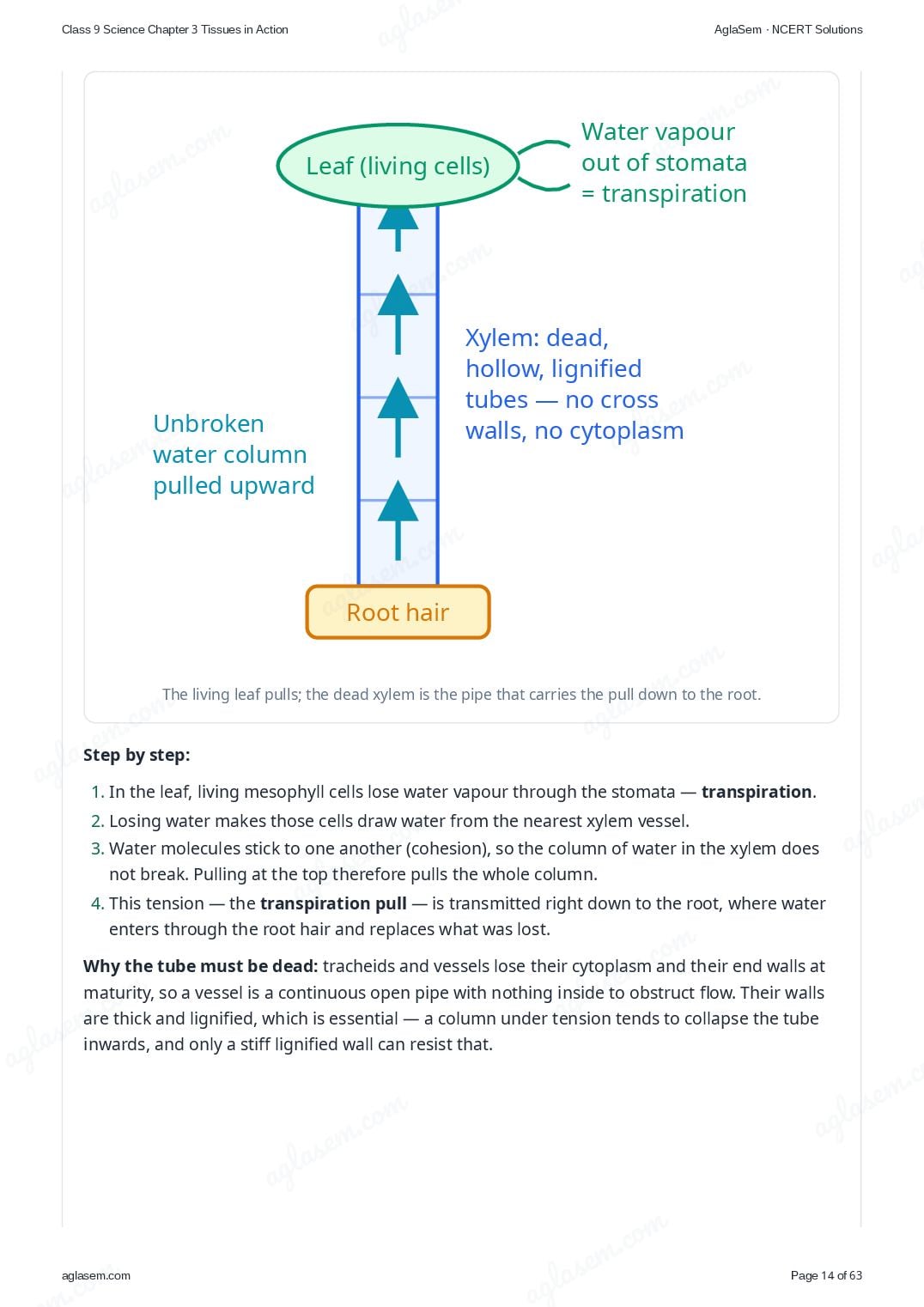
- Once water is absorbed by plant roots, it has to travel against gravity through xylem. How do the ‘dead’ cells of the xylem work together with the living cells of leaves at the top to keep the water moving?
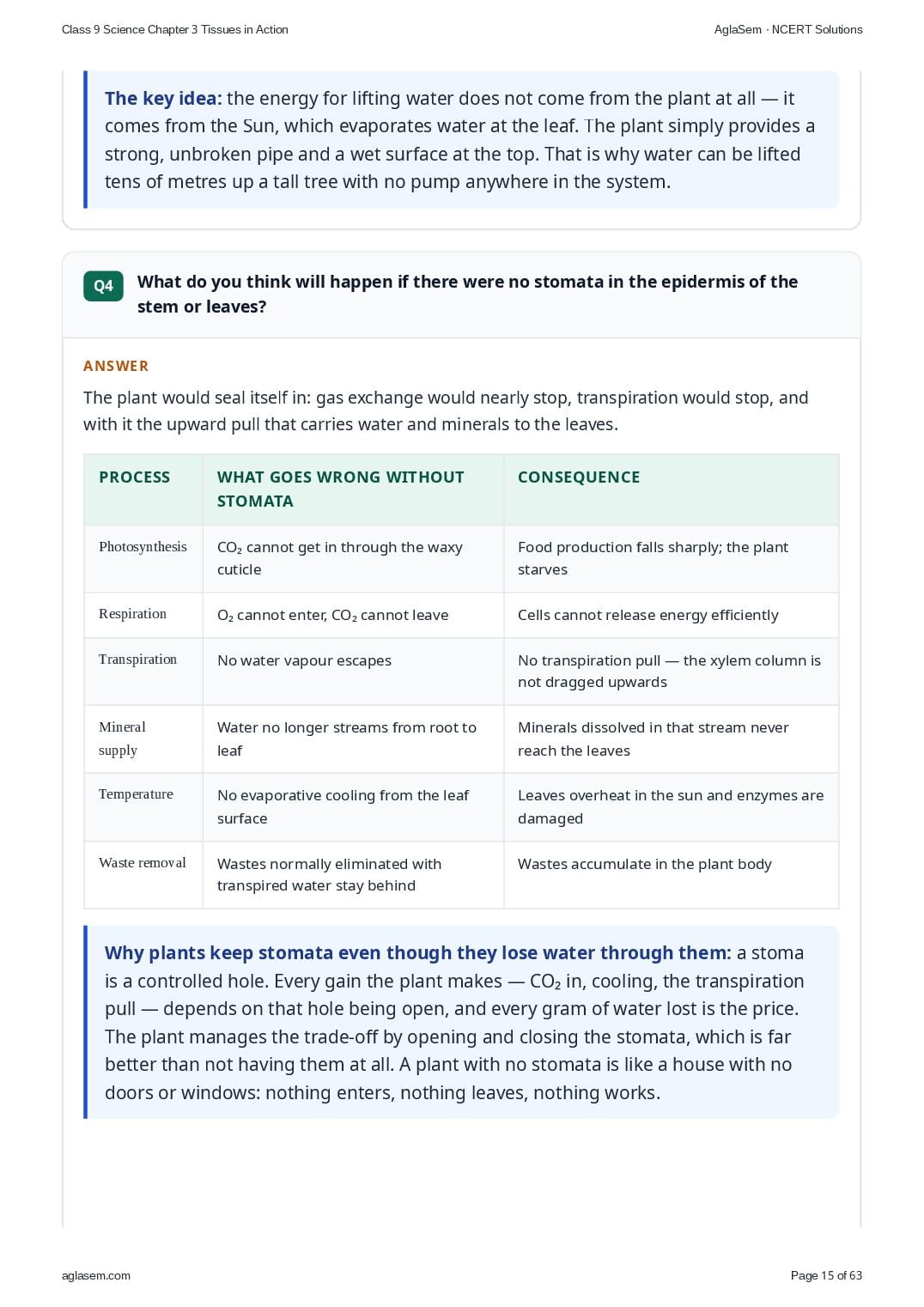
- What do you think will happen if there were no stomata in the epidermis of the stem or leaves?
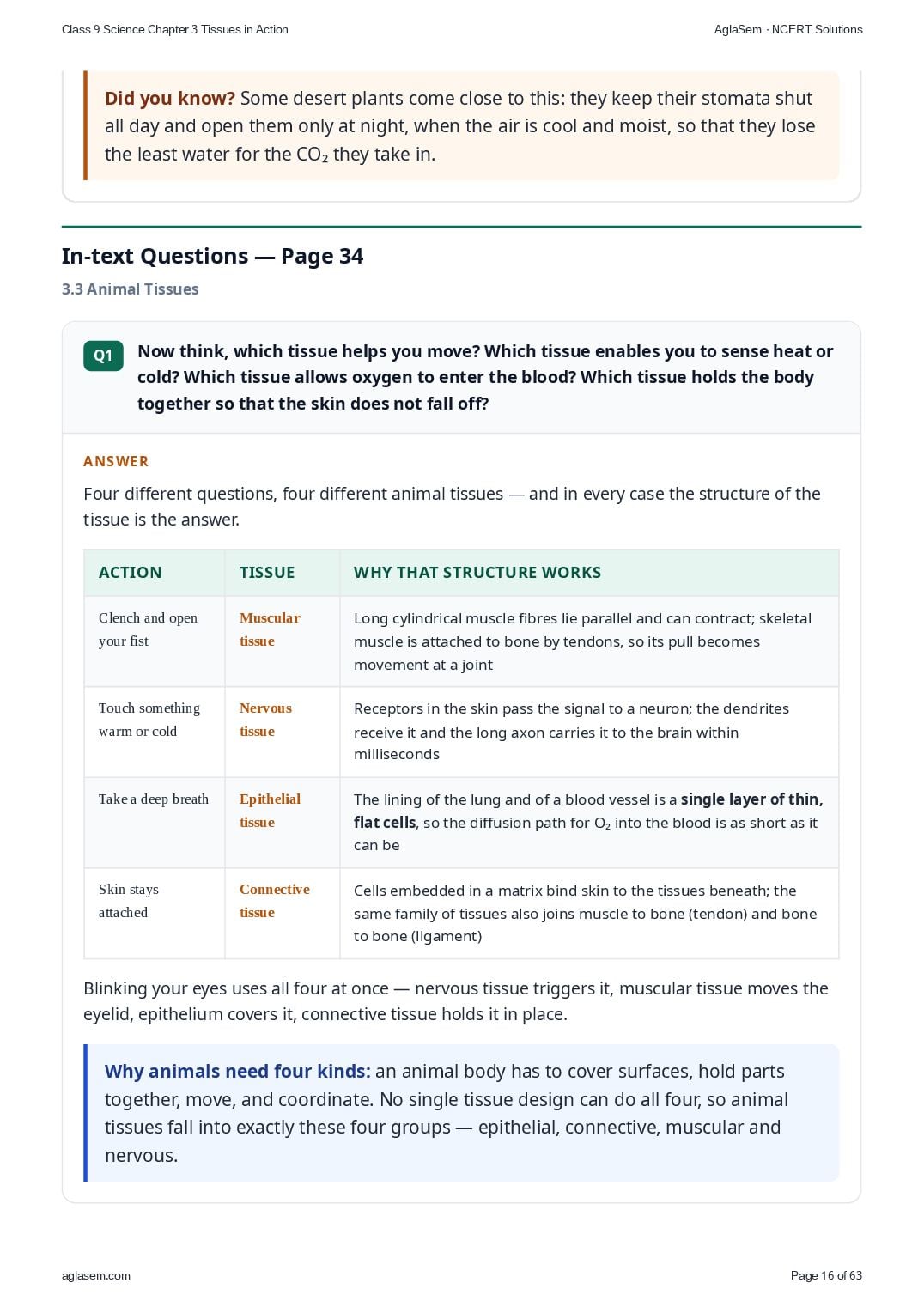
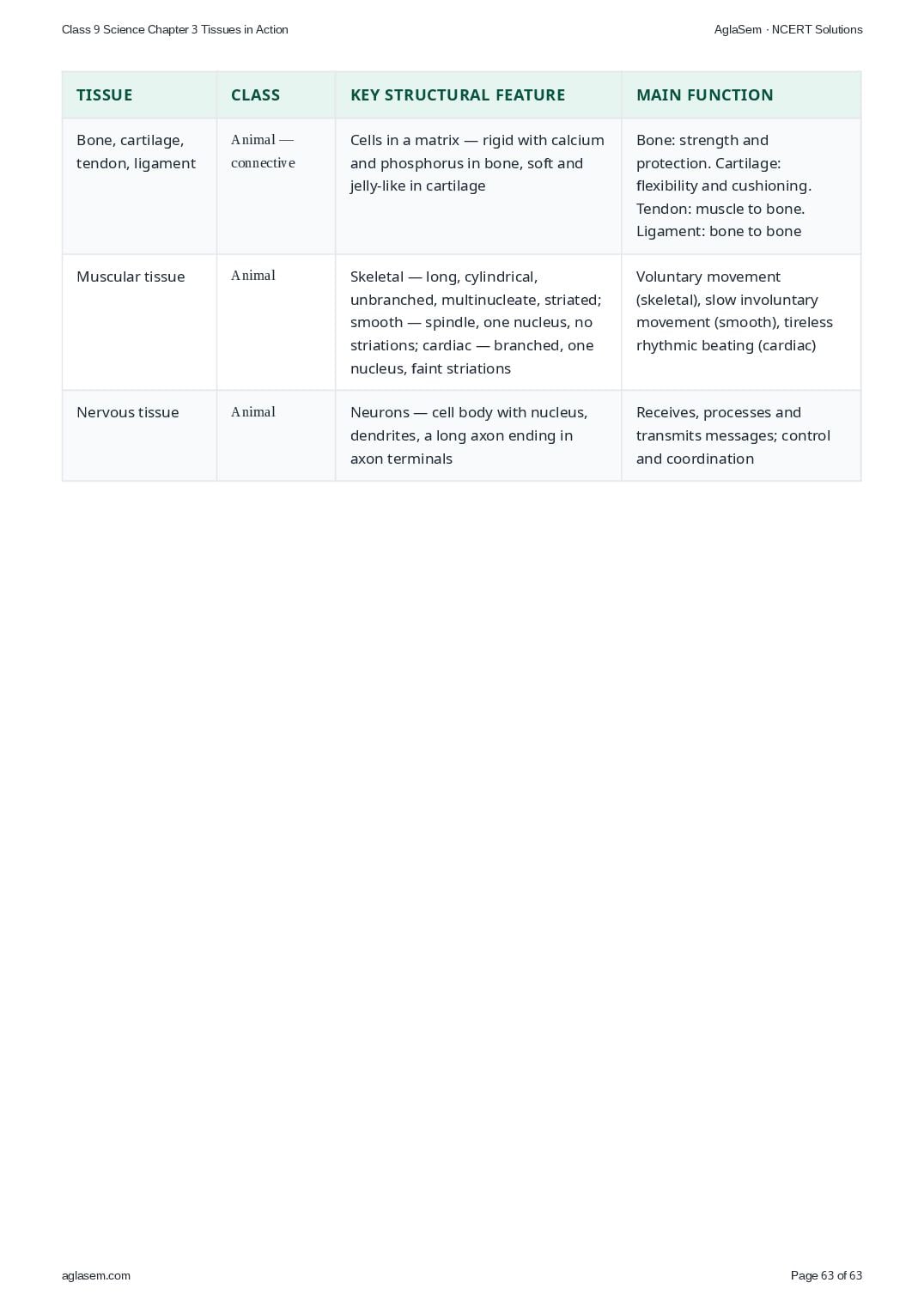
- Now think, which tissue helps you move? Which tissue enables you to sense heat or cold? Which tissue allows oxygen to enter the blood? Which tissue holds the body together so that the skin does not fall off?
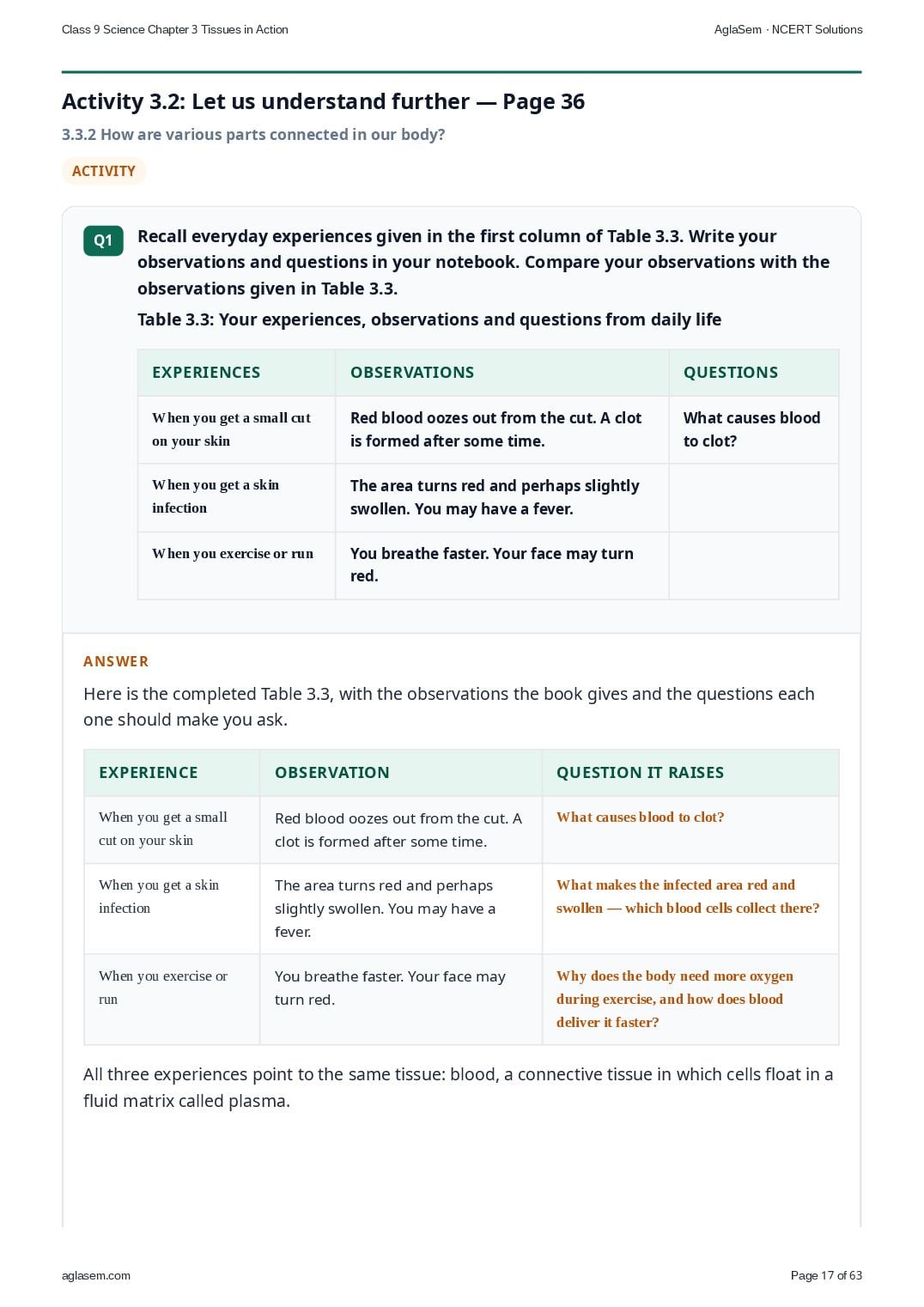
- Recall everyday experiences given in the first column of Table 3.3. Write your observations and questions in your notebook. Compare your observations with the observations given in Table 3.3.
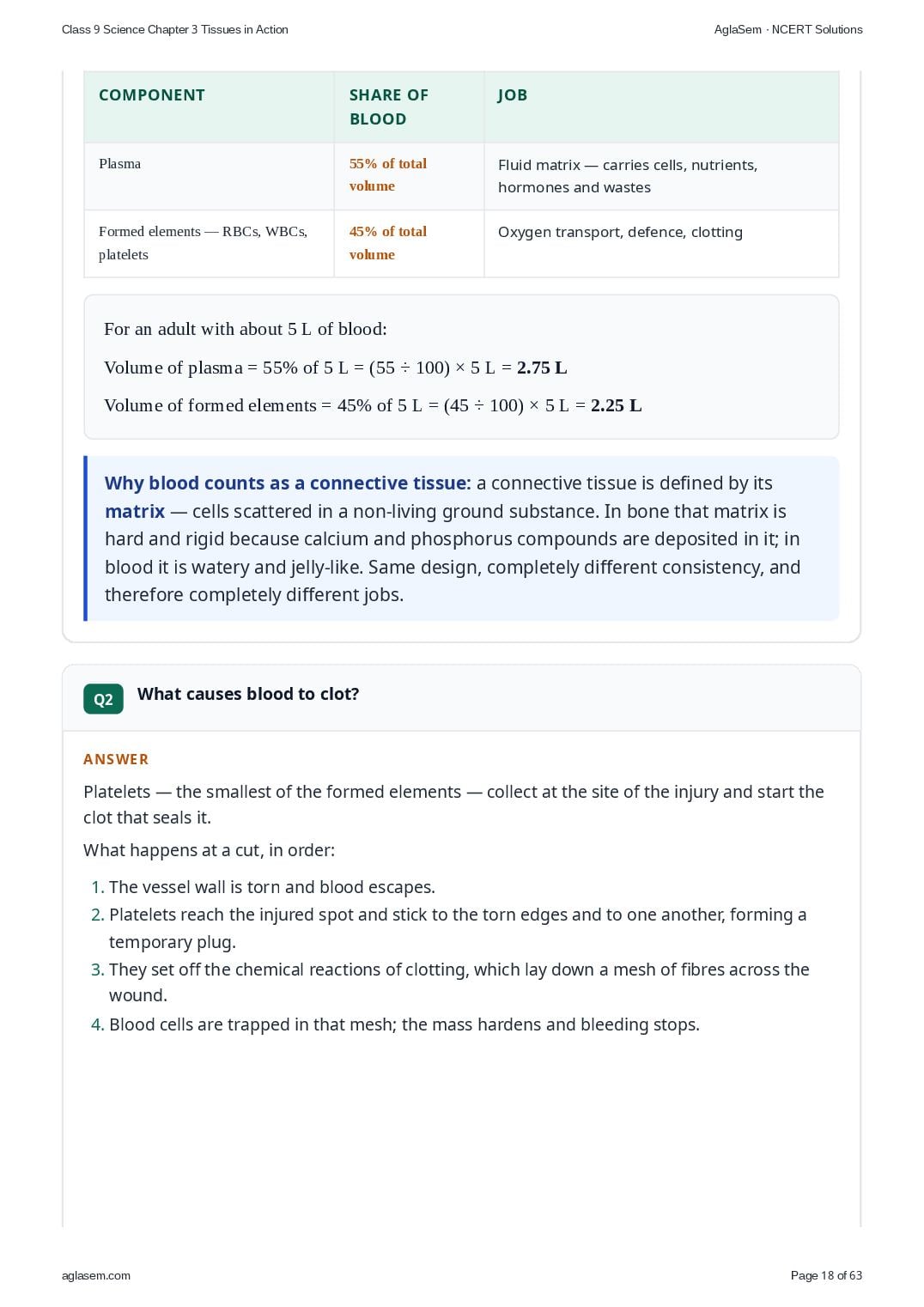
- What causes blood to clot?
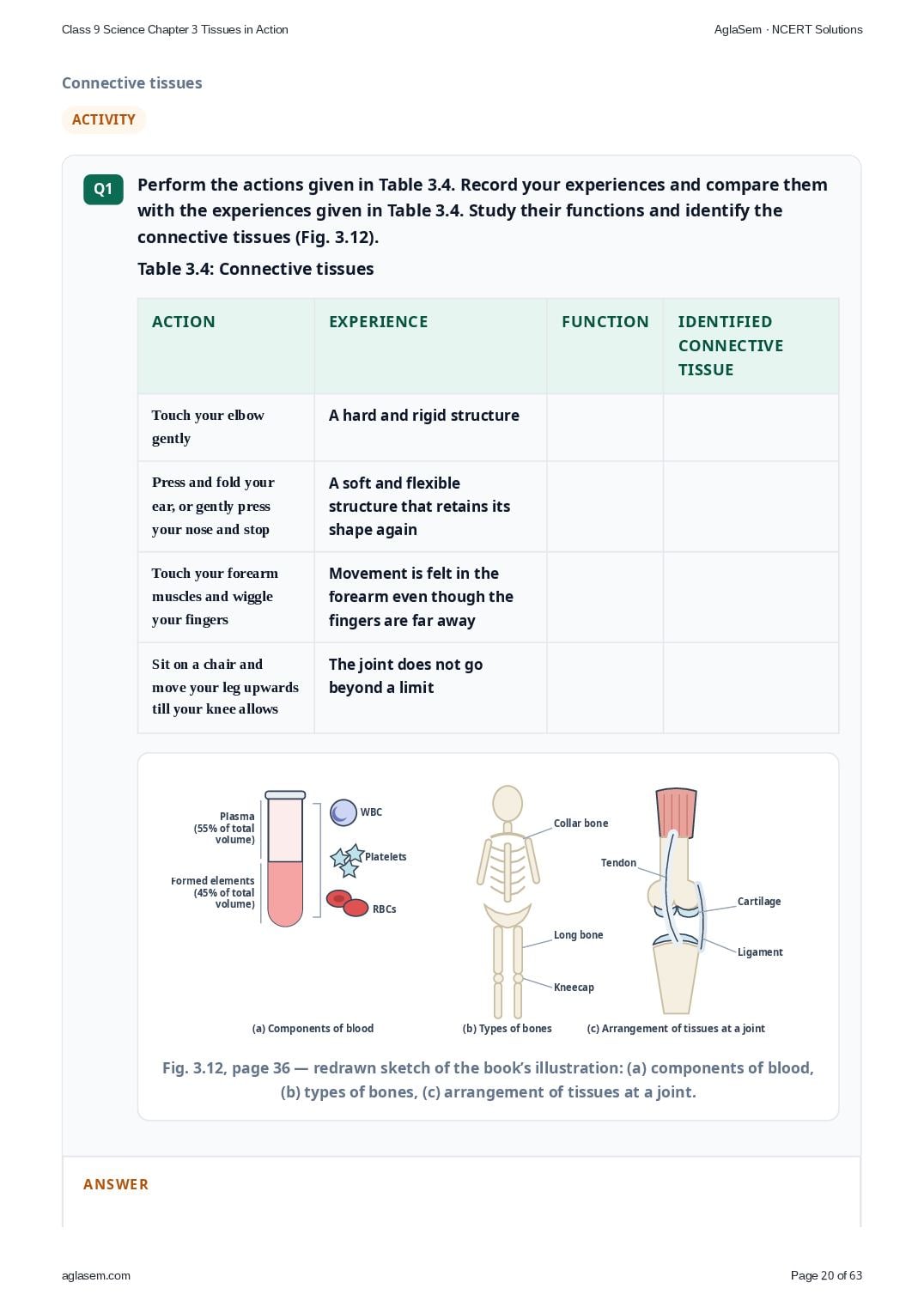
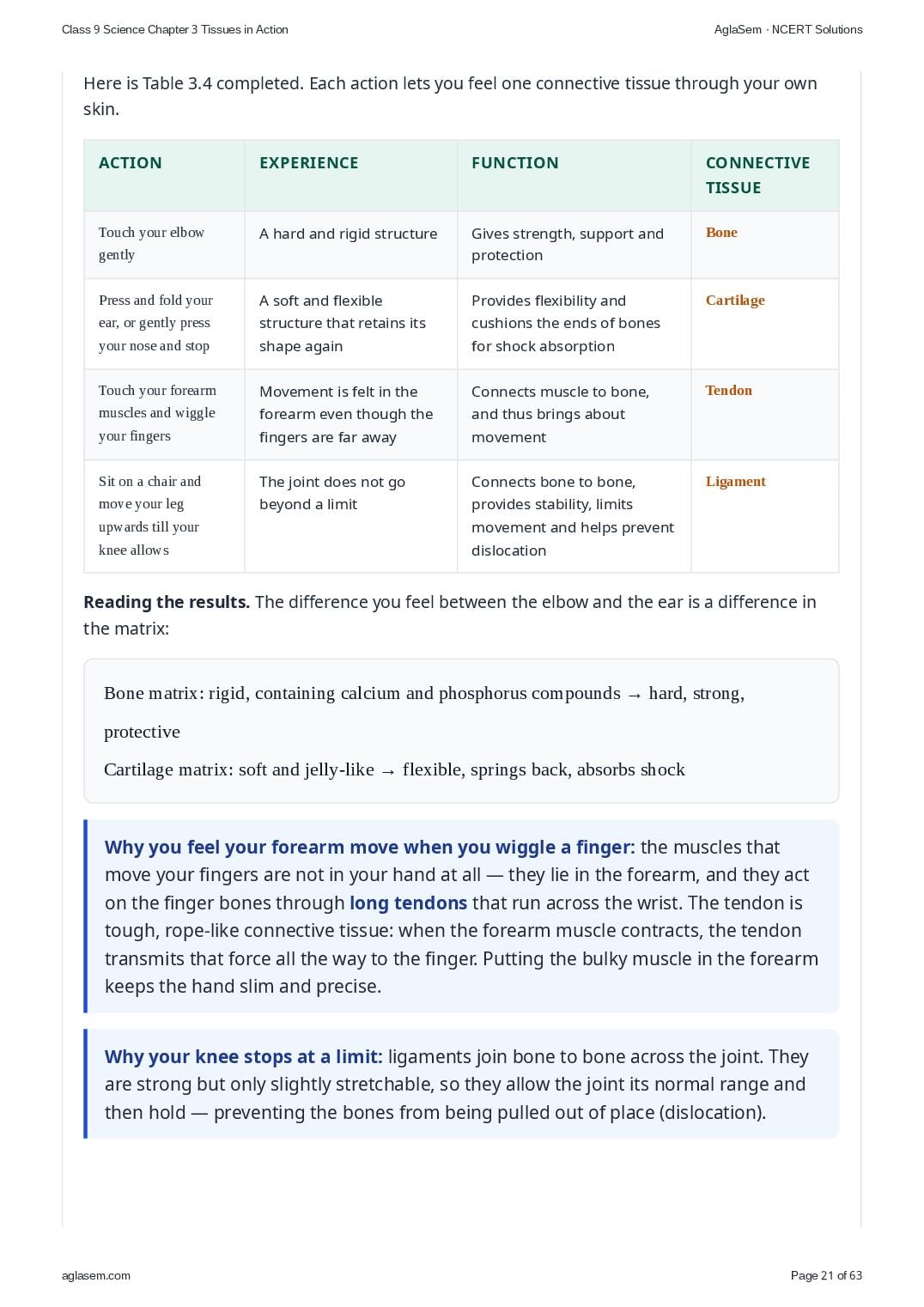
- Perform the actions given in Table 3.4. Record your experiences and compare them with the experiences given in Table 3.4. Study their functions and identify the connective tissues (Fig. 3.12).
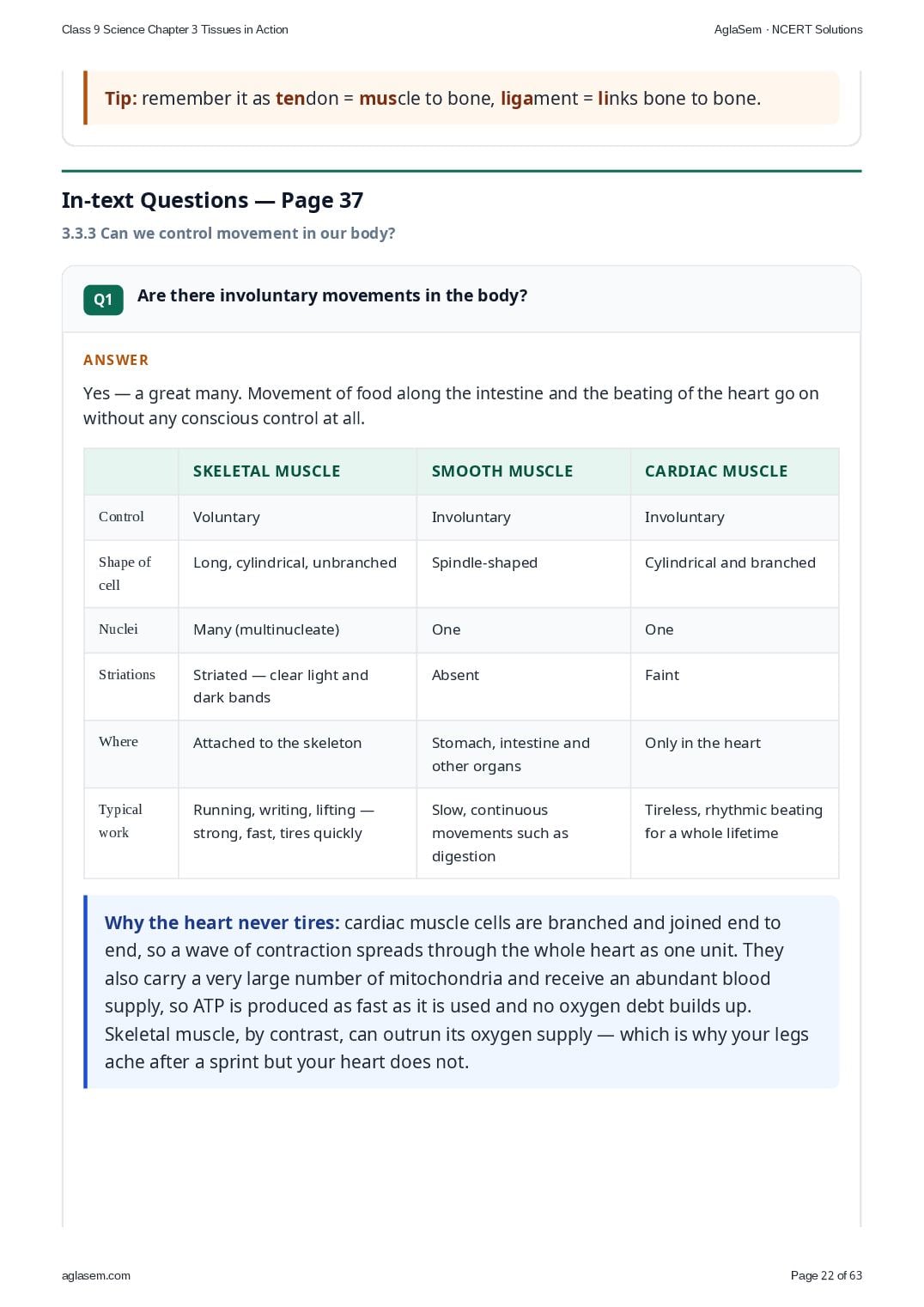
- Are there involuntary movements in the body?
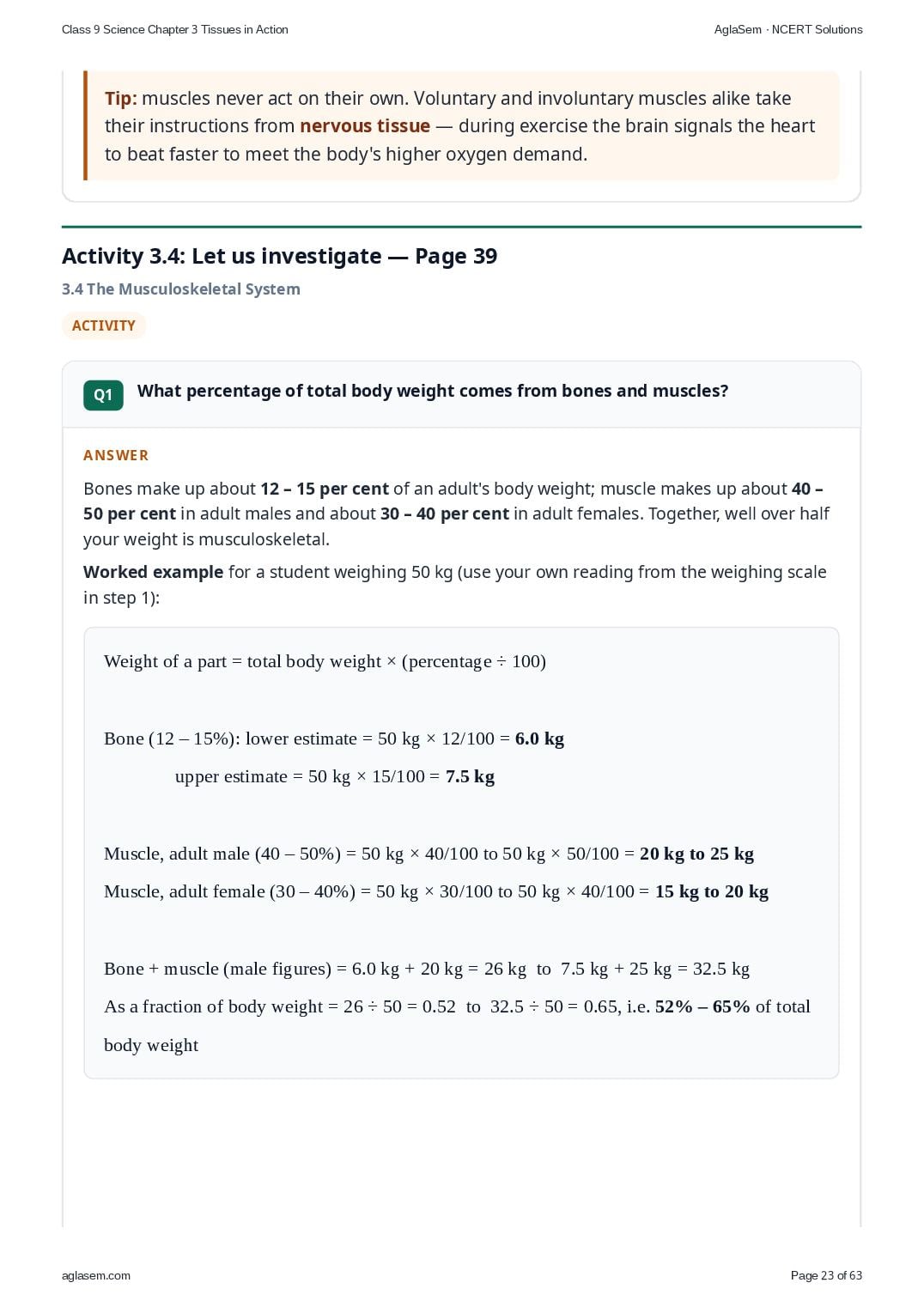
- What percentage of total body weight comes from bones and muscles?
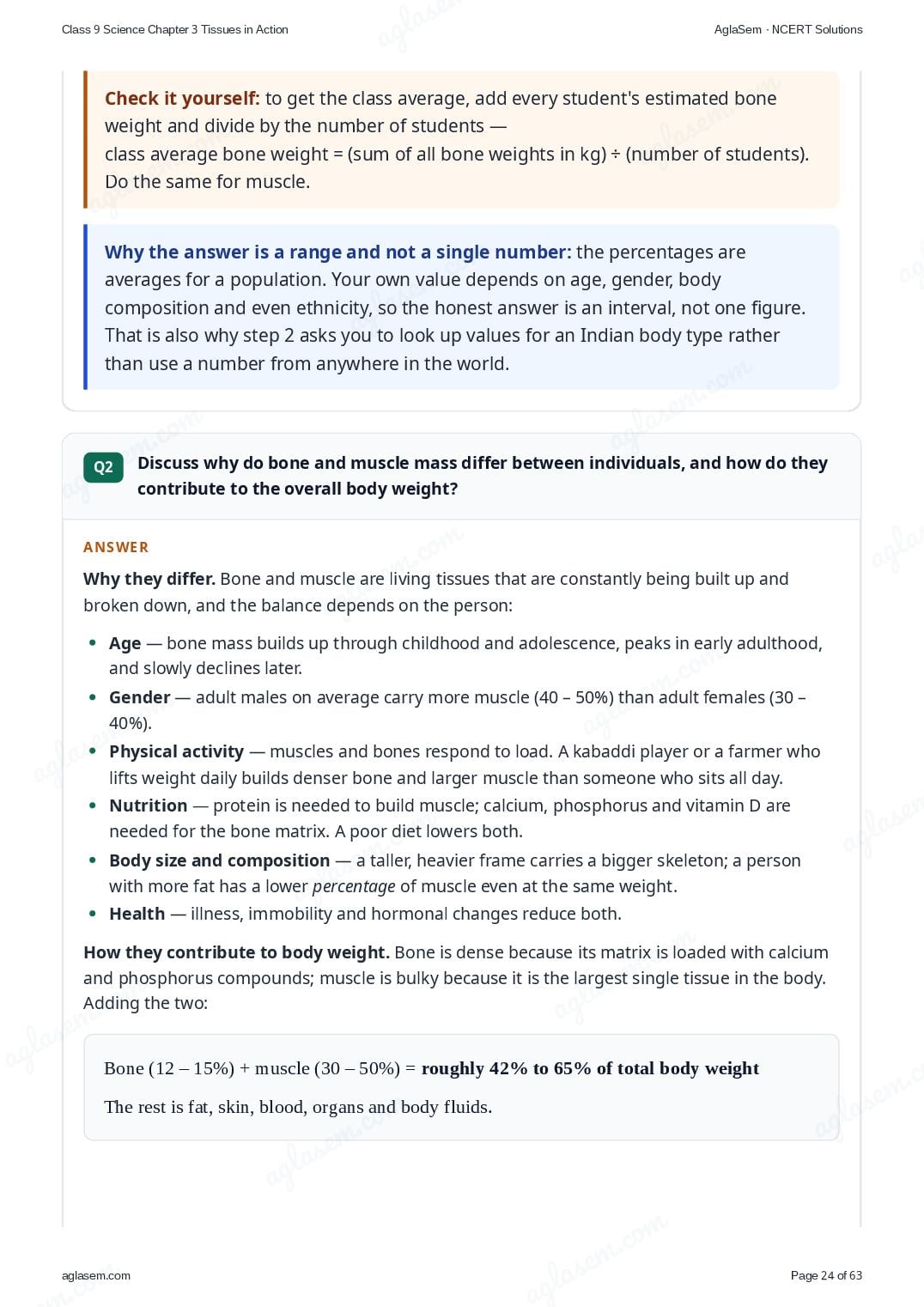
- Discuss why do bone and muscle mass differ between individuals, and how do they contribute to the overall body weight?
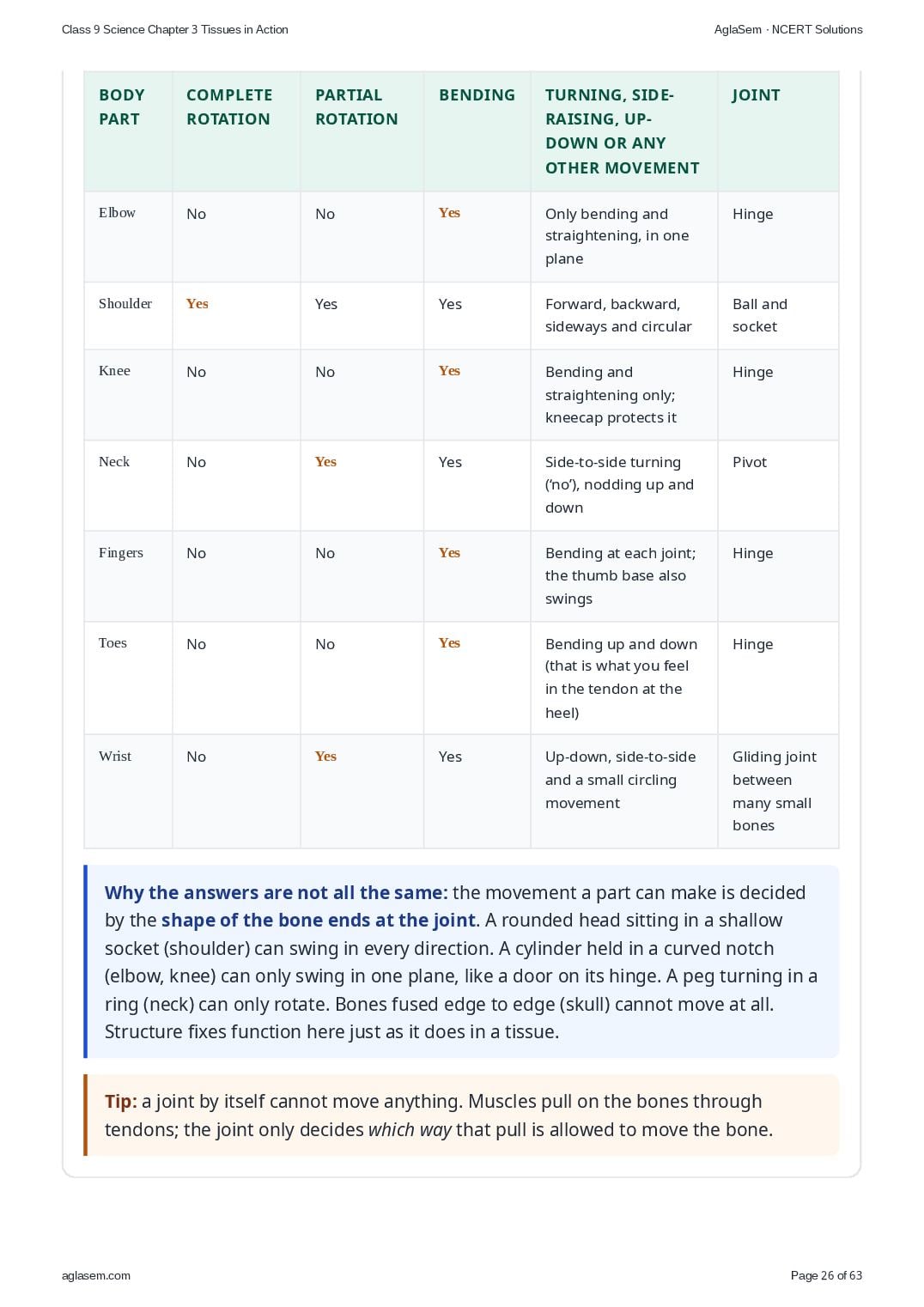
- Move different parts of your body and observe what movement(s) it can make.
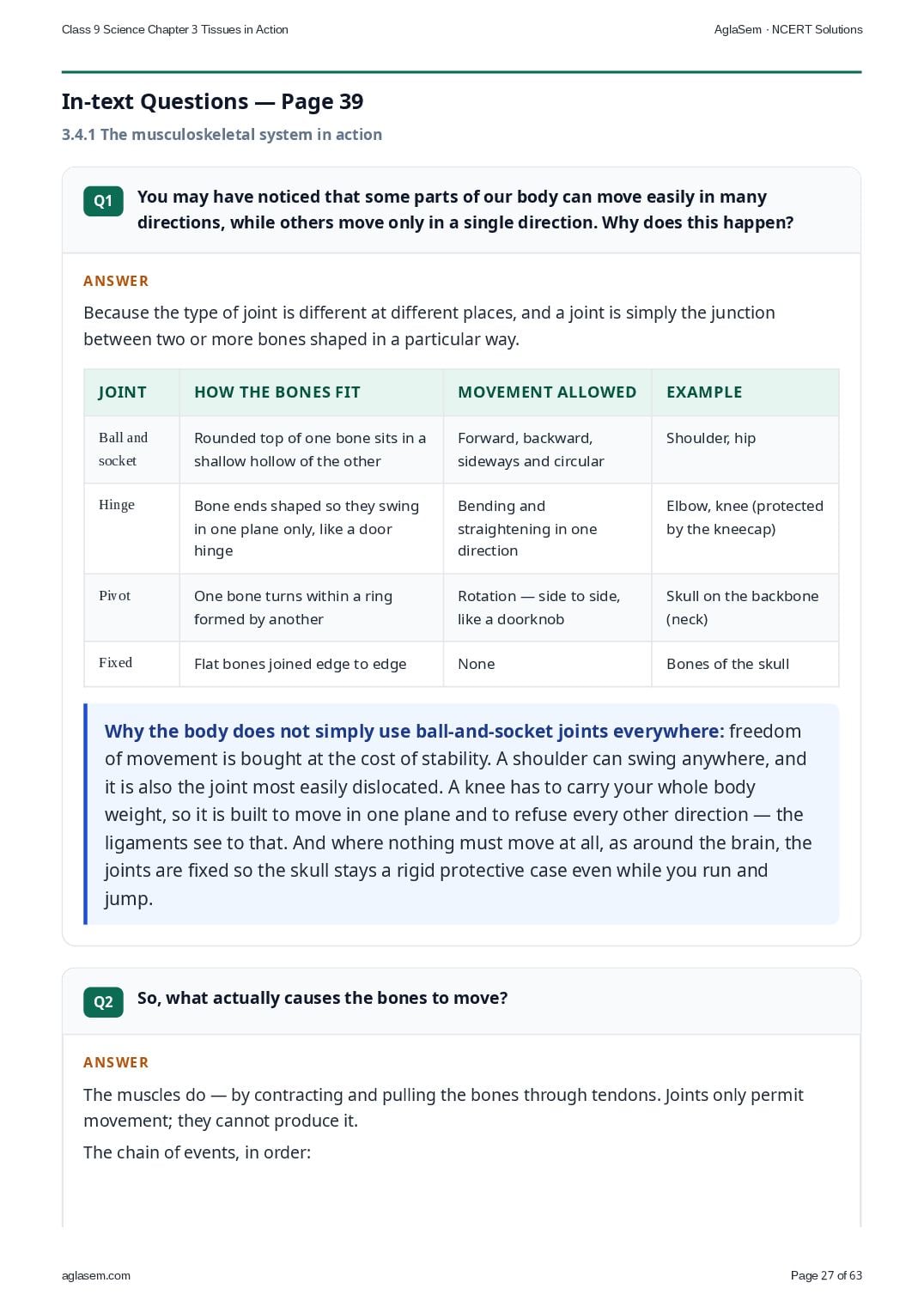
- You may have noticed that some parts of our body can move easily in many directions, while others move only in a single direction. Why does this happen?
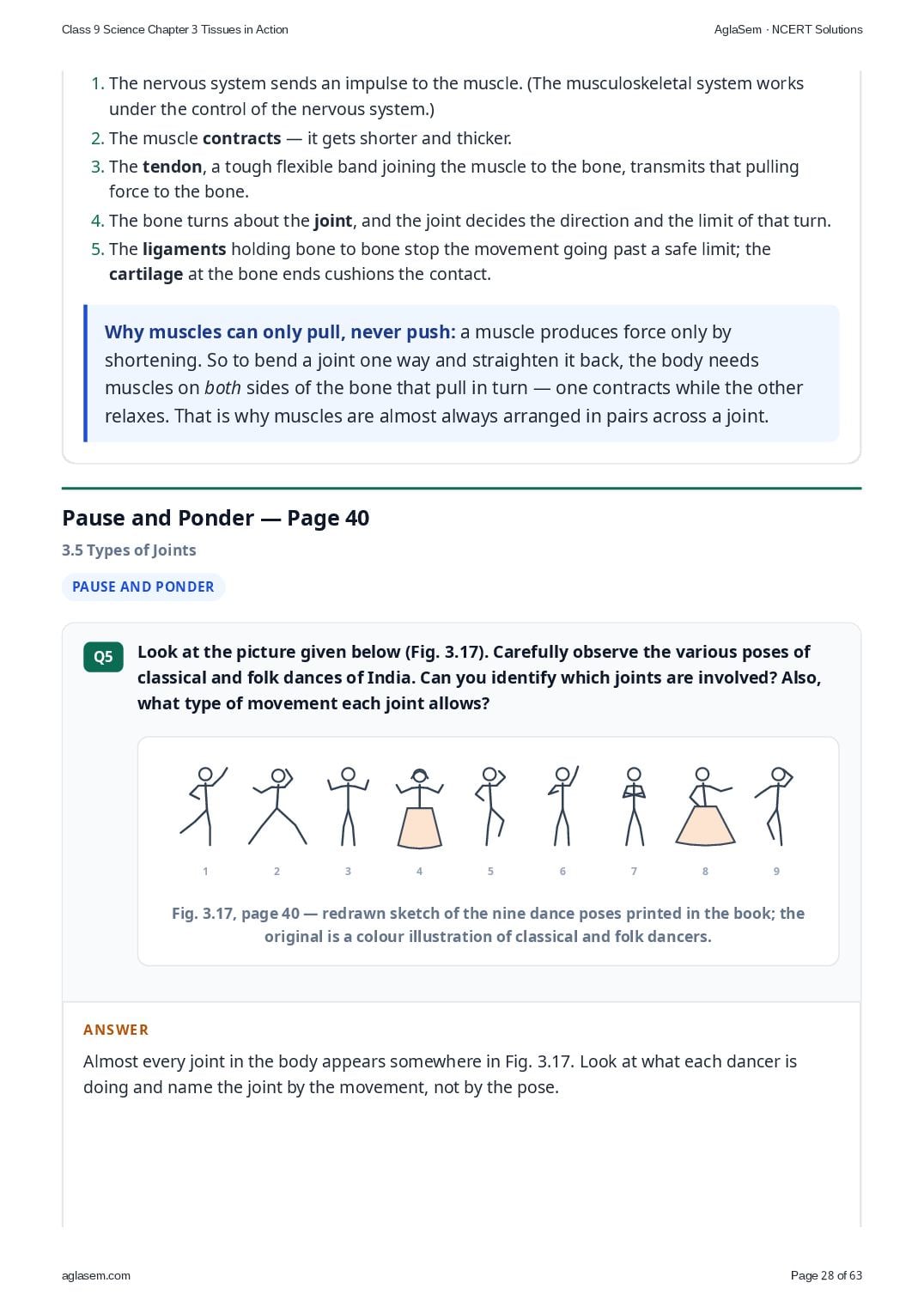
- So, what actually causes the bones to move?
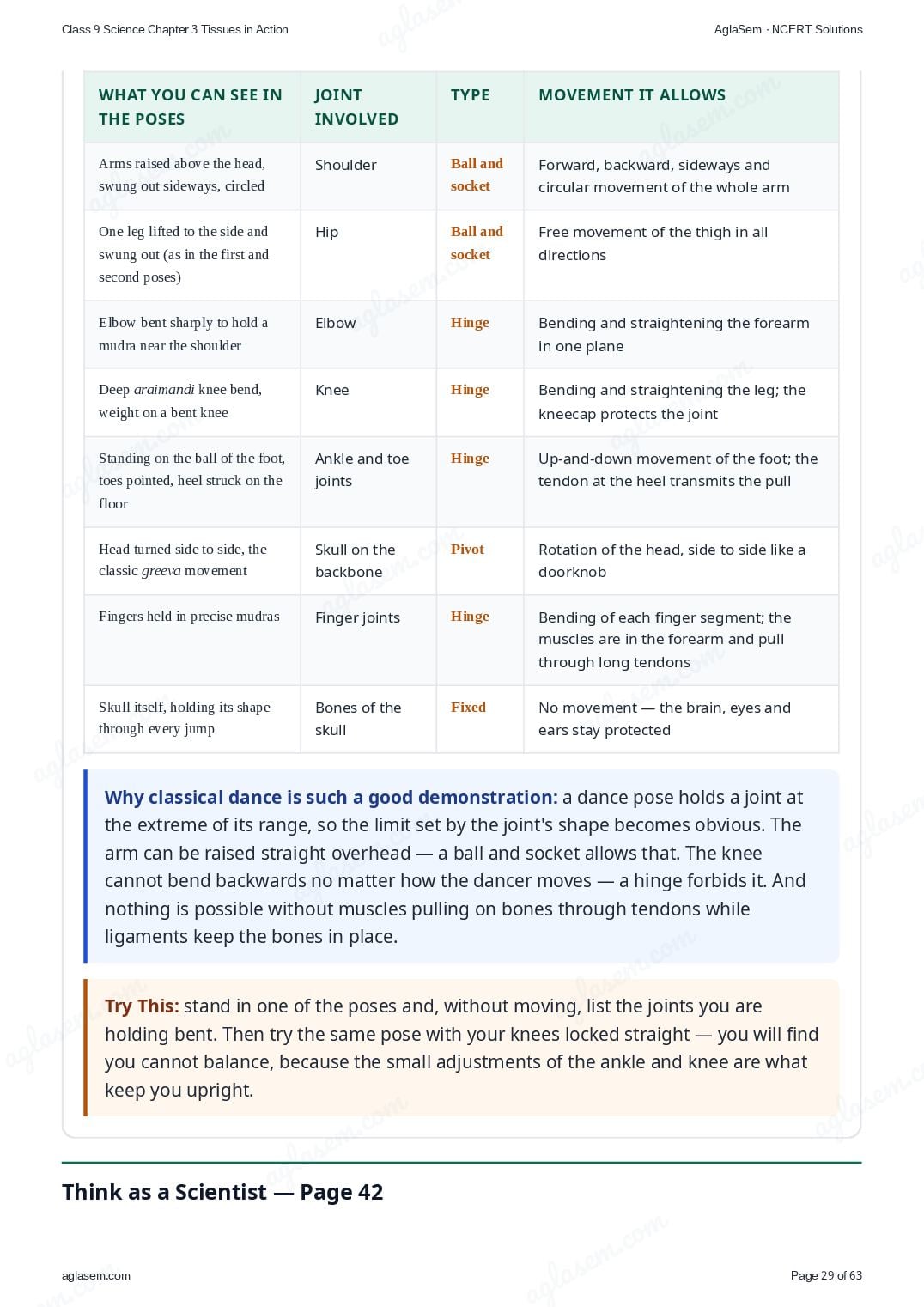
- Look at the picture given below (Fig. 3.17). Carefully observe the various poses of classical and folk dances of India. Can you identify which joints are involved? Also, what type of movement each joint allows?
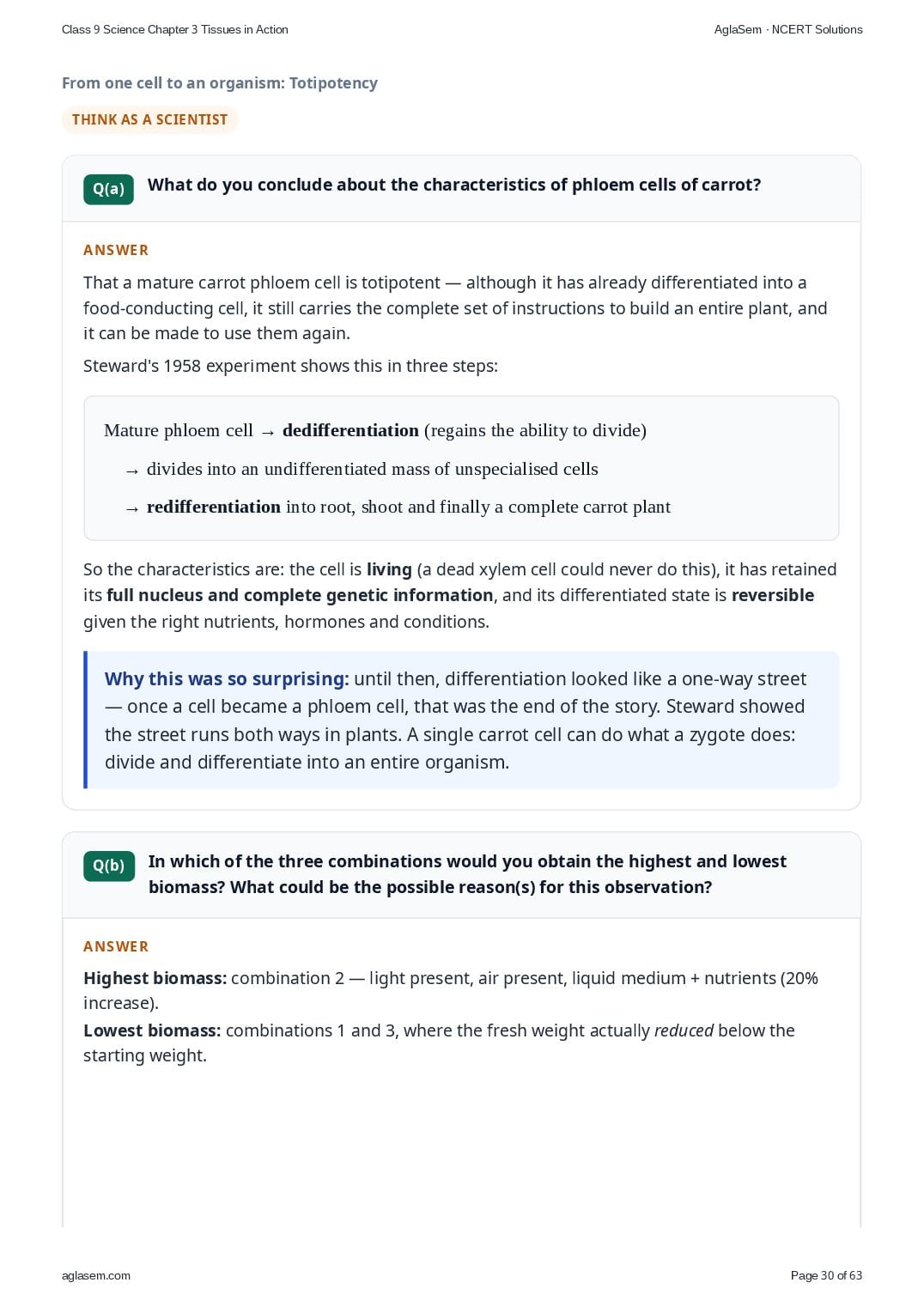
- What do you conclude about the characteristics of phloem cells of carrot?
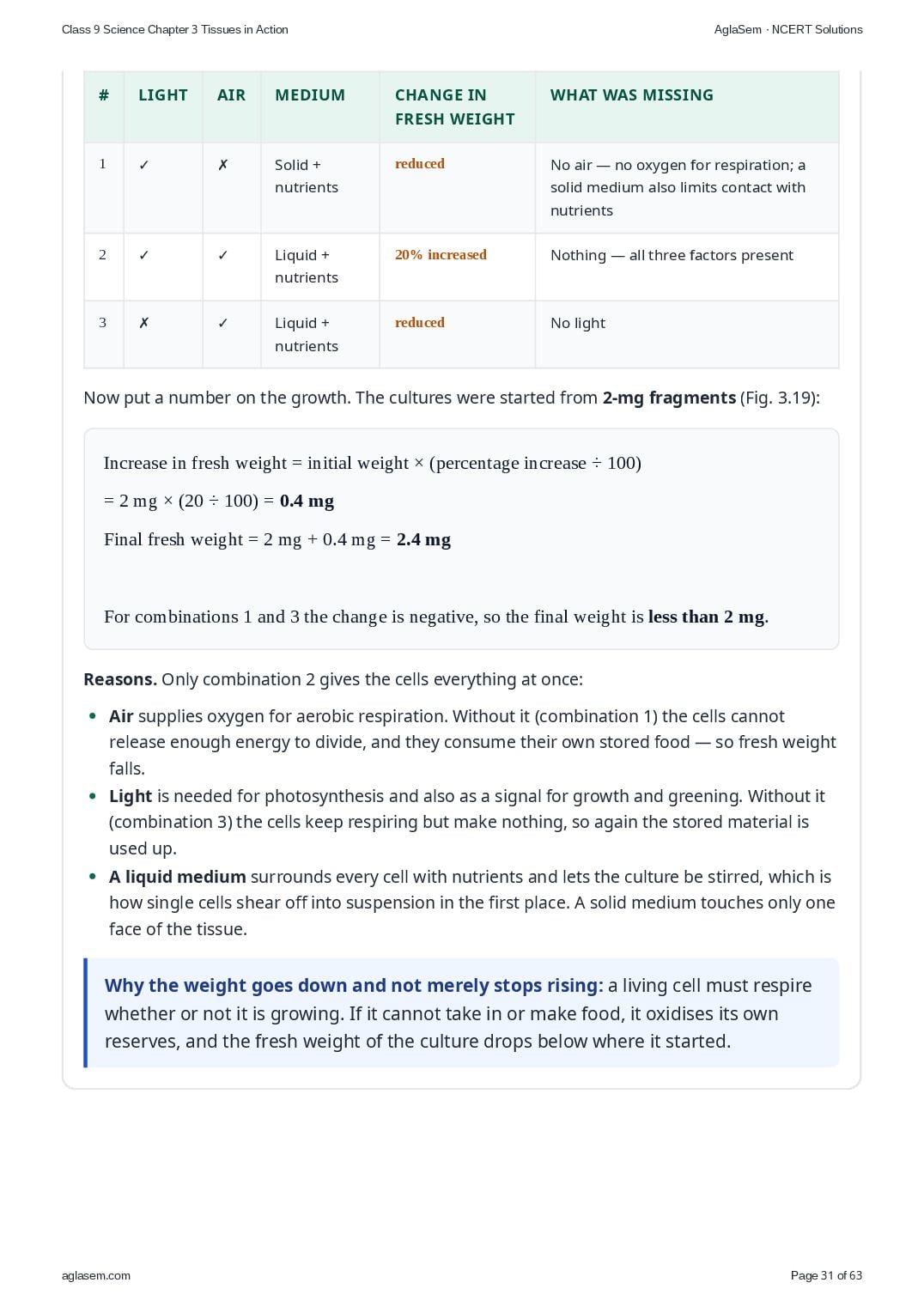
- In which of the three combinations would you obtain the highest and lowest biomass? What could be the possible reason(s) for this observation?
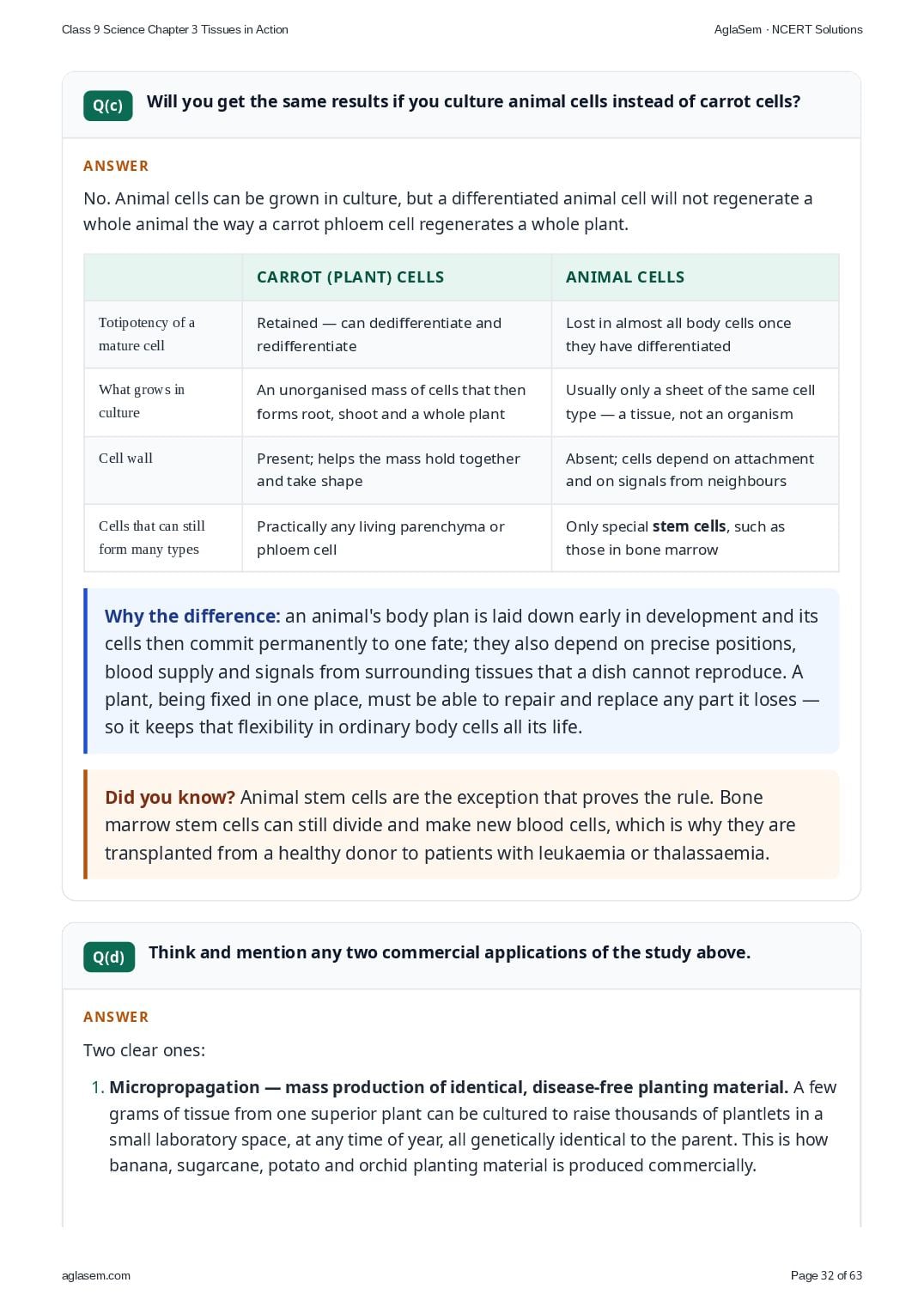
- Will you get the same results if you culture animal cells instead of carrot cells?
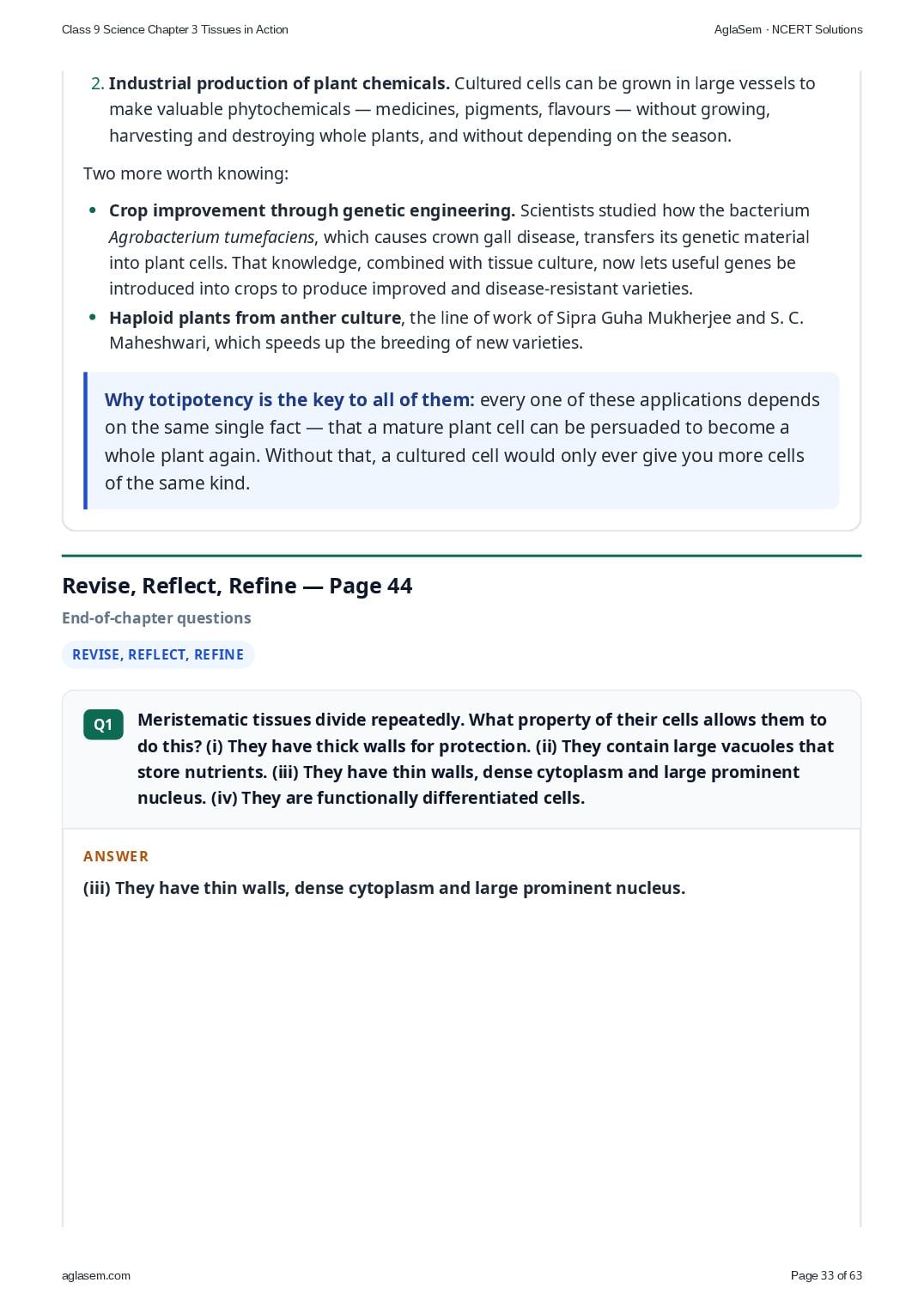
- Think and mention any two commercial applications of the study above.
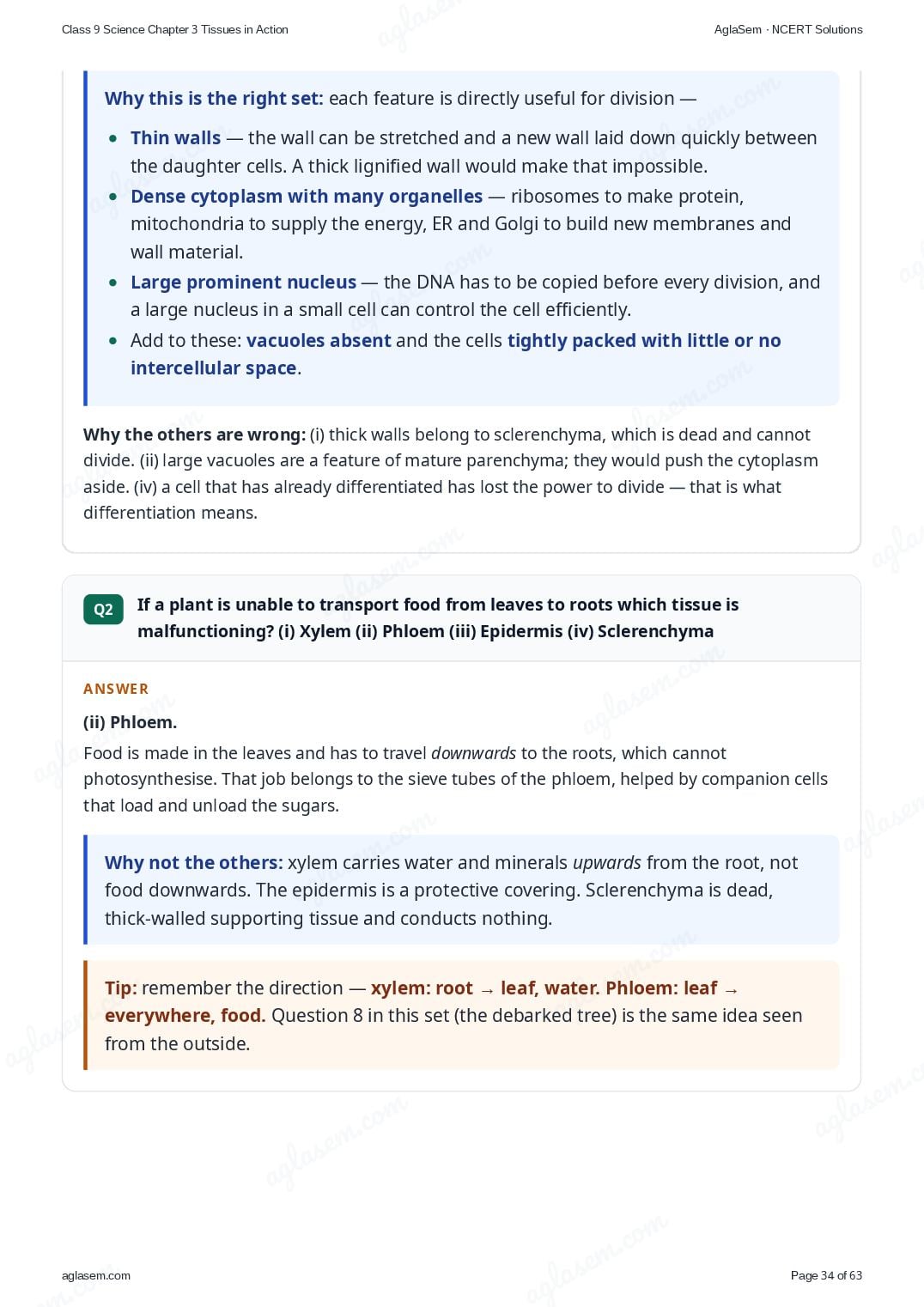
- Meristematic tissues divide repeatedly. What property of their cells allows them to do this? (i) They have thick walls for protection. (ii) They contain large vacuoles that store nutrients. (iii) They have thin walls, dense cytoplasm and large prominent nucleus. (iv) They are functionally differentiated cells.
- If a plant is unable to transport food from leaves to roots which tissue is malfunctioning? (i) Xylem (ii) Phloem (iii) Epidermis (iv) Sclerenchyma
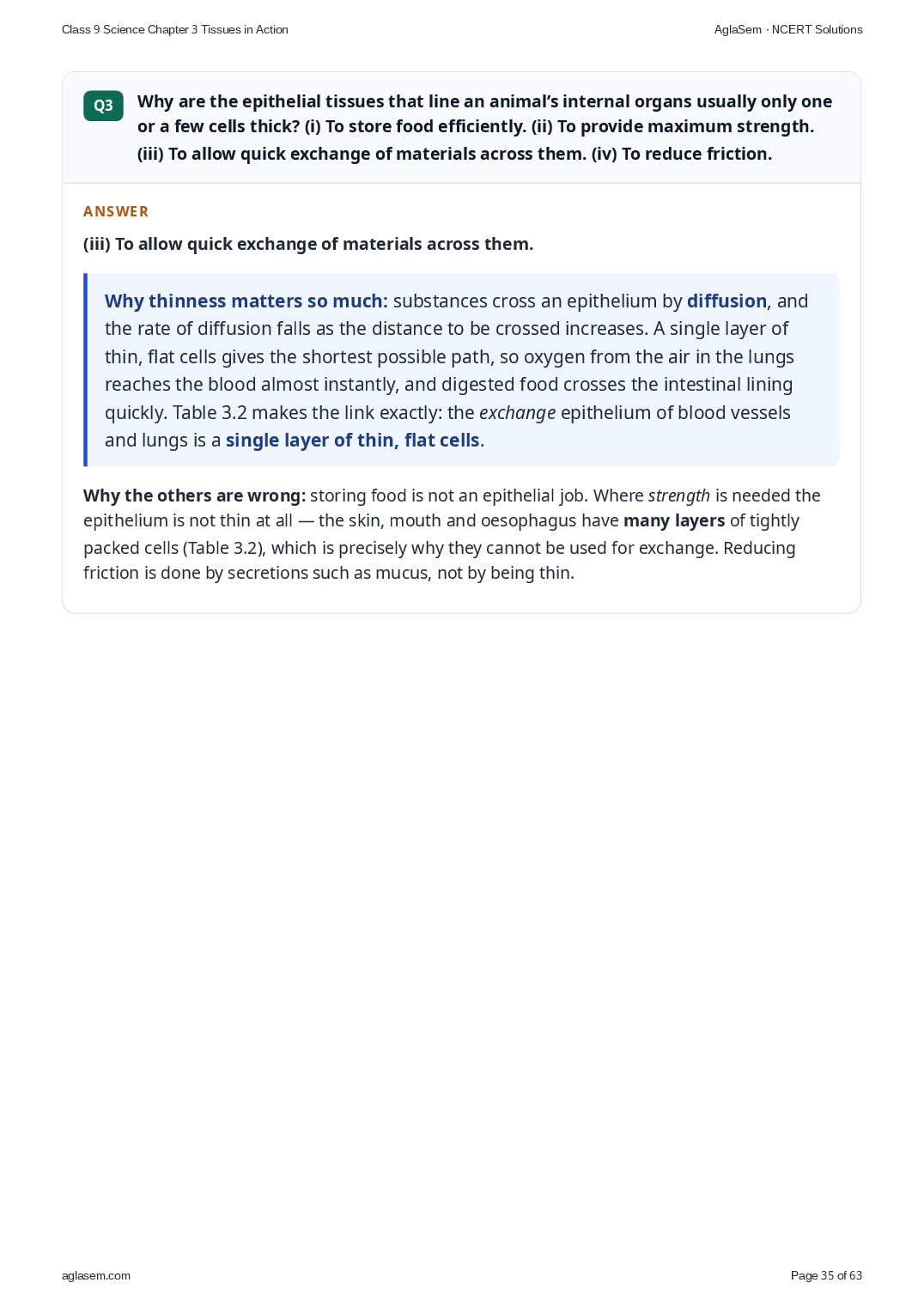
- Why are the epithelial tissues that line an animal’s internal organs usually only one or a few cells thick? (i) To store food efficiently. (ii) To provide maximum strength. (iii) To allow quick exchange of materials across them. (iv) To reduce friction.
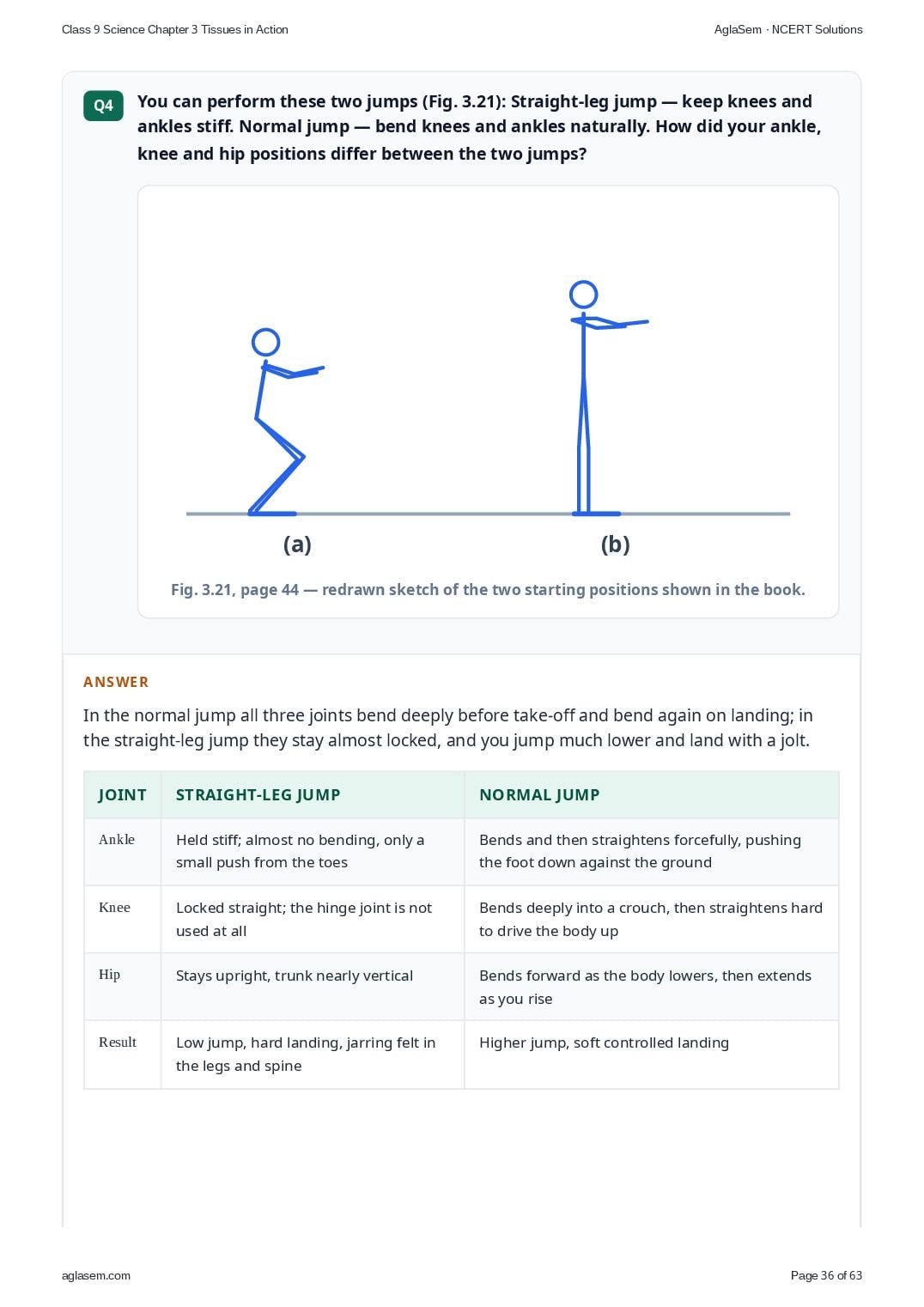
- You can perform these two jumps (Fig. 3.21): Straight-leg jump — keep knees and ankles stiff. Normal jump — bend knees and ankles naturally. How did your ankle, knee and hip positions differ between the two jumps?
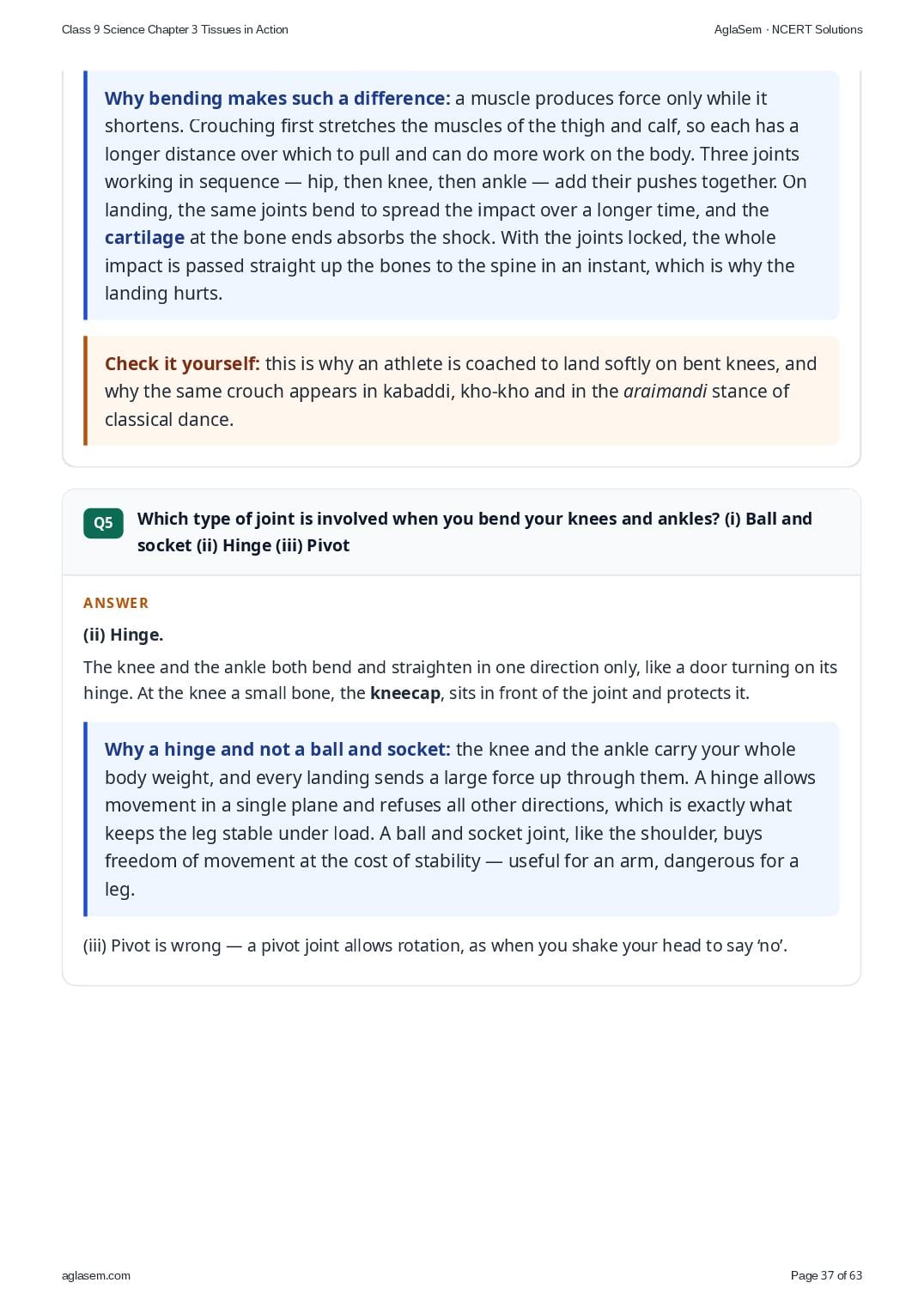
- Which type of joint is involved when you bend your knees and ankles? (i) Ball and socket (ii) Hinge (iii) Pivot
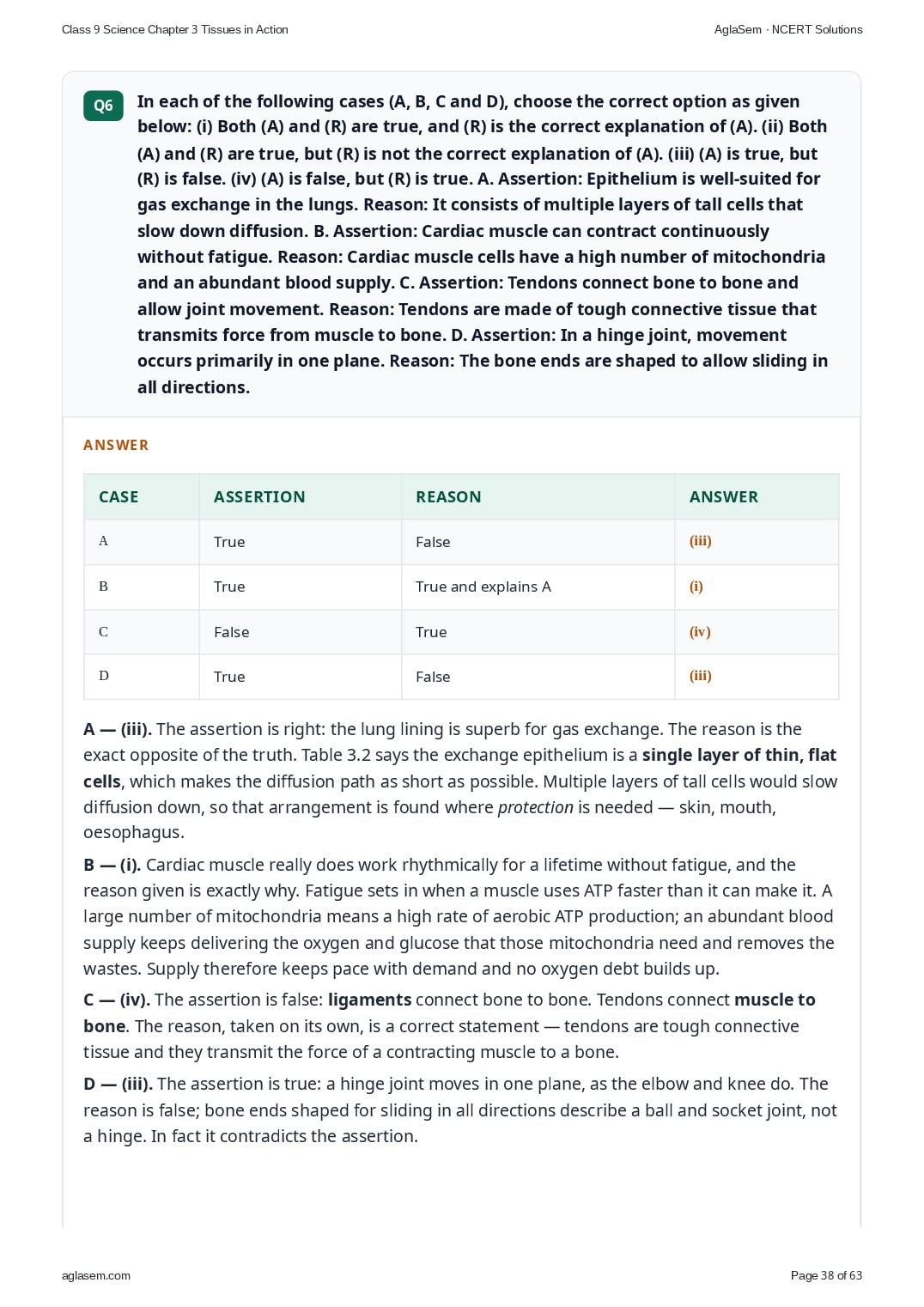
- In each of the following cases (A, B, C and D), choose the correct option as given below: (i) Both (A) and (R) are true, and (R) is the correct explanation of (A). (ii) Both (A) and (R) are true, but (R) is not the correct explanation of (A). (iii) (A) is true, but (R) is false. (iv) (A) is false, but (R) is true. A. Assertion: Epithelium is well-suited for gas exchange in the lungs. Reason: It consists of multiple layers of tall cells that slow down diffusion. B. Assertion: Cardiac muscle can contract continuously without fatigue. Reason: Cardiac muscle cells have a high number of mitochondria and an abundant blood supply. C. Assertion: Tendons connect bone to bone and allow joint movement. Reason: Tendons are made of tough connective tissue that transmits force from muscle to bone. D. Assertion: In a hinge joint, movement occurs primarily in one plane. Reason: The bone ends are shaped to allow sliding in all directions.
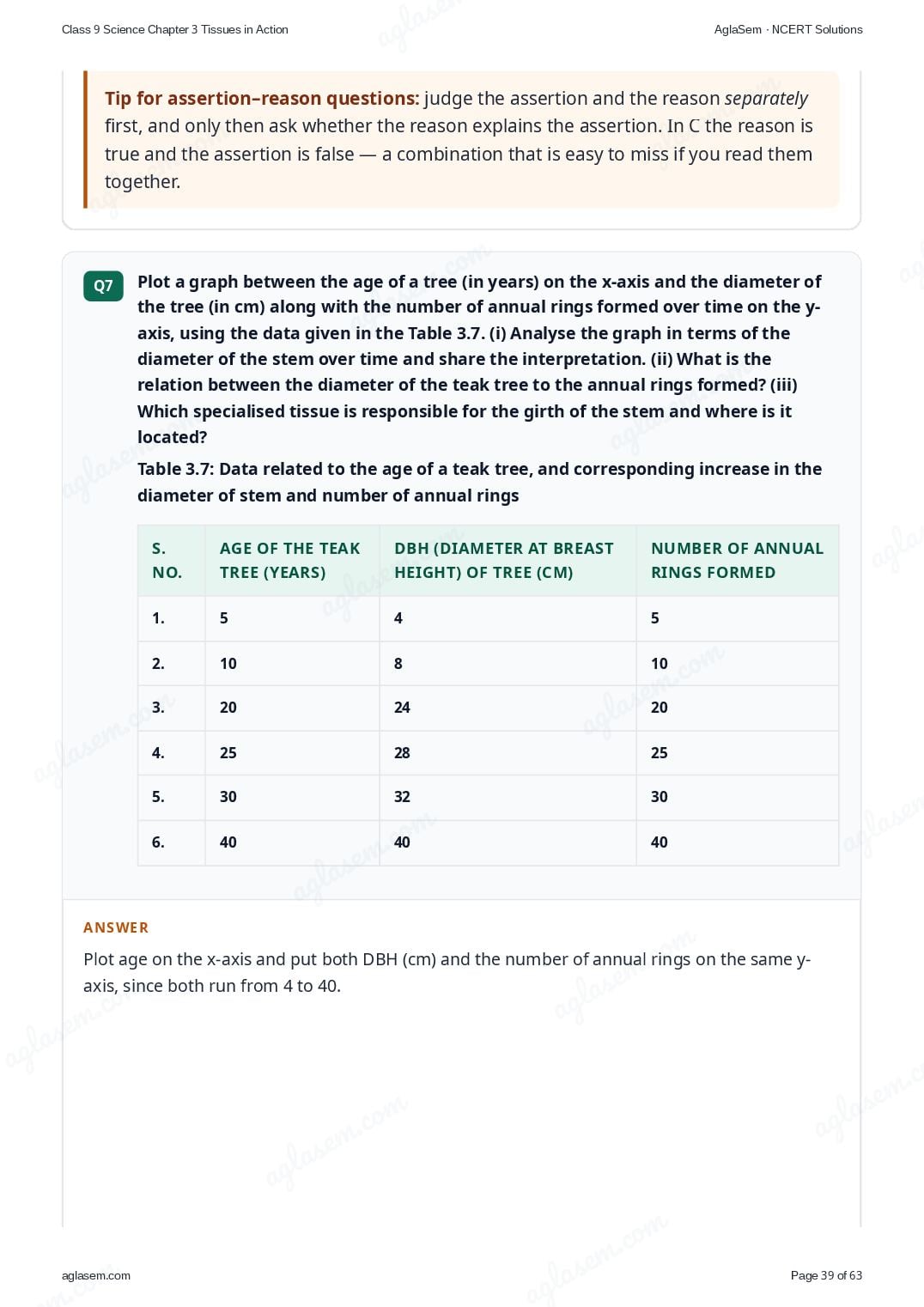
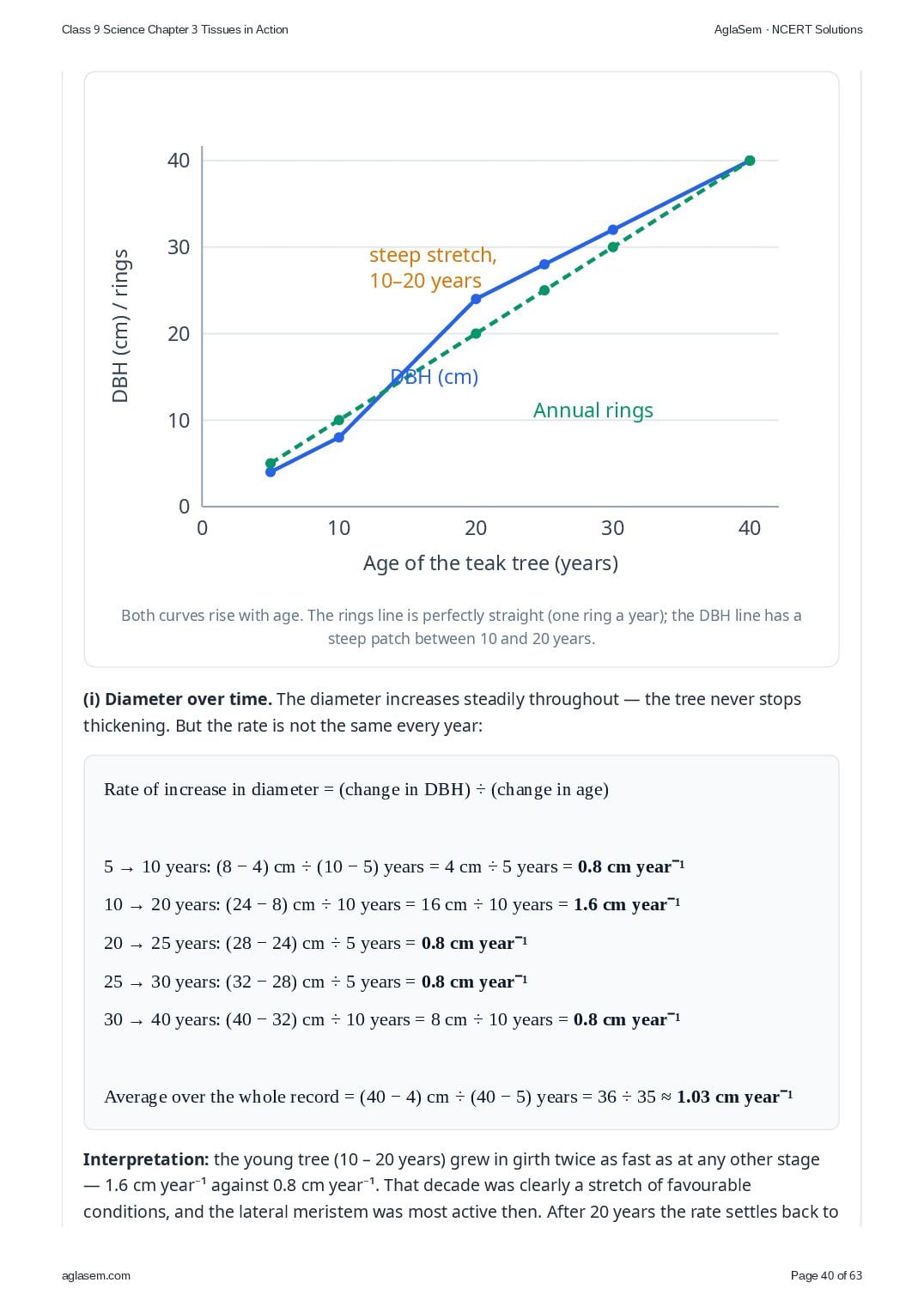
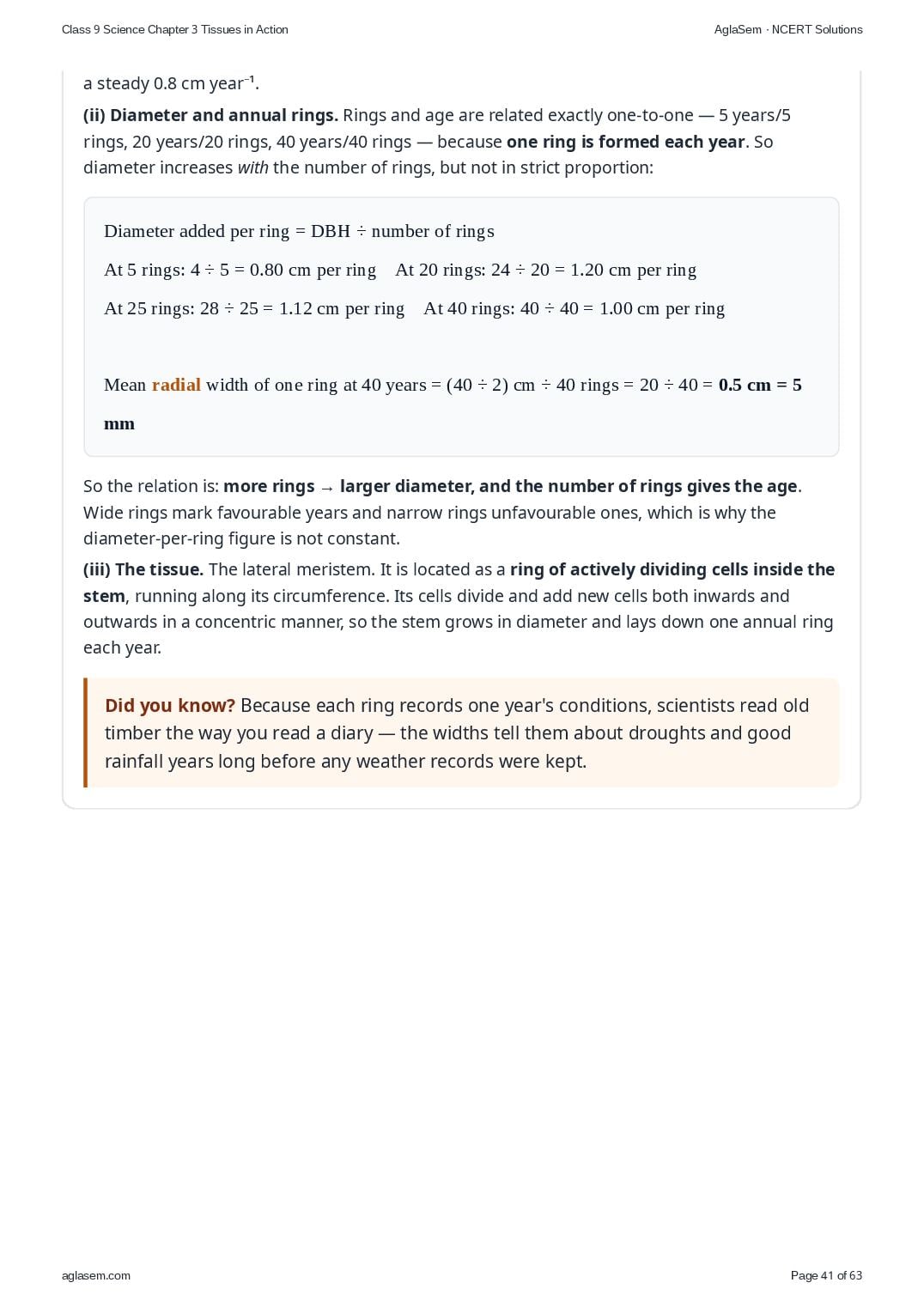
- Plot a graph between the age of a tree (in years) on the x-axis and the diameter of the tree (in cm) along with the number of annual rings formed over time on the y-axis, using the data given in the Table 3.7. (i) Analyse the graph in terms of the diameter of the stem over time and share the interpretation. (ii) What is the relation between the diameter of the teak tree to the annual rings formed? (iii) Which specialised tissue is responsible for the girth of the stem and where is it located?
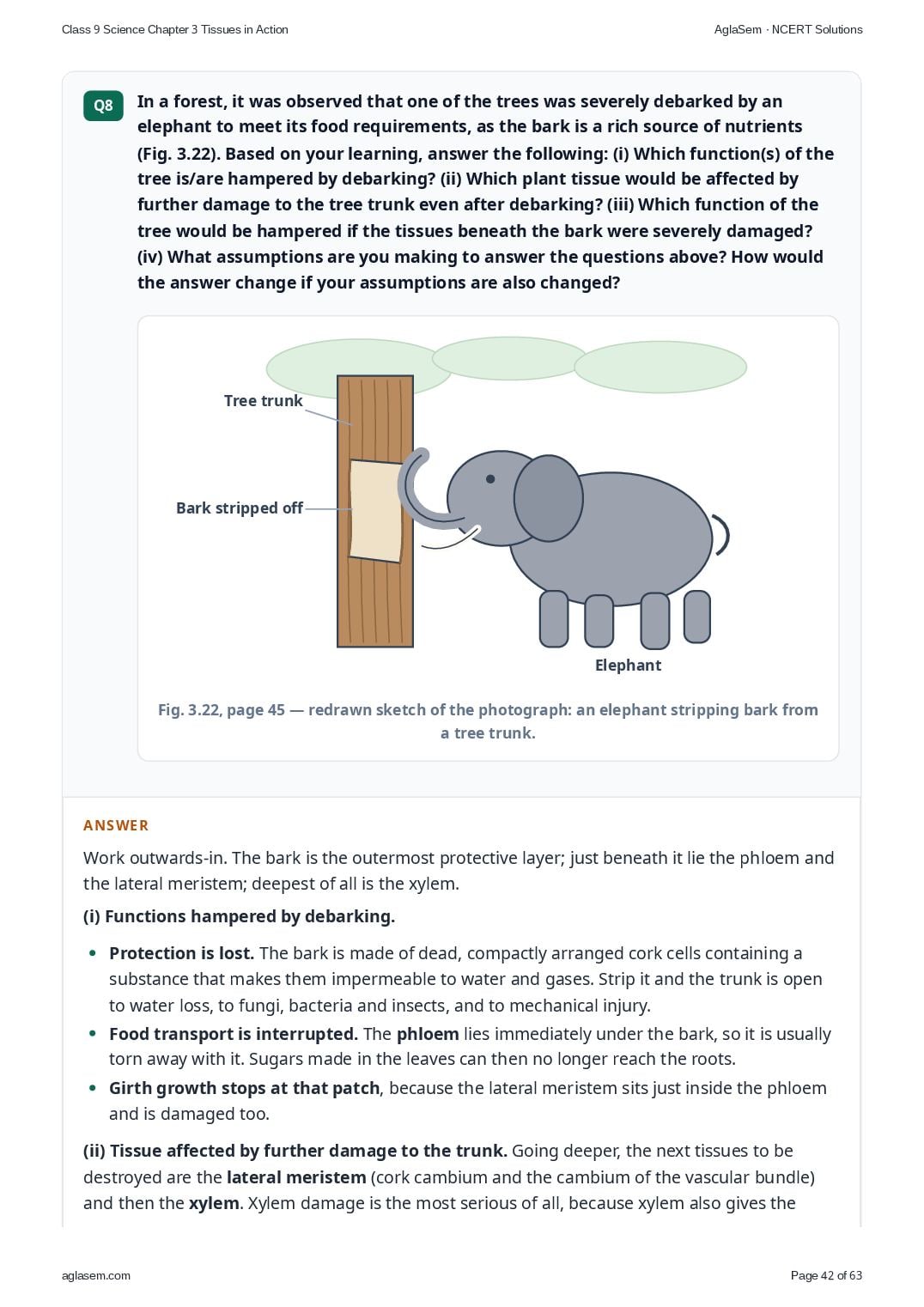
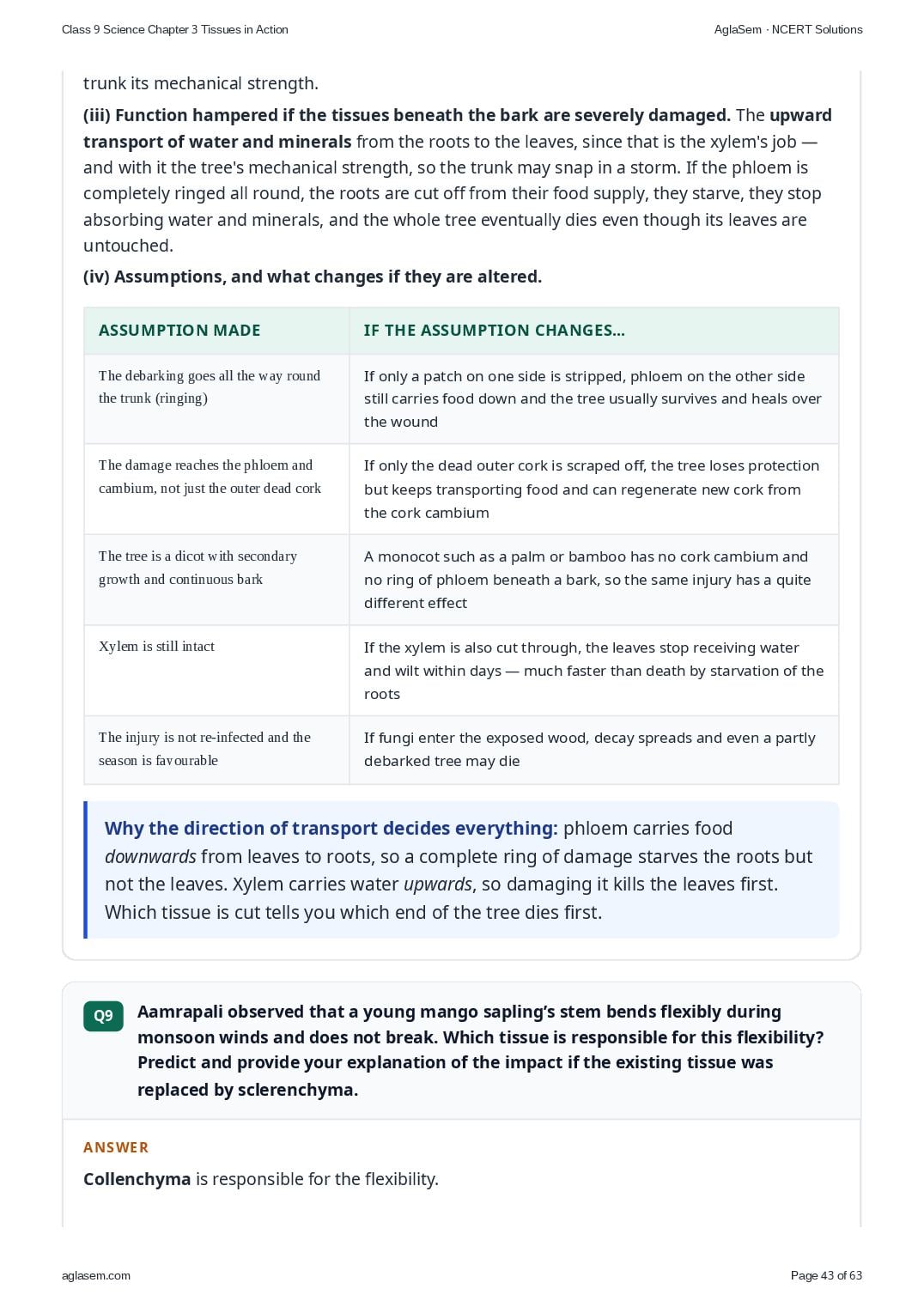
- In a forest, it was observed that one of the trees was severely debarked by an elephant to meet its food requirements, as the bark is a rich source of nutrients (Fig. 3.22). Based on your learning, answer the following: (i) Which function(s) of the tree is/are hampered by debarking? (ii) Which plant tissue would be affected by further damage to the tree trunk even after debarking? (iii) Which function of the tree would be hampered if the tissues beneath the bark were severely damaged? (iv) What assumptions are you making to answer the questions above? How would the answer change if your assumptions are also changed?
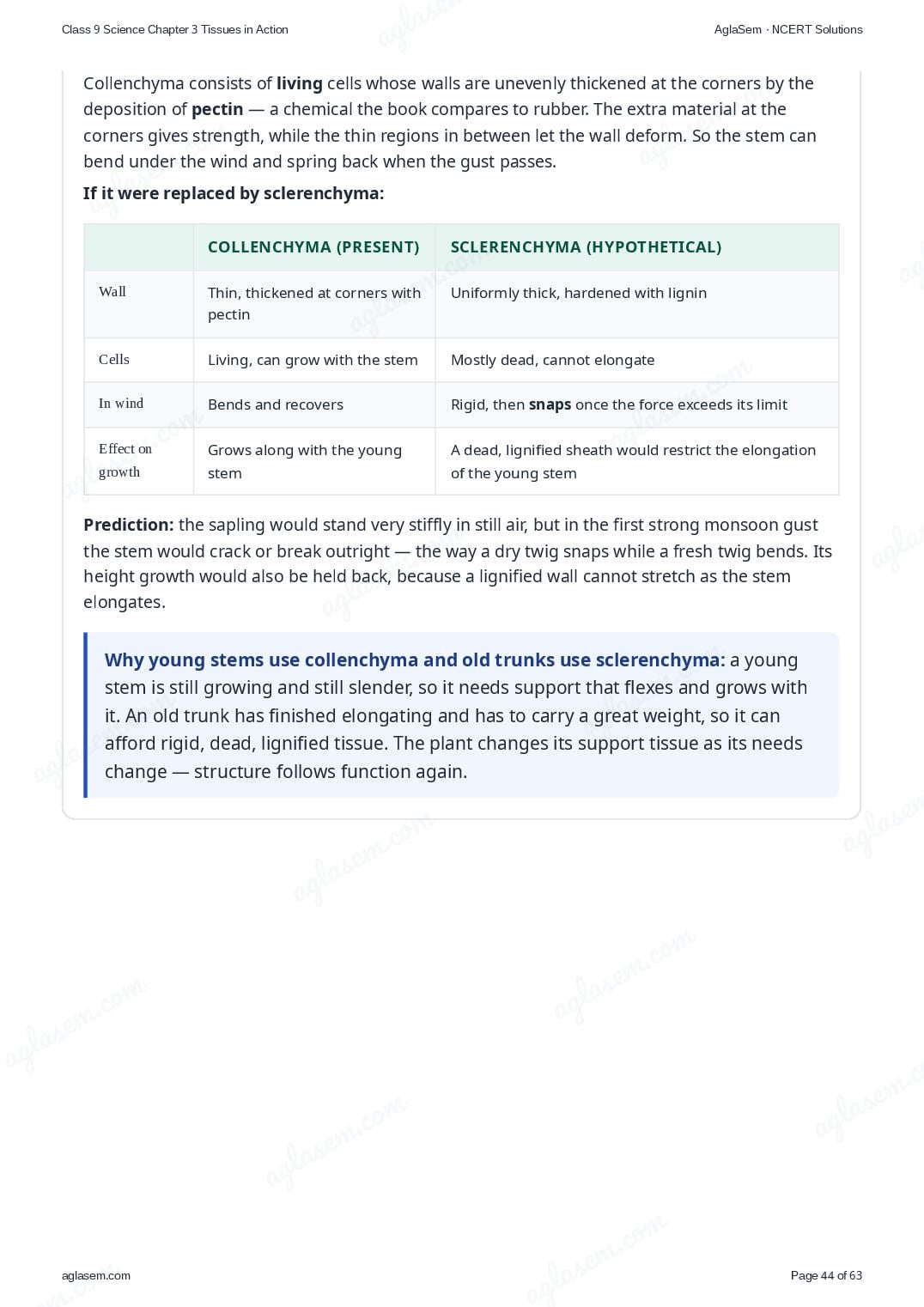
- Aamrapali observed that a young mango sapling’s stem bends flexibly during monsoon winds and does not break. Which tissue is responsible for this flexibility? Predict and provide your explanation of the impact if the existing tissue was replaced by sclerenchyma.
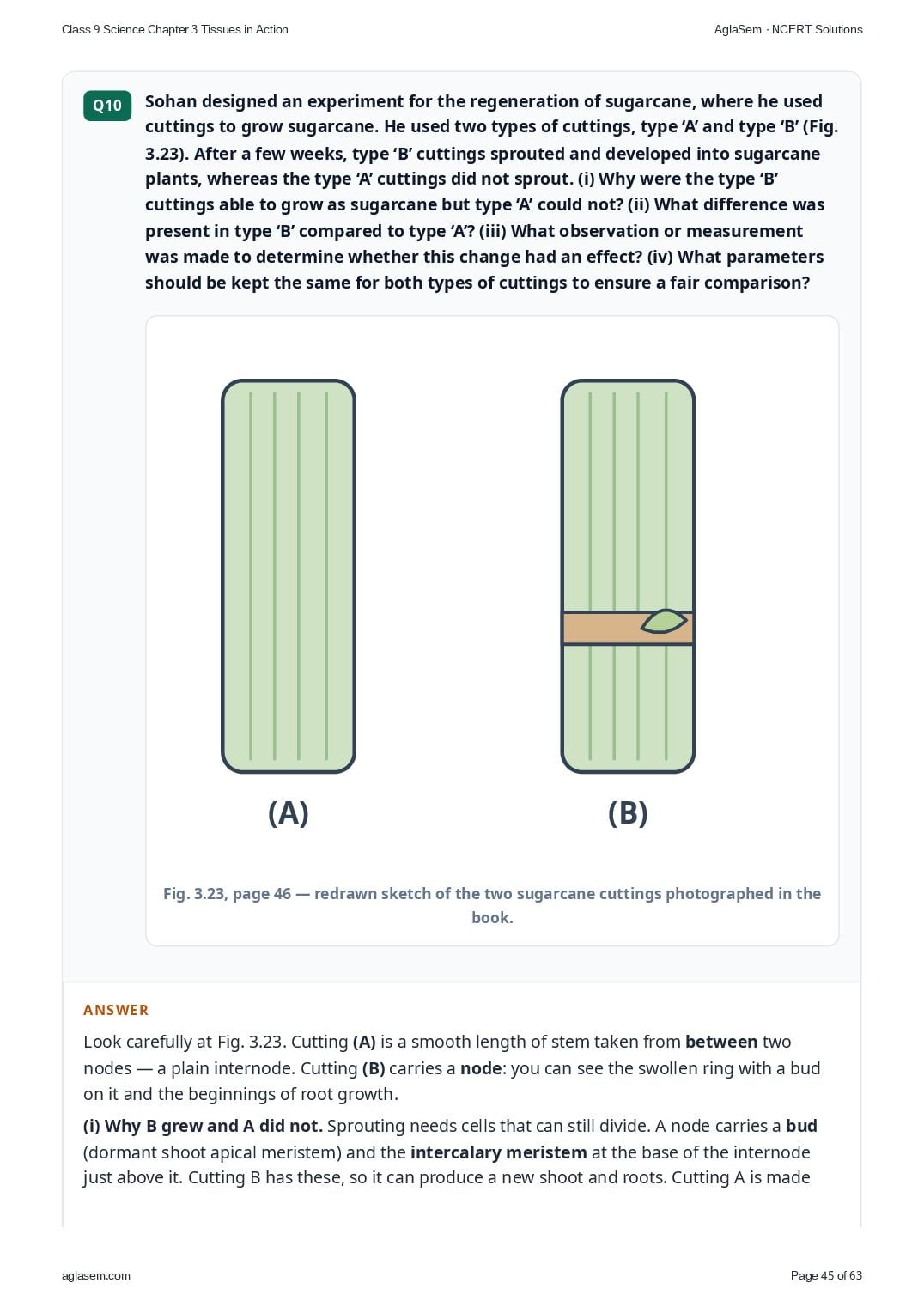
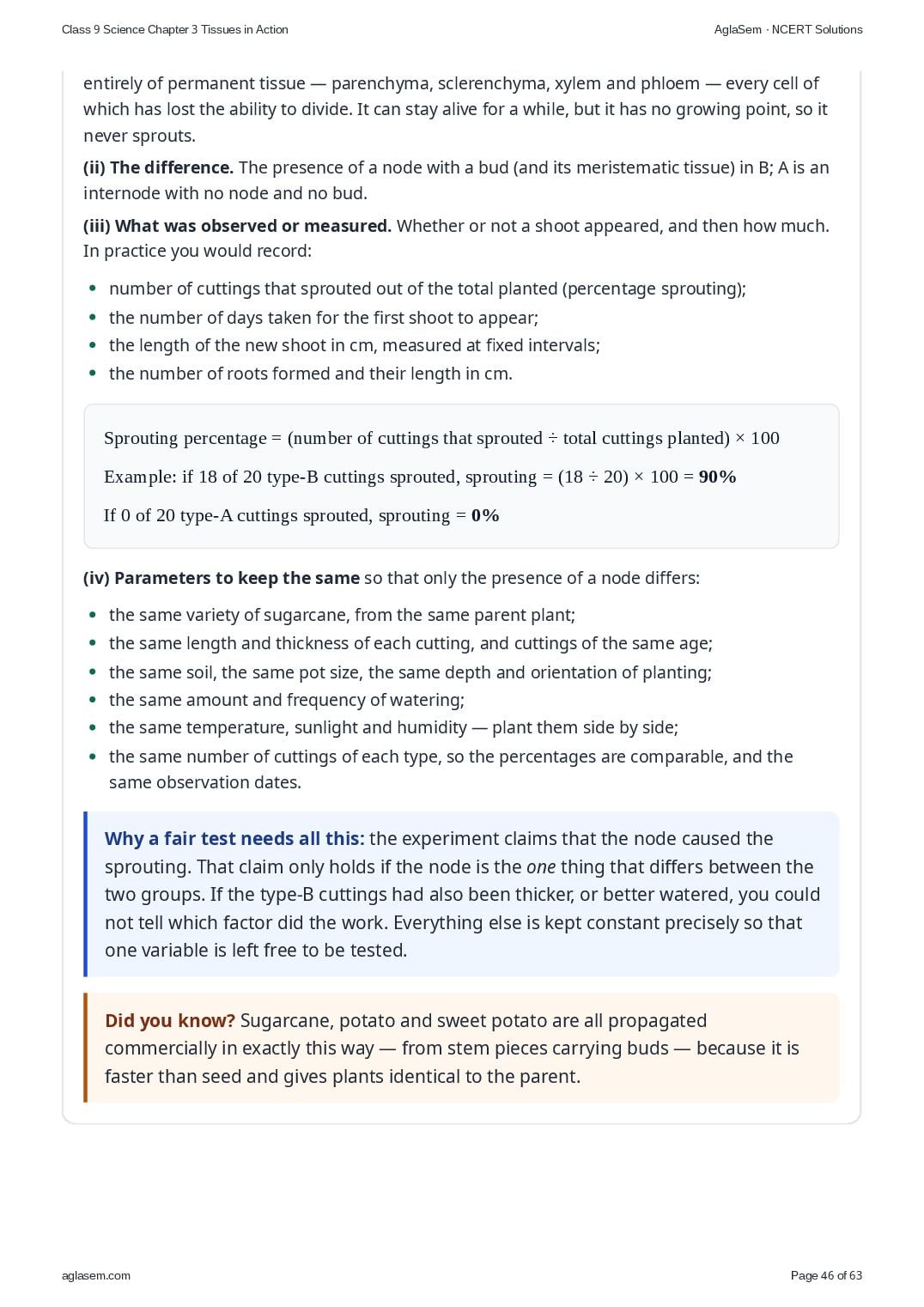
- Sohan designed an experiment for the regeneration of sugarcane, where he used cuttings to grow sugarcane. He used two types of cuttings, type ‘A’ and type ‘B’ (Fig. 3.23). After a few weeks, type ‘B’ cuttings sprouted and developed into sugarcane plants, whereas the type ‘A’ cuttings did not sprout. (i) Why were the type ‘B’ cuttings able to grow as sugarcane but type ‘A’ could not? (ii) What difference was present in type ‘B’ compared to type ‘A’? (iii) What observation or measurement was made to determine whether this change had an effect? (iv) What parameters should be kept the same for both types of cuttings to ensure a fair comparison?
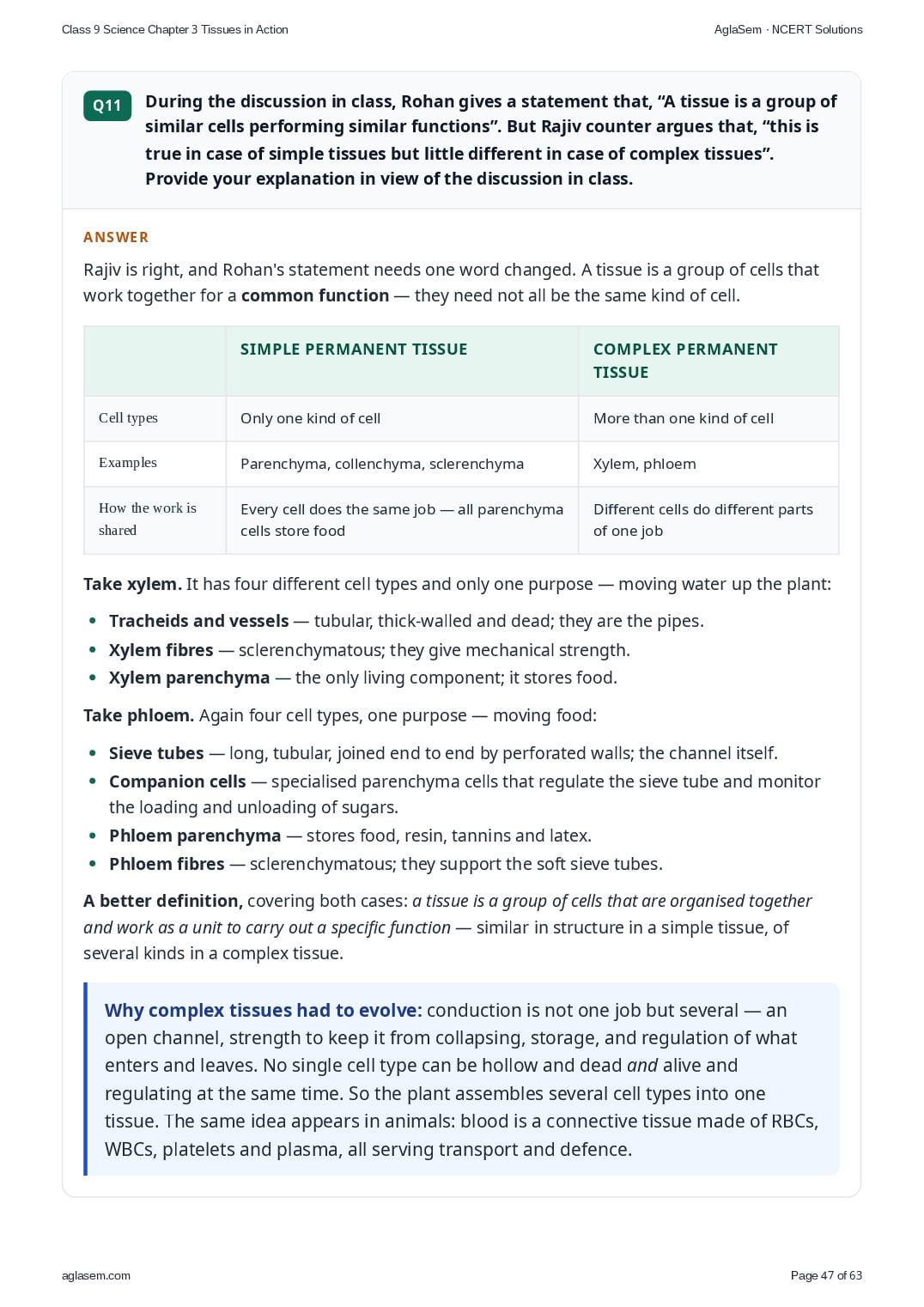
- During the discussion in class, Rohan gives a statement that, “A tissue is a group of similar cells performing similar functions”. But Rajiv counter argues that, “this is true in case of simple tissues but little different in case of complex tissues”. Provide your explanation in view of the discussion in class.
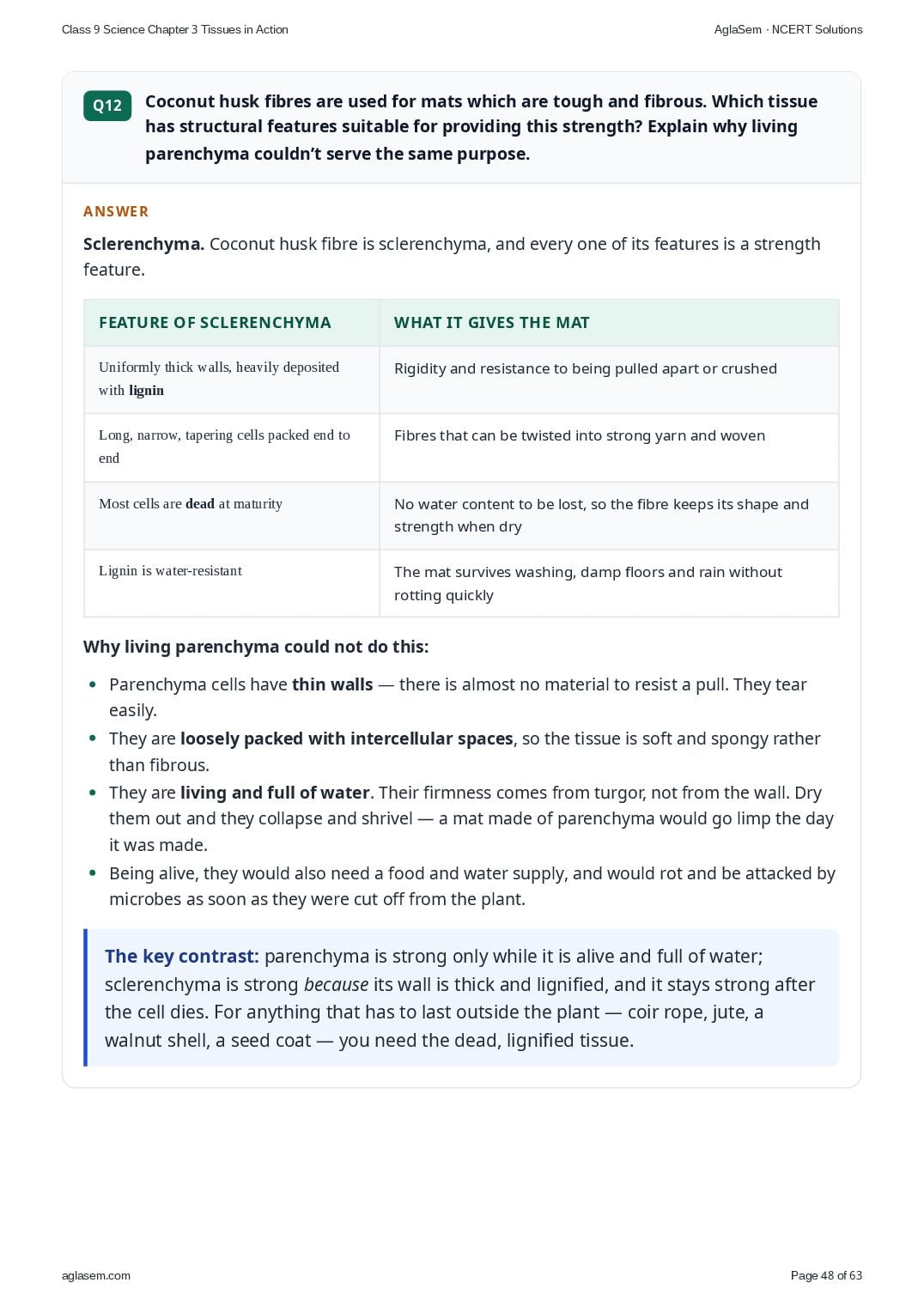
- Coconut husk fibres are used for mats which are tough and fibrous. Which tissue has structural features suitable for providing this strength? Explain why living parenchyma couldn’t serve the same purpose.
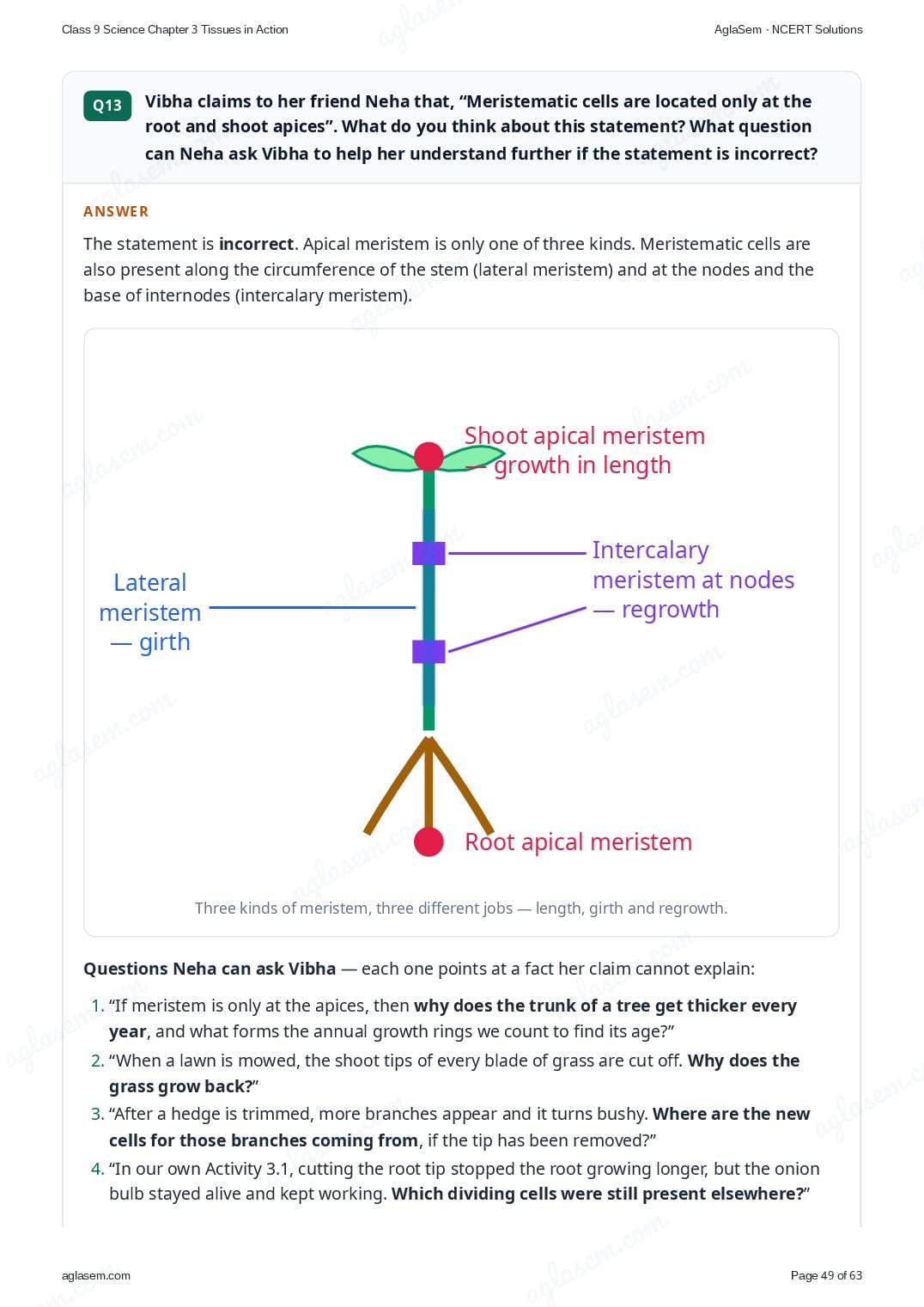
- Vibha claims to her friend Neha that, “Meristematic cells are located only at the root and shoot apices”. What do you think about this statement? What question can Neha ask Vibha to help her understand further if the statement is incorrect?
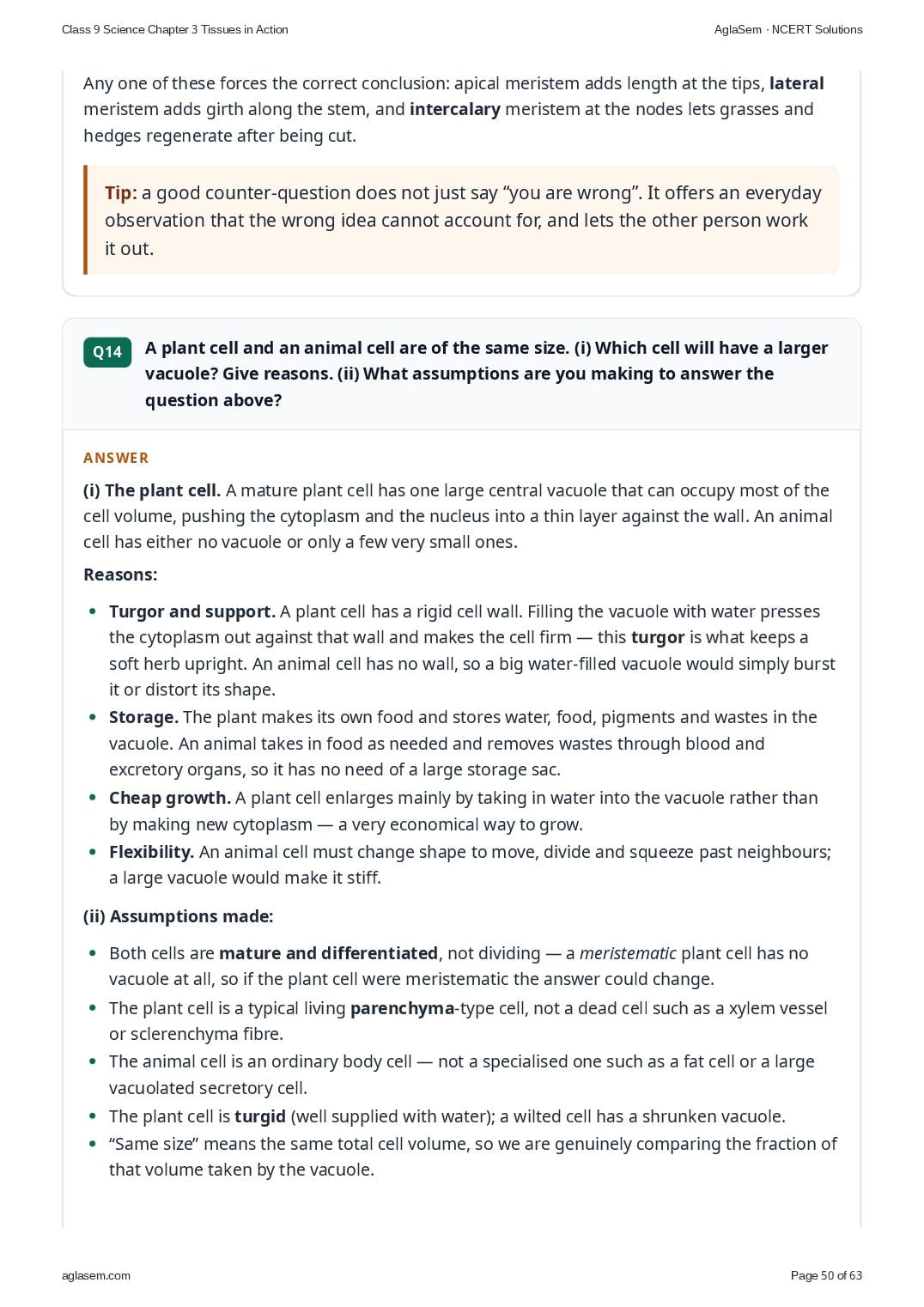
- A plant cell and an animal cell are of the same size. (i) Which cell will have a larger vacuole? Give reasons. (ii) What assumptions are you making to answer the question above?
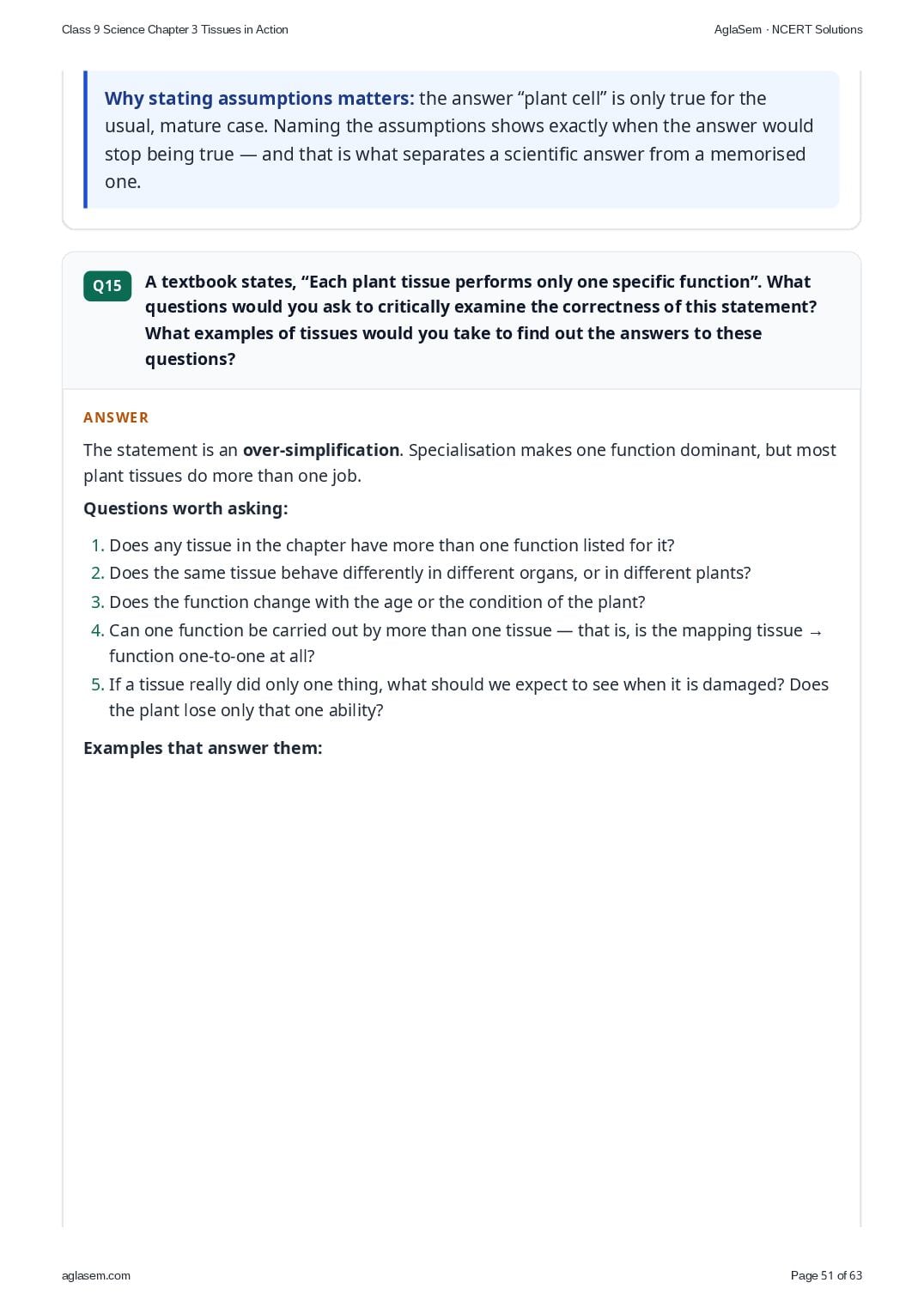
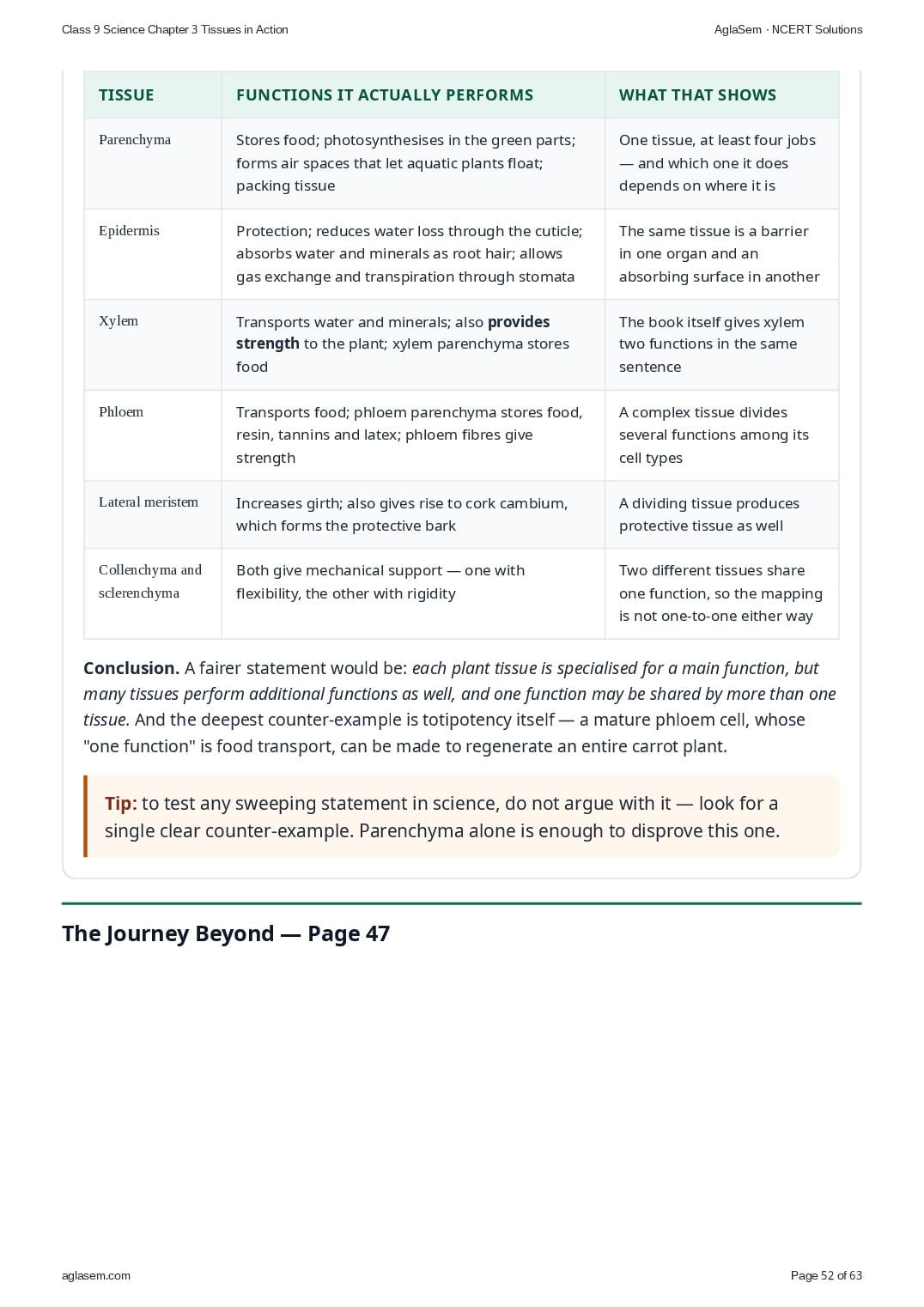
- A textbook states, “Each plant tissue performs only one specific function”. What questions would you ask to critically examine the correctness of this statement? What examples of tissues would you take to find out the answers to these questions?
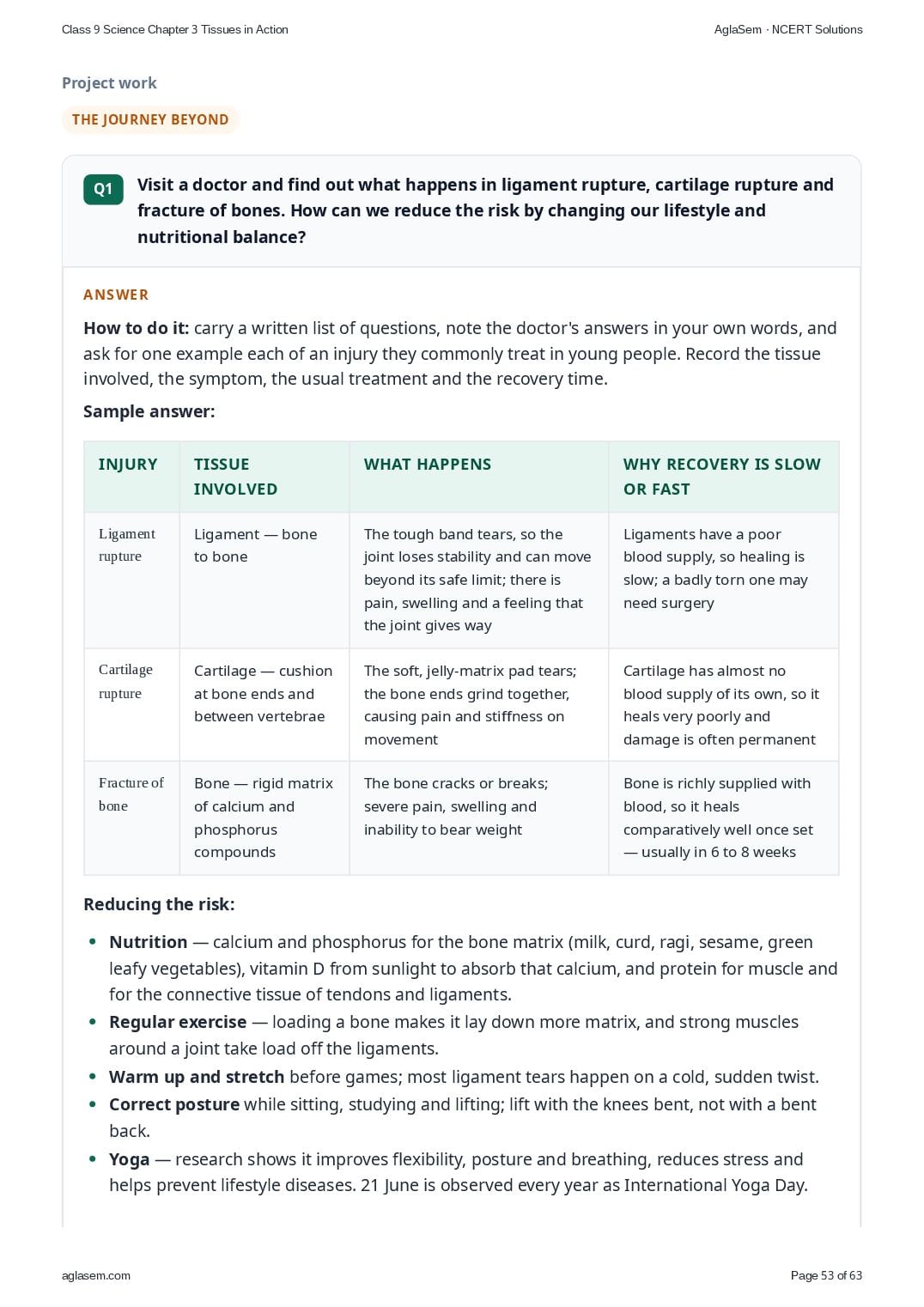
- Visit a doctor and find out what happens in ligament rupture, cartilage rupture and fracture of bones. How can we reduce the risk by changing our lifestyle and nutritional balance?
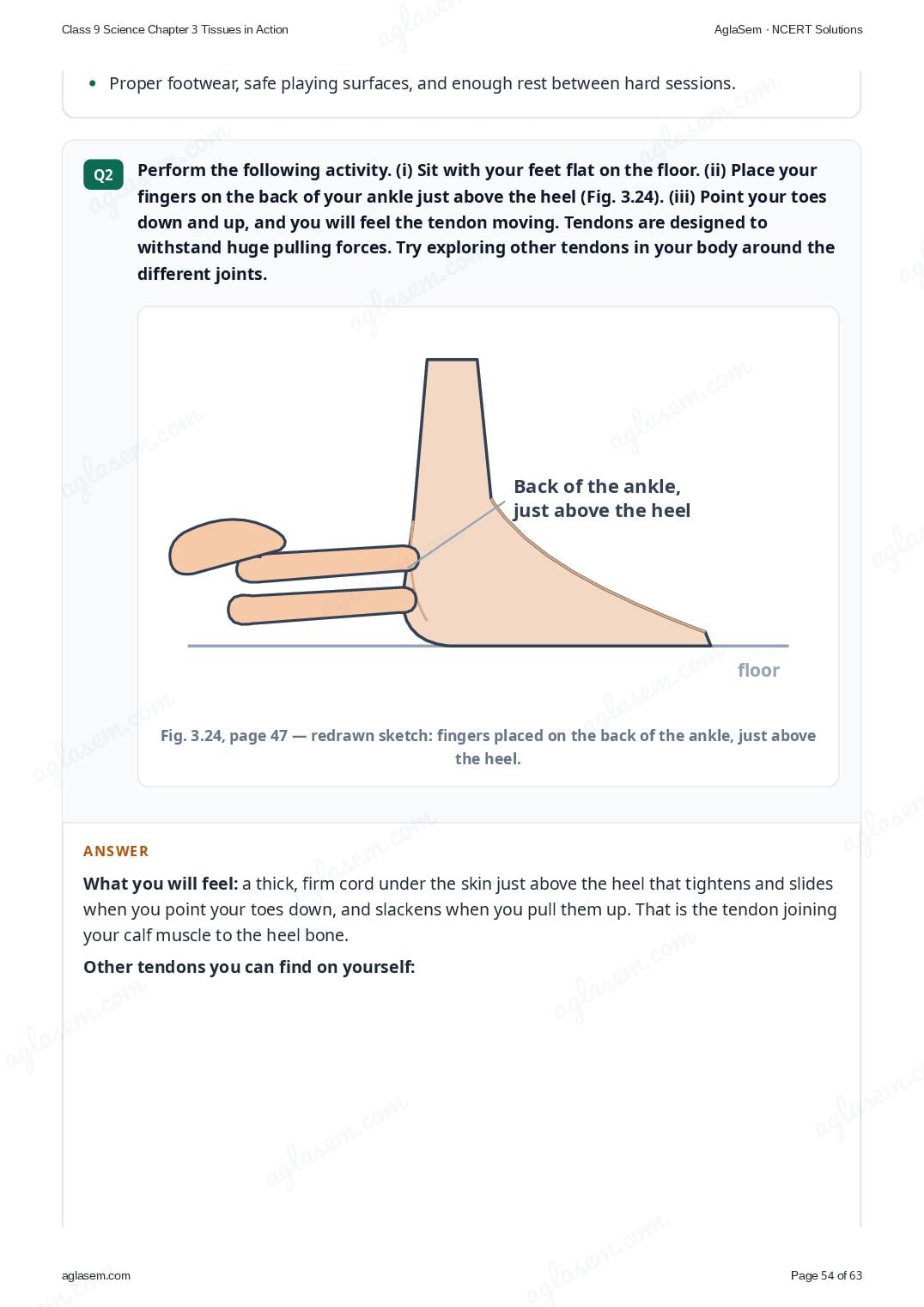
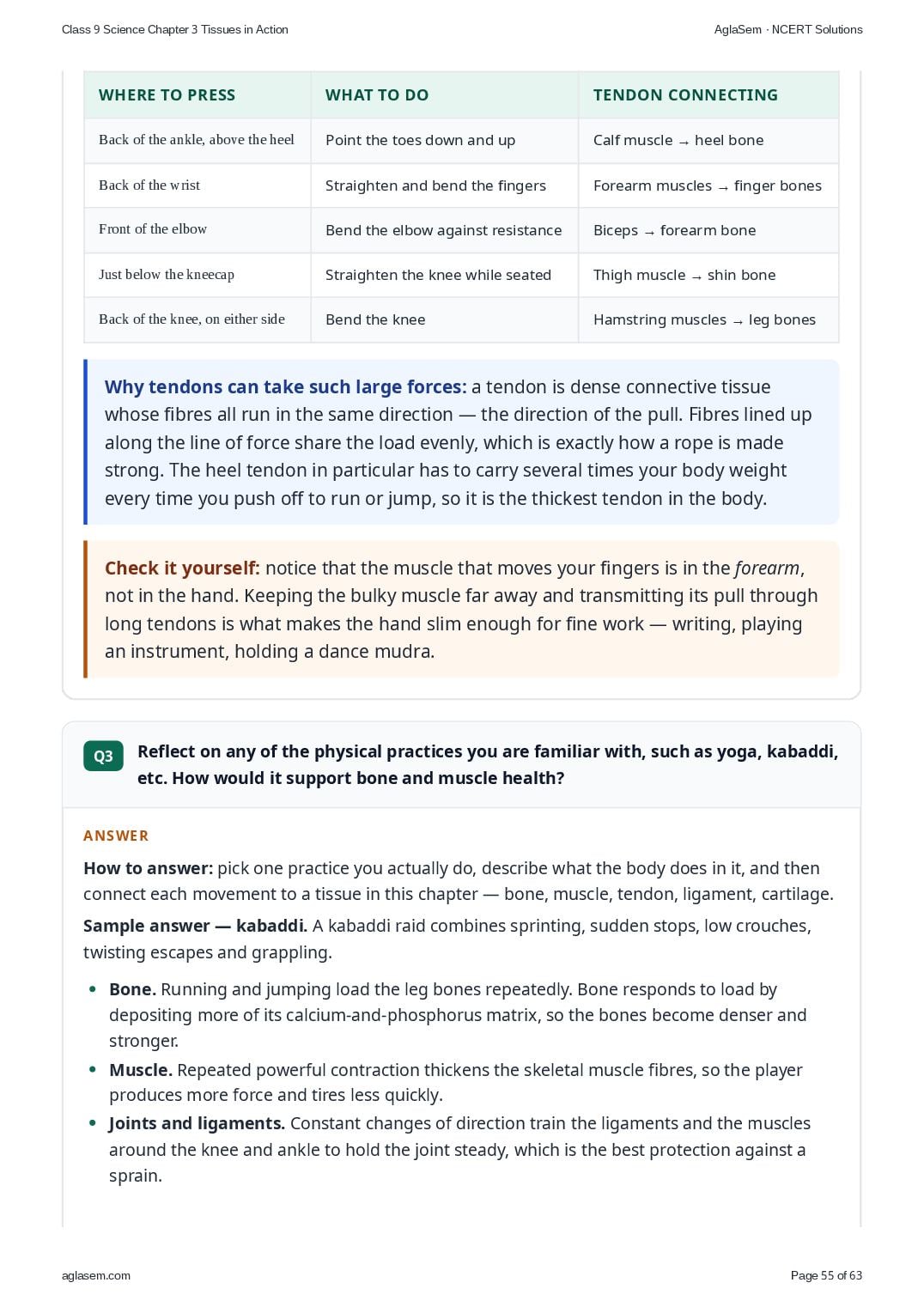
- Perform the following activity. (i) Sit with your feet flat on the floor. (ii) Place your fingers on the back of your ankle just above the heel (Fig. 3.24). (iii) Point your toes down and up, and you will feel the tendon moving. Tendons are designed to withstand huge pulling forces. Try exploring other tendons in your body around the different joints.
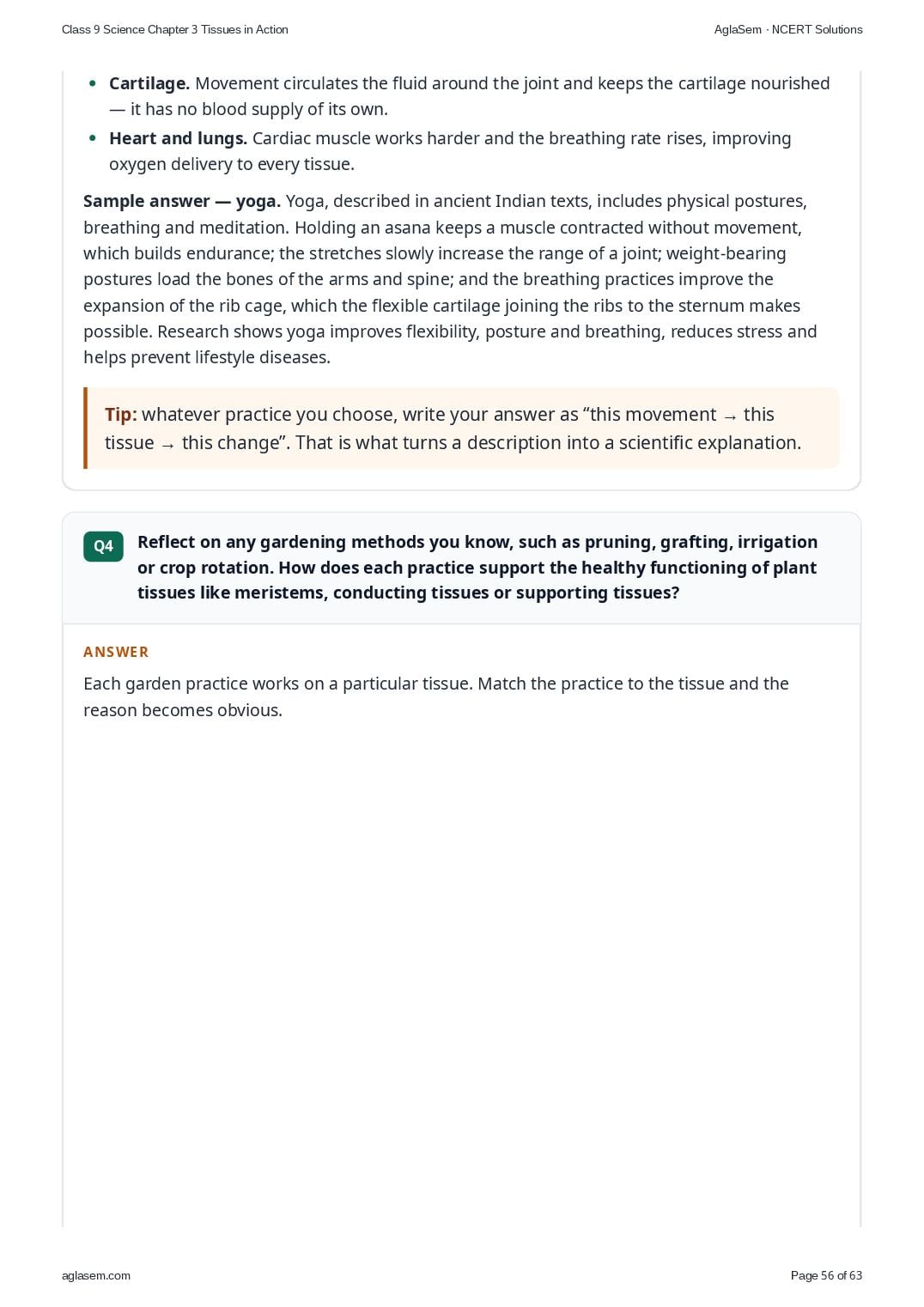
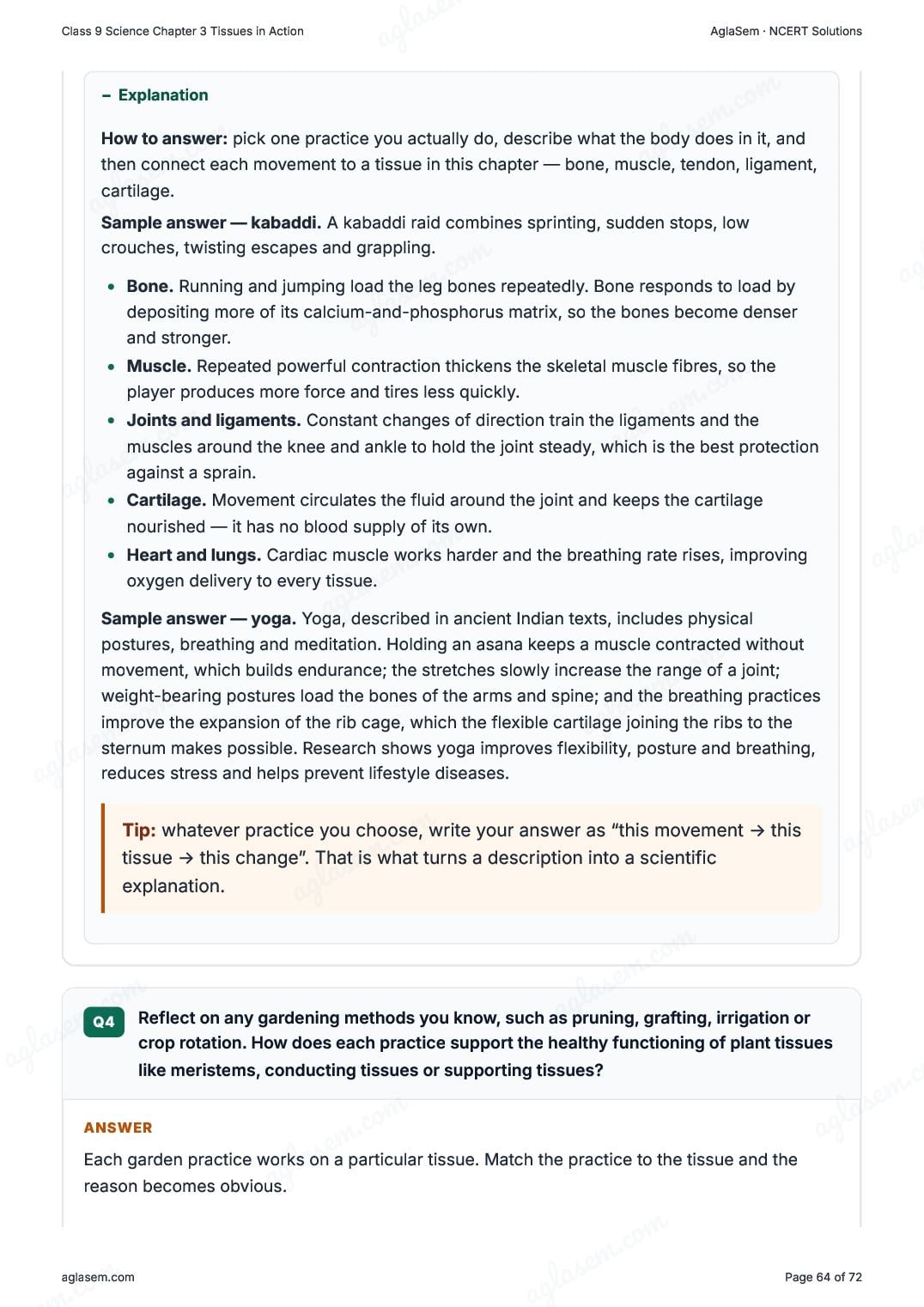
- Reflect on any of the physical practices you are familiar with, such as yoga, kabaddi, etc. How would it support bone and muscle health?
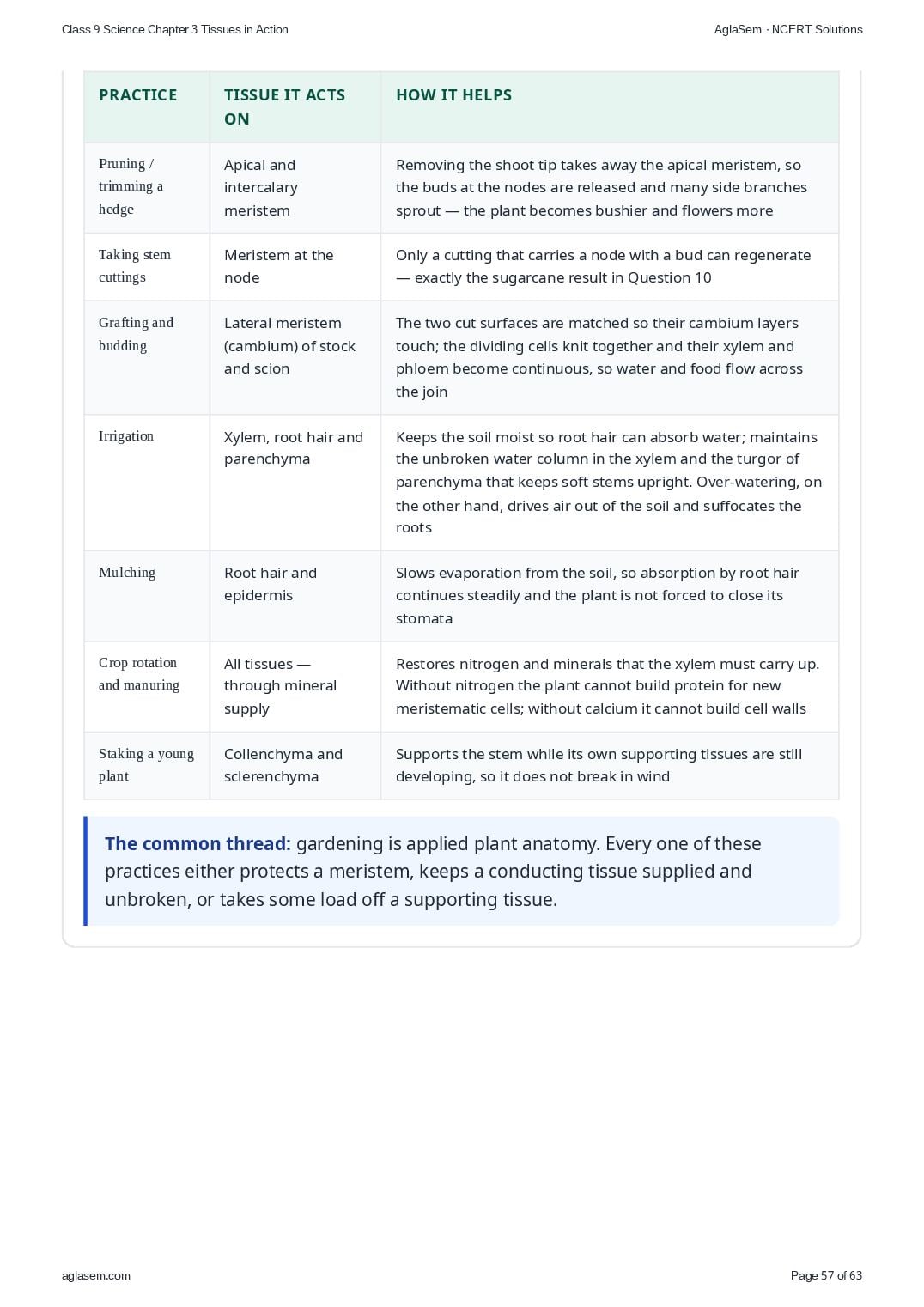
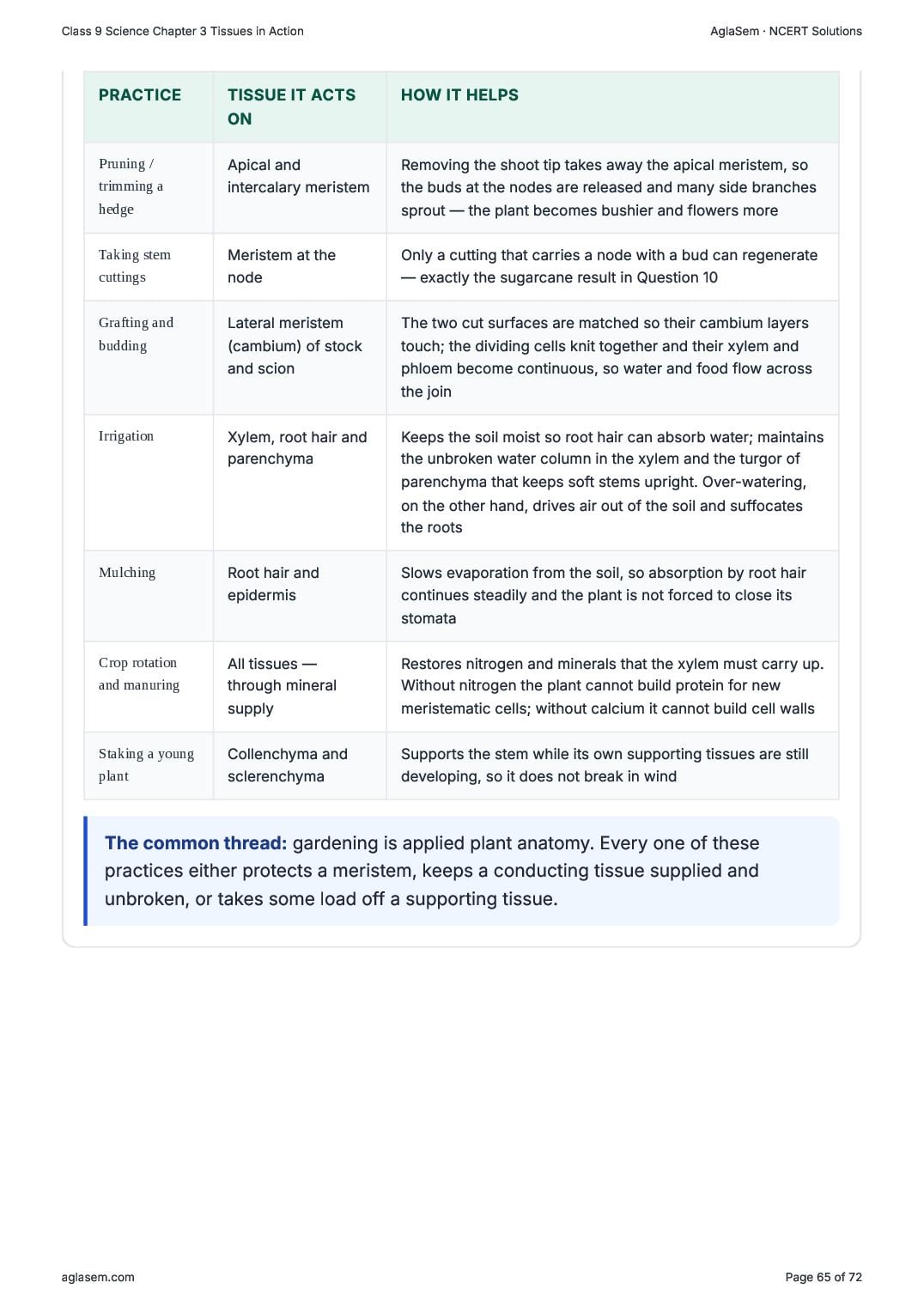
- Reflect on any gardening methods you know, such as pruning, grafting, irrigation or crop rotation. How does each practice support the healthy functioning of plant tissues like meristems, conducting tissues or supporting tissues?
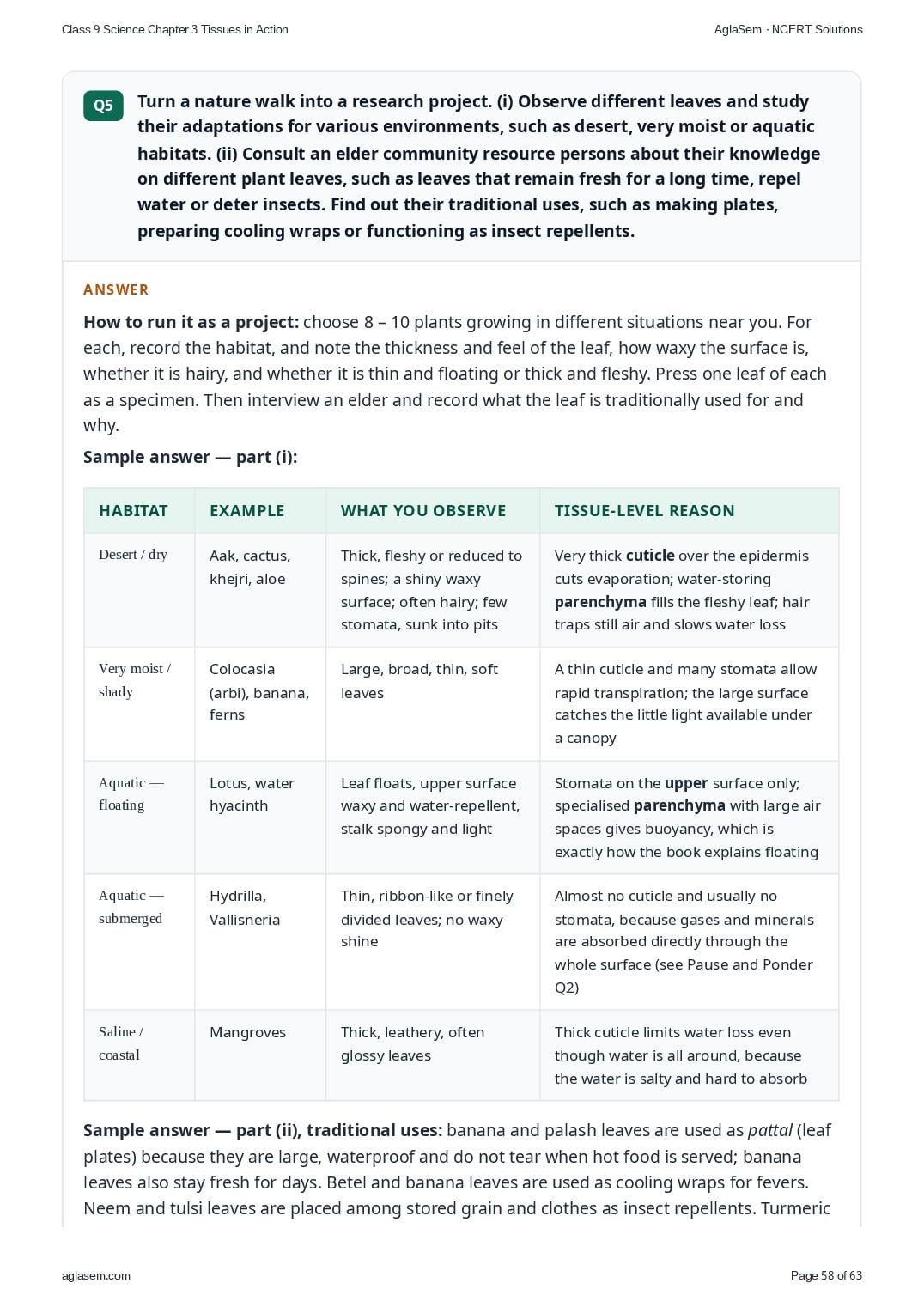
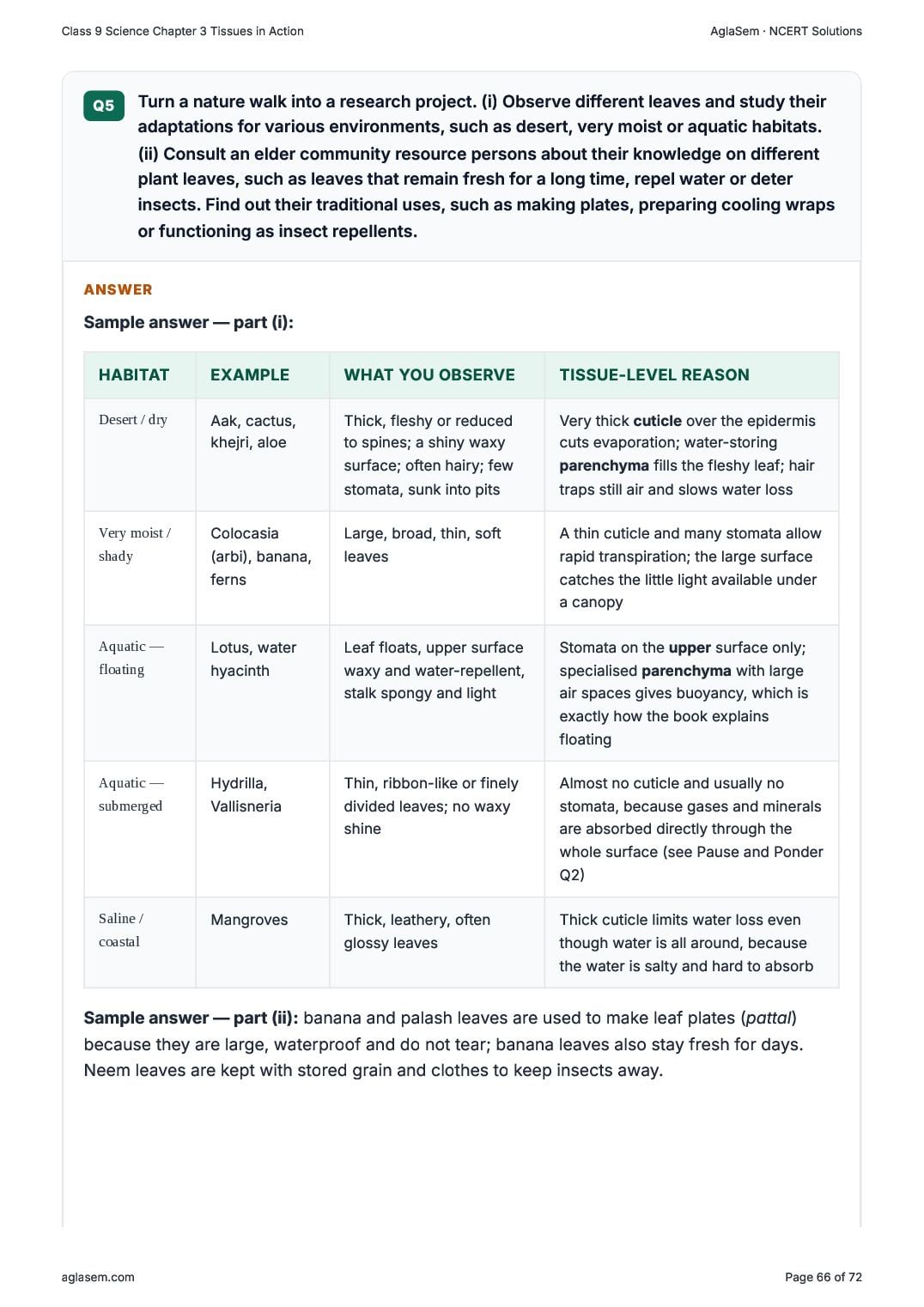
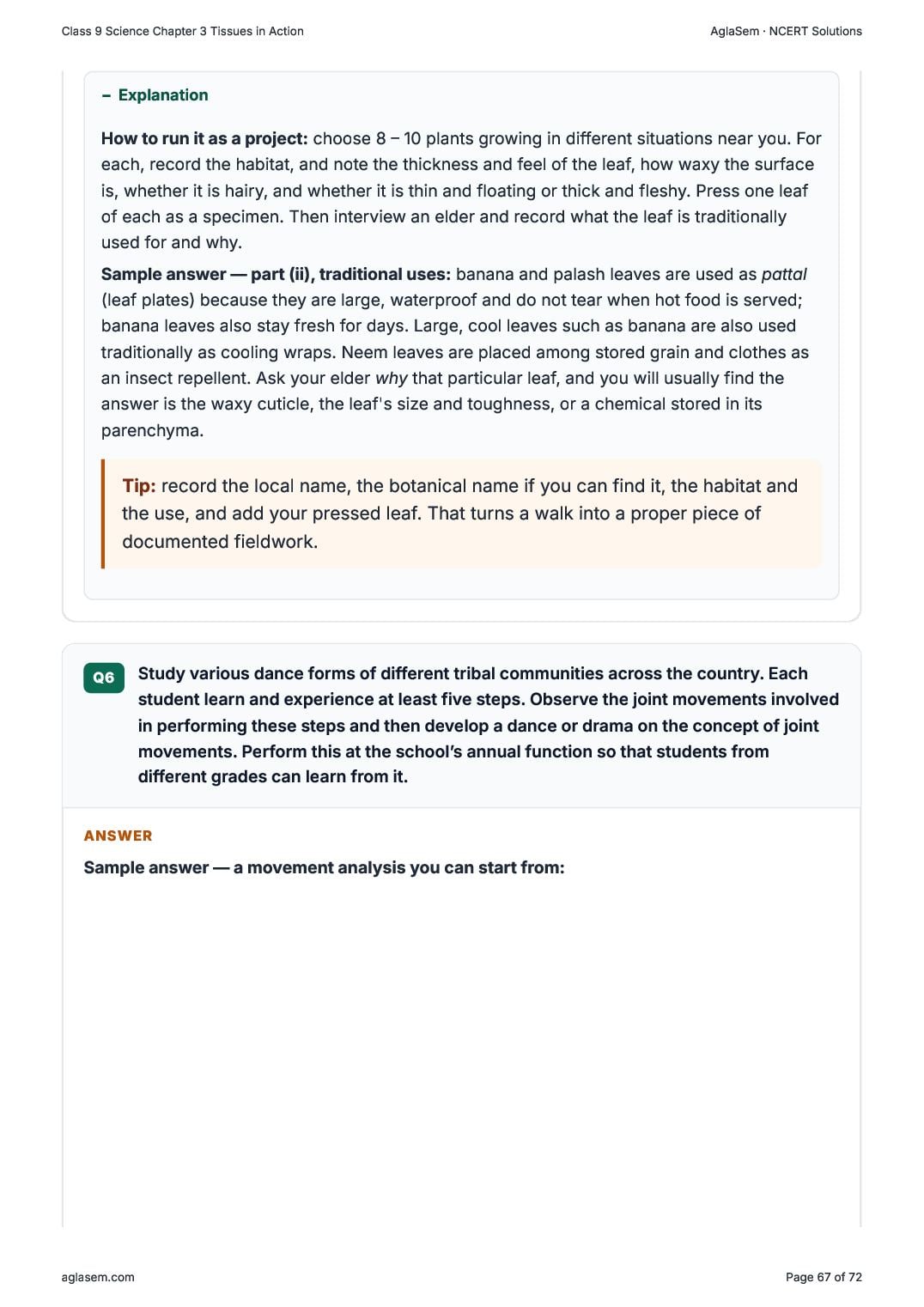
- Turn a nature walk into a research project. (i) Observe different leaves and study their adaptations for various environments, such as desert, very moist or aquatic habitats. (ii) Consult an elder community resource persons about their knowledge on different plant leaves, such as leaves that remain fresh for a long time, repel water or deter insects. Find out their traditional uses, such as making plates, preparing cooling wraps or functioning as insect repellents.
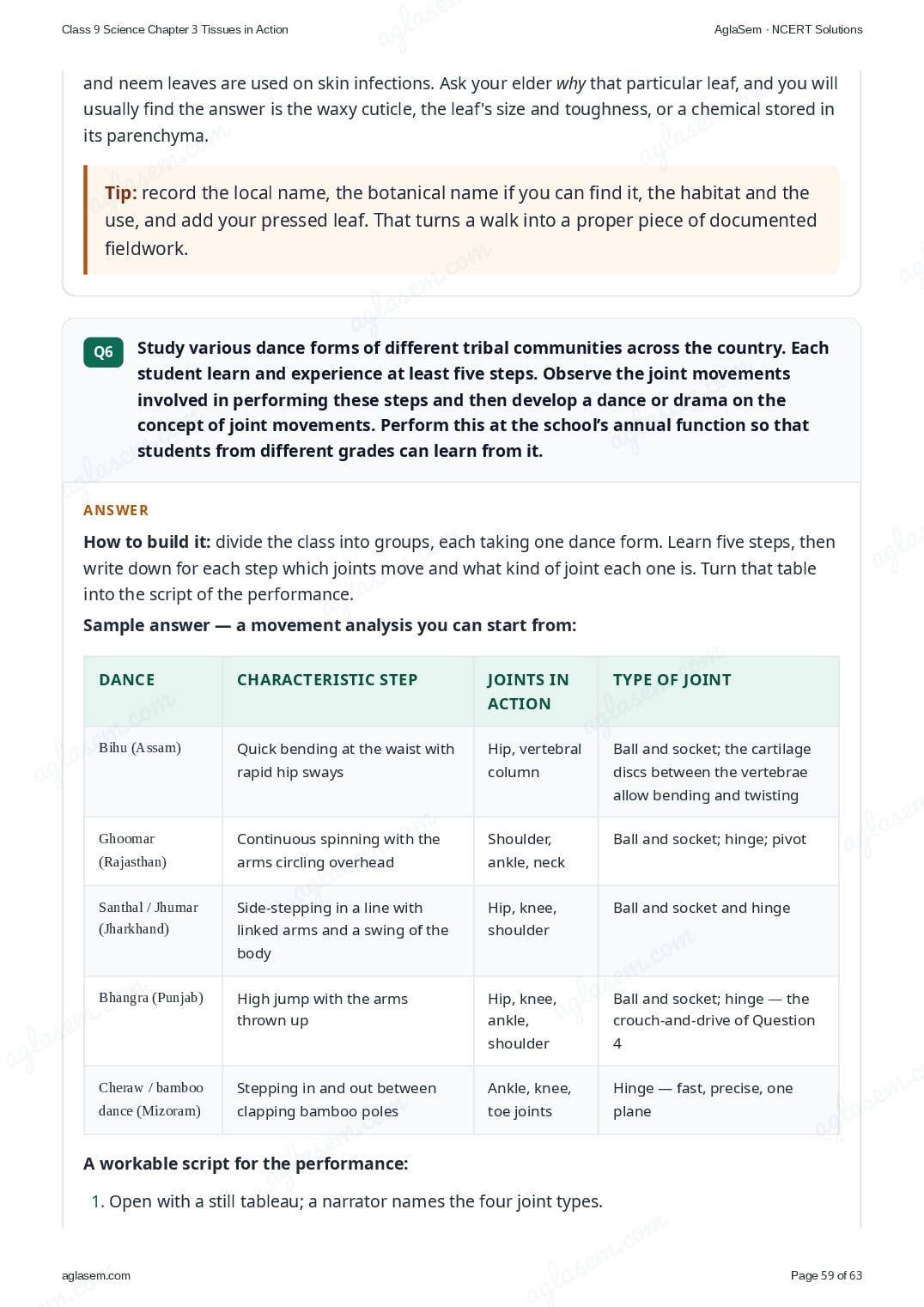
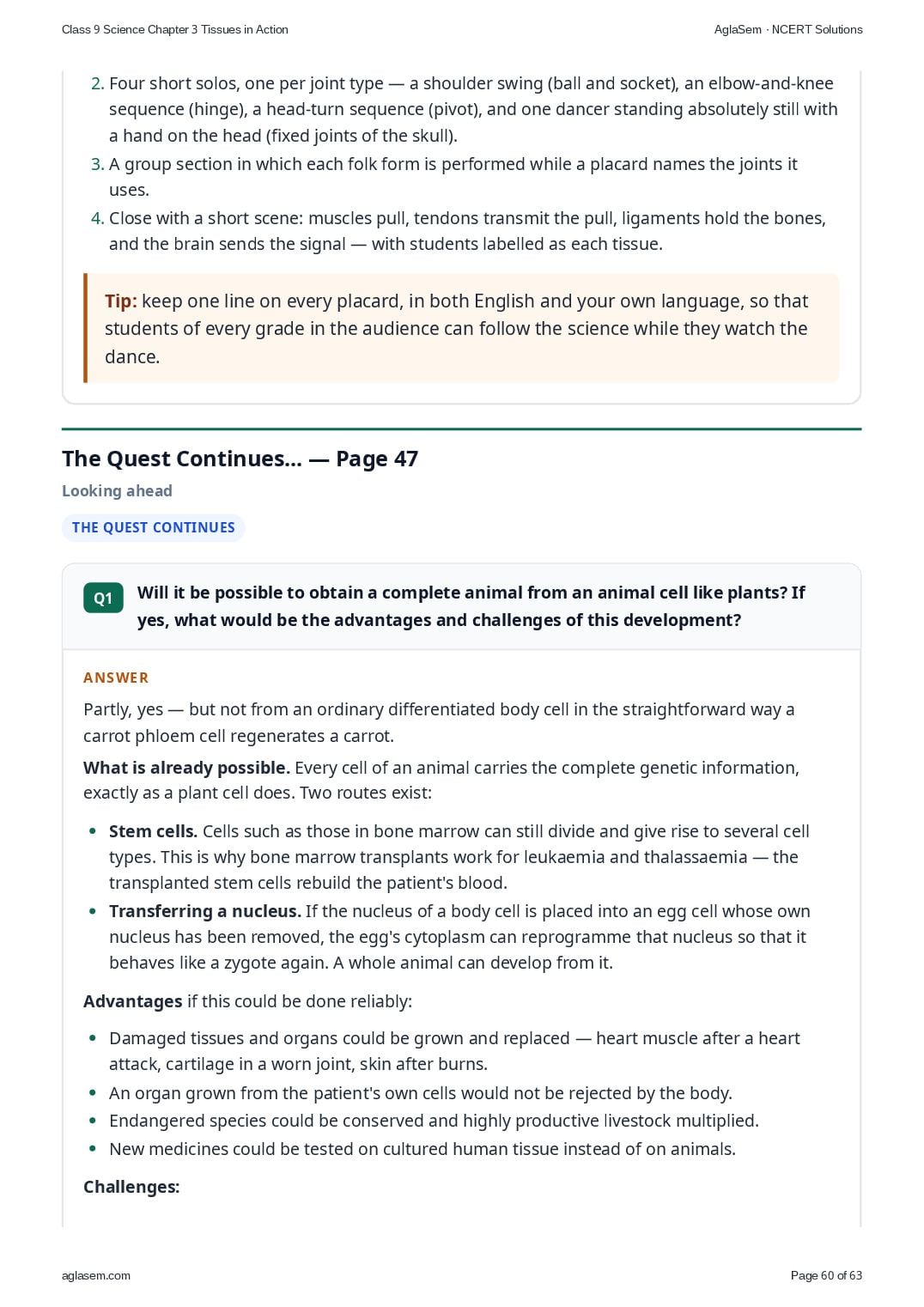
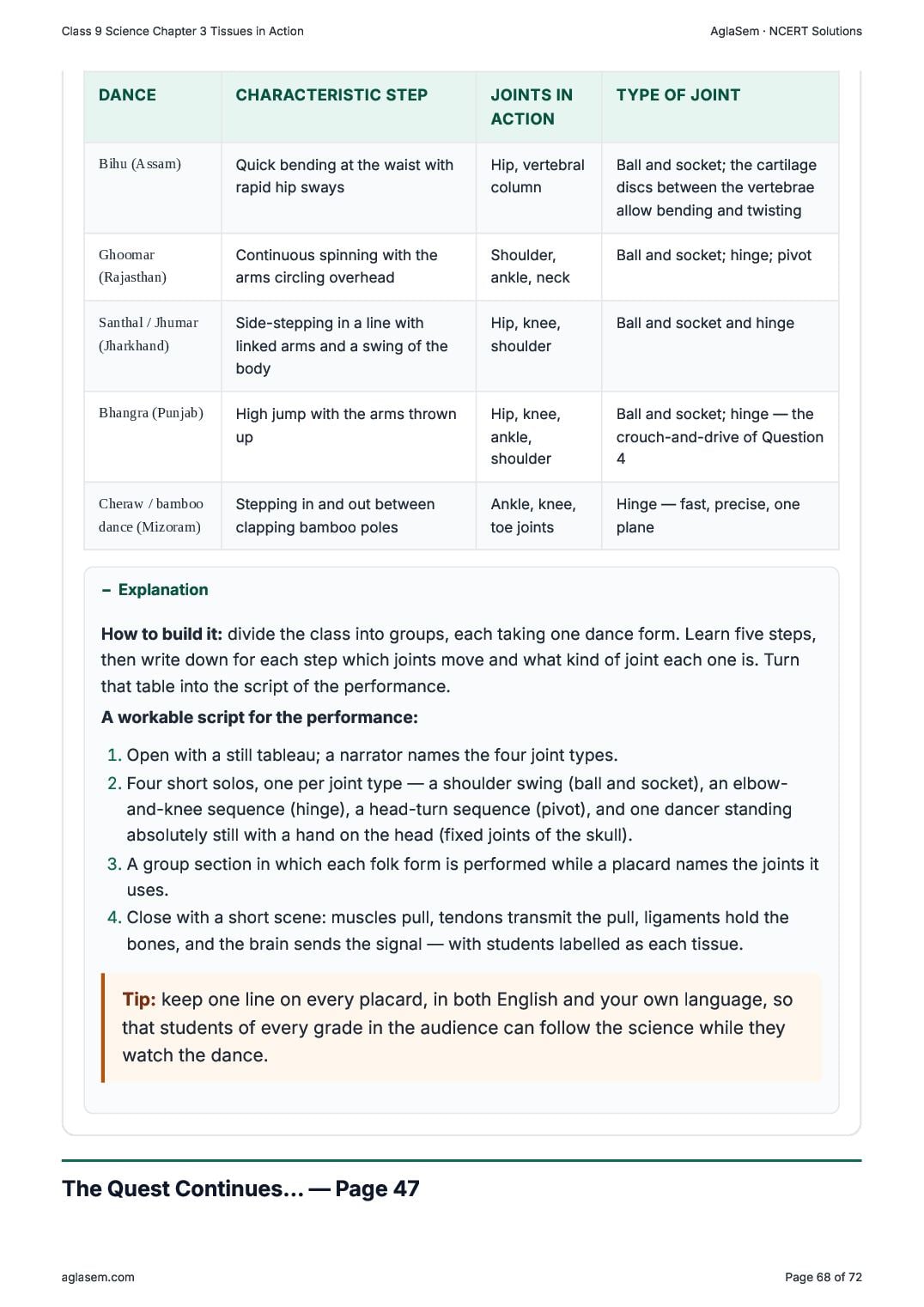
- Study various dance forms of different tribal communities across the country. Each student learn and experience at least five steps. Observe the joint movements involved in performing these steps and then develop a dance or drama on the concept of joint movements. Perform this at the school’s annual function so that students from different grades can learn from it.
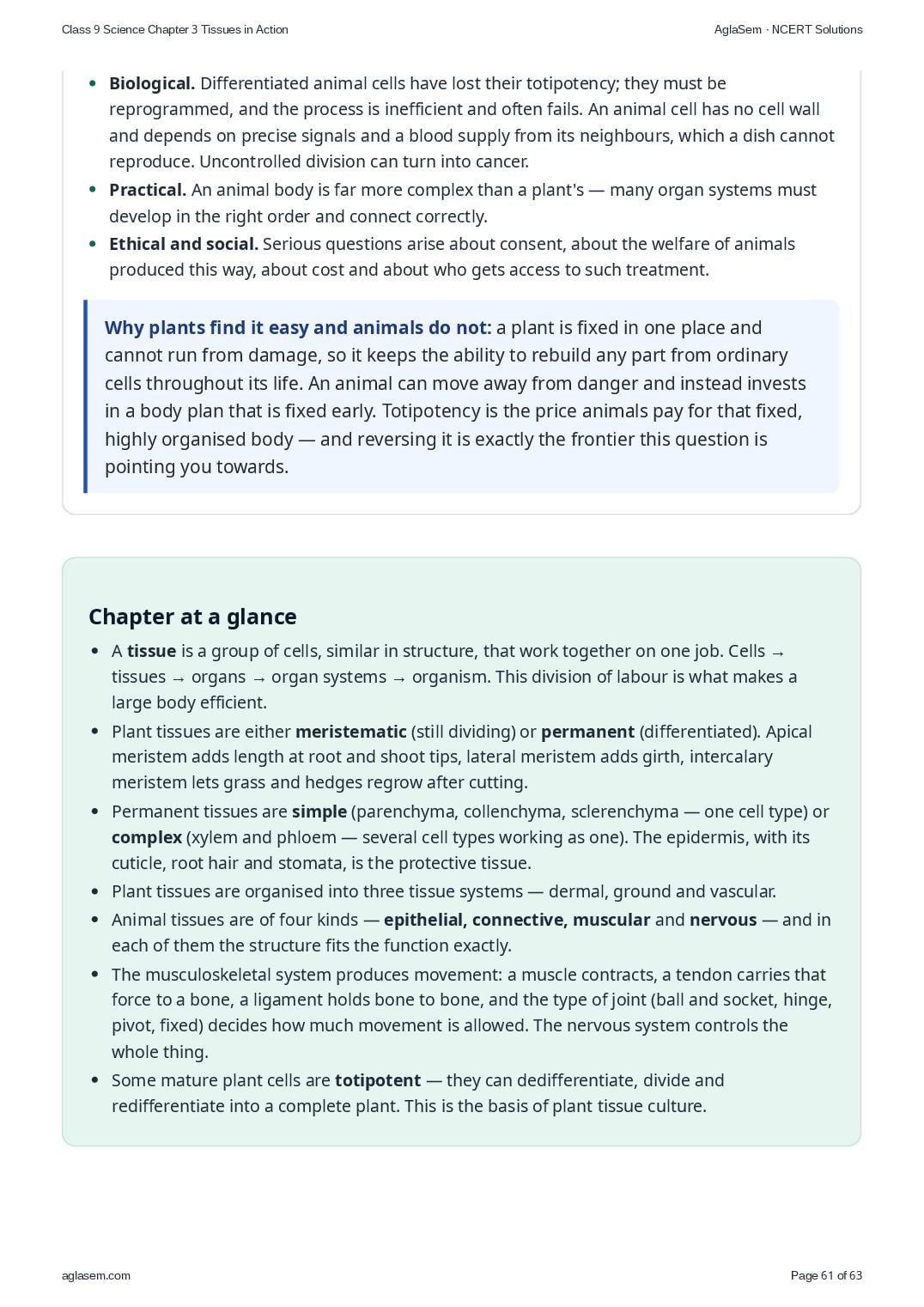
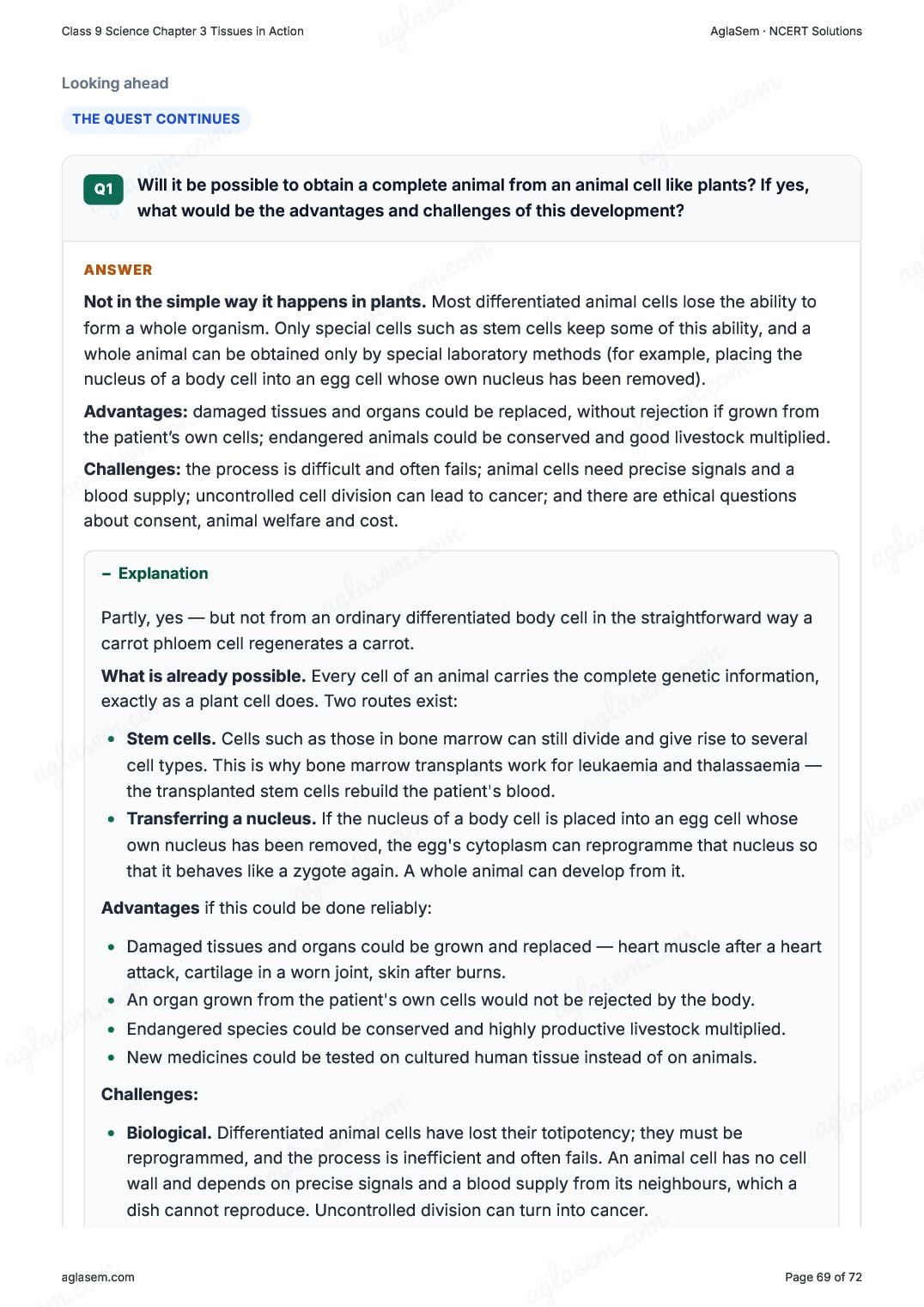
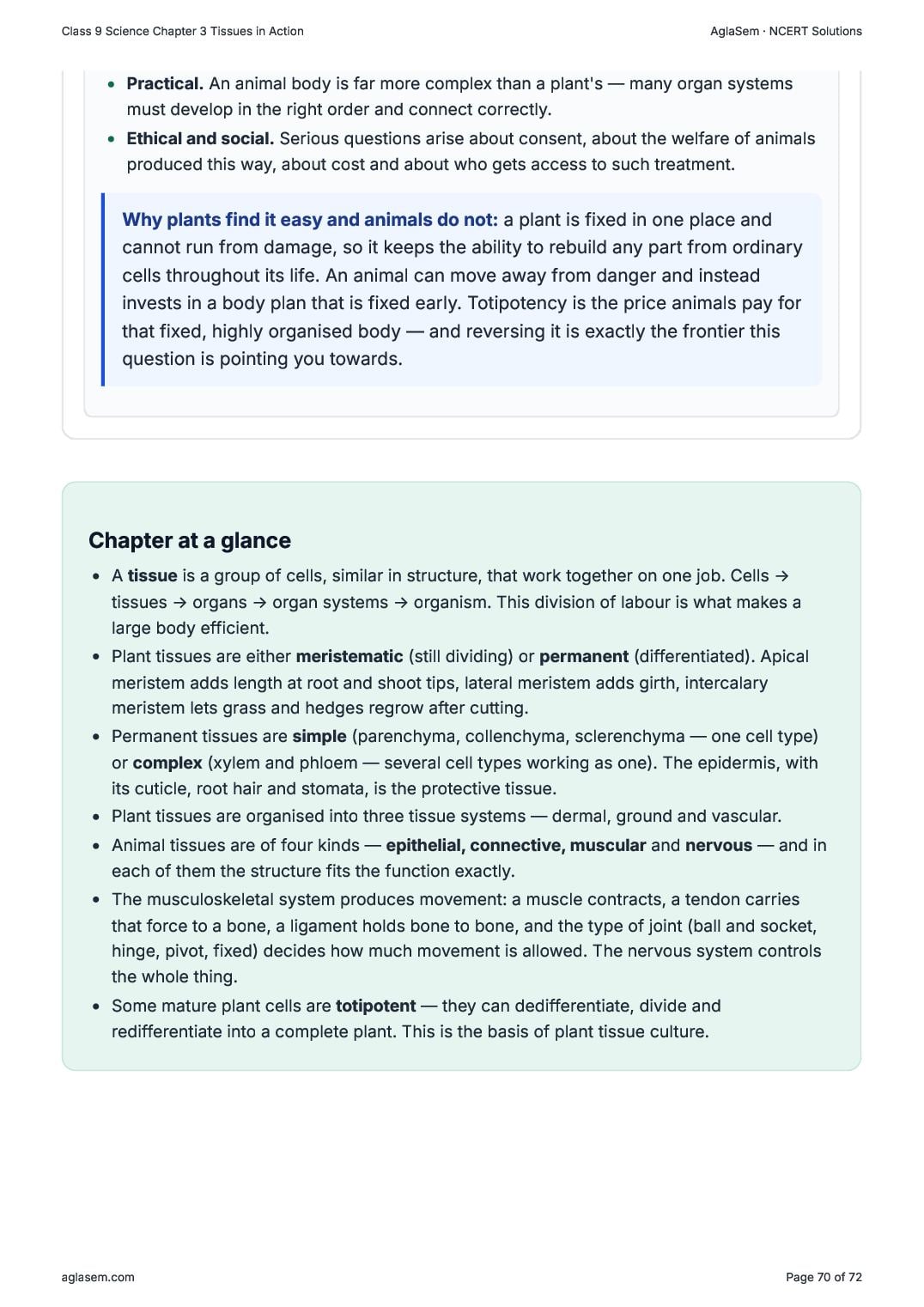
- Will it be possible to obtain a complete animal from an animal cell like plants? If yes, what would be the advantages and challenges of this development?
Chapter at a Glance
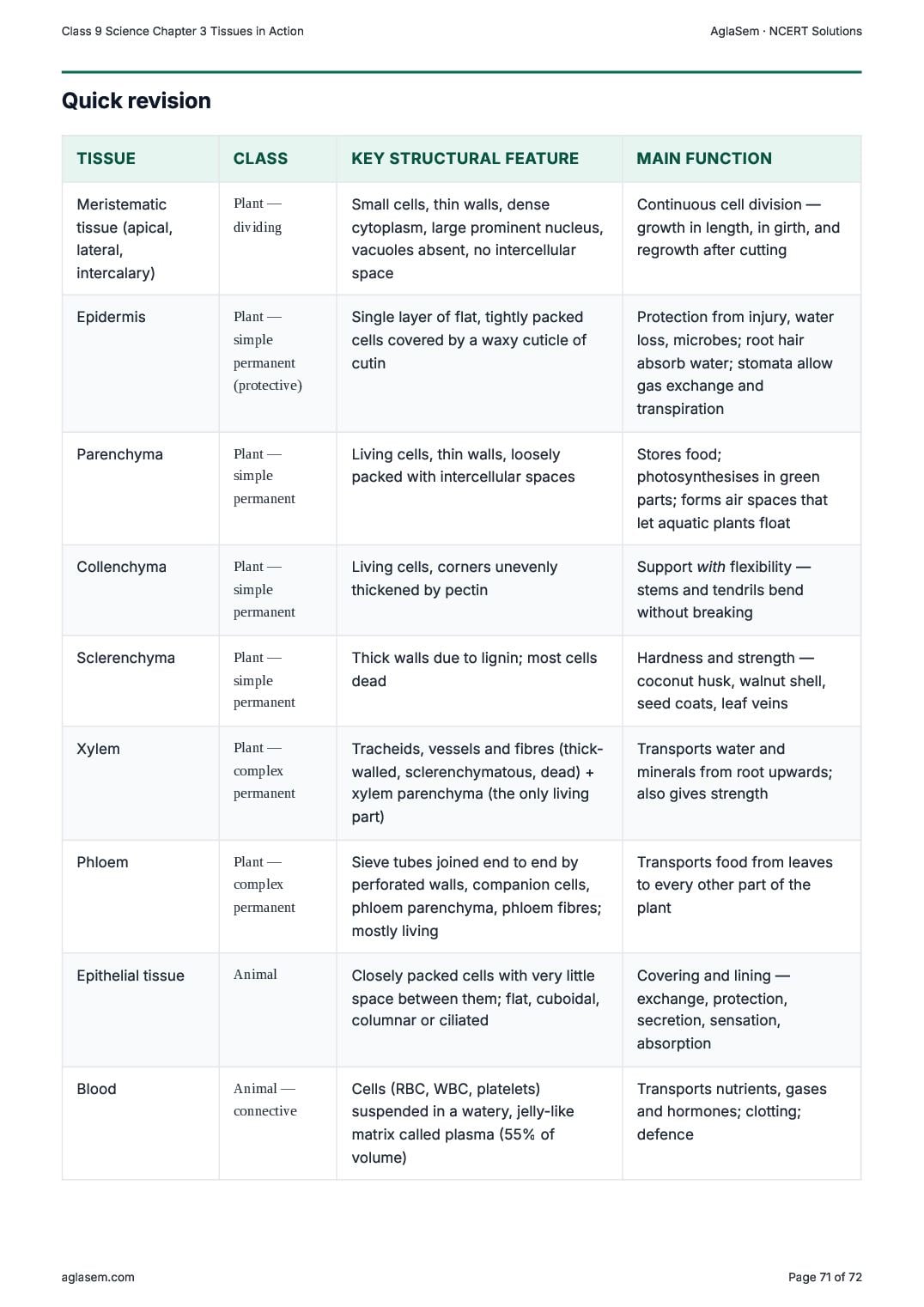
- A tissue is a group of cells, similar in structure, that work together on one job. Cells → tissues → organs → organ systems → organism. This division of labour is what makes a large body efficient.
- Plant tissues are either meristematic (still dividing) or permanent (differentiated). Apical meristem adds length at root and shoot tips, lateral meristem adds girth, intercalary meristem lets grass and hedges regrow after cutting.
- Permanent tissues are simple (parenchyma, collenchyma, sclerenchyma — one cell type) or complex (xylem and phloem — several cell types working as one). The epidermis, with its cuticle, root hair and stomata, is the protective tissue.
- Plant tissues are organised into three tissue systems — dermal, ground and vascular.
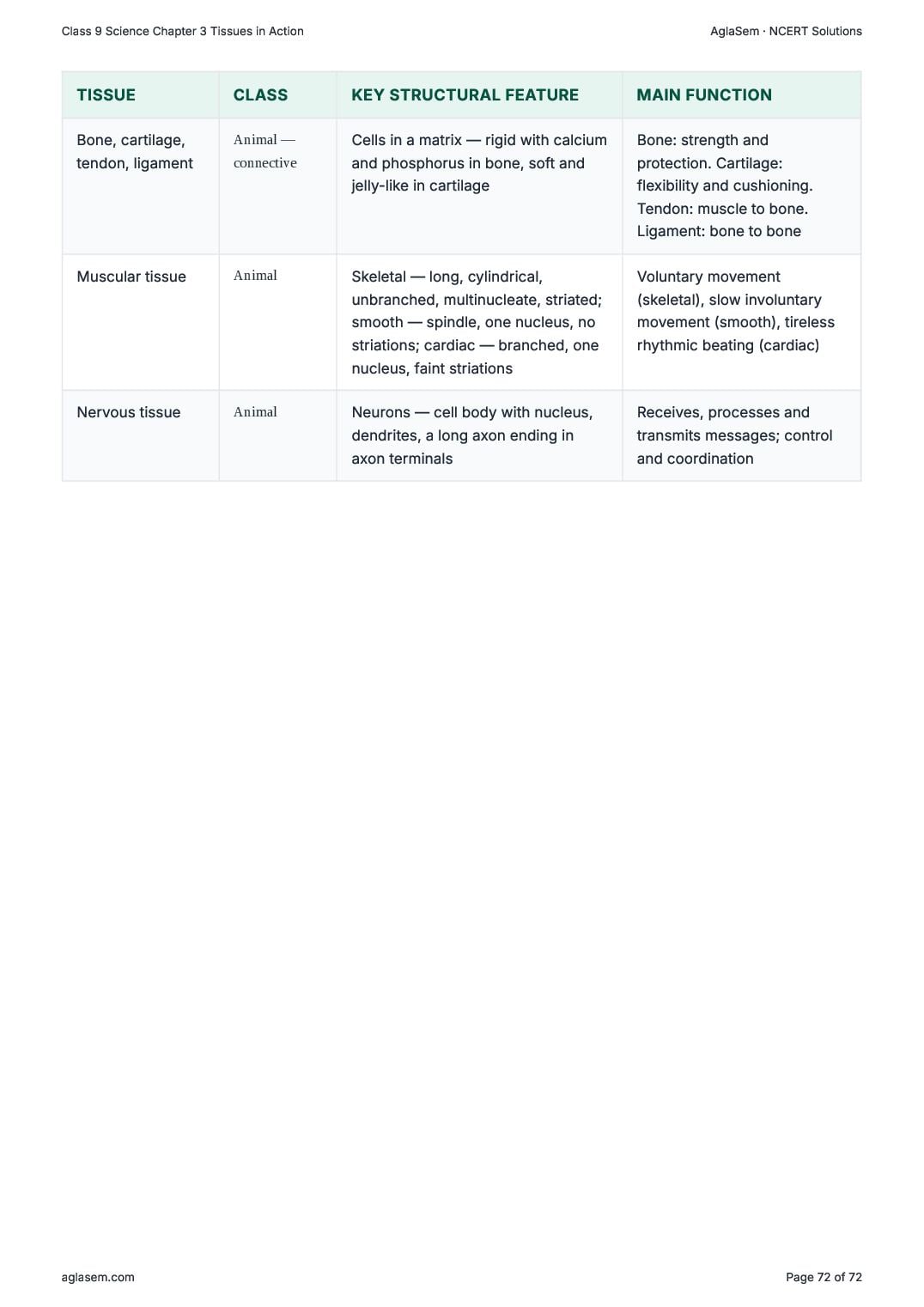
- Animal tissues are of four kinds — epithelial, connective, muscular and nervous — and in each of them the structure fits the function exactly.
- The musculoskeletal system produces movement: a muscle contracts, a tendon carries that force to a bone, a ligament holds bone to bone, and the type of joint (ball and socket, hinge, pivot, fixed) decides how much movement is allowed. The nervous system controls the whole thing.
- Some mature plant cells are totipotent — they can dedifferentiate, divide and redifferentiate into a complete plant. This is the basis of plant tissue culture.
How to Download NCERT Solutions for Class 9 Science Chapter 3 PDF
Follow these simple steps to get the Tissues in Action questions-and-answers PDF from Exploration.
- Search NCERT Solutions for Class 9 Science Chapter 3 aglasem and open this page.
- Read the exercise questions with answers for Tissues in Action shown above.
- Click the Download PDF link to save the Tissues in Action solutions to your device.
NCERT Solutions for Class 9 Science – All Chapters
There are more chapters to study besides Tissues in Action in Science. Here are the NCERT Solutions for all chapters of Class 9 Science.
- Chapter 1 Exploration Entering the World of Secondary Science
- Chapter 2 Cell the Building Block of Life
- Chapter 3 Tissues in Action
- Chapter 4 Describing Motion Around Us
- Chapter 5 Exploring Mixtures and Their Separation
- Chapter 6 How Forces Affect Motion
- Chapter 7 Work Energy and Simple Machines
- Chapter 8 Journey Inside the Atom
- Chapter 9 Atomic Foundations of Matter
- Chapter 10 Sound Waves Characteristics and Applications
- Chapter 11 Reproduction How Life Continues
- Chapter 12 Patterns in Life Diversity and Classification
- Chapter 13 Earth As a System Energy Matter and Life
NCERT Solutions for Class 9 – All Subjects
Just like Chapter 3 of Science, you can get the exercise questions with answers for every other subject of Class 9. Here are the NCERT Solutions for all subjects of Class 9.
NCERT Solutions for Class 9 Science Chapter 3 – An Overview
The key highlights of this study material are as follows.
| Aspects | Details |
|---|---|
| Class | Class 9 |
| Subject | Science |
| Chapter Number | Chapter 3 |
| Chapter Name | Tissues in Action |
| Book Name | Exploration |
| Book By | NCERT (National Council of Educational Research and Training) |
| Educational Resource Here | NCERT Solutions of Class 9 Science Chapter 3 for all exercises |
| More Questions Answers of This Subject | NCERT Solutions for Class 9 Science |
| Download Book Chapter | NCERT Book Class 9 Science |
| All Questions Answers For This Class | NCERT Solutions for Class 9 |
| Complete Solutions | NCERT Solutions |
NCERT Solutions for Class 9 Science Chapter 3 Tissues in Action – FAQs
What are the NCERT Solutions for Class 9 Science Chapter 3 Tissues in Action?
They are the complete, step-by-step answers to all the exercise and in-text questions of Chapter 3 Tissues in Action from the NCERT Class 9 Science textbook Exploration, written by experts as per the latest NCERT syllabus.
How can I download the Class 9 Science Chapter 3 solutions PDF for free?
Open this page on aglasem, read the Tissues in Action questions with answers, and click the “Download Solutions PDF” link. The Class 9 Science Chapter 3 NCERT Solutions PDF is completely free to download.
Are these NCERT Solutions as per the latest 2026-27 syllabus?
Yes. The NCERT Solutions for Class 9 Science Chapter 3 are based on the latest NCERT textbook Exploration and the current 2026-27 CBSE syllabus, so the questions and answers match what you study in class.
Where can I get NCERT Solutions for the other chapters of Class 9 Science?
You can find the answers to every chapter on the NCERT Solutions for Class 9 Science page, and solutions for every subject on the NCERT Solutions for Class 9 page.
How do NCERT Solutions help in exam preparation?
They show the correct method to solve each question, help you write answers the way they are expected in exams, let you check and correct your own work, and save revision time — which together improve your marks in Class 9 Science.
If you have any queries on NCERT Solutions for Class 9 Science Chapter 3 Tissues in Action, then please ask in the comments below.