Download Tissues in Action – NCERT Class 9 Science Chapter 3 PDF from the new NCERT Class 9 Science book Exploration (2026-27). Read the chapter online or download the free PDF. A tissue is a group of cells, similar in structure, that work together on one job. Cells → tissues → organs → organ systems → organism. This division of labour is what makes a large body efficient.
Tissues in Action PDF – Chapter 3 of Exploration
Read the chapter online or download the PDF.
| Chapter | Download | |
|---|---|---|
| Chapter 3 PDF | Tissues in Action | View PDF |
| Full book | NCERT Class 9 Science – Exploration | View Book |
Read Online
What Is in Tissues in Action? (Class 9 Science Chapter 3)
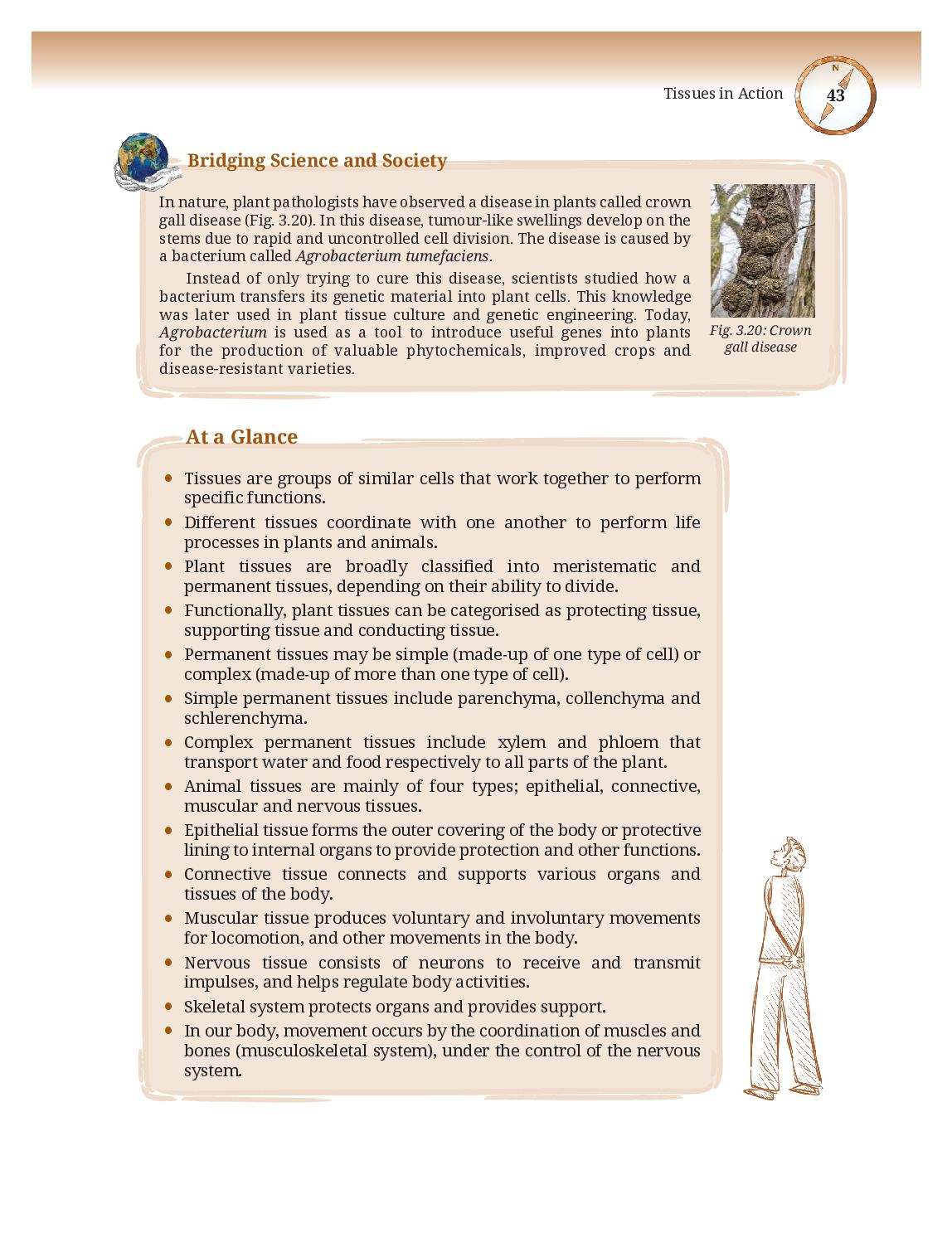
- A tissue is a group of cells, similar in structure, that work together on one job. Cells → tissues → organs → organ systems → organism. This division of labour is what makes a large body efficient.
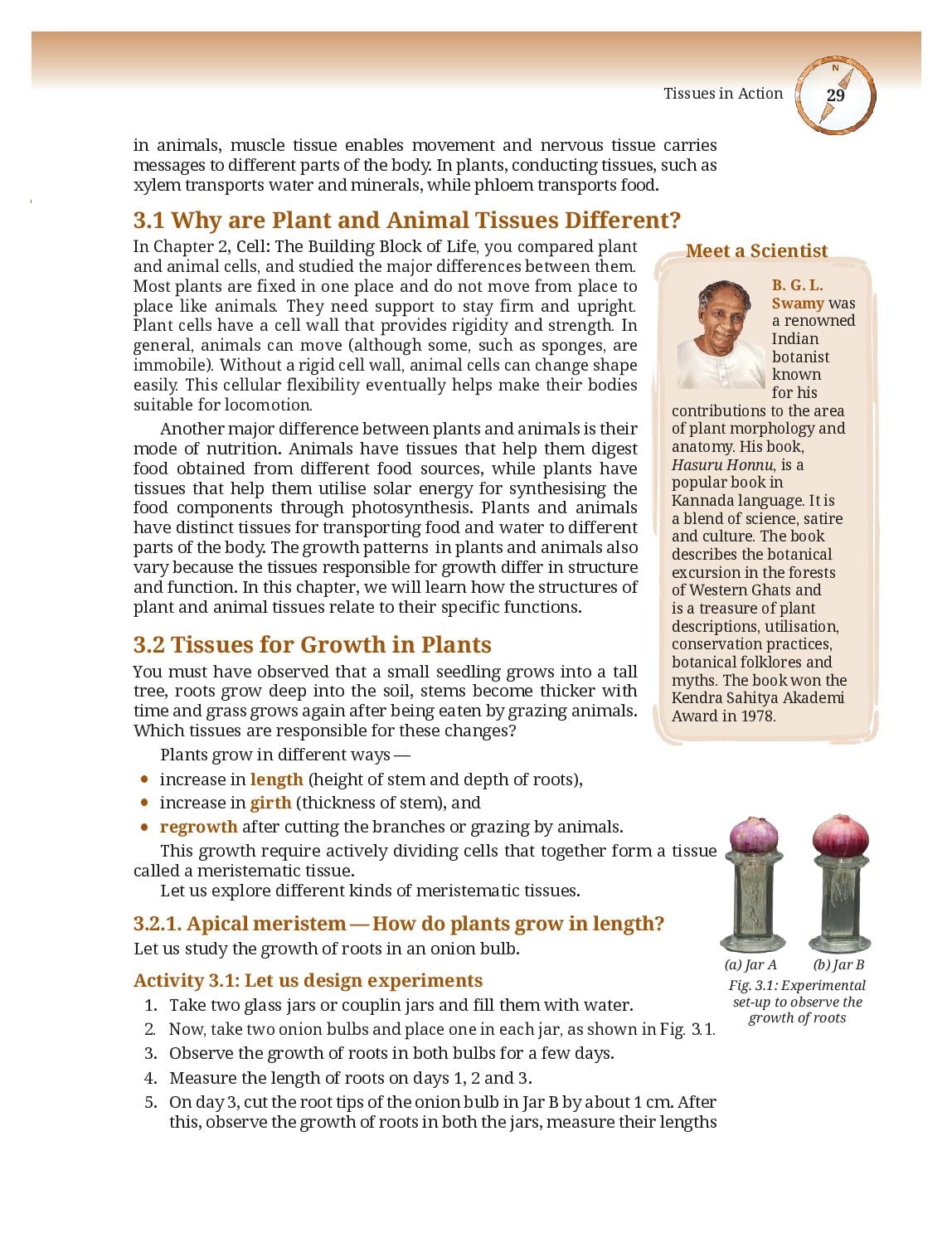
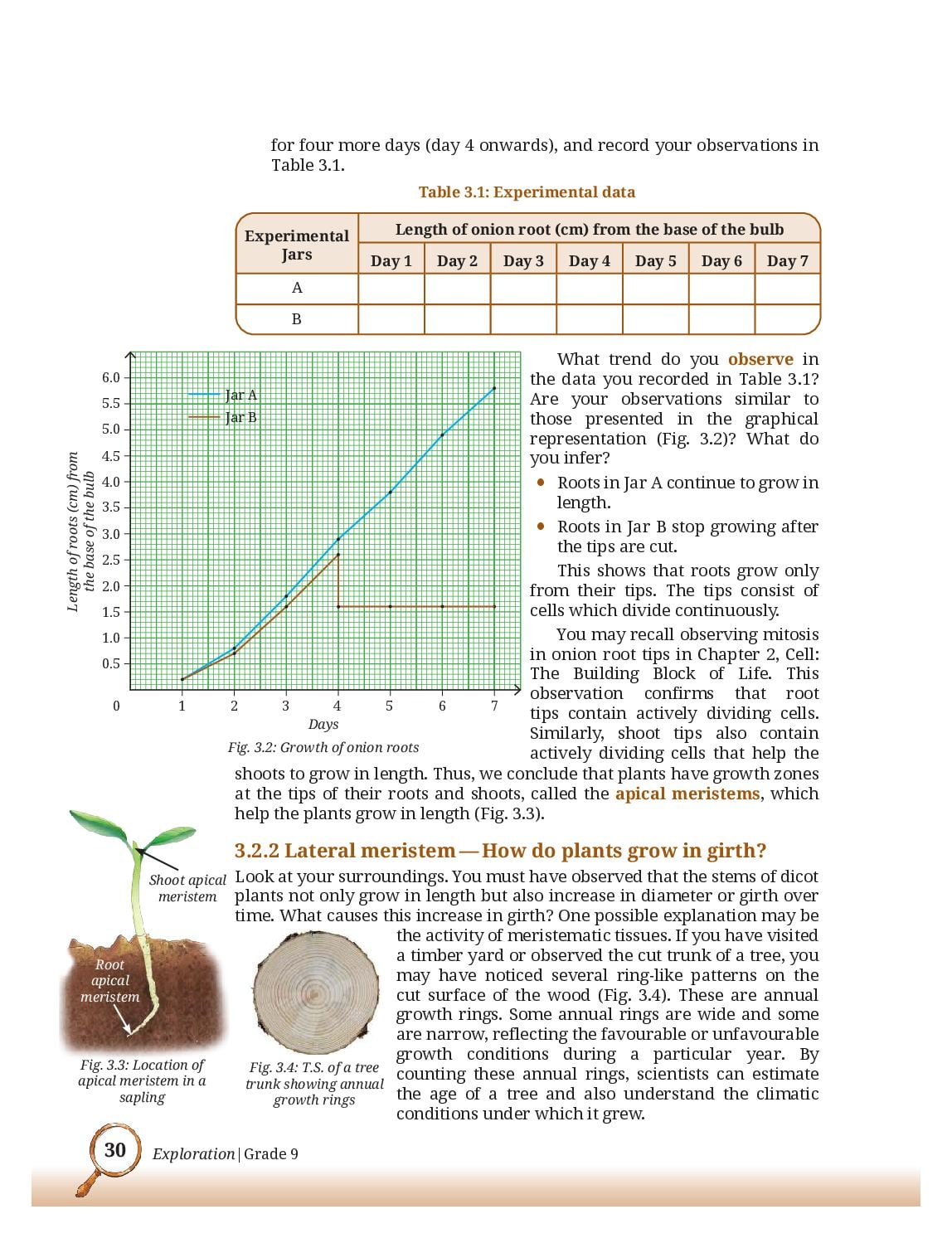
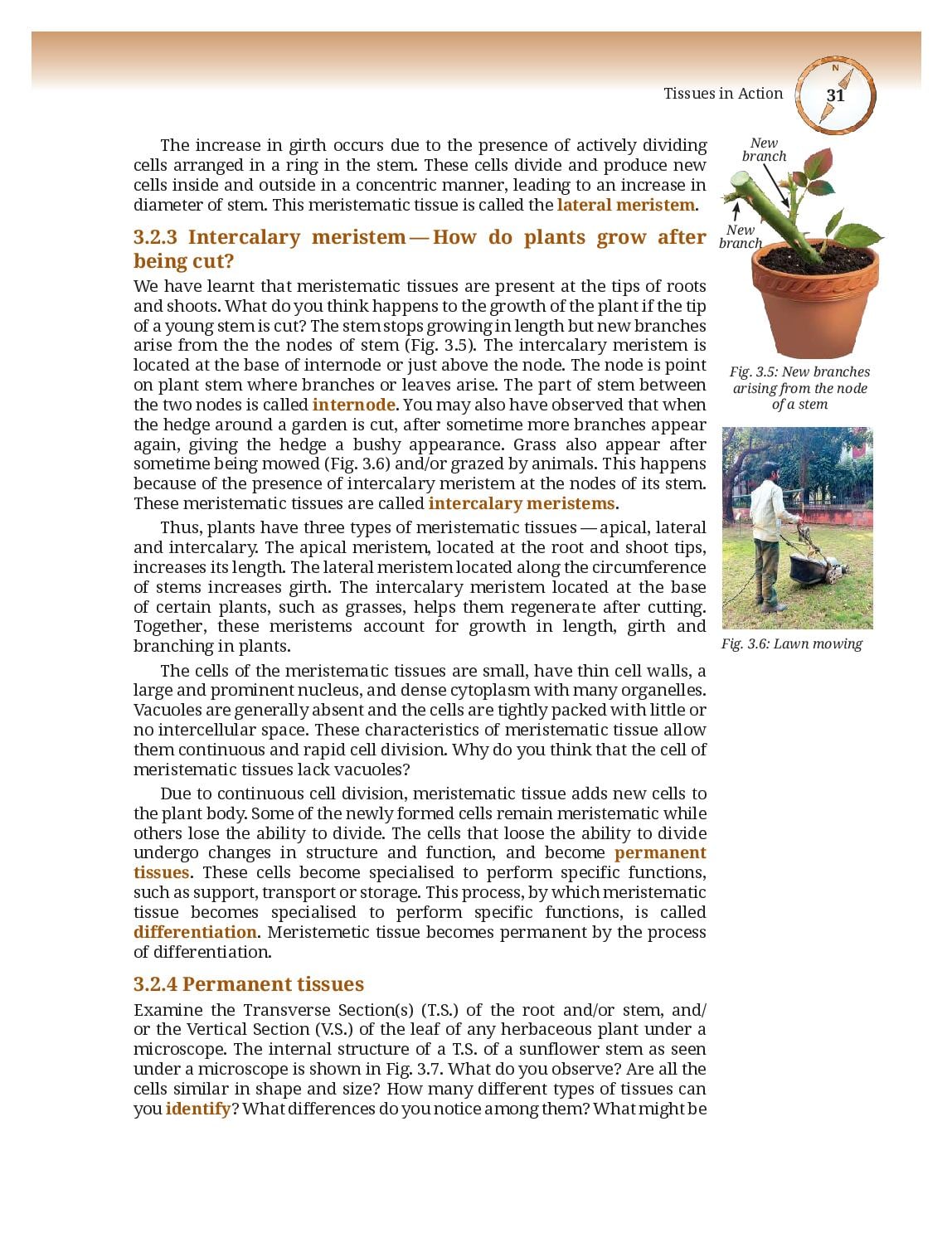
- Plant tissues are either meristematic (still dividing) or permanent (differentiated). Apical meristem adds length at root and shoot tips, lateral meristem adds girth, intercalary meristem lets grass and hedges regrow after cutting.
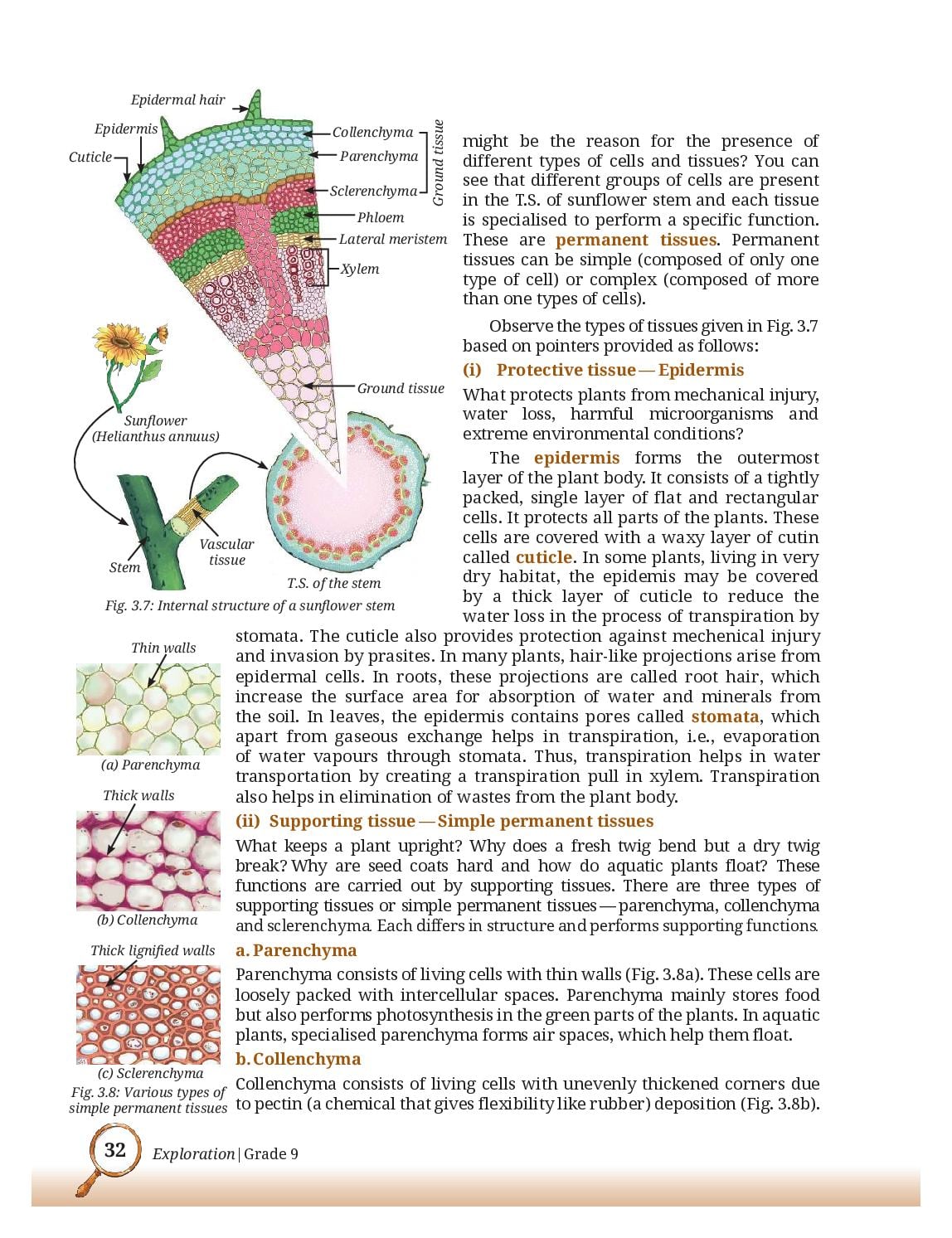
- Permanent tissues are simple (parenchyma, collenchyma, sclerenchyma — one cell type) or complex (xylem and phloem — several cell types working as one). The epidermis, with its cuticle, root hair and stomata, is the protective tissue.
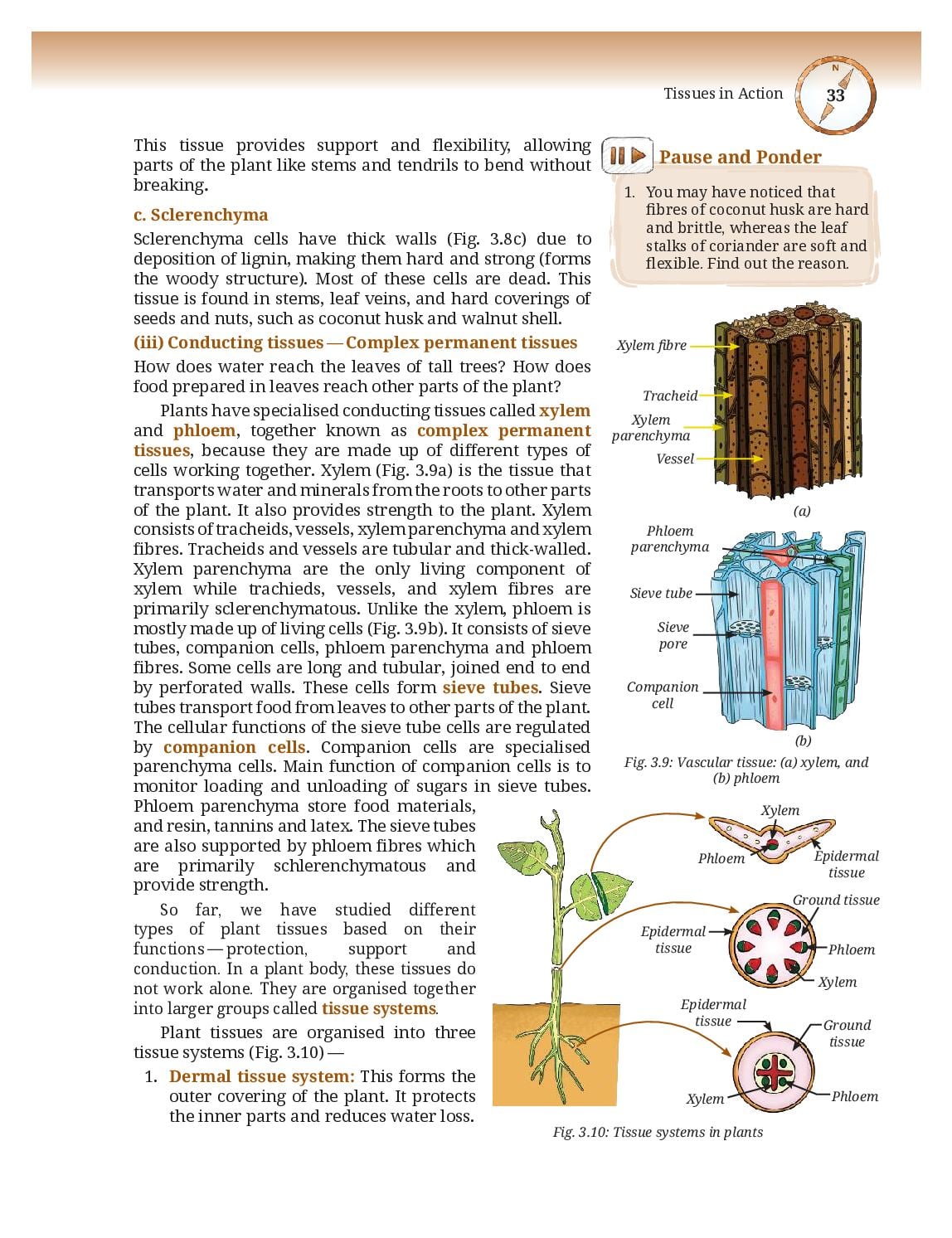
- Plant tissues are organised into three tissue systems — dermal, ground and vascular.
- Animal tissues are of four kinds — epithelial, connective, muscular and nervous — and in each of them the structure fits the function exactly.
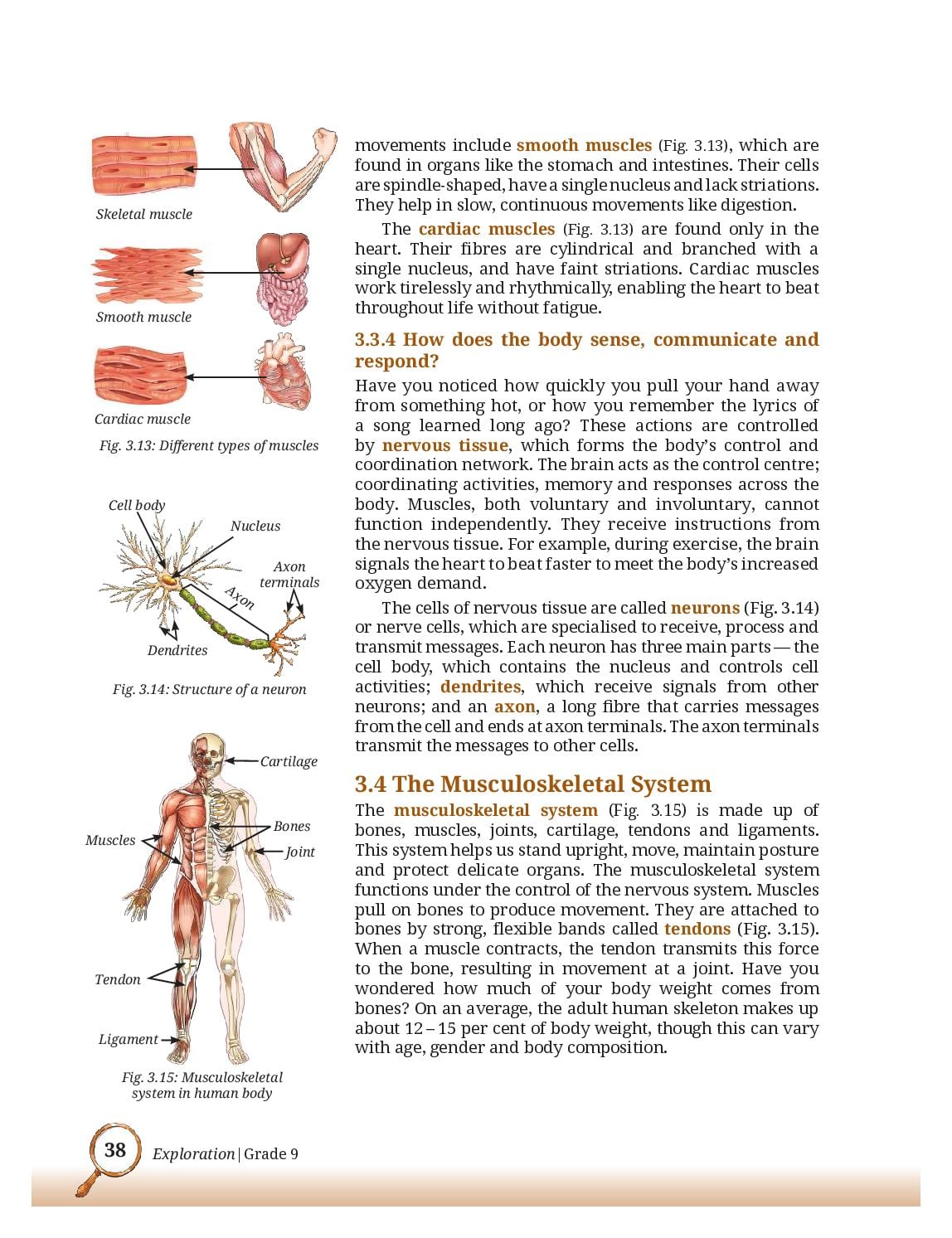
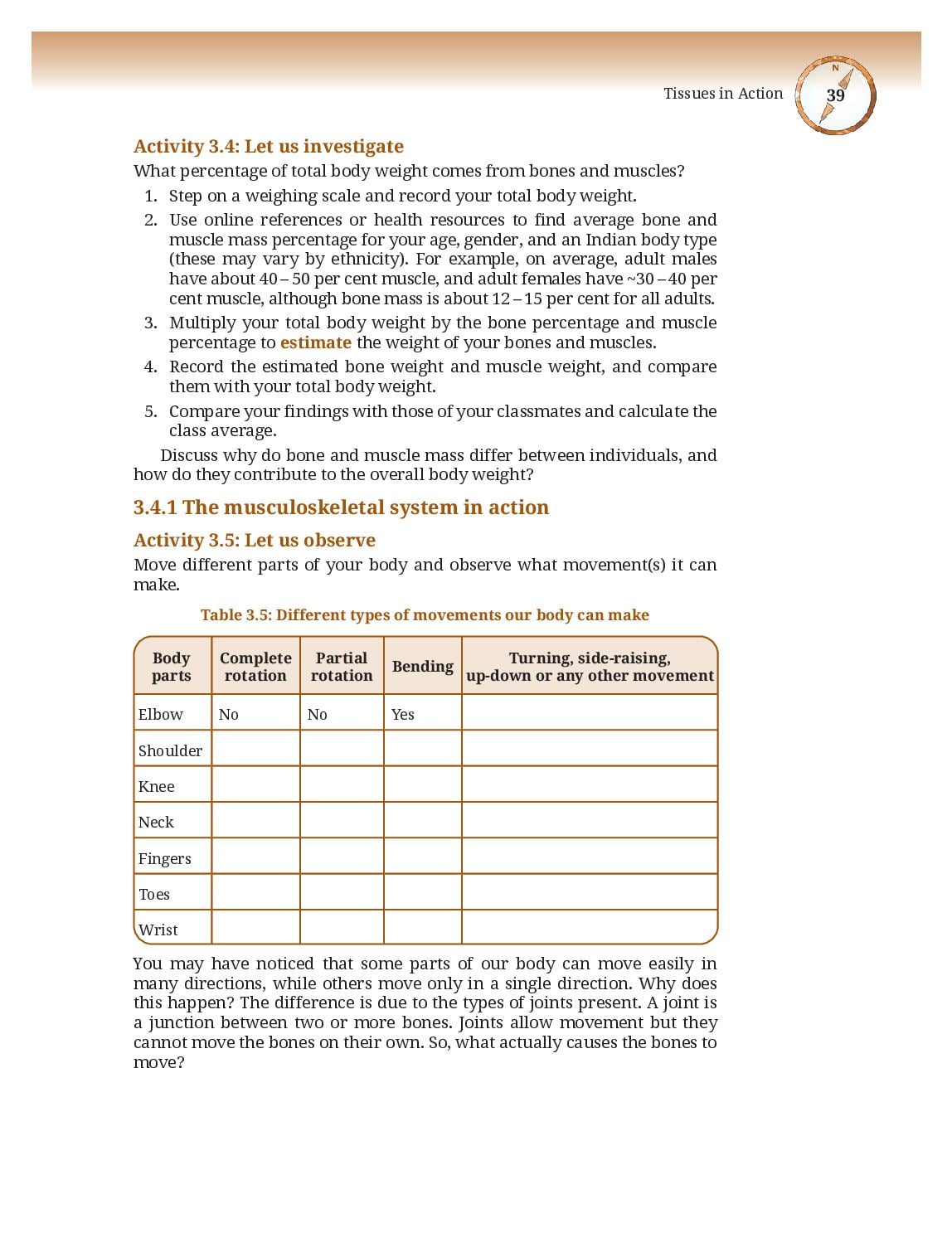
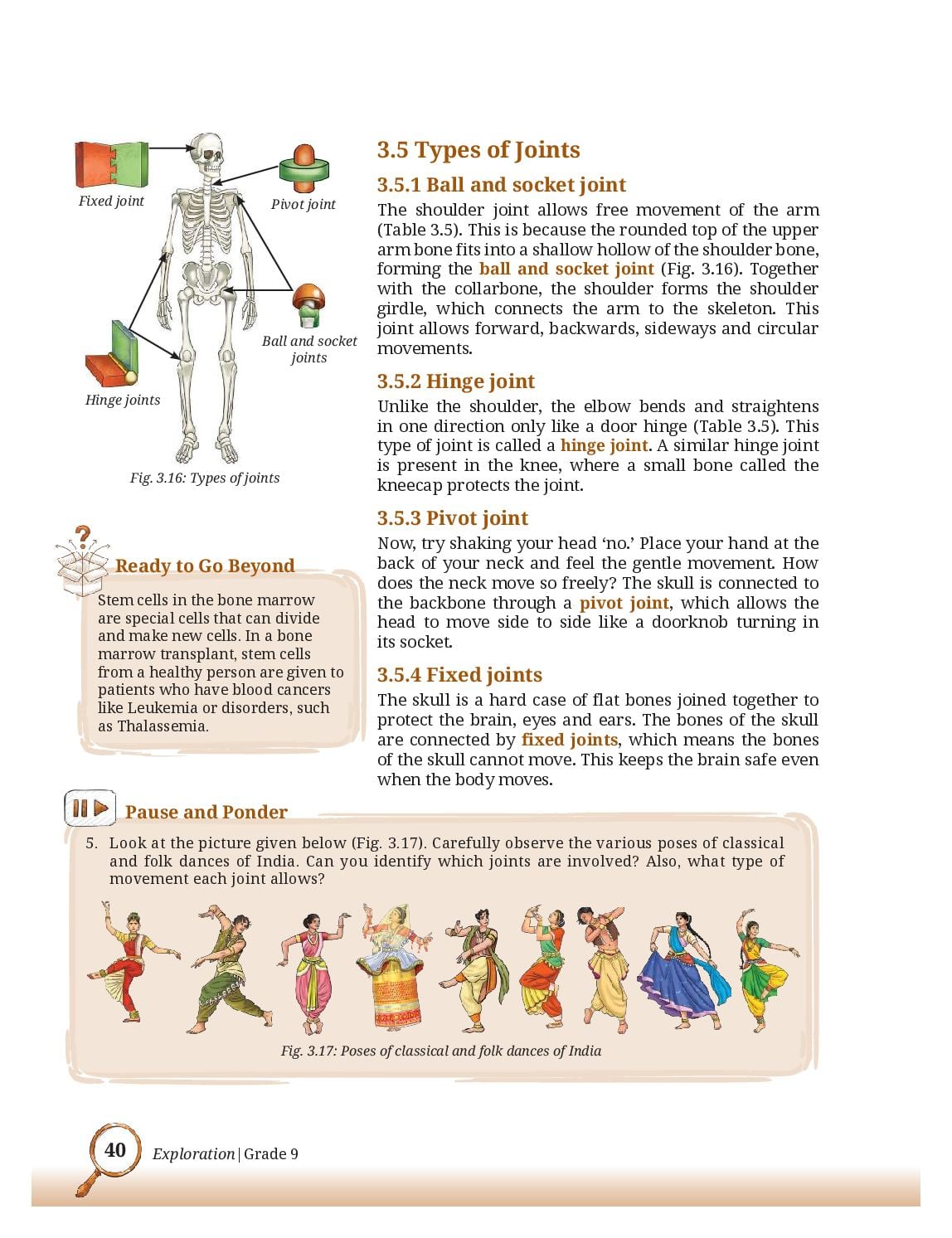
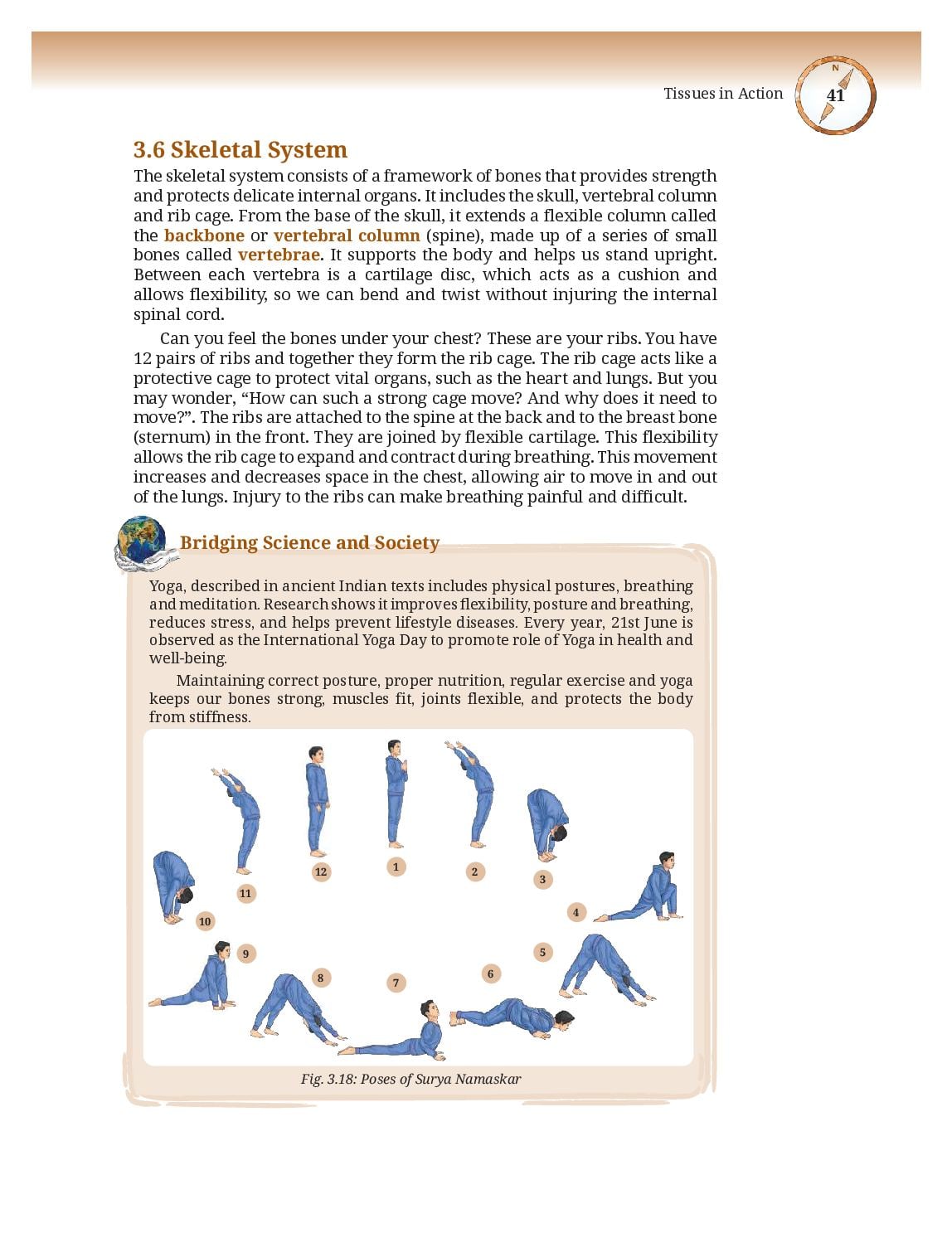
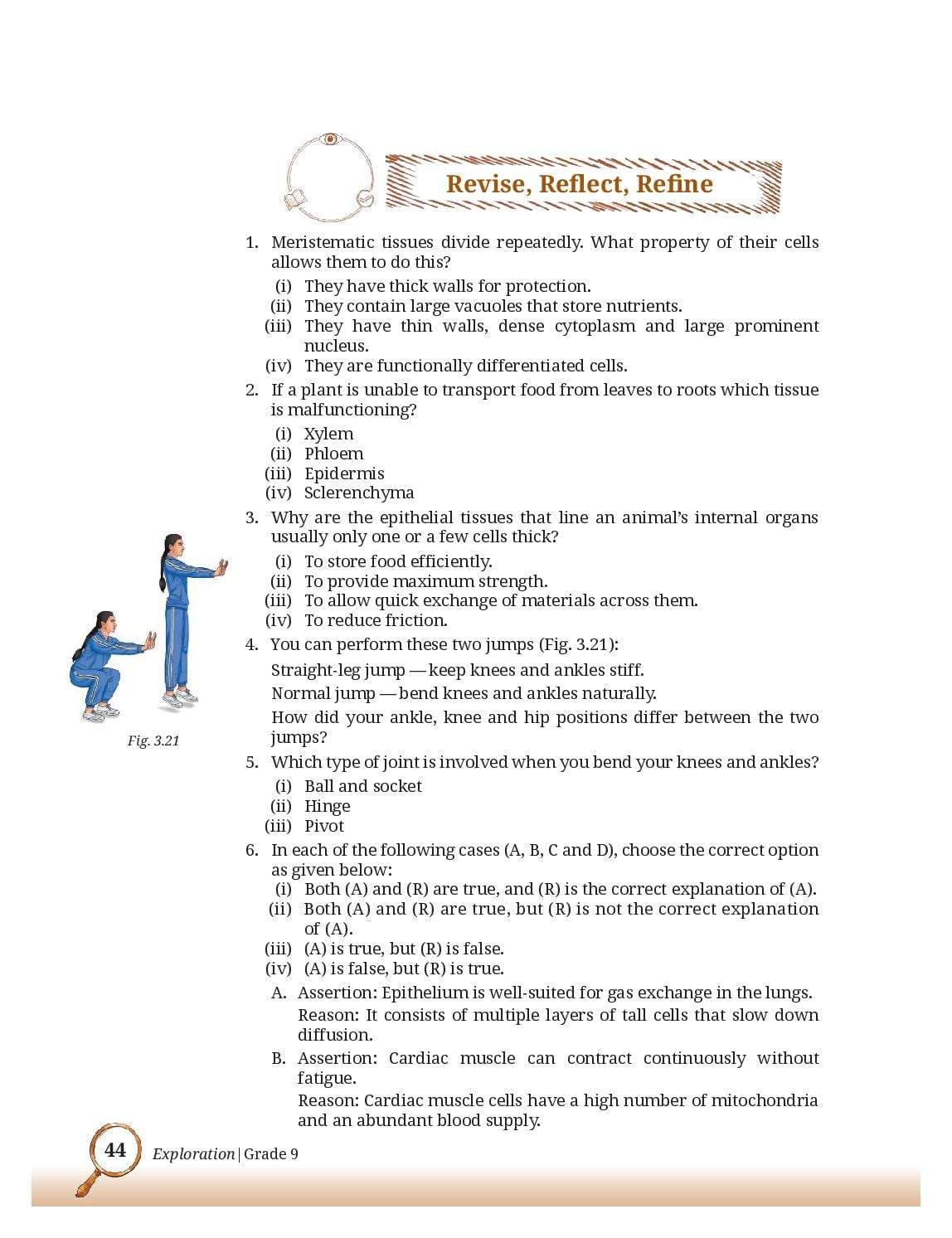
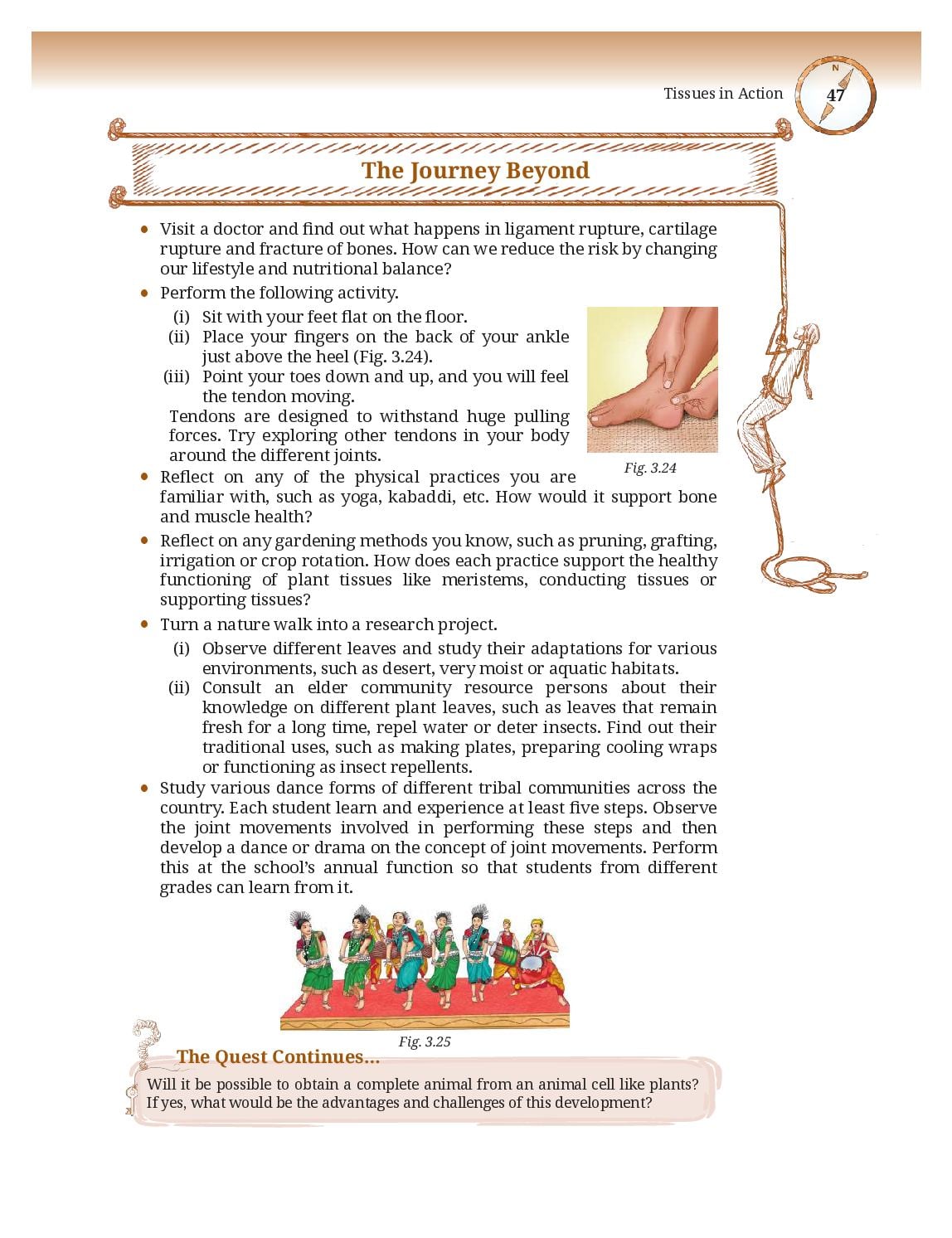
- The musculoskeletal system produces movement: a muscle contracts, a tendon carries that force to a bone, a ligament holds bone to bone, and the type of joint (ball and socket, hinge, pivot, fixed) decides how much movement is allowed. The nervous system controls the whole thing.
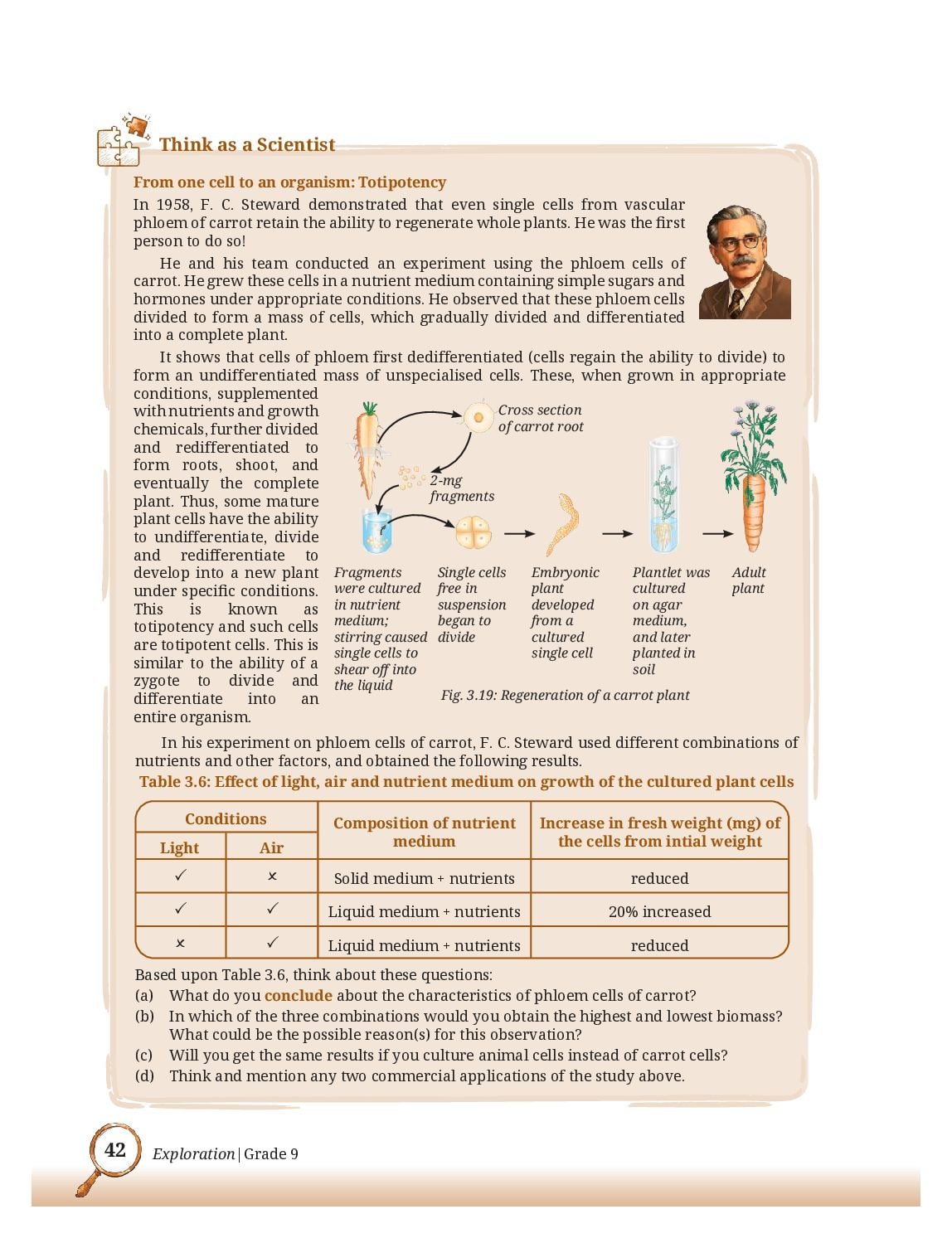
- Some mature plant cells are totipotent — they can dedifferentiate, divide and redifferentiate into a complete plant. This is the basis of plant tissue culture.
Quick revision – Tissues in Action
| Tissue | Class | Key structural feature | Main function |
|---|---|---|---|
| Meristematic tissue (apical, lateral, intercalary) | Plant — dividing | Small cells, thin walls, dense cytoplasm, large prominent nucleus, vacuoles absent, no intercellular space | Continuous cell division — growth in length, in girth, and regrowth after cutting |
| Epidermis | Plant — simple permanent (protective) | Single layer of flat, tightly packed cells covered by a waxy cuticle of cutin | Protection from injury, water loss, microbes; root hair absorb water; stomata allow gas exchange and transpiration |
| Parenchyma | Plant — simple permanent | Living cells, thin walls, loosely packed with intercellular spaces | Stores food; photosynthesises in green parts; forms air spaces that let aquatic plants float |
| Collenchyma | Plant — simple permanent | Living cells, corners unevenly thickened by pectin | Support with flexibility — stems and tendrils bend without breaking |
| Sclerenchyma | Plant — simple permanent | Thick walls due to lignin; most cells dead | Hardness and strength — coconut husk, walnut shell, seed coats, leaf veins |
| Xylem | Plant — complex permanent | Tracheids, vessels and fibres (thick-walled, sclerenchymatous, dead) + xylem parenchyma (the only living part) | Transports water and minerals from root upwards; also gives strength |
| Phloem | Plant — complex permanent | Sieve tubes joined end to end by perforated walls, companion cells, phloem parenchyma, phloem fibres; mostly living | Transports food from leaves to every other part of the plant |
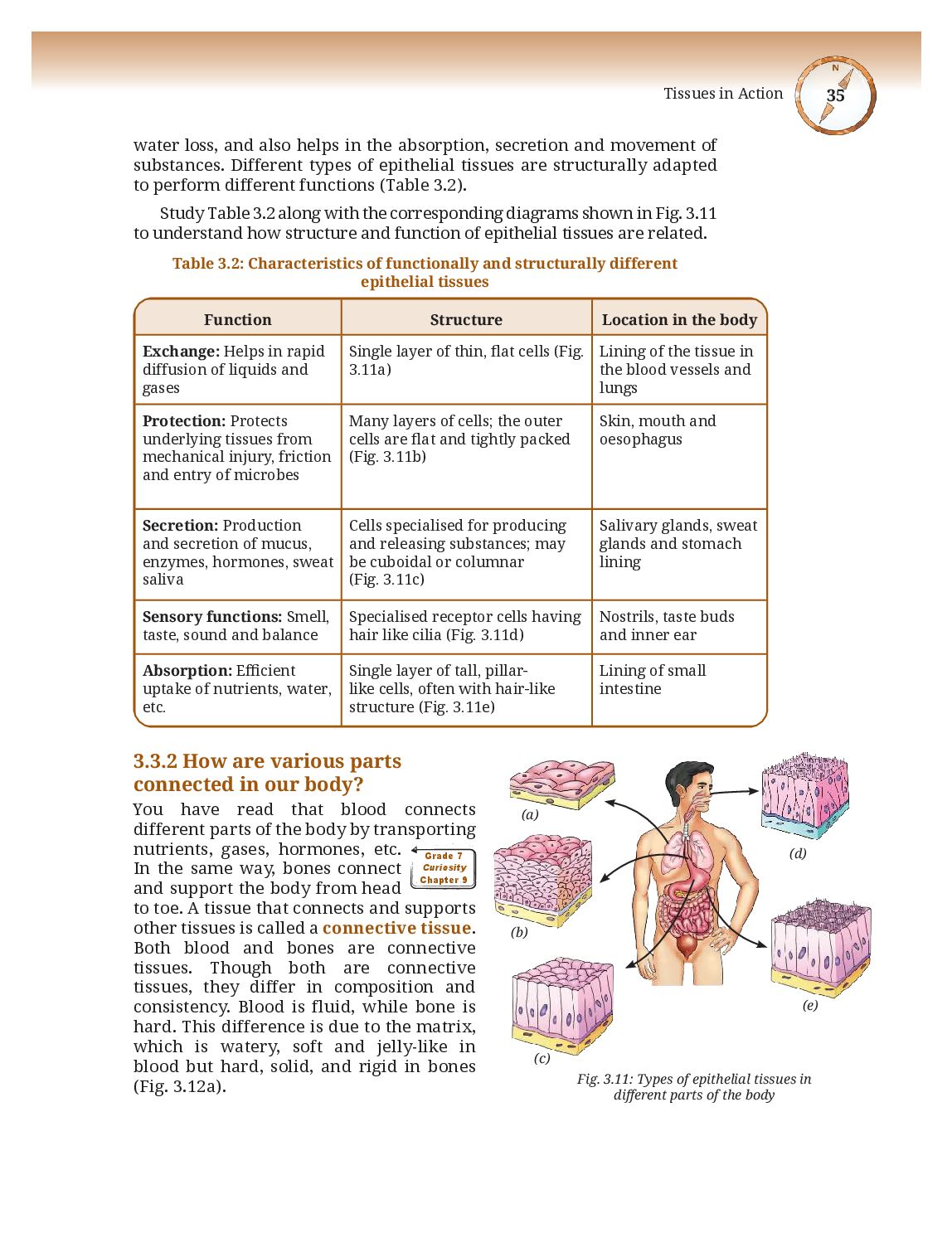
| Epithelial tissue | Animal | Closely packed cells with very little space between them; flat, cuboidal, columnar or ciliated | Covering and lining — exchange, protection, secretion, sensation, absorption |
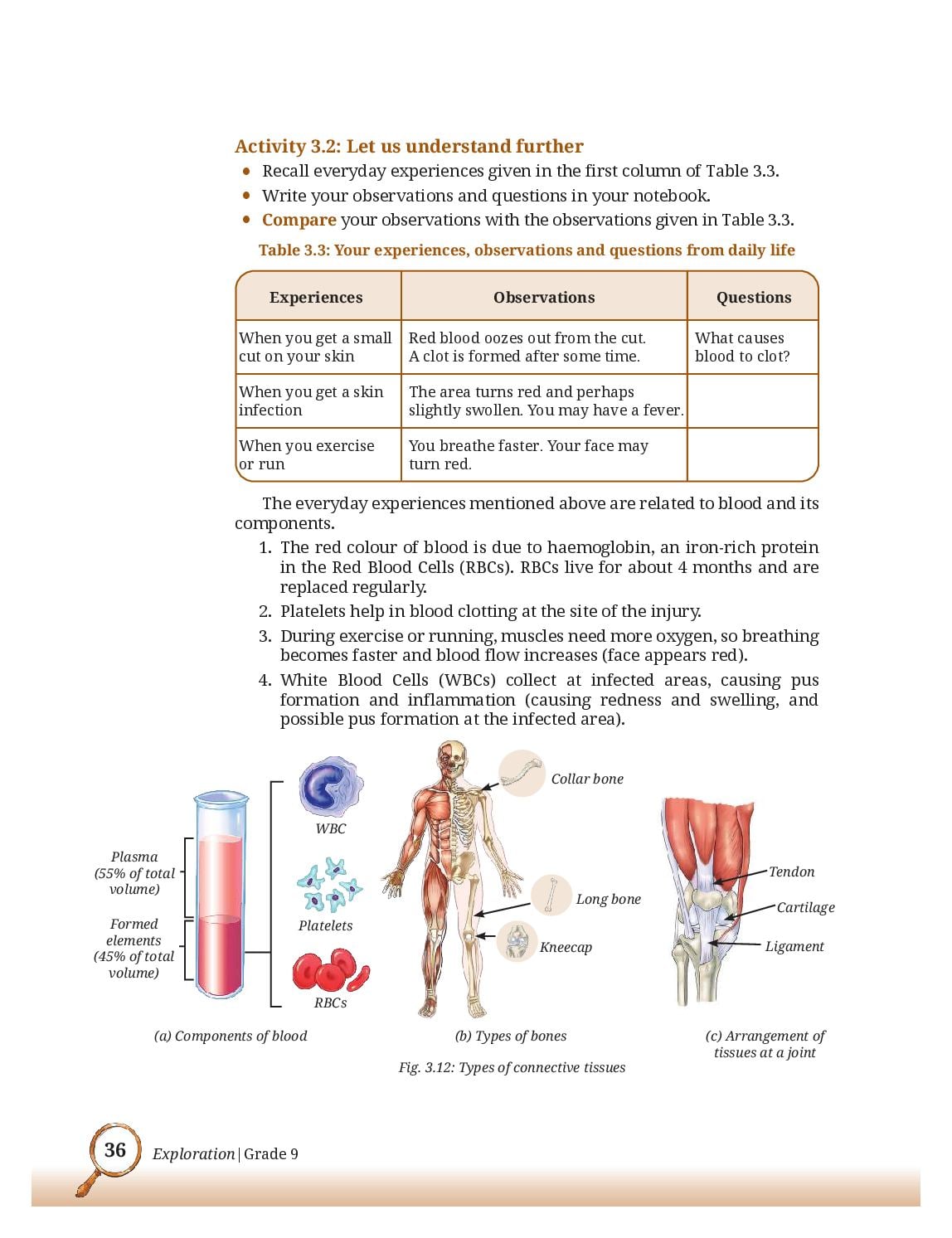
| Blood | Animal — connective | Cells (RBC, WBC, platelets) suspended in a watery, jelly-like matrix called plasma (55% of volume) | Transports nutrients, gases and hormones; clotting; defence |
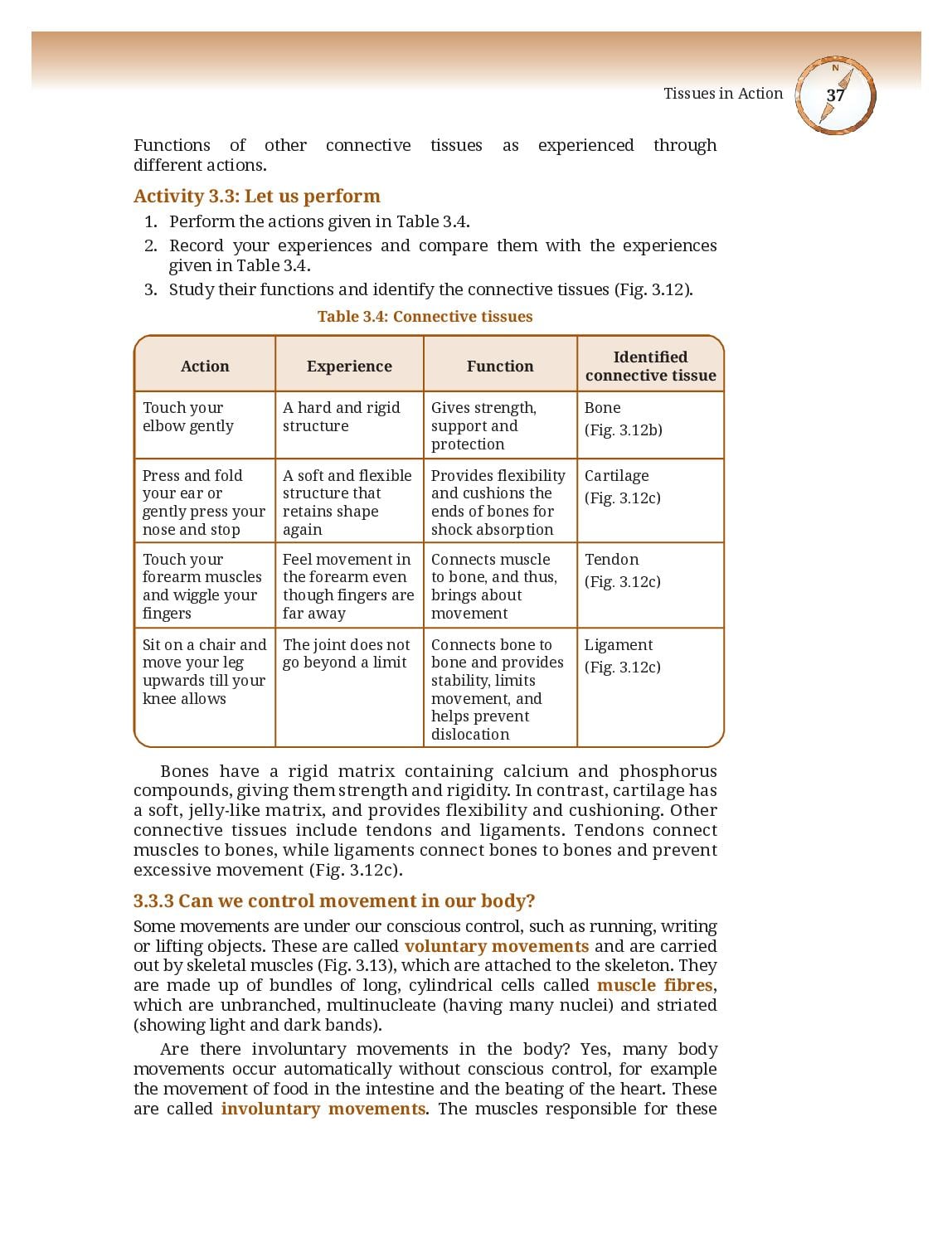
| Bone, cartilage, tendon, ligament | Animal — connective | Cells in a matrix — rigid with calcium and phosphorus in bone, soft and jelly-like in cartilage | Bone: strength and protection. Cartilage: flexibility and cushioning. Tendon: muscle to bone. Ligament: bone to bone |
| Muscular tissue | Animal | Skeletal — long, cylindrical, unbranched, multinucleate, striated; smooth — spindle, one nucleus, no striations; cardiac — branched, one nucleus, faint striations | Voluntary movement (skeletal), slow involuntary movement (smooth), tireless rhythmic beating (cardiac) |
| Nervous tissue | Animal | Neurons — cell body with nucleus, dendrites, a long axon ending in axon terminals | Receives, processes and transmits messages; control and coordination |
Old NCERT vs New – Class 9 Science
This chapter is from Exploration, the new NCERT Class 9 Science book (NCF-SE 2023, used from 2026-27). It replaced the old book “Science”, so chapter numbers and names differ from older PDFs.
Solutions and All Chapters
Answers to the exercises and the full chapter list of Exploration:
Tissues in Action – Overview
| Class | Class 9 |
| Subject | Science |
| Book | Exploration – new NCERT book |
| Chapter | 3 of 13 – Tissues in Action |
| Book pages | 28 – 47 |
| Edition | Latest NCERT edition (2026-27) |
| Session | 2026-27 |
| Free – read online or download |
Class 9 Science Chapter 3 – FAQs
Where can I download Tissues in Action Class 9 PDF?
From the download table on this page – the chapter PDF is free, and the full book is linked too.
What is Class 9 Science Chapter 3 about?
A tissue is a group of cells, similar in structure, that work together on one job. Cells → tissues → organs → organ systems → organism. This division of labour is what makes a large body efficient.
Is Tissues in Action from the new NCERT Class 9 Science book?
Yes. It is chapter 3 of exploration, the new NCERT Class 9 Science book for 2026-27.
Is this the latest NCERT edition for 2026-27?
Yes – the PDF is NCERT’s latest edition for the 2026-27 session.
Where are the NCERT Solutions for Class 9 Science Chapter 3?
Open the NCERT Solutions link above for answers to the exercise questions.