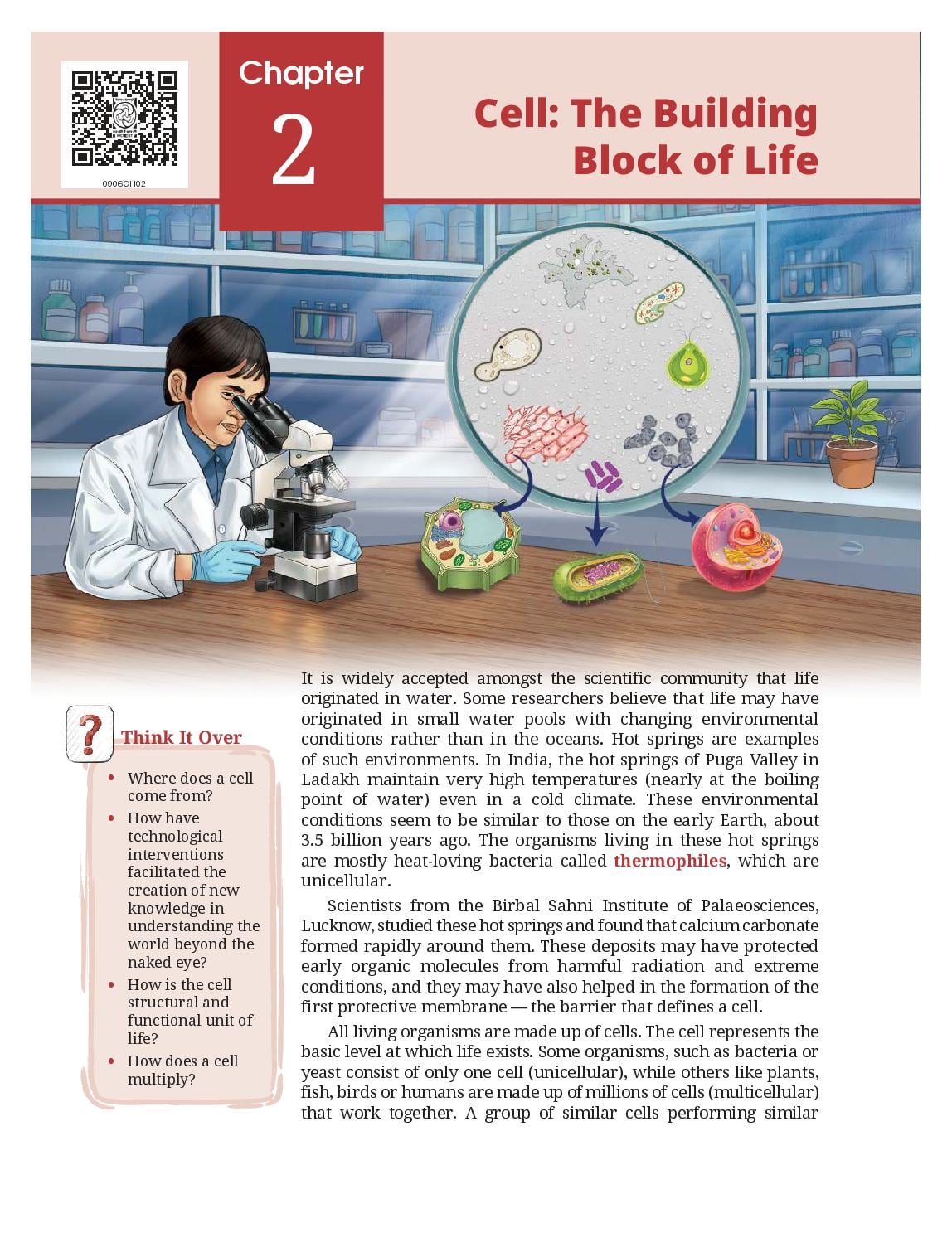
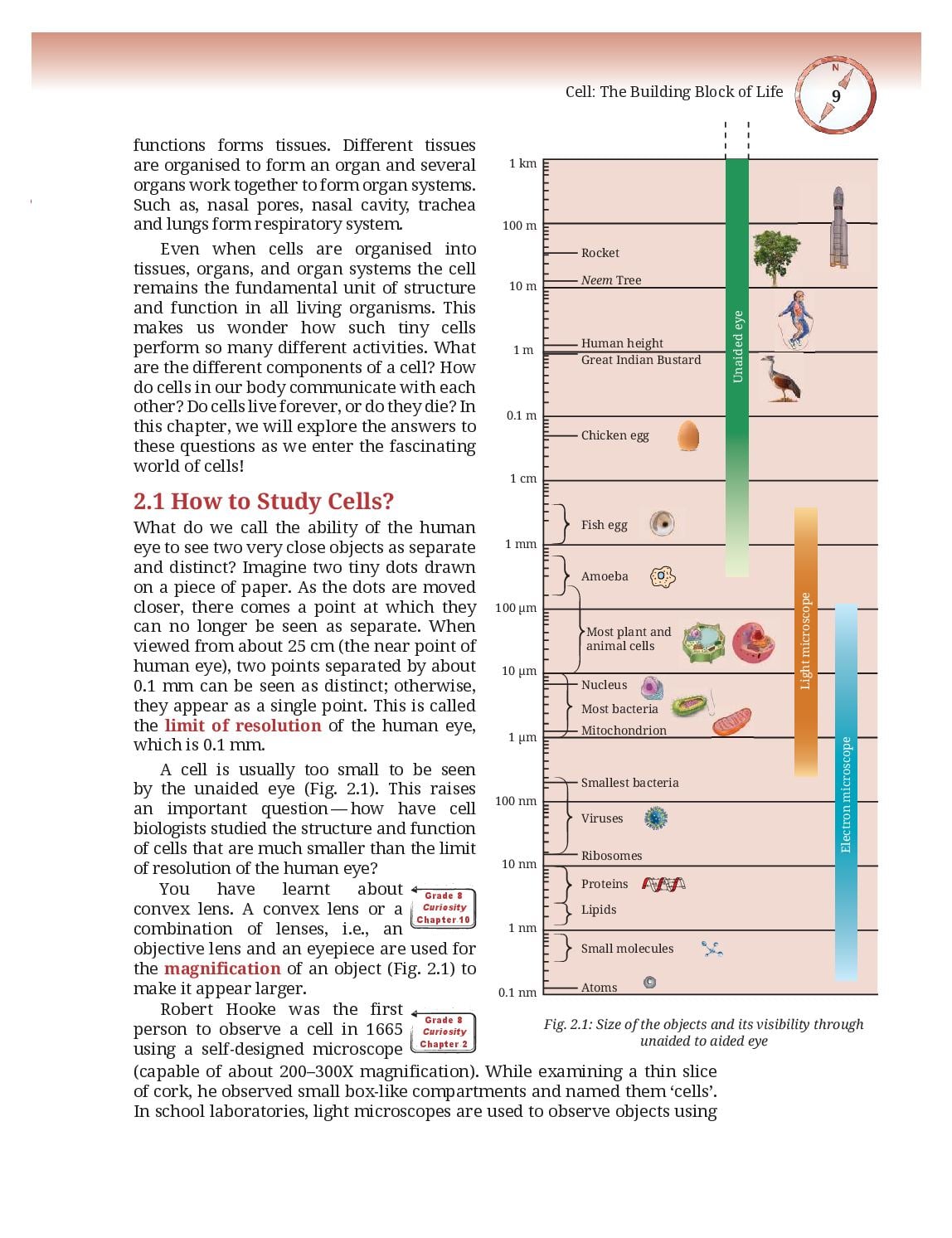
Download Cell: The Building Block of Life – NCERT Class 9 Science Chapter 2 PDF from the new NCERT Class 9 Science book Exploration (2026-27). Read the chapter online or download the free PDF. The unaided eye resolves about 0.1 mm at its near point of 25 cm. Most plant and animal cells are 10–100 µm across, so a light microscope (typically 10X eyepiece × 10X objective = 100X) is needed; an electron microscope reaches the nanometre scale.
Cell: The Building Block of Life PDF – Chapter 2 of Exploration
Read the chapter online or download the PDF.
| Chapter | Download | |
|---|---|---|
| Chapter 2 PDF | Cell: The Building Block of Life | View PDF |
| Full book | NCERT Class 9 Science – Exploration | View Book |
Read Online
What Is in Cell: The Building Block of Life? (Class 9 Science Chapter 2)
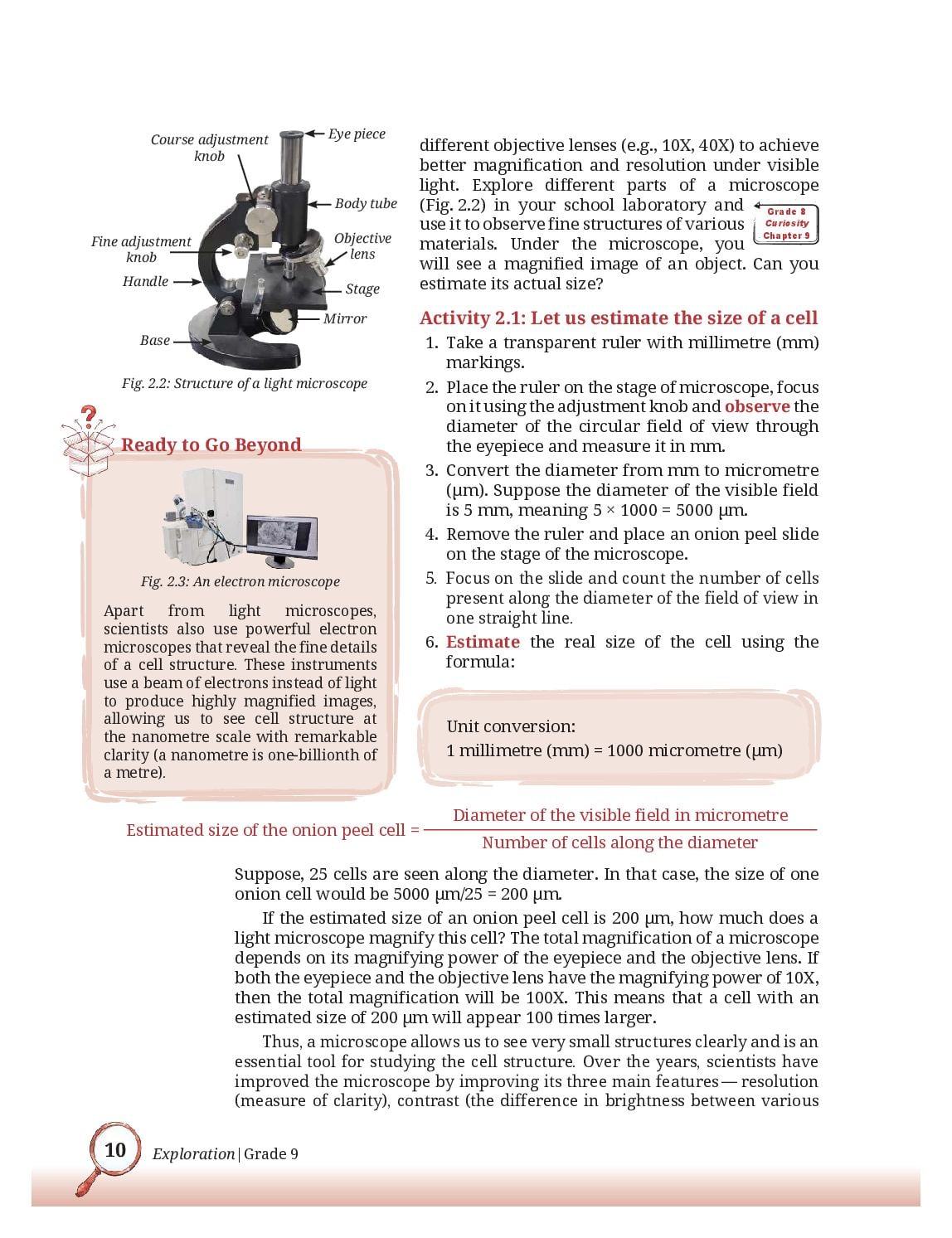
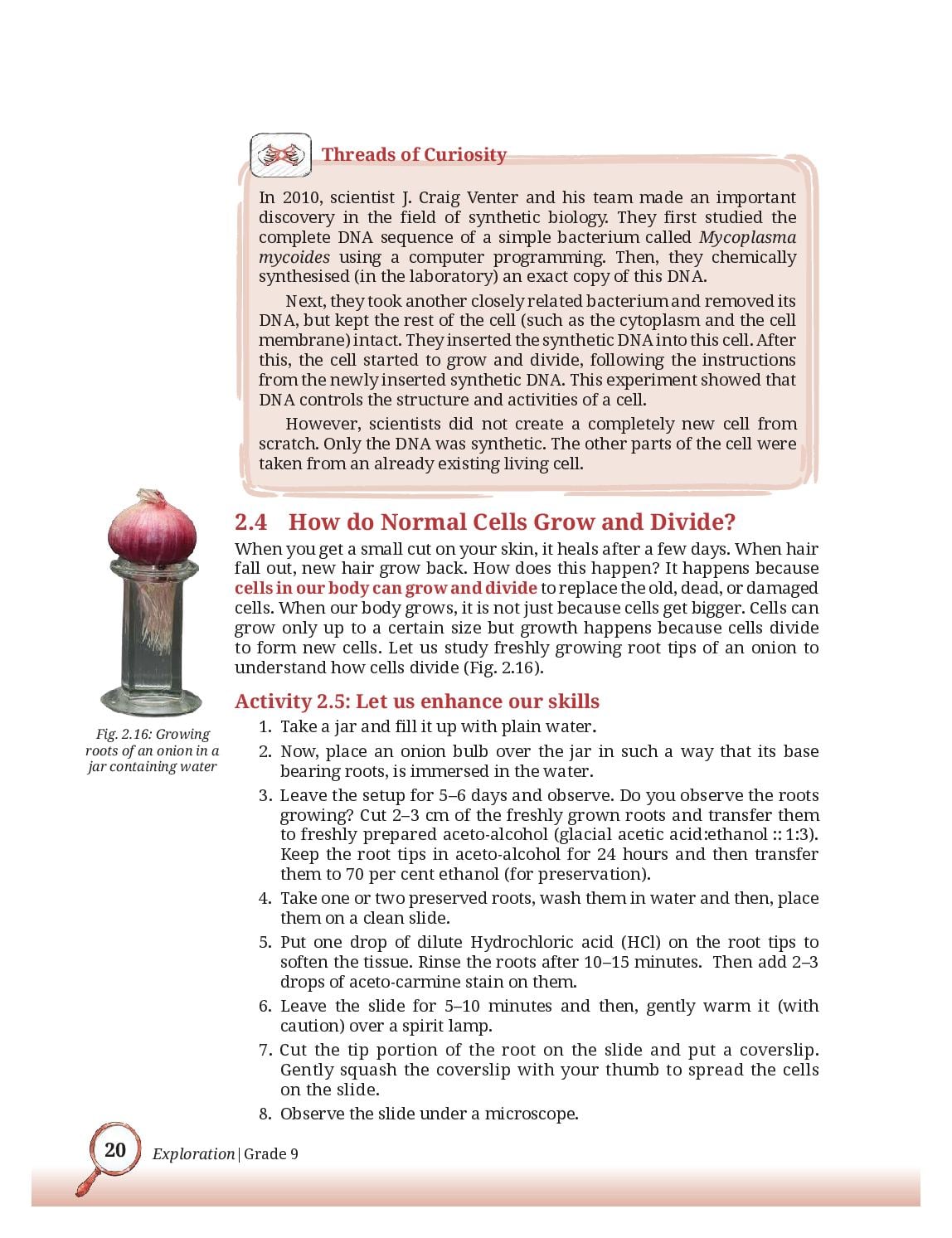
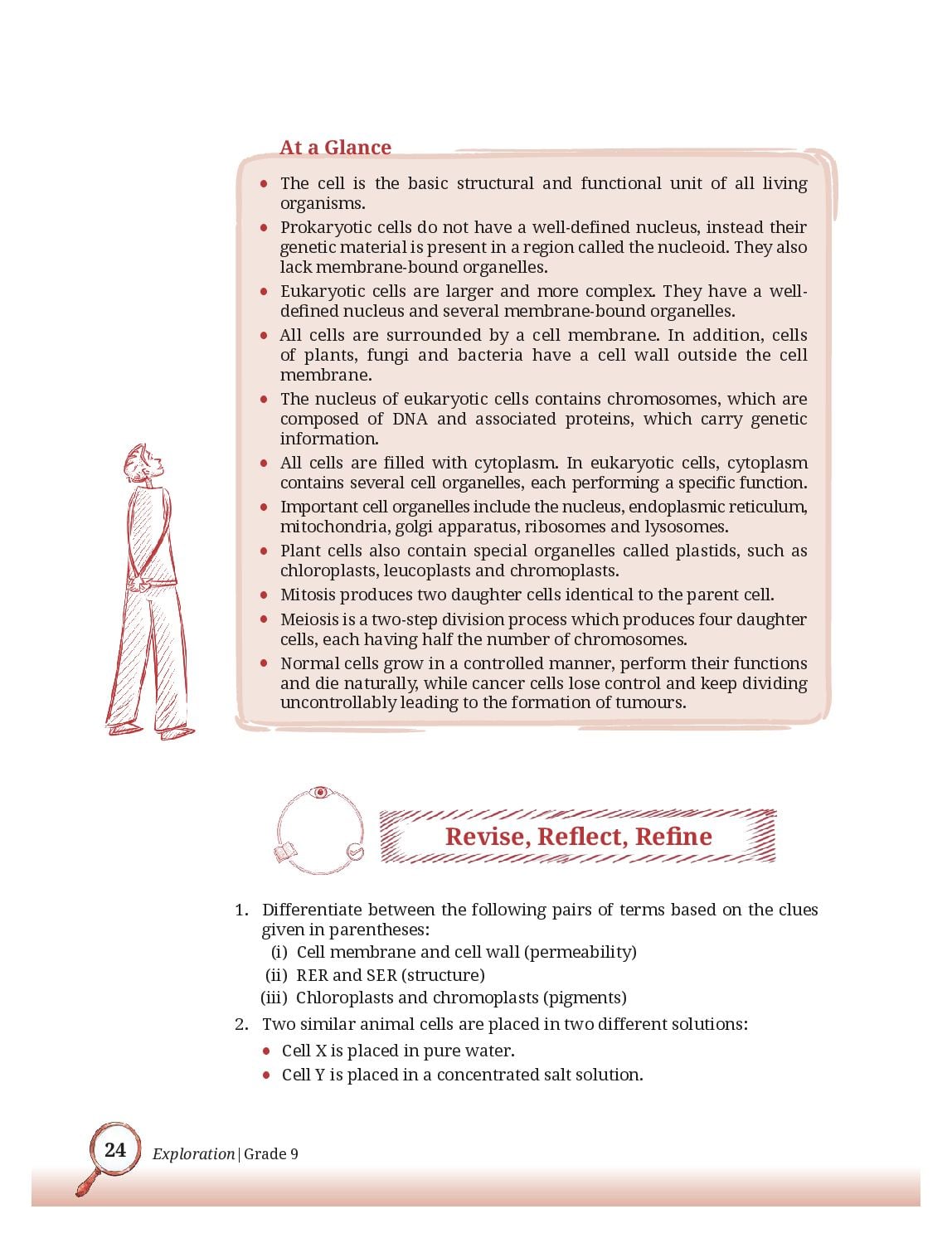
- The unaided eye resolves about 0.1 mm at its near point of 25 cm. Most plant and animal cells are 10–100 µm across, so a light microscope (typically 10X eyepiece × 10X objective = 100X) is needed; an electron microscope reaches the nanometre scale.
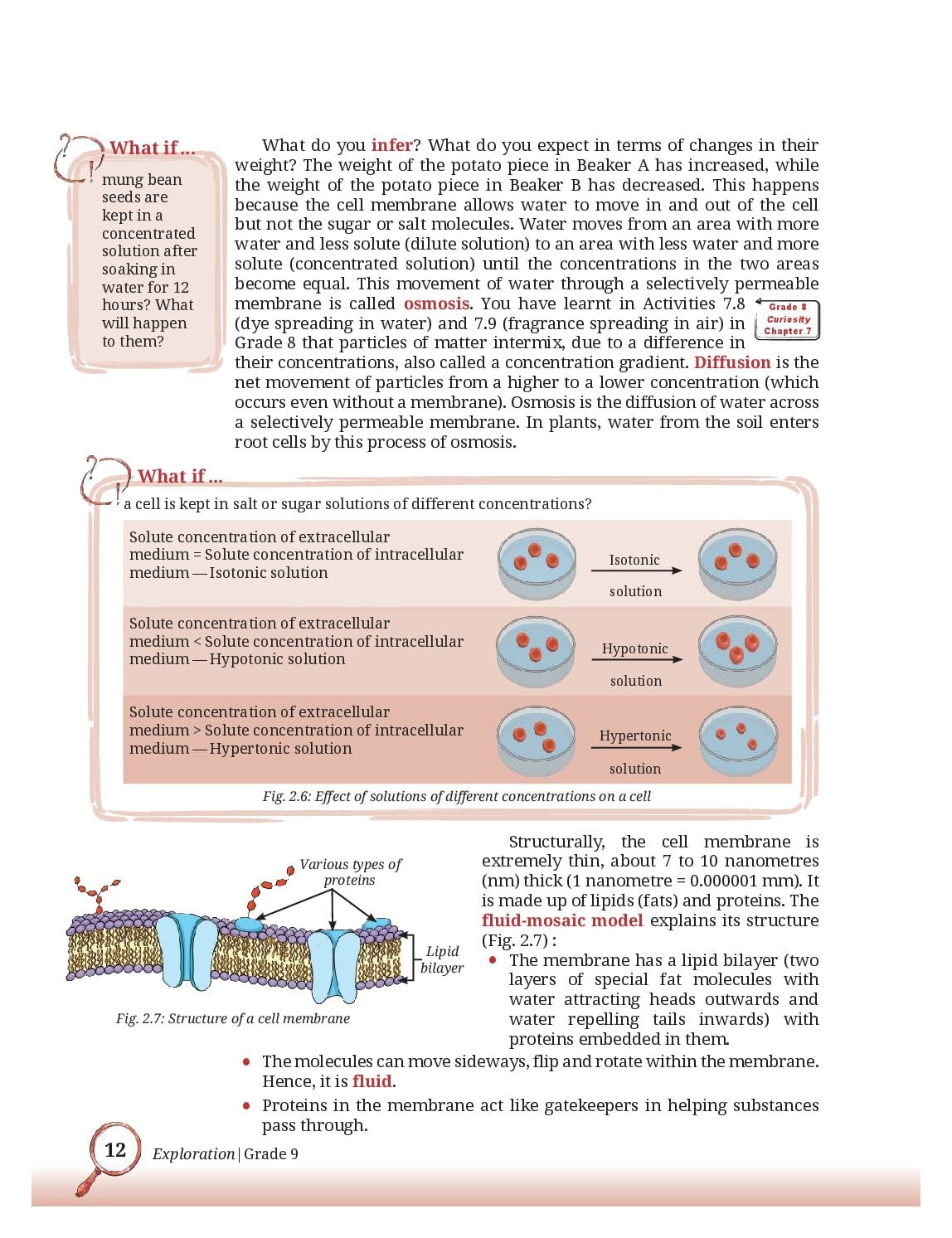
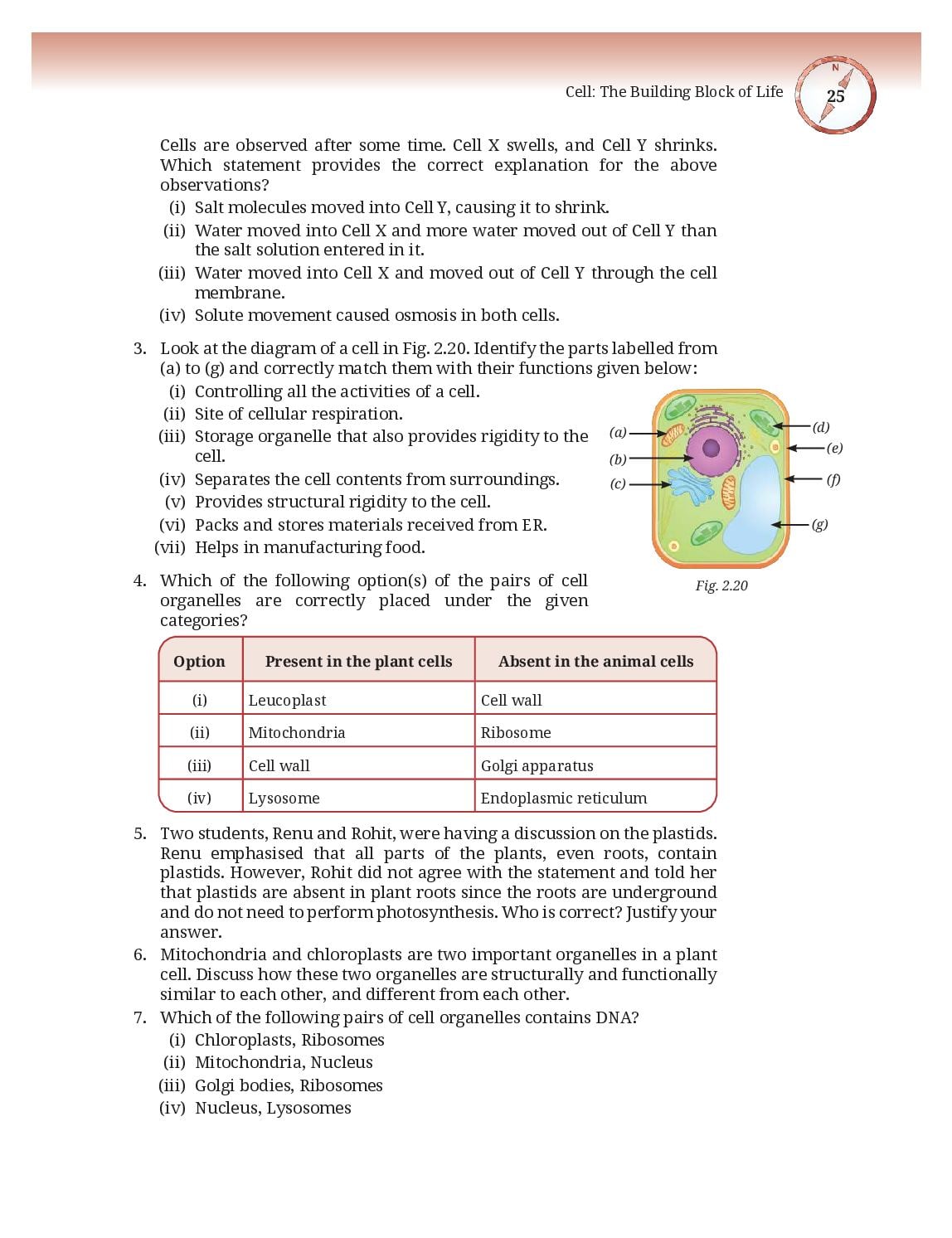
- The cell membrane is 7–10 nm thick, built of a lipid bilayer with proteins embedded in it — the fluid-mosaic model. It is selectively permeable: water crosses freely, dissolved salt and sugar do not.
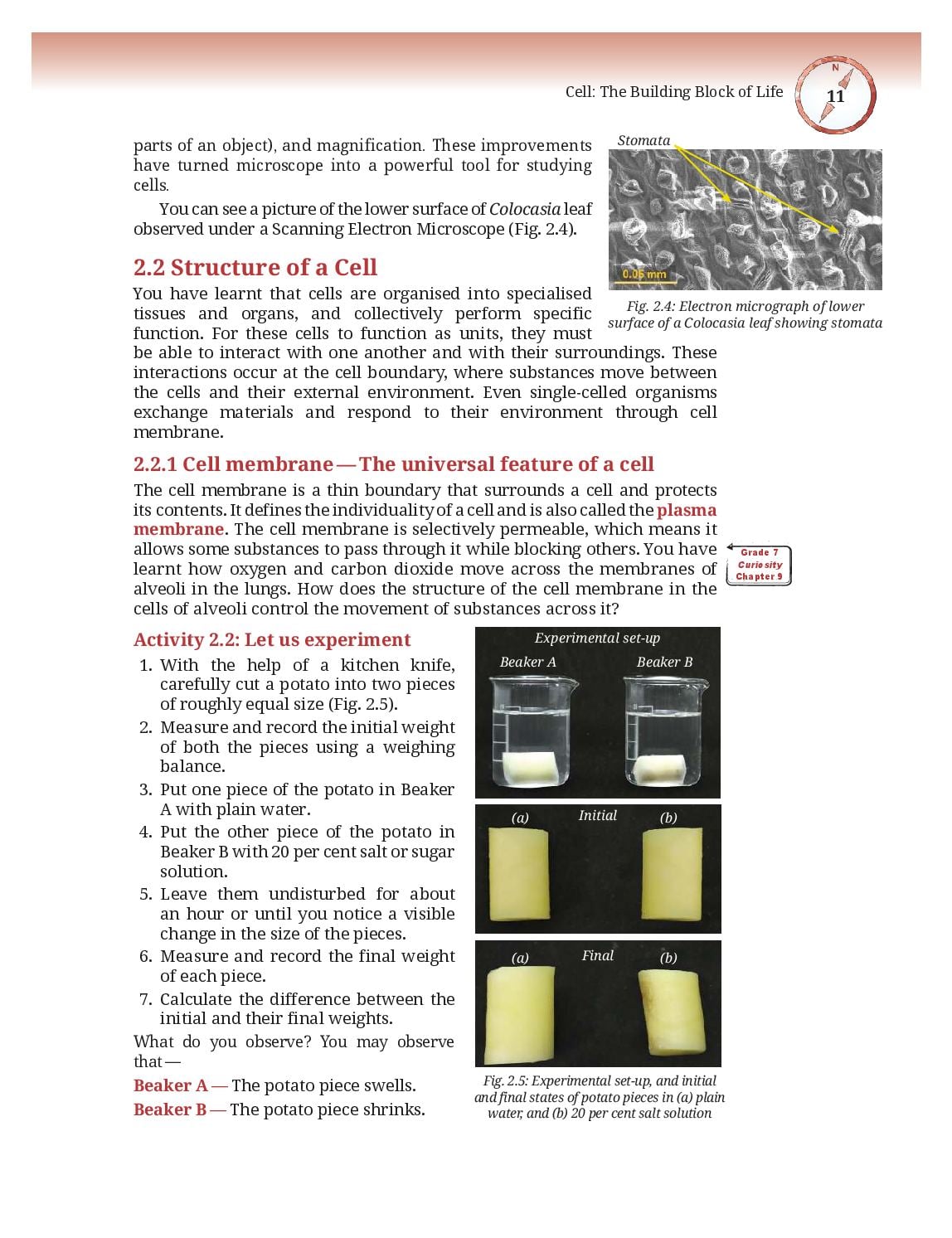
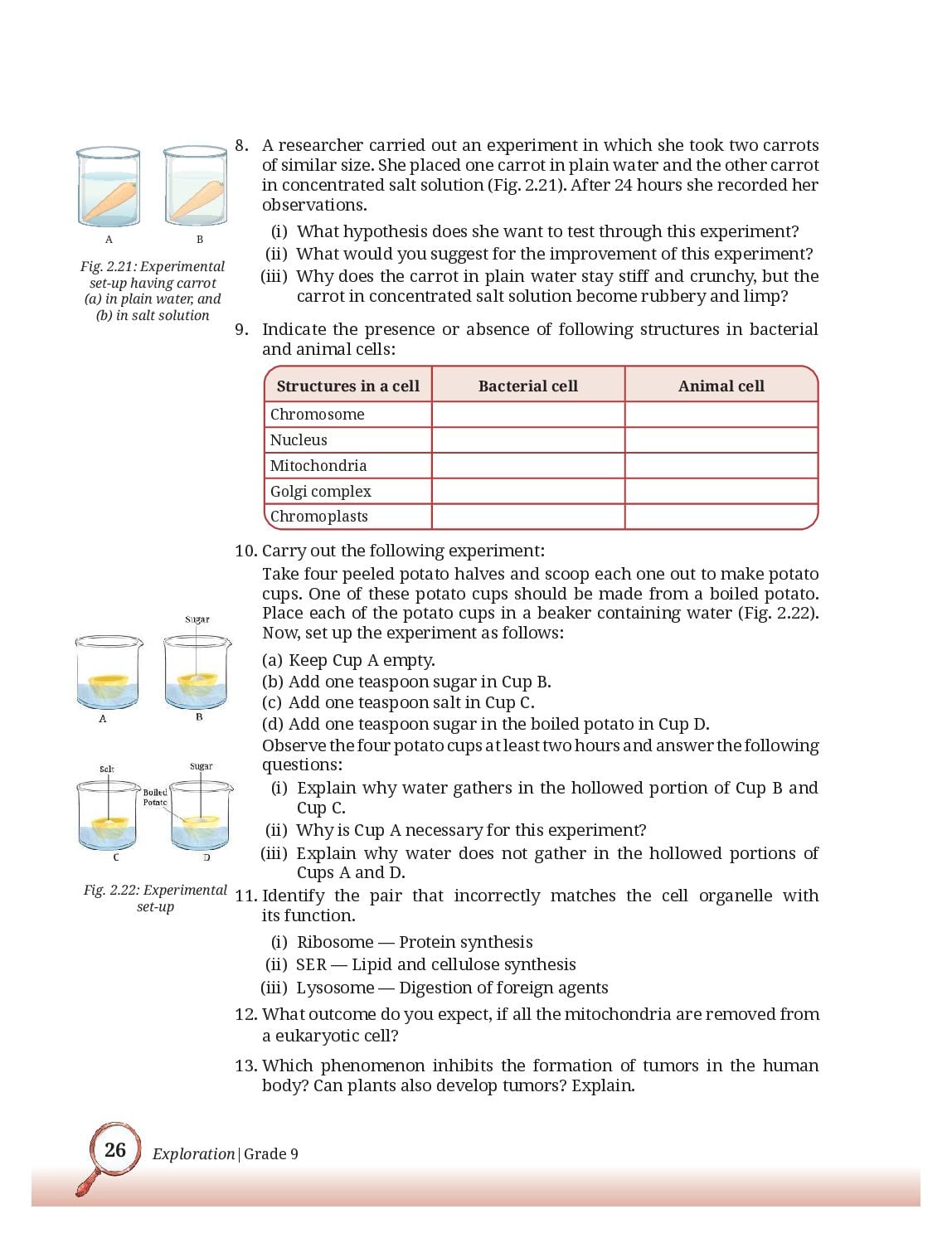
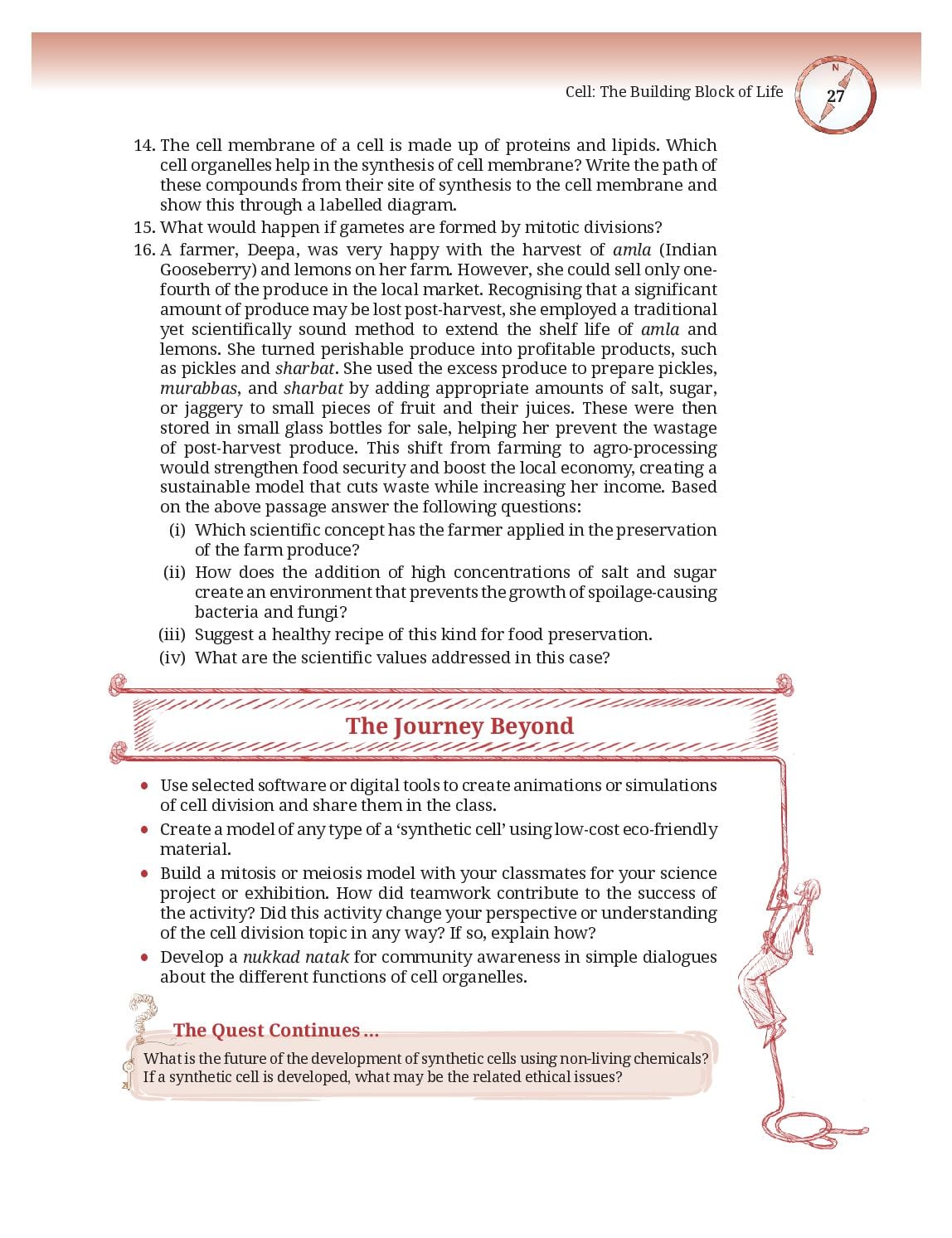
- Diffusion is the net movement of particles down a concentration gradient, with or without a membrane. Osmosis is the diffusion of water across a selectively permeable membrane — the reason a potato piece gains weight in plain water and loses it in 20 per cent salt solution.
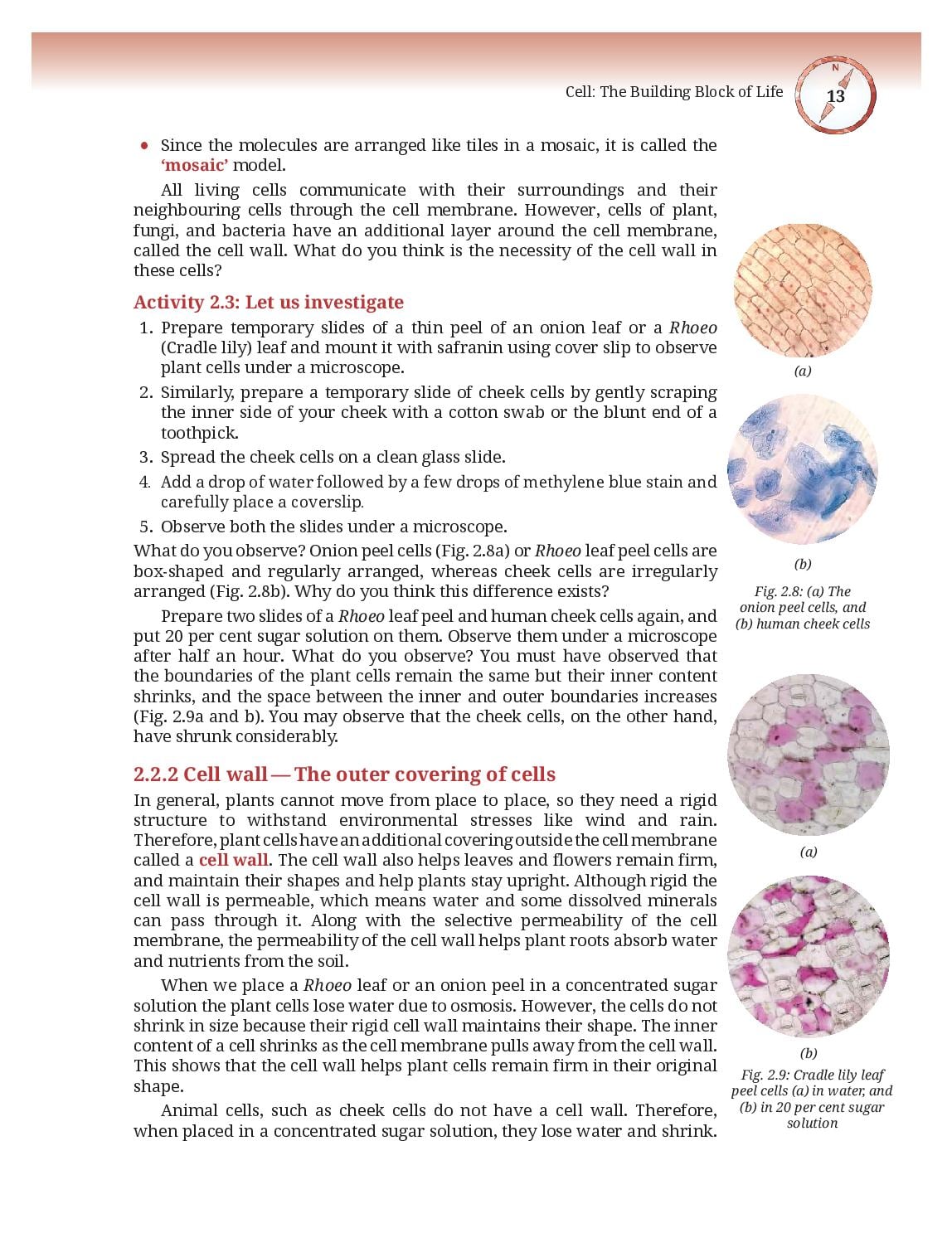
- Plant, fungal and bacterial cells have a rigid but permeable cell wall outside the membrane (in plants it is made mainly of cellulose). It keeps a plant cell in shape, which is why in a strong sugar solution only the contents of a plant cell shrink, while an animal cell shrinks as a whole.
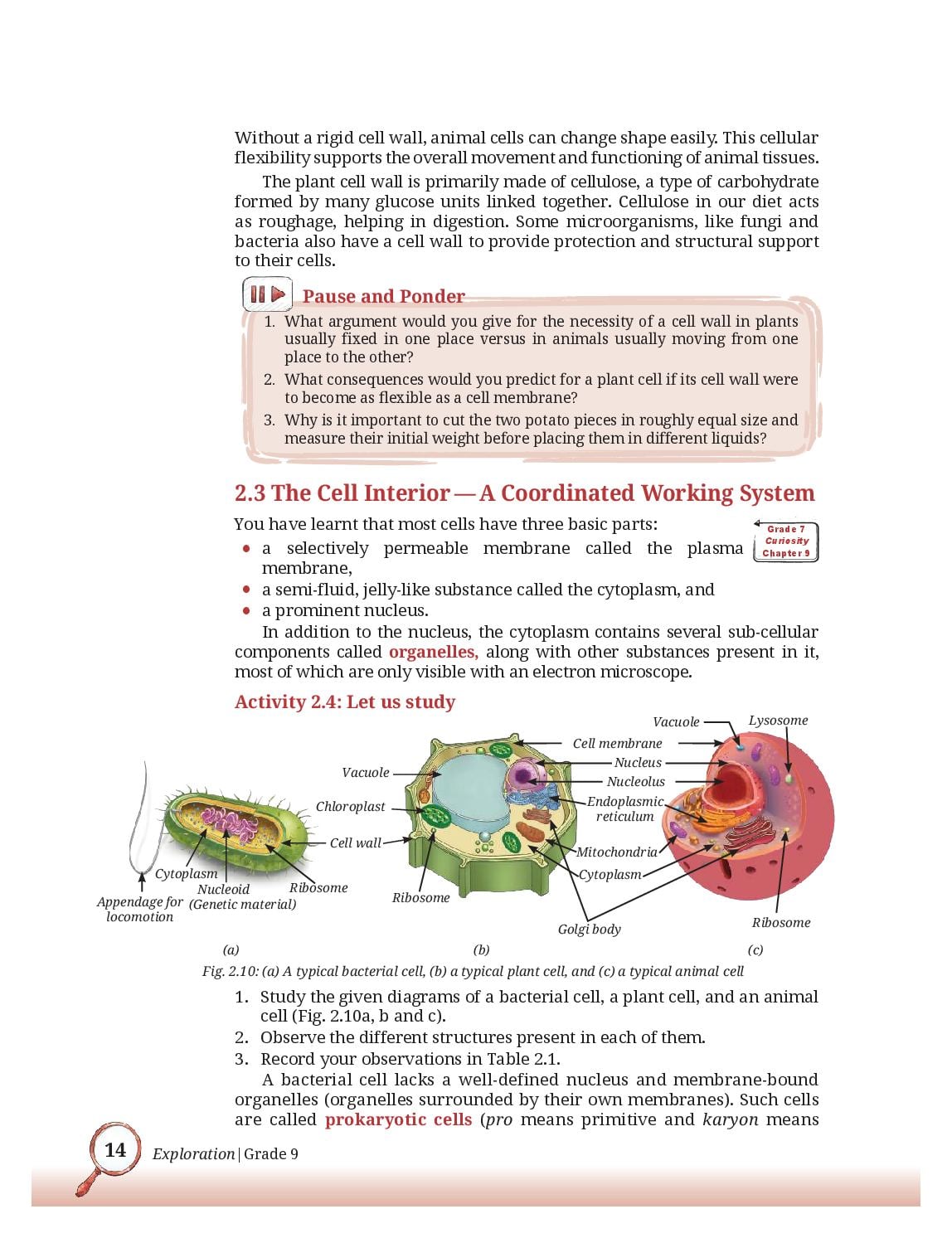
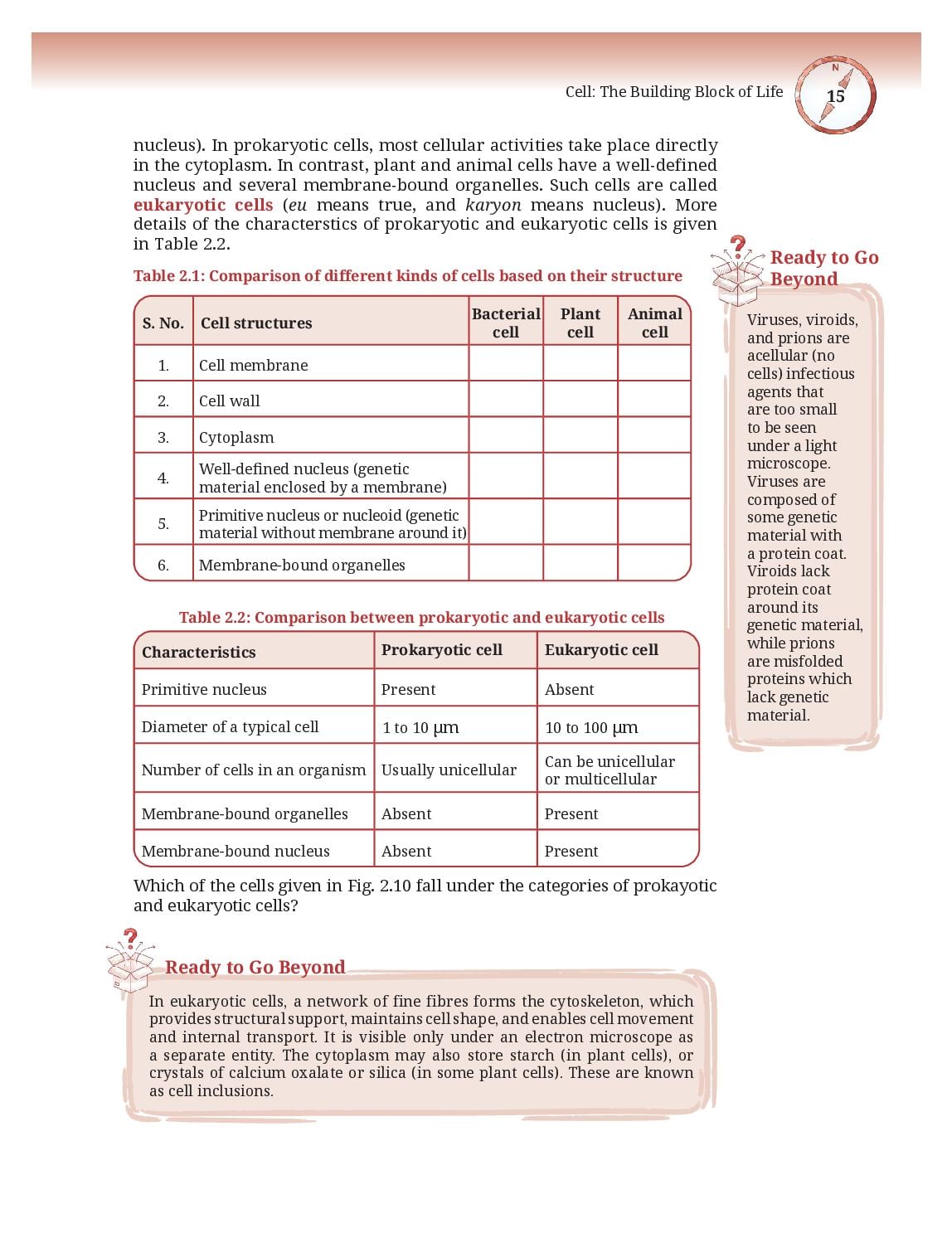
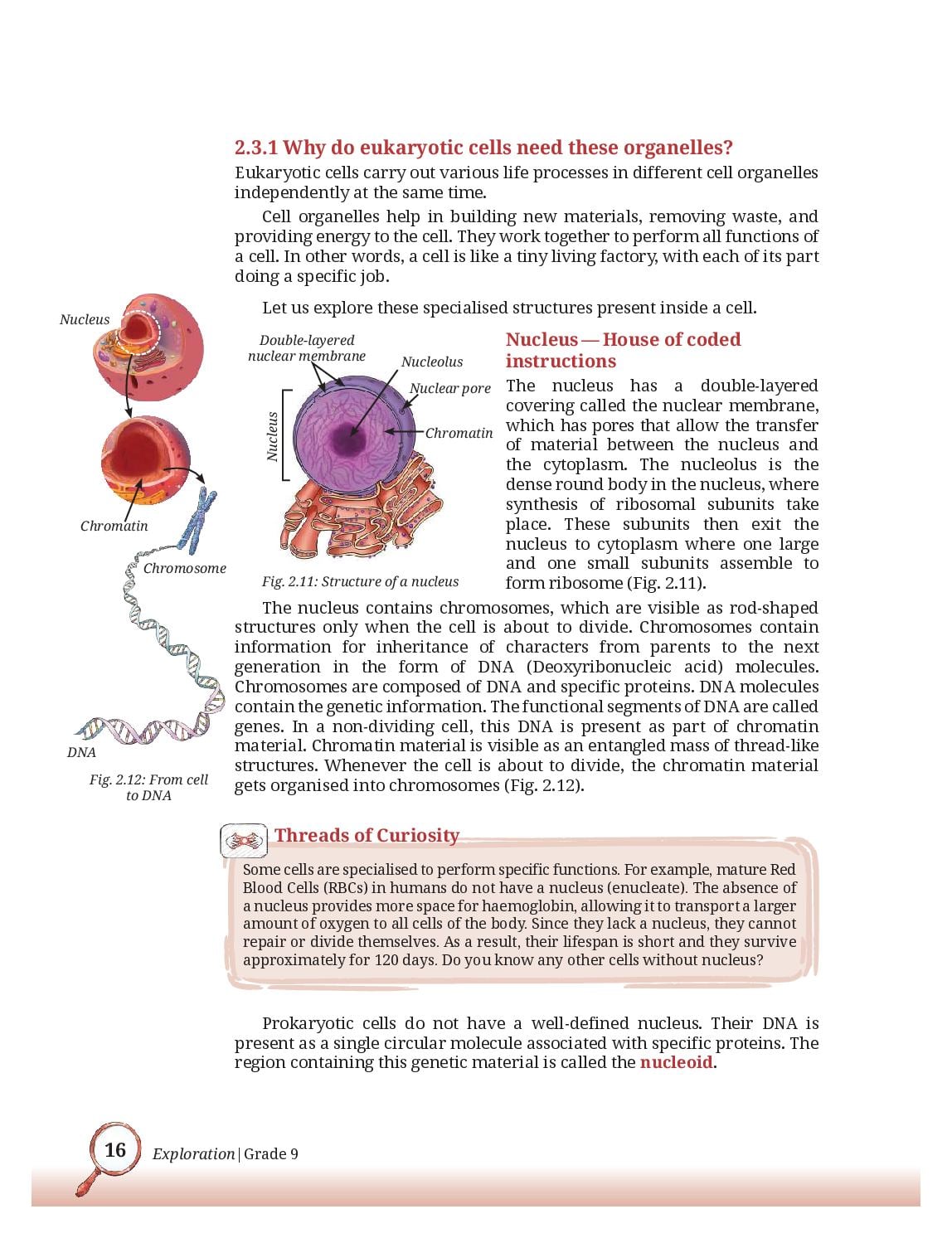
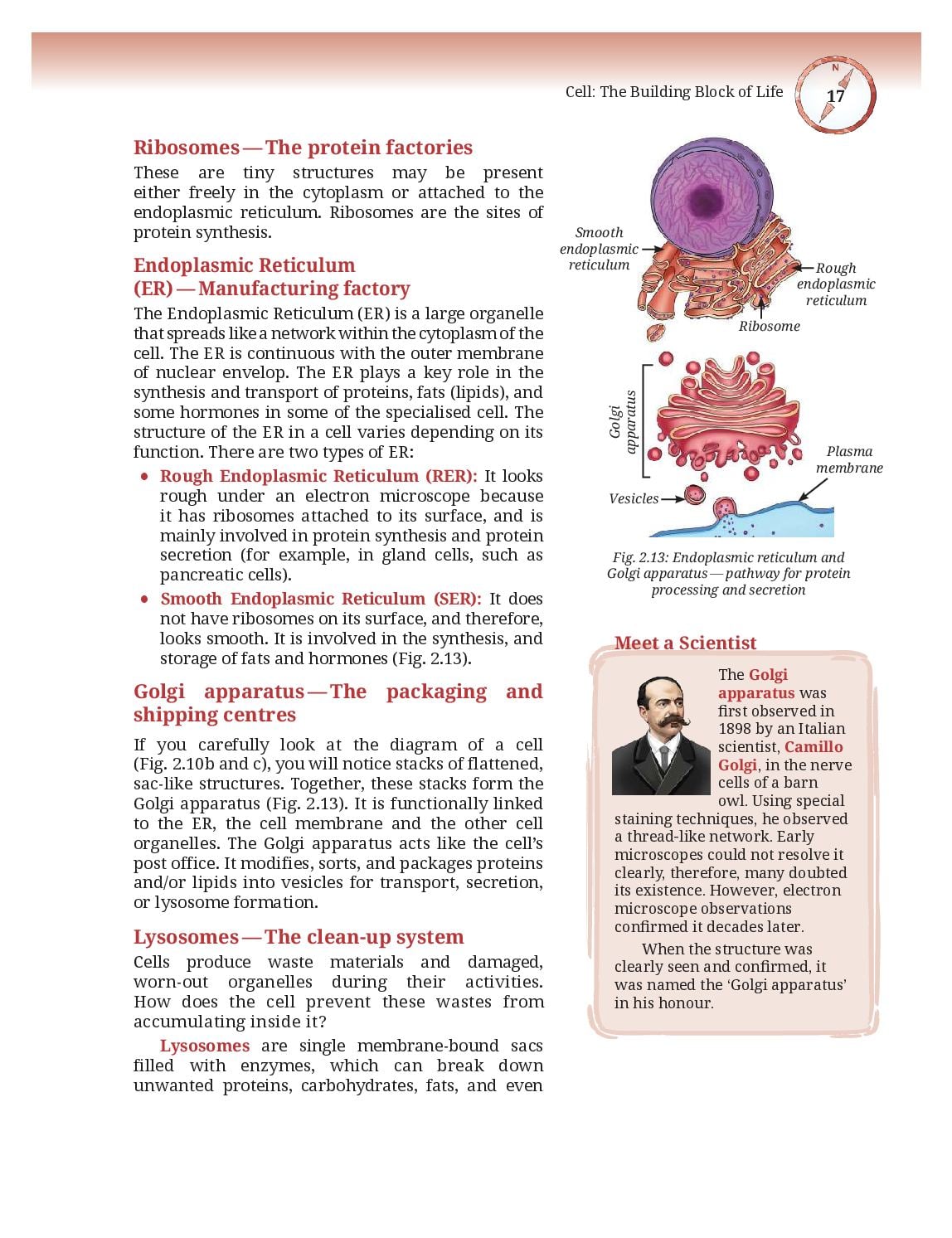
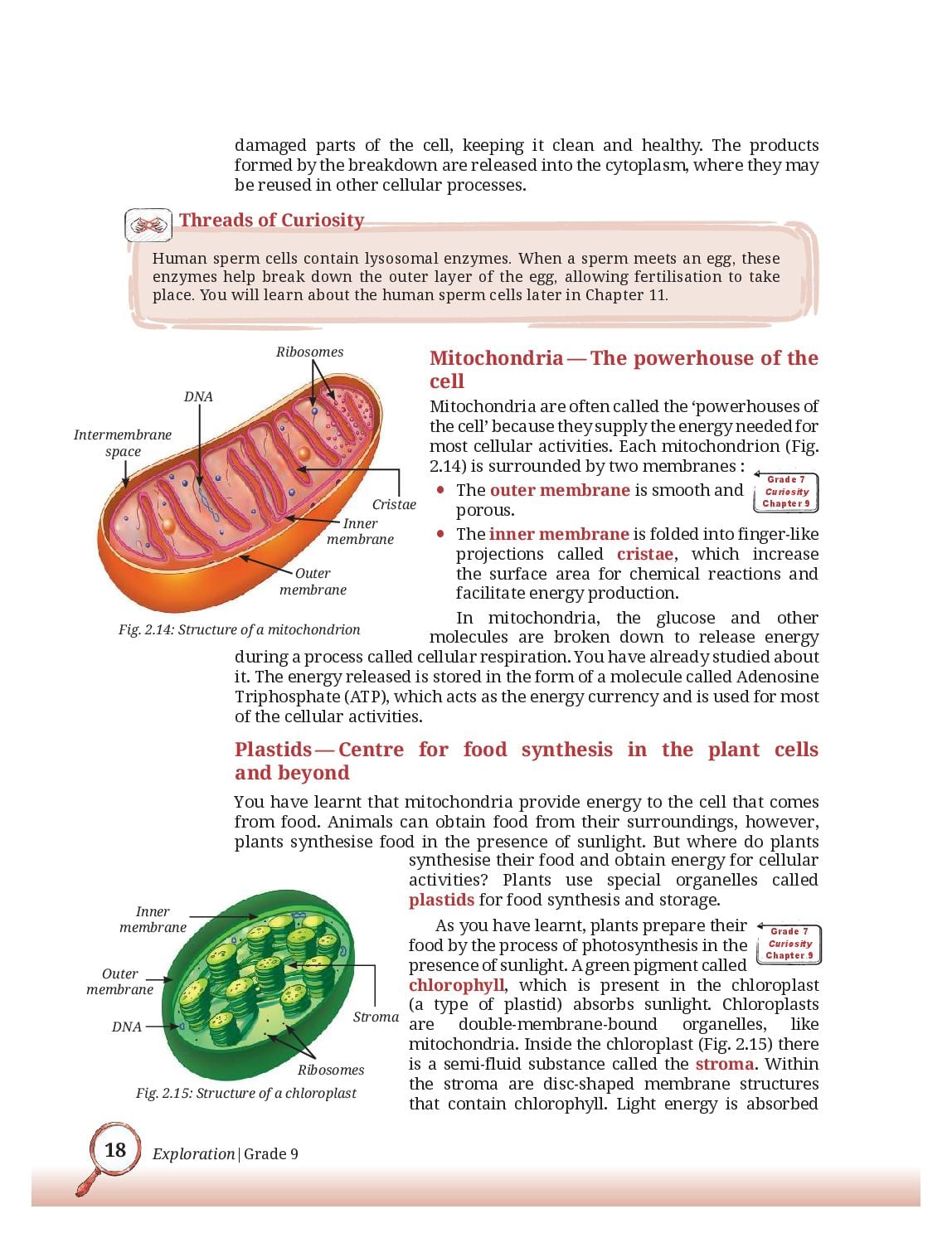
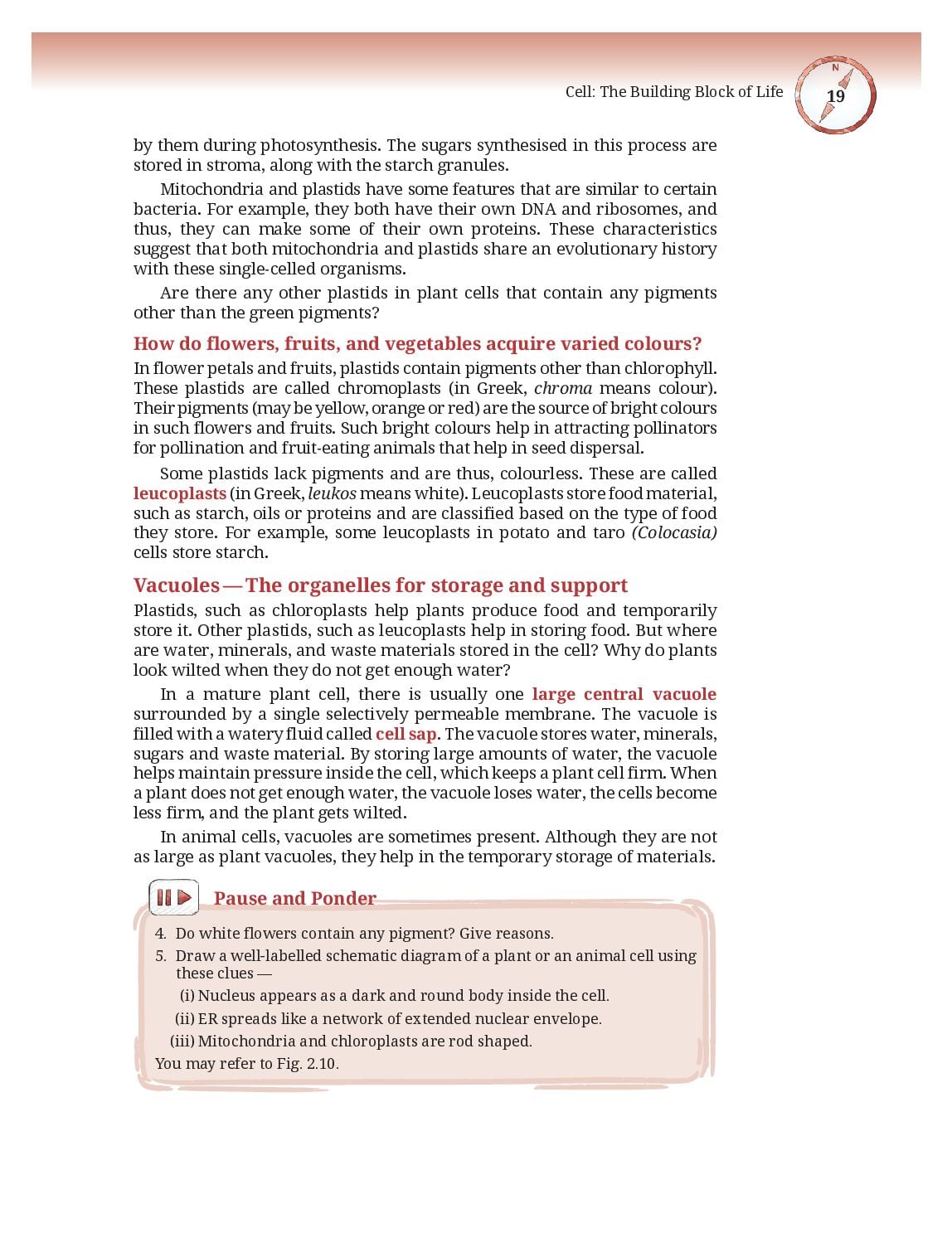
- Prokaryotic cells (1–10 µm) keep their DNA in a nucleoid and have no membrane-bound organelles. Eukaryotic cells (10–100 µm) have a true nucleus and organelles — nucleus, ER, ribosomes, Golgi apparatus, lysosomes, mitochondria, plastids and vacuoles — each doing one job.
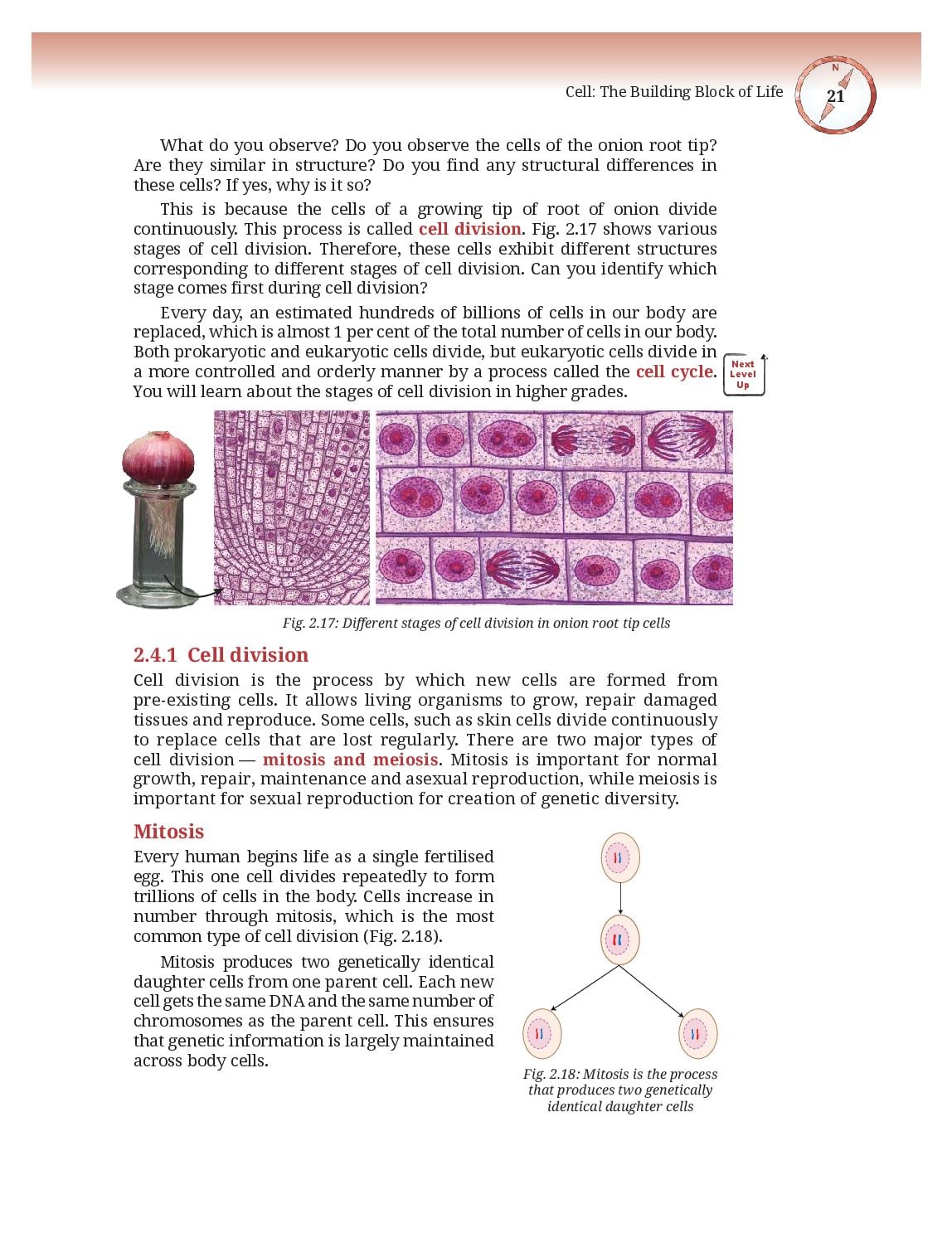
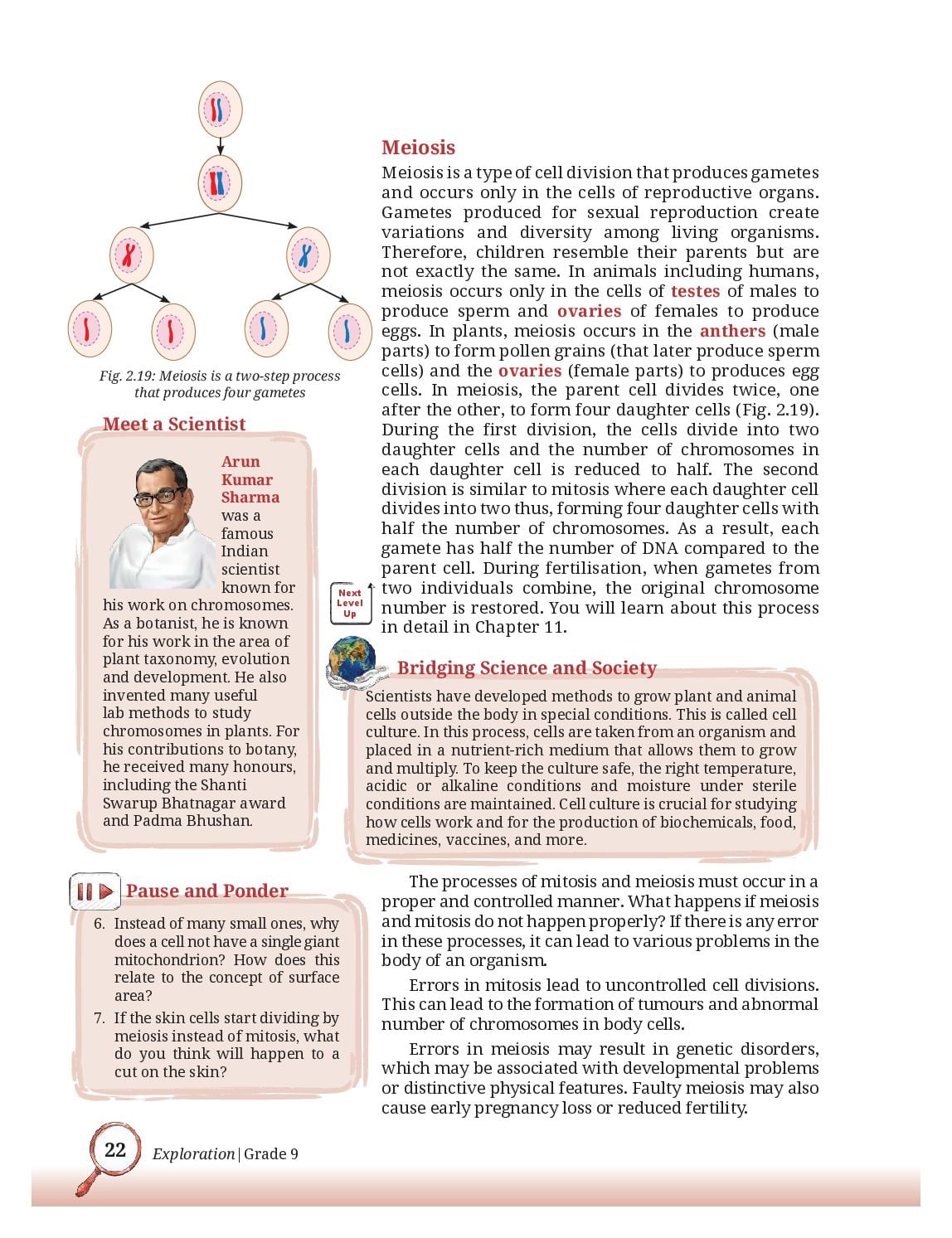
- Mitosis gives two daughter cells identical to the parent, for growth and repair. Meiosis is a two-step division in reproductive organs that gives four cells with half the chromosome number, so fertilisation restores the original number and creates variation.
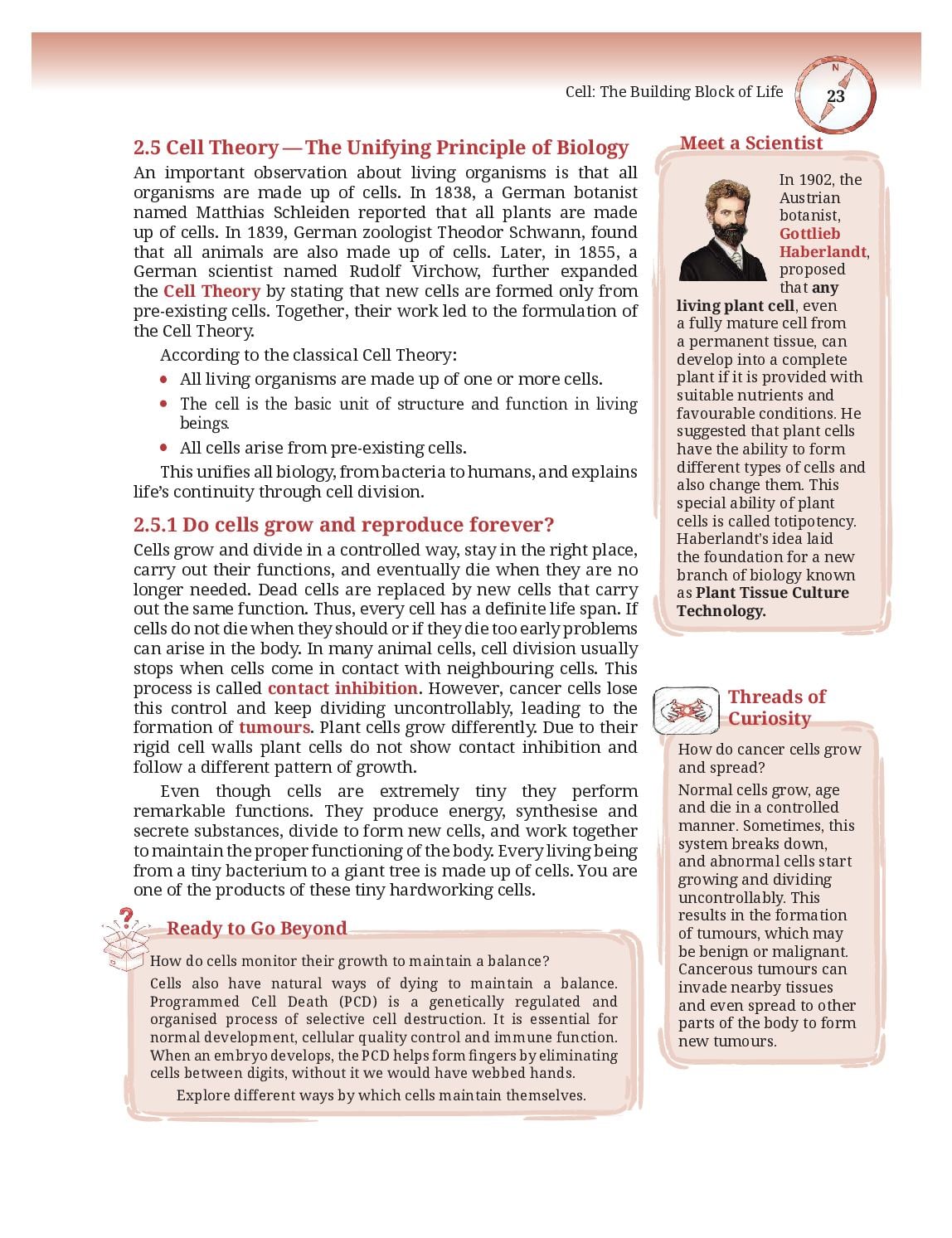
- The Cell Theory (Schleiden 1838, Schwann 1839, Virchow 1855): all organisms are made of cells; the cell is the basic unit of structure and function; all cells arise from pre-existing cells. Normal cells stop dividing on touching neighbours (contact inhibition); cancer cells lose that control and form tumours.
Quick revision – Cell: The Building Block of Life
| Term | What it means | Where you meet it in Chapter 2 | Key detail to remember |
|---|---|---|---|
| Limit of resolution | The smallest separation at which two points are still seen as two | Section 2.1, the two dots on paper | 0.1 mm for the eye at a near point of 25 cm |
| Magnification | How many times larger the image looks than the object | Activity 2.1 | Total = eyepiece × objective; 10X × 10X = 100X |
| Selectively permeable | Lets some substances through and blocks others | Cell membrane, Section 2.2.1 | Water passes; salt and sugar molecules do not |
| Diffusion | Net movement of particles from higher to lower concentration | Recalled from Grade 8, Chapter 7 | Needs no membrane at all |
| Osmosis | Diffusion of water across a selectively permeable membrane | Activity 2.2, the potato pieces | Water moves towards the more concentrated solution |
| Hypotonic / isotonic / hypertonic | Outside solute concentration less than / equal to / greater than inside | Fig. 2.6, ‘What if…’ box on page 12 | A cell swells / stays the same / shrinks |
| Fluid-mosaic model | Lipid bilayer with proteins set in it like tiles, all able to move sideways | Fig. 2.7, page 12 | Membrane is only 7–10 nm thick |
| Cell wall | Rigid but permeable covering outside the membrane (mainly cellulose in plants) | Section 2.2.2 | Present in plants, fungi and bacteria; absent in animals |
| Prokaryotic cell | Cell with no membrane-bound nucleus or organelles | Table 2.2, page 15 | 1–10 µm; DNA lies free in the nucleoid |
| Eukaryotic cell | Cell with a true nucleus and membrane-bound organelles | Table 2.2, page 15 | 10–100 µm; may be unicellular or multicellular |
| Plastids | Plant organelles for making and storing food | Section 2.3.1, page 18–19 | Chloroplast (green), chromoplast (coloured), leucoplast (colourless) |
| Mitosis | Division giving two genetically identical daughter cells | Section 2.4.1, Fig. 2.18 | Growth, repair, maintenance, asexual reproduction |
| Meiosis | Two-step division giving four cells with half the chromosomes | Section 2.4.1, Fig. 2.19 | Only in testes, ovaries, anthers; creates variation |
| Contact inhibition | Animal cells stop dividing when they touch neighbours | Section 2.5.1, page 23 | Lost in cancer cells, so tumours form |
Old NCERT vs New – Class 9 Science
This chapter is from Exploration, the new NCERT Class 9 Science book (NCF-SE 2023, used from 2026-27). It replaced the old book “Science”, so chapter numbers and names differ from older PDFs.
Solutions and All Chapters
Answers to the exercises and the full chapter list of Exploration:
Cell: The Building Block of Life – Overview
| Class | Class 9 |
| Subject | Science |
| Book | Exploration – new NCERT book |
| Chapter | 2 of 13 – Cell: The Building Block of Life |
| Book pages | 8 – 27 |
| Edition | Latest NCERT edition (2026-27) |
| Session | 2026-27 |
| Free – read online or download |
Class 9 Science Chapter 2 – FAQs
Where can I download Cell: The Building Block of Life Class 9 PDF?
From the download table on this page – the chapter PDF is free, and the full book is linked too.
What is Class 9 Science Chapter 2 about?
The unaided eye resolves about 0.1 mm at its near point of 25 cm. Most plant and animal cells are 10–100 µm across, so a light microscope (typically 10X eyepiece × 10X objective = 100X) is needed; an electron microscope reaches the nanometre scale.
Is Cell: The Building Block of Life from the new NCERT Class 9 Science book?
Yes. It is chapter 2 of exploration, the new NCERT Class 9 Science book for 2026-27.
Is this the latest NCERT edition for 2026-27?
Yes – the PDF is NCERT’s latest edition for the 2026-27 session.
Where are the NCERT Solutions for Class 9 Science Chapter 2?
Open the NCERT Solutions link above for answers to the exercise questions.