Download Patterns in Life: Diversity and Classification – NCERT Class 9 Science Chapter 12 PDF from the new NCERT Class 9 Science book Exploration (2026-27). Read the chapter online or download the free PDF. Biodiversity is the whole variety of living organisms. India is rich in it because its habitats range from the Himalayas to the Thar desert to the Western Ghats; species found nowhere else are endemic (Nilgiri tahr, lion-tailed macaque, Nepenthes…
Patterns in Life: Diversity and Classification PDF – Chapter 12 of Exploration
Read the chapter online or download the PDF.
| Chapter | Download | |
|---|---|---|
| Chapter 12 PDF | Patterns in Life: Diversity and Classification | View PDF |
| Full book | NCERT Class 9 Science – Exploration | View Book |
Read Online
What Is in Patterns in Life: Diversity and Classification? (Class 9 Science Chapter 12)
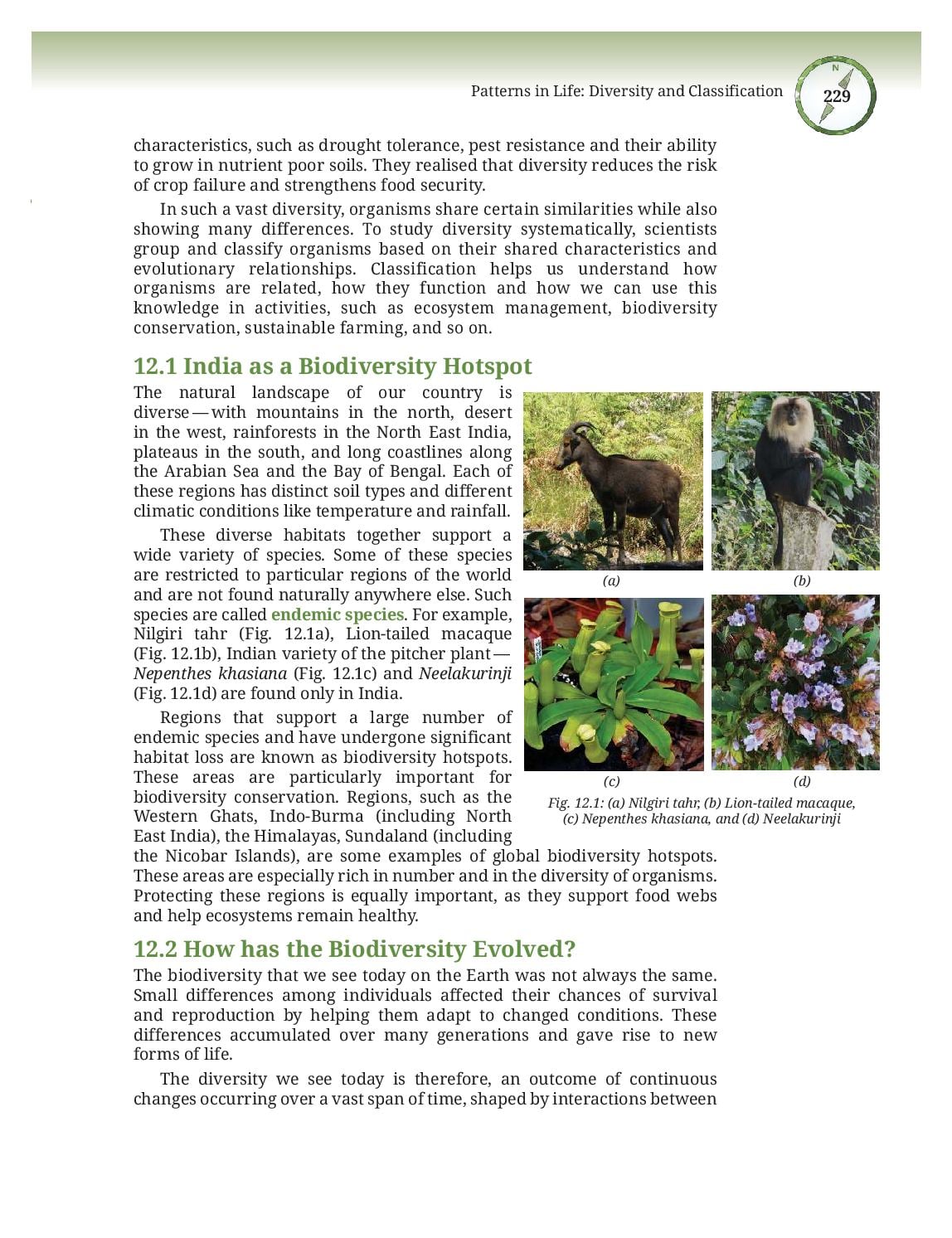
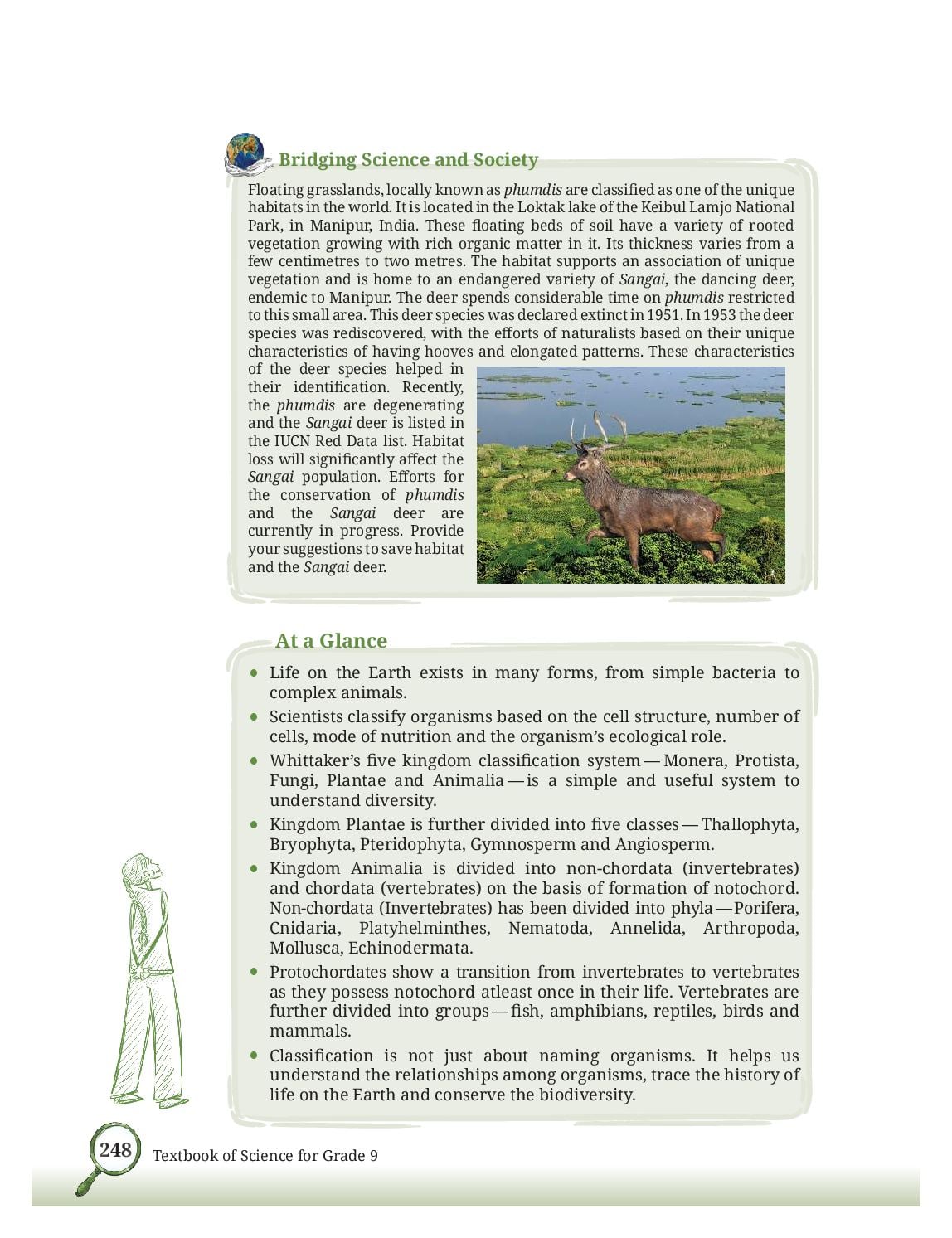
- Biodiversity is the whole variety of living organisms. India is rich in it because its habitats range from the Himalayas to the Thar desert to the Western Ghats; species found nowhere else are endemic (Nilgiri tahr, lion-tailed macaque, Nepenthes khasiana, Neelakurinji), and regions rich in endemics that have also lost much habitat are biodiversity hotspots.
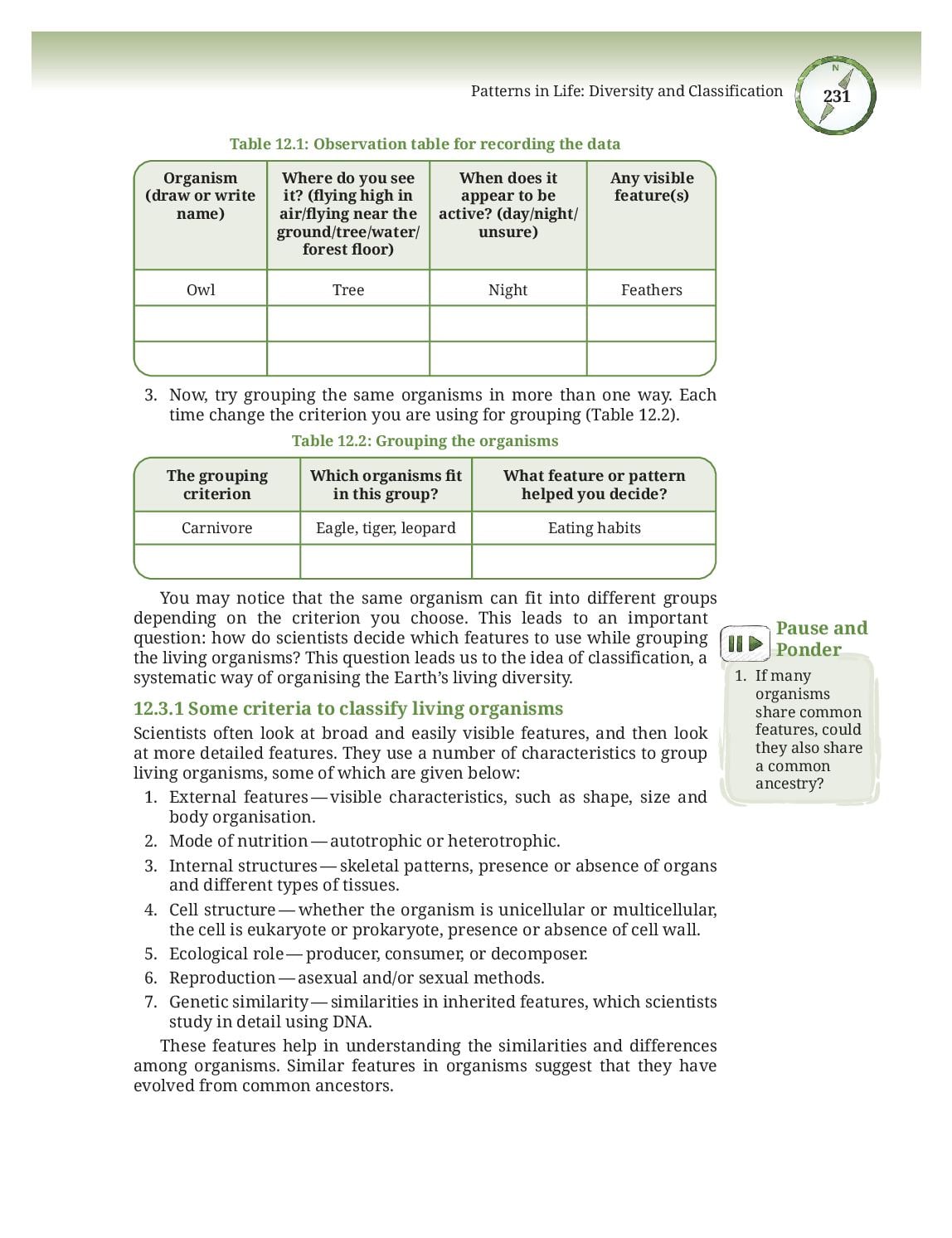
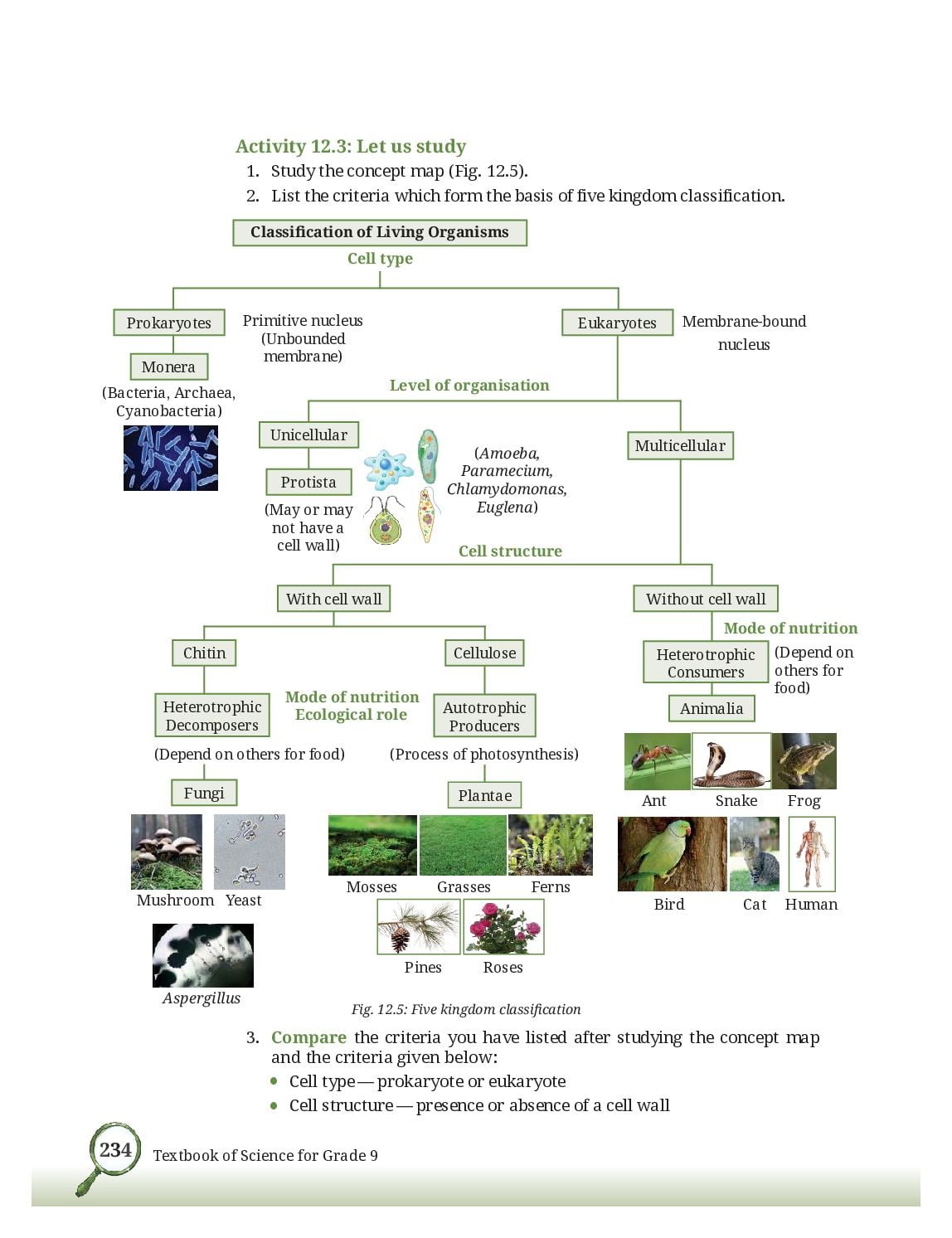
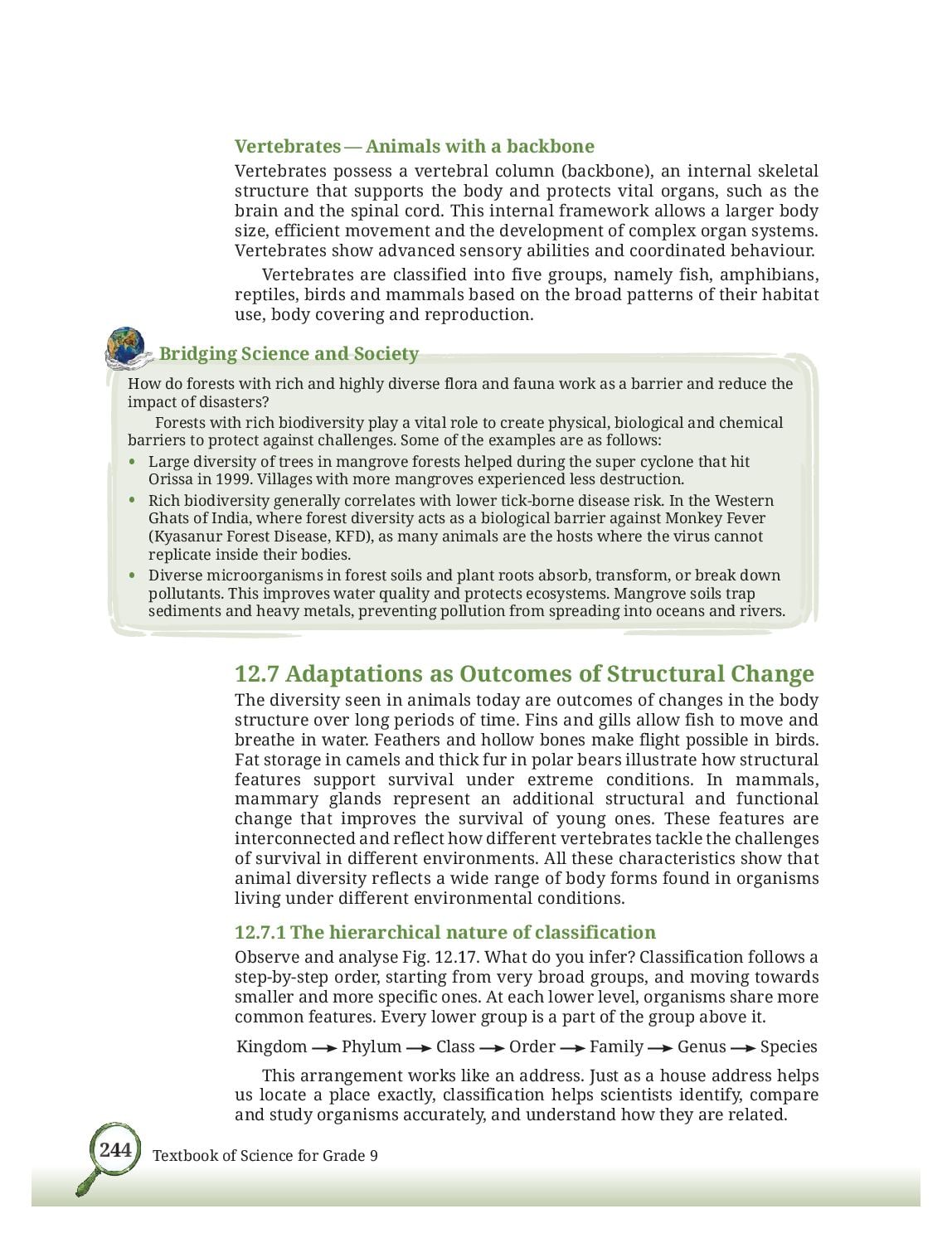
- Organisms are classified on seven kinds of evidence: external features, mode of nutrition, internal structures, cell structure, ecological role, reproduction and genetic similarity. Shared features point to a common ancestor.
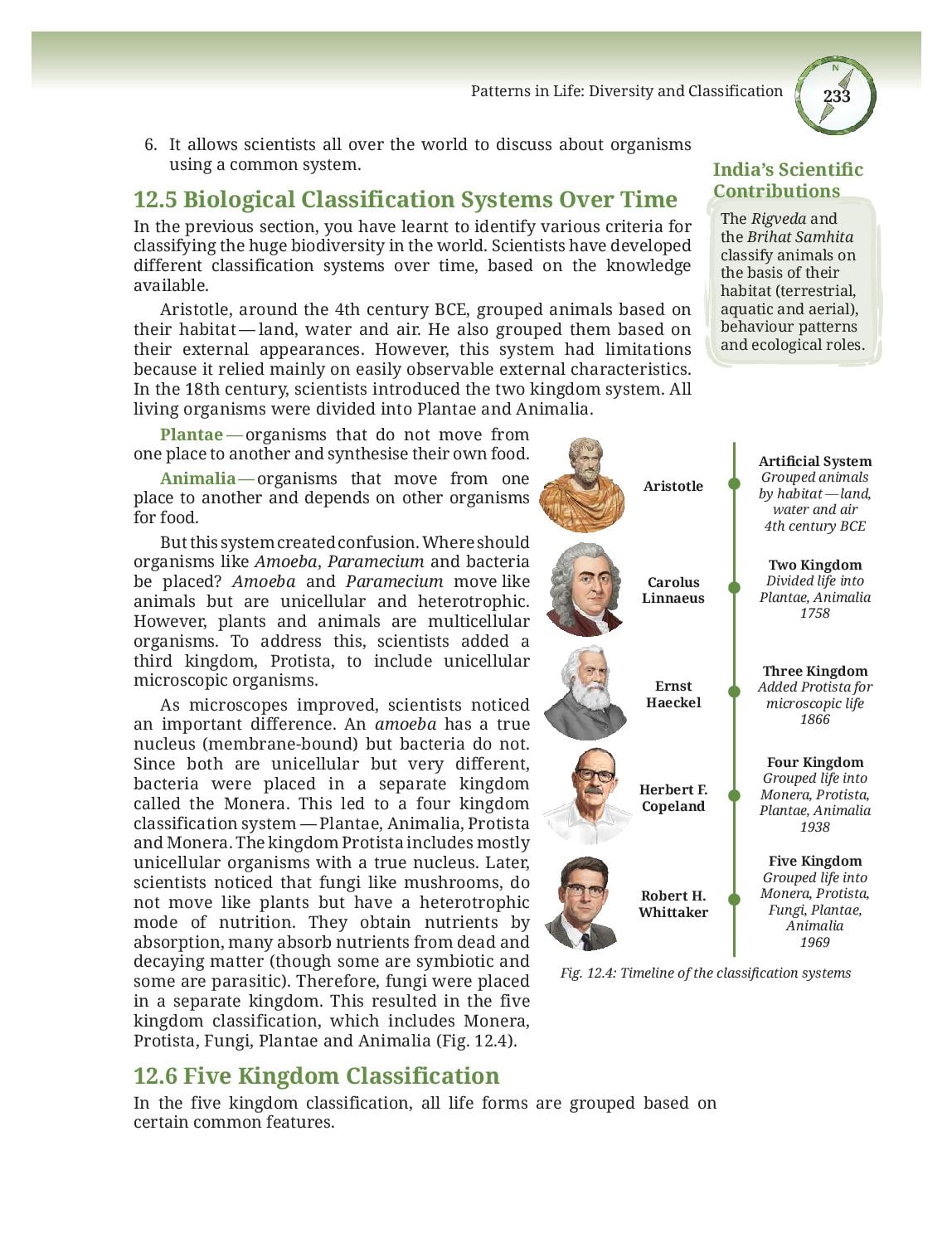
- The system grew step by step — Aristotle (habitat) → two kingdom (1758, Linnaeus) → three kingdom (1866, Haeckel, adds Protista) → four kingdom (1938, Copeland, adds Monera) → five kingdom (1969, Whittaker): Monera, Protista, Fungi, Plantae, Animalia. Each step was forced by a new observation the old system could not hold.
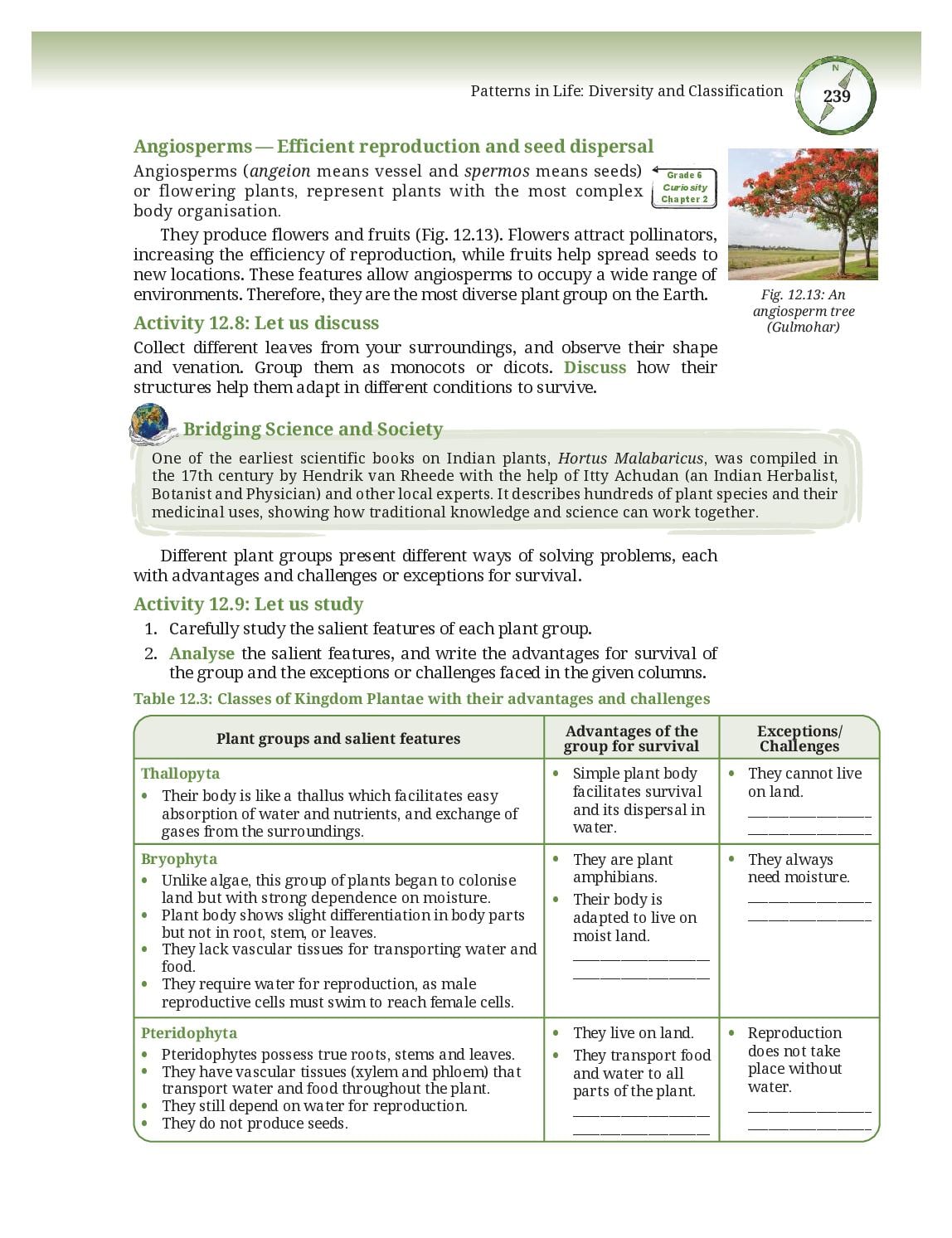
- Kingdom Plantae has five classes — Thallophyta, Bryophyta, Pteridophyta, Gymnosperm, Angiosperm. Read in that order they are a record of plants solving the problems of land: a thallus, then rhizoids, then xylem and phloem, then seeds (no water needed for fertilisation), then flowers and fruits.
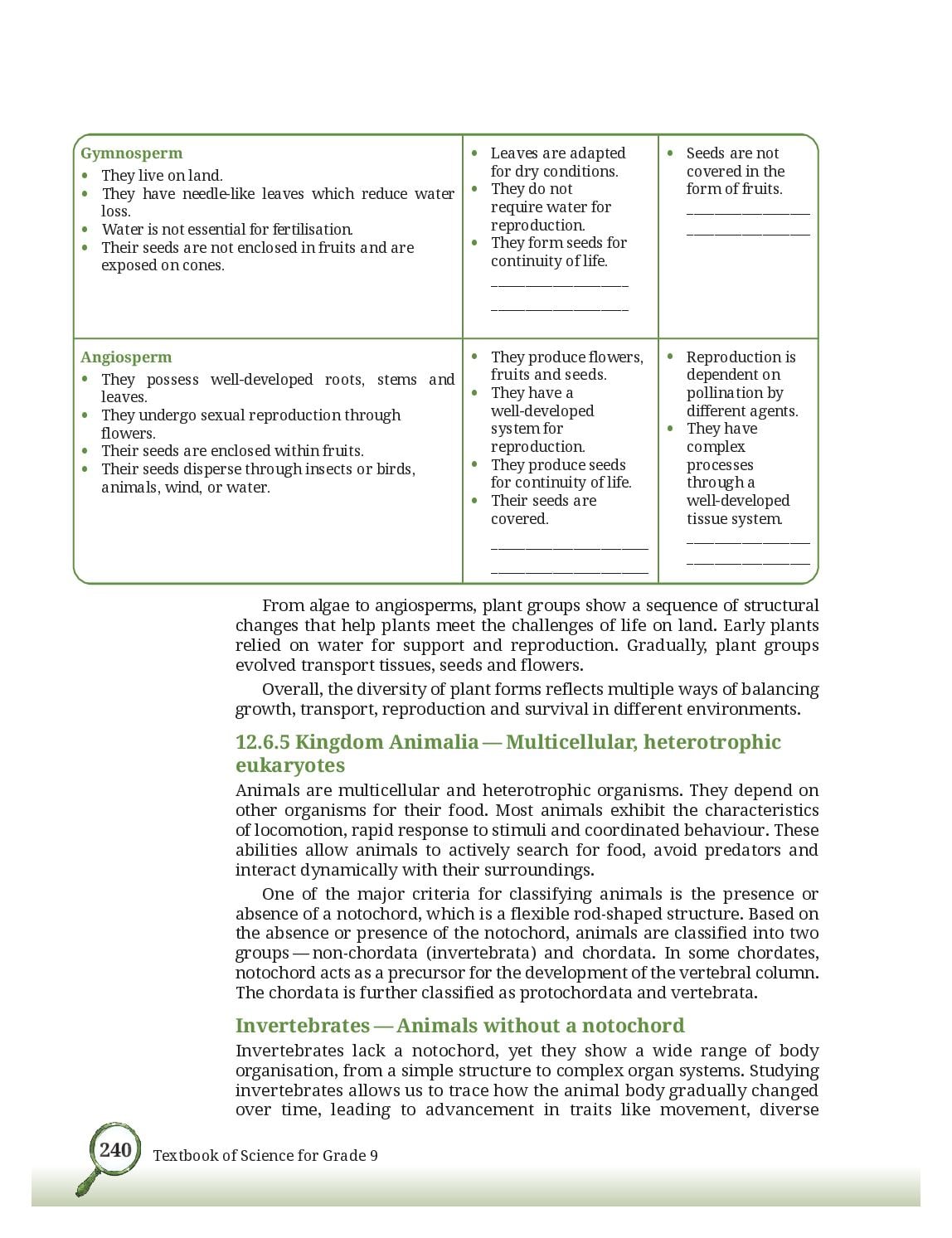
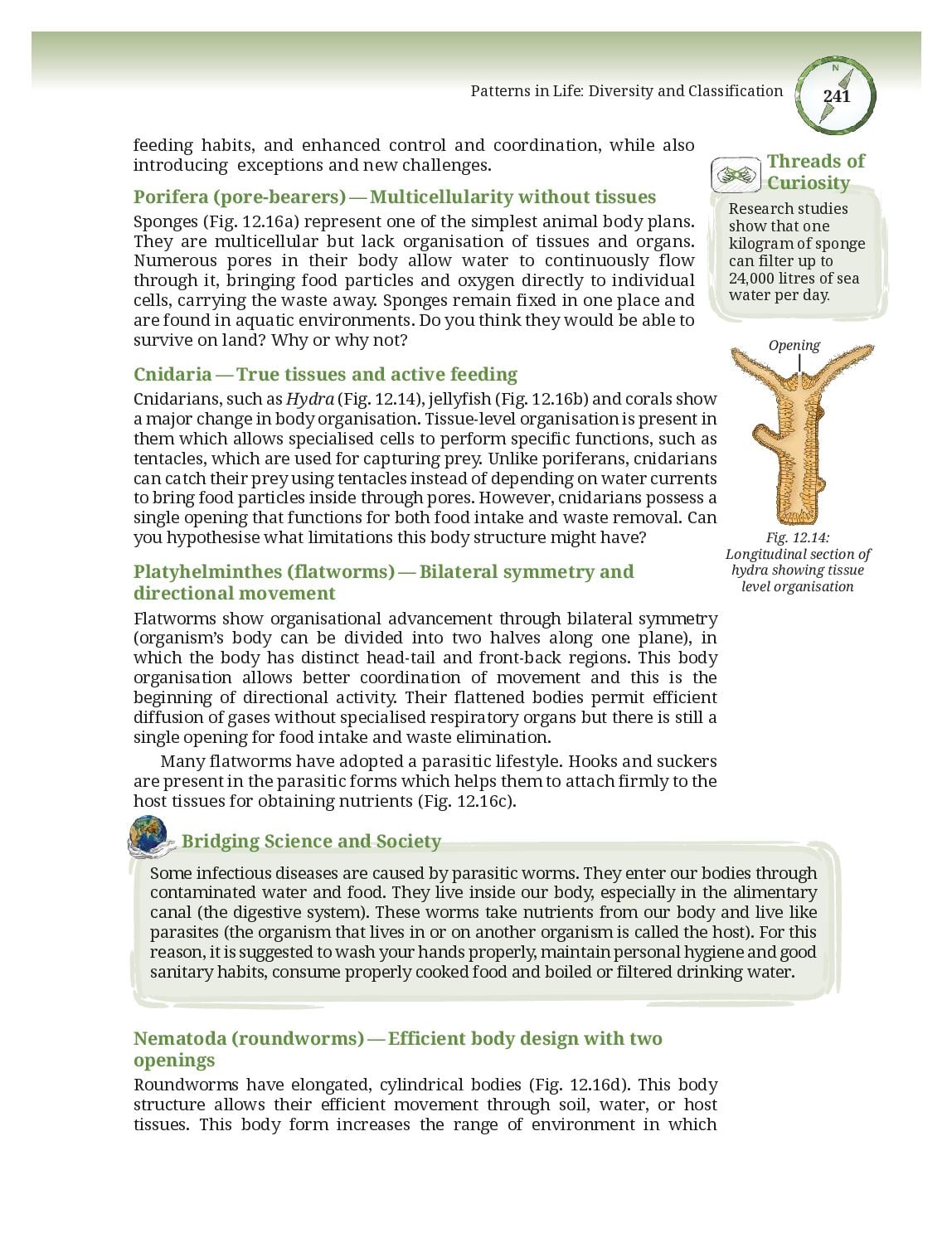
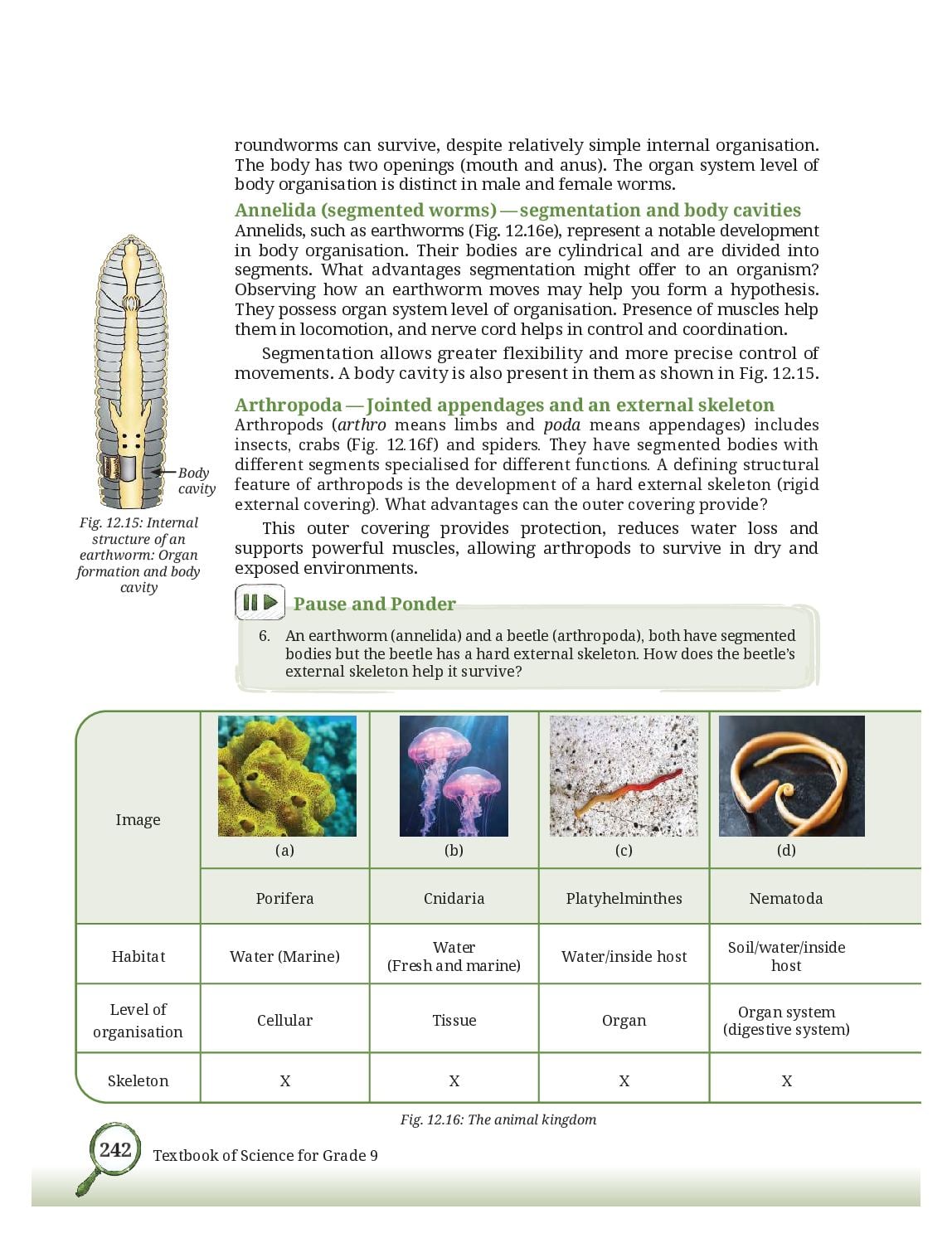
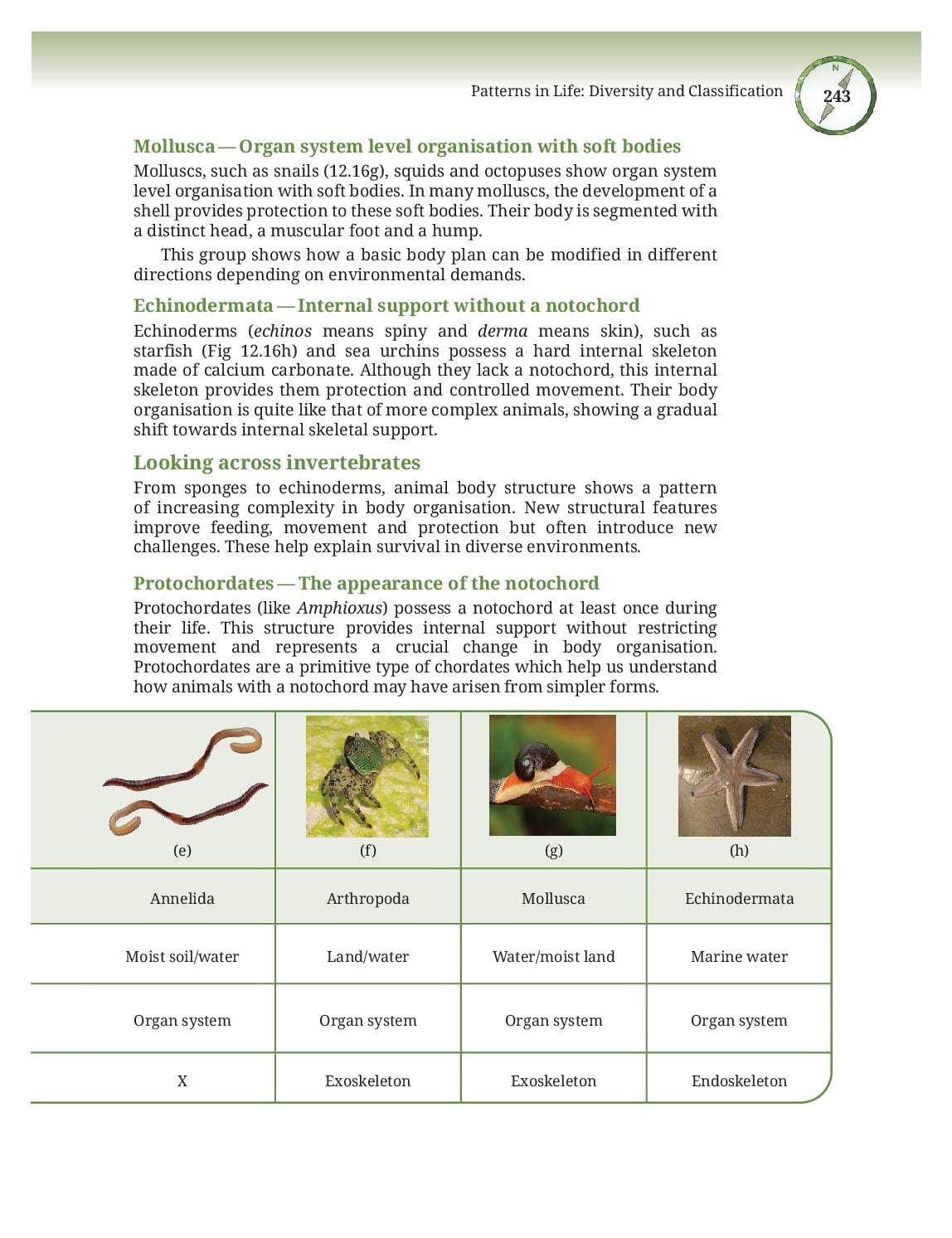
- Kingdom Animalia splits on the notochord. Non-chordates (invertebrates) run Porifera → Cnidaria → Platyhelminthes → Nematoda → Annelida → Arthropoda → Mollusca → Echinodermata, rising from cellular to organ-system level of organisation. Chordates are protochordates and vertebrates (fish, amphibians, reptiles, birds, mammals).
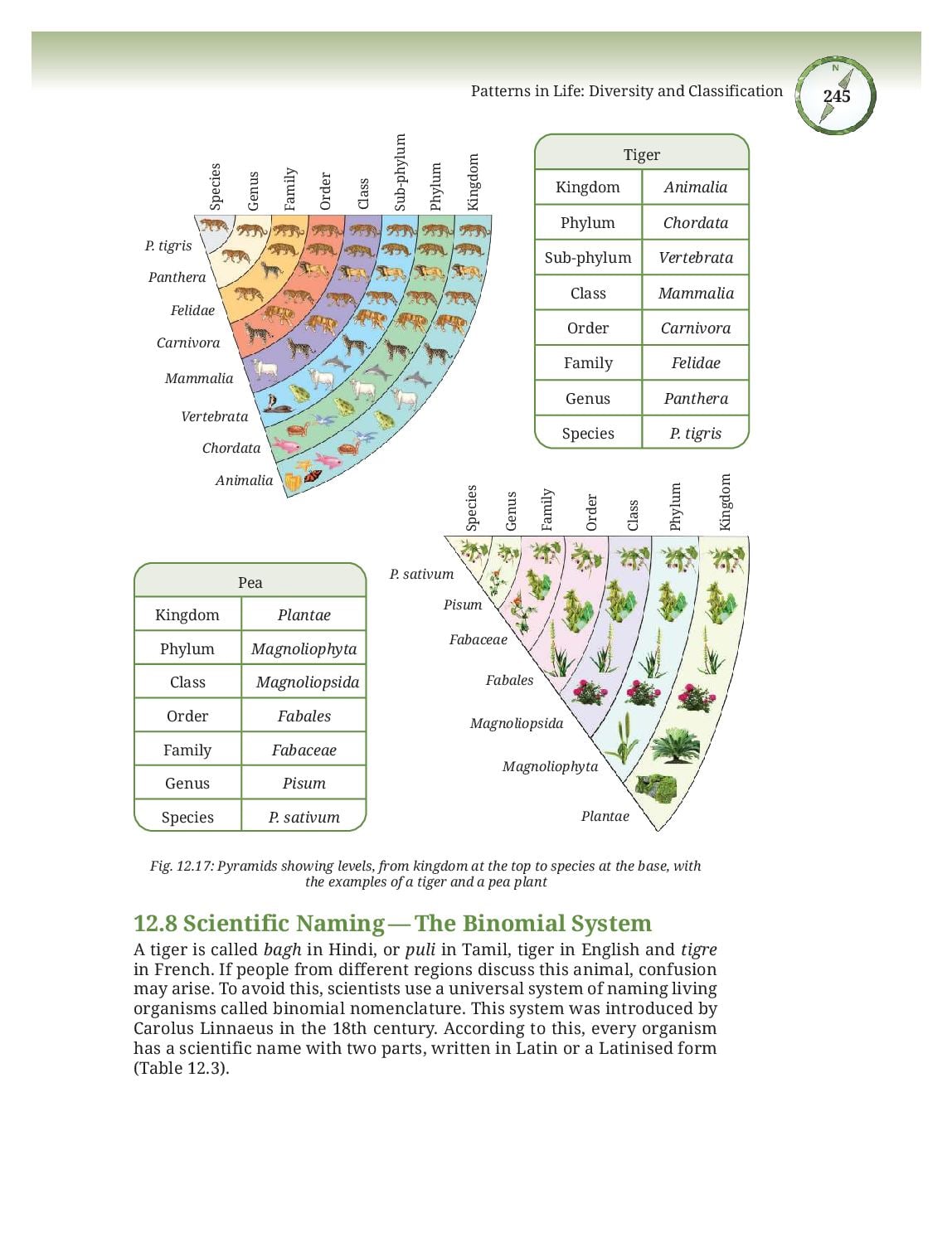
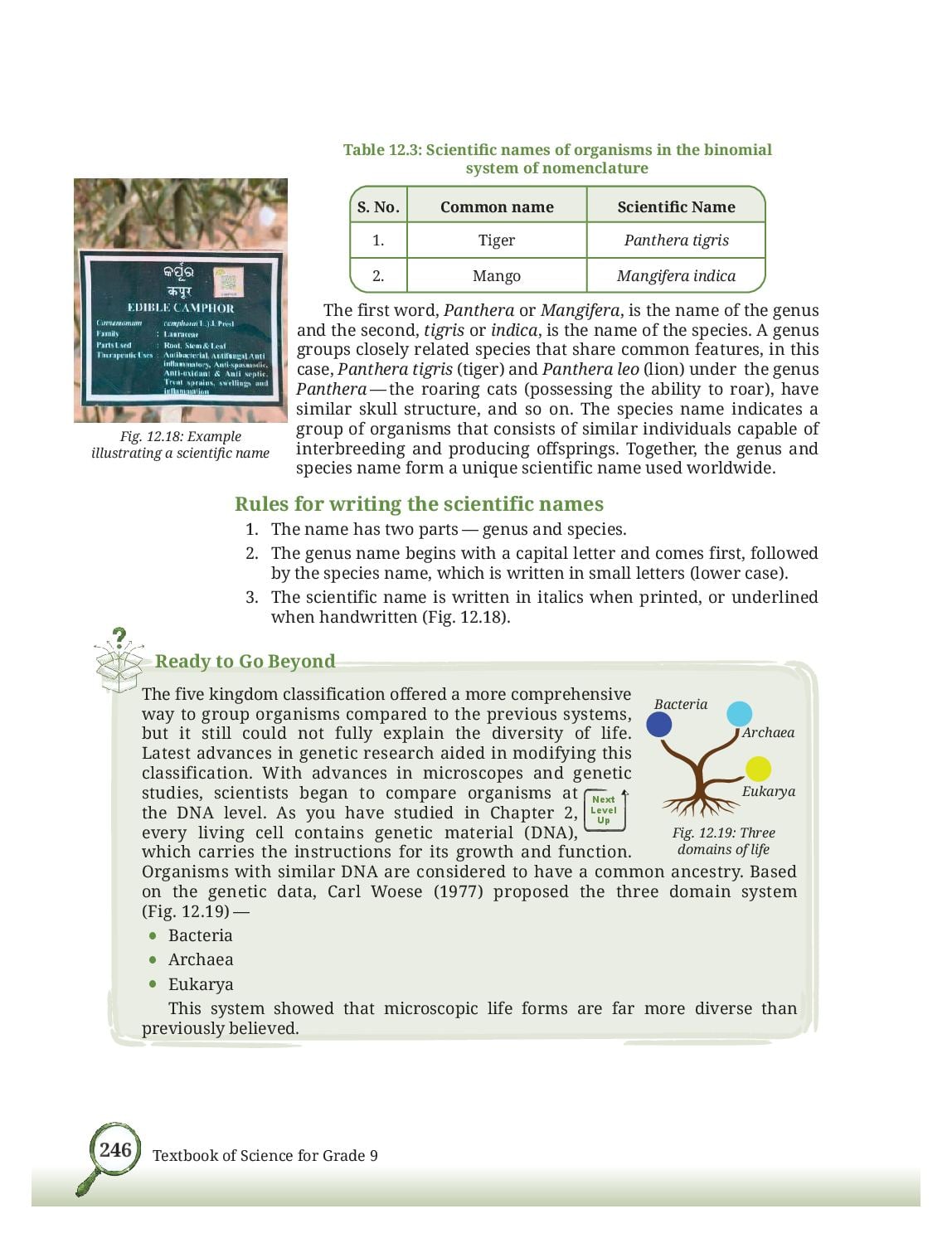
- Classification is hierarchical — Kingdom → Phylum → Class → Order → Family → Genus → Species — and every organism gets a two-part Latin name (binomial nomenclature, Linnaeus): Panthera tigris, Mangifera indica. Genus capitalised, species in lower case, both in italics or underlined.
- Classification is not finished. Carl Woese’s three domain system (1977 — Bacteria, Archaea, Eukarya) came from DNA comparison, and viruses still fit nowhere — which tells us classification systems are working tools that change as evidence changes.
Quick revision – Patterns in Life: Diversity and Classification
| Term | What it means | Example from the chapter | Where it appears |
|---|---|---|---|
| Biodiversity | The whole variety of living organisms on the Earth | Microscopic algae to giant trees; Himalayas to Andaman coral reefs | Chapter opener, 12.1 |
| Endemic species | A species found naturally in one region and nowhere else | Nilgiri tahr, lion-tailed macaque, Nepenthes khasiana, Neelakurinji | 12.1, Fig. 12.1 |
| Biodiversity hotspot | Region with many endemic species that has also lost much of its habitat | Western Ghats, Indo-Burma, Himalayas, Sundaland | 12.1 |
| Prokaryote / Eukaryote | Cell without / with a membrane-bound nucleus | Bacteria (pro) vs Amoeba (eu) | 12.5, Fig. 12.5 |
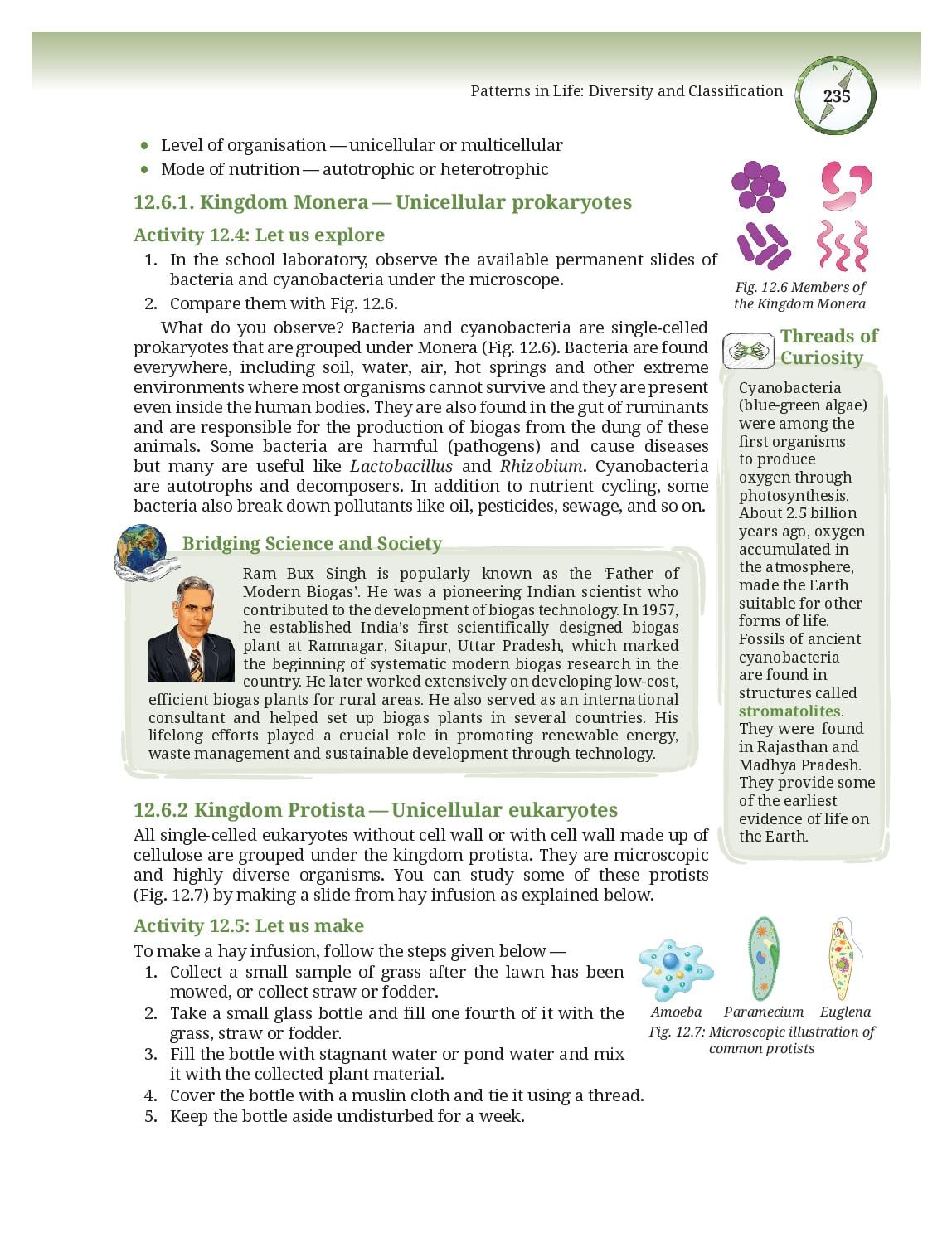
| Monera | Unicellular prokaryotes | Bacteria, Archaea, Cyanobacteria; Lactobacillus, Rhizobium | 12.6.1 |
| Protista | Unicellular eukaryotes, no cell wall or a cellulose one | Amoeba, Paramecium, Chlamydomonas, Euglena | 12.6.2 |
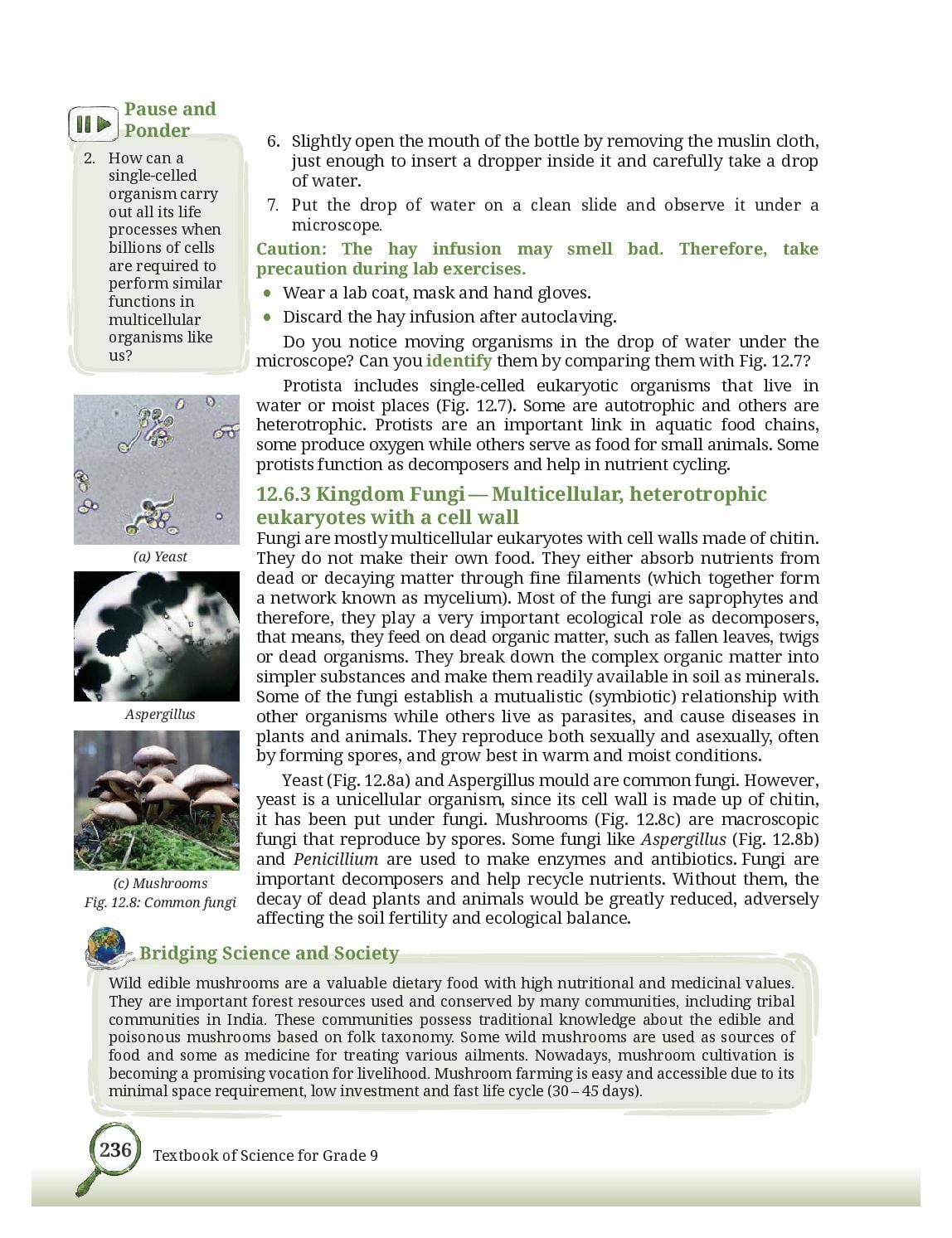
| Fungi | Mostly multicellular heterotrophic eukaryotes, cell wall of chitin | Yeast, Aspergillus, Penicillium, mushroom | 12.6.3 |
| Mycelium | Network of fine filaments through which a fungus absorbs nutrients | Bread mould growing on damp bread | 12.6.3 |
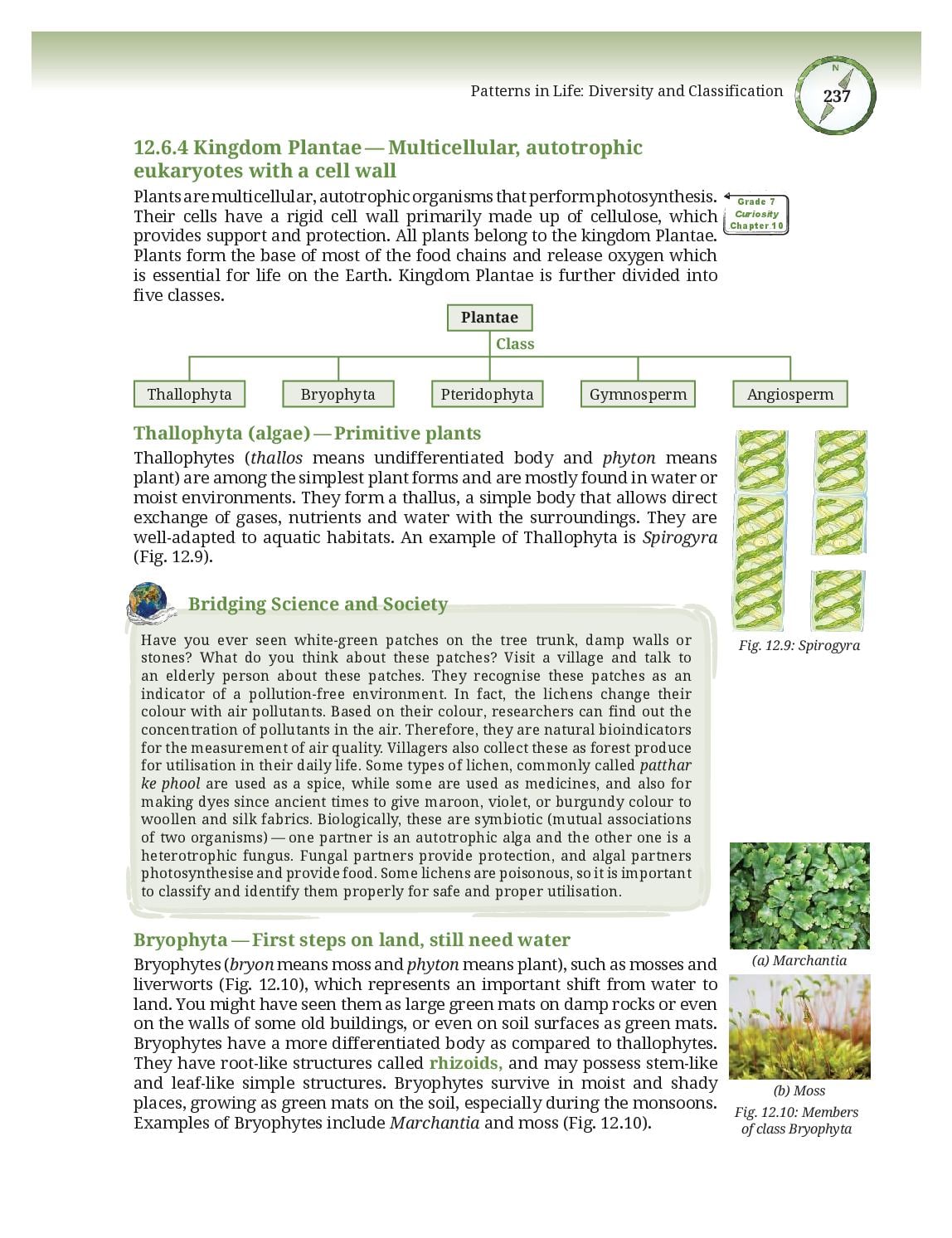
| Thallus | A simple plant body not divided into root, stem and leaf | Spirogyra (Thallophyta) | 12.6.4 |
| Rhizoids | Root-like anchoring structures of bryophytes (not true roots) | Moss, Marchantia | 12.6.4 |
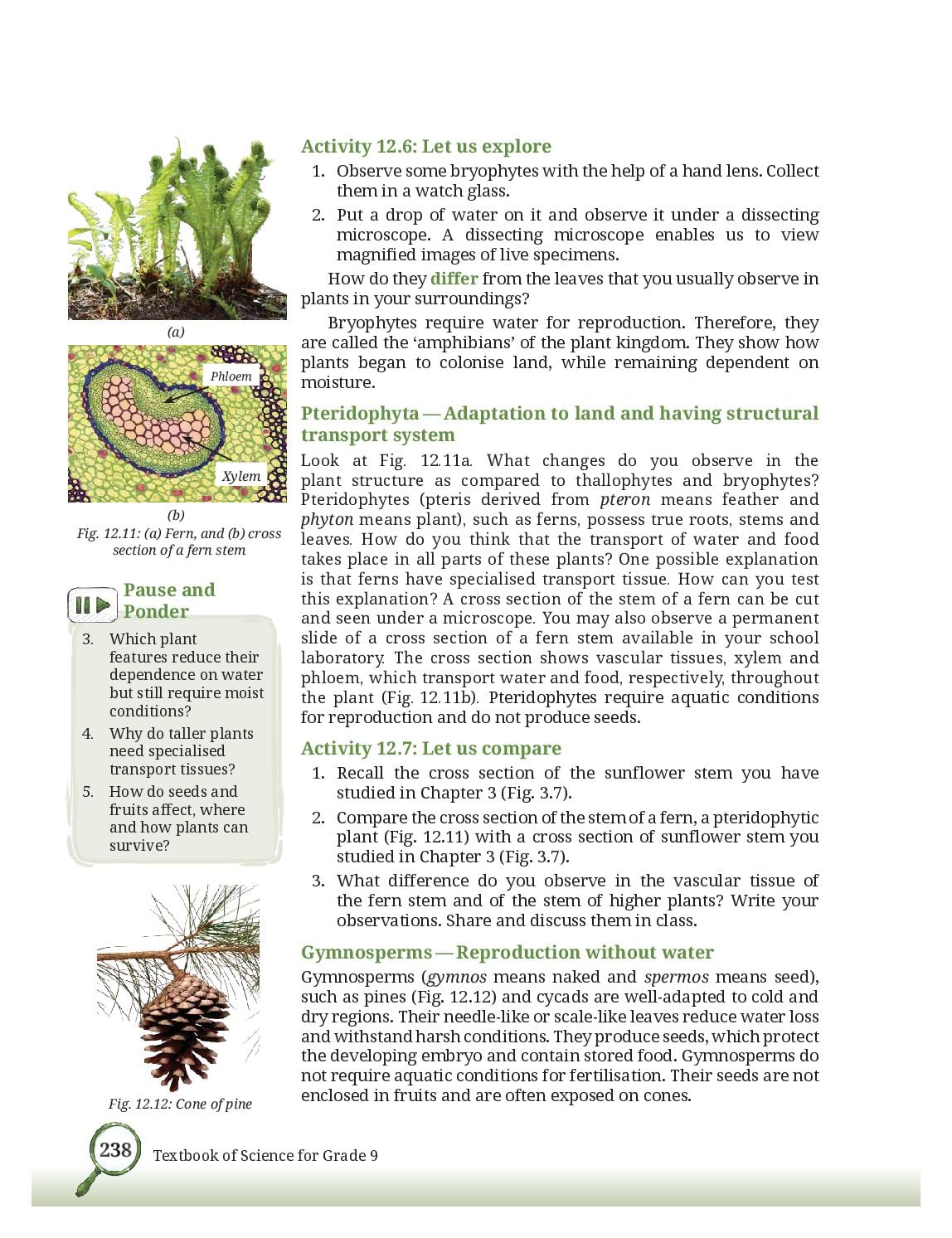
| Vascular tissue | Xylem carries water, phloem carries food | First seen in Pteridophyta (fern stem, Fig. 12.11b) | 12.6.4 |
| Notochord | Flexible rod-shaped supporting structure; basis of the animal split | Present in Amphioxus (protochordate); precursor of the vertebral column | 12.6.5 |
| Bilateral symmetry | Body divisible into two halves along one plane; head and tail ends | Platyhelminthes onwards | 12.6.5 |
| Exoskeleton / Endoskeleton | Hard covering outside / skeleton inside the body | Crab, insect (exo); starfish, vertebrates (endo) | Fig. 12.16 |
Old NCERT vs New – Class 9 Science
This chapter is from Exploration, the new NCERT Class 9 Science book (NCF-SE 2023, used from 2026-27). It replaced the old book “Science”, so chapter numbers and names differ from older PDFs.
Solutions and All Chapters
Answers to the exercises and the full chapter list of Exploration:
Patterns in Life: Diversity and Classification – Overview
| Class | Class 9 |
| Subject | Science |
| Book | Exploration – new NCERT book |
| Chapter | 12 of 13 – Patterns in Life: Diversity and Classification |
| Book pages | 228 – 251 |
| Edition | Latest NCERT edition (2026-27) |
| Session | 2026-27 |
| Free – read online or download |
Class 9 Science Chapter 12 – FAQs
Where can I download Patterns in Life: Diversity and Classification Class 9 PDF?
From the download table on this page – the chapter PDF is free, and the full book is linked too.
What is Class 9 Science Chapter 12 about?
Biodiversity is the whole variety of living organisms. India is rich in it because its habitats range from the Himalayas to the Thar desert to the Western Ghats; species found nowhere else are endemic (Nilgiri tahr, lion-tailed macaque, Nepenthes khasiana, Neelakurinji), and regions rich in endemics that have also lost much habitat are biodiversity hotspots.
Is Patterns in Life: Diversity and Classification from the new NCERT Class 9 Science book?
Yes. It is chapter 12 of exploration, the new NCERT Class 9 Science book for 2026-27.
Is this the latest NCERT edition for 2026-27?
Yes – the PDF is NCERT’s latest edition for the 2026-27 session.
Where are the NCERT Solutions for Class 9 Science Chapter 12?
Open the NCERT Solutions link above for answers to the exercise questions.