Download Life Processes in Animals – NCERT Class 7 Science Chapter 9 PDF from the new NCERT Class 7 Science book Curiosity (2026-27). Read the chapter online or download the free PDF. Nutrition, respiration, circulation, excretion and reproduction are the life processes that keep an animal alive. This chapter takes up nutrition and respiration in detail.
Life Processes in Animals PDF – Chapter 9 of Curiosity
Read the chapter online or download the PDF.
| Chapter | Download | |
|---|---|---|
| Chapter 9 PDF | Life Processes in Animals | View PDF |
| Full book | NCERT Class 7 Science – Curiosity | View Book |
Read Online
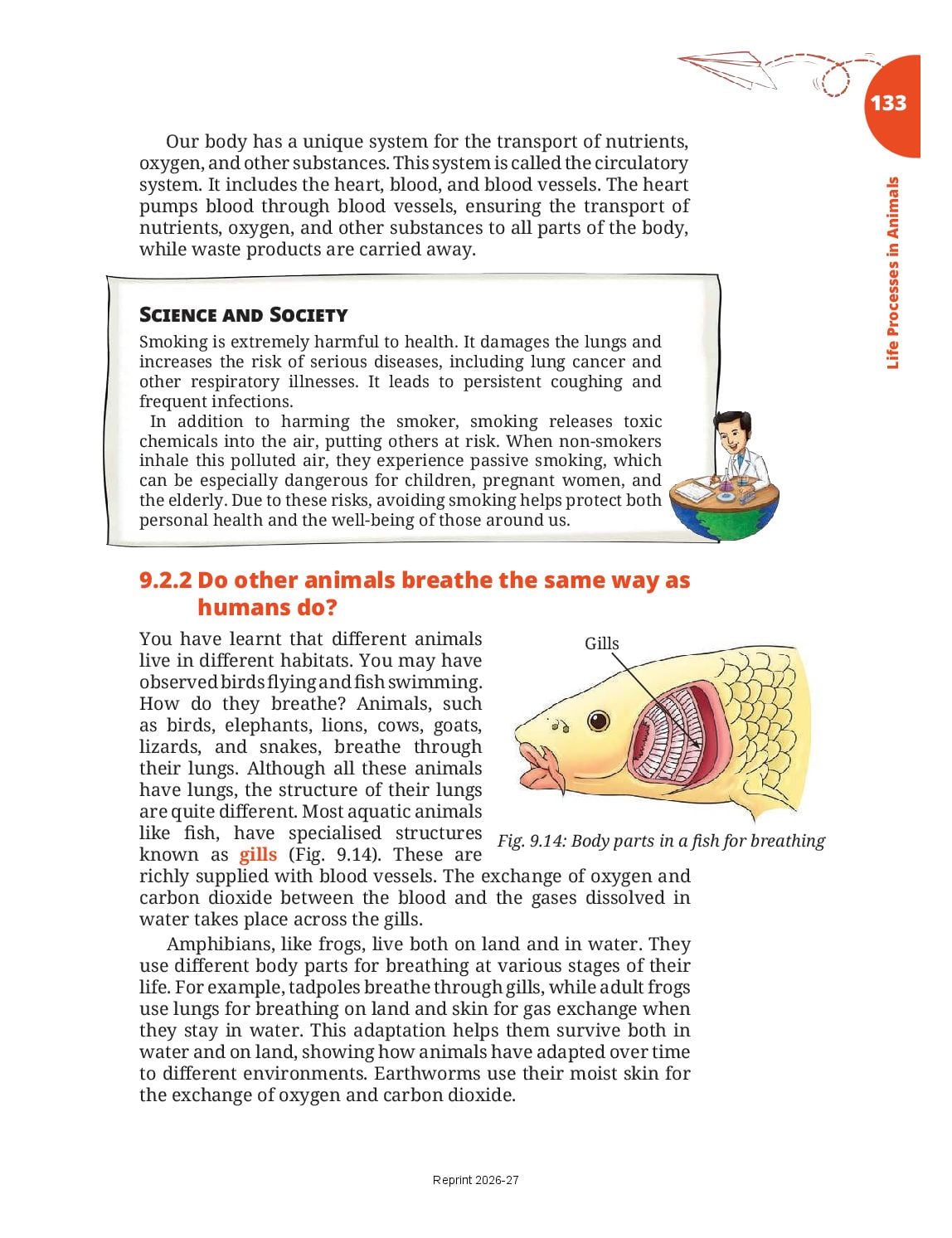
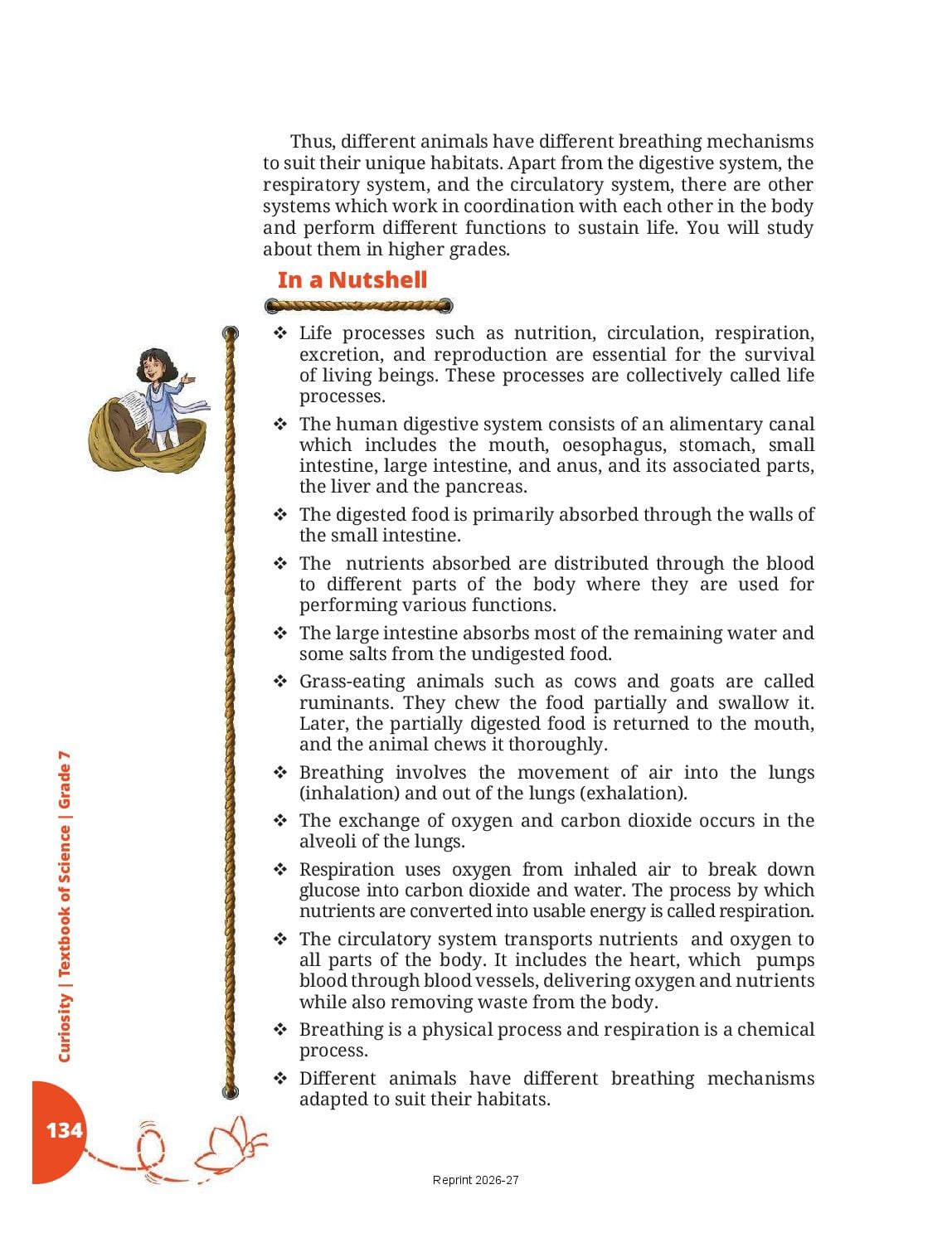
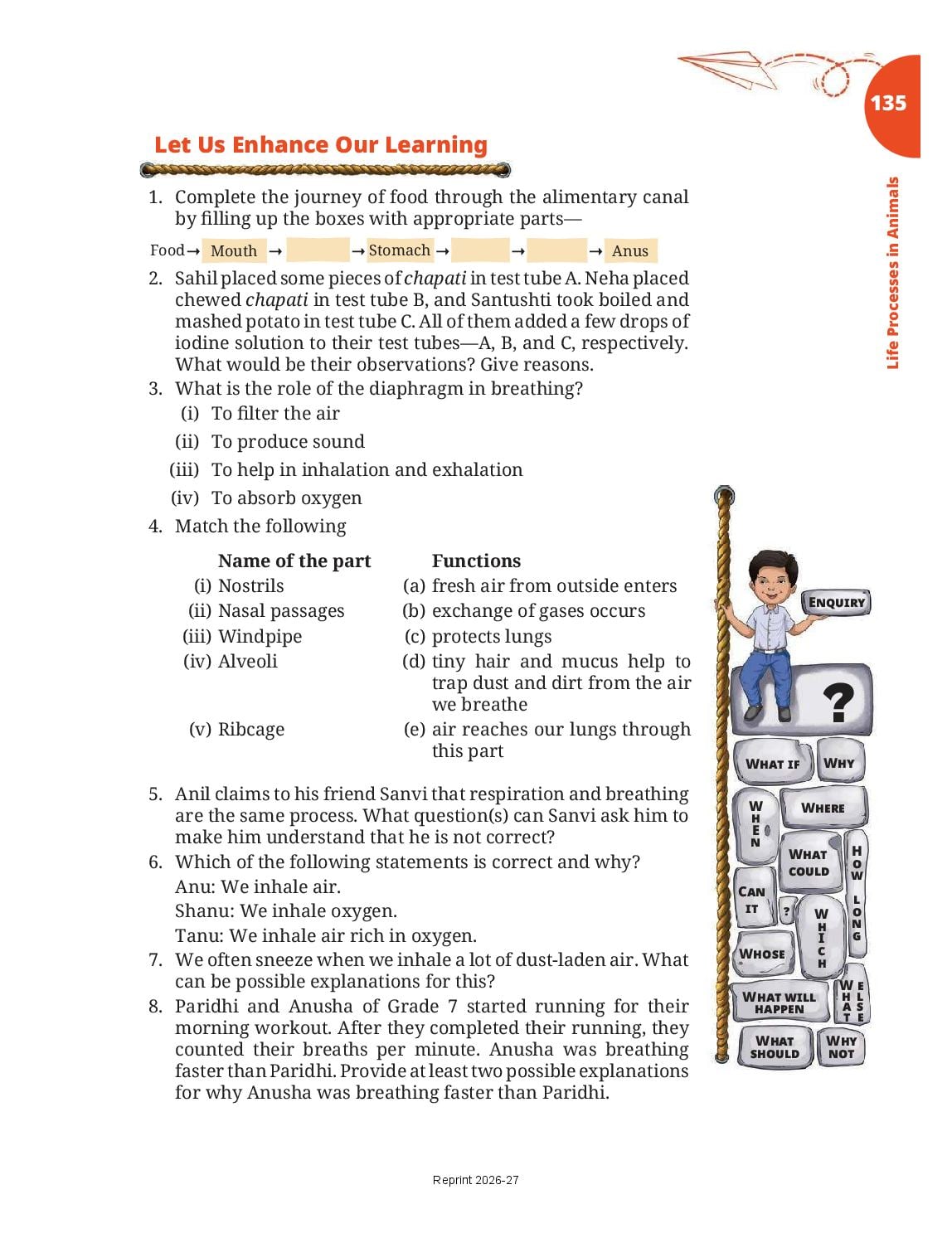
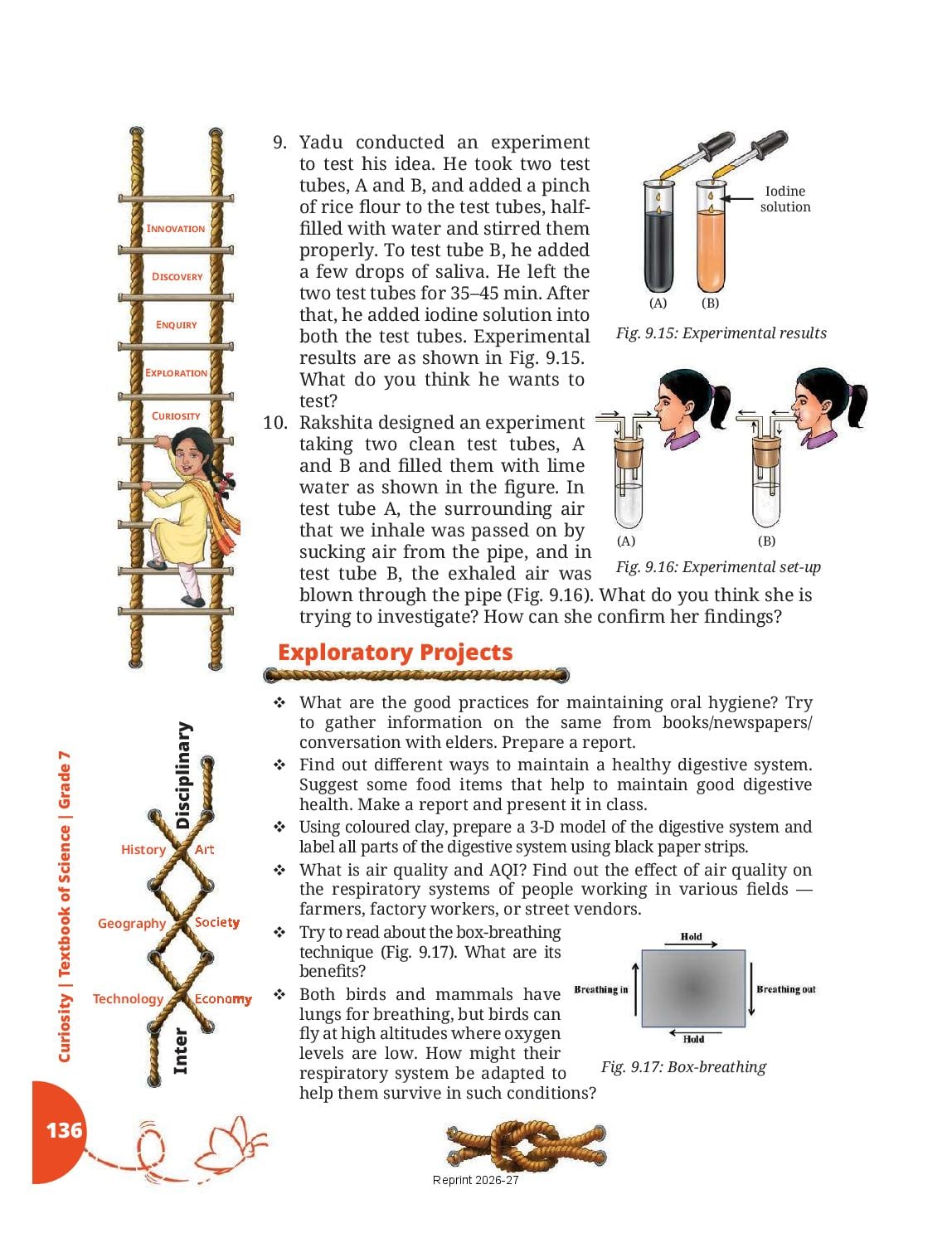
What Is in Life Processes in Animals? (Class 7 Science Chapter 9)
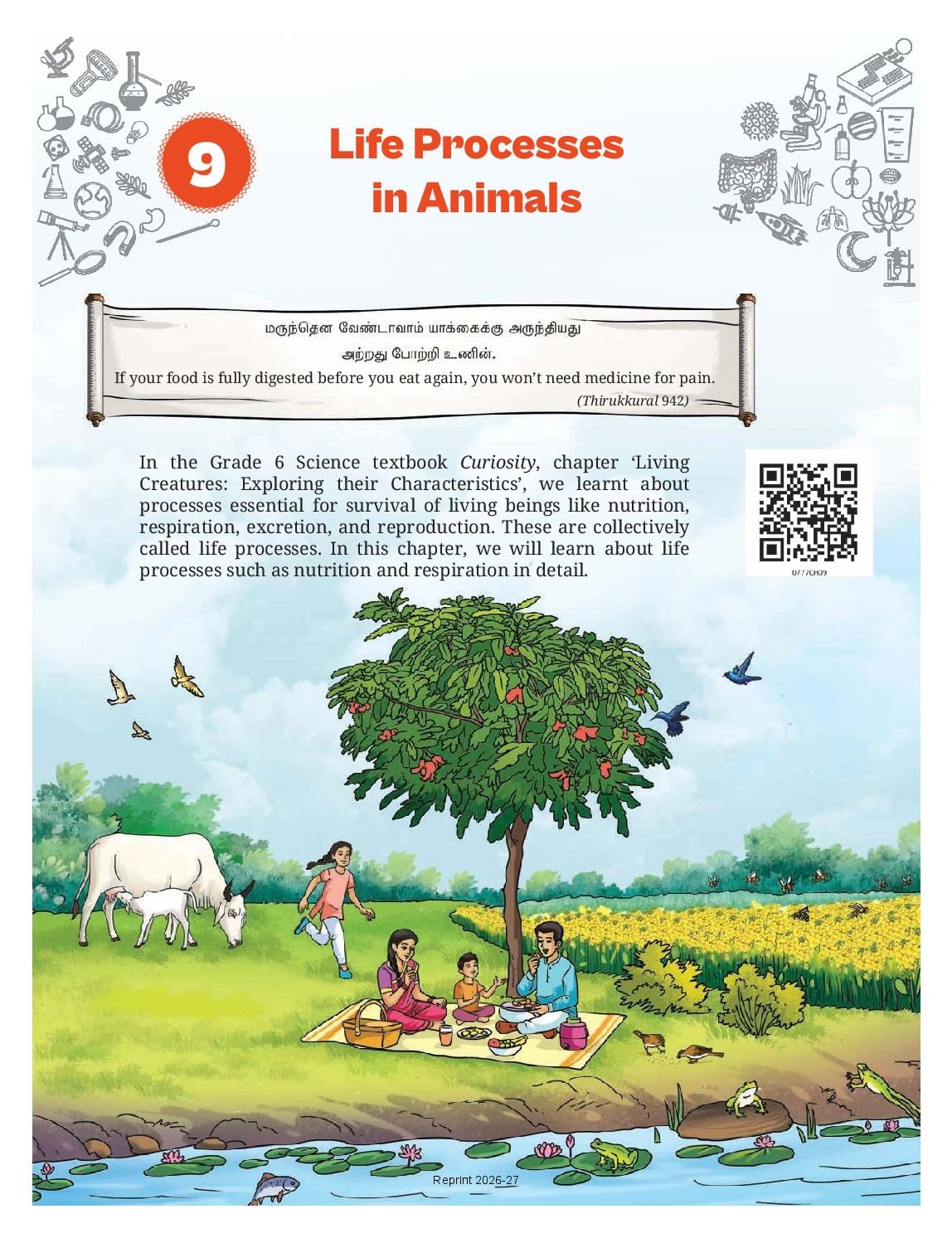
- Nutrition, respiration, circulation, excretion and reproduction are the life processes that keep an animal alive. This chapter takes up nutrition and respiration in detail.
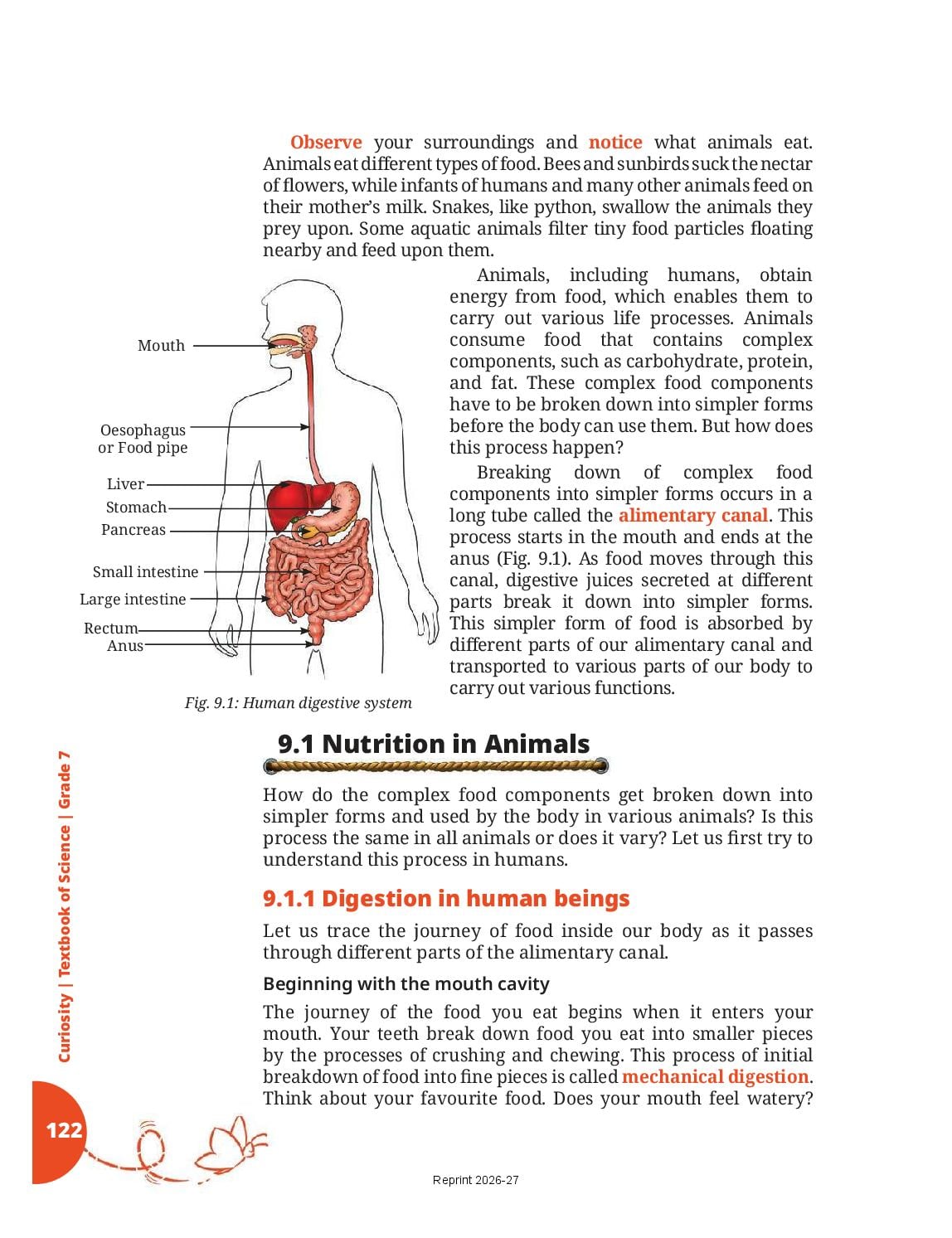
- Complex food components — carbohydrate, protein and fat — are broken into simpler forms inside a long tube called the alimentary canal, which runs from the mouth to the anus.
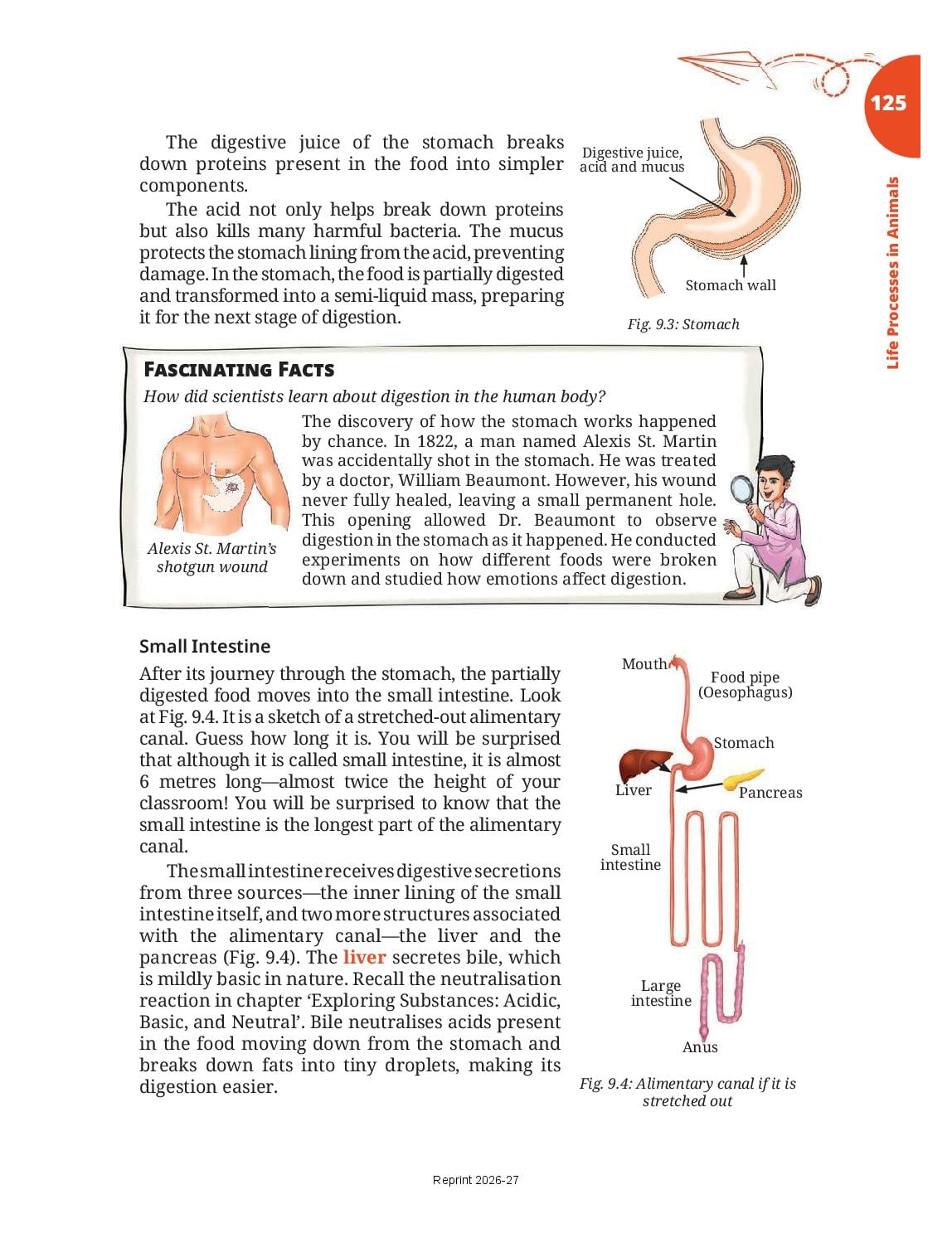
- Digestion begins in the mouth: teeth do mechanical digestion and saliva starts changing starch into sugar. The stomach adds digestive juice, acid and mucus; the liver adds bile and the pancreas adds pancreatic juice.
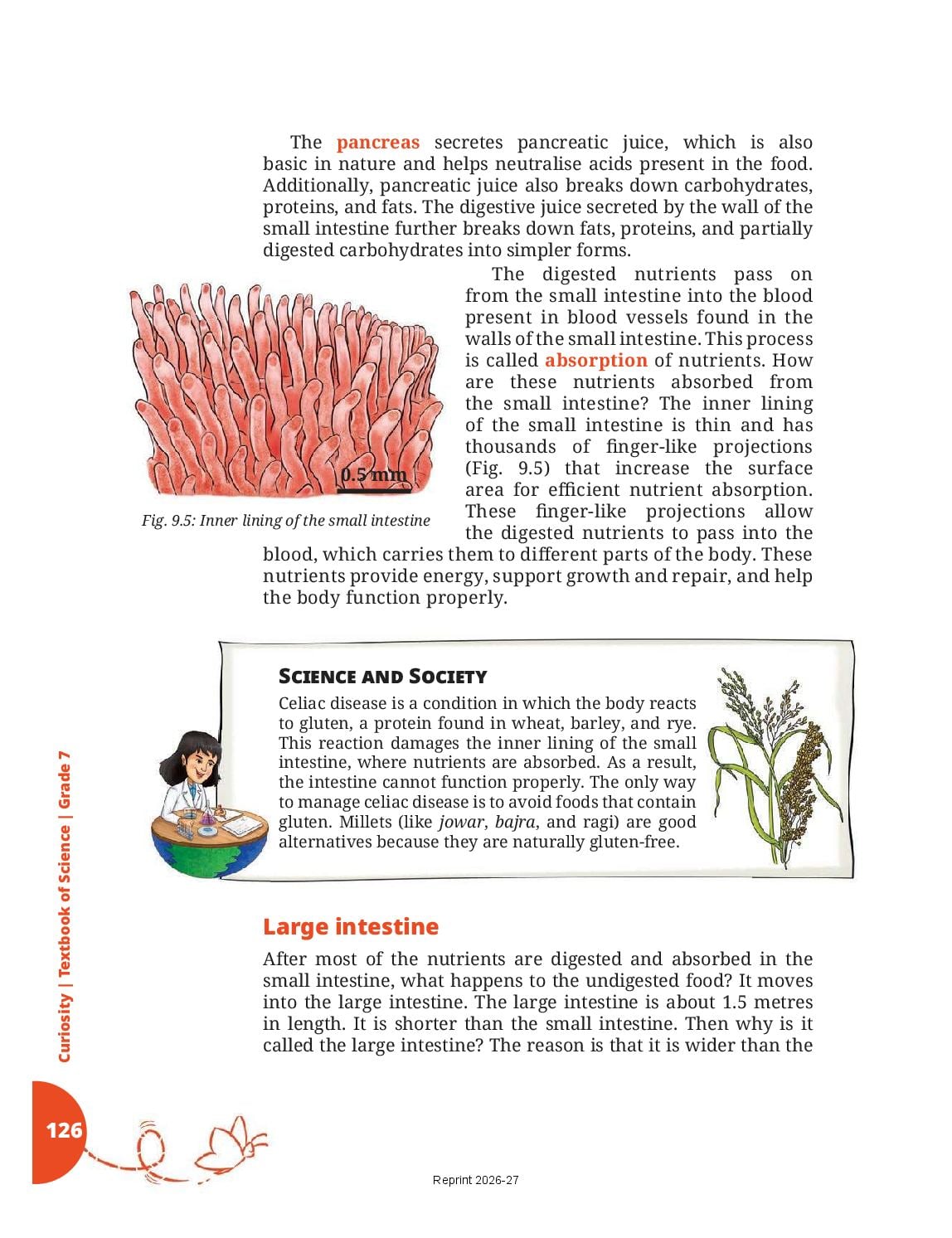
- The small intestine (about 6 m) is the longest part of the canal. Its thin inner lining carries thousands of finger-like projections that absorb the digested nutrients into the blood.
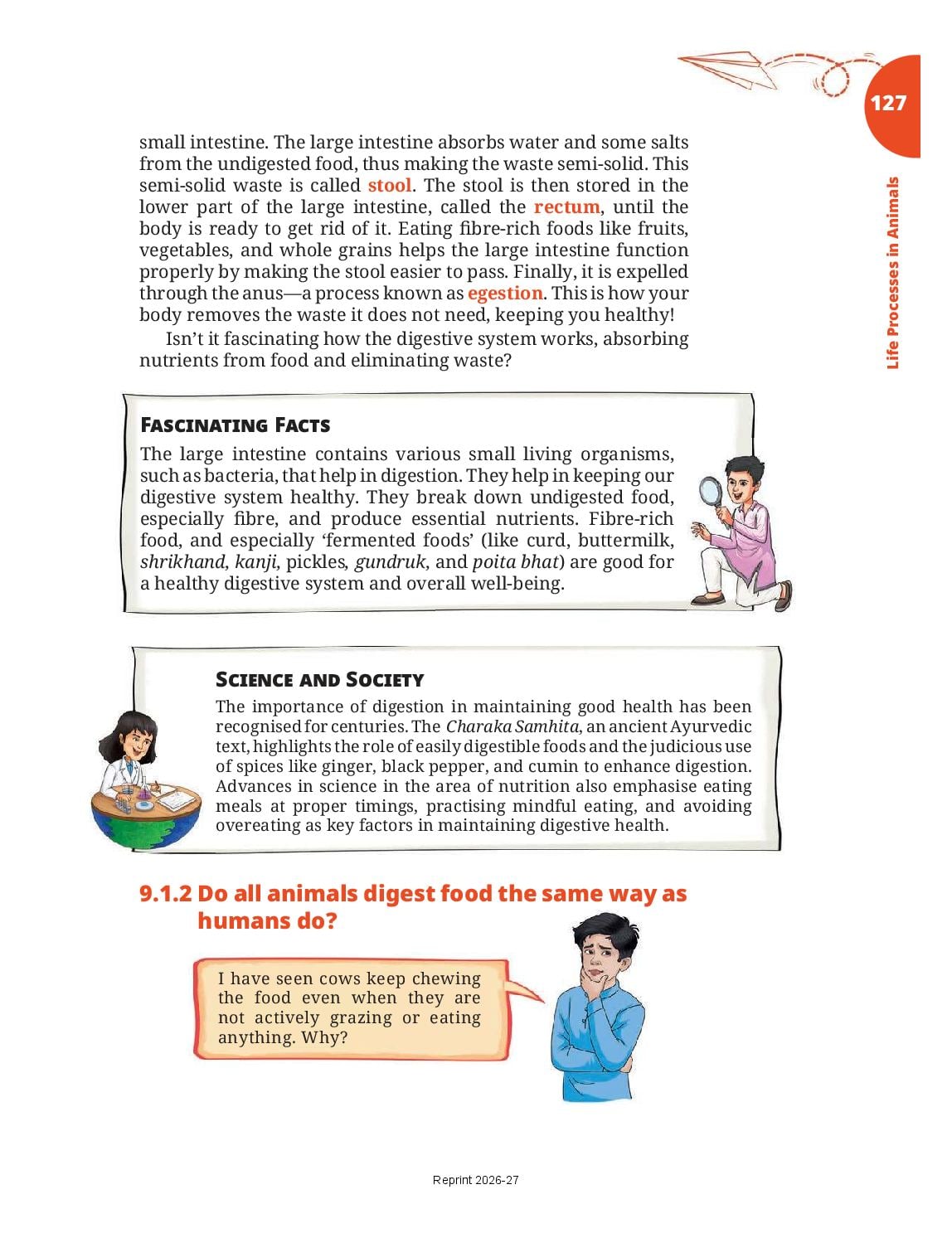
- The large intestine (about 1.5 m) is shorter but wider. It absorbs water and some salts, the semi-solid stool is stored in the rectum, and it leaves through the anus — a process called egestion.
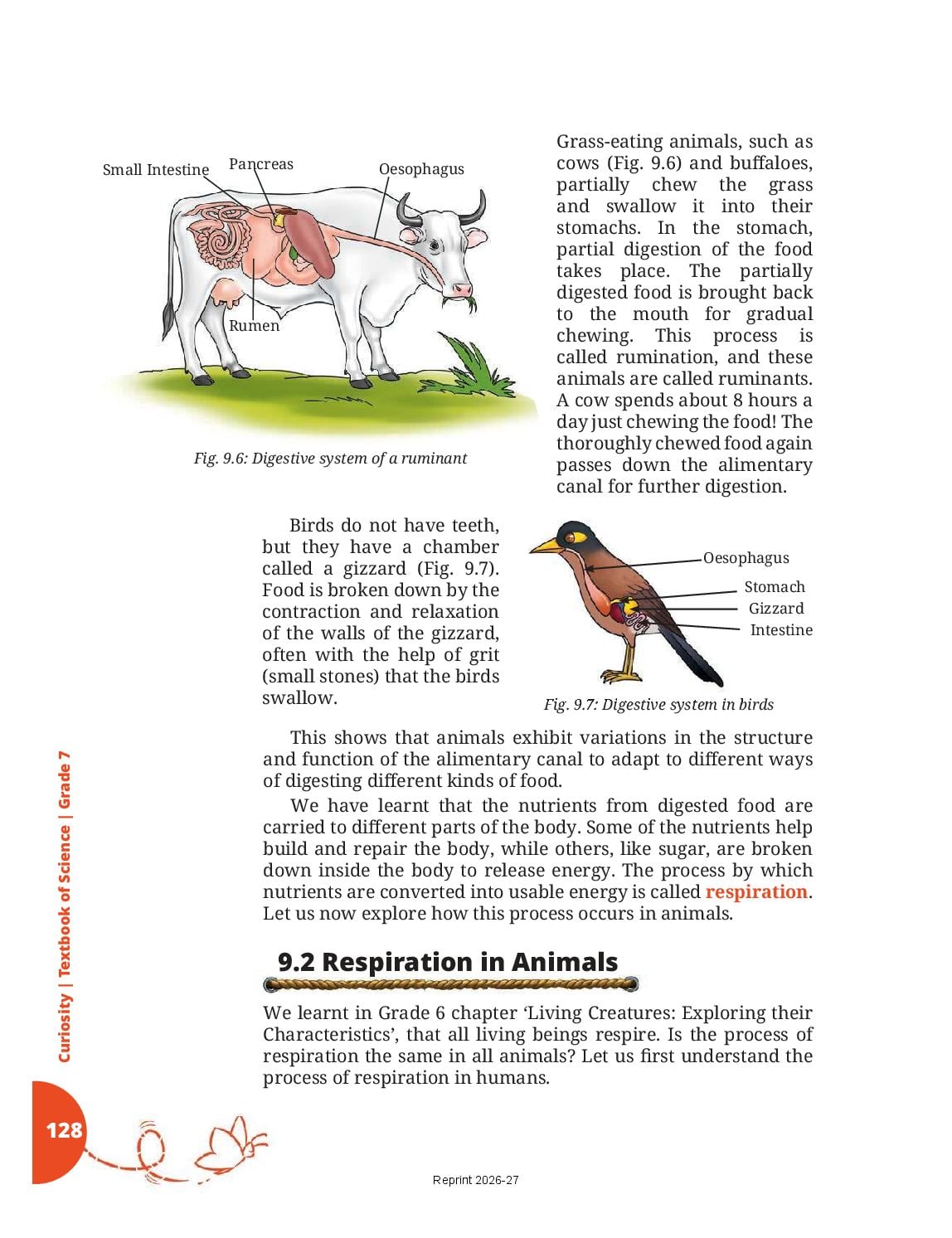
- Animals differ: cows and buffaloes are ruminants that bring food back for rumination; birds have no teeth but grind food in a gizzard with the help of grit.
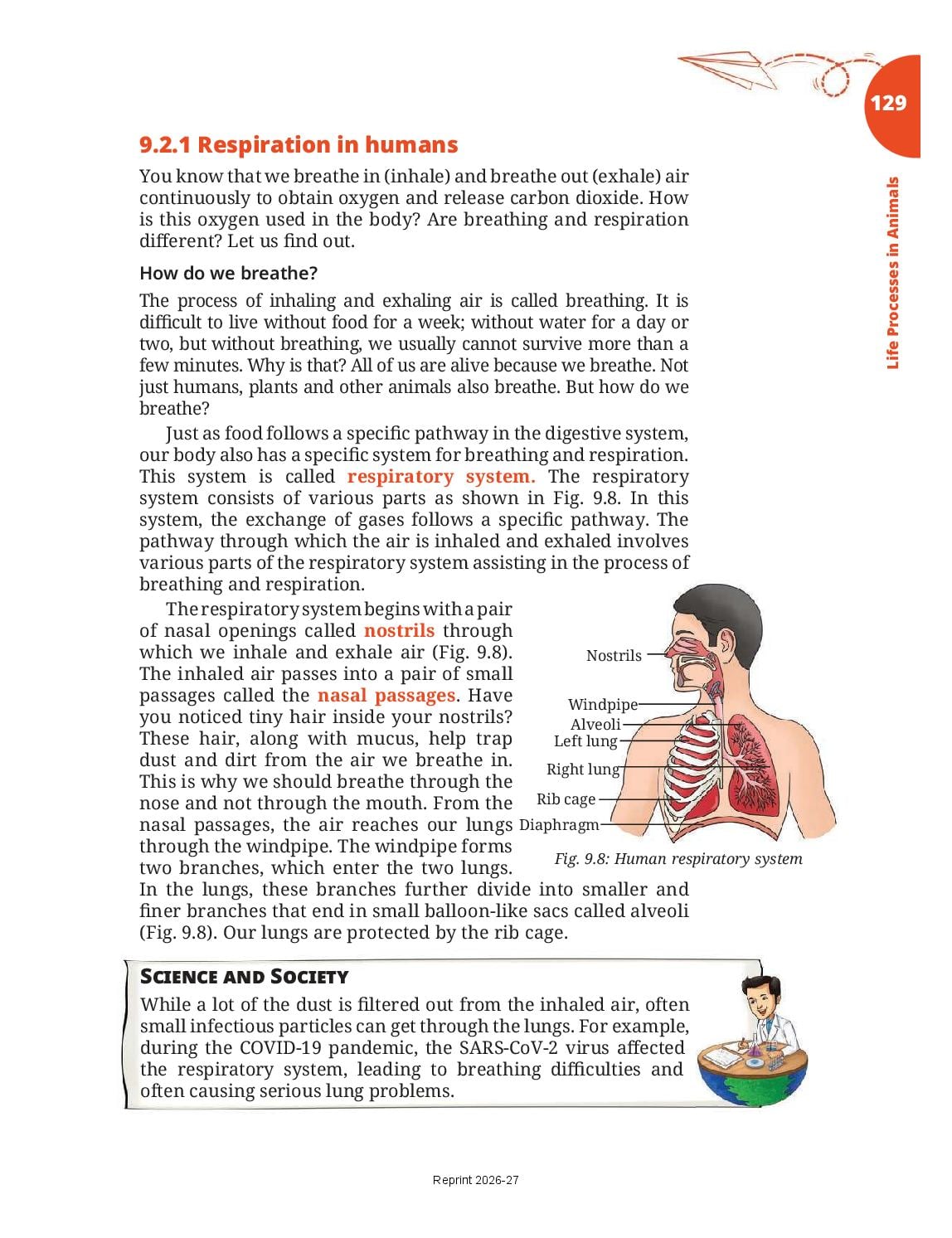
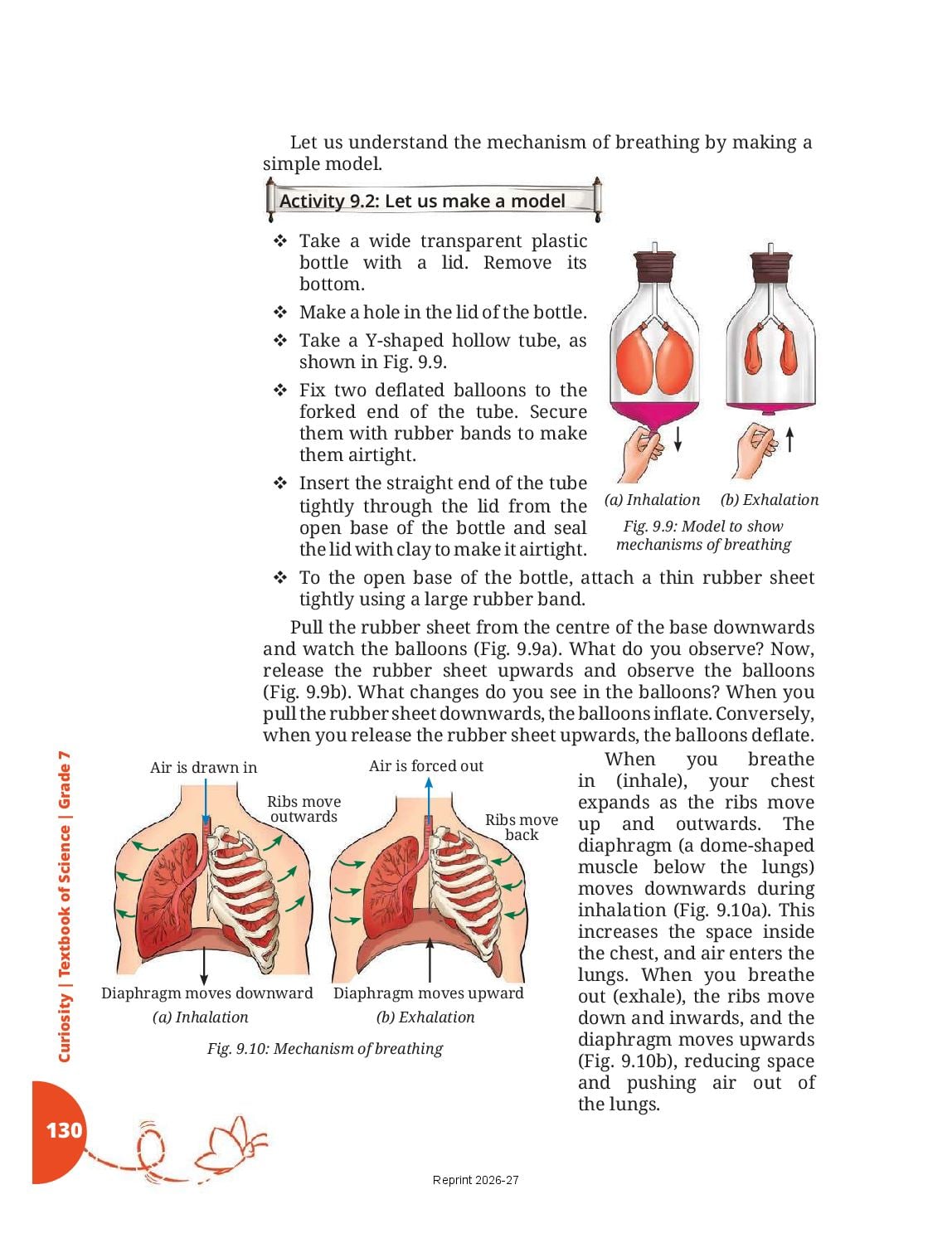
- Breathing is the physical movement of air in and out of the lungs. Ribs move up and out and the diaphragm moves down during inhalation; both move back during exhalation.
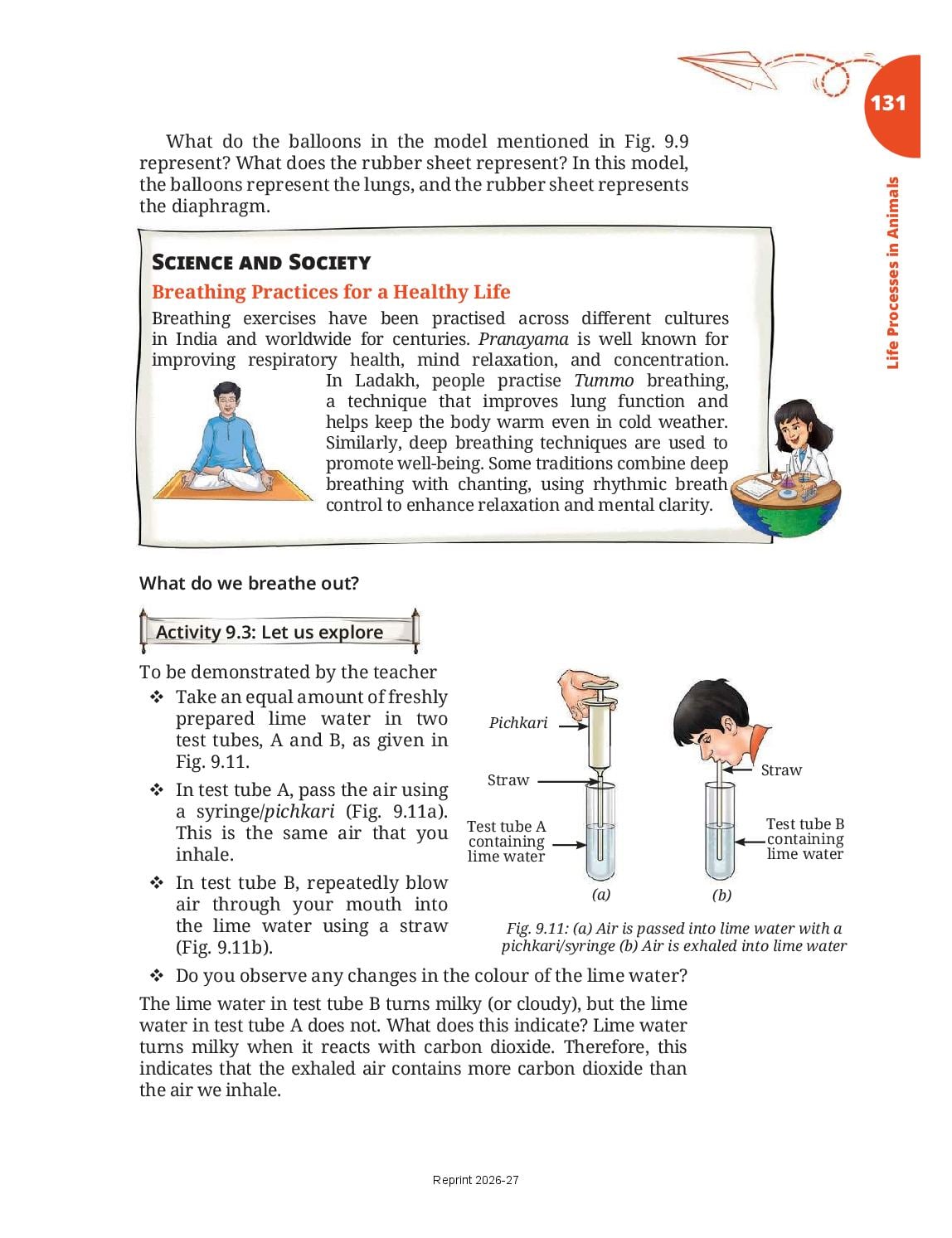
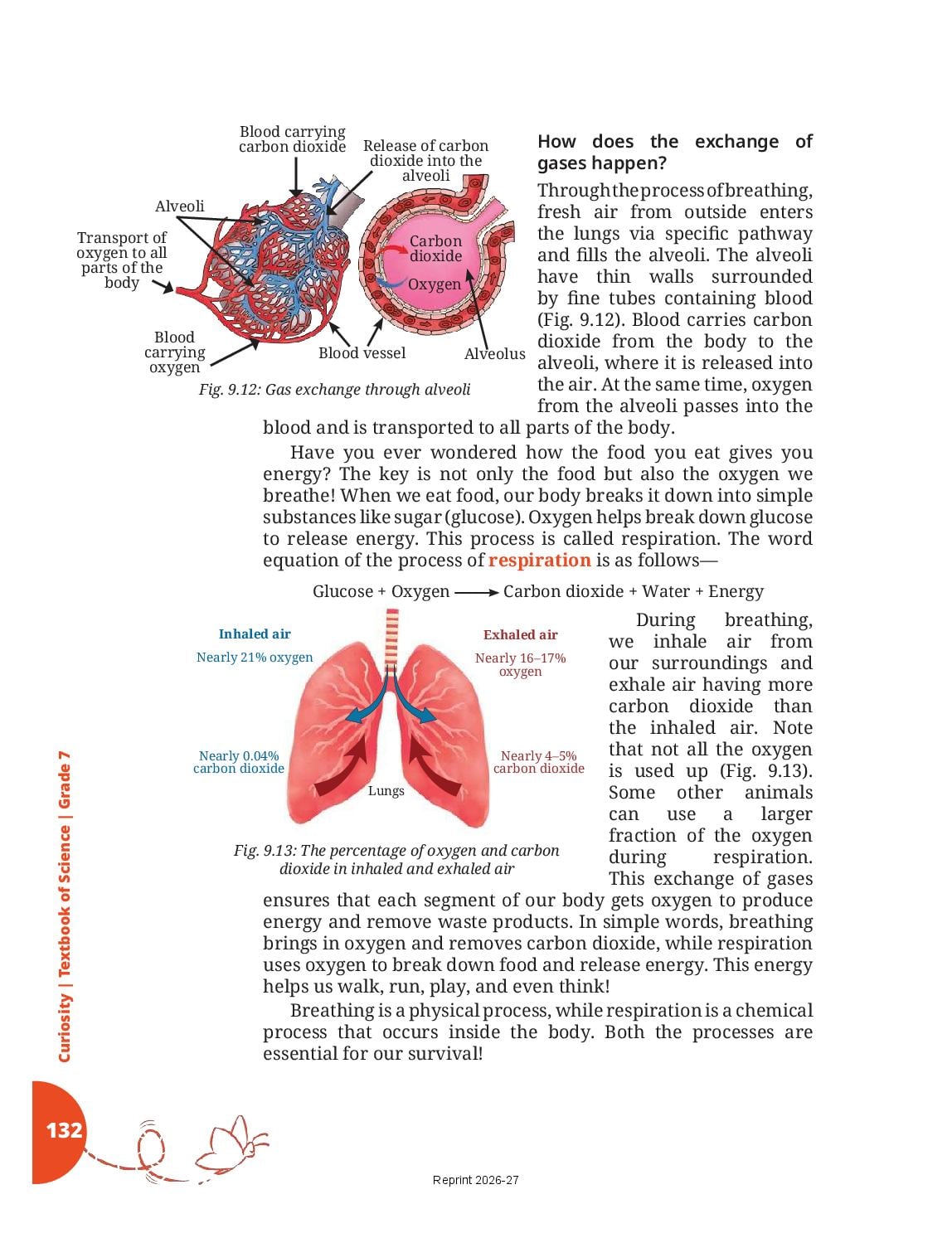
- Gases are exchanged in the balloon-like alveoli. Inhaled air has nearly 21% oxygen and 0.04% carbon dioxide; exhaled air has nearly 16–17% oxygen and 4–5% carbon dioxide.
Quick revision – Life Processes in Animals
| Term | What it means | Example / detail from the chapter | Point to remember |
|---|---|---|---|
| Alimentary canal | The long tube in which food is digested | Mouth → oesophagus → stomach → small intestine → large intestine → anus | Liver and pancreas are associated parts, not part of the tube |
| Mechanical digestion | Breaking food into fine pieces without changing it chemically | Crushing and chewing by the teeth | Happens mainly in the mouth |
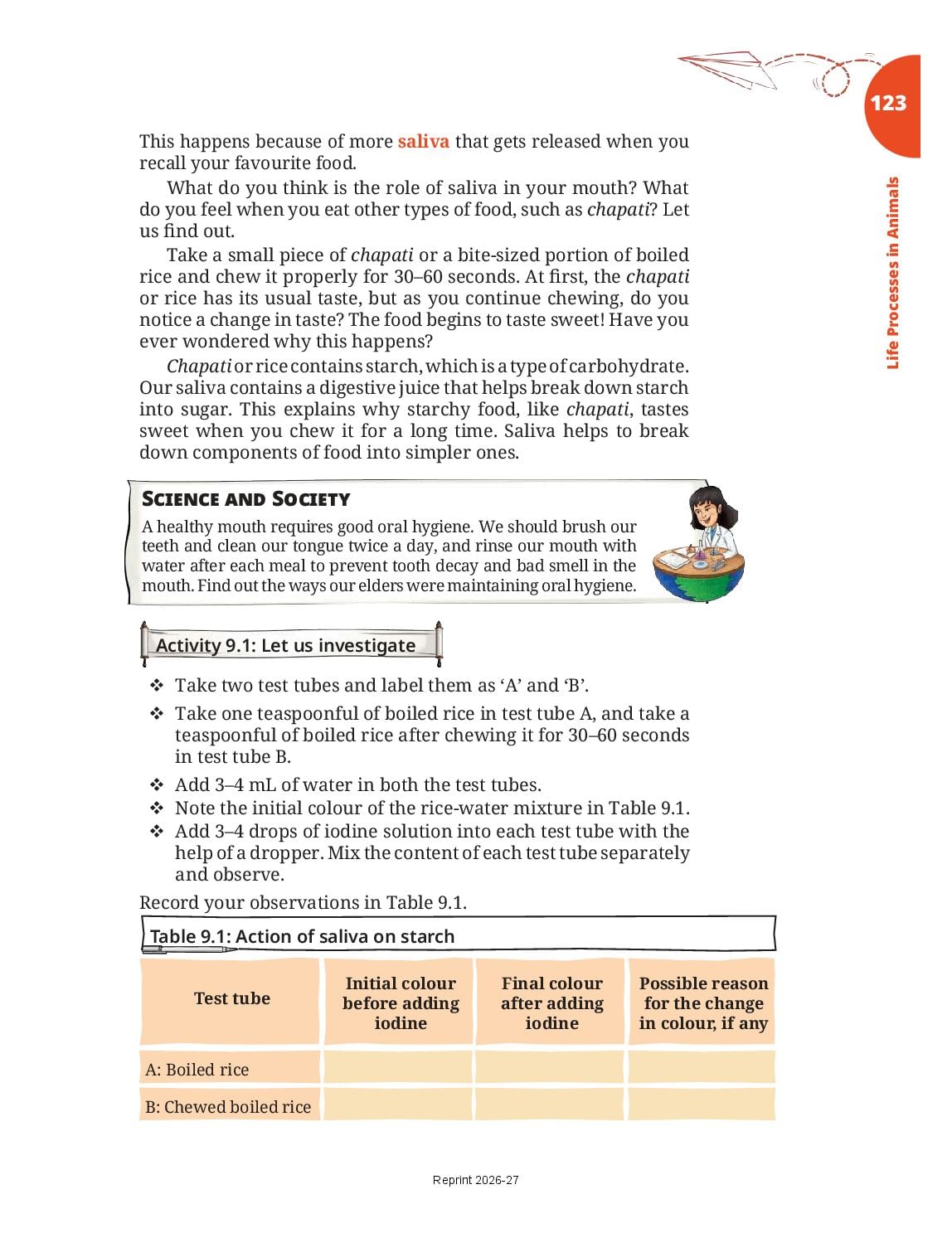
| Saliva | Watery fluid of the mouth that carries a digestive juice | Breaks starch of chapati or rice into sugar — that is why it tastes sweet on long chewing | Iodine test: starch gives blue-black colour |
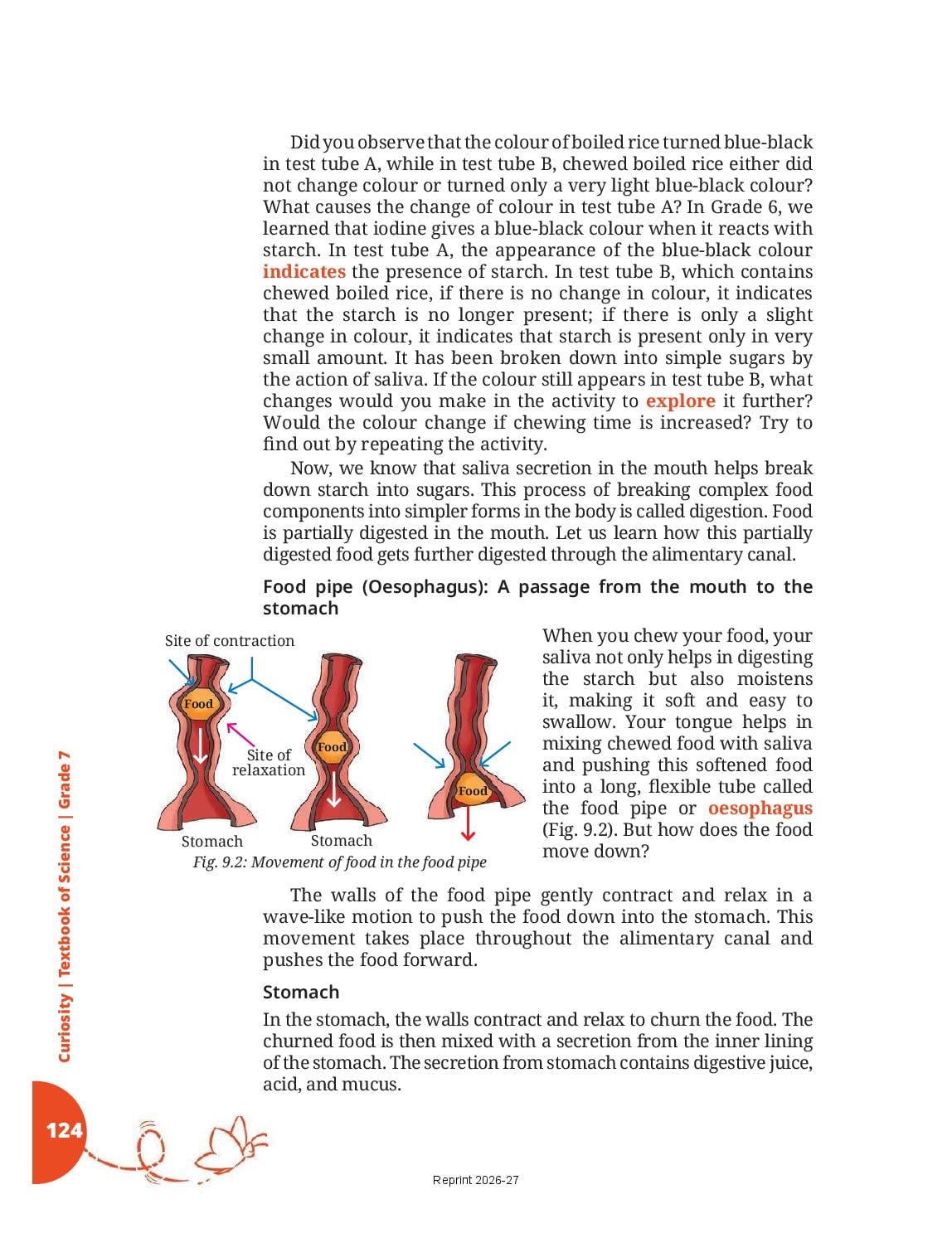
| Oesophagus (food pipe) | Flexible tube from mouth to stomach | Its walls contract and relax in a wave-like motion | This wave-like movement occurs all along the canal |
| Stomach | Muscular bag that churns food | Secretes digestive juice, acid and mucus | Acid kills bacteria; mucus protects the stomach lining |
| Bile | Mildly basic secretion of the liver | Neutralises the acid coming from the stomach and breaks fat into tiny droplets | Liver is an associated part — food does not pass through it |
| Pancreatic juice | Basic juice secreted by the pancreas | Acts on carbohydrate, protein and fat | Also helps neutralise acid in the food |
| Absorption | Passing of digested nutrients into the blood | Through the finger-like projections of the small intestine | The projections increase the surface area |
| Egestion | Removal of undigested waste through the anus | Semi-solid stool stored in the rectum | Fibre-rich food makes stool easier to pass |
| Rumination | Bringing partly digested food back to the mouth for thorough chewing | Cow, buffalo, goat — the ruminants | A cow chews for about 8 hours a day |
| Gizzard | Muscular chamber in birds that grinds food | Works with grit (small stones) the bird swallows | Birds have no teeth |
| Breathing | Taking air in (inhalation) and pushing it out (exhalation) | Ribs move up and out, diaphragm moves down while inhaling | A physical process |
| Alveoli | Balloon-like sacs at the ends of the finest branches in the lungs | Thin walls surrounded by fine blood-carrying tubes | The actual site of gas exchange |
| Respiration | Breakdown of glucose using oxygen to release energy | Glucose + Oxygen → Carbon dioxide + Water + Energy | A chemical process, happens inside the body |
Old NCERT vs New – Class 7 Science
This chapter is from Curiosity, the new NCERT Class 7 Science book (NCF-SE 2023, used from 2025-26). It replaced the old book “Science”, so chapter numbers and names differ from older PDFs.
Solutions and All Chapters
Answers to the exercises and the full chapter list of Curiosity:
Life Processes in Animals – Overview
| Class | Class 7 |
| Subject | Science |
| Book | Curiosity – new NCERT book |
| Chapter | 9 of 12 – Life Processes in Animals |
| Book pages | 121 – 136 |
| Edition | NCERT Reprint 2026-27 |
| Session | 2026-27 |
| Free – read online or download |
Class 7 Science Chapter 9 – FAQs
Where can I download Life Processes in Animals Class 7 PDF?
From the download table on this page – the chapter PDF is free, and the full book is linked too.
What is Class 7 Science Chapter 9 about?
Nutrition, respiration, circulation, excretion and reproduction are the life processes that keep an animal alive. This chapter takes up nutrition and respiration in detail.
Is Life Processes in Animals from the new NCERT Class 7 Science book?
Yes. It is chapter 9 of curiosity, the new NCERT Class 7 Science book for 2026-27.
Is this the latest NCERT edition for 2026-27?
Yes – the PDF is NCERT’s latest edition for the 2026-27 session.
Where are the NCERT Solutions for Class 7 Science Chapter 9?
Open the NCERT Solutions link above for answers to the exercise questions.