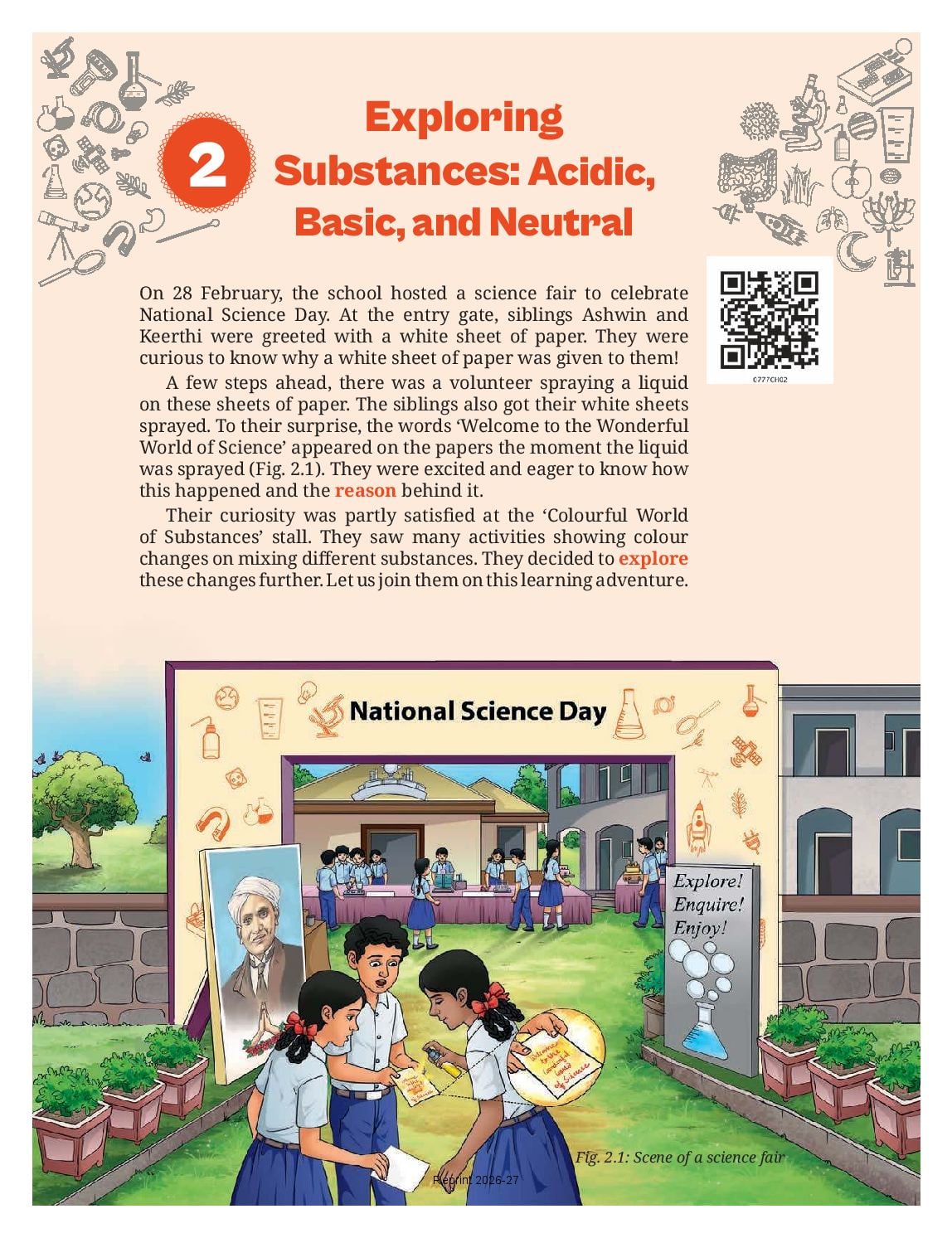
Download Exploring Substances: Acidic, Basic, and Neutral – NCERT Class 7 Science Chapter 2 PDF from the new NCERT Class 7 Science book Curiosity (2026-27). Read the chapter online or download the free PDF. The chapter opens at a school science fair on National Science Day, where a sprayed liquid makes hidden writing appear on a white sheet of paper. The whole chapter is the explanation of that trick.
Exploring Substances: Acidic, Basic, and Neutral PDF – Chapter 2 of Curiosity
Read the chapter online or download the PDF.
| Chapter | Download | |
|---|---|---|
| Chapter 2 PDF | Exploring Substances: Acidic, Basic, and Neutral | View PDF |
| Full book | NCERT Class 7 Science – Curiosity | View Book |
Read Online
What Is in Exploring Substances: Acidic, Basic, and Neutral? (Class 7 Science Chapter 2)
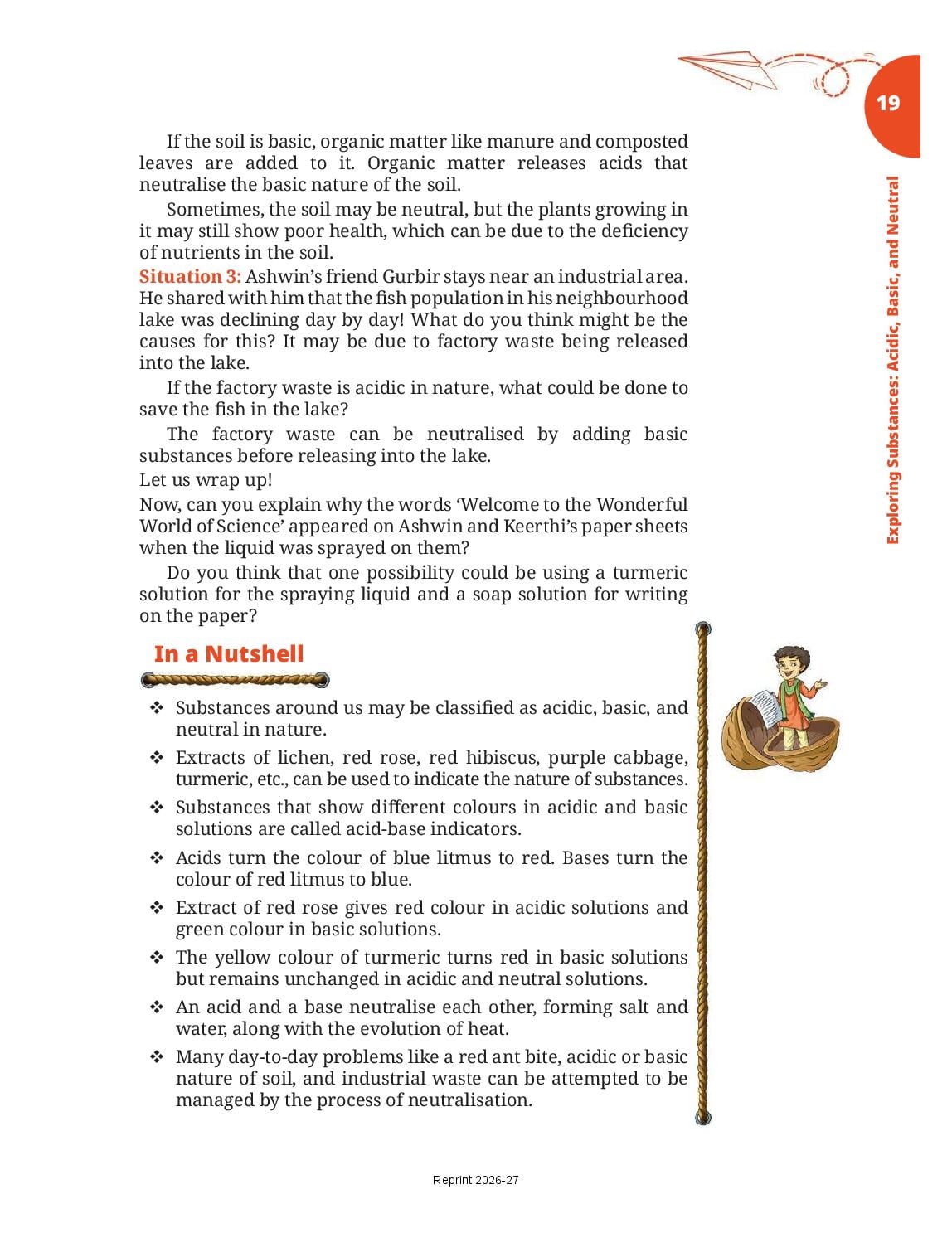
- The chapter opens at a school science fair on National Science Day, where a sprayed liquid makes hidden writing appear on a white sheet of paper. The whole chapter is the explanation of that trick.
- Substances around us are of three kinds — acidic, basic and neutral. A substance that shows different colours in acidic and basic solutions is an acid-base indicator.
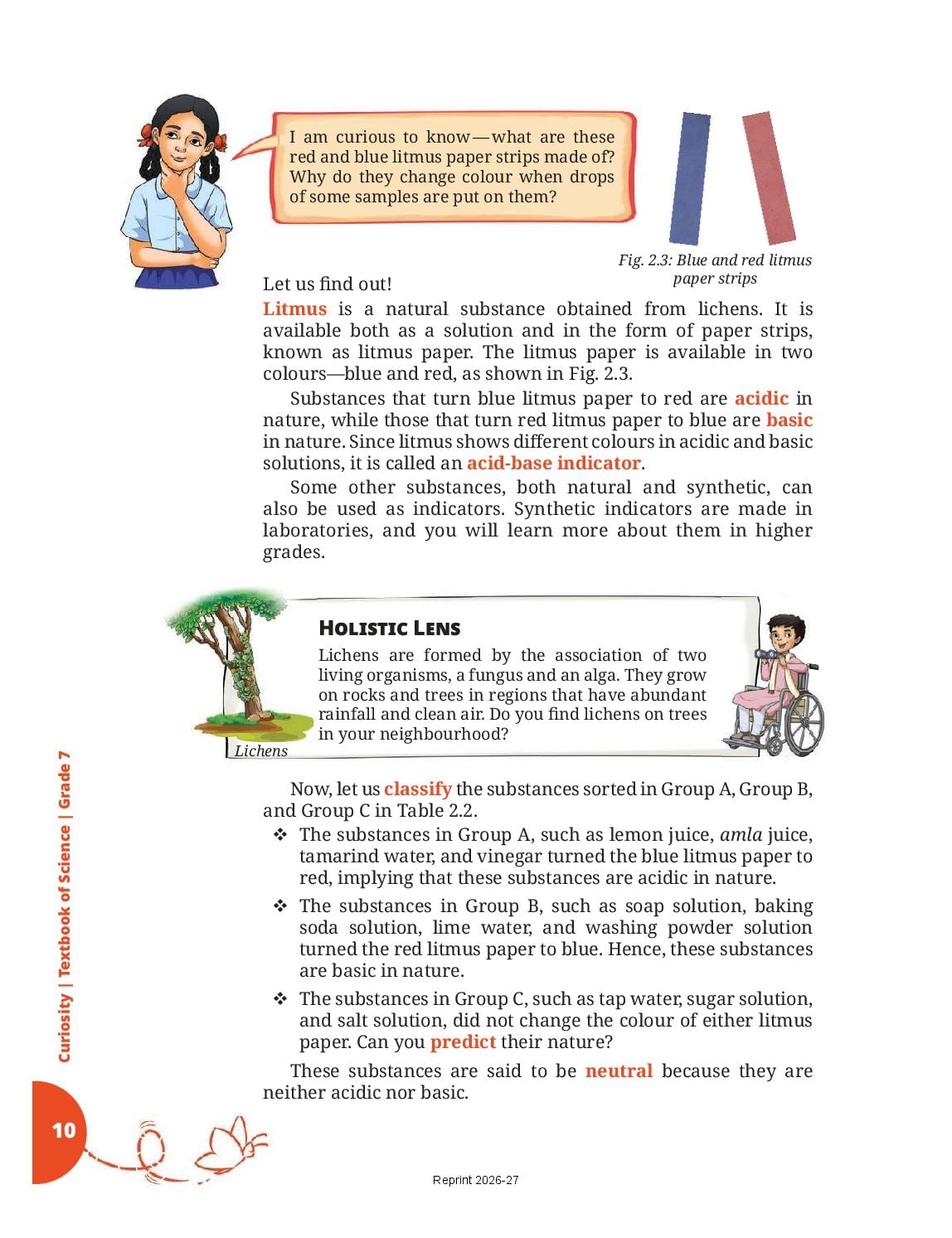
- Litmus, obtained from lichens, is the standard natural indicator. Acids turn blue litmus red; bases turn red litmus blue; neutral substances change neither.
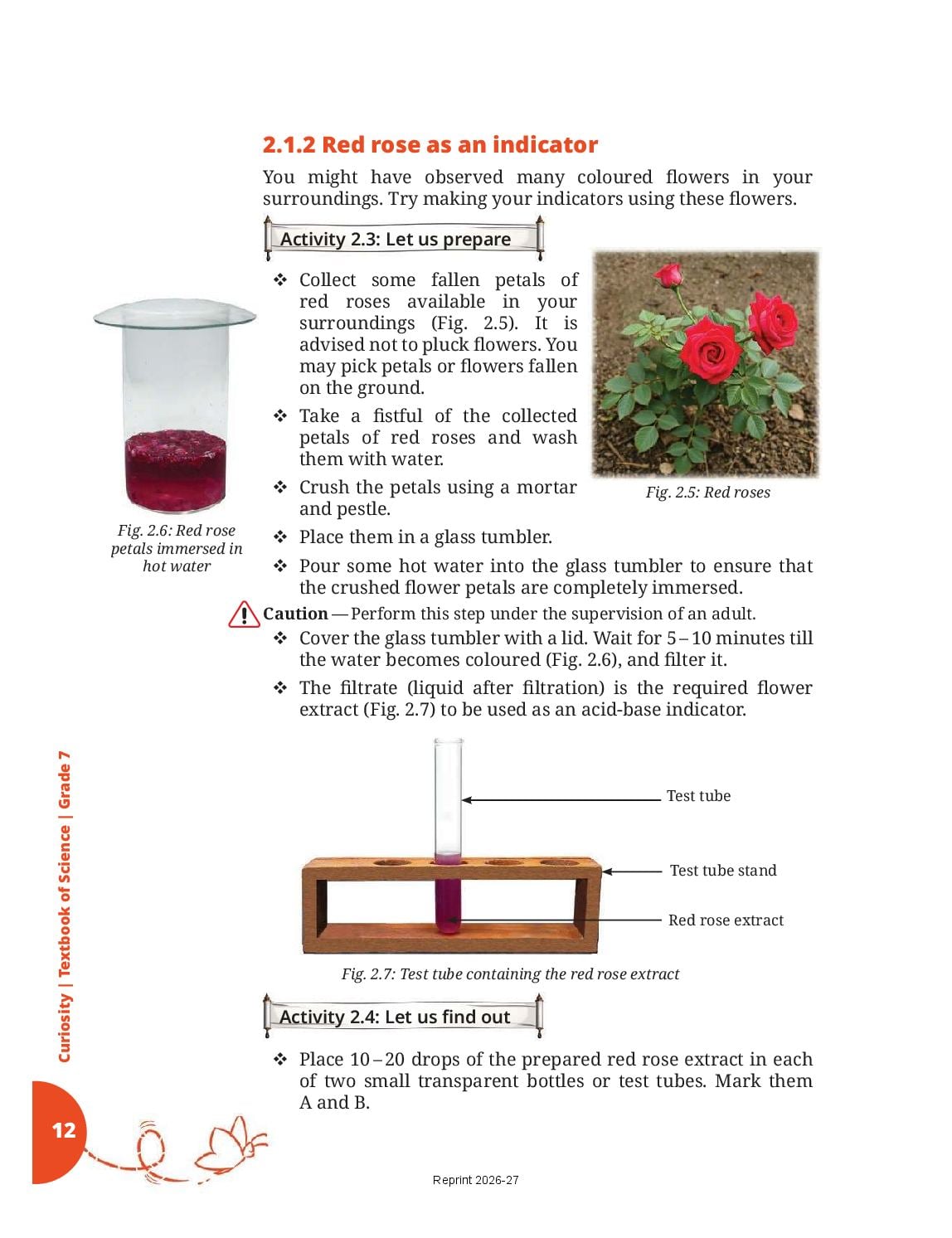
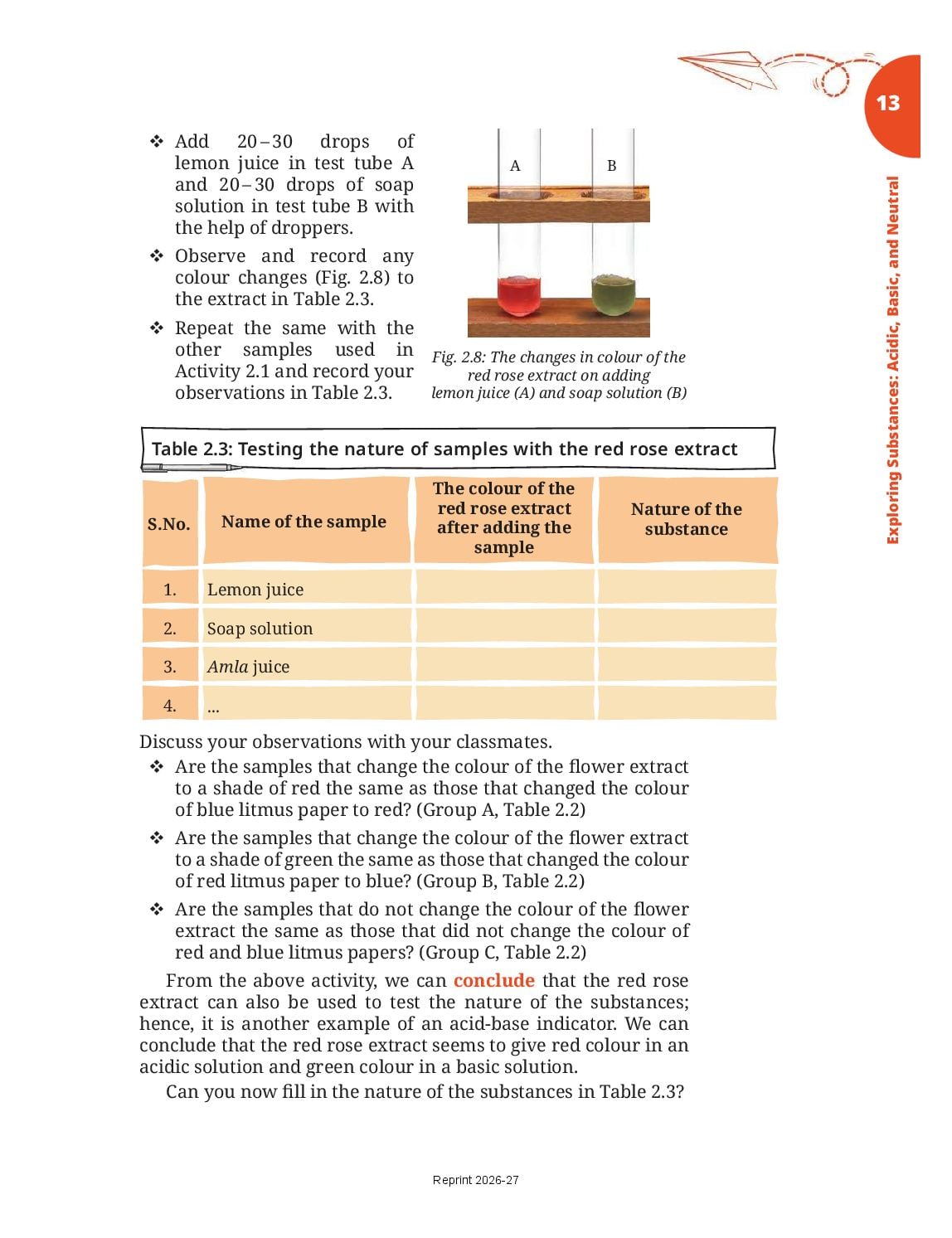
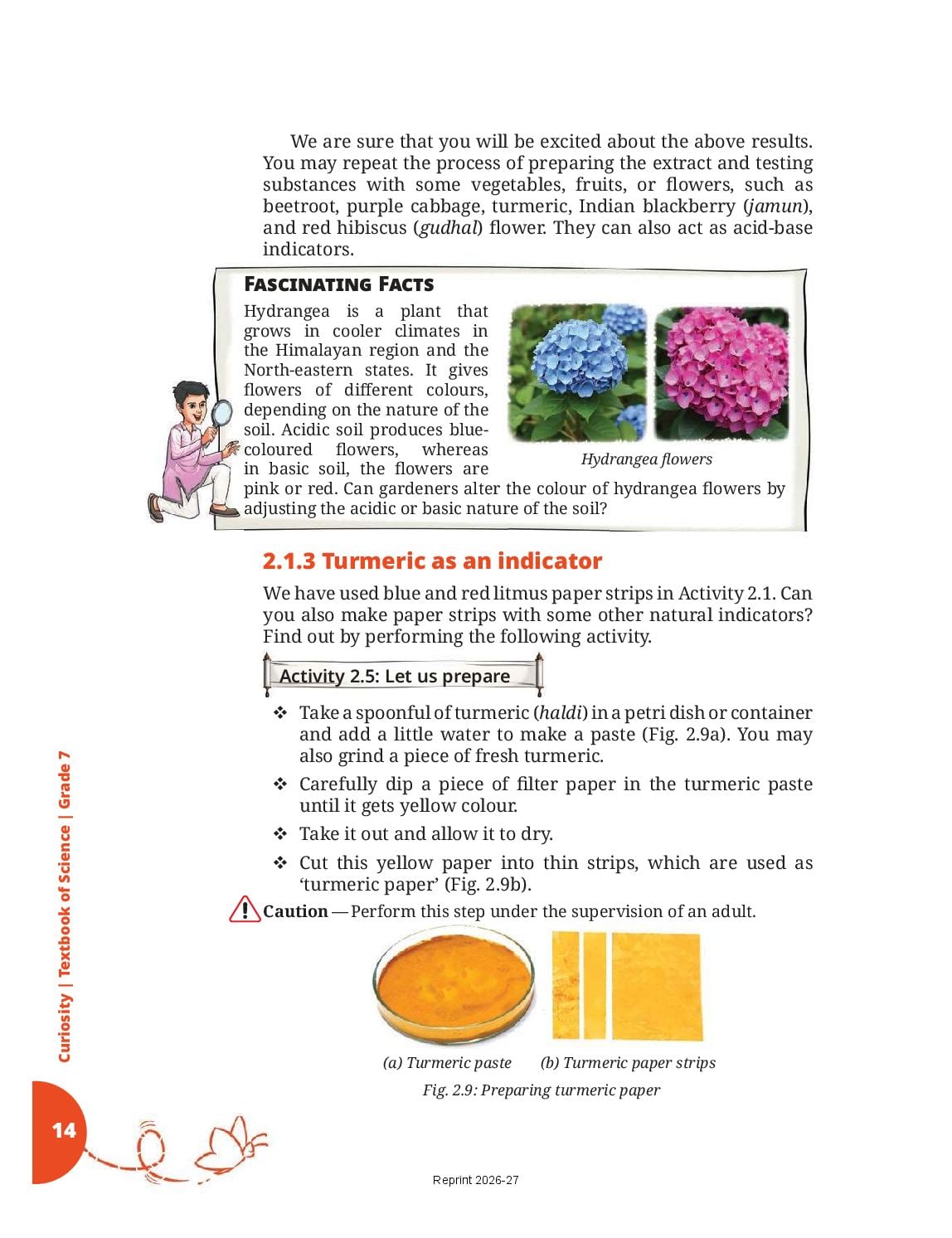
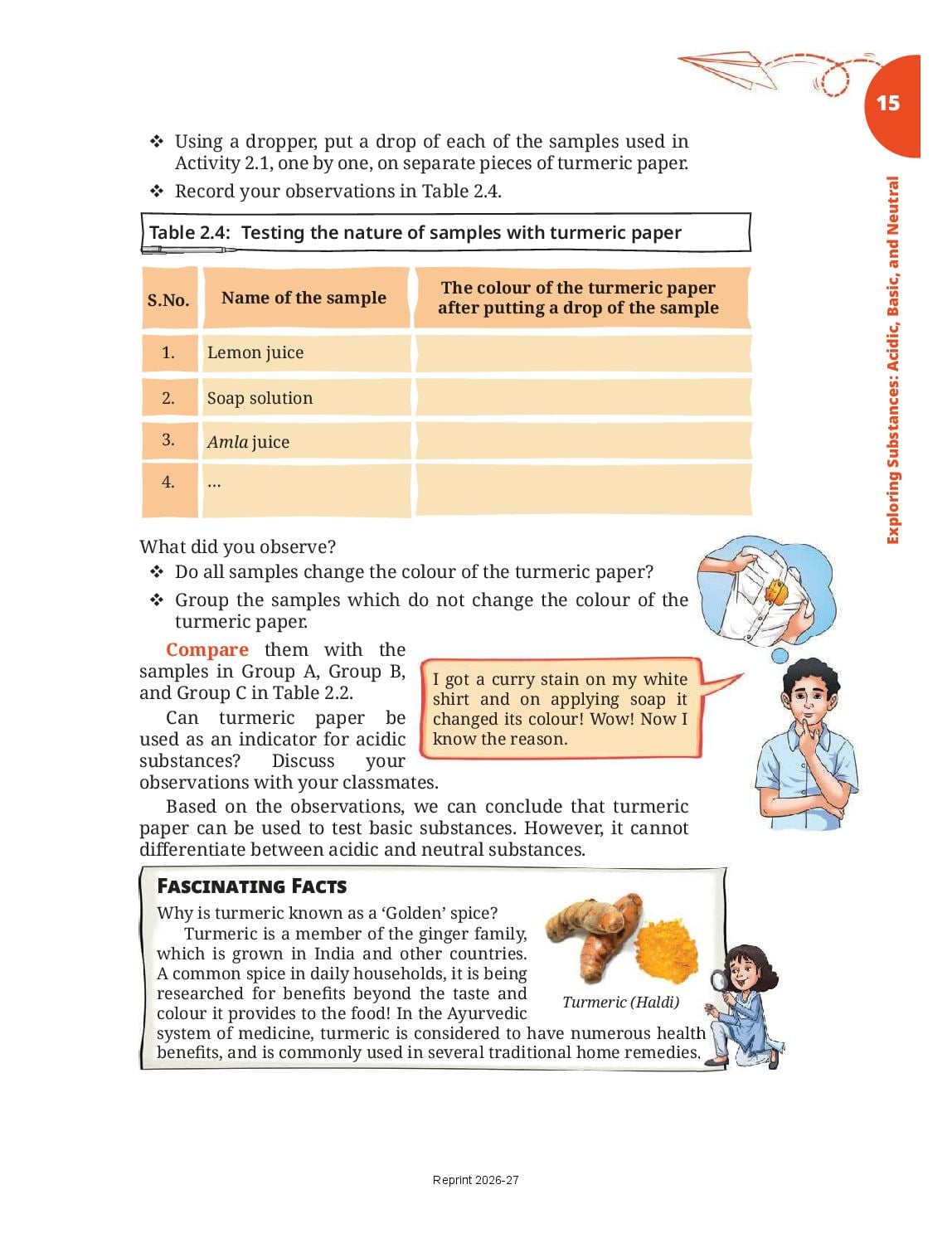
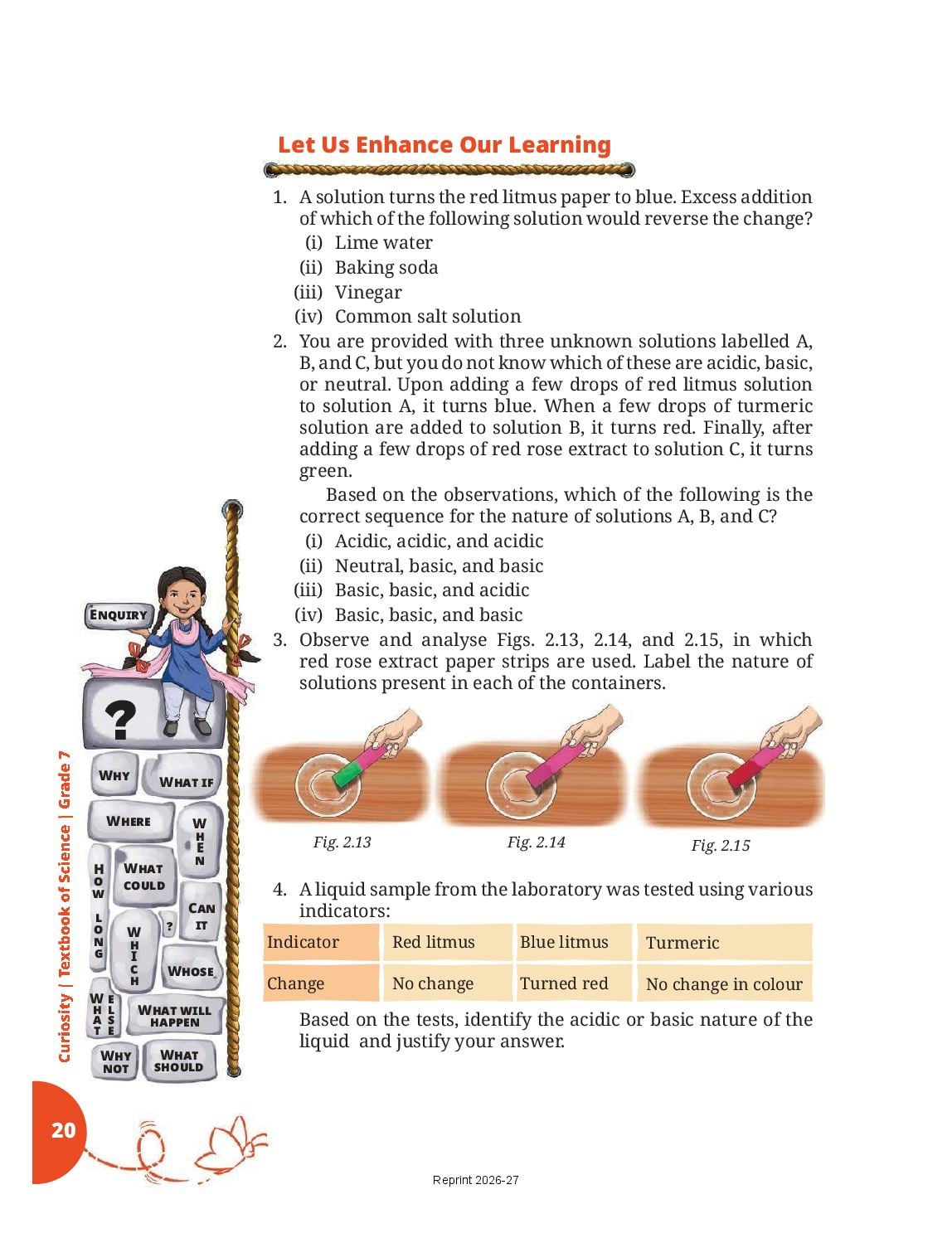
- Red rose extract is another indicator — red in acid, green in base. Turmeric paper turns red only in a base, so it can spot bases but cannot tell an acid from a neutral substance.
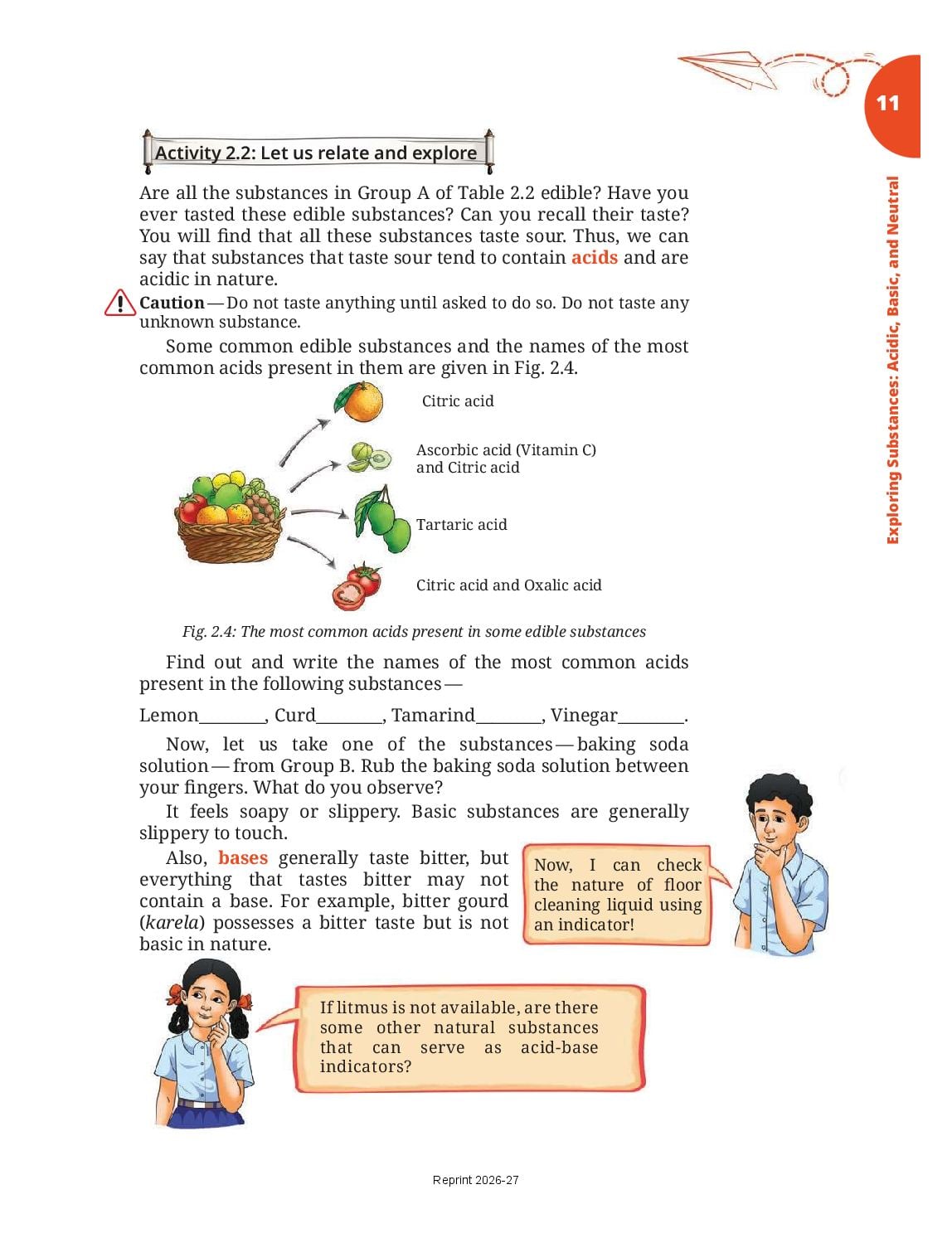
- Acids taste sour (lemon, amla, tamarind, vinegar); bases feel soapy or slippery and generally taste bitter — but not everything bitter is basic (karela is not).
- When an acid and a base are mixed in the right amounts they cancel each other. This is a neutralisation reaction: Acid + Base → Salt + Water + Heat.
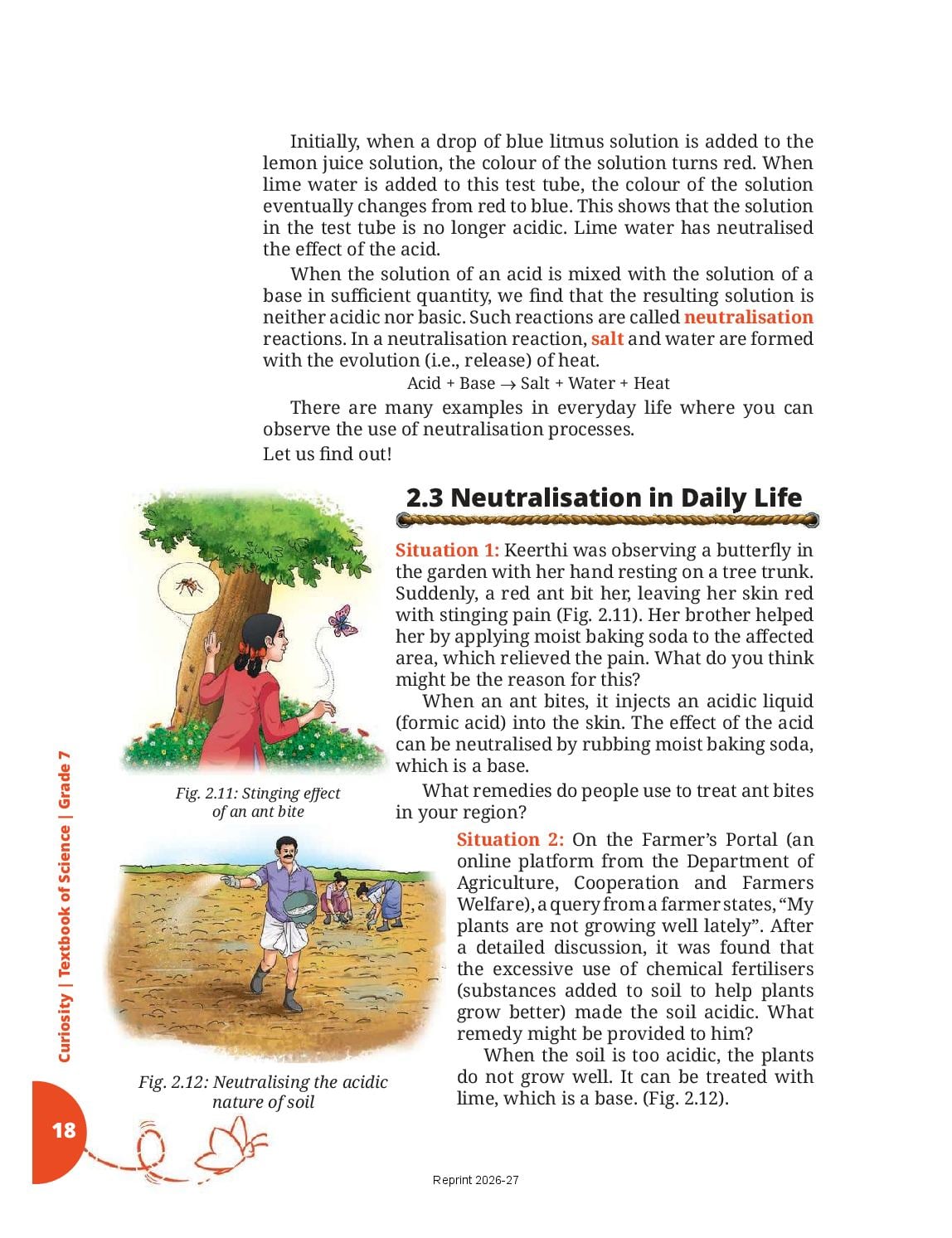
- Neutralisation solves real problems — moist baking soda on a red-ant bite (formic acid), lime on acidic soil, organic manure on basic soil, and basic substances added to acidic factory waste before it reaches a lake.
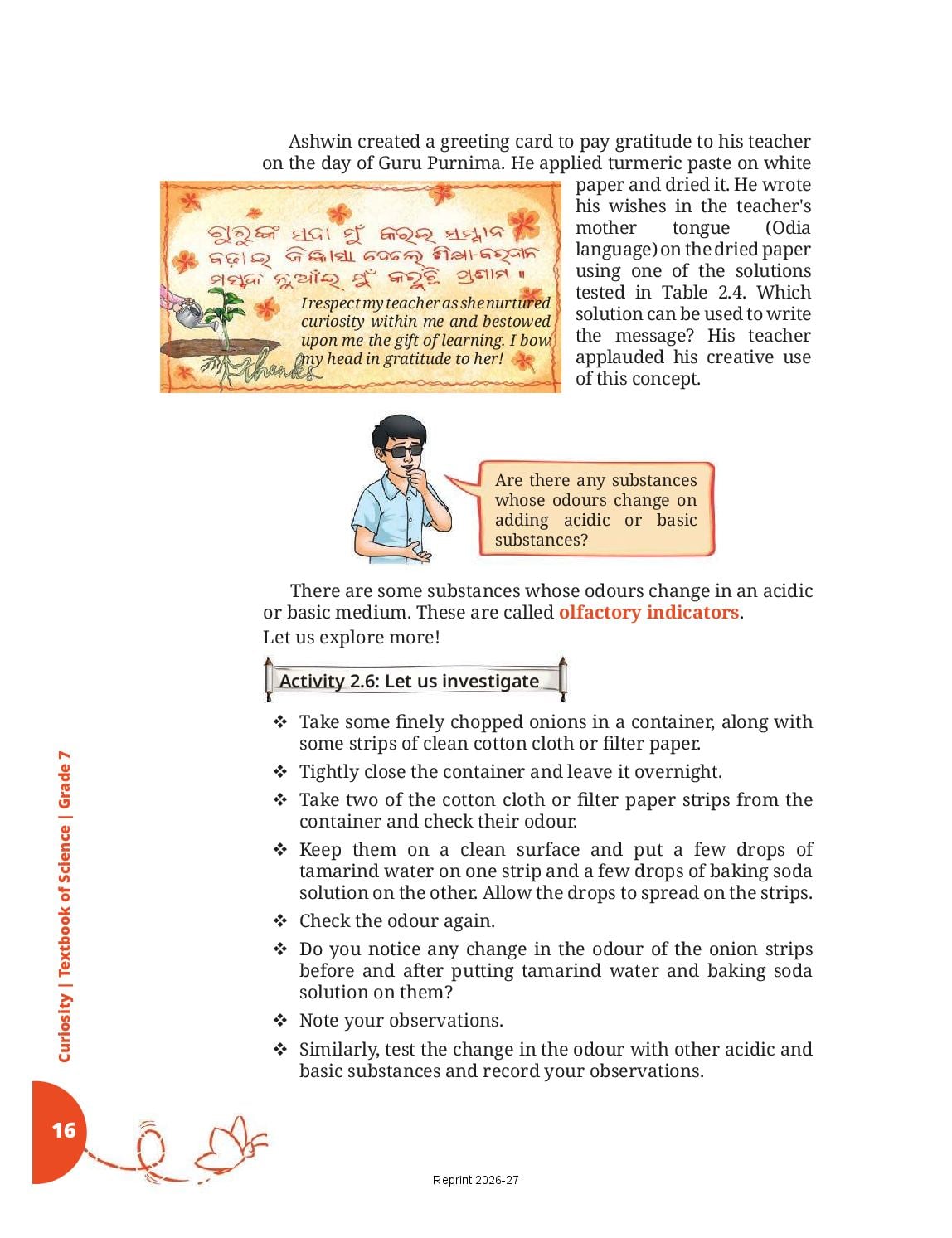
- Some substances change their smell in acidic or basic media; these are called olfactory indicators — chopped onion strips are the chapter’s example.
Quick revision – Exploring Substances: Acidic, Basic, and Neutral
| Term | What it means | Example from the chapter | Where it comes |
|---|---|---|---|
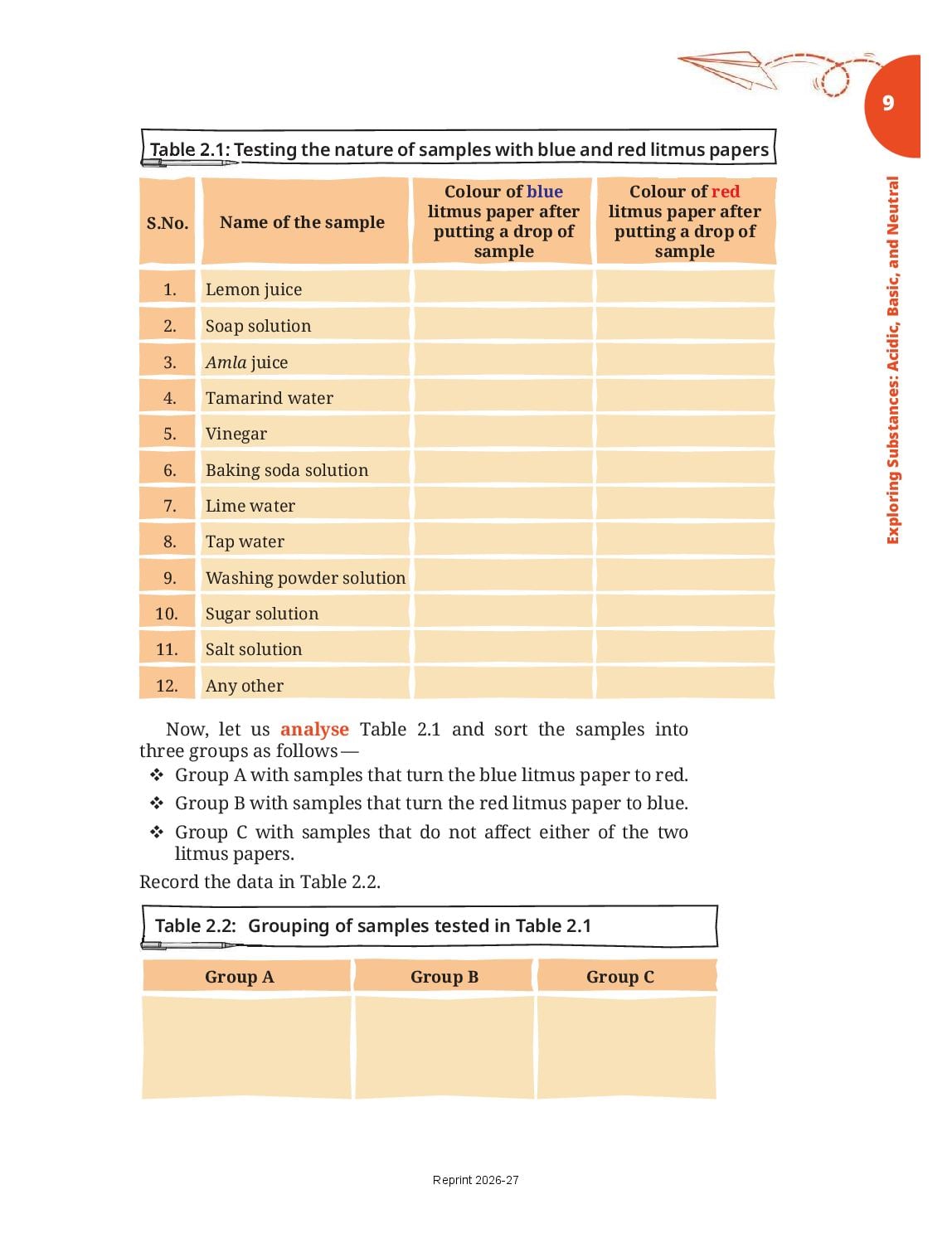
| Acidic substance | Turns blue litmus red; tastes sour | Lemon juice, amla juice, tamarind water, vinegar | Page 10 |
| Basic substance | Turns red litmus blue; feels soapy or slippery | Soap solution, baking soda solution, lime water, washing powder solution | Page 10 |
| Neutral substance | Changes neither red nor blue litmus | Tap water, sugar solution, salt solution | Page 10 |
| Acid-base indicator | A substance that shows different colours in acidic and basic solutions | Litmus, red rose extract, turmeric | Page 10 |
| Litmus | A natural dye obtained from lichens; sold as solution or as paper strips | Blue litmus paper, red litmus paper | Page 10 |
| Lichen | An association of two organisms — a fungus and an alga | Grows on rocks and trees where rain is plenty and air is clean | Page 10 |
| Red rose extract | Filtrate of crushed red rose petals in hot water | Red in acid, green in base | Pages 12–13 |
| Turmeric paper | Filter paper dipped in turmeric paste and dried | Turns red in a base; no change in acid or neutral | Pages 14–15 |
| Olfactory indicator | A substance whose odour changes in an acidic or basic medium | Onion strips, vanilla, clove oil | Page 16 |
| Neutralisation | An acid and a base cancelling each other to give salt, water and heat | Acid + Base → Salt + Water + Heat | Page 18 |
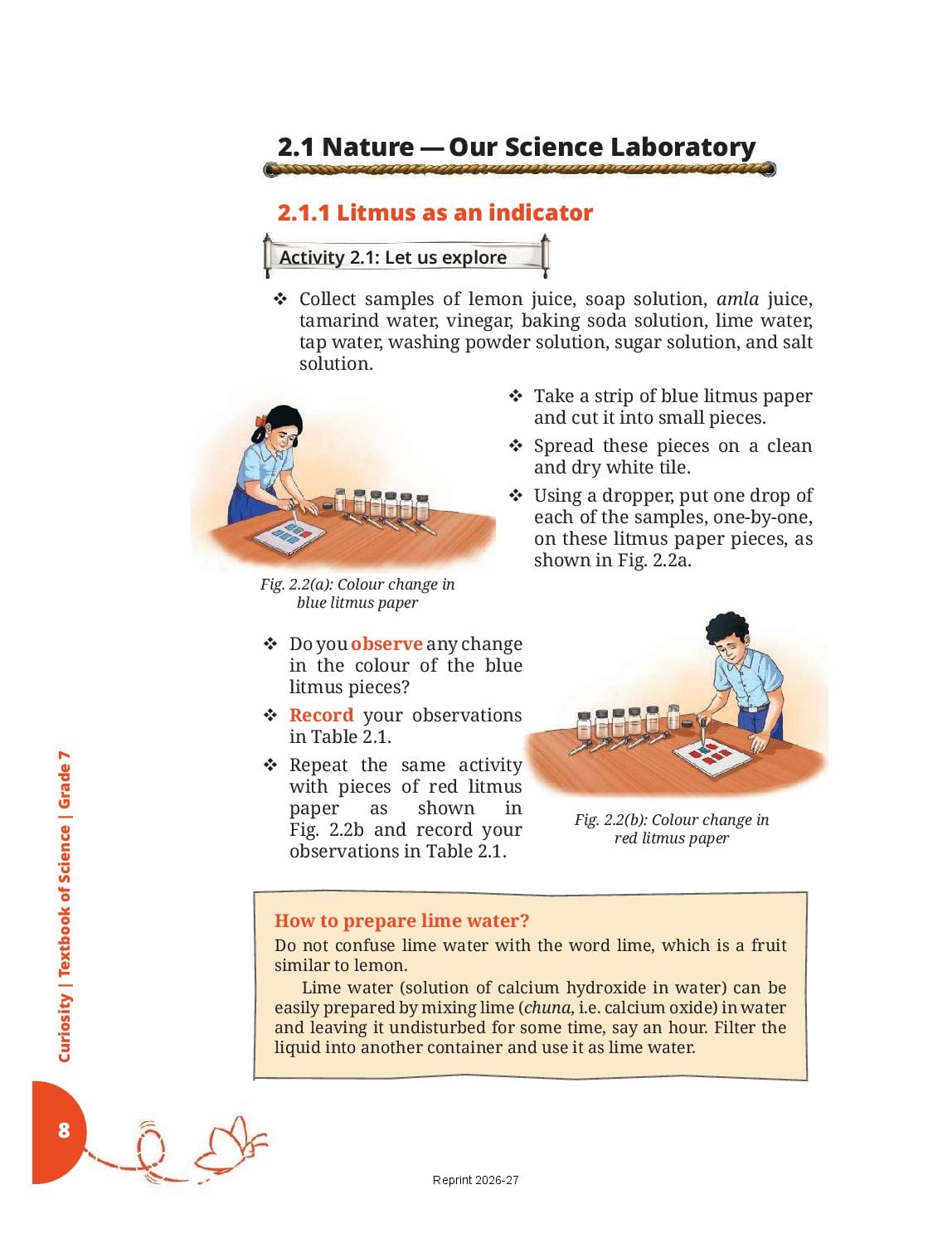
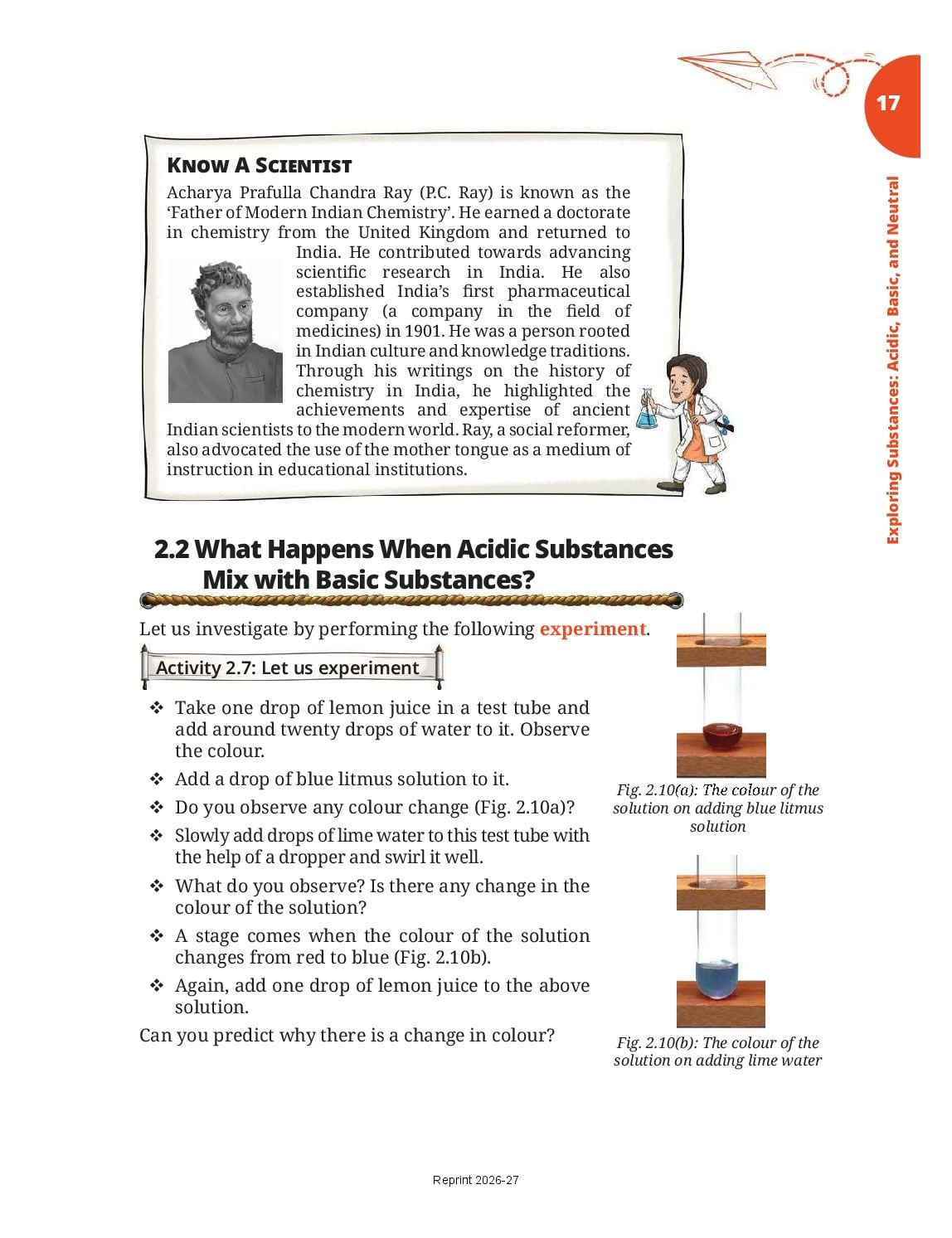
| Lime water | Solution of calcium hydroxide, made by mixing chuna (calcium oxide) in water | Used to neutralise lemon juice in Activity 2.7 | Page 8 |
| Formic acid | The acidic liquid a red ant injects when it bites | Neutralised by moist baking soda | Page 18 |
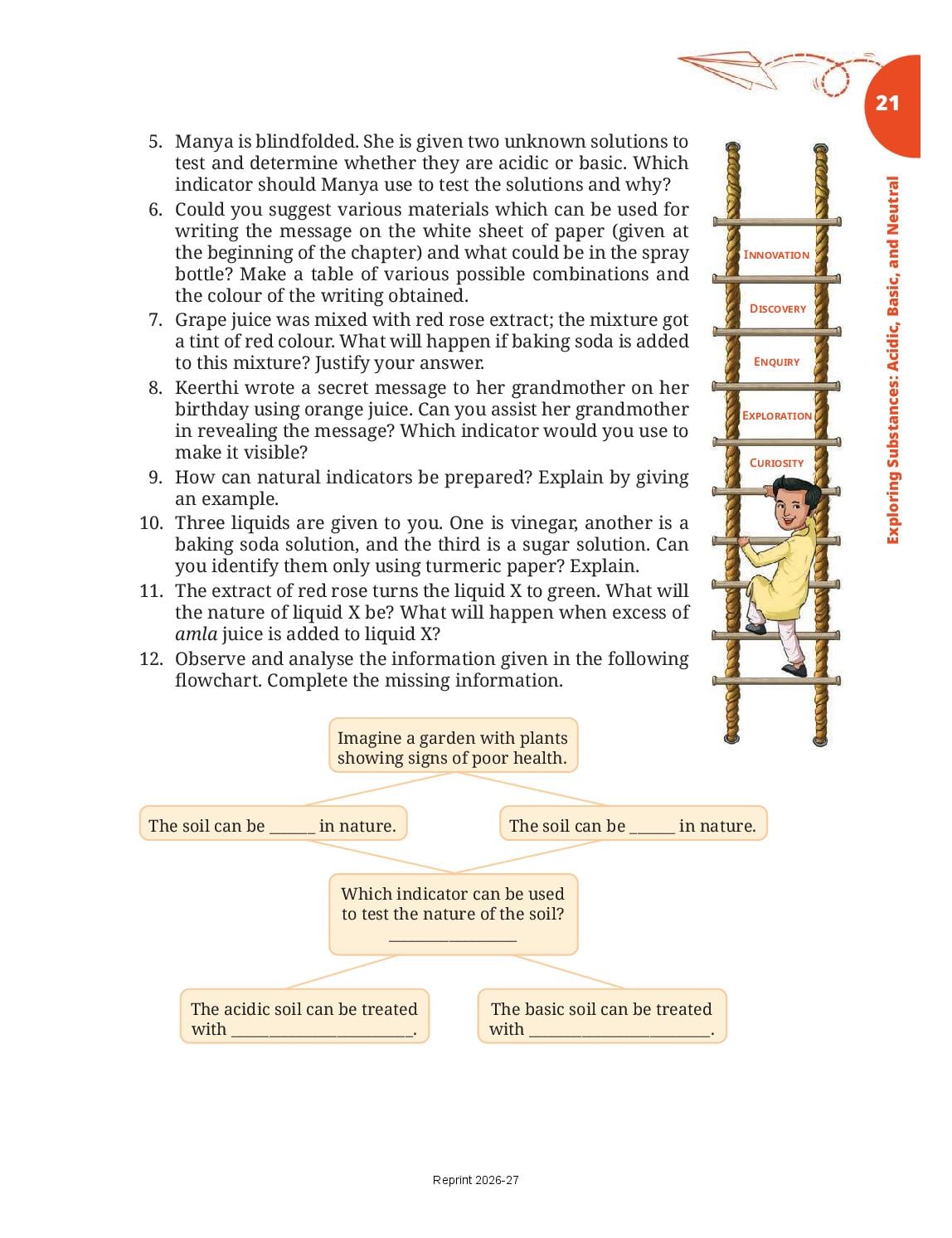
| Treating acidic soil | Adding a base to the soil | Lime (chuna) | Page 18 |
| Treating basic soil | Adding organic matter, which releases acids | Manure, composted leaves | Page 19 |
Old NCERT vs New – Class 7 Science
This chapter is from Curiosity, the new NCERT Class 7 Science book (NCF-SE 2023, used from 2025-26). It replaced the old book “Science”, so chapter numbers and names differ from older PDFs.
Solutions and All Chapters
Answers to the exercises and the full chapter list of Curiosity:
Exploring Substances: Acidic, Basic, and Neutral – Overview
| Class | Class 7 |
| Subject | Science |
| Book | Curiosity – new NCERT book |
| Chapter | 2 of 12 – Exploring Substances: Acidic, Basic, and Neutral |
| Book pages | 7 – 22 |
| Edition | NCERT Reprint 2026-27 |
| Session | 2026-27 |
| Free – read online or download |
Class 7 Science Chapter 2 – FAQs
Where can I download Exploring Substances: Acidic, Basic, and Neutral Class 7 PDF?
From the download table on this page – the chapter PDF is free, and the full book is linked too.
What is Class 7 Science Chapter 2 about?
The chapter opens at a school science fair on National Science Day, where a sprayed liquid makes hidden writing appear on a white sheet of paper. The whole chapter is the explanation of that trick.
Is Exploring Substances: Acidic, Basic, and Neutral from the new NCERT Class 7 Science book?
Yes. It is chapter 2 of curiosity, the new NCERT Class 7 Science book for 2026-27.
Is this the latest NCERT edition for 2026-27?
Yes – the PDF is NCERT’s latest edition for the 2026-27 session.
Where are the NCERT Solutions for Class 7 Science Chapter 2?
Open the NCERT Solutions link above for answers to the exercise questions.