NCERT Solutions for Class 9 Science Chapter 12 Patterns in Life Diversity and Classification provide clear, step-by-step answers to every exercise and in-text question from the chapter Patterns in Life Diversity and Classification of the NCERT textbook Exploration. Prepared by subject experts as per the latest NCERT (CBSE) syllabus for 2026-27, these NCERT Solutions for Class 9 Science help you understand each concept, write exam-ready answers, and check your own solutions. You can read them online below or download the free Class 9 Science Chapter 12 question-answer PDF.
NCERT Solutions for Class 9 Science Chapter 12 Patterns in Life Diversity and Classification
- Class: Class 9
- Subject: Science
- Chapter: Chapter 12 – Patterns in Life Diversity and Classification
- Textbook: Exploration (NCERT)
- Study material: NCERT Solutions – questions with answers, free PDF
These solutions answer all the exercise questions of Chapter 12 Patterns in Life Diversity and Classification — including the in-text questions, short-answer and long-answer questions, and activities — with complete explanations so you can follow the method, not just the final answer. Read the full solutions below.
NCERT Solutions Class 9 Science Chapter 12 Patterns in Life Diversity and Classification View Download




NCERT Solutions for Class 9 Science Chapter 12 PDF Download
You can read the NCERT Solutions for Class 9 Science Chapter 12 online above, or download the complete question-answer PDF to study Patterns in Life Diversity and Classification offline at any time.
NCERT Solutions for Class 9 Science Chapter 12 PDF Download Link – Click Here to Download Solutions PDF
Questions Covered in This Chapter
These NCERT Solutions answer all 76 questions of this chapter. The questions solved are:
- What do you understand by biodiversity?
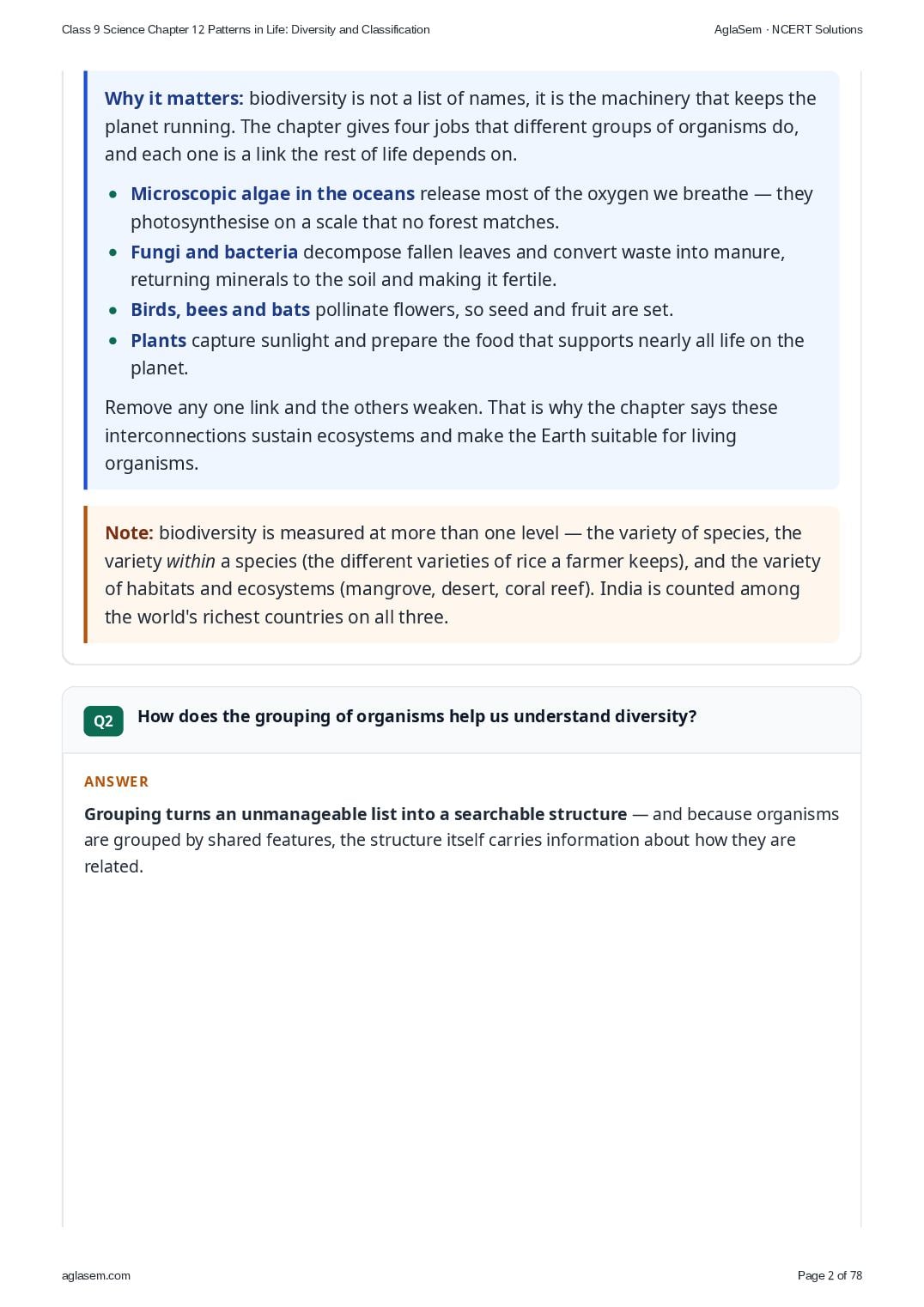
- How does the grouping of organisms help us understand diversity?
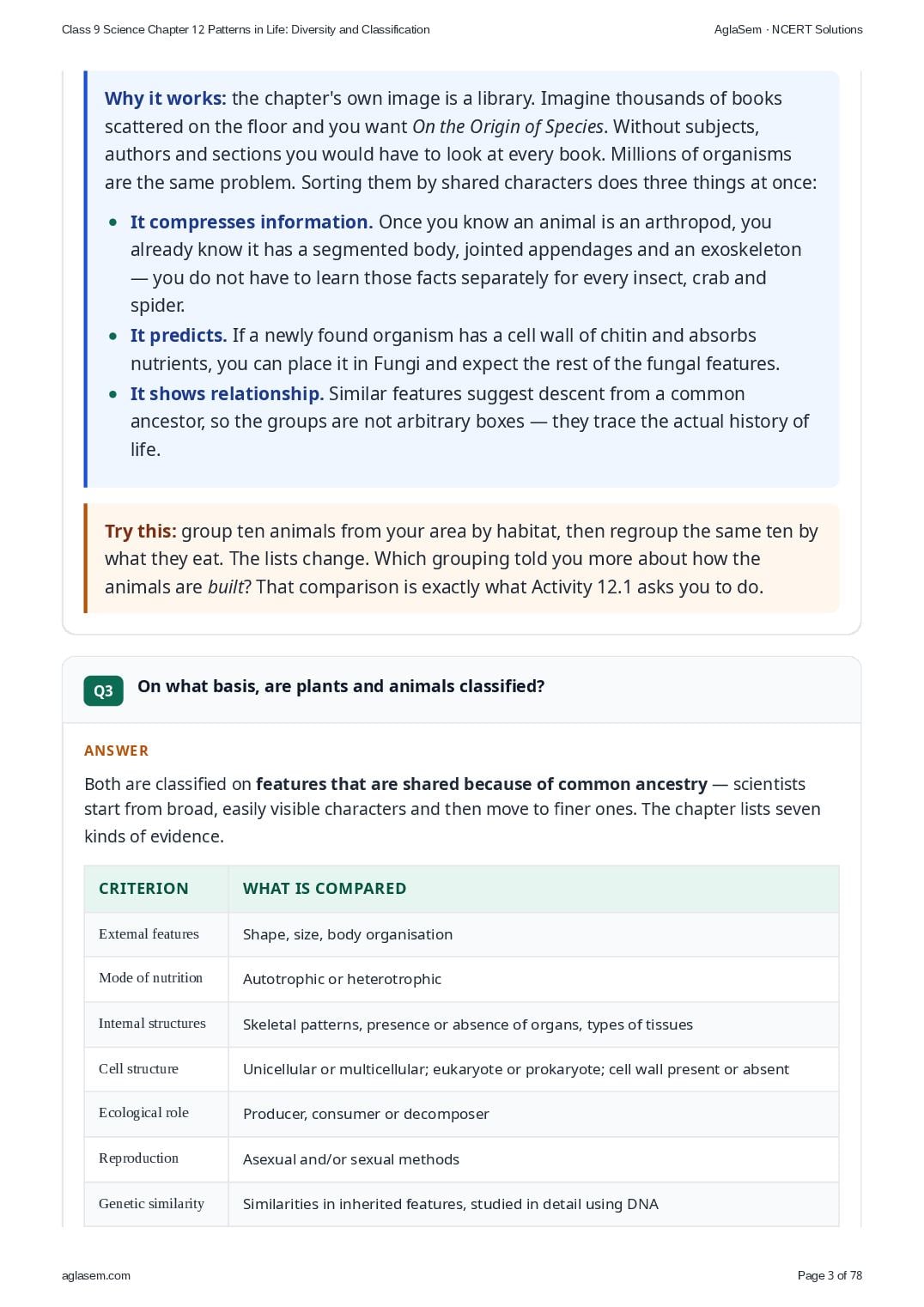
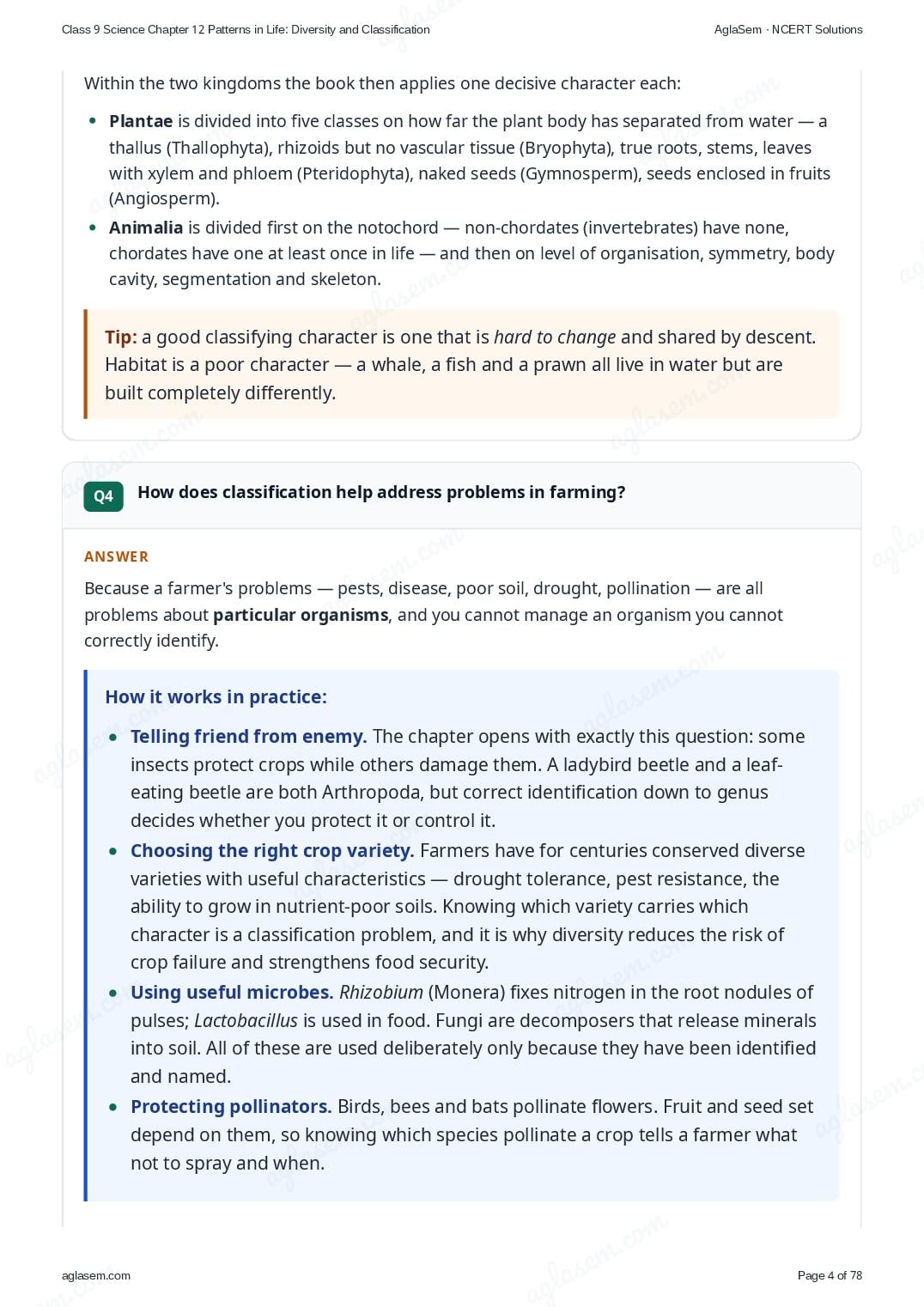
- On what basis, are plants and animals classified?
- How does classification help address problems in farming?
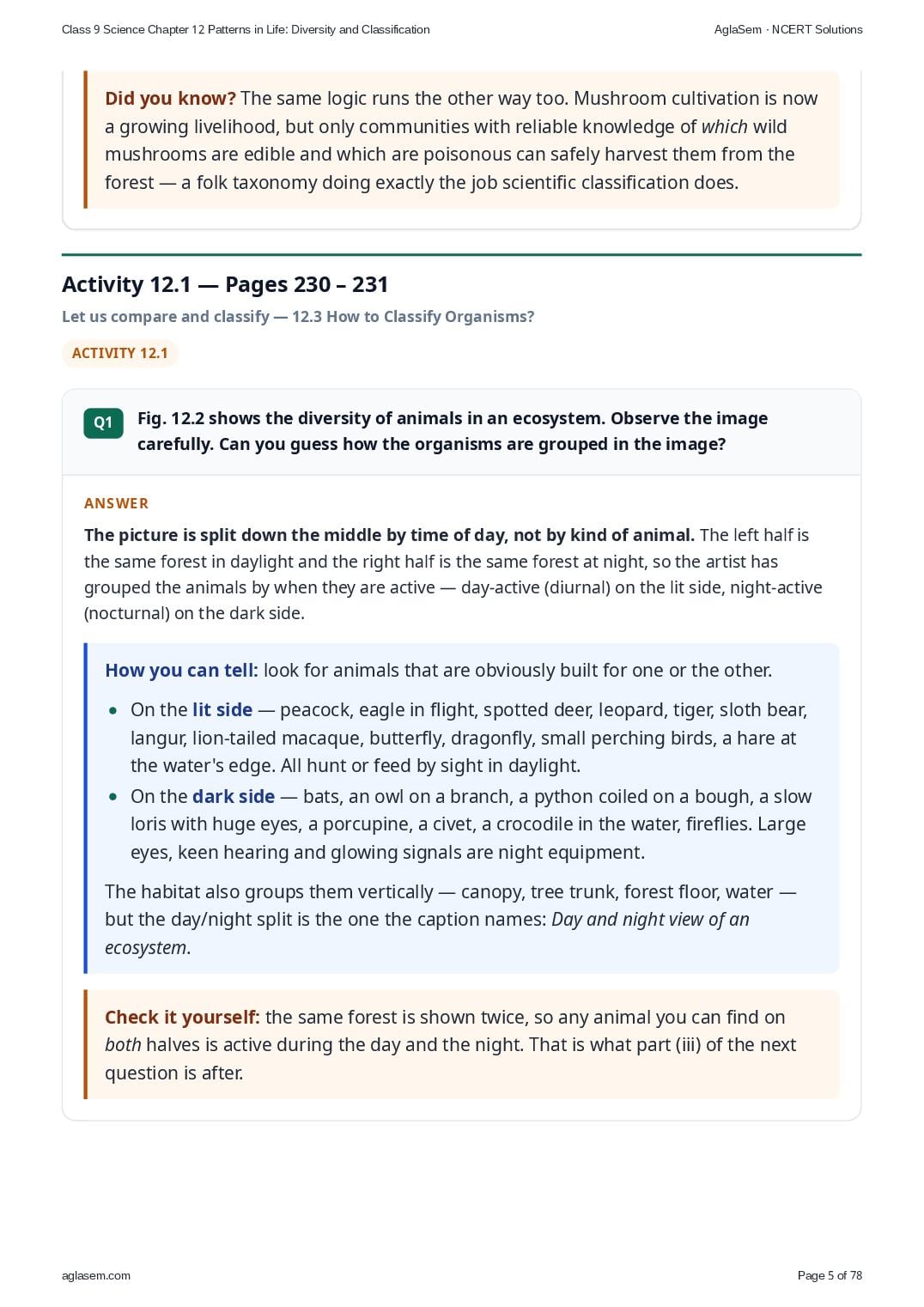
- Fig. 12.2 shows the diversity of animals in an ecosystem. Observe the image carefully. Can you guess how the organisms are grouped in the image?
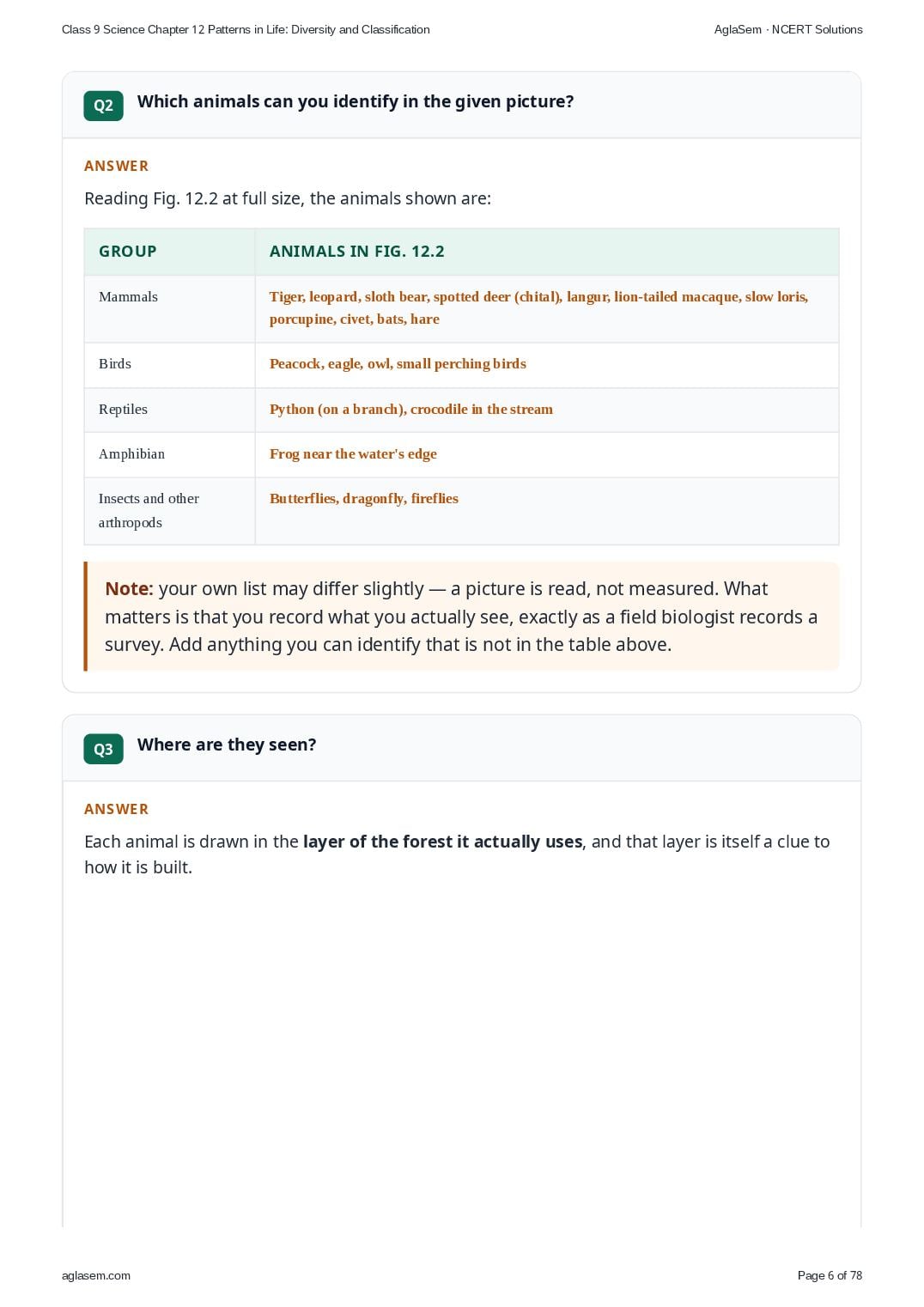
- Which animals can you identify in the given picture?
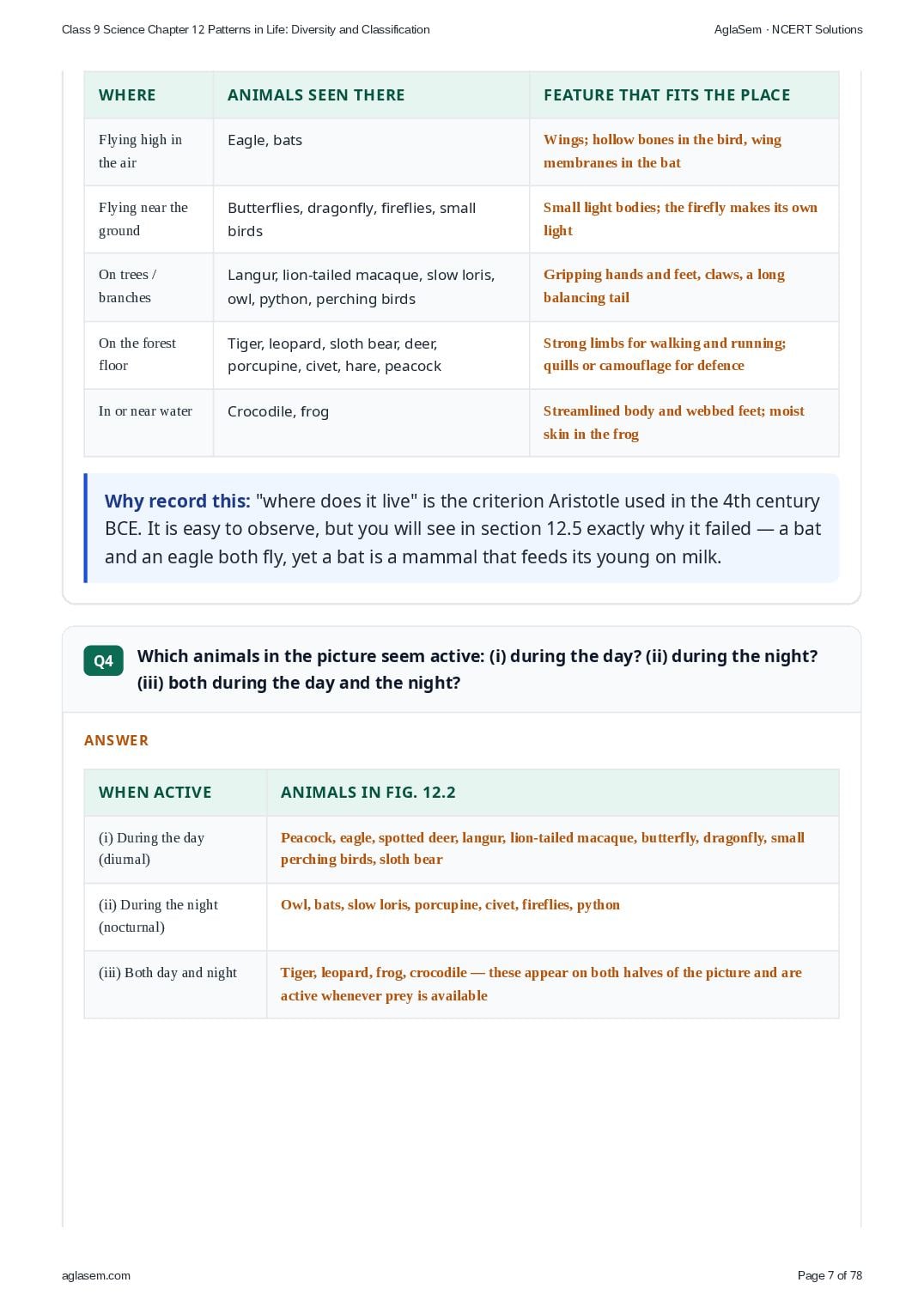
- Where are they seen?
- Which animals in the picture seem active: (i) during the day? (ii) during the night? (iii) both during the day and the night?
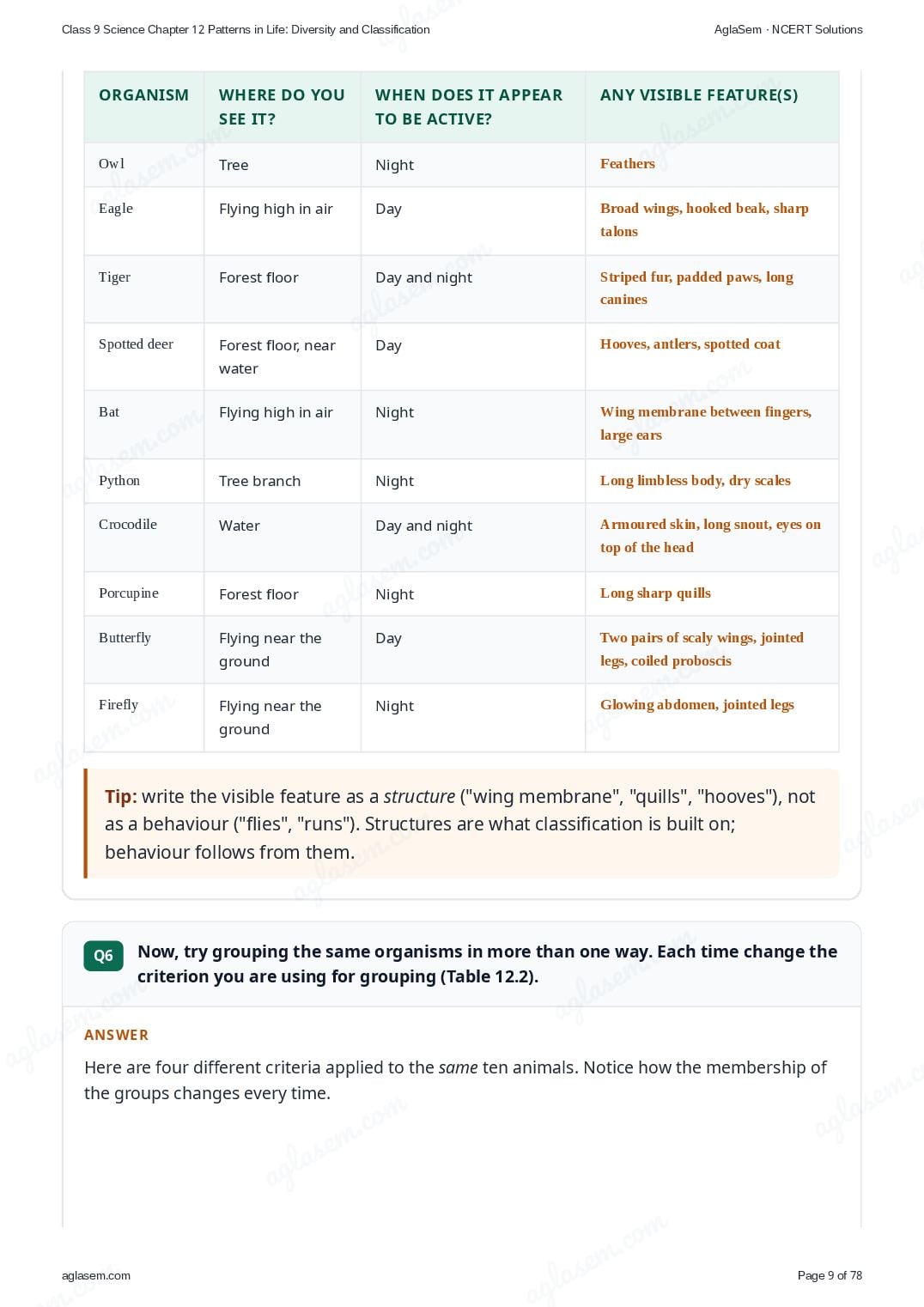
- Record your observations in Table 12.1.
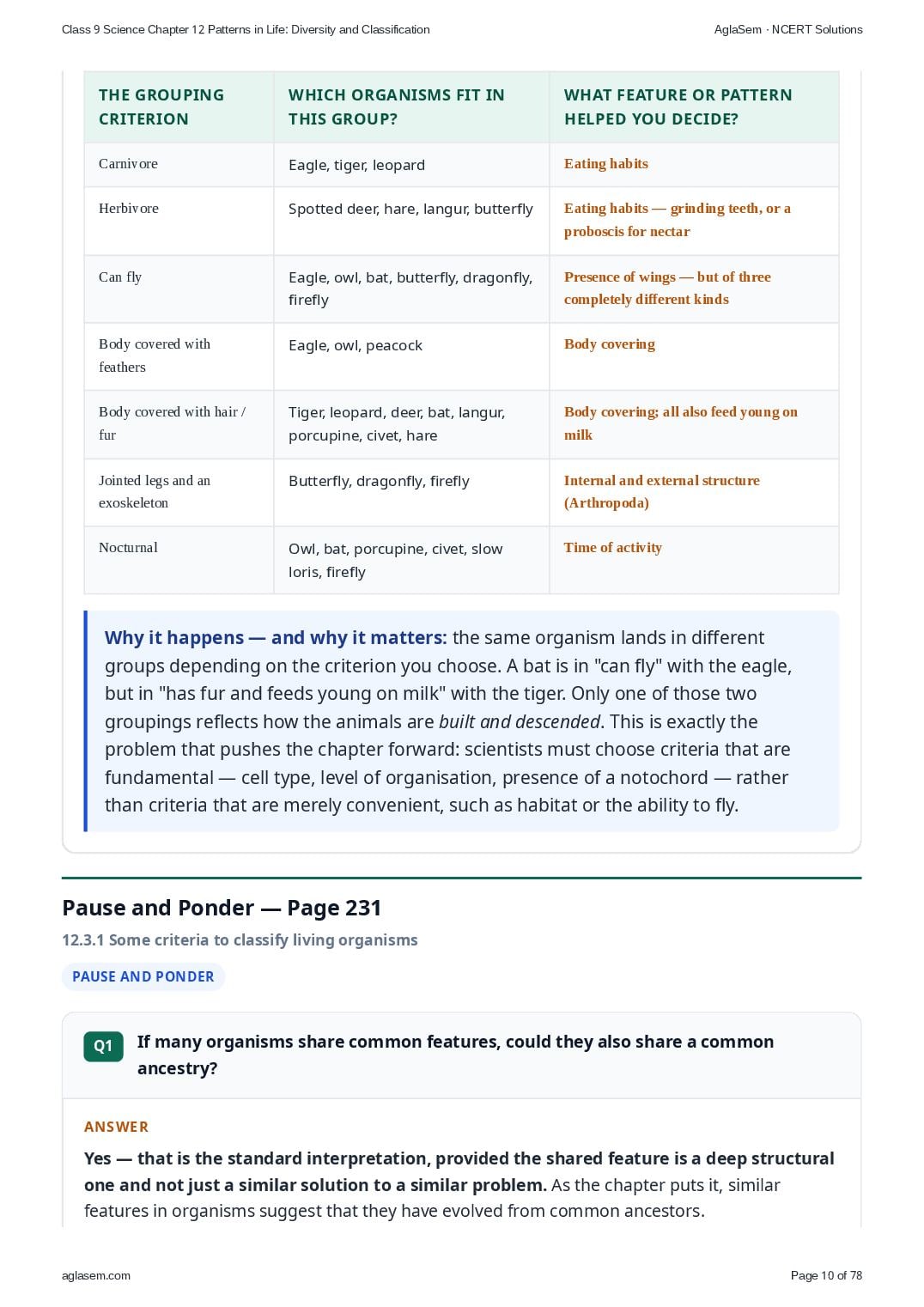
- Now, try grouping the same organisms in more than one way. Each time change the criterion you are using for grouping (Table 12.2).
- If many organisms share common features, could they also share a common ancestry?
- How are species distributed within a forest? Which plants and animals are closely linked?
- How does classifying the four hornbill species help us understand biodiversity?
- How can scientists keep track of so many species?
- The four hornbills look similar in some ways. What features can help scientists distinguish them from one another?
- What would happen if the large, old trees disappeared from the forest?
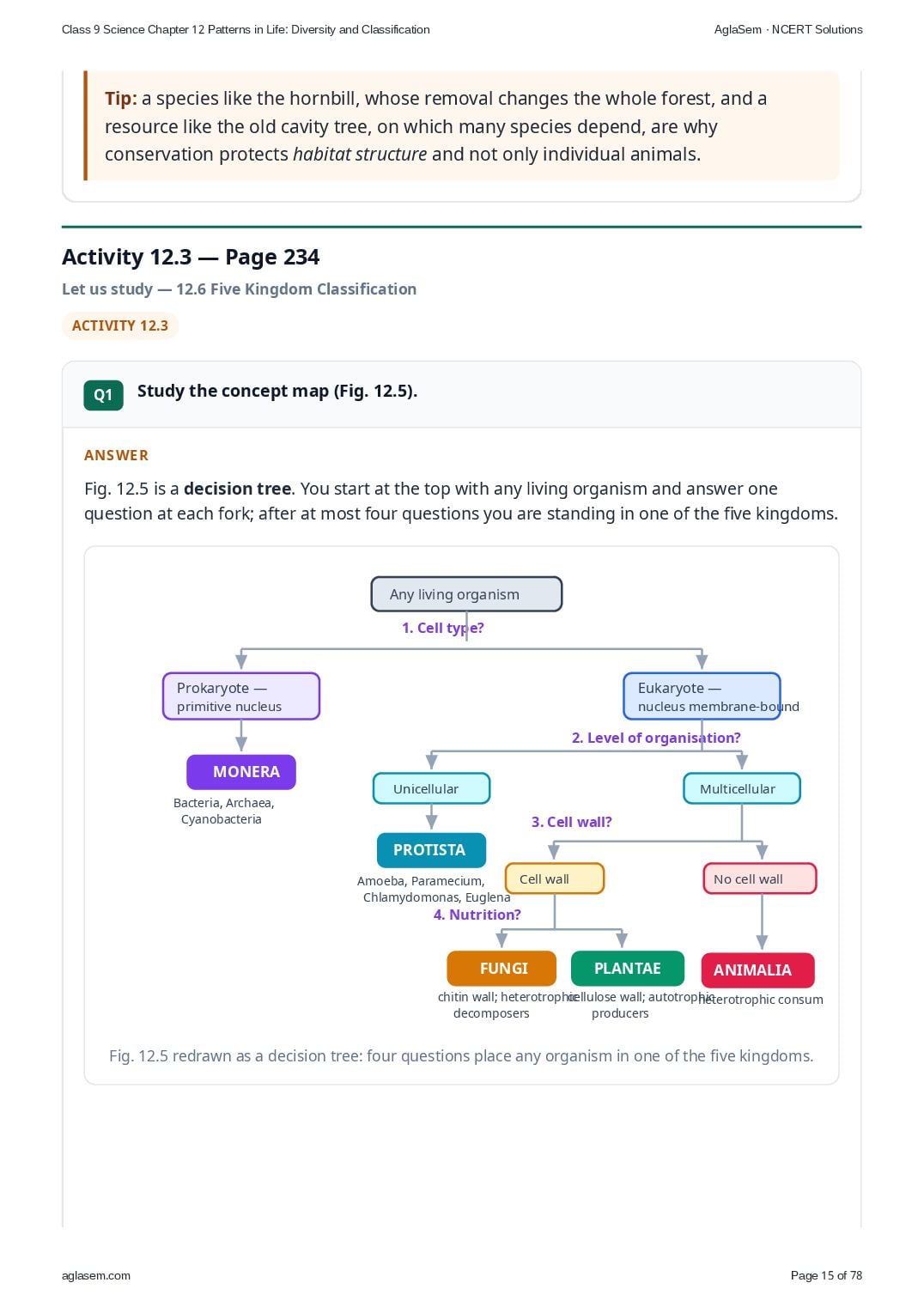
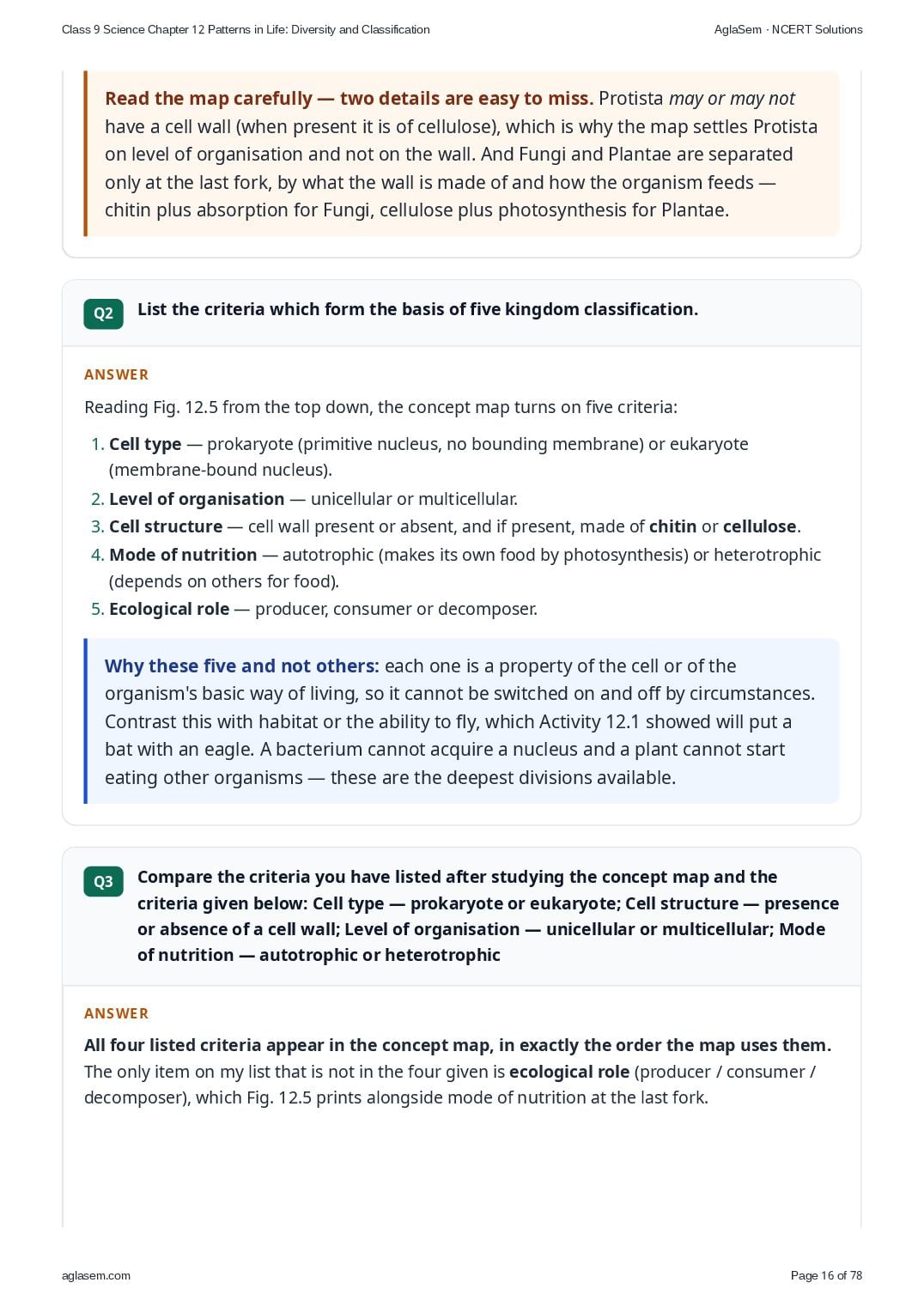
- Study the concept map (Fig. 12.5).
- List the criteria which form the basis of five kingdom classification.
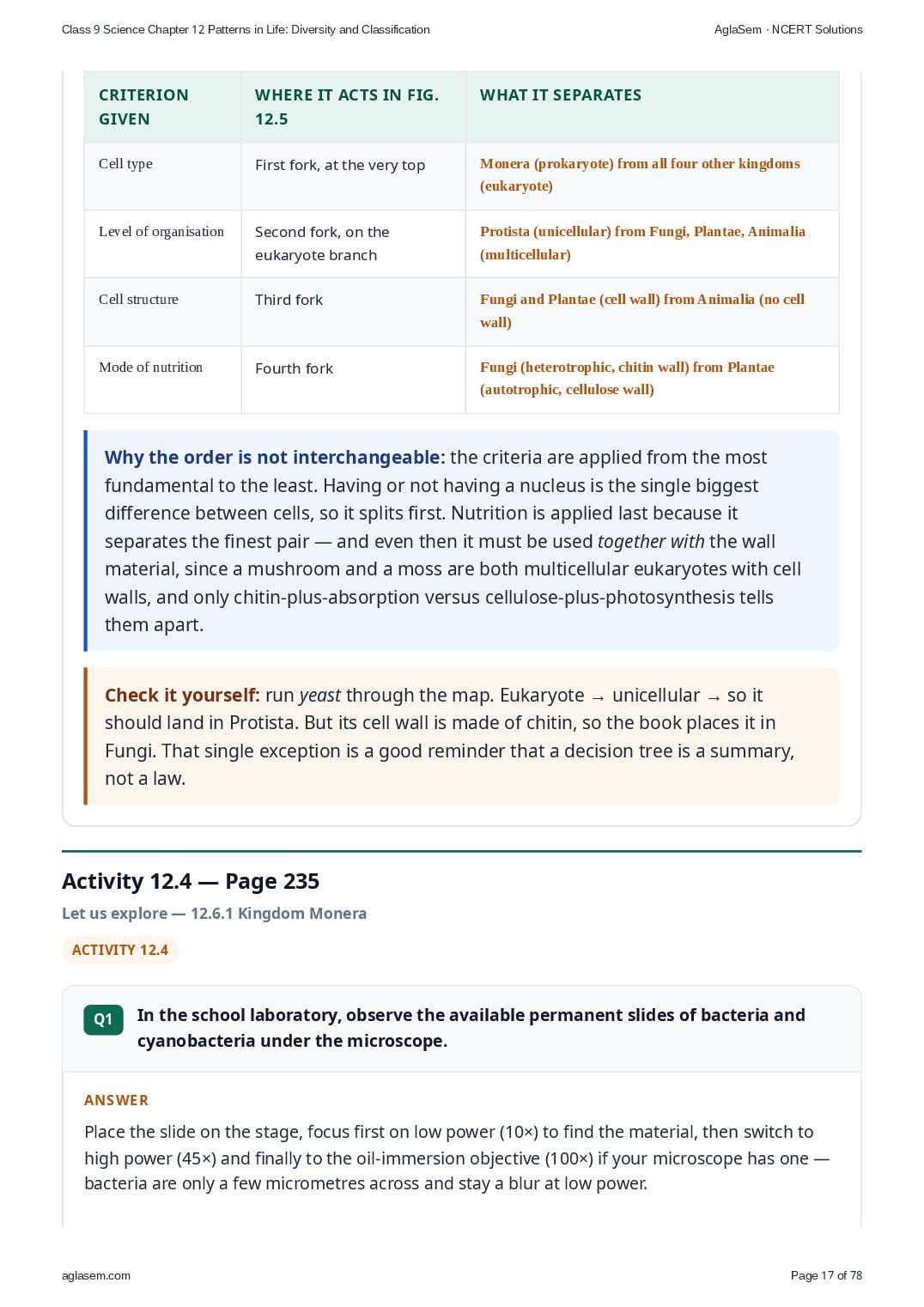
- Compare the criteria you have listed after studying the concept map and the criteria given below: Cell type — prokaryote or eukaryote; Cell structure — presence or absence of a cell wall; Level of organisation — unicellular or multicellular; Mode of nutrition — autotrophic or heterotrophic
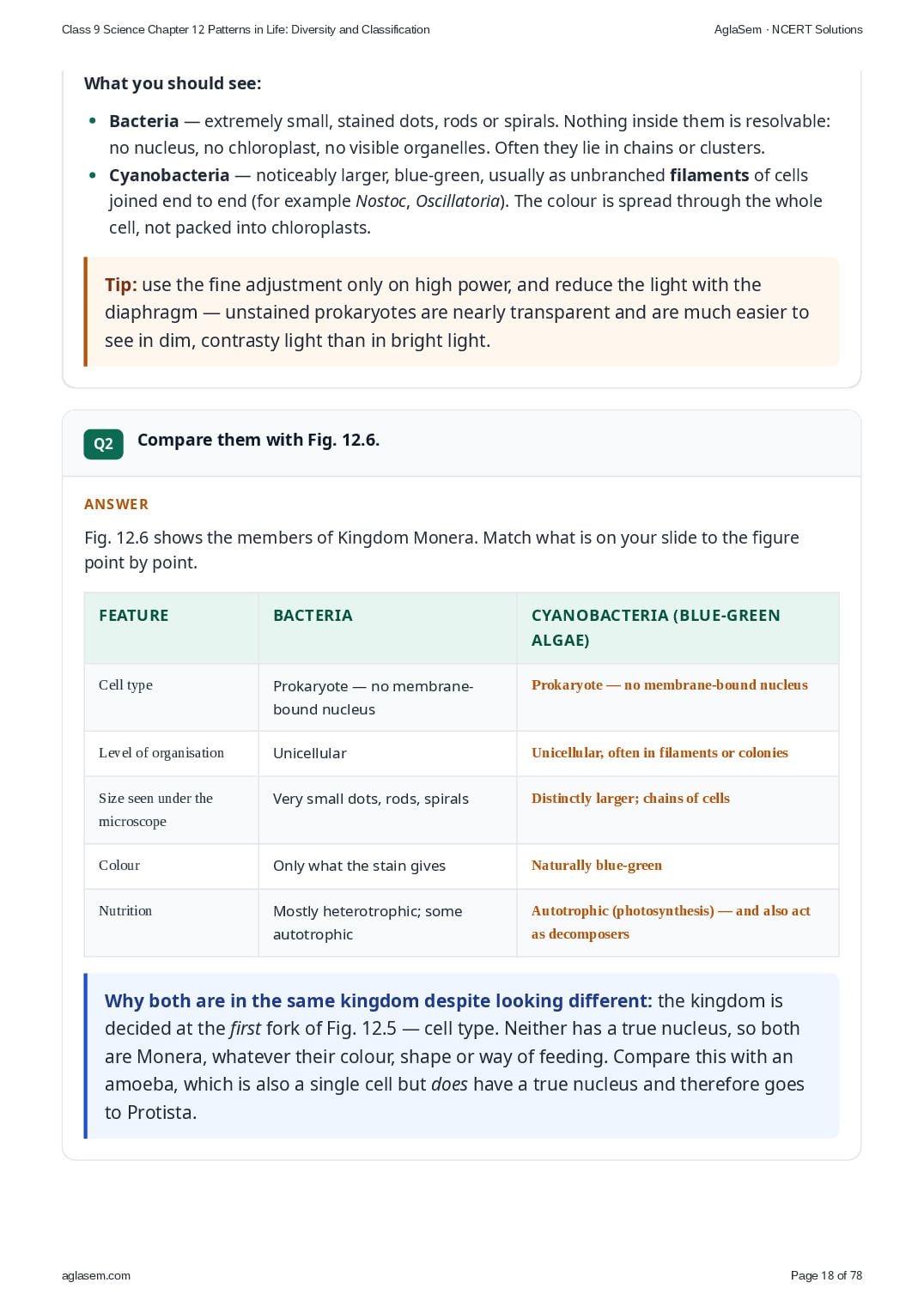
- In the school laboratory, observe the available permanent slides of bacteria and cyanobacteria under the microscope.
- Compare them with Fig. 12.6.
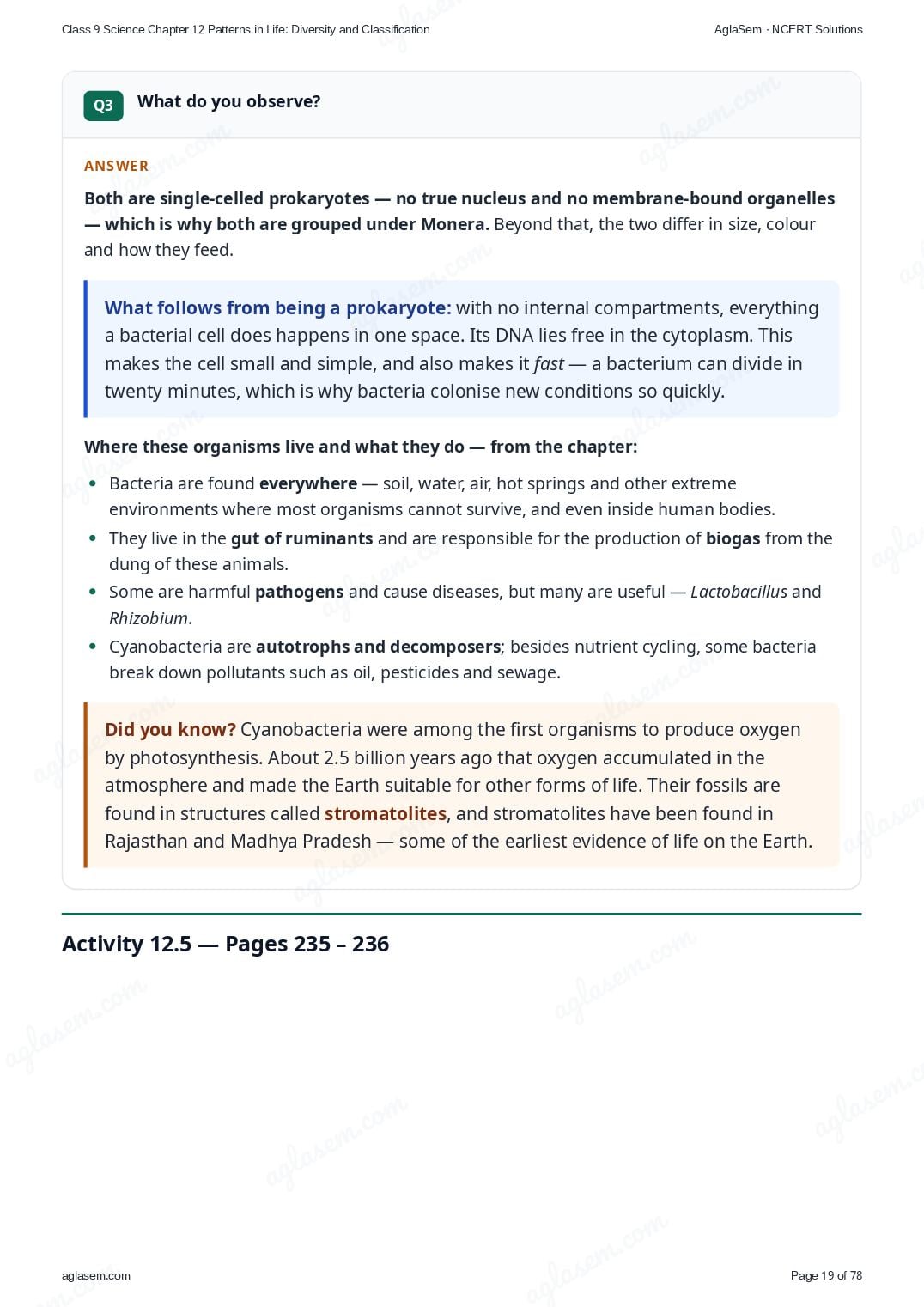
- What do you observe?
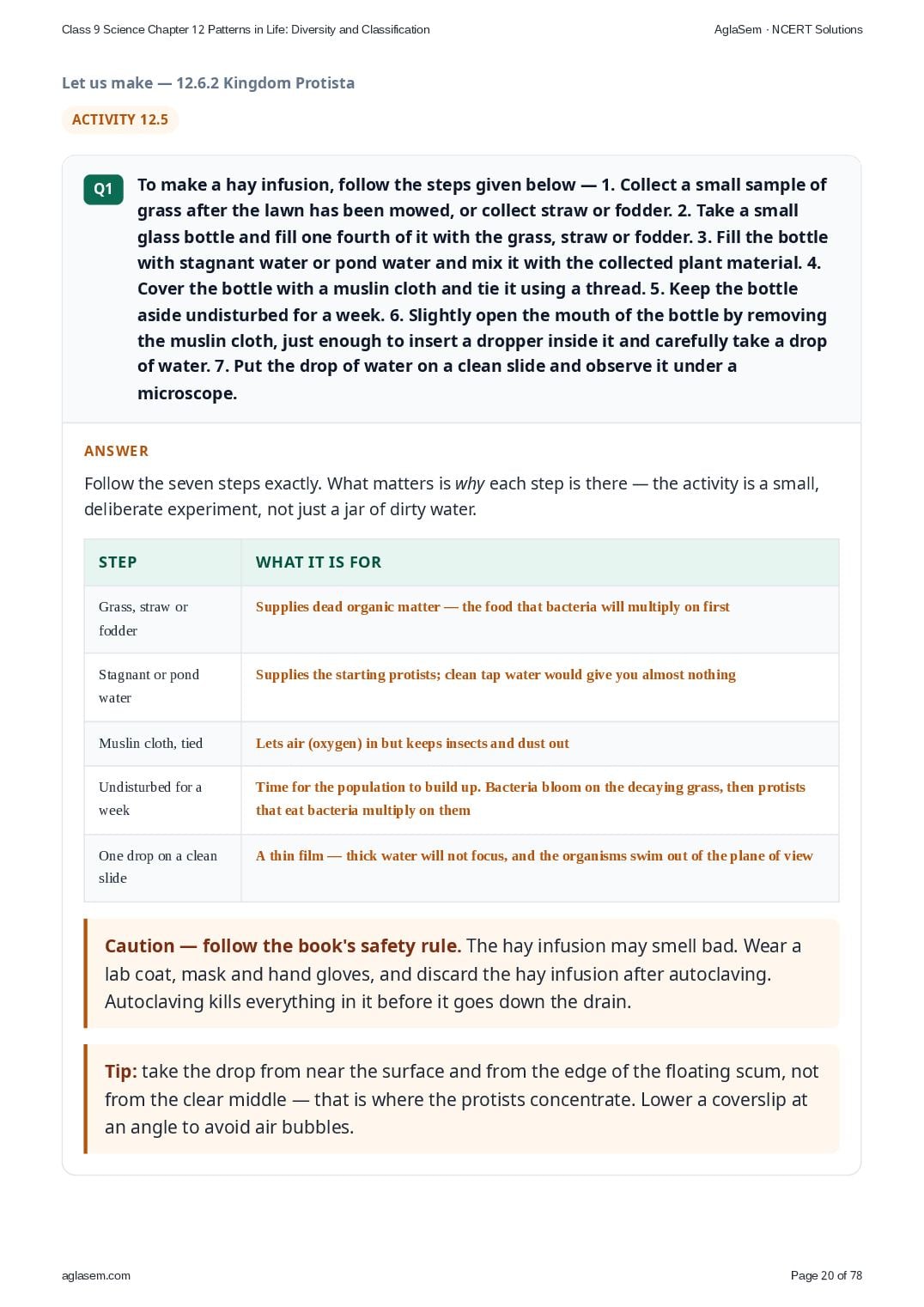
- To make a hay infusion, follow the steps given below — 1. Collect a small sample of grass after the lawn has been mowed, or collect straw or fodder. 2. Take a small glass bottle and fill one fourth of it with the grass, straw or fodder. 3. Fill the bottle with stagnant water or pond water and mix it with the collected plant material. 4. Cover the bottle with a muslin cloth and tie it using a thread. 5. Keep the bottle aside undisturbed for a week. 6. Slightly open the mouth of the bottle by removing the muslin cloth, just enough to insert a dropper inside it and carefully take a drop of water. 7. Put the drop of water on a clean slide and observe it under a microscope.
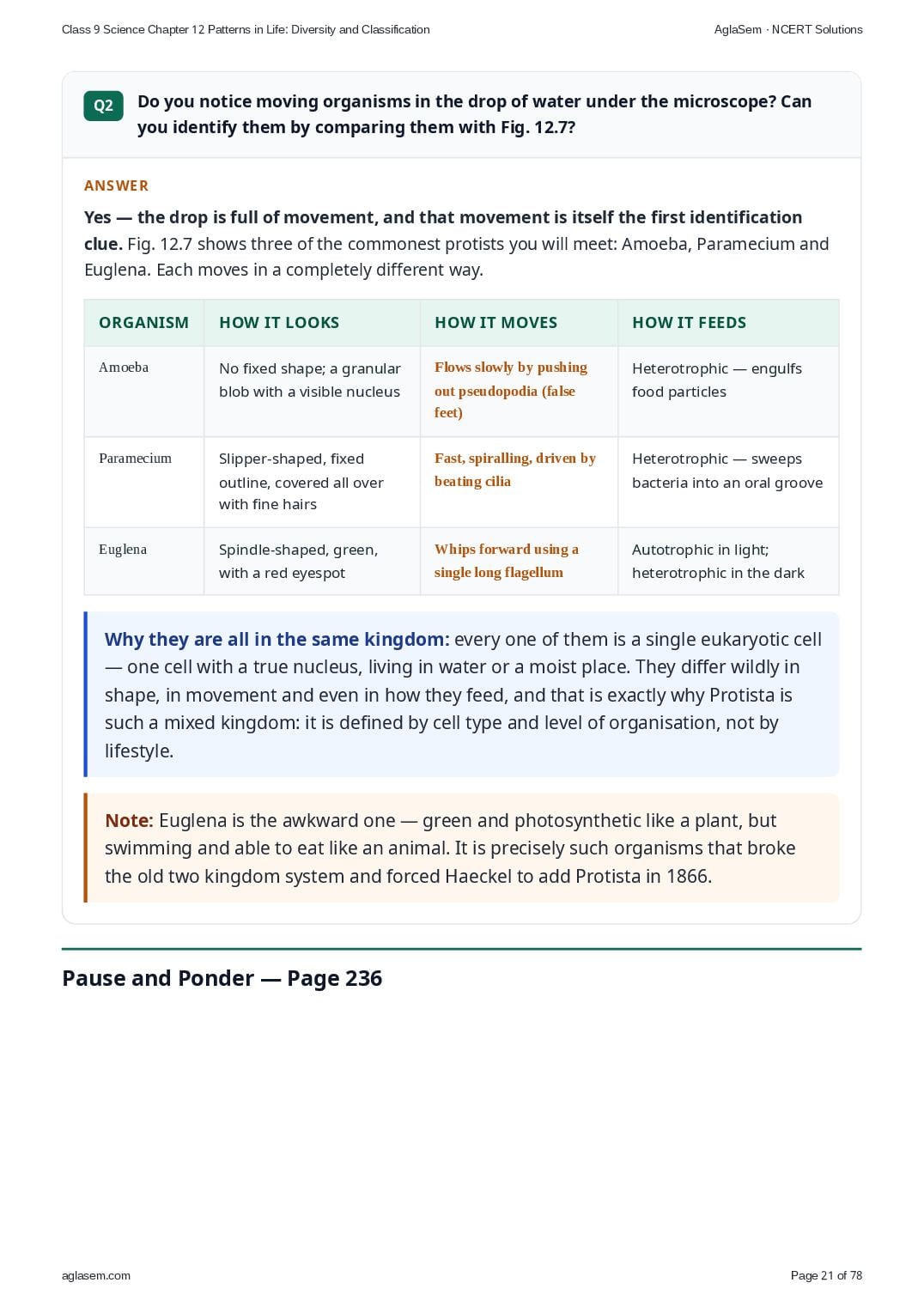
- Do you notice moving organisms in the drop of water under the microscope? Can you identify them by comparing them with Fig. 12.7?
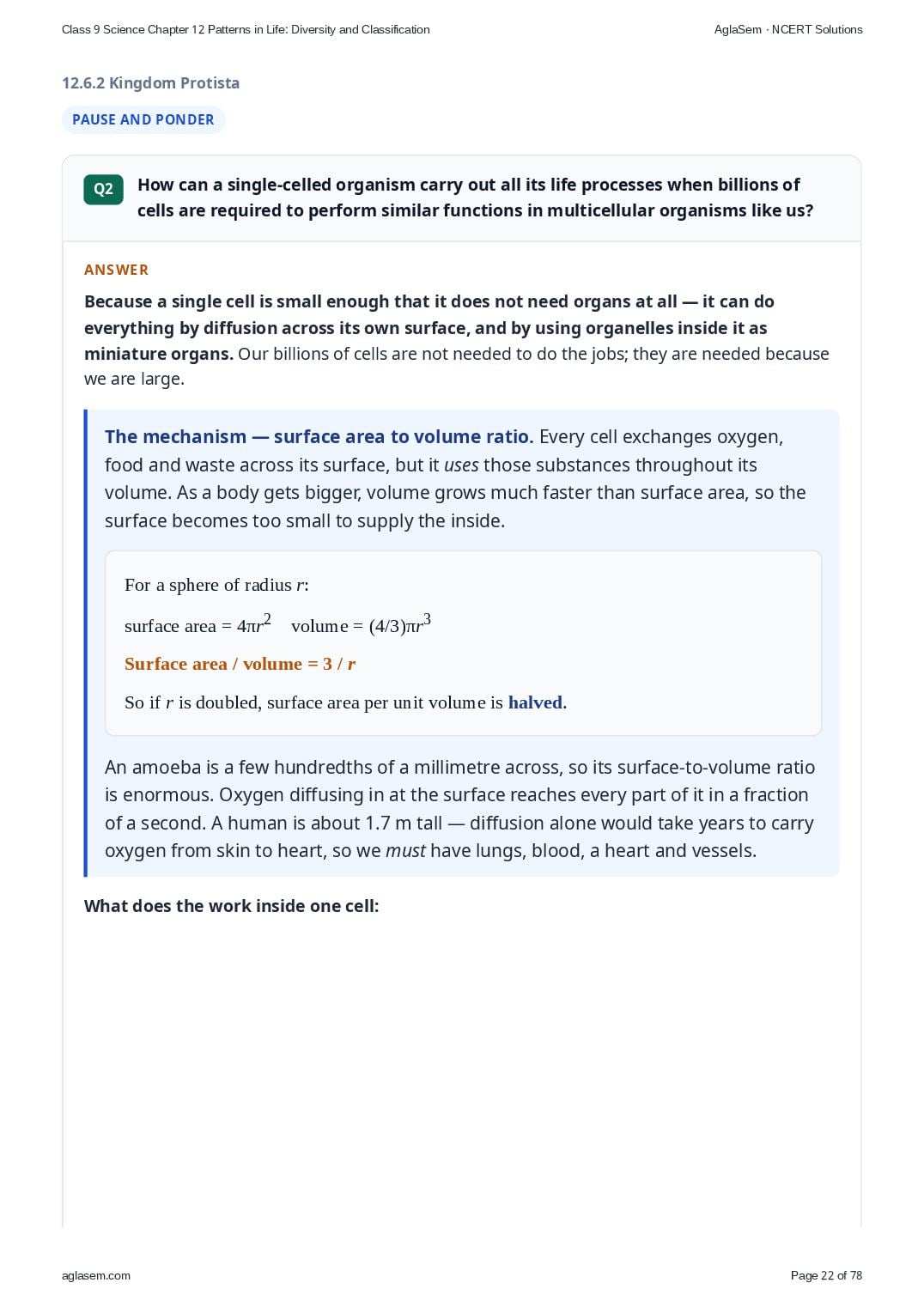
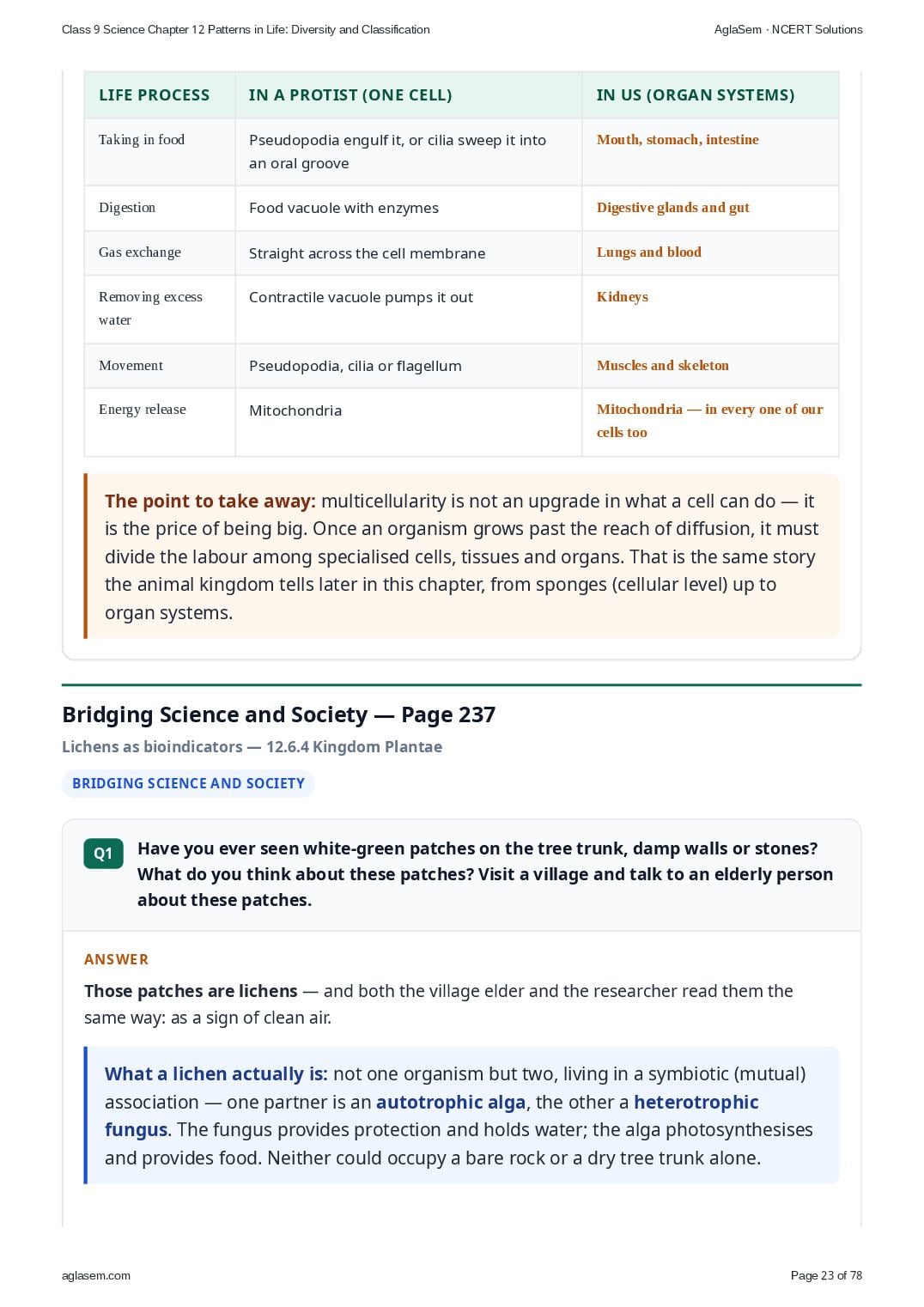
- How can a single-celled organism carry out all its life processes when billions of cells are required to perform similar functions in multicellular organisms like us?
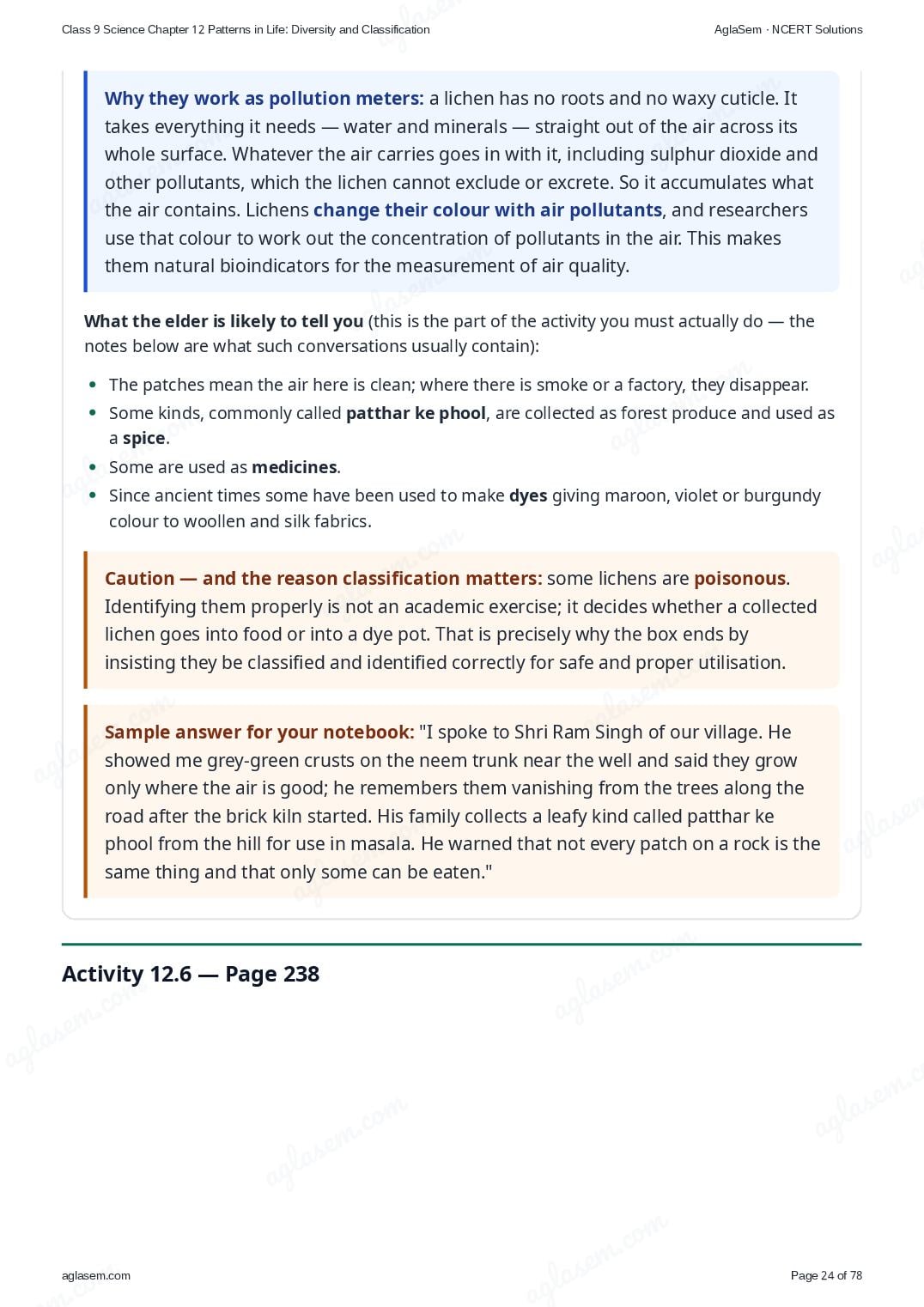
- Have you ever seen white-green patches on the tree trunk, damp walls or stones? What do you think about these patches? Visit a village and talk to an elderly person about these patches.
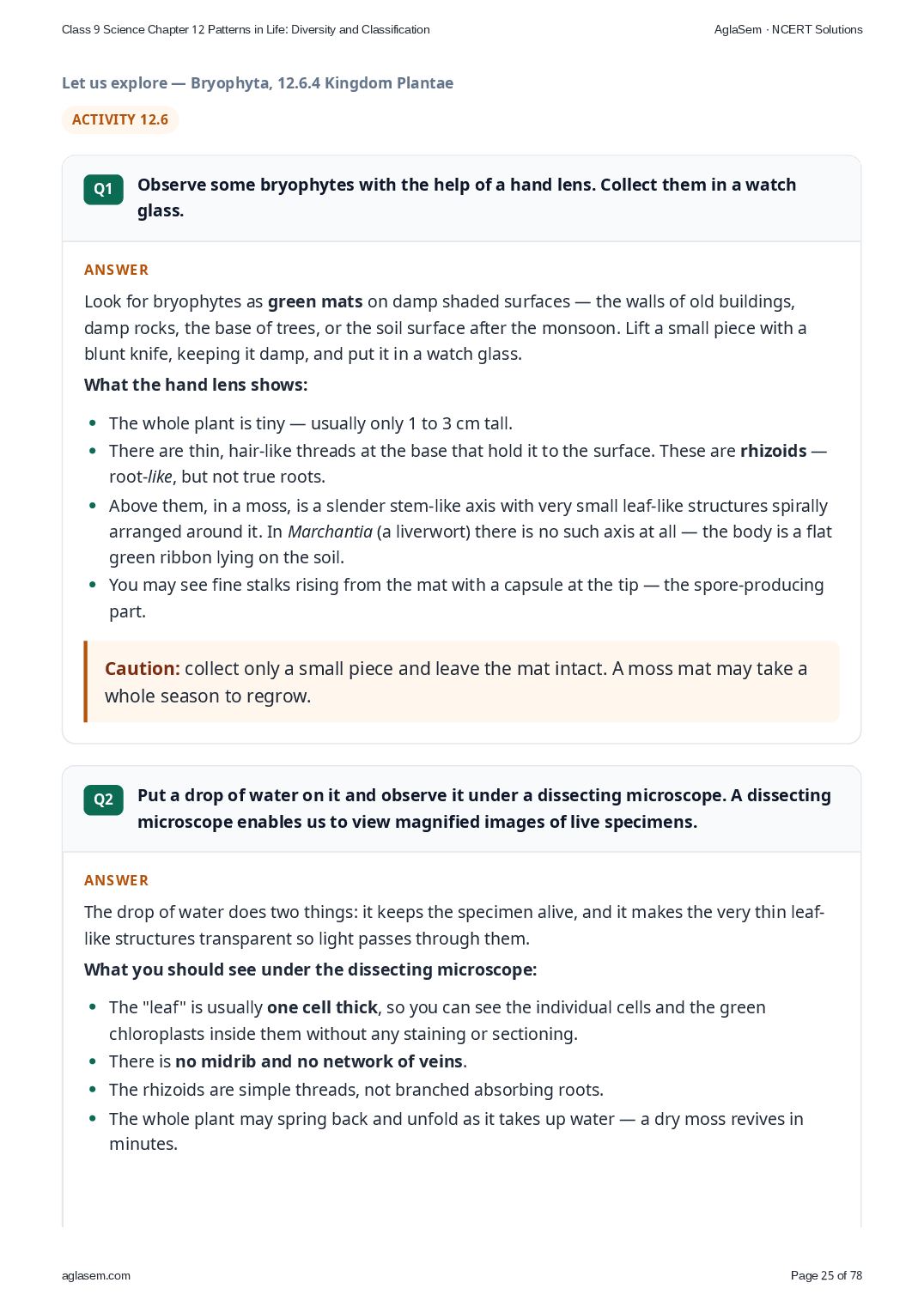
- Observe some bryophytes with the help of a hand lens. Collect them in a watch glass.
- Put a drop of water on it and observe it under a dissecting microscope. A dissecting microscope enables us to view magnified images of live specimens.
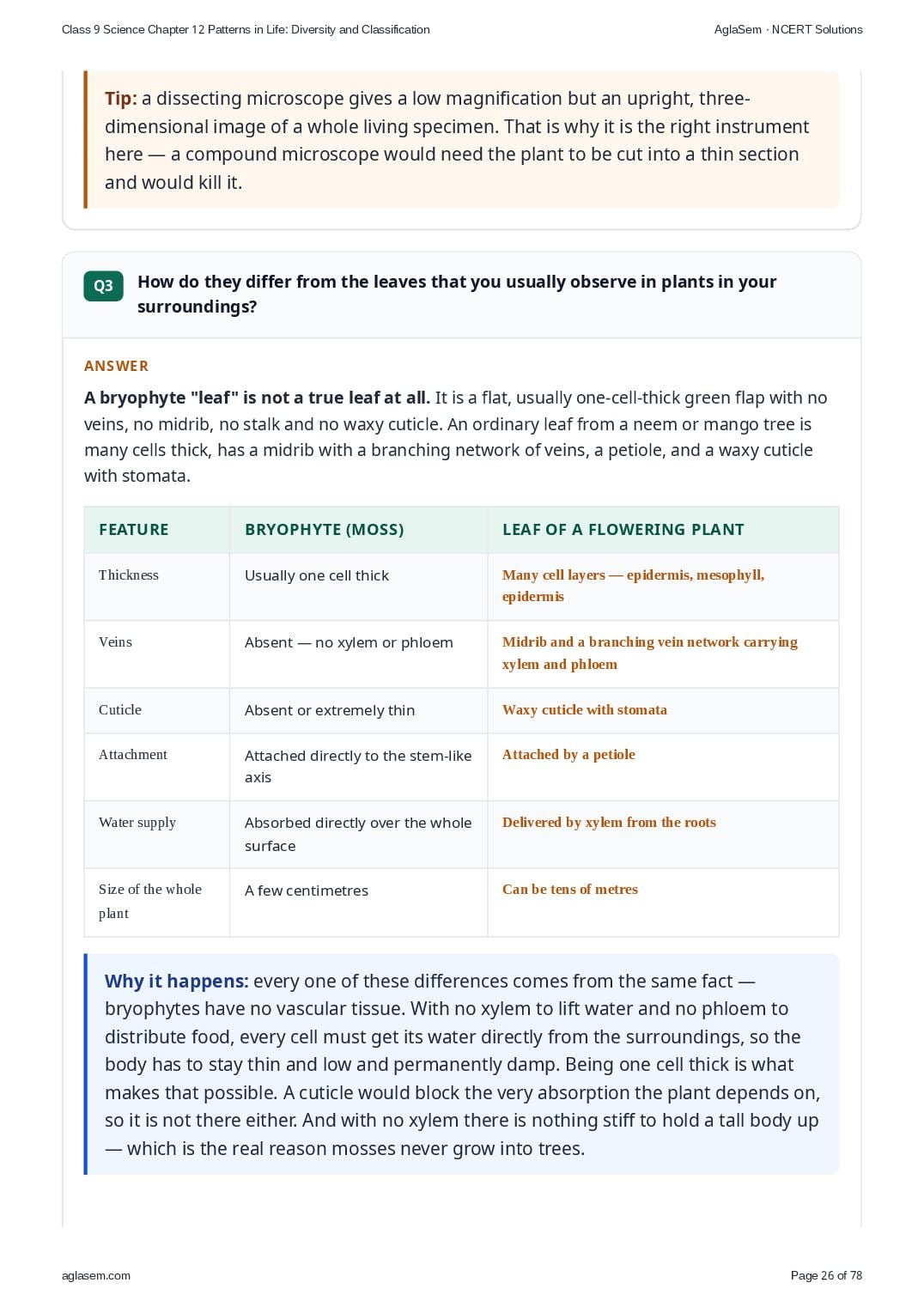
- How do they differ from the leaves that you usually observe in plants in your surroundings?
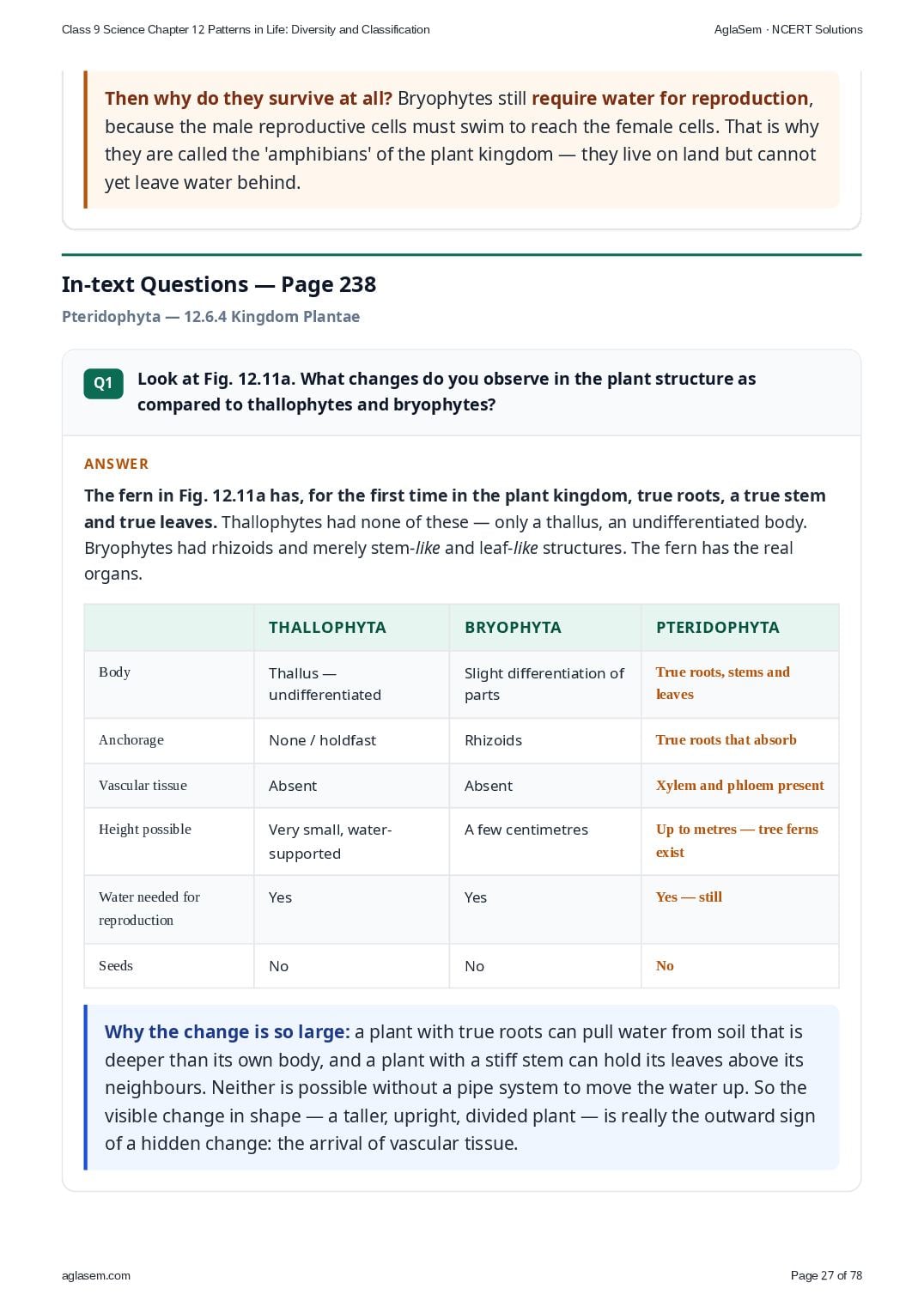
- Look at Fig. 12.11a. What changes do you observe in the plant structure as compared to thallophytes and bryophytes?
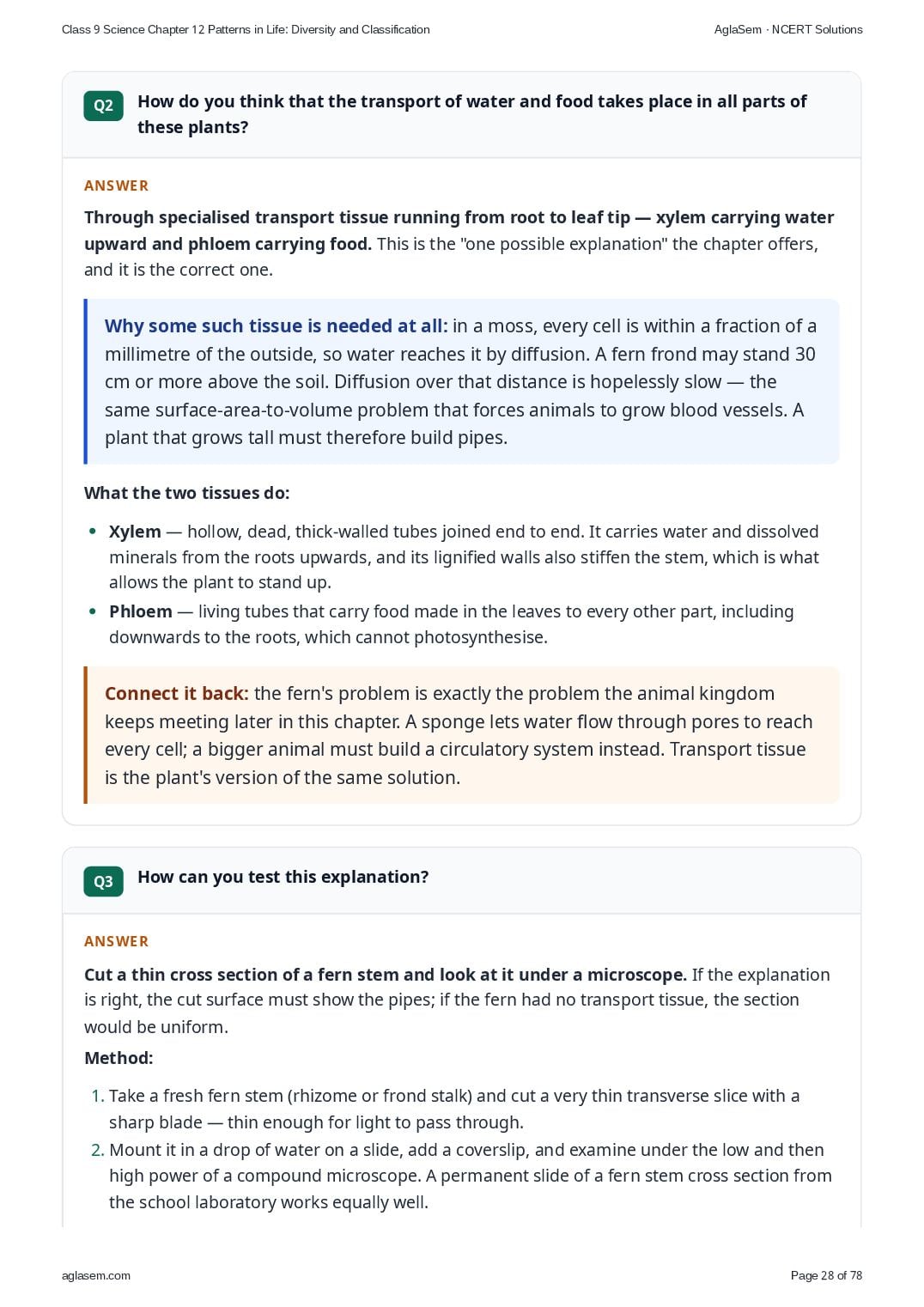
- How do you think that the transport of water and food takes place in all parts of these plants?
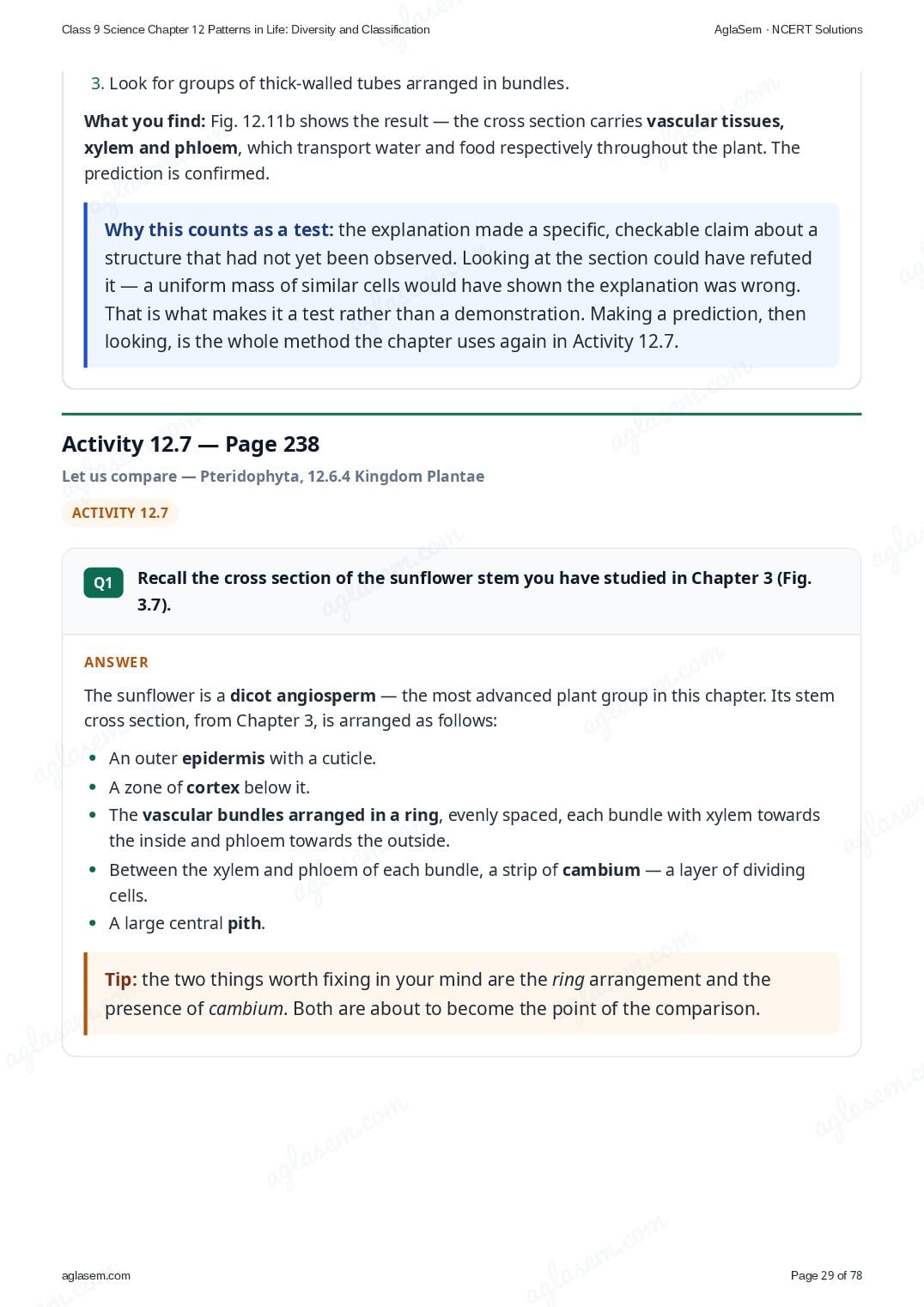
- How can you test this explanation?
- Recall the cross section of the sunflower stem you have studied in Chapter 3 (Fig. 3.7).
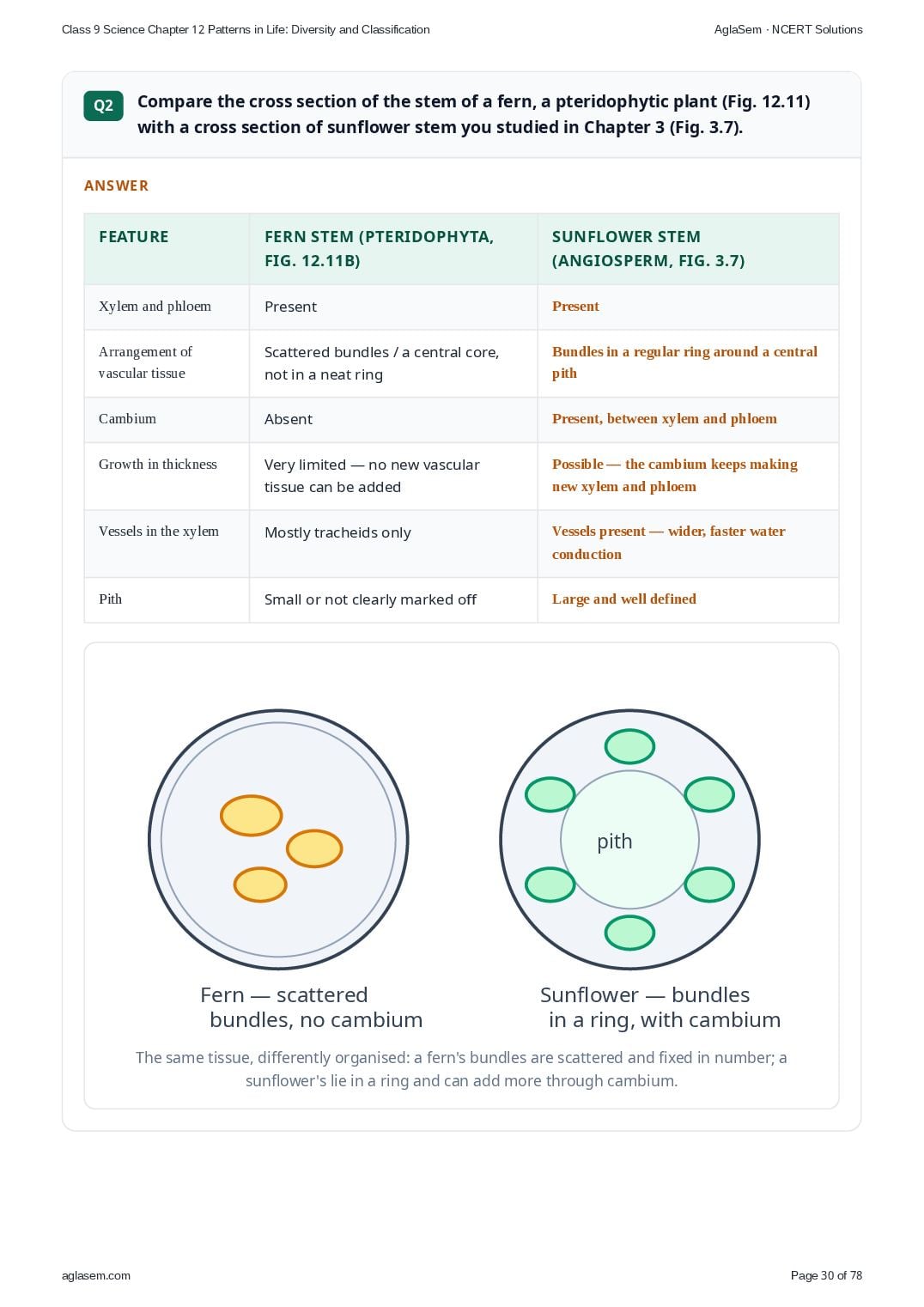
- Compare the cross section of the stem of a fern, a pteridophytic plant (Fig. 12.11) with a cross section of sunflower stem you studied in Chapter 3 (Fig. 3.7).
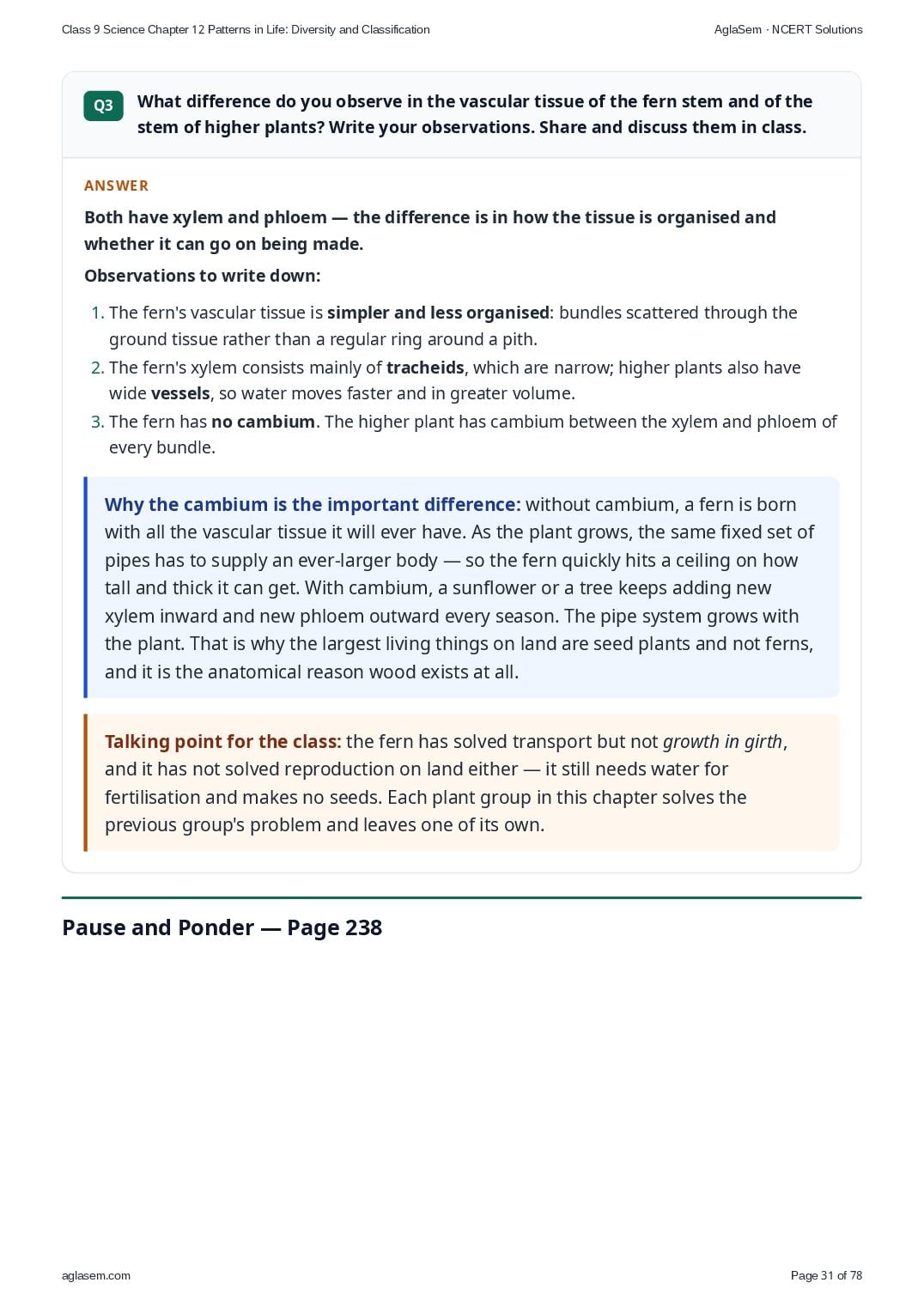
- What difference do you observe in the vascular tissue of the fern stem and of the stem of higher plants? Write your observations. Share and discuss them in class.
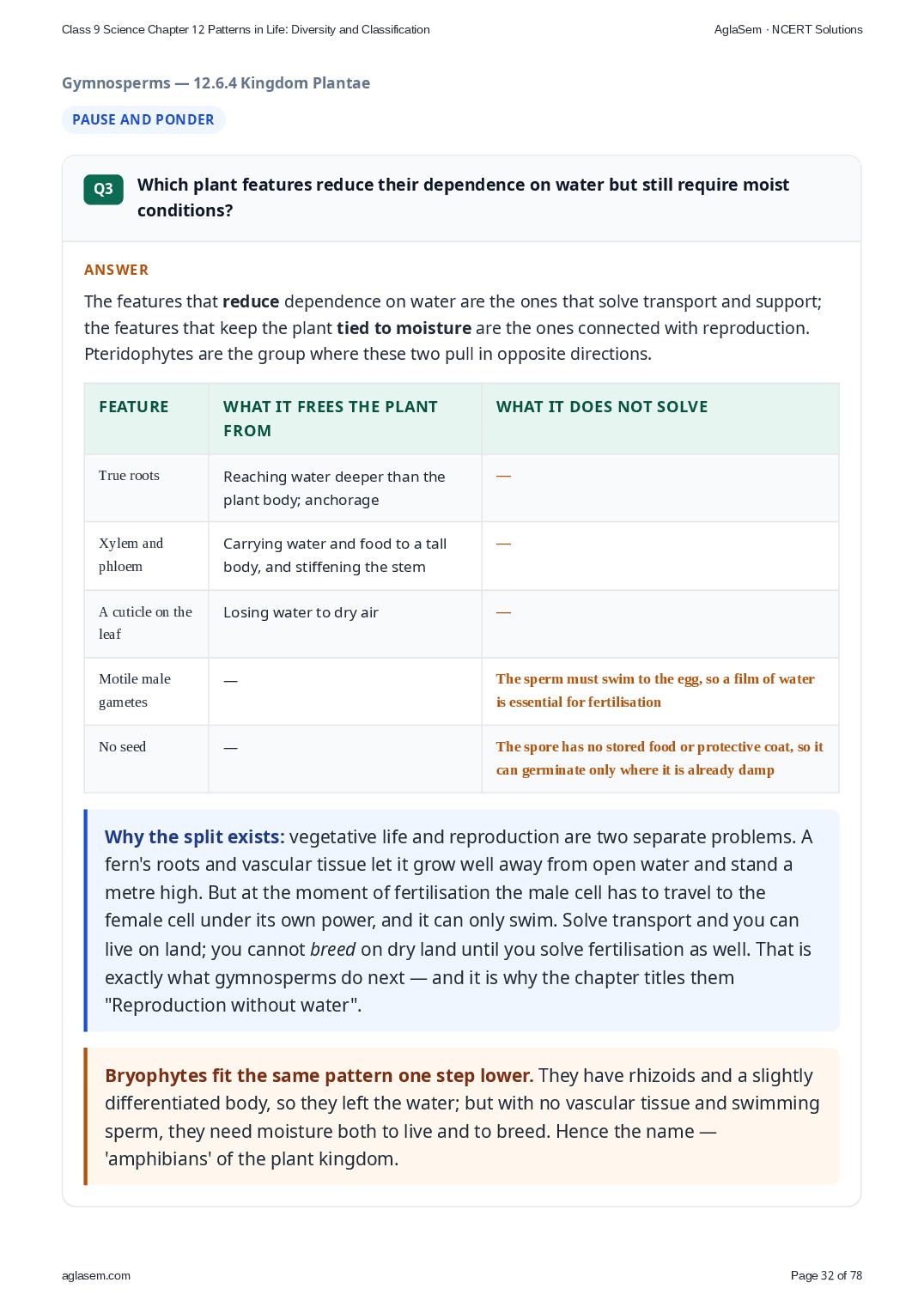
- Which plant features reduce their dependence on water but still require moist conditions?
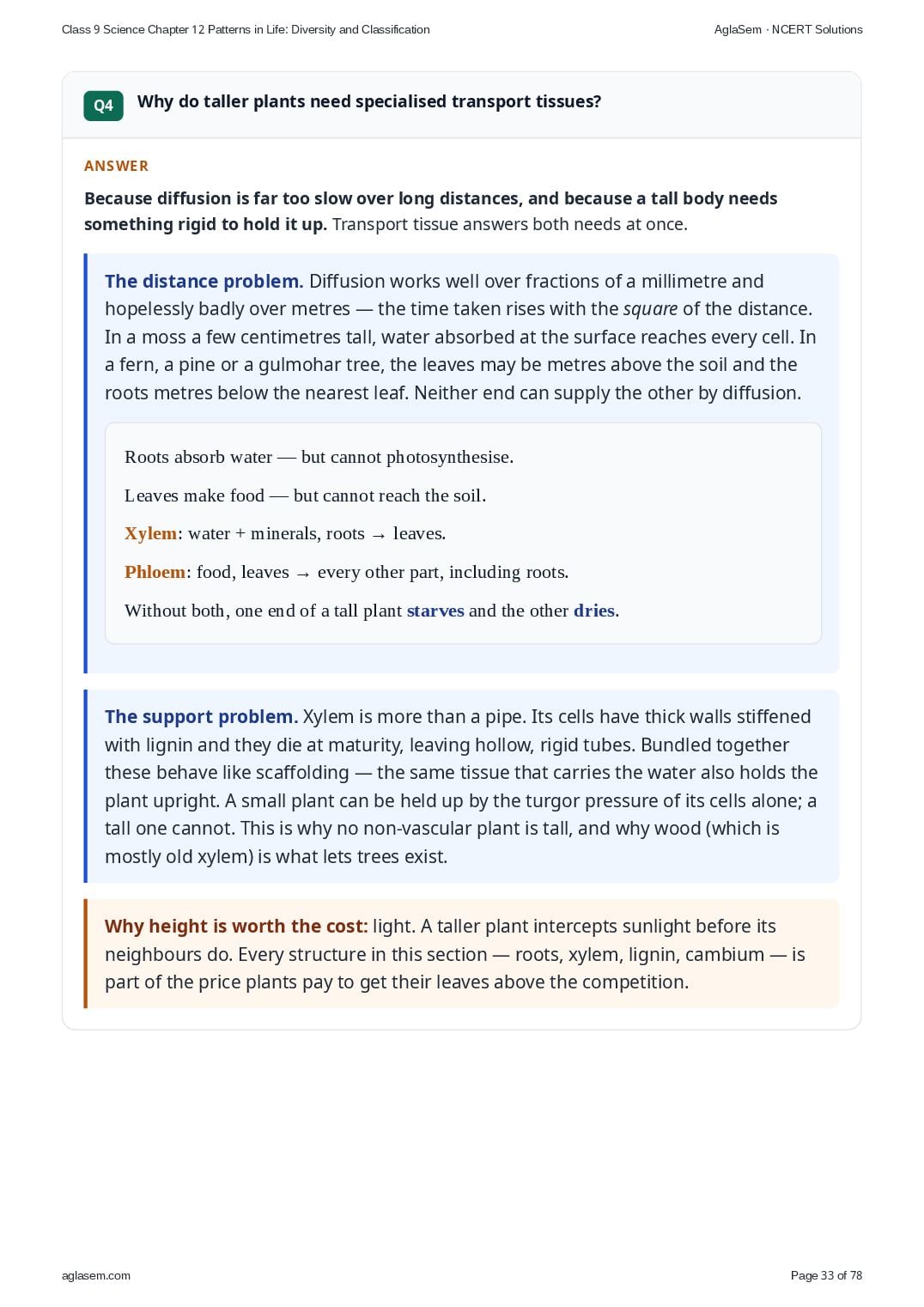
- Why do taller plants need specialised transport tissues?
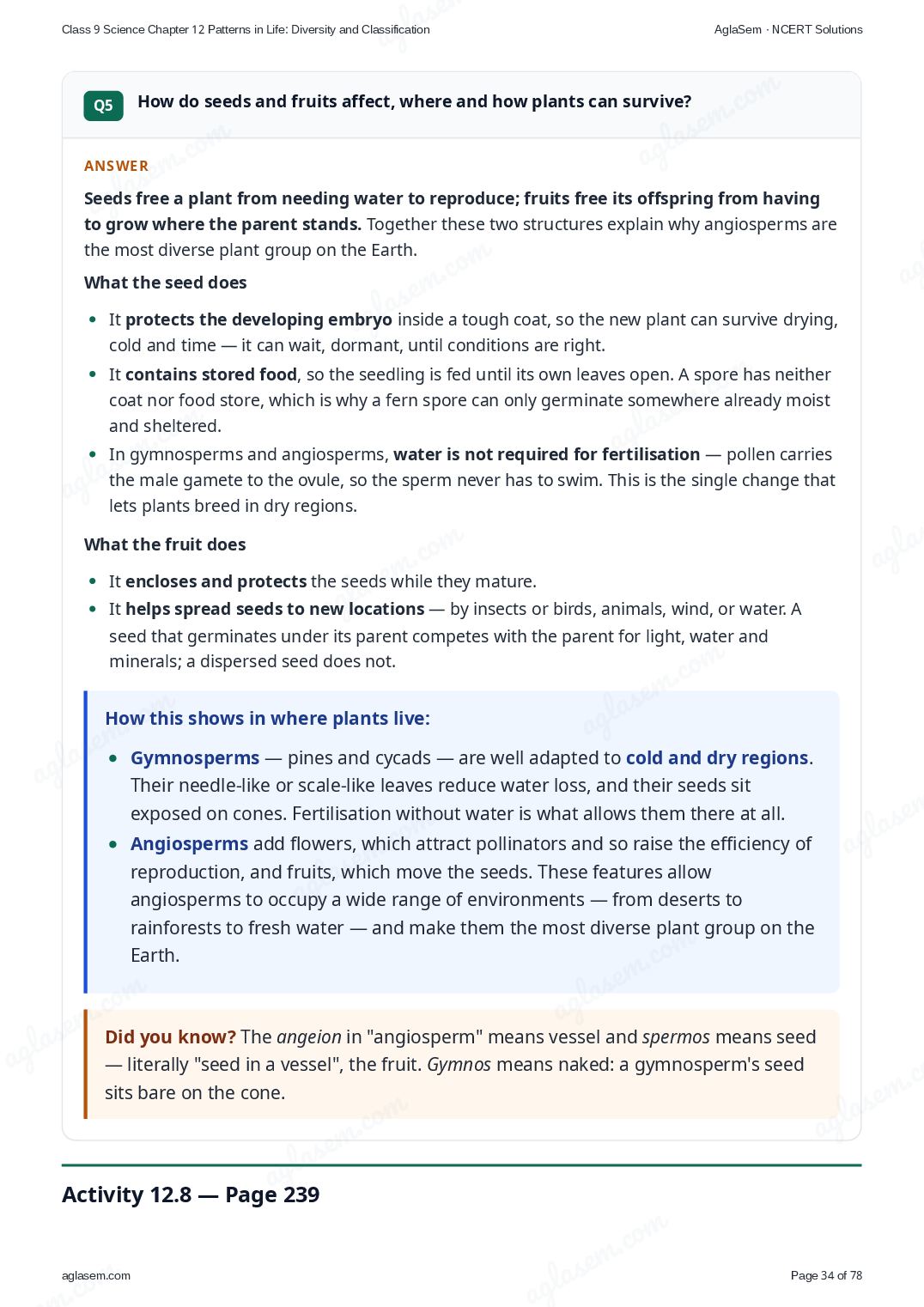
- How do seeds and fruits affect, where and how plants can survive?
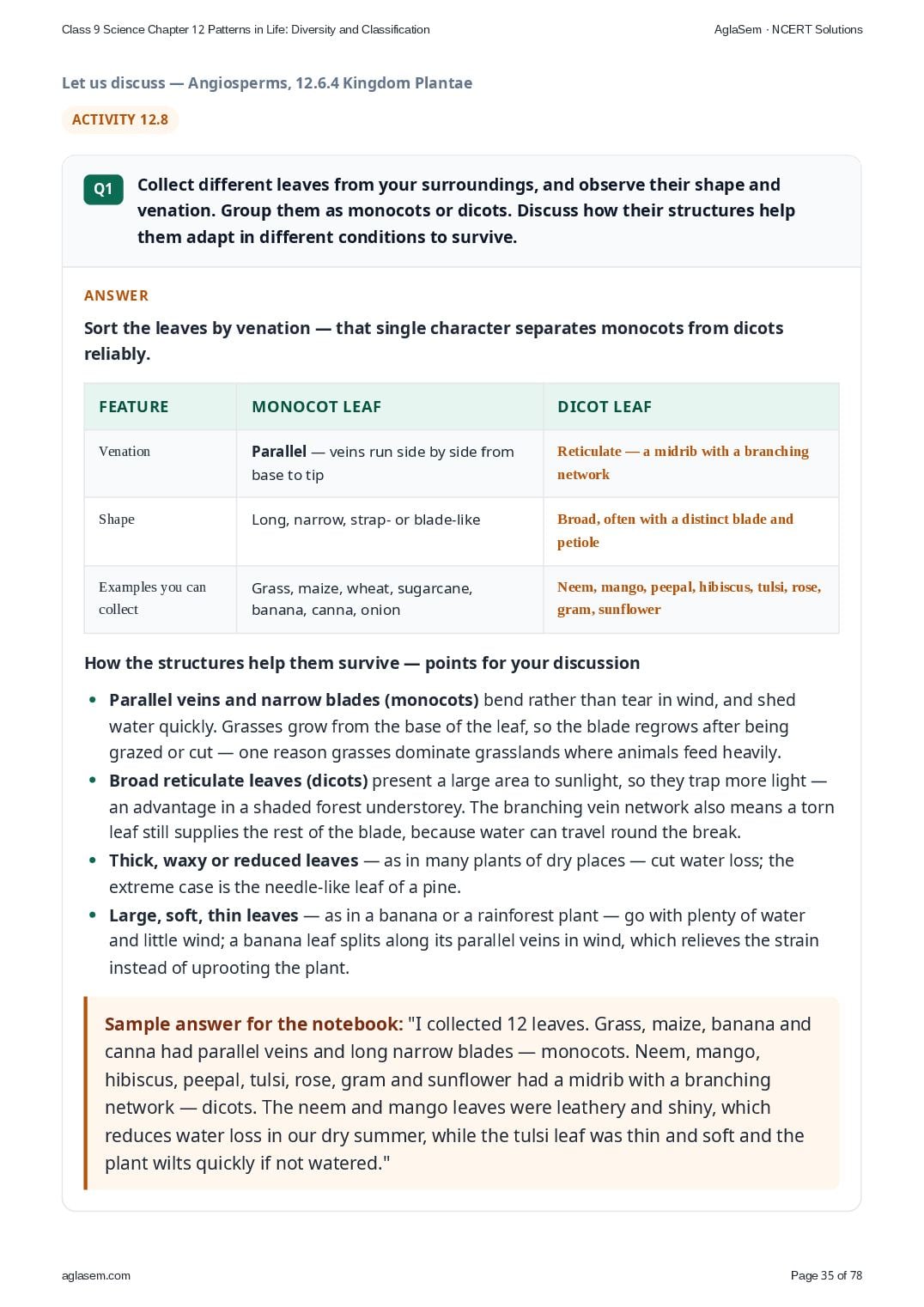
- Collect different leaves from your surroundings, and observe their shape and venation. Group them as monocots or dicots. Discuss how their structures help them adapt in different conditions to survive.
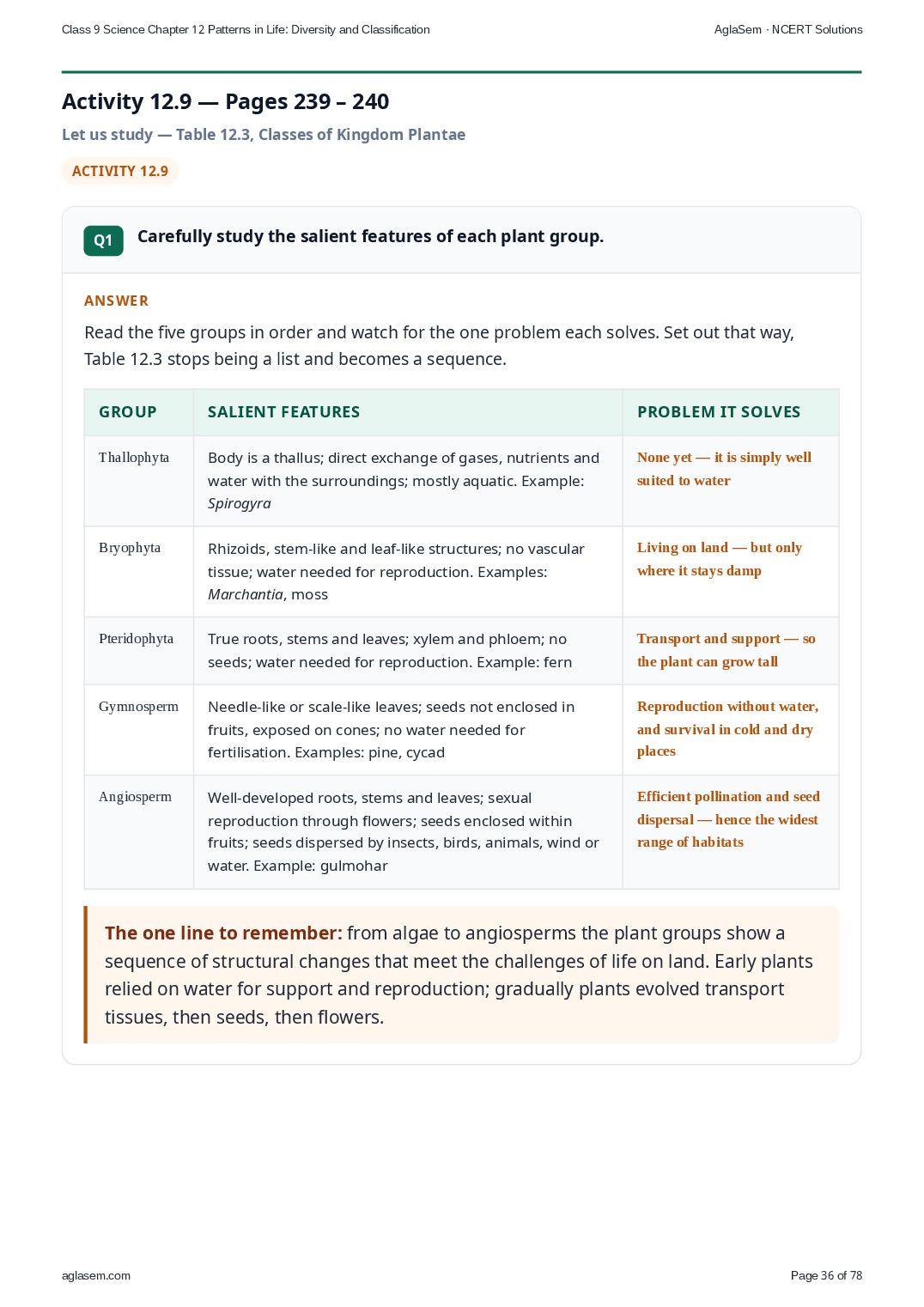
- Carefully study the salient features of each plant group.
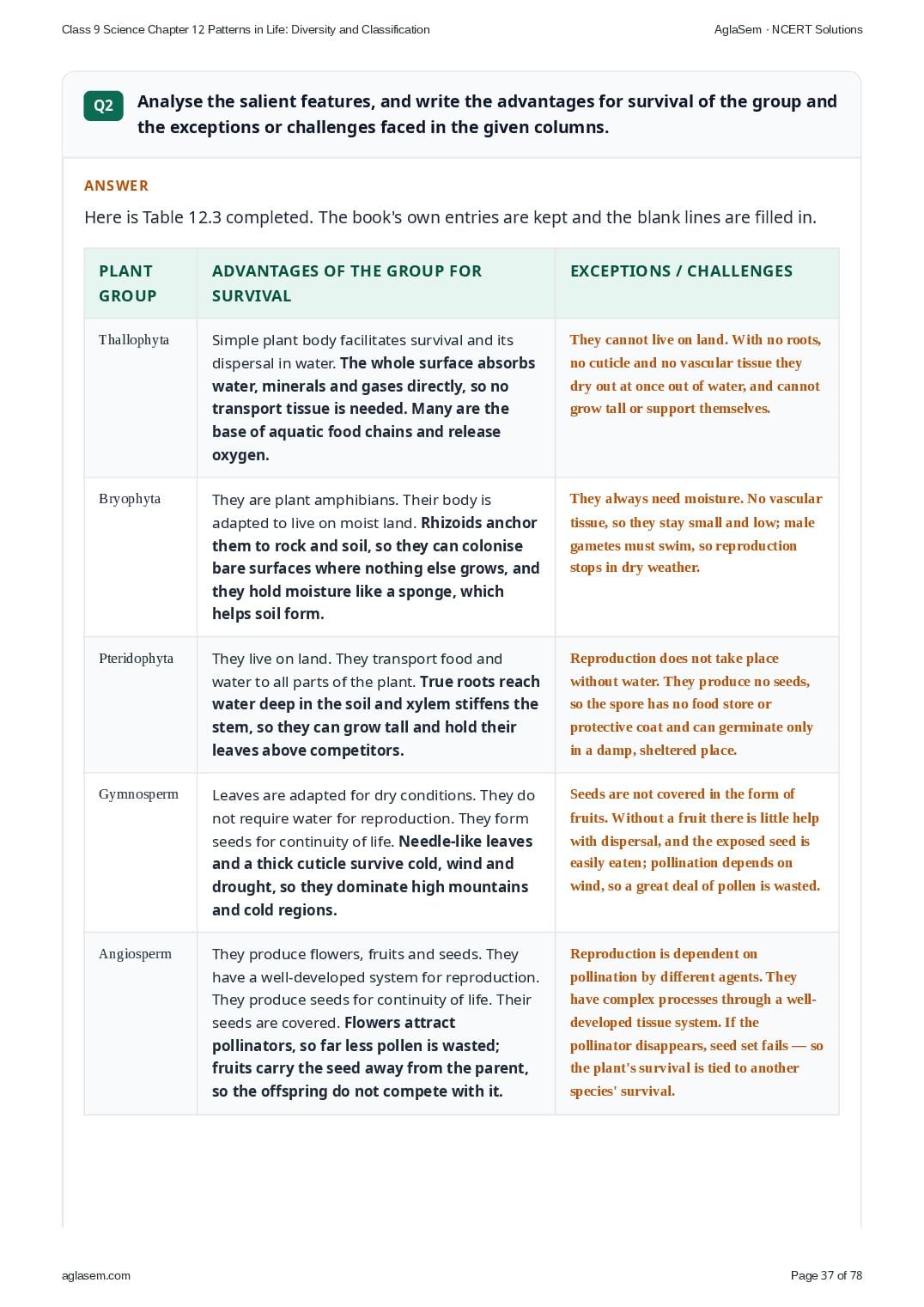
- Analyse the salient features, and write the advantages for survival of the group and the exceptions or challenges faced in the given columns.
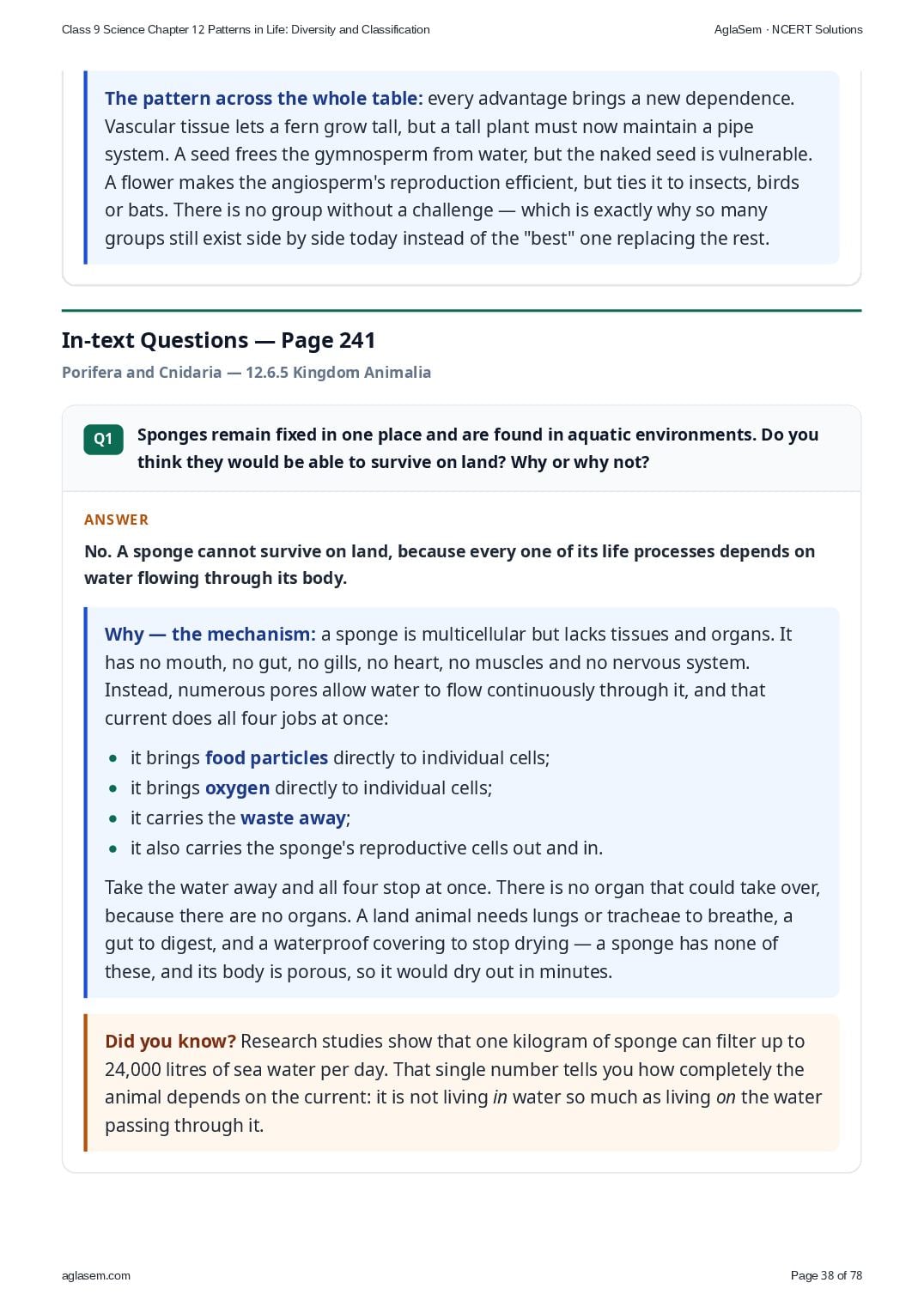
- Sponges remain fixed in one place and are found in aquatic environments. Do you think they would be able to survive on land? Why or why not?
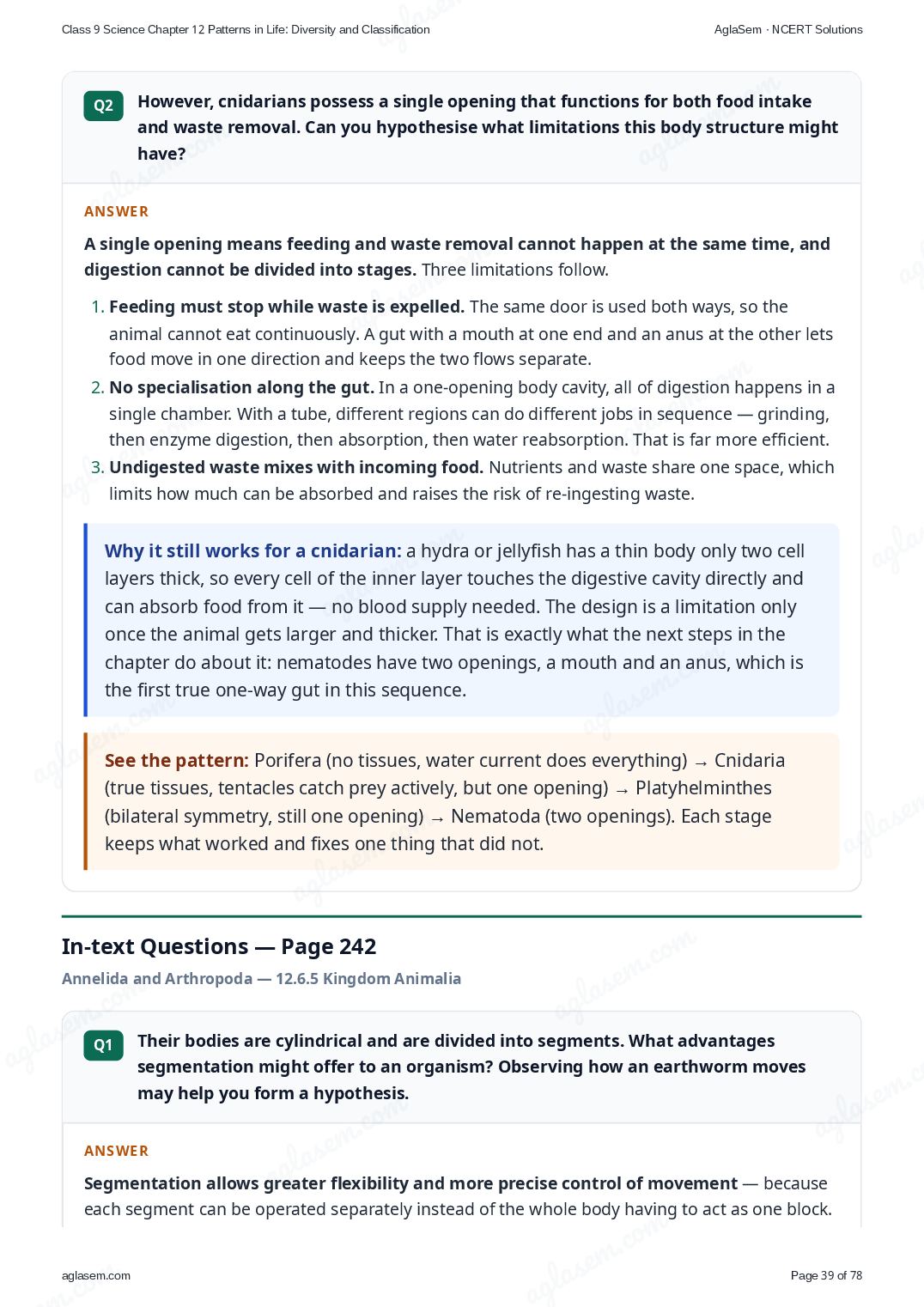
- However, cnidarians possess a single opening that functions for both food intake and waste removal. Can you hypothesise what limitations this body structure might have?
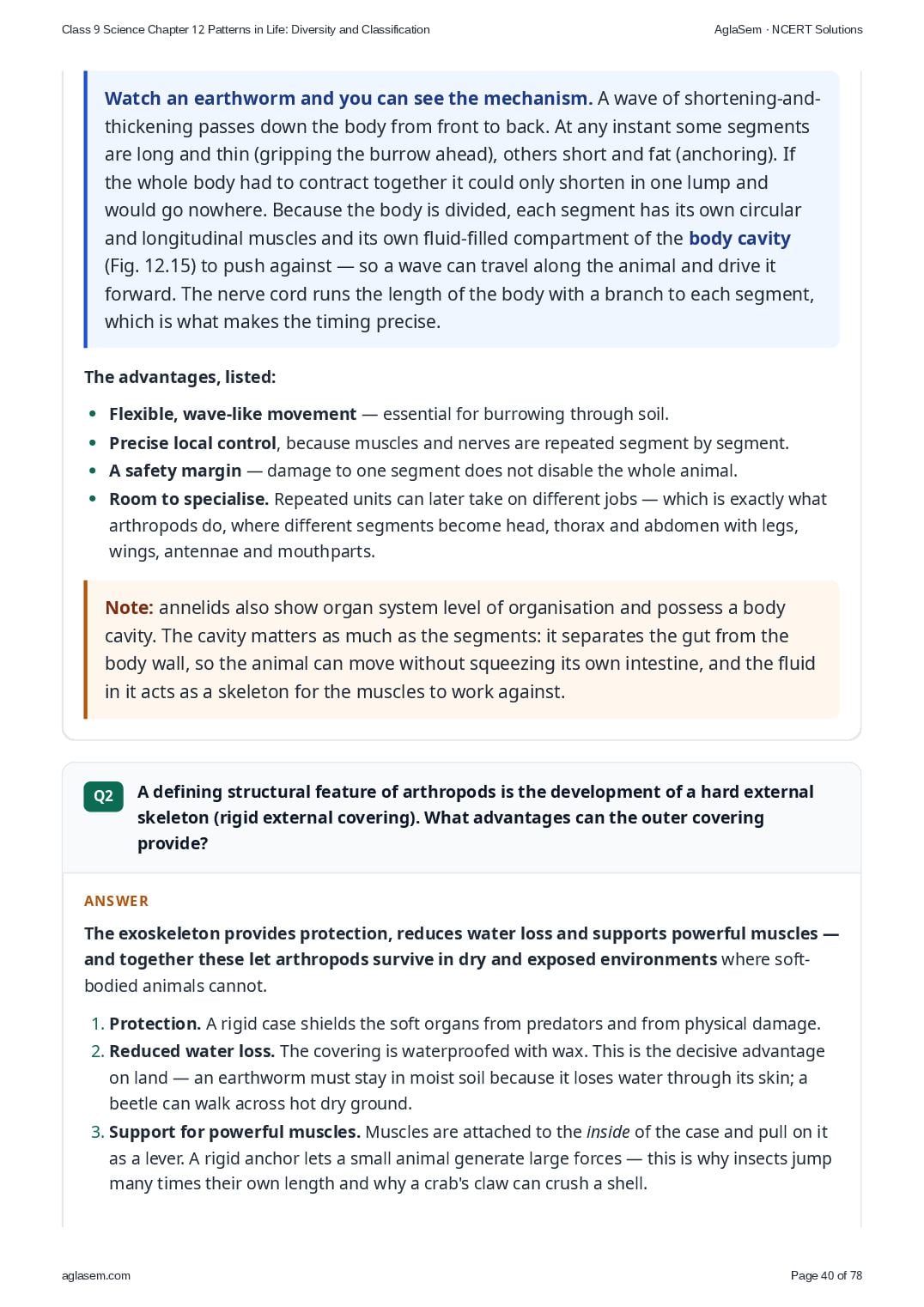
- Their bodies are cylindrical and are divided into segments. What advantages segmentation might offer to an organism? Observing how an earthworm moves may help you form a hypothesis.
- A defining structural feature of arthropods is the development of a hard external skeleton (rigid external covering). What advantages can the outer covering provide?
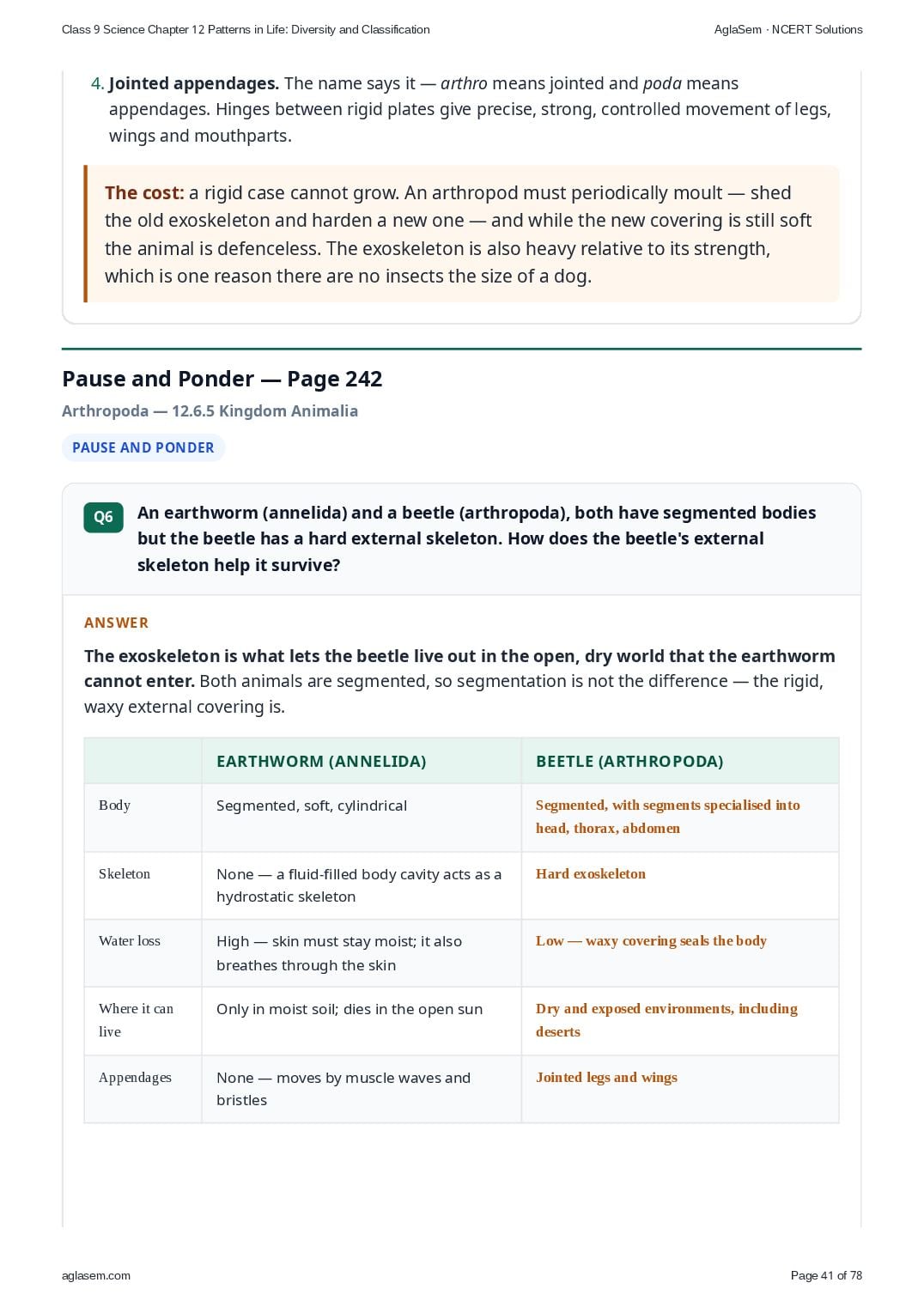
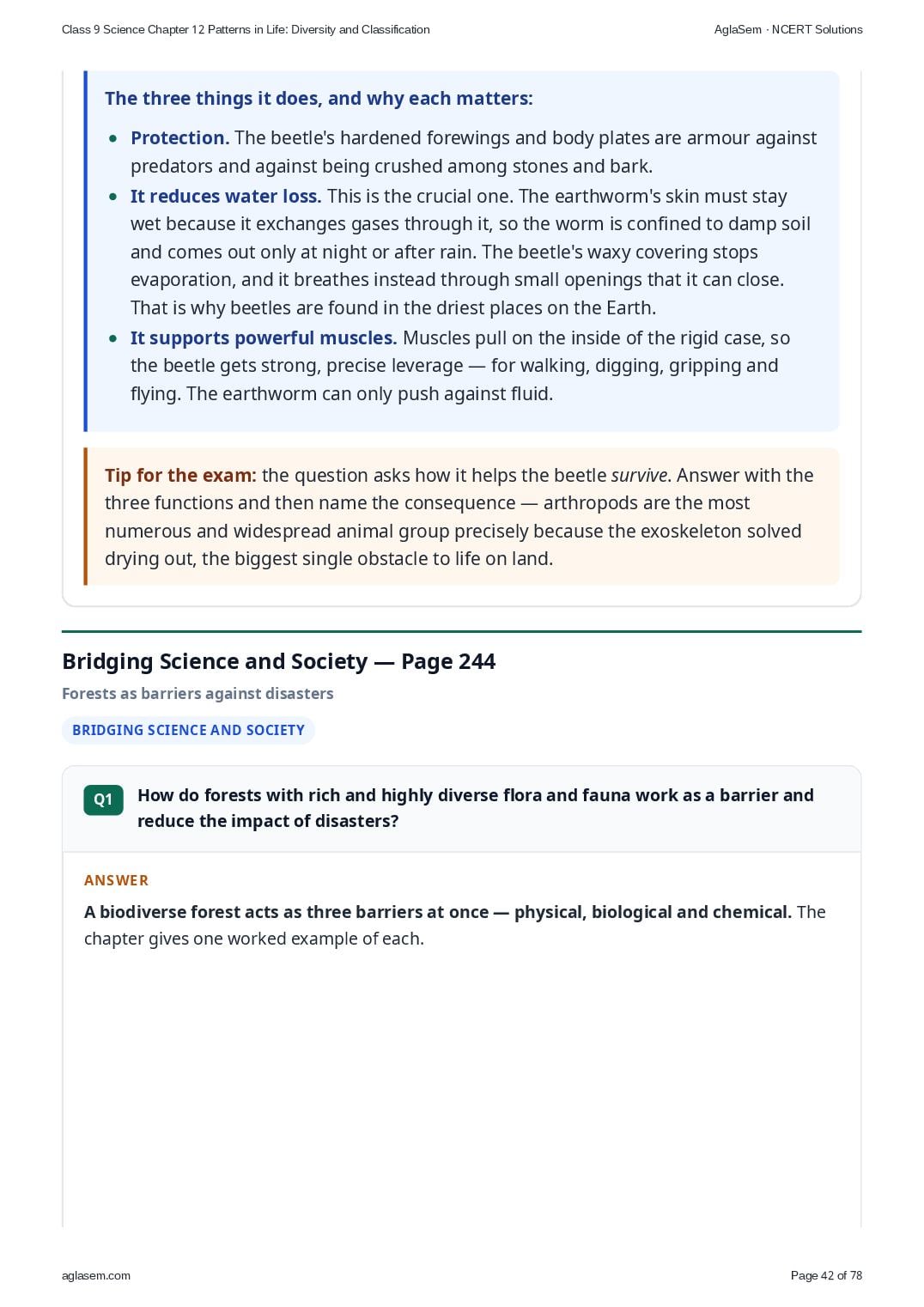
- An earthworm (annelida) and a beetle (arthropoda), both have segmented bodies but the beetle has a hard external skeleton. How does the beetle's external skeleton help it survive?
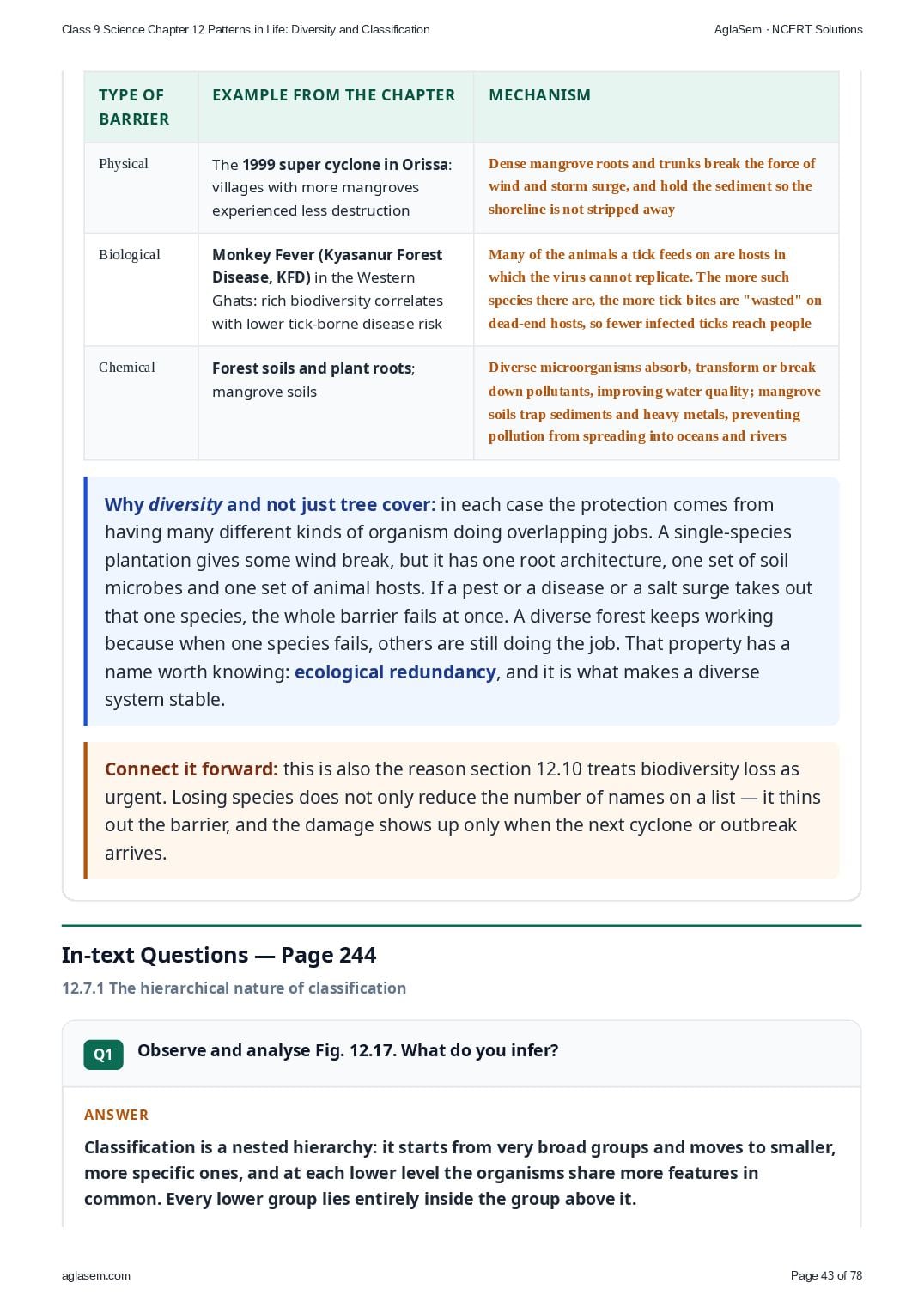
- How do forests with rich and highly diverse flora and fauna work as a barrier and reduce the impact of disasters?
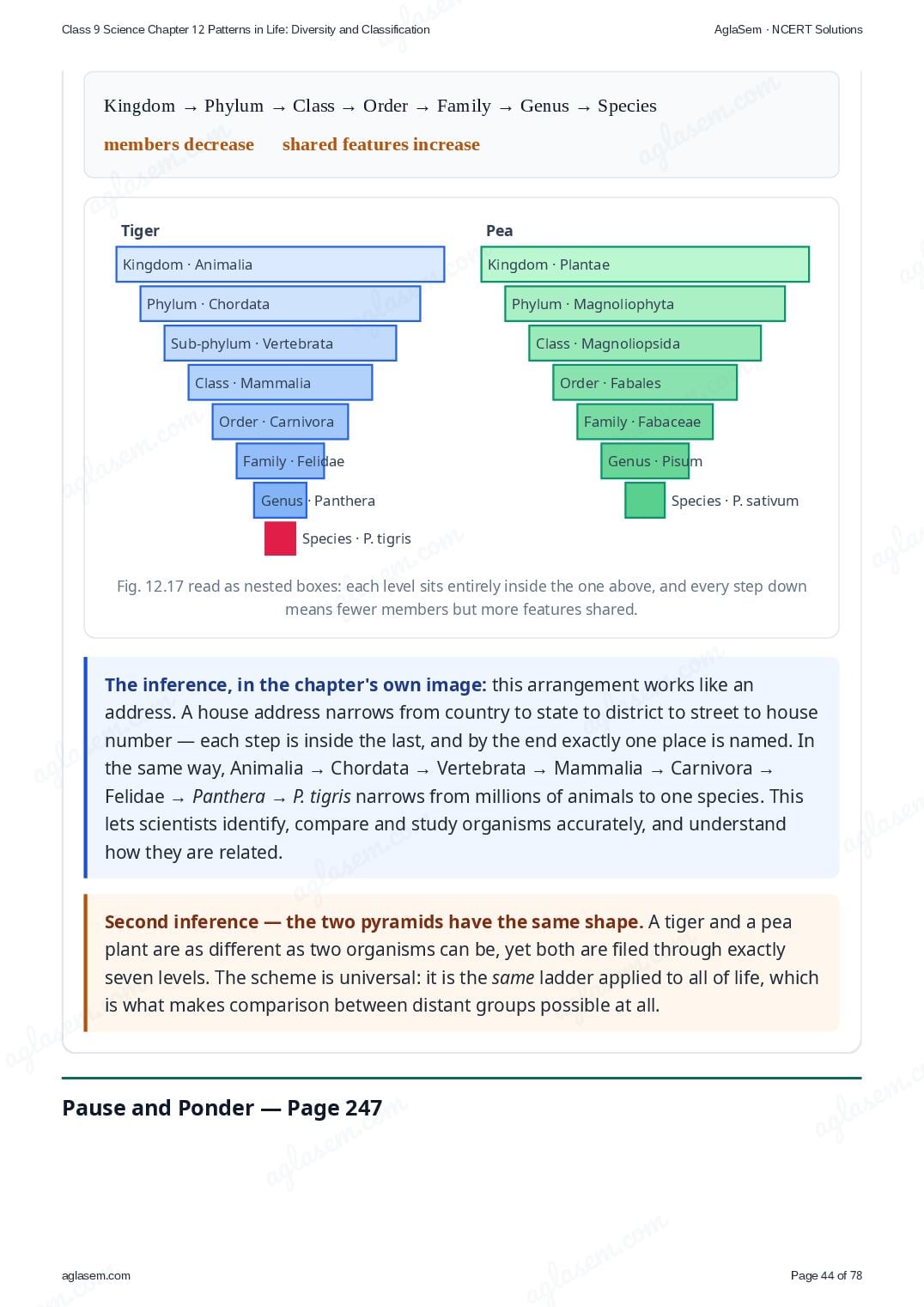
- Observe and analyse Fig. 12.17. What do you infer?
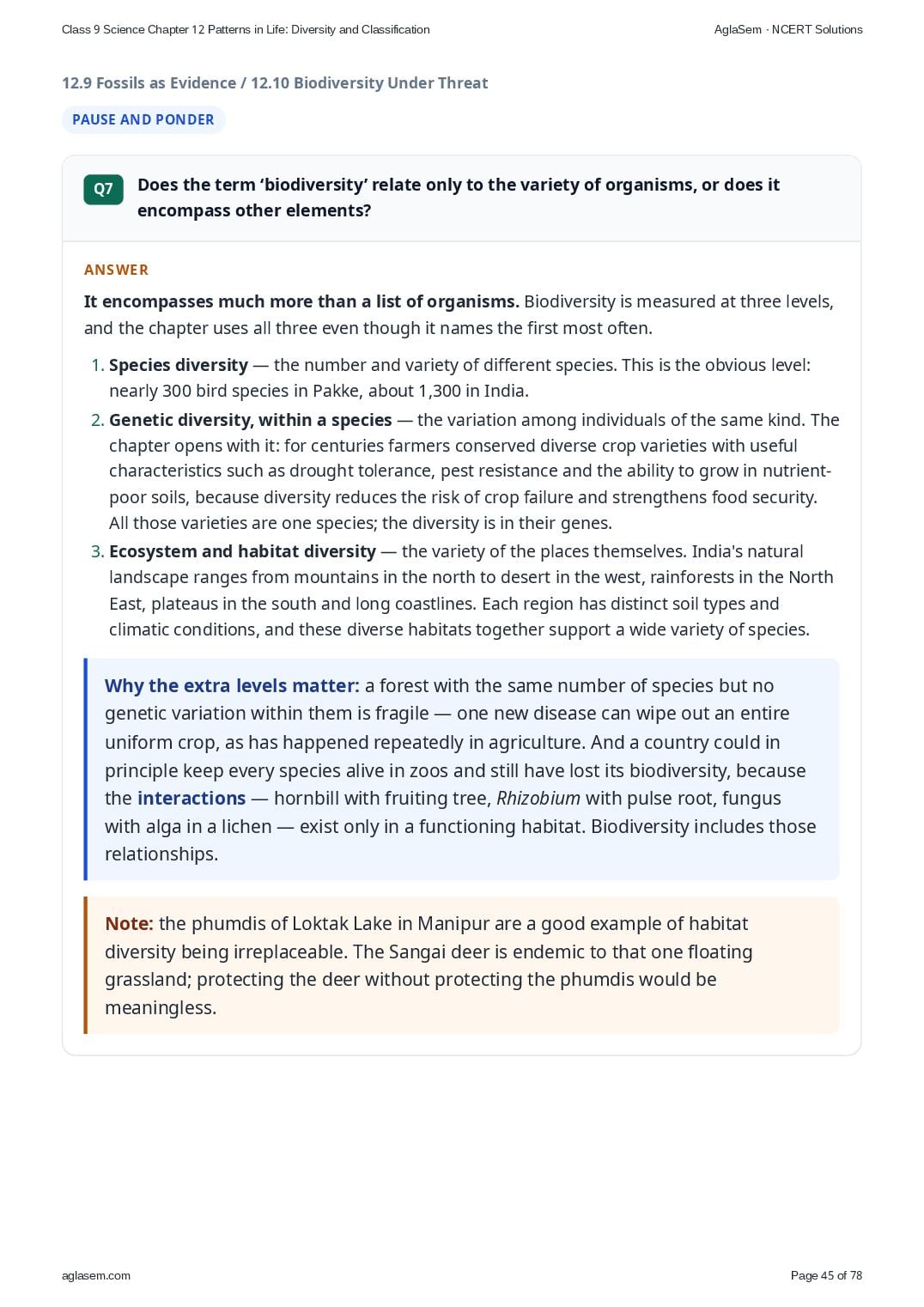
- Does the term ‘biodiversity’ relate only to the variety of organisms, or does it encompass other elements?
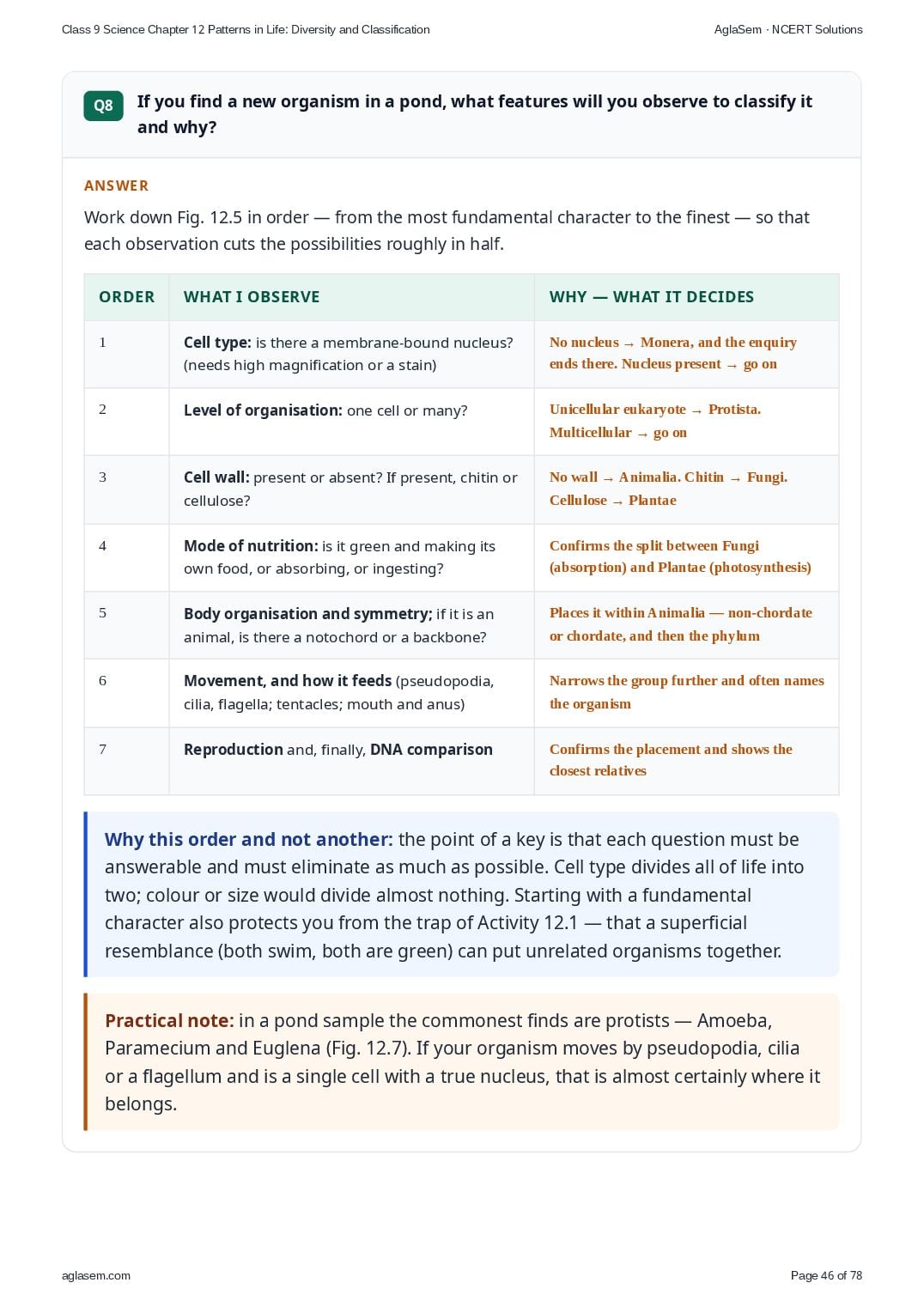
- If you find a new organism in a pond, what features will you observe to classify it and why?
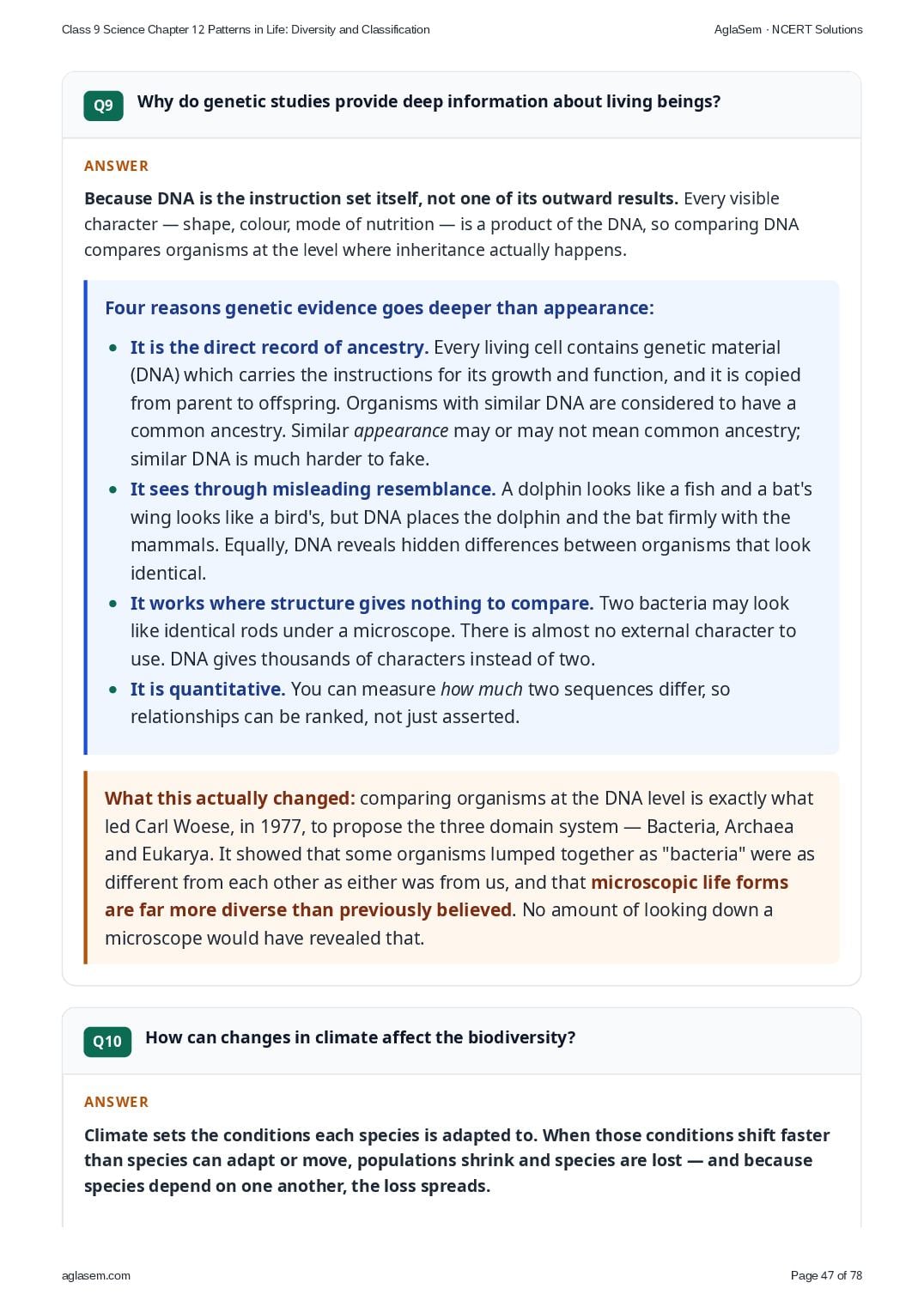
- Why do genetic studies provide deep information about living beings?
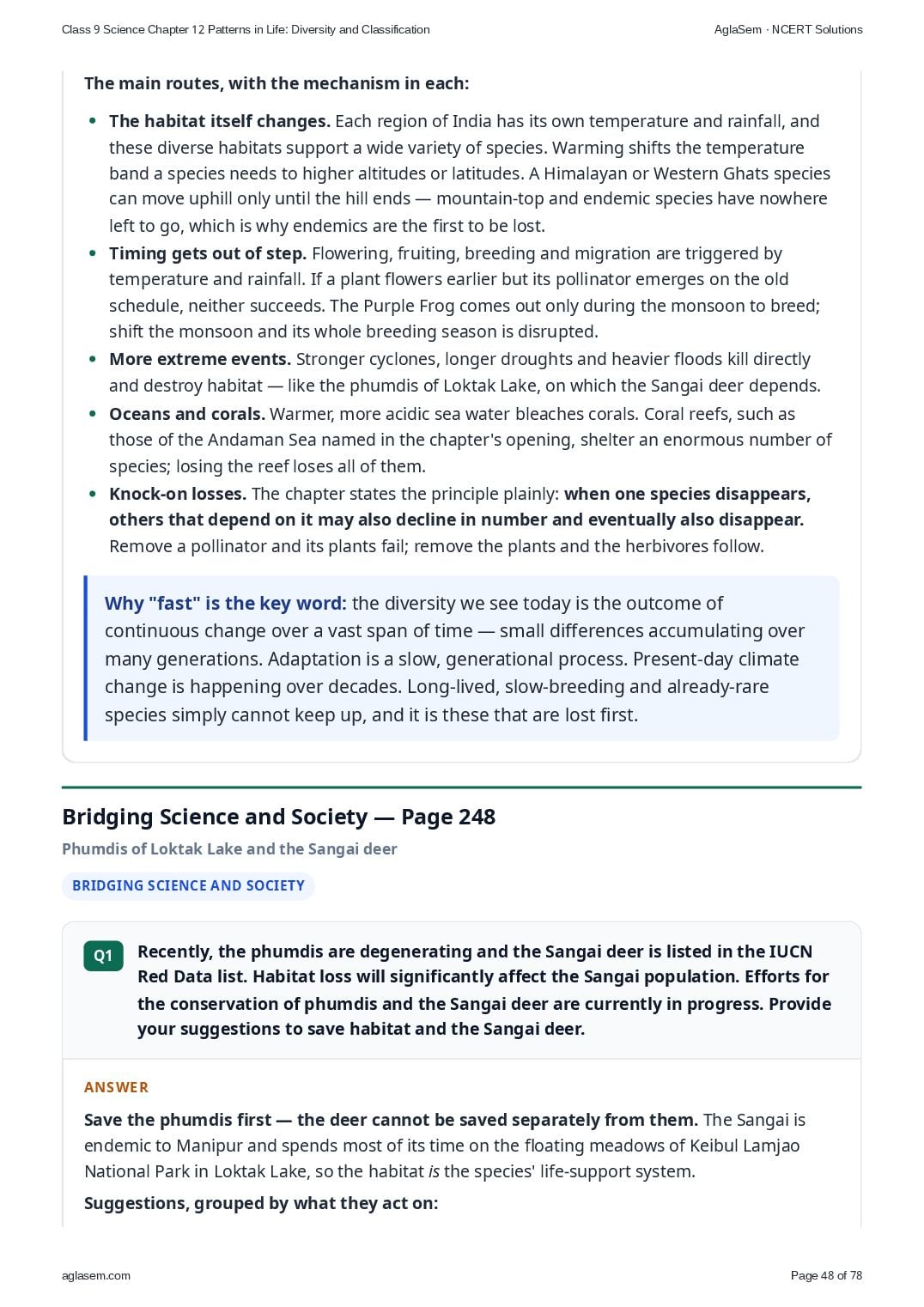
- How can changes in climate affect the biodiversity?
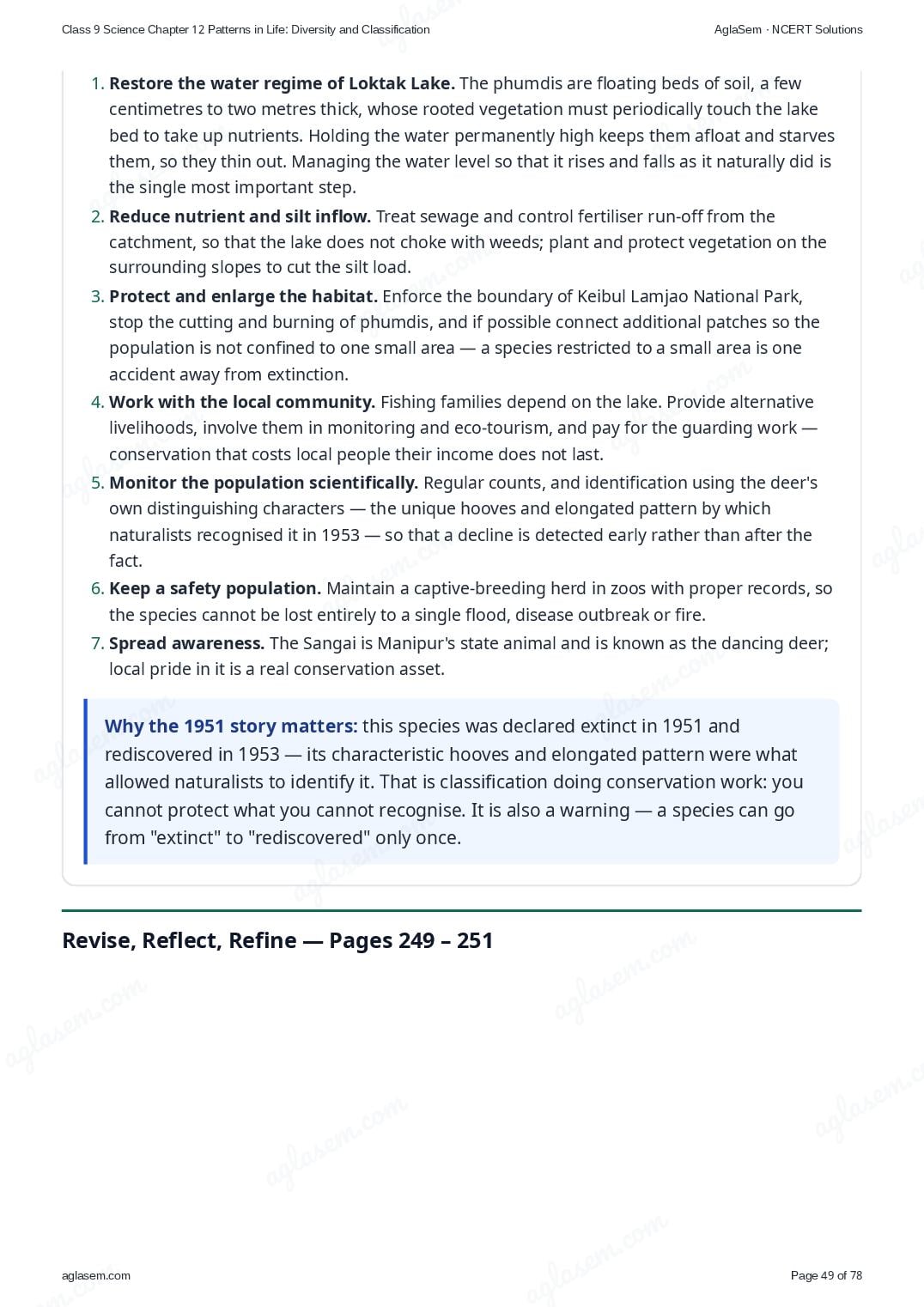
- Recently, the phumdis are degenerating and the Sangai deer is listed in the IUCN Red Data list. Habitat loss will significantly affect the Sangai population. Efforts for the conservation of phumdis and the Sangai deer are currently in progress. Provide your suggestions to save habitat and the Sangai deer.
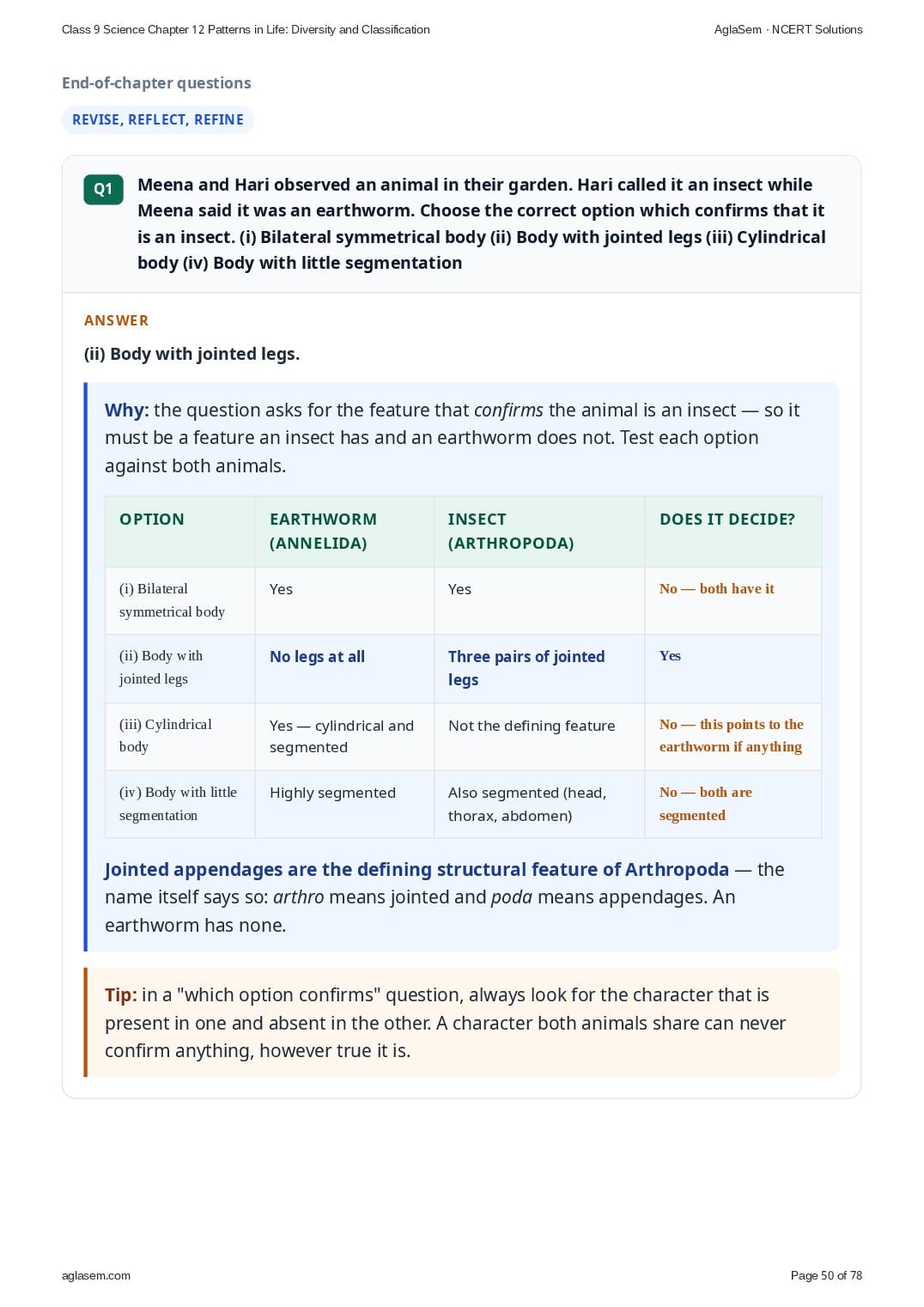
- Meena and Hari observed an animal in their garden. Hari called it an insect while Meena said it was an earthworm. Choose the correct option which confirms that it is an insect. (i) Bilateral symmetrical body (ii) Body with jointed legs (iii) Cylindrical body (iv) Body with little segmentation
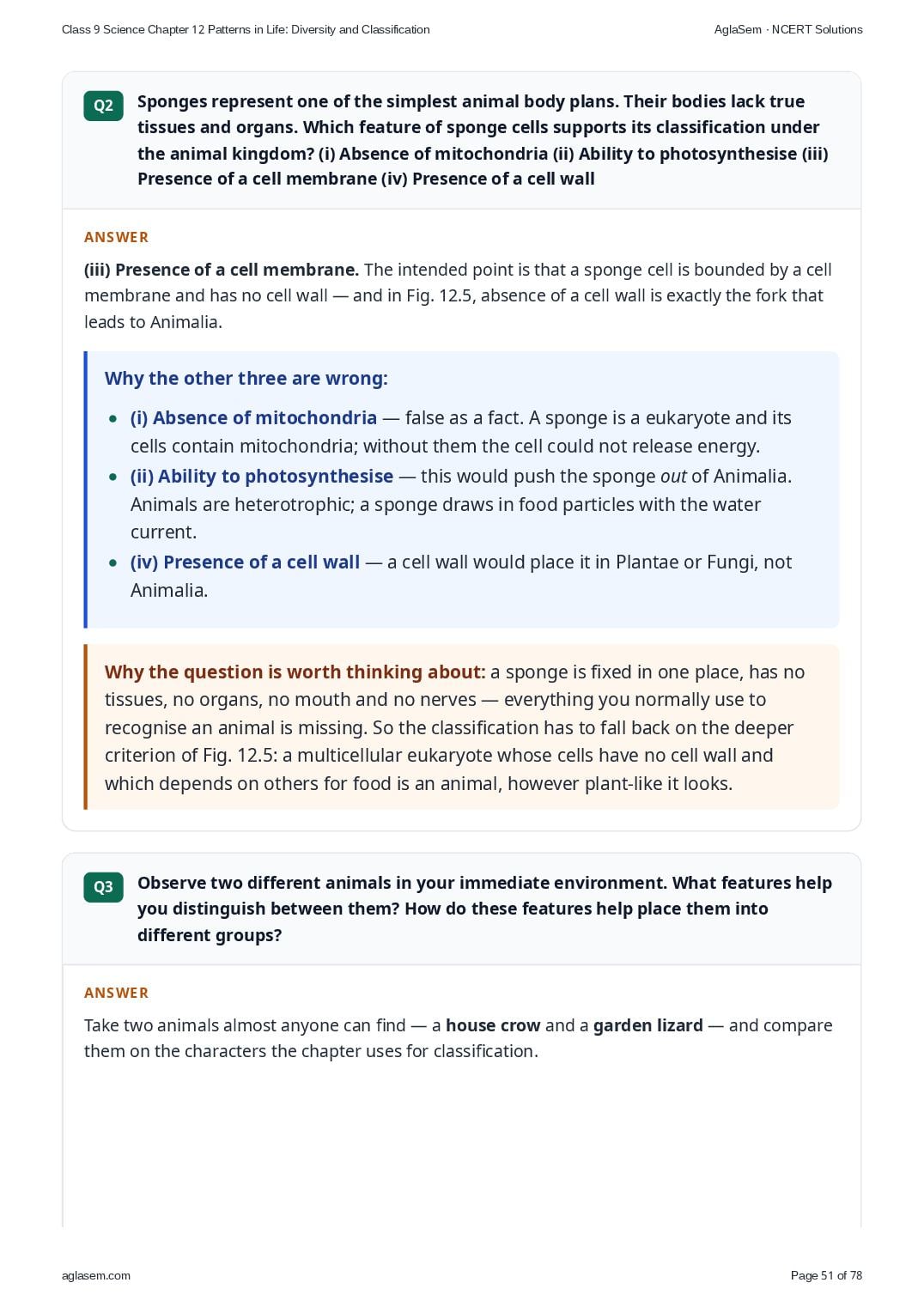
- Sponges represent one of the simplest animal body plans. Their bodies lack true tissues and organs. Which feature of sponge cells supports its classification under the animal kingdom? (i) Absence of mitochondria (ii) Ability to photosynthesise (iii) Presence of a cell membrane (iv) Presence of a cell wall
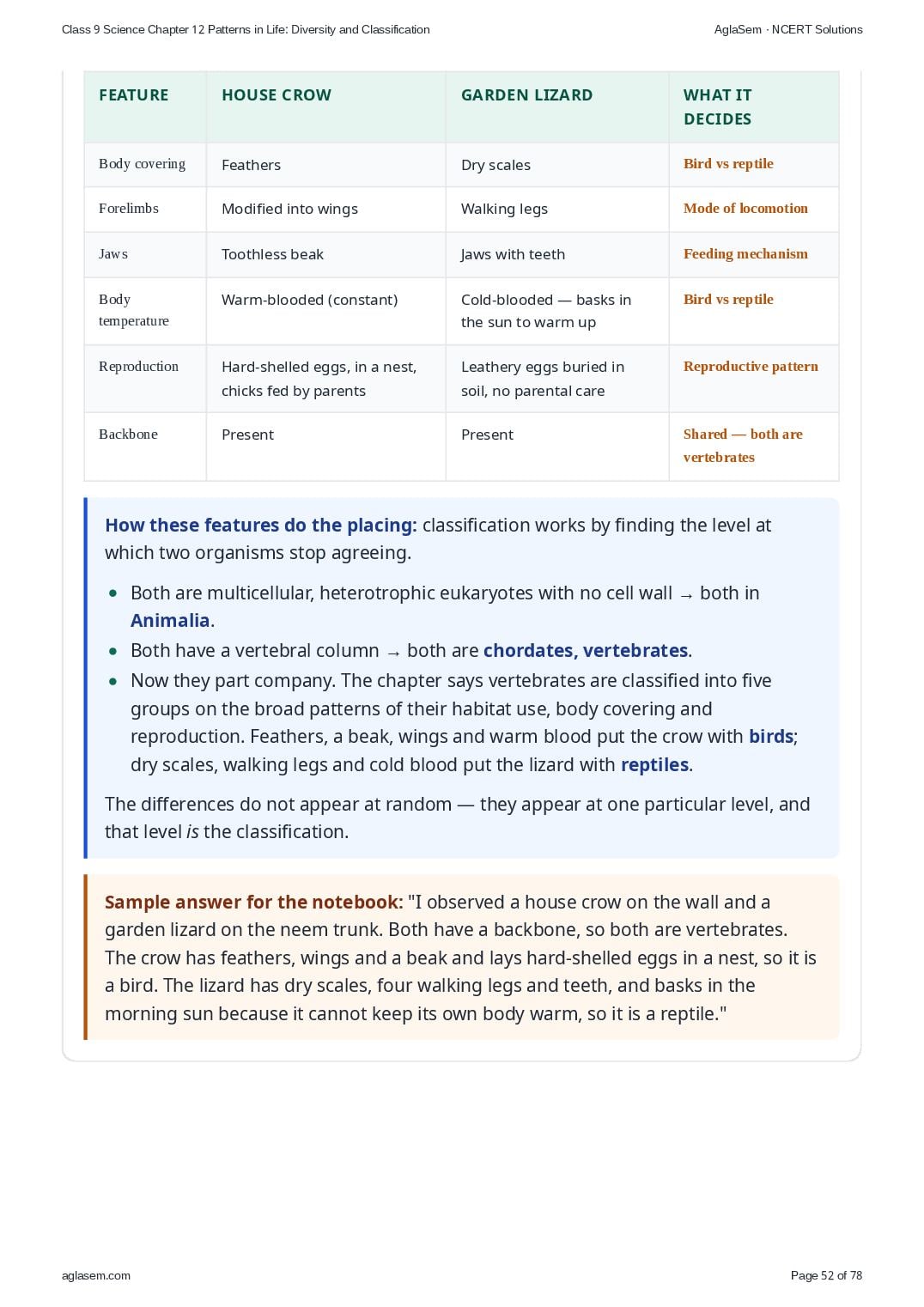
- Observe two different animals in your immediate environment. What features help you distinguish between them? How do these features help place them into different groups?
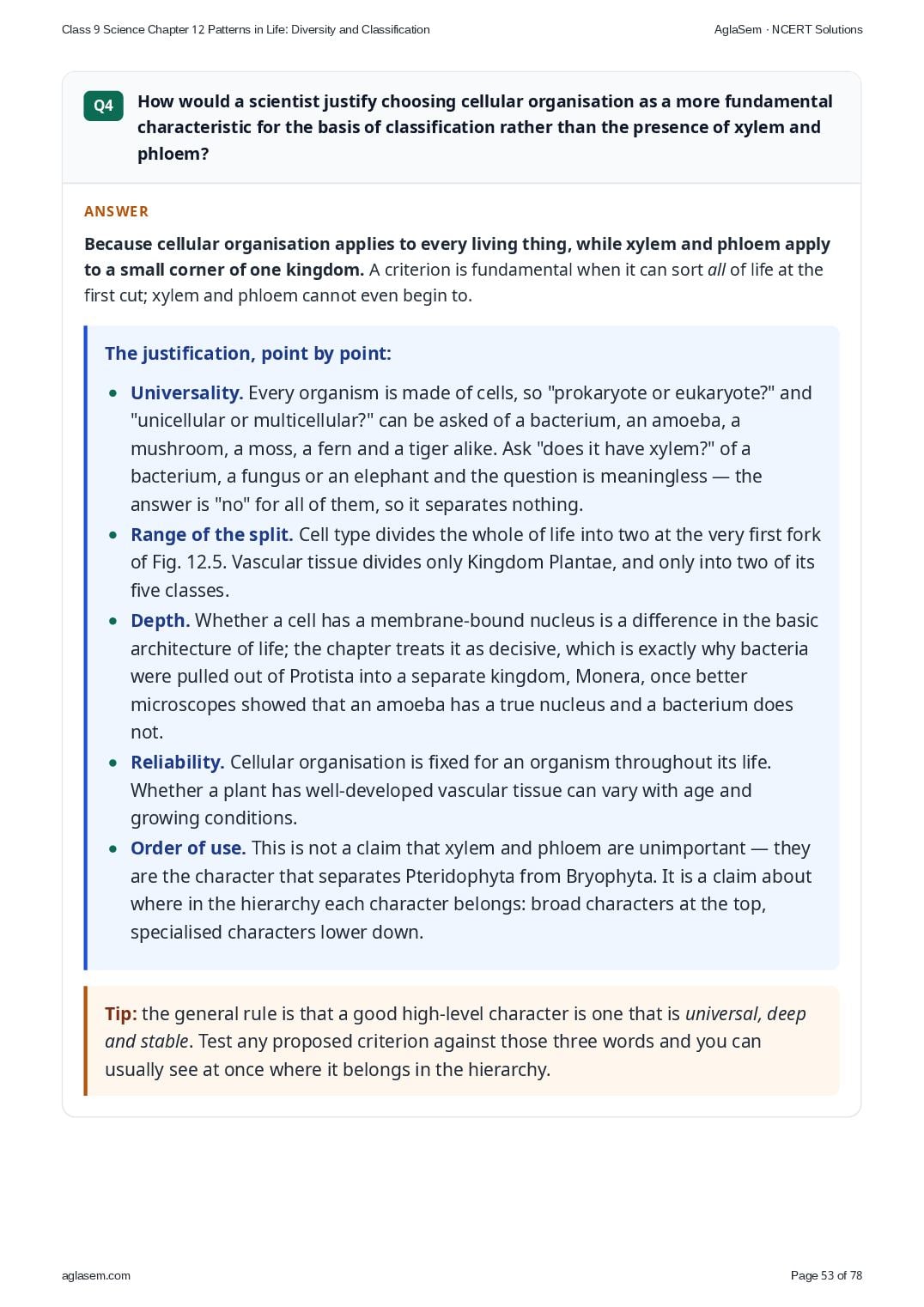
- How would a scientist justify choosing cellular organisation as a more fundamental characteristic for the basis of classification rather than the presence of xylem and phloem?
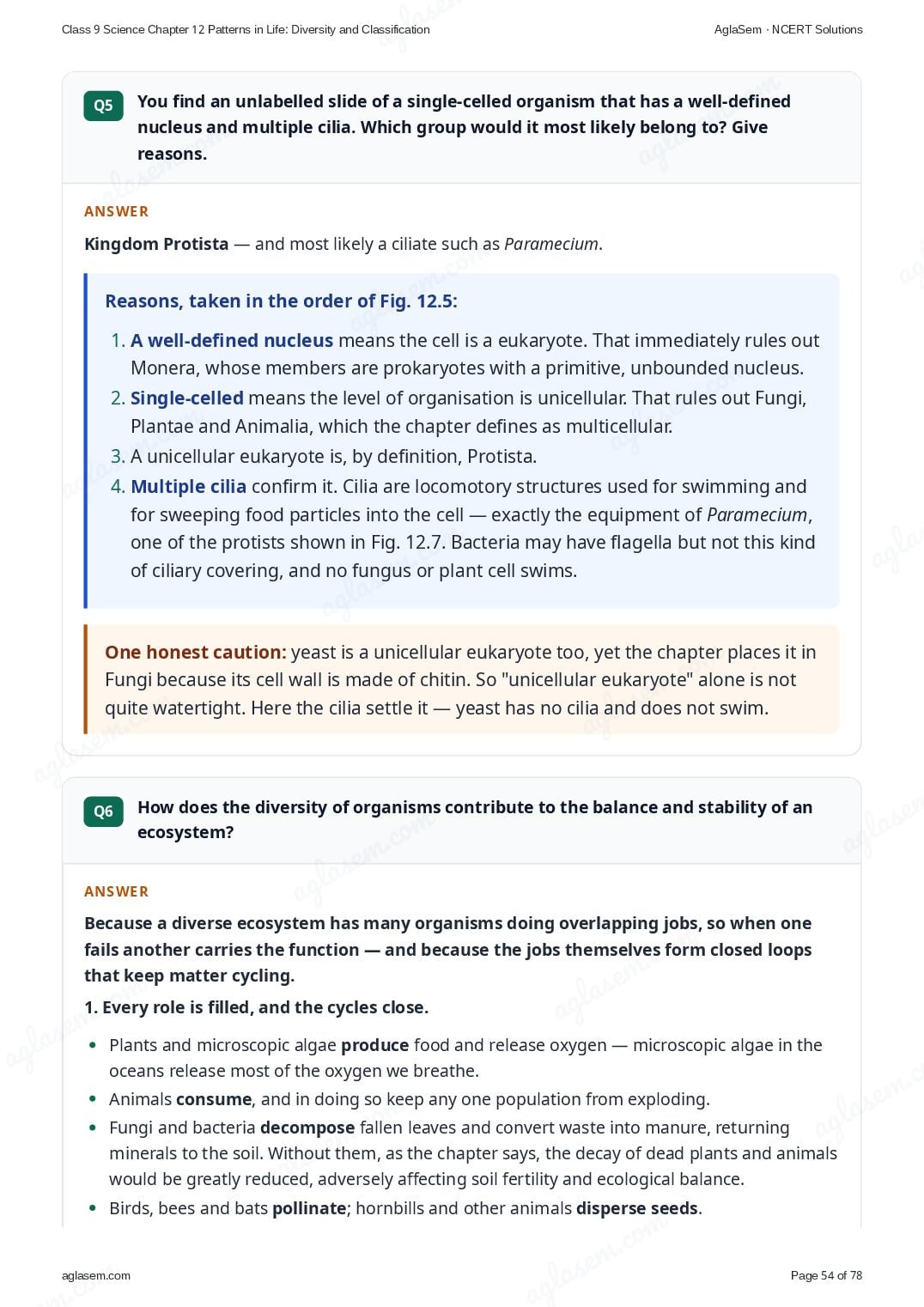
- You find an unlabelled slide of a single-celled organism that has a well-defined nucleus and multiple cilia. Which group would it most likely belong to? Give reasons.
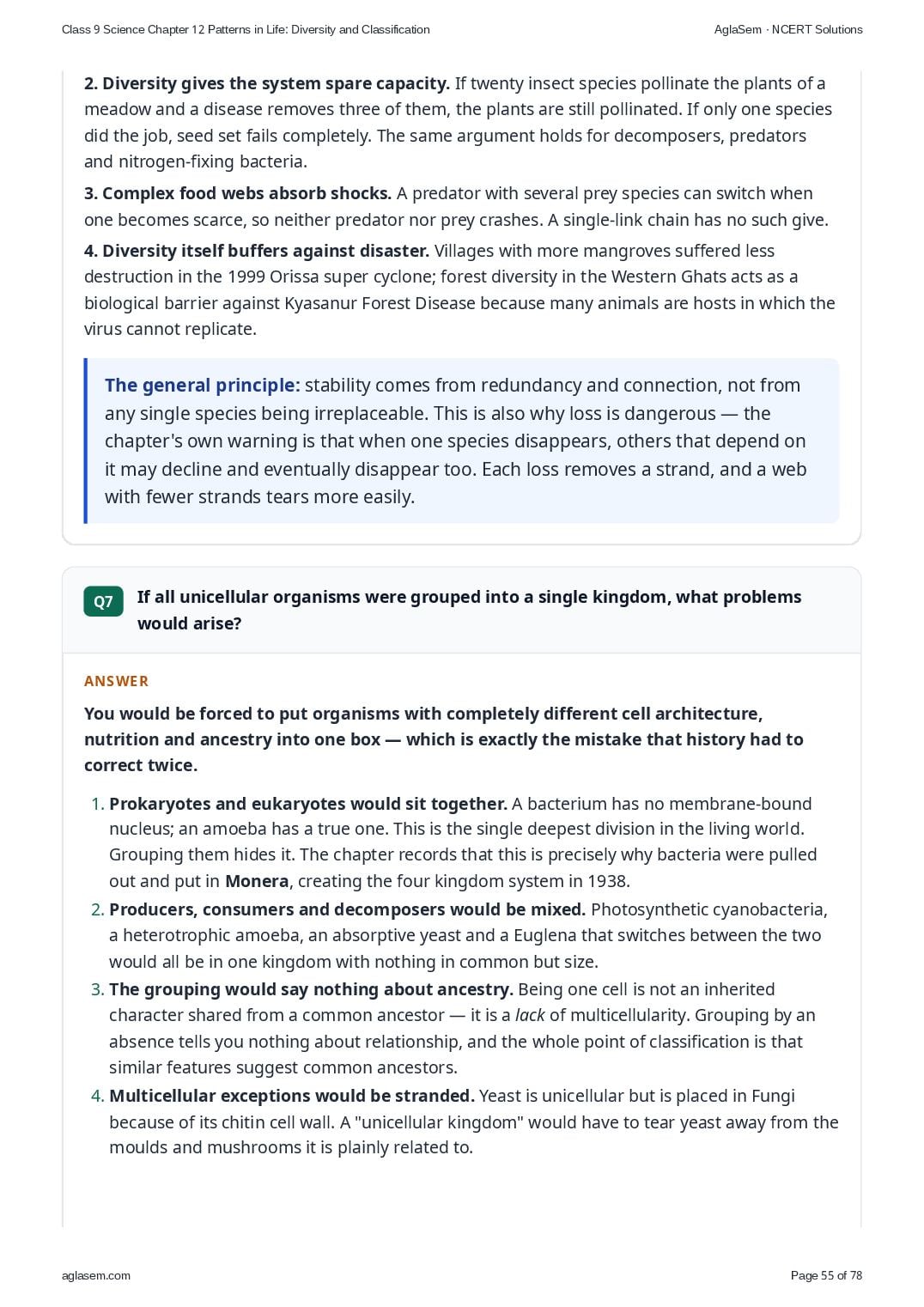
- How does the diversity of organisms contribute to the balance and stability of an ecosystem?
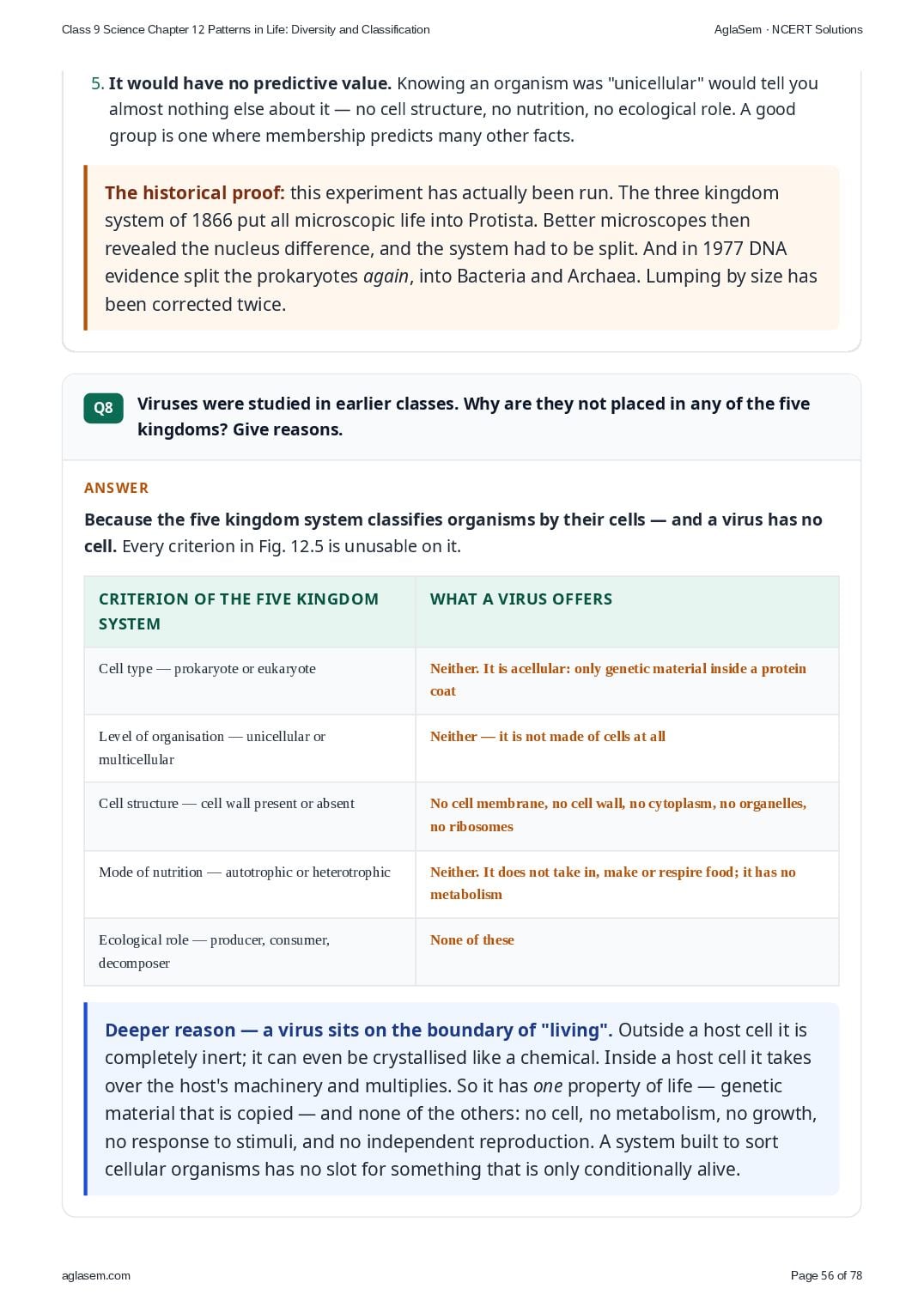
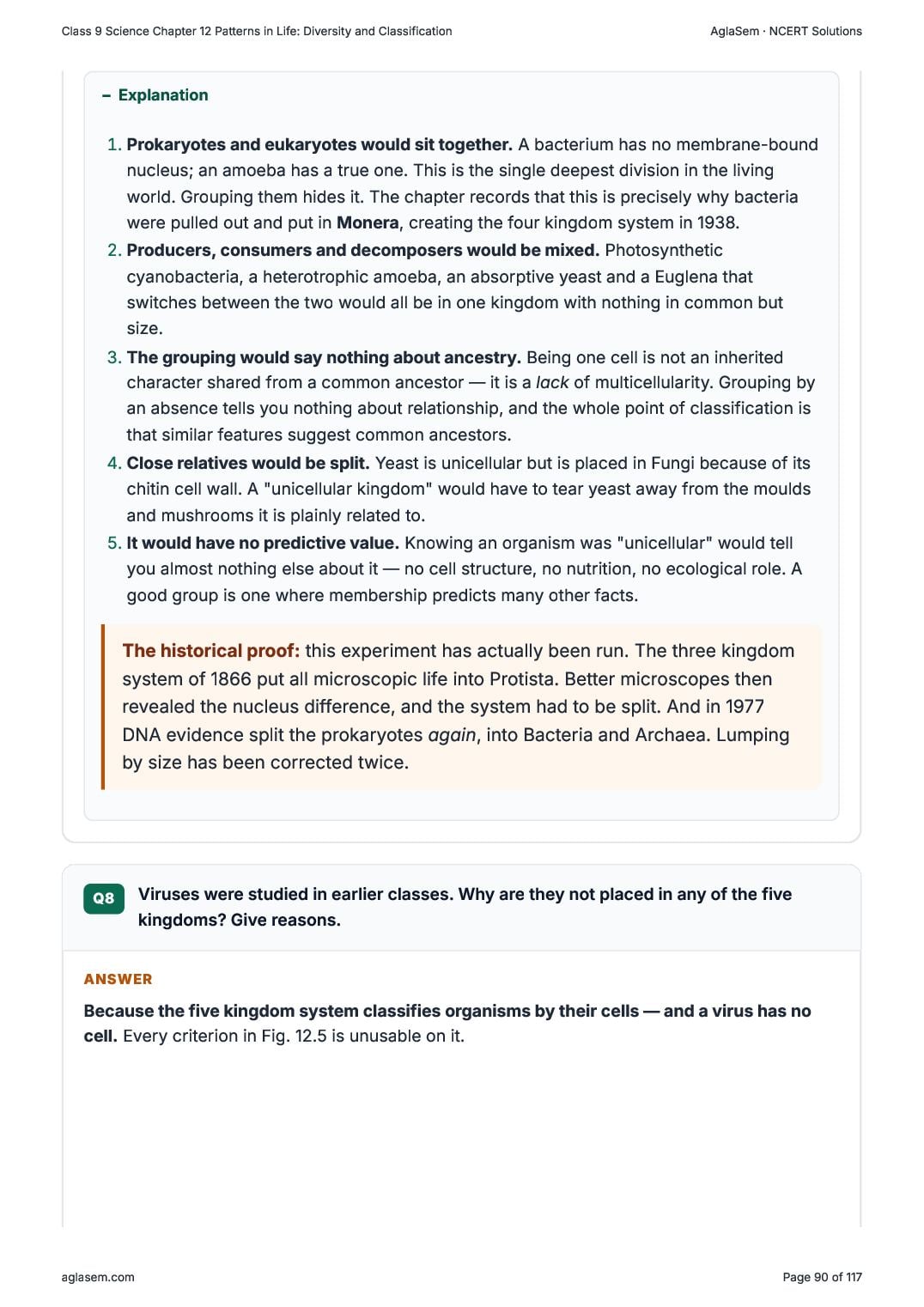
- If all unicellular organisms were grouped into a single kingdom, what problems would arise?
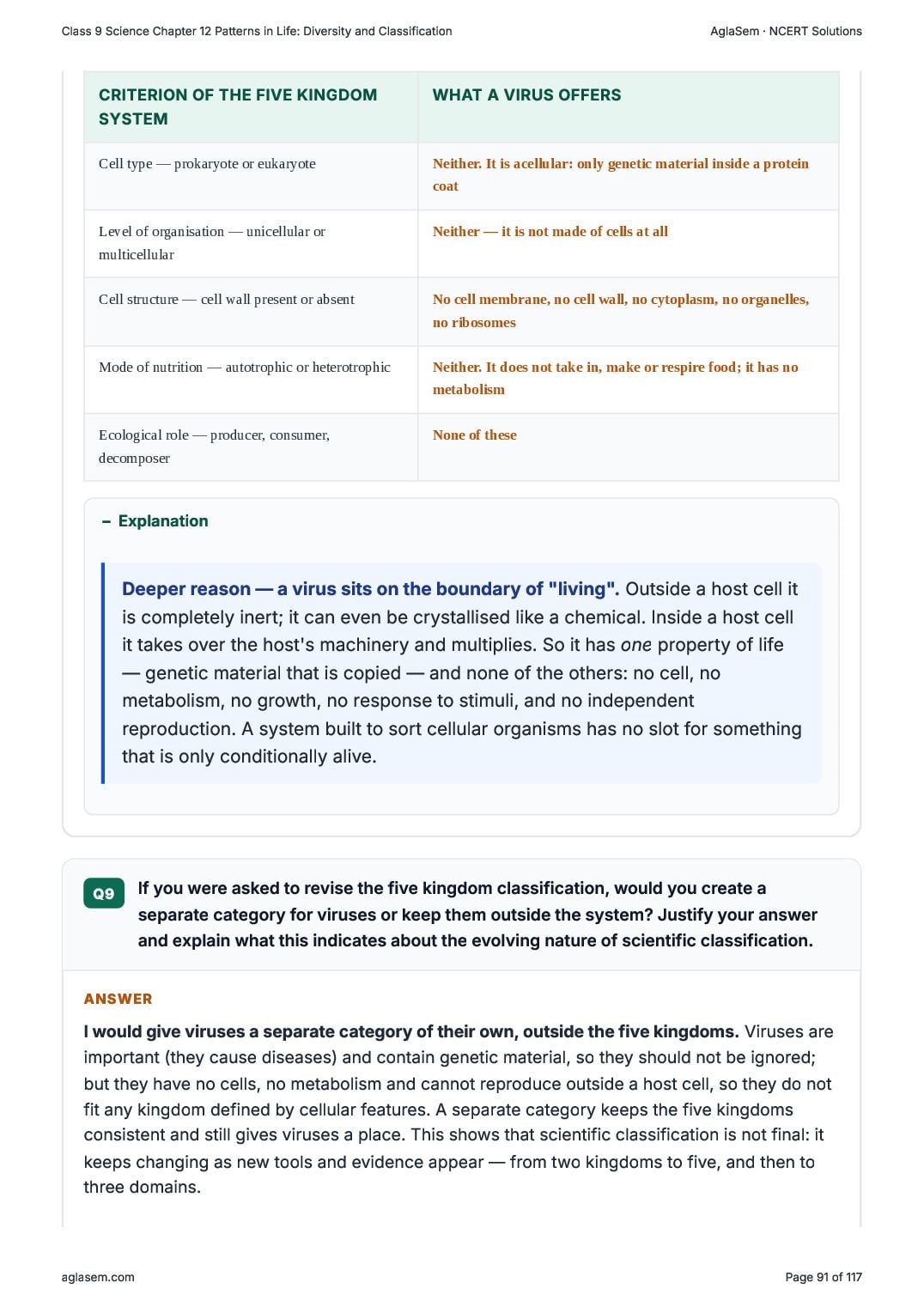
- Viruses were studied in earlier classes. Why are they not placed in any of the five kingdoms? Give reasons.
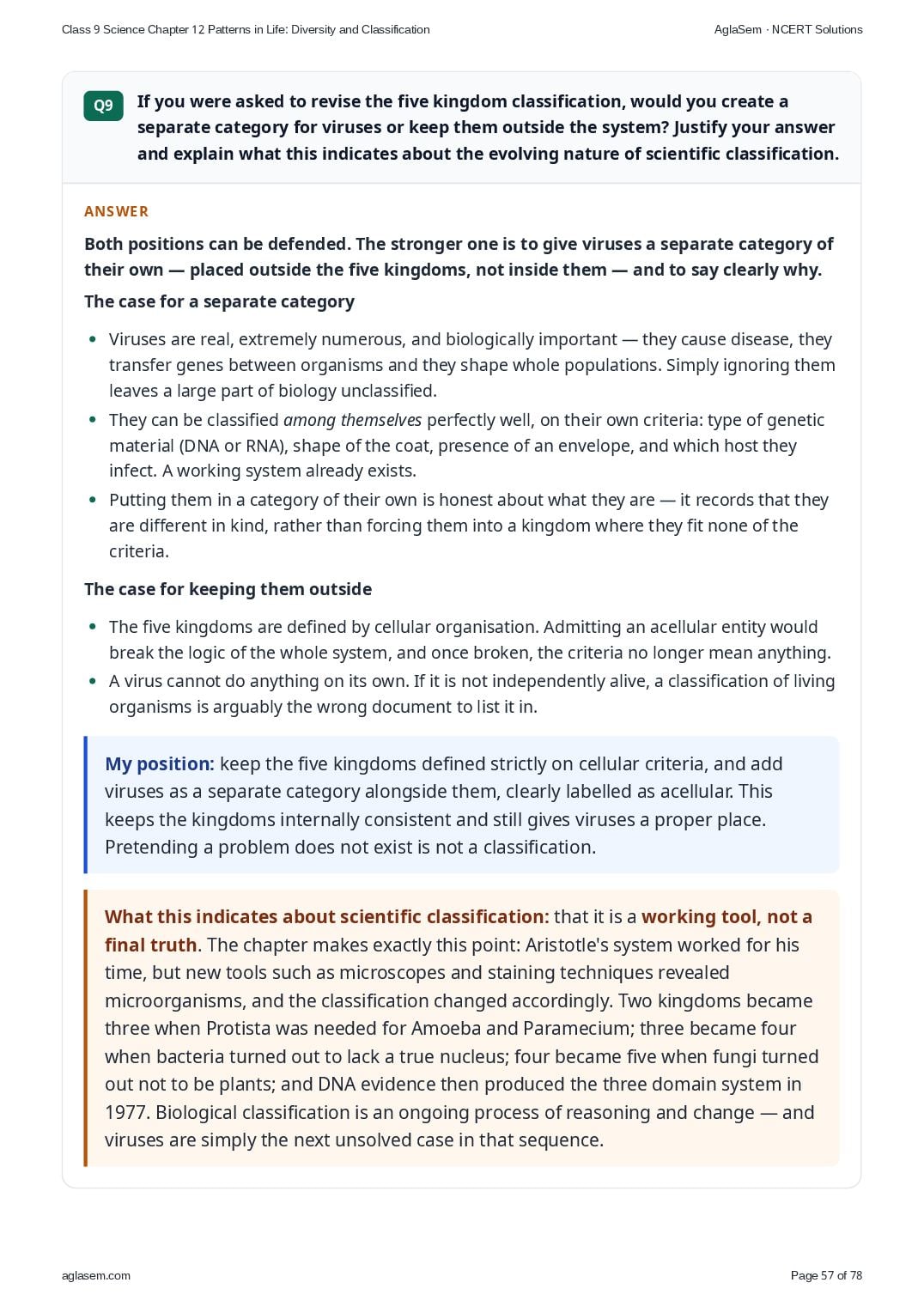
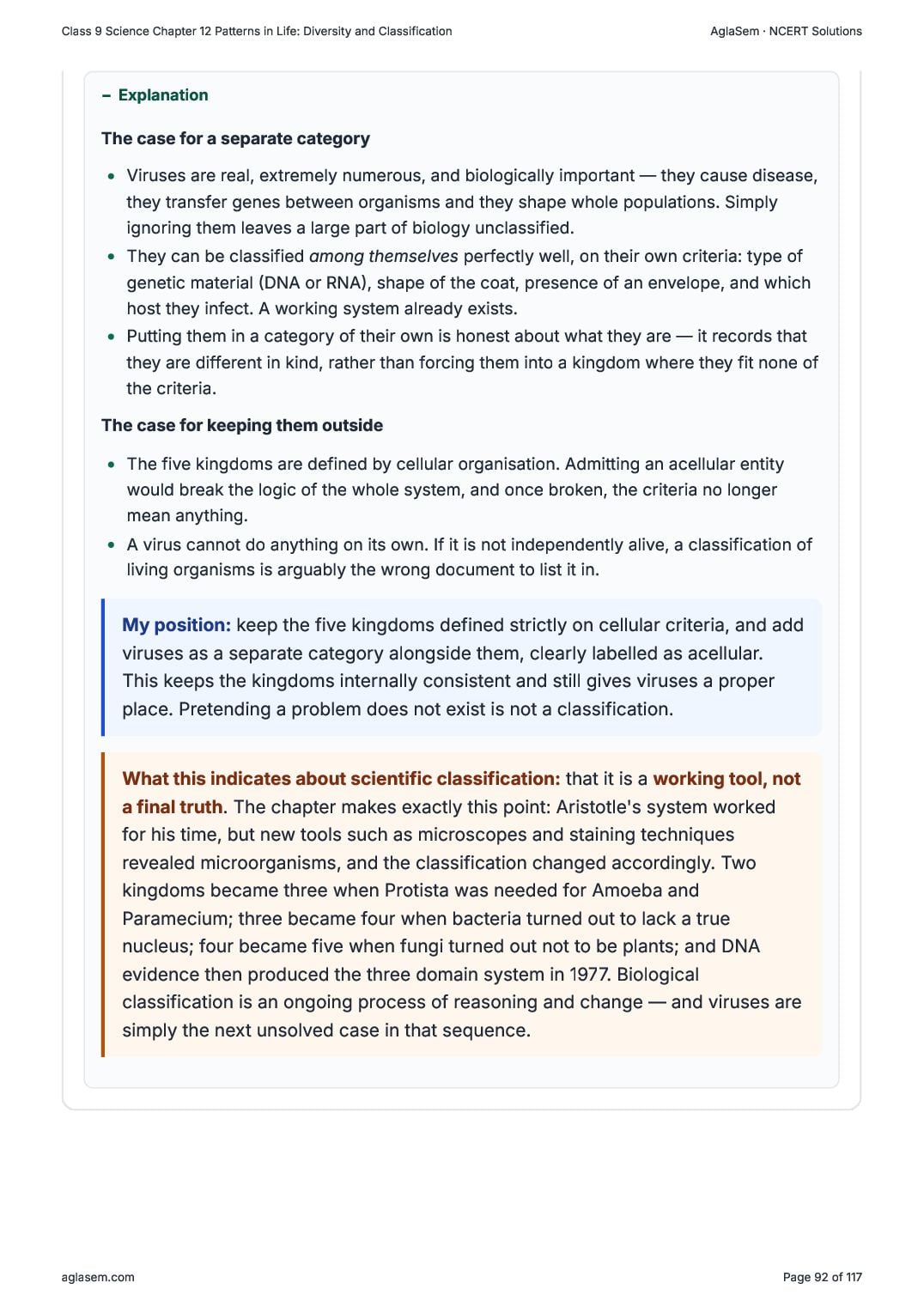
- If you were asked to revise the five kingdom classification, would you create a separate category for viruses or keep them outside the system? Justify your answer and explain what this indicates about the evolving nature of scientific classification.
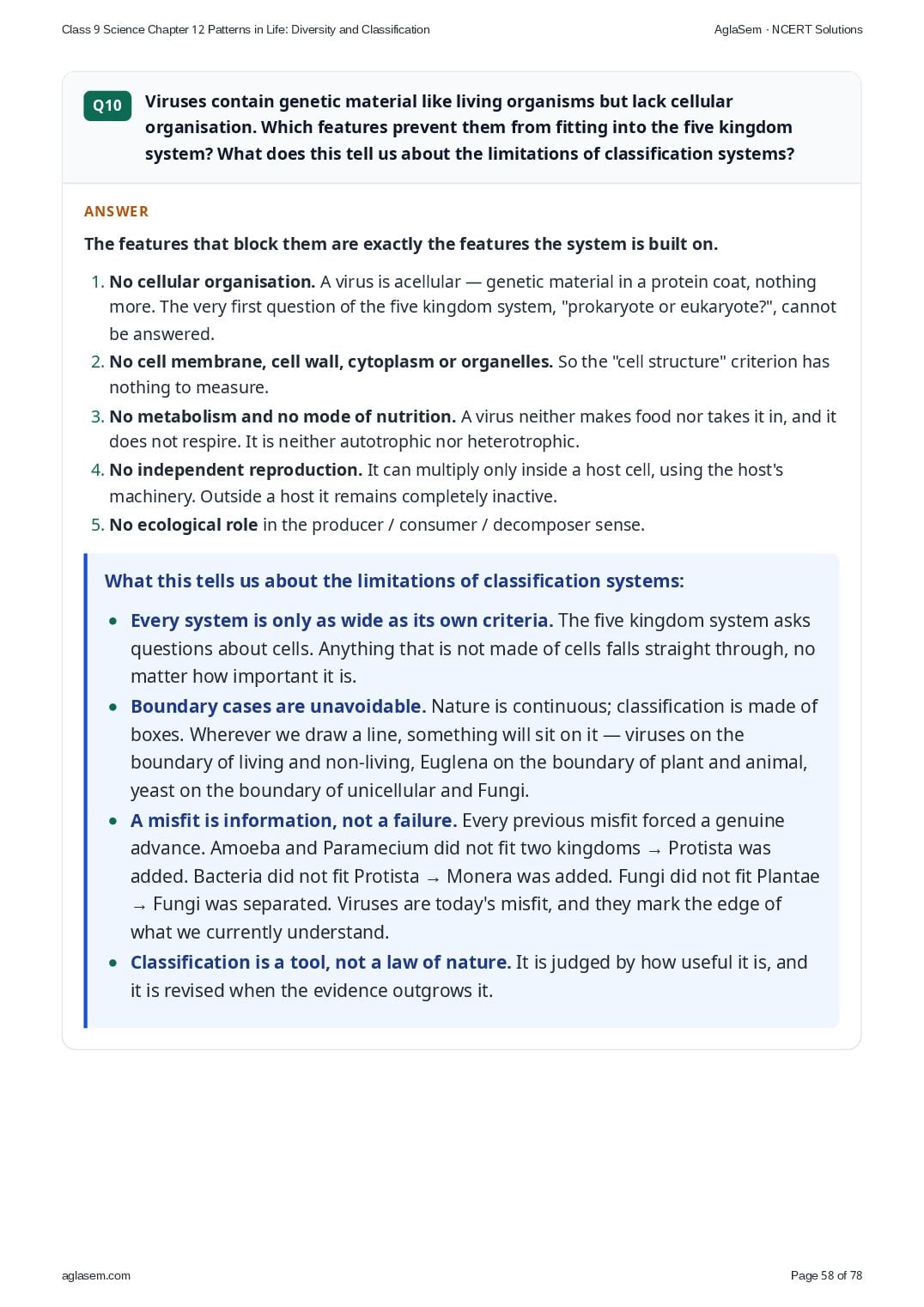
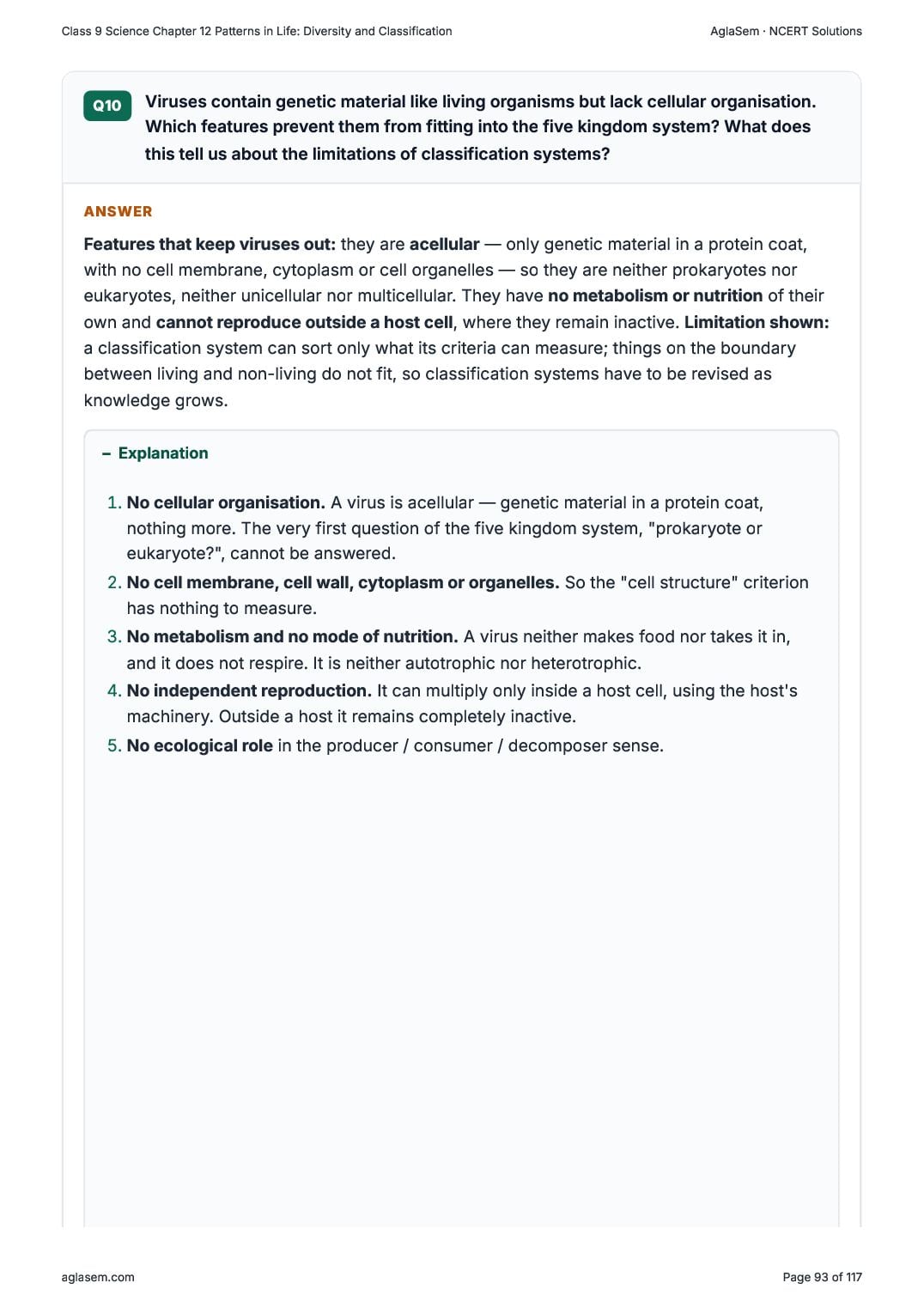
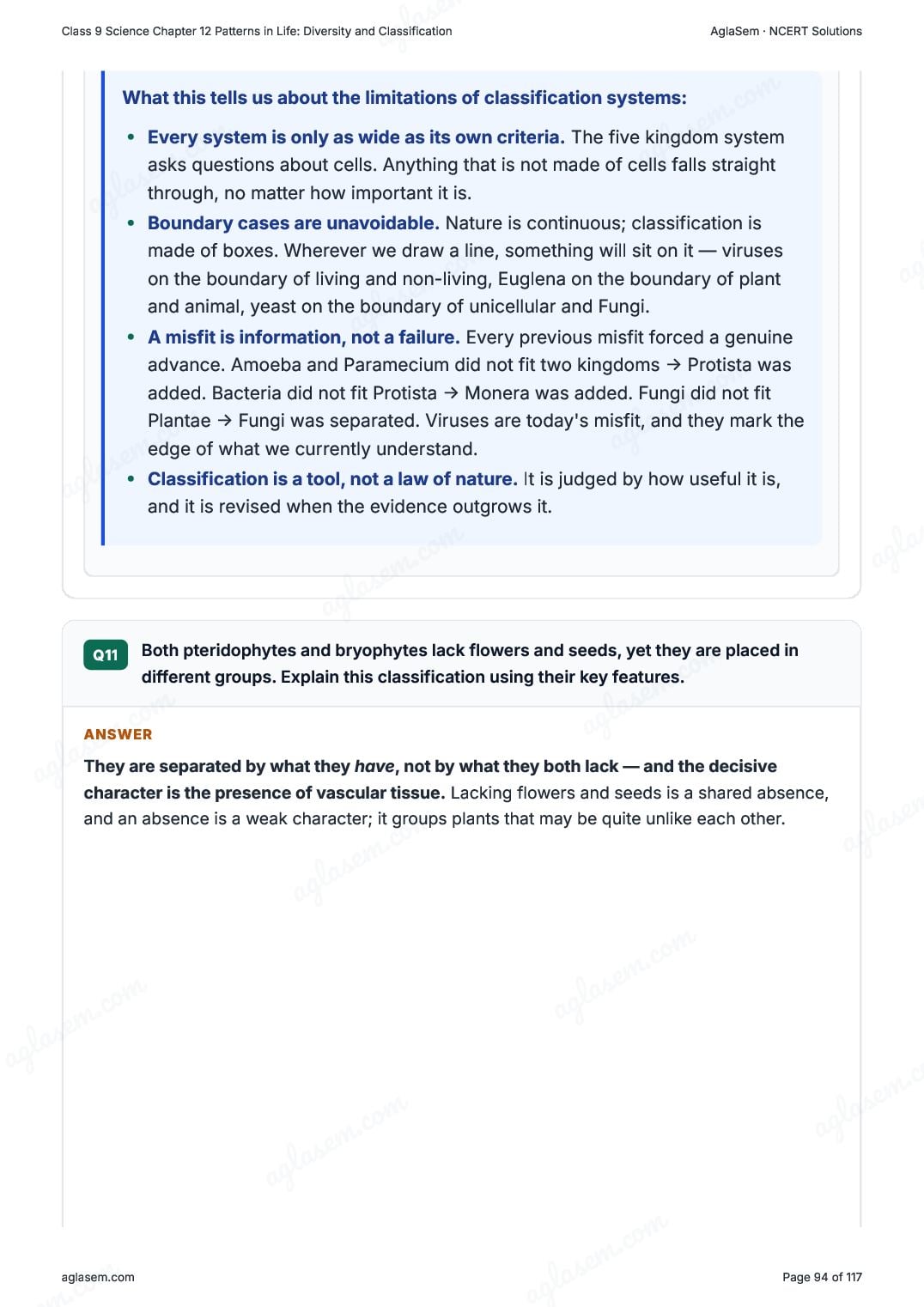
- Viruses contain genetic material like living organisms but lack cellular organisation. Which features prevent them from fitting into the five kingdom system? What does this tell us about the limitations of classification systems?
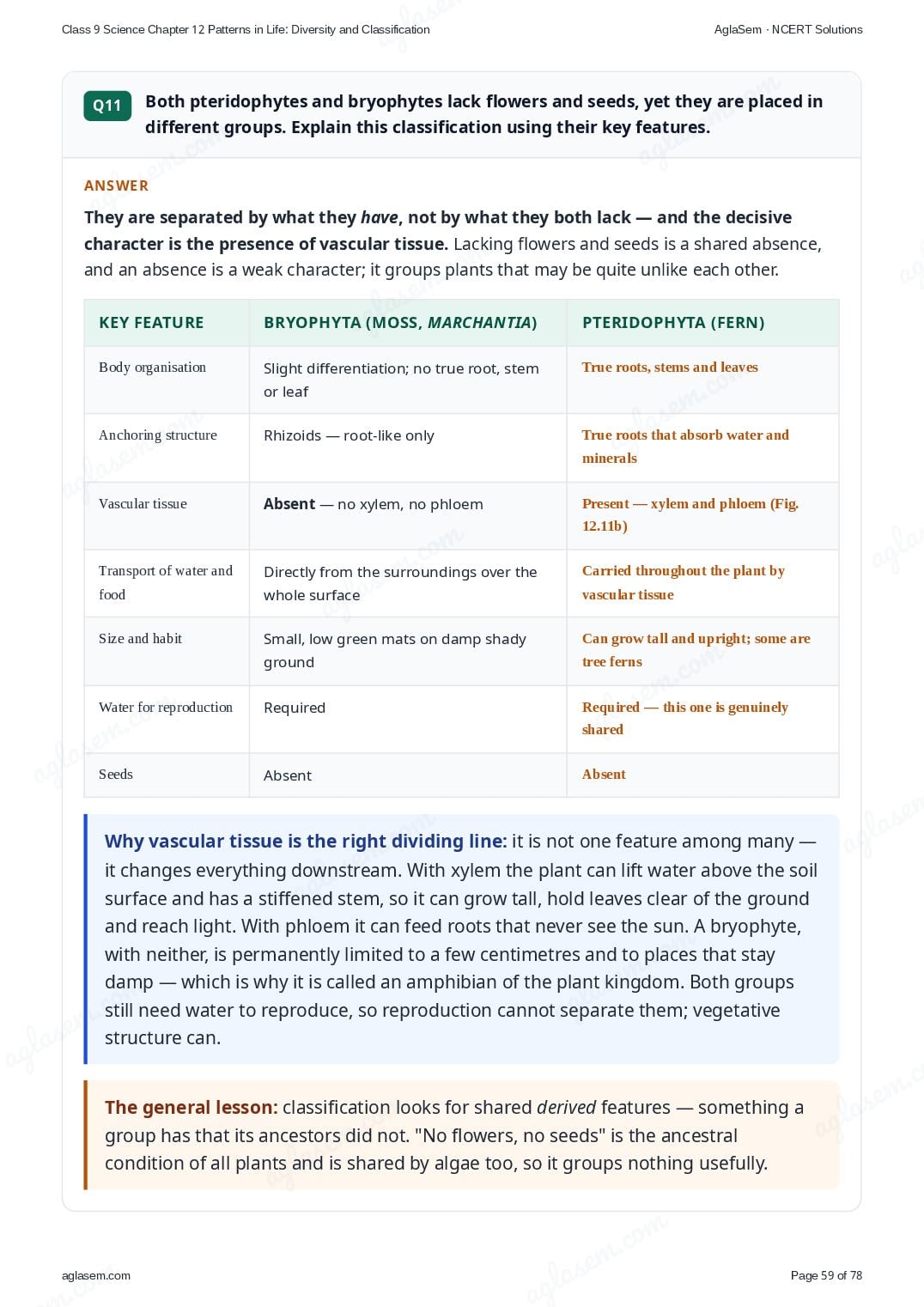
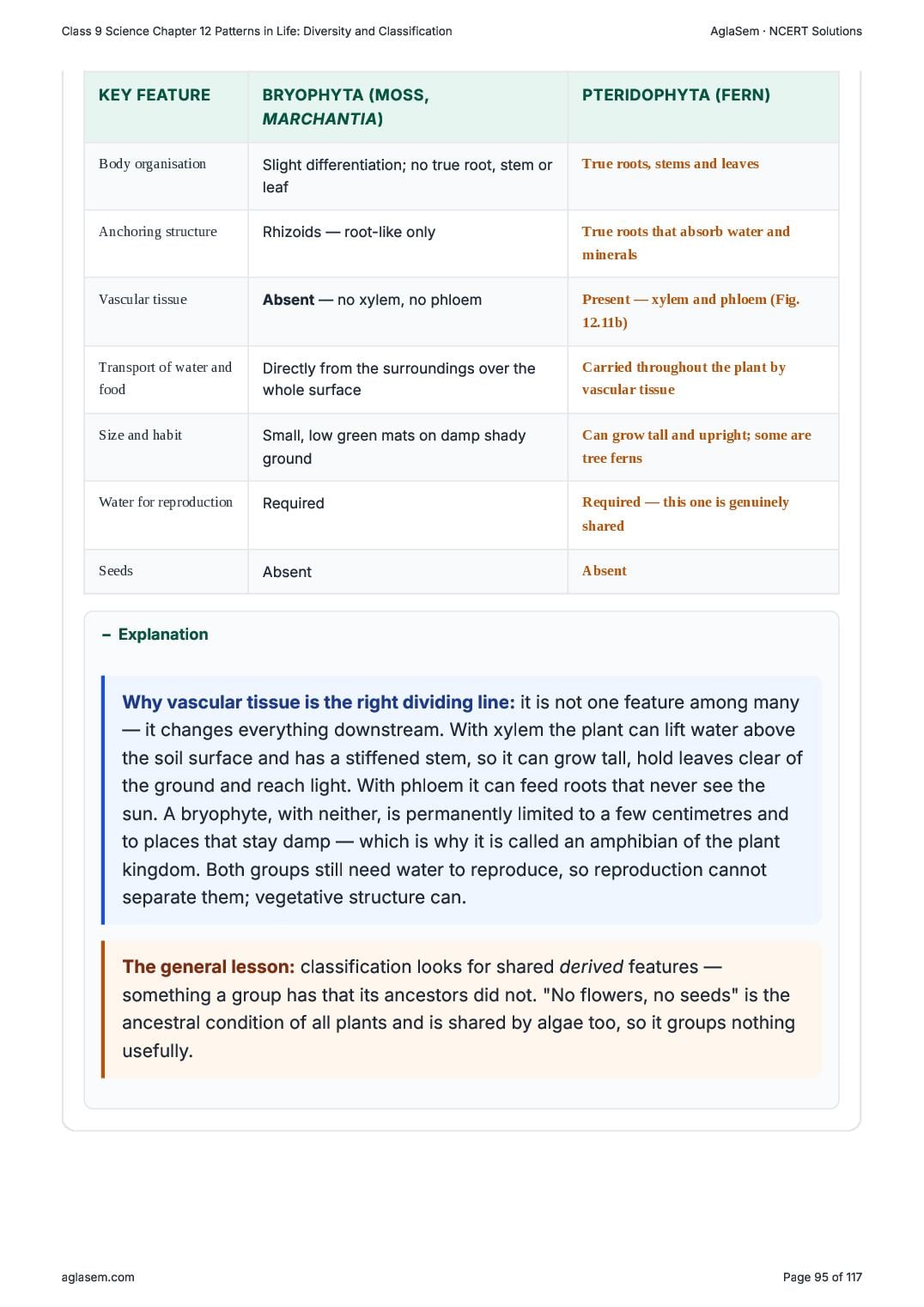
- Both pteridophytes and bryophytes lack flowers and seeds, yet they are placed in different groups. Explain this classification using their key features.
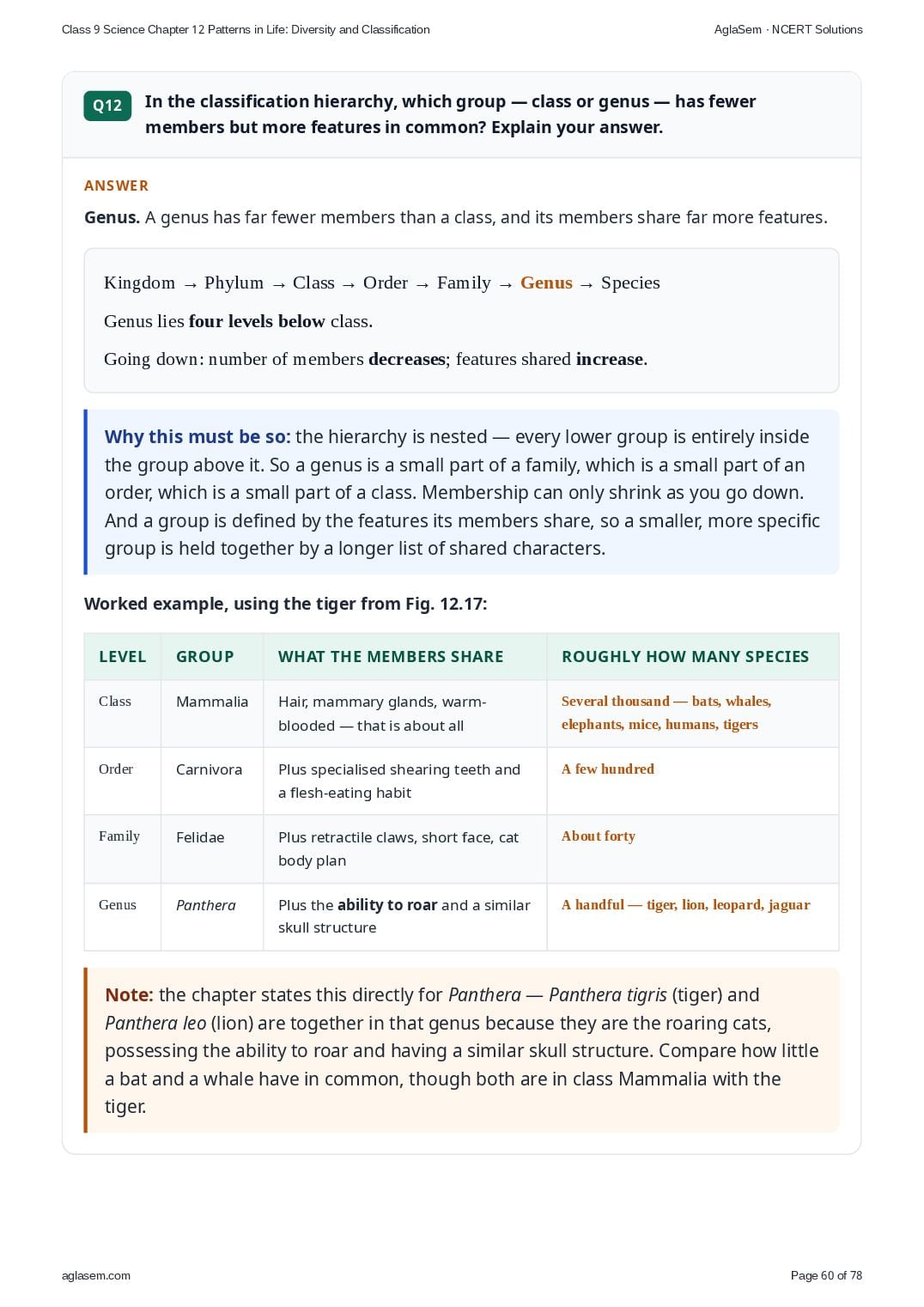
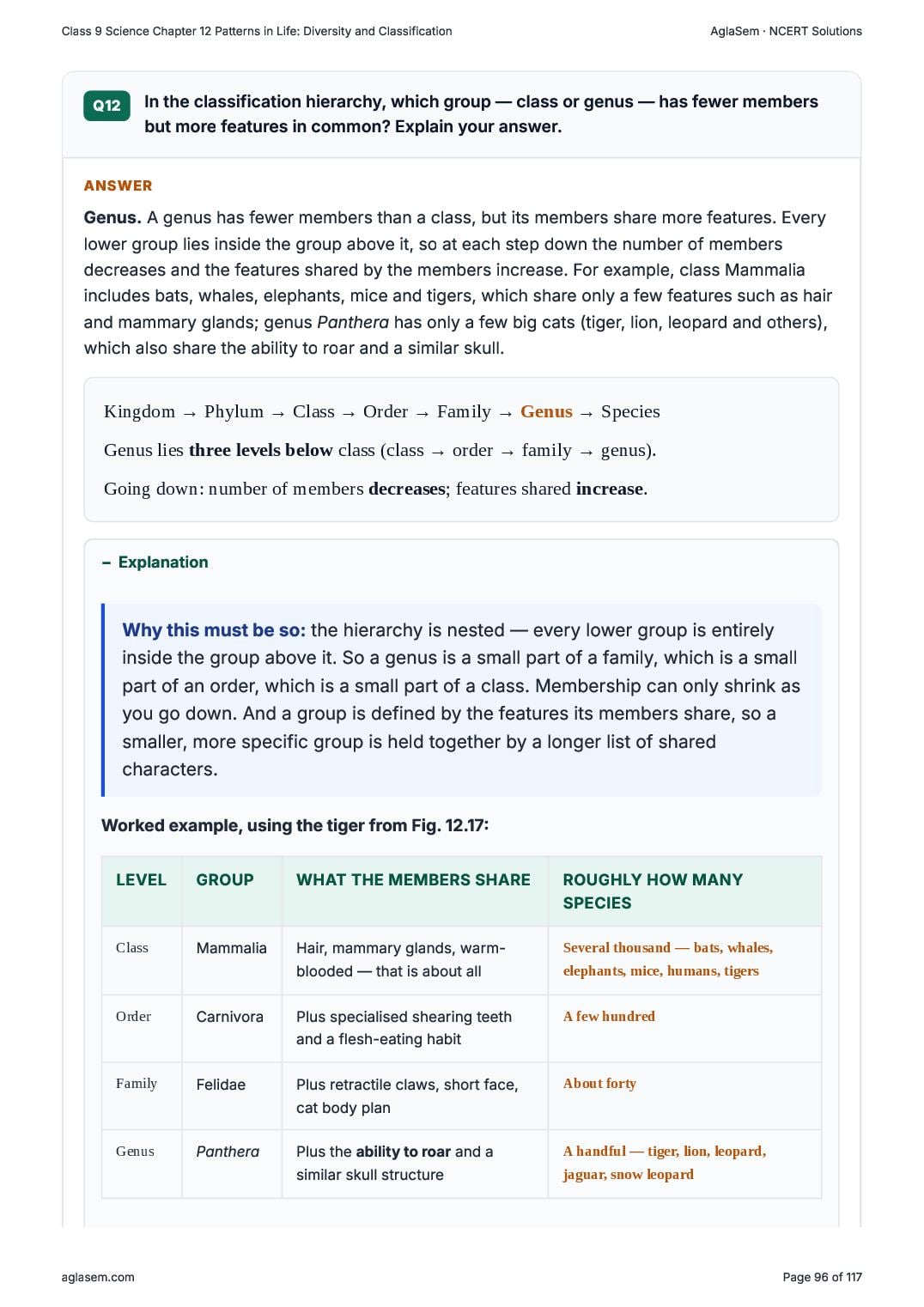
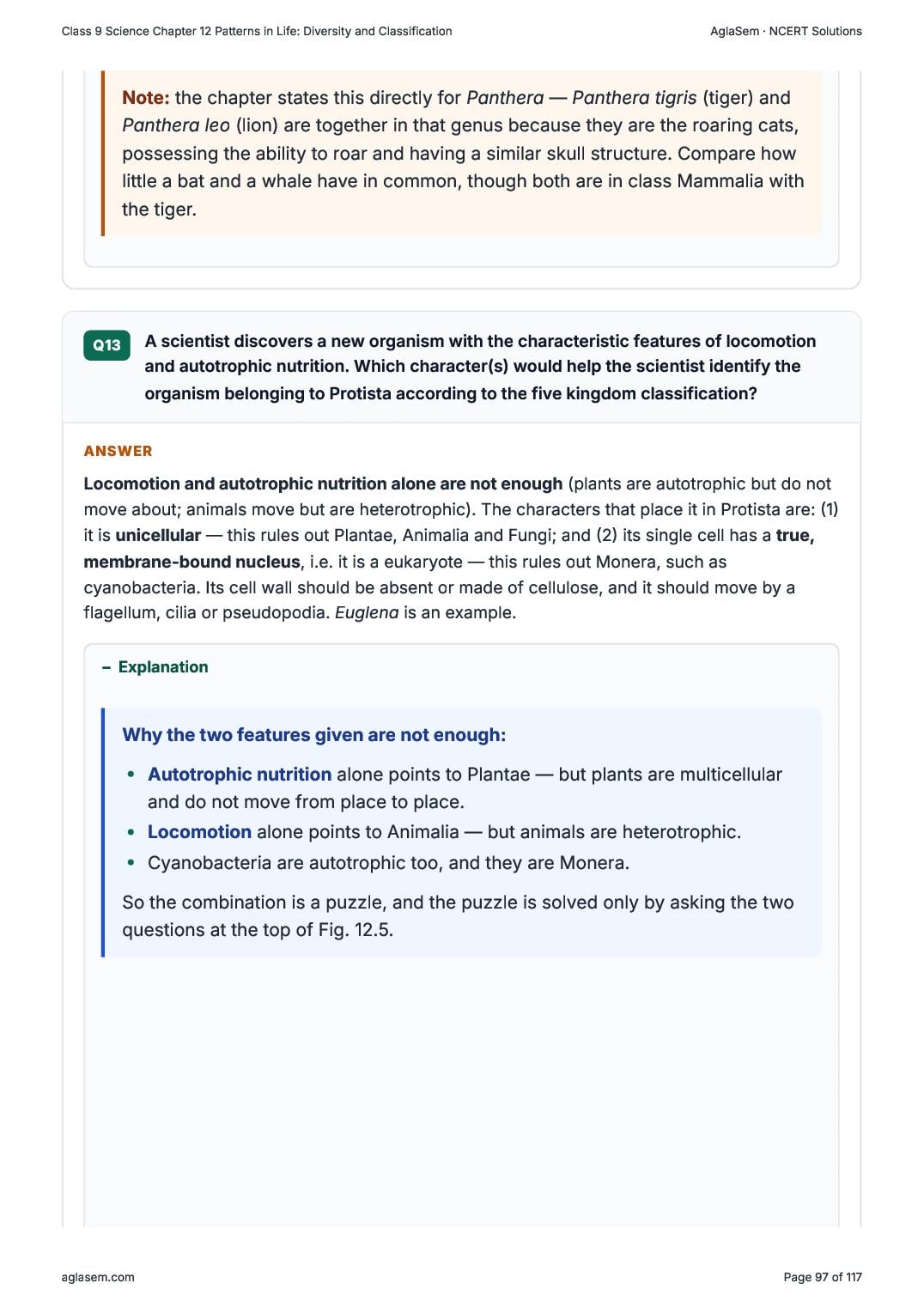
- In the classification hierarchy, which group — class or genus — has fewer members but more features in common? Explain your answer.
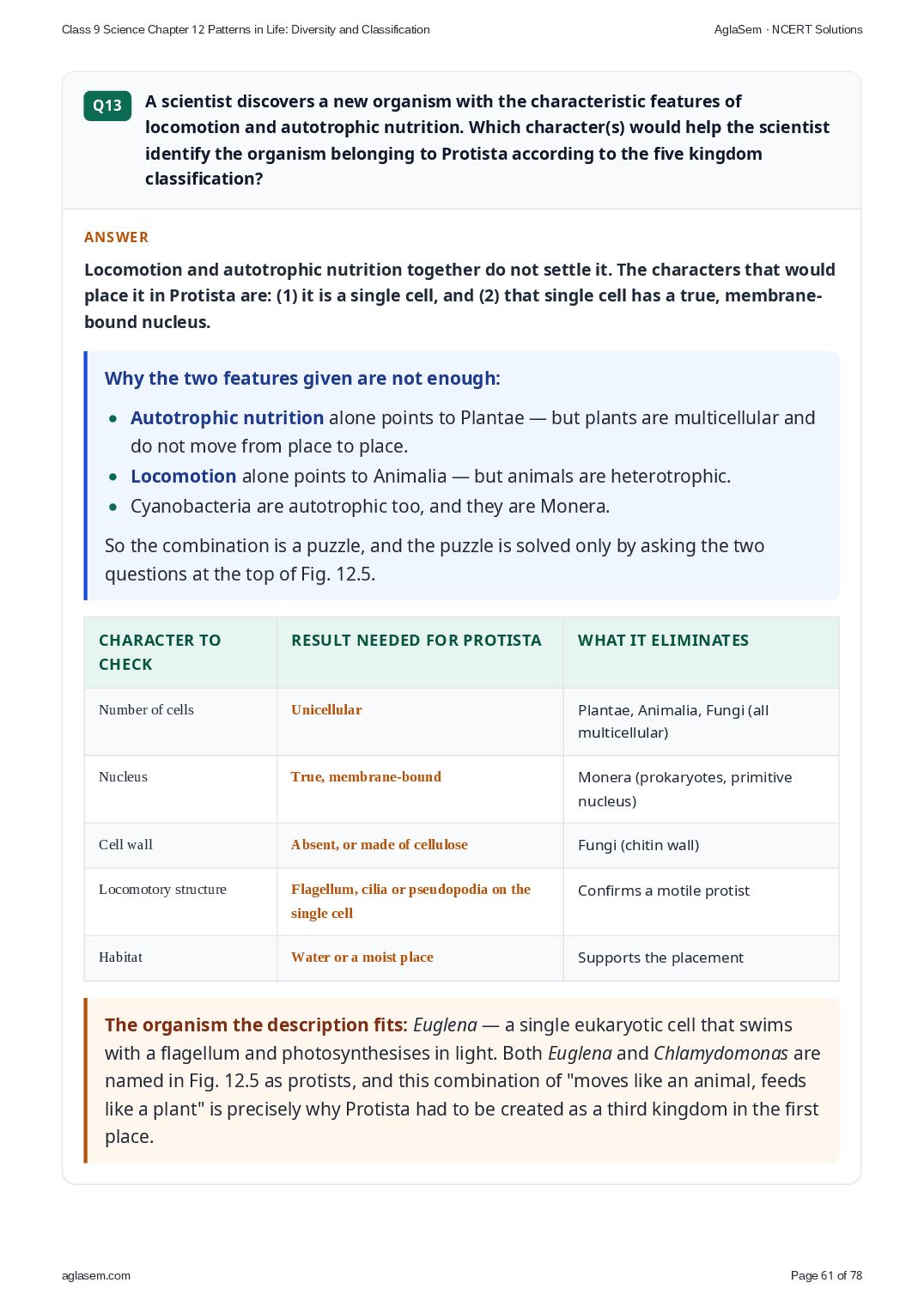
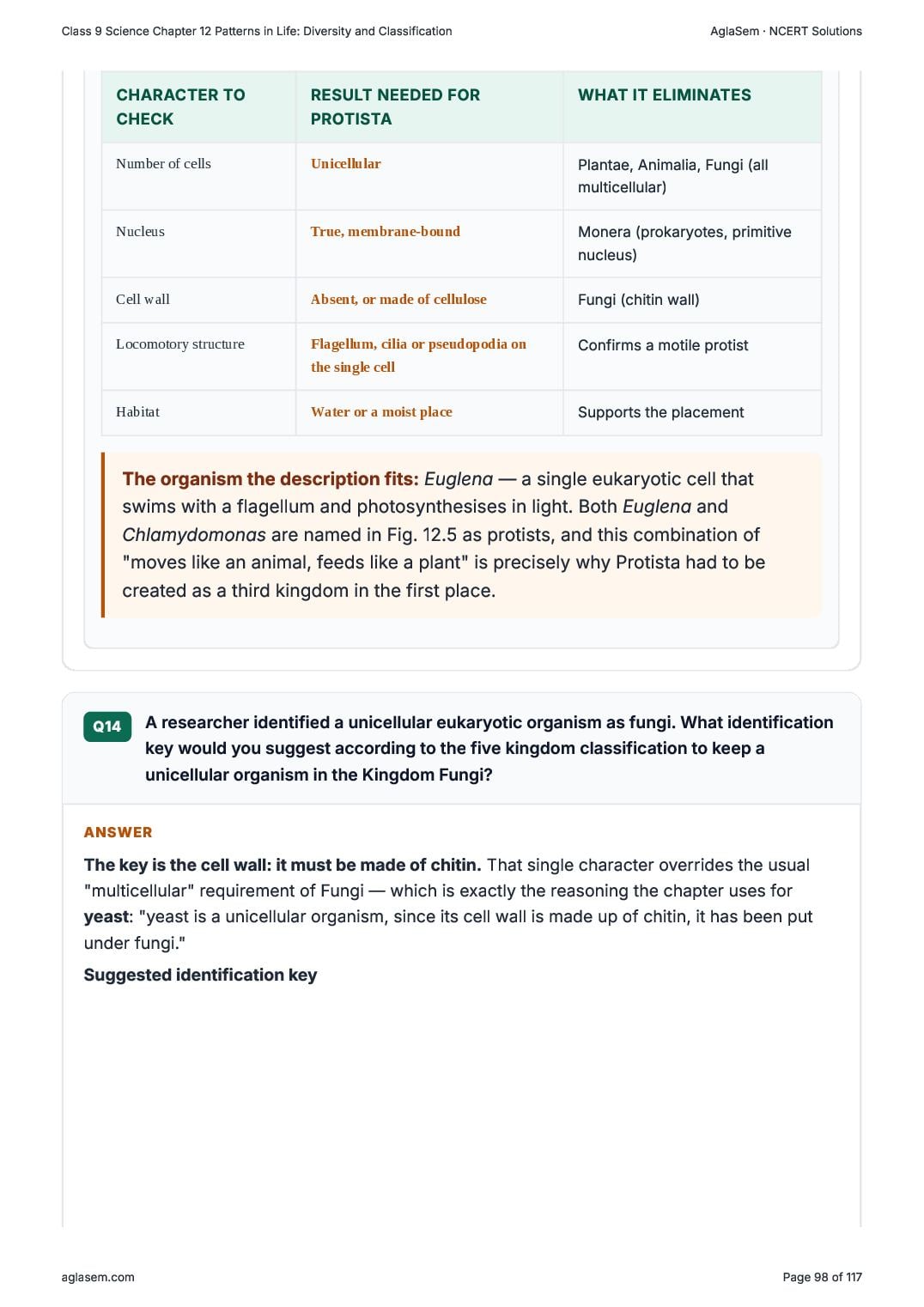
- A scientist discovers a new organism with the characteristic features of locomotion and autotrophic nutrition. Which character(s) would help the scientist identify the organism belonging to Protista according to the five kingdom classification?
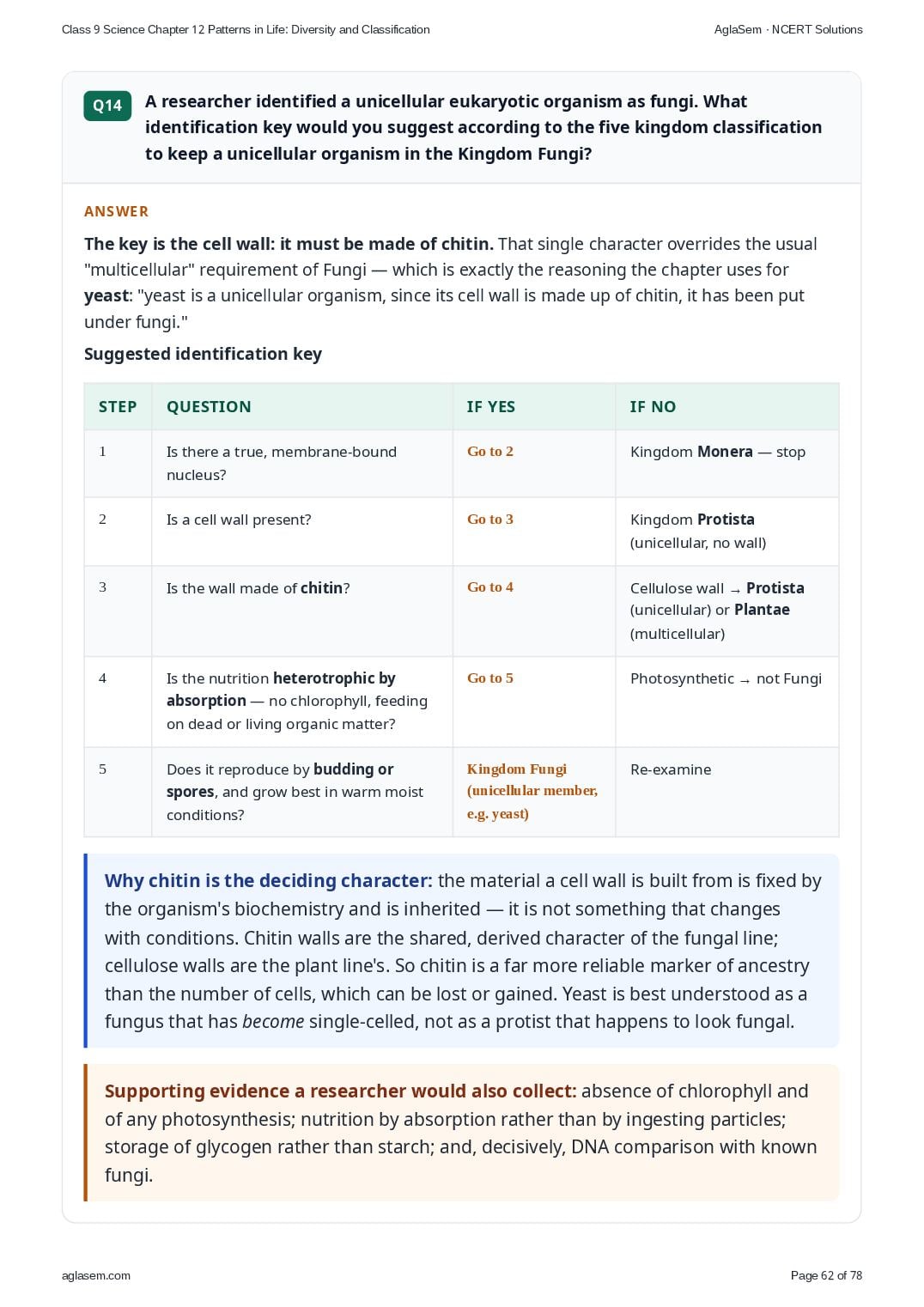
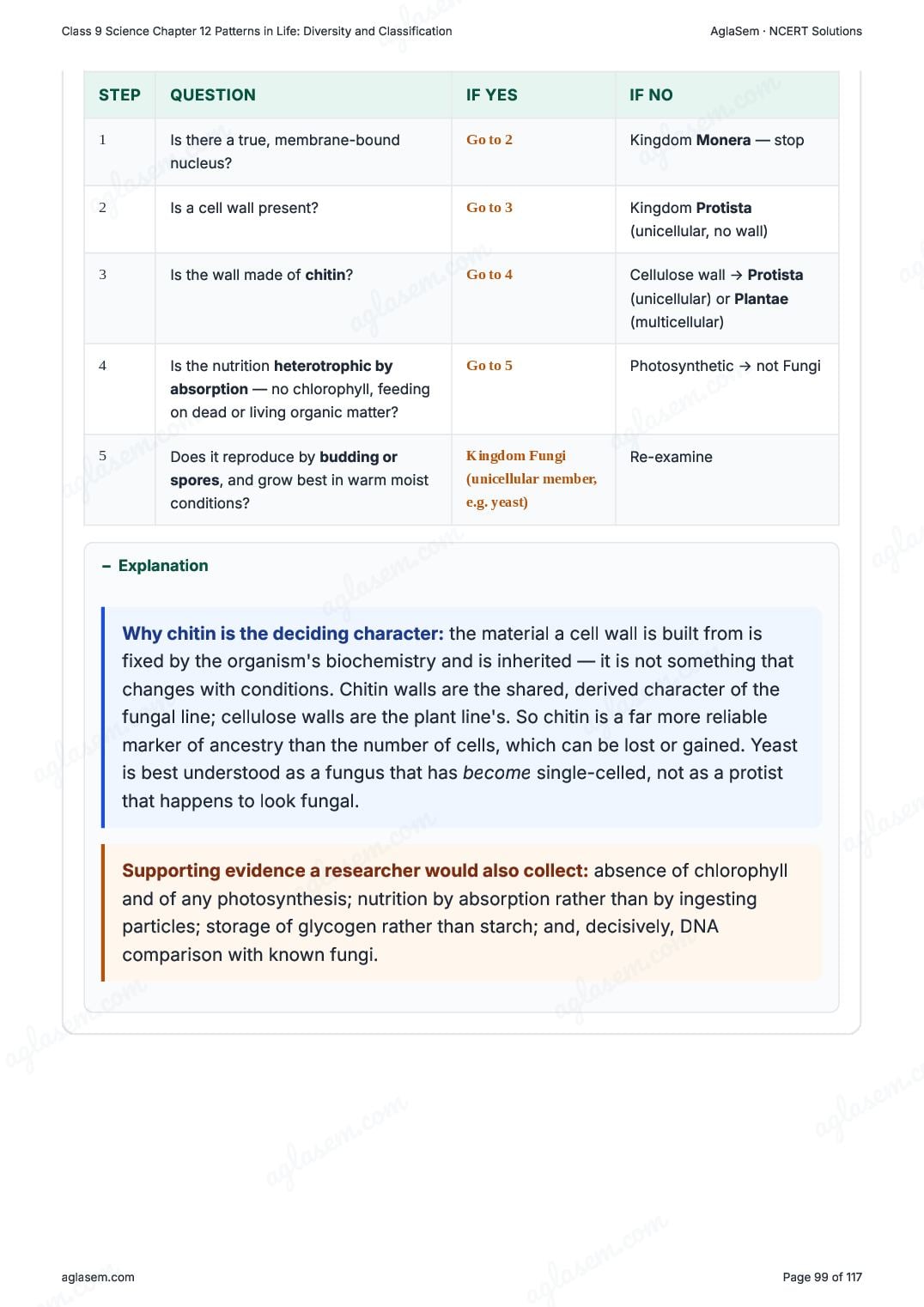
- A researcher identified a unicellular eukaryotic organism as fungi. What identification key would you suggest according to the five kingdom classification to keep a unicellular organism in the Kingdom Fungi?
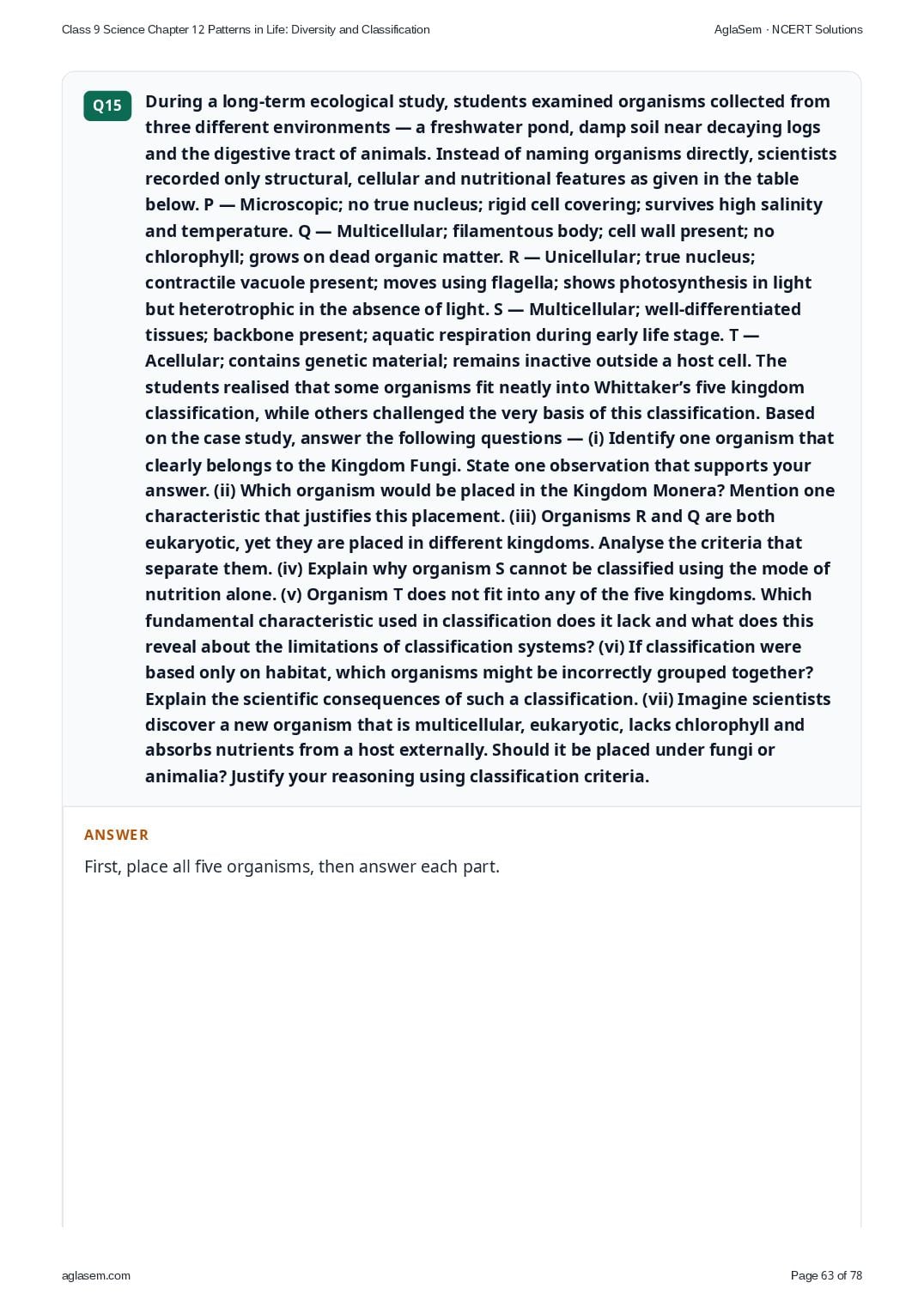
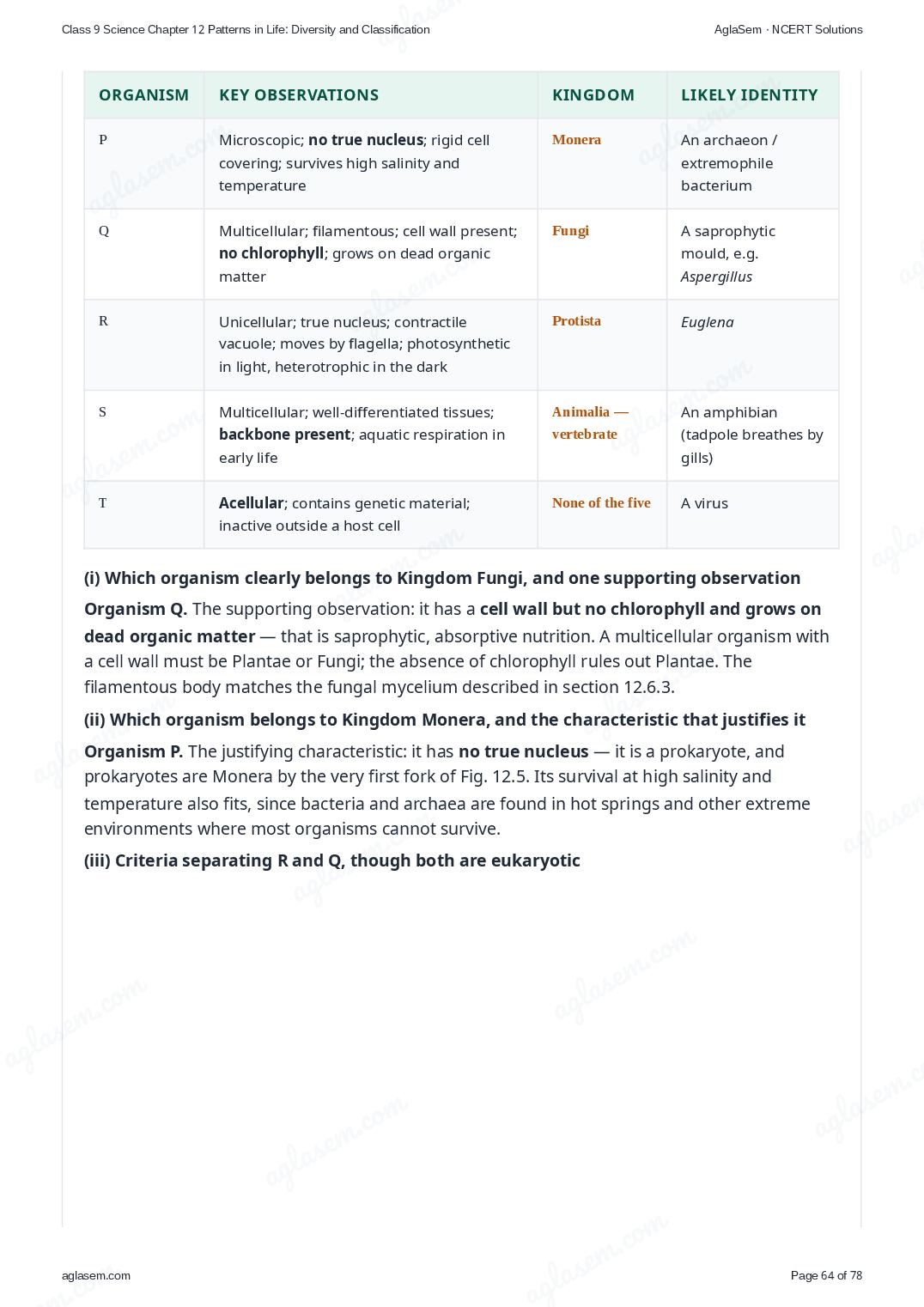
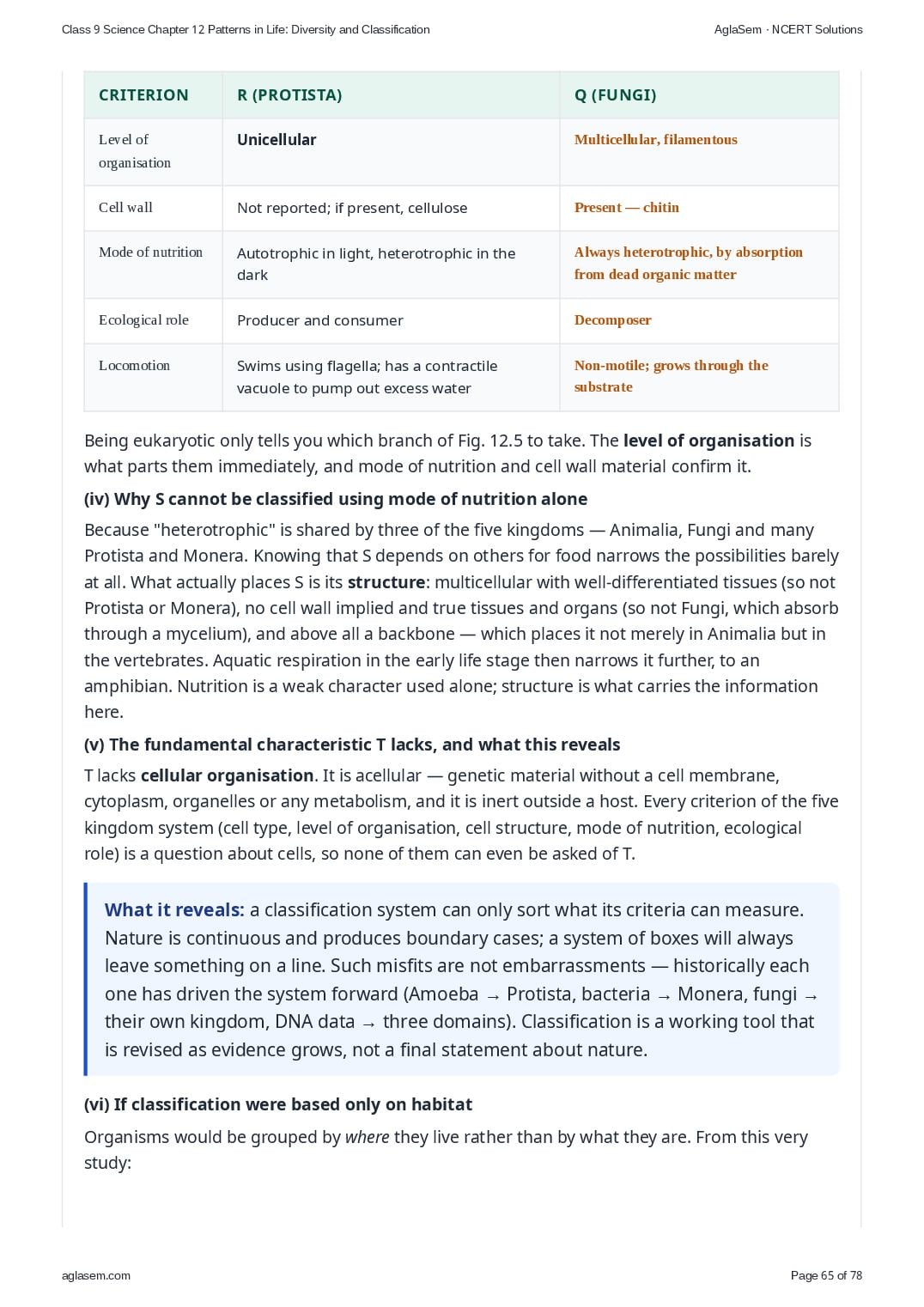
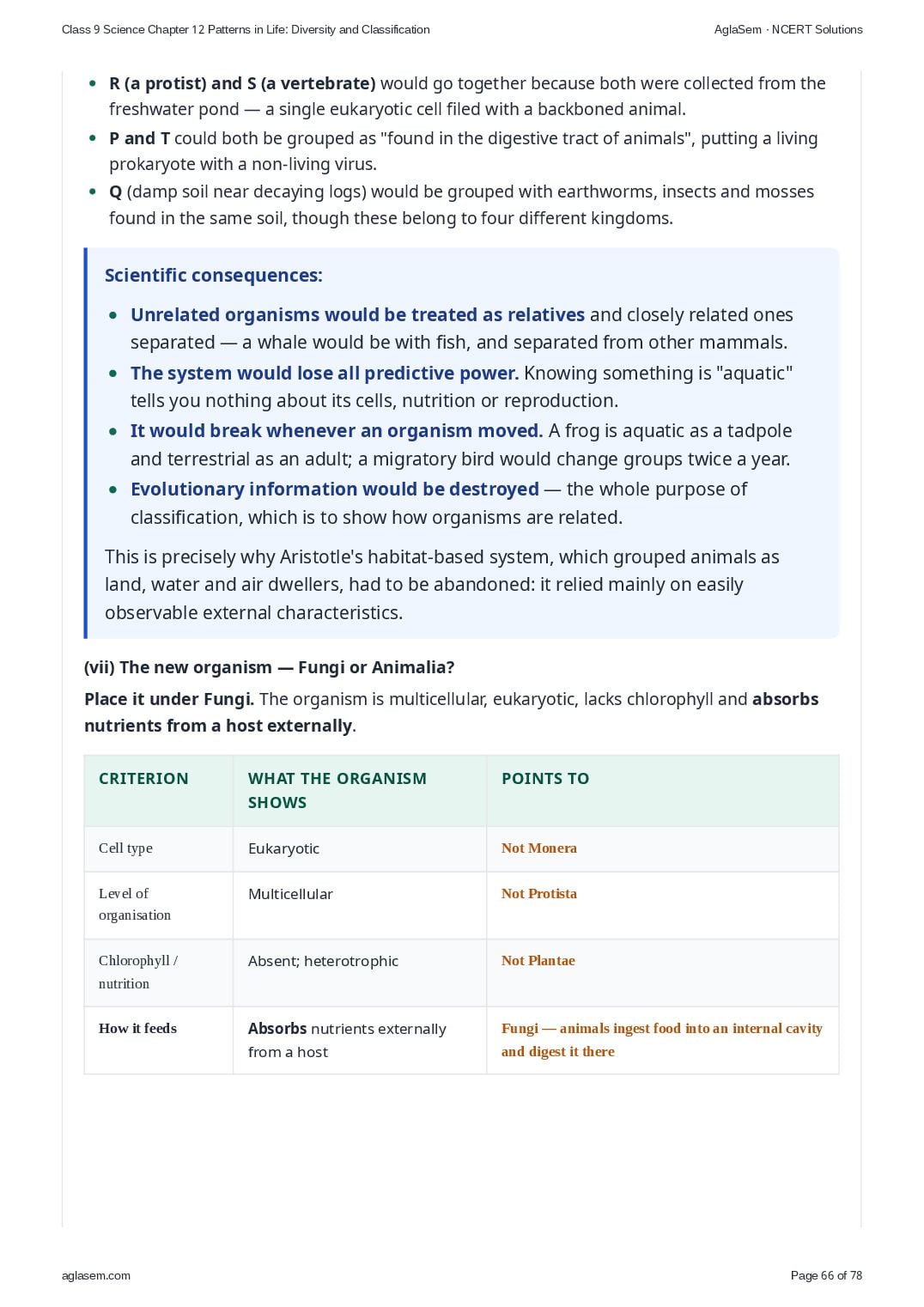
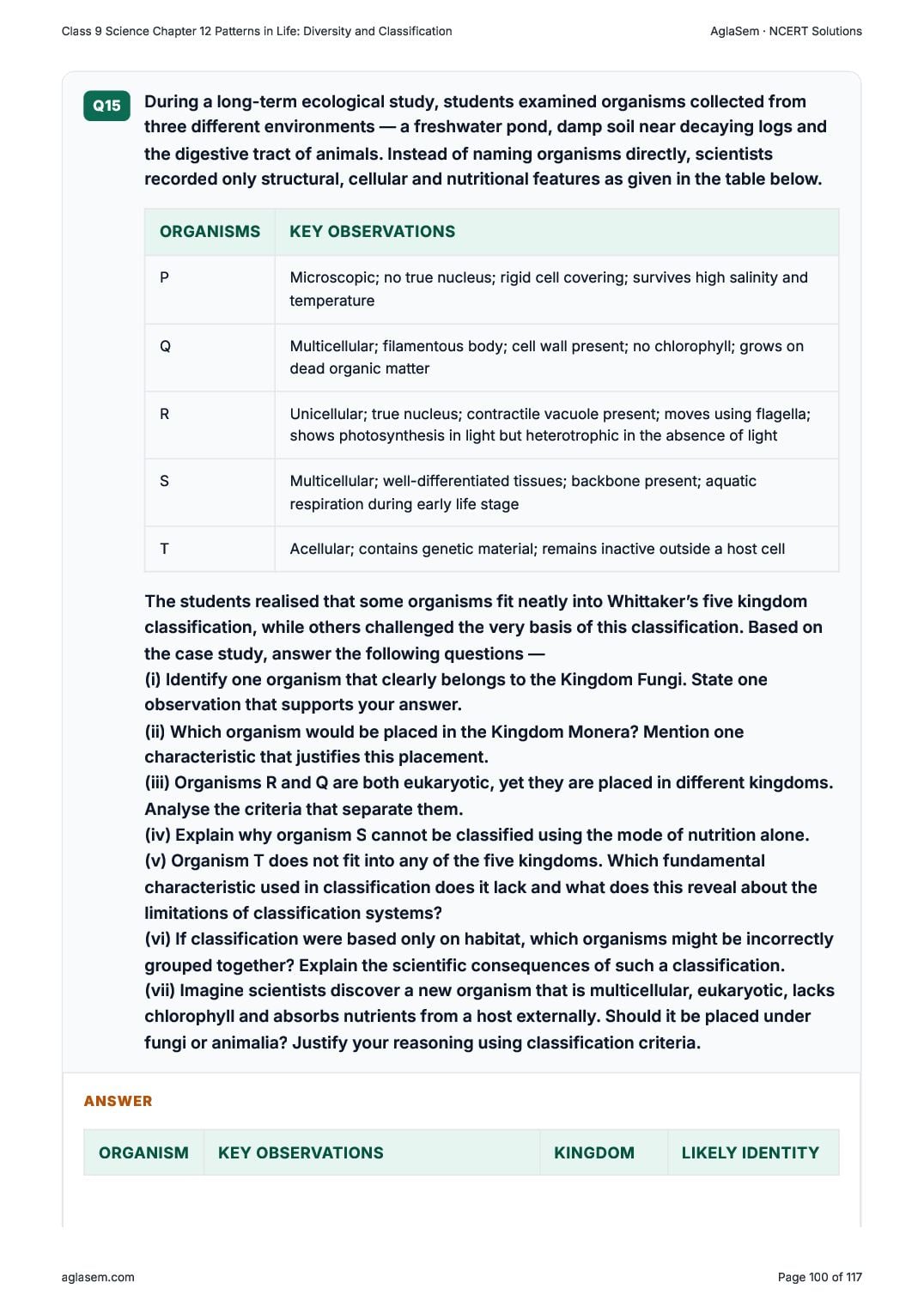
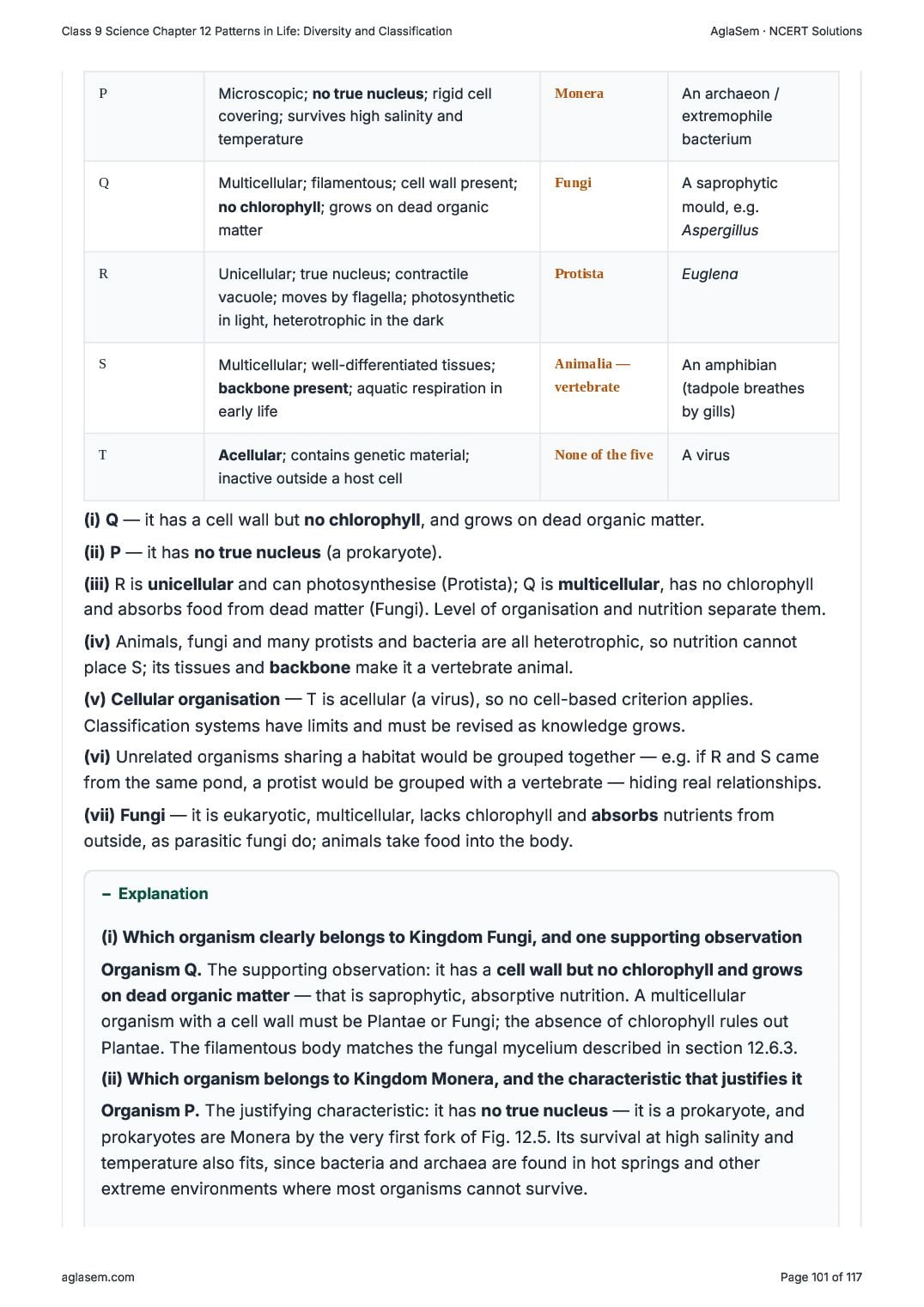
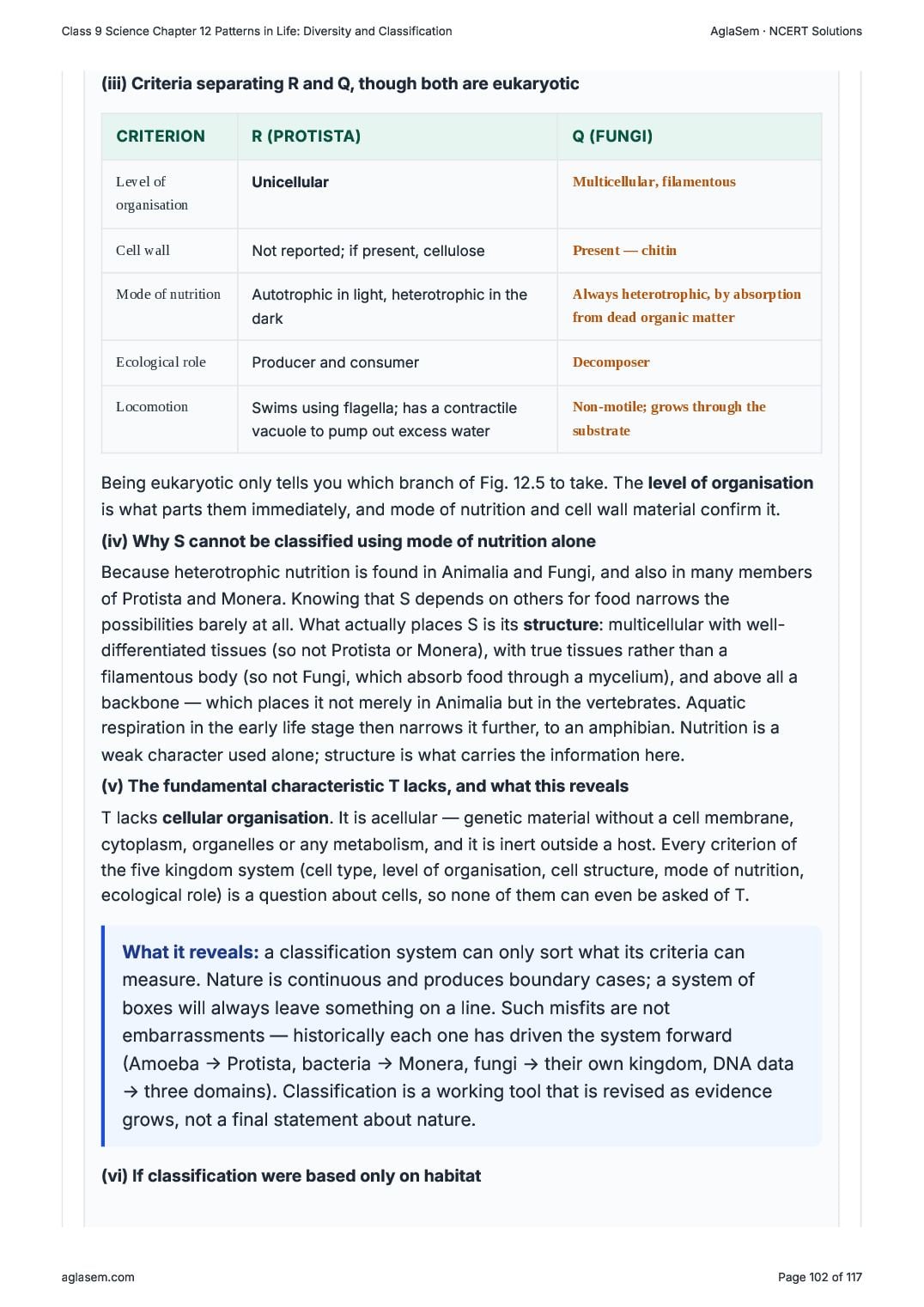
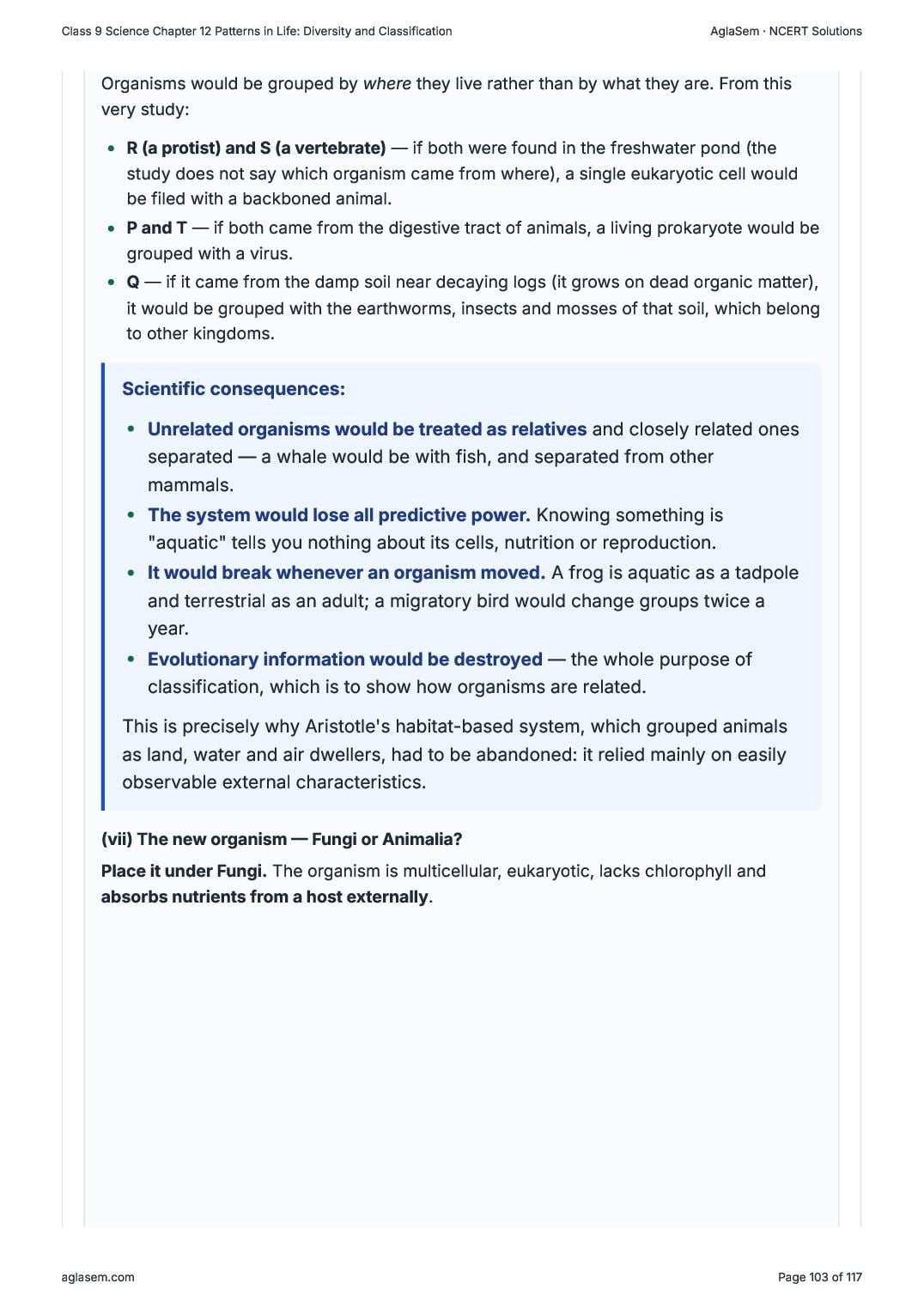
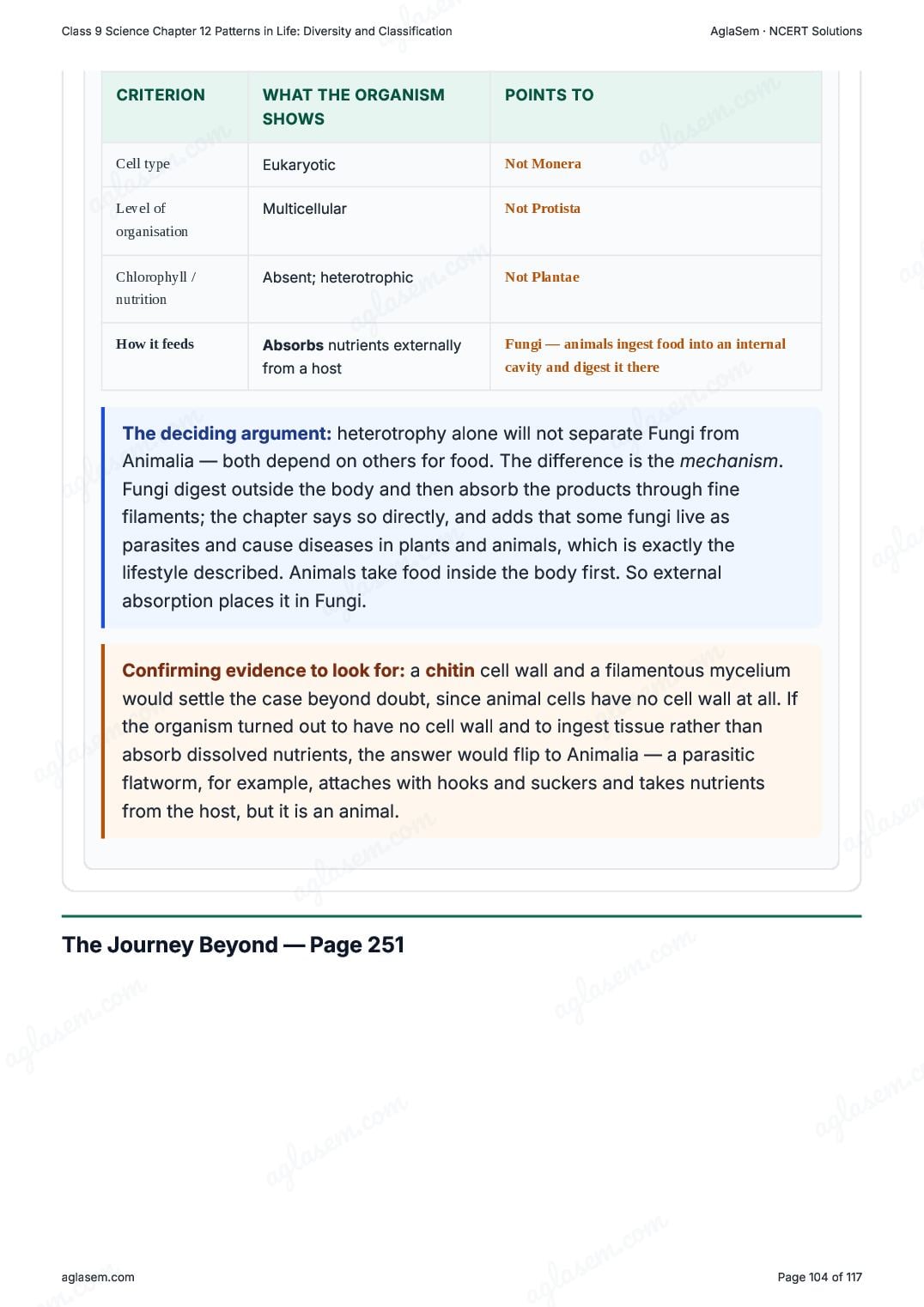
- During a long-term ecological study, students examined organisms collected from three different environments — a freshwater pond, damp soil near decaying logs and the digestive tract of animals. Instead of naming organisms directly, scientists recorded only structural, cellular and nutritional features as given in the table below. P — Microscopic; no true nucleus; rigid cell covering; survives high salinity and temperature. Q — Multicellular; filamentous body; cell wall present; no chlorophyll; grows on dead organic matter. R — Unicellular; true nucleus; contractile vacuole present; moves using flagella; shows photosynthesis in light but heterotrophic in the absence of light. S — Multicellular; well-differentiated tissues; backbone present; aquatic respiration during early life stage. T — Acellular; contains genetic material; remains inactive outside a host cell. The students realised that some organisms fit neatly into Whittaker’s five kingdom classification, while others challenged the very basis of this classification. Based on the case study, answer the following questions — (i) Identify one organism that clearly belongs to the Kingdom Fungi. State one observation that supports your answer. (ii) Which organism would be placed in the Kingdom Monera? Mention one characteristic that justifies this placement. (iii) Organisms R and Q are both eukaryotic, yet they are placed in different kingdoms. Analyse the criteria that separate them. (iv) Explain why organism S cannot be classified using the mode of nutrition alone. (v) Organism T does not fit into any of the five kingdoms. Which fundamental characteristic used in classification does it lack and what does this reveal about the limitations of classification systems? (vi) If classification were based only on habitat, which organisms might be incorrectly grouped together? Explain the scientific consequences of such a classification. (vii) Imagine scientists discover a new organism that is multicellular, eukaryotic, lacks chlorophyll and absorbs nutrients from a host externally. Should it be placed under fungi or animalia? Justify your reasoning using classification criteria.
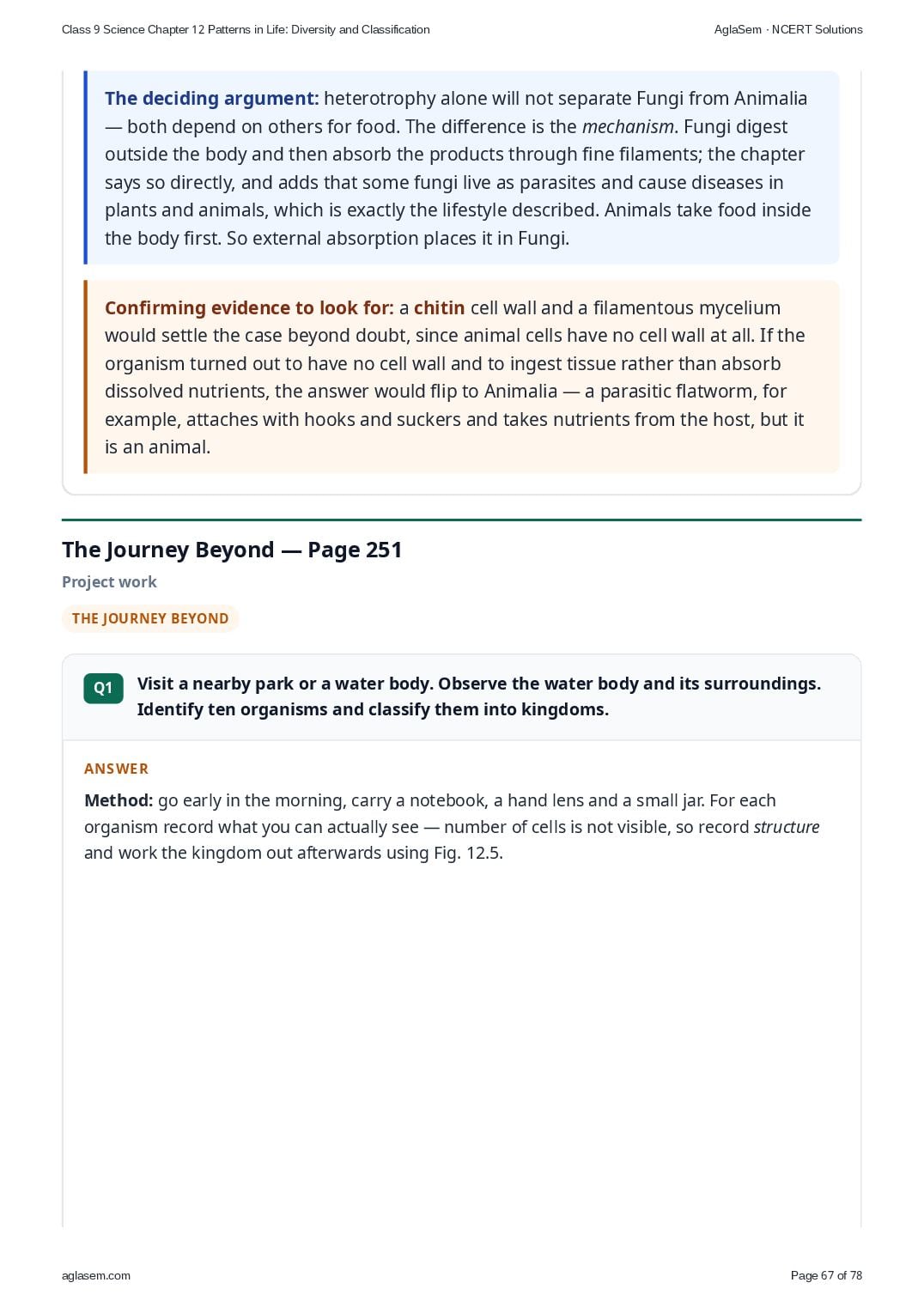
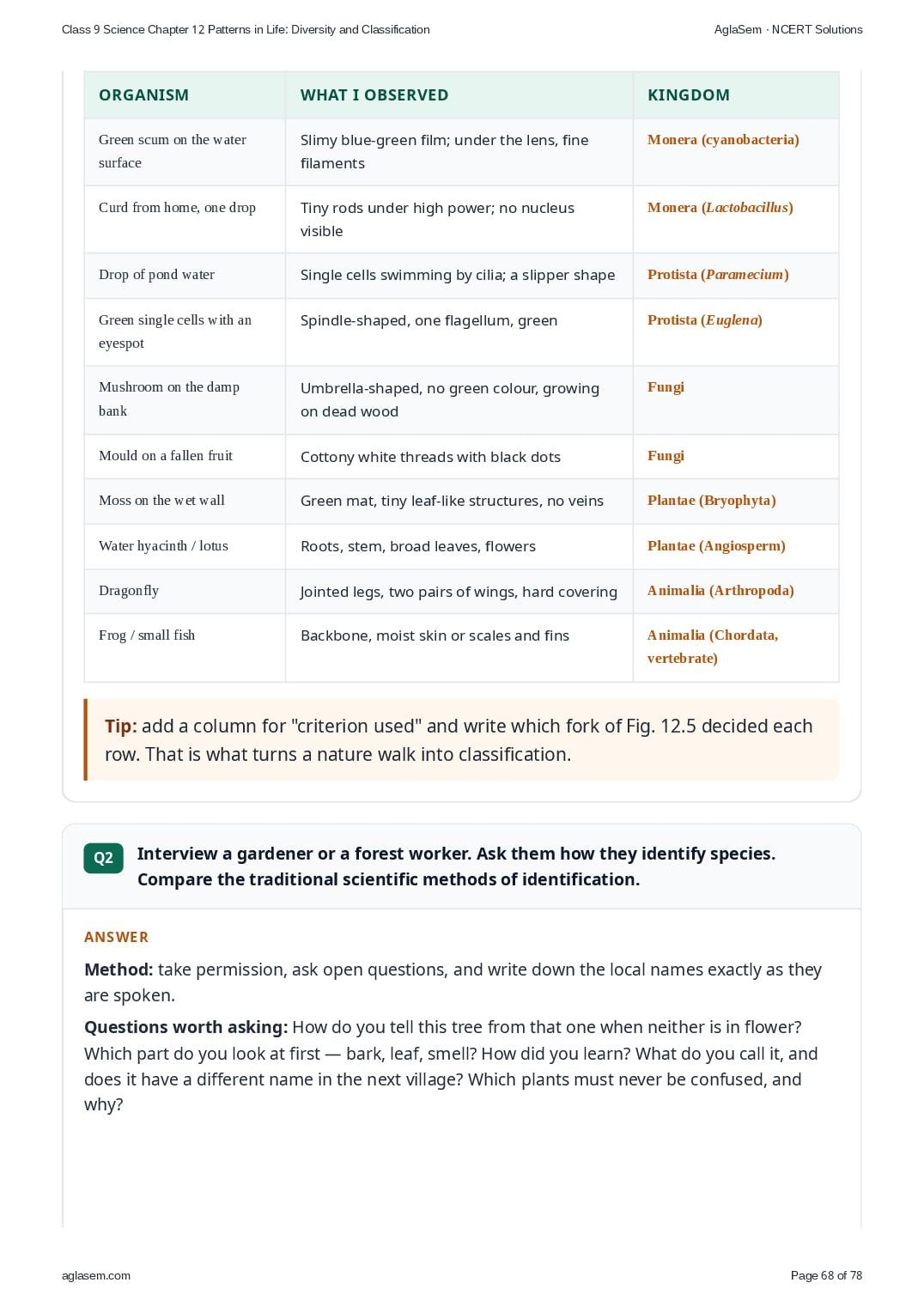
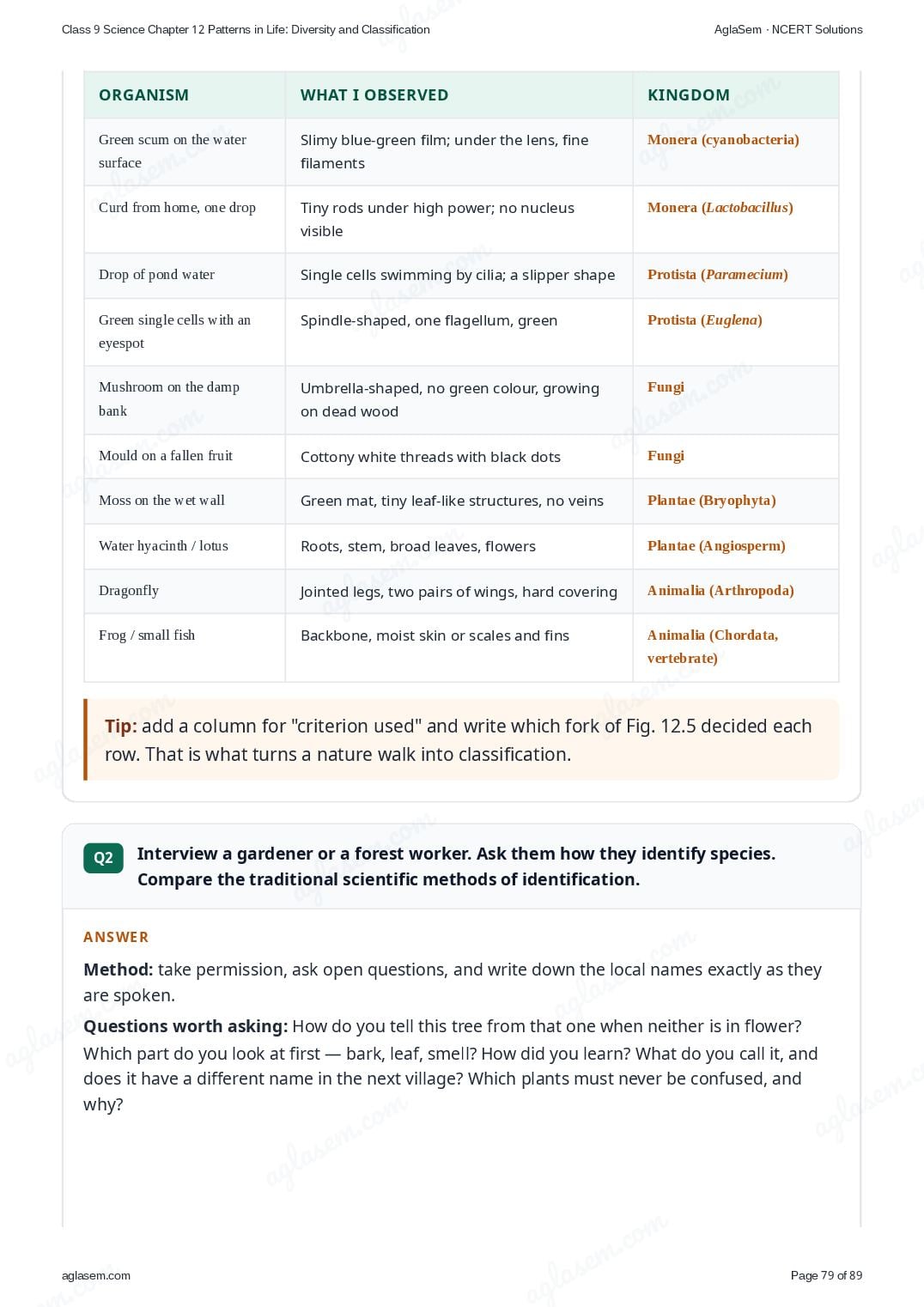
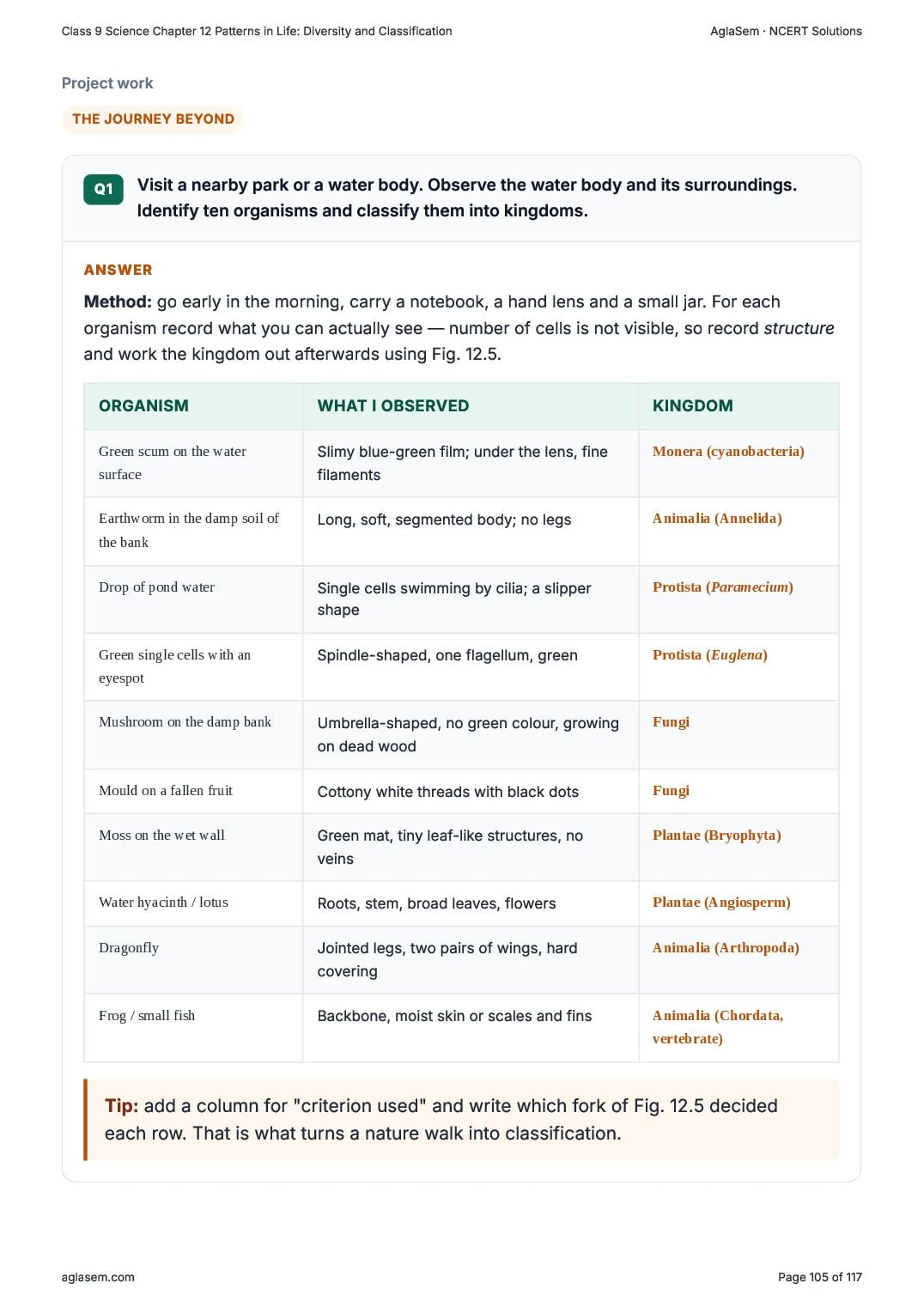
- Visit a nearby park or a water body. Observe the water body and its surroundings. Identify ten organisms and classify them into kingdoms.
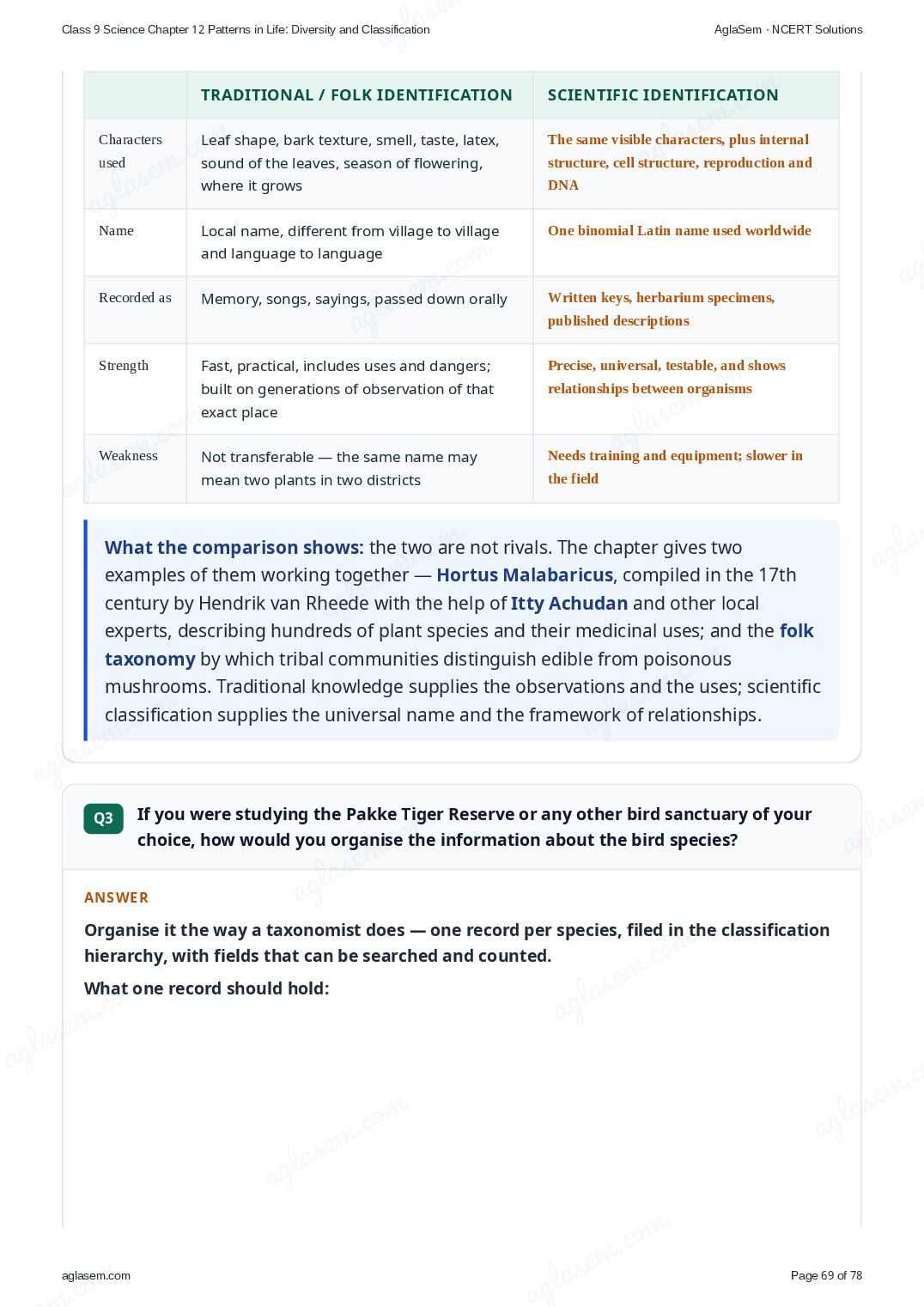
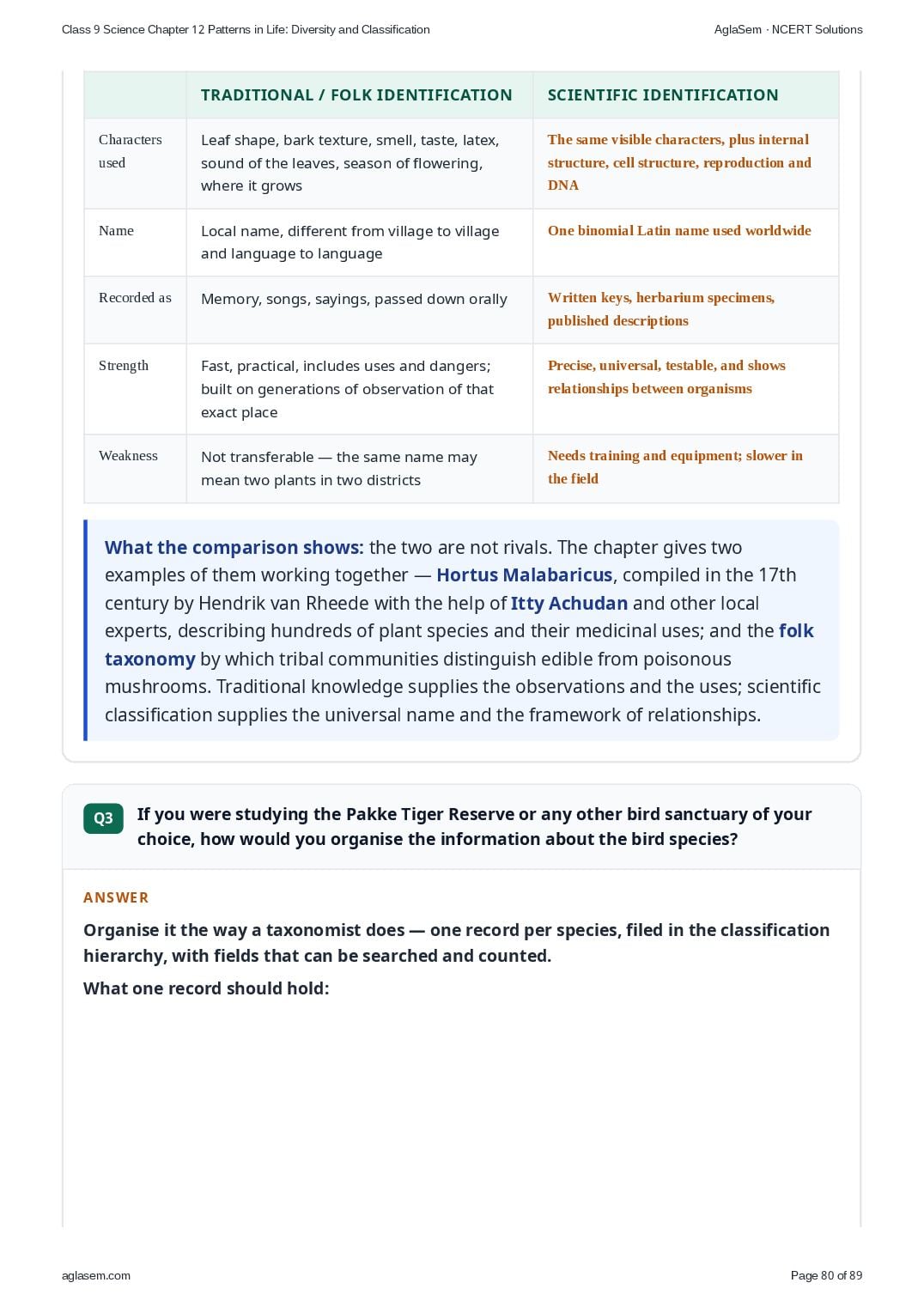
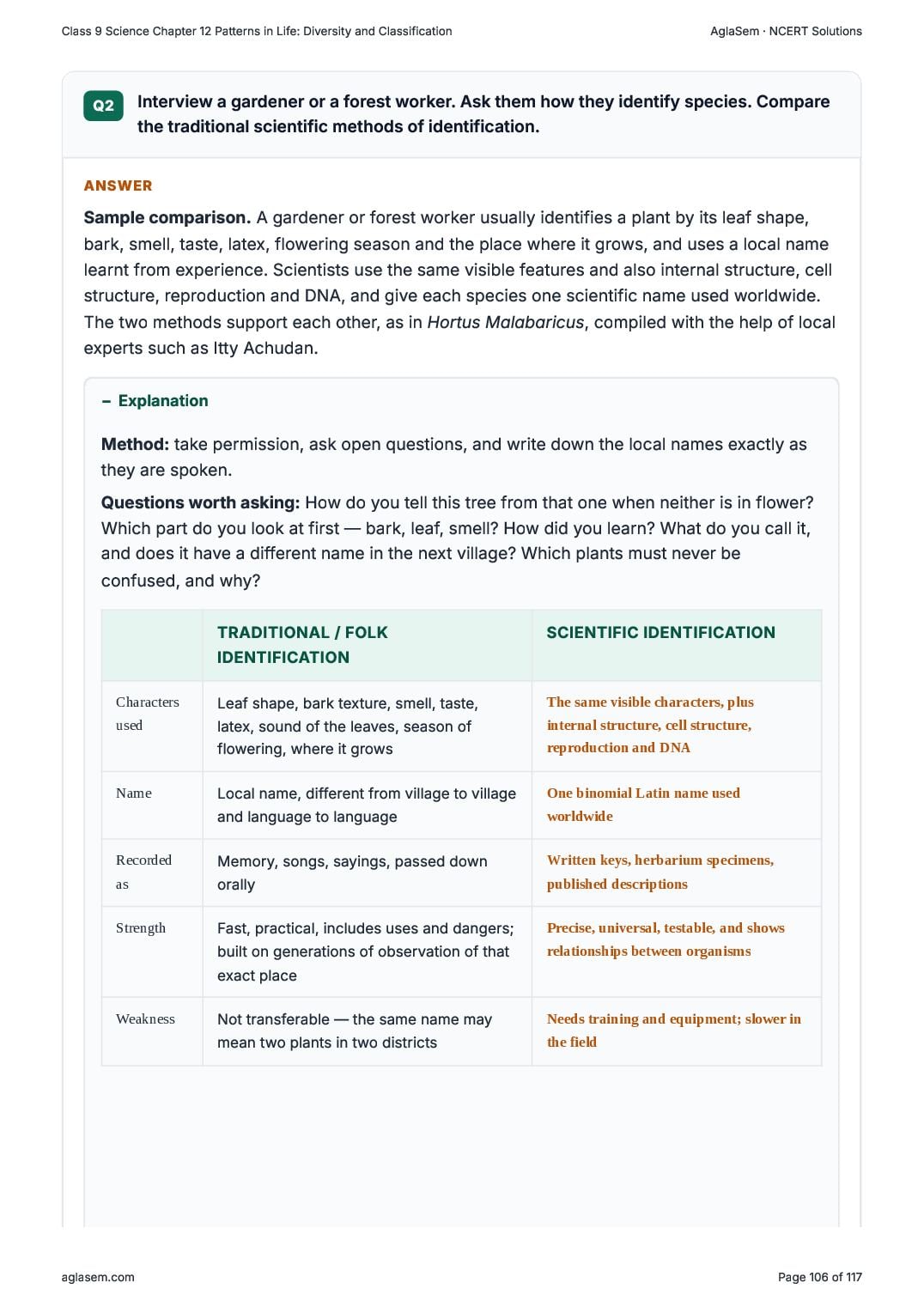
- Interview a gardener or a forest worker. Ask them how they identify species. Compare the traditional scientific methods of identification.
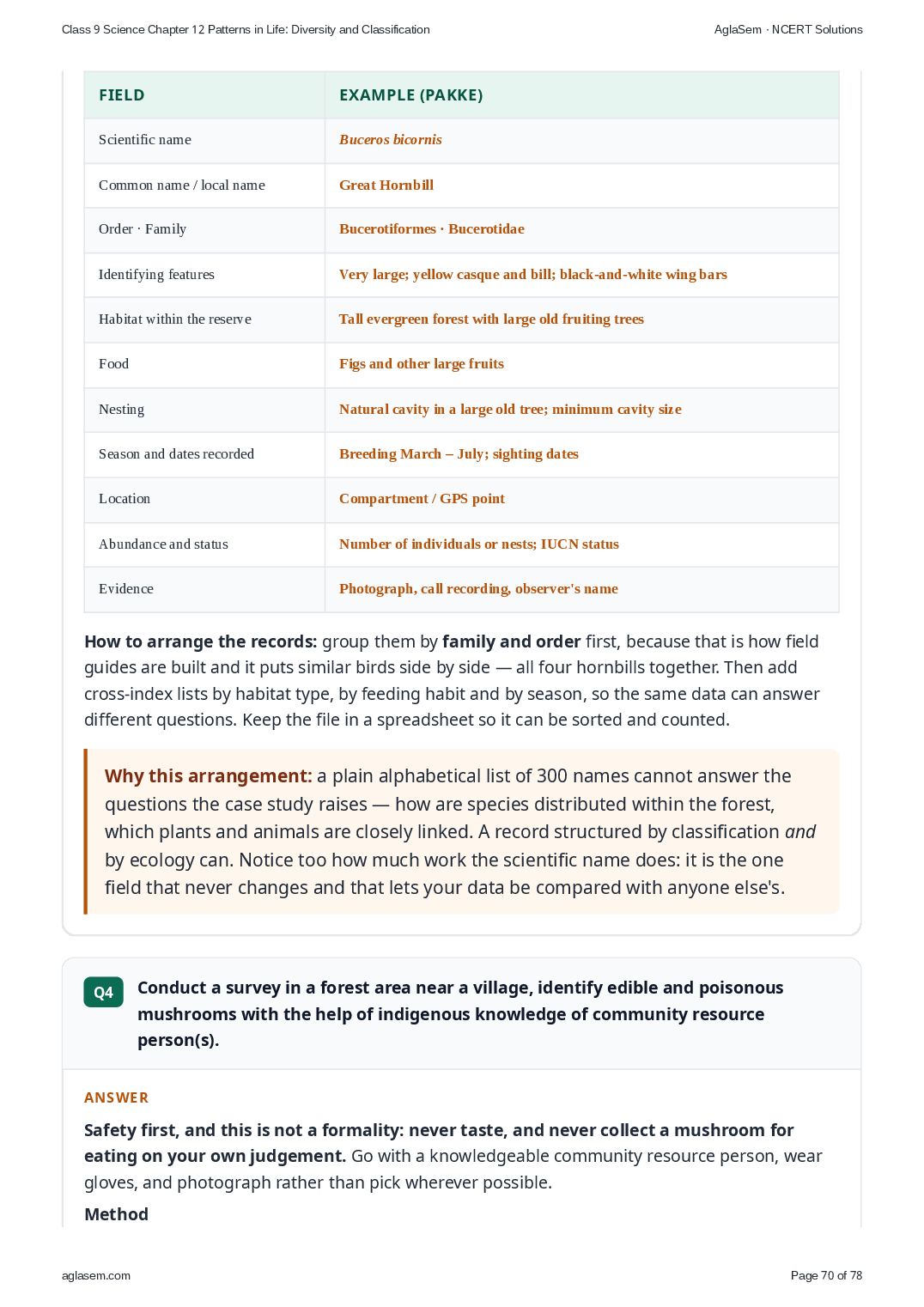
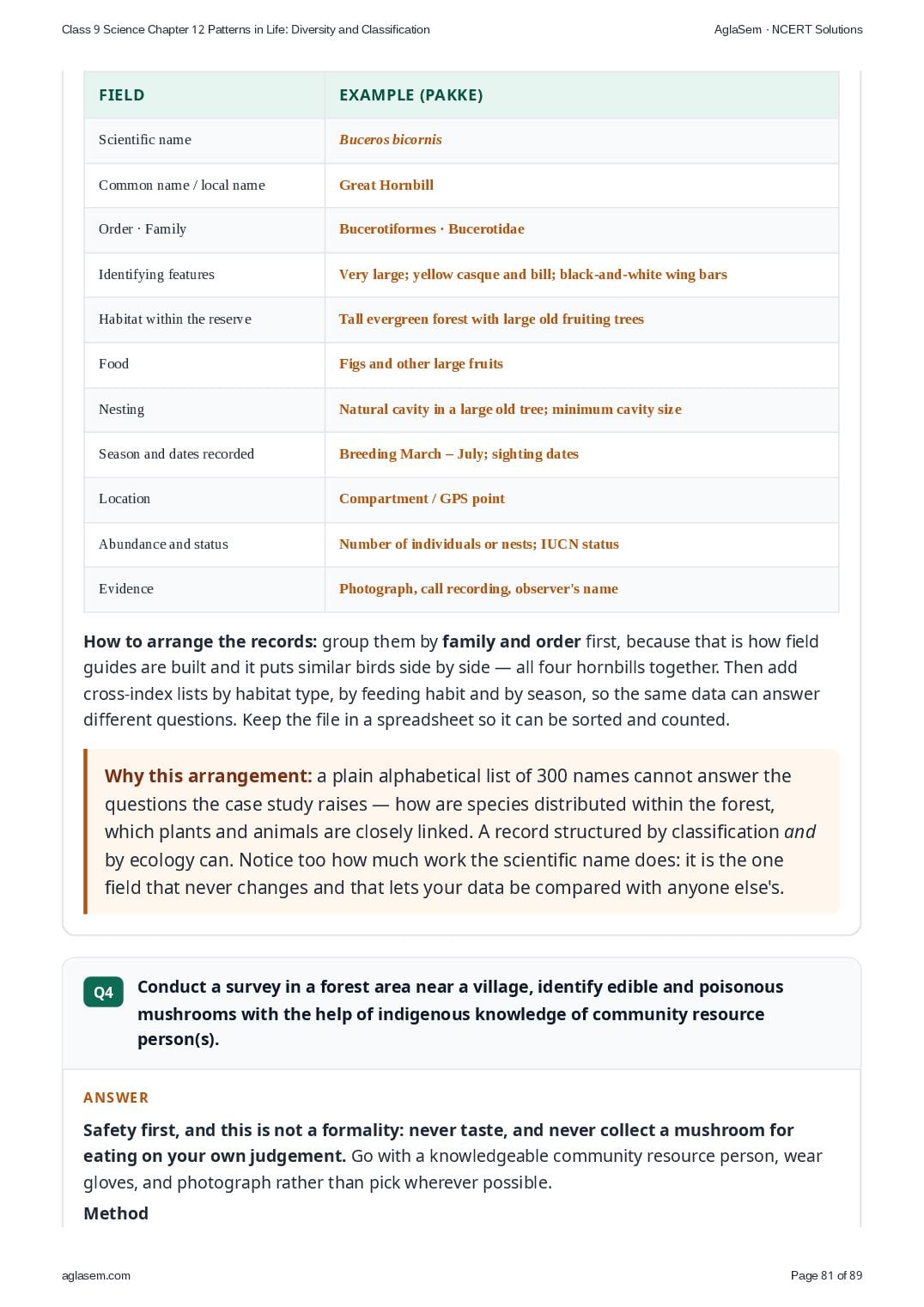
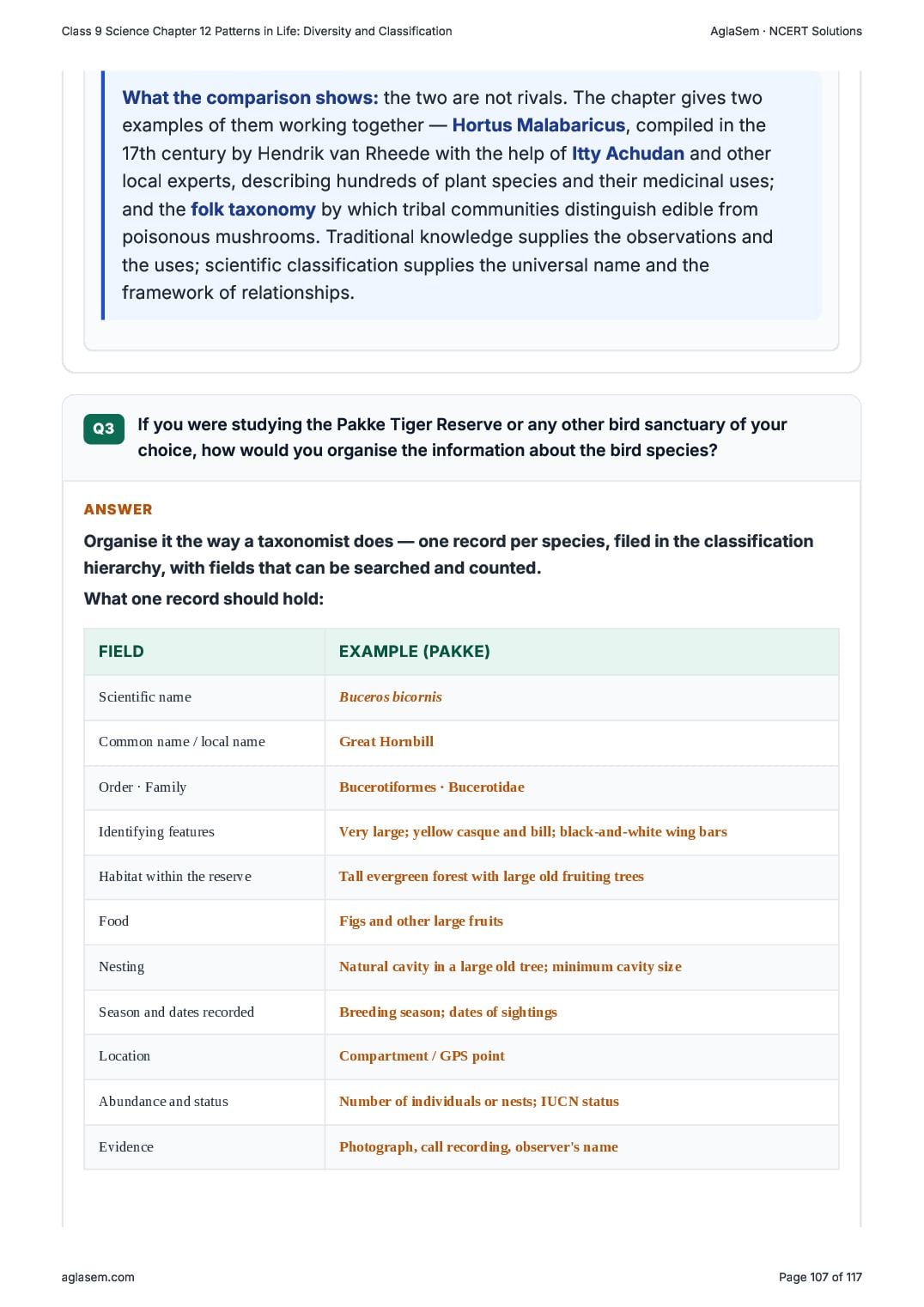
- If you were studying the Pakke Tiger Reserve or any other bird sanctuary of your choice, how would you organise the information about the bird species?
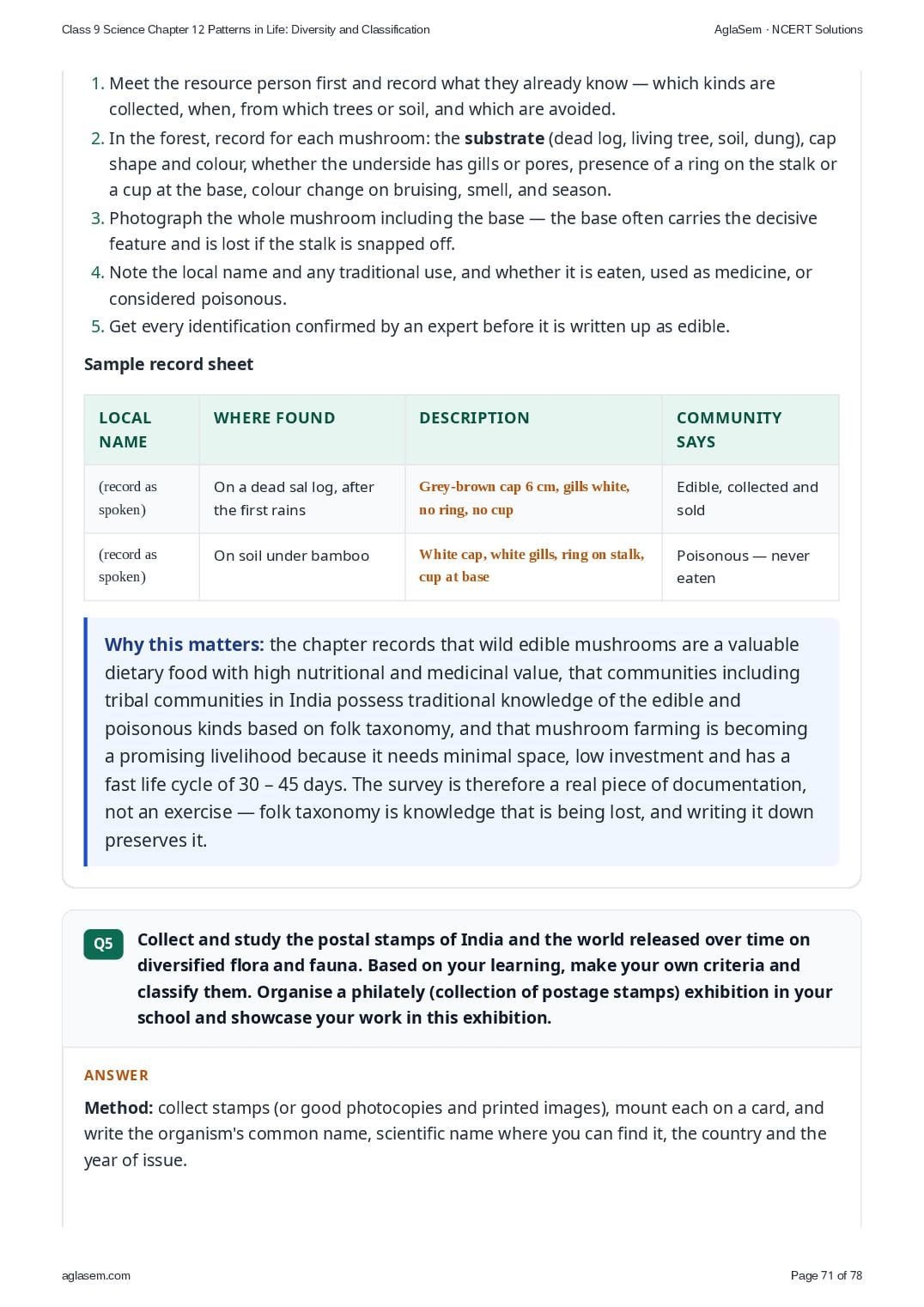
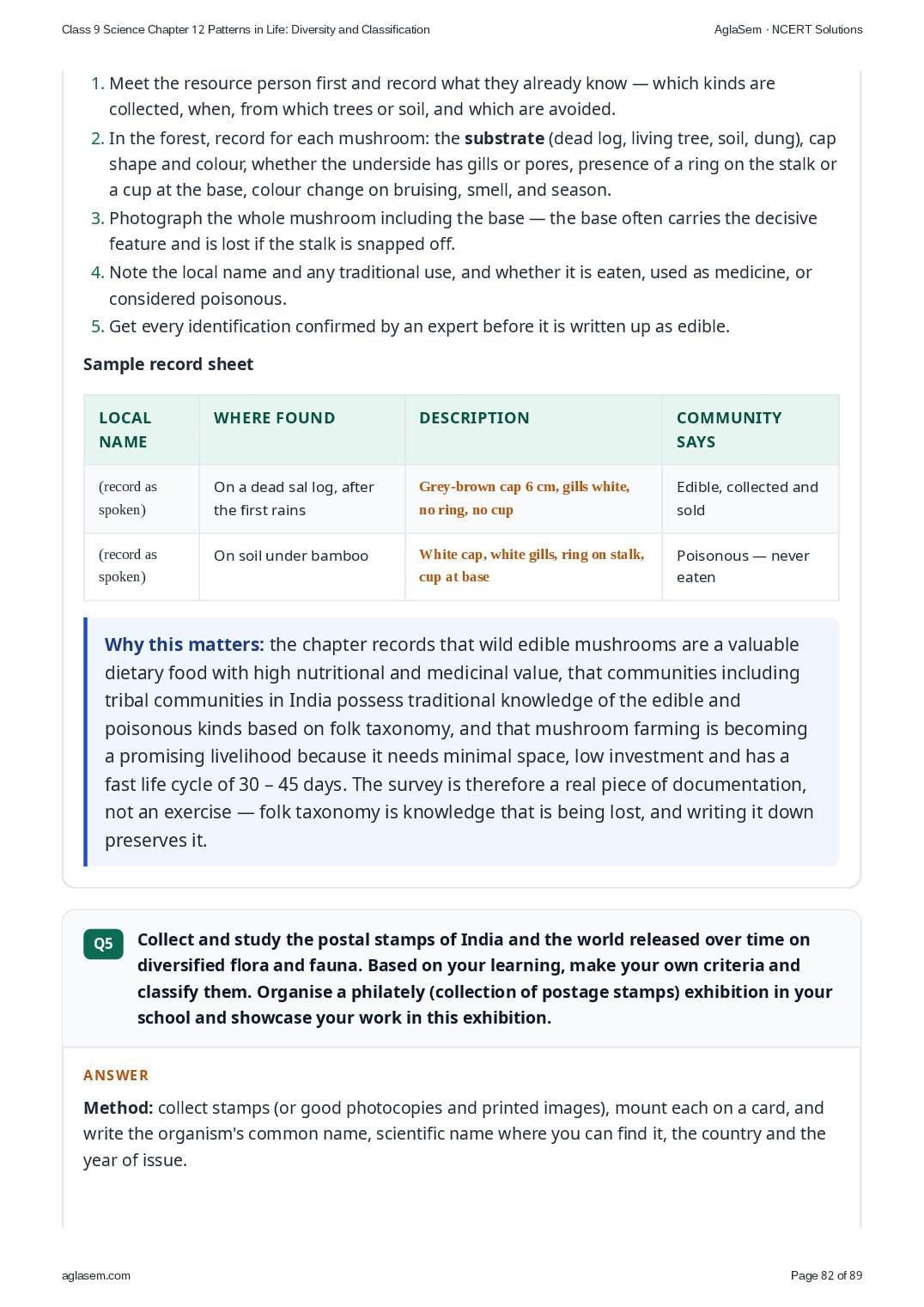
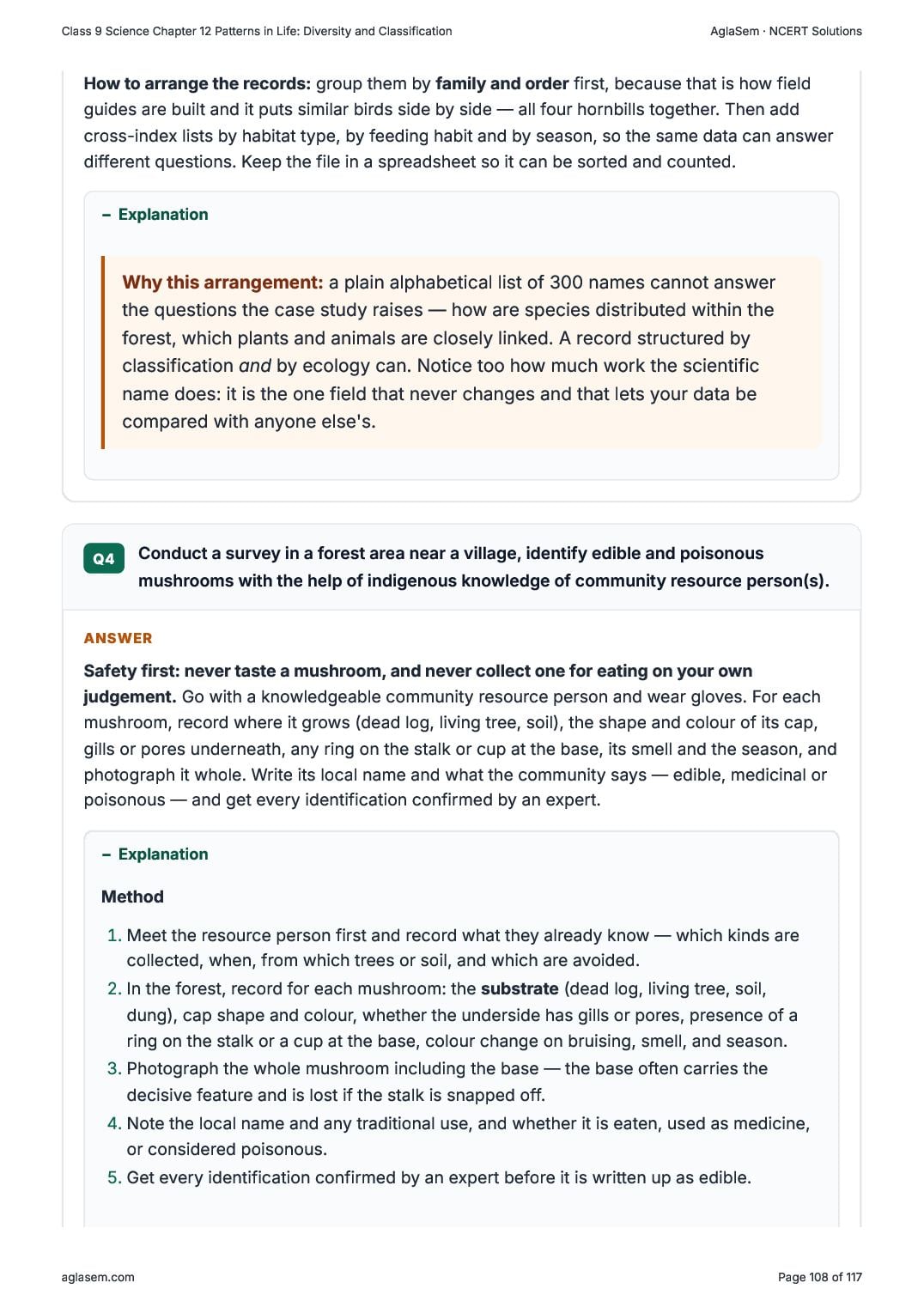
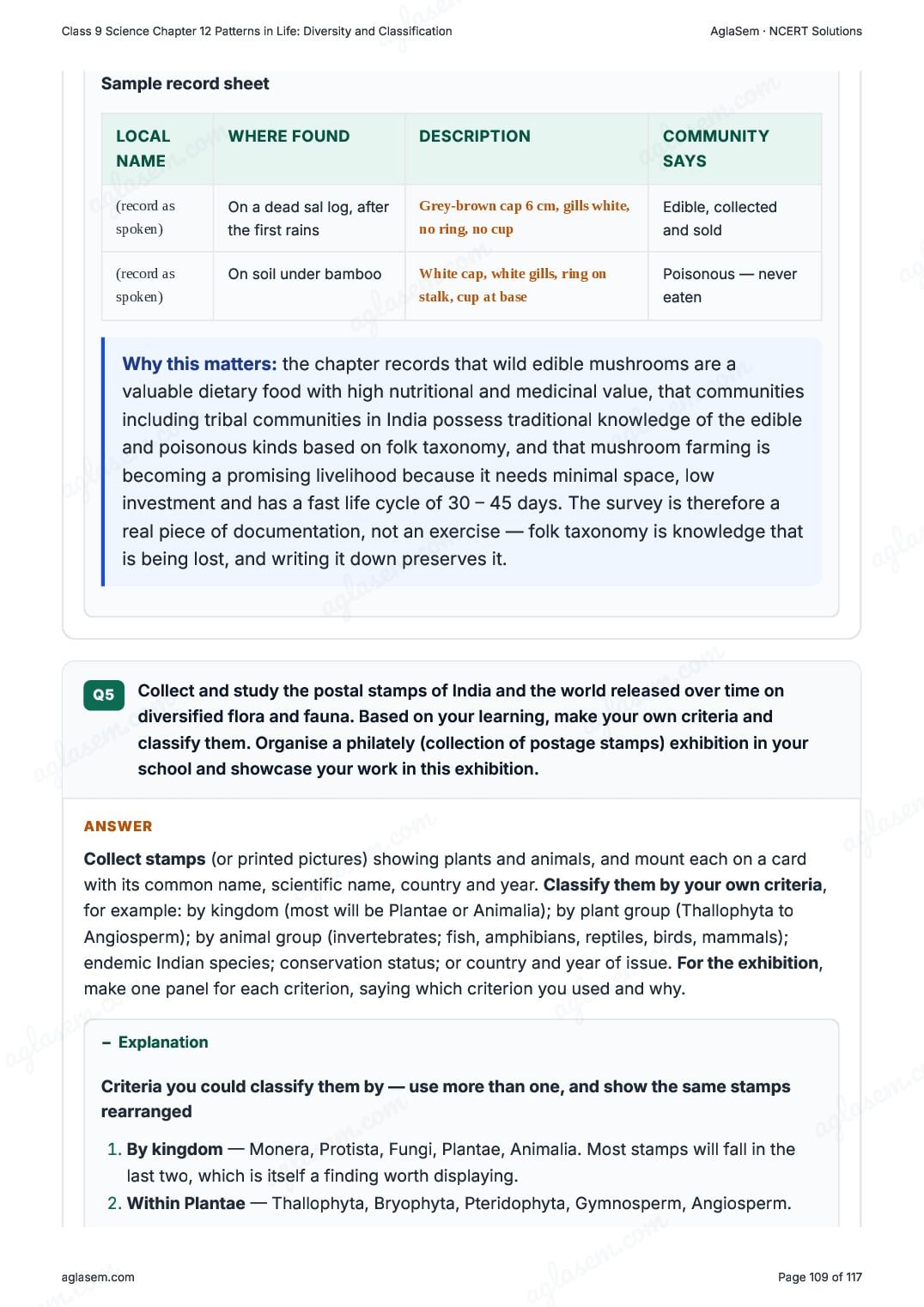
- Conduct a survey in a forest area near a village, identify edible and poisonous mushrooms with the help of indigenous knowledge of community resource person(s).
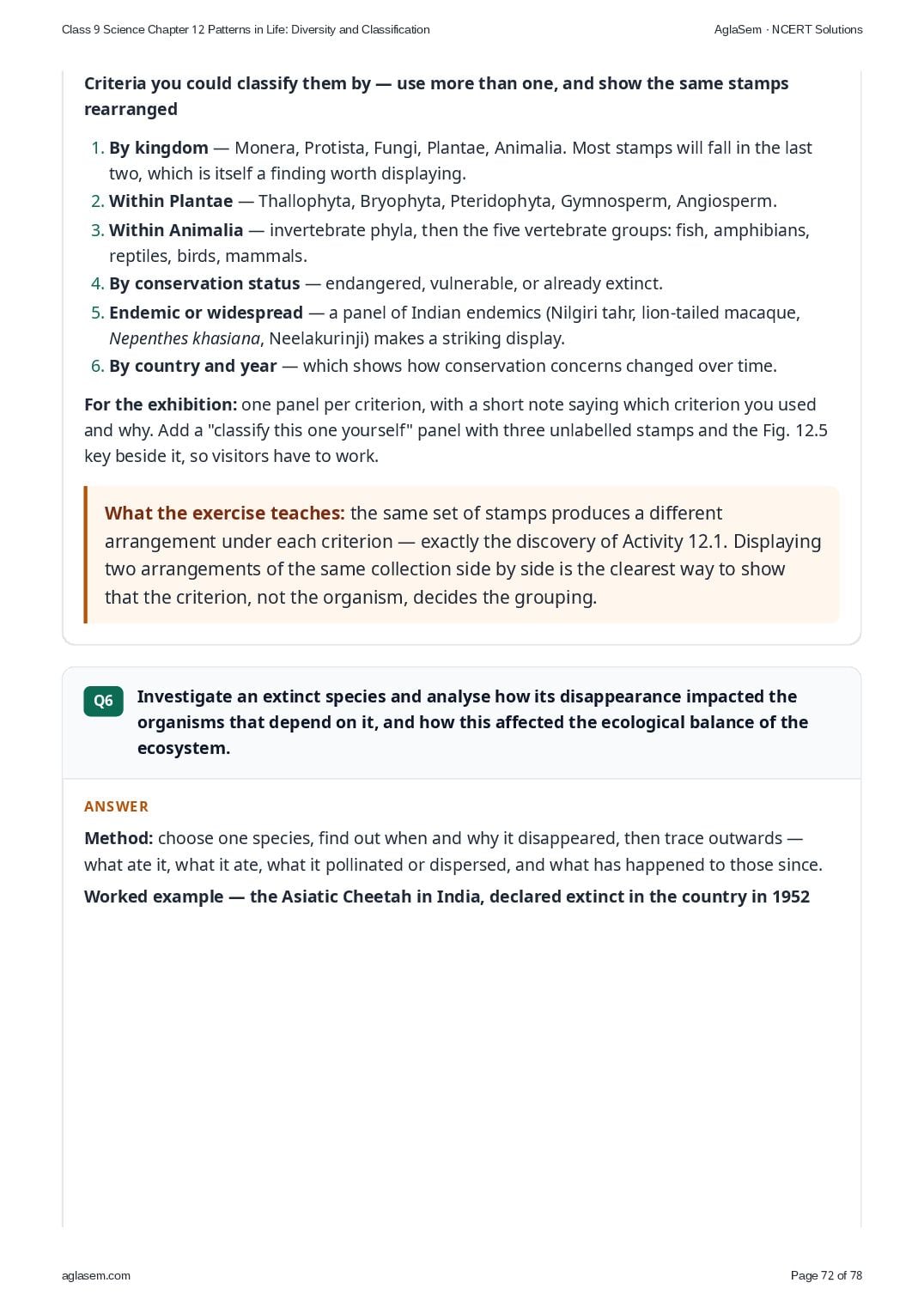
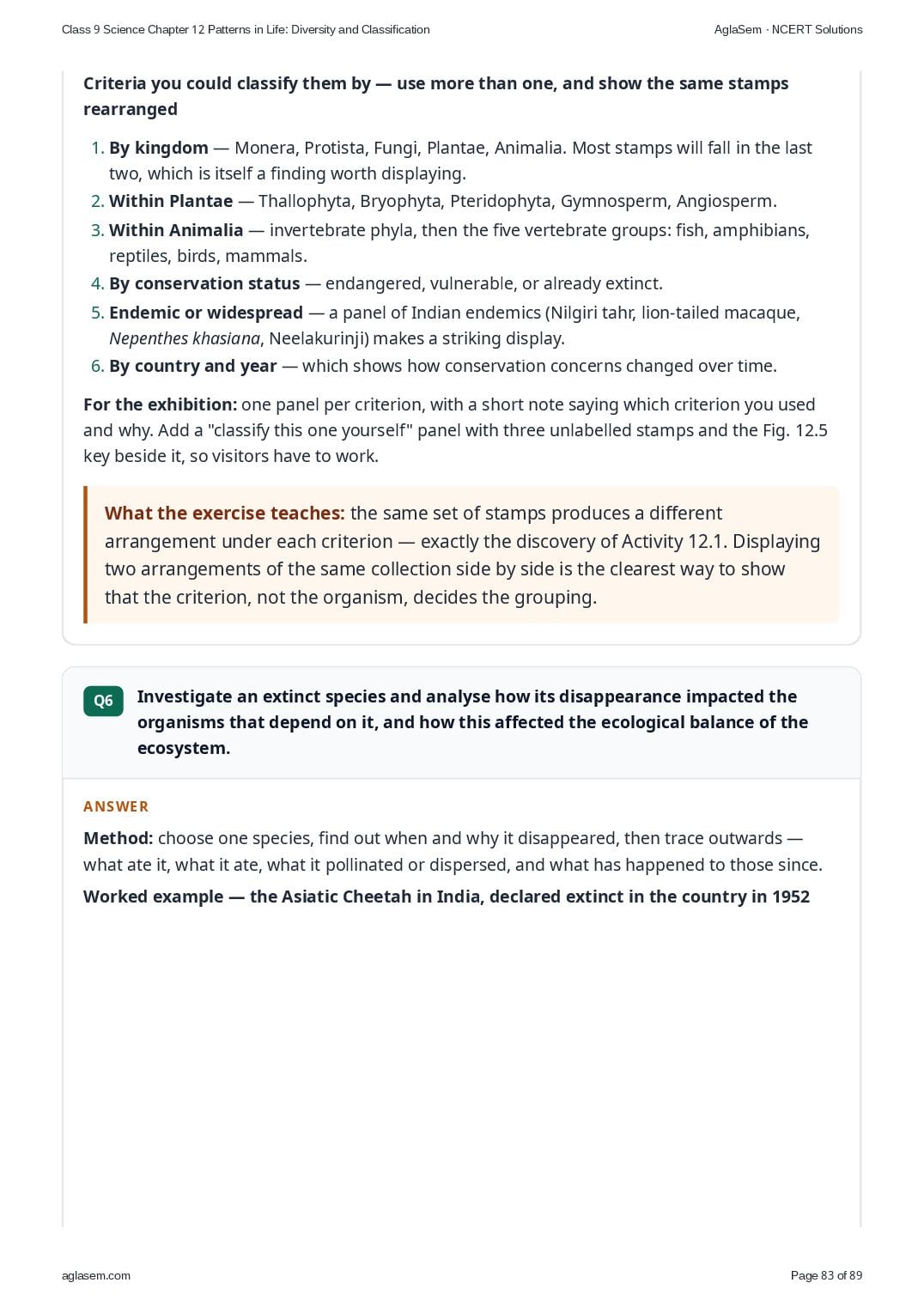
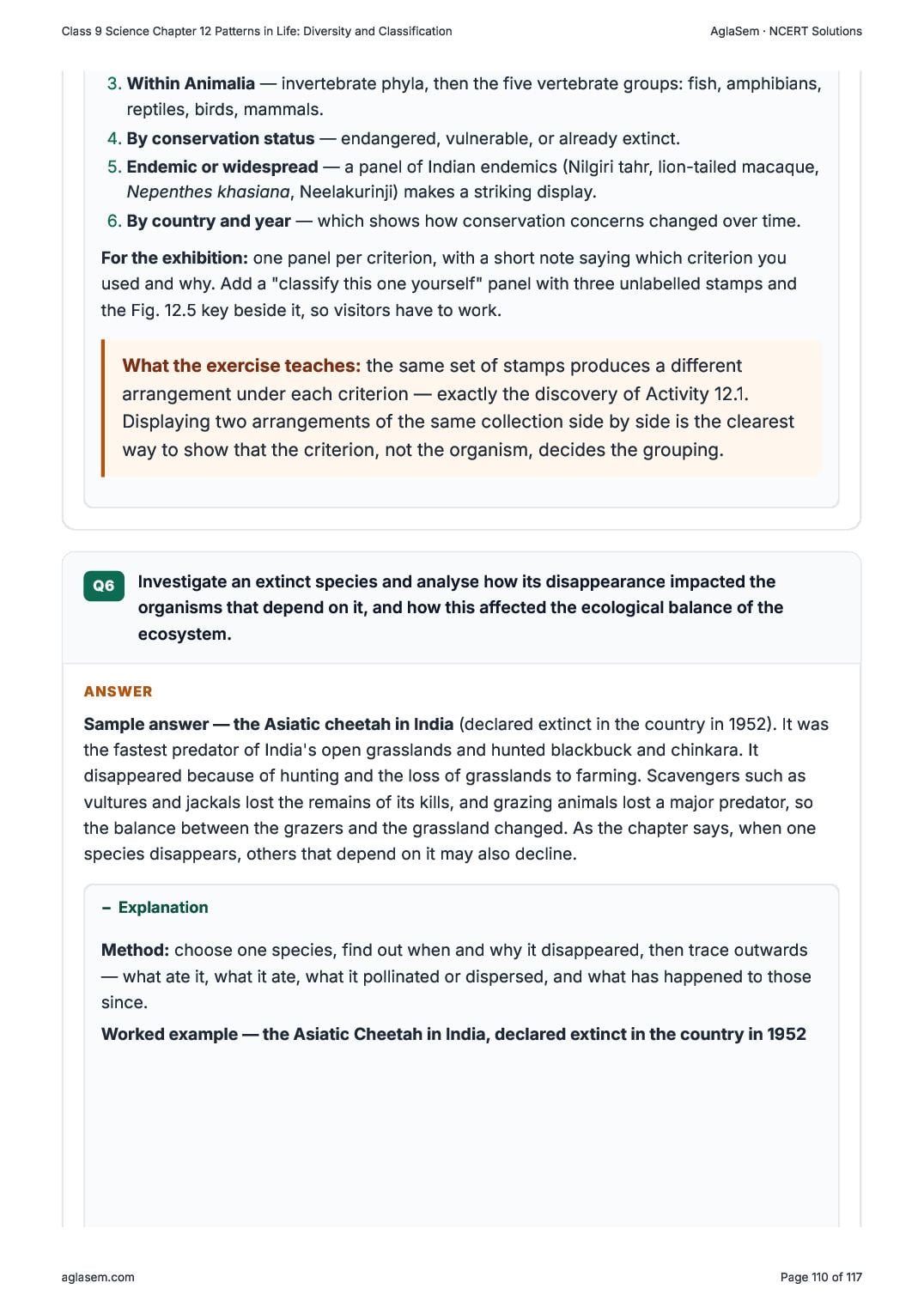
- Collect and study the postal stamps of India and the world released over time on diversified flora and fauna. Based on your learning, make your own criteria and classify them. Organise a philately (collection of postage stamps) exhibition in your school and showcase your work in this exhibition.
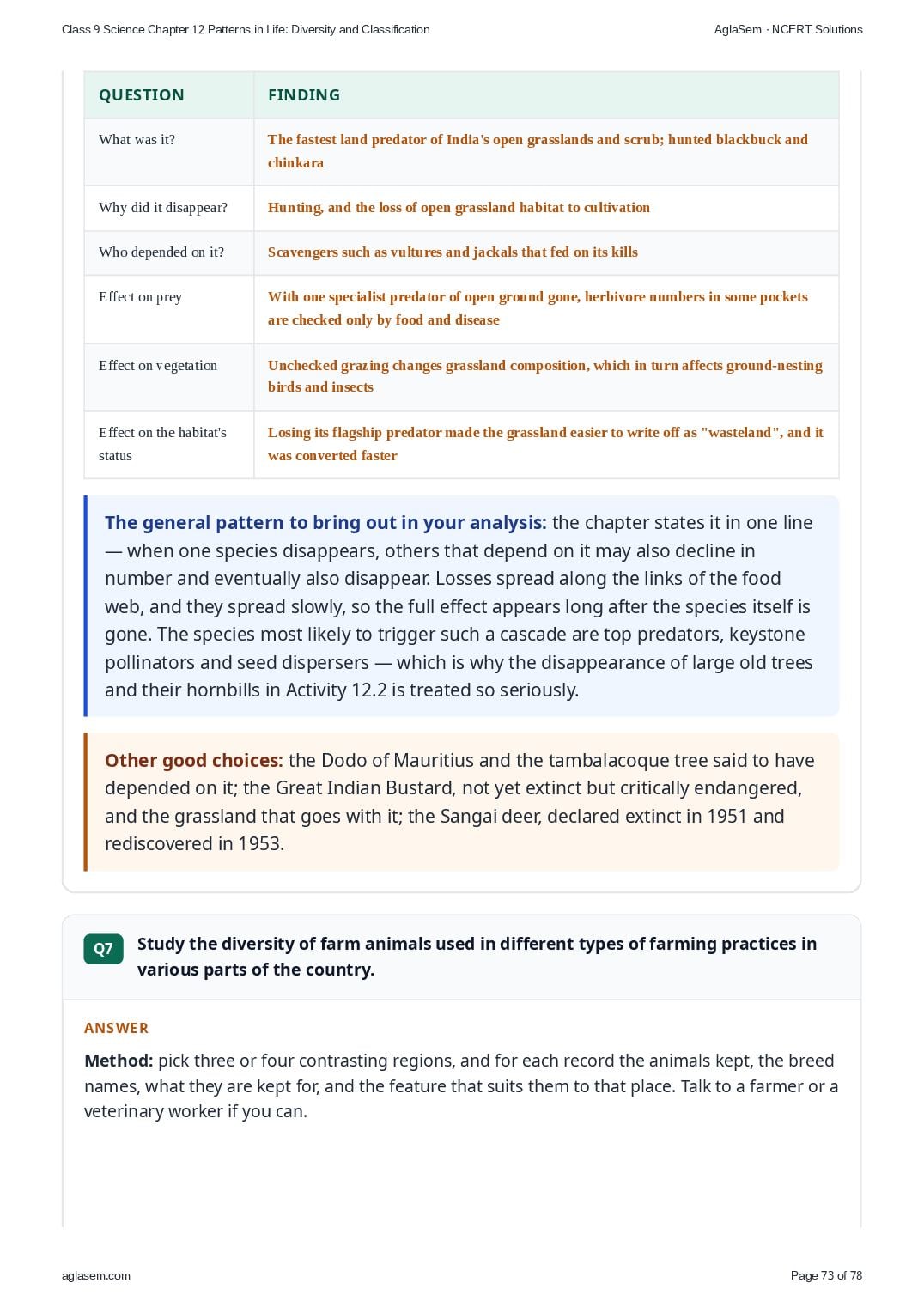
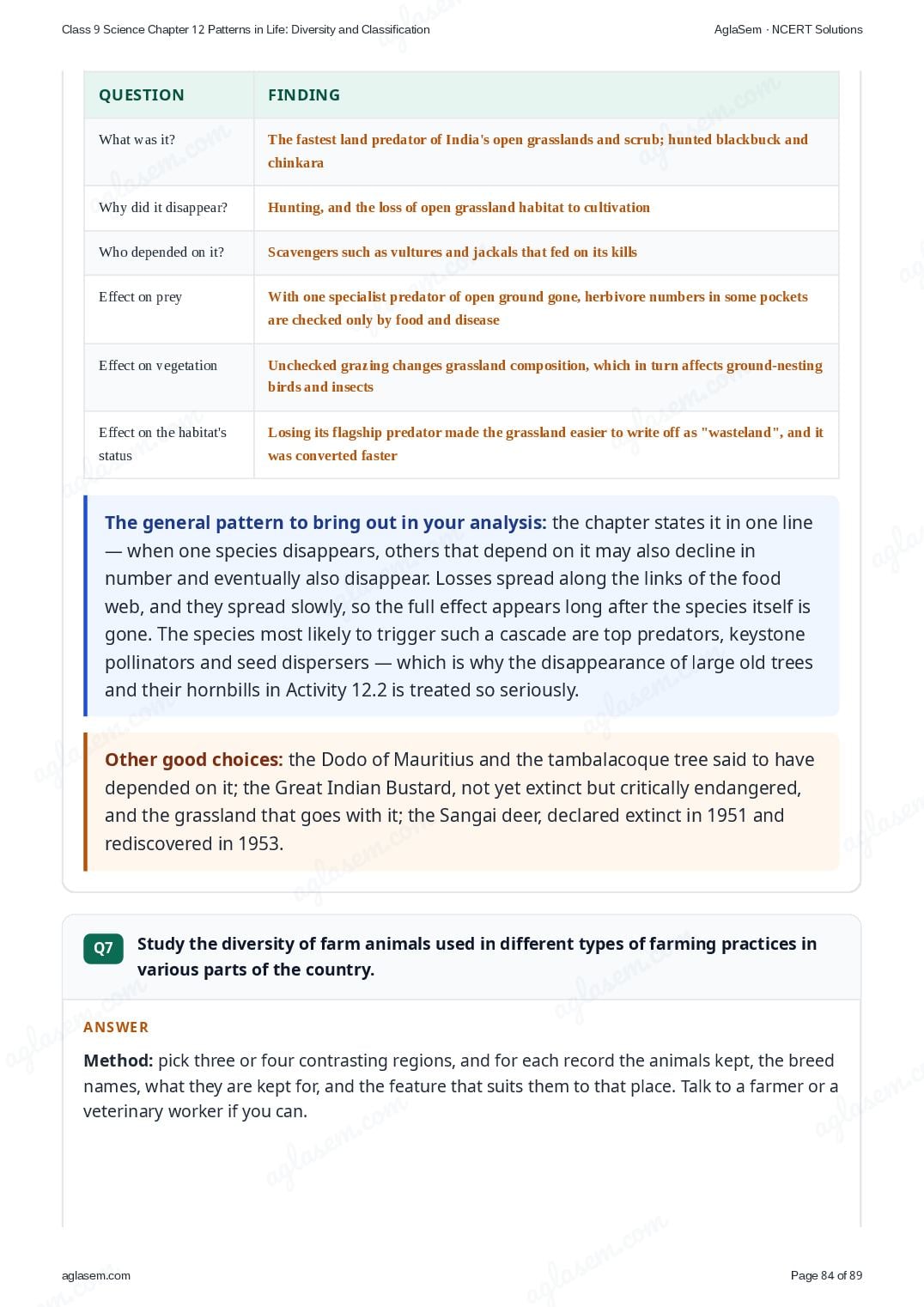
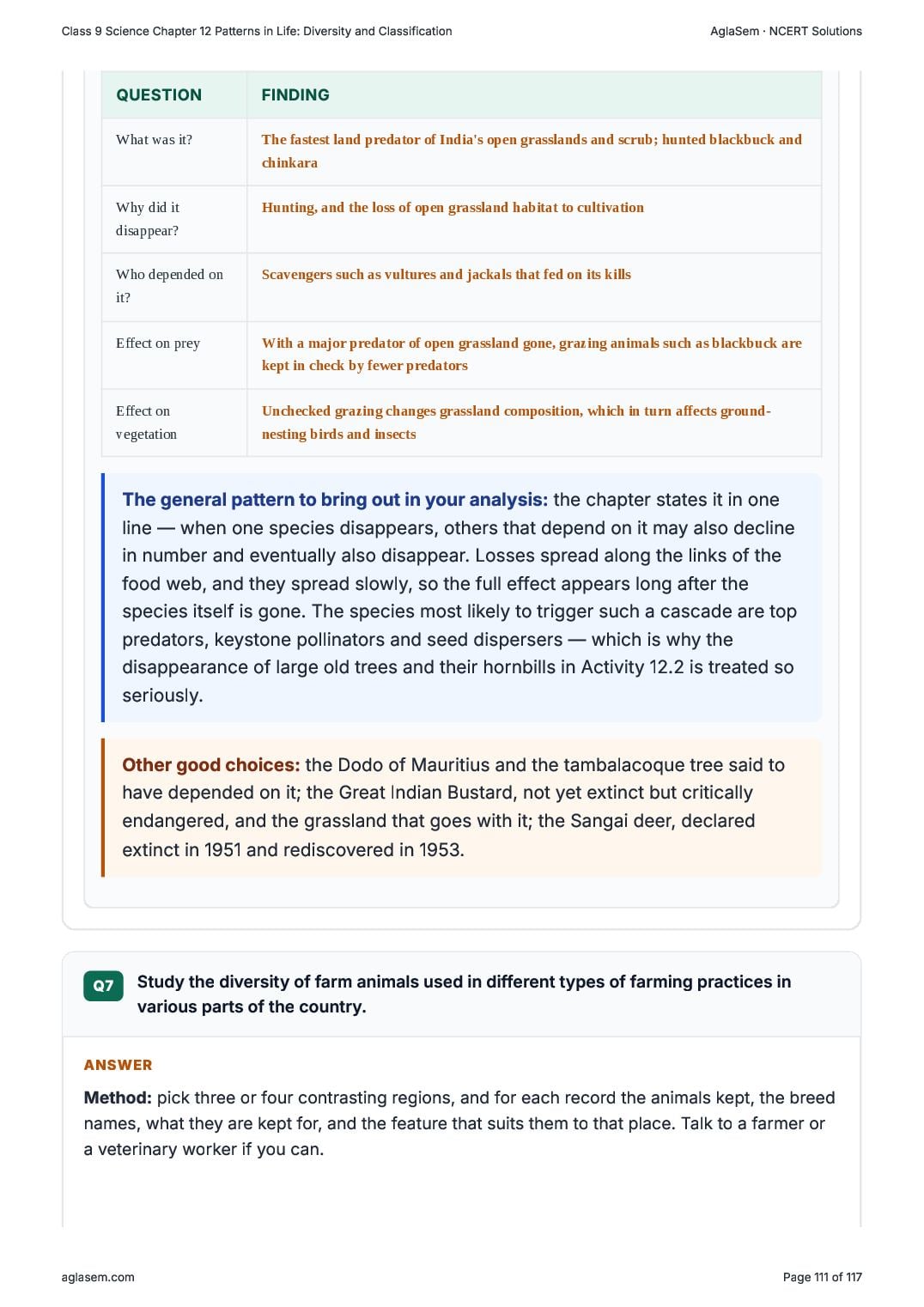
- Investigate an extinct species and analyse how its disappearance impacted the organisms that depend on it, and how this affected the ecological balance of the ecosystem.
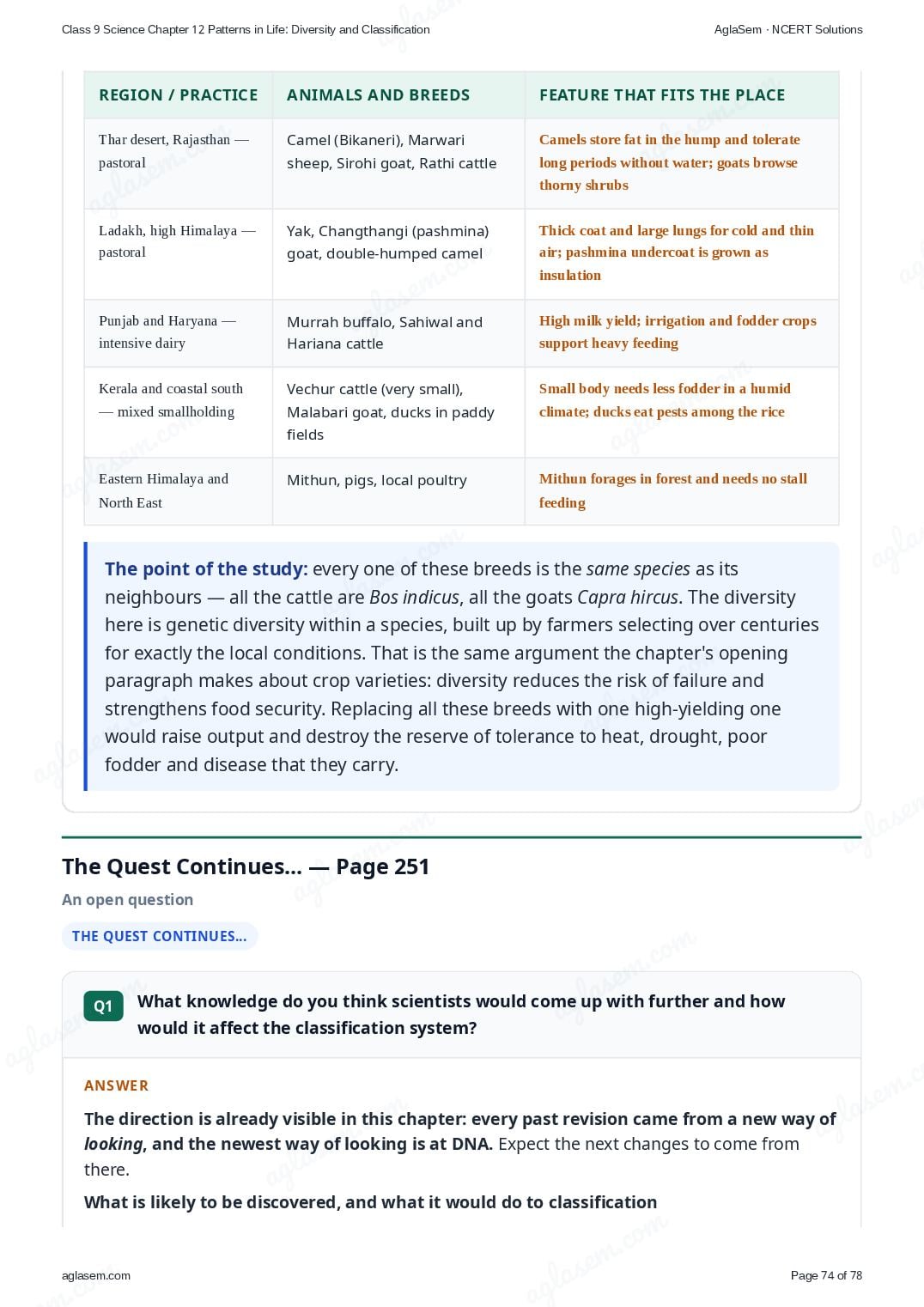
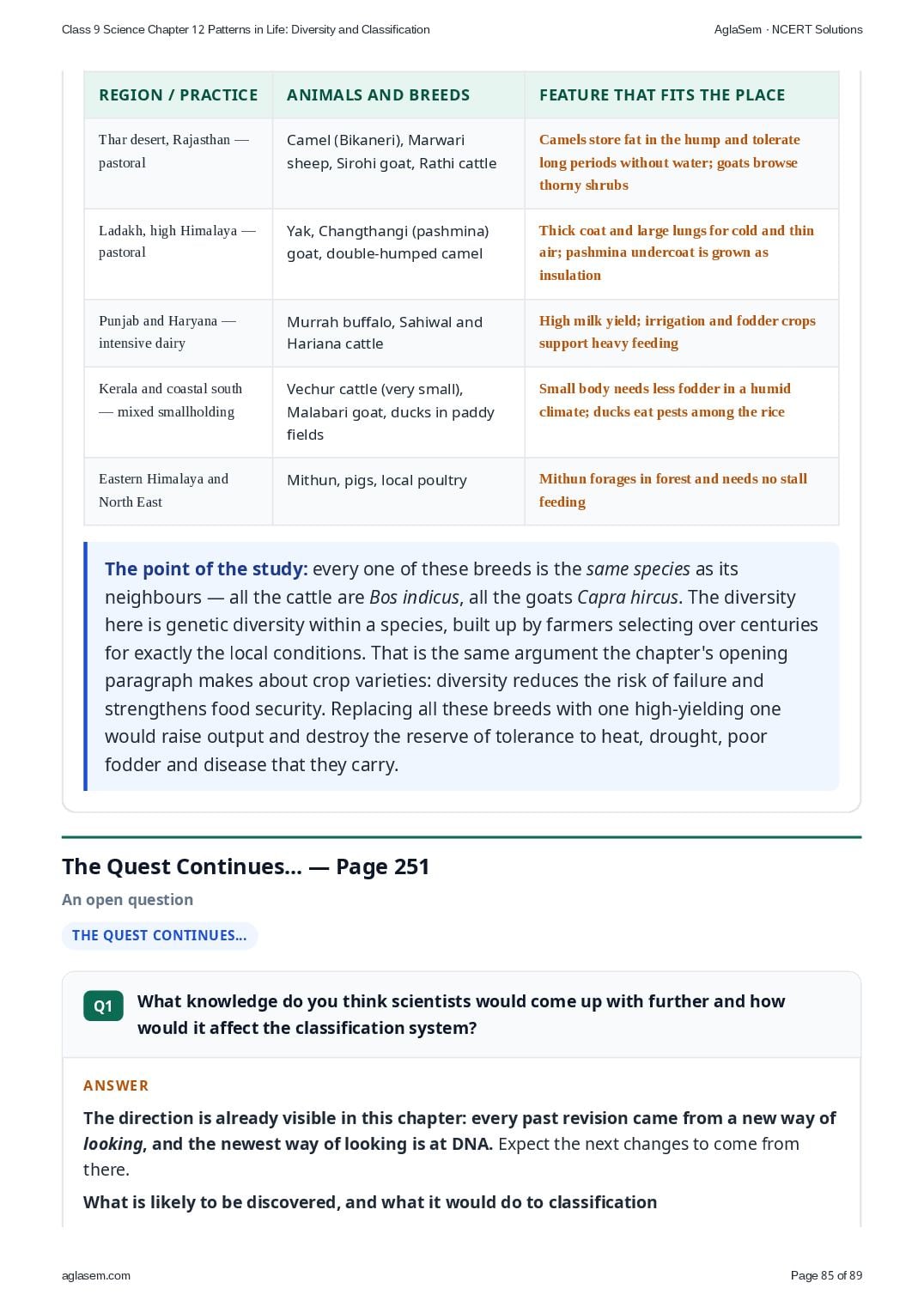
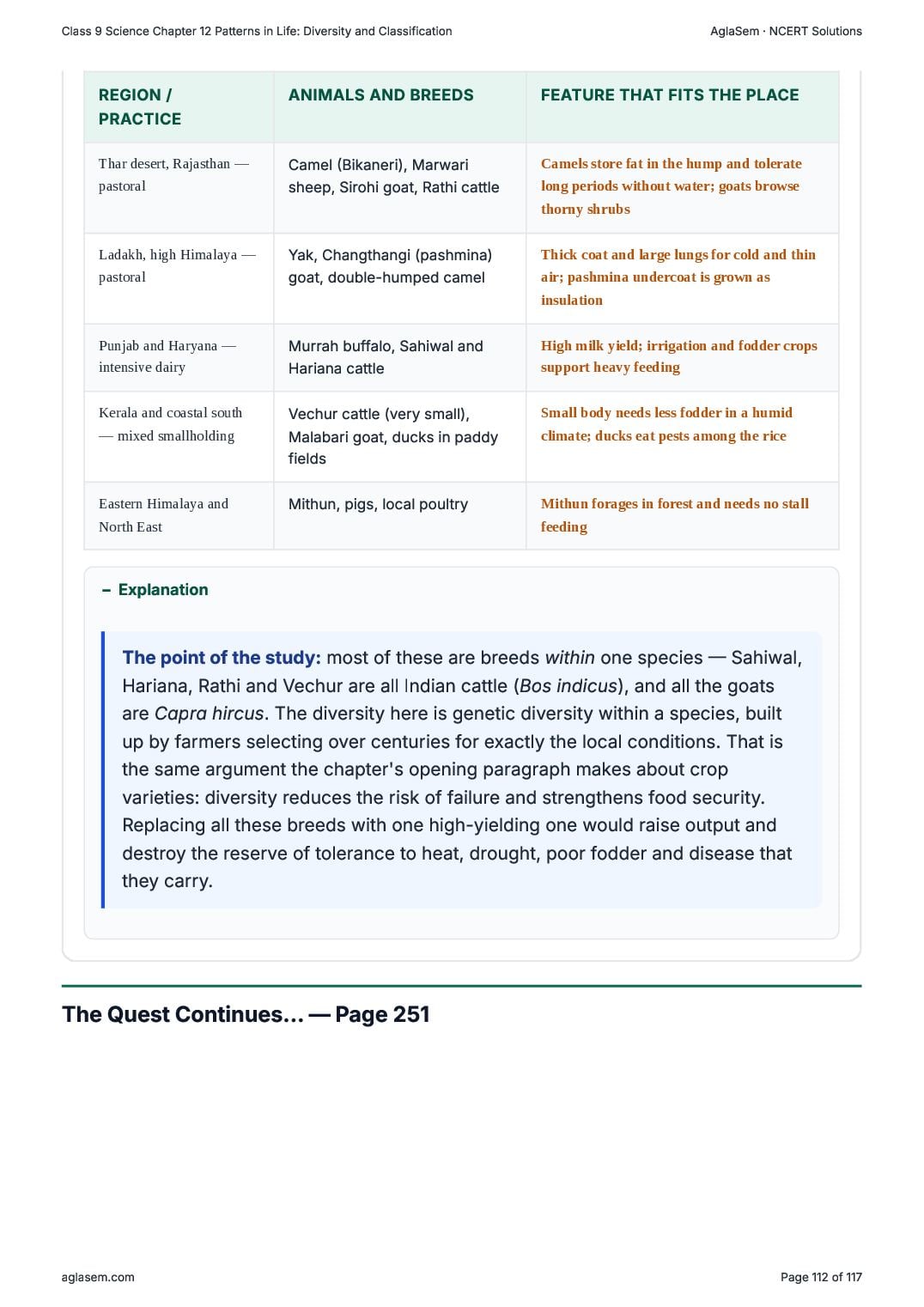
- Study the diversity of farm animals used in different types of farming practices in various parts of the country.
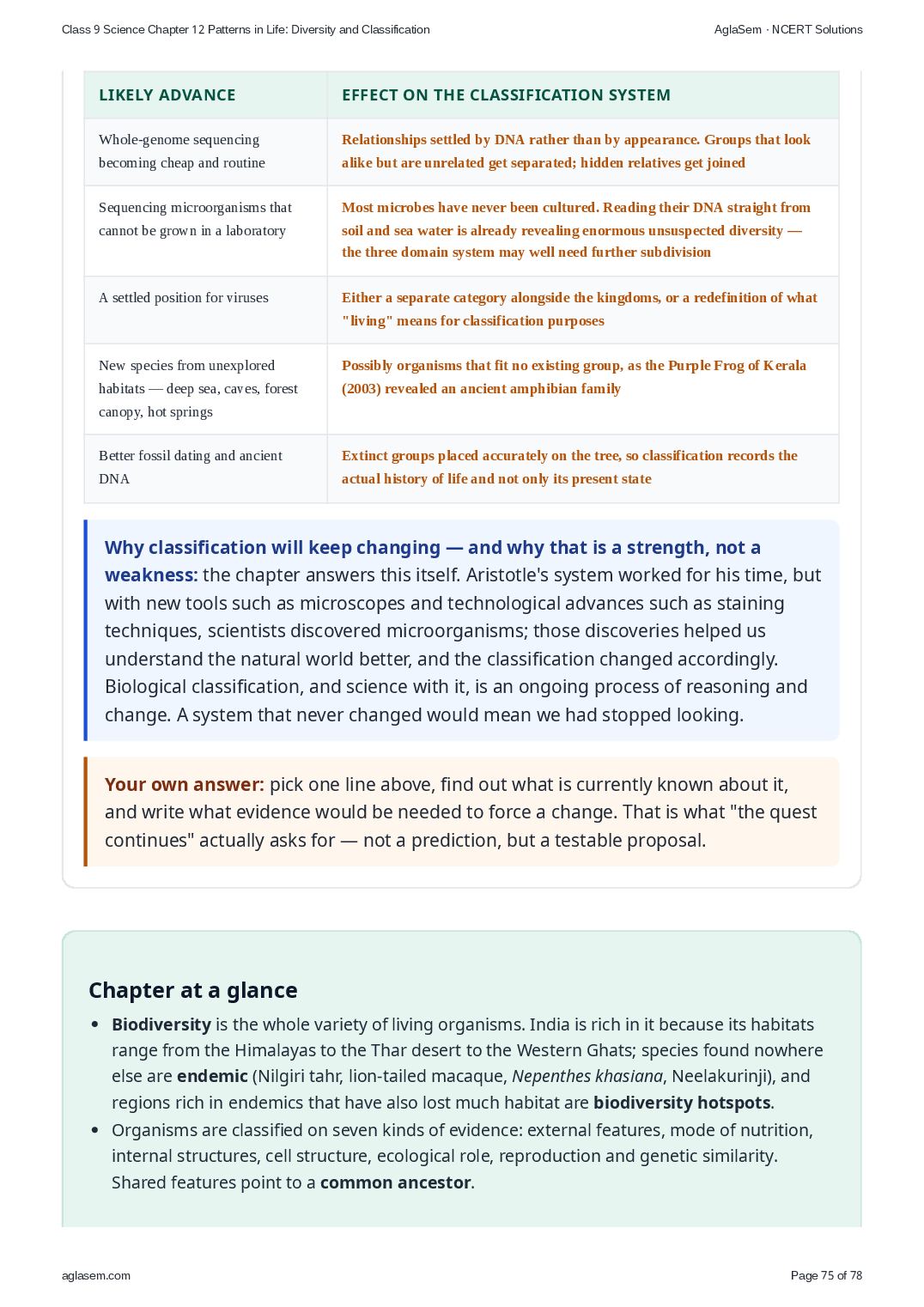
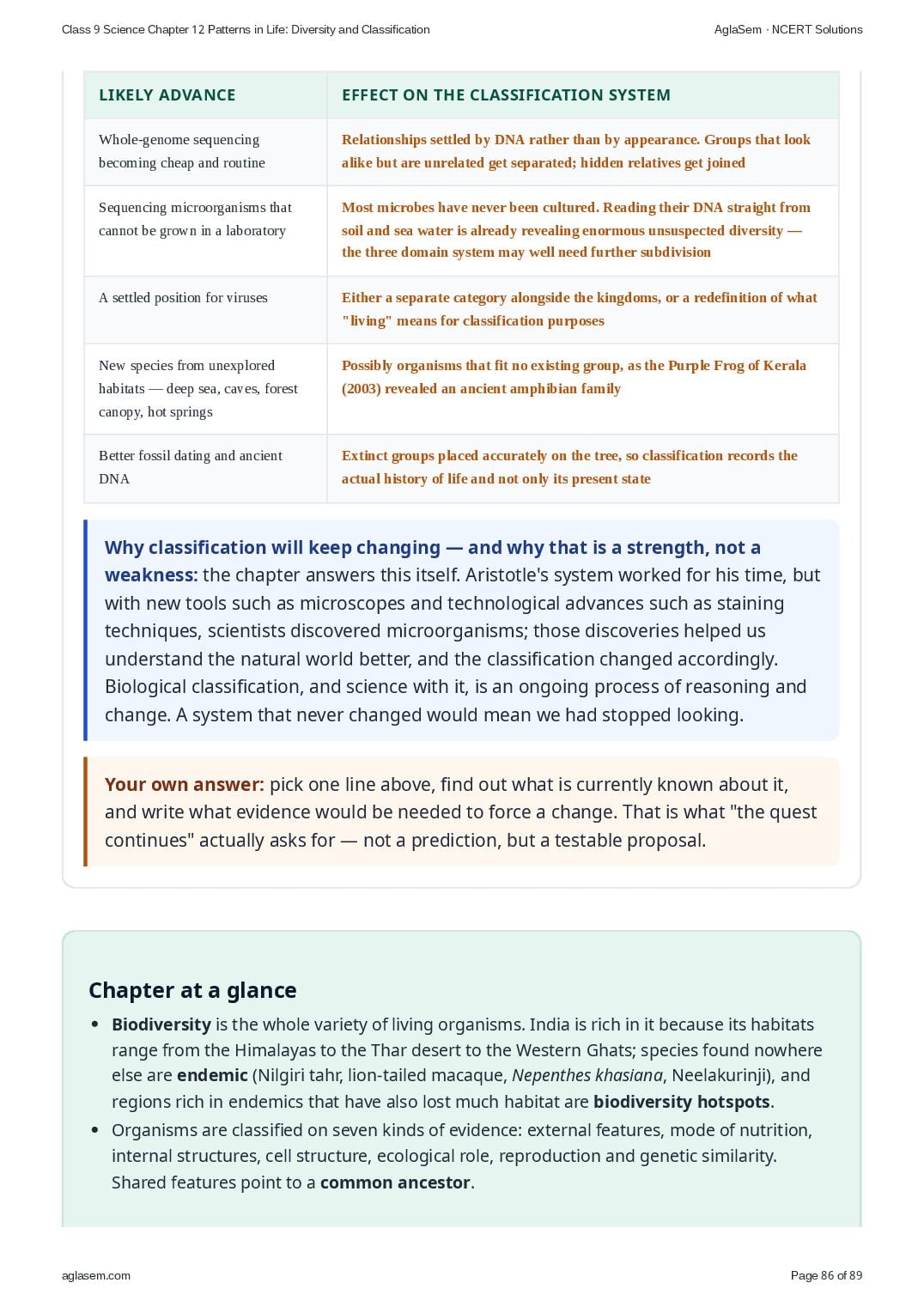
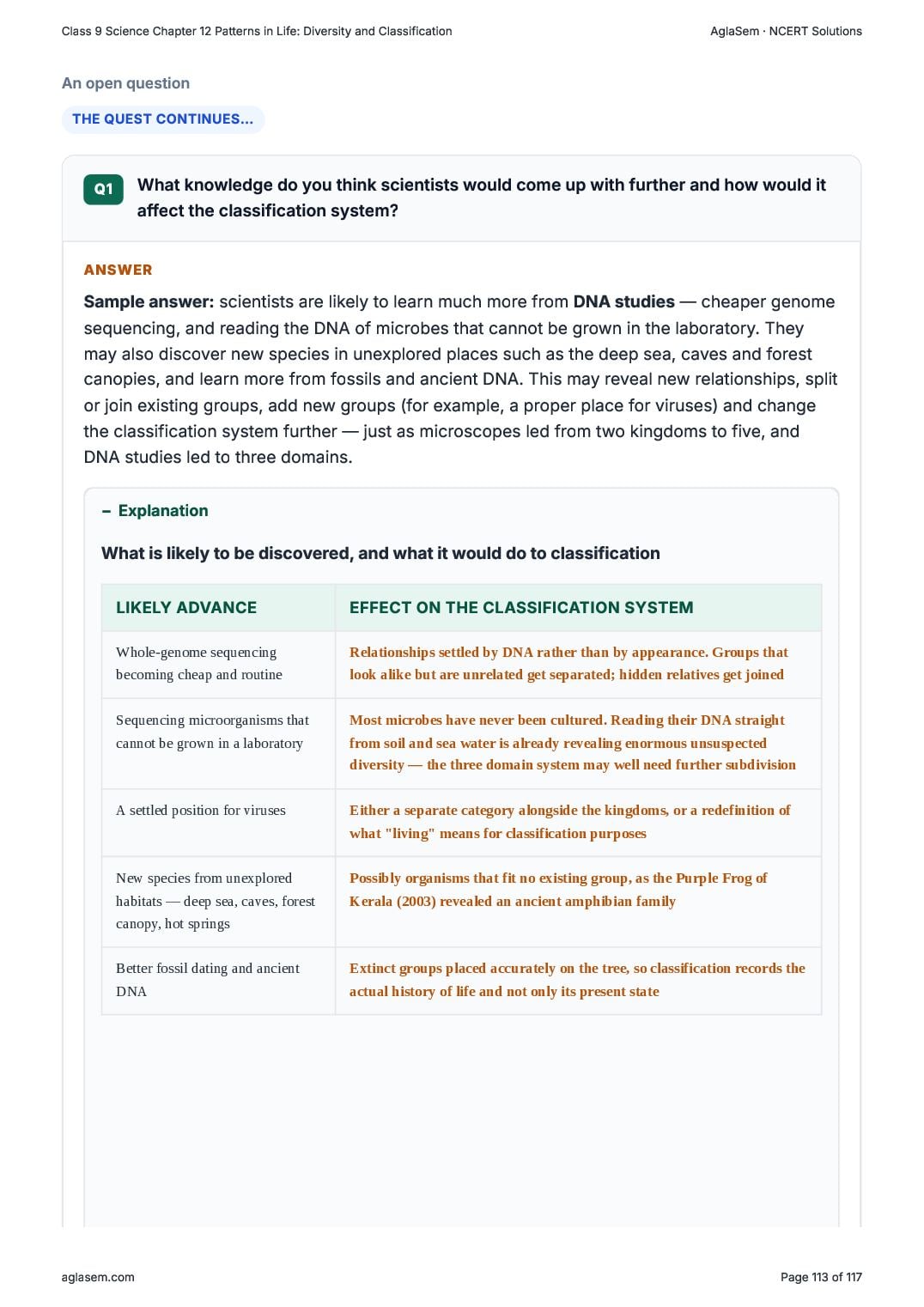
- What knowledge do you think scientists would come up with further and how would it affect the classification system?
Chapter at a Glance
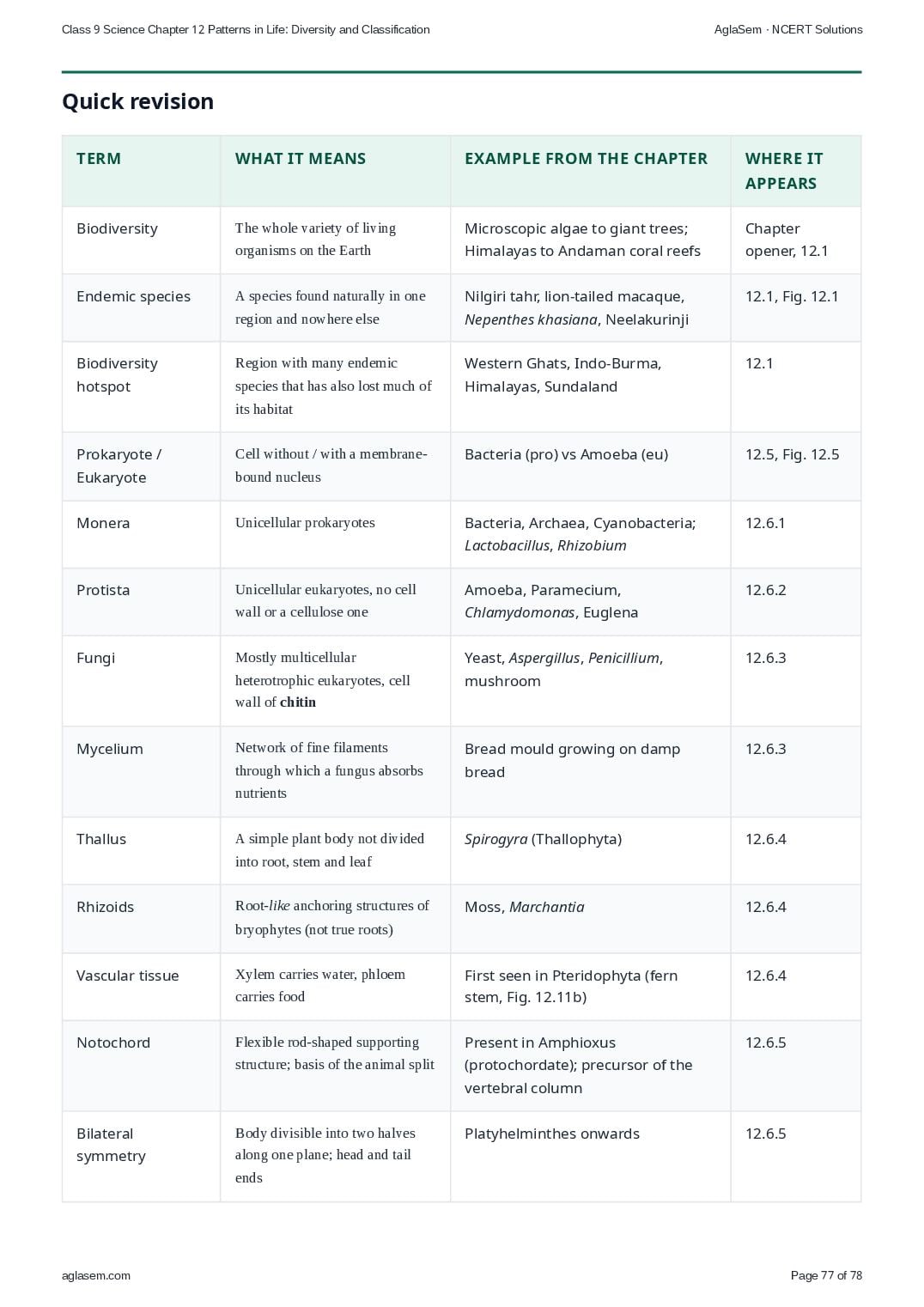
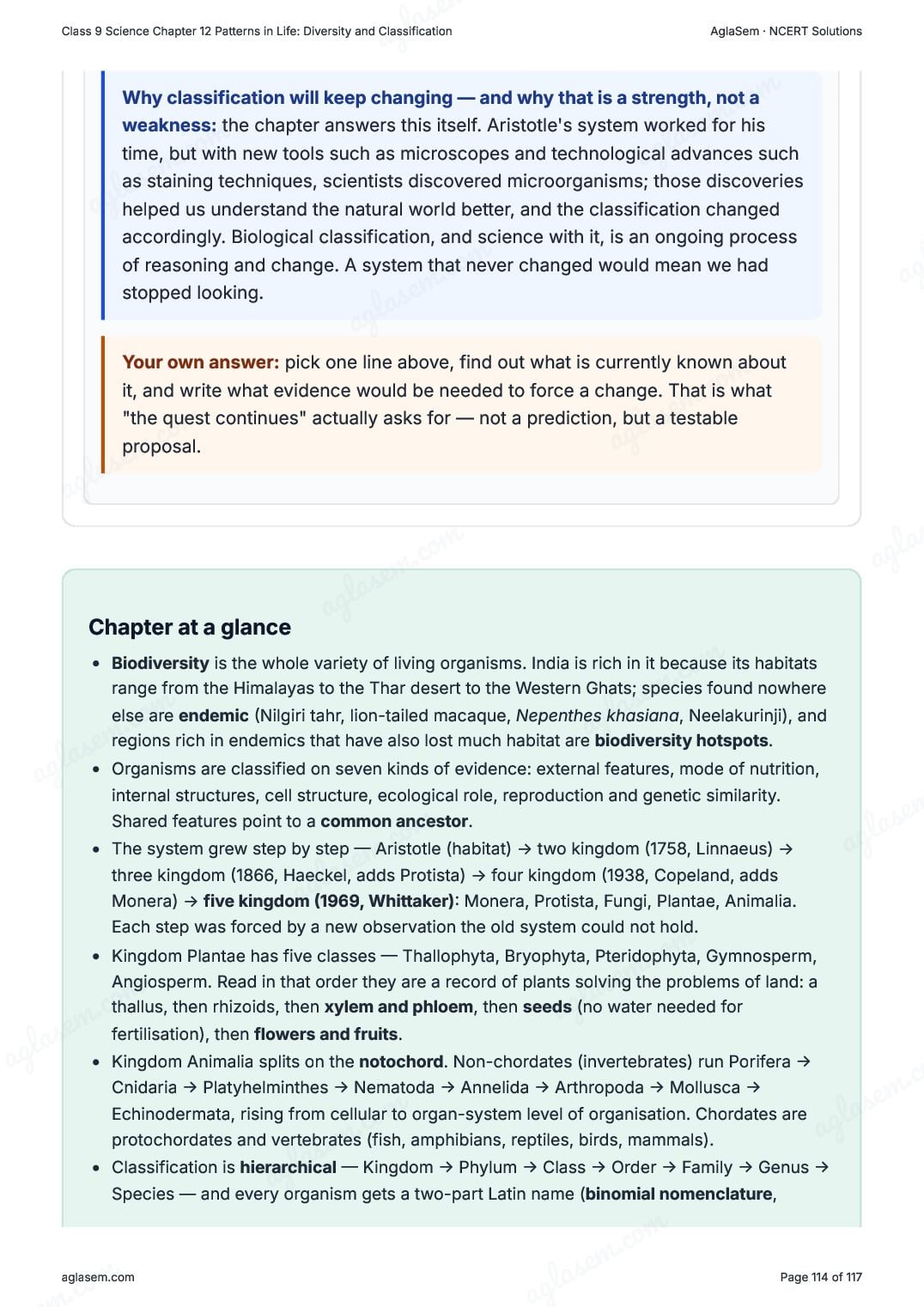
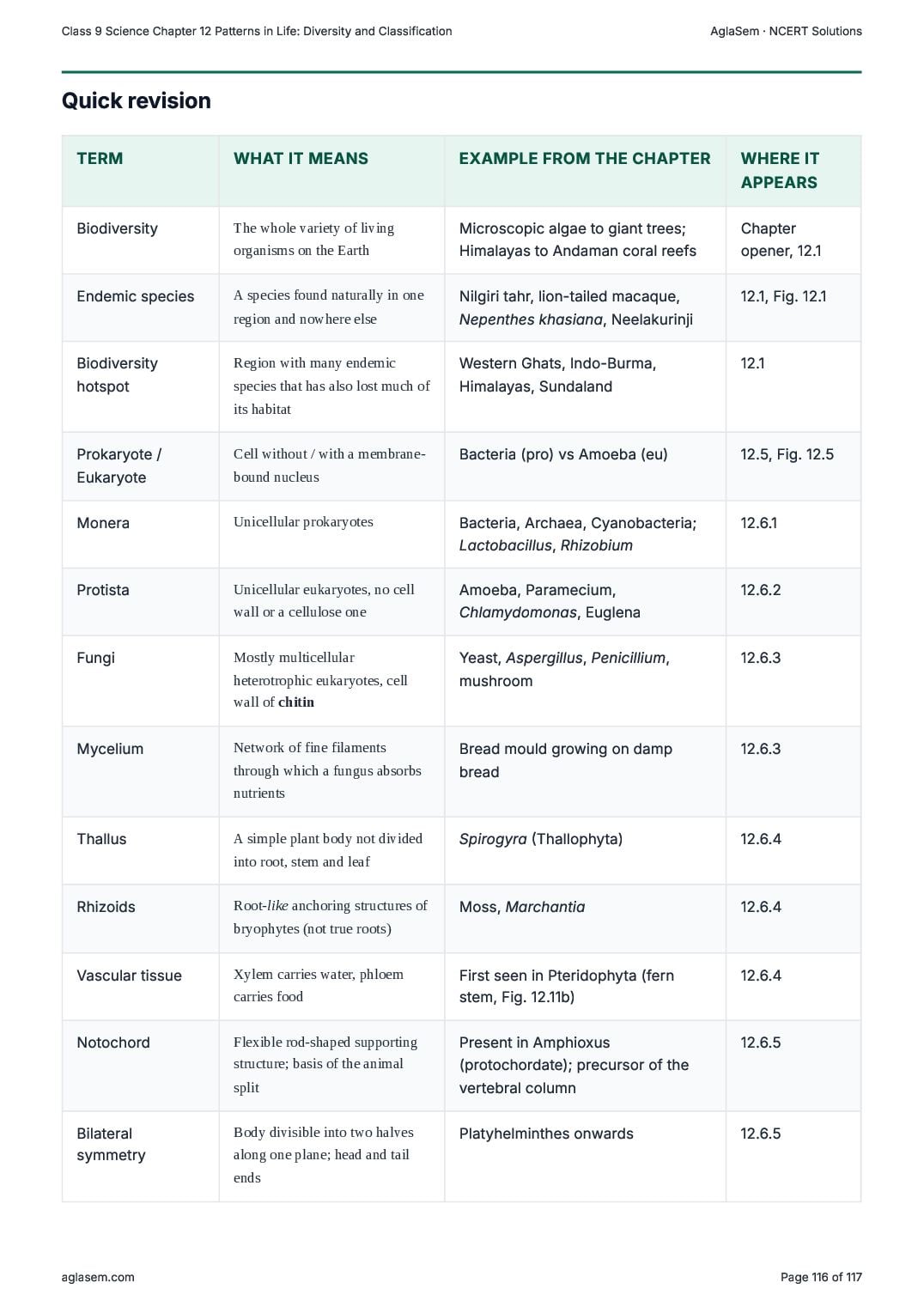
- Biodiversity is the whole variety of living organisms. India is rich in it because its habitats range from the Himalayas to the Thar desert to the Western Ghats; species found nowhere else are endemic (Nilgiri tahr, lion-tailed macaque, Nepenthes khasiana , Neelakurinji), and regions rich in endemics that have also lost much habitat are biodiversity hotspots .
- Organisms are classified on seven kinds of evidence: external features, mode of nutrition, internal structures, cell structure, ecological role, reproduction and genetic similarity. Shared features point to a common ancestor .
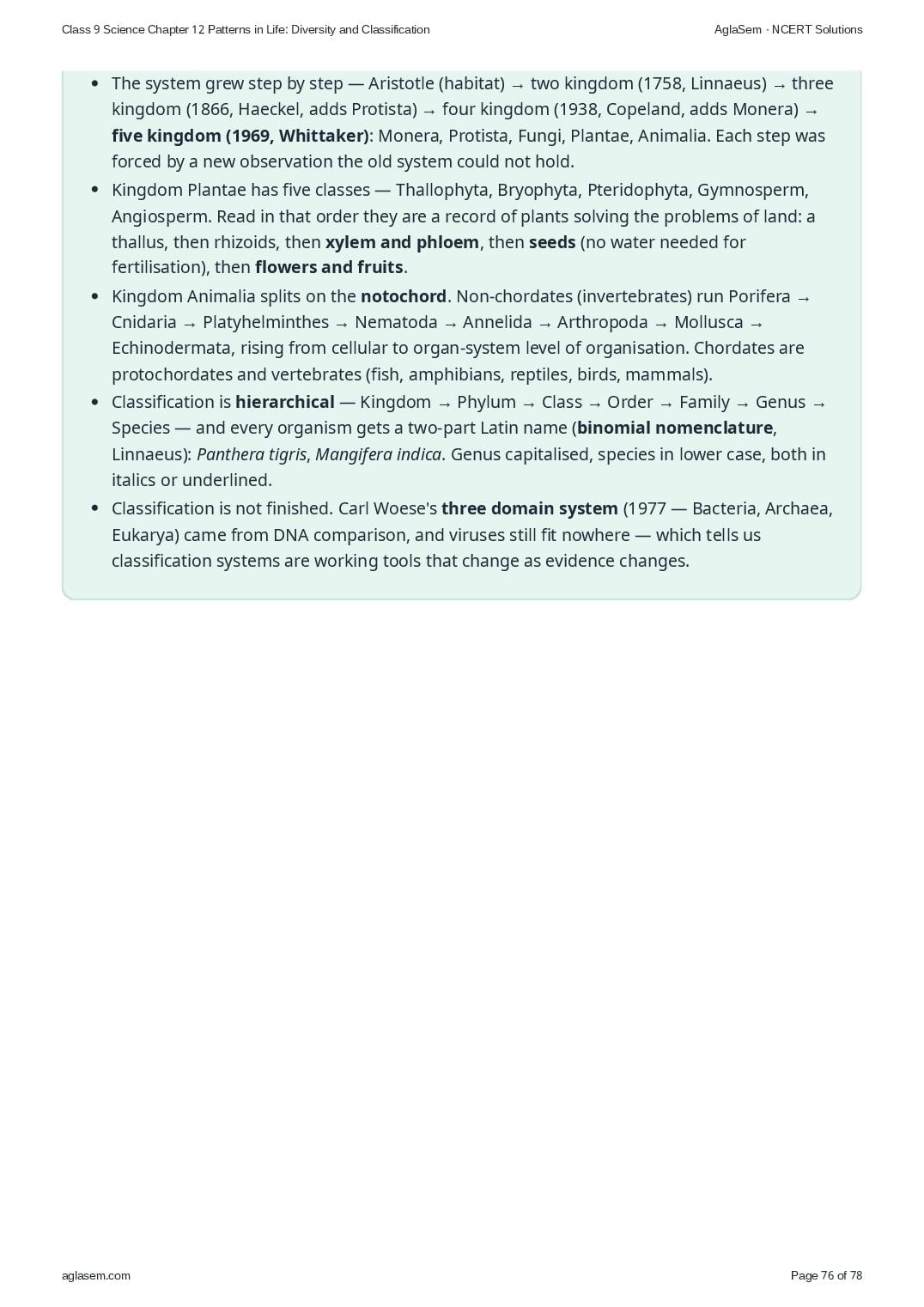
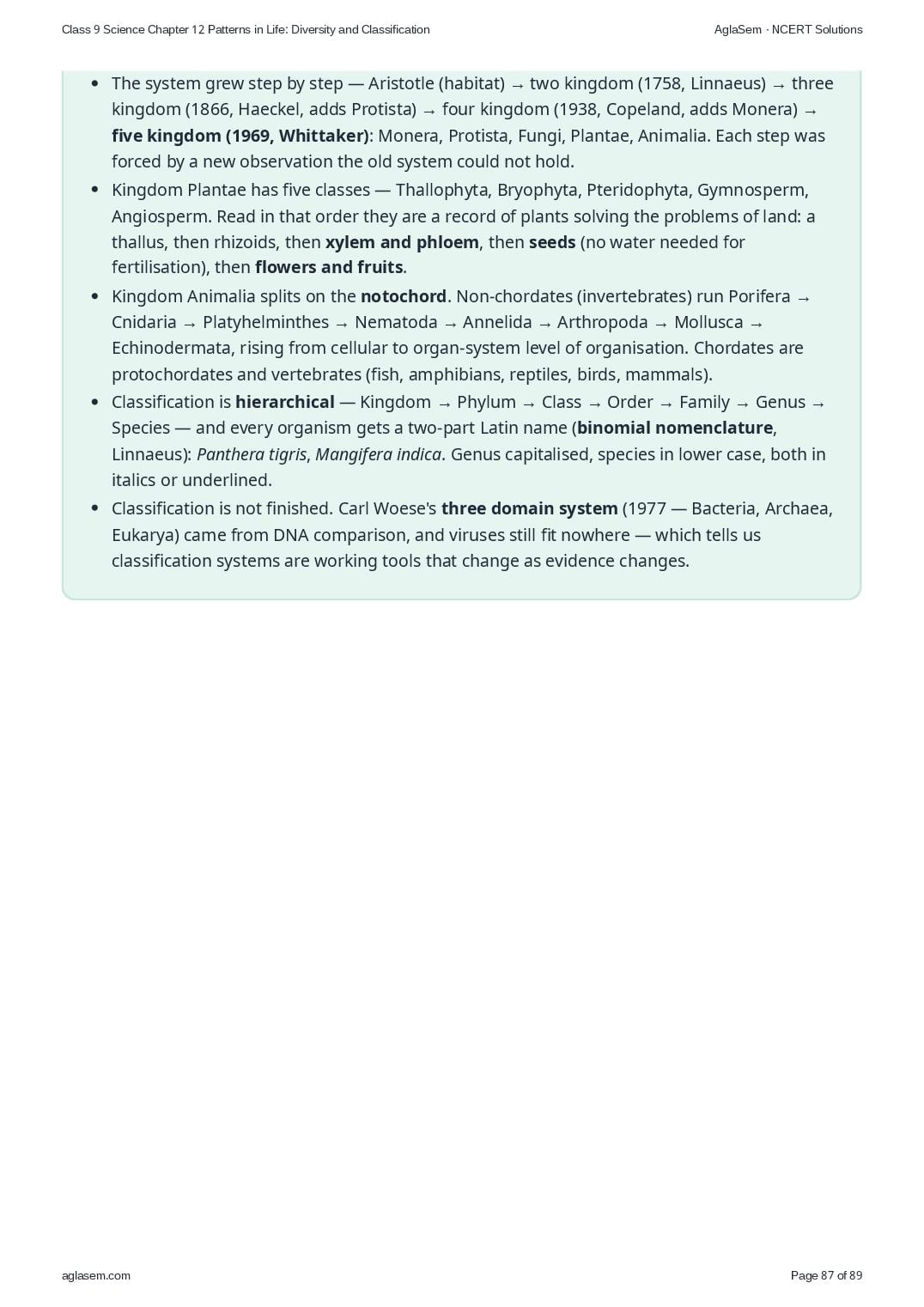
- The system grew step by step — Aristotle (habitat) → two kingdom (1758, Linnaeus) → three kingdom (1866, Haeckel, adds Protista) → four kingdom (1938, Copeland, adds Monera) → five kingdom (1969, Whittaker) : Monera, Protista, Fungi, Plantae, Animalia. Each step was forced by a new observation the old system could not hold.
- Kingdom Plantae has five classes — Thallophyta, Bryophyta, Pteridophyta, Gymnosperm, Angiosperm. Read in that order they are a record of plants solving the problems of land: a thallus, then rhizoids, then xylem and phloem , then seeds (no water needed for fertilisation), then flowers and fruits .
- Kingdom Animalia splits on the notochord . Non-chordates (invertebrates) run Porifera → Cnidaria → Platyhelminthes → Nematoda → Annelida → Arthropoda → Mollusca → Echinodermata, rising from cellular to organ-system level of organisation. Chordates are protochordates and vertebrates (fish, amphibians, reptiles, birds, mammals).
- Classification is hierarchical — Kingdom → Phylum → Class → Order → Family → Genus → Species — and every organism gets a two-part Latin name ( binomial nomenclature , Linnaeus): Panthera tigris , Mangifera indica . Genus capitalised, species in lower case, both in italics or underlined.
- Classification is not finished. Carl Woese's three domain system (1977 — Bacteria, Archaea, Eukarya) came from DNA comparison, and viruses still fit nowhere — which tells us classification systems are working tools that change as evidence changes.
How to Download NCERT Solutions for Class 9 Science Chapter 12 PDF
Follow these simple steps to get the Patterns in Life Diversity and Classification questions-and-answers PDF from Exploration.
- Search NCERT Solutions for Class 9 Science Chapter 12 aglasem and open this page.
- Read the exercise questions with answers for Patterns in Life Diversity and Classification shown above.
- Click the Download PDF link to save the Patterns in Life Diversity and Classification solutions to your device.
NCERT Solutions for Class 9 Science – All Chapters
There are more chapters to study besides Patterns in Life Diversity and Classification in Science. Here are the NCERT Solutions for all chapters of Class 9 Science.
- Chapter 1 Exploration Entering the World of Secondary Science
- Chapter 2 Cell the Building Block of Life
- Chapter 3 Tissues in Action
- Chapter 4 Describing Motion Around Us
- Chapter 5 Exploring Mixtures and Their Separation
- Chapter 6 How Forces Affect Motion
- Chapter 7 Work Energy and Simple Machines
- Chapter 8 Journey Inside the Atom
- Chapter 9 Atomic Foundations of Matter
- Chapter 10 Sound Waves Characteristics and Applications
- Chapter 11 Reproduction How Life Continues
- Chapter 12 Patterns in Life Diversity and Classification
- Chapter 13 Earth As a System Energy Matter and Life
NCERT Solutions for Class 9 – All Subjects
Just like Chapter 12 of Science, you can get the exercise questions with answers for every other subject of Class 9. Here are the NCERT Solutions for all subjects of Class 9.
NCERT Solutions for Class 9 Science Chapter 12 – An Overview
The key highlights of this study material are as follows.
| Aspects | Details |
|---|---|
| Class | Class 9 |
| Subject | Science |
| Chapter Number | Chapter 12 |
| Chapter Name | Patterns in Life Diversity and Classification |
| Book Name | Exploration |
| Book By | NCERT (National Council of Educational Research and Training) |
| Educational Resource Here | NCERT Solutions of Class 9 Science Chapter 12 for all exercises |
| More Questions Answers of This Subject | NCERT Solutions for Class 9 Science |
| Download Book Chapter | NCERT Book Class 9 Science |
| All Questions Answers For This Class | NCERT Solutions for Class 9 |
| Complete Solutions | NCERT Solutions |
NCERT Solutions for Class 9 Science Chapter 12 Patterns in Life Diversity and Classification – FAQs
What are the NCERT Solutions for Class 9 Science Chapter 12 Patterns in Life Diversity and Classification?
They are the complete, step-by-step answers to all the exercise and in-text questions of Chapter 12 Patterns in Life Diversity and Classification from the NCERT Class 9 Science textbook Exploration, written by experts as per the latest NCERT syllabus.
How can I download the Class 9 Science Chapter 12 solutions PDF for free?
Open this page on aglasem, read the Patterns in Life Diversity and Classification questions with answers, and click the “Download Solutions PDF” link. The Class 9 Science Chapter 12 NCERT Solutions PDF is completely free to download.
Are these NCERT Solutions as per the latest 2026-27 syllabus?
Yes. The NCERT Solutions for Class 9 Science Chapter 12 are based on the latest NCERT textbook Exploration and the current 2026-27 CBSE syllabus, so the questions and answers match what you study in class.
Where can I get NCERT Solutions for the other chapters of Class 9 Science?
You can find the answers to every chapter on the NCERT Solutions for Class 9 Science page, and solutions for every subject on the NCERT Solutions for Class 9 page.
How do NCERT Solutions help in exam preparation?
They show the correct method to solve each question, help you write answers the way they are expected in exams, let you check and correct your own work, and save revision time — which together improve your marks in Class 9 Science.
If you have any queries on NCERT Solutions for Class 9 Science Chapter 12 Patterns in Life Diversity and Classification, then please ask in the comments below.