Download The Beginnings of Indian Civilisation – NCERT Class 6 Social Science Chapter 6 PDF from the new NCERT Class 6 Social Science book Exploring Society: India and Beyond (2026-27). Read the chapter online or download the free PDF. A civilisation is not just ‘people living long ago’ — it is a checklist. The chapter sets out seven characteristics: some form of government and administration, urbanism (town-planning, water management, drainage), a variety of crafts, trade both…
The Beginnings of Indian Civilisation PDF – Chapter 6 of Exploring Society: India and Beyond
Read the chapter online or download the PDF.
| Chapter | Download | |
|---|---|---|
| Chapter 6 PDF | The Beginnings of Indian Civilisation | View PDF |
| Full book | NCERT Class 6 Social Science – Exploring Society: India and Beyond | View Book |
Read Online
What Is in The Beginnings of Indian Civilisation? (Class 6 Social Science Chapter 6)
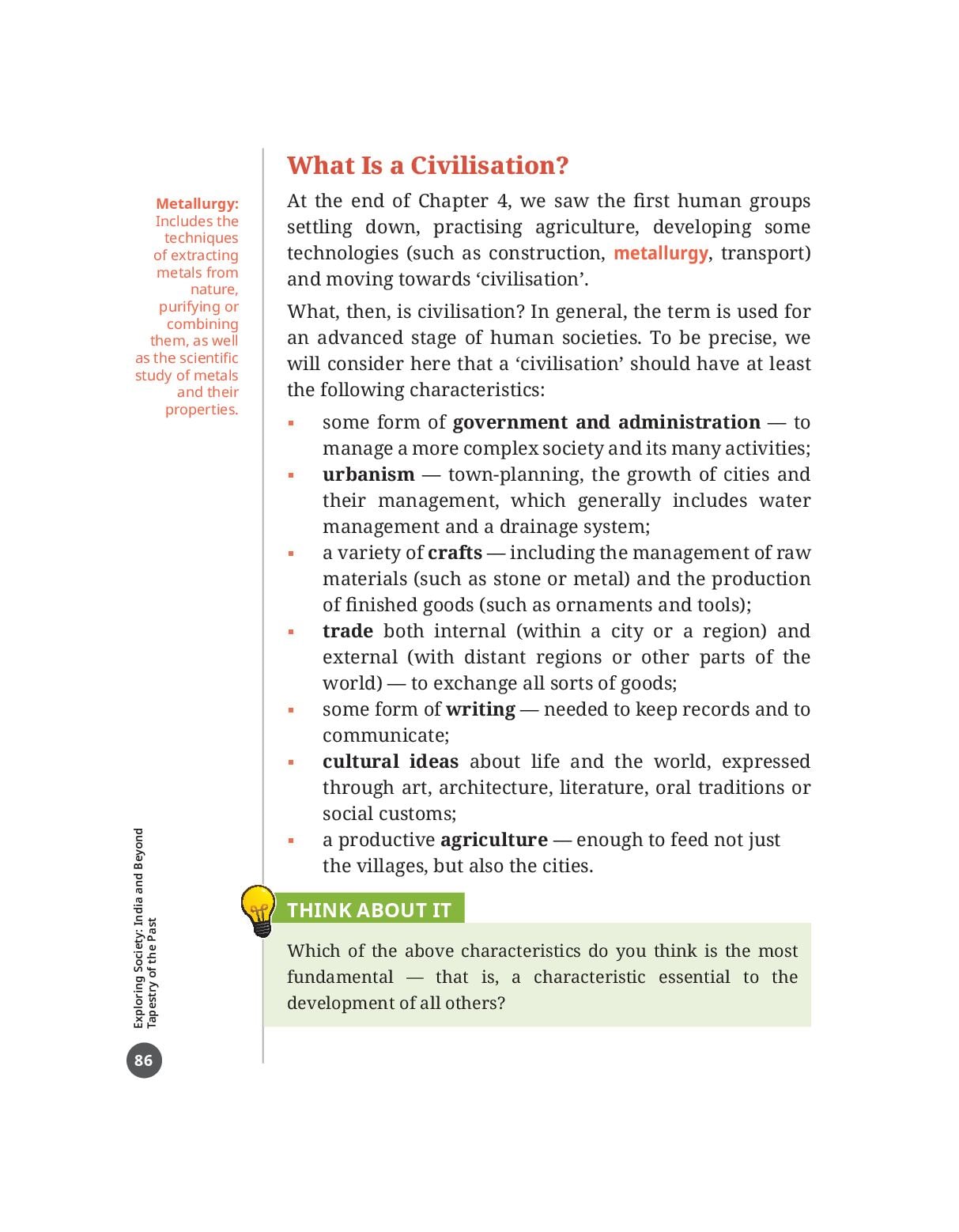
- A civilisation is not just ‘people living long ago’ — it is a checklist. The chapter sets out seven characteristics: some form of government and administration, urbanism (town-planning, water management, drainage), a variety of crafts, trade both internal and external, some form of writing, cultural ideas expressed through art, architecture, literature, oral traditions or social customs, and a productive agriculture — enough to feed not just the villages but also the cities.
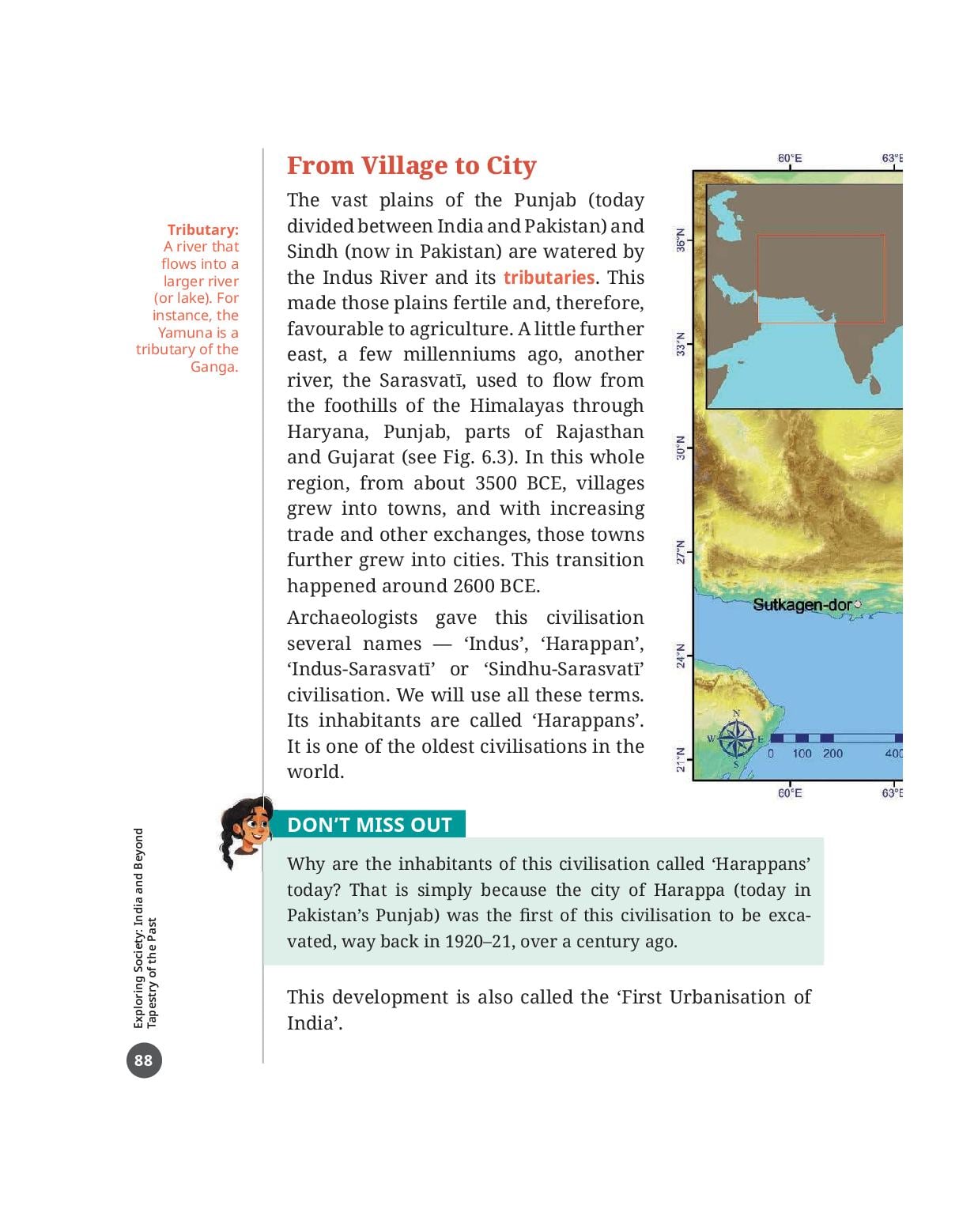
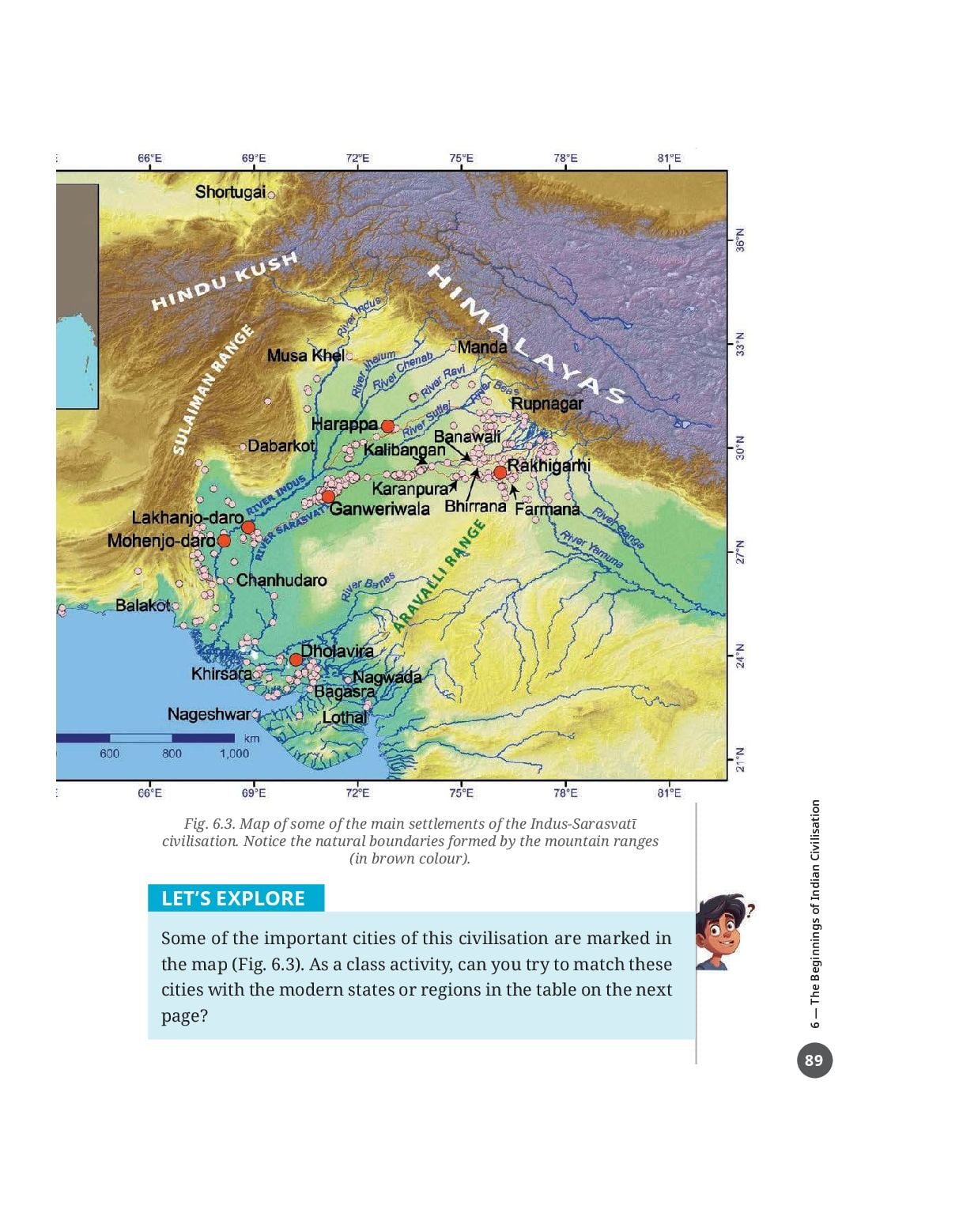
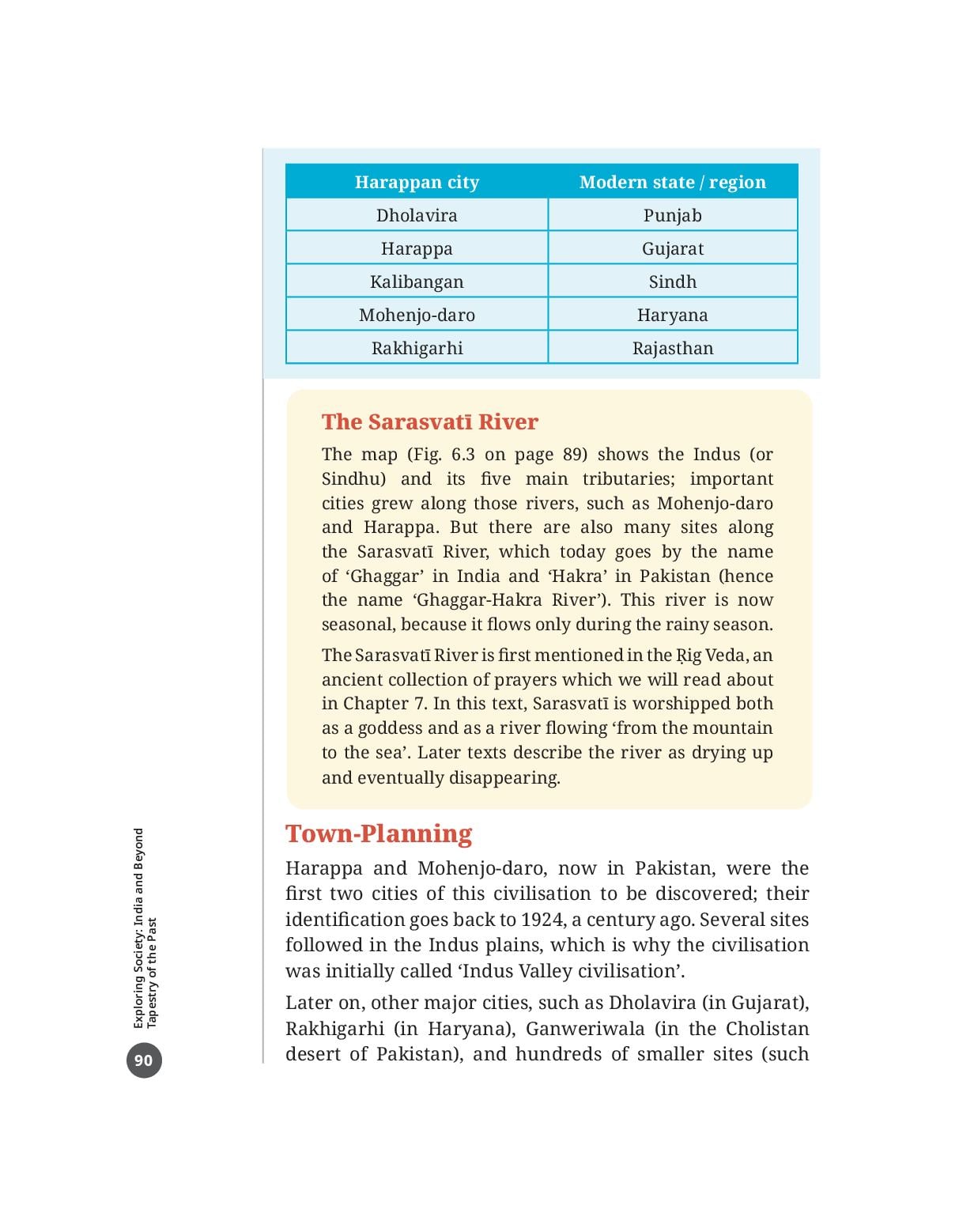
- India’s first civilisation grew in the north-west, along two river systems. The Indus (Sindhu) and its five main tributaries watered the plains of the Punjab and Sindh; a little further east flowed the Sarasvatī, from the foothills of the Himalayas through Haryana, Punjab, parts of Rajasthan and Gujarat. From about 3500 BCE villages grew into towns, and around 2600 BCE those towns grew into cities. This is called the First Urbanisation of India.
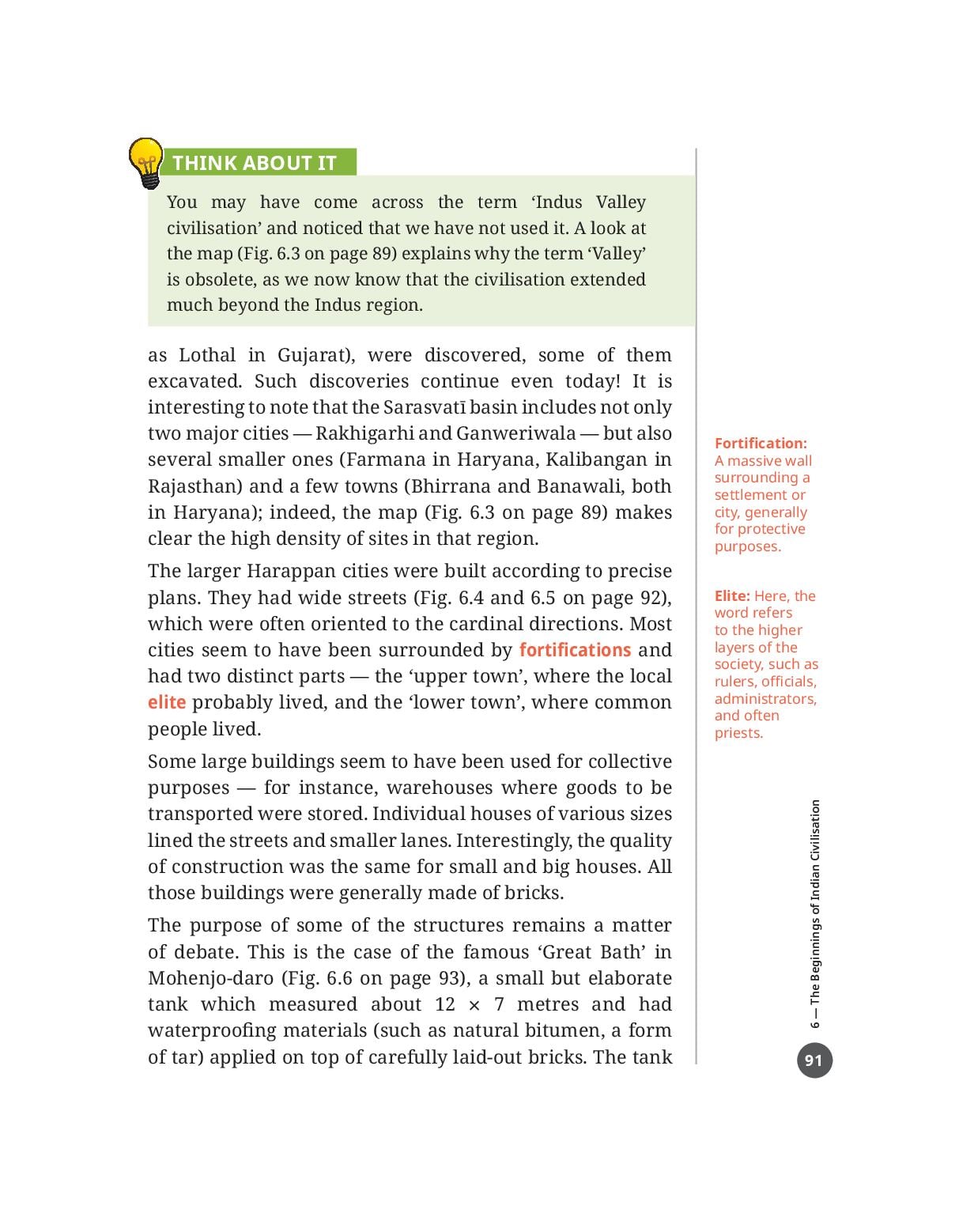
- It has four names, and the book uses all of them — ‘Indus’, ‘Harappan’, ‘Indus-Sarasvatī’ and ‘Sindhu-Sarasvatī’ civilisation. Its people are called Harappans, after Harappa (today in Pakistan’s Punjab), the first city of this civilisation to be excavated, in 1920–21. The old term ‘Indus Valley’ is now obsolete: the map (Fig. 6.3) shows the civilisation spread far beyond the Indus region — from Shortugai in the north to Lothal in the south.
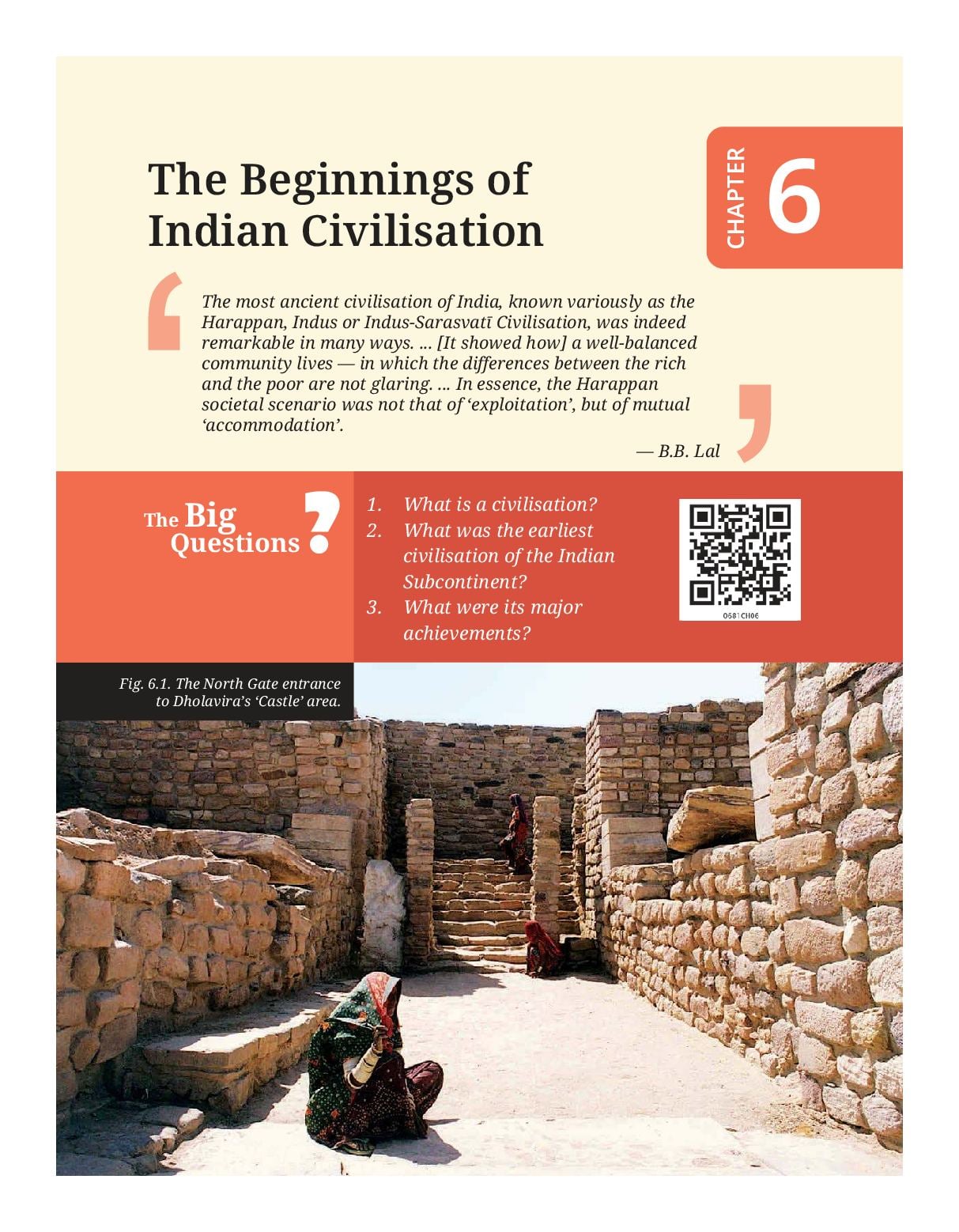
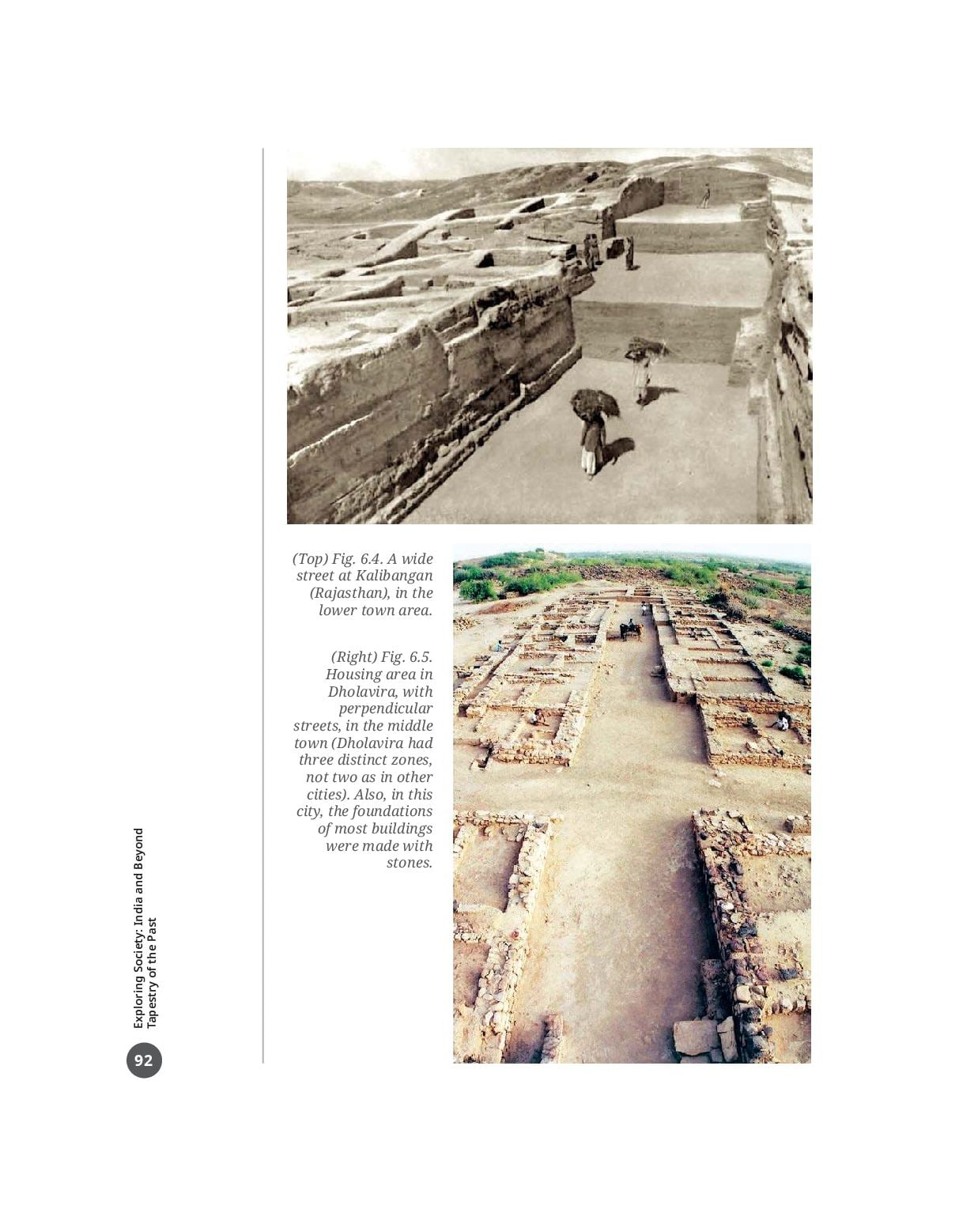
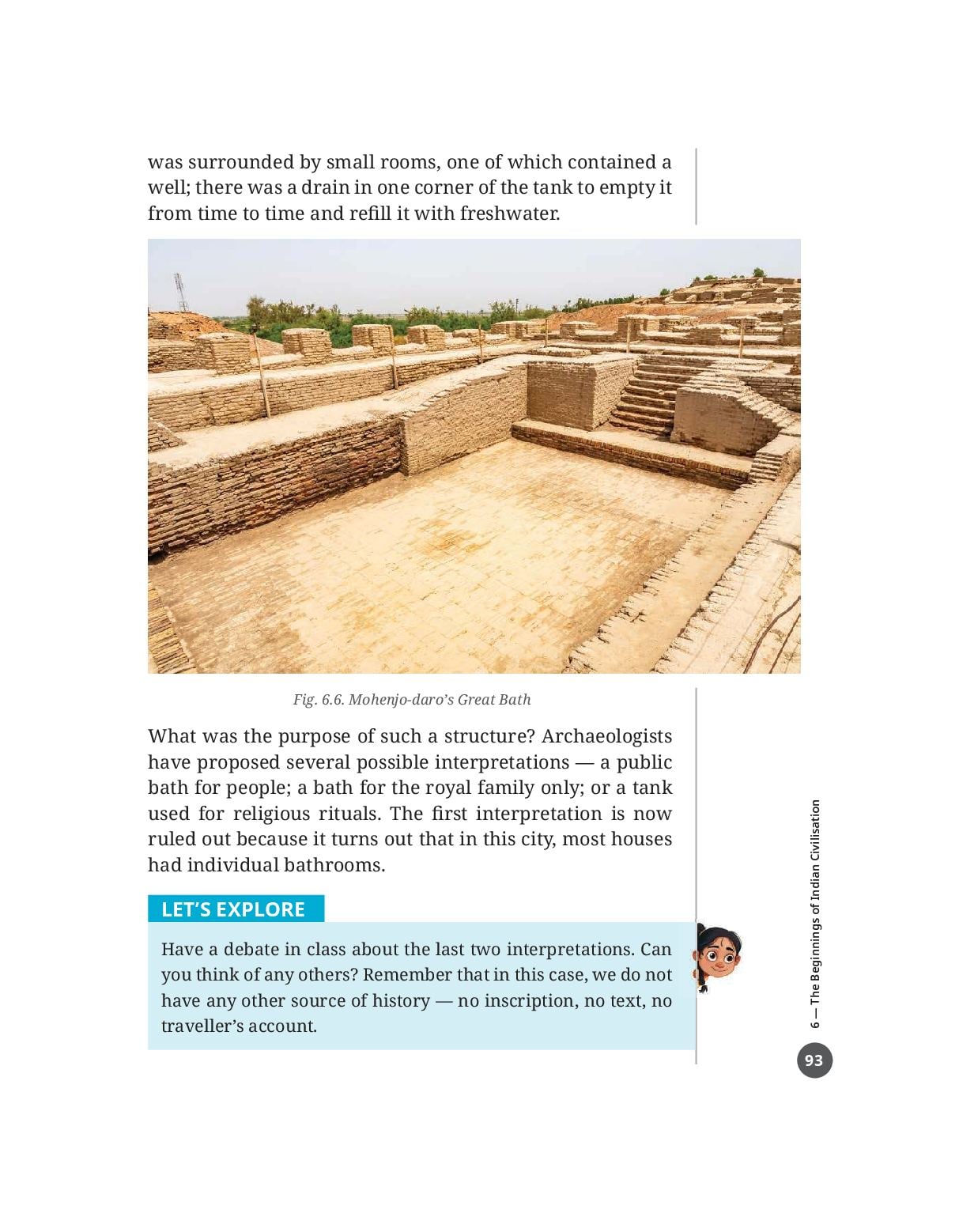
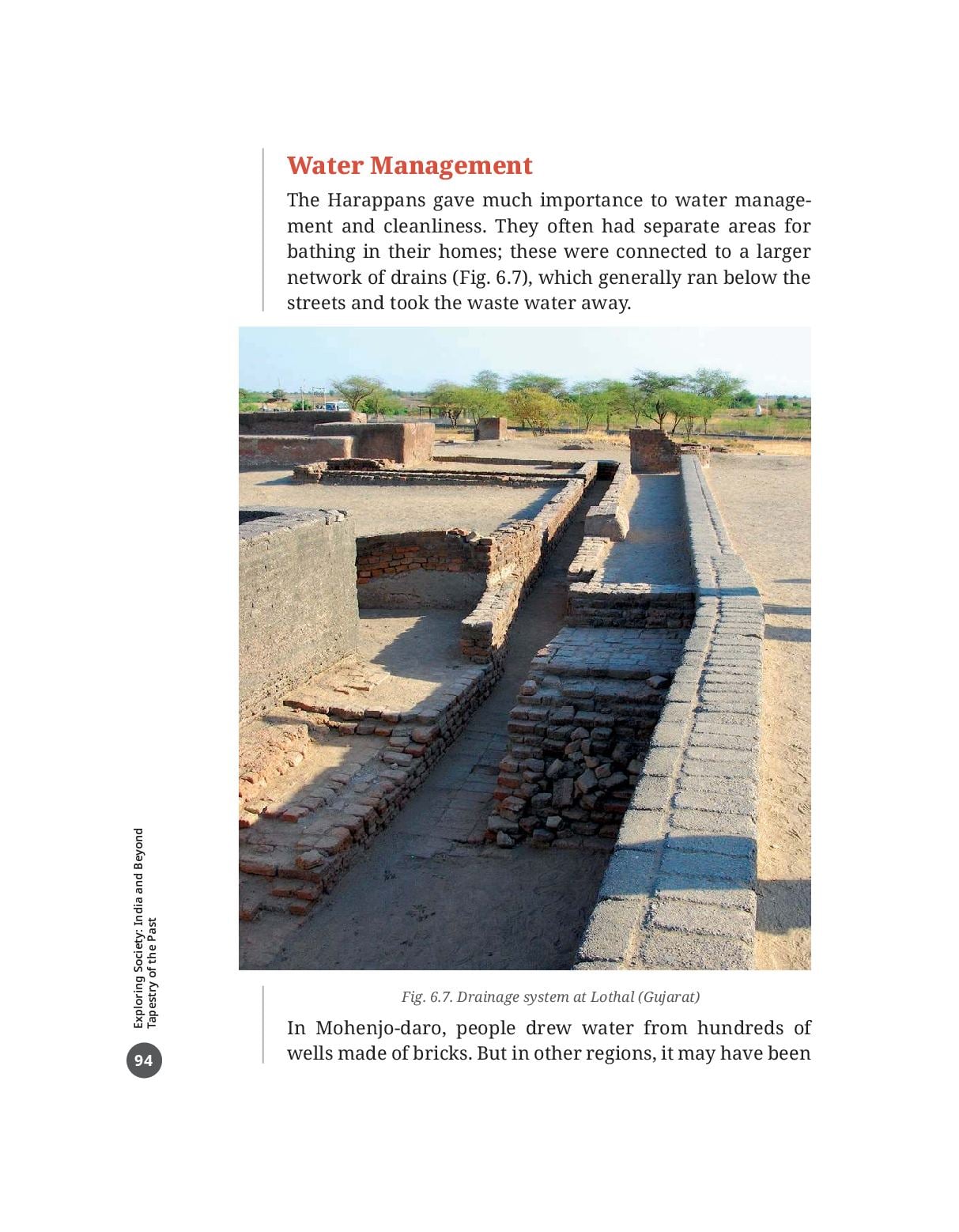
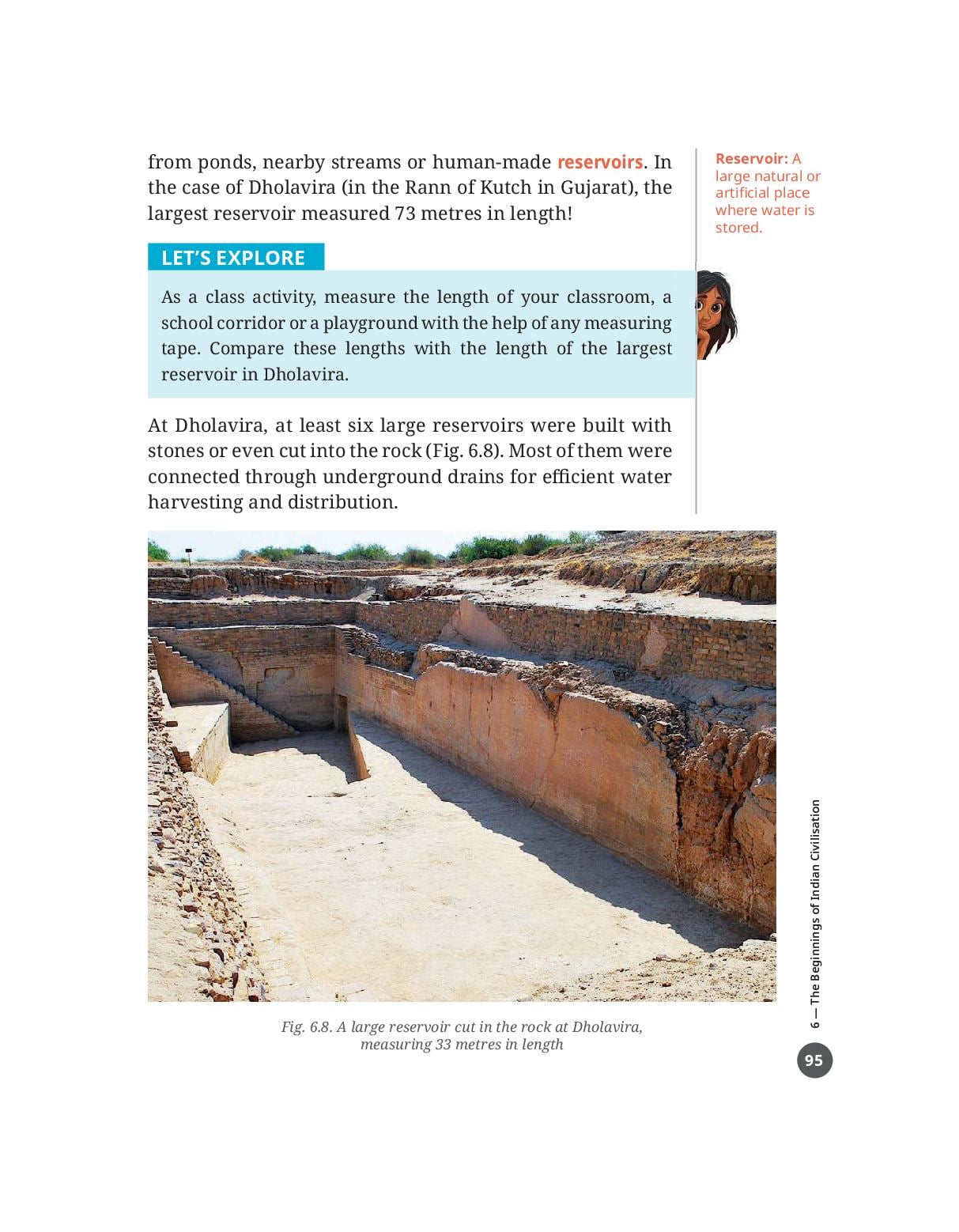
- The cities were planned, and the planning shows in the water. Larger cities had wide streets, often oriented to the cardinal directions, fortifications, and two distinct parts — an upper town where the elite probably lived and a lower town for common people (Dholavira had three zones). Houses of all sizes were built to the same quality. Bathing areas drained into a network of covered drains below the streets; Mohenjo-daro had about 700 brick wells and the Great Bath (12 × 7 m); Dholavira had at least six large reservoirs, the biggest 73 metres long.
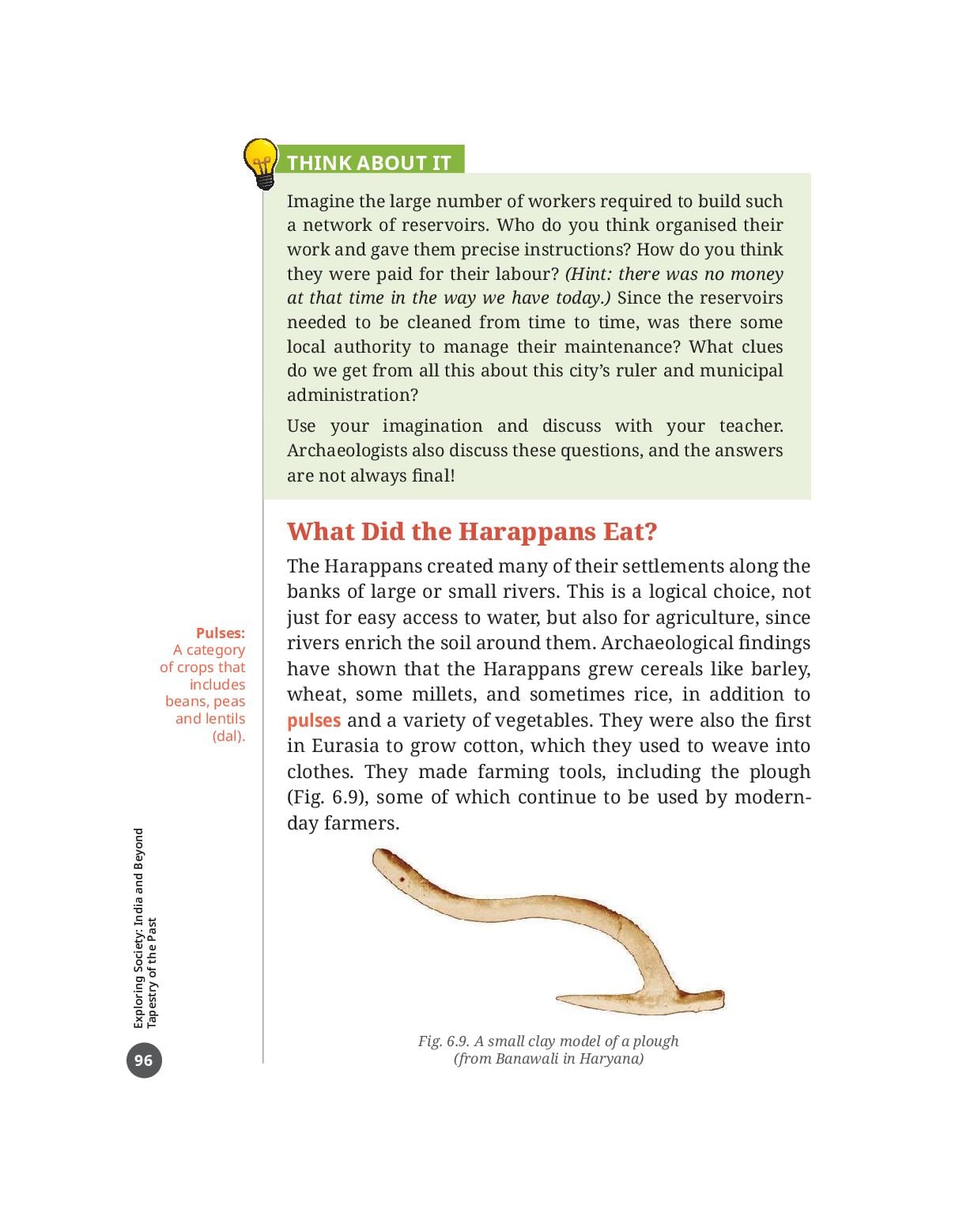
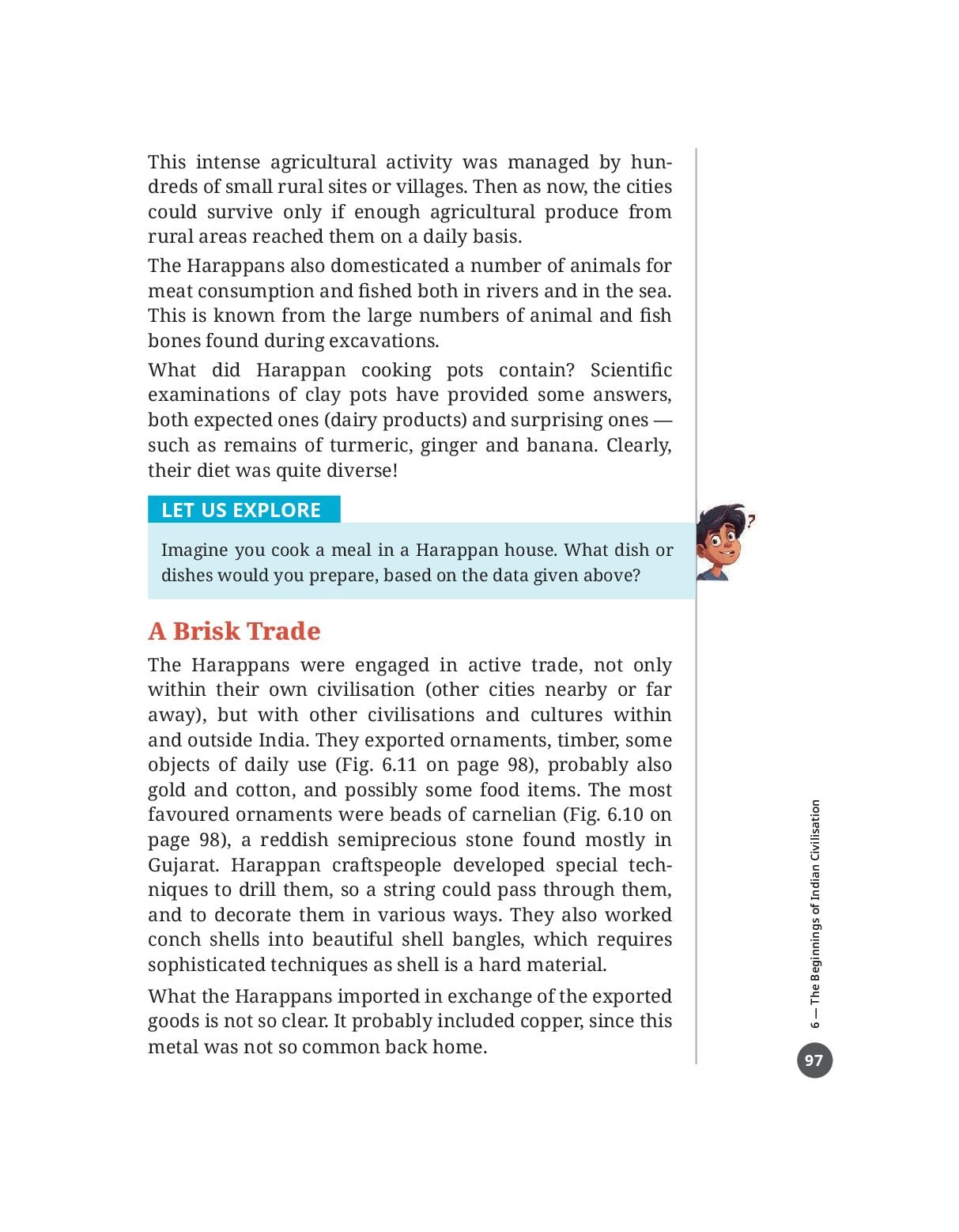
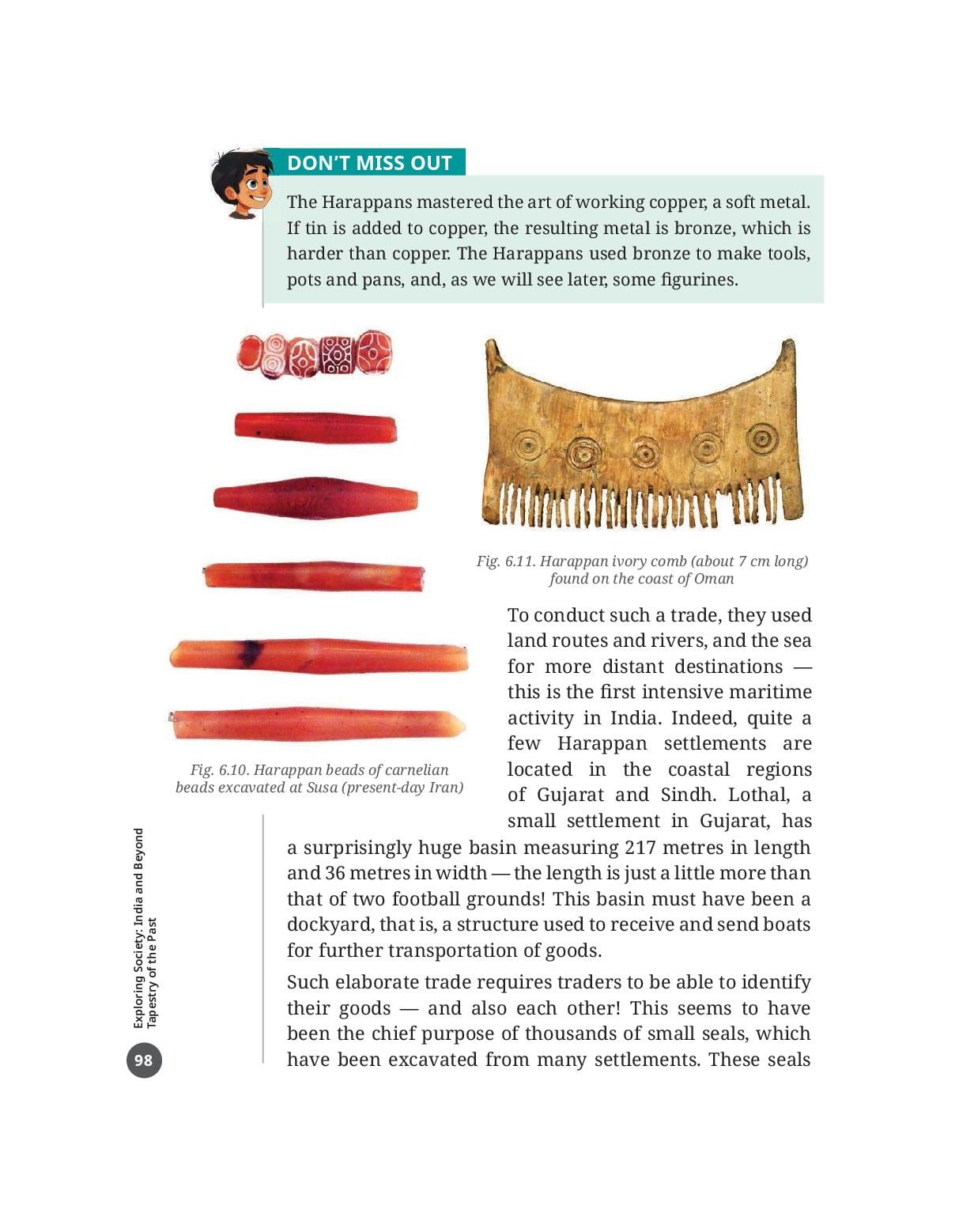
- Farming fed the cities; crafts and trade connected them to the world. Harappans grew barley, wheat, some millets, sometimes rice, pulses and vegetables, and were the first in Eurasia to grow cotton. Clay pots have yielded traces of dairy products and — surprisingly — turmeric, ginger and banana. They exported ornaments, timber and objects of daily use; carnelian beads from Harappan workshops have been dug up at Susa in present-day Iran, and an ivory comb on the coast of Oman. Lothal‘s basin, 217 × 36 metres, was almost certainly a dockyard — India’s first intensive maritime activity.
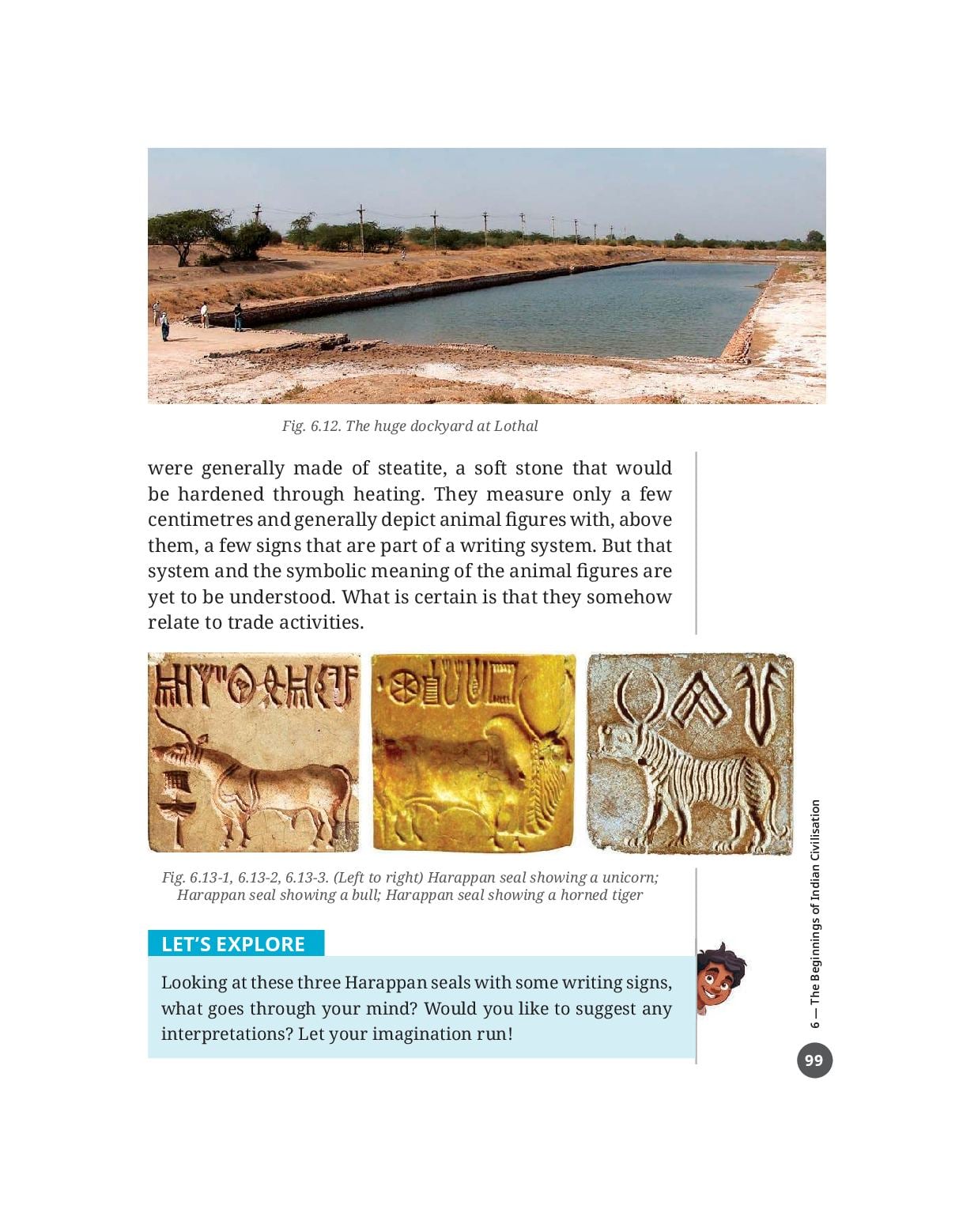
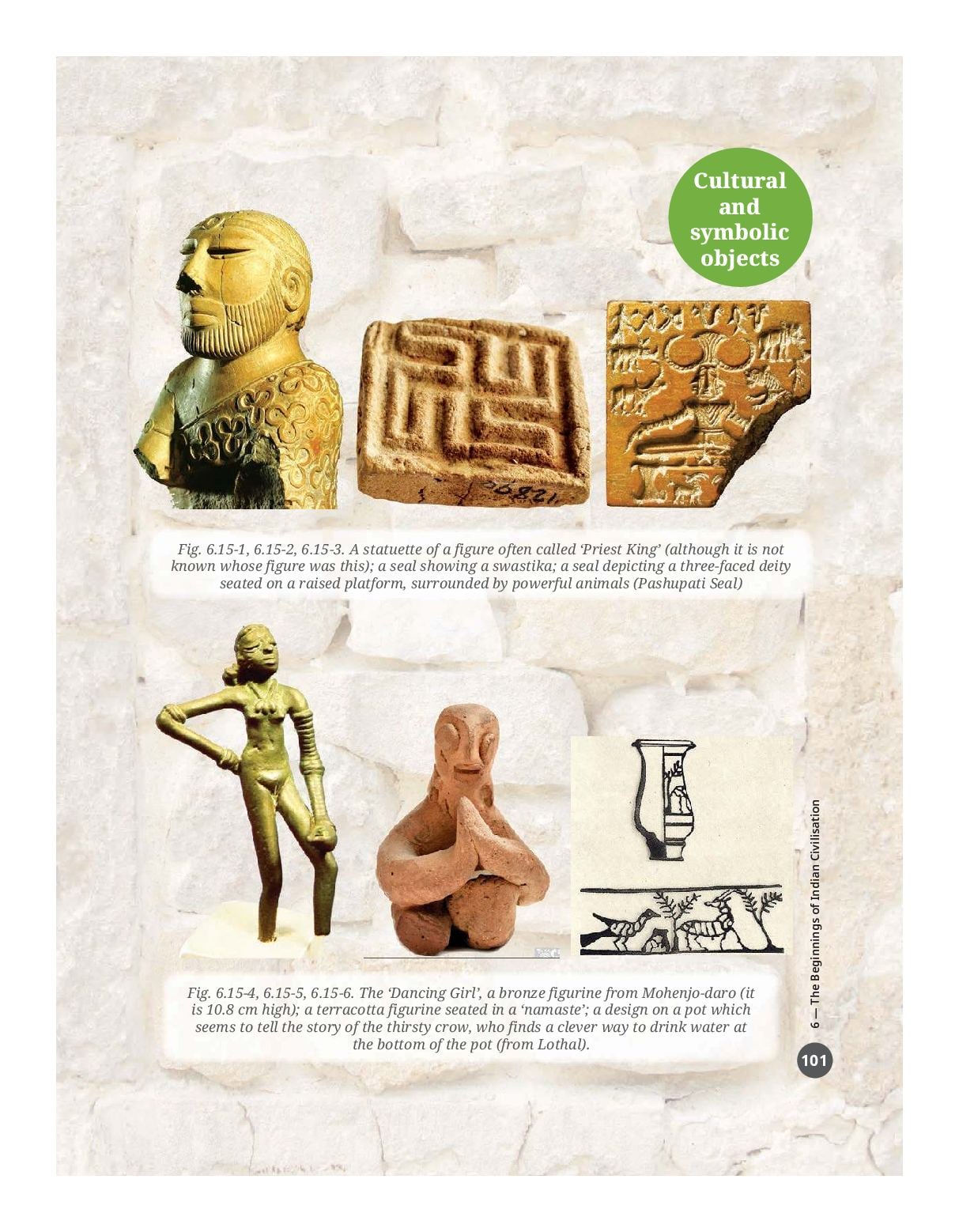
- The seals carry writing we still cannot read. Thousands of small steatite seals, only a few centimetres across, show animal figures with a few signs above them. The signs belong to a writing system, but that system has not been deciphered, and the symbolic meaning of the animals is also unknown. All we can say for certain is that the seals somehow relate to trade.
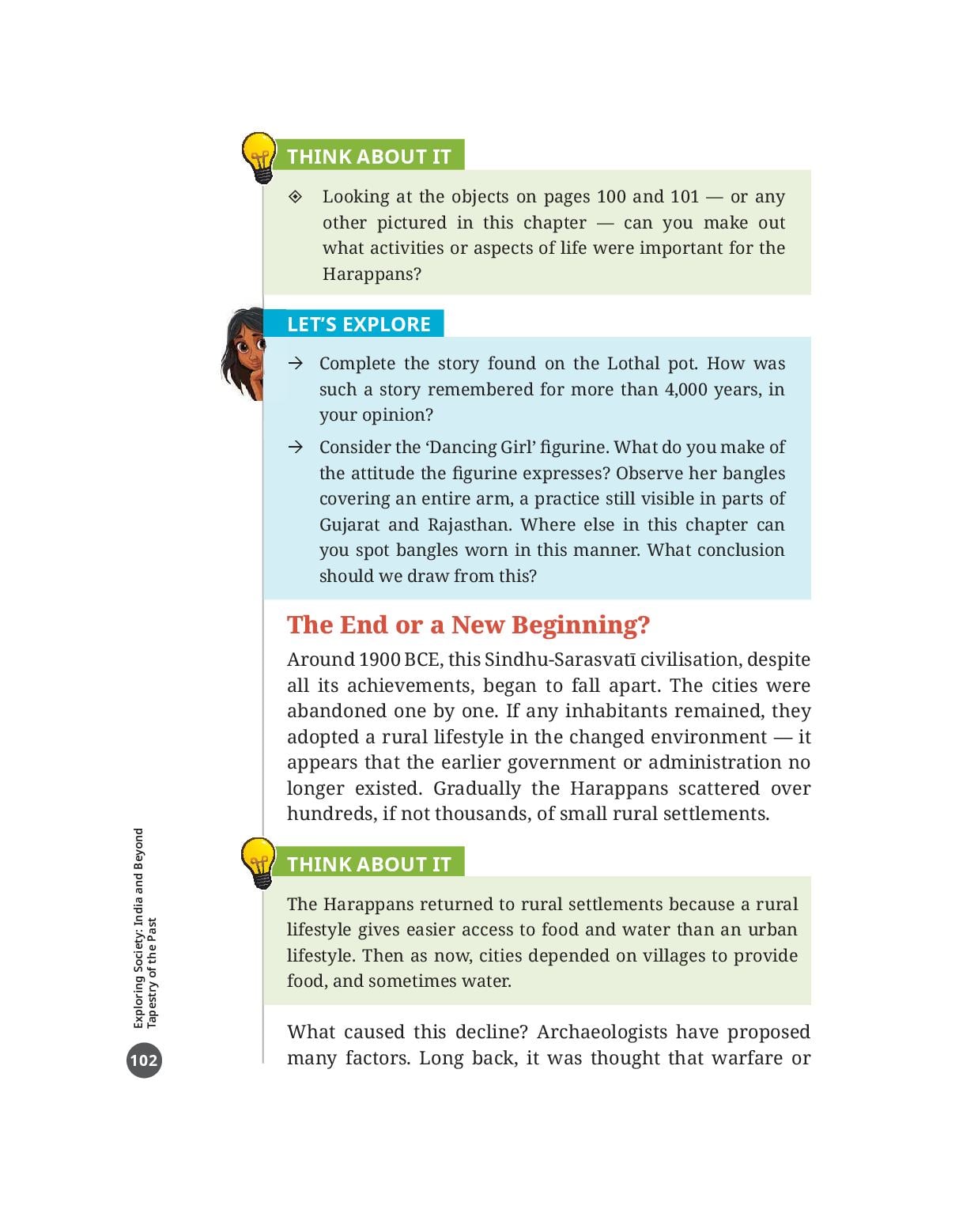
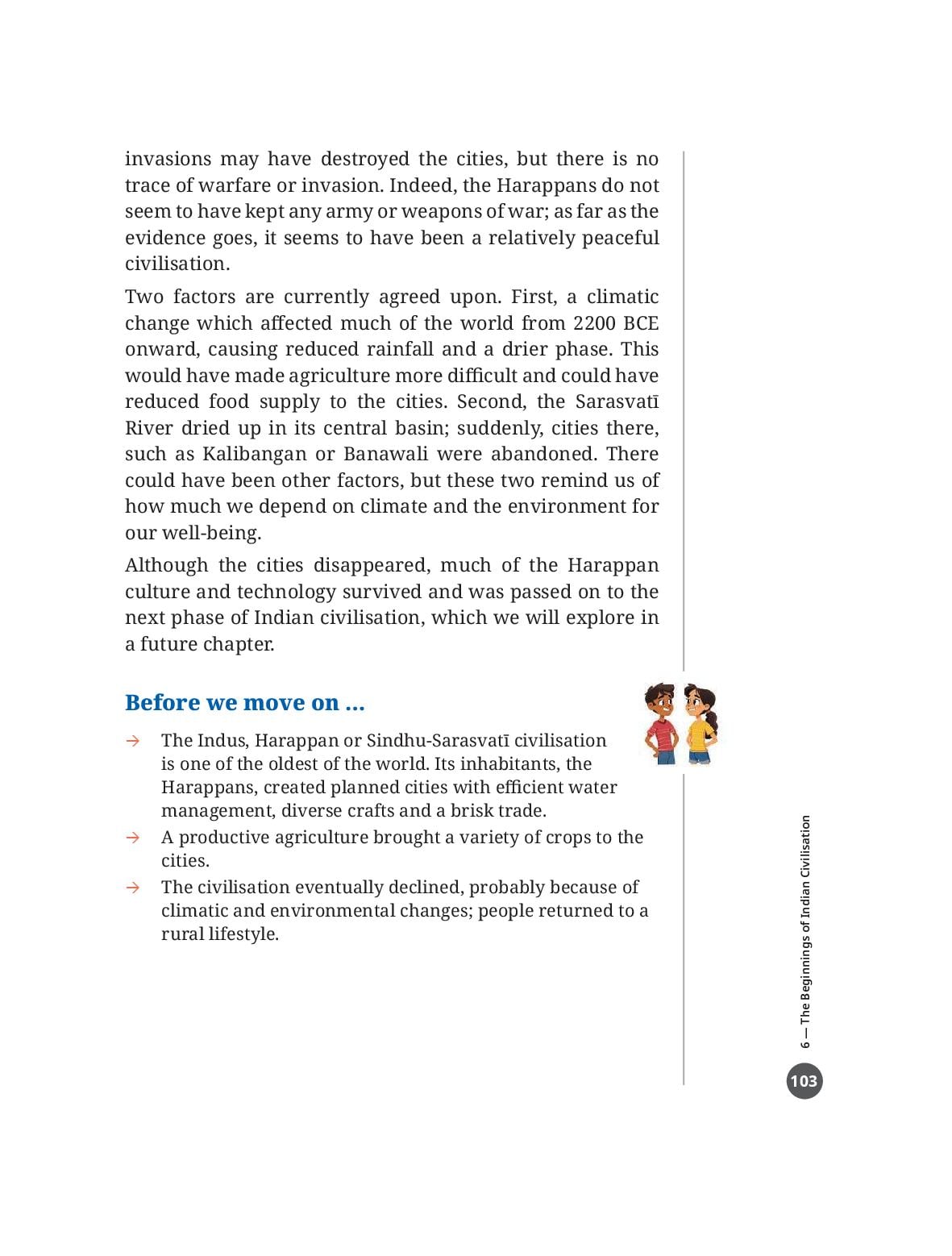
- Around 1900 BCE the cities were abandoned — not destroyed in war. There is no trace of warfare or invasion, and no army or weapons of war. Two causes are agreed on today: a climatic change from about 2200 BCE that brought less rain and a drier phase, and the drying up of the Sarasvatī in its central basin, which suddenly emptied cities like Kalibangan and Banawali. People went back to a rural life — but much Harappan culture and technology survived and passed into the next phase of Indian civilisation.
Quick revision – The Beginnings of Indian Civilisation
| Term | What it means | Where it appears in the chapter | Worth remembering |
|---|---|---|---|
| Civilisation | An advanced stage of human societies, marked by government, urbanism, crafts, trade, writing, cultural ideas and a productive agriculture | Pages 86–87 | The chapter gives seven characteristics — learn them as a list |
| Metallurgy | The techniques of extracting metals from nature, purifying or combining them, and the scientific study of metals and their properties | Margin note, page 86 | Copper + tin = bronze, harder than copper (page 98) |
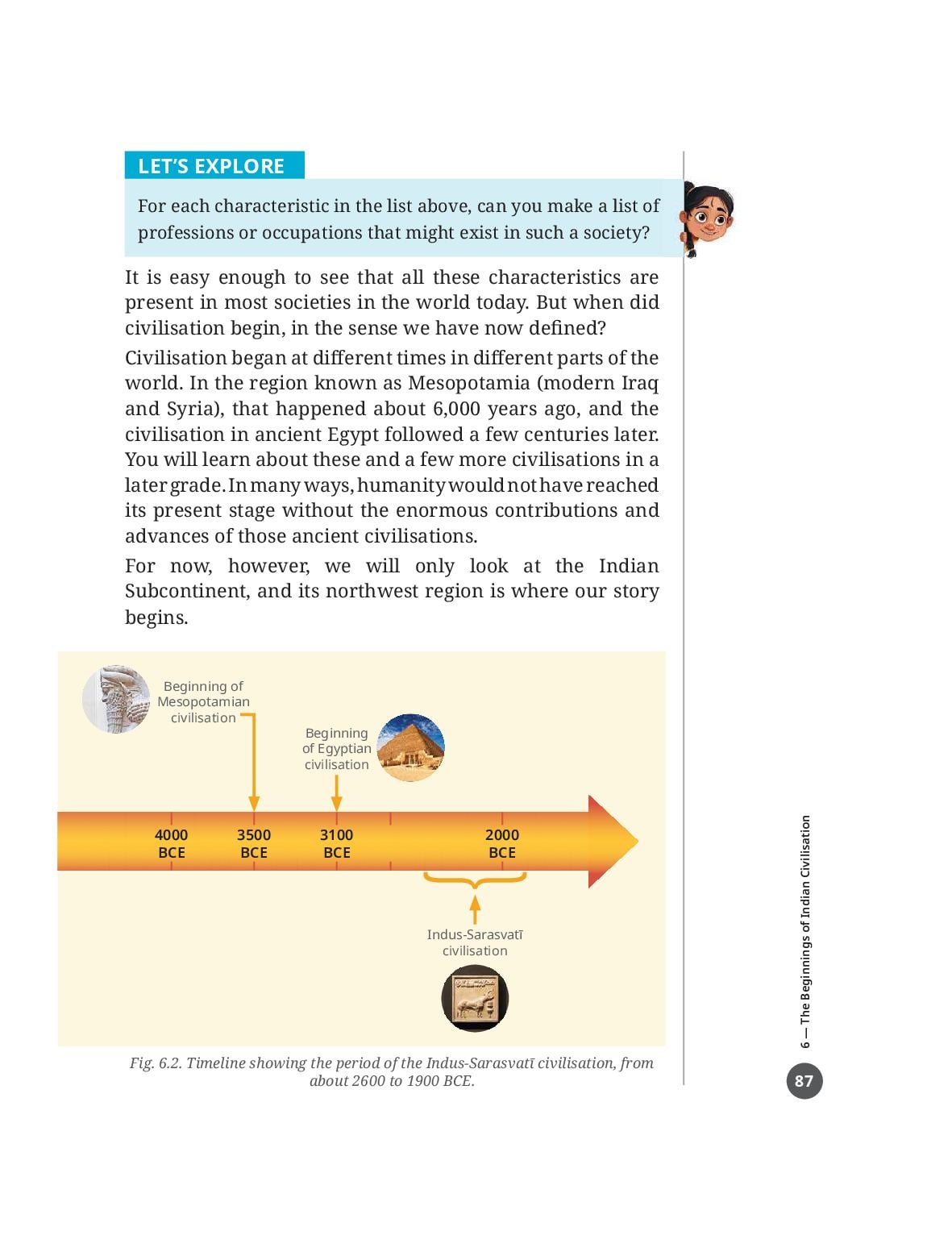
| Indus-Sarasvatī civilisation | India’s most ancient civilisation, also called Indus, Harappan or Sindhu-Sarasvatī civilisation | Page 88; timeline Fig. 6.2, page 87 | About 2600 to 1900 BCE for the city phase |
| Harappans | The name for the inhabitants of this civilisation | Page 88, Don’t Miss Out | From Harappa, the first site excavated, in 1920–21 |
| Tributary | A river that flows into a larger river (or lake) | Margin note, page 88 | The Indus has five main tributaries — Jhelum, Chenab, Ravi, Beas, Sutlej |
| Sarasvatī River | A river that once flowed from the Himalayan foothills through Haryana, Punjab, parts of Rajasthan and Gujarat; today the seasonal Ghaggar-Hakra | Box, page 90 | First mentioned in the Ṛig Veda; later texts describe it drying up |
| First Urbanisation of India | The growth of villages into towns and then into cities in this region | Page 88 | Villages → towns from c. 3500 BCE; towns → cities c. 2600 BCE |
| Fortification | A massive wall surrounding a settlement or city, generally for protective purposes | Margin note, page 91 | Most Harappan cities seem to have had one |
| Elite | The higher layers of society — rulers, officials, administrators and often priests | Margin note, page 91 | They probably lived in the upper town |
| Upper town / lower town | The two distinct parts of a Harappan city | Page 91 | Dholavira had three zones, not two (Fig. 6.5) |
| Great Bath | A small but elaborate tank at Mohenjo-daro, about 12 × 7 metres, waterproofed with natural bitumen over carefully laid-out bricks | Pages 91–93, Fig. 6.6 | Its purpose is still debated — a royal bath, or a ritual tank |
| Reservoir | A large natural or artificial place where water is stored | Margin note, page 95 | Dholavira: at least six; the largest 73 m long |
| Pulses | A category of crops that includes beans, peas and lentils (dal) | Margin note, page 96 | Grown alongside barley, wheat, millets and sometimes rice |
| Seals | Thousands of small steatite objects showing an animal figure with a few writing signs above it | Pages 98–99, Fig. 6.13 | The script is undeciphered — do not claim it has been read |
Old NCERT vs New – Class 6 Social Science
This chapter is from Exploring Society: India and Beyond, the new NCERT Class 6 Social Science book (NCF-SE 2023, used from 2024-25). It replaced the old book “Our Pasts, The Earth Our Habitat and Social and Political Life”, so chapter numbers and names differ from older PDFs.
Solutions and All Chapters
Answers to the exercises and the full chapter list of Exploring Society: India and Beyond:
The Beginnings of Indian Civilisation – Overview
| Class | Class 6 |
| Subject | Social Science |
| Book | Exploring Society: India and Beyond – new NCERT book |
| Chapter | 6 of 14 – The Beginnings of Indian Civilisation |
| Book pages | 85 – 104 |
| Edition | NCERT Reprint 2026-27 |
| Session | 2026-27 |
| Free – read online or download |
Class 6 Social Science Chapter 6 – FAQs
Where can I download The Beginnings of Indian Civilisation Class 6 PDF?
From the download table on this page – the chapter PDF is free, and the full book is linked too.
What is Class 6 Social Science Chapter 6 about?
A civilisation is not just ‘people living long ago’ — it is a checklist. The chapter sets out seven characteristics: some form of government and administration, urbanism (town-planning, water management, drainage), a variety of crafts, trade both internal and external, some form of writing, cultural ideas expressed through art, architecture, literature, oral traditions or social customs, and a productive agriculture — enough to feed not just the villages but also the cities.
Is The Beginnings of Indian Civilisation from the new NCERT Class 6 Social Science book?
Yes. It is chapter 6 of exploring society: india and beyond, the new NCERT Class 6 Social Science book for 2026-27.
Is this the latest NCERT edition for 2026-27?
Yes – the PDF is NCERT’s latest edition for the 2026-27 session.
Where are the NCERT Solutions for Class 6 Social Science Chapter 6?
Open the NCERT Solutions link above for answers to the exercise questions.