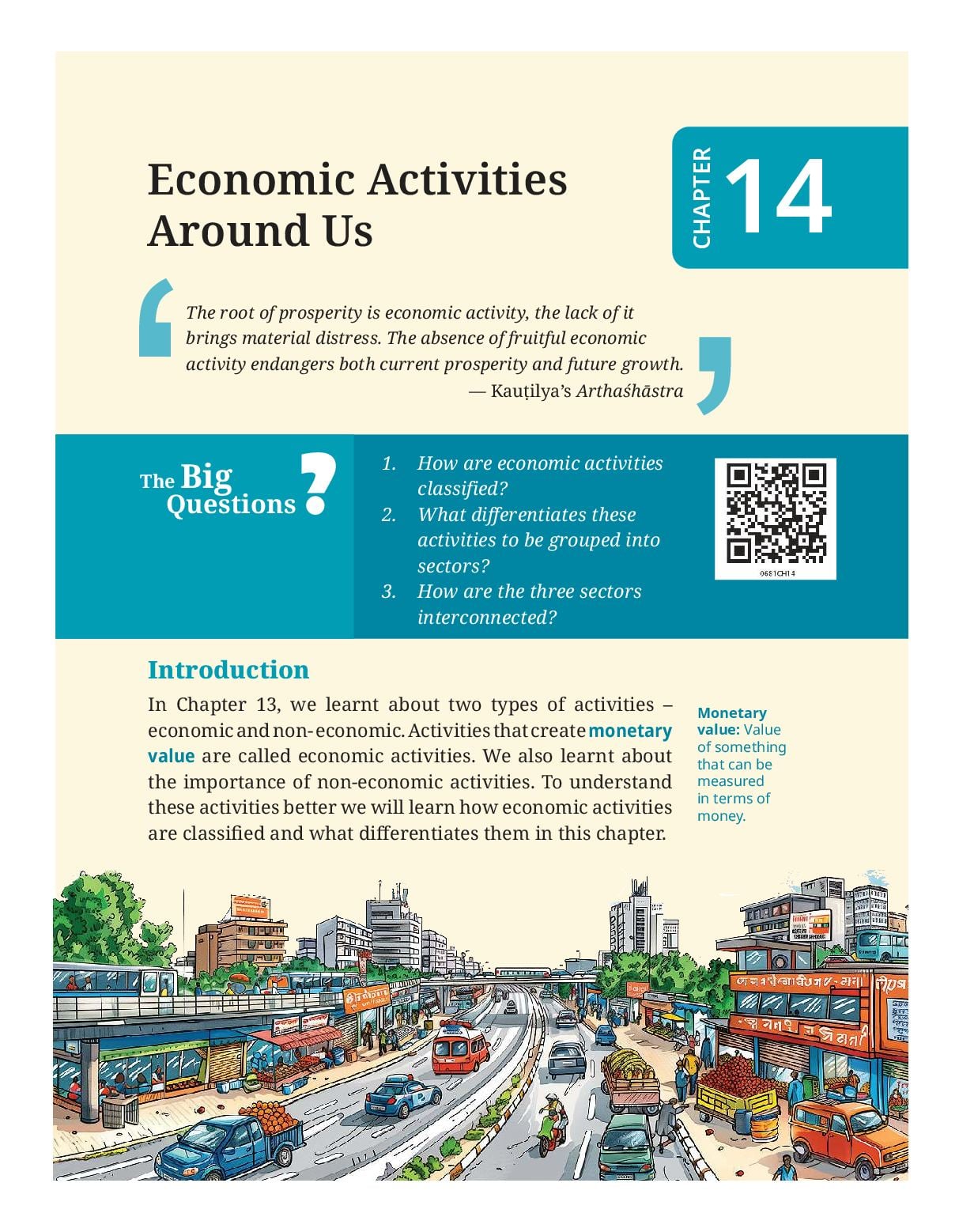
Download Economic Activities Around Us – NCERT Class 6 Social Science Chapter 14 PDF from the new NCERT Class 6 Social Science book Exploring Society: India and Beyond (2026-27). Read the chapter online or download the free PDF. The chapter’s one idea: every economic activity in the country can be sorted into three sectors — primary, secondary and tertiary. Kauṭilya’s Arthaśhāstra opens the chapter — “The root of prosperity is economic activity, the lack of it brings…
Economic Activities Around Us PDF – Chapter 14 of Exploring Society: India and Beyond
Read the chapter online or download the PDF.
| Chapter | Download | |
|---|---|---|
| Chapter 14 PDF | Economic Activities Around Us | View PDF |
| Full book | NCERT Class 6 Social Science – Exploring Society: India and Beyond | View Book |
Read Online
What Is in Economic Activities Around Us? (Class 6 Social Science Chapter 14)
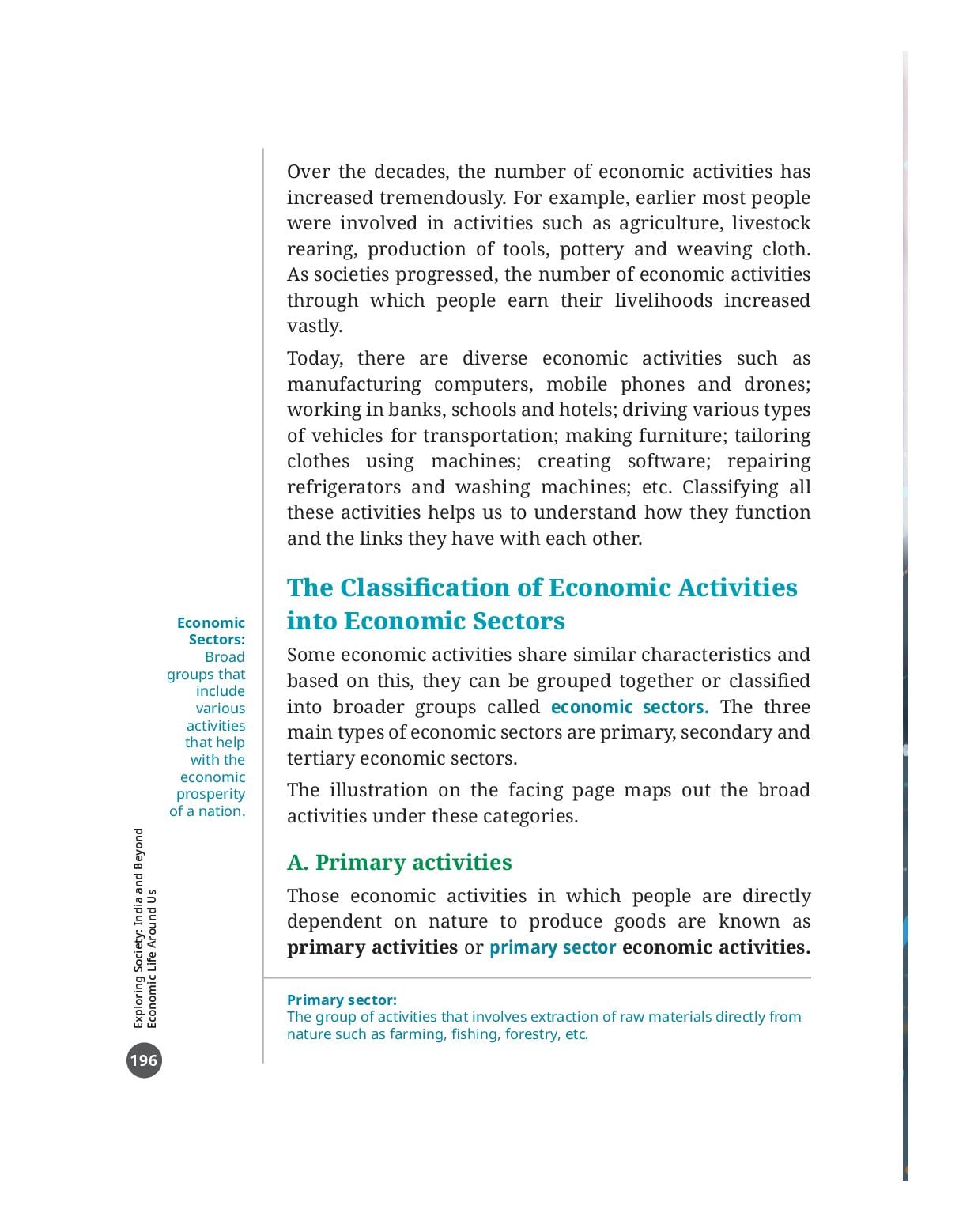
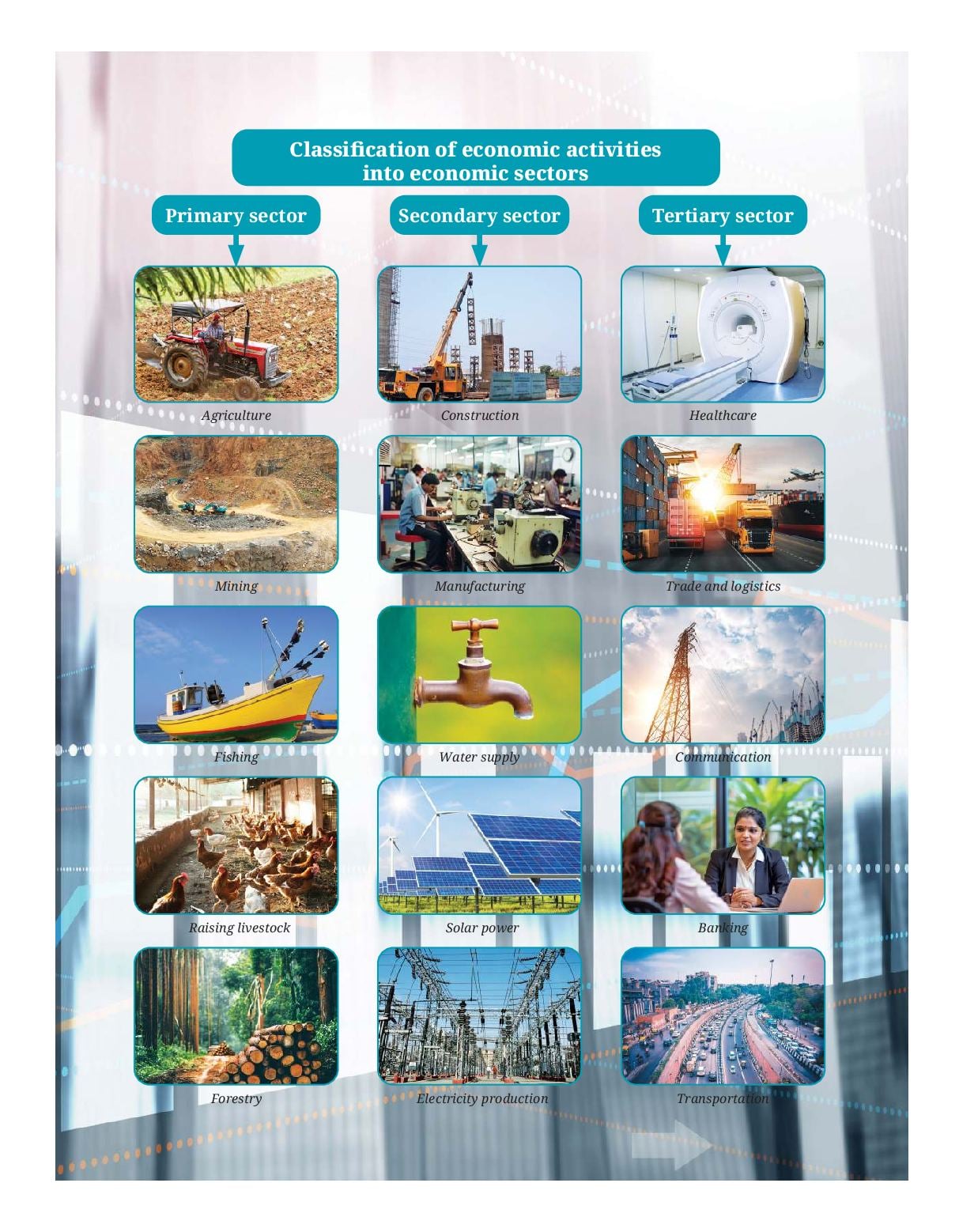
- The chapter’s one idea: every economic activity in the country can be sorted into three sectors — primary, secondary and tertiary. Kauṭilya’s Arthaśhāstra opens the chapter — “The root of prosperity is economic activity, the lack of it brings material distress.” Page 196 explains the sorting: “Some economic activities share similar characteristics and based on this, they can be grouped together or classified into broader groups called economic sectors.”
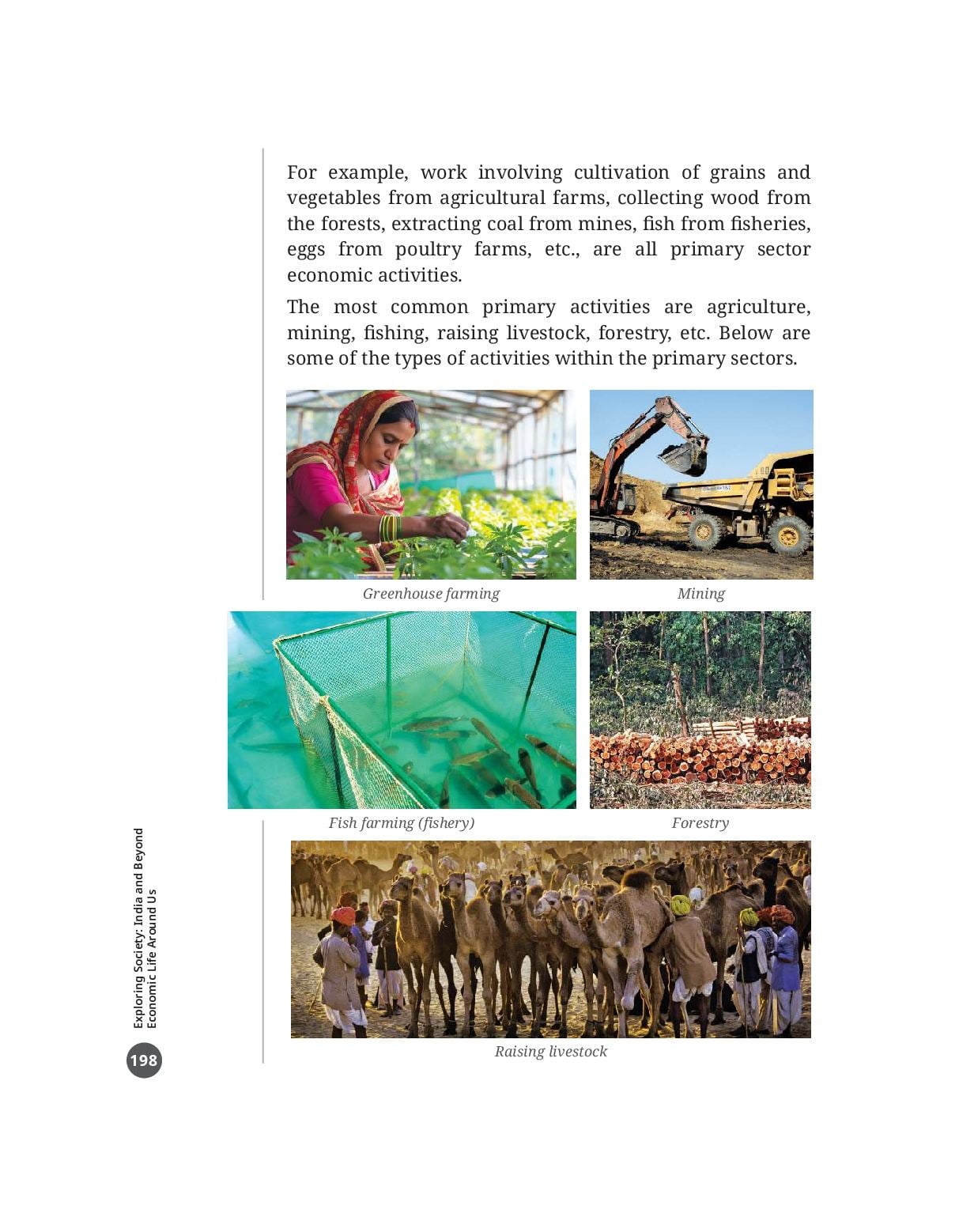
- Primary sector — work done directly with nature. “Those economic activities in which people are directly dependent on nature to produce goods are known as primary activities” (page 196). The margin adds that it “involves extraction of raw materials directly from nature such as farming, fishing, forestry, etc.” Growing wheat in Punjab, cutting timber in a Chhattisgarh forest, digging coal at Jharia, netting fish off Kochi, collecting eggs at a poultry farm — all primary.
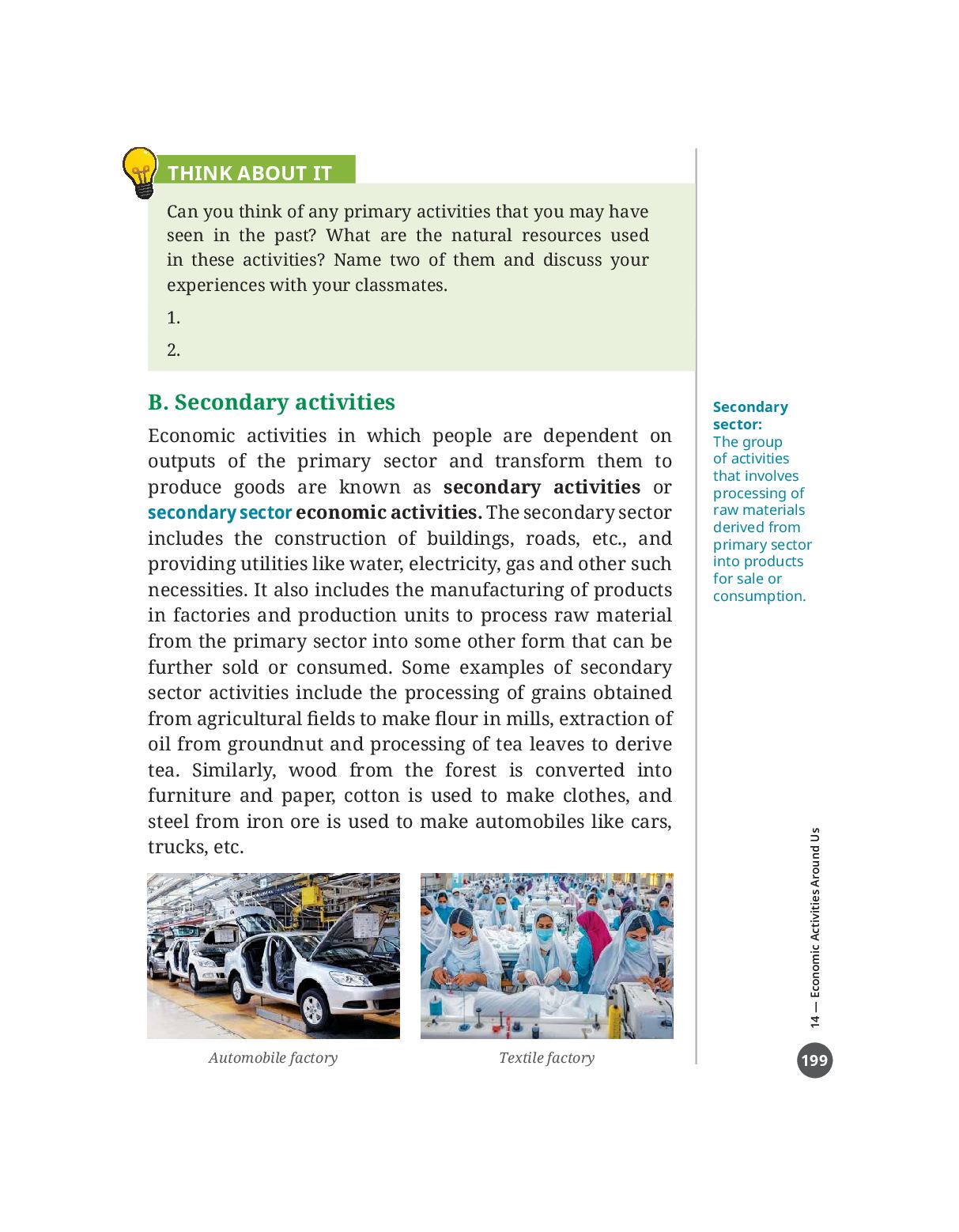
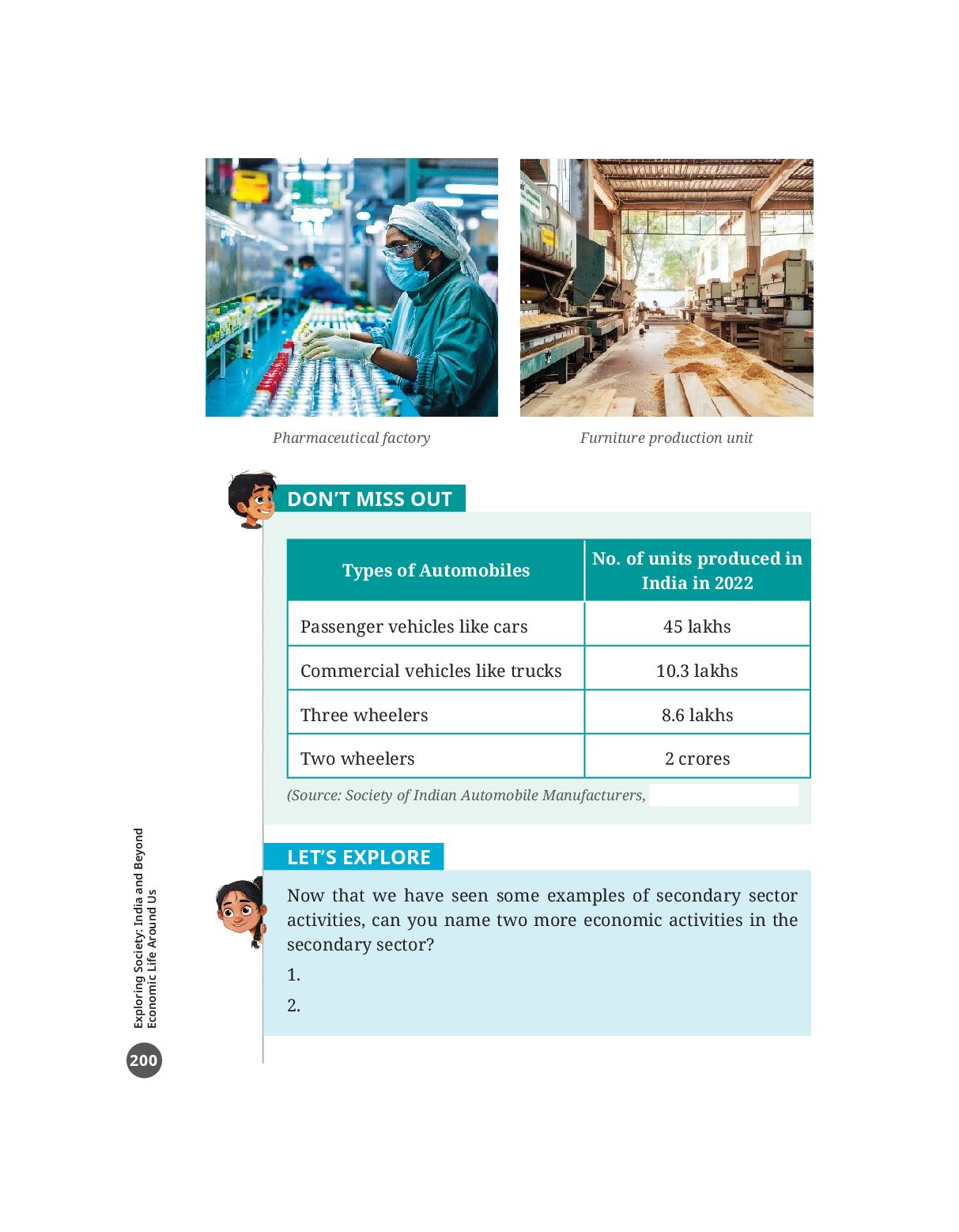
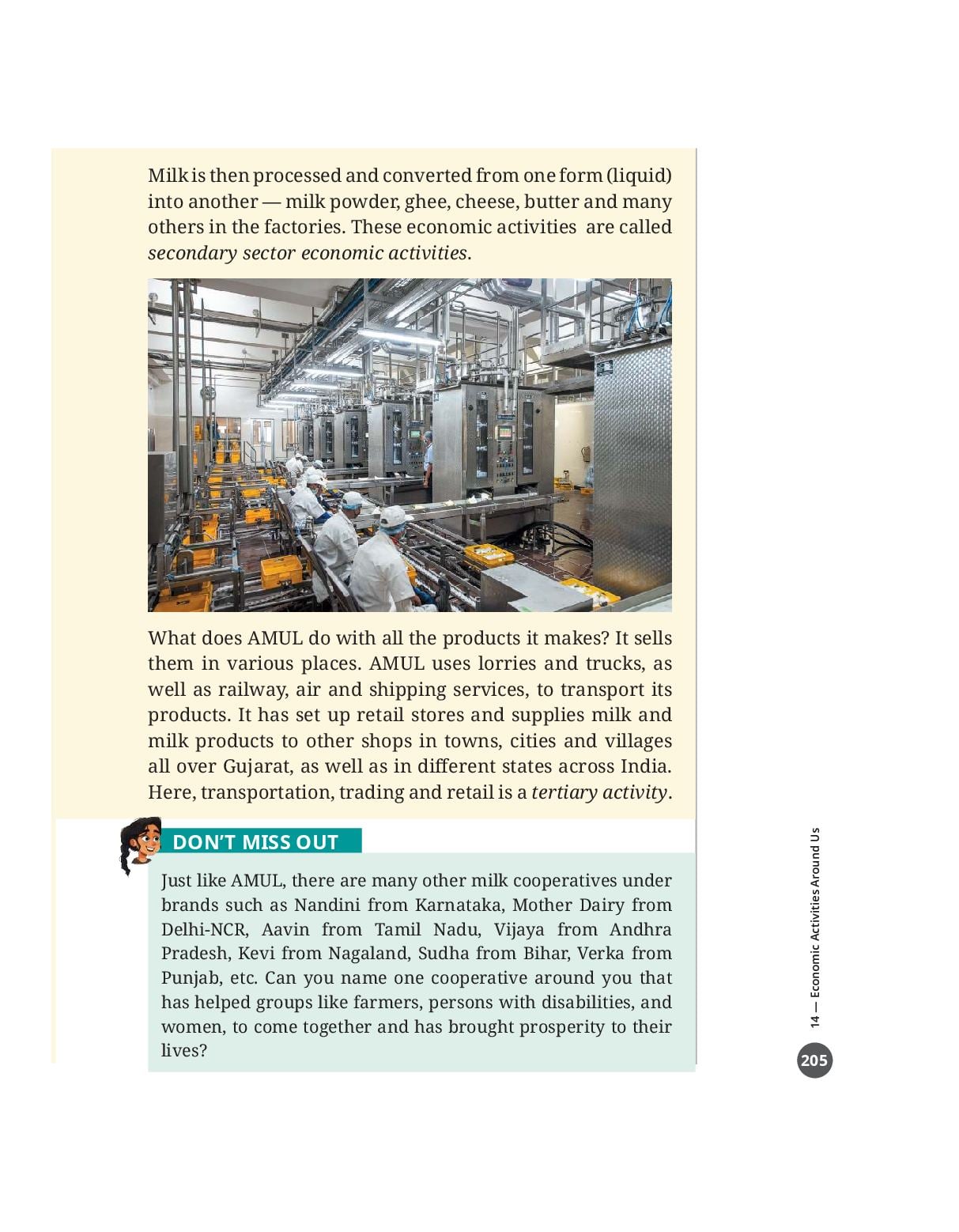
- Secondary sector — work that transforms what the primary sector produces. Page 199: activities “in which people are dependent on outputs of the primary sector and transform them to produce goods”. It covers manufacturing in factories, the construction of buildings and roads, and utilities like water, electricity and gas. Grain becomes flour in a mill, groundnut becomes oil, tea leaves become tea, wood becomes furniture and paper, cotton becomes cloth, and iron ore becomes the steel of a car.
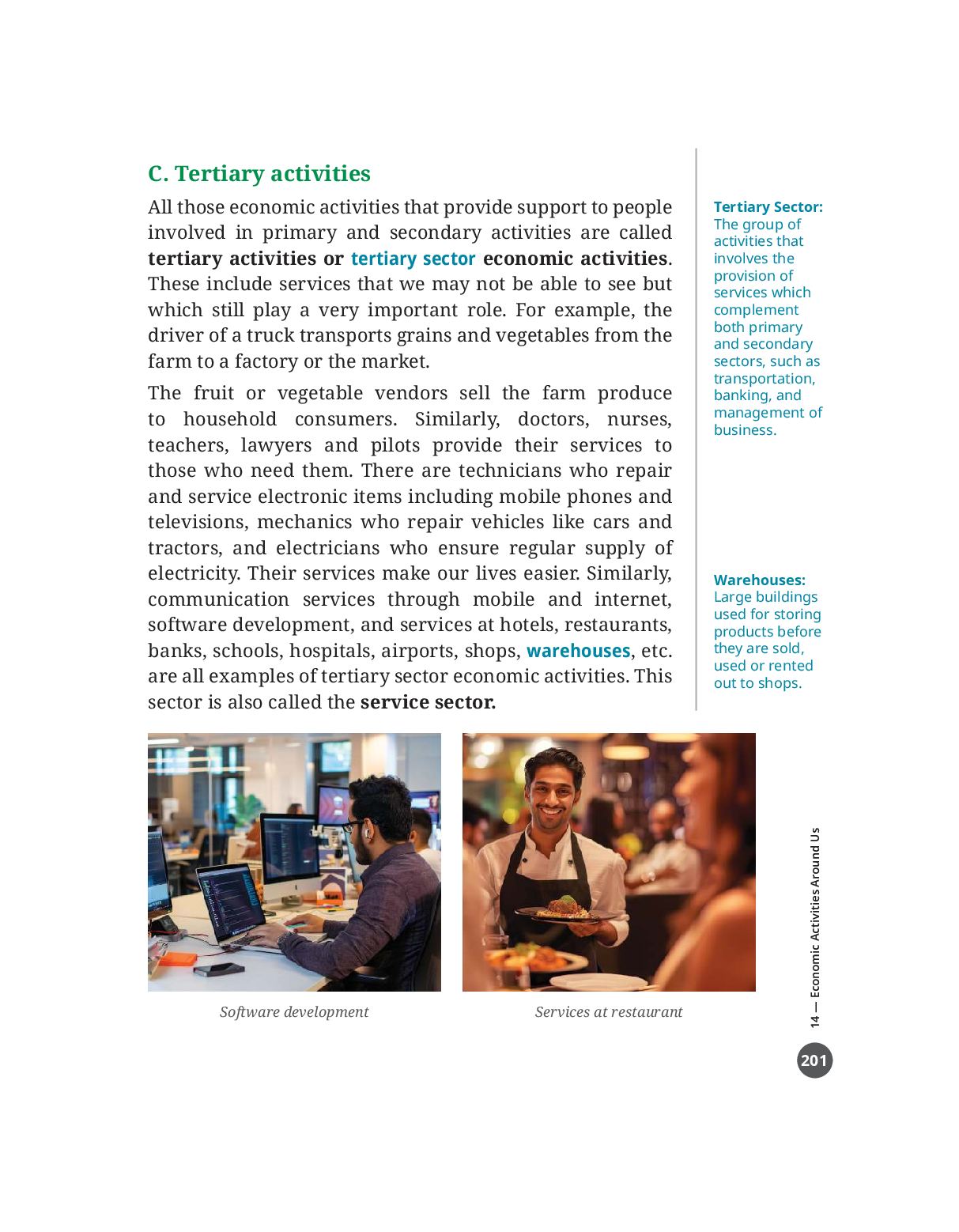
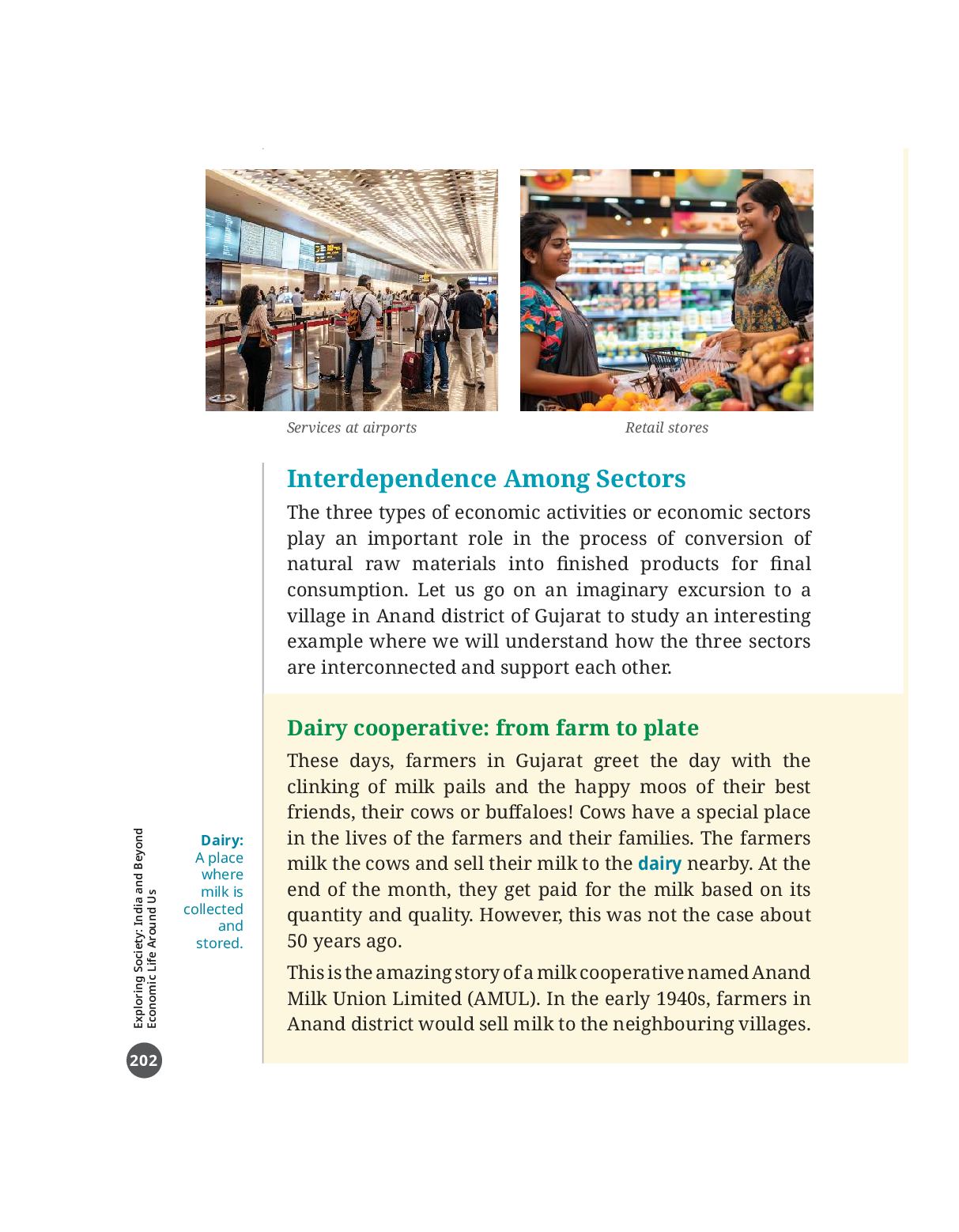
- Tertiary sector — the services that keep the other two running. Page 201: “All those economic activities that provide support to people involved in primary and secondary activities are called tertiary activities.” The truck driver who carries grain from the farm to the factory, the vegetable vendor, doctors, nurses, teachers, lawyers, pilots, technicians, mechanics, electricians, banks, mobile and internet services, software, hotels, warehouses and shops. This sector is also called the service sector.
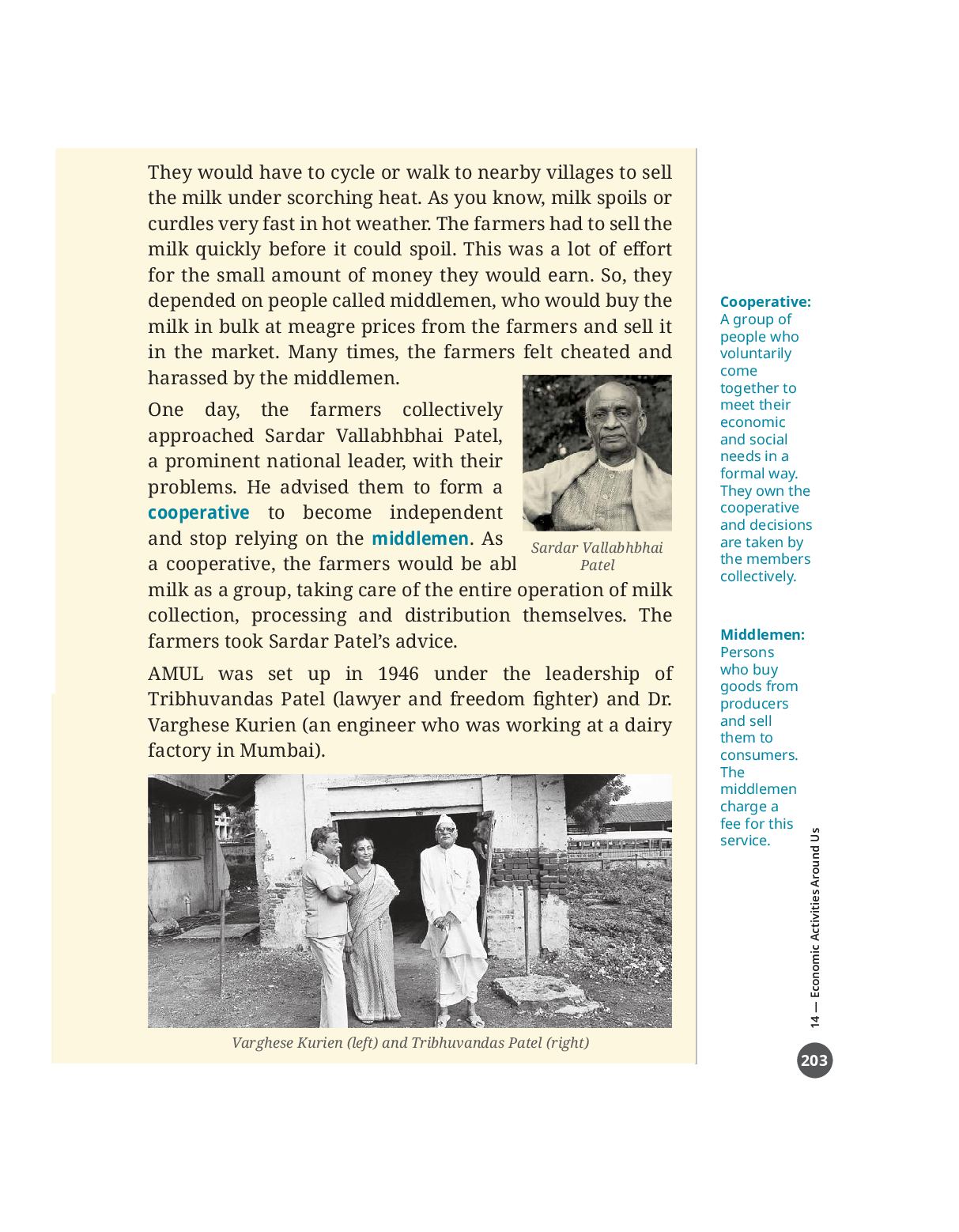
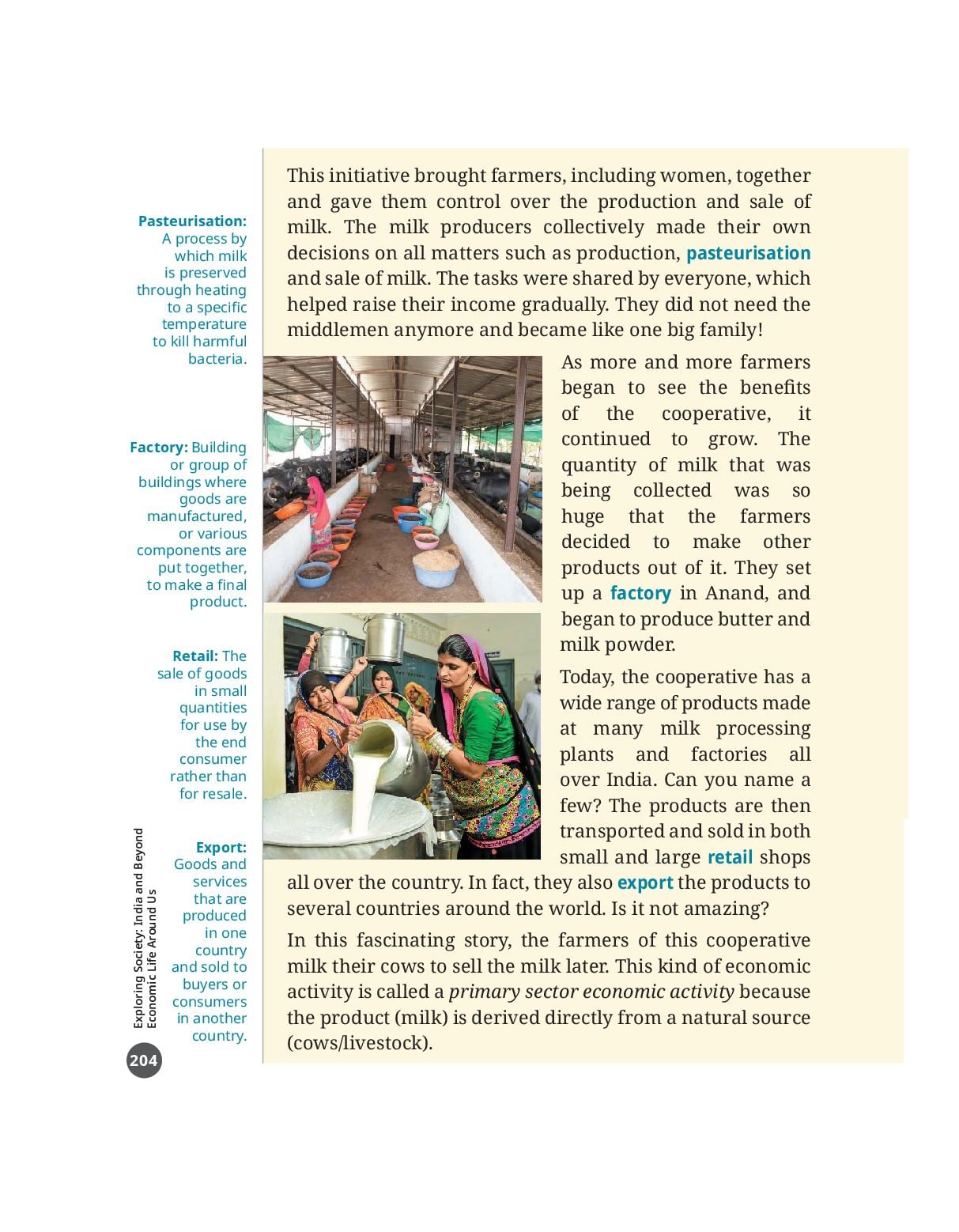
- The AMUL story shows all three sectors working as one chain. Before the 1940s, farmers of Anand district in Gujarat cycled through the heat to sell milk before it curdled, and depended on middlemen who bought “in bulk at meagre prices”. On Sardar Vallabhbhai Patel’s advice they formed a cooperative; AMUL was set up in 1946 under Tribhuvandas Patel and Dr. Varghese Kurien. Milking the cow is primary, making butter and milk powder in the Anand factory is secondary, and the trucks, retail stores and exports are tertiary.
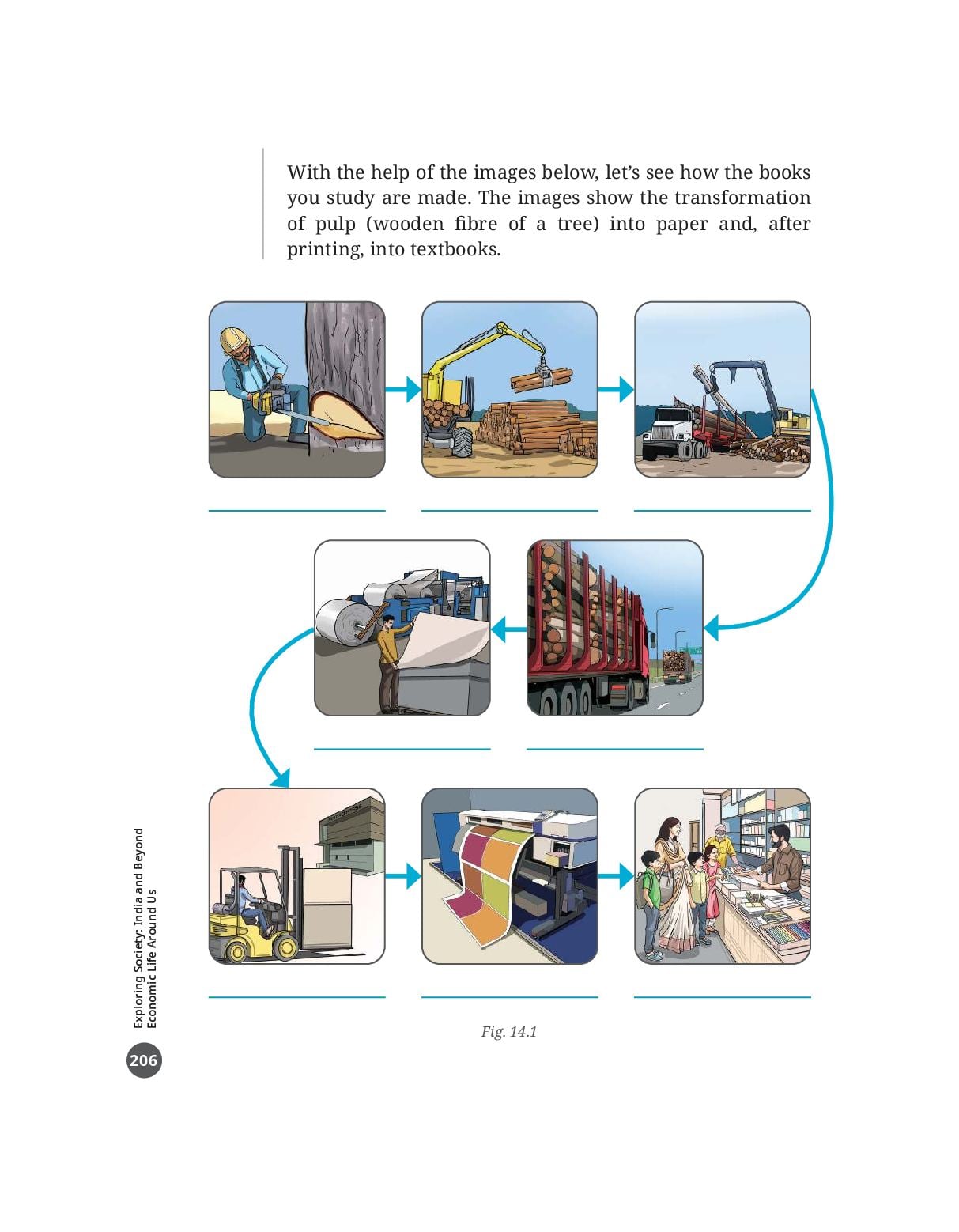
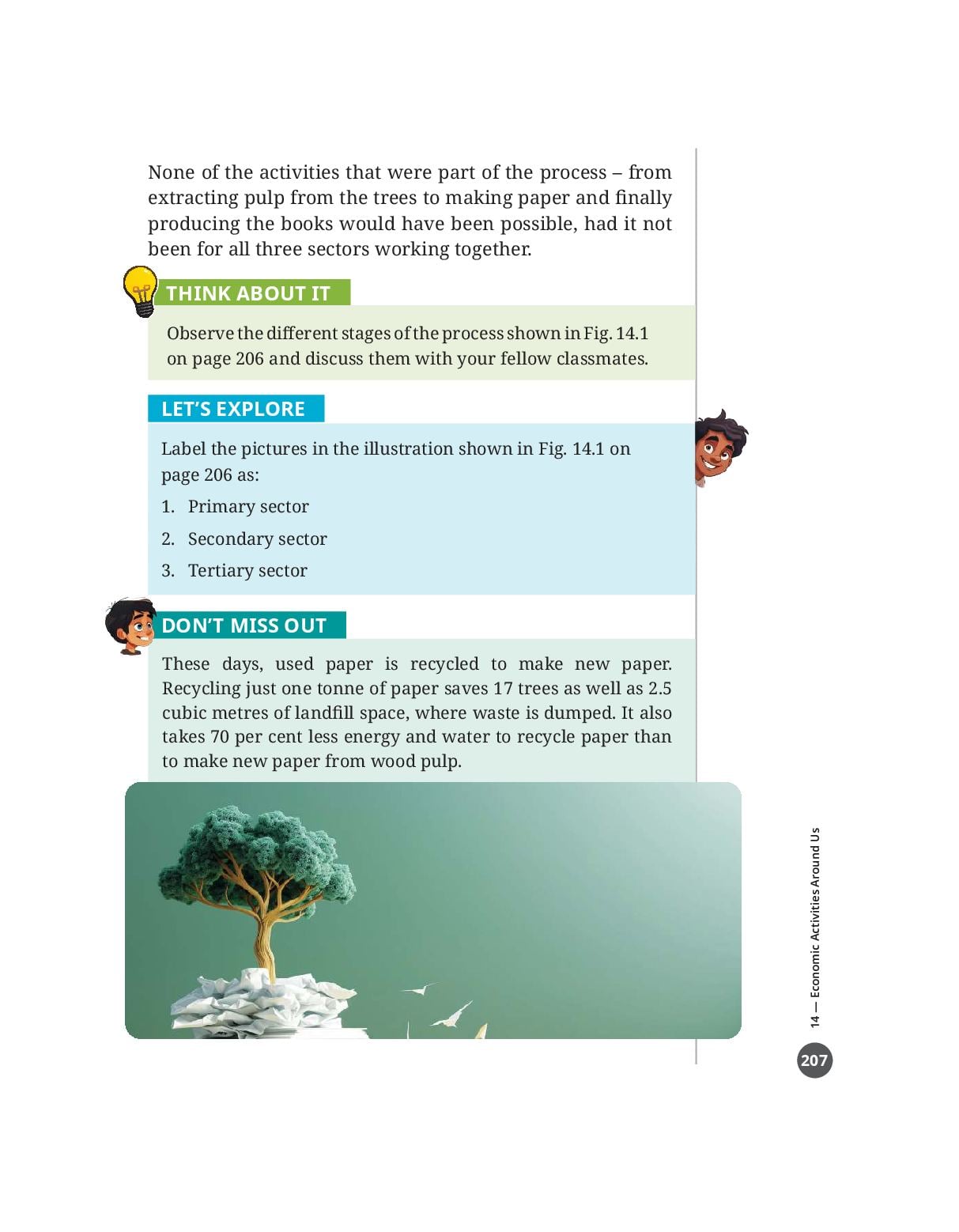
- Fig. 14.1 on page 206 makes the same point with your own textbook. A tree is felled and the logs collected (primary), the logs are hauled to a mill (tertiary), pulp becomes paper and the paper is printed into books (secondary), and forklifts, trucks and the bookshop bring the book to you (tertiary). Page 207 states the moral: “None of the activities … would have been possible, had it not been for all three sectors working together.”
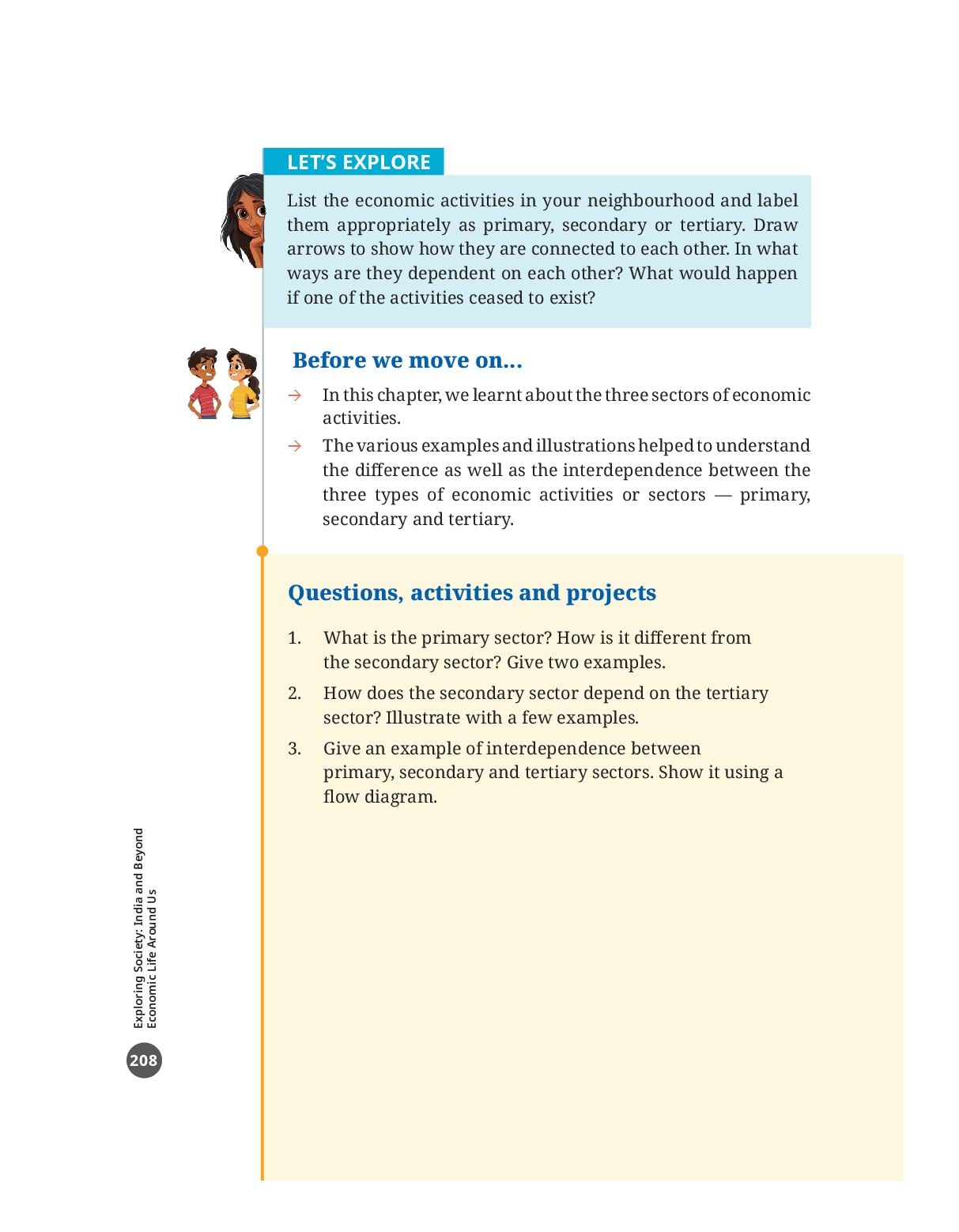
- Interdependence is the real lesson. No sector can survive alone. A cotton farmer with no mill has an unsold crop; a mill with no farmer has no cotton; both are useless without trucks, banks and shops. That is why the chapter ends by asking you to draw arrows between the activities of your own neighbourhood and to ask what would happen if one of them stopped.
Quick revision – Economic Activities Around Us
| Term | What it means | Where it appears in the chapter | Worth remembering |
|---|---|---|---|
| Monetary value | “Value of something that can be measured in terms of money” | Page 195, margin | Activities that create it are economic activities — the link back to Chapter 13 |
| Economic sectors | “Broad groups that include various activities that help with the economic prosperity of a nation” | Page 196, margin | Three of them — primary, secondary and tertiary |
| Primary sector | “The group of activities that involves extraction of raw materials directly from nature such as farming, fishing, forestry, etc.” | Page 196 | Directly dependent on nature — agriculture, mining, fishing, raising livestock, forestry |
| Secondary sector | “The group of activities that involves processing of raw materials derived from primary sector into products for sale or consumption” | Page 199, margin | Also includes construction and utilities like water, electricity and gas |
| Tertiary sector | “The group of activities that involves the provision of services which complement both primary and secondary sectors, such as transportation, banking, and management of business” | Page 201, margin | Also called the service sector — you often cannot see the work, but you feel it |
| Cooperative | “A group of people who voluntarily come together to meet their economic and social needs in a formal way. They own the cooperative and decisions are taken by the members collectively” | Page 203, margin | AMUL, 1946 — the farmers themselves are the owners |
| Middlemen | “Persons who buy goods from producers and sell them to consumers. The middlemen charge a fee for this service” | Page 203, margin | The Anand farmers “felt cheated and harassed” by them before the cooperative |
| Pasteurisation | “A process by which milk is preserved through heating to a specific temperature to kill harmful bacteria” | Page 204, margin | A secondary sector activity — it changes the milk itself |
| Factory | “Building or group of buildings where goods are manufactured, or various components are put together, to make a final product” | Page 204, margin | AMUL’s first factory at Anand made butter and milk powder |
| Warehouses | “Large buildings used for storing products before they are sold, used or rented out to shops” | Page 201, margin | Storage is a service — a tertiary activity |
| Retail | “The sale of goods in small quantities for use by the end consumer rather than for resale” | Page 204, margin | The shop at the end of the chain — tertiary |
| Export | “Goods and services that are produced in one country and sold to buyers or consumers in another country” | Page 204, margin | AMUL sells “to several countries around the world” |
Old NCERT vs New – Class 6 Social Science
This chapter is from Exploring Society: India and Beyond, the new NCERT Class 6 Social Science book (NCF-SE 2023, used from 2024-25). It replaced the old book “Our Pasts, The Earth Our Habitat and Social and Political Life”, so chapter numbers and names differ from older PDFs.
Solutions and All Chapters
Answers to the exercises and the full chapter list of Exploring Society: India and Beyond:
Economic Activities Around Us – Overview
| Class | Class 6 |
| Subject | Social Science |
| Book | Exploring Society: India and Beyond – new NCERT book |
| Chapter | 14 of 14 – Economic Activities Around Us |
| Book pages | 195 – 208 |
| Edition | NCERT Reprint 2026-27 |
| Session | 2026-27 |
| Free – read online or download |
Class 6 Social Science Chapter 14 – FAQs
Where can I download Economic Activities Around Us Class 6 PDF?
From the download table on this page – the chapter PDF is free, and the full book is linked too.
What is Class 6 Social Science Chapter 14 about?
The chapter’s one idea: every economic activity in the country can be sorted into three sectors — primary, secondary and tertiary. Kauṭilya’s Arthaśhāstra opens the chapter — “The root of prosperity is economic activity, the lack of it brings material distress.” Page 196 explains the sorting: “Some economic activities share similar characteristics and based on this, they can be grouped together or classified into broader groups called economic sectors.”
Is Economic Activities Around Us from the new NCERT Class 6 Social Science book?
Yes. It is chapter 14 of exploring society: india and beyond, the new NCERT Class 6 Social Science book for 2026-27.
Is this the latest NCERT edition for 2026-27?
Yes – the PDF is NCERT’s latest edition for the 2026-27 session.
Where are the NCERT Solutions for Class 6 Social Science Chapter 14?
Open the NCERT Solutions link above for answers to the exercise questions.