NCERT Solutions for Class 6 Social Science Chapter 14 Economic Activities Around Us provide clear, step-by-step answers to every exercise and in-text question from the chapter Economic Activities Around Us of the NCERT textbook Exploring Society India and Beyond. Prepared by subject experts as per the latest NCERT (CBSE) syllabus for 2026-27, these NCERT Solutions for Class 6 Social Science help you understand each concept, write exam-ready answers, and check your own solutions. You can read them online below or download the free Class 6 Social Science Chapter 14 question-answer PDF.
NCERT Solutions for Class 6 Social Science Chapter 14 Economic Activities Around Us
- Class: Class 6
- Subject: Social Science
- Chapter: Chapter 14 – Economic Activities Around Us
- Textbook: Exploring Society India and Beyond (NCERT)
- Study material: NCERT Solutions – questions with answers, free PDF
These solutions answer all the exercise questions of Chapter 14 Economic Activities Around Us — including the in-text questions, short-answer and long-answer questions, and activities — with complete explanations so you can follow the method, not just the final answer. Read the full solutions below.
NCERT Solutions Class 6 Social Science Chapter 14 Economic Activities Around Us View Download

NCERT Solutions for Class 6 Social Science Chapter 14 PDF Download
You can read the NCERT Solutions for Class 6 Social Science Chapter 14 online above, or download the complete question-answer PDF to study Economic Activities Around Us offline at any time.
NCERT Solutions for Class 6 Social Science Chapter 14 PDF Download Link – Click Here to Download Solutions PDF
Questions Covered in This Chapter
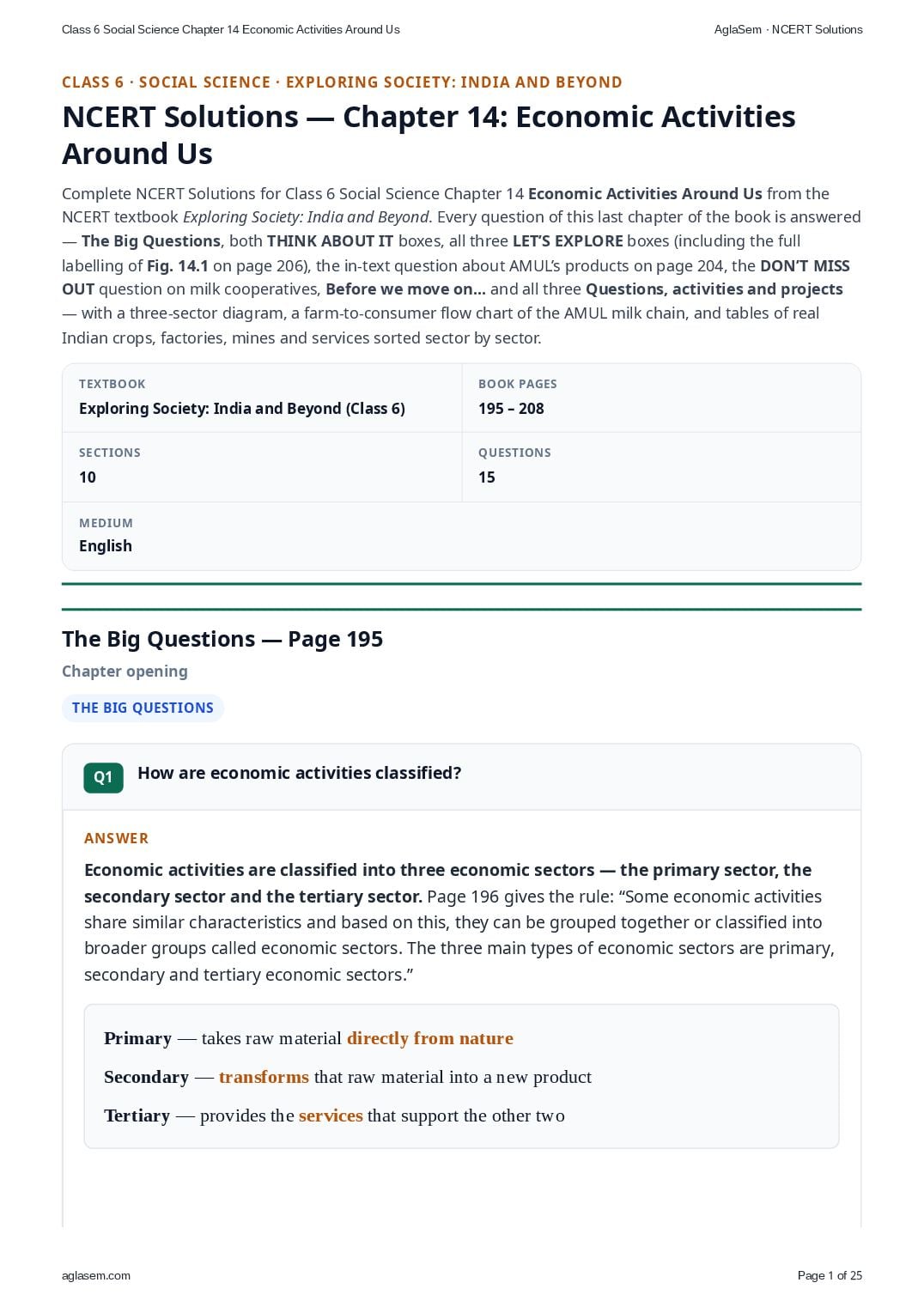
These NCERT Solutions answer all 15 questions of this chapter. The questions solved are:
- How are economic activities classified?
- What differentiates these activities to be grouped into sectors?
- How are the three sectors interconnected?
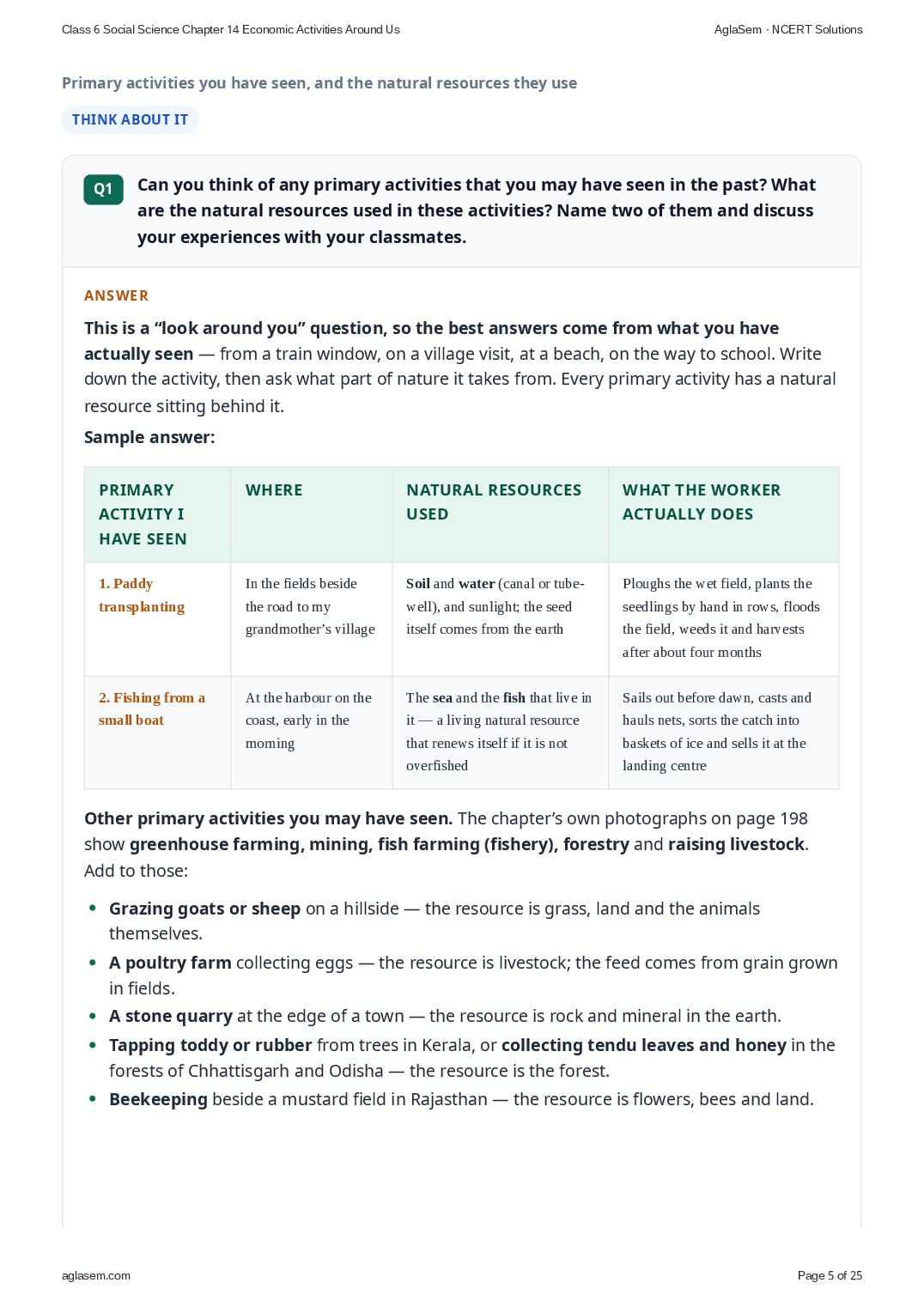
- Can you think of any primary activities that you may have seen in the past? What are the natural resources used in these activities? Name two of them and discuss your experiences with your classmates.
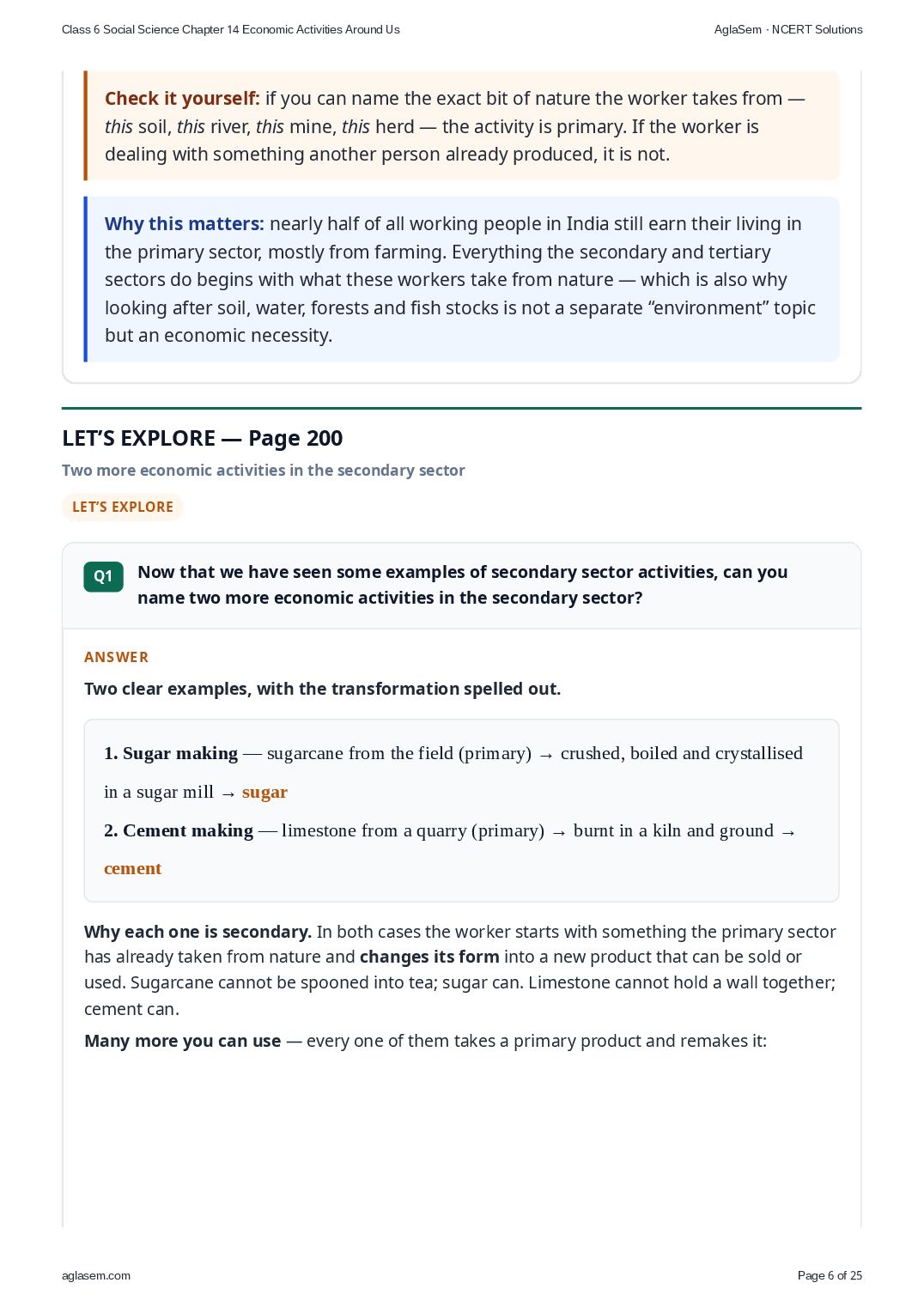
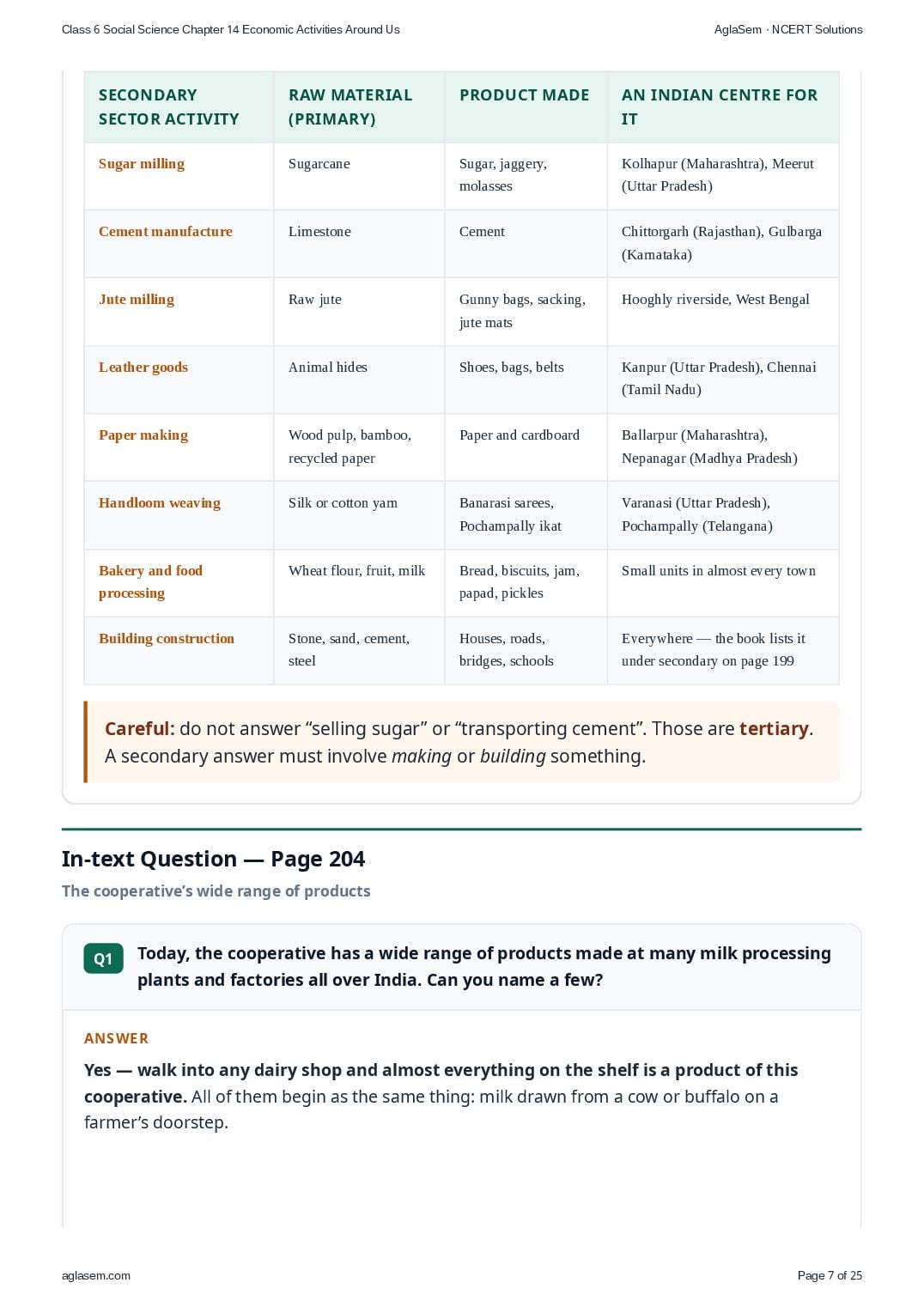
- Now that we have seen some examples of secondary sector activities, can you name two more economic activities in the secondary sector?
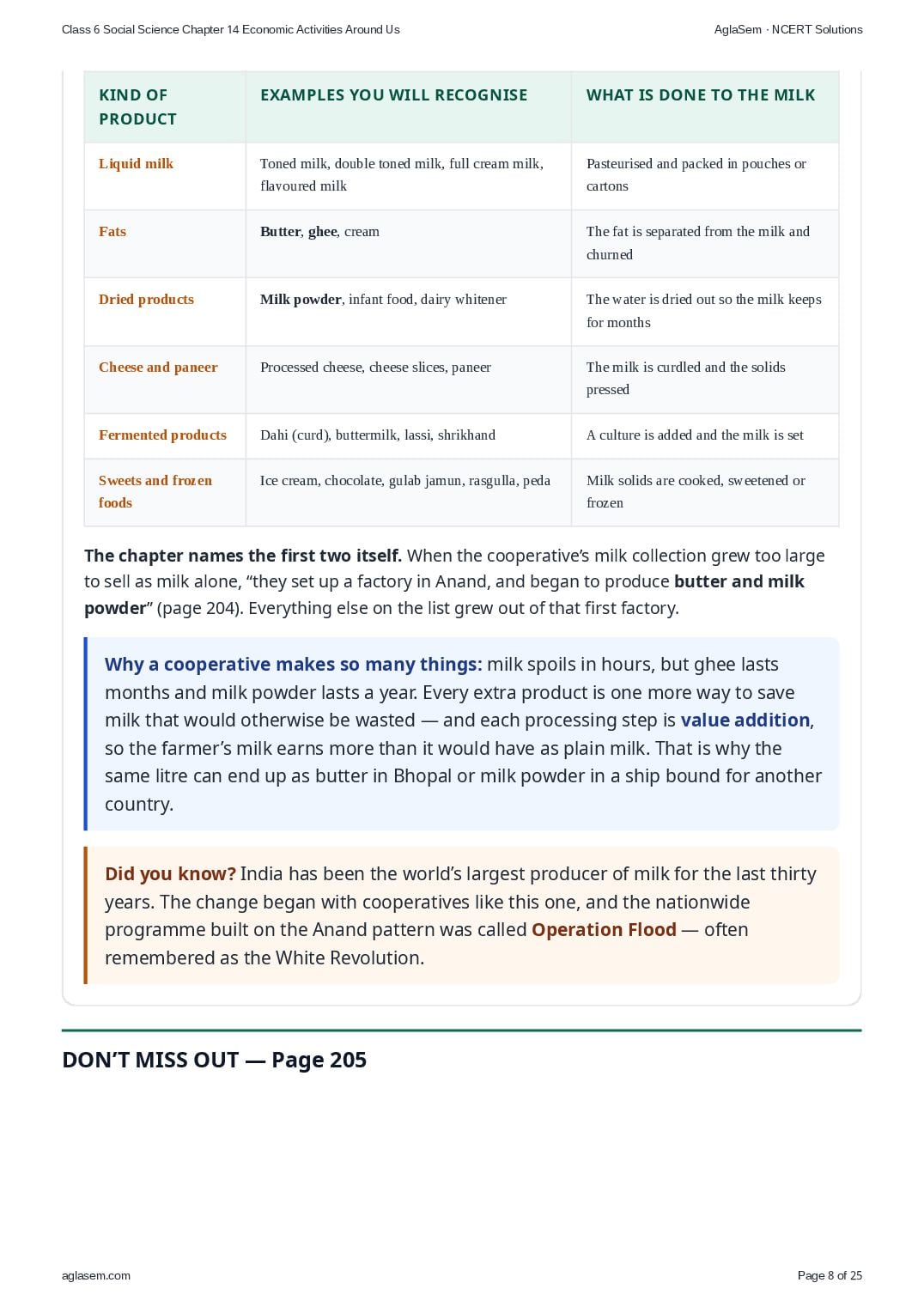
- Today, the cooperative has a wide range of products made at many milk processing plants and factories all over India. Can you name a few?
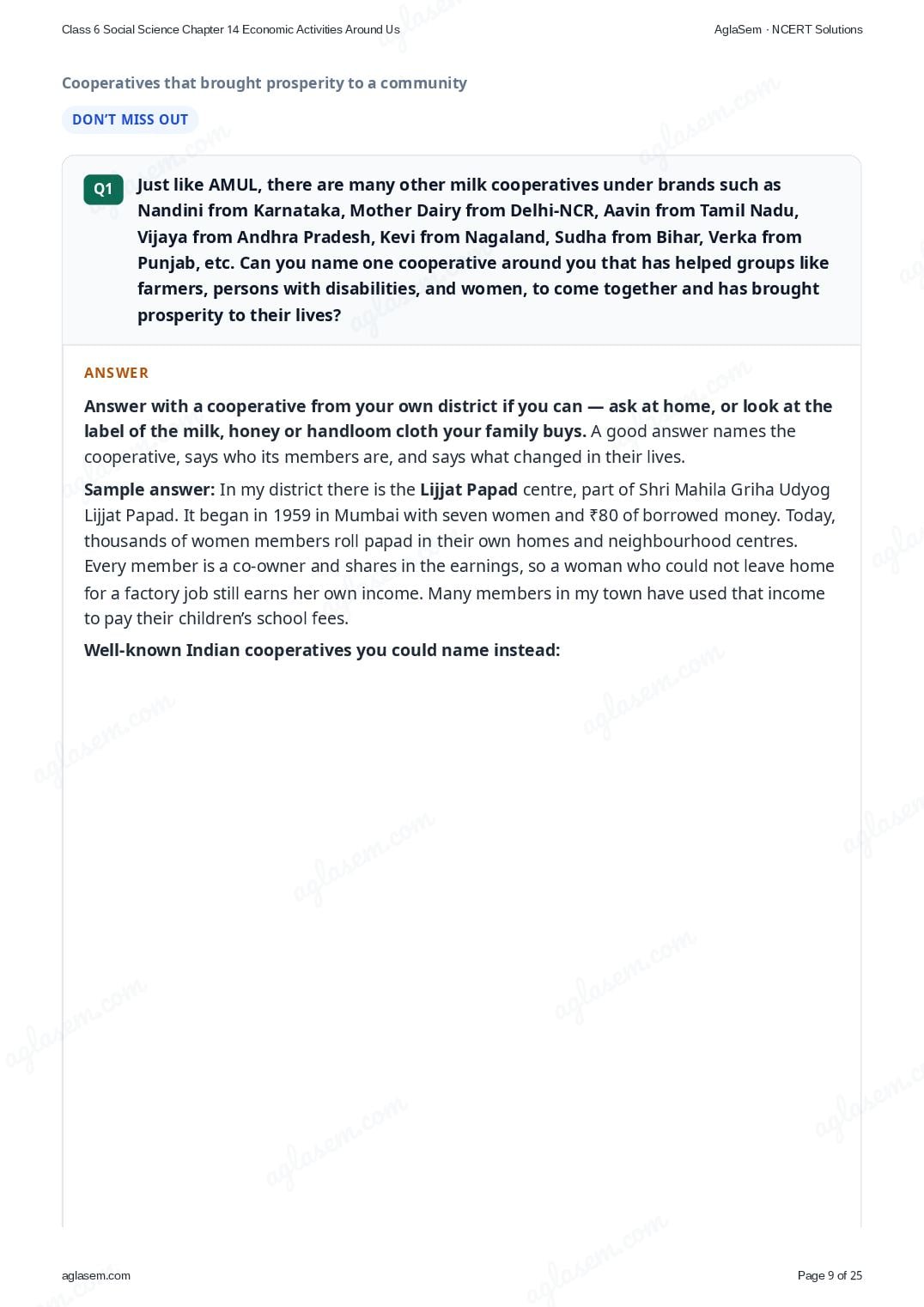
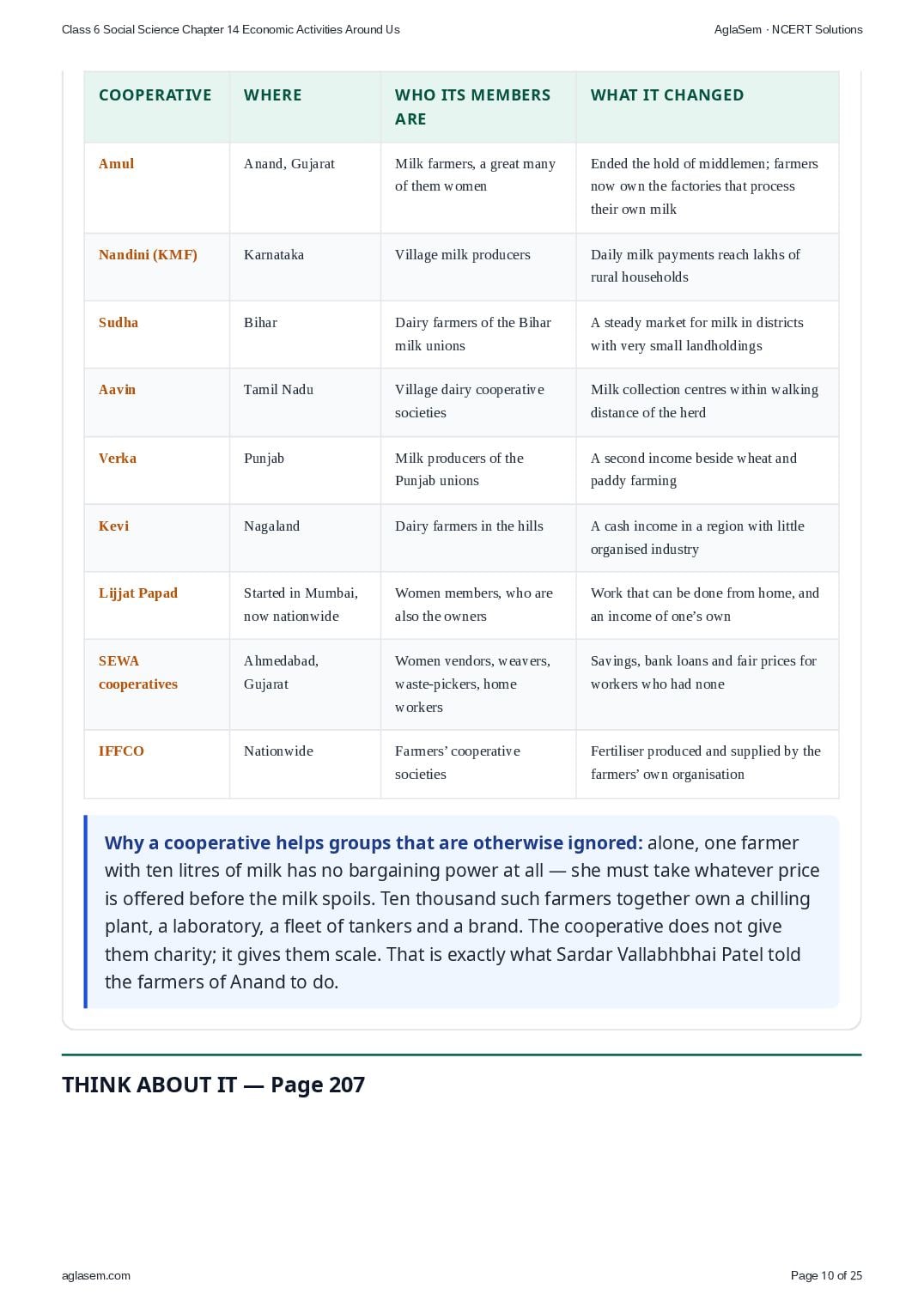
- Just like AMUL, there are many other milk cooperatives under brands such as Nandini from Karnataka, Mother Dairy from Delhi-NCR, Aavin from Tamil Nadu, Vijaya from Andhra Pradesh, Kevi from Nagaland, Sudha from Bihar, Verka from Punjab, etc. Can you name one cooperative around you that has helped groups like farmers, persons with disabilities, and women, to come together and has brought prosperity to their lives?
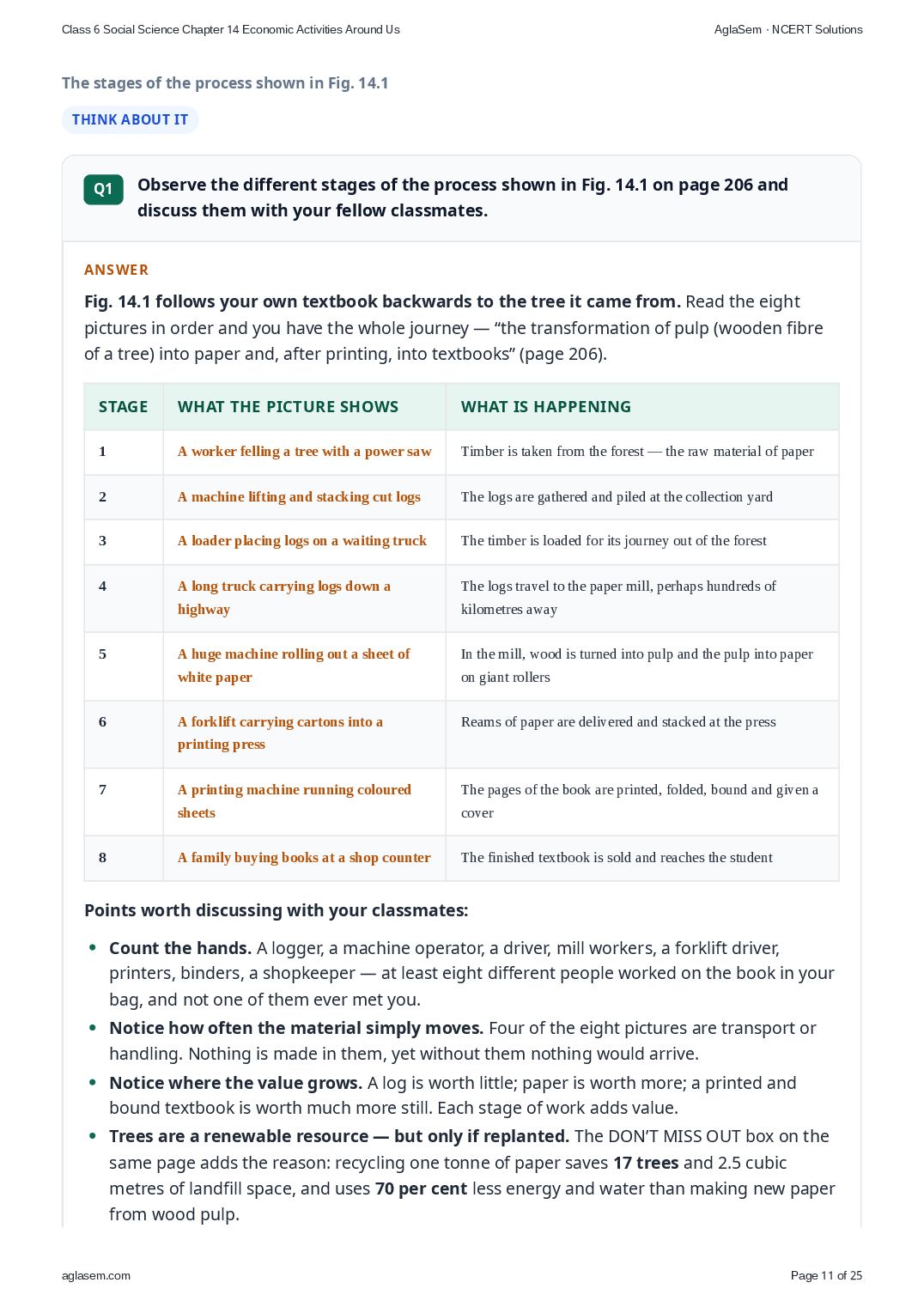
- Observe the different stages of the process shown in Fig. 14.1 on page 206 and discuss them with your fellow classmates.
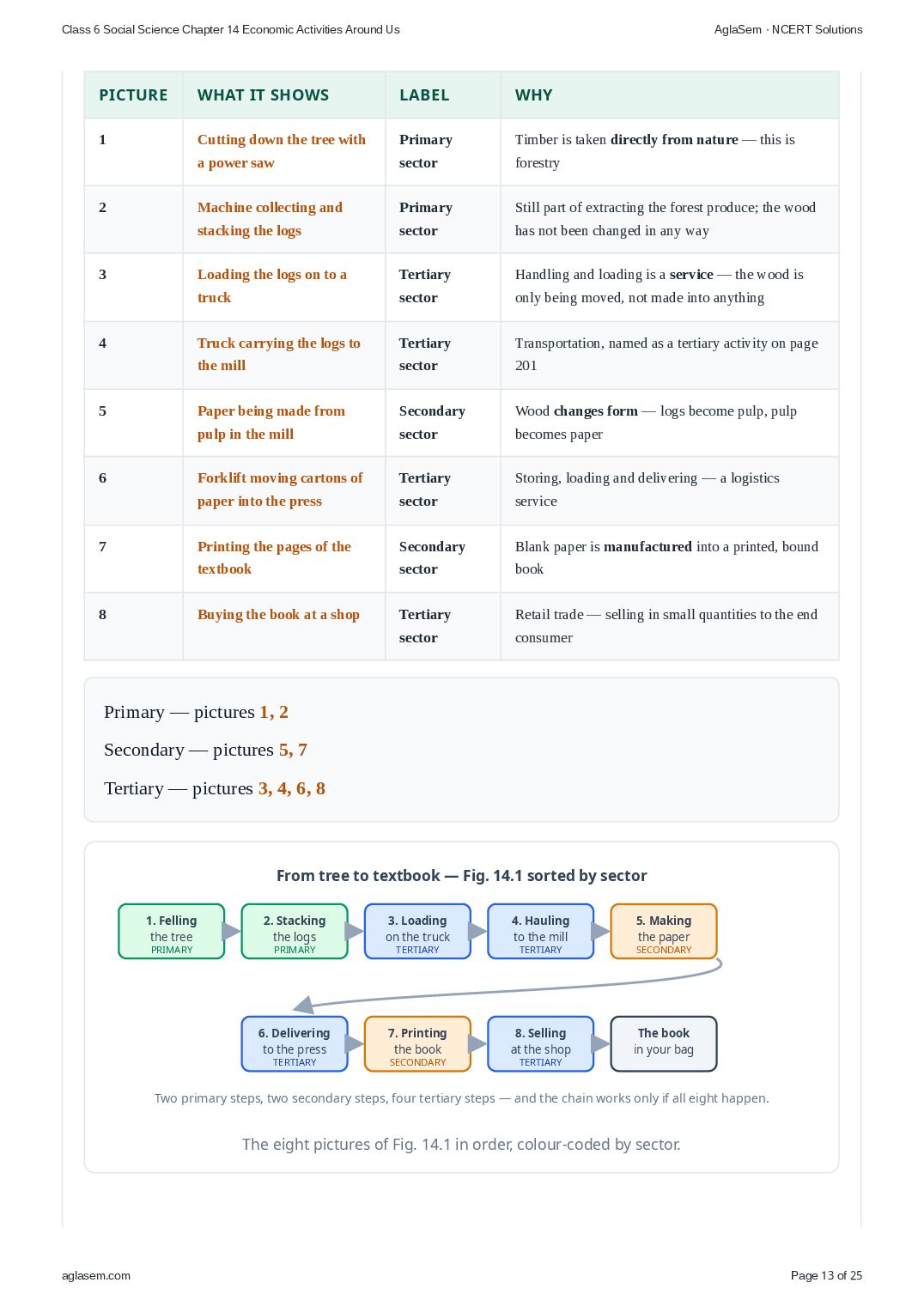
- Label the pictures in the illustration shown in Fig. 14.1 on page 206 as: 1. Primary sector 2. Secondary sector 3. Tertiary sector
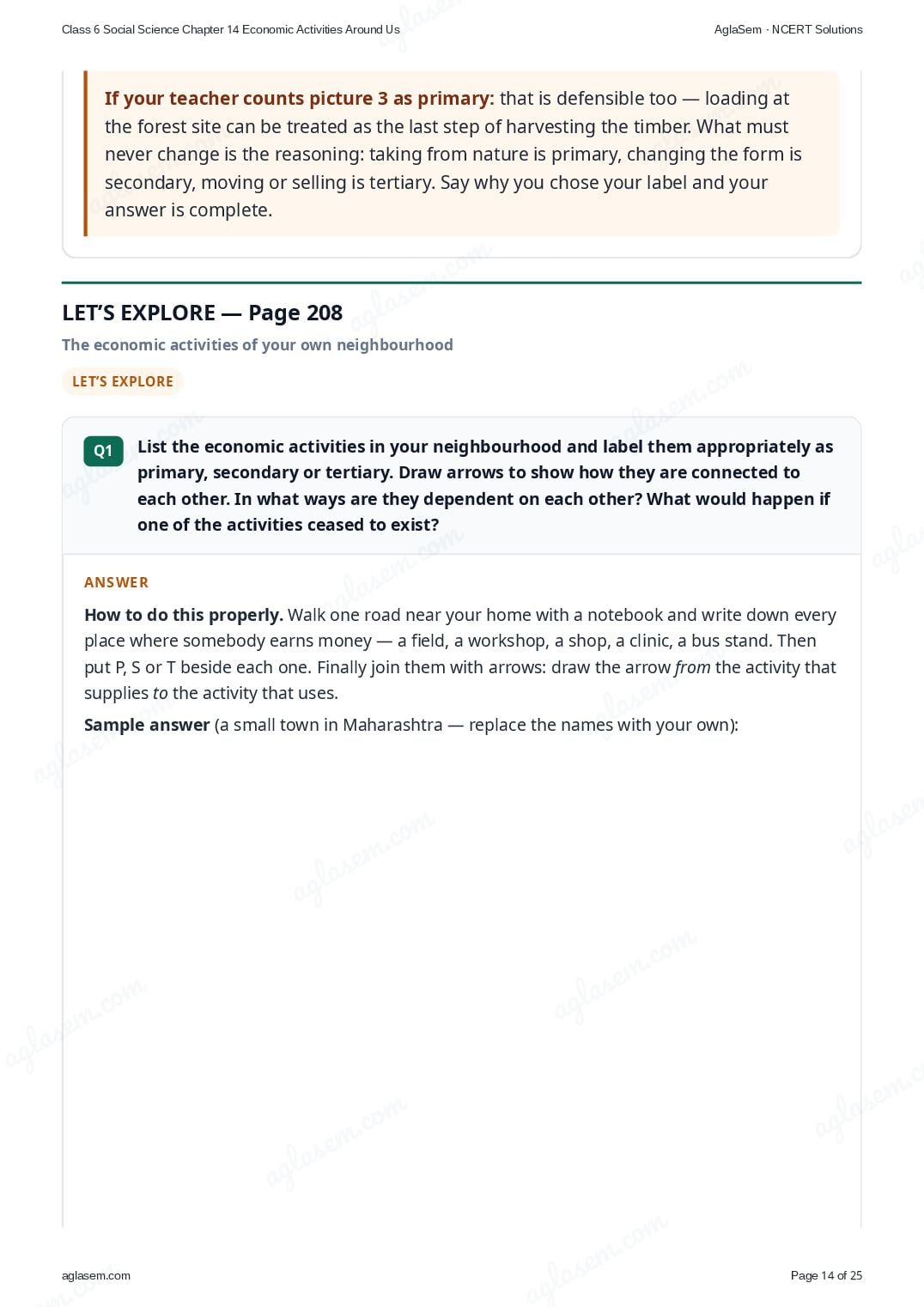
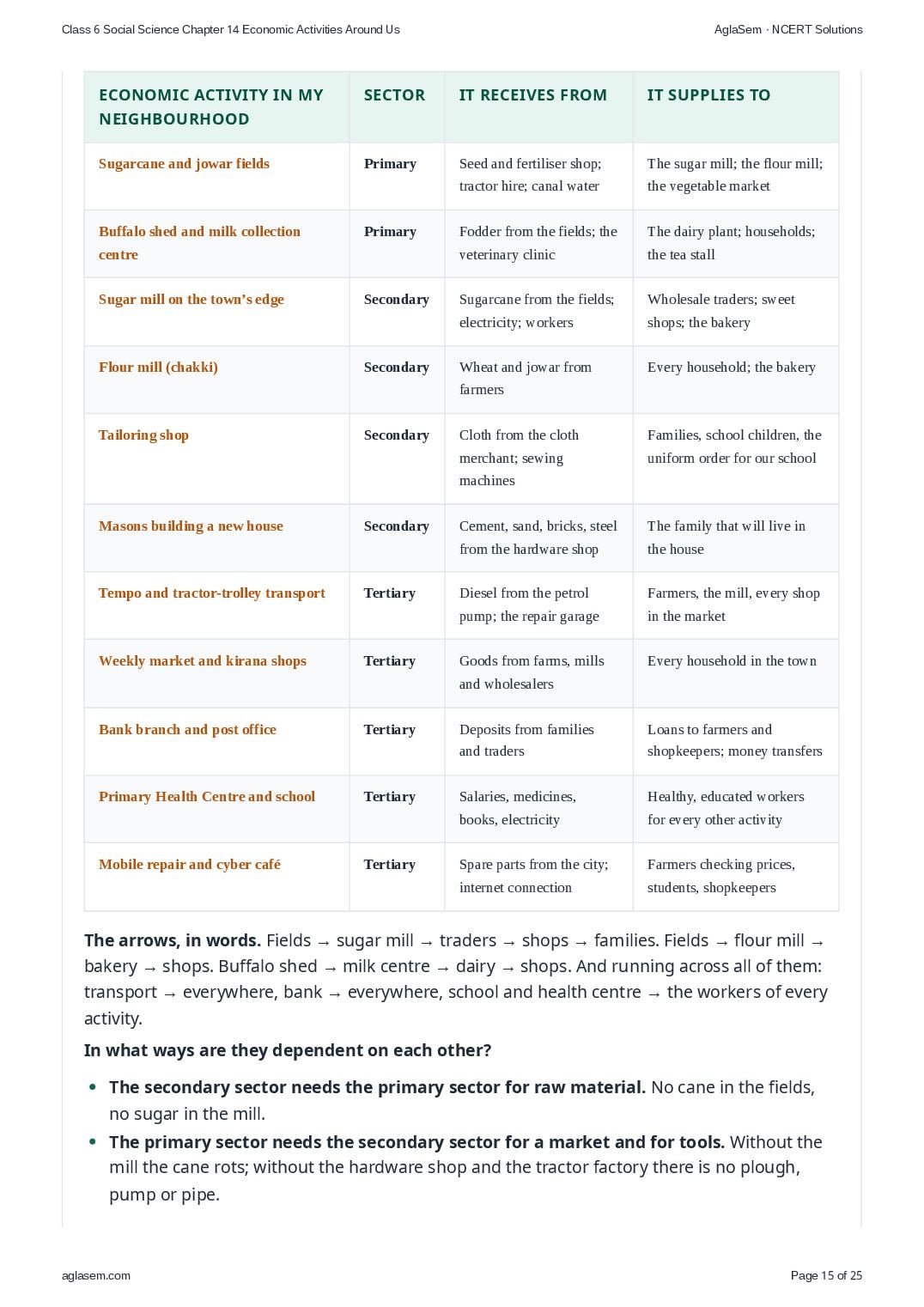
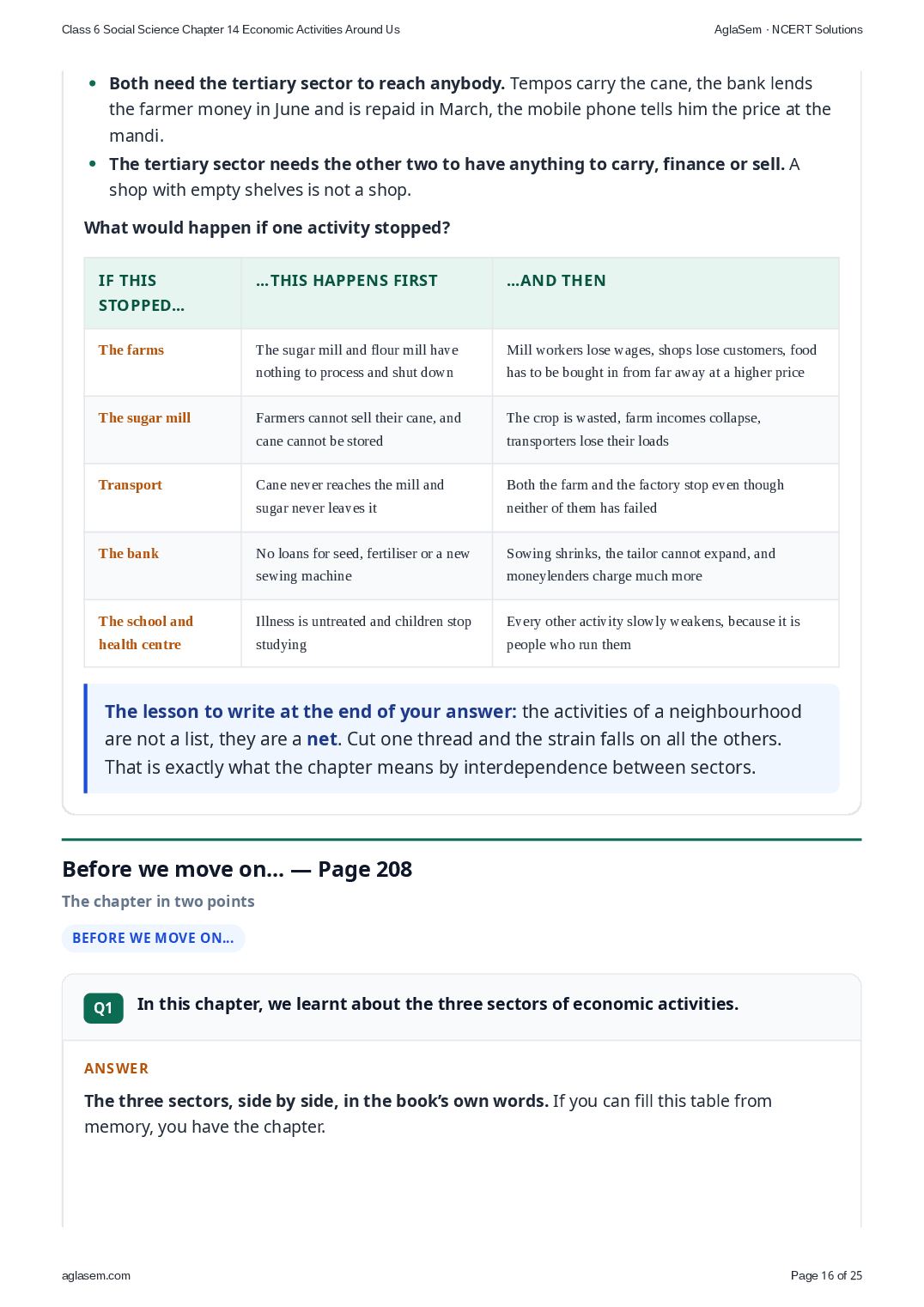
- List the economic activities in your neighbourhood and label them appropriately as primary, secondary or tertiary. Draw arrows to show how they are connected to each other. In what ways are they dependent on each other? What would happen if one of the activities ceased to exist?
- In this chapter, we learnt about the three sectors of economic activities.
- The various examples and illustrations helped to understand the difference as well as the interdependence between the three types of economic activities or sectors — primary, secondary and tertiary.
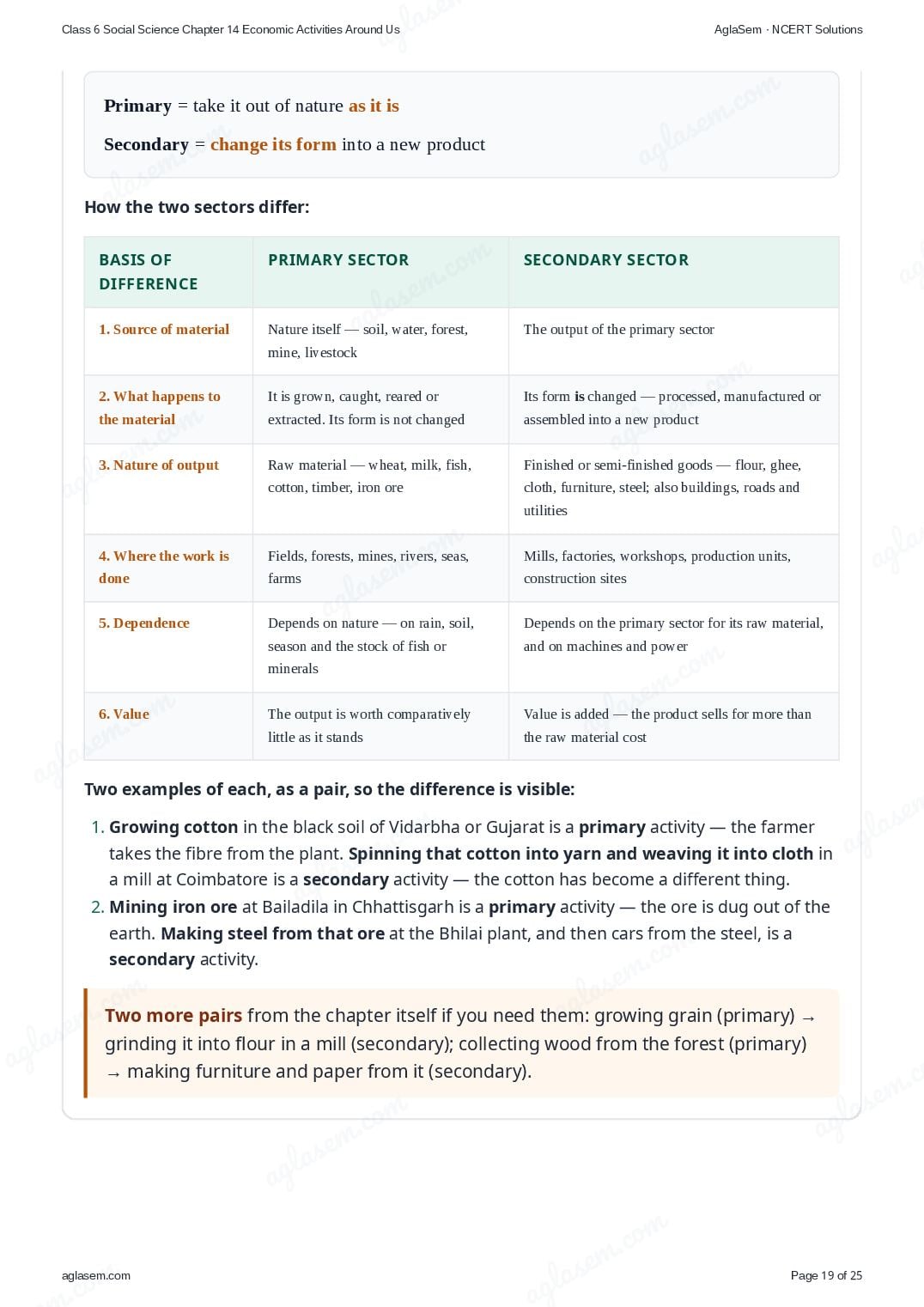
- What is the primary sector? How is it different from the secondary sector? Give two examples.
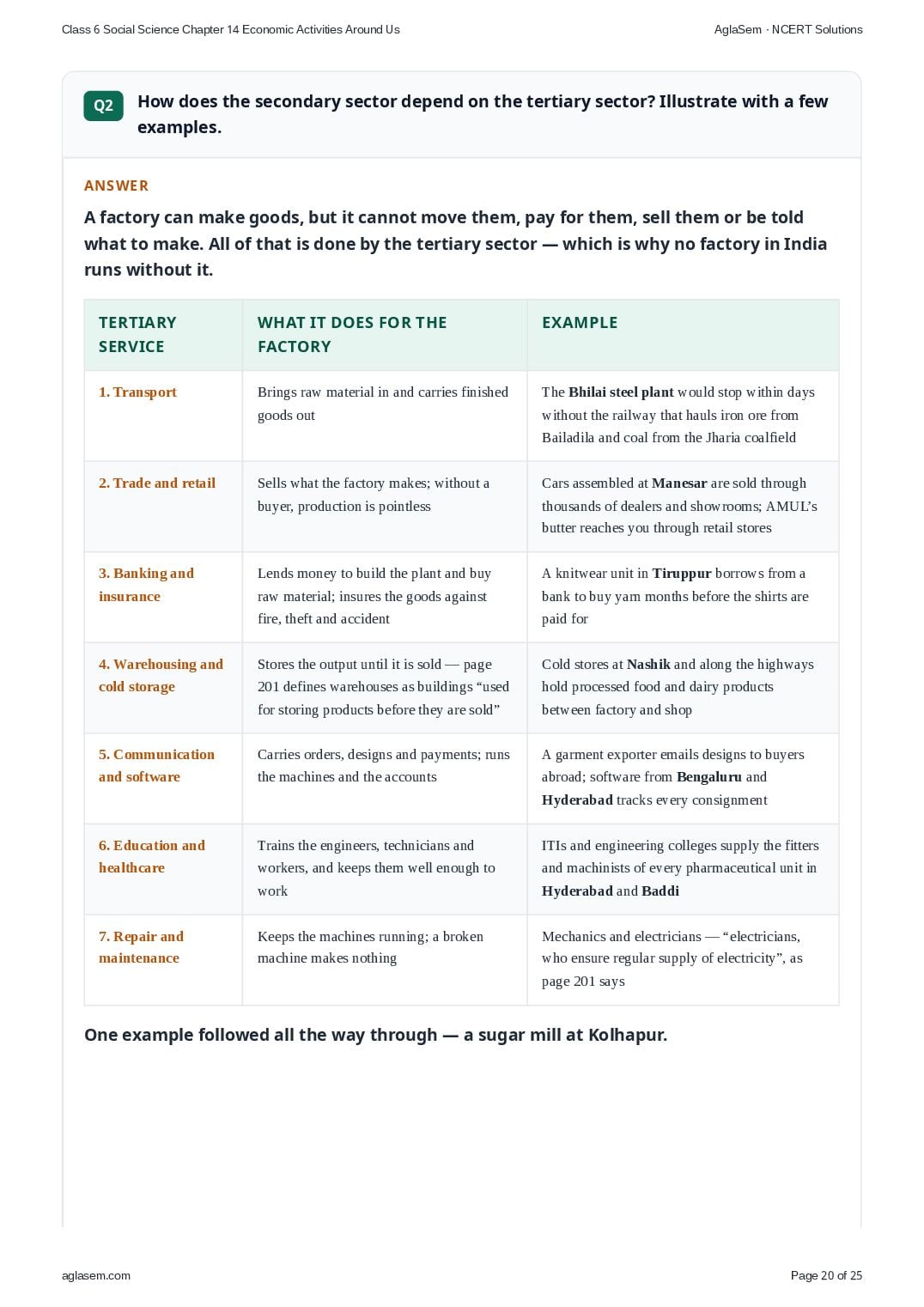
- How does the secondary sector depend on the tertiary sector? Illustrate with a few examples.
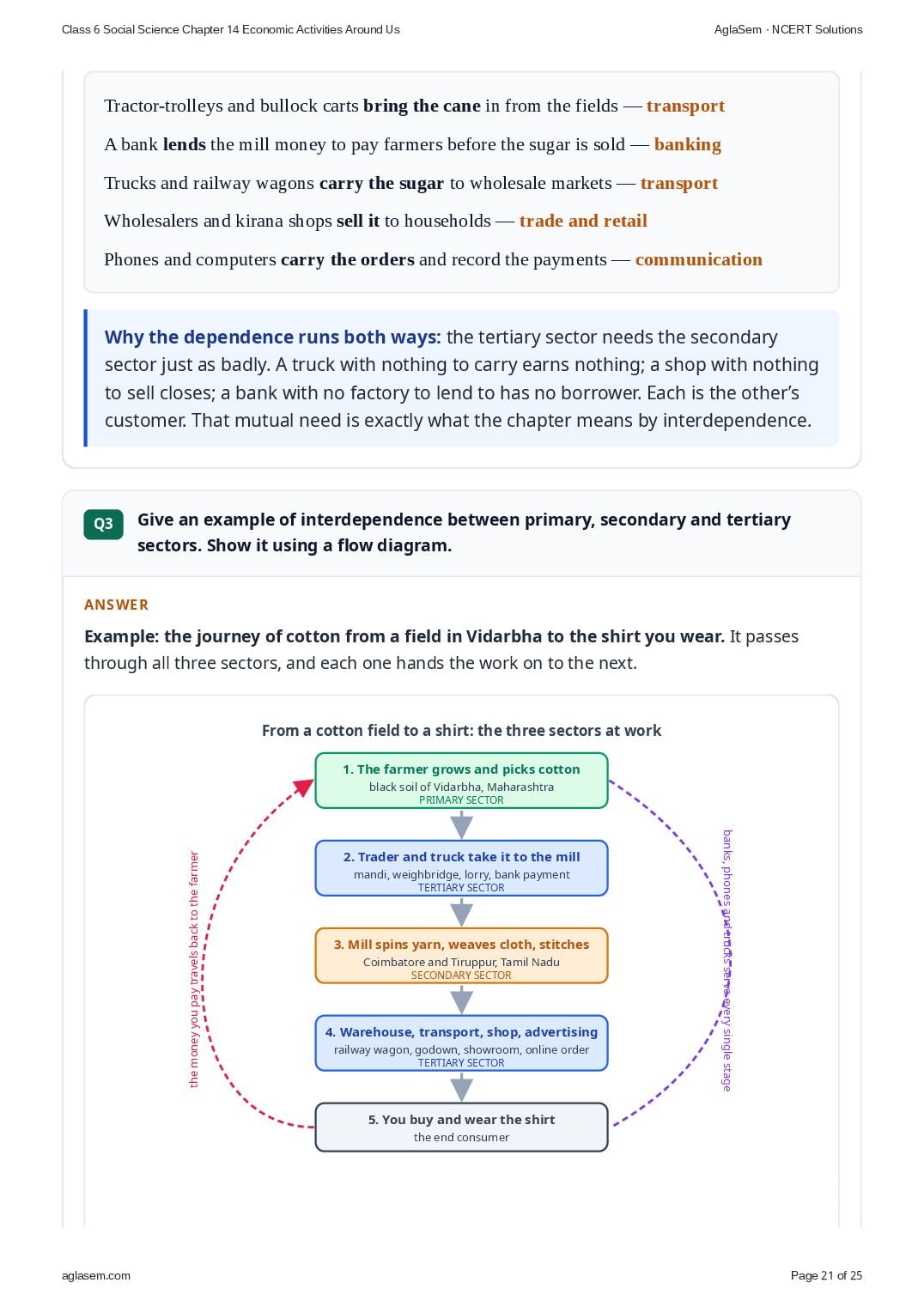
- Give an example of interdependence between primary, secondary and tertiary sectors. Show it using a flow diagram.
Chapter at a Glance
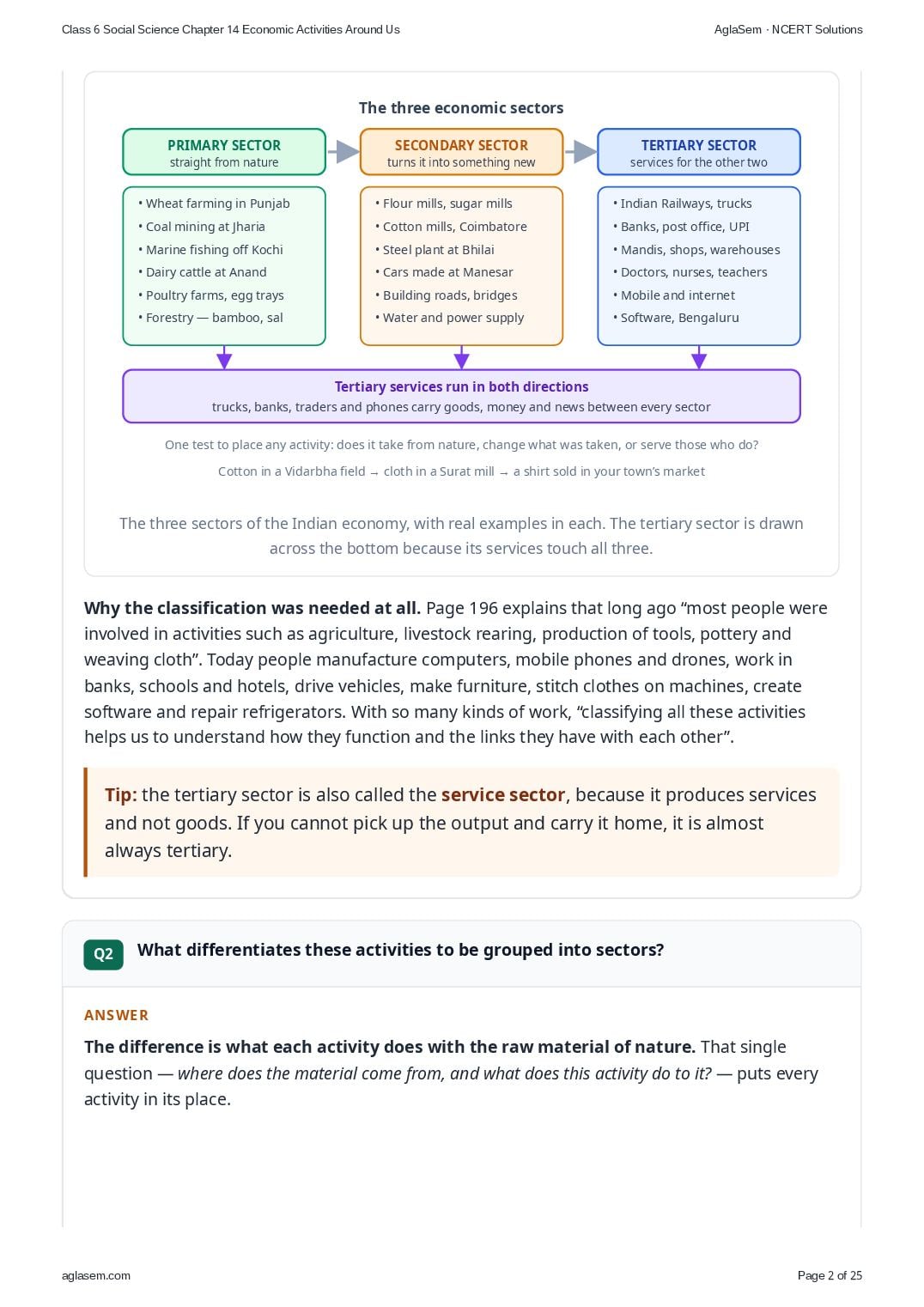
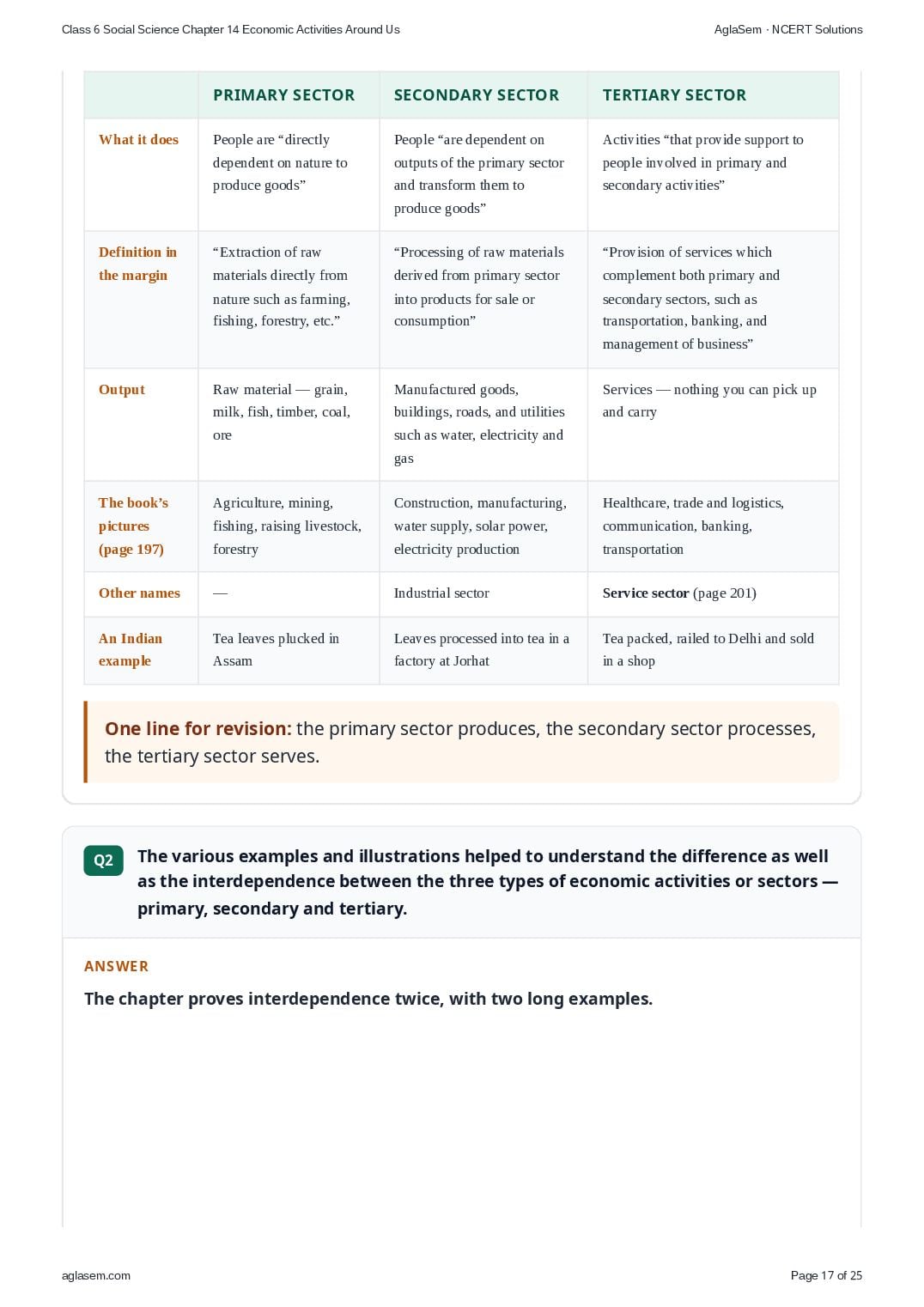
- The chapter’s one idea: every economic activity in the country can be sorted into three sectors — primary, secondary and tertiary. Kauṭilya’s Arthaśhāstra opens the chapter — “The root of prosperity is economic activity, the lack of it brings material distress.” Page 196 explains the sorting: “Some economic activities share similar characteristics and based on this, they can be grouped together or classified into broader groups called economic sectors .”
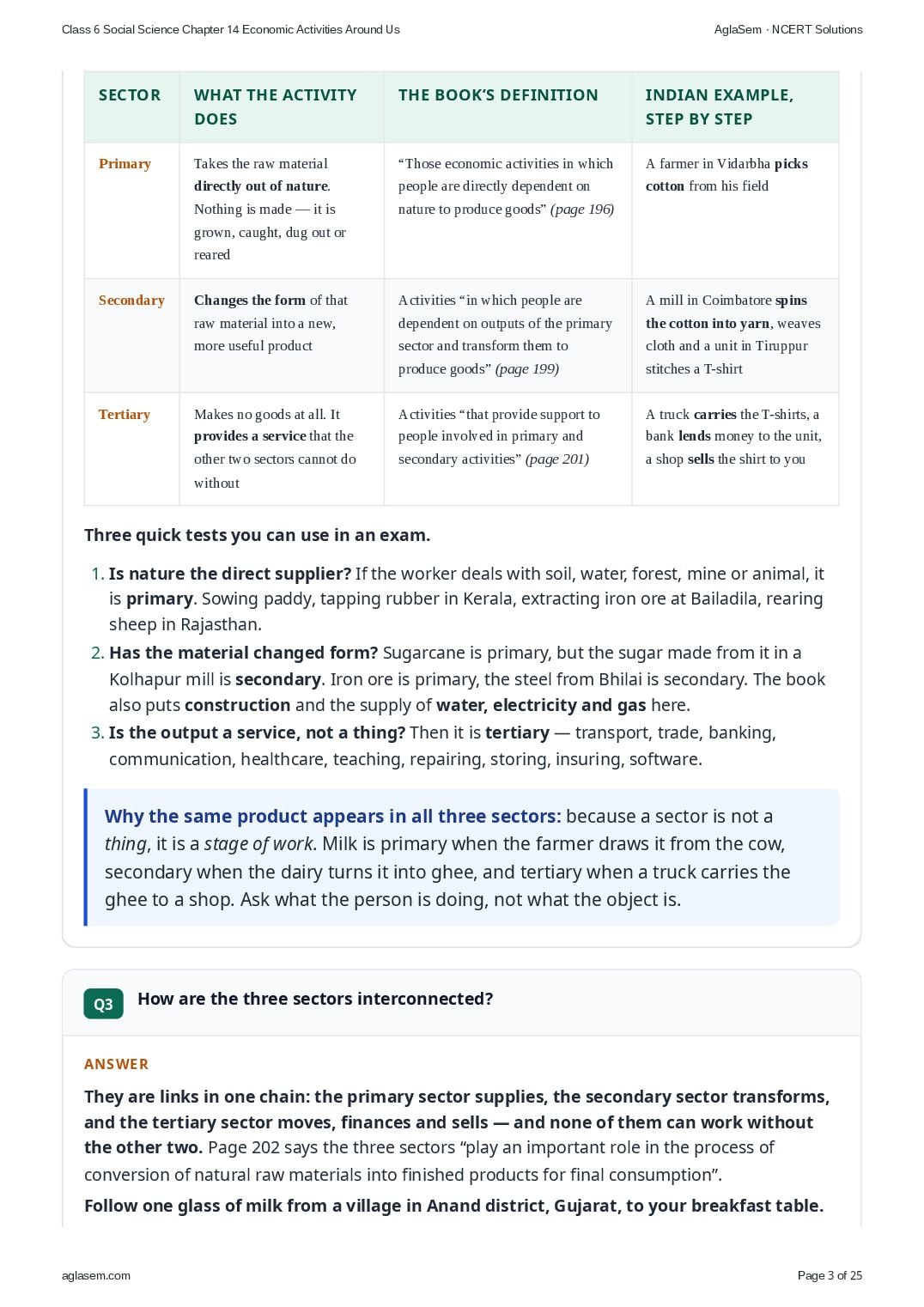
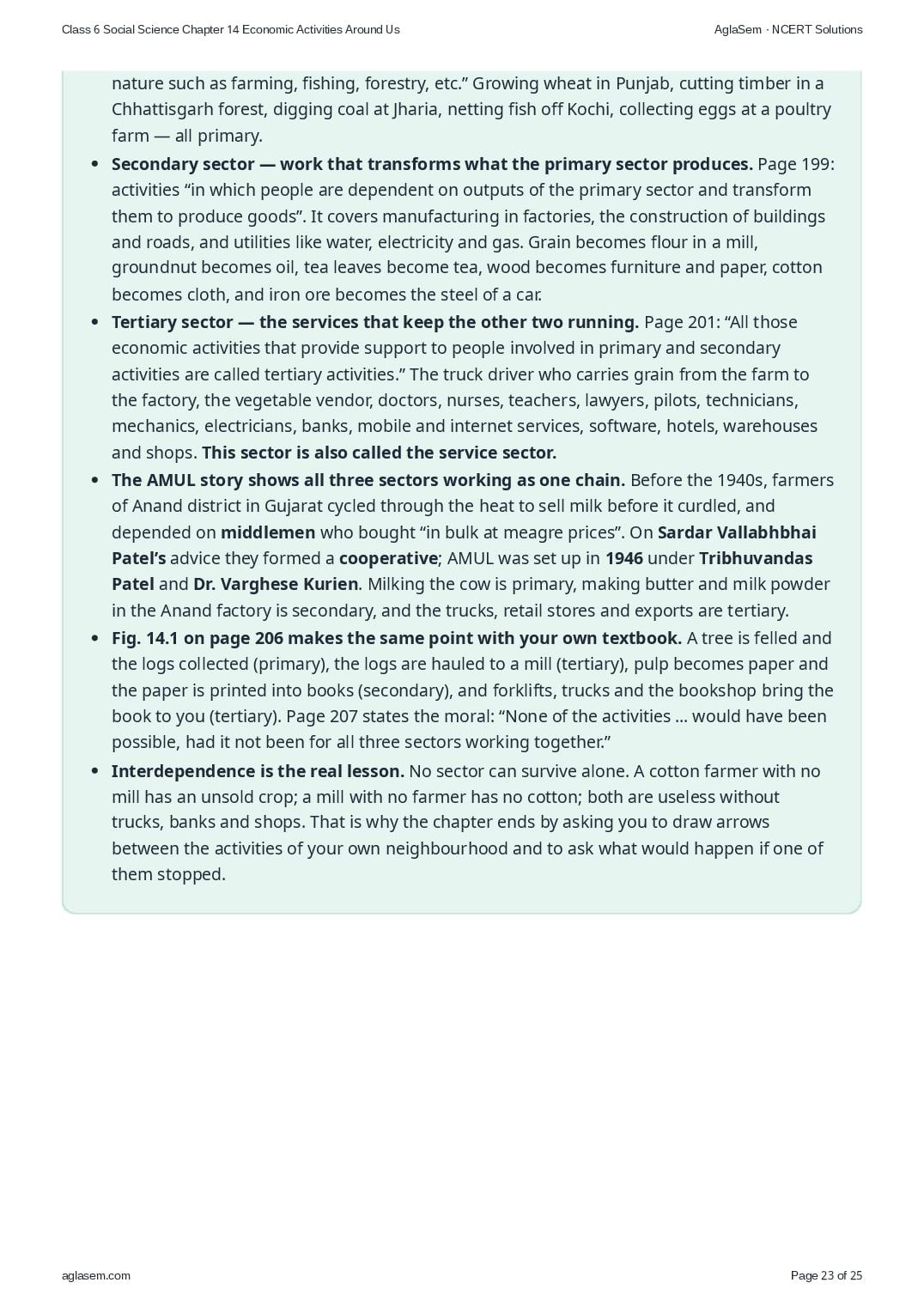
- Primary sector — work done directly with nature. “Those economic activities in which people are directly dependent on nature to produce goods are known as primary activities” (page 196). The margin adds that it “involves extraction of raw materials directly from nature such as farming, fishing, forestry, etc.” Growing wheat in Punjab, cutting timber in a Chhattisgarh forest, digging coal at Jharia, netting fish off Kochi, collecting eggs at a poultry farm — all primary.
- Secondary sector — work that transforms what the primary sector produces. Page 199: activities “in which people are dependent on outputs of the primary sector and transform them to produce goods”. It covers manufacturing in factories, the construction of buildings and roads, and utilities like water, electricity and gas. Grain becomes flour in a mill, groundnut becomes oil, tea leaves become tea, wood becomes furniture and paper, cotton becomes cloth, and iron ore becomes the steel of a car.
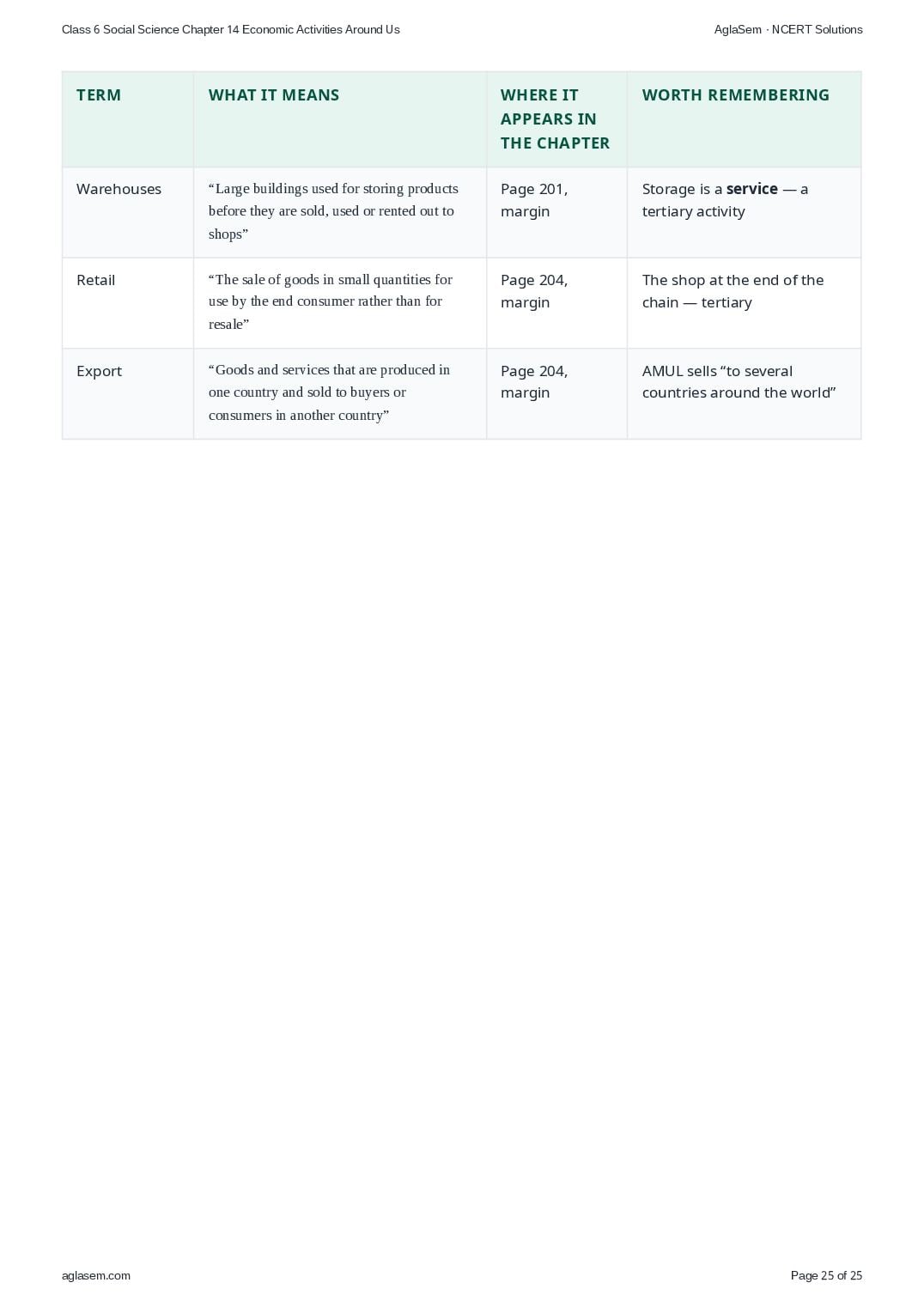
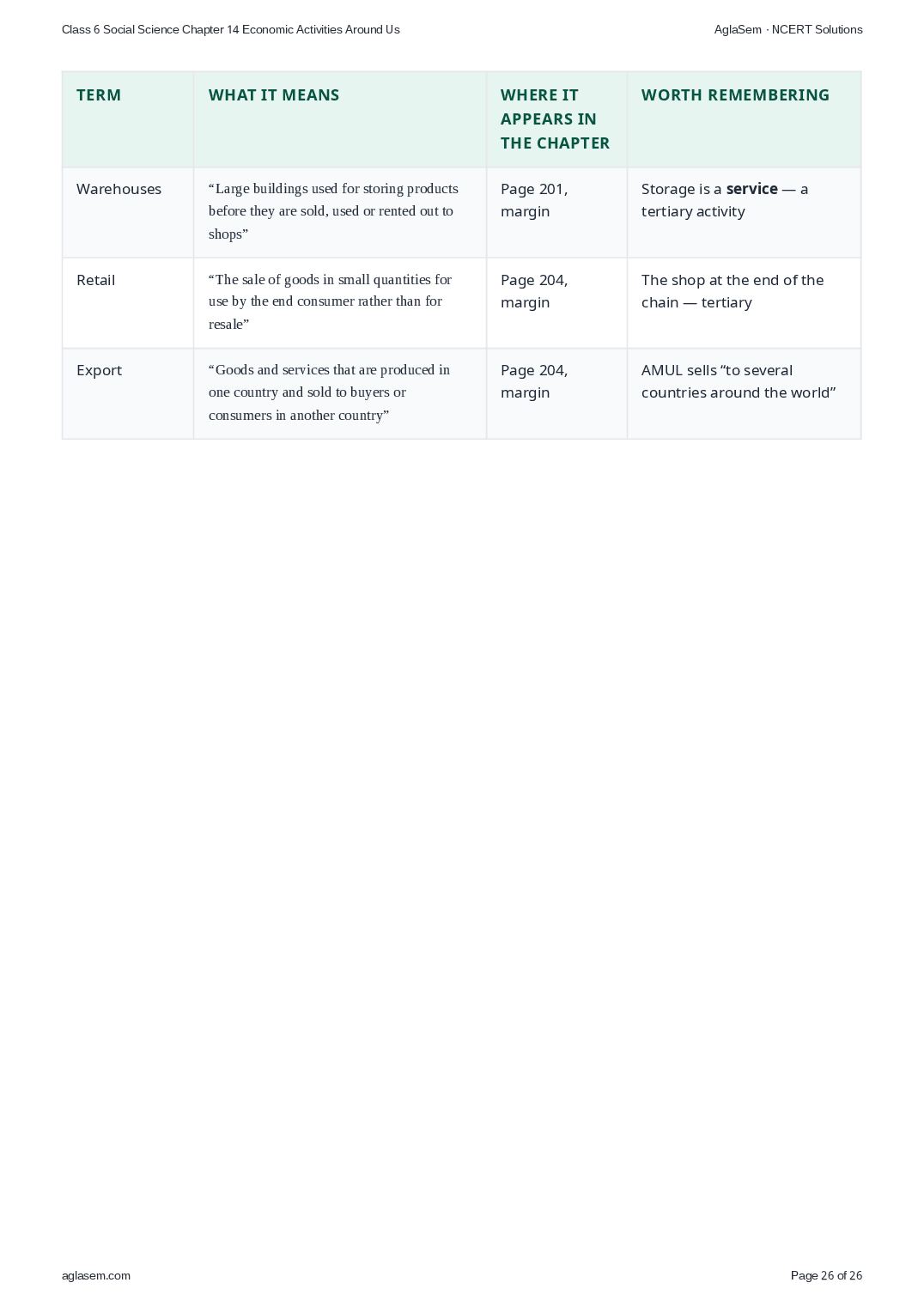
- Tertiary sector — the services that keep the other two running. Page 201: “All those economic activities that provide support to people involved in primary and secondary activities are called tertiary activities.” The truck driver who carries grain from the farm to the factory, the vegetable vendor, doctors, nurses, teachers, lawyers, pilots, technicians, mechanics, electricians, banks, mobile and internet services, software, hotels, warehouses and shops. This sector is also called the service sector.
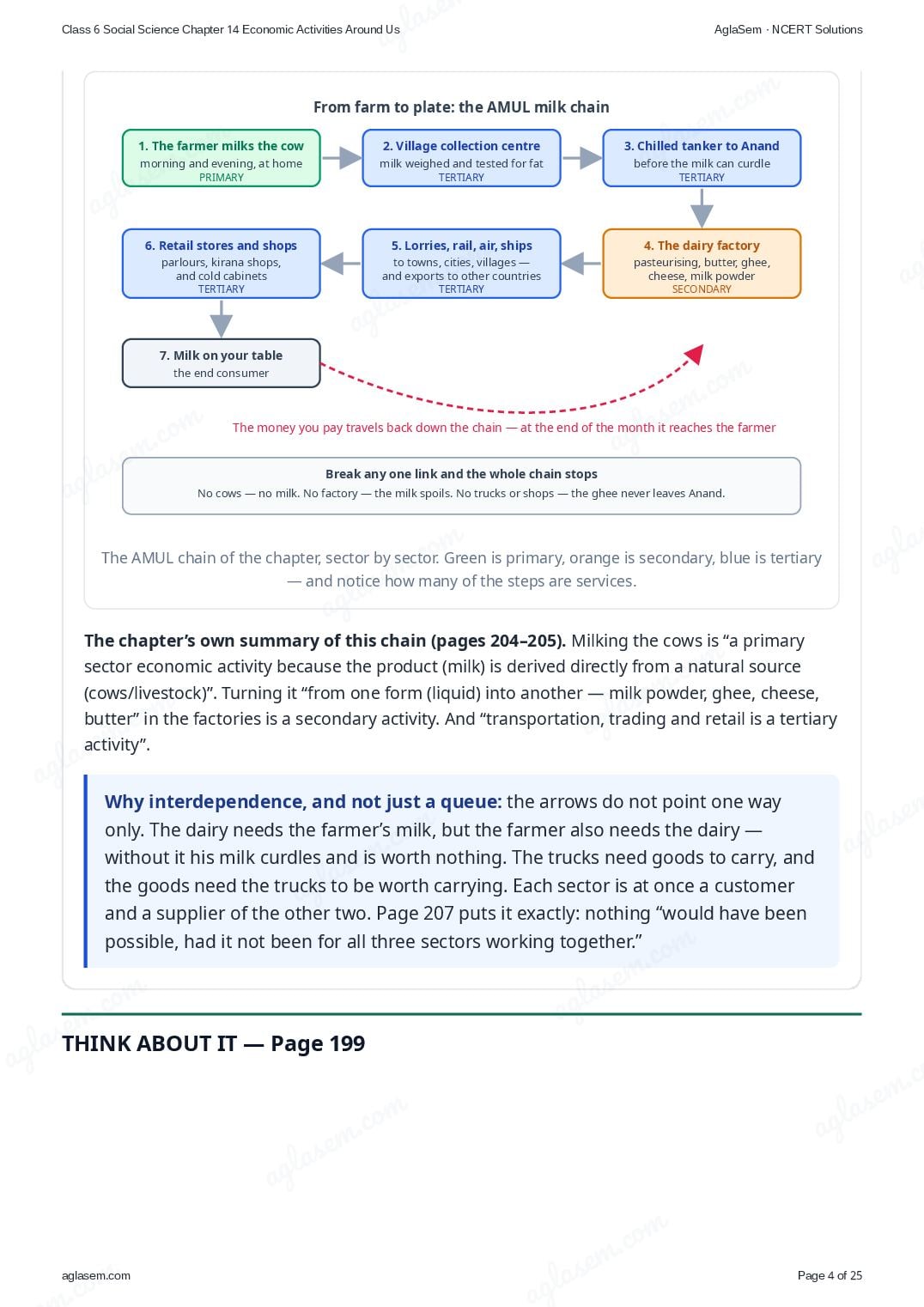
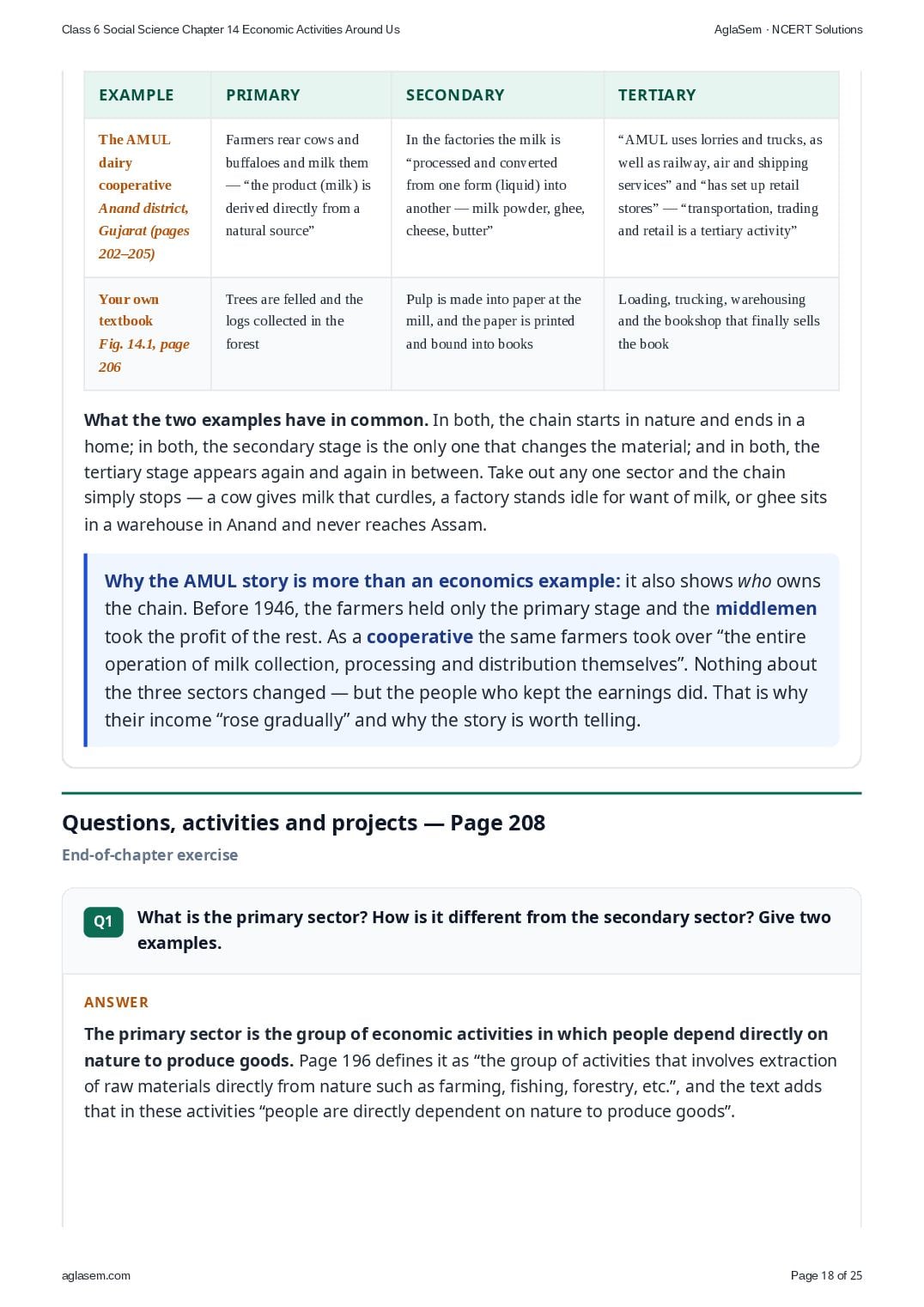
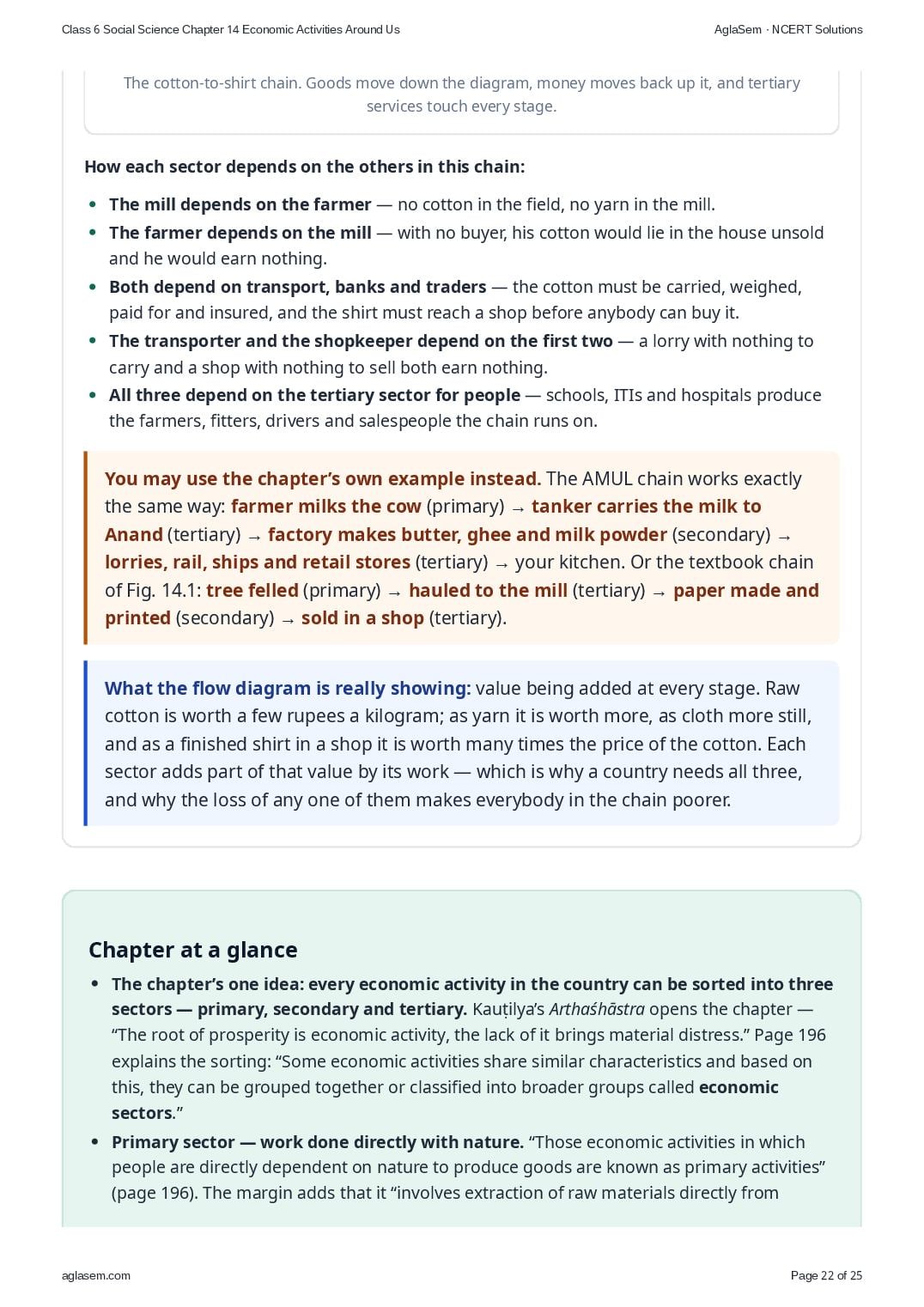
- The AMUL story shows all three sectors working as one chain. Before the 1940s, farmers of Anand district in Gujarat cycled through the heat to sell milk before it curdled, and depended on middlemen who bought “in bulk at meagre prices”. On Sardar Vallabhbhai Patel’s advice they formed a cooperative ; AMUL was set up in 1946 under Tribhuvandas Patel and Dr. Varghese Kurien . Milking the cow is primary, making butter and milk powder in the Anand factory is secondary, and the trucks, retail stores and exports are tertiary.
- Fig. 14.1 on page 206 makes the same point with your own textbook. A tree is felled and the logs collected (primary), the logs are hauled to a mill (tertiary), pulp becomes paper and the paper is printed into books (secondary), and forklifts, trucks and the bookshop bring the book to you (tertiary). Page 207 states the moral: “None of the activities … would have been possible, had it not been for all three sectors working together.”
- Interdependence is the real lesson. No sector can survive alone. A cotton farmer with no mill has an unsold crop; a mill with no farmer has no cotton; both are useless without trucks, banks and shops. That is why the chapter ends by asking you to draw arrows between the activities of your own neighbourhood and to ask what would happen if one of them stopped.
How to Download NCERT Solutions for Class 6 Social Science Chapter 14 PDF
Follow these simple steps to get the Economic Activities Around Us questions-and-answers PDF from Exploring Society India and Beyond.
- Search NCERT Solutions for Class 6 Social Science Chapter 14 aglasem and open this page.
- Read the exercise questions with answers for Economic Activities Around Us shown above.
- Click the Download PDF link to save the Economic Activities Around Us solutions to your device.
NCERT Solutions for Class 6 Social Science – All Chapters
There are more chapters to study besides Economic Activities Around Us in Social Science. Here are the NCERT Solutions for all chapters of Class 6 Social Science.
- Chapter 1 Locating Places on the Earth
- Chapter 2 Oceans and Continents
- Chapter 3 Landforms and Life
- Chapter 4 Timeline and Sources of History
- Chapter 5 India That Is Bharat
- Chapter 6 the Beginnings of Indian Civilisation
- Chapter 7 India’s Cultural Roots
- Chapter 8 Unity in Diversity or Many in the One
- Chapter 9 Family and Community
- Chapter 10 Grassroots Democracy part 1 Governance
- Chapter 11 Grassroots Democracy part 2 Local Government in Rural Areas
- Chapter 12 Grassroots Democracy part 3 Local Government in Urban Areas
- Chapter 13 the Value of Work
- Chapter 14 Economic Activities Around Us
NCERT Solutions for Class 6 – All Subjects
Just like Chapter 14 of Social Science, you can get the exercise questions with answers for every other subject of Class 6. Here are the NCERT Solutions for all subjects of Class 6.
NCERT Solutions for Class 6 Social Science Chapter 14 – An Overview
The key highlights of this study material are as follows.
| Aspects | Details |
|---|---|
| Class | Class 6 |
| Subject | Social Science |
| Chapter Number | Chapter 14 |
| Chapter Name | Economic Activities Around Us |
| Book Name | Exploring Society India and Beyond |
| Book By | NCERT (National Council of Educational Research and Training) |
| Educational Resource Here | NCERT Solutions of Class 6 Social Science Chapter 14 for all exercises |
| More Questions Answers of This Subject | NCERT Solutions for Class 6 Social Science |
| Download Book Chapter | NCERT Book Class 6 Social Science |
| All Questions Answers For This Class | NCERT Solutions for Class 6 |
| Complete Solutions | NCERT Solutions |
NCERT Solutions for Class 6 Social Science Chapter 14 Economic Activities Around Us – FAQs
What are the NCERT Solutions for Class 6 Social Science Chapter 14 Economic Activities Around Us?
They are the complete, step-by-step answers to all the exercise and in-text questions of Chapter 14 Economic Activities Around Us from the NCERT Class 6 Social Science textbook Exploring Society India and Beyond, written by experts as per the latest NCERT syllabus.
How can I download the Class 6 Social Science Chapter 14 solutions PDF for free?
Open this page on aglasem, read the Economic Activities Around Us questions with answers, and click the “Download Solutions PDF” link. The Class 6 Social Science Chapter 14 NCERT Solutions PDF is completely free to download.
Are these NCERT Solutions as per the latest 2026-27 syllabus?
Yes. The NCERT Solutions for Class 6 Social Science Chapter 14 are based on the latest NCERT textbook Exploring Society India and Beyond and the current 2026-27 CBSE syllabus, so the questions and answers match what you study in class.
Where can I get NCERT Solutions for the other chapters of Class 6 Social Science?
You can find the answers to every chapter on the NCERT Solutions for Class 6 Social Science page, and solutions for every subject on the NCERT Solutions for Class 6 page.
How do NCERT Solutions help in exam preparation?
They show the correct method to solve each question, help you write answers the way they are expected in exams, let you check and correct your own work, and save revision time — which together improve your marks in Class 6 Social Science.
If you have any queries on NCERT Solutions for Class 6 Social Science Chapter 14 Economic Activities Around Us, then please ask in the comments below.