NCERT Solutions for Class 6 Social Science Chapter 7 India’s Cultural Roots provide clear, step-by-step answers to every exercise and in-text question from the chapter India’s Cultural Roots of the NCERT textbook Exploring Society India and Beyond. Prepared by subject experts as per the latest NCERT (CBSE) syllabus for 2026-27, these NCERT Solutions for Class 6 Social Science help you understand each concept, write exam-ready answers, and check your own solutions. You can read them online below or download the free Class 6 Social Science Chapter 7 question-answer PDF.
NCERT Solutions for Class 6 Social Science Chapter 7 India’s Cultural Roots
- Class: Class 6
- Subject: Social Science
- Chapter: Chapter 7 – India’s Cultural Roots
- Textbook: Exploring Society India and Beyond (NCERT)
- Study material: NCERT Solutions – questions with answers, free PDF
These solutions answer all the exercise questions of Chapter 7 India’s Cultural Roots — including the in-text questions, short-answer and long-answer questions, and activities — with complete explanations so you can follow the method, not just the final answer. Read the full solutions below.
NCERT Solutions Class 6 Social Science Chapter 7 India's Cultural Roots View Download
NCERT Solutions for Class 6 Social Science Chapter 7 PDF Download
You can read the NCERT Solutions for Class 6 Social Science Chapter 7 online above, or download the complete question-answer PDF to study India’s Cultural Roots offline at any time.
NCERT Solutions for Class 6 Social Science Chapter 7 PDF Download Link – Click Here to Download Solutions PDF
Questions Covered in This Chapter
These NCERT Solutions answer all 32 questions of this chapter. The questions solved are:
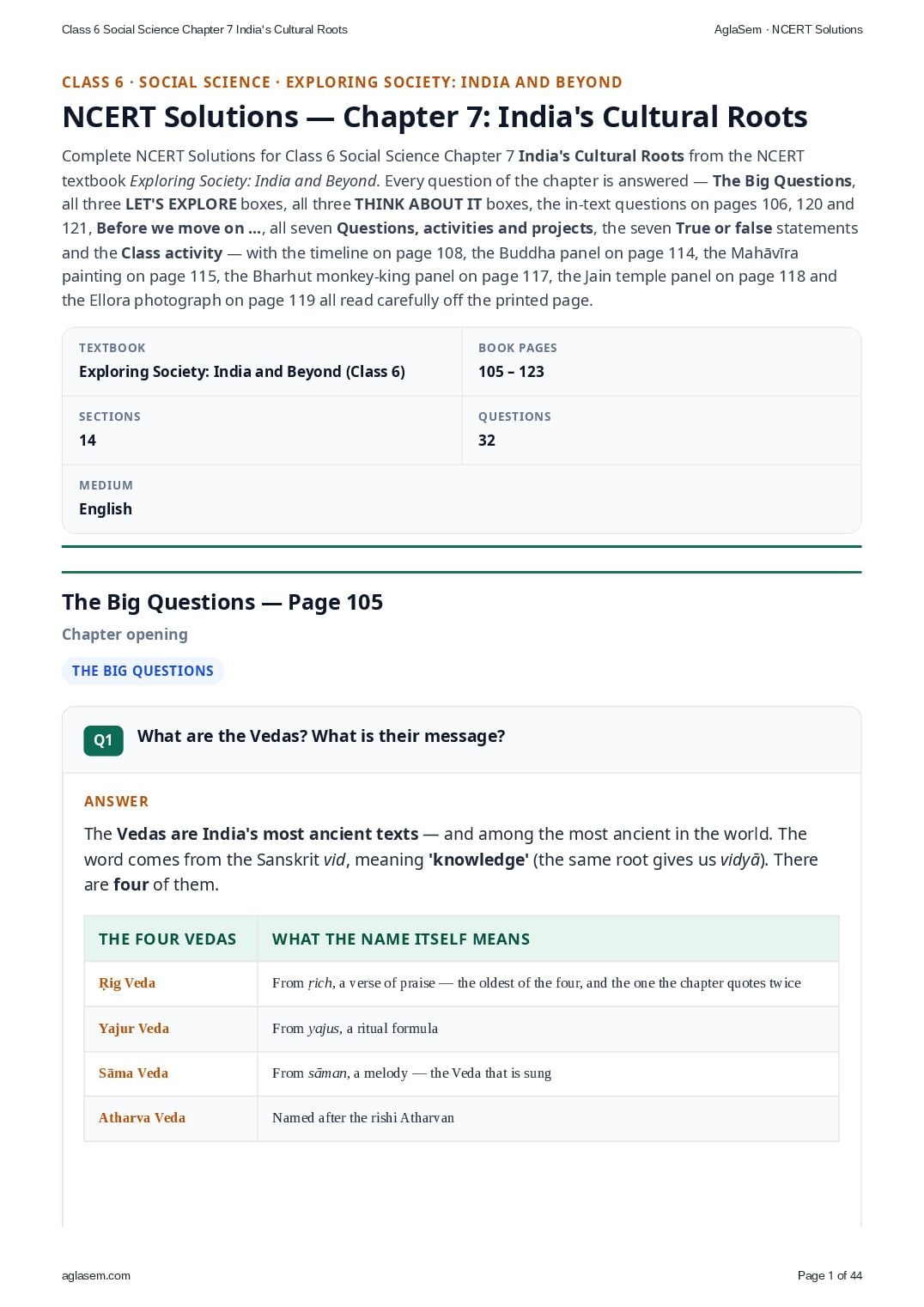
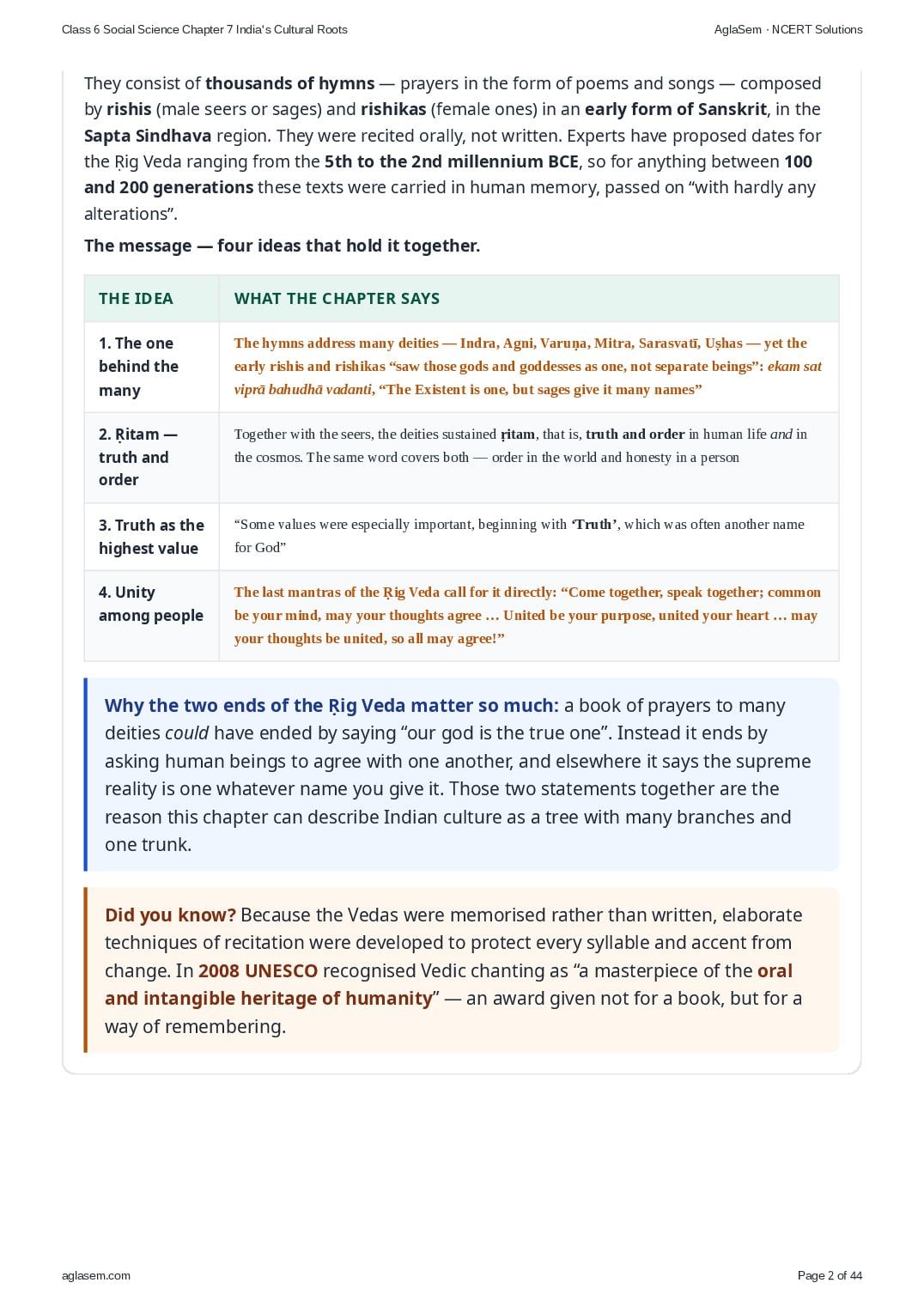
- What are the Vedas? What is their message?
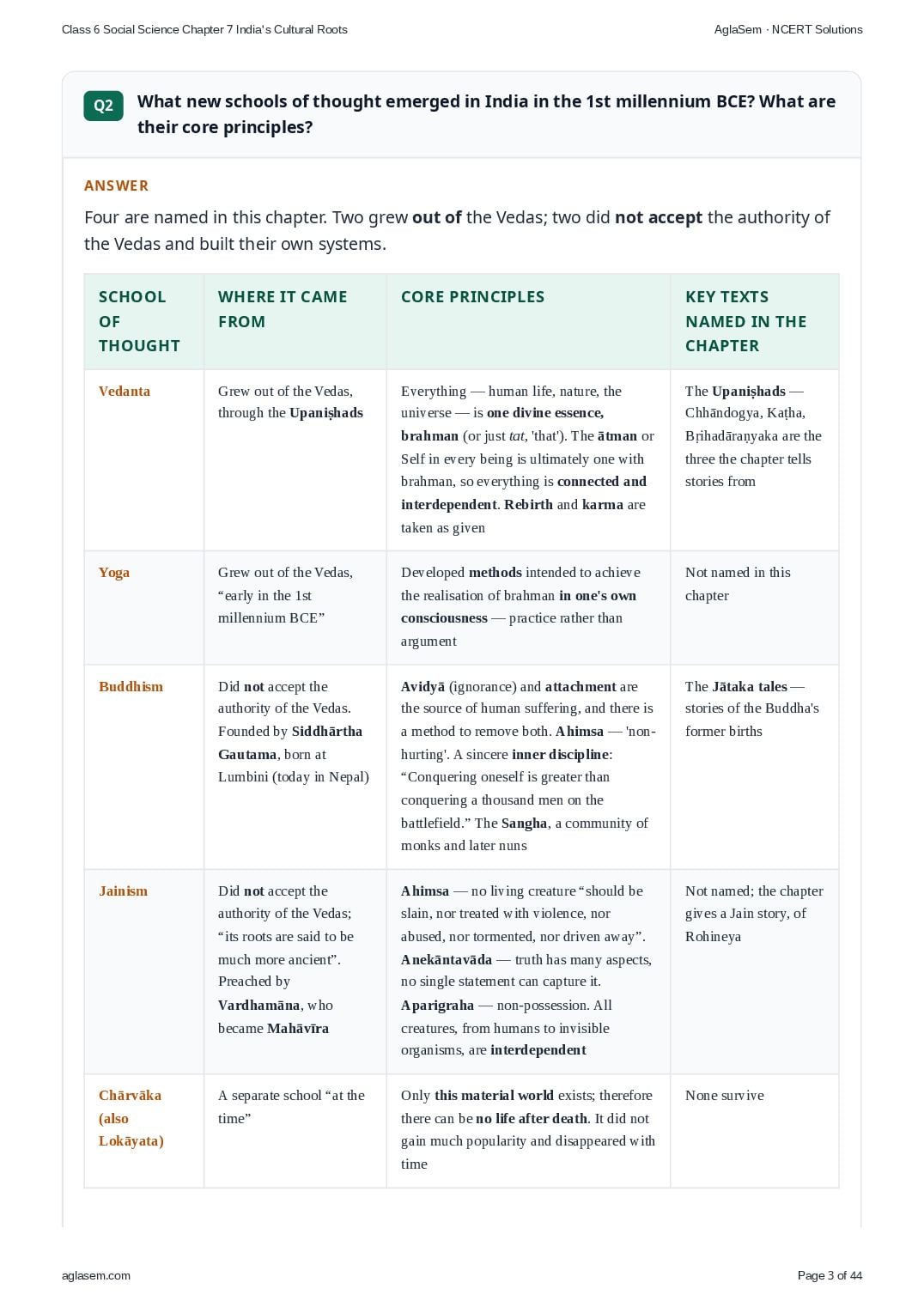
- What new schools of thought emerged in India in the 1st millennium BCE? What are their core principles?
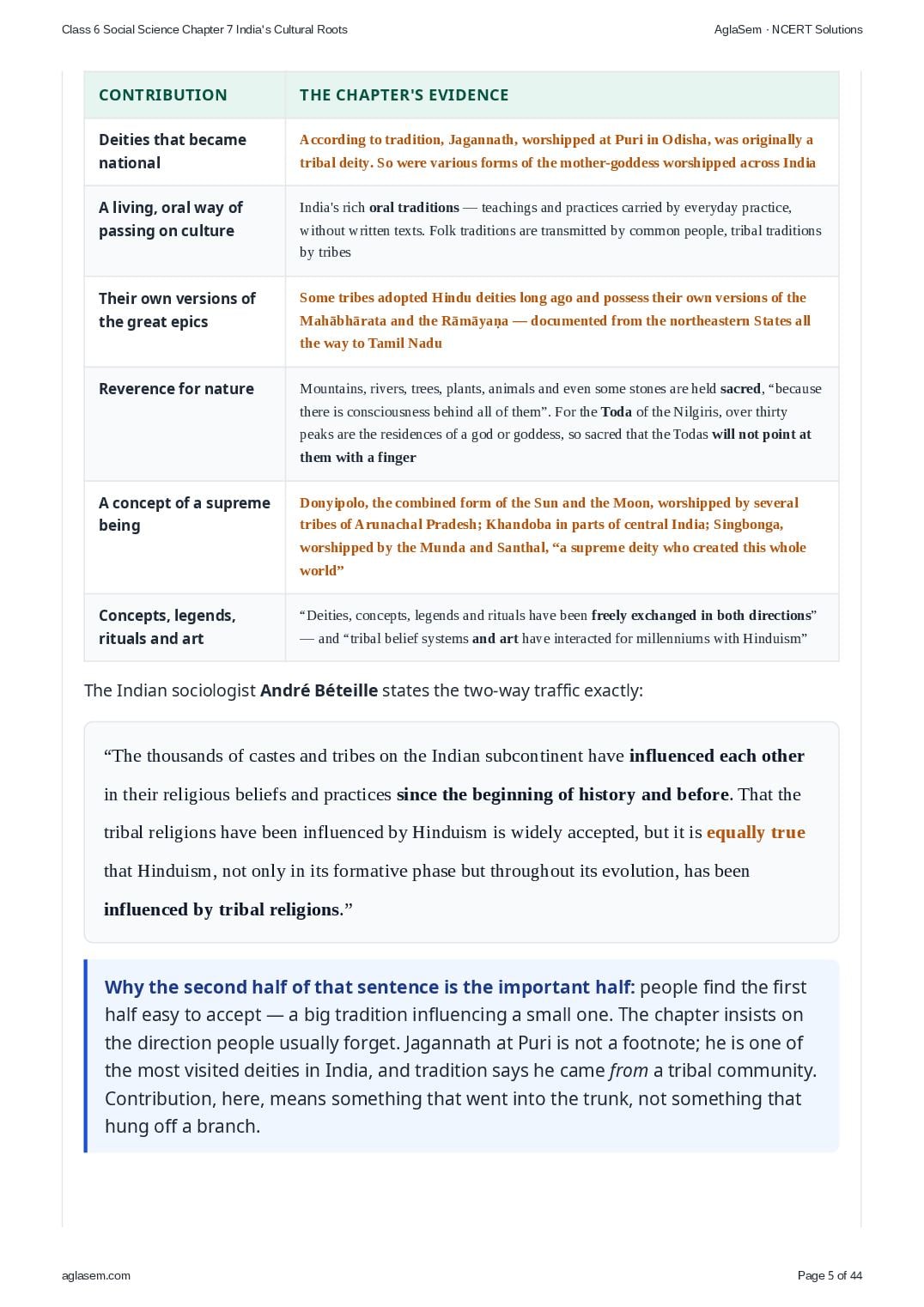
- What is the contribution of folk and tribal traditions to Indian culture?
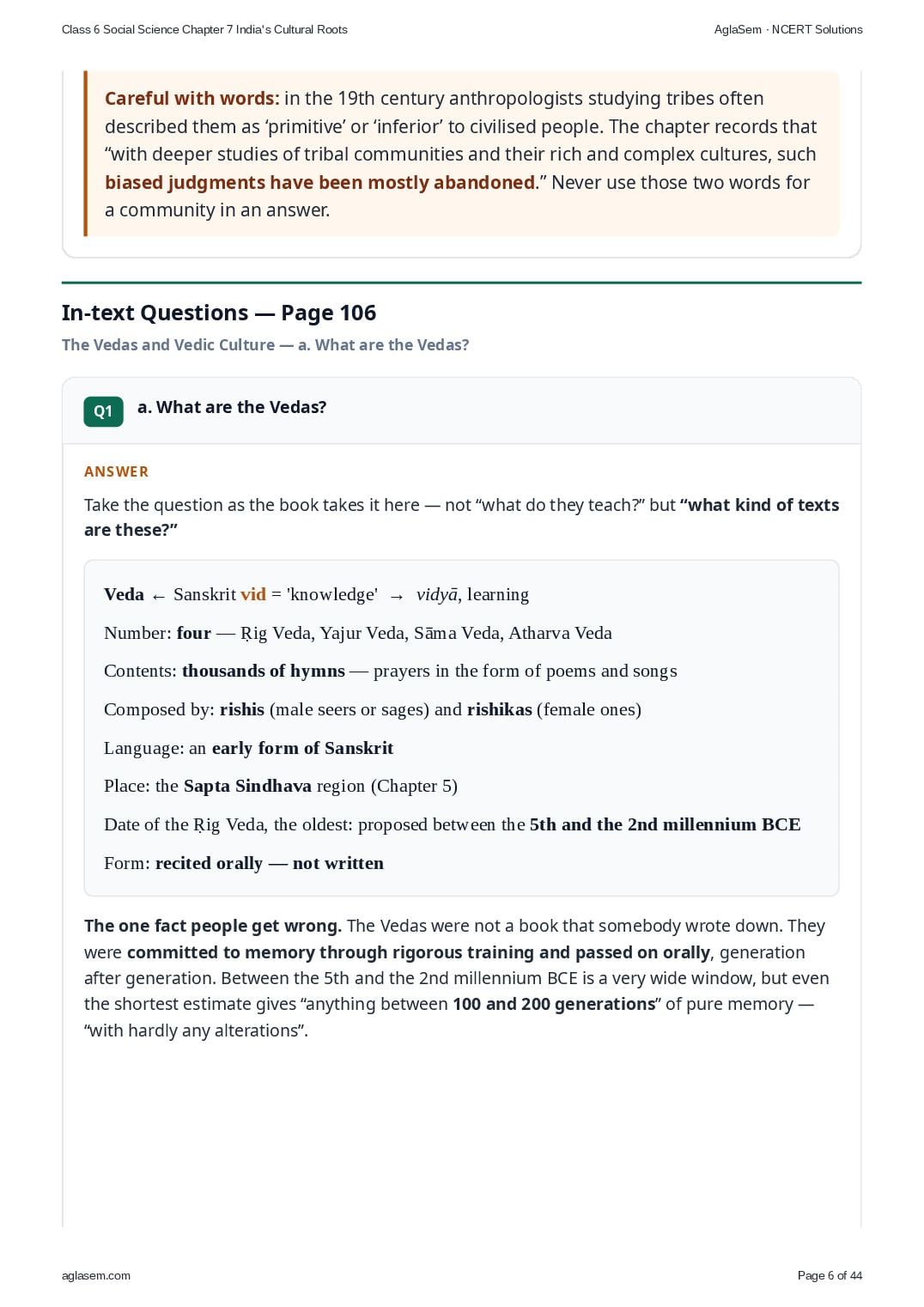
- a. What are the Vedas?
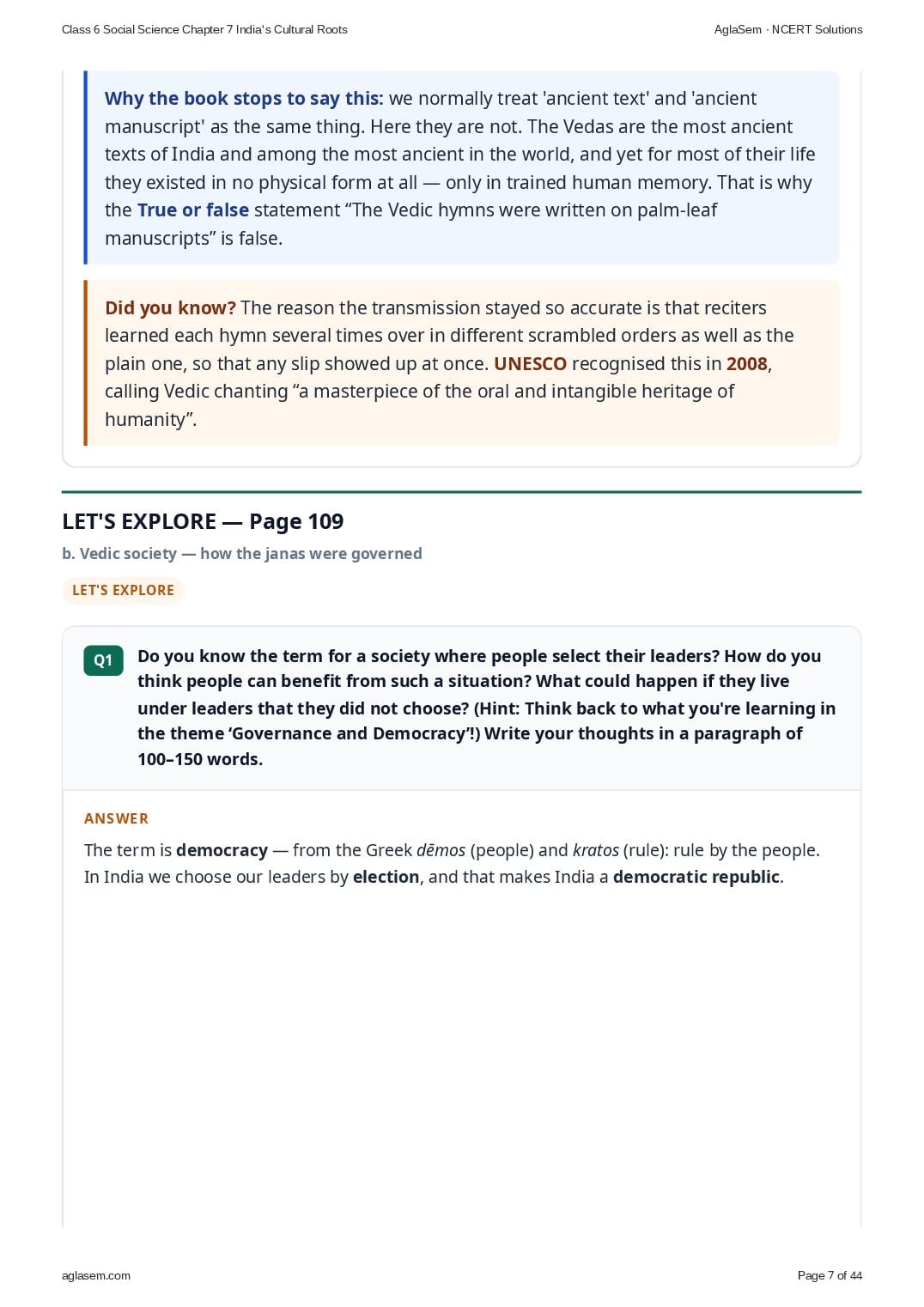
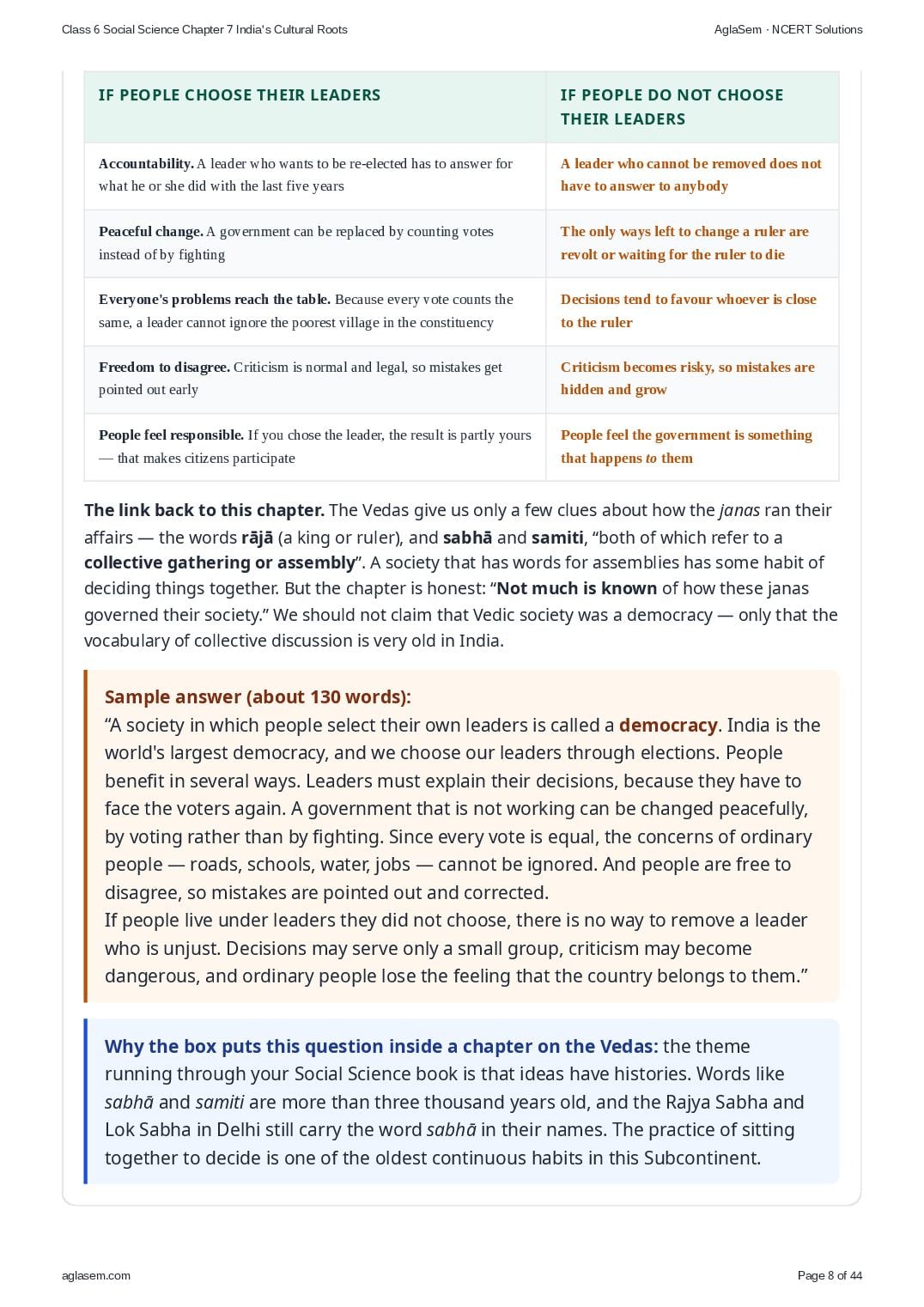
- Do you know the term for a society where people select their leaders? How do you think people can benefit from such a situation? What could happen if they live under leaders that they did not choose? (Hint: Think back to what you're learning in the theme ‘Governance and Democracy’!) Write your thoughts in a paragraph of 100–150 words.
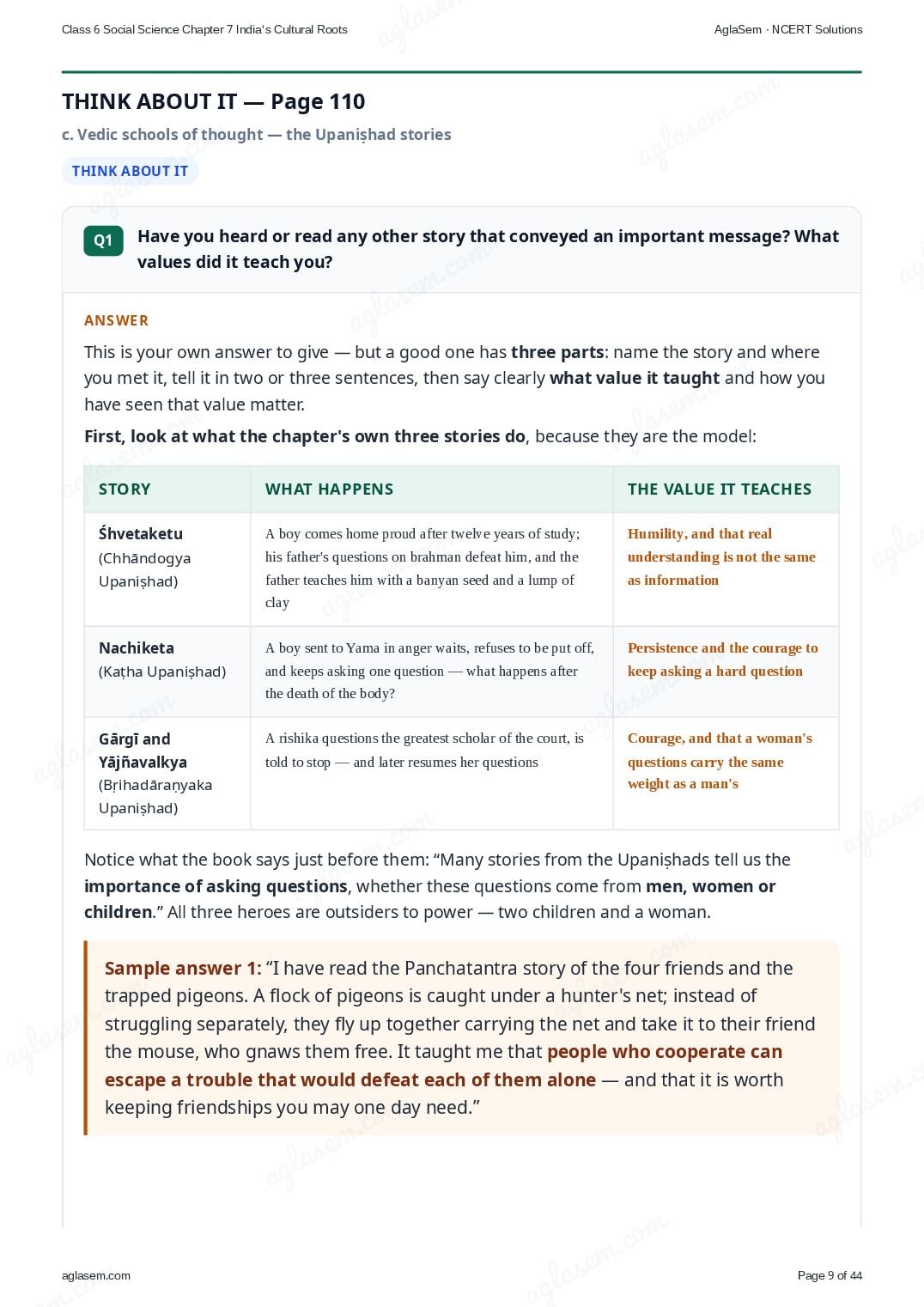
- Have you heard or read any other story that conveyed an important message? What values did it teach you?
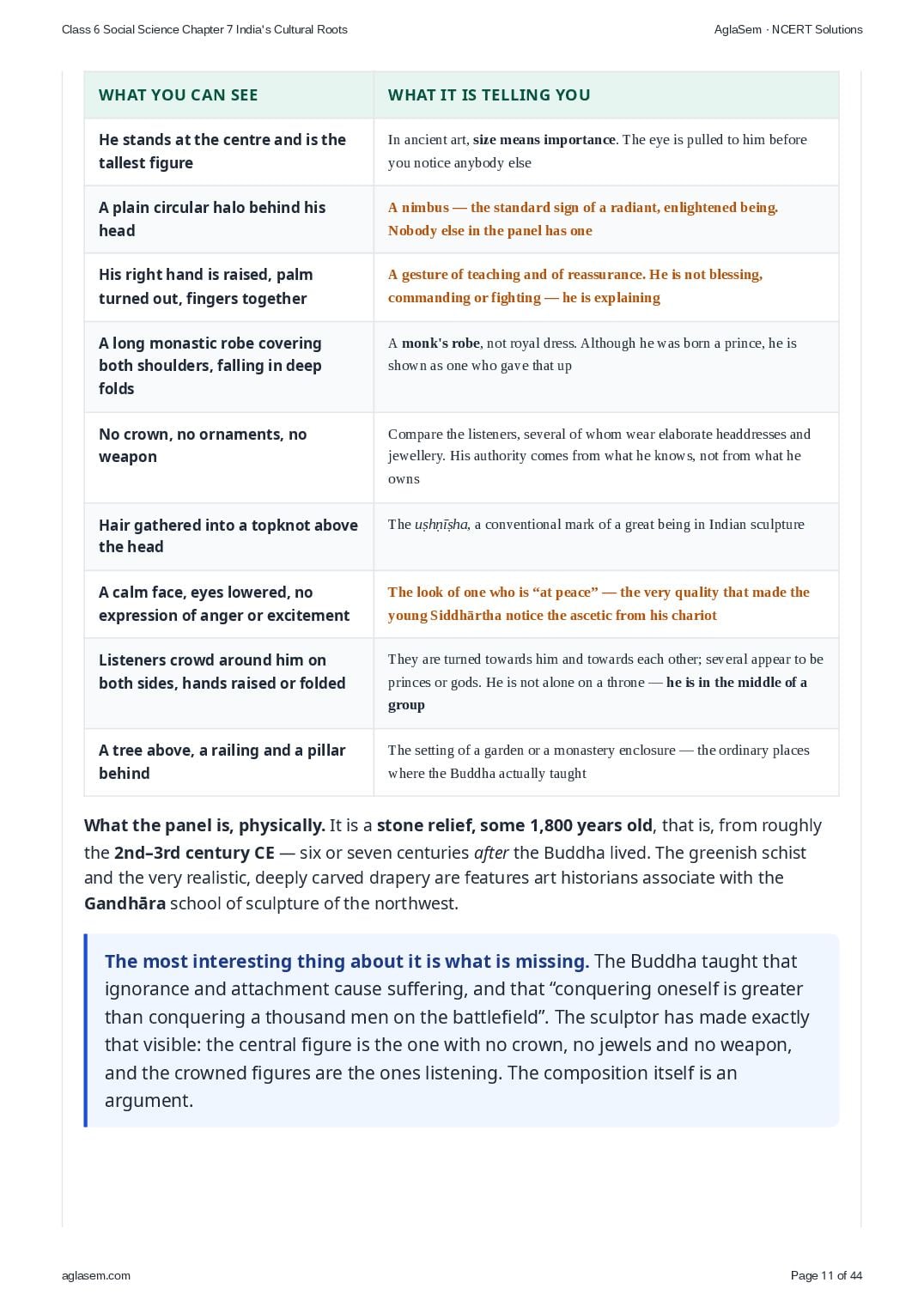
- Discuss the way the Buddha is depicted in the above panel.
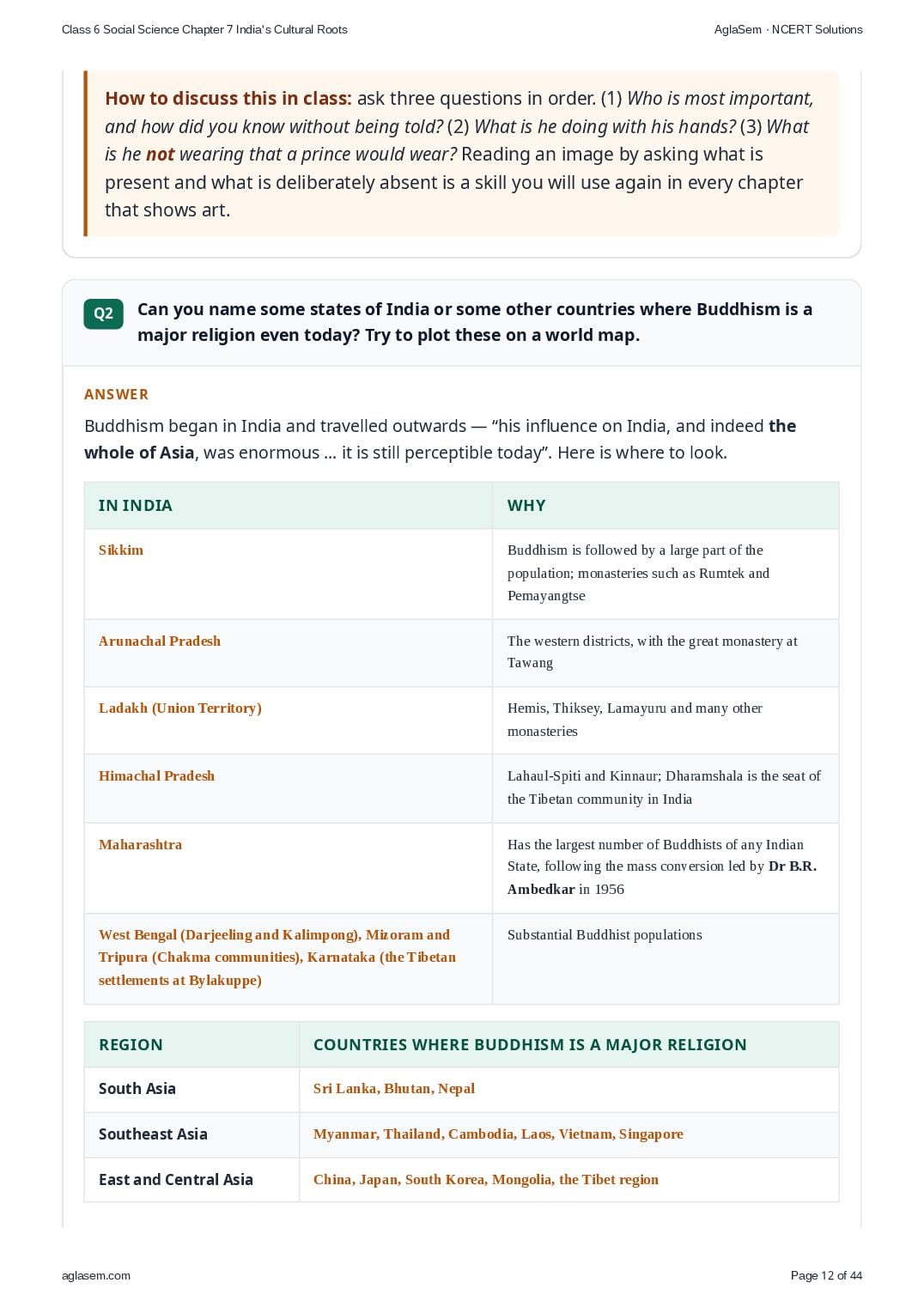
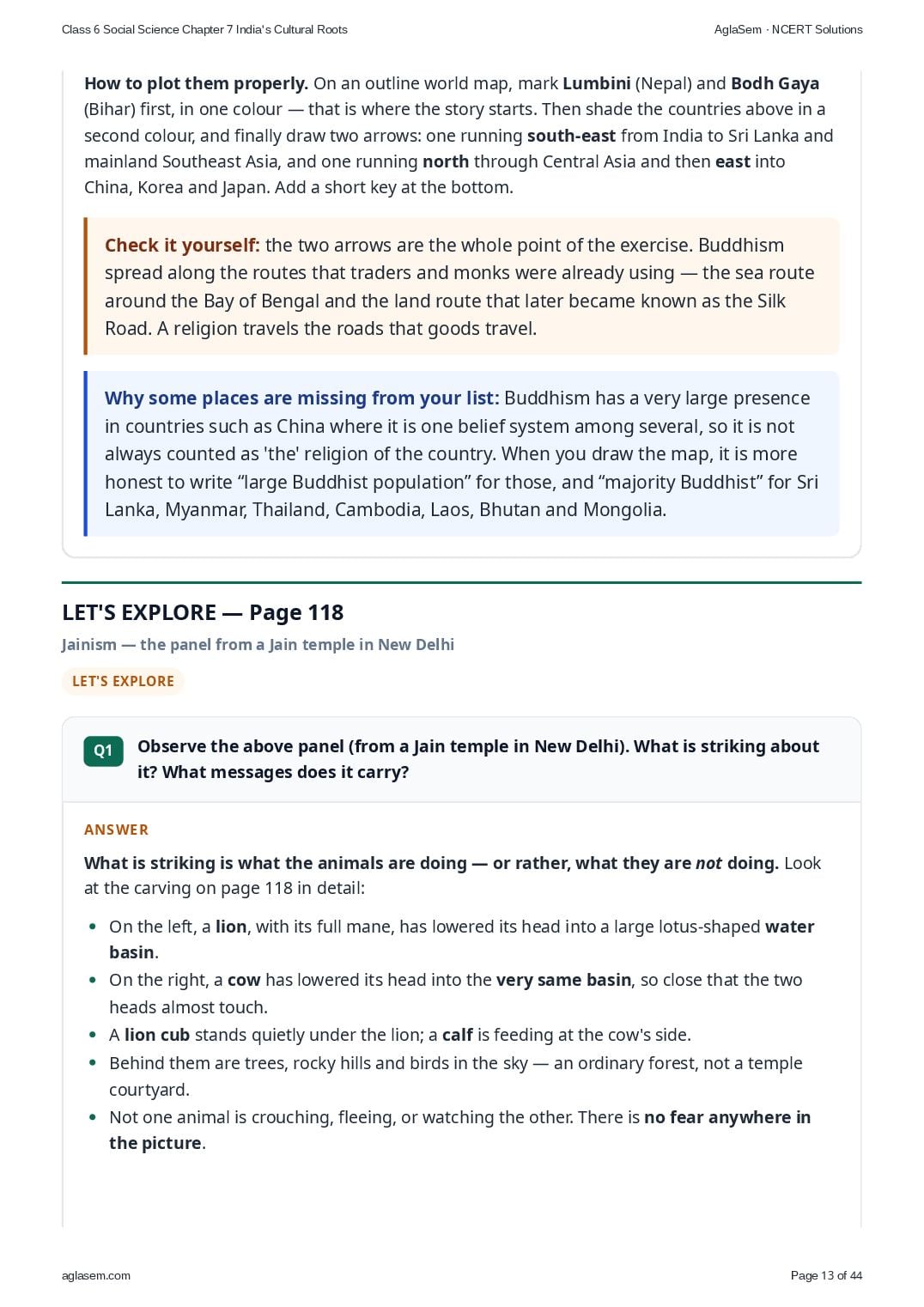
- Can you name some states of India or some other countries where Buddhism is a major religion even today? Try to plot these on a world map.
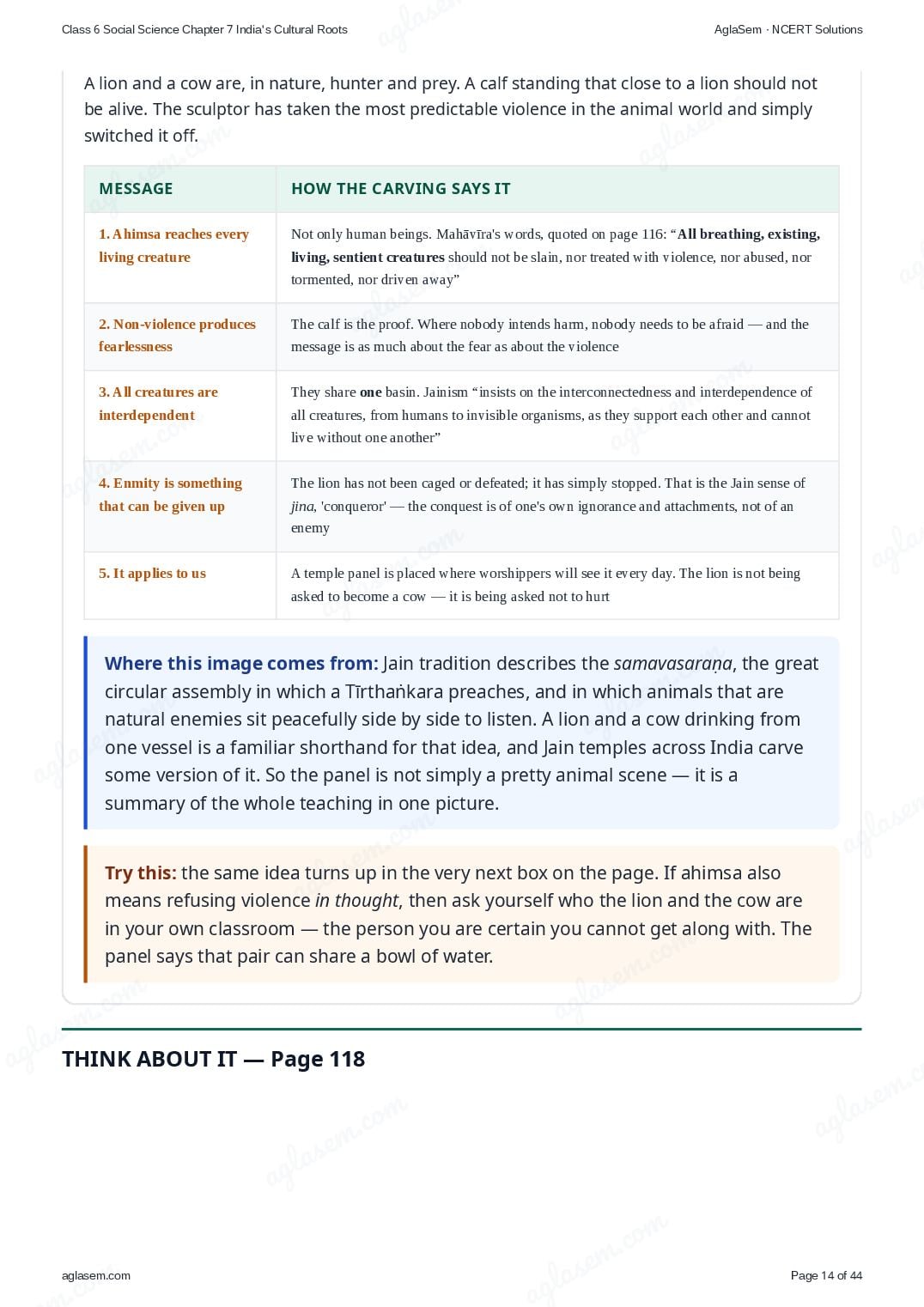
- Observe the above panel (from a Jain temple in New Delhi). What is striking about it? What messages does it carry?
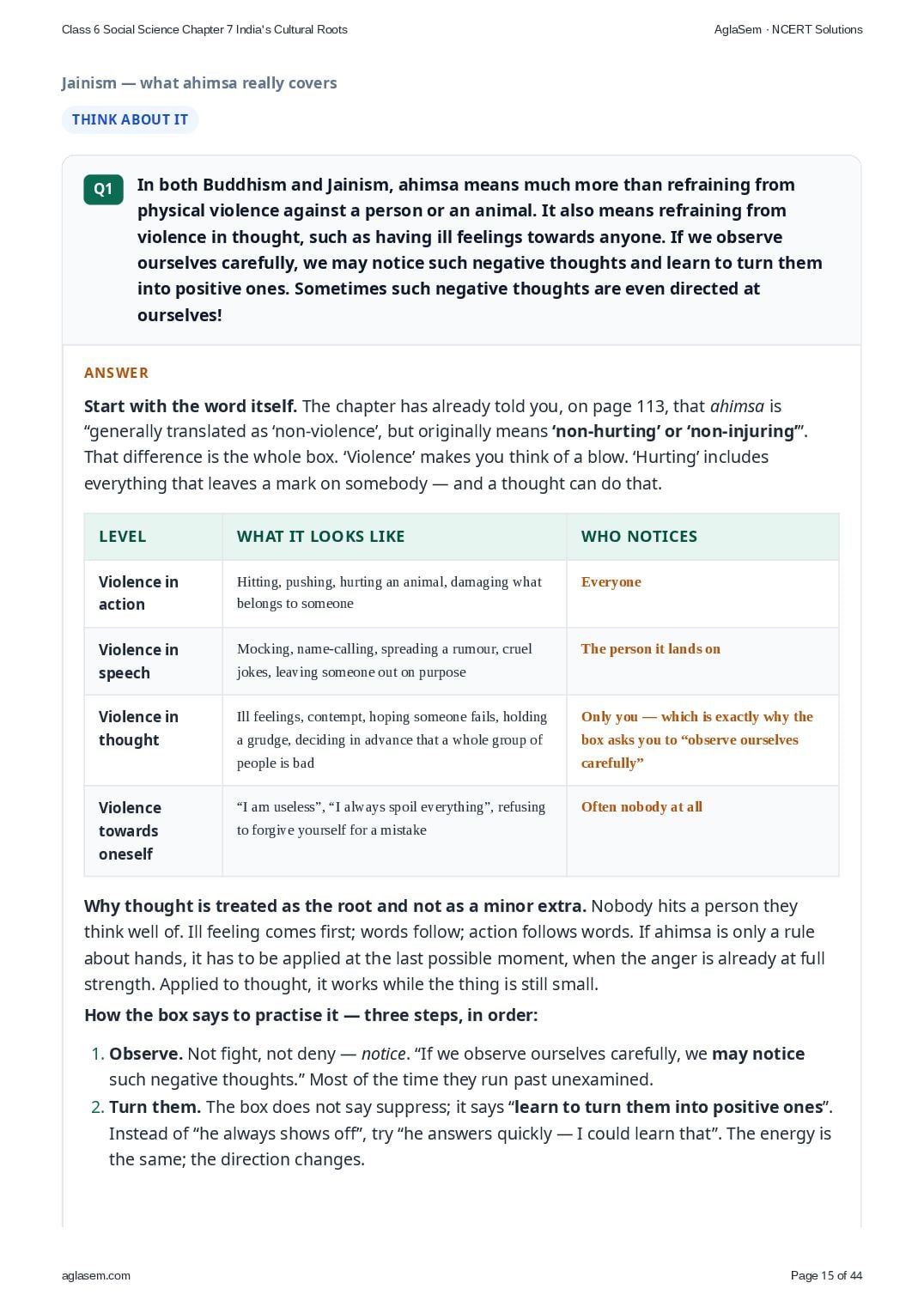
- In both Buddhism and Jainism, ahimsa means much more than refraining from physical violence against a person or an animal. It also means refraining from violence in thought, such as having ill feelings towards anyone. If we observe ourselves carefully, we may notice such negative thoughts and learn to turn them into positive ones. Sometimes such negative thoughts are even directed at ourselves!
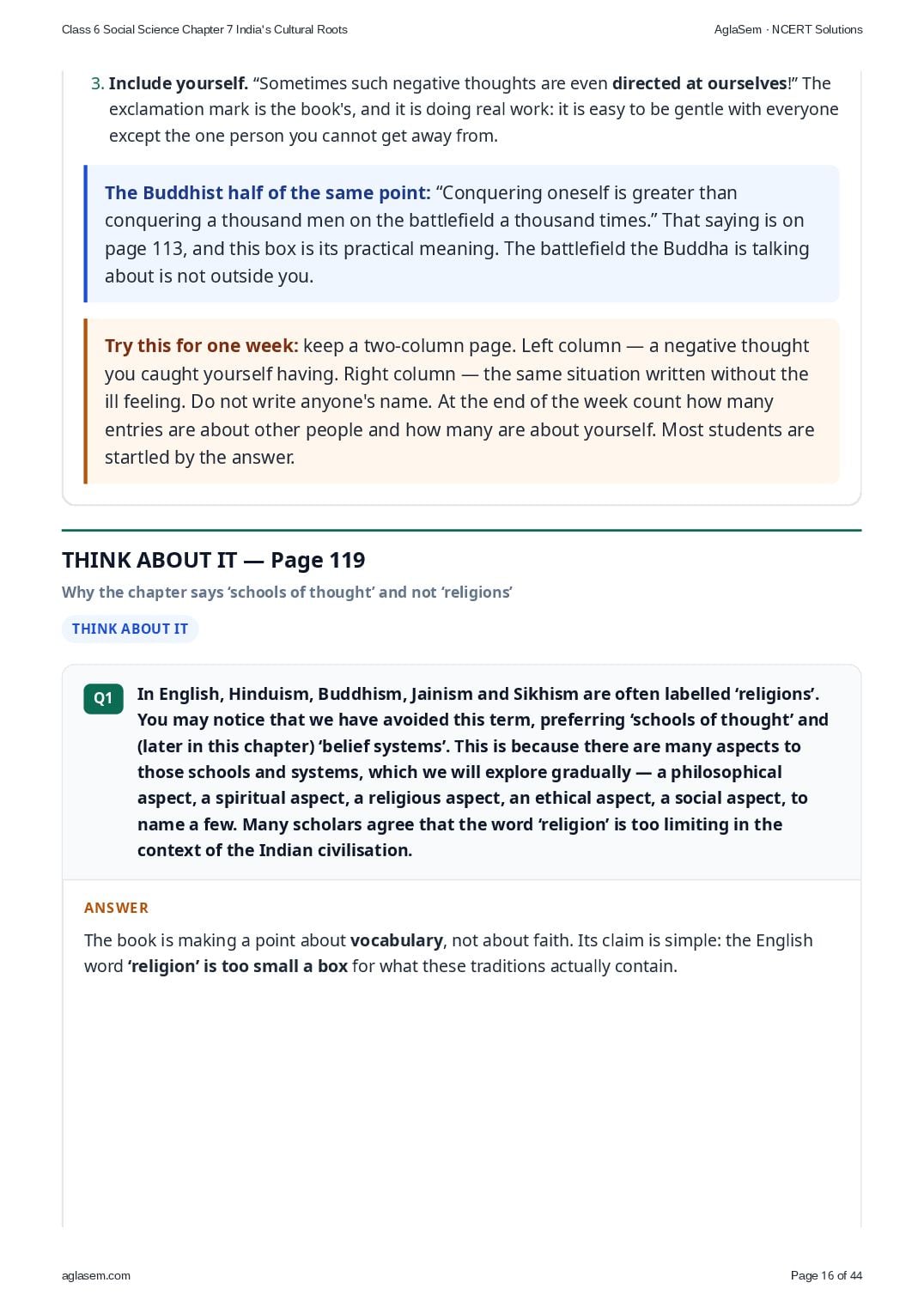
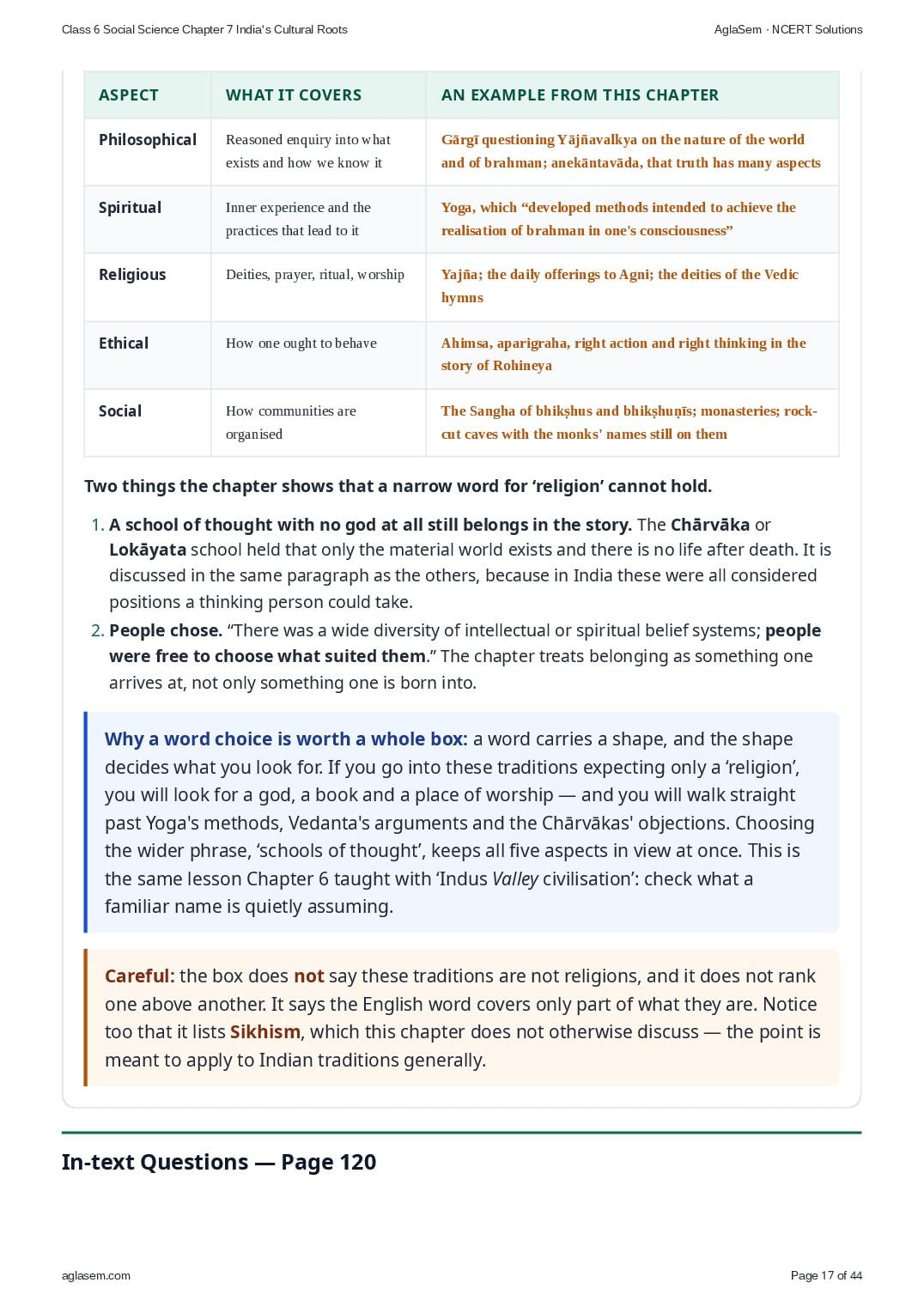
- In English, Hinduism, Buddhism, Jainism and Sikhism are often labelled ‘religions’. You may notice that we have avoided this term, preferring ‘schools of thought’ and (later in this chapter) ‘belief systems’. This is because there are many aspects to those schools and systems, which we will explore gradually — a philosophical aspect, a spiritual aspect, a religious aspect, an ethical aspect, a social aspect, to name a few. Many scholars agree that the word ‘religion’ is too limiting in the context of the Indian civilisation.
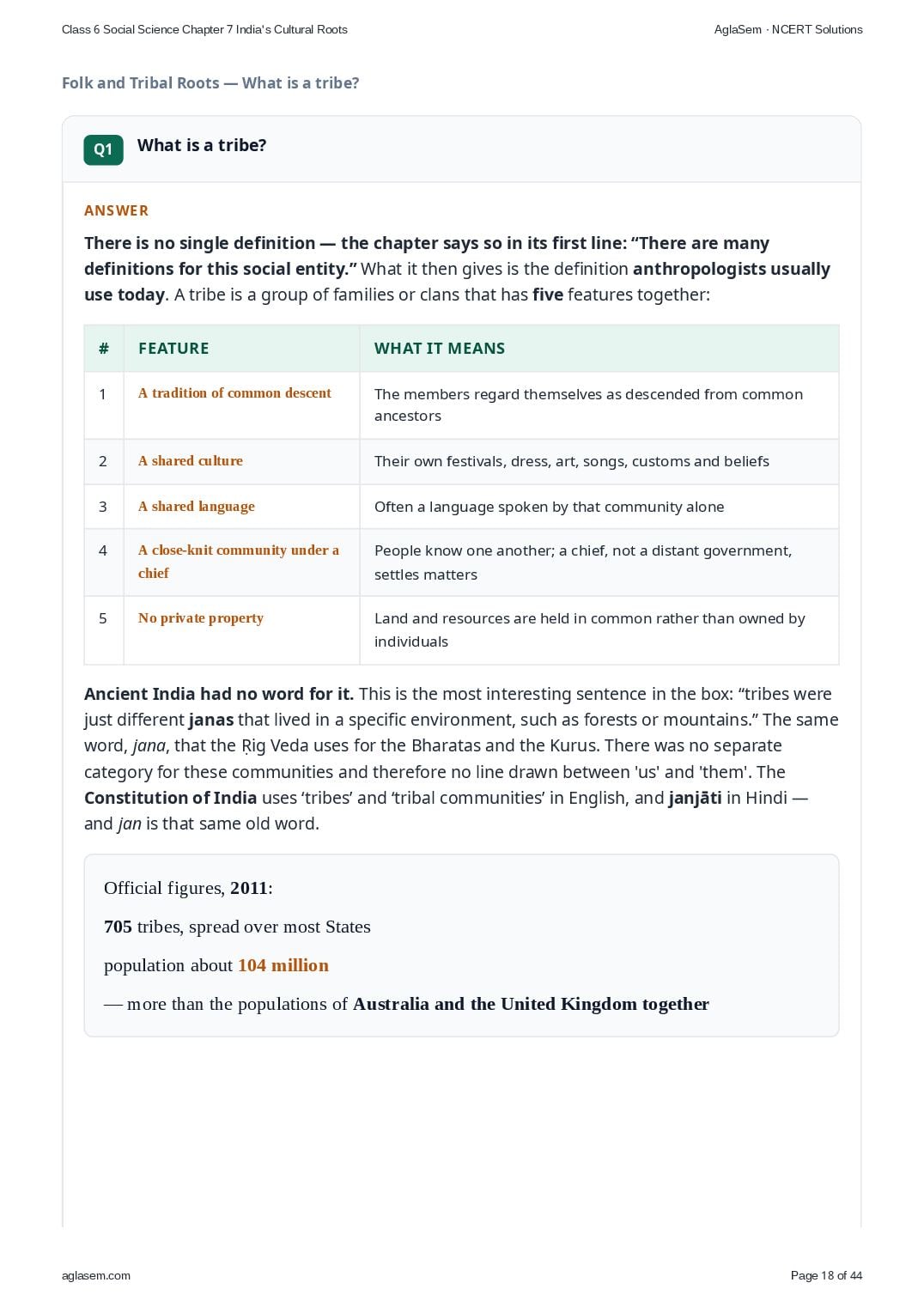
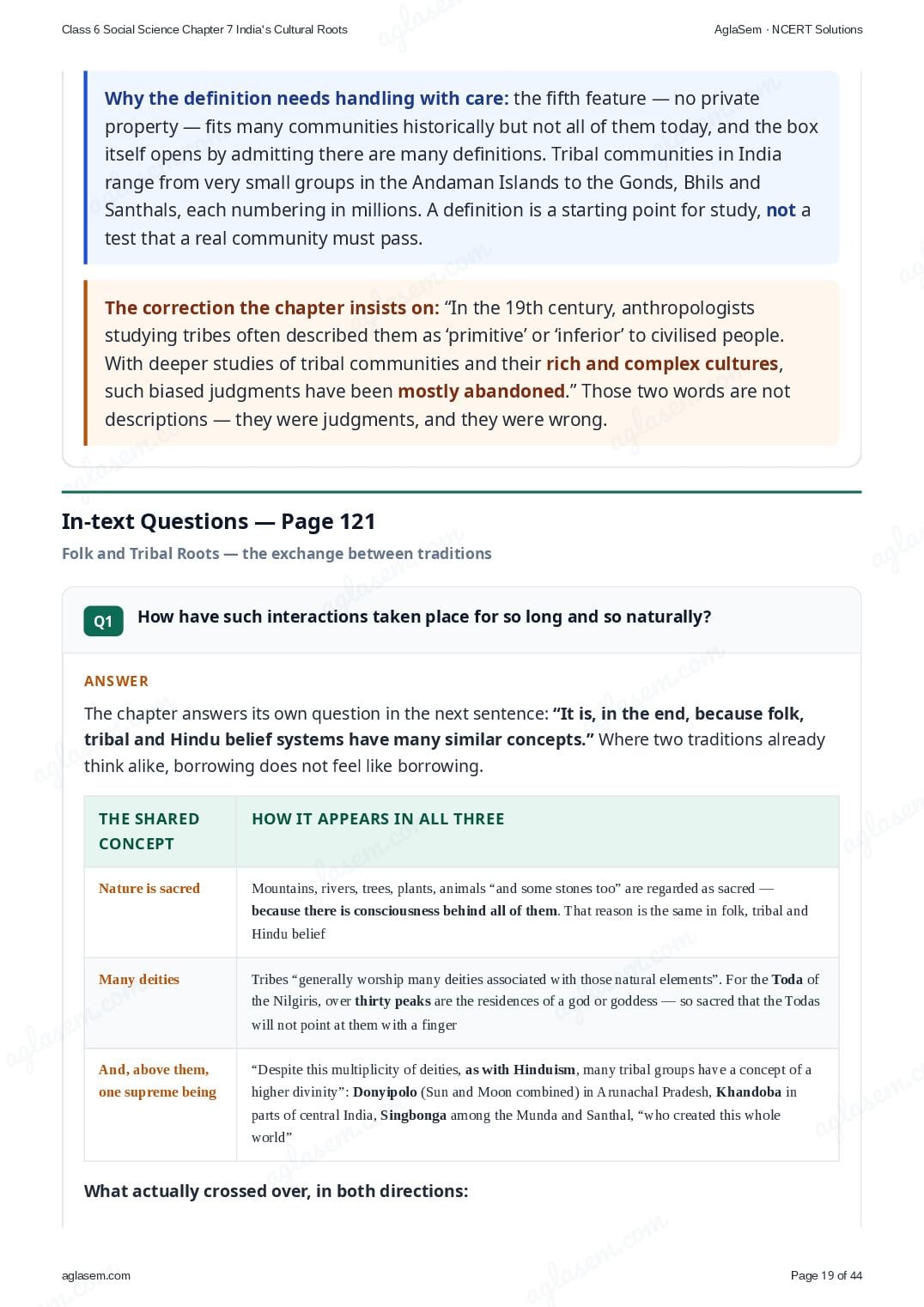
- What is a tribe?
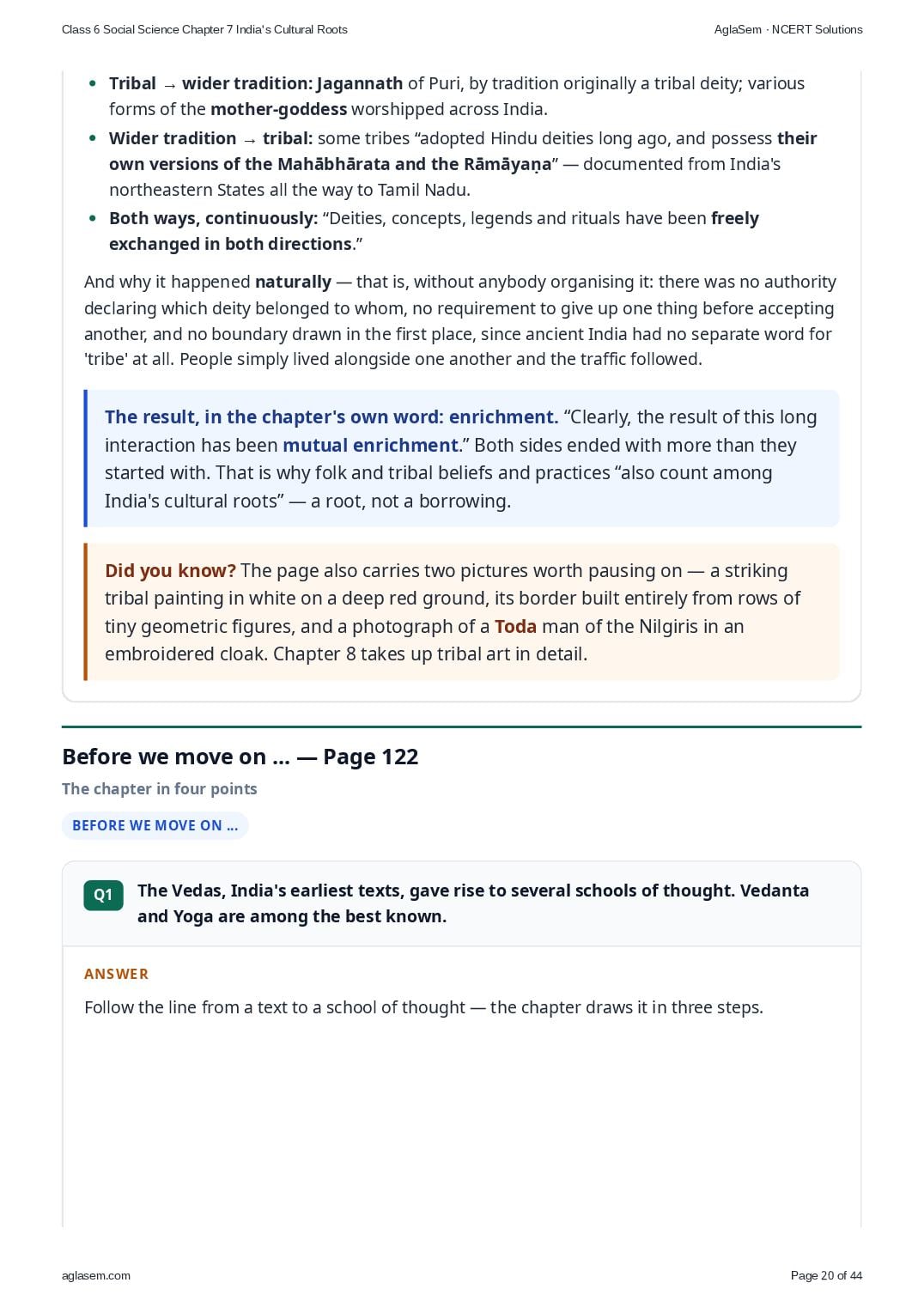
- How have such interactions taken place for so long and so naturally?
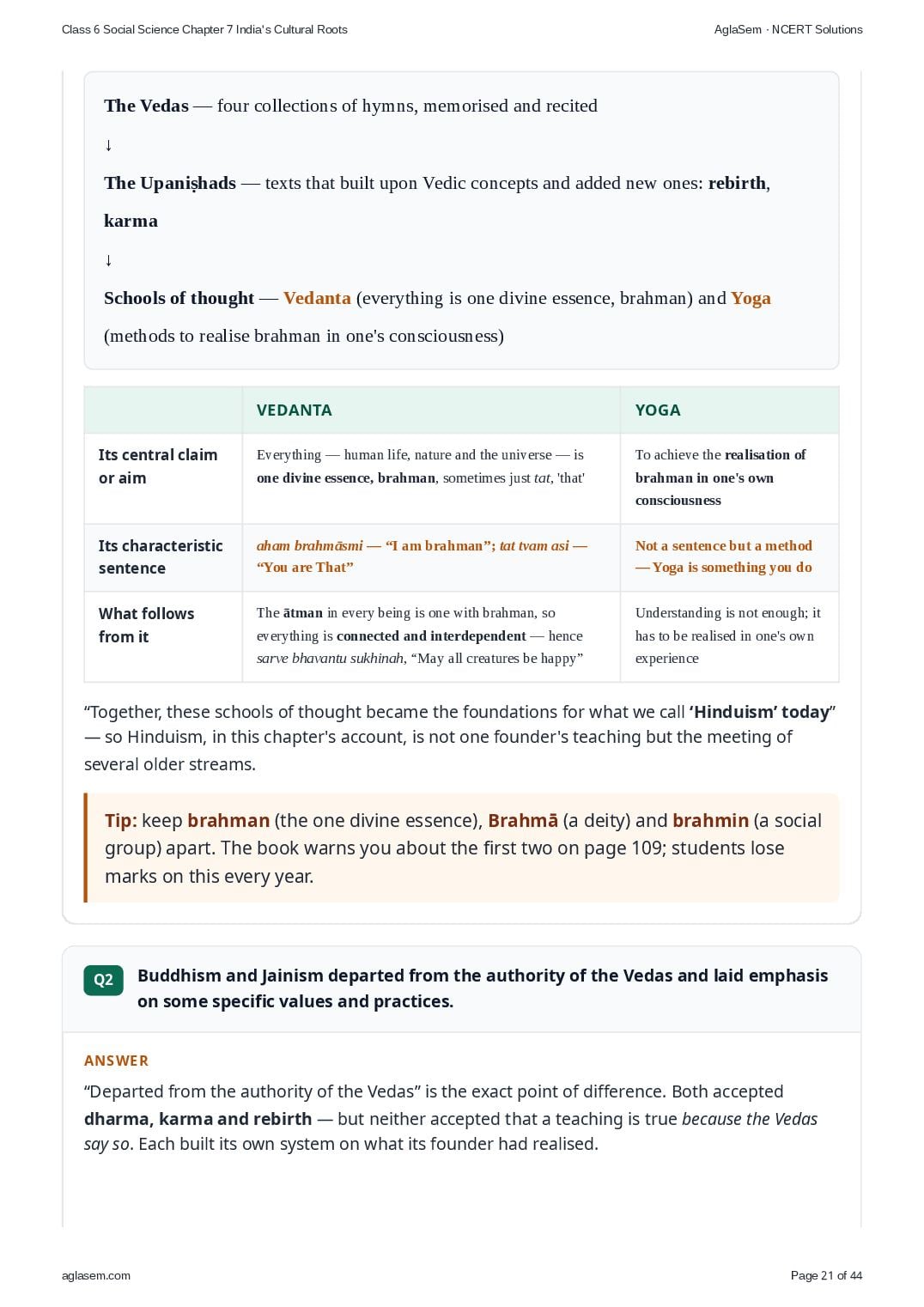
- The Vedas, India's earliest texts, gave rise to several schools of thought. Vedanta and Yoga are among the best known.
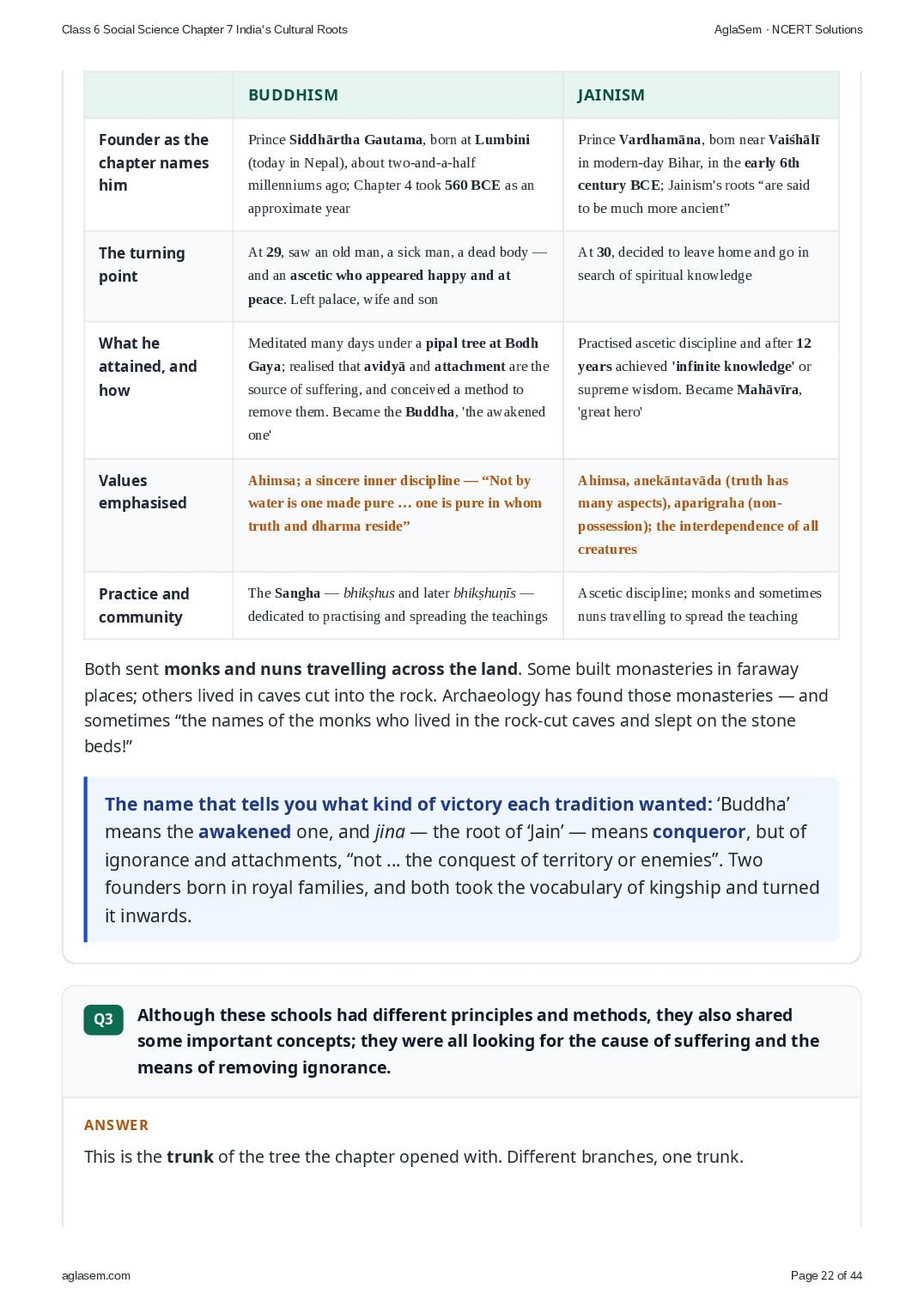
- Buddhism and Jainism departed from the authority of the Vedas and laid emphasis on some specific values and practices.
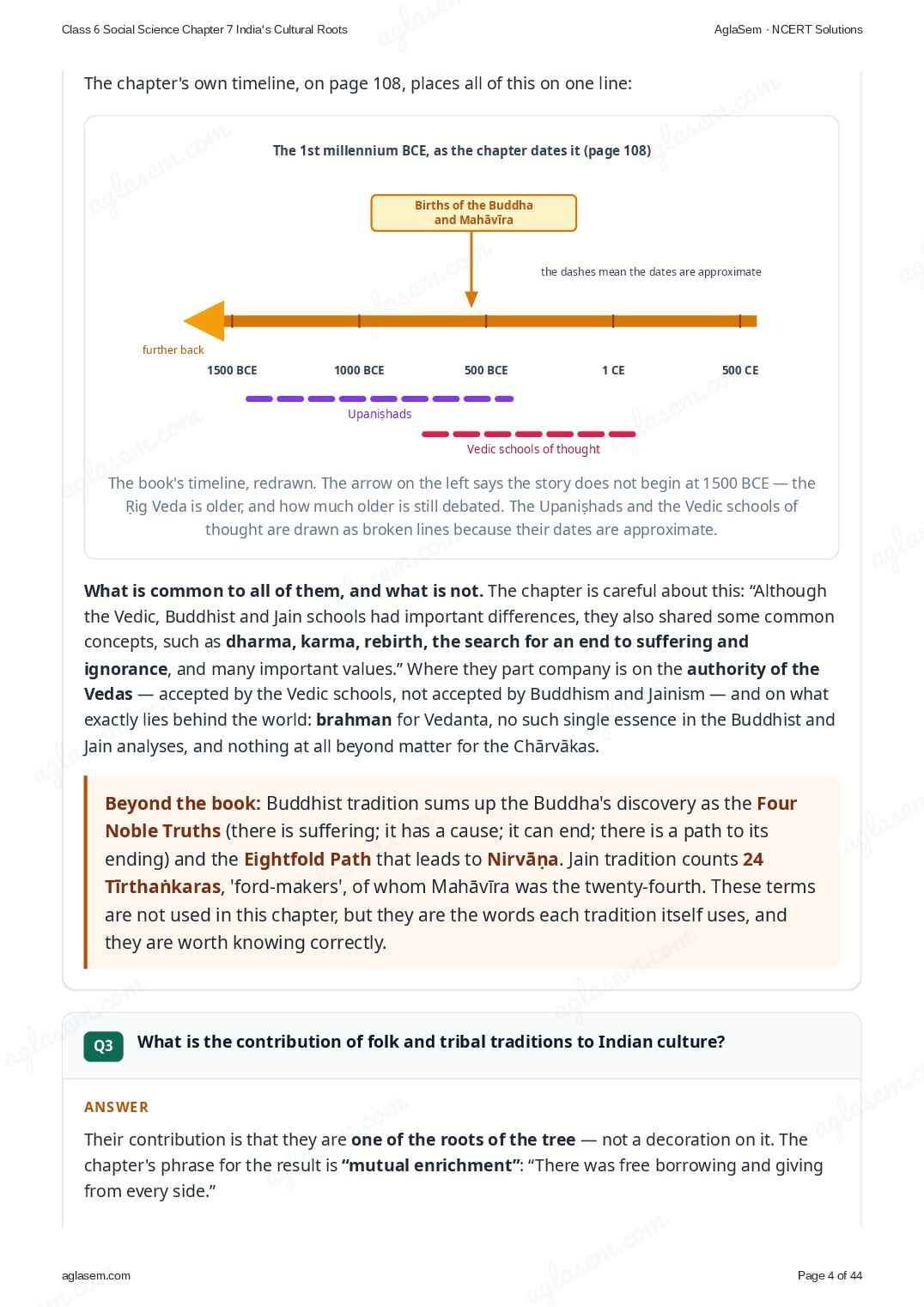
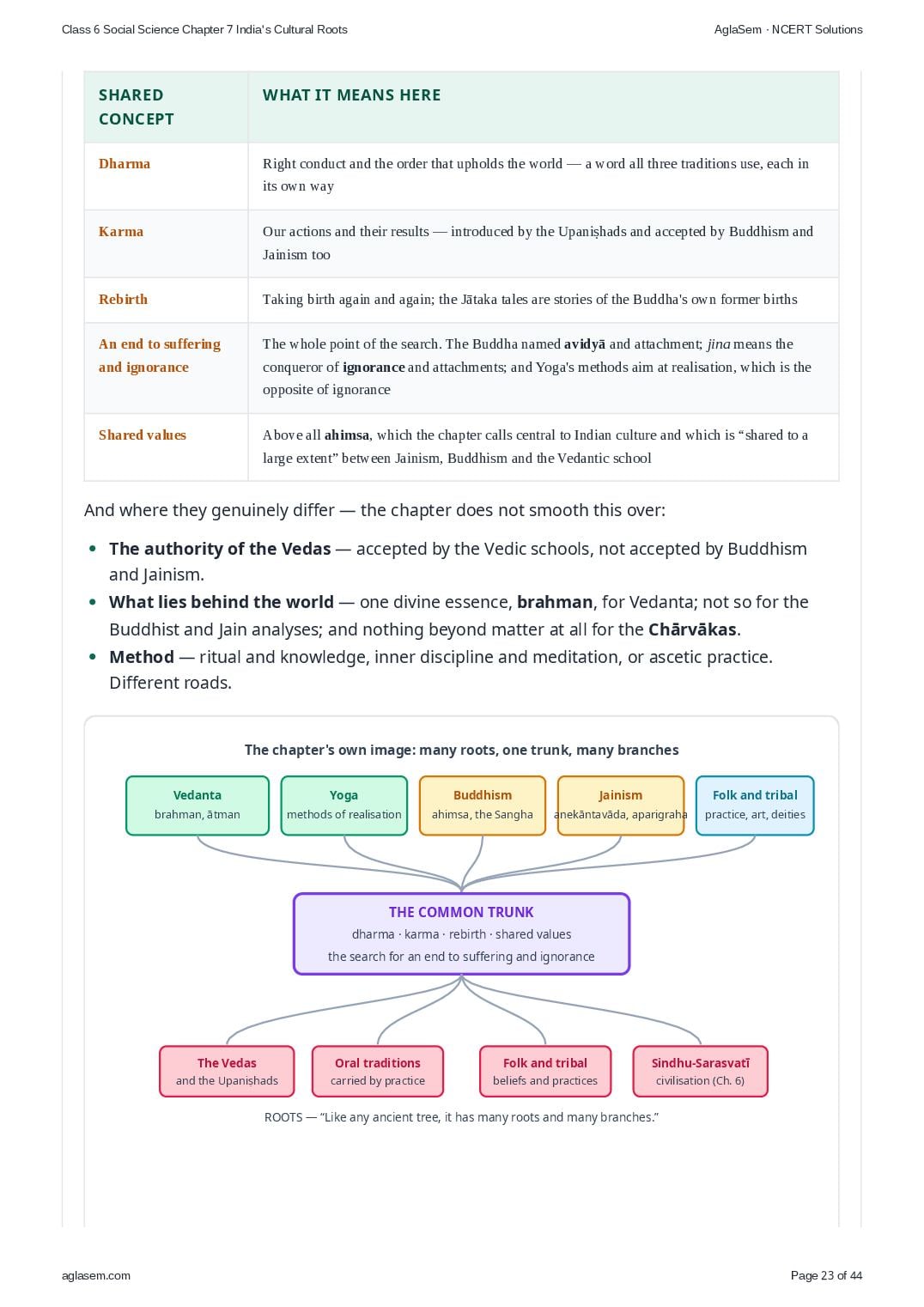
- Although these schools had different principles and methods, they also shared some important concepts; they were all looking for the cause of suffering and the means of removing ignorance.
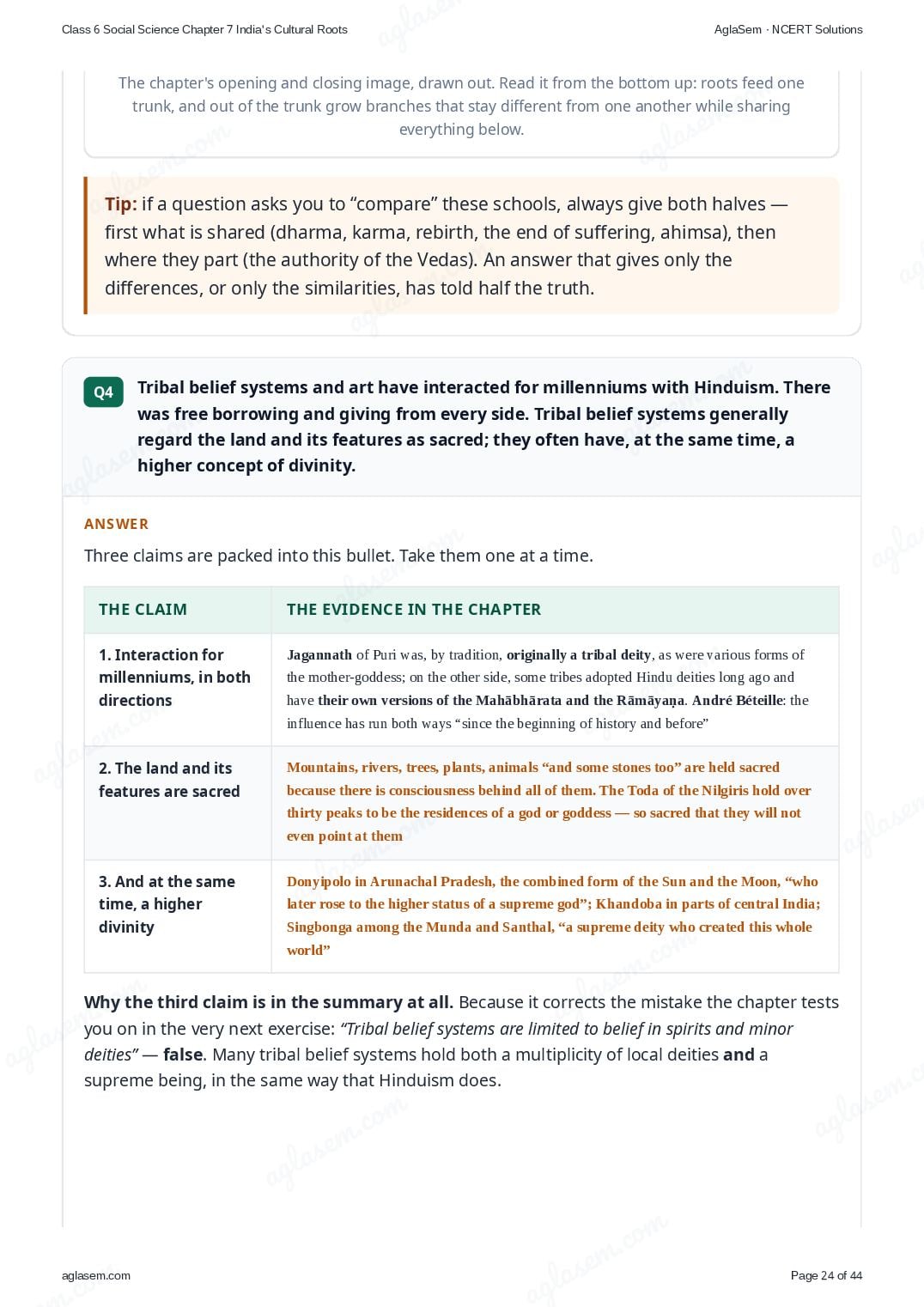
- Tribal belief systems and art have interacted for millenniums with Hinduism. There was free borrowing and giving from every side. Tribal belief systems generally regard the land and its features as sacred; they often have, at the same time, a higher concept of divinity.
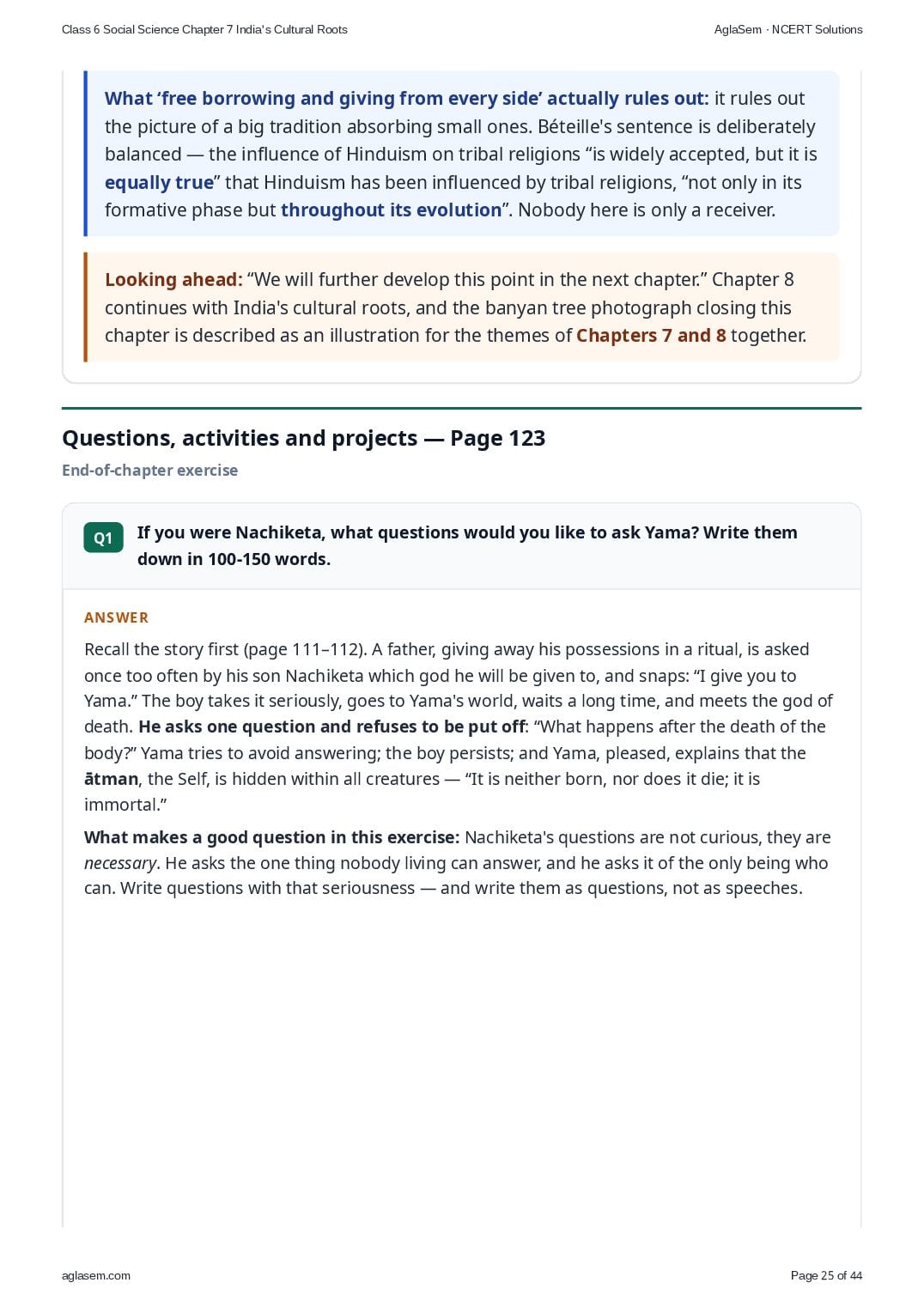
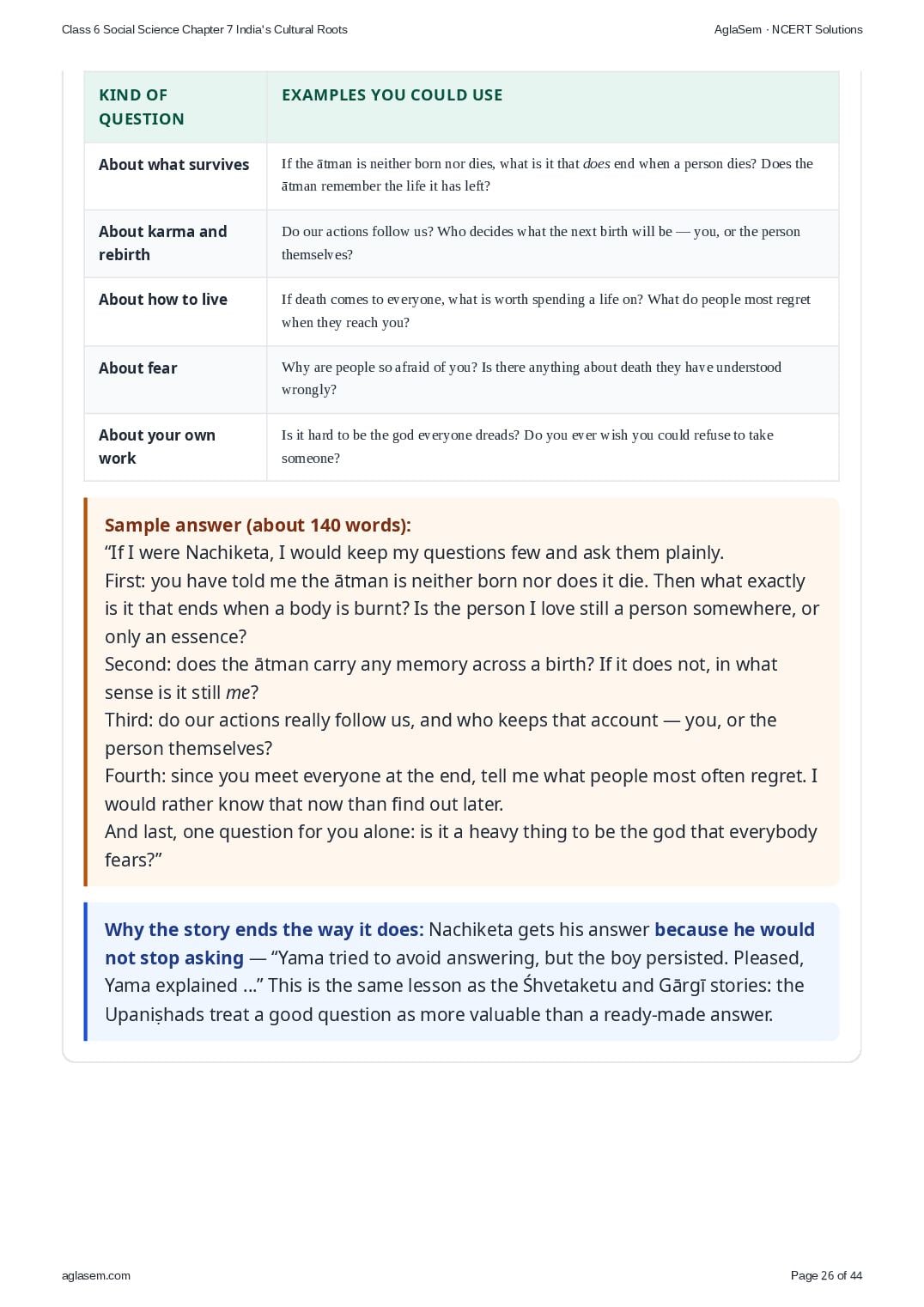
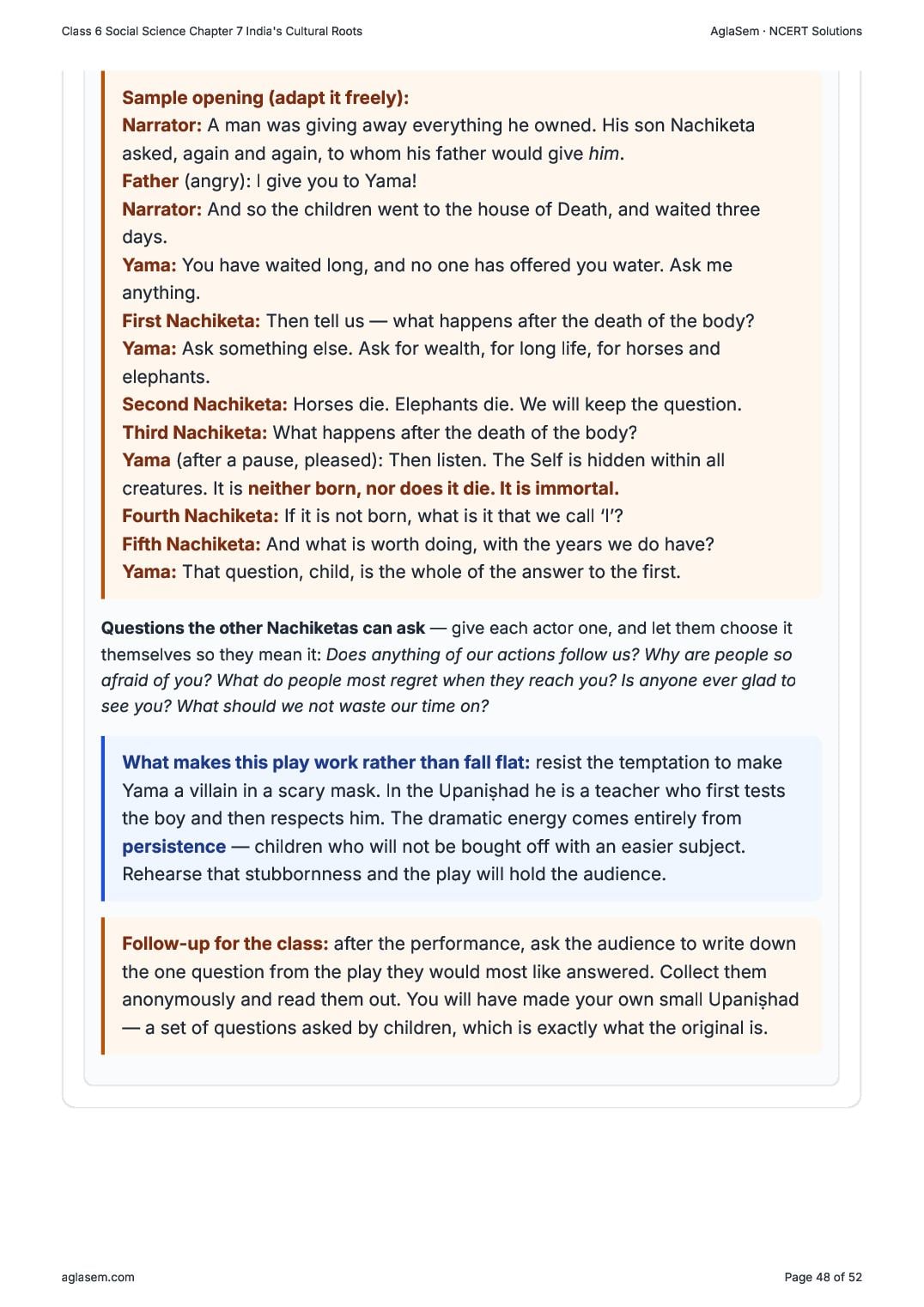
- If you were Nachiketa, what questions would you like to ask Yama? Write them down in 100-150 words.
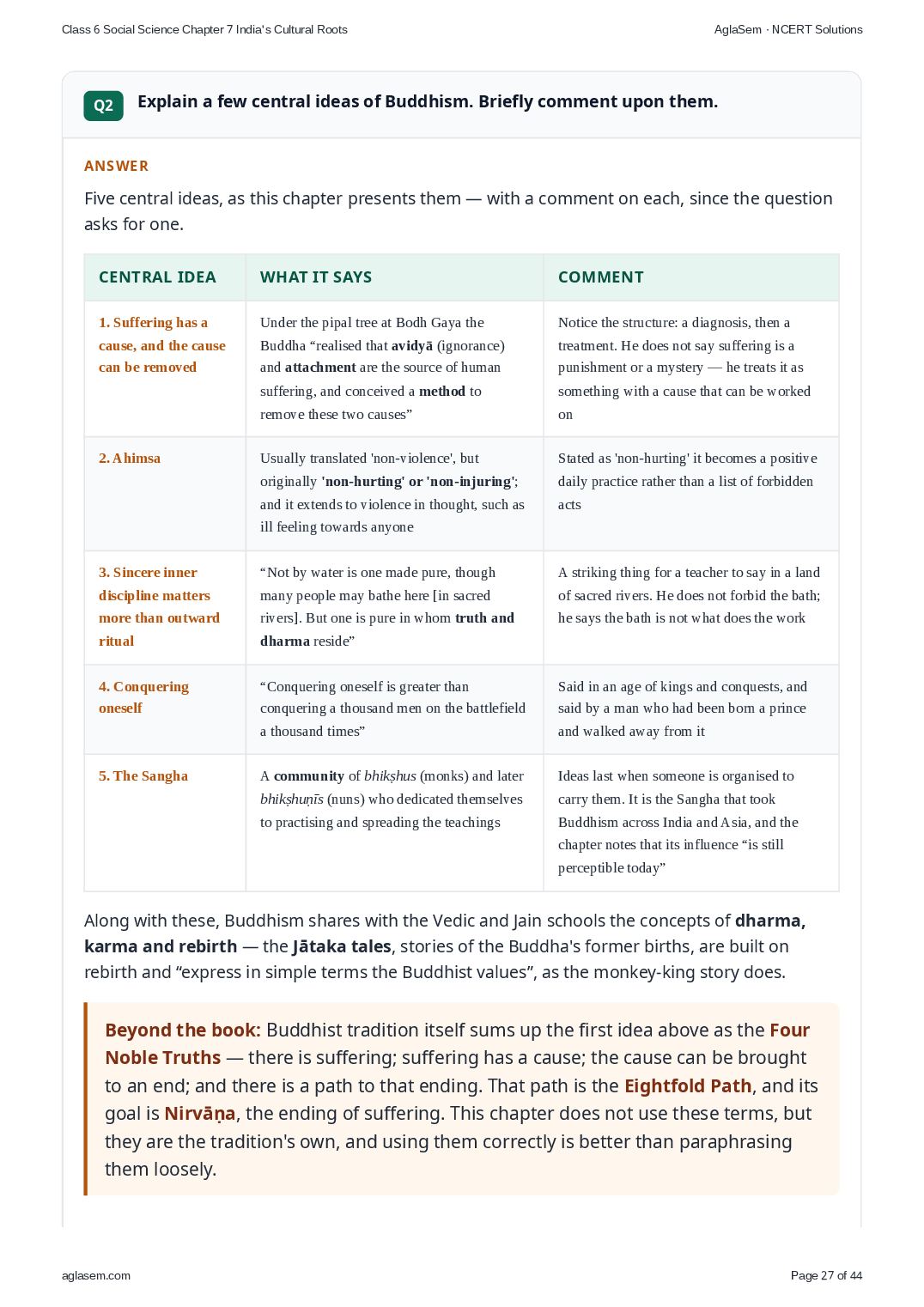
- Explain a few central ideas of Buddhism. Briefly comment upon them.
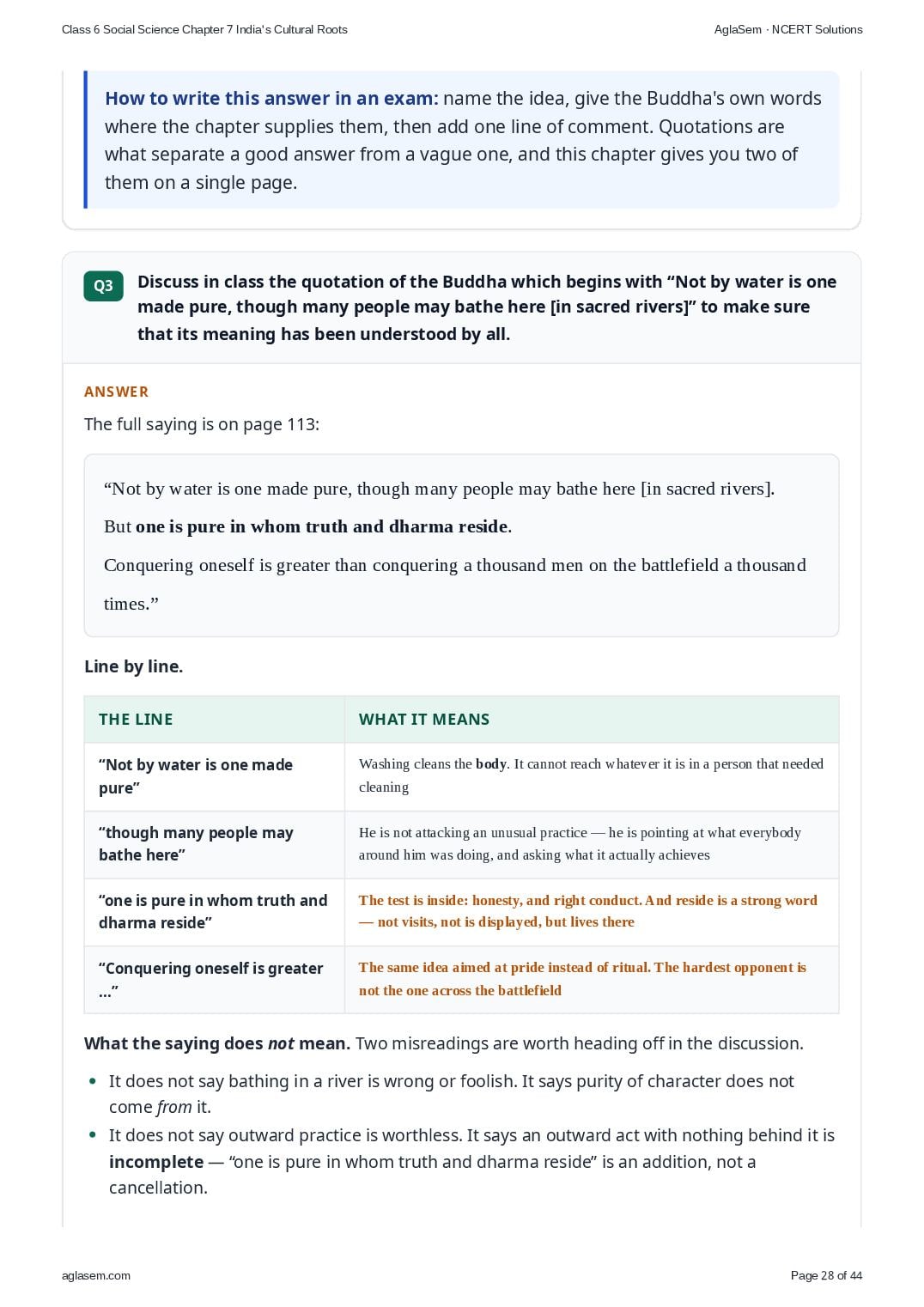
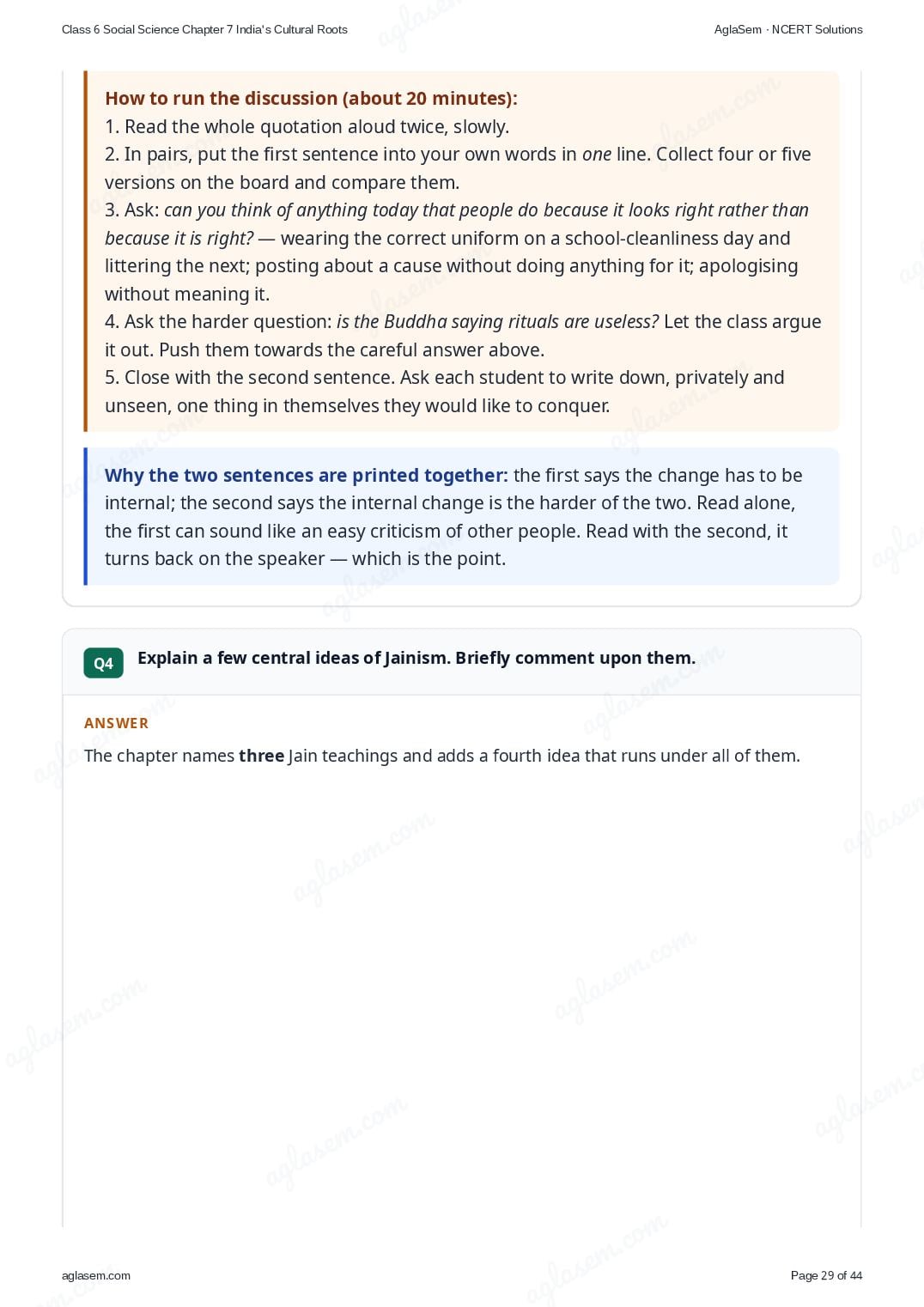
- Discuss in class the quotation of the Buddha which begins with “Not by water is one made pure, though many people may bathe here [in sacred rivers]” to make sure that its meaning has been understood by all.
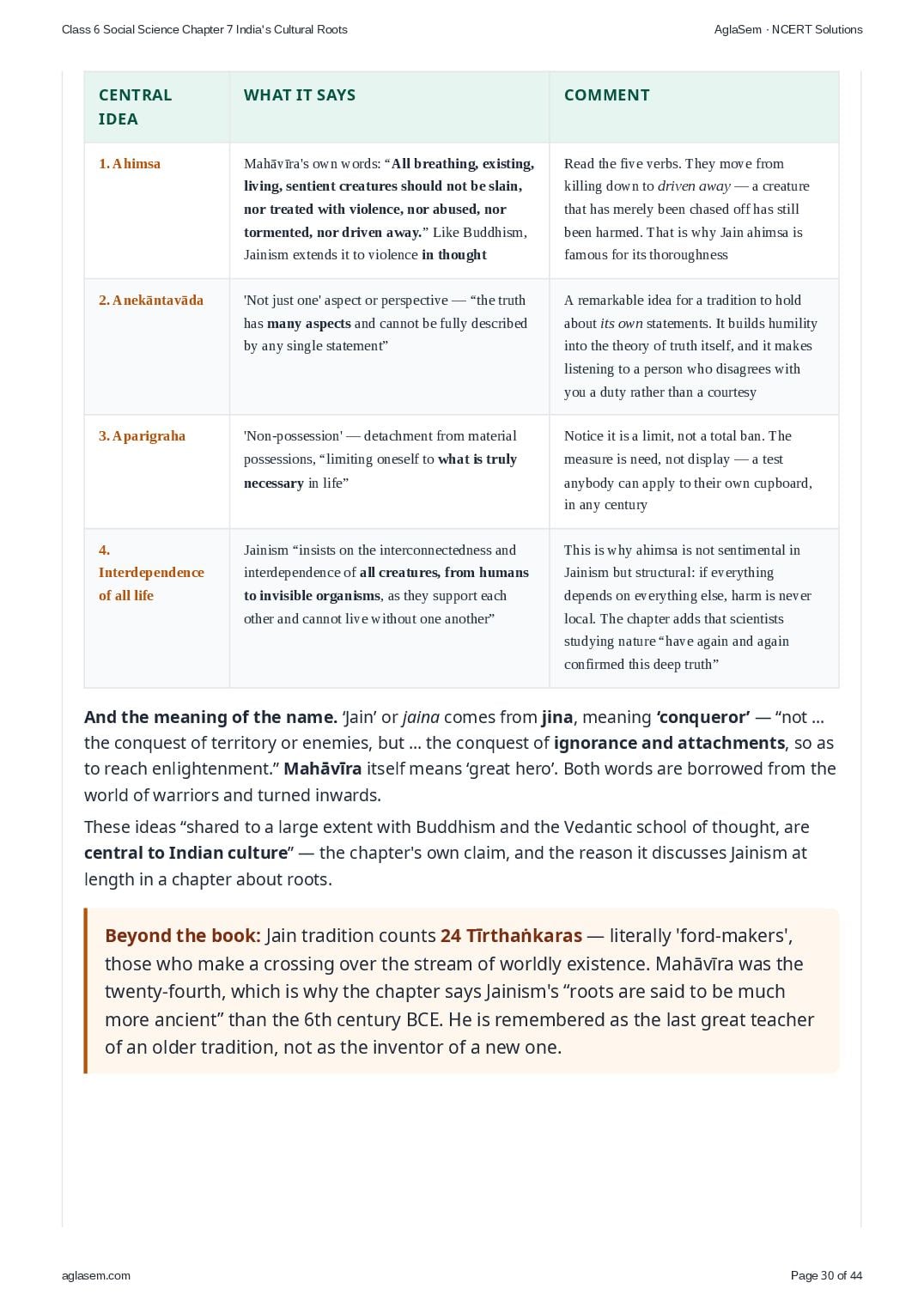
- Explain a few central ideas of Jainism. Briefly comment upon them.
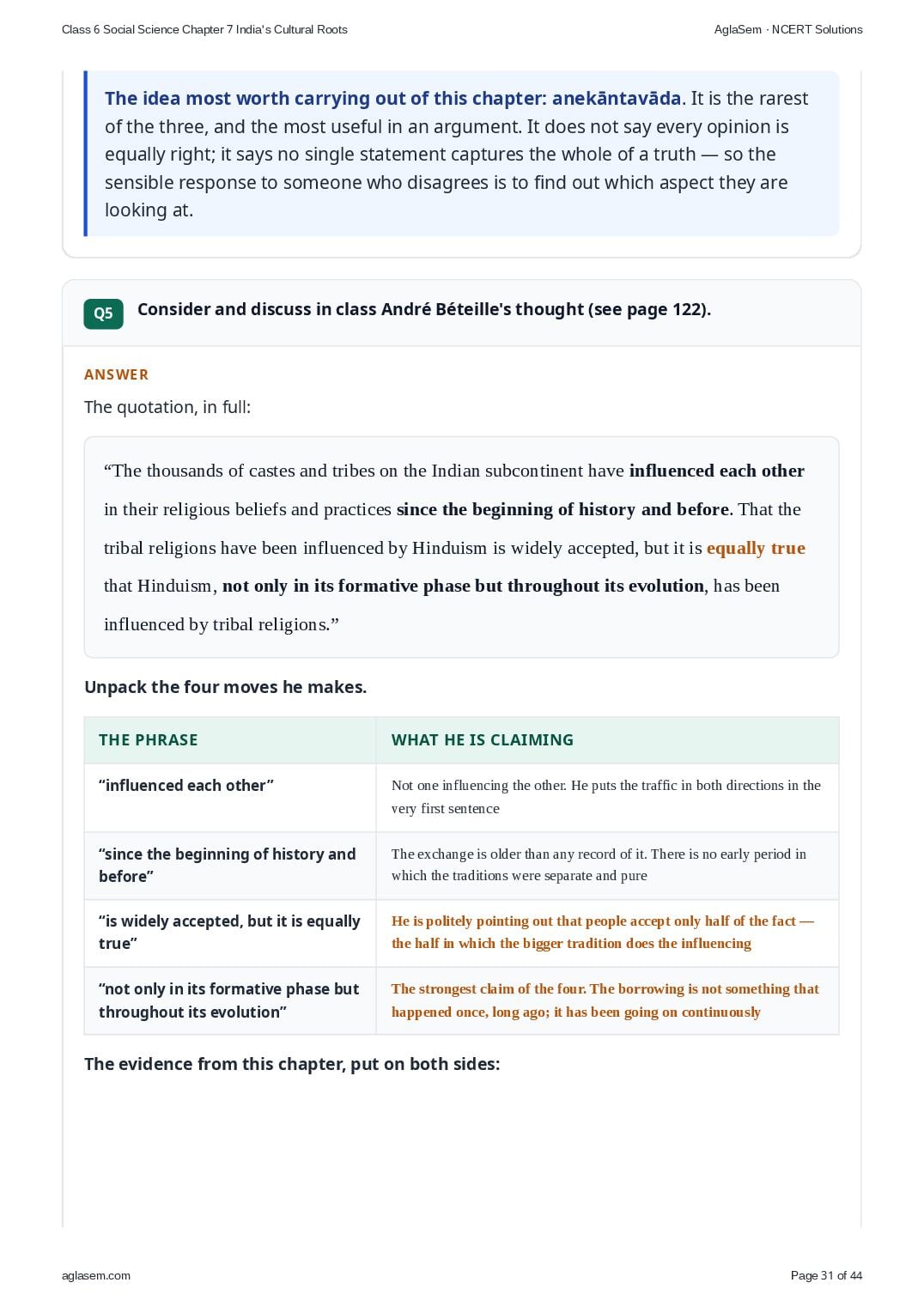
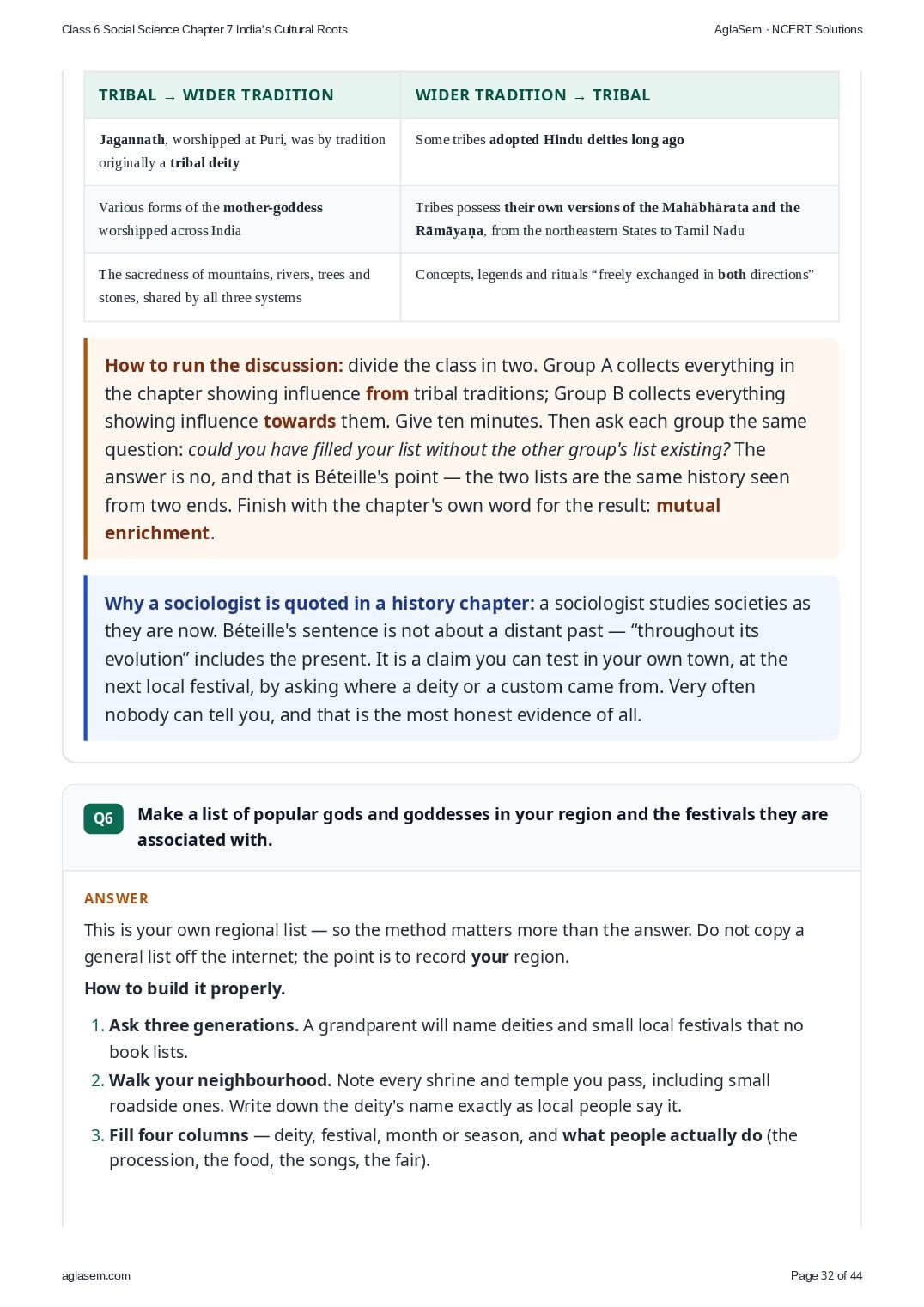
- Consider and discuss in class André Béteille's thought (see page 122).
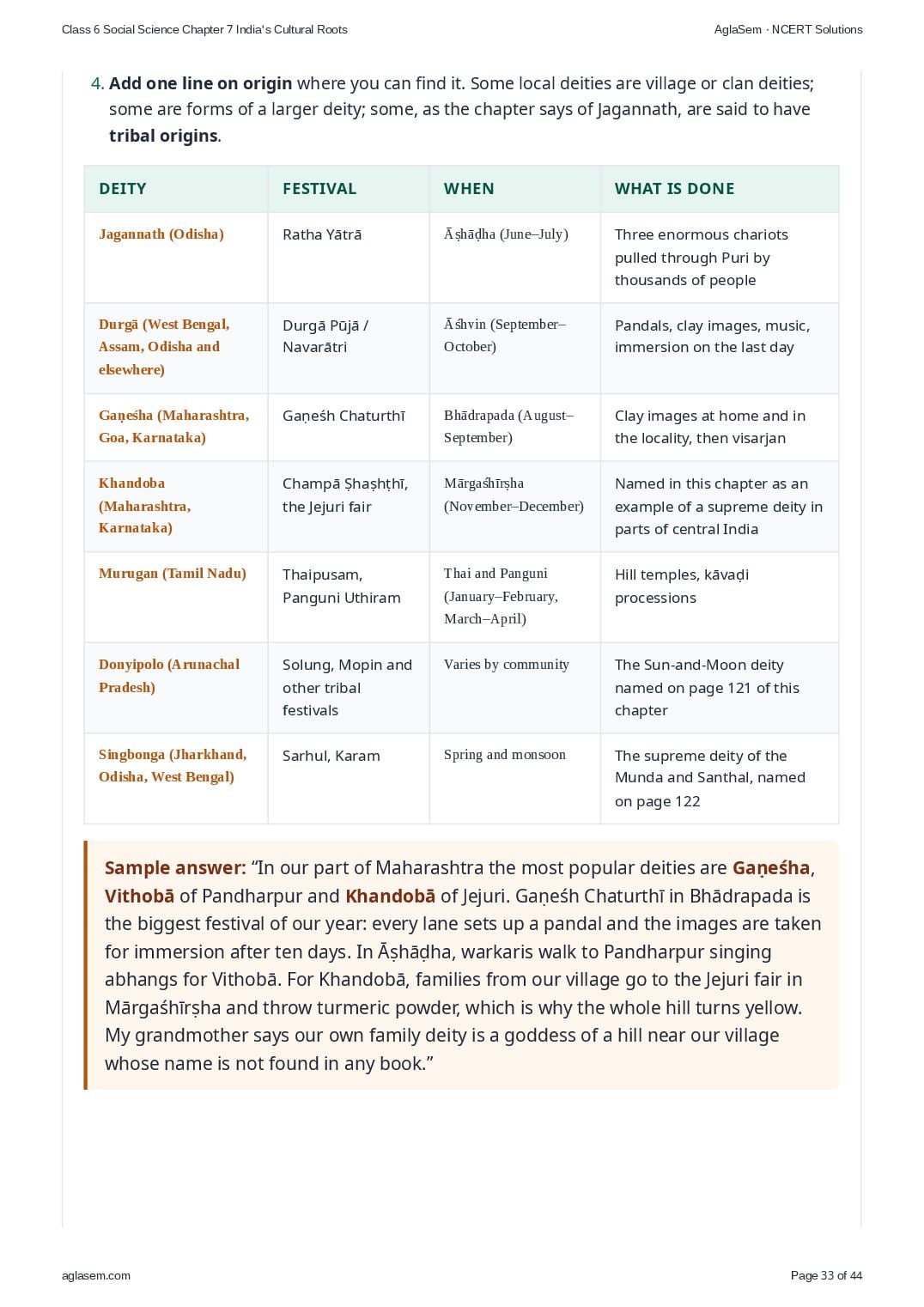
- Make a list of popular gods and goddesses in your region and the festivals they are associated with.
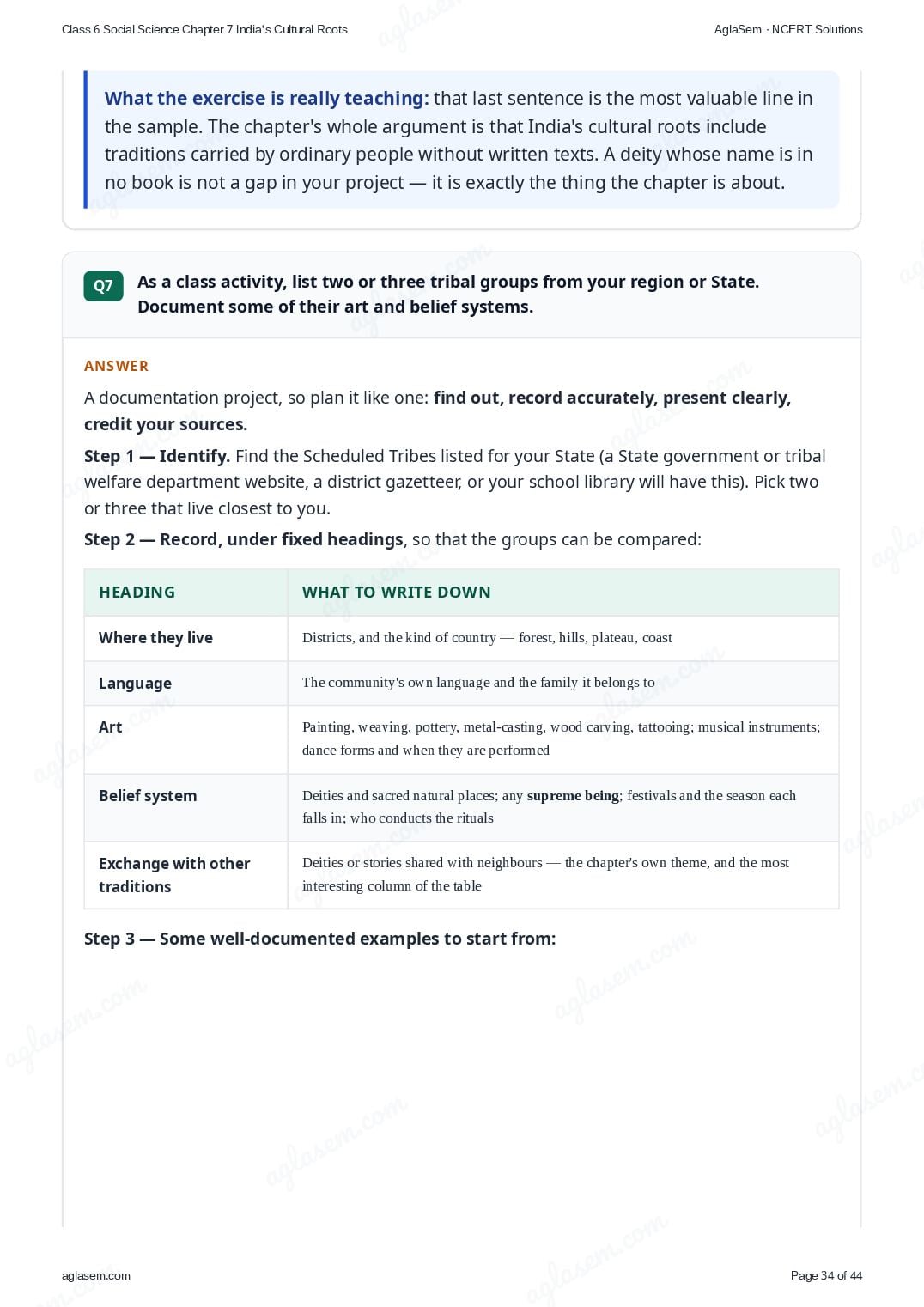
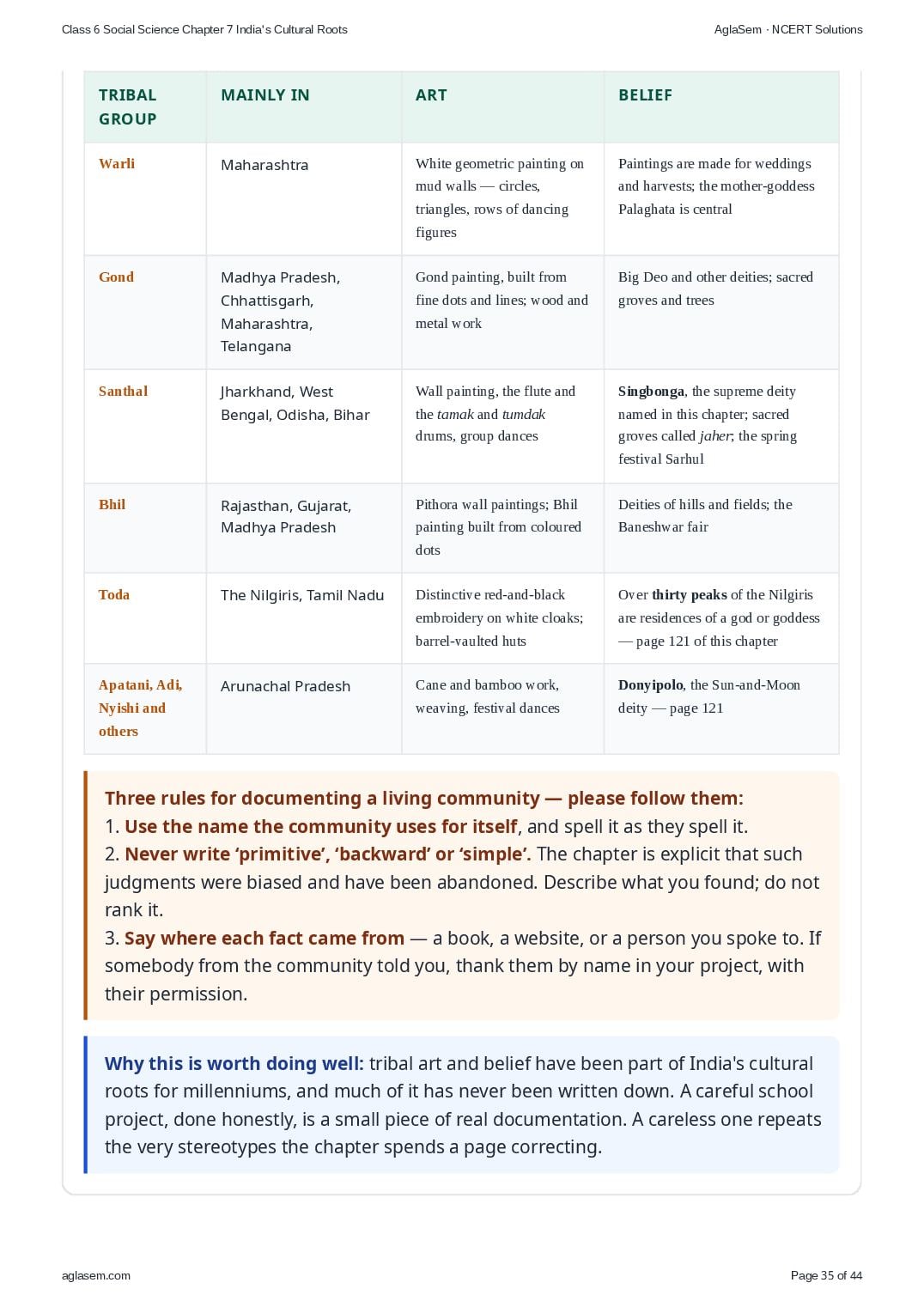
- As a class activity, list two or three tribal groups from your region or State. Document some of their art and belief systems.
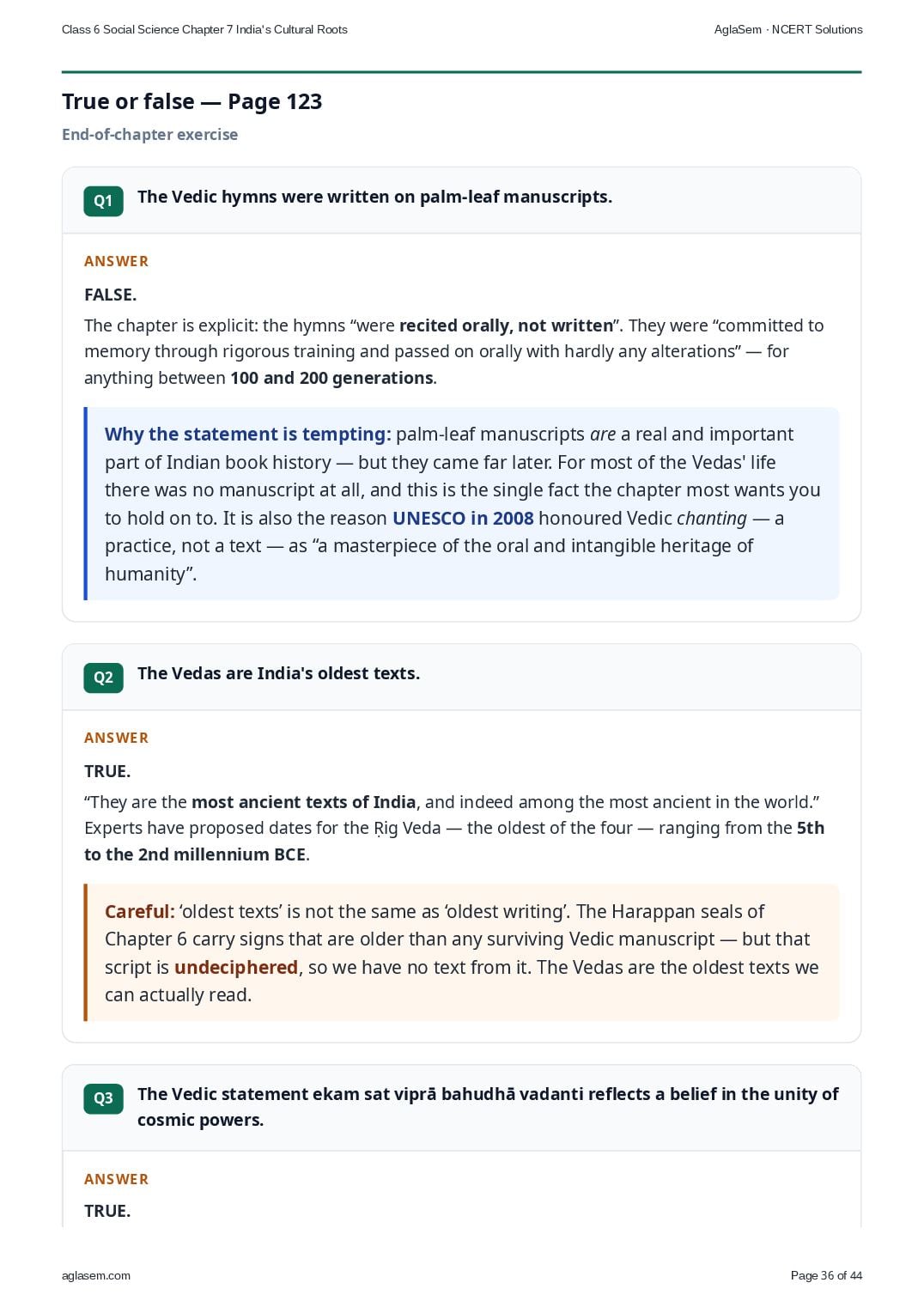
- The Vedic hymns were written on palm-leaf manuscripts.
- The Vedas are India's oldest texts.
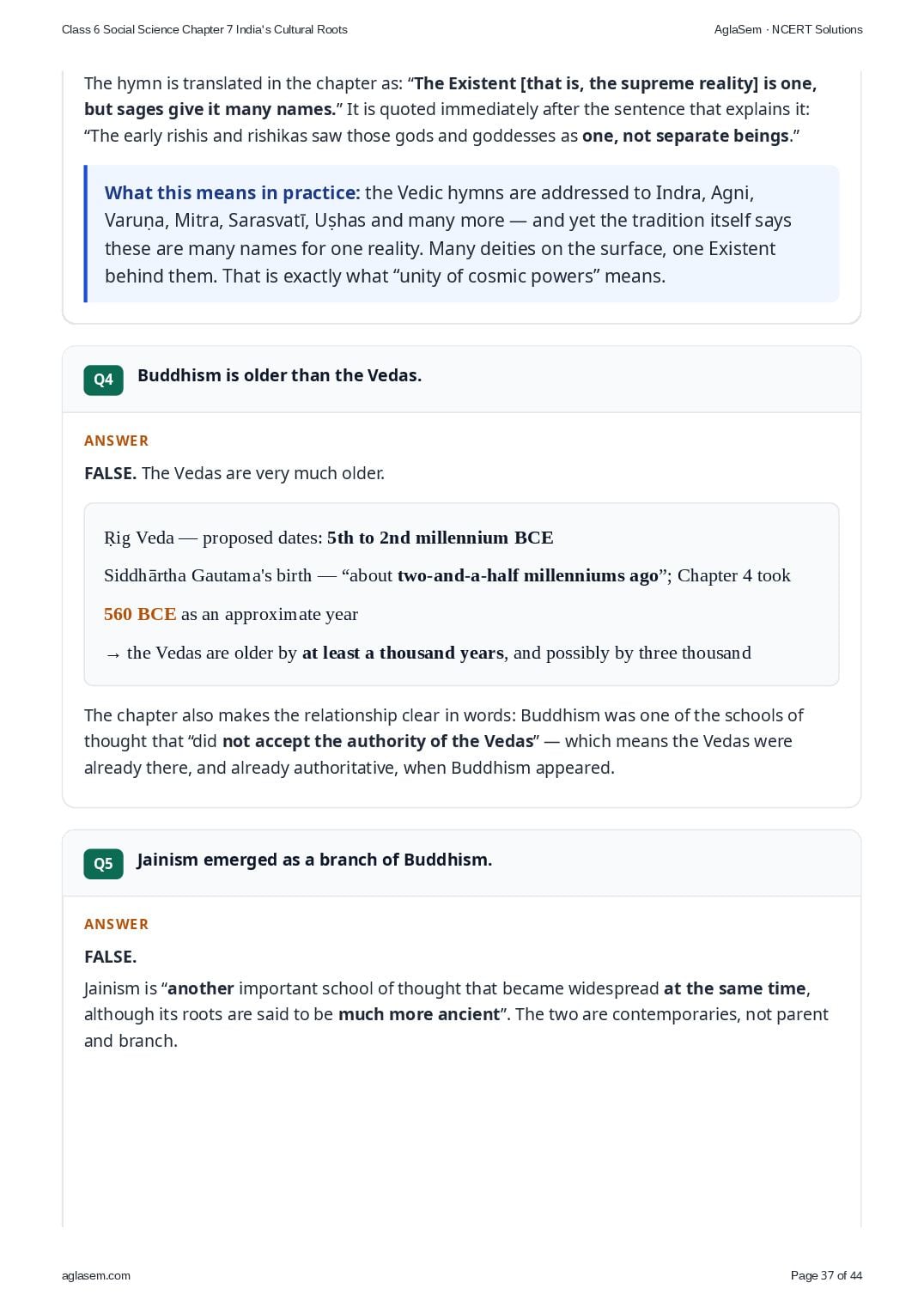
- The Vedic statement ekam sat viprā bahudhā vadanti reflects a belief in the unity of cosmic powers.
- Buddhism is older than the Vedas.
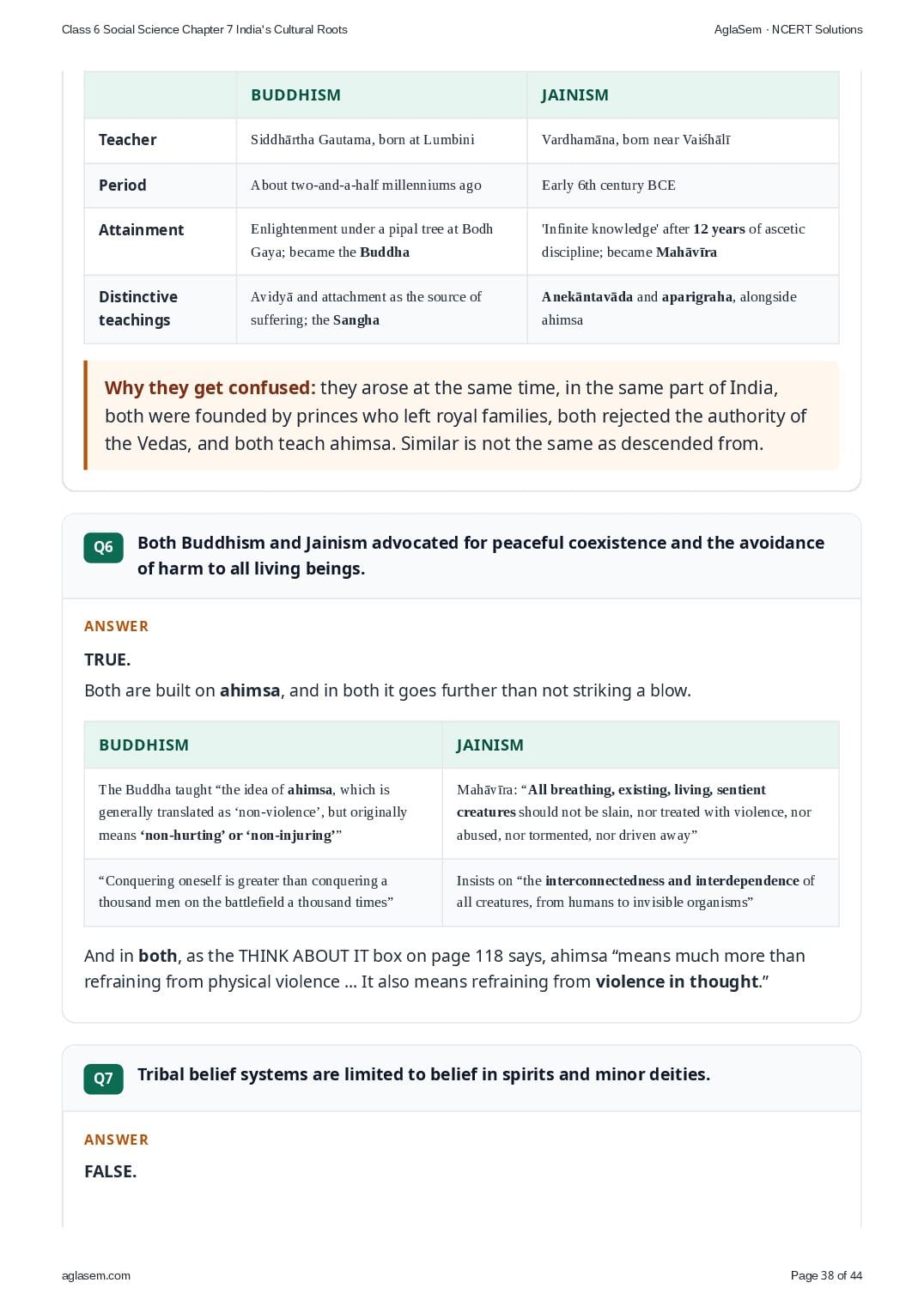
- Jainism emerged as a branch of Buddhism.
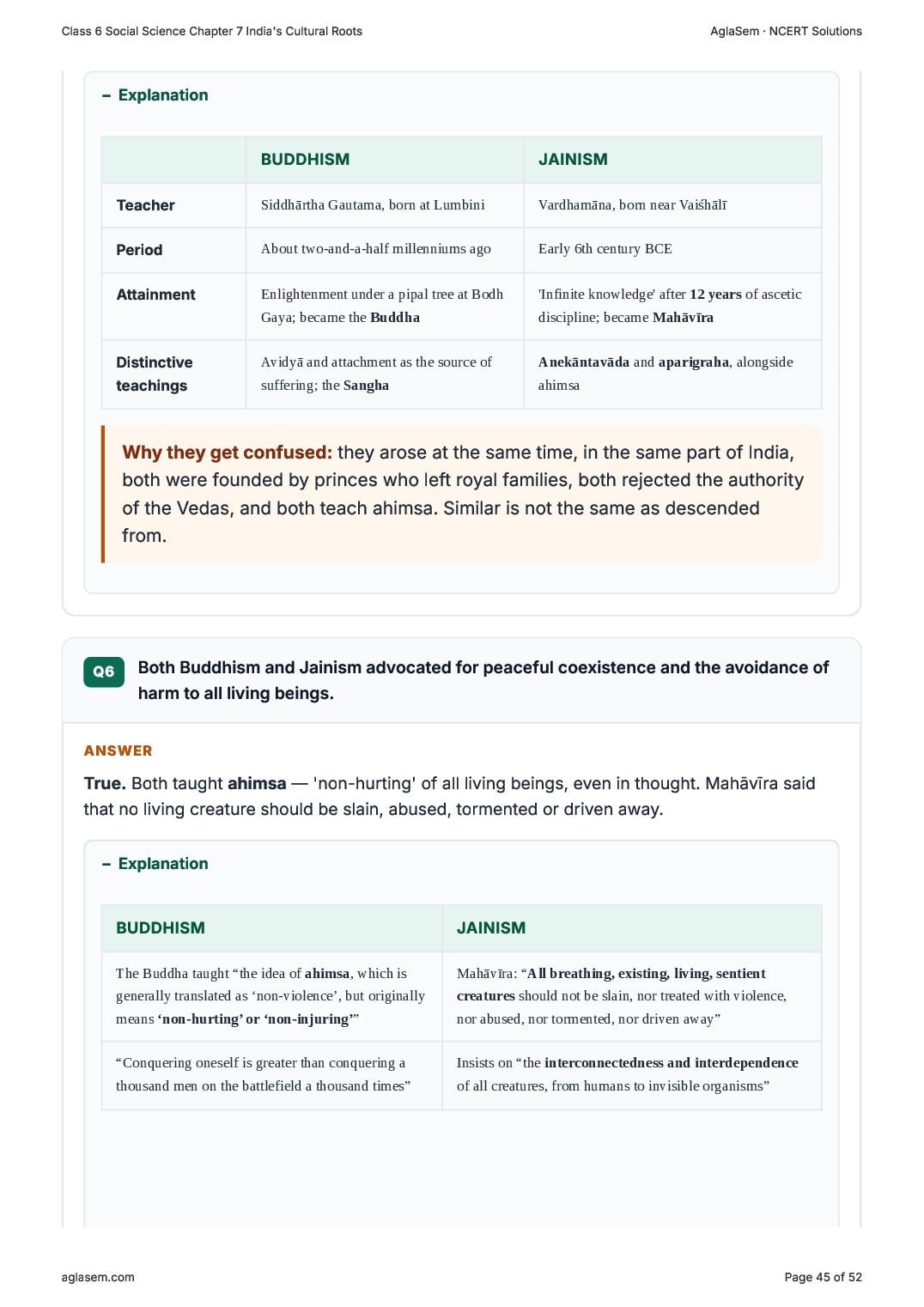
- Both Buddhism and Jainism advocated for peaceful coexistence and the avoidance of harm to all living beings.
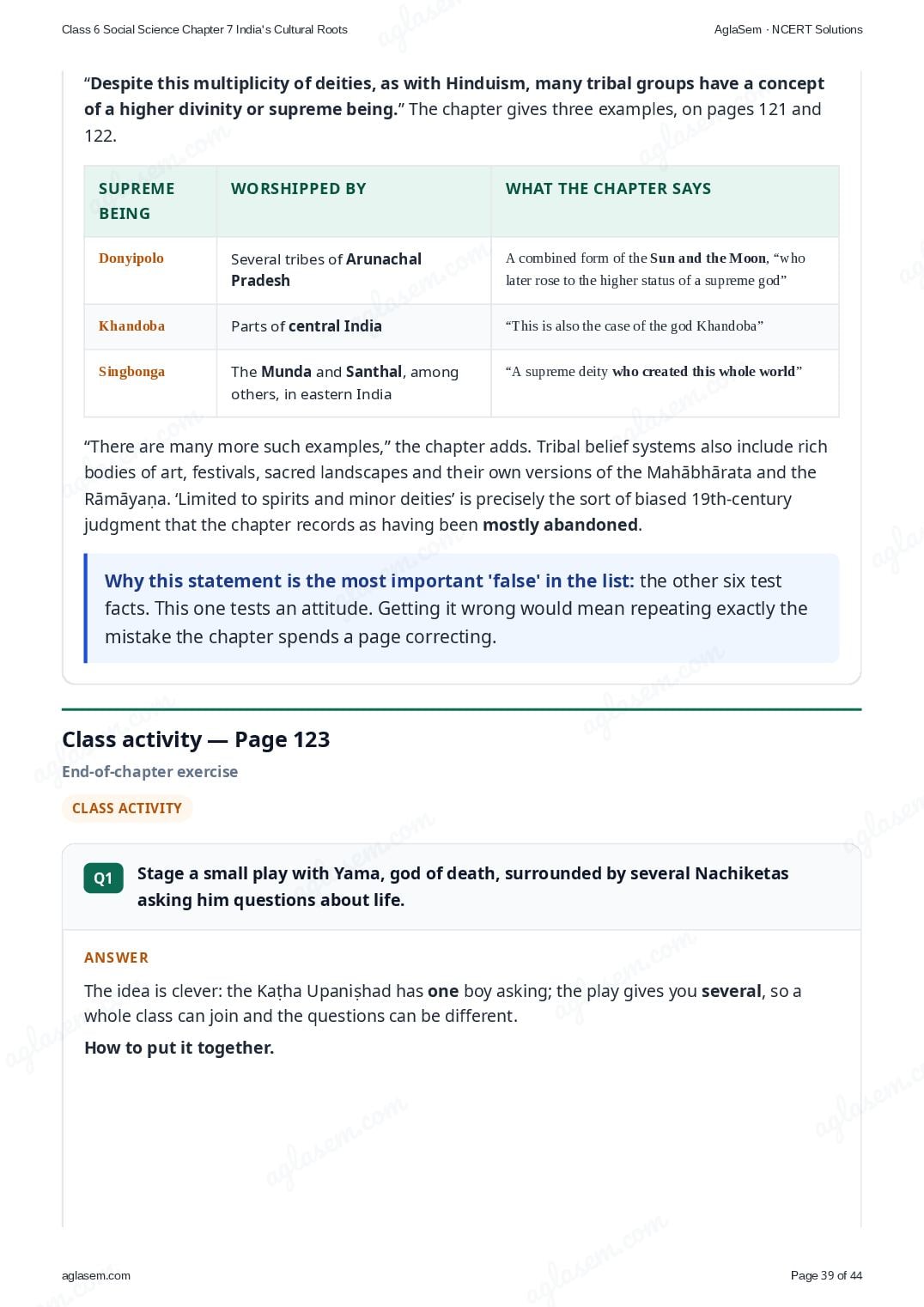
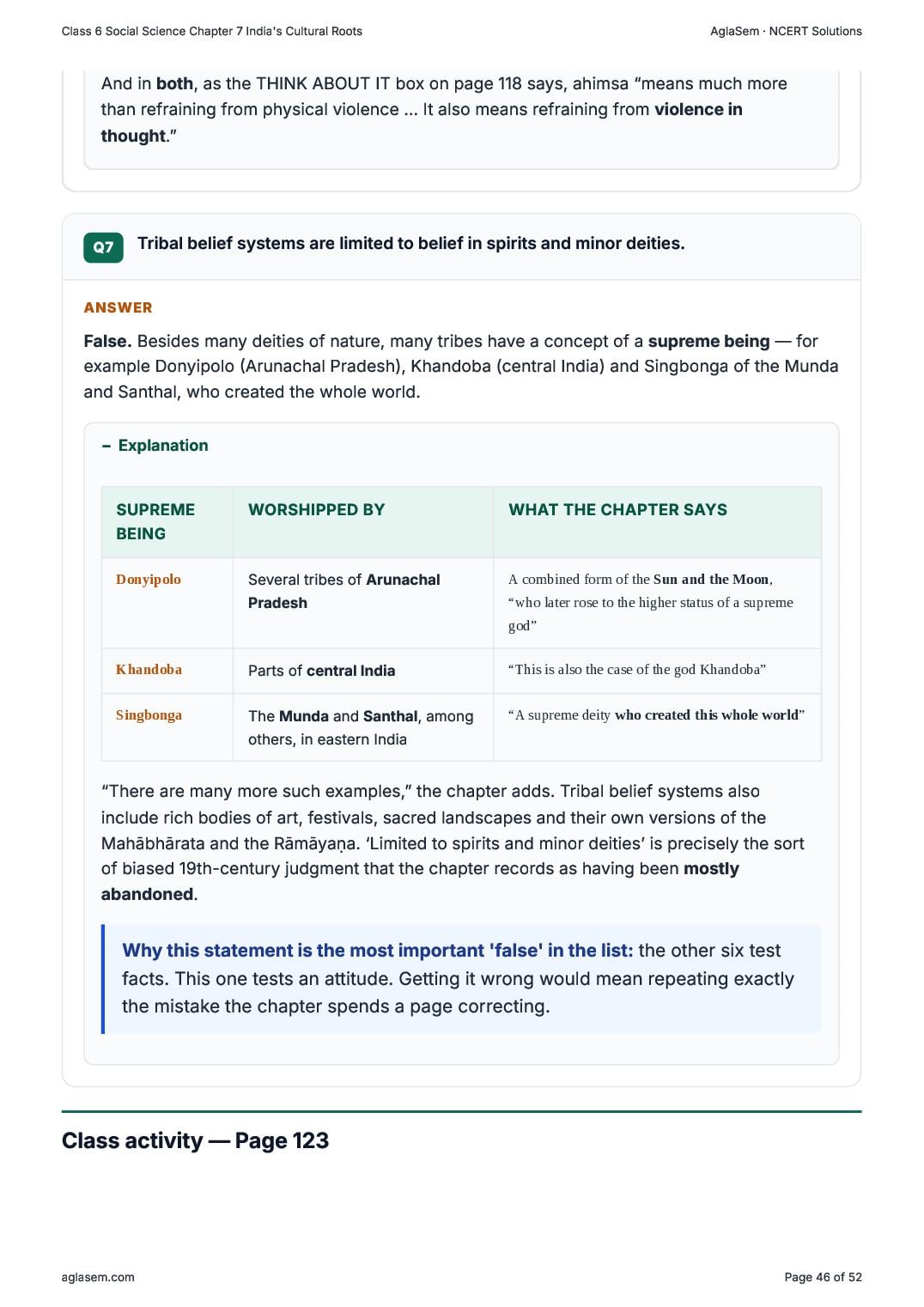
- Tribal belief systems are limited to belief in spirits and minor deities.
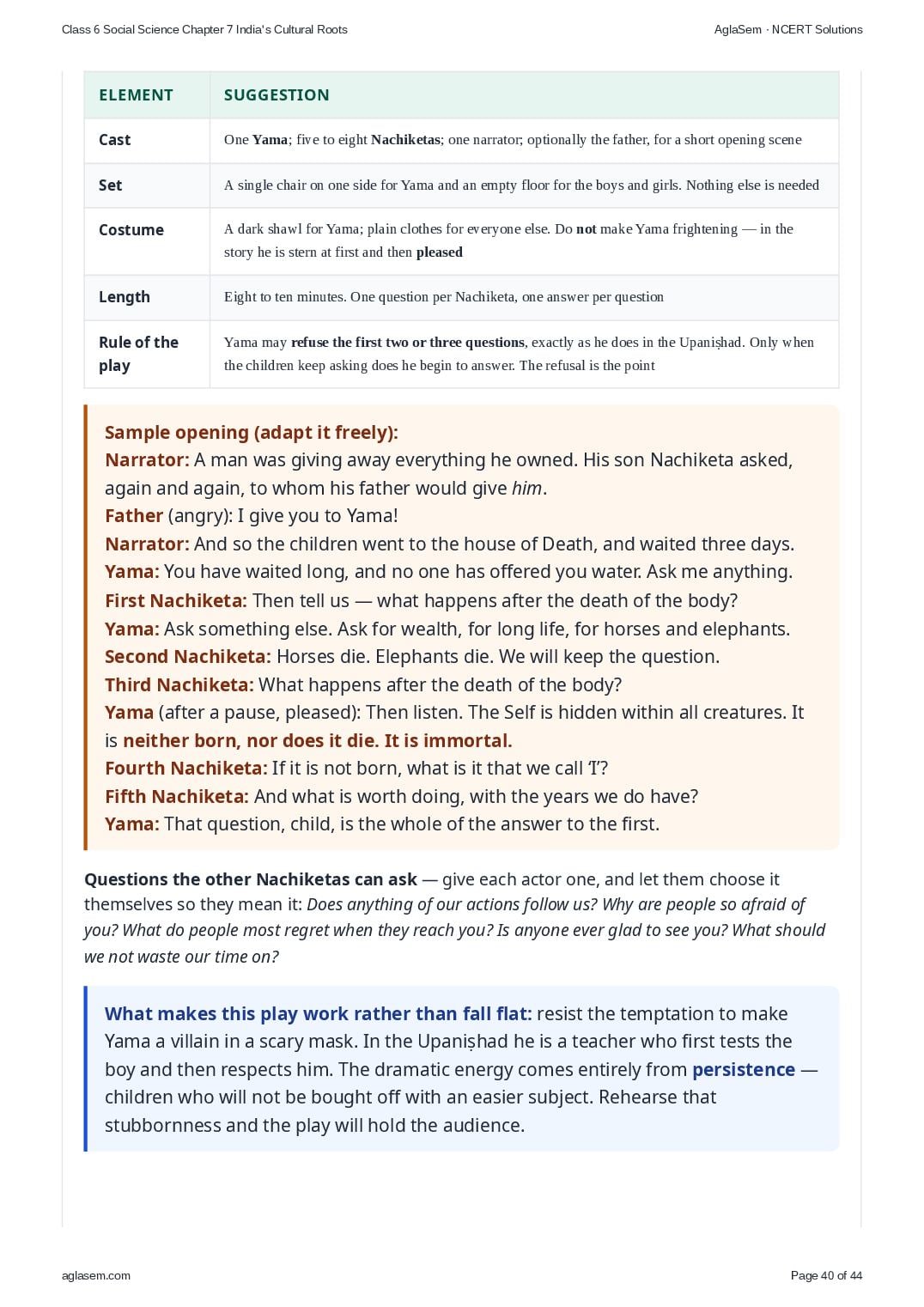
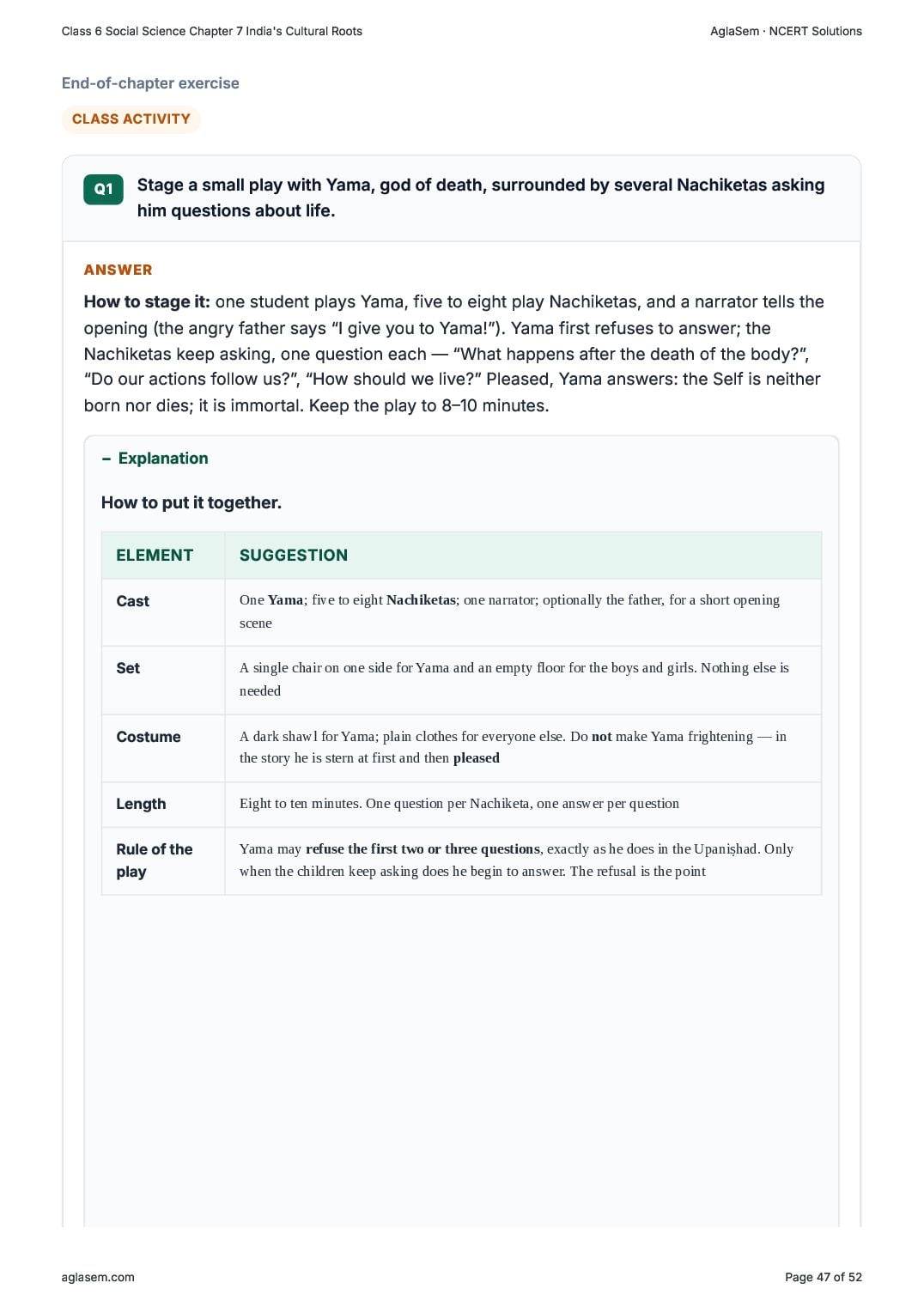
- Stage a small play with Yama, god of death, surrounded by several Nachiketas asking him questions about life.
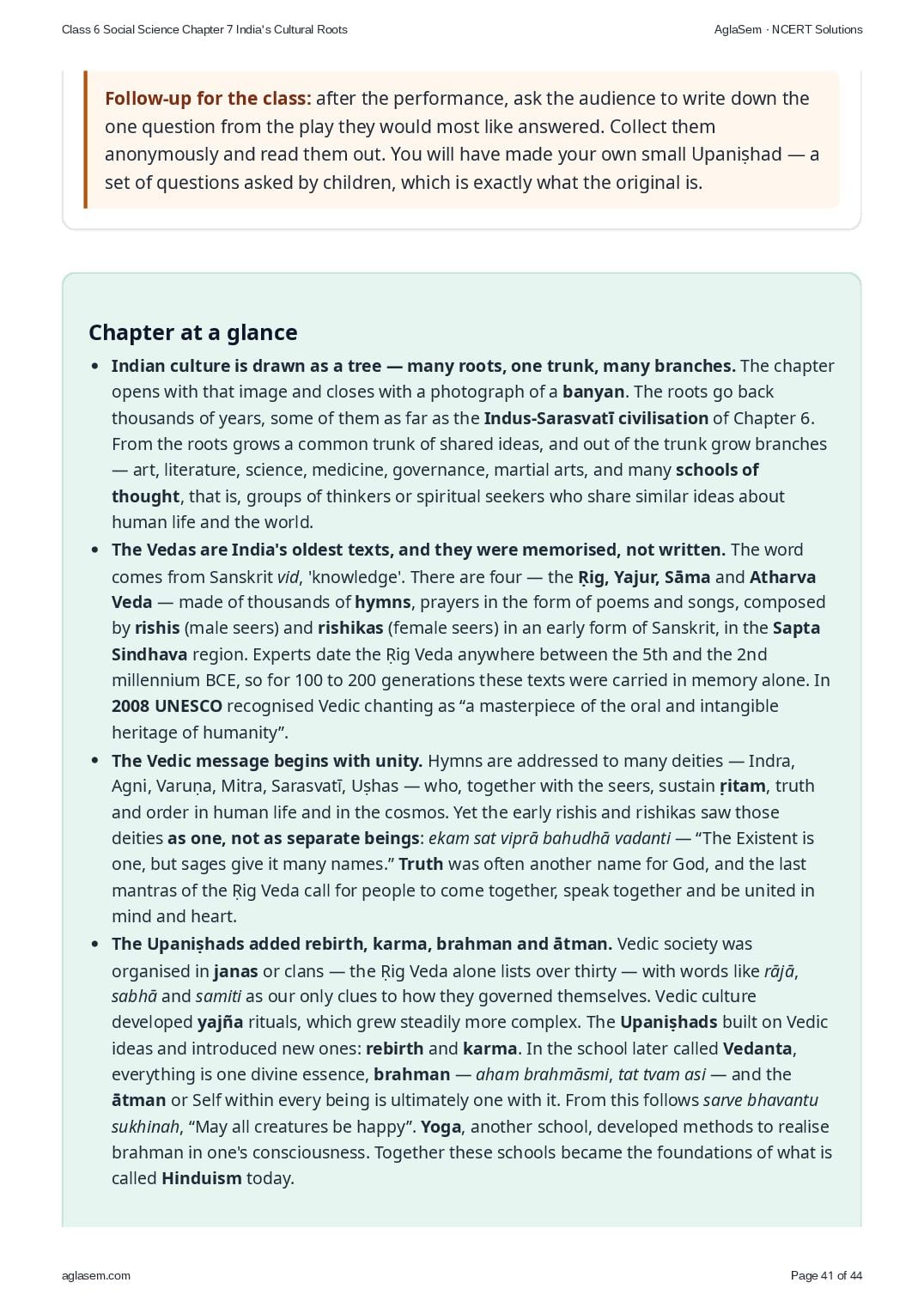
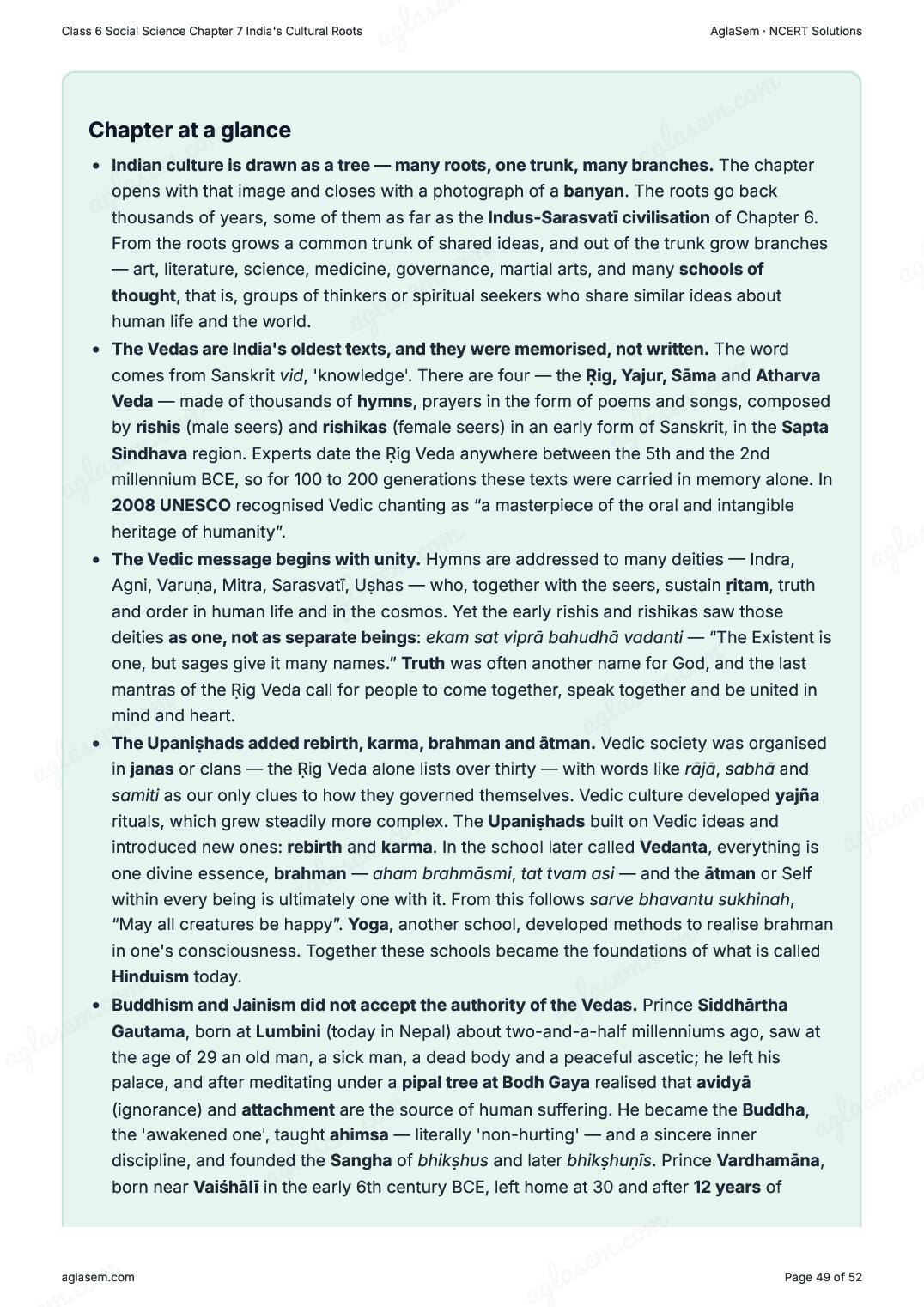
Chapter at a Glance
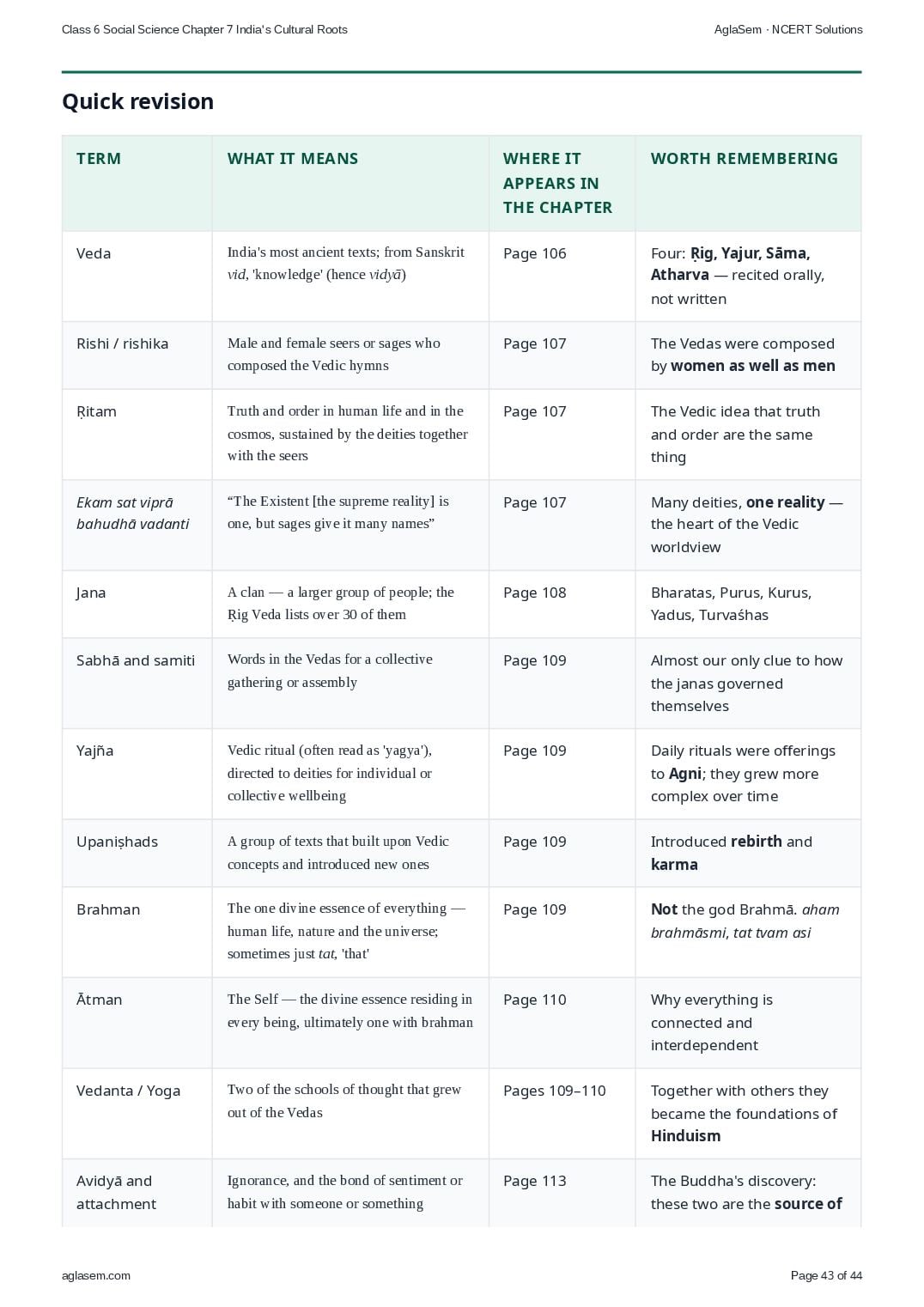
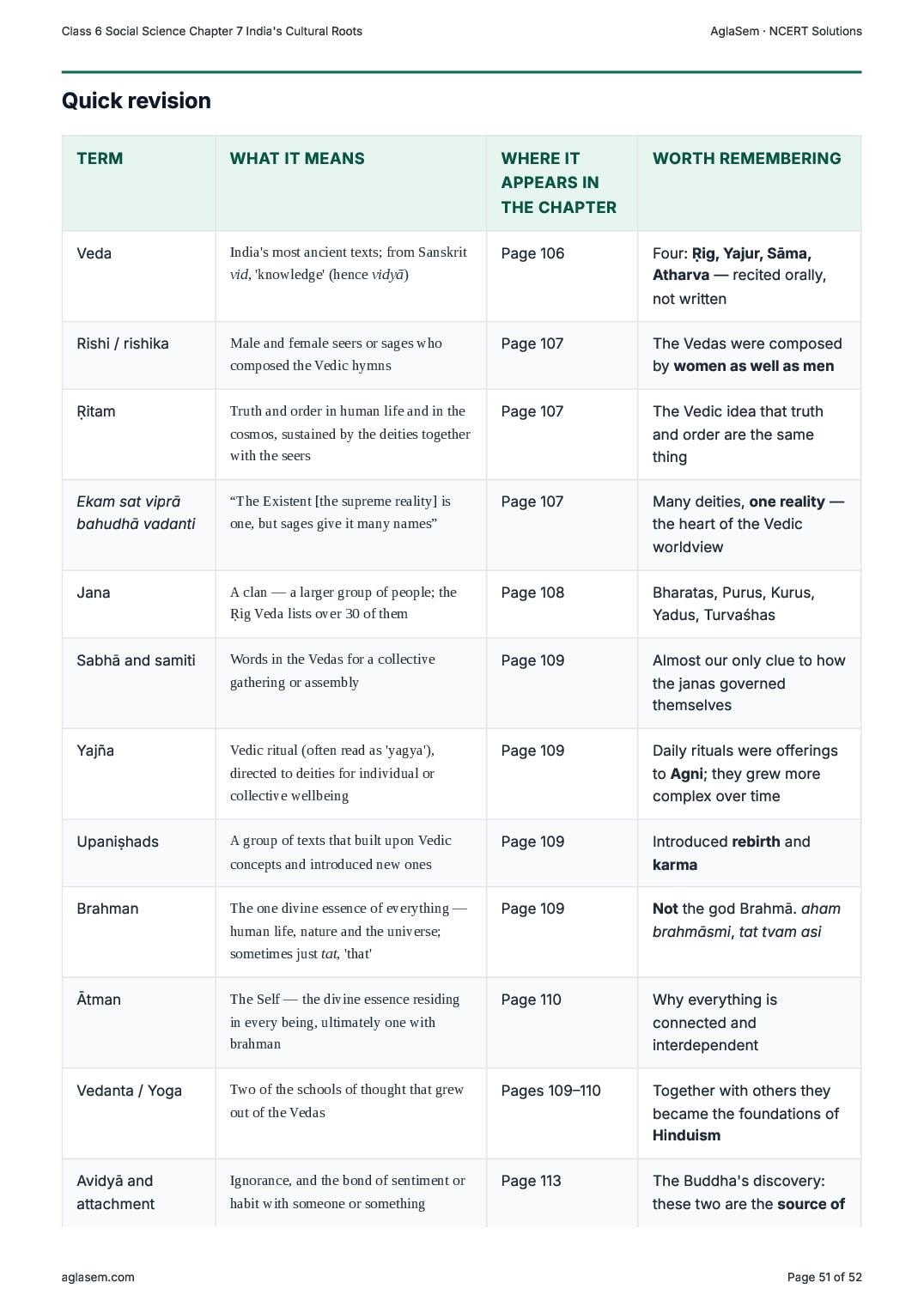
- Indian culture is drawn as a tree — many roots, one trunk, many branches. The chapter opens with that image and closes with a photograph of a banyan . The roots go back thousands of years, some of them as far as the Indus-Sarasvatī civilisation of Chapter 6. From the roots grows a common trunk of shared ideas, and out of the trunk grow branches — art, literature, science, medicine, governance, martial arts, and many schools of thought , that is, groups of thinkers or spiritual seekers who share similar ideas about human life and the world.
- The Vedas are India's oldest texts, and they were memorised, not written. The word comes from Sanskrit vid , 'knowledge'. There are four — the Ṛig, Yajur, Sāma and Atharva Veda — made of thousands of hymns , prayers in the form of poems and songs, composed by rishis (male seers) and rishikas (female seers) in an early form of Sanskrit, in the Sapta Sindhava region. Experts date the Ṛig Veda anywhere between the 5th and the 2nd millennium BCE, so for 100 to 200 generations these texts were carried in memory alone. In 2008 UNESCO recognised Vedic chanting as “a masterpiece of the oral and intangible heritage of humanity”.
- The Vedic message begins with unity. Hymns are addressed to many deities — Indra, Agni, Varuṇa, Mitra, Sarasvatī, Uṣhas — who, together with the seers, sustain ṛitam , truth and order in human life and in the cosmos. Yet the early rishis and rishikas saw those deities as one, not as separate beings : ekam sat viprā bahudhā vadanti — “The Existent is one, but sages give it many names.” Truth was often another name for God, and the last mantras of the Ṛig Veda call for people to come together, speak together and be united in mind and heart.
- The Upaniṣhads added rebirth, karma, brahman and ātman. Vedic society was organised in janas or clans — the Ṛig Veda alone lists over thirty — with words like rājā , sabhā and samiti as our only clues to how they governed themselves. Vedic culture developed yajña rituals, which grew steadily more complex. The Upaniṣhads built on Vedic ideas and introduced new ones: rebirth and karma . In the school later called Vedanta , everything is one divine essence, brahman — aham brahmāsmi , tat tvam asi — and the ātman or Self within every being is ultimately one with it. From this follows sarve bhavantu sukhinah , “May all creatures be happy”. Yoga , another school, developed methods to realise brahman in one's consciousness. Together these schools became the foundations of what is called Hinduism today.
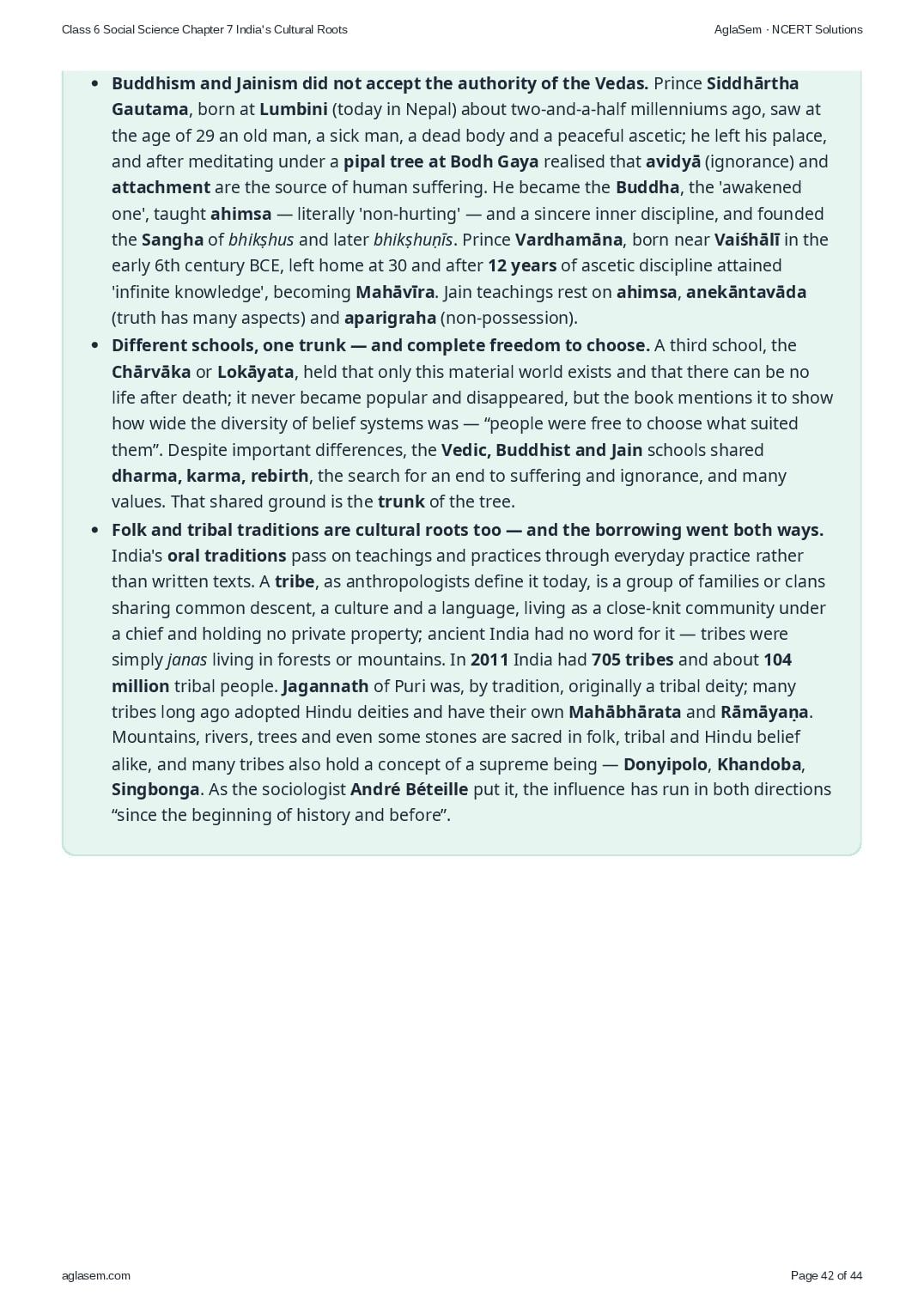
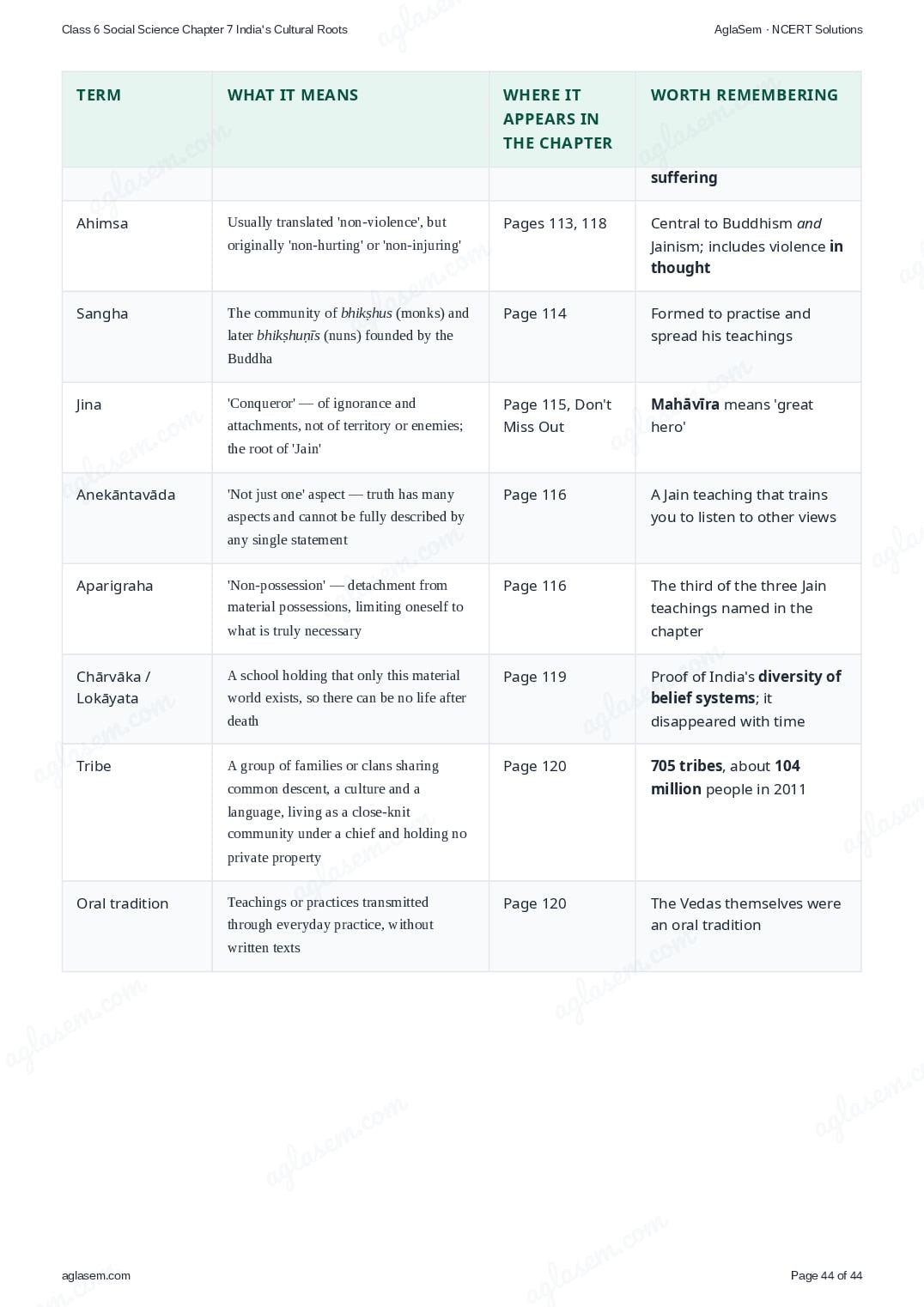
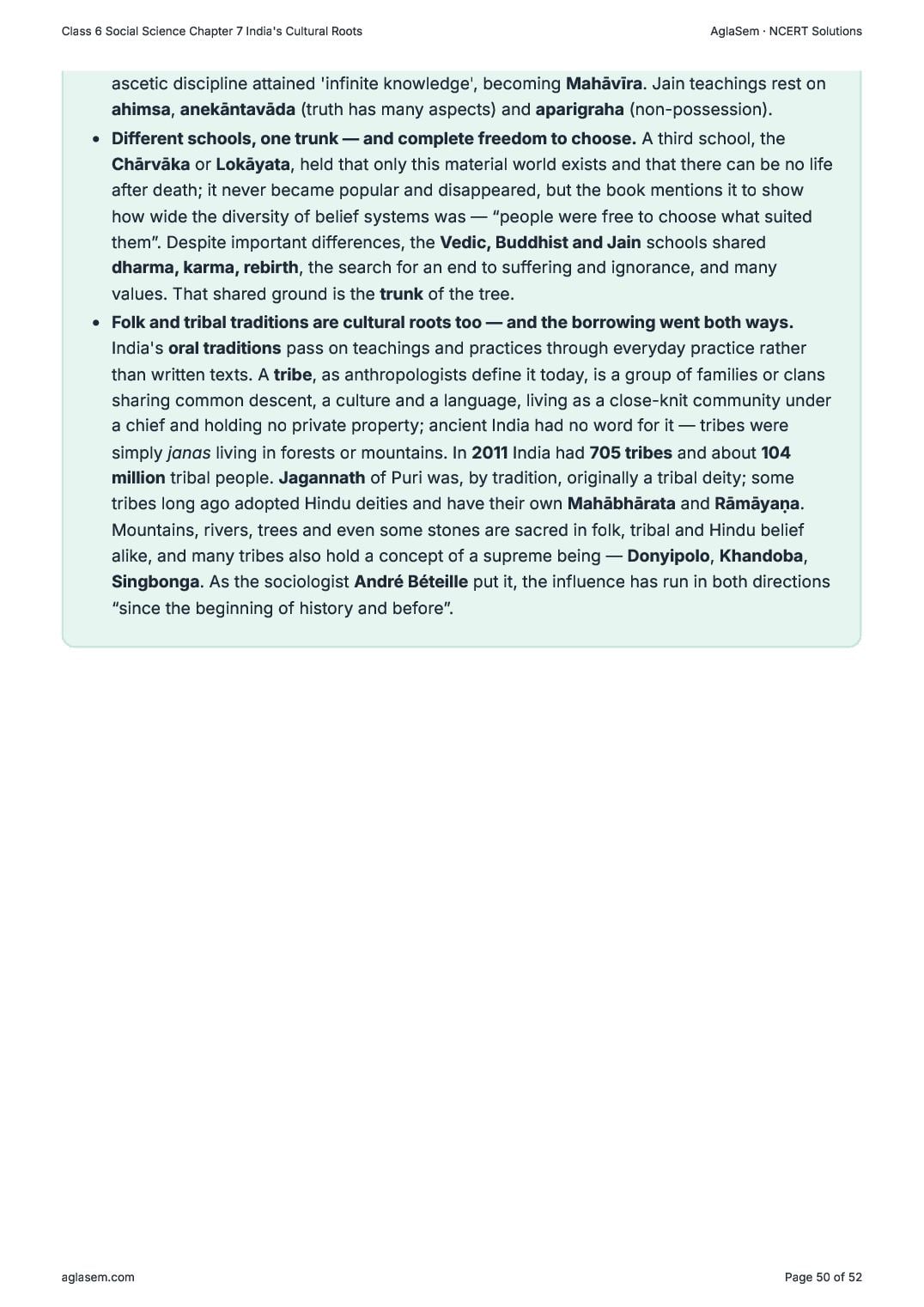
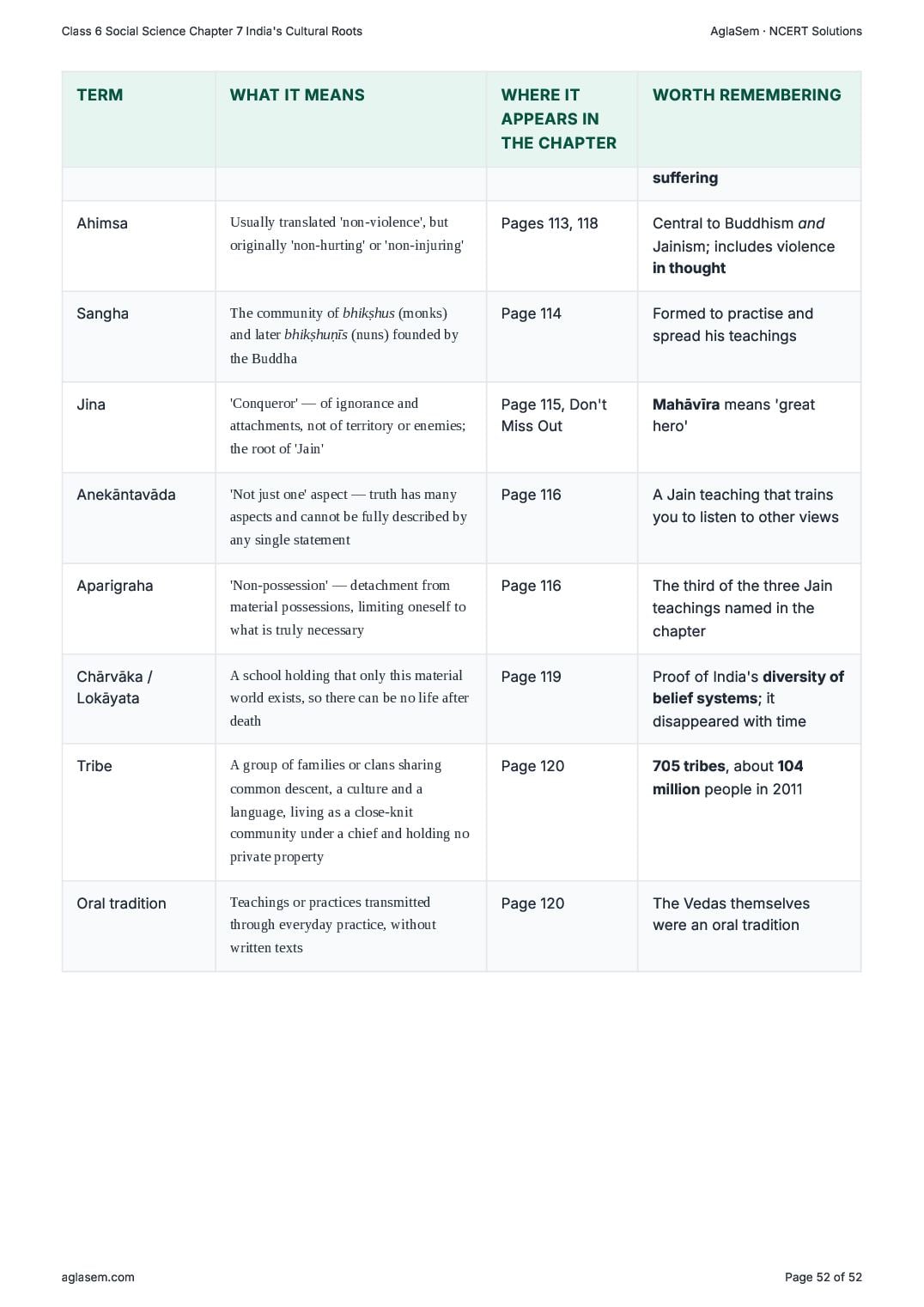
- Buddhism and Jainism did not accept the authority of the Vedas. Prince Siddhārtha Gautama , born at Lumbini (today in Nepal) about two-and-a-half millenniums ago, saw at the age of 29 an old man, a sick man, a dead body and a peaceful ascetic; he left his palace, and after meditating under a pipal tree at Bodh Gaya realised that avidyā (ignorance) and attachment are the source of human suffering. He became the Buddha , the 'awakened one', taught ahimsa — literally 'non-hurting' — and a sincere inner discipline, and founded the Sangha of bhikṣhus and later bhikṣhuṇīs . Prince Vardhamāna , born near Vaiśhālī in the early 6th century BCE, left home at 30 and after 12 years of ascetic discipline attained 'infinite knowledge', becoming Mahāvīra . Jain teachings rest on ahimsa , anekāntavāda (truth has many aspects) and aparigraha (non-possession).
- Different schools, one trunk — and complete freedom to choose. A third school, the Chārvāka or Lokāyata , held that only this material world exists and that there can be no life after death; it never became popular and disappeared, but the book mentions it to show how wide the diversity of belief systems was — “people were free to choose what suited them”. Despite important differences, the Vedic, Buddhist and Jain schools shared dharma, karma, rebirth , the search for an end to suffering and ignorance, and many values. That shared ground is the trunk of the tree.
- Folk and tribal traditions are cultural roots too — and the borrowing went both ways. India's oral traditions pass on teachings and practices through everyday practice rather than written texts. A tribe , as anthropologists define it today, is a group of families or clans sharing common descent, a culture and a language, living as a close-knit community under a chief and holding no private property; ancient India had no word for it — tribes were simply janas living in forests or mountains. In 2011 India had 705 tribes and about 104 million tribal people. Jagannath of Puri was, by tradition, originally a tribal deity; many tribes long ago adopted Hindu deities and have their own Mahābhārata and Rāmāyaṇa . Mountains, rivers, trees and even some stones are sacred in folk, tribal and Hindu belief alike, and many tribes also hold a concept of a supreme being — Donyipolo , Khandoba , Singbonga . As the sociologist André Béteille put it, the influence has run in both directions “since the beginning of history and before”.
How to Download NCERT Solutions for Class 6 Social Science Chapter 7 PDF
Follow these simple steps to get the India’s Cultural Roots questions-and-answers PDF from Exploring Society India and Beyond.
- Search NCERT Solutions for Class 6 Social Science Chapter 7 aglasem and open this page.
- Read the exercise questions with answers for India’s Cultural Roots shown above.
- Click the Download PDF link to save the India’s Cultural Roots solutions to your device.
NCERT Solutions for Class 6 Social Science – All Chapters
There are more chapters to study besides India’s Cultural Roots in Social Science. Here are the NCERT Solutions for all chapters of Class 6 Social Science.
- Chapter 1 Locating Places on the Earth
- Chapter 2 Oceans and Continents
- Chapter 3 Landforms and Life
- Chapter 4 Timeline and Sources of History
- Chapter 5 India That Is Bharat
- Chapter 6 the Beginnings of Indian Civilisation
- Chapter 7 India’s Cultural Roots
- Chapter 8 Unity in Diversity or Many in the One
- Chapter 9 Family and Community
- Chapter 10 Grassroots Democracy part 1 Governance
- Chapter 11 Grassroots Democracy part 2 Local Government in Rural Areas
- Chapter 12 Grassroots Democracy part 3 Local Government in Urban Areas
- Chapter 13 the Value of Work
- Chapter 14 Economic Activities Around Us
NCERT Solutions for Class 6 – All Subjects
Just like Chapter 7 of Social Science, you can get the exercise questions with answers for every other subject of Class 6. Here are the NCERT Solutions for all subjects of Class 6.
NCERT Solutions for Class 6 Social Science Chapter 7 – An Overview
The key highlights of this study material are as follows.
| Aspects | Details |
|---|---|
| Class | Class 6 |
| Subject | Social Science |
| Chapter Number | Chapter 7 |
| Chapter Name | India’s Cultural Roots |
| Book Name | Exploring Society India and Beyond |
| Book By | NCERT (National Council of Educational Research and Training) |
| Educational Resource Here | NCERT Solutions of Class 6 Social Science Chapter 7 for all exercises |
| More Questions Answers of This Subject | NCERT Solutions for Class 6 Social Science |
| Download Book Chapter | NCERT Book Class 6 Social Science |
| All Questions Answers For This Class | NCERT Solutions for Class 6 |
| Complete Solutions | NCERT Solutions |
NCERT Solutions for Class 6 Social Science Chapter 7 India’s Cultural Roots – FAQs
What are the NCERT Solutions for Class 6 Social Science Chapter 7 India’s Cultural Roots?
They are the complete, step-by-step answers to all the exercise and in-text questions of Chapter 7 India’s Cultural Roots from the NCERT Class 6 Social Science textbook Exploring Society India and Beyond, written by experts as per the latest NCERT syllabus.
How can I download the Class 6 Social Science Chapter 7 solutions PDF for free?
Open this page on aglasem, read the India’s Cultural Roots questions with answers, and click the “Download Solutions PDF” link. The Class 6 Social Science Chapter 7 NCERT Solutions PDF is completely free to download.
Are these NCERT Solutions as per the latest 2026-27 syllabus?
Yes. The NCERT Solutions for Class 6 Social Science Chapter 7 are based on the latest NCERT textbook Exploring Society India and Beyond and the current 2026-27 CBSE syllabus, so the questions and answers match what you study in class.
Where can I get NCERT Solutions for the other chapters of Class 6 Social Science?
You can find the answers to every chapter on the NCERT Solutions for Class 6 Social Science page, and solutions for every subject on the NCERT Solutions for Class 6 page.
How do NCERT Solutions help in exam preparation?
They show the correct method to solve each question, help you write answers the way they are expected in exams, let you check and correct your own work, and save revision time — which together improve your marks in Class 6 Social Science.
If you have any queries on NCERT Solutions for Class 6 Social Science Chapter 7 India’s Cultural Roots, then please ask in the comments below.