Download Family and Community – NCERT Class 6 Social Science Chapter 9 PDF from the new NCERT Class 6 Social Science book Exploring Society: India and Beyond (2026-27). Read the chapter online or download the free PDF. The chapter’s one idea: people do not live alone. A family is the smallest circle of people who look after one another; a community is a larger circle of families and people connected to each other. The chapter moves outward from the first circle to…
Family and Community PDF – Chapter 9 of Exploring Society: India and Beyond
Read the chapter online or download the PDF.
| Chapter | Download | |
|---|---|---|
| Chapter 9 PDF | Family and Community | View PDF |
| Full book | NCERT Class 6 Social Science – Exploring Society: India and Beyond | View Book |
Read Online
What Is in Family and Community? (Class 6 Social Science Chapter 9)
- The chapter’s one idea: people do not live alone. A family is the smallest circle of people who look after one another; a community is a larger circle of families and people connected to each other. The chapter moves outward from the first circle to the second, and ends by showing that even communities cannot manage alone — they depend on one another.
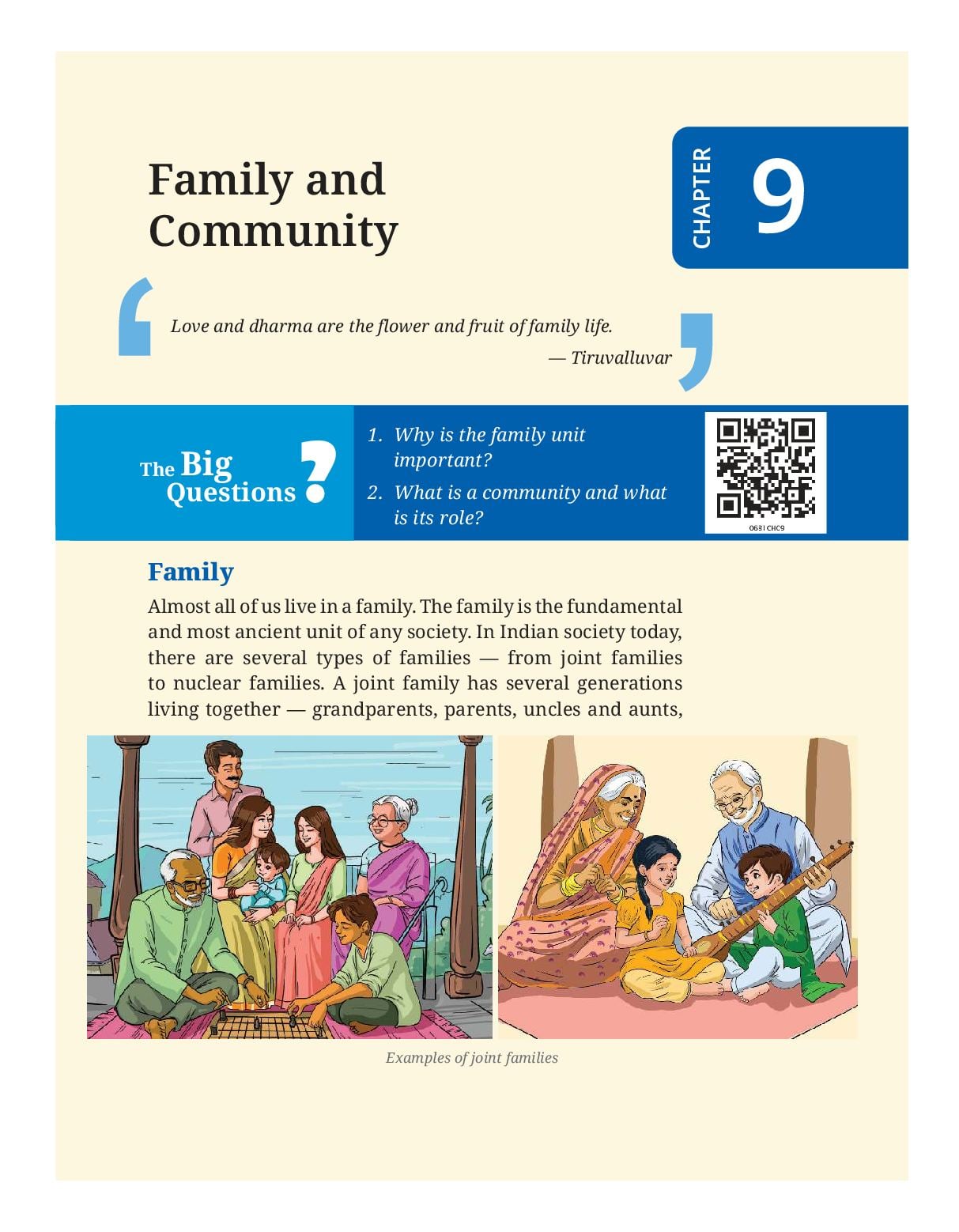
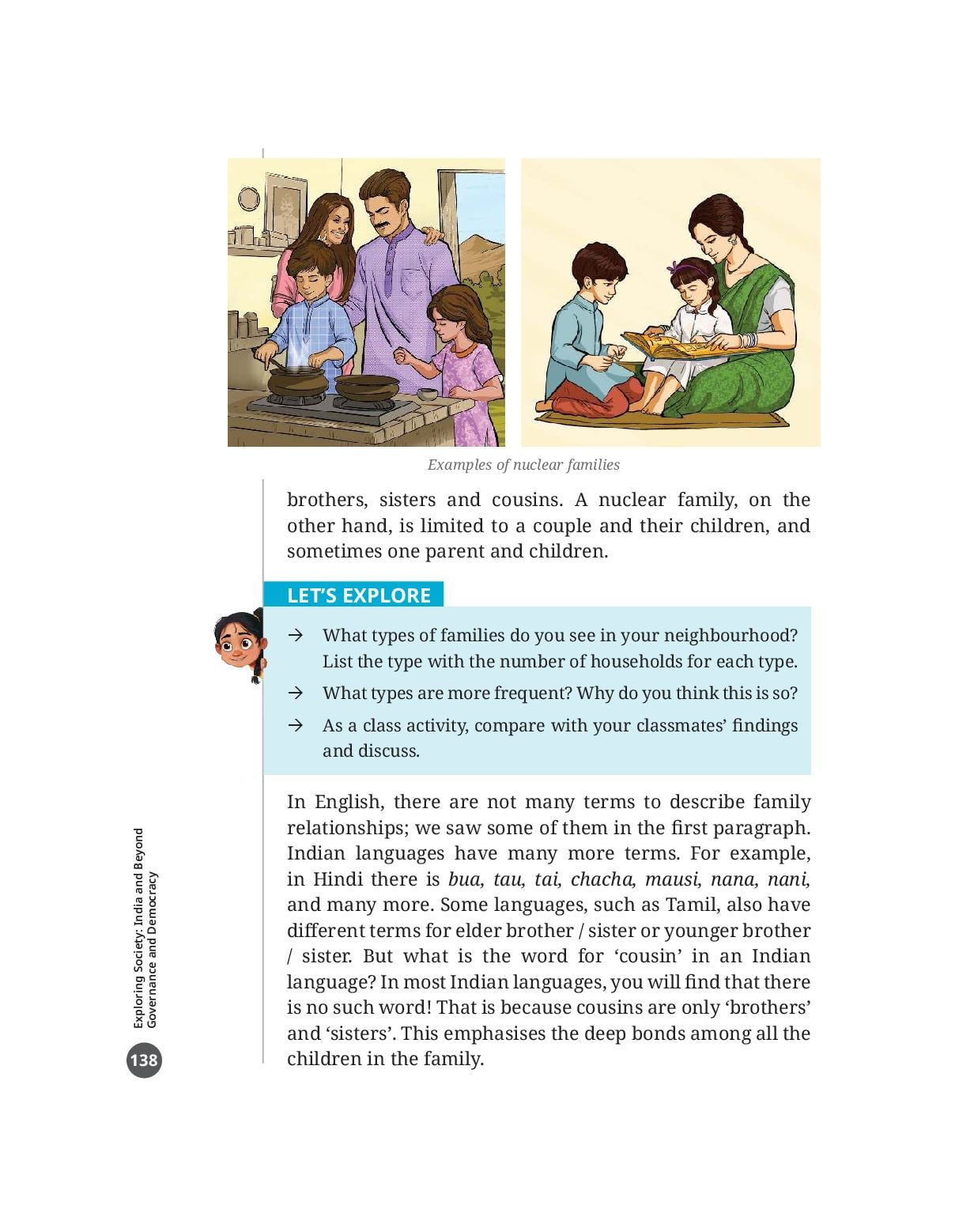
- The family is the oldest unit of society, and it comes in more than one shape. The book names two: a joint family, where several generations live together (grandparents, parents, uncles and aunts, brothers, sisters and cousins), and a nuclear family, “limited to a couple and their children, and sometimes one parent and children”. Neither is presented as better than the other — they are simply different ways of living together.
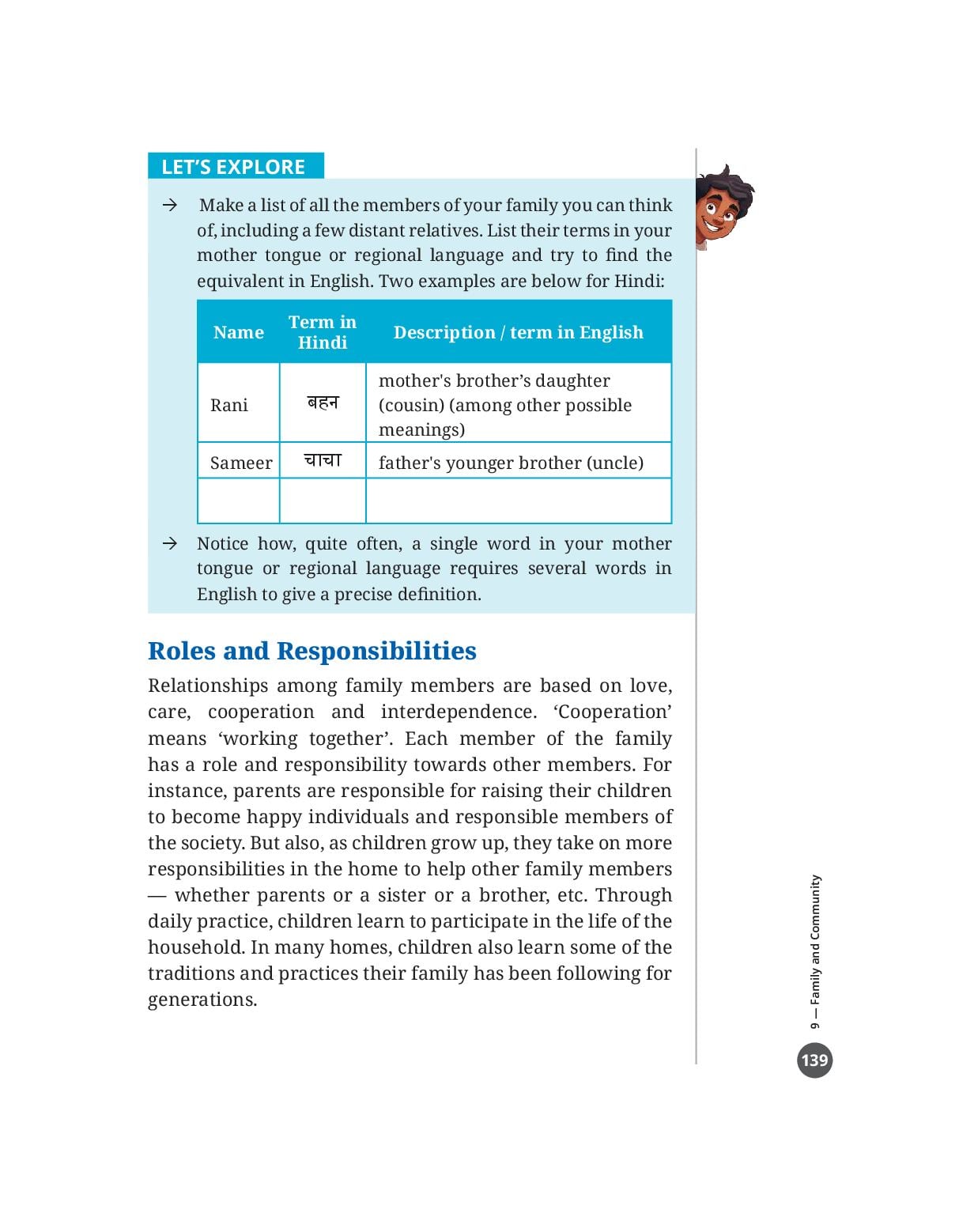
- Indian languages carry the relationships in their words. English manages with a few terms; Hindi has bua, tau, tai, chacha, mausi, nana, nani and many more, and Tamil even separates elder from younger brother or sister. But there is no word for ‘cousin’ in most Indian languages — cousins are simply brothers and sisters, which “emphasises the deep bonds among all the children in the family”.
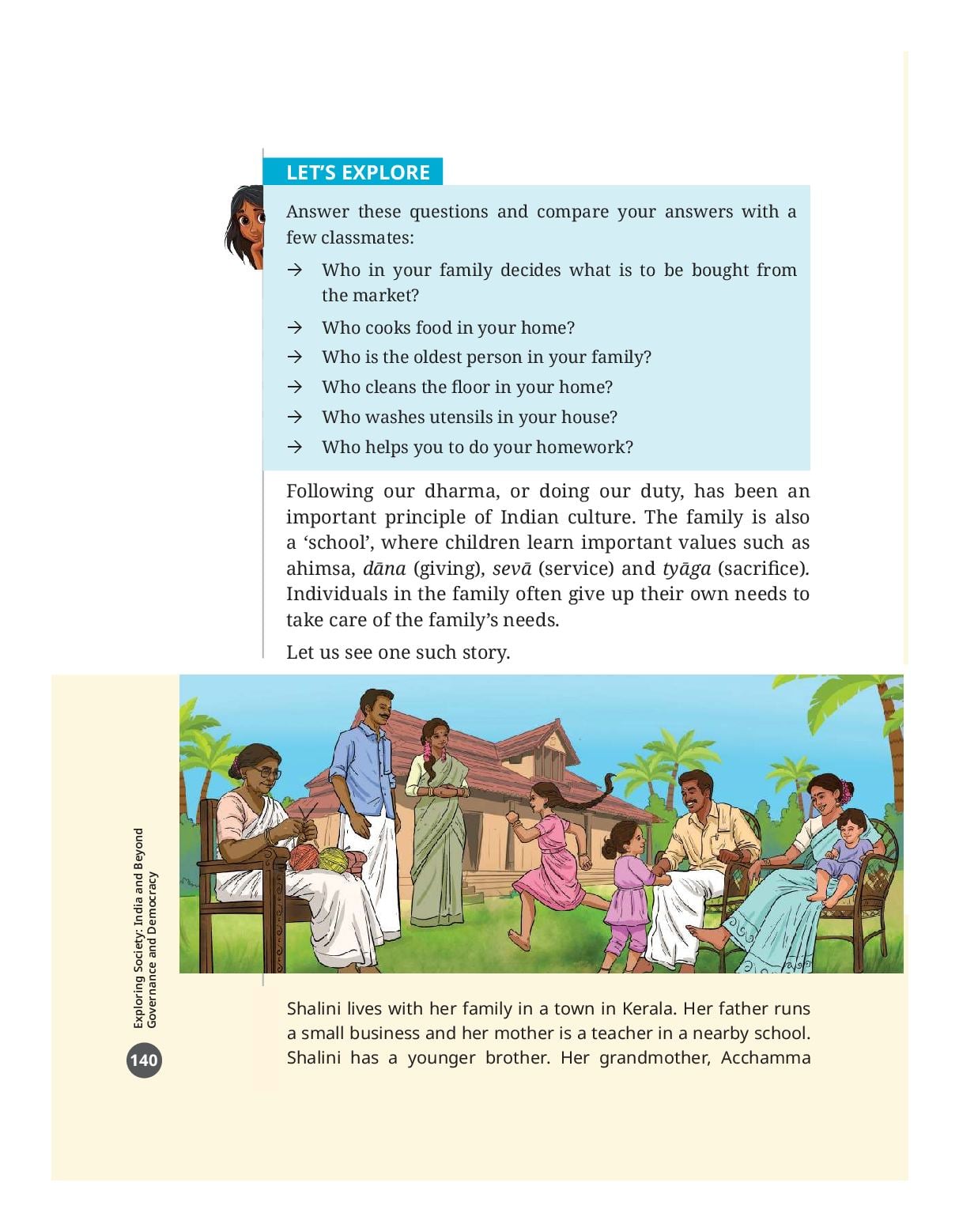
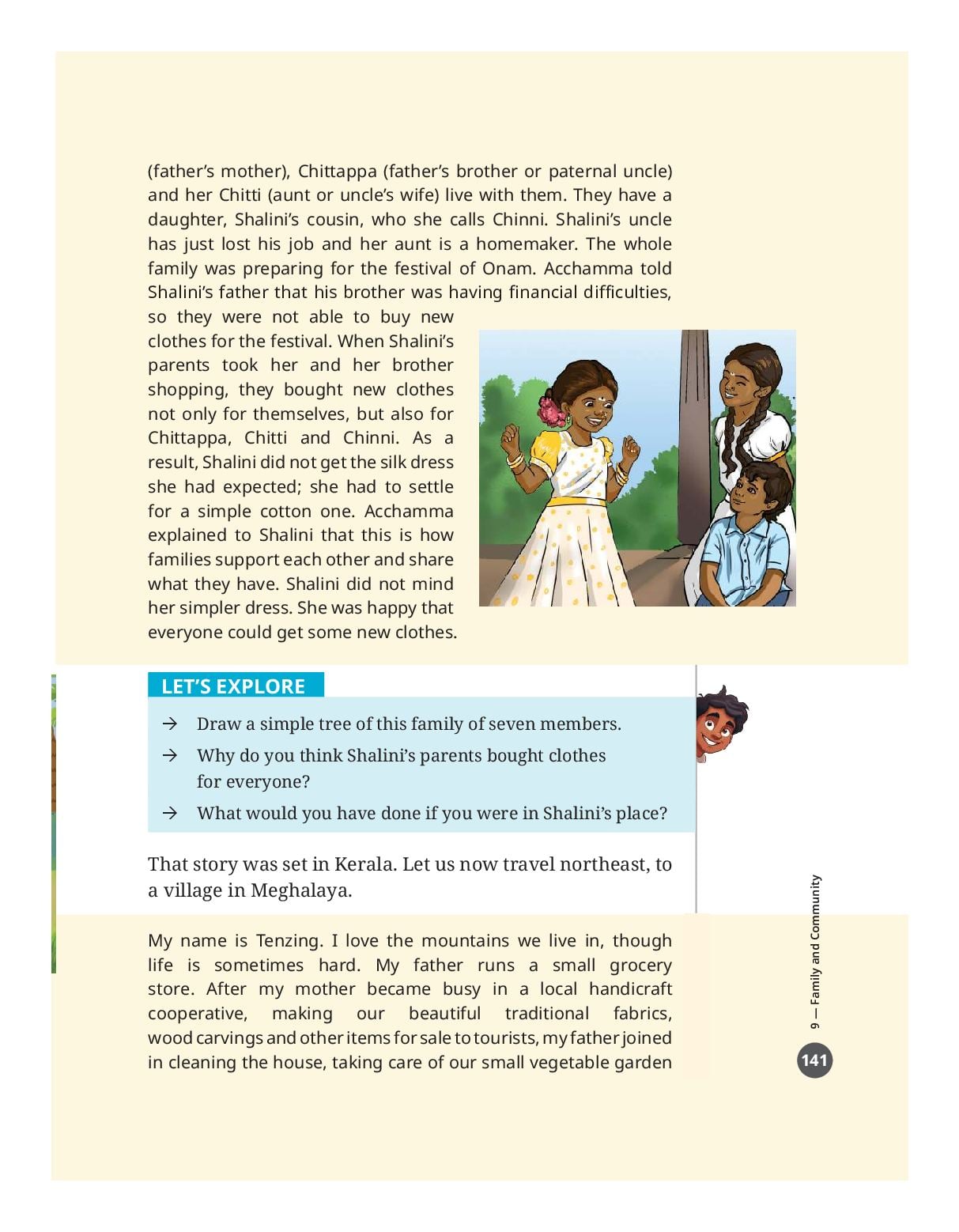
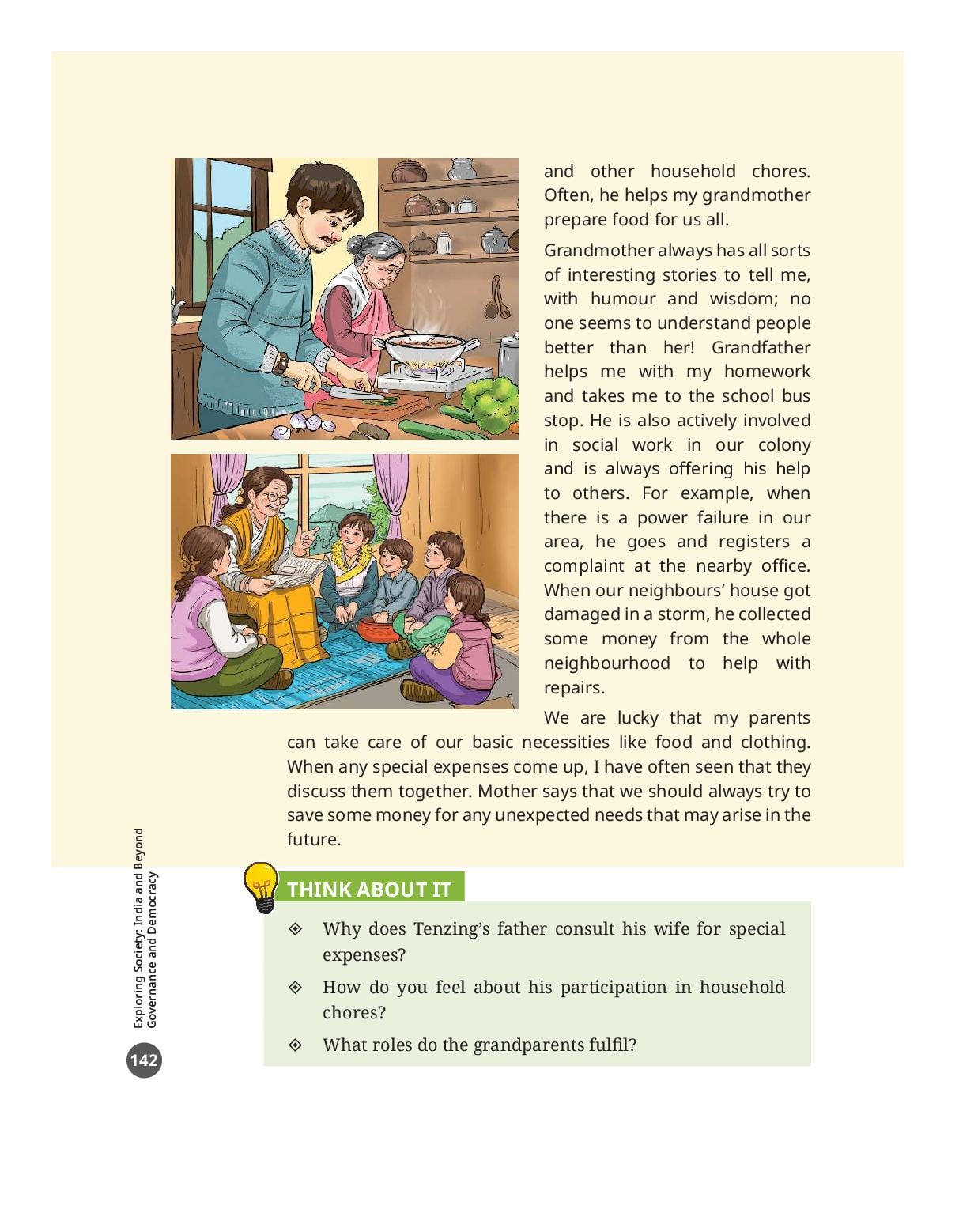
- Inside a family: roles, responsibilities and give-and-take. Relationships rest on love, care, cooperation and interdependence — ‘cooperation’ meaning ‘working together’. Following one’s dharma, or duty, is an old principle of Indian culture, and the family is a ‘school’ where children learn ahimsa, dāna (giving), sevā (service) and tyāga (sacrifice). Two stories show this: Shalini in Kerala, whose family buys festival clothes for the uncle’s family too, and Tenzing in the northeast, whose father joins in the housework and whose grandparents teach, help and serve the neighbourhood.
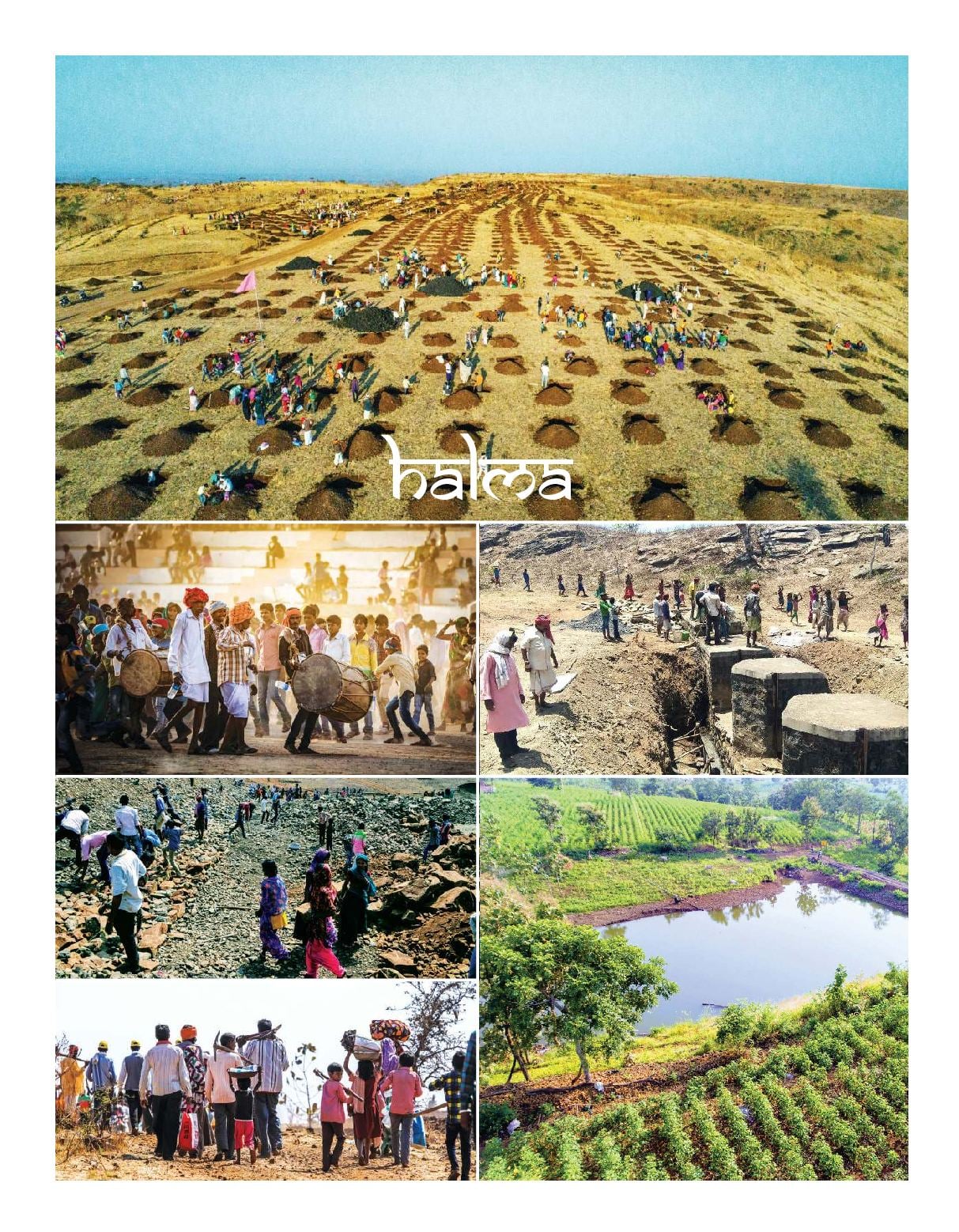
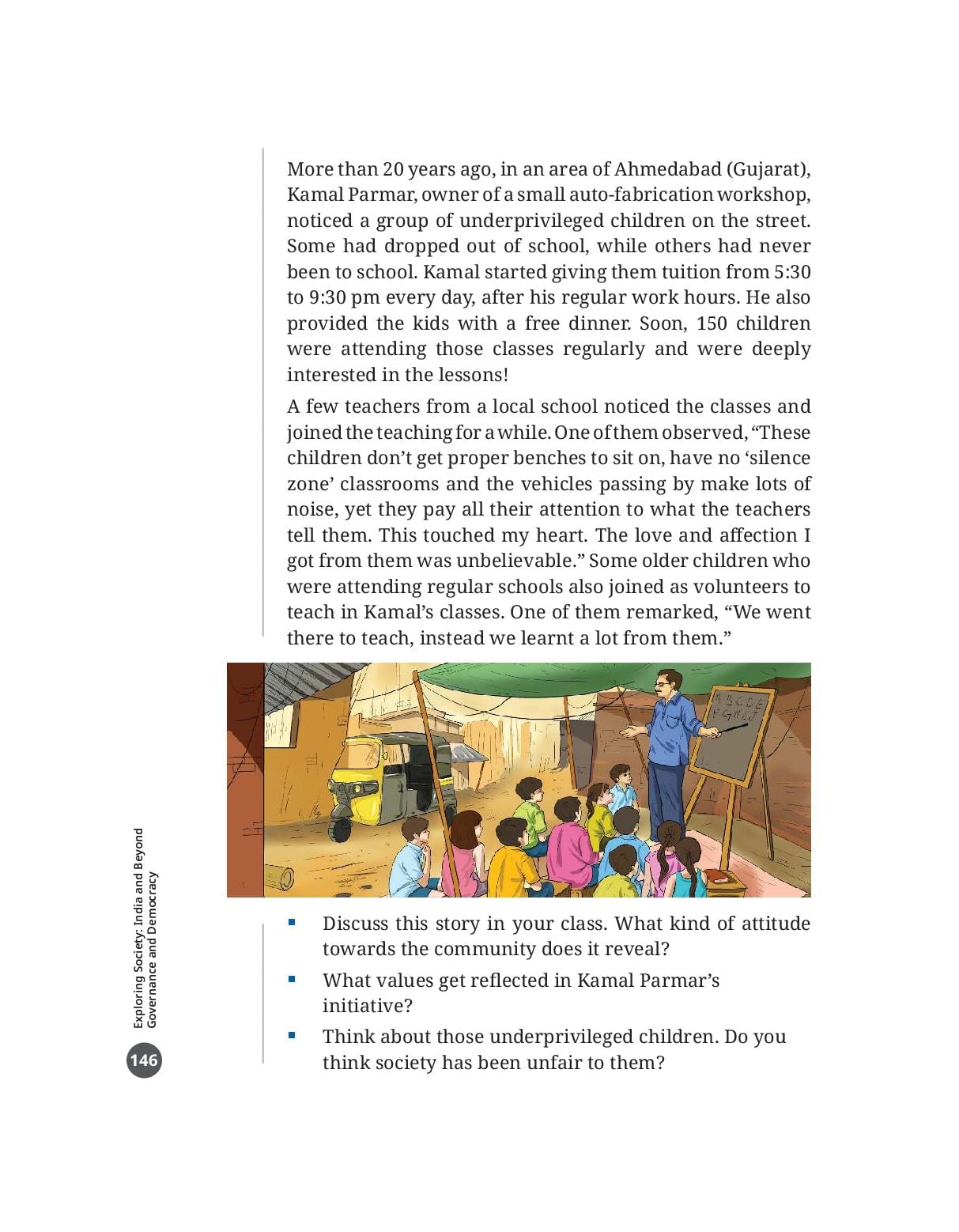
- Communities come together, make rules, and serve. People join for festivals, feasts and weddings, and in villages for sowing and harvesting; over time they agree on unwritten rules for shared water, grazing land and forest produce — which also means every family has duties. The Bhil community of the Jhabua region (Madhya Pradesh) followed its halma tradition to plant thousands of trees and dig water-harvesting trenches, unpaid; in the Chennai floods of 2015 private and religious groups cooked and distributed food; in Ahmedabad, Kamal Parmar ran free evening classes for 150 children after his workshop hours.
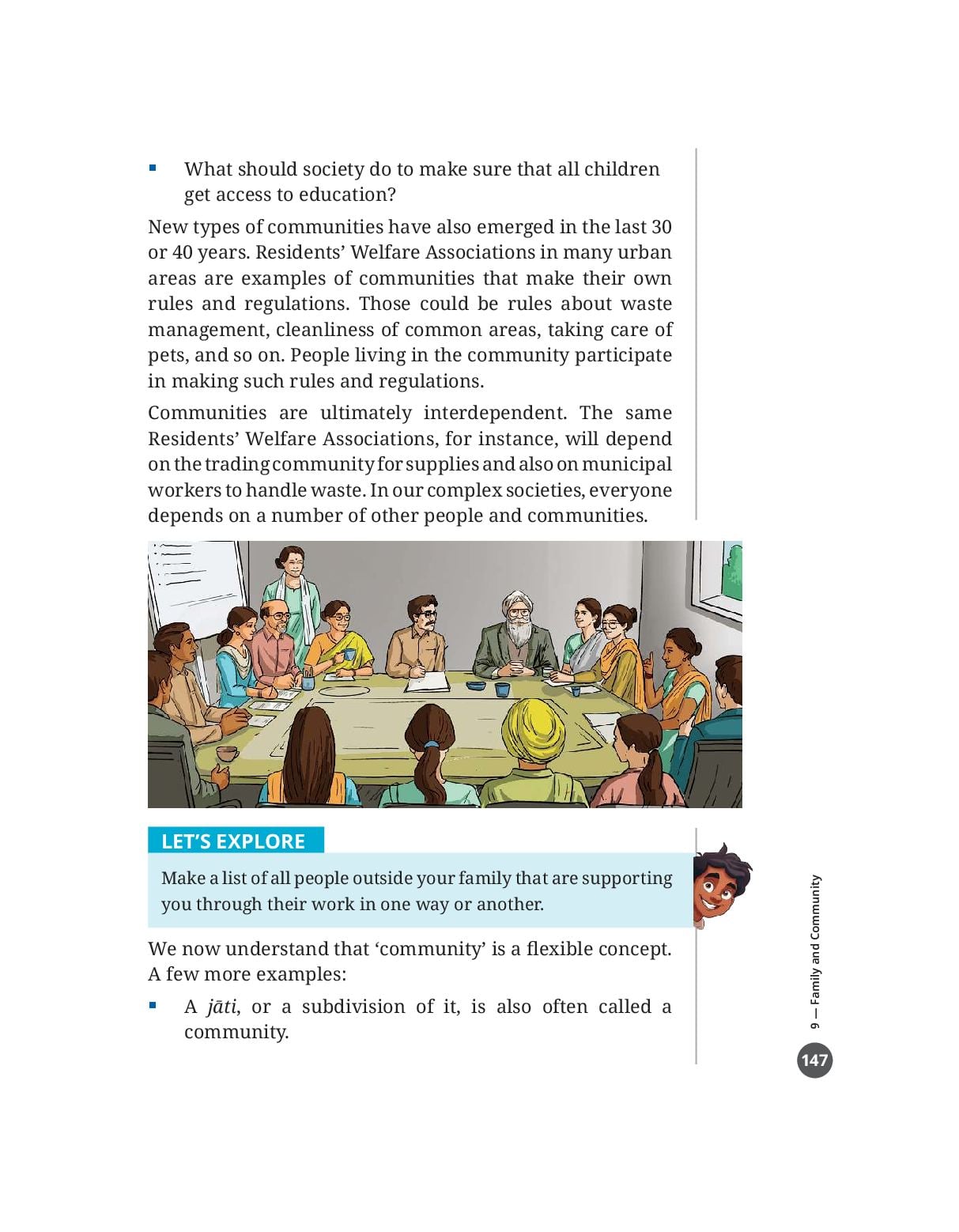
- ‘Community’ is a flexible word, and communities depend on each other. A jāti or a part of it, a religious or regional group, people of a common work or interest, a school club, the NSS or NCC — all are called communities. New ones have appeared in the last 30–40 years, such as Residents’ Welfare Associations, which make their own rules about waste, cleanliness and pets. Yet the same association needs the trading community for supplies and municipal workers for waste: “in our complex societies, everyone depends on a number of other people and communities.”
Quick revision – Family and Community
| Term | What it means | Where it appears in the chapter | Worth remembering |
|---|---|---|---|
| Family | The fundamental and most ancient unit of any society — the people who live together and look after one another | Page 137, ‘Family’ | “Almost all of us live in a family” |
| Joint family | A family in which several generations live together | Page 137 | Grandparents, parents, uncles and aunts, brothers, sisters and cousins |
| Nuclear family | A family limited to a couple and their children, and sometimes one parent and children | Page 138 | A single parent with children is also a nuclear family |
| Cooperation | ‘Working together’ — the book gives the meaning itself | Page 139, ‘Roles and Responsibilities’ | With love, care and interdependence, one of the four bases of family relationships |
| Interdependence | Depending on one another, both ways | Pages 139 and 147 | True inside a family and between communities |
| Dharma | Doing one’s duty — “an important principle of Indian culture” | Page 140 | The chapter’s opening quotation: “Love and dharma are the flower and fruit of family life” — Tiruvalluvar |
| Ahimsa, dāna, sevā, tyāga | Non-violence, giving, service and sacrifice — values learnt at home | Page 140 | “The family is also a ‘school’” |
| Community | A group of connected people — families connected with other families and the people around them | Page 143, ‘Community’ | The word has other meanings depending on the context |
| Halma | A Bhil tradition of coming together to support any individual or family in times of crisis | Pages 144–145, Don’t Miss Out | Thousands of trees planted and trenches dug, unpaid; Shri Mahesh Sharma of the Shivganga movement received the Padma Shri in 2019 |
| Unwritten ‘rules’ | Practices a community agrees on for shared water, grazing land and forest produce | Pages 143–144 | They give secure access to resources — and give every family duties |
| Residents’ Welfare Association | An urban community that makes its own rules about waste, cleanliness of common areas, pets and so on | Page 147 | A ‘new’ type of community, of the last 30–40 years |
| Jāti | A community of the traditional social order; a jāti or a subdivision of it is often called a community | Page 147 | One of several very different things the single word ‘community’ can mean |
Old NCERT vs New – Class 6 Social Science
This chapter is from Exploring Society: India and Beyond, the new NCERT Class 6 Social Science book (NCF-SE 2023, used from 2024-25). It replaced the old book “Our Pasts, The Earth Our Habitat and Social and Political Life”, so chapter numbers and names differ from older PDFs.
Solutions and All Chapters
Answers to the exercises and the full chapter list of Exploring Society: India and Beyond:
Family and Community – Overview
| Class | Class 6 |
| Subject | Social Science |
| Book | Exploring Society: India and Beyond – new NCERT book |
| Chapter | 9 of 14 – Family and Community |
| Book pages | 137 – 148 |
| Edition | NCERT Reprint 2026-27 |
| Session | 2026-27 |
| Free – read online or download |
Class 6 Social Science Chapter 9 – FAQs
Where can I download Family and Community Class 6 PDF?
From the download table on this page – the chapter PDF is free, and the full book is linked too.
What is Class 6 Social Science Chapter 9 about?
The chapter’s one idea: people do not live alone. A family is the smallest circle of people who look after one another; a community is a larger circle of families and people connected to each other. The chapter moves outward from the first circle to the second, and ends by showing that even communities cannot manage alone — they depend on one another.
Is Family and Community from the new NCERT Class 6 Social Science book?
Yes. It is chapter 9 of exploring society: india and beyond, the new NCERT Class 6 Social Science book for 2026-27.
Is this the latest NCERT edition for 2026-27?
Yes – the PDF is NCERT’s latest edition for the 2026-27 session.
Where are the NCERT Solutions for Class 6 Social Science Chapter 9?
Open the NCERT Solutions link above for answers to the exercise questions.