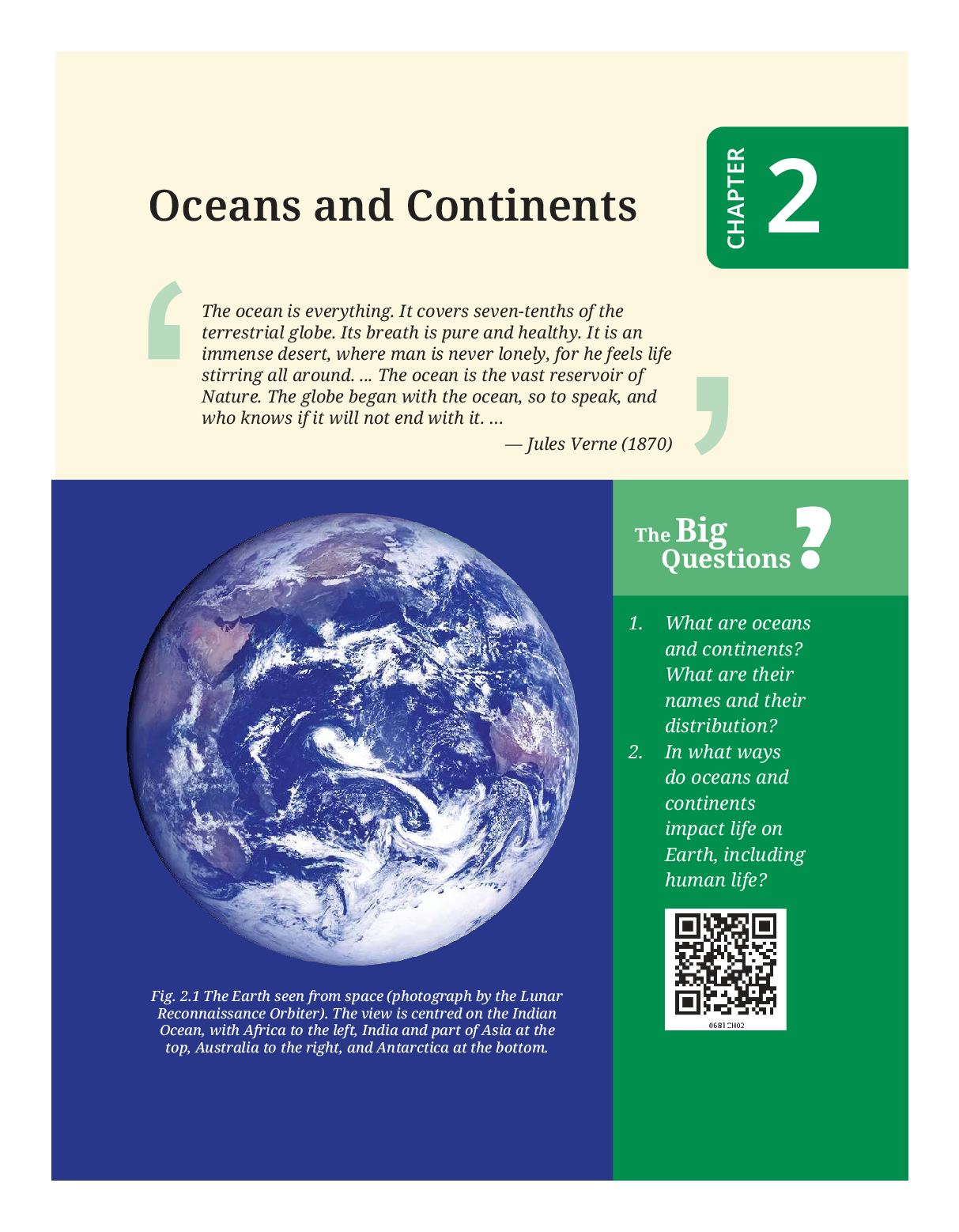
Download Oceans and Continents – NCERT Class 6 Social Science Chapter 2 PDF from the new NCERT Class 6 Social Science book Exploring Society: India and Beyond (2026-27). Read the chapter online or download the free PDF. About three-fourths of the Earth’s surface is water and a little over one-fourth is land. That is why the Earth looks blue from space and early astronauts called it the ‘blue planet’.
Oceans and Continents PDF – Chapter 2 of Exploring Society: India and Beyond
Read the chapter online or download the PDF.
| Chapter | Download | |
|---|---|---|
| Chapter 2 PDF | Oceans and Continents | View PDF |
| Full book | NCERT Class 6 Social Science – Exploring Society: India and Beyond | View Book |
Read Online
What Is in Oceans and Continents? (Class 6 Social Science Chapter 2)
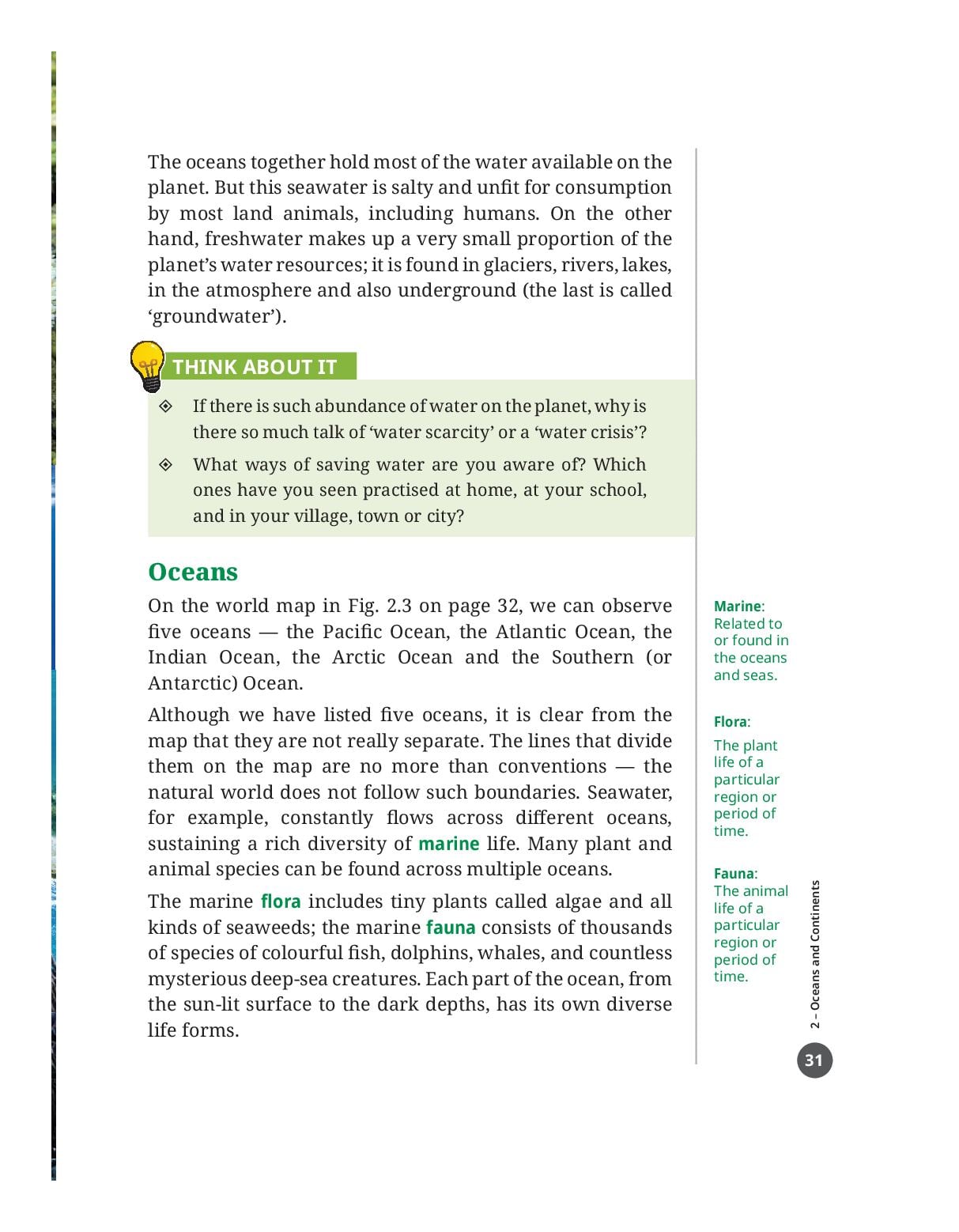
- About three-fourths of the Earth’s surface is water and a little over one-fourth is land. That is why the Earth looks blue from space and early astronauts called it the ‘blue planet’.
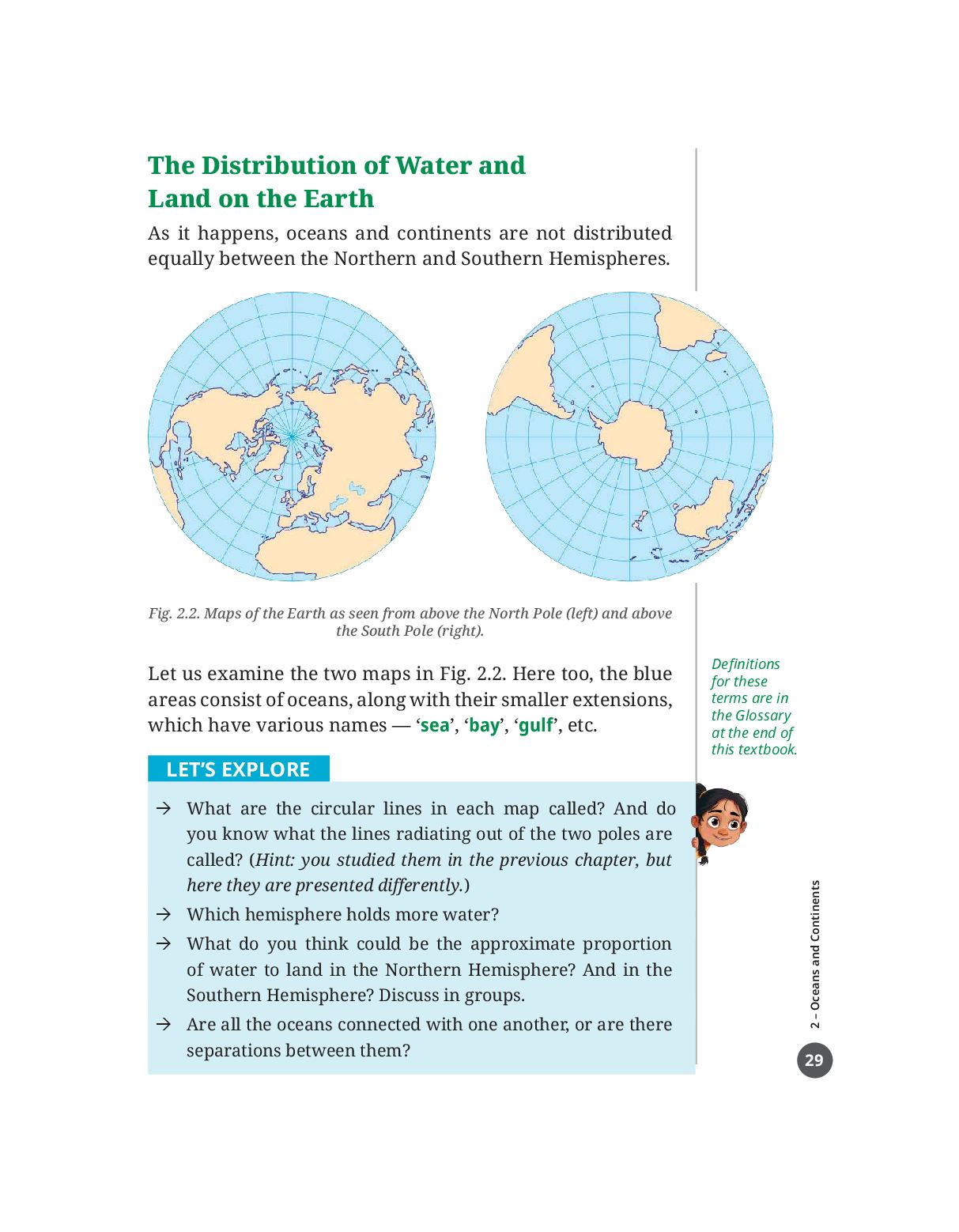
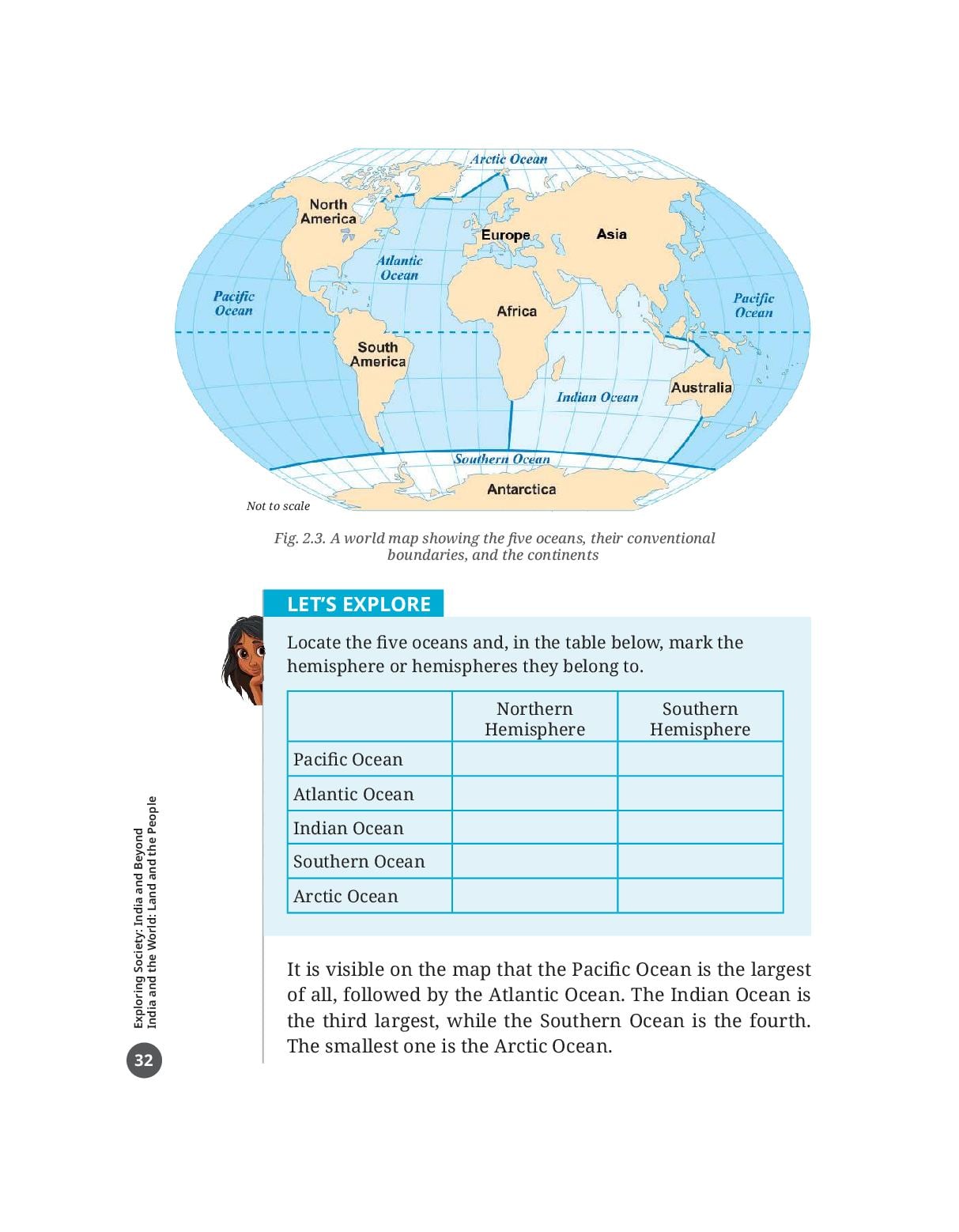
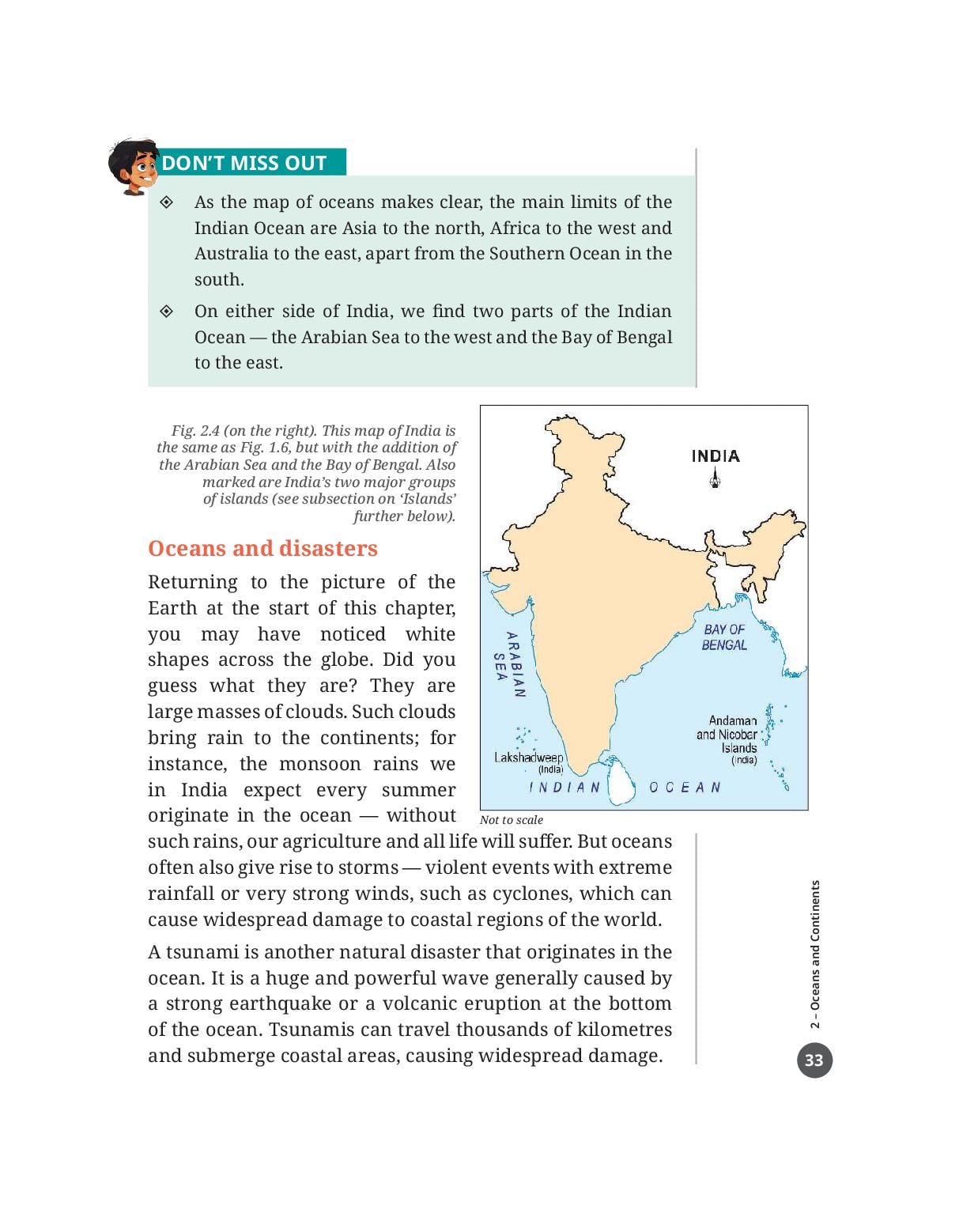
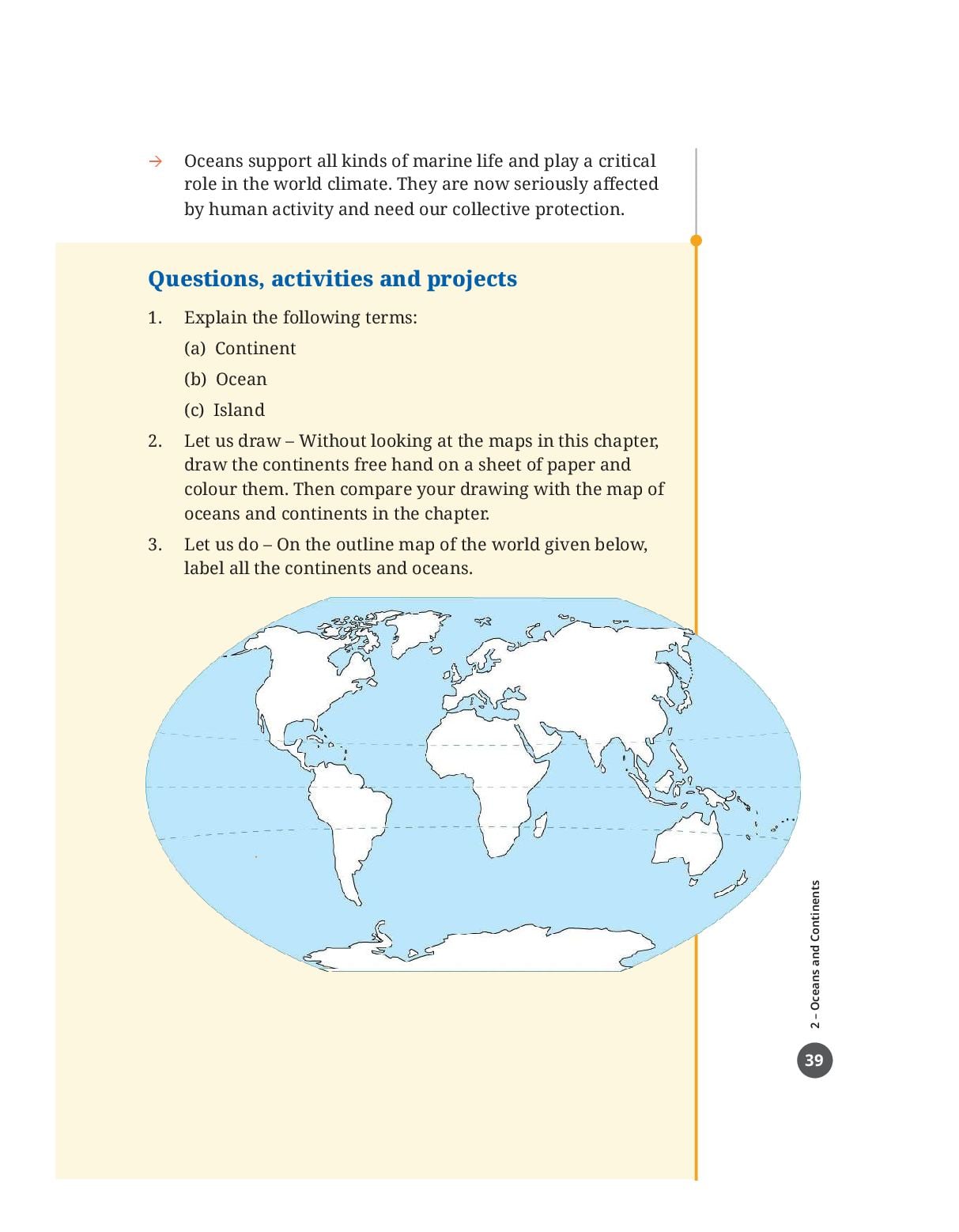
- The largest water bodies are the oceans — five of them: the Pacific (largest), the Atlantic, the Indian, the Southern (or Antarctic) and the Arctic (smallest). Their smaller extensions are called seas, bays and gulfs.
- The dividing lines between oceans are only conventions. In reality all the oceans are joined into one continuous body of water, and seawater — with its marine flora and fauna — flows freely from one to another.
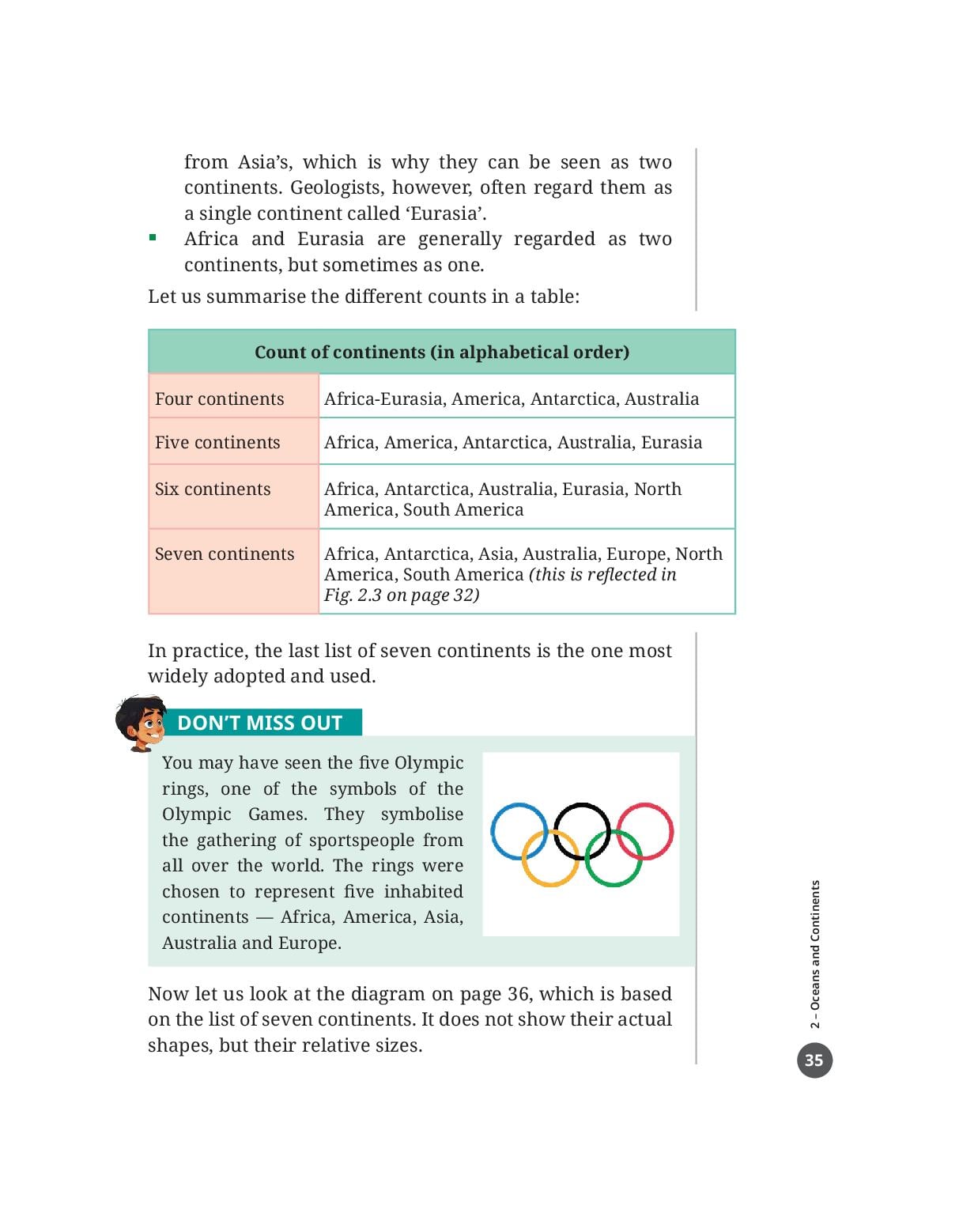
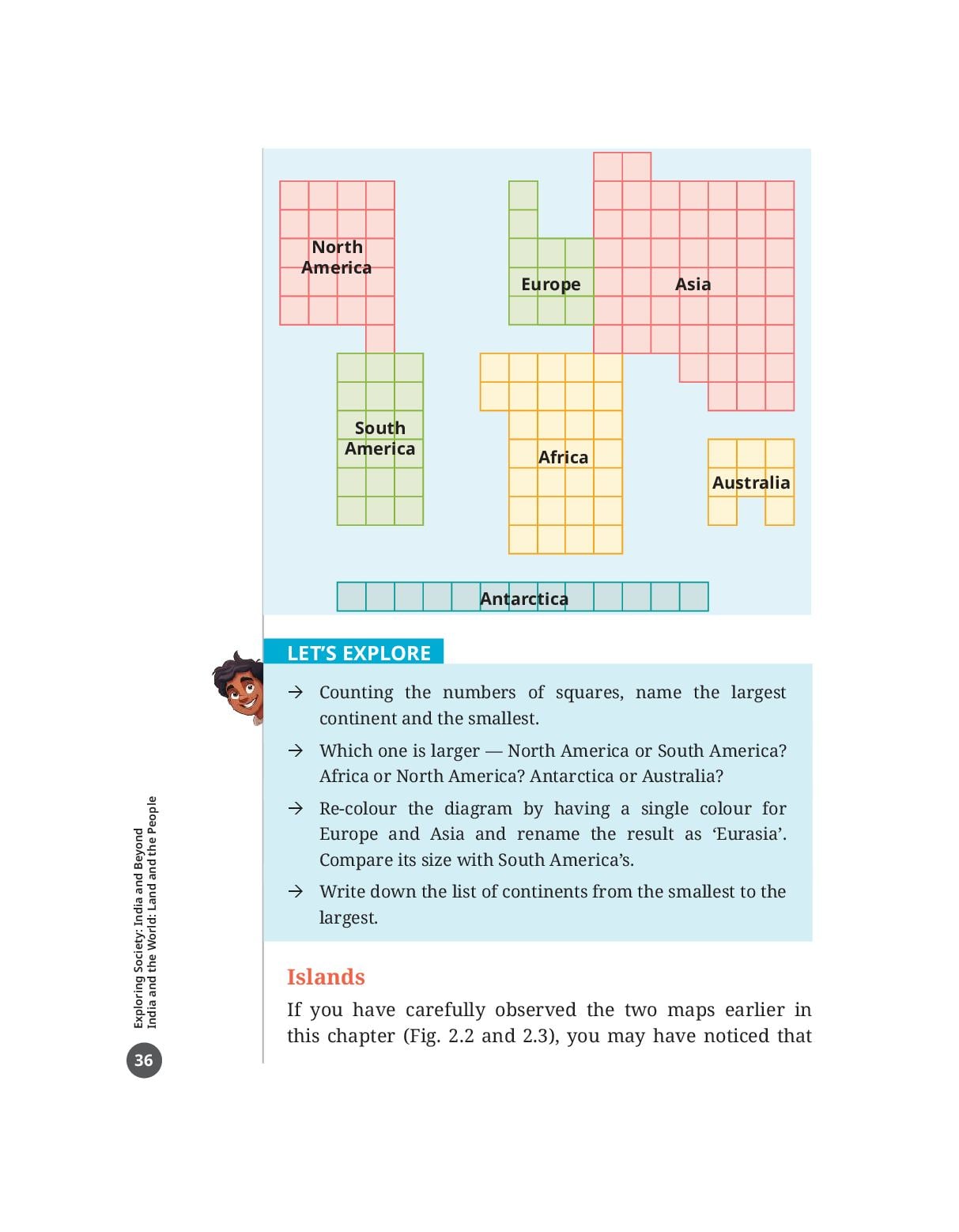
- A large continuous expanse of land is a continent. Continents can be counted in several ways, from four to seven; the count of seven is the most widely used — Asia, Africa, North America, South America, Antarctica, Europe, Australia (largest to smallest).
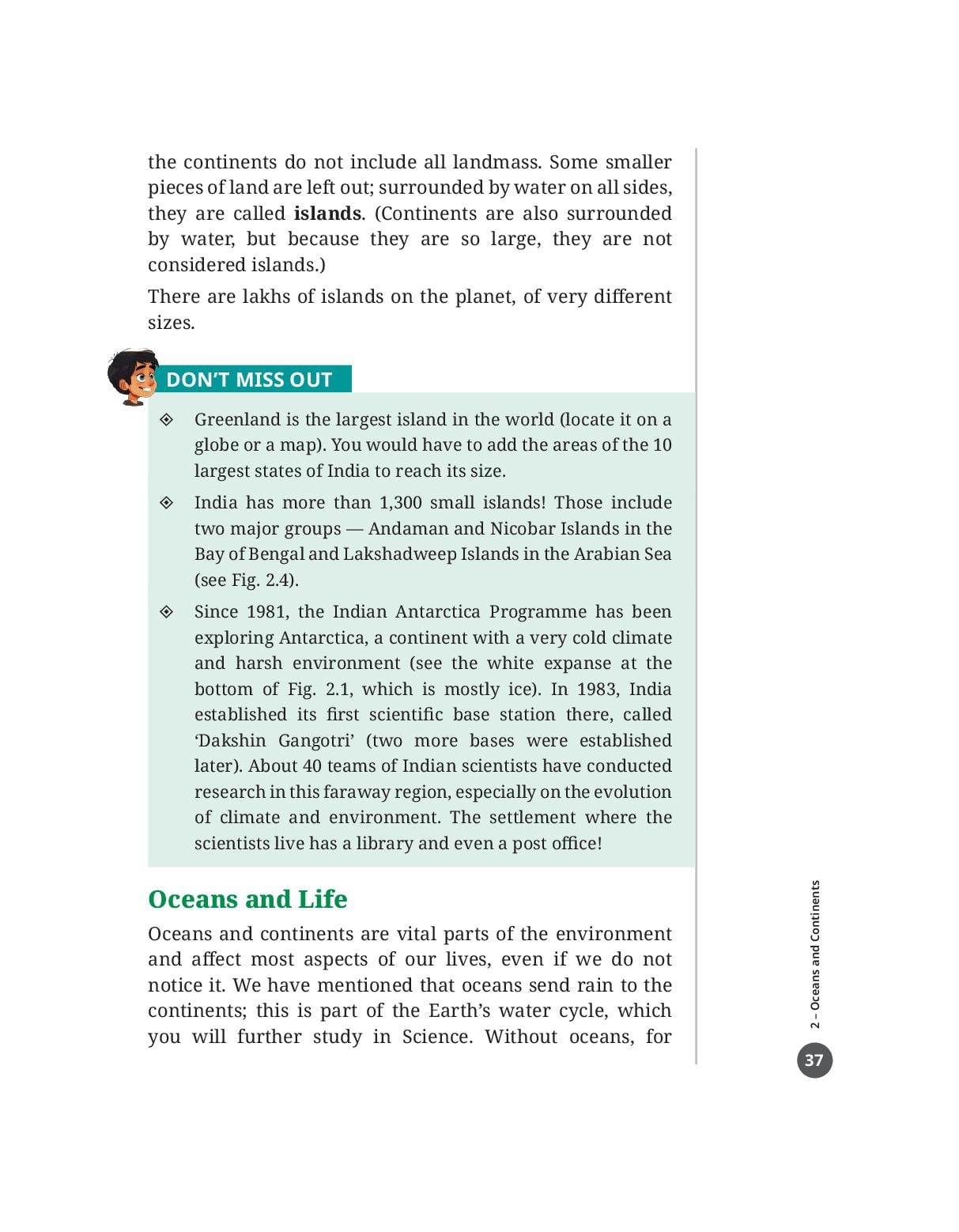
- Land and water are not shared equally between the hemispheres: the Northern Hemisphere has more land, the Southern Hemisphere has more water. Smaller pieces of land surrounded by water on all sides are islands — Greenland is the largest, and India has more than 1,300 of them.
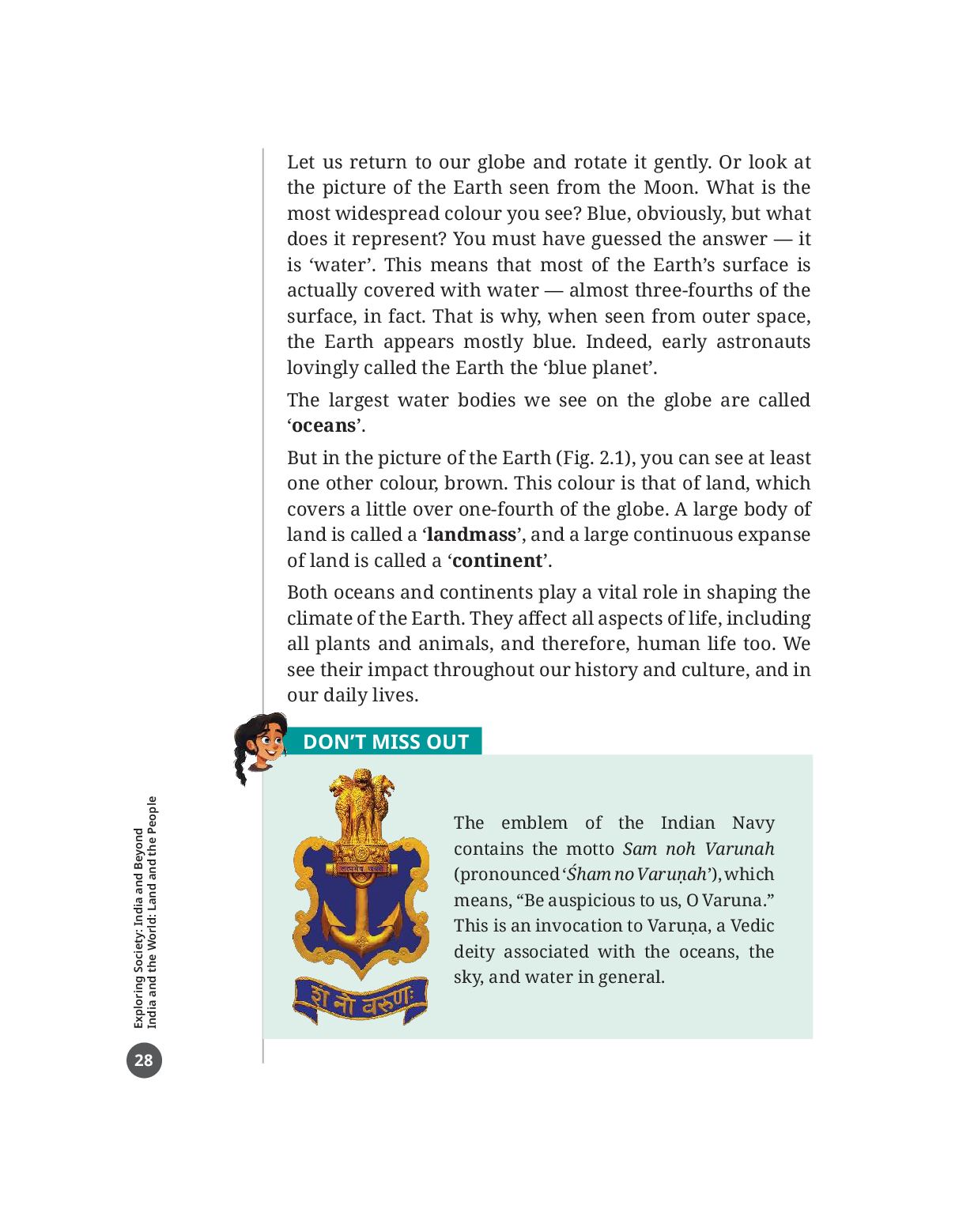
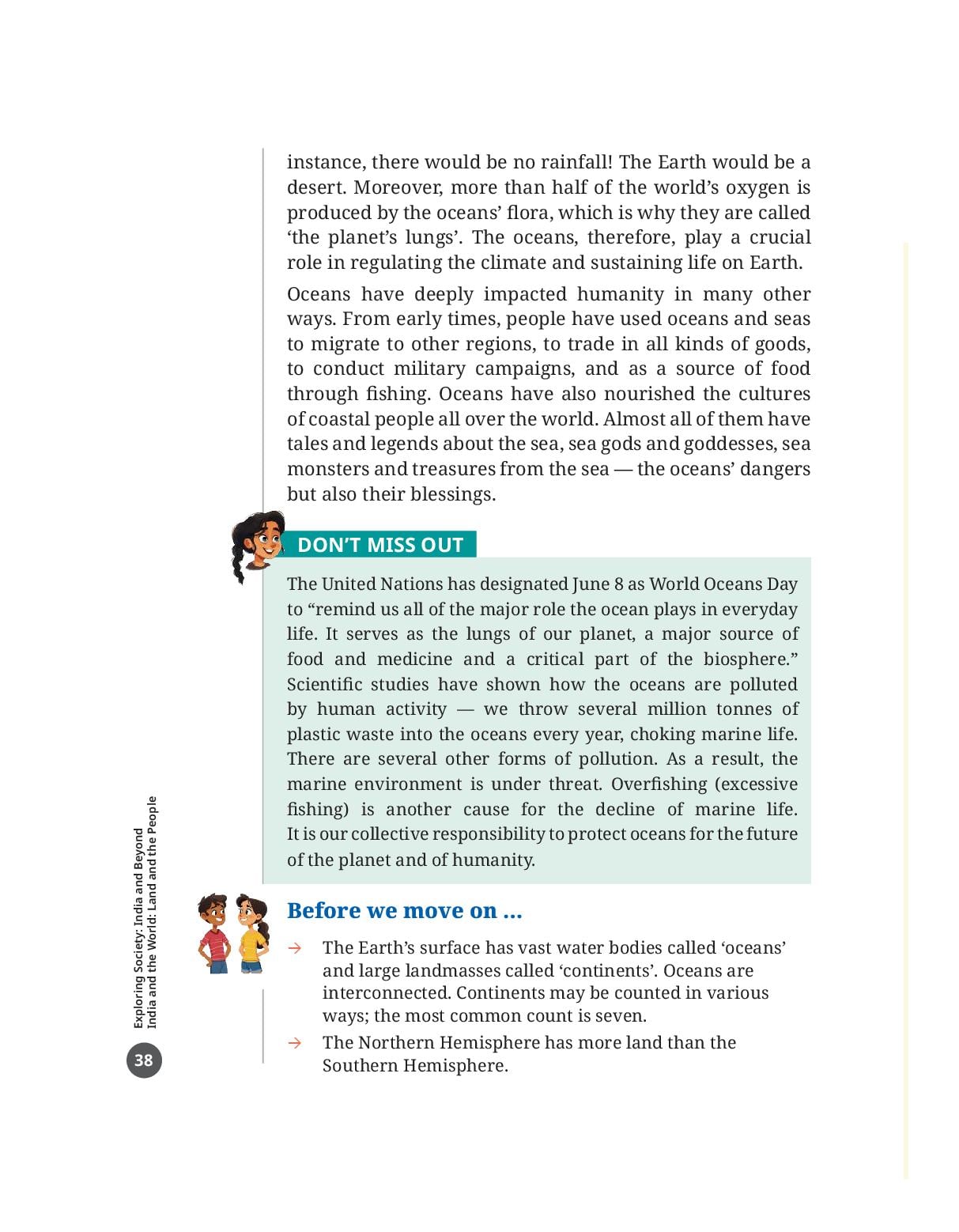
- Oceans give the continents their rain (India’s monsoon is born over the ocean), produce more than half the world’s oxygen, and feed, carry and shape human cultures. They also bring cyclones and tsunamis, and are today threatened by plastic pollution and overfishing.
Quick revision – Oceans and Continents
| Term | What it means | Where it appears in the chapter | Example |
|---|---|---|---|
| Ocean | The largest kind of water body on the Earth | Pages 28, 31–32, Fig. 2.3 | The Pacific Ocean, the largest of the five |
| Continent | A large continuous expanse of land | Pages 28, 34–35 | Asia, of which India is a part |
| Landmass | A large body of land | Page 28 | Europe and Asia form one single landmass |
| Island | A piece of land, smaller than a continent, surrounded by water on all sides | Pages 36–37 | Greenland; the Andaman and Nicobar Islands |
| Sea, bay, gulf | Smaller extensions of an ocean | Page 29 | The Arabian Sea, the Bay of Bengal, the Gulf of Mannar |
| Hemisphere | One half of the Earth, north or south of the Equator | Pages 29, 32, Fig. 2.2 | The Northern Hemisphere has more land |
| Marine | Related to, or found in, the oceans and seas | Margin note, page 31 | Marine life, marine pollution |
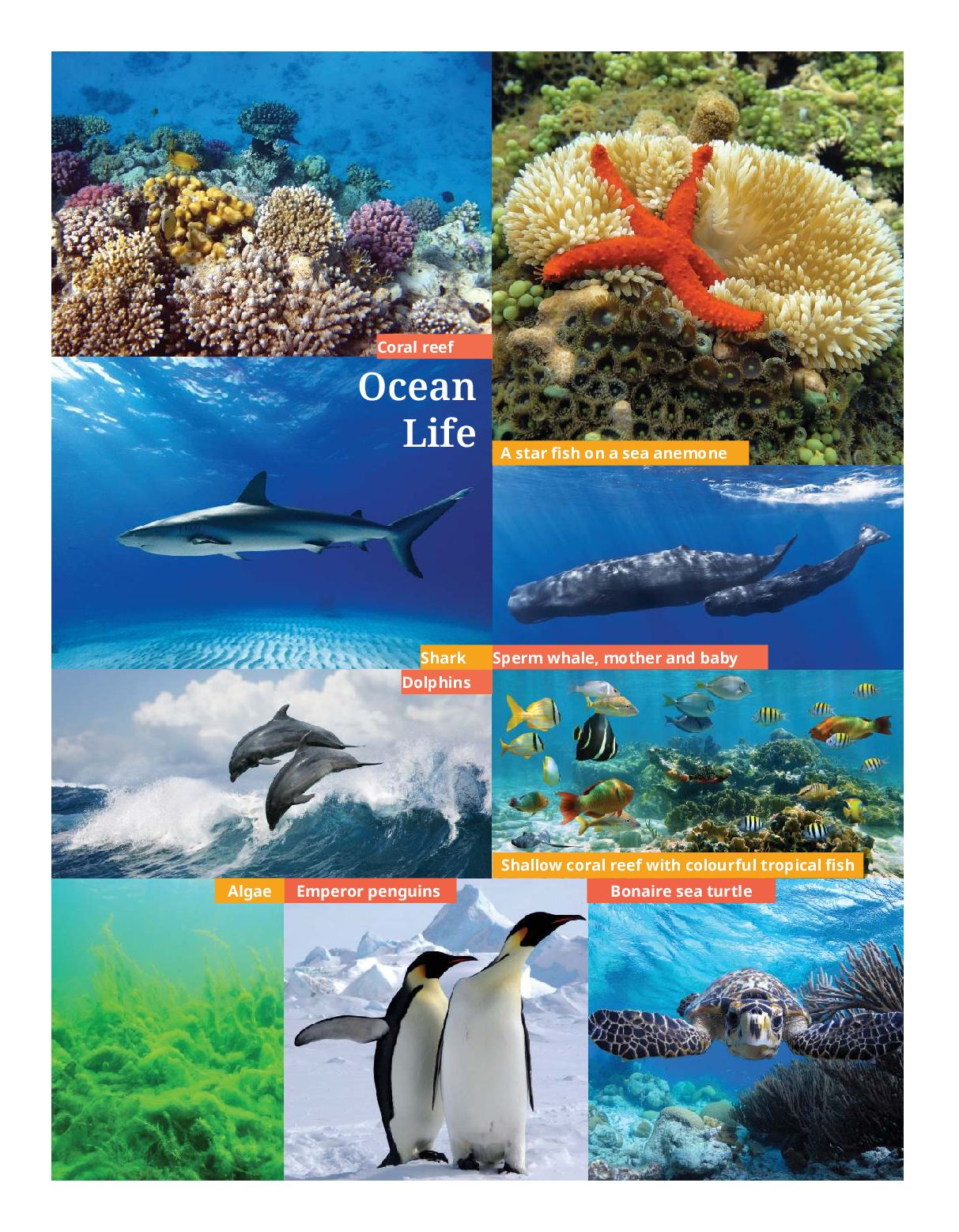
| Flora | The plant life of a particular region or period of time | Margin note, page 31 | Algae and seaweeds — the ocean’s flora |
| Fauna | The animal life of a particular region or period of time | Margin note, page 31 | Fish, dolphins, whales, sea turtles |
| Freshwater | Water that is not salty and can be used by people, plants and land animals | Page 31 | Glaciers, rivers, lakes, groundwater |
| Cyclone | A violent storm from the ocean with extreme rain or very strong winds | Page 33 | Cyclones striking the Odisha and Andhra coasts |
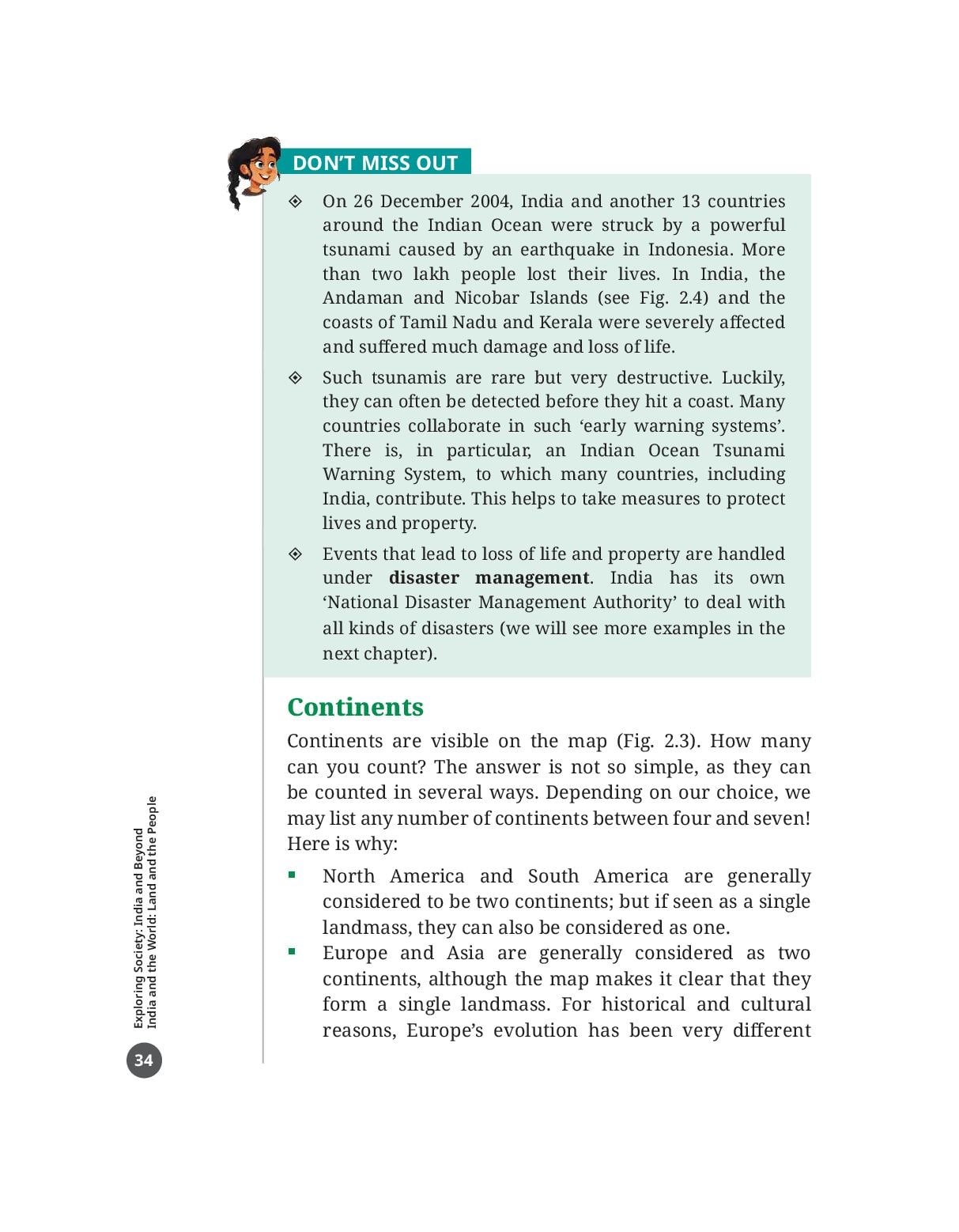
| Tsunami | A huge, powerful wave caused by an undersea earthquake or volcanic eruption | Pages 33–34 | The Indian Ocean tsunami of 26 December 2004 |
| Eurasia | Europe and Asia treated as one single continent | Page 35 | Geologists usually prefer this name |
| Disaster management | Handling events that cause loss of life and property | Page 34 | India’s National Disaster Management Authority |
Old NCERT vs New – Class 6 Social Science
This chapter is from Exploring Society: India and Beyond, the new NCERT Class 6 Social Science book (NCF-SE 2023, used from 2024-25). It replaced the old book “Our Pasts, The Earth Our Habitat and Social and Political Life”, so chapter numbers and names differ from older PDFs.
Solutions and All Chapters
Answers to the exercises and the full chapter list of Exploring Society: India and Beyond:
Oceans and Continents – Overview
| Class | Class 6 |
| Subject | Social Science |
| Book | Exploring Society: India and Beyond – new NCERT book |
| Chapter | 2 of 14 – Oceans and Continents |
| Book pages | 27 – 40 |
| Edition | NCERT Reprint 2026-27 |
| Session | 2026-27 |
| Free – read online or download |
Class 6 Social Science Chapter 2 – FAQs
Where can I download Oceans and Continents Class 6 PDF?
From the download table on this page – the chapter PDF is free, and the full book is linked too.
What is Class 6 Social Science Chapter 2 about?
About three-fourths of the Earth’s surface is water and a little over one-fourth is land. That is why the Earth looks blue from space and early astronauts called it the ‘blue planet’.
Is Oceans and Continents from the new NCERT Class 6 Social Science book?
Yes. It is chapter 2 of exploring society: india and beyond, the new NCERT Class 6 Social Science book for 2026-27.
Is this the latest NCERT edition for 2026-27?
Yes – the PDF is NCERT’s latest edition for the 2026-27 session.
Where are the NCERT Solutions for Class 6 Social Science Chapter 2?
Open the NCERT Solutions link above for answers to the exercise questions.