Download Unity in Diversity, or ‘Many in the One’ – NCERT Class 6 Social Science Chapter 8 PDF from the new NCERT Class 6 Social Science book Exploring Society: India and Beyond (2026-27). Read the chapter online or download the free PDF. The chapter’s one idea: India’s variety is real, and so is what lies under it. Travel across India and the landscapes, dresses, foods, languages and scripts keep changing — this is usually the first thing a visitor notices. With over 1.4 billion…
Unity in Diversity, or ‘Many in the One’ PDF – Chapter 8 of Exploring Society: India and Beyond
Read the chapter online or download the PDF.
| Chapter | Download | |
|---|---|---|
| Chapter 8 PDF | Unity in Diversity, or 'Many in the One' | View PDF |
| Full book | NCERT Class 6 Social Science – Exploring Society: India and Beyond | View Book |
Read Online
What Is in Unity in Diversity, or ‘Many in the One’? (Class 6 Social Science Chapter 8)
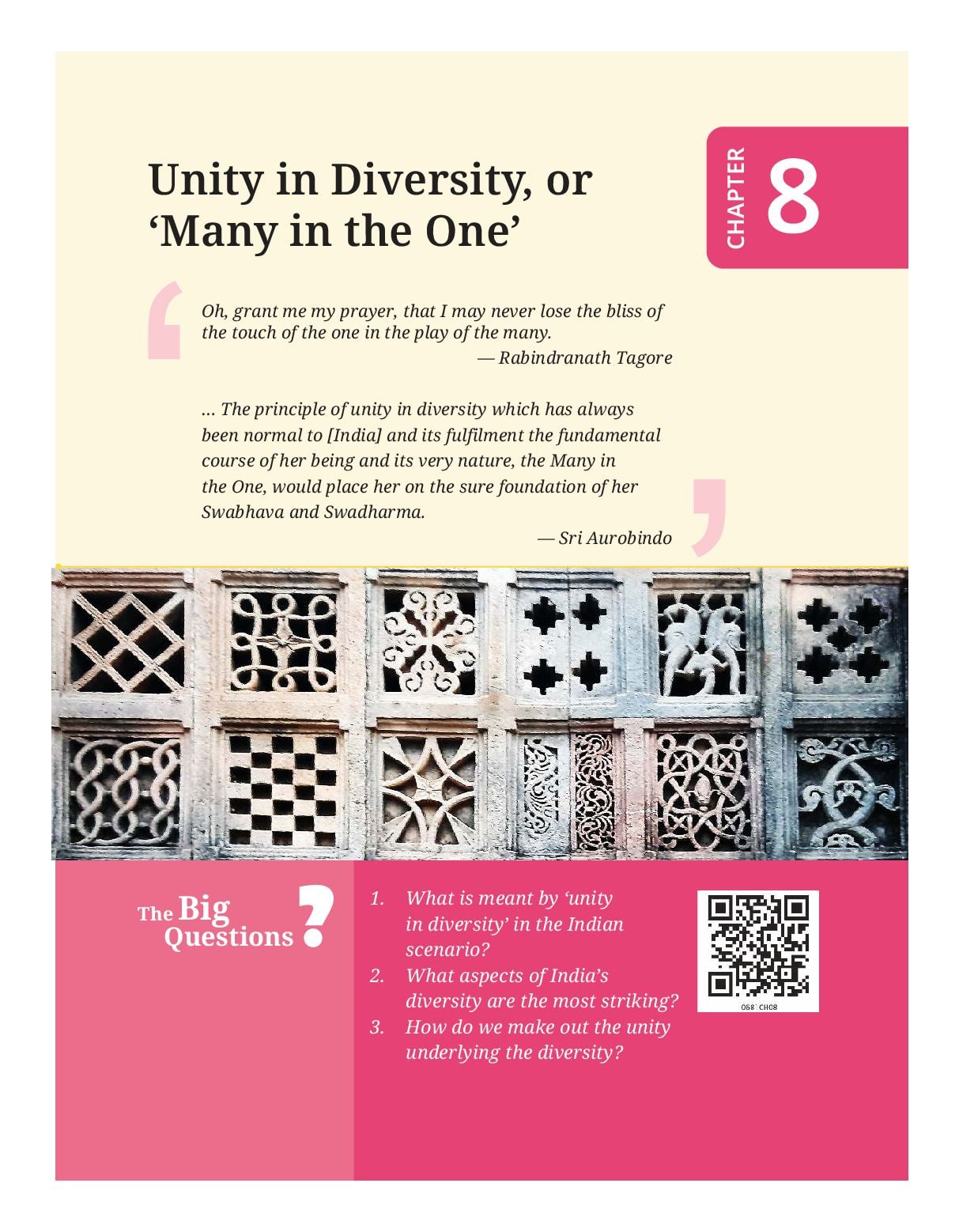
- The chapter’s one idea: India’s variety is real, and so is what lies under it. Travel across India and the landscapes, dresses, foods, languages and scripts keep changing — this is usually the first thing a visitor notices. With over 1.4 billion people (about 18 percent of the world’s population), that is not surprising. But the British historian Vincent Smith asked how a history of so bewildering a country could be written at all, and answered himself: “India offers unity in diversity.” Sri Aurobindo’s name for the same thing gives the chapter its title — the ‘Many in the One’.
- The numbers come from one big survey. Late in the 20th century the Anthropological Survey of India carried out the ‘People of India’ project — a survey of 4,635 communities across all States of the country. It counted 325 languages written in 25 scripts, and observed that a great many Indians can be called migrants, in the sense of people no longer living near their birthplace or with their original community.
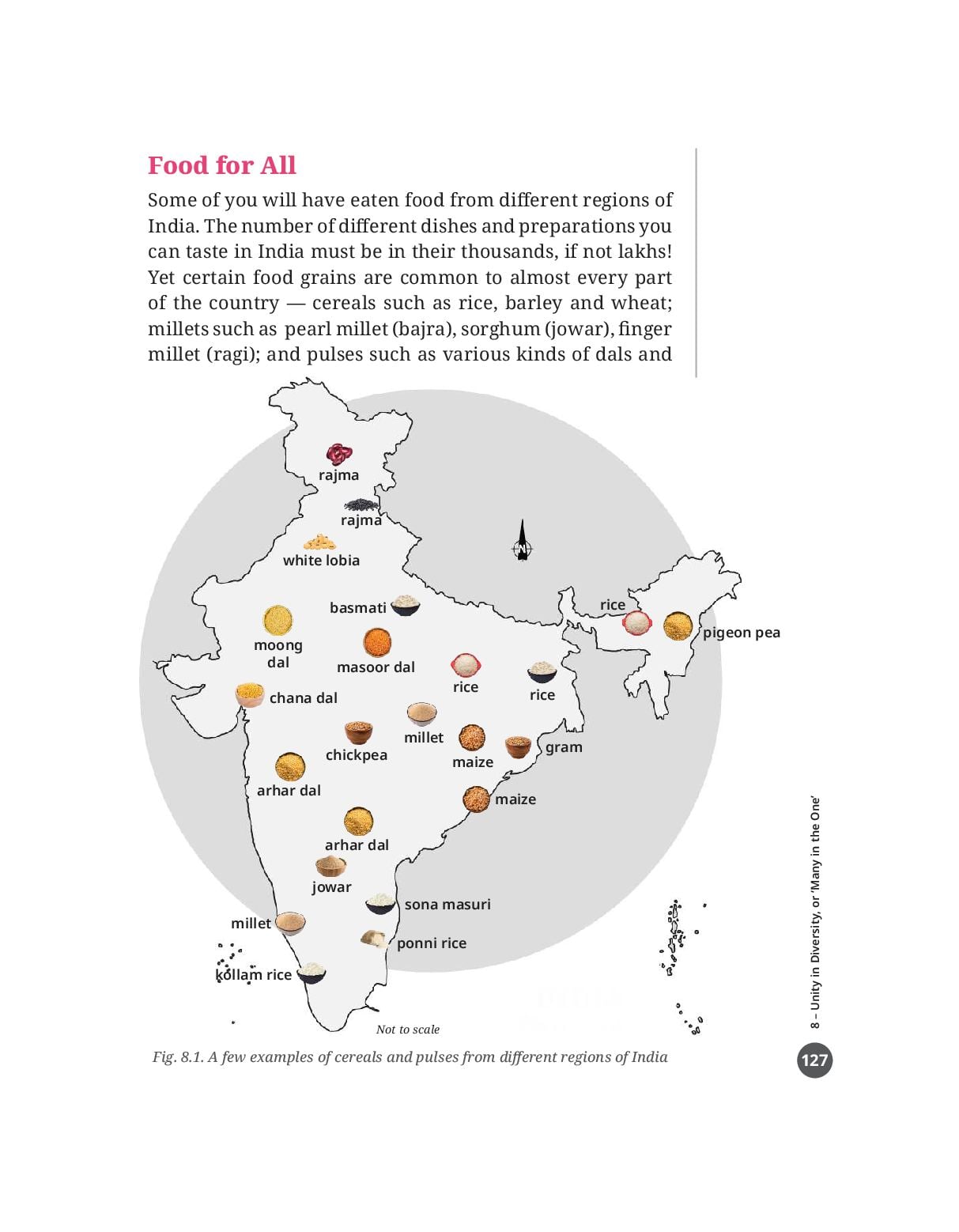
- Food: the same ingredients, endless dishes. The dishes of India run into thousands, if not lakhs. Yet the same staple grains turn up almost everywhere — cereals such as rice, barley and wheat; millets such as pearl millet (bajra), sorghum (jowar) and finger millet (ragi); and pulses such as many kinds of dals and grams. The same is true of spices such as turmeric, cumin, cardamom and ginger. Same ingredients (unity), countless combinations (diversity).
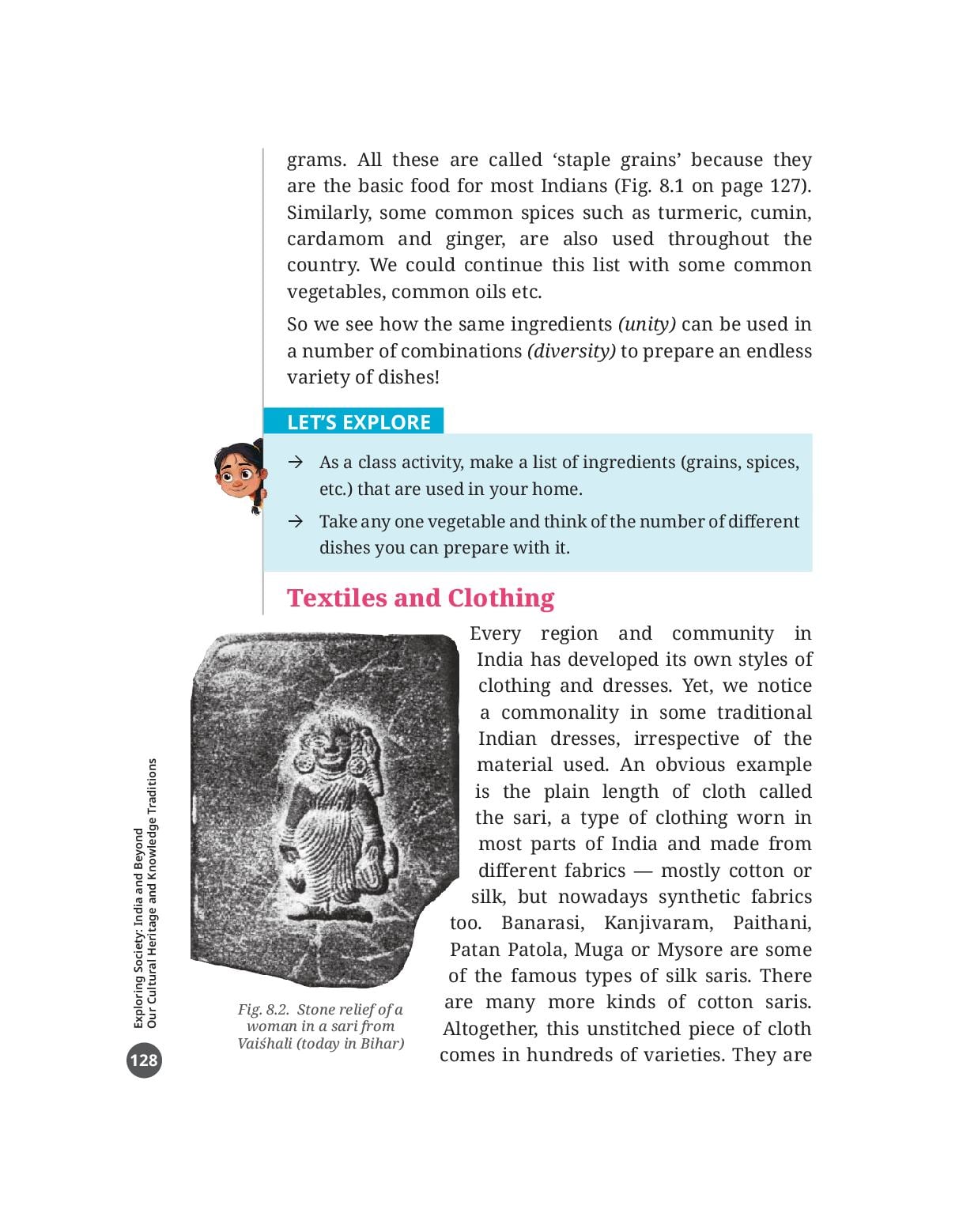
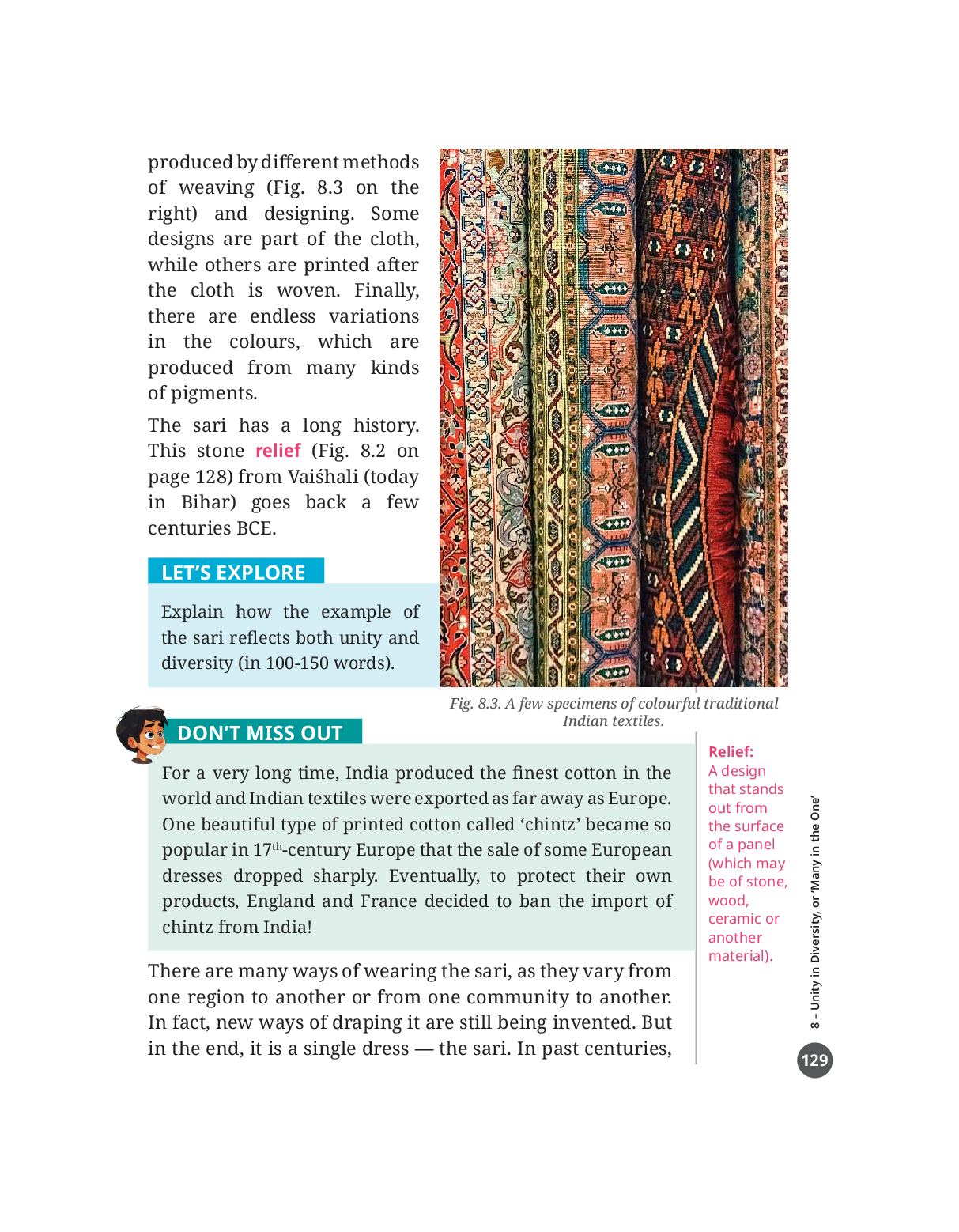
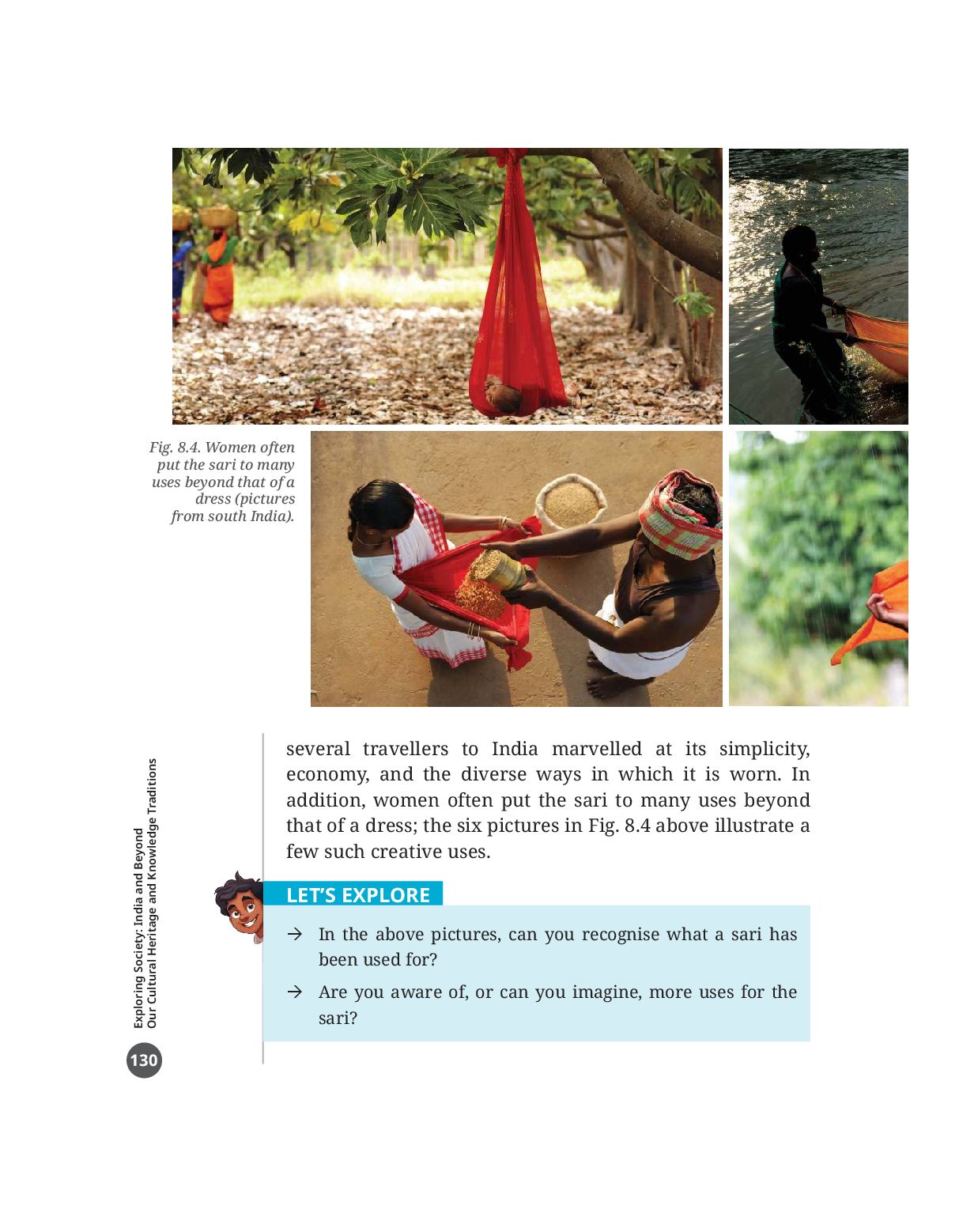
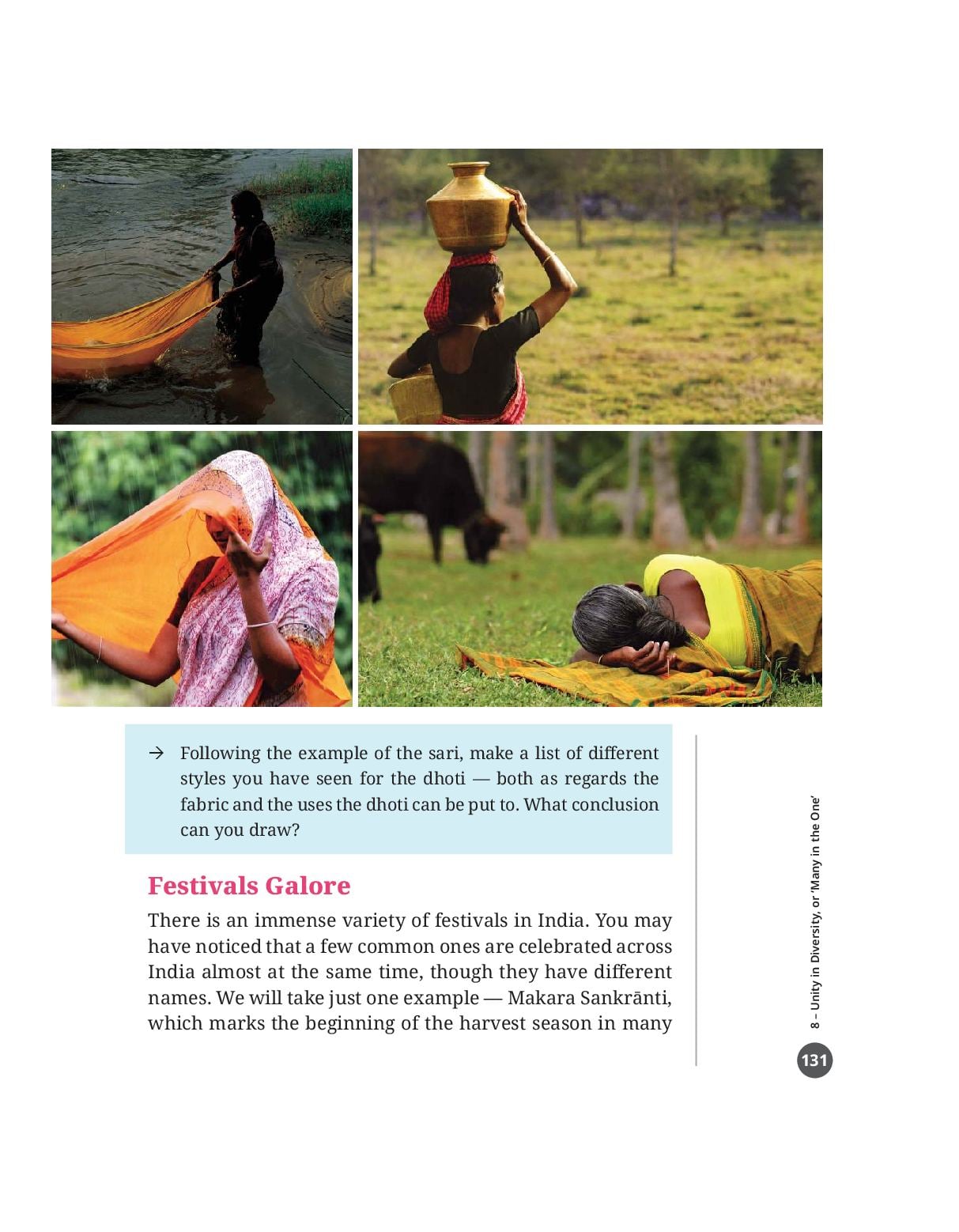
- Cloth: one unstitched length, hundreds of varieties. The sari is worn in most parts of India — cotton, silk, and nowadays synthetic fabrics. Banarasi, Kanjivaram, Paithani, Patan Patola, Muga and Mysore are famous silk types, and cotton types are many more. Weaving, designing, printing and colouring multiply the varieties; so do the ways of draping it, which differ from region to region and community to community — and new ways are still being invented. A stone relief from Vaiśhali (today in Bihar), a few centuries BCE, already shows a woman in a sari. India also long produced the world’s finest cotton: printed chintz became so popular in 17th-century Europe that England and France banned its import.
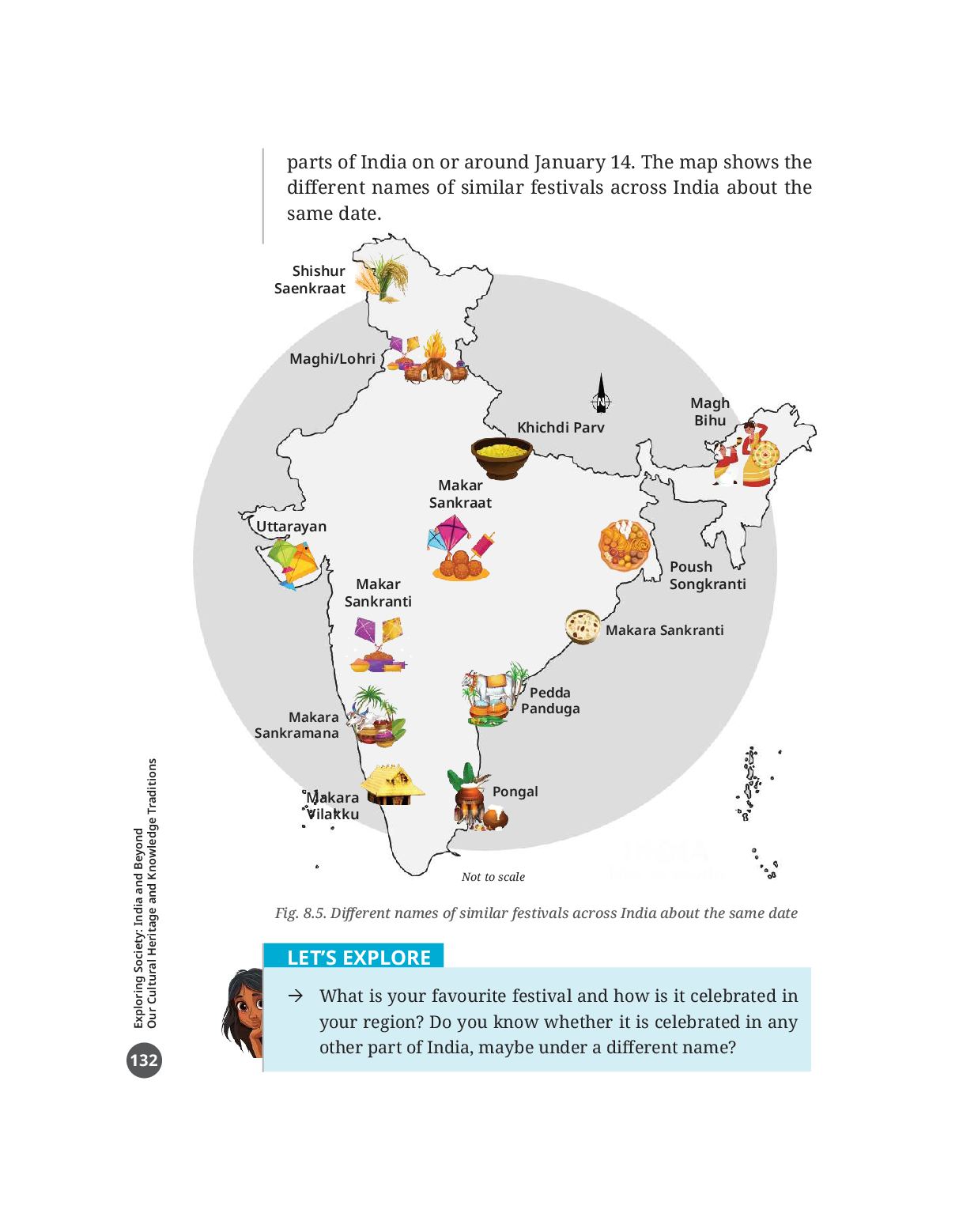
- Festivals: one date and one meaning, many names. Around 14 January, the beginning of the harvest season in many parts of India, the same festival is celebrated under a dozen different names — Shishur Saenkraat, Maghi/Lohri, Khichdi Parv, Uttarayan, Makar Sankranti, Magh Bihu, Poush Songkranti, Pedda Panduga, Makara Sankramana, Pongal, Makara Vilakku (Fig. 8.5, page 132).
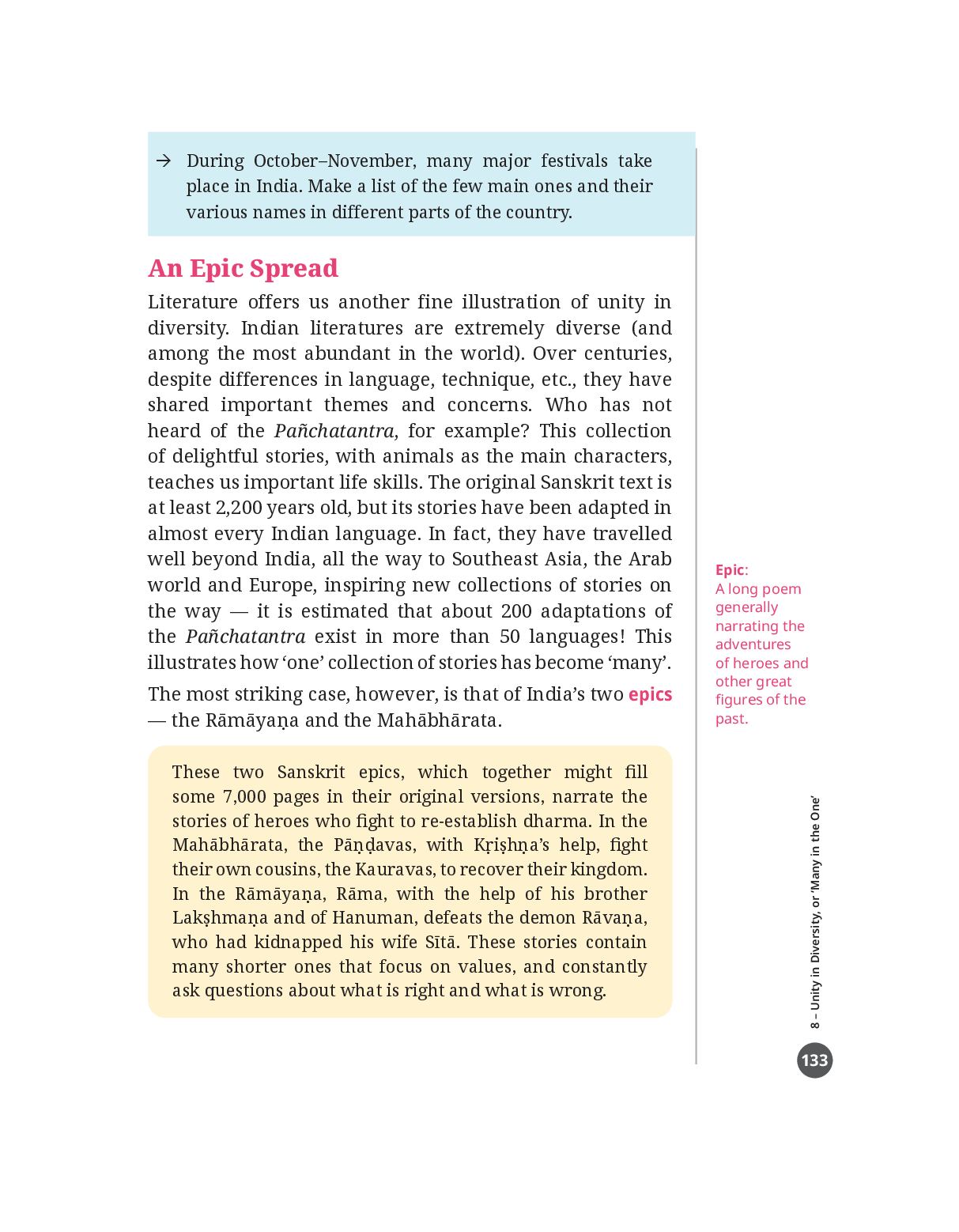
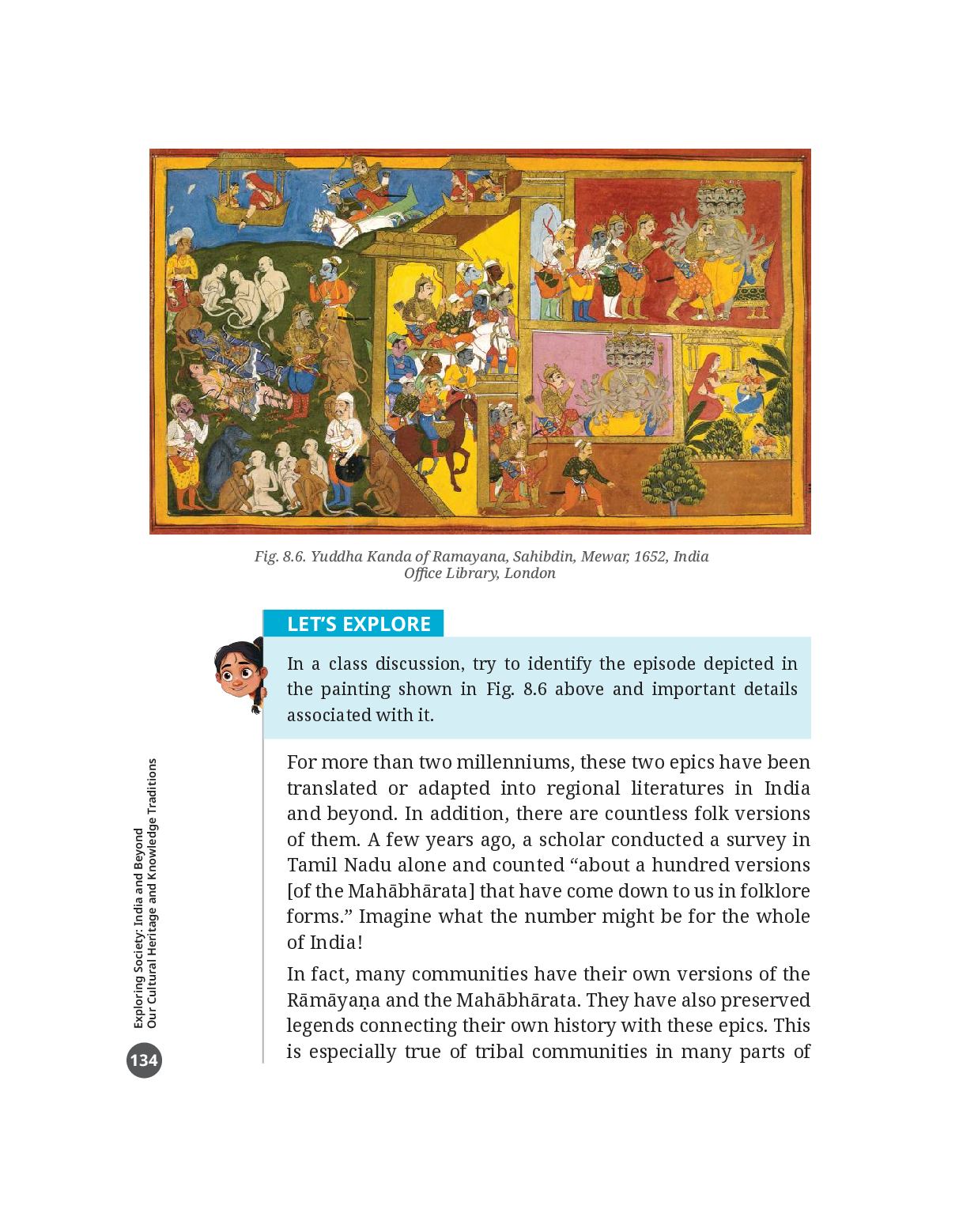
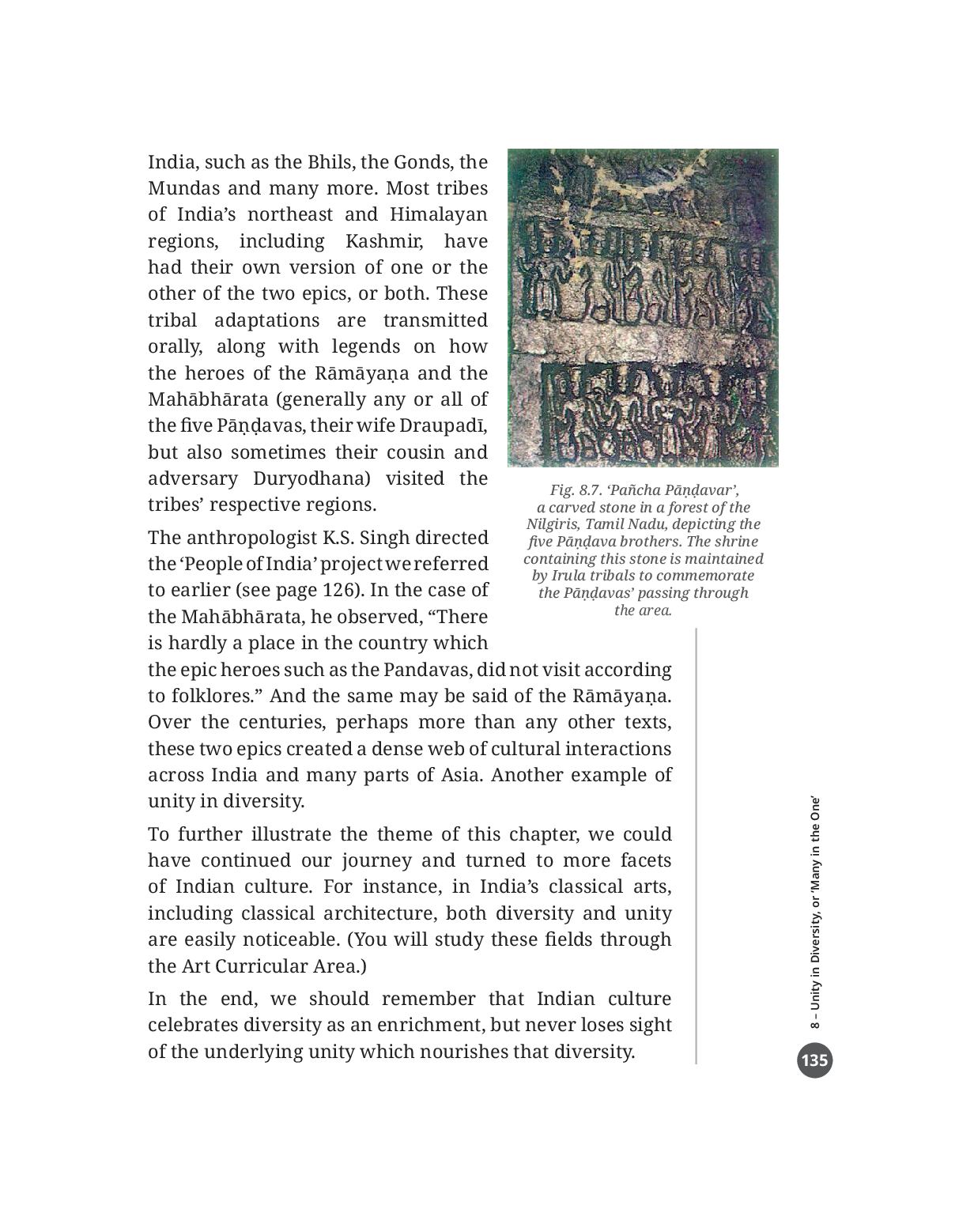
- Stories: two epics, countless retellings. The Pañchatantra — Sanskrit, at least 2,200 years old — exists in about 200 adaptations in more than 50 languages. India’s two epics, the Rāmāyaṇa and the Mahābhārata (some 7,000 pages together in the original), have been translated, adapted and retold for more than two millenniums, with countless folk versions besides — a scholar counted about a hundred folk Mahābhāratas in Tamil Nadu alone. The Bhils, Gonds, Mundas and most tribes of the northeast and the Himalayan region have their own versions, and legends of the heroes visiting their own land. As the anthropologist K.S. Singh put it, “There is hardly a place in the country which the epic heroes such as the Pandavas, did not visit according to folklores.”
- The closing sentence is the whole chapter. “Indian culture celebrates diversity as an enrichment, but never loses sight of the underlying unity which nourishes that diversity.” Unity here does not mean everyone doing the same thing; it means many different things growing from something shared.
Quick revision – Unity in Diversity, or ‘Many in the One’
| Term | What it means | Where it appears in the chapter | Worth remembering |
|---|---|---|---|
| Unity in diversity | Many different forms of life, dress, food, speech and worship that nevertheless share something underneath | Chapter title; page 126 | Vincent Smith’s answer: “India offers unity in diversity” |
| ‘Many in the One’ | Sri Aurobindo’s phrase for the same idea — the many are forms of one thing, not fragments of nothing | Page 125, opening quotation | Unity is not uniformity |
| ‘People of India’ project | A massive survey by the Anthropological Survey of India, directed by K.S. Singh | Pages 126 and 135 | 4,635 communities, 325 languages, 25 scripts |
| Migrant (as used here) | A person not living near their birthplace or with their original community | Page 126 | The survey found many Indians may be called migrants in this sense |
| Staple grains | The basic food grains of most Indians | Pages 126–128, Fig. 8.1 | Cereals: rice, barley, wheat. Millets: bajra, jowar, ragi. Pulses: dals and grams |
| Sari | A plain, unstitched length of cloth worn in most parts of India | Pages 128–131 | Silks: Banarasi, Kanjivaram, Paithani, Patan Patola, Muga, Mysore |
| Relief | A design that stands out from the surface of a panel of stone, wood, ceramic or another material | Page 129, margin | Fig. 8.2 — a woman in a sari, from Vaiśhali, a few centuries BCE |
| Chintz | A beautiful kind of printed cotton made in India | Page 129, Don’t Miss Out | So popular in 17th-century Europe that England and France banned its import |
| Makara Sankrānti | The festival on or around 14 January that marks the beginning of the harvest season in many parts of India | Pages 131–132, Fig. 8.5 | One festival, about a dozen names on the map |
| Pañchatantra | A Sanskrit collection of stories with animals as the main characters, teaching life skills | Page 133 | At least 2,200 years old; about 200 adaptations in more than 50 languages |
| Epic | A long poem generally narrating the adventures of heroes and other great figures of the past | Page 133, margin | The Rāmāyaṇa and the Mahābhārata — about 7,000 pages together |
| Folk version | A retelling of an epic kept alive orally by a community rather than in a written text | Pages 134–135 | About a hundred folk Mahābhāratas in Tamil Nadu alone |
Old NCERT vs New – Class 6 Social Science
This chapter is from Exploring Society: India and Beyond, the new NCERT Class 6 Social Science book (NCF-SE 2023, used from 2024-25). It replaced the old book “Our Pasts, The Earth Our Habitat and Social and Political Life”, so chapter numbers and names differ from older PDFs.
Solutions and All Chapters
Answers to the exercises and the full chapter list of Exploring Society: India and Beyond:
Unity in Diversity, or ‘Many in the One’ – Overview
| Class | Class 6 |
| Subject | Social Science |
| Book | Exploring Society: India and Beyond – new NCERT book |
| Chapter | 8 of 14 – Unity in Diversity, or ‘Many in the One’ |
| Book pages | 125 – 136 |
| Edition | NCERT Reprint 2026-27 |
| Session | 2026-27 |
| Free – read online or download |
Class 6 Social Science Chapter 8 – FAQs
Where can I download Unity in Diversity, or ‘Many in the One’ Class 6 PDF?
From the download table on this page – the chapter PDF is free, and the full book is linked too.
What is Class 6 Social Science Chapter 8 about?
The chapter’s one idea: India’s variety is real, and so is what lies under it. Travel across India and the landscapes, dresses, foods, languages and scripts keep changing — this is usually the first thing a visitor notices. With over 1.4 billion people (about 18 percent of the world’s population), that is not surprising. But the British historian Vincent Smith asked how a history of so bewildering a country could be written at all, and answered himself: “India offers unity in diversity.” Sri Aurobindo’s name for the same thing gives the chapter its title — the ‘Many in the One’.
Is Unity in Diversity, or ‘Many in the One’ from the new NCERT Class 6 Social Science book?
Yes. It is chapter 8 of exploring society: india and beyond, the new NCERT Class 6 Social Science book for 2026-27.
Is this the latest NCERT edition for 2026-27?
Yes – the PDF is NCERT’s latest edition for the 2026-27 session.
Where are the NCERT Solutions for Class 6 Social Science Chapter 8?
Open the NCERT Solutions link above for answers to the exercise questions.