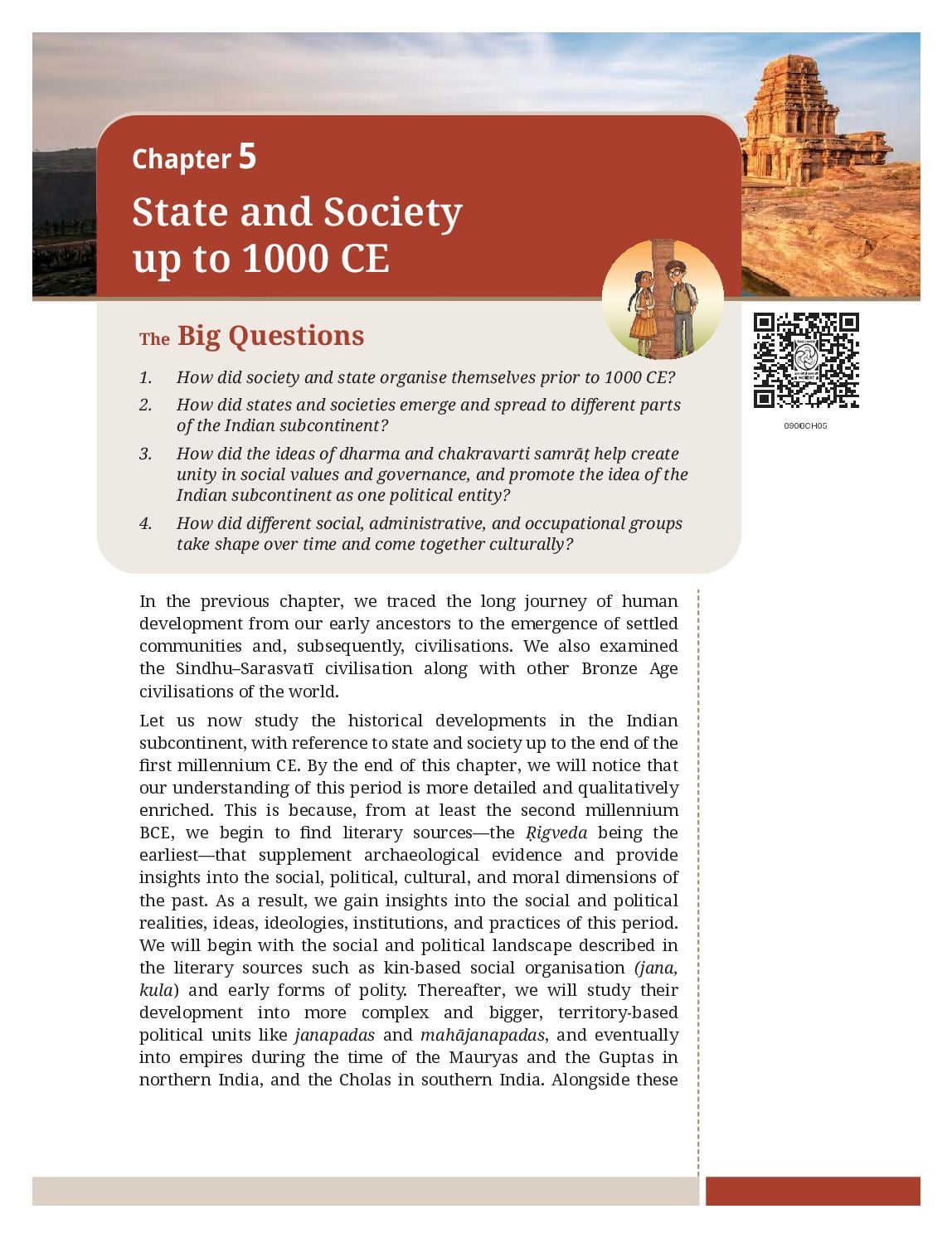
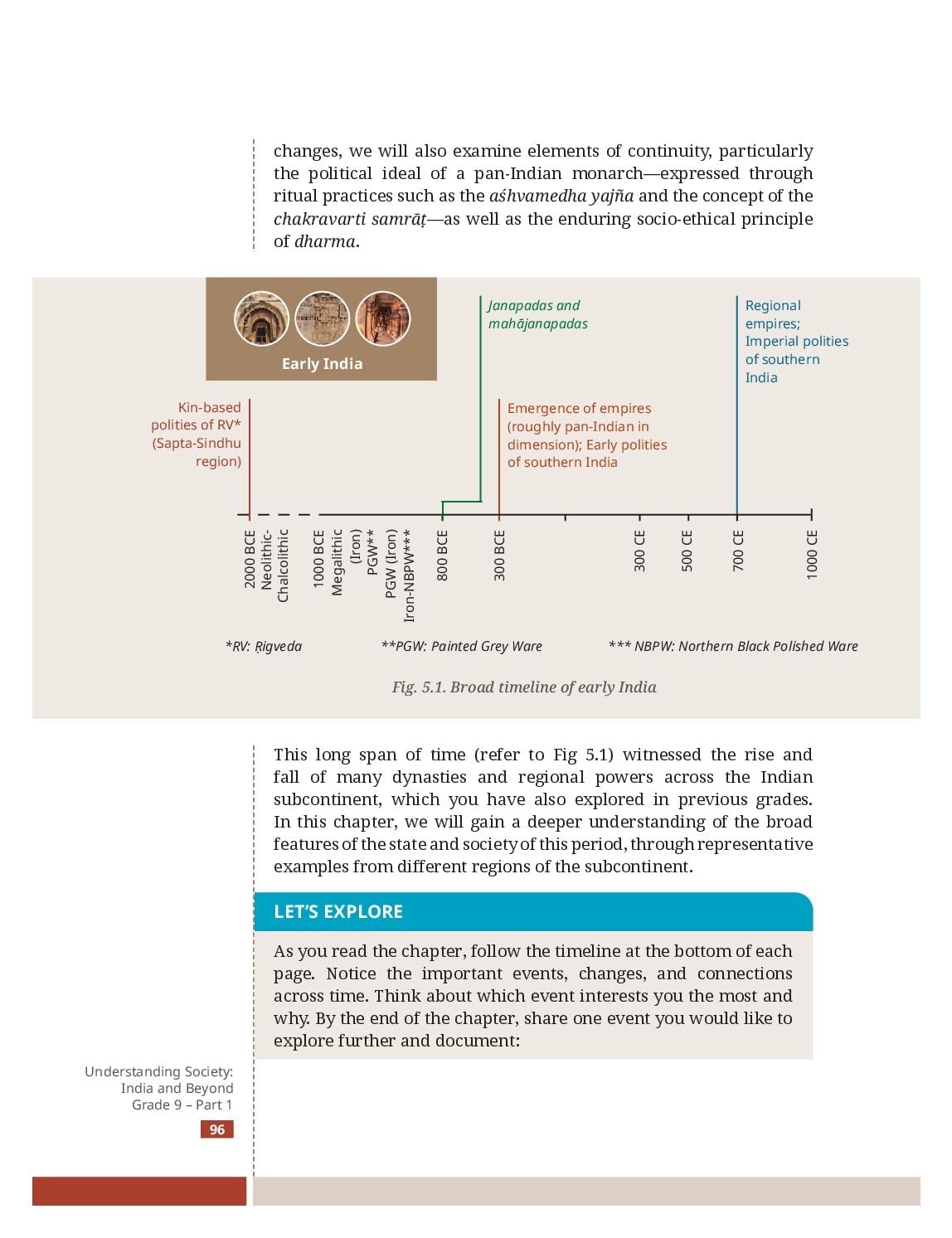
Download State and Society up to 1000 CE – NCERT Class 9 Social Science Chapter 5 PDF from the new NCERT Class 9 Social Science book Understanding Society: India and Beyond (2026-27). Read the chapter online or download the free PDF. The chapter covers roughly 2000 BCE to 1000 CE and its spine is Fig. 5.1: kin-based polities of the Ṛigveda in the Sapta-Sindhu region, then janapadas and mahājanapadas from about 800 BCE, then the emergence of empires of roughly pan-Indian…
State and Society up to 1000 CE PDF – Chapter 5 of Understanding Society: India and Beyond (Part I)
Read the chapter online or download the PDF.
| Chapter | Download | |
|---|---|---|
| Chapter 5 PDF | State and Society up to 1000 CE | View PDF |
| Full book | NCERT Class 9 Social Science – Understanding Society: India and Beyond | View Book |
Read Online
What Is in State and Society up to 1000 CE? (Class 9 Social Science Chapter 5)
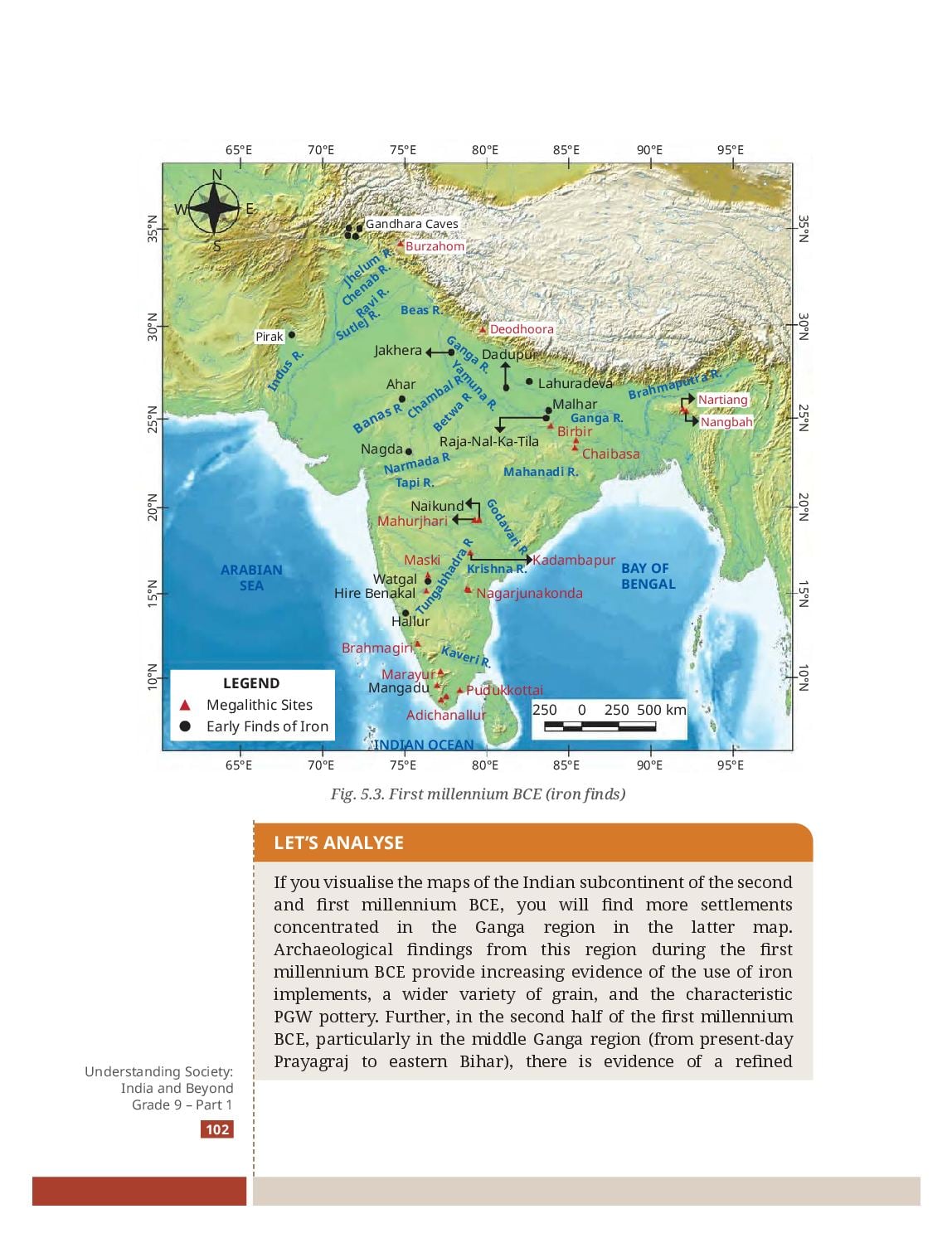
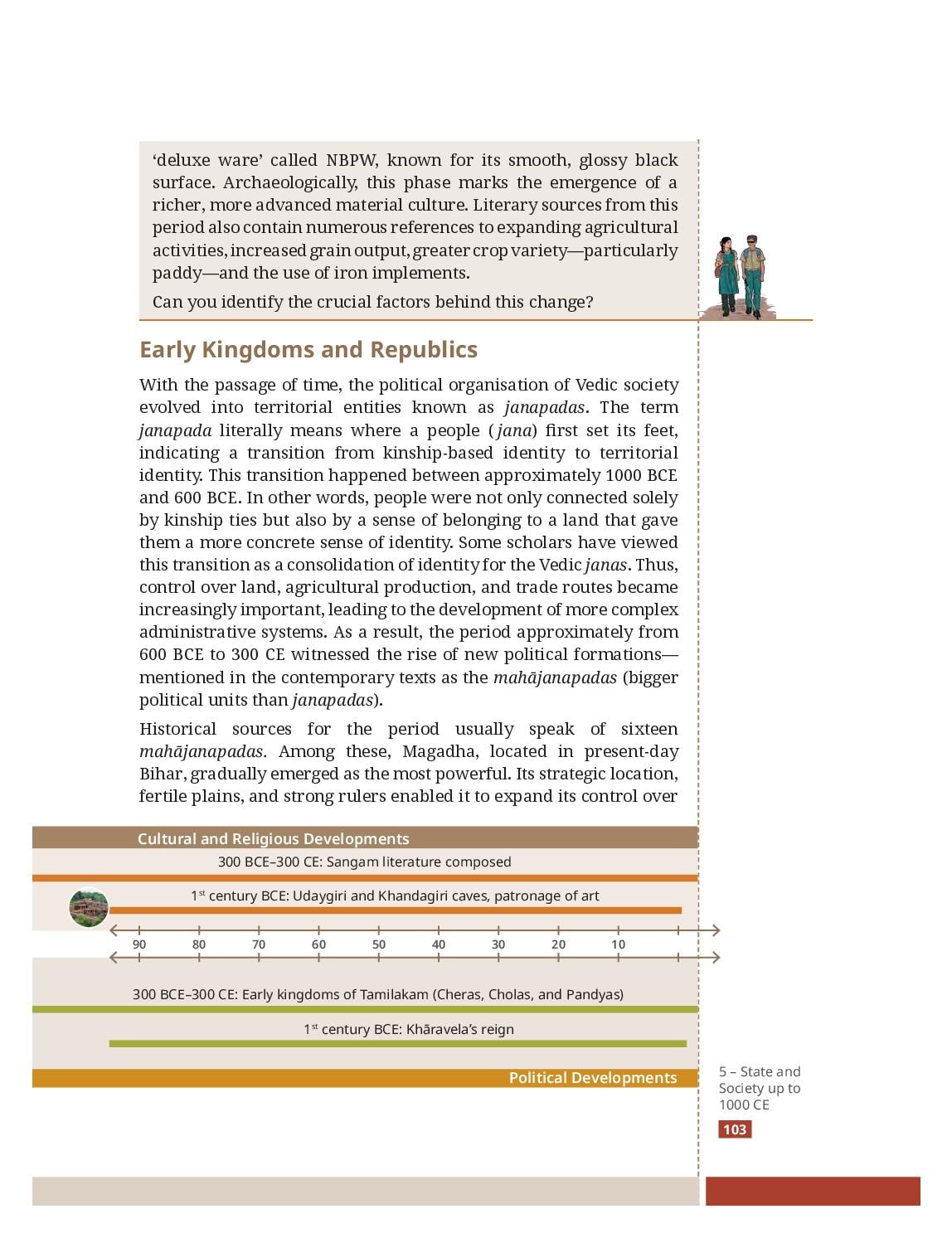
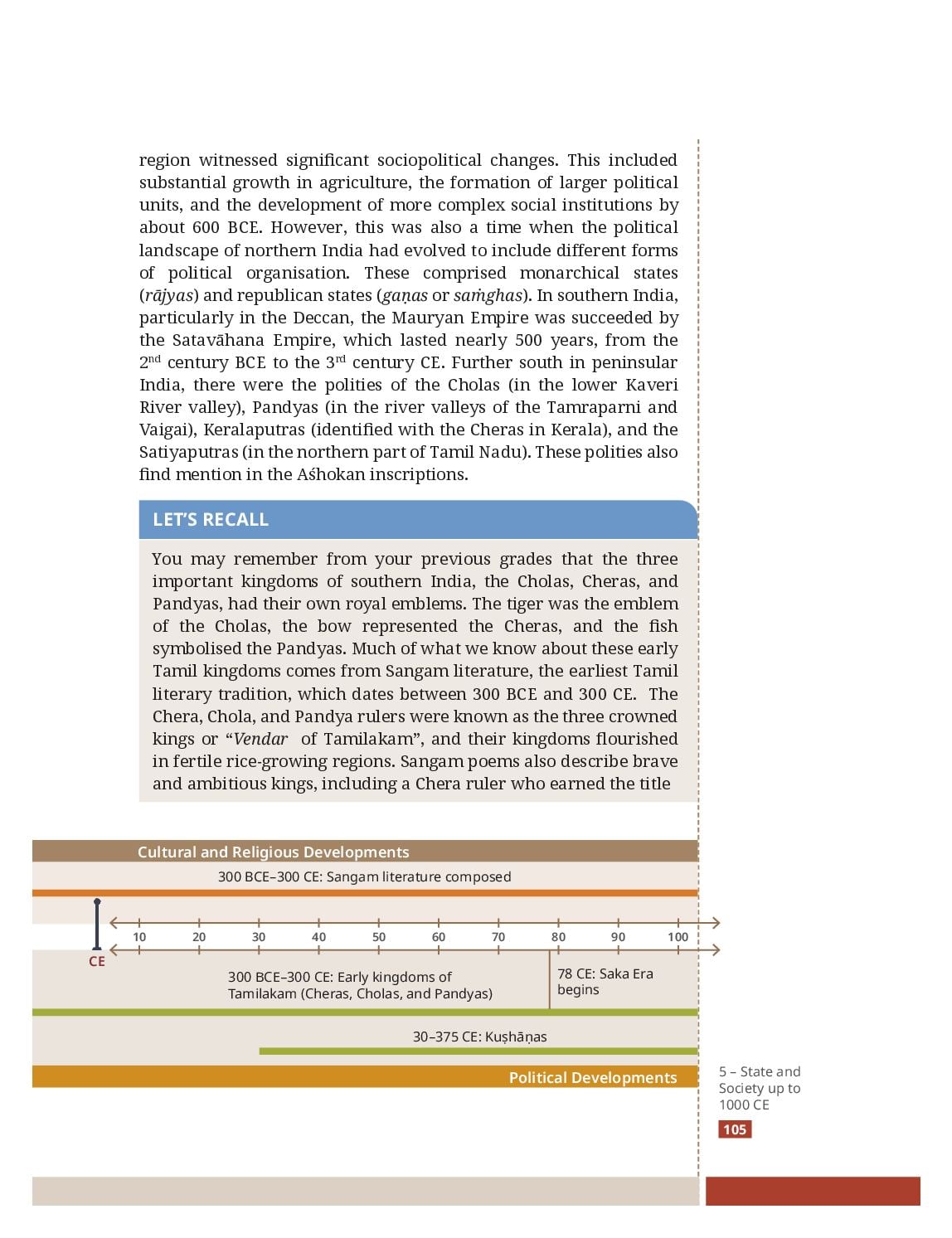
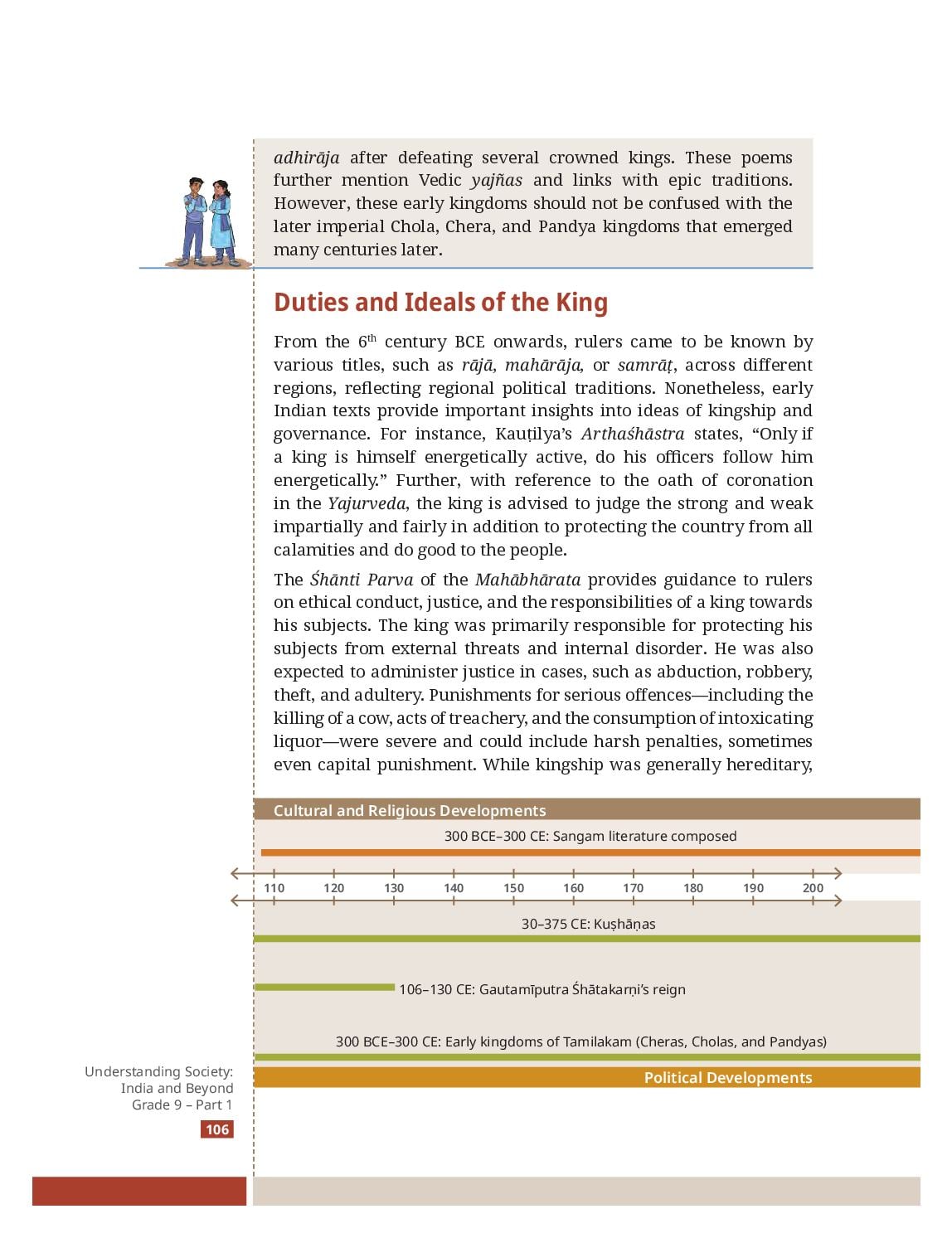
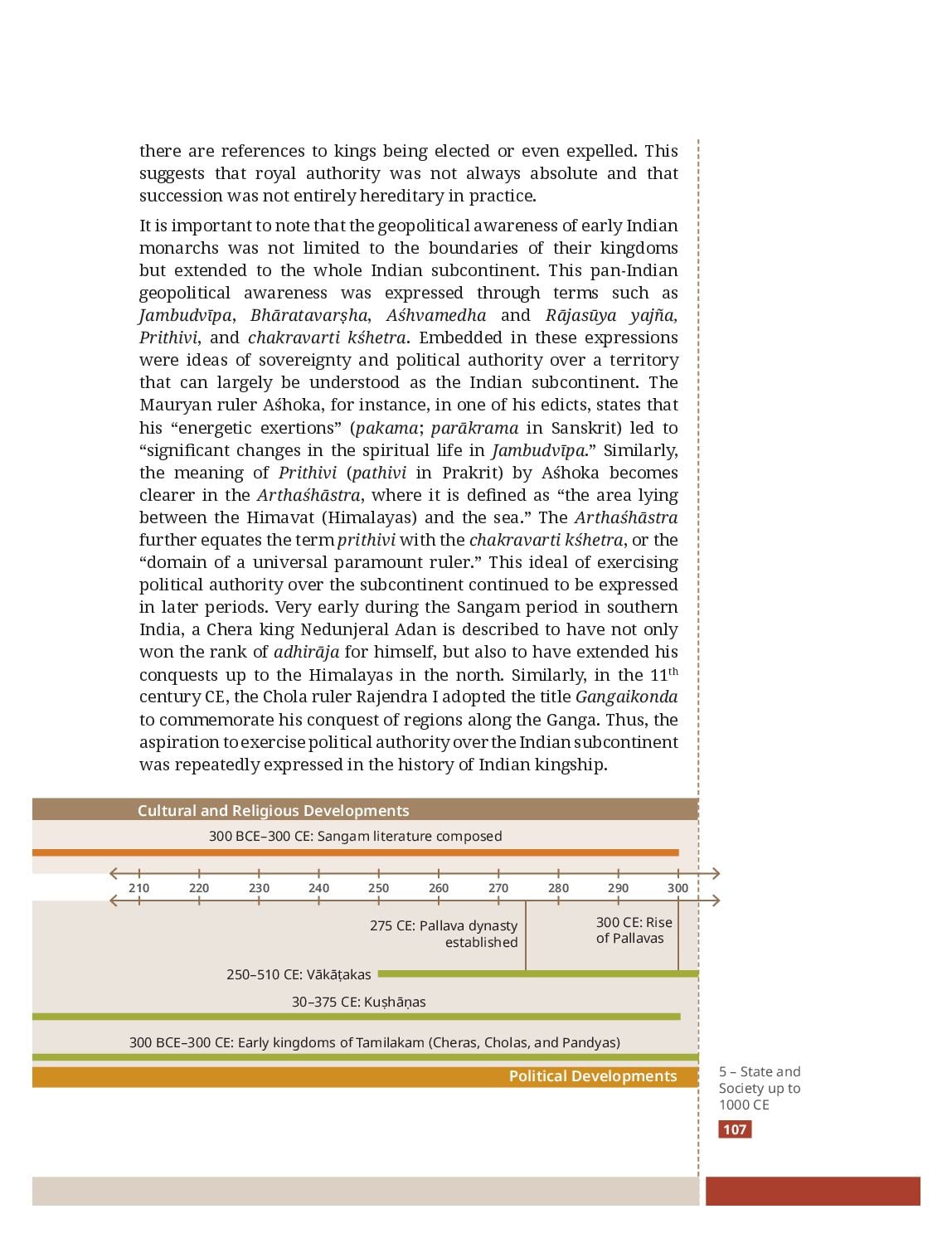
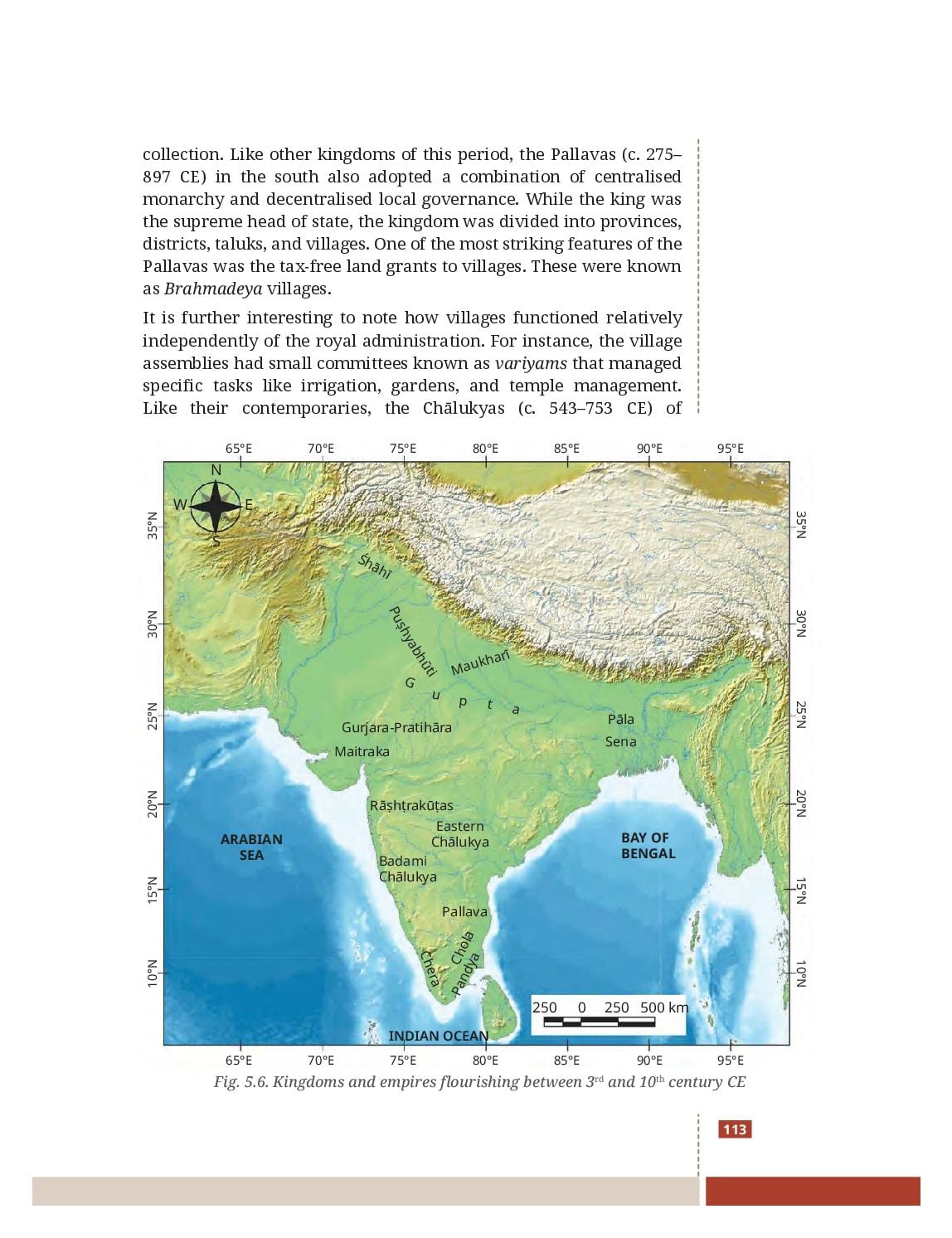
- The chapter covers roughly 2000 BCE to 1000 CE and its spine is Fig. 5.1: kin-based polities of the Ṛigveda in the Sapta-Sindhu region, then janapadas and mahājanapadas from about 800 BCE, then the emergence of empires of roughly pan-Indian dimension together with the early polities of southern India from about 300 BCE, and finally regional empires and the imperial polities of southern India from about 700 CE.
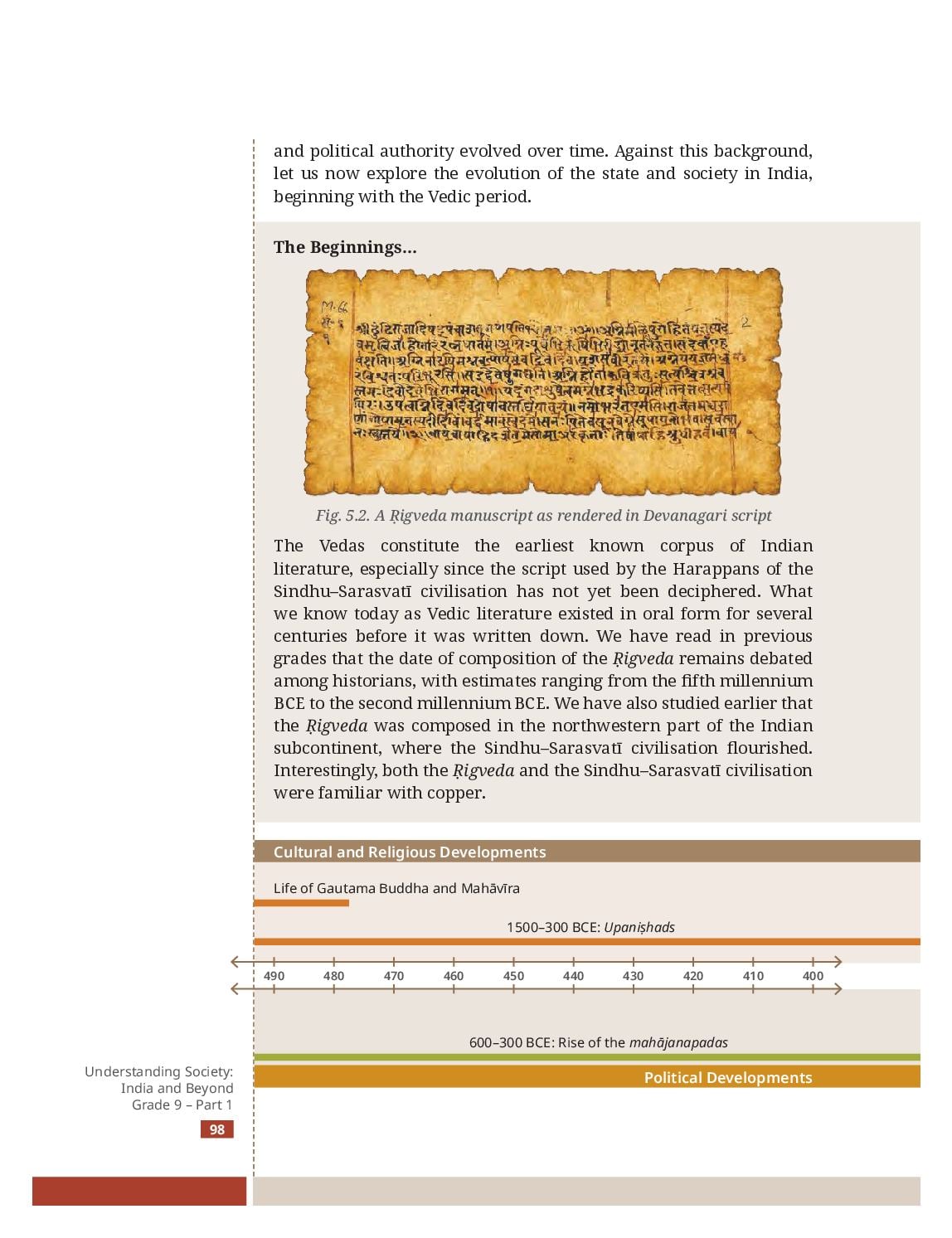
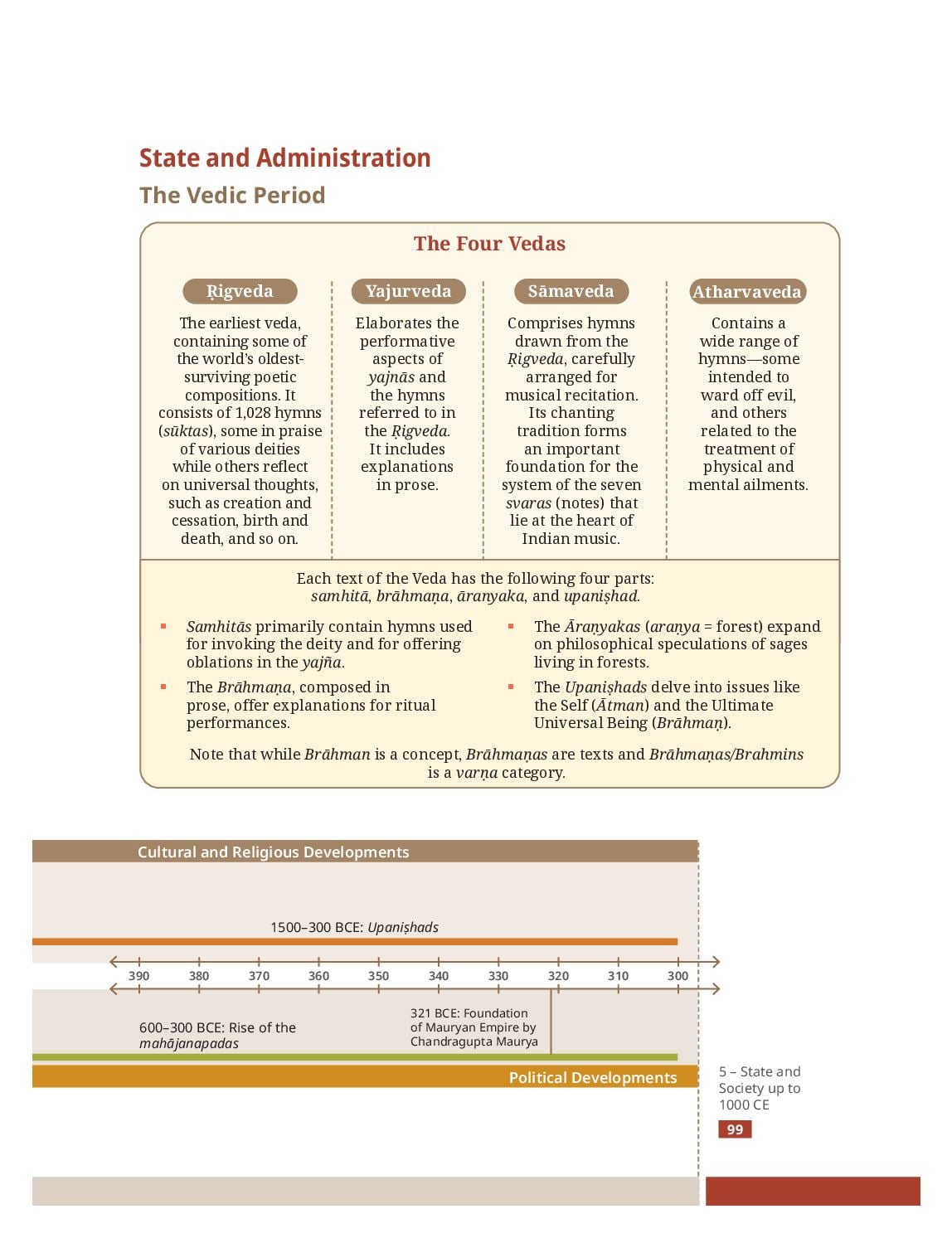
- Our knowledge of this period is richer than of the Harappan period for one reason the chapter states plainly: from at least the second millennium BCE we have literary sources — the Ṛigveda being the earliest — that supplement archaeology. The Harappan script is still undeciphered, so for the Sindhu–Sarasvatī civilisation we have objects without words; from the Vedic period onwards we have both.
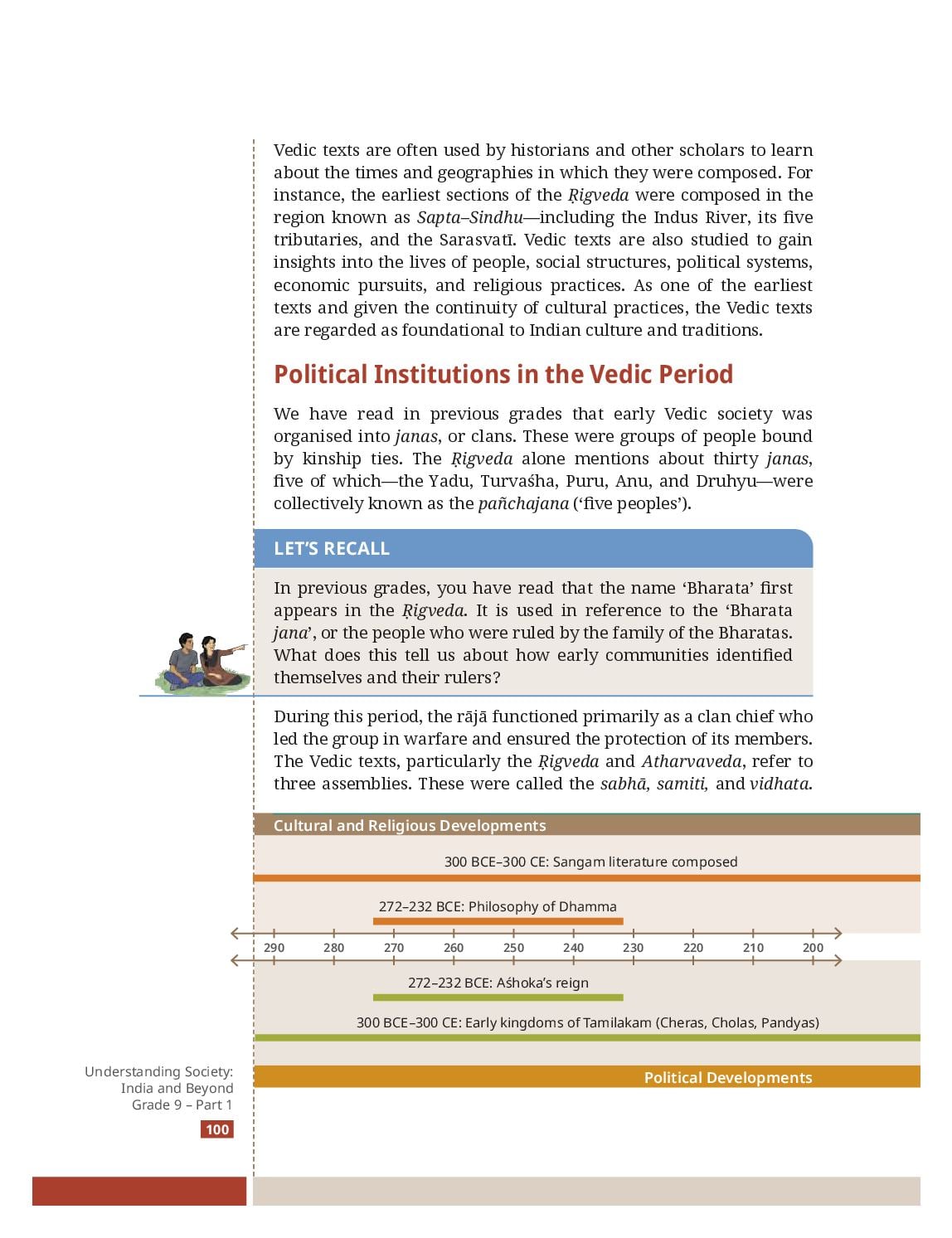
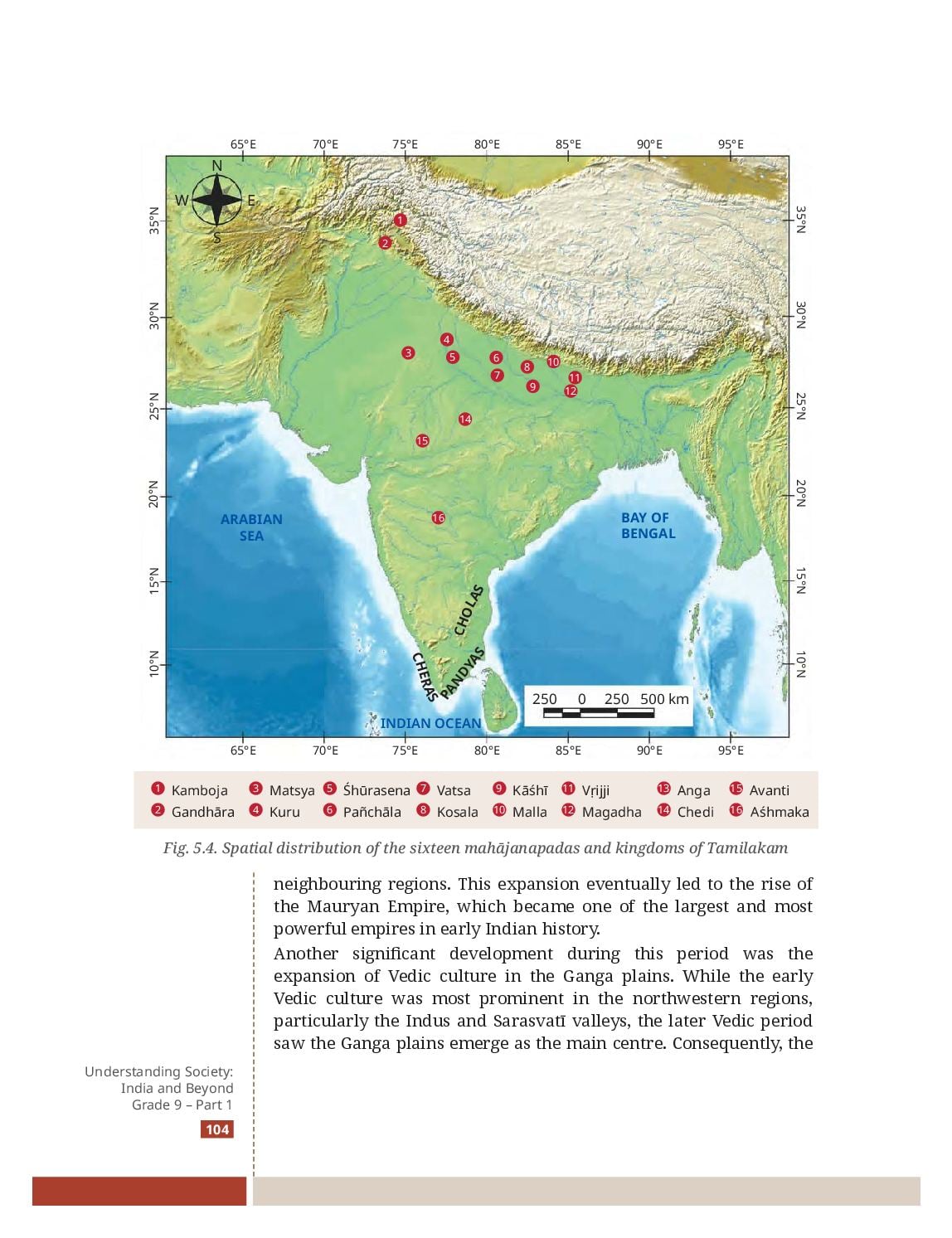
- Political organisation moved from kinship to territory. The Ṛigveda names about thirty janas, five of them (Yadu, Turvaśha, Puru, Anu, Druhyu) called the pañchajana. Between about 1000 BCE and 600 BCE these became janapadas — janapada literally means where a people (jana) first set its feet. From about 600 BCE to 300 CE came the sixteen mahājanapadas (Fig. 5.4), of which Magadha grew strongest, and alongside monarchies (rājyas) there were republics (gaṇas or saṁghas).
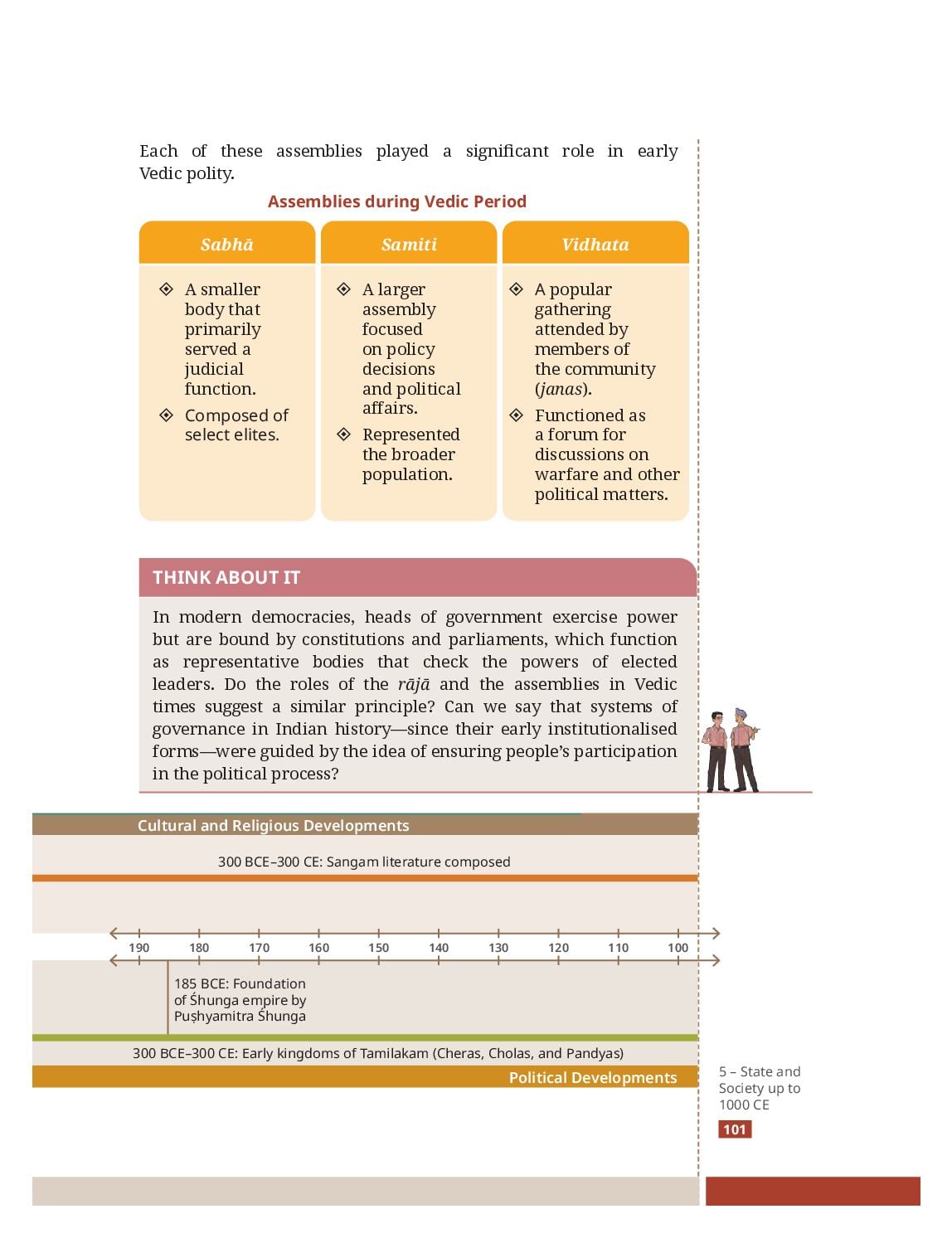
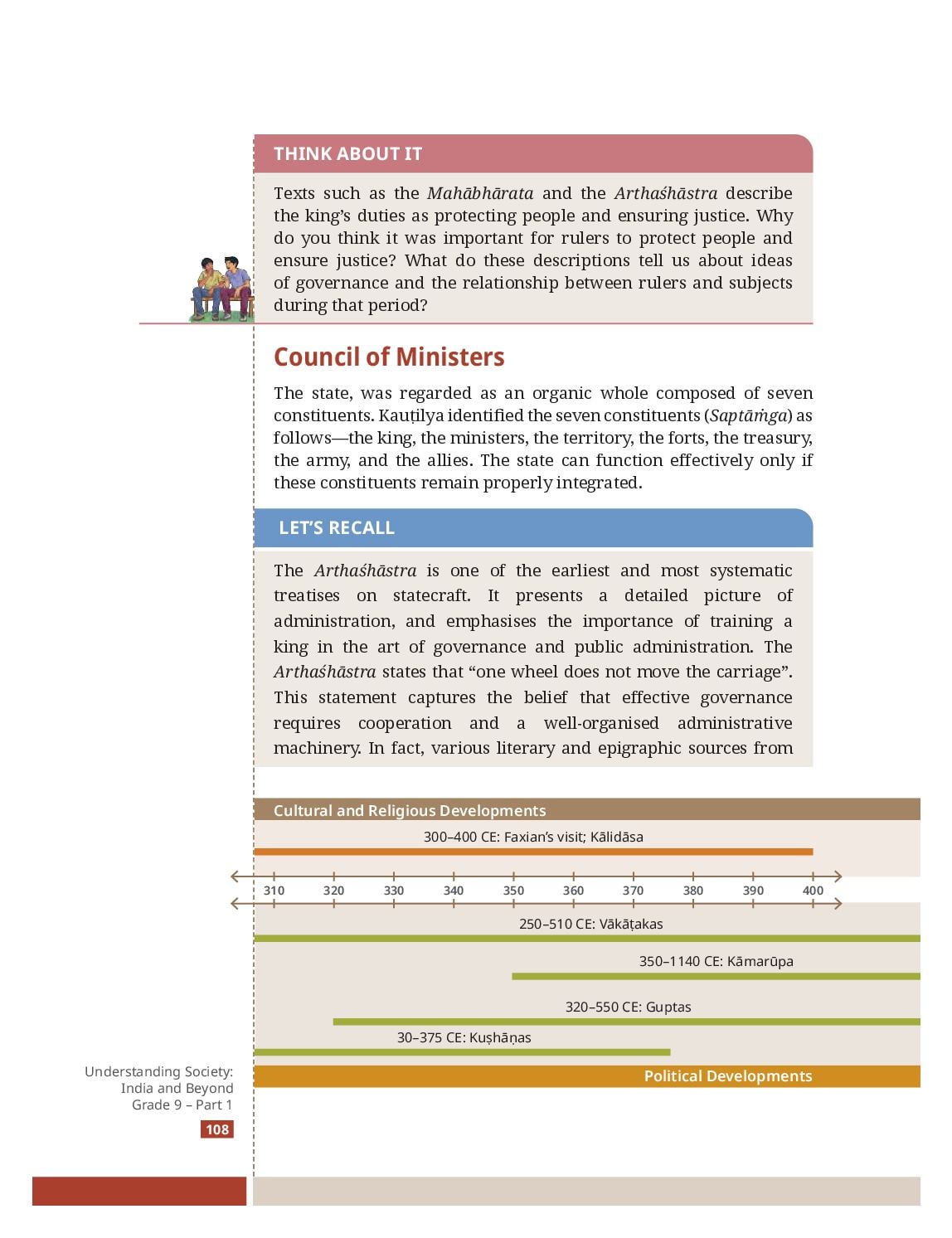
- Kingship was checked, not absolute. The Ṛigveda and Atharvaveda name three assemblies — sabhā (small, judicial, select elites), samiti (larger, policy and political affairs, representing the broader population) and vidhata (a popular gathering of the janas, a forum on warfare and political matters). The Arthaśhāstra insists that “one wheel does not move the carriage” and lists the Saptāṁga — the seven limbs of the state. An Aśhokan inscription records the mantri-pariṣhad deciding in the emperor’s absence, and the chapter notes references to kings being elected or even expelled.
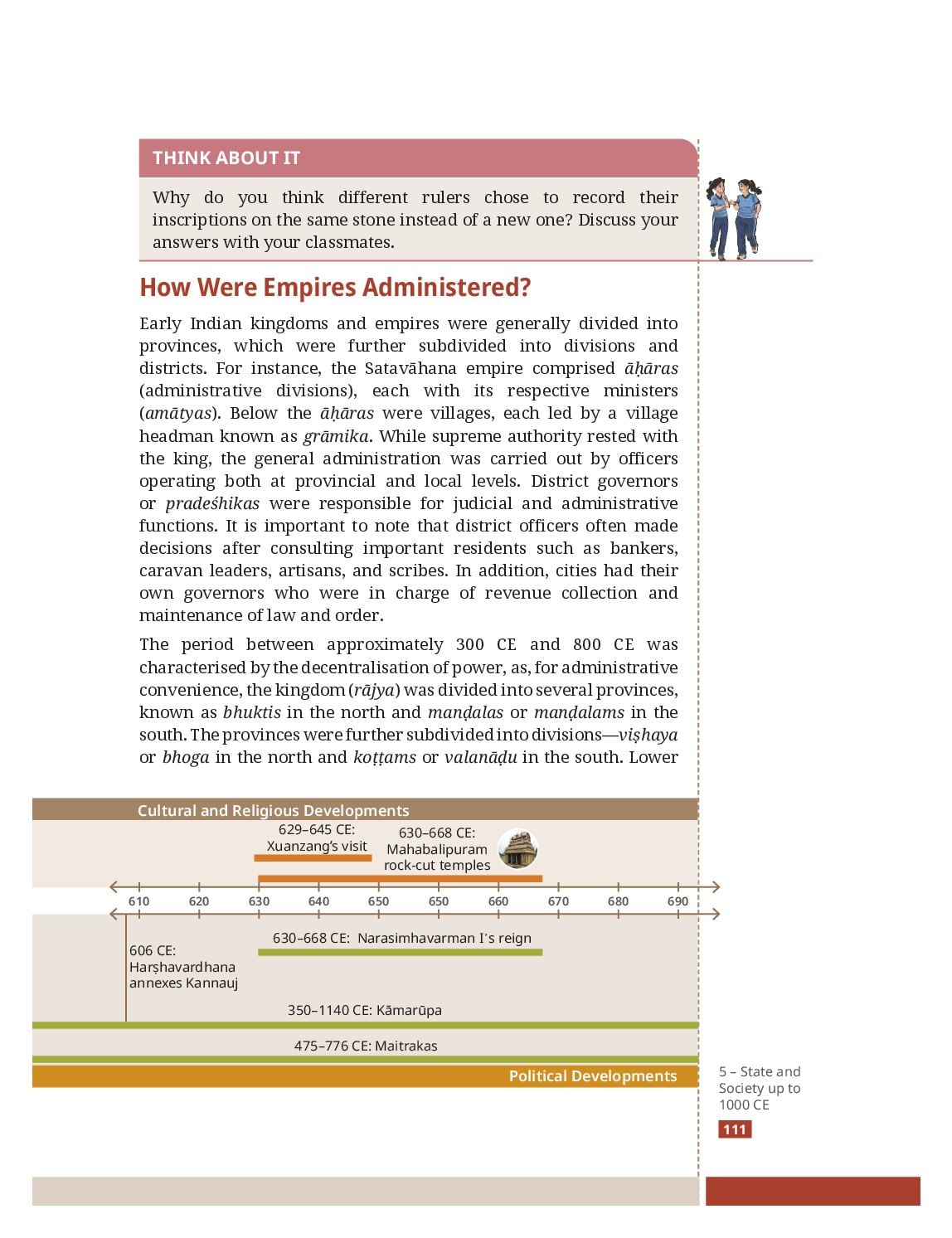
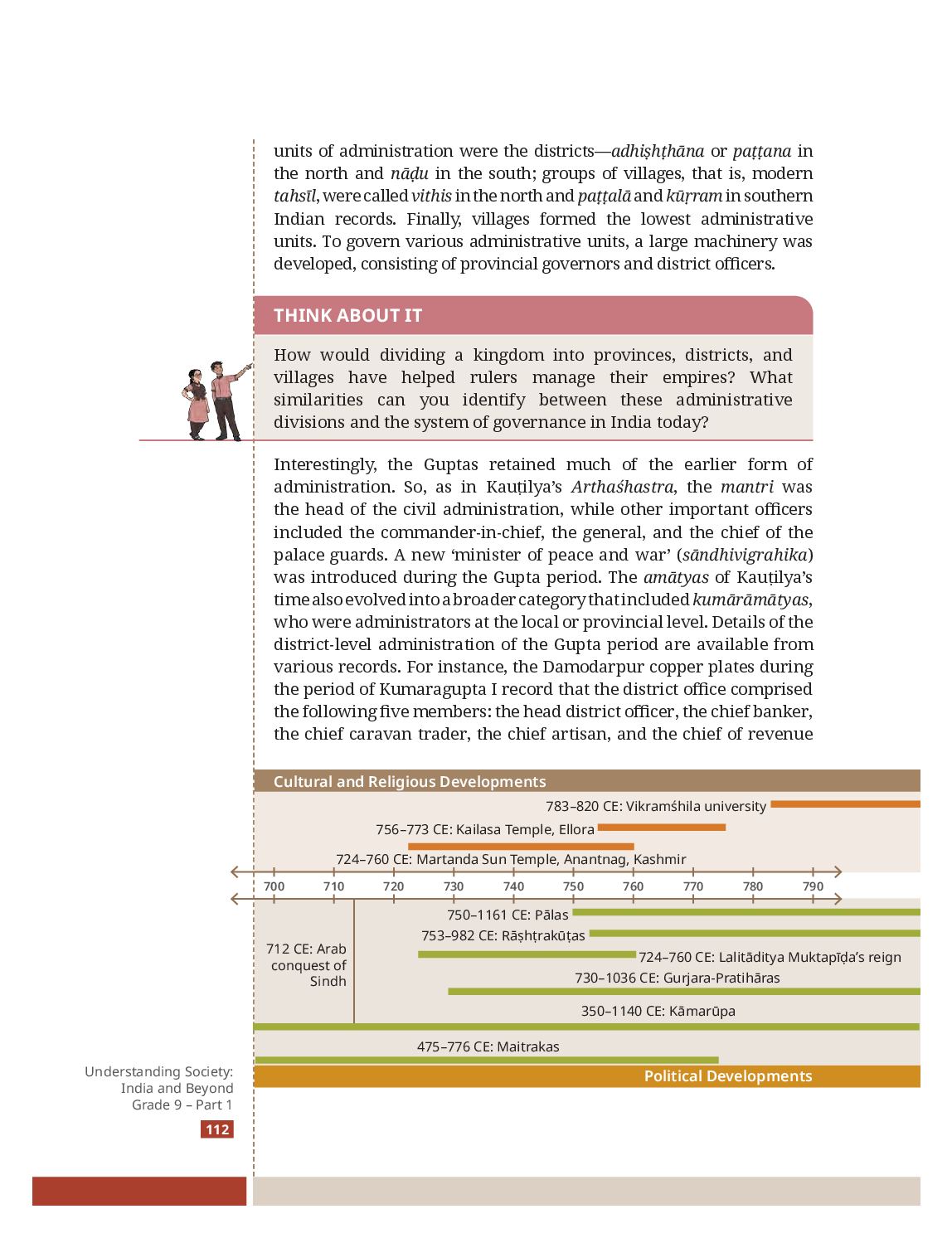
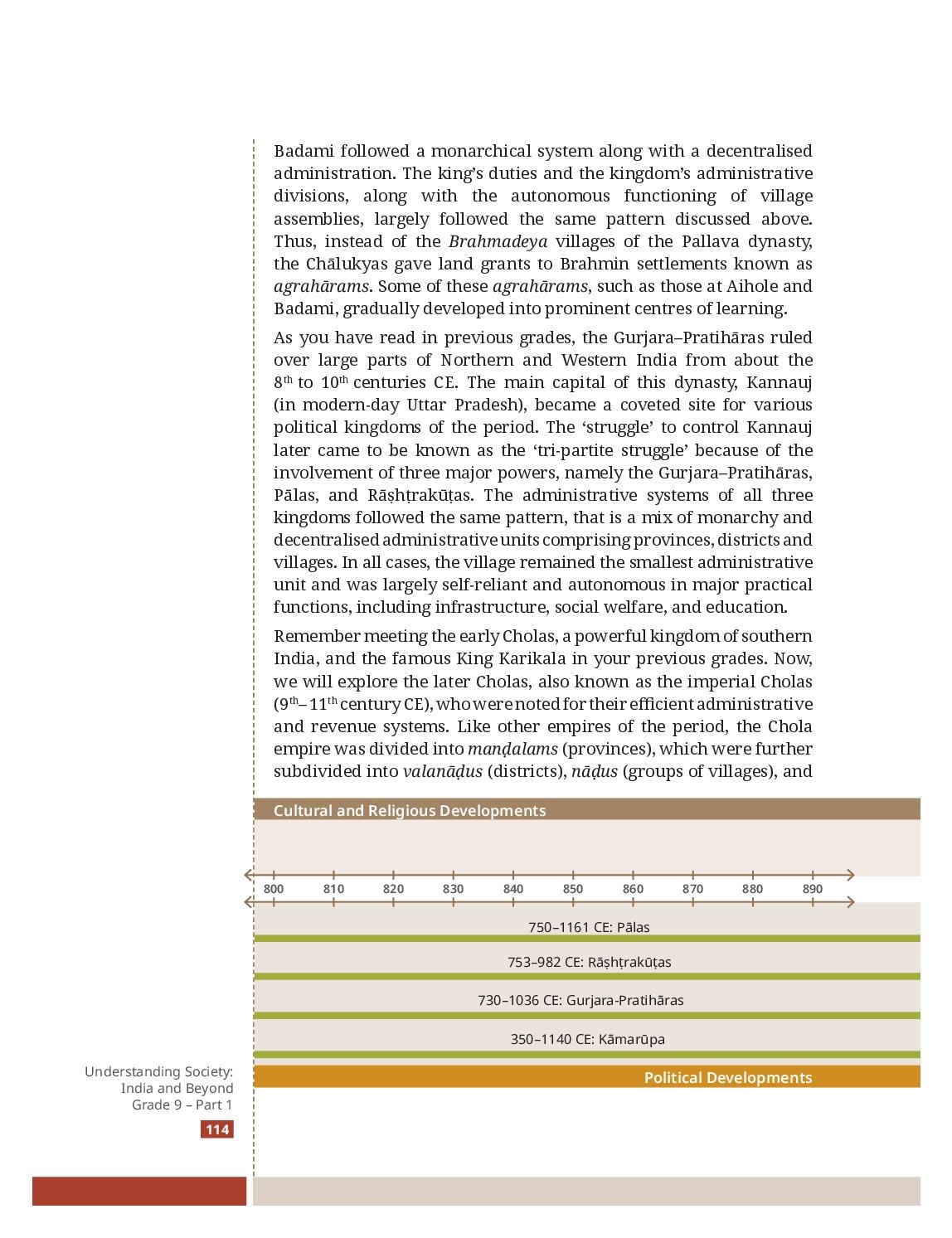
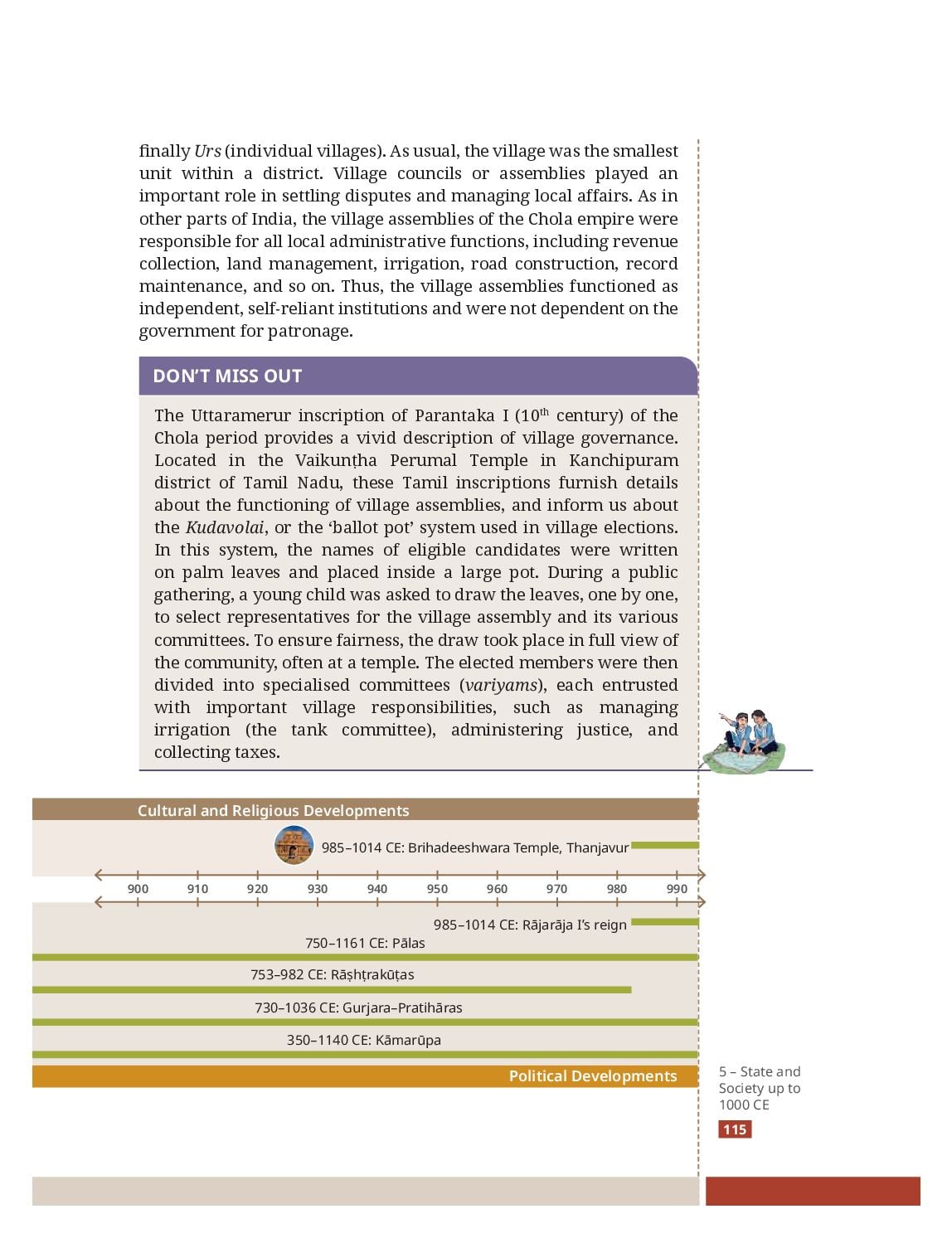
- Empires were run through layers, and the vocabulary differed north and south. Between about 300 CE and 800 CE the rājya was divided into bhuktis (north) or manḍalas/manḍalams (south), then viṣhaya/bhoga or koṭṭams/valanāḍu, then adhiṣhṭhāna/paṭṭana or nāḍu, then vithis or paṭṭalā/kūṛram, and finally the village. The Damodarpur copper plates of Kumaragupta I even name the five members of a Gupta district office, and the Uttaramerur inscription of Parantaka I describes the Chola Kudavolai ballot-pot election of village committees (variyams).
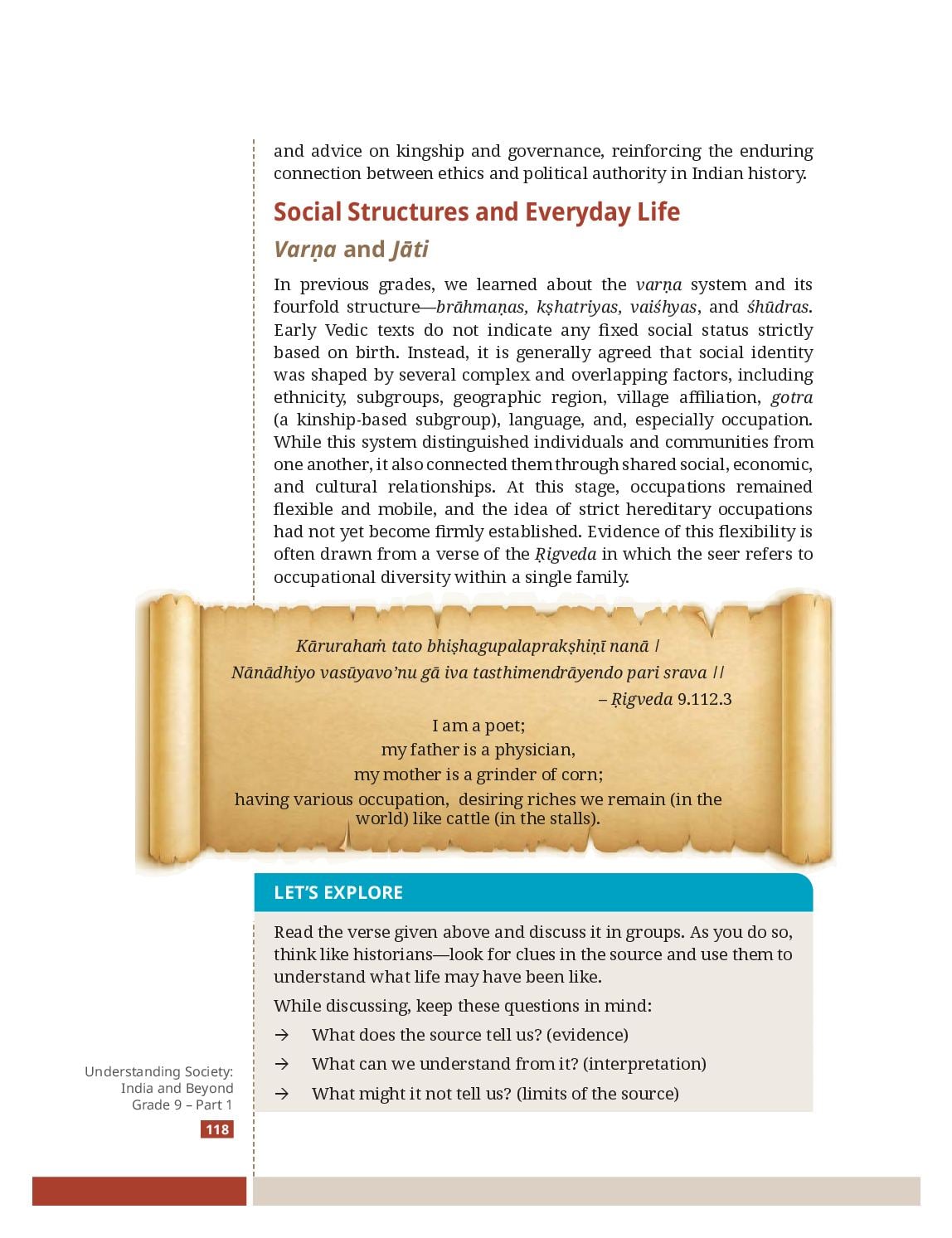
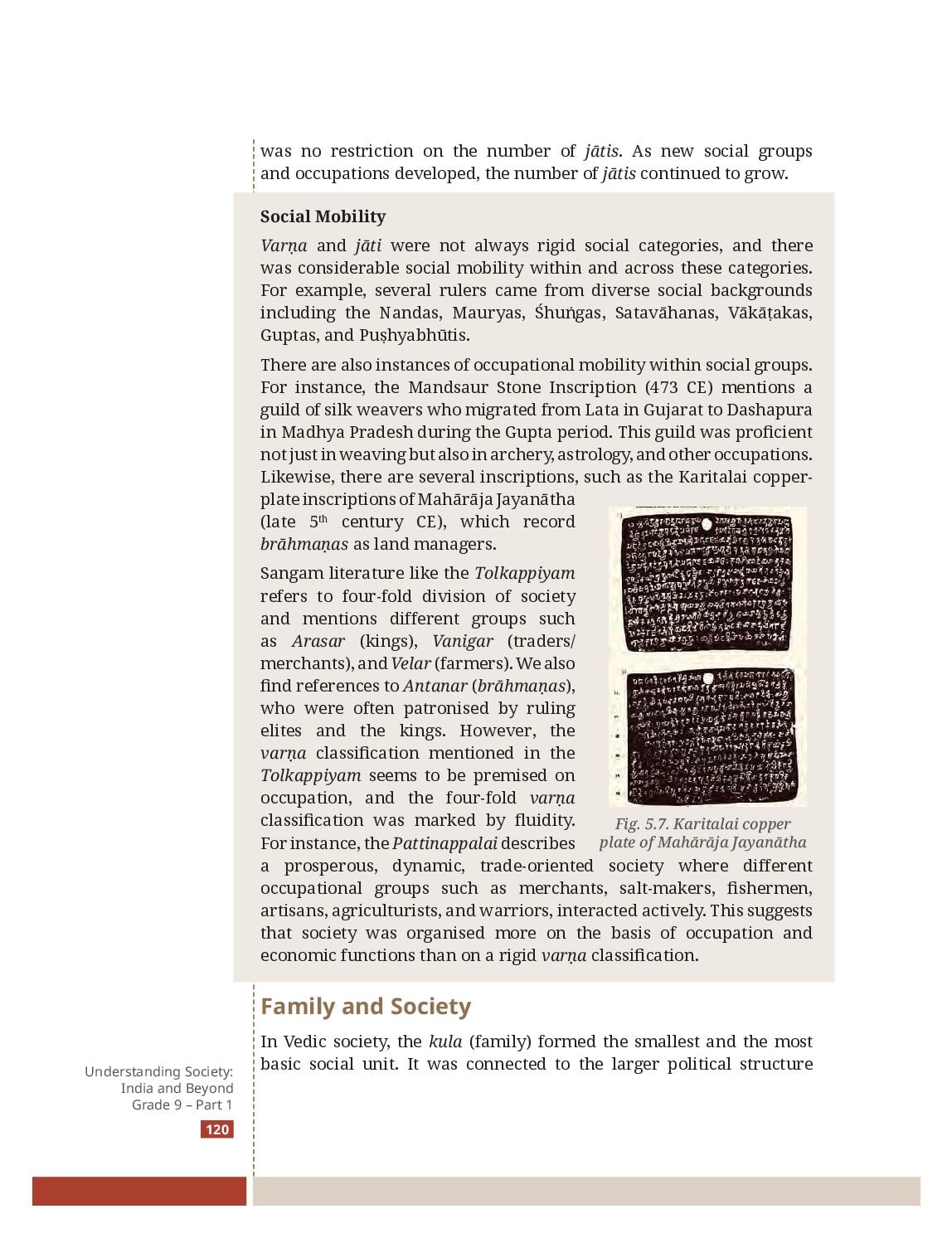
- Society is described as ordered but mobile. Varṇa first appears in the Puruṣhasūkta, Book 10 of the Ṛigveda, and was a functional division; Ṛigveda 9.112.3 shows a poet, a physician and a corn-grinder in one family, and the Sutta Nipāta says “No brāhmaņa is such by birth… A brāhmaņa is such by his deeds.” The number of varṇas was fixed at four; the number of jātis was not. Rulers came from many backgrounds — Nandas, Mauryas, Śhuṅgas, Satavāhanas, Vākāṭakas, Guptas, Puṣhyabhūtis — and the Mandsaur inscription (473 CE) records silk weavers who were also archers and astrologers.
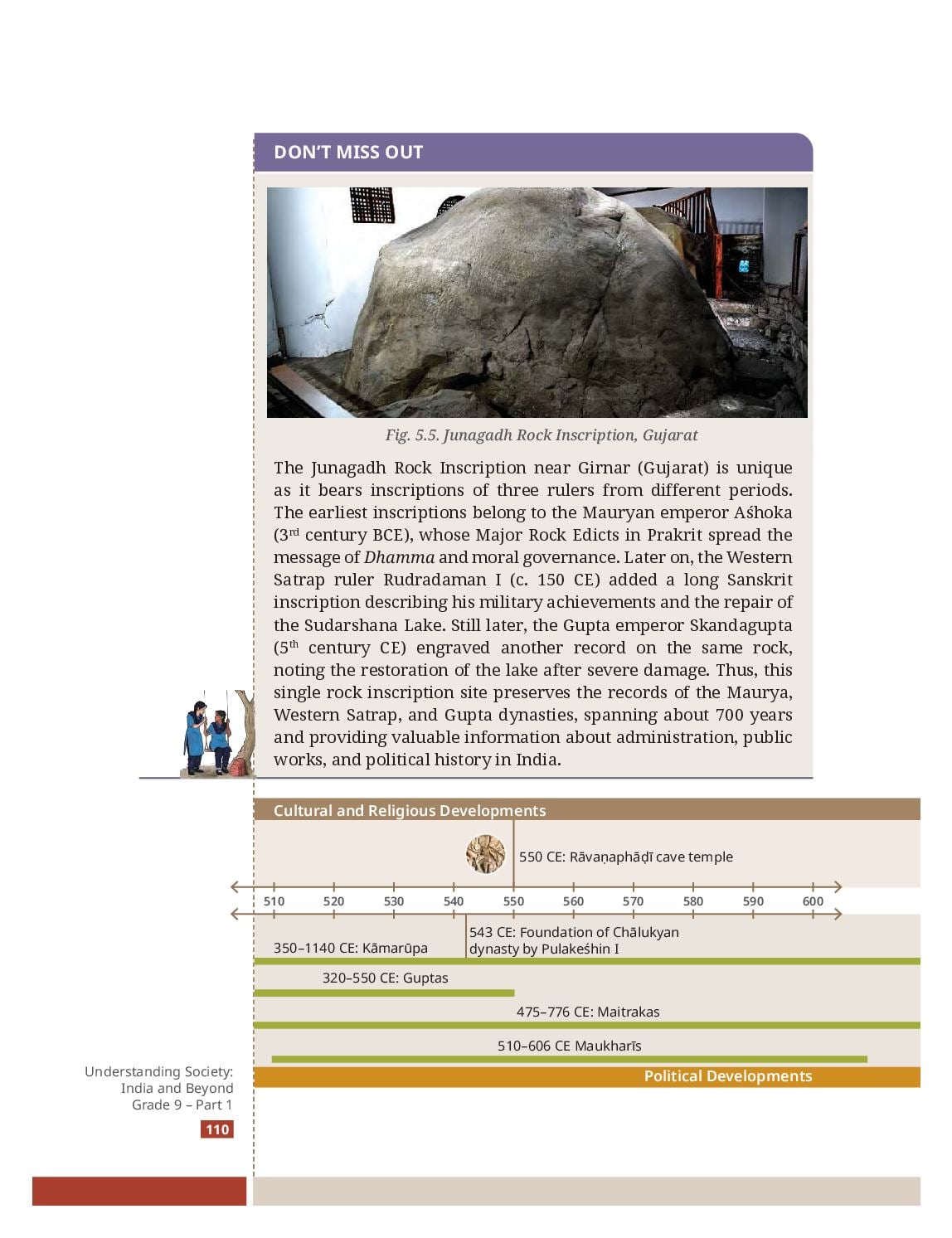
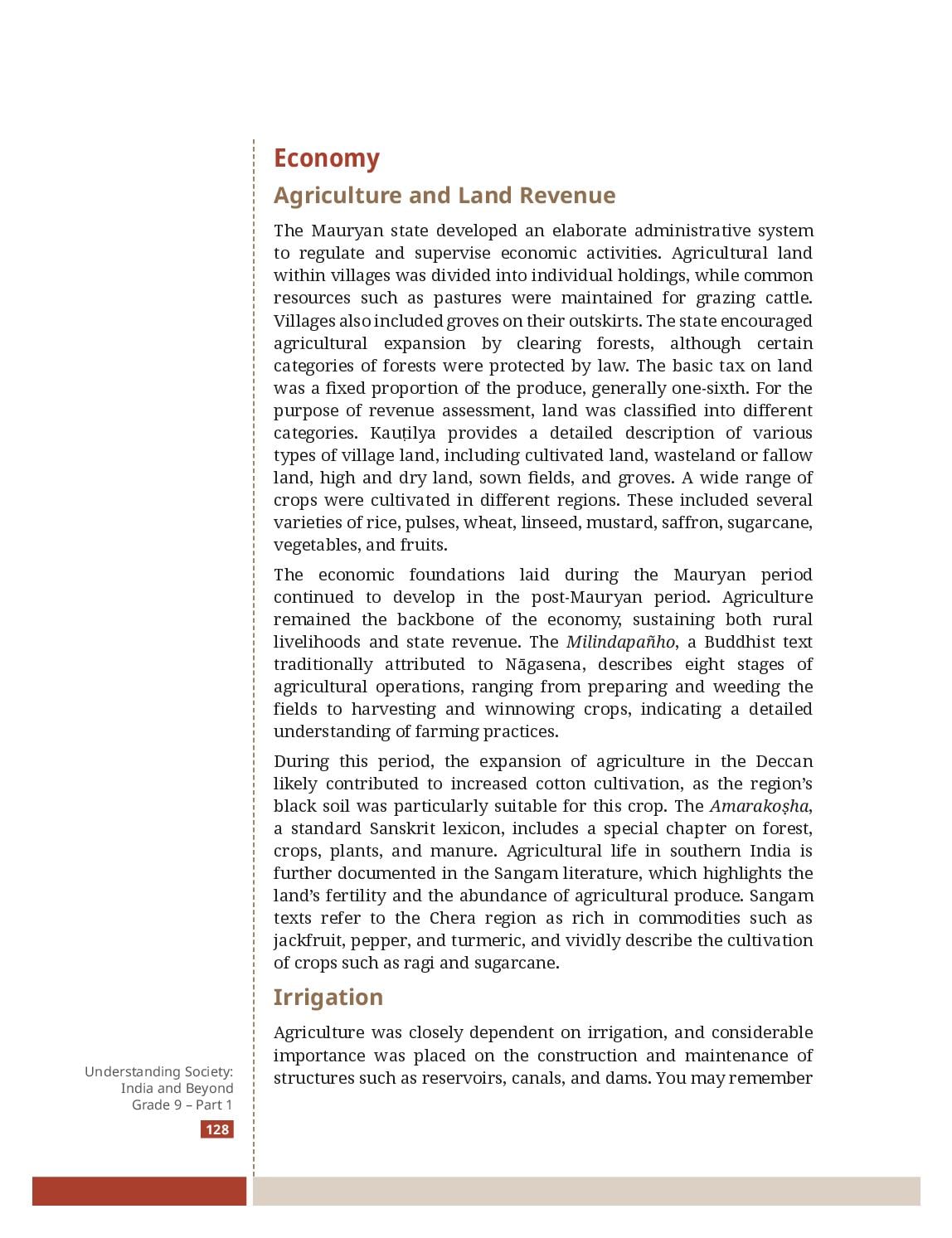
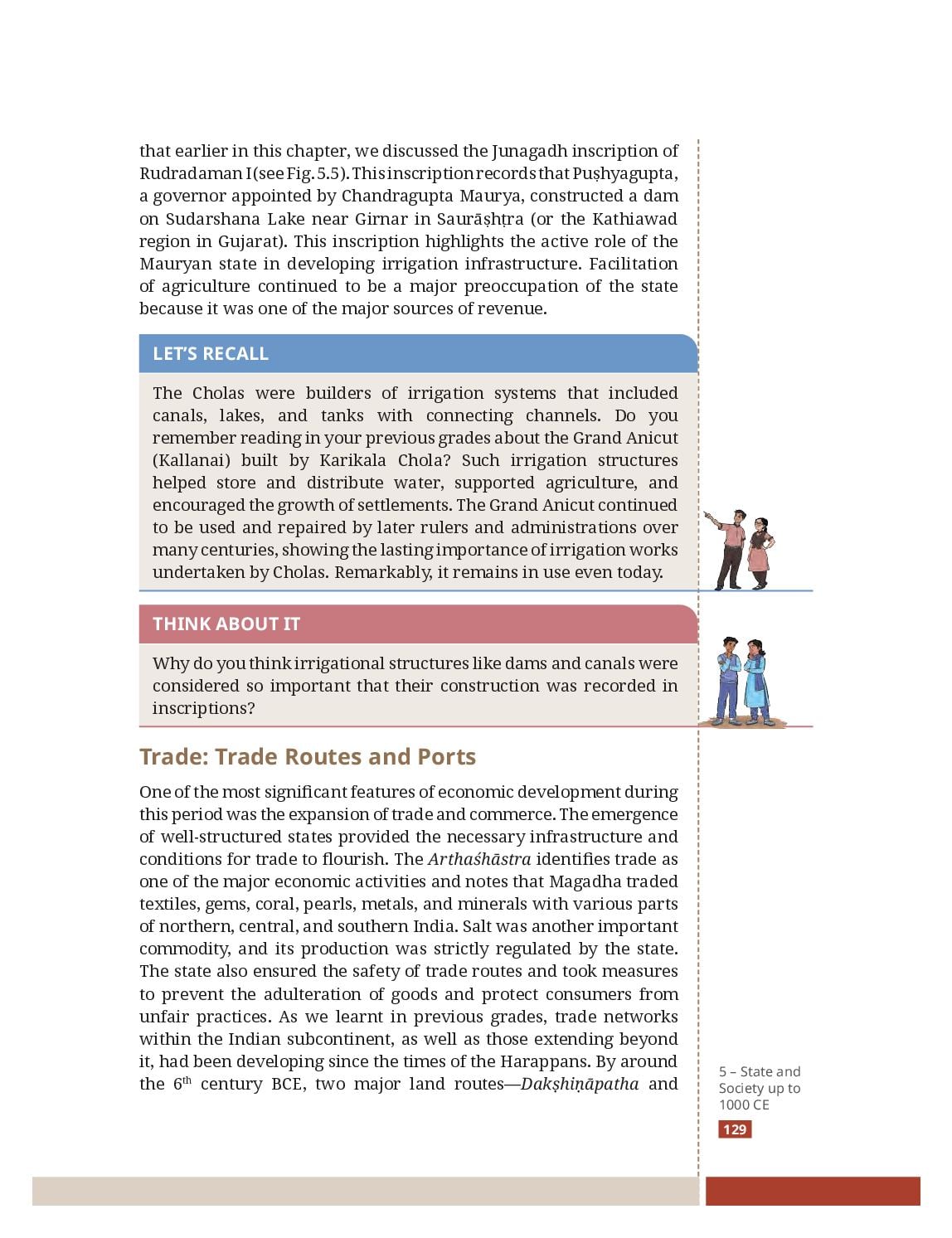
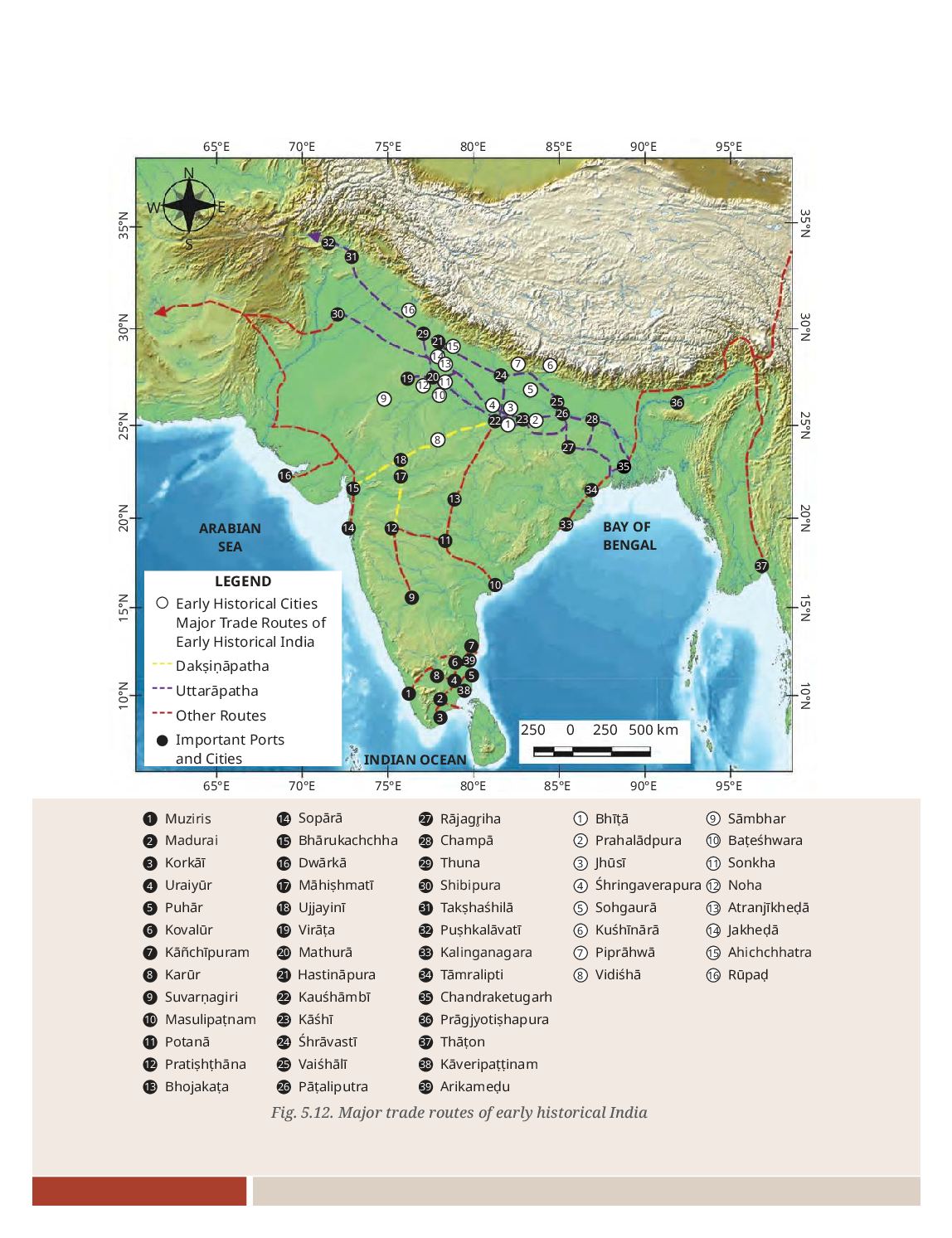
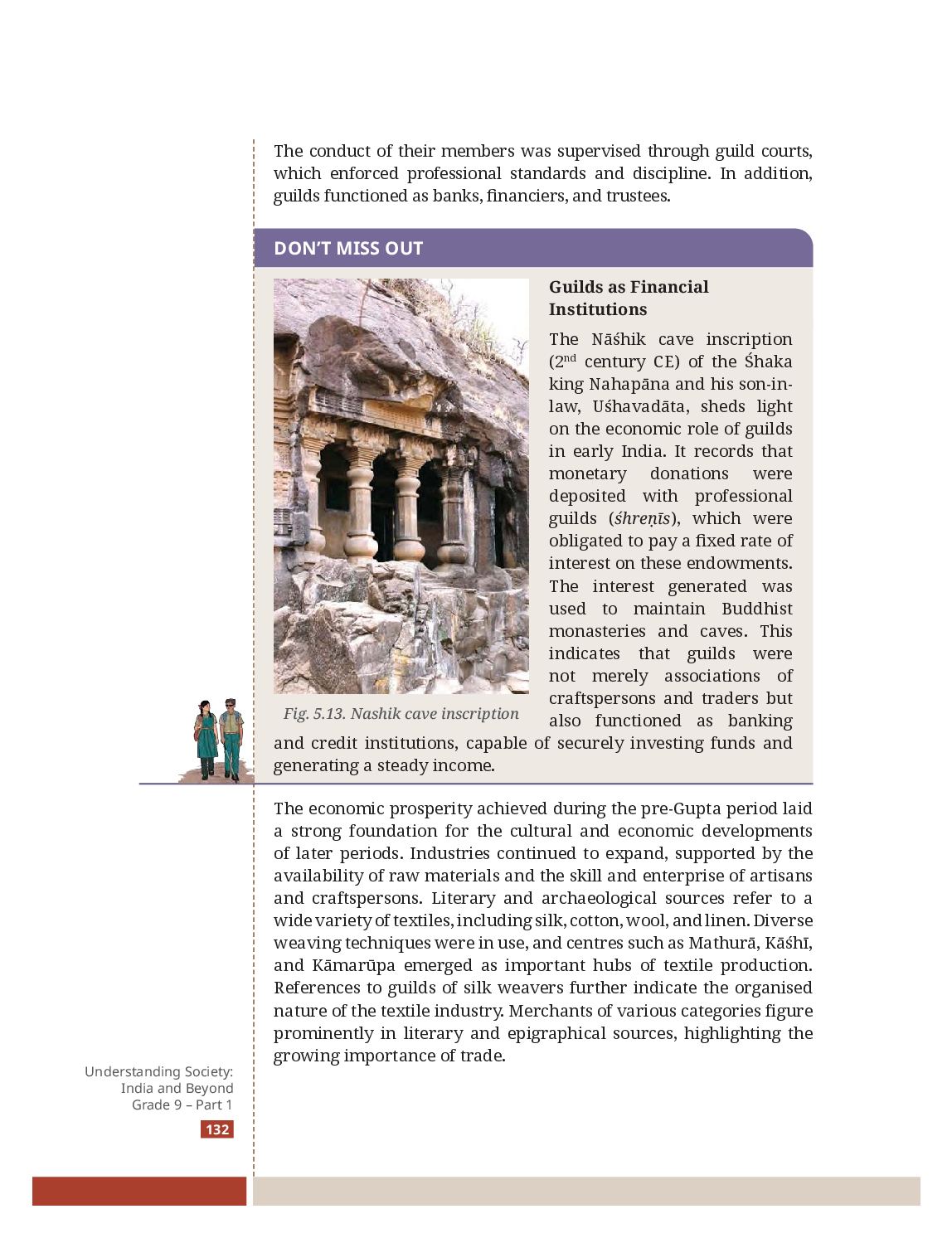
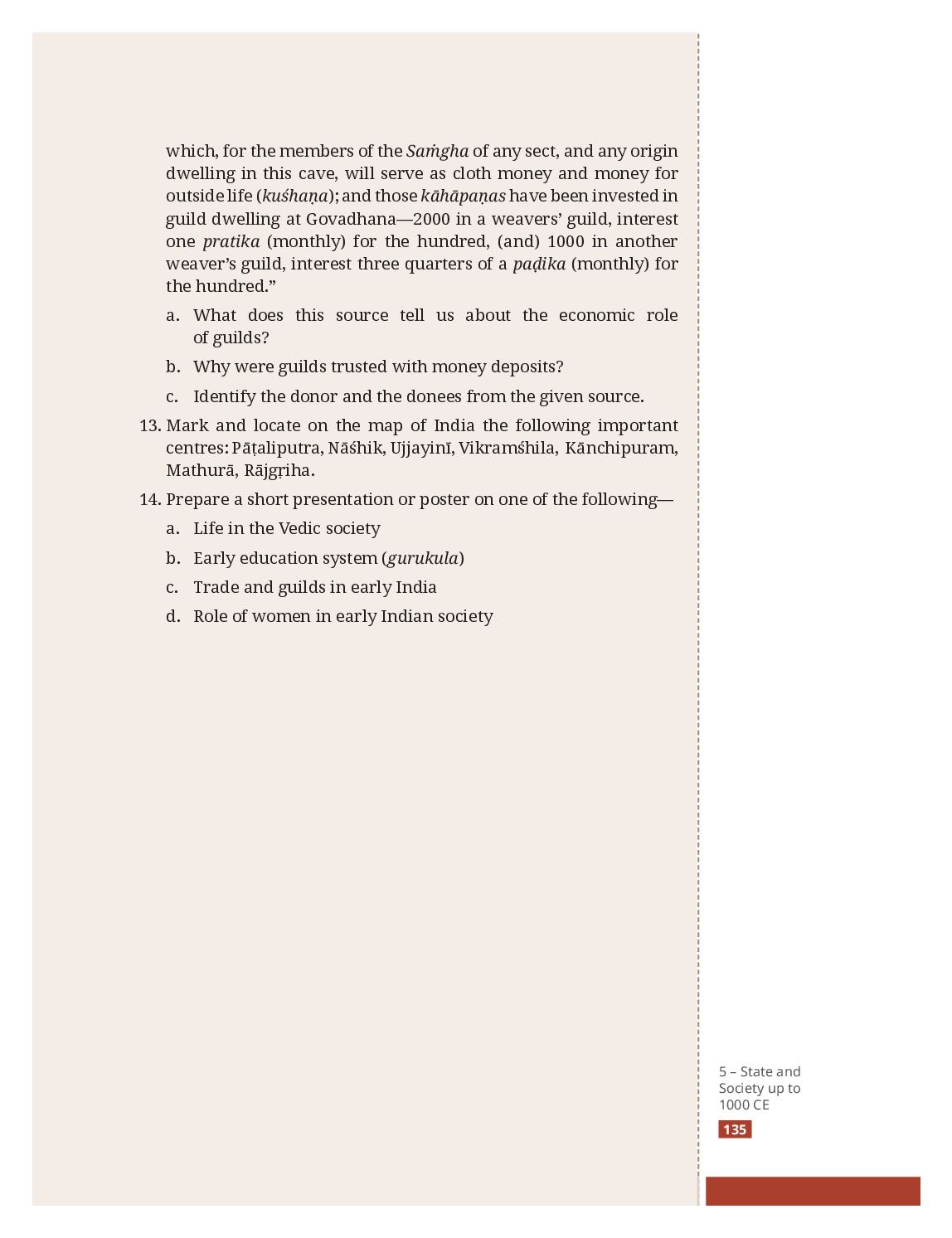
- The economy rested on agriculture, irrigation, routes and guilds. The basic Mauryan land tax was generally one-sixth of the produce. The Junagadh rock records Puṣhyagupta’s dam on Sudarshana Lake, its repair by Rudradaman I (c. 150 CE) and its restoration by Skandagupta (5th century CE) — one rock, three dynasties, about 700 years. By about the 6th century BCE the Dakṣhiṇāpatha and Uttarāpatha were in use (Fig. 5.12), silver punch-marked coins circulated, and the Jātakas name eighteen types of guilds (śhreṇīs) that fixed prices, ran guild courts and acted as banks — proved by the Nāśhik cave inscription of Uṣhavadāta, which deposits 3000 kāhāpaṇas with weavers’ guilds at fixed monthly interest.
Quick revision – State and Society up to 1000 CE
| Term | What it means | Where it appears in the chapter | The evidence the book gives |
|---|---|---|---|
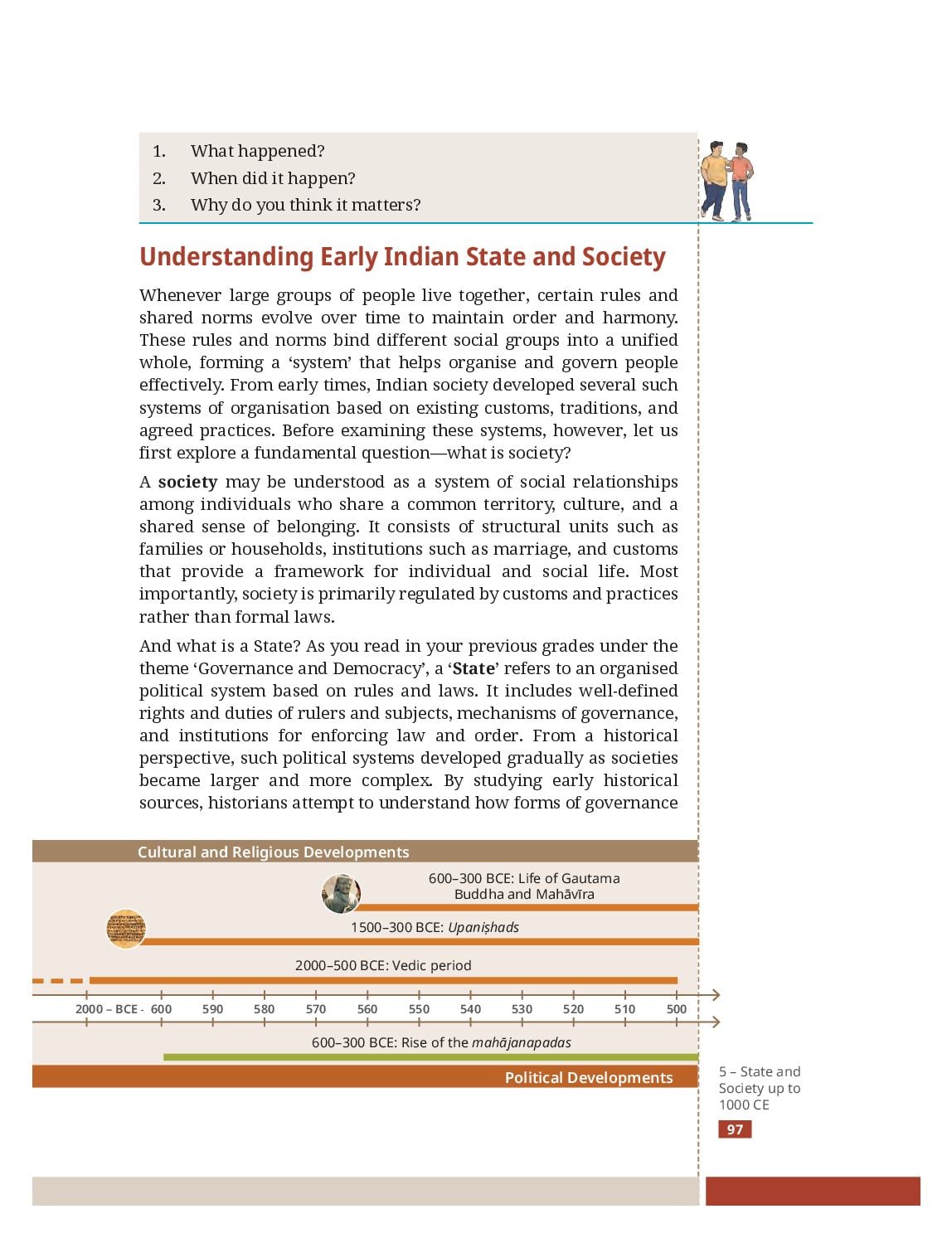
| Society | A system of social relationships among individuals who share a common territory, culture and a shared sense of belonging; made of units such as families, institutions such as marriage, and customs. | Page 97 | Regulated primarily by customs and practices rather than formal laws — this is what separates it from the State |
| State | An organised political system based on rules and laws, with defined rights and duties of rulers and subjects, mechanisms of governance and institutions to enforce law and order. | Page 97 | Developed gradually as societies became larger and more complex |
| Jana | A clan — a group of people bound by kinship ties; the unit of early Vedic political life. | Pages 100, 121 | The Ṛigveda alone mentions about thirty janas; five of them — Yadu, Turvaśha, Puru, Anu, Druhyu — were the pañchajana |
| Janapada | A territorial unit; literally, where a people (jana) first set its feet — the shift from kinship identity to territorial identity. | Page 103 | The transition happened between about 1000 BCE and 600 BCE. In the Saptāṁga the same word means the territory of the state with its population |
| Mahājanapada | A bigger political unit than a janapada; the large territorial states of the period about 600 BCE–300 CE. | Pages 103–104; Fig. 5.4 | Sources usually speak of sixteen. Fig. 5.4 names them: Kamboja, Gandhāra, Matsya, Kuru, Śhūrasena, Pañchāla, Vatsa, Kosala, Kāśhī, Malla, Vṛijji, Magadha, Anga, Chedi, Avanti, Aśhmaka |
| Gaṇa / saṁgha | A republican state, as against a monarchical state (rājya). | Page 105 | Both forms existed side by side in northern India by about 600 BCE |
| Sabhā, samiti, vidhata | The three Vedic assemblies. Sabhā: small, judicial, select elites. Samiti: larger, policy decisions and political affairs, representing the broader population. Vidhata: a popular gathering of the janas, a forum on warfare and political matters. | Pages 100–101 | Named in the Ṛigveda and Atharvaveda; women are recorded as attending the sabhā (page 122) |
| Chakravarti kśhetra | The domain of a universal paramount ruler — the Arthaśhāstra equates it with prithivi, defined as “the area lying between the Himavat (Himalayas) and the sea”. | Page 107 | Aśhoka’s edict speaks of changes in the spiritual life of Jambudvīpa; the Chera Nedunjeral Adan claims conquests to the Himalayas; Rajendra I takes the title Gangaikonda |
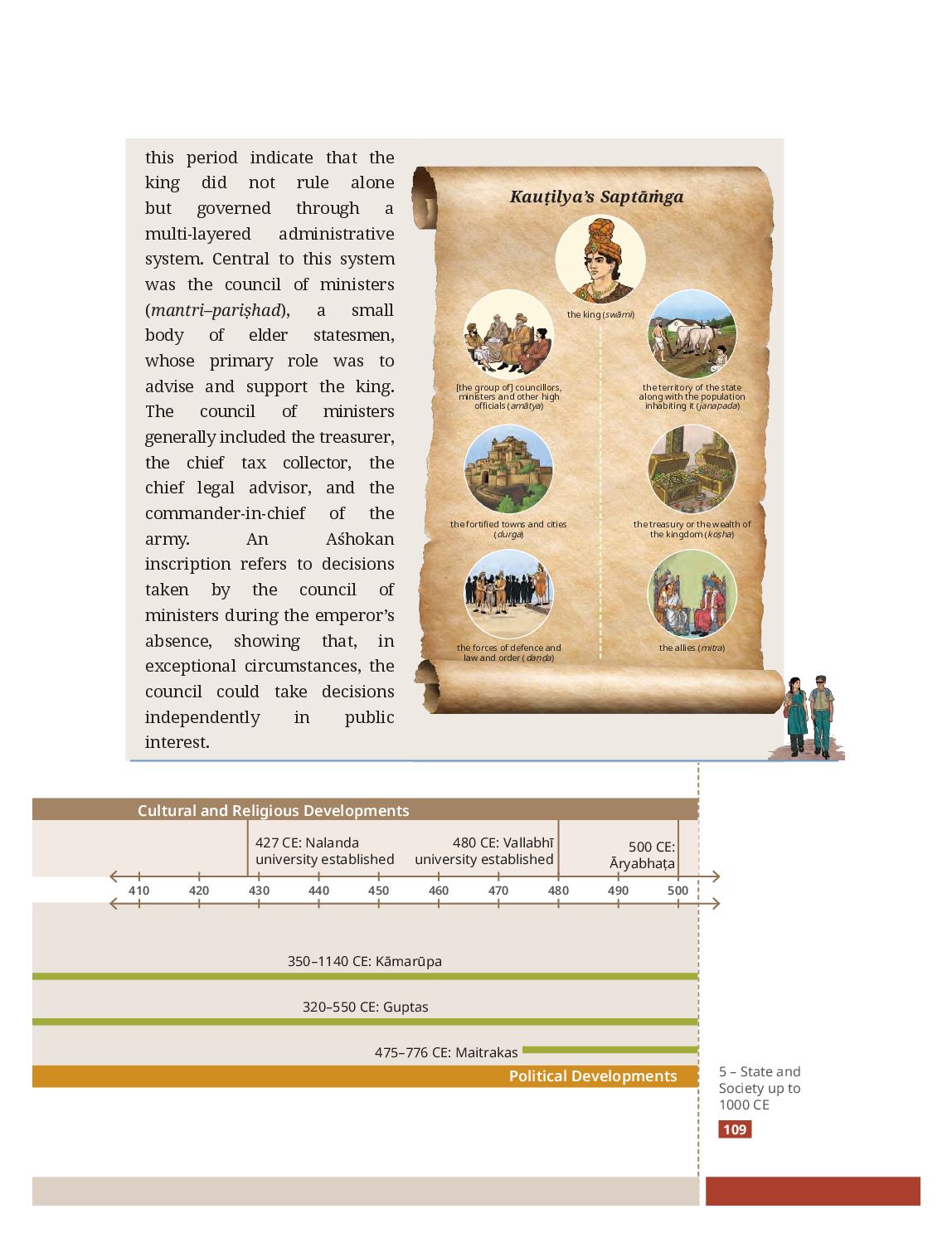
| Saptāṁga | Kauṭilya’s seven constituents of the state: swāmi (king), amātya (councillors, ministers, high officials), janapada (territory with its people), durga (fortified towns and cities), koṣha (treasury), daṇḍa (forces of defence and law and order), mitra (allies). | Pages 108–109 | “The state can function effectively only if these constituents remain properly integrated.” |
| Mantri-pariṣhad | The council of ministers — a small body of elder statesmen who advised and supported the king. | Page 109 | Generally the treasurer, chief tax collector, chief legal advisor and commander-in-chief. An Aśhokan inscription records it deciding in the emperor’s absence |
| Grāmika / pradeśhika | Grāmika: village headman. Pradeśhika: district governor, responsible for judicial and administrative functions. | Page 111 | In the Satavāhana empire, below the āḥāras and their amātyas. District officers decided after consulting bankers, caravan leaders, artisans and scribes |
| Brahmadeya / agrahāram | Land grants — Brahmadeya villages (tax-free land grants to villages) under the Pallavas; agrahārams (land grants to Brahmin settlements) under the Chālukyas. | Pages 113–114 | Agrahārams at Aihole and Badami grew into prominent centres of learning |
| Variyam | A small committee of a village assembly, entrusted with a specific task — irrigation (the tank committee), gardens, temple management, justice, tax collection. | Pages 113, 115 | The Uttaramerur inscription of Parantaka I (10th century) describes members being chosen by the Kudavolai or ‘ballot pot’ system and then divided into variyams |
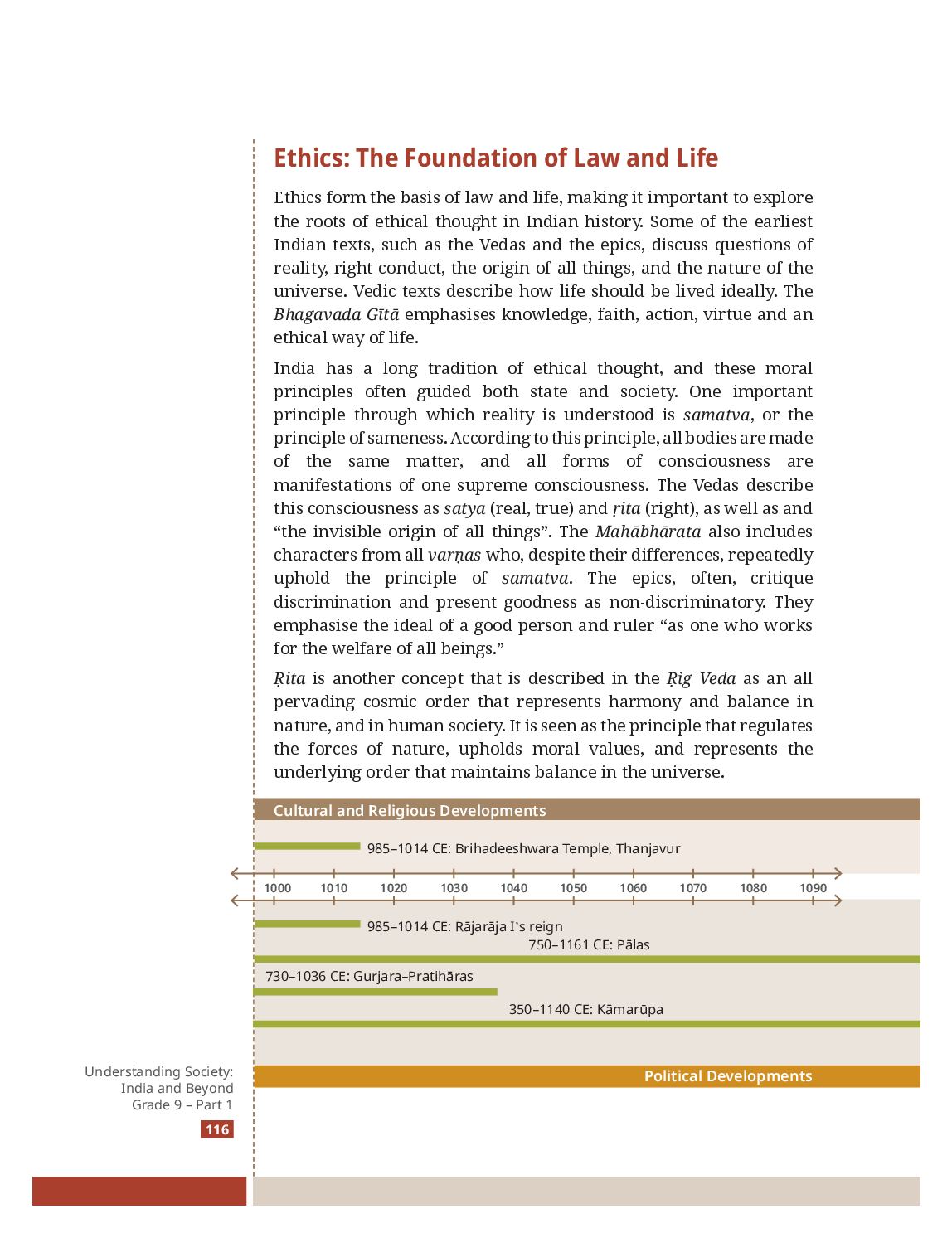
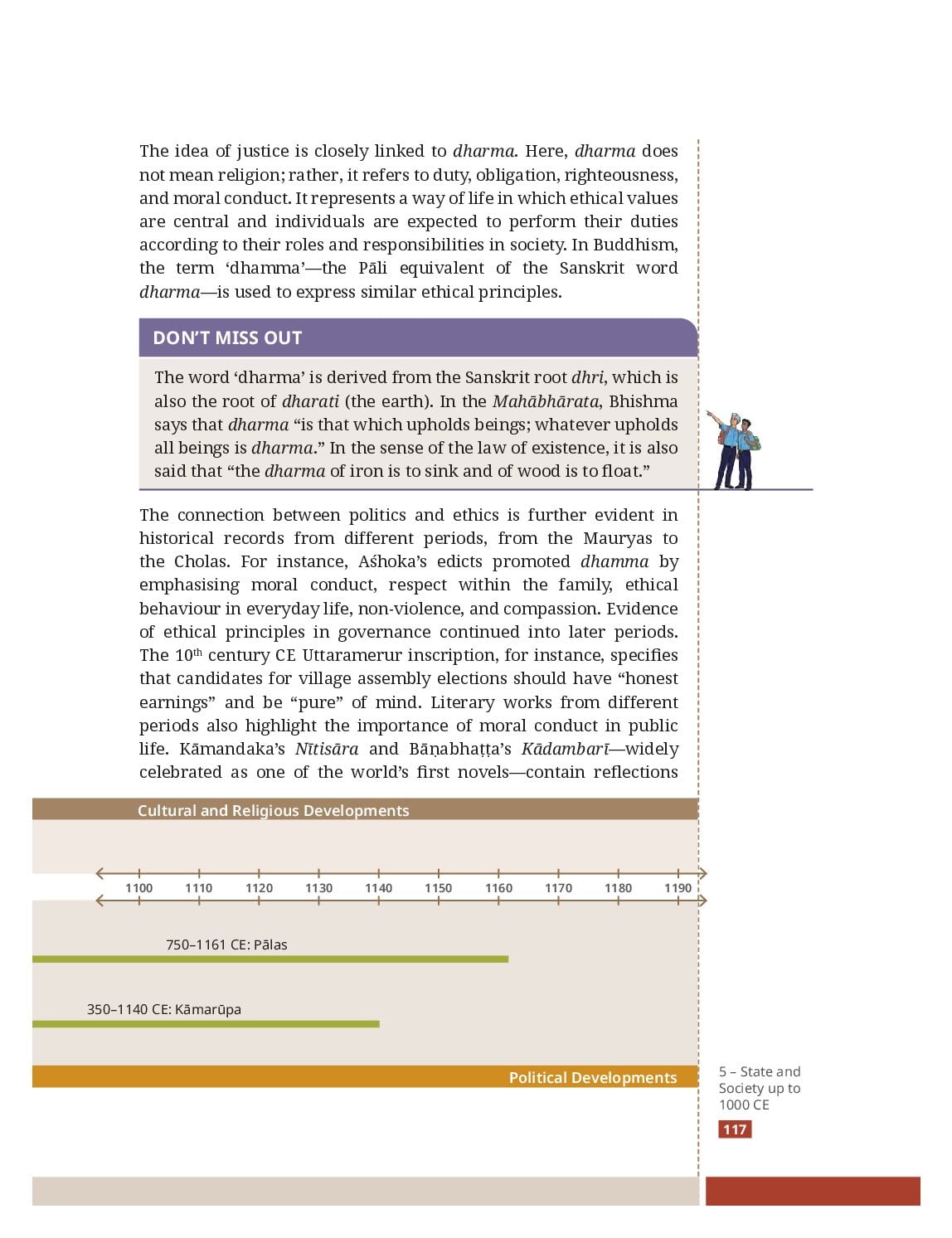
| Dharma | Not religion, but duty, obligation, righteousness and moral conduct — a way of life in which ethical values are central. Pāli equivalent: dhamma. | Pages 117; 123 | From the root dhri, also the root of dharati (the earth). Bhishma: dharma “is that which upholds beings”; “the dharma of iron is to sink and of wood is to float” |
Old NCERT vs New – Class 9 Social Science
This chapter is from Understanding Society: India and Beyond, the new NCERT Class 9 Social Science book (NCF-SE 2023, used from 2026-27). It replaced the old book “India and the Contemporary World, Contemporary India, Democratic Politics and Economics”, so chapter numbers and names differ from older PDFs.
Solutions and All Chapters
Answers to the exercises and the full chapter list of Understanding Society: India and Beyond:
State and Society up to 1000 CE – Overview
| Class | Class 9 |
| Subject | Social Science |
| Book | Understanding Society: India and Beyond – new NCERT book |
| Part | Part I |
| Chapter | 5 of 15 – State and Society up to 1000 CE |
| Book pages | 95 – 135 |
| Edition | Latest NCERT edition (2026-27) |
| Session | 2026-27 |
| Free – read online or download |
Class 9 Social Science Chapter 5 – FAQs
Where can I download State and Society up to 1000 CE Class 9 PDF?
From the download table on this page – the chapter PDF is free, and the full book is linked too.
What is Class 9 Social Science Chapter 5 about?
The chapter covers roughly 2000 BCE to 1000 CE and its spine is Fig. 5.1: kin-based polities of the Ṛigveda in the Sapta-Sindhu region, then janapadas and mahājanapadas from about 800 BCE, then the emergence of empires of roughly pan-Indian dimension together with the early polities of southern India from about 300 BCE, and finally regional empires and the imperial polities of southern India from about 700 CE.
Is State and Society up to 1000 CE from the new NCERT Class 9 Social Science book?
Yes. It is chapter 5 of understanding society: india and beyond (part i), the new NCERT Class 9 Social Science book for 2026-27.
Is this the latest NCERT edition for 2026-27?
Yes – the PDF is NCERT’s latest edition for the 2026-27 session.
Where are the NCERT Solutions for Class 9 Social Science Chapter 5?
Open the NCERT Solutions link above for answers to the exercise questions.