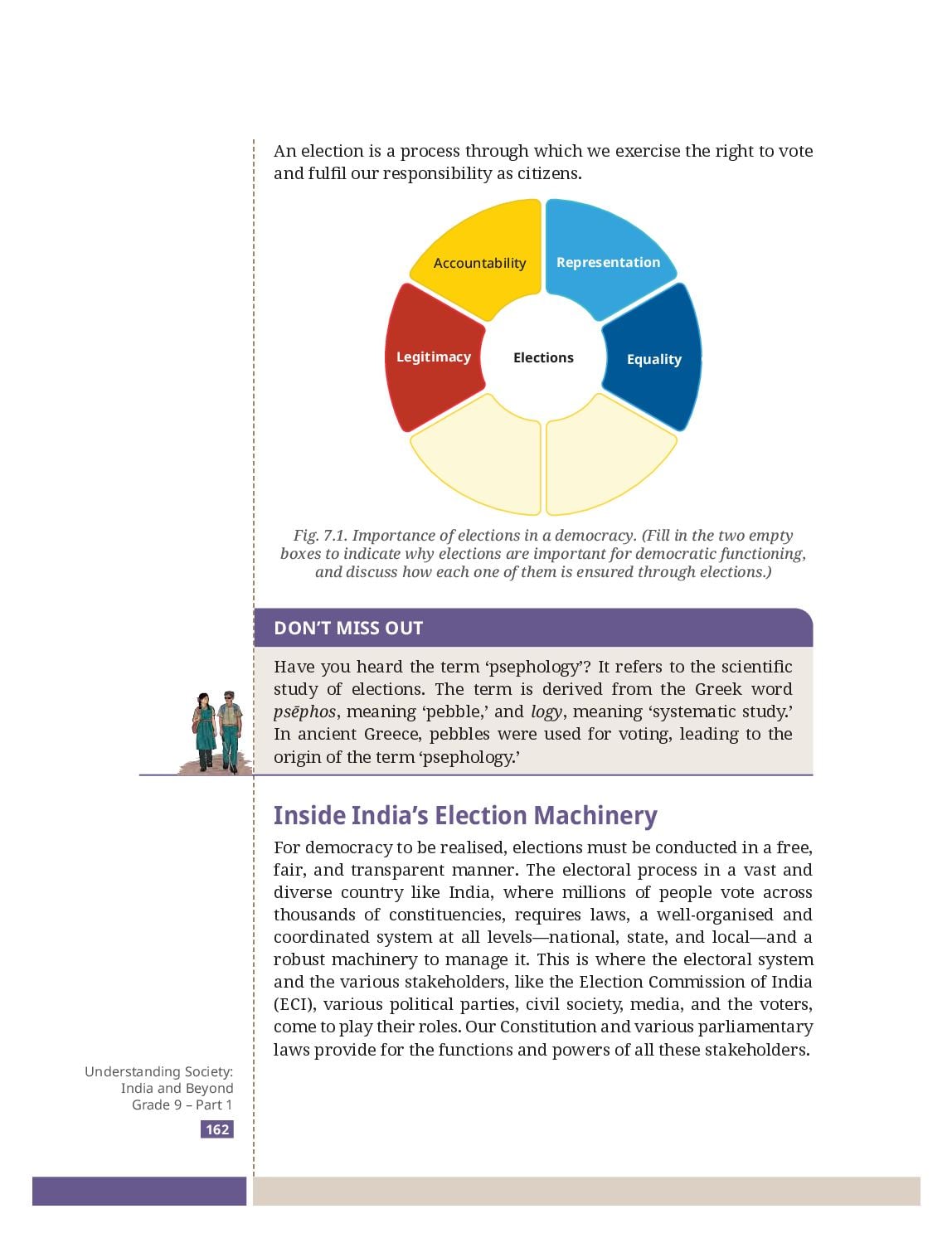
Download Elections – NCERT Class 9 Social Science Chapter 7 PDF from the new NCERT Class 9 Social Science book Understanding Society: India and Beyond (2026-27). Read the chapter online or download the free PDF. Elections are the means by which citizens choose their representatives and hold them accountable. Fig. 7.1 lists four things elections secure — representation, accountability, equality and legitimacy.
Elections PDF – Chapter 7 of Understanding Society: India and Beyond (Part I)
Read the chapter online or download the PDF.
| Chapter | Download | |
|---|---|---|
| Chapter 7 PDF | Elections | View PDF |
| Full book | NCERT Class 9 Social Science – Understanding Society: India and Beyond | View Book |
Read Online
What Is in Elections? (Class 9 Social Science Chapter 7)
- Elections are the means by which citizens choose their representatives and hold them accountable. Fig. 7.1 lists four things elections secure — representation, accountability, equality and legitimacy.
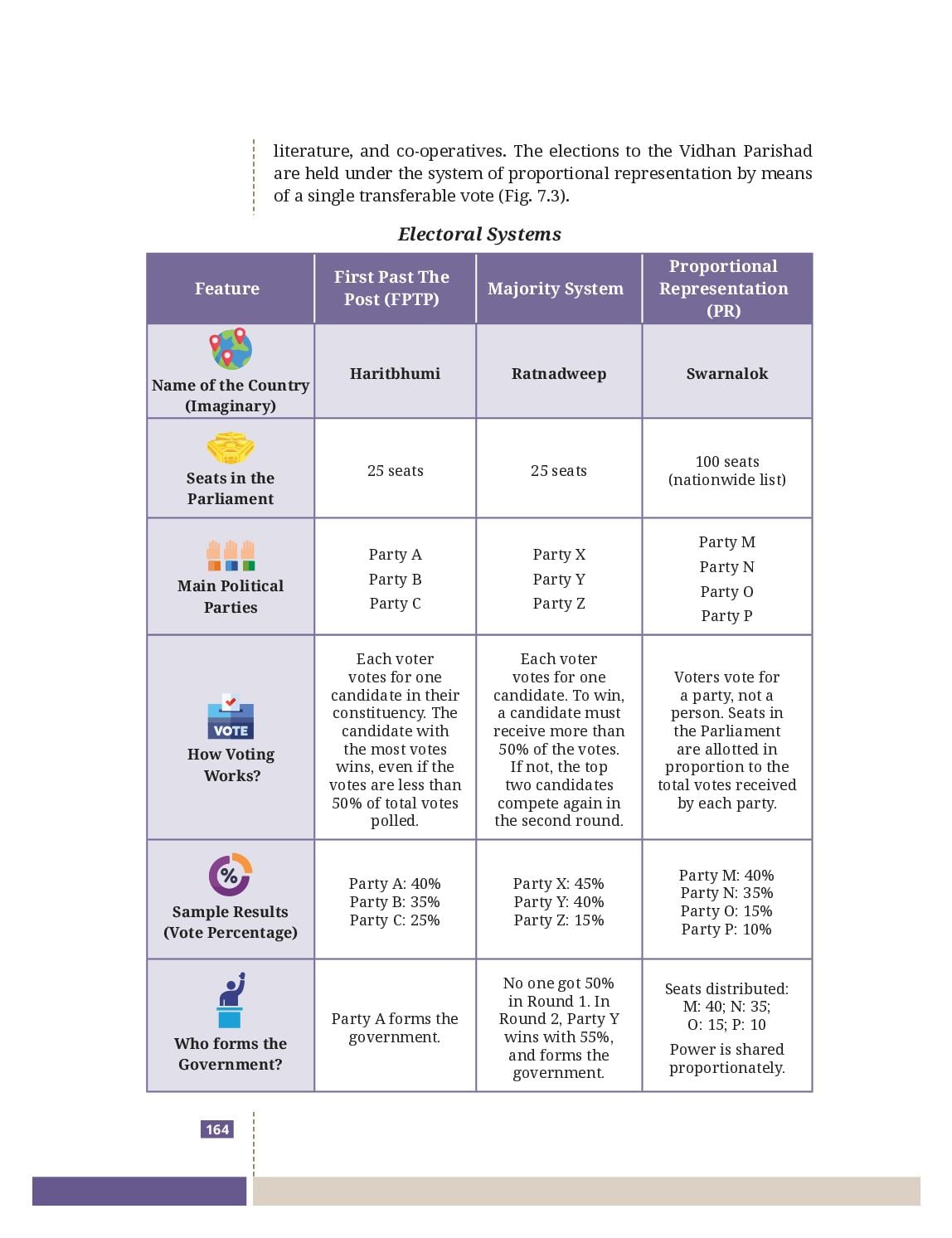
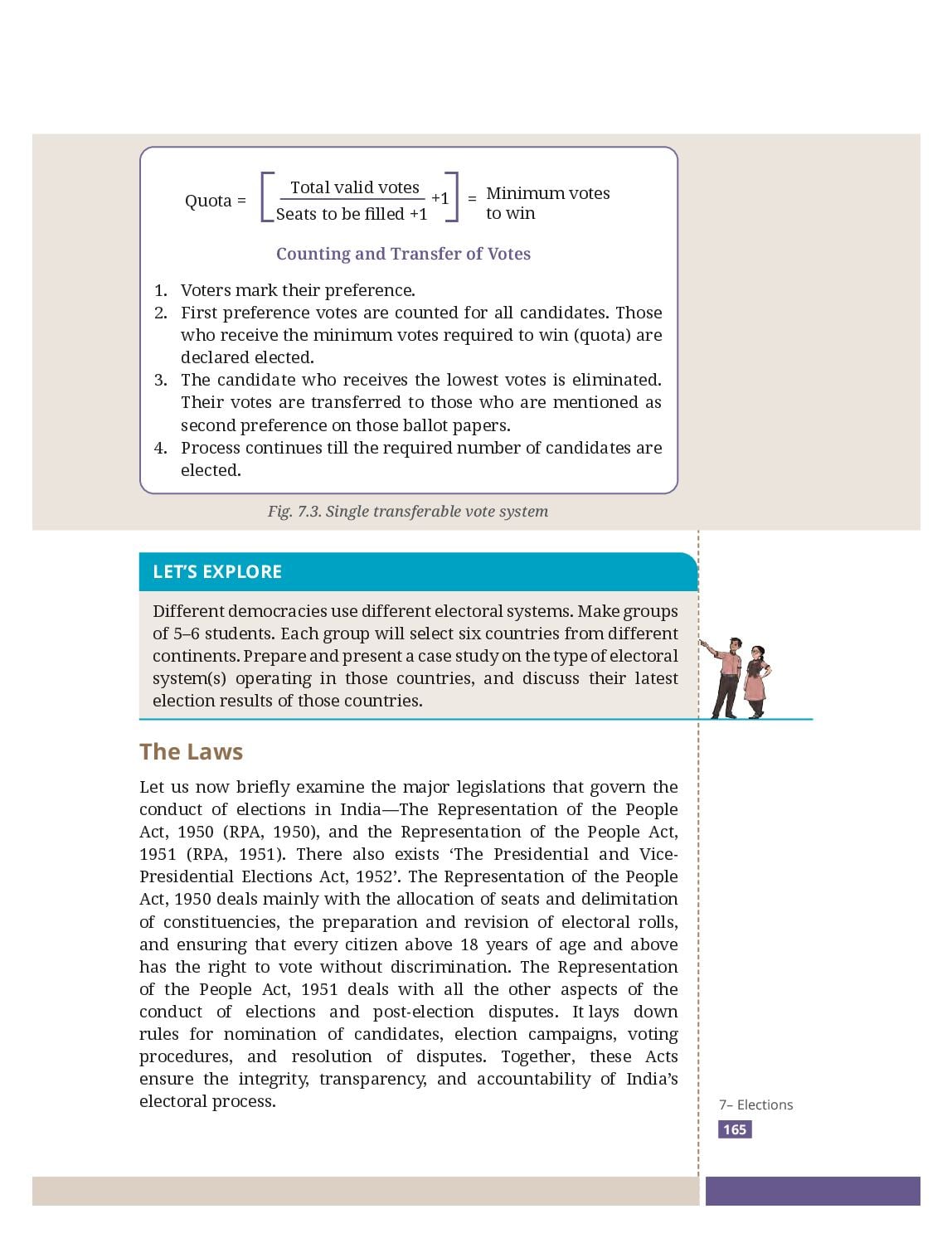
- India elects the Lok Sabha and the Vidhan Sabha by direct election under the First-Past-The-Post (FPTP) system; the President, Vice President and Rajya Sabha are chosen by indirect election. These, and the Vidhan Parishad, use proportional representation with a single transferable vote.
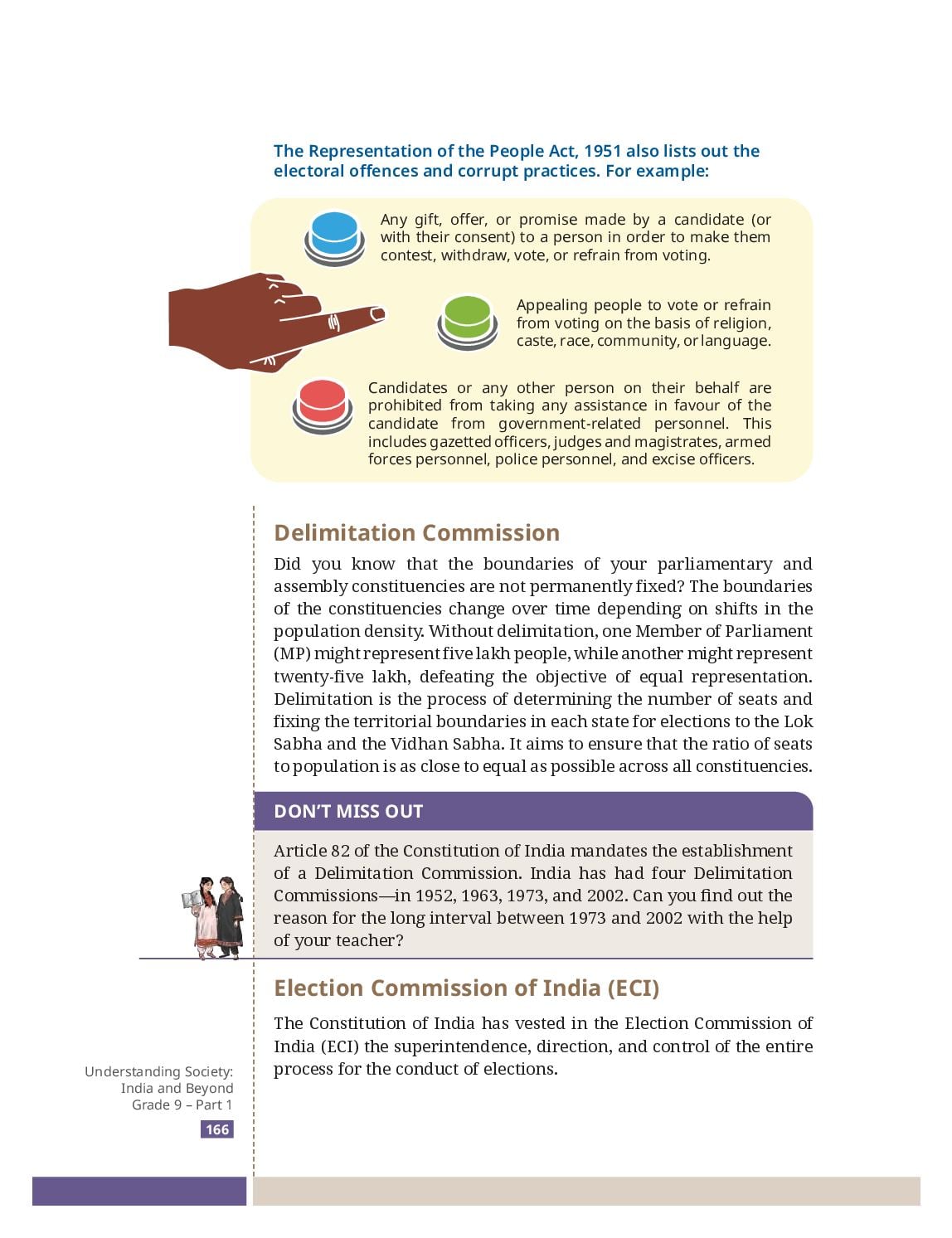
- The Representation of the People Act, 1950 covers seats, delimitation and electoral rolls; the Representation of the People Act, 1951 covers nominations, campaigns, polling, electoral offences and disputes. The Presidential and Vice-Presidential Elections Act, 1952 covers those two offices.
- The Delimitation Commission (Article 82) redraws constituency boundaries so that the ratio of seats to population stays as equal as possible. India has had four — in 1952, 1963, 1973 and 2002.
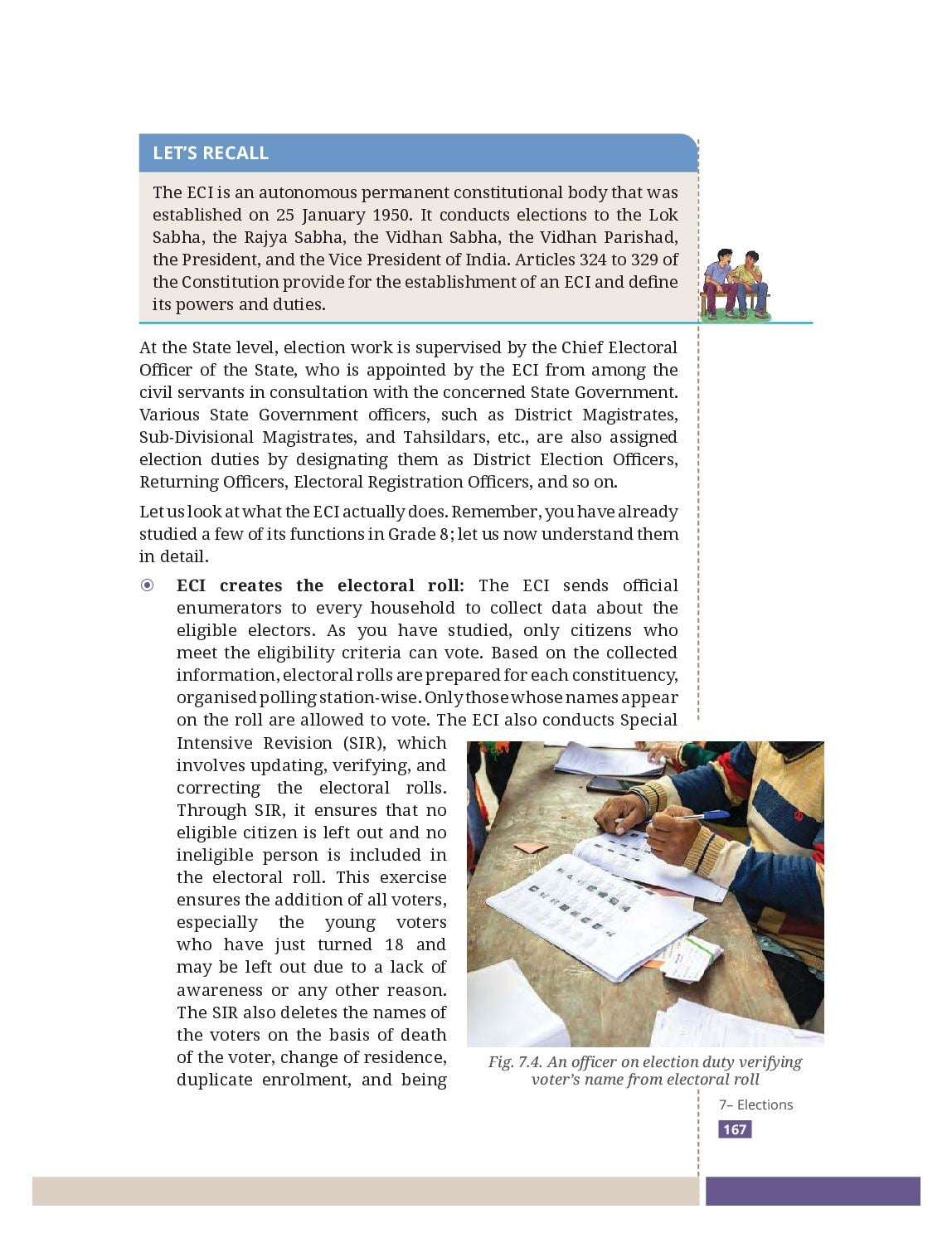
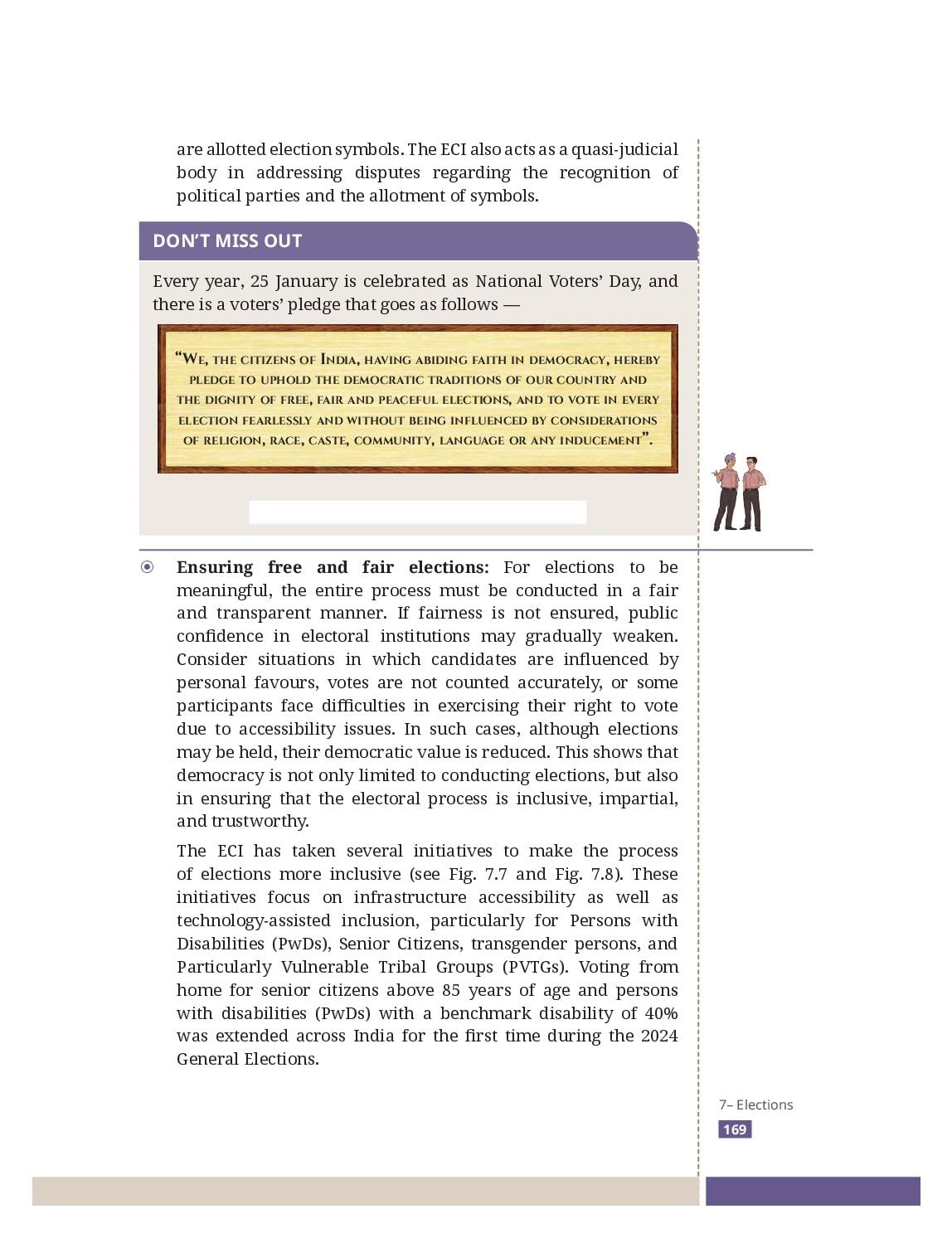
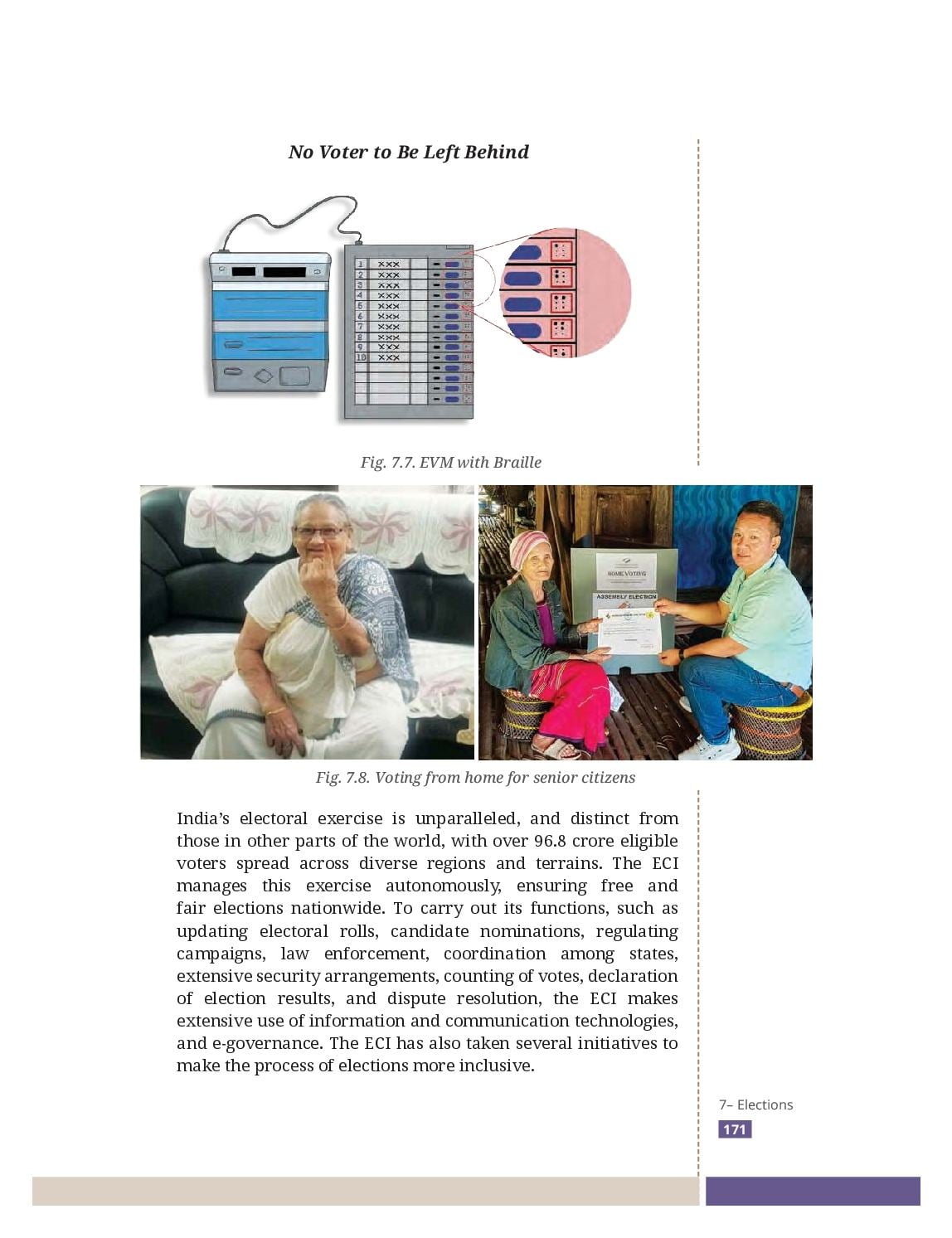
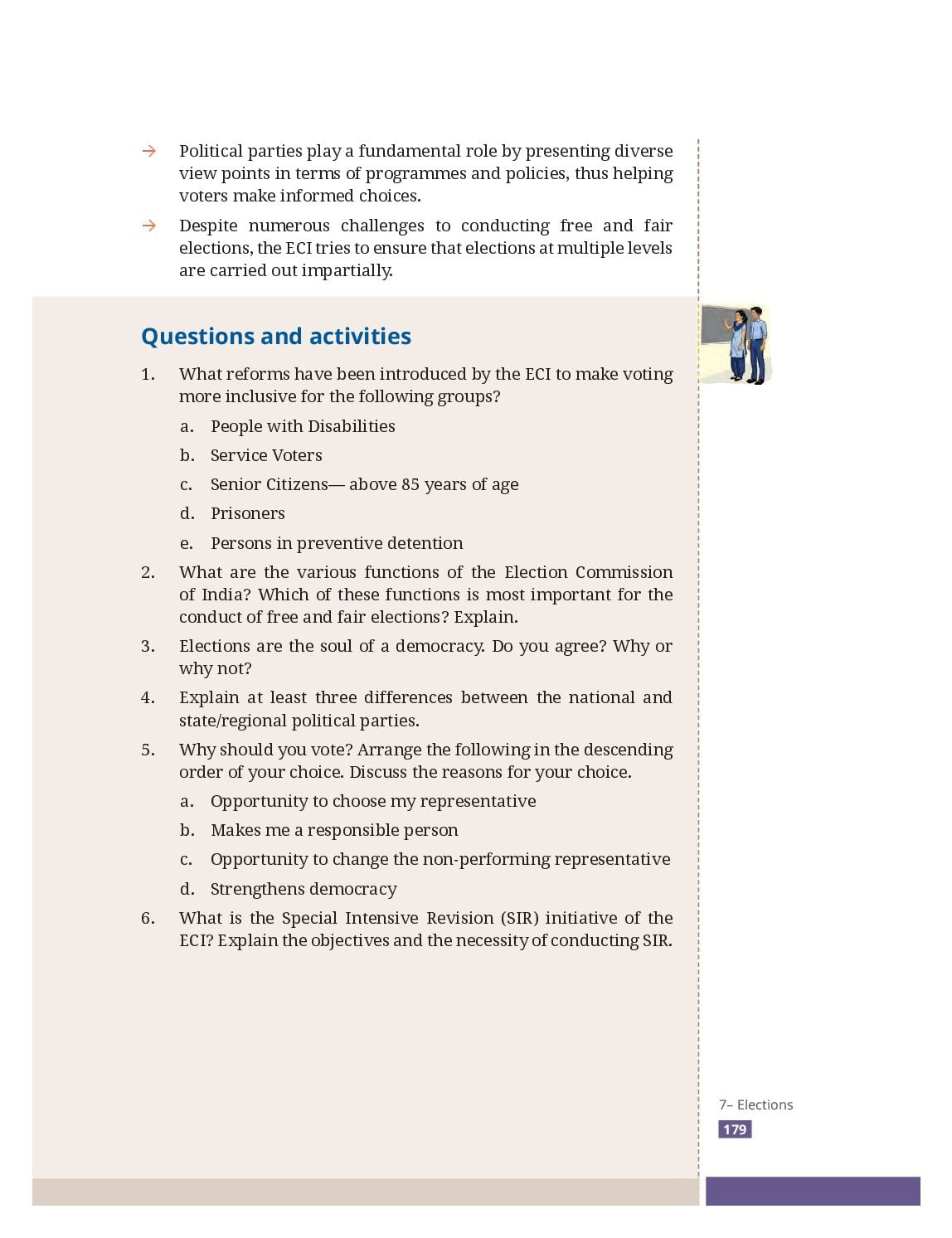
- The Election Commission of India (established 25 January 1950; Articles 324–329) prepares electoral rolls including the Special Intensive Revision, fixes the schedule, registers parties and allots symbols, and works to keep the poll free, fair and inclusive for over 96.8 crore electors.
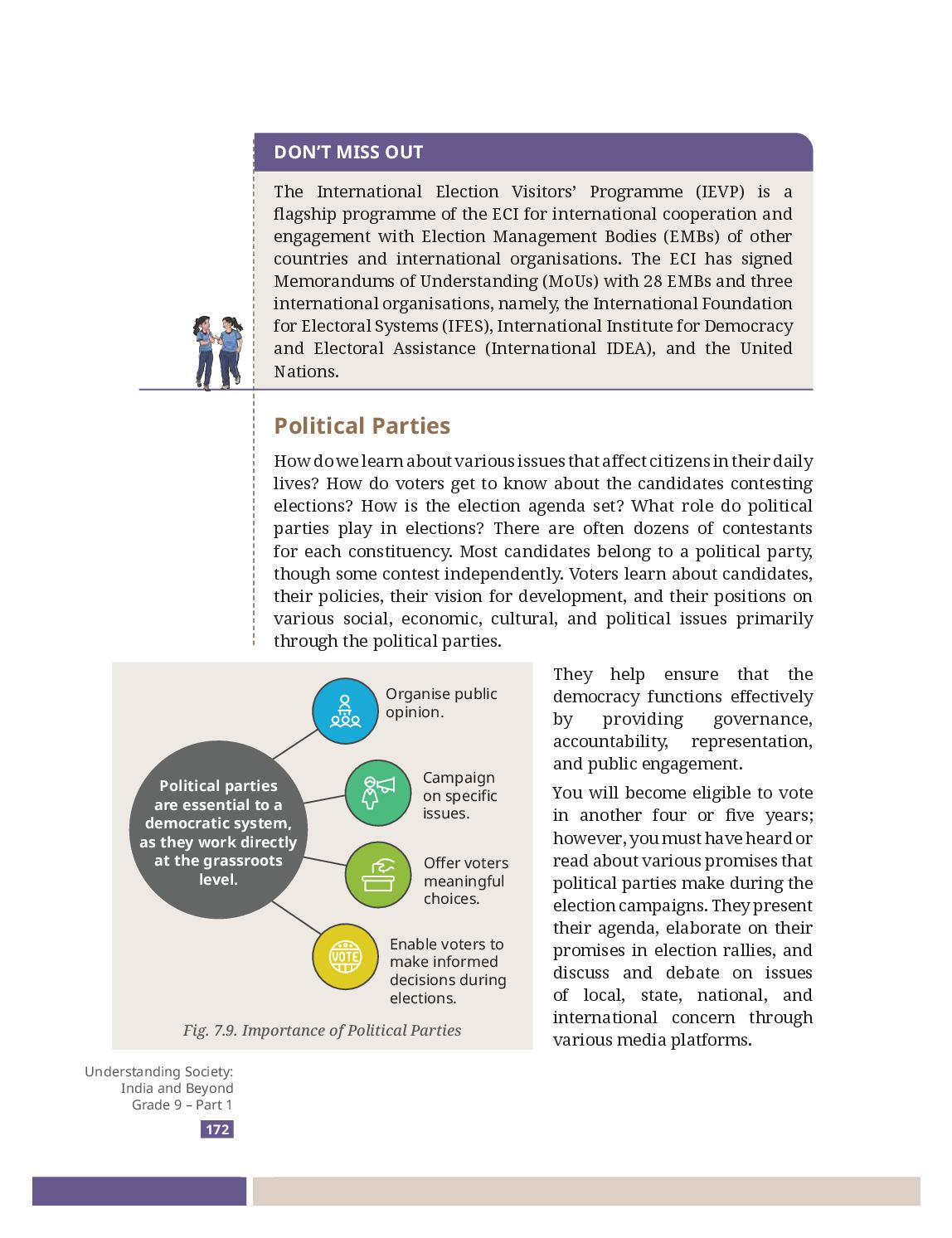
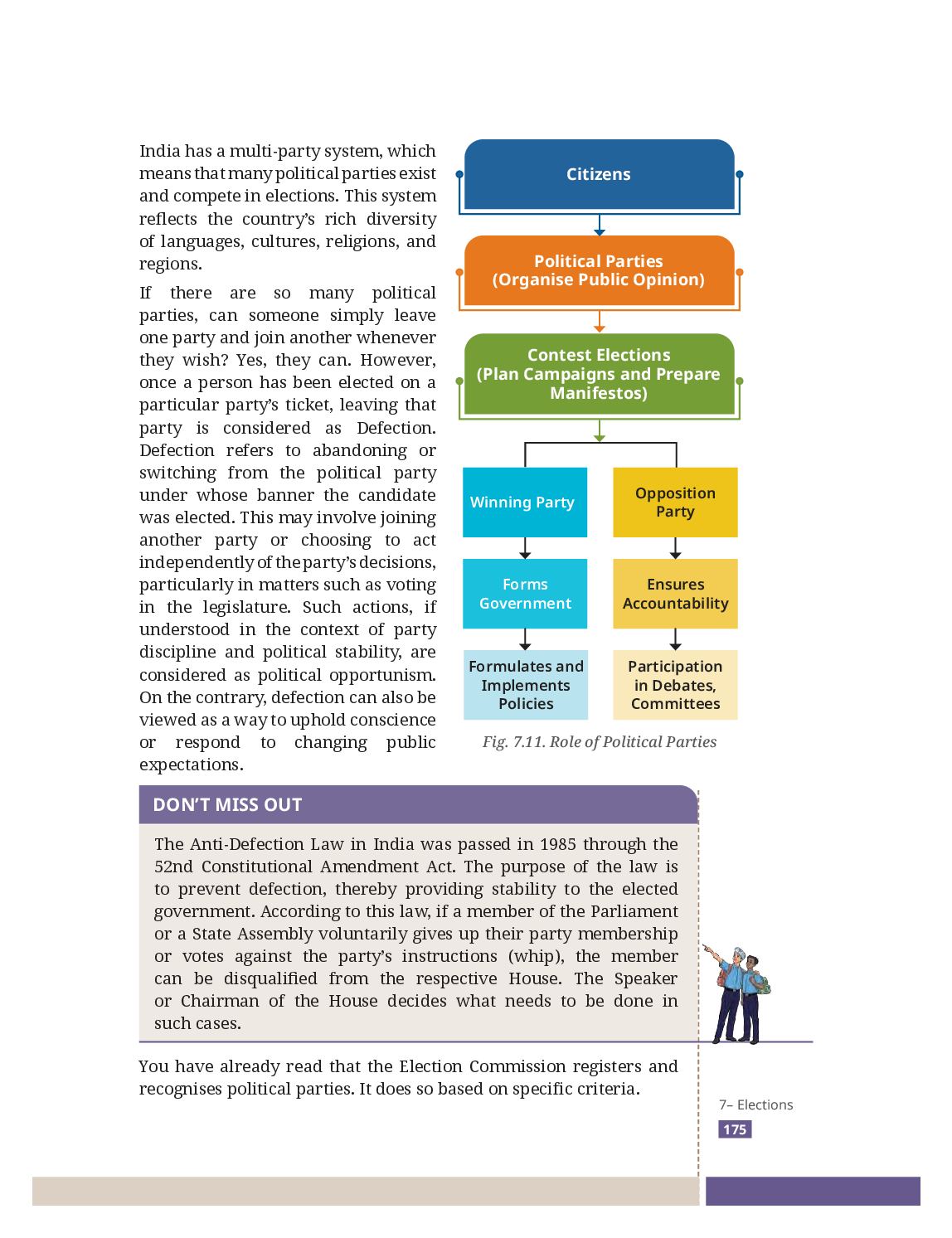
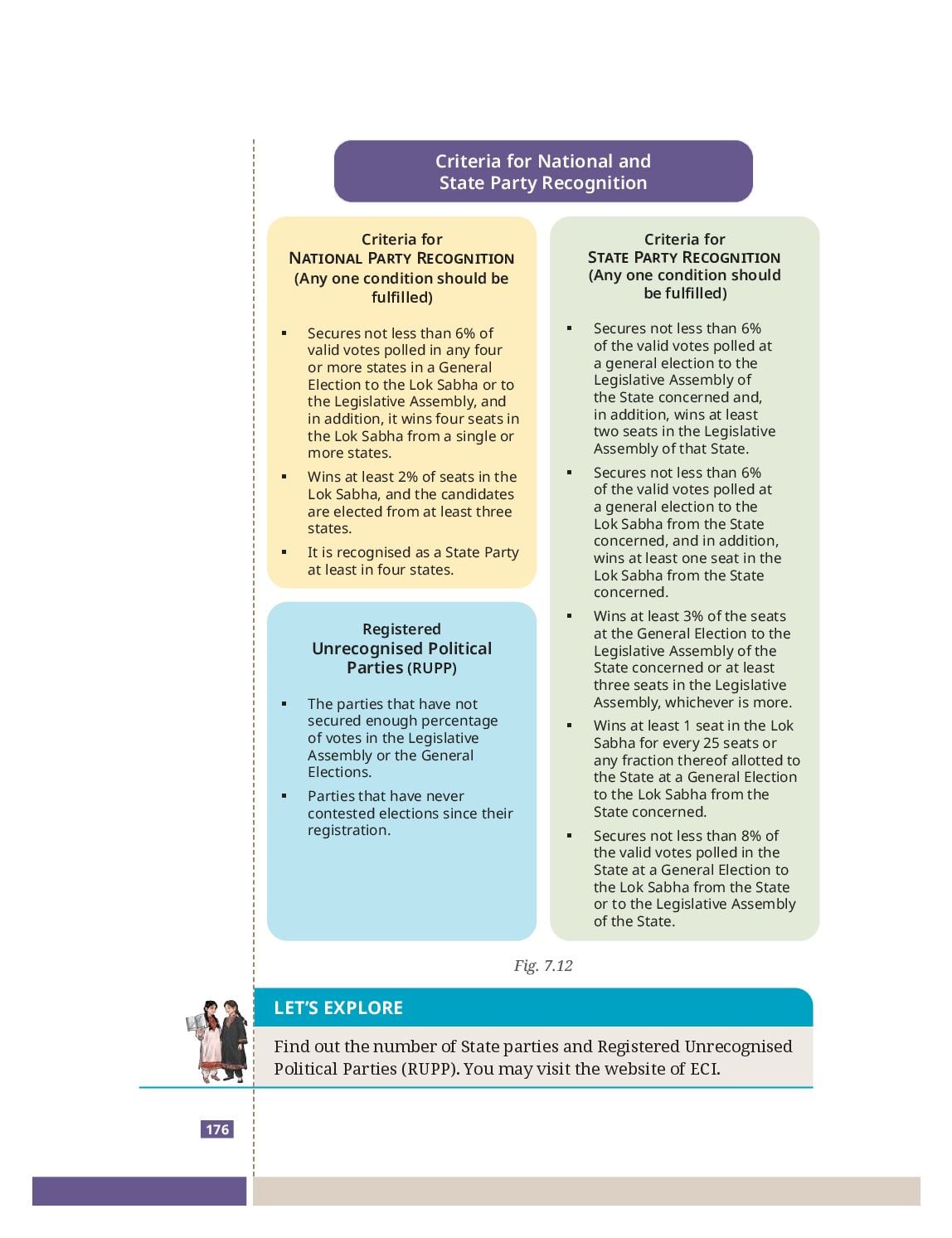
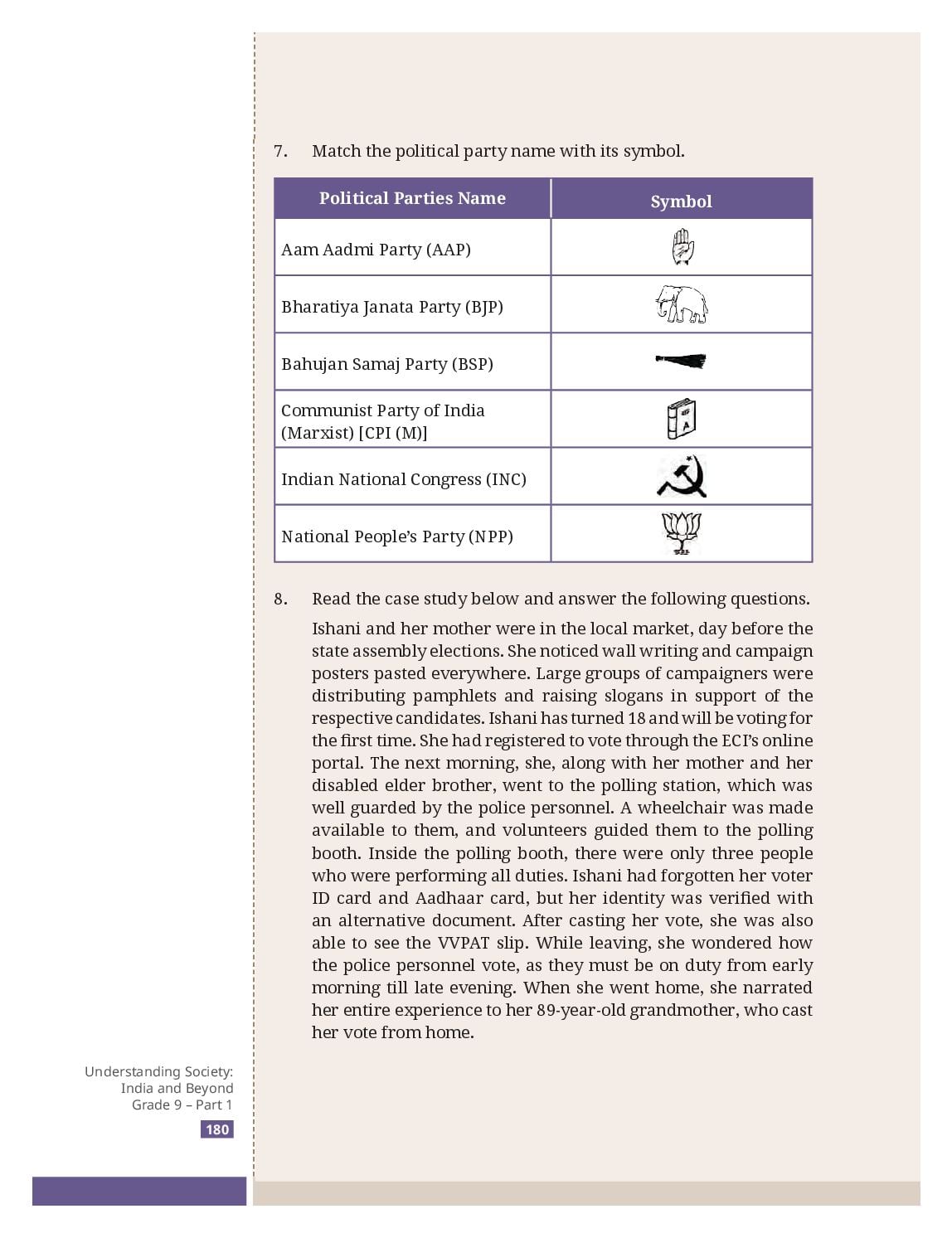
- Political parties organise public opinion, campaign on issues and offer voters meaningful choices. The ECI recognises them as national or state parties, or lists them as Registered Unrecognised Political Parties (RUPP).
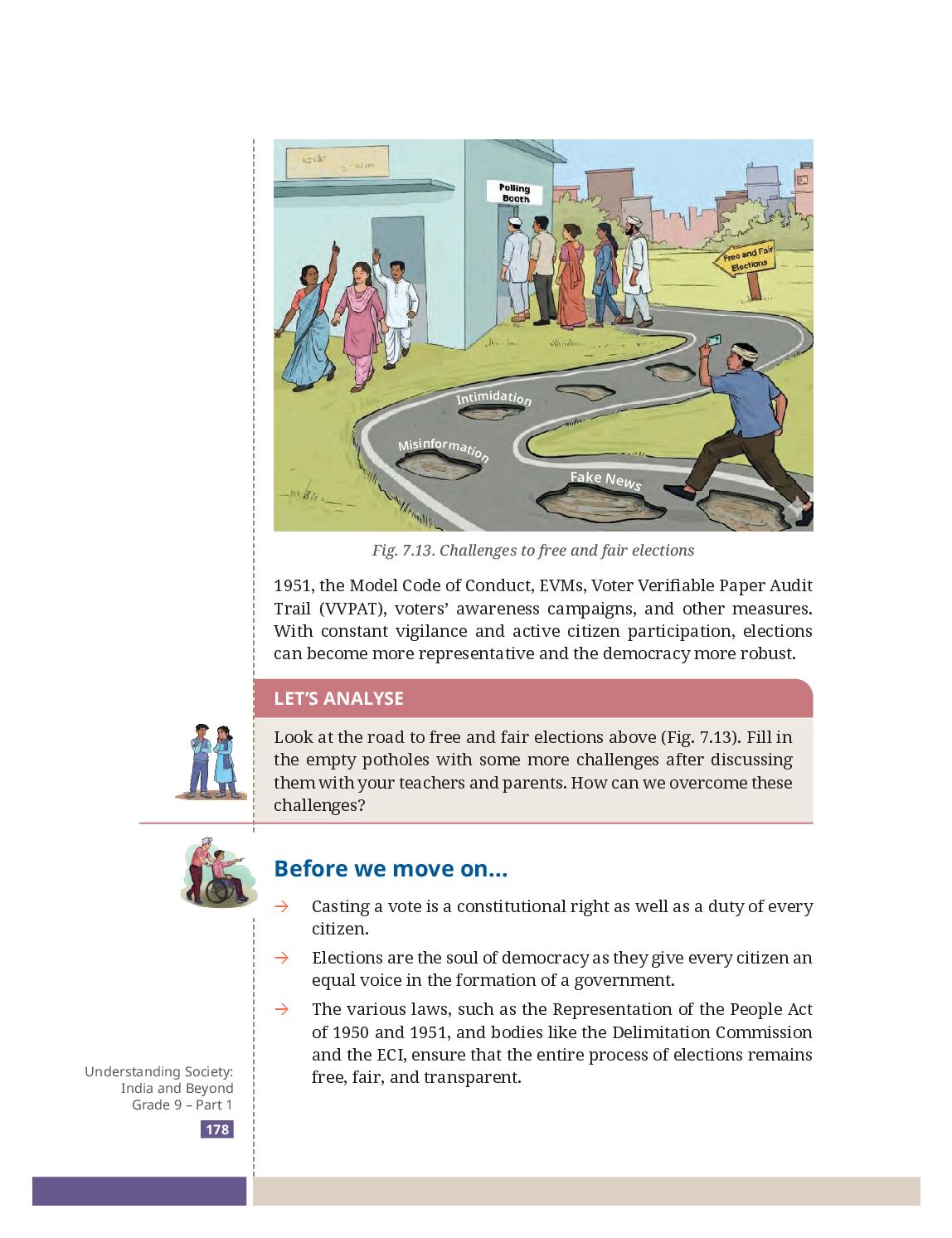
- The road to free and fair elections has potholes — misinformation, fake news and intimidation (Fig. 7.13) — which the ECI meets with the RPAs, the Model Code of Conduct, EVMs, VVPAT and voter awareness.
Quick revision – Elections
| Term | What it means | Where it appears in the chapter |
|---|---|---|
| Direct election | Citizens vote directly to choose their representatives or leaders. | Page 161 — Lok Sabha, Vidhan Sabha, Panchayats and municipal corporations |
| Indirect election | Citizens vote for representatives who then choose or elect the leaders. | Page 161 — President, Vice President, Rajya Sabha |
| Psephology | The scientific study of elections; from Greek psēphos (pebble) and logy (systematic study). | DON’T MISS OUT, page 162 |
| First-Past-The-Post (FPTP) | The plurality system: the candidate with the most votes in a constituency wins, even with less than 50% of the votes polled. | Page 163 and the Electoral Systems table, page 164 |
| Proportional representation (PR) | Voters vote for a party; seats are allotted in proportion to the votes each party receives. | Electoral Systems table, page 164 |
| Single transferable vote | PR by preference voting: candidates who reach the quota are elected, the lowest is eliminated and their votes are transferred by second preference. | Fig. 7.3, page 165 — used for the Rajya Sabha and Vidhan Parishad |
| Quota | [Total valid votes ÷ (Seats to be filled + 1)] + 1 — the minimum votes needed to win under the single transferable vote. | Fig. 7.3, page 165 |
| RPA 1950 | Deals with allocation of seats, delimitation of constituencies, electoral rolls, and the right of every citizen of 18 and above to vote without discrimination. | The Laws, page 165 |
| RPA 1951 | Deals with nominations, campaigns, voting procedures, post-election disputes, electoral offences and corrupt practices. | The Laws, pages 165–166 |
| Delimitation | Determining the number of seats and fixing constituency boundaries in each State, so seats match population. | Delimitation Commission, page 166 |
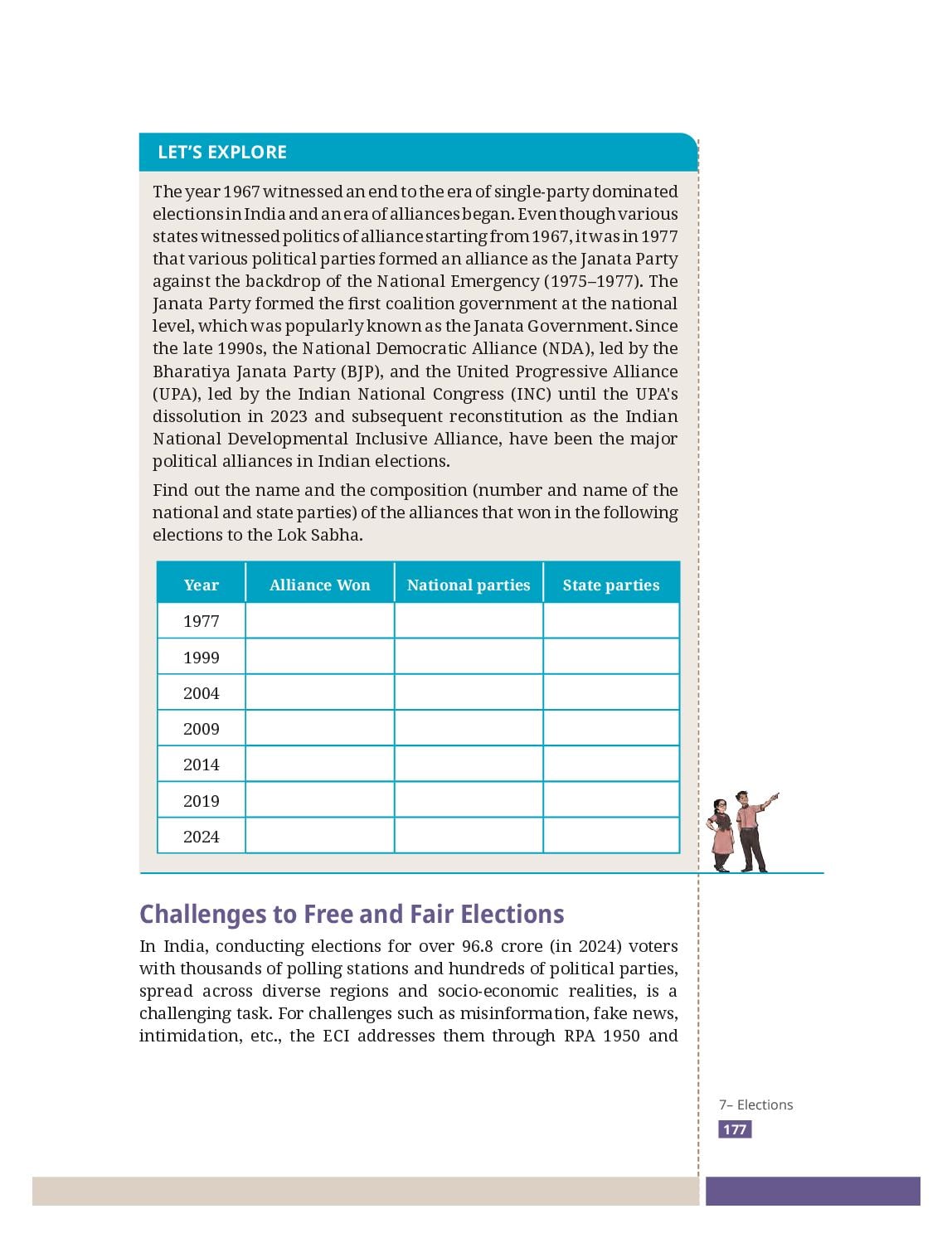
| Special Intensive Revision (SIR) | Updating, verifying and correcting the electoral roll so no eligible citizen is left out and no ineligible person is included. | ECI functions, pages 167–168 |
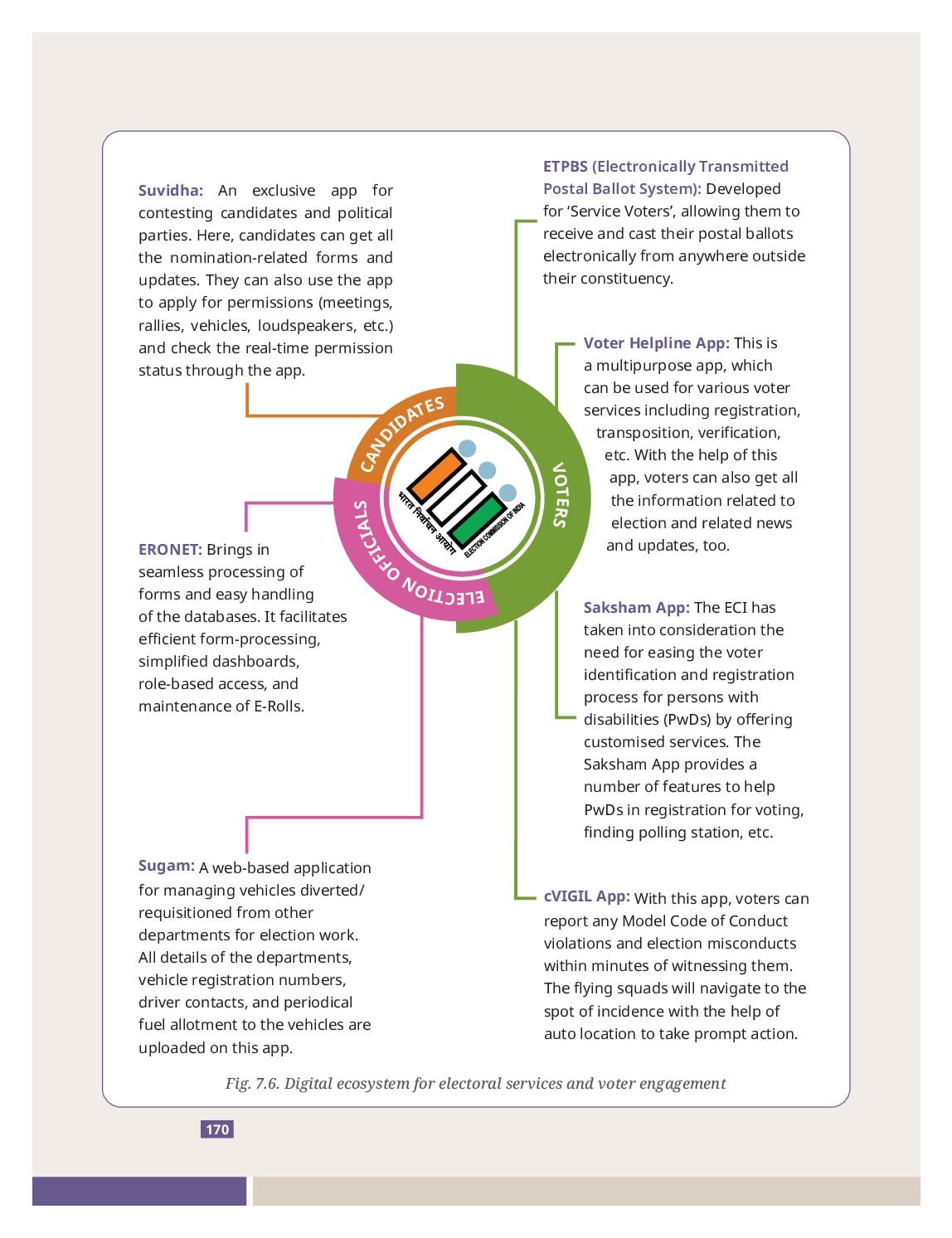
| ETPBS | Electronically Transmitted Postal Ballot System, for service voters posted outside their own constituency. | LET’S EXPLORE page 168; Fig. 7.6, page 170 |
| Model Code of Conduct | The rules of conduct during an election; violations can be reported through the cVIGIL app. | Fig. 7.6, page 170; page 178 |
| VVPAT | Voter Verifiable Paper Audit Trail — the printed slip a voter can see after voting on the EVM. | Page 178 and the case study, page 180 |
Old NCERT vs New – Class 9 Social Science
This chapter is from Understanding Society: India and Beyond, the new NCERT Class 9 Social Science book (NCF-SE 2023, used from 2026-27). It replaced the old book “India and the Contemporary World, Contemporary India, Democratic Politics and Economics”, so chapter numbers and names differ from older PDFs.
Solutions and All Chapters
Answers to the exercises and the full chapter list of Understanding Society: India and Beyond:
Elections – Overview
| Class | Class 9 |
| Subject | Social Science |
| Book | Understanding Society: India and Beyond – new NCERT book |
| Part | Part I |
| Chapter | 7 of 15 – Elections |
| Book pages | 161 – 182 |
| Edition | Latest NCERT edition (2026-27) |
| Session | 2026-27 |
| Free – read online or download |
Class 9 Social Science Chapter 7 – FAQs
Where can I download Elections Class 9 PDF?
From the download table on this page – the chapter PDF is free, and the full book is linked too.
What is Class 9 Social Science Chapter 7 about?
Elections are the means by which citizens choose their representatives and hold them accountable. Fig. 7.1 lists four things elections secure — representation, accountability, equality and legitimacy.
Is Elections from the new NCERT Class 9 Social Science book?
Yes. It is chapter 7 of understanding society: india and beyond (part i), the new NCERT Class 9 Social Science book for 2026-27.
Is this the latest NCERT edition for 2026-27?
Yes – the PDF is NCERT’s latest edition for the 2026-27 session.
Where are the NCERT Solutions for Class 9 Social Science Chapter 7?
Open the NCERT Solutions link above for answers to the exercise questions.