Download Journey of a River – NCERT Class 5 EVS Chapter 2 PDF from the new NCERT Class 5 EVS book Our Wondrous World (2026-27). Read the chapter online or download the free PDF. A river starts small and grows as it travels. The Godavari begins in the Brahmagiri Hills of the Western Ghats at Trimbakeshwar in Maharashtra. The place where a river begins is called its origin. At the start she is only a thin stream. As she moves…
Journey of a River PDF – Chapter 2 of Our Wondrous World
Read the chapter online or download the PDF.
| Chapter | Download | |
|---|---|---|
| Chapter 2 PDF | Journey of a River | View PDF |
| Full book | NCERT Class 5 EVS – Our Wondrous World | View Book |
Read Online
What Is in Journey of a River? (Class 5 EVS Chapter 2)
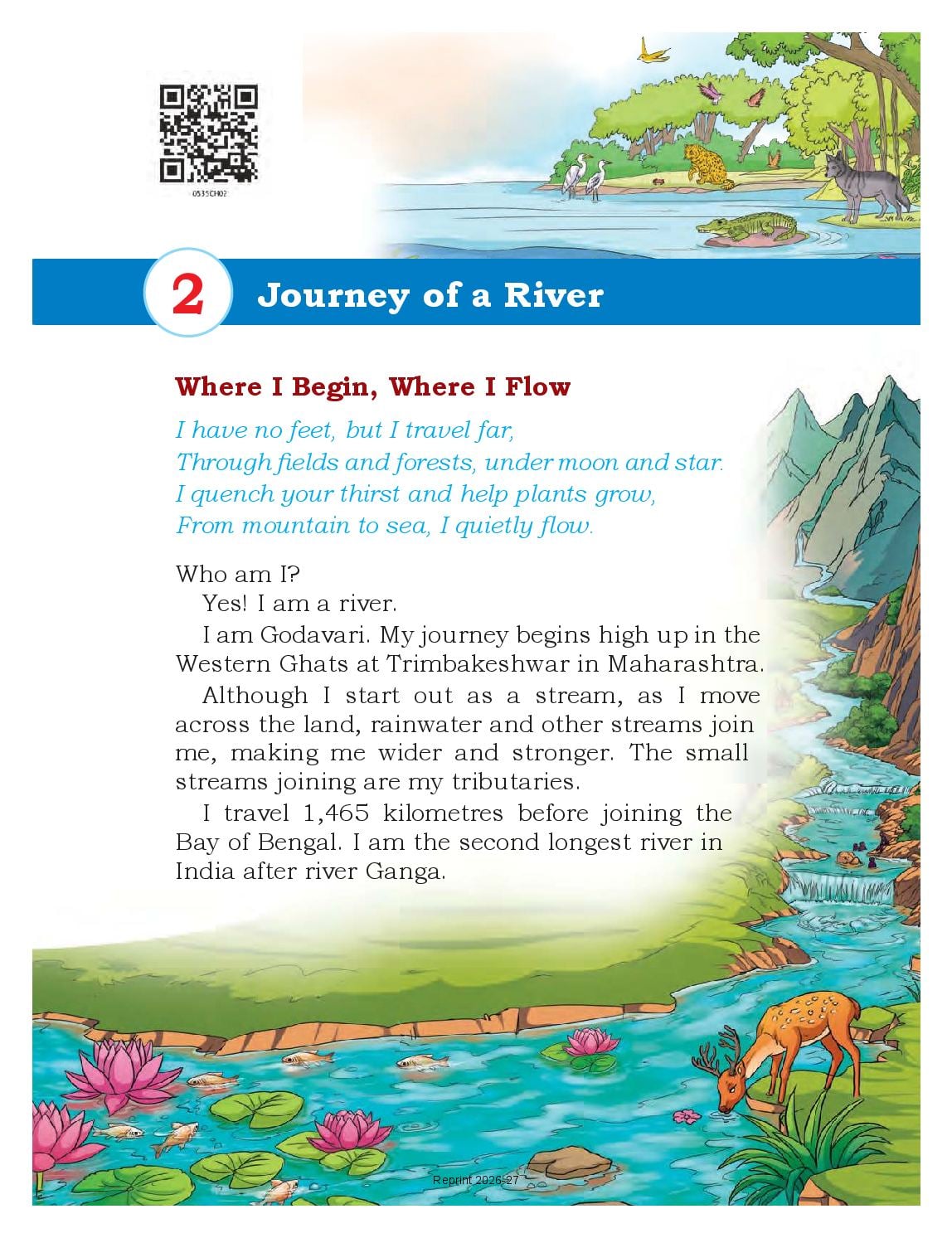
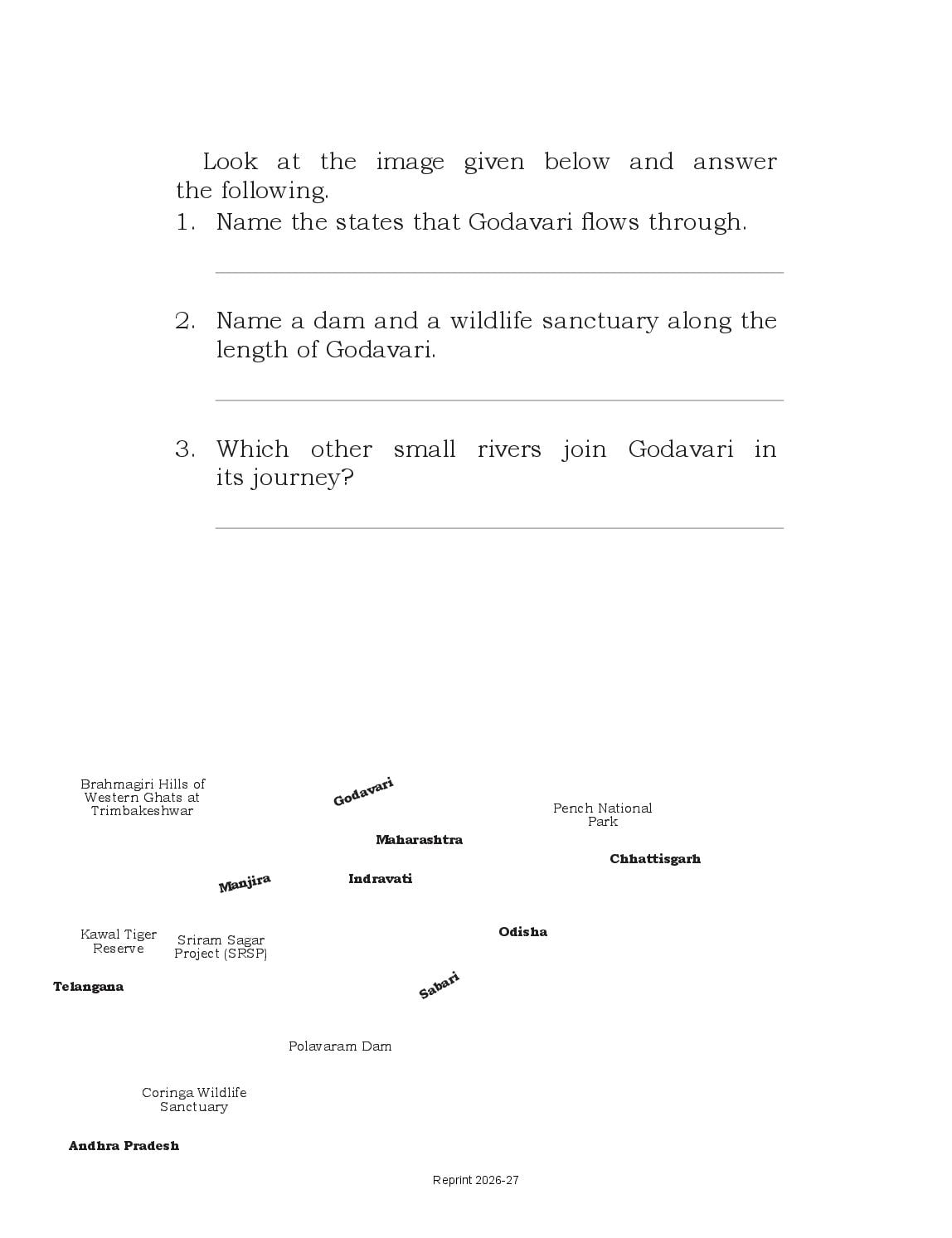
- A river starts small and grows as it travels. The Godavari begins in the Brahmagiri Hills of the Western Ghats at Trimbakeshwar in Maharashtra. The place where a river begins is called its origin. At the start she is only a thin stream. As she moves across the land, rainwater and other small streams join her and she becomes wider and stronger. A small stream or river that joins a bigger river is called a tributary. Three of the Godavari’s tributaries are named on the map — the Manjira, the Indravati and the Sabari.
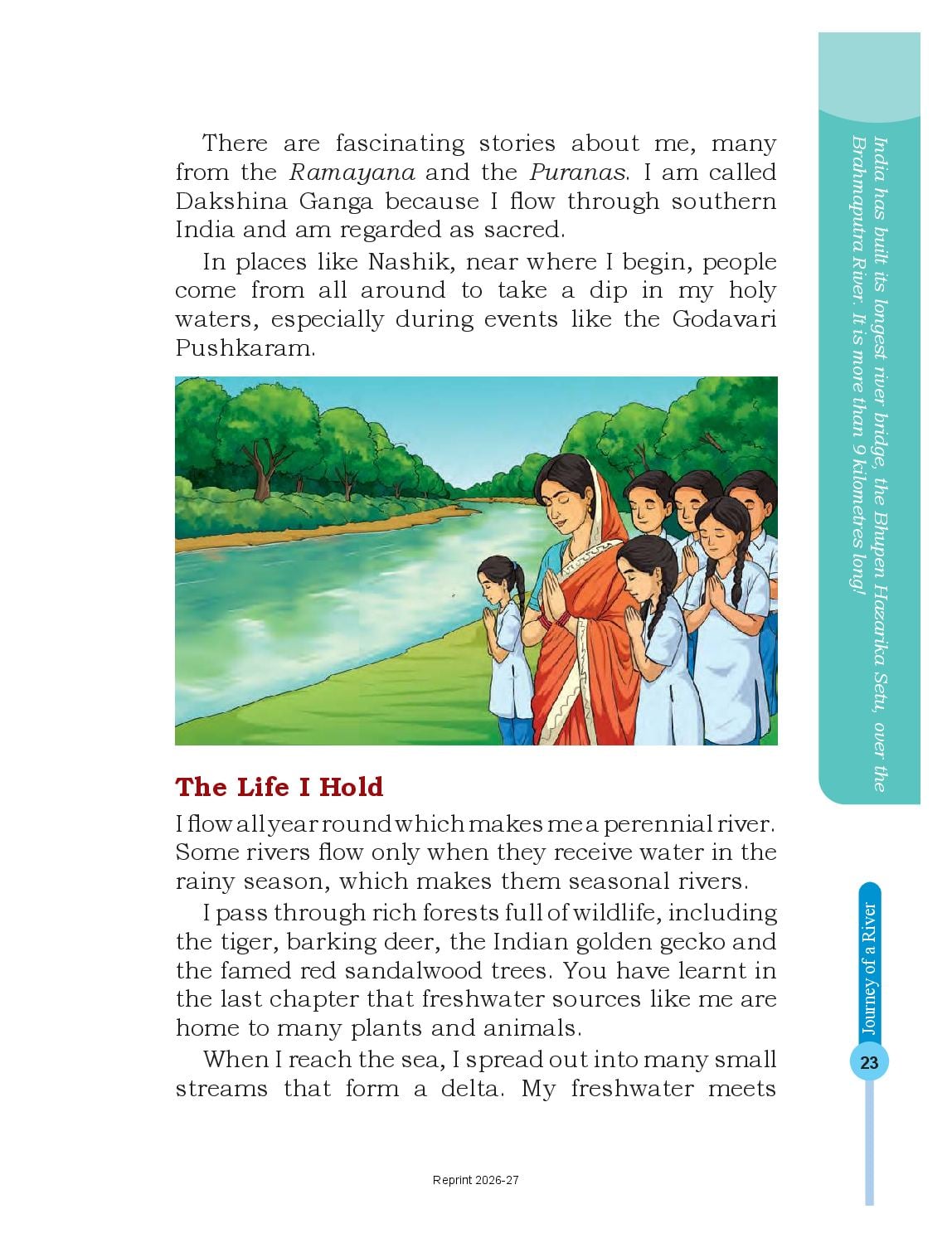
- She is India’s second longest river. The book says she travels 1,465 kilometres before joining the Bay of Bengal. Only the Ganga is longer. She is also called Dakshina Ganga — the Ganga of the south — because she flows through southern India and people treat her as sacred. At Nashik, near where she begins, people come from all around to take a dip in her water, especially at the time of the Godavari Pushkaram.
- Some rivers flow all year, some only in the rains. The Godavari has water in every season. A river like that is called a perennial river — perennial simply means ‘all through the year’. A river that flows only when the rainy season fills it is called a seasonal river. Because the Godavari is perennial, the people and animals along her banks get water even in the dry months.
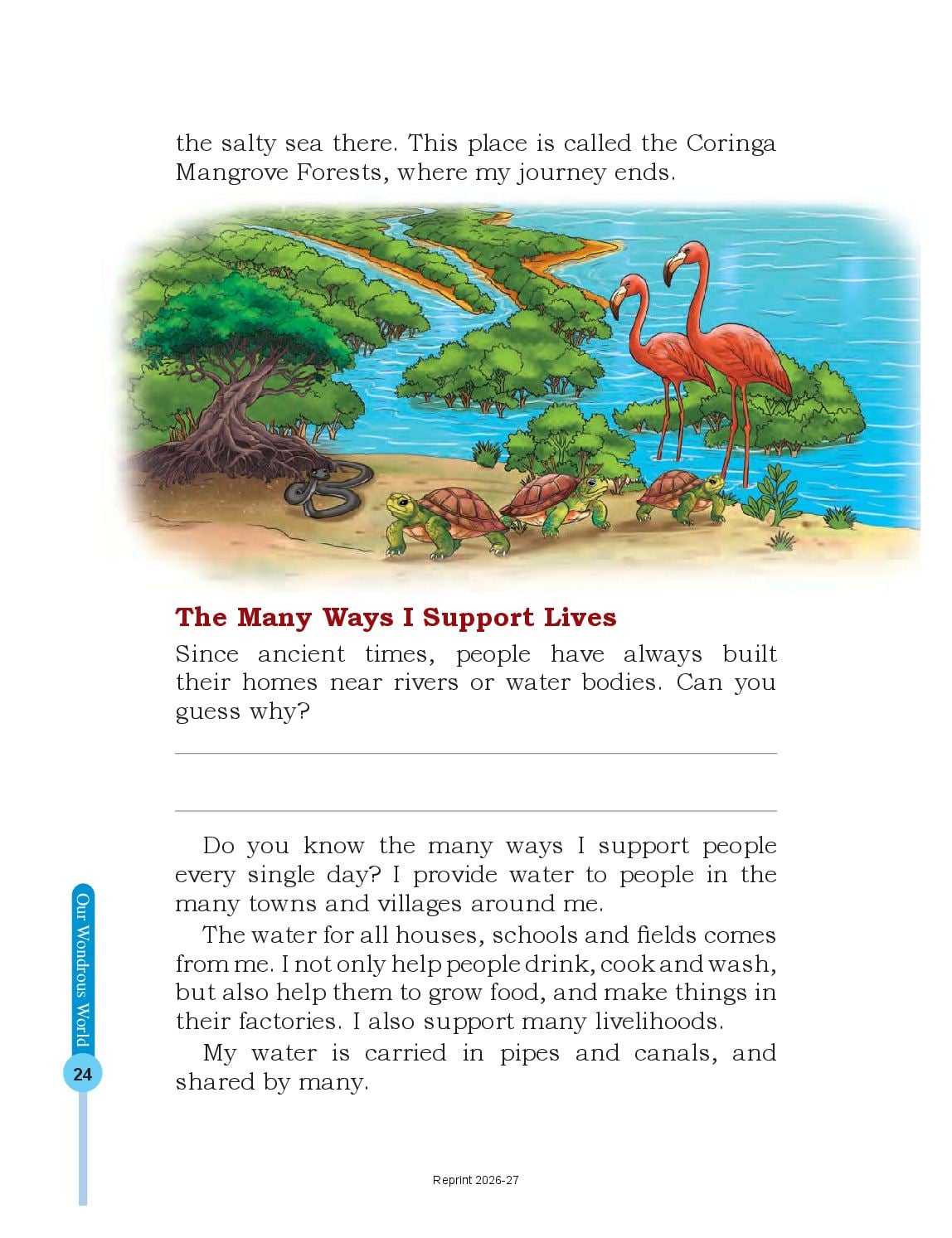
- A river ends by spreading out into a delta. When the Godavari reaches the sea she splits into many small streams. The flat land those streams make is called a delta. Here her freshwater meets the salty sea water. Her delta is the Coringa Mangrove Forests in Andhra Pradesh, and there is a Coringa Wildlife Sanctuary here too. On the way she also passes through rich forests where the tiger, the barking deer, the Indian golden gecko and the famous red sandalwood trees are found.
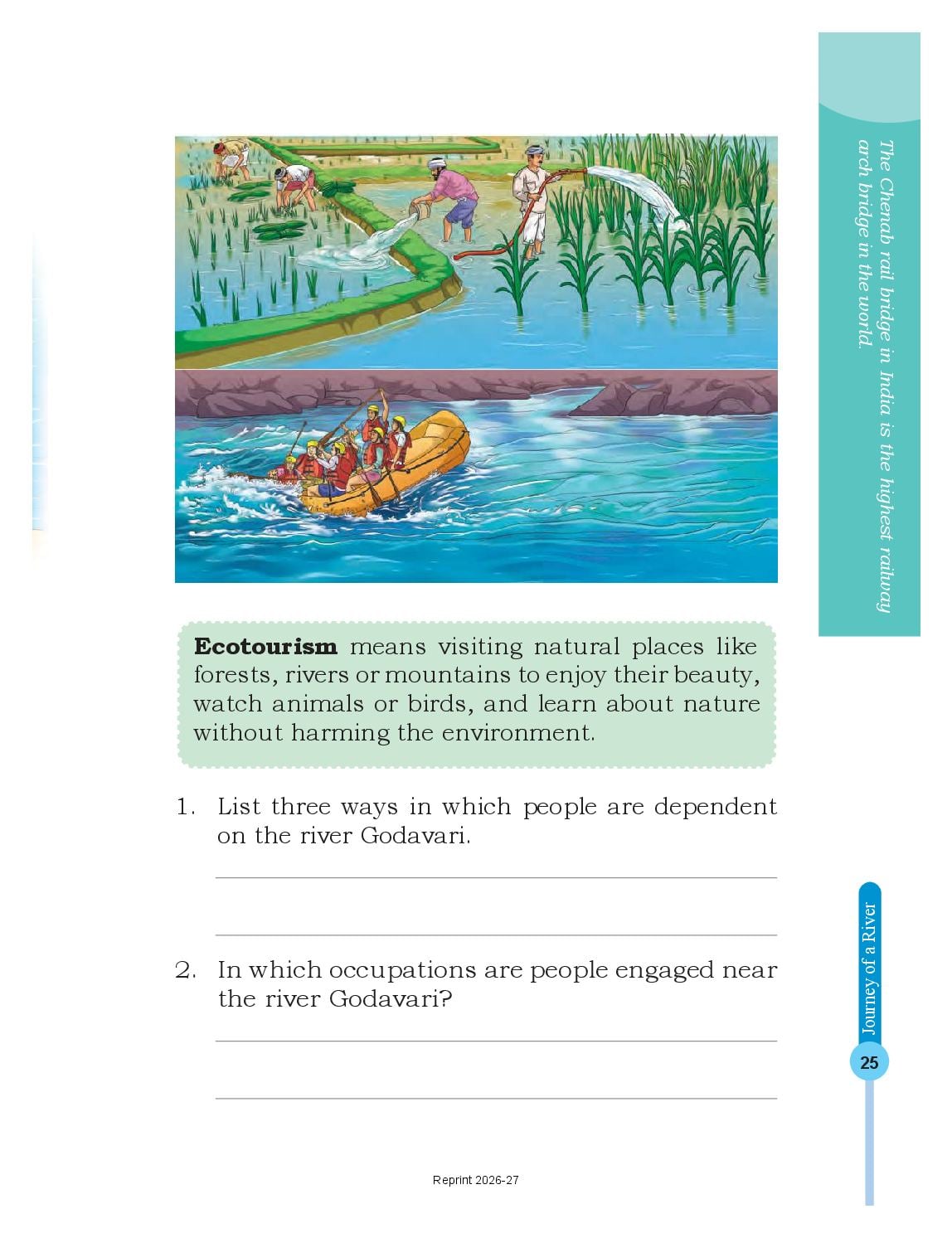
- A river supports people in many ways at once. People have always built their homes near rivers. The Godavari gives water to houses, schools and fields in the towns and villages around her. People drink her water, cook and wash with it, grow crops with it and use it in factories. Her water is carried far away in pipes and canals. She also gives work — farming, fishing, boating, and ecotourism, which means visiting natural places like forests, rivers and mountains to enjoy them and learn about nature without harming it.
- Dams store her water, but they also change her. A dam is like a giant wall across a river. It blocks the flow and stores water in a big water body called a reservoir. More than 900 dams store the Godavari’s water, so people can drink, grow crops and make electricity even in a dry season. But the stored water floods land that was once forest, home to animals, and home to people. Many families have to leave their homes and shift elsewhere. Two dams on her course are the Sriram Sagar Project (SRSP) and the Polavaram Dam.
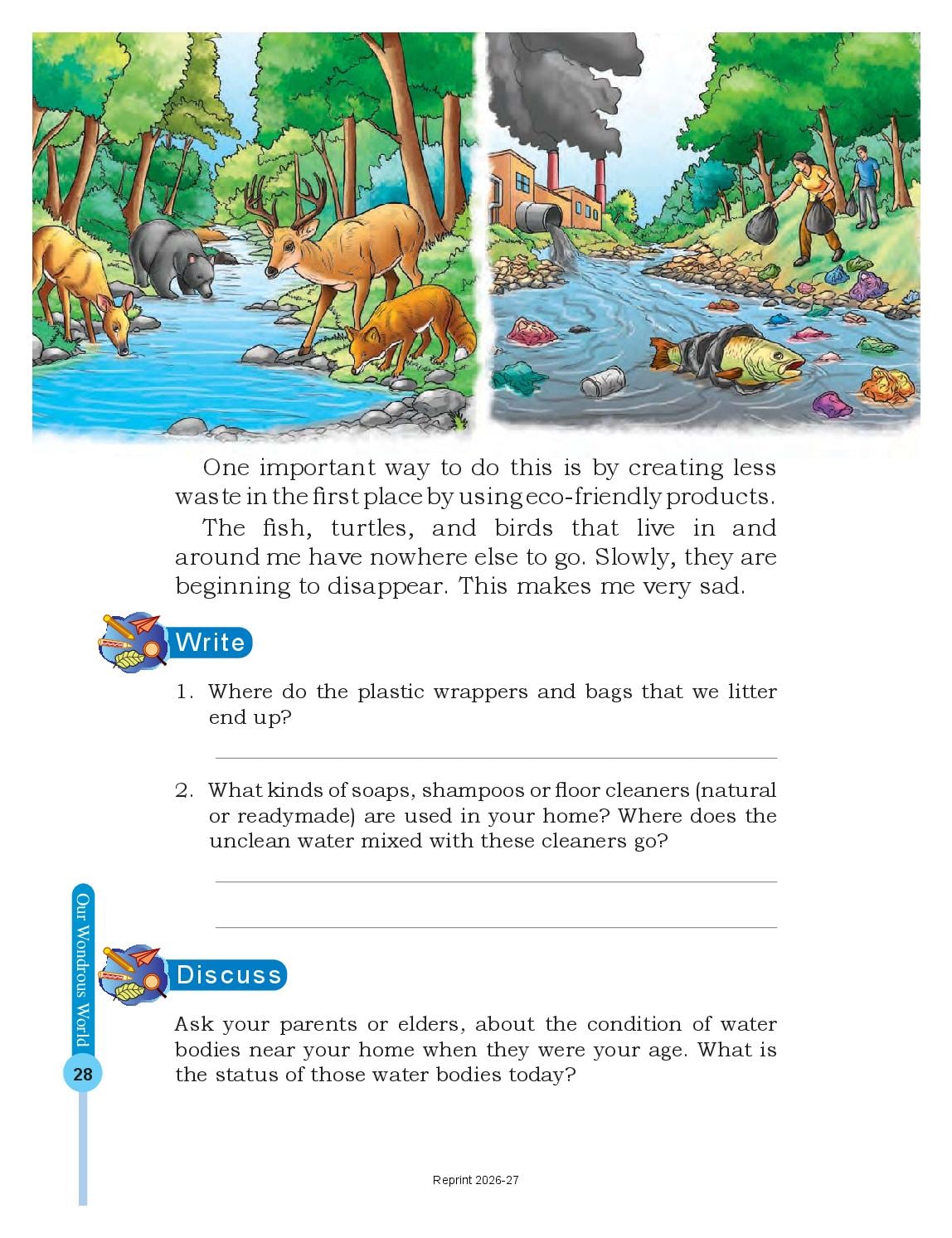
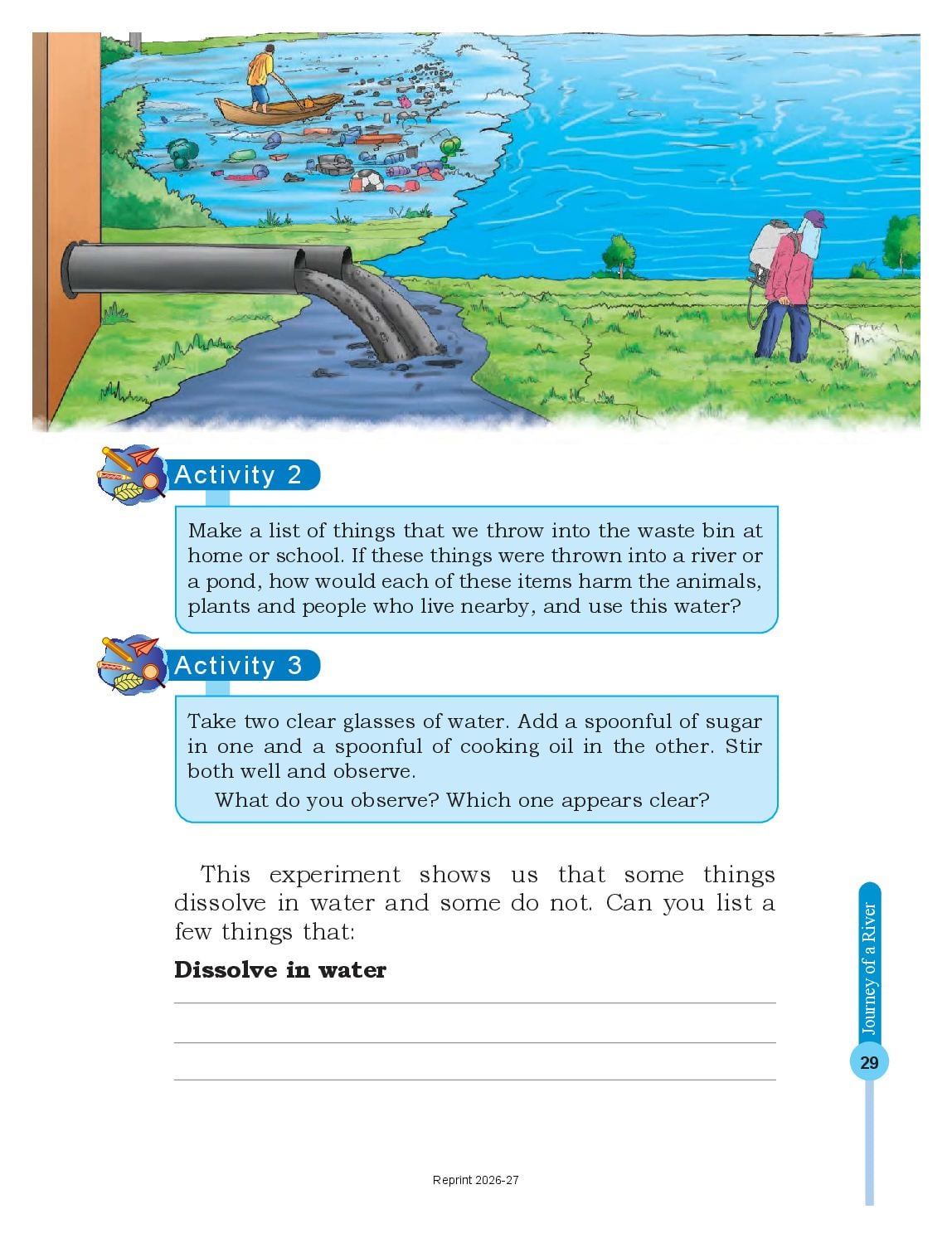
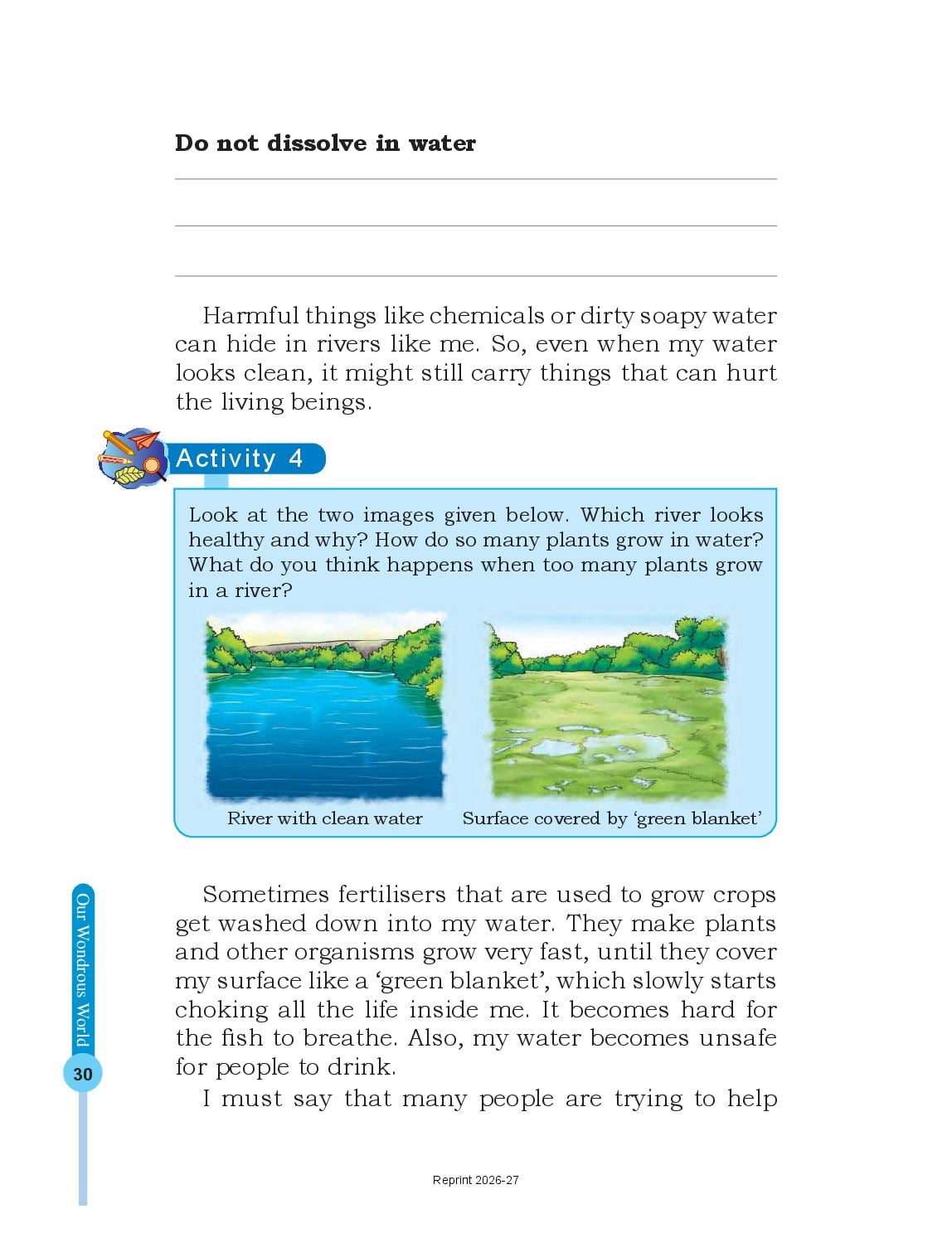
- Waste, dirty water and fertiliser pollute a river. Where there are many people and factories on the banks, waste, plastic and dirty water go into the river. Sometimes the river does not look or smell clean, yet people still use that water and fall ill. Some harmful things, like chemicals and soapy water, dissolve — they mix in completely and cannot be seen. So water that looks clean can still be unsafe. Fertiliser washed off the fields makes water plants grow very fast until they cover the surface like a ‘green blanket’. Under that blanket the fish find it hard to breathe and the water becomes unsafe to drink.
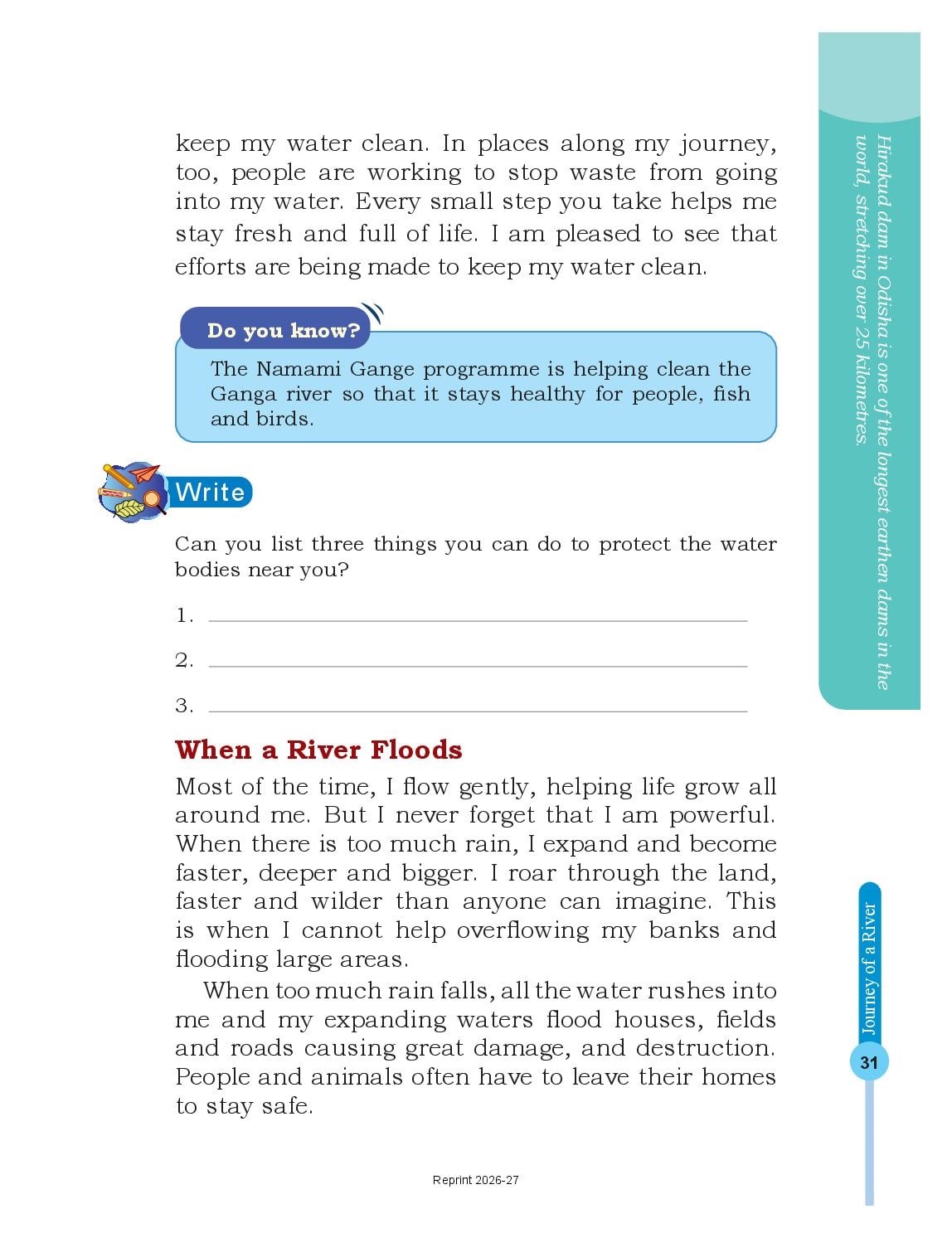
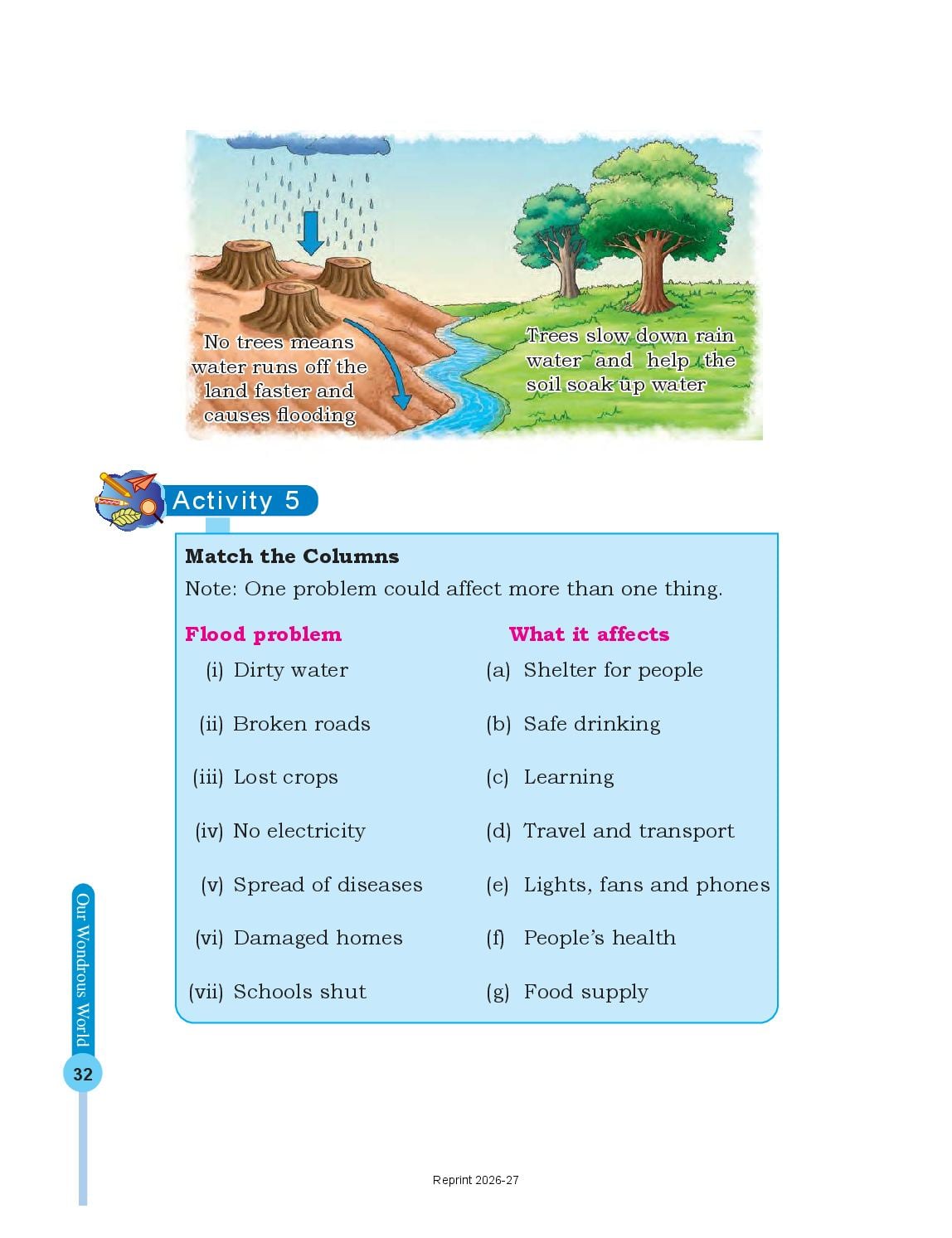
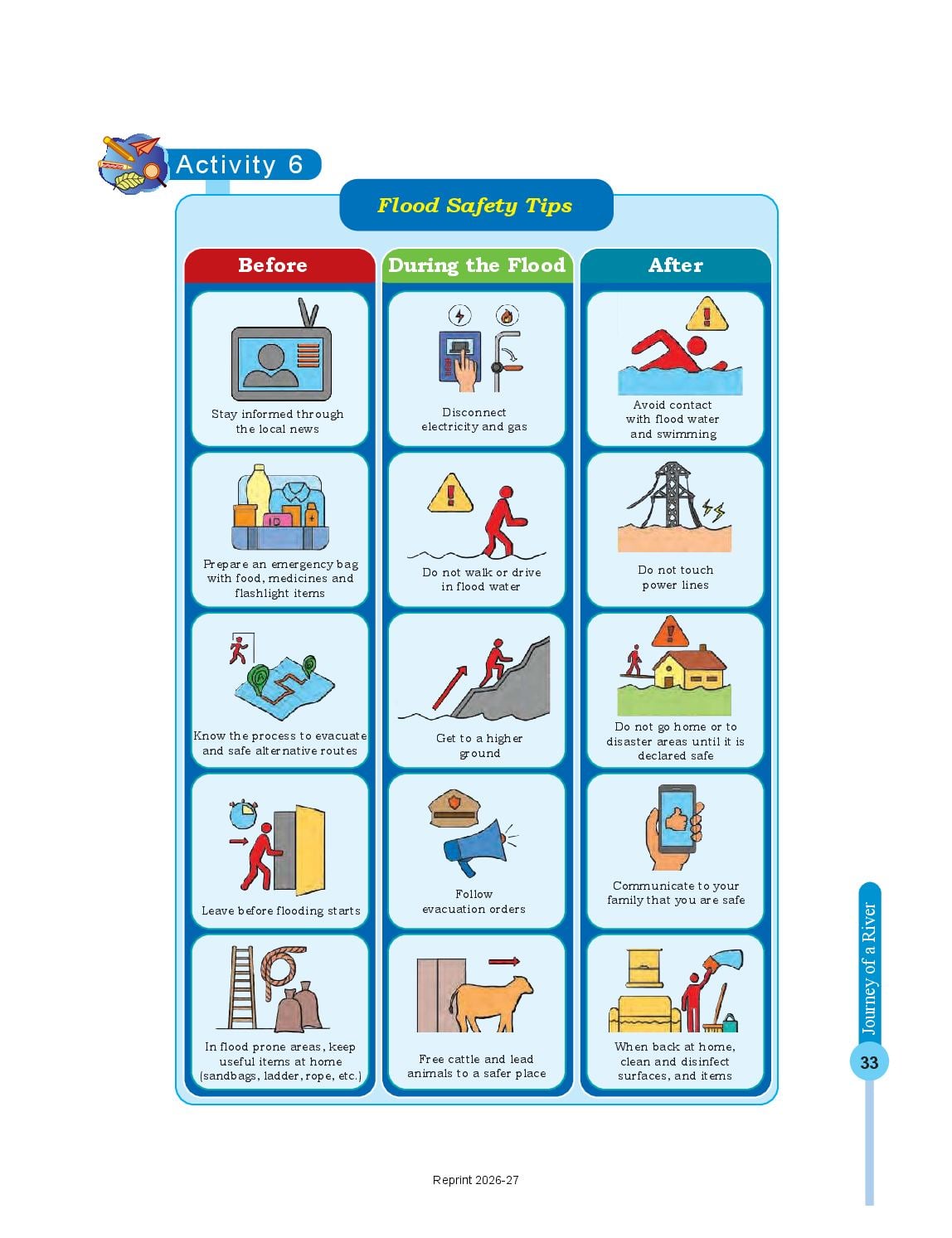
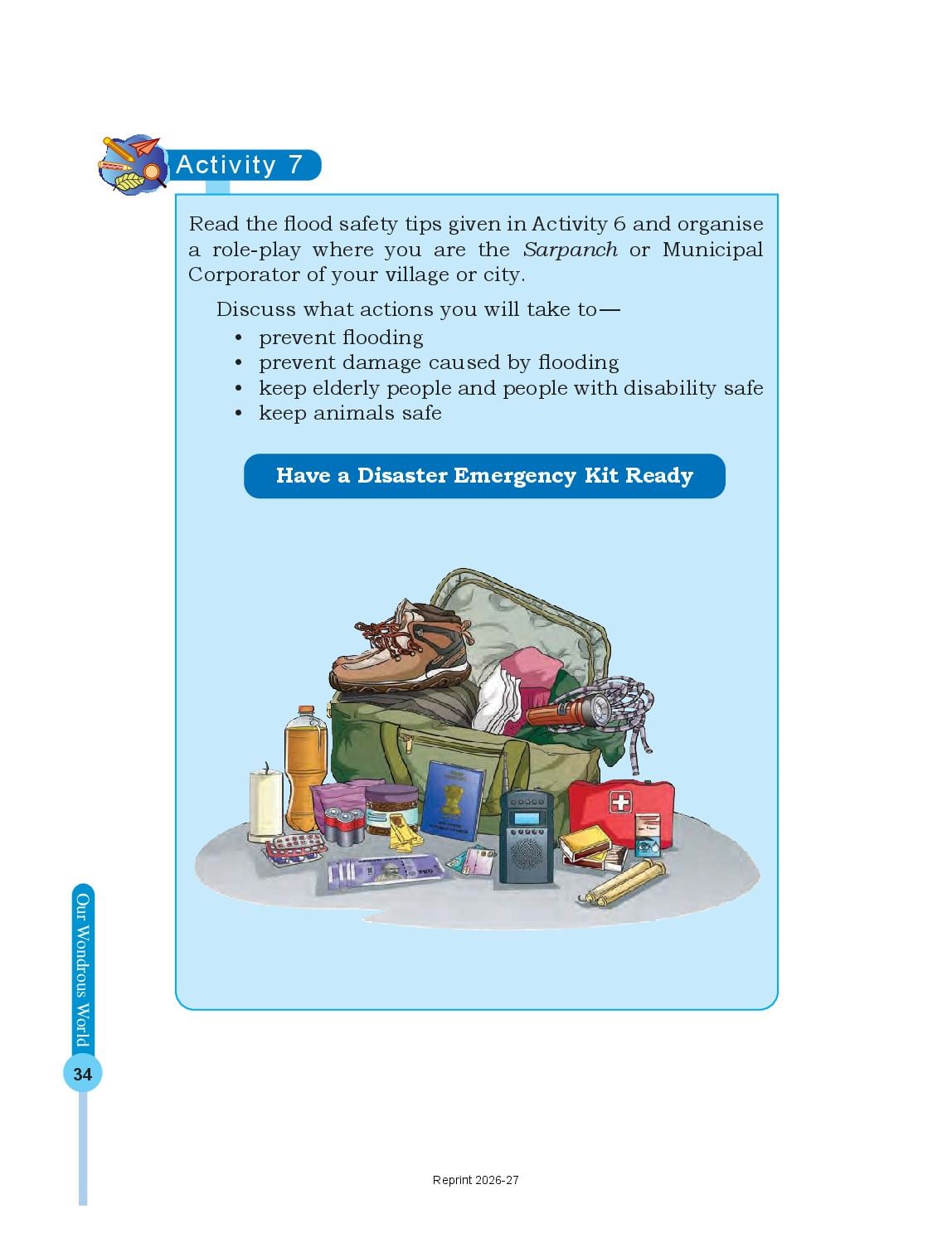
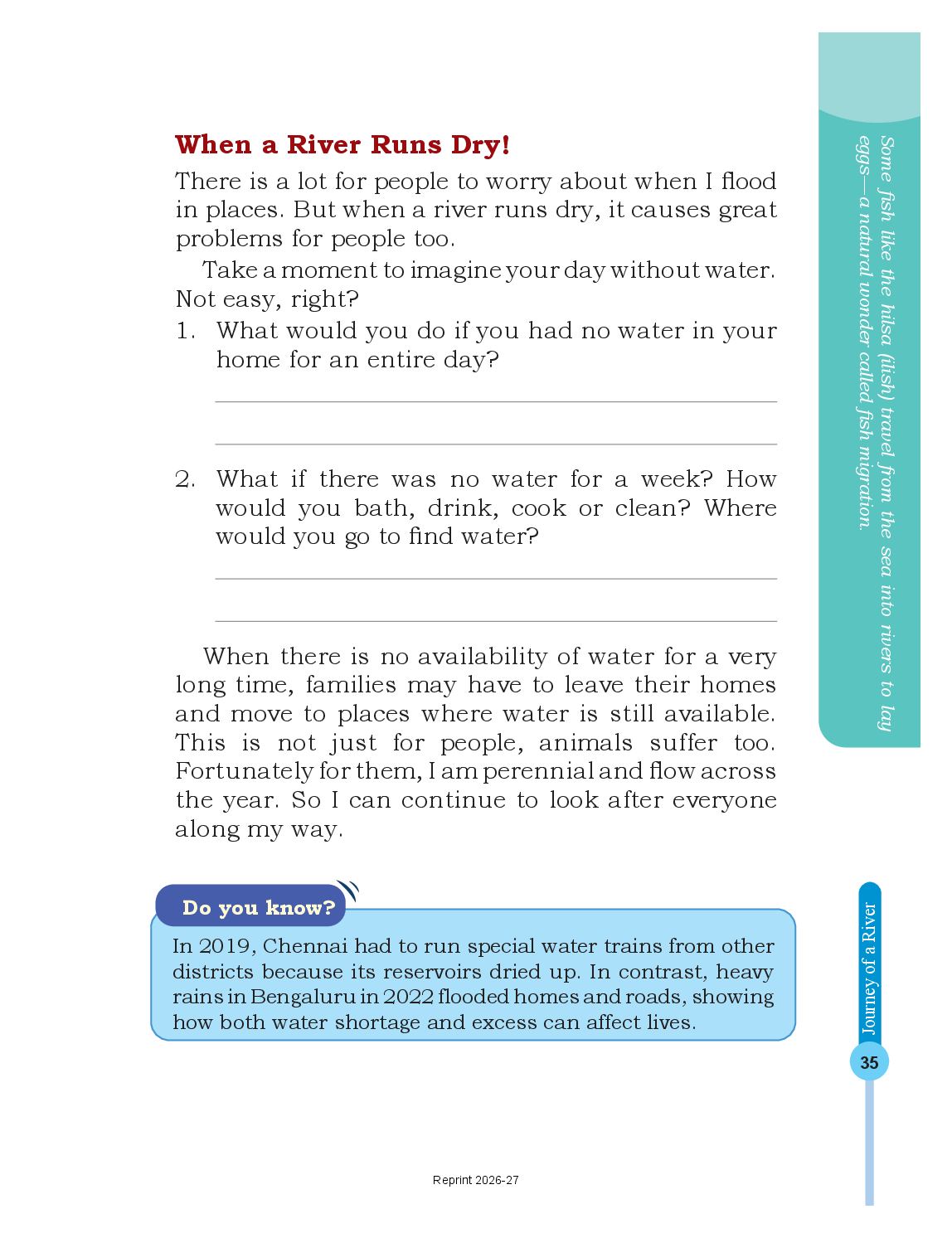
- Too much water and too little water both hurt. When there is very heavy rain, the river swells, runs faster and deeper, and overflows her banks. Floods damage homes, fields and roads, cut off electricity, spoil drinking water, spread disease and shut schools. Trees help — they slow the rain down and let the soil soak the water up; bare land lets water run off fast and flood. When a river runs dry, families may even have to leave their homes to find water. In 2019 Chennai ran special water trains because its reservoirs dried up; in 2022 heavy rain flooded homes and roads in Bengaluru.
Quick revision – Journey of a River
| Word | What it means | Where it appears | An everyday example |
|---|---|---|---|
| Origin | The place where a river begins | Page 21, the Godavari’s story | The Brahmagiri Hills at Trimbakeshwar |
| Tributary | A small stream or river that joins a bigger river | Page 21; the map on page 22 | The Manjira joining the Godavari |
| Perennial river | A river that has water all through the year | The Life I Hold, page 23 | The Godavari, even in summer |
| Seasonal river | A river that flows only when the rains fill it | The Life I Hold, page 23 | A village nala that dries up after the monsoon |
| Delta | The flat land made where a river splits into many streams before the sea | Page 23 | The Coringa Mangrove Forests |
| Mangrove forest | A salty-water forest that grows where a river meets the sea | Page 23 | Coringa, where the Godavari ends |
| Livelihood | The work a person does to earn a living | The Many Ways I Support Lives, page 24 | Fishing, farming, boating |
| Ecotourism | Visiting natural places to enjoy and learn, without harming them | Page 25 | A guided river-rafting or bird-watching trip |
| Dam | A giant wall across a river that blocks and stores its water | Dams, page 26 | The Polavaram Dam |
| Reservoir | The large water body that fills up behind a dam | Dams, page 26 | The lake behind Sriram Sagar Project |
| Pollution | Waste, plastic, chemicals or dirty water spoiling the river | What Pollutes Me, page 27 | A drain emptying into a river |
| Dissolve | To mix into water completely, so it cannot be seen any more | Activity 3, page 29 | Sugar stirred into a glass of water |
| ‘Green blanket’ | A thick cover of fast-growing plants over the water surface | Activity 4, page 30 | A pond fully covered with green weed |
| Flood | Water rising over the river banks and spreading over the land | When a River Floods, page 31 | Water standing in fields and streets after very heavy rain |
Old NCERT vs New – Class 5 EVS
This chapter is from Our Wondrous World, the new NCERT Class 5 EVS book (NCF-SE 2023, used from 2025-26). It replaced the old book “Looking Around”, so chapter numbers and names differ from older PDFs.
Solutions and All Chapters
Answers to the exercises and the full chapter list of Our Wondrous World:
Journey of a River – Overview
| Class | Class 5 |
| Subject | EVS |
| Book | Our Wondrous World – new NCERT book |
| Chapter | 2 of 10 – Journey of a River |
| Book pages | 21 – 37 |
| Edition | NCERT Reprint 2026-27 |
| Session | 2026-27 |
| Free – read online or download |
Class 5 EVS Chapter 2 – FAQs
Where can I download Journey of a River Class 5 PDF?
From the download table on this page – the chapter PDF is free, and the full book is linked too.
What is Class 5 EVS Chapter 2 about?
A river starts small and grows as it travels. The Godavari begins in the Brahmagiri Hills of the Western Ghats at Trimbakeshwar in Maharashtra. The place where a river begins is called its origin. At the start she is only a thin stream. As she moves across the land, rainwater and other small streams join her and she becomes wider and stronger. A small stream or river that joins a bigger river is called a tributary. Three of the Godavari’s tributaries are named on the map — the Manjira, the Indravati and the Sabari.
Is Journey of a River from the new NCERT Class 5 EVS book?
Yes. It is chapter 2 of our wondrous world, the new NCERT Class 5 EVS book for 2026-27.
Is this the latest NCERT edition for 2026-27?
Yes – the PDF is NCERT’s latest edition for the 2026-27 session.
Where are the NCERT Solutions for Class 5 EVS Chapter 2?
Open the NCERT Solutions link above for answers to the exercise questions.