Download Earth-Our Shared Home – NCERT Class 5 EVS Chapter 10 PDF from the new NCERT Class 5 EVS book Our Wondrous World (2026-27). Read the chapter online or download the free PDF. From space, the Earth has no lines on it. Group Captain Shubhanshu Shukla, the first Indian to reach the International Space Station, said that when he looked at the Earth from outside, it looked completely one — no border, no state, no country was…
Earth-Our Shared Home PDF – Chapter 10 of Our Wondrous World
Read the chapter online or download the PDF.
| Chapter | Download | |
|---|---|---|
| Chapter 10 PDF | Earth-Our Shared Home | View PDF |
| Full book | NCERT Class 5 EVS – Our Wondrous World | View Book |
Read Online
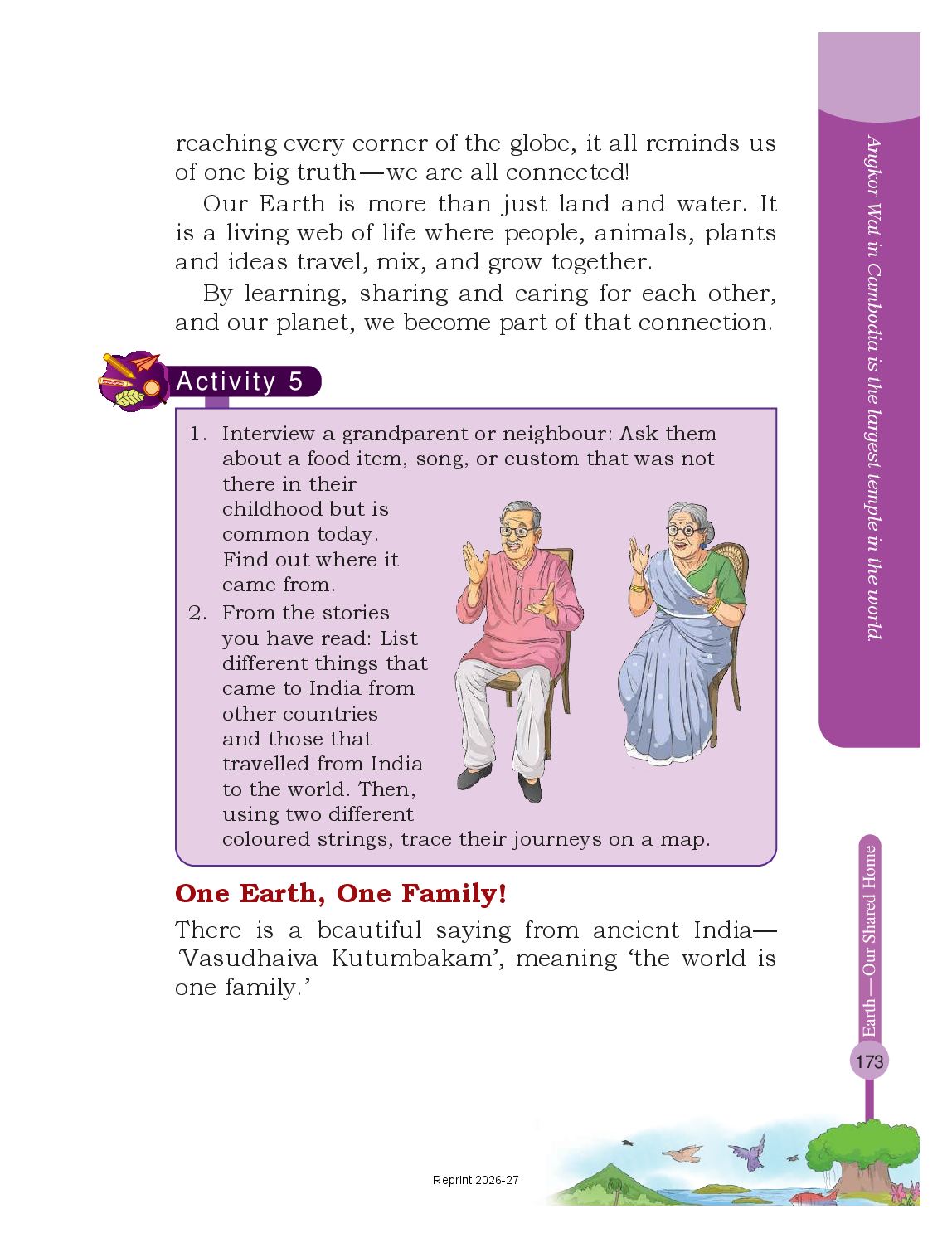
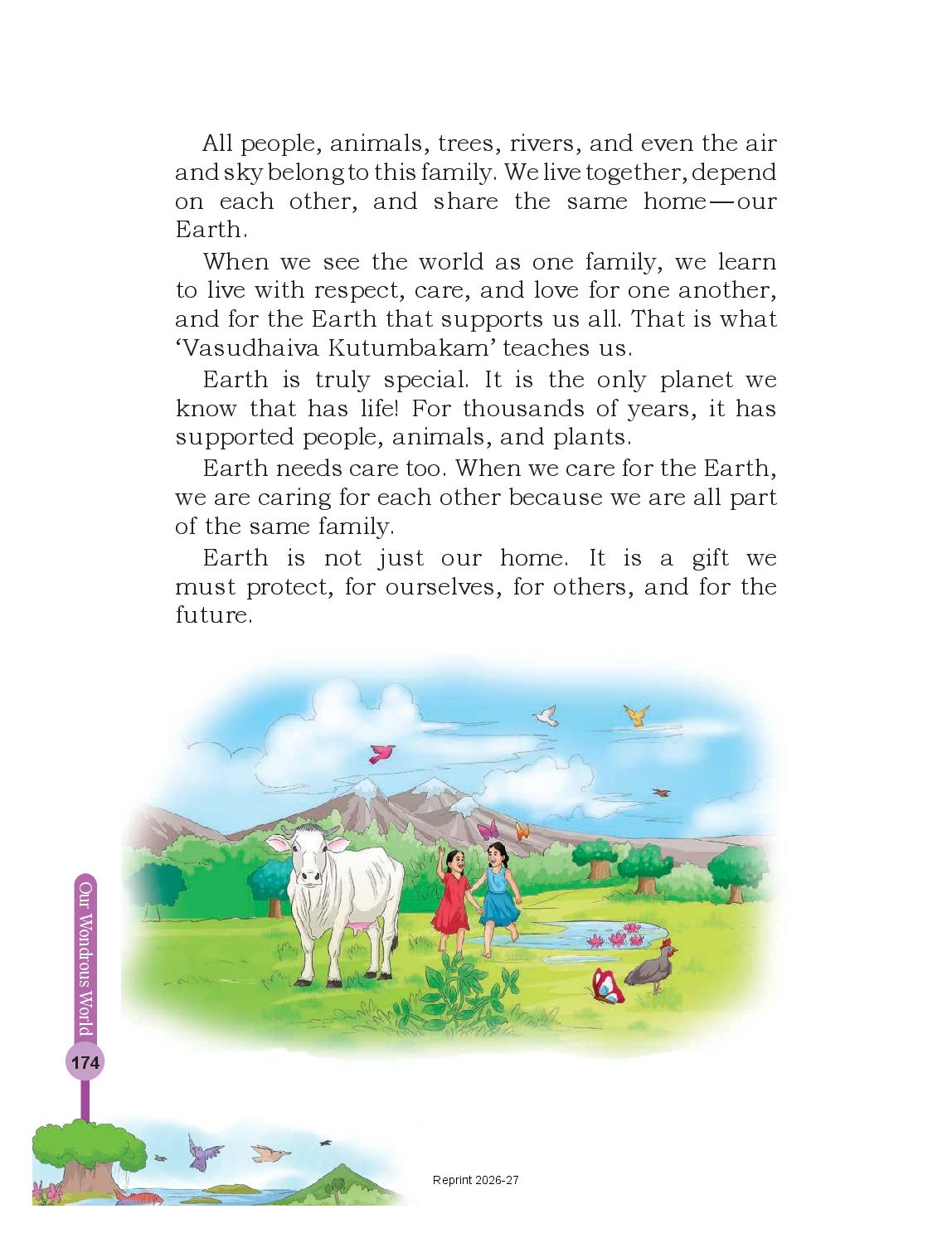
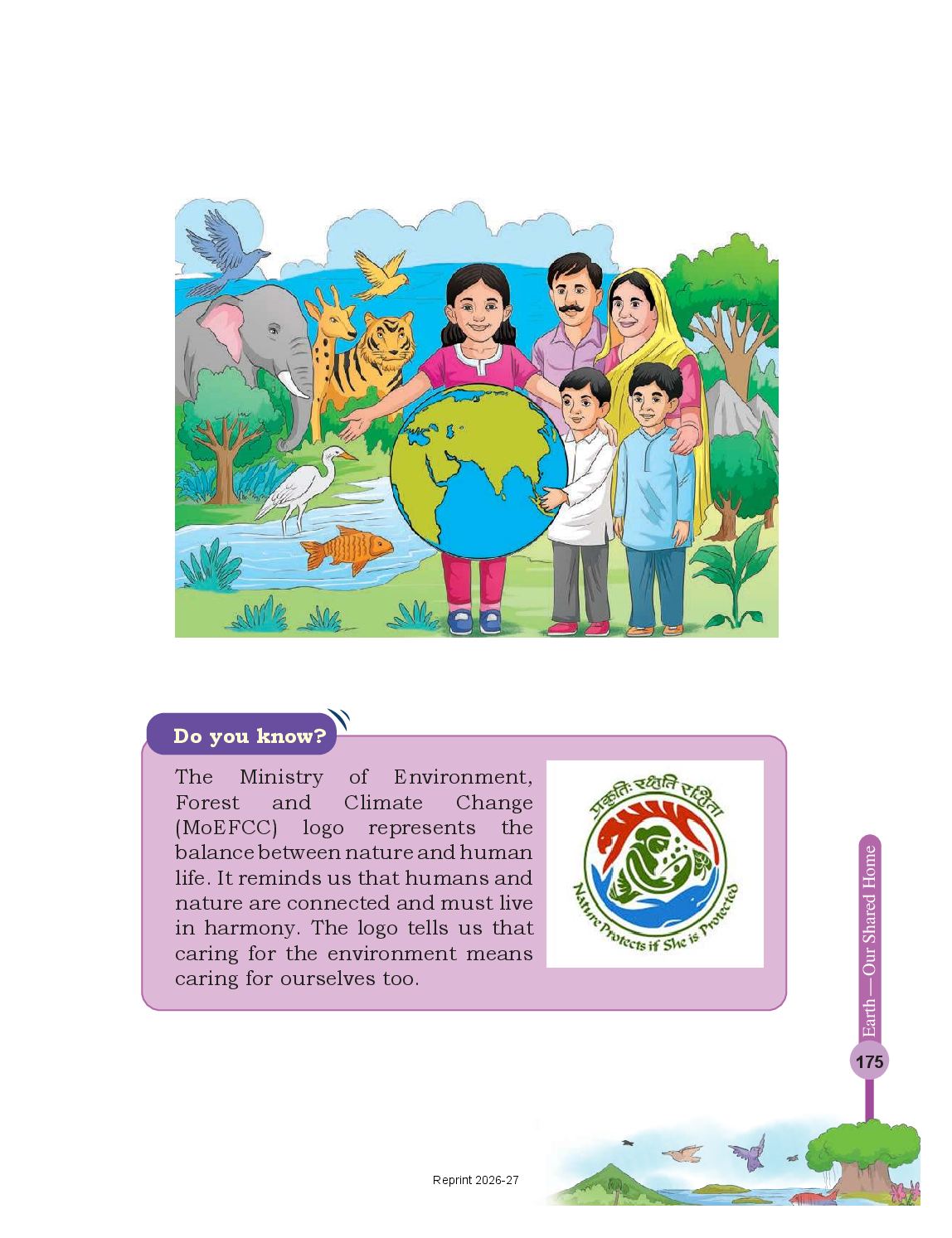
What Is in Earth-Our Shared Home? (Class 5 EVS Chapter 10)
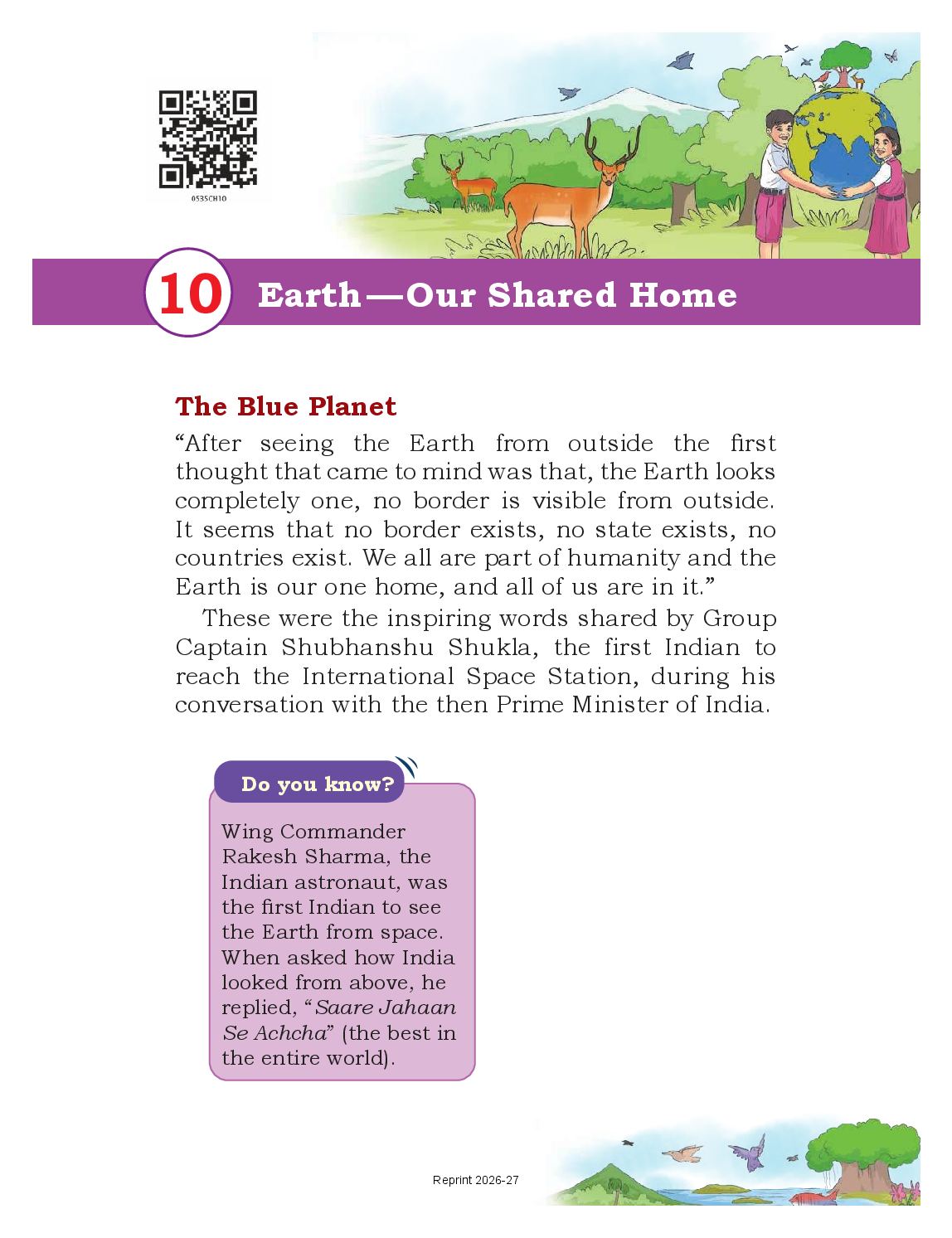
- From space, the Earth has no lines on it. Group Captain Shubhanshu Shukla, the first Indian to reach the International Space Station, said that when he looked at the Earth from outside, it looked completely one — no border, no state, no country was visible. Wing Commander Rakesh Sharma, the first Indian to see the Earth from space, was asked how India looked from up there. He replied, “Saare Jahaan Se Achcha” — the best in the entire world. From that height you cannot even see your own city or village. You see only the big shapes of land and the blue of the sea. That is why the Earth is called the blue planet.
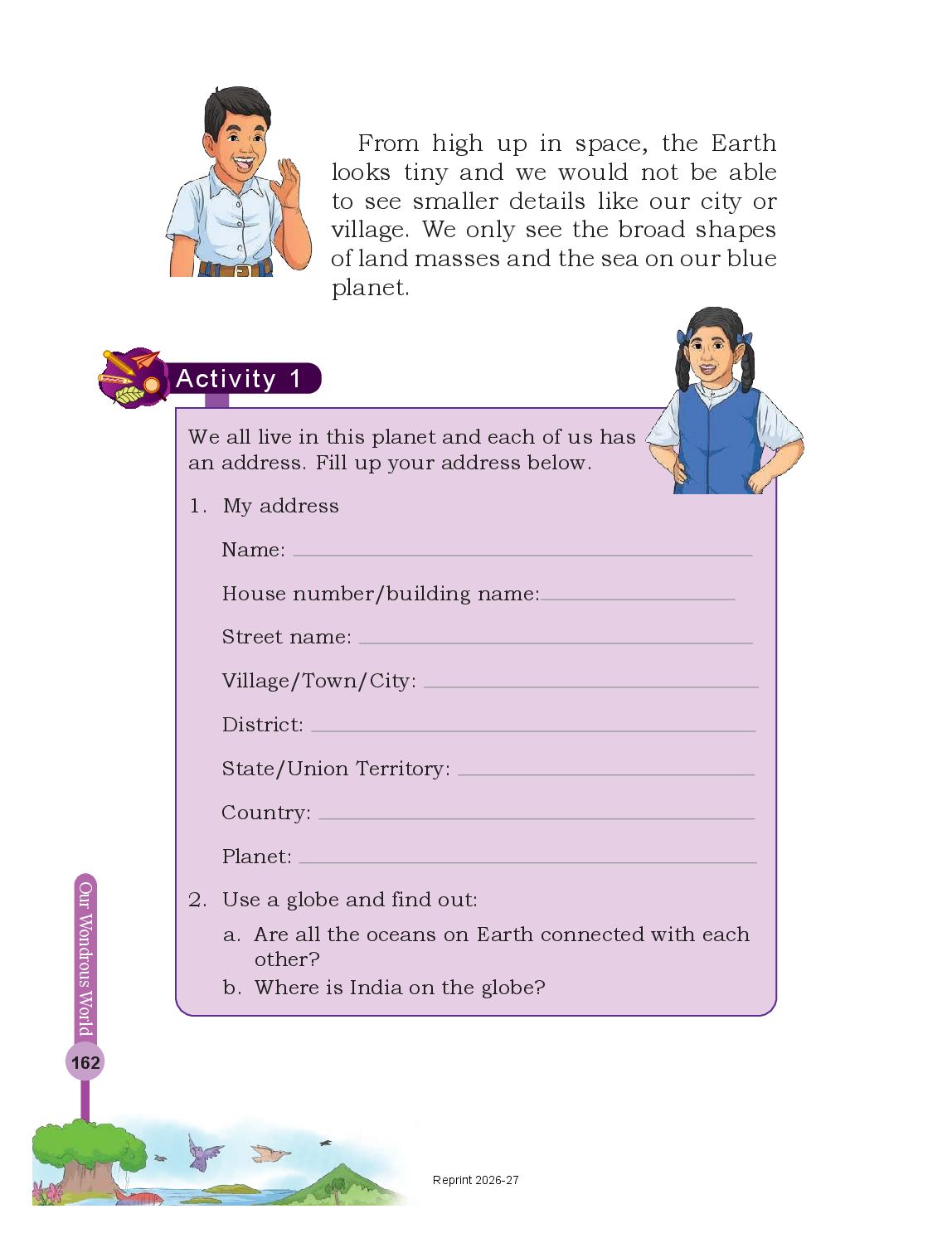
- You have an address, and its last line is the same for everybody. Your address goes from small to big — your house, your street, your village or town, your district, your state, your country. The line after that is Planet: Earth, and every child in every country writes the same word there. DIGIPIN is a newer idea: it gives every small place in India its own 10-character digital code, like a name tag for your home or school, so a postman, an ambulance or a delivery person can find you faster.
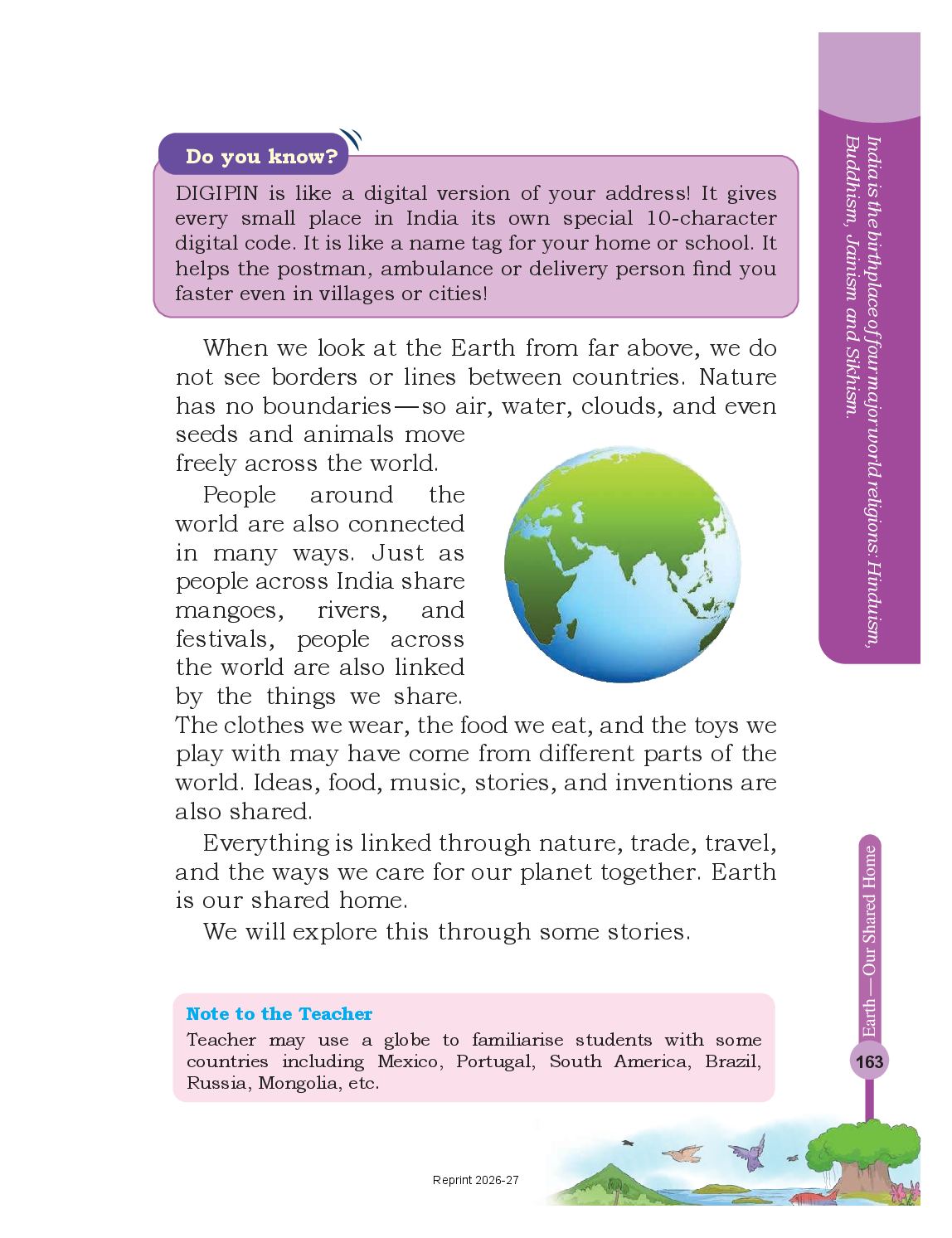
- Nature has no boundaries. Borders are lines that people drew on maps. Air does not stop at them. Nor do clouds, rain, rivers, seeds, birds, fish or butterflies. The monsoon wind that waters our fields comes from over the ocean. Dust from a far-off desert reaches our cities. So the good things of nature are shared — and so is the harm. If we spoil the air or the water, it does not stay inside one country.
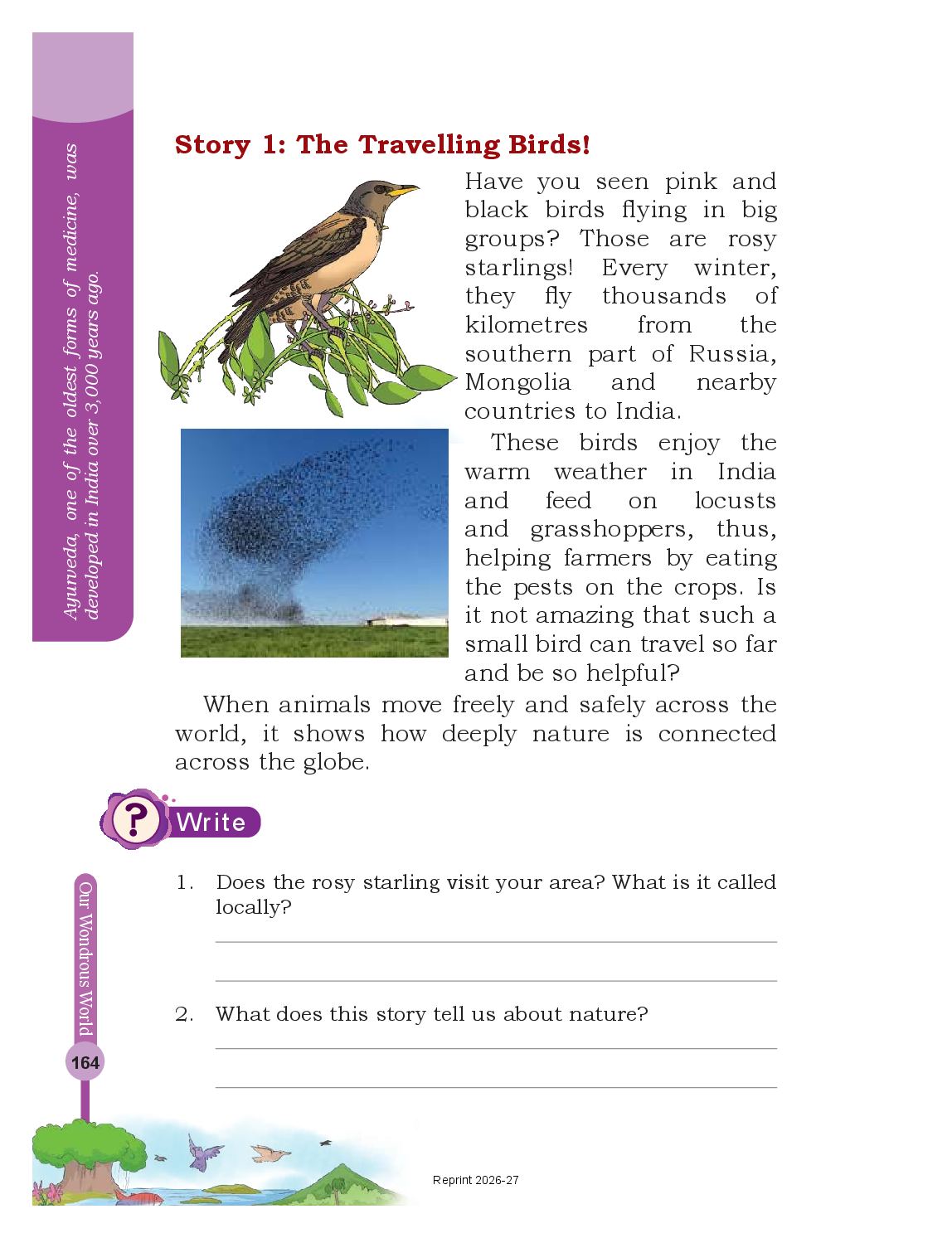
- Story 1 — the travelling birds. Rosy starlings fly thousands of kilometres every winter from the southern part of Russia, Mongolia and nearby countries to India. Here they enjoy the warm weather and feed on locusts and grasshoppers — the very pests that damage crops. So the birds get food and the farmers get their fields cleaned. They fly in huge flocks that twist and turn in the sky like smoke. When animals can move freely and safely across the world, it shows how deeply nature is joined up.
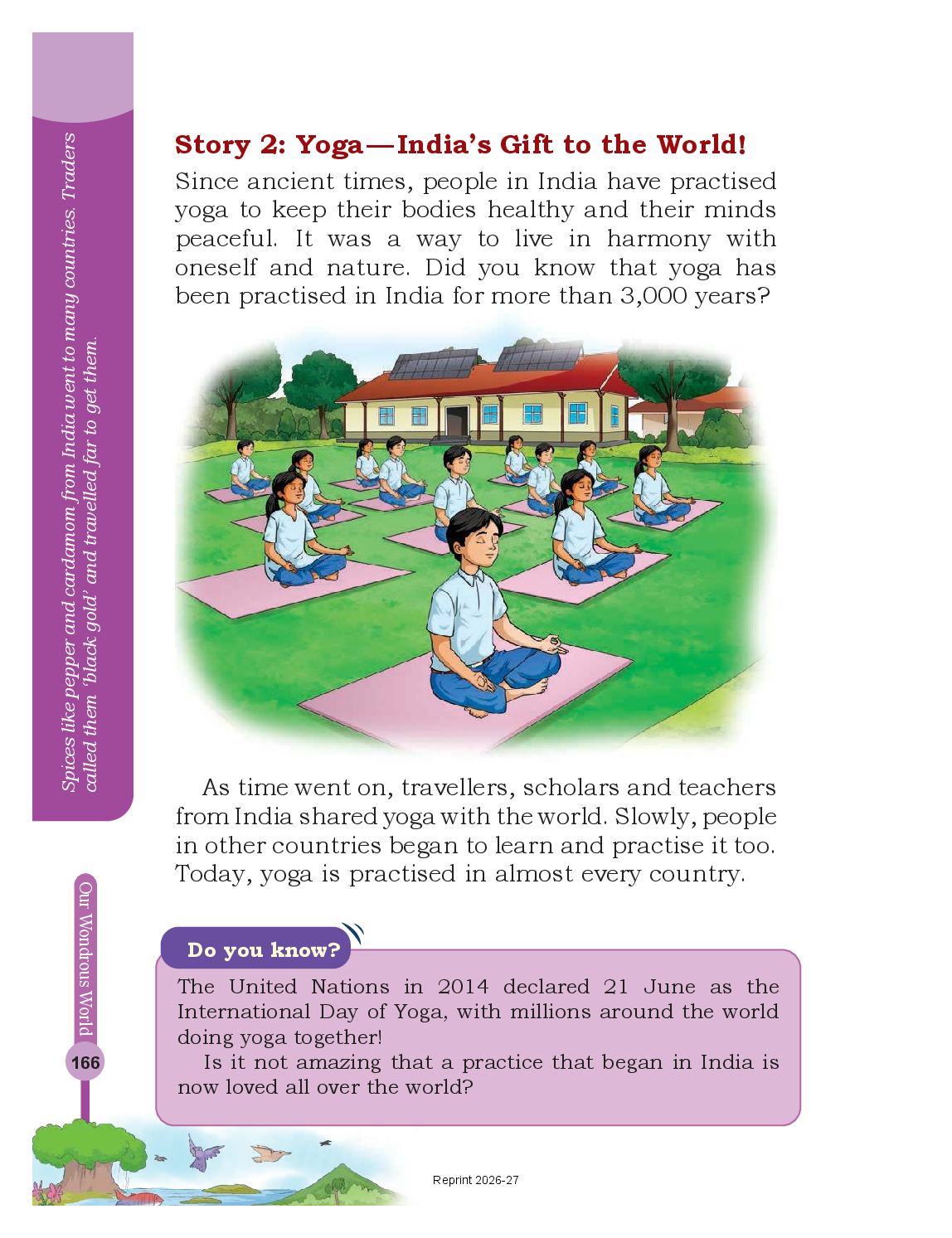
- Story 2 — yoga, India’s gift to the world. People in India have practised yoga for more than 3,000 years, to keep the body healthy and the mind peaceful, and to live in harmony with oneself and with nature. Travellers, scholars and teachers from India shared it, and slowly other countries learnt it too. In 2014 the United Nations declared 21 June as the International Day of Yoga, and millions of people around the world now do yoga together on that day.
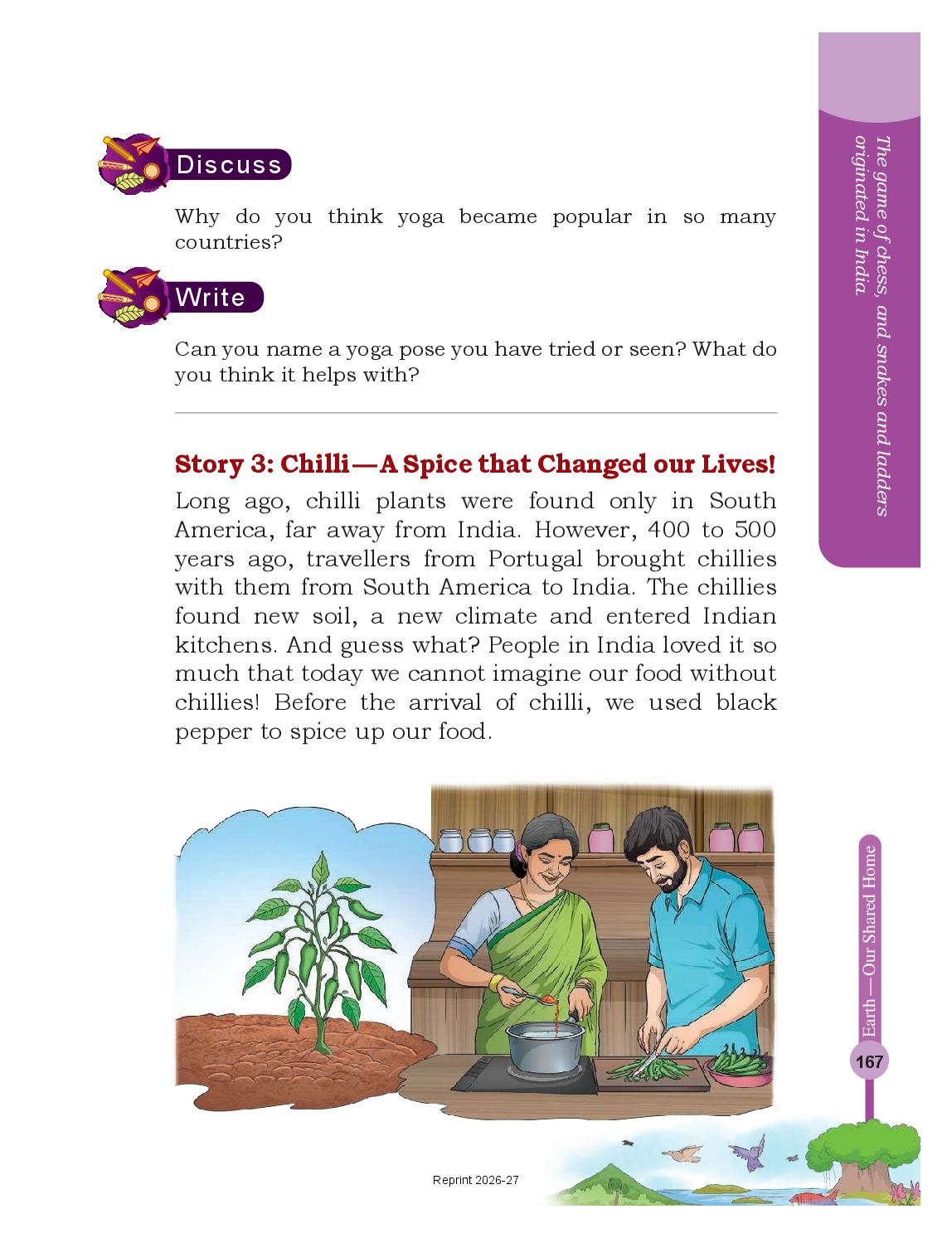
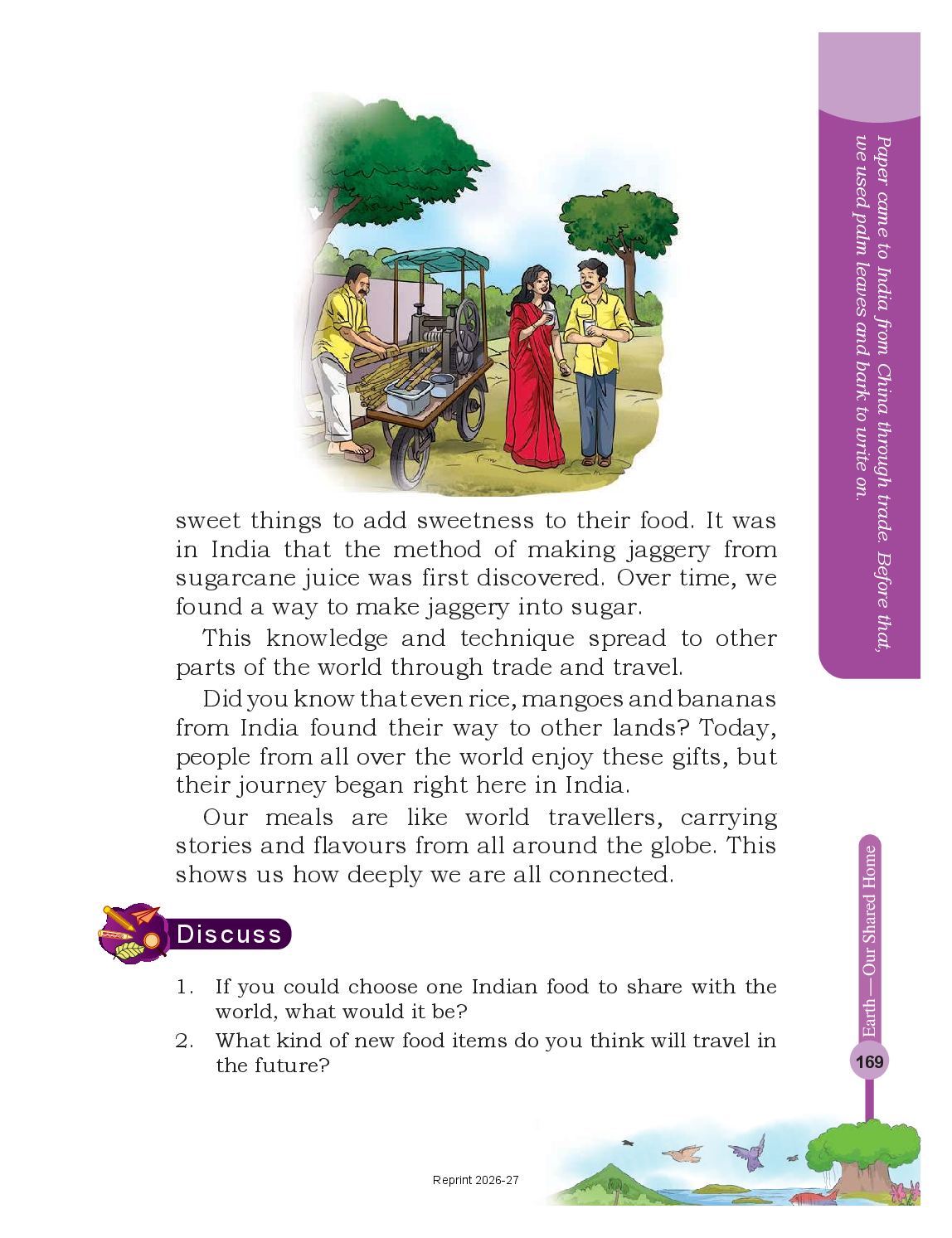
- Stories 3 and 4 — chilli came in, sugar went out. Chilli plants grew only in South America. About 400 to 500 years ago Portuguese travellers brought chillies to India. Before that we used black pepper to make food hot. Today we cannot imagine our food without chilli. Sugar went the other way. The method of making jaggery from sugarcane juice was first discovered in India, and later we found how to make sugar from jaggery. That knowledge spread out through trade and travel. Rice, mangoes and bananas from India also travelled to other lands.
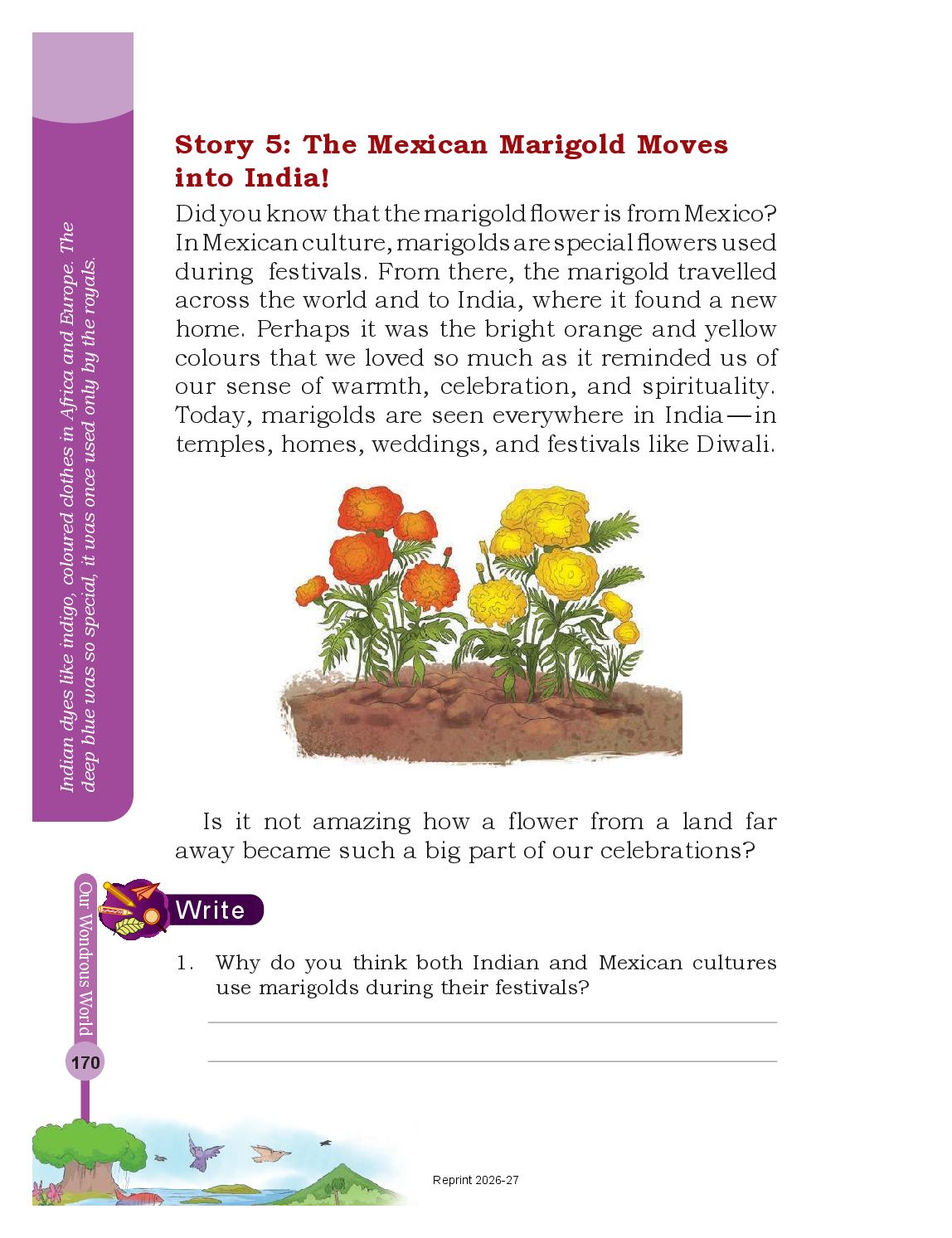
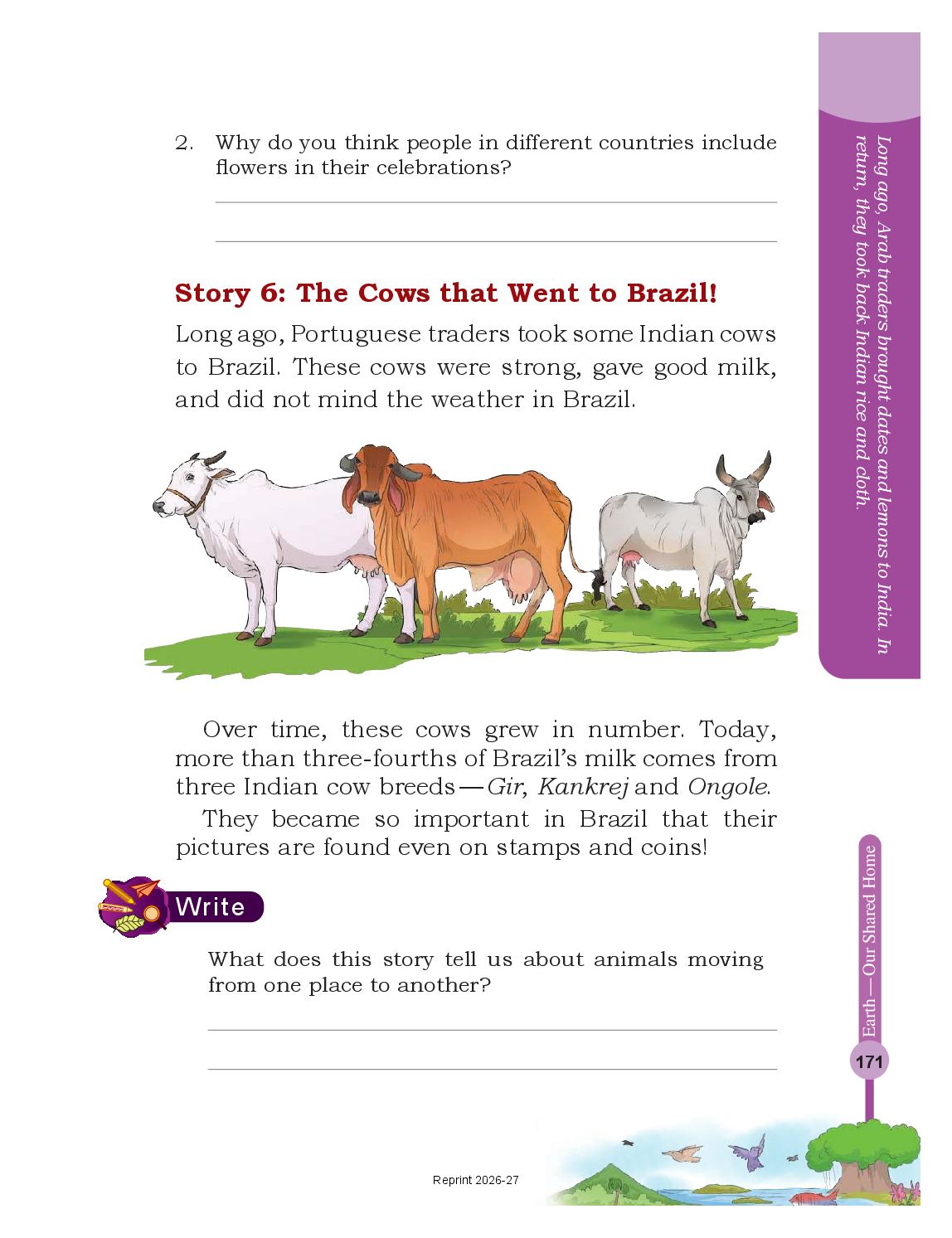
- Stories 5 and 6 — a flower came, some cows went. The marigold is originally from Mexico, where it is a special festival flower. It travelled across the world to India, and its bright orange and yellow now fill our temples, homes, weddings and Diwali. Long ago Portuguese traders took some Indian cows to Brazil. They were strong, gave good milk and did not mind the Brazilian weather. Today more than three-fourths of Brazil’s milk comes from three Indian breeds — Gir, Kankrej and Ongole — and their pictures appear even on Brazilian stamps and coins.
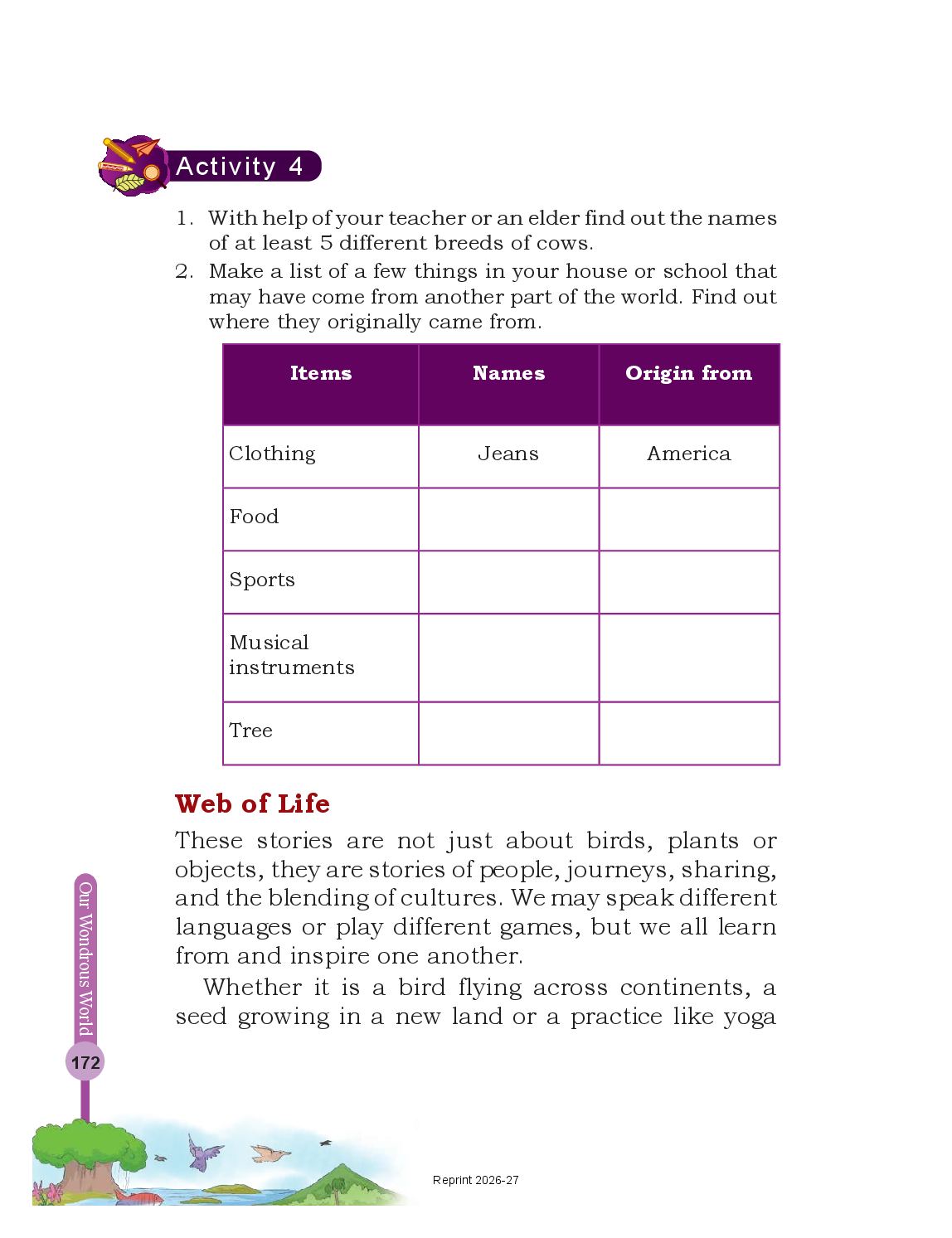
- The Web of Life. These are not really stories about birds, plants and objects. They are stories about people — journeys, sharing and the mixing of cultures. We may speak different languages and play different games, but we learn from one another all the time. The Earth is more than land and water; it is a living web of life in which people, animals, plants and ideas travel, mix and grow together. Many more things crossed: paper came from China (before that we wrote on palm leaves and bark), Arab traders brought dates and lemons and took back Indian rice and cloth, and Indian indigo dyed clothes in Africa and Europe — that deep blue was once used only by royalty.
Quick revision – Earth-Our Shared Home
| Word | What it means | Where it appears | An everyday example |
|---|---|---|---|
| Blue planet | A name for the Earth, because from space most of it looks blue — that blue is the sea | The Blue Planet, page 161 | The globe in your classroom: the blue parts are water |
| Border | A line people have drawn to show where one country or state ends and the next begins | Page 163 | The line between two states on a map of India |
| Address | Where you live, written from the smallest part to the biggest | Activity 1, page 162 | House number, street, village, district, state, country, planet |
| DIGIPIN | A 10-character digital code that names one small place in India | Do you know?, page 163 | A ‘name tag’ that helps an ambulance find your house |
| Migratory bird | A bird that flies to another country for one season and returns later; the Hindi edition calls this story प्रवासी पक्षी | Story 1, page 164 | Rosy starlings that come to India every winter |
| Rosy starling | A pink-and-black bird that comes to India in winter in huge flocks and eats crop pests | Story 1, page 164 | A flock swirling over a field like a cloud of smoke |
| Pest | An insect or animal that damages crops | Story 1, page 164 | Locusts and grasshoppers in a wheat field |
| Yoga | An old Indian practice of postures and breathing that keeps the body healthy and the mind calm | Story 2, page 166 | Doing Tadasana in the school ground on 21 June |
| Trade | Buying and selling between places, which also carries seeds, food and ideas from one land to another | Story 4, page 169 | Spices going out from India and paper coming in from China |
| Jaggery (gur) | Sweet solid food made by boiling sugarcane juice; India discovered it first, and later made sugar from it | Story 4, page 169 | Gur eaten with roti in winter |
| Breed | A kind of animal of the same sort that shares looks and qualities | Story 6, page 171 | Gir, Kankrej and Ongole are three breeds of Indian cow |
| Web of life | The idea that people, animals, plants and ideas are all joined to one another | Web of Life, page 172 | The bird eats the pest, the crop is saved, we get food |
| Vasudhaiva Kutumbakam | An old Indian saying meaning ‘the world is one family’ | One Earth, One Family!, page 173 | Treating a stranger the way you treat a cousin |
Old NCERT vs New – Class 5 EVS
This chapter is from Our Wondrous World, the new NCERT Class 5 EVS book (NCF-SE 2023, used from 2025-26). It replaced the old book “Looking Around”, so chapter numbers and names differ from older PDFs.
Solutions and All Chapters
Answers to the exercises and the full chapter list of Our Wondrous World:
Earth-Our Shared Home – Overview
| Class | Class 5 |
| Subject | EVS |
| Book | Our Wondrous World – new NCERT book |
| Chapter | 10 of 10 – Earth-Our Shared Home |
| Book pages | 161 – 176 |
| Edition | NCERT Reprint 2026-27 |
| Session | 2026-27 |
| Free – read online or download |
Class 5 EVS Chapter 10 – FAQs
Where can I download Earth-Our Shared Home Class 5 PDF?
From the download table on this page – the chapter PDF is free, and the full book is linked too.
What is Class 5 EVS Chapter 10 about?
From space, the Earth has no lines on it. Group Captain Shubhanshu Shukla, the first Indian to reach the International Space Station, said that when he looked at the Earth from outside, it looked completely one — no border, no state, no country was visible. Wing Commander Rakesh Sharma, the first Indian to see the Earth from space, was asked how India looked from up there. He replied, “Saare Jahaan Se Achcha” — the best in the entire world. From that height you cannot even see your own city or village. You see only the big shapes of land and the blue of the sea. That is why the Earth is called the blue planet.
Is Earth-Our Shared Home from the new NCERT Class 5 EVS book?
Yes. It is chapter 10 of our wondrous world, the new NCERT Class 5 EVS book for 2026-27.
Is this the latest NCERT edition for 2026-27?
Yes – the PDF is NCERT’s latest edition for the 2026-27 session.
Where are the NCERT Solutions for Class 5 EVS Chapter 10?
Open the NCERT Solutions link above for answers to the exercise questions.