Download The Mystery of Food – NCERT Class 5 EVS Chapter 3 PDF from the new NCERT Class 5 EVS book Our Wondrous World (2026-27). Read the chapter online or download the free PDF. Food spoils because tiny living things grow on it. Disha’s uttapam sat in a closed tiffin box for three days. When she opened it, it smelt bad and had coloured patches. Her brother Aditya told her the patches were mould. Mould is made of thousands…
The Mystery of Food PDF – Chapter 3 of Our Wondrous World
Read the chapter online or download the PDF.
| Chapter | Download | |
|---|---|---|
| Chapter 3 PDF | The Mystery of Food | View PDF |
| Full book | NCERT Class 5 EVS – Our Wondrous World | View Book |
Read Online
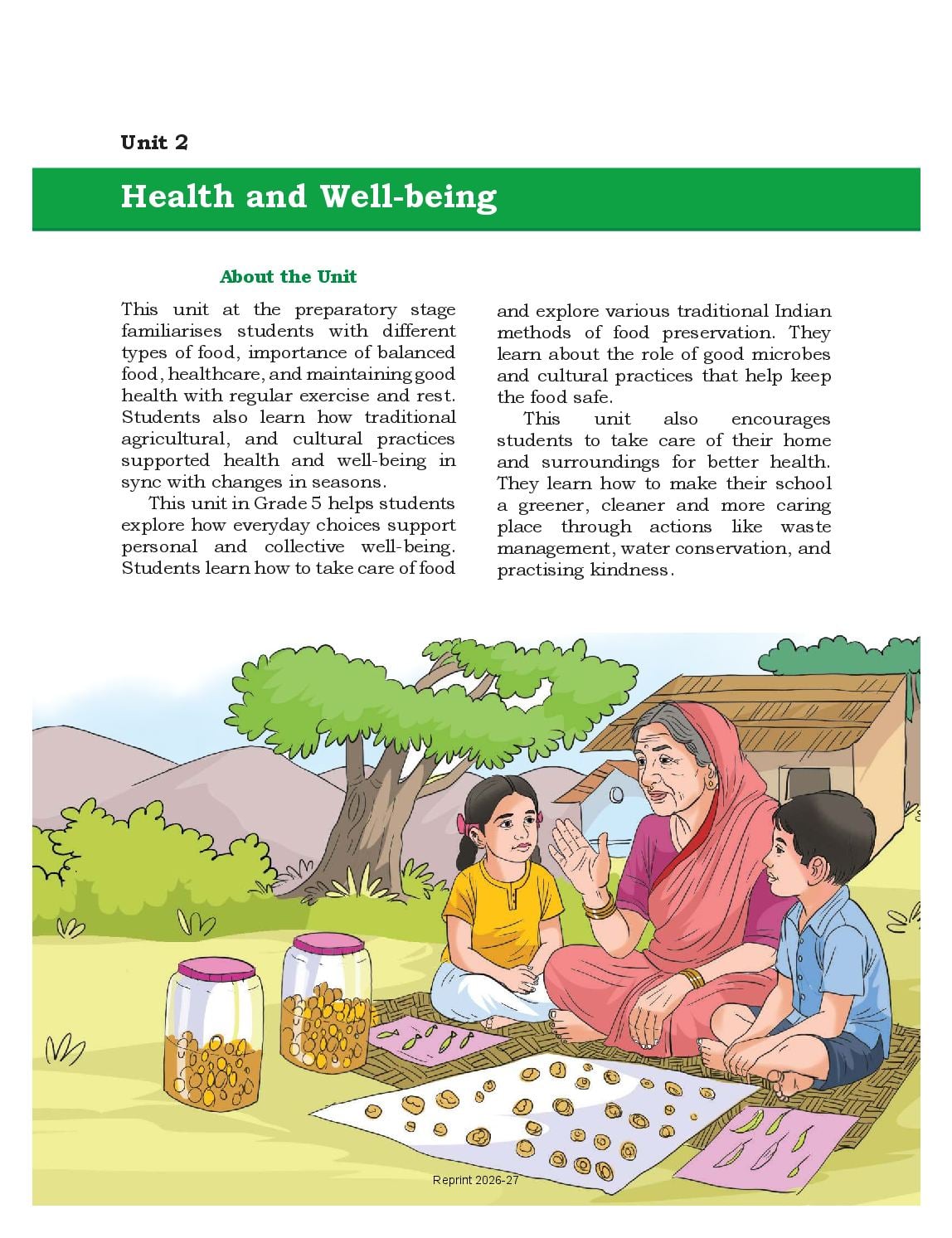
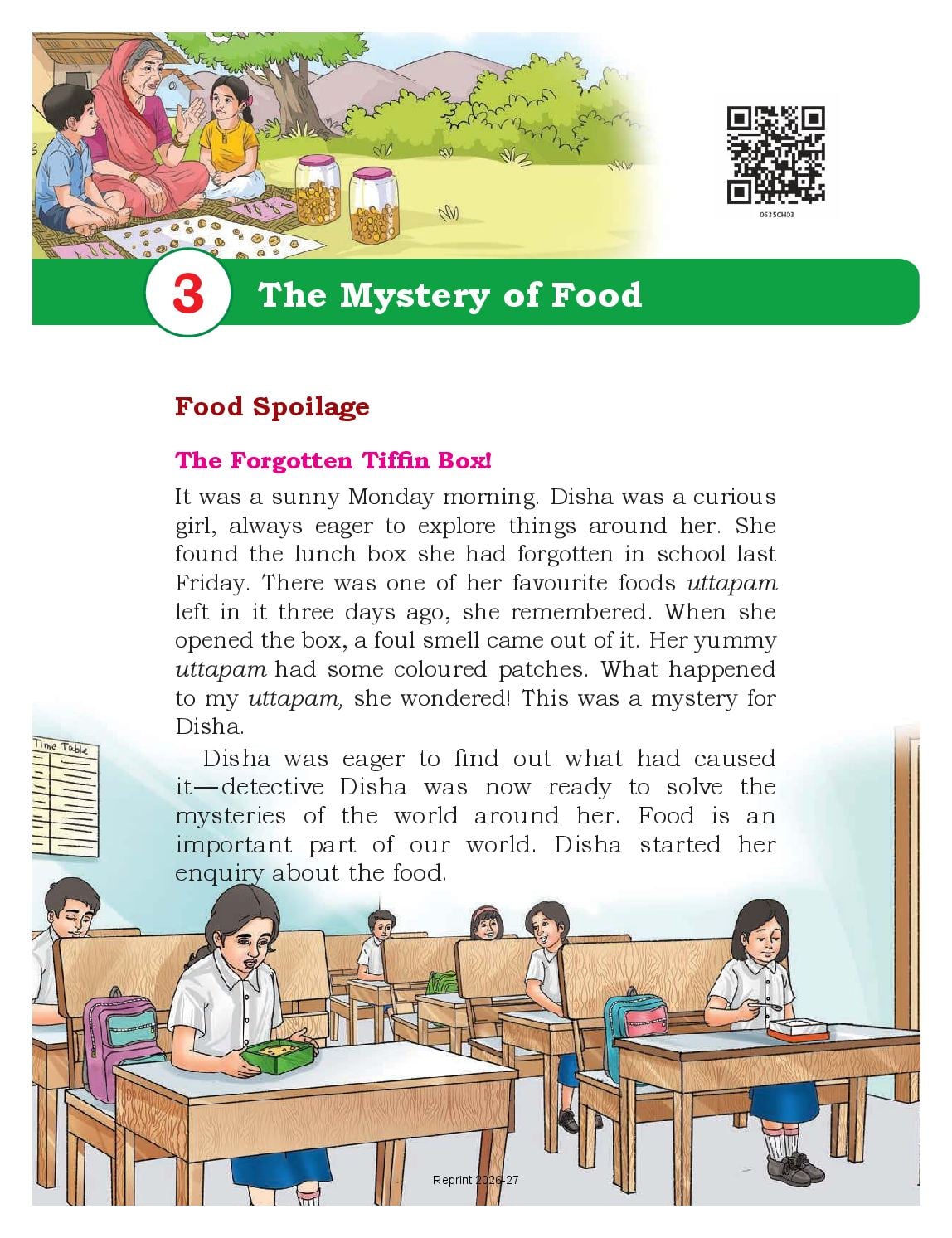
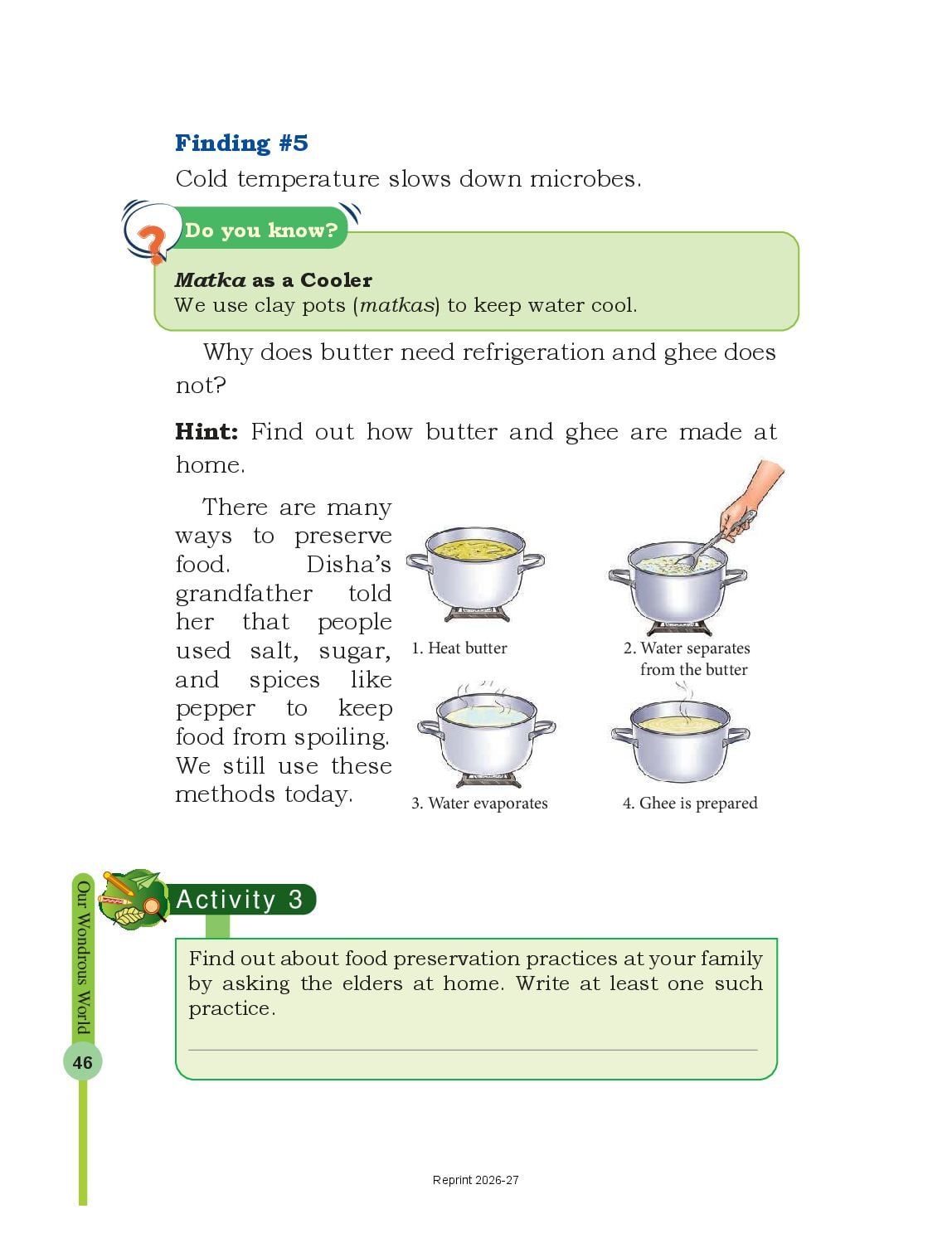
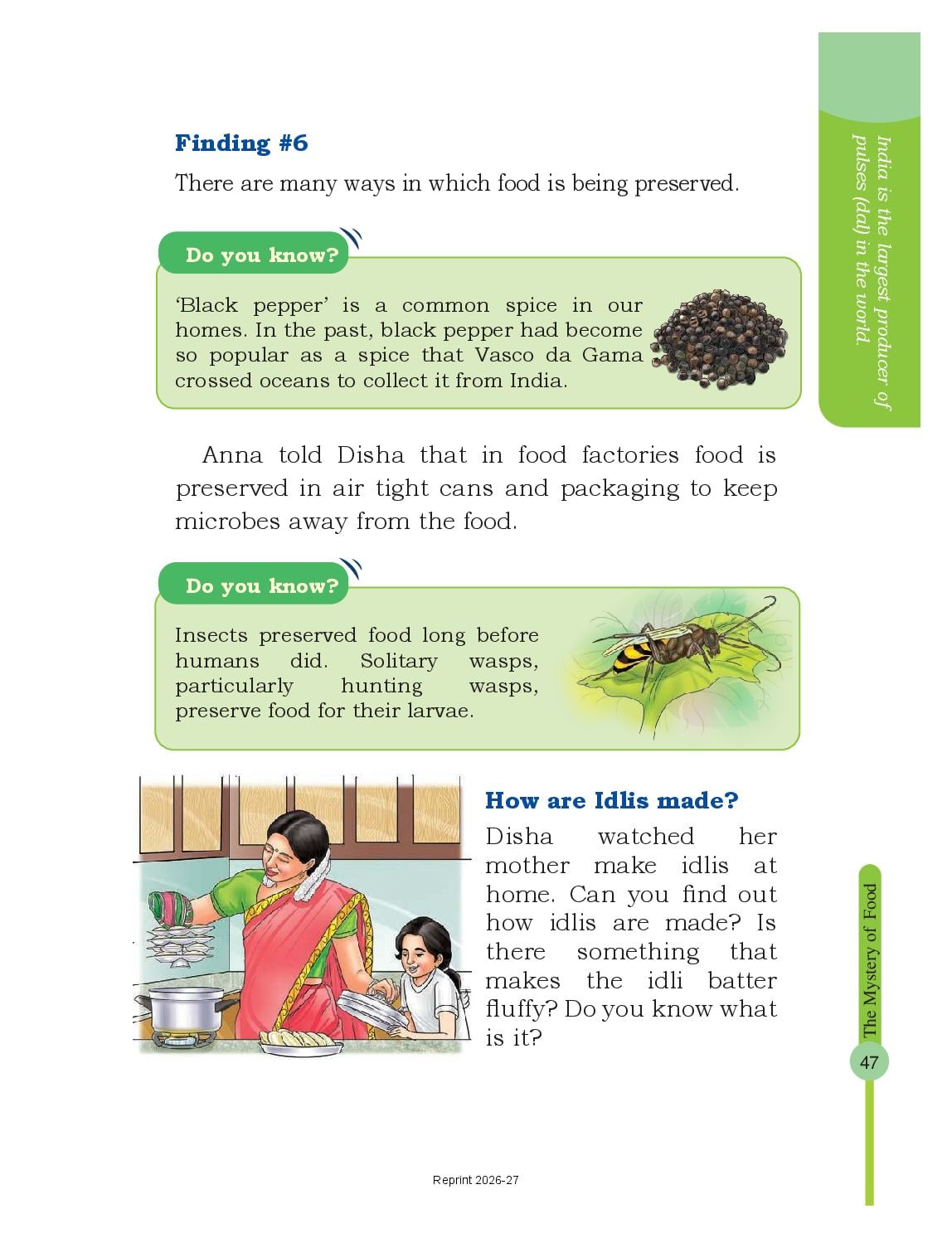
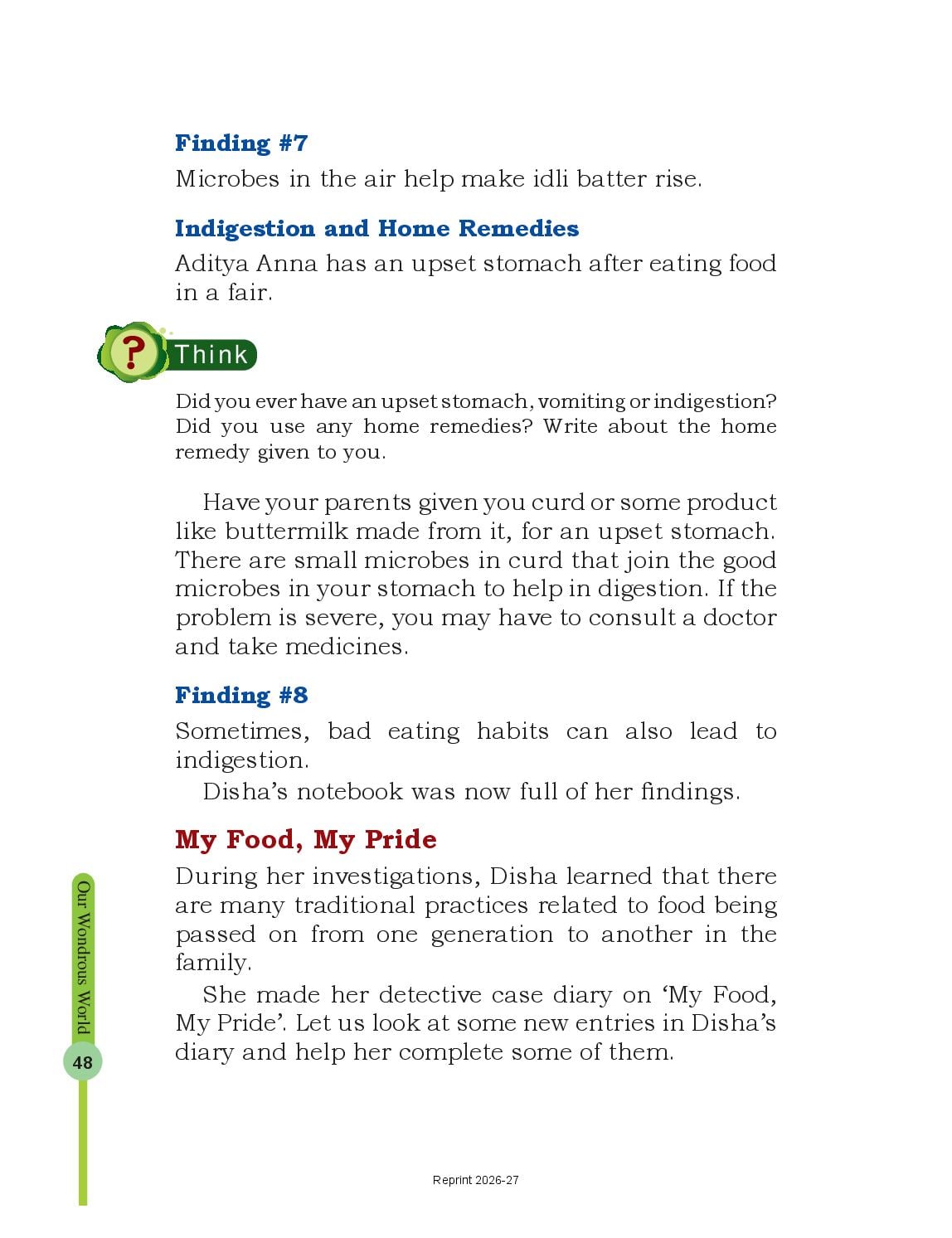
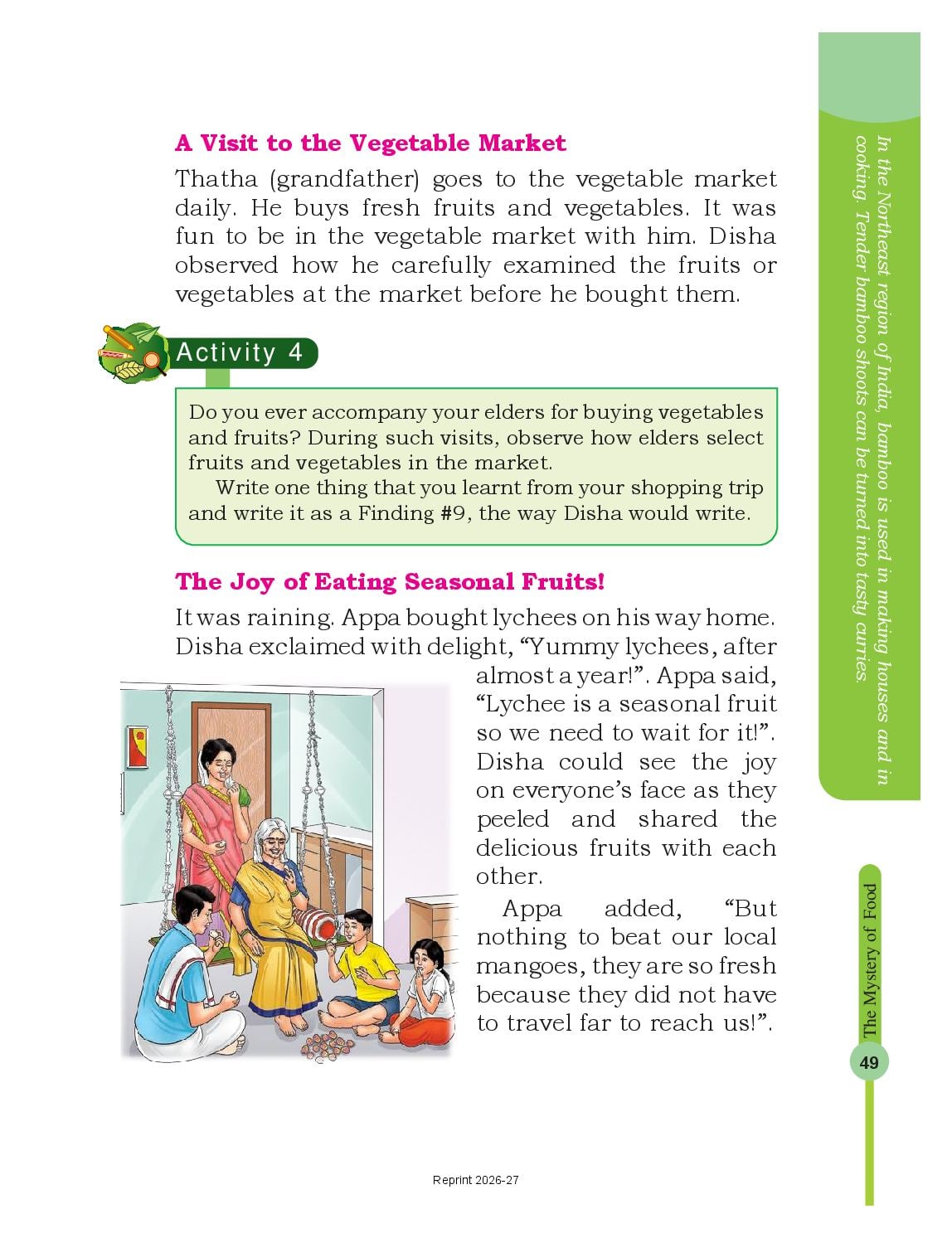
What Is in The Mystery of Food? (Class 5 EVS Chapter 3)
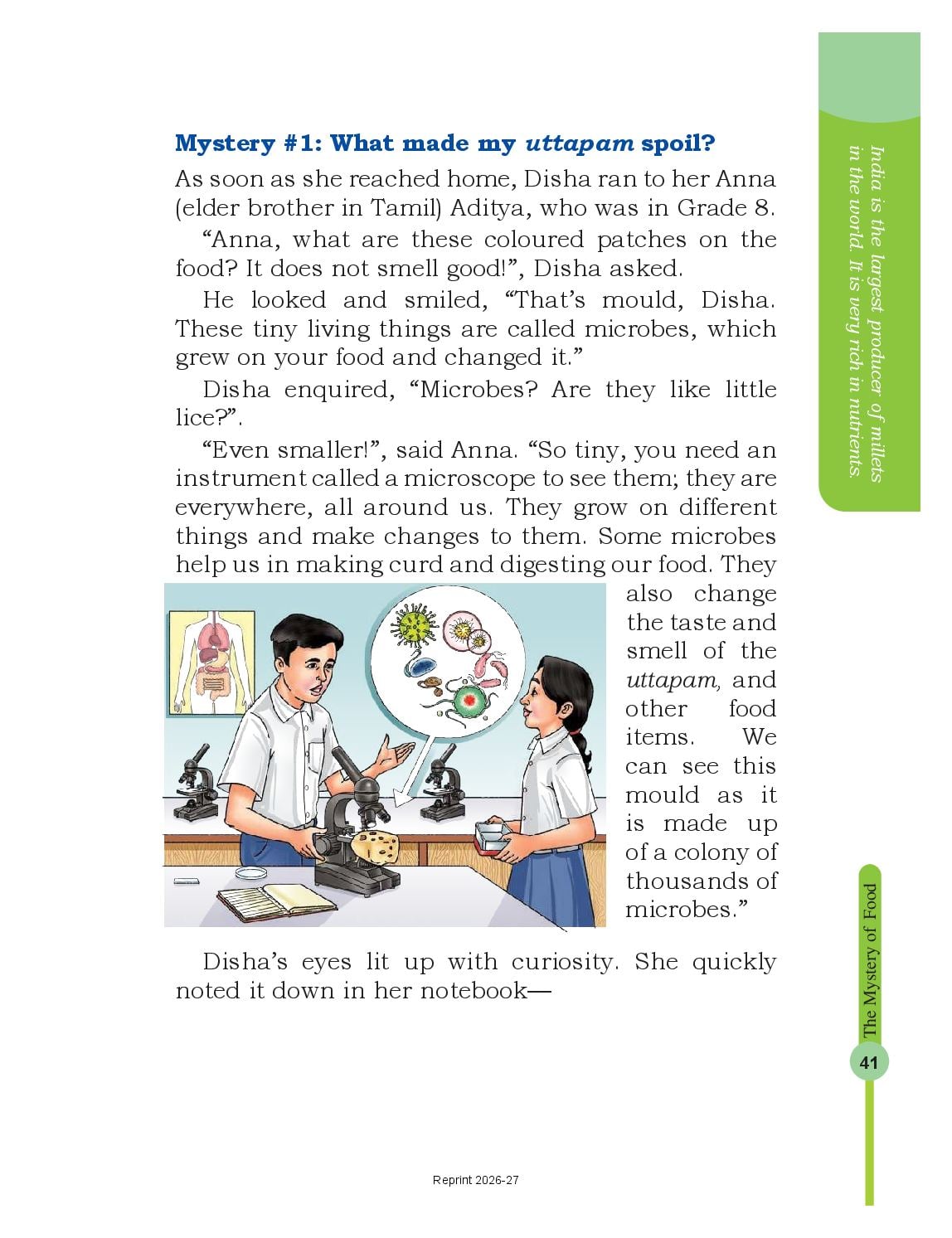
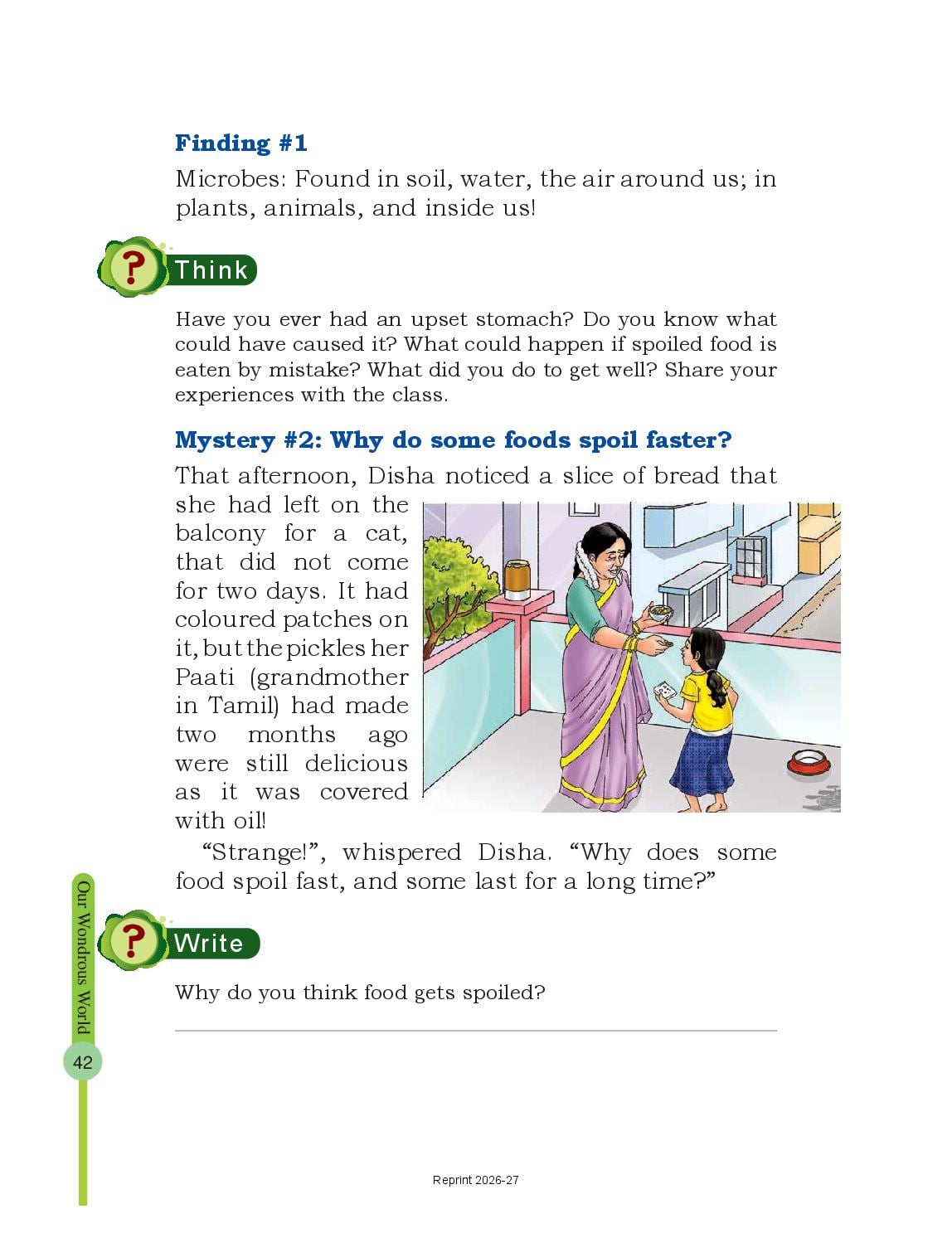
- Food spoils because tiny living things grow on it. Disha’s uttapam sat in a closed tiffin box for three days. When she opened it, it smelt bad and had coloured patches. Her brother Aditya told her the patches were mould. Mould is made of thousands of microbes living together. Microbes are living things so small that you need a microscope — a special instrument that makes tiny things look big — to see even one of them.
- Microbes are everywhere. They live in the soil, in water, in the air around us, on plants, on animals, and inside our own bodies. That is Finding #1 in Disha’s notebook. Not all of them are harmful. Some spoil our food. Others are good microbes — they turn milk into curd, make idli batter fluffy, and help our stomach digest what we eat.
- Microbes need three things to grow: moisture, air and the right temperature. Moisture means the water present in a food. If we take away even one of these three, the microbes cannot grow, and the food stays safe for much longer. Every method of preserving food works on this one simple idea.
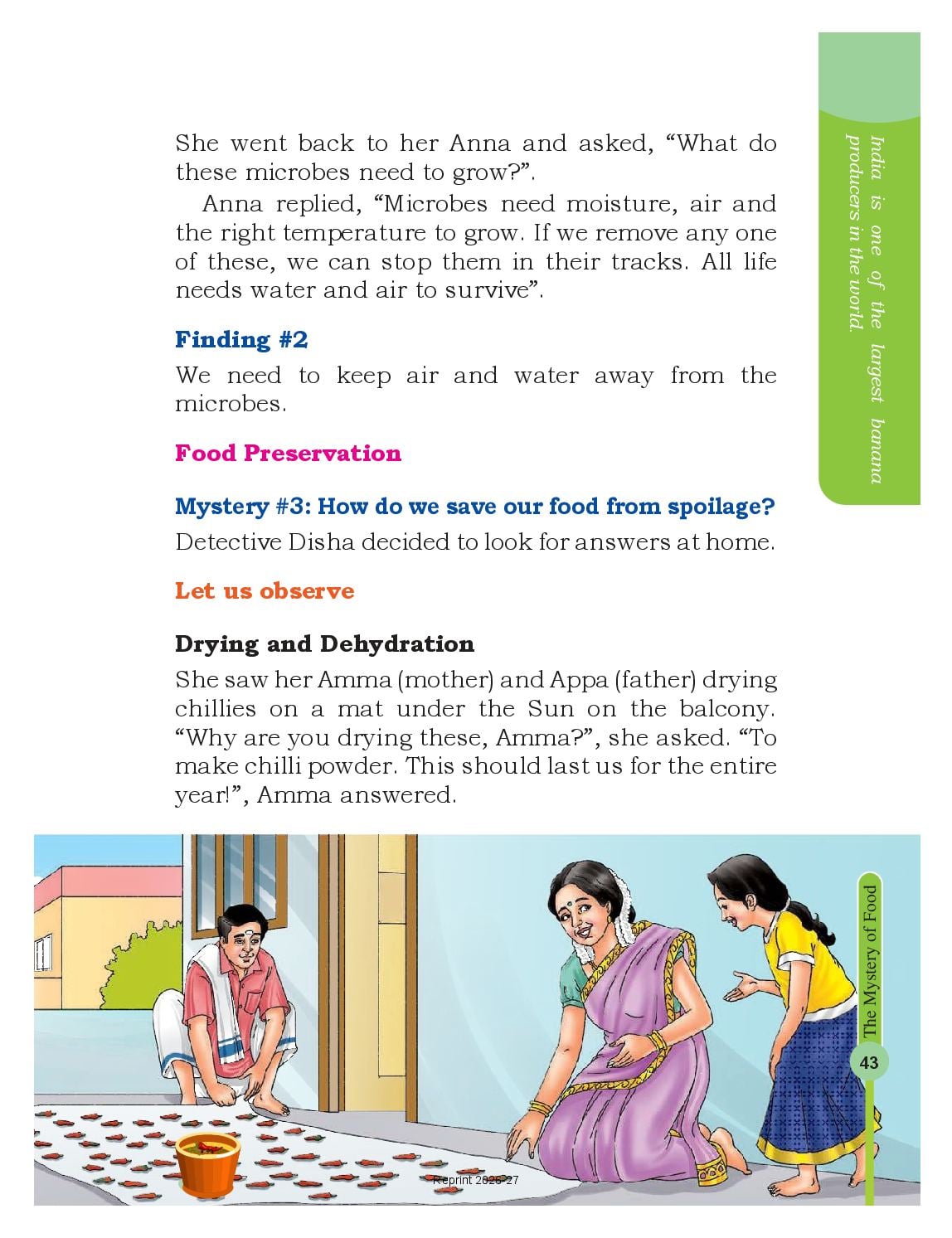
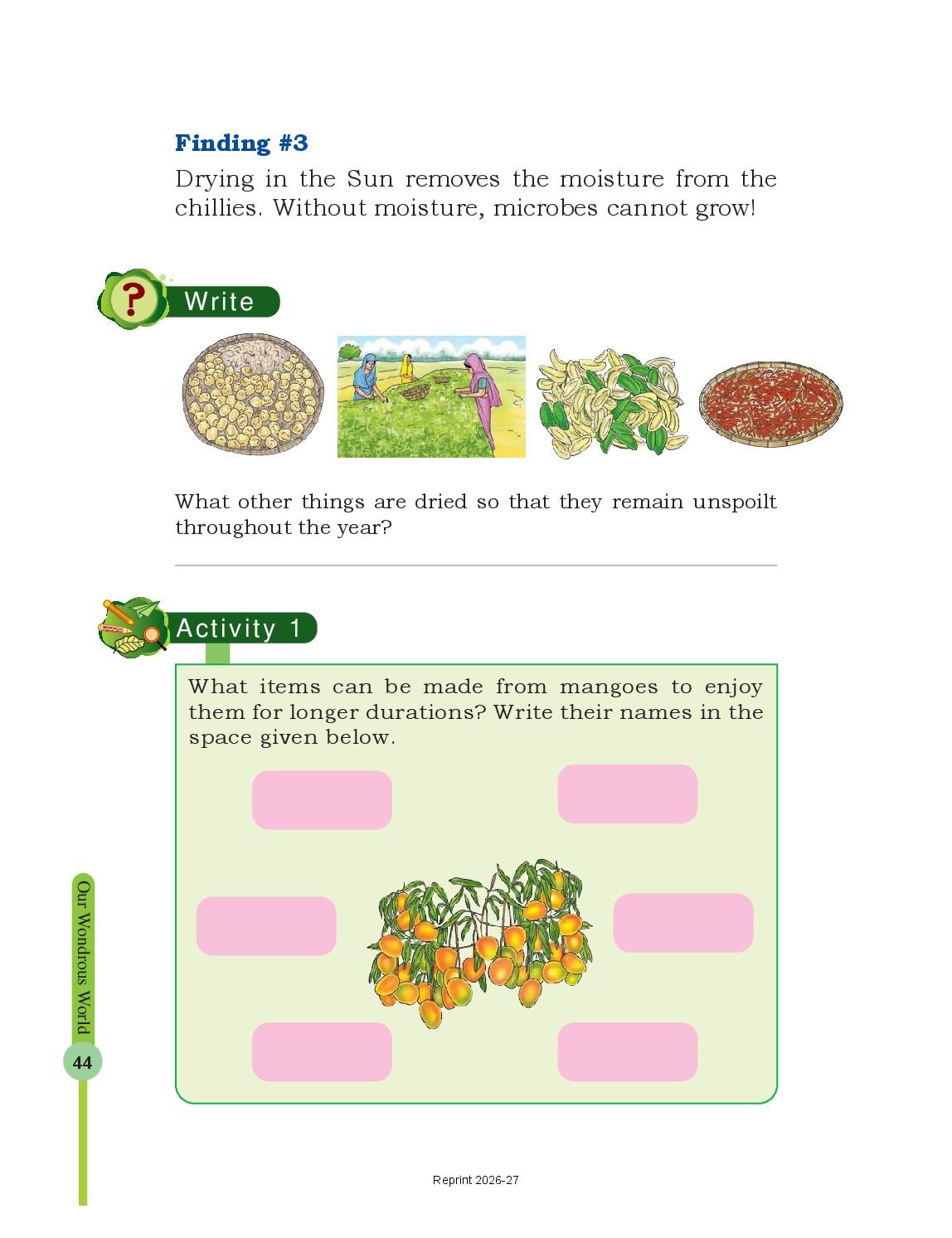
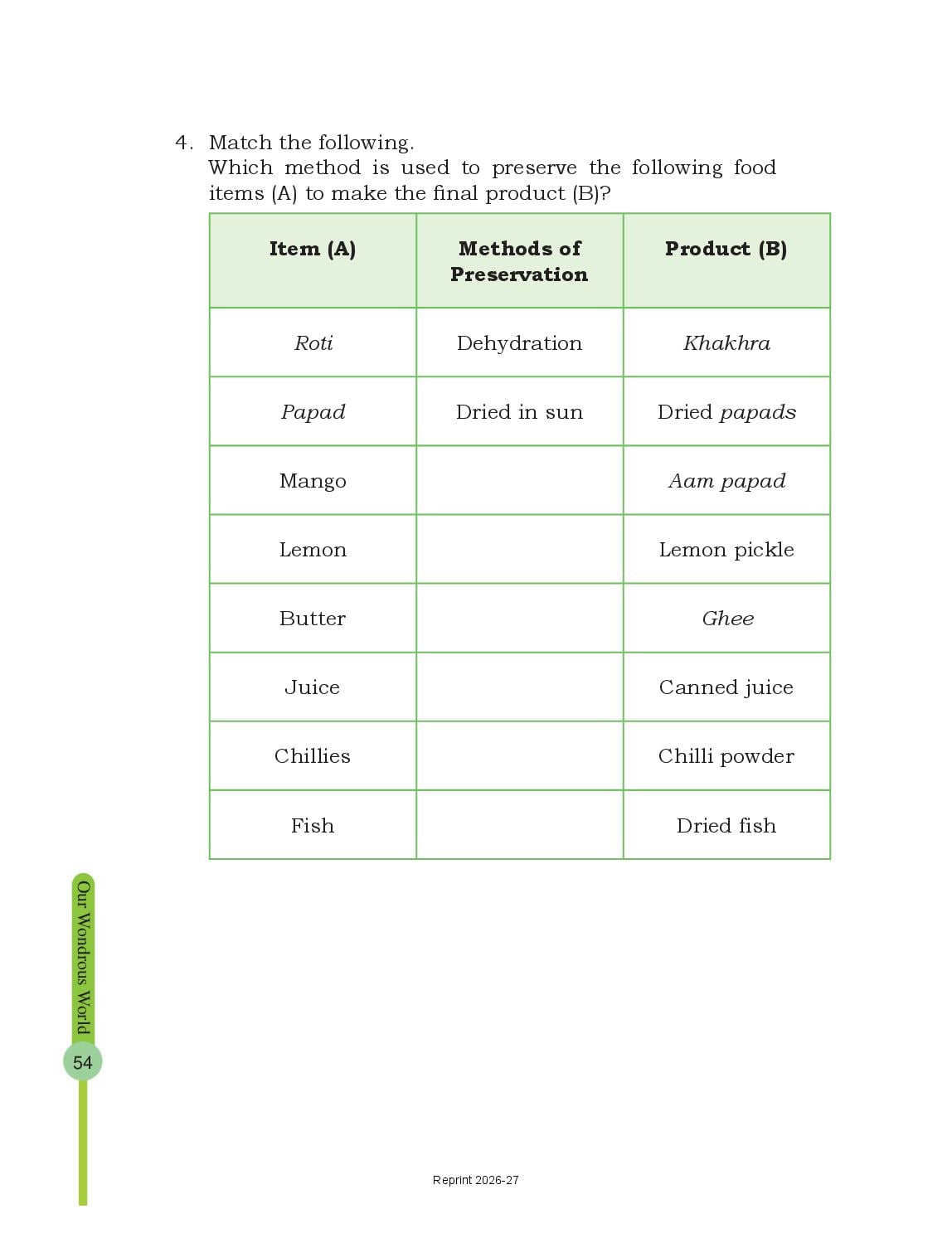
- Drying takes the water away. Disha saw her Amma and Appa drying chillies in the Sun on a mat. Dried chillies are ground into chilli powder that lasts the whole year. In the same way we sun-dry papads, badis, aam papad, fish, and many vegetables. This is called drying or dehydration.
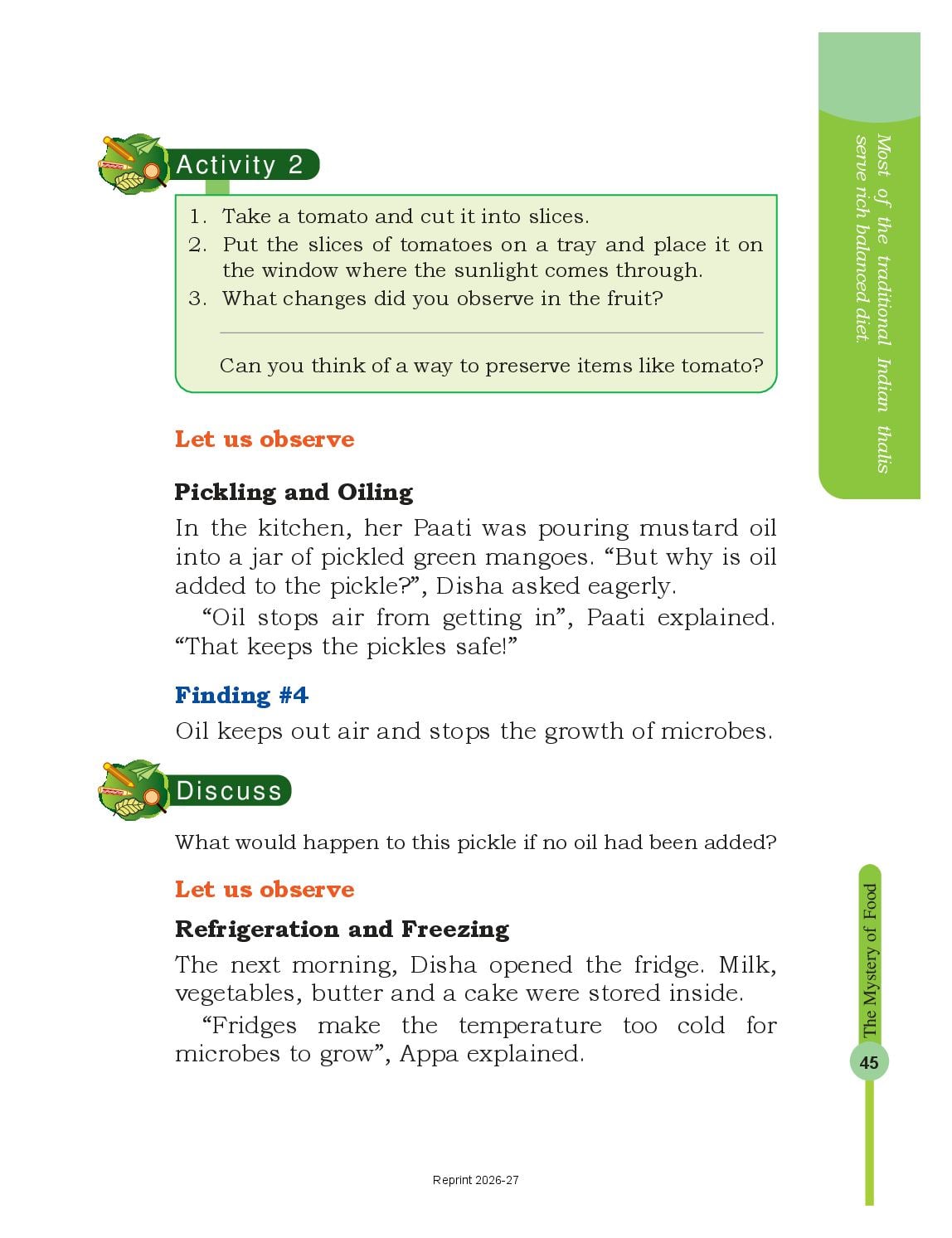
- Oil, cold and airtight packing keep microbes out. Paati poured mustard oil over her pickled green mangoes — the oil sits on top and stops air from reaching the pickle. A fridge keeps food so cold that microbes work very slowly, so milk, vegetables and butter stay fresh. In food factories, food is sealed in airtight cans and packets so no air can get in at all. Long ago people also used salt, sugar and spices like black pepper. We still do.
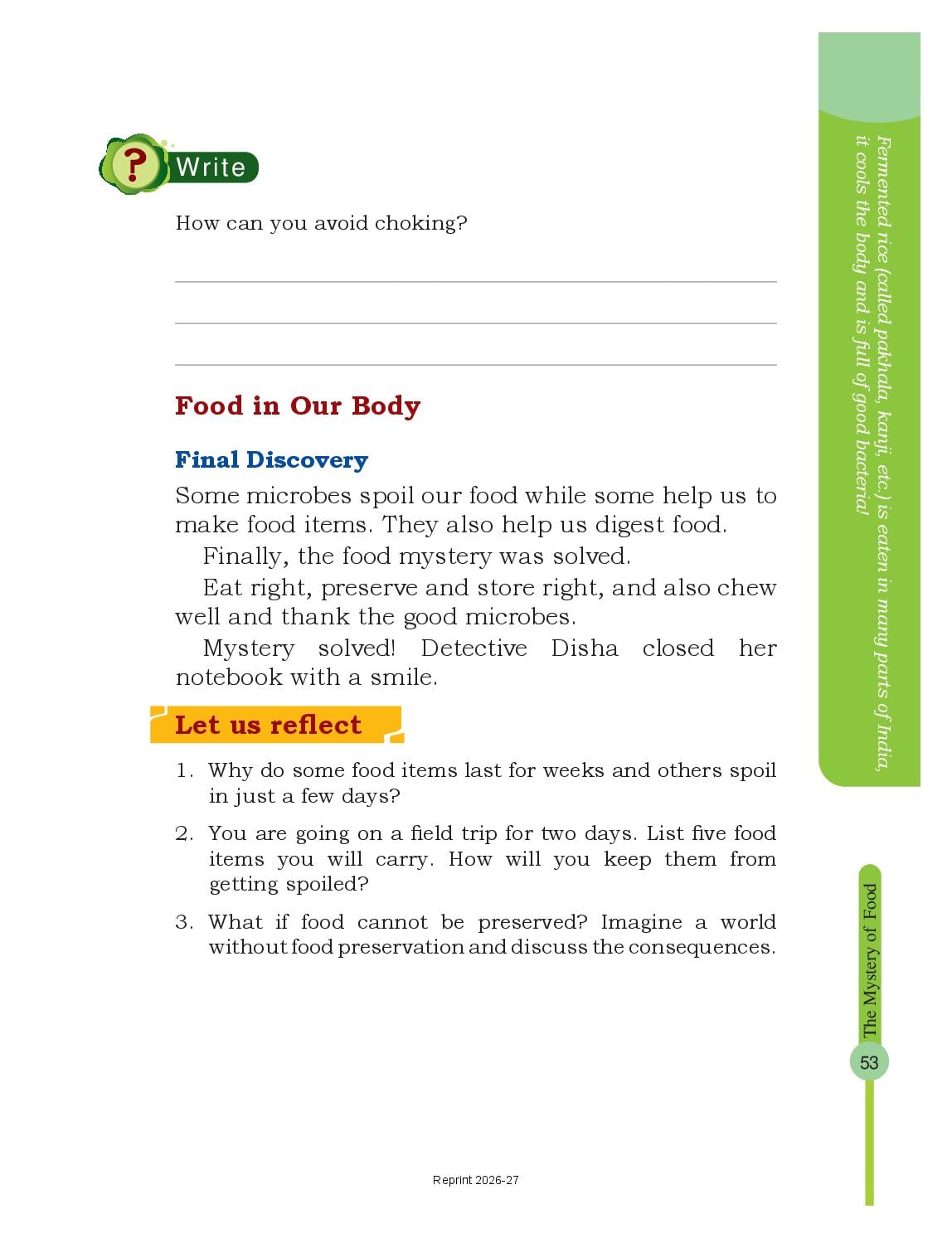
- Good microbes make food for us. Idli batter rises and becomes fluffy because microbes from the air work in it overnight — that is Finding #7. Curd is made by microbes too, and the microbes in curd join the good microbes in our stomach and help digestion. Fermented rice — called pakhala in Odisha, kanji elsewhere — is eaten in many parts of India; it cools the body and is full of good bacteria.
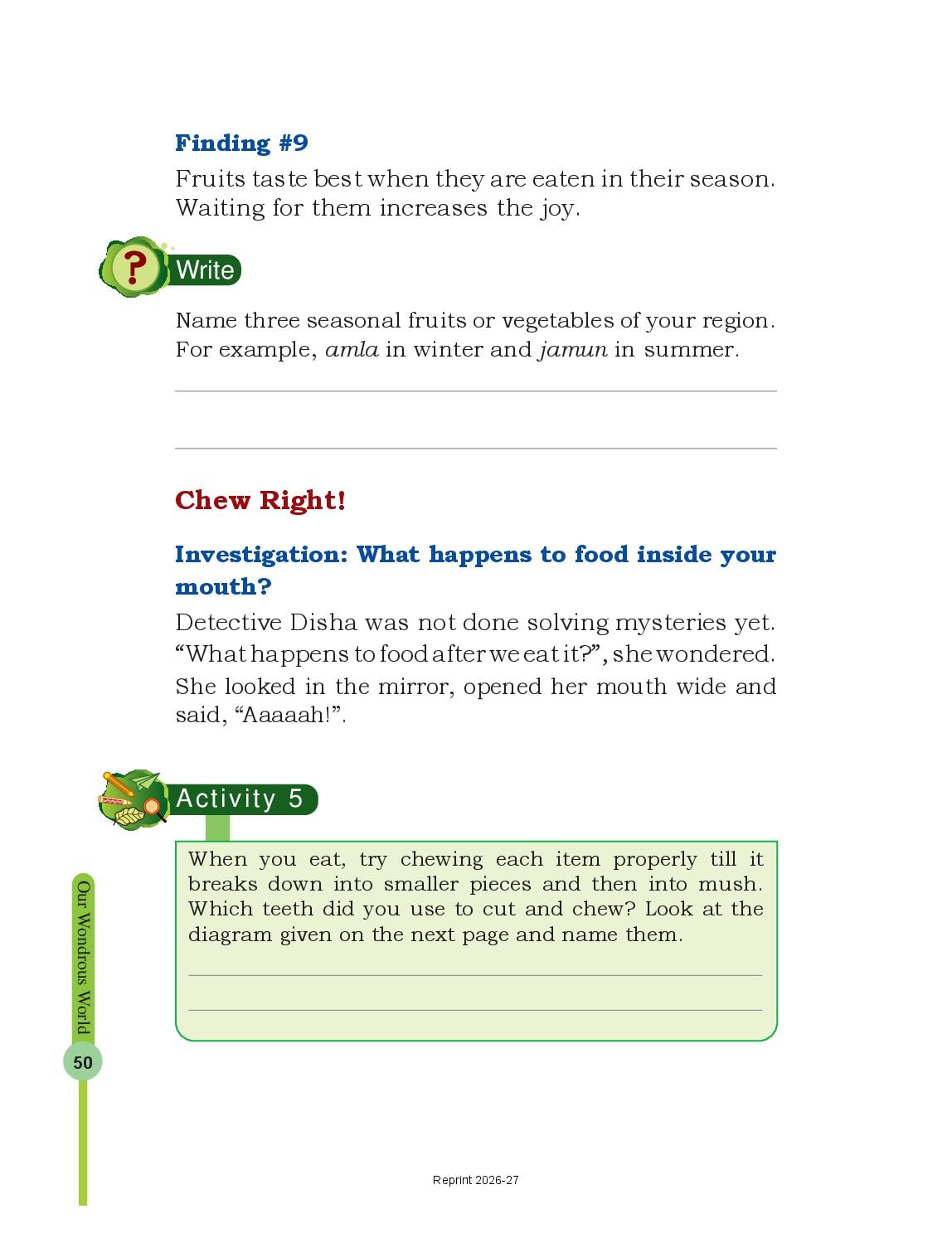
- Buy fresh, eat seasonal, eat local. Disha’s Thatha checks each fruit and vegetable carefully before buying it. Appa brought lychees in the rains and said we must wait for a seasonal fruit — waiting makes the joy greater. He also said local mangoes taste fresher, because they do not have to travel far to reach us.
- Eating a variety of foods keeps a growing body strong. India is the world’s largest producer of millets and of pulses (dal), and one of the largest producers of bananas. A traditional Indian thali puts many different foods on one plate — grain, dal, vegetables, curd, a pickle — and in the North-East, tender bamboo shoots are cooked into tasty curries. Different foods do different jobs for the body, so eating enough of many kinds is what helps you grow, play and think well.
Quick revision – The Mystery of Food
| Word | What it means | Where it appears | An everyday example |
|---|---|---|---|
| Microbe | A living thing so tiny that you need a microscope to see it | Mystery #1, page 41 | The green-black growth on an old roti |
| Mould | A patch made of thousands of microbes growing together on food | Page 41 | Coloured furry patches on stale bread |
| Spoilage | Food going bad — its colour, smell and taste change and it is not safe to eat | Food Spoilage, page 40 | The uttapam left in the tiffin box for three days |
| Moisture | The water present inside a food | Finding #2, page 43 | The wetness you feel inside a fresh chilli |
| Drying / Dehydration | Taking the water out of a food, usually by keeping it in the Sun | Finding #3, page 44 | Chillies dried on a mat to make chilli powder |
| Pickling | Keeping food in salt, spices and oil so that air cannot reach it | Pickling and Oiling, page 45 | Paati’s jar of mango pickle |
| Refrigeration | Keeping food cold in a fridge so that microbes grow very slowly | Refrigeration and Freezing, page 45 | Milk and vegetables in the fridge |
| Freezing | Making food so cold that it turns hard, and microbes stop growing | Page 45 | Peas kept in the freezer |
| Airtight | Sealed so tightly that no air can get in | Page 47 | A sealed can of juice |
| Fermentation | Good microbes working in food and changing it — making it sour, soft or fluffy | Finding #7, page 48 | Idli batter rising overnight |
| Good microbes | Microbes that help us make food and help us digest it | Page 48 | The microbes in curd and buttermilk |
| Seasonal fruit | A fruit that grows only in one season of the year | Finding #9, page 50 | Lychee in the rains, amla in winter |
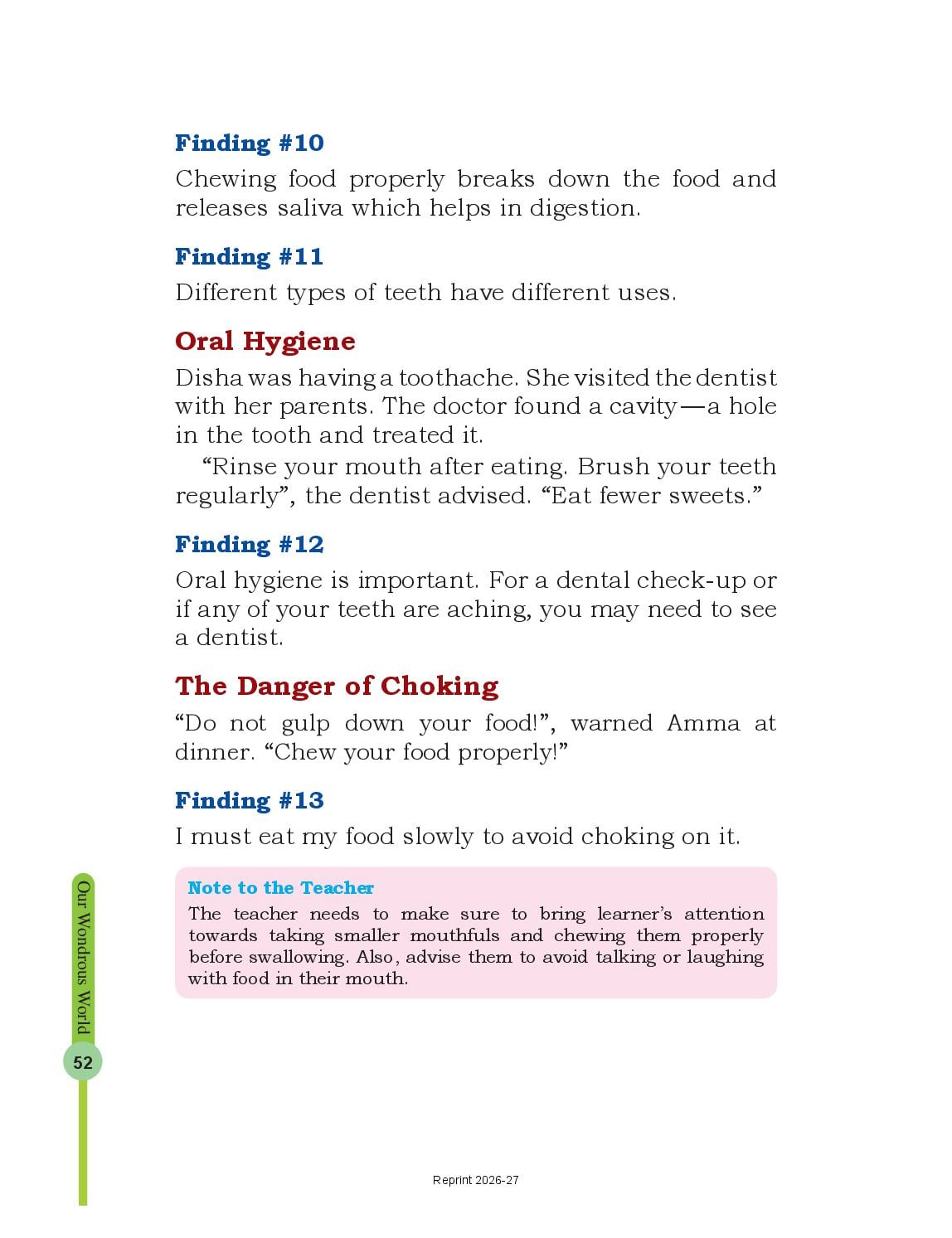
| Saliva | The watery juice made in the mouth; it wets food and starts digesting it | Finding #10, page 52 | Your mouth watering at the smell of food |
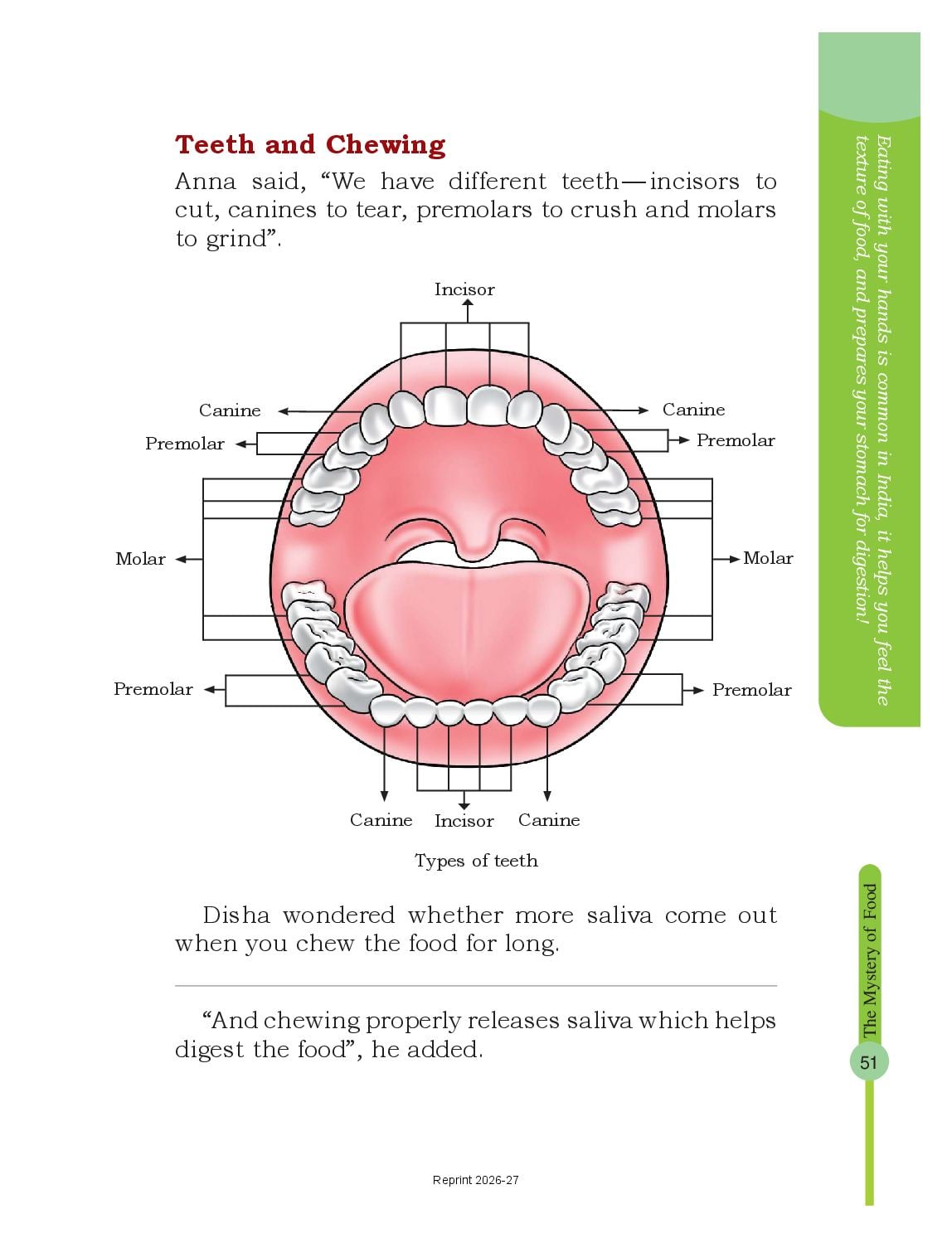
| Types of teeth | Incisors cut, canines tear, premolars crush, molars grind | Types of teeth, page 51 | Biting a guava with the front teeth |
Old NCERT vs New – Class 5 EVS
This chapter is from Our Wondrous World, the new NCERT Class 5 EVS book (NCF-SE 2023, used from 2025-26). It replaced the old book “Looking Around”, so chapter numbers and names differ from older PDFs.
Solutions and All Chapters
Answers to the exercises and the full chapter list of Our Wondrous World:
The Mystery of Food – Overview
| Class | Class 5 |
| Subject | EVS |
| Book | Our Wondrous World – new NCERT book |
| Chapter | 3 of 10 – The Mystery of Food |
| Book pages | 40 – 54 |
| Edition | NCERT Reprint 2026-27 |
| Session | 2026-27 |
| Free – read online or download |
Class 5 EVS Chapter 3 – FAQs
Where can I download The Mystery of Food Class 5 PDF?
From the download table on this page – the chapter PDF is free, and the full book is linked too.
What is Class 5 EVS Chapter 3 about?
Food spoils because tiny living things grow on it. Disha’s uttapam sat in a closed tiffin box for three days. When she opened it, it smelt bad and had coloured patches. Her brother Aditya told her the patches were mould. Mould is made of thousands of microbes living together. Microbes are living things so small that you need a microscope — a special instrument that makes tiny things look big — to see even one of them.
Is The Mystery of Food from the new NCERT Class 5 EVS book?
Yes. It is chapter 3 of our wondrous world, the new NCERT Class 5 EVS book for 2026-27.
Is this the latest NCERT edition for 2026-27?
Yes – the PDF is NCERT’s latest edition for the 2026-27 session.
Where are the NCERT Solutions for Class 5 EVS Chapter 3?
Open the NCERT Solutions link above for answers to the exercise questions.