Download Exploring the Investigative World of Science – NCERT Class 8 Science Chapter 1 PDF from the new NCERT Class 8 Science book Curiosity (2026-27). Read the chapter online or download the free PDF. Grade 6 showed us that science begins with wonder; Grade 7 showed us that science keeps evolving. Grade 8 puts the two together and takes us into the investigative world of science — we no longer only learn new facts, we learn how to find new facts.
Exploring the Investigative World of Science PDF – Chapter 1 of Curiosity
Read the chapter online or download the PDF.
| Chapter | Download | |
|---|---|---|
| Chapter 1 PDF | Exploring the Investigative World of Science | View PDF |
| Full book | NCERT Class 8 Science – Curiosity | View Book |
Read Online
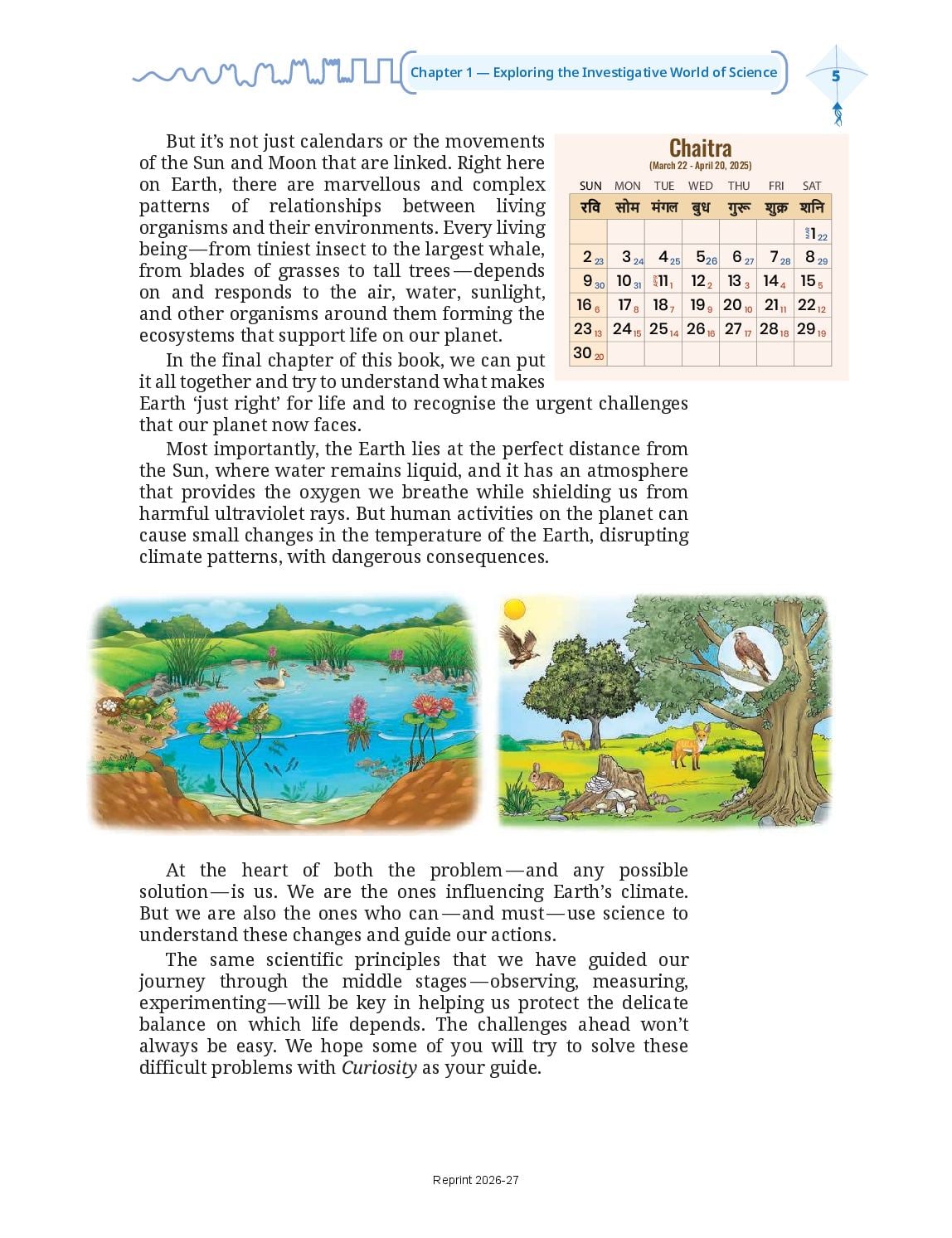
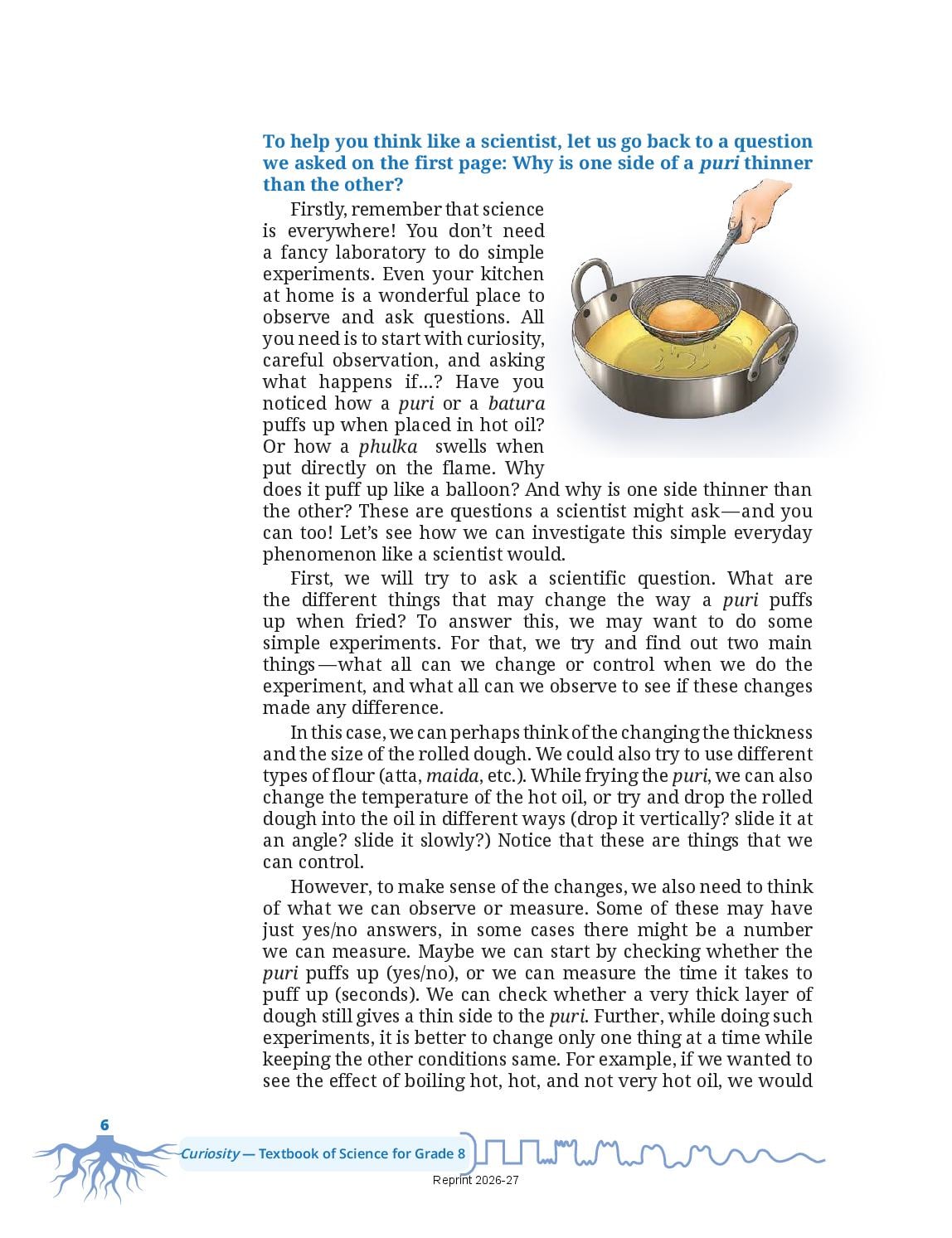
What Is in Exploring the Investigative World of Science? (Class 8 Science Chapter 1)
- Grade 6 showed us that science begins with wonder; Grade 7 showed us that science keeps evolving. Grade 8 puts the two together and takes us into the investigative world of science — we no longer only learn new facts, we learn how to find new facts.
- Investigation means more than looking and asking simple questions. You ask a focused question, design a simple experiment to answer it, and then use your own observations to improve your understanding.
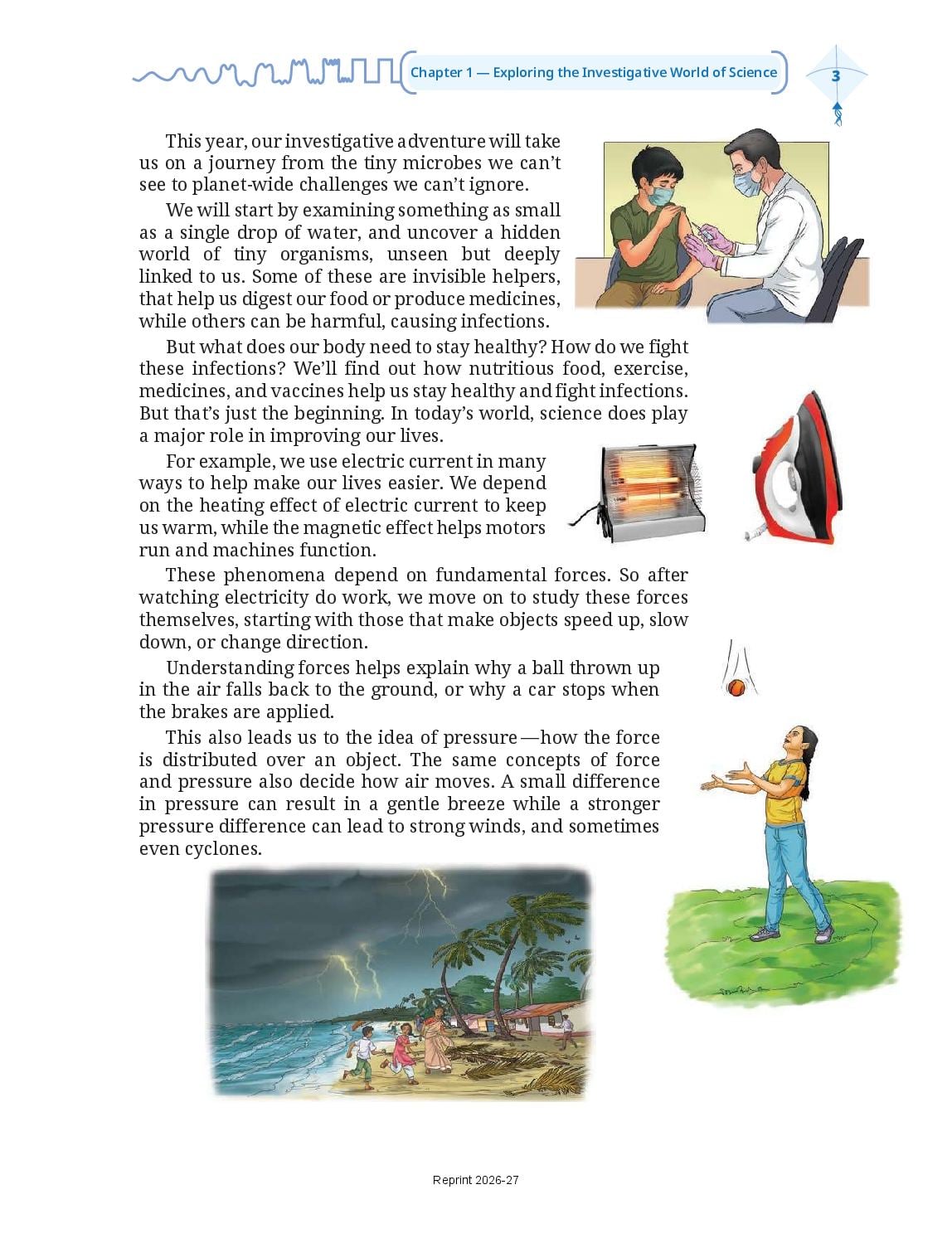
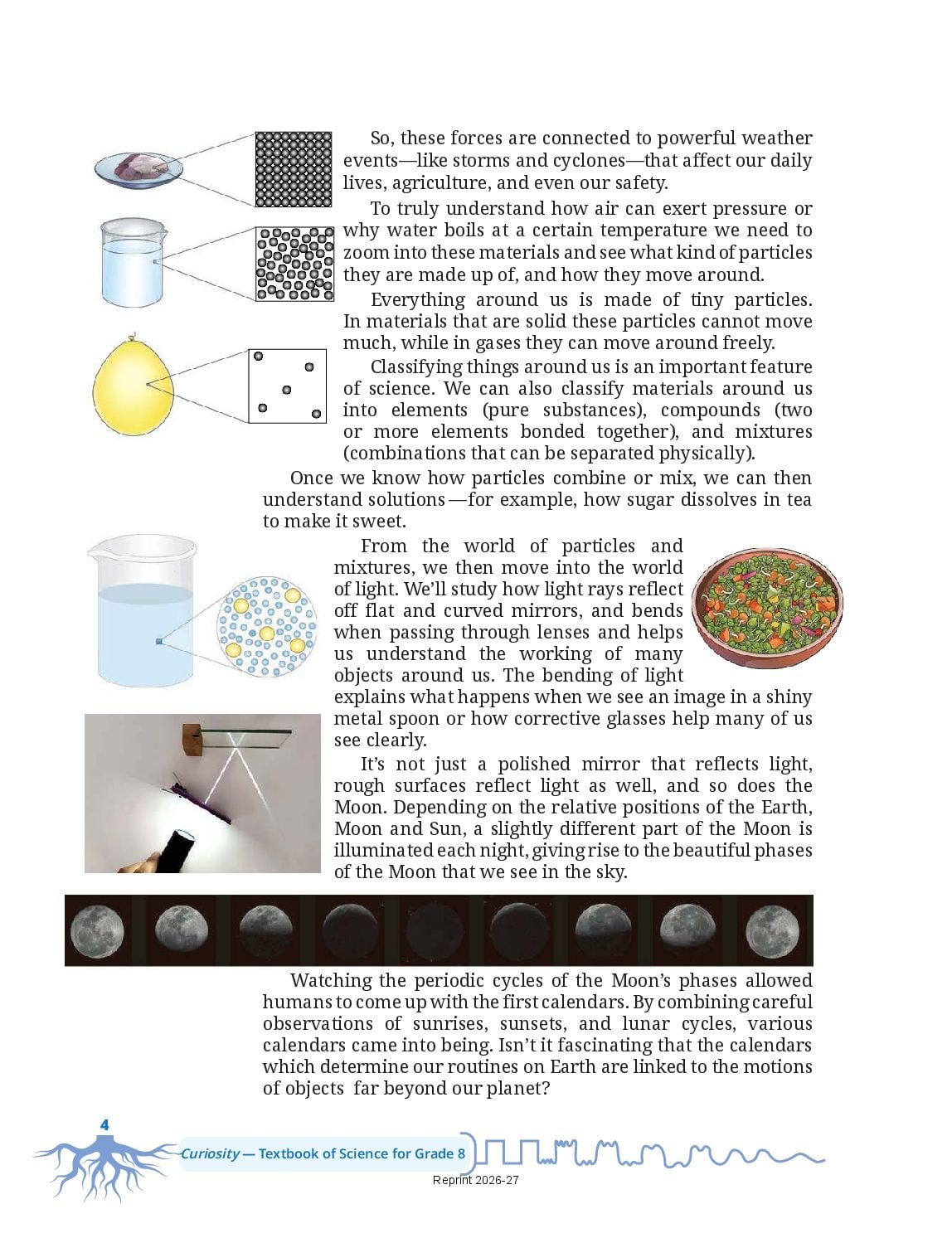
- The chapter is a guided tour of the whole year — microorganisms in a drop of water, staying healthy with food, exercise, medicines and vaccines; the heating and magnetic effects of electric current; force, pressure, winds and cyclones; the particles that make up matter; elements, compounds, mixtures and solutions; reflection, mirrors and lenses; the phases of the Moon and the calendars built from them; ecosystems; and finally what makes Earth ‘just right’ for life.
- You do not need a fancy laboratory. Your kitchen will do. All you need is curiosity, careful observation, and the habit of asking “what happens if…?”
- The method the chapter teaches with the puri: ask a scientific question → list what you can change or control and what you can observe or measure → change only one thing at a time → write down everything you see, smell and hear → let the results raise new questions.
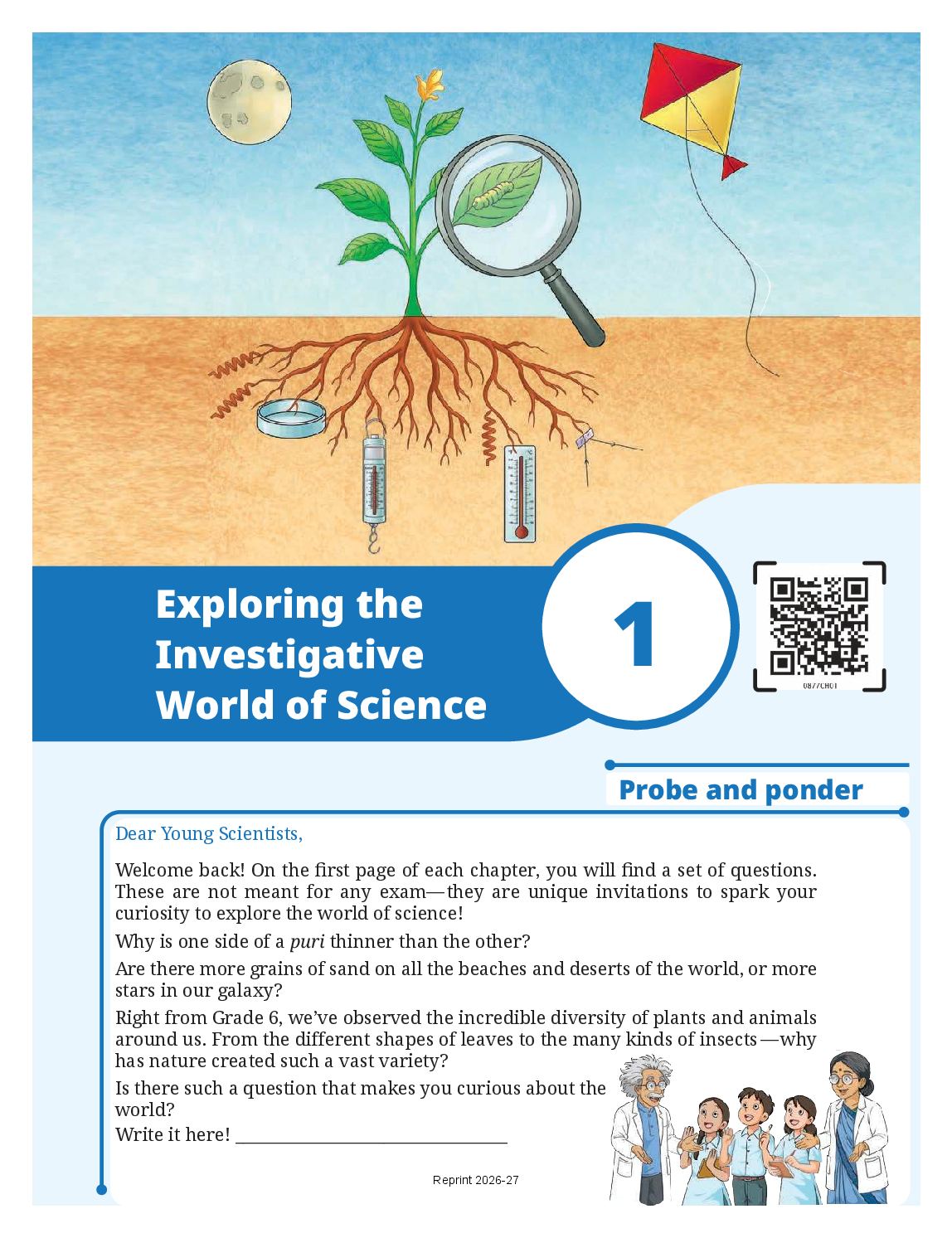
- The root at the bottom of every left-hand page and the kite at the top of every right-hand page are the chapter’s message in a picture: stay grounded in real observation, and let your ideas take flight. And remember — even the puffing of a puri is not completely understood by scientists today.
Quick revision – Exploring the Investigative World of Science
| Term | What it means | Where it comes in the chapter | Everyday example |
|---|---|---|---|
| Investigation | A planned way of answering a question — observing, experimenting, explaining — not just looking at something | Pages 2, 7 | Finding out what makes a puri puff |
| Scientific question | A focused question that can actually be tested by an experiment | Page 6 | “What changes the way a puri puffs up when fried?” |
| What we can change or control | The condition you deliberately alter in an experiment | Page 6 | Dough thickness, size, type of flour, oil temperature, way of dropping |
| What we can observe or measure | What you watch, count or time to see whether your change made a difference | Pages 6–7 | Did it puff (yes/no); time taken to puff (seconds) |
| Fair test | Changing only one thing at a time and keeping every other condition the same | Pages 6–7 | Same thickness, same way of dropping — only the oil temperature changed |
| Keeping notes | Recording everything you see, smell and hear, not only the numbers | Page 7 | “Did the oil splatter, smell, or smoke?” |
| Systematic investigation | The full cycle — question → experiment → observation → fresh questions — used in all science, simple or complicated | Page 7 | One round of frying leads to the next question |
| Root symbol | Bottom of the left-hand pages — the solid foundation of careful observation and of our heritage | Page 2 | Staying grounded in what you actually see |
| Kite symbol | Top of the right-hand pages — curiosity must take flight to explore the unknown | Page 2 | Letting your ideas soar to new horizons |
| Chaitra | First month of the Indian national (Shaka) calendar, shown in the chapter’s calendar picture | Page 5 | Chaitra 2025 ran from 22 March to 20 April 2025 |
| An open question | A question science has not yet fully answered | Page 7 | Exactly why a puri puffs is still not fully understood |
Old NCERT vs New – Class 8 Science
This chapter is from Curiosity, the new NCERT Class 8 Science book (NCF-SE 2023, used from 2025-26). It replaced the old book “Science”, so chapter numbers and names differ from older PDFs.
Solutions and All Chapters
Answers to the exercises and the full chapter list of Curiosity:
Exploring the Investigative World of Science – Overview
| Class | Class 8 |
| Subject | Science |
| Book | Curiosity – new NCERT book |
| Chapter | 1 of 13 – Exploring the Investigative World of Science |
| Book pages | 1 – 7 |
| Edition | NCERT Reprint 2026-27 |
| Session | 2026-27 |
| Free – read online or download |
Class 8 Science Chapter 1 – FAQs
Where can I download Exploring the Investigative World of Science Class 8 PDF?
From the download table on this page – the chapter PDF is free, and the full book is linked too.
What is Class 8 Science Chapter 1 about?
Grade 6 showed us that science begins with wonder; Grade 7 showed us that science keeps evolving. Grade 8 puts the two together and takes us into the investigative world of science — we no longer only learn new facts, we learn how to find new facts.
Is Exploring the Investigative World of Science from the new NCERT Class 8 Science book?
Yes. It is chapter 1 of curiosity, the new NCERT Class 8 Science book for 2026-27.
Is this the latest NCERT edition for 2026-27?
Yes – the PDF is NCERT’s latest edition for the 2026-27 session.
Where are the NCERT Solutions for Class 8 Science Chapter 1?
Open the NCERT Solutions link above for answers to the exercise questions.