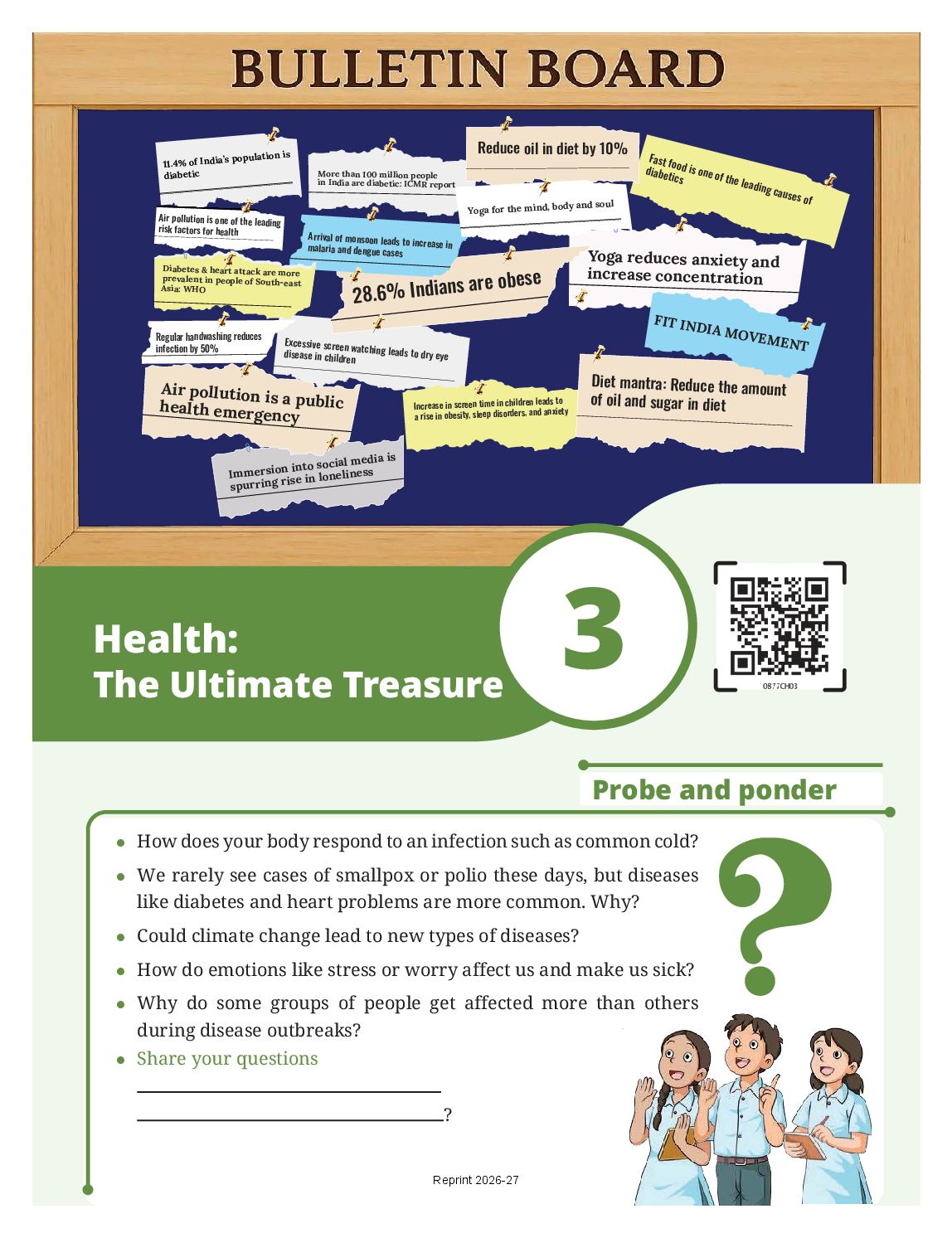
Download Health: The Ultimate Treasure – NCERT Class 8 Science Chapter 3 PDF from the new NCERT Class 8 Science book Curiosity (2026-27). Read the chapter online or download the free PDF. Health means complete physical, mental and social well-being, not merely the absence of disease. Loneliness, stress and a polluted neighbourhood damage health just as germs do.
Health: The Ultimate Treasure PDF – Chapter 3 of Curiosity
Read the chapter online or download the PDF.
| Chapter | Download | |
|---|---|---|
| Chapter 3 PDF | Health: The Ultimate Treasure | View PDF |
| Full book | NCERT Class 8 Science – Curiosity | View Book |
Read Online
What Is in Health: The Ultimate Treasure? (Class 8 Science Chapter 3)
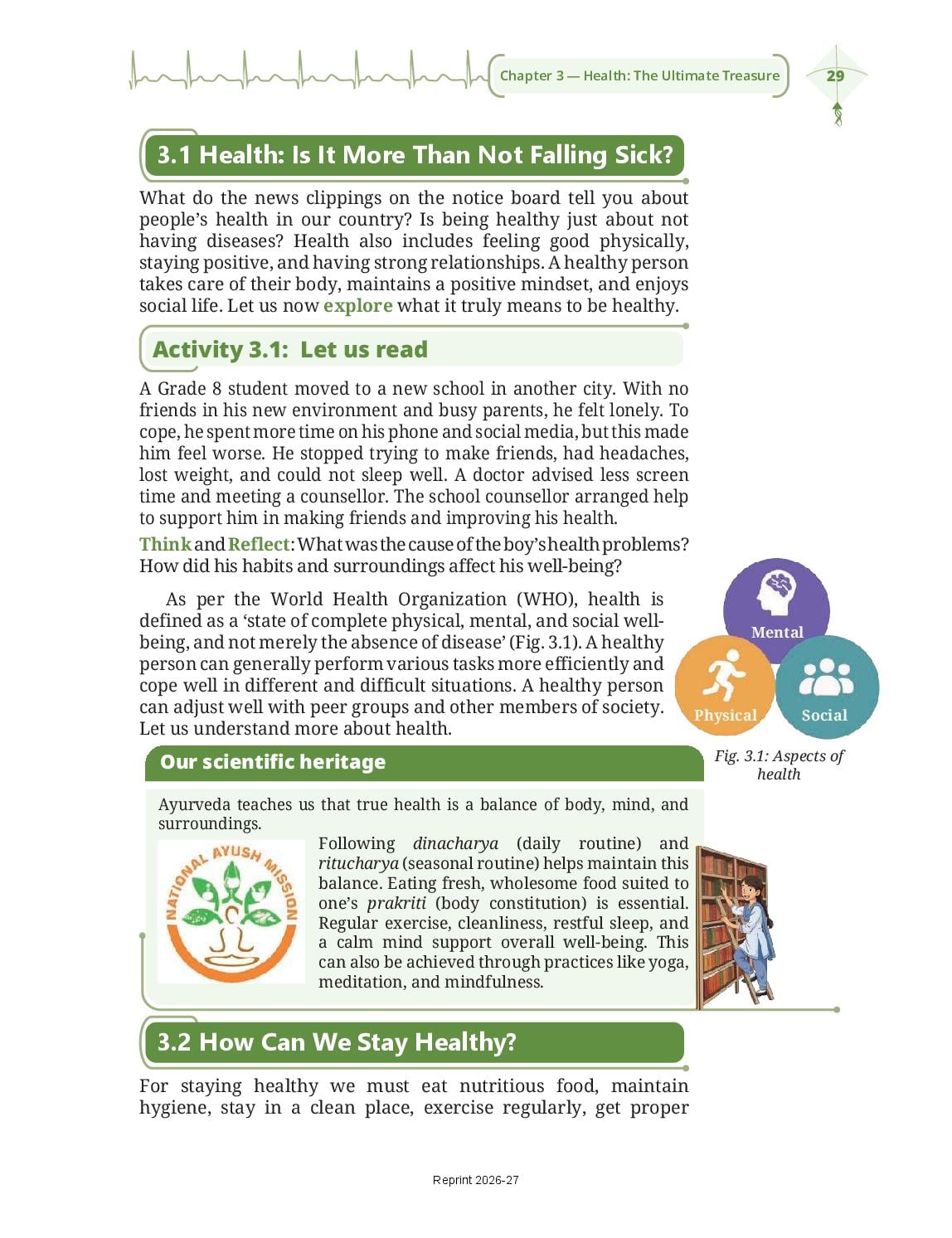
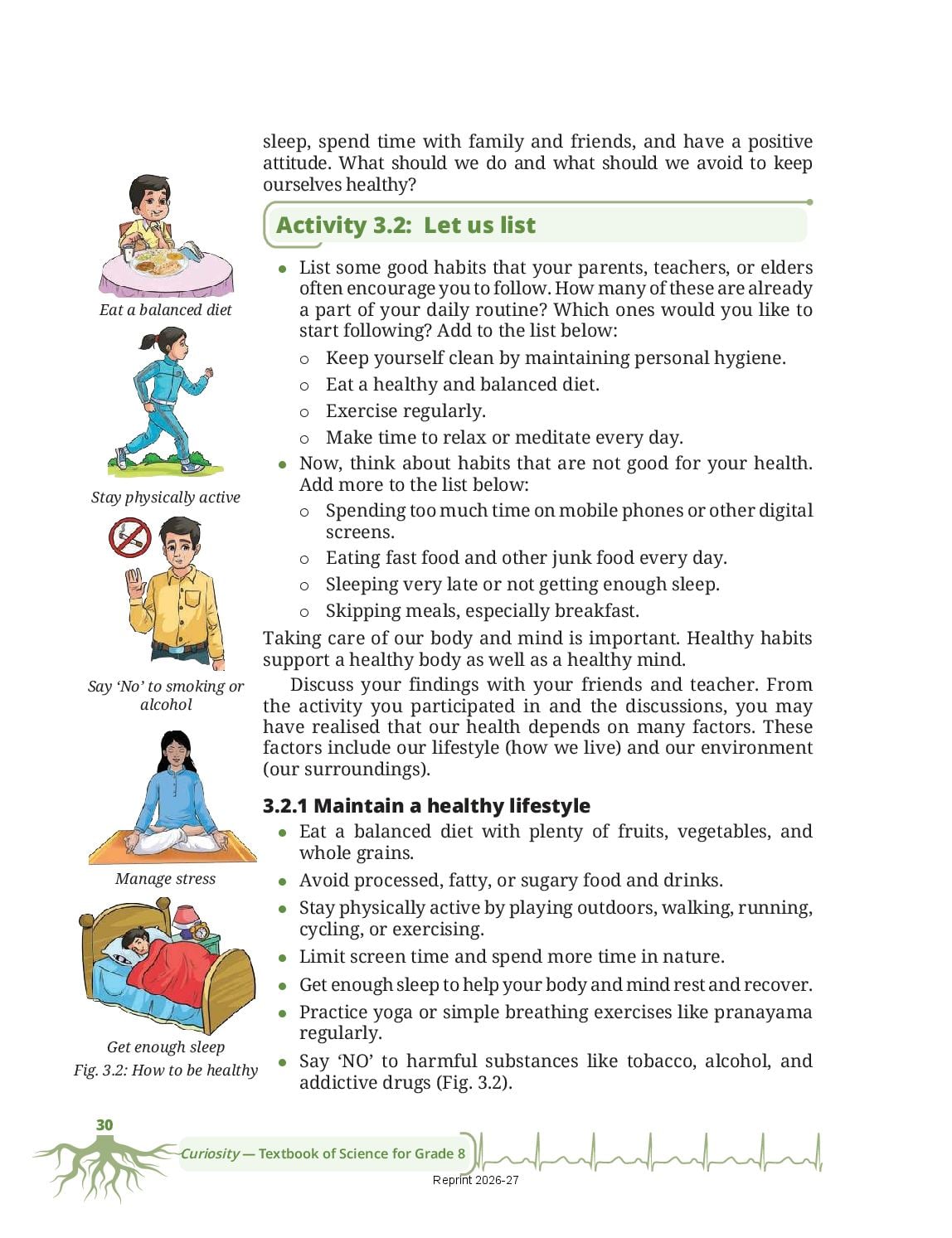
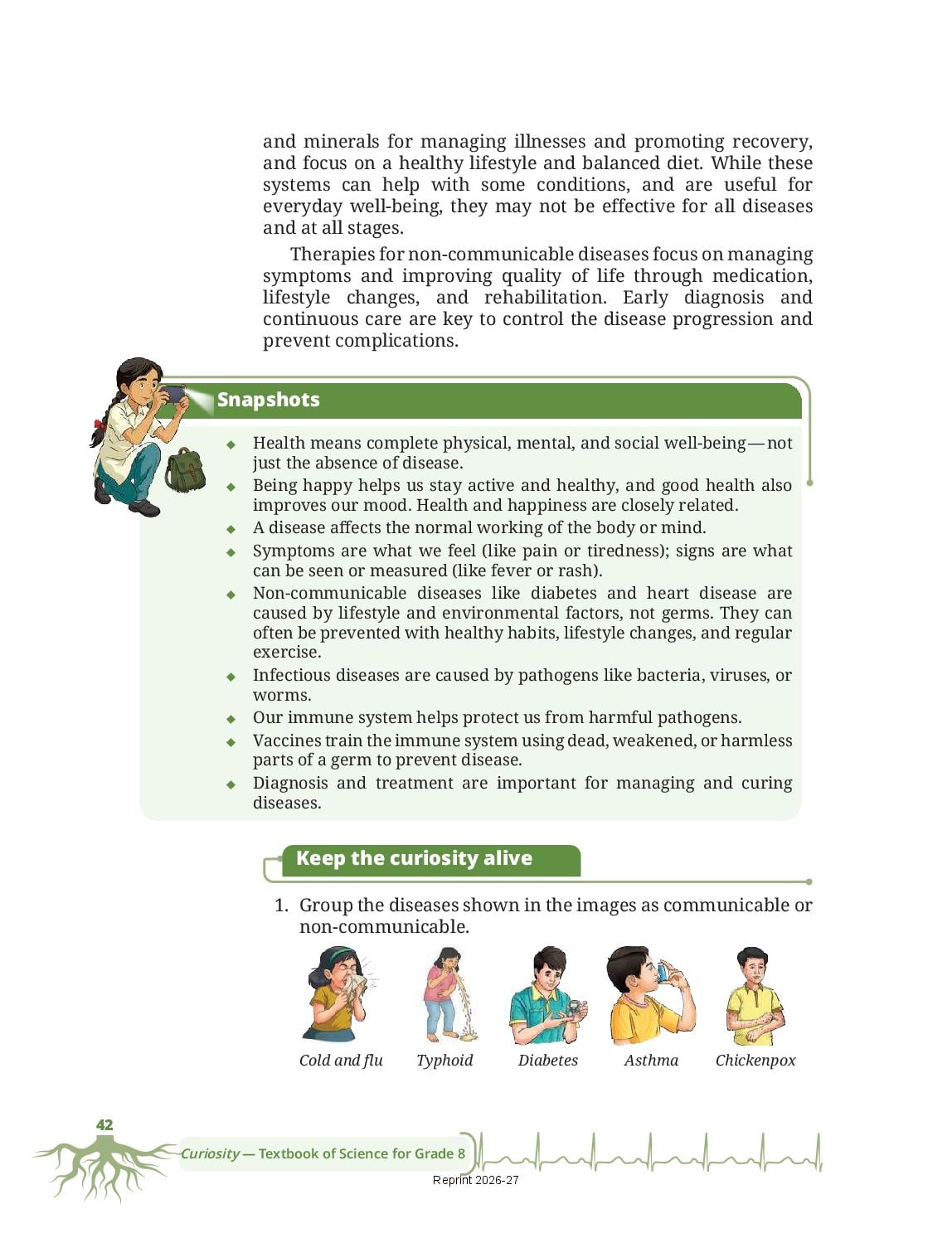
- Health means complete physical, mental and social well-being, not merely the absence of disease. Loneliness, stress and a polluted neighbourhood damage health just as germs do.
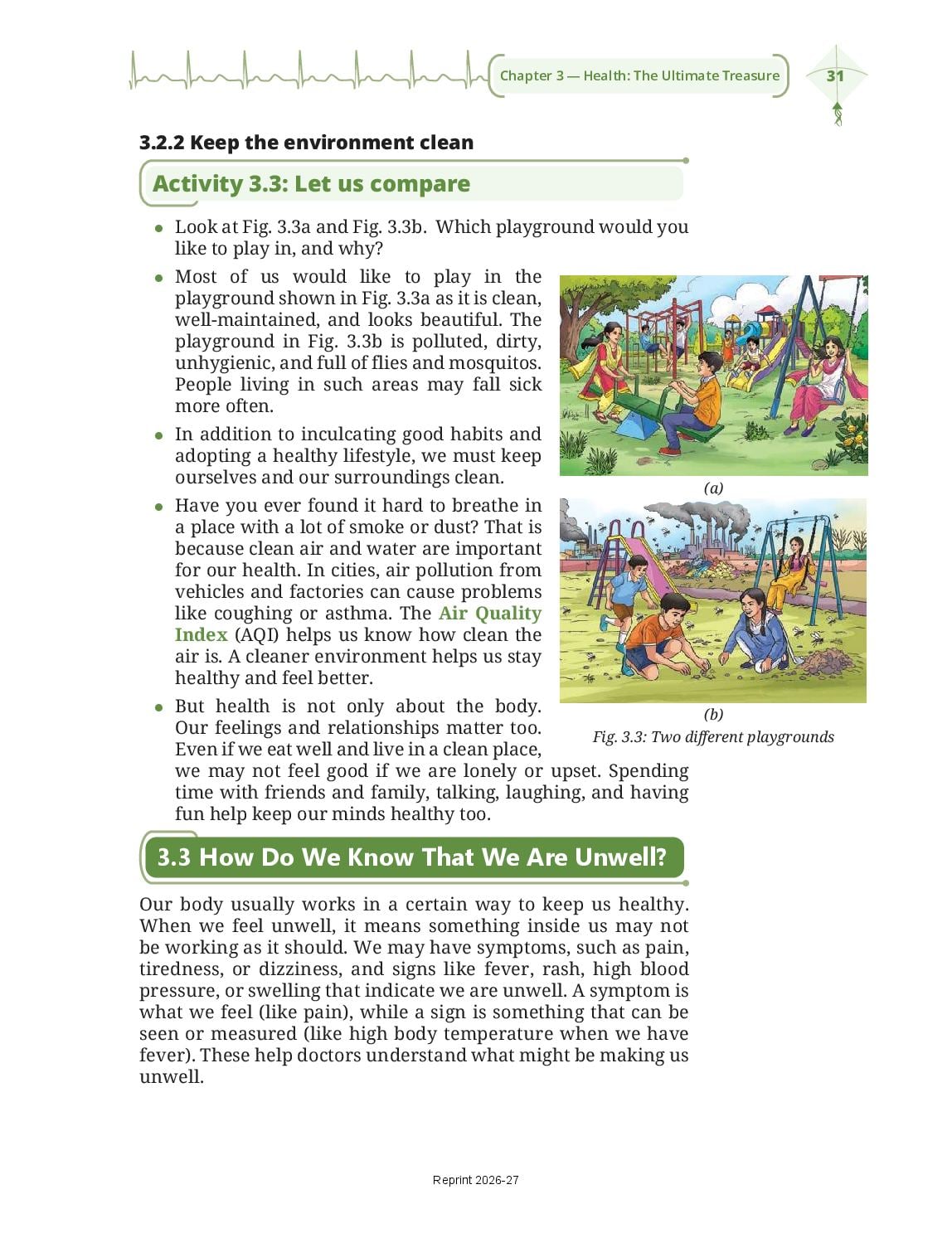
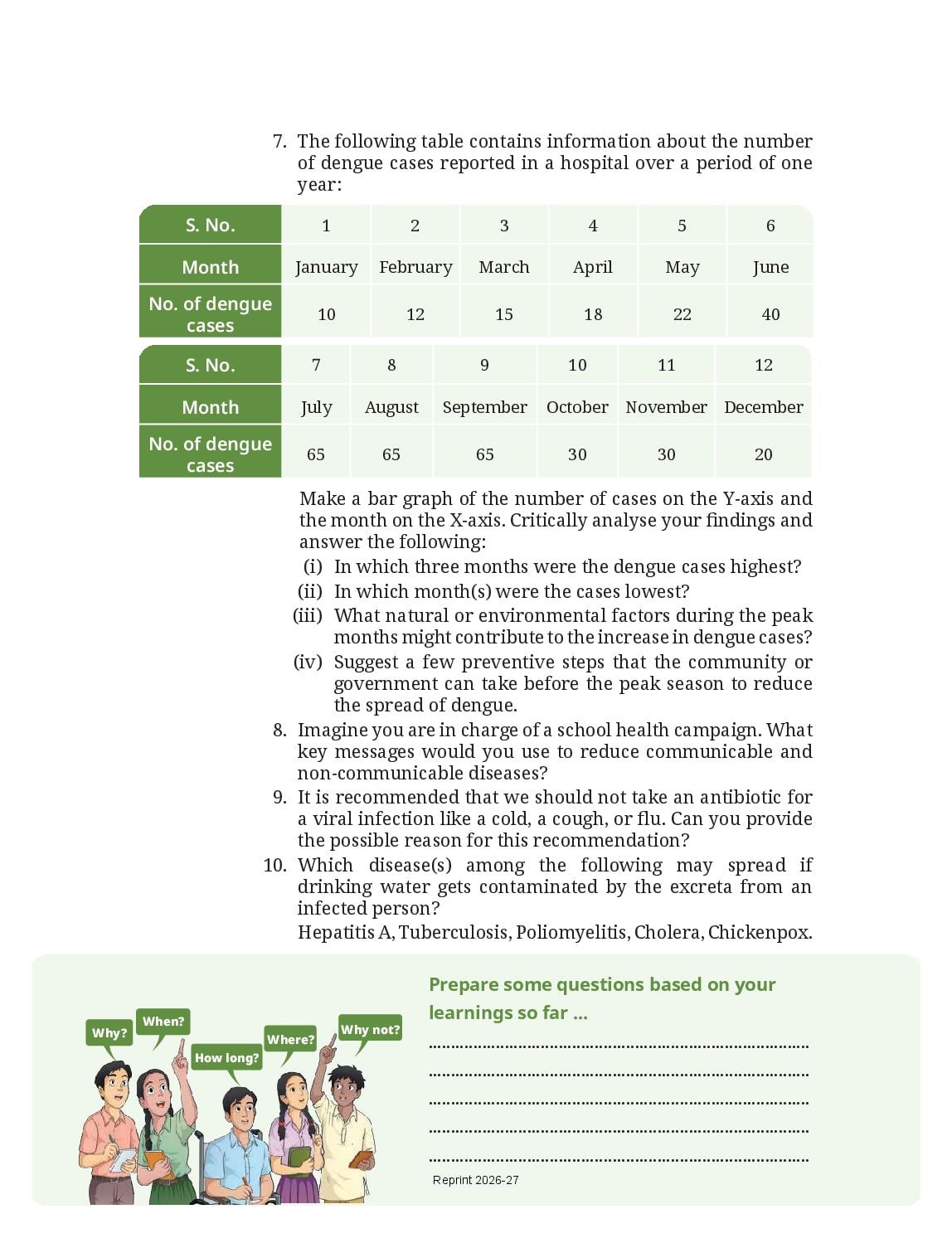
- A symptom is what we feel — pain, tiredness, dizziness. A sign is what can be seen or measured — fever, rash, high blood pressure, swelling.
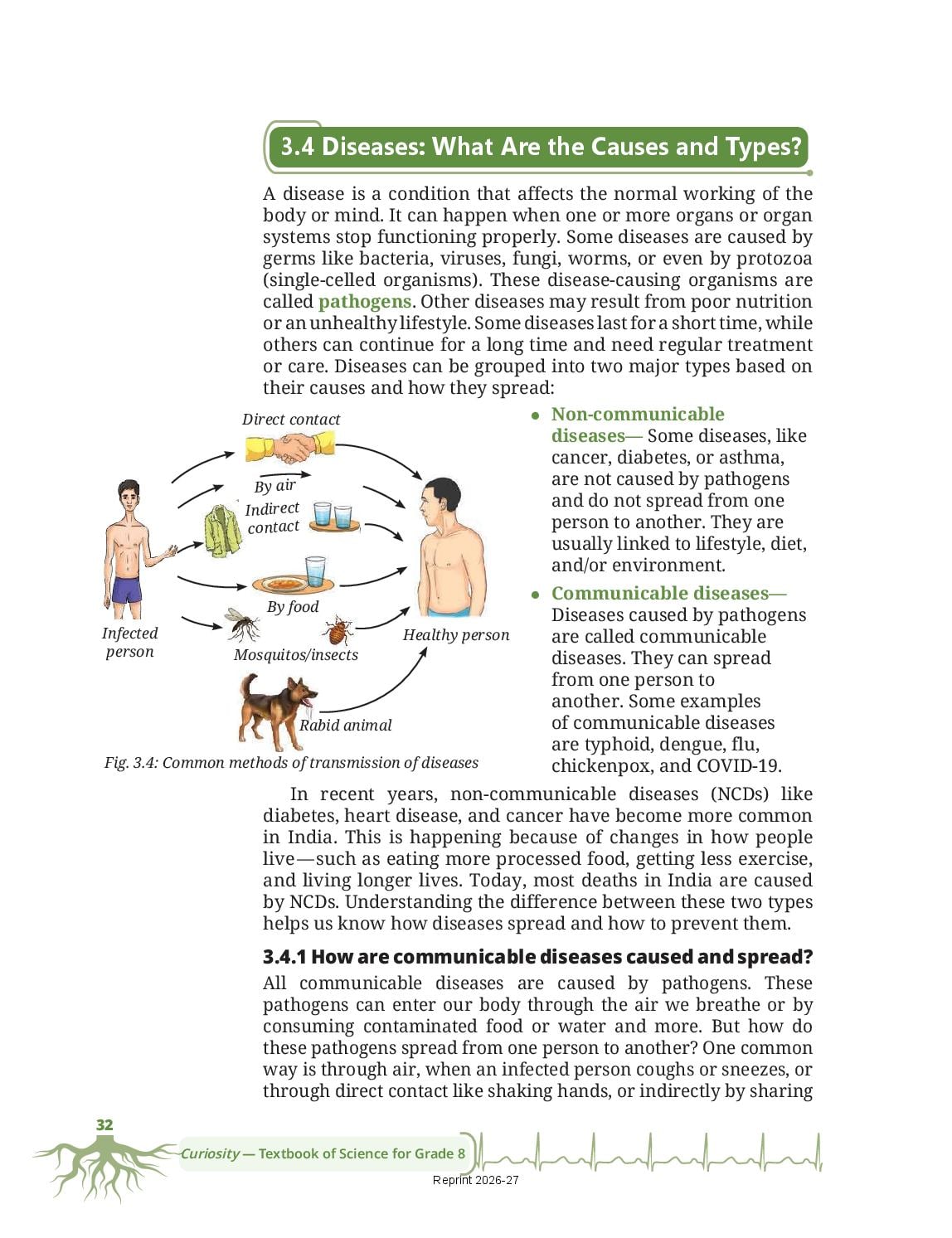
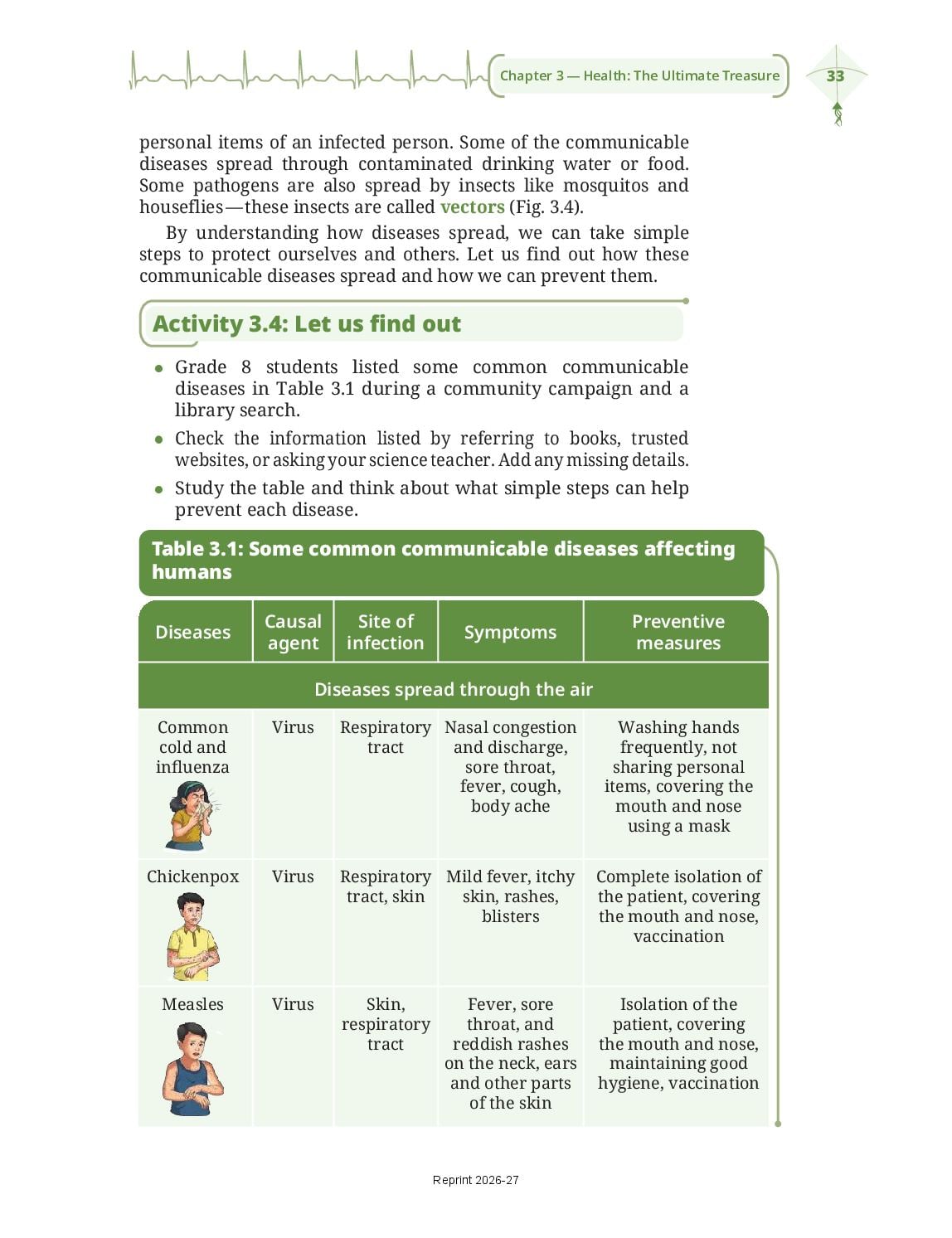
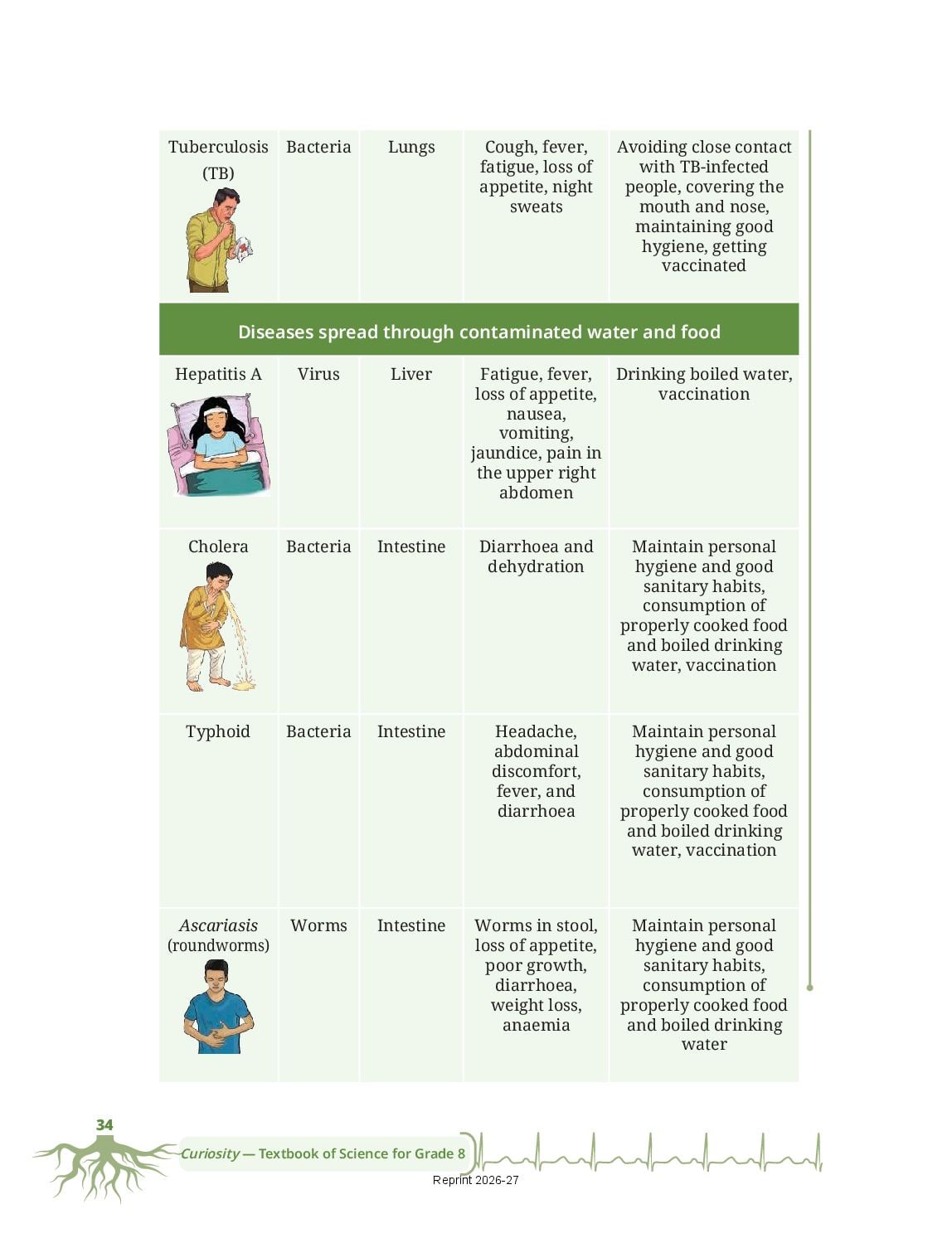
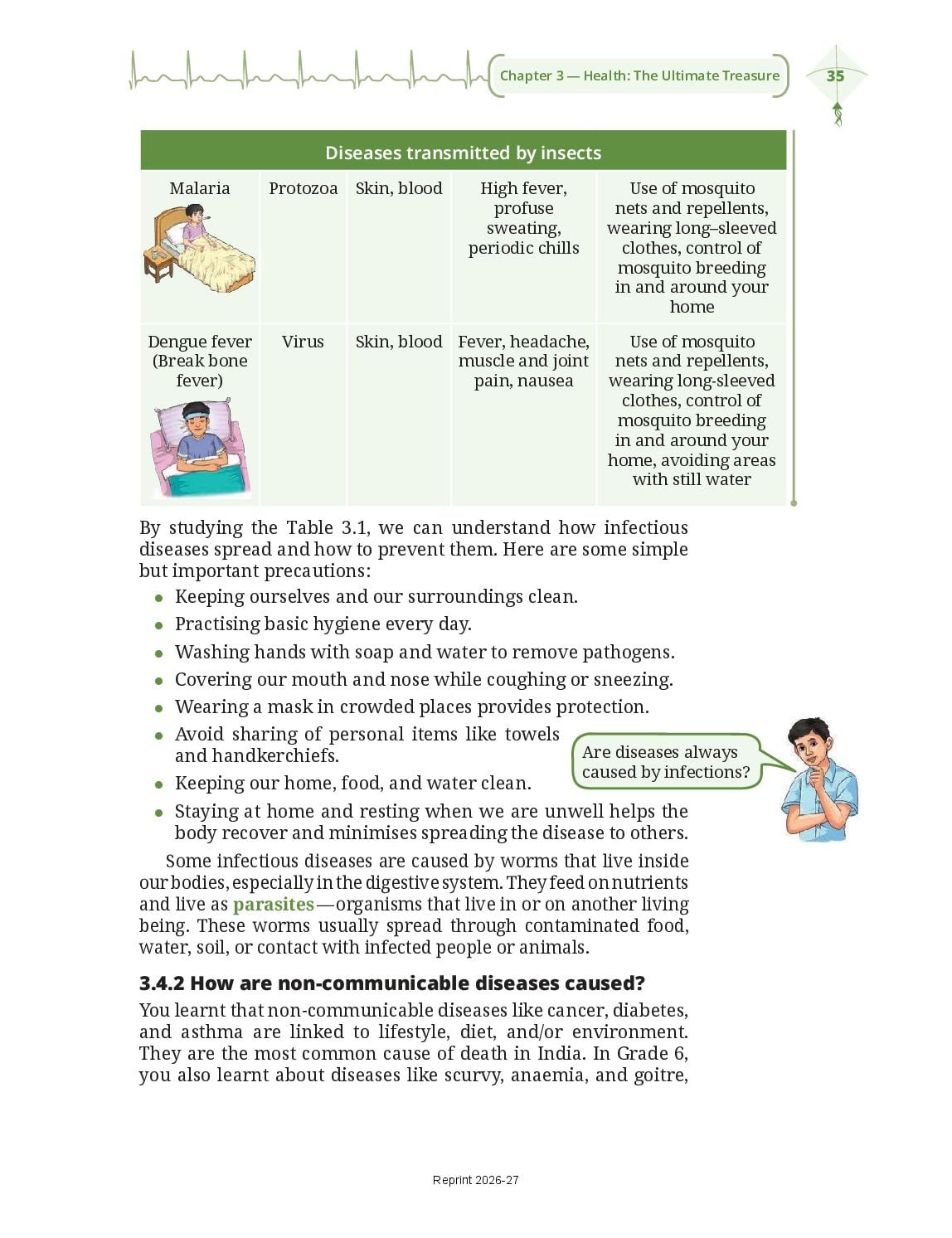
- Communicable diseases are caused by pathogens (bacteria, viruses, fungi, worms, protozoa) and spread by air, by contaminated food and water, by direct or indirect contact, and by vectors such as mosquitos and houseflies.
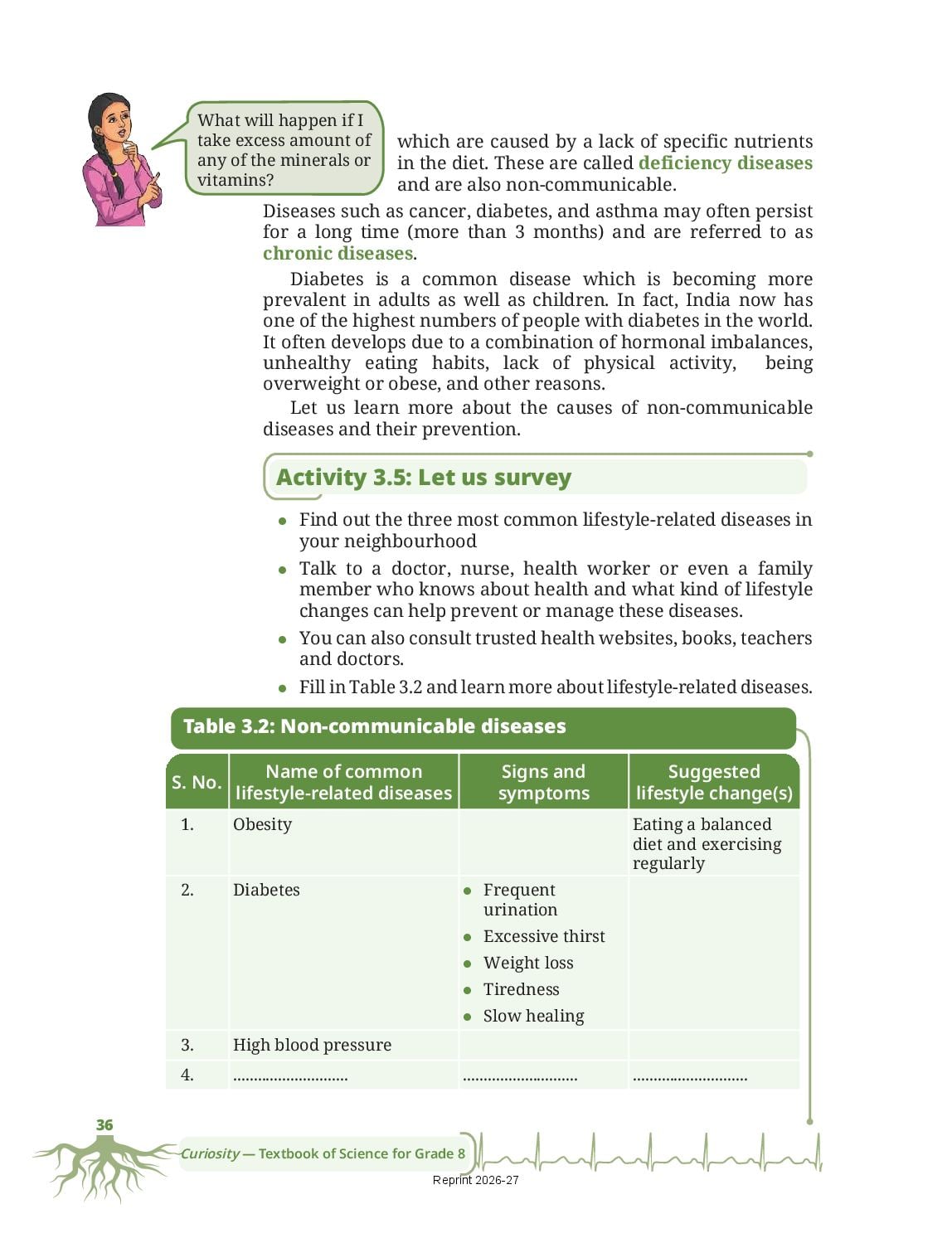
- Non-communicable diseases — diabetes, heart disease, cancer, asthma, and deficiency diseases such as scurvy, anaemia and goitre — are not caused by pathogens. They are linked to lifestyle, diet and environment, and today cause most deaths in India.
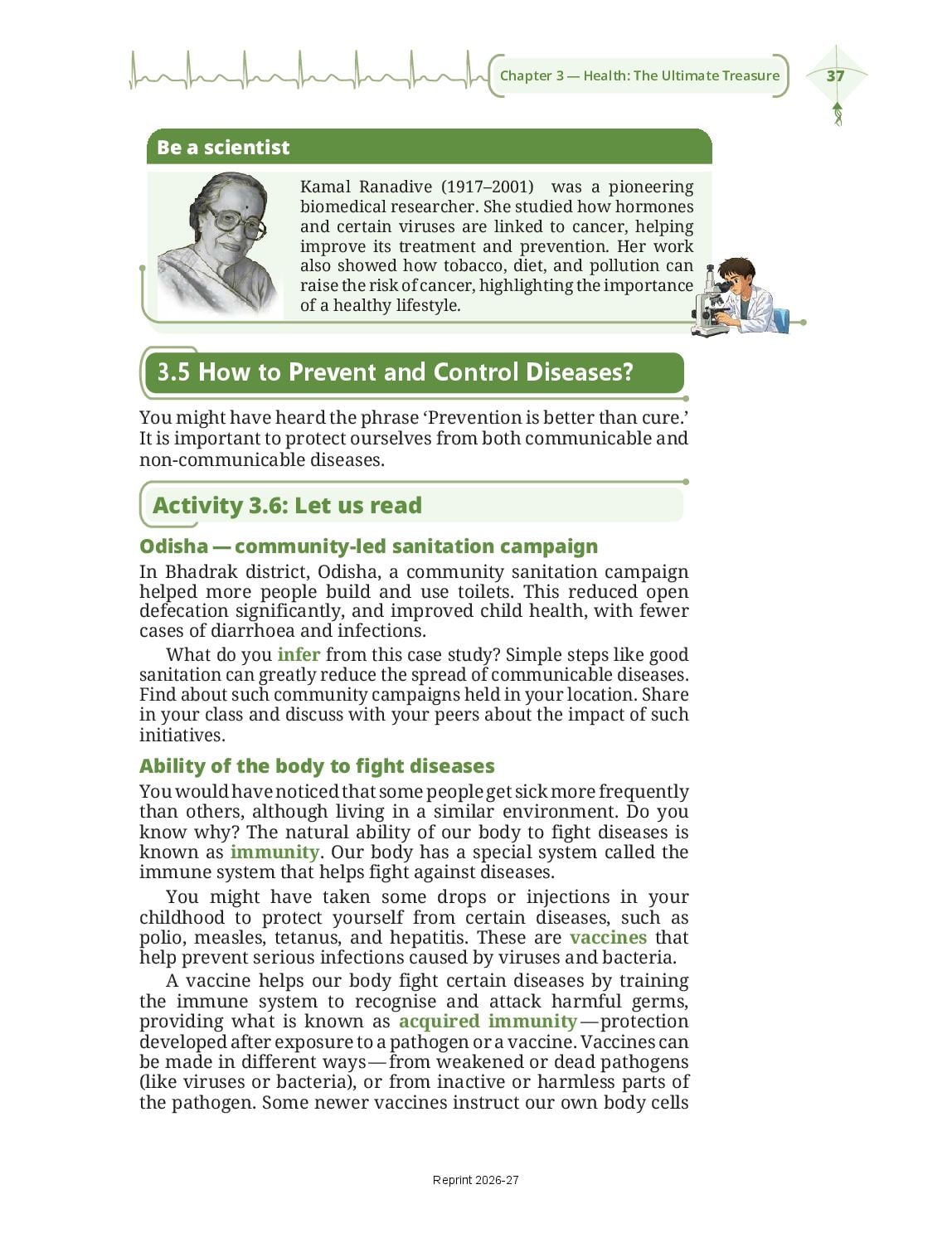
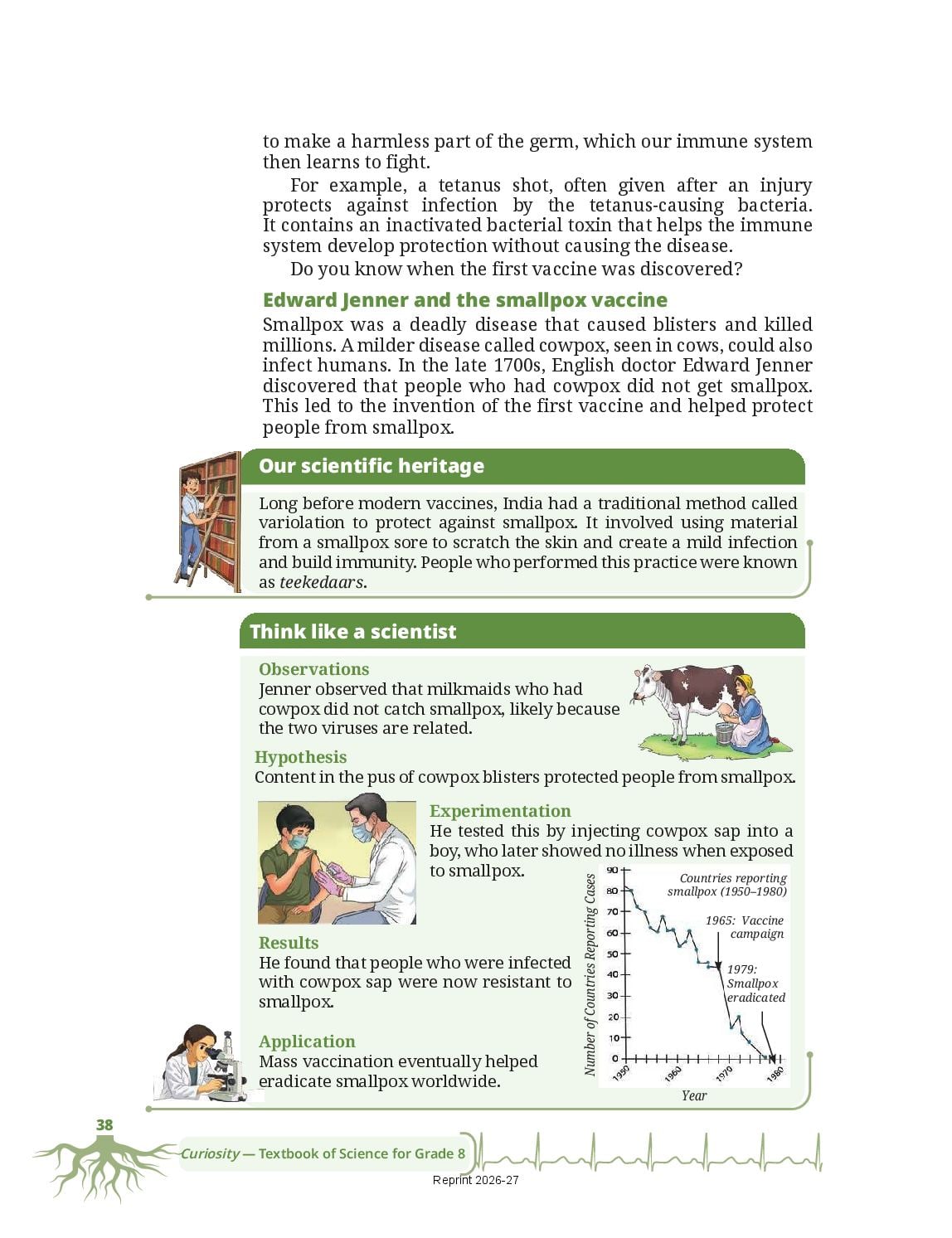
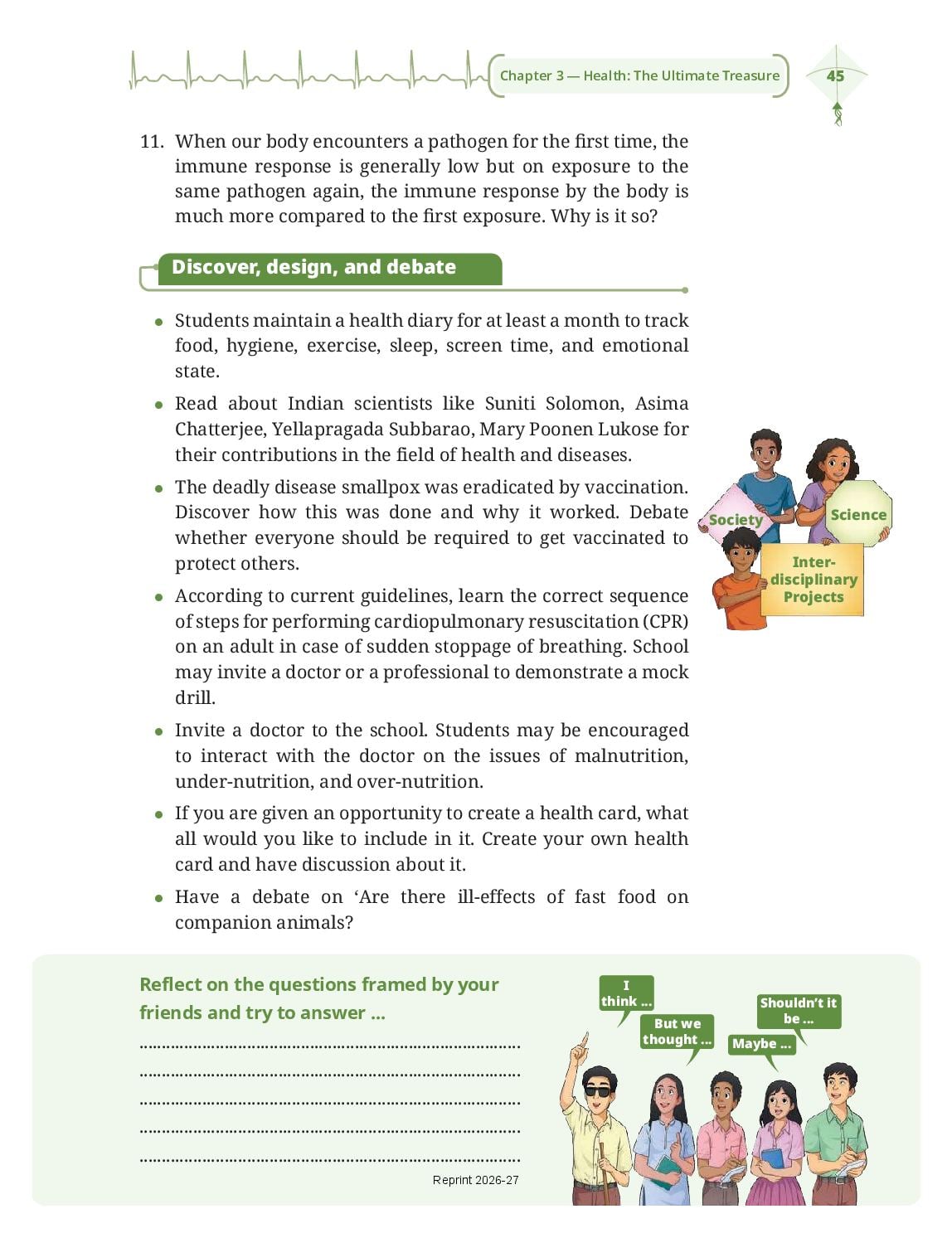
- Immunity is the body’s natural ability to fight disease. A vaccine trains the immune system using dead, weakened or harmless parts of a germ, giving acquired immunity. Vaccines are preventive, never curative.
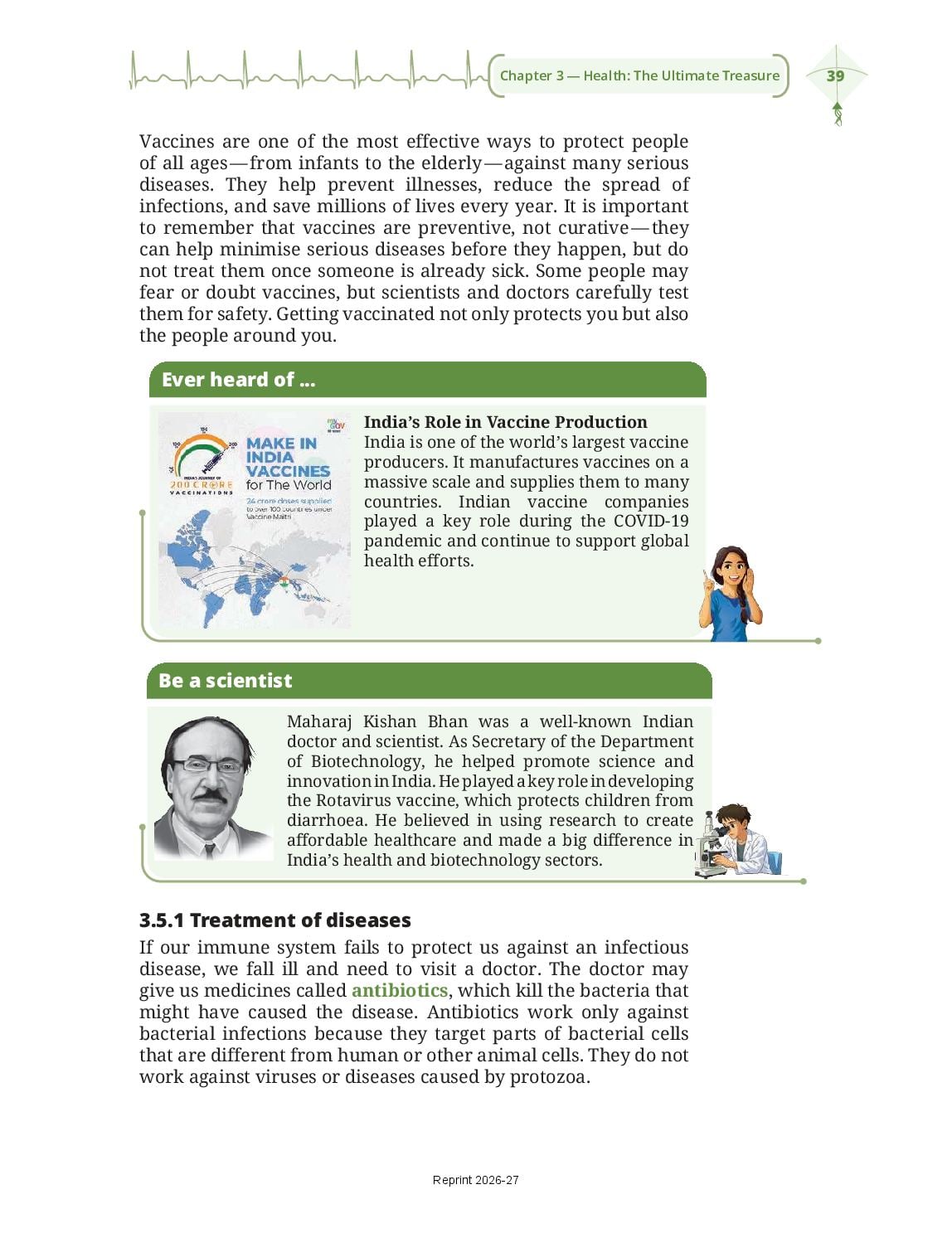
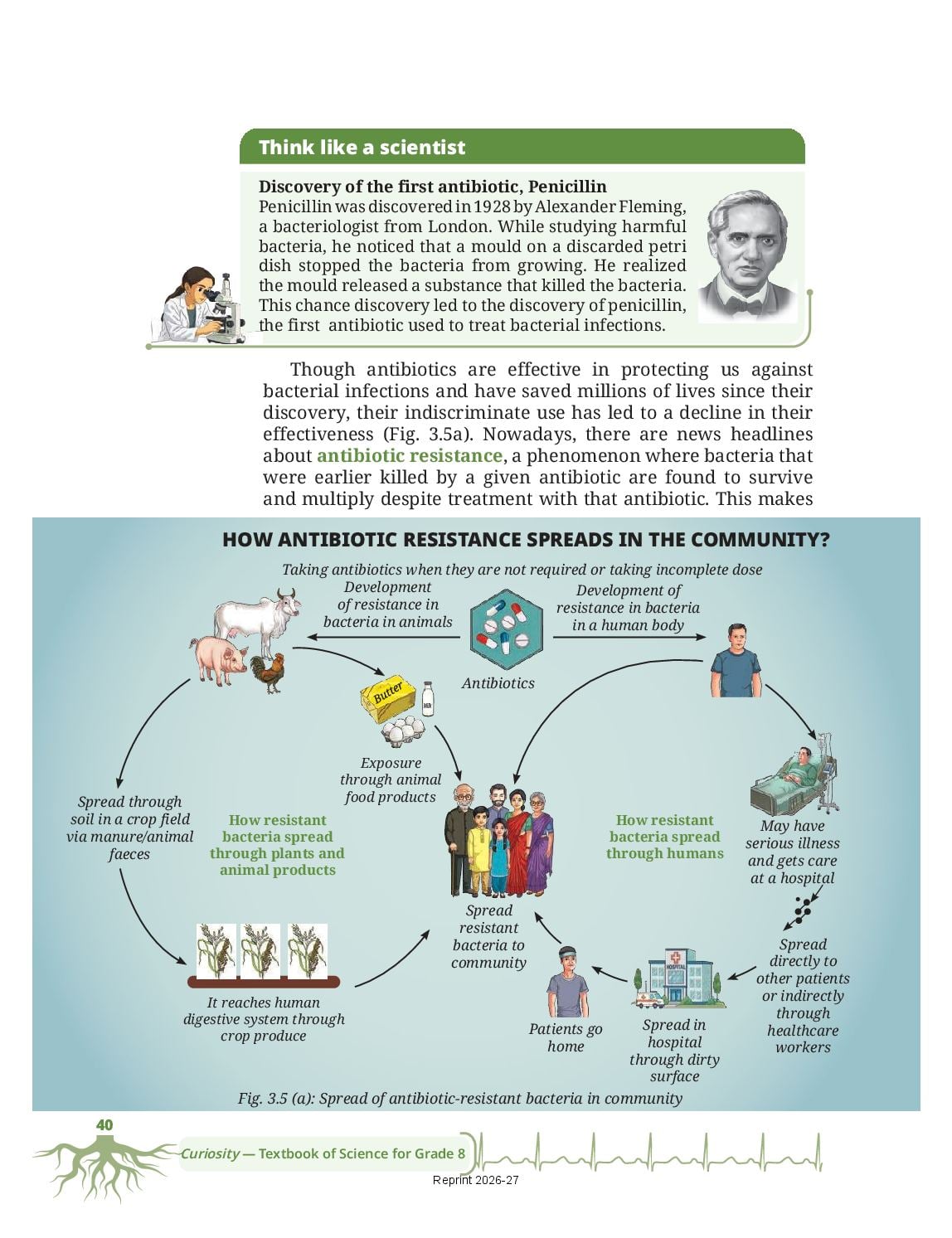
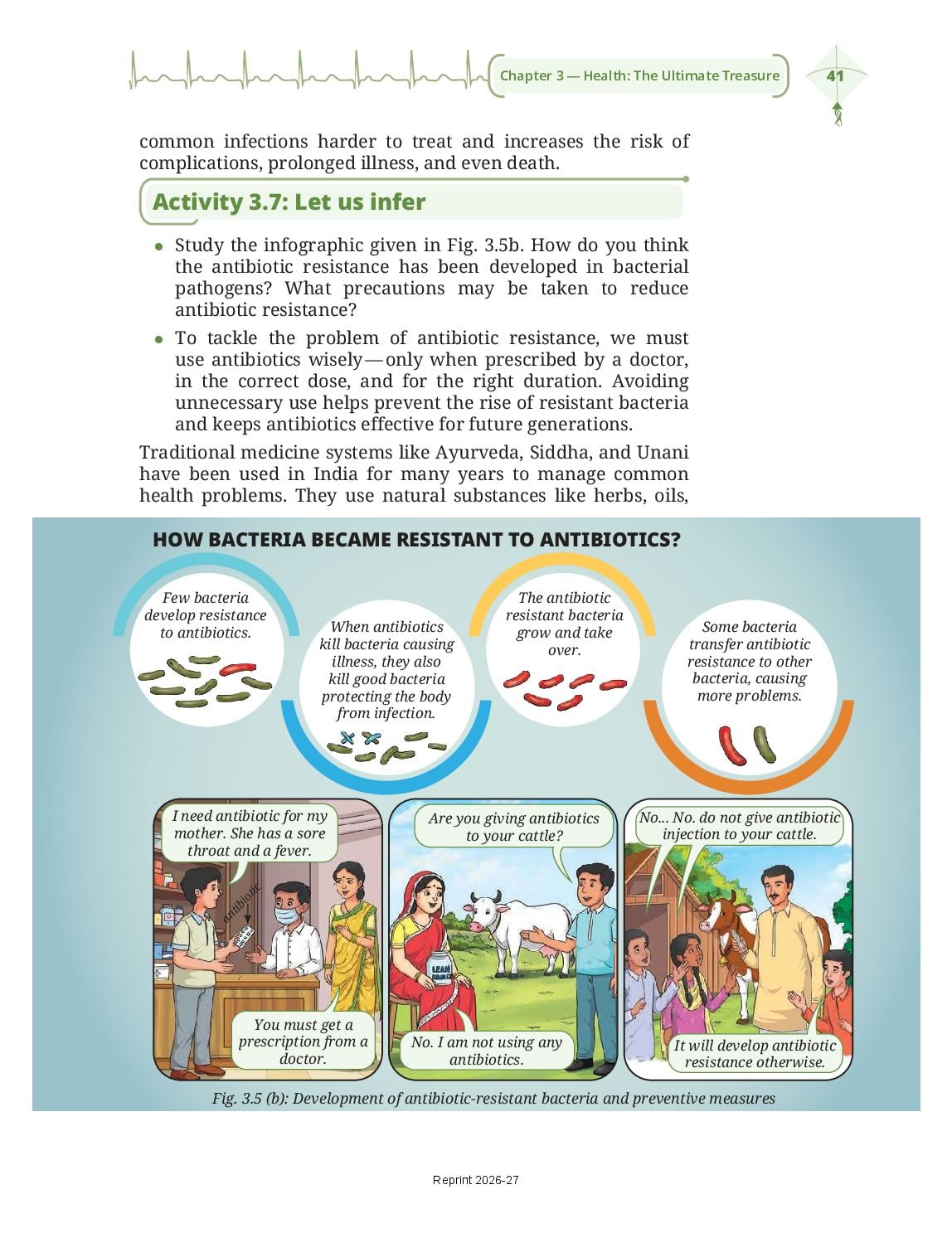
- Antibiotics kill bacteria only, because they attack parts of bacterial cells that human cells do not have. Using them when they are not needed, or stopping the dose halfway, breeds antibiotic resistance.
Quick revision – Health: The Ultimate Treasure
| Term | What it means | Example from the chapter | Key point to remember |
|---|---|---|---|
| Health | Complete physical, mental and social well-being, not merely the absence of disease (WHO) | The Grade 8 boy in Activity 3.1 had no infection, yet he was unwell | All three aspects — body, mind and relationships — must be looked after |
| Symptom | What the patient feels | Pain, tiredness, dizziness | Cannot be measured by anyone else |
| Sign | What can be seen or measured | Fever, rash, high blood pressure, swelling | This is what a doctor records |
| Pathogen | A disease-causing organism | Bacteria, viruses, fungi, worms, protozoa | All communicable diseases are caused by pathogens |
| Vector | An insect that carries a pathogen from one person to another | Mosquitos spread malaria and dengue; houseflies carry germs to food | Control the vector and you stop the disease |
| Communicable disease | A disease caused by a pathogen that can spread from person to person | Typhoid, dengue, flu, chickenpox, COVID-19 | Break the route of spread — air, water, food, contact, vector |
| Non-communicable disease (NCD) | A disease not caused by a pathogen and not passed on to others | Diabetes, heart disease, cancer, asthma | Linked to lifestyle, diet and environment; most deaths in India |
| Deficiency disease | A non-communicable disease caused by lack of a nutrient | Scurvy, anaemia, goitre (learnt in Grade 6) | Cured by correcting the diet, not by medicines alone |
| Chronic disease | A disease that persists for a long time — more than 3 months | Cancer, diabetes, asthma | Needs continuous care, not a one-week course |
| Immunity | The natural ability of the body to fight disease | The immune system recognises and attacks germs | Explains why two people in the same house fall ill differently |
| Vaccine | A preparation of dead, weakened or harmless parts of a germ that trains the immune system | Polio drops, measles, tetanus, hepatitis vaccines | Gives acquired immunity; preventive, not curative |
| Antibiotic | A medicine that kills bacteria | Penicillin, discovered by Alexander Fleming in 1928 | Useless against viruses and protozoa |
| Antibiotic resistance | Bacteria once killed by an antibiotic survive and multiply despite treatment | Caused by taking antibiotics when not required or leaving the dose incomplete | Take antibiotics only on a doctor’s prescription, in full dose |
Old NCERT vs New – Class 8 Science
This chapter is from Curiosity, the new NCERT Class 8 Science book (NCF-SE 2023, used from 2025-26). It replaced the old book “Science”, so chapter numbers and names differ from older PDFs.
Solutions and All Chapters
Answers to the exercises and the full chapter list of Curiosity:
Health: The Ultimate Treasure – Overview
| Class | Class 8 |
| Subject | Science |
| Book | Curiosity – new NCERT book |
| Chapter | 3 of 13 – Health: The Ultimate Treasure |
| Book pages | 28 – 45 |
| Edition | NCERT Reprint 2026-27 |
| Session | 2026-27 |
| Free – read online or download |
Class 8 Science Chapter 3 – FAQs
Where can I download Health: The Ultimate Treasure Class 8 PDF?
From the download table on this page – the chapter PDF is free, and the full book is linked too.
What is Class 8 Science Chapter 3 about?
Health means complete physical, mental and social well-being, not merely the absence of disease. Loneliness, stress and a polluted neighbourhood damage health just as germs do.
Is Health: The Ultimate Treasure from the new NCERT Class 8 Science book?
Yes. It is chapter 3 of curiosity, the new NCERT Class 8 Science book for 2026-27.
Is this the latest NCERT edition for 2026-27?
Yes – the PDF is NCERT’s latest edition for the 2026-27 session.
Where are the NCERT Solutions for Class 8 Science Chapter 3?
Open the NCERT Solutions link above for answers to the exercise questions.