NCERT Solutions for Class 8 Science Chapter 3 Health the Ultimate Treasure provide clear, step-by-step answers to every exercise and in-text question from the chapter Health the Ultimate Treasure of the NCERT textbook Curiosity. Prepared by subject experts as per the latest NCERT (CBSE) syllabus for 2026-27, these NCERT Solutions for Class 8 Science help you understand each concept, write exam-ready answers, and check your own solutions. You can read them online below or download the free Class 8 Science Chapter 3 question-answer PDF.
NCERT Solutions for Class 8 Science Chapter 3 Health the Ultimate Treasure
- Class: Class 8
- Subject: Science
- Chapter: Chapter 3 – Health the Ultimate Treasure
- Textbook: Curiosity (NCERT)
- Study material: NCERT Solutions – questions with answers, free PDF
These solutions answer all the exercise questions of Chapter 3 Health the Ultimate Treasure — including the in-text questions, short-answer and long-answer questions, and activities — with complete explanations so you can follow the method, not just the final answer. Read the full solutions below.
NCERT Solutions Class 8 Science Chapter 3 Health the Ultimate Treasure View Download


NCERT Solutions for Class 8 Science Chapter 3 PDF Download
You can read the NCERT Solutions for Class 8 Science Chapter 3 online above, or download the complete question-answer PDF to study Health the Ultimate Treasure offline at any time.
NCERT Solutions for Class 8 Science Chapter 3 PDF Download Link – Click Here to Download Solutions PDF
Questions Covered in This Chapter
These NCERT Solutions answer all 45 questions of this chapter. The questions solved are:
- How does your body respond to an infection such as common cold?
- We rarely see cases of smallpox or polio these days, but diseases like diabetes and heart problems are more common. Why?
- Could climate change lead to new types of diseases?
- How do emotions like stress or worry affect us and make us sick?
- Why do some groups of people get affected more than others during disease outbreaks?
- Share your questions
- What do the news clippings on the notice board tell you about people’s health in our country?
- Is being healthy just about not having diseases?
- What was the cause of the boy’s health problems?
- How did his habits and surroundings affect his well-being?
- What should we do and what should we avoid to keep ourselves healthy?
- List some good habits that your parents, teachers, or elders often encourage you to follow. How many of these are already a part of your daily routine? Which ones would you like to start following? Add to the list below: Keep yourself clean by maintaining personal hygiene. Eat a healthy and balanced diet. Exercise regularly. Make time to relax or meditate every day.
- Now, think about habits that are not good for your health. Add more to the list below: Spending too much time on mobile phones or other digital screens. Eating fast food and other junk food every day. Sleeping very late or not getting enough sleep. Skipping meals, especially breakfast.
- Look at Fig. 3.3a and Fig. 3.3b. Which playground would you like to play in, and why?
- Have you ever found it hard to breathe in a place with a lot of smoke or dust?
- Check the information listed by referring to books, trusted websites, or asking your science teacher. Add any missing details.
- Study the table and think about what simple steps can help prevent each disease.
- Are diseases always caused by infections?
- What will happen if I take excess amount of any of the minerals or vitamins?
- Find out the three most common lifestyle-related diseases in your neighbourhood. Talk to a doctor, nurse, health worker or even a family member who knows about health and what kind of lifestyle changes can help prevent or manage these diseases.
- Fill in Table 3.2 and learn more about lifestyle-related diseases.
- What do you infer from this case study?
- Find about such community campaigns held in your location. Share in your class and discuss with your peers about the impact of such initiatives.
- You would have noticed that some people get sick more frequently than others, although living in a similar environment. Do you know why?
- Do you know when the first vaccine was discovered?
- Study the infographic given in Fig. 3.5b. How do you think the antibiotic resistance has been developed in bacterial pathogens?
- What precautions may be taken to reduce antibiotic resistance?
- Group the diseases shown in the images as communicable or non-communicable. Cold and flu, Typhoid, Diabetes, Asthma, Chickenpox
- Diseases can be broadly grouped into communicable and non-communicable diseases. From the options given below, identify the non-communicable diseases. (i) Typhoid (ii) Asthma (iii) Diabetes (iv) Measles (a) (i) and (ii) (b) (ii) and (iii) (c) (i) and (iv) (d) (ii) and (iv)
- There is a flu outbreak in your school. Several classmates are absent, while some are still coming to school coughing and sneezing. (i) What immediate actions should the school take to prevent further spread? (ii) If your classmate, who shares the bench with you, starts showing symptoms of the flu, how can you respond in a considerate way without being rude or hurtful? (iii) How can you protect yourself and others from getting infected in this situation?
- Your family is planning to travel to another city where malaria is prevalent. (i) What precautions should you take before, during, and after the trip? (ii) How can you explain the importance of mosquito nets or repellents to your sibling? (iii) What could happen if travellers ignore health advisories in such areas?
- Your uncle has started smoking just to fit in with his friends, even though it is well known that smoking can seriously harm health and even cause death. (i) What would you say to him to make him stop, without being rude? (ii) What would you do if your friend offers you a cigarette at a party? (iii) How can schools help prevent students from indulging in such harmful habits?
- Saniya claims to her friend Vinita that “Antibiotics can cure any infection, so we don’t need to worry about diseases.” What question(s) can Vinita ask her to help Saniya understand that her statement is incorrect?
- The following table contains information about the number of dengue cases reported in a hospital over a period of one year: January 10, February 12, March 15, April 18, May 22, June 40, July 65, August 65, September 65, October 30, November 30, December 20. Make a bar graph of the number of cases on the Y-axis and the month on the X-axis. Critically analyse your findings and answer the following: (i) In which three months were the dengue cases highest? (ii) In which month(s) were the cases lowest? (iii) What natural or environmental factors during the peak months might contribute to the increase in dengue cases? (iv) Suggest a few preventive steps that the community or government can take before the peak season to reduce the spread of dengue.
- Imagine you are in charge of a school health campaign. What key messages would you use to reduce communicable and non-communicable diseases?
- It is recommended that we should not take an antibiotic for a viral infection like a cold, a cough, or flu. Can you provide the possible reason for this recommendation?
- Which disease(s) among the following may spread if drinking water gets contaminated by the excreta from an infected person? Hepatitis A, Tuberculosis, Poliomyelitis, Cholera, Chickenpox.
- When our body encounters a pathogen for the first time, the immune response is generally low but on exposure to the same pathogen again, the immune response by the body is much more compared to the first exposure. Why is it so?
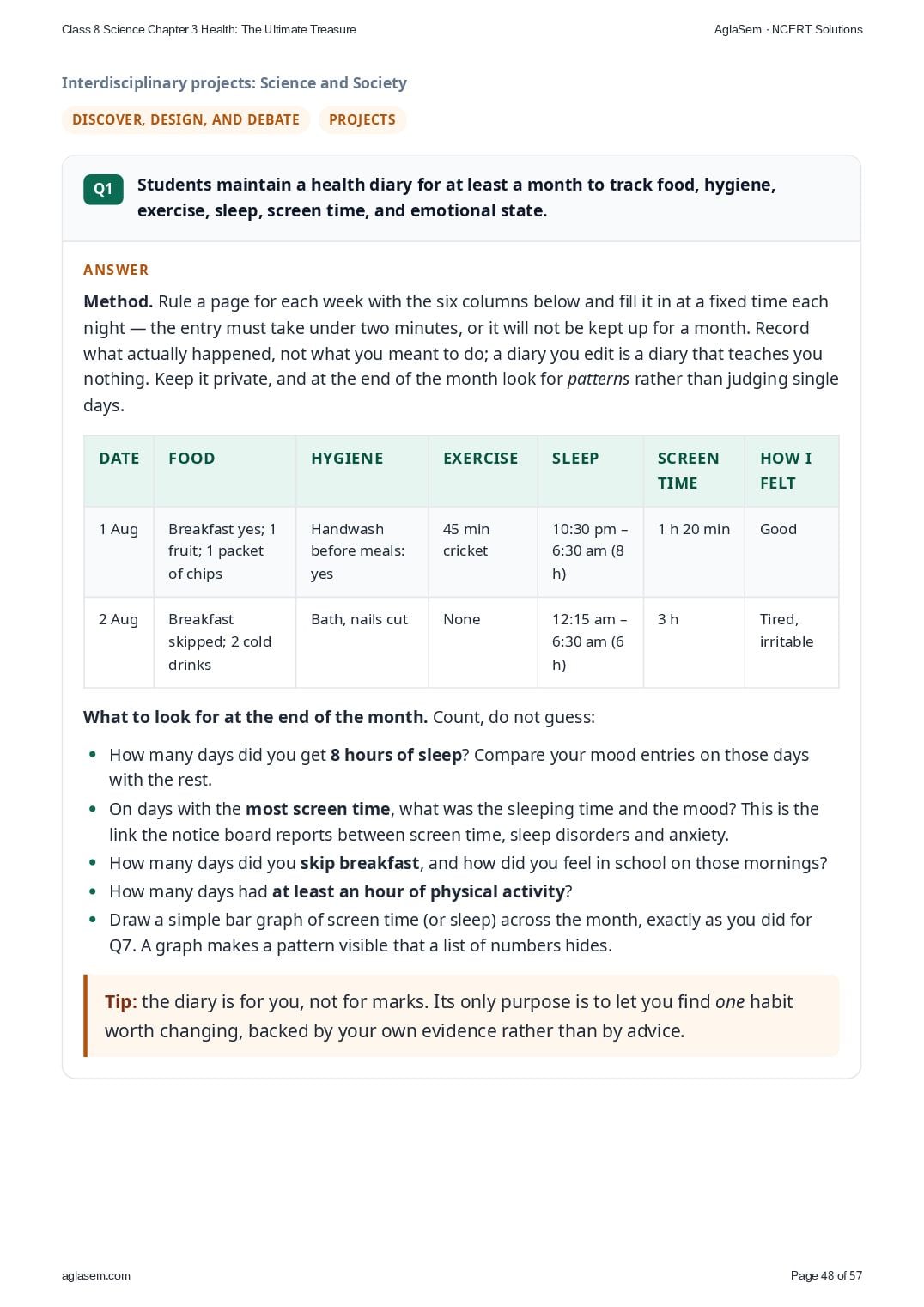
- Students maintain a health diary for at least a month to track food, hygiene, exercise, sleep, screen time, and emotional state.
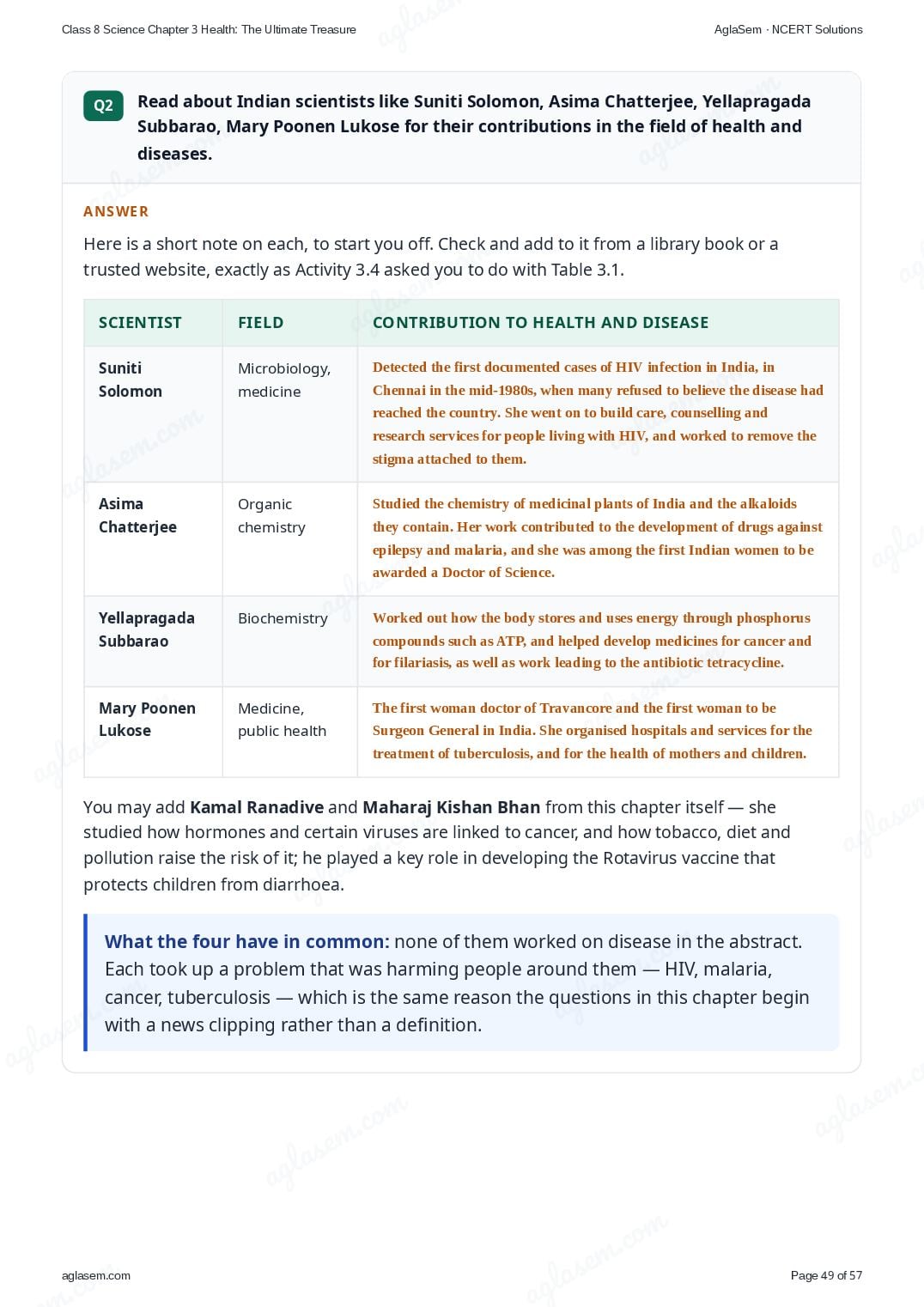
- Read about Indian scientists like Suniti Solomon, Asima Chatterjee, Yellapragada Subbarao, Mary Poonen Lukose for their contributions in the field of health and diseases.
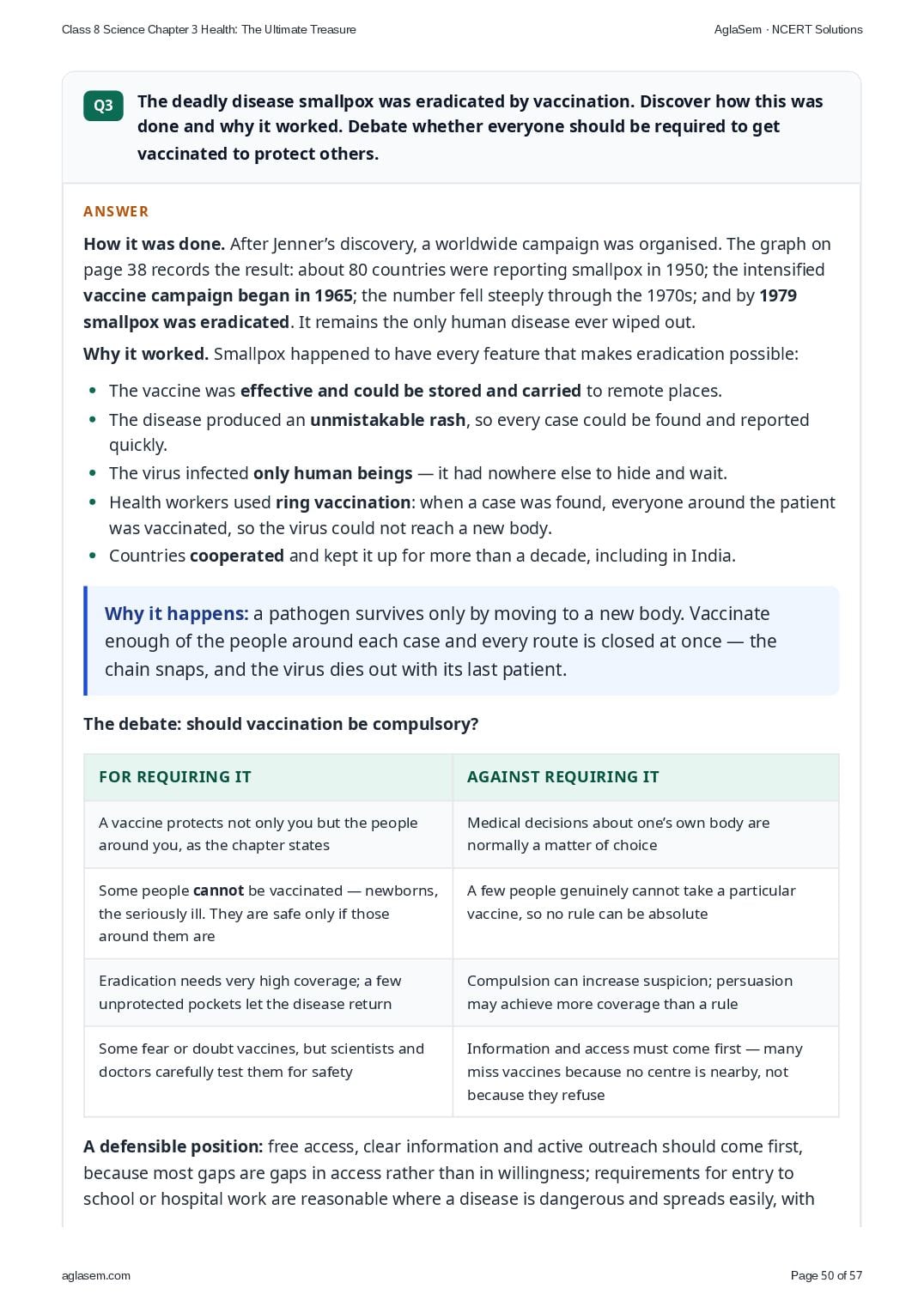
- The deadly disease smallpox was eradicated by vaccination. Discover how this was done and why it worked. Debate whether everyone should be required to get vaccinated to protect others.
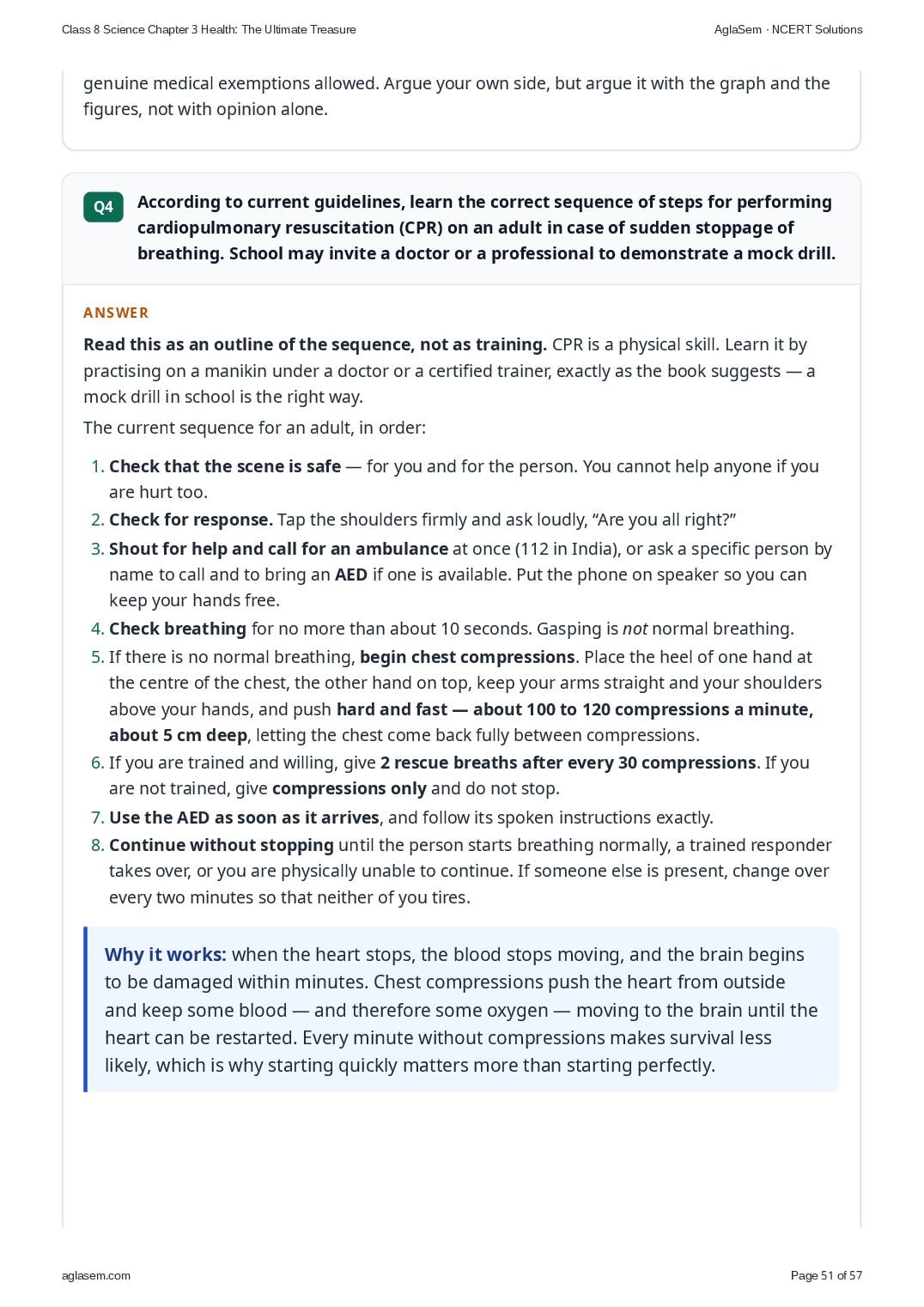
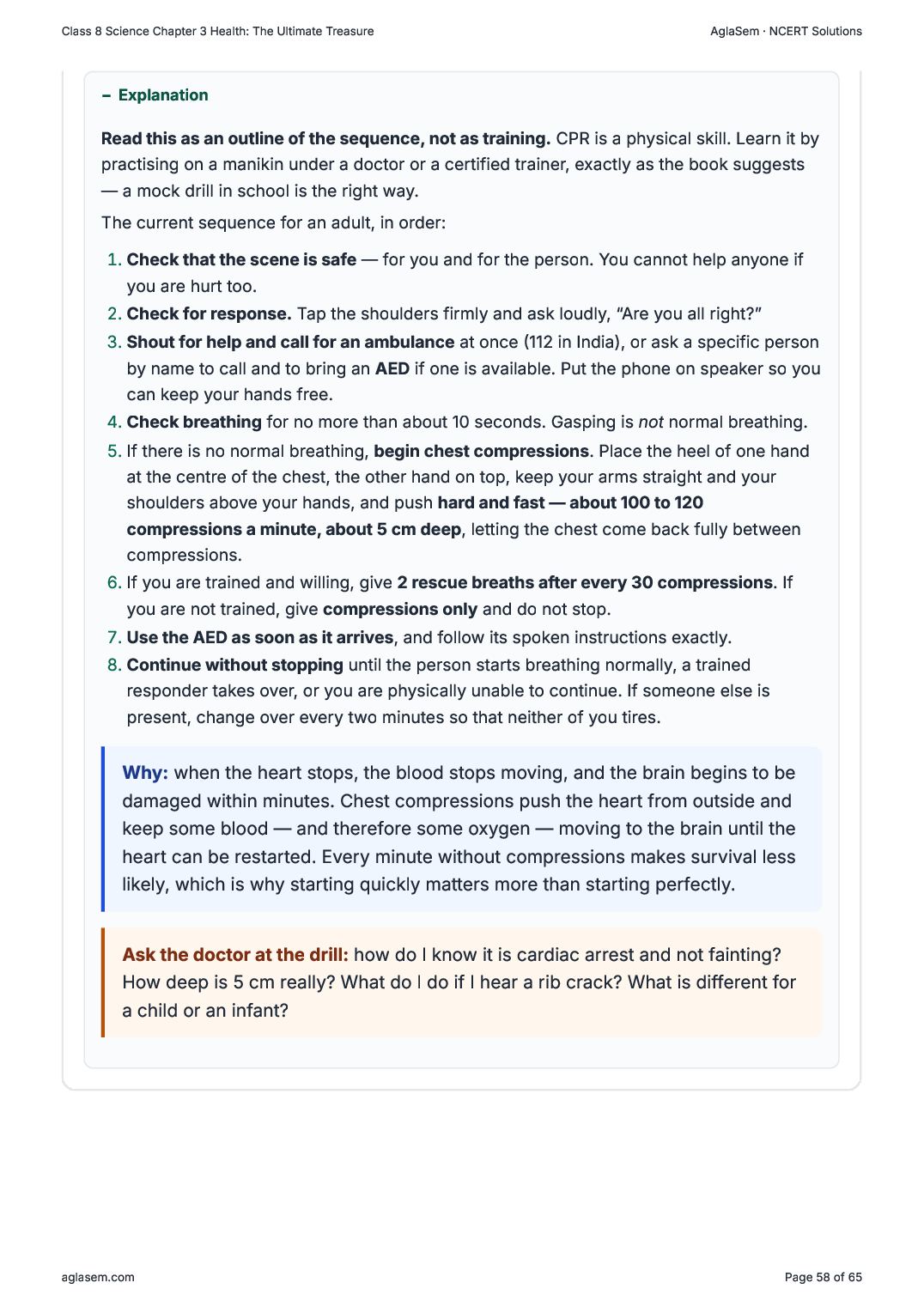
- According to current guidelines, learn the correct sequence of steps for performing cardiopulmonary resuscitation (CPR) on an adult in case of sudden stoppage of breathing. School may invite a doctor or a professional to demonstrate a mock drill.
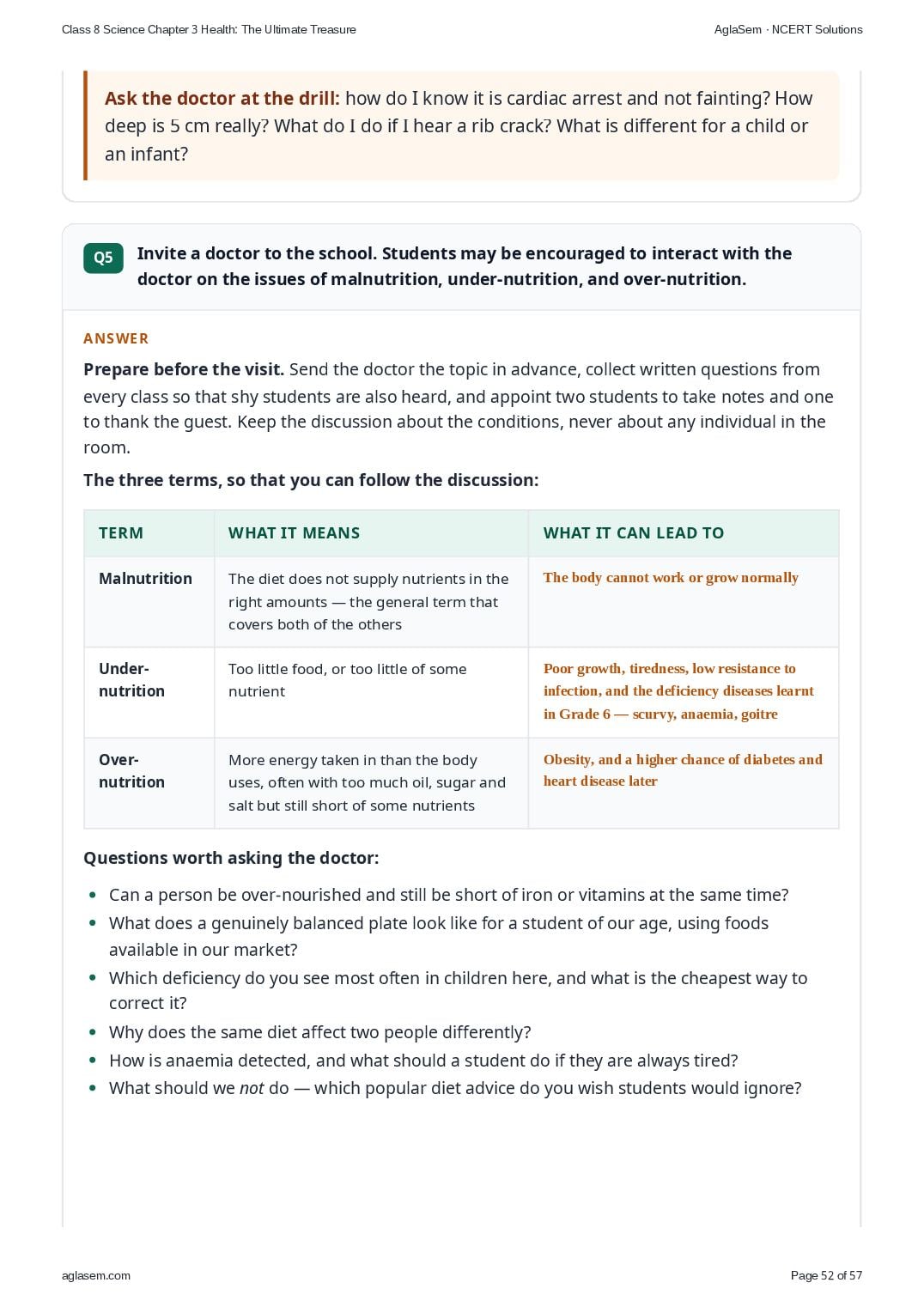
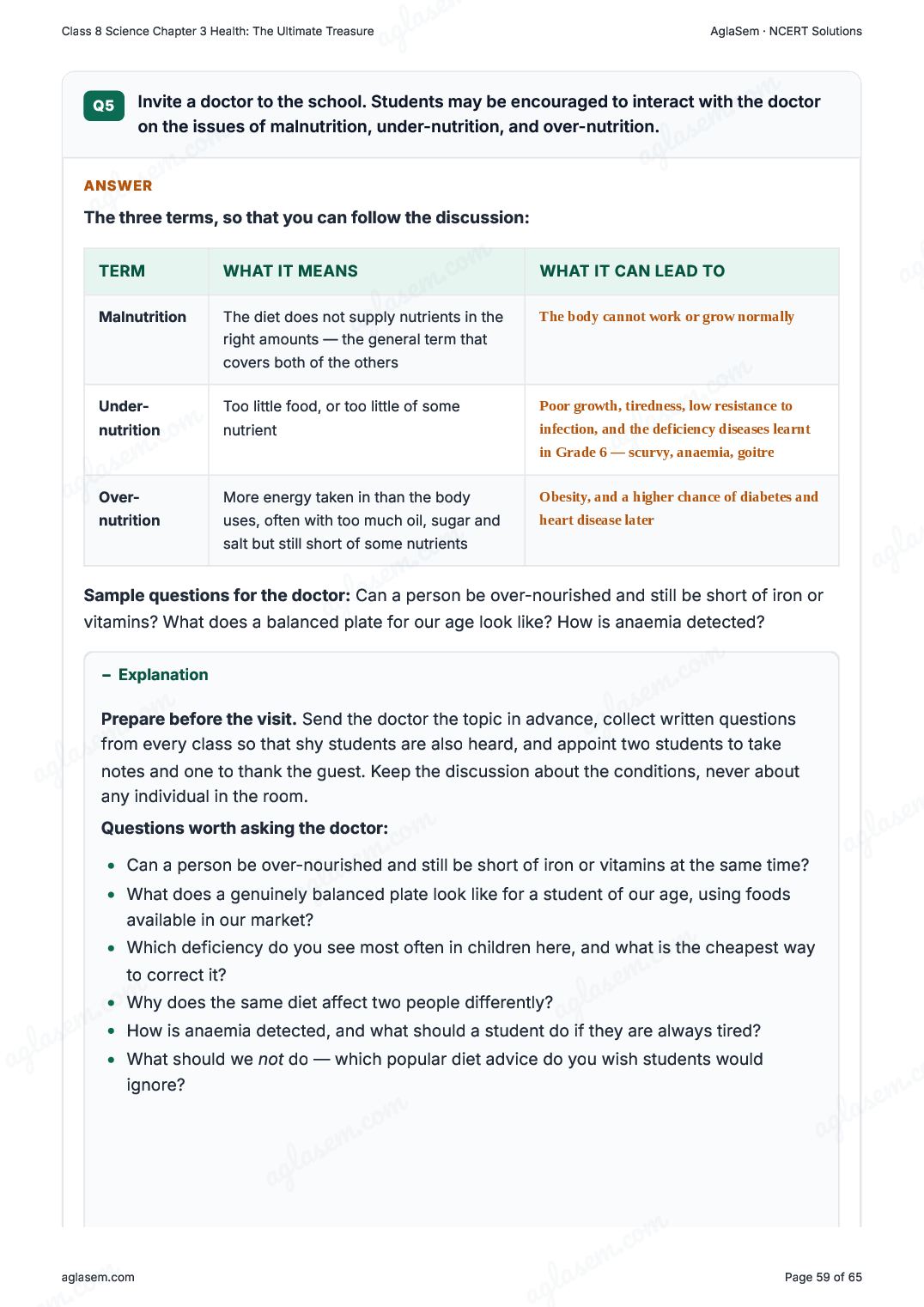
- Invite a doctor to the school. Students may be encouraged to interact with the doctor on the issues of malnutrition, under-nutrition, and over-nutrition.
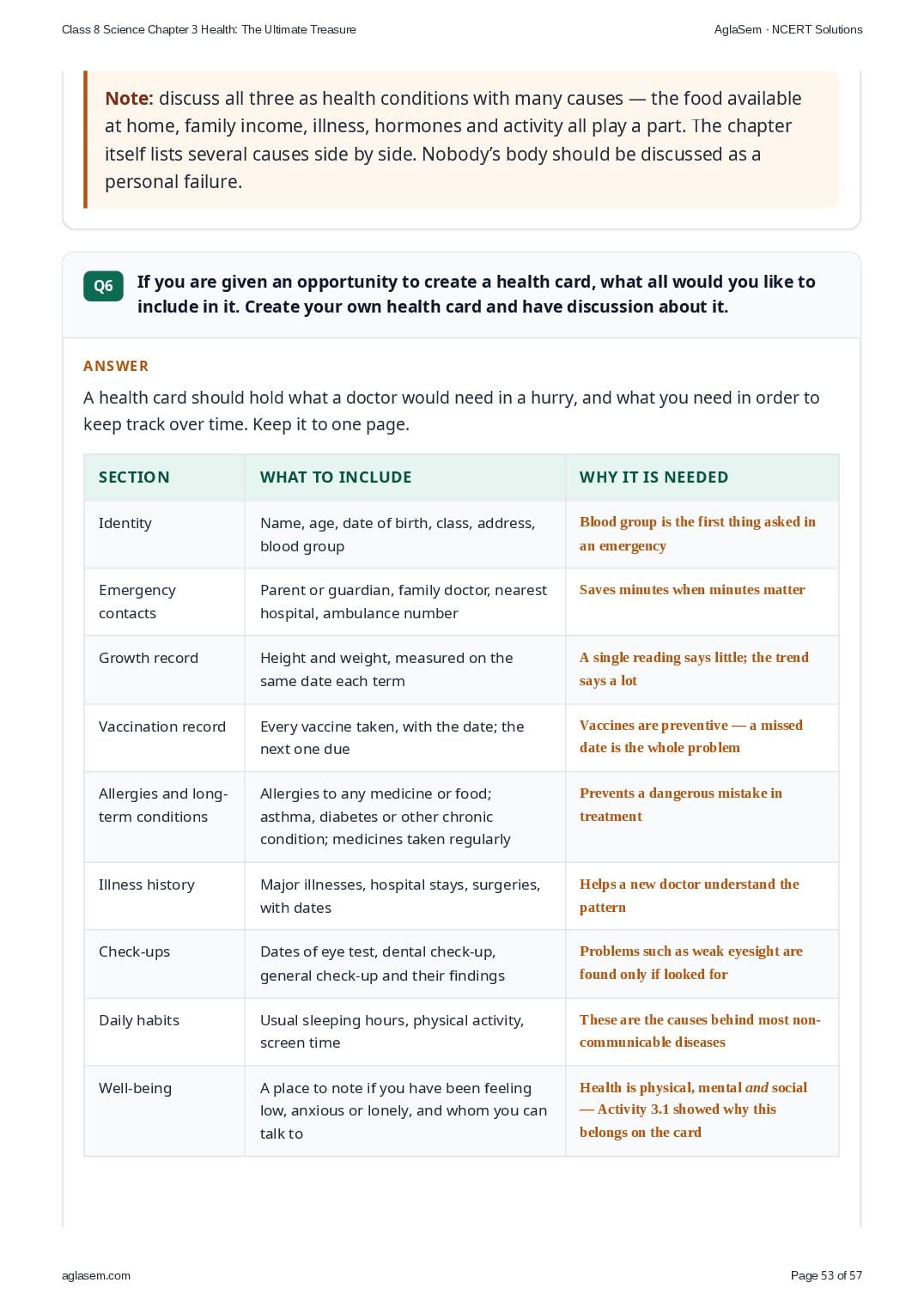
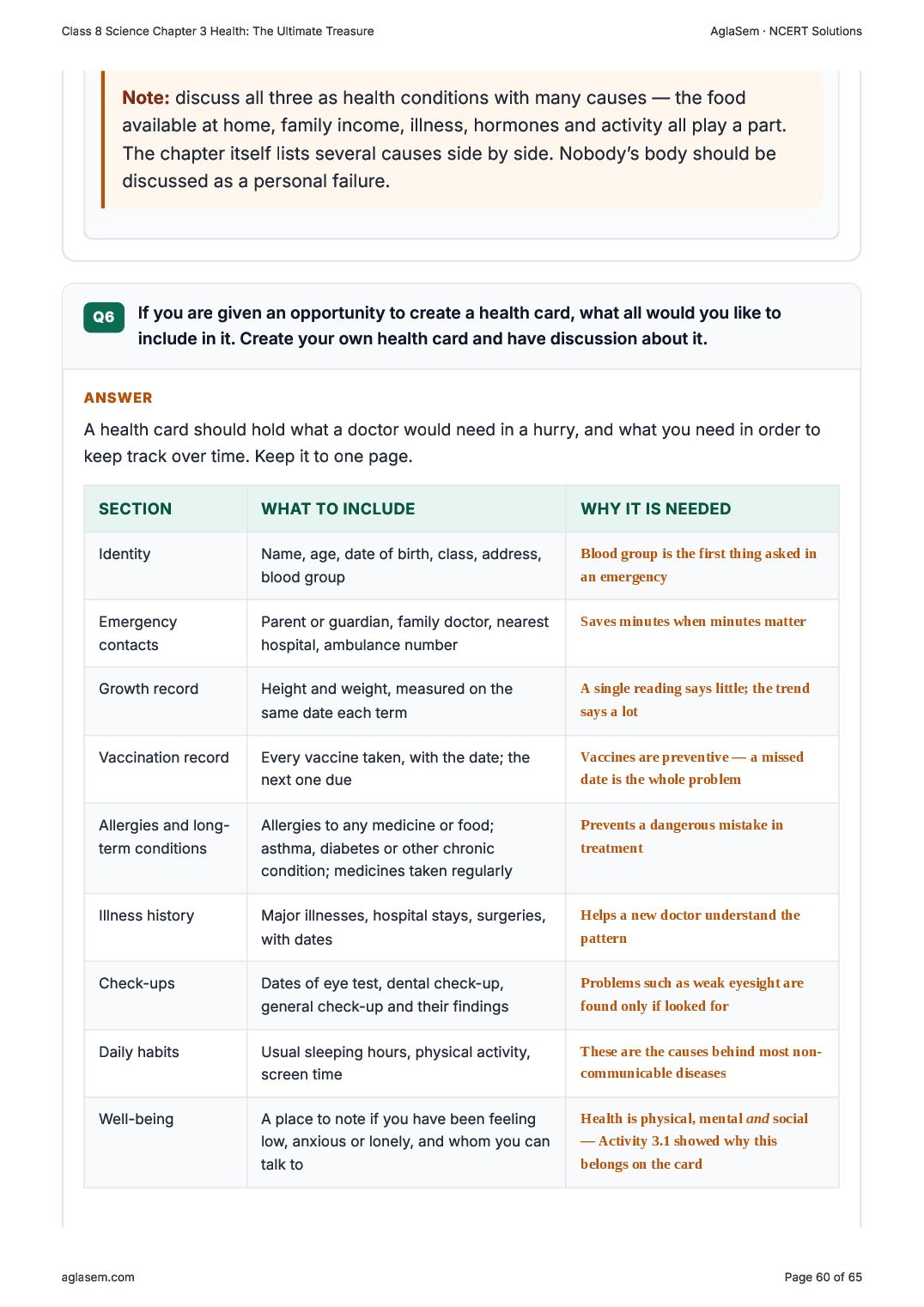
- If you are given an opportunity to create a health card, what all would you like to include in it. Create your own health card and have discussion about it.
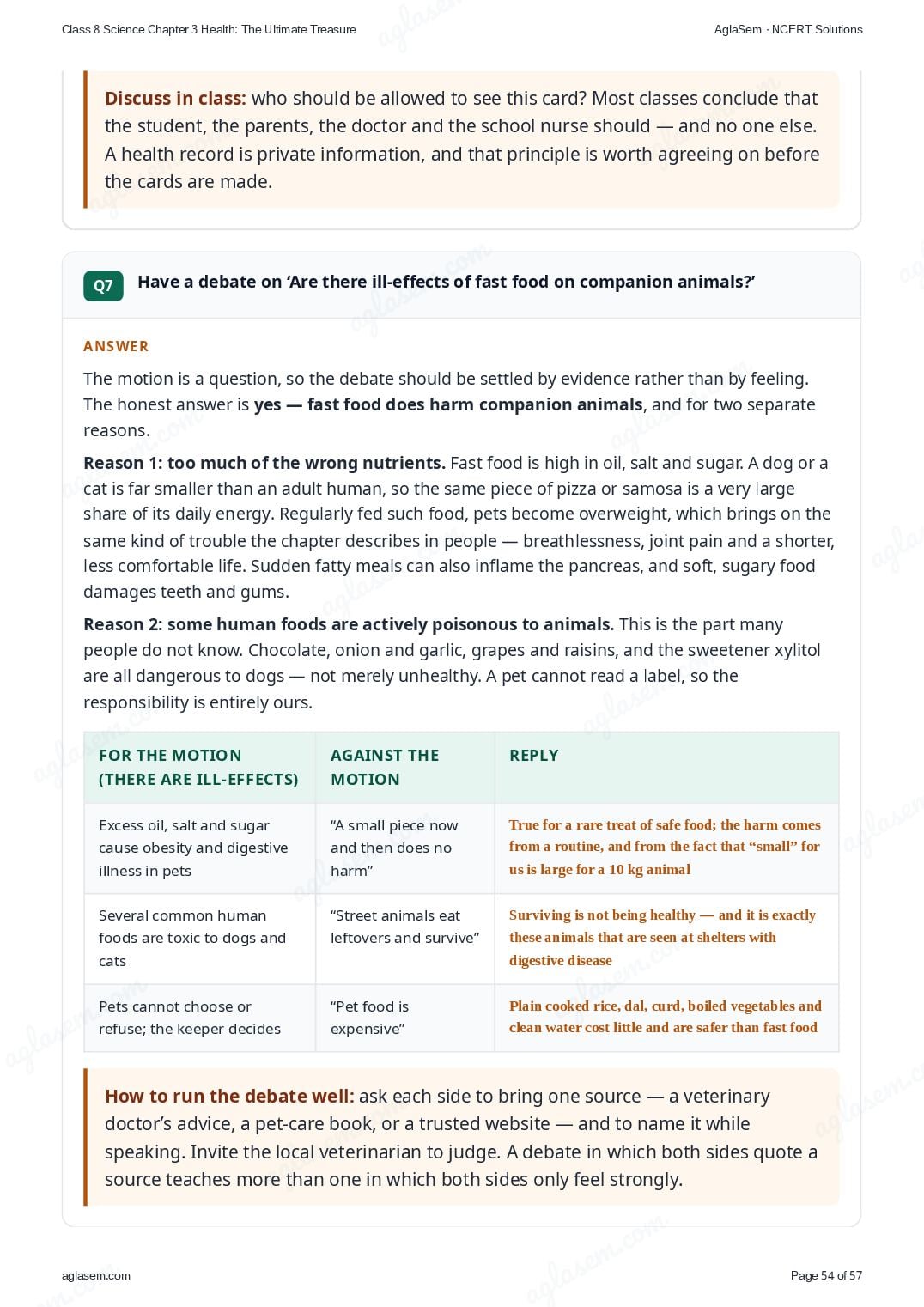
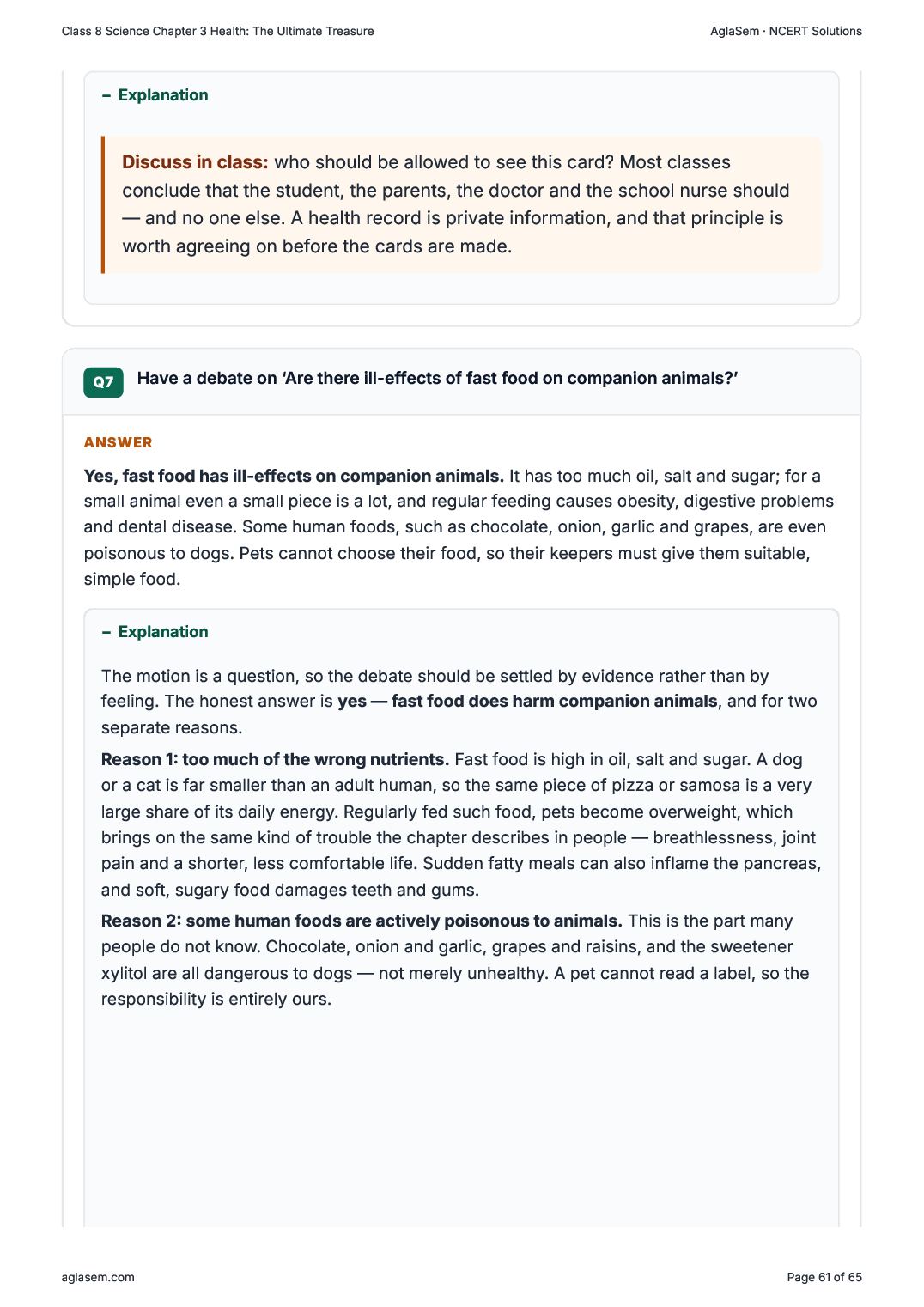
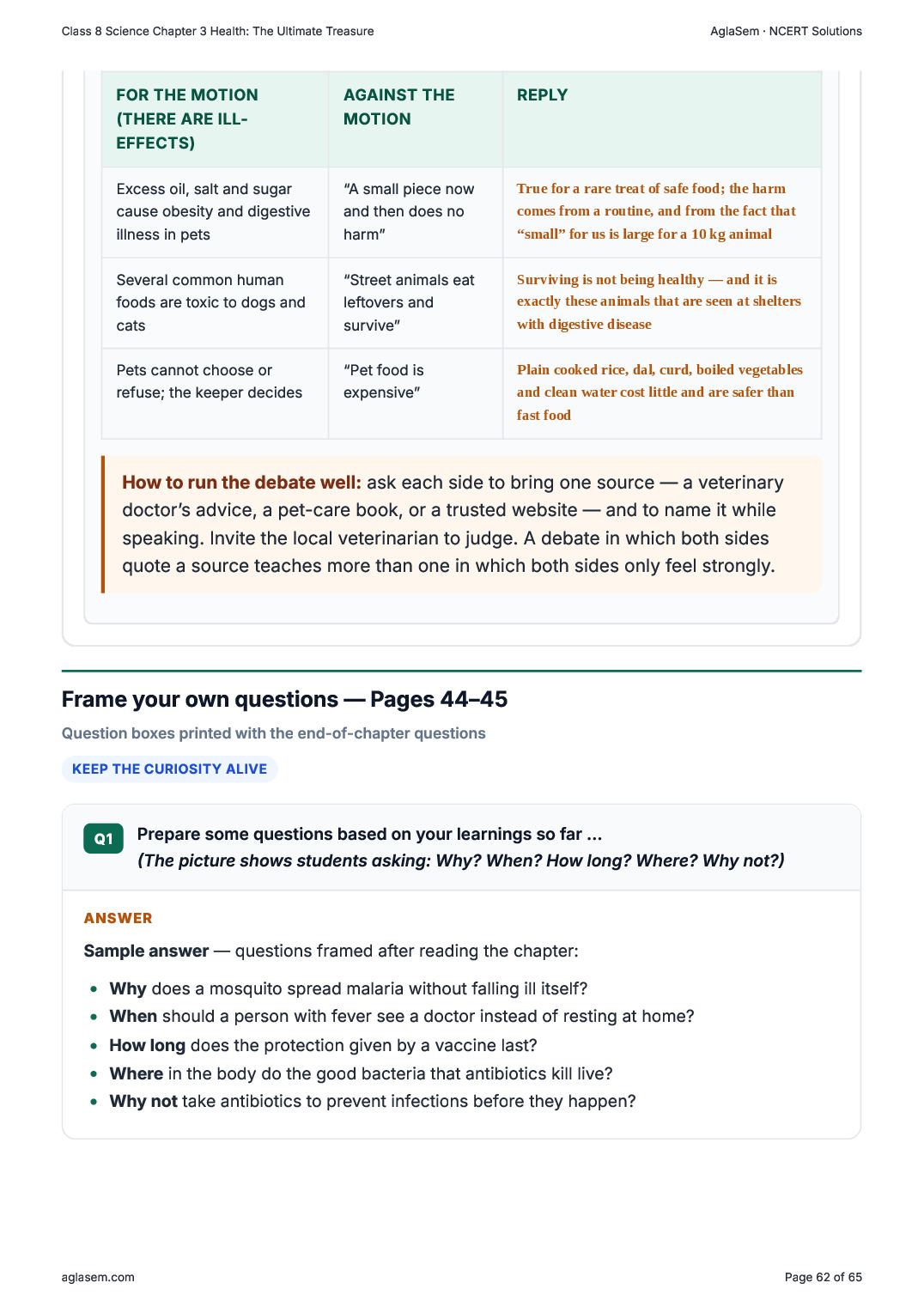
- Have a debate on ‘Are there ill-effects of fast food on companion animals?’
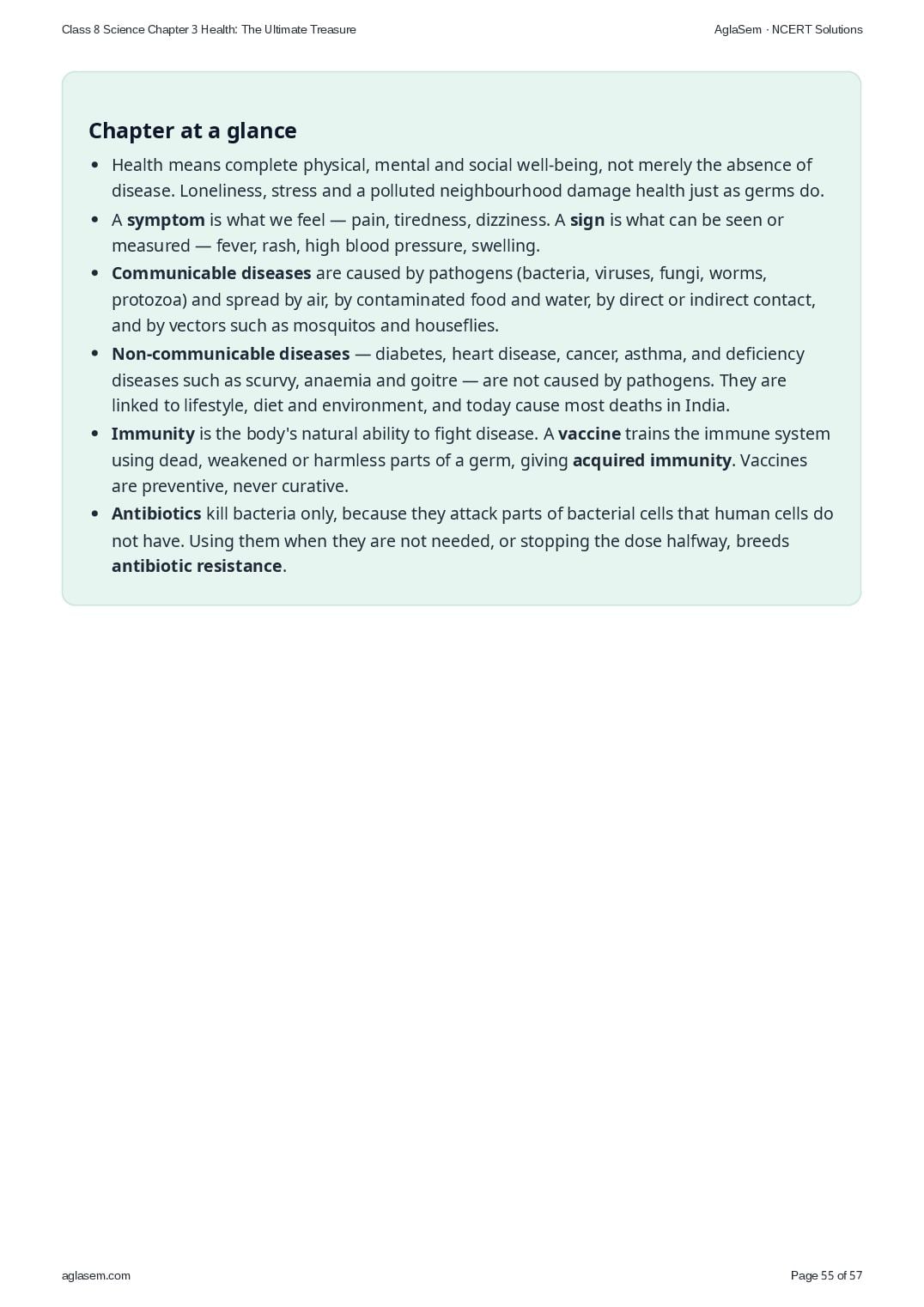
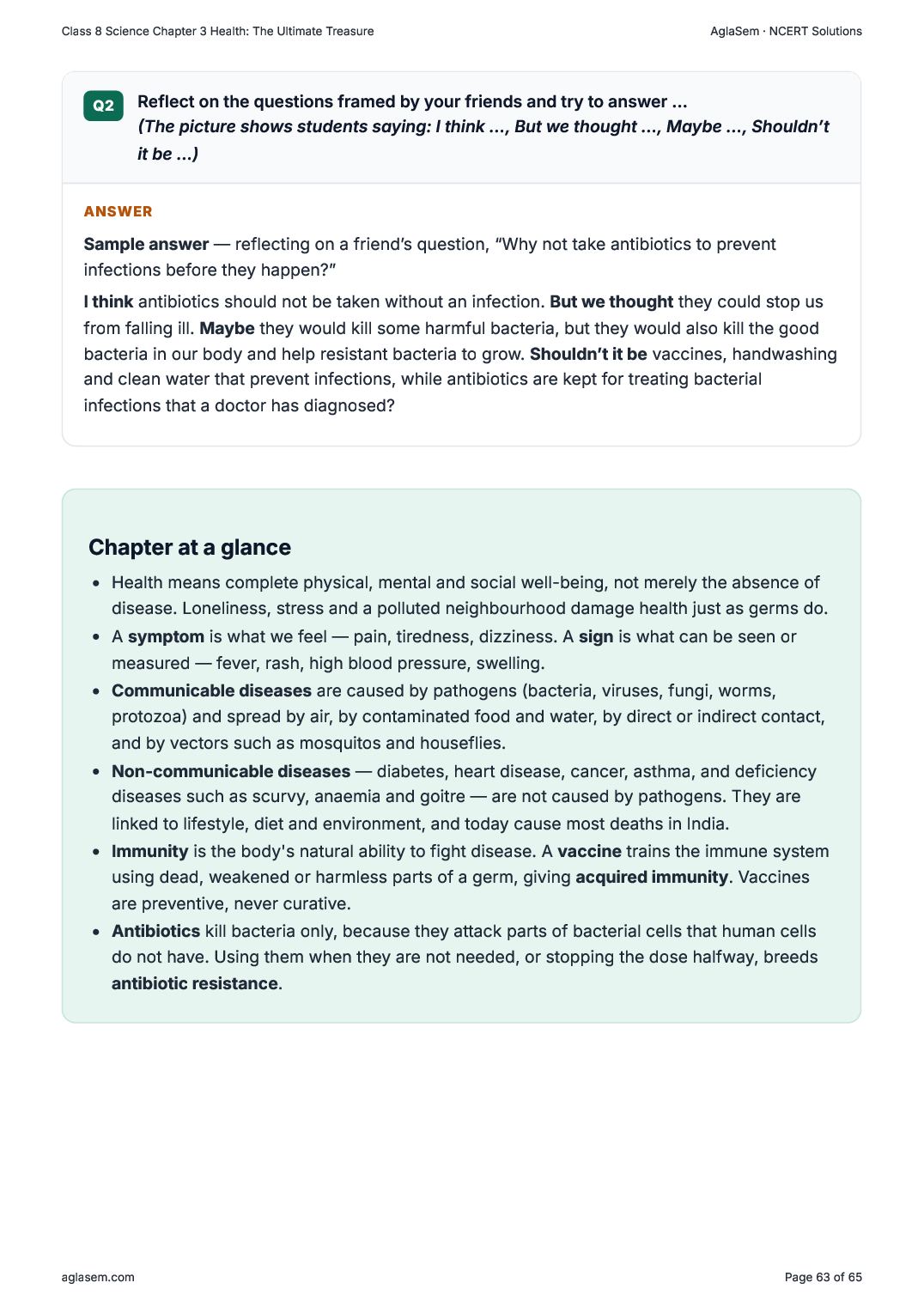
Chapter at a Glance
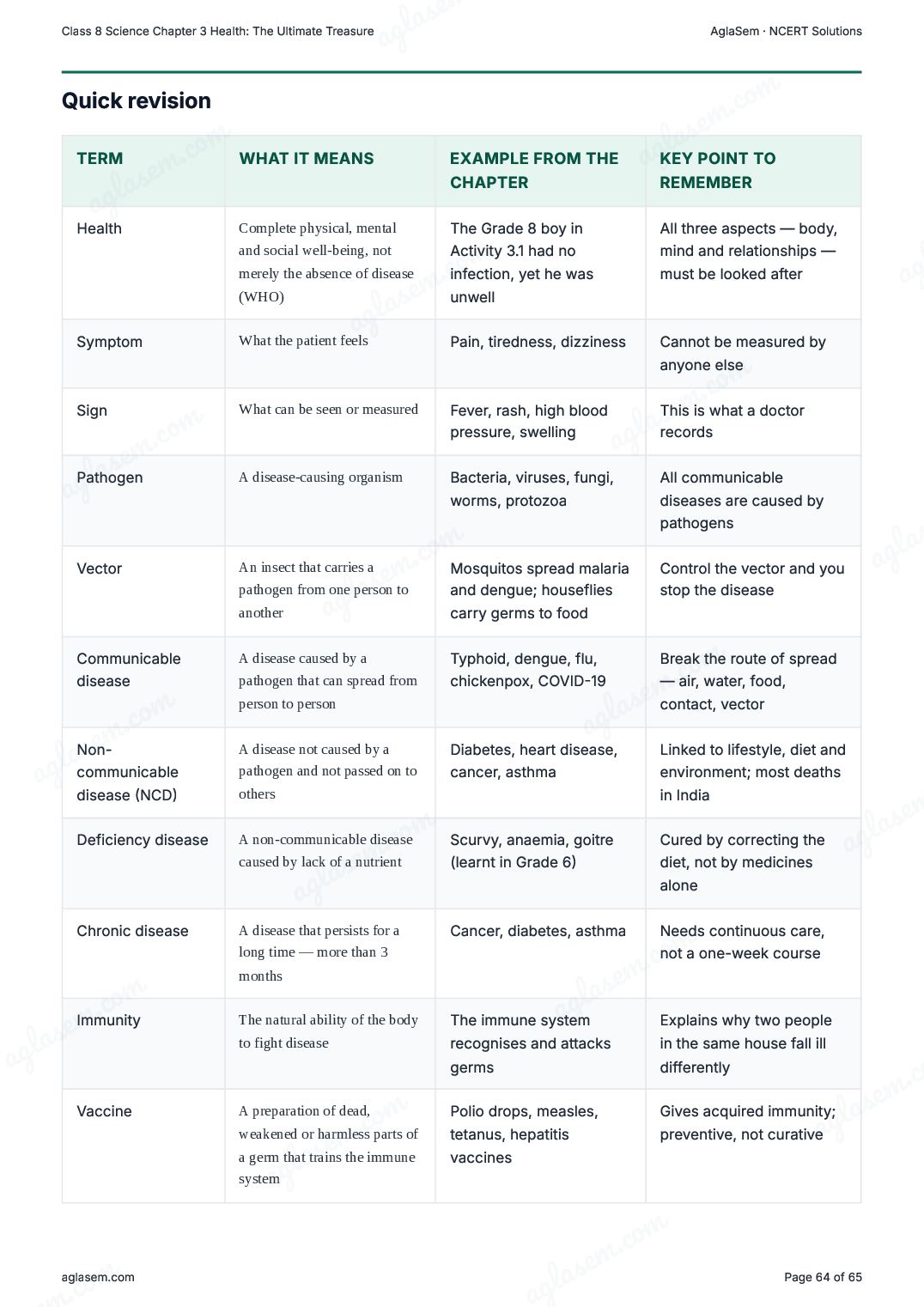
- Health means complete physical, mental and social well-being, not merely the absence of disease. Loneliness, stress and a polluted neighbourhood damage health just as germs do.
- A symptom is what we feel — pain, tiredness, dizziness. A sign is what can be seen or measured — fever, rash, high blood pressure, swelling.
- Communicable diseases are caused by pathogens (bacteria, viruses, fungi, worms, protozoa) and spread by air, by contaminated food and water, by direct or indirect contact, and by vectors such as mosquitos and houseflies.
- Non-communicable diseases — diabetes, heart disease, cancer, asthma, and deficiency diseases such as scurvy, anaemia and goitre — are not caused by pathogens. They are linked to lifestyle, diet and environment, and today cause most deaths in India.
- Immunity is the body's natural ability to fight disease. A vaccine trains the immune system using dead, weakened or harmless parts of a germ, giving acquired immunity . Vaccines are preventive, never curative.
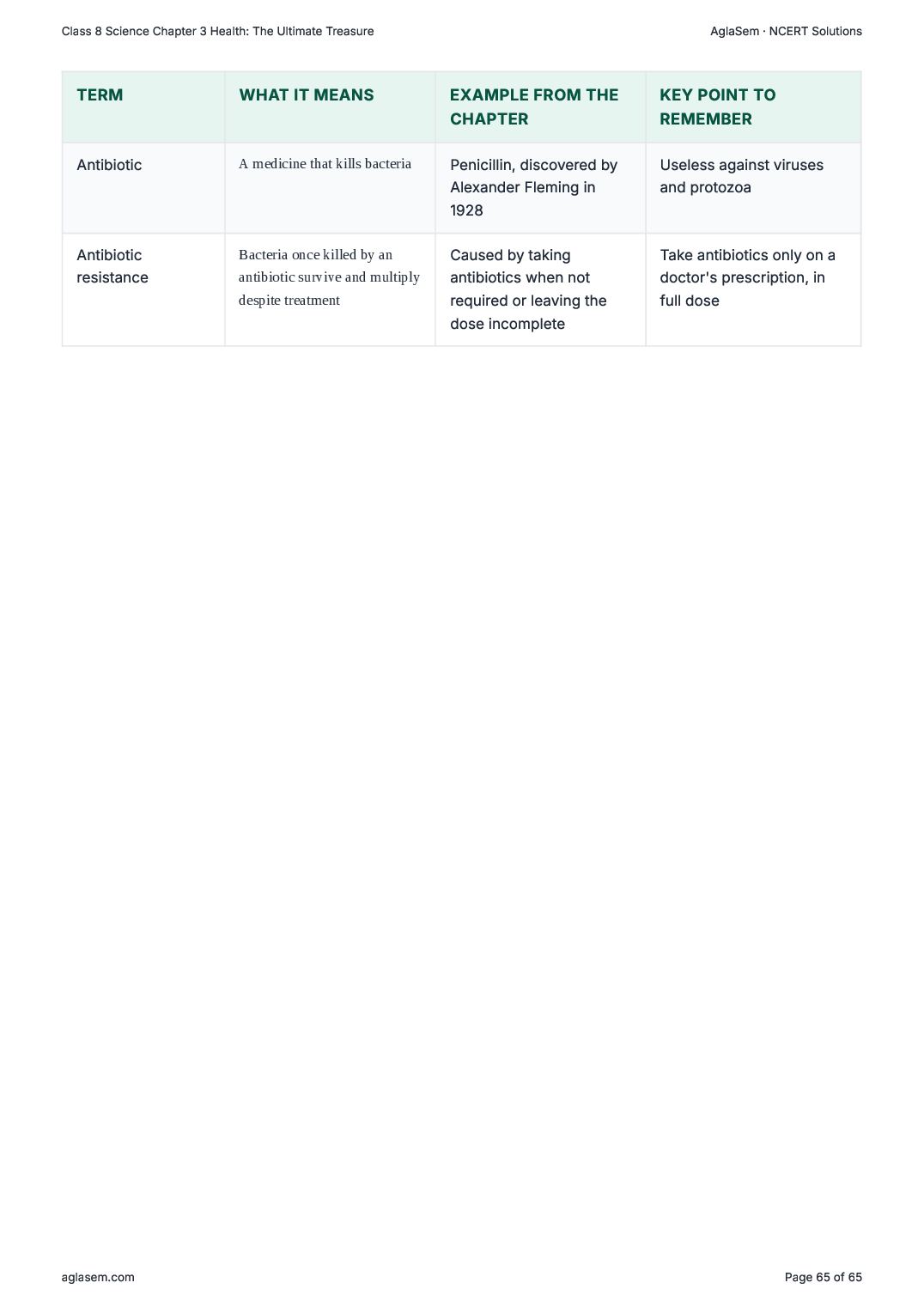
- Antibiotics kill bacteria only, because they attack parts of bacterial cells that human cells do not have. Using them when they are not needed, or stopping the dose halfway, breeds antibiotic resistance .
How to Download NCERT Solutions for Class 8 Science Chapter 3 PDF
Follow these simple steps to get the Health the Ultimate Treasure questions-and-answers PDF from Curiosity.
- Search NCERT Solutions for Class 8 Science Chapter 3 aglasem and open this page.
- Read the exercise questions with answers for Health the Ultimate Treasure shown above.
- Click the Download PDF link to save the Health the Ultimate Treasure solutions to your device.
NCERT Solutions for Class 8 Science – All Chapters
There are more chapters to study besides Health the Ultimate Treasure in Science. Here are the NCERT Solutions for all chapters of Class 8 Science.
- Chapter 1 Exploring the Investigative World of Science
- Chapter 2 The Invisible Living World Beyond Our Naked Eye
- Chapter 3 Health the Ultimate Treasure
- Chapter 4 Electricity Magnetic and Heating Effects
- Chapter 5 Exploring Forces
- Chapter 6 Pressure Winds Storms and Cyclones
- Chapter 7 Particulate Nature of Matter
- Chapter 8 Nature of Matter Elements Compounds and Mixtures
- Chapter 9 The Amazing World of Solutes Solvents and Solutions
- Chapter 10 Light Mirrors and Lenses
- Chapter 11 Keeping Time with the Skies
- Chapter 12 How Nature Works in Harmony
- Chapter 13 Our Home Earth a Unique Life Sustaining Planet
NCERT Solutions for Class 8 – All Subjects
Just like Chapter 3 of Science, you can get the exercise questions with answers for every other subject of Class 8. Here are the NCERT Solutions for all subjects of Class 8.
NCERT Solutions for Class 8 Science Chapter 3 – An Overview
The key highlights of this study material are as follows.
| Aspects | Details |
|---|---|
| Class | Class 8 |
| Subject | Science |
| Chapter Number | Chapter 3 |
| Chapter Name | Health the Ultimate Treasure |
| Book Name | Curiosity |
| Book By | NCERT (National Council of Educational Research and Training) |
| Educational Resource Here | NCERT Solutions of Class 8 Science Chapter 3 for all exercises |
| More Questions Answers of This Subject | NCERT Solutions for Class 8 Science |
| Download Book Chapter | NCERT Book Class 8 Science |
| All Questions Answers For This Class | NCERT Solutions for Class 8 |
| Complete Solutions | NCERT Solutions |
NCERT Solutions for Class 8 Science Chapter 3 Health the Ultimate Treasure – FAQs
What are the NCERT Solutions for Class 8 Science Chapter 3 Health the Ultimate Treasure?
They are the complete, step-by-step answers to all the exercise and in-text questions of Chapter 3 Health the Ultimate Treasure from the NCERT Class 8 Science textbook Curiosity, written by experts as per the latest NCERT syllabus.
How can I download the Class 8 Science Chapter 3 solutions PDF for free?
Open this page on aglasem, read the Health the Ultimate Treasure questions with answers, and click the “Download Solutions PDF” link. The Class 8 Science Chapter 3 NCERT Solutions PDF is completely free to download.
Are these NCERT Solutions as per the latest 2026-27 syllabus?
Yes. The NCERT Solutions for Class 8 Science Chapter 3 are based on the latest NCERT textbook Curiosity and the current 2026-27 CBSE syllabus, so the questions and answers match what you study in class.
Where can I get NCERT Solutions for the other chapters of Class 8 Science?
You can find the answers to every chapter on the NCERT Solutions for Class 8 Science page, and solutions for every subject on the NCERT Solutions for Class 8 page.
How do NCERT Solutions help in exam preparation?
They show the correct method to solve each question, help you write answers the way they are expected in exams, let you check and correct your own work, and save revision time — which together improve your marks in Class 8 Science.
If you have any queries on NCERT Solutions for Class 8 Science Chapter 3 Health the Ultimate Treasure, then please ask in the comments below.