Download The Invisible Living World: Beyond Our Naked Eye – NCERT Class 8 Science Chapter 2 PDF from the new NCERT Class 8 Science book Curiosity (2026-27). Read the chapter online or download the free PDF. The eye can only see things above a certain size. A curved piece of glass, thick in the middle and thin at the edge — shaped like a lentil seed, which is why it was named a lens — makes small things look bigger. Better lenses became microscopes, and…
The Invisible Living World: Beyond Our Naked Eye PDF – Chapter 2 of Curiosity
Read the chapter online or download the PDF.
| Chapter | Download | |
|---|---|---|
| Chapter 2 PDF | The Invisible Living World: Beyond Our Naked Eye | View PDF |
| Full book | NCERT Class 8 Science – Curiosity | View Book |
Read Online
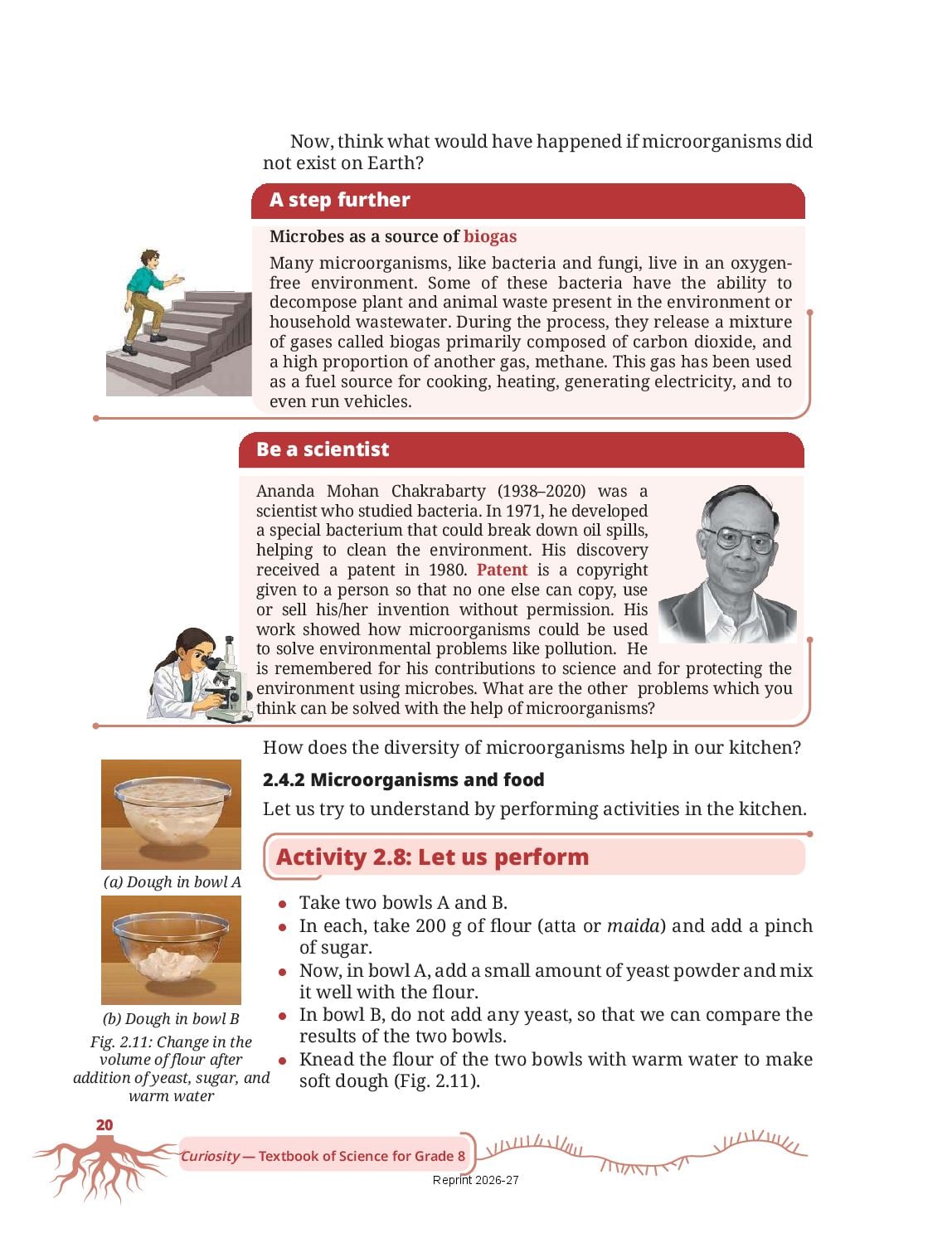
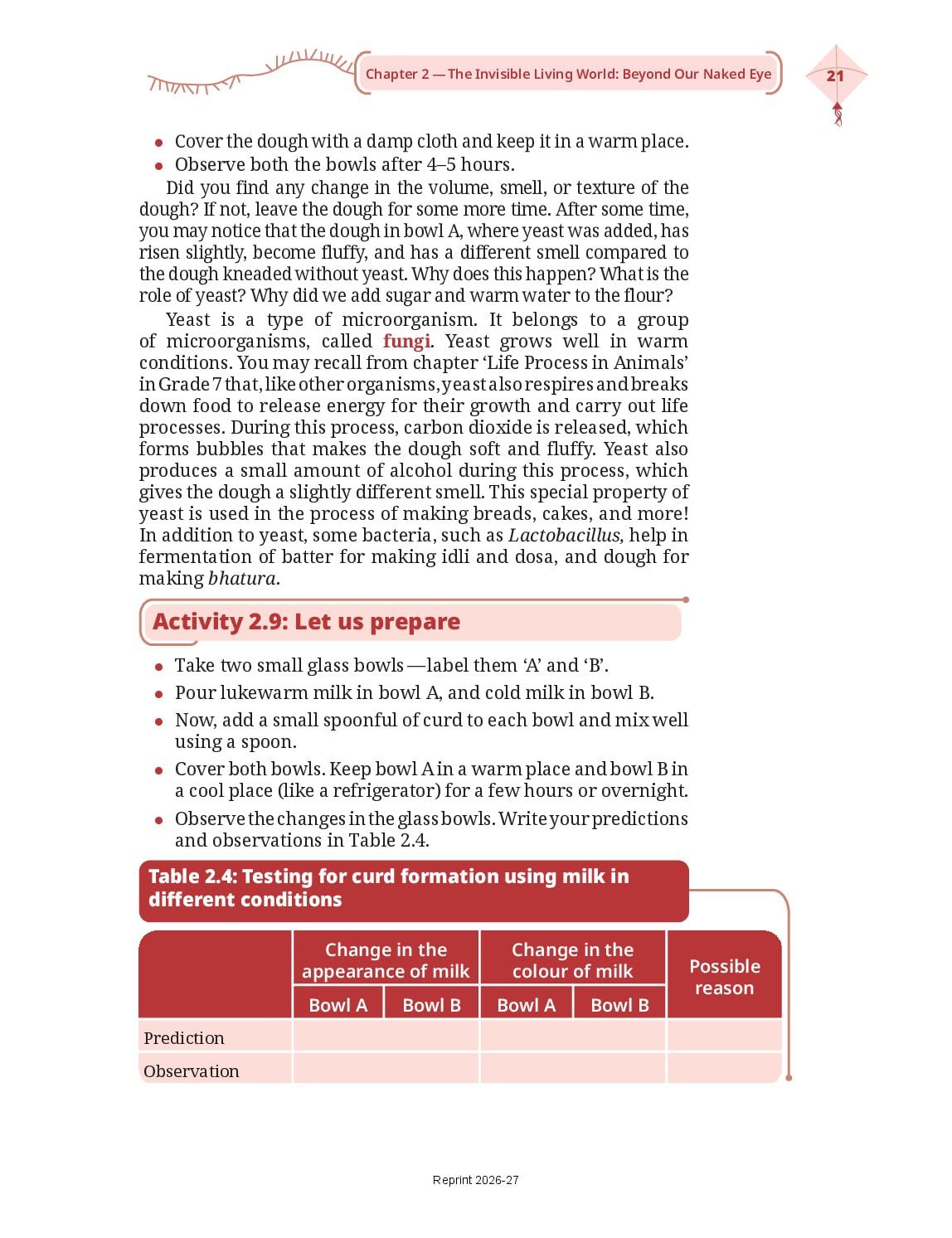
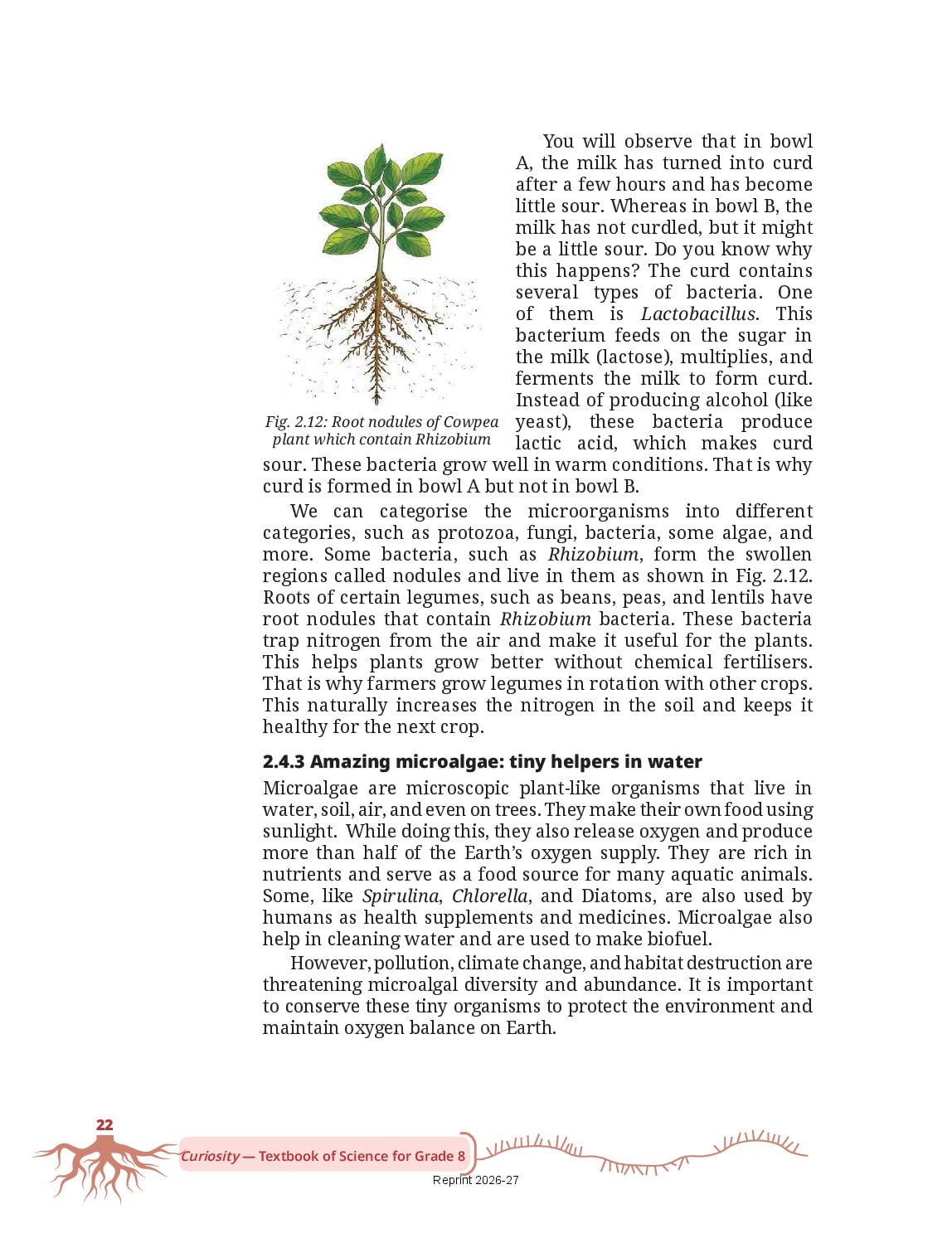
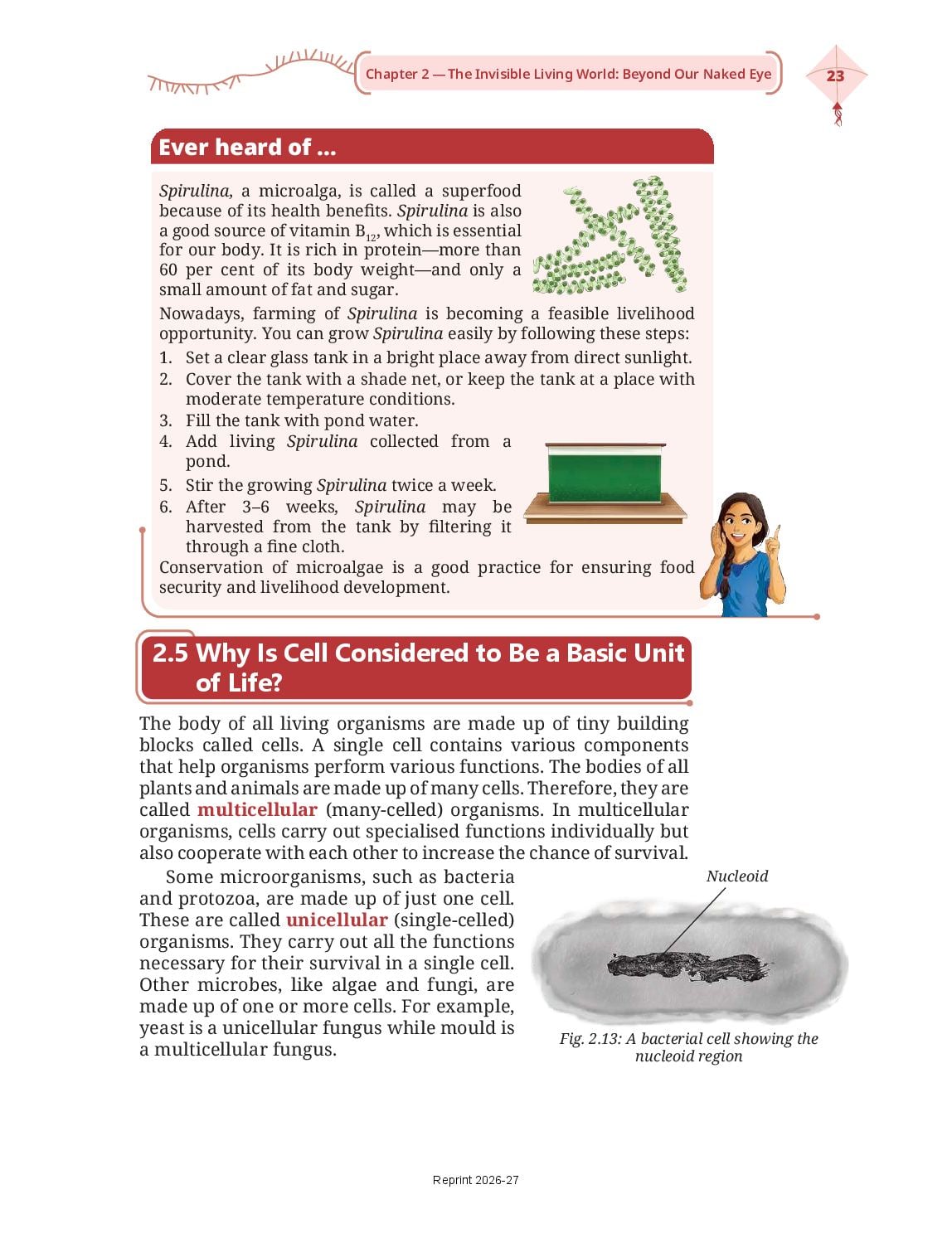
What Is in The Invisible Living World: Beyond Our Naked Eye? (Class 8 Science Chapter 2)
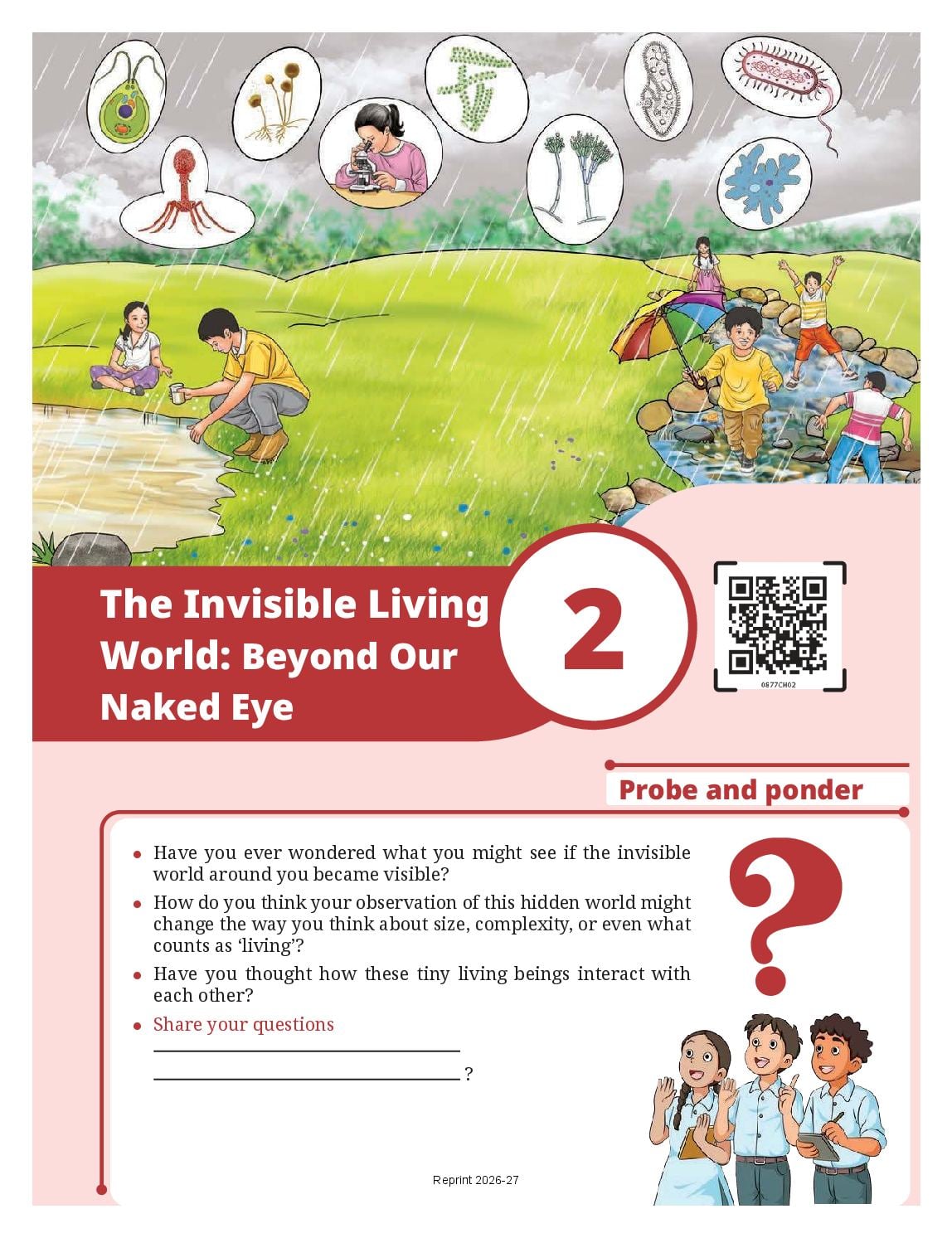
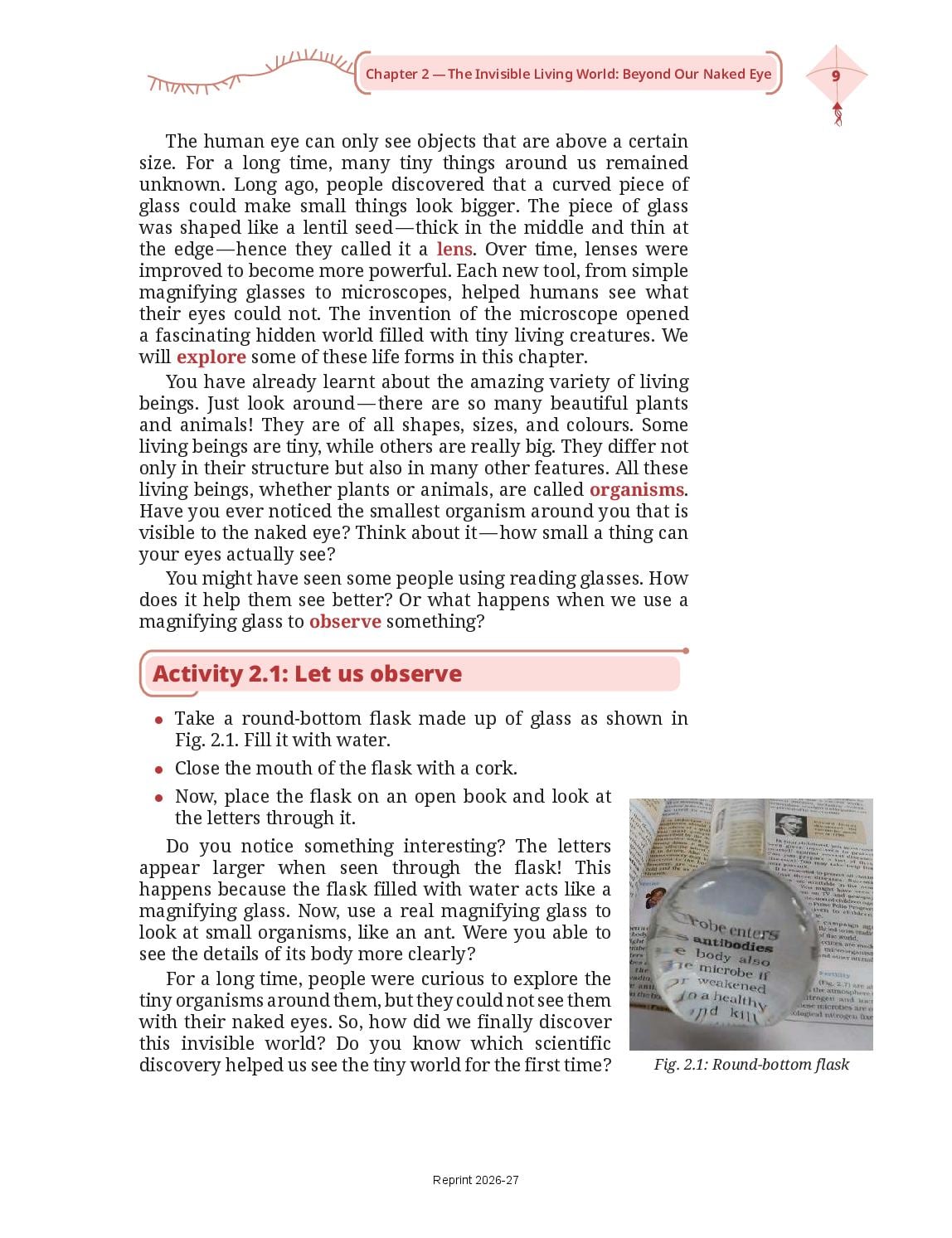
- The eye can only see things above a certain size. A curved piece of glass, thick in the middle and thin at the edge — shaped like a lentil seed, which is why it was named a lens — makes small things look bigger. Better lenses became microscopes, and microscopes opened the hidden living world.
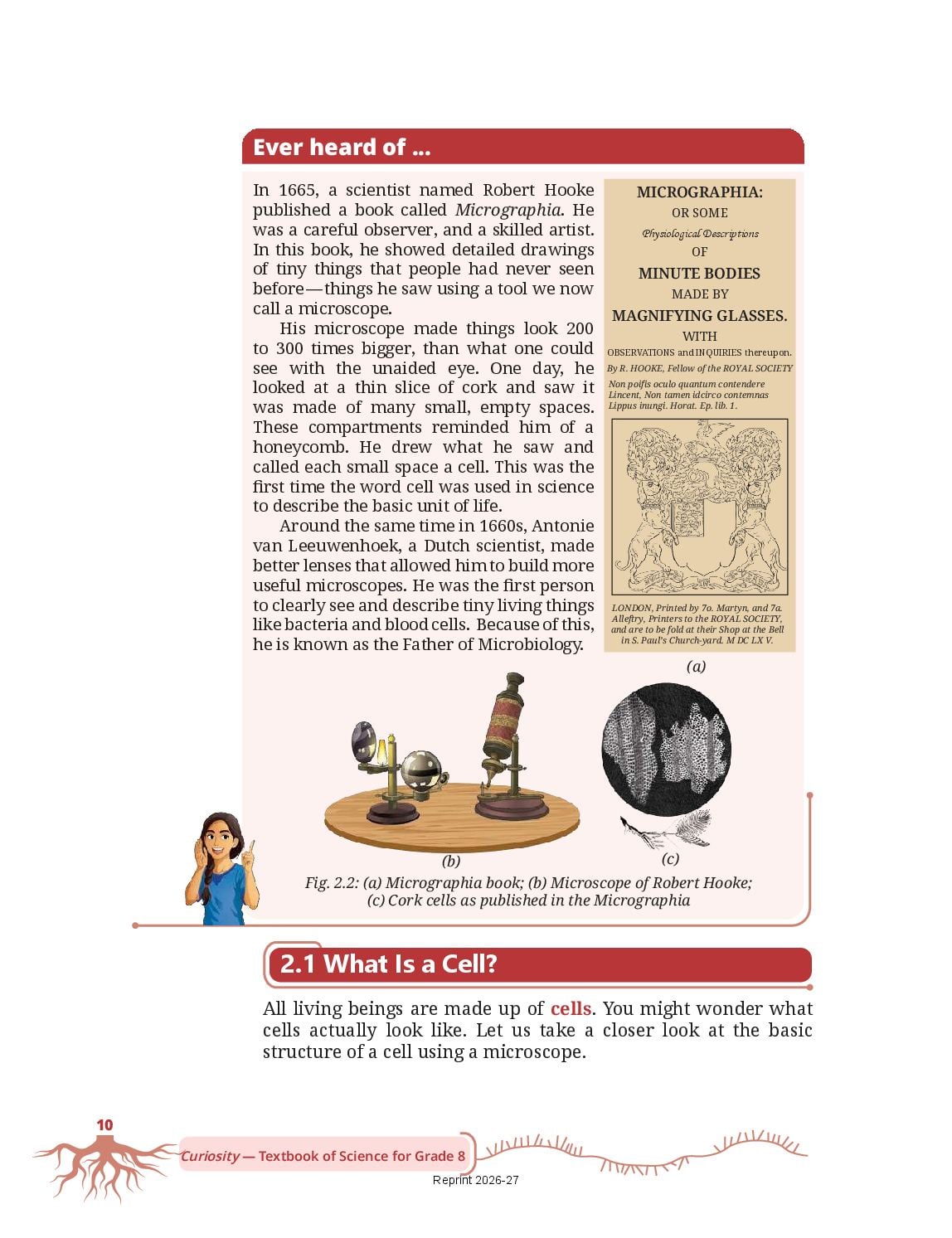
- In 1665 Robert Hooke published Micrographia. His microscope magnified 200 to 300 times. Looking at a thin slice of cork he saw many small empty compartments like a honeycomb, and called each one a cell. Around the 1660s Antonie van Leeuwenhoek made better lenses and was the first to clearly see and describe bacteria and blood cells — the Father of Microbiology.
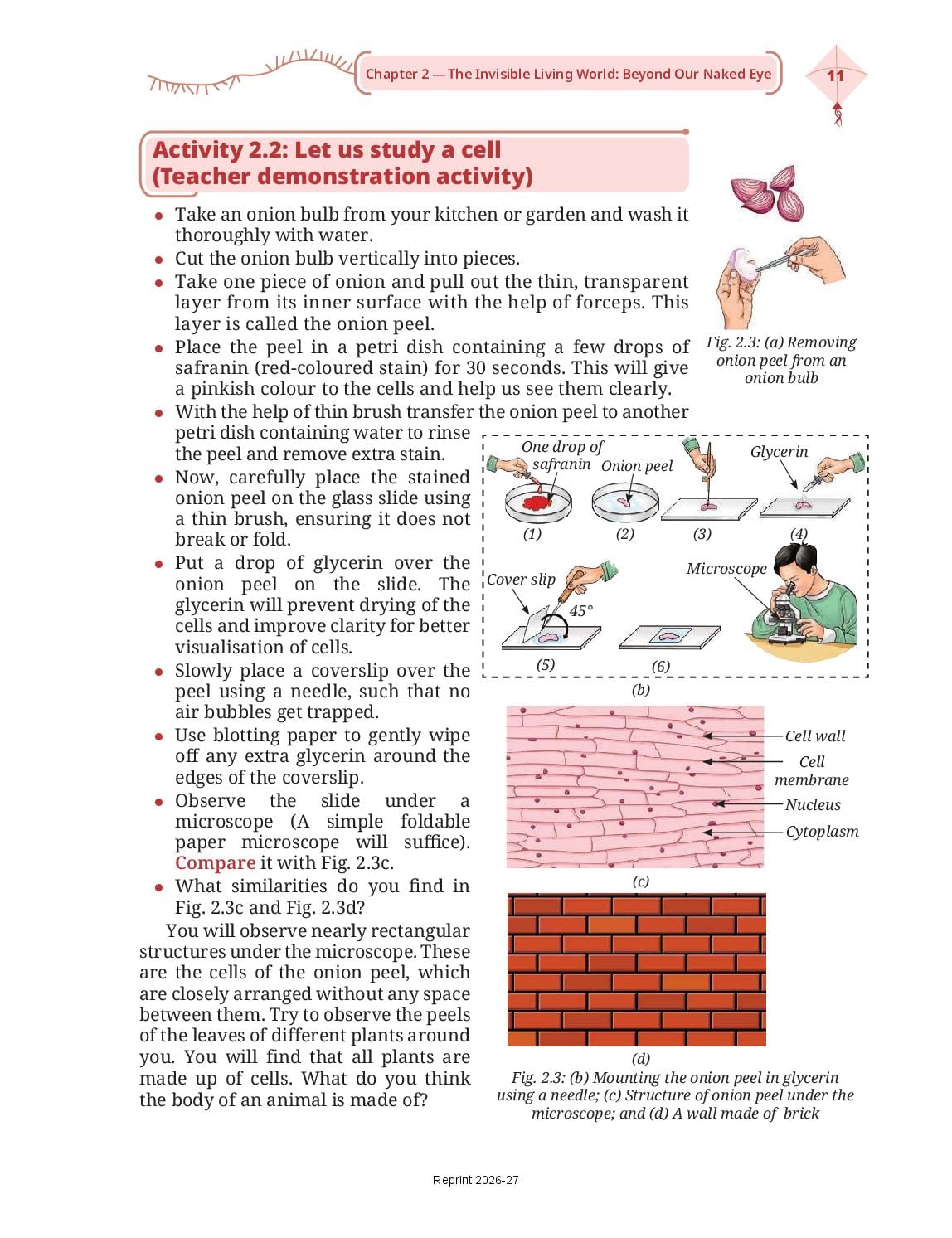
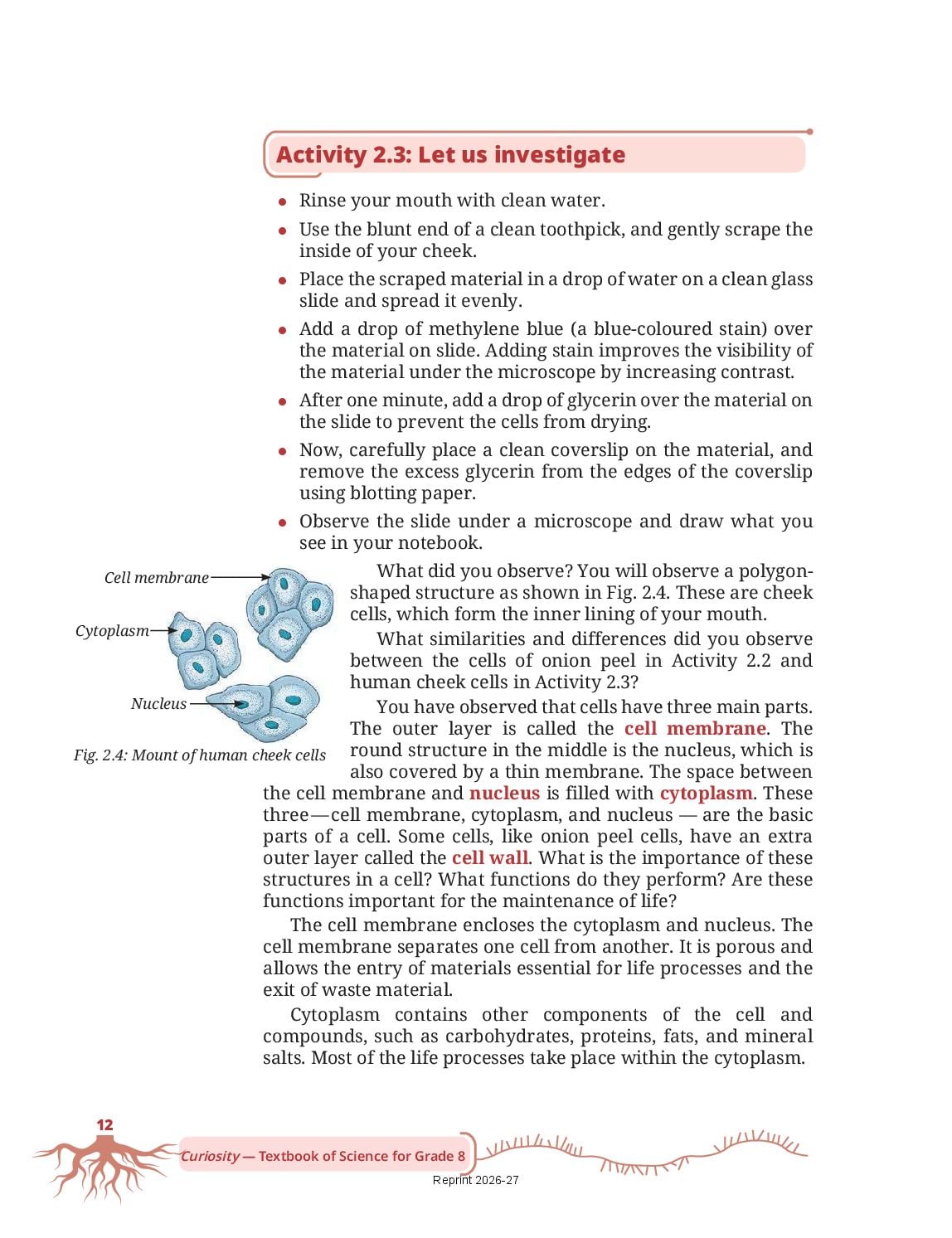
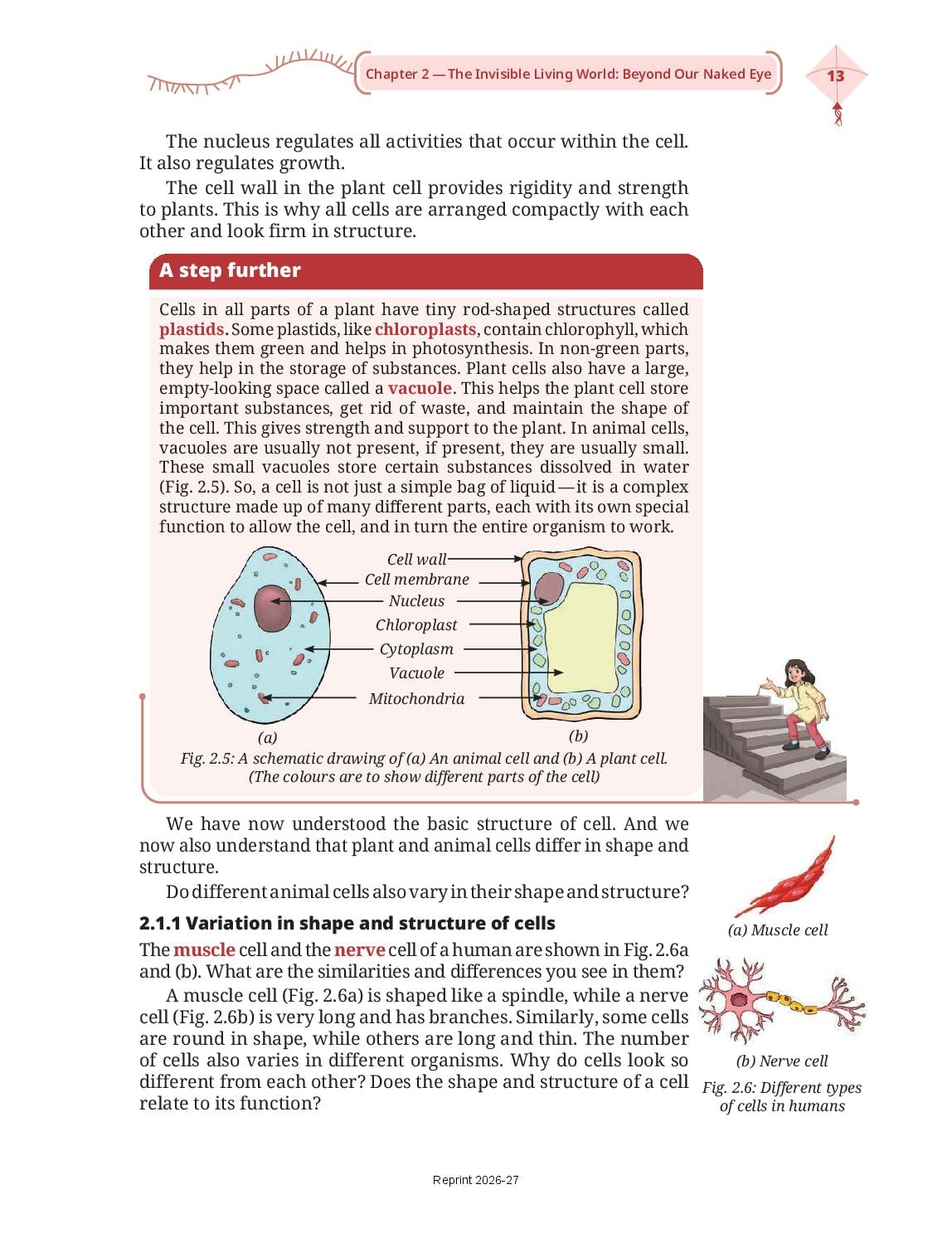
- Every living body is built of cells. A typical cell has a cell membrane (porous — lets in what life processes need and lets waste out), cytoplasm (where most life processes happen) and a nucleus (regulates all the cell’s activities and its growth). Plant cells have an extra cell wall for rigidity, plus plastids (chloroplasts carry chlorophyll) and a large vacuole.
- Shape follows function. Cheek cells are thin and flat and form a protective lining; nerve cells are long and branched so messages travel quickly; muscle cells are thin, flexible and spindle-shaped so they can contract and relax in a wave and push food down the food pipe.
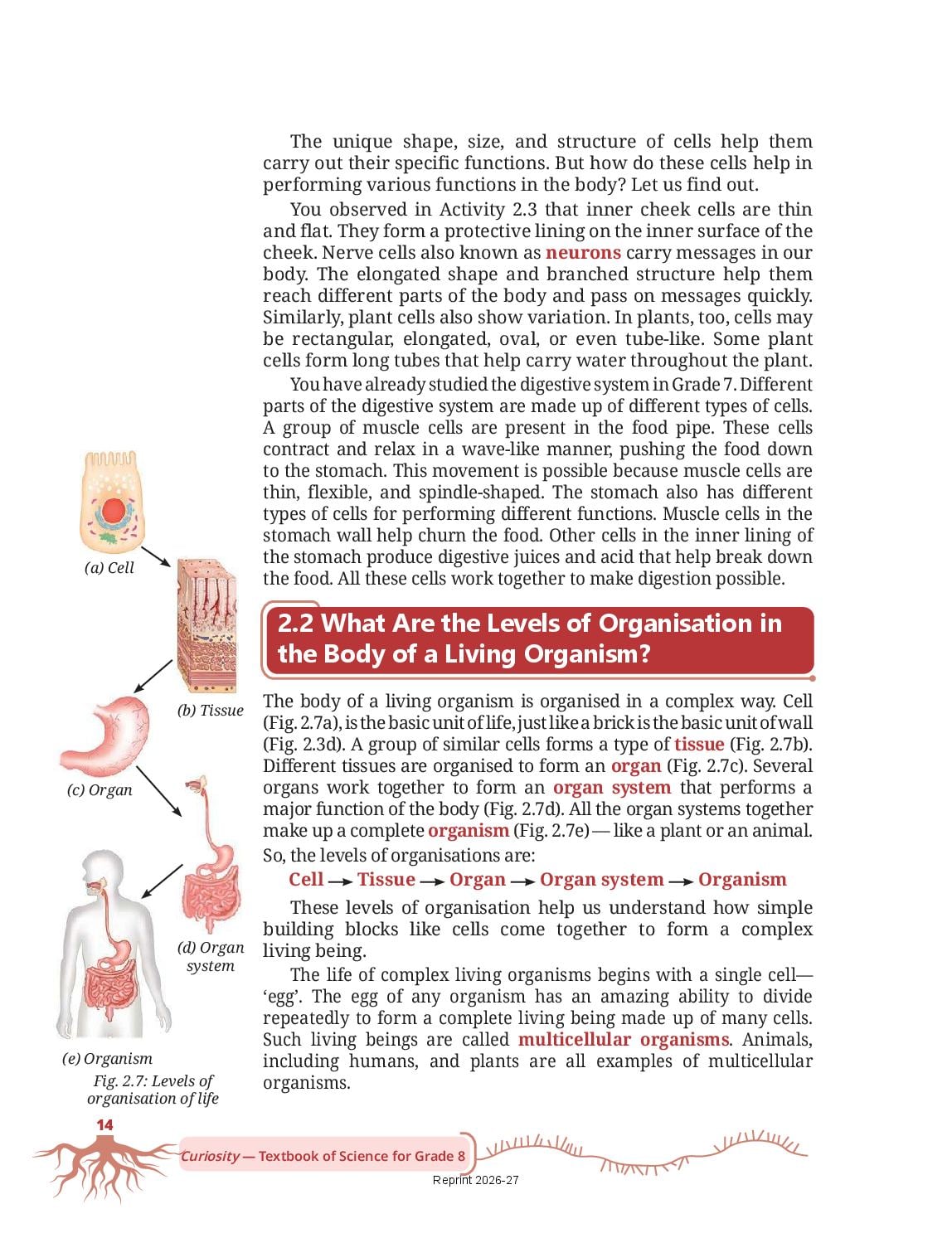
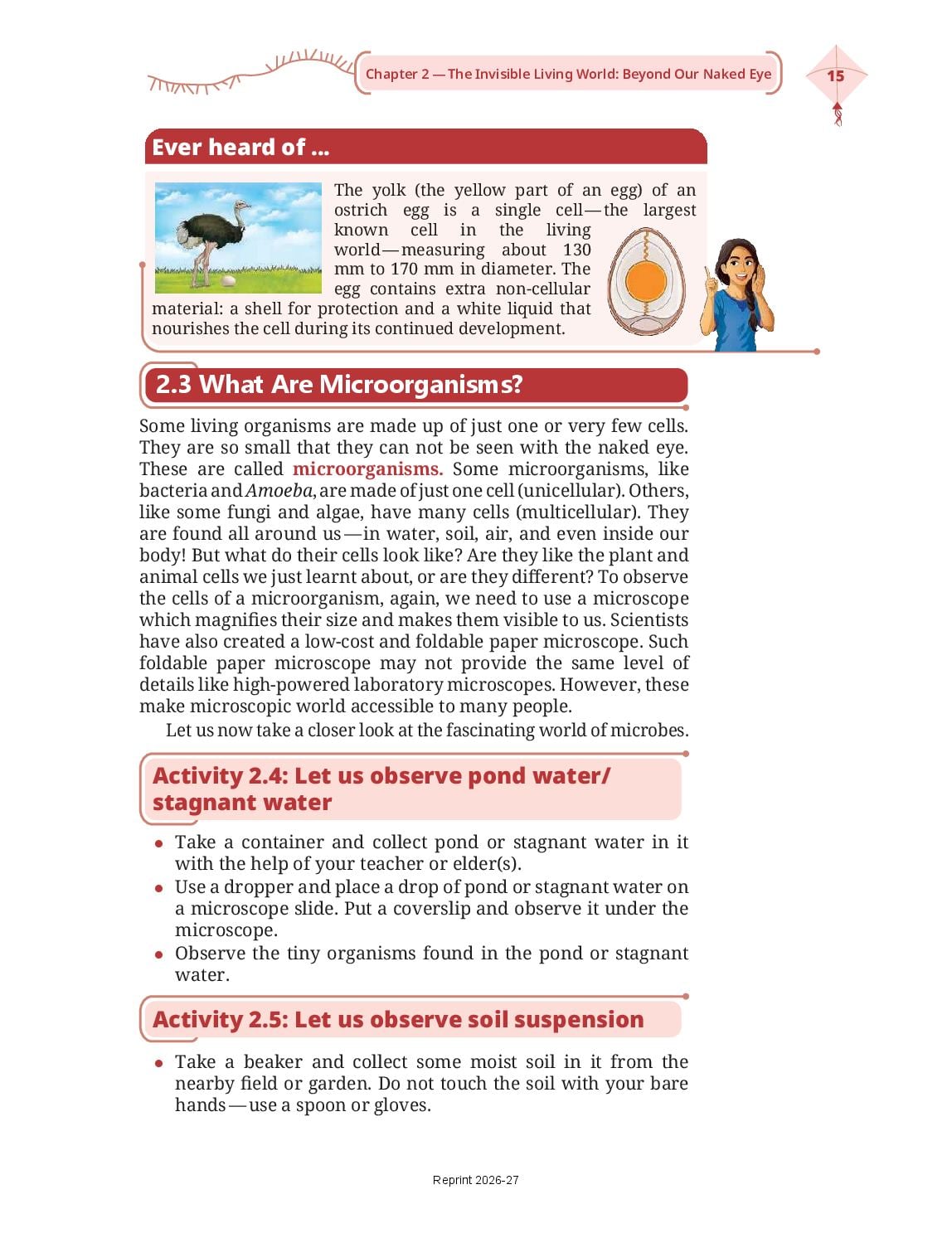
- Bodies are organised in levels: Cell → Tissue → Organ → Organ system → Organism. Life in complex organisms begins from a single cell, the ‘egg’, which divides again and again — such organisms are multicellular.
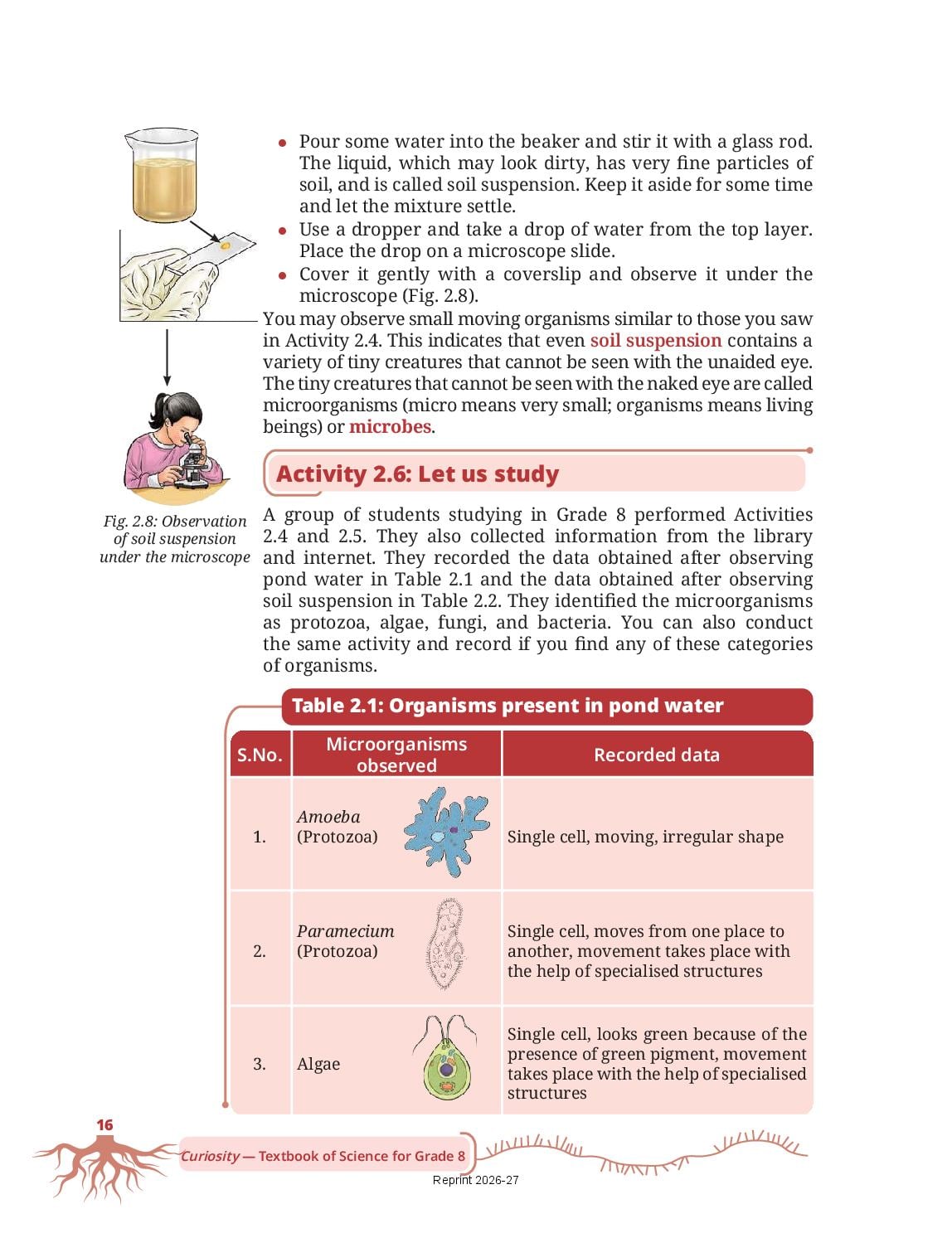
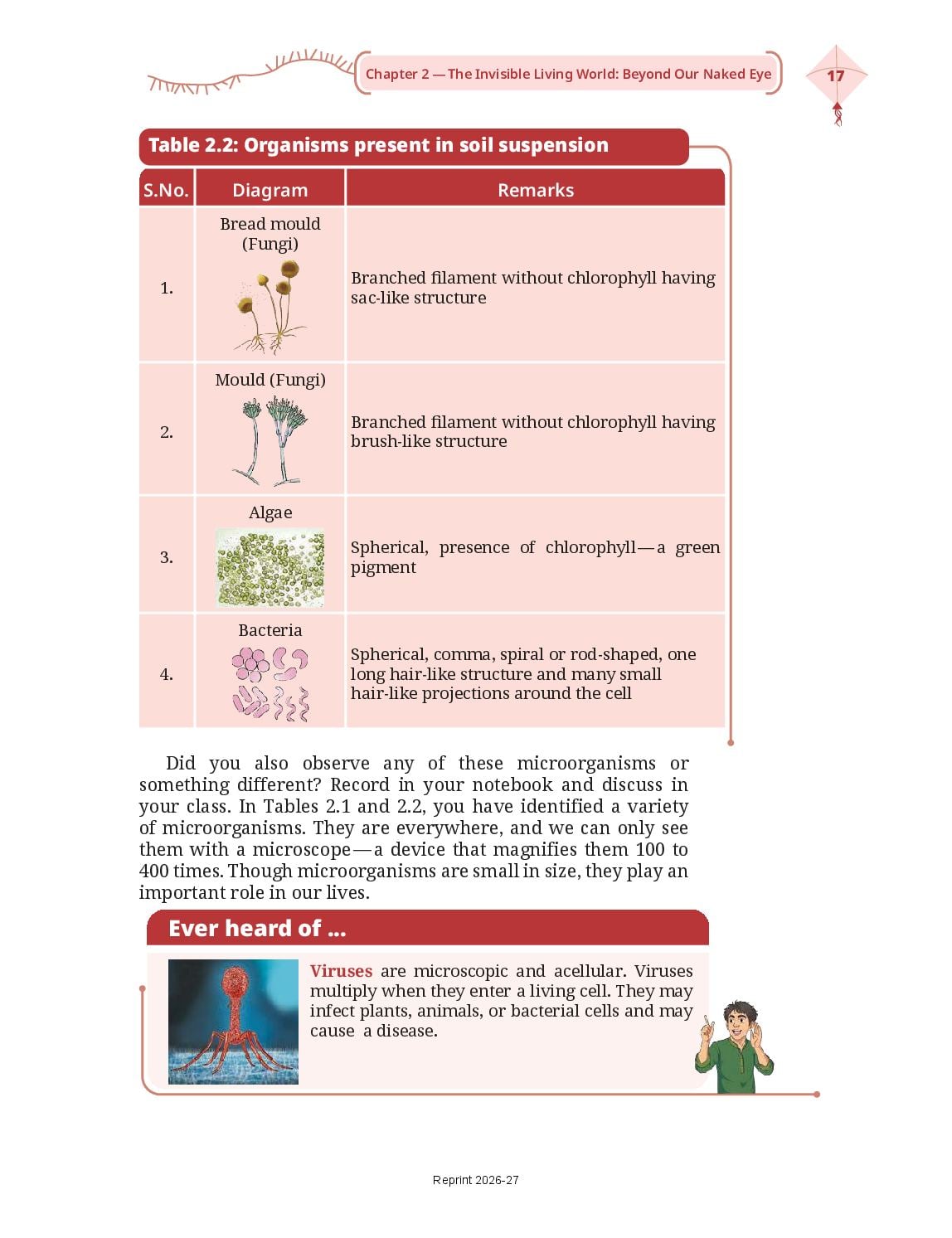
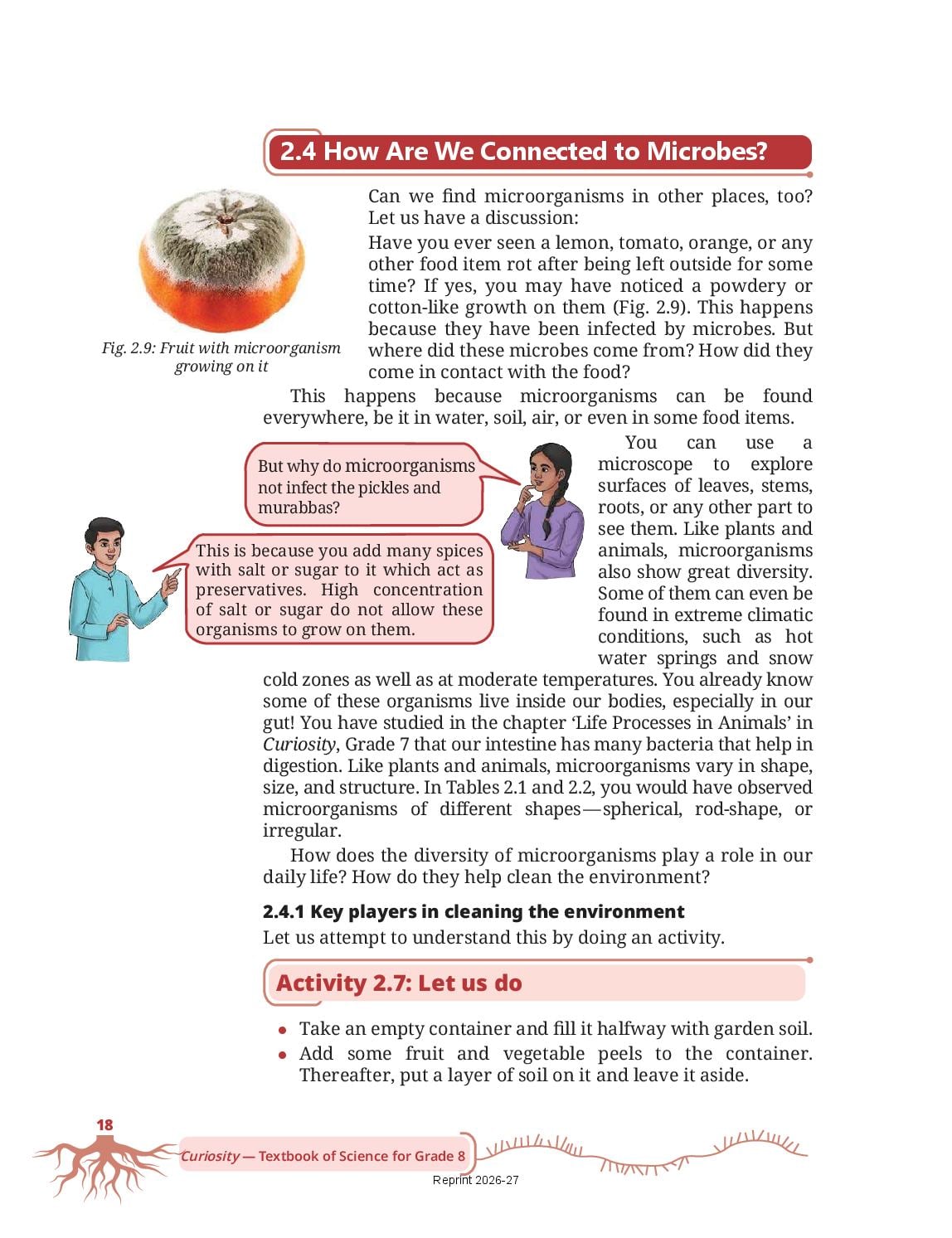
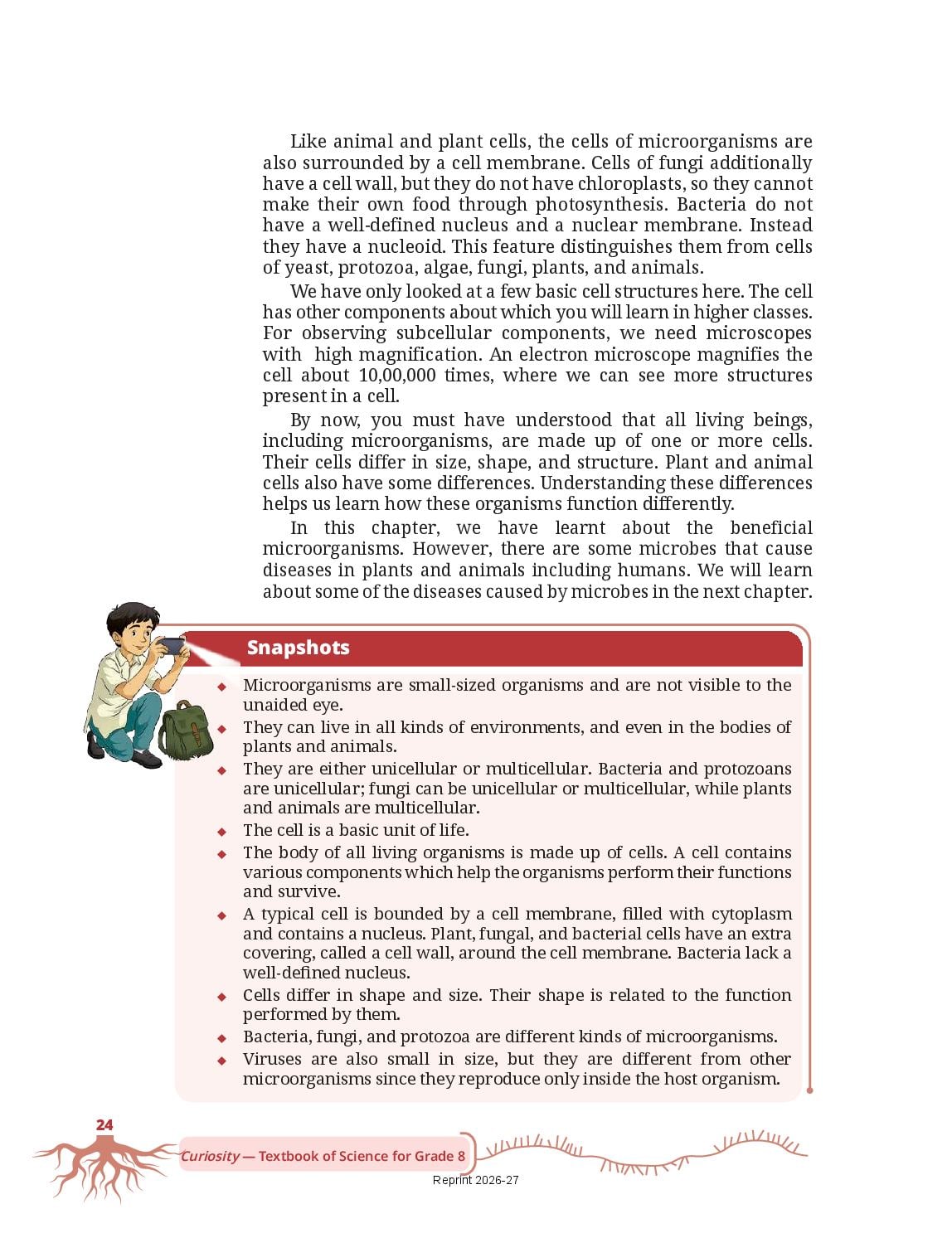
- Microorganisms are too small to be seen with the naked eye — bacteria, protozoa, fungi, some algae. A microscope magnifies them 100 to 400 times; an electron microscope about 10,00,000 times. Bacteria have no well-defined nucleus or nuclear membrane — they have a nucleoid instead. Viruses are microscopic and acellular, and multiply only inside a living cell.
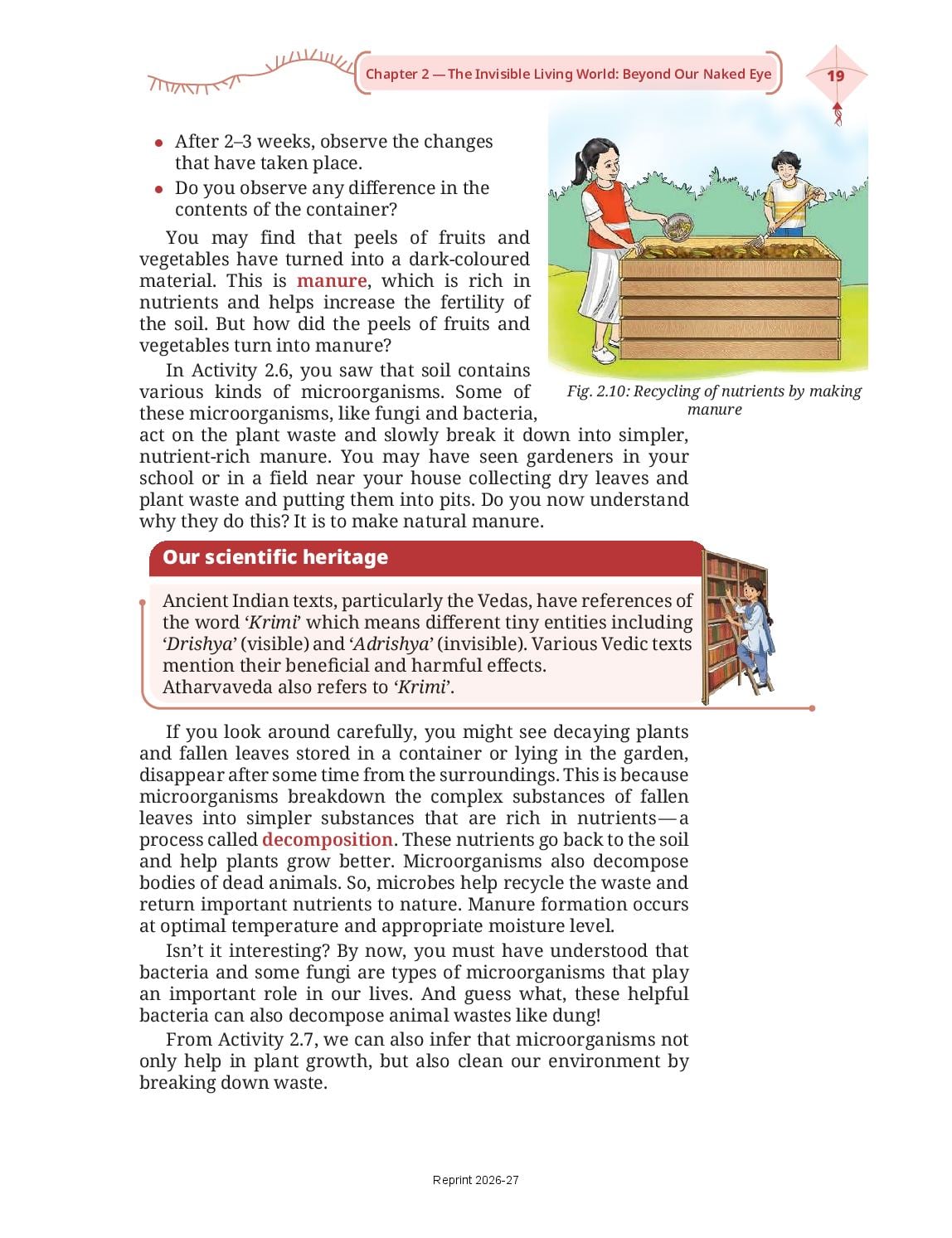
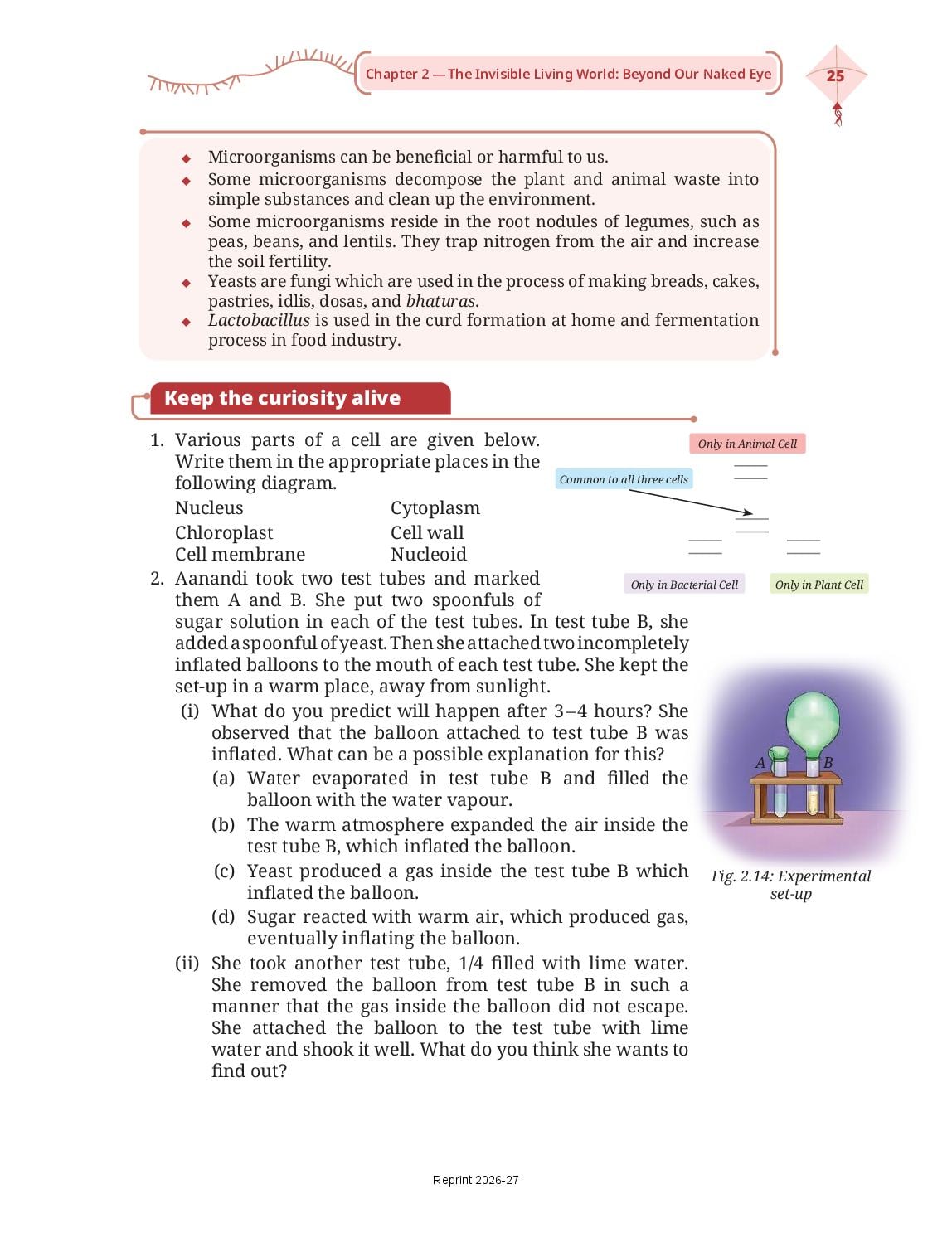
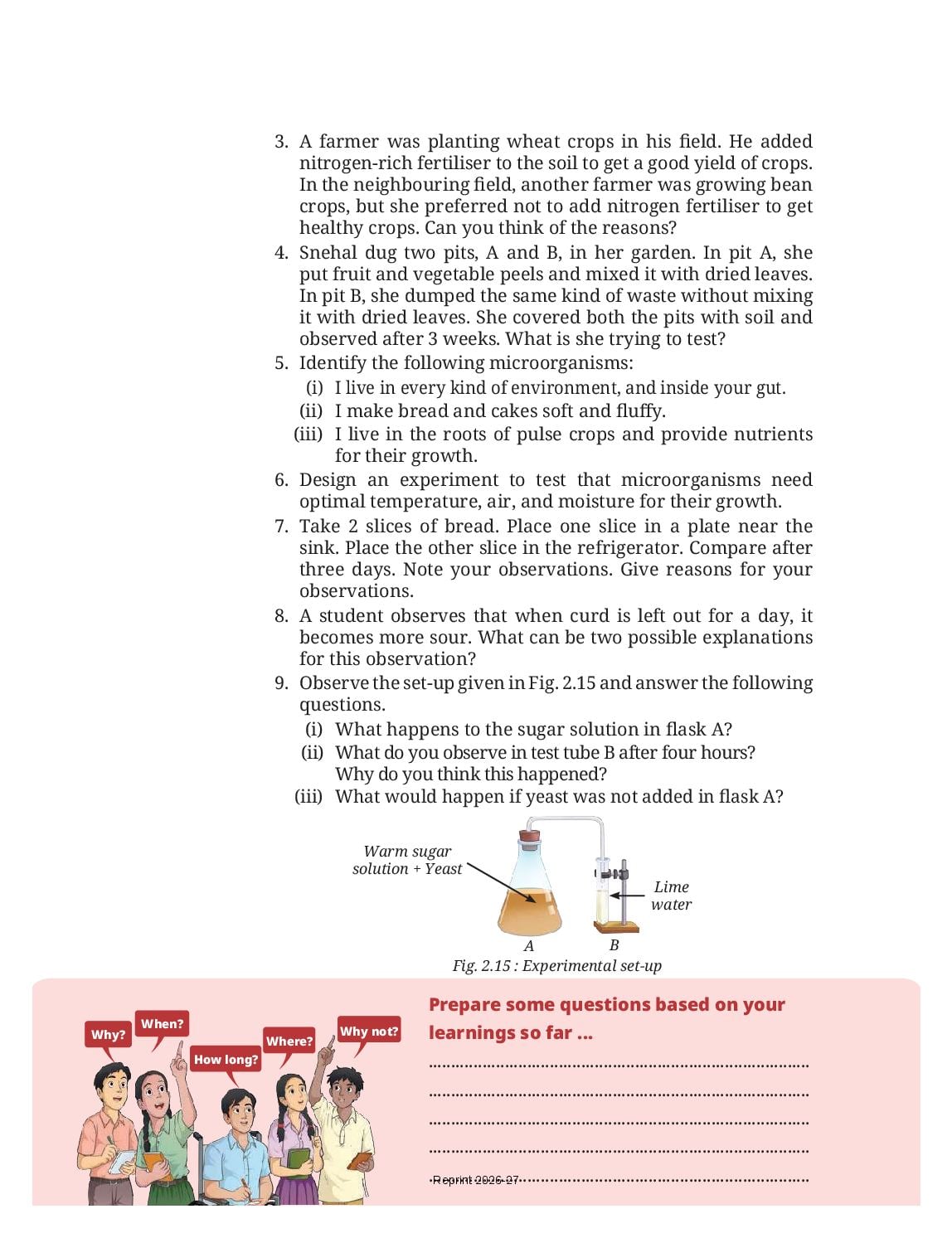
- Microbes work for us: fungi and bacteria decompose plant and animal waste into nutrient-rich manure; some bacteria make biogas (mainly methane with carbon dioxide) in an oxygen-free environment; Rhizobium in the root nodules of legumes traps nitrogen from the air; yeast (a fungus) makes dough rise; Lactobacillus turns milk into curd and ferments idli–dosa batter; microalgae such as Spirulina release more than half of Earth’s oxygen.
Quick revision – The Invisible Living World: Beyond Our Naked Eye
| Term | What it means | Where it comes in the chapter | Example or key number |
|---|---|---|---|
| Lens | A curved piece of glass, thick in the middle and thin at the edge, that makes small things look bigger | Page 9 | Named after the lentil seed it was shaped like |
| Cell | The basic unit of life — the ‘brick’ every living body is built from | Pages 10–12, 24 | Named by Robert Hooke in 1665 from cork |
| Cell membrane | The porous outer layer that encloses cytoplasm and nucleus, separates one cell from the next, and controls what enters and leaves | Page 12 | Present in animal, plant, fungal and bacterial cells |
| Cytoplasm | The material between the cell membrane and the nucleus; holds carbohydrates, proteins, fats and mineral salts | Page 12 | Most life processes happen here |
| Nucleus | The round structure in the middle, covered by a thin membrane, that regulates all the cell’s activities and its growth | Pages 12–13 | Absent as a well-defined structure in bacteria |
| Cell wall | An extra outer covering around the cell membrane that gives rigidity and strength | Page 13, 24 | Plant, fungal and bacterial cells have one; animal cells do not |
| Plastid / Chloroplast | Tiny rod-shaped structures in plant cells; chloroplasts carry chlorophyll and help in photosynthesis | Page 13 | In non-green parts plastids store substances |
| Vacuole | A large empty-looking space in a plant cell that stores substances, removes waste and keeps the cell’s shape | Page 13 | Usually absent or very small in animal cells |
| Levels of organisation | Cell → Tissue → Organ → Organ system → Organism | Page 14 | A group of similar cells makes a tissue |
| Microorganism (microbe) | A living being too small to be seen with the unaided eye | Pages 15–16 | Bacteria, protozoa, fungi, some algae |
| Nucleoid | The region in a bacterial cell that holds its genetic material in place of a well-defined nucleus | Page 24 | Distinguishes bacteria from yeast, protozoa, algae, fungi, plants and animals |
| Virus | Microscopic and acellular; multiplies only after entering a living cell | Page 17 | May infect plants, animals or bacterial cells |
| Decomposition | Microbes breaking complex substances of dead plants and animals into simpler, nutrient-rich substances | Page 19 | Needs optimal temperature and appropriate moisture |
| Biogas | A mixture of gases released by bacteria in an oxygen-free environment, mainly methane with carbon dioxide | Page 20 | Used for cooking, heating, electricity and vehicles |
Old NCERT vs New – Class 8 Science
This chapter is from Curiosity, the new NCERT Class 8 Science book (NCF-SE 2023, used from 2025-26). It replaced the old book “Science”, so chapter numbers and names differ from older PDFs.
Solutions and All Chapters
Answers to the exercises and the full chapter list of Curiosity:
The Invisible Living World: Beyond Our Naked Eye – Overview
| Class | Class 8 |
| Subject | Science |
| Book | Curiosity – new NCERT book |
| Chapter | 2 of 13 – The Invisible Living World: Beyond Our Naked Eye |
| Book pages | 8 – 27 |
| Edition | NCERT Reprint 2026-27 |
| Session | 2026-27 |
| Free – read online or download |
Class 8 Science Chapter 2 – FAQs
Where can I download The Invisible Living World: Beyond Our Naked Eye Class 8 PDF?
From the download table on this page – the chapter PDF is free, and the full book is linked too.
What is Class 8 Science Chapter 2 about?
The eye can only see things above a certain size. A curved piece of glass, thick in the middle and thin at the edge — shaped like a lentil seed, which is why it was named a lens — makes small things look bigger. Better lenses became microscopes, and microscopes opened the hidden living world.
Is The Invisible Living World: Beyond Our Naked Eye from the new NCERT Class 8 Science book?
Yes. It is chapter 2 of curiosity, the new NCERT Class 8 Science book for 2026-27.
Is this the latest NCERT edition for 2026-27?
Yes – the PDF is NCERT’s latest edition for the 2026-27 session.
Where are the NCERT Solutions for Class 8 Science Chapter 2?
Open the NCERT Solutions link above for answers to the exercise questions.