NCERT Solutions for Class 5 The World Around Us Chapter 6 Some Unique Places provide clear, step-by-step answers to every exercise and in-text question from the chapter Some Unique Places of the NCERT textbook Our Wondrous World. Prepared by subject experts as per the latest NCERT (CBSE) syllabus for 2026-27, these NCERT Solutions for Class 5 The World Around Us help you understand each concept, write exam-ready answers, and check your own solutions. You can read them online below or download the free Class 5 The World Around Us Chapter 6 question-answer PDF.
NCERT Solutions for Class 5 The World Around Us Chapter 6 Some Unique Places
- Class: Class 5
- Subject: The World Around Us
- Chapter: Chapter 6 – Some Unique Places
- Textbook: Our Wondrous World (NCERT)
- Study material: NCERT Solutions – questions with answers, free PDF
These solutions answer all the exercise questions of Chapter 6 Some Unique Places — including the in-text questions, short-answer and long-answer questions, and activities — with complete explanations so you can follow the method, not just the final answer. Read the full solutions below.
NCERT Solutions Class 5 The World Around Us Chapter 6 Some Unique Places View Download

NCERT Solutions for Class 5 The World Around Us Chapter 6 PDF Download
You can read the NCERT Solutions for Class 5 The World Around Us Chapter 6 online above, or download the complete question-answer PDF to study Some Unique Places offline at any time.
NCERT Solutions for Class 5 The World Around Us Chapter 6 PDF Download Link – Click Here to Download Solutions PDF
Questions Covered in This Chapter
These NCERT Solutions answer all 40 questions of this chapter. The questions solved are:
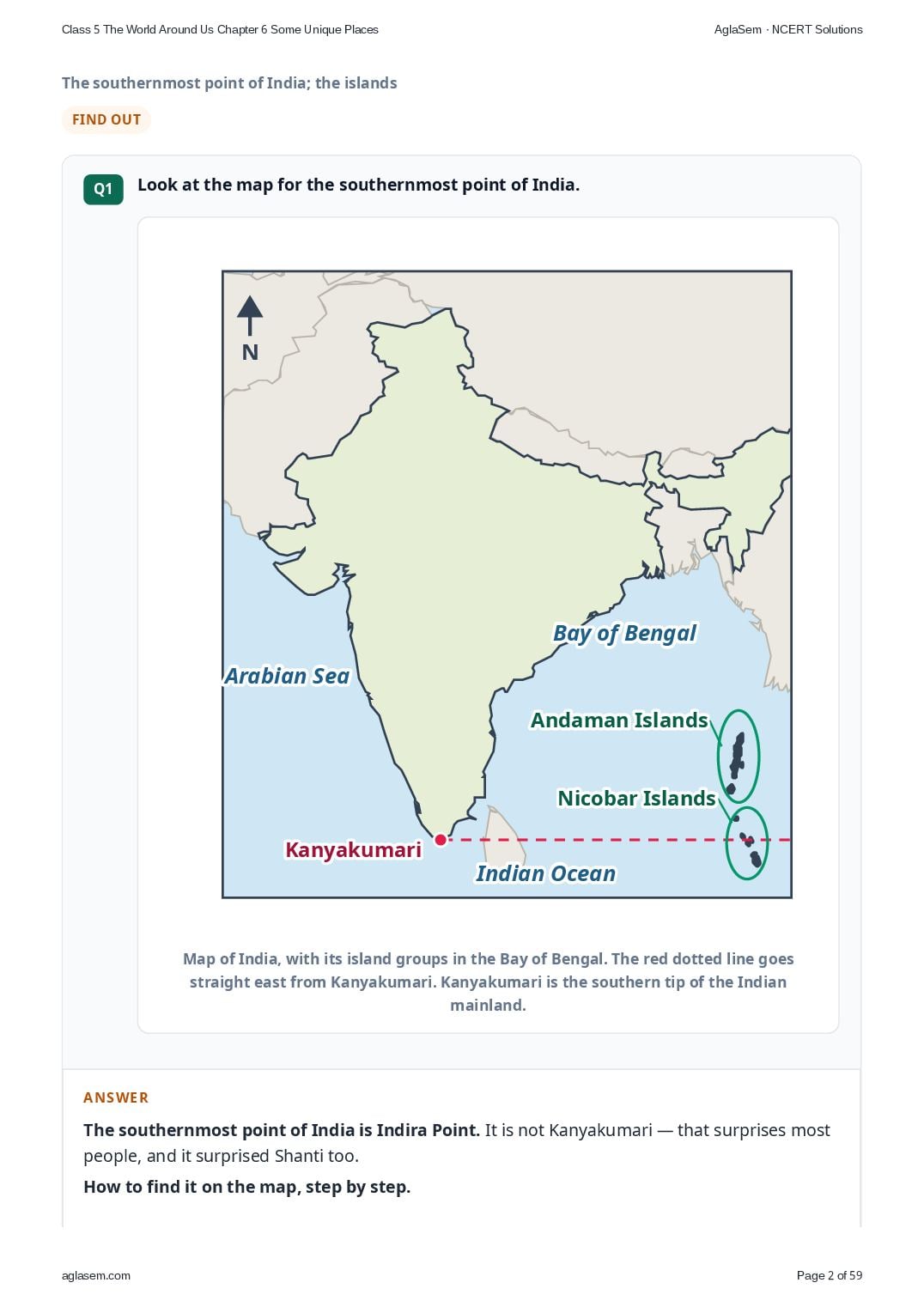
- Look at the map for the southernmost point of India. Arabian SeaBay of BengalIndian OceanAndaman IslandsNicobar IslandsKanyakumariArabian SeaBay of BengalIndian OceanAndaman IslandsNicobar IslandsKanyakumariN Map of India, with its island groups in the Bay of Bengal. The red dotted line goes straight east from Kanyakumari. Kanyakumari is the southern tip of the Indian mainland.
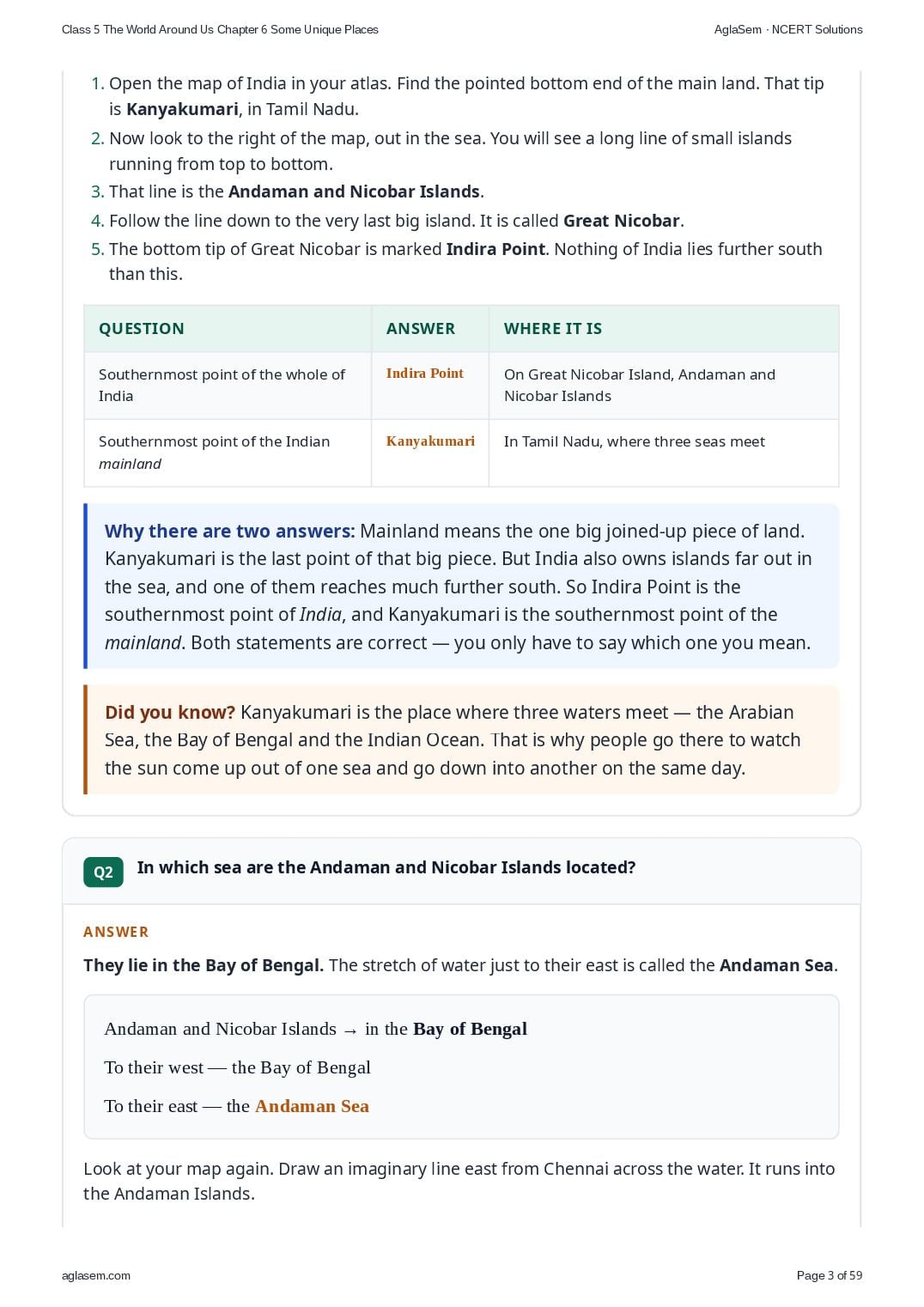
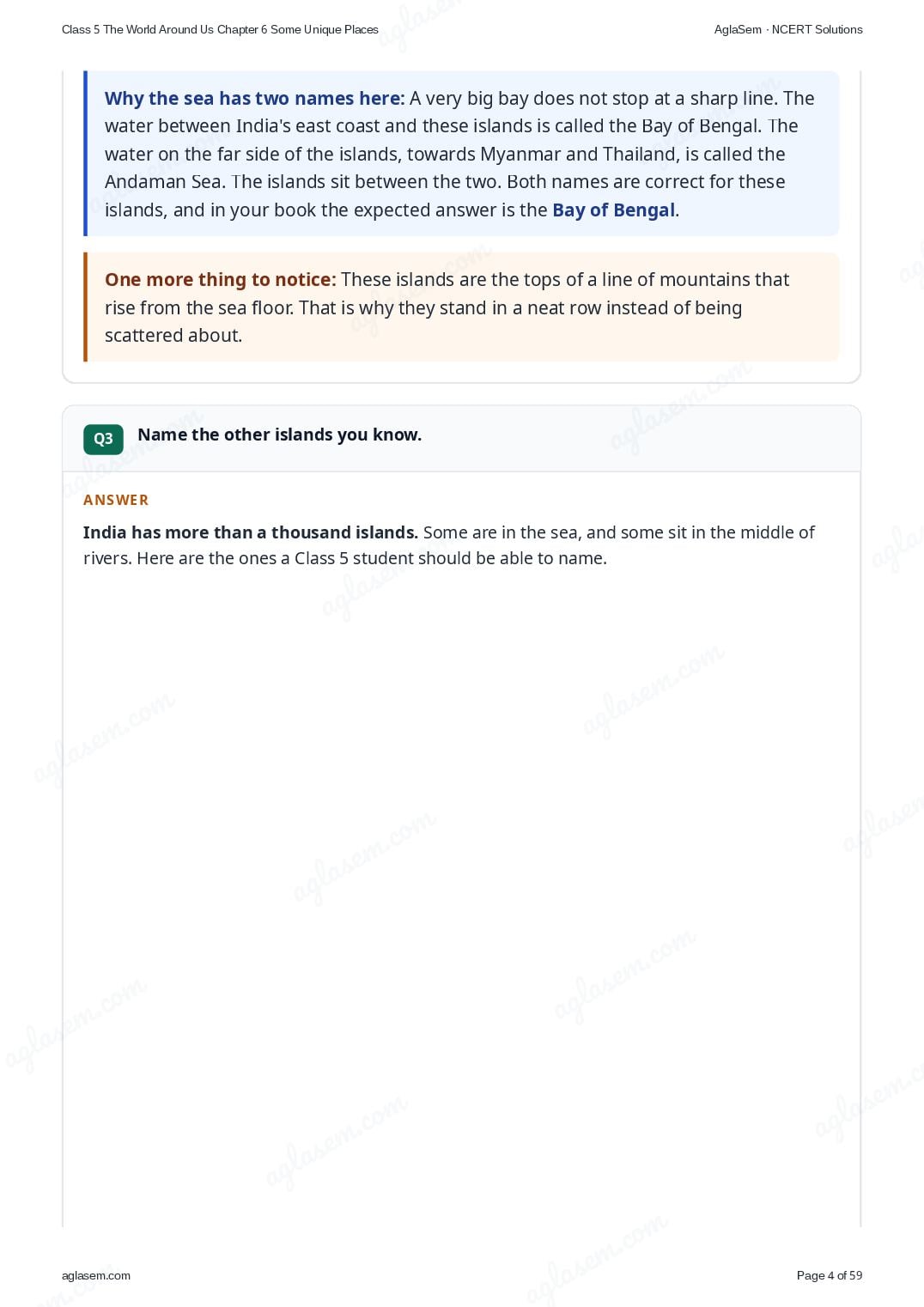
- In which sea are the Andaman and Nicobar Islands located?
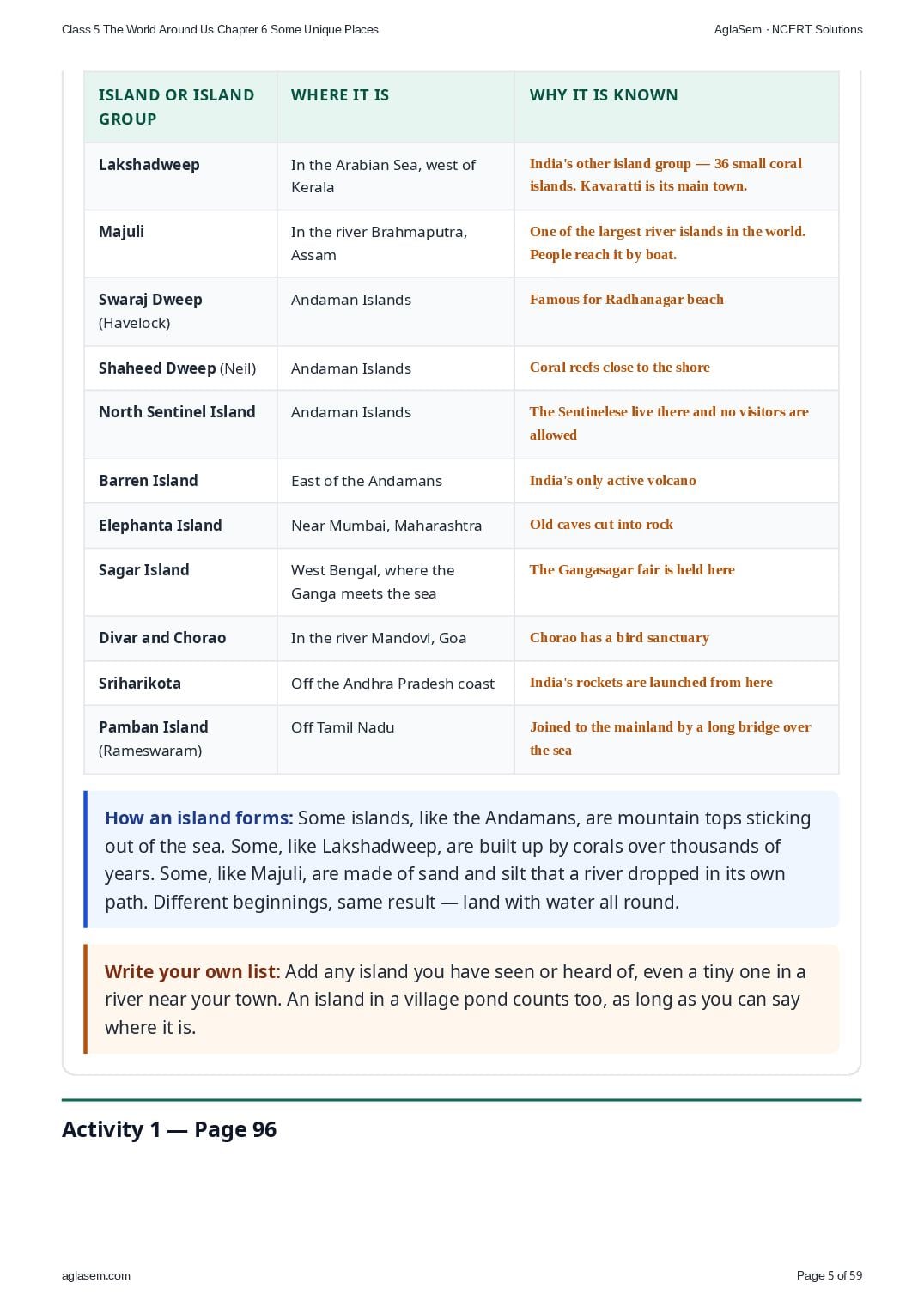
- Name the other islands you know.
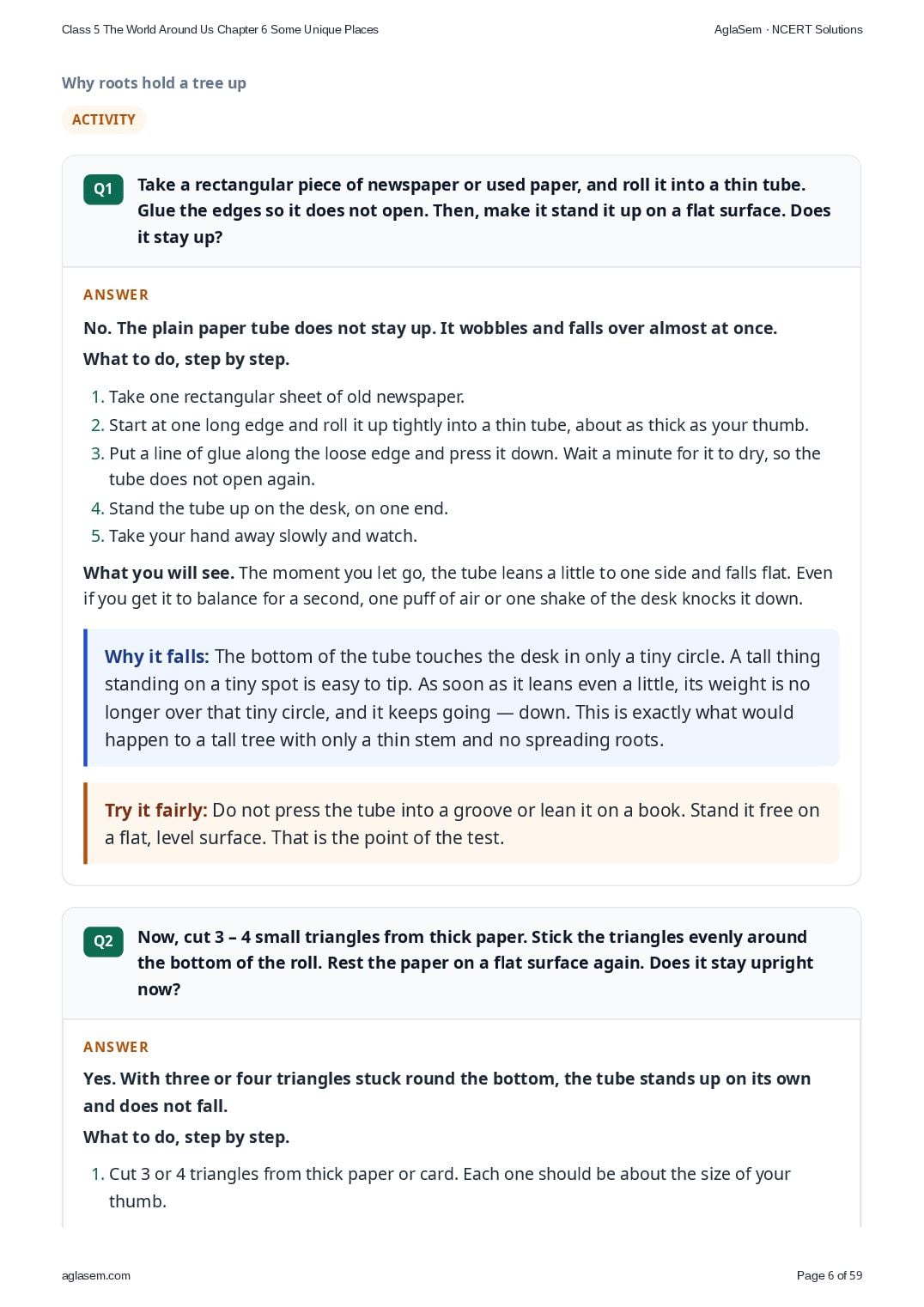
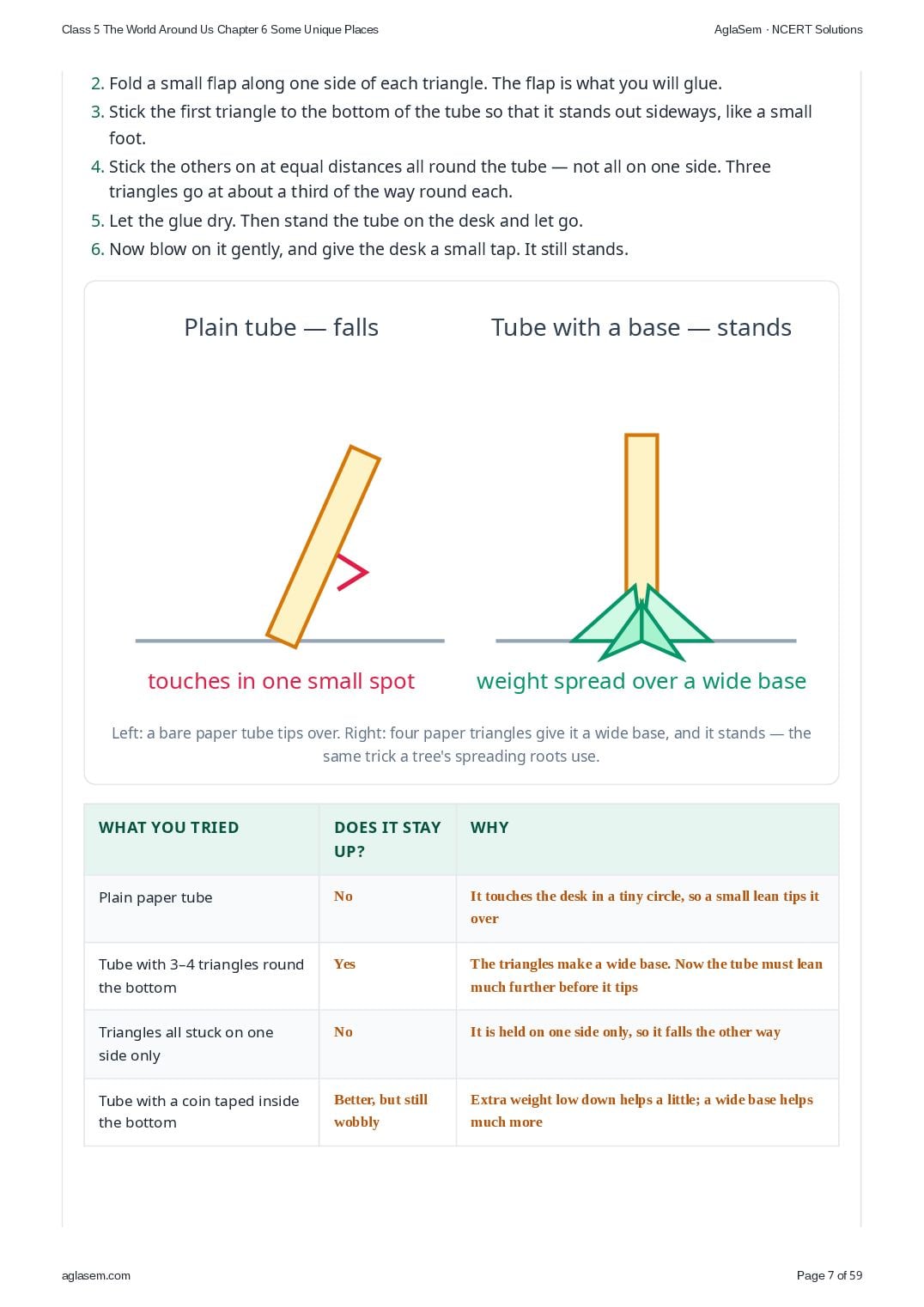
- Take a rectangular piece of newspaper or used paper, and roll it into a thin tube. Glue the edges so it does not open. Then, make it stand it up on a flat surface. Does it stay up?
- Now, cut 3 – 4 small triangles from thick paper. Stick the triangles evenly around the bottom of the roll. Rest the paper on a flat surface again. Does it stay upright now?
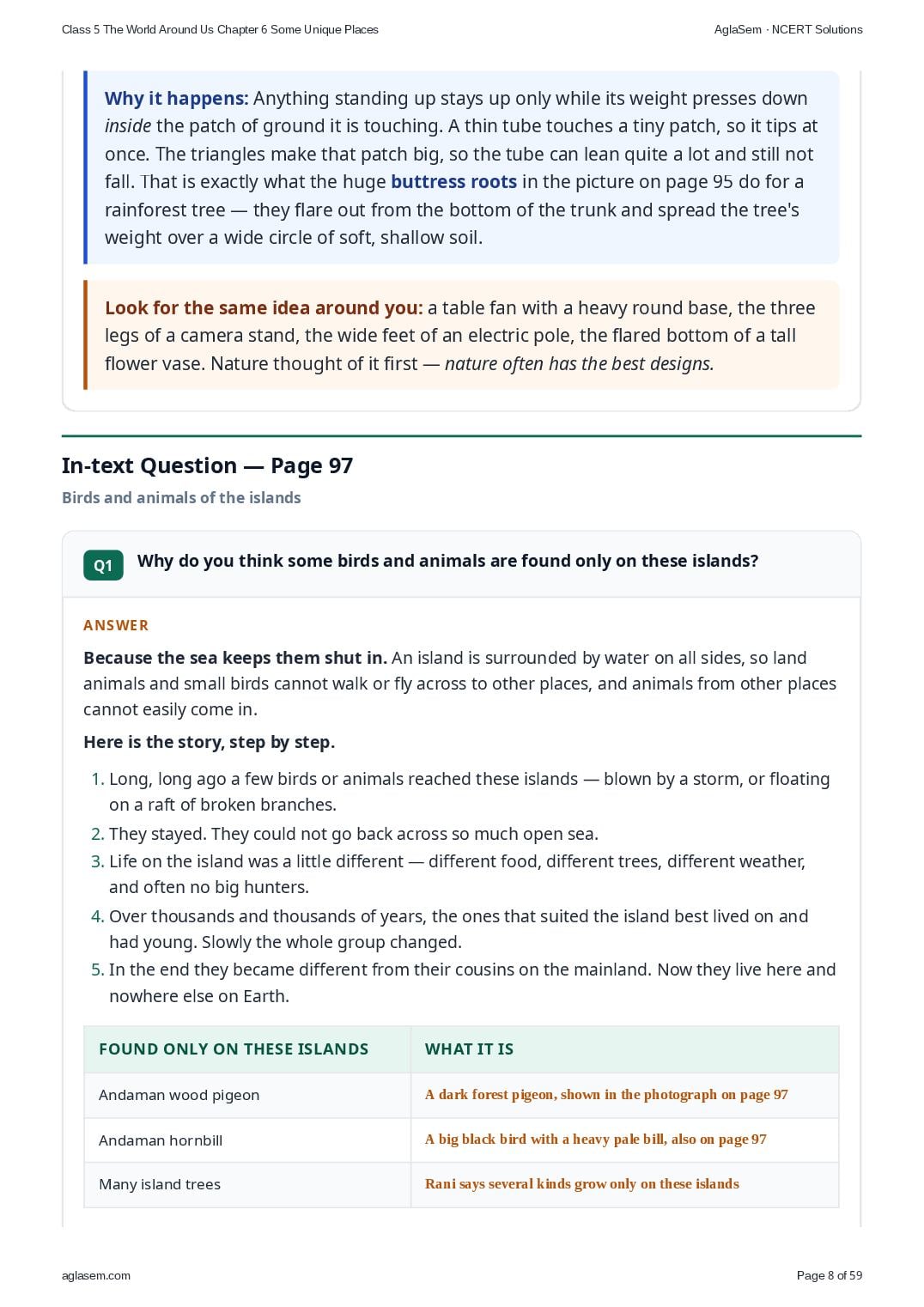
- Why do you think some birds and animals are found only on these islands?
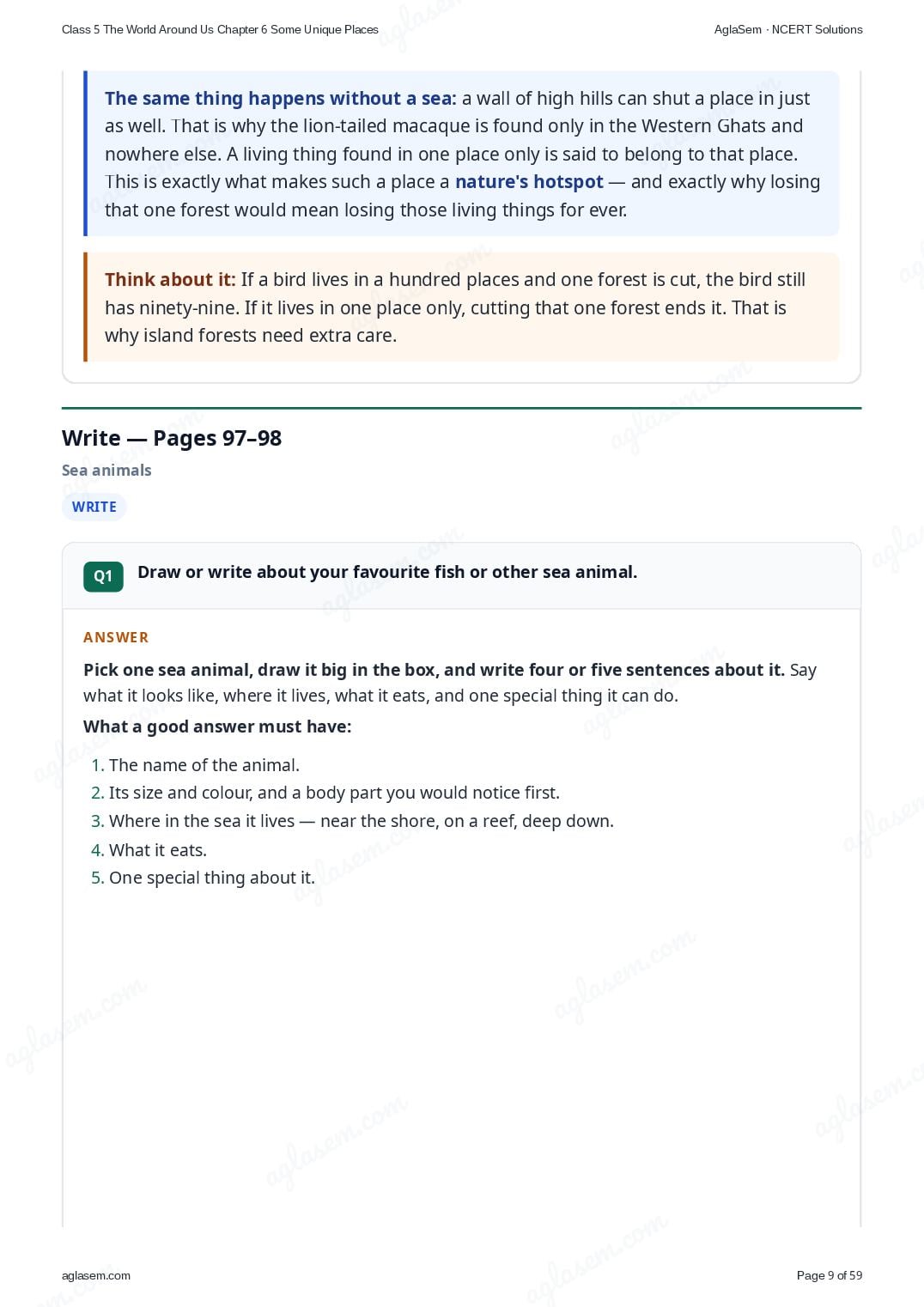
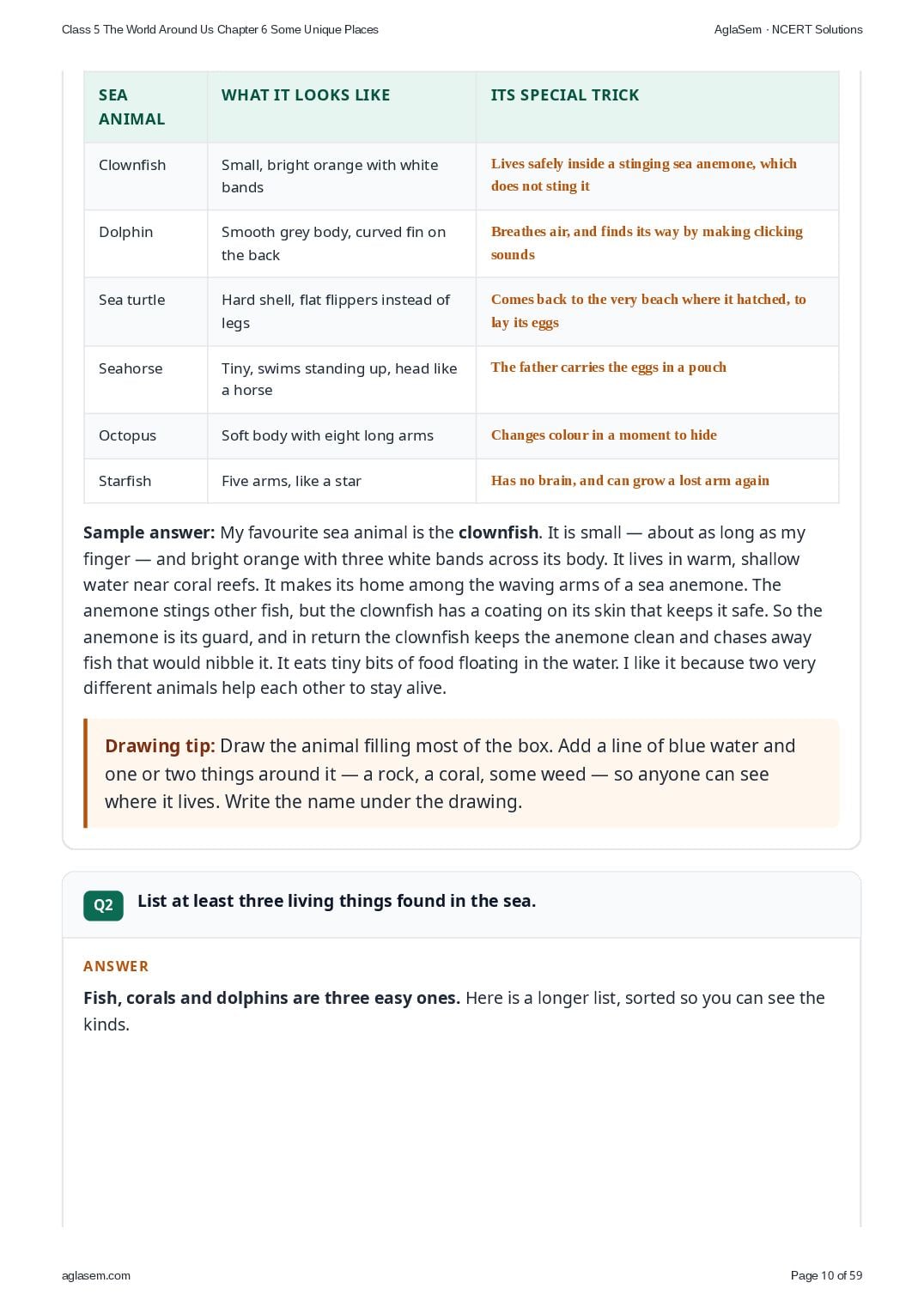
- Draw or write about your favourite fish or other sea animal.
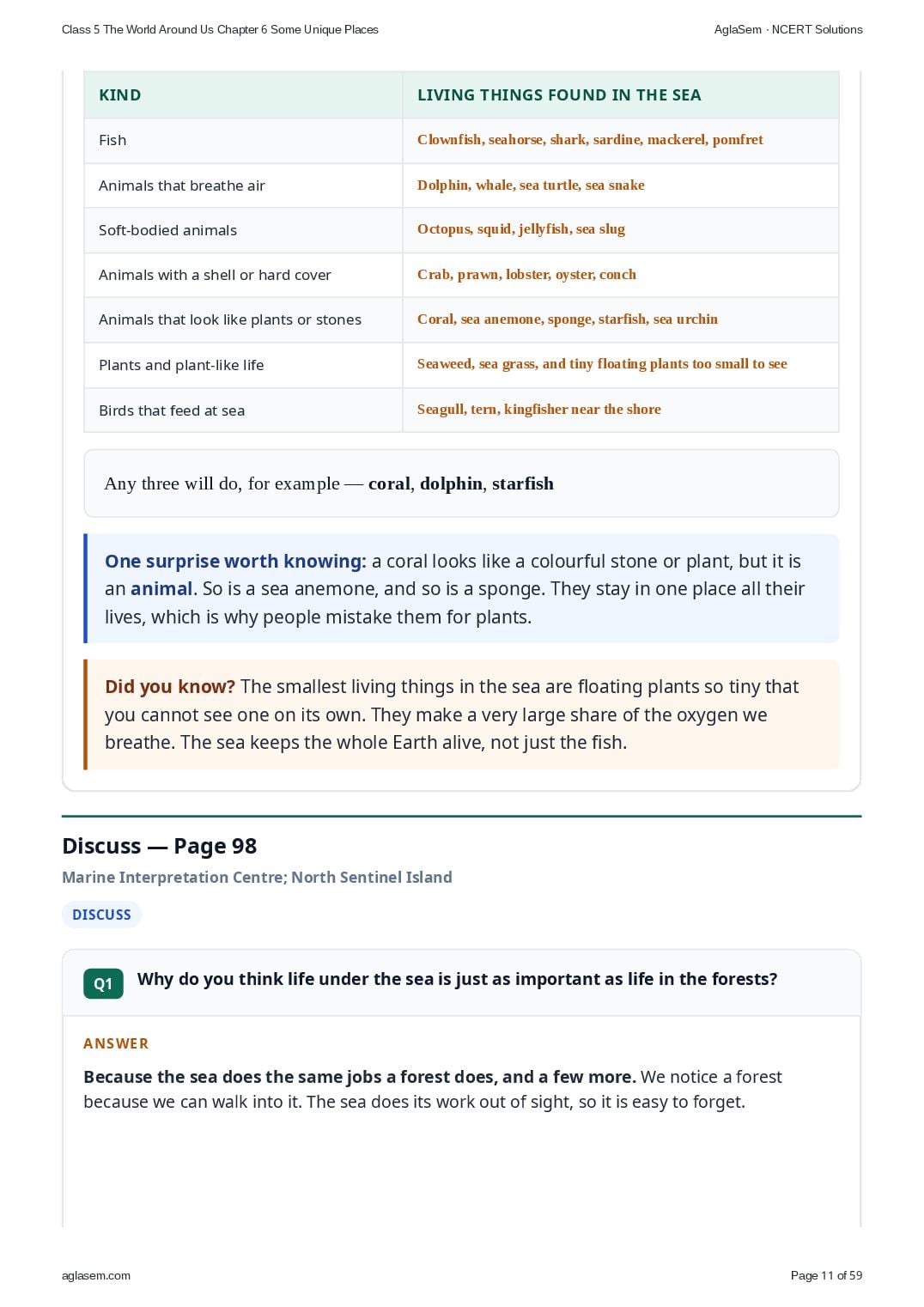
- List at least three living things found in the sea.
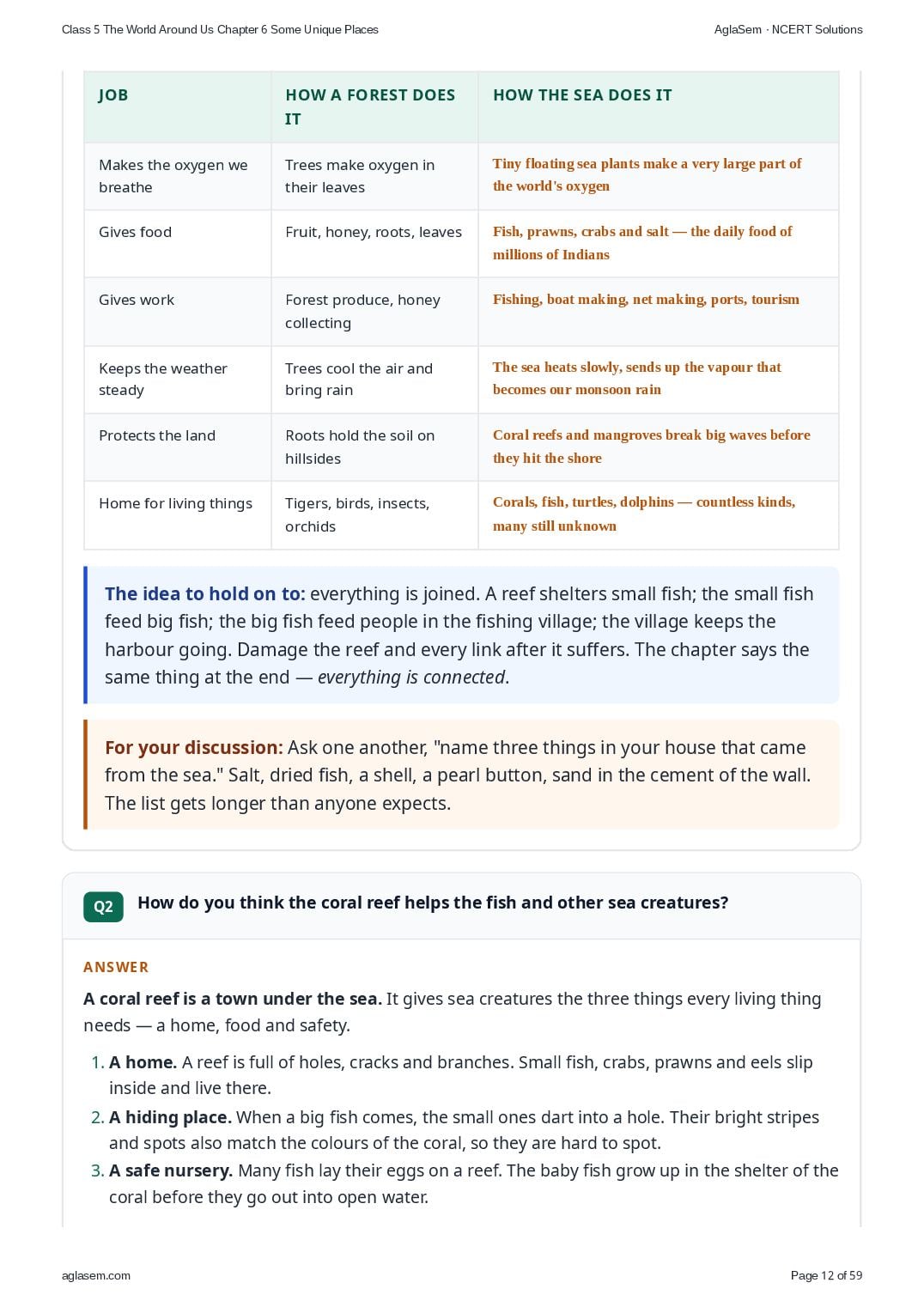
- Why do you think life under the sea is just as important as life in the forests?
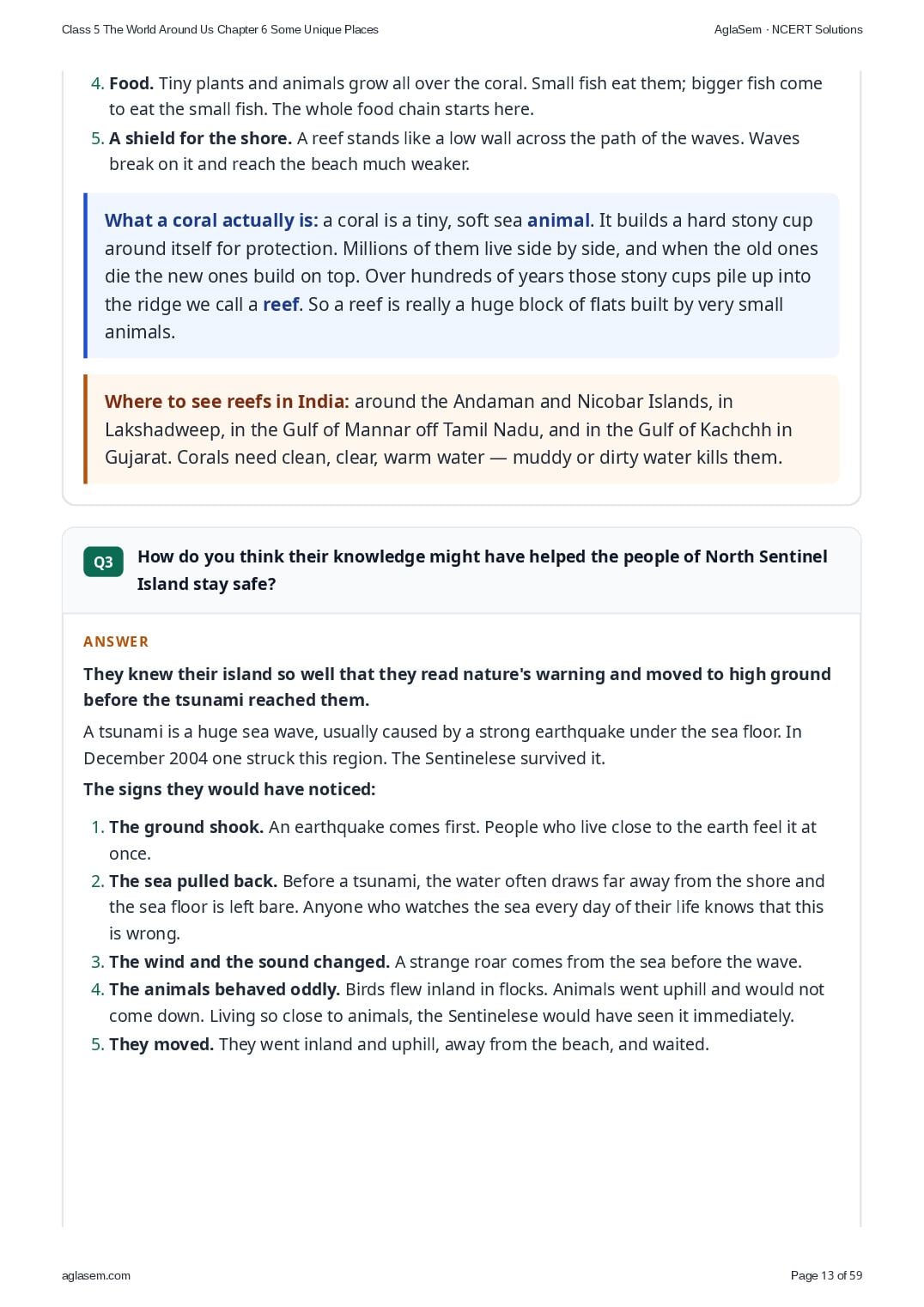
- How do you think the coral reef helps the fish and other sea creatures?
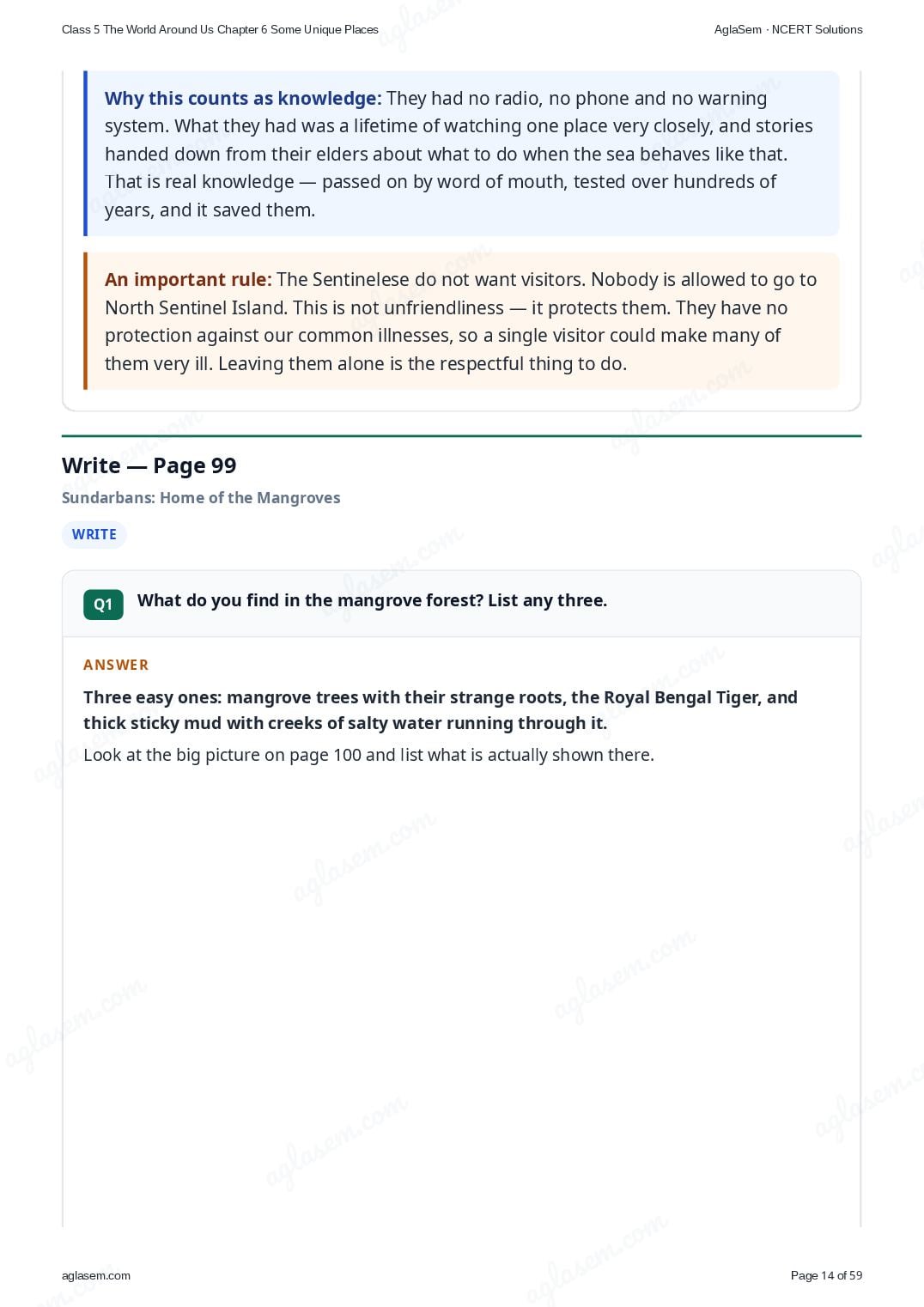
- How do you think their knowledge might have helped the people of North Sentinel Island stay safe?
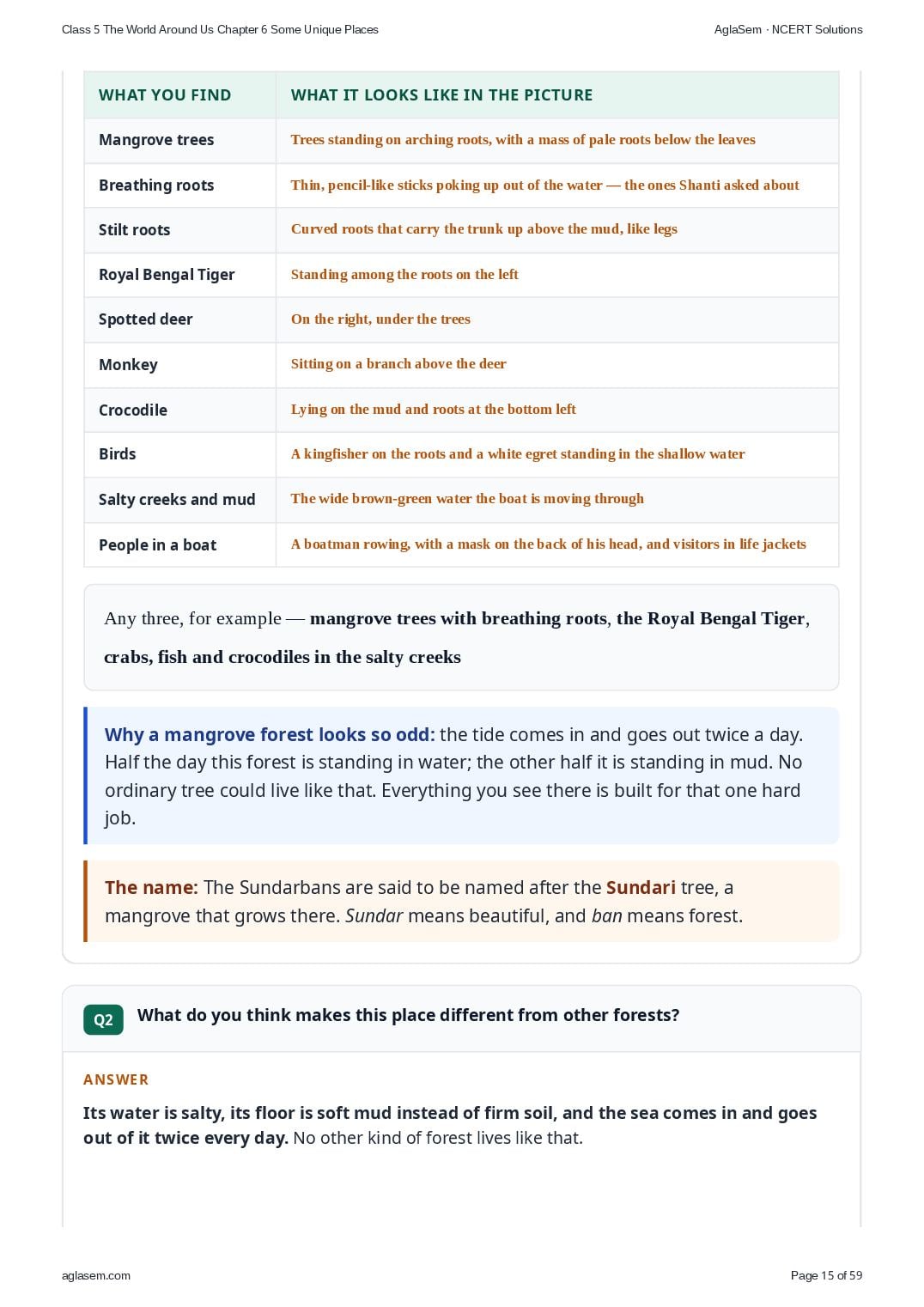
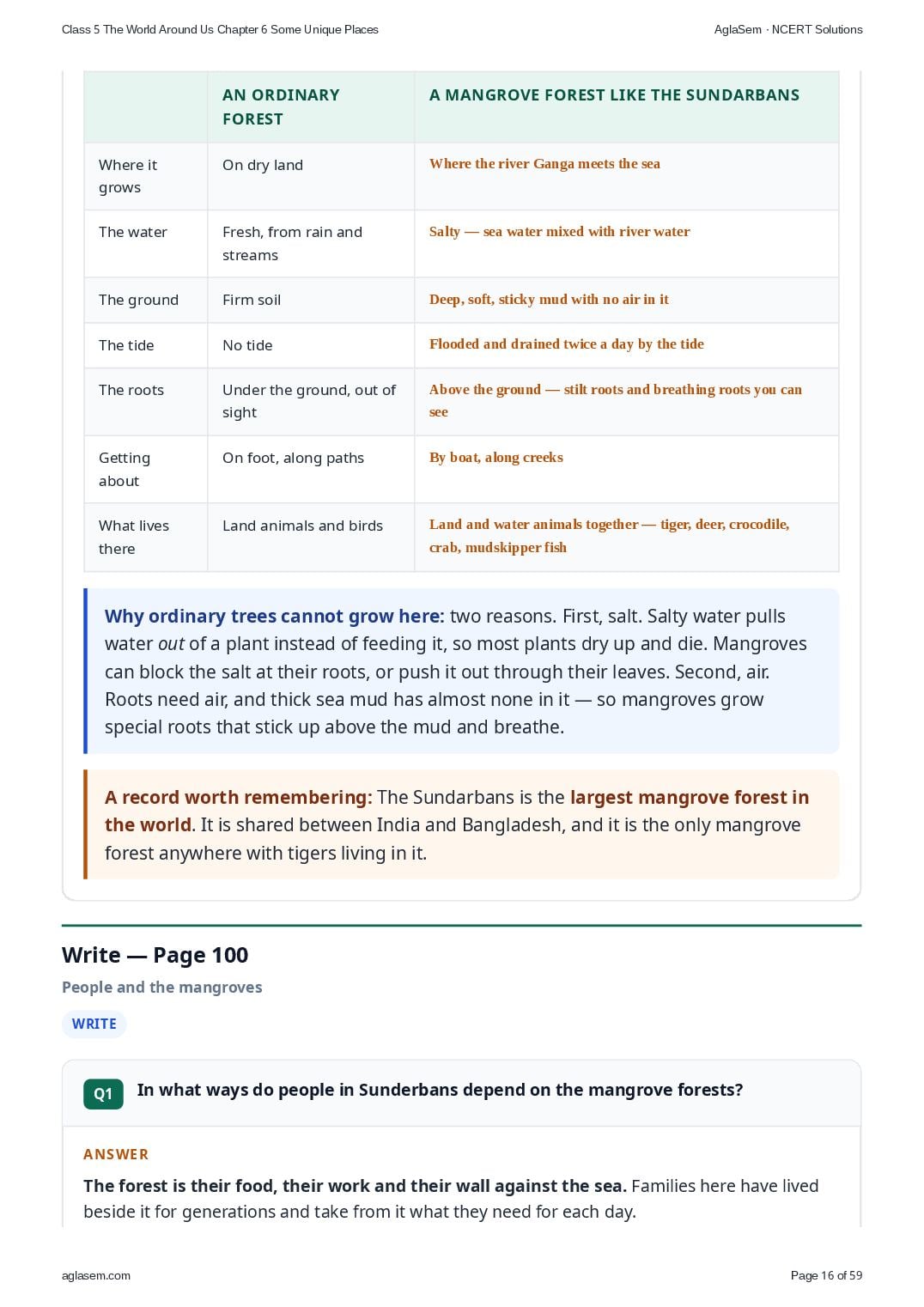
- What do you find in the mangrove forest? List any three.
- What do you think makes this place different from other forests?
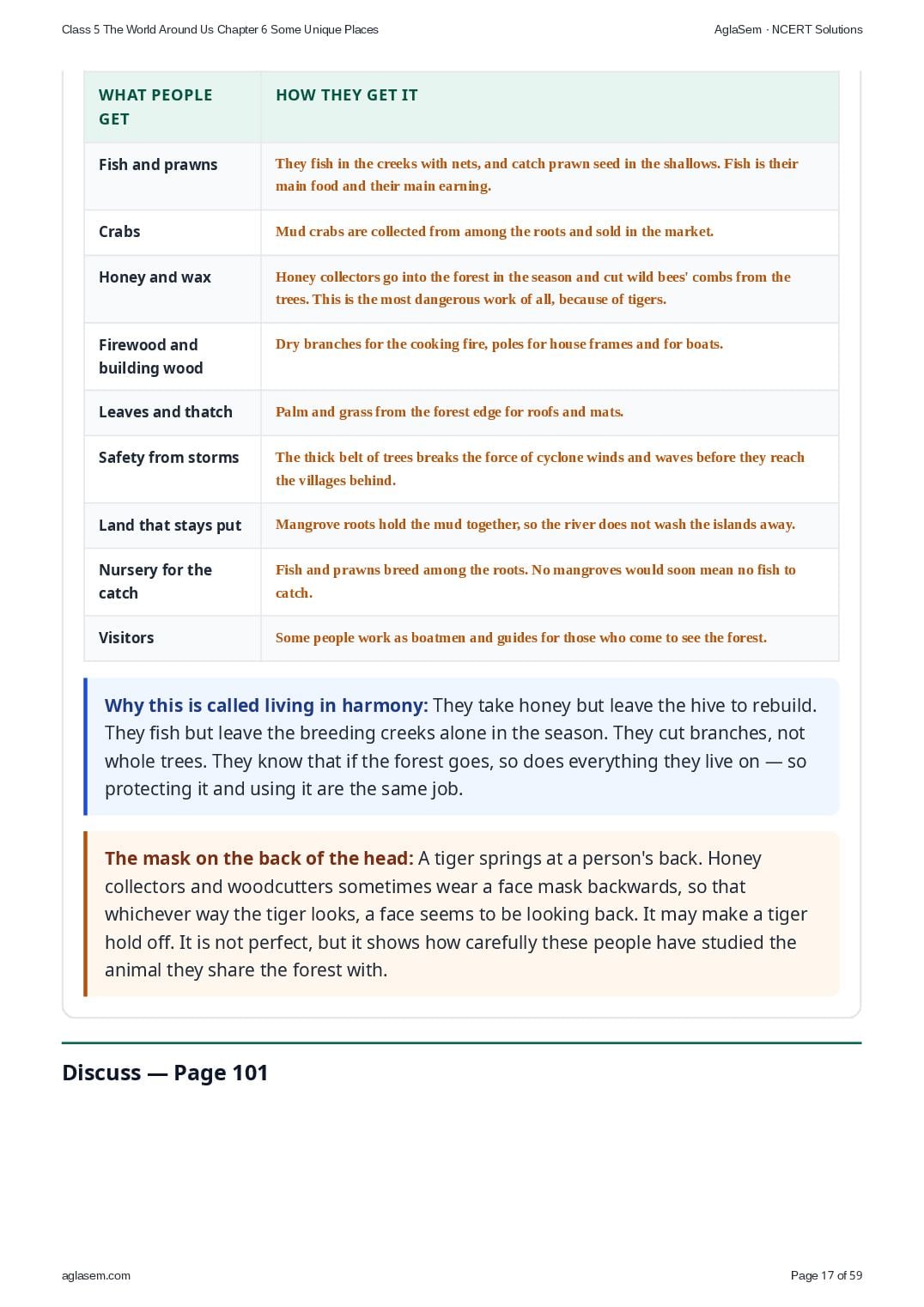
- In what ways do people in Sunderbans depend on the mangrove forests?
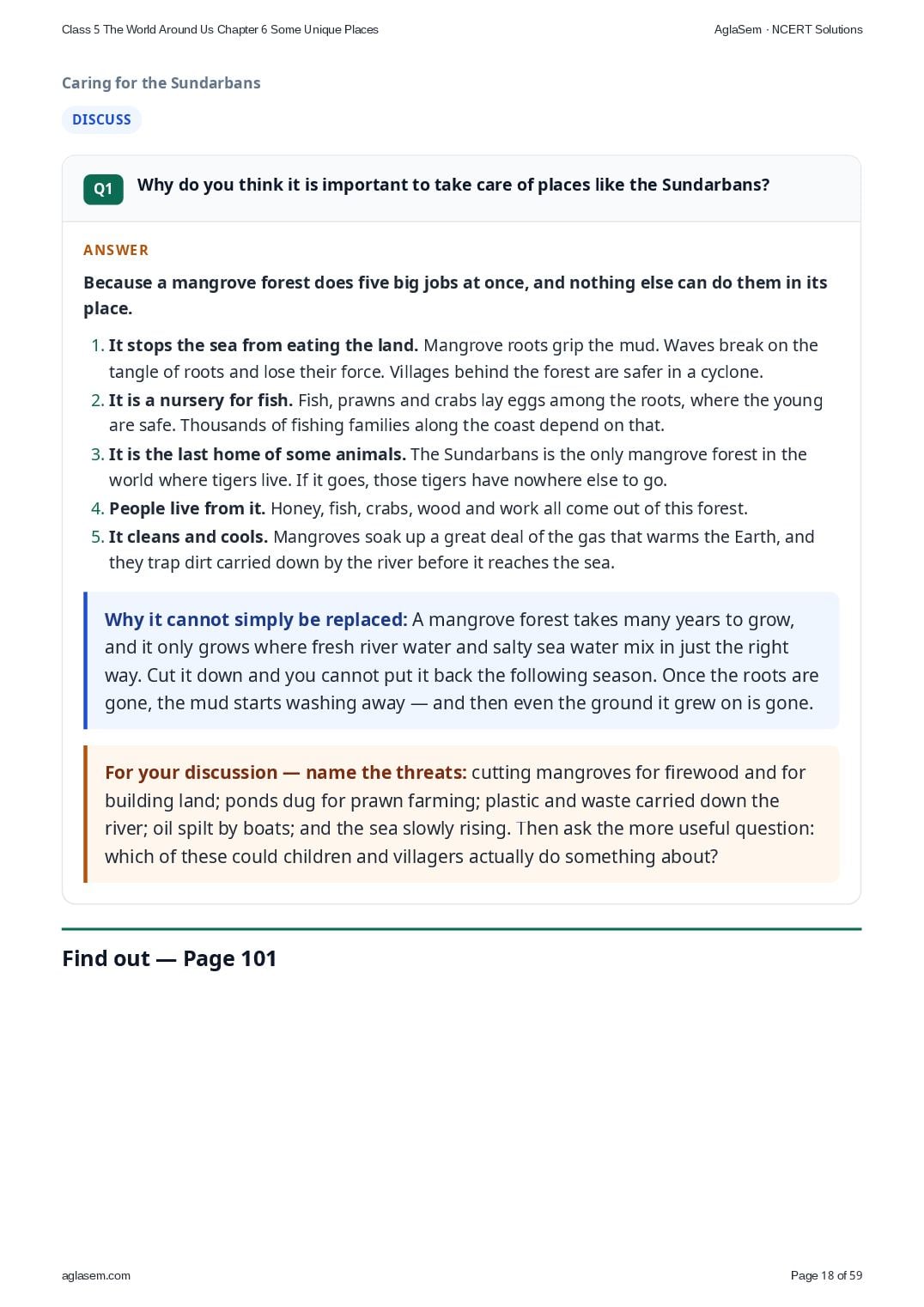
- Why do you think it is important to take care of places like the Sundarbans?
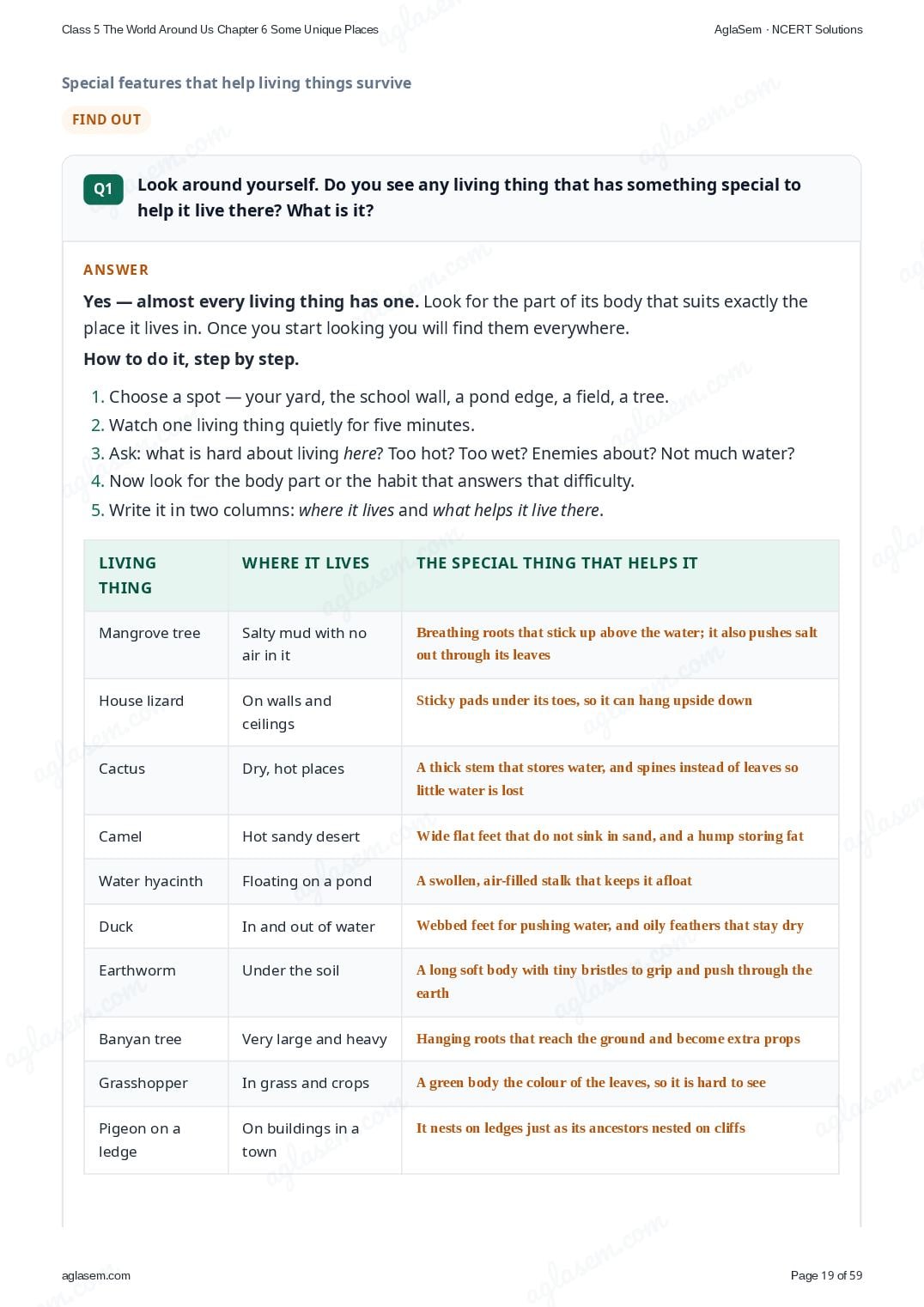
- Look around yourself. Do you see any living thing that has something special to help it live there? What is it?
- Why would someone wear a mask on the back of their head?
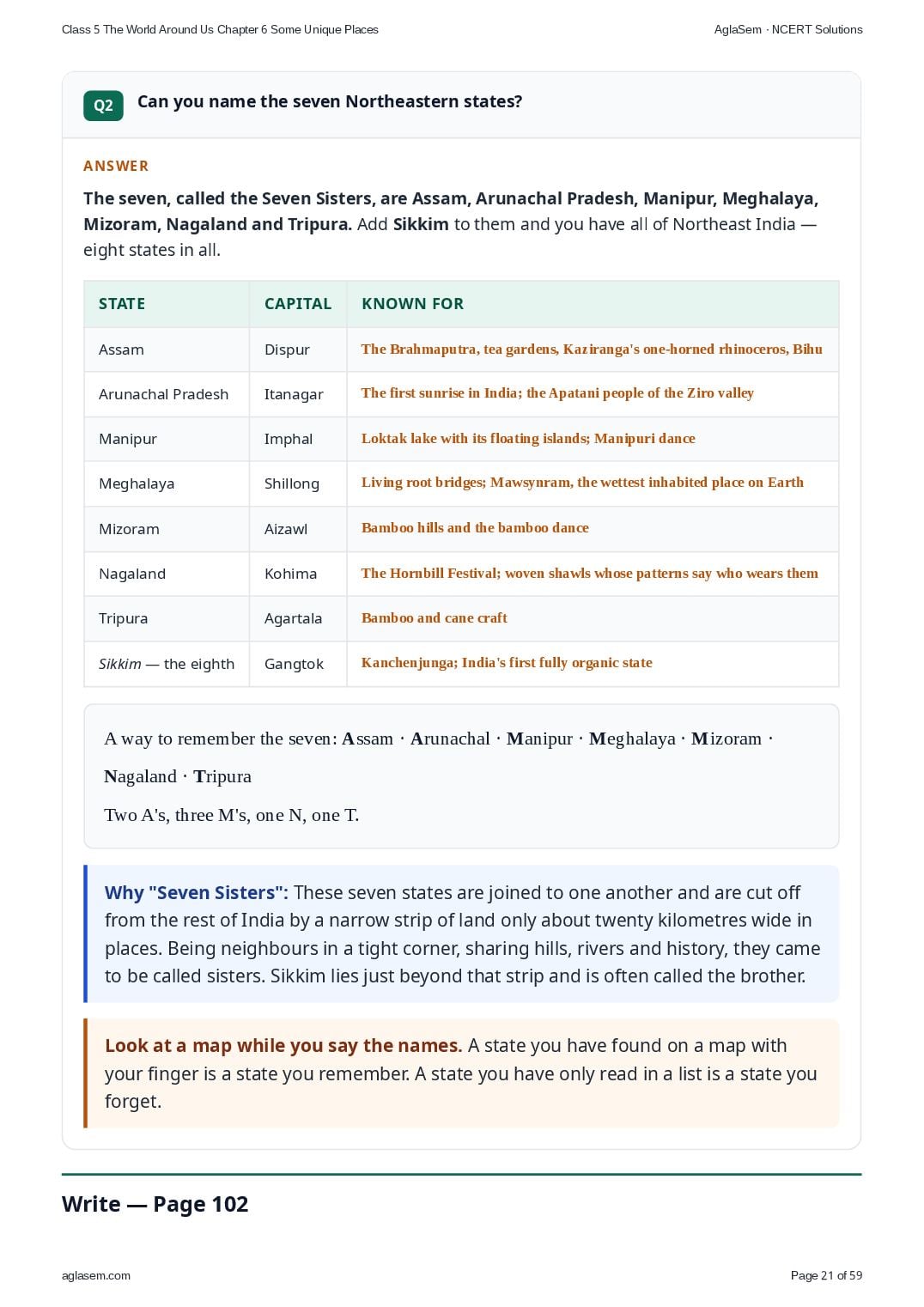
- Can you name the seven Northeastern states?
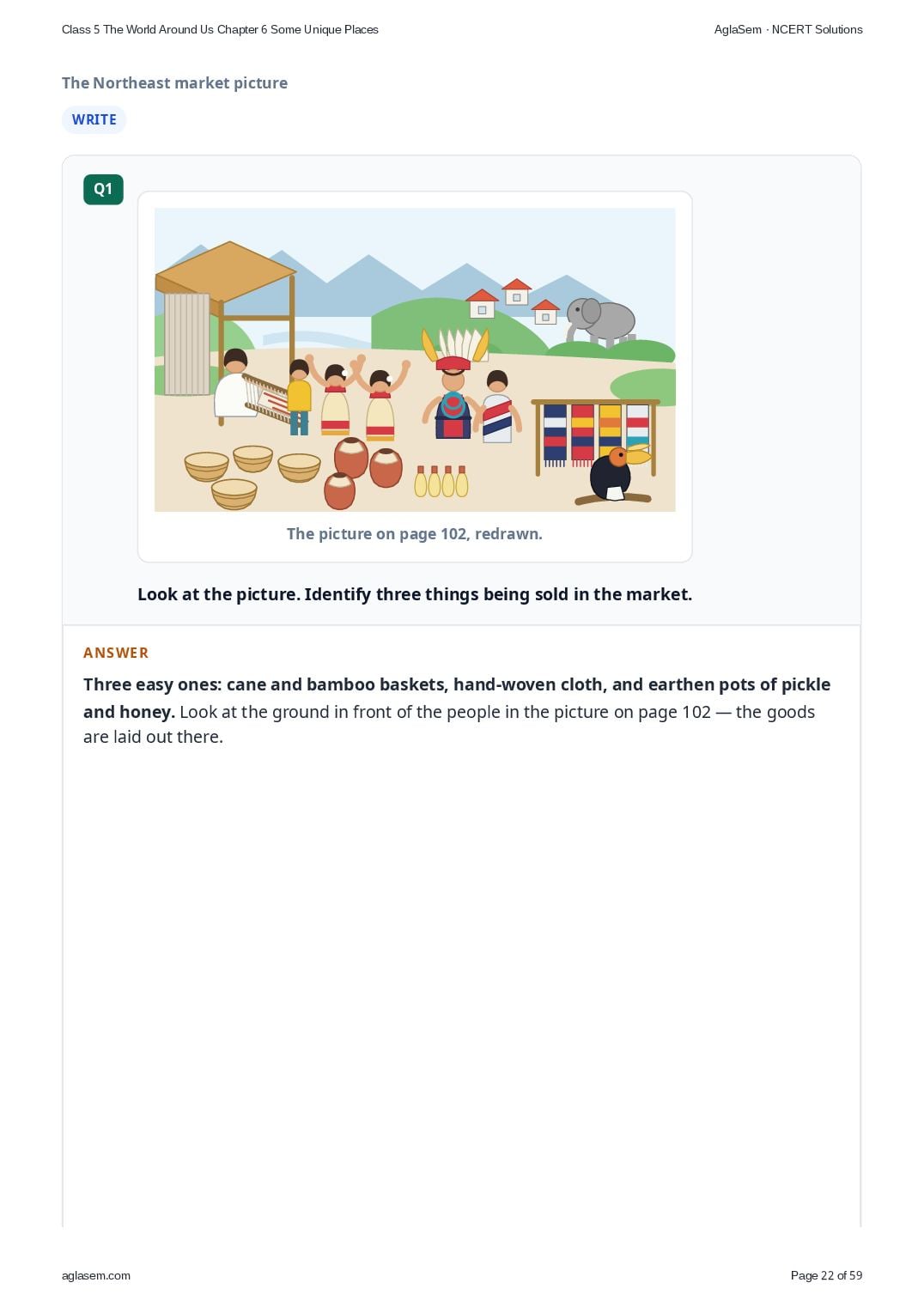
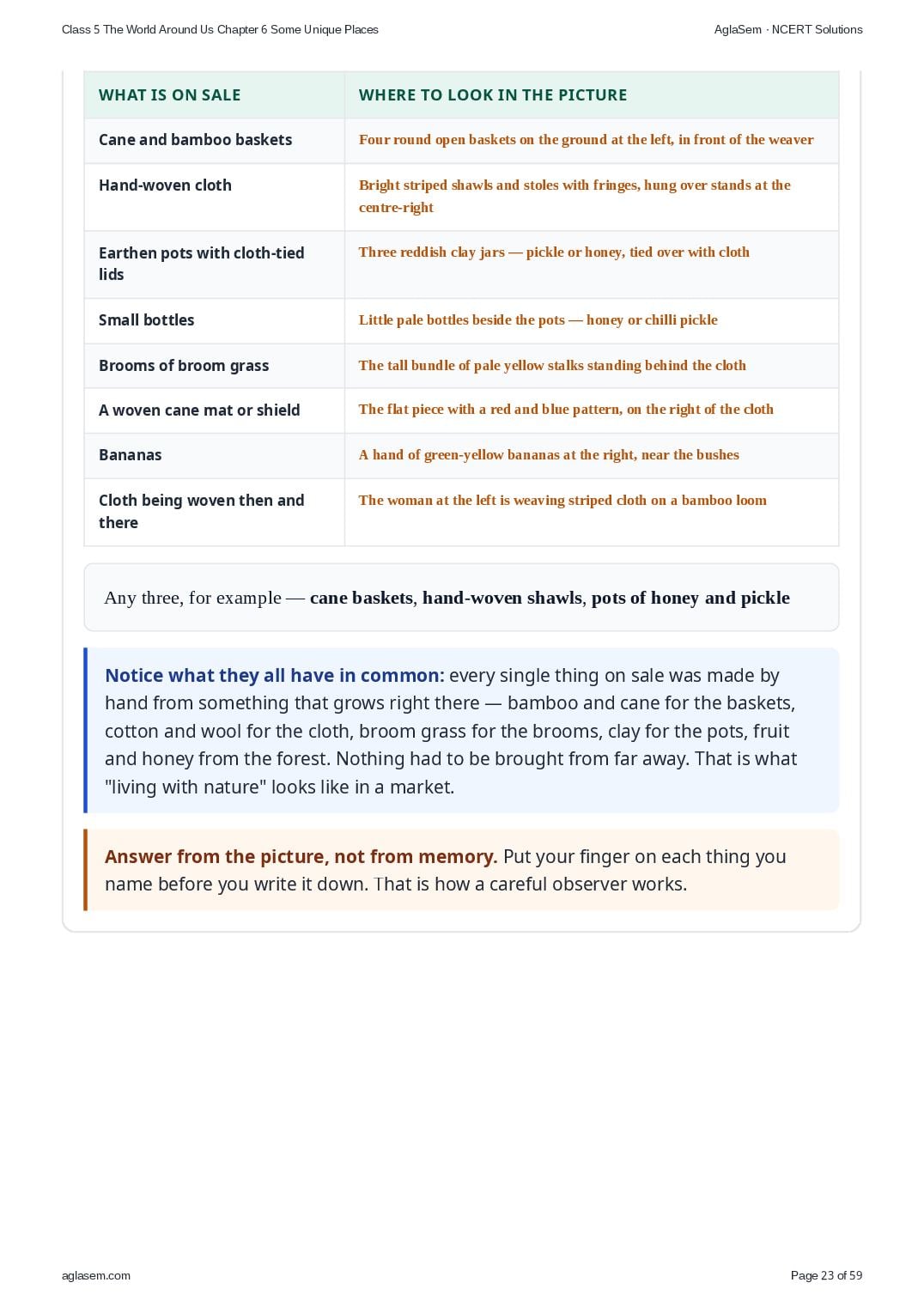
- The picture on page 102, redrawn. Look at the picture. Identify three things being sold in the market.
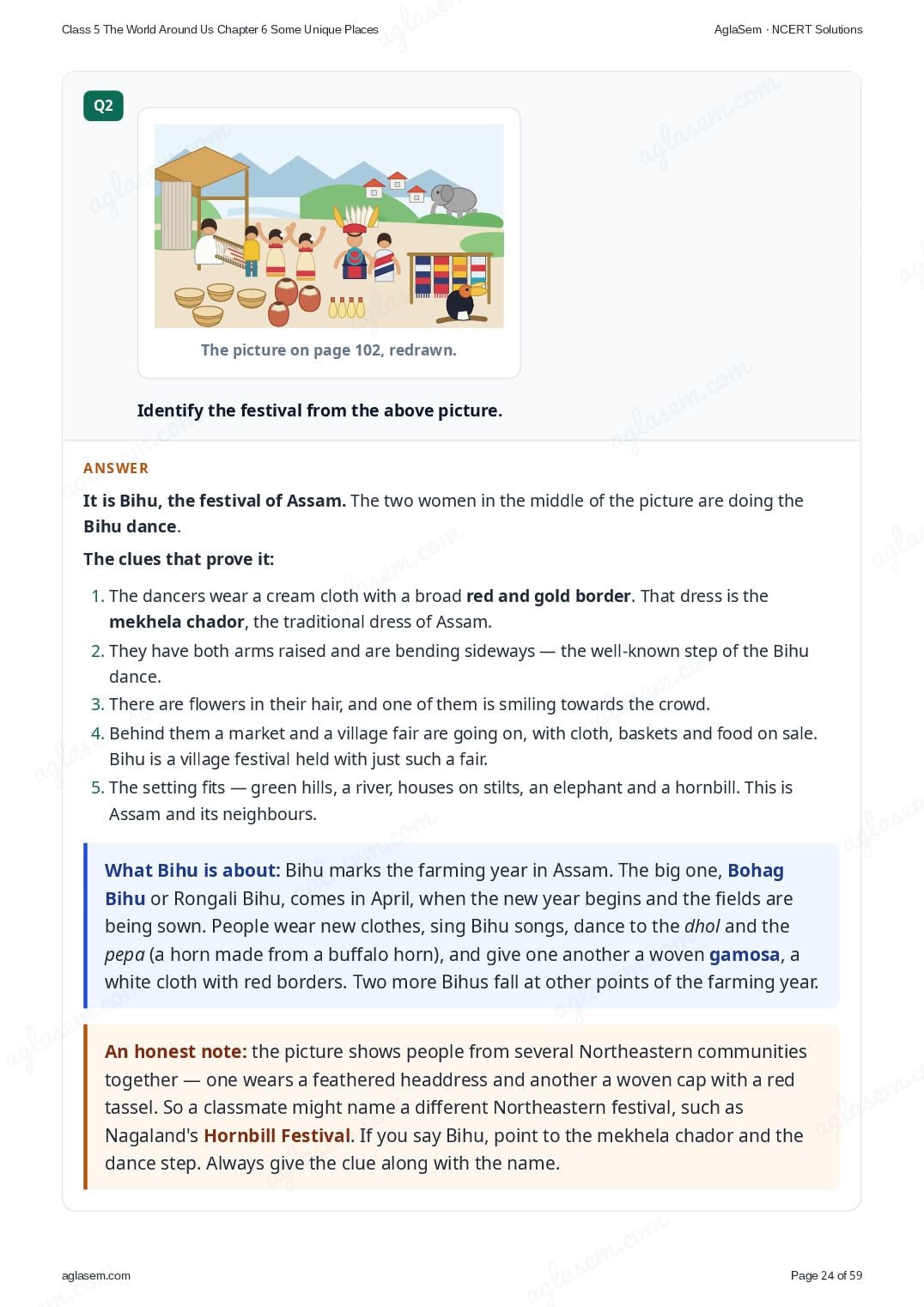
- The picture on page 102, redrawn. Identify the festival from the above picture.
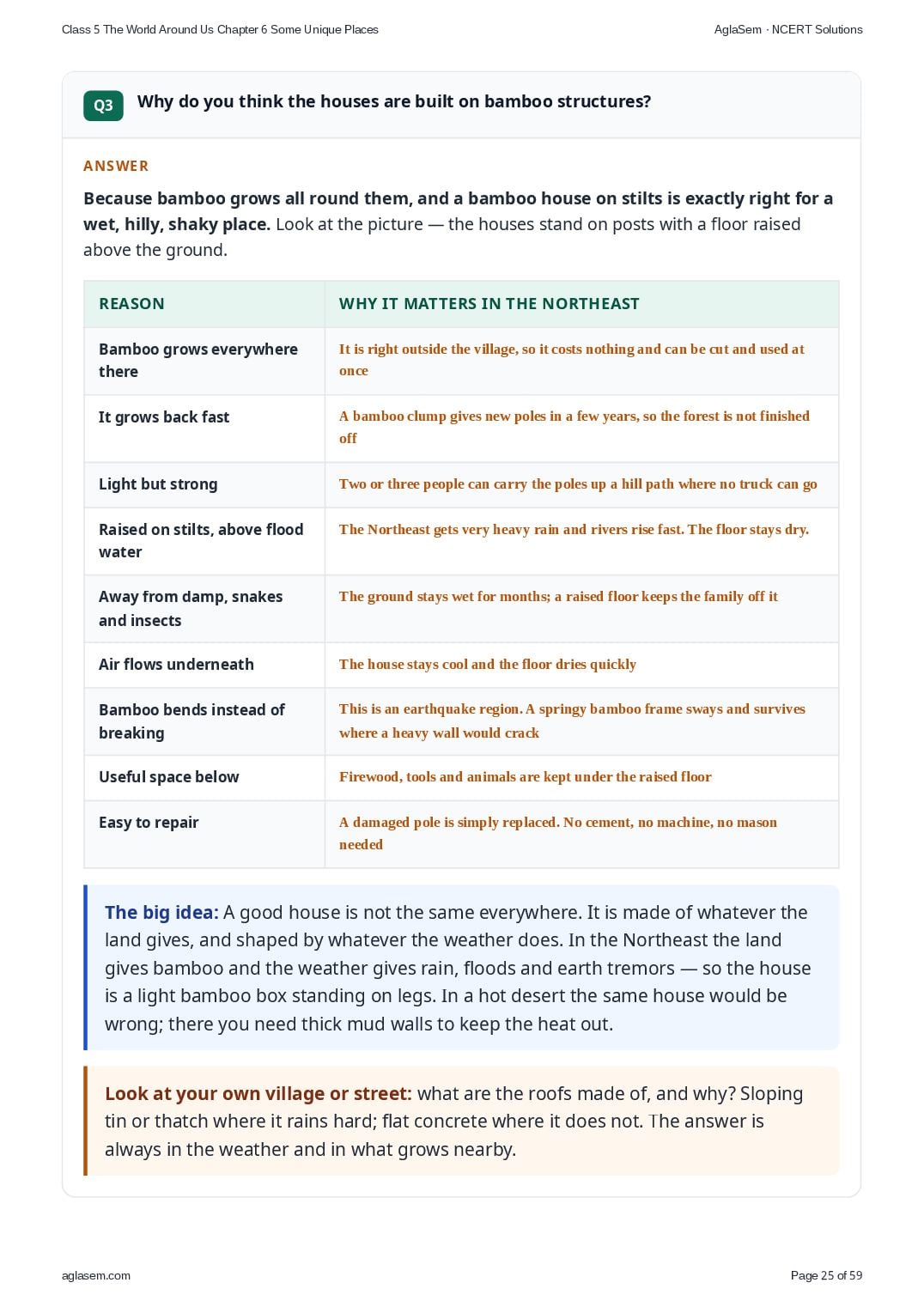
- Why do you think the houses are built on bamboo structures?
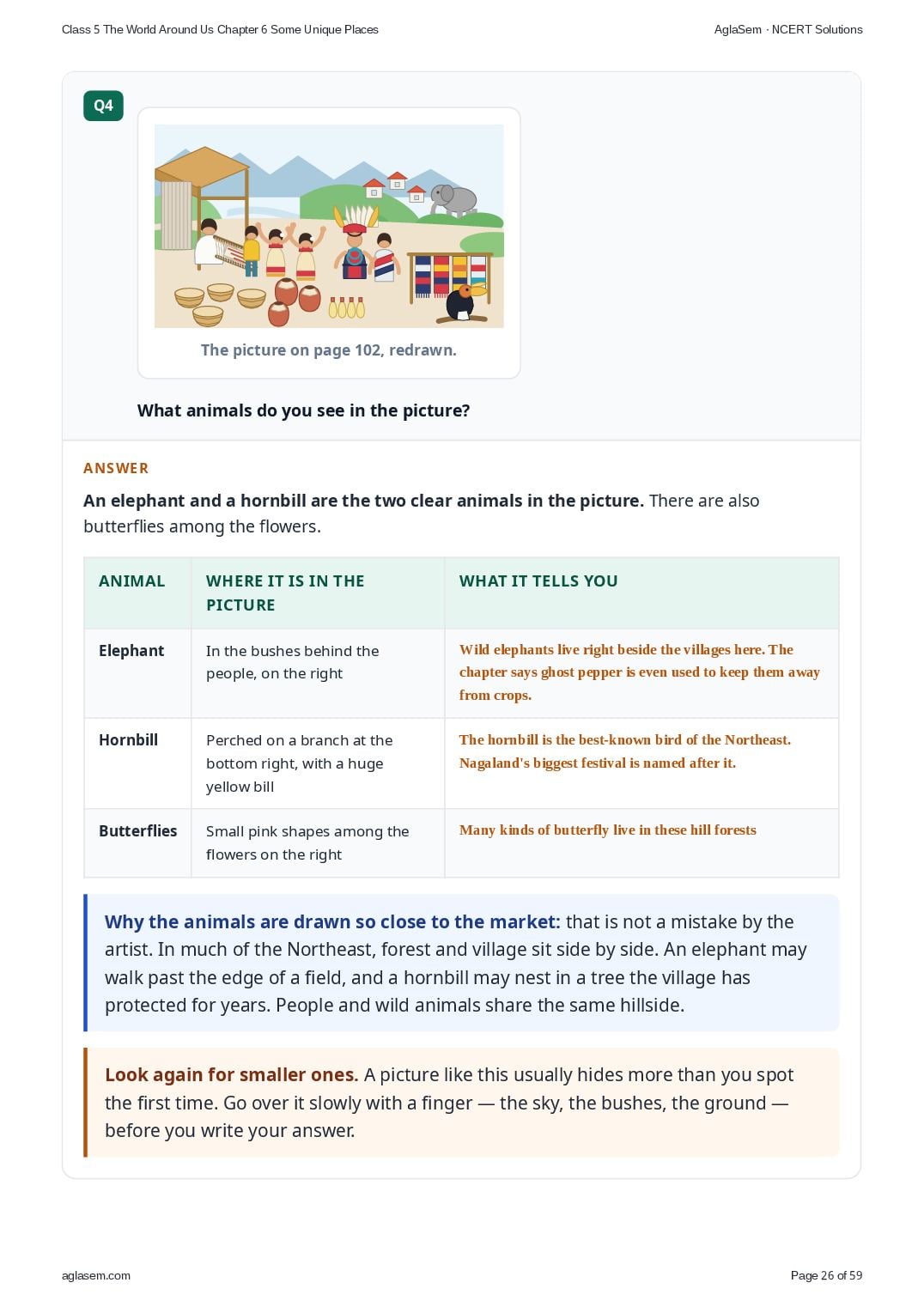
- The picture on page 102, redrawn. What animals do you see in the picture?
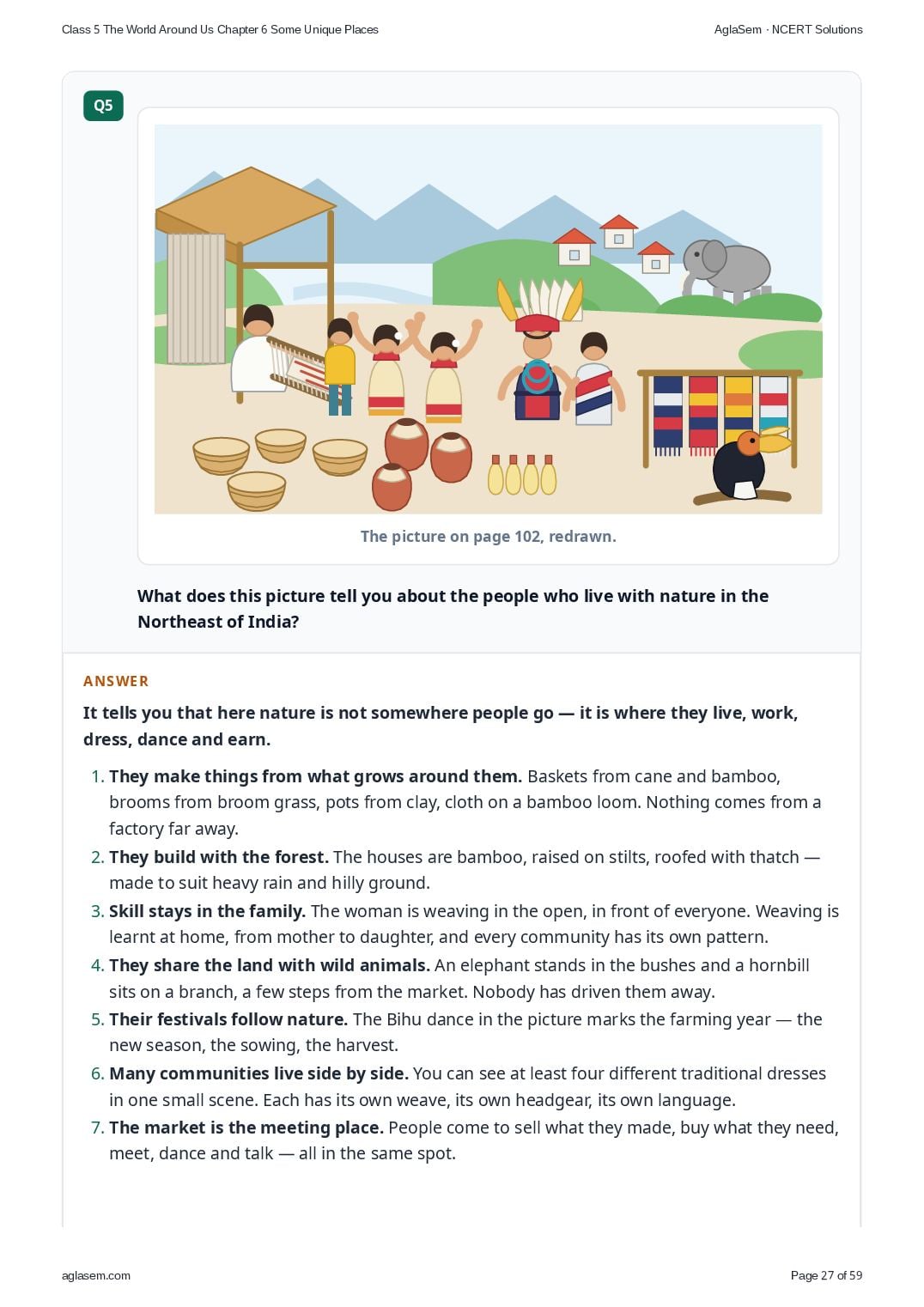
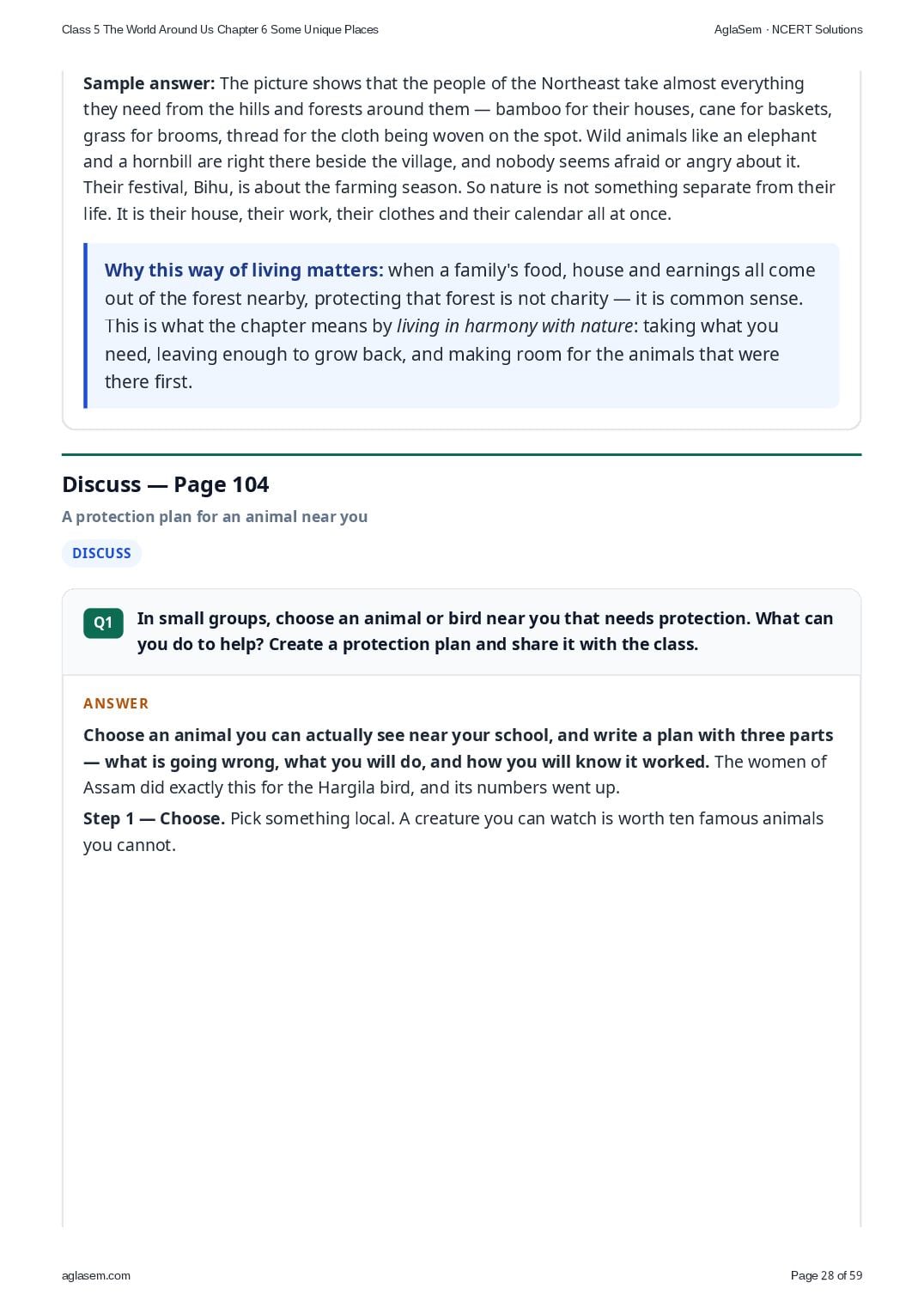
- The picture on page 102, redrawn. What does this picture tell you about the people who live with nature in the Northeast of India?
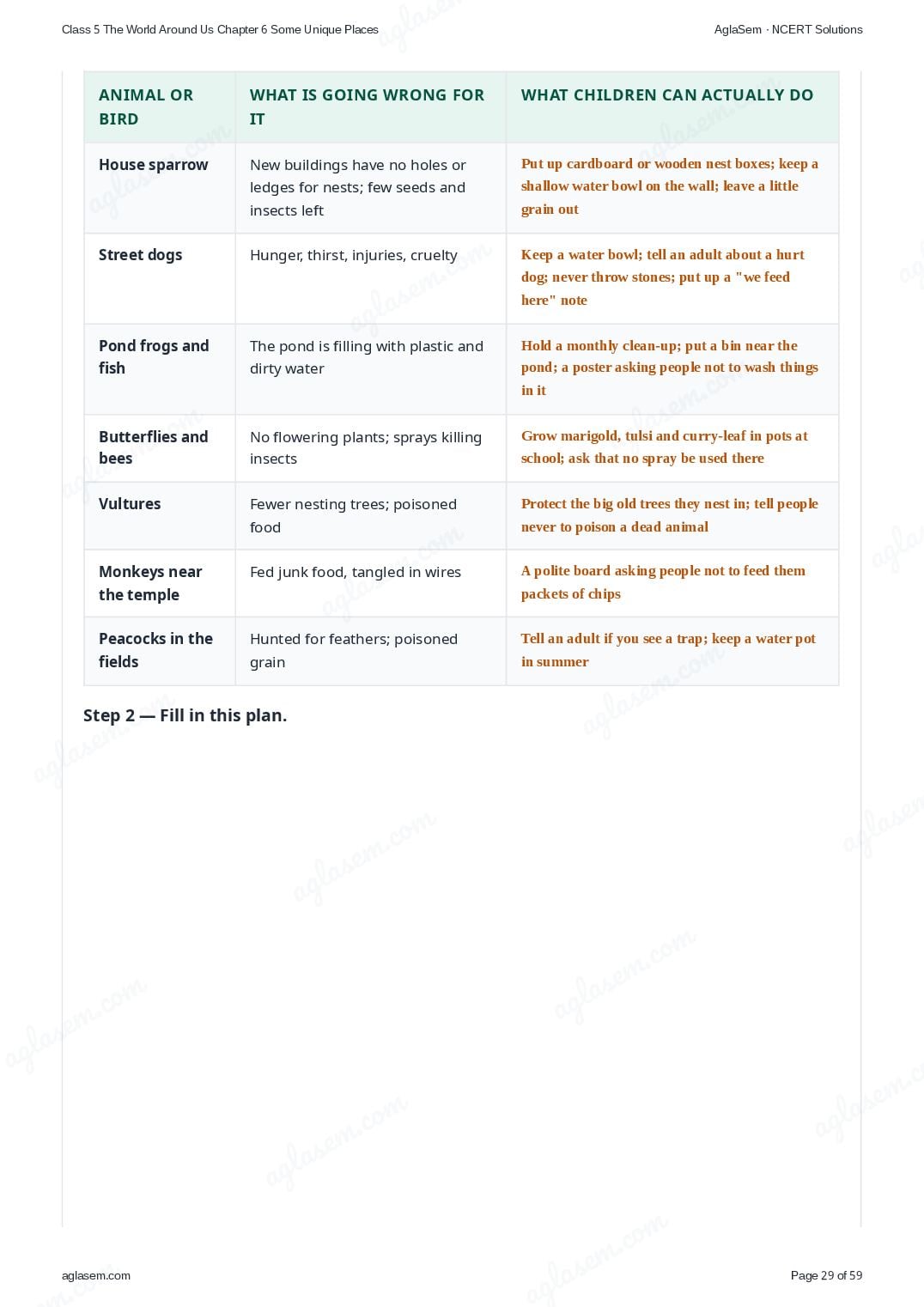
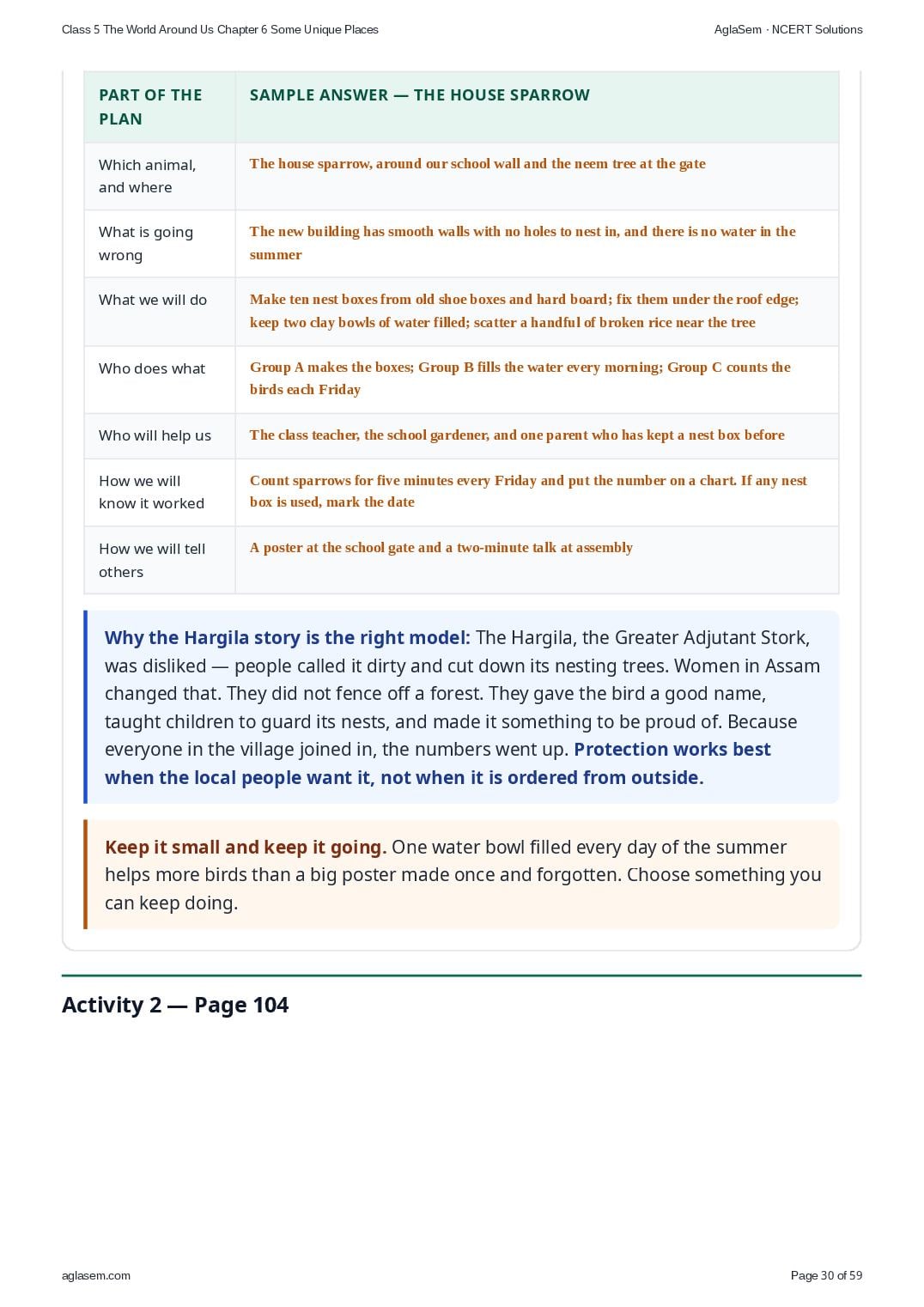
- In small groups, choose an animal or bird near you that needs protection. What can you do to help? Create a protection plan and share it with the class.
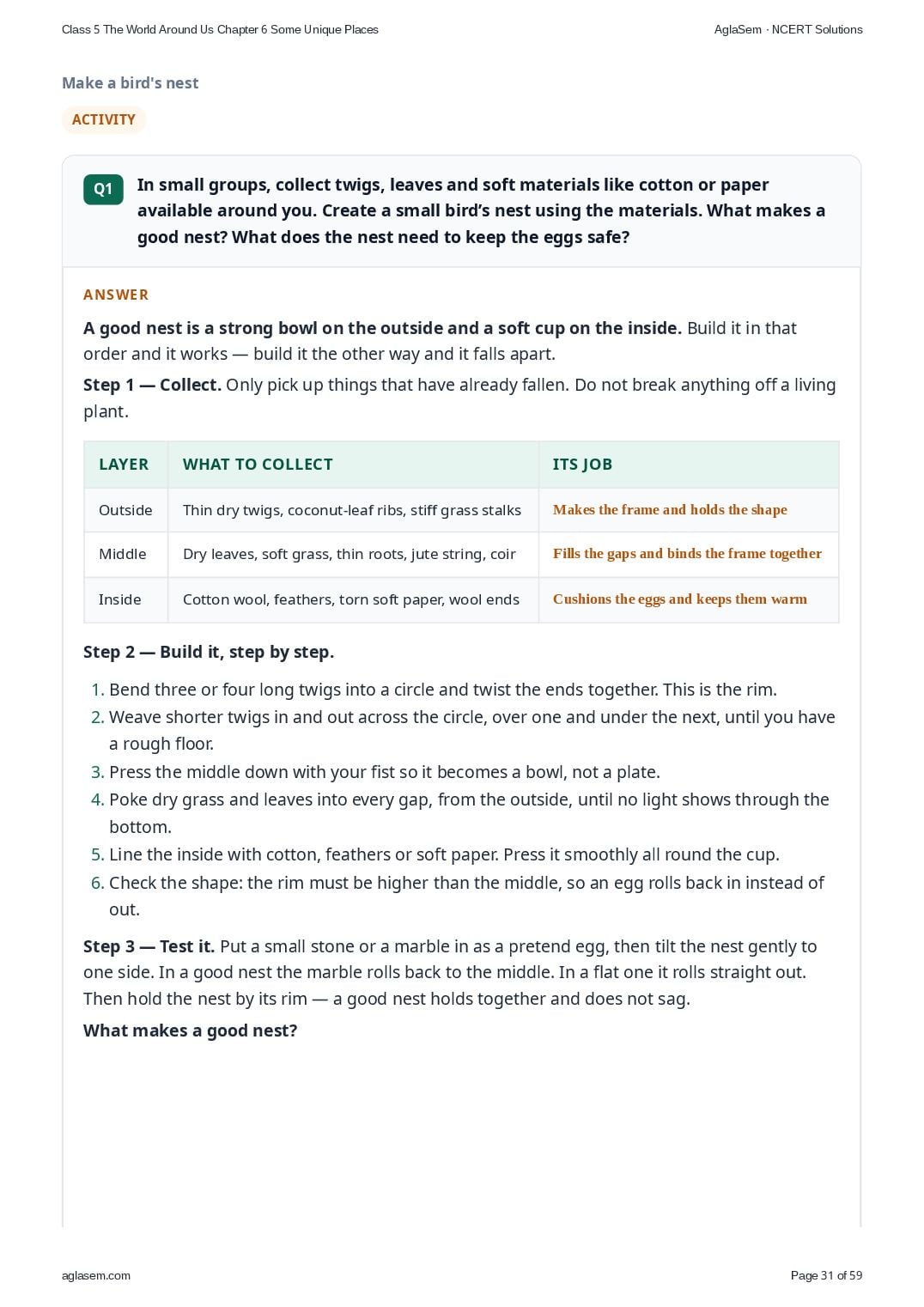
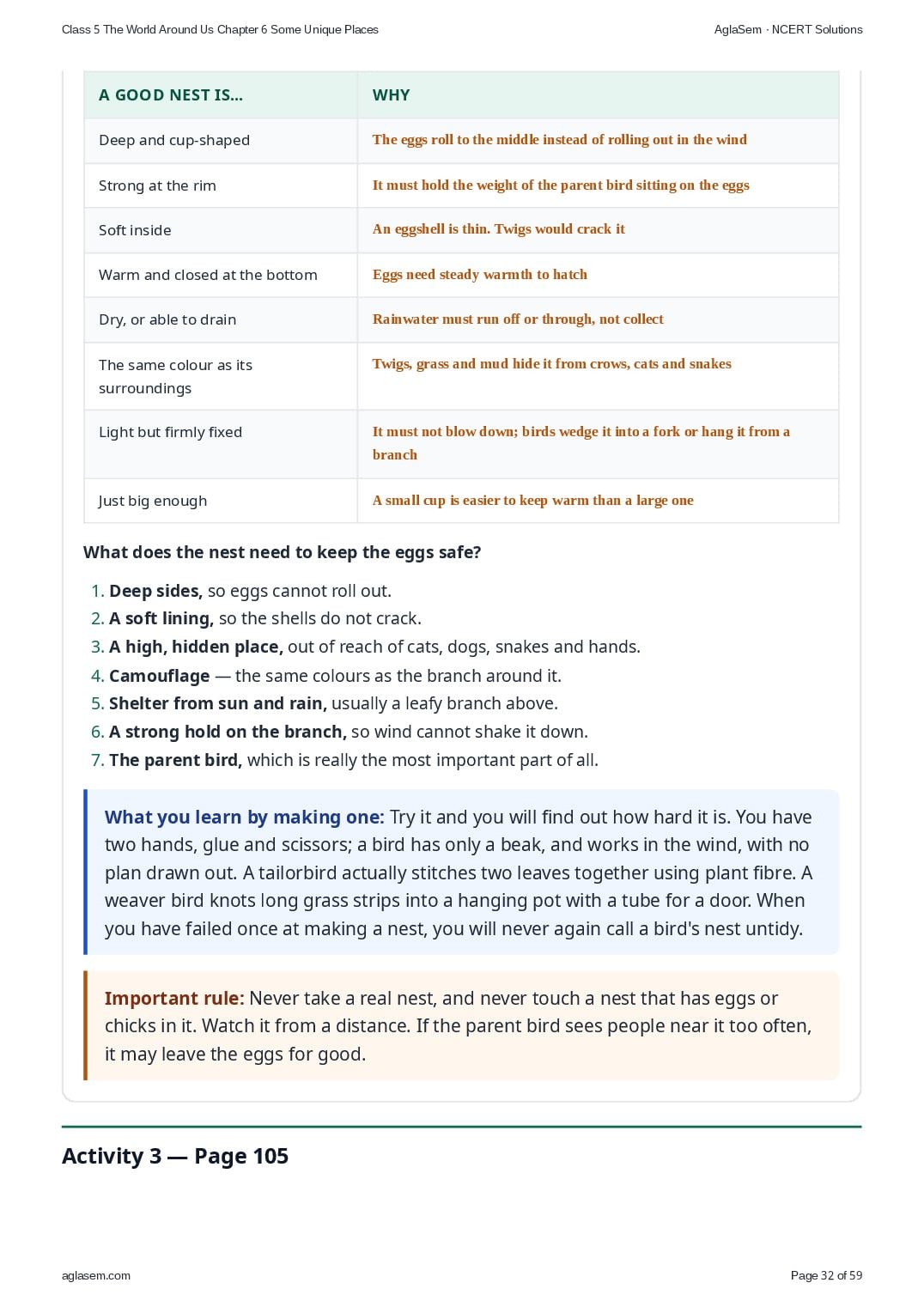
- In small groups, collect twigs, leaves and soft materials like cotton or paper available around you. Create a small bird’s nest using the materials. What makes a good nest? What does the nest need to keep the eggs safe?
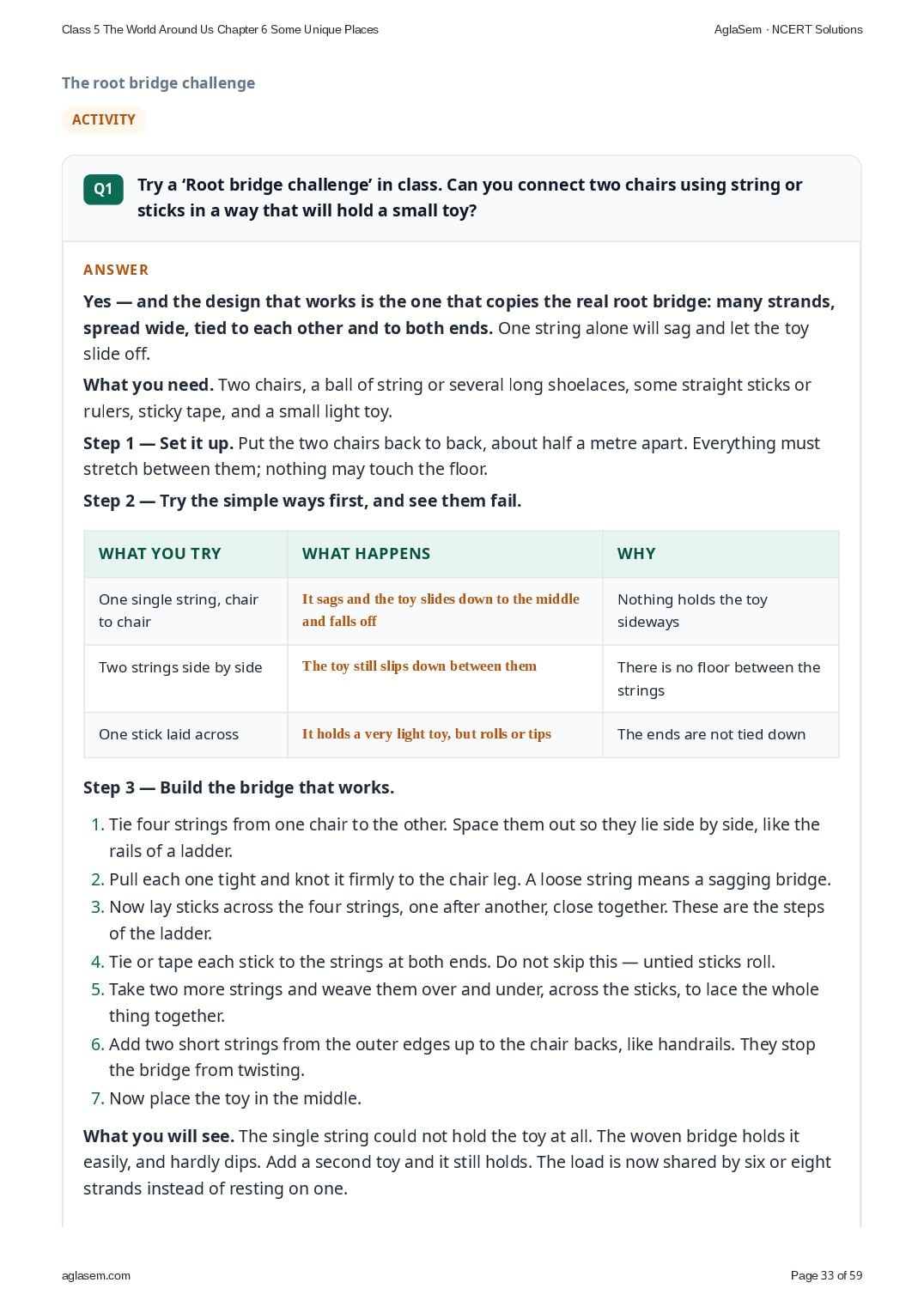
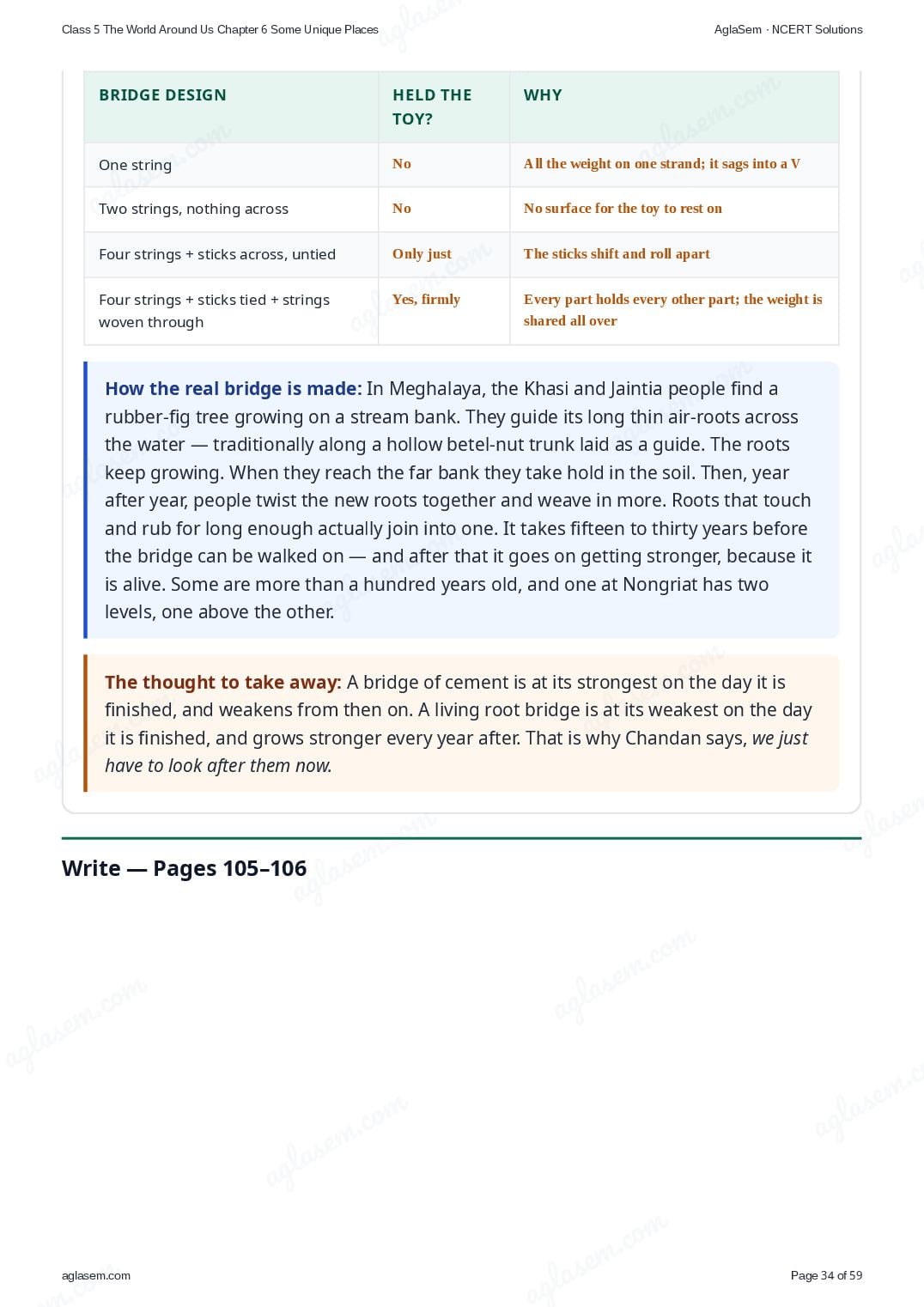
- Try a ‘Root bridge challenge’ in class. Can you connect two chairs using string or sticks in a way that will hold a small toy?
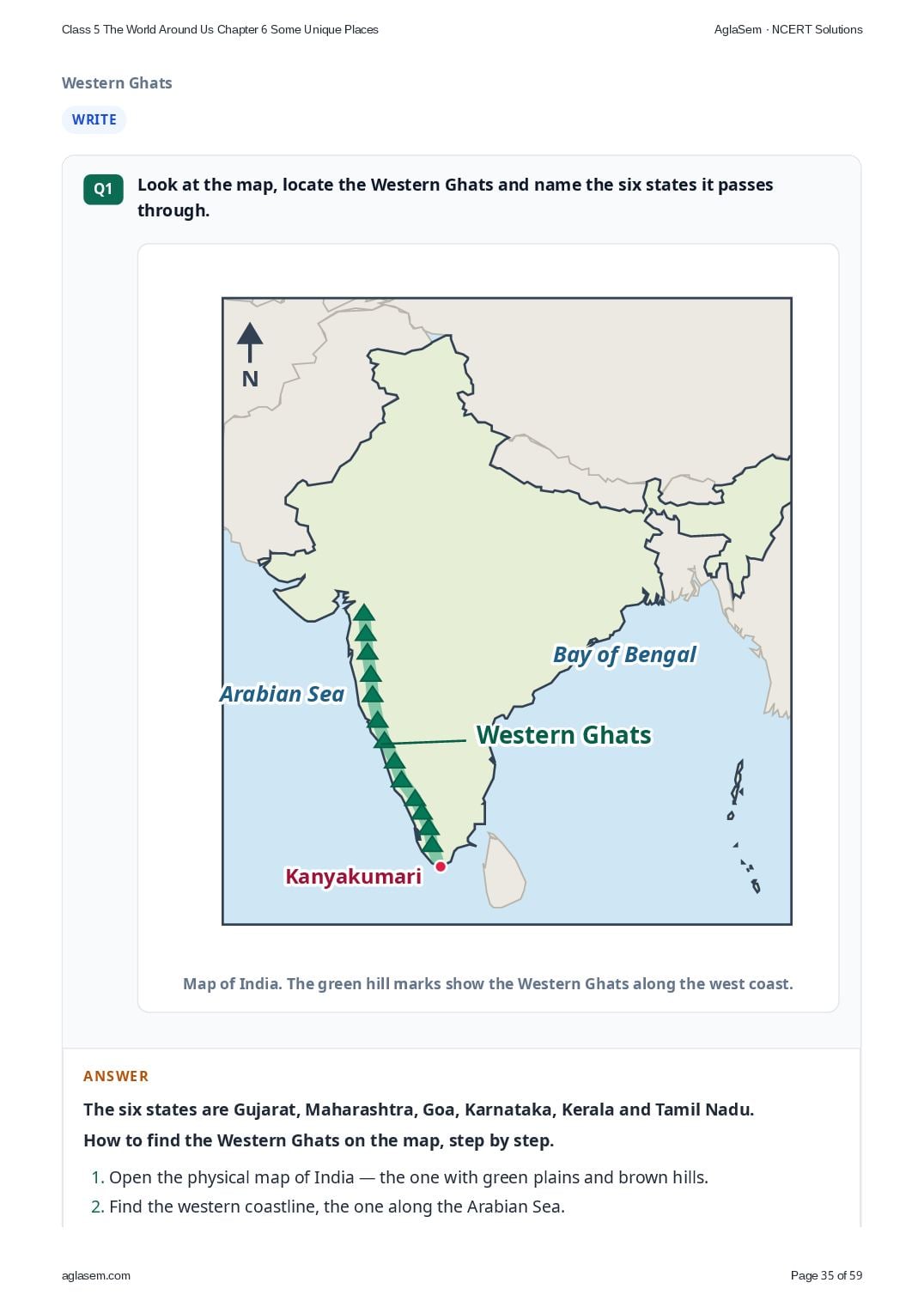
- Look at the map, locate the Western Ghats and name the six states it passes through. Arabian SeaBay of BengalWestern GhatsKanyakumariArabian SeaBay of BengalWestern GhatsKanyakumariN Map of India. The green hill marks show the Western Ghats along the west coast.
- What animals can you spot in the forest?
- What are the people doing in the picture given below? The picture on page 106, redrawn.
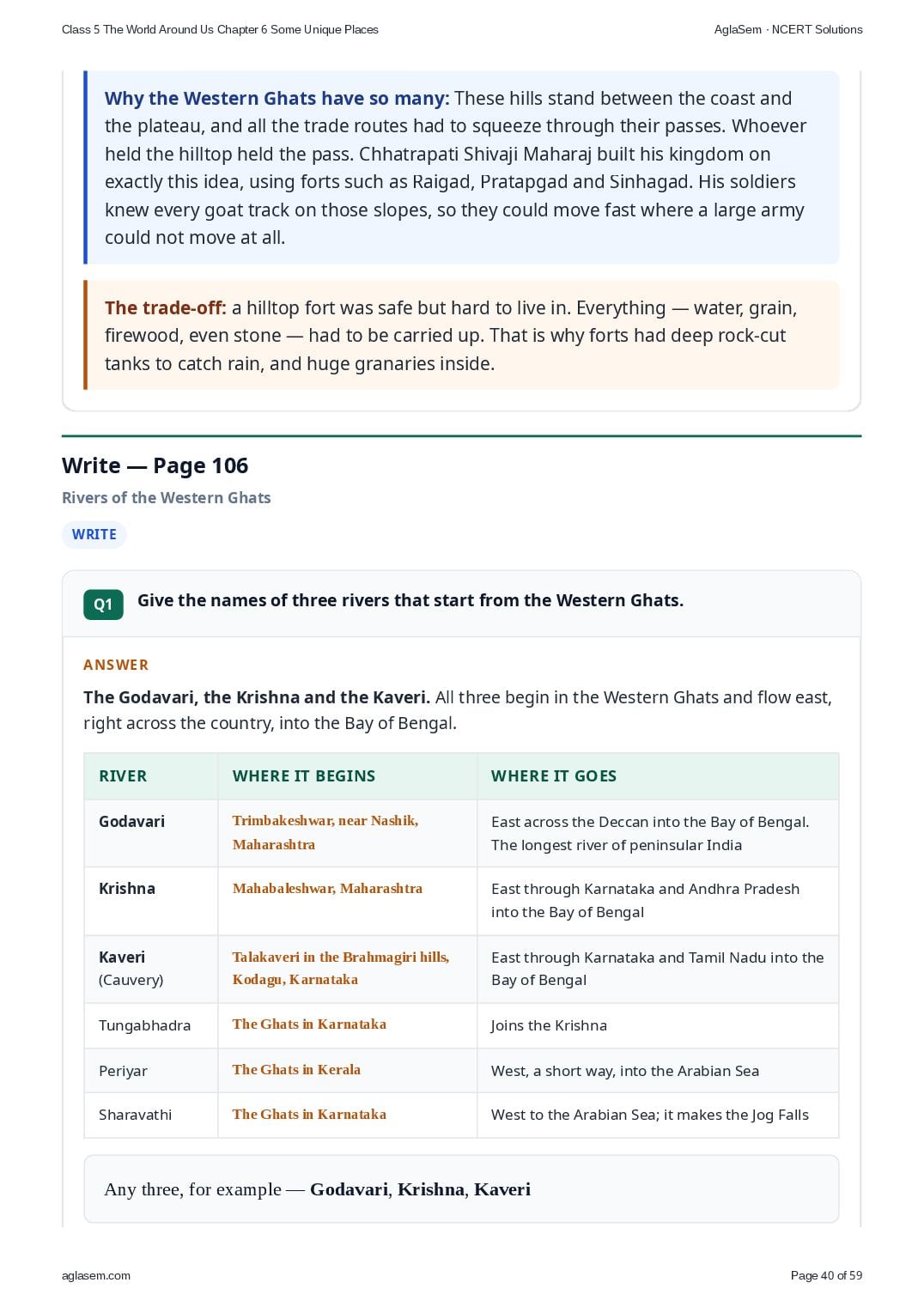
- Why do you think forts were built on hilltops instead of flat land?
- Give the names of three rivers that start from the Western Ghats.
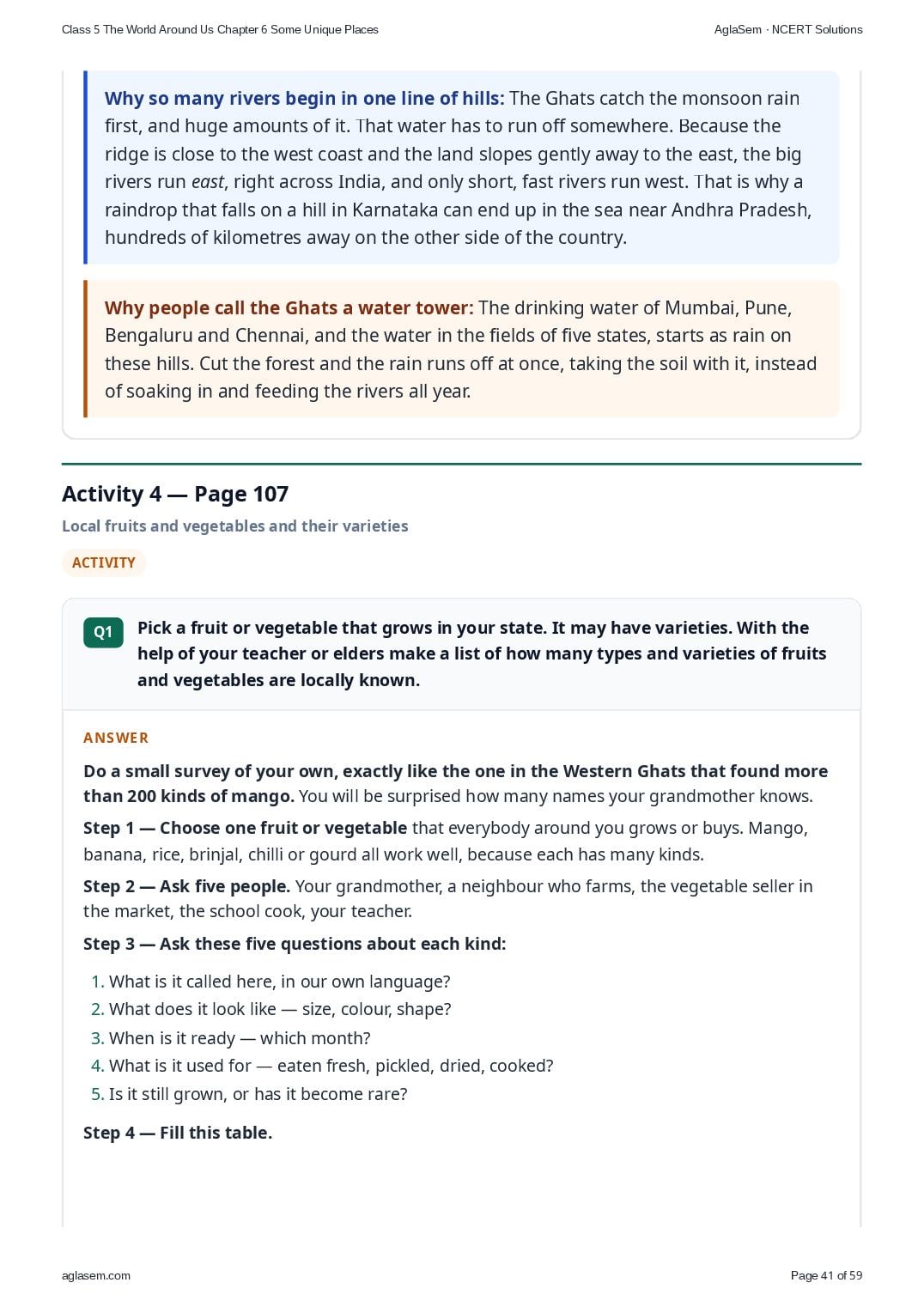
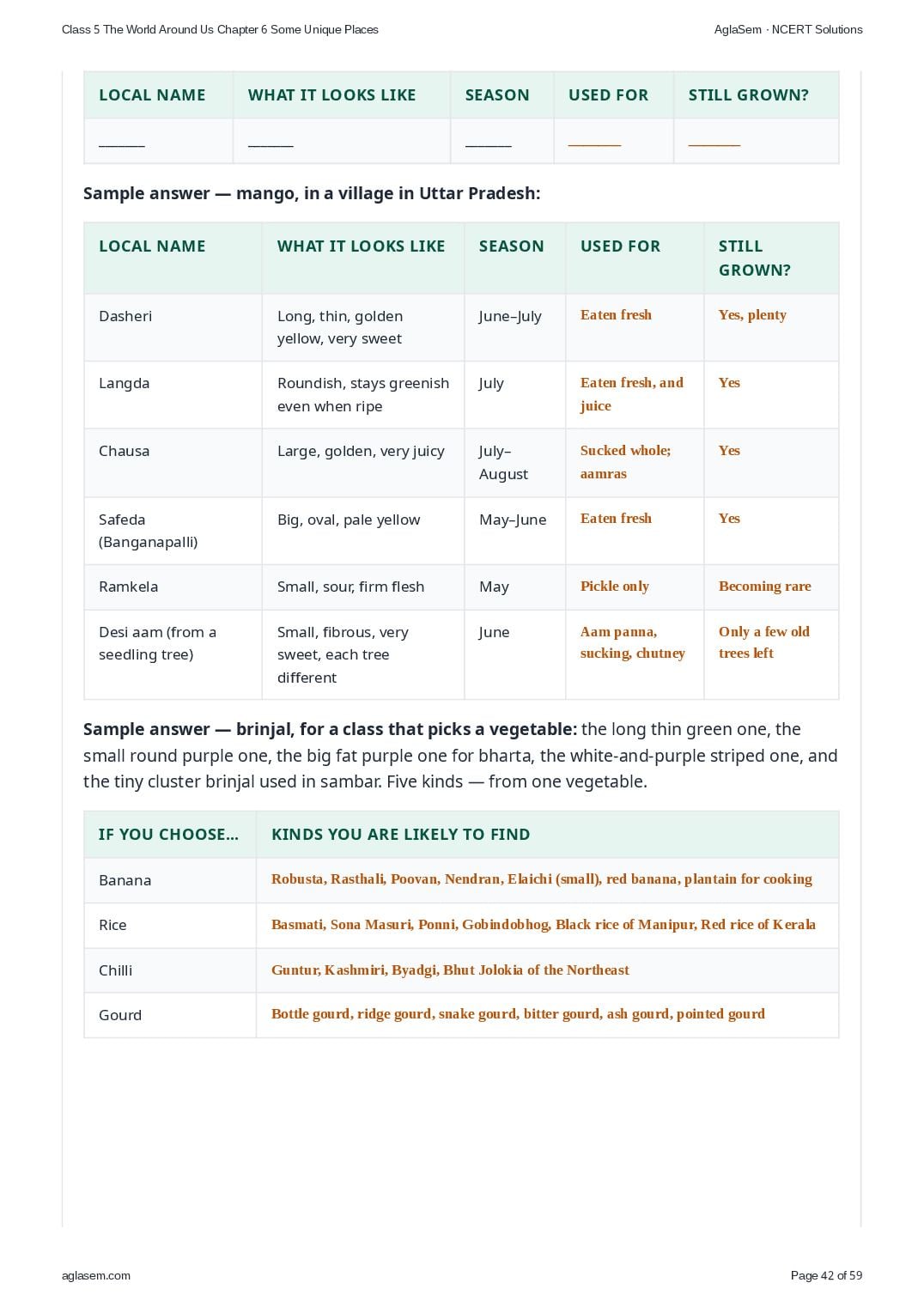
- Pick a fruit or vegetable that grows in your state. It may have varieties. With the help of your teacher or elders make a list of how many types and varieties of fruits and vegetables are locally known.
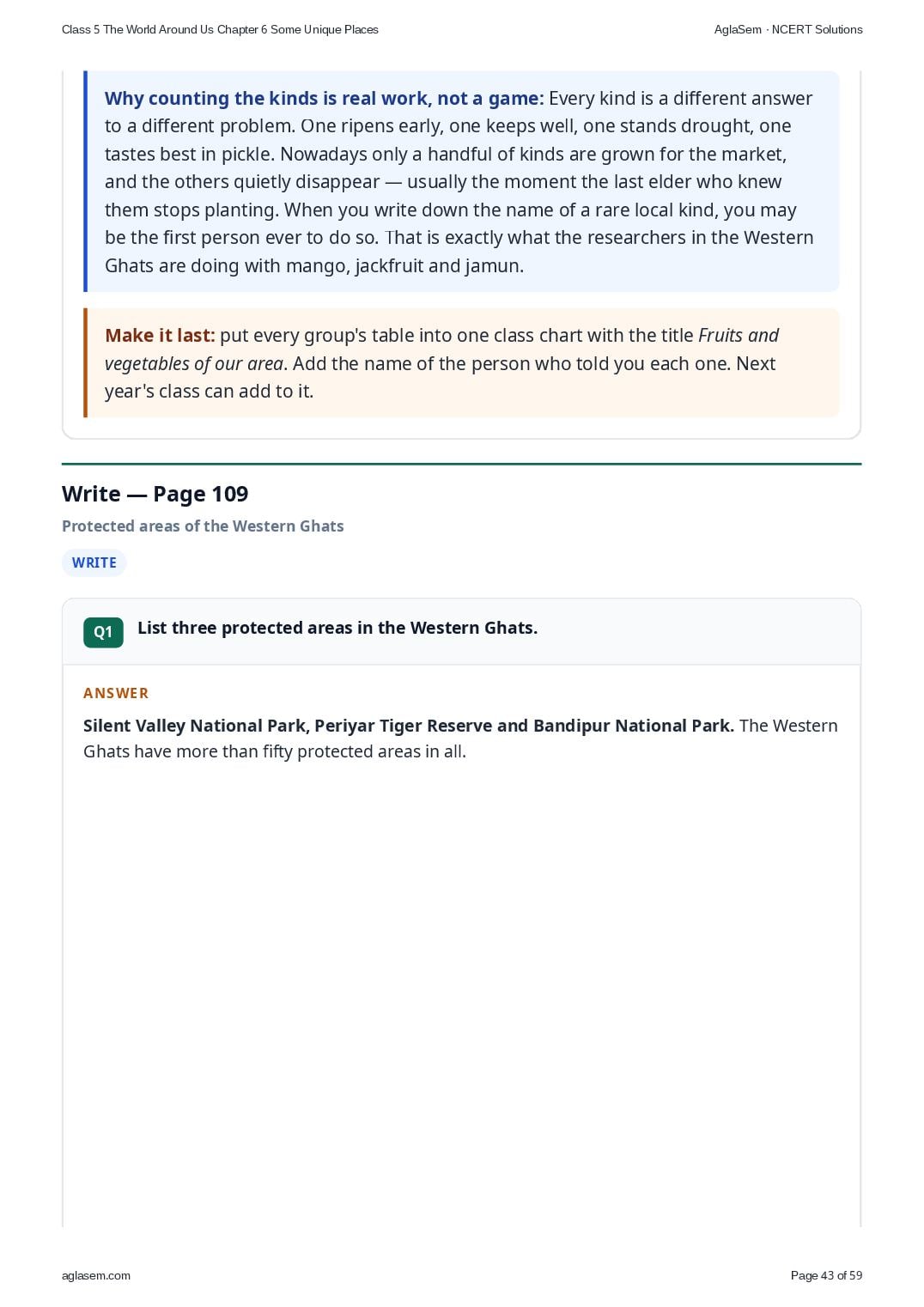
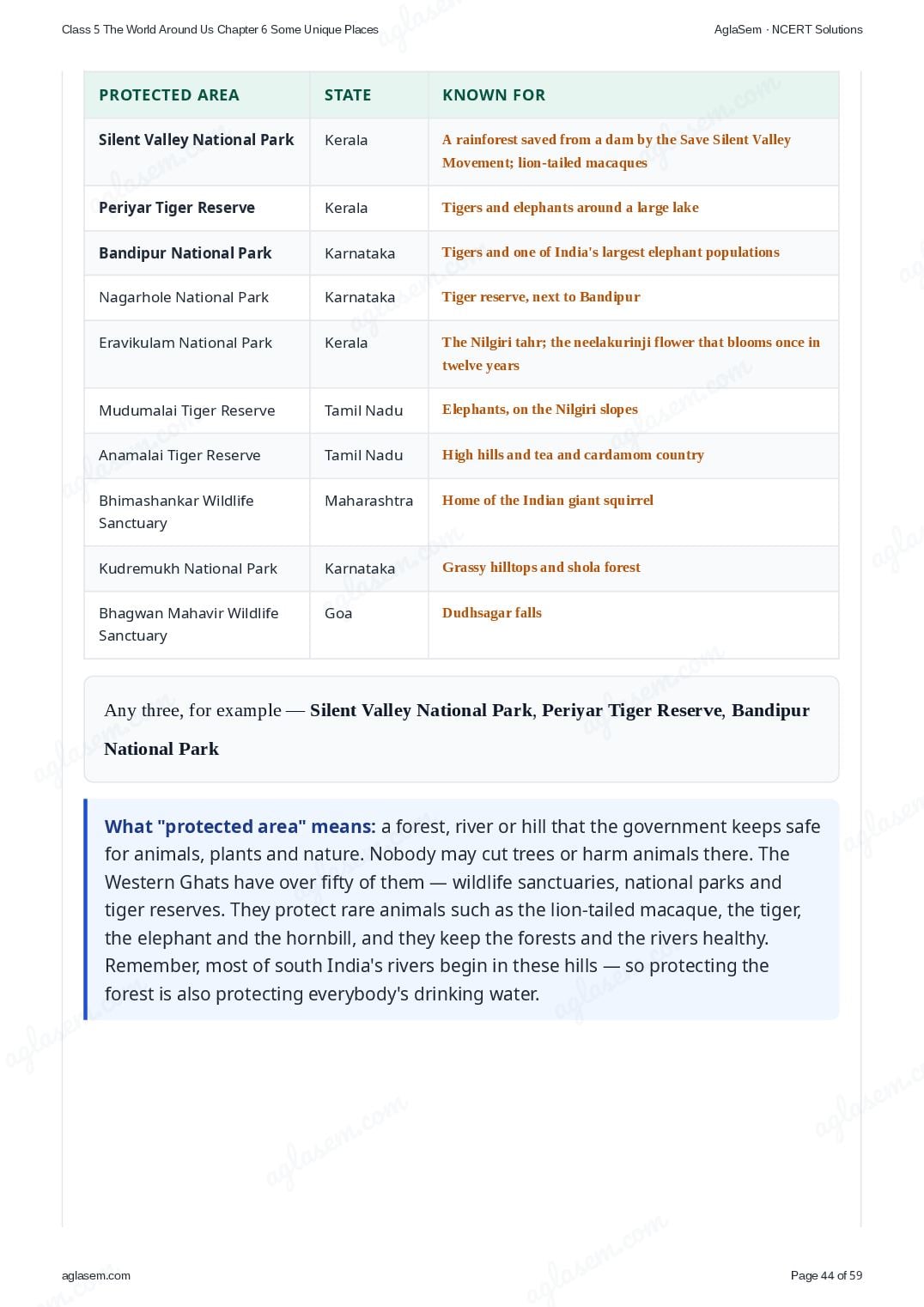
- List three protected areas in the Western Ghats.
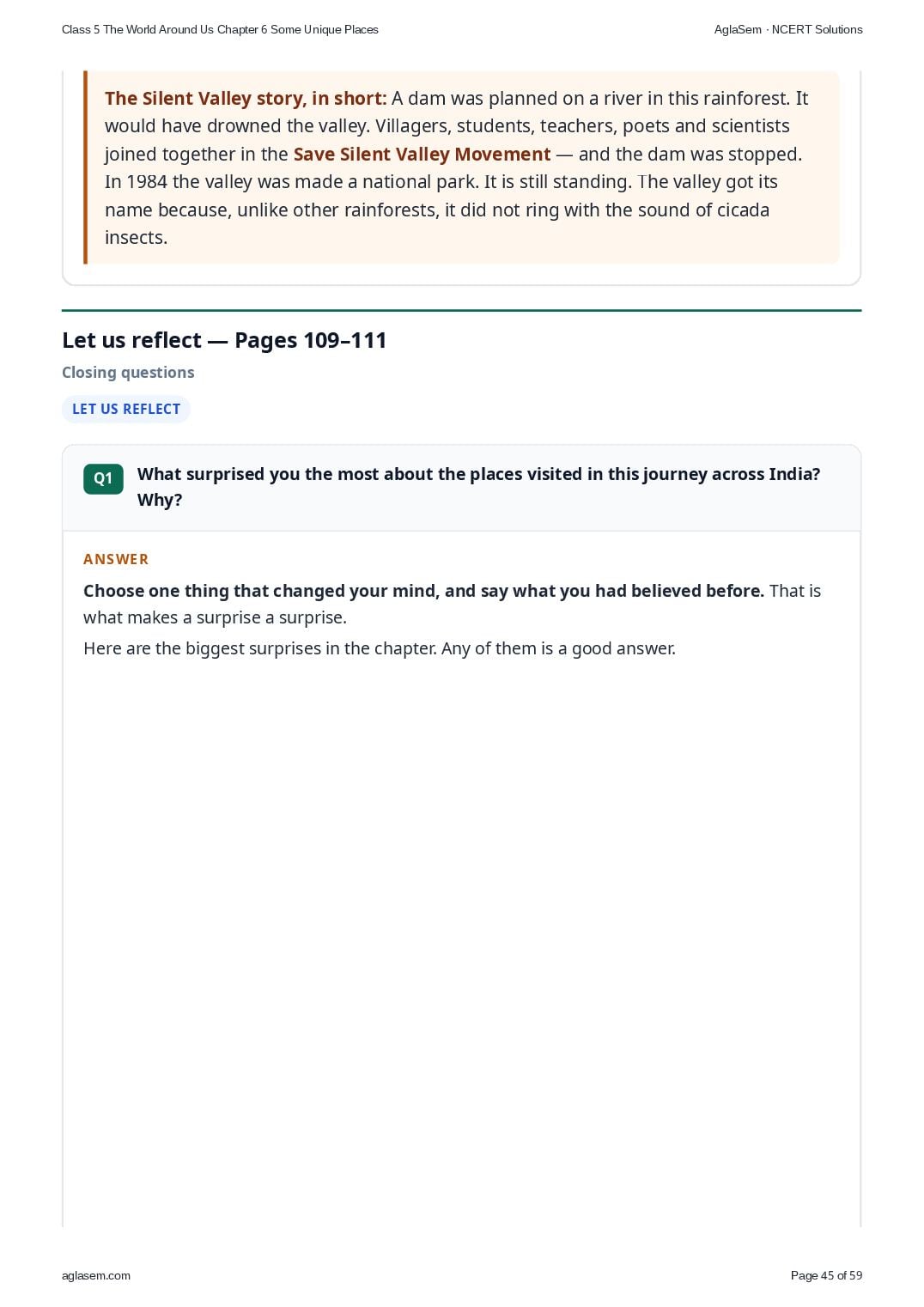
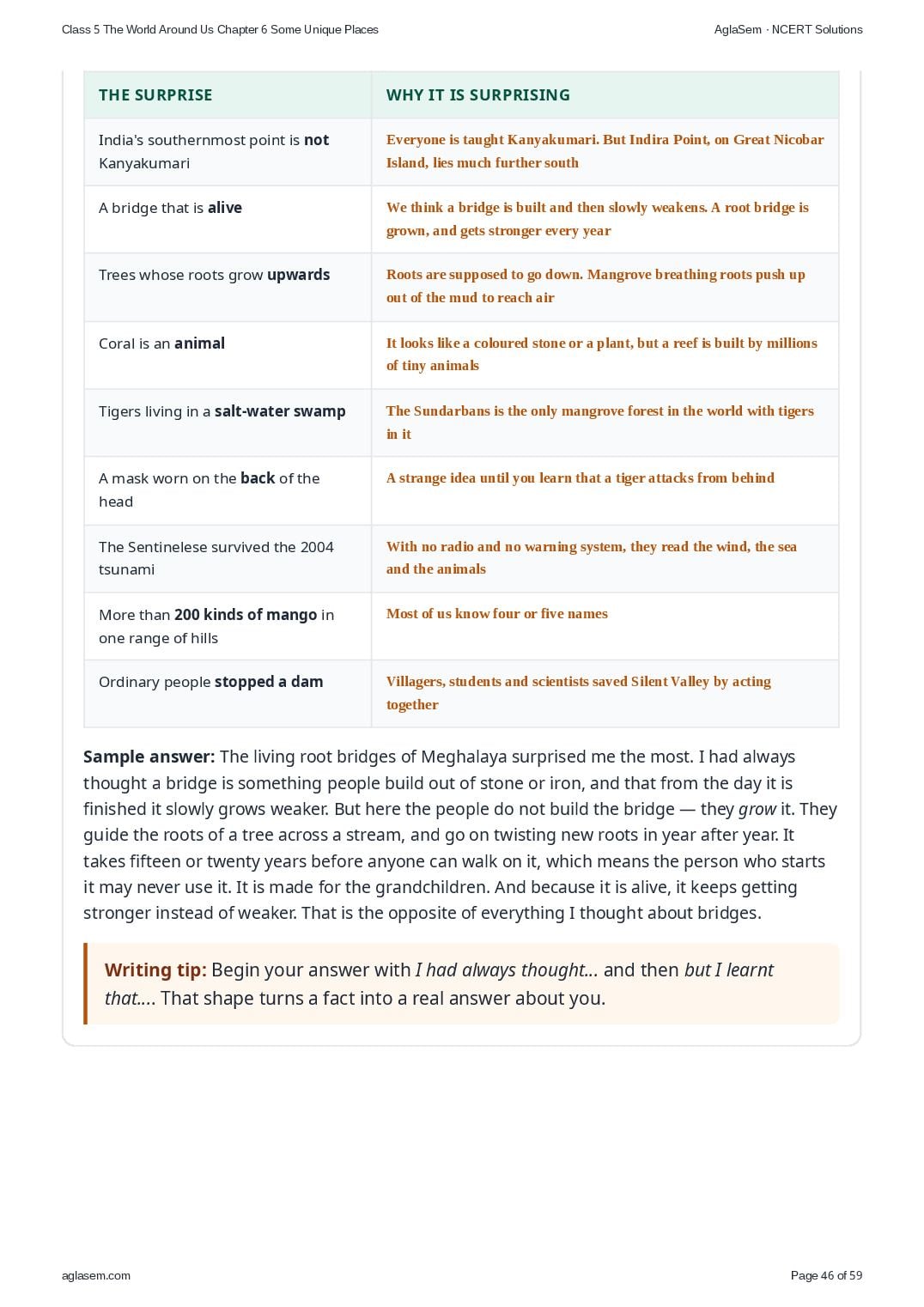
- What surprised you the most about the places visited in this journey across India? Why?
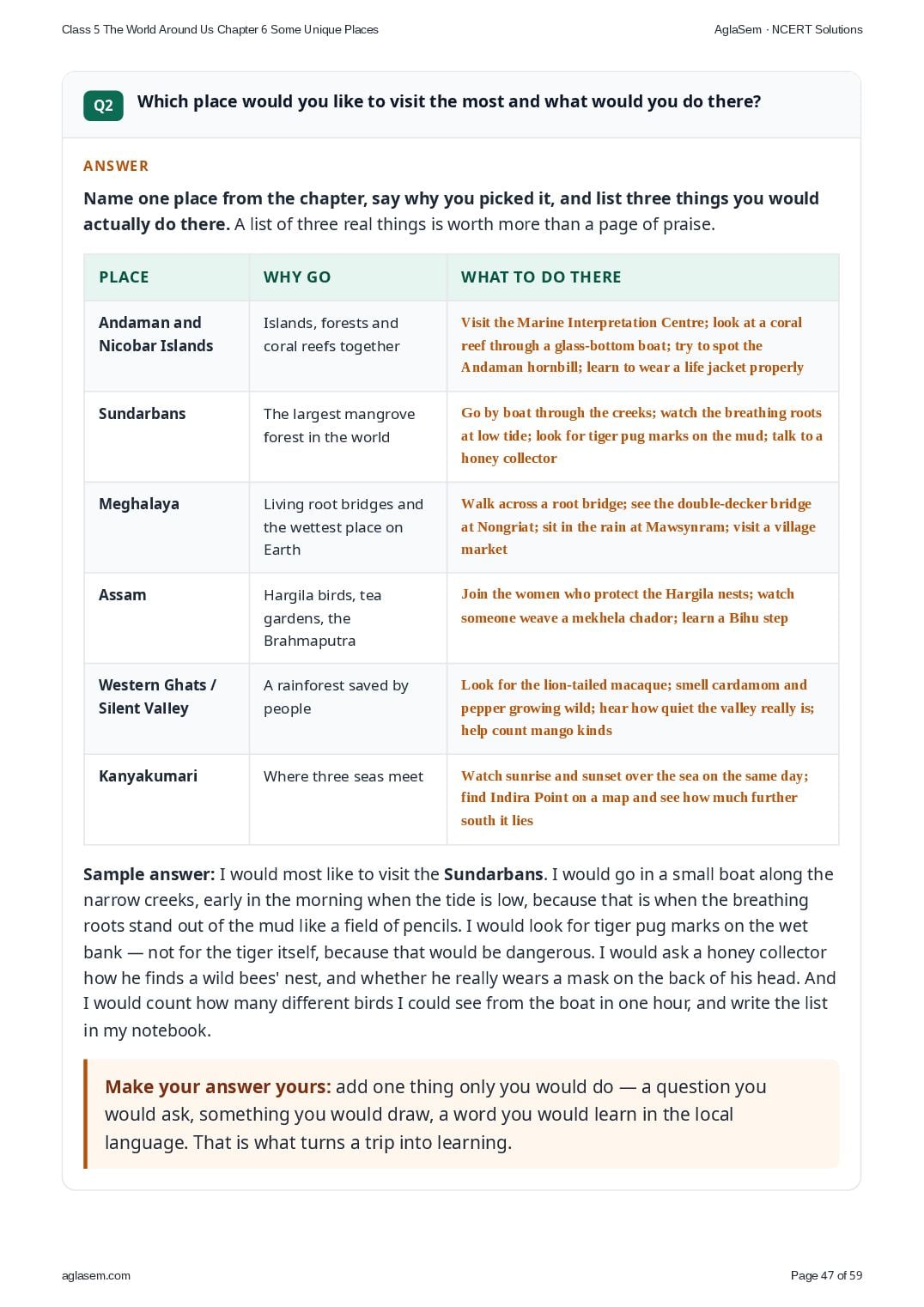
- Which place would you like to visit the most and what would you do there?
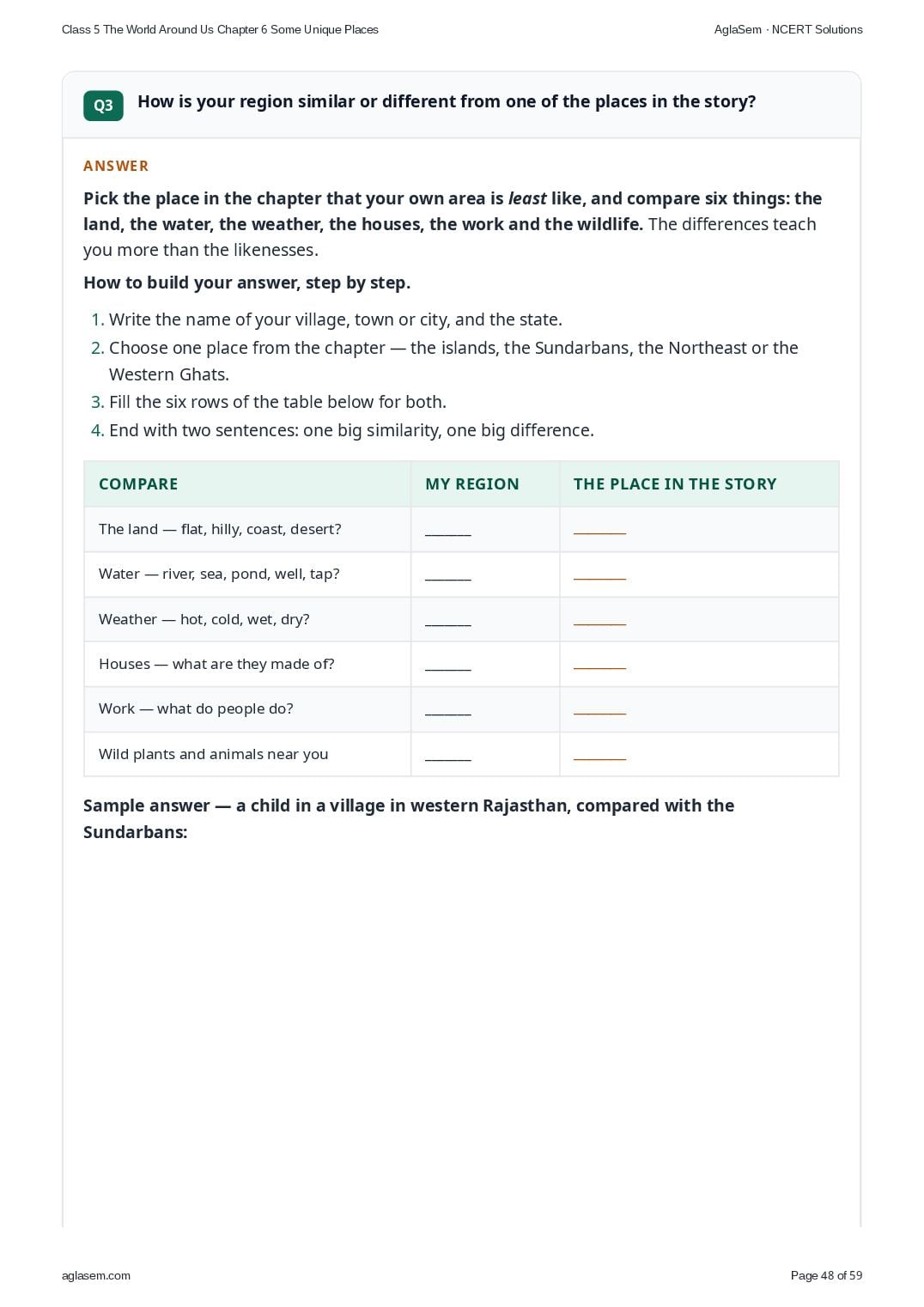
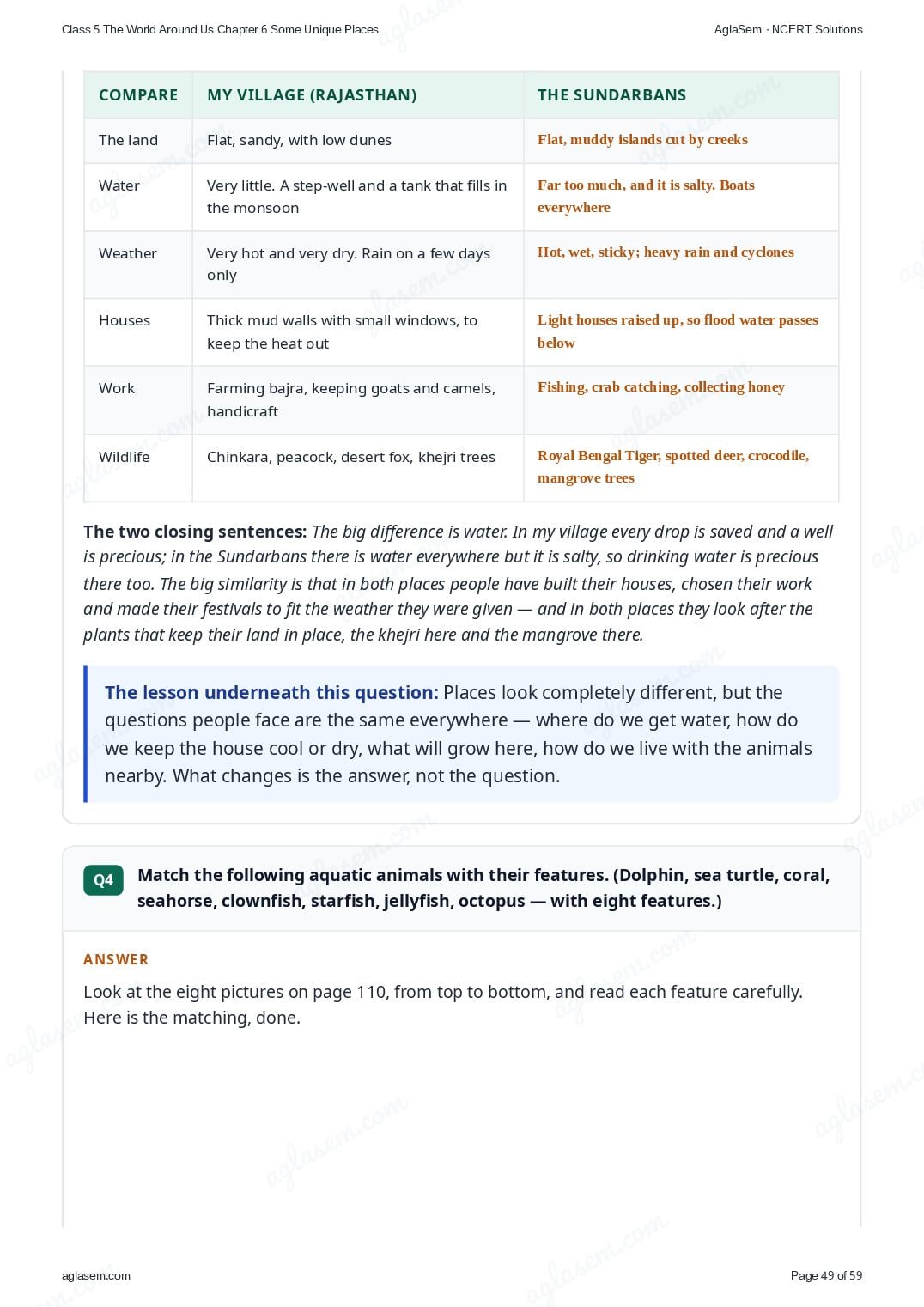
- How is your region similar or different from one of the places in the story?
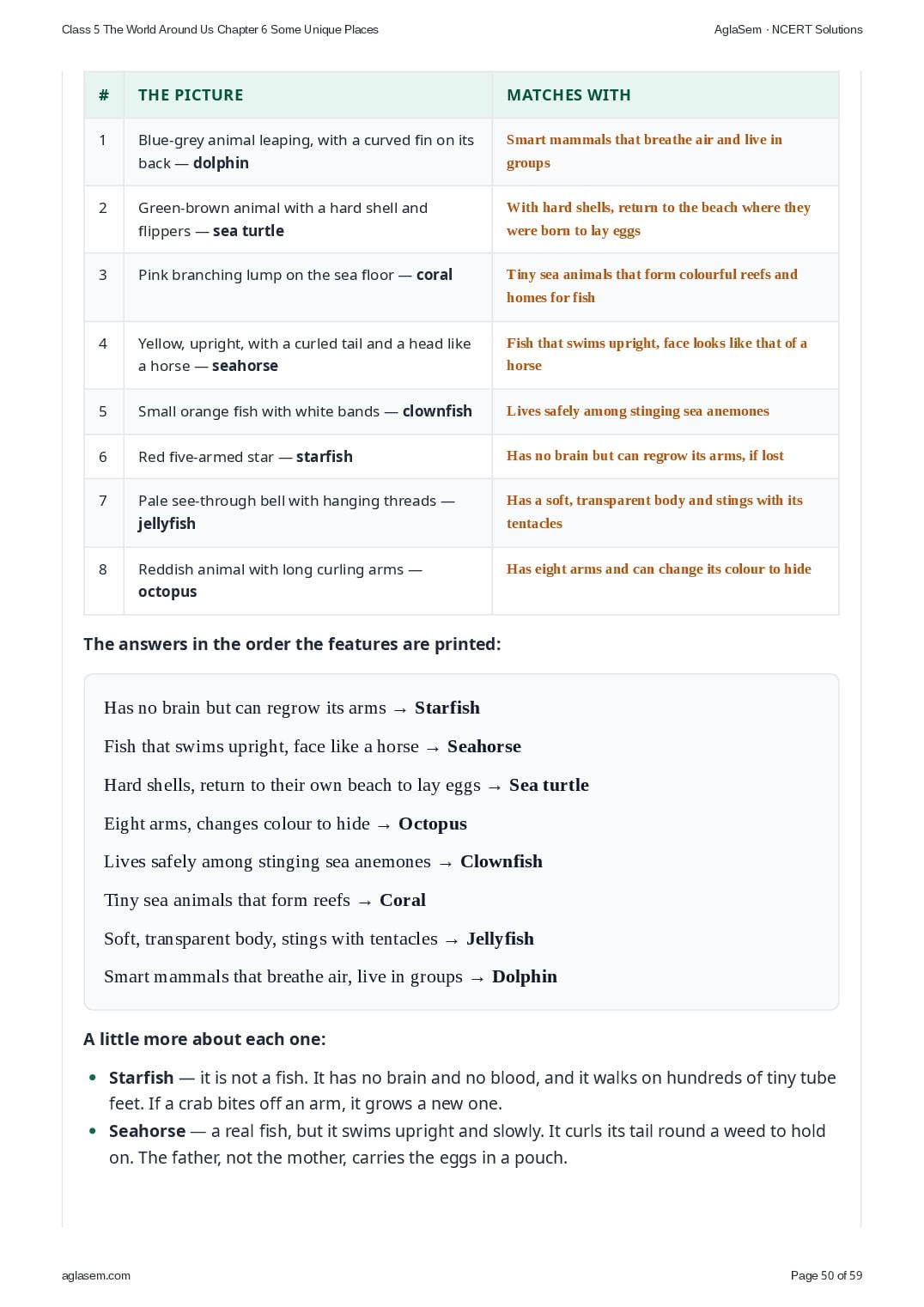
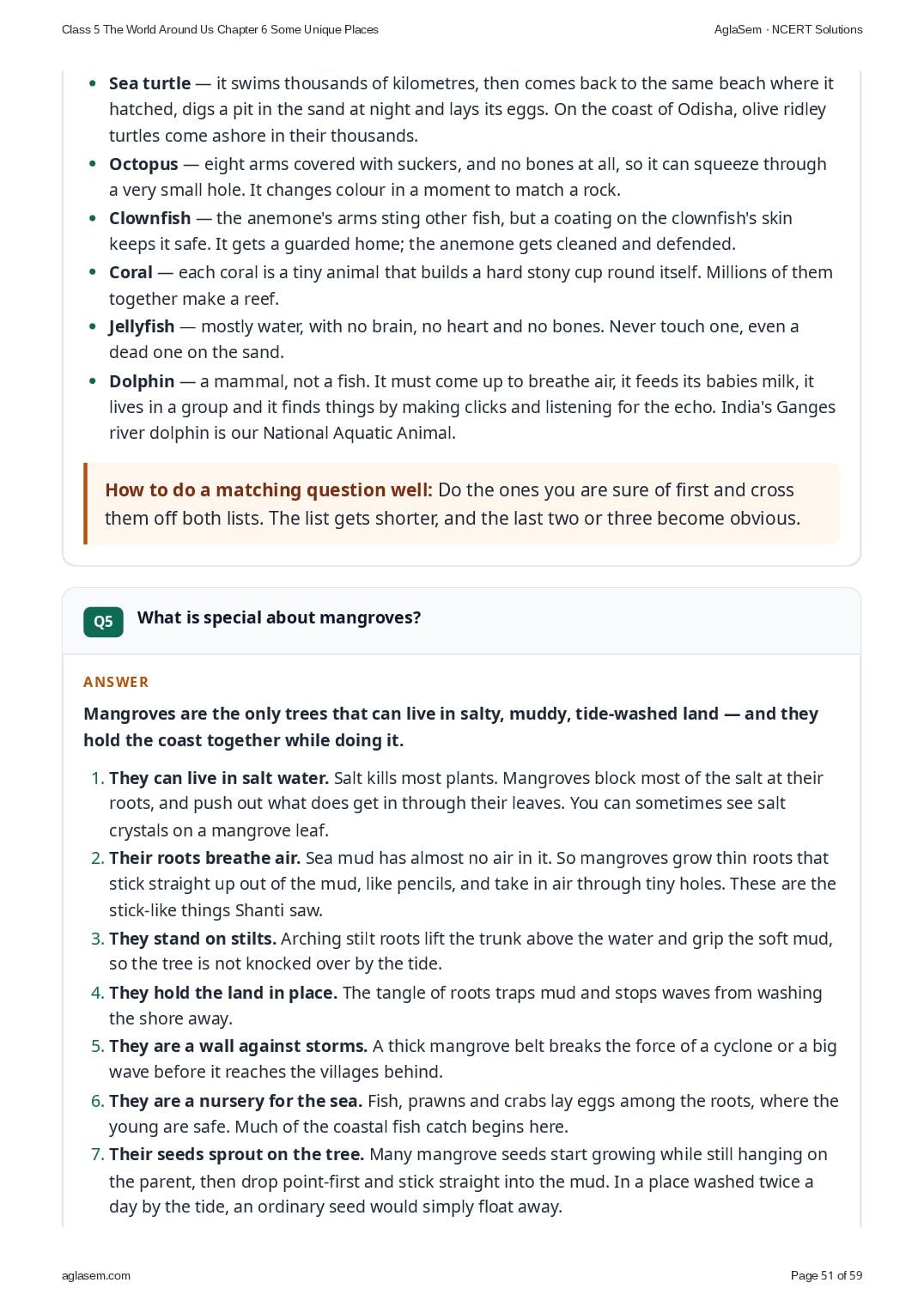
- Match the following aquatic animals with their features. (Dolphin, sea turtle, coral, seahorse, clownfish, starfish, jellyfish, octopus — with eight features.)
- What is special about mangroves?
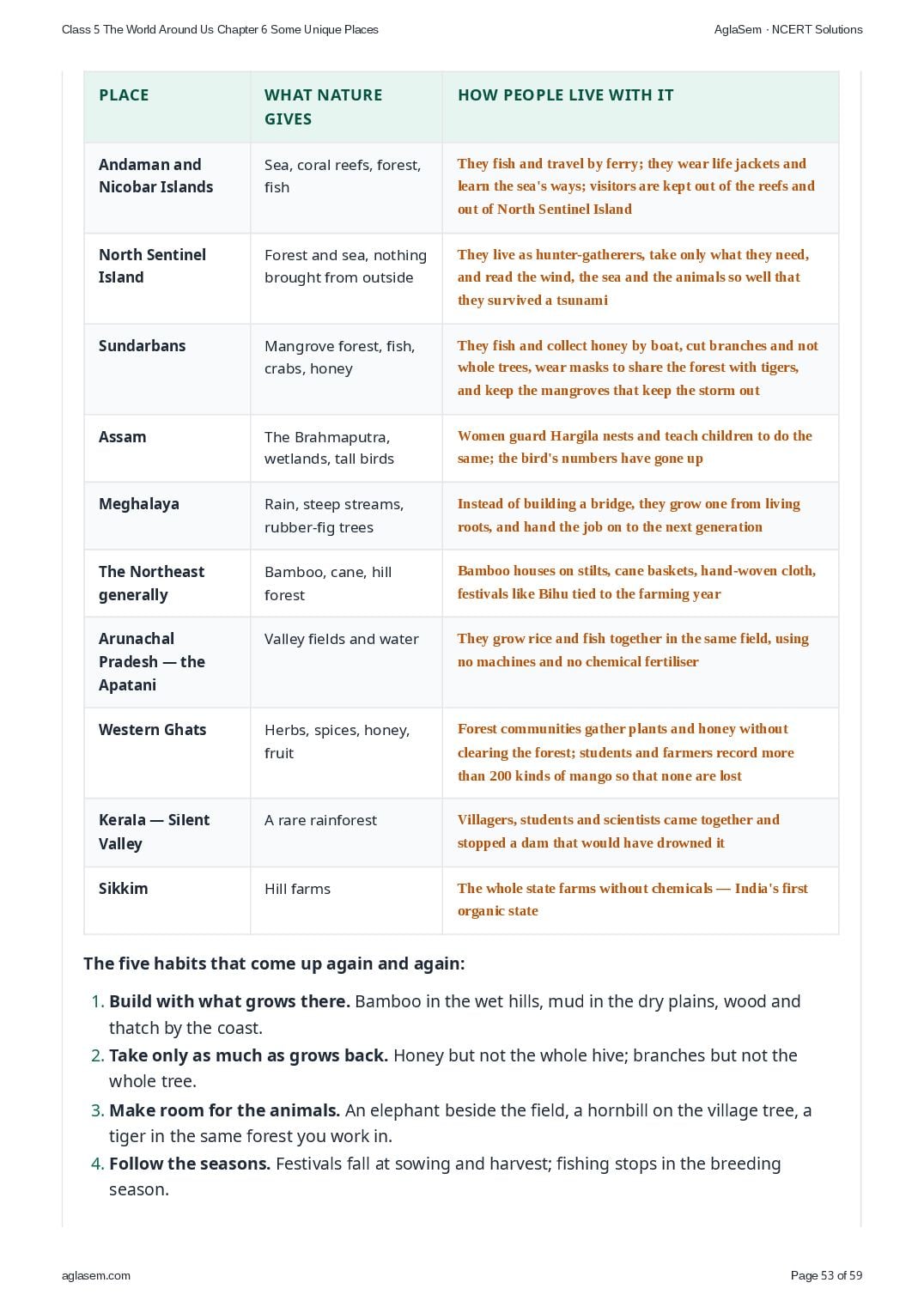
- How do people in different regions live in harmony with the nature?
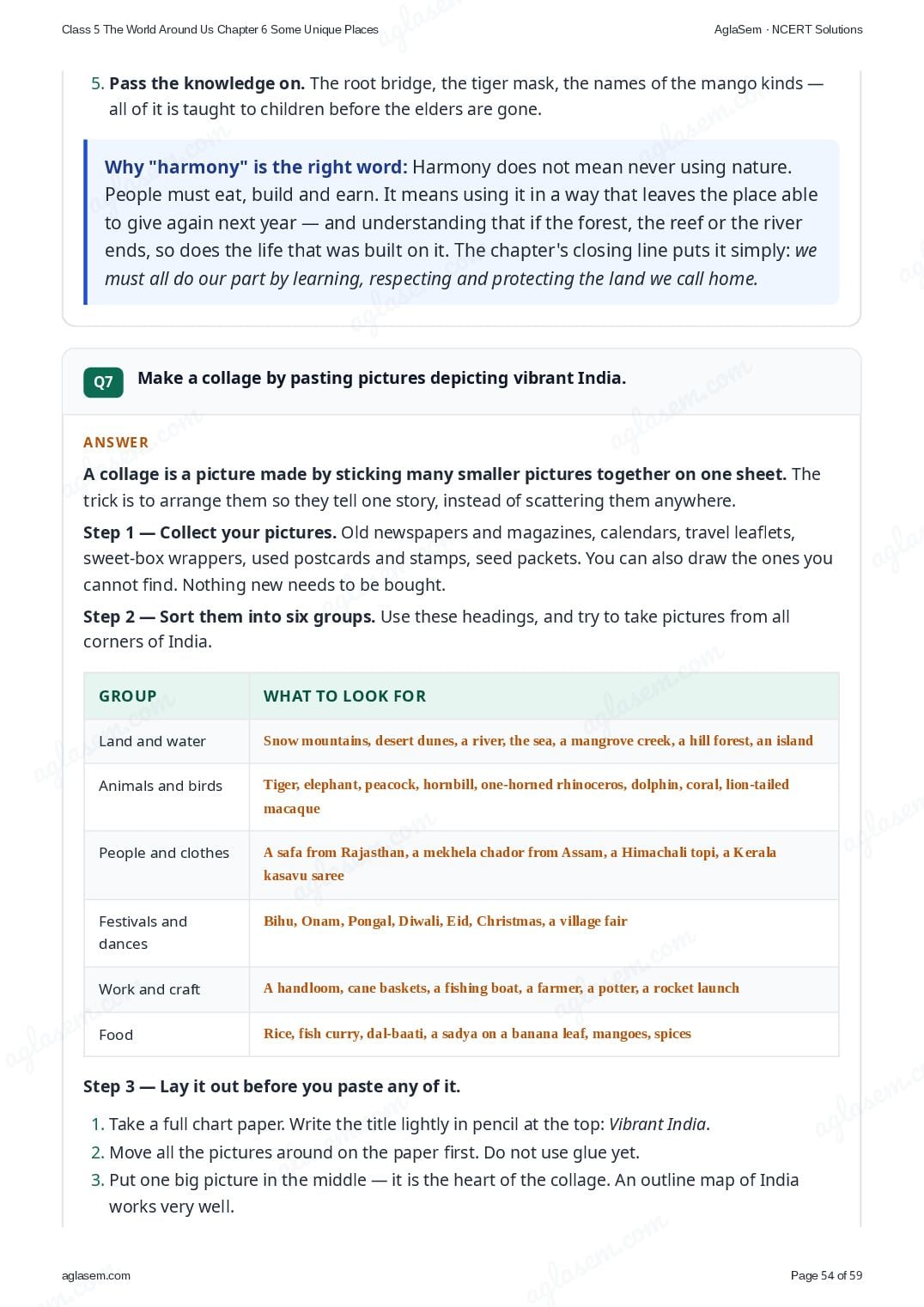
- Make a collage by pasting pictures depicting vibrant India.
Chapter at a Glance
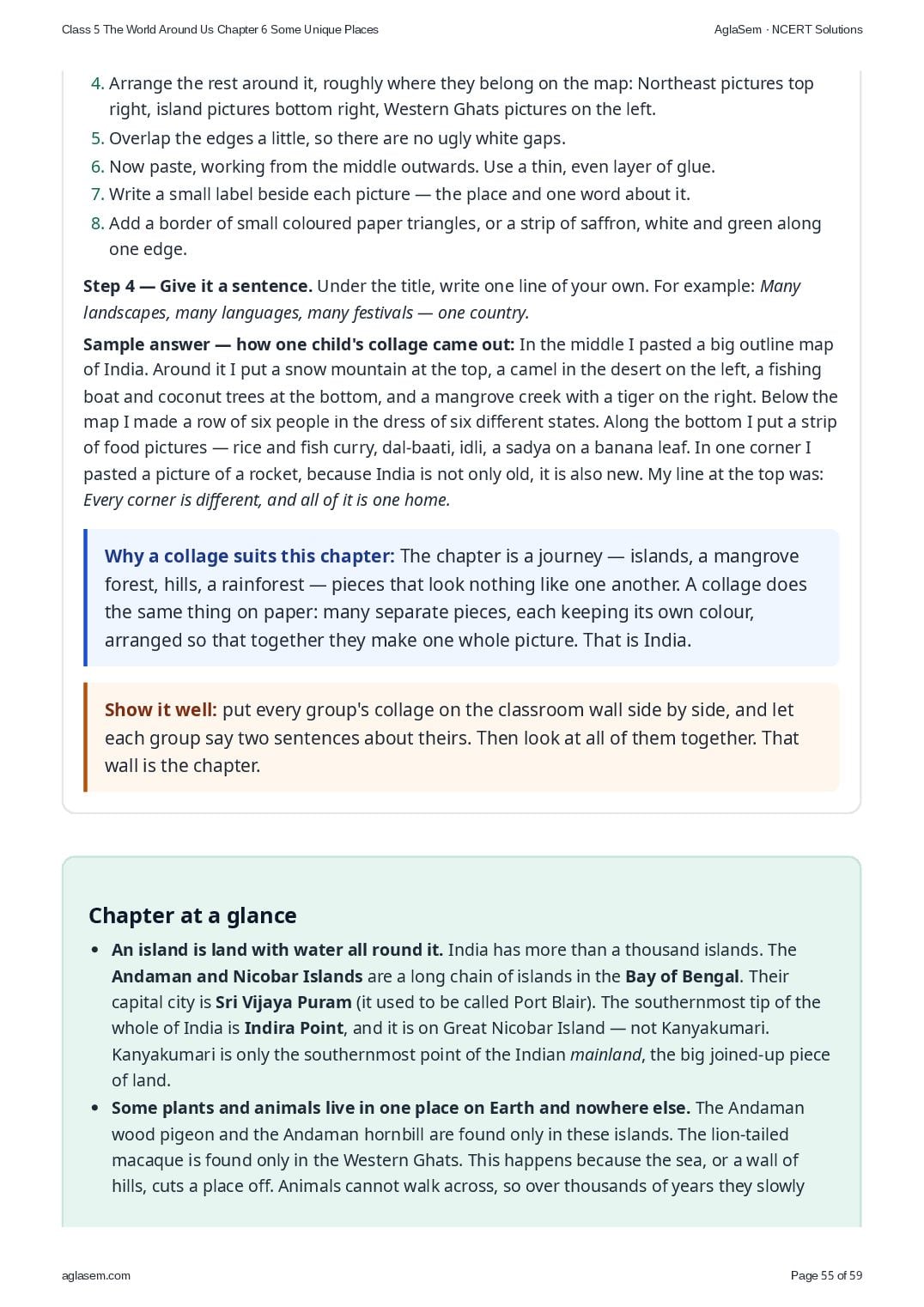
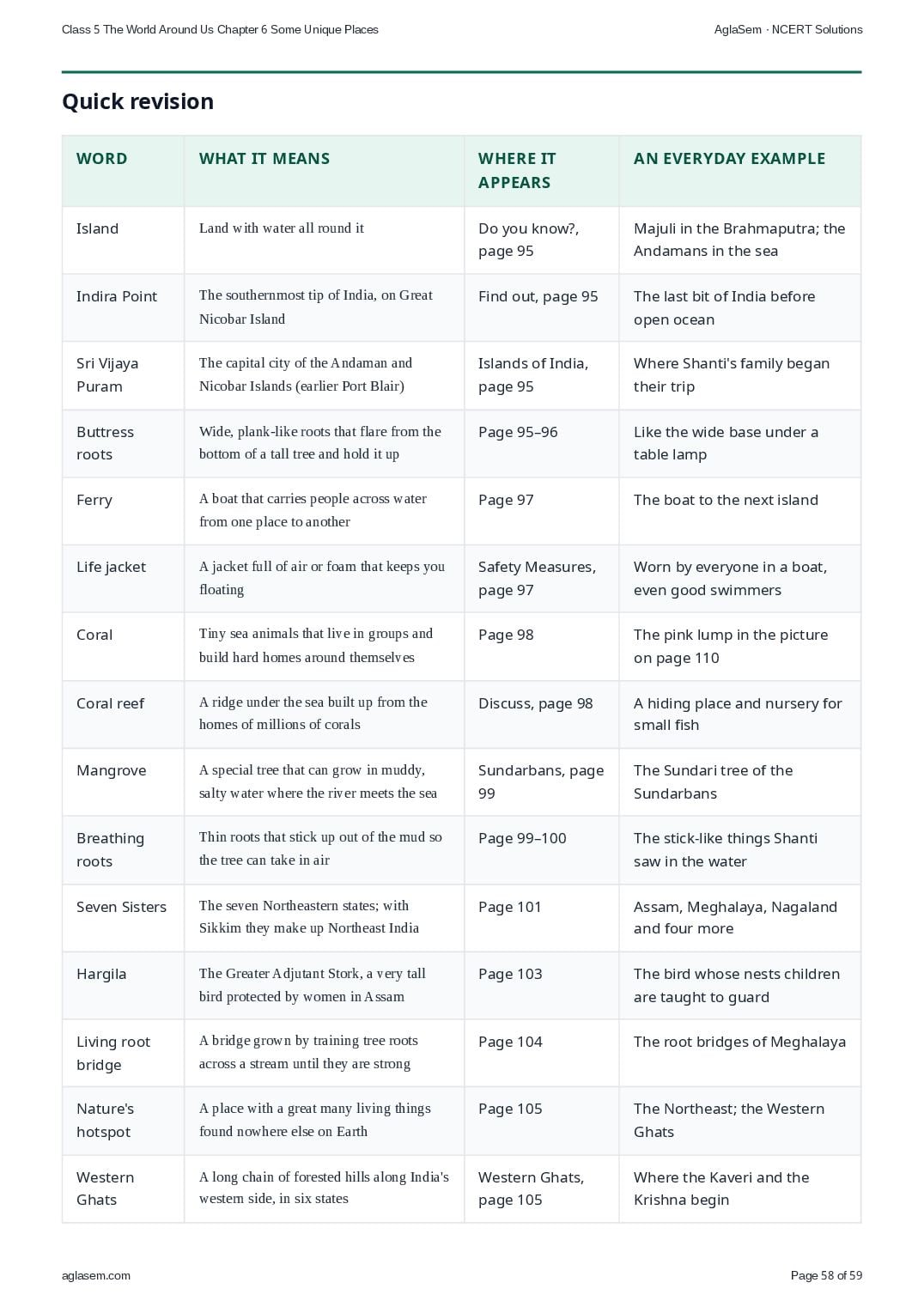
- An island is land with water all round it. India has more than a thousand islands. The Andaman and Nicobar Islands are a long chain of islands in the Bay of Bengal. Their capital city is Sri Vijaya Puram (it used to be called Port Blair). The southernmost tip of the whole of India is Indira Point, and it is on Great Nicobar Island — not Kanyakumari. Kanyakumari is only the southernmost point of the Indian mainland, the big joined-up piece of land.
- Some plants and animals live in one place on Earth and nowhere else. The Andaman wood pigeon and the Andaman hornbill are found only in these islands. The lion-tailed macaque is found only in the Western Ghats. This happens because the sea, or a wall of hills, cuts a place off. Animals cannot walk across, so over thousands of years they slowly change to suit that one place. A place packed with such special living things is what the chapter calls a nature’s hotspot.
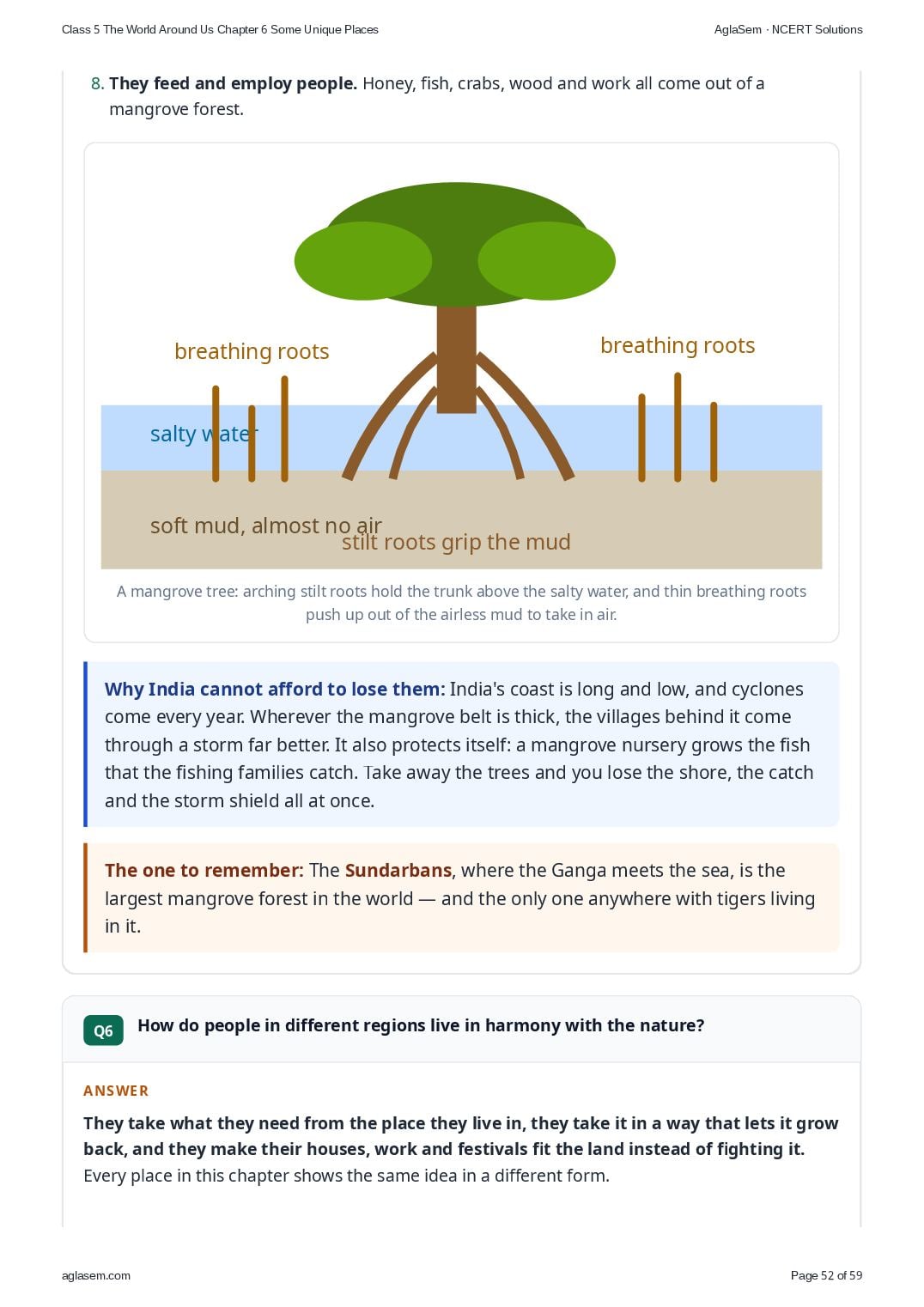
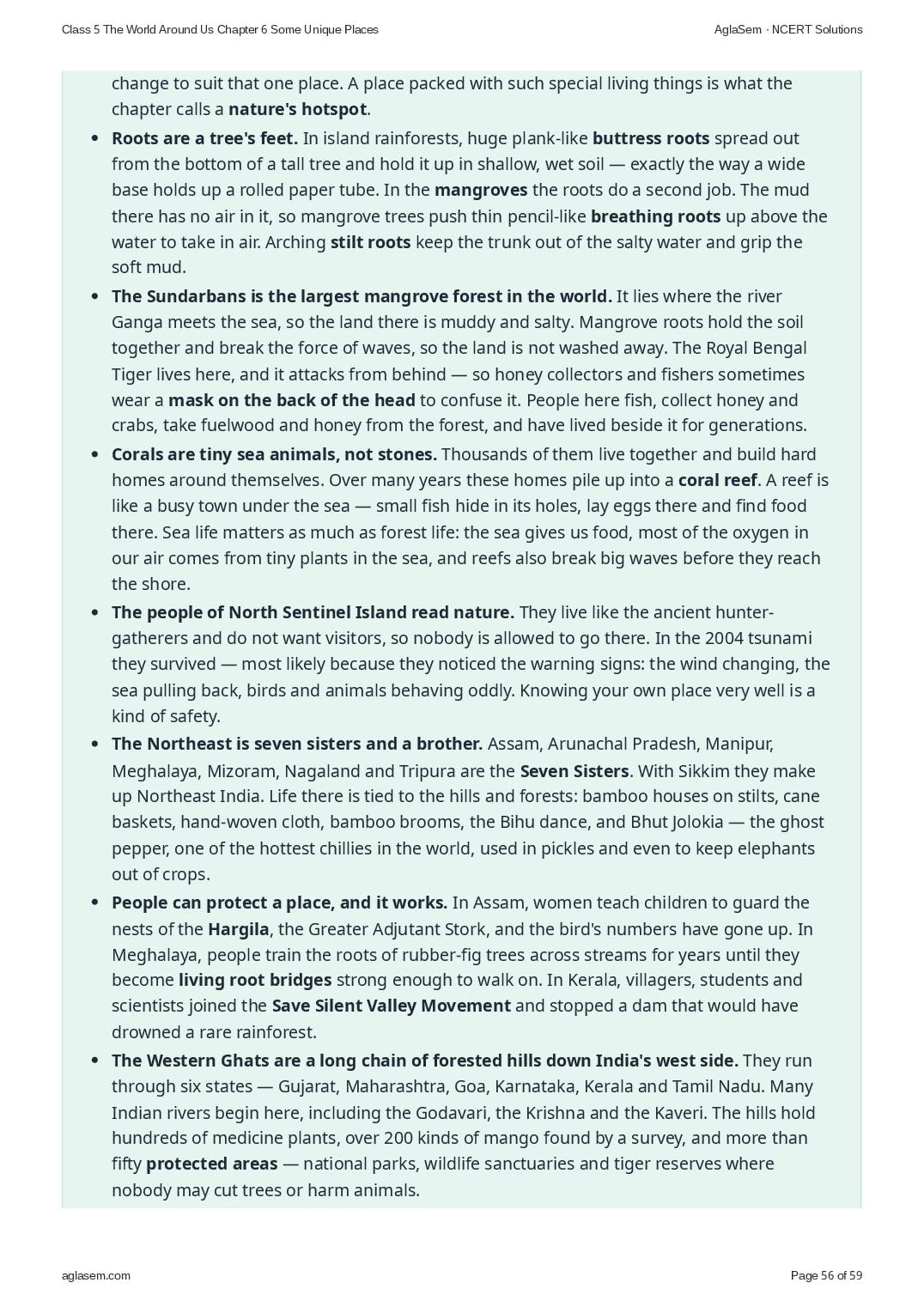
- Roots are a tree’s feet. In island rainforests, huge plank-like buttress roots spread out from the bottom of a tall tree and hold it up in shallow, wet soil — exactly the way a wide base holds up a rolled paper tube. In the mangroves the roots do a second job. The mud there has no air in it, so mangrove trees push thin pencil-like breathing roots up above the water to take in air. Arching stilt roots keep the trunk out of the salty water and grip the soft mud.
- The Sundarbans is the largest mangrove forest in the world. It lies where the river Ganga meets the sea, so the land there is muddy and salty. Mangrove roots hold the soil together and break the force of waves, so the land is not washed away. The Royal Bengal Tiger lives here, and it attacks from behind — so honey collectors and fishers sometimes wear a mask on the back of the head to confuse it. People here fish, collect honey and crabs, take fuelwood and honey from the forest, and have lived beside it for generations.
- Corals are tiny sea animals, not stones. Thousands of them live together and build hard homes around themselves. Over many years these homes pile up into a coral reef. A reef is like a busy town under the sea — small fish hide in its holes, lay eggs there and find food there. Sea life matters as much as forest life: the sea gives us food, most of the oxygen in our air comes from tiny plants in the sea, and reefs also break big waves before they reach the shore.
- The people of North Sentinel Island read nature. They live like the ancient hunter-gatherers and do not want visitors, so nobody is allowed to go there. In the 2004 tsunami they survived — most likely because they noticed the warning signs: the wind changing, the sea pulling back, birds and animals behaving oddly. Knowing your own place very well is a kind of safety.
- The Northeast is seven sisters and a brother. Assam, Arunachal Pradesh, Manipur, Meghalaya, Mizoram, Nagaland and Tripura are the Seven Sisters. With Sikkim they make up Northeast India. Life there is tied to the hills and forests: bamboo houses on stilts, cane baskets, hand-woven cloth, bamboo brooms, the Bihu dance, and Bhut Jolokia — the ghost pepper, one of the hottest chillies in the world, used in pickles and even to keep elephants out of crops.
- People can protect a place, and it works. In Assam, women teach children to guard the nests of the Hargila, the Greater Adjutant Stork, and the bird’s numbers have gone up. In Meghalaya, people train the roots of rubber-fig trees across streams for years until they become living root bridges strong enough to walk on. In Kerala, villagers, students and scientists joined the Save Silent Valley Movement and stopped a dam that would have drowned a rare rainforest.
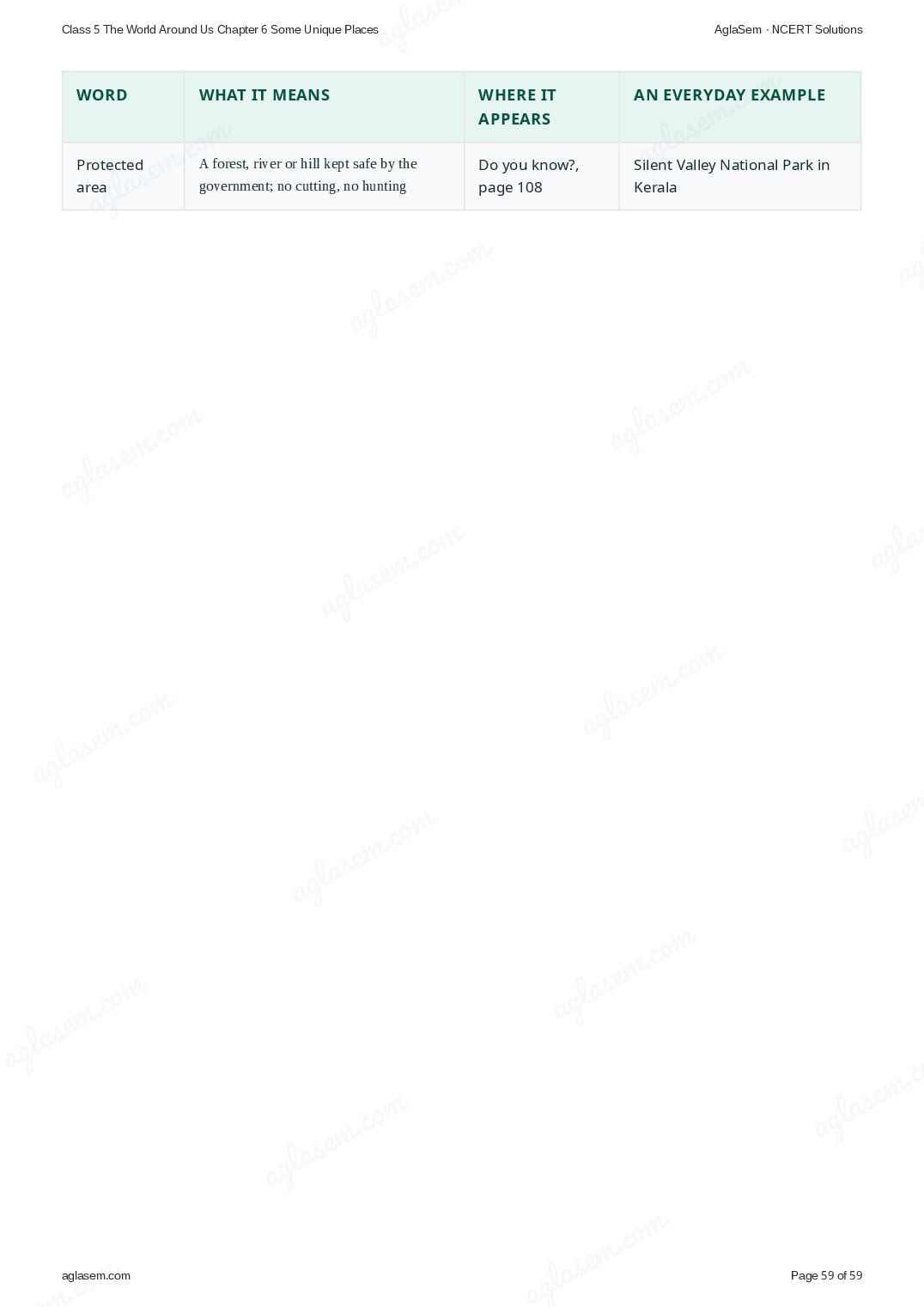
- The Western Ghats are a long chain of forested hills down India’s west side. They run through six states — Gujarat, Maharashtra, Goa, Karnataka, Kerala and Tamil Nadu. Many Indian rivers begin here, including the Godavari, the Krishna and the Kaveri. The hills hold hundreds of medicine plants, over 200 kinds of mango found by a survey, and more than fifty protected areas — national parks, wildlife sanctuaries and tiger reserves where nobody may cut trees or harm animals.
How to Download NCERT Solutions for Class 5 The World Around Us Chapter 6 PDF
Follow these simple steps to get the Some Unique Places questions-and-answers PDF from Our Wondrous World.
- Search NCERT Solutions for Class 5 The World Around Us Chapter 6 aglasem and open this page.
- Read the exercise questions with answers for Some Unique Places shown above.
- Click the Download PDF link to save the Some Unique Places solutions to your device.
NCERT Solutions for Class 5 The World Around Us – All Chapters
There are more chapters to study besides Some Unique Places in The World Around Us. Here are the NCERT Solutions for all chapters of Class 5 The World Around Us.
- Chapter 1 Water the Essence of Life
- Chapter 2 Journey of a River
- Chapter 3 the Mystery of Food
- Chapter 4 Our School a Happy Place
- Chapter 5 Our Vibrant Country
- Chapter 6 Some Unique Places
- Chapter 7 Energy How Things Work
- Chapter 8 Clothes How Things Are Made
- Chapter 9 Rhythms of Nature
- Chapter 10 Earth Our Shared Home
NCERT Solutions for Class 5 – All Subjects
Just like Chapter 6 of The World Around Us, you can get the exercise questions with answers for every other subject of Class 5. Here are the NCERT Solutions for all subjects of Class 5.
NCERT Solutions for Class 5 The World Around Us Chapter 6 – An Overview
The key highlights of this study material are as follows.
| Aspects | Details |
|---|---|
| Class | Class 5 |
| Subject | The World Around Us |
| Chapter Number | Chapter 6 |
| Chapter Name | Some Unique Places |
| Book Name | Our Wondrous World |
| Book By | NCERT (National Council of Educational Research and Training) |
| Educational Resource Here | NCERT Solutions of Class 5 The World Around Us Chapter 6 for all exercises |
| More Questions Answers of This Subject | NCERT Solutions for Class 5 The World Around Us |
| Download Book Chapter | NCERT Book Class 5 The World Around Us |
| All Questions Answers For This Class | NCERT Solutions for Class 5 |
| Complete Solutions | NCERT Solutions |
NCERT Solutions for Class 5 The World Around Us Chapter 6 Some Unique Places – FAQs
What are the NCERT Solutions for Class 5 The World Around Us Chapter 6 Some Unique Places?
They are the complete, step-by-step answers to all the exercise and in-text questions of Chapter 6 Some Unique Places from the NCERT Class 5 The World Around Us textbook Our Wondrous World, written by experts as per the latest NCERT syllabus.
How can I download the Class 5 The World Around Us Chapter 6 solutions PDF for free?
Open this page on aglasem, read the Some Unique Places questions with answers, and click the “Download Solutions PDF” link. The Class 5 The World Around Us Chapter 6 NCERT Solutions PDF is completely free to download.
Are these NCERT Solutions as per the latest 2026-27 syllabus?
Yes. The NCERT Solutions for Class 5 The World Around Us Chapter 6 are based on the latest NCERT textbook Our Wondrous World and the current 2026-27 CBSE syllabus, so the questions and answers match what you study in class.
Where can I get NCERT Solutions for the other chapters of Class 5 The World Around Us?
You can find the answers to every chapter on the NCERT Solutions for Class 5 The World Around Us page, and solutions for every subject on the NCERT Solutions for Class 5 page.
How do NCERT Solutions help in exam preparation?
They show the correct method to solve each question, help you write answers the way they are expected in exams, let you check and correct your own work, and save revision time — which together improve your marks in Class 5 The World Around Us.
If you have any queries on NCERT Solutions for Class 5 The World Around Us Chapter 6 Some Unique Places, then please ask in the comments below.