Download Nature’s Treasures – NCERT Class 6 Science Chapter 11 PDF from the new NCERT Class 6 Science book Curiosity (2026-27). Read the chapter online or download the free PDF. Everything we get from nature and use is a natural resource — air, water, energy from the Sun, forests, soil, rocks, minerals and fossil fuels. Things people make out of them (bulbs, furniture, solar panels, bicycles) are human-made resources.
Nature’s Treasures PDF – Chapter 11 of Curiosity
Read the chapter online or download the PDF.
| Chapter | Download | |
|---|---|---|
| Chapter 11 PDF | Nature’s Treasures | View PDF |
| Full book | NCERT Class 6 Science – Curiosity | View Book |
Read Online
What Is in Nature’s Treasures? (Class 6 Science Chapter 11)
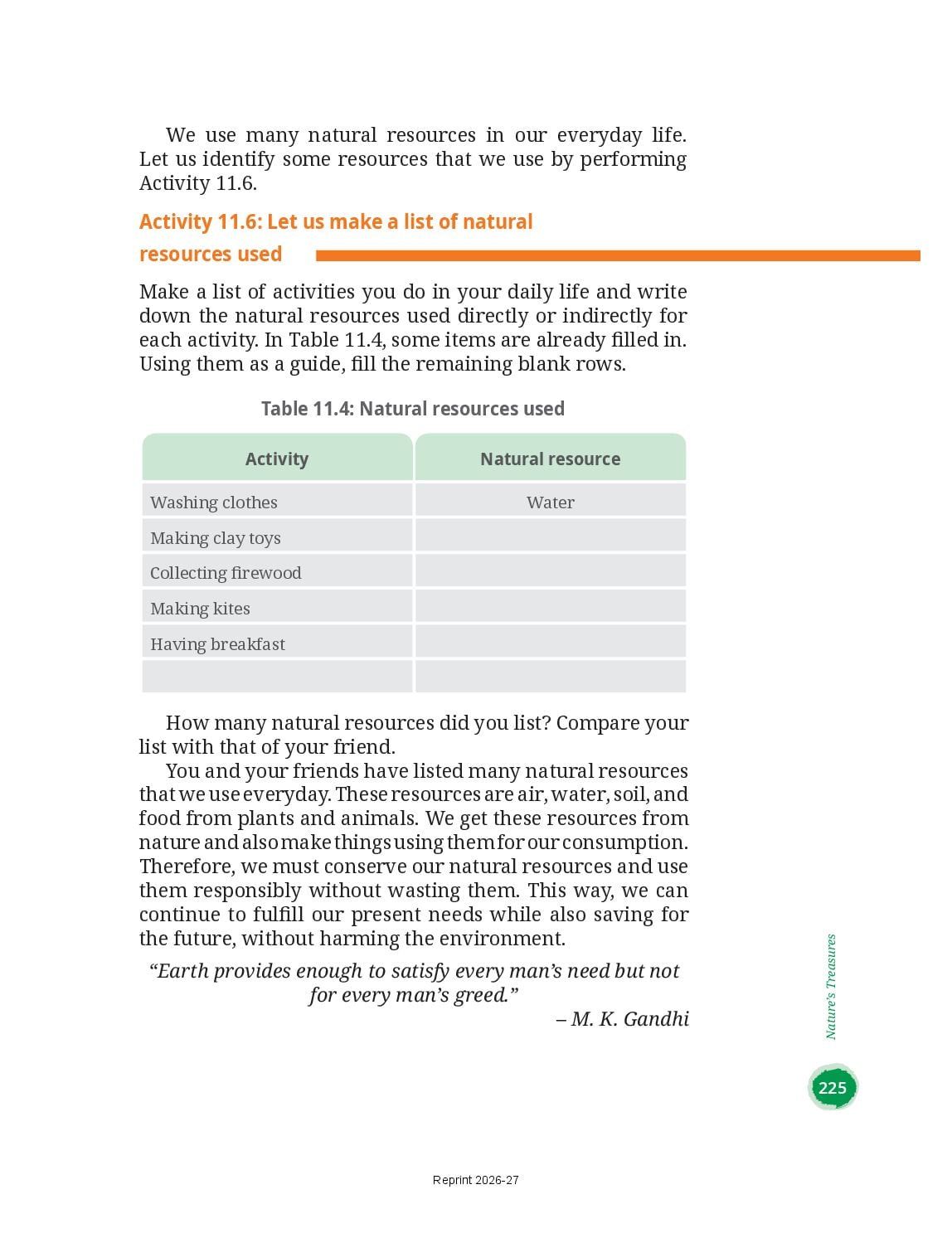
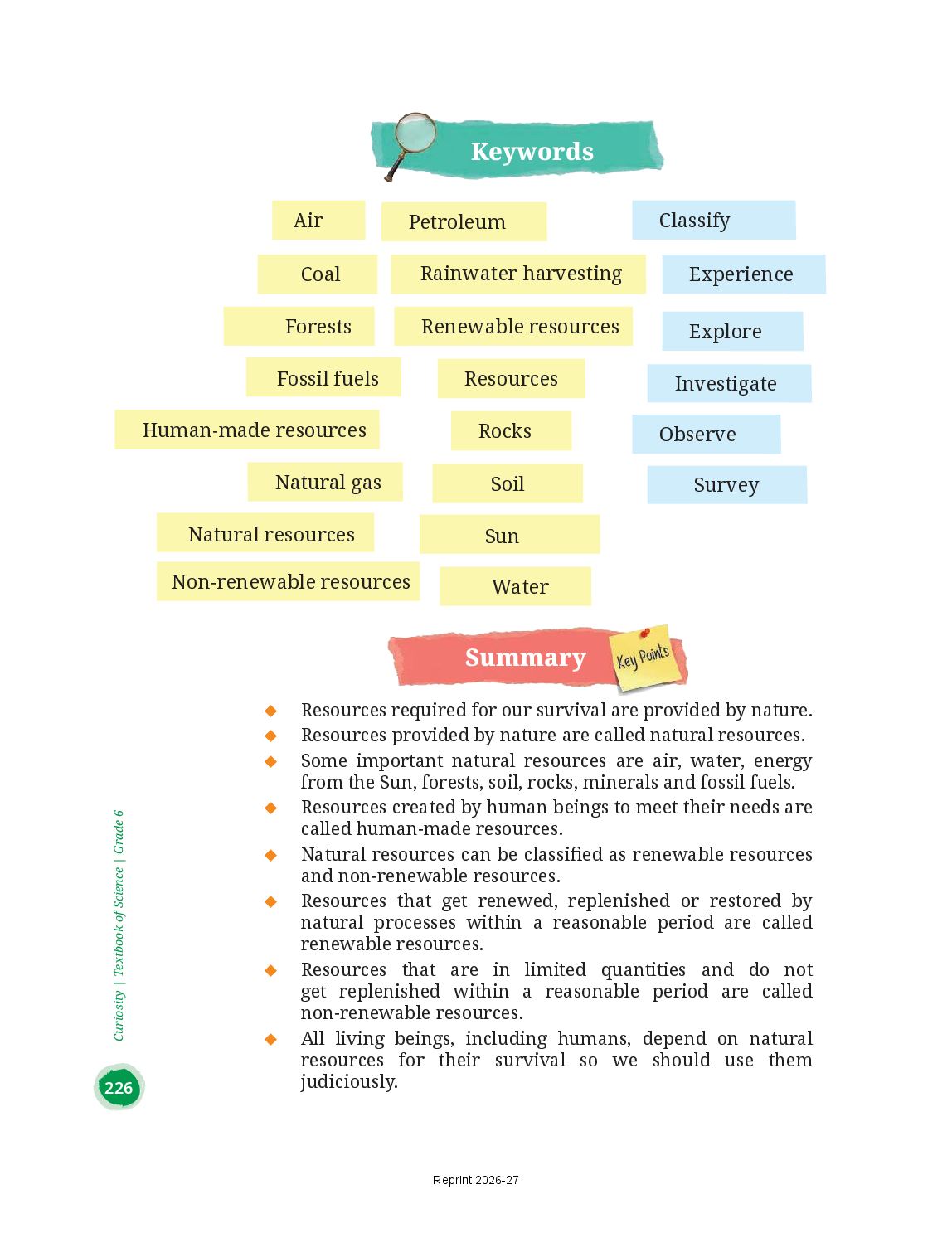
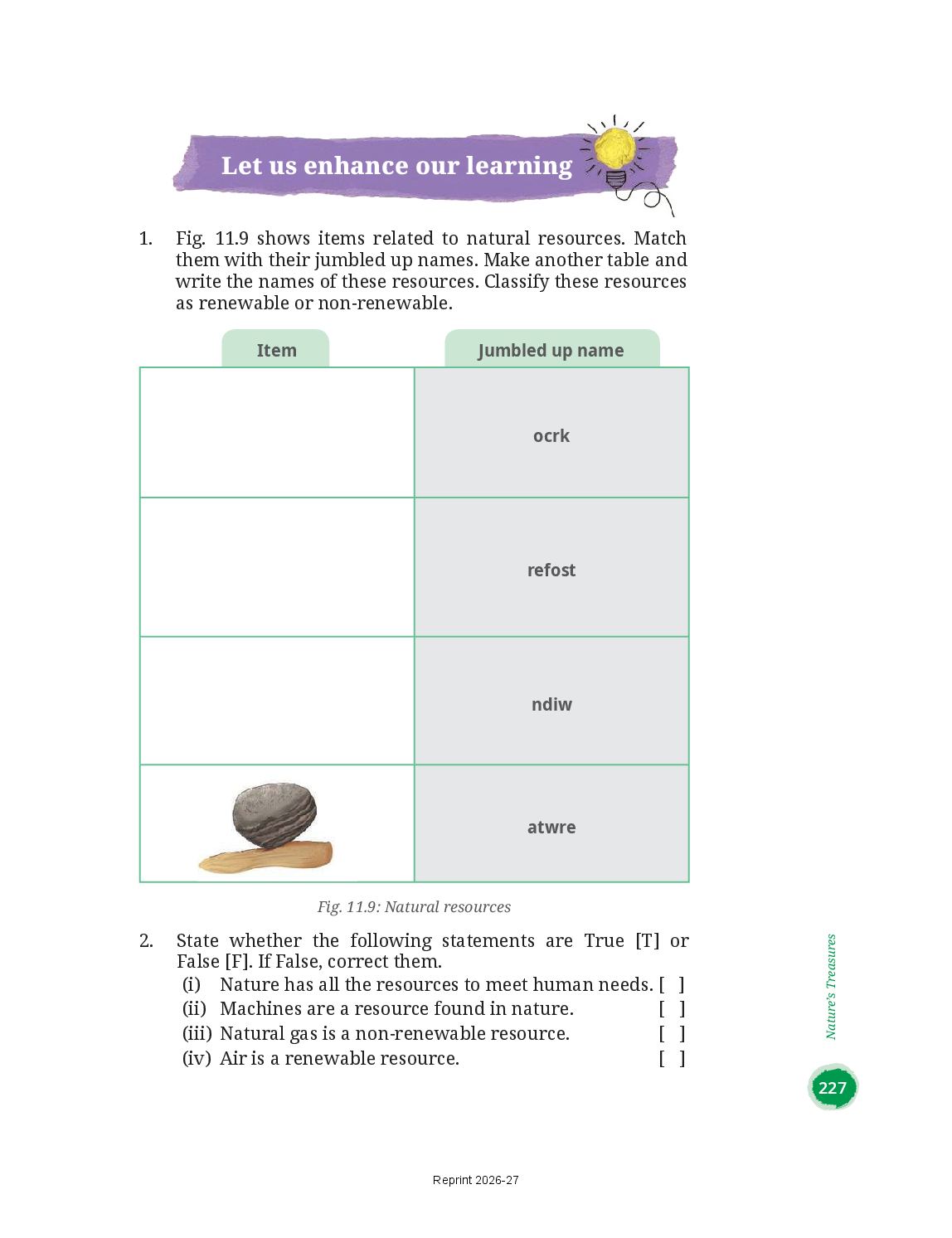
- Everything we get from nature and use is a natural resource — air, water, energy from the Sun, forests, soil, rocks, minerals and fossil fuels. Things people make out of them (bulbs, furniture, solar panels, bicycles) are human-made resources.
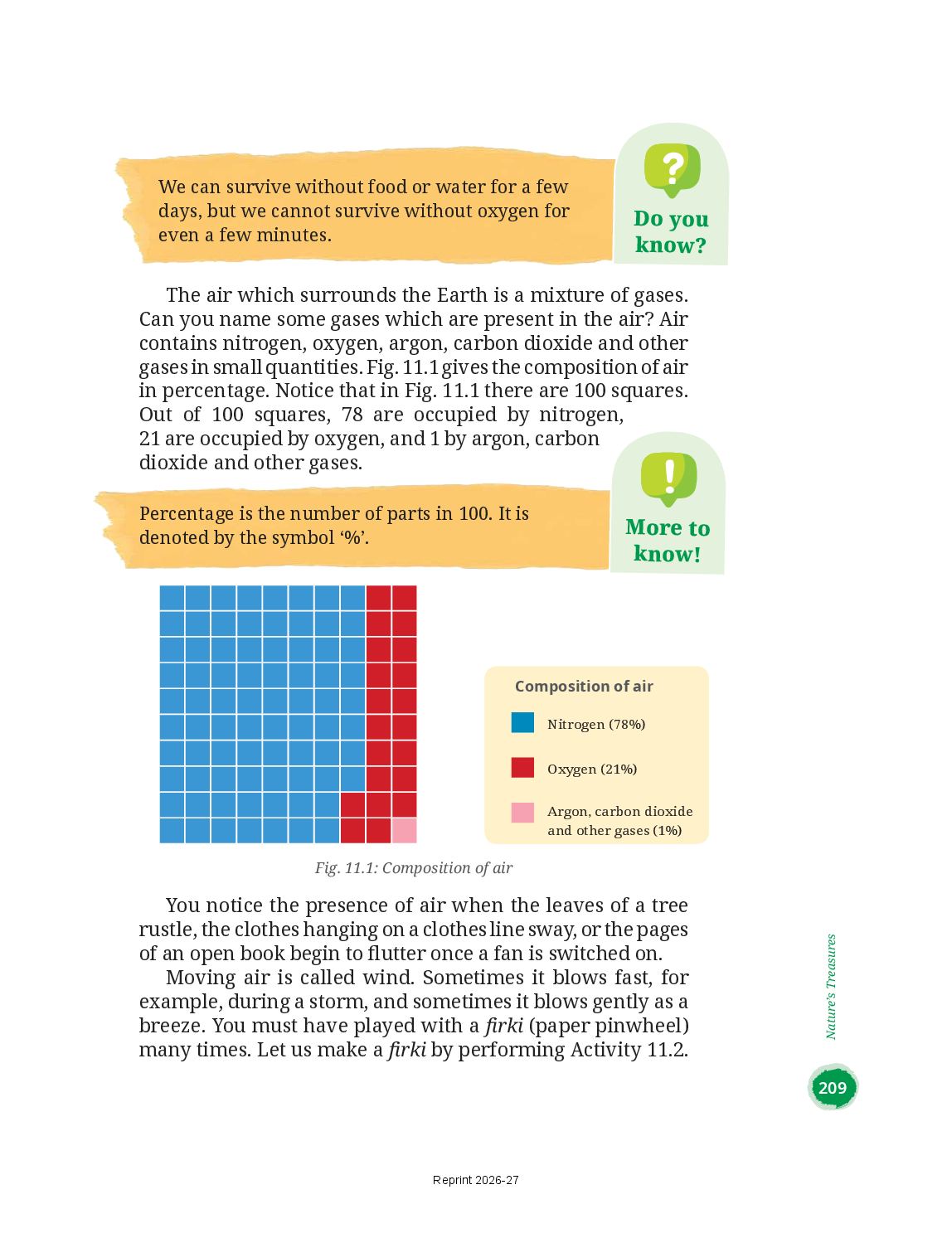
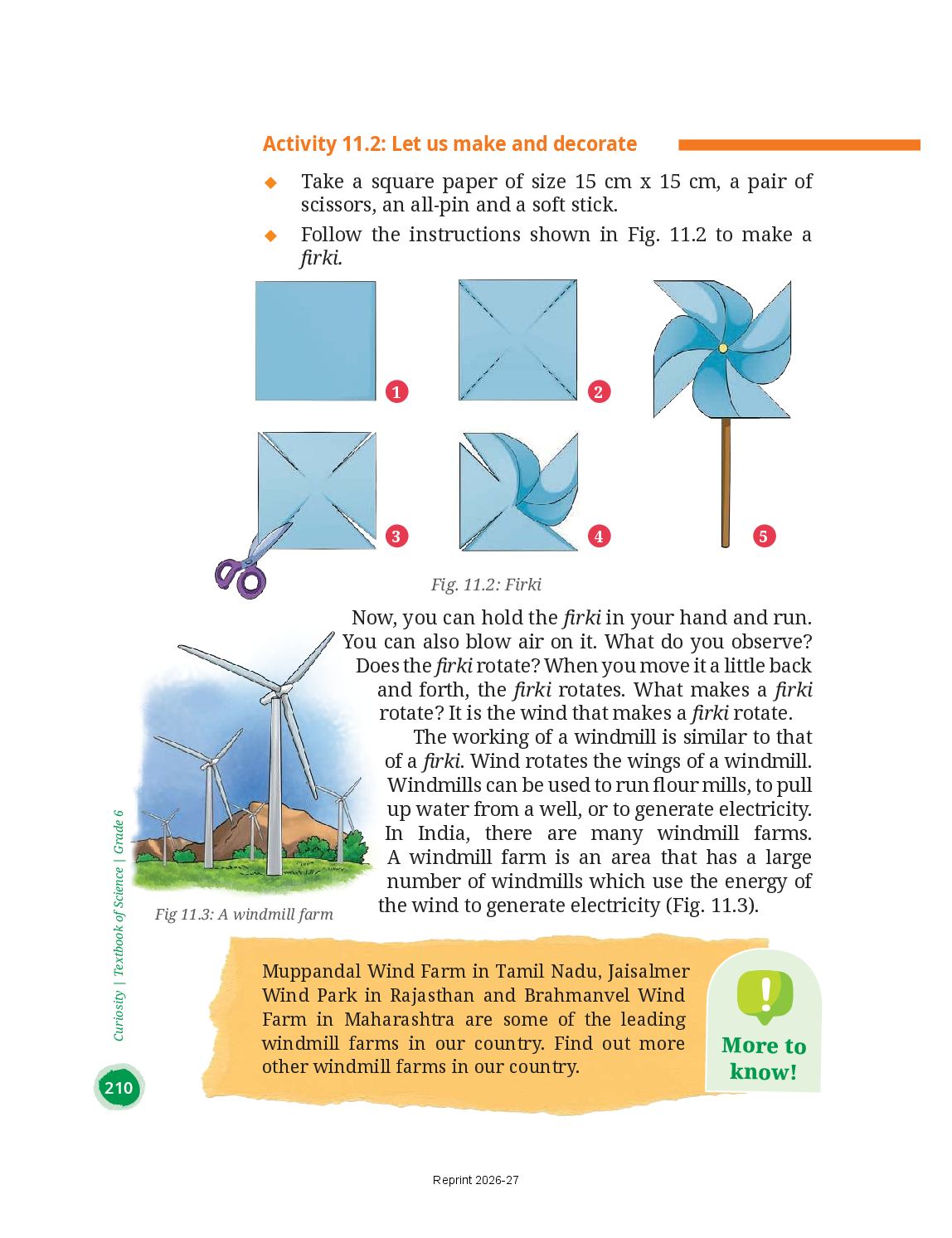
- Air is a mixture of gases: about 78% nitrogen, 21% oxygen and 1% argon, carbon dioxide and other gases. Moving air is wind, and wind farms such as Muppandal (Tamil Nadu), Jaisalmer (Rajasthan) and Brahmanvel (Maharashtra) turn it into electricity.
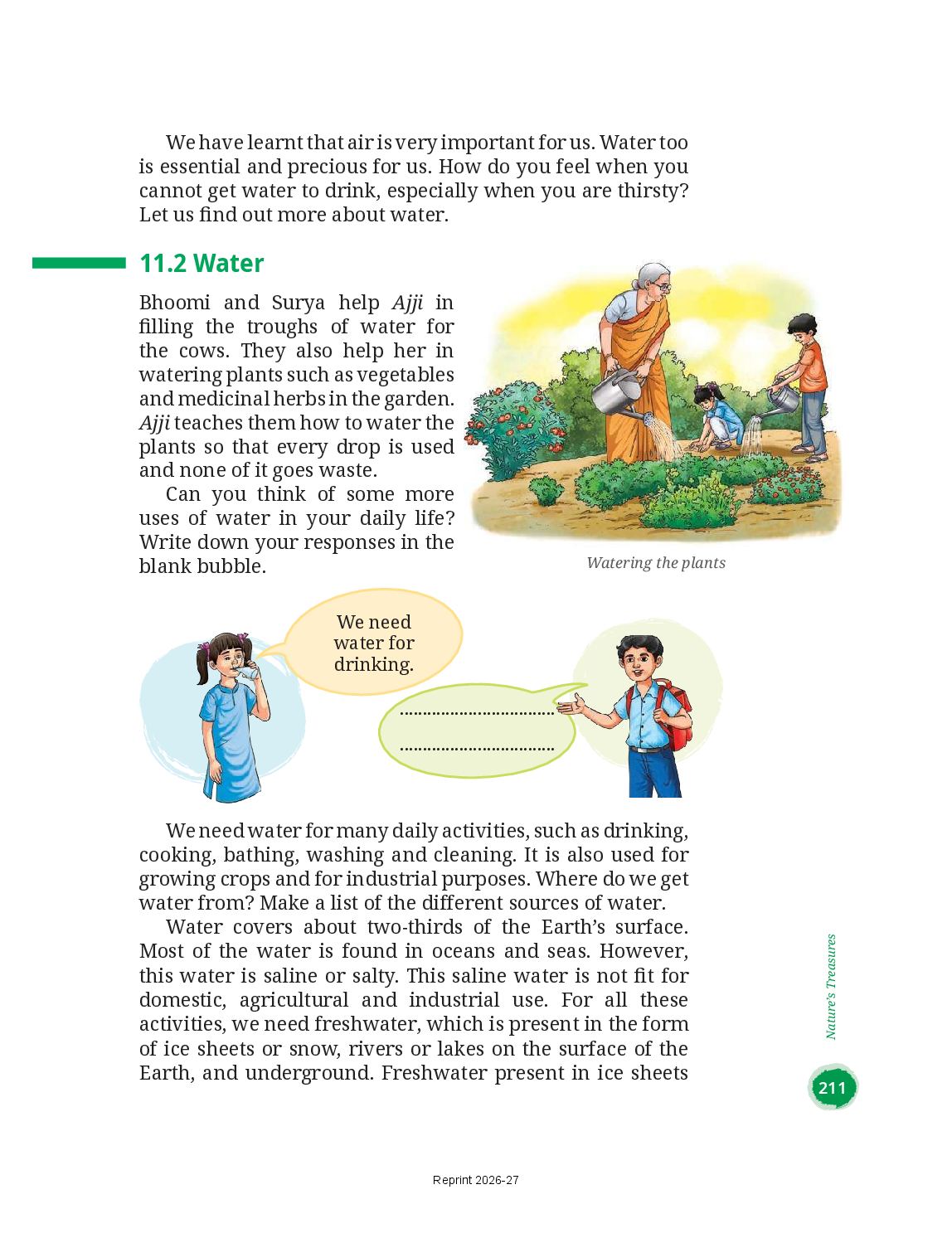
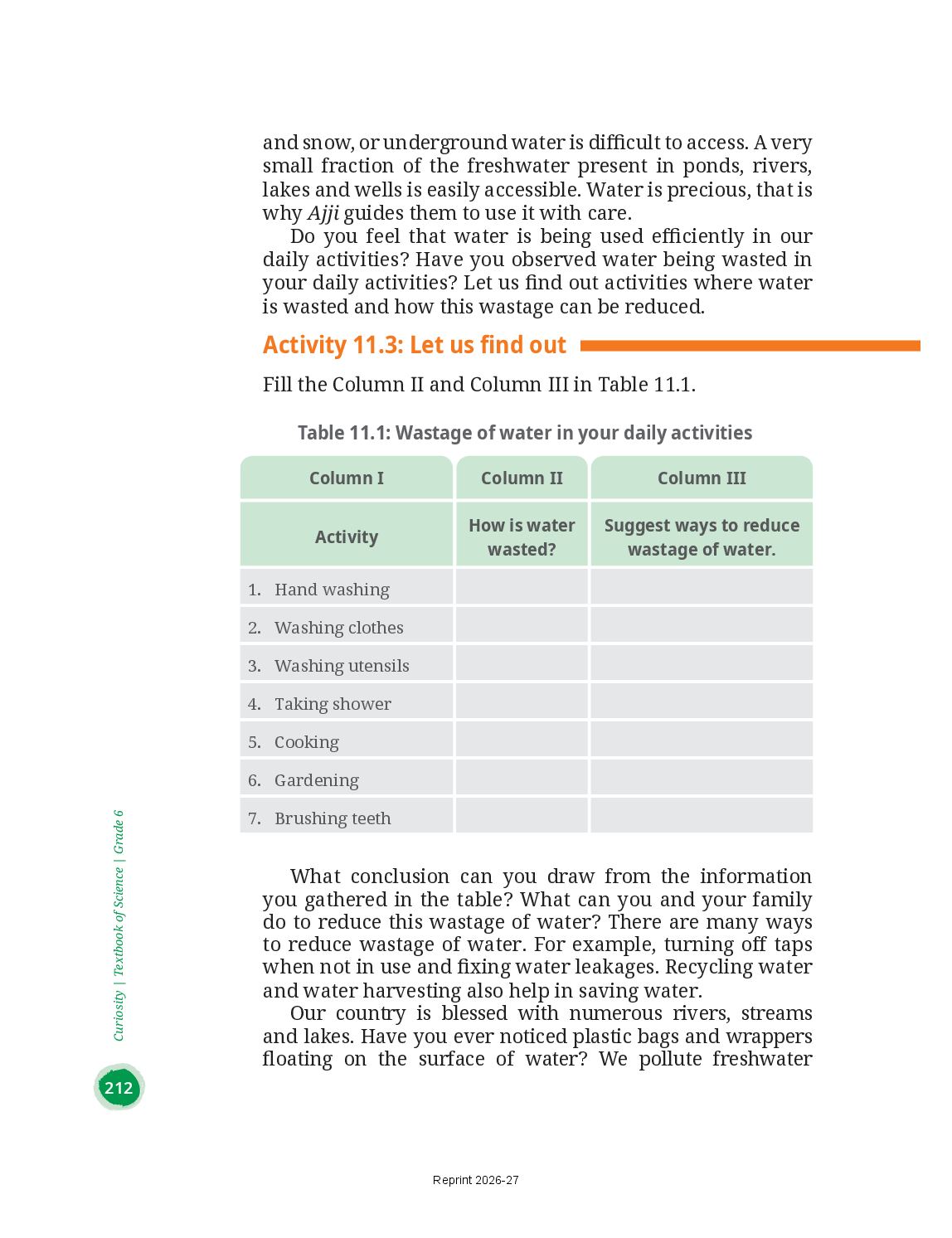
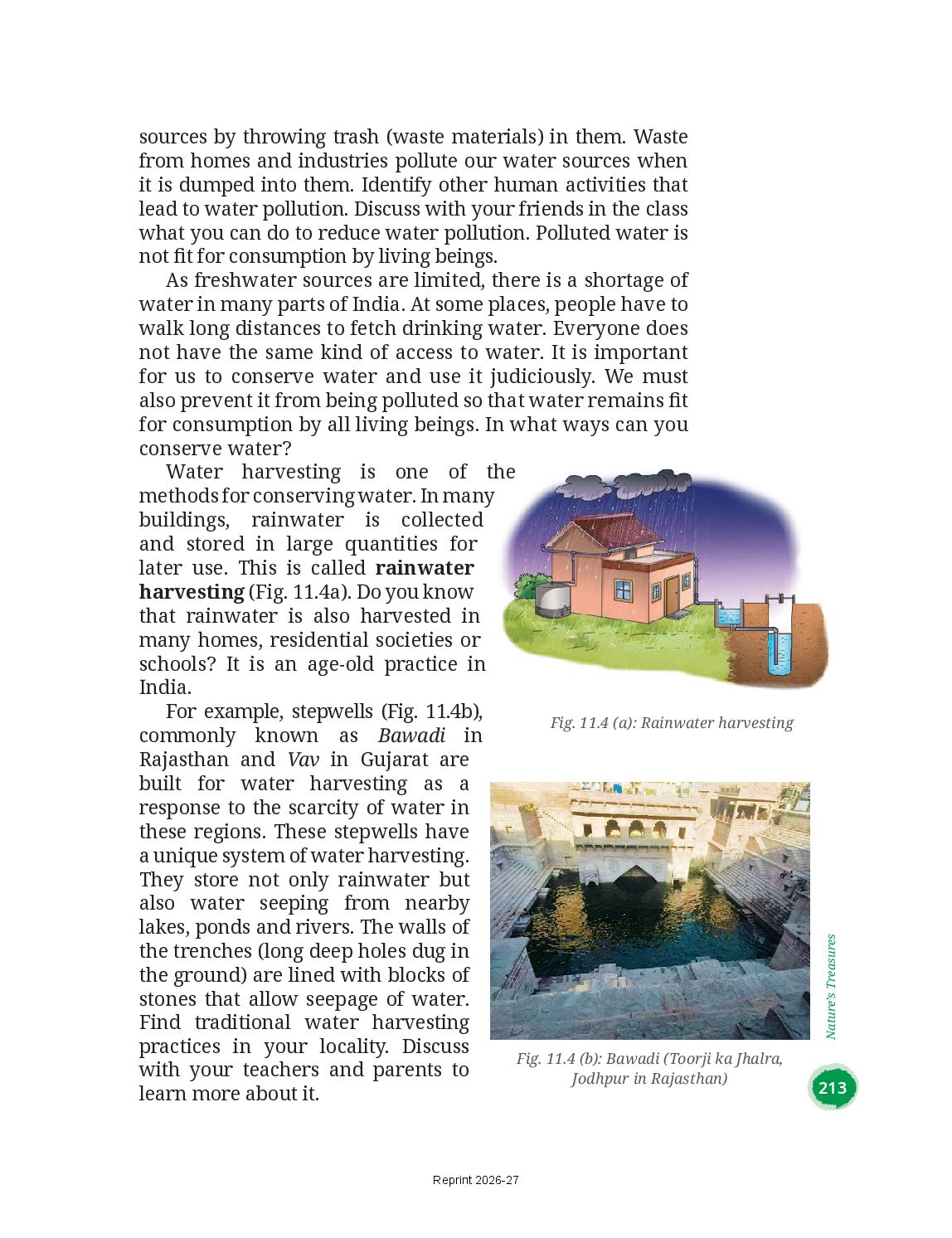
- Water covers about two-thirds of the Earth, but most of it is salty ocean water. Only a tiny part of the freshwater in ponds, rivers, lakes and wells is easy to reach — so water must be used with care, and rainwater harvesting (bawadi in Rajasthan, vav in Gujarat) is an age-old Indian answer to scarcity.
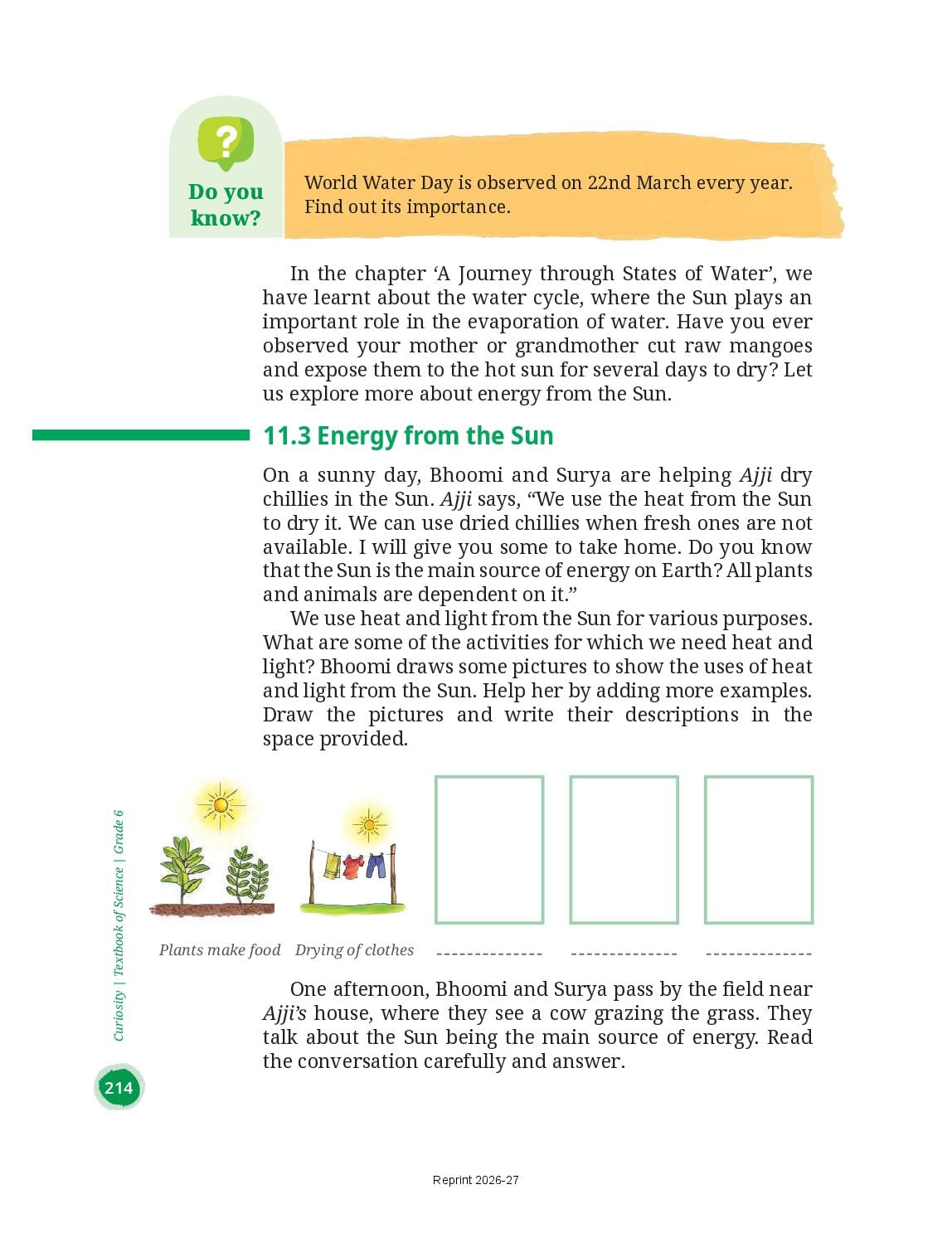
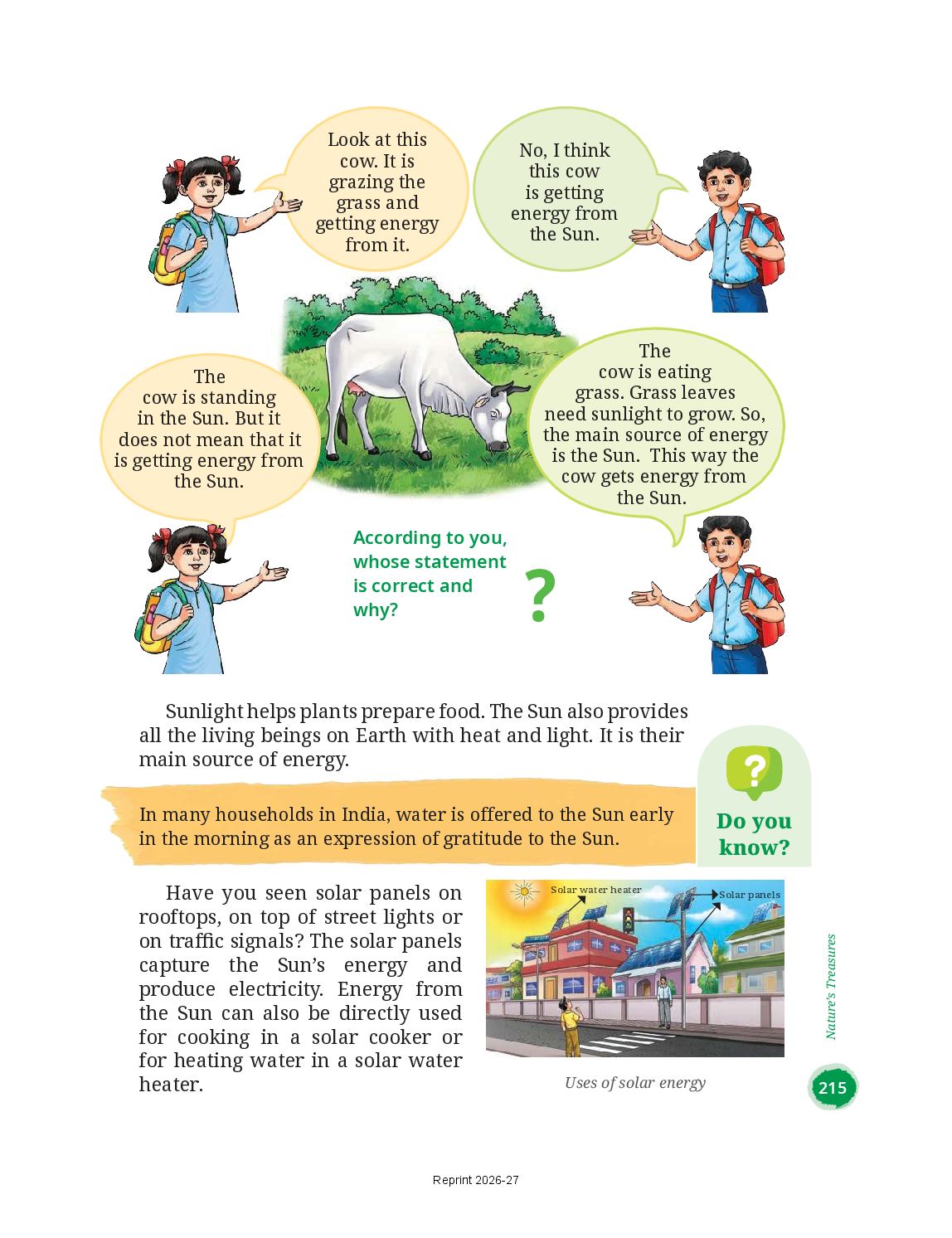
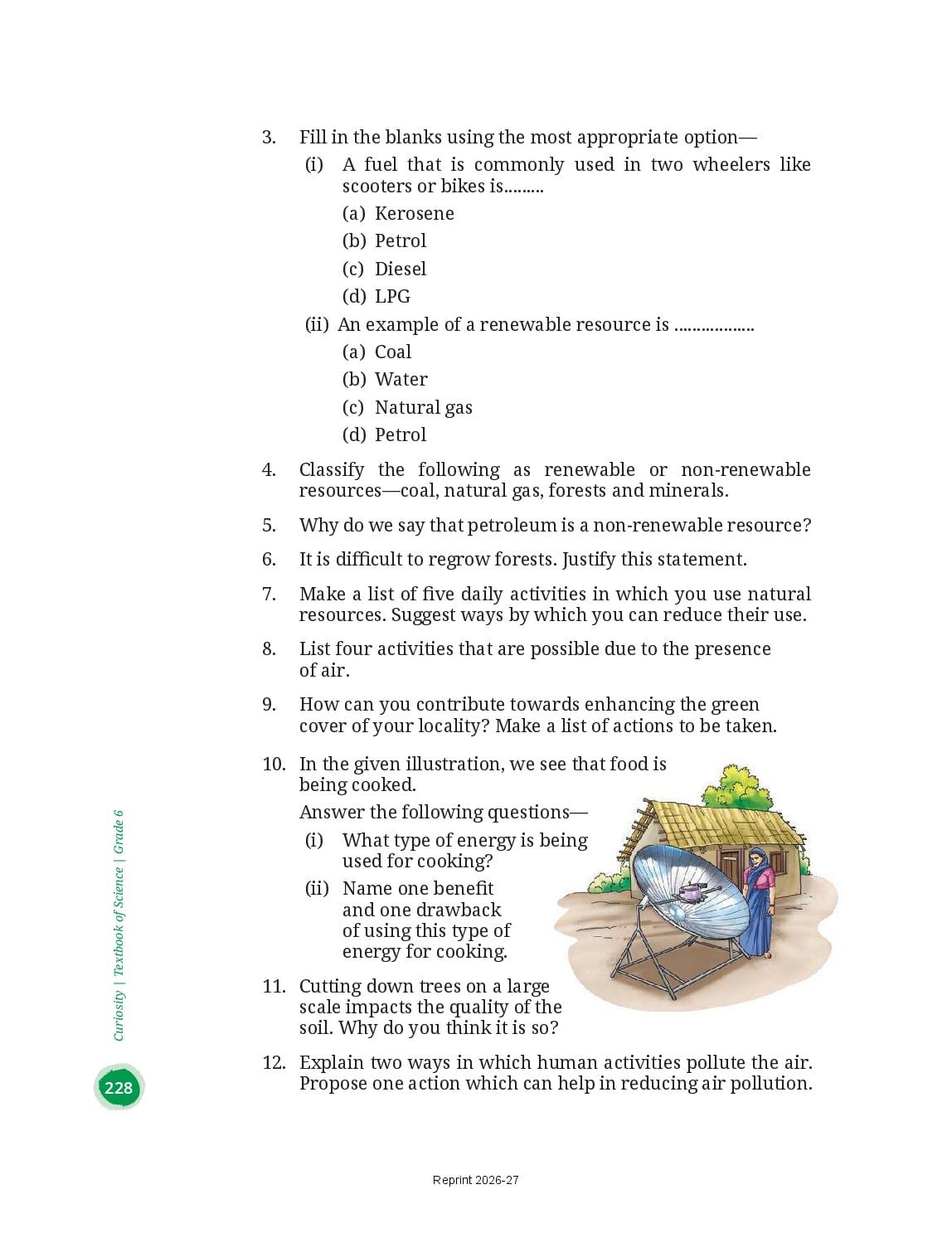
- The Sun is the main source of energy on Earth. Plants use sunlight to make food, animals eat plants, and we eat both — so every meal is really sunlight in another form.
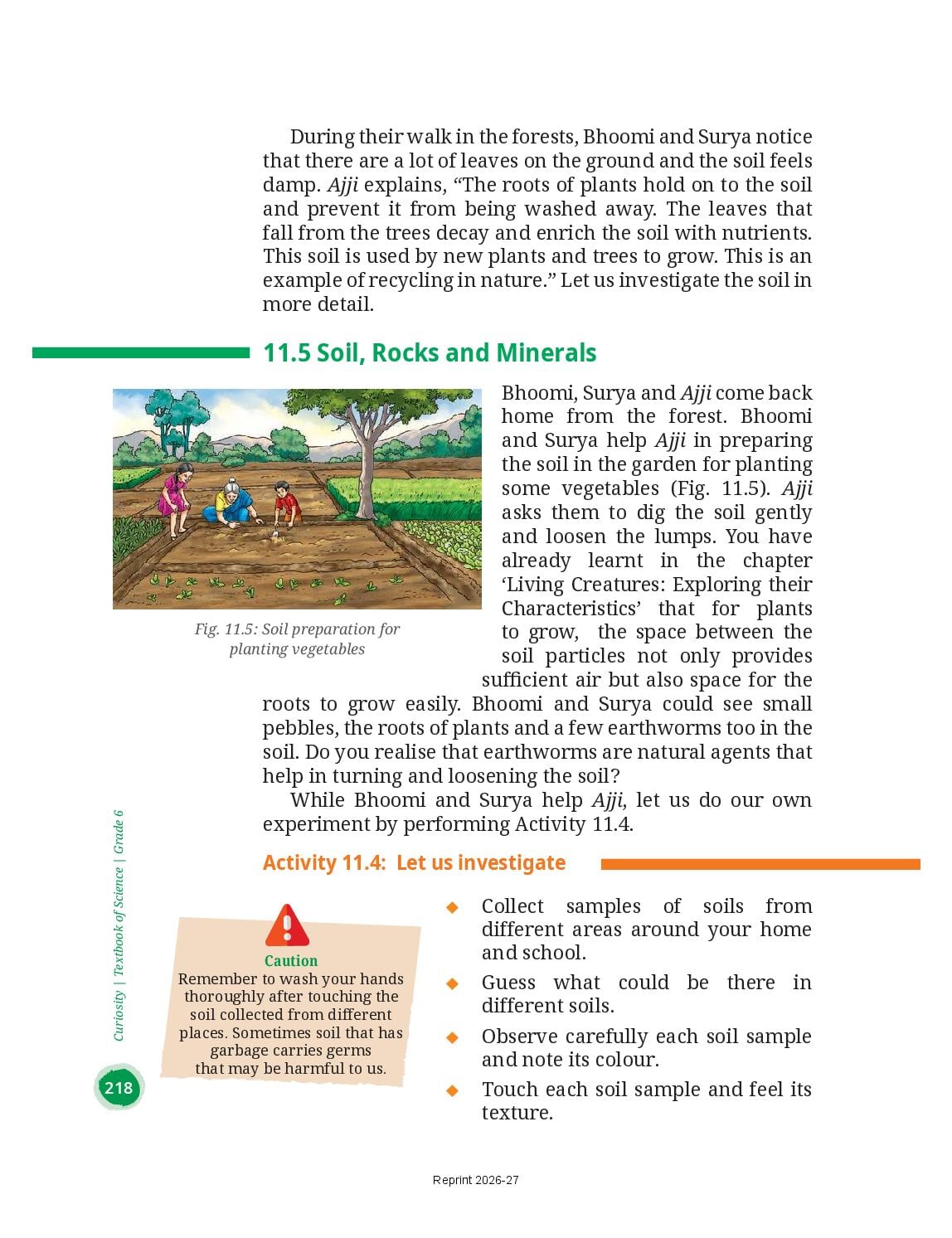
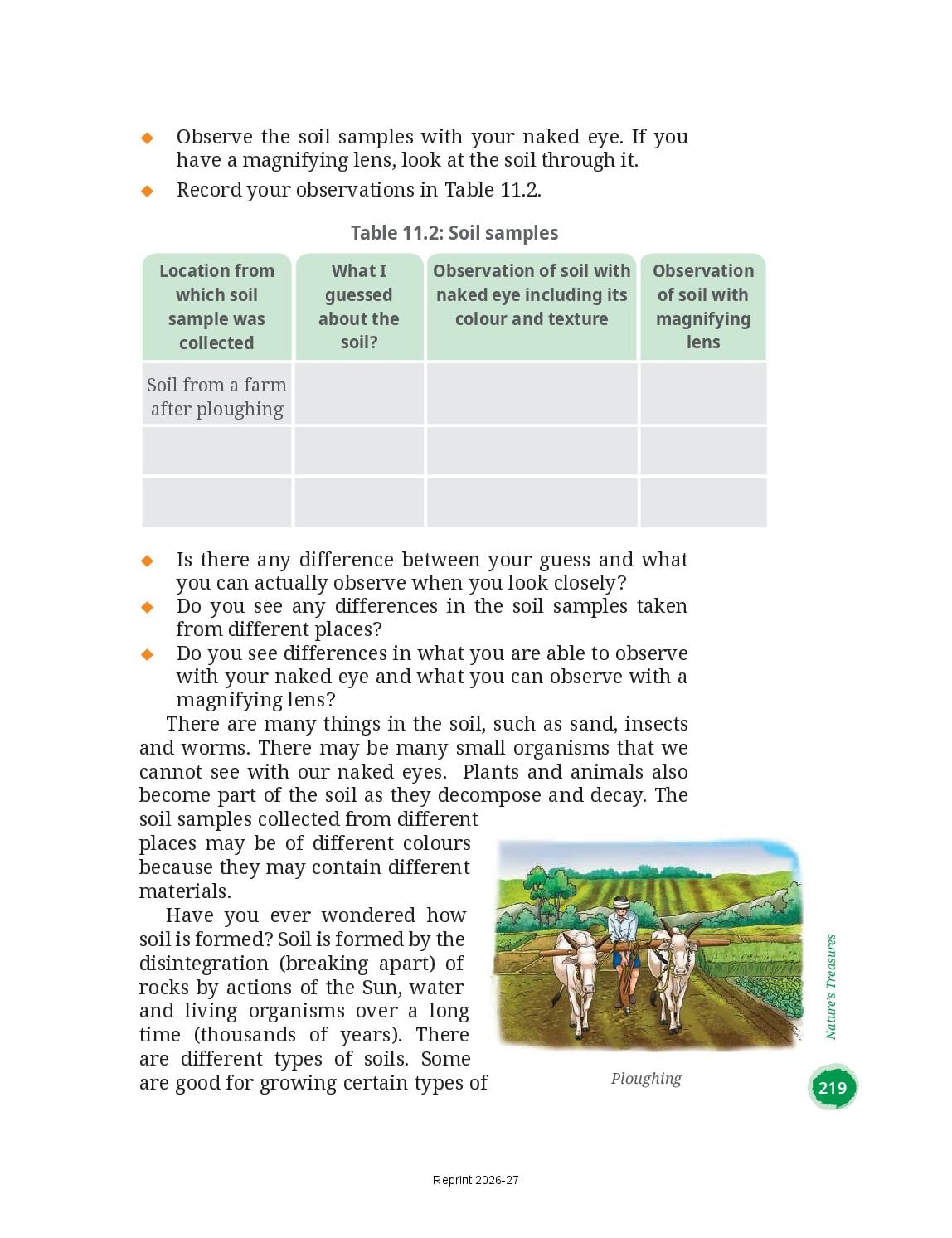
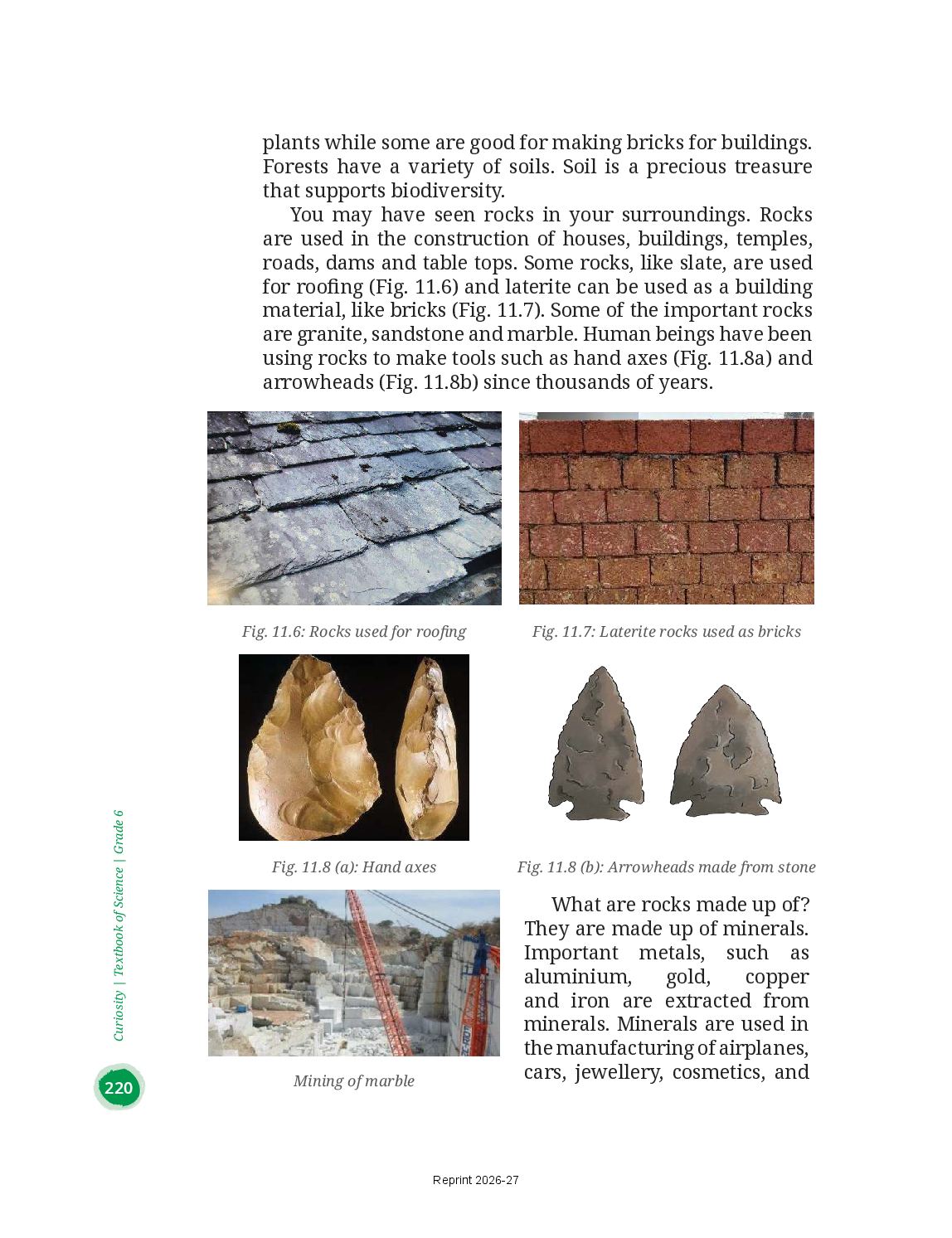
- Soil forms when rocks disintegrate under the action of the Sun, water and living organisms over thousands of years. Rocks are made of minerals, from which metals such as iron, aluminium, copper and gold are obtained.
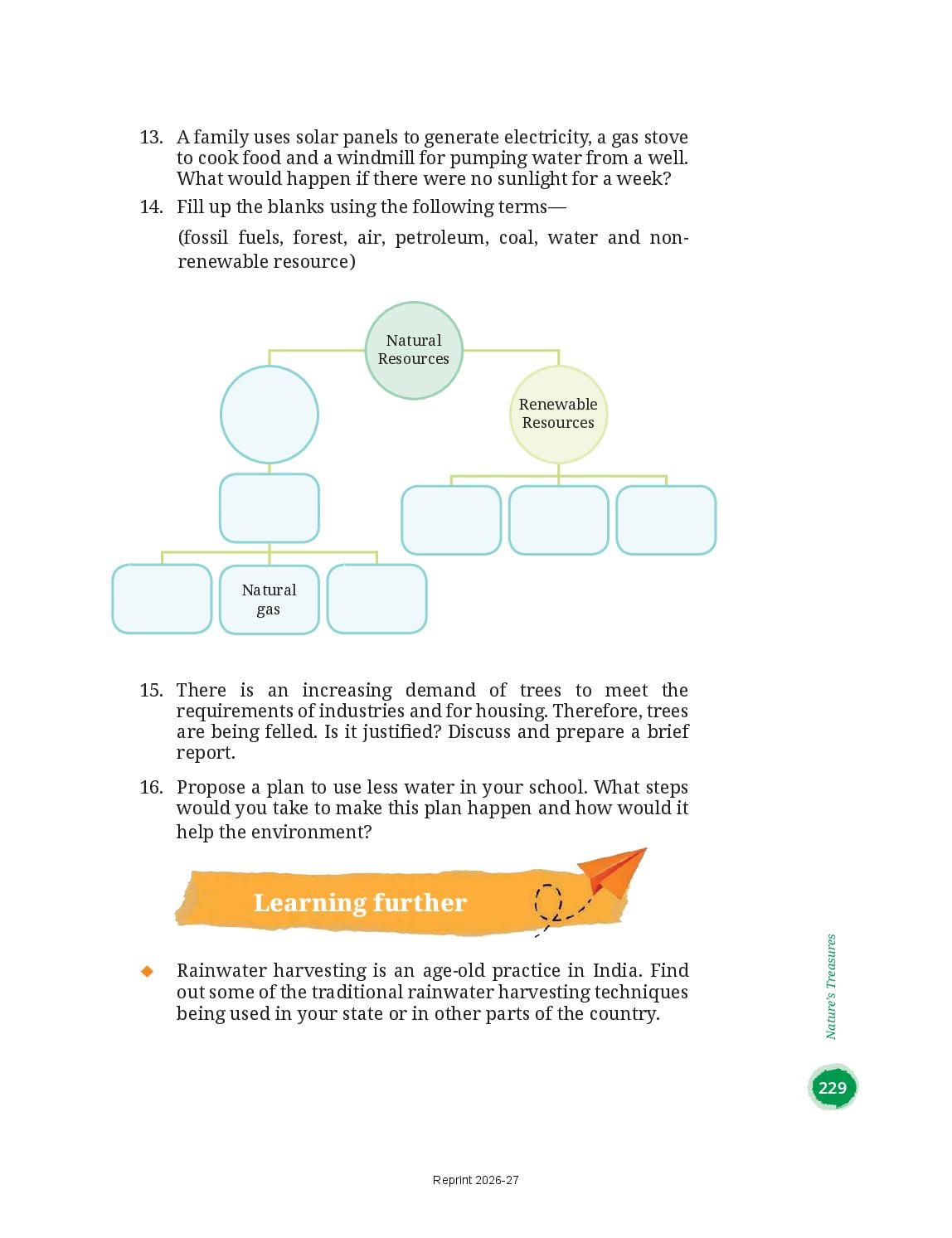
- Renewable resources (air, water, forests, sunlight, wind) are restored by nature within a reasonable time. Non-renewable resources (coal, petroleum, natural gas, minerals, rocks, soil) are limited and get exhausted once used — “Earth provides enough to satisfy every man’s need but not for every man’s greed.”
Quick revision – Nature’s Treasures
| Term | What it means | Examples from the chapter | Page |
|---|---|---|---|
| Natural resource | Anything we get from nature and use to live or to make things | Air, water, sunlight, forests, soil, rocks, minerals, fossil fuels | 223 |
| Human-made resource | A thing created by people using natural resources | Electric bulb, furniture, solar panel, bicycle | 223 – 224 |
| Renewable resource | A resource that is renewed, replenished or restored within a reasonable period | Air, water, forests | 224 |
| Non-renewable resource | A resource present in limited quantity that is not replenished in a reasonable period | Minerals, soil, rocks, coal, petroleum, natural gas | 224 |
| Air | The mixture of gases surrounding the Earth | Nitrogen 78%, oxygen 21%, argon + carbon dioxide + others 1% | 209 |
| Wind | Moving air — gentle as a breeze, fast in a storm | Turns a firki; turns the wings of a windmill | 209 – 210 |
| Freshwater | Water that is not salty, fit for drinking, farming and industry | Rivers, lakes, ponds, wells, ice sheets, groundwater | 211 – 212 |
| Rainwater harvesting | Collecting and storing rainwater in large quantity for later use | Rooftop harvesting; Bawadi in Rajasthan, Vav in Gujarat | 213 |
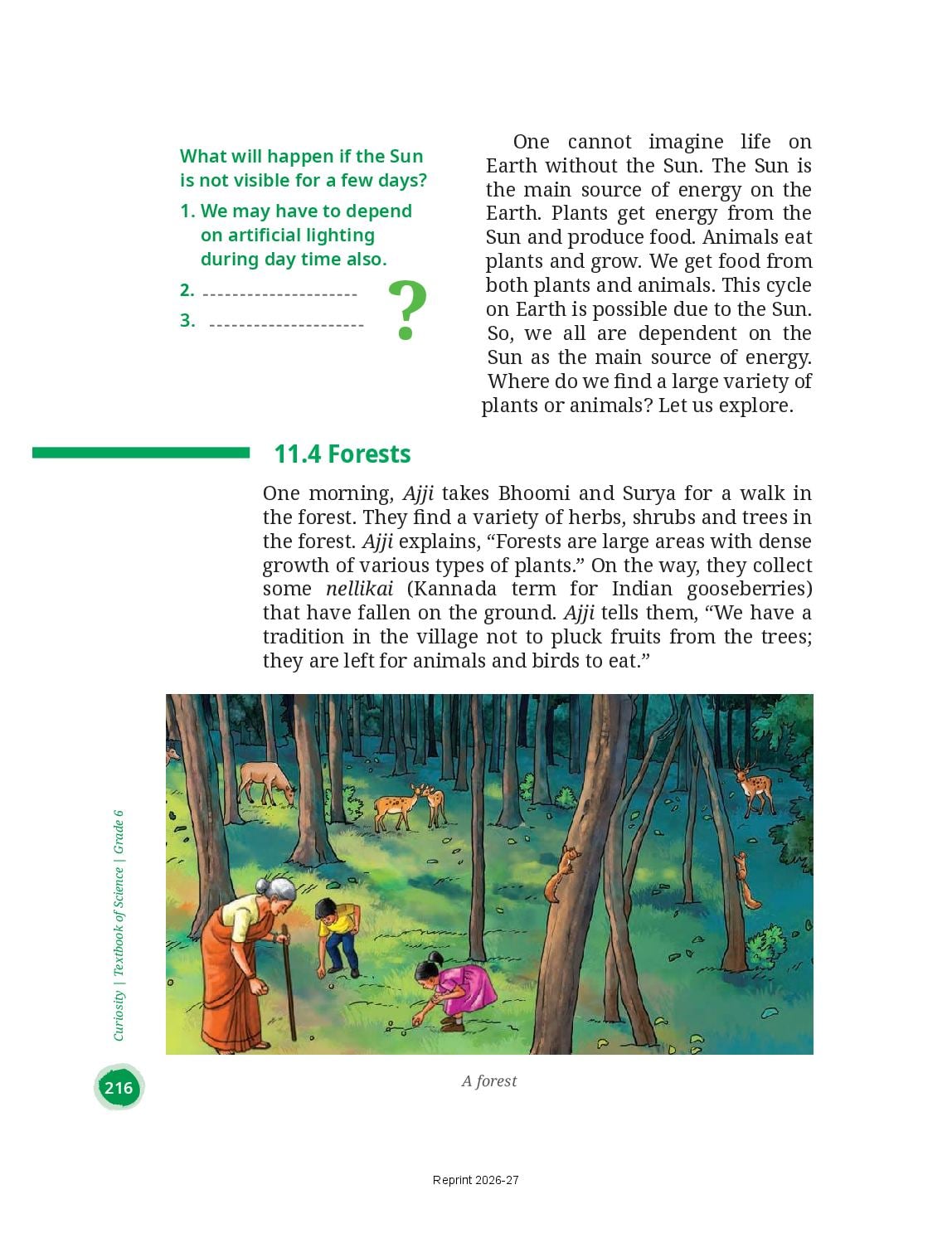
| Forest | A large area with dense growth of many types of plants | The Western Ghats forest near Ajji’s village | 216 |
| Soil | Formed by disintegration of rocks by the Sun, water and living organisms over thousands of years | Farm soil, forest soil, brick-making soil | 219 – 220 |
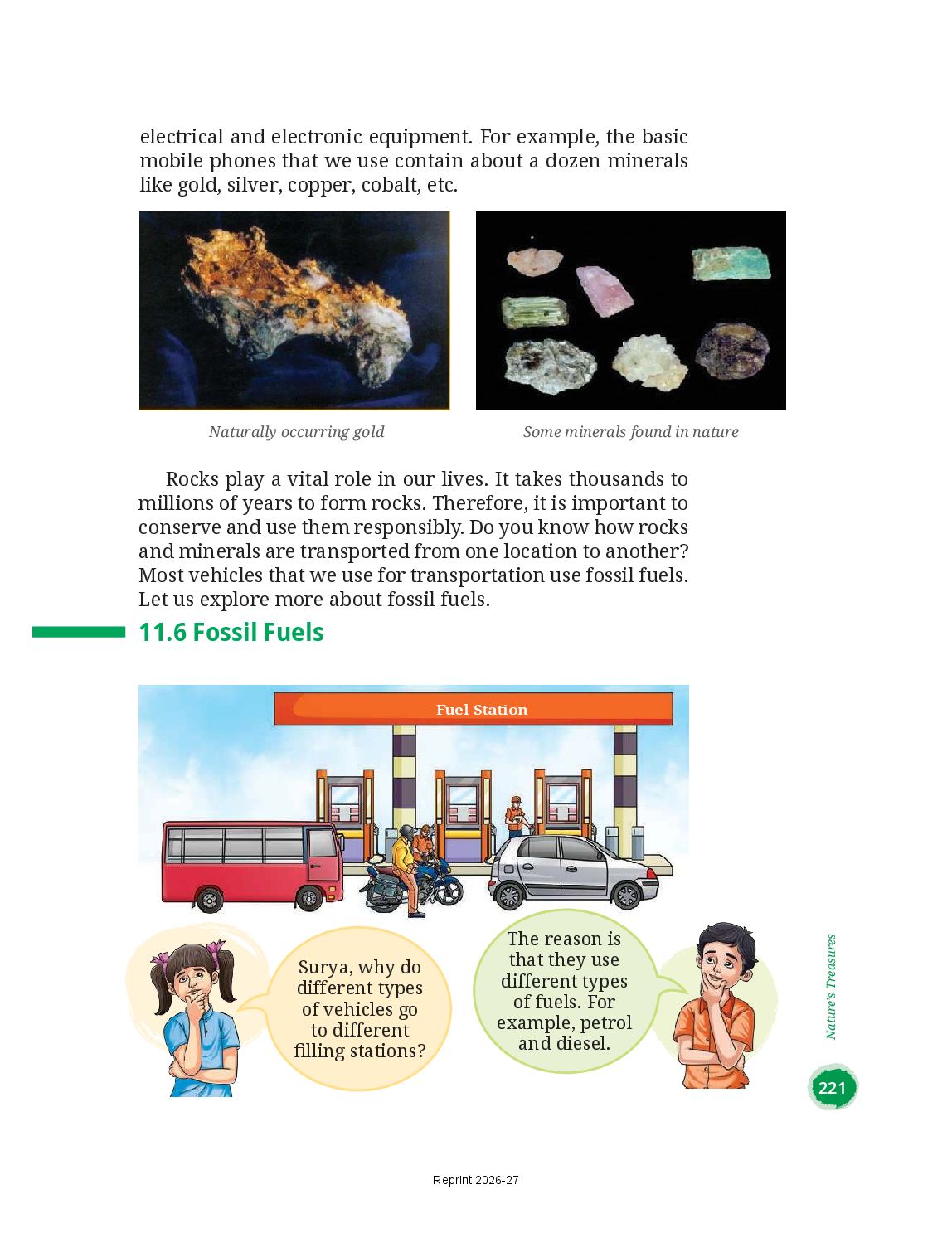
| Rocks and minerals | Rocks are natural solids made of minerals; metals are extracted from minerals | Granite, sandstone, marble, slate, laterite; gold, silver, copper, cobalt | 220 – 221 |
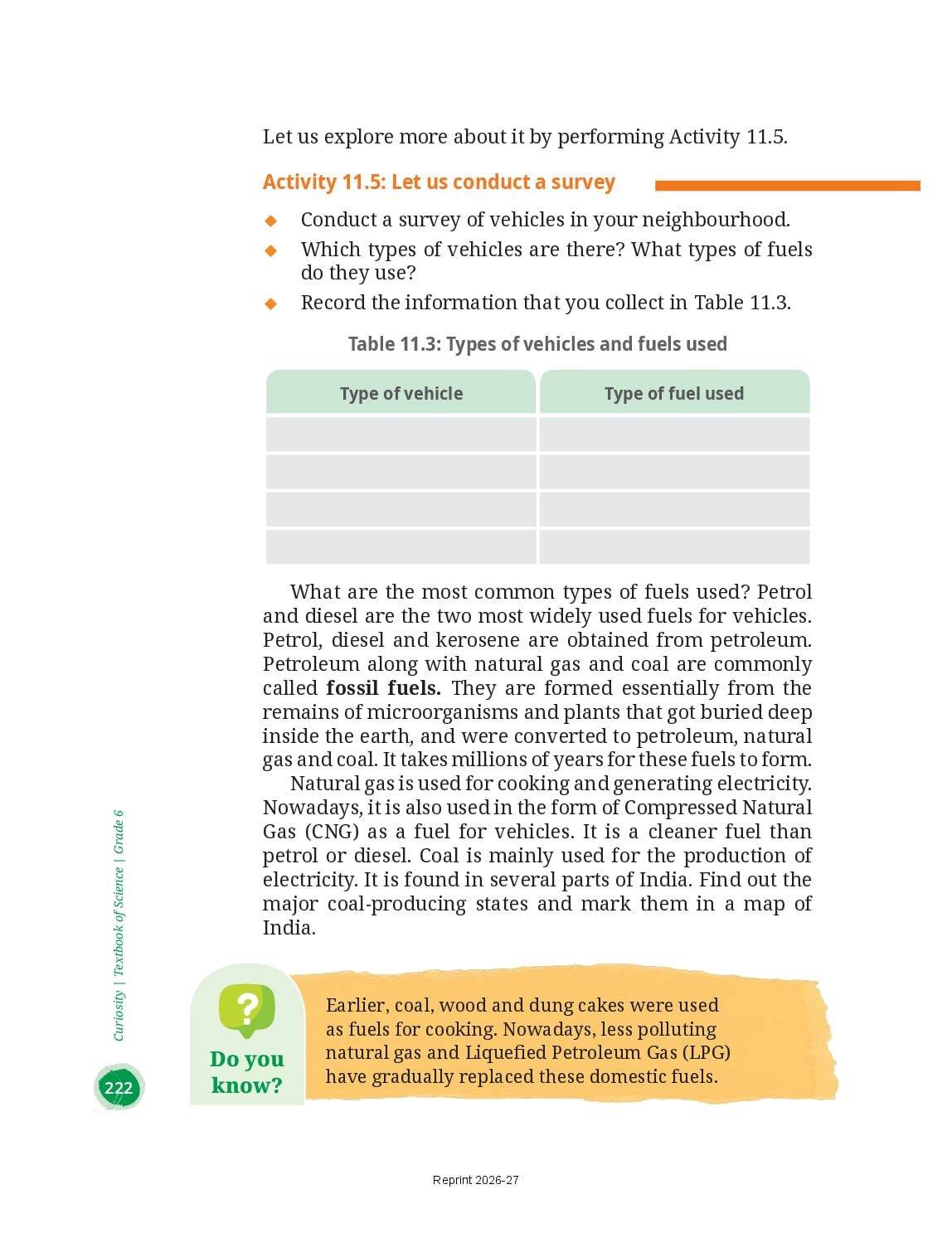
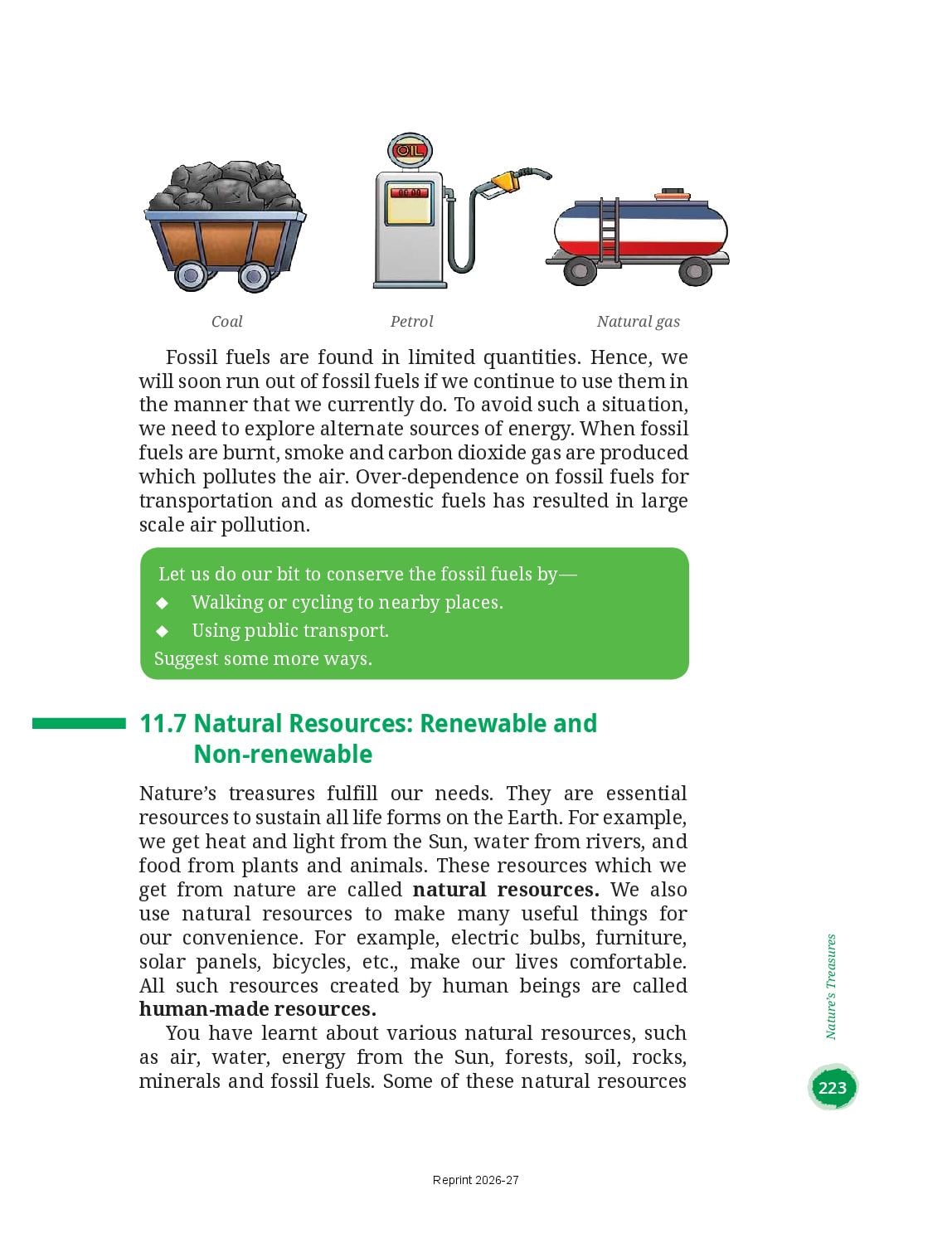
| Fossil fuels | Fuels formed over millions of years from the buried remains of microorganisms and plants | Coal, petroleum (petrol, diesel, kerosene), natural gas (CNG), LPG | 222 |
Old NCERT vs New – Class 6 Science
This chapter is from Curiosity, the new NCERT Class 6 Science book (NCF-SE 2023, used from 2024-25). It replaced the old book “Science”, so chapter numbers and names differ from older PDFs.
Solutions and All Chapters
Answers to the exercises and the full chapter list of Curiosity:
Nature’s Treasures – Overview
| Class | Class 6 |
| Subject | Science |
| Book | Curiosity – new NCERT book |
| Chapter | 11 of 12 – Nature’s Treasures |
| Book pages | 207 – 230 |
| Edition | NCERT Reprint 2026-27 |
| Session | 2026-27 |
| Free – read online or download |
Class 6 Science Chapter 11 – FAQs
Where can I download Nature’s Treasures Class 6 PDF?
From the download table on this page – the chapter PDF is free, and the full book is linked too.
What is Class 6 Science Chapter 11 about?
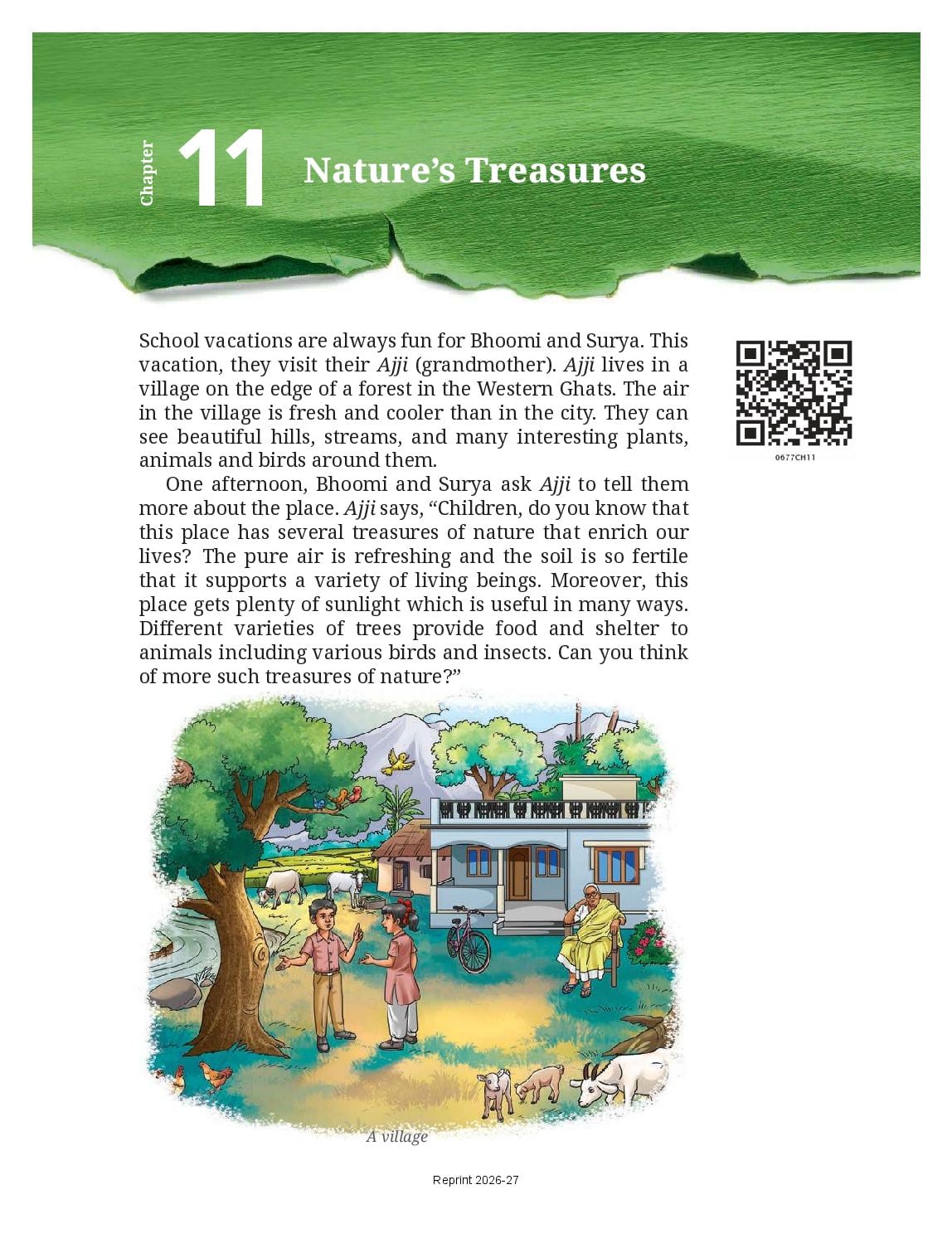
Everything we get from nature and use is a natural resource — air, water, energy from the Sun, forests, soil, rocks, minerals and fossil fuels. Things people make out of them (bulbs, furniture, solar panels, bicycles) are human-made resources.
Is Nature’s Treasures from the new NCERT Class 6 Science book?
Yes. It is chapter 11 of curiosity, the new NCERT Class 6 Science book for 2026-27.
Is this the latest NCERT edition for 2026-27?
Yes – the PDF is NCERT’s latest edition for the 2026-27 session.
Where are the NCERT Solutions for Class 6 Science Chapter 11?
Open the NCERT Solutions link above for answers to the exercise questions.