Download Measurement of Length and Motion – NCERT Class 6 Science Chapter 5 PDF from the new NCERT Class 6 Science book Curiosity (2026-27). Read the chapter online or download the free PDF. A measurement always has two parts — a number and a unit. Saying “the table is 13 handspans long” means 13 is the number and handspan is the unit.
Measurement of Length and Motion PDF – Chapter 5 of Curiosity
Read the chapter online or download the PDF.
| Chapter | Download | |
|---|---|---|
| Chapter 5 PDF | Measurement of Length and Motion | View PDF |
| Full book | NCERT Class 6 Science – Curiosity | View Book |
Read Online
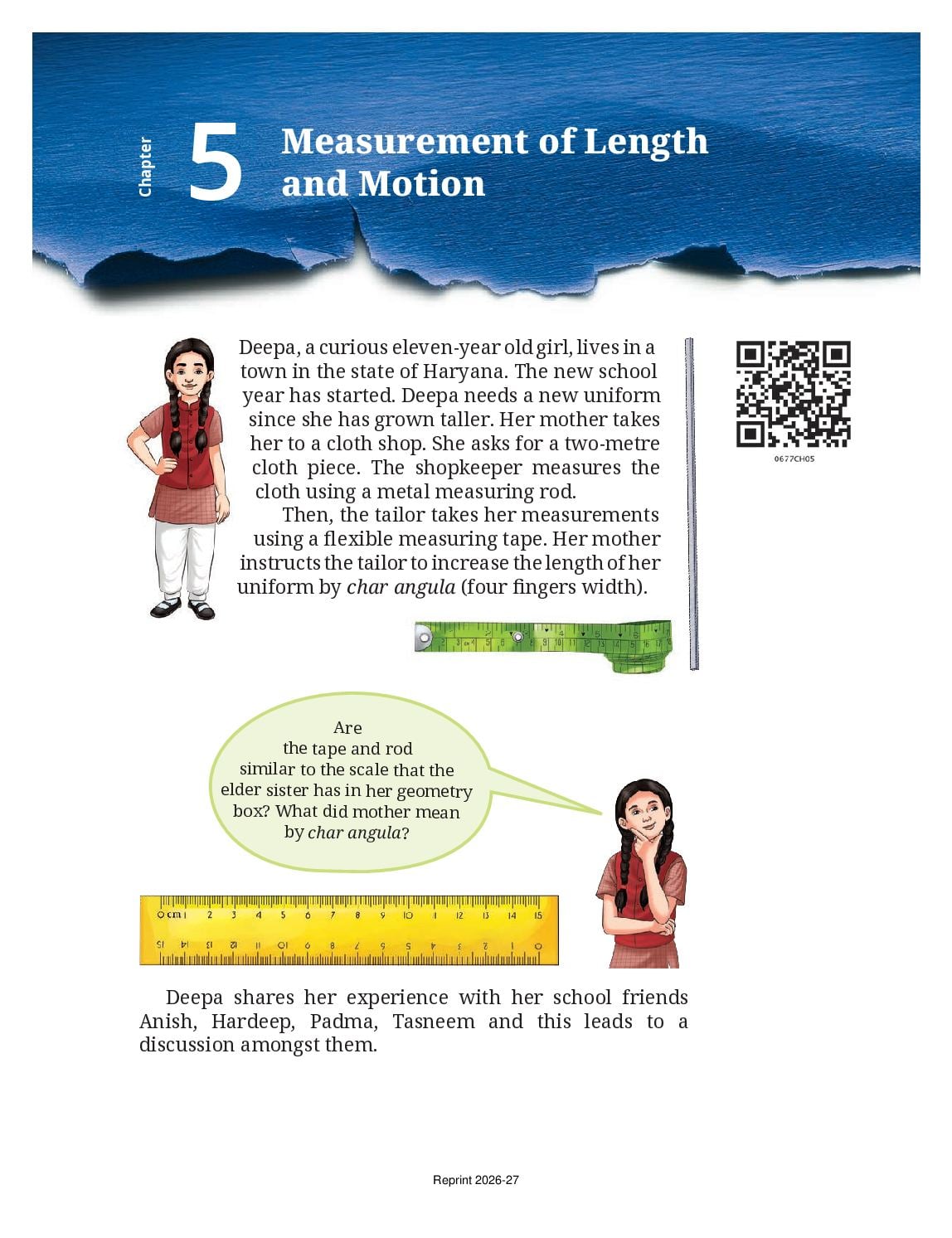
What Is in Measurement of Length and Motion? (Class 6 Science Chapter 5)
- A measurement always has two parts — a number and a unit. Saying “the table is 13 handspans long” means 13 is the number and handspan is the unit.
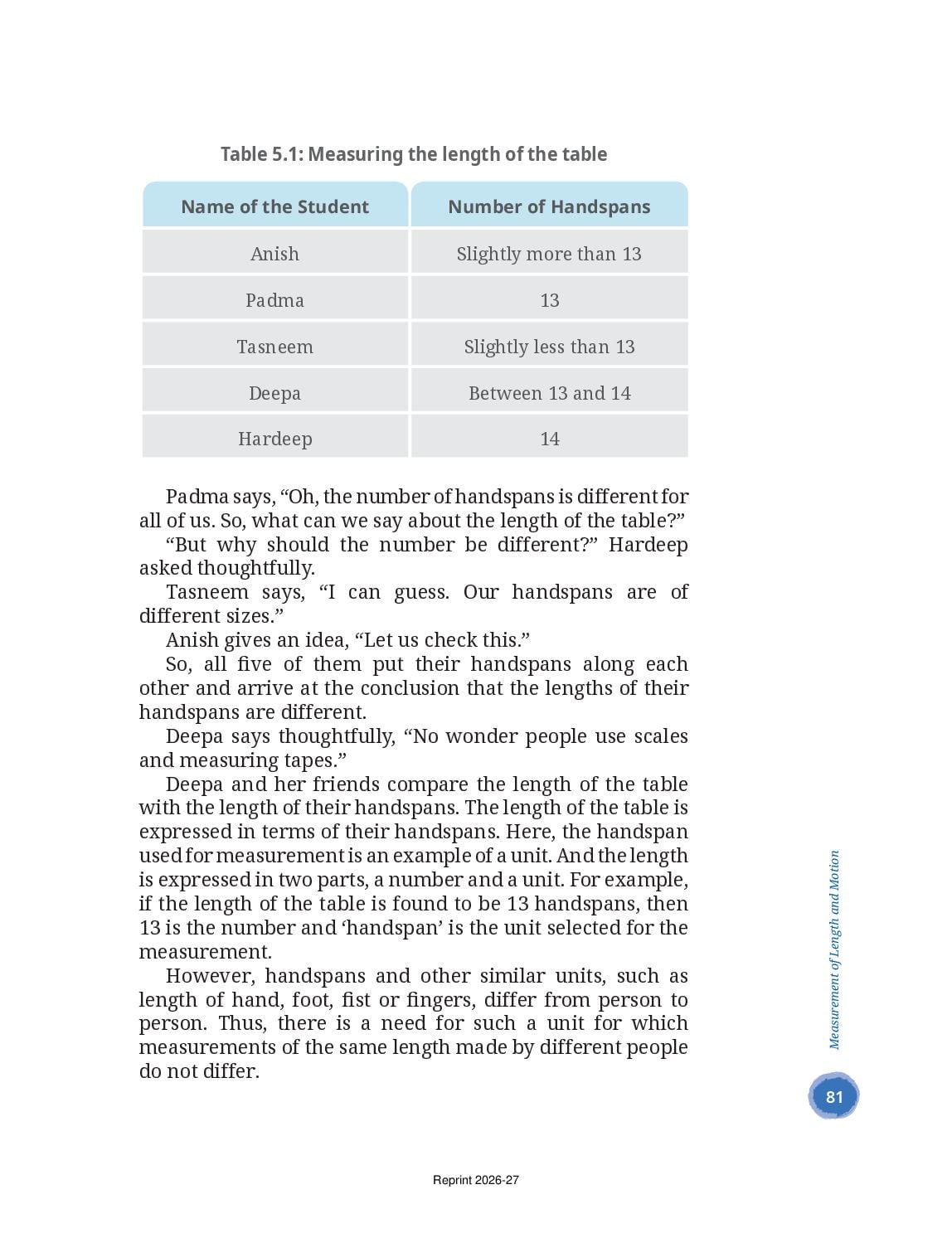
- Body-based units — handspan (balisht), angula, foot, cubit — differ from person to person, so the same table gave 13, 14 and “a little more than 13” to different children. That is why the world agreed on standard units.
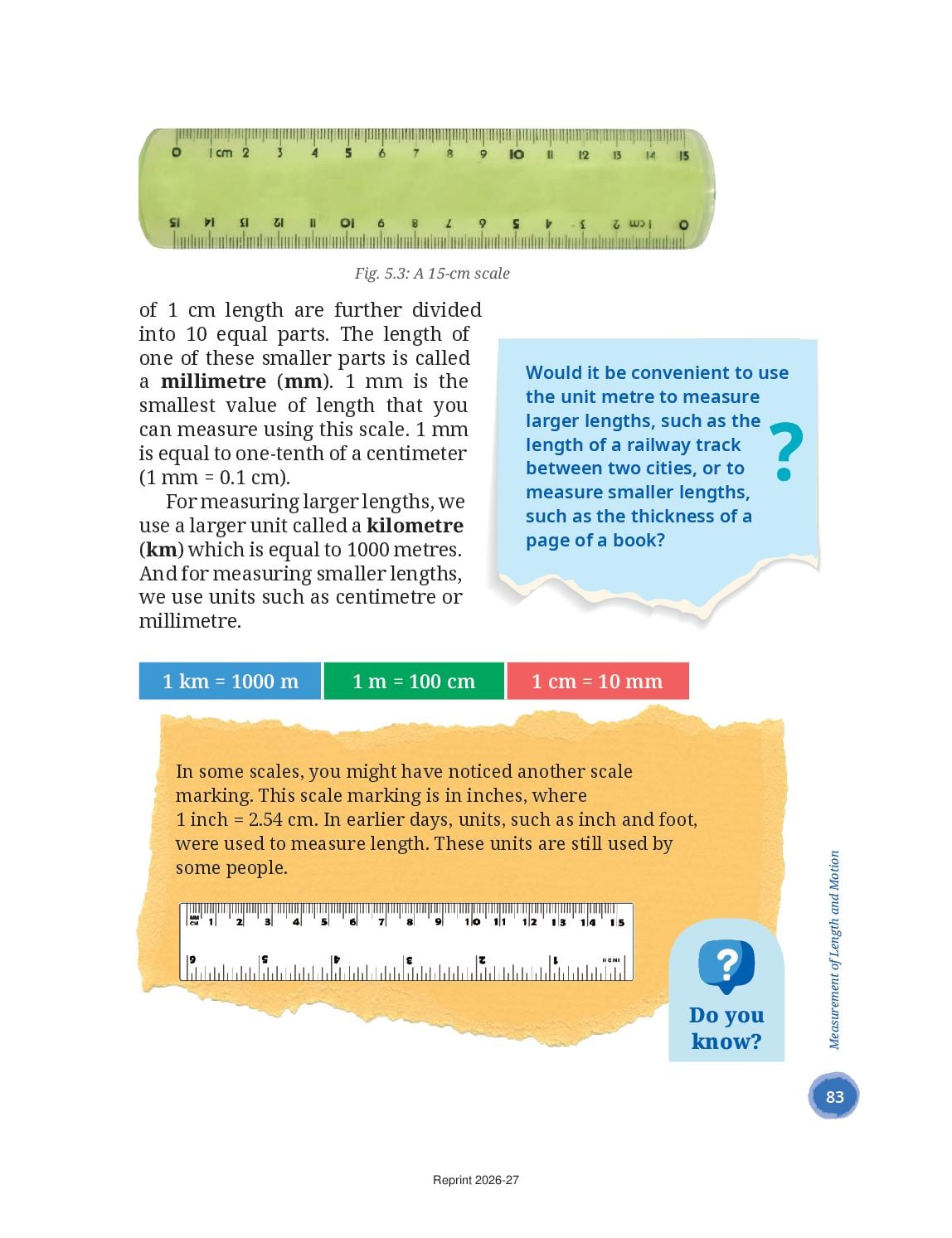
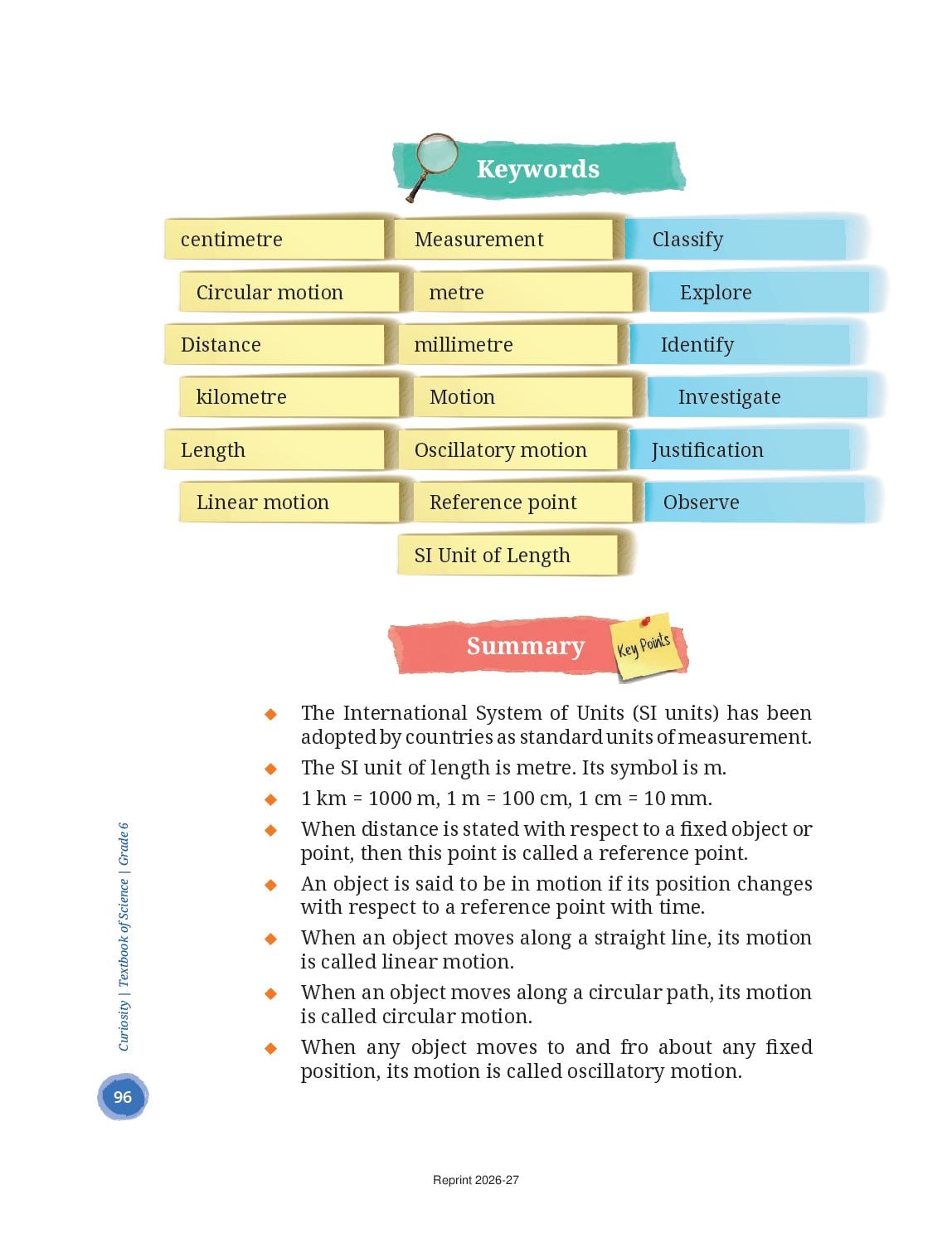
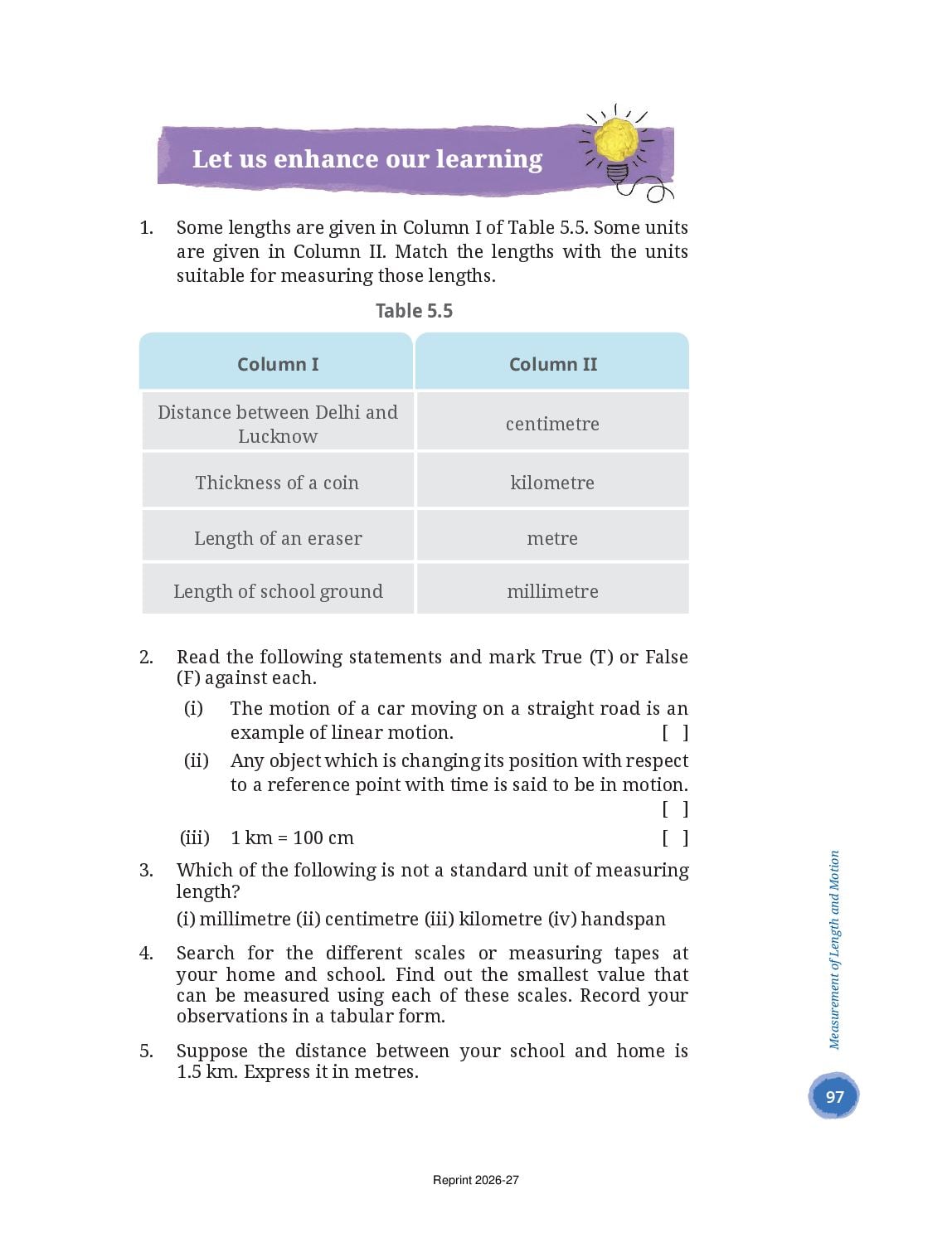
- The system used today is the International System of Units (SI). The SI unit of length is the metre (m), and 1 km = 1000 m, 1 m = 100 cm, 1 cm = 10 mm (so 1 m = 1000 mm and 1 km = 1,00,000 cm).
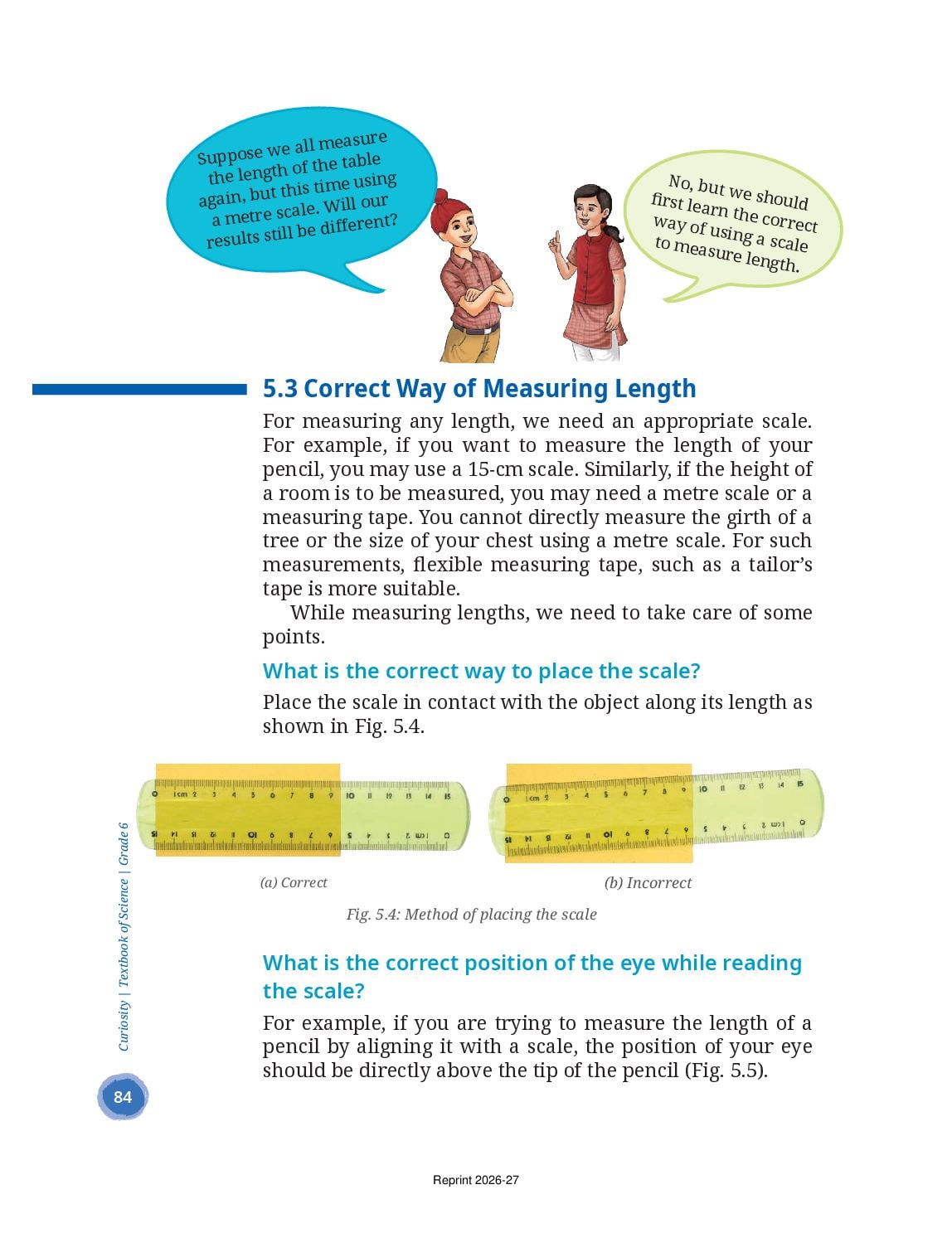
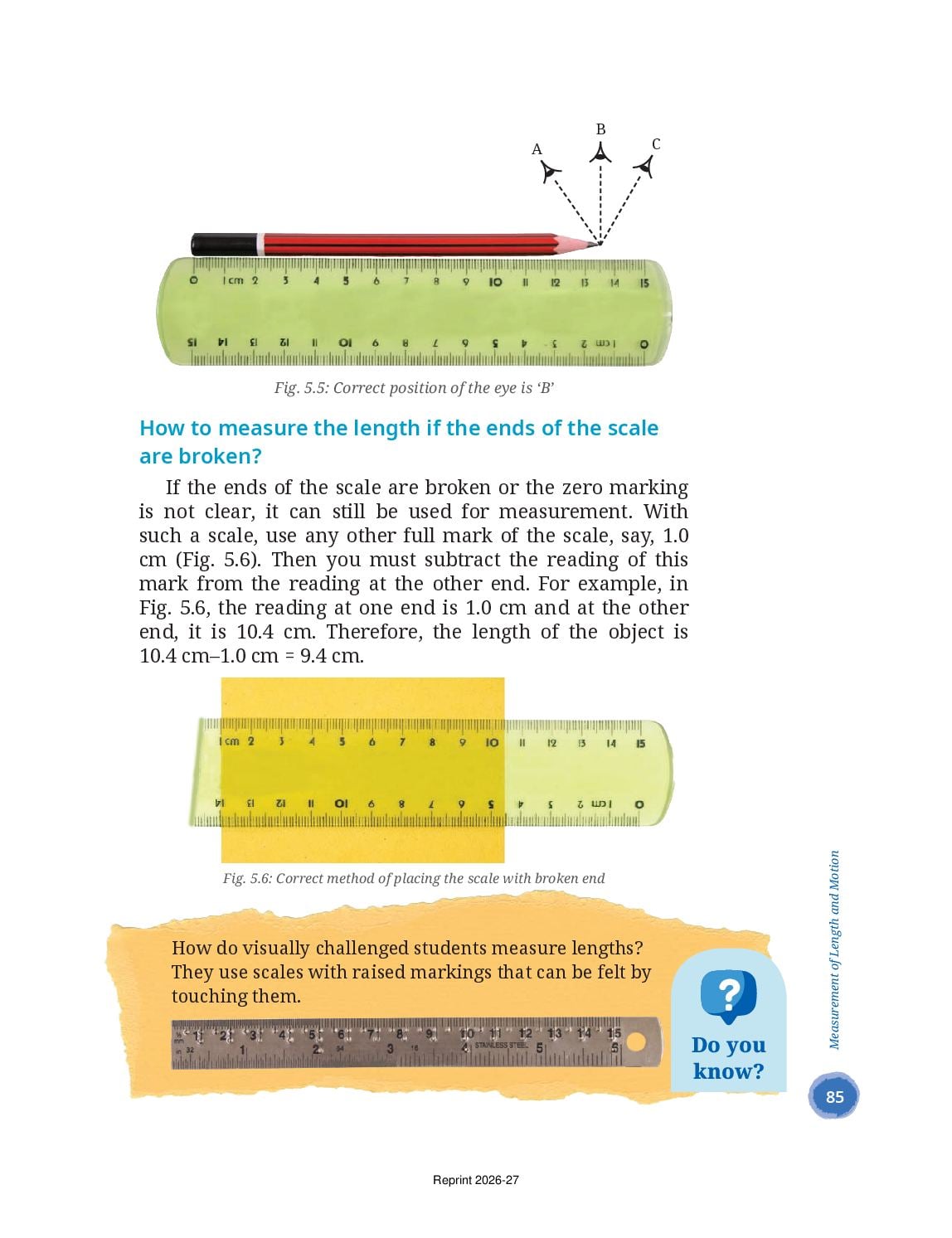
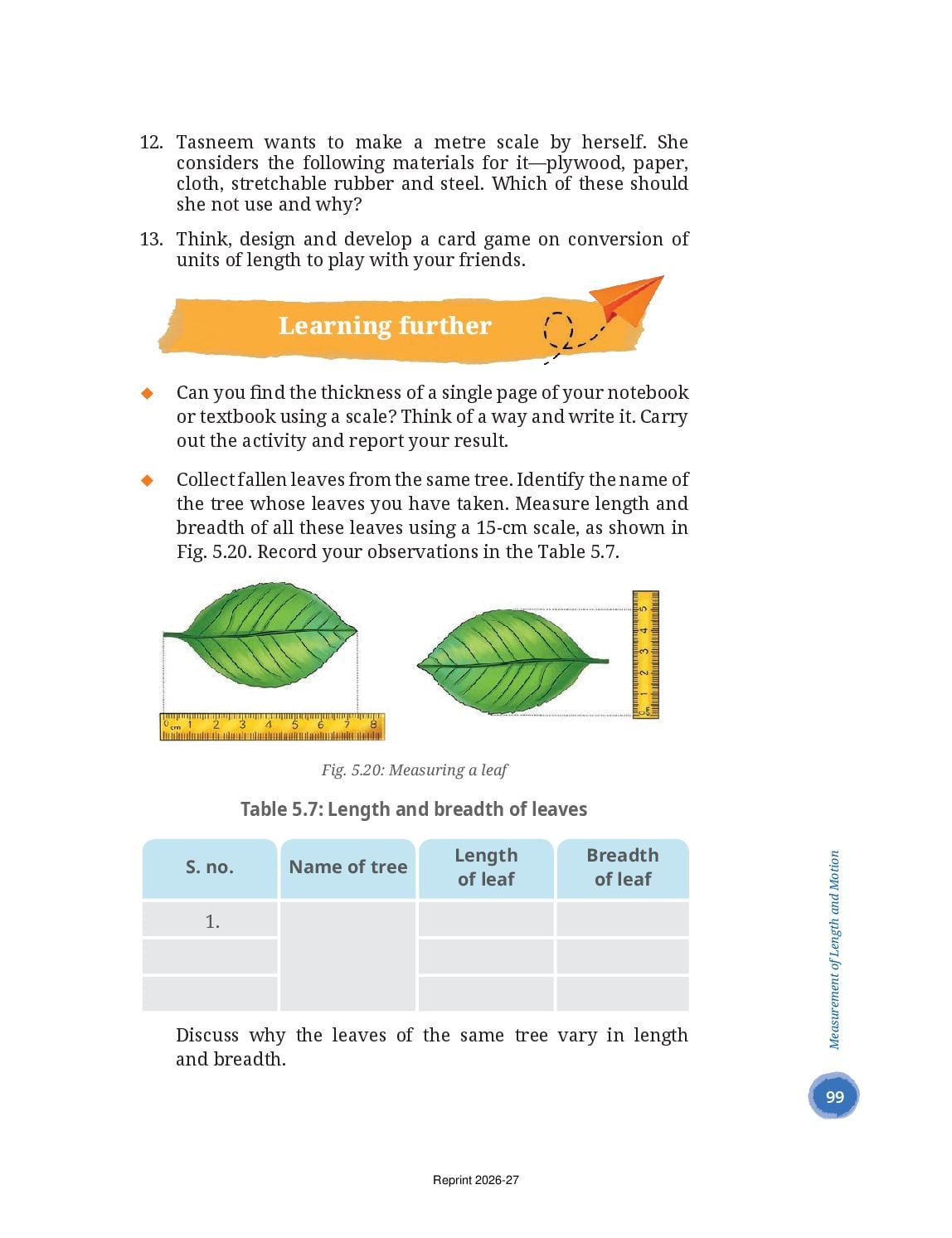
- Using a scale correctly: keep it in contact with the object and along its length, keep the eye directly above the mark being read, and if the zero end is broken, use any full mark and subtract — for example 10.4 cm − 1.0 cm = 9.4 cm.
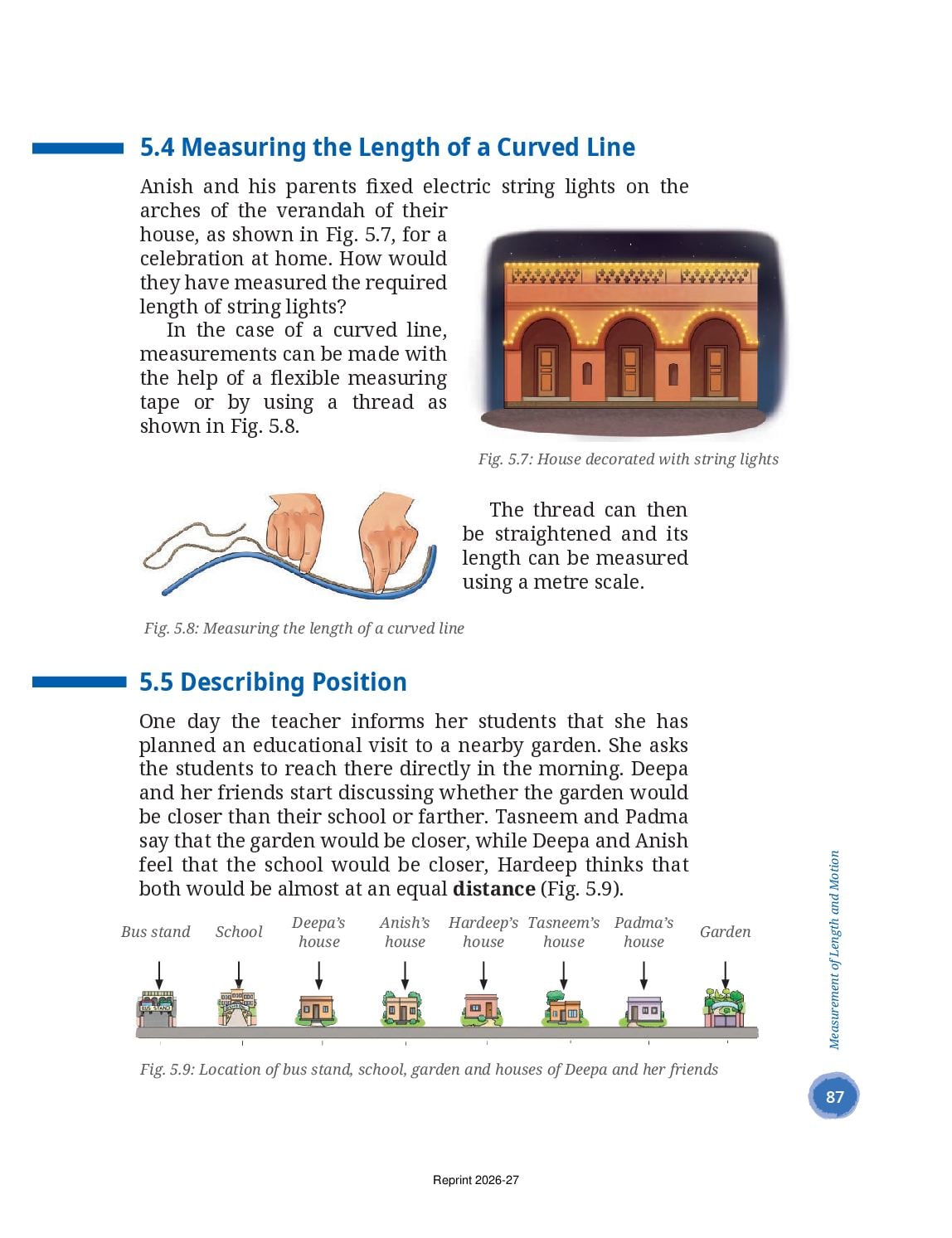
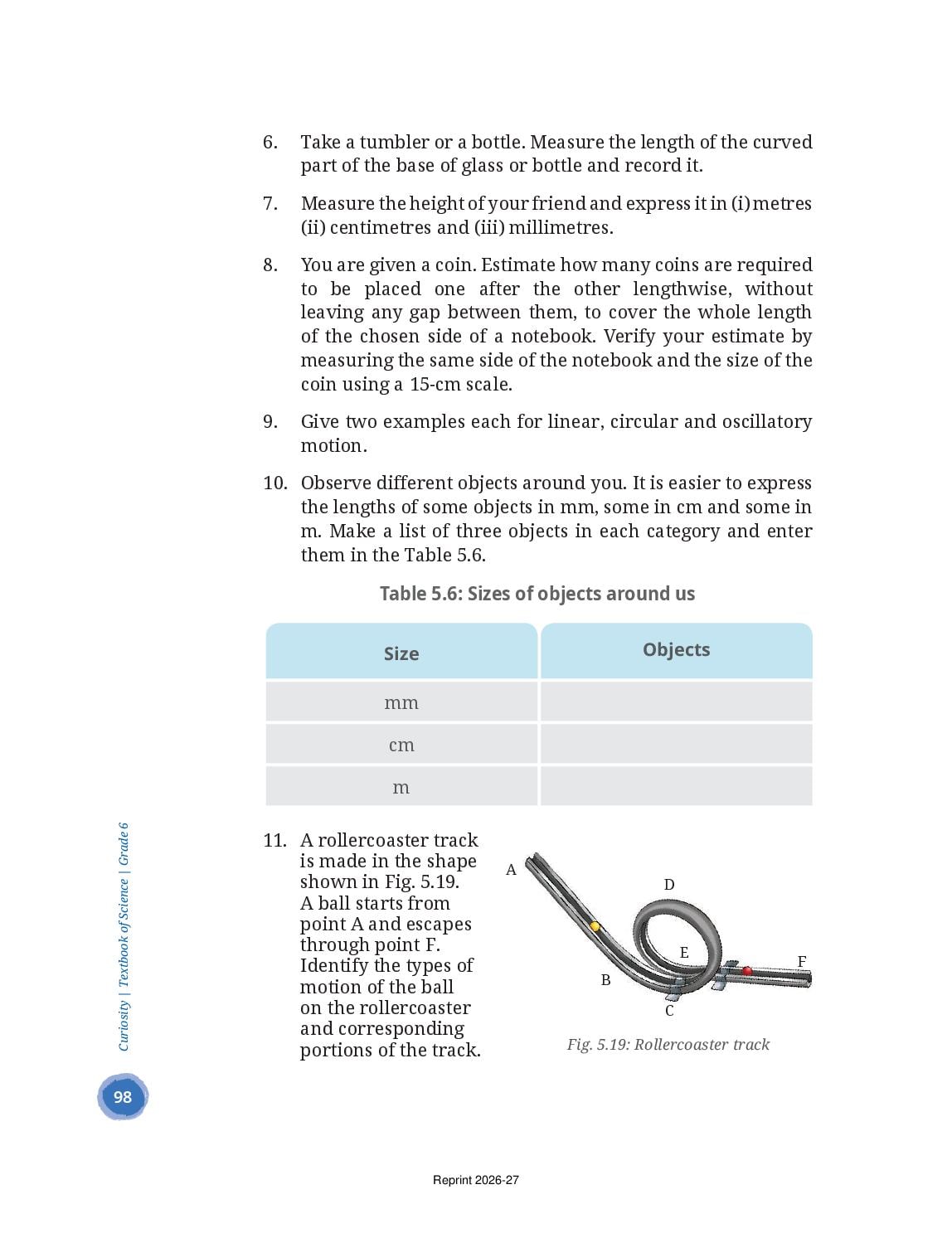
- A curved line is measured with a thread or a flexible measuring tape; the thread is then straightened along a metre scale.
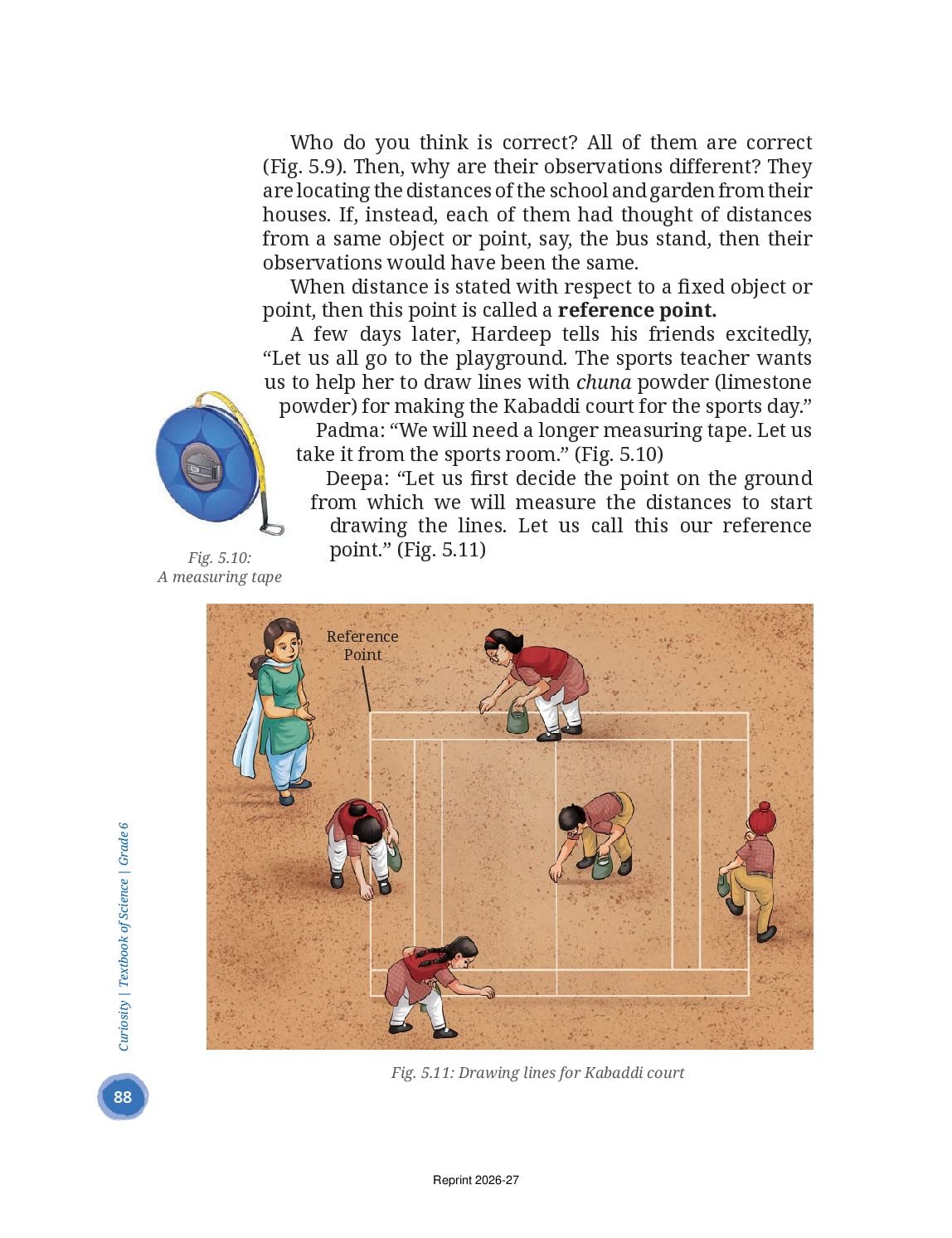
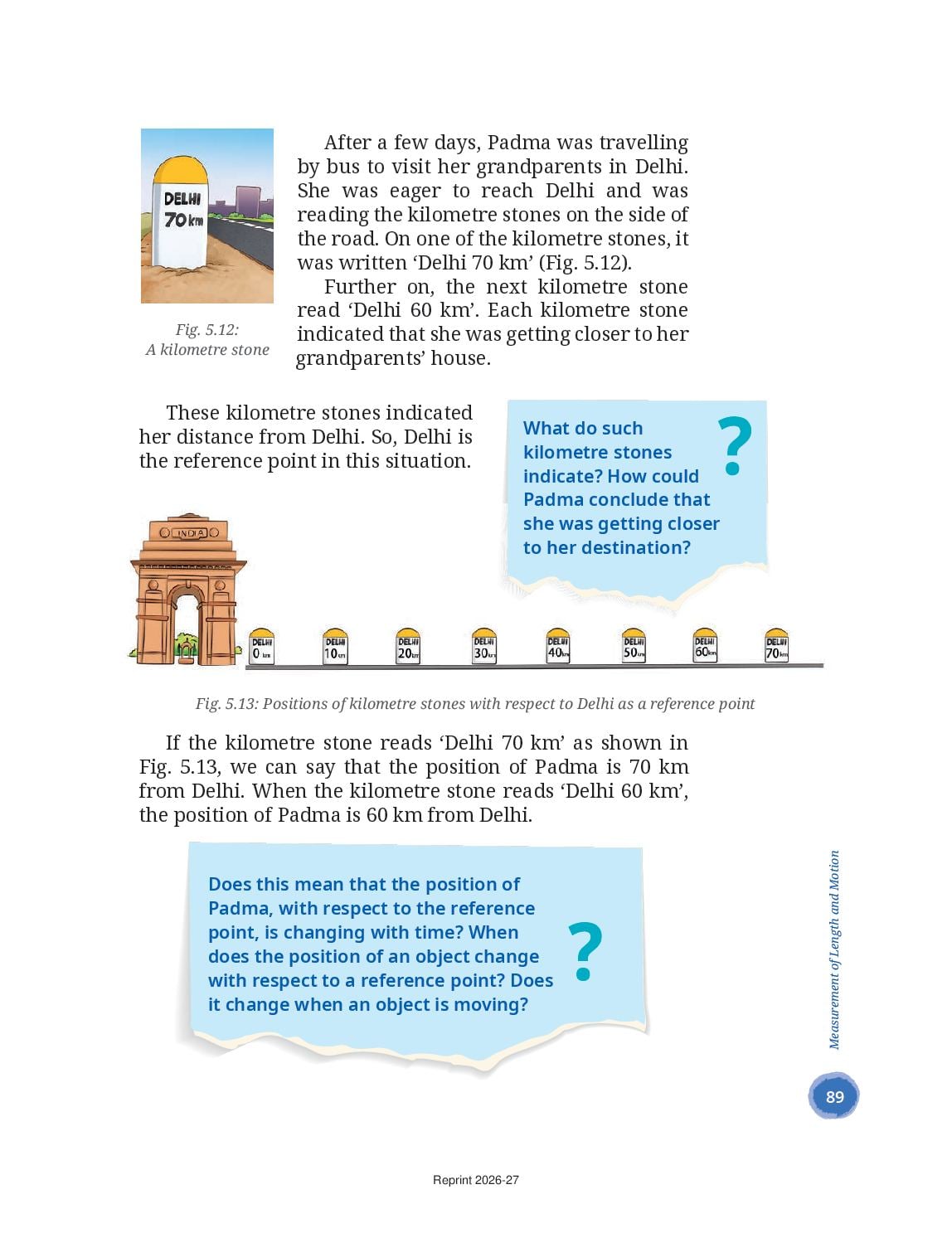
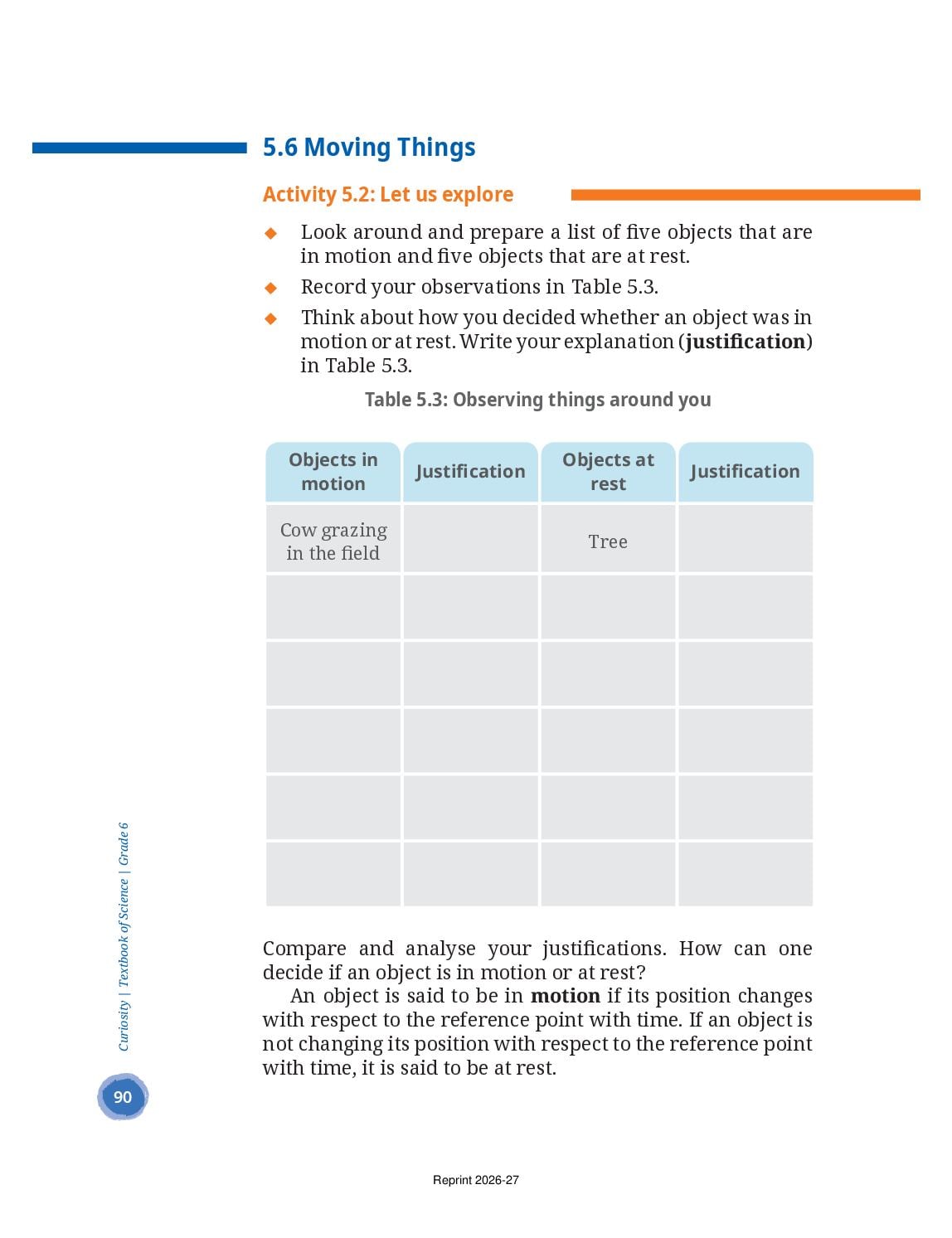
- Position is always stated with respect to a reference point. An object is in motion if its position changes with time with respect to that point, otherwise it is at rest. Motion may be linear, circular or oscillatory; circular and oscillatory motion are periodic.
Quick revision – Measurement of Length and Motion
| Term | What it means | Where it comes in the chapter | Example / value |
|---|---|---|---|
| Unit | The fixed length chosen for comparison. A measurement = a number + a unit | Page 81 | “13 handspans”: 13 is the number, handspan is the unit |
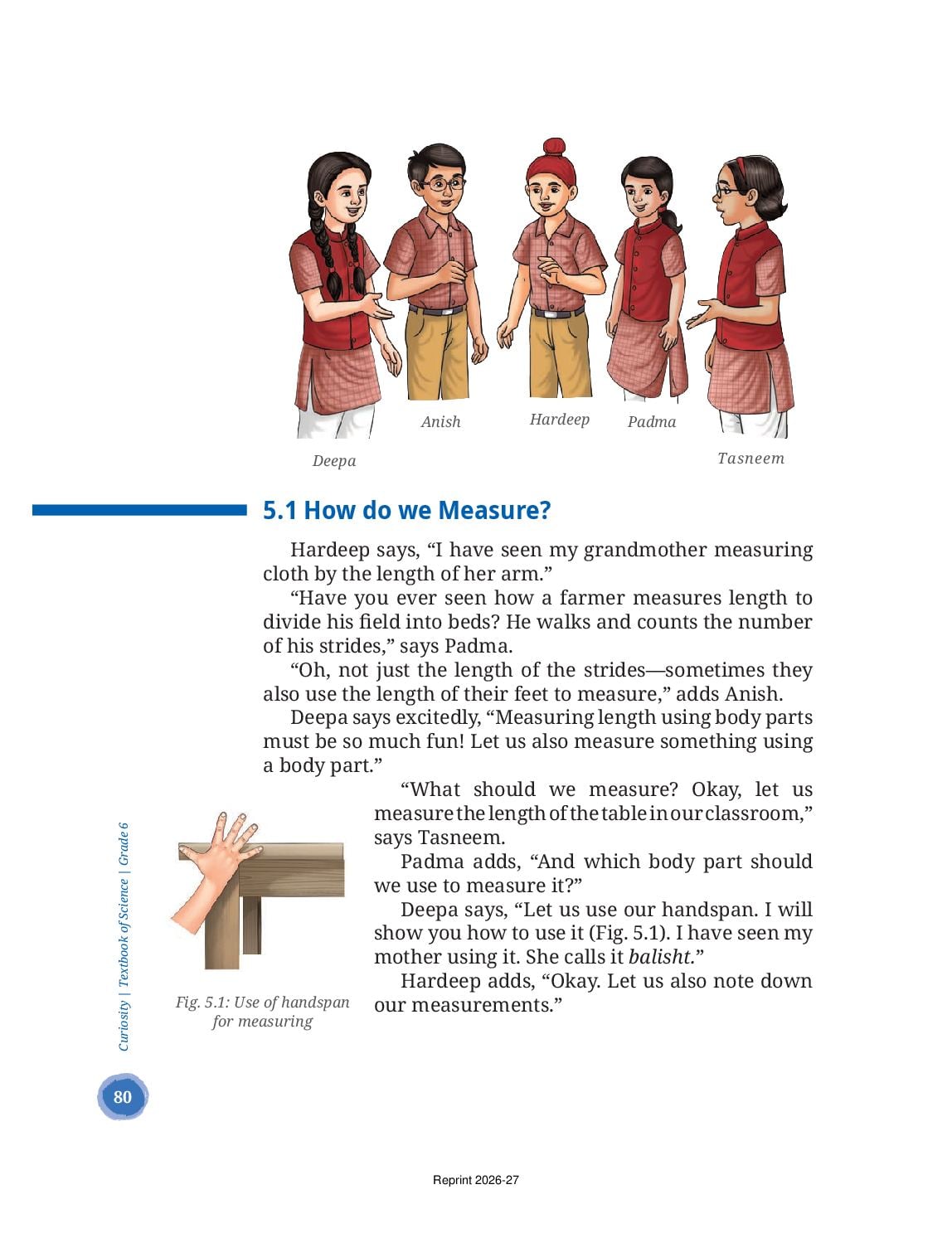
| Handspan (balisht) | The distance from the tip of the thumb to the tip of the little finger of a spread-out hand | Fig. 5.1, page 80 | Differs from person to person → not a standard unit |
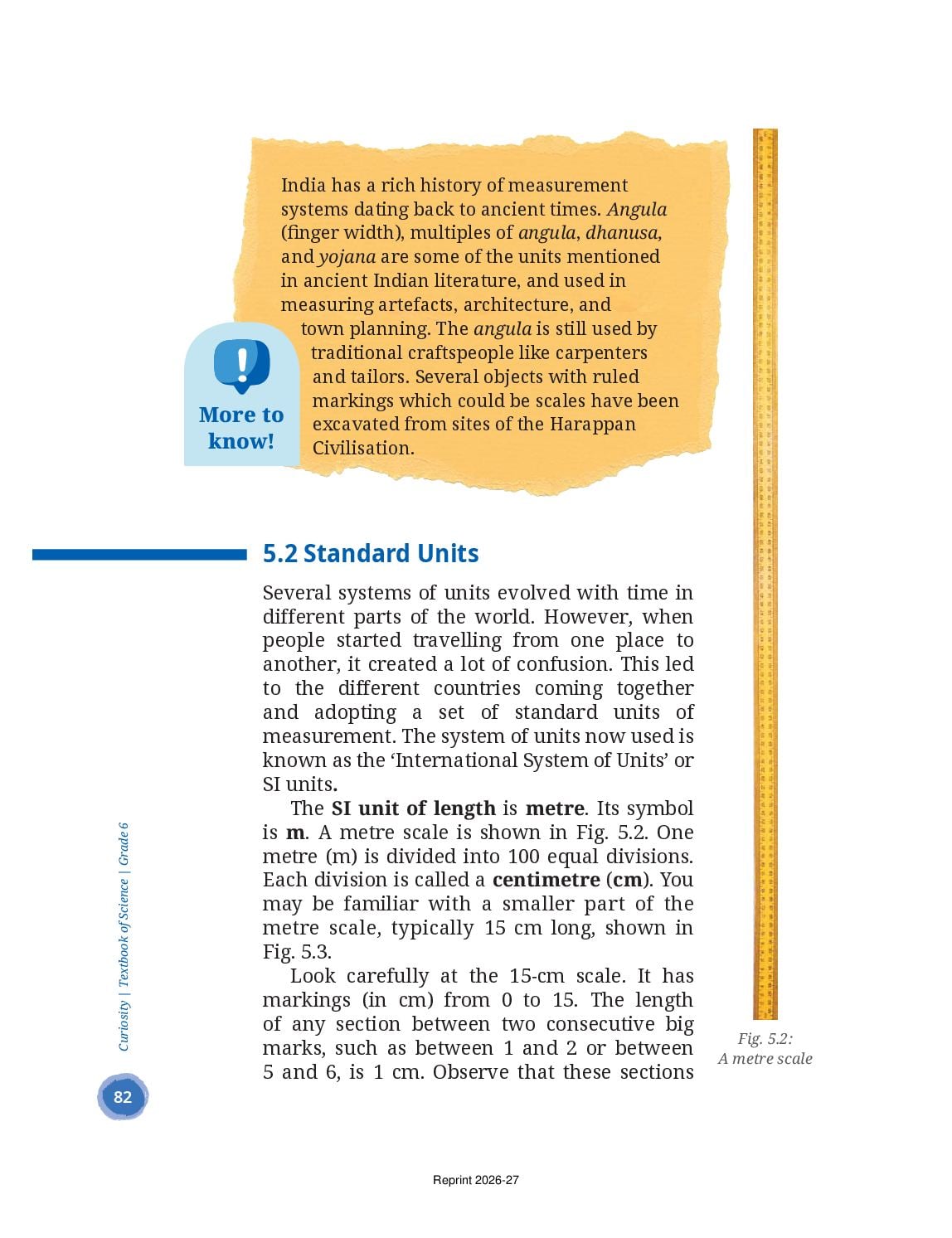
| Standard unit / SI units | A unit fixed by agreement between countries so that everyone gets the same value. The present system is the International System of Units | Section 5.2, page 82 | SI unit of length = metre (m) |
| Metre (m) | The SI unit of length; one metre is divided into 100 equal parts | Page 82 | Height of a door ≈ 2 m |
| Centimetre (cm) and millimetre (mm) | One division of a metre scale is 1 cm; one-tenth of a centimetre is 1 mm — the smallest length a 15-cm scale can measure | Pages 82–83 | 1 m = 100 cm; 1 cm = 10 mm; 1 mm = 0.1 cm |
| Kilometre (km) | A larger unit used for long distances; 1 km = 1000 m | Page 83 | Delhi to Lucknow ≈ 500 km |
| Reference point | The fixed object or point with respect to which a distance or position is stated | Page 88 | Delhi, written on a kilometre stone |
| Motion and rest | In motion = position changes with time with respect to the reference point; at rest = position does not change | Page 90 | Bus passengers: at rest w.r.t. the bus, in motion w.r.t. a building |
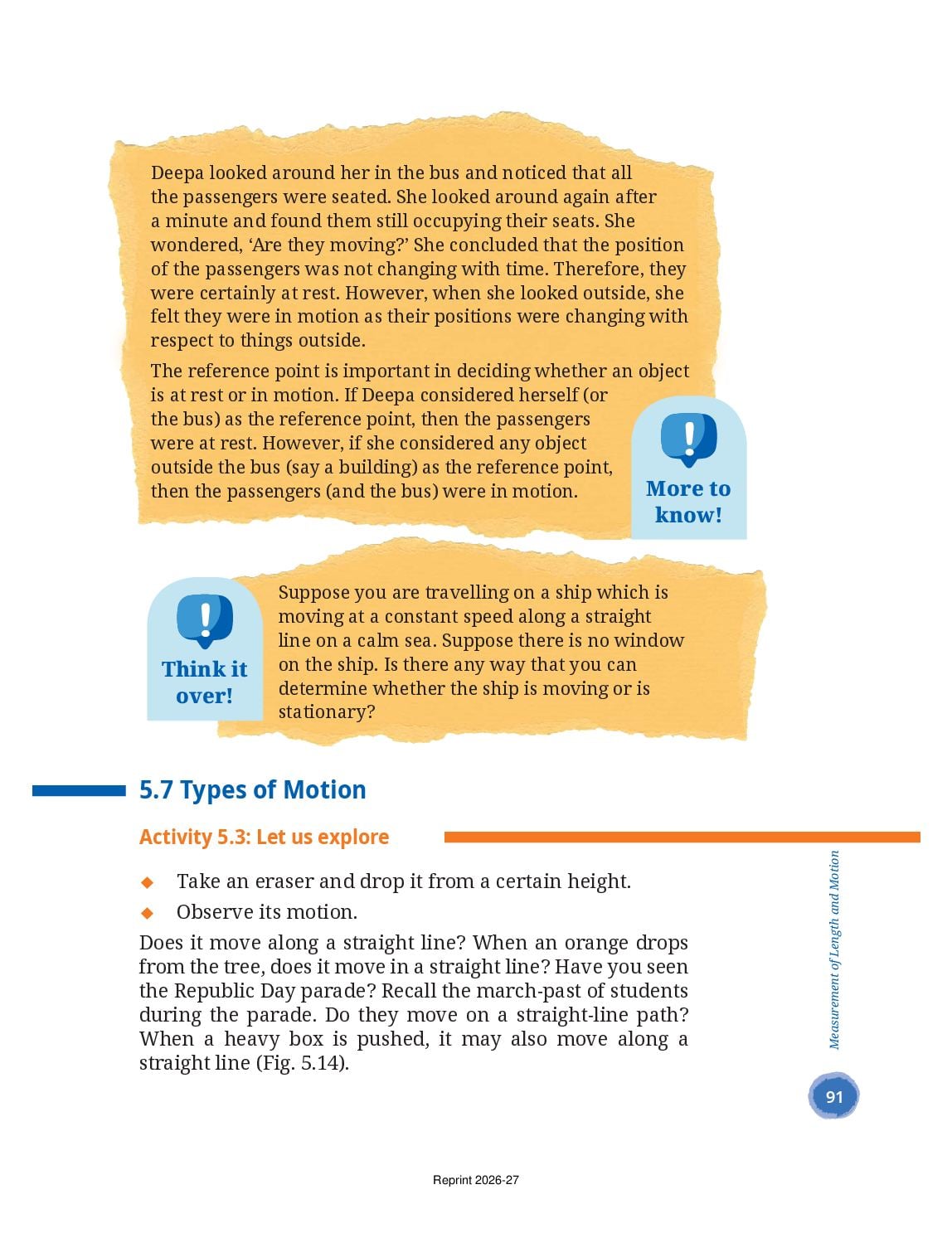
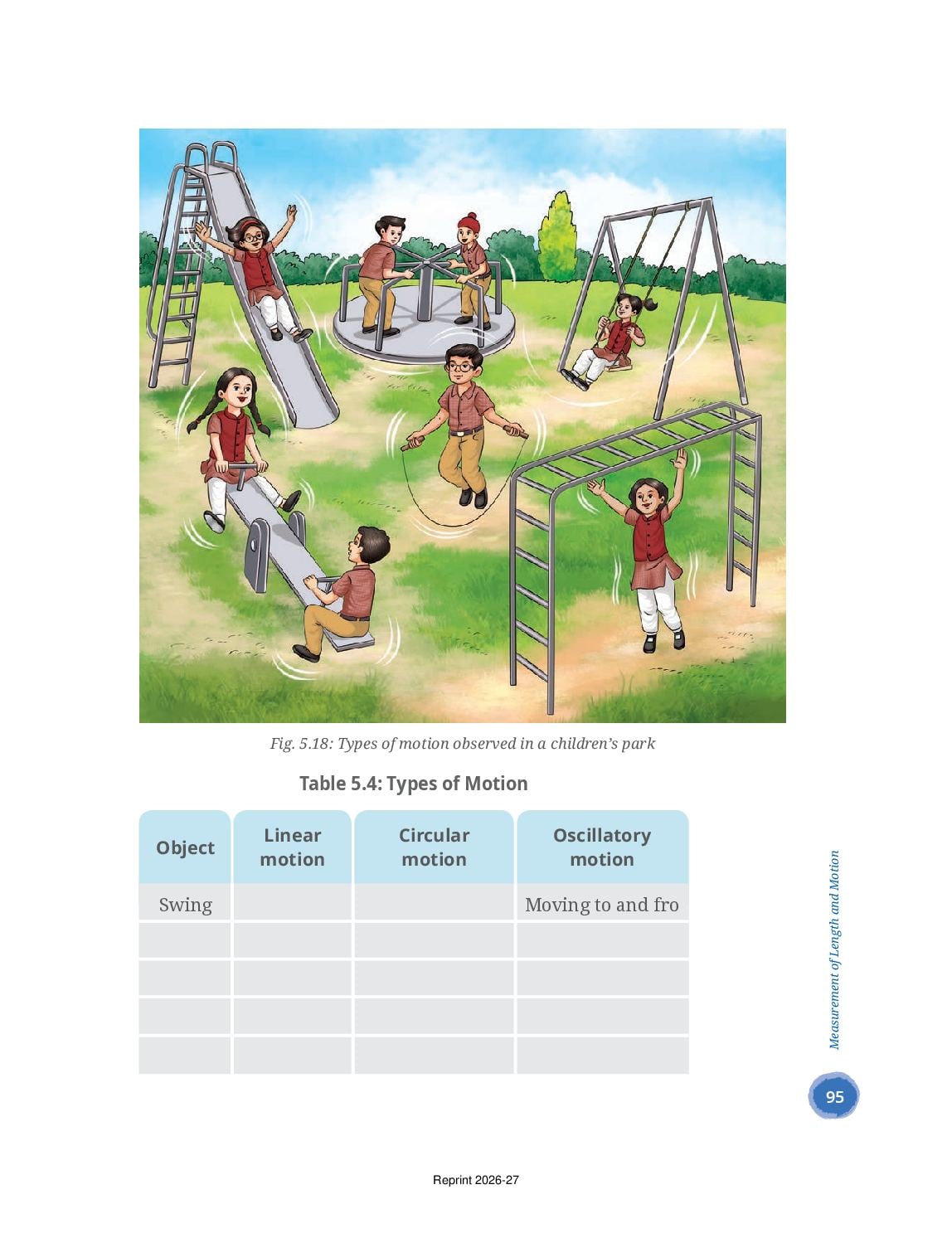
| Linear motion | Motion of an object along a straight line | Page 92 | A heavy box being pushed; march-past in a parade |
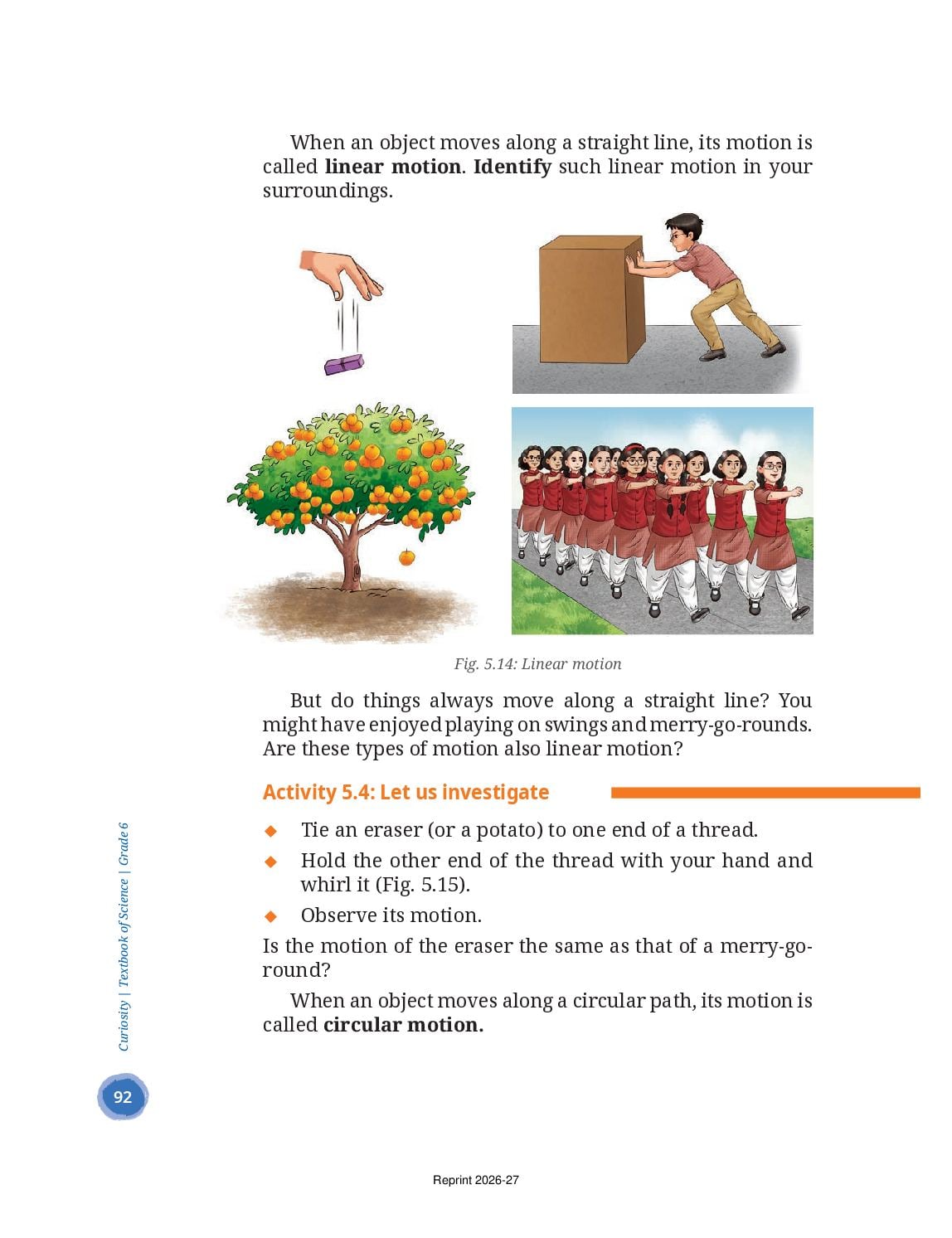
| Circular motion | Motion of an object along a circular path | Page 92 | Merry-go-round; a stone whirled on a thread |
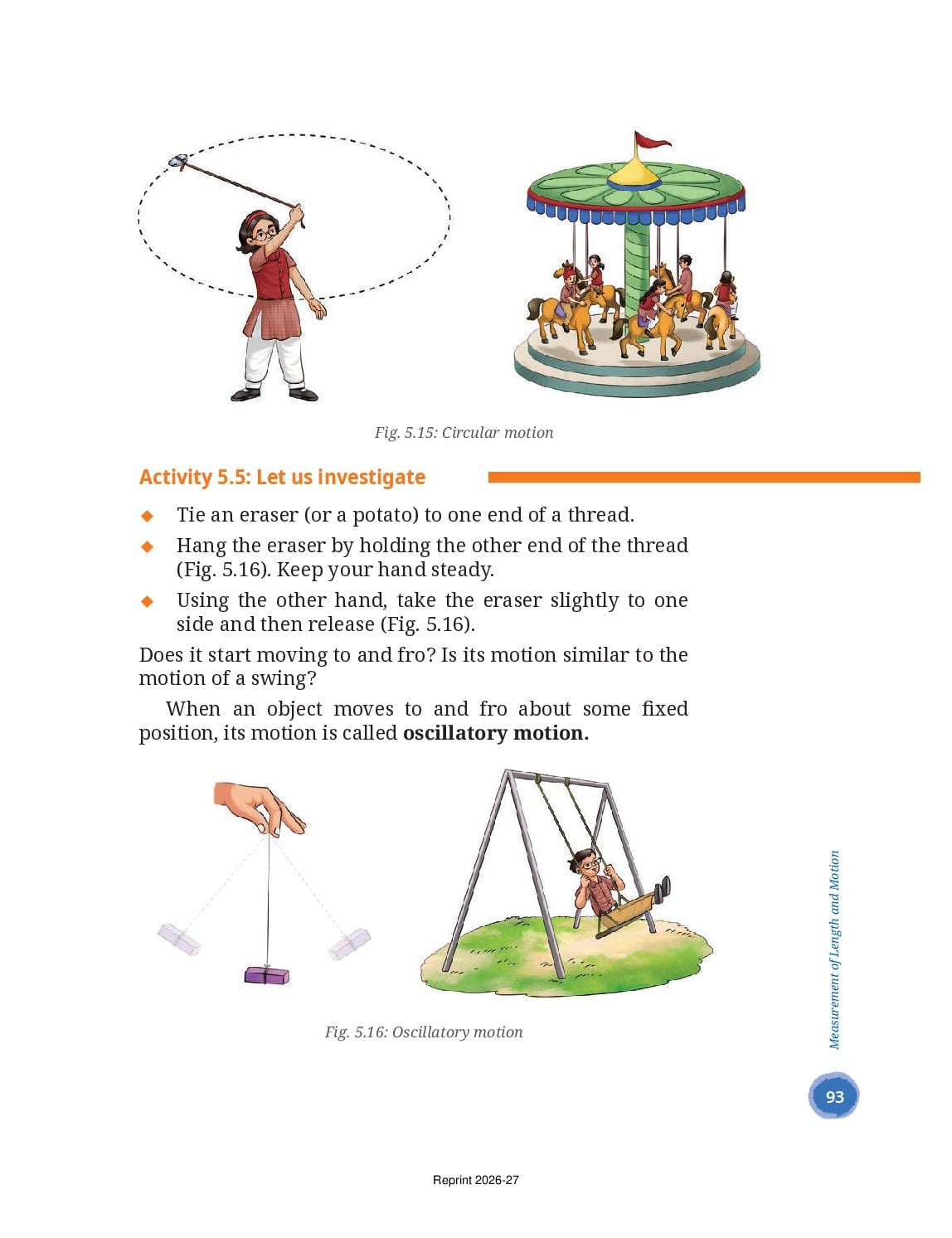
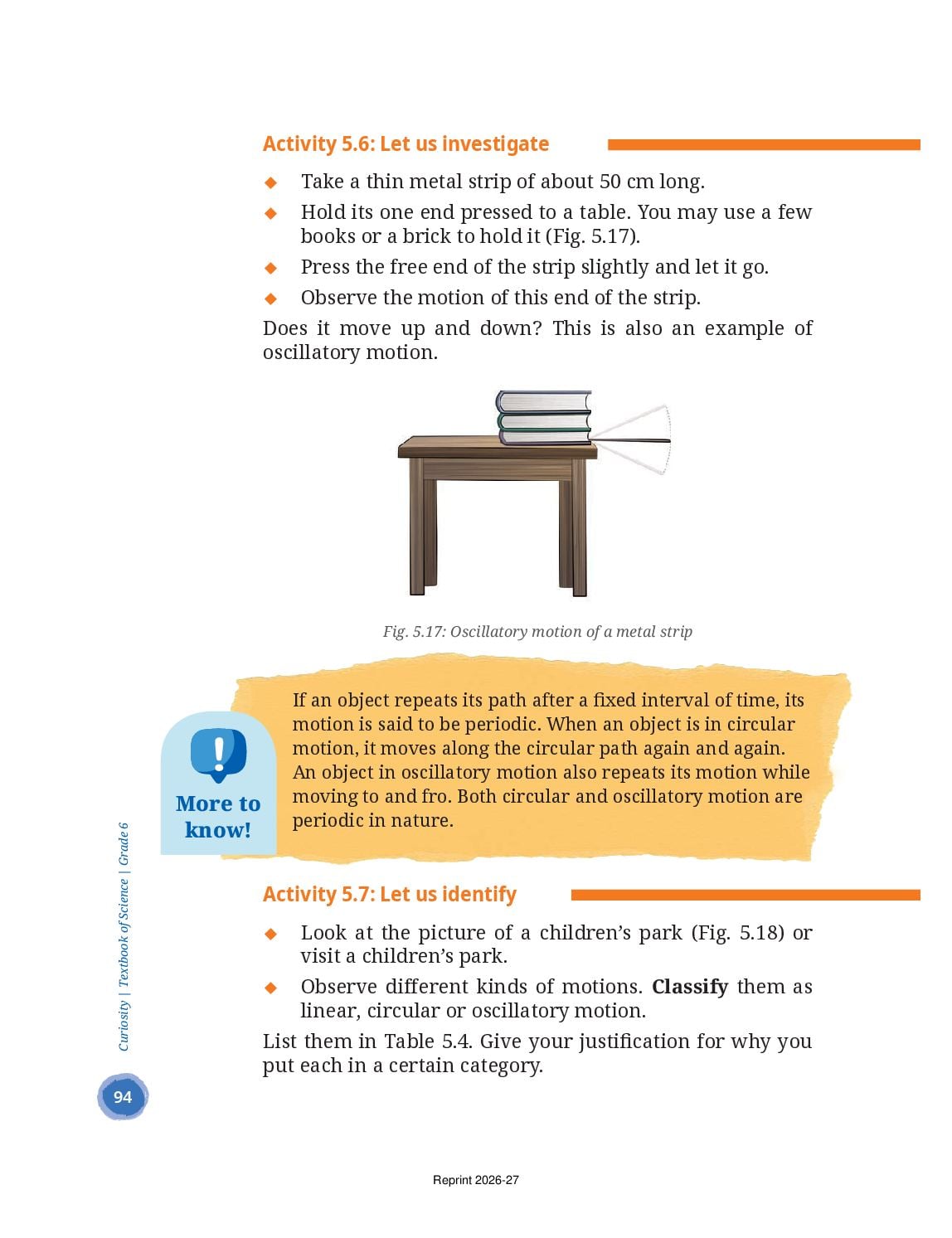
| Oscillatory motion | To-and-fro motion of an object about a fixed position | Page 93 | A swing; a plucked metal strip |
| Periodic motion | Motion that repeats itself after a fixed interval of time | More to know!, page 94 | Both circular and oscillatory motion are periodic |
Old NCERT vs New – Class 6 Science
This chapter is from Curiosity, the new NCERT Class 6 Science book (NCF-SE 2023, used from 2024-25). It replaced the old book “Science”, so chapter numbers and names differ from older PDFs.
Solutions and All Chapters
Answers to the exercises and the full chapter list of Curiosity:
Measurement of Length and Motion – Overview
| Class | Class 6 |
| Subject | Science |
| Book | Curiosity – new NCERT book |
| Chapter | 5 of 12 – Measurement of Length and Motion |
| Book pages | 79 – 100 |
| Edition | NCERT Reprint 2026-27 |
| Session | 2026-27 |
| Free – read online or download |
Class 6 Science Chapter 5 – FAQs
Where can I download Measurement of Length and Motion Class 6 PDF?
From the download table on this page – the chapter PDF is free, and the full book is linked too.
What is Class 6 Science Chapter 5 about?
A measurement always has two parts — a number and a unit. Saying “the table is 13 handspans long” means 13 is the number and handspan is the unit.
Is Measurement of Length and Motion from the new NCERT Class 6 Science book?
Yes. It is chapter 5 of curiosity, the new NCERT Class 6 Science book for 2026-27.
Is this the latest NCERT edition for 2026-27?
Yes – the PDF is NCERT’s latest edition for the 2026-27 session.
Where are the NCERT Solutions for Class 6 Science Chapter 5?
Open the NCERT Solutions link above for answers to the exercise questions.