Download Materials Around Us – NCERT Class 6 Science Chapter 6 PDF from the new NCERT Class 6 Science book Curiosity (2026-27). Read the chapter online or download the free PDF. Any substance used to create an object is a material. One object can be made of several materials (a pen = plastic + metal + ink) and one material can make many objects (glass → tumbler, window, bangle, bottle).
Materials Around Us PDF – Chapter 6 of Curiosity
Read the chapter online or download the PDF.
| Chapter | Download | |
|---|---|---|
| Chapter 6 PDF | Materials Around Us | View PDF |
| Full book | NCERT Class 6 Science – Curiosity | View Book |
Read Online
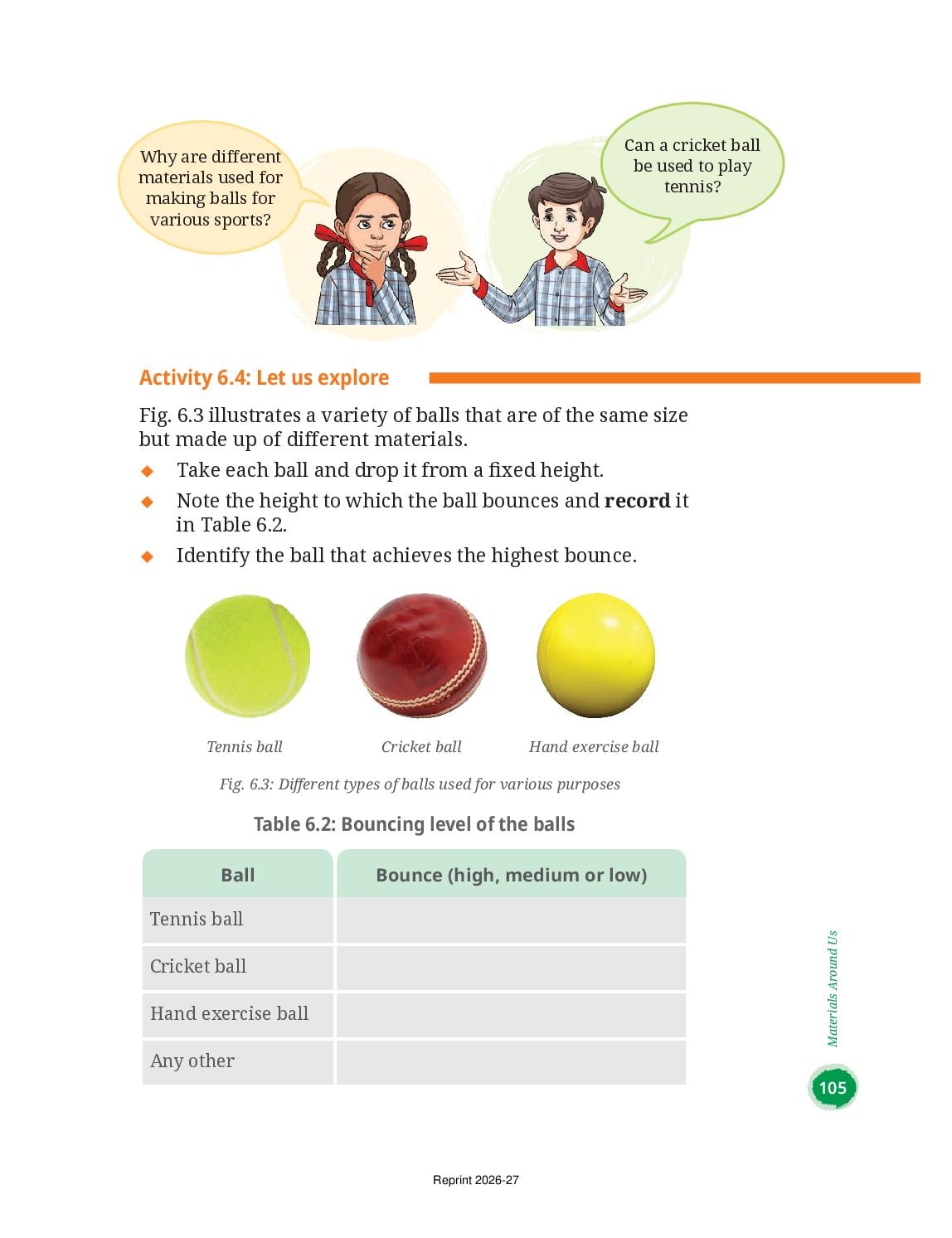
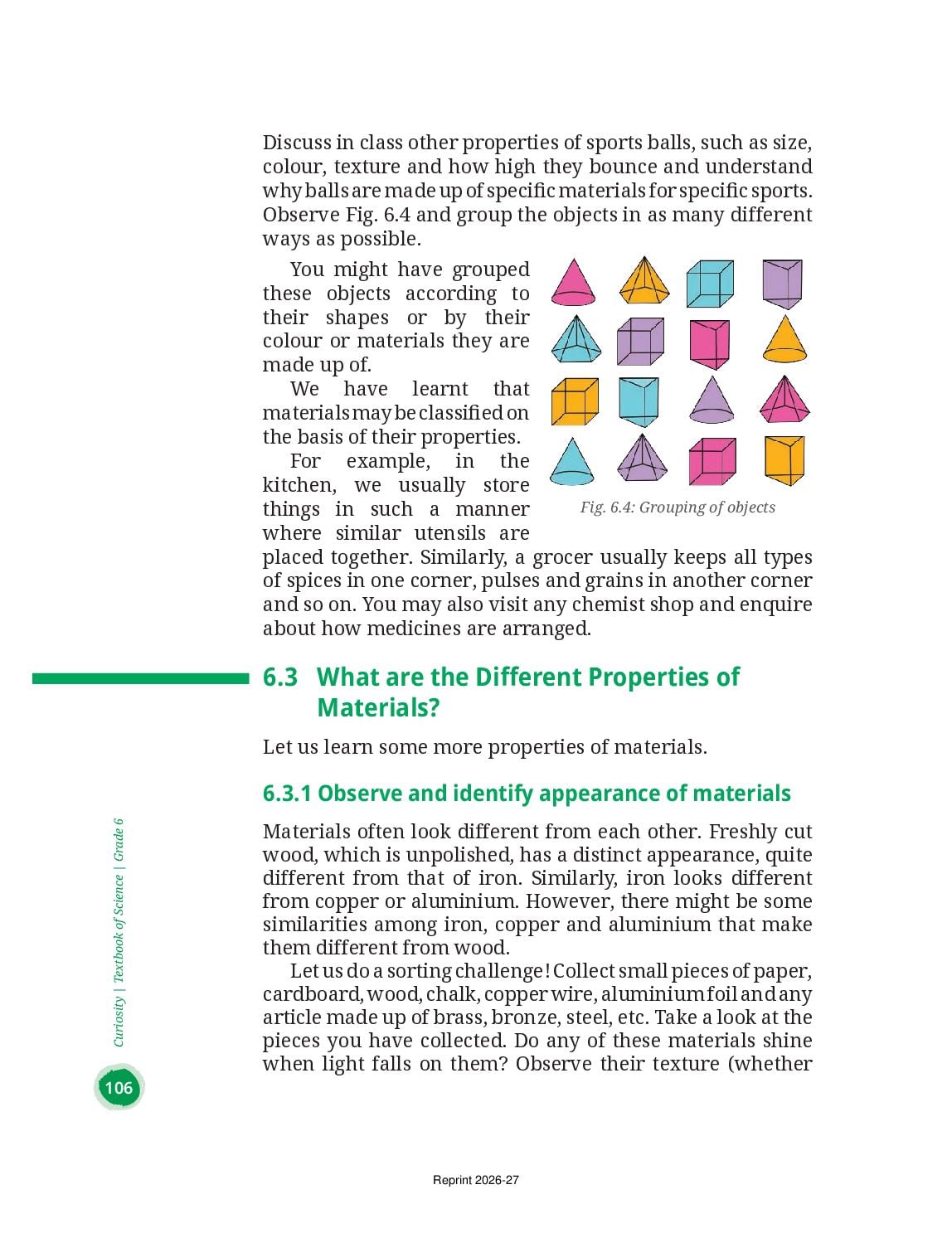
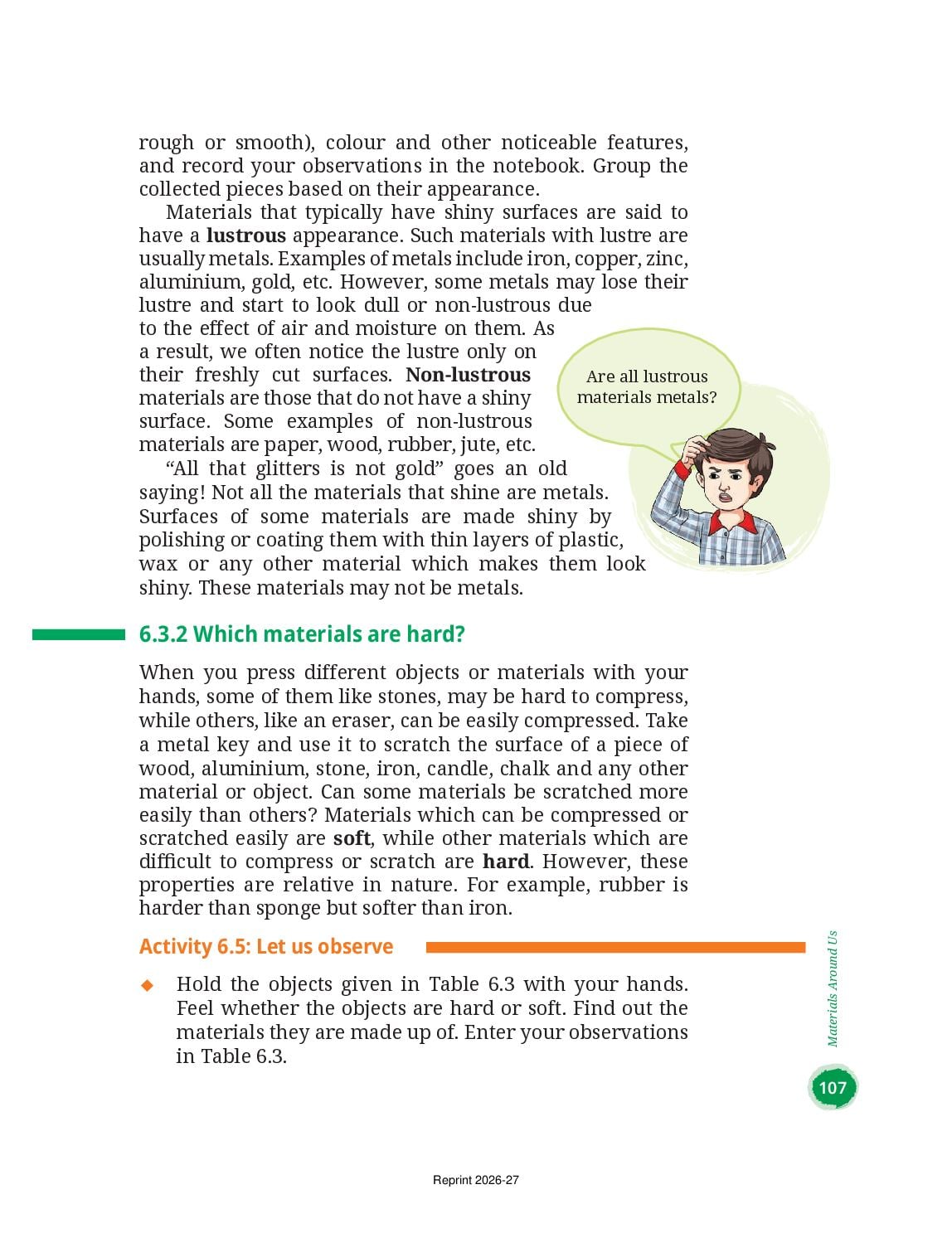
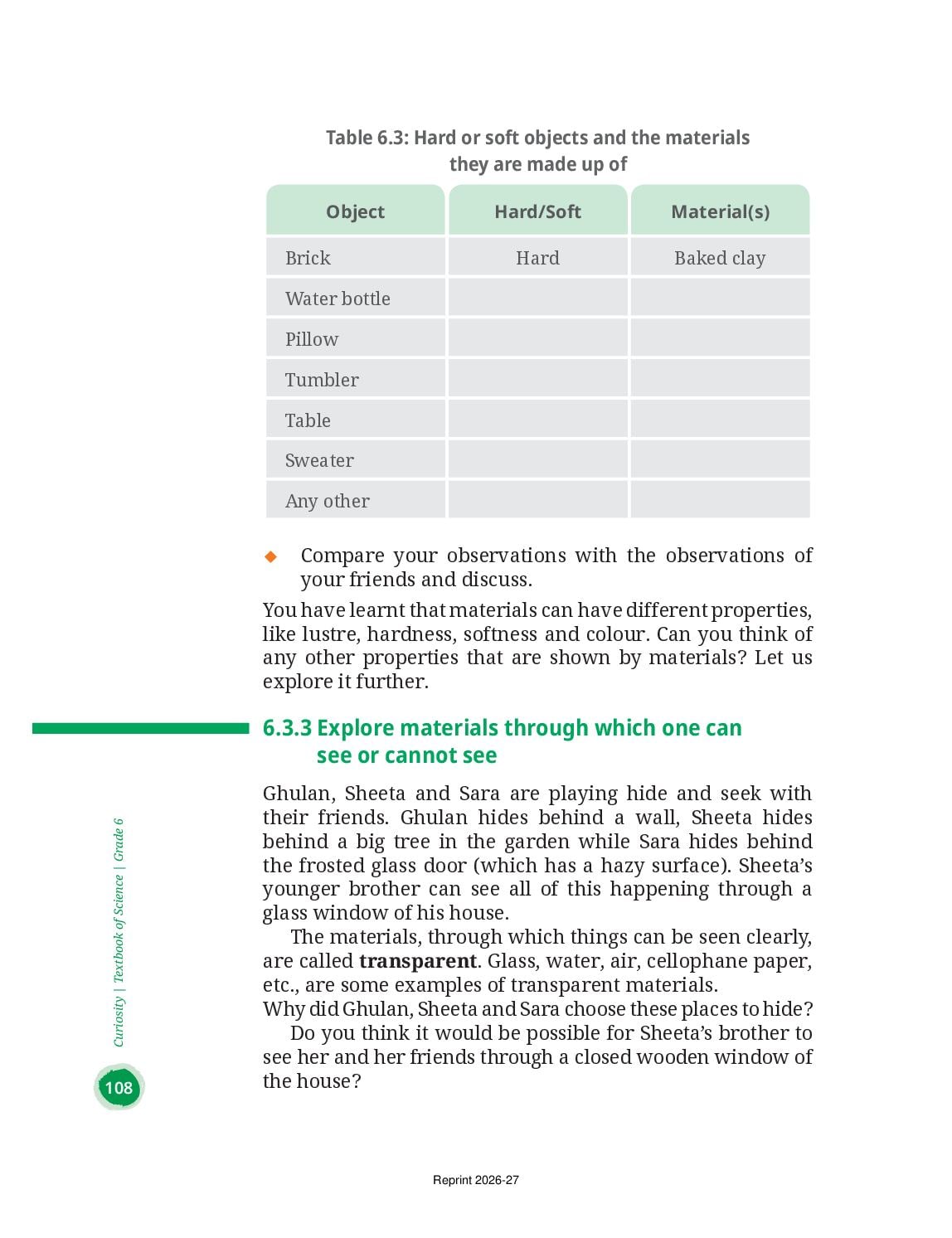
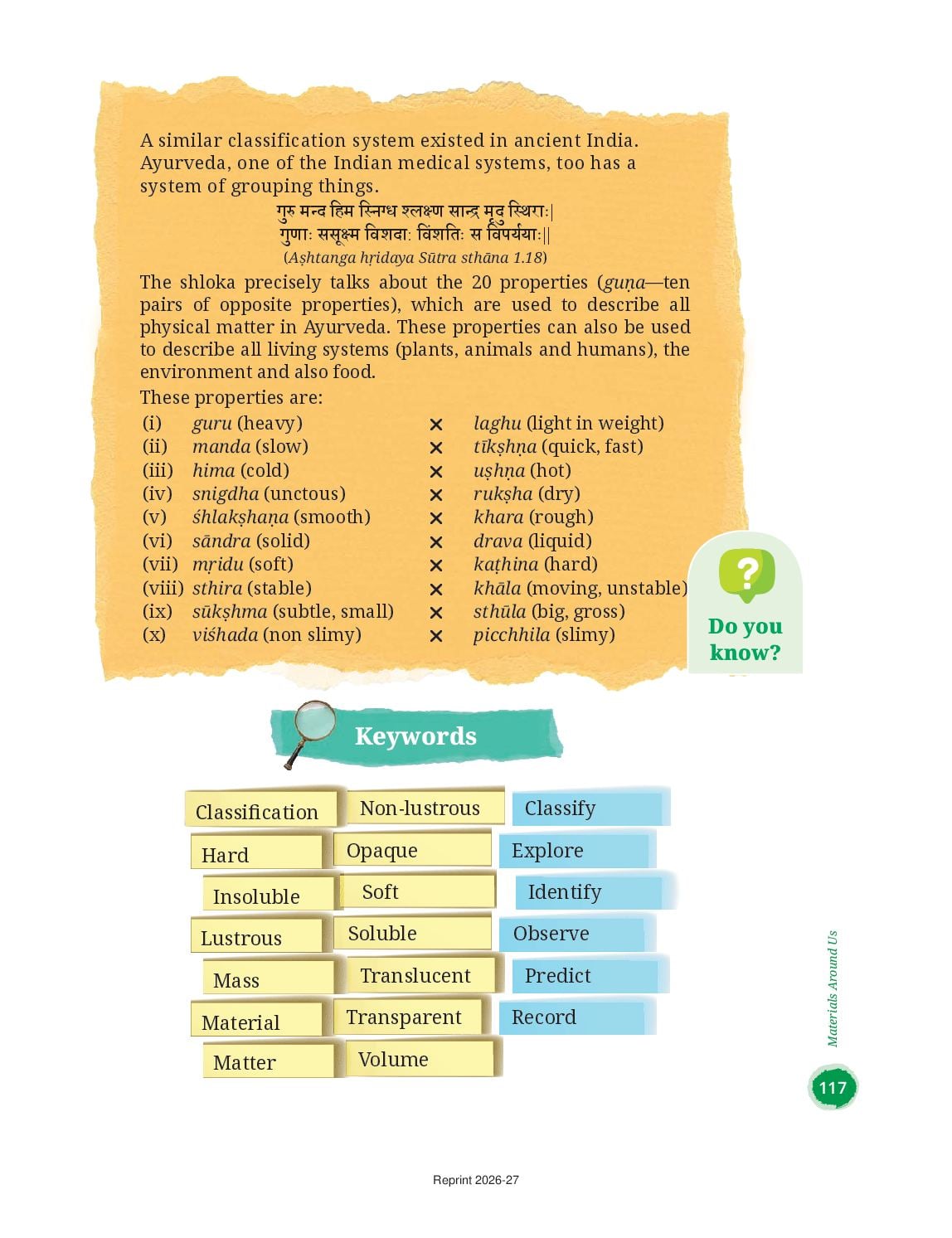
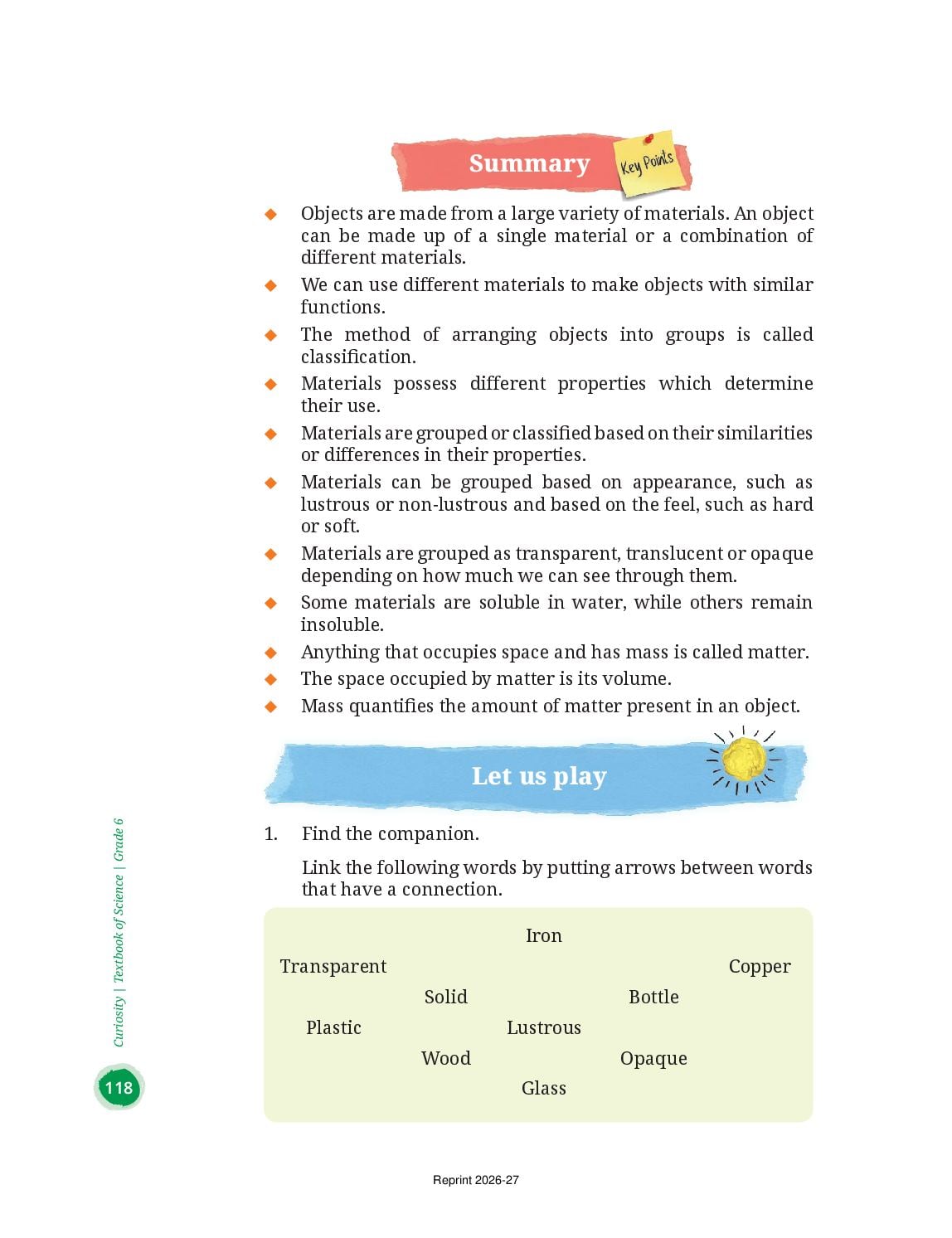
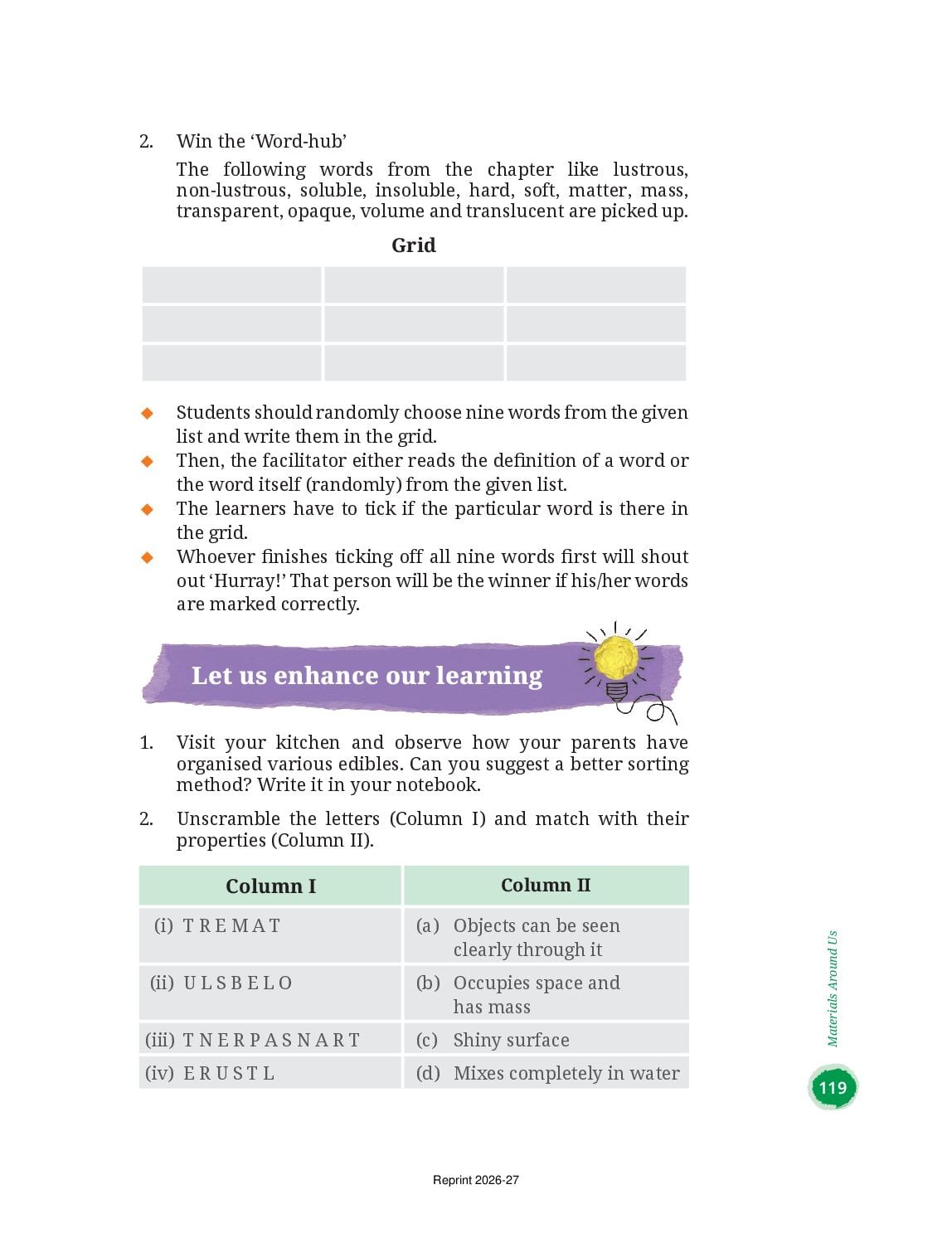
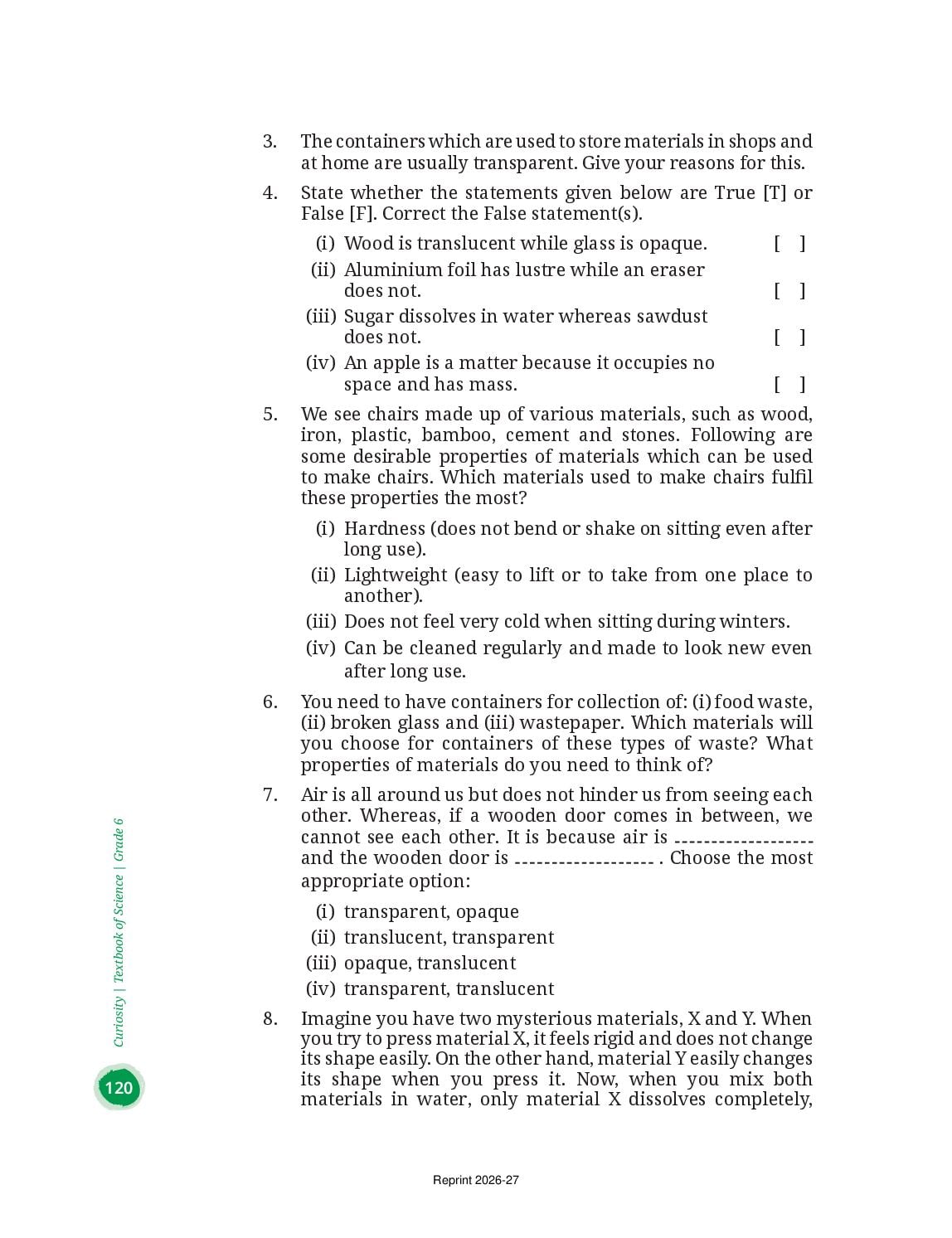
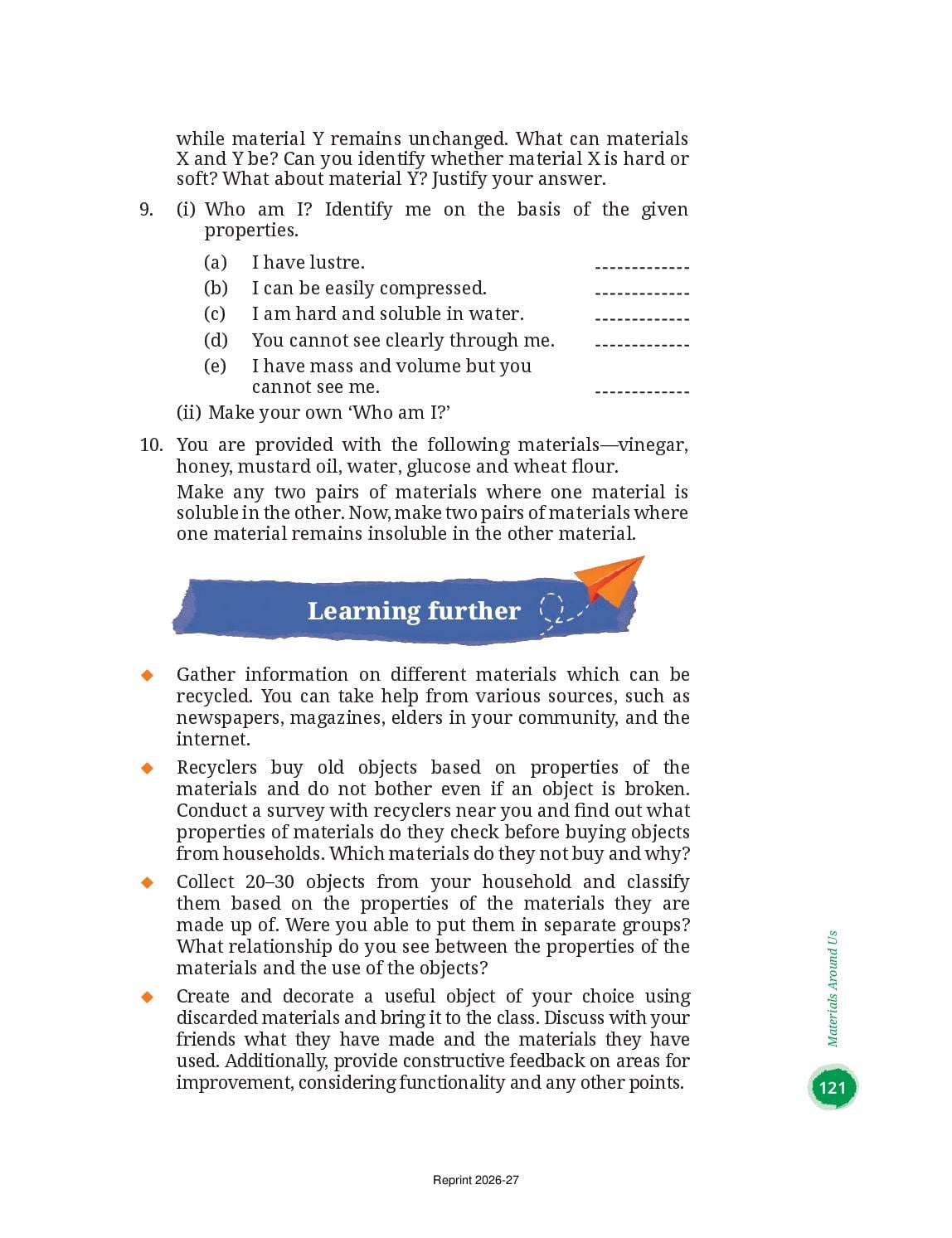
What Is in Materials Around Us? (Class 6 Science Chapter 6)
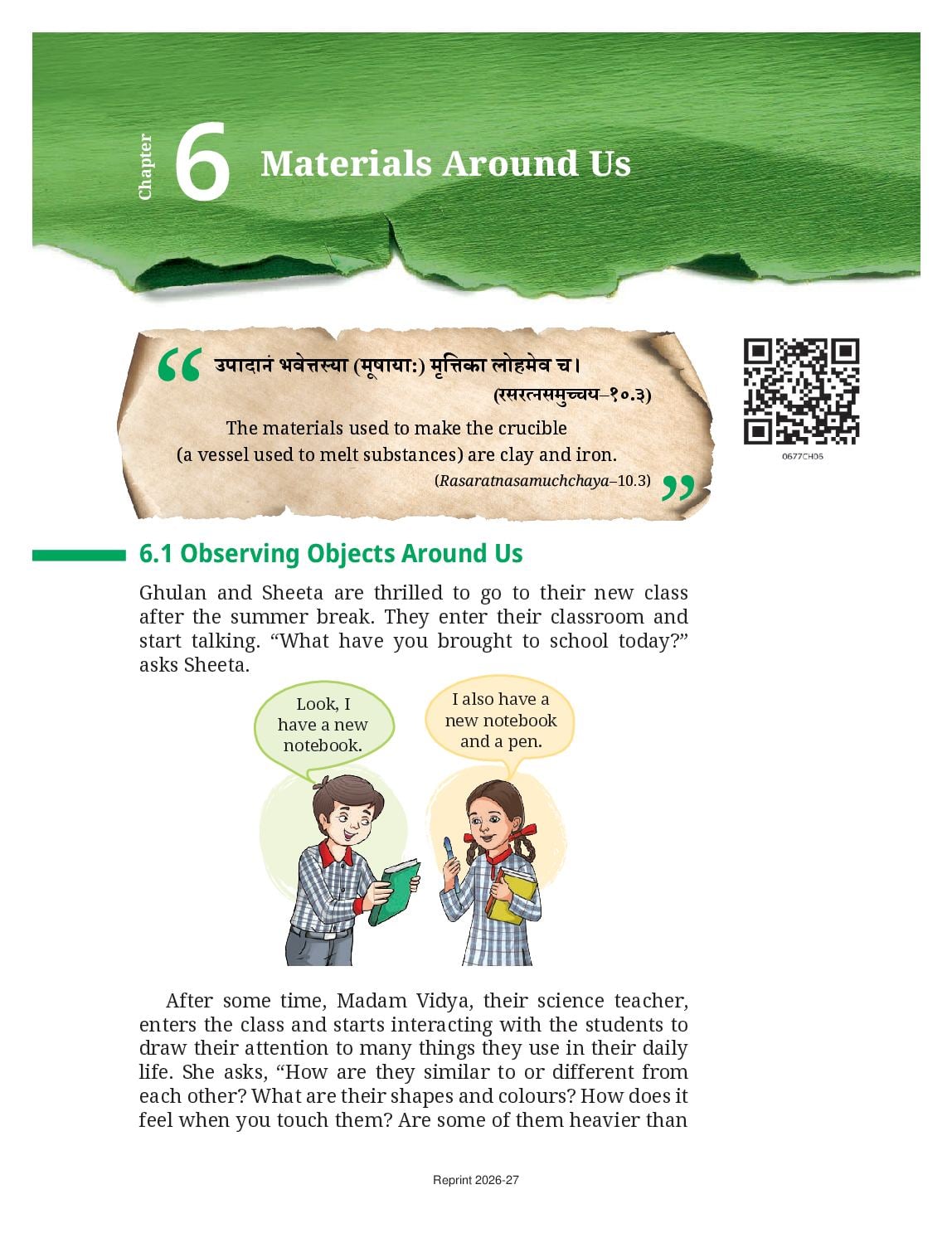
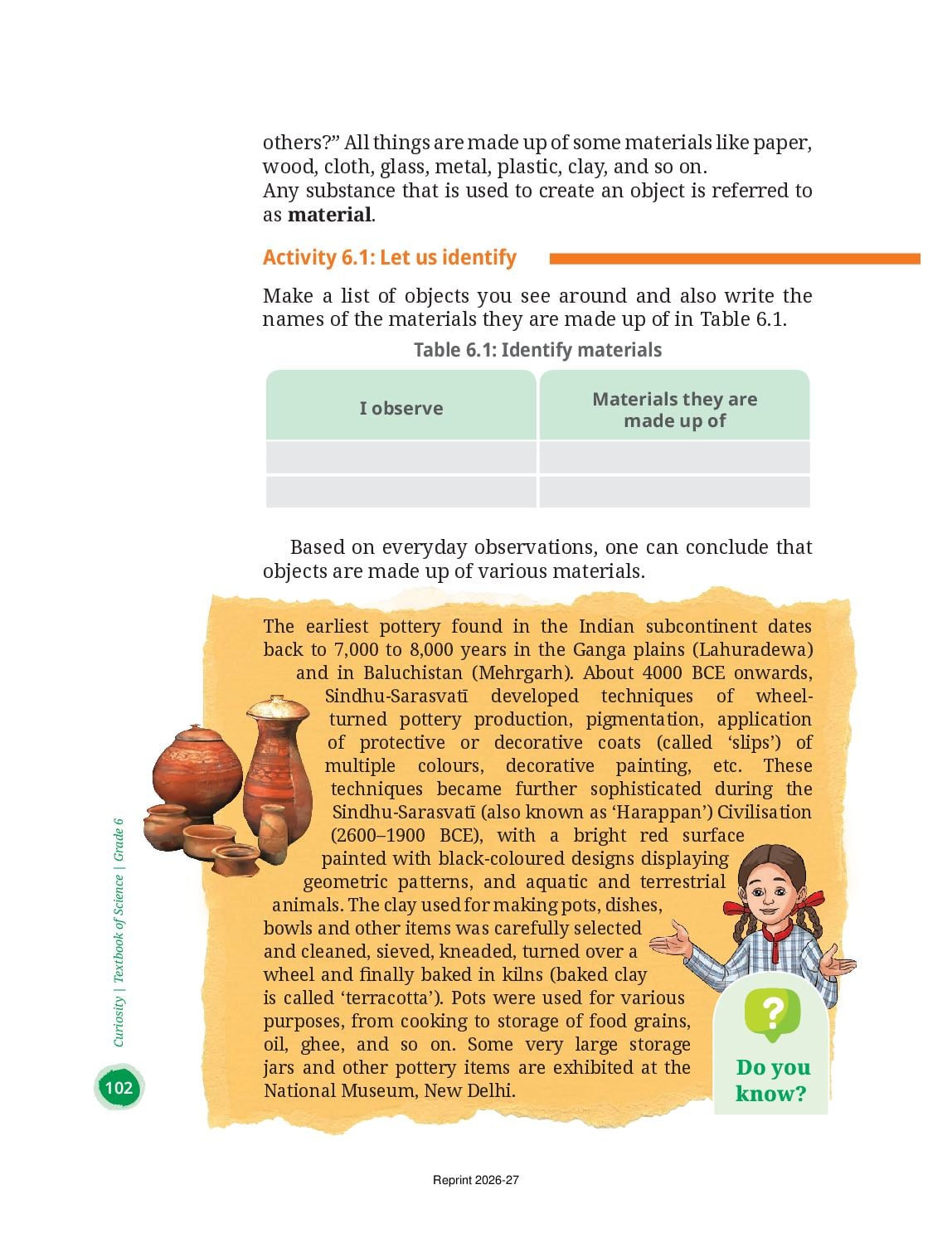
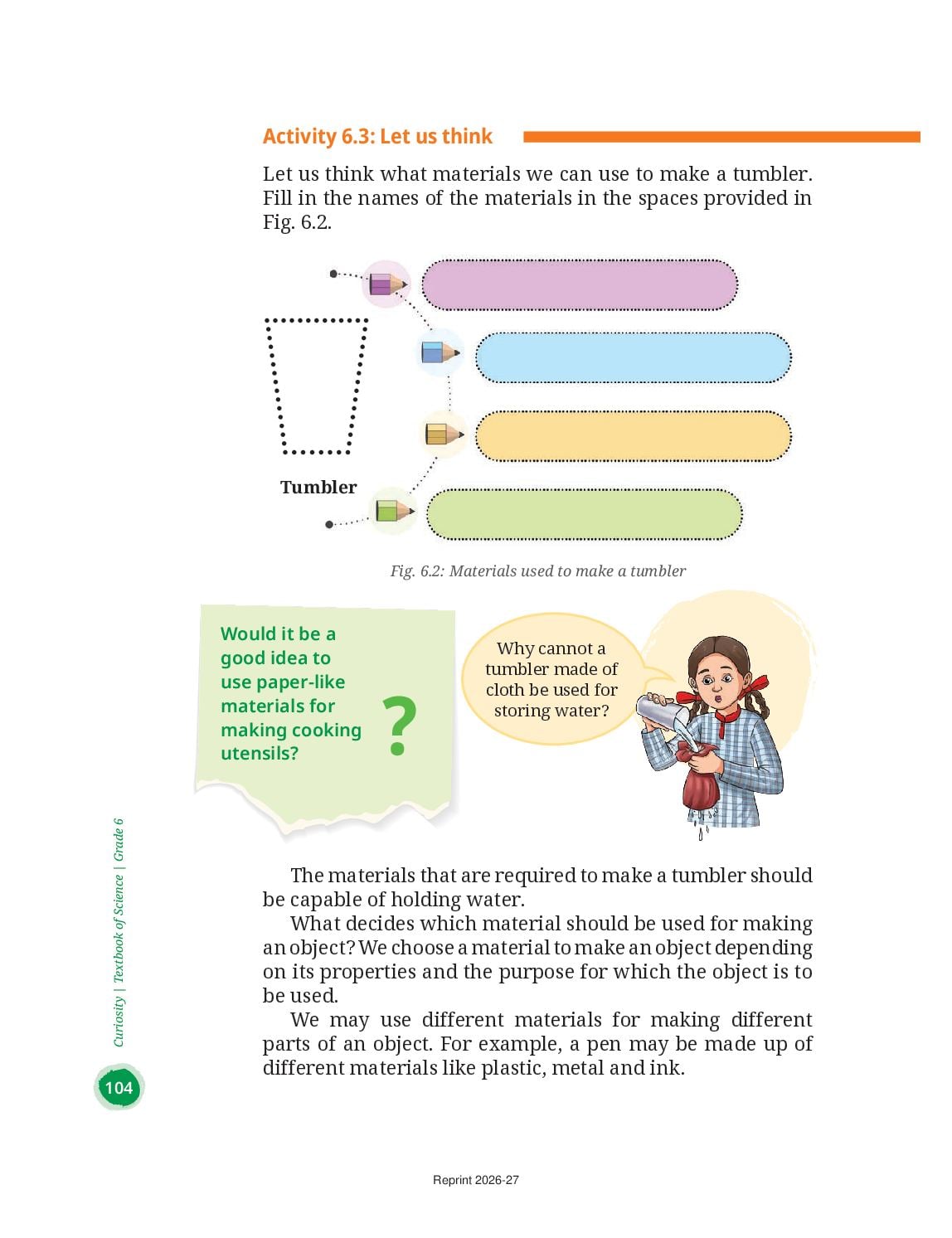
- Any substance used to create an object is a material. One object can be made of several materials (a pen = plastic + metal + ink) and one material can make many objects (glass → tumbler, window, bangle, bottle).
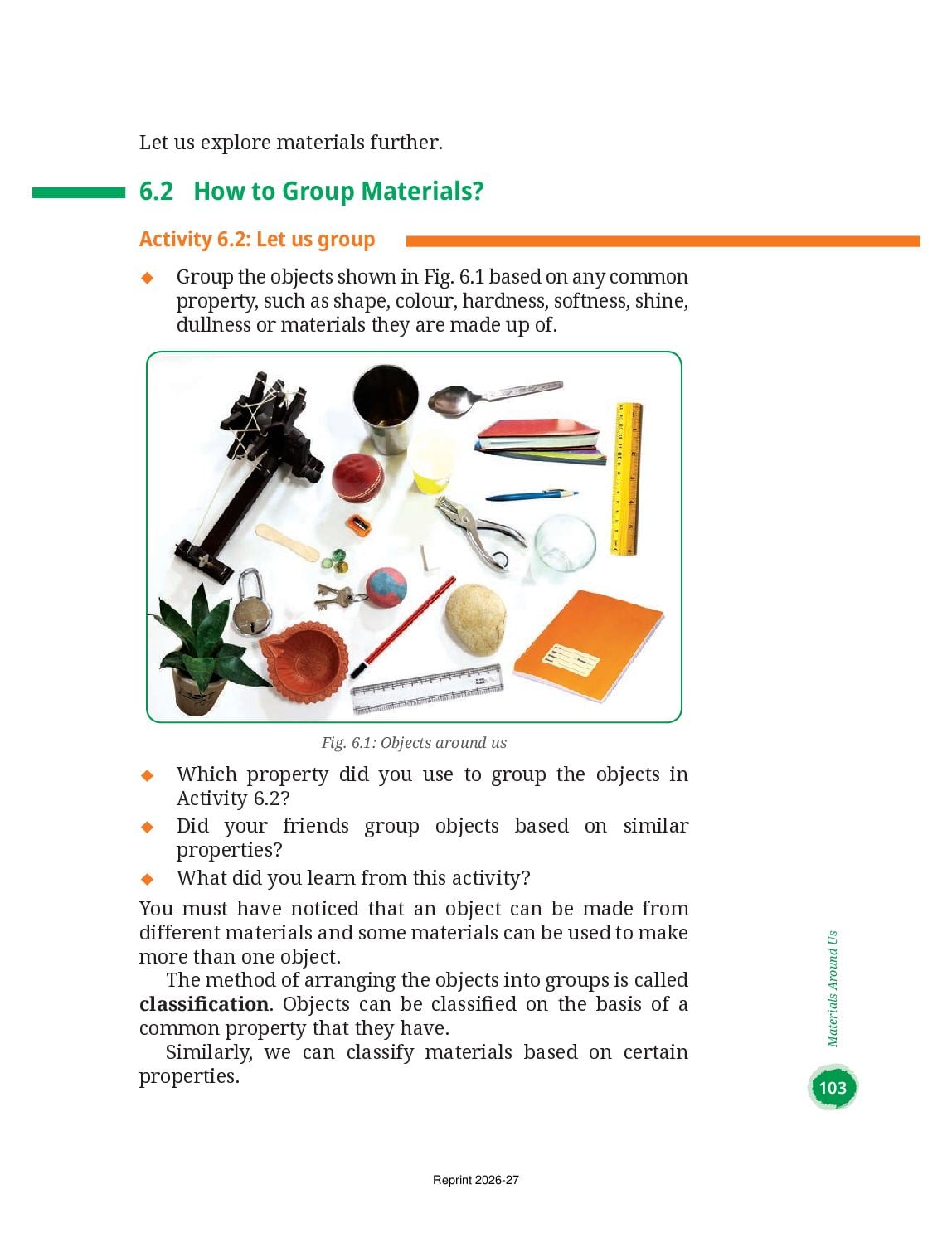
- Arranging objects into groups is called classification. We classify on the basis of a common property — shape, colour, lustre, hardness, transparency, solubility, and so on.
- Appearance: materials with a shiny surface are lustrous (mostly metals — iron, copper, zinc, aluminium, gold); dull ones are non-lustrous (paper, wood, rubber, jute). But “all that glitters is not gold” — a polished or plastic-coated surface can shine without being a metal.
- Feel: materials that are difficult to compress or scratch are hard (stone, iron, brick); those easily compressed or scratched are soft (sponge, eraser, cotton). Hardness is relative — rubber is harder than sponge but softer than iron.
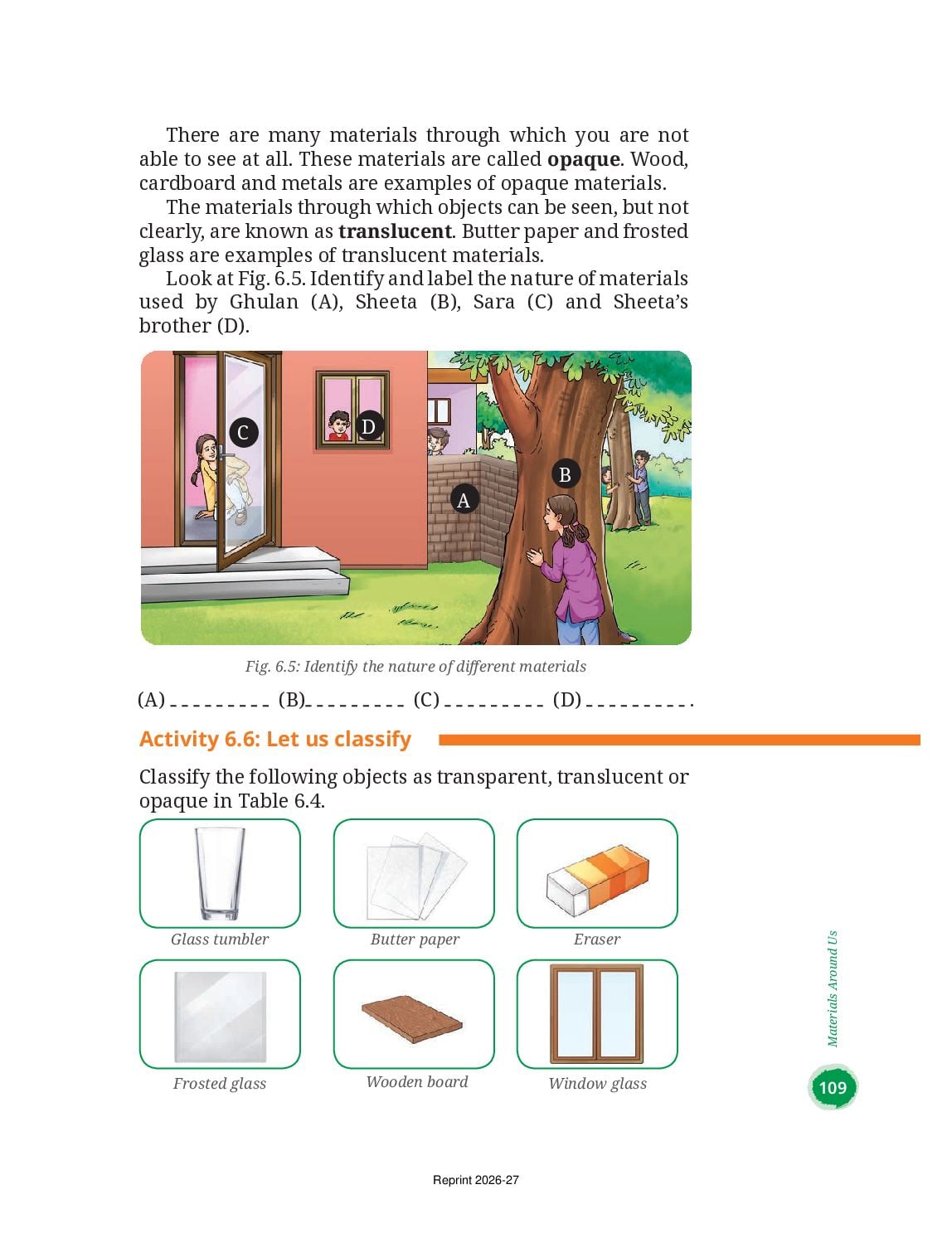
- Seeing through: transparent (see clearly — glass, water, air, cellophane), translucent (see but not clearly — butter paper, frosted glass), opaque (cannot see at all — wood, cardboard, metals).
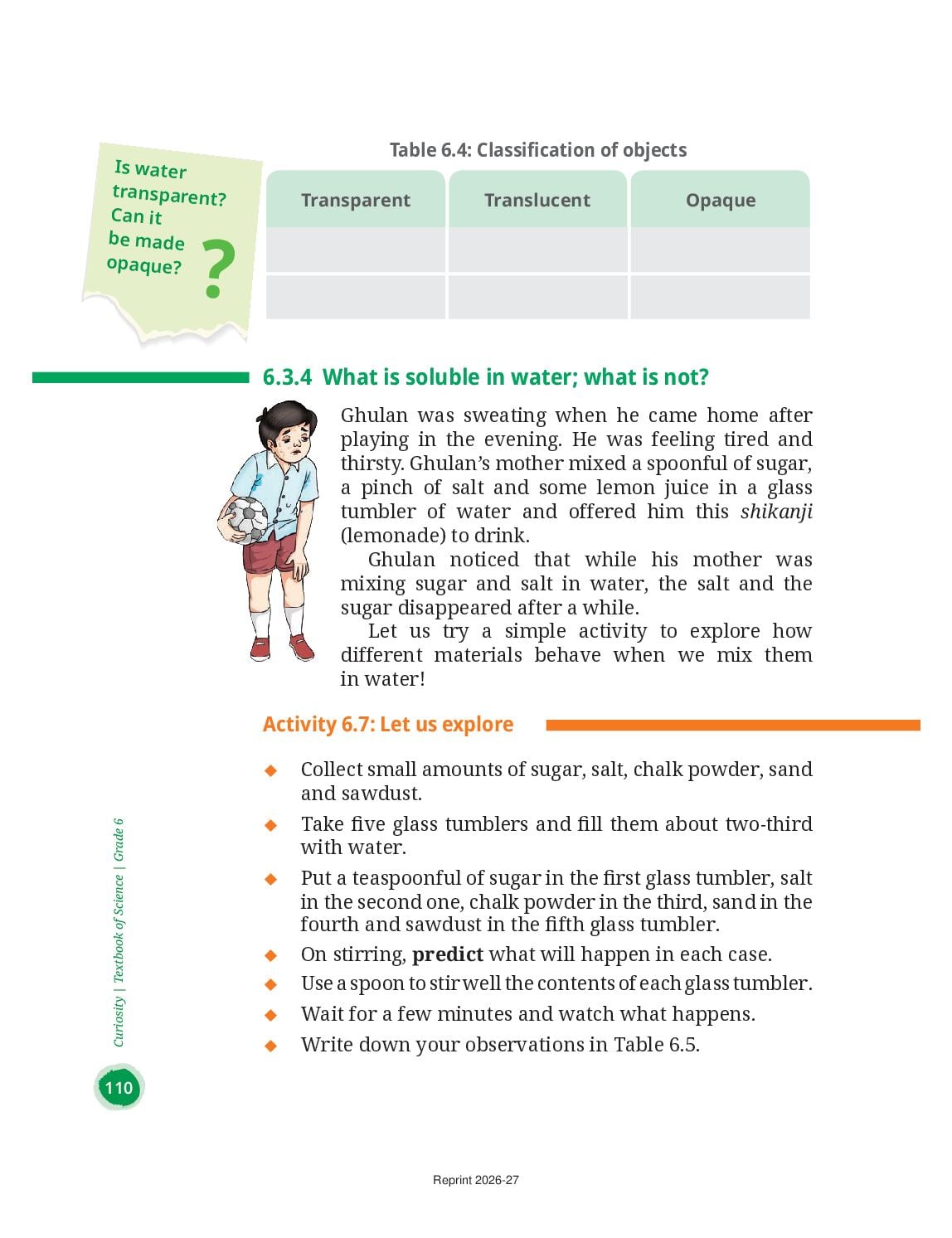
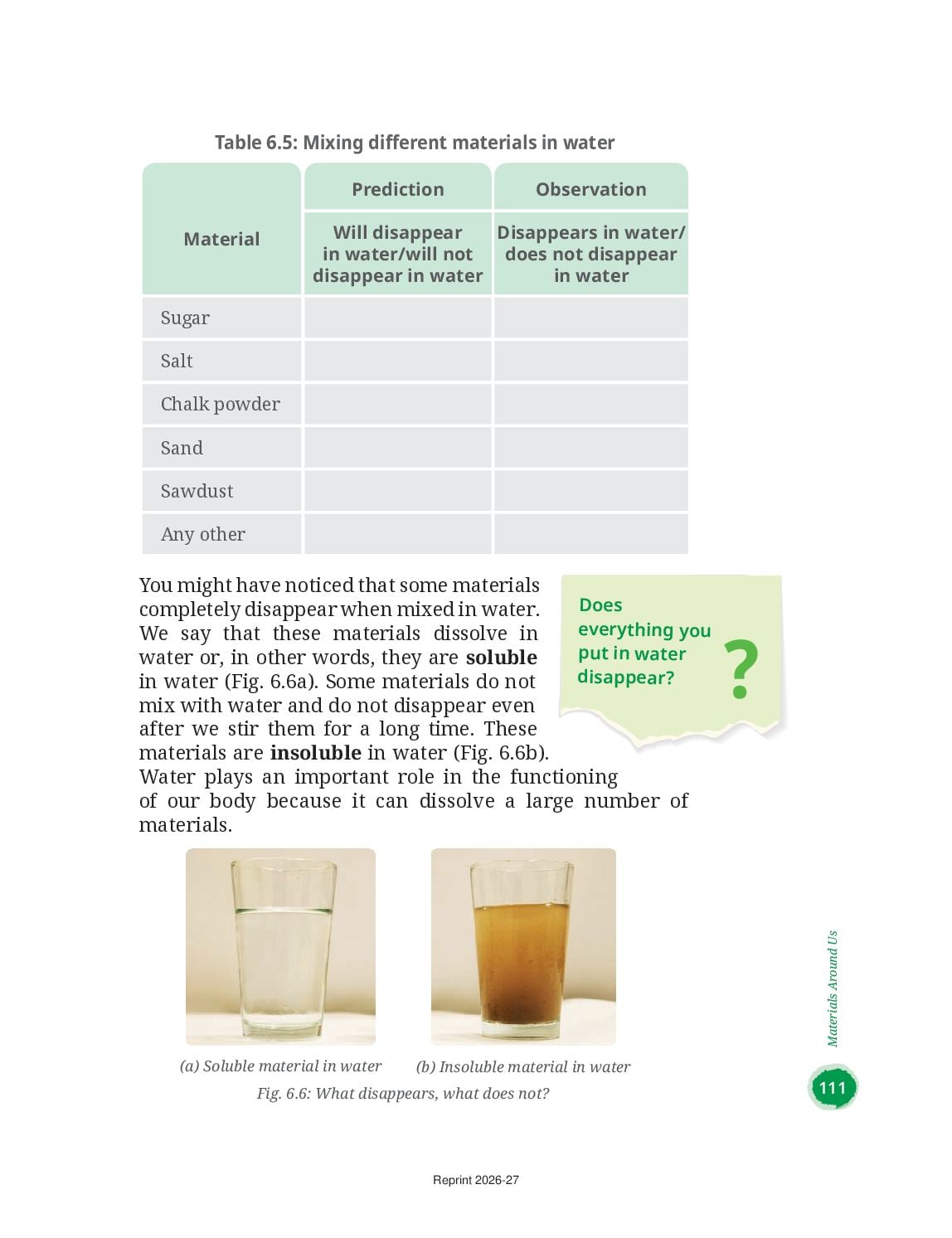
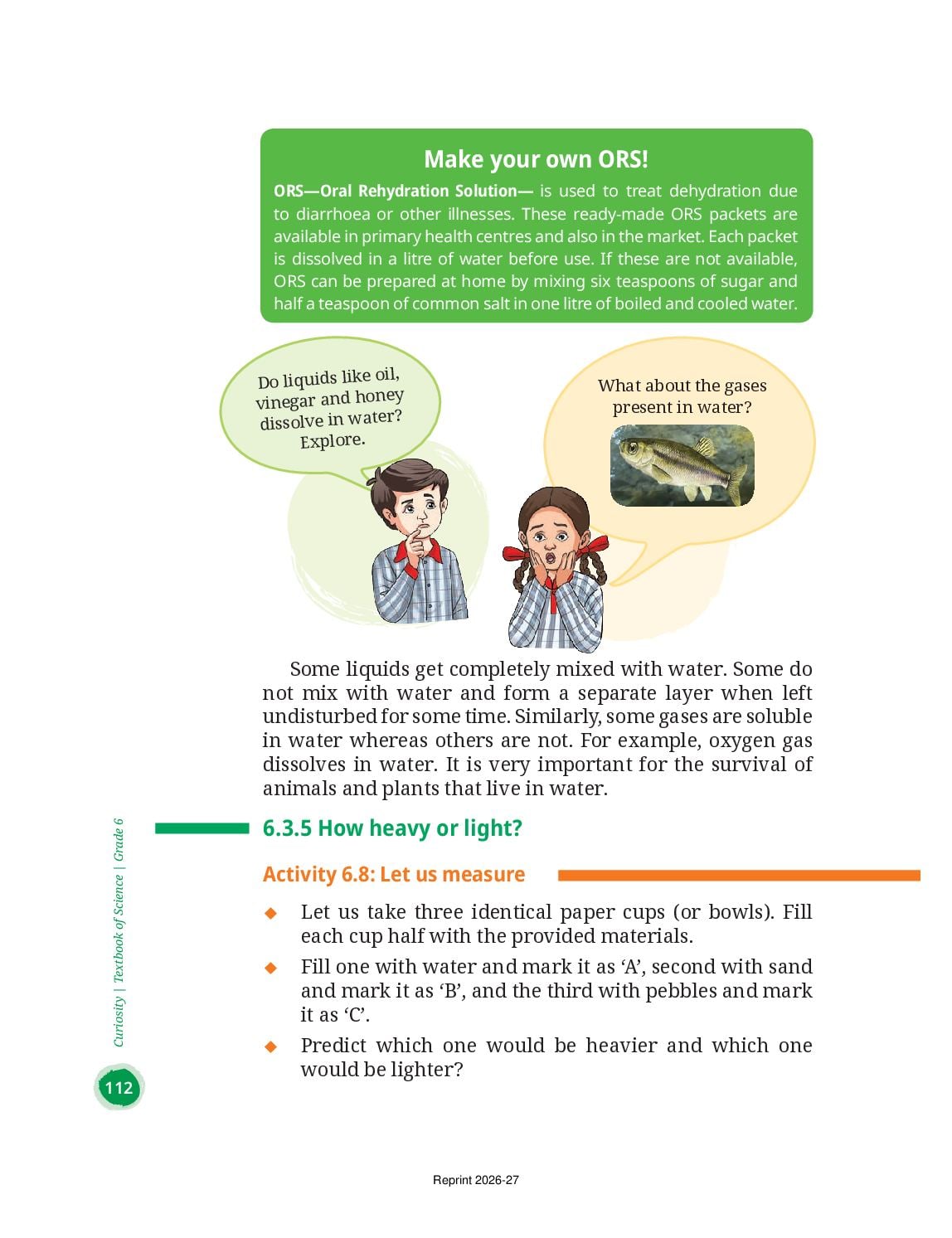
- In water: materials that dissolve and disappear are soluble (sugar, salt, glucose); those that stay visible are insoluble (sand, chalk powder, sawdust). Some liquids and gases also dissolve — oxygen dissolved in water keeps fish alive.
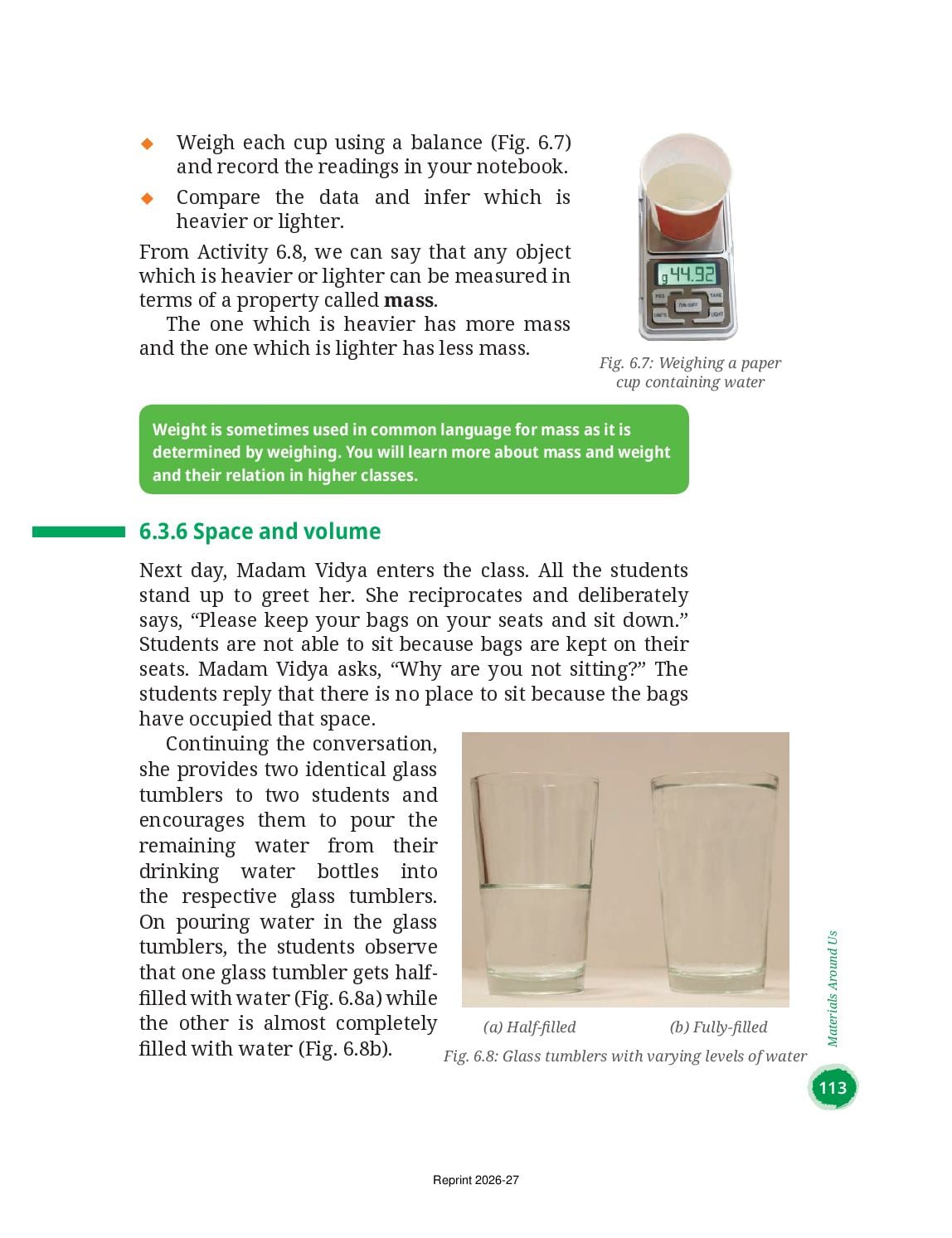
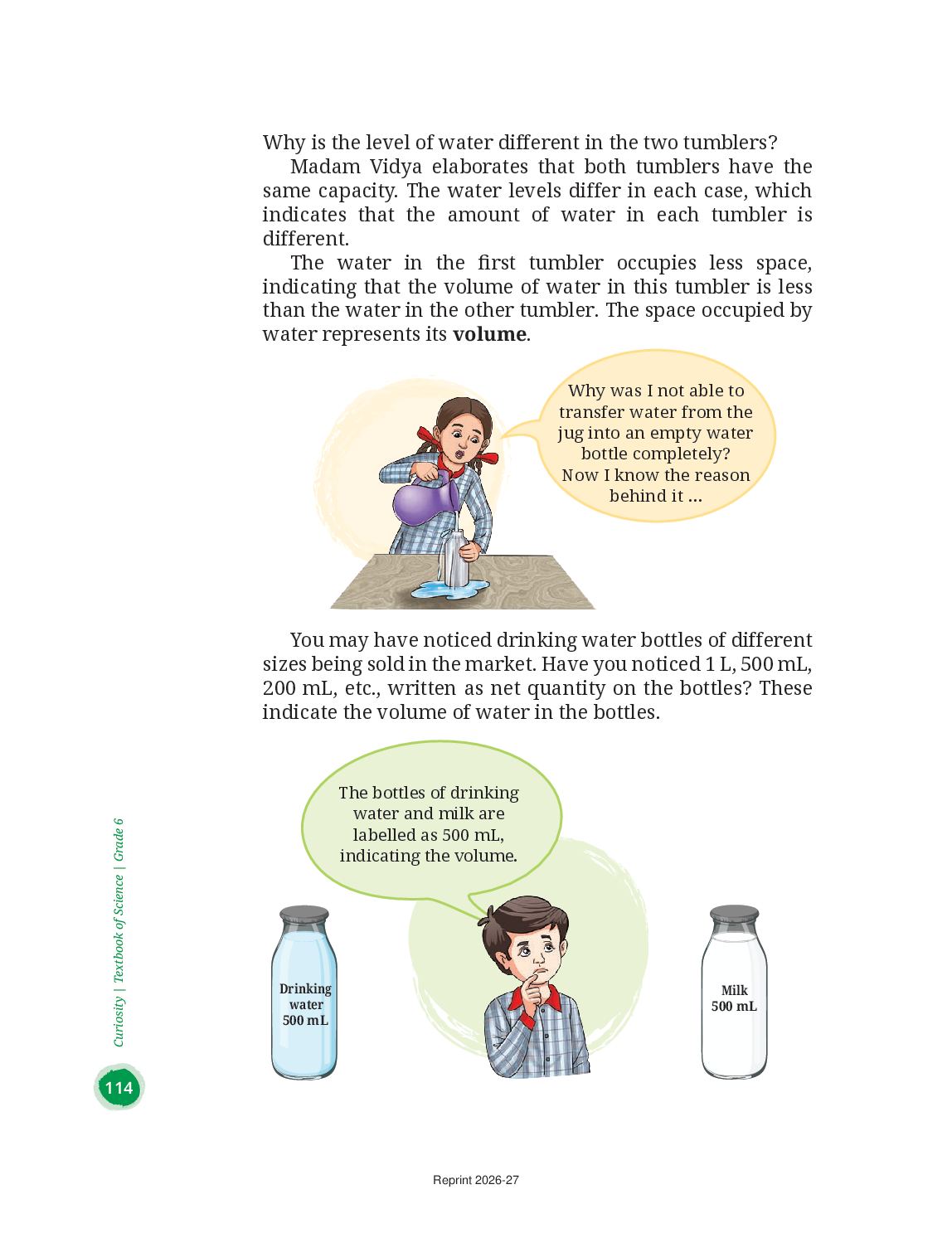
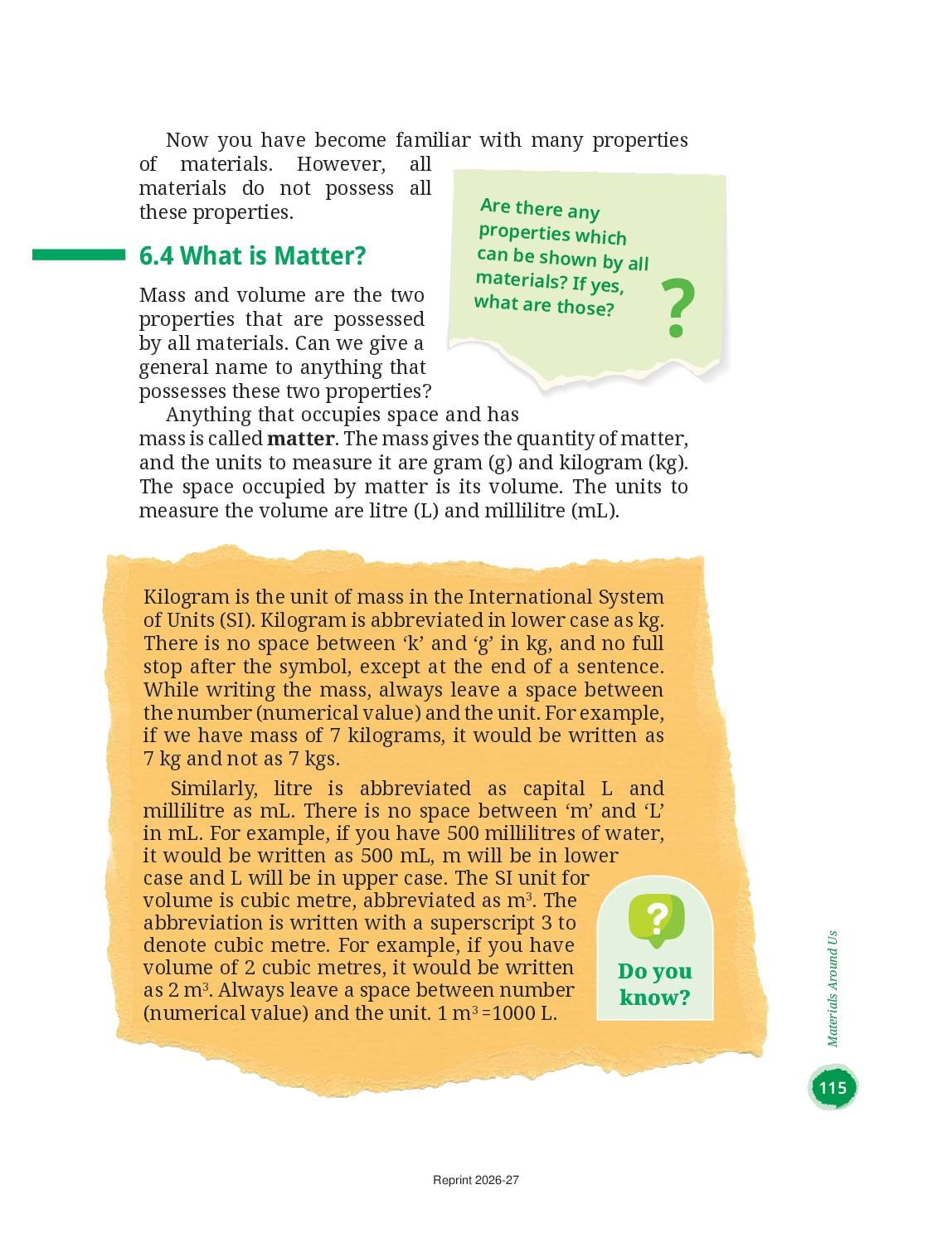
- Mass (measured in g and kg) tells how much matter an object has; volume (measured in L and mL) is the space it occupies. Anything that occupies space and has mass is called matter.
Quick revision – Materials Around Us
| Term | What it means | How you test for it | Everyday Indian example |
|---|---|---|---|
| Material | Any substance used to create an object | Ask: what is this thing made of? | Steel in a tumbler, baked clay in a diya |
| Classification | The method of arranging objects into groups on the basis of a common property | Pick one property and sort everything by it | A grocer keeping all spices in one corner |
| Lustrous / Non-lustrous | Lustrous = shiny surface (usually a metal); non-lustrous = dull surface | Hold it in sunlight — does it shine? | Copper wire, aluminium foil (lustrous); jute rope, chalk (non-lustrous) |
| Hard | Difficult to compress or to scratch | Press it with your hand; scratch it with a metal key | Brick, stone, iron tawa |
| Soft | Easily compressed or scratched | It dents under your thumb, the key leaves a mark | Pillow, eraser, chalk, sponge |
| Transparent | Things can be seen clearly through it | Hold your book behind it — can you read the letters? | Window glass, clean water, air, cellophane |
| Translucent | Things can be seen, but not clearly | The letters look blurred and hazy | Butter paper, frosted glass of a bathroom door |
| Opaque | Nothing can be seen through it at all | No light comes through; you see only a shadow | Wooden door, cardboard carton, steel plate |
| Soluble | Dissolves in water and disappears | Stir a spoonful in water, wait a few minutes — nothing is left to see | Sugar and salt in shikanji; ORS powder |
| Insoluble | Does not dissolve; stays visible, settles down or floats | Even after long stirring the particles are still seen | Sand, chalk powder, sawdust, mustard oil |
| Mass and volume | Mass = quantity of matter (g, kg); volume = space occupied (L, mL) | Mass — weigh on a balance; volume — read the ‘net quantity’ or the level in a measuring jar | 7 kg gas cylinder refill; 500 mL milk pouch |
| Matter | Anything that occupies space and has mass | Does it take up room and weigh something? | Water, sand, pebbles, the cup — and even air |
Old NCERT vs New – Class 6 Science
This chapter is from Curiosity, the new NCERT Class 6 Science book (NCF-SE 2023, used from 2024-25). It replaced the old book “Science”, so chapter numbers and names differ from older PDFs.
Solutions and All Chapters
Answers to the exercises and the full chapter list of Curiosity:
Materials Around Us – Overview
| Class | Class 6 |
| Subject | Science |
| Book | Curiosity – new NCERT book |
| Chapter | 6 of 12 – Materials Around Us |
| Book pages | 101 – 121 |
| Edition | NCERT Reprint 2026-27 |
| Session | 2026-27 |
| Free – read online or download |
Class 6 Science Chapter 6 – FAQs
Where can I download Materials Around Us Class 6 PDF?
From the download table on this page – the chapter PDF is free, and the full book is linked too.
What is Class 6 Science Chapter 6 about?
Any substance used to create an object is a material. One object can be made of several materials (a pen = plastic + metal + ink) and one material can make many objects (glass → tumbler, window, bangle, bottle).
Is Materials Around Us from the new NCERT Class 6 Science book?
Yes. It is chapter 6 of curiosity, the new NCERT Class 6 Science book for 2026-27.
Is this the latest NCERT edition for 2026-27?
Yes – the PDF is NCERT’s latest edition for the 2026-27 session.
Where are the NCERT Solutions for Class 6 Science Chapter 6?
Open the NCERT Solutions link above for answers to the exercise questions.