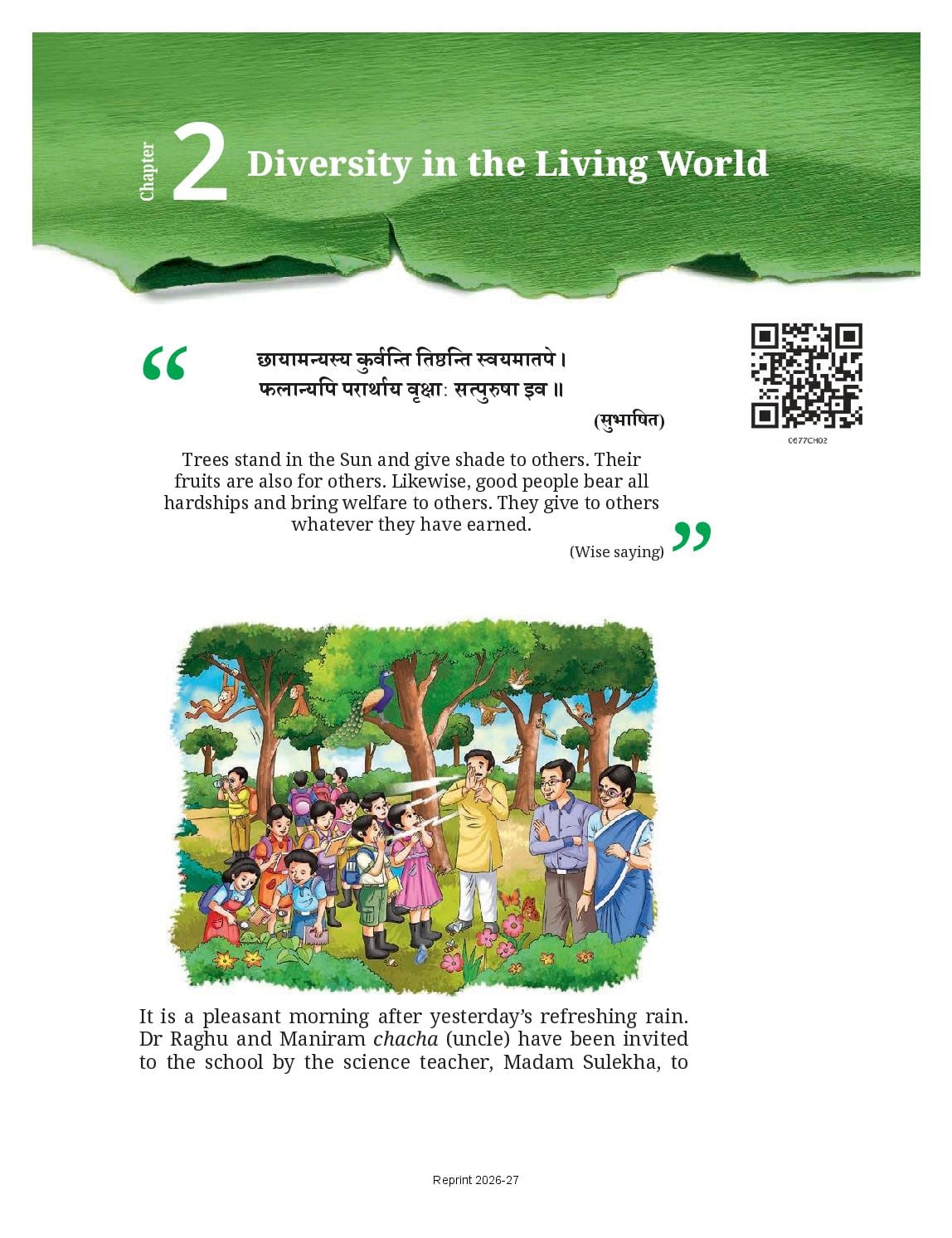
Download Diversity in the Living World – NCERT Class 6 Science Chapter 2 PDF from the new NCERT Class 6 Science book Curiosity (2026-27). Read the chapter online or download the free PDF. We are surrounded by a huge variety of plants and animals. This variety found in a region is called its biodiversity, and every member of it has a role to play.
Diversity in the Living World PDF – Chapter 2 of Curiosity
Read the chapter online or download the PDF.
| Chapter | Download | |
|---|---|---|
| Chapter 2 PDF | Diversity in the Living World | View PDF |
| Full book | NCERT Class 6 Science – Curiosity | View Book |
Read Online
What Is in Diversity in the Living World? (Class 6 Science Chapter 2)
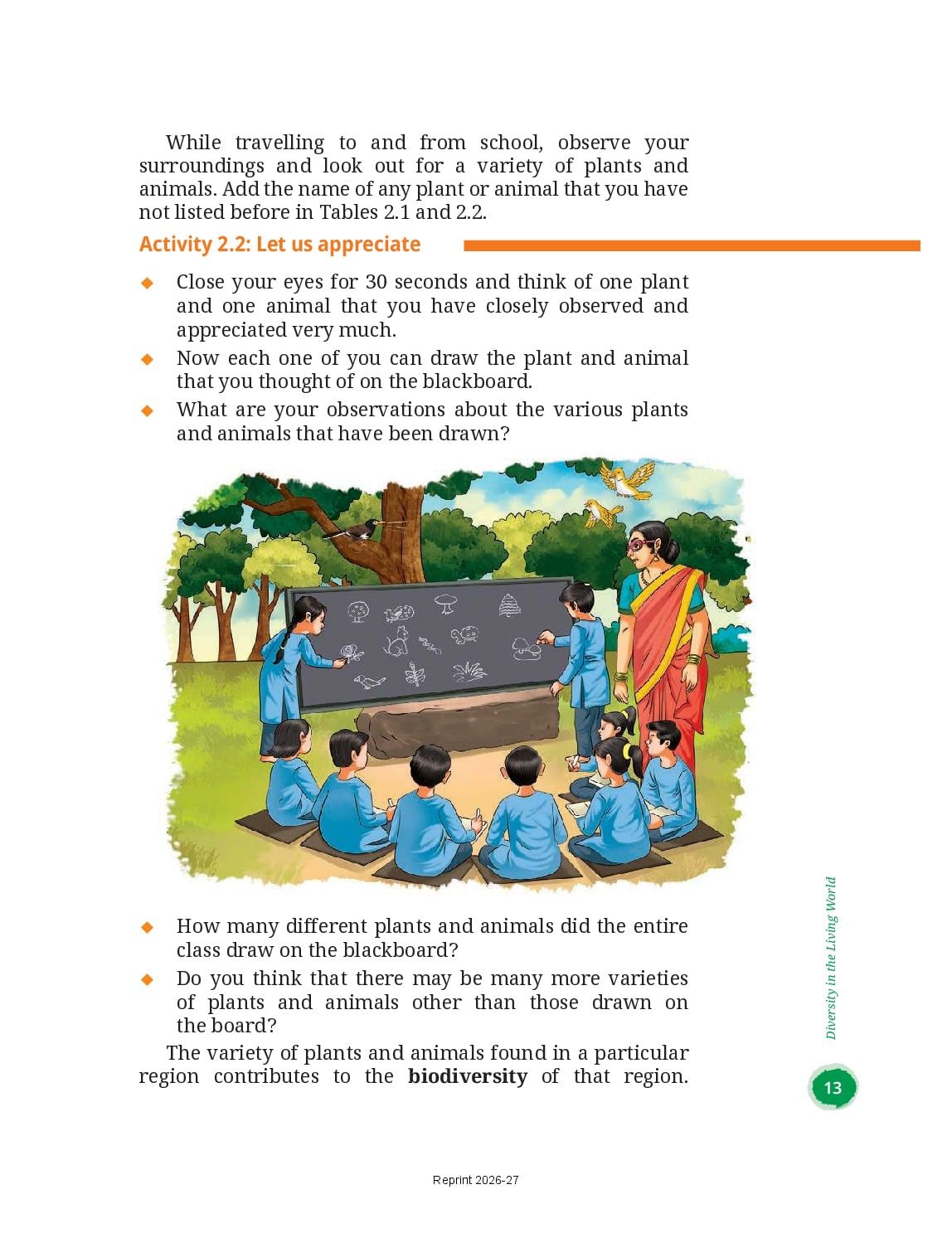
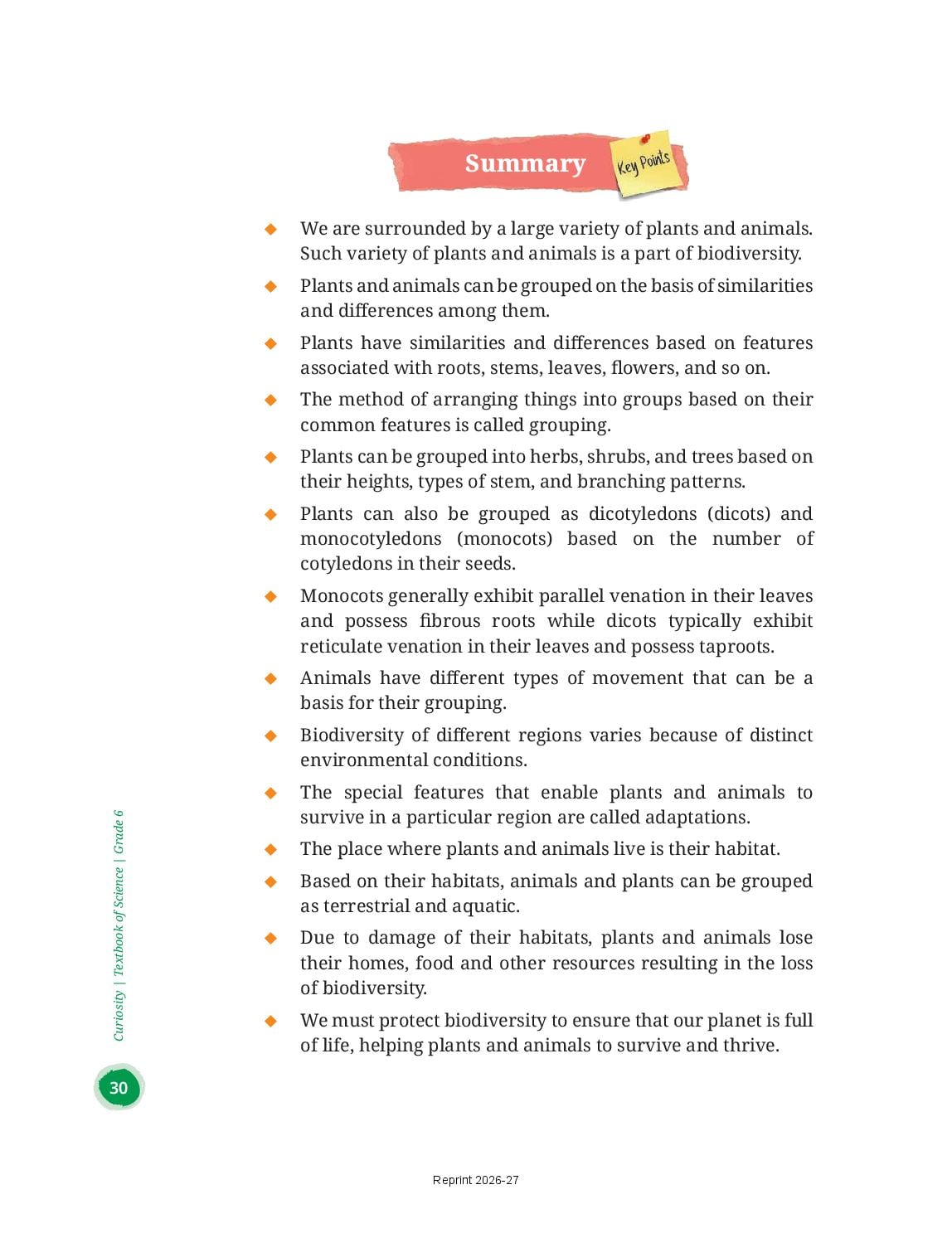
- We are surrounded by a huge variety of plants and animals. This variety found in a region is called its biodiversity, and every member of it has a role to play.
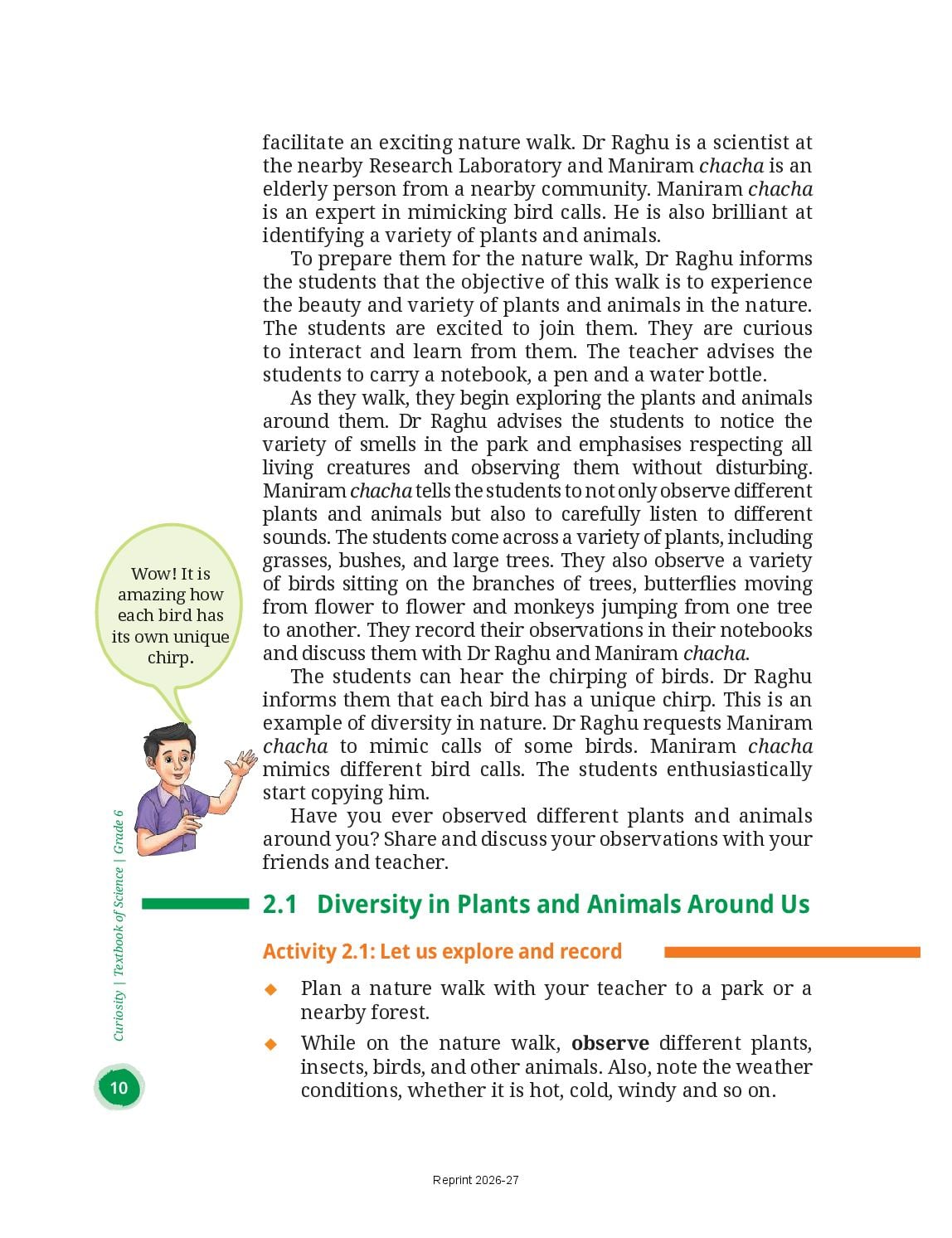
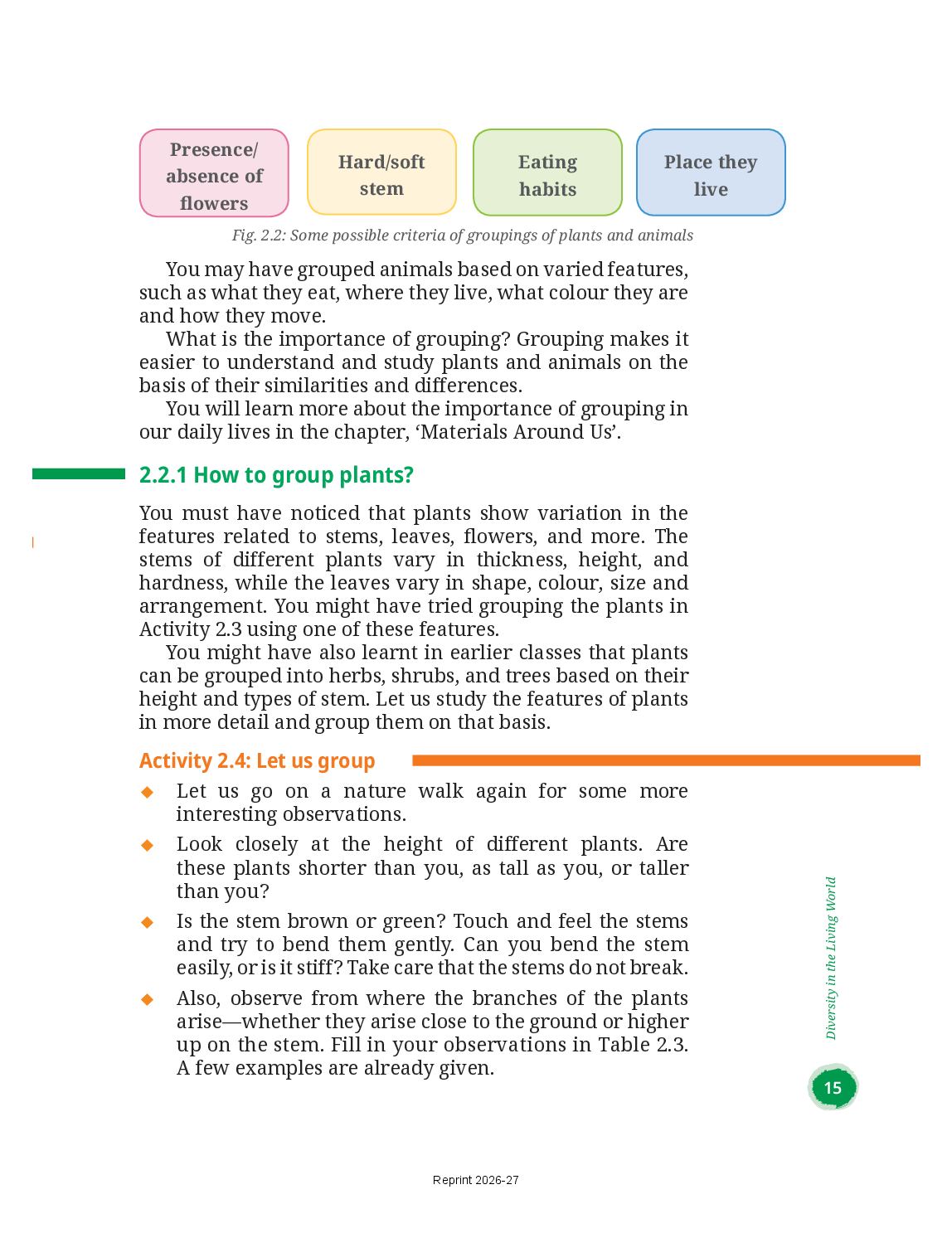
- Plants and animals can be grouped on the basis of similarities and differences. Grouping makes them easier to study — just as sorting books makes a school bag easier to use.
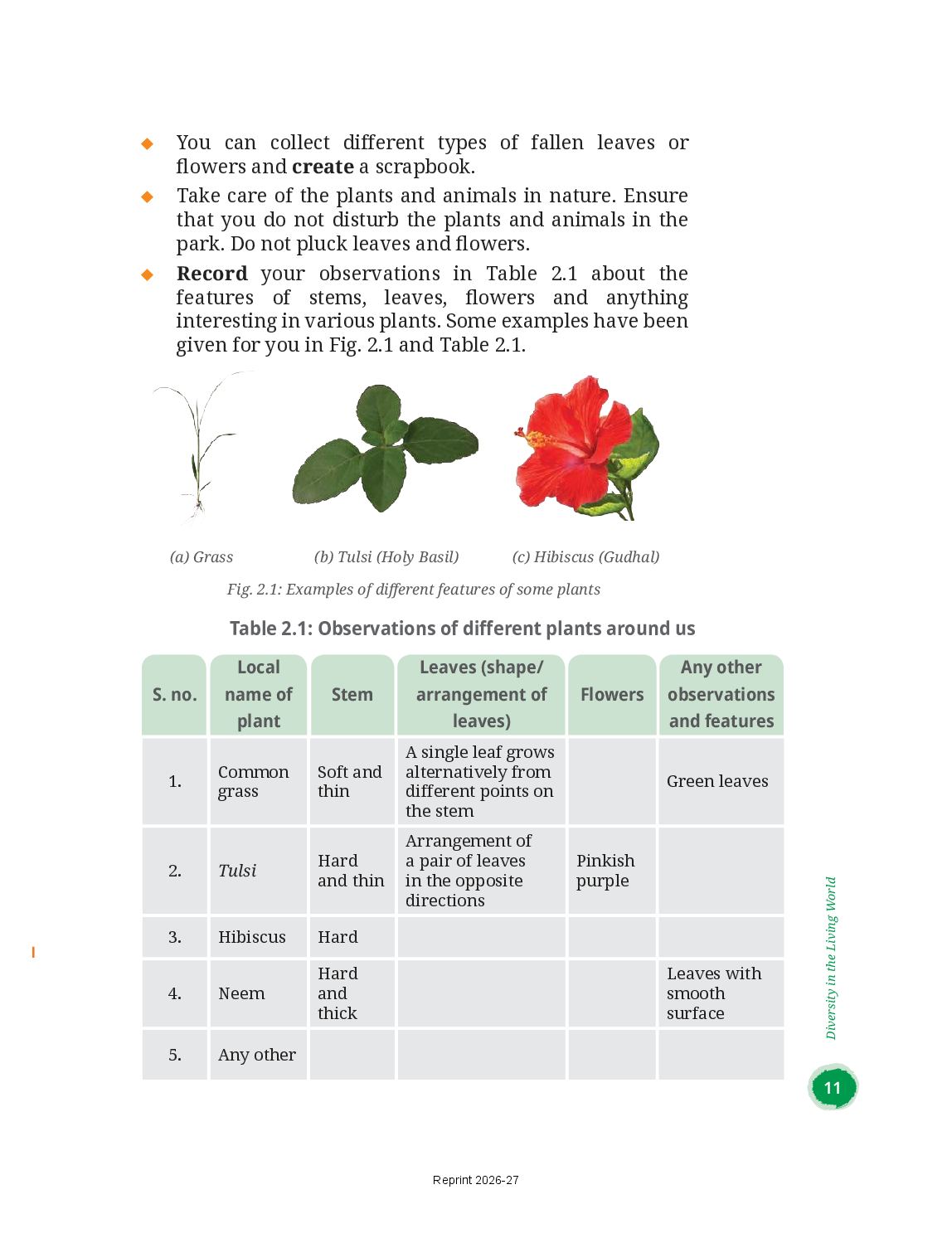
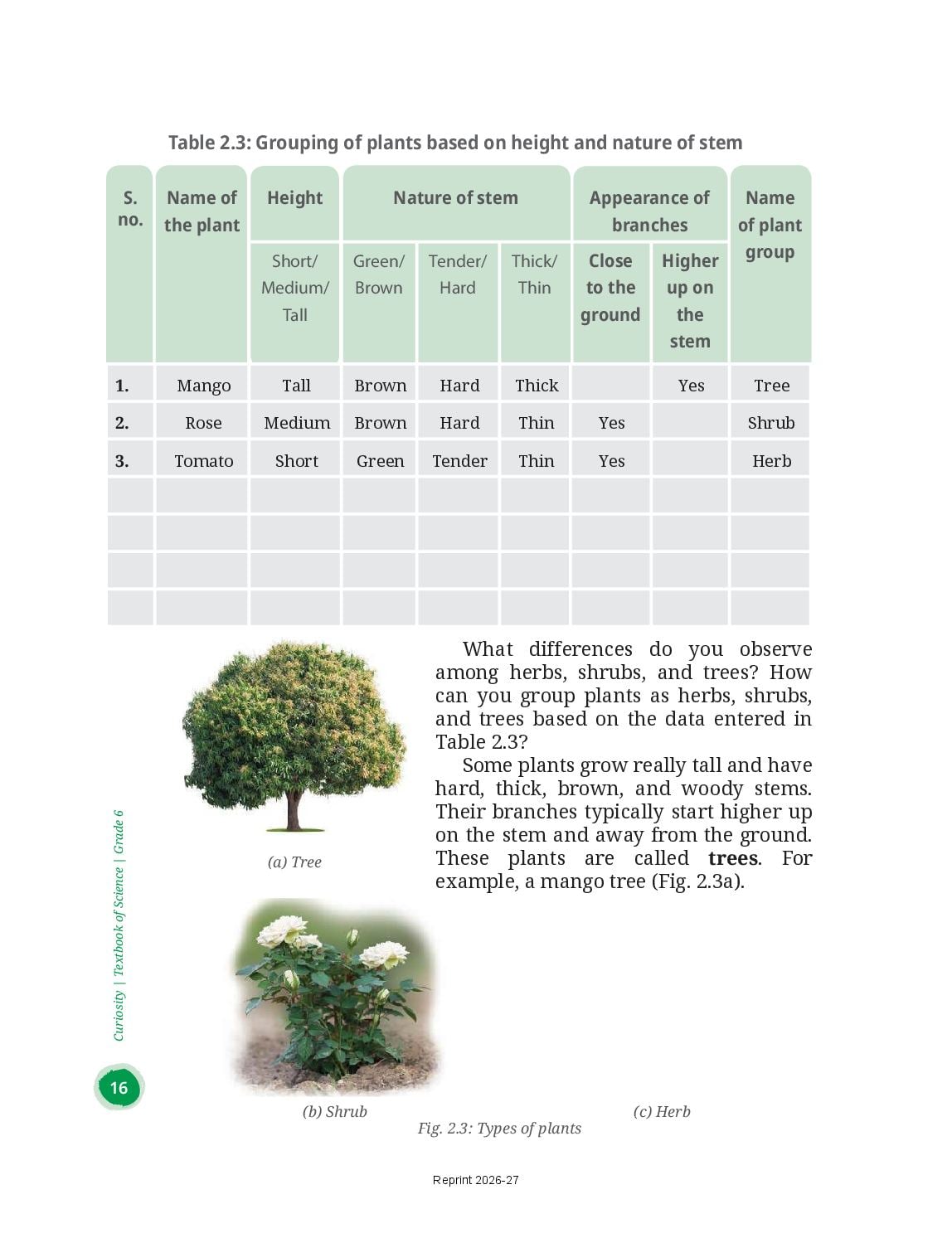
- By height and stem, plants are herbs, shrubs and trees (with climbers and creepers having weak stems). Tomato is a herb, rose a shrub, mango a tree.
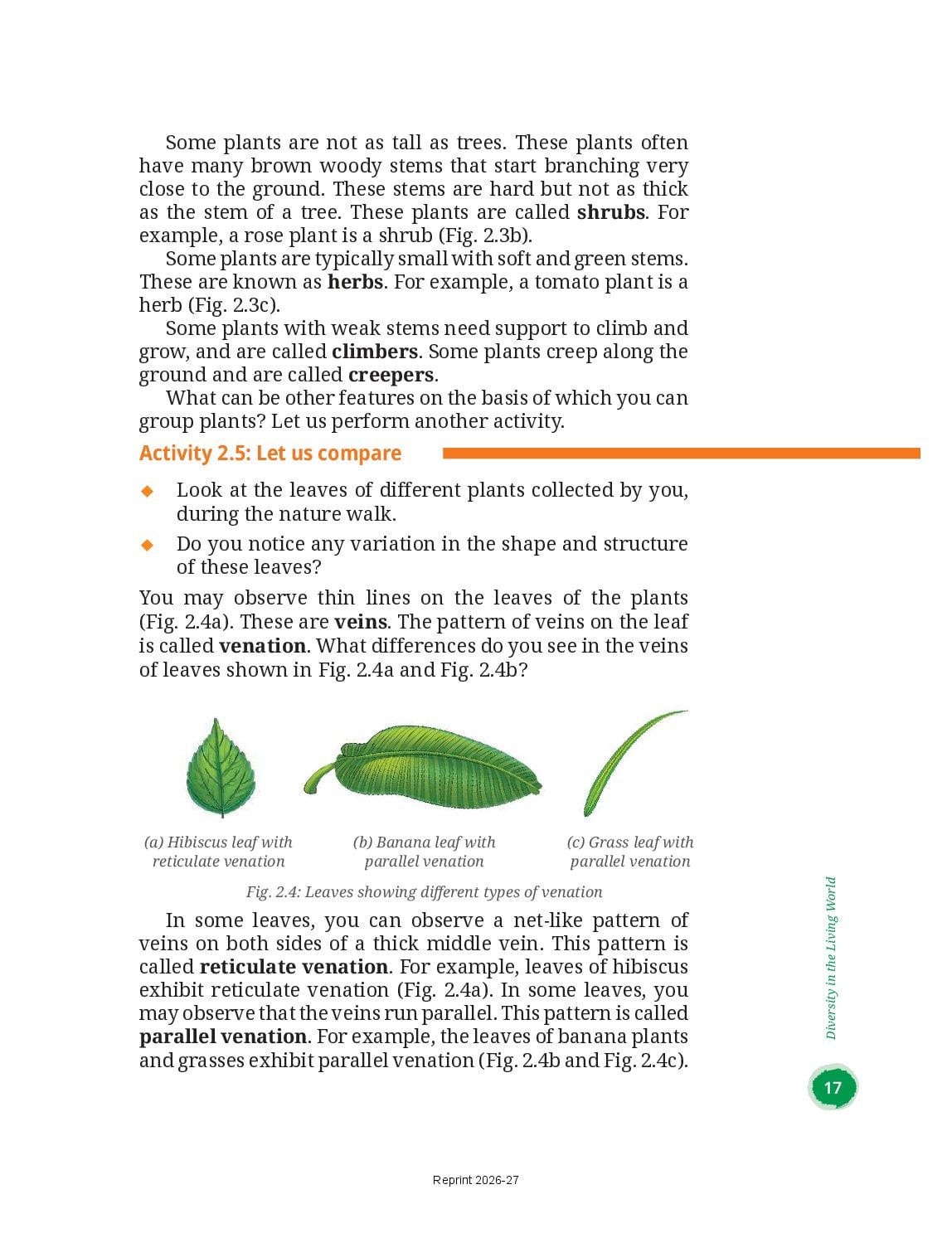
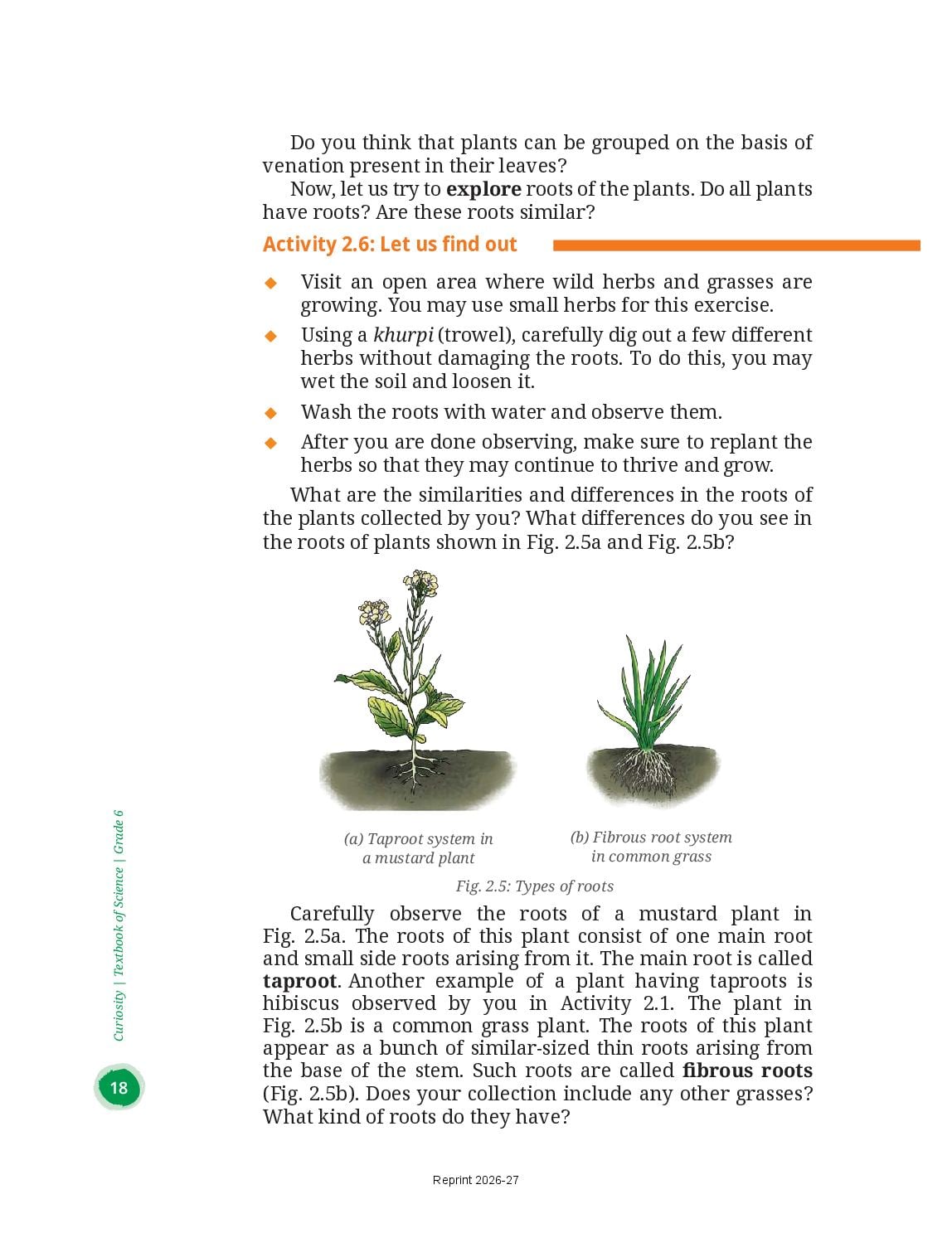
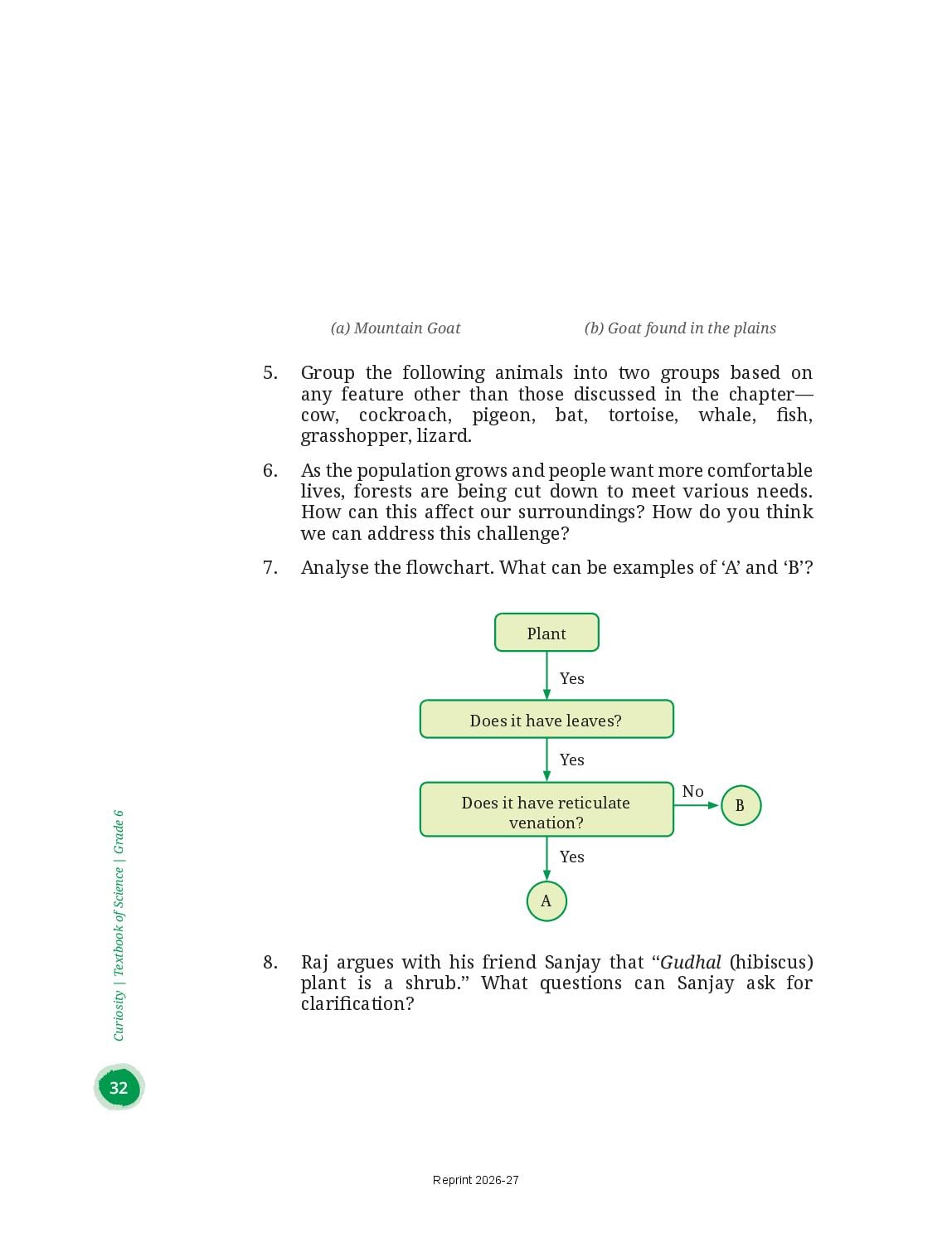
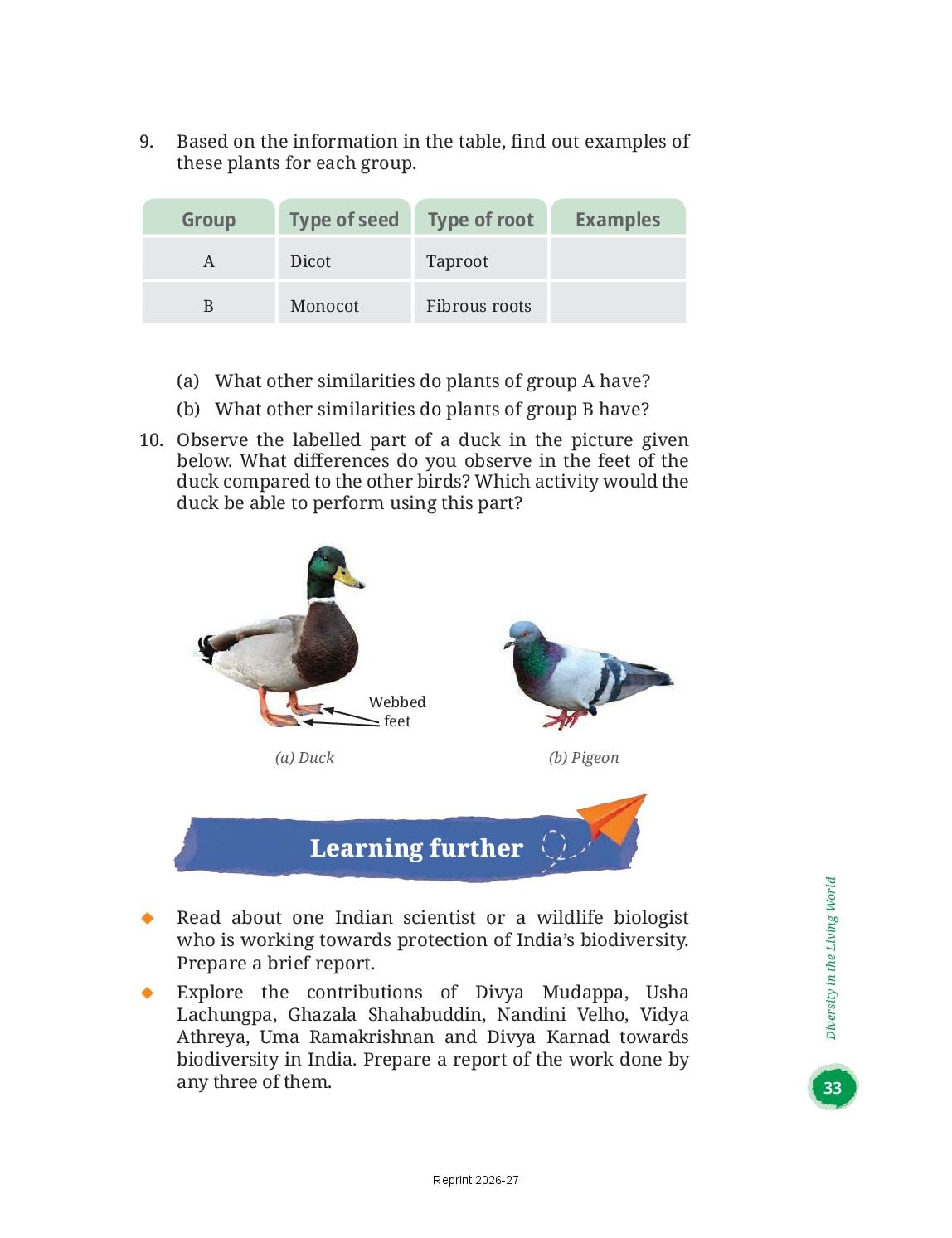
- Leaves show reticulate venation (net-like, as in hibiscus) or parallel venation (as in banana and grass). Roots are of two kinds — taproot (mustard) and fibrous root (grass).
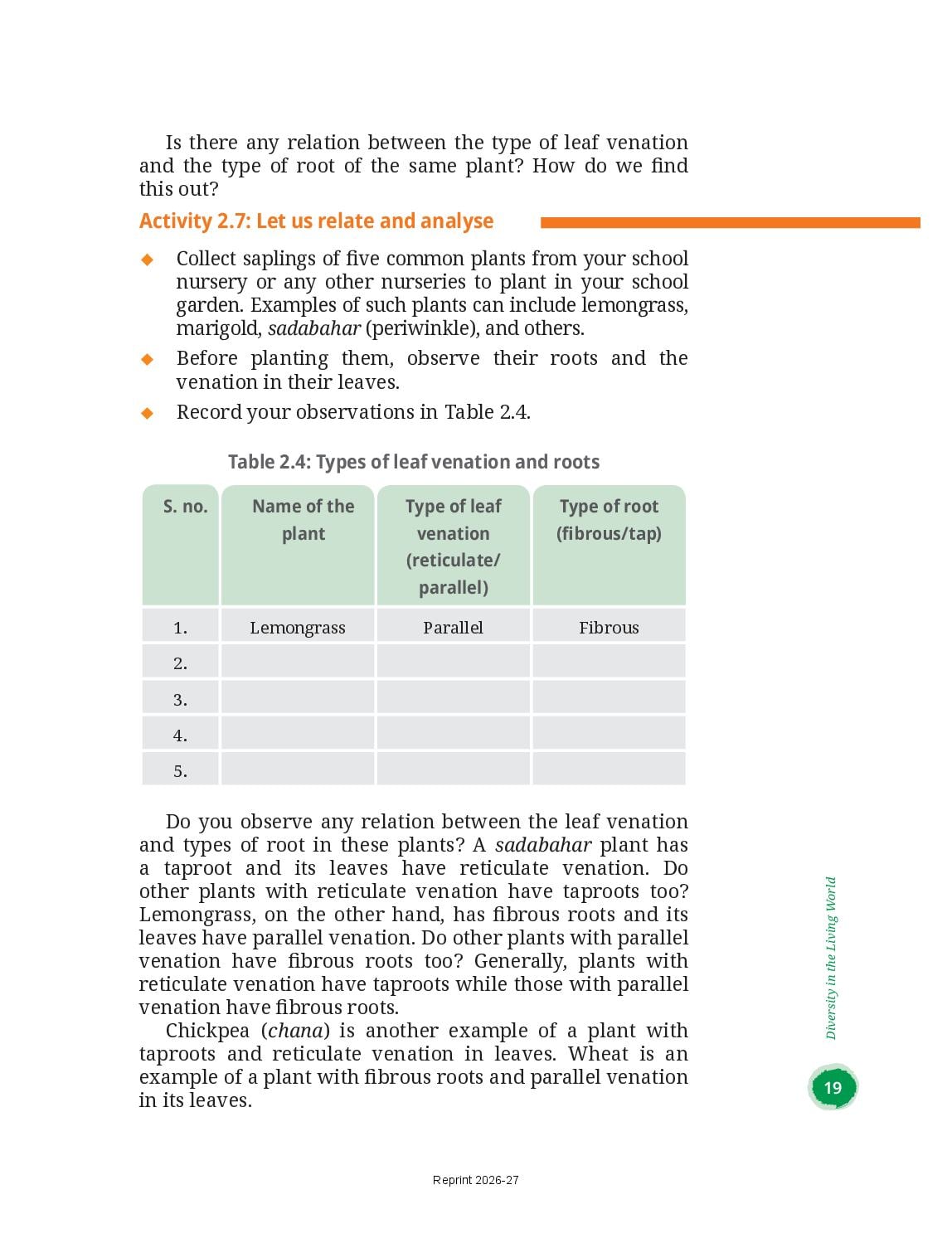
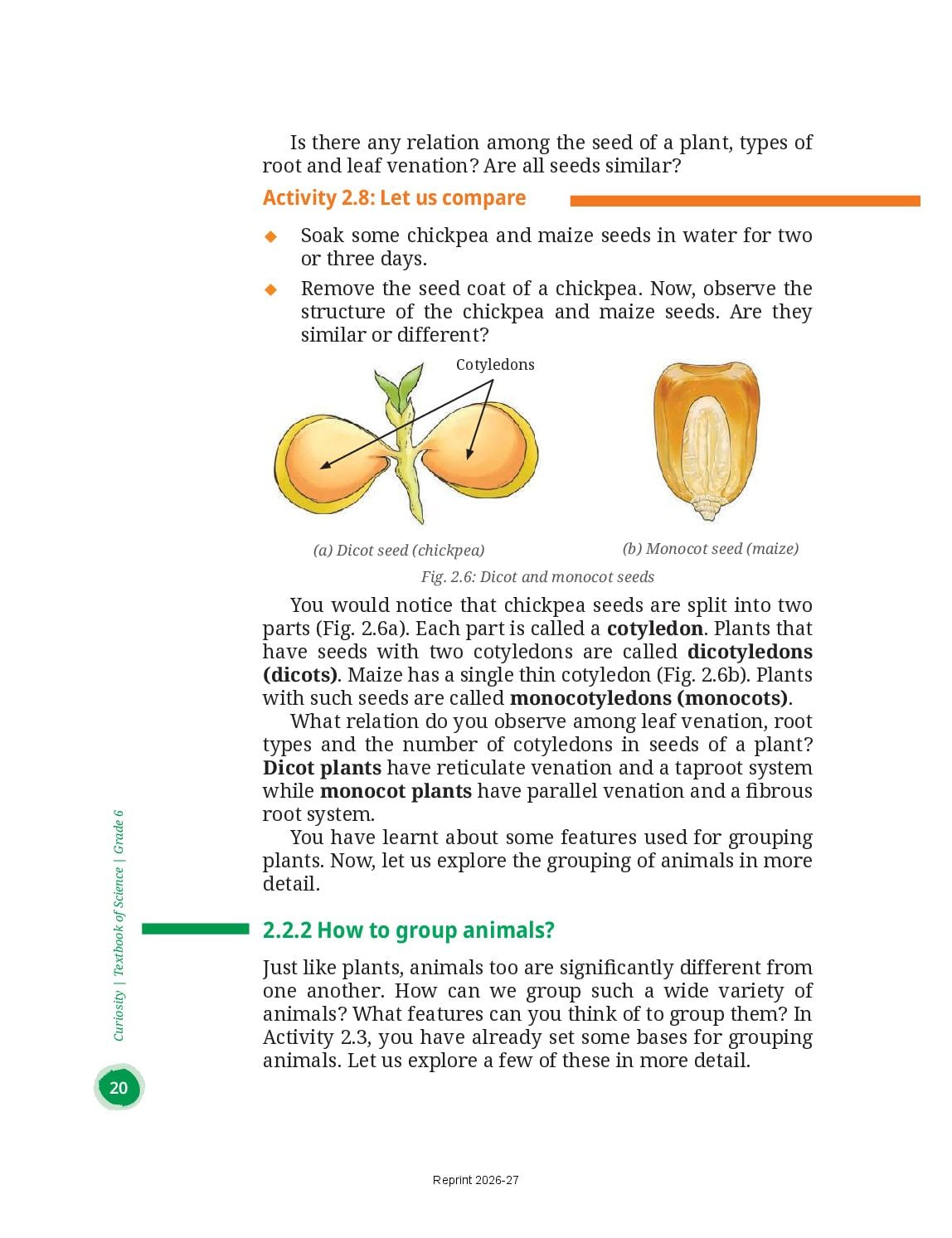
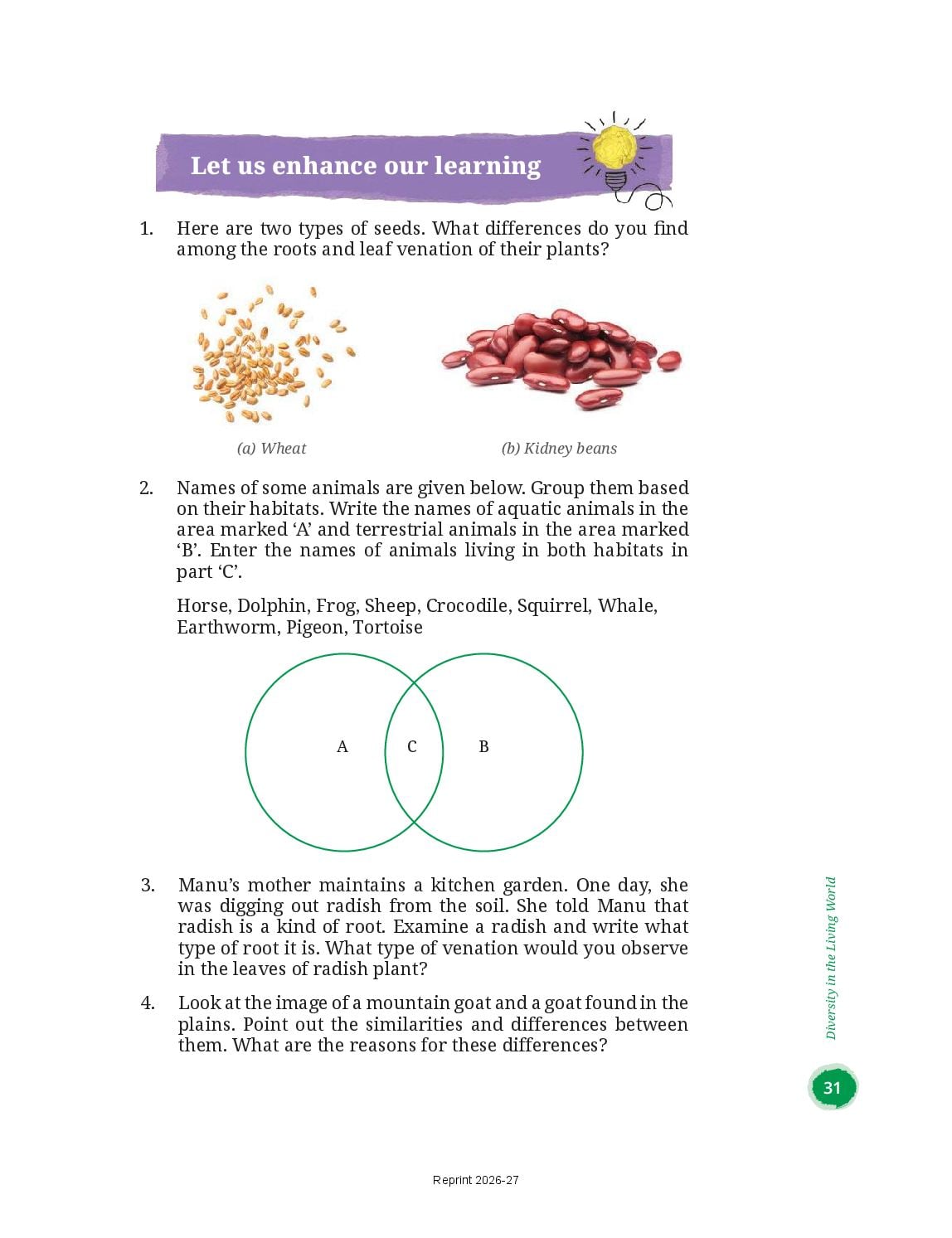
- These features go together. Dicots (two cotyledons, e.g. chana) have reticulate venation and taproots; monocots (one cotyledon, e.g. maize) have parallel venation and fibrous roots.
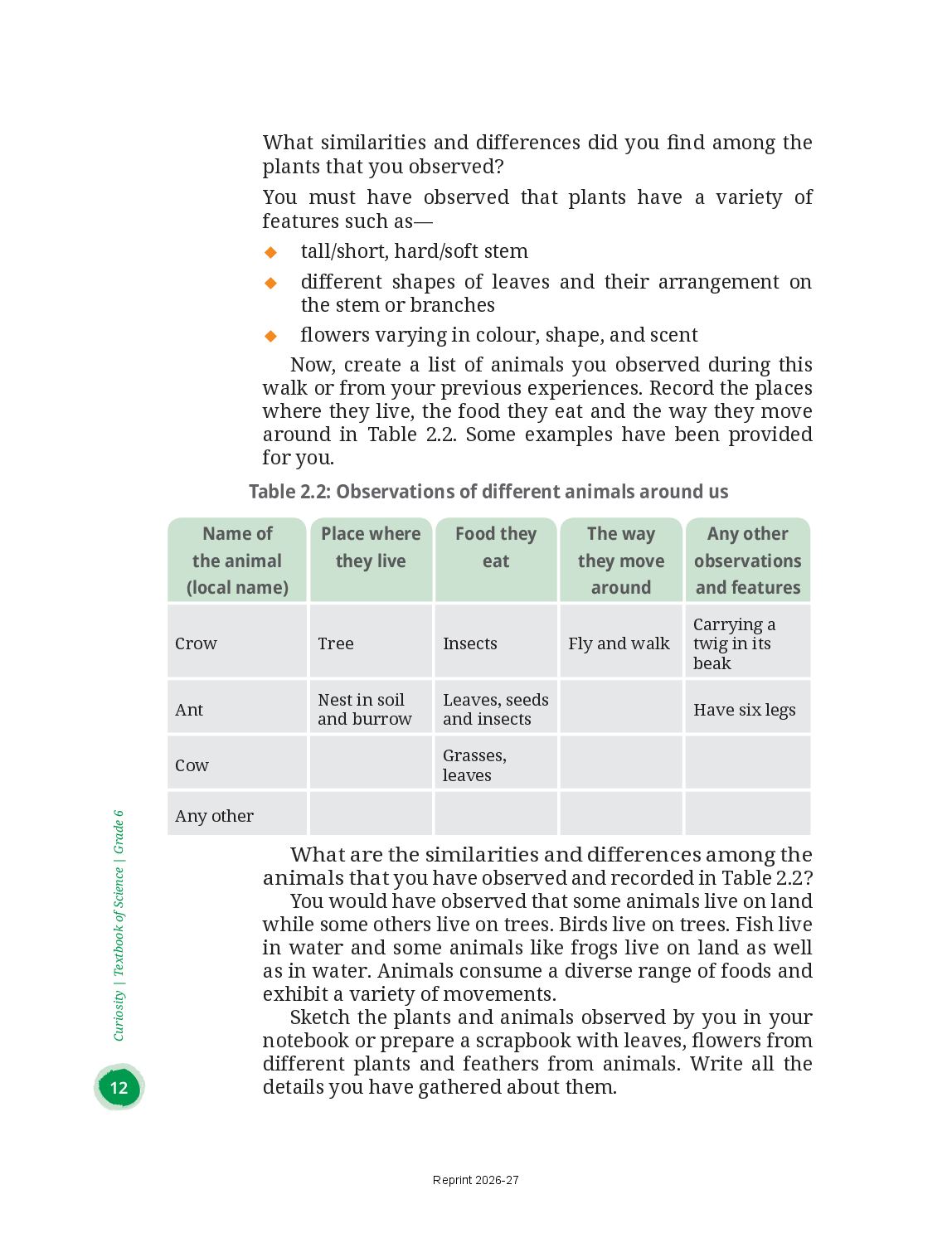
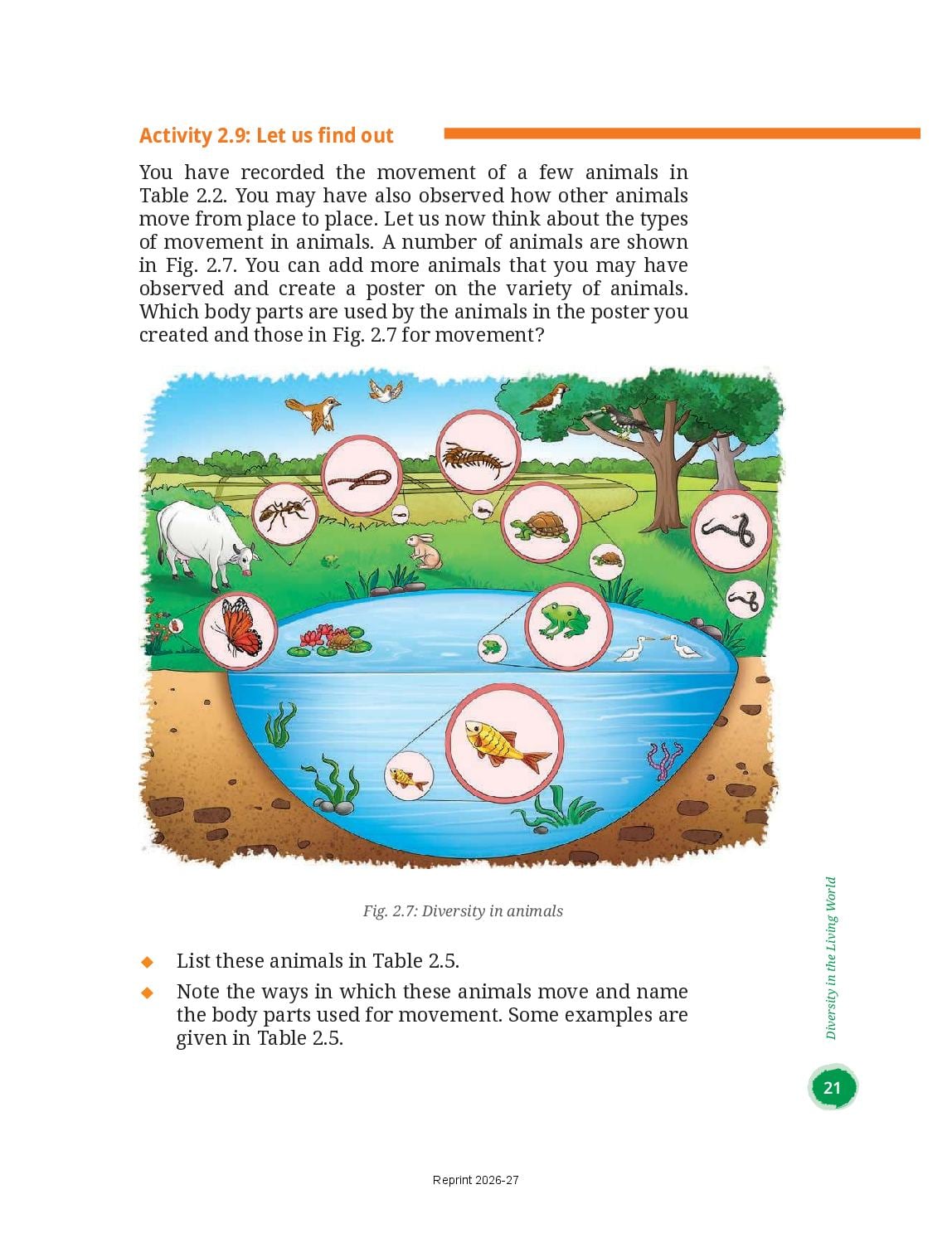
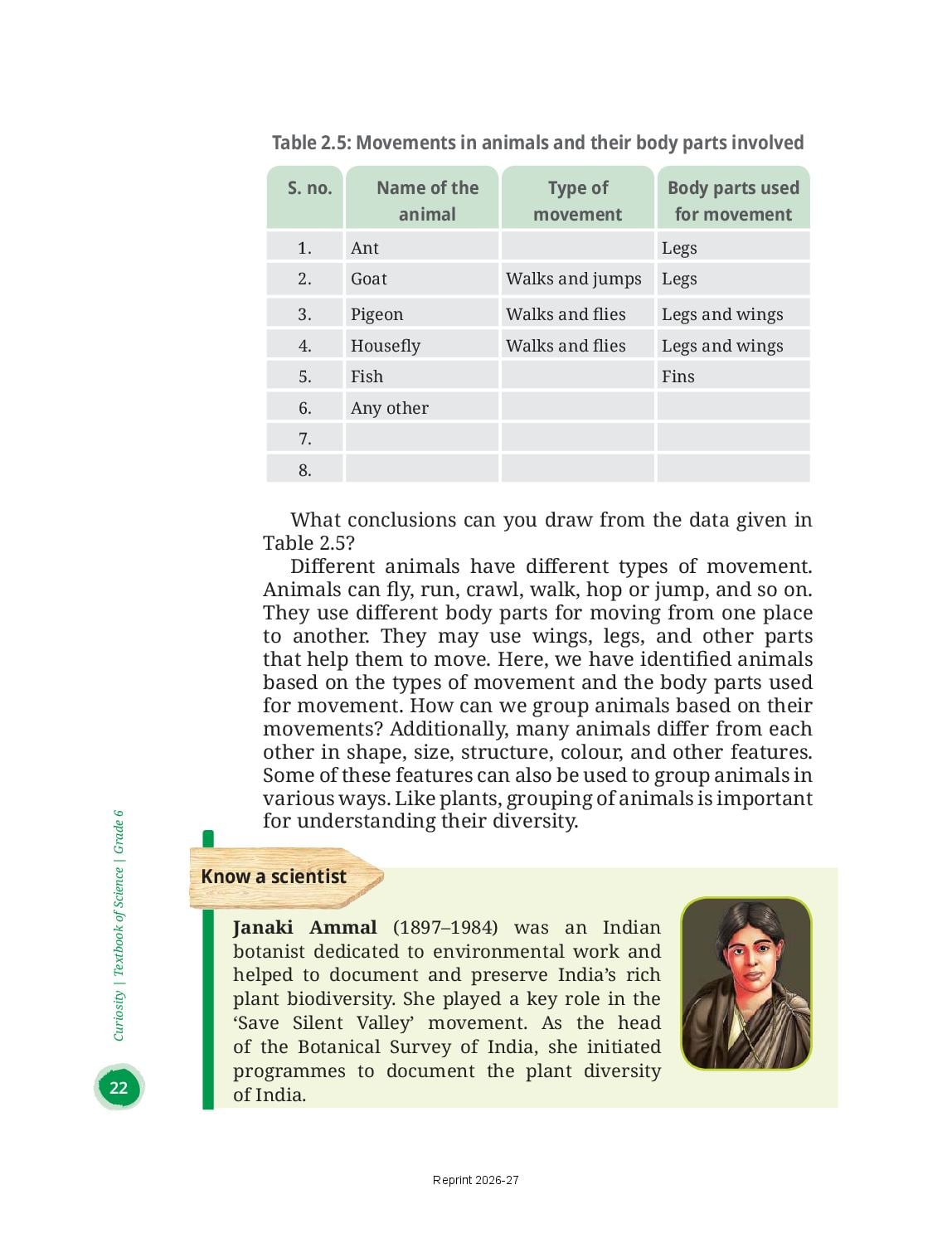
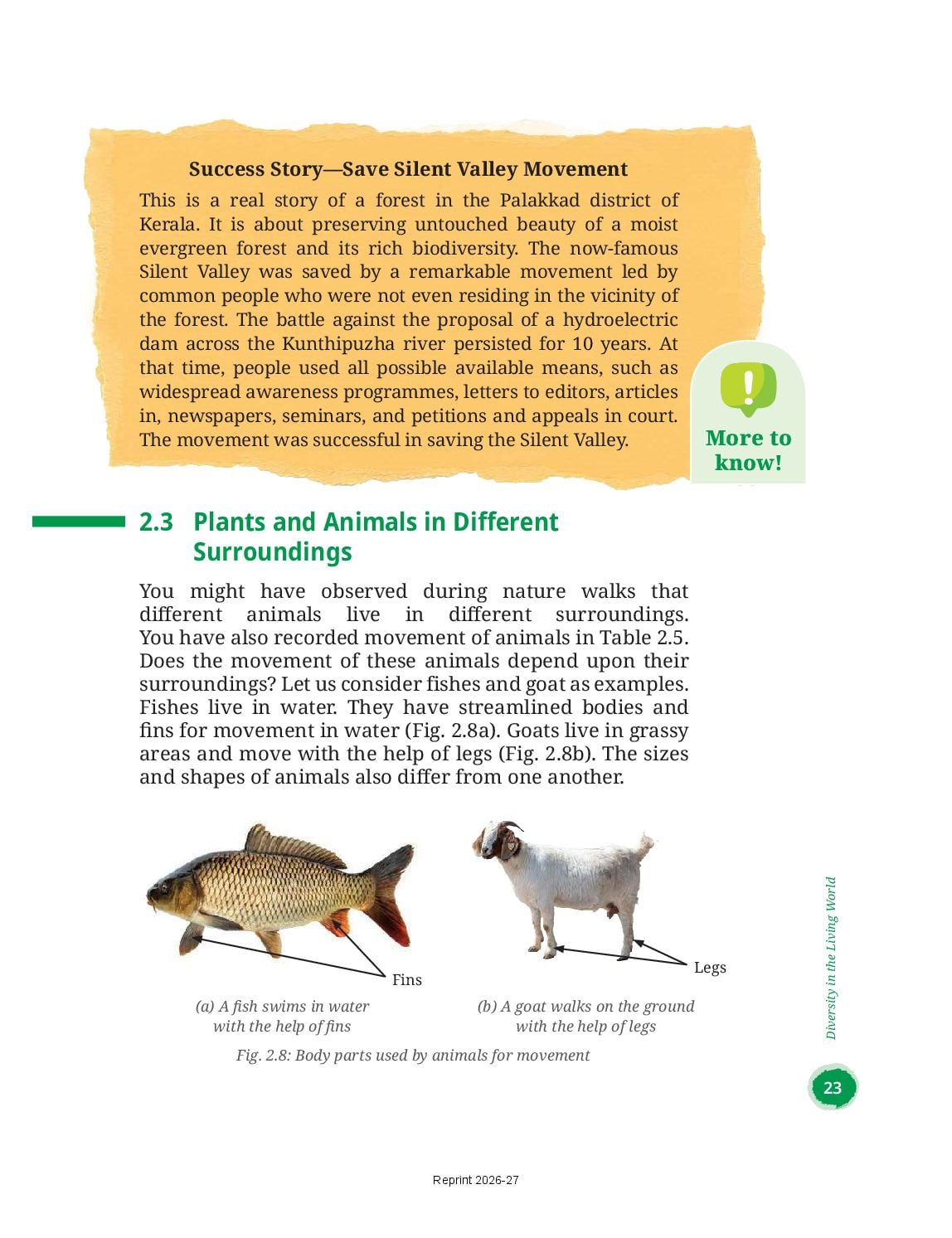
- Animals are grouped by their movement and the body parts used — legs, wings, fins — and by many other features such as shape, size and colour.
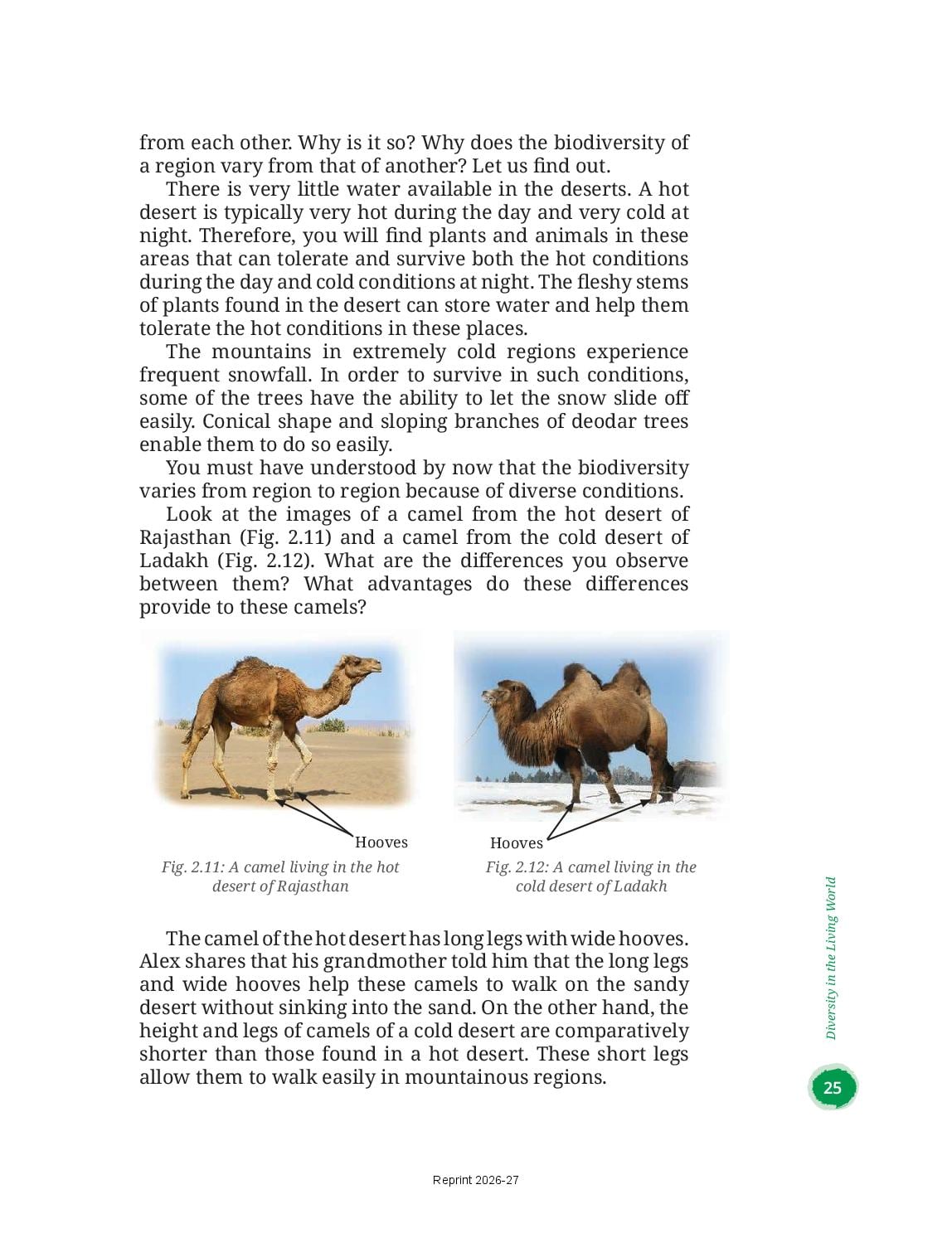
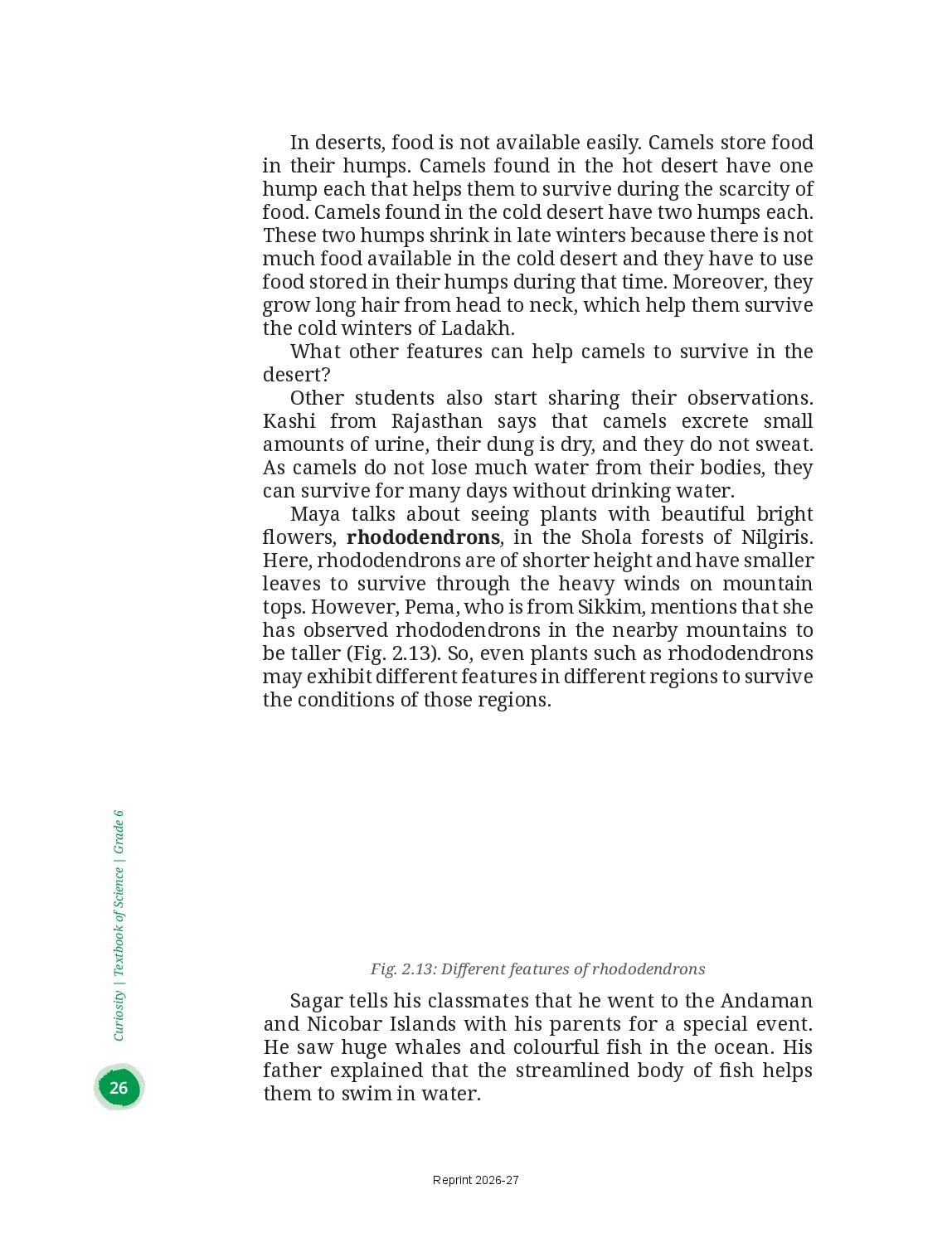
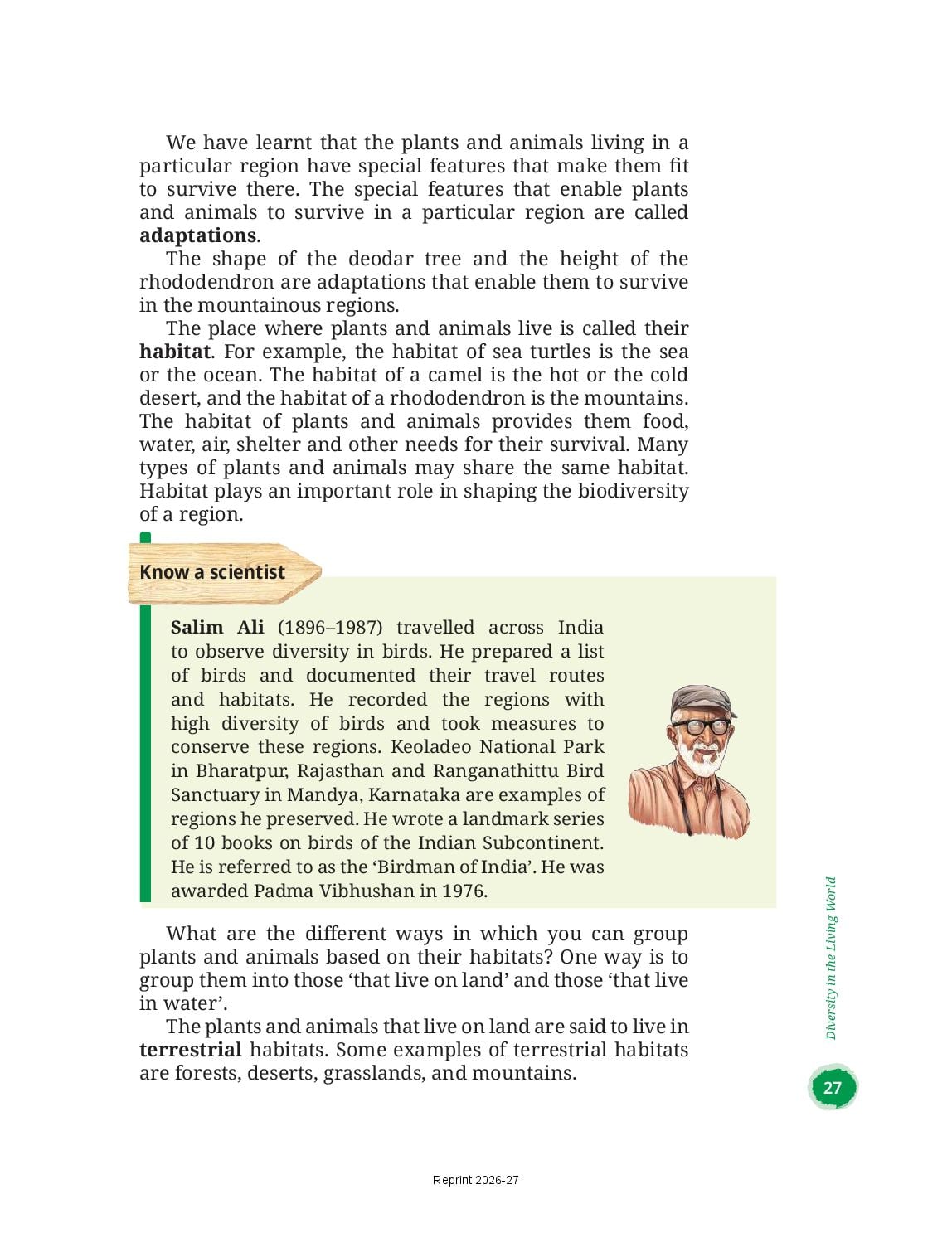
- The special features that let a living thing survive in its surroundings are adaptations; the place where it lives is its habitat, which may be terrestrial or aquatic. Frogs, which use both, are amphibians.
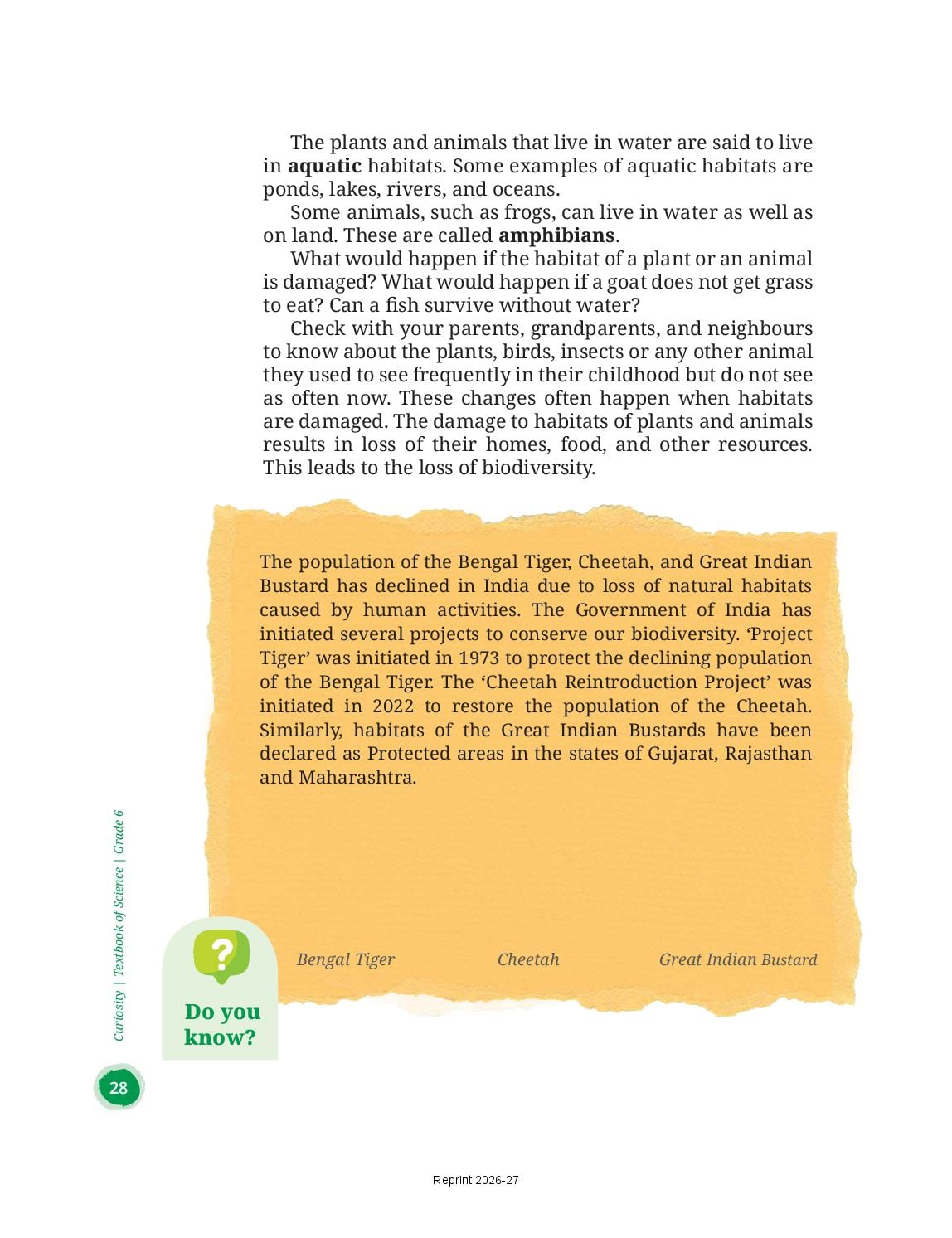
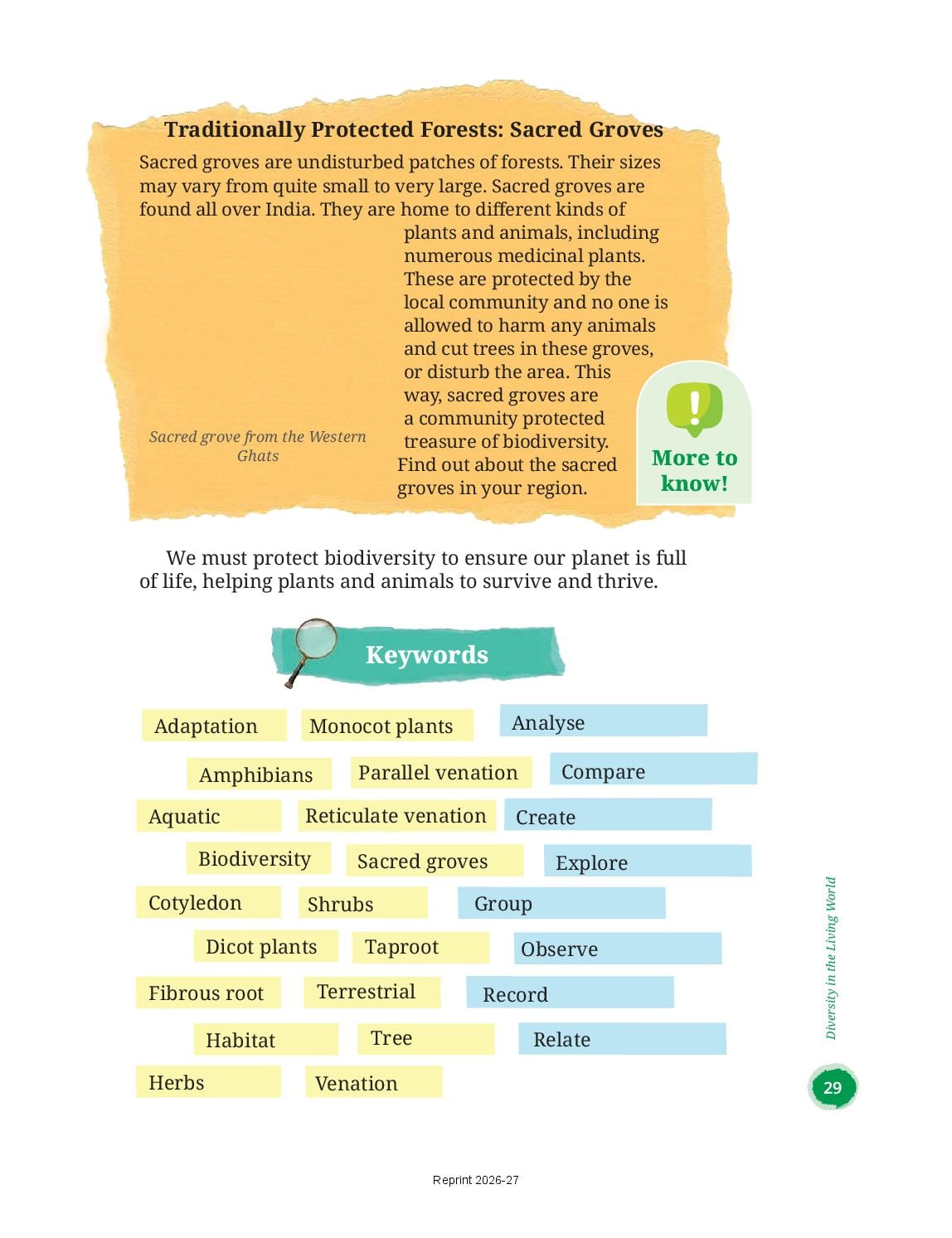
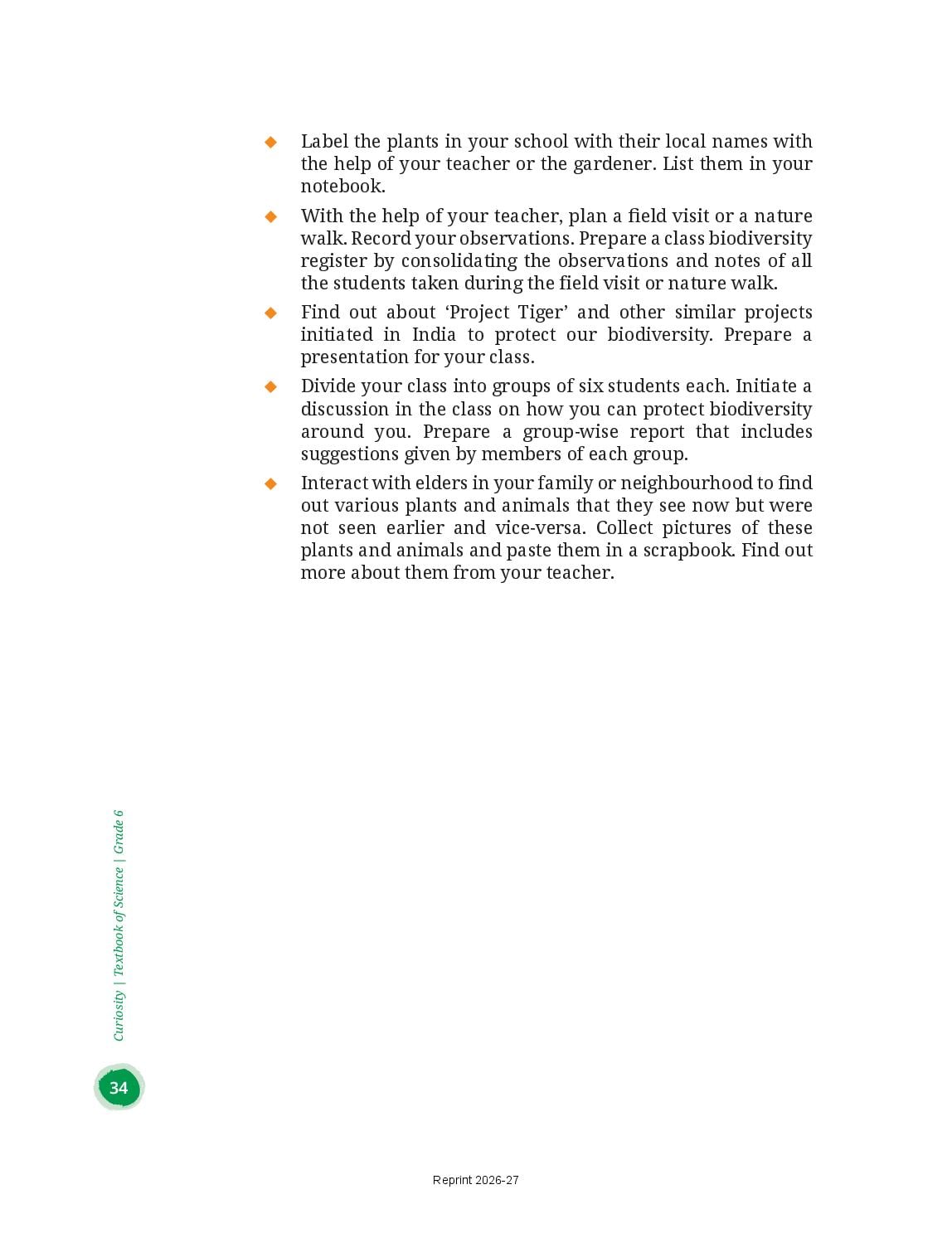
- Damage to habitats causes loss of biodiversity. Project Tiger (1973), the Cheetah Reintroduction Project (2022) and community-protected sacred groves show how biodiversity can be saved.
Quick revision – Diversity in the Living World
| Term | What it means | Example from the chapter | Where it comes |
|---|---|---|---|
| Biodiversity | The variety of plants and animals found in a particular region | The moist evergreen forest of Silent Valley, Kerala | Page 13 |
| Grouping | Arranging things into groups on the basis of common features | Sorting books and notebooks in a school bag | Page 14 |
| Herb | A small plant with a soft, green, thin stem | Tomato, coriander | Page 17 |
| Shrub | Medium height; many hard, thin, brown stems branching close to the ground | Rose, gudhal (hibiscus) | Page 17 |
| Tree | Tall plant with a hard, thick, brown woody stem; branches higher up | Mango, neem | Page 16 |
| Climber / Creeper | Weak stem — a climber needs support, a creeper spreads on the ground | Money plant (climber), pumpkin (creeper) | Page 17 |
| Reticulate venation | Net-like pattern of veins on both sides of a thick middle vein | Hibiscus, mango, chana | Page 17 |
| Parallel venation | Veins that run side by side along the leaf | Banana, grass, wheat, maize | Page 17 |
| Taproot | One main root with small side roots arising from it | Mustard, radish, hibiscus | Page 18 |
| Fibrous root | A bunch of similar-sized thin roots from the base of the stem | Grass, wheat, lemongrass | Page 18 |
| Cotyledon | The seed leaf stored inside a seed — 2 in a dicot, 1 in a monocot | Chana (dicot), maize (monocot) | Page 20 |
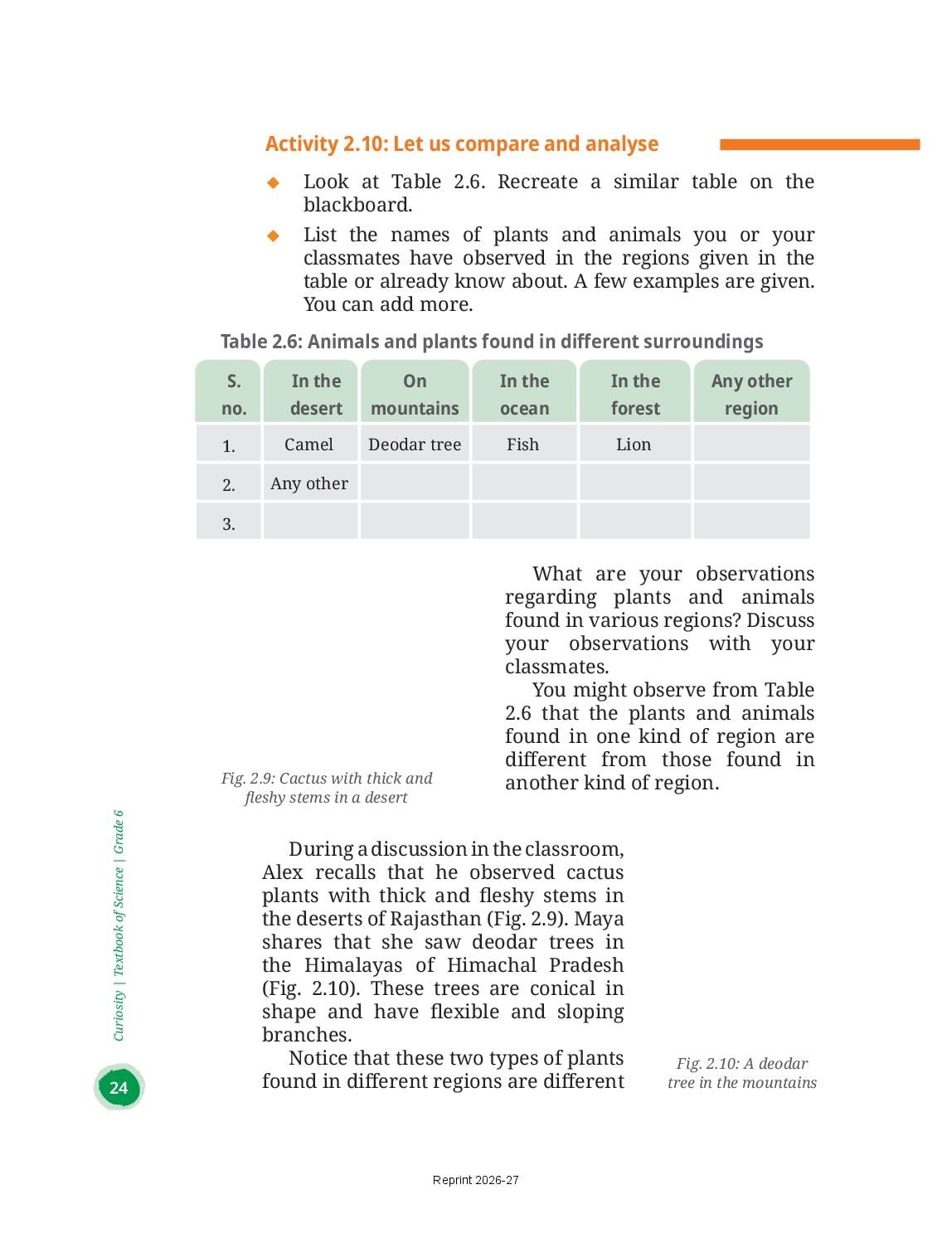
| Adaptation | A special feature that lets a plant or animal survive in its region | Camel’s hump, the conical shape of a deodar | Page 27 |
| Habitat | The place where a plant or animal lives | Desert for a camel, ocean for a sea turtle | Page 27 |
| Terrestrial / Aquatic | Habitats on land / in water; animals using both are amphibians | Forest and desert / pond and ocean; frog | Pages 27–28 |
Old NCERT vs New – Class 6 Science
This chapter is from Curiosity, the new NCERT Class 6 Science book (NCF-SE 2023, used from 2024-25). It replaced the old book “Science”, so chapter numbers and names differ from older PDFs.
Solutions and All Chapters
Answers to the exercises and the full chapter list of Curiosity:
Diversity in the Living World – Overview
| Class | Class 6 |
| Subject | Science |
| Book | Curiosity – new NCERT book |
| Chapter | 2 of 12 – Diversity in the Living World |
| Book pages | 9 – 34 |
| Edition | NCERT Reprint 2026-27 |
| Session | 2026-27 |
| Free – read online or download |
Class 6 Science Chapter 2 – FAQs
Where can I download Diversity in the Living World Class 6 PDF?
From the download table on this page – the chapter PDF is free, and the full book is linked too.
What is Class 6 Science Chapter 2 about?
We are surrounded by a huge variety of plants and animals. This variety found in a region is called its biodiversity, and every member of it has a role to play.
Is Diversity in the Living World from the new NCERT Class 6 Science book?
Yes. It is chapter 2 of curiosity, the new NCERT Class 6 Science book for 2026-27.
Is this the latest NCERT edition for 2026-27?
Yes – the PDF is NCERT’s latest edition for the 2026-27 session.
Where are the NCERT Solutions for Class 6 Science Chapter 2?
Open the NCERT Solutions link above for answers to the exercise questions.