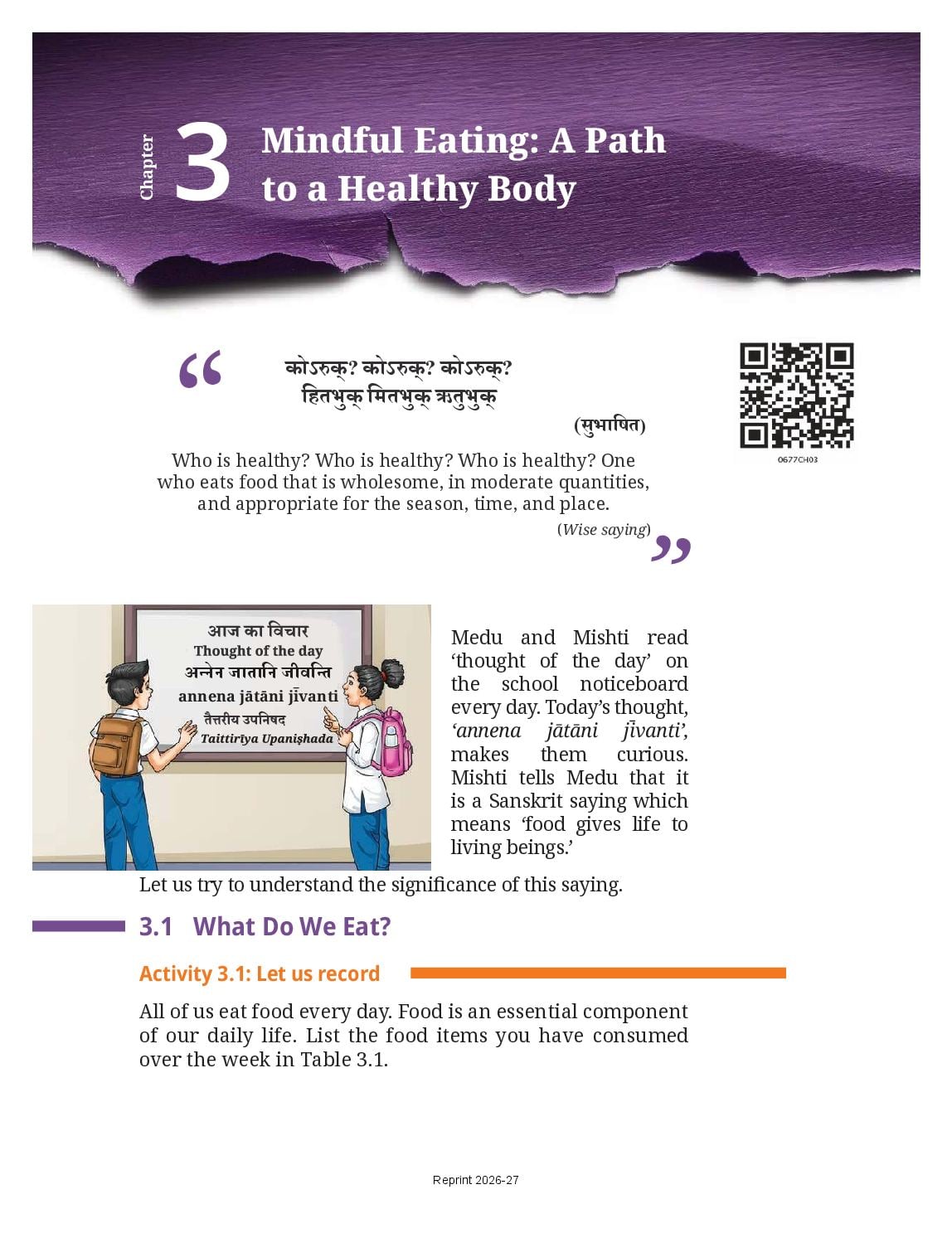
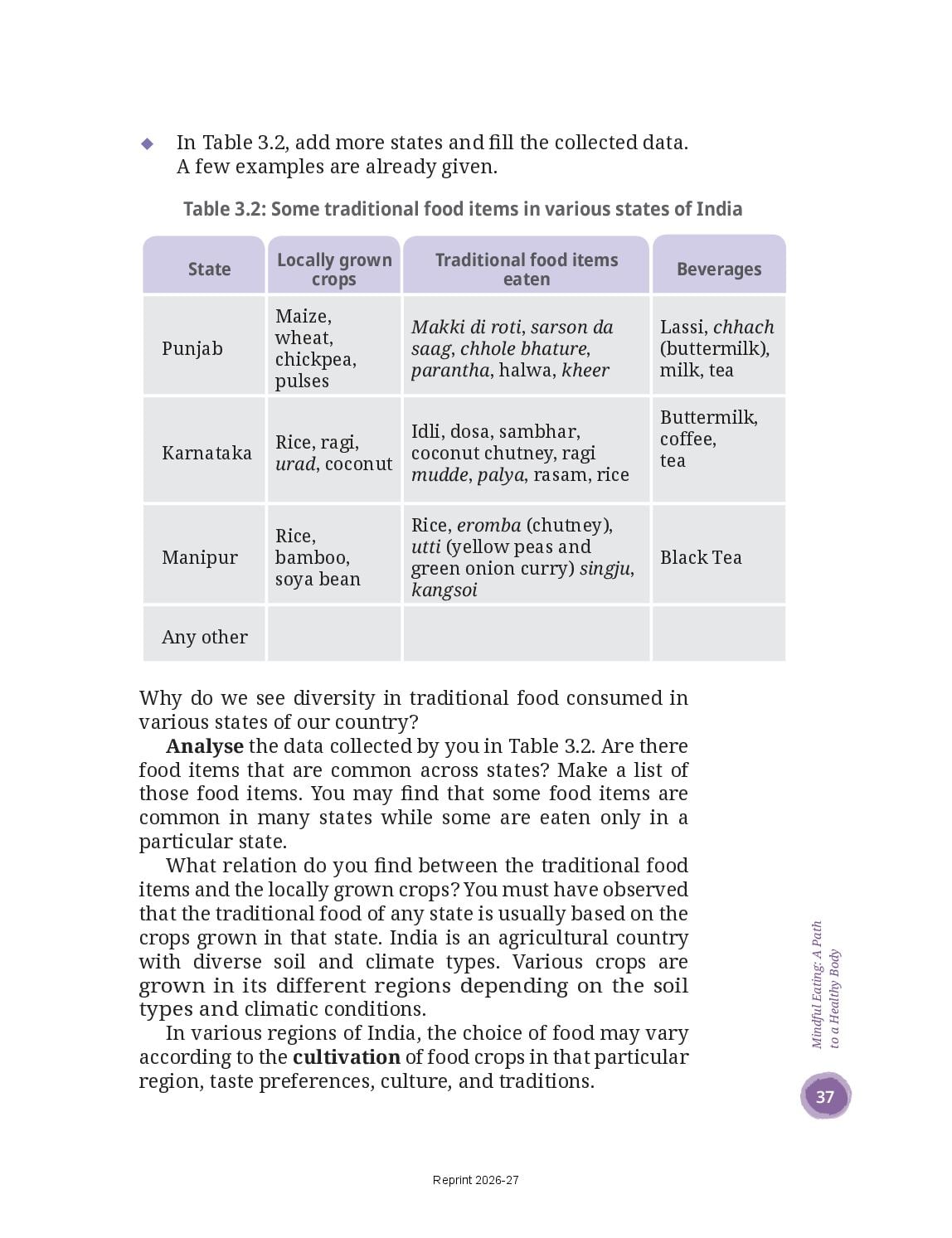
Download Mindful Eating: A Path to a Healthy Body – NCERT Class 6 Science Chapter 3 PDF from the new NCERT Class 6 Science book Curiosity (2026-27). Read the chapter online or download the free PDF. People across India eat very different food, because the traditional food of a state is built on the crops grown there — makki di roti and sarson da saag in Punjab, ragi mudde and rasam in Karnataka, eromba and singju in Manipur.
Mindful Eating: A Path to a Healthy Body PDF – Chapter 3 of Curiosity
Read the chapter online or download the PDF.
| Chapter | Download | |
|---|---|---|
| Chapter 3 PDF | Mindful Eating: A Path to a Healthy Body | View PDF |
| Full book | NCERT Class 6 Science – Curiosity | View Book |
Read Online
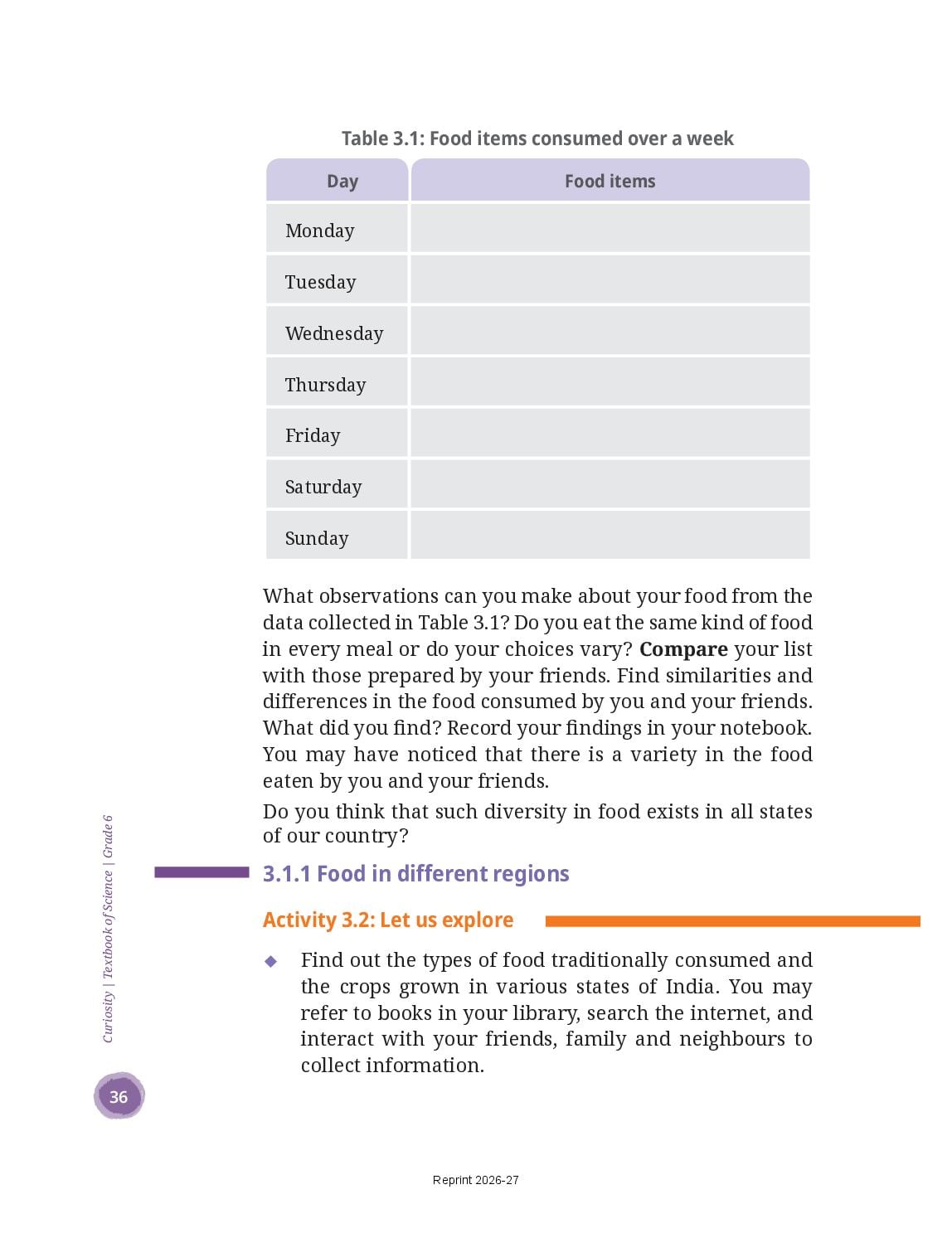

What Is in Mindful Eating: A Path to a Healthy Body? (Class 6 Science Chapter 3)
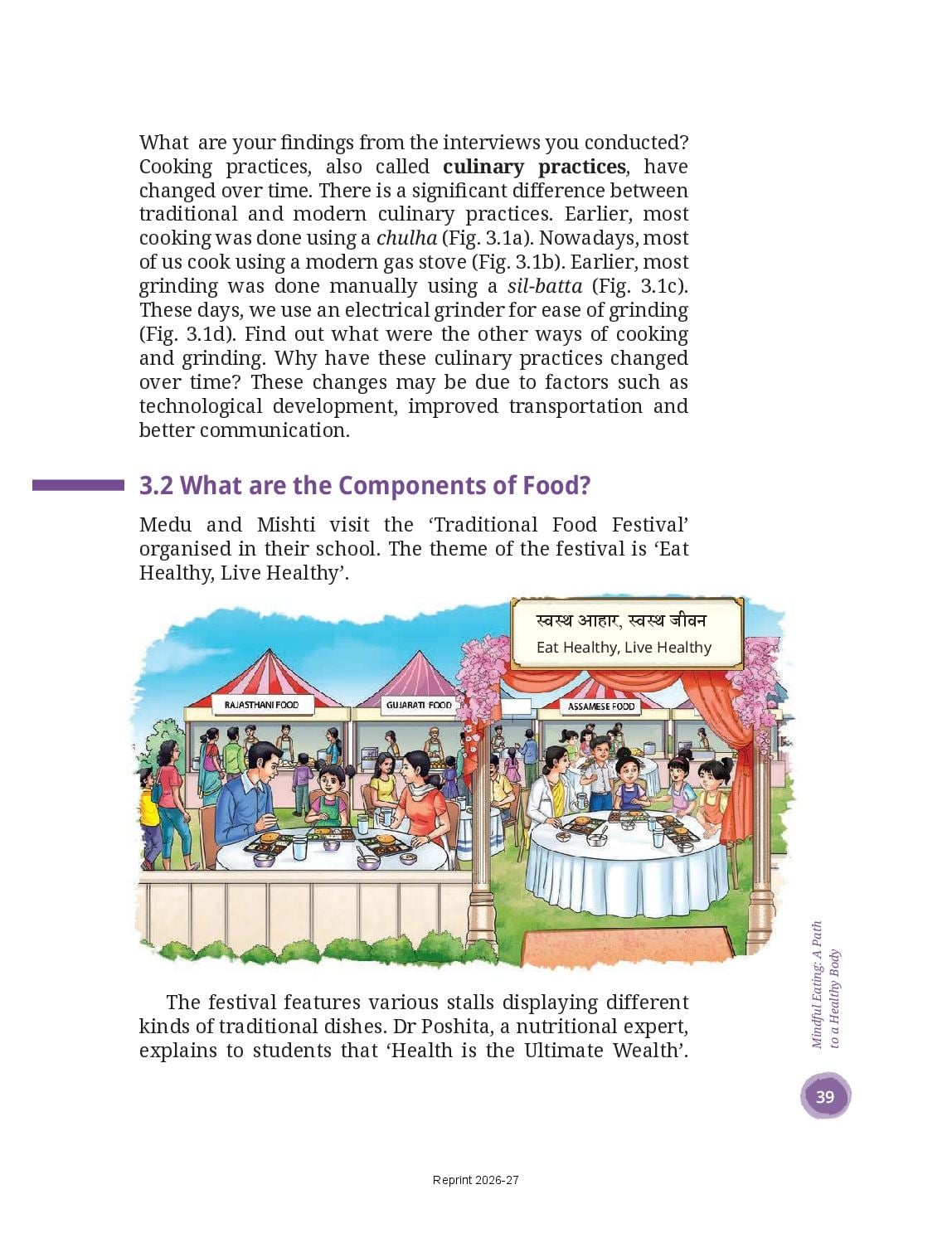
- People across India eat very different food, because the traditional food of a state is built on the crops grown there — makki di roti and sarson da saag in Punjab, ragi mudde and rasam in Karnataka, eromba and singju in Manipur.
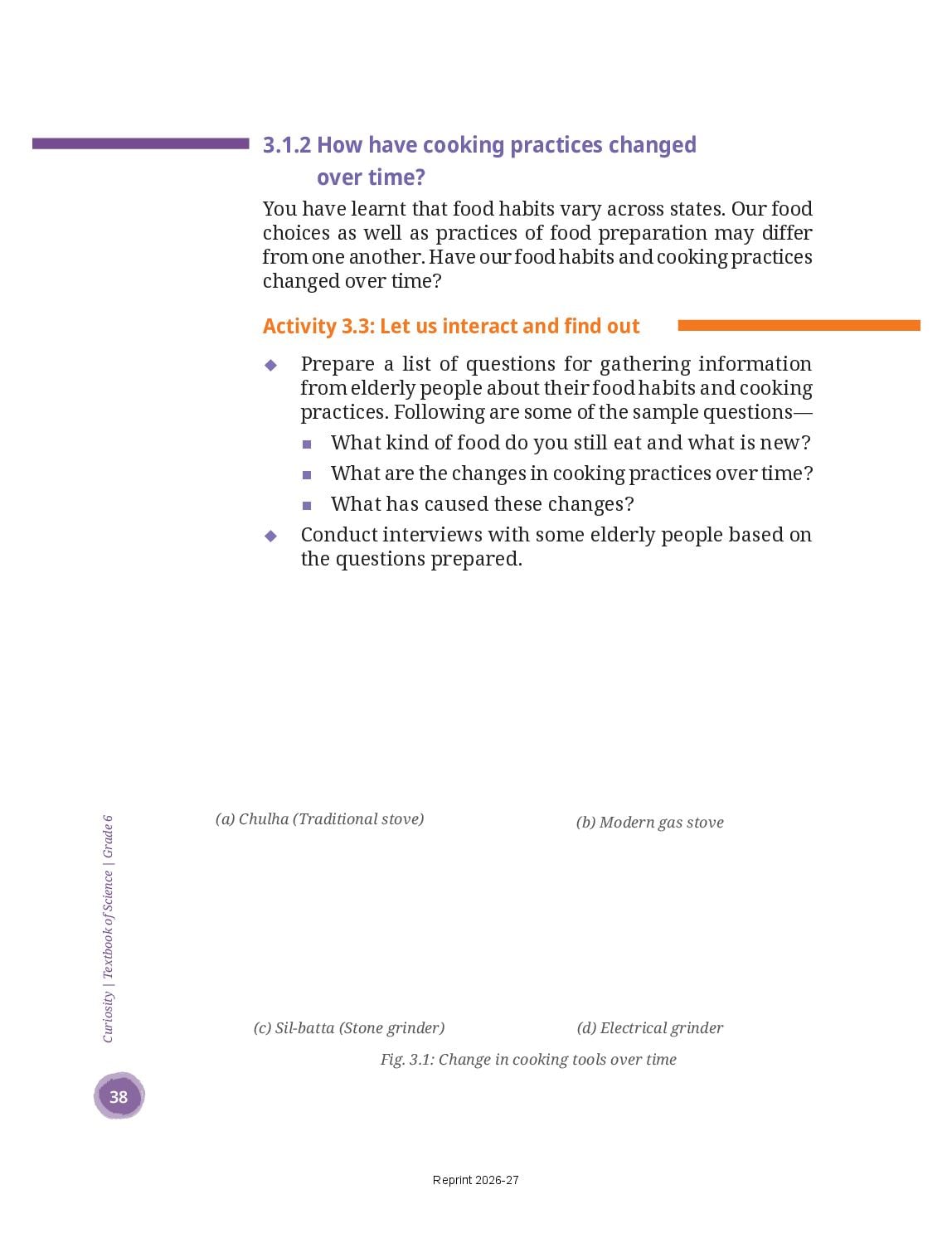
- Culinary practices change with time. The chulha has given way to the gas stove and the sil-batta to the electric grinder, mainly because of technology, better transport and better communication.
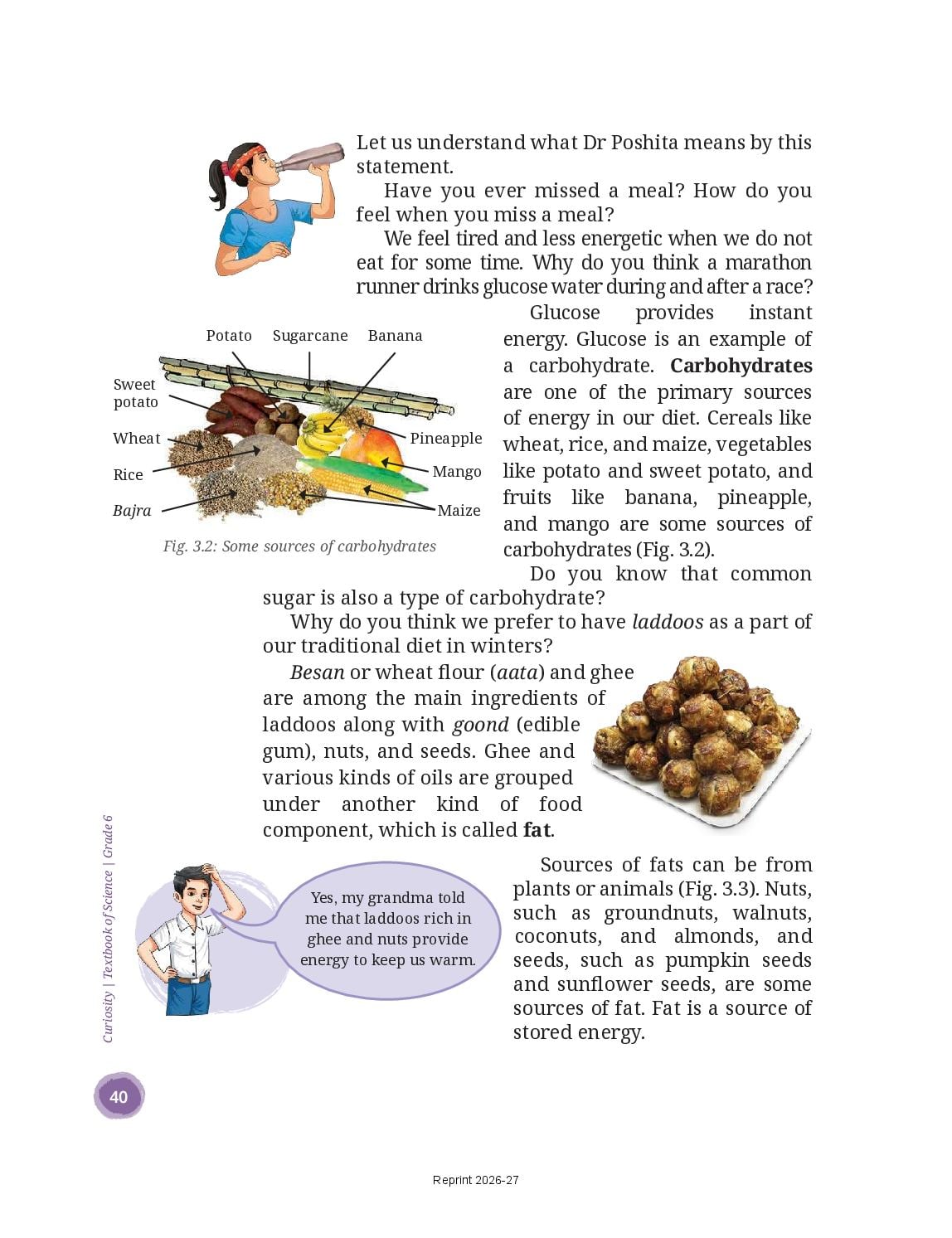
- Food is made of components. The major nutrients are carbohydrates, fats, proteins, vitamins and minerals; in addition our body needs dietary fibre (roughage) and water.
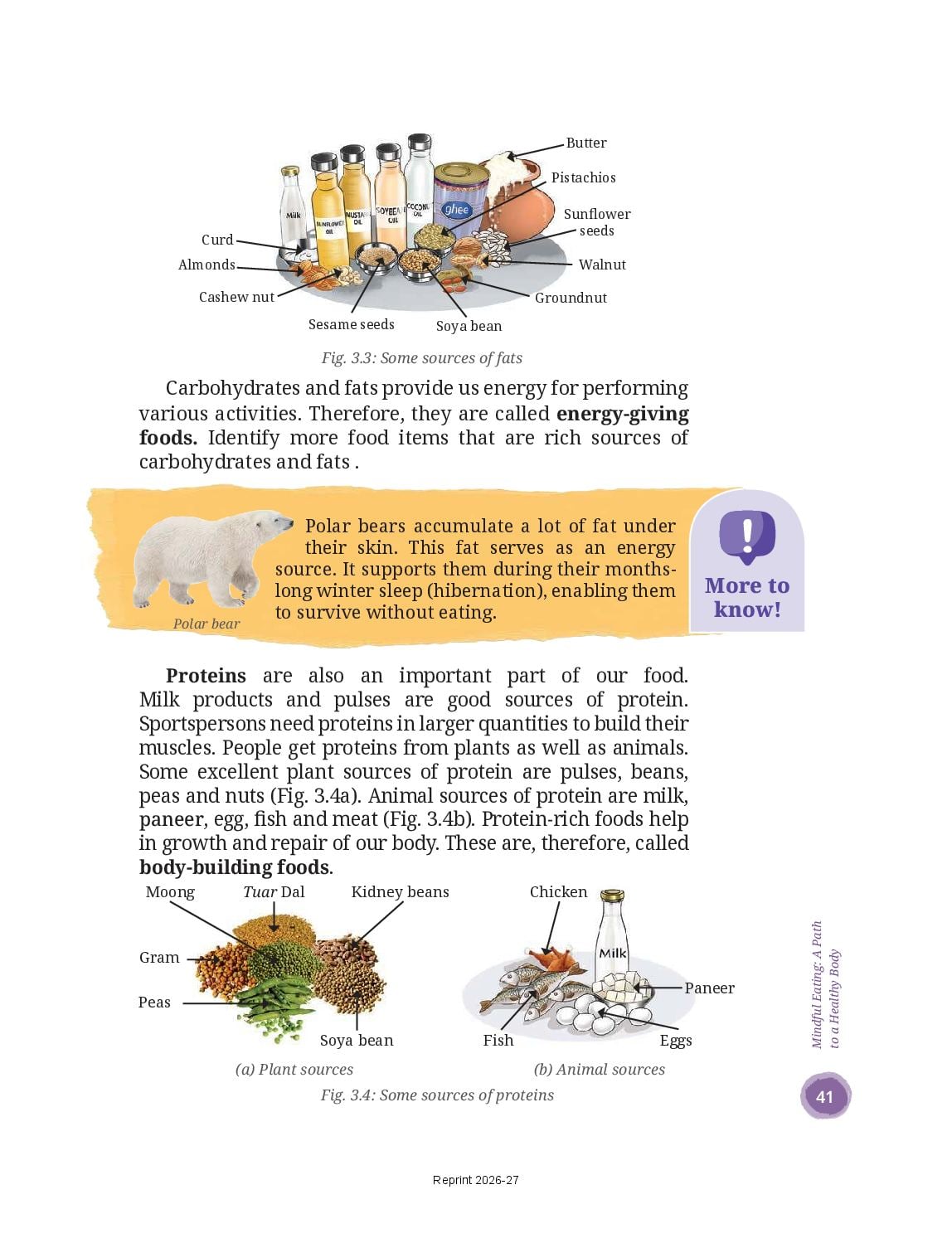
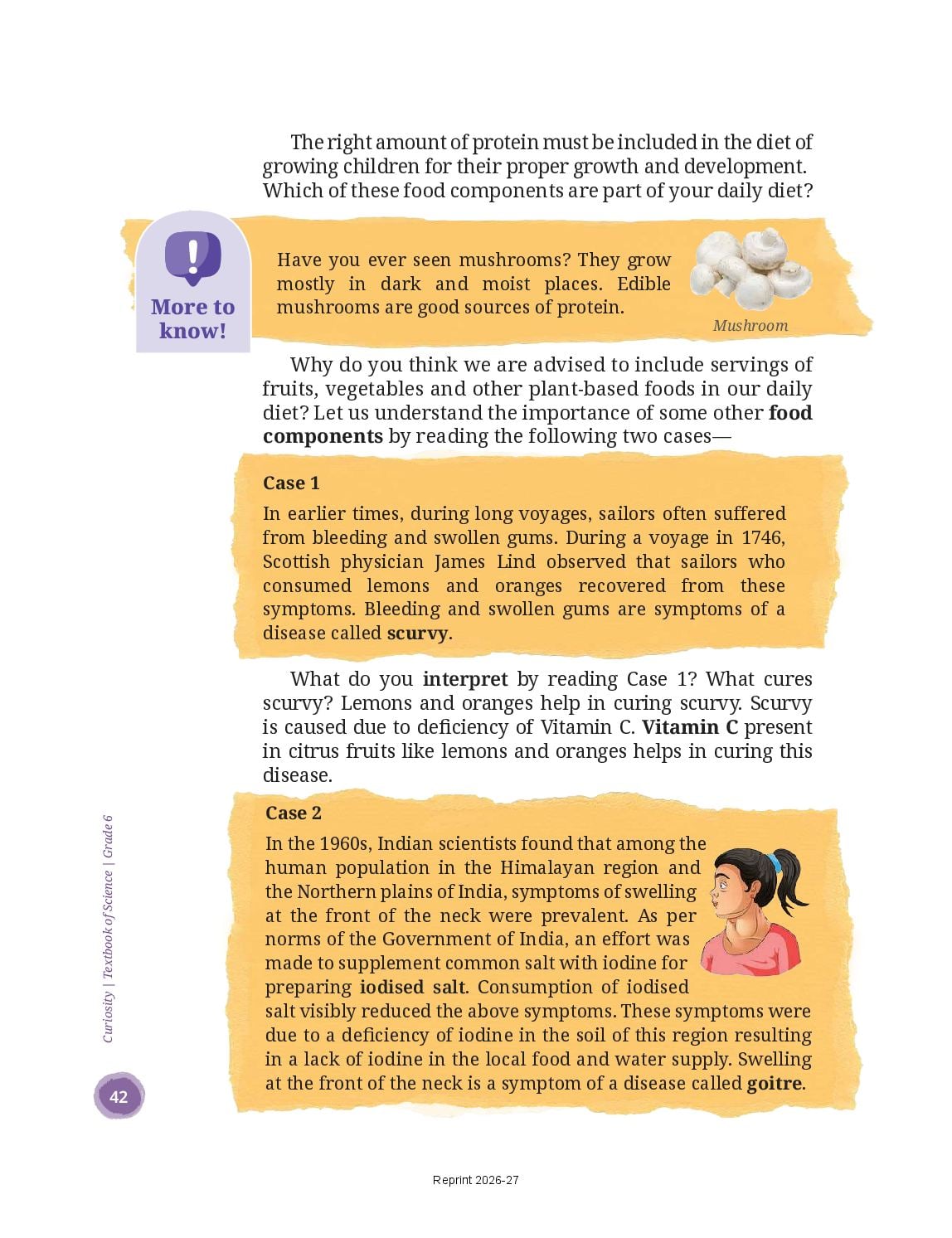
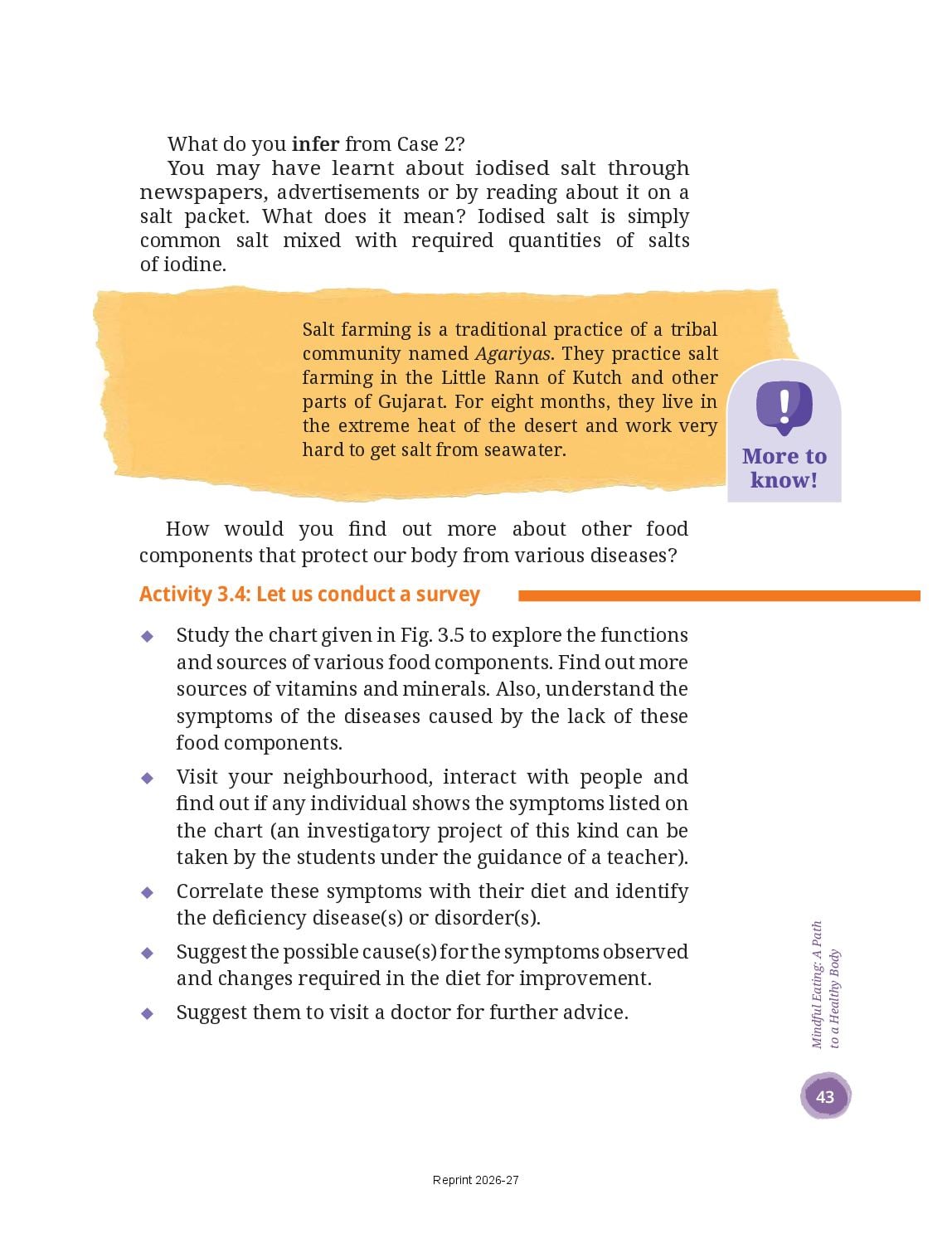
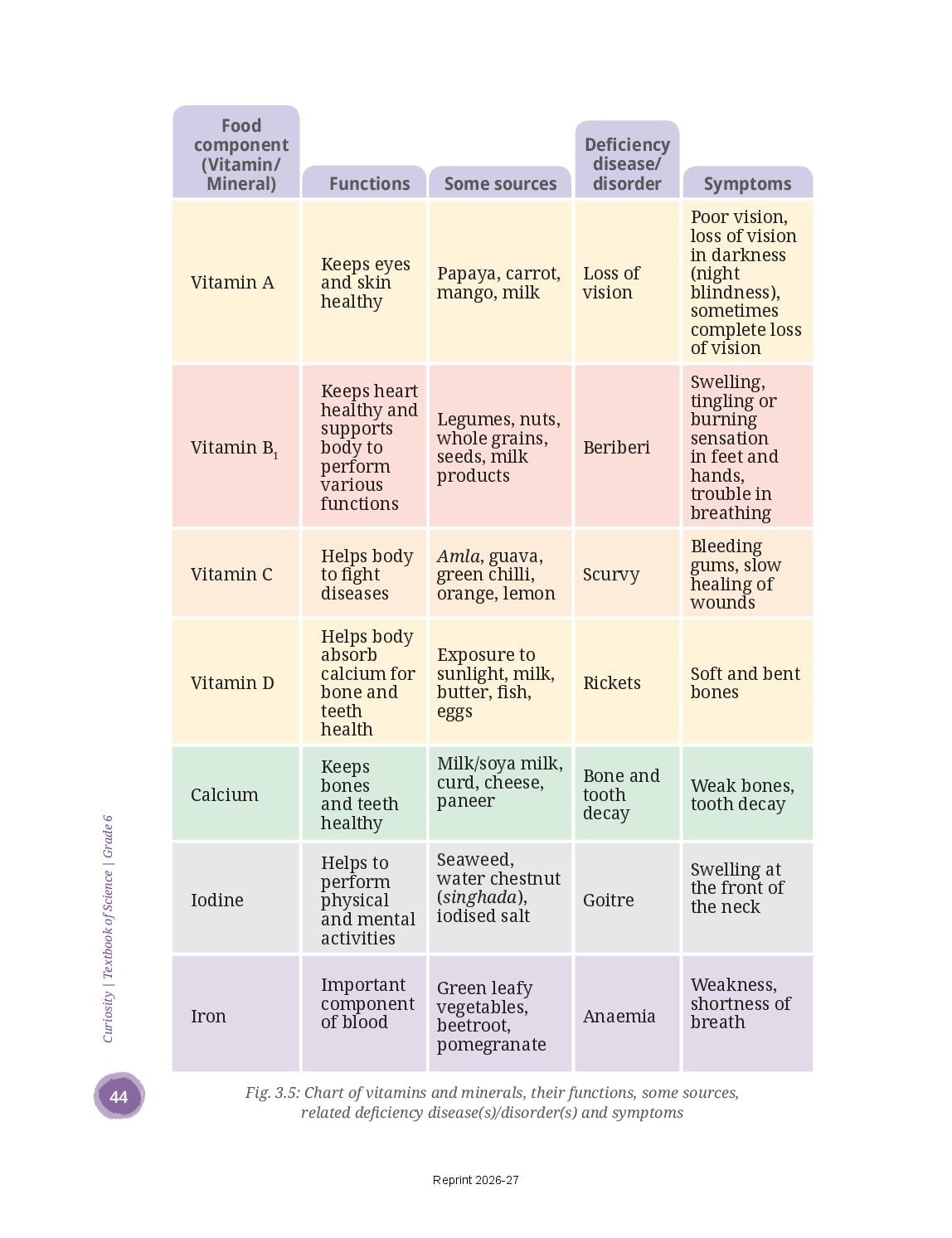
- Carbohydrates and fats are energy-giving, proteins are body-building, and vitamins and minerals are protective nutrients. A long-term lack of any of them causes a deficiency disease — scurvy, beriberi, rickets, goitre, anaemia, night blindness.
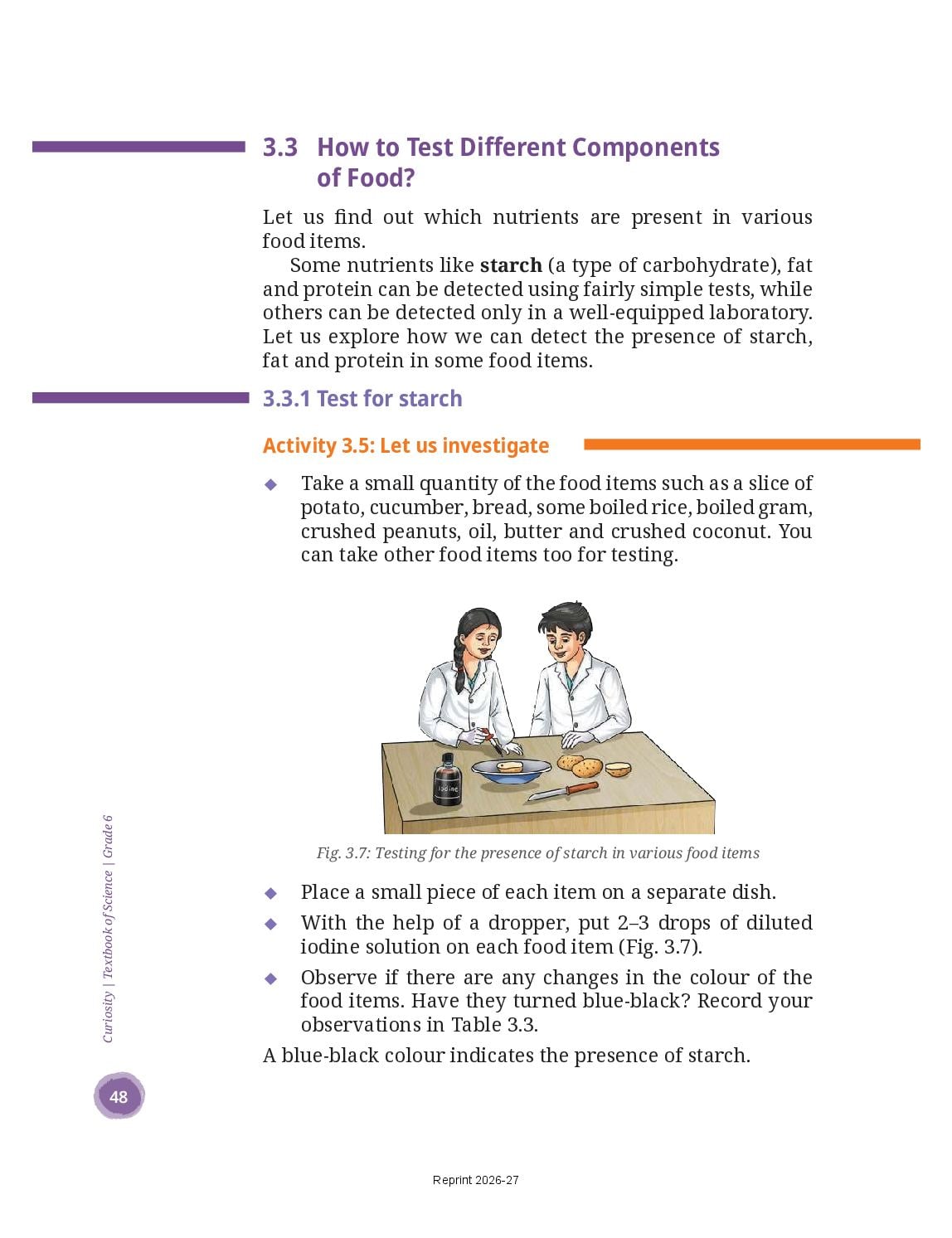
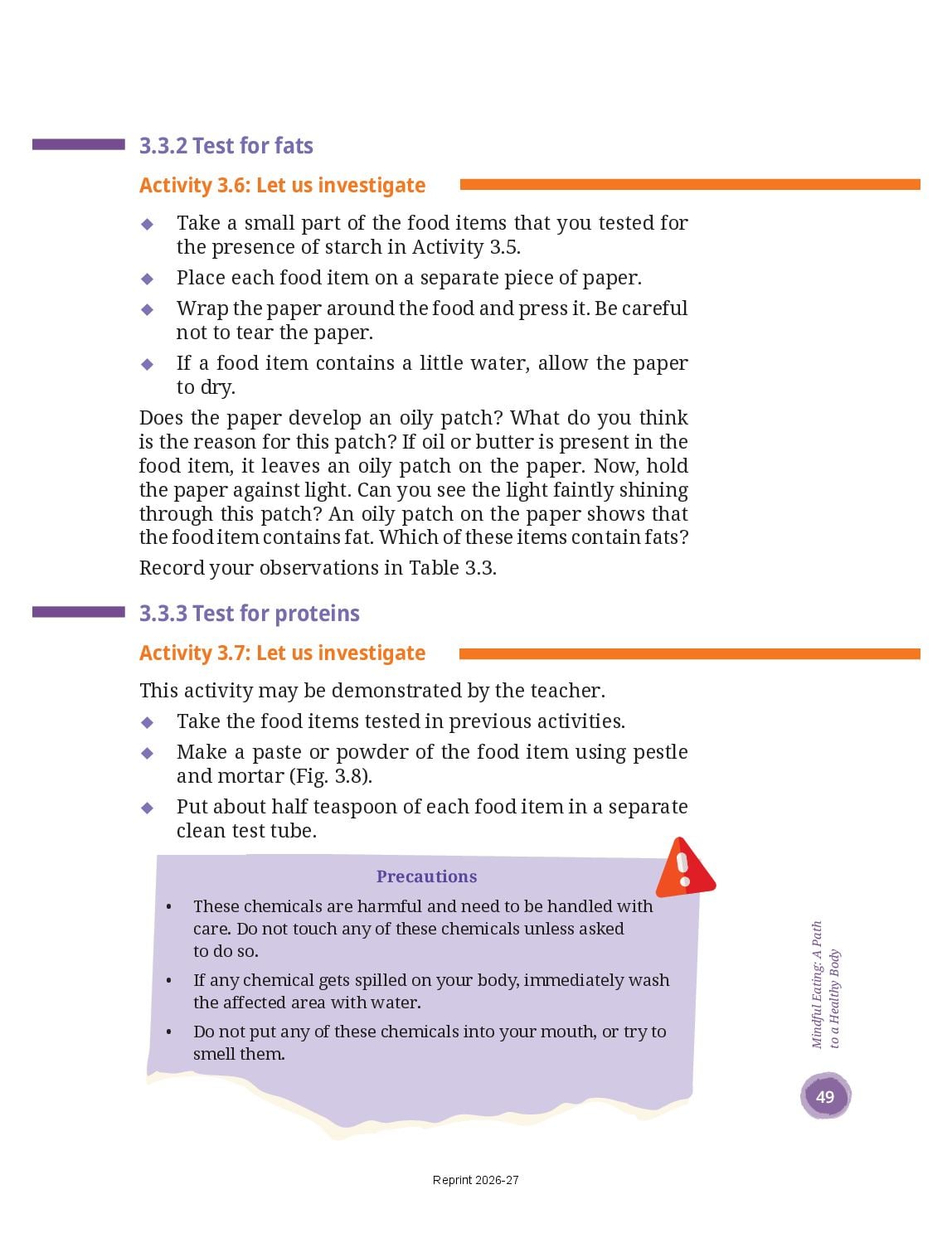
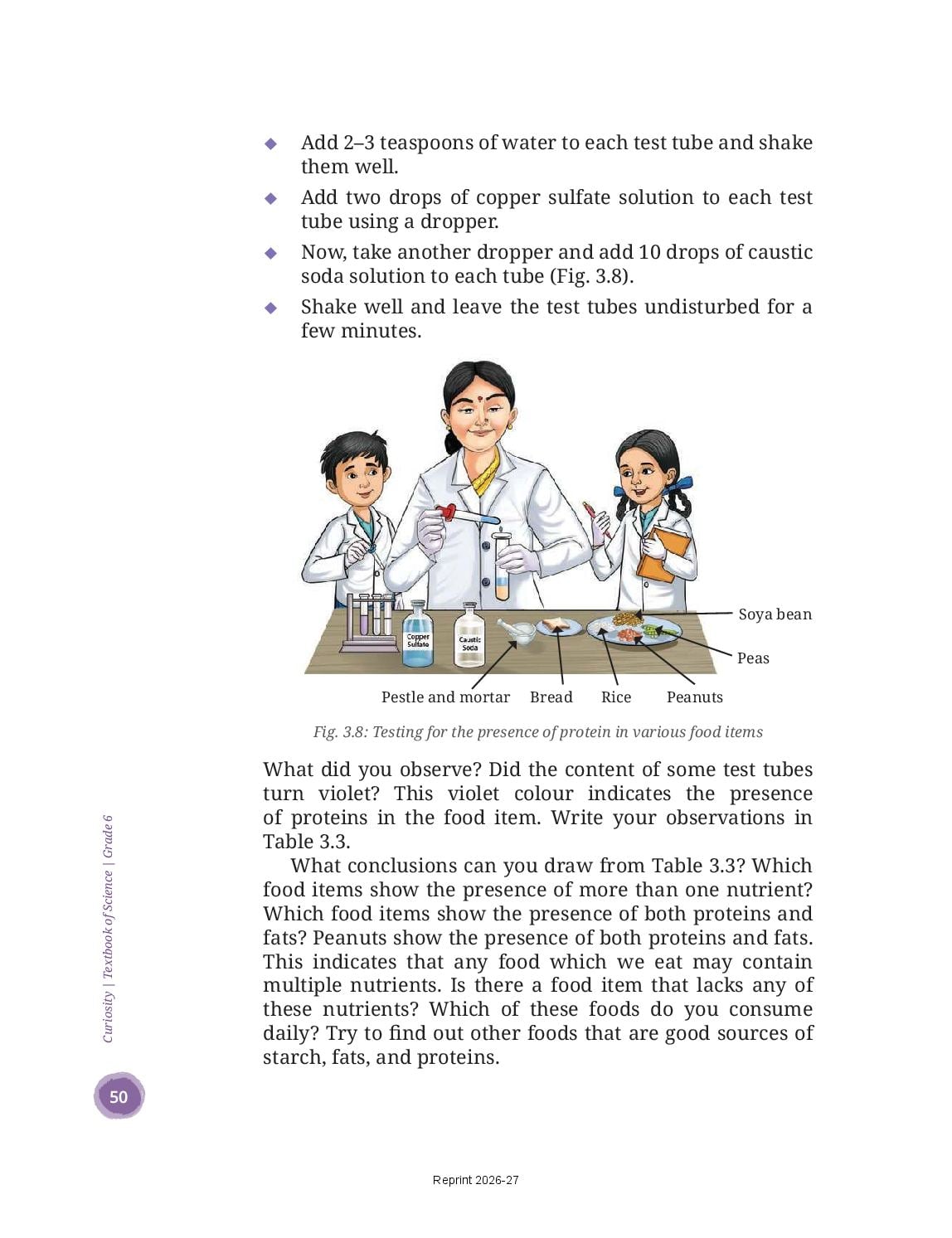
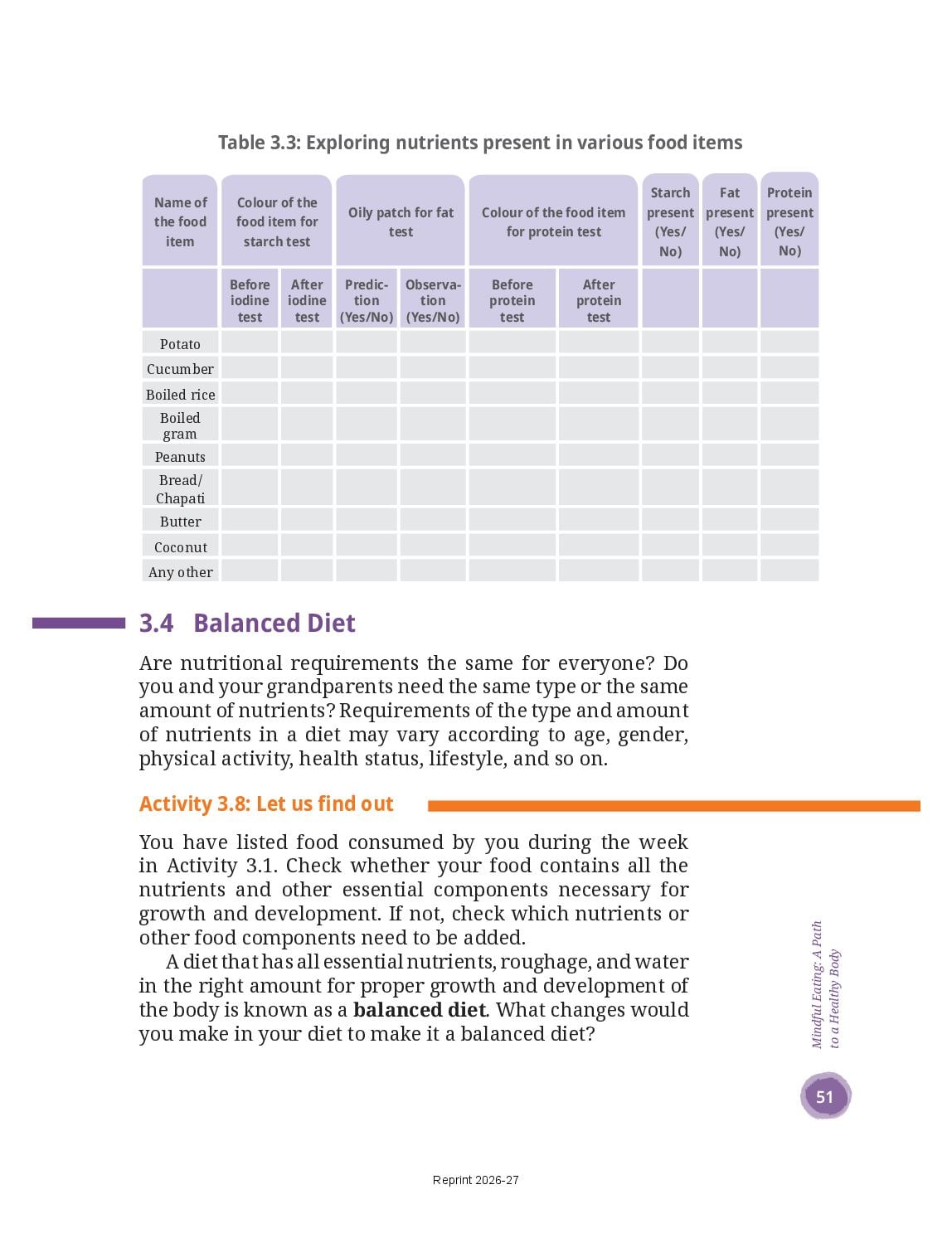
- Three simple tests identify three nutrients: iodine solution → blue-black = starch; oily translucent patch on paper = fat; copper sulfate + caustic soda → violet = protein. One food can show more than one nutrient — peanuts show both fat and protein.
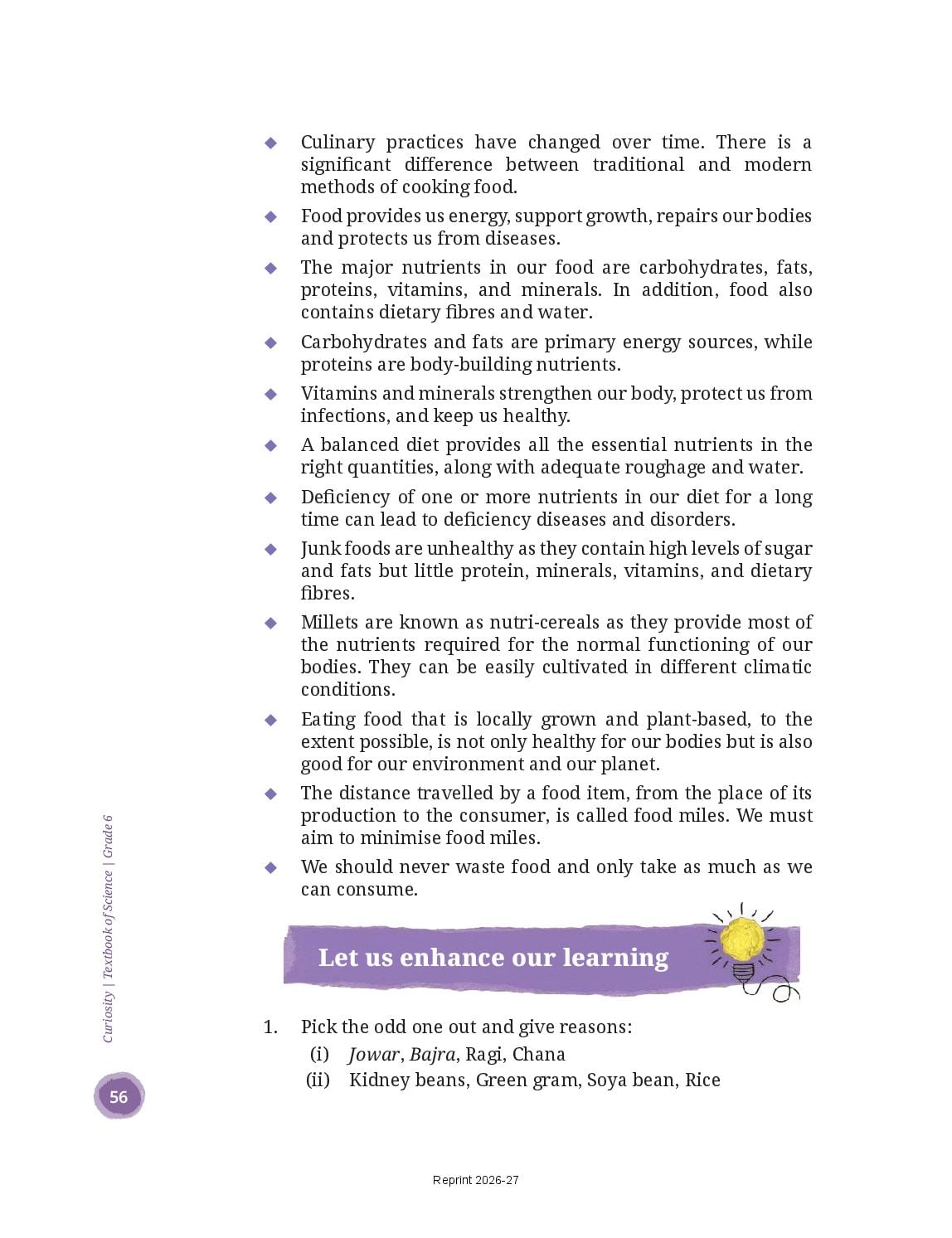
- A balanced diet supplies all nutrients, roughage and water in the right amounts. Junk food is high in sugar and fat but poor in protein, vitamins, minerals and fibre. Millets (jowar, bajra, ragi, sanwa) are nutri-cereals, and eating local food cuts down food miles.
Quick revision – Mindful Eating: A Path to a Healthy Body
| Term | What it means | Indian examples / sources | Where it comes in the chapter |
|---|---|---|---|
| Carbohydrate | The main and quickest source of energy | Rice, wheat, bajra, potato, sweet potato, banana, mango, sugar, glucose | Section 3.2, page 40 |
| Fat | A source of stored energy; gives more energy than carbohydrates | Ghee, mustard oil, butter, groundnut, coconut, til, almonds, sunflower seeds | Section 3.2, page 40 |
| Protein | Body-building nutrient — used for growth and repair | Moong, tuar dal, rajma, chana, soya bean, milk, paneer, curd, egg, fish, edible mushroom | Section 3.2, page 41 |
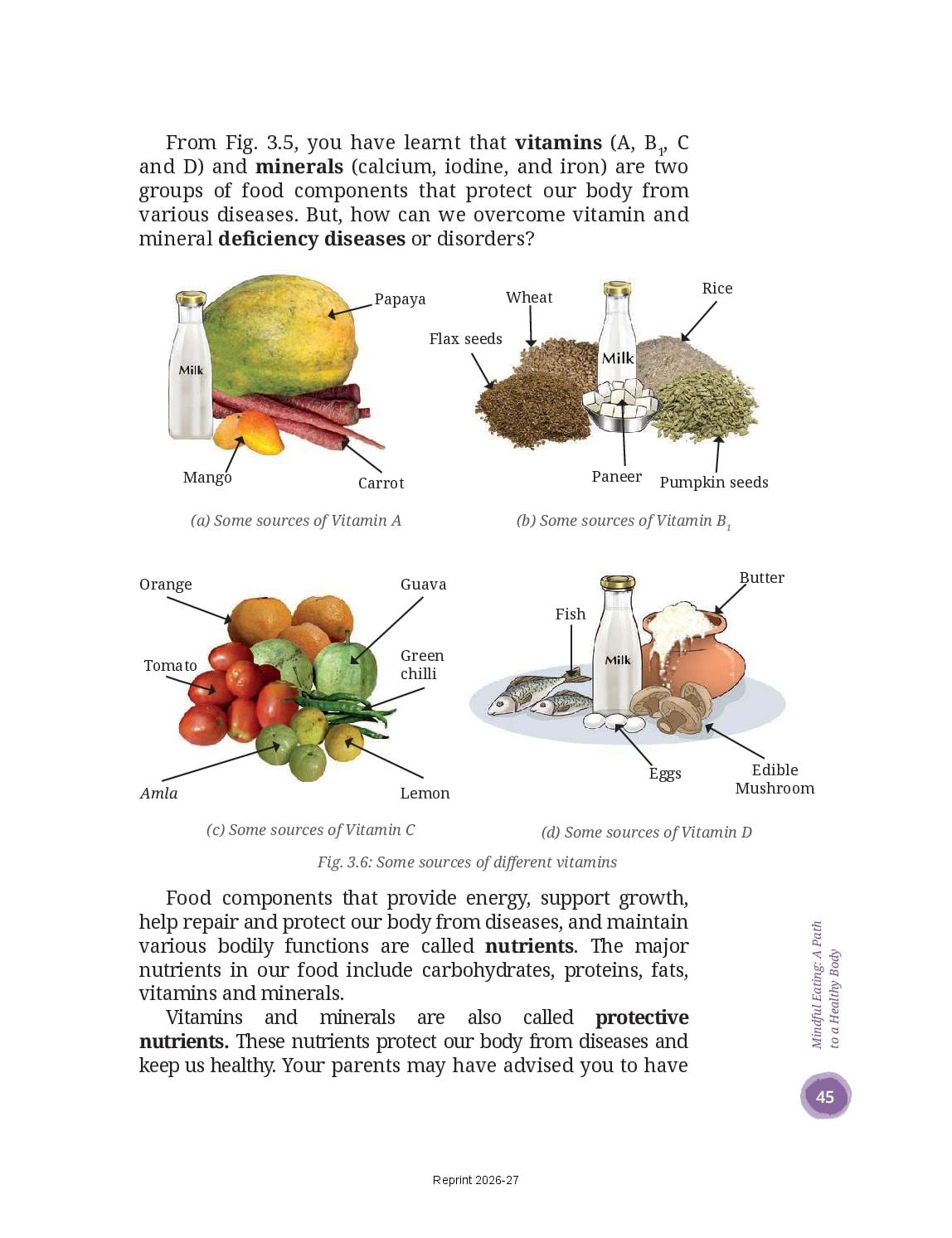
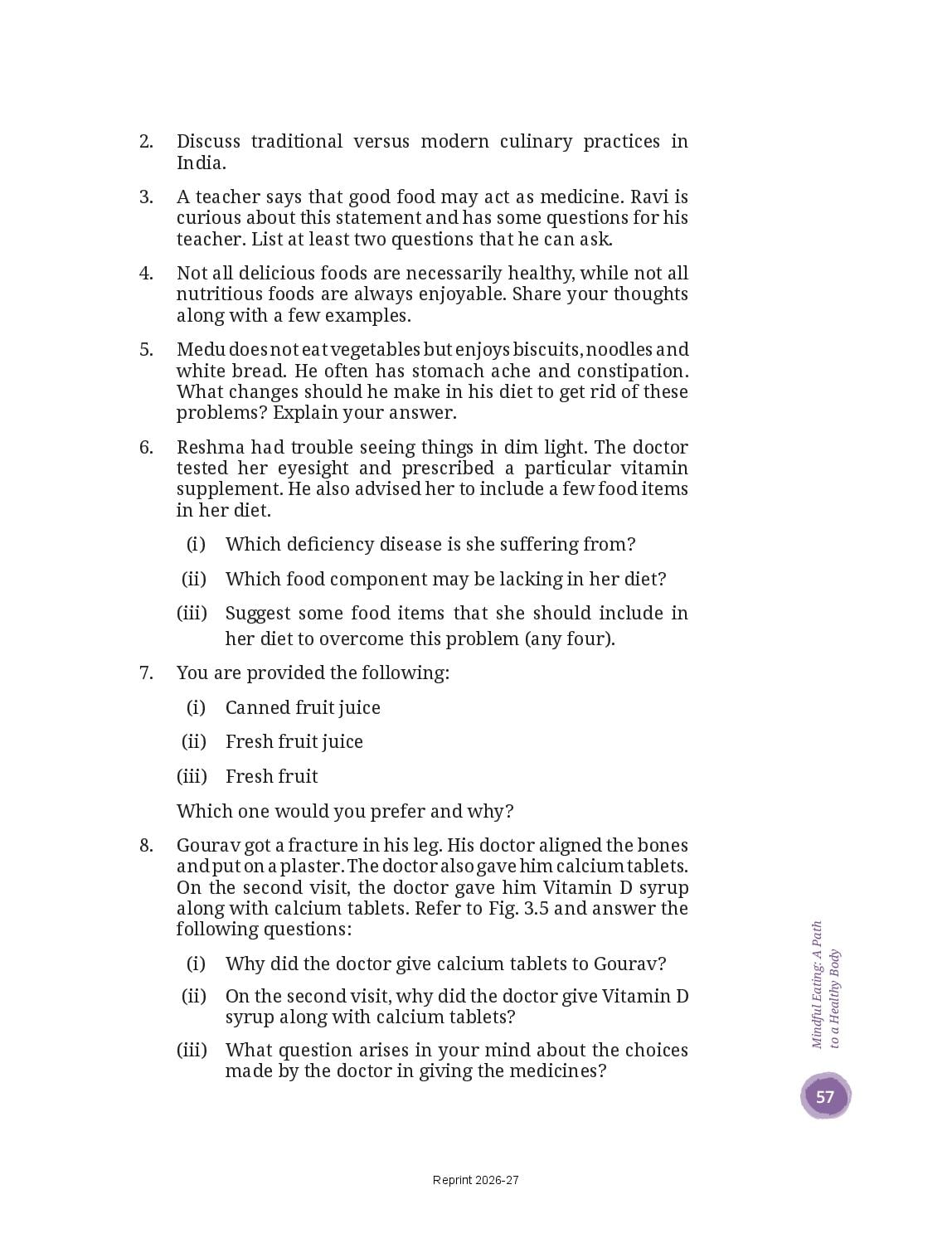
| Vitamins | Protective nutrients needed in small amounts | A — papaya, carrot; B1 — whole grains; C — amla, lemon; D — sunlight, fish | Fig. 3.5, page 44 |
| Minerals | Protective nutrients that build bones, teeth and blood | Calcium — milk, paneer; Iron — green leafy vegetables, beetroot; Iodine — iodised salt, singhada | Fig. 3.5, page 44 |
| Nutrients | Food components that give energy, support growth, repair the body and protect it from disease | Carbohydrates, proteins, fats, vitamins, minerals | Page 45 |
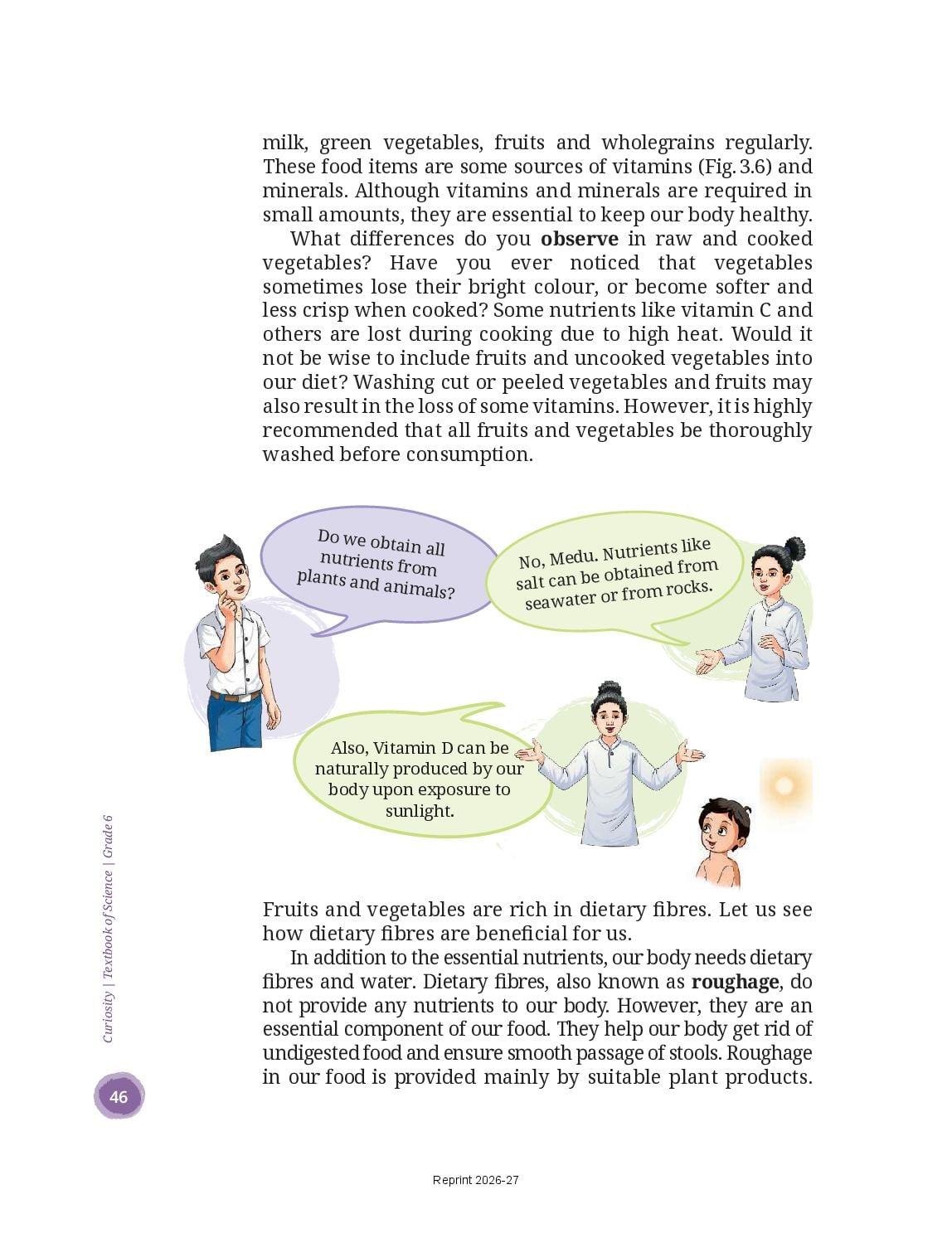
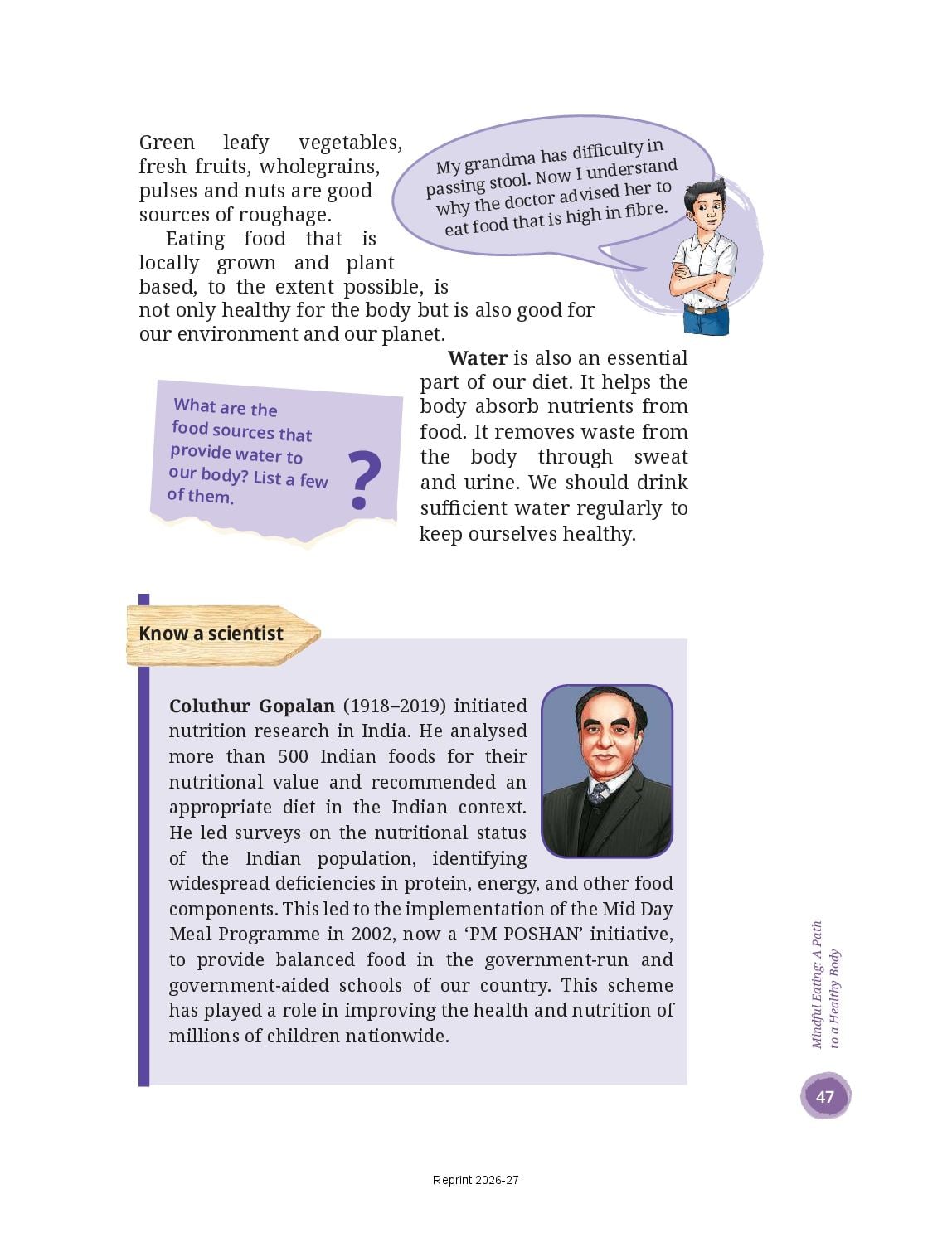
| Roughage (dietary fibre) | Plant matter that gives no nutrient but keeps the passage of stool smooth | Green leafy vegetables, fresh fruits, wholegrains, pulses, nuts | Page 46 |
| Balanced diet | A diet with all essential nutrients, roughage and water in the right amount | Roti + dal + sabzi + curd + salad + a fruit | Section 3.4, page 51 |
| Deficiency disease | An illness caused by long-term shortage of a nutrient | Scurvy, beriberi, rickets, goitre, anaemia, night blindness | Fig. 3.5, page 44 |
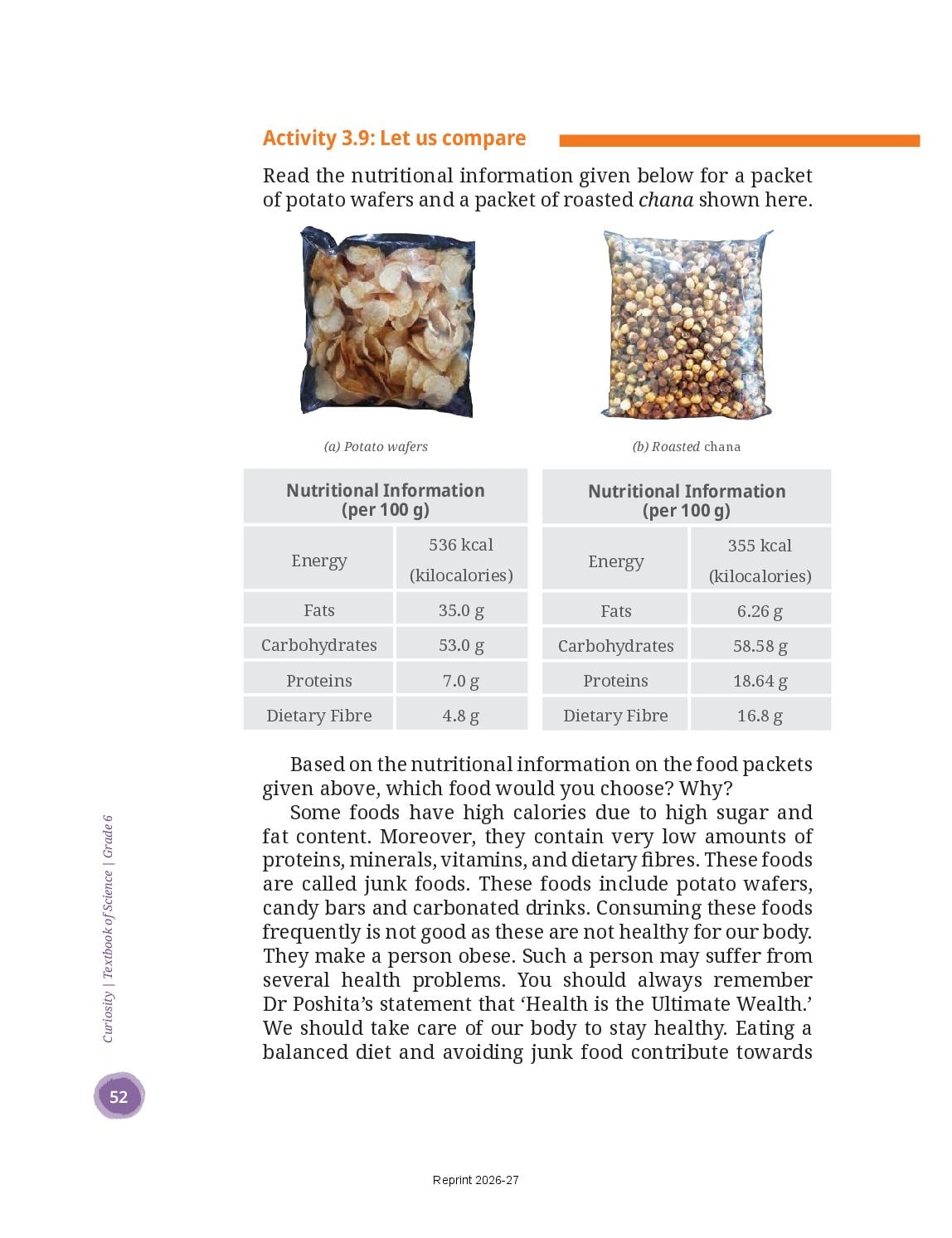
| Junk food | Food high in sugar and fat but very low in protein, vitamins, minerals and fibre | Potato wafers, candy bars, carbonated drinks | Page 52 |
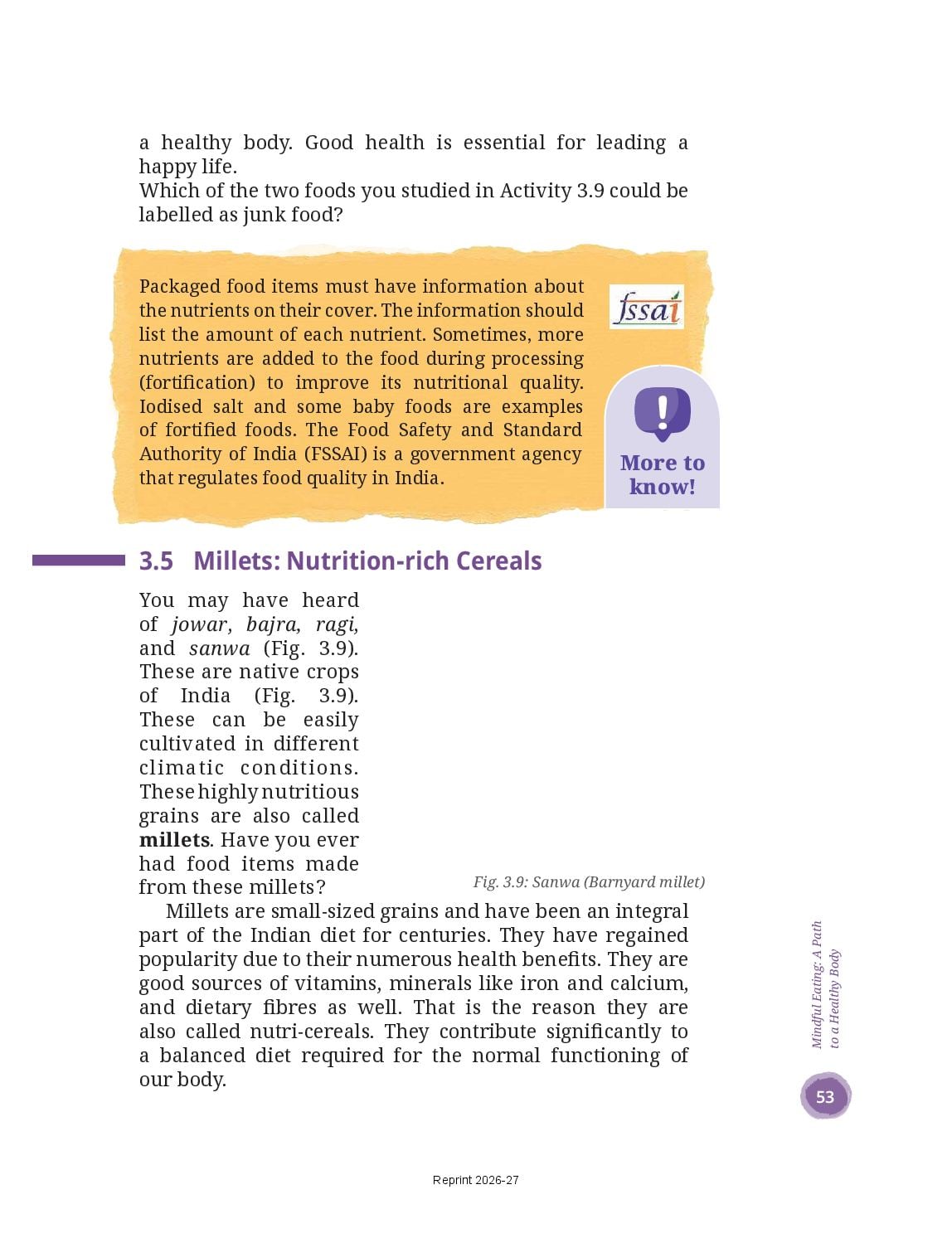
| Millets (nutri-cereals) | Small-sized native grains, rich in vitamins, iron, calcium and fibre | Jowar, bajra, ragi, sanwa | Section 3.5, page 53 |
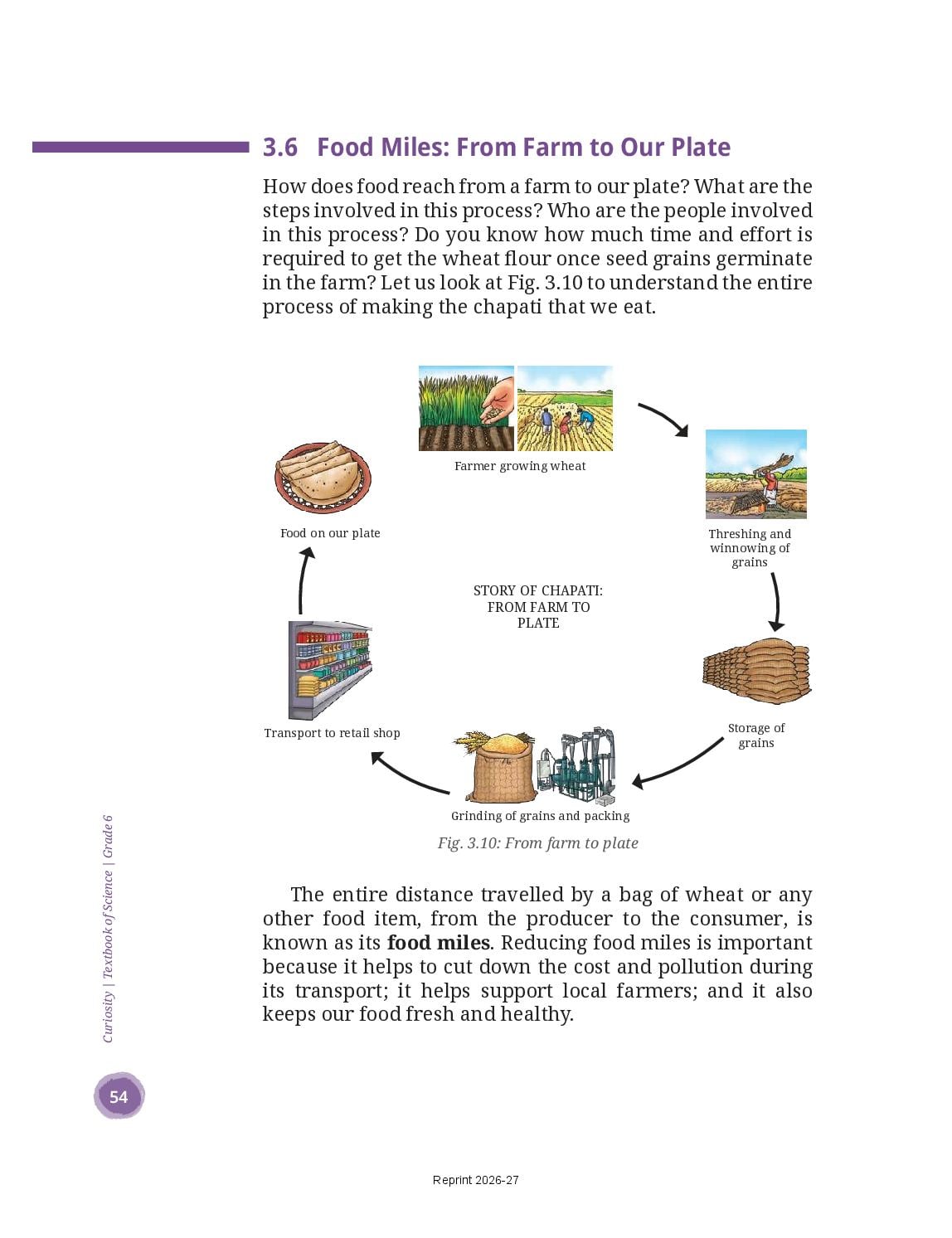
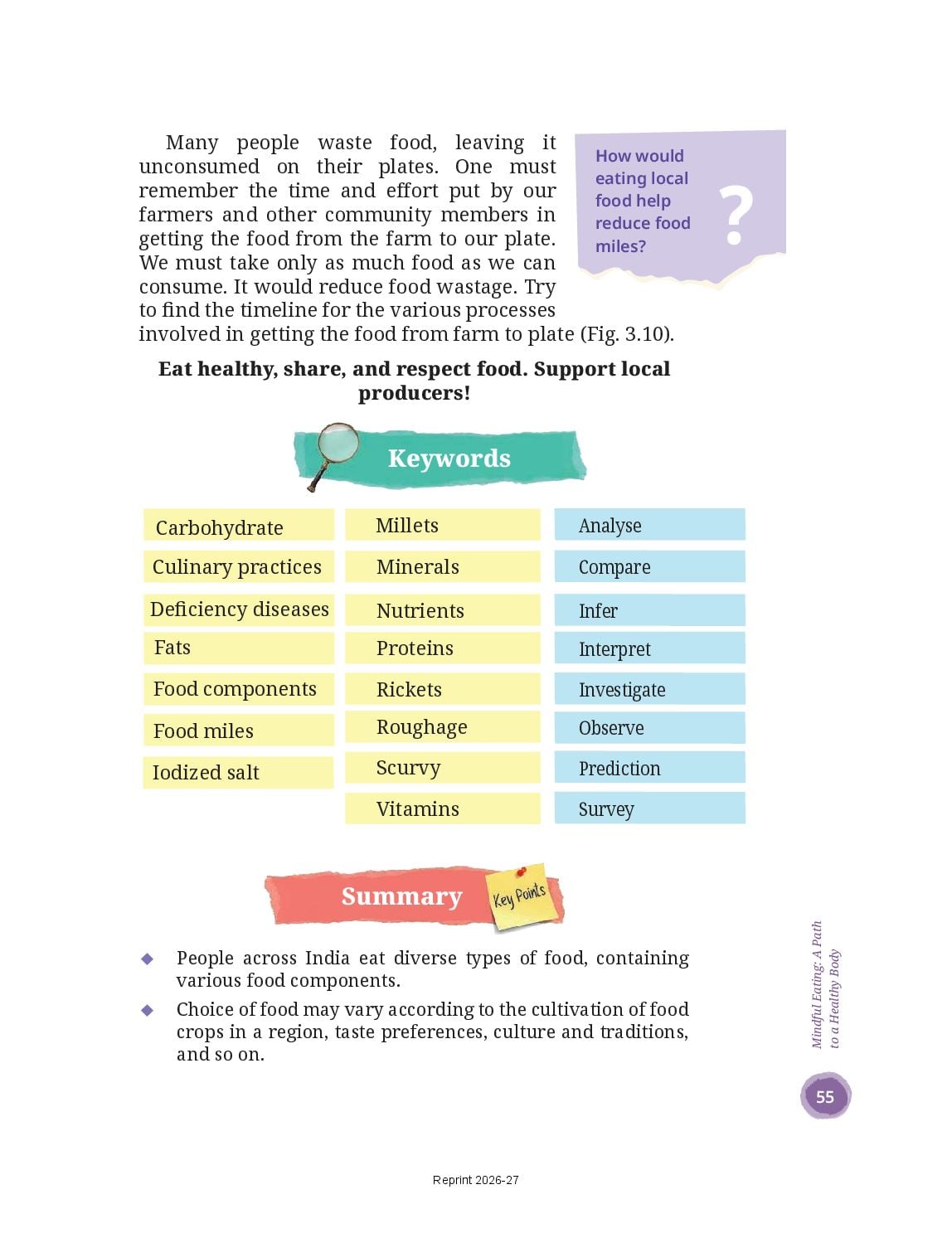
| Food miles | The entire distance a food item travels from the producer to the consumer | Wheat: farm → thresher → godown → flour mill → shop → your plate | Section 3.6, page 54 |
Old NCERT vs New – Class 6 Science
This chapter is from Curiosity, the new NCERT Class 6 Science book (NCF-SE 2023, used from 2024-25). It replaced the old book “Science”, so chapter numbers and names differ from older PDFs.
Solutions and All Chapters
Answers to the exercises and the full chapter list of Curiosity:
Mindful Eating: A Path to a Healthy Body – Overview
| Class | Class 6 |
| Subject | Science |
| Book | Curiosity – new NCERT book |
| Chapter | 3 of 12 – Mindful Eating: A Path to a Healthy Body |
| Book pages | 35 – 59 |
| Edition | NCERT Reprint 2026-27 |
| Session | 2026-27 |
| Free – read online or download |
Class 6 Science Chapter 3 – FAQs
Where can I download Mindful Eating: A Path to a Healthy Body Class 6 PDF?
From the download table on this page – the chapter PDF is free, and the full book is linked too.
What is Class 6 Science Chapter 3 about?
People across India eat very different food, because the traditional food of a state is built on the crops grown there — makki di roti and sarson da saag in Punjab, ragi mudde and rasam in Karnataka, eromba and singju in Manipur.
Is Mindful Eating: A Path to a Healthy Body from the new NCERT Class 6 Science book?
Yes. It is chapter 3 of curiosity, the new NCERT Class 6 Science book for 2026-27.
Is this the latest NCERT edition for 2026-27?
Yes – the PDF is NCERT’s latest edition for the 2026-27 session.
Where are the NCERT Solutions for Class 6 Science Chapter 3?
Open the NCERT Solutions link above for answers to the exercise questions.