NCERT Solutions for Class 6 Science Chapter 11 Nature’s Treasures provide clear, step-by-step answers to every exercise and in-text question from the chapter Nature’s Treasures of the NCERT textbook Curiosity. Prepared by subject experts as per the latest NCERT (CBSE) syllabus for 2026-27, these NCERT Solutions for Class 6 Science help you understand each concept, write exam-ready answers, and check your own solutions. You can read them online below or download the free Class 6 Science Chapter 11 question-answer PDF.
NCERT Solutions for Class 6 Science Chapter 11 Nature’s Treasures
- Class: Class 6
- Subject: Science
- Chapter: Chapter 11 – Nature’s Treasures
- Textbook: Curiosity (NCERT)
- Study material: NCERT Solutions – questions with answers, free PDF
These solutions answer all the exercise questions of Chapter 11 Nature’s Treasures — including the in-text questions, short-answer and long-answer questions, and activities — with complete explanations so you can follow the method, not just the final answer. Read the full solutions below.
NCERT Solutions Class 6 Science Chapter 11 Nature's Treasures View Download
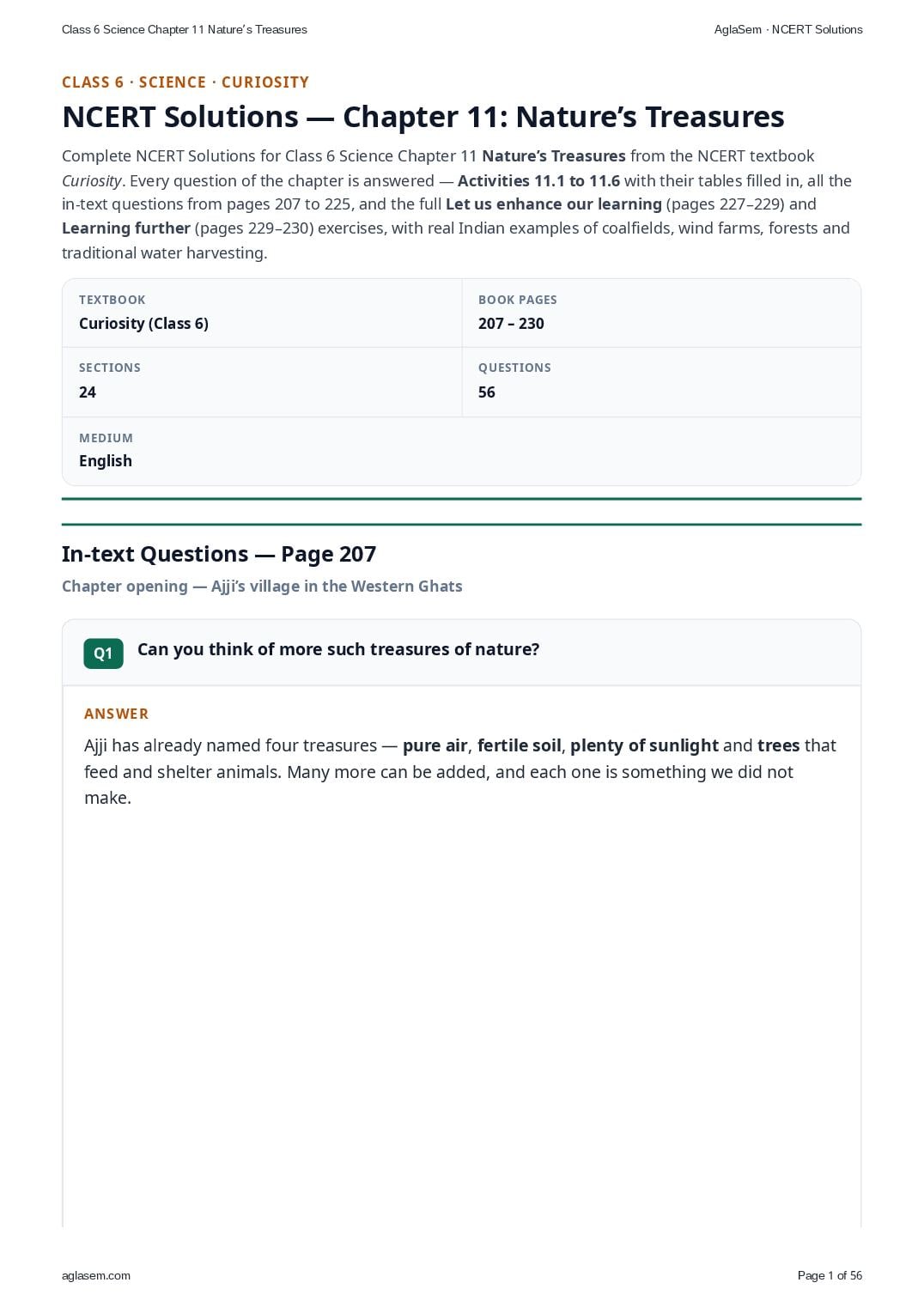
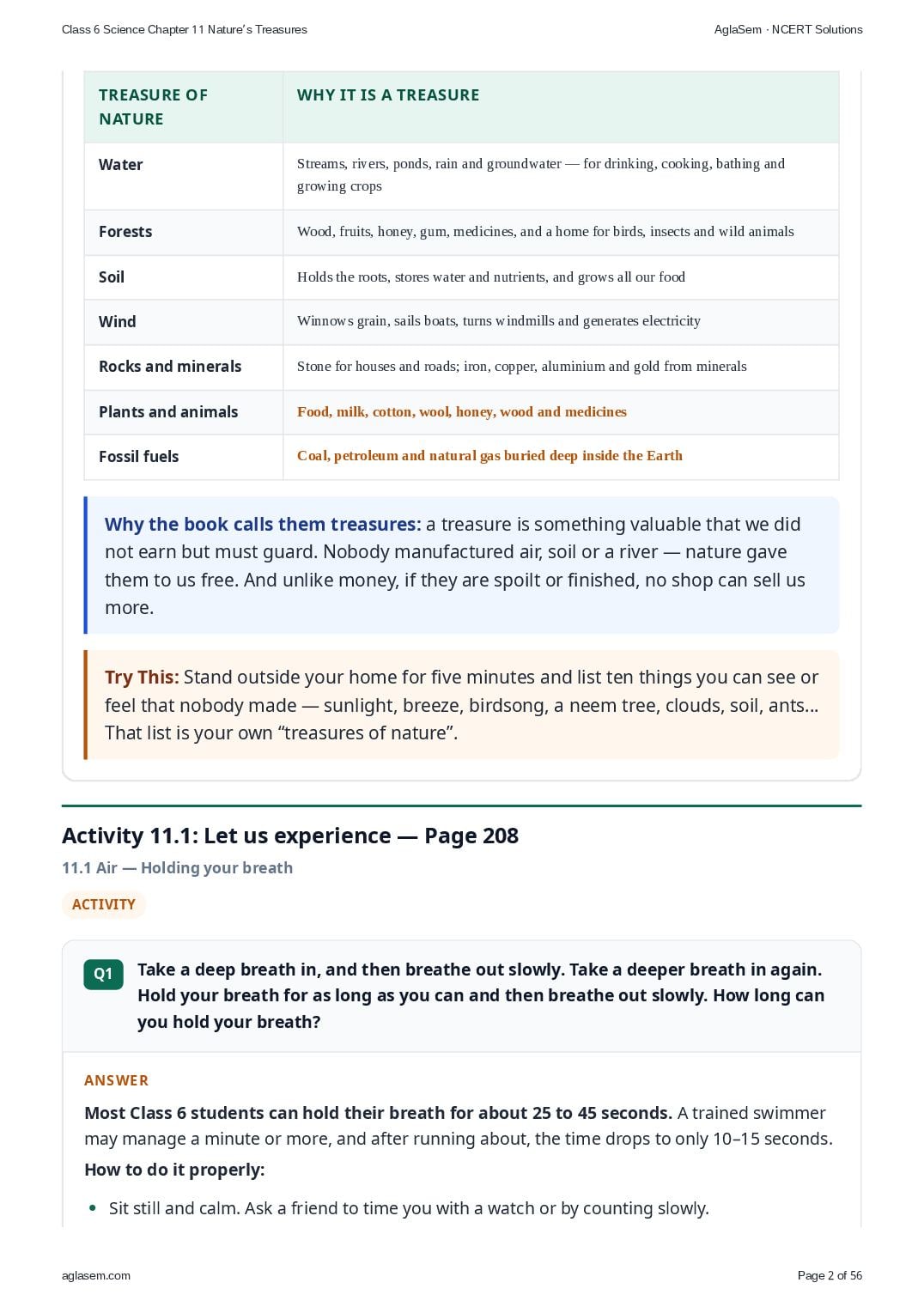
NCERT Solutions for Class 6 Science Chapter 11 PDF Download
You can read the NCERT Solutions for Class 6 Science Chapter 11 online above, or download the complete question-answer PDF to study Nature’s Treasures offline at any time.
NCERT Solutions for Class 6 Science Chapter 11 PDF Download Link – Click Here to Download Solutions PDF
Questions Covered in This Chapter
These NCERT Solutions answer all 56 questions of this chapter. The questions solved are:
- Can you think of more such treasures of nature?
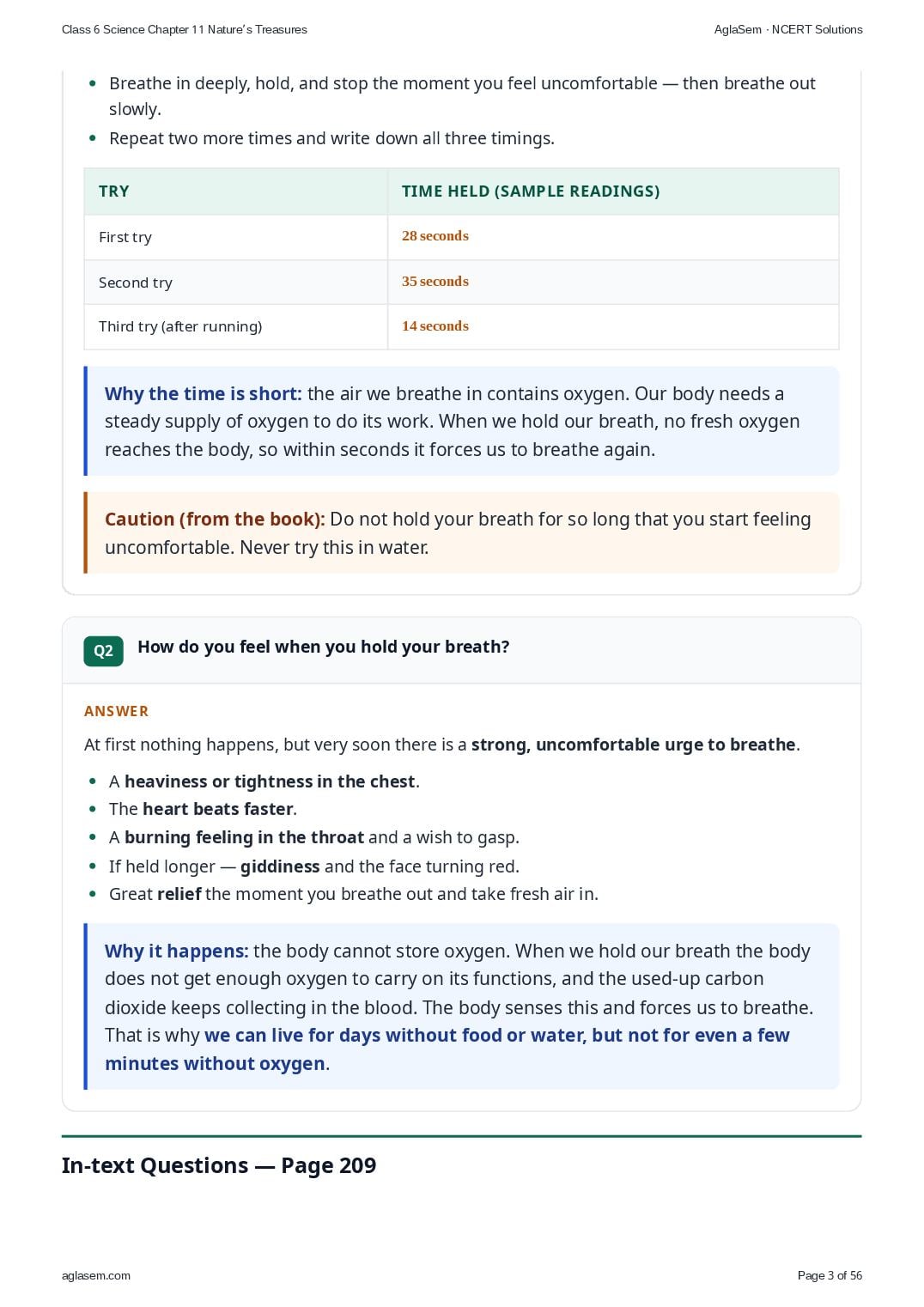
- Take a deep breath in, and then breathe out slowly. Take a deeper breath in again. Hold your breath for as long as you can and then breathe out slowly. How long can you hold your breath?
- How do you feel when you hold your breath?
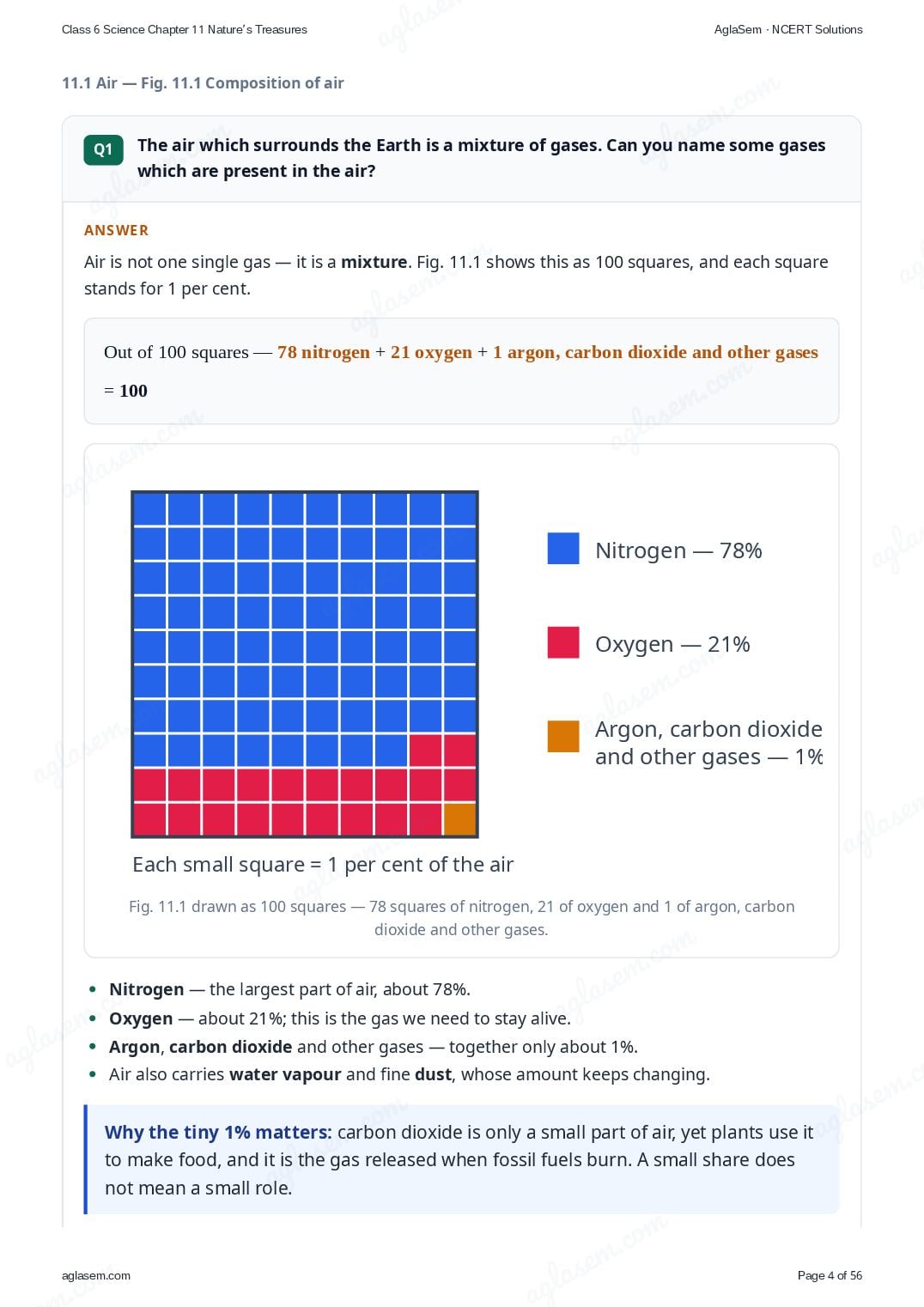
- The air which surrounds the Earth is a mixture of gases. Can you name some gases which are present in the air?
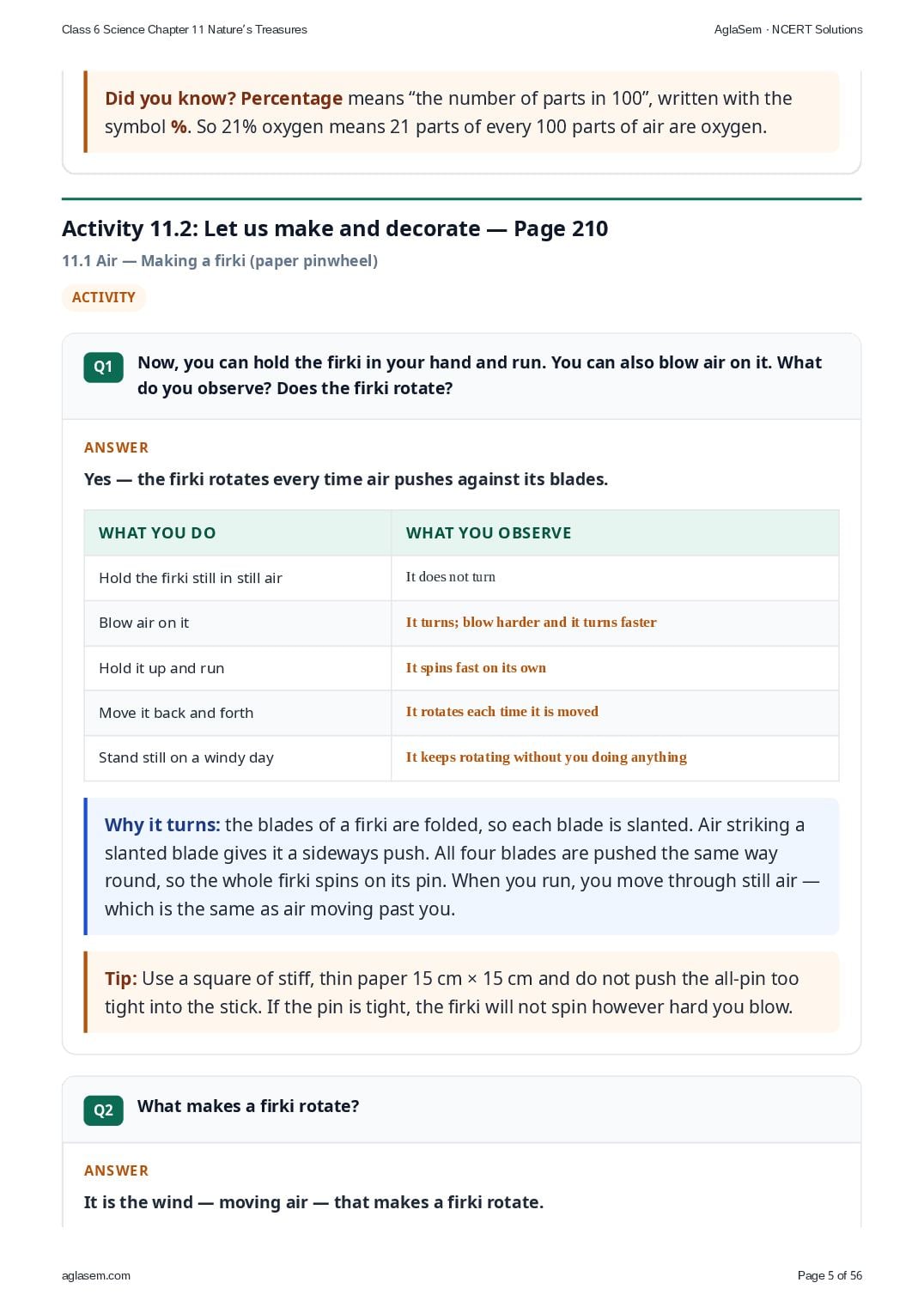
- Now, you can hold the firki in your hand and run. You can also blow air on it. What do you observe? Does the firki rotate?
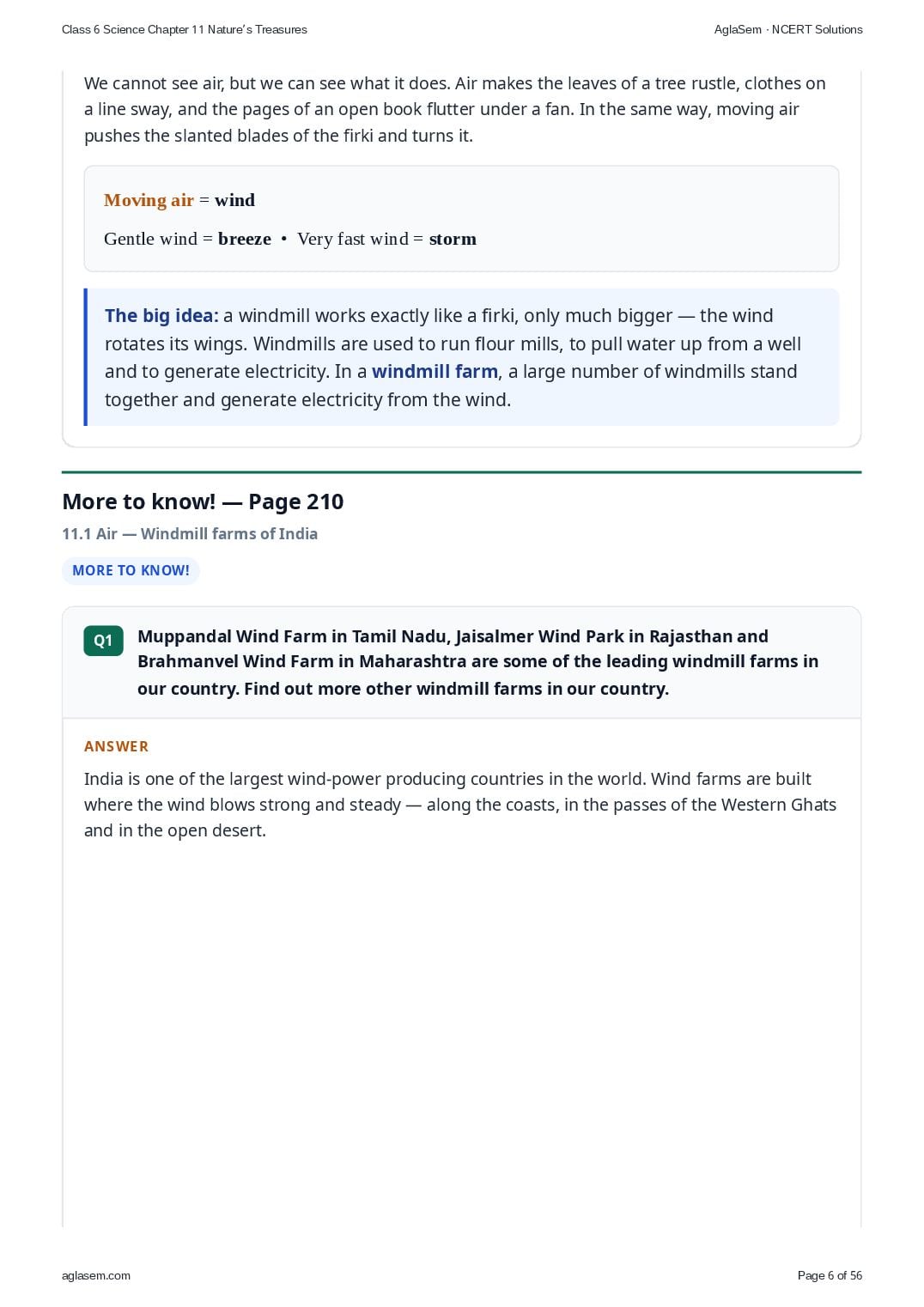
- What makes a firki rotate?
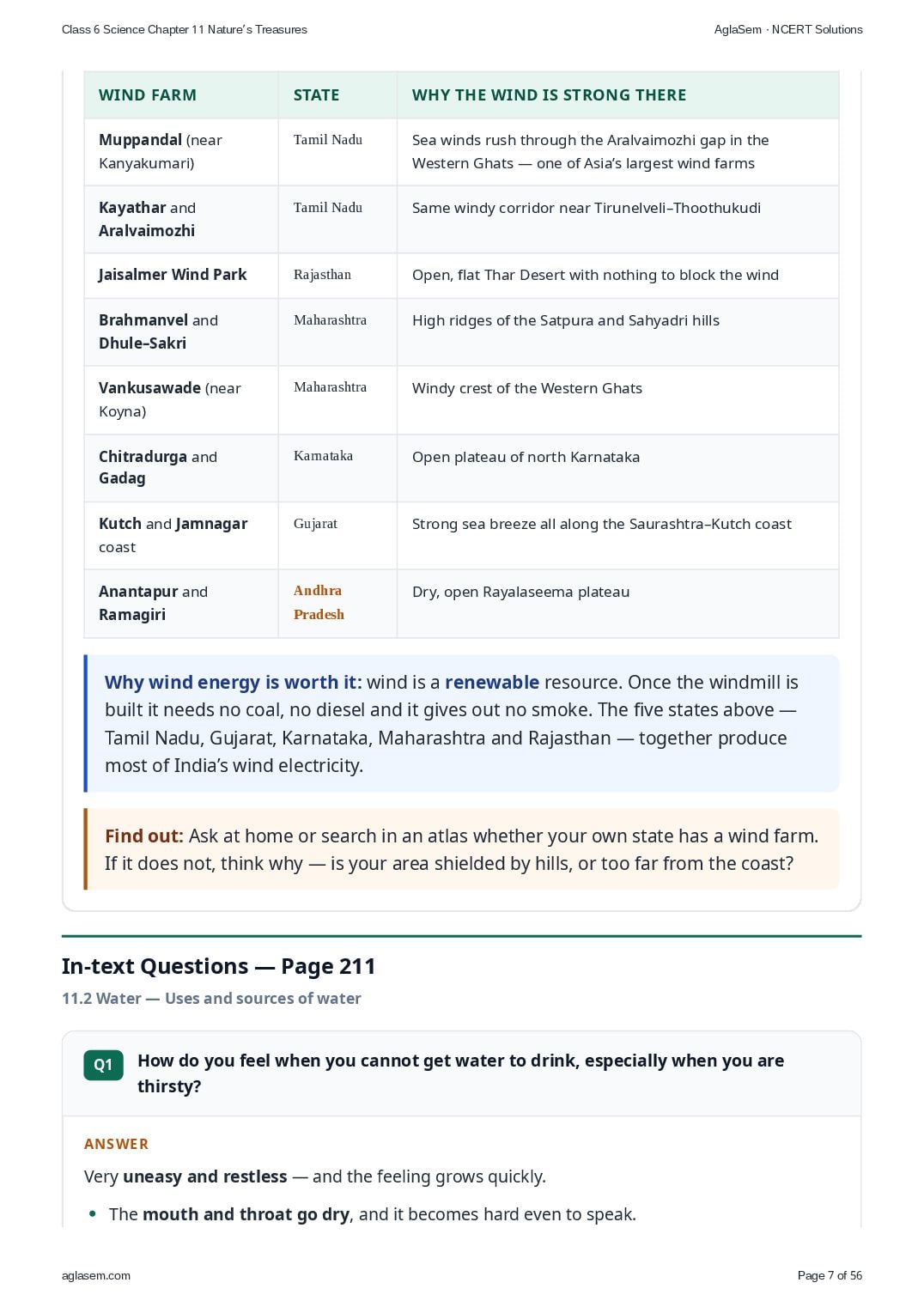
- Muppandal Wind Farm in Tamil Nadu, Jaisalmer Wind Park in Rajasthan and Brahmanvel Wind Farm in Maharashtra are some of the leading windmill farms in our country. Find out more other windmill farms in our country.
- How do you feel when you cannot get water to drink, especially when you are thirsty?
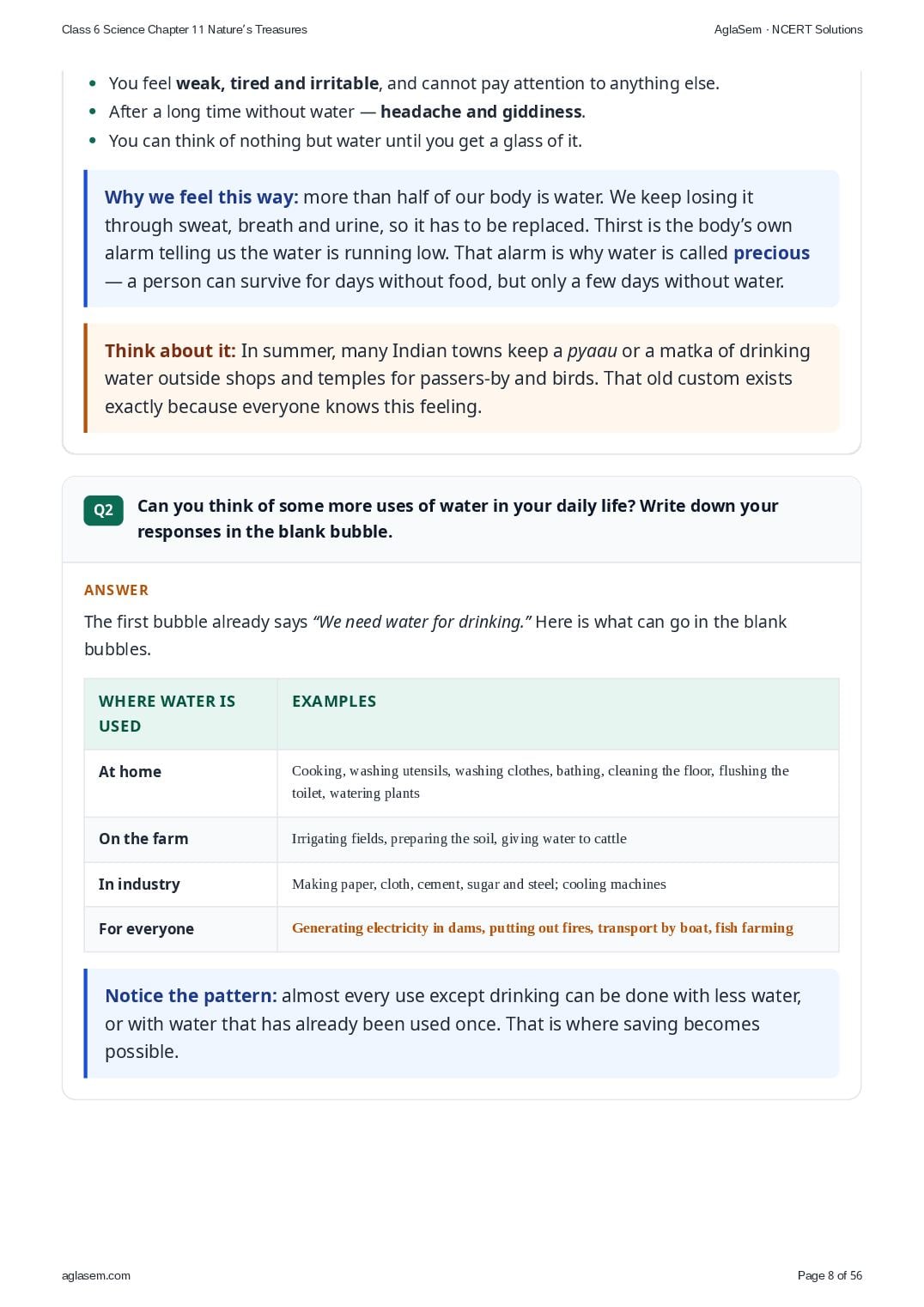
- Can you think of some more uses of water in your daily life? Write down your responses in the blank bubble.
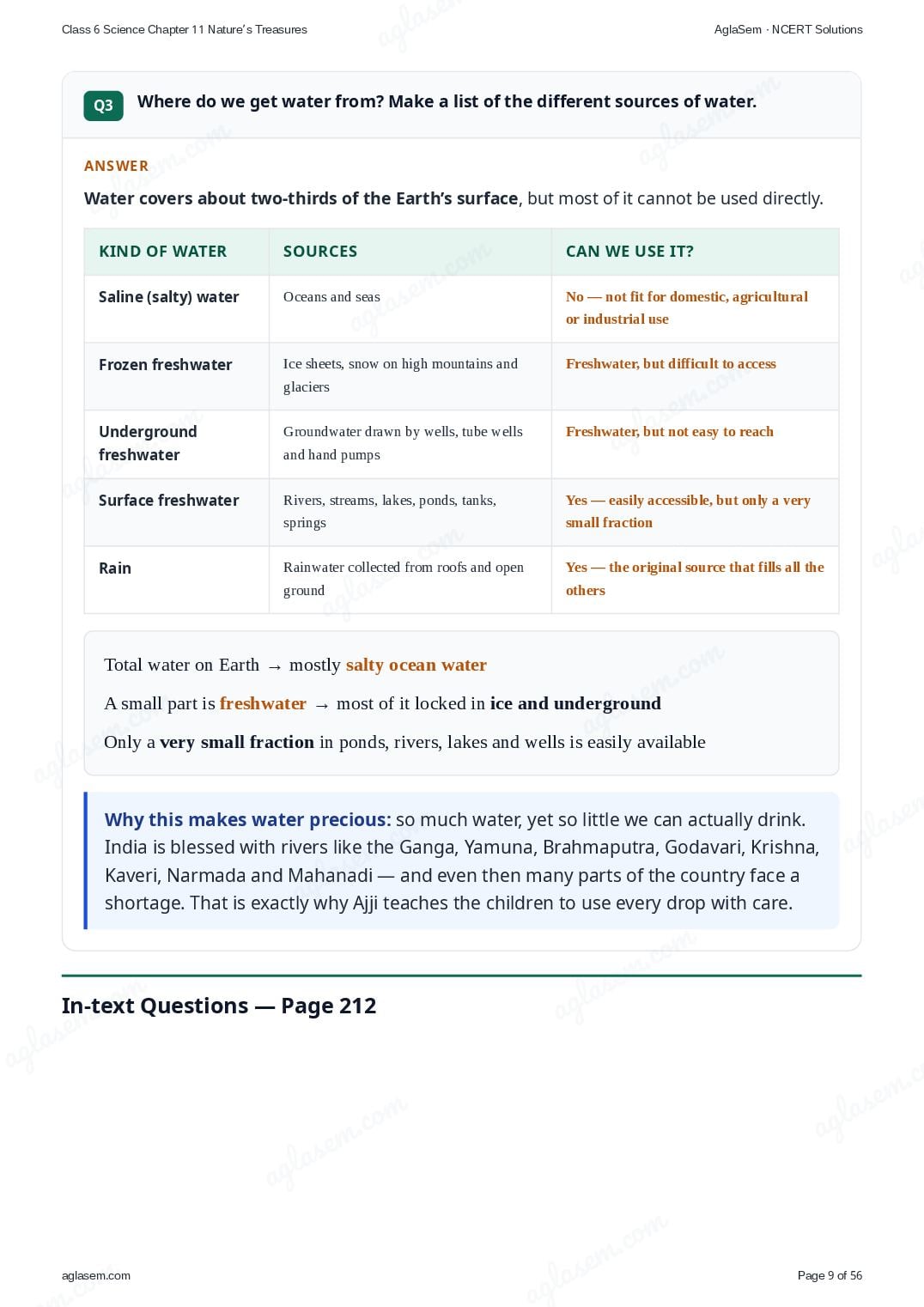
- Where do we get water from? Make a list of the different sources of water.
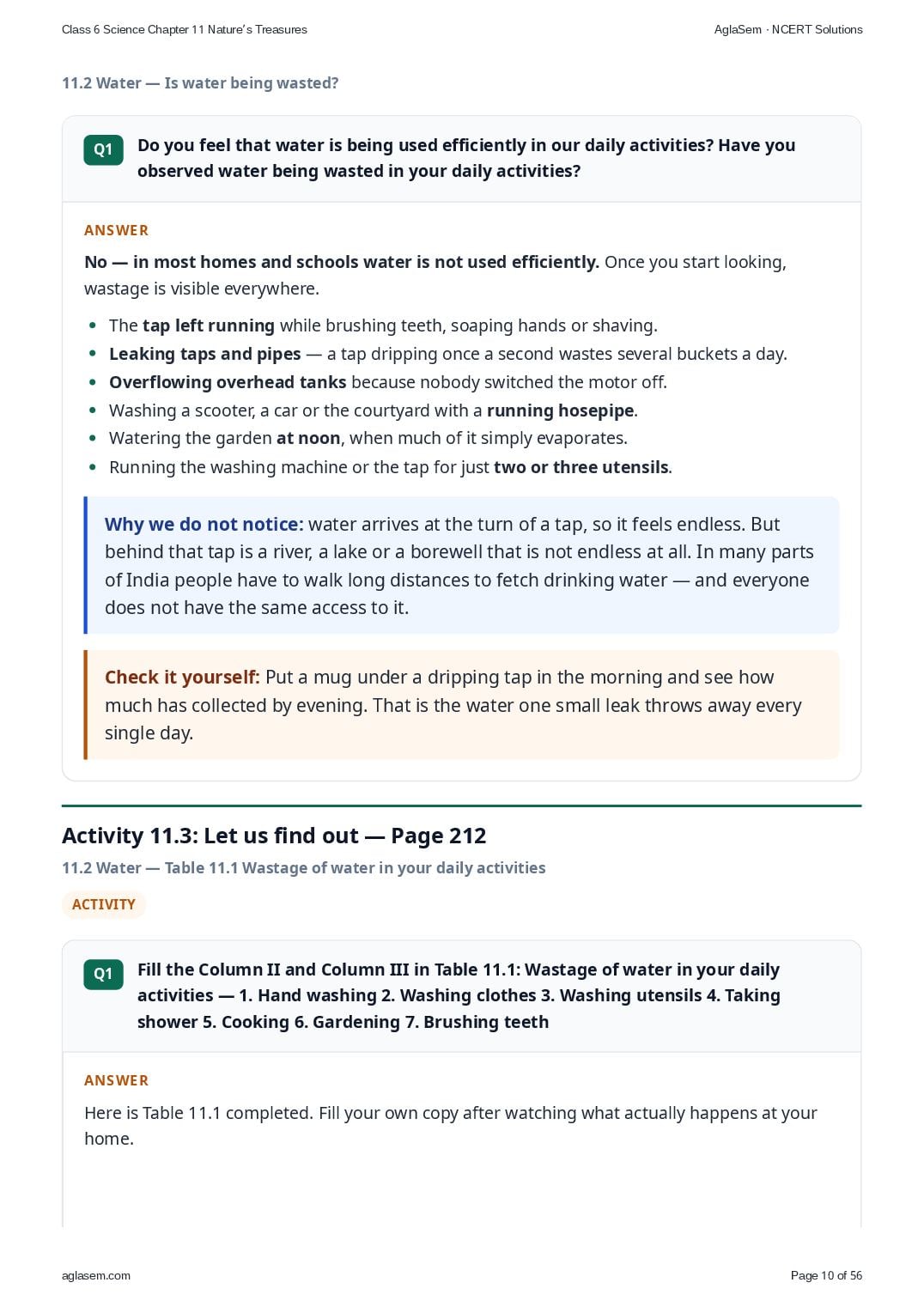
- Do you feel that water is being used efficiently in our daily activities? Have you observed water being wasted in your daily activities?
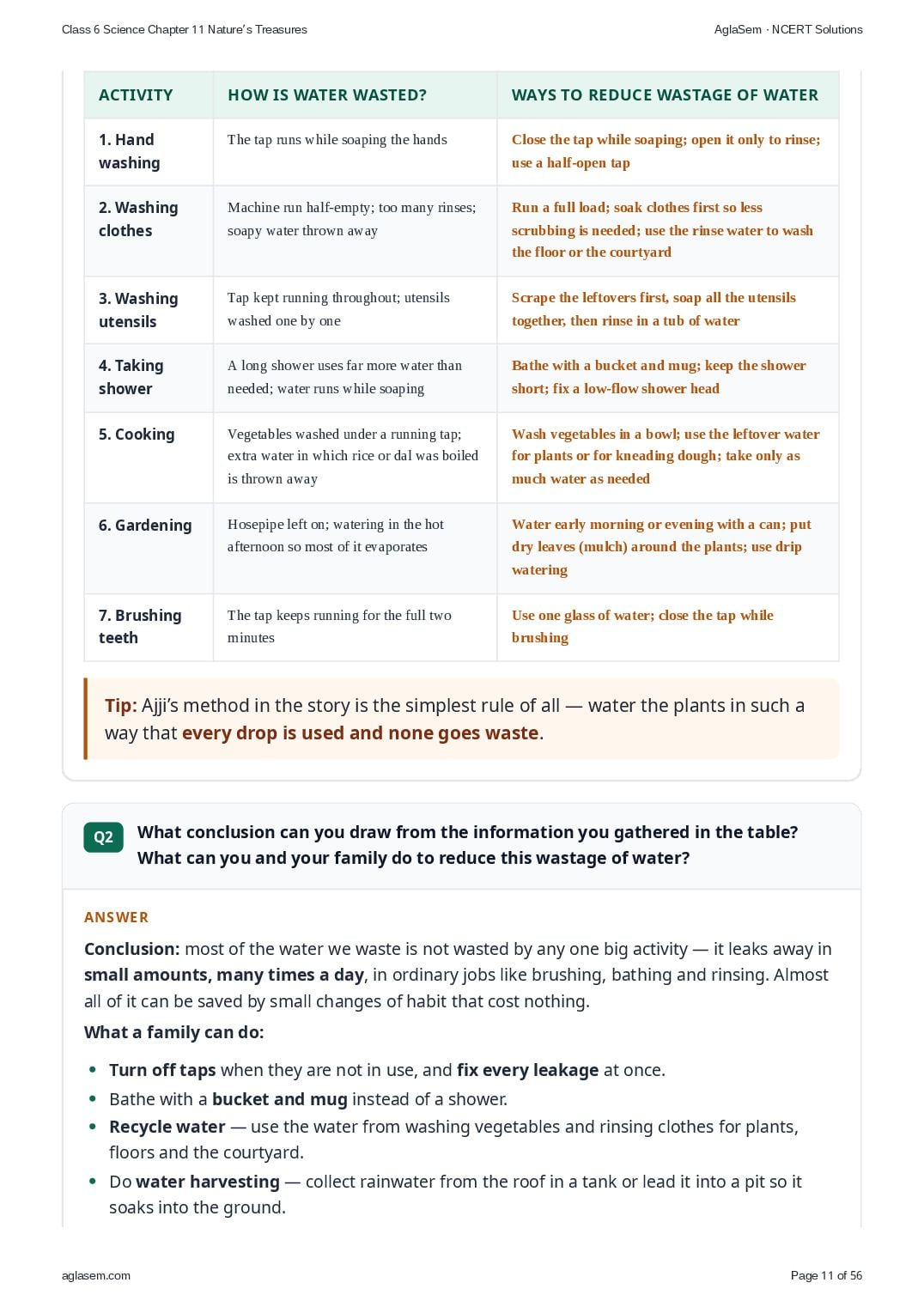
- Fill the Column II and Column III in Table 11.1: Wastage of water in your daily activities — 1. Hand washing 2. Washing clothes 3. Washing utensils 4. Taking shower 5. Cooking 6. Gardening 7. Brushing teeth
- What conclusion can you draw from the information you gathered in the table? What can you and your family do to reduce this wastage of water?
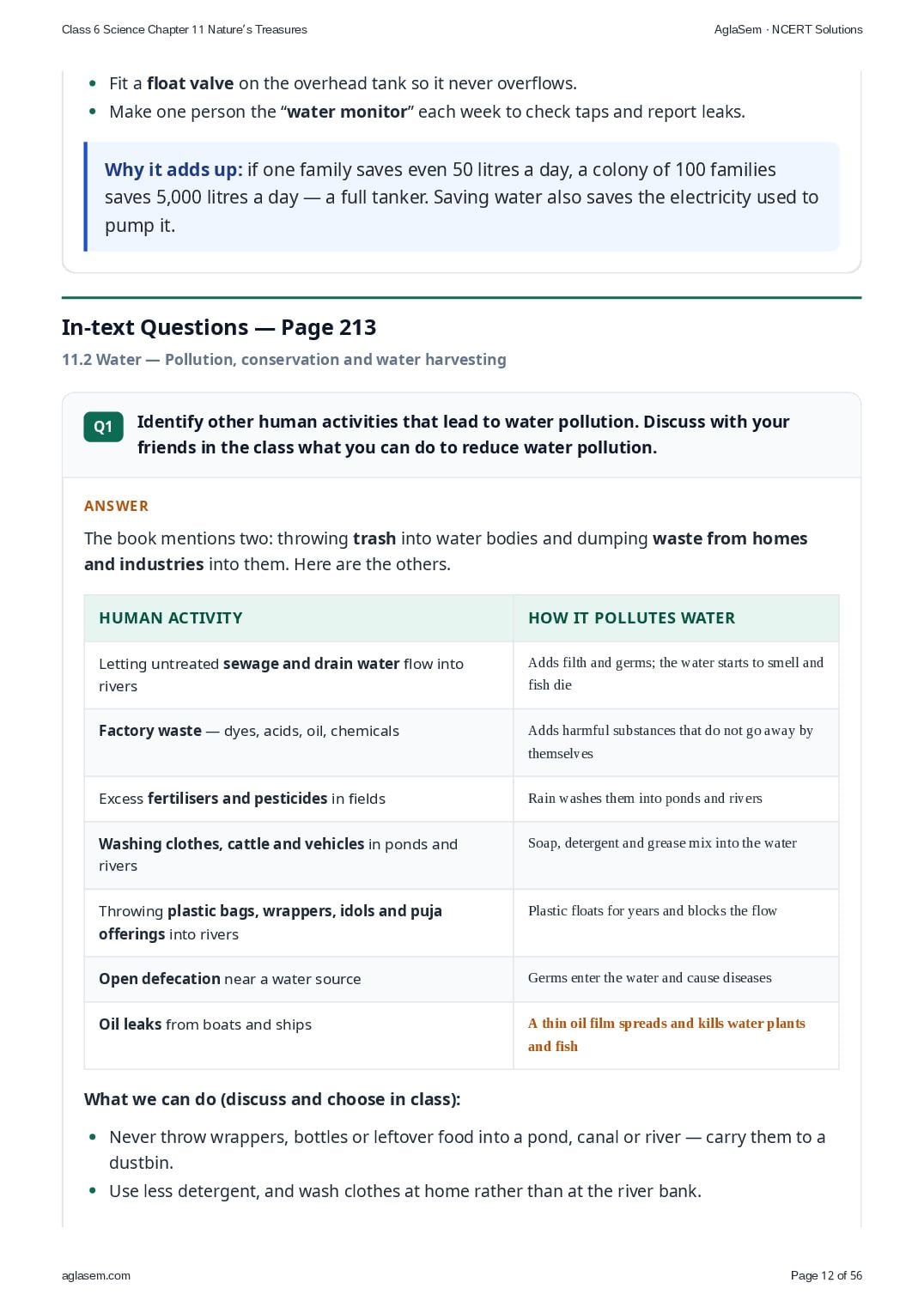
- Identify other human activities that lead to water pollution. Discuss with your friends in the class what you can do to reduce water pollution.
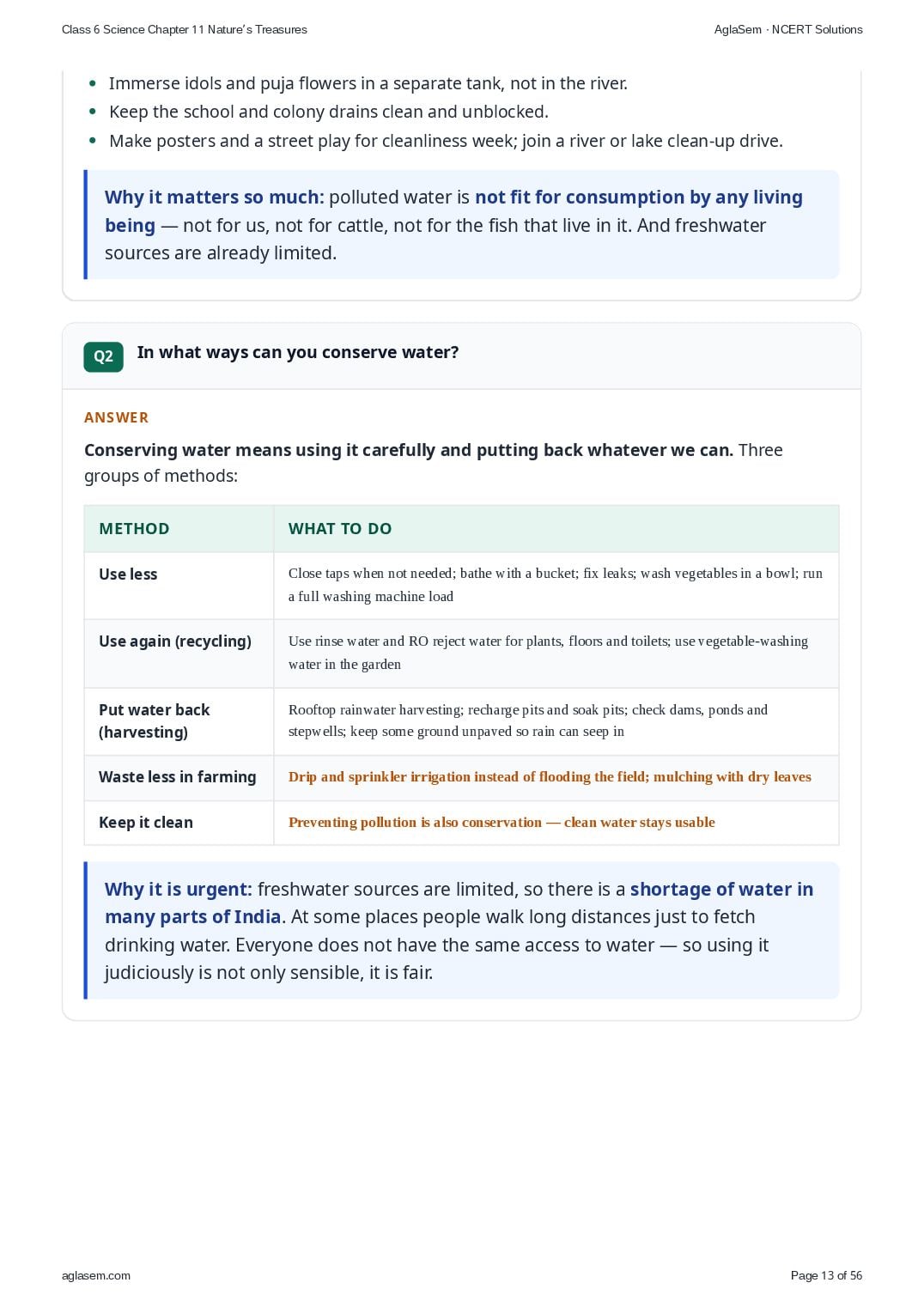
- In what ways can you conserve water?
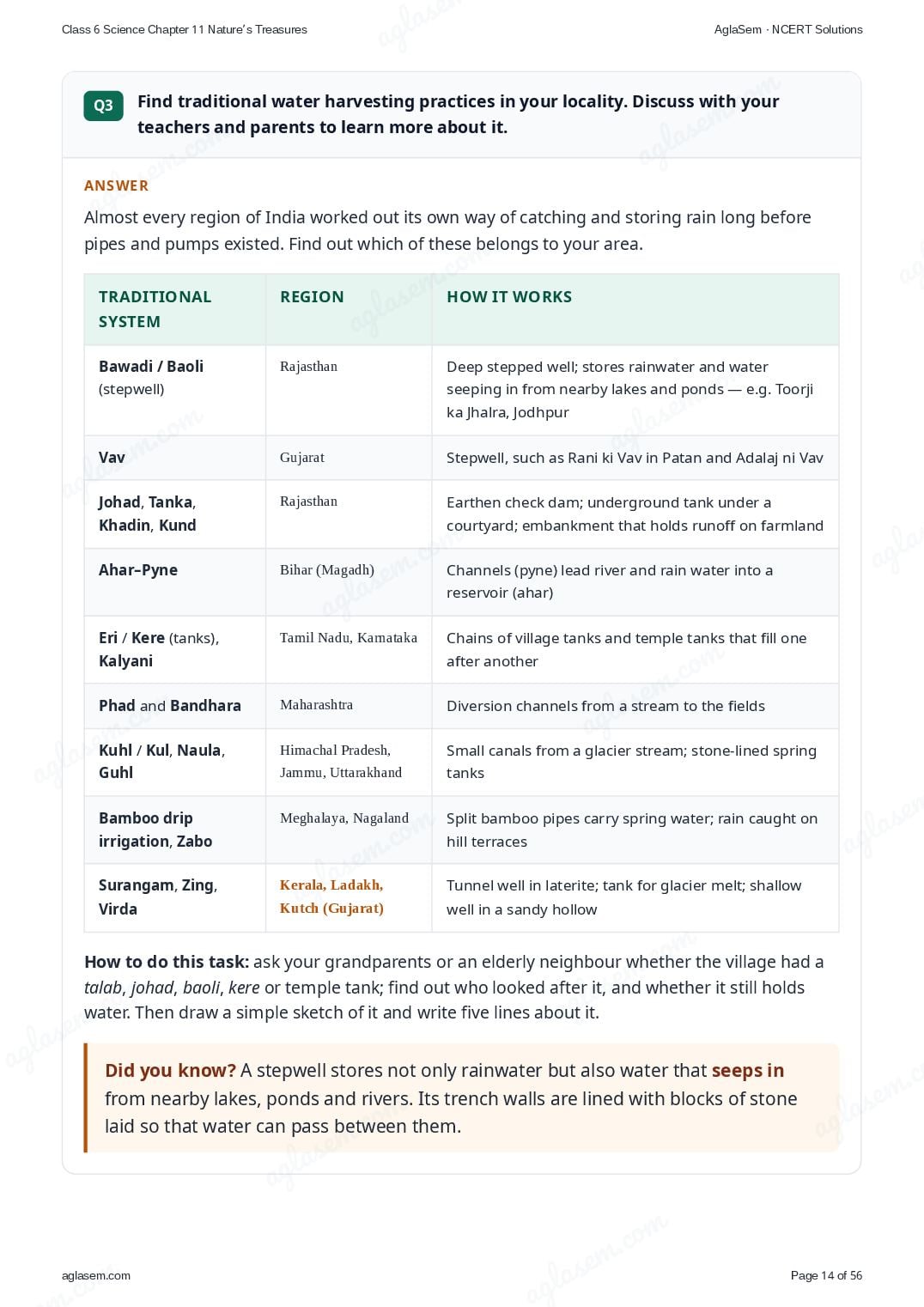
- Find traditional water harvesting practices in your locality. Discuss with your teachers and parents to learn more about it.
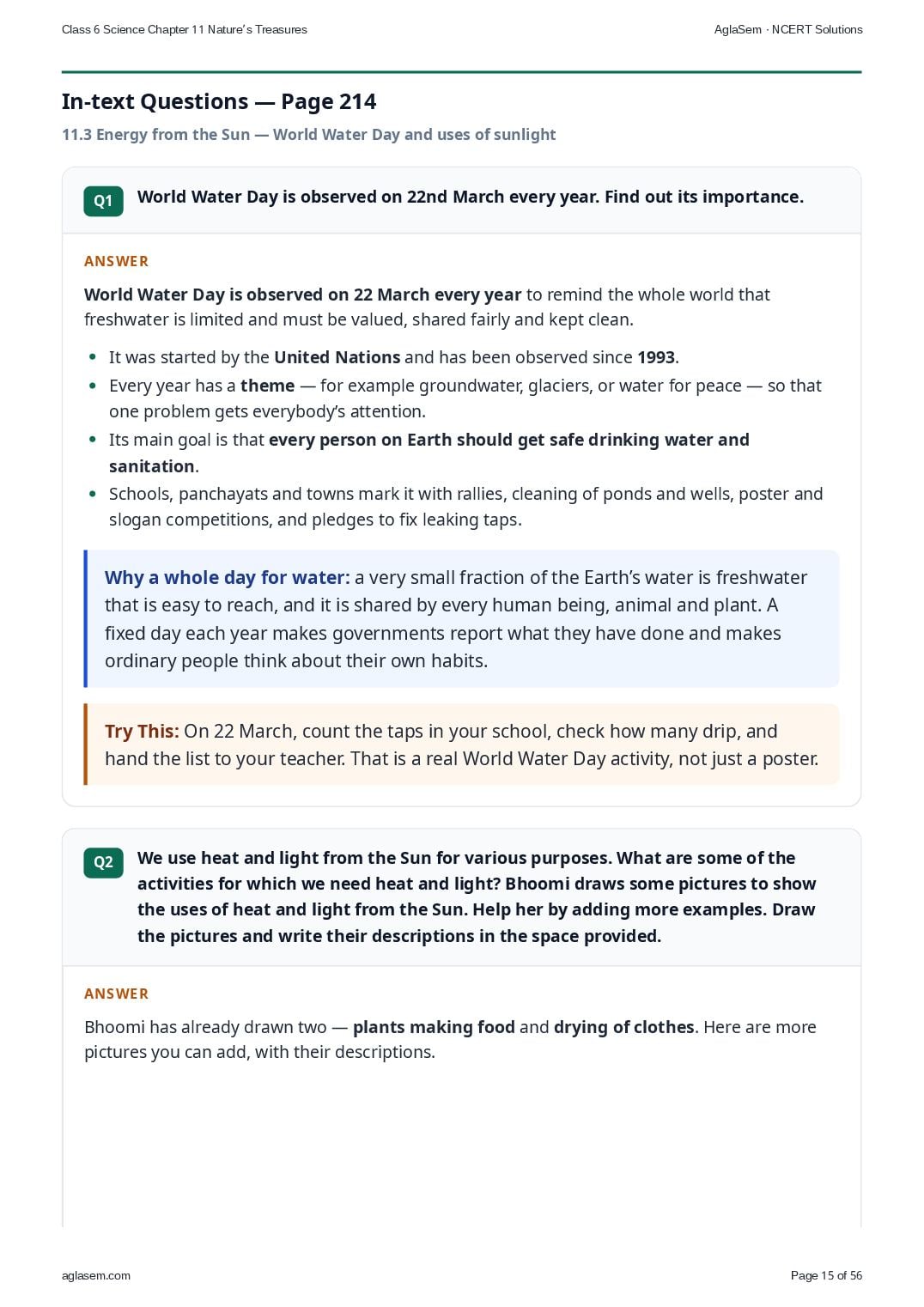
- World Water Day is observed on 22nd March every year. Find out its importance.
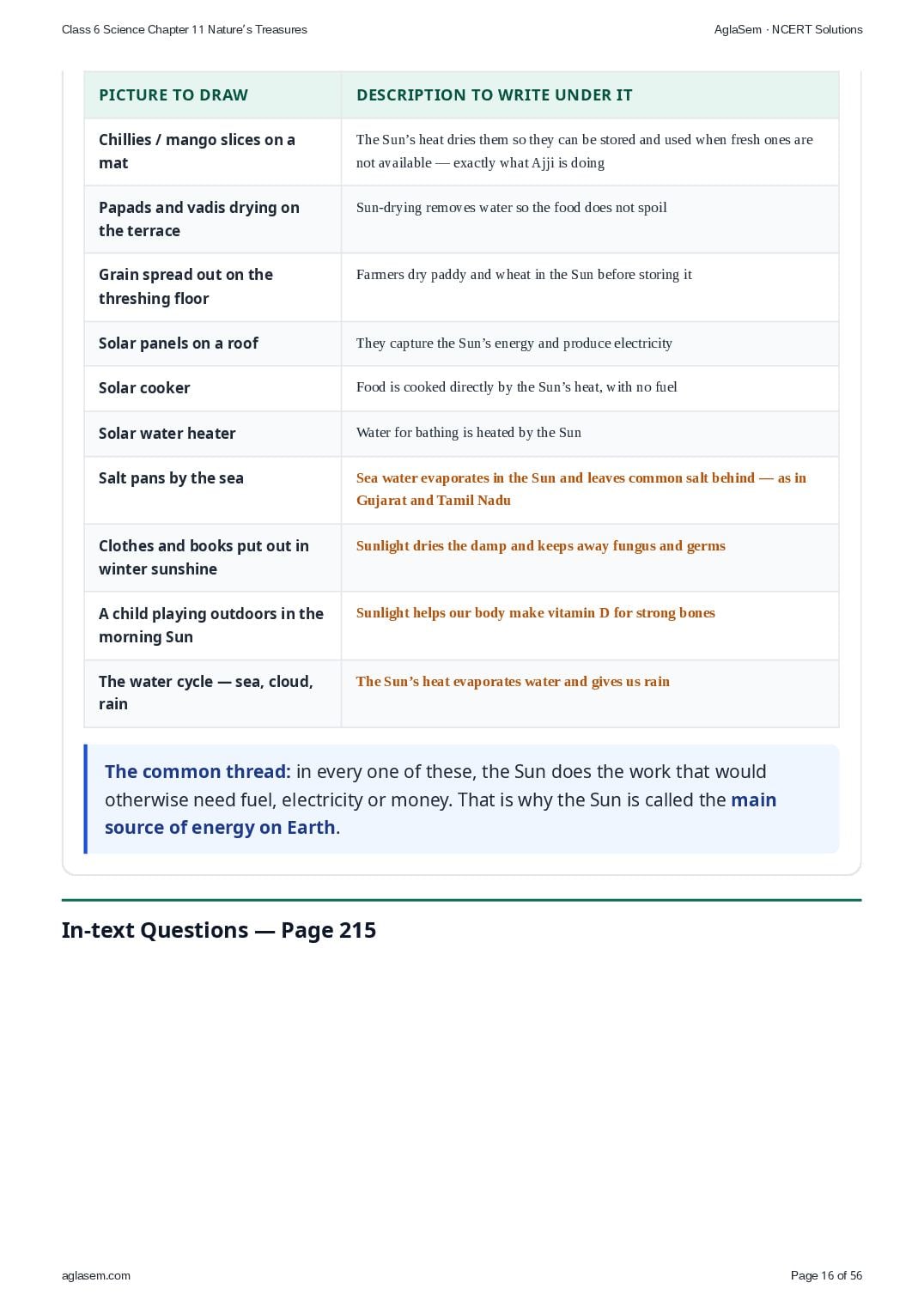
- We use heat and light from the Sun for various purposes. What are some of the activities for which we need heat and light? Bhoomi draws some pictures to show the uses of heat and light from the Sun. Help her by adding more examples. Draw the pictures and write their descriptions in the space provided.
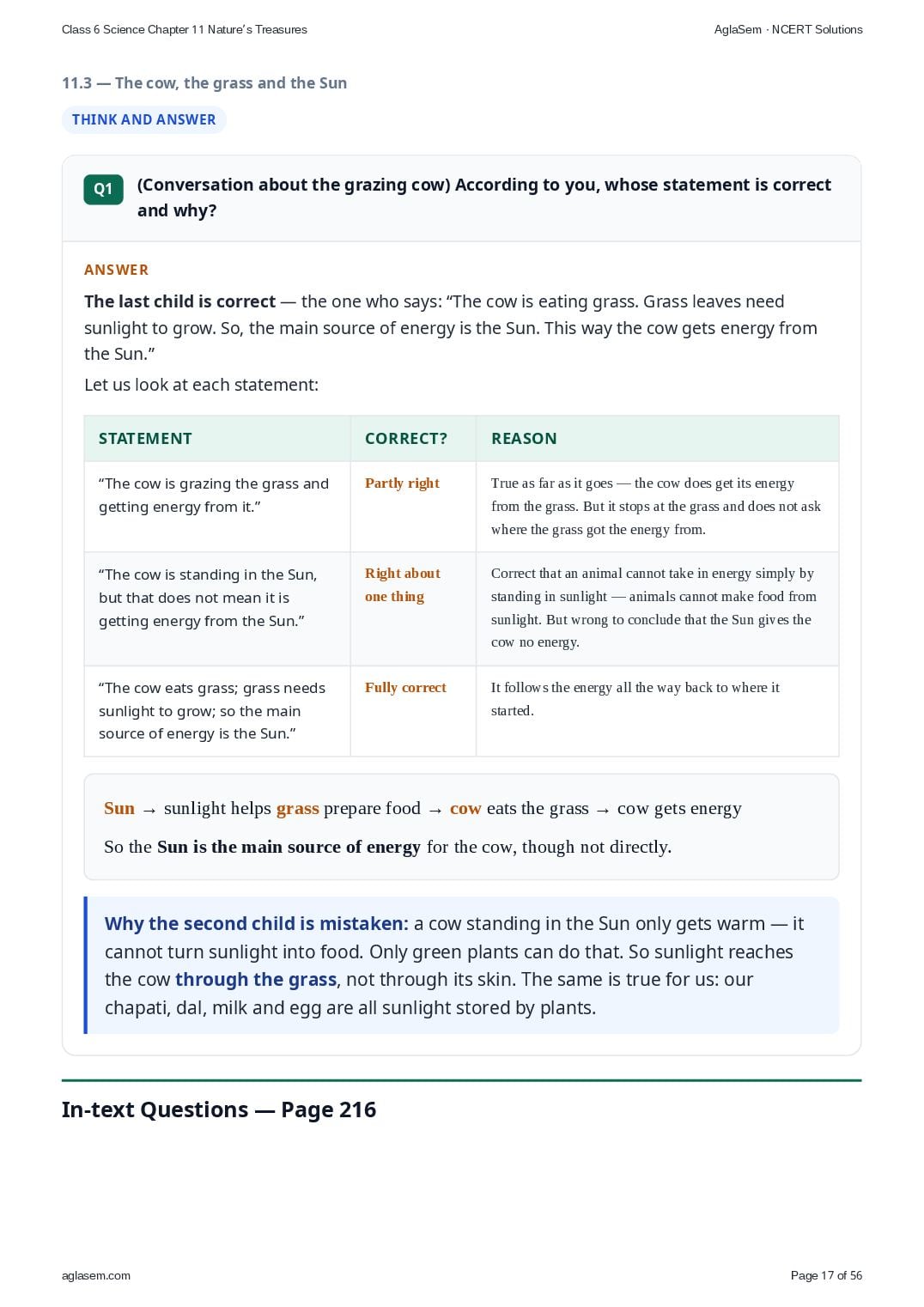
- (Conversation about the grazing cow) According to you, whose statement is correct and why?
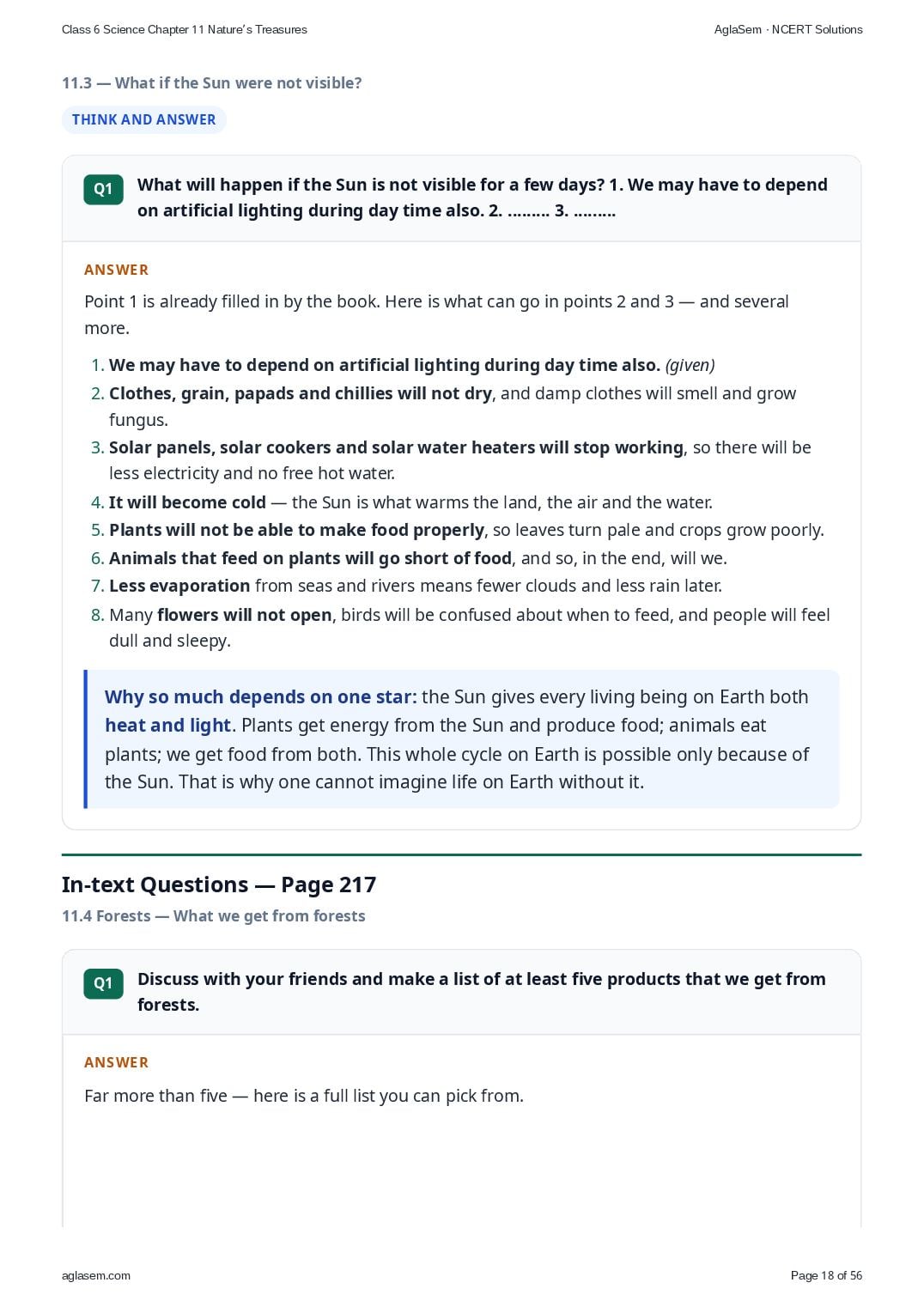
- What will happen if the Sun is not visible for a few days? 1. We may have to depend on artificial lighting during day time also. 2. ……… 3. ………
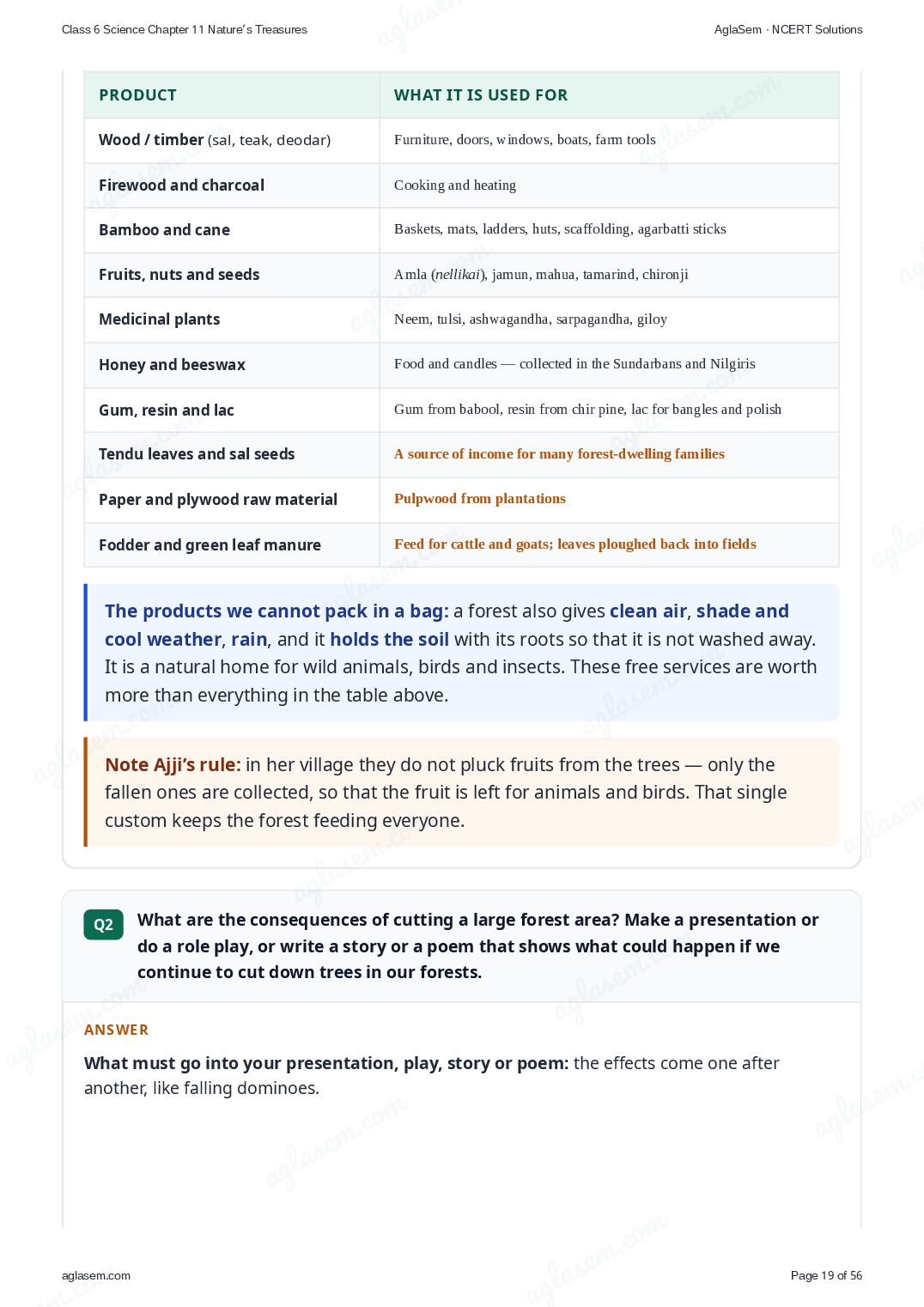
- Discuss with your friends and make a list of at least five products that we get from forests.
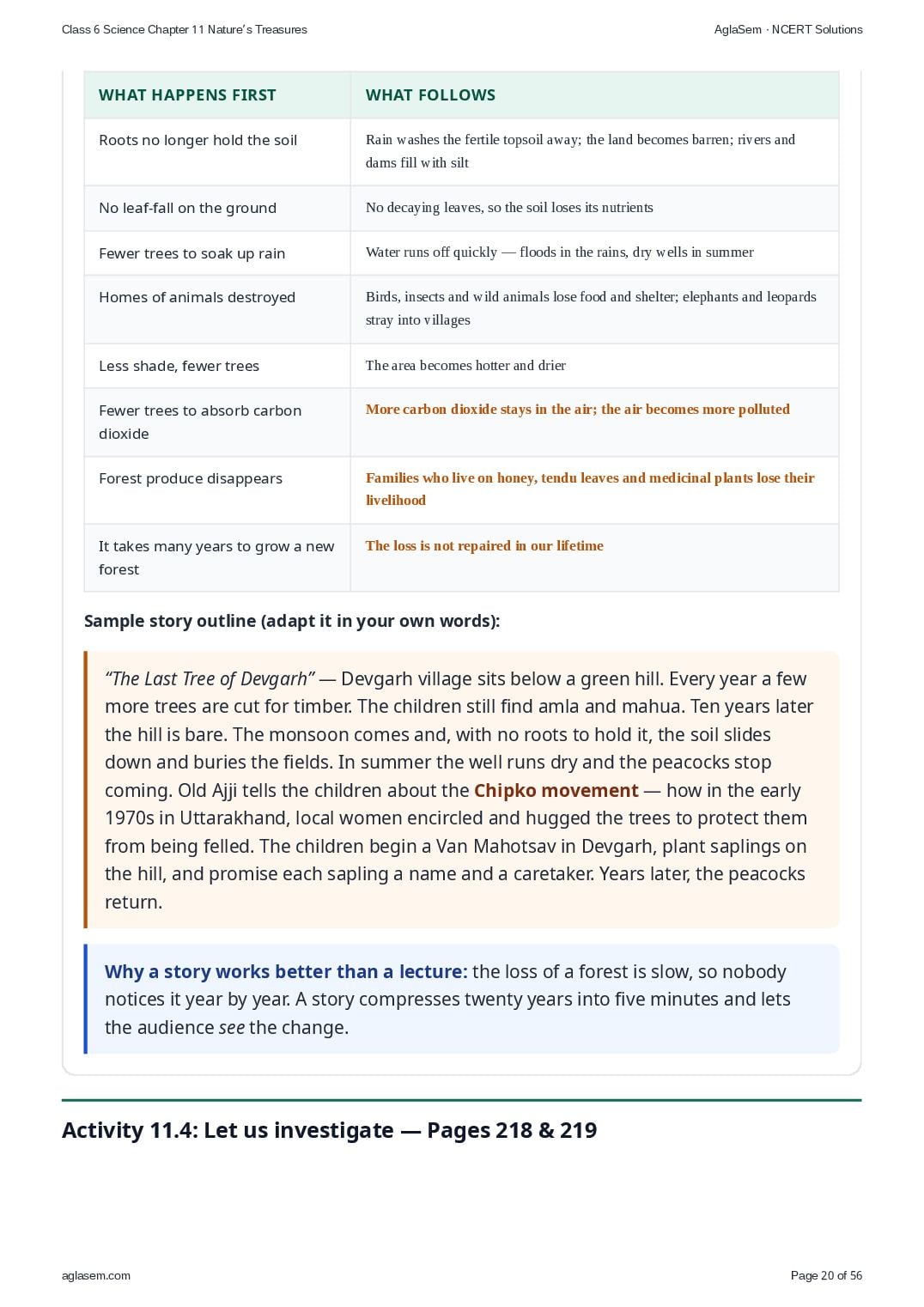
- What are the consequences of cutting a large forest area? Make a presentation or do a role play, or write a story or a poem that shows what could happen if we continue to cut down trees in our forests.
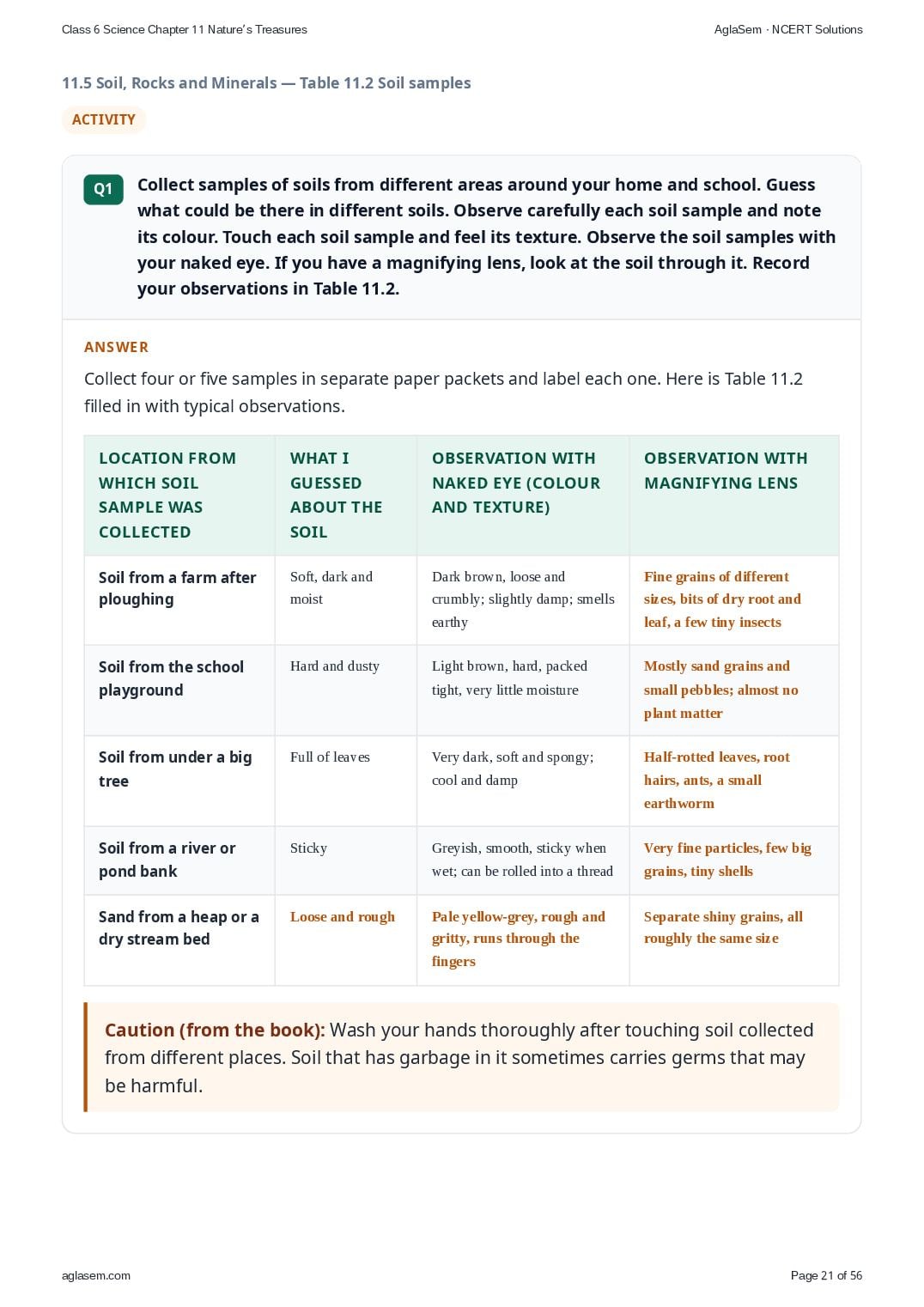
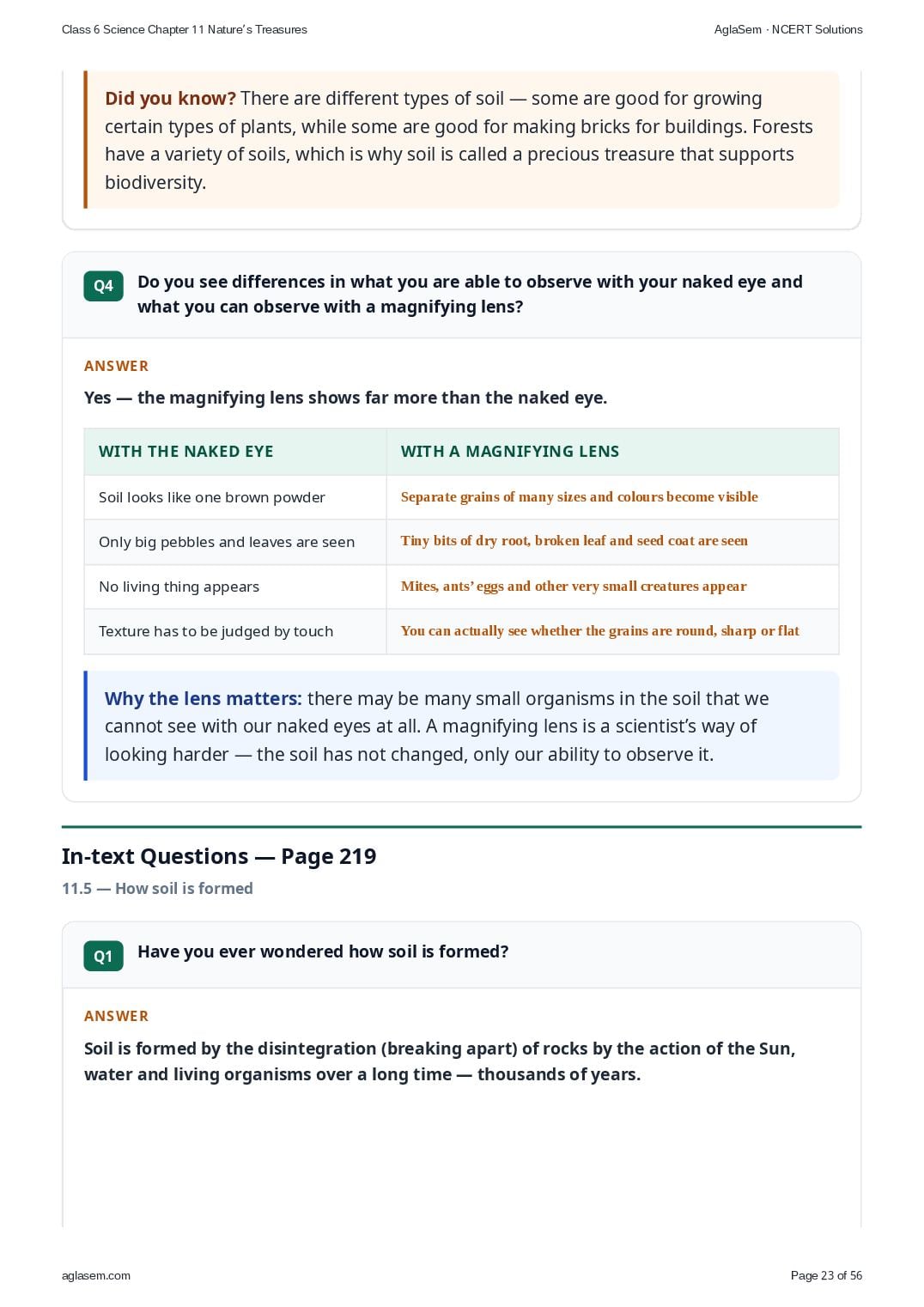
- Collect samples of soils from different areas around your home and school. Guess what could be there in different soils. Observe carefully each soil sample and note its colour. Touch each soil sample and feel its texture. Observe the soil samples with your naked eye. If you have a magnifying lens, look at the soil through it. Record your observations in Table 11.2.
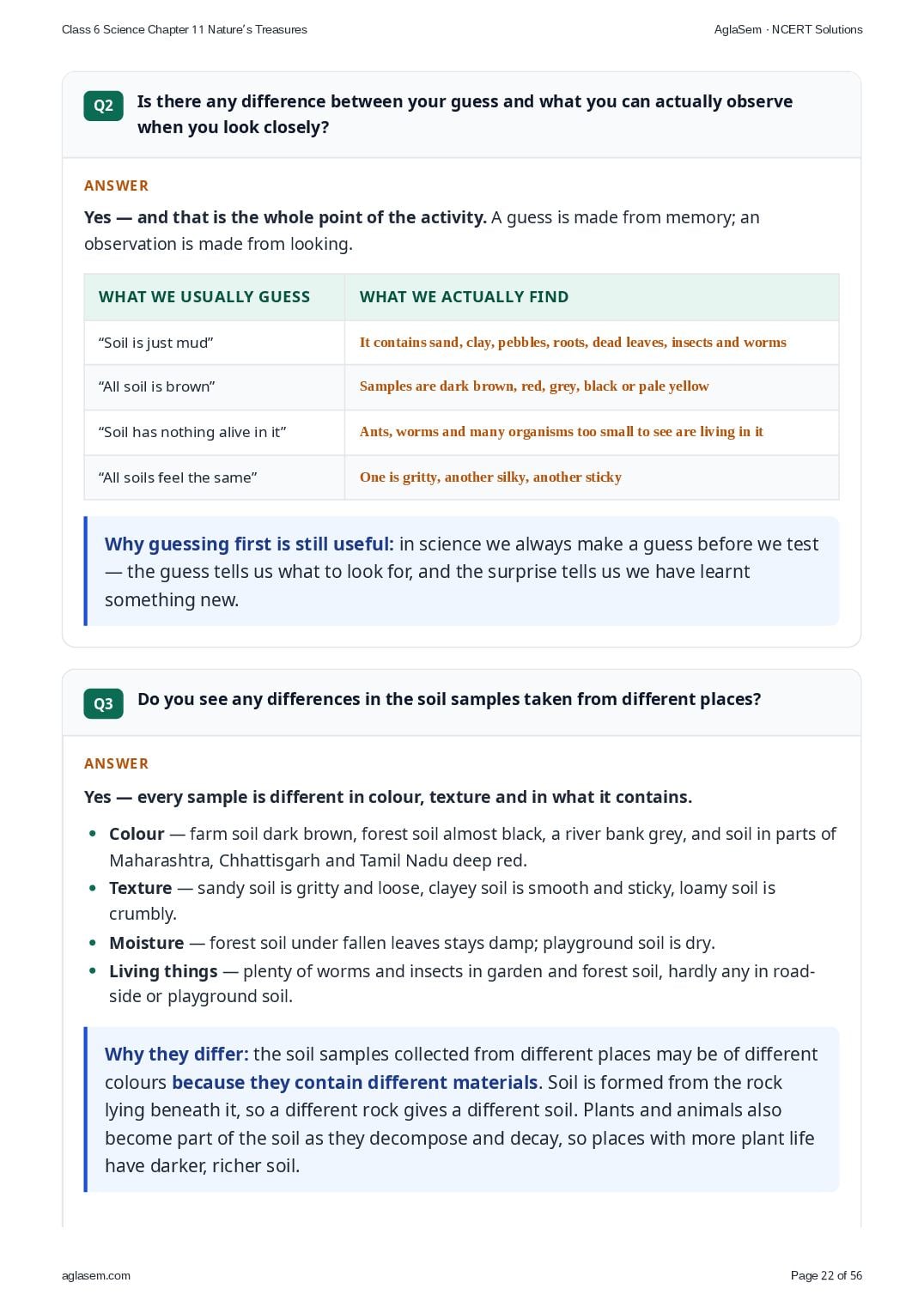
- Is there any difference between your guess and what you can actually observe when you look closely?
- Do you see any differences in the soil samples taken from different places?
- Do you see differences in what you are able to observe with your naked eye and what you can observe with a magnifying lens?
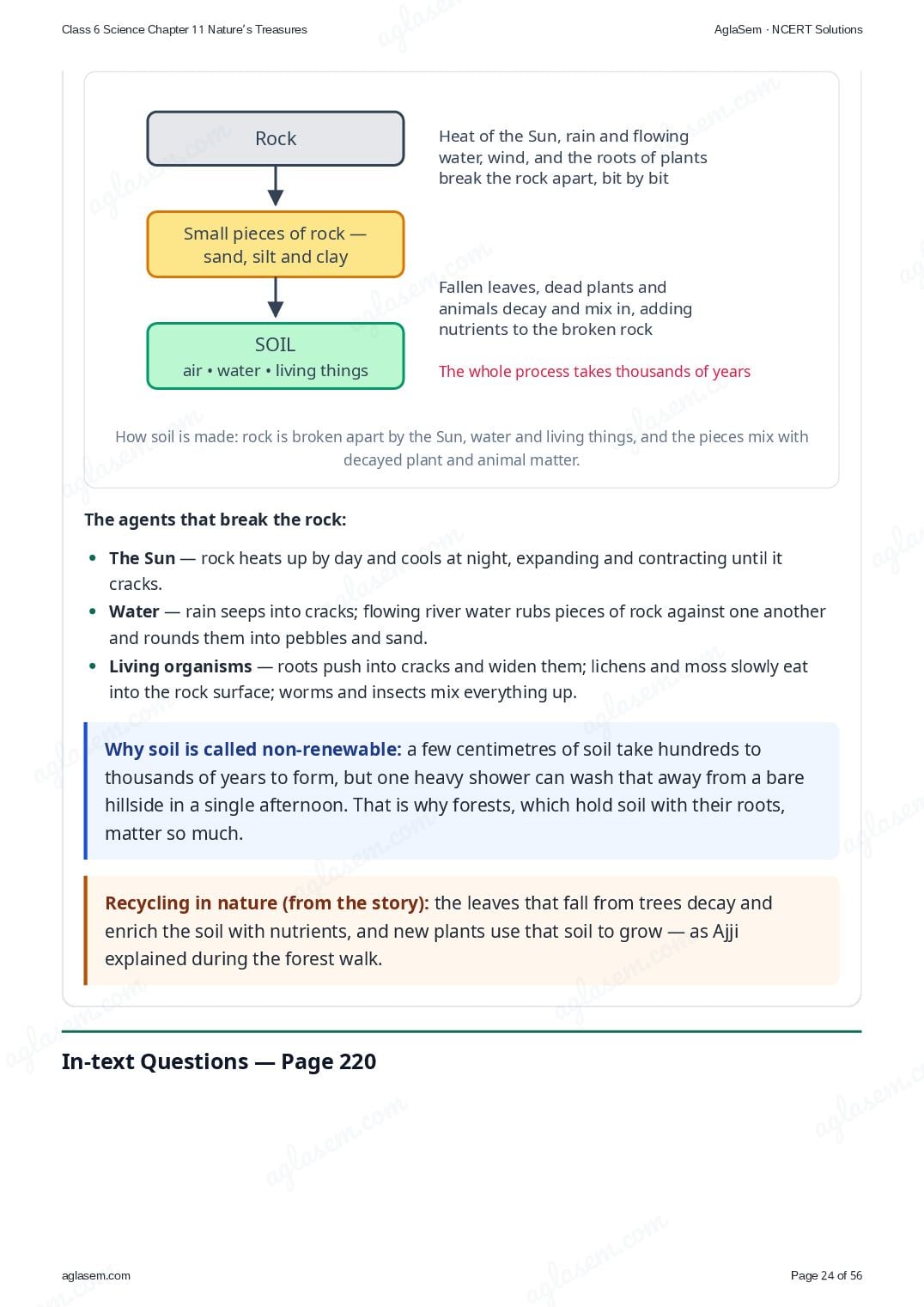
- Have you ever wondered how soil is formed?
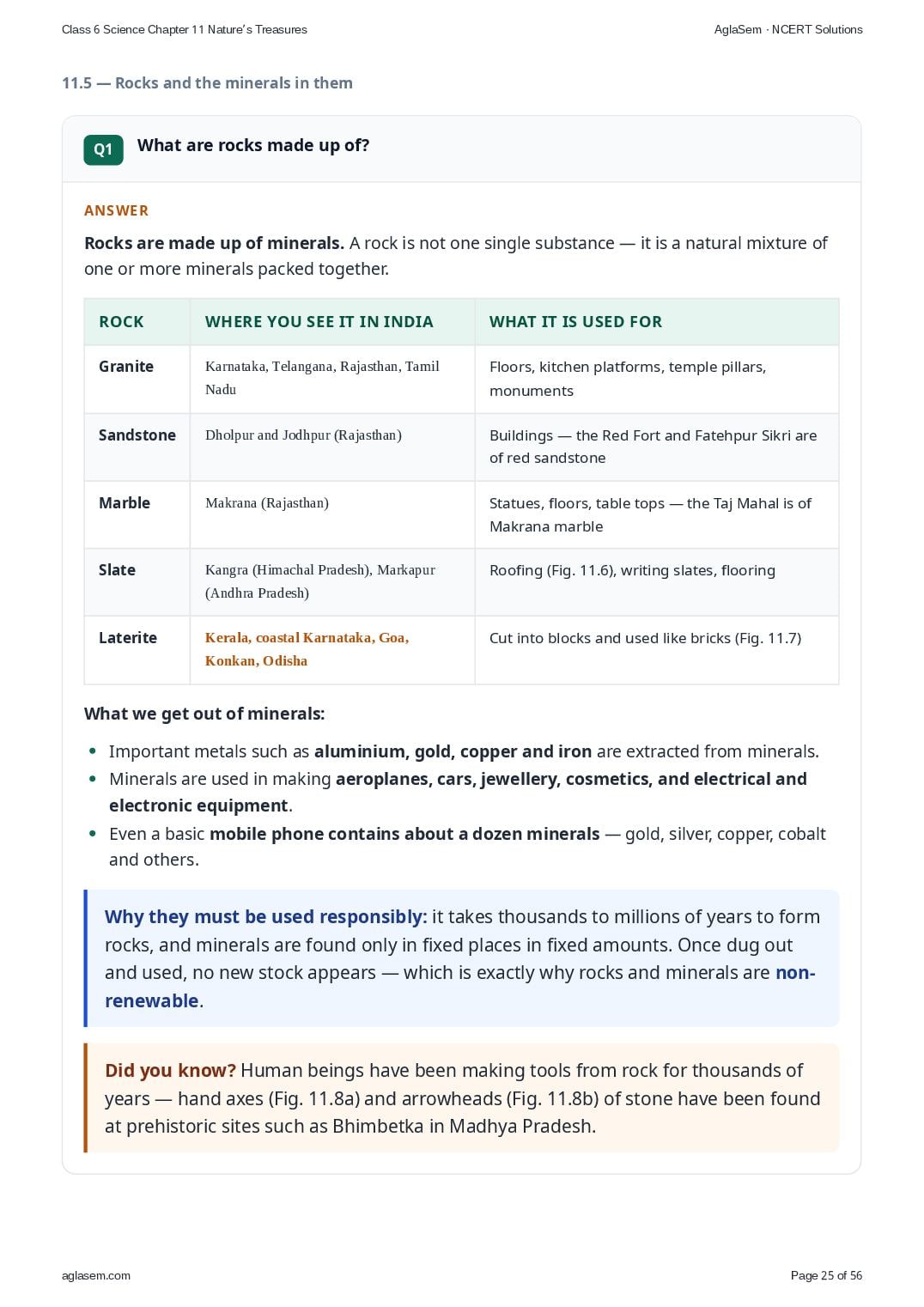
- What are rocks made up of?
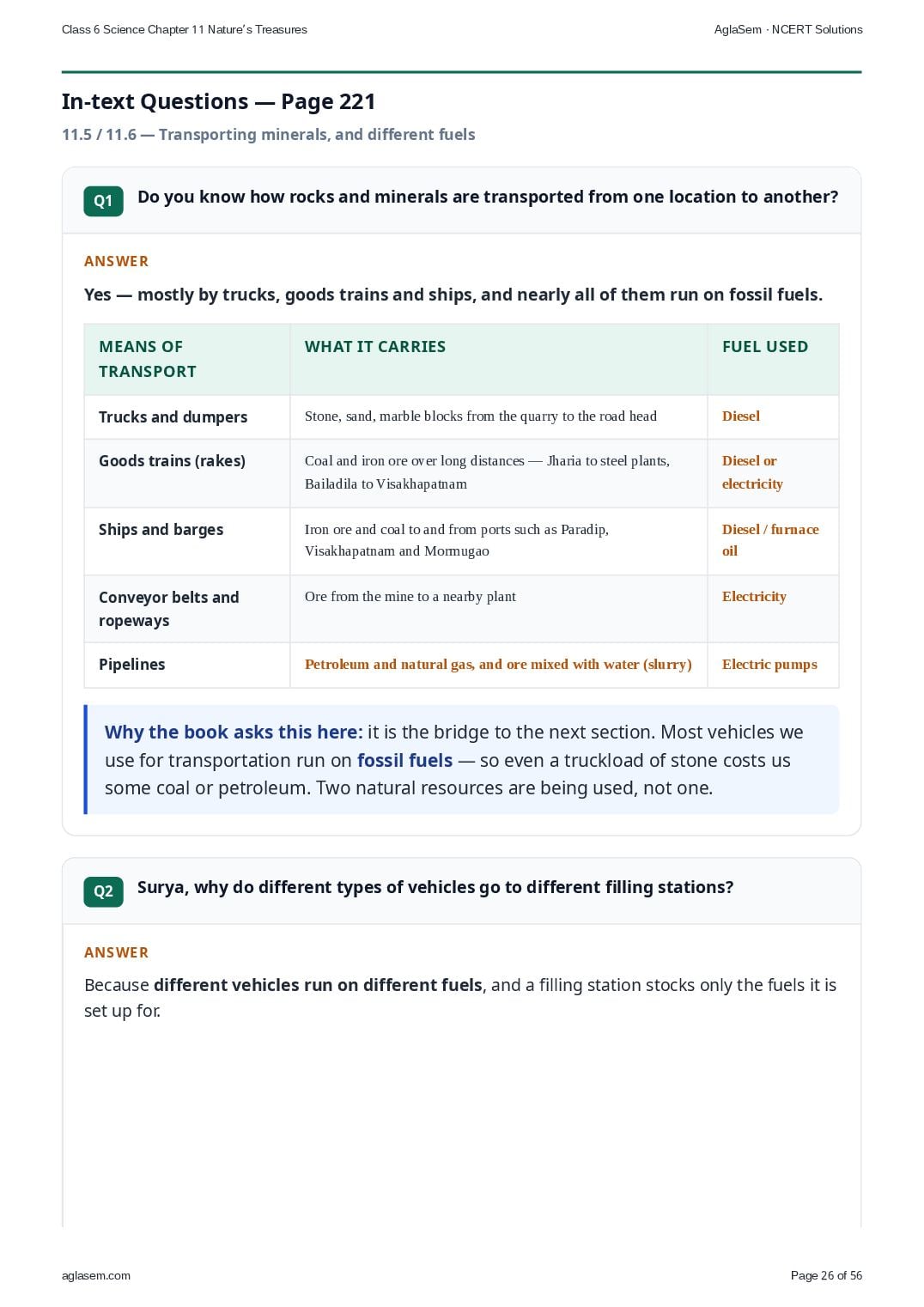
- Do you know how rocks and minerals are transported from one location to another?
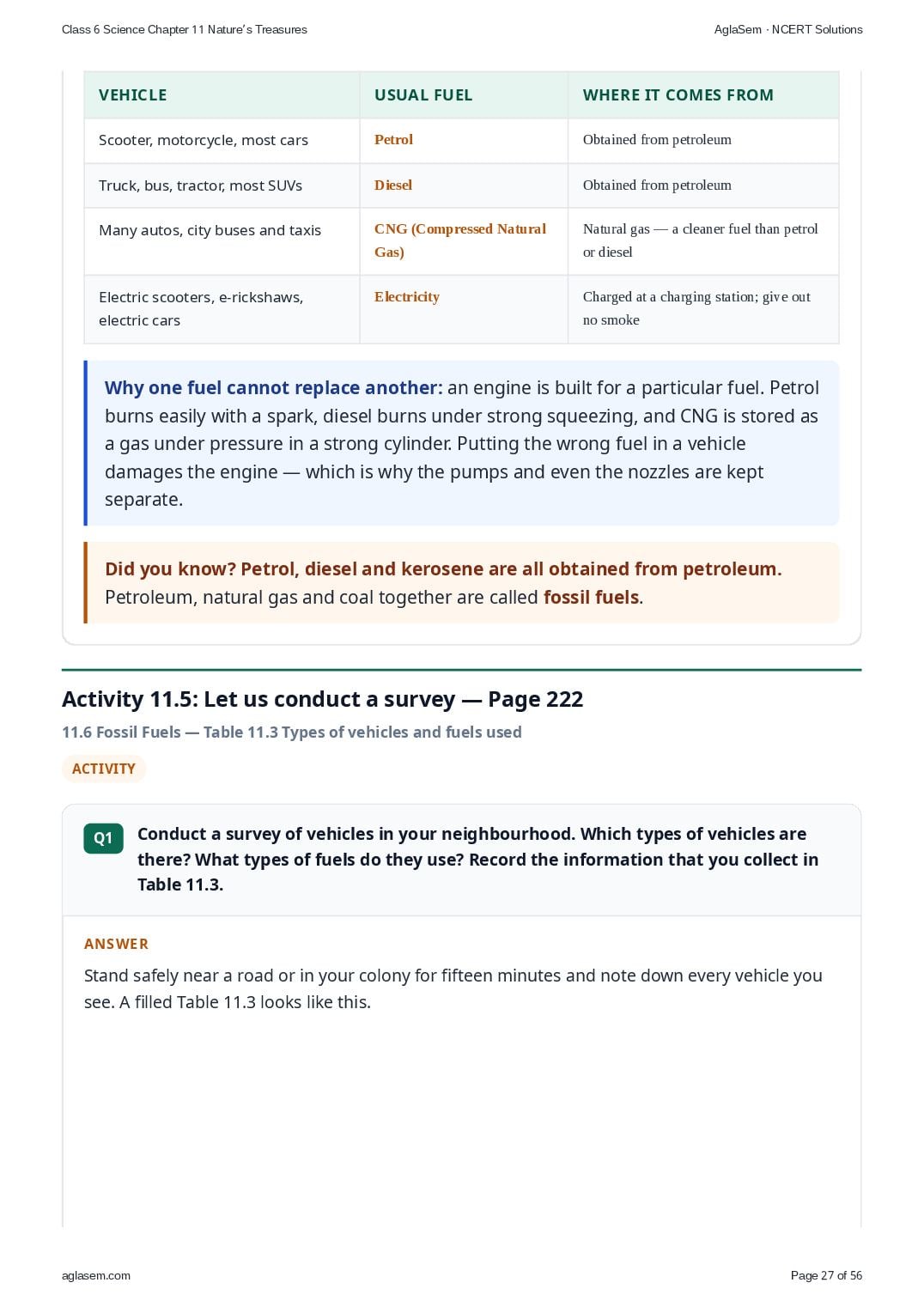
- Surya, why do different types of vehicles go to different filling stations?
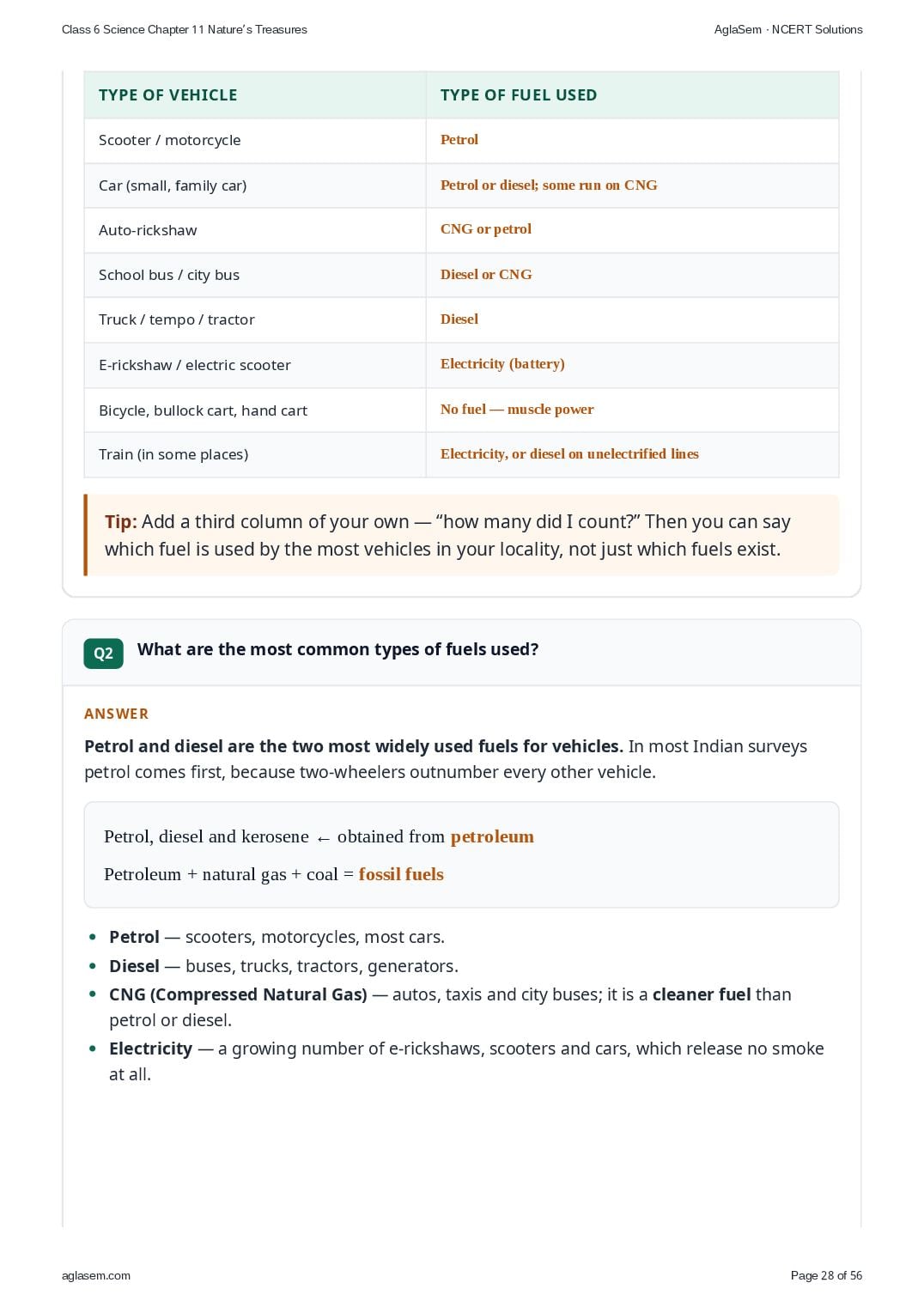
- Conduct a survey of vehicles in your neighbourhood. Which types of vehicles are there? What types of fuels do they use? Record the information that you collect in Table 11.3.
- What are the most common types of fuels used?
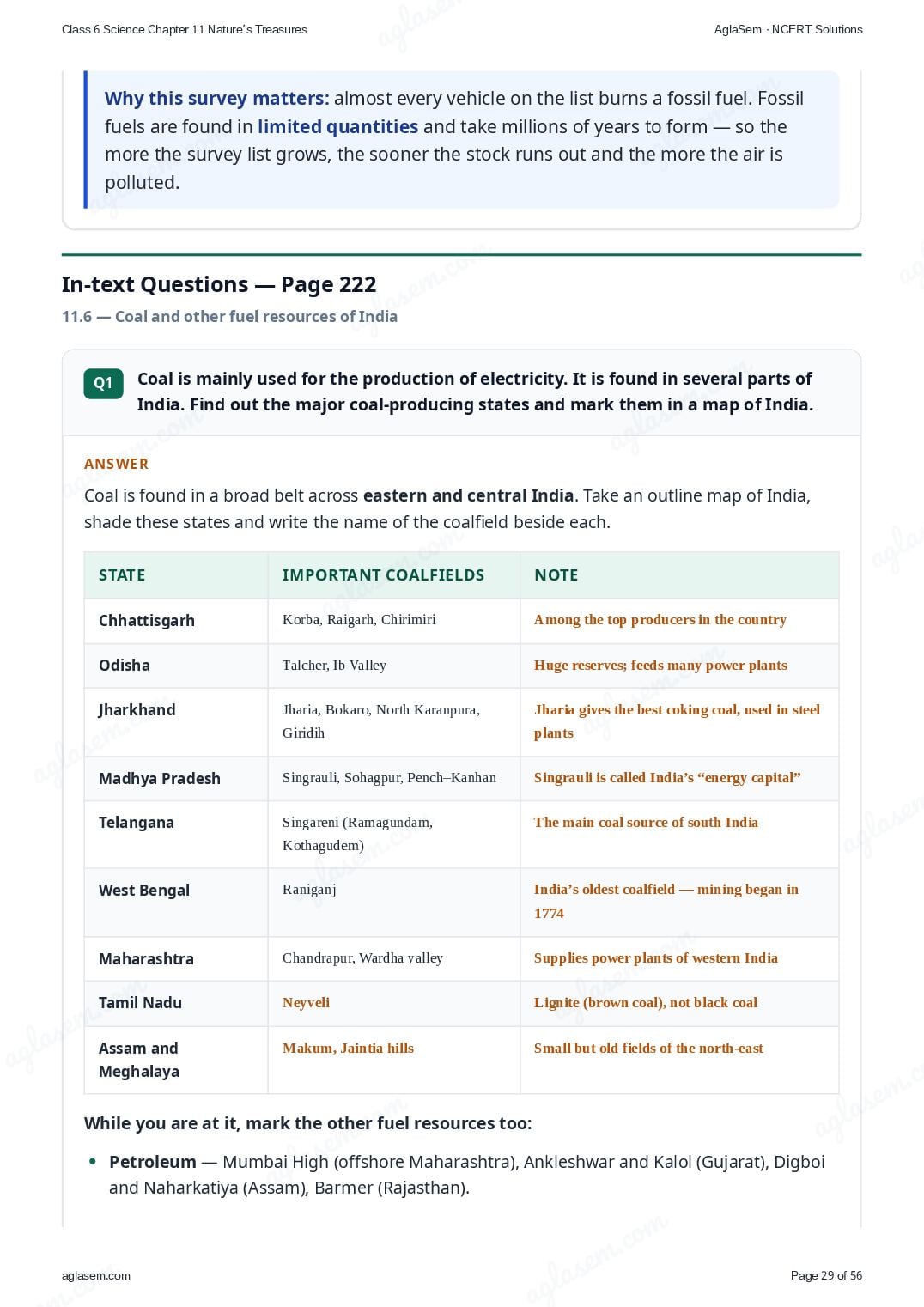
- Coal is mainly used for the production of electricity. It is found in several parts of India. Find out the major coal-producing states and mark them in a map of India.
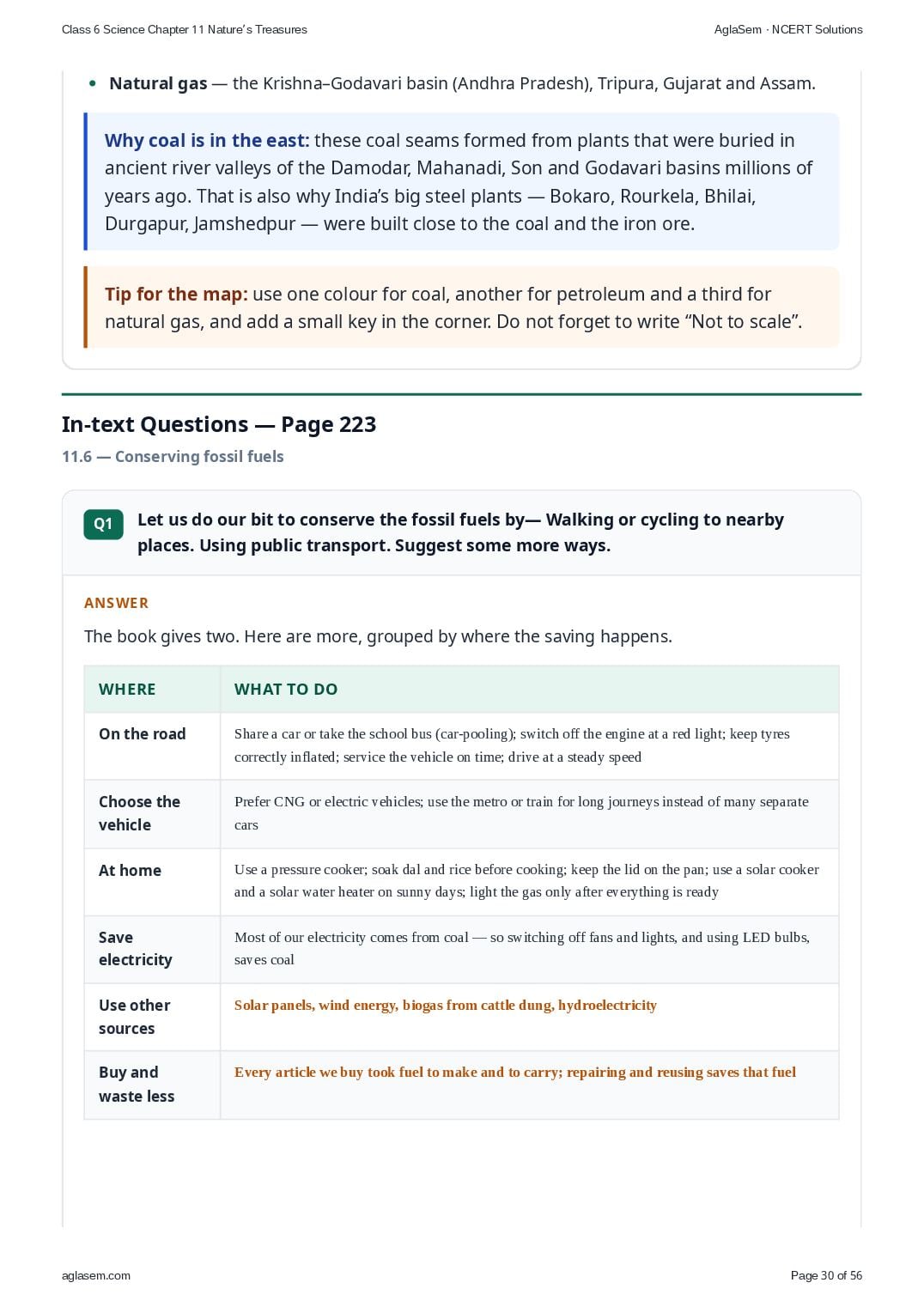
- Let us do our bit to conserve the fossil fuels by— Walking or cycling to nearby places. Using public transport. Suggest some more ways.
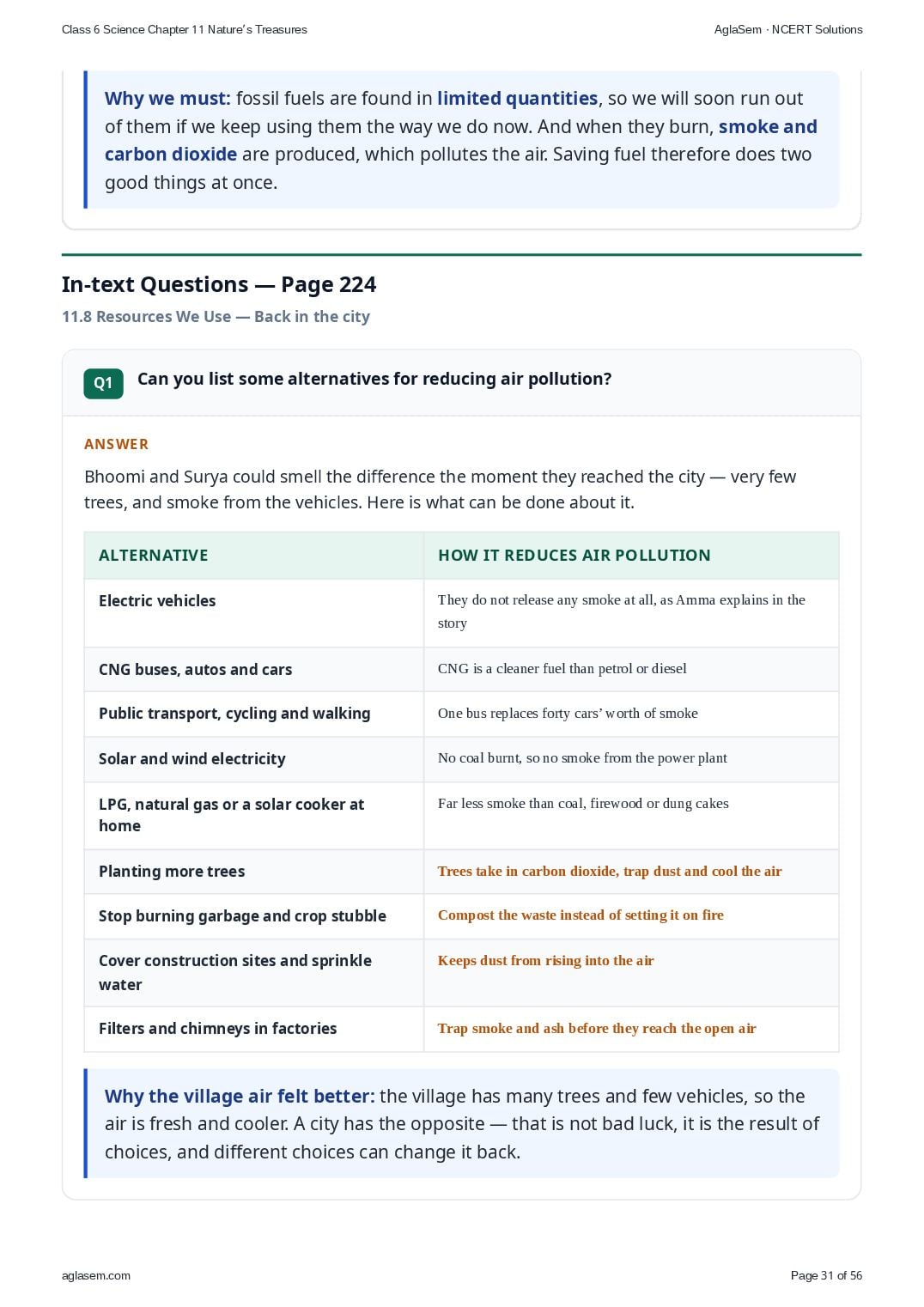
- Can you list some alternatives for reducing air pollution?
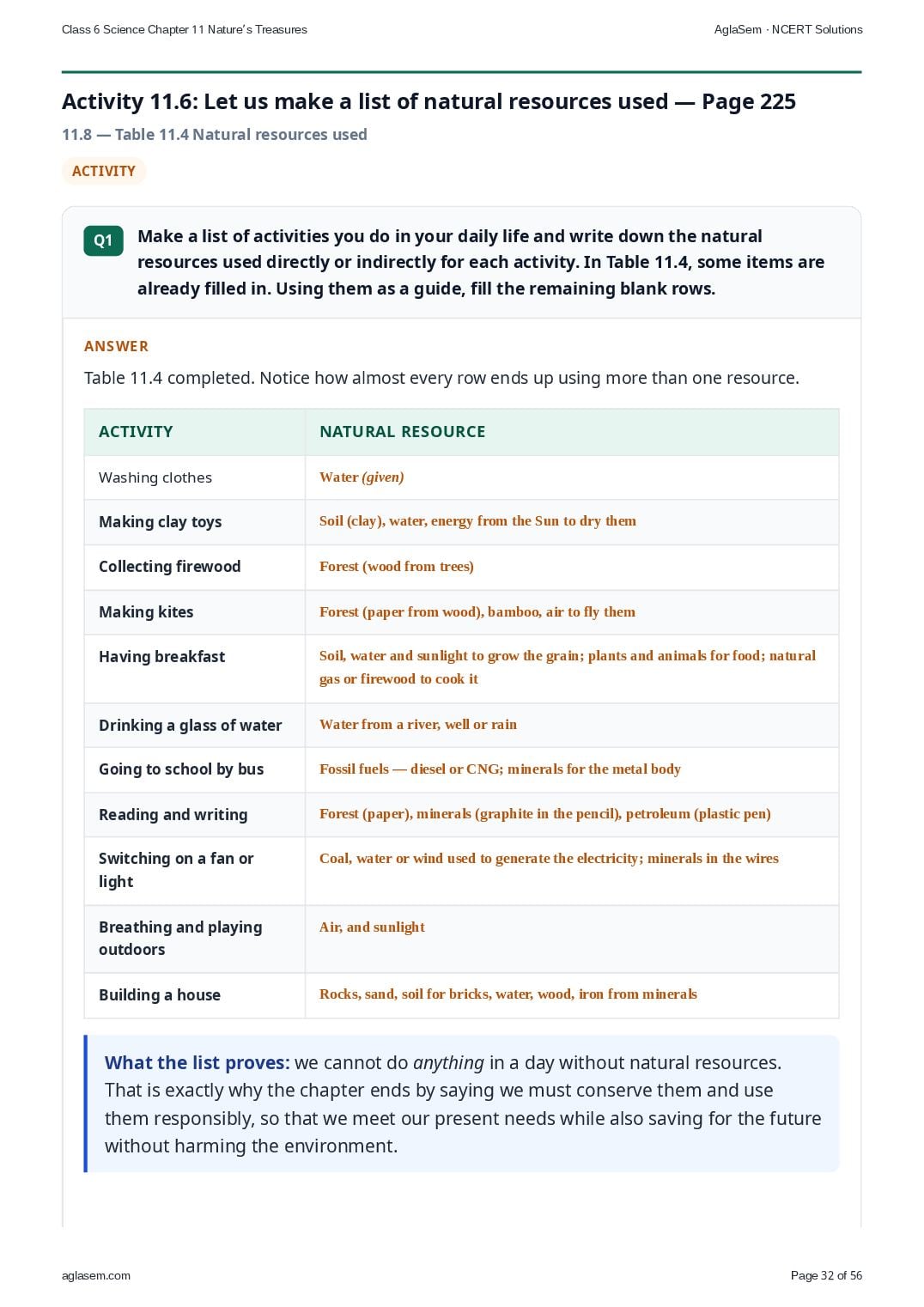
- Make a list of activities you do in your daily life and write down the natural resources used directly or indirectly for each activity. In Table 11.4, some items are already filled in. Using them as a guide, fill the remaining blank rows.
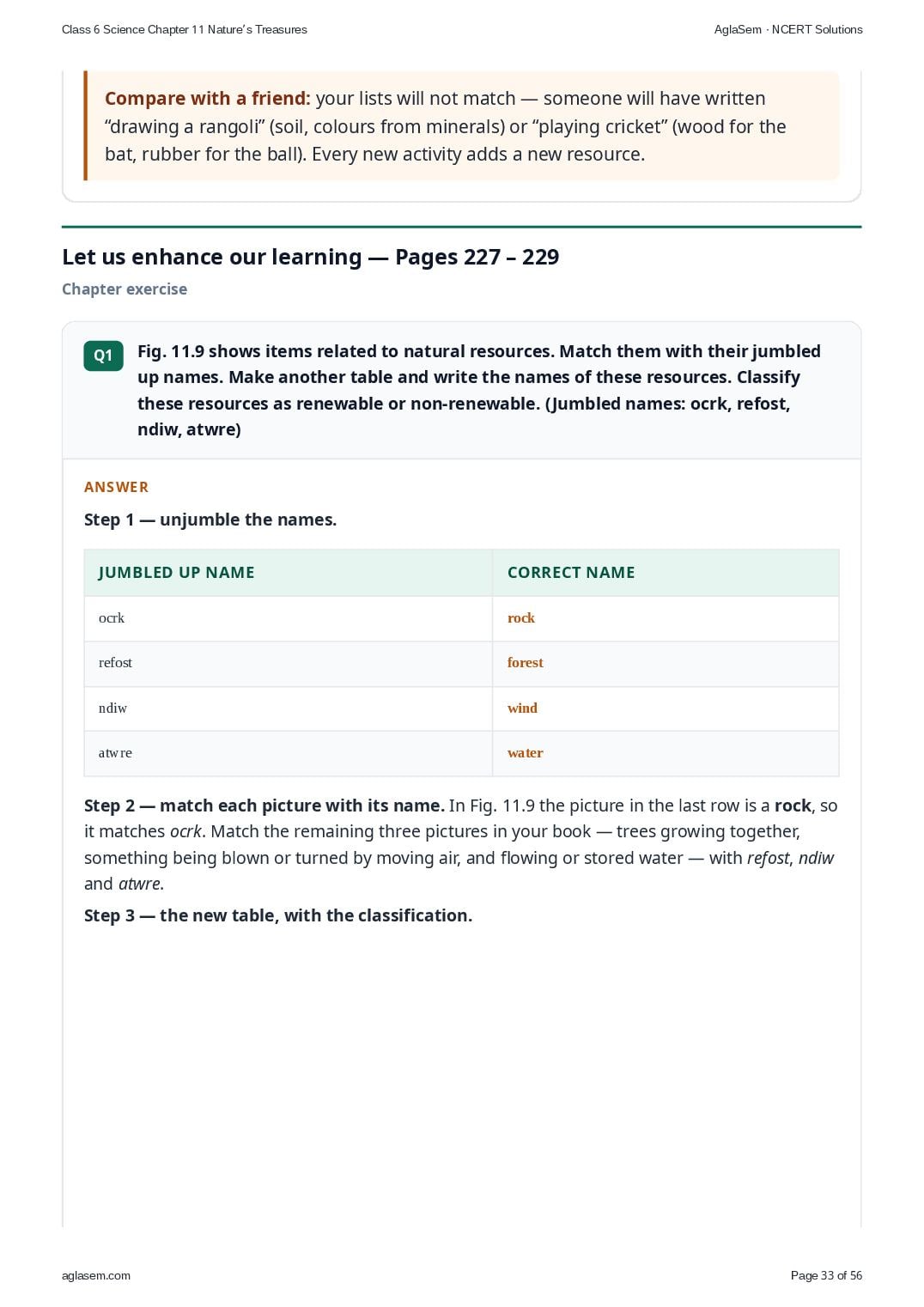
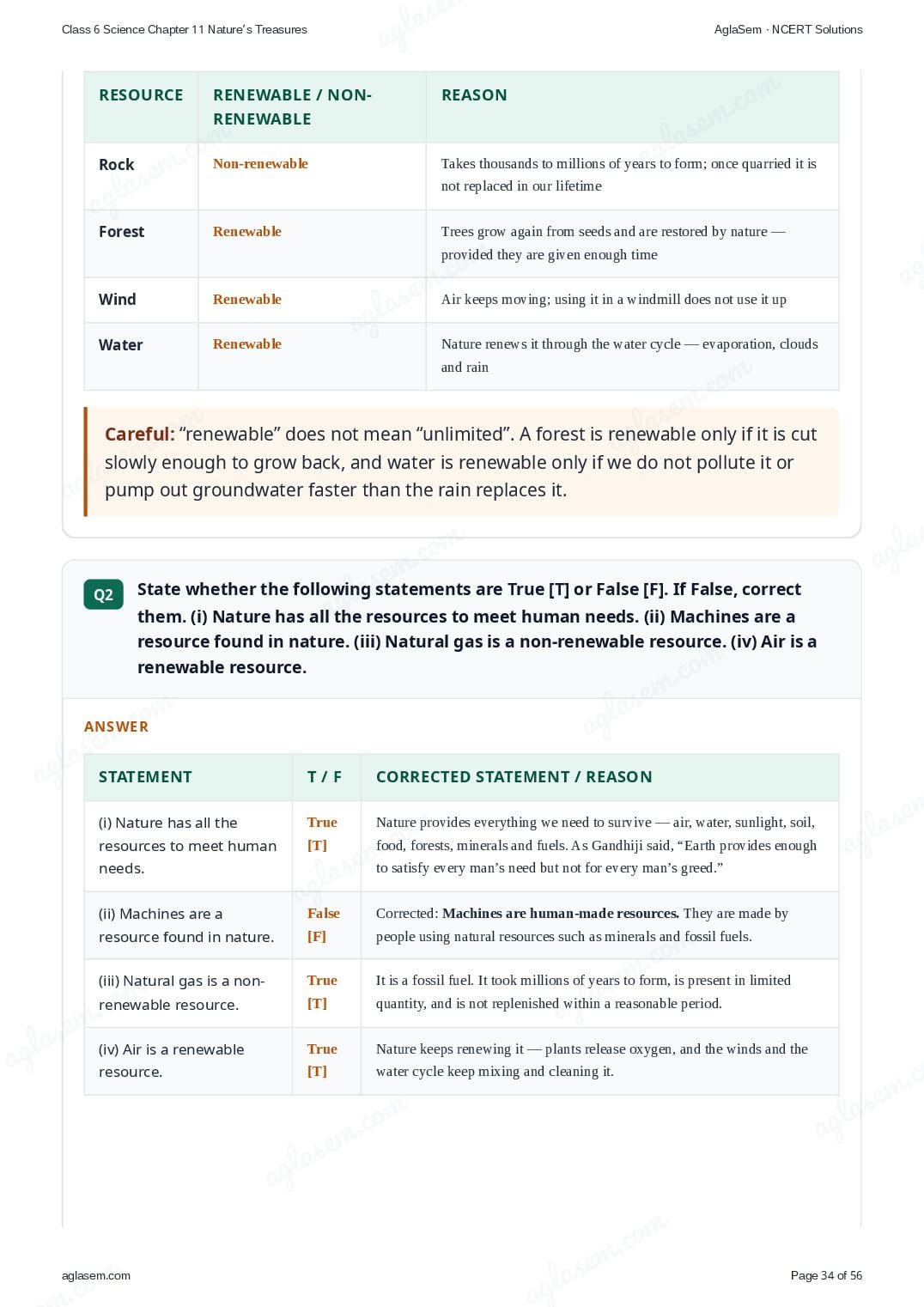
- Fig. 11.9 shows items related to natural resources. Match them with their jumbled up names. Make another table and write the names of these resources. Classify these resources as renewable or non-renewable. (Jumbled names: ocrk, refost, ndiw, atwre)
- State whether the following statements are True [T] or False [F]. If False, correct them. (i) Nature has all the resources to meet human needs. (ii) Machines are a resource found in nature. (iii) Natural gas is a non-renewable resource. (iv) Air is a renewable resource.
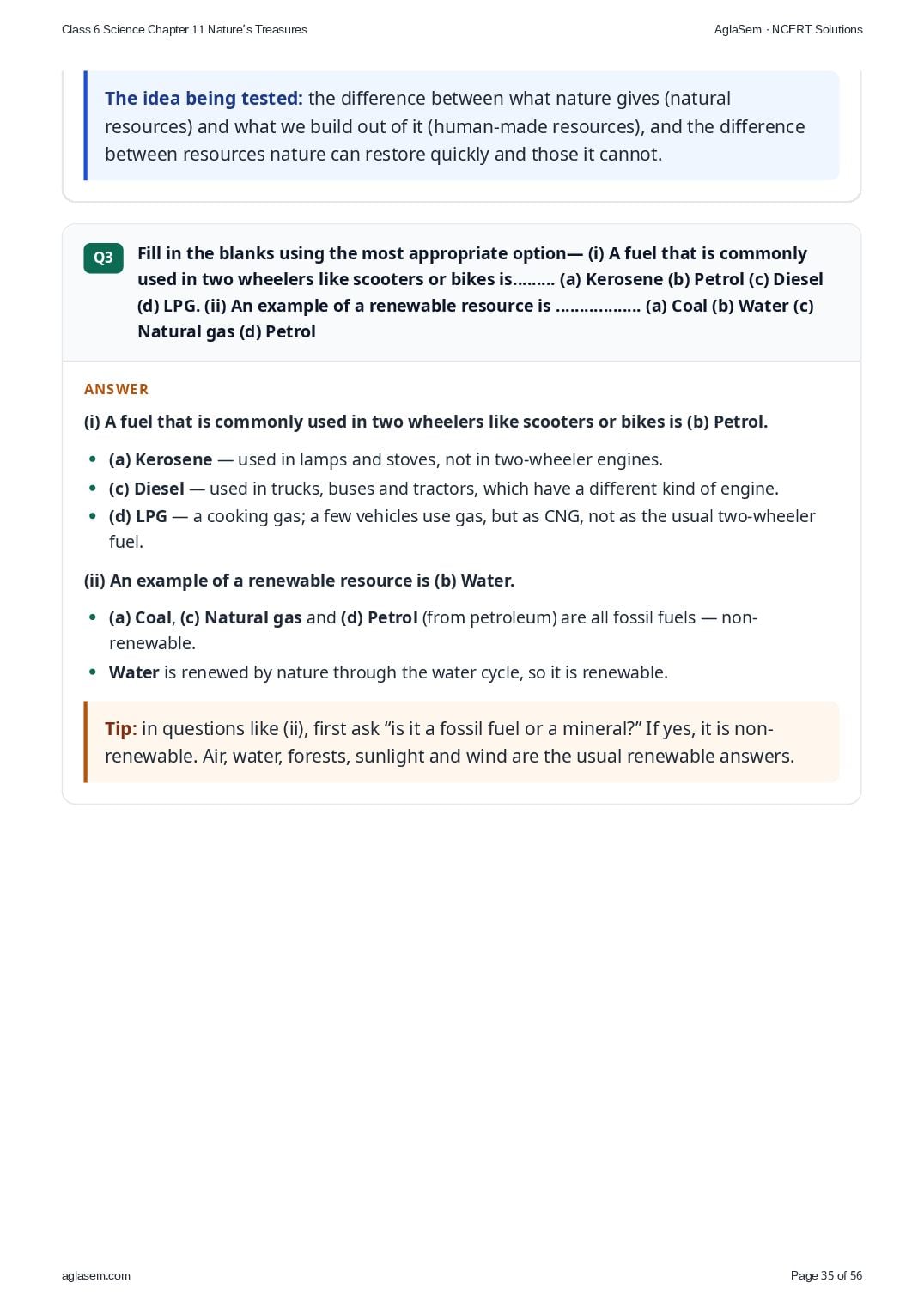
- Fill in the blanks using the most appropriate option— (i) A fuel that is commonly used in two wheelers like scooters or bikes is……… (a) Kerosene (b) Petrol (c) Diesel (d) LPG. (ii) An example of a renewable resource is ……………… (a) Coal (b) Water (c) Natural gas (d) Petrol
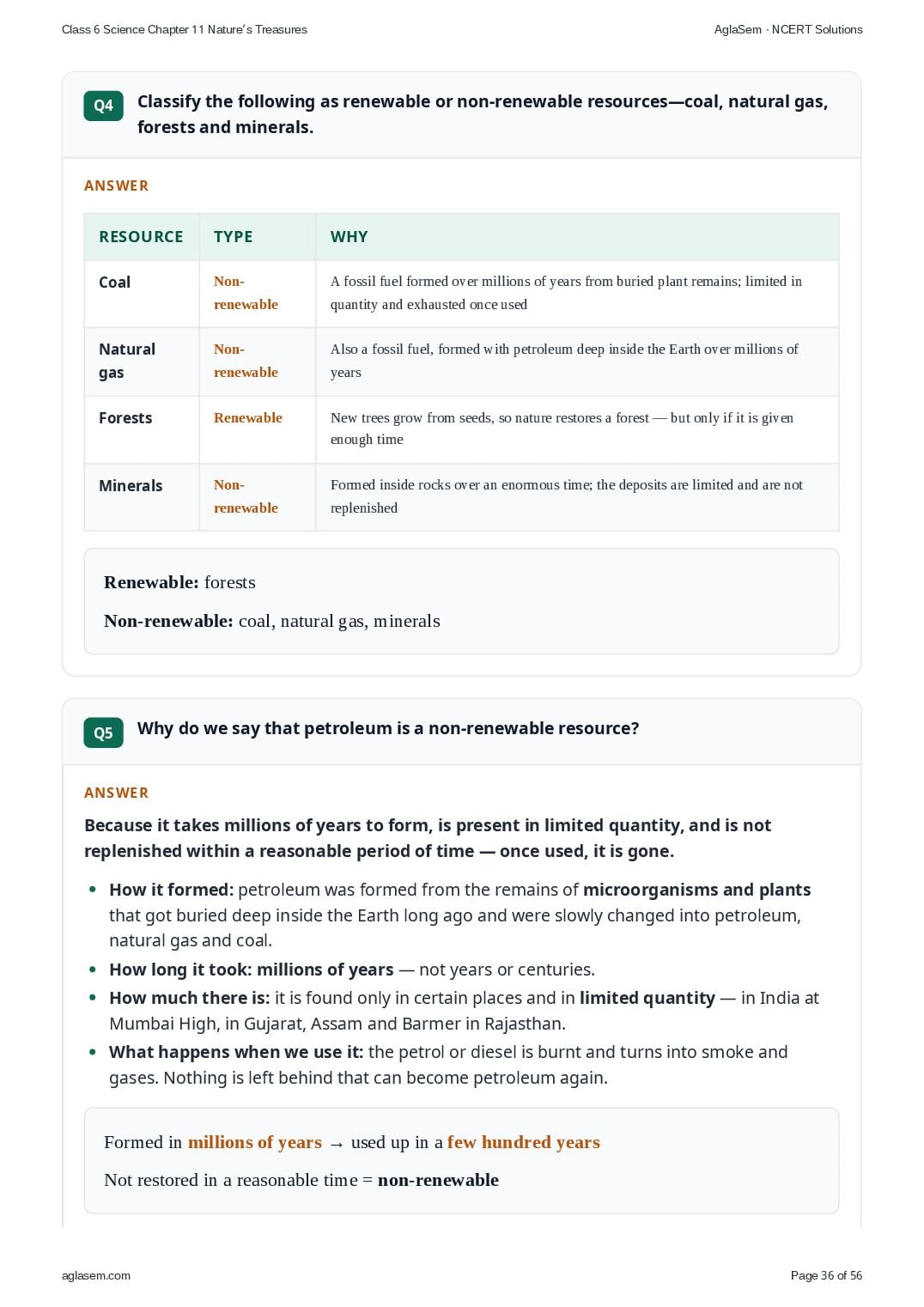
- Classify the following as renewable or non-renewable resources—coal, natural gas, forests and minerals.
- Why do we say that petroleum is a non-renewable resource?
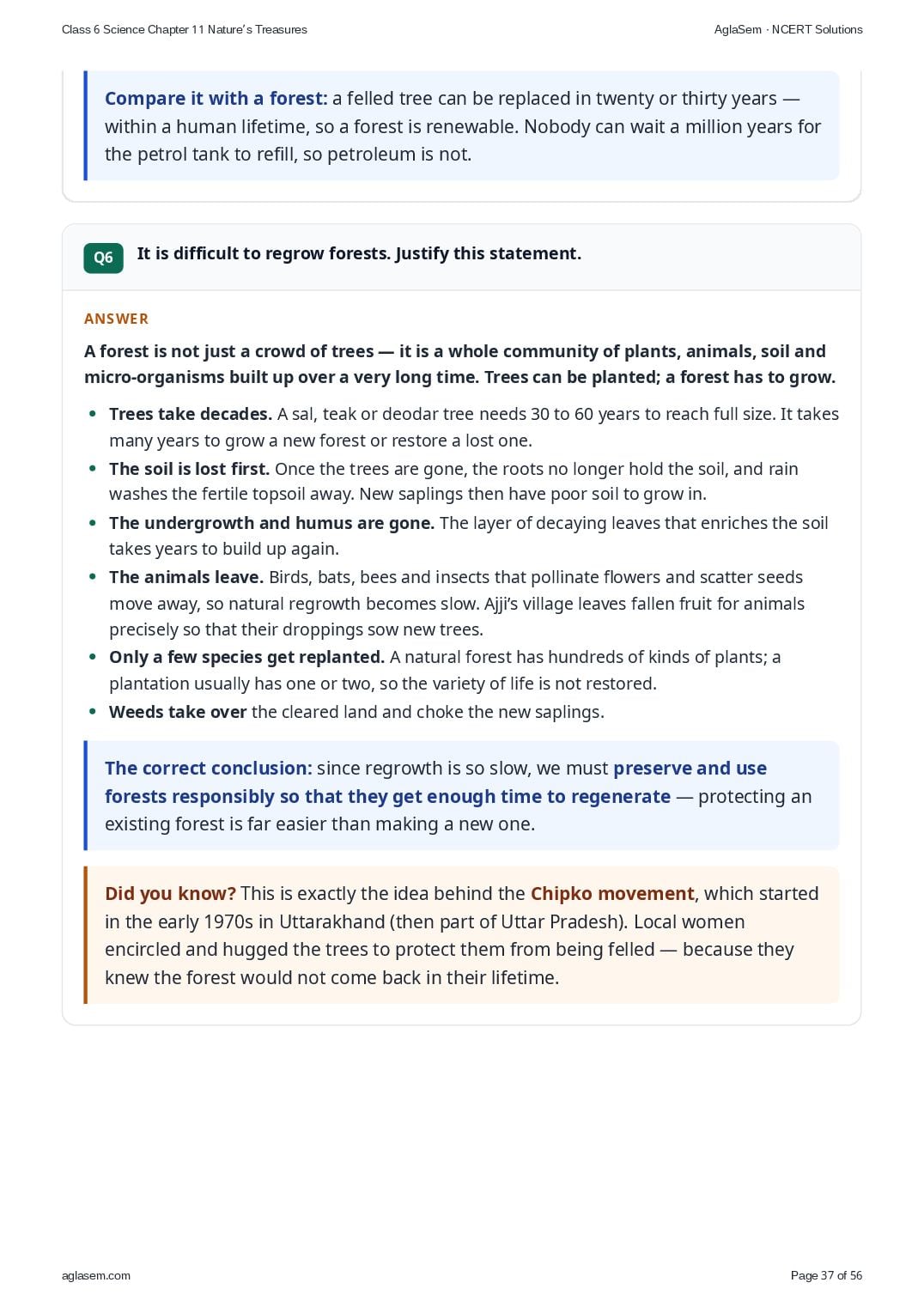
- It is difficult to regrow forests. Justify this statement.
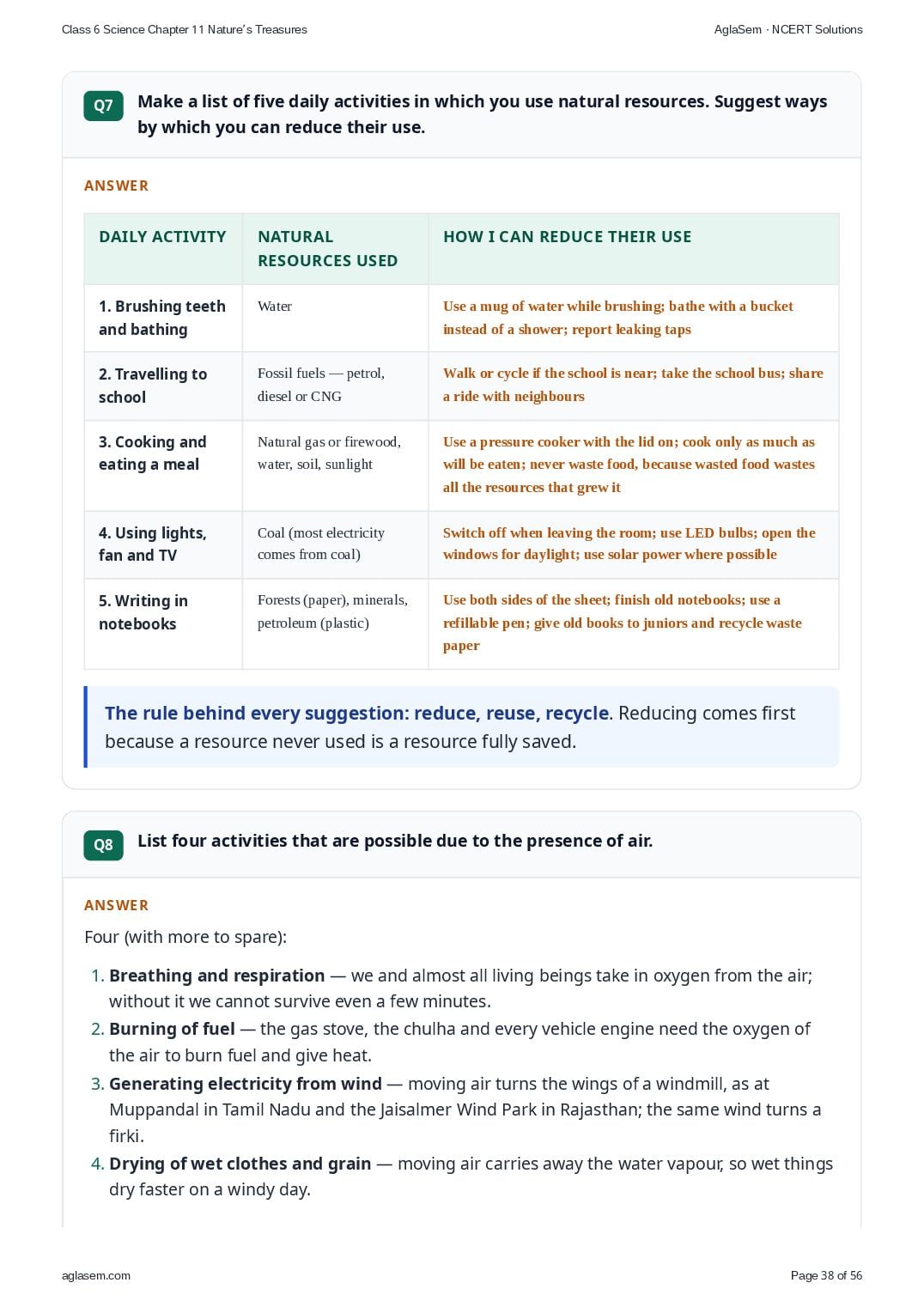
- Make a list of five daily activities in which you use natural resources. Suggest ways by which you can reduce their use.
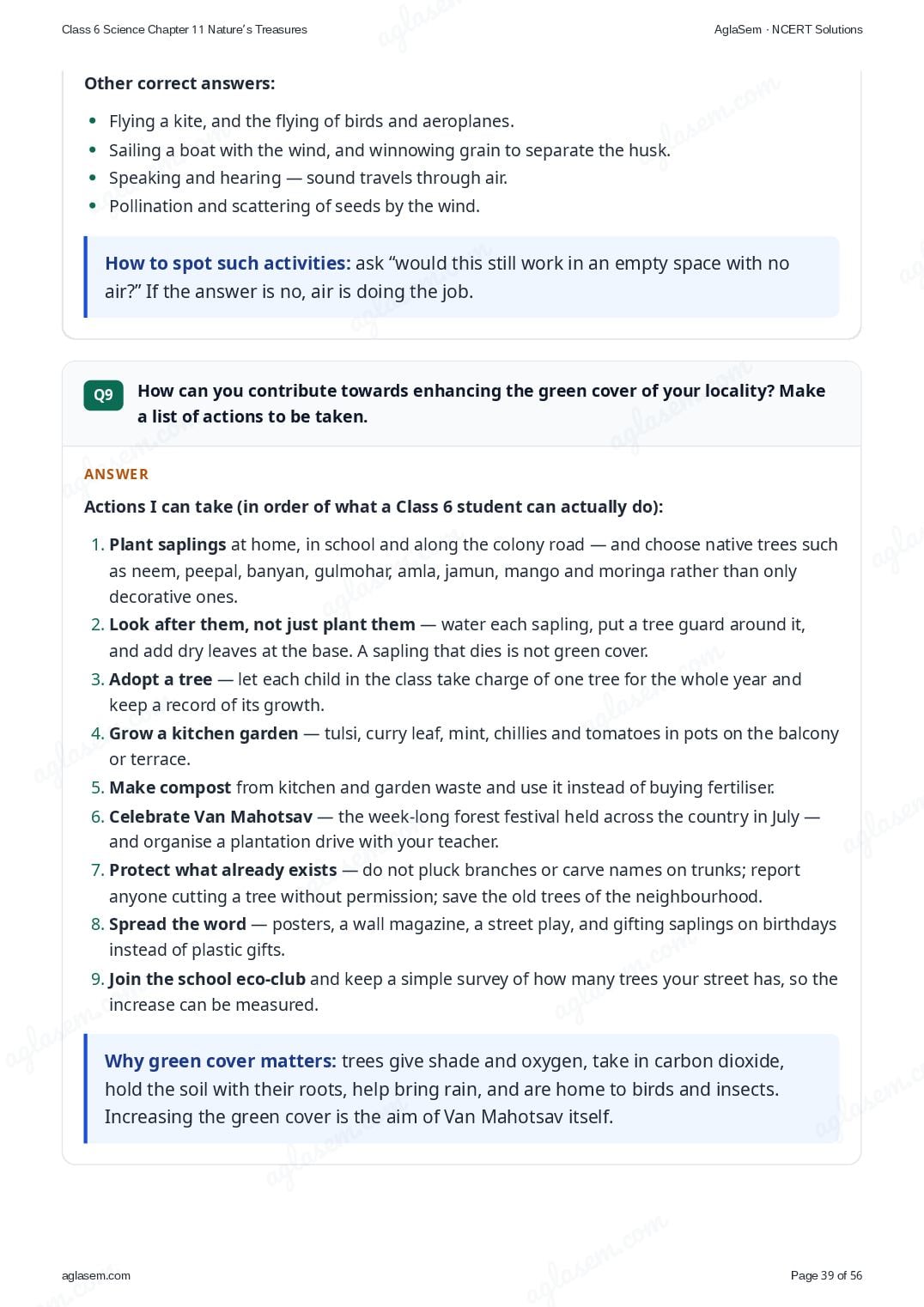
- List four activities that are possible due to the presence of air.
- How can you contribute towards enhancing the green cover of your locality? Make a list of actions to be taken.
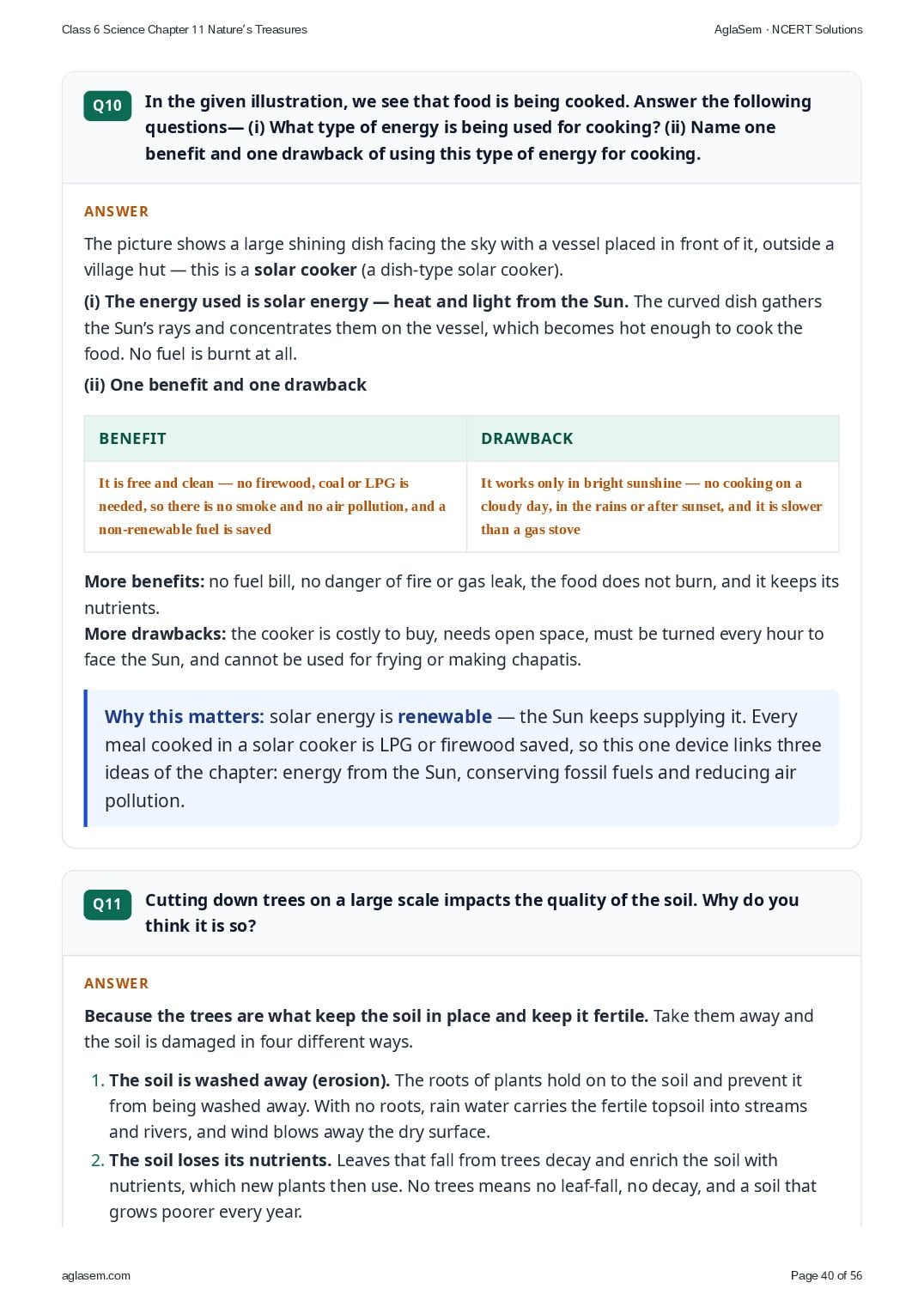
- In the given illustration, we see that food is being cooked. Answer the following questions— (i) What type of energy is being used for cooking? (ii) Name one benefit and one drawback of using this type of energy for cooking.
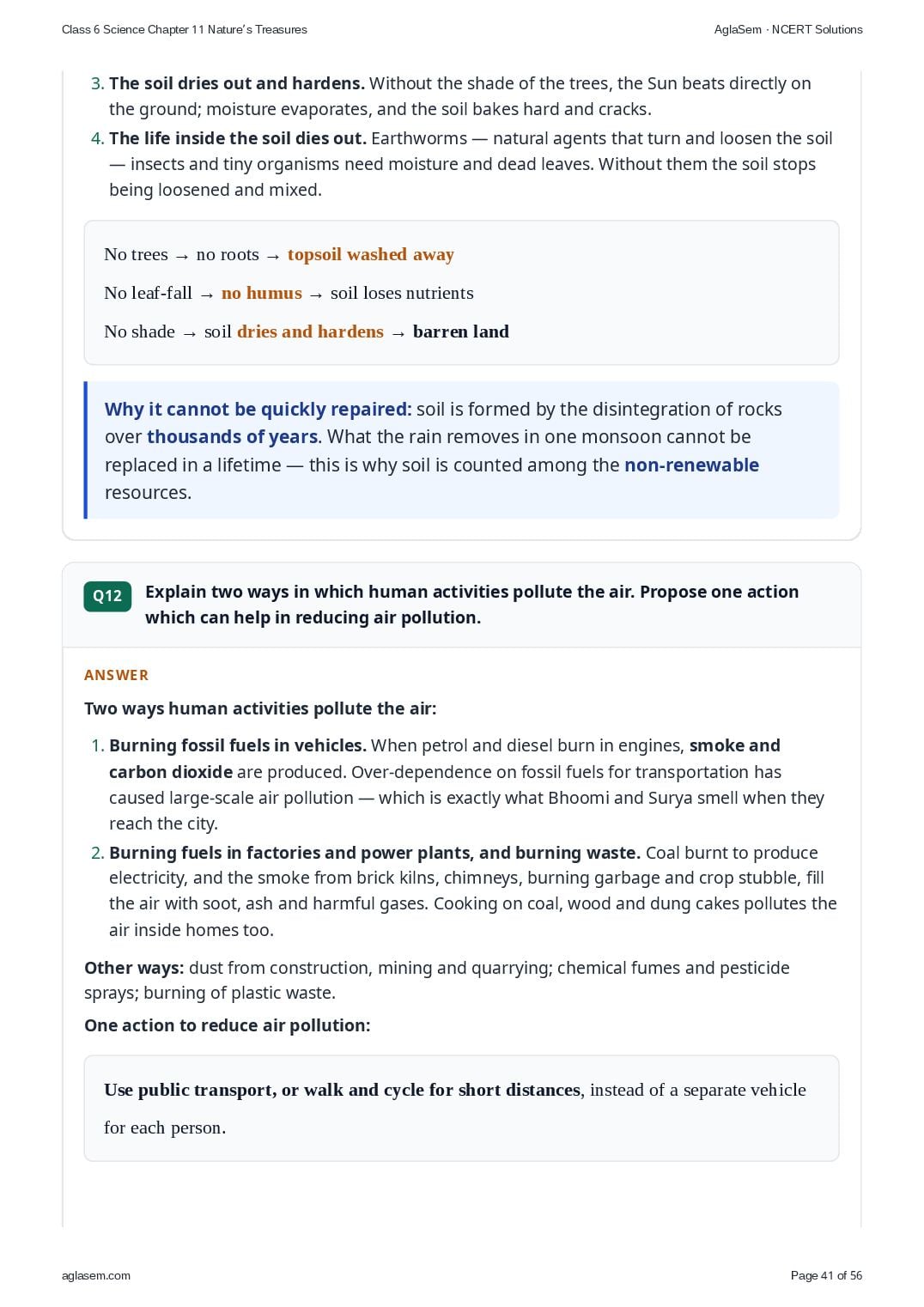
- Cutting down trees on a large scale impacts the quality of the soil. Why do you think it is so?
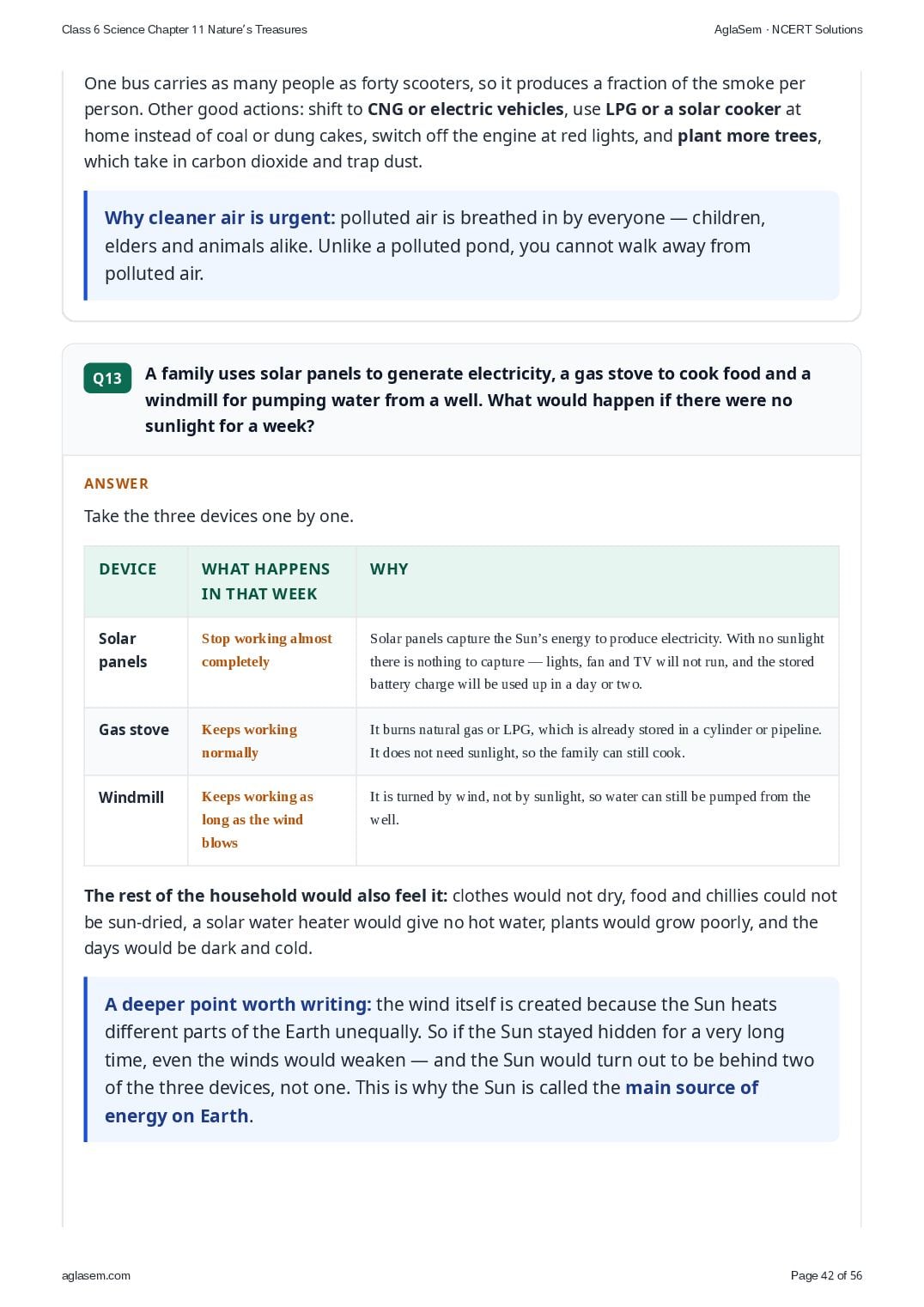
- Explain two ways in which human activities pollute the air. Propose one action which can help in reducing air pollution.
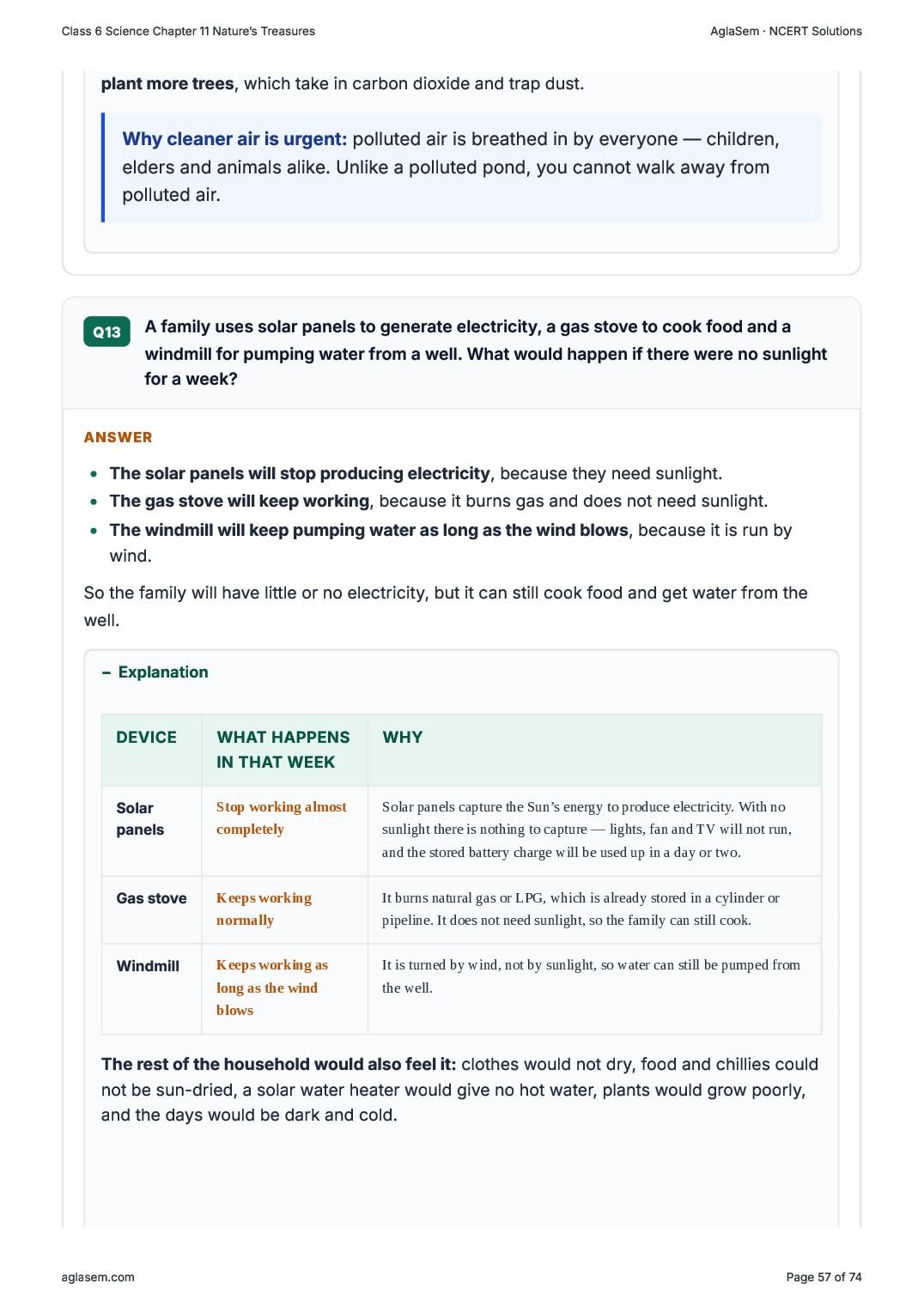
- A family uses solar panels to generate electricity, a gas stove to cook food and a windmill for pumping water from a well. What would happen if there were no sunlight for a week?
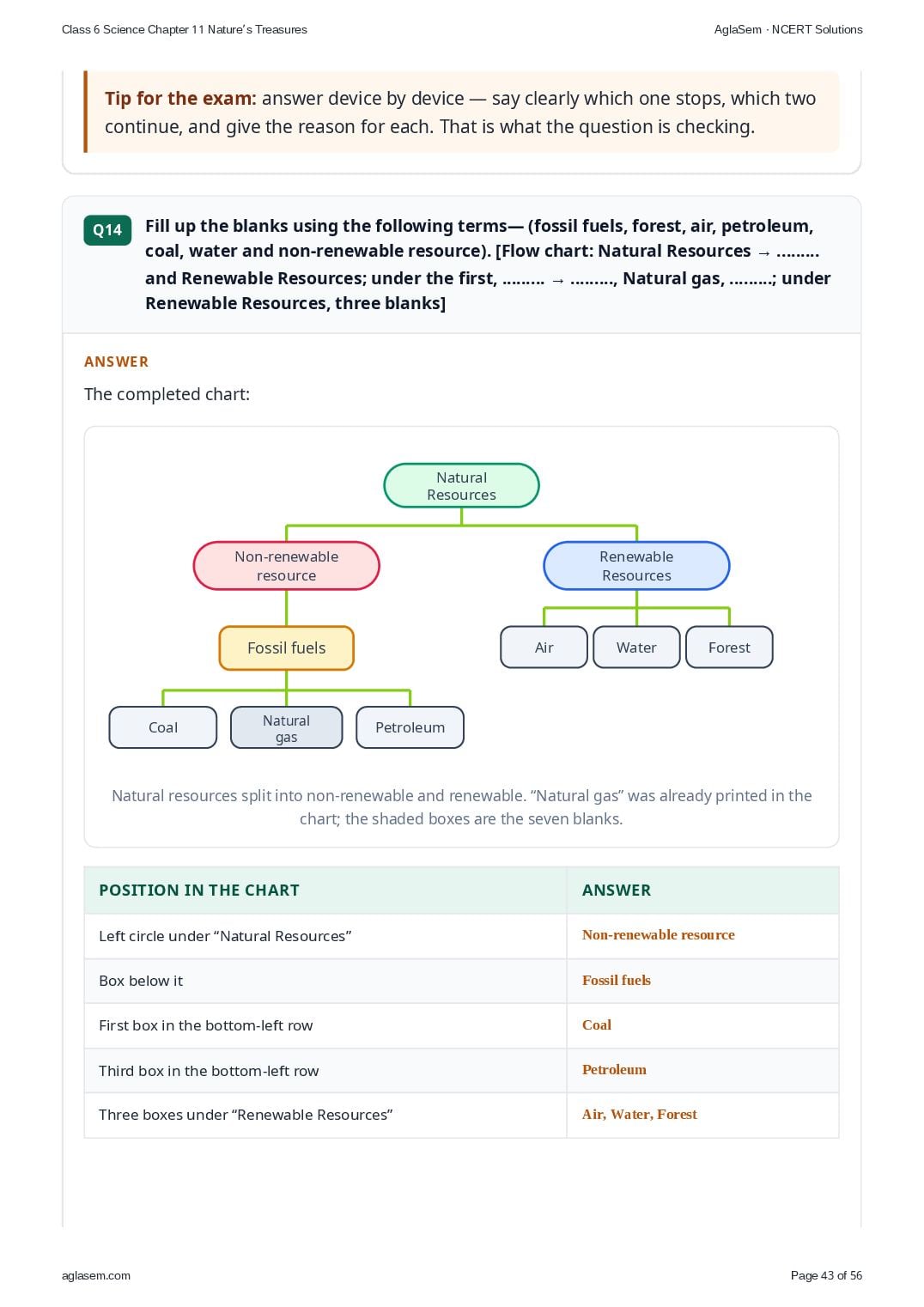
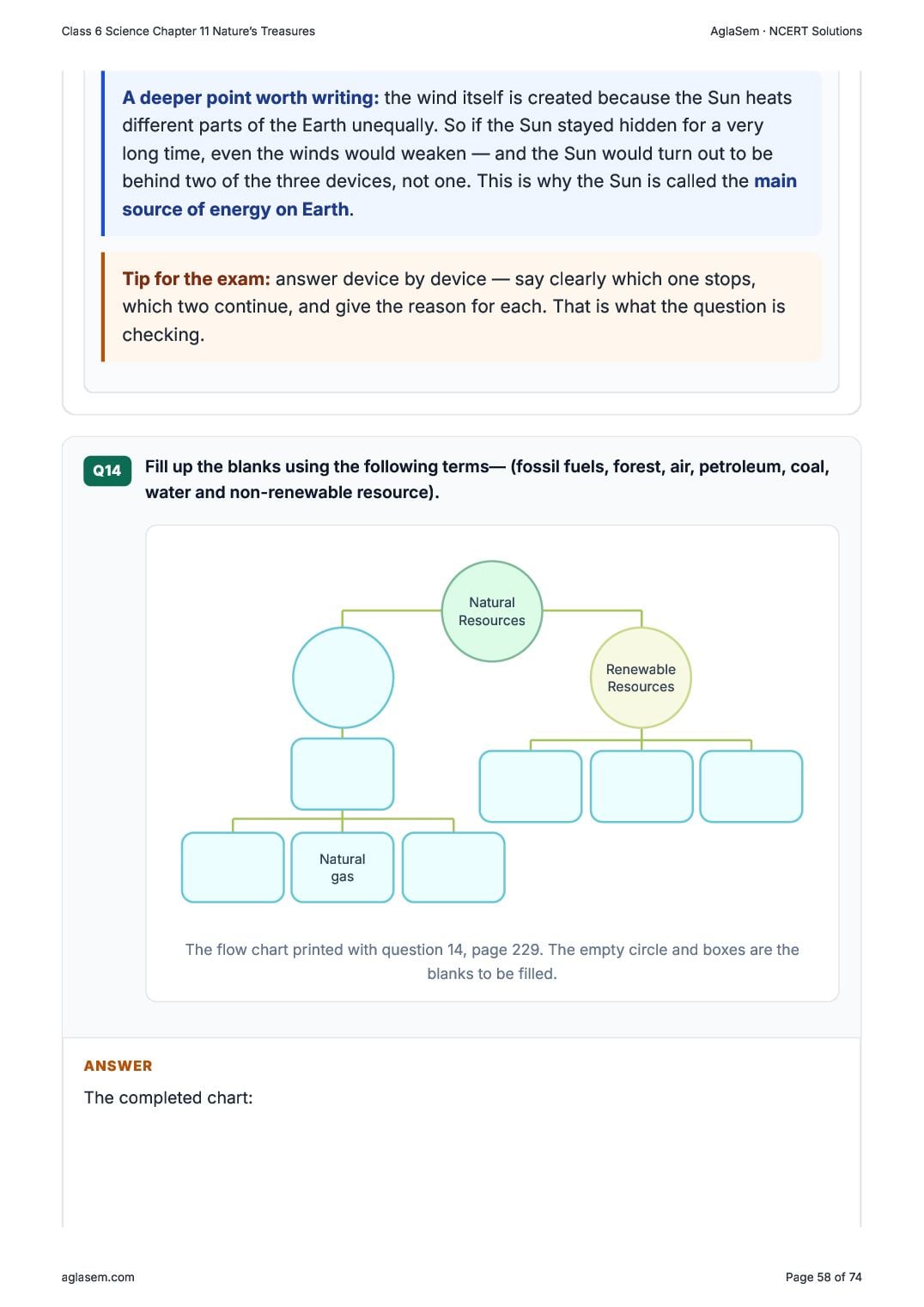
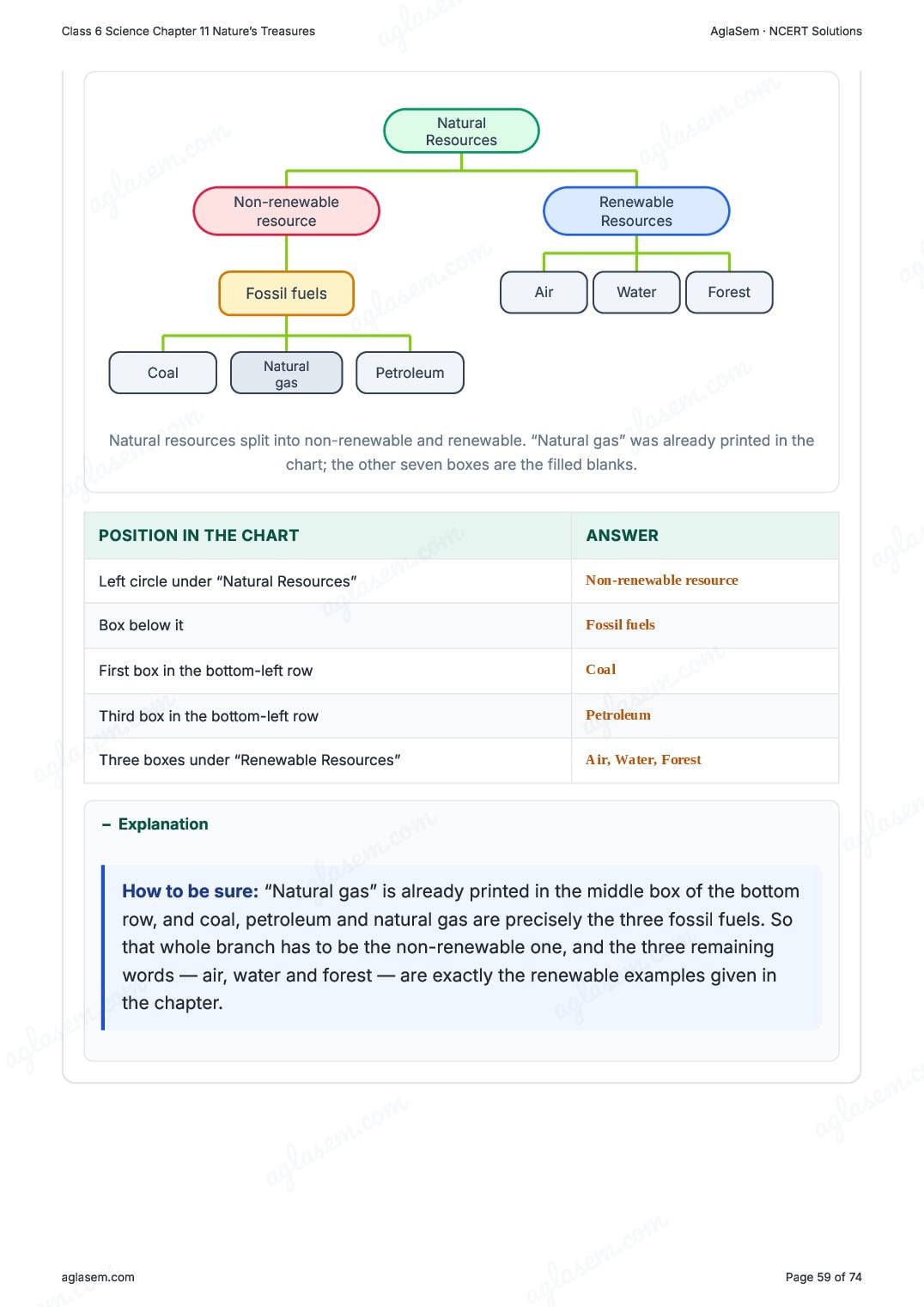
- Fill up the blanks using the following terms— (fossil fuels, forest, air, petroleum, coal, water and non-renewable resource). [Flow chart: Natural Resources → ……… and Renewable Resources; under the first, ……… → ………, Natural gas, ………; under Renewable Resources, three blanks]
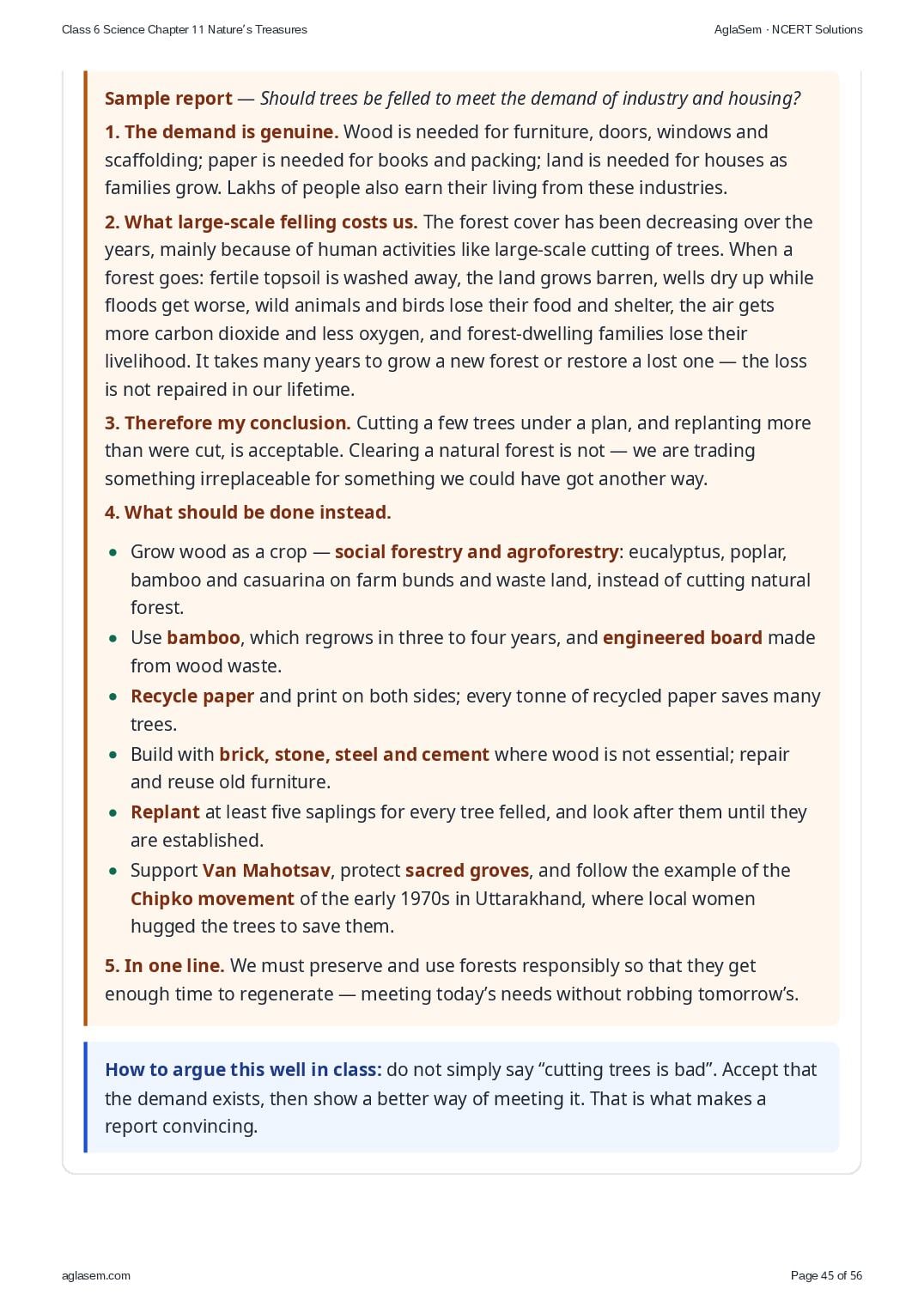
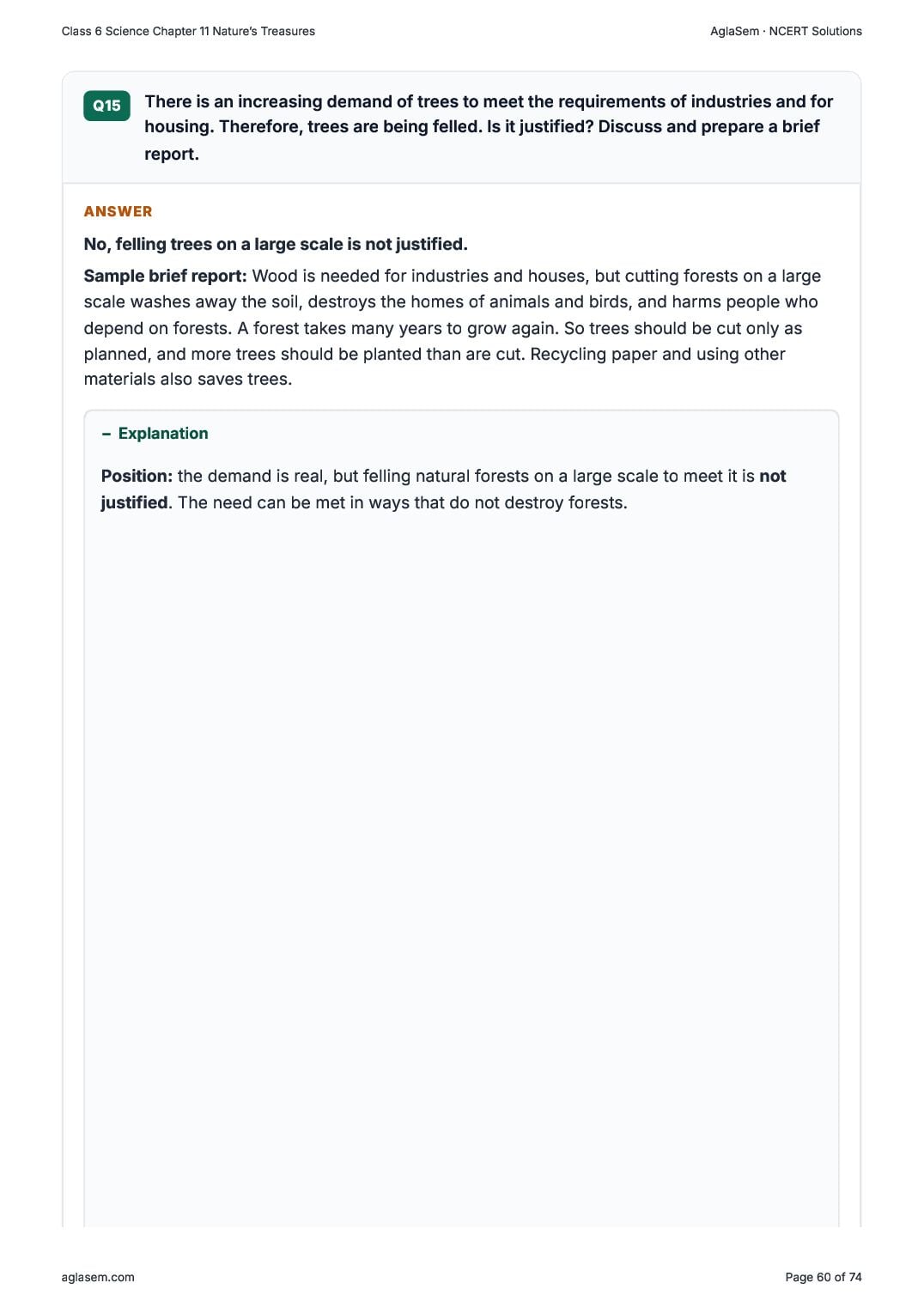
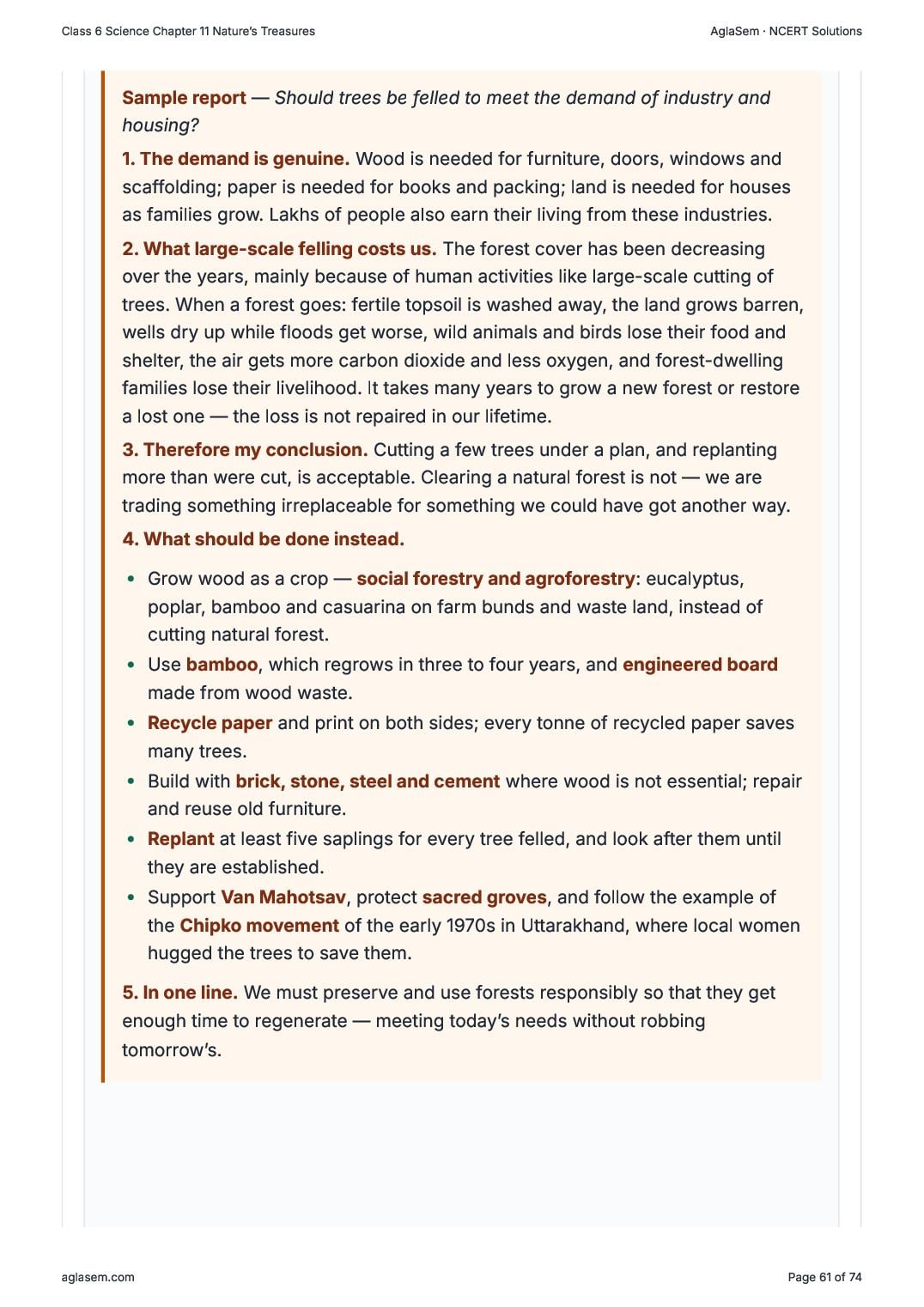
- There is an increasing demand of trees to meet the requirements of industries and for housing. Therefore, trees are being felled. Is it justified? Discuss and prepare a brief report.
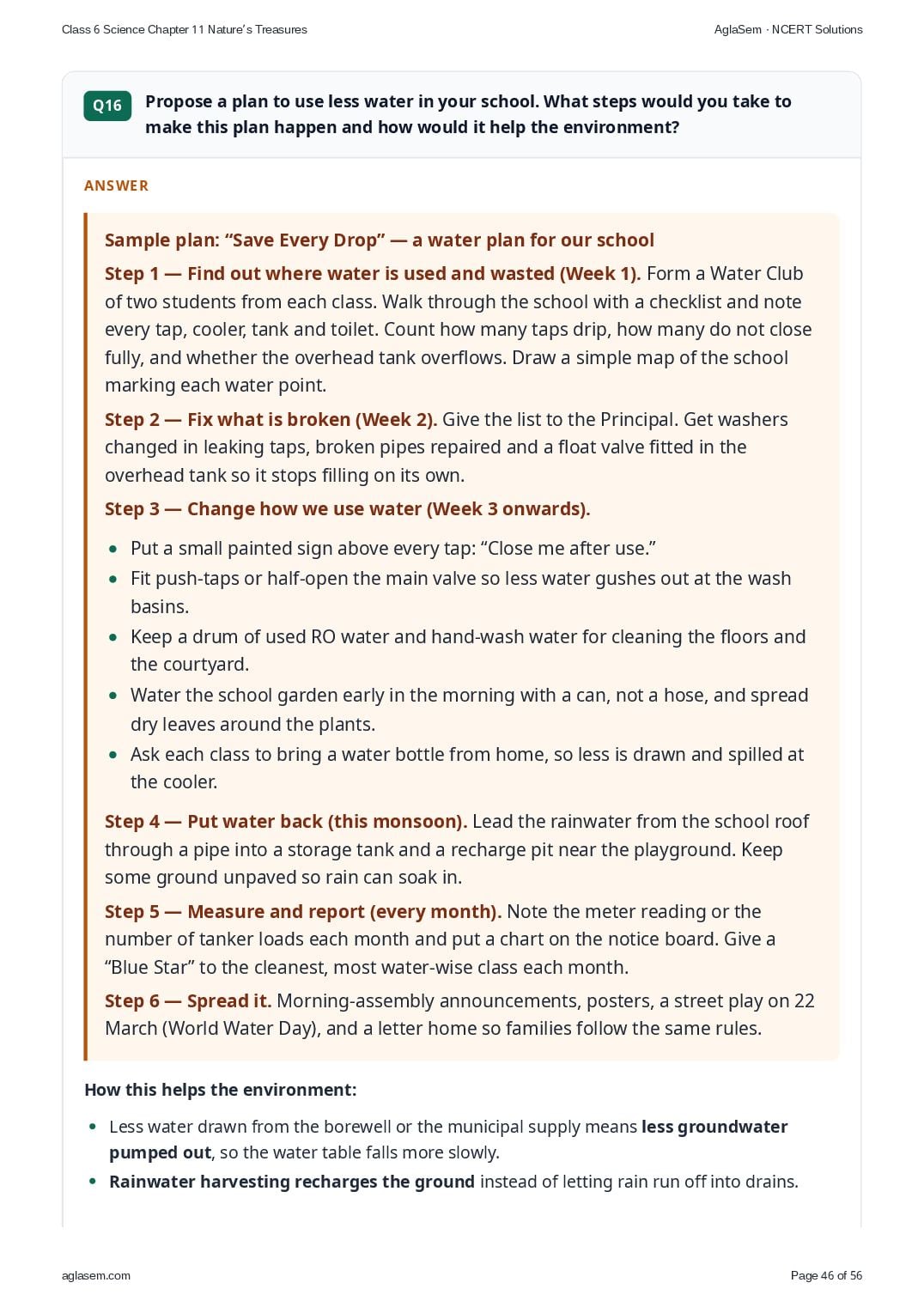
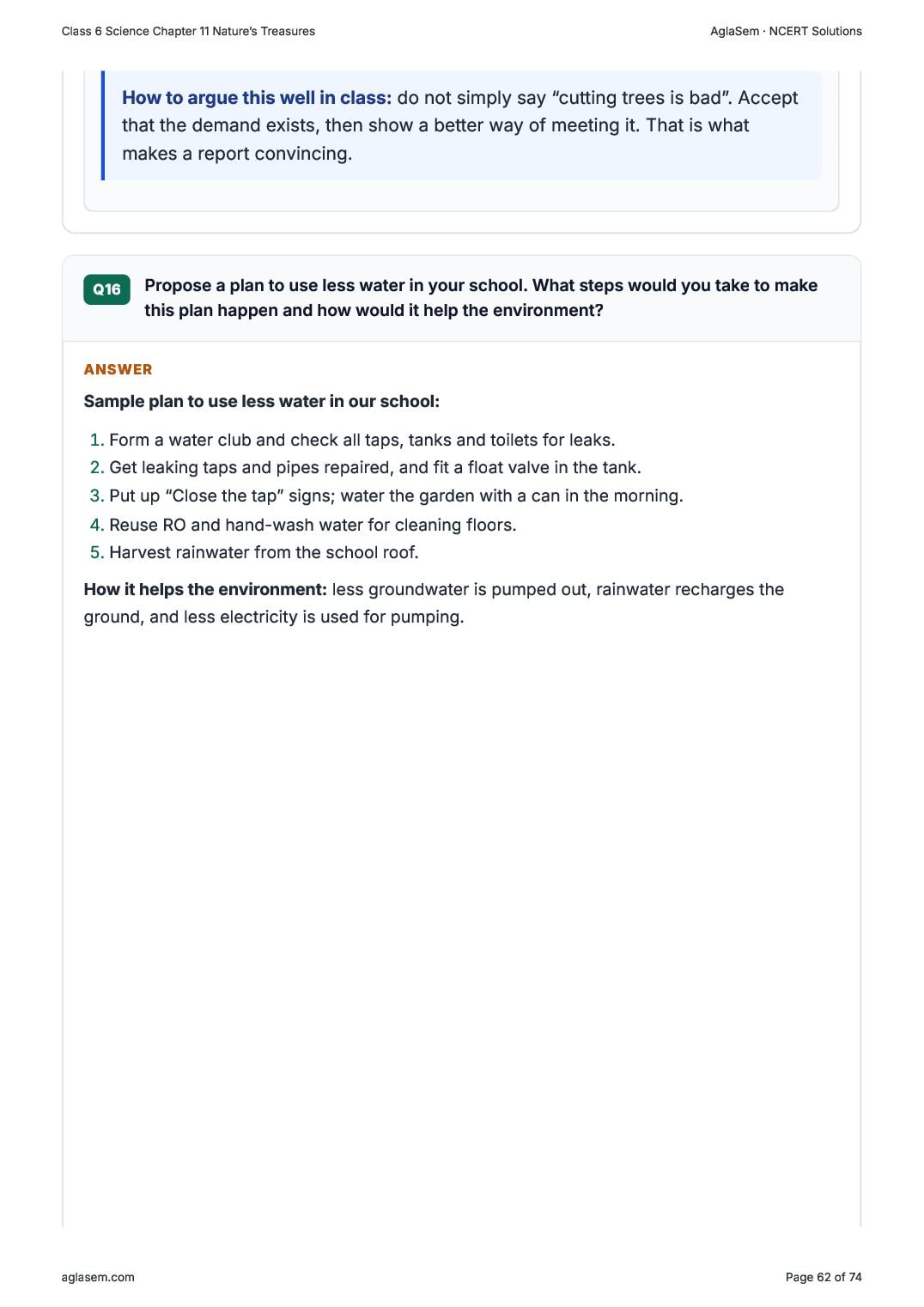
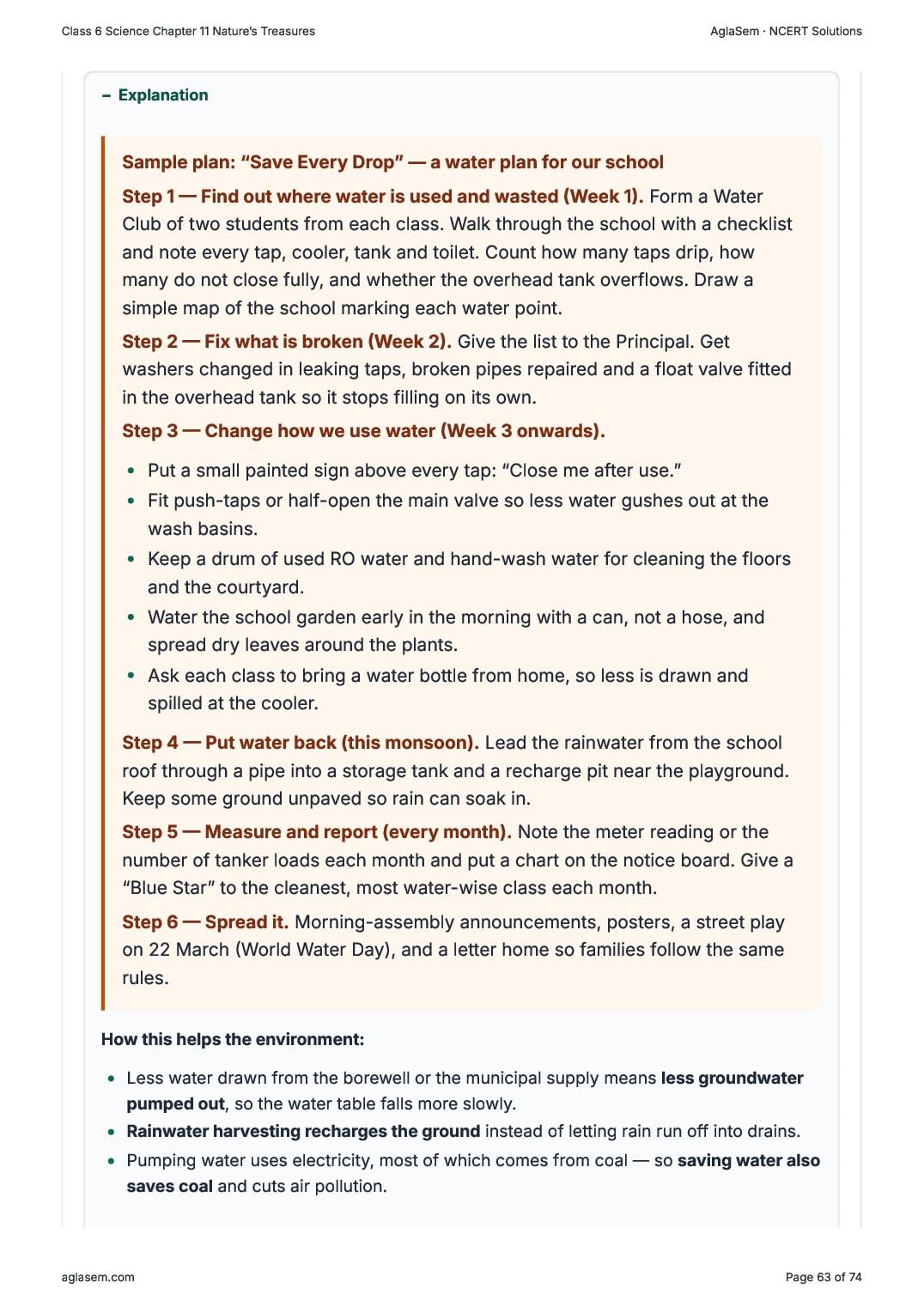
- Propose a plan to use less water in your school. What steps would you take to make this plan happen and how would it help the environment?
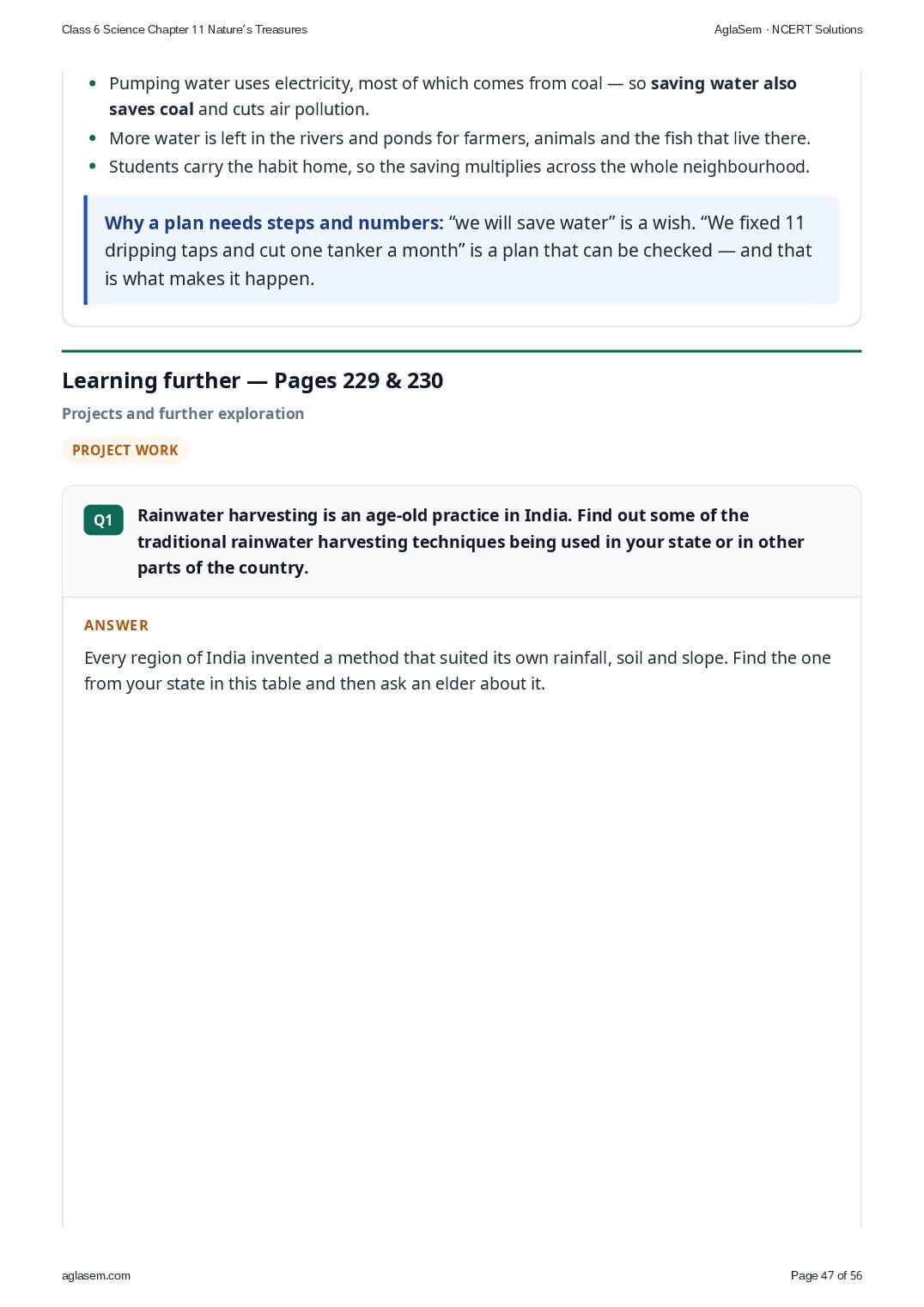
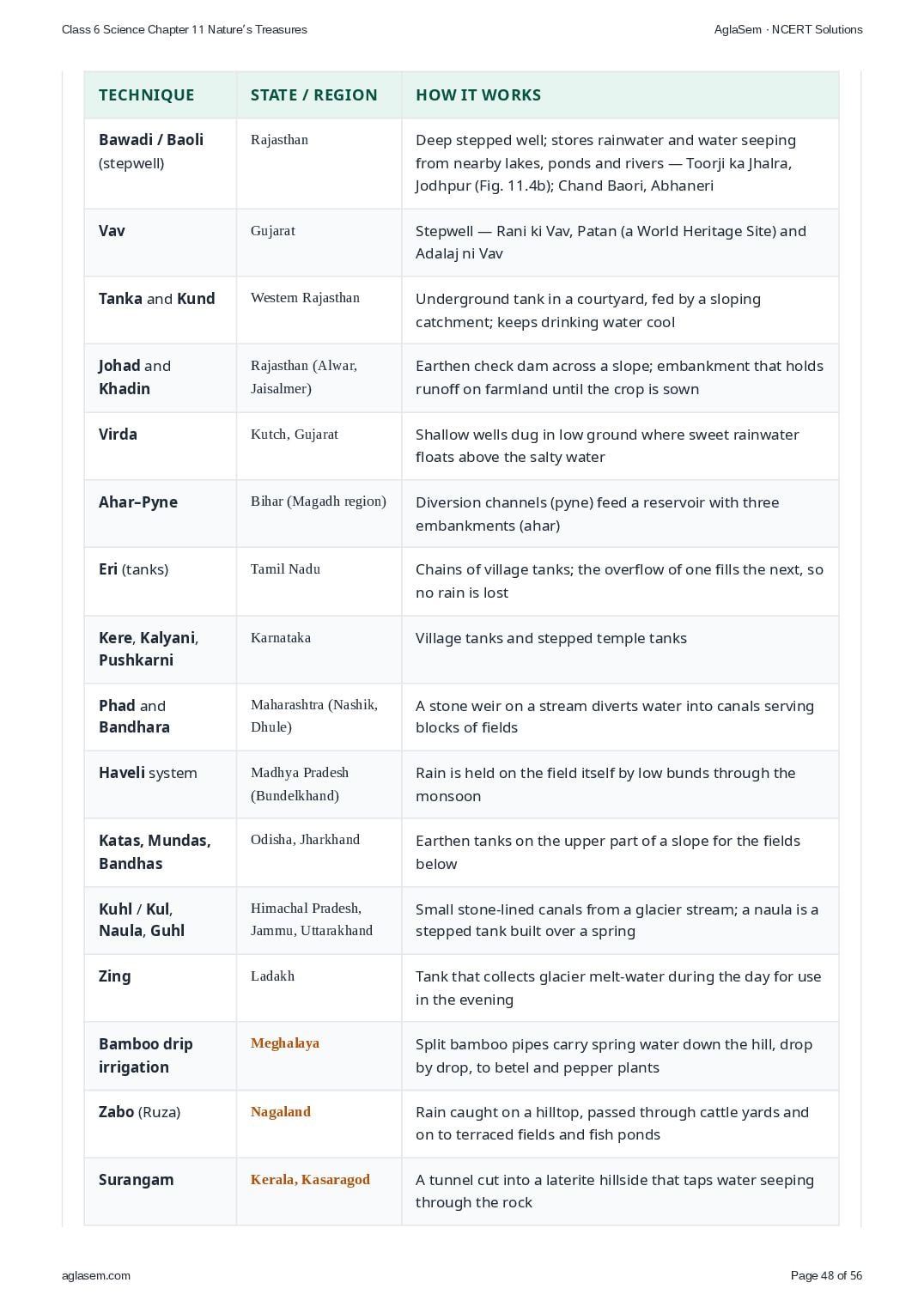
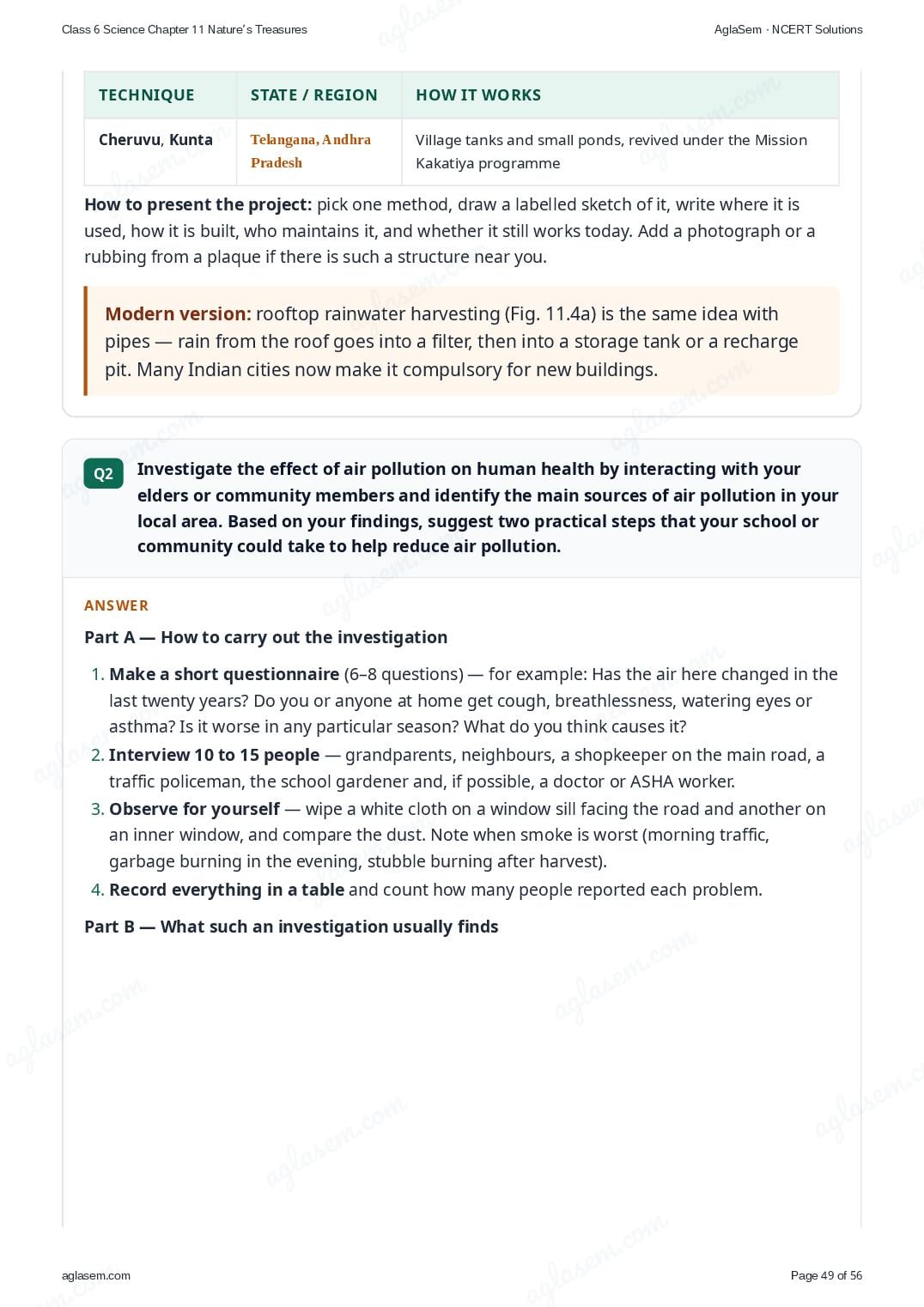
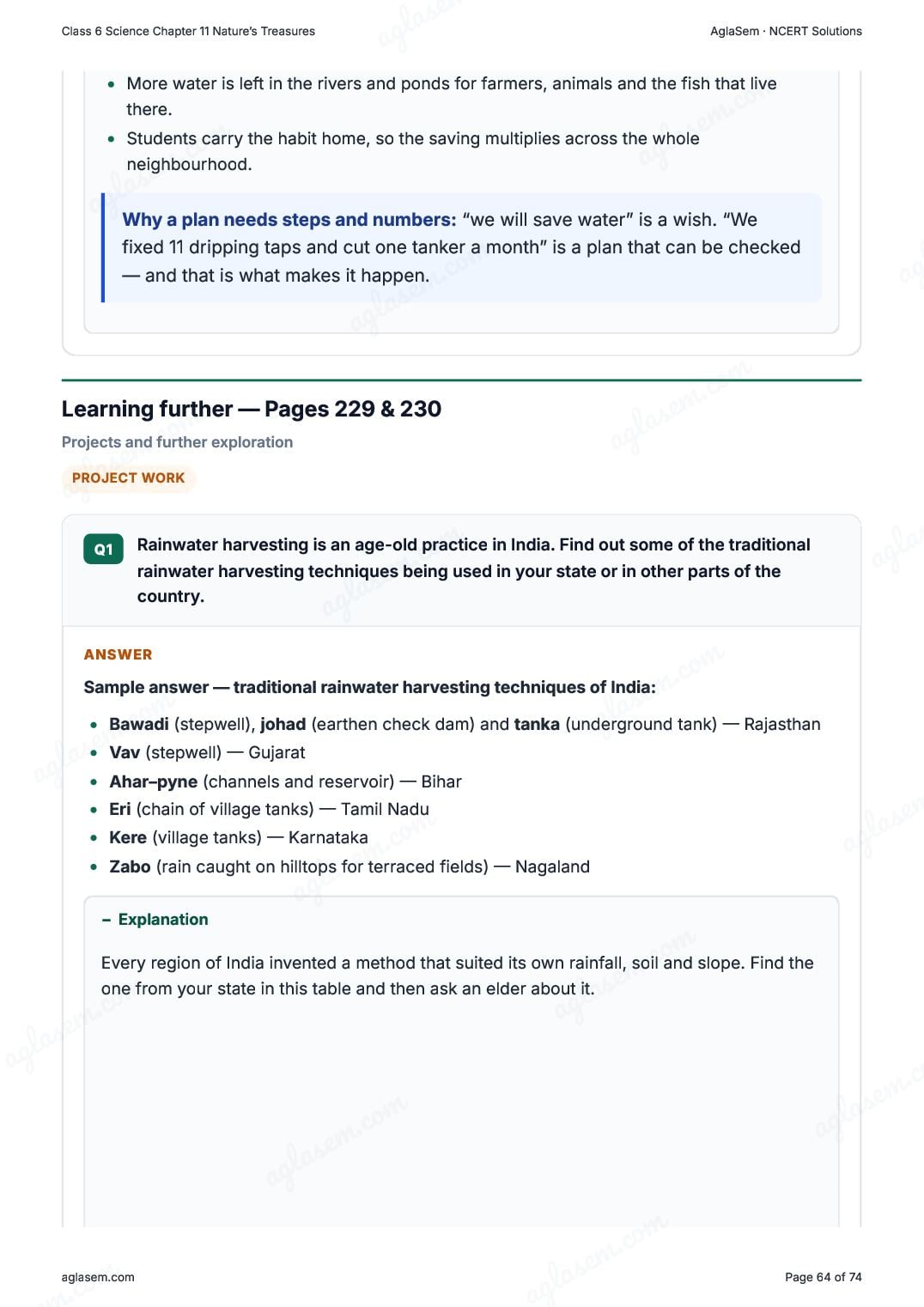
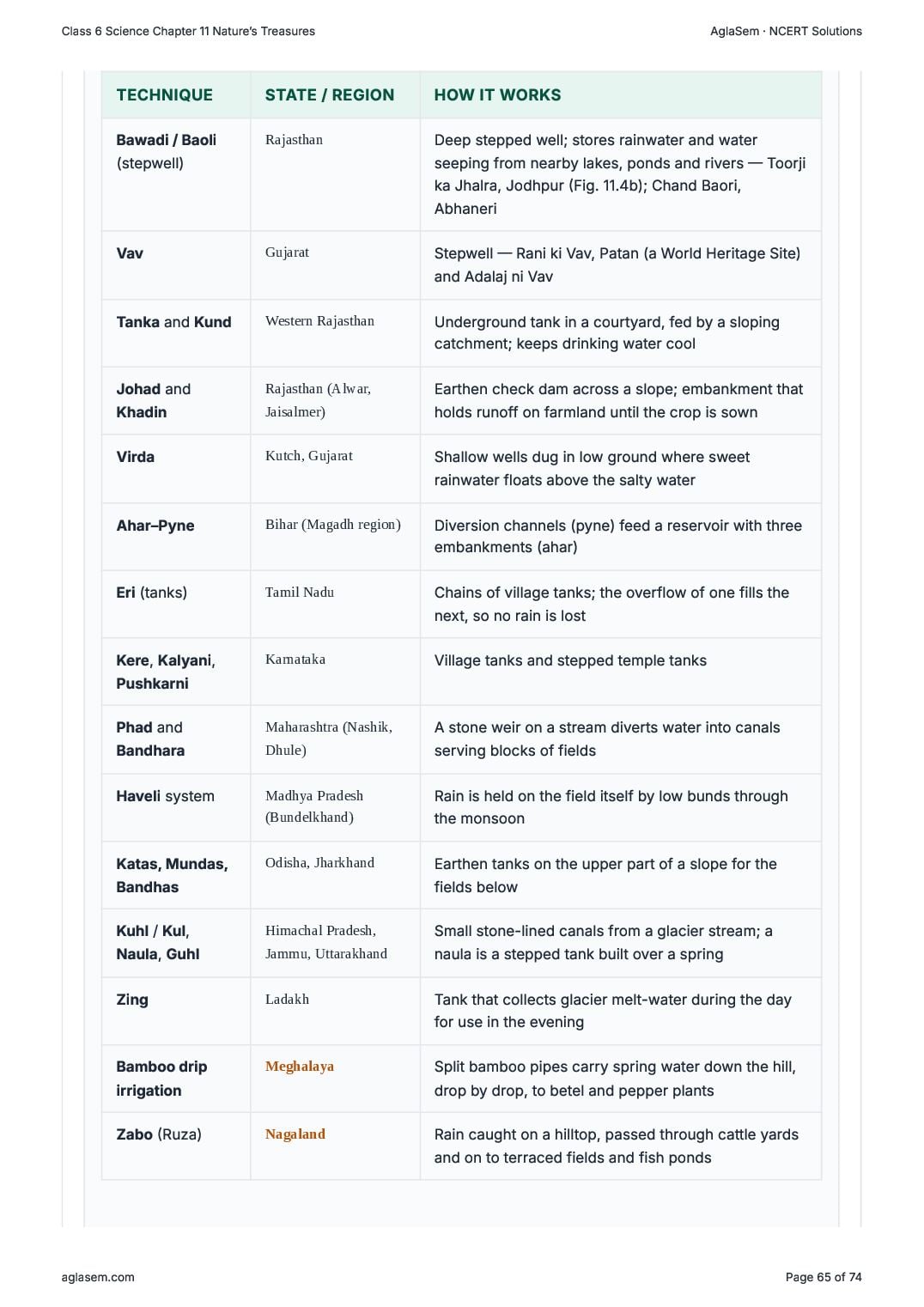
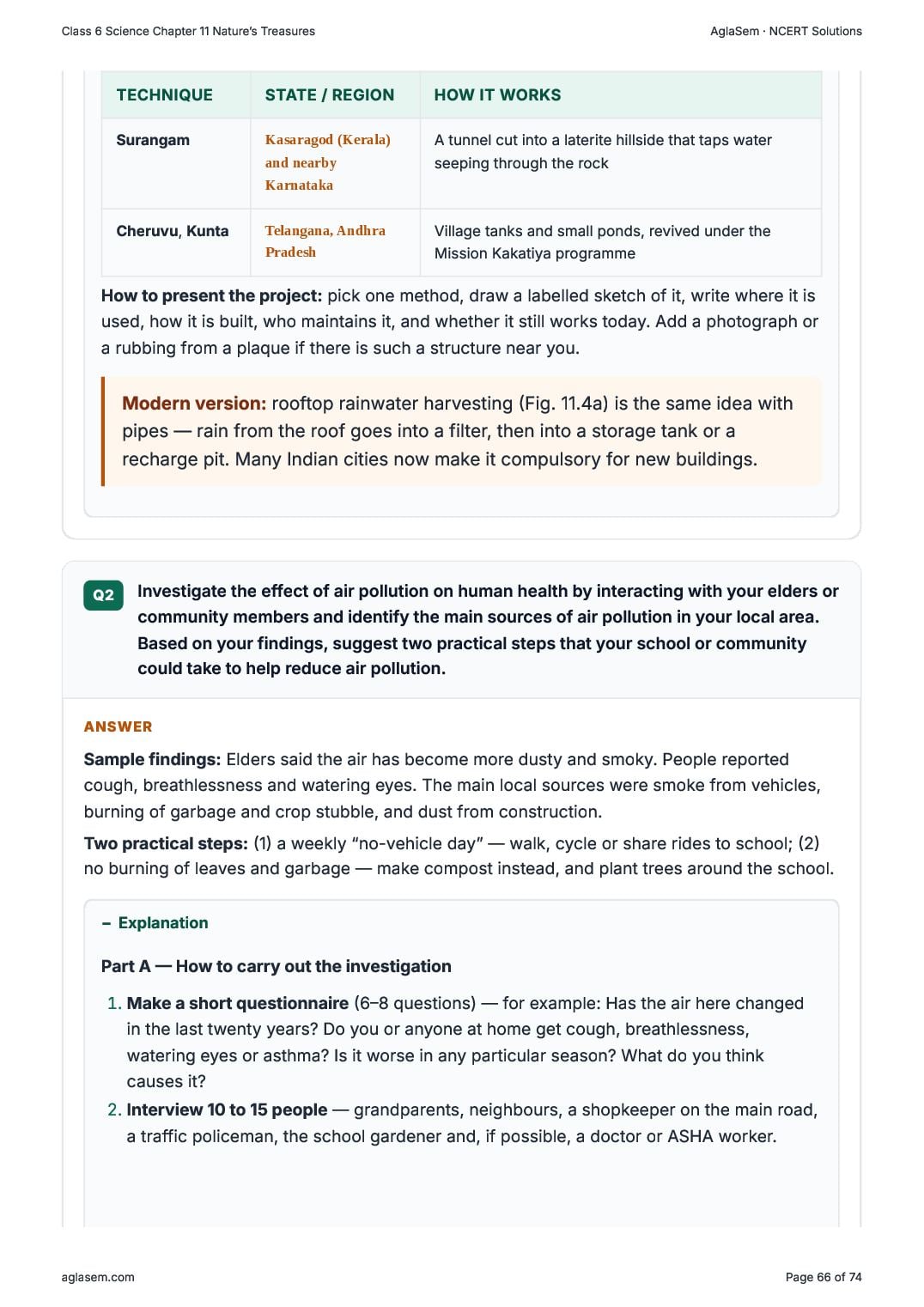
- Rainwater harvesting is an age-old practice in India. Find out some of the traditional rainwater harvesting techniques being used in your state or in other parts of the country.
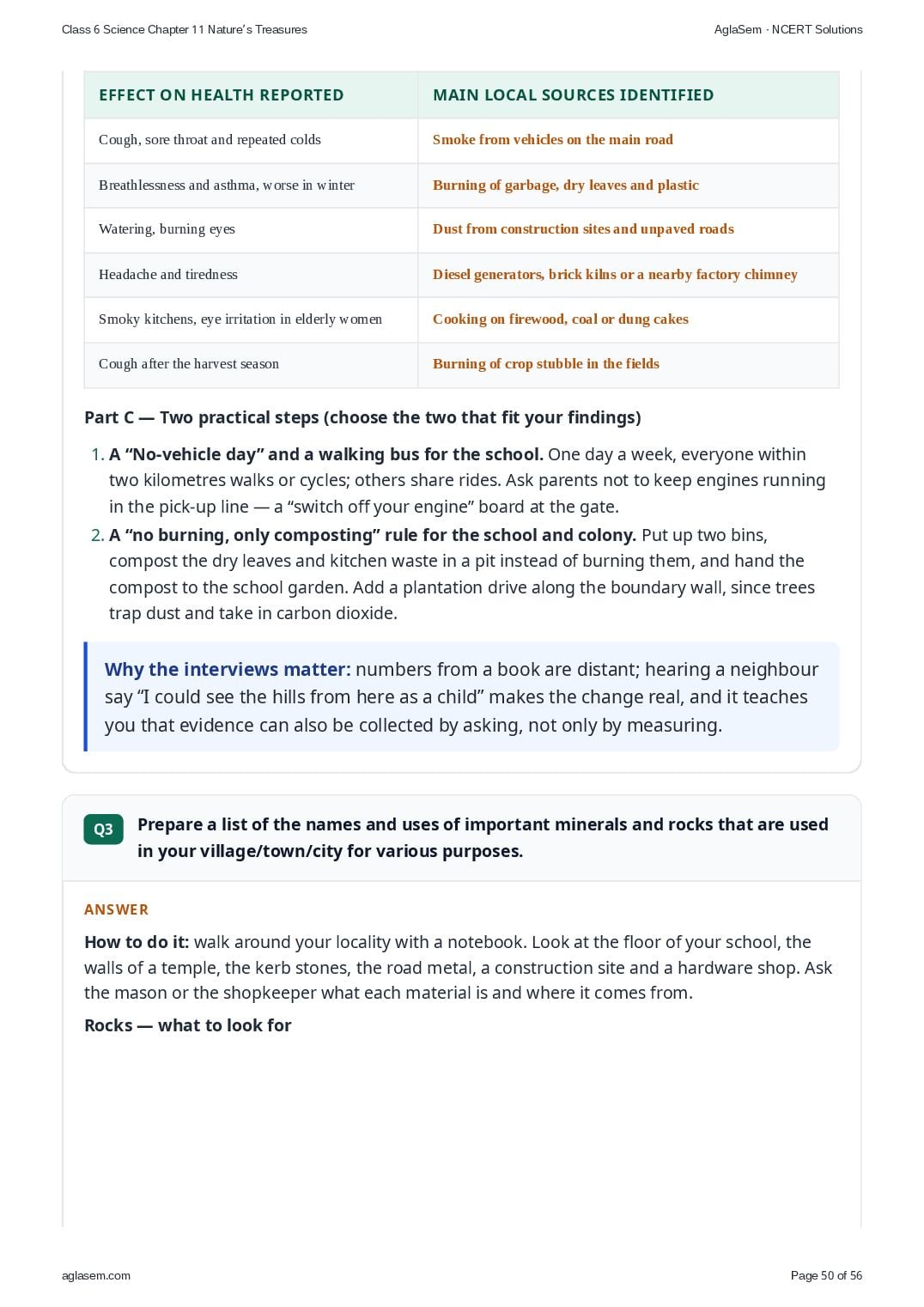
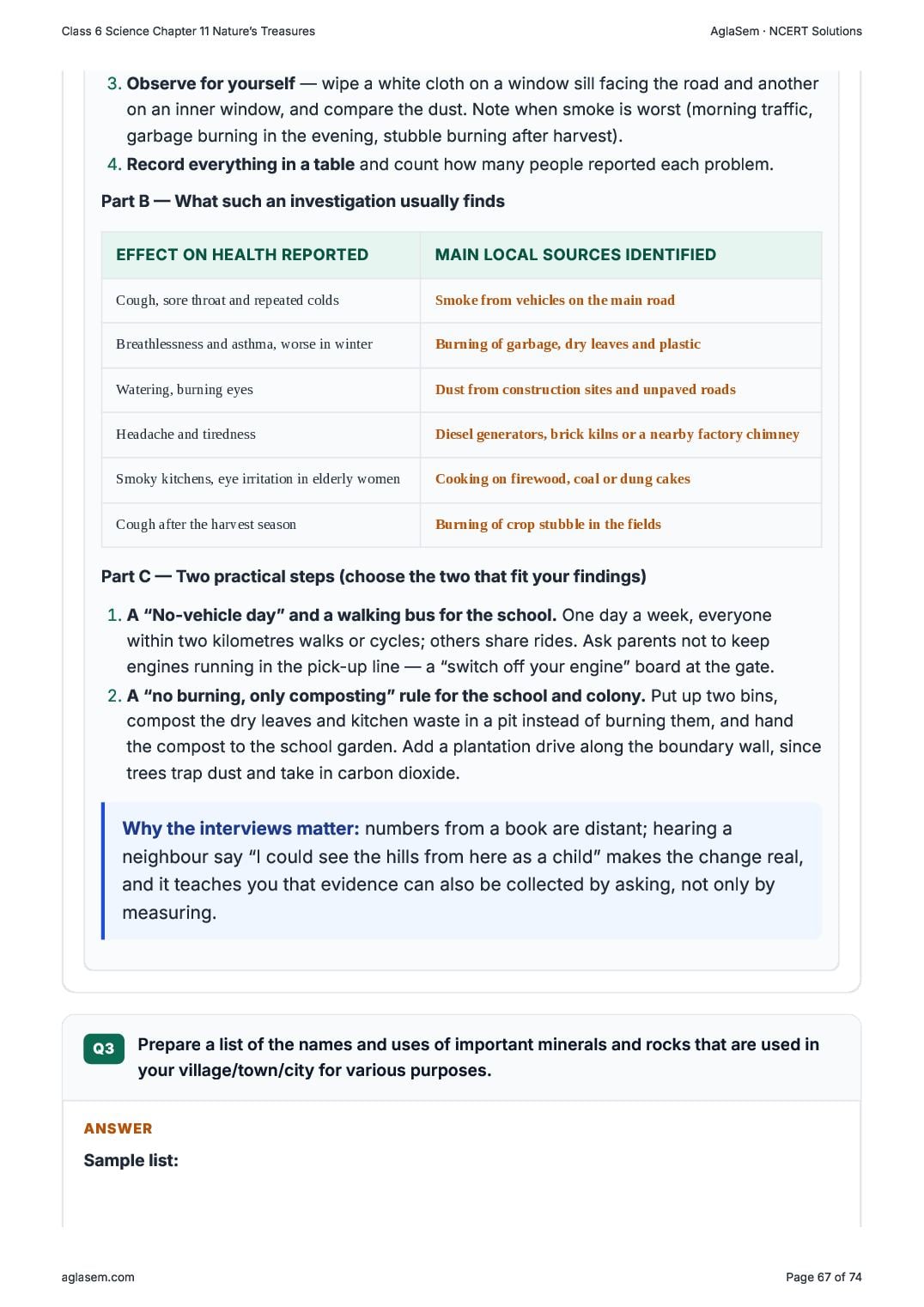
- Investigate the effect of air pollution on human health by interacting with your elders or community members and identify the main sources of air pollution in your local area. Based on your findings, suggest two practical steps that your school or community could take to help reduce air pollution.
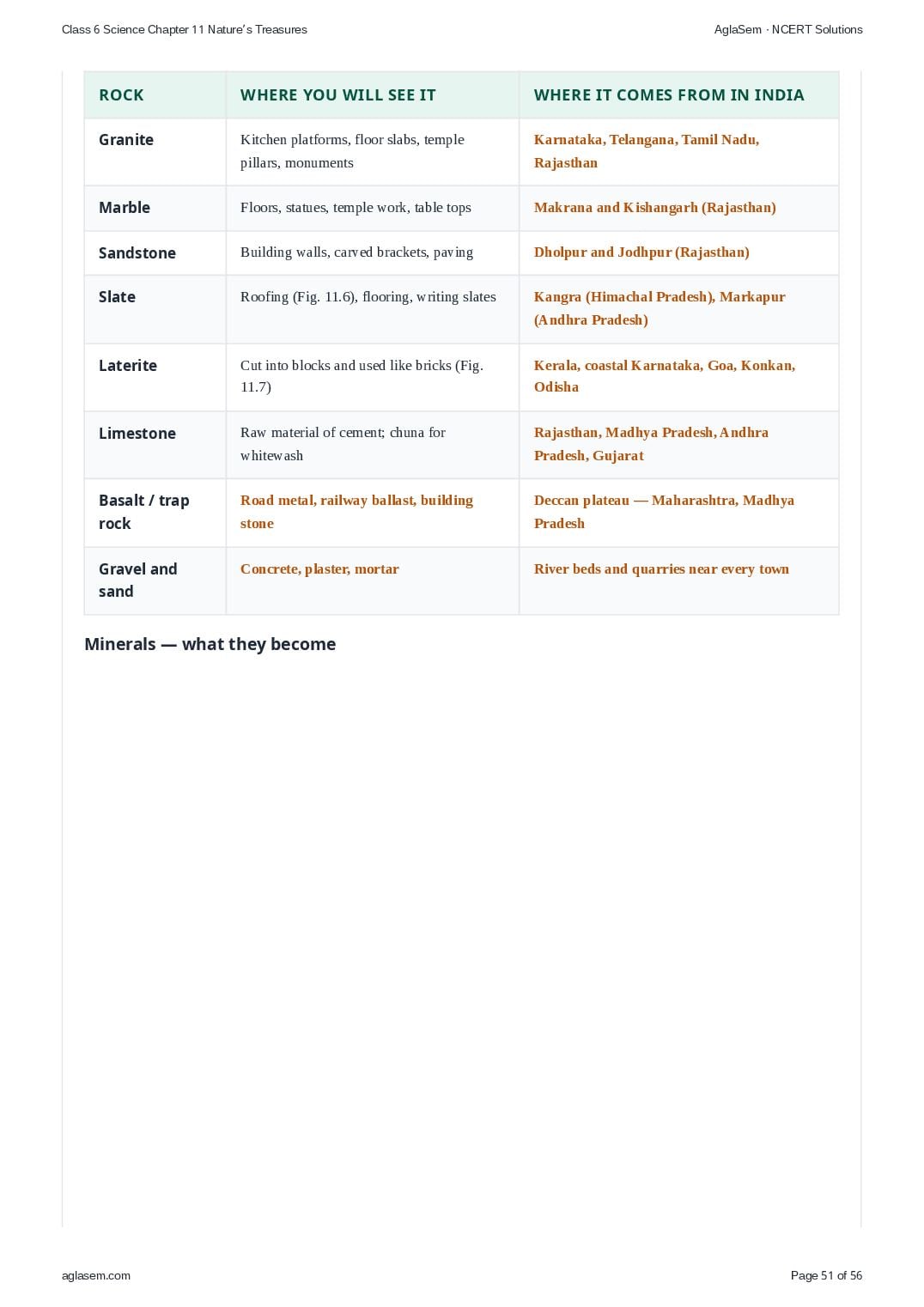
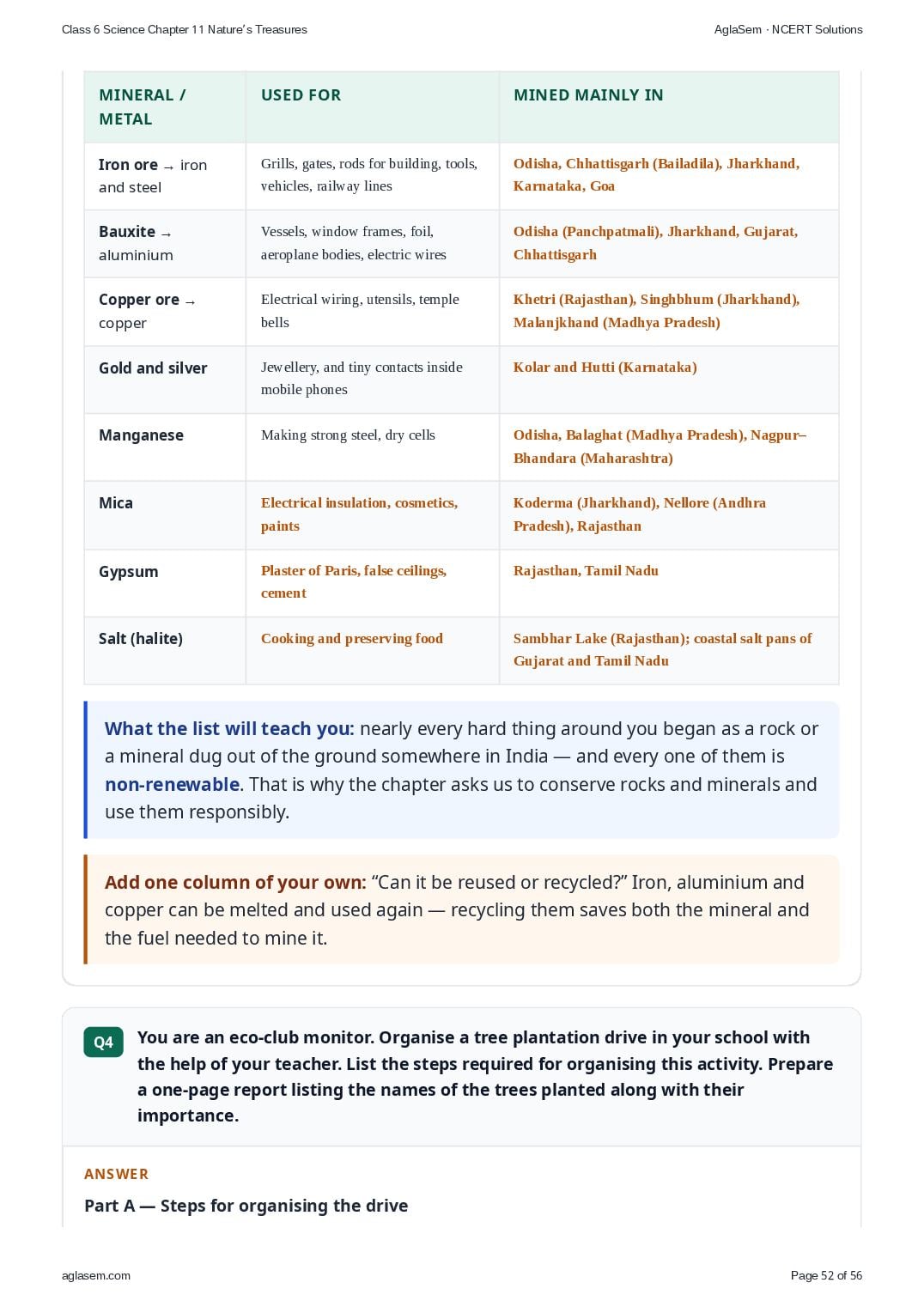
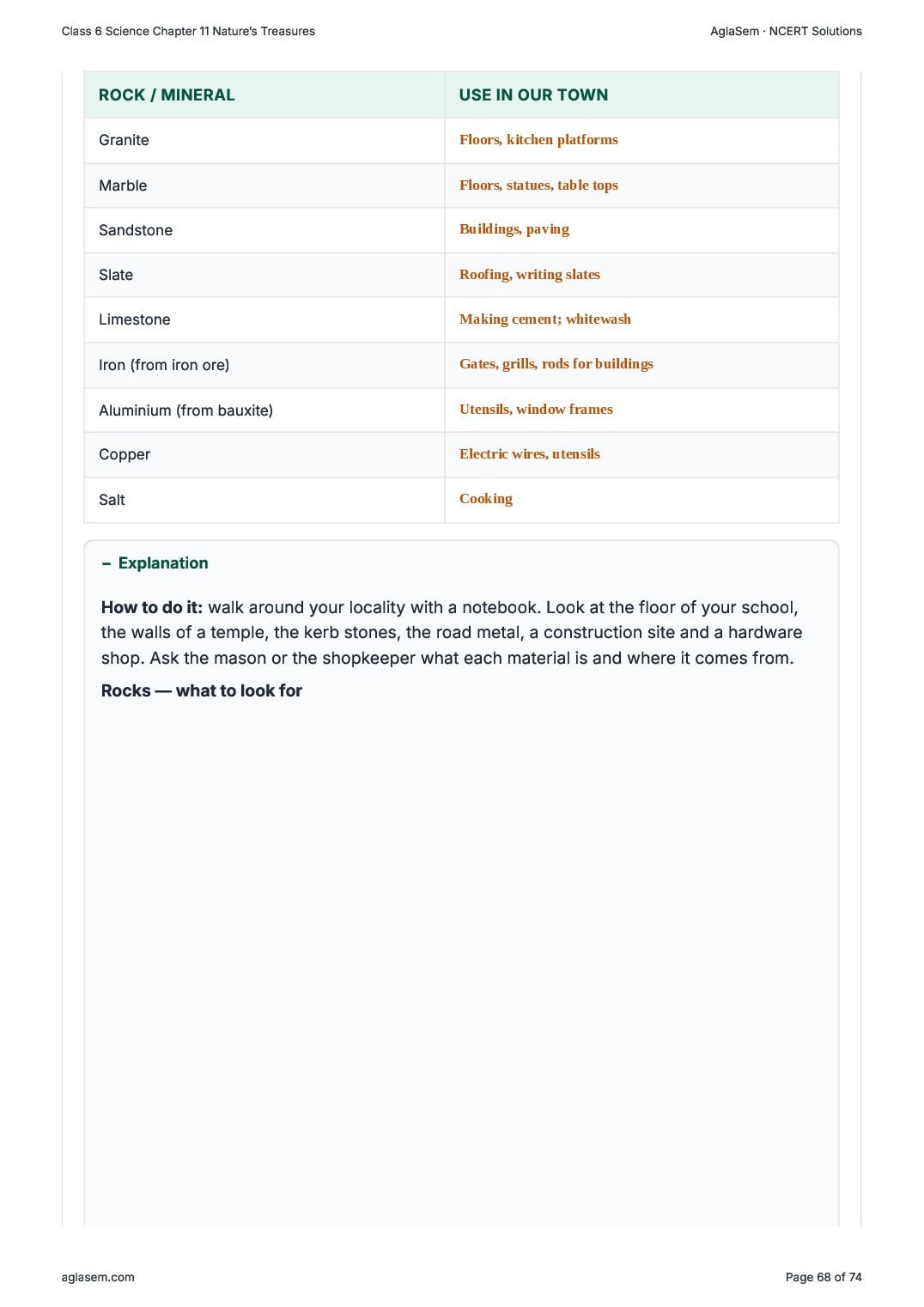
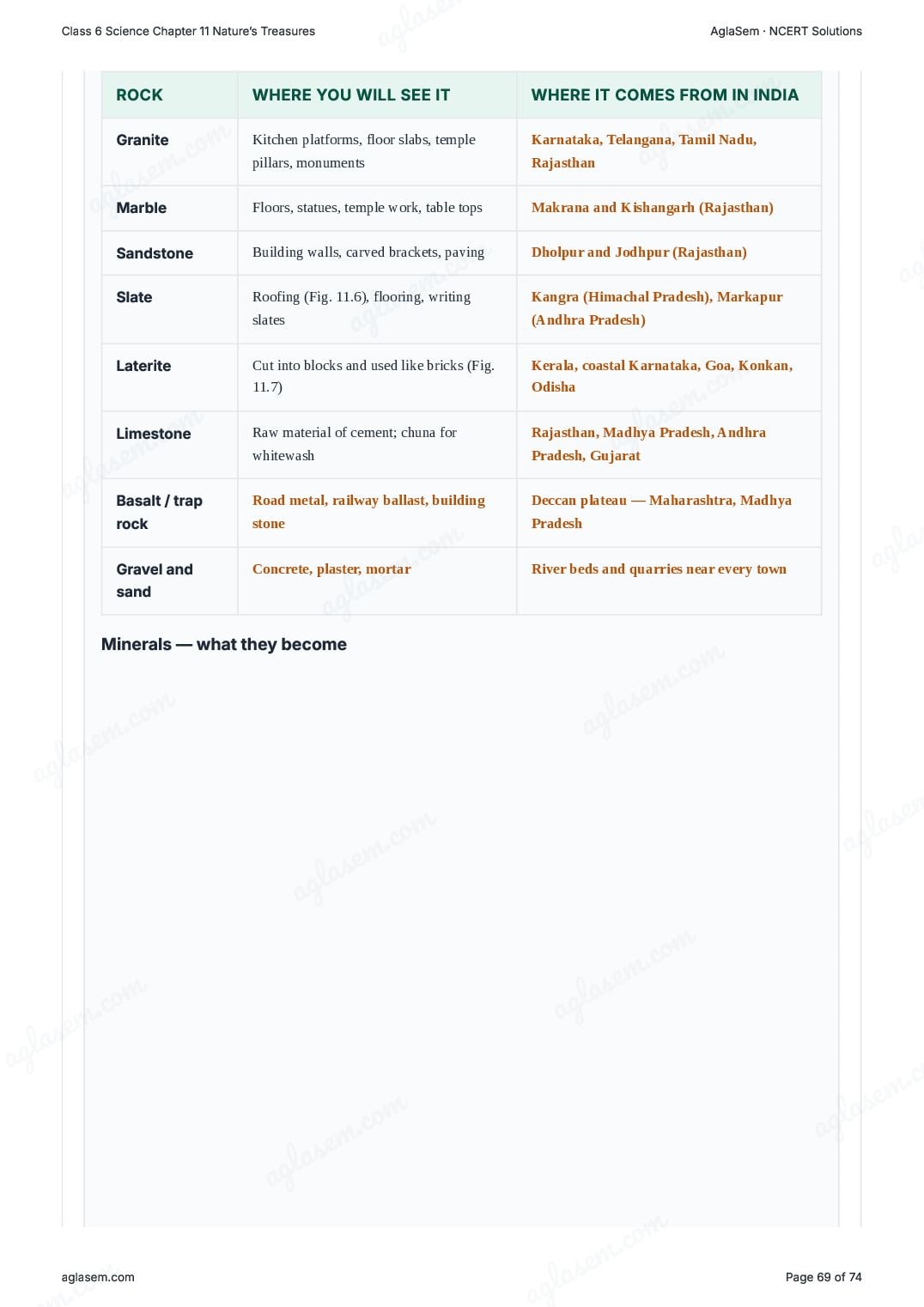
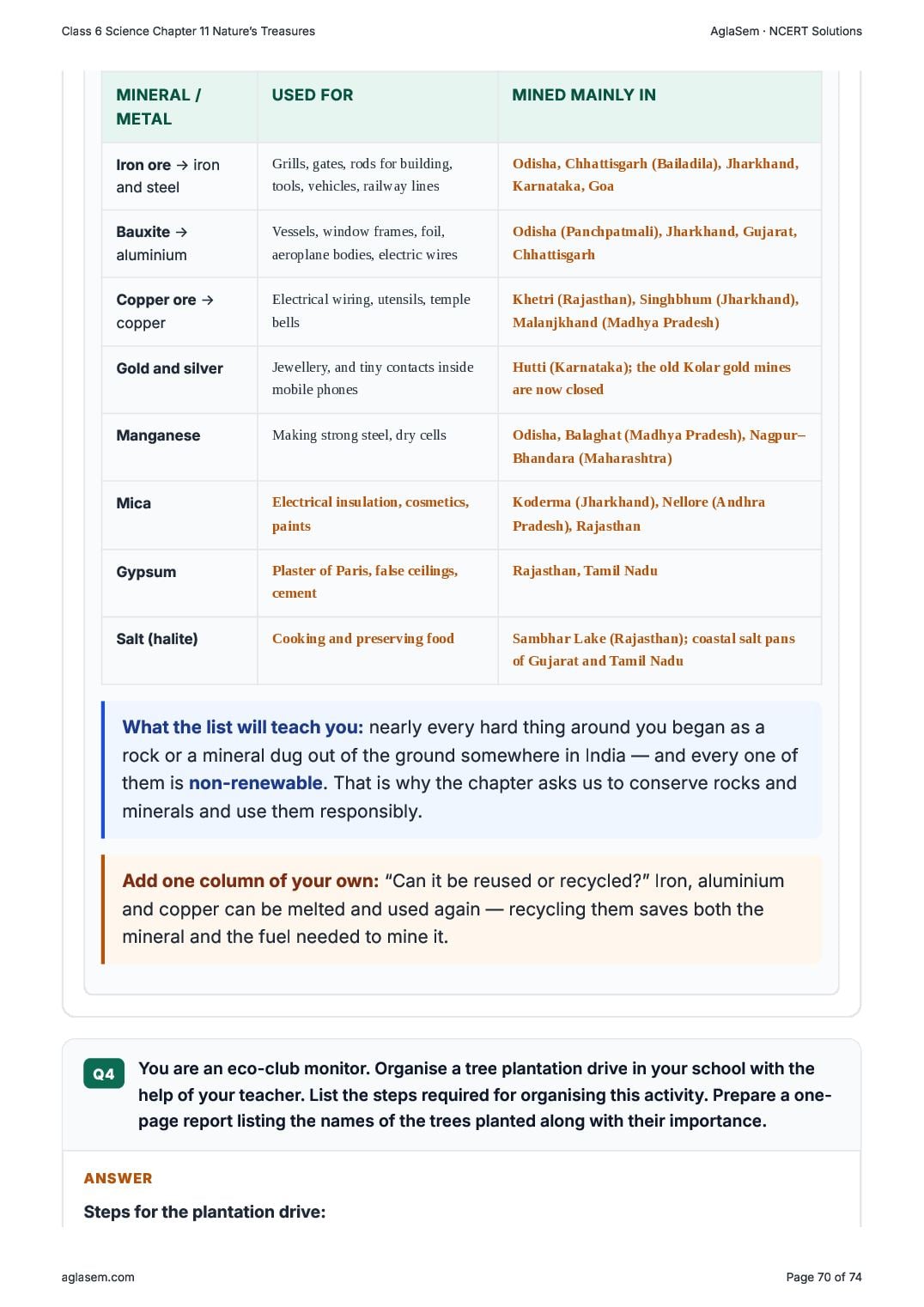
- Prepare a list of the names and uses of important minerals and rocks that are used in your village/town/city for various purposes.
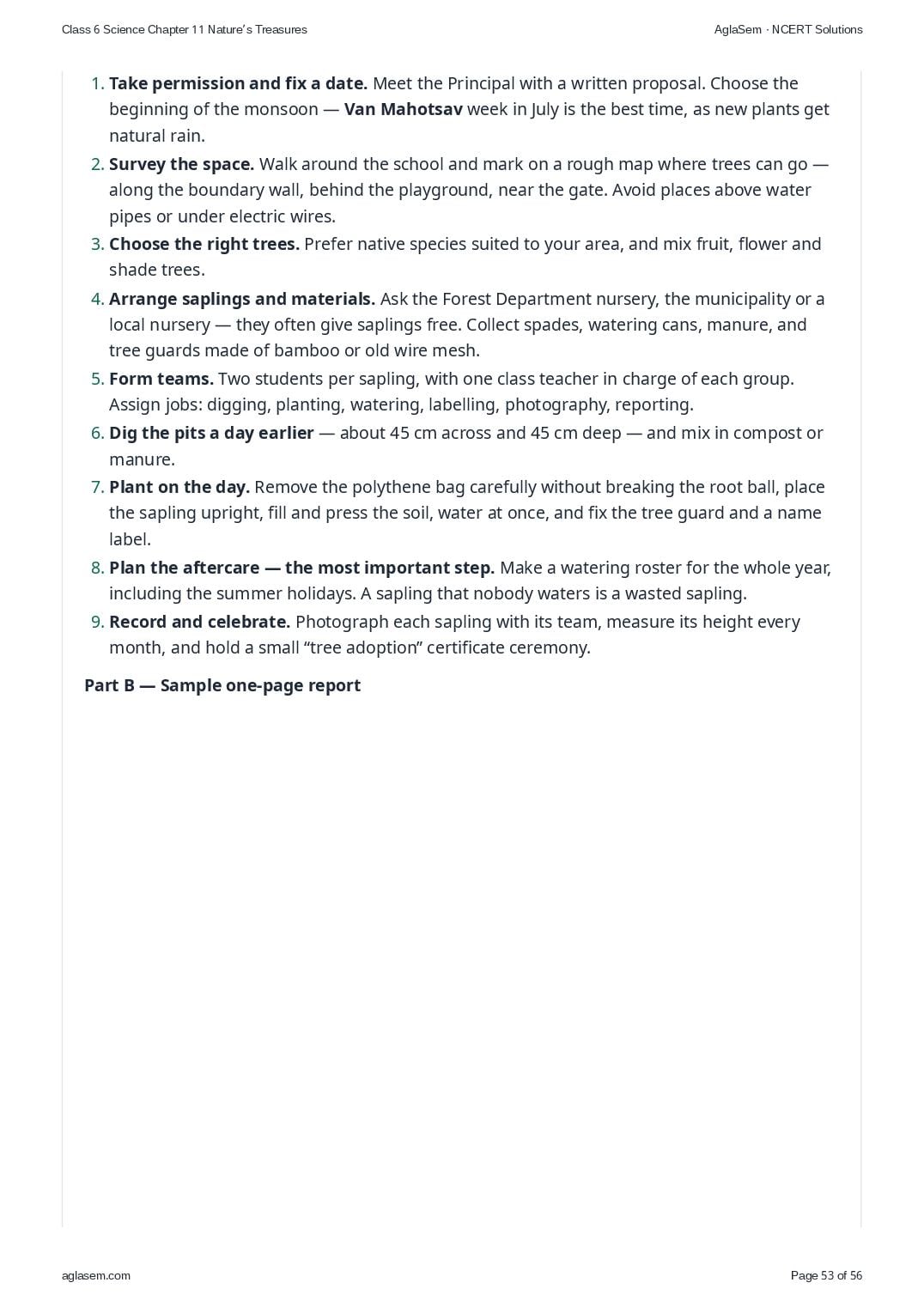
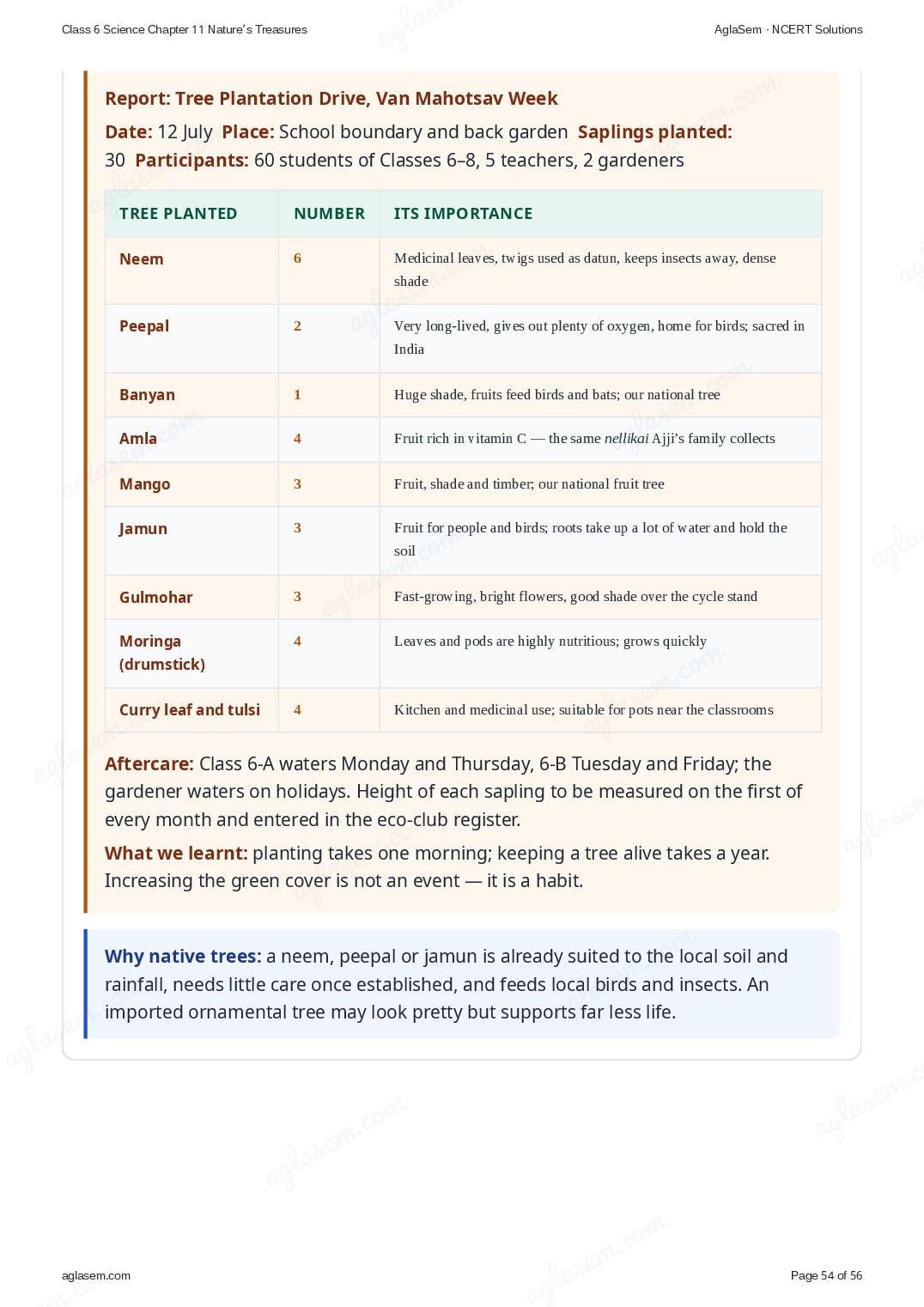
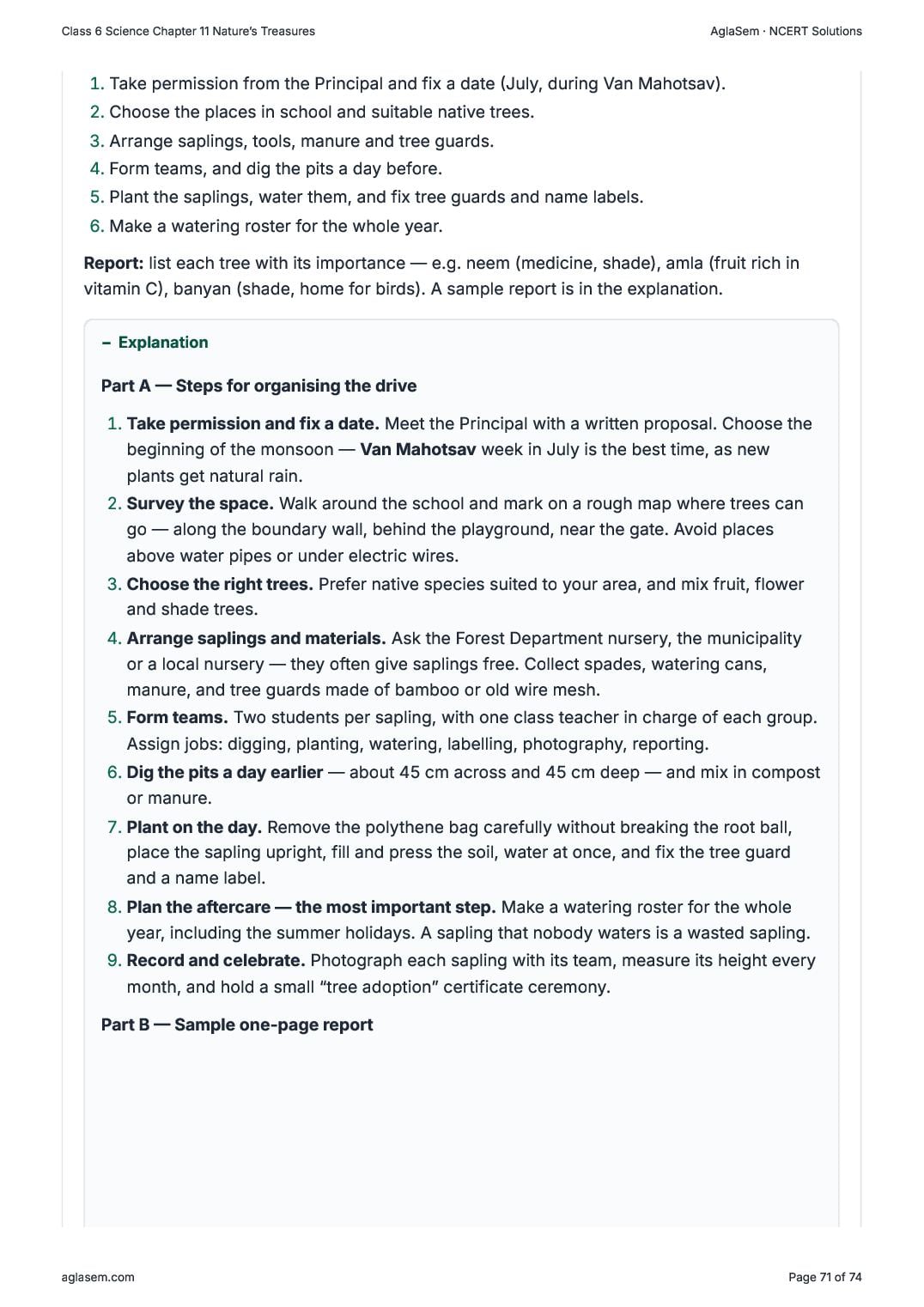
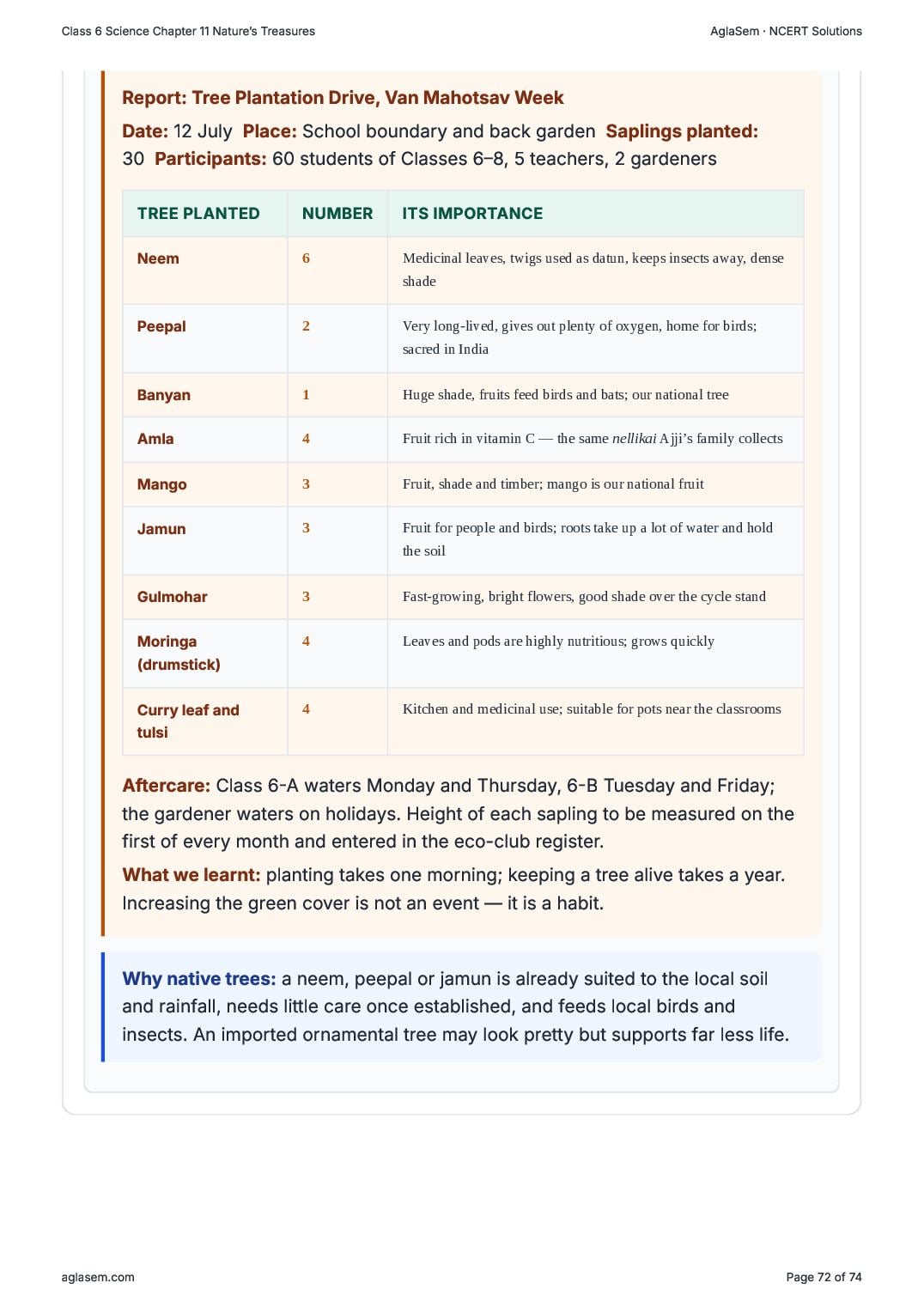
- You are an eco-club monitor. Organise a tree plantation drive in your school with the help of your teacher. List the steps required for organising this activity. Prepare a one-page report listing the names of the trees planted along with their importance.
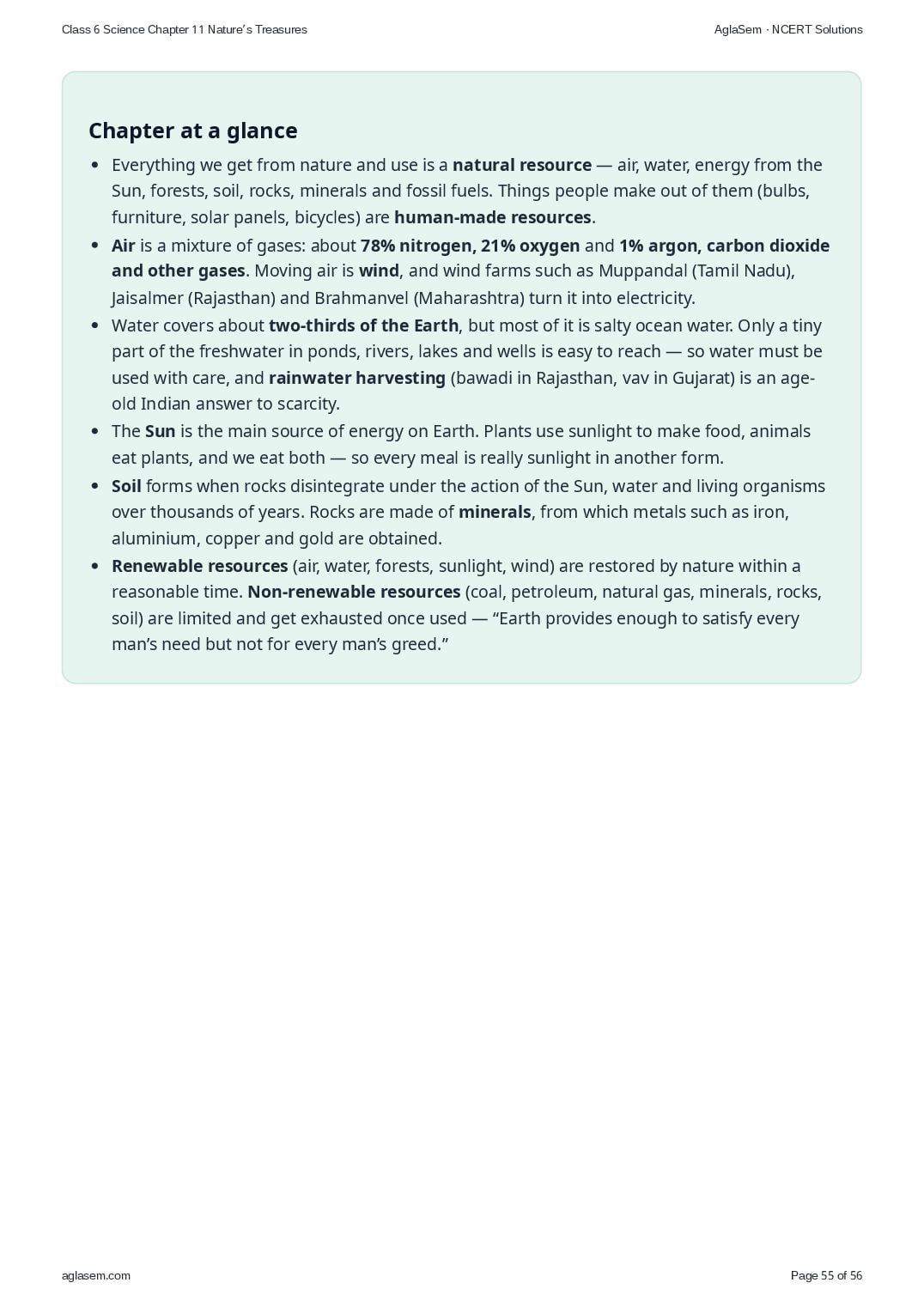
Chapter at a Glance
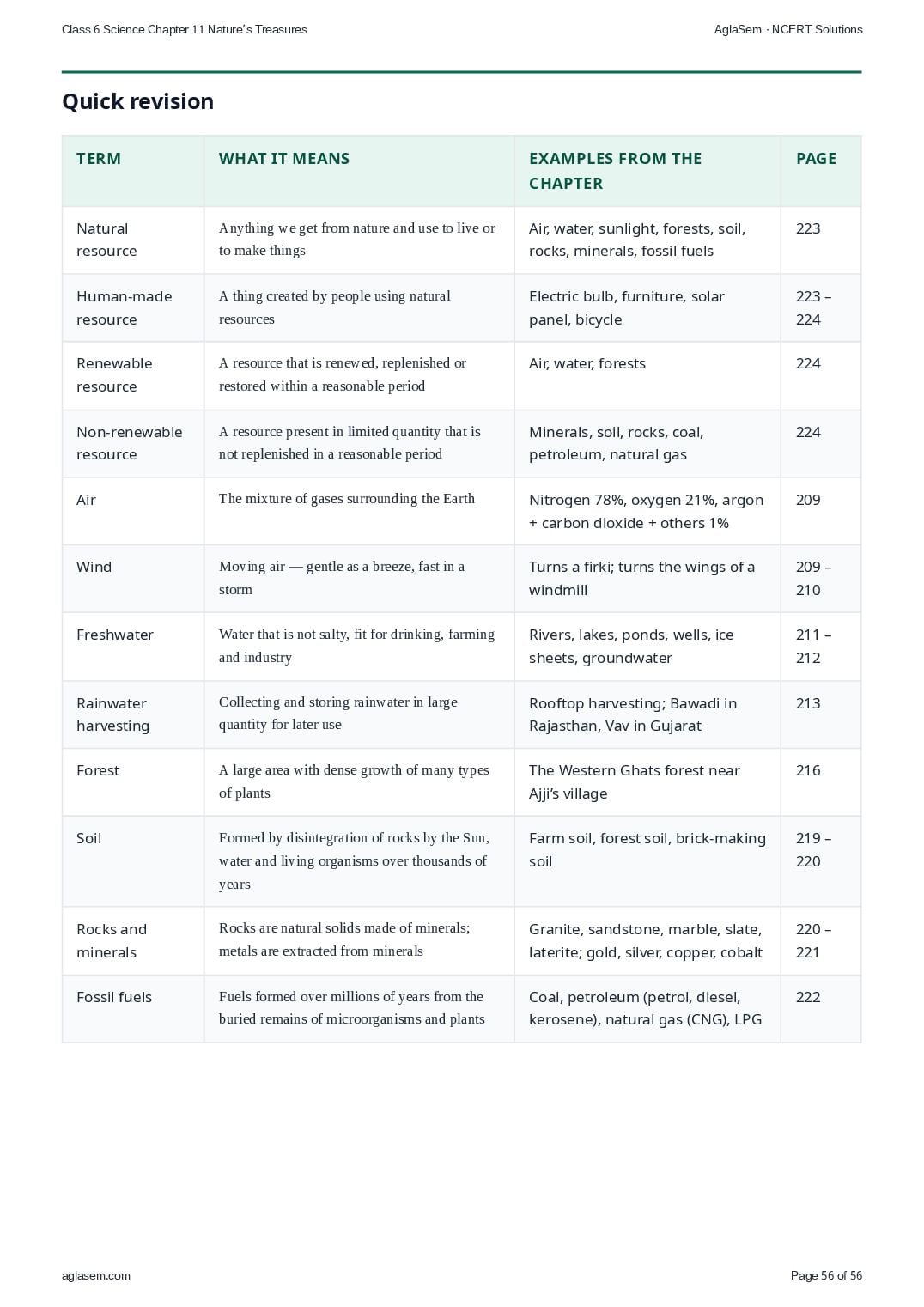
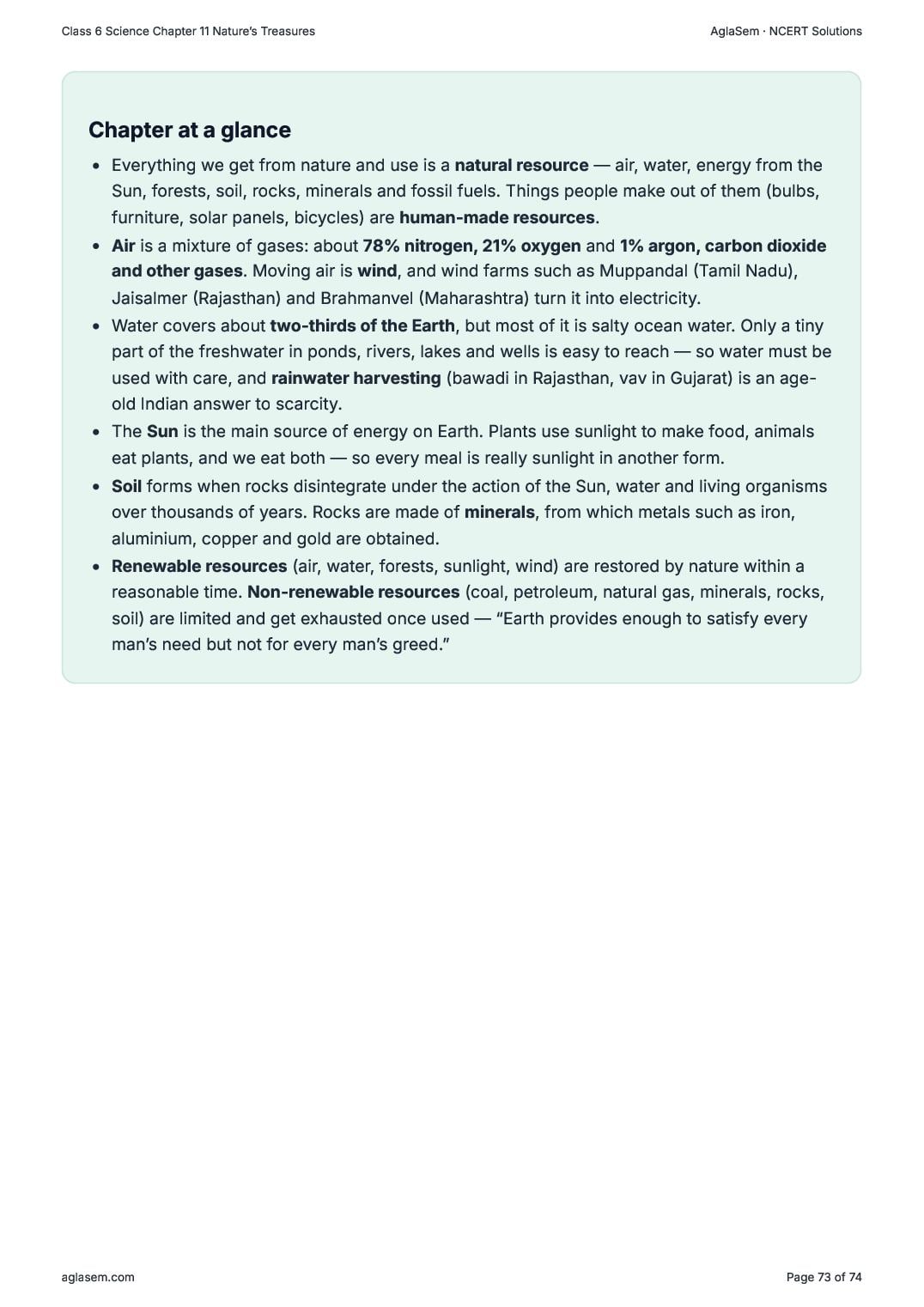
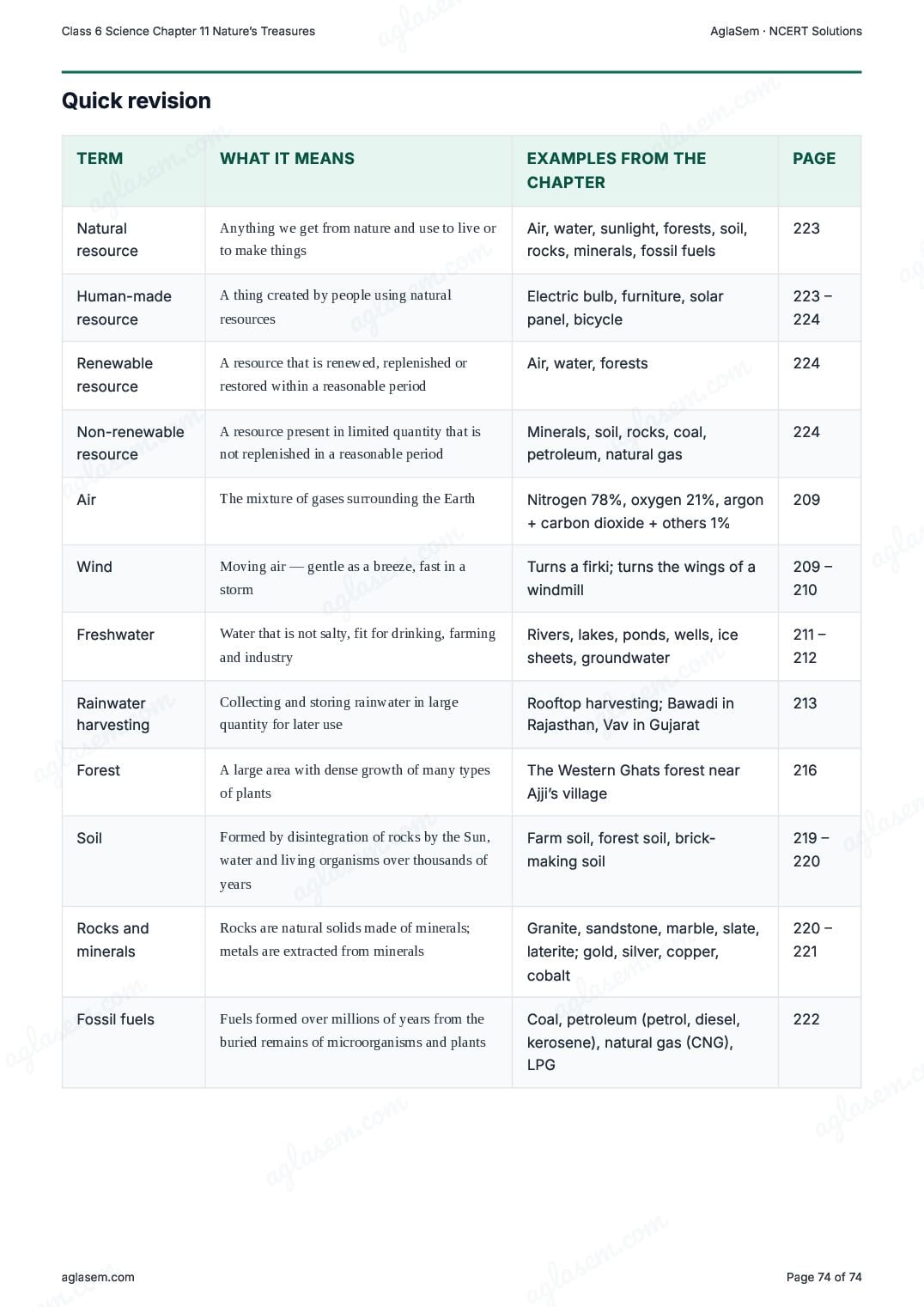
- Everything we get from nature and use is a natural resource — air, water, energy from the Sun, forests, soil, rocks, minerals and fossil fuels. Things people make out of them (bulbs, furniture, solar panels, bicycles) are human-made resources .
- Air is a mixture of gases: about 78% nitrogen, 21% oxygen and 1% argon, carbon dioxide and other gases . Moving air is wind , and wind farms such as Muppandal (Tamil Nadu), Jaisalmer (Rajasthan) and Brahmanvel (Maharashtra) turn it into electricity.
- Water covers about two-thirds of the Earth , but most of it is salty ocean water. Only a tiny part of the freshwater in ponds, rivers, lakes and wells is easy to reach — so water must be used with care, and rainwater harvesting (bawadi in Rajasthan, vav in Gujarat) is an age-old Indian answer to scarcity.
- The Sun is the main source of energy on Earth. Plants use sunlight to make food, animals eat plants, and we eat both — so every meal is really sunlight in another form.
- Soil forms when rocks disintegrate under the action of the Sun, water and living organisms over thousands of years. Rocks are made of minerals , from which metals such as iron, aluminium, copper and gold are obtained.
- Renewable resources (air, water, forests, sunlight, wind) are restored by nature within a reasonable time. Non-renewable resources (coal, petroleum, natural gas, minerals, rocks, soil) are limited and get exhausted once used — “Earth provides enough to satisfy every man’s need but not for every man’s greed.”
How to Download NCERT Solutions for Class 6 Science Chapter 11 PDF
Follow these simple steps to get the Nature’s Treasures questions-and-answers PDF from Curiosity.
- Search NCERT Solutions for Class 6 Science Chapter 11 aglasem and open this page.
- Read the exercise questions with answers for Nature’s Treasures shown above.
- Click the Download PDF link to save the Nature’s Treasures solutions to your device.
NCERT Solutions for Class 6 Science – All Chapters
There are more chapters to study besides Nature’s Treasures in Science. Here are the NCERT Solutions for all chapters of Class 6 Science.
- Chapter 1 the Wonderful World of Science
- Chapter 2 Diversity in the Living World
- Chapter 3 Mindful Eating a Path to a Healthy Body
- Chapter 4 Exploring Magnets
- Chapter 5 Measurement of Length and Motion
- Chapter 6 Materials Around Us
- Chapter 7 Temperature and Its Measurement
- Chapter 8 a Journey Through States of Water
- Chapter 9 Methods of Separation in Everyday Life
- Chapter 10 Living Creatures Exploring Their Characteristics
- Chapter 11 Nature’s Treasures
- Chapter 12 Beyond Earth
NCERT Solutions for Class 6 – All Subjects
Just like Chapter 11 of Science, you can get the exercise questions with answers for every other subject of Class 6. Here are the NCERT Solutions for all subjects of Class 6.
NCERT Solutions for Class 6 Science Chapter 11 – An Overview
The key highlights of this study material are as follows.
| Aspects | Details |
|---|---|
| Class | Class 6 |
| Subject | Science |
| Chapter Number | Chapter 11 |
| Chapter Name | Nature’s Treasures |
| Book Name | Curiosity |
| Book By | NCERT (National Council of Educational Research and Training) |
| Educational Resource Here | NCERT Solutions of Class 6 Science Chapter 11 for all exercises |
| More Questions Answers of This Subject | NCERT Solutions for Class 6 Science |
| Download Book Chapter | NCERT Book Class 6 Science |
| All Questions Answers For This Class | NCERT Solutions for Class 6 |
| Complete Solutions | NCERT Solutions |
NCERT Solutions for Class 6 Science Chapter 11 Nature’s Treasures – FAQs
What are the NCERT Solutions for Class 6 Science Chapter 11 Nature’s Treasures?
They are the complete, step-by-step answers to all the exercise and in-text questions of Chapter 11 Nature’s Treasures from the NCERT Class 6 Science textbook Curiosity, written by experts as per the latest NCERT syllabus.
How can I download the Class 6 Science Chapter 11 solutions PDF for free?
Open this page on aglasem, read the Nature’s Treasures questions with answers, and click the “Download Solutions PDF” link. The Class 6 Science Chapter 11 NCERT Solutions PDF is completely free to download.
Are these NCERT Solutions as per the latest 2026-27 syllabus?
Yes. The NCERT Solutions for Class 6 Science Chapter 11 are based on the latest NCERT textbook Curiosity and the current 2026-27 CBSE syllabus, so the questions and answers match what you study in class.
Where can I get NCERT Solutions for the other chapters of Class 6 Science?
You can find the answers to every chapter on the NCERT Solutions for Class 6 Science page, and solutions for every subject on the NCERT Solutions for Class 6 page.
How do NCERT Solutions help in exam preparation?
They show the correct method to solve each question, help you write answers the way they are expected in exams, let you check and correct your own work, and save revision time — which together improve your marks in Class 6 Science.
If you have any queries on NCERT Solutions for Class 6 Science Chapter 11 Nature’s Treasures, then please ask in the comments below.