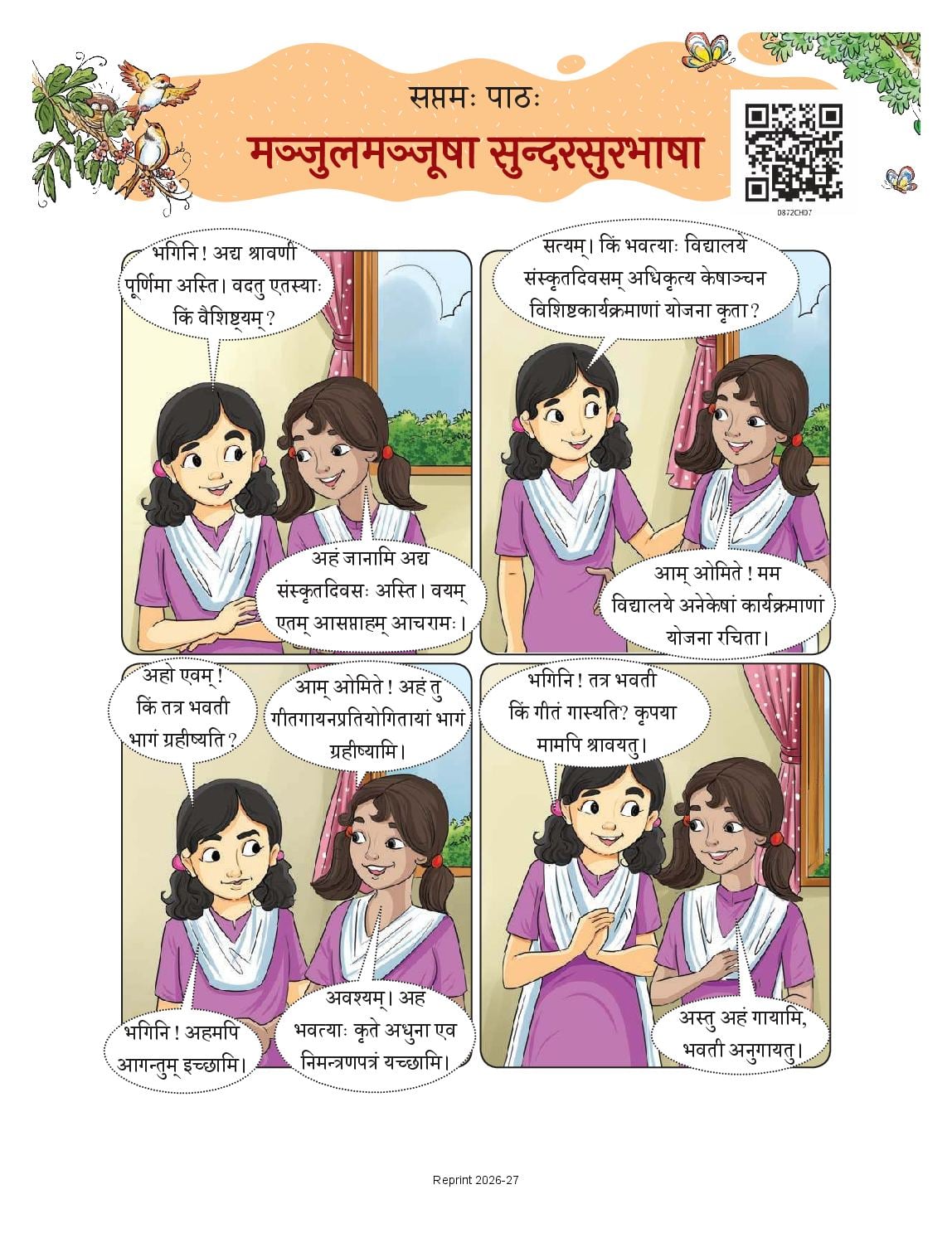
Download Manjulamanjusha Sundarasurbhasha (मञ्जुलमञ्जूषा सुन्दरसुरभाषा) – NCERT Class 8 Sanskrit Chapter 7 PDF from the new NCERT Class 8 Sanskrit book Deepakam (2026-27). Read the chapter online or download the free PDF. पाठ का स्वरूप — यह कोई कथा या संवाद-पाठ नहीं, बल्कि चार पद्यों का गीत है। हर पद्य का अन्तिम शब्द ‘सुन्दरसुरभाषा’ है — यही टेक (ध्रुवपद) पूरे गीत को बाँधती है। ‘सुरभाषा’ = देवताओं की भाषा, अर्थात् संस्कृत।
Manjulamanjusha Sundarasurbhasha (मञ्जुलमञ्जूषा सुन्दरसुरभाषा) PDF – Chapter 7 of Deepakam
Read the chapter online or download the PDF.
| Chapter | Download | |
|---|---|---|
| Chapter 7 PDF | Manjulamanjusha Sundarasurbhasha (मञ्जुलमञ्जूषा सुन्दरसुरभाषा) | View PDF |
| Full book | NCERT Class 8 Sanskrit – Deepakam | View Book |
Read Online
What Is in Manjulamanjusha Sundarasurbhasha (मञ्जुलमञ्जूषा सुन्दरसुरभाषा)? (Class 8 Sanskrit Chapter 7)
- पाठ का स्वरूप — यह कोई कथा या संवाद-पाठ नहीं, बल्कि चार पद्यों का गीत है। हर पद्य का अन्तिम शब्द ‘सुन्दरसुरभाषा’ है — यही टेक (ध्रुवपद) पूरे गीत को बाँधती है। ‘सुरभाषा’ = देवताओं की भाषा, अर्थात् संस्कृत।
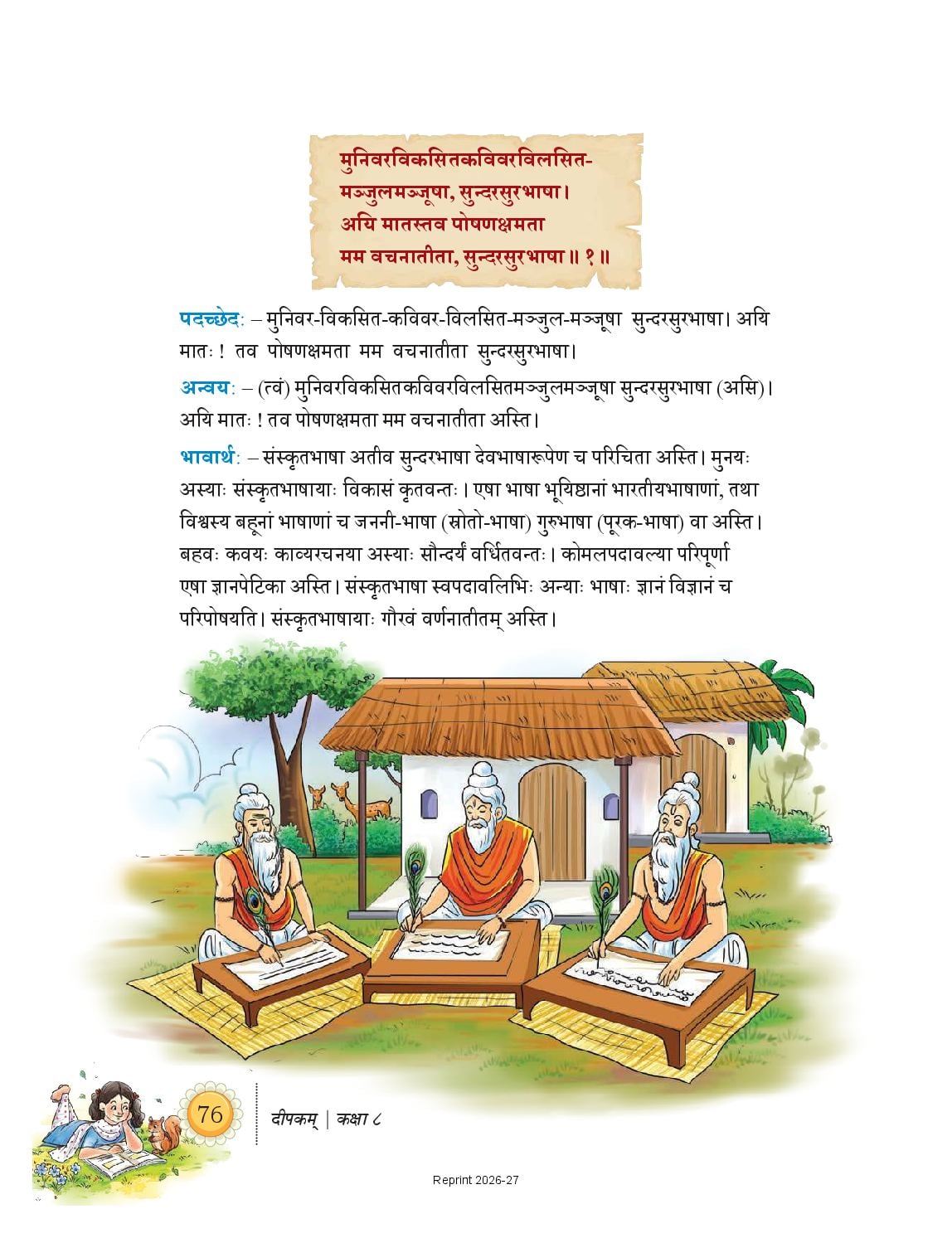
- शीर्षक का अर्थ — मञ्जुला = मन को हरने वाली, मञ्जूषा = पेटी। इसलिए ‘मञ्जुलमञ्जूषा’ का अर्थ है — मनोहर रूप में संकलित शब्दों की सुन्दर पेटी। कवि कहता है कि यह पेटी मुनियों ने विकसित की और कवियों ने सजाया।
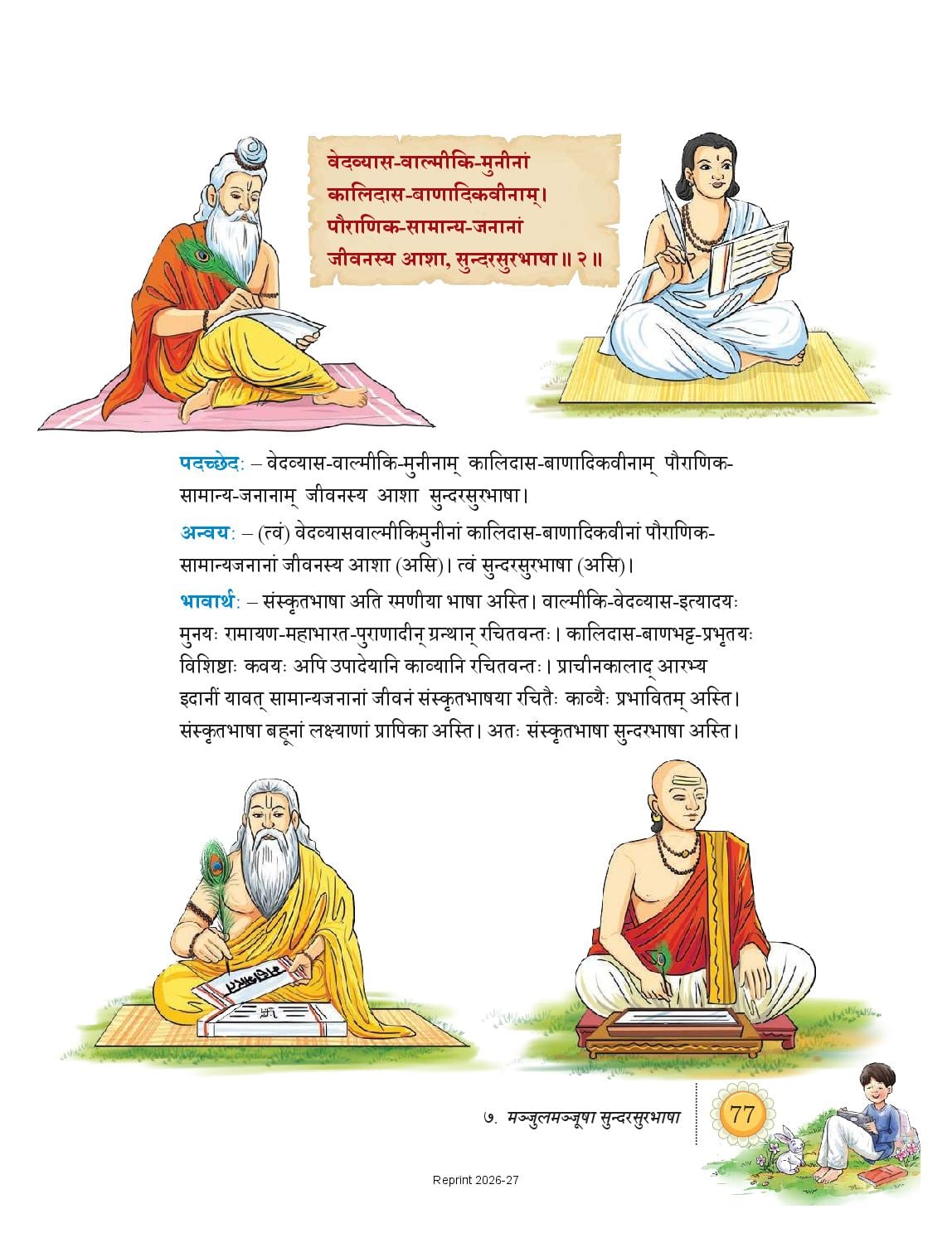
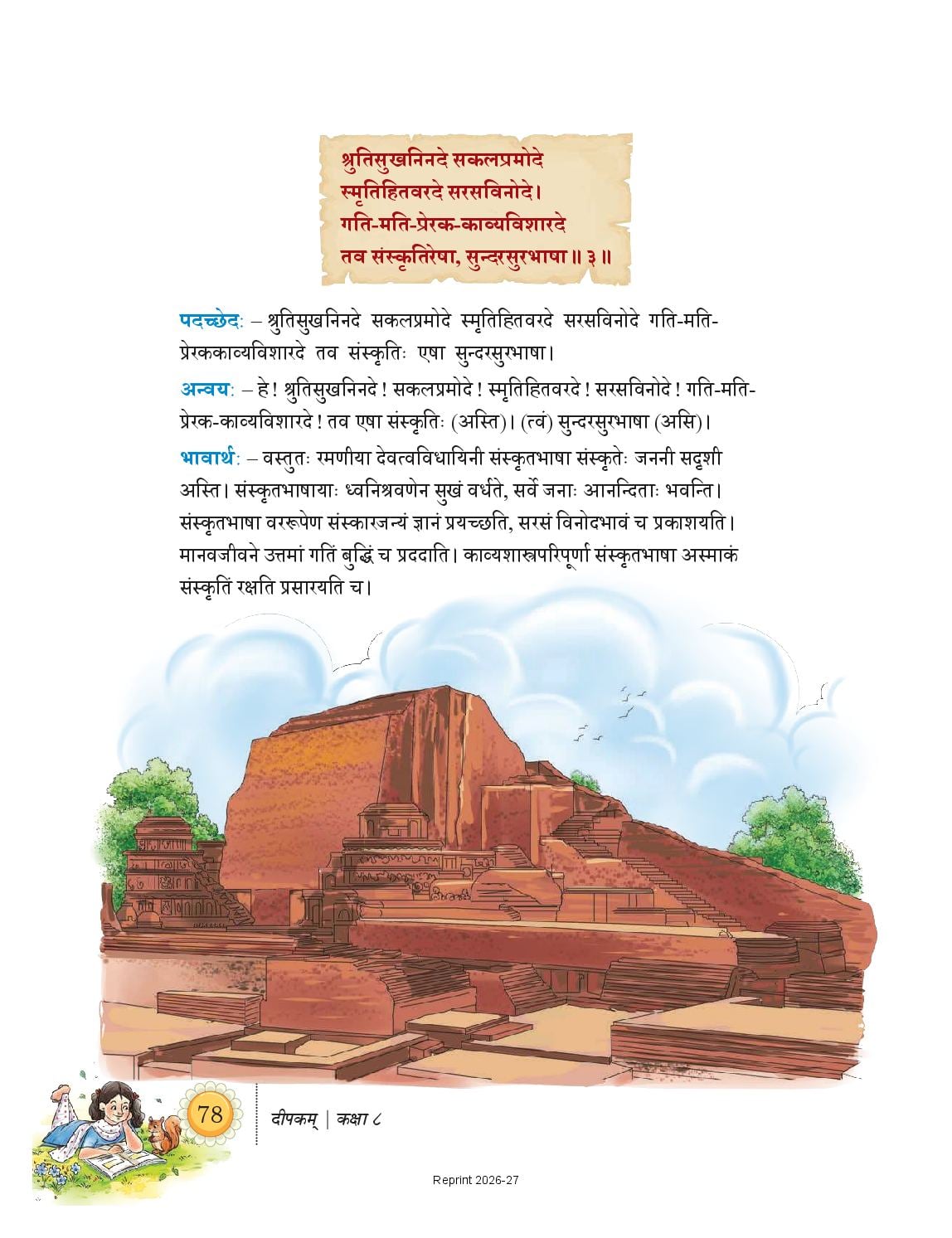
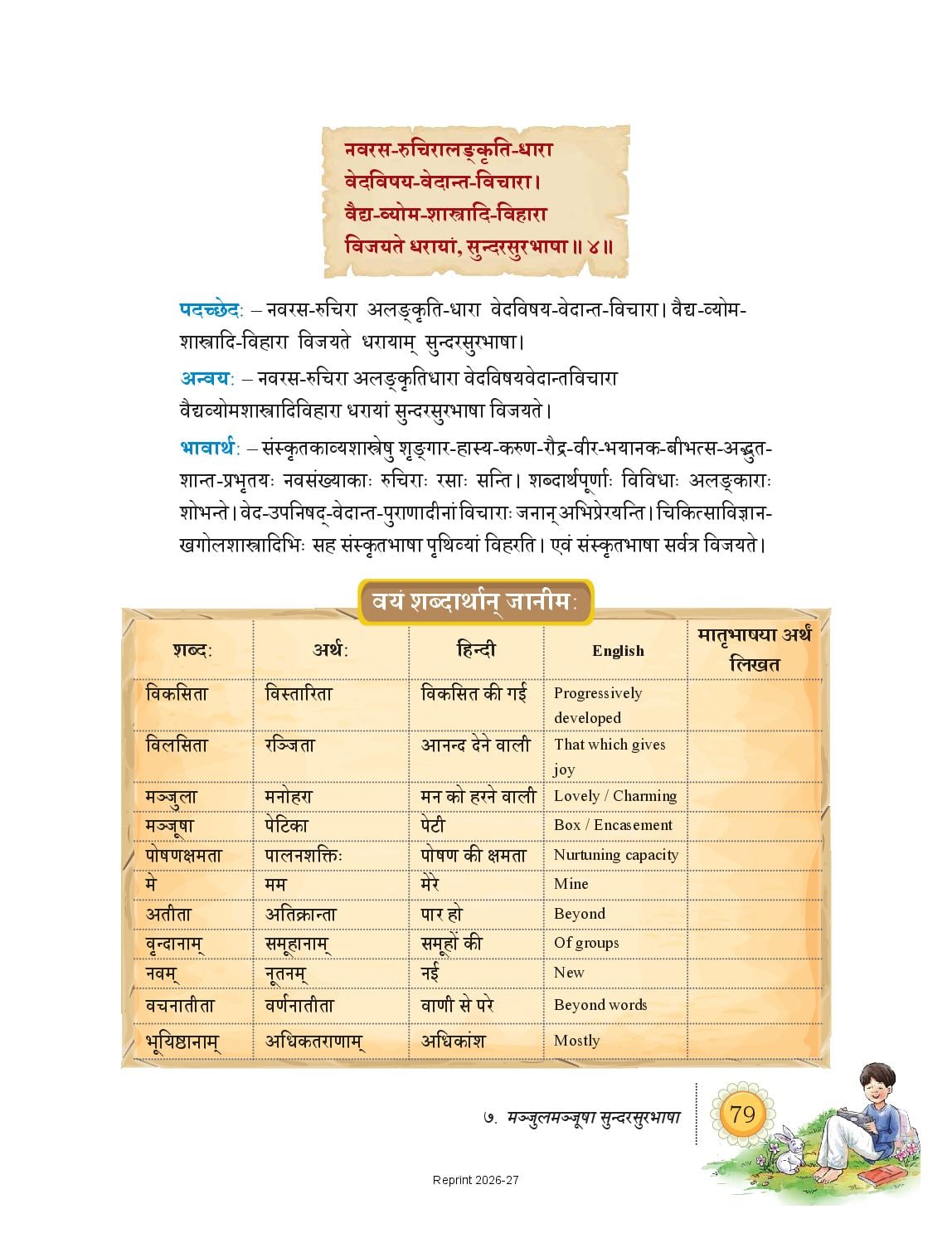
- चार पद्यों की चार बातें — (१) संस्कृत मुनि-कवियों की सँवारी शब्द-मञ्जूषा है, उसकी पोषणक्षमता वर्णन से परे है; (२) वह वेदव्यास-वाल्मीकि जैसे मुनियों, कालिदास-बाण जैसे कवियों तथा सामान्य जनों — सबके जीवन की आशा है; (३) वह कानों को सुख देने वाली, सबको आनन्द देने वाली और स्मृति-हितकारी है — यह संस्कृति उसी की है; (४) वह नवरसों, अलङ्कारों, वेद-वेदान्त-विचारों तथा आयुर्वेद-खगोलशास्त्र सहित धरती पर विजयी है।
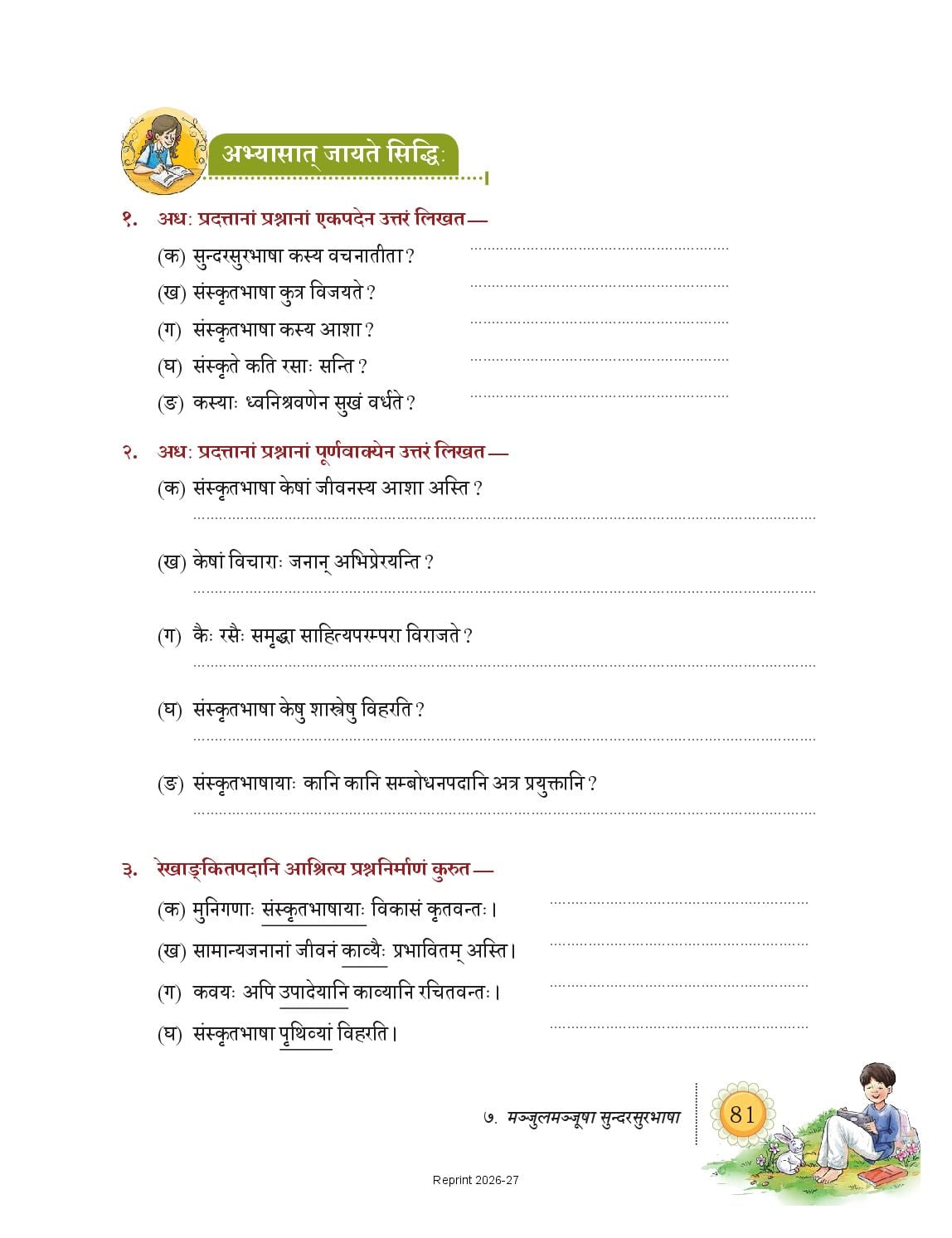
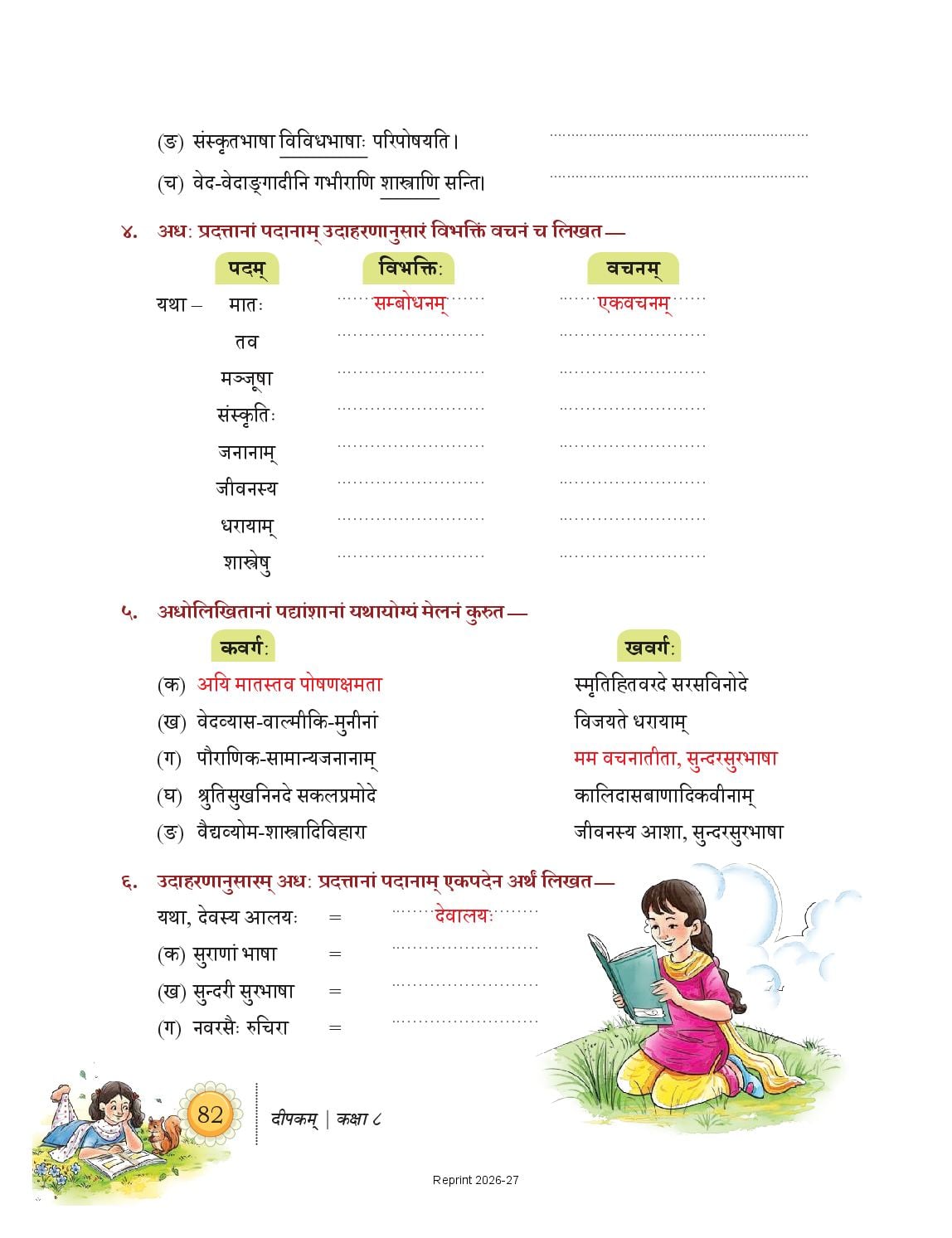
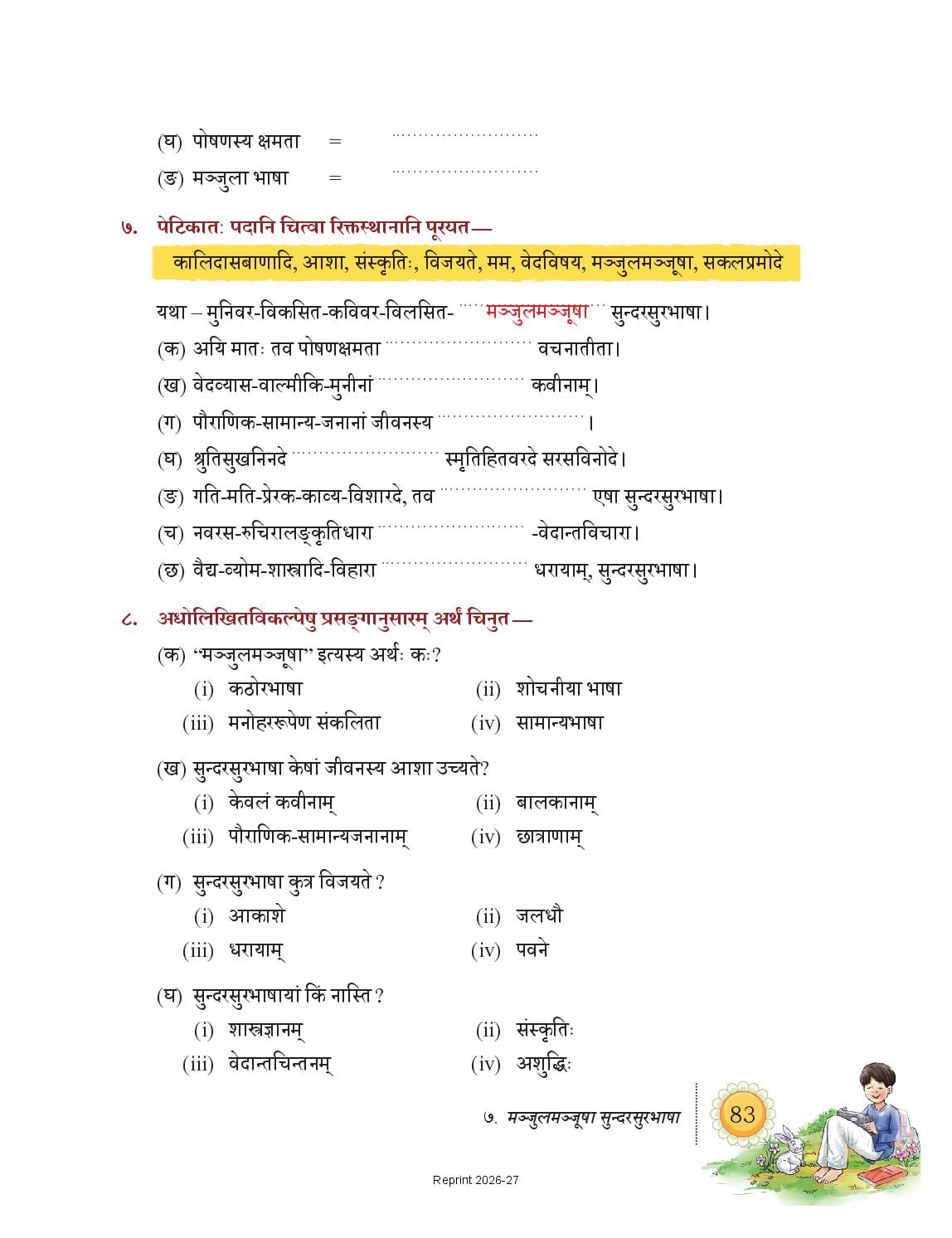
- माता के रूप में सम्बोधन — पूरा गीत सम्बोधन-विभक्ति में चलता है — अयि मातः !, श्रुतिसुखनिनदे !, सकलप्रमोदे !, स्मृतिहितवरदे !, सरसविनोदे !, गति-मति-प्रेरक-काव्यविशारदे ! इसीलिए अभ्यास का प्रश्न २ (ङ) सम्बोधनपदों की सूची माँगता है और प्रश्न ८ (ङ) का उत्तर मातः है।
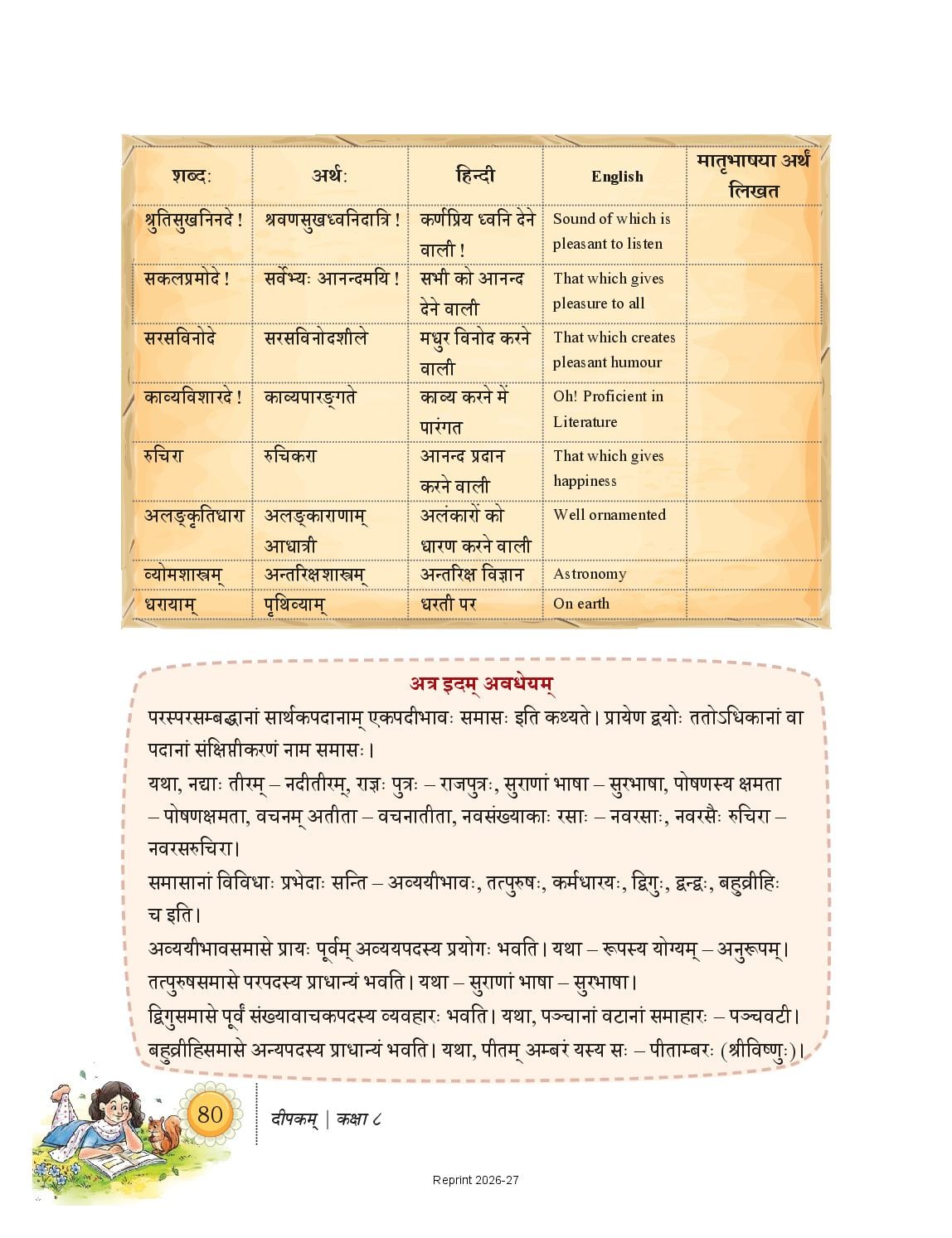
- व्याकरण का केन्द्र — समासः — ‘अत्र इदम् अवधेयम्’ पेटी बताती है कि परस्पर सम्बद्ध सार्थक पदों का एकपदीभाव ही समास है, और उसके छह प्रभेद हैं — अव्ययीभावः, तत्पुरुषः, कर्मधारयः, द्विगुः, द्वन्द्वः, बहुव्रीहिः। पाठ के ही उदाहरण — सुराणां भाषा = सुरभाषा, पोषणस्य क्षमता = पोषणक्षमता, नवरसैः रुचिरा = नवरसरुचिरा।
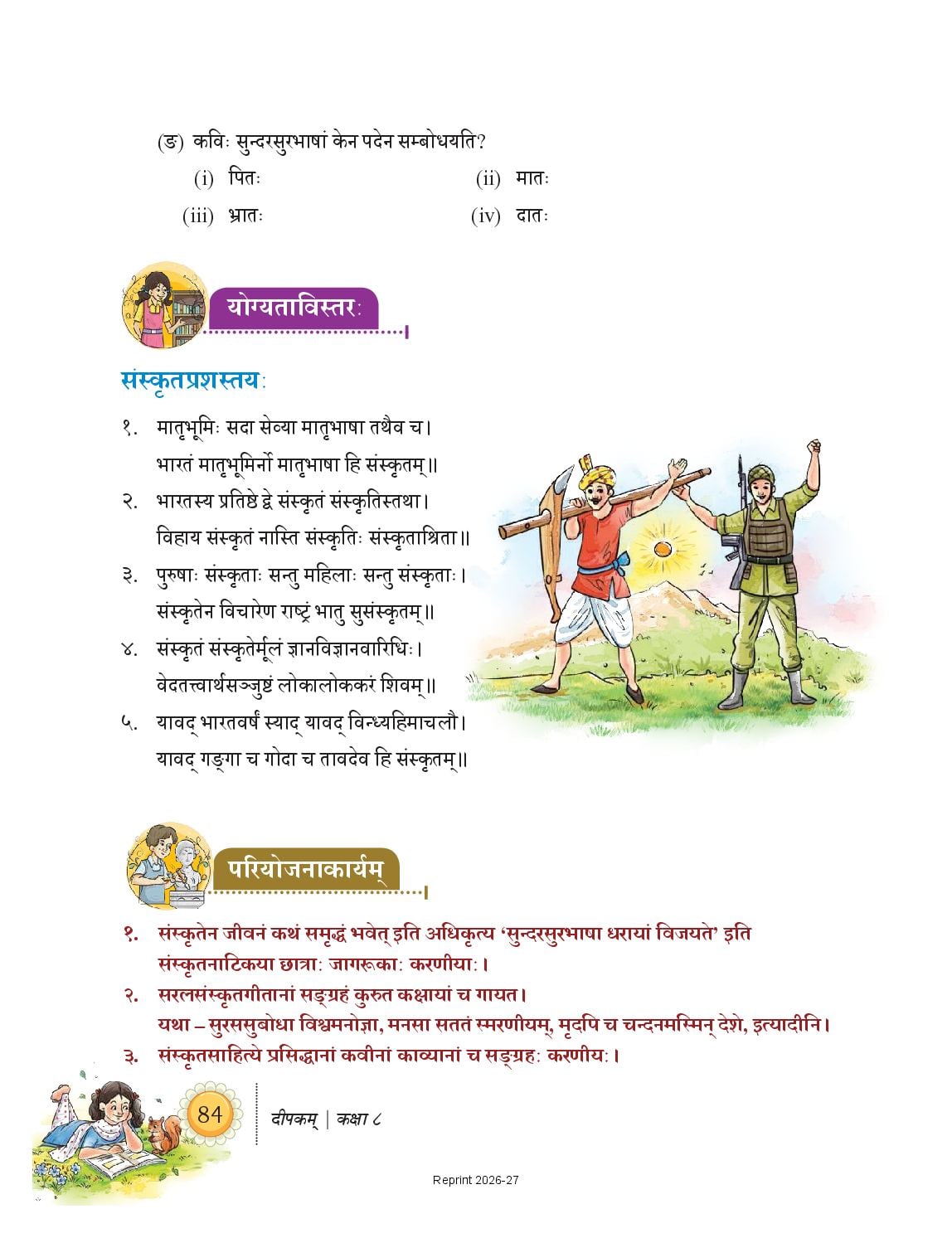
- योग्यताविस्तरः — पाठ के अन्त में संस्कृतप्रशस्तयः नाम से पाँच प्रसिद्ध श्लोक दिए गए हैं, जो संस्कृत को मातृभाषा, भारत की प्रतिष्ठा, संस्कृति का मूल तथा ज्ञान-विज्ञान का समुद्र बताते हैं — यावद् भारतवर्षं स्याद् … तावदेव हि संस्कृतम्।
त्वरित पुनरावृत्ति – Manjulamanjusha Sundarasurbhasha (मञ्जुलमञ्जूषा सुन्दरसुरभाषा)
| शब्दः | अर्थः (संस्कृतम्) | हिन्दी | English |
|---|---|---|---|
| विकसिता | विस्तारिता | विकसित की गई | Progressively developed |
| विलसिता | रञ्जिता | आनन्द देने वाली | That which gives joy |
| मञ्जुला | मनोहरा | मन को हरने वाली | Lovely / Charming |
| मञ्जूषा | पेटिका | पेटी | Box / Encasement |
| पोषणक्षमता | पालनशक्तिः | पोषण की क्षमता | Nurturing capacity |
| मे | मम | मेरे | Mine |
| अतीता | अतिक्रान्ता | पार हो | Beyond |
| वृन्दानाम् | समूहानाम् | समूहों की | Of groups |
| नवम् | नूतनम् | नई | New |
| वचनातीता | वर्णनातीता | वाणी से परे | Beyond words |
| भूयिष्ठानाम् | अधिकतराणाम् | अधिकांश | Mostly |
| श्रुतिसुखनिनदे ! | श्रवणसुखध्वनिदात्रि ! | कर्णप्रिय ध्वनि देने वाली ! | Sound of which is pleasant to listen |
| सकलप्रमोदे ! | सर्वेभ्यः आनन्दमयि ! | सभी को आनन्द देने वाली | That which gives pleasure to all |
| सरसविनोदे | सरसविनोदशीले | मधुर विनोद करने वाली | That which creates pleasant humour |
Old NCERT vs New – Class 8 Sanskrit
This chapter is from Deepakam, the new NCERT Class 8 Sanskrit book (NCF-SE 2023, used from 2025-26). It replaced the old book “Ruchira”, so chapter numbers and names differ from older PDFs.
Solutions and All Chapters
Answers to the exercises and the full chapter list of Deepakam:
Manjulamanjusha Sundarasurbhasha (मञ्जुलमञ्जूषा सुन्दरसुरभाषा) – Overview
| Class | Class 8 |
| Subject | Sanskrit |
| Book | Deepakam – new NCERT book |
| Chapter | 7 of 15 – Manjulamanjusha Sundarasurbhasha (मञ्जुलमञ्जूषा सुन्दरसुरभाषा) |
| Edition | NCERT Reprint 2026-27 |
| Session | 2026-27 |
| Free – read online or download |
Class 8 Sanskrit Chapter 7 – FAQs
Where can I download Manjulamanjusha Sundarasurbhasha (मञ्जुलमञ्जूषा सुन्दरसुरभाषा) Class 8 PDF?
From the download table on this page – the chapter PDF is free, and the full book is linked too.
What is Class 8 Sanskrit Chapter 7 about?
पाठ का स्वरूप — यह कोई कथा या संवाद-पाठ नहीं, बल्कि चार पद्यों का गीत है। हर पद्य का अन्तिम शब्द ‘सुन्दरसुरभाषा’ है — यही टेक (ध्रुवपद) पूरे गीत को बाँधती है। ‘सुरभाषा’ = देवताओं की भाषा, अर्थात् संस्कृत।
Is Manjulamanjusha Sundarasurbhasha (मञ्जुलमञ्जूषा सुन्दरसुरभाषा) from the new NCERT Class 8 Sanskrit book?
Yes. It is chapter 7 of deepakam, the new NCERT Class 8 Sanskrit book for 2026-27.
Is this the latest NCERT edition for 2026-27?
Yes – the PDF is NCERT’s latest edition for the 2026-27 session.
Where are the NCERT Solutions for Class 8 Sanskrit Chapter 7?
Open the NCERT Solutions link above for answers to the exercise questions.