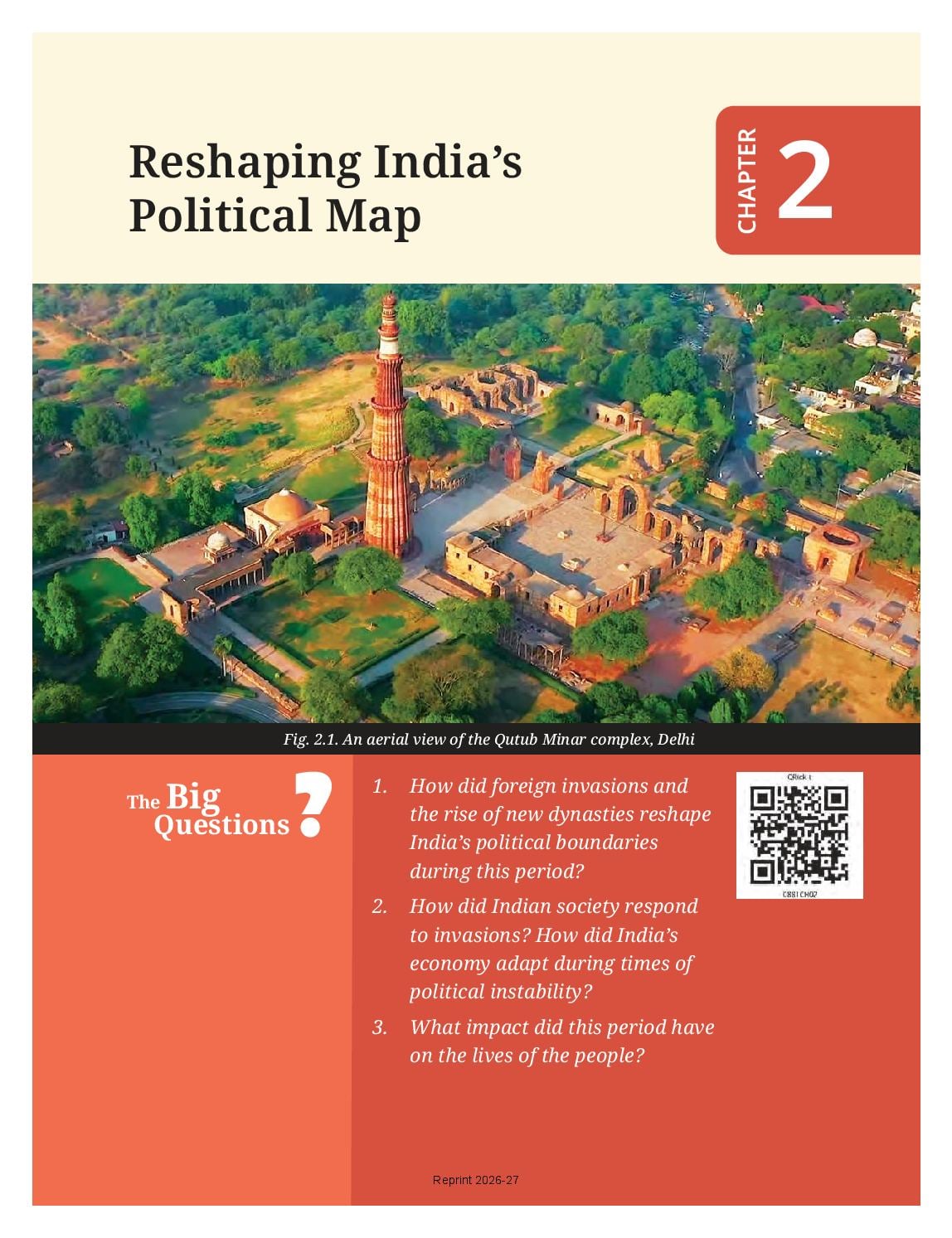
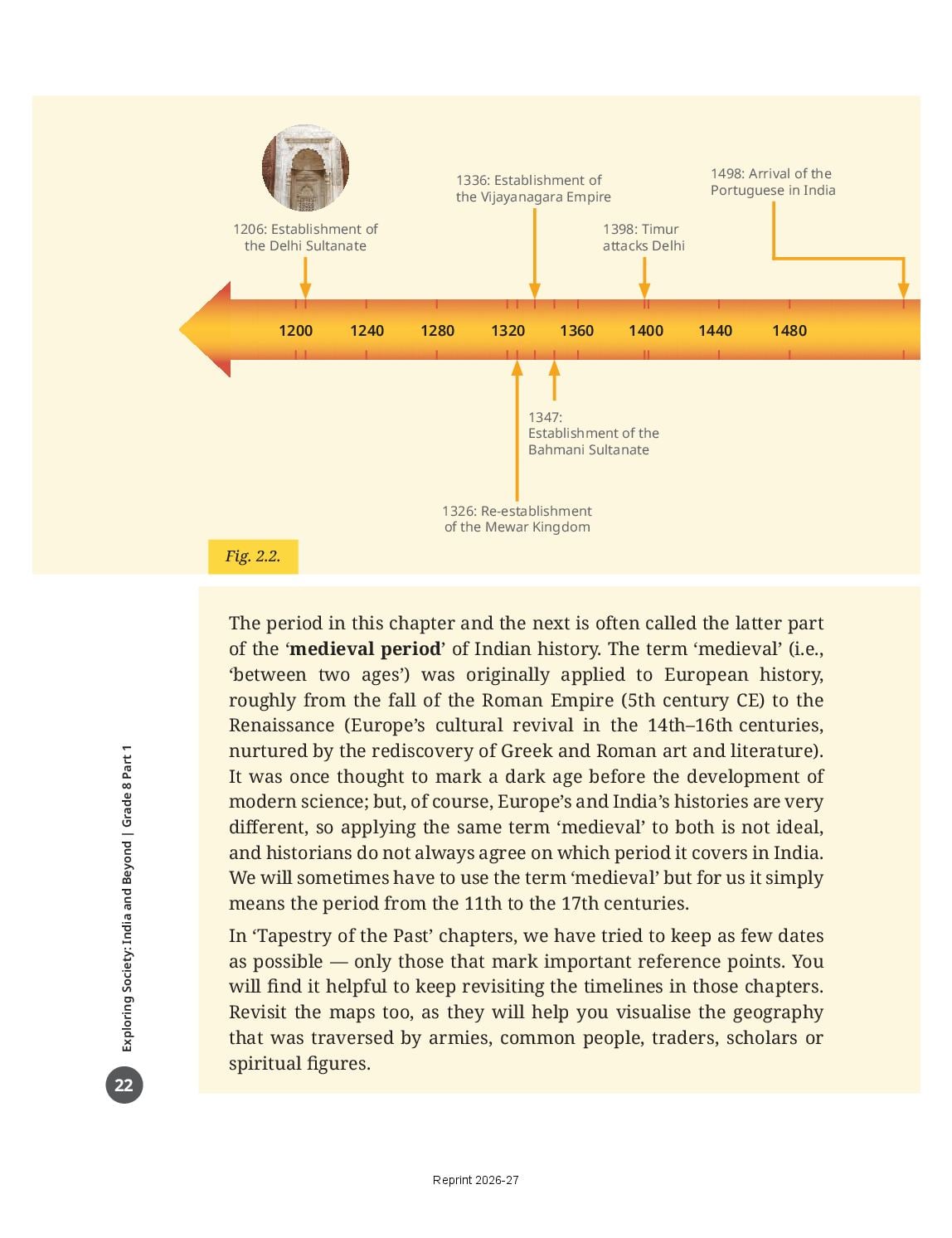
Download Reshaping India’s Political Map – NCERT Class 8 Social Science Chapter 2 PDF from the new NCERT Class 8 Social Science book Exploring Society: India and Beyond (2026-27). Read the chapter online or download the free PDF. The chapter calls this the latter part of the ‘medieval period’ — a European term the book uses only loosely, for the 11th to 17th centuries, warning that historians do not agree on which period it covers in India.
Reshaping India’s Political Map PDF – Chapter 2 of Exploring Society: India and Beyond (Part I)
Read the chapter online or download the PDF.
| Chapter | Download | |
|---|---|---|
| Chapter 2 PDF | Reshaping India’s Political Map | View PDF |
| Full book | NCERT Class 8 Social Science – Exploring Society: India and Beyond | View Book |
Read Online
What Is in Reshaping India’s Political Map? (Class 8 Social Science Chapter 2)
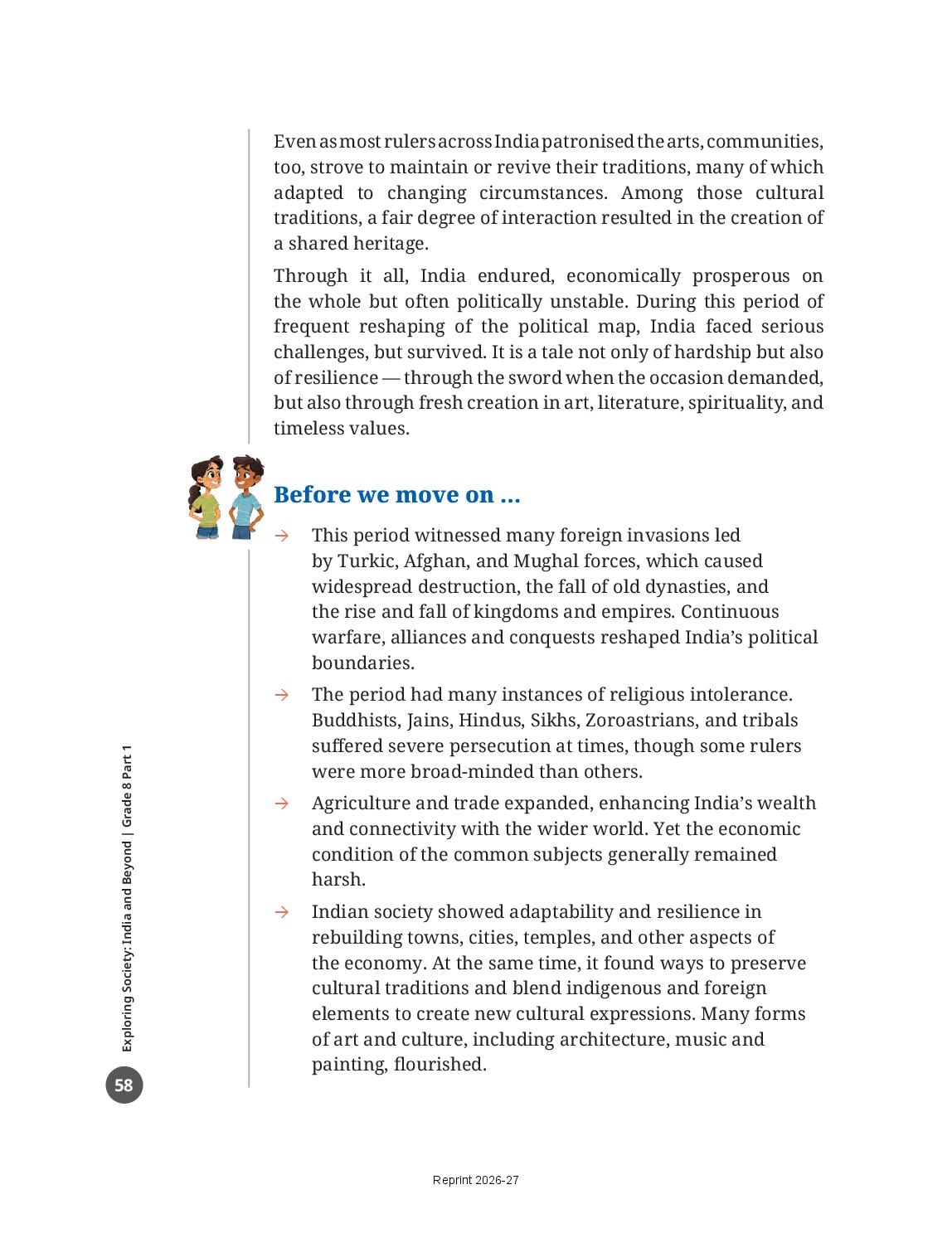
- The chapter calls this the latter part of the ‘medieval period’ — a European term the book uses only loosely, for the 11th to 17th centuries, warning that historians do not agree on which period it covers in India.
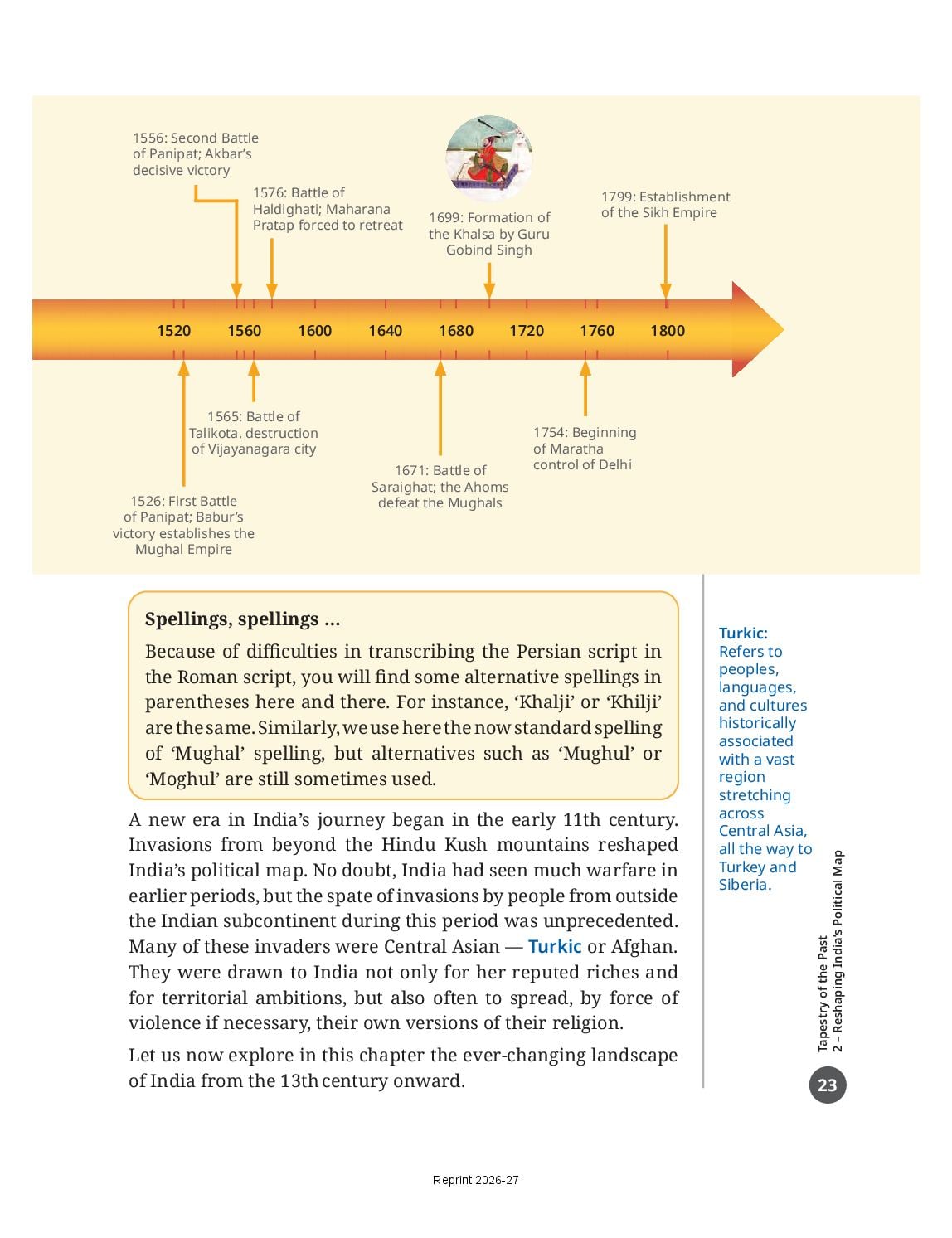
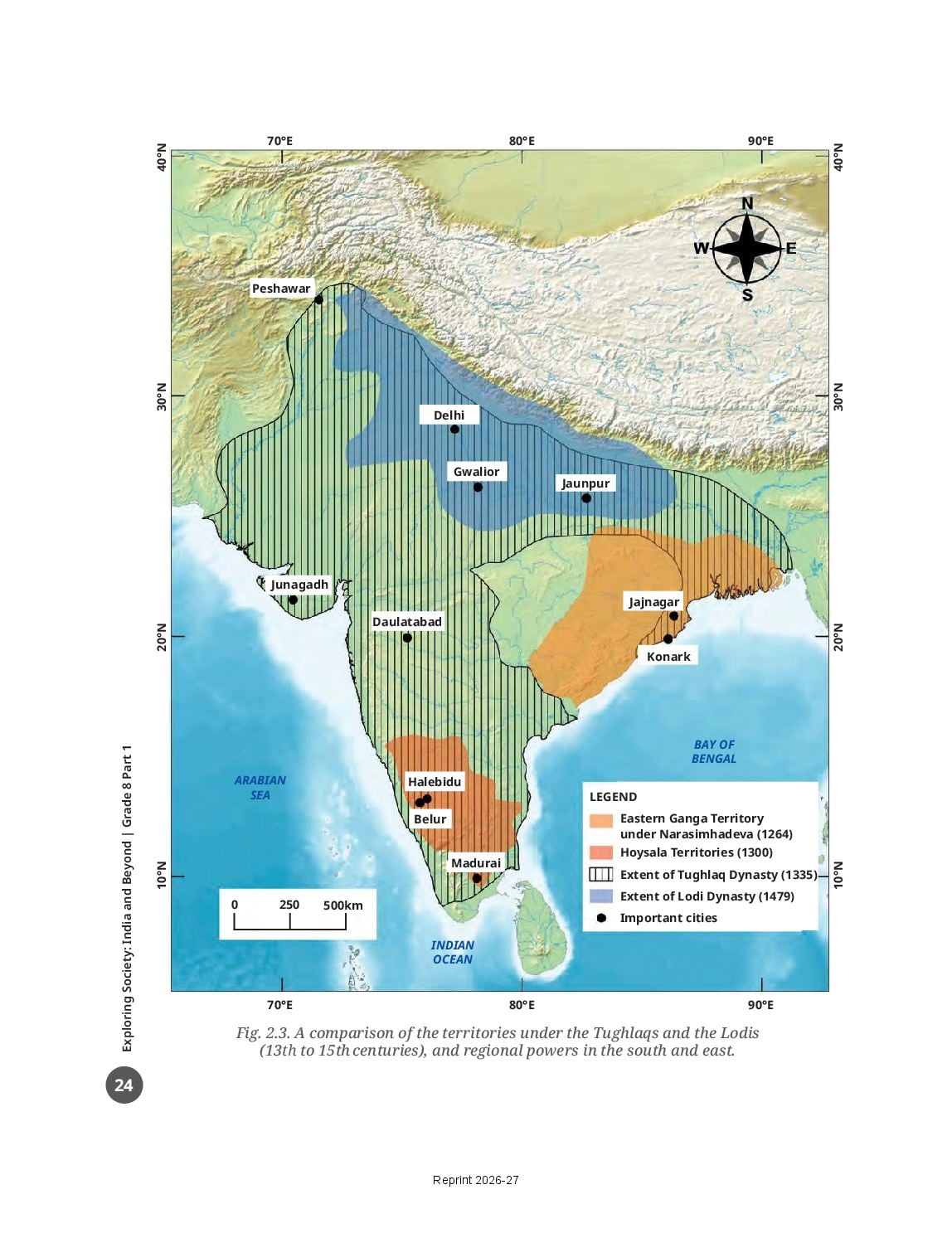
- The Delhi Sultanate (from 1206) saw five successive dynasties of Turkic–Afghan origin — Mamluks, Khiljis, Tughlaqs, Sayyids, Lodis. Almost two sultans out of three seized power by eliminating their predecessor, so the average reign was hardly more than nine years.
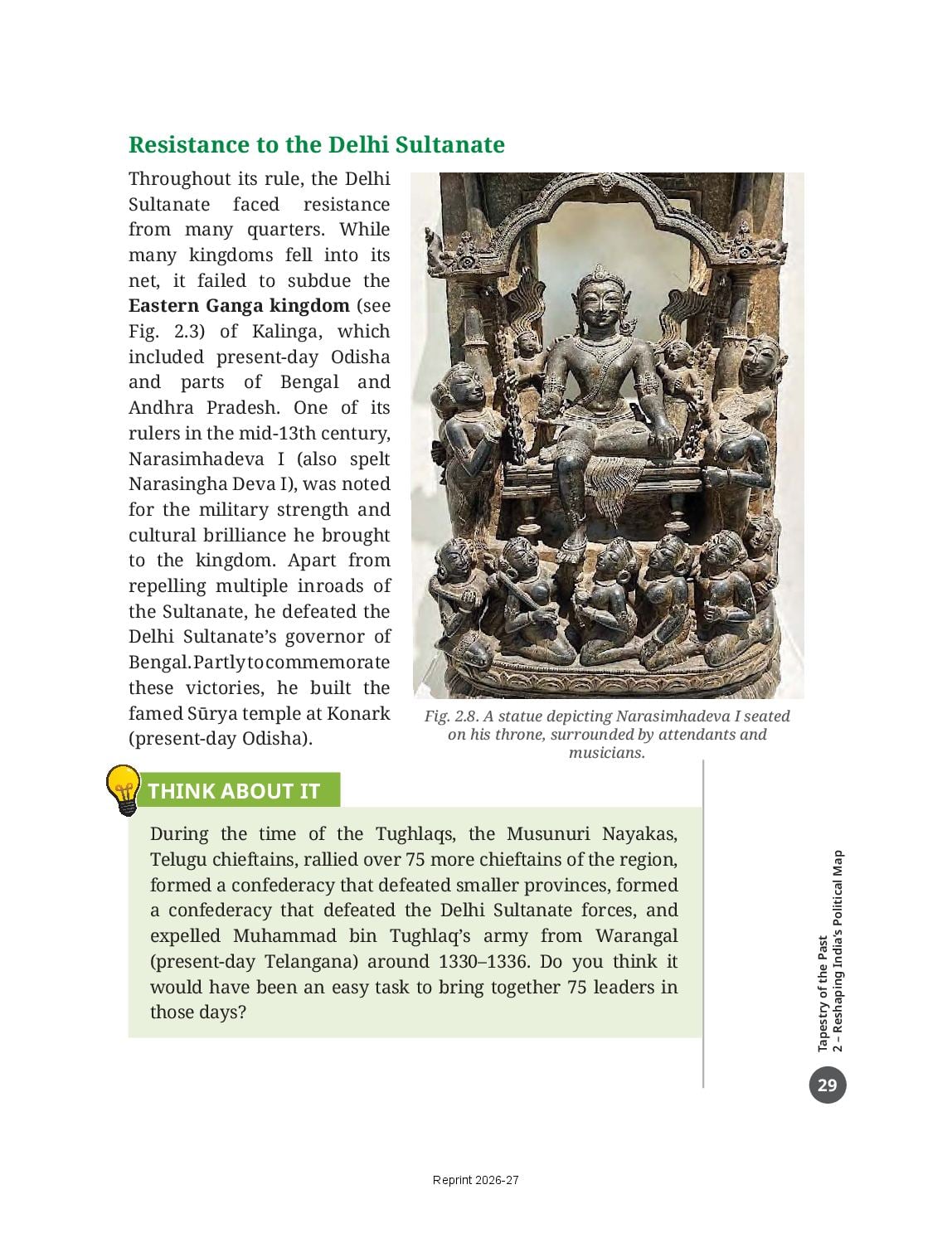
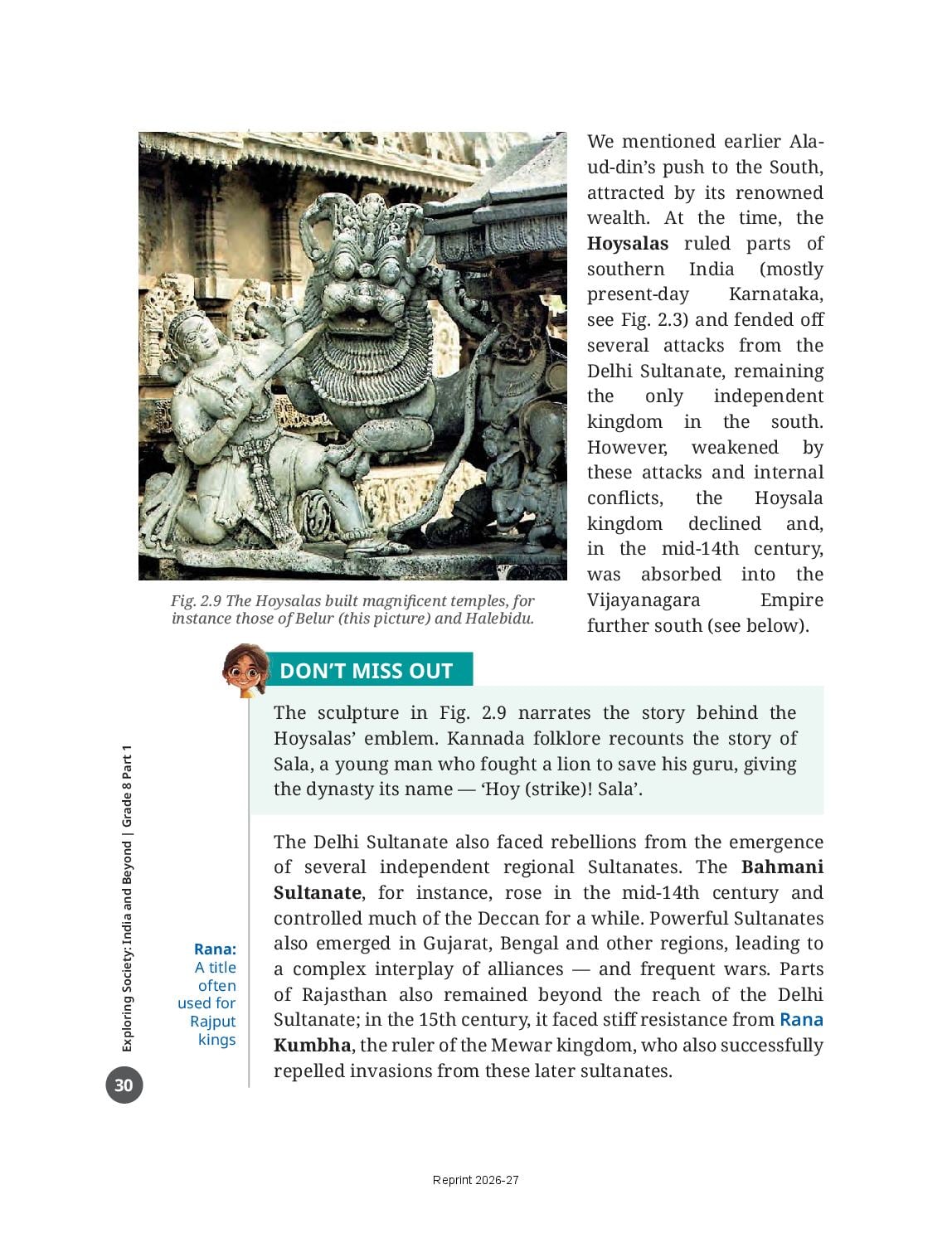
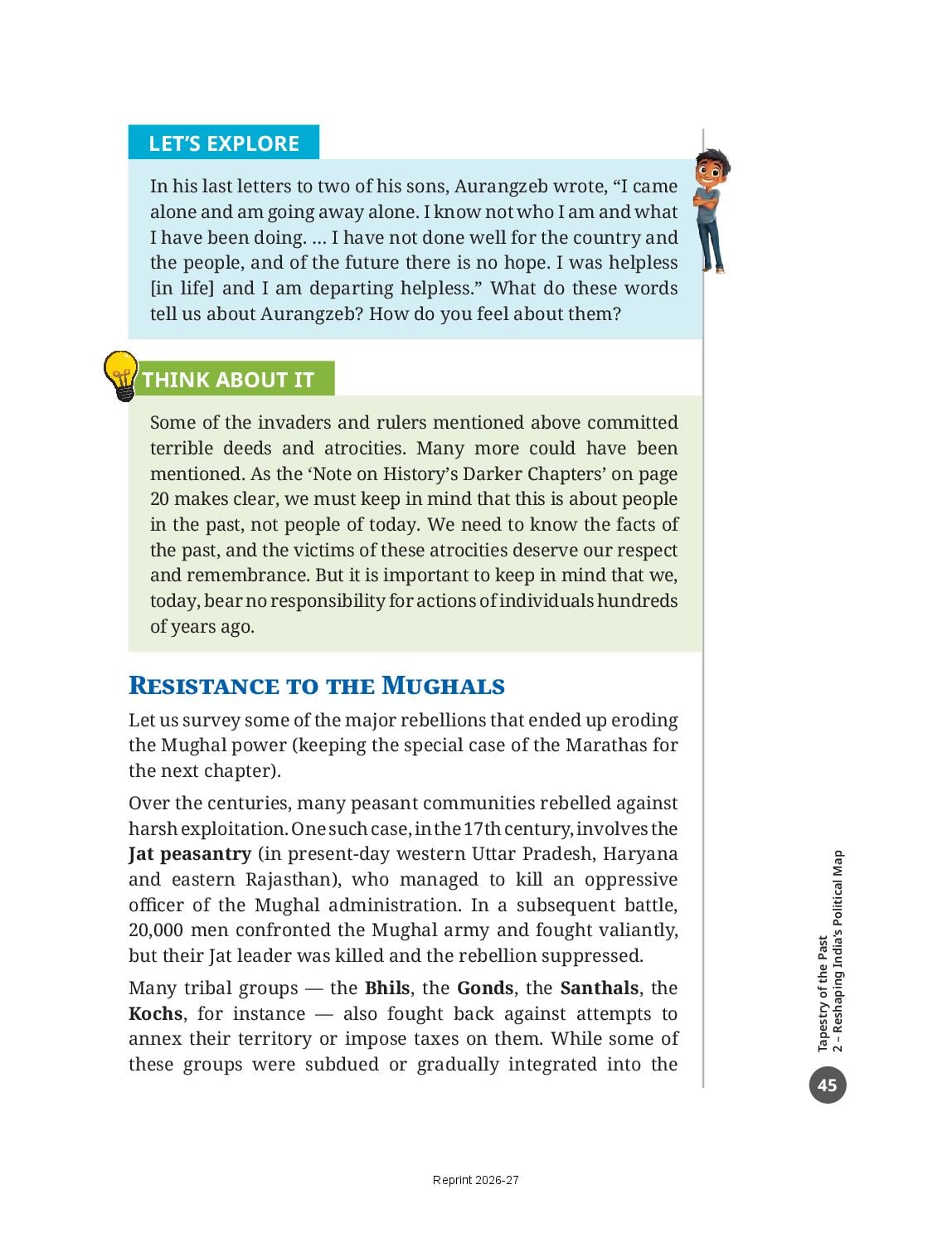
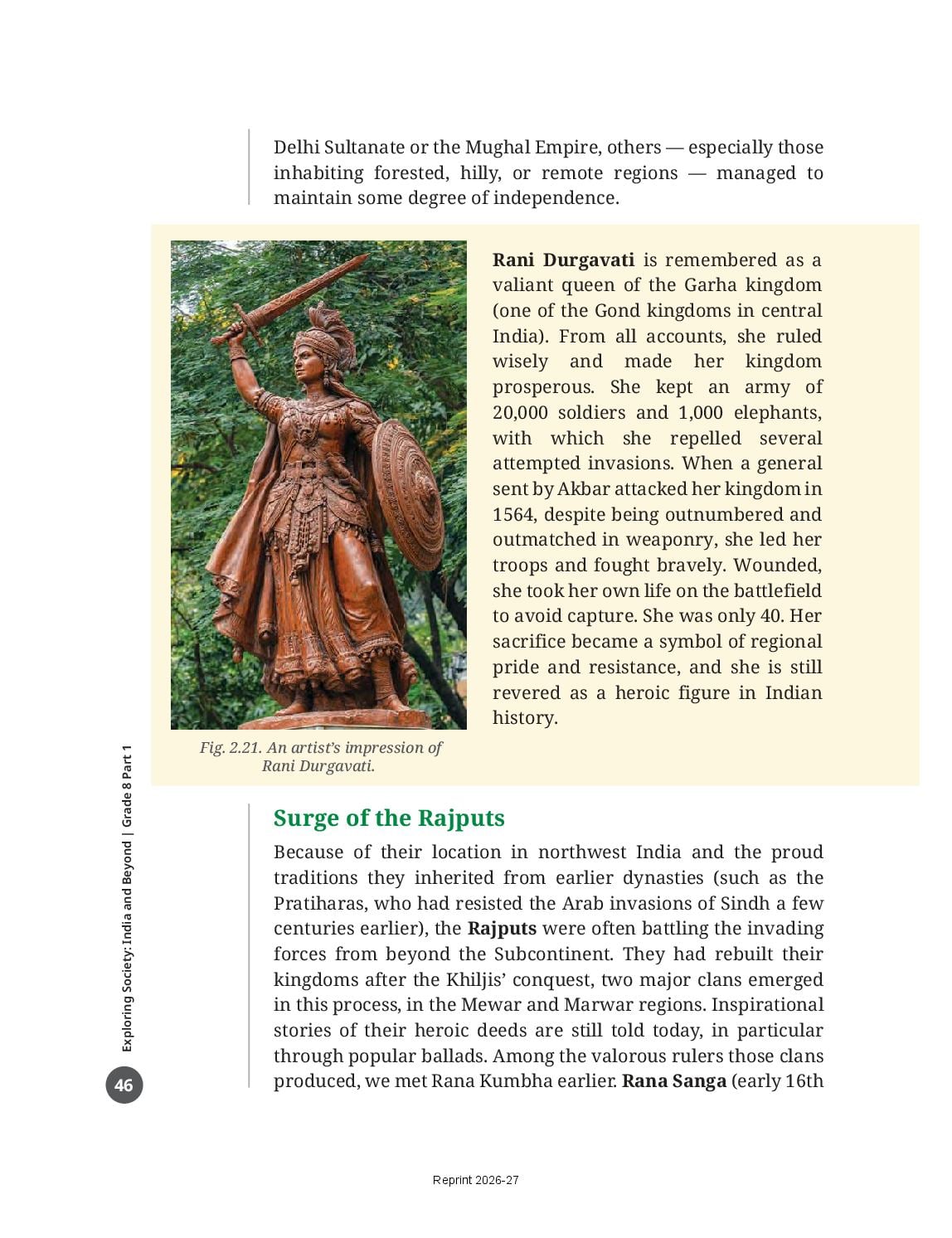
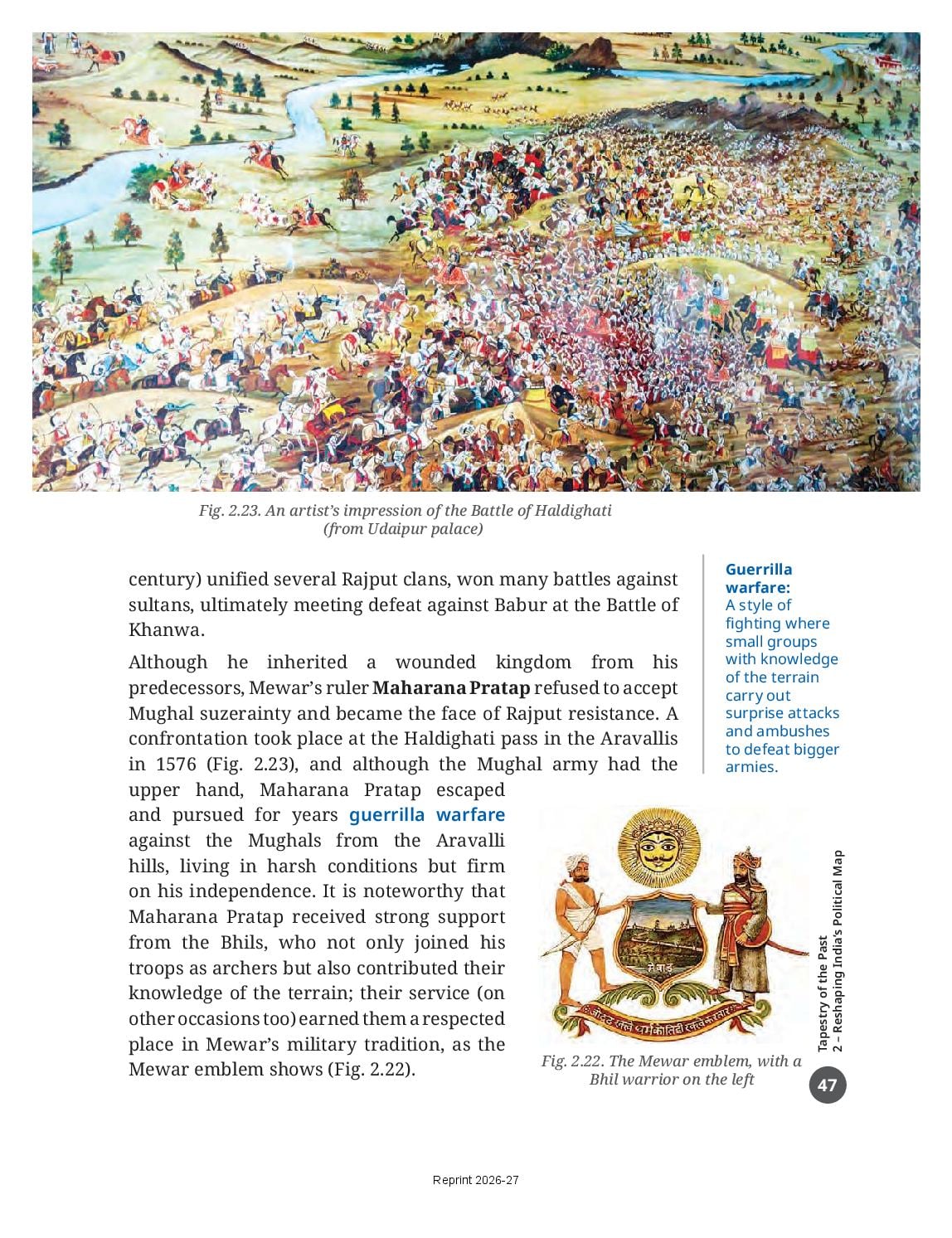
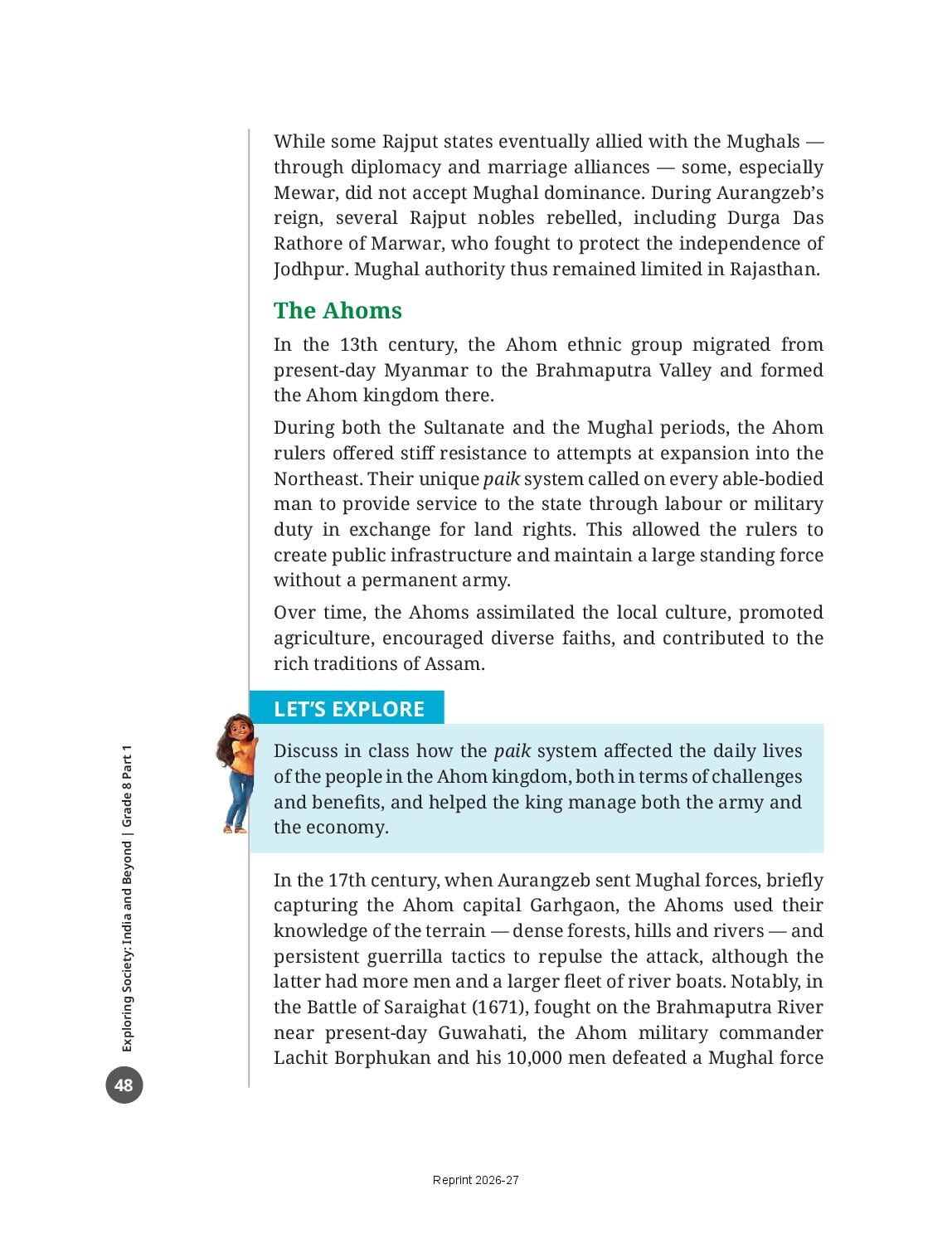
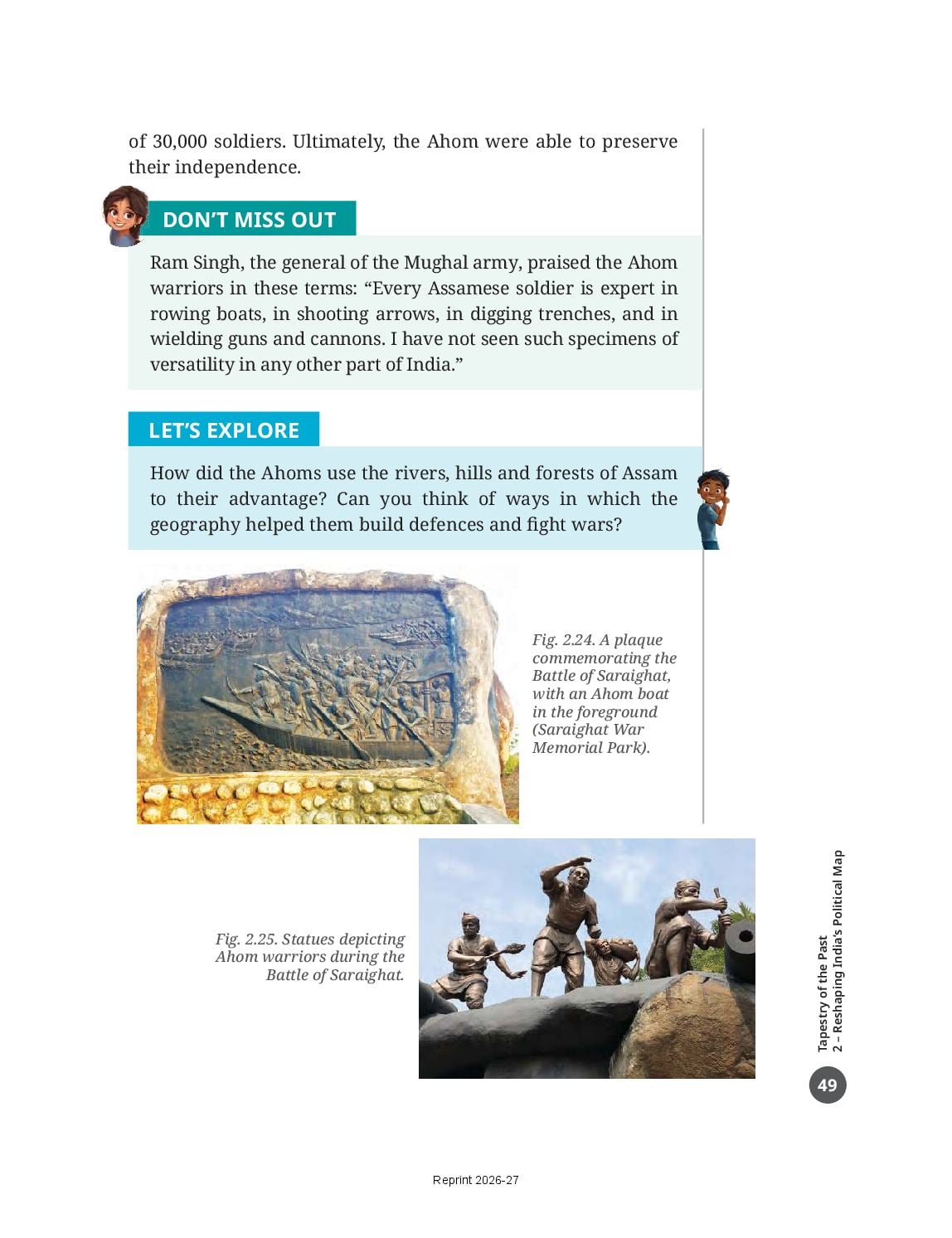
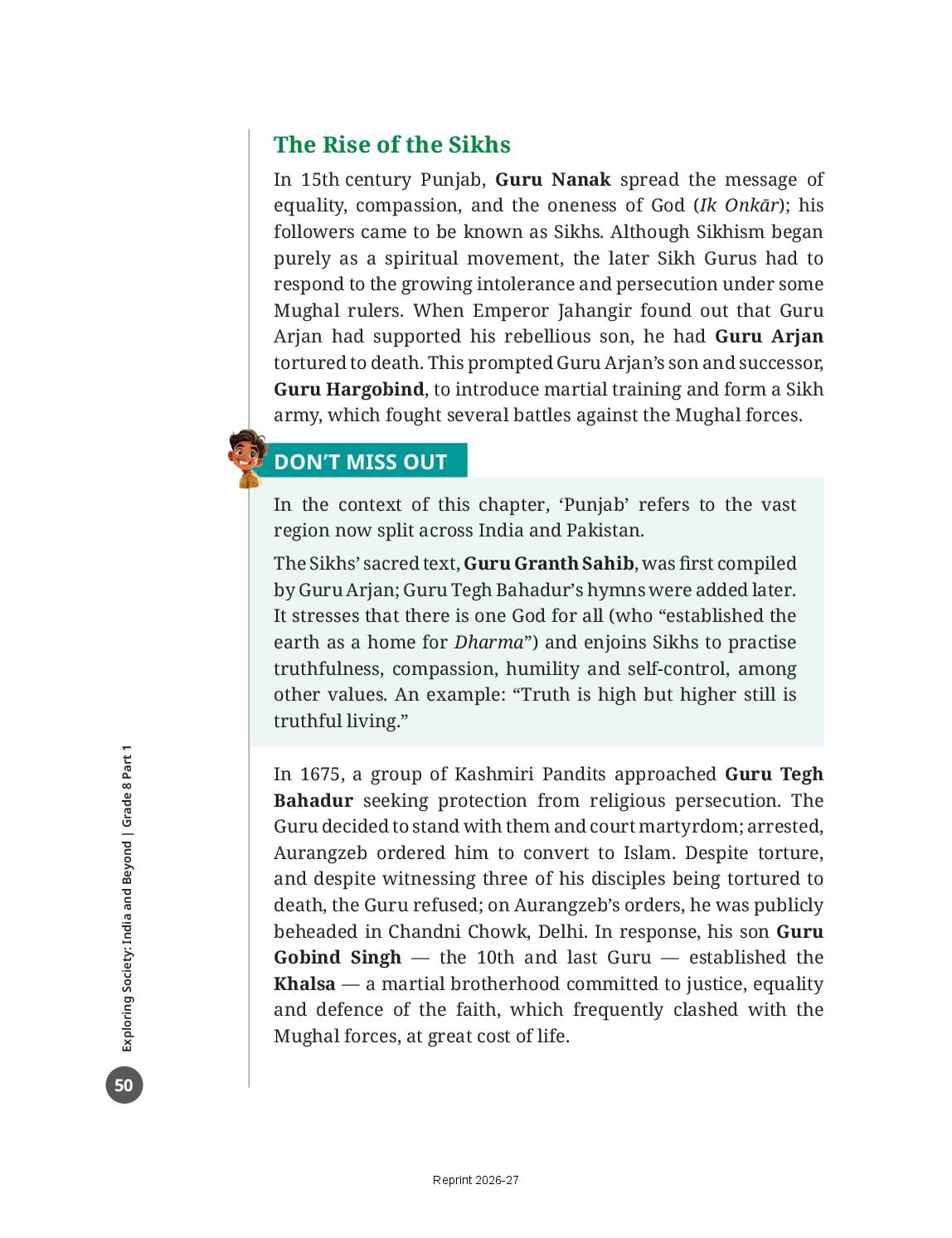
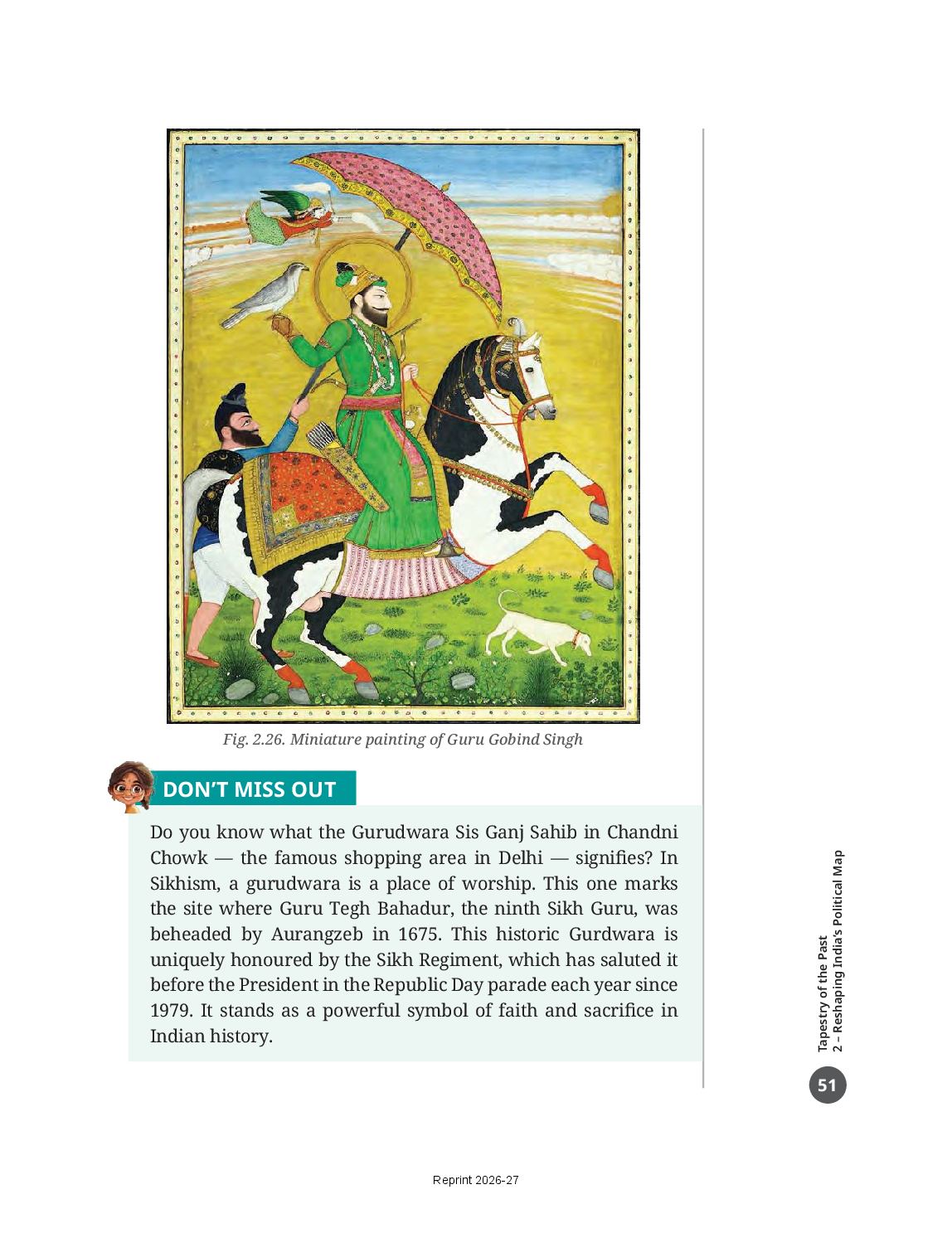
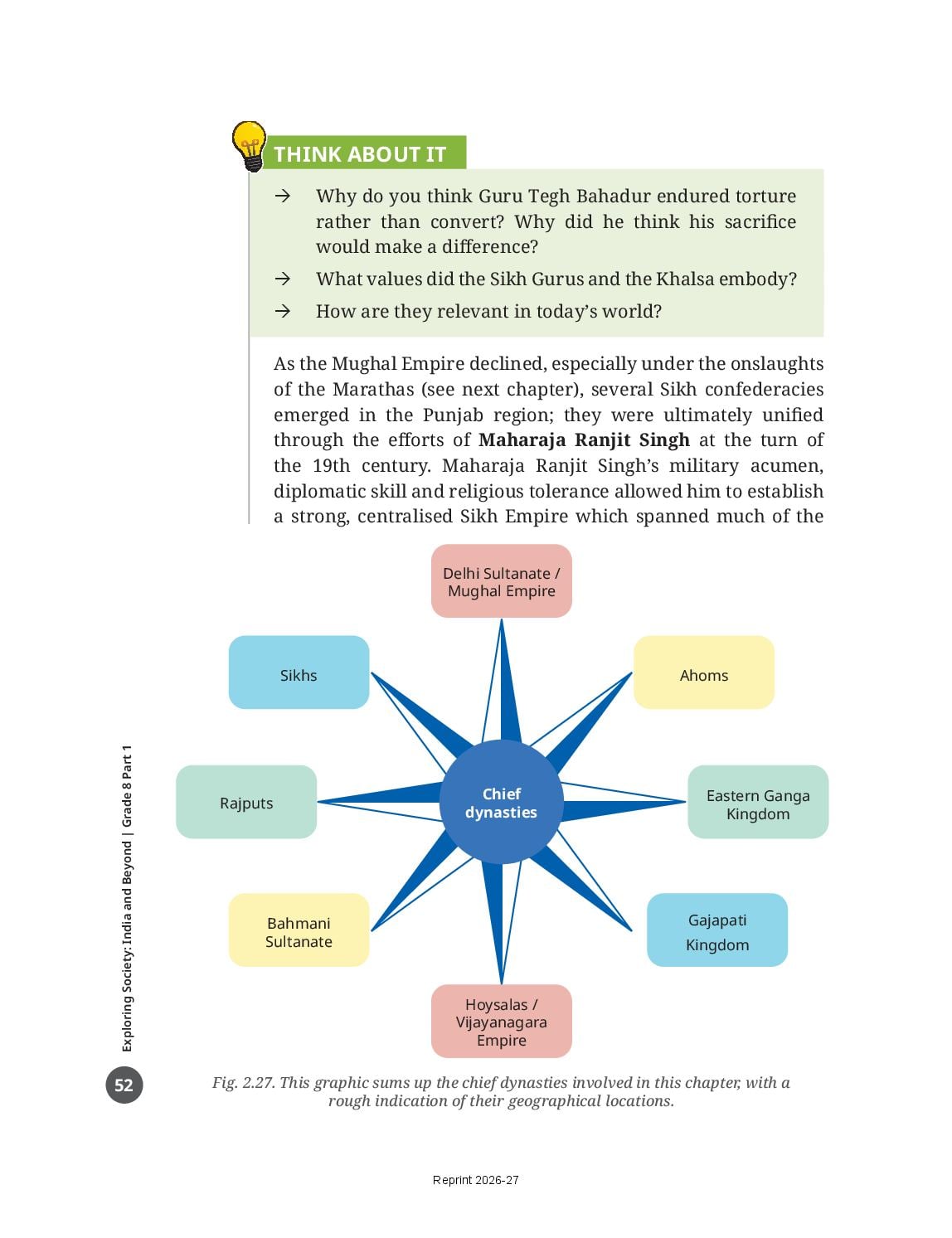
- Resistance came from many quarters: the Eastern Gangas under Narasimhadeva I, the Hoysalas, the Musunuri Nayakas, Rana Kumbha and Maharana Pratap of Mewar, Rani Durgavati, the Jat peasantry, tribal groups, the Ahoms and the Sikhs.
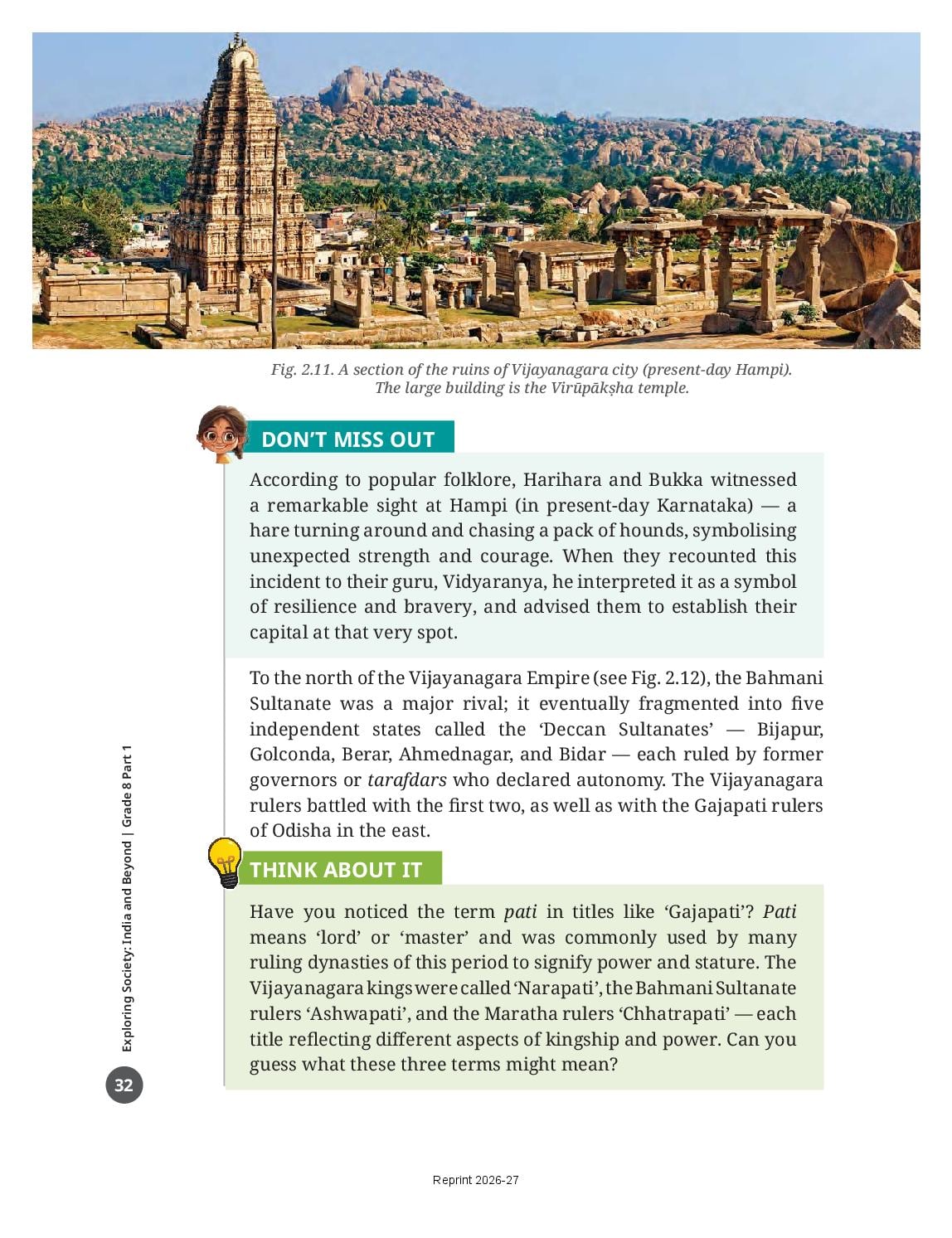
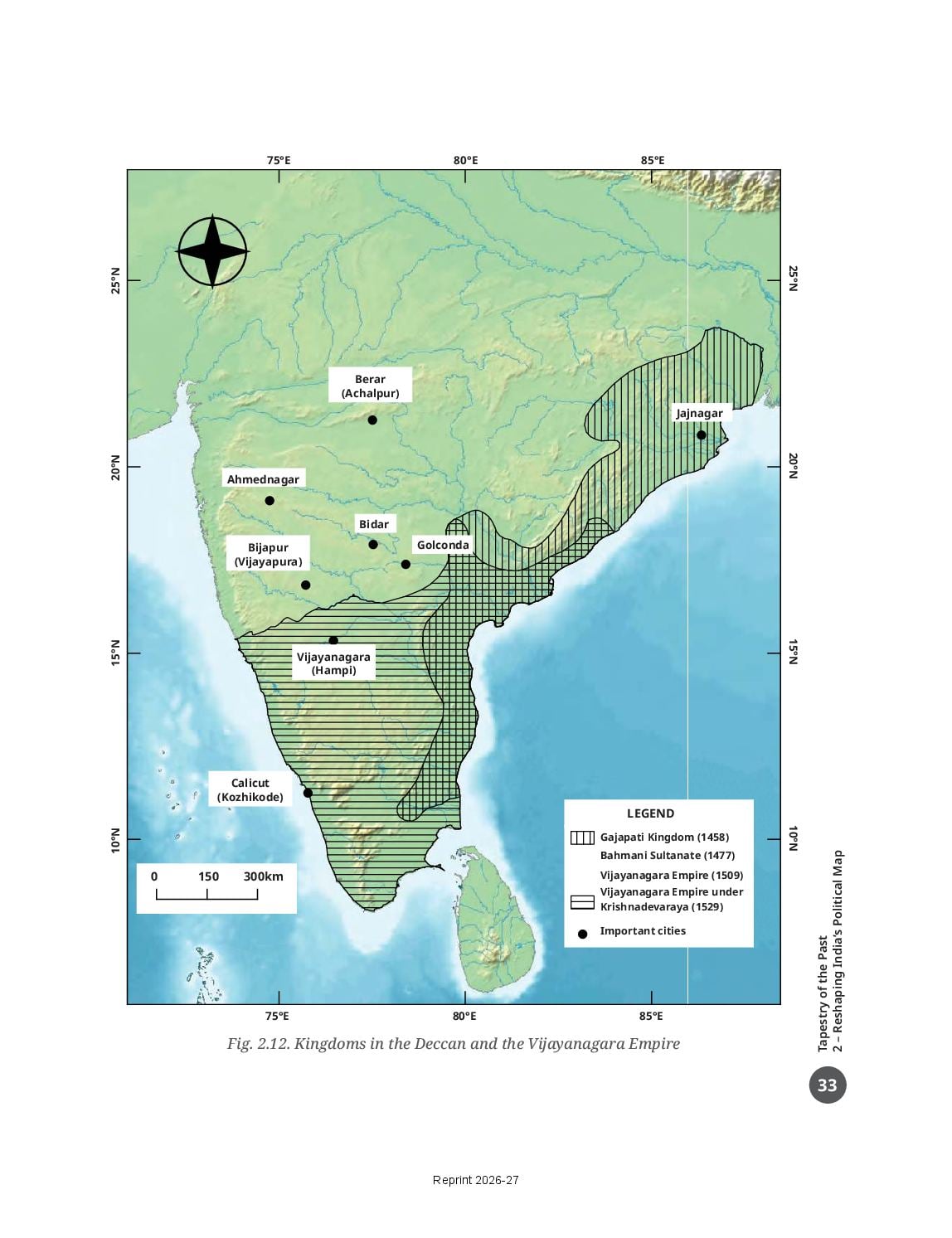
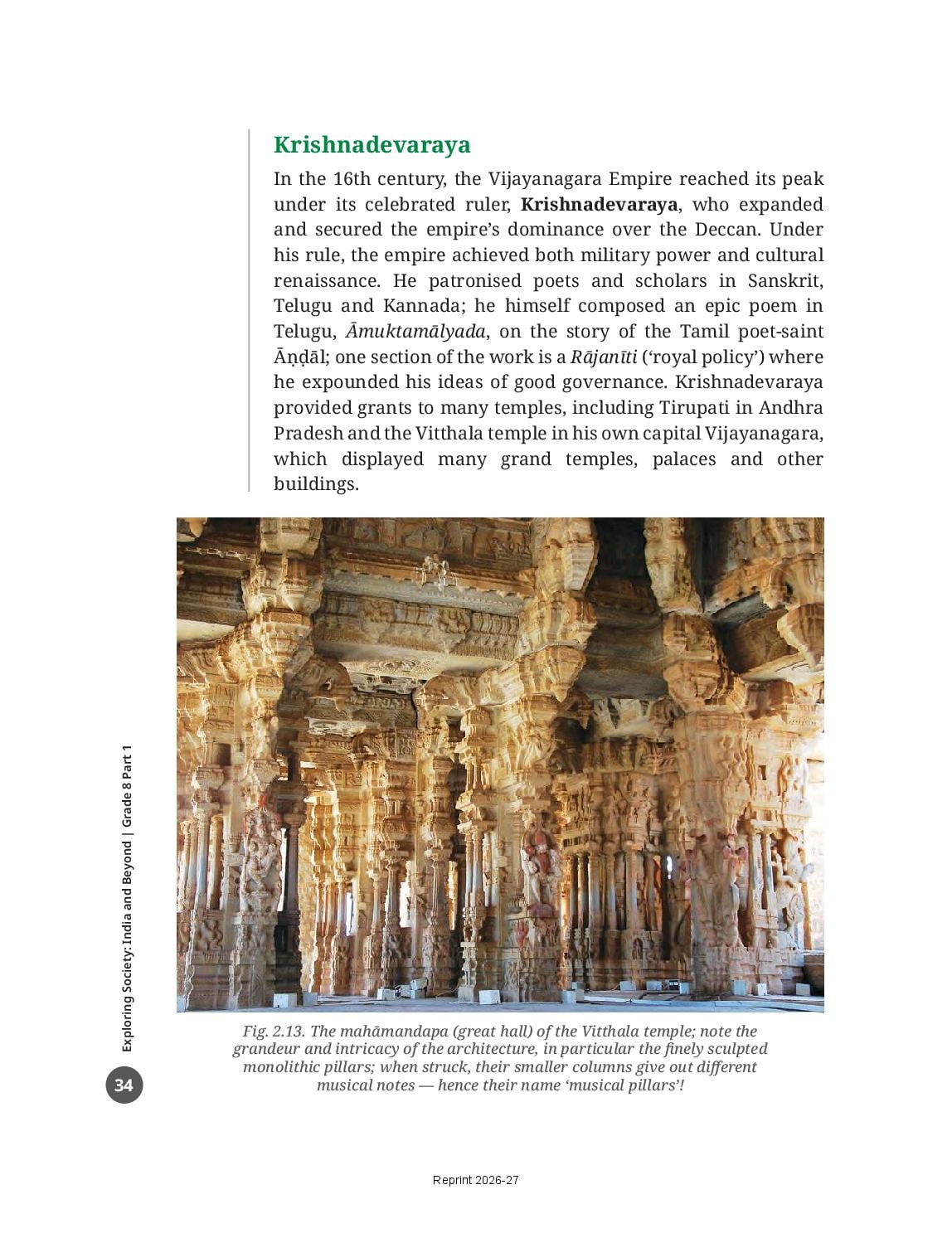
- In the south, Vijayanagara (from 1336) peaked under Krishnadevaraya, then lost the Battle of Talikota (1565) to a coalition of the Deccan Sultanates; the city was sacked and left in ruins.
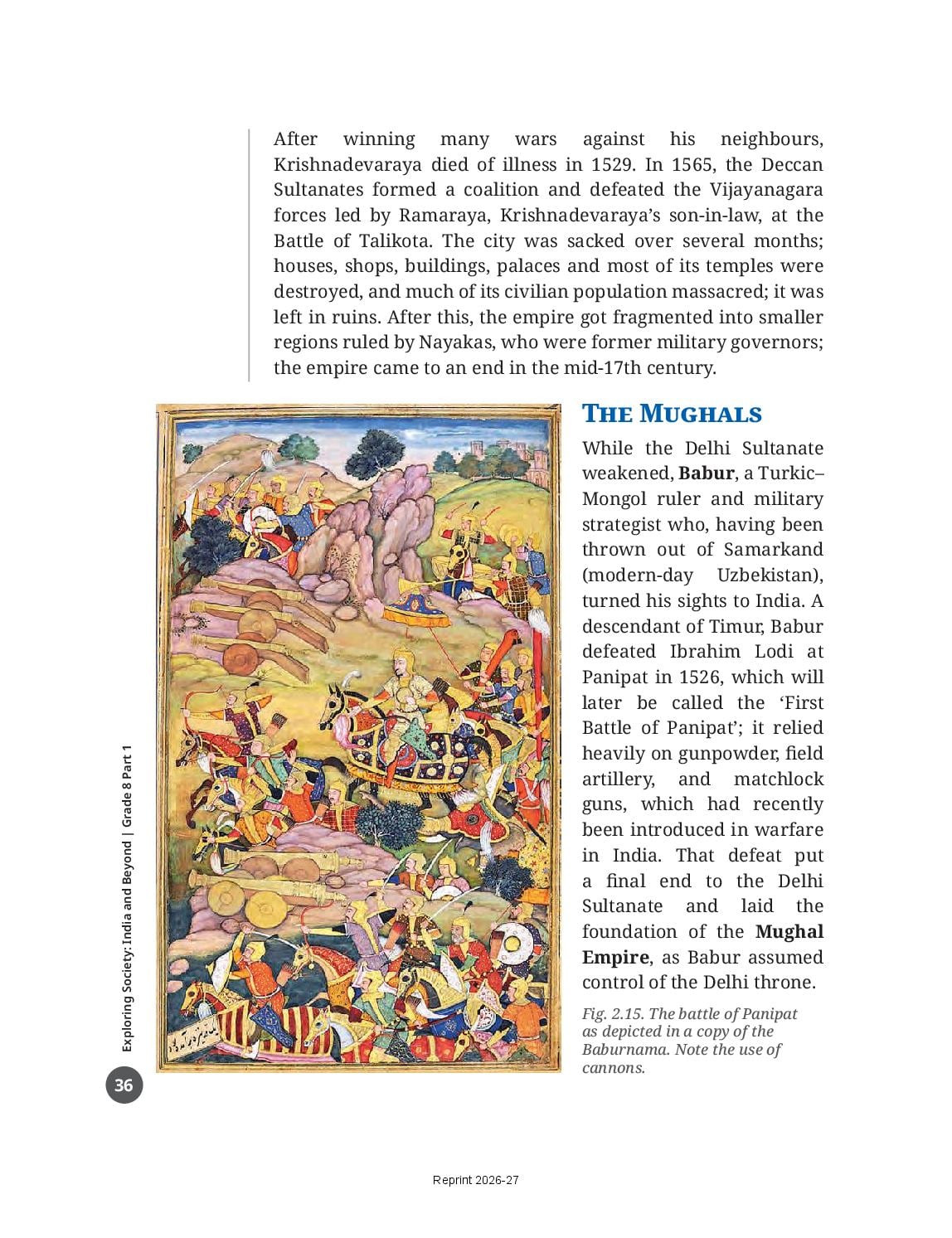
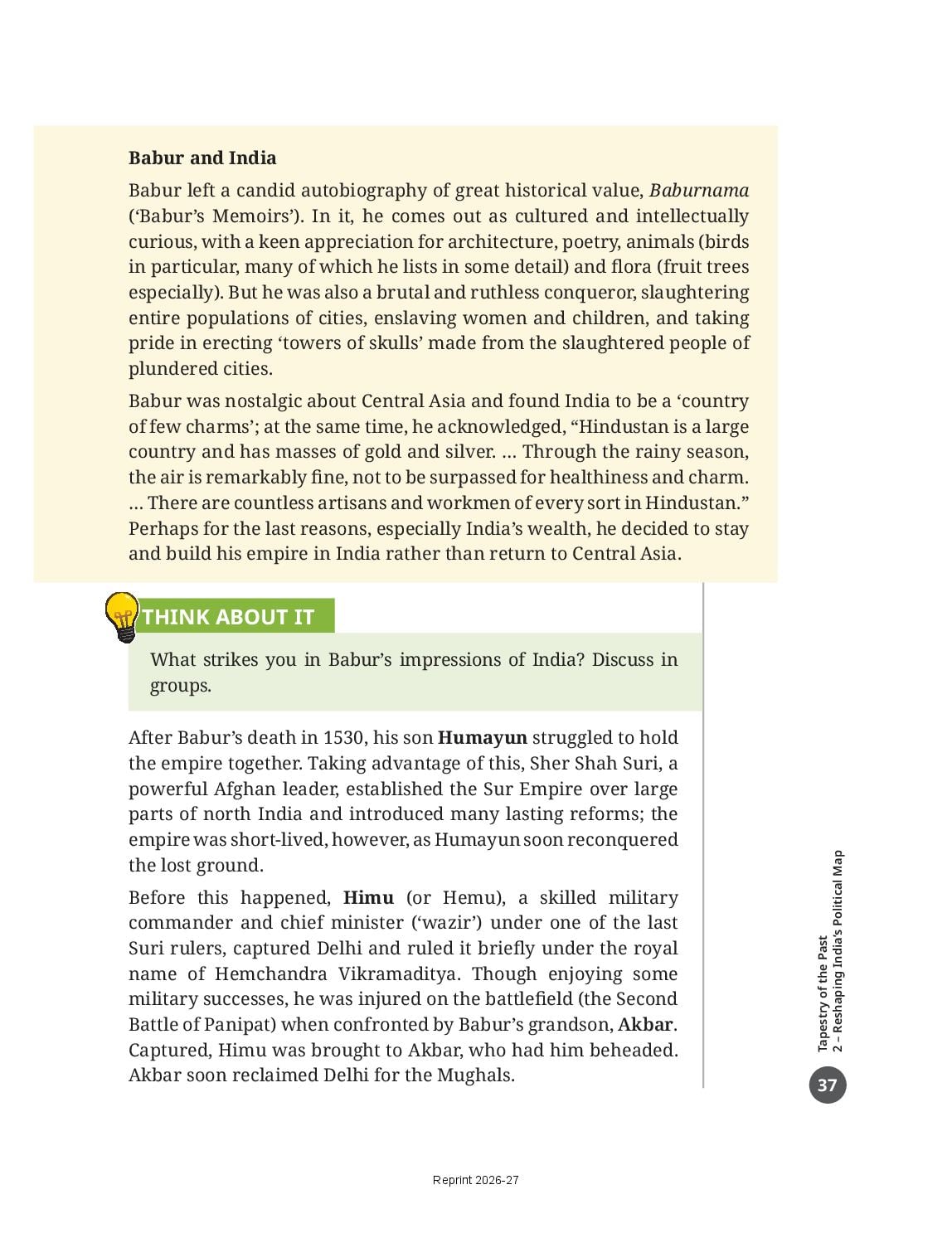
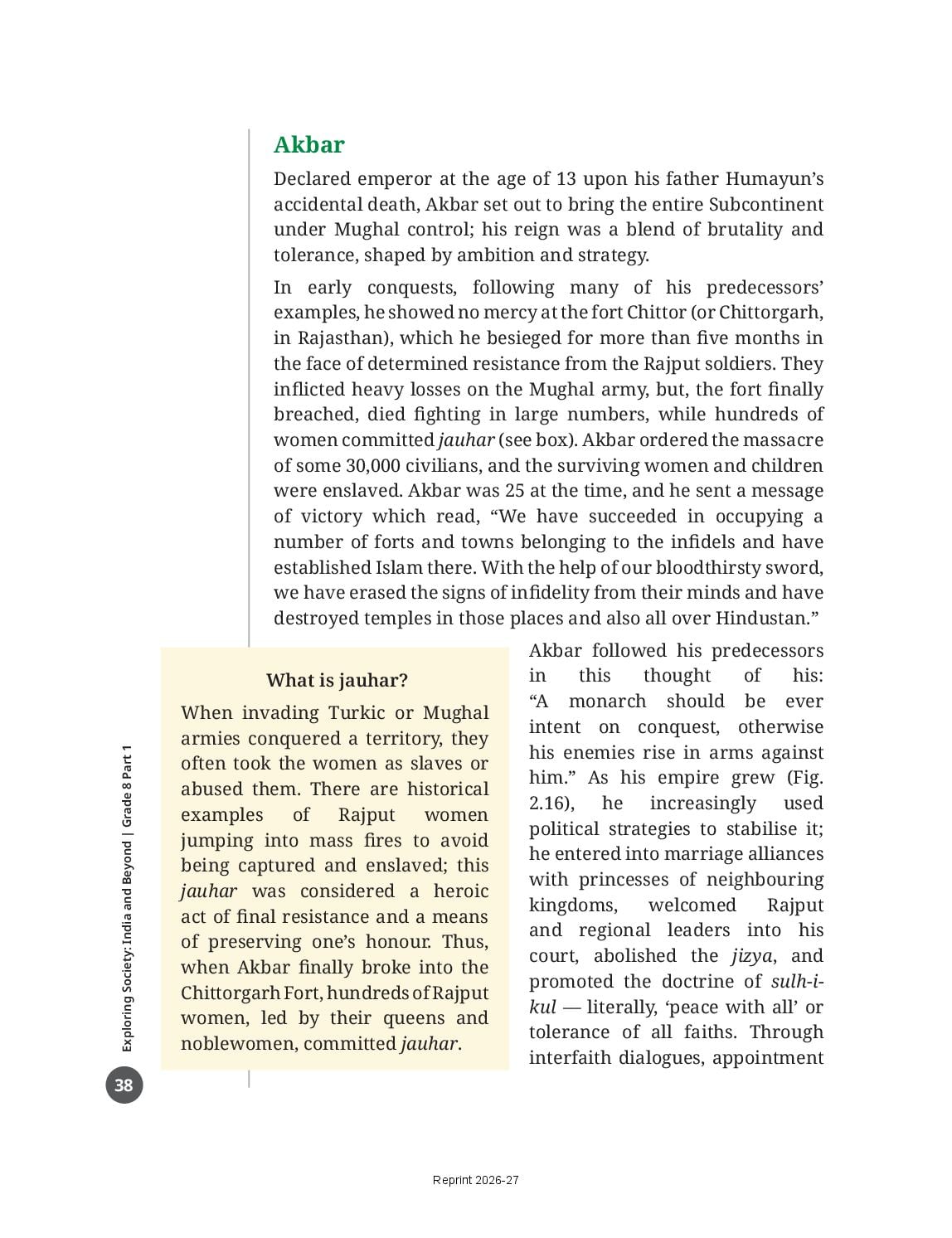
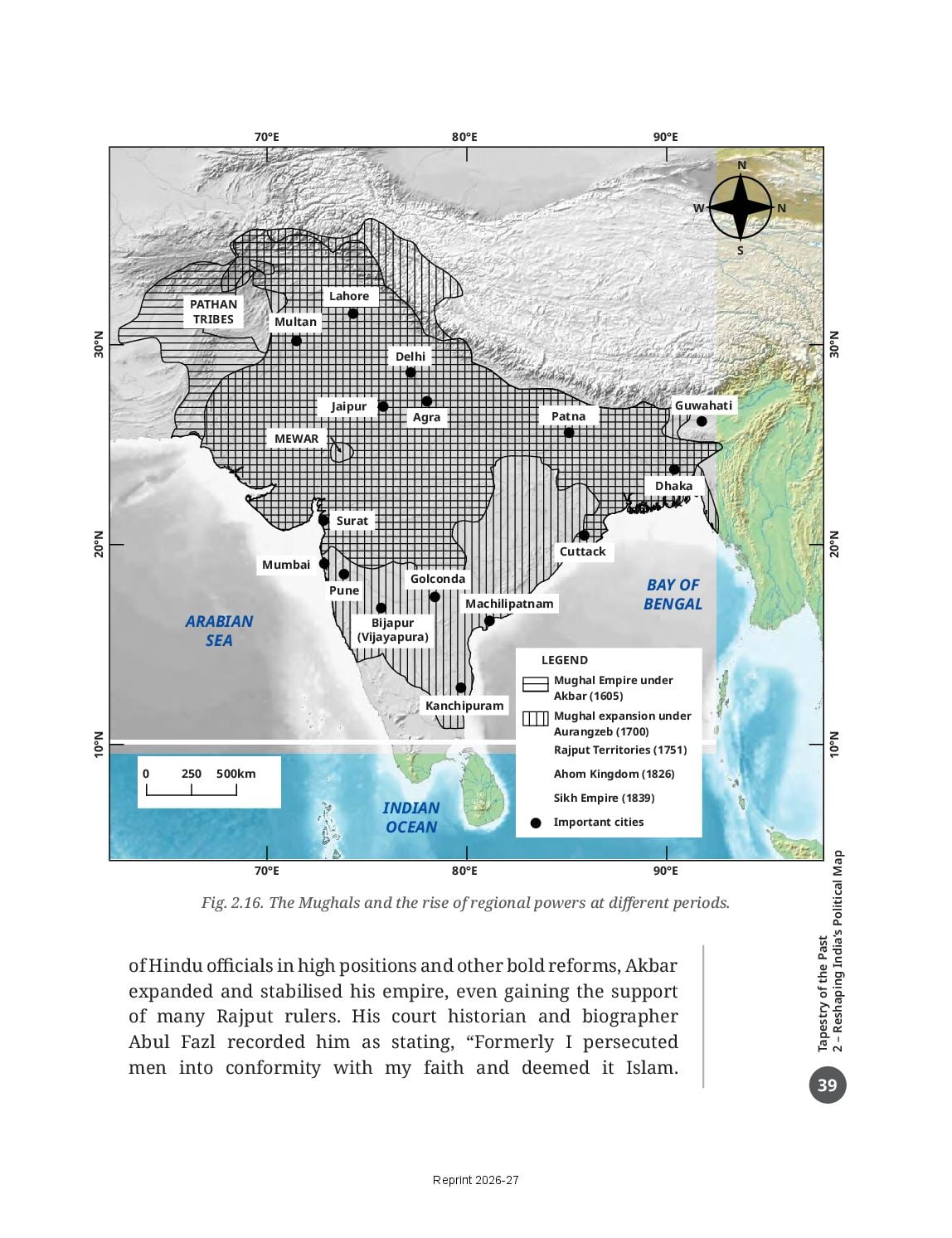
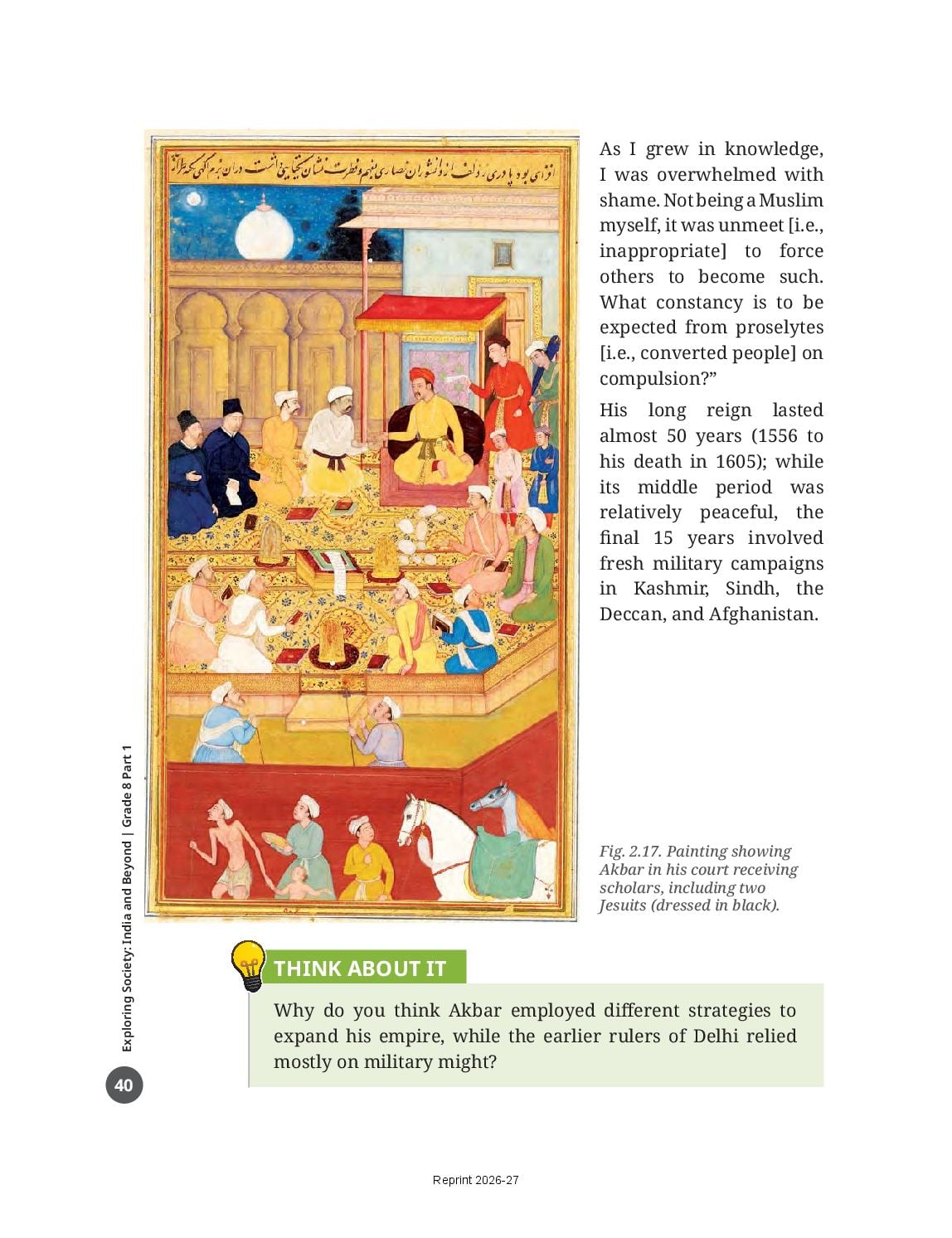
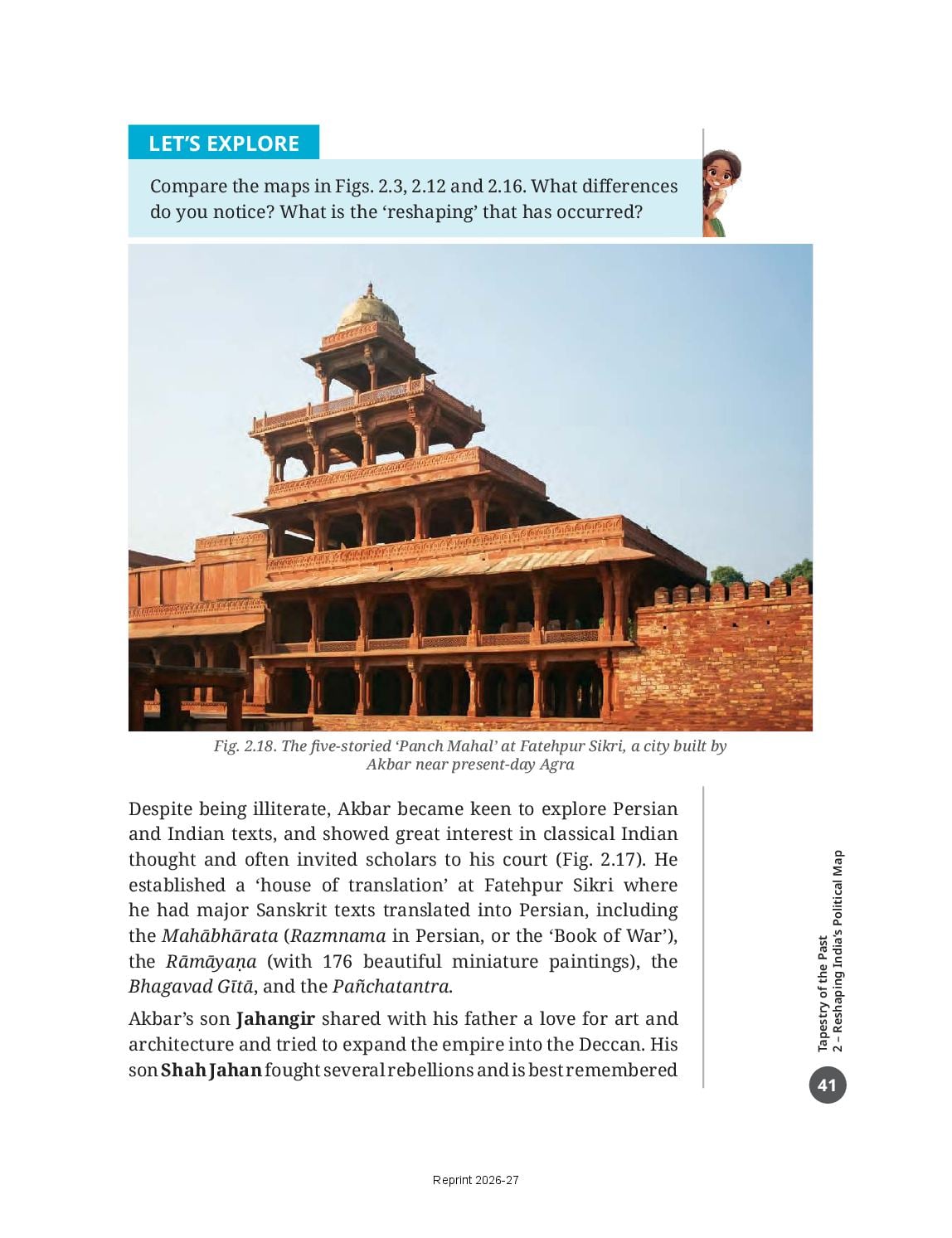
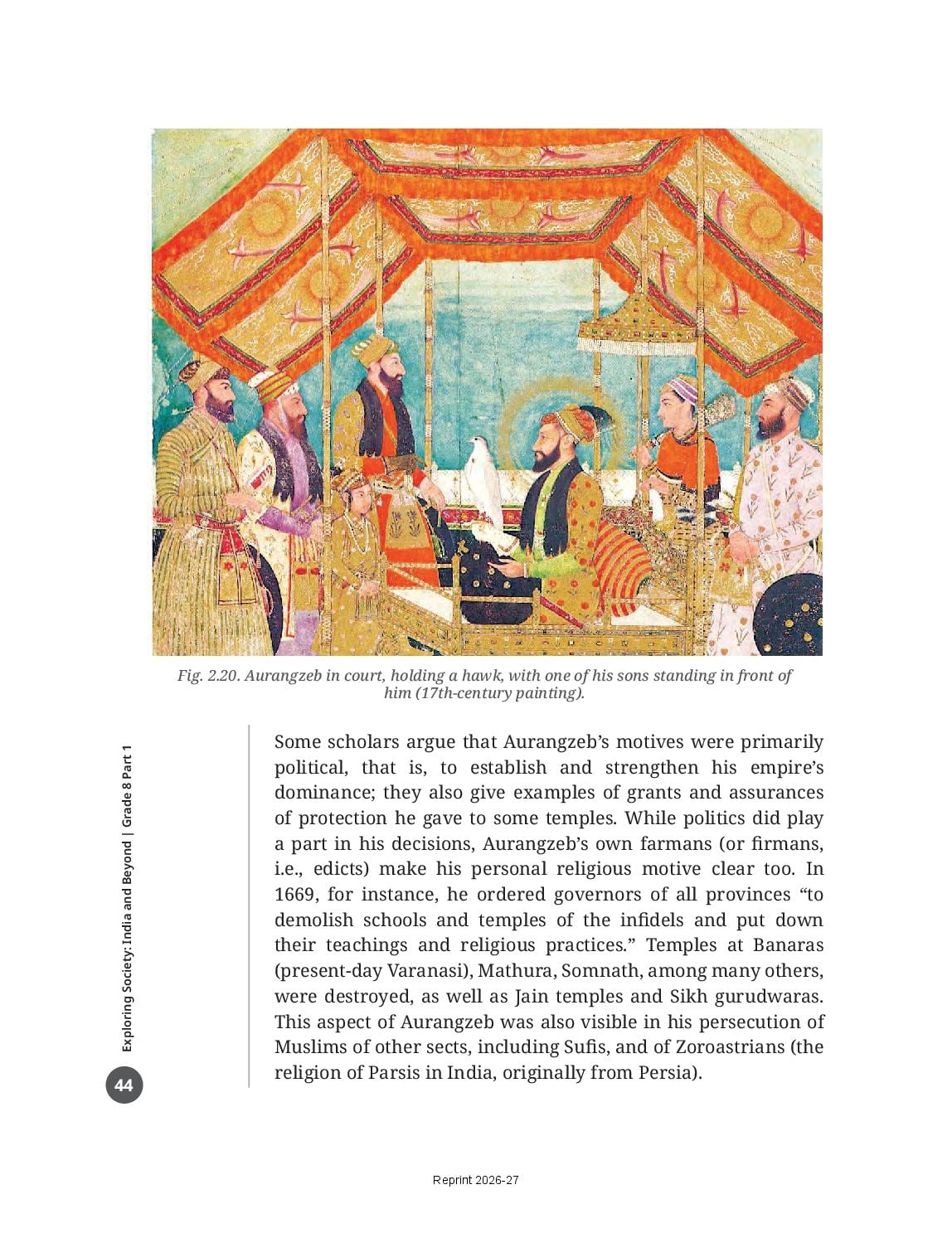
- The Mughal Empire began with Babur’s victory at Panipat in 1526. Akbar held it together by marriage alliances, sulh-i-kul and the abolition of the jizya; Aurangzeb expanded it to its greatest extent but reimposed the jizya and drained the treasury in 25 years of Deccan warfare.
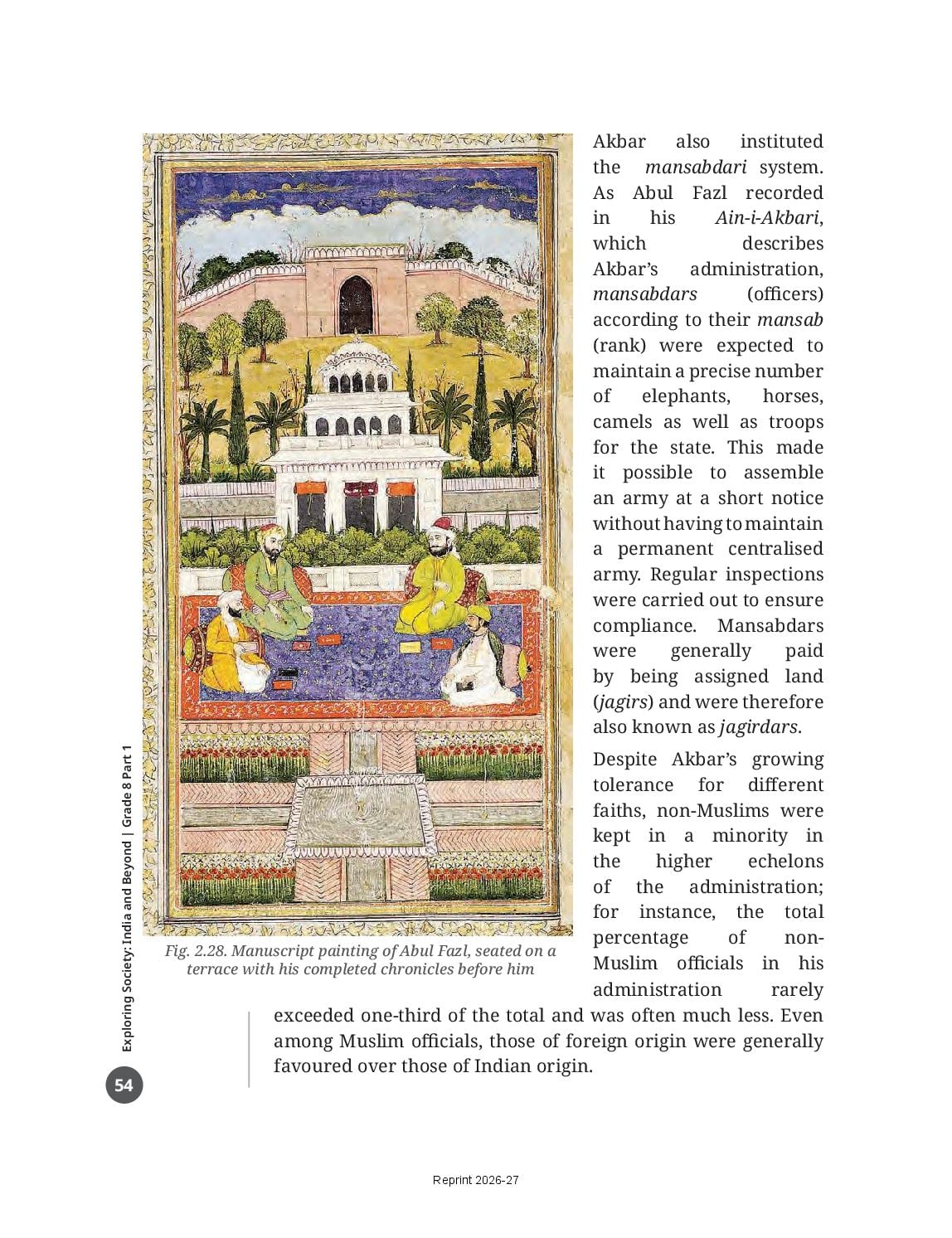
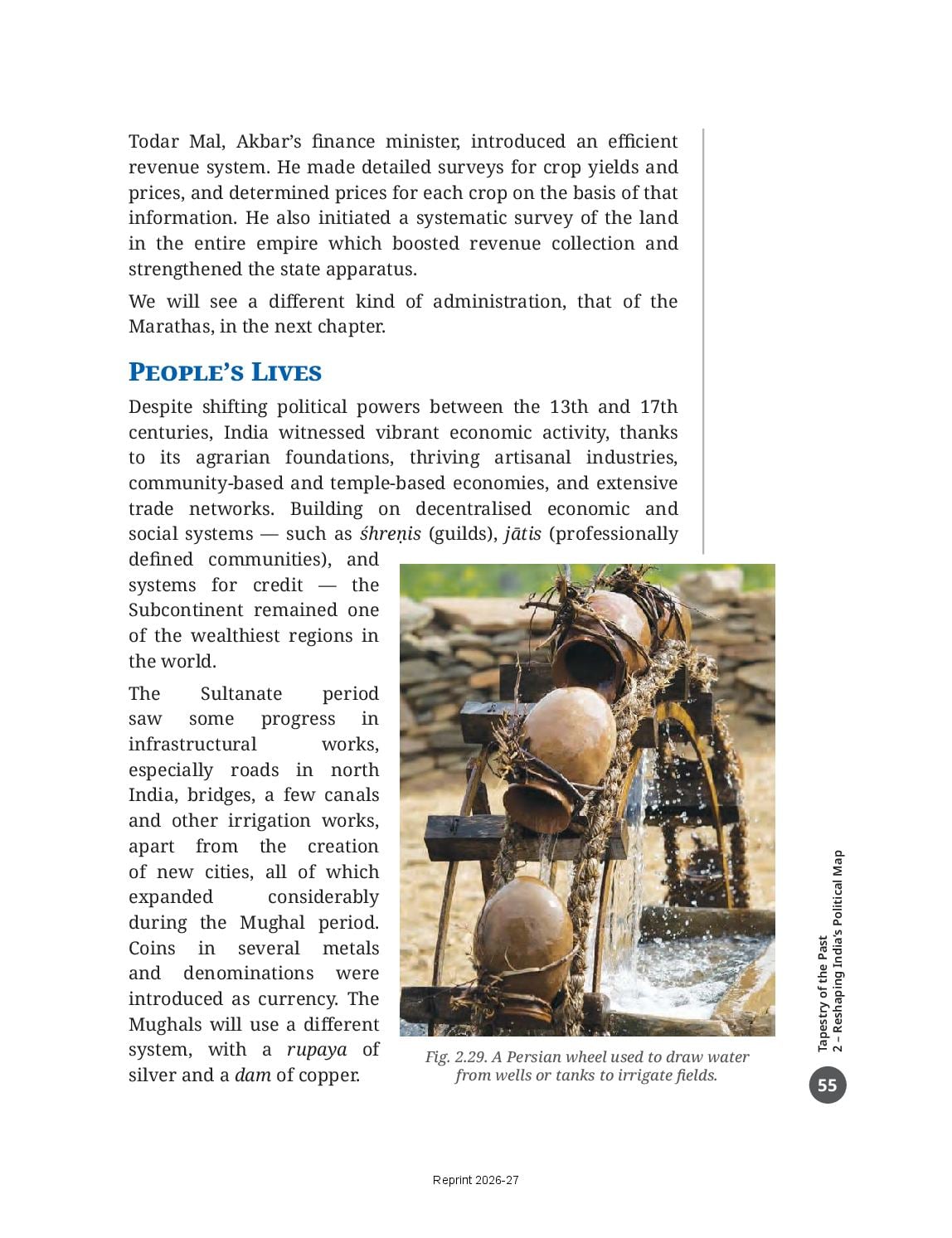
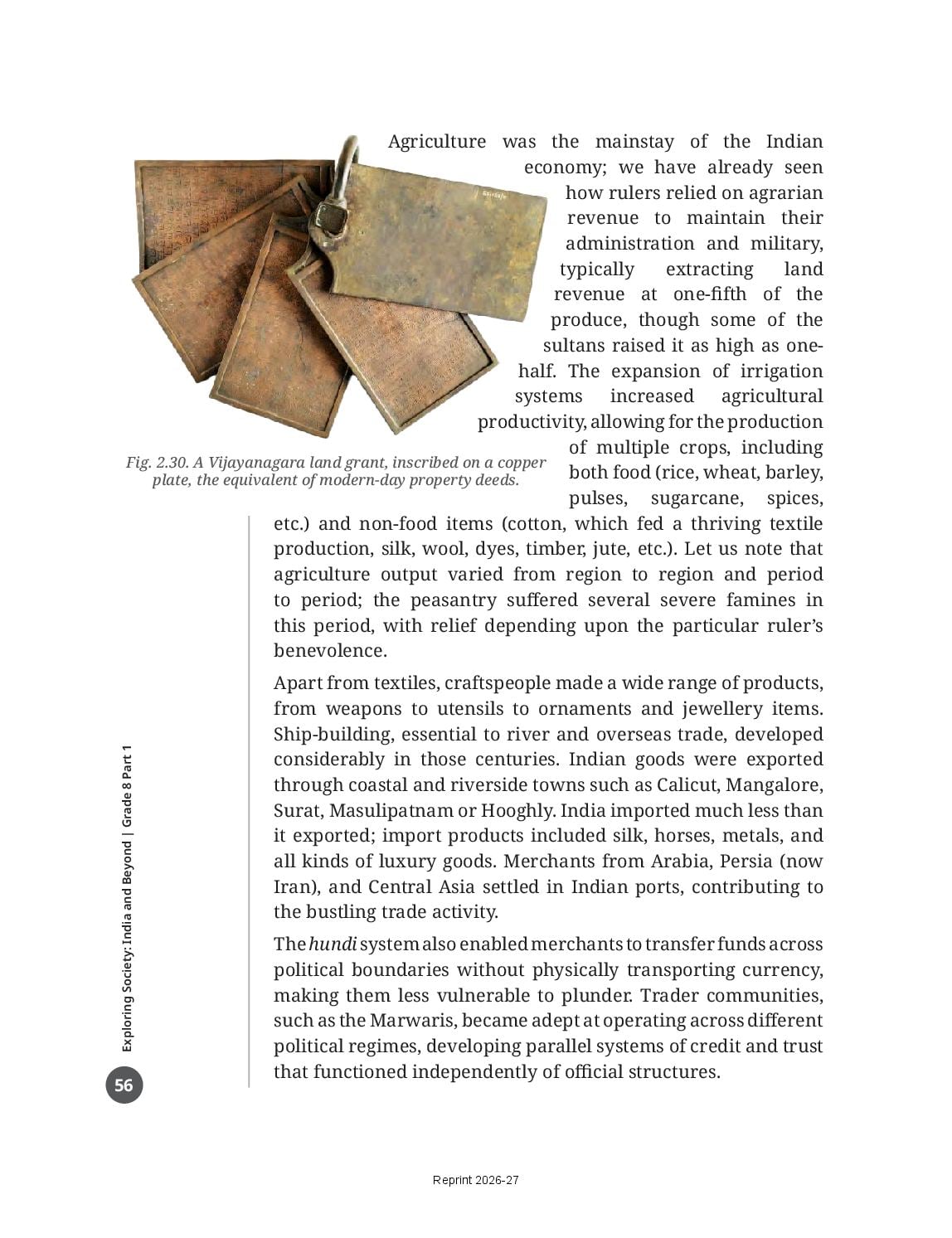
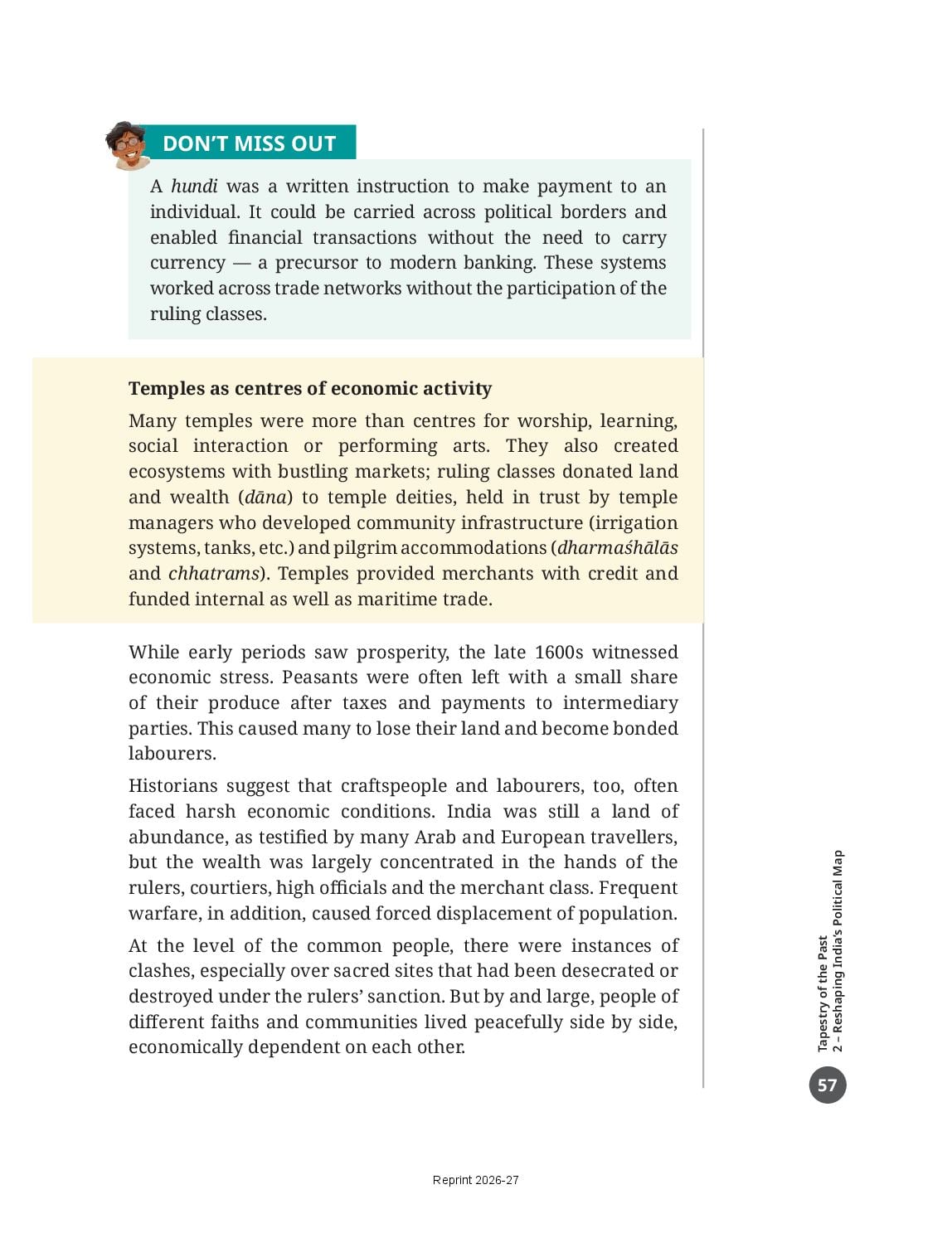
- Administration ran on the iqta system under the Sultanate and on mansabdari, twelve subahs and Todar Mal’s revenue survey under the Mughals. Beneath the politics, India stayed one of the wealthiest regions in the world — held up by agriculture, artisans, śhreṇis, jātis, temple economies and the hundi.
Quick revision – Reshaping India’s Political Map
| Term | What it means | Where it shows up in this chapter | Page |
|---|---|---|---|
| Sultanate | A territory ruled by a ‘Sultan’ — a title that some Muslim rulers adopted | The Delhi Sultanate, formed after the defeat of Prithviraj Chauhan in 1192 | Page 25 |
| Turkic | Peoples, languages and cultures historically associated with a region stretching across Central Asia to Turkey and Siberia | Many of the invaders of this period were Central Asian — Turkic or Afghan | Page 23 |
| Token currency | Cheap copper coins declared to have the value of silver or gold coins | Muhammad bin Tughlaq’s scheme; it encouraged counterfeiting and the economy declined | Page 27 |
| Iconoclasm | The rejection or destruction of icons or religious images considered idolatrous | Attacks on images in Buddhist, Jain and Hindu temples | Page 28 |
| Infidel | Someone who does not share the faith of a given religion | Timur’s stated aim: “war with the infidels and to gain something by plundering” | Page 28 |
| Jizya | A tax on non-Muslim subjects to grant them protection and exemption from military service | Imposed by some sultans; abolished by Akbar; reimposed by Aurangzeb | Pages 28, 38, 43 |
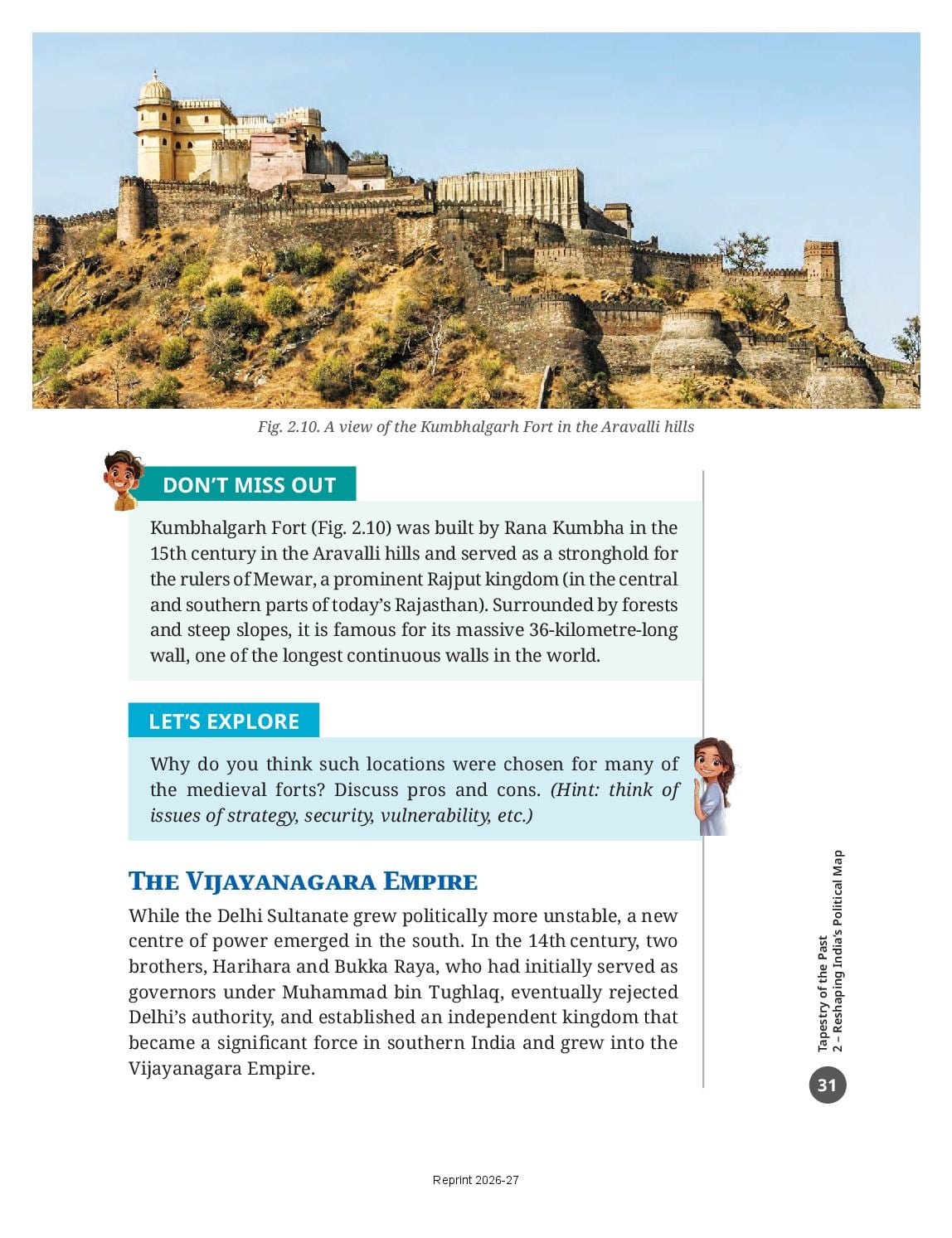
| Rana | A title often used for Rajput kings | Rana Kumbha of Mewar, builder of Kumbhalgarh; Rana Sanga | Page 30 |
| Jauhar | Rajput women entering mass fires to avoid being captured and enslaved | Hundreds of women at Chittorgarh when Akbar breached the fort | Page 38 |
| Sulh-i-kul | Literally ‘peace with all’ — tolerance of all faiths | The doctrine Akbar promoted along with abolishing the jizya | Page 38 |
| Guerrilla warfare | Small groups with knowledge of the terrain carrying out surprise attacks and ambushes to defeat bigger armies | Maharana Pratap in the Aravallis; the Ahoms in Assam | Page 47 |
| Paik system | Every able-bodied man gave the state labour or military duty in exchange for land rights | How the Ahom rulers kept a large force without a permanent army | Page 48 |
| Iqta | Territories assigned to nobles (iqtadars) to collect taxes for the Sultan’s treasury; the posts were not hereditary | The Sultanate’s main instrument for paying for its army | Page 53 |
| Mansabdari | Officers (mansabdars) kept a set number of elephants, horses, camels and troops according to their mansab (rank) | Akbar’s system, recorded by Abul Fazl in the Ain-i-Akbari; mansabdars were paid in jagirs | Page 54 |
| Hundi | A written instruction to make payment to an individual, which could be carried across political borders | Let merchants move money without carrying currency — a precursor to modern banking | Page 57 |
Old NCERT vs New – Class 8 Social Science
This chapter is from Exploring Society: India and Beyond, the new NCERT Class 8 Social Science book (NCF-SE 2023, used from 2025-26). It replaced the old book “Our Pasts, Resources and Development and Social and Political Life”, so chapter numbers and names differ from older PDFs.
Solutions and All Chapters
Answers to the exercises and the full chapter list of Exploring Society: India and Beyond:
Reshaping India’s Political Map – Overview
| Class | Class 8 |
| Subject | Social Science |
| Book | Exploring Society: India and Beyond – new NCERT book |
| Part | Part I |
| Chapter | 2 of 15 – Reshaping India’s Political Map |
| Book pages | 21 – 60 |
| Edition | NCERT Reprint 2026-27 |
| Session | 2026-27 |
| Free – read online or download |
Class 8 Social Science Chapter 2 – FAQs
Where can I download Reshaping India’s Political Map Class 8 PDF?
From the download table on this page – the chapter PDF is free, and the full book is linked too.
What is Class 8 Social Science Chapter 2 about?
The chapter calls this the latter part of the ‘medieval period’ — a European term the book uses only loosely, for the 11th to 17th centuries, warning that historians do not agree on which period it covers in India.
Is Reshaping India’s Political Map from the new NCERT Class 8 Social Science book?
Yes. It is chapter 2 of exploring society: india and beyond (part i), the new NCERT Class 8 Social Science book for 2026-27.
Is this the latest NCERT edition for 2026-27?
Yes – the PDF is NCERT’s latest edition for the 2026-27 session.
Where are the NCERT Solutions for Class 8 Social Science Chapter 2?
Open the NCERT Solutions link above for answers to the exercise questions.