Download India’s Long Road to Independence – NCERT Class 8 Social Science Chapter 9 PDF from the new NCERT Class 8 Social Science book Exploring Society: India and Beyond (2026-27). Read the chapter online or download the free PDF. After 1857 the British Crown took direct control (1858). The royal proclamation promised to respect the ‘rights, dignity and honour of native Princes’ and to leave religion alone — but a ‘Resident’ was posted in almost every princely state,…
India’s Long Road to Independence PDF – Chapter 9 of Exploring Society: India and Beyond (Part II)
Read the chapter online or download the PDF.
| Chapter | Download | |
|---|---|---|
| Chapter 9 PDF | India's Long Road to Independence | View PDF |
| Full book | NCERT Class 8 Social Science – Exploring Society: India and Beyond | View Book |
Read Online
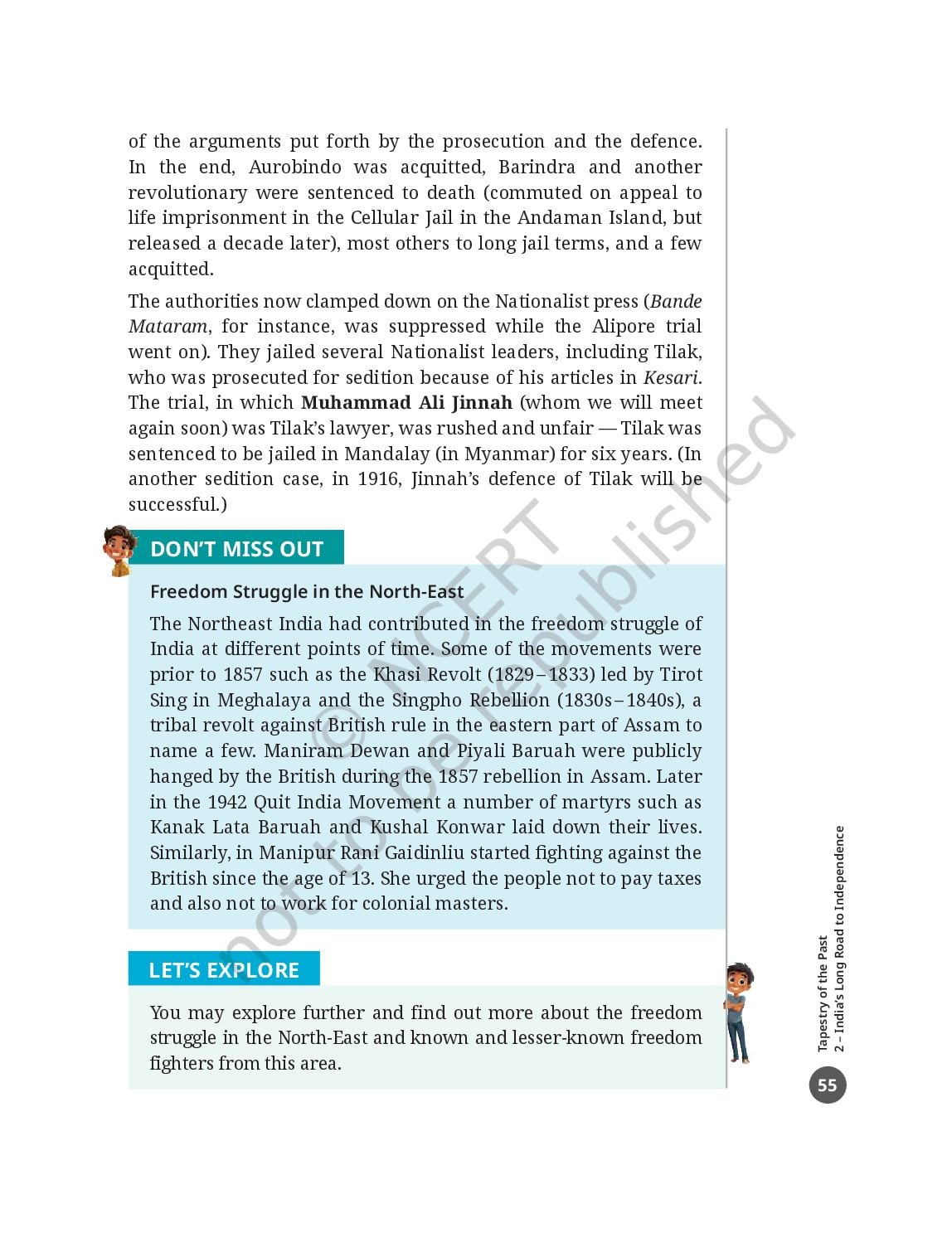
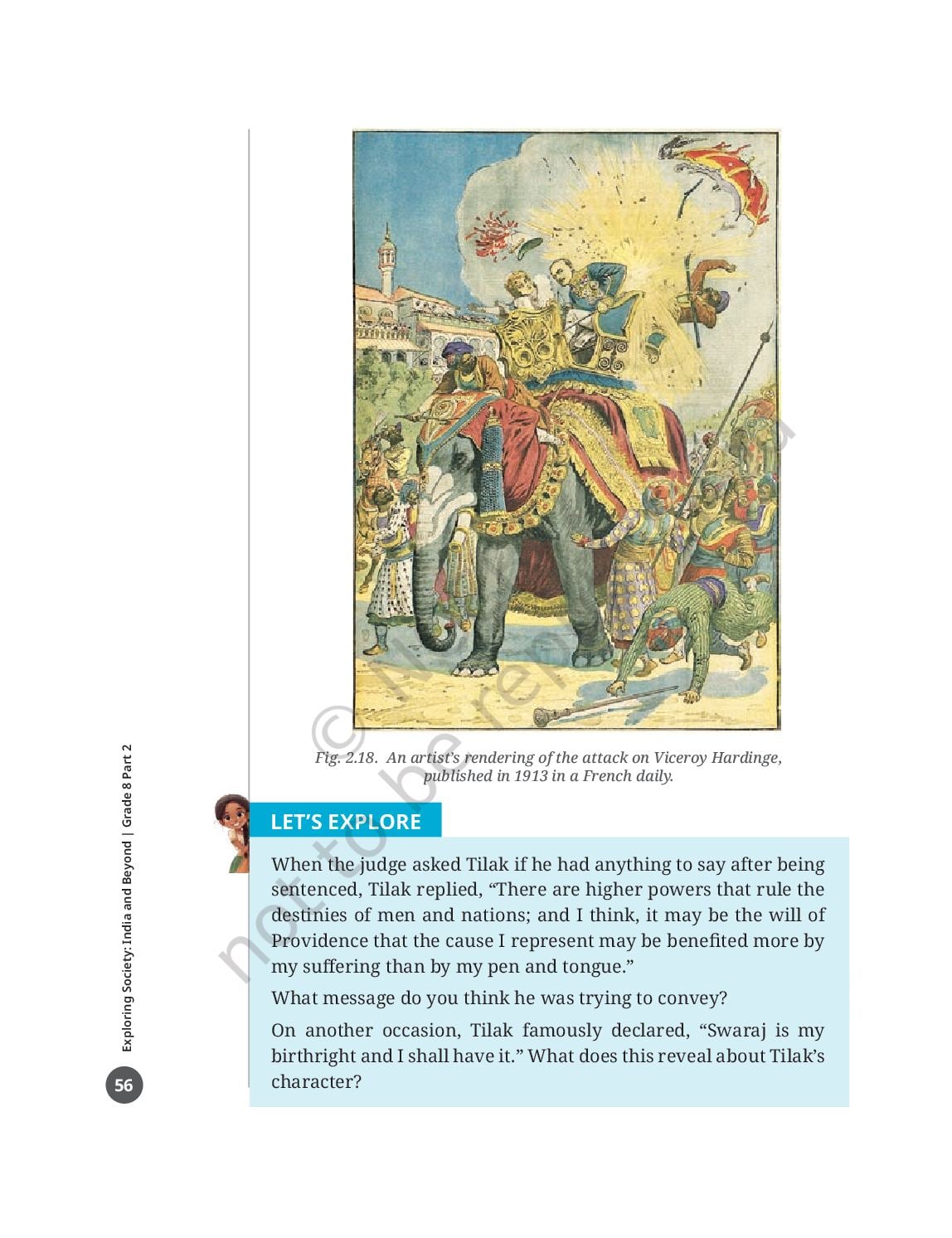
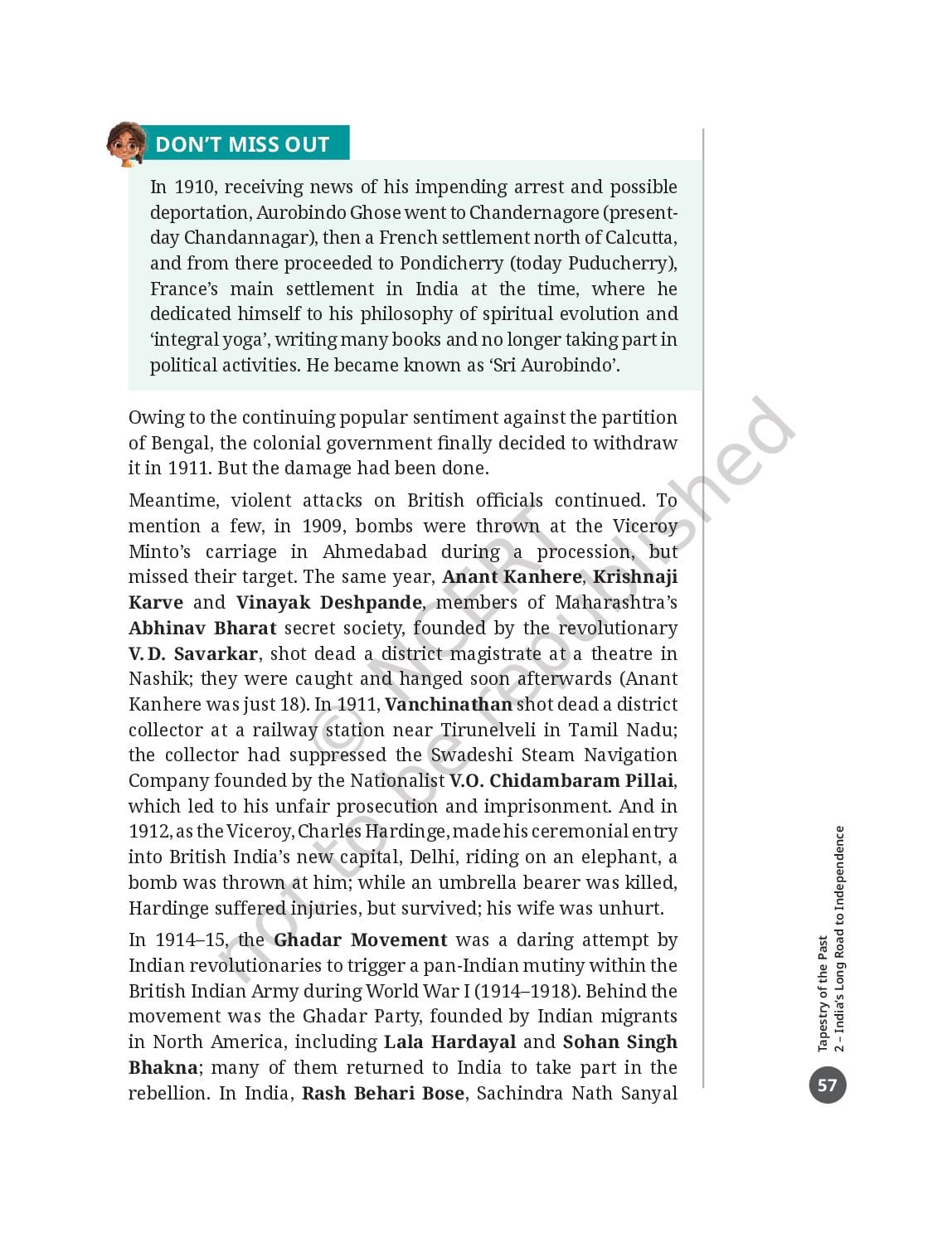
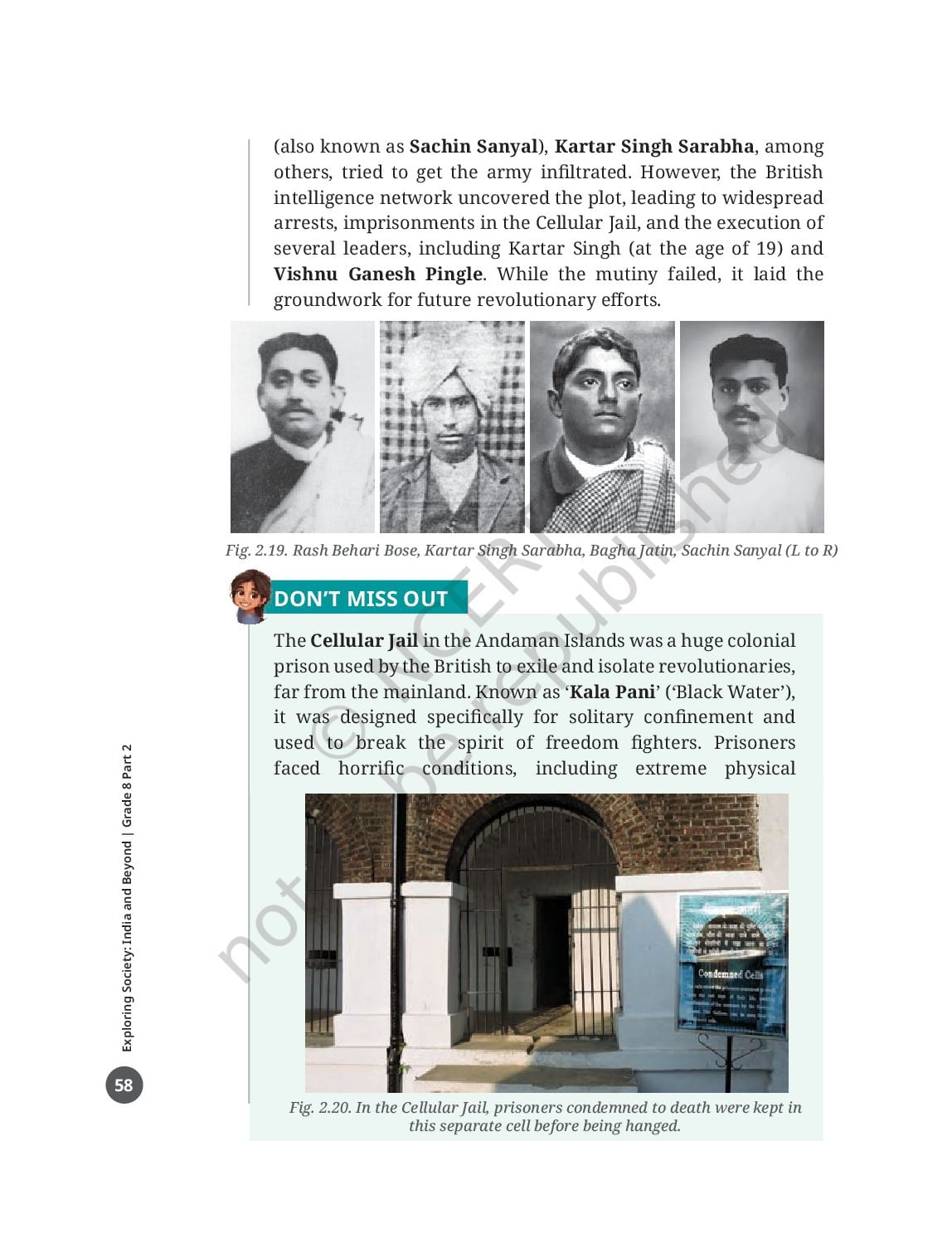
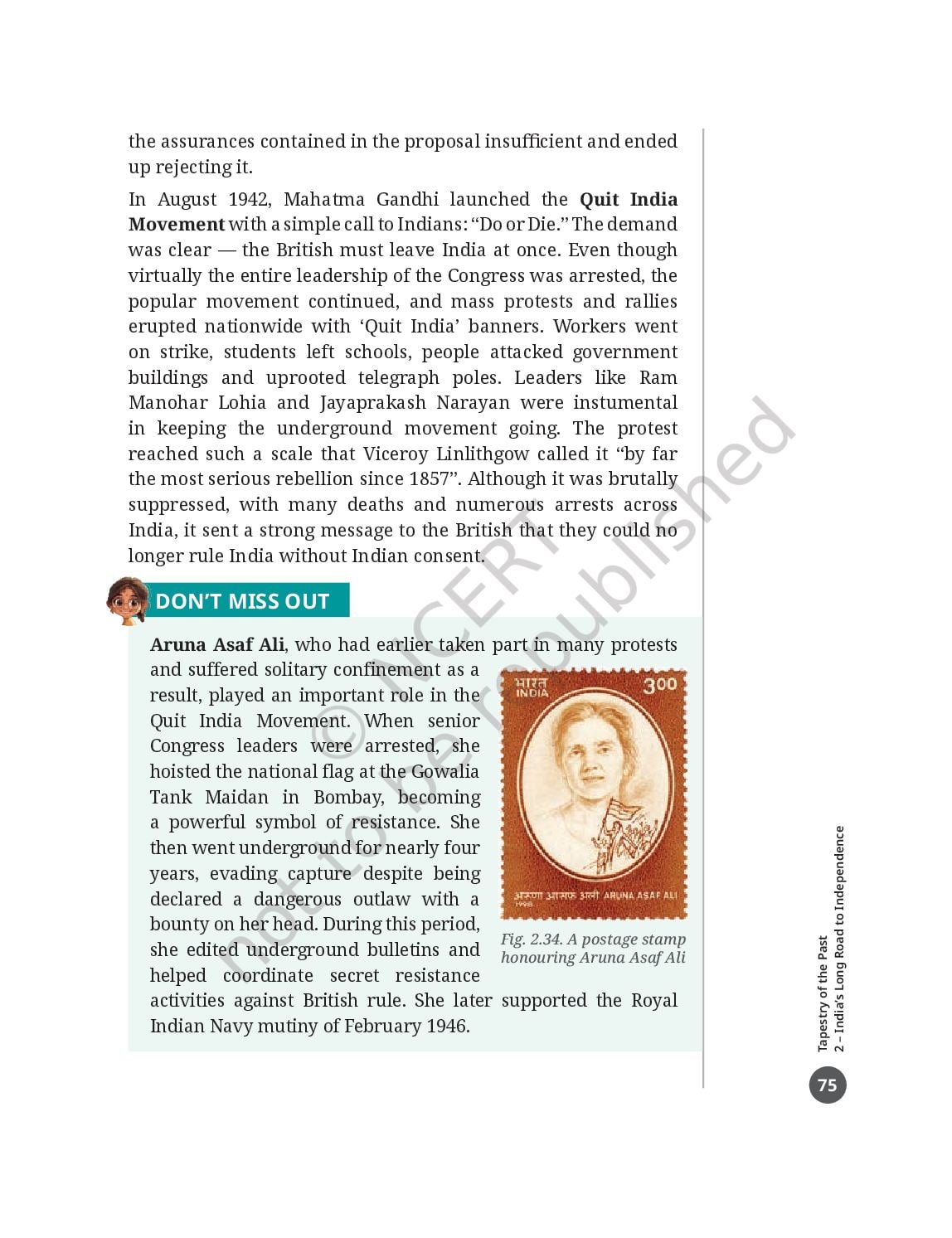
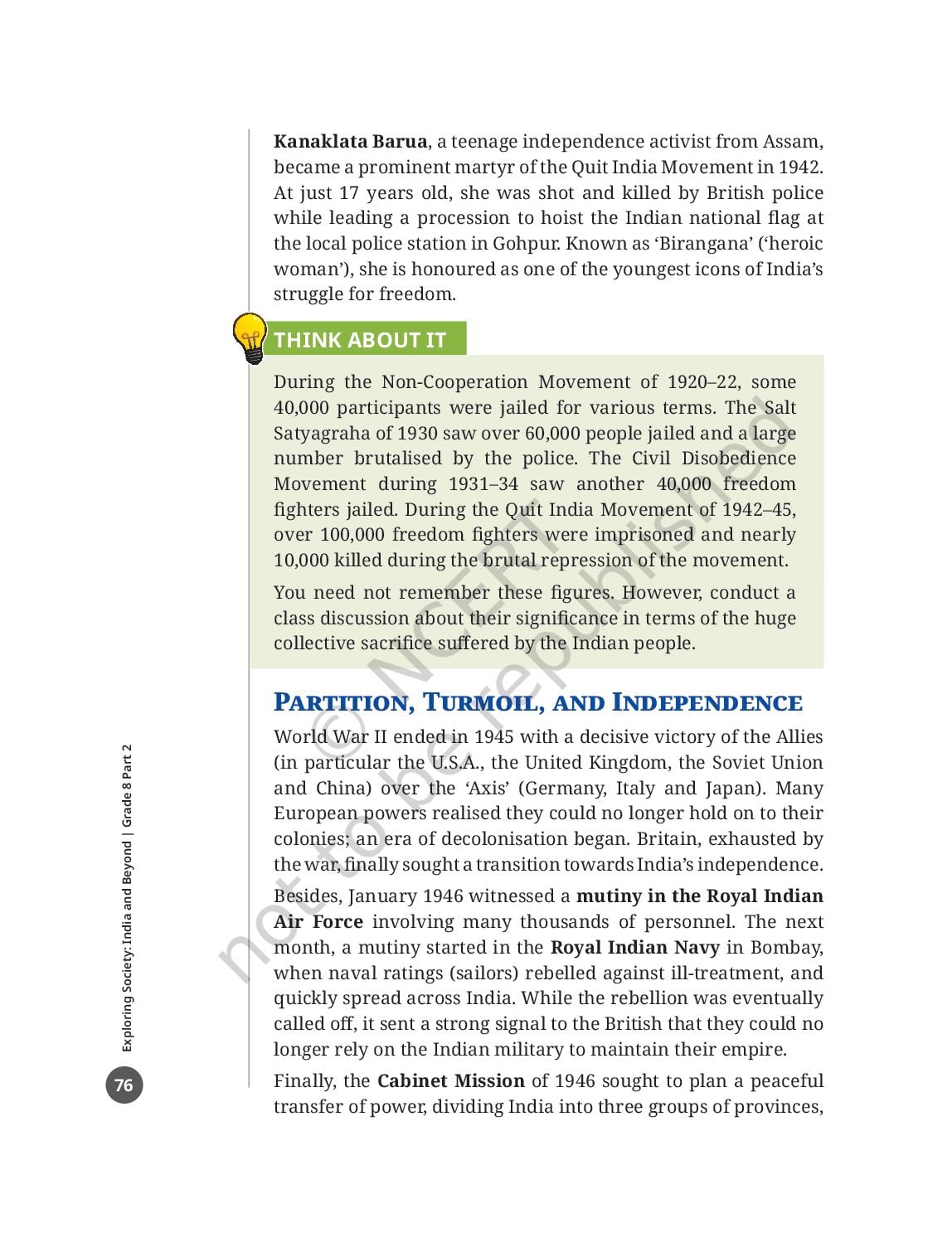
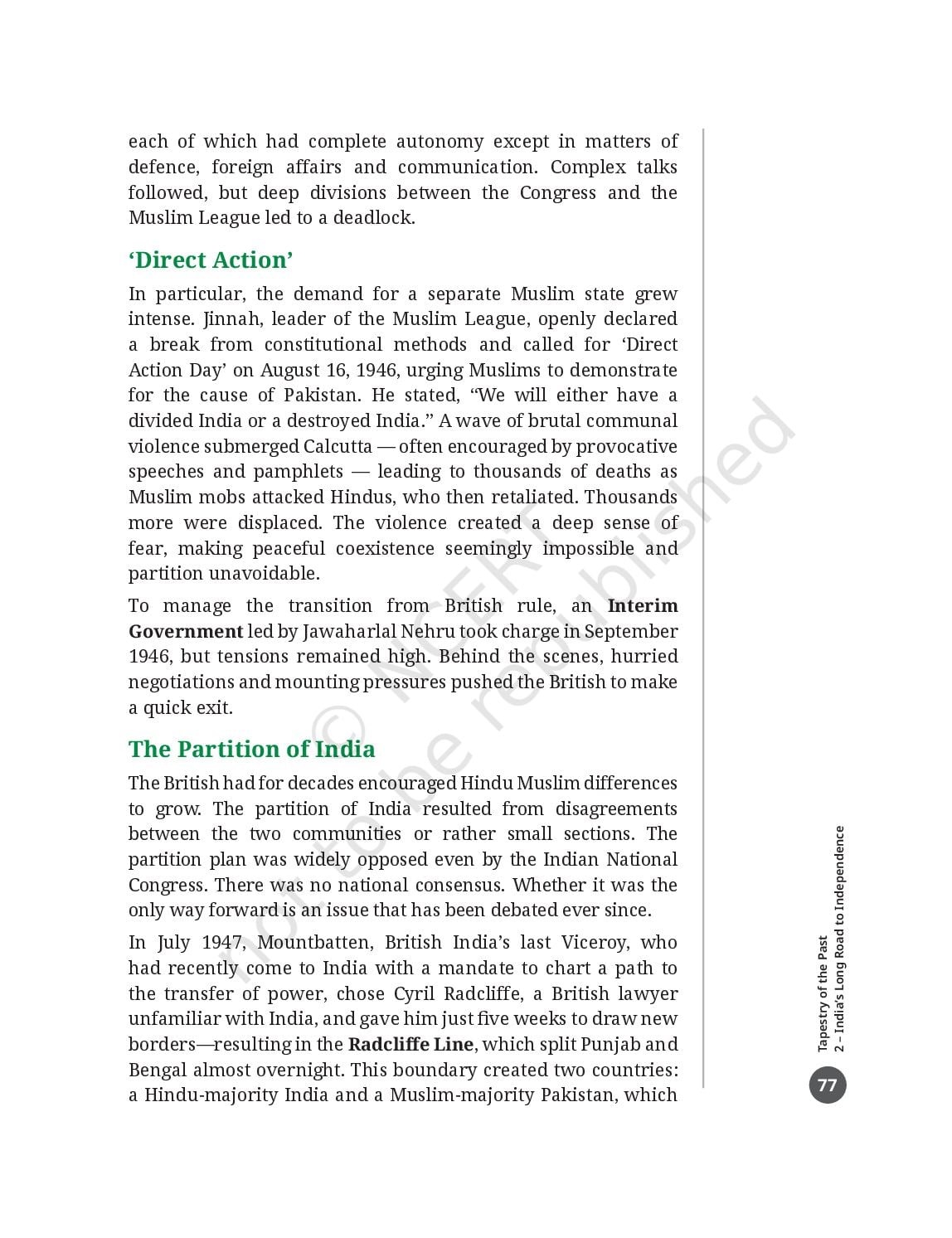
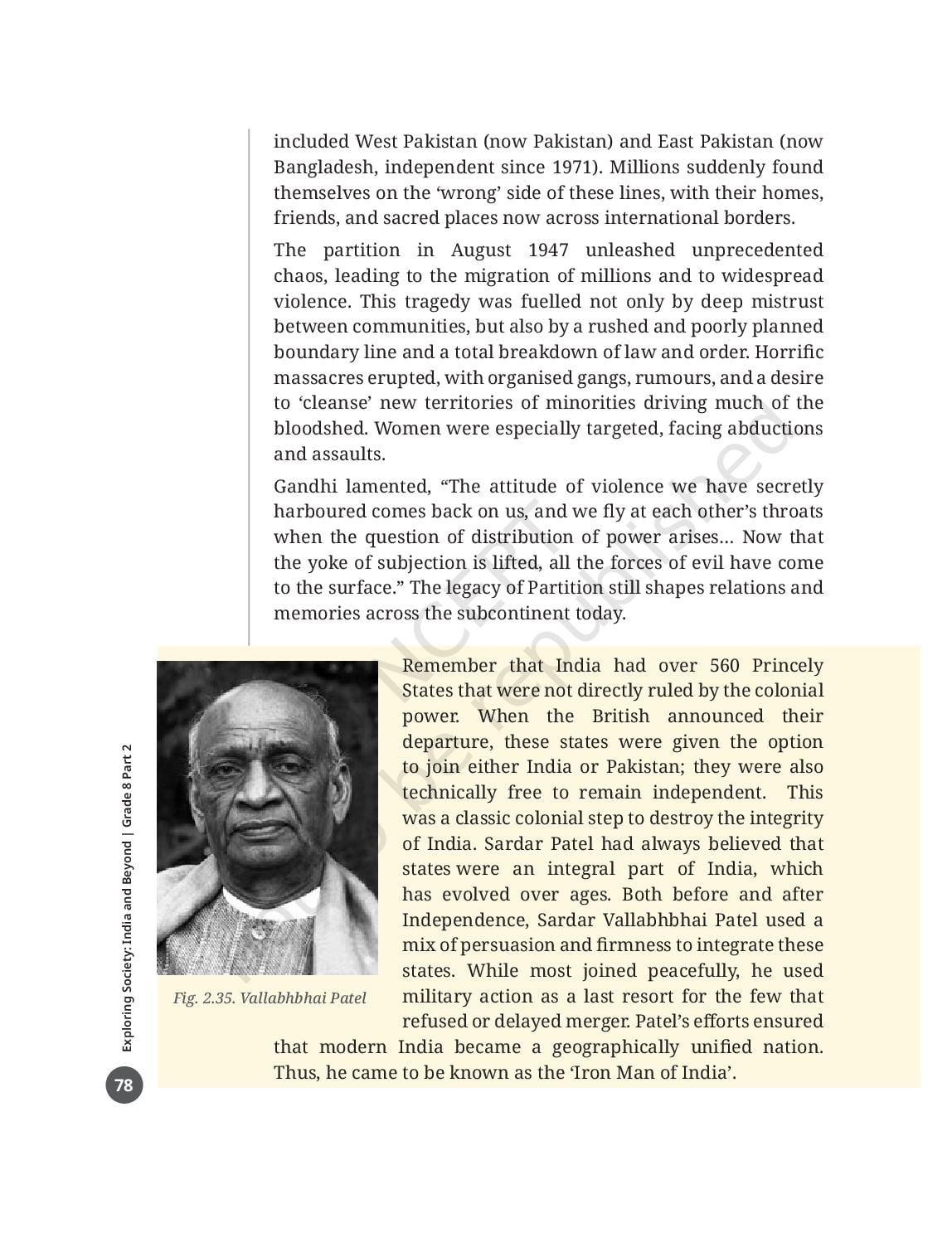
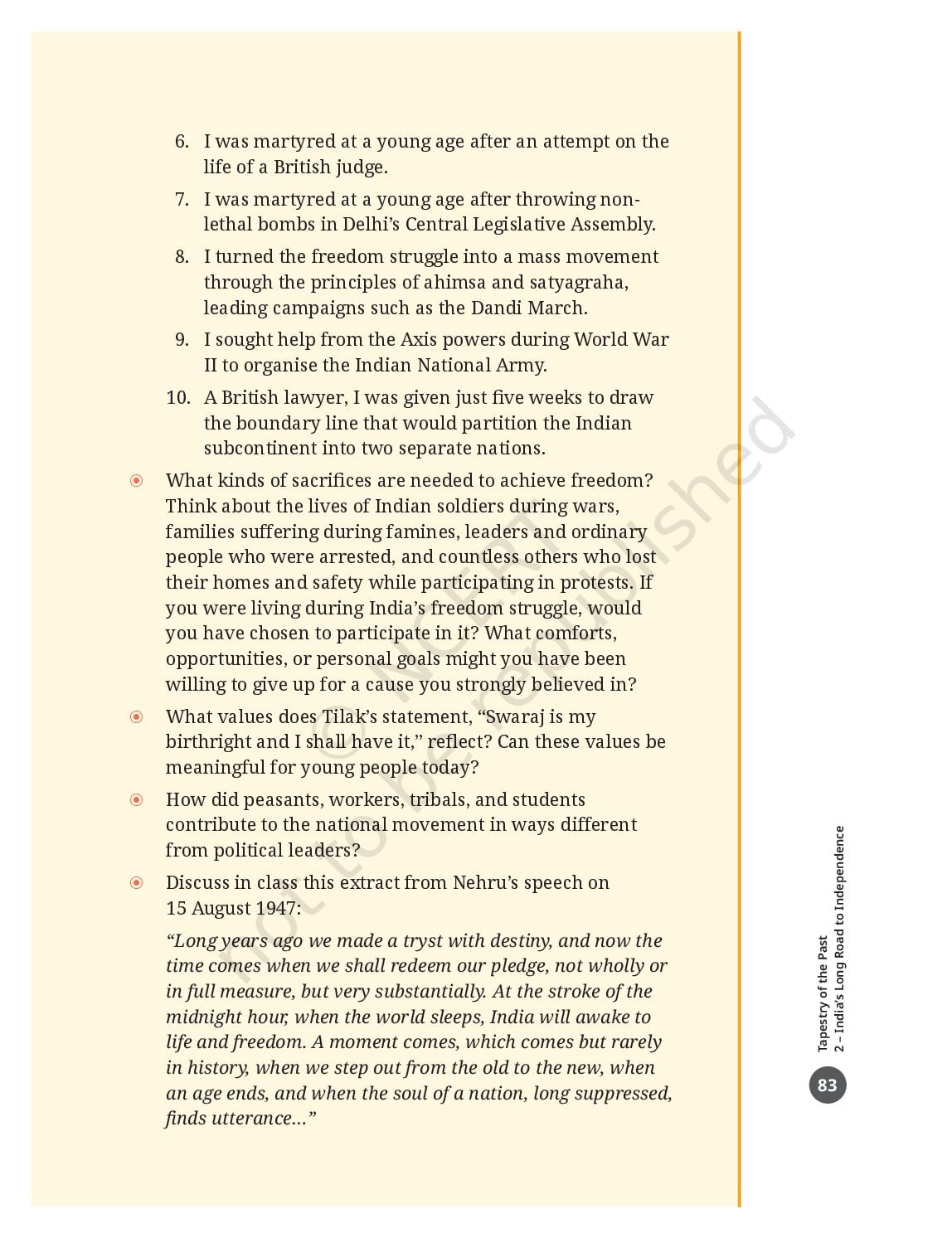
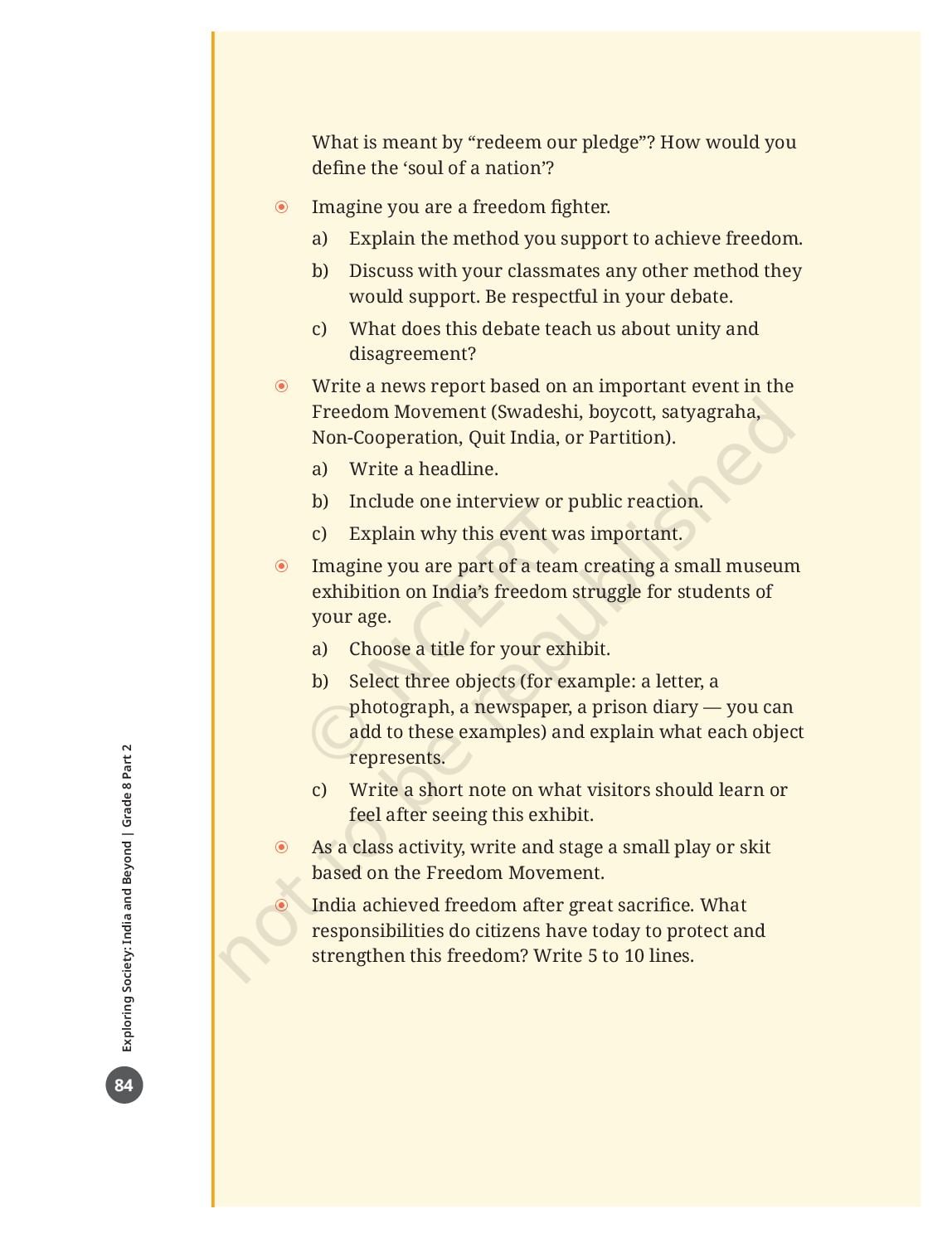
What Is in India’s Long Road to Independence? (Class 8 Social Science Chapter 9)
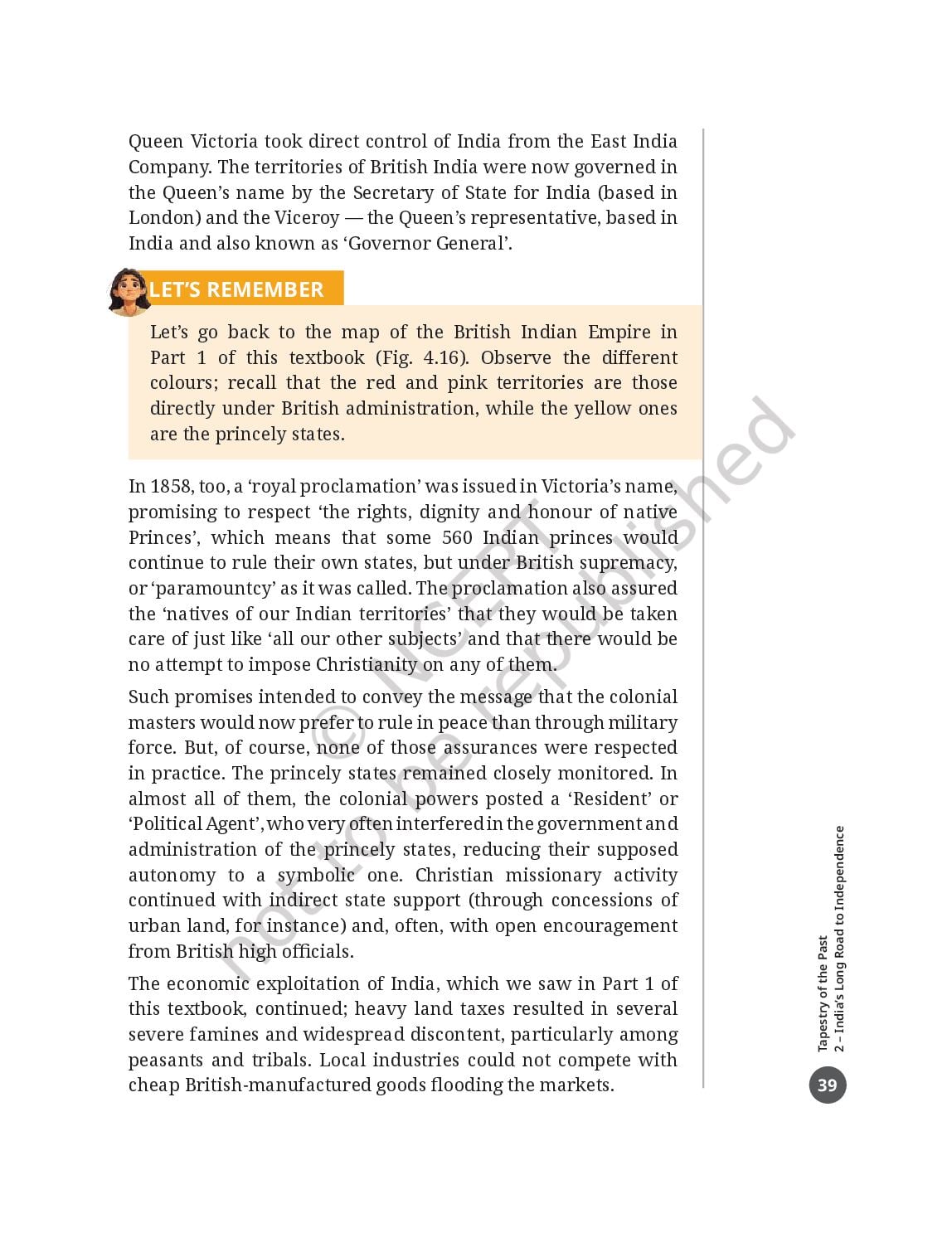
- After 1857 the British Crown took direct control (1858). The royal proclamation promised to respect the ‘rights, dignity and honour of native Princes’ and to leave religion alone — but a ‘Resident’ was posted in almost every princely state, missionary work continued with official support, heavy land taxes fed famines, and the Arms Act and Vernacular Press Act of 1878 disarmed and gagged Indians. Promises on paper, control in practice.
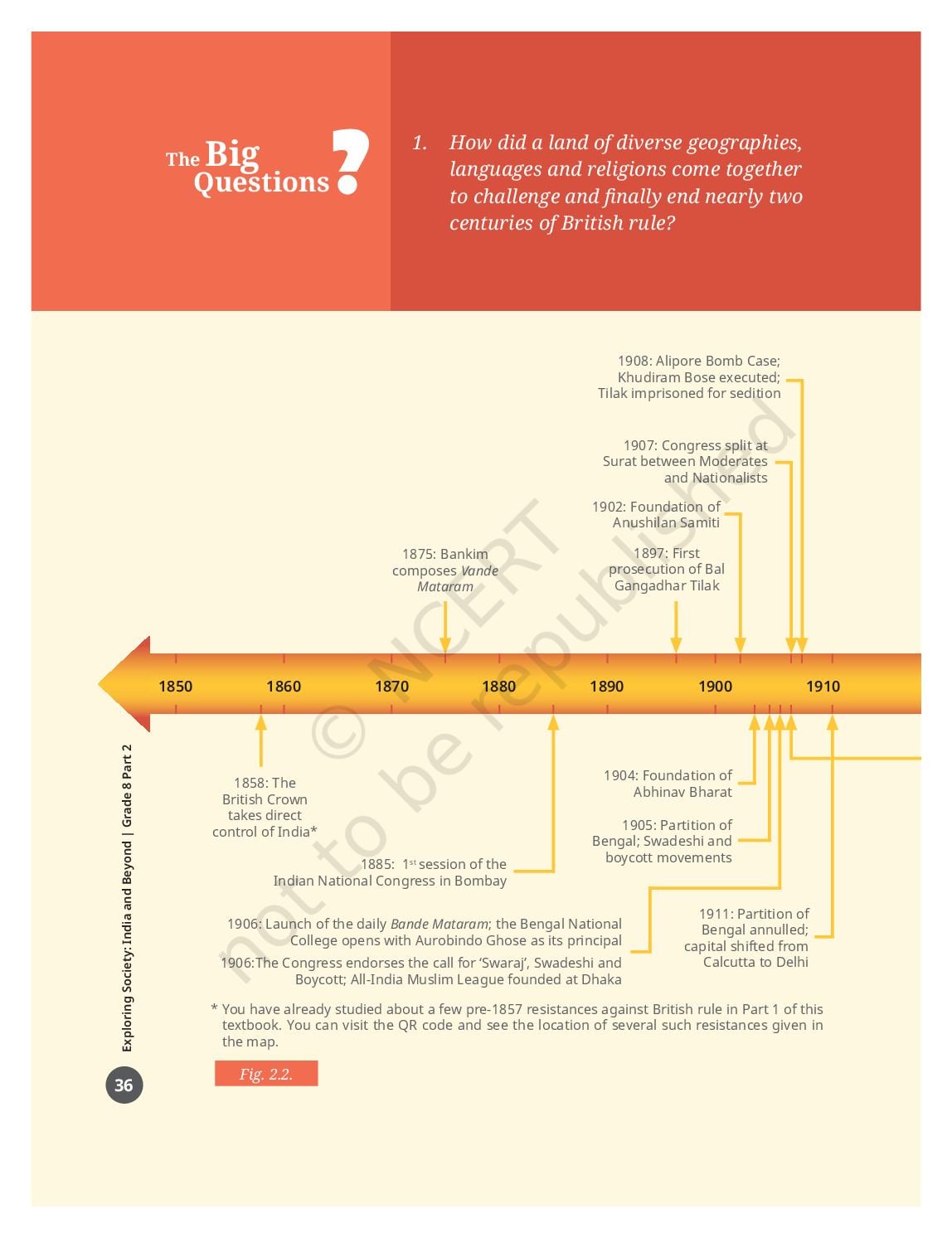
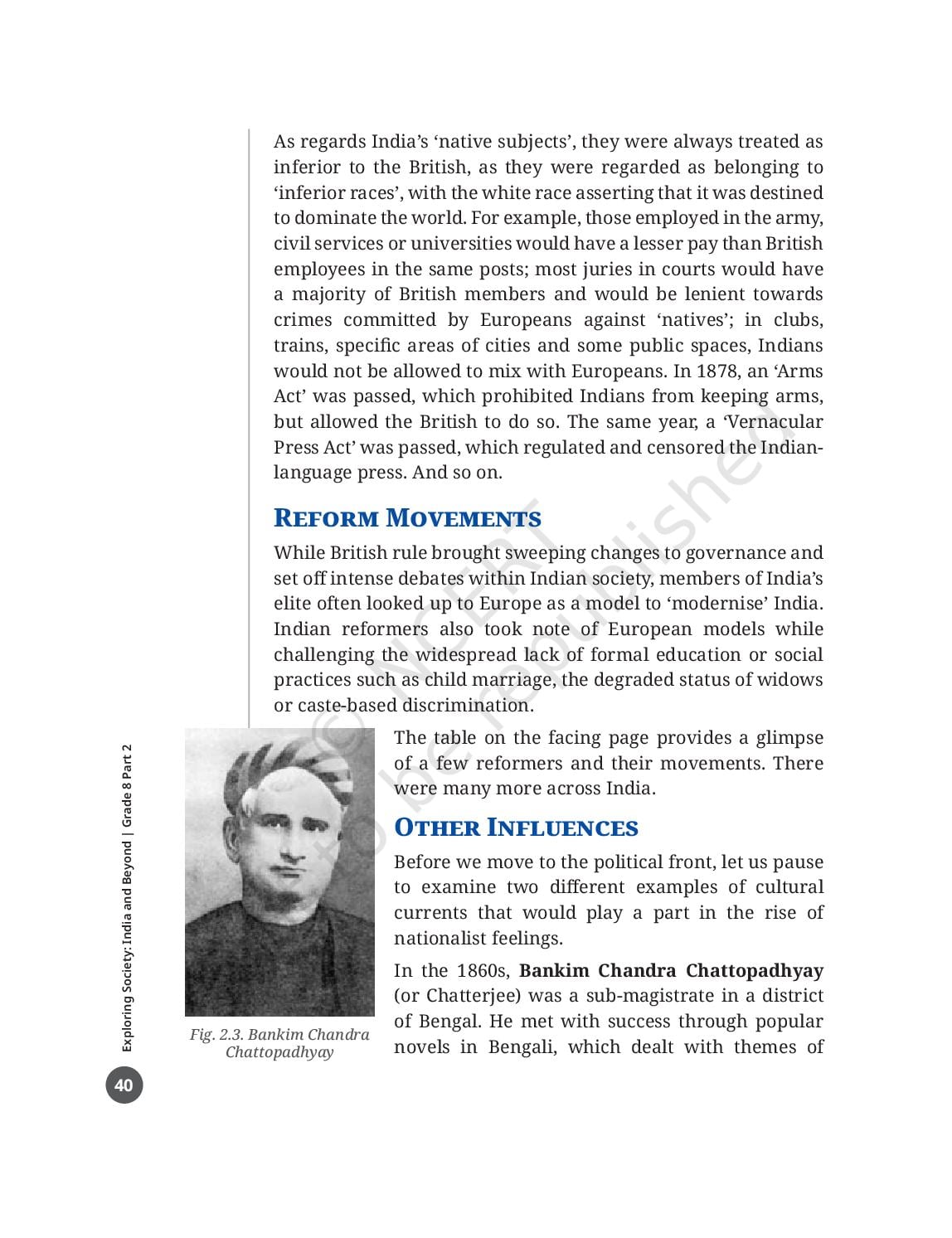
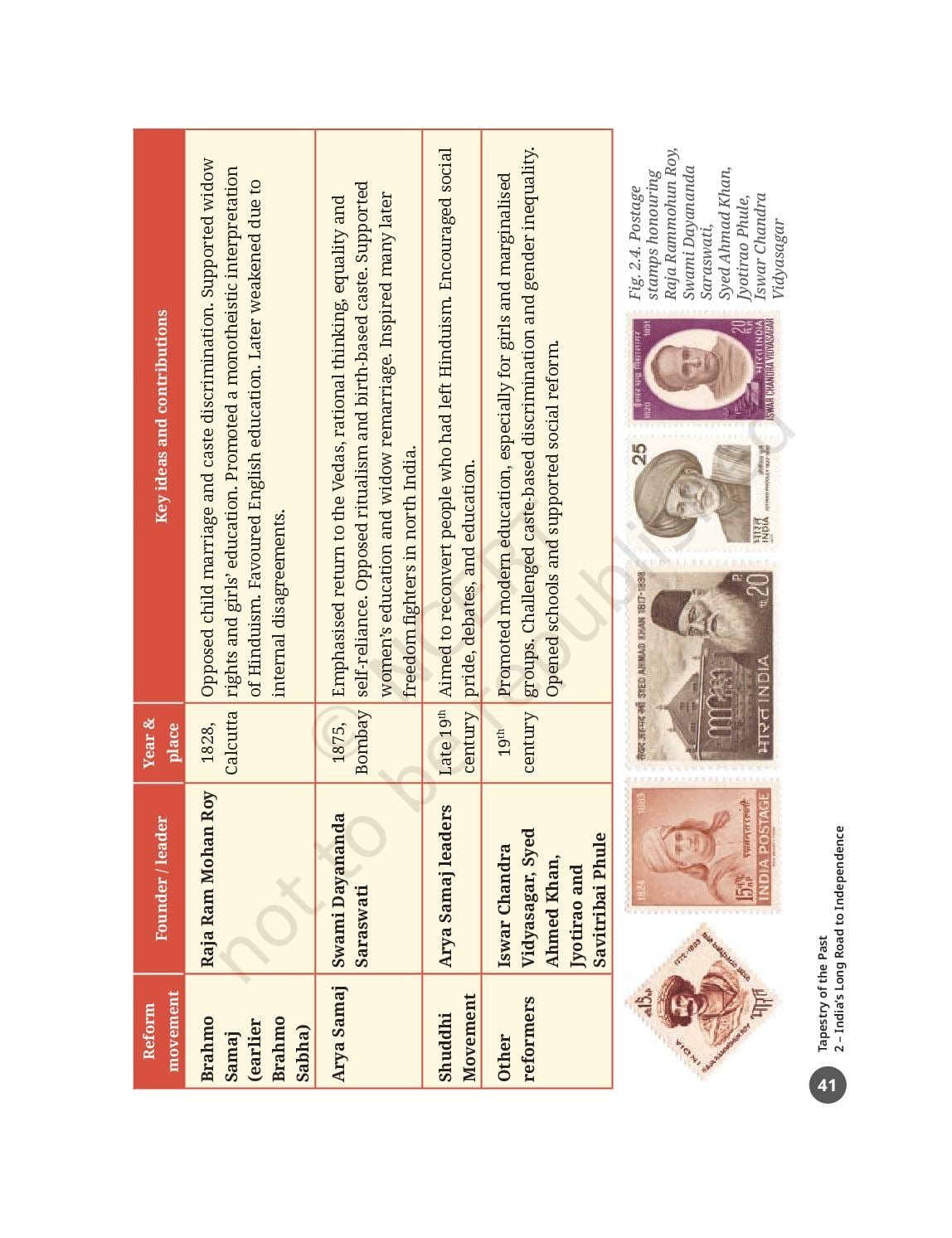
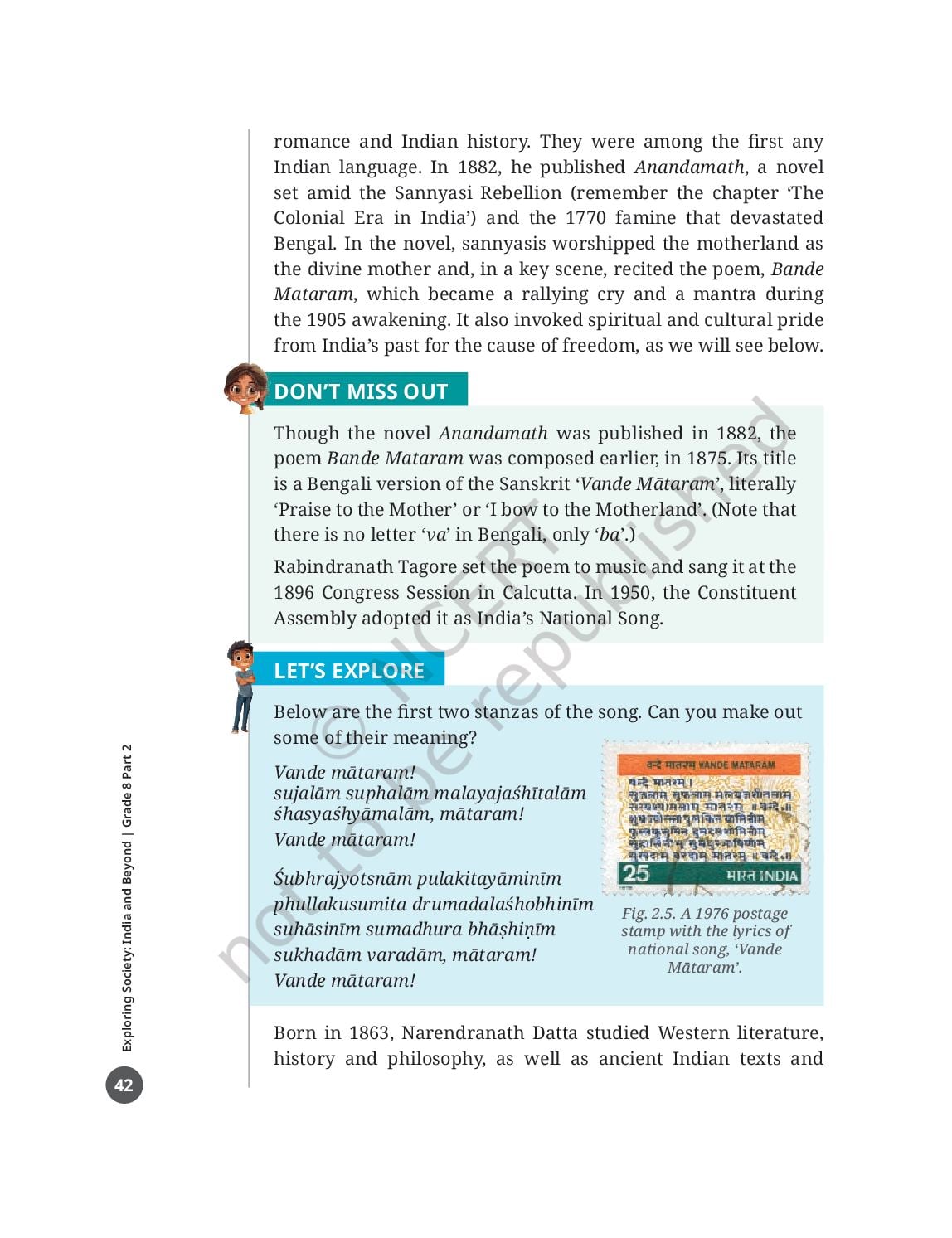
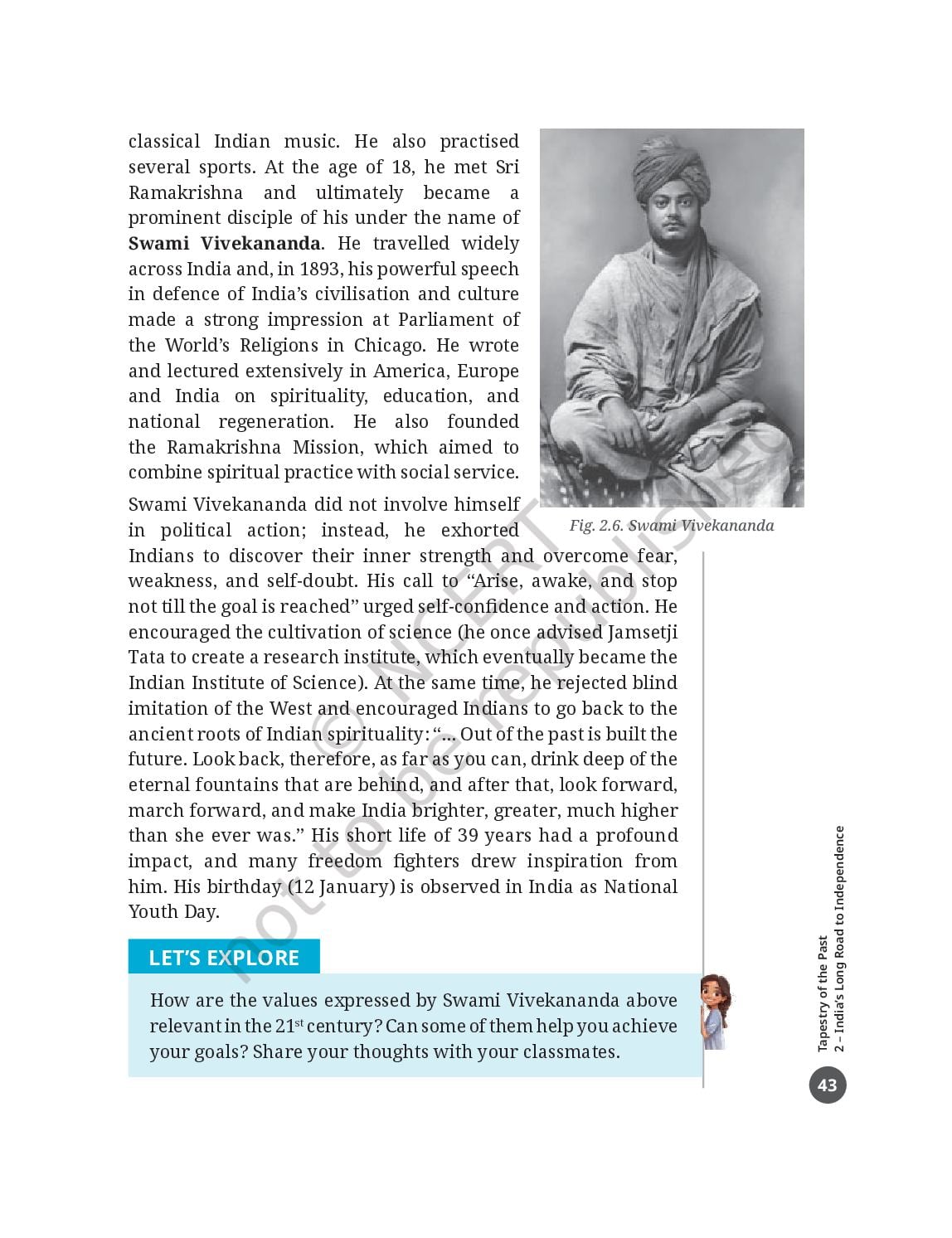
- Reform and culture came before politics. The Brahmo Samaj (1828), Arya Samaj (1875), Vidyasagar, Syed Ahmed Khan and the Phules attacked child marriage, the treatment of widows, caste discrimination and the lack of schooling. Bankim’s Bande Mataram (composed 1875) and Vivekananda’s call to “Arise, awake, and stop not till the goal is reached” gave the coming movement its language of pride and self-confidence.
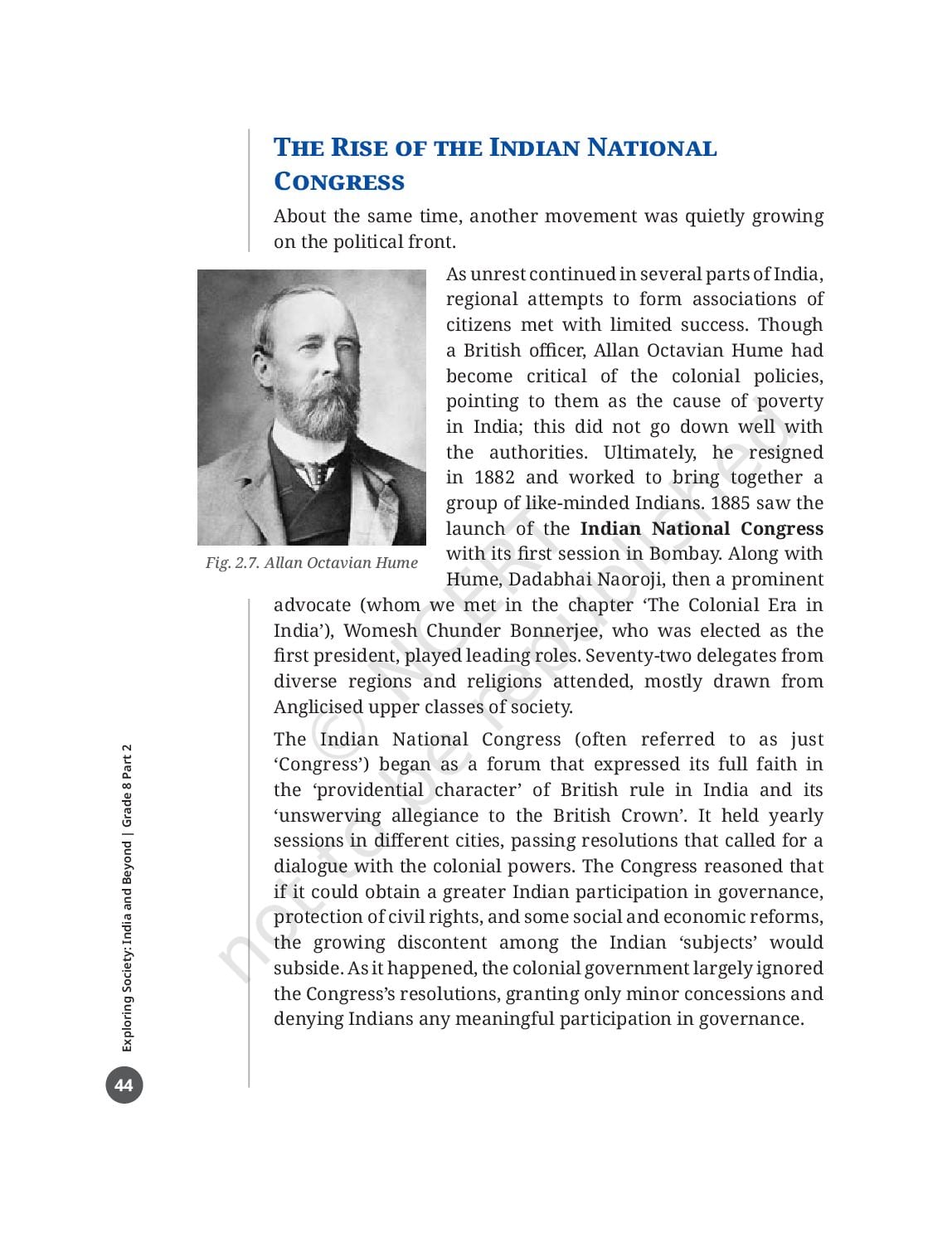
- The Indian National Congress (1885) began by professing ‘unswerving allegiance to the British Crown’. Curzon’s Partition of Bengal (1905) changed everything: it produced Swadeshi, boycott and National Education, the 1906 Calcutta demand for Swaraj, and — because Moderates wanted to step back from it — the Surat split of 1907 between Moderates and Nationalists. The All-India Muslim League was founded at Dhaka the same year (1906).
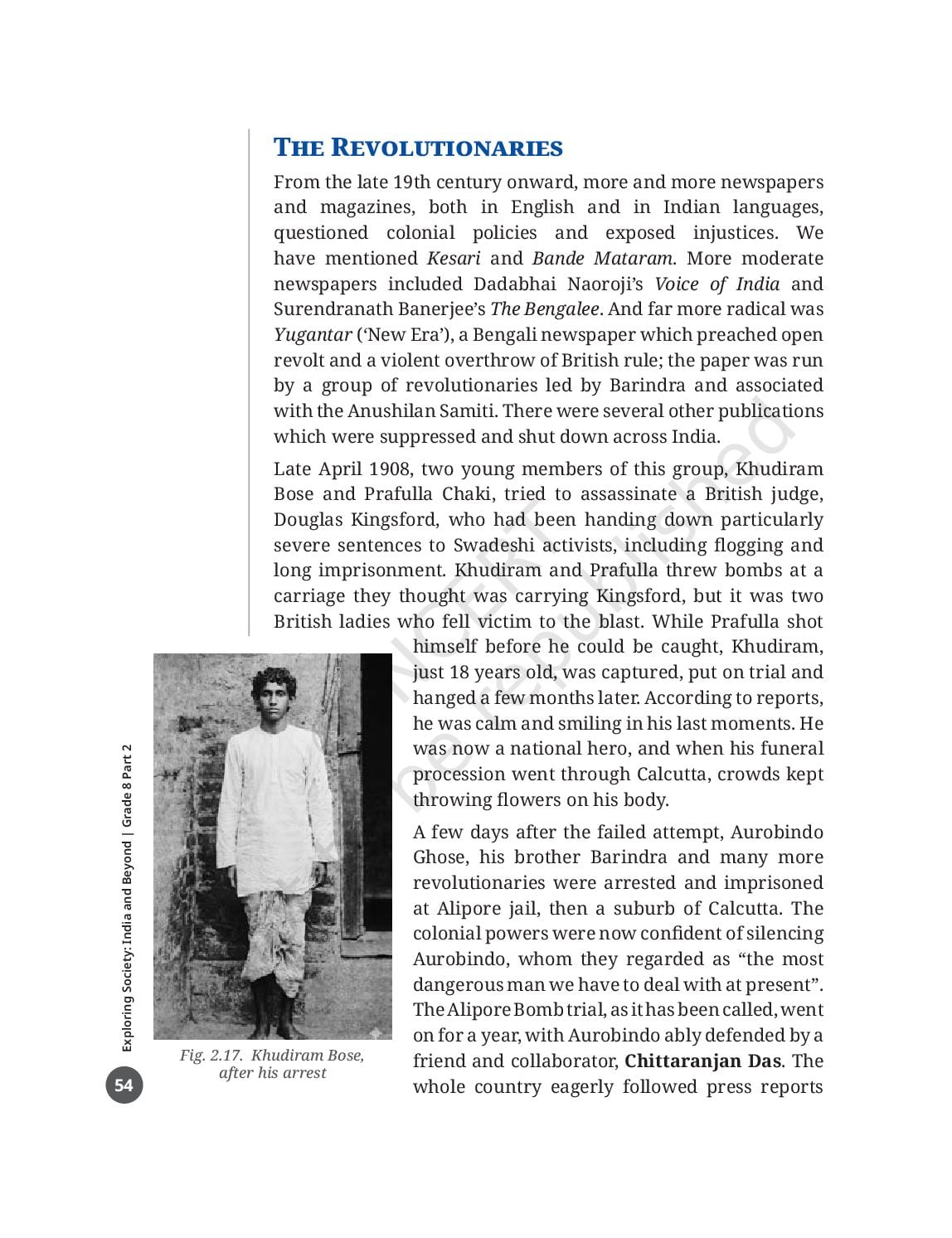
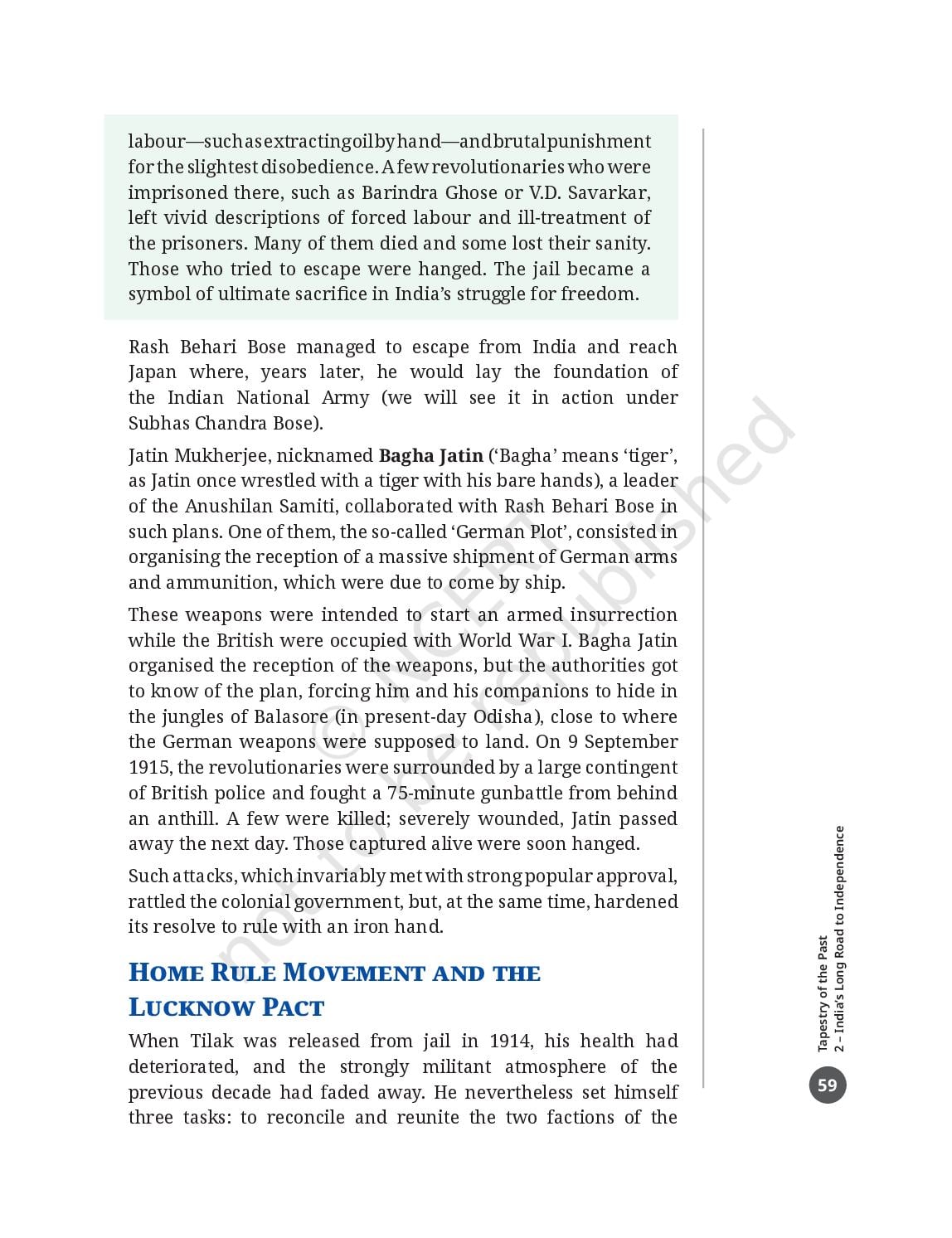
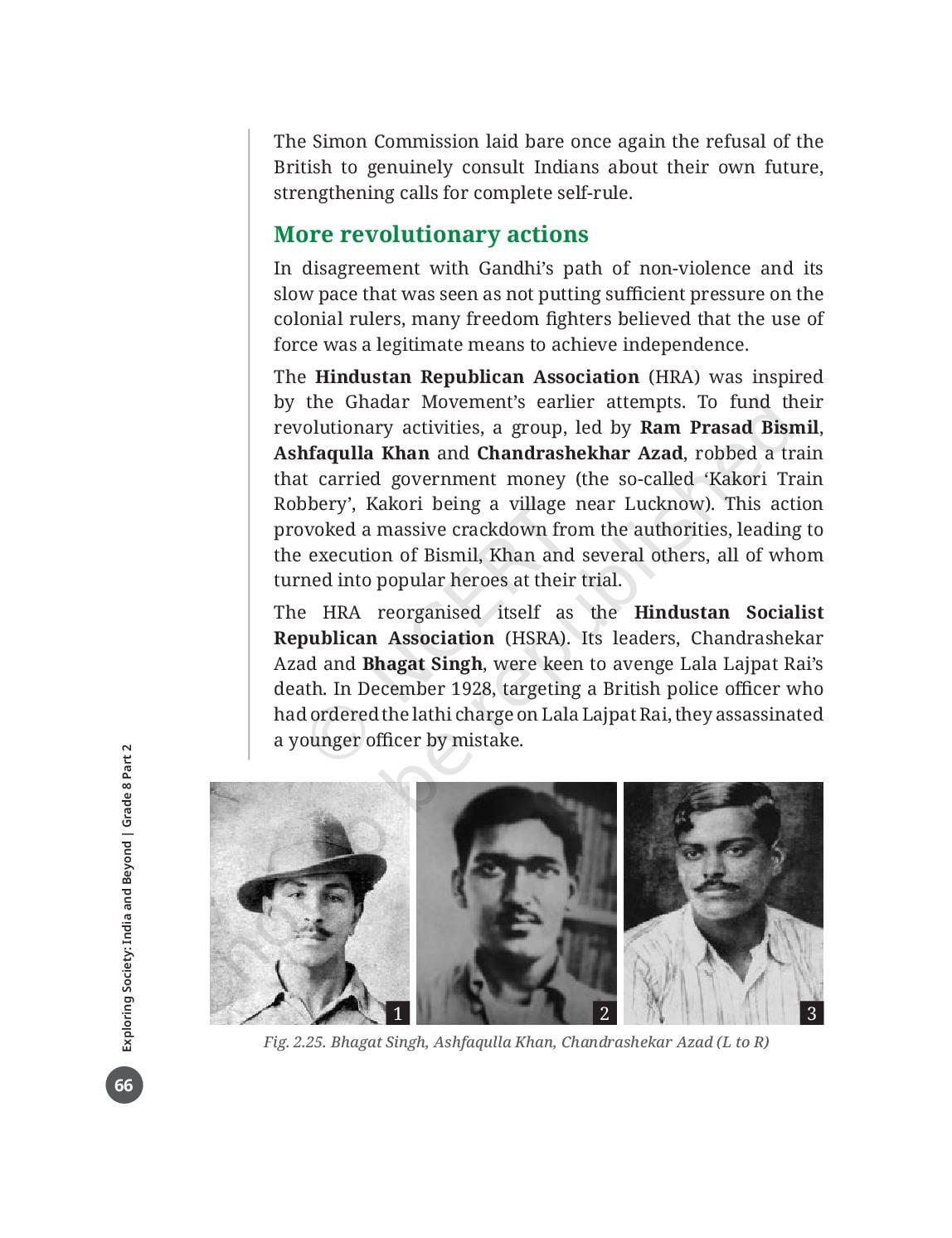
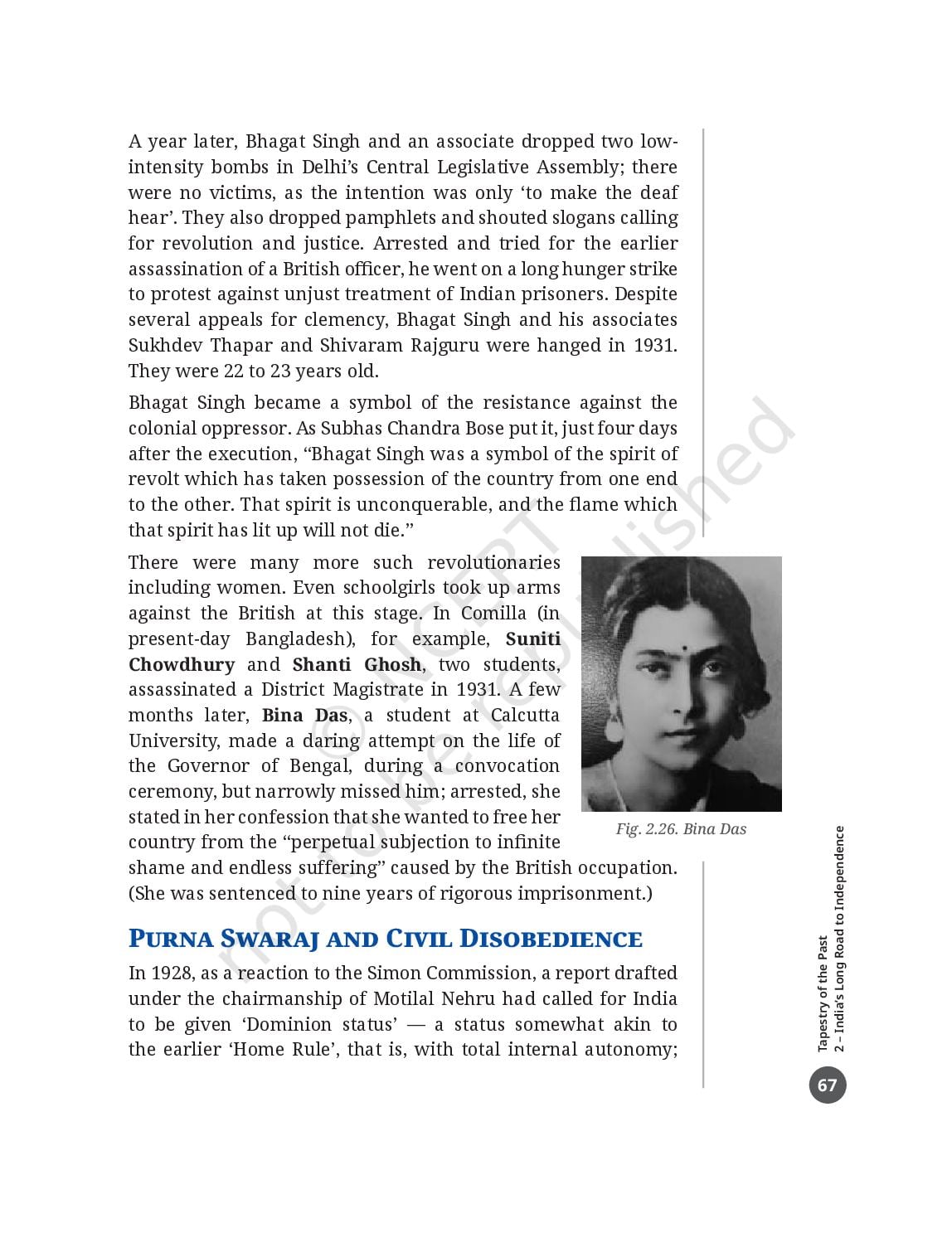
- Alongside the Congress ran a revolutionary stream — the Anushilan Samiti, Abhinav Bharat, Yugantar, the Alipore Bomb Case, Khudiram Bose, Bagha Jatin’s ‘German Plot’, the Ghadar Movement (1914–15), the Kakori robbery, Bhagat Singh and the HSRA, and schoolgirls like Suniti Chowdhury, Shanti Ghosh and Bina Das. Its actions were popular and rattled the government, but also hardened its repression.
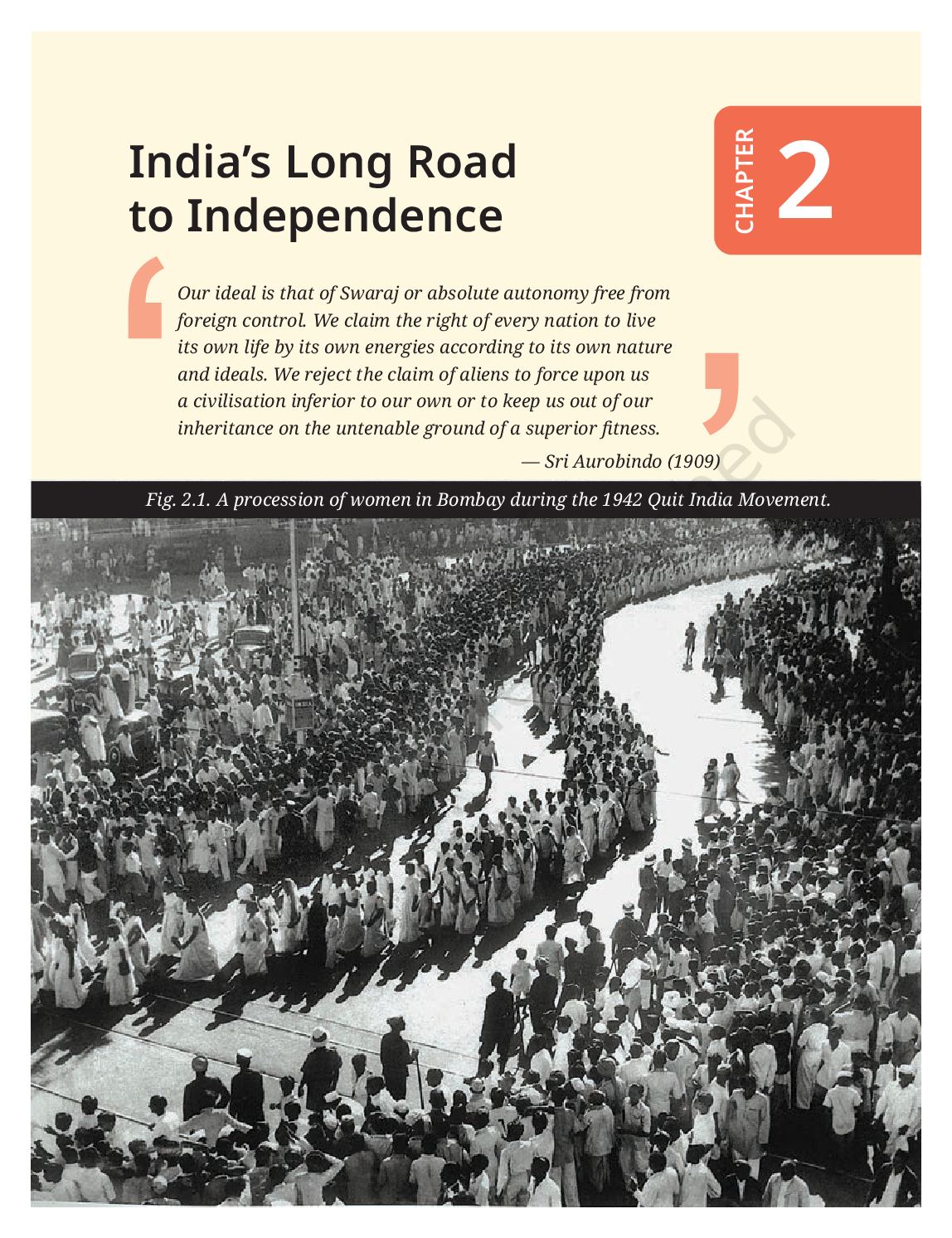
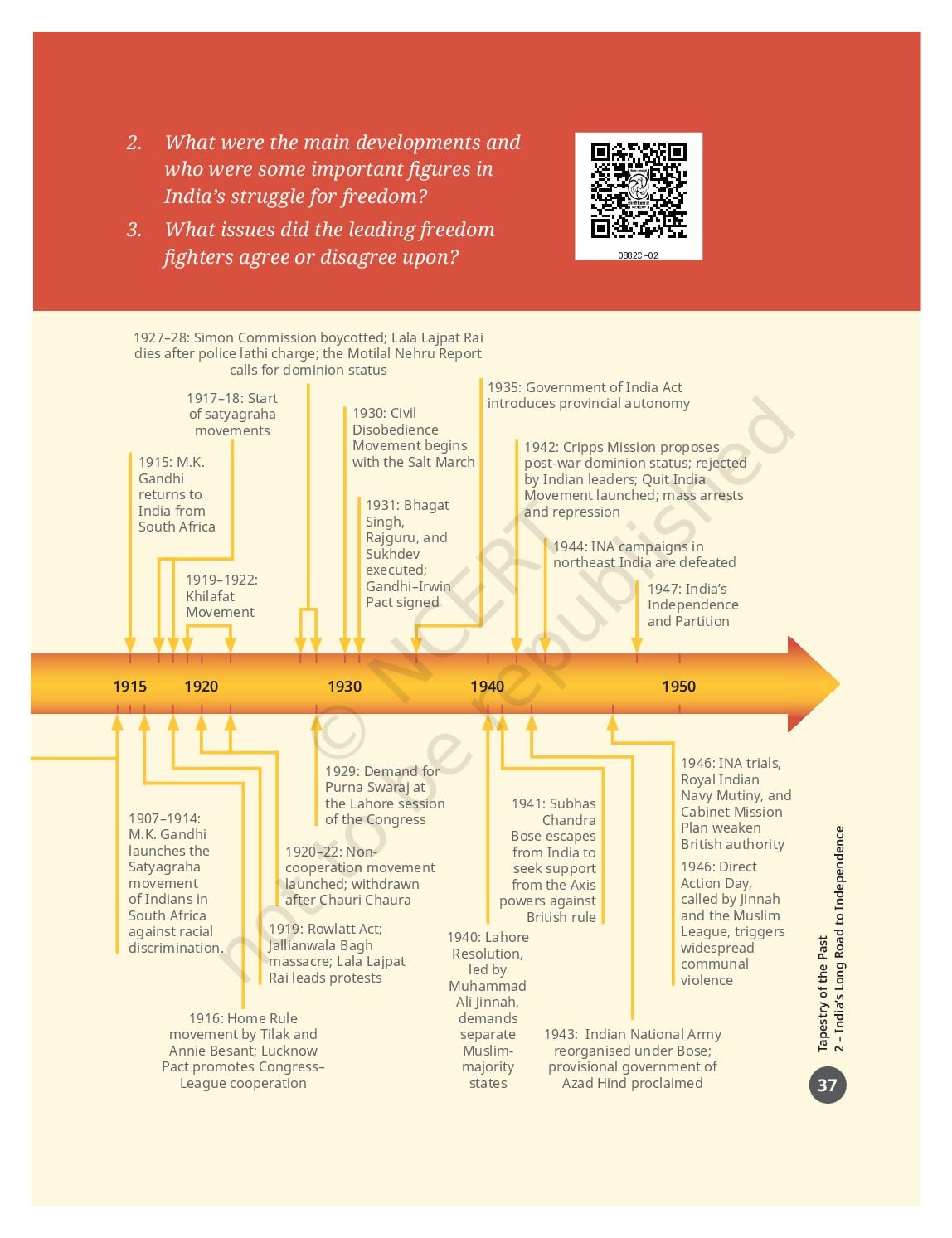
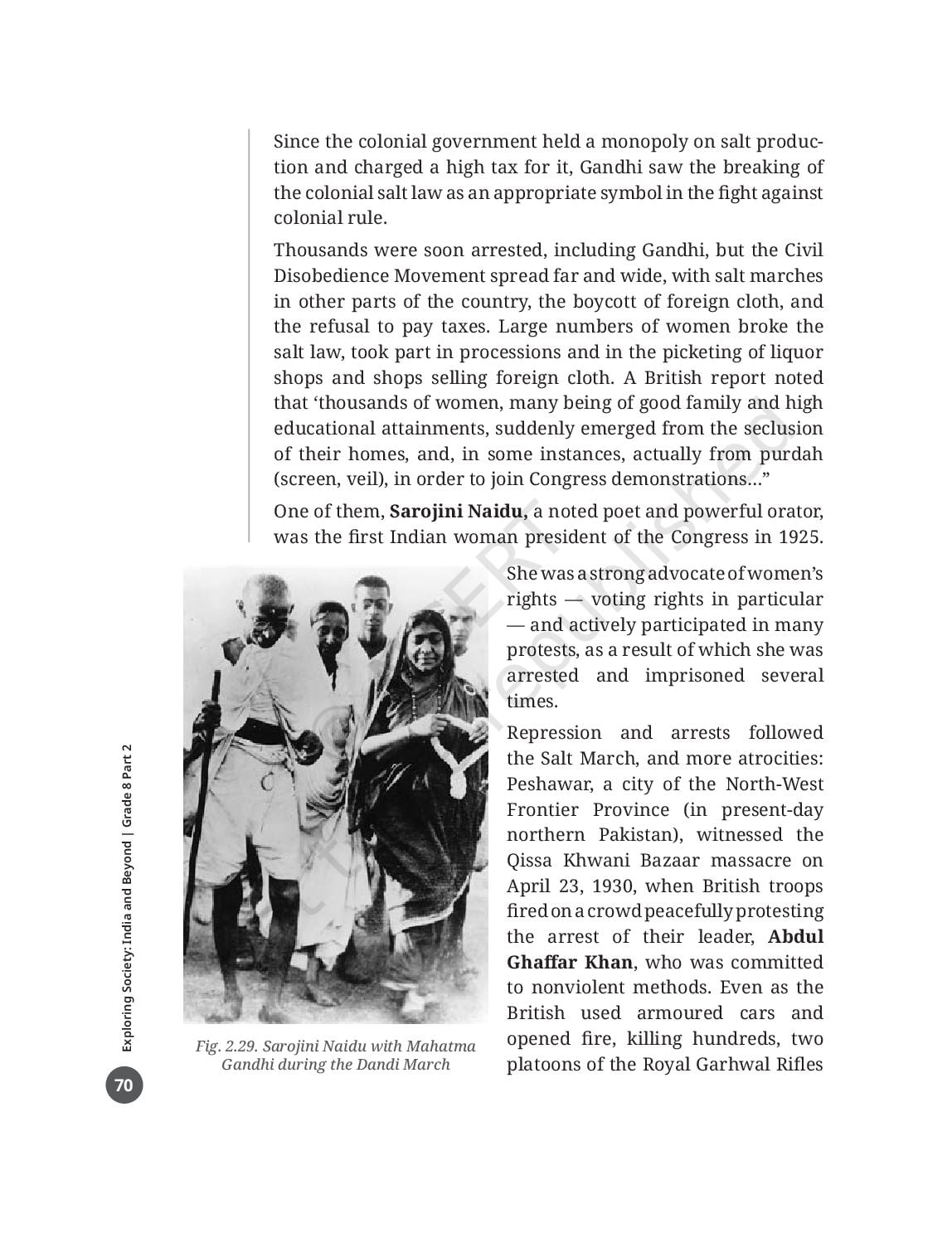
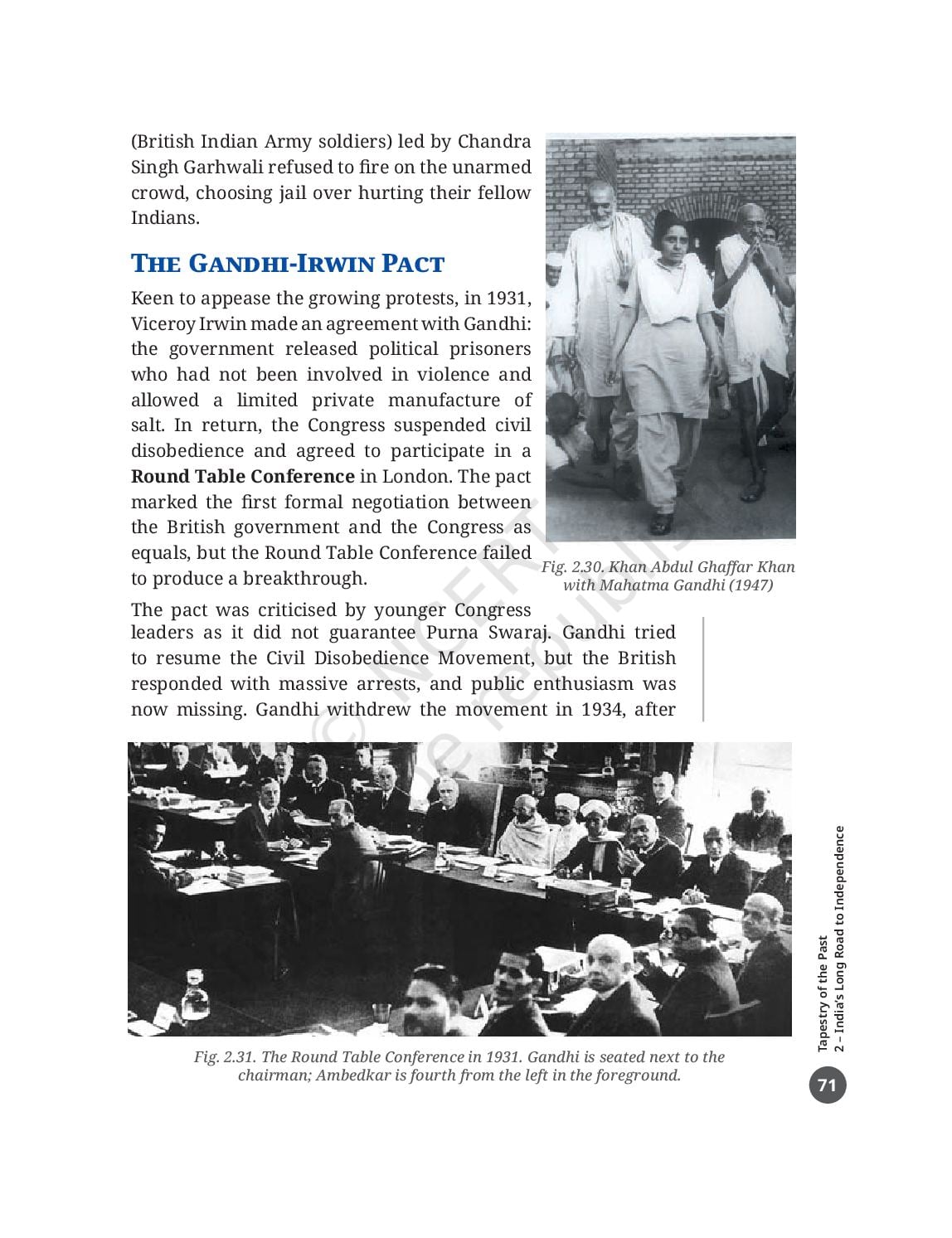
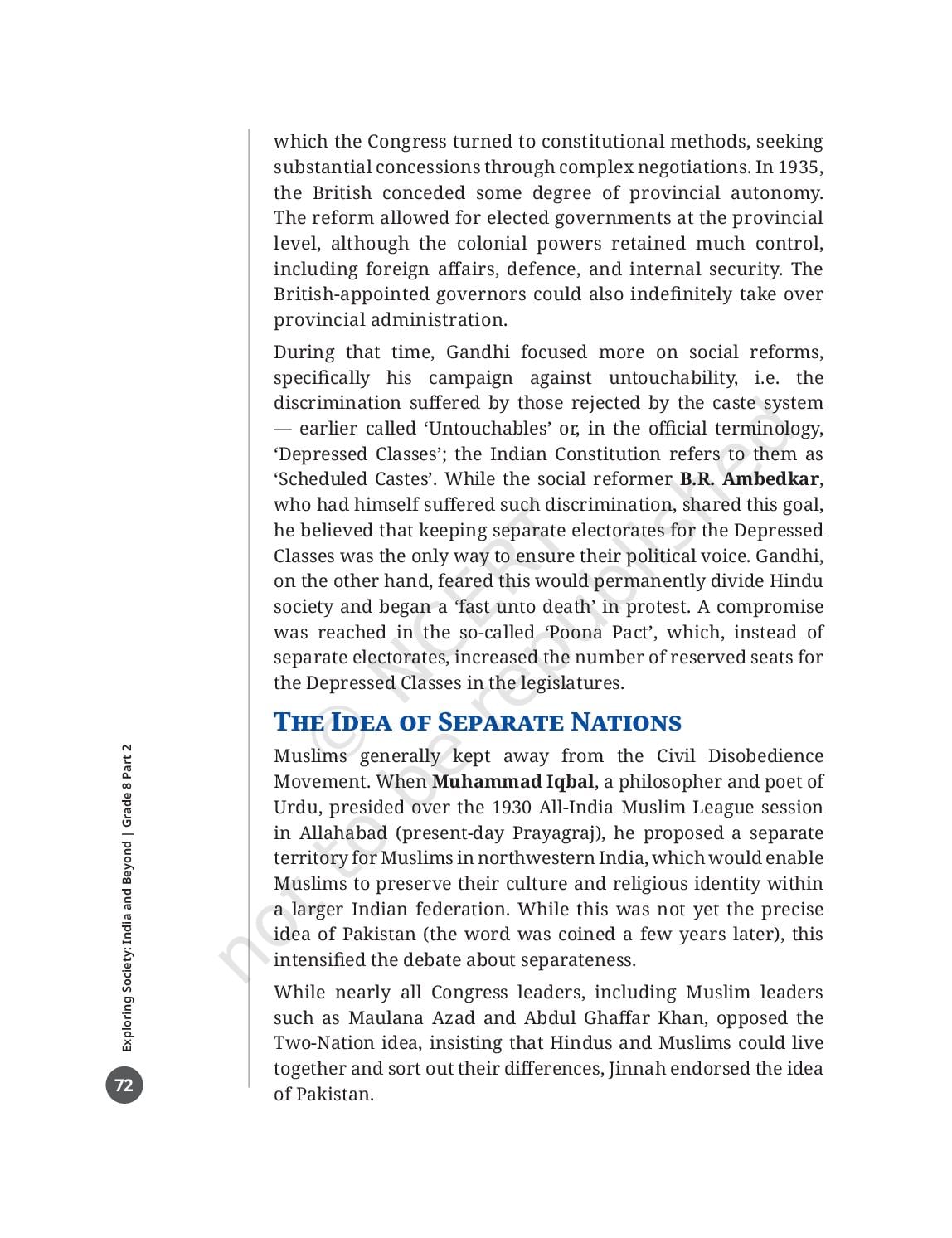
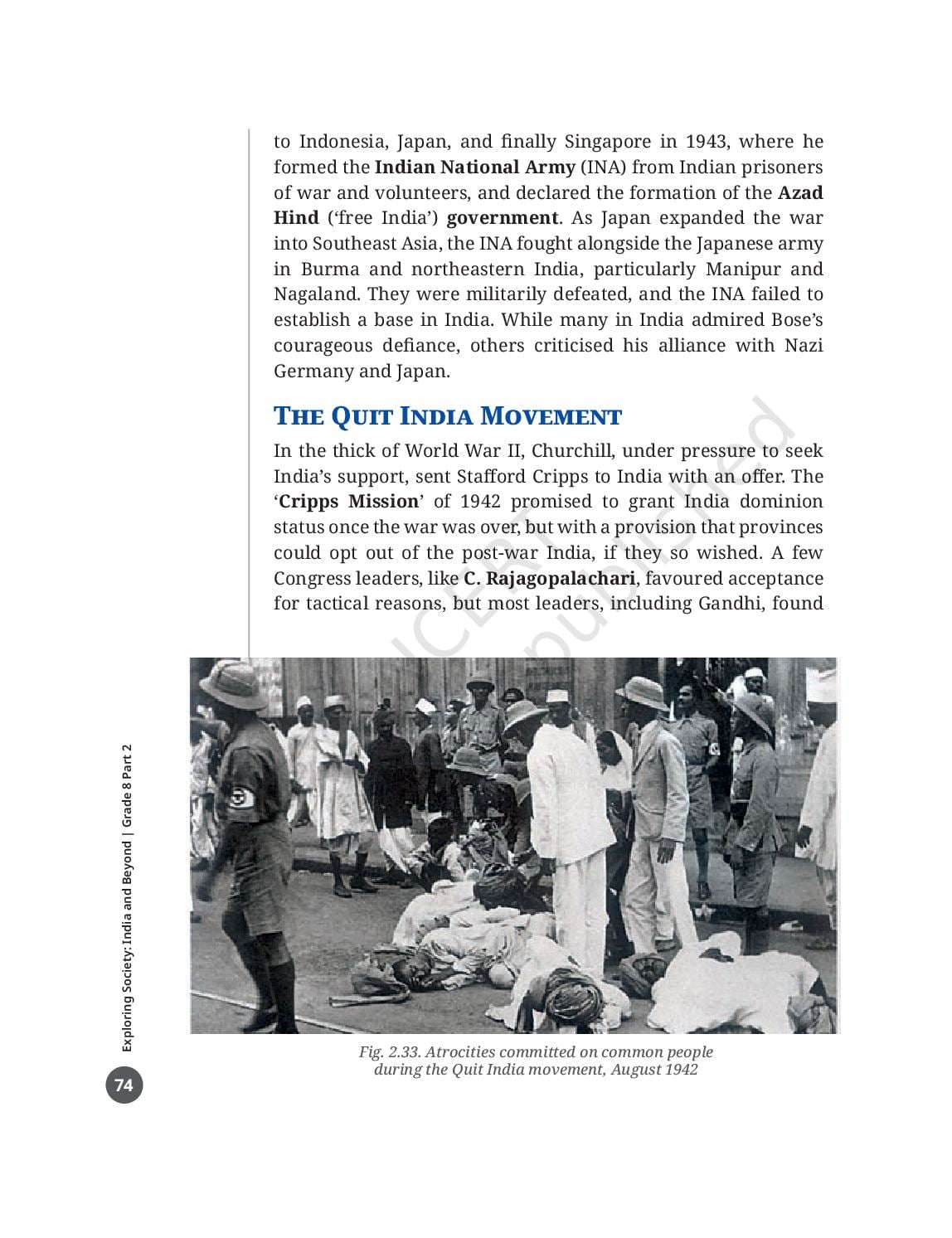
- Gandhi returned in 1915 and turned protest into a mass movement: satyagraha at Champaran, Ahmedabad and Kheda; Non-Cooperation (1920–22, allied with the Khilafat movement and called off after Chauri Chaura); Civil Disobedience from the Salt March of 1930; the Gandhi–Irwin Pact of 1931; and Quit India in 1942, which Viceroy Linlithgow called “by far the most serious rebellion since 1857”.
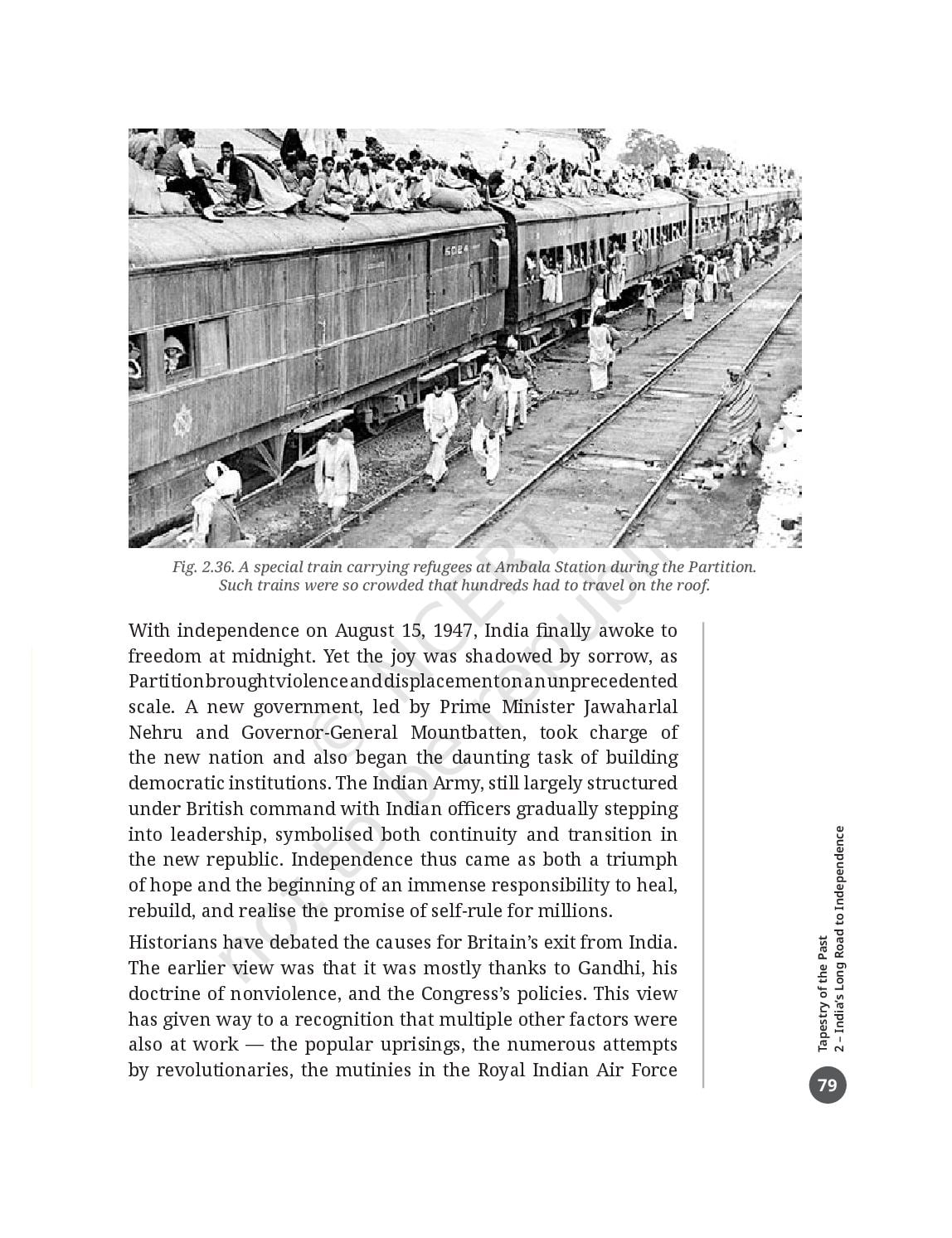
- Freedom came in 1947 with Partition. The Radcliffe Line, drawn in five weeks by a lawyer who did not know India, split Punjab and Bengal; millions migrated and terrible violence followed. Historians no longer credit Britain’s exit to any single cause: Gandhi and the Congress, the revolutionaries, the popular uprisings, the RIAF and RIN mutinies, Britain’s exhaustion after World War II and the worldwide tide of decolonisation all count.
Quick revision – India’s Long Road to Independence
| Term | What it means | Where it appears in the chapter | Why it matters |
|---|---|---|---|
| Paramountcy | British supremacy over the princely states — the princes ruled, but under British overlordship | A Royal Proclamation, p. 39 | Some 560 princes kept their thrones, but a ‘Resident’ or ‘Political Agent’ interfered so much that their autonomy became ‘a symbolic one’ |
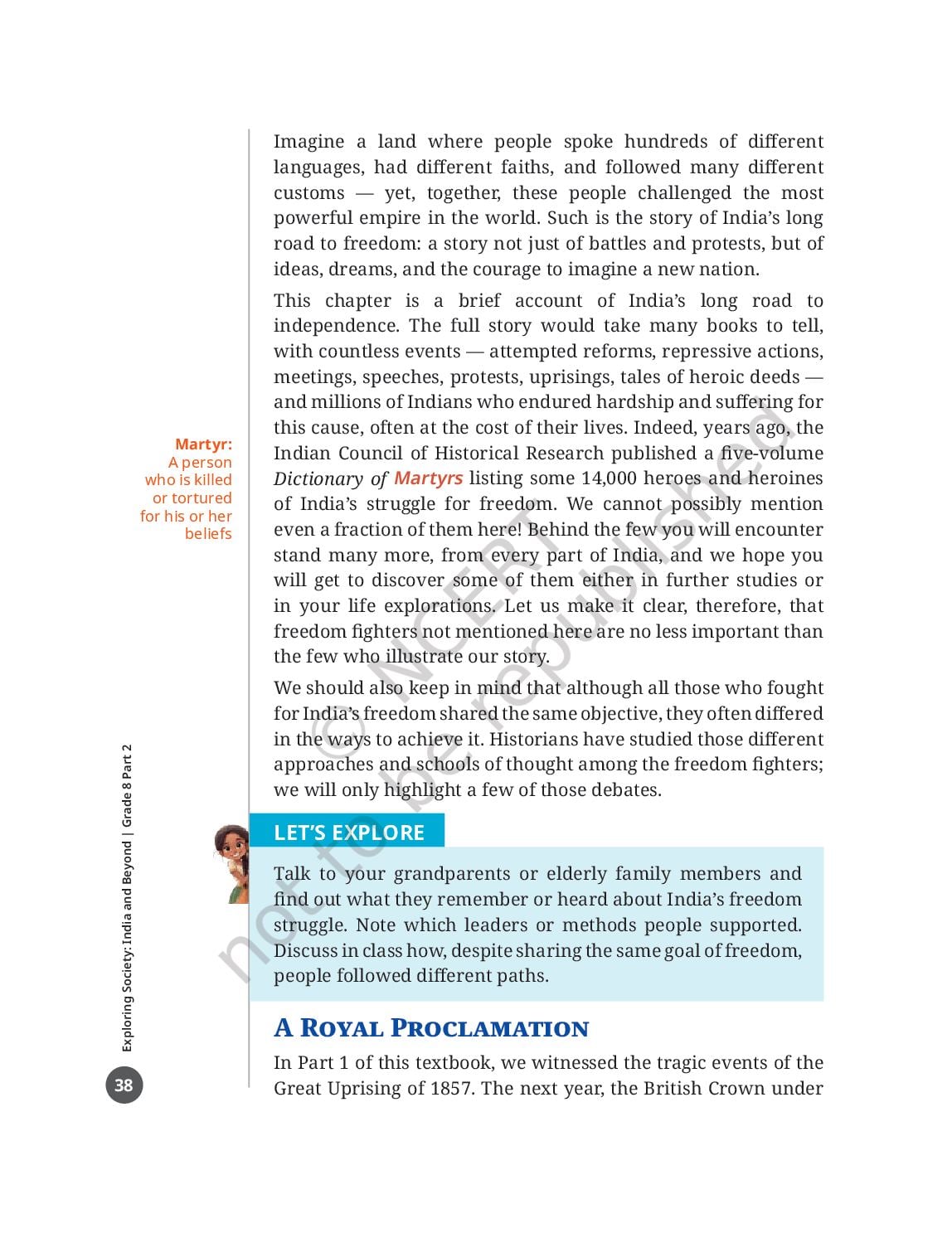
| Martyr | A person who is killed or tortured for his or her beliefs | Margin note, p. 38 | The ICHR’s five-volume Dictionary of Martyrs lists some 14,000 of them — the chapter can name only a handful |
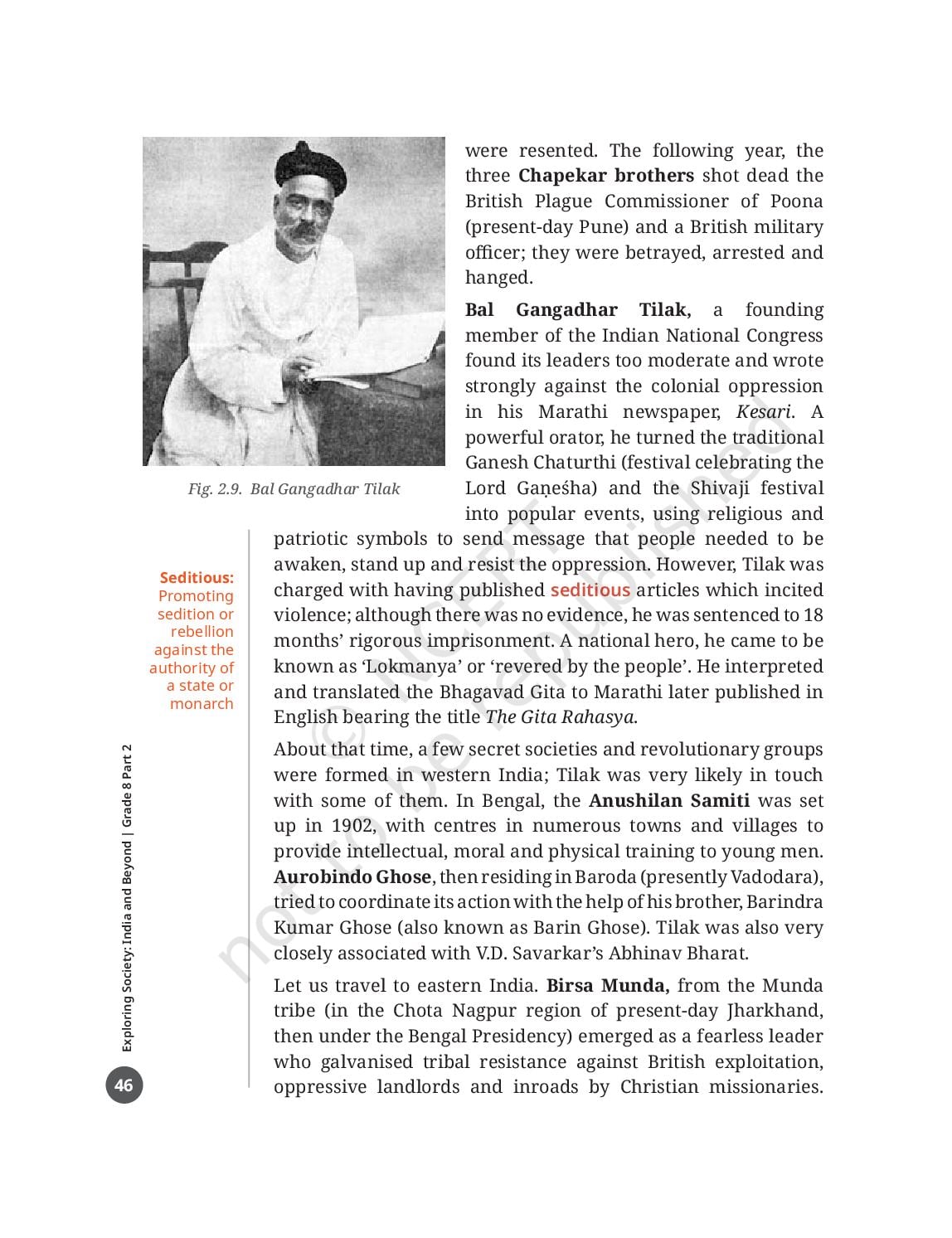
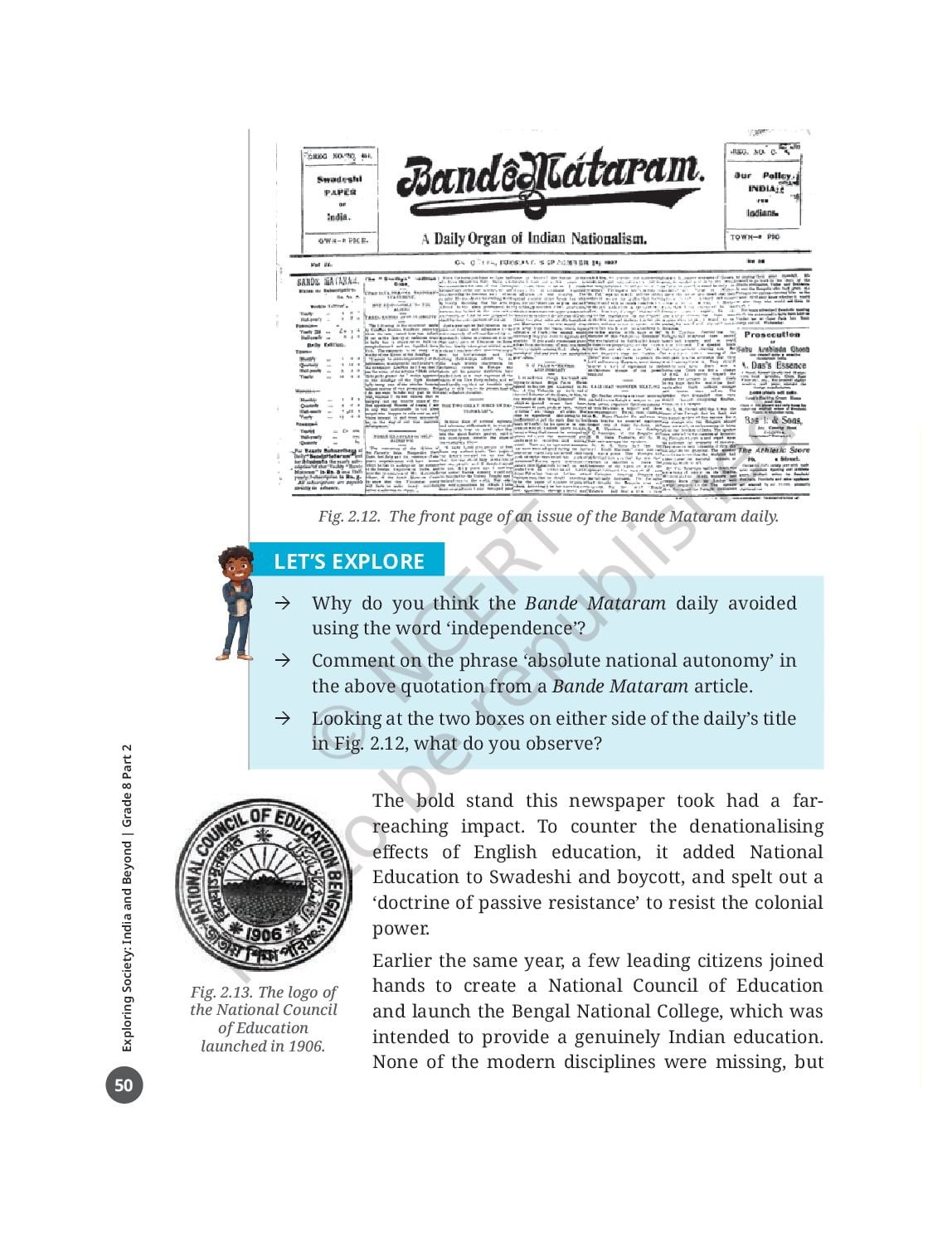
| Seditious | Promoting sedition or rebellion against the authority of a state or monarch | Margin note, p. 46 | The charge used again and again — Tilak in 1897 and 1908, and to suppress Bande Mataram and Yugantar |
| Swadeshi | ‘Of one’s own country’ — using Indian-made goods and building Indian industry | Pp. 48, 61 | It hit Britain where it paid: cotton textile imports. Tata’s Swadeshi Mills (1886), Punjab National Bank (1895) and Bengal Chemicals (1901) came before the 1905 movement |
| Boycott | Refusing British goods and, later, British schools, colleges and courts | P. 48 | Effective against goods; weaker against institutions, because Indian schools and courts ‘were not ready enough to offer a transition’ |
| Swaraj | Literally ‘self-rule’; adopted with Swadeshi, Boycott and National Education at the Calcutta Congress, December 1906 | P. 51 | It was deliberately not defined — it could mean self-rule inside the Empire or full independence, so Moderates and Nationalists could both accept it |
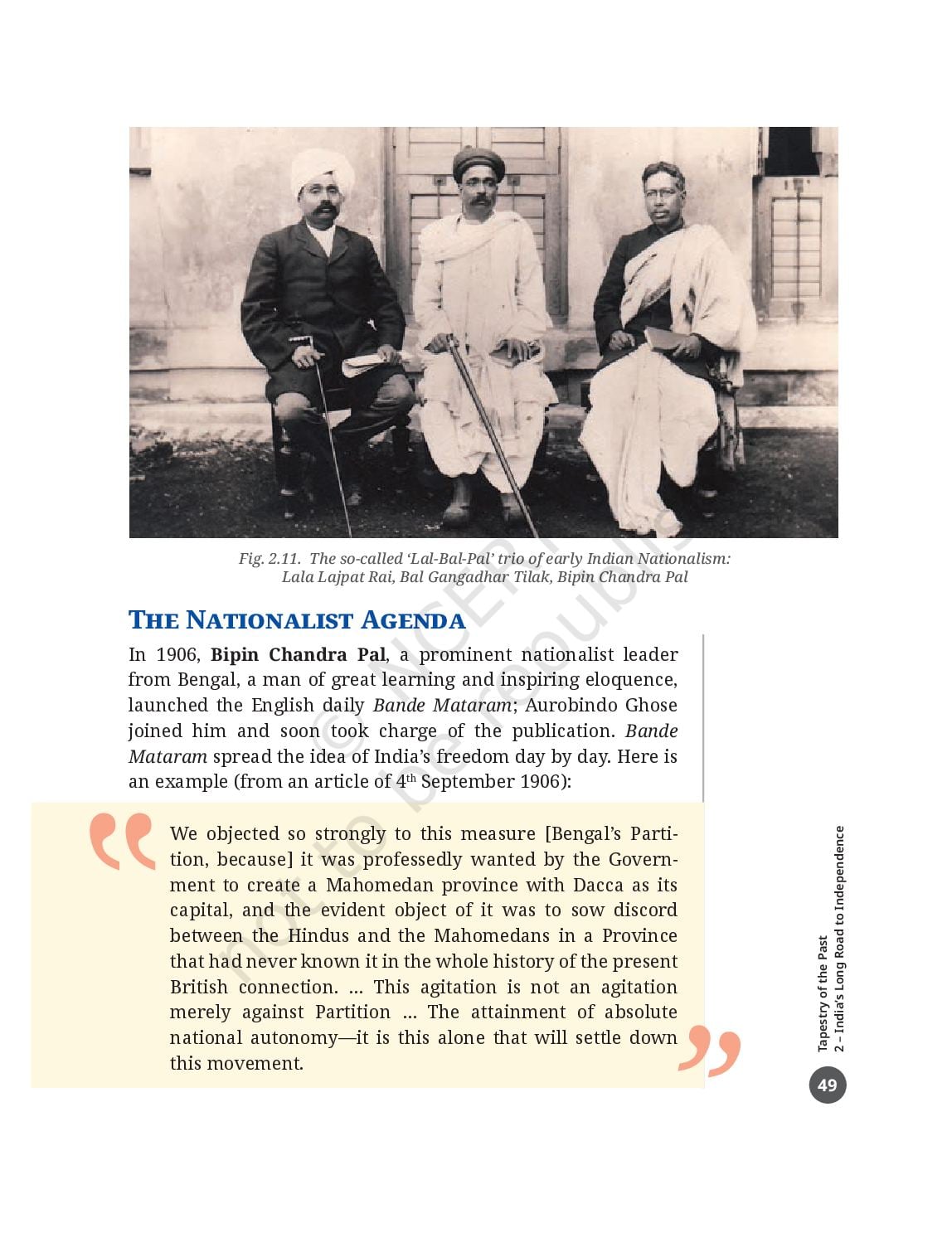
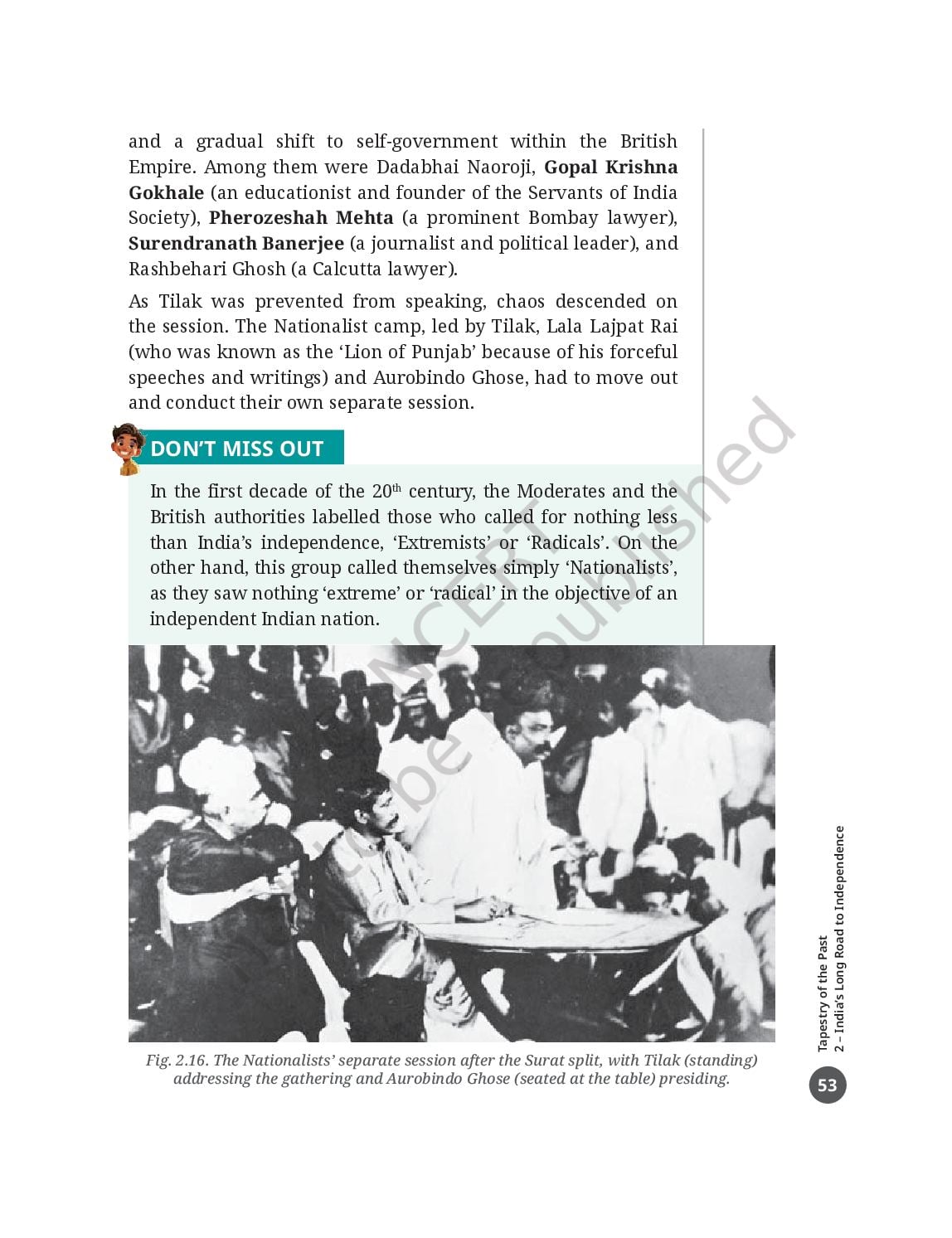
| Moderates / Nationalists | Moderates wanted gradual reform and autonomy inside the Empire; Nationalists wanted independence and mass awakening | The 1907 Surat Split, pp. 52–53 | The Moderates and the British called the second group ‘Extremists’; they called themselves simply ‘Nationalists’ |
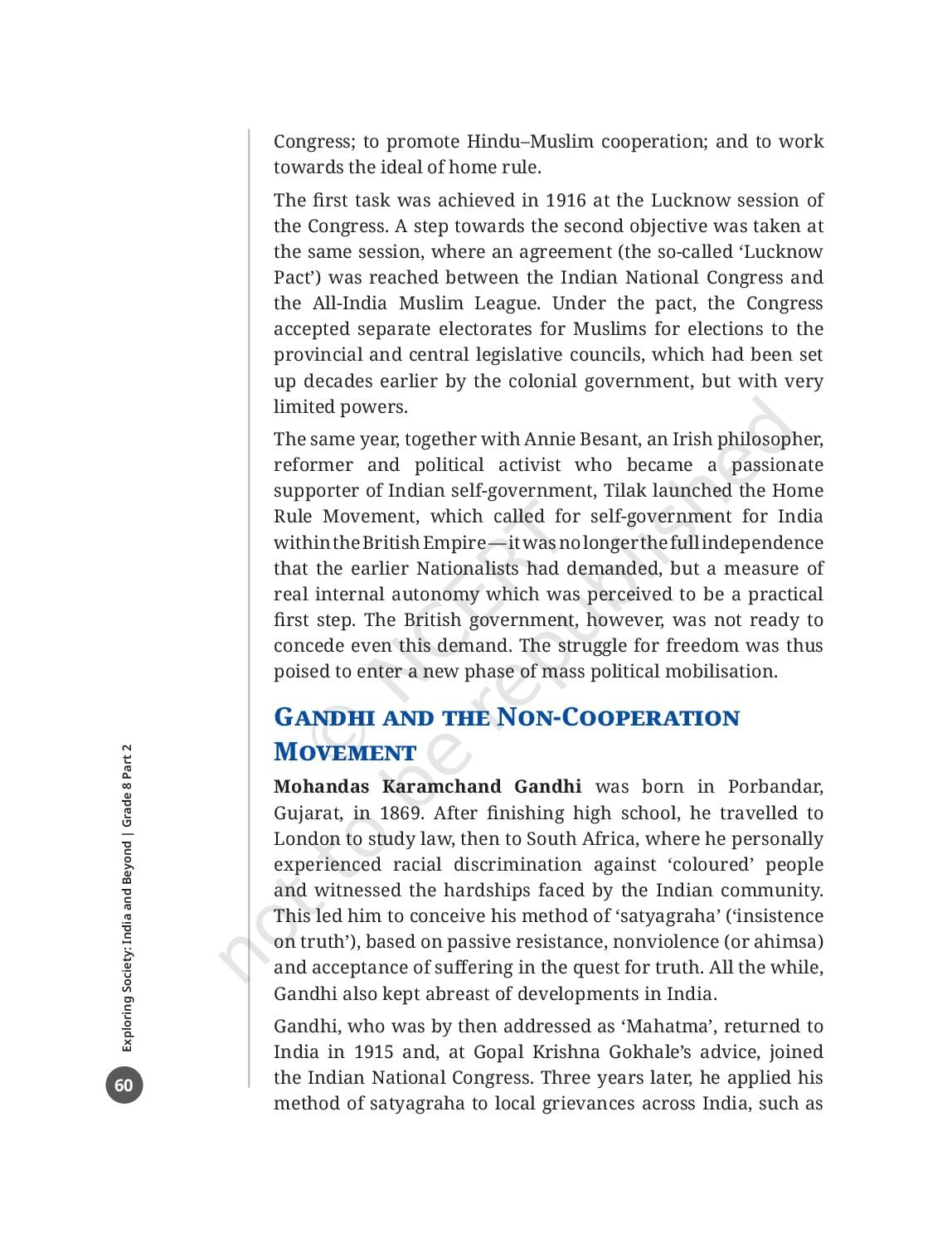
| Satyagraha | ‘Insistence on truth’ — passive resistance, ahimsa and the acceptance of suffering in the quest for truth | Pp. 60–61 | Gandhi worked it out in South Africa (1907–14) and first applied it in India to Champaran, Ahmedabad and Kheda |
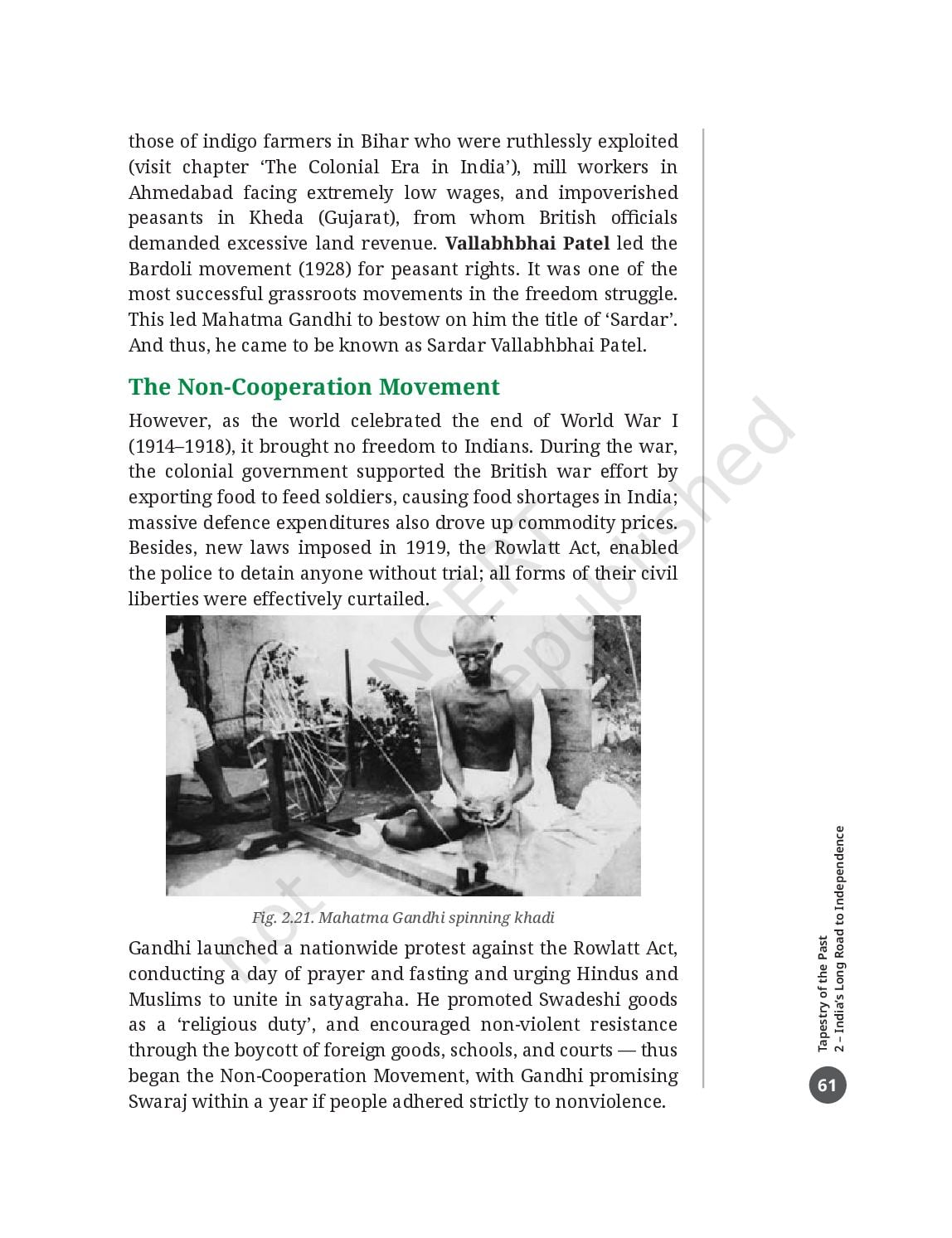
| Khadi | Hand-spun, hand-woven yarn (and the cloth made from it) | THINK ABOUT IT, p. 62 | Not just cloth: work for poor villagers, a symbol of self-reliance, and a direct blow to British textile imports |
| Separate electorates | Seats for which only voters of one community may vote | Lucknow Pact p. 60; Poona Pact p. 72 | Congress conceded them to the League in 1916; Gandhi fasted against them for the Depressed Classes, and the Poona Pact substituted more reserved seats instead |
| Dominion status | Full internal self-government, with Britain still controlling defence and foreign policy and the Crown as head of state | Motilal Nehru Report 1928, p. 67 | Canada and Australia had it. Because Britain would not grant even this, younger leaders demanded Purna Swaraj instead |
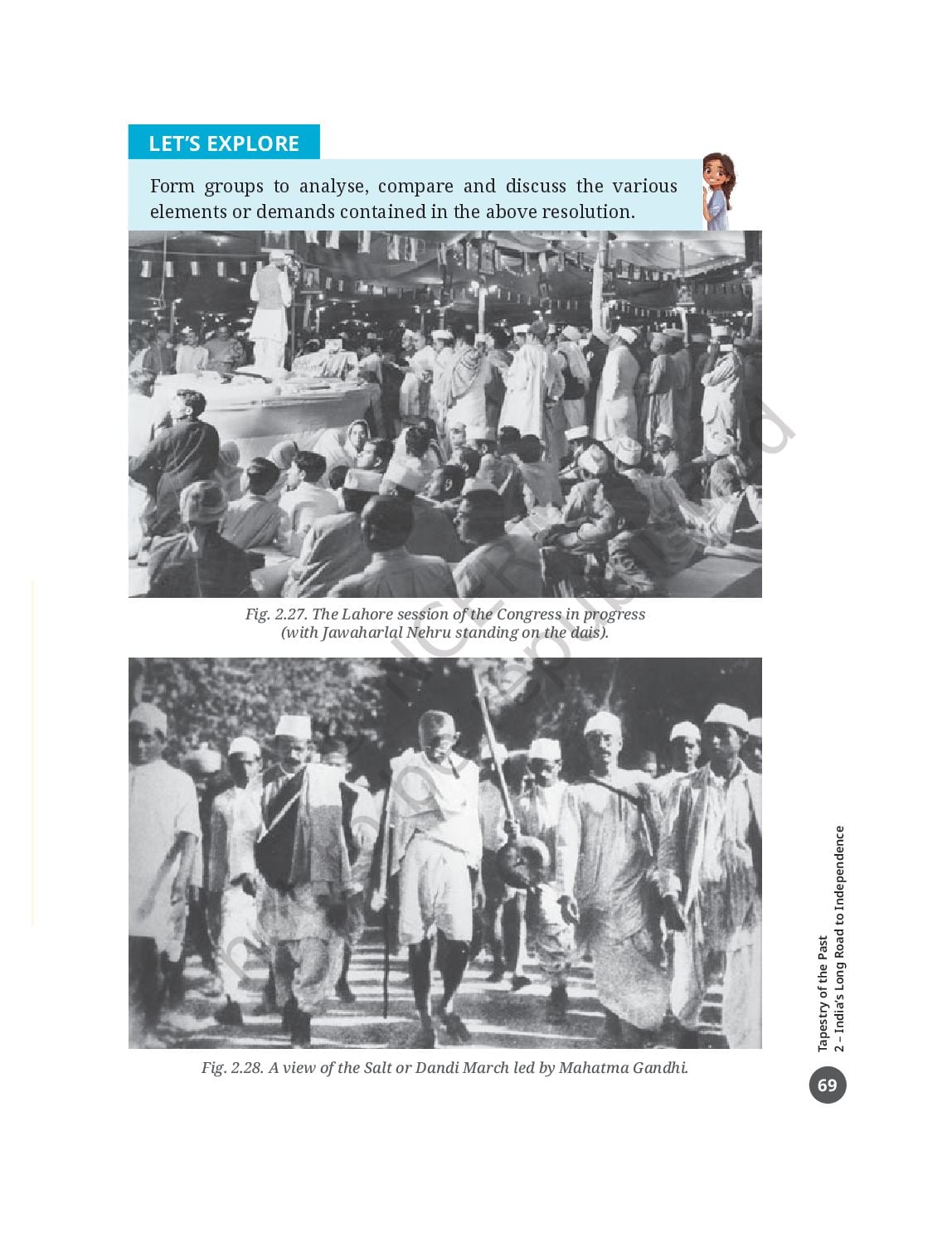
| Purna Swaraj | Complete independence | Lahore session, December 1929, p. 68 | Not a new idea — the Nationalists had said it two decades earlier, Aurobindo in 1908, Hasrat Mohani in 1921, Savarkar in 1925 |
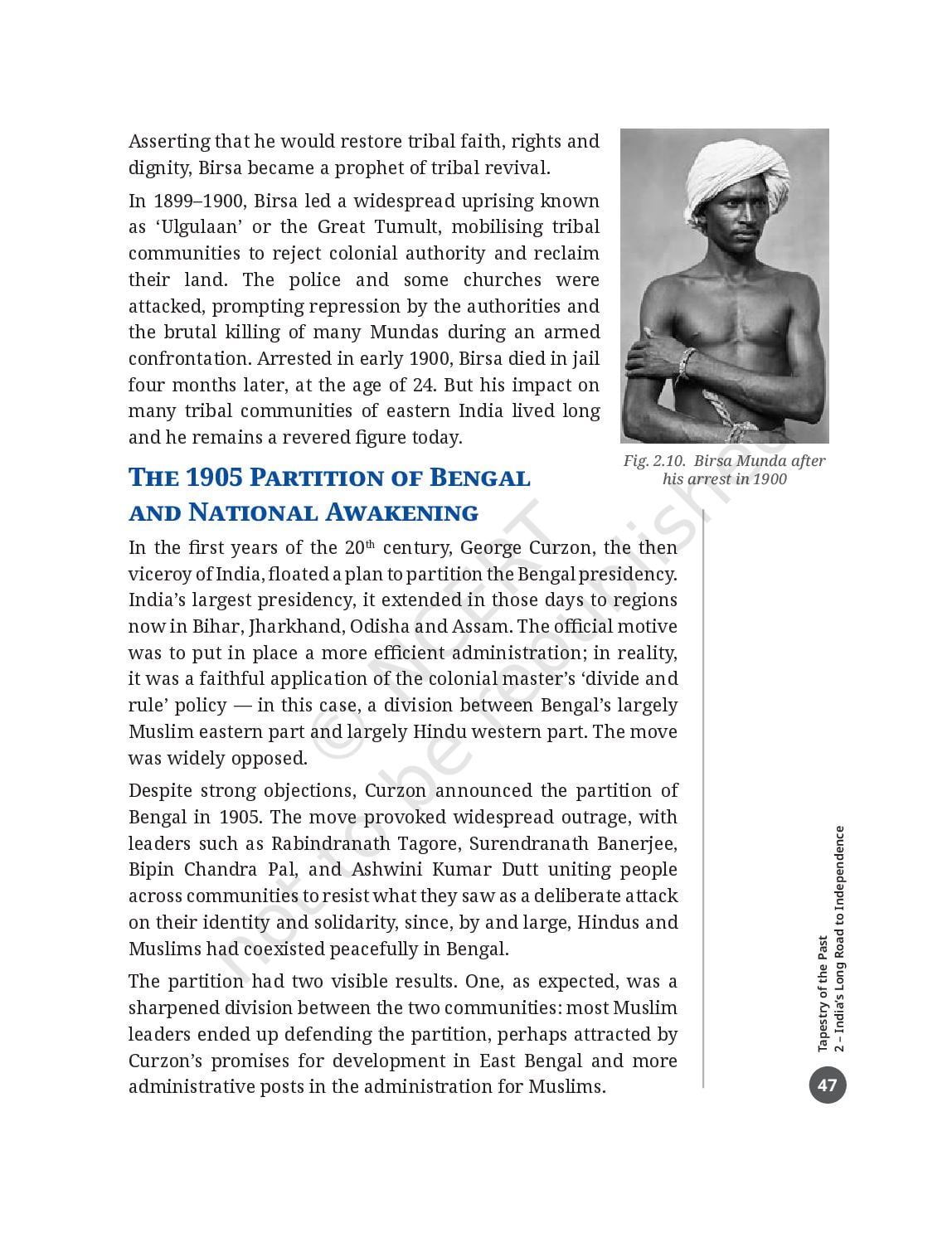
| Ulgulaan | ‘The Great Tumult’ — Birsa Munda’s tribal uprising of 1899–1900 | P. 47 | Tribal India fought colonial rule on its own terms: land, faith and dignity. Birsa died in jail at 24 |
| Radcliffe Line | The boundary drawn by the British lawyer Cyril Radcliffe in 1947 | Pp. 77–78 | Five weeks to split Punjab and Bengal; ‘millions suddenly found themselves on the “wrong” side of these lines’ |
Old NCERT vs New – Class 8 Social Science
This chapter is from Exploring Society: India and Beyond, the new NCERT Class 8 Social Science book (NCF-SE 2023, used from 2025-26). It replaced the old book “Our Pasts, Resources and Development and Social and Political Life”, so chapter numbers and names differ from older PDFs.
Solutions and All Chapters
Answers to the exercises and the full chapter list of Exploring Society: India and Beyond:
India’s Long Road to Independence – Overview
| Class | Class 8 |
| Subject | Social Science |
| Book | Exploring Society: India and Beyond – new NCERT book |
| Part | Part II |
| Chapter | 9 of 15 – India’s Long Road to Independence |
| Book pages | Part II, 35 – 84 |
| Edition | NCERT Reprint 2026-27 |
| Session | 2026-27 |
| Free – read online or download |
Class 8 Social Science Chapter 9 – FAQs
Where can I download India’s Long Road to Independence Class 8 PDF?
From the download table on this page – the chapter PDF is free, and the full book is linked too.
What is Class 8 Social Science Chapter 9 about?
After 1857 the British Crown took direct control (1858). The royal proclamation promised to respect the ‘rights, dignity and honour of native Princes’ and to leave religion alone — but a ‘Resident’ was posted in almost every princely state, missionary work continued with official support, heavy land taxes fed famines, and the Arms Act and Vernacular Press Act of 1878 disarmed and gagged Indians. Promises on paper, control in practice.
Is India’s Long Road to Independence from the new NCERT Class 8 Social Science book?
Yes. It is chapter 9 of exploring society: india and beyond (part ii), the new NCERT Class 8 Social Science book for 2026-27.
Is this the latest NCERT edition for 2026-27?
Yes – the PDF is NCERT’s latest edition for the 2026-27 session.
Where are the NCERT Solutions for Class 8 Social Science Chapter 9?
Open the NCERT Solutions link above for answers to the exercise questions.