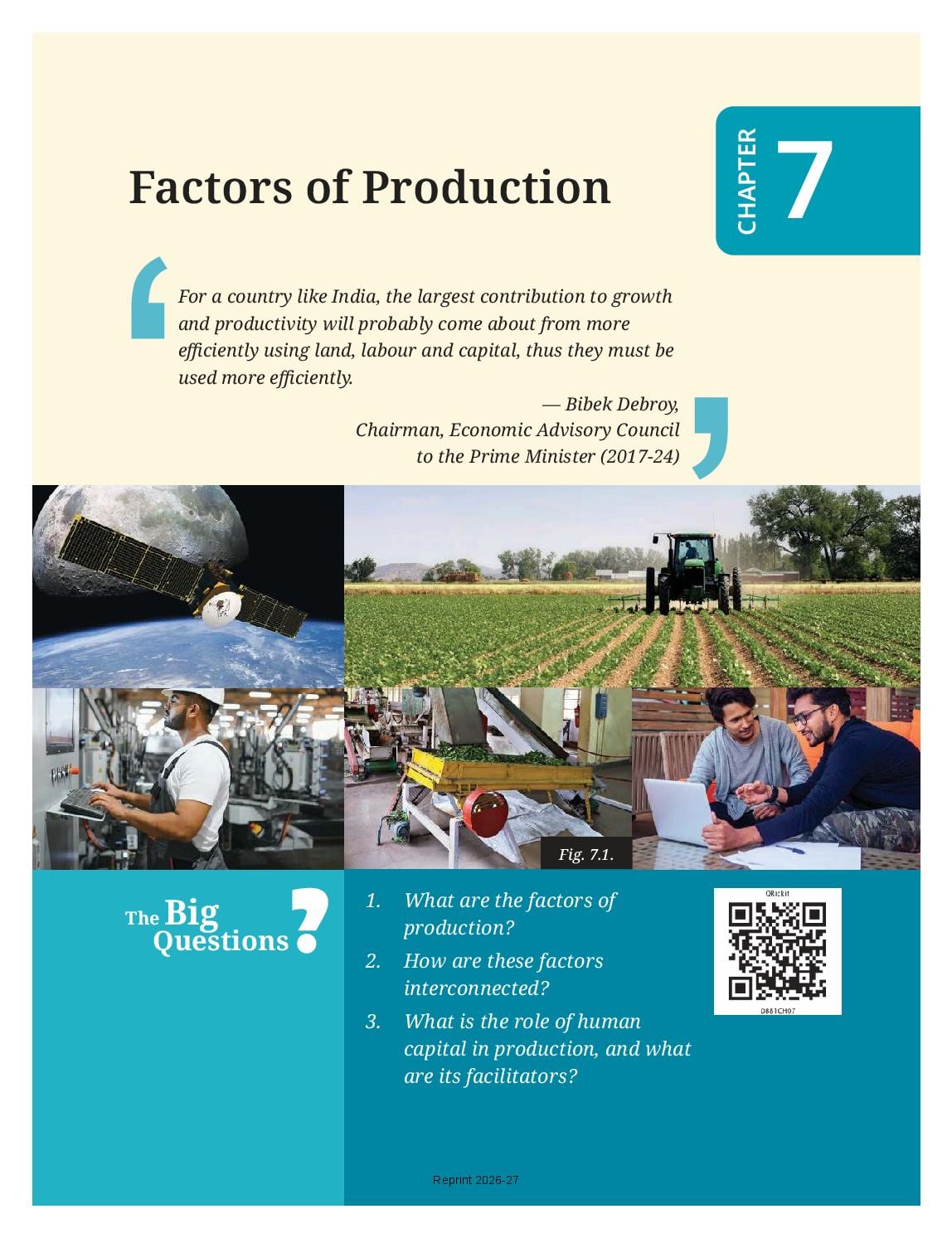
Download Factors of Production – NCERT Class 8 Social Science Chapter 7 PDF from the new NCERT Class 8 Social Science book Exploring Society: India and Beyond (2026-27). Read the chapter online or download the free PDF. Everything you use went through a production process. The resources or inputs used to produce goods and services are called the factors of production. Economics sorts them into four types — land, labour, capital and entrepreneurship. Technology is…
Factors of Production PDF – Chapter 7 of Exploring Society: India and Beyond (Part I)
Read the chapter online or download the PDF.
| Chapter | Download | |
|---|---|---|
| Chapter 7 PDF | Factors of Production | View PDF |
| Full book | NCERT Class 8 Social Science – Exploring Society: India and Beyond | View Book |
Read Online


What Is in Factors of Production? (Class 8 Social Science Chapter 7)
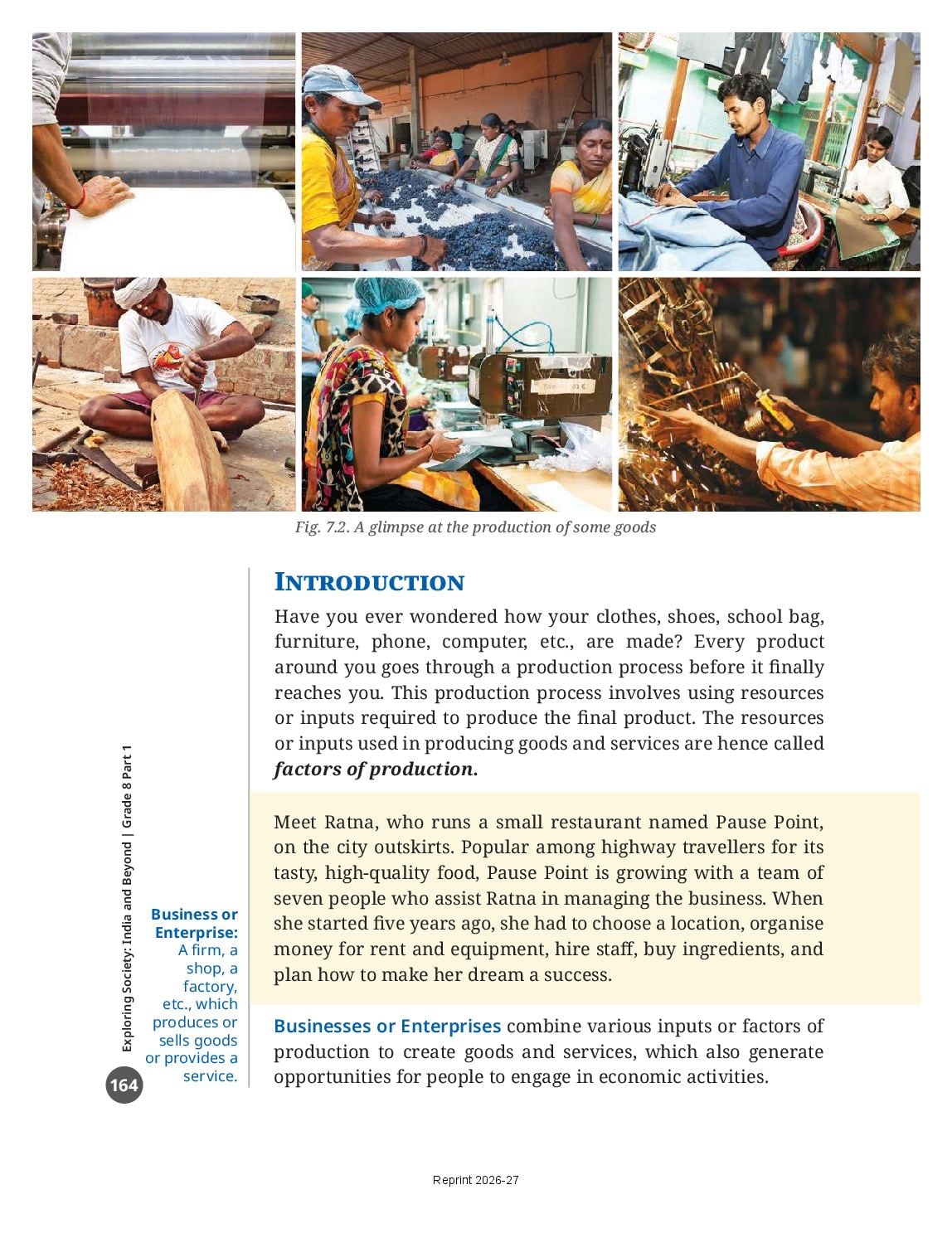
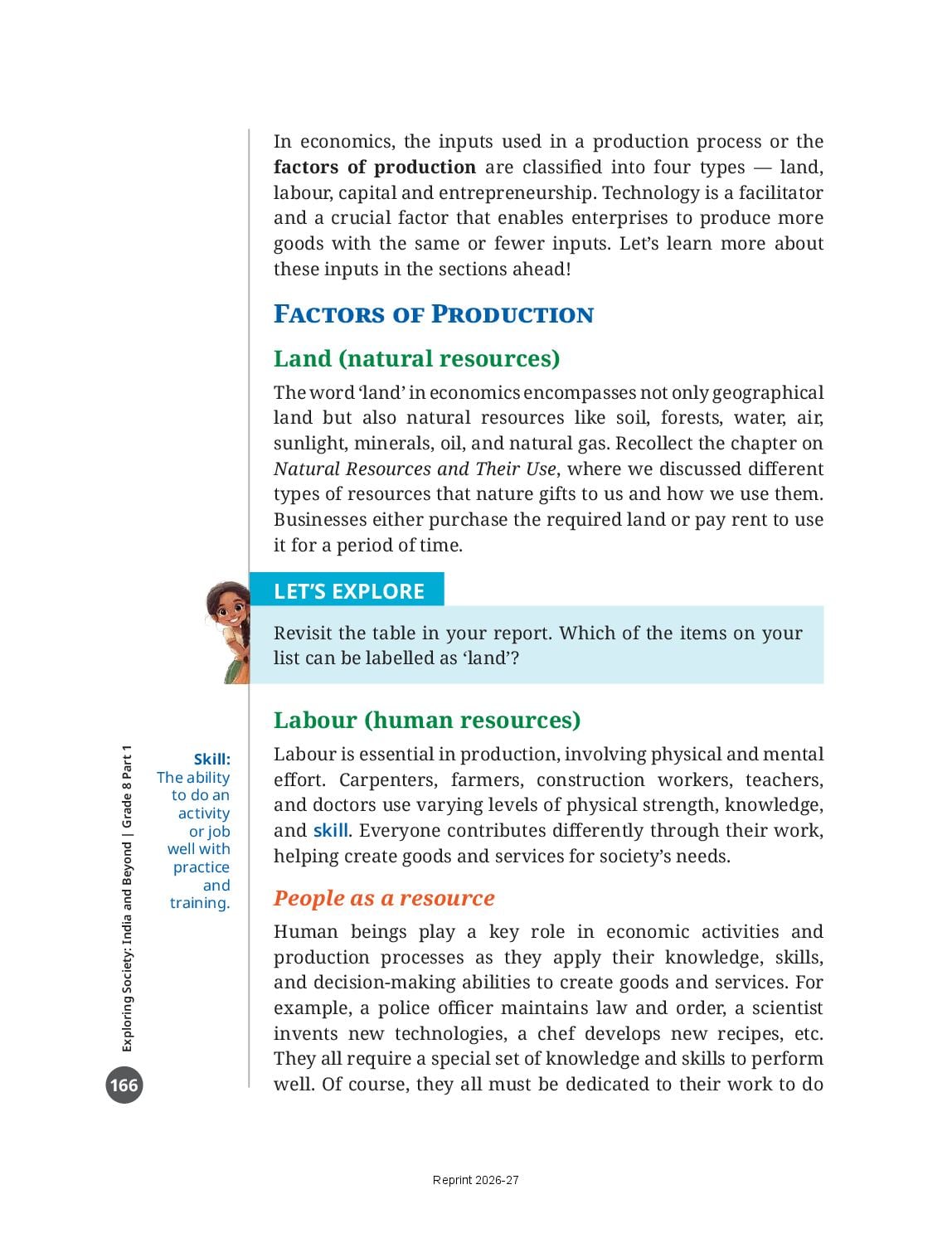
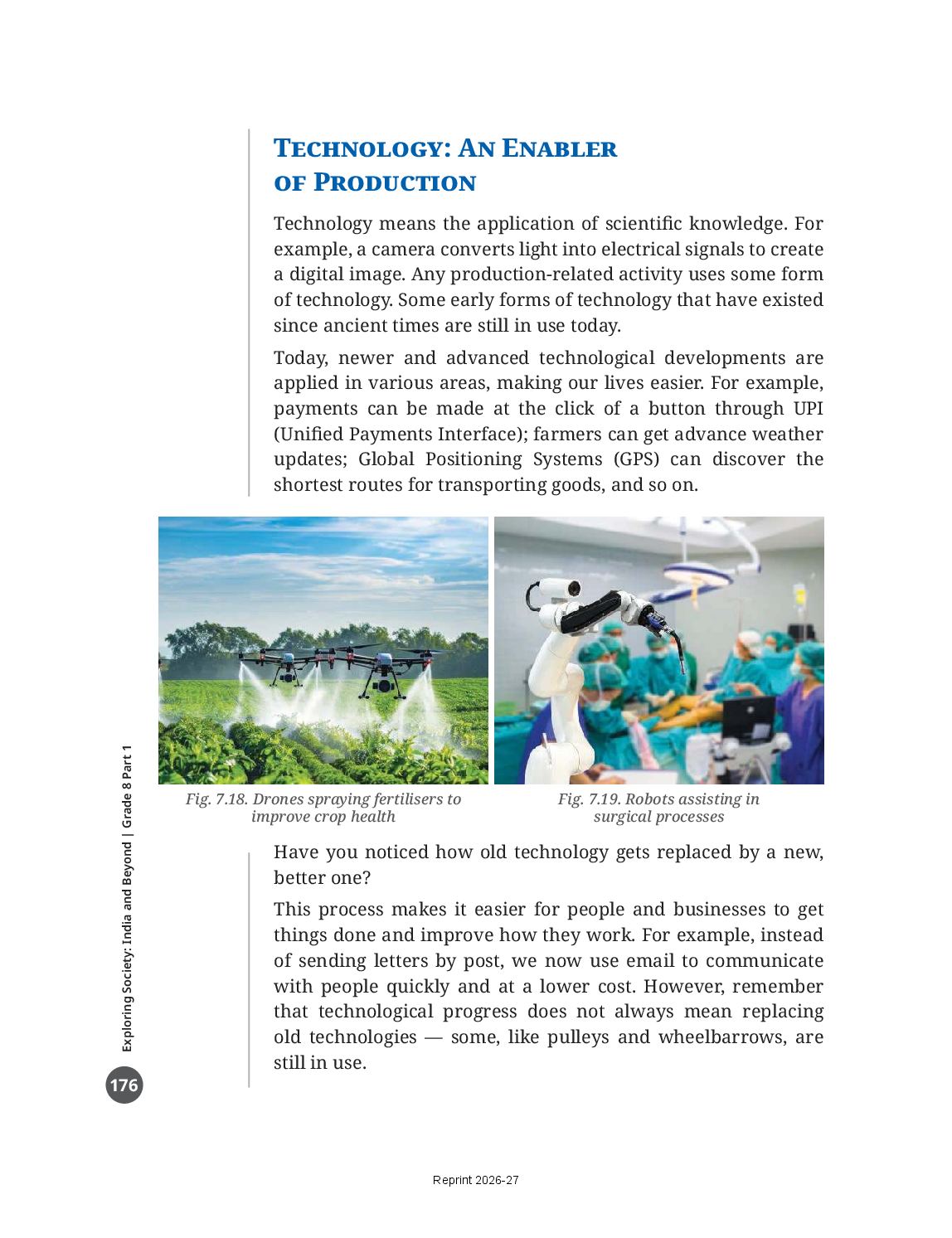
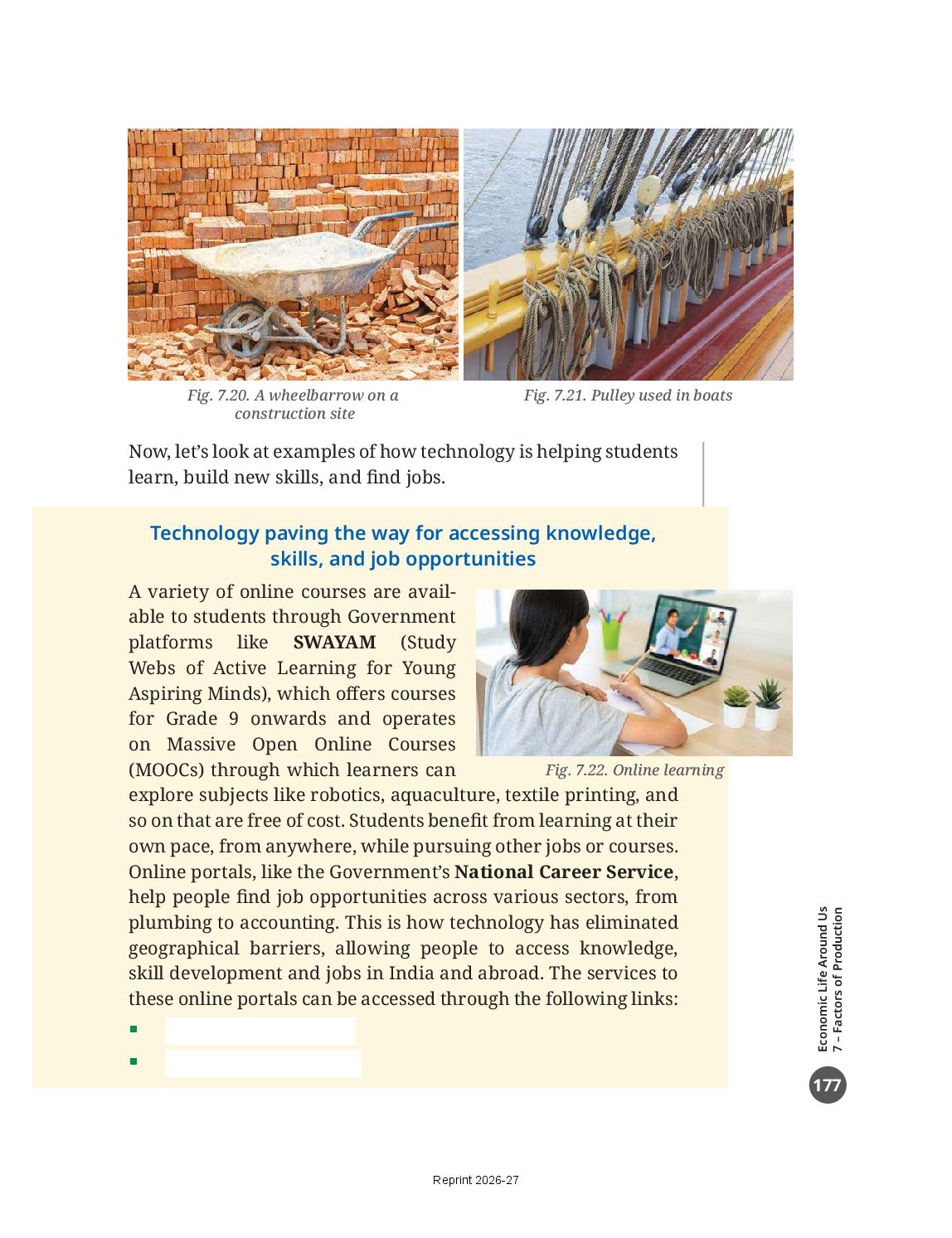
- Everything you use went through a production process. The resources or inputs used to produce goods and services are called the factors of production. Economics sorts them into four types — land, labour, capital and entrepreneurship. Technology is not a fifth factor but a facilitator: it lets an enterprise produce more goods with the same or fewer inputs.
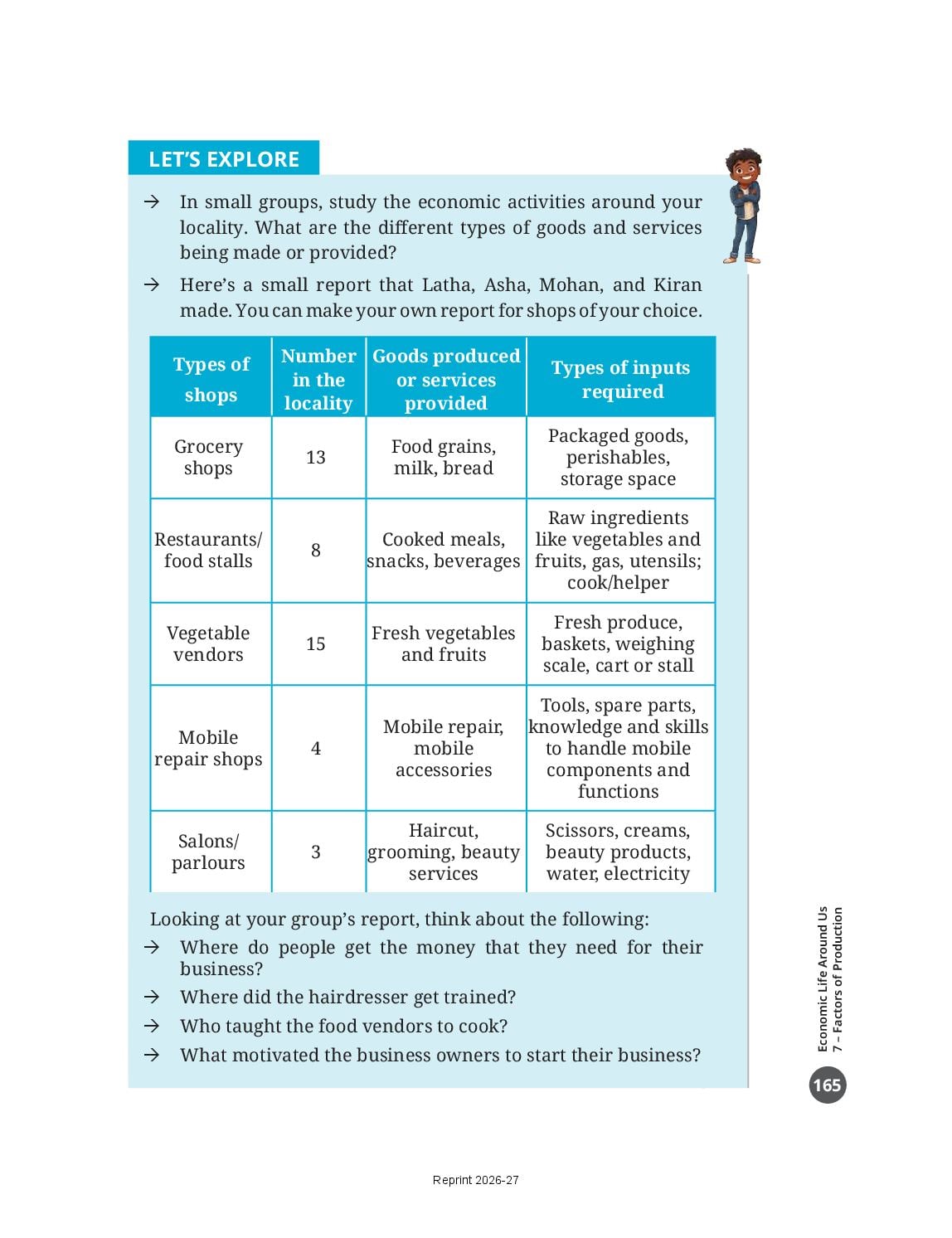
- ‘Land’ in economics is much wider than a plot of ground. It covers soil, forests, water, air, sunlight, minerals, oil and natural gas — everything nature gives. A business either buys the land it needs or pays rent to use it for a period of time, as Ratna did for her highway restaurant Pause Point.
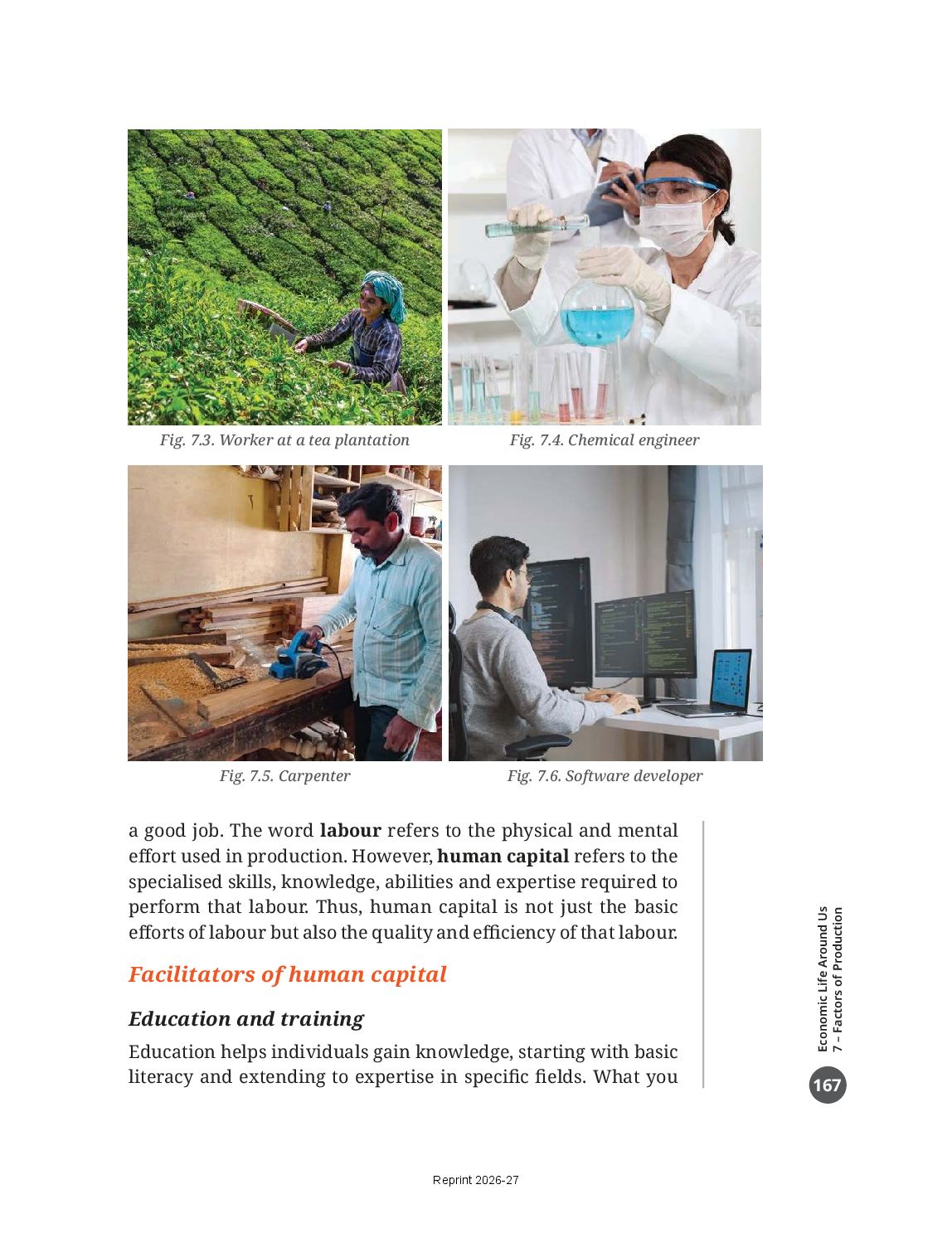
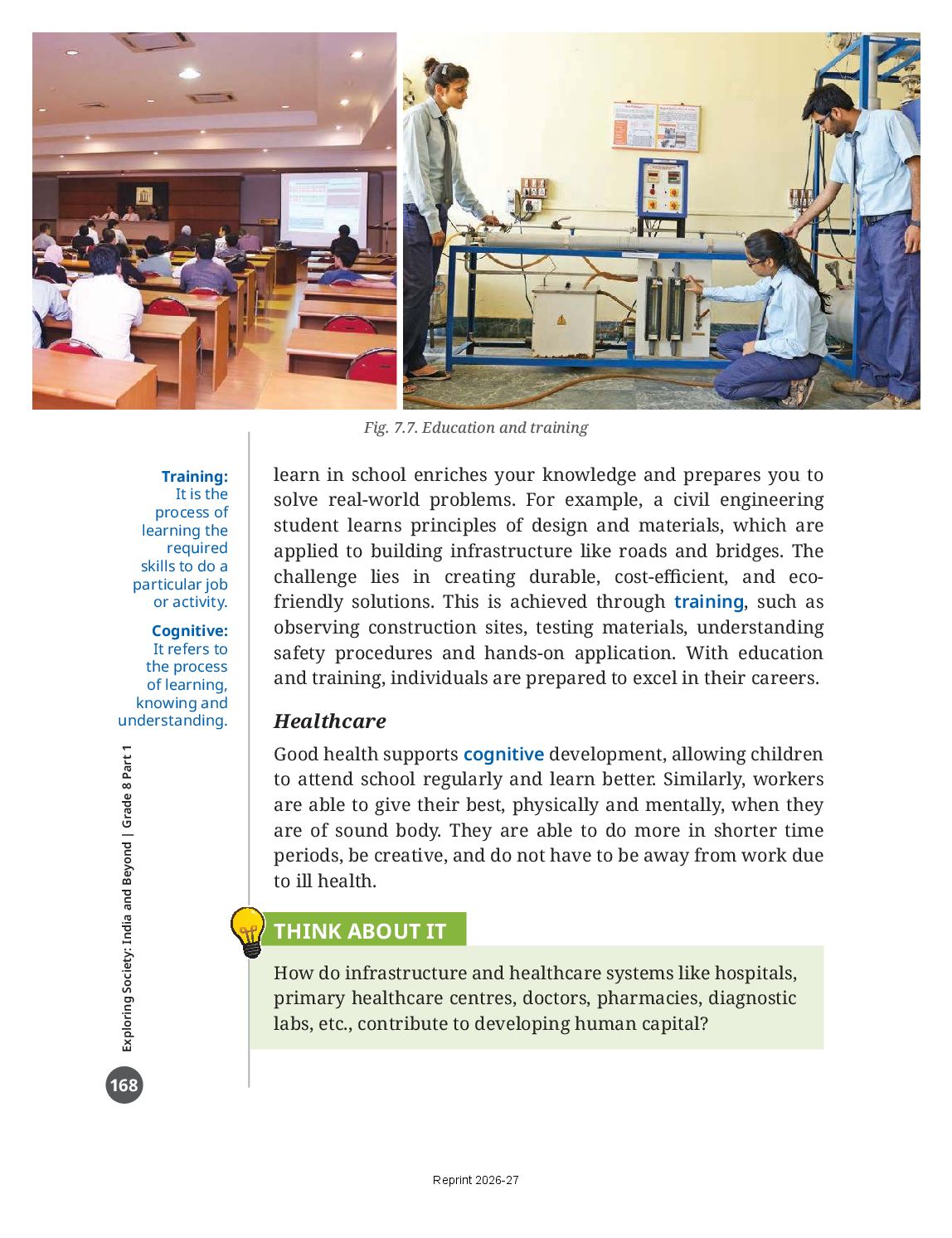
- Labour and human capital are not the same thing. Labour is the physical and mental effort used in production. Human capital is the specialised skills, knowledge, abilities and expertise required to perform that labour — it is the quality and efficiency of the labour, not just the effort. Its facilitators are education and training, healthcare, and social and cultural influences such as Japan’s kaizen (continuous improvement, applied since the mid-1940s) and the German work ethic.
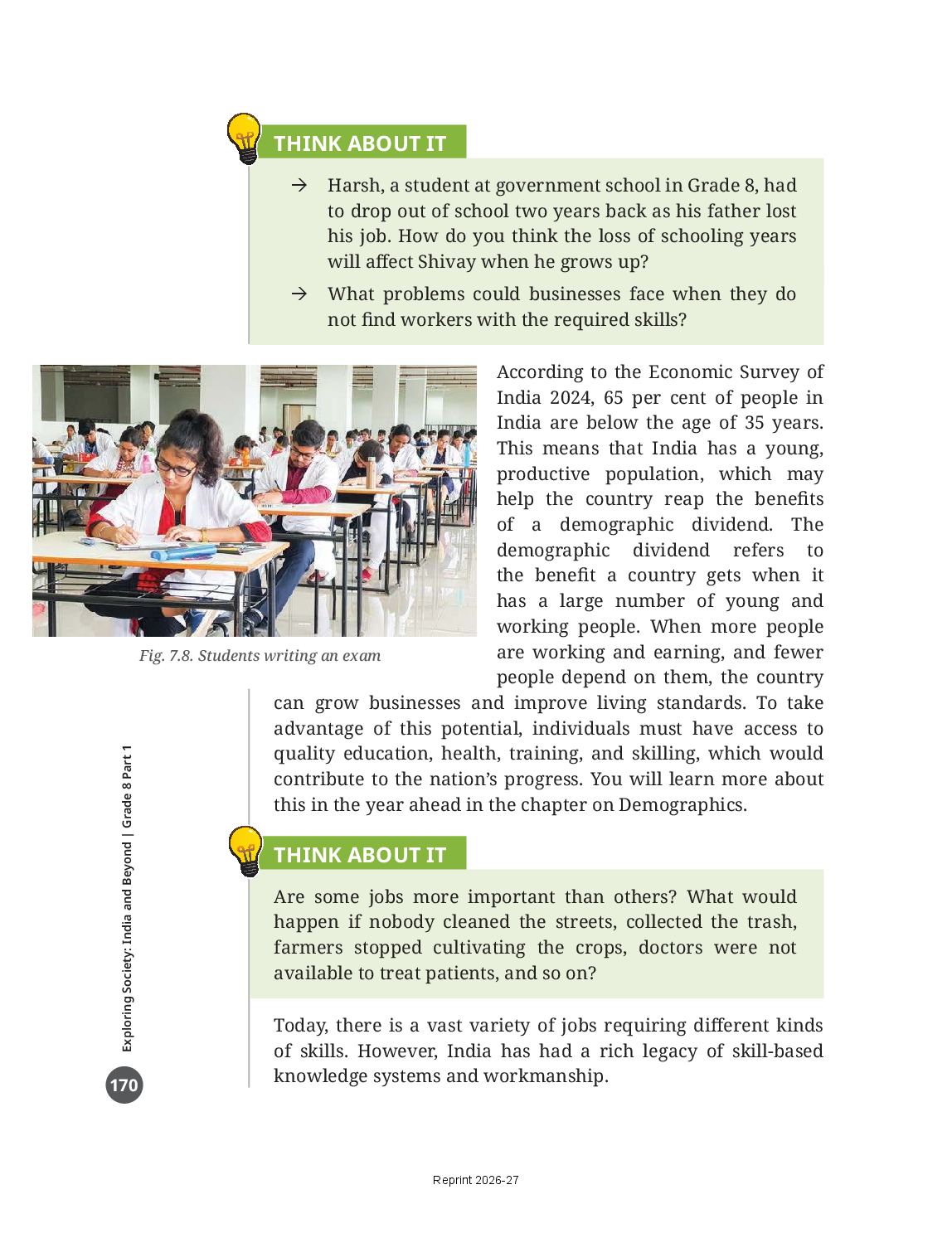
- India’s human capital is young but unevenly built. World Bank estimates for 2023 put the adult literacy rate at 85 per cent for males and 70 per cent for females. The Economic Survey of India 2024 says 65 per cent of Indians are below 35 — a possible demographic dividend, but only if that population gets quality education, health, training and skilling.
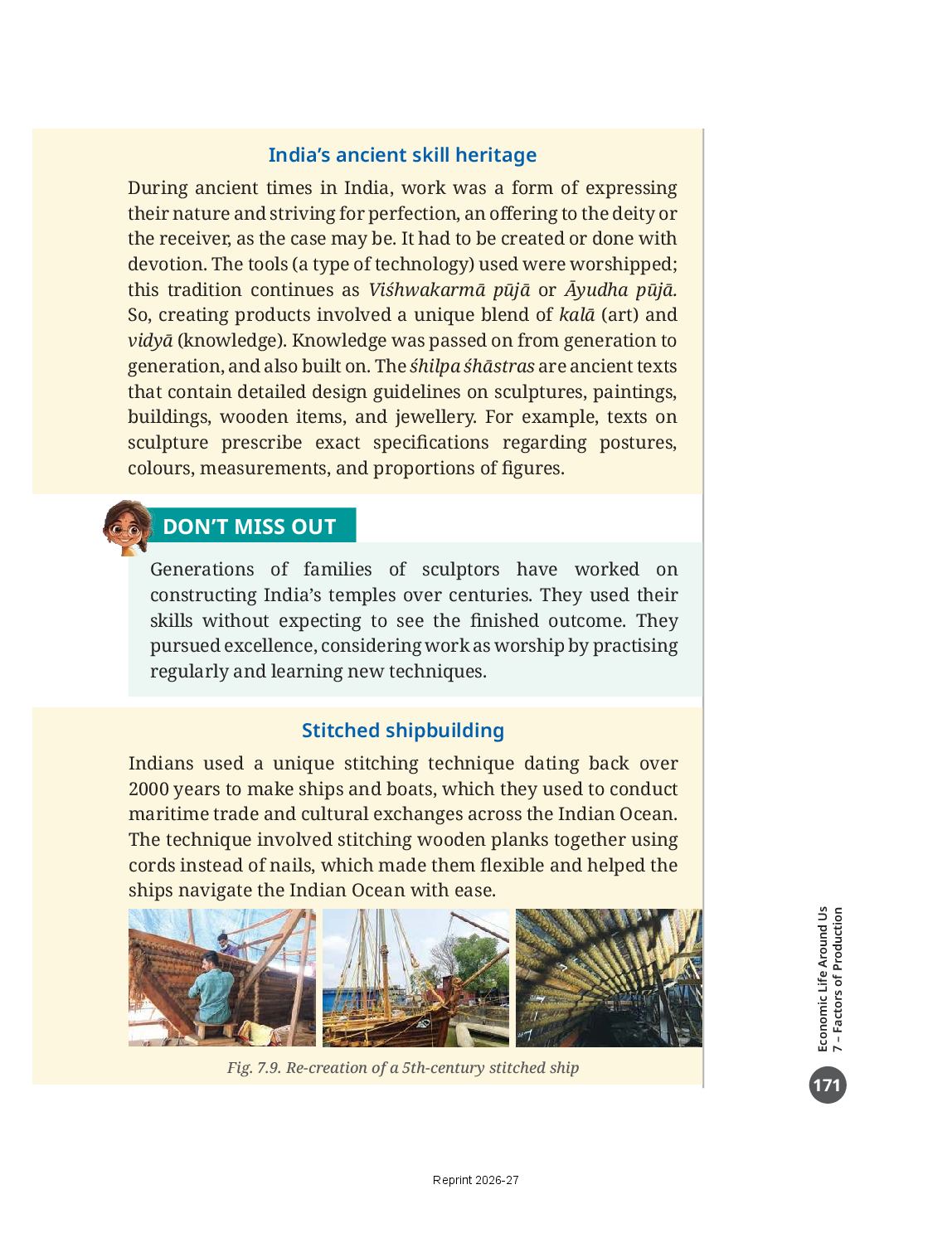
- India has a long skill heritage. Work was an offering, done with devotion; tools were worshipped, a tradition surviving as Viśhwakarmā pūjā or Āyudha pūjā; products blended kalā (art) and vidyā (knowledge); the śhilpa śhāstras laid down exact postures, colours, measurements and proportions. Indians stitched ships with cords instead of nails for over 2000 years — a technique that declined severely after the Europeans reached the Indian Ocean in the 16th century.
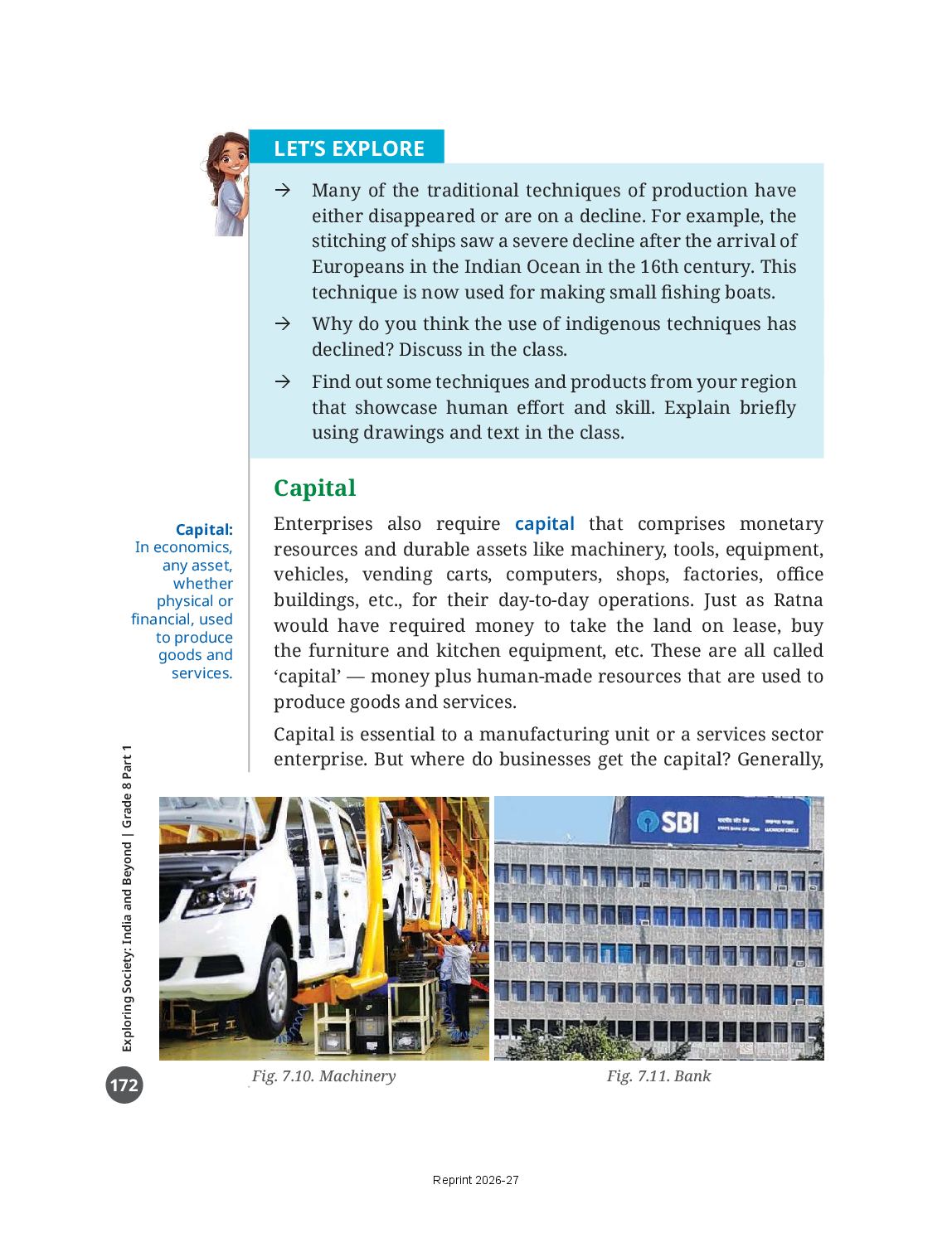
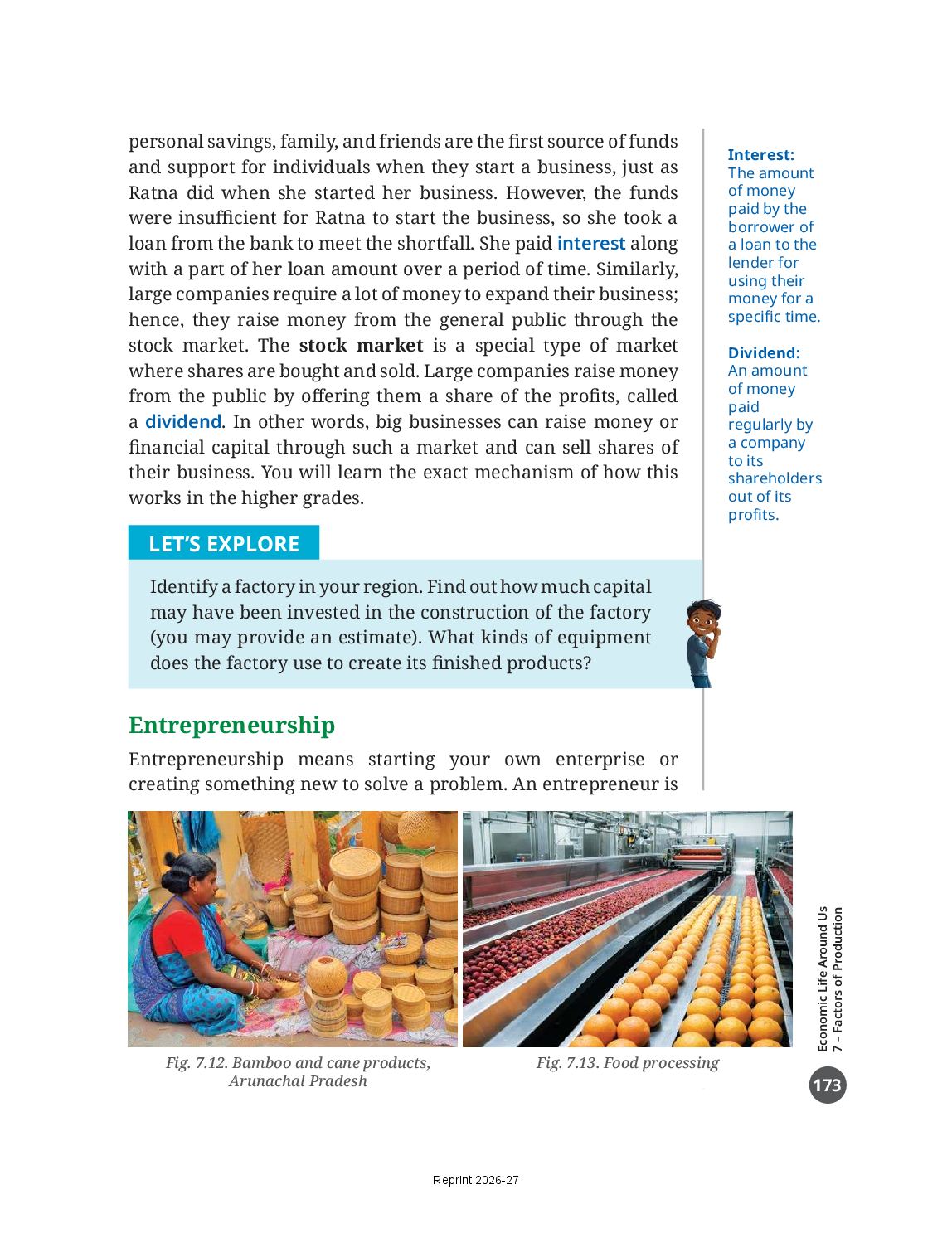
- Capital is money plus human-made resources — machinery, tools, vehicles, vending carts, computers, shops, factories. Businesses raise it first from personal savings, family and friends, then from bank loans (repaid with interest), and large companies from the public through the stock market, sharing profits as a dividend.
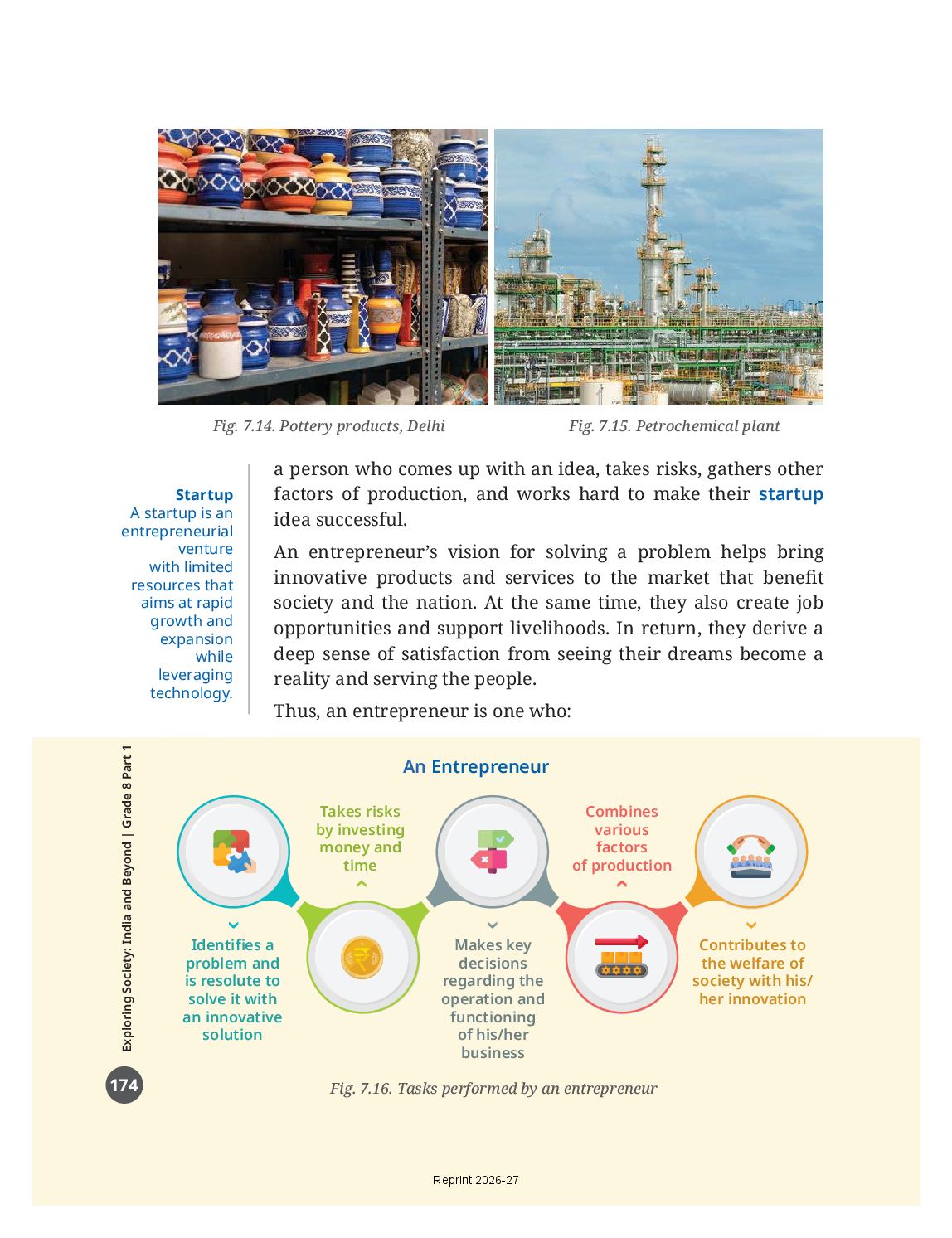
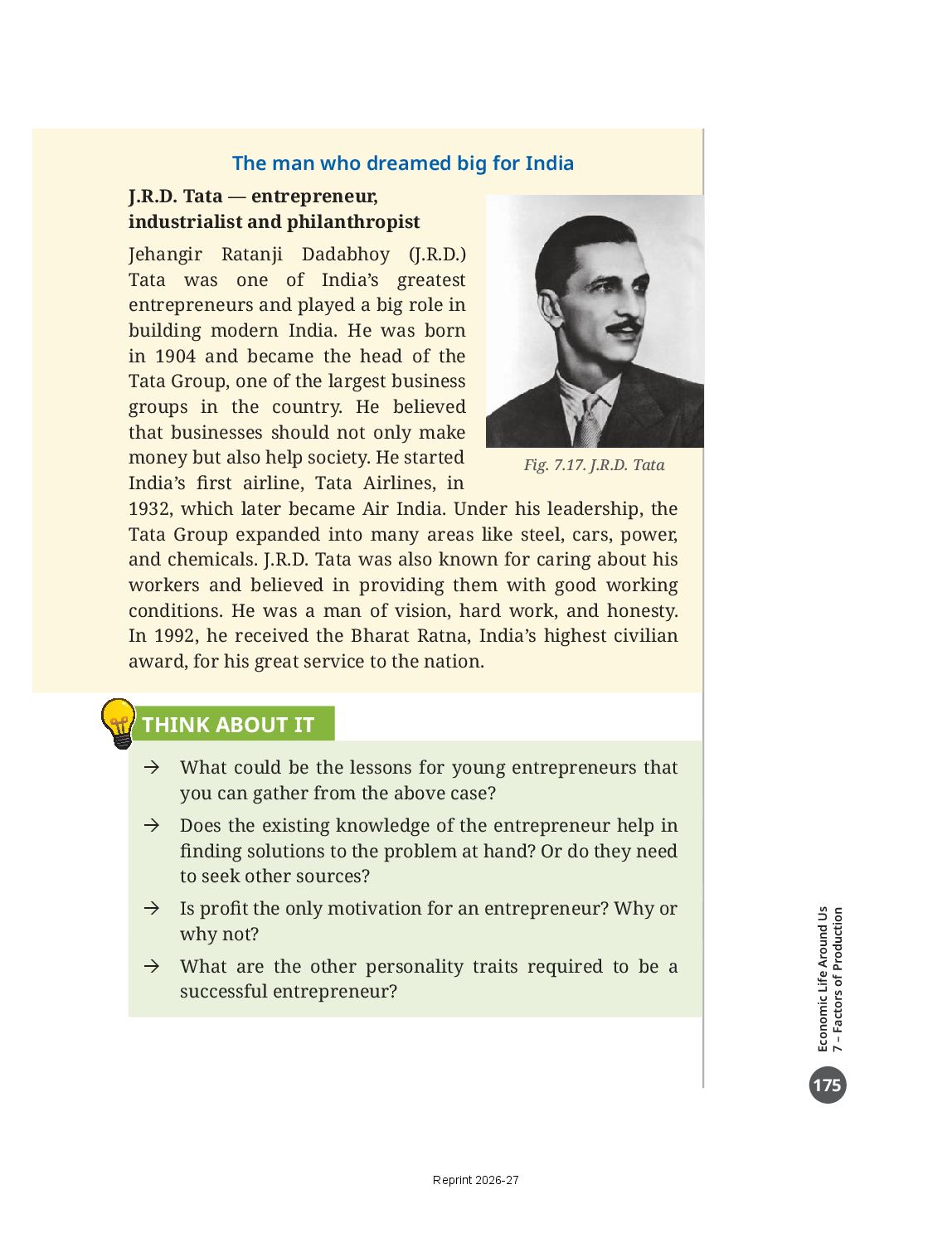
- The entrepreneur is the one who puts the rest together. Fig. 7.16 lists five tasks: identifies a problem and is resolute to solve it innovatively, takes risks by investing money and time, combines the various factors of production, makes the key decisions, and contributes to the welfare of society. J.R.D. Tata (born 1904) is the chapter’s example — Tata Airlines in 1932, later Air India; Bharat Ratna in 1992.
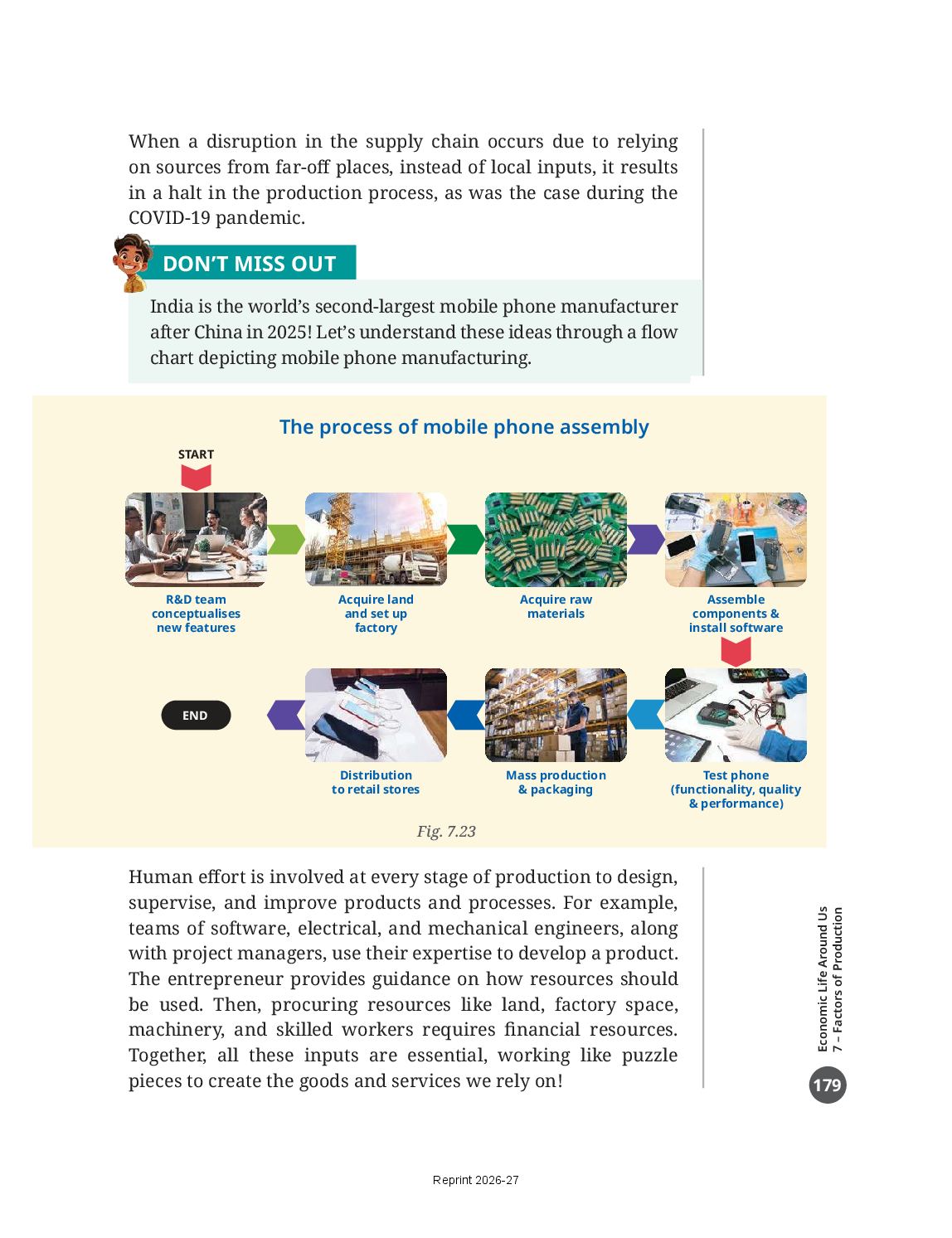
- The mix of factors depends on the product. Agriculture, construction and handicrafts are labour-intensive; semiconductor chips and satellites are capital-intensive. The factors complement each other — if one is missing or misused, production becomes inefficient or halts, as supply-chain disruption did during the COVID-19 pandemic.
Quick revision – Factors of Production
| Term | What it means | Where it appears in the chapter | What the book says about it |
|---|---|---|---|
| Factors of production | The resources or inputs used in producing goods and services | Introduction, page 164 | Classified into four types — land, labour, capital and entrepreneurship |
| Business or Enterprise | A firm, a shop, a factory, etc., which produces or sells goods or provides a service | Margin note, page 164 | Enterprises combine various inputs to create goods and services, and so create chances for people to take part in economic activities |
| Land | Not only geographical land but natural resources — soil, forests, water, air, sunlight, minerals, oil, natural gas | ‘Land (natural resources)’, page 166 | Businesses either purchase the land or pay rent to use it for a period of time |
| Labour | The physical and mental effort used in production | ‘Labour (human resources)’, pages 166–167 | Carpenters, farmers, construction workers, teachers and doctors use varying levels of physical strength, knowledge and skill |
| Skill | The ability to do an activity or job well with practice and training | Margin note, page 166 | A police officer, a scientist, a chef — all require a special set of knowledge and skills |
| Human capital | The specialised skills, knowledge, abilities and expertise required to perform labour | ‘People as a resource’, page 167 | Not just the basic efforts of labour but also the quality and efficiency of that labour |
| Training | The process of learning the required skills to do a particular job or activity | Margin note, page 168 | For a civil engineer: observing construction sites, testing materials, understanding safety procedures, hands-on application |
| Kaizen | A Japanese concept meaning ‘continuous improvement’ | ‘Social and cultural influences’, page 169 | Applied in Japan since the mid-1940s; it helped Japan achieve higher standards of living |
| Adult literacy rate | Percentage of people aged 15 and above who can read and write with understanding a short, simple statement about their everyday life | Margin note, page 169 | India, 2023 (World Bank): 85 per cent for males, 70 per cent for females |
| Demographic dividend | The benefit a country gets when it has a large number of young and working people | Page 170 | Economic Survey of India 2024: 65 per cent of Indians are below 35 years |
| Śhilpa śhāstras | Ancient texts with detailed design guidelines on sculptures, paintings, buildings, wooden items and jewellery | ‘India’s ancient skill heritage’, page 171 | Texts on sculpture prescribe exact postures, colours, measurements and proportions |
| Capital | In economics, any asset, whether physical or financial, used to produce goods and services | ‘Capital’, pages 172–173 | Money plus human-made resources — machinery, tools, vehicles, vending carts, computers, shops, factories, office buildings |
| Interest | The amount of money paid by the borrower of a loan to the lender for using their money for a specific time | Margin note, page 173 | Ratna repaid interest along with a part of her loan amount over a period of time |
| Dividend | An amount of money paid regularly by a company to its shareholders out of its profits | Margin note, page 173 | Large companies raise money from the public through the stock market by offering a share of the profits |
Old NCERT vs New – Class 8 Social Science
This chapter is from Exploring Society: India and Beyond, the new NCERT Class 8 Social Science book (NCF-SE 2023, used from 2025-26). It replaced the old book “Our Pasts, Resources and Development and Social and Political Life”, so chapter numbers and names differ from older PDFs.
Solutions and All Chapters
Answers to the exercises and the full chapter list of Exploring Society: India and Beyond:
Factors of Production – Overview
| Class | Class 8 |
| Subject | Social Science |
| Book | Exploring Society: India and Beyond – new NCERT book |
| Part | Part I |
| Chapter | 7 of 15 – Factors of Production |
| Book pages | 163 – 183 |
| Edition | NCERT Reprint 2026-27 |
| Session | 2026-27 |
| Free – read online or download |
Class 8 Social Science Chapter 7 – FAQs
Where can I download Factors of Production Class 8 PDF?
From the download table on this page – the chapter PDF is free, and the full book is linked too.
What is Class 8 Social Science Chapter 7 about?
Everything you use went through a production process. The resources or inputs used to produce goods and services are called the factors of production. Economics sorts them into four types — land, labour, capital and entrepreneurship. Technology is not a fifth factor but a facilitator: it lets an enterprise produce more goods with the same or fewer inputs.
Is Factors of Production from the new NCERT Class 8 Social Science book?
Yes. It is chapter 7 of exploring society: india and beyond (part i), the new NCERT Class 8 Social Science book for 2026-27.
Is this the latest NCERT edition for 2026-27?
Yes – the PDF is NCERT’s latest edition for the 2026-27 session.
Where are the NCERT Solutions for Class 8 Social Science Chapter 7?
Open the NCERT Solutions link above for answers to the exercise questions.