Download Natural Resources and Their Use – NCERT Class 8 Social Science Chapter 1 PDF from the new NCERT Class 8 Social Science book Exploring Society: India and Beyond (2026-27). Read the chapter online or download the free PDF. An element of Nature becomes a resource only when humans can actually use it. The chapter sets three conditions: it must be technologically accessible, its exploitation must be economically feasible, and it must be culturally acceptable. Petroleum…
Natural Resources and Their Use PDF – Chapter 1 of Exploring Society: India and Beyond (Part I)
Read the chapter online or download the PDF.
| Chapter | Download | |
|---|---|---|
| Chapter 1 PDF | Natural Resources and Their Use | View PDF |
| Full book | NCERT Class 8 Social Science – Exploring Society: India and Beyond | View Book |
Read Online
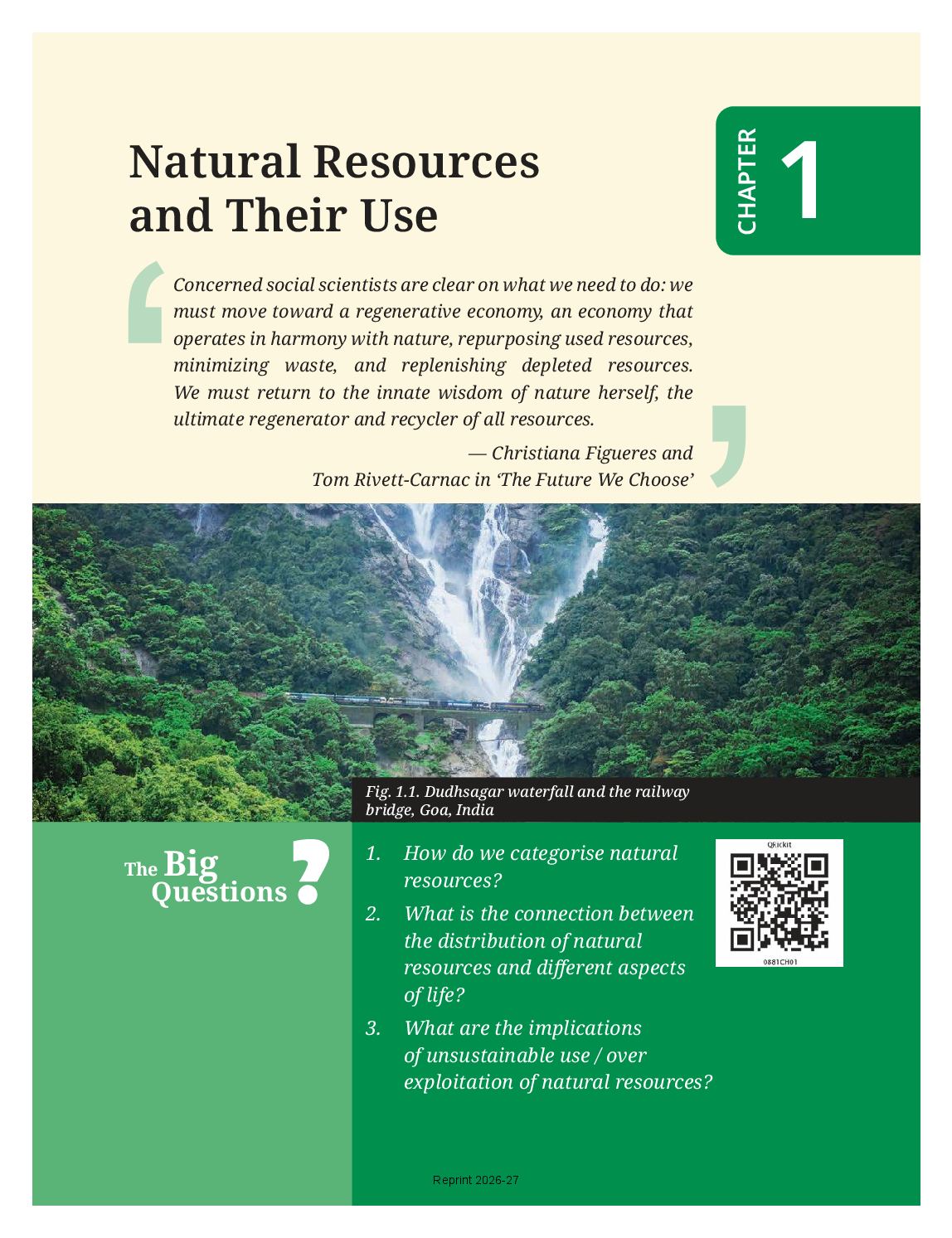
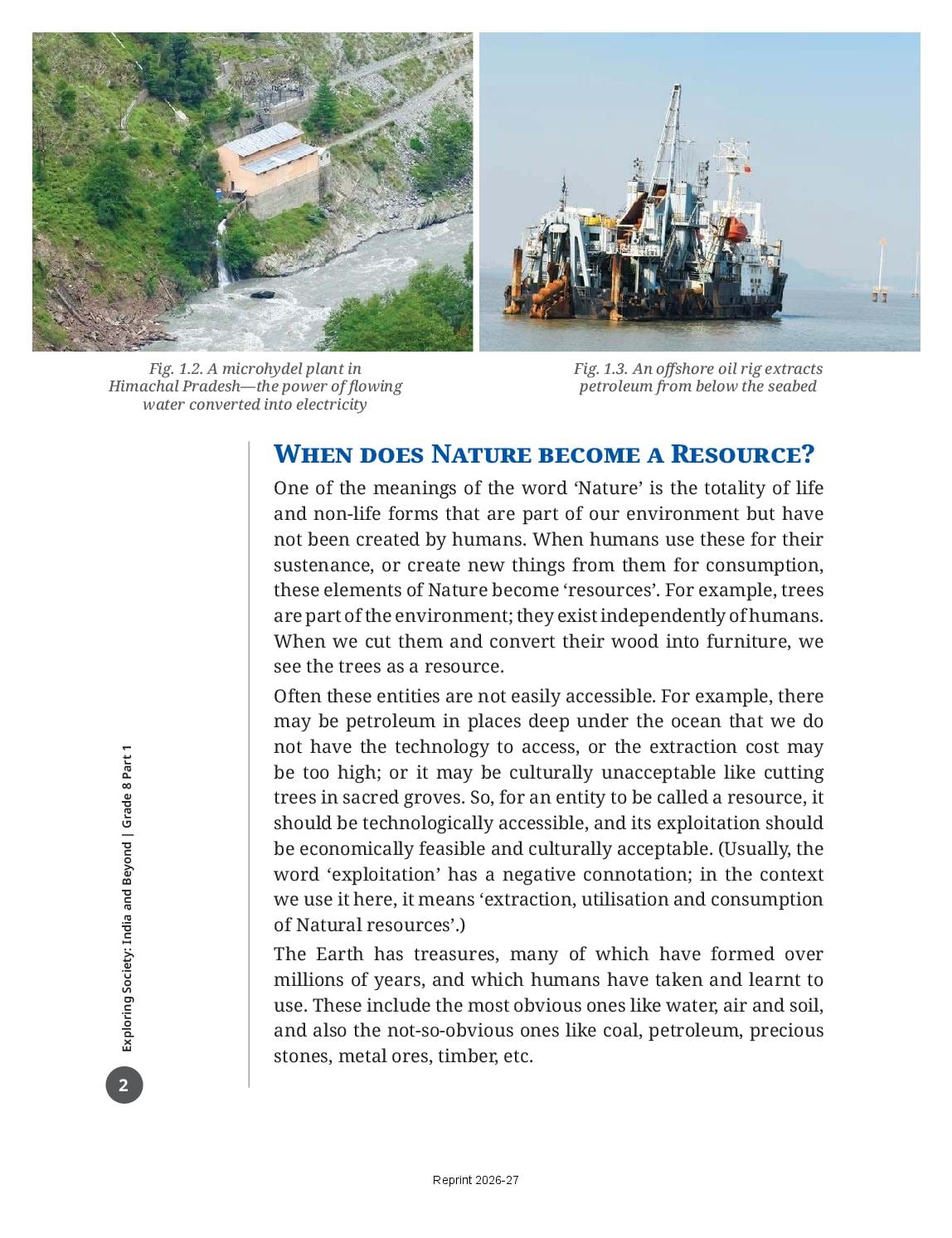
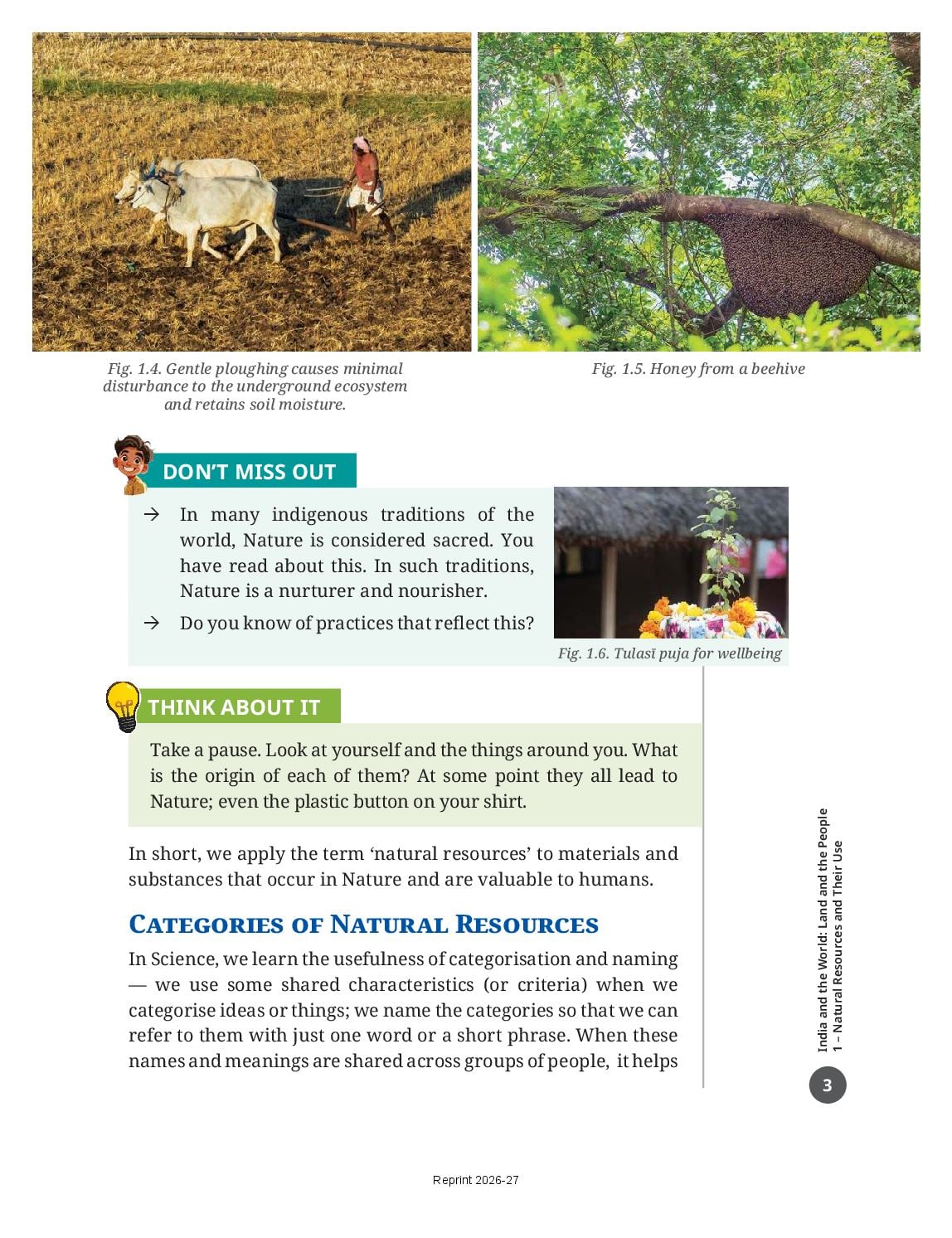
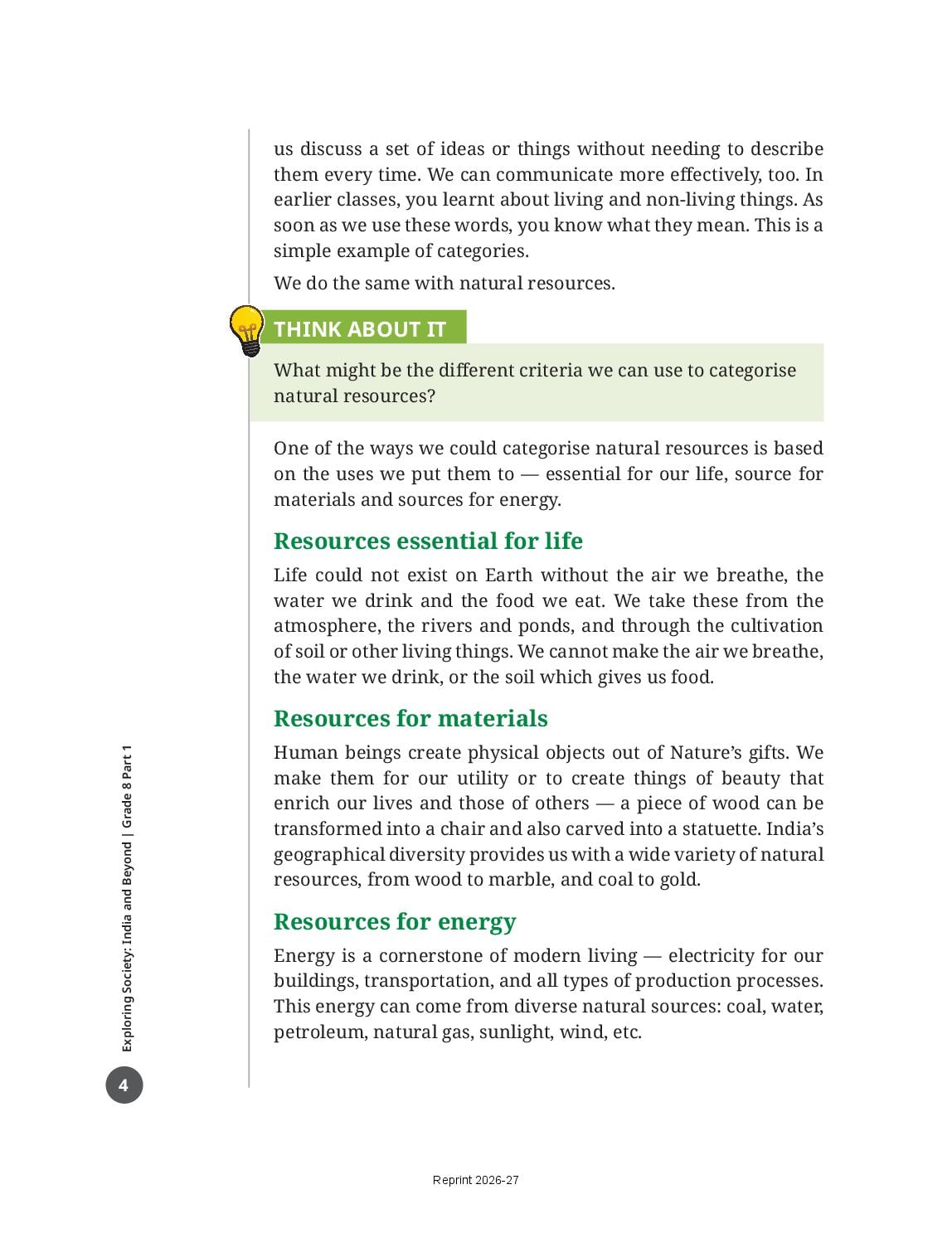
What Is in Natural Resources and Their Use? (Class 8 Social Science Chapter 1)
- An element of Nature becomes a resource only when humans can actually use it. The chapter sets three conditions: it must be technologically accessible, its exploitation must be economically feasible, and it must be culturally acceptable. Petroleum too deep to reach, or trees in a sacred grove, are therefore not resources.
- Resources can be categorised in more than one way. By use — resources essential for life (air, water, soil), resources for materials (wood, marble, coal, gold) and resources for energy (coal, water, petroleum, natural gas, sunlight, wind). By renewability — renewable and non-renewable.
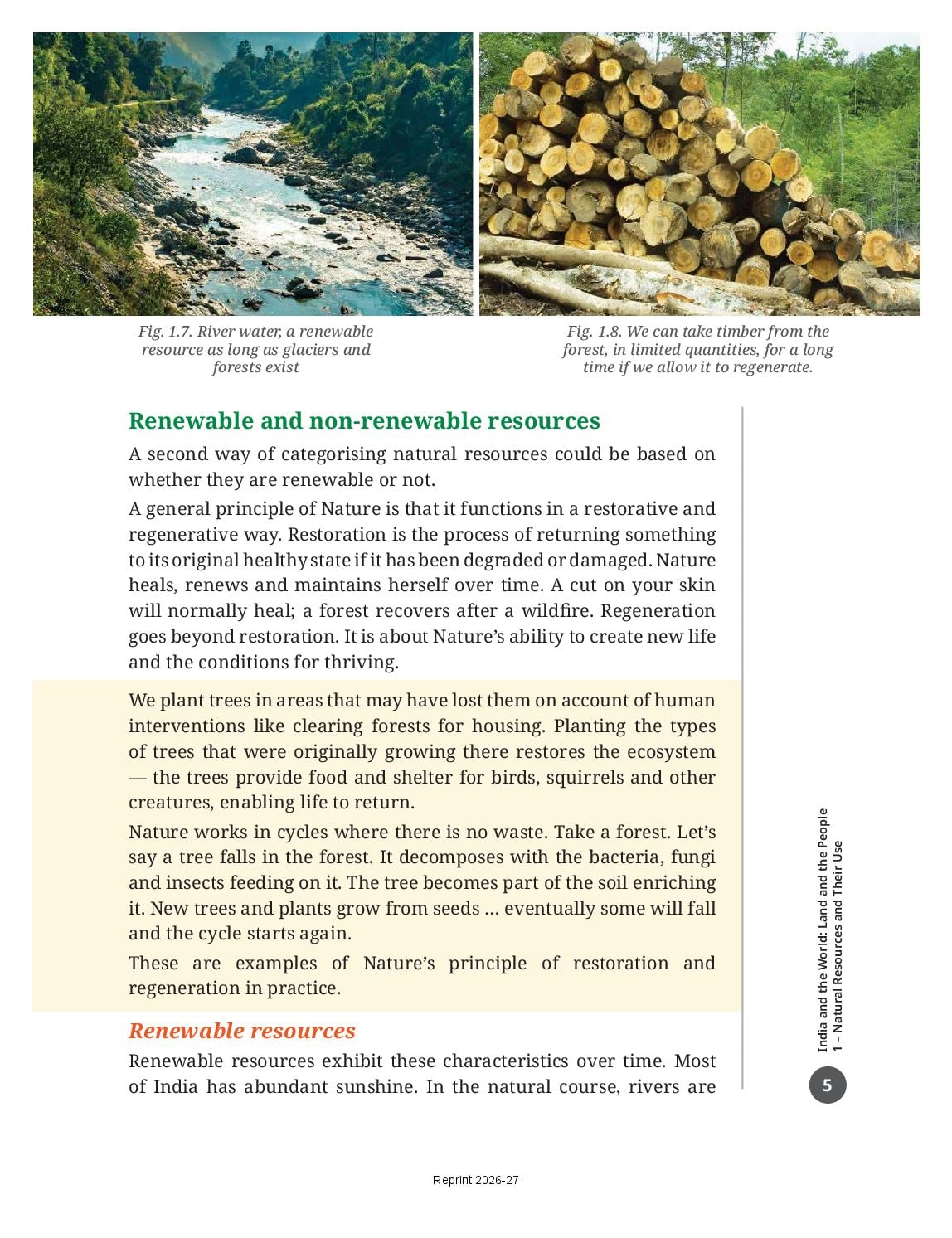
- Nature works by restoration (returning to a healthy state) and regeneration (creating new life), in cycles where nothing is waste. A resource stays renewable only while that rhythm is undisturbed — cut timber faster than a forest grows and the forest is depleted; warm the planet and Himalayan glaciers melt faster than precipitation can replace them.
- Non-renewables form over very long periods. India’s coal reserves are estimated to last about another 50 years, while demand for electricity keeps rising — so they must be used judiciously until sustainable options are widely available.
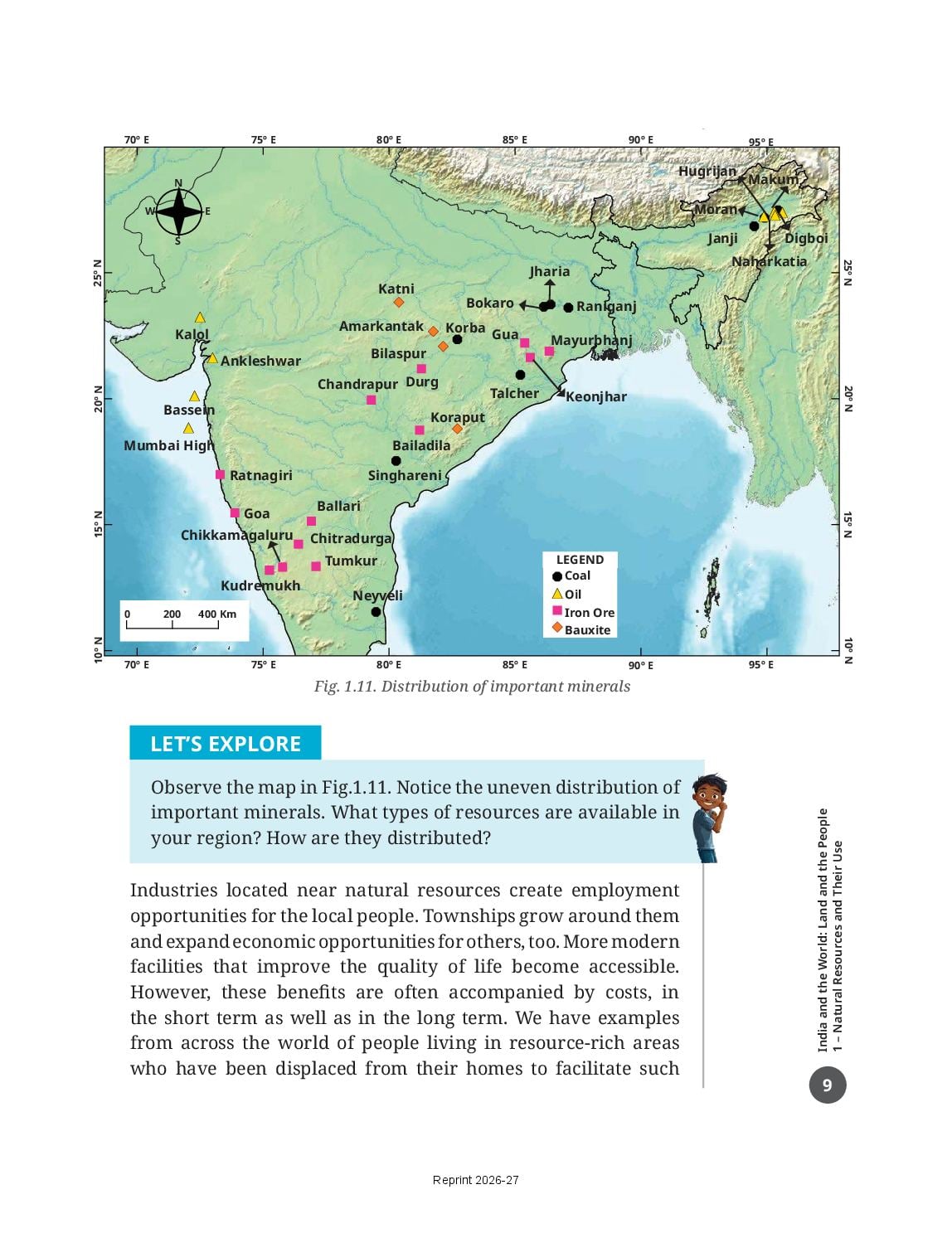
- Resources are unevenly distributed (Fig. 1.11), which shapes settlements, trade, international relations and conflicts. Abundance alone does not make a country rich — the ‘paradox of plenty’ or ‘natural resource curse’; India has largely avoided it by investing in industries that raise the value of what it extracts.
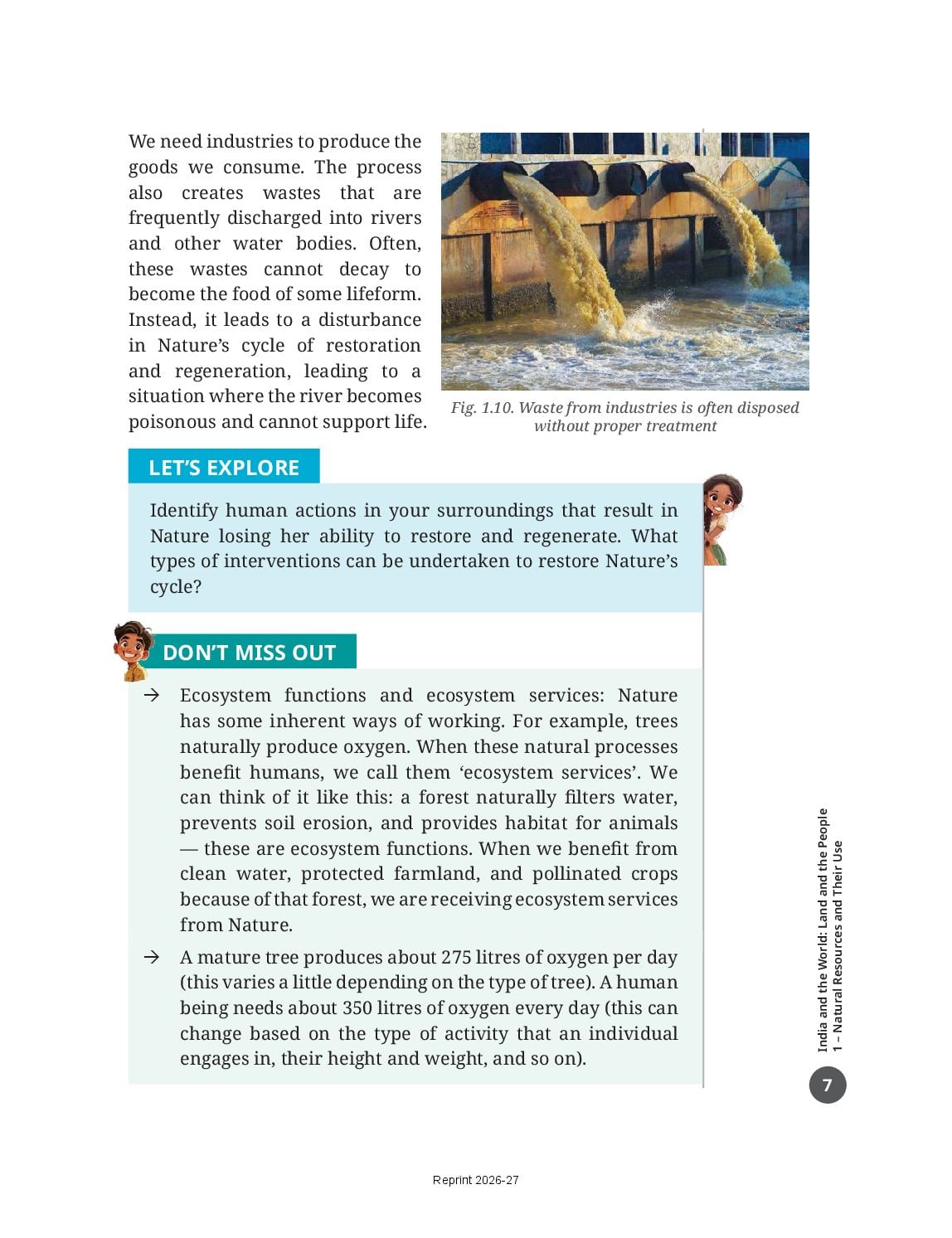
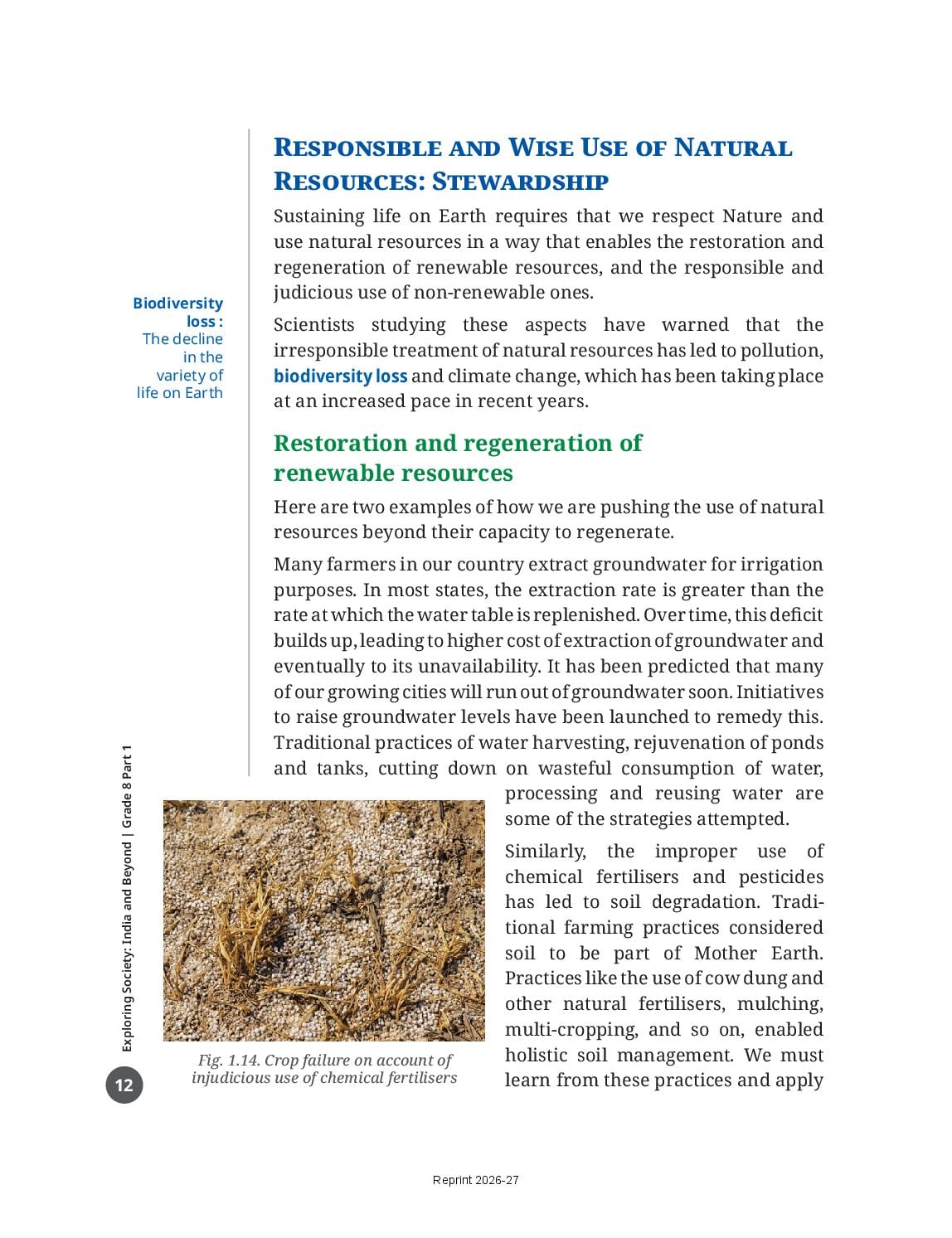
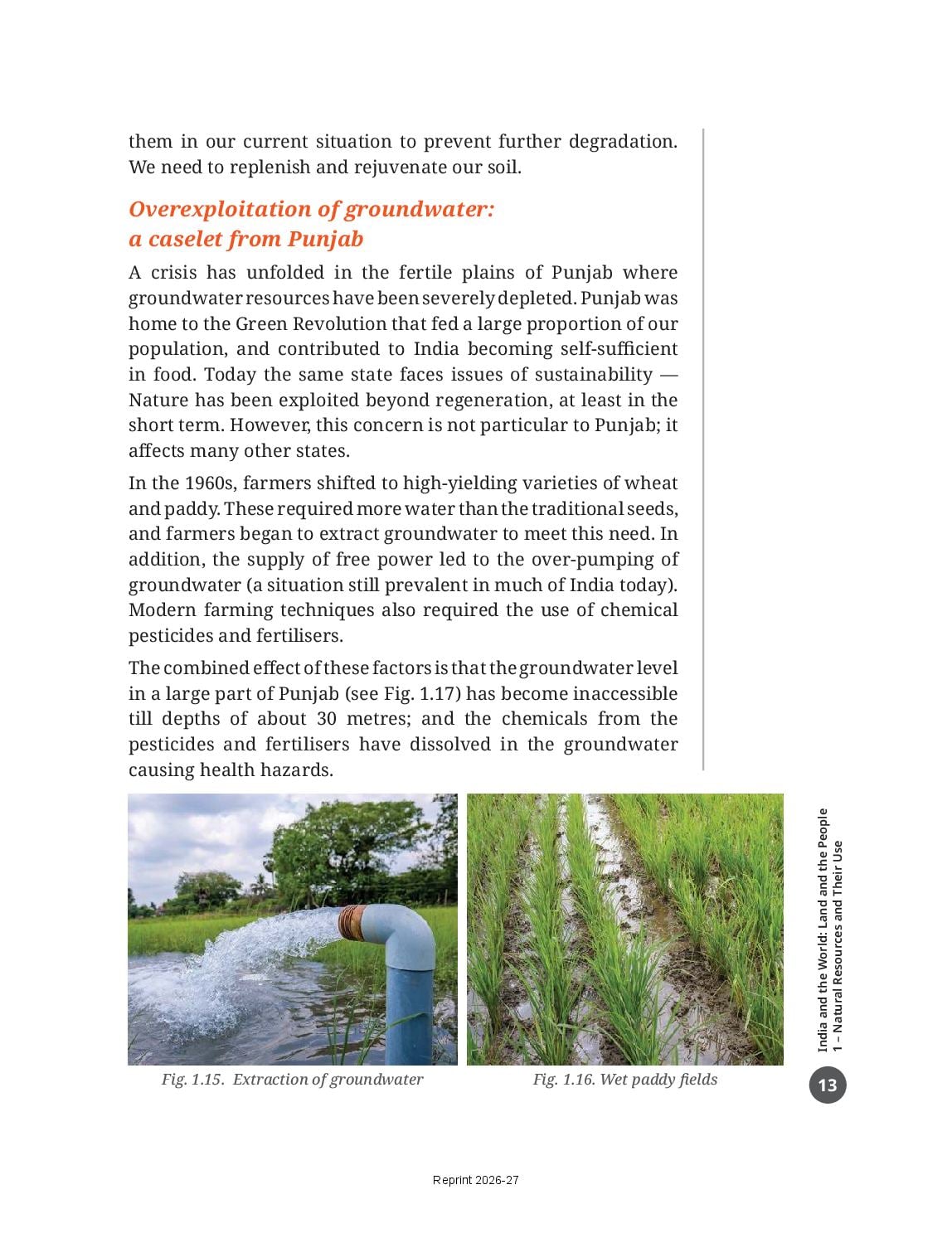
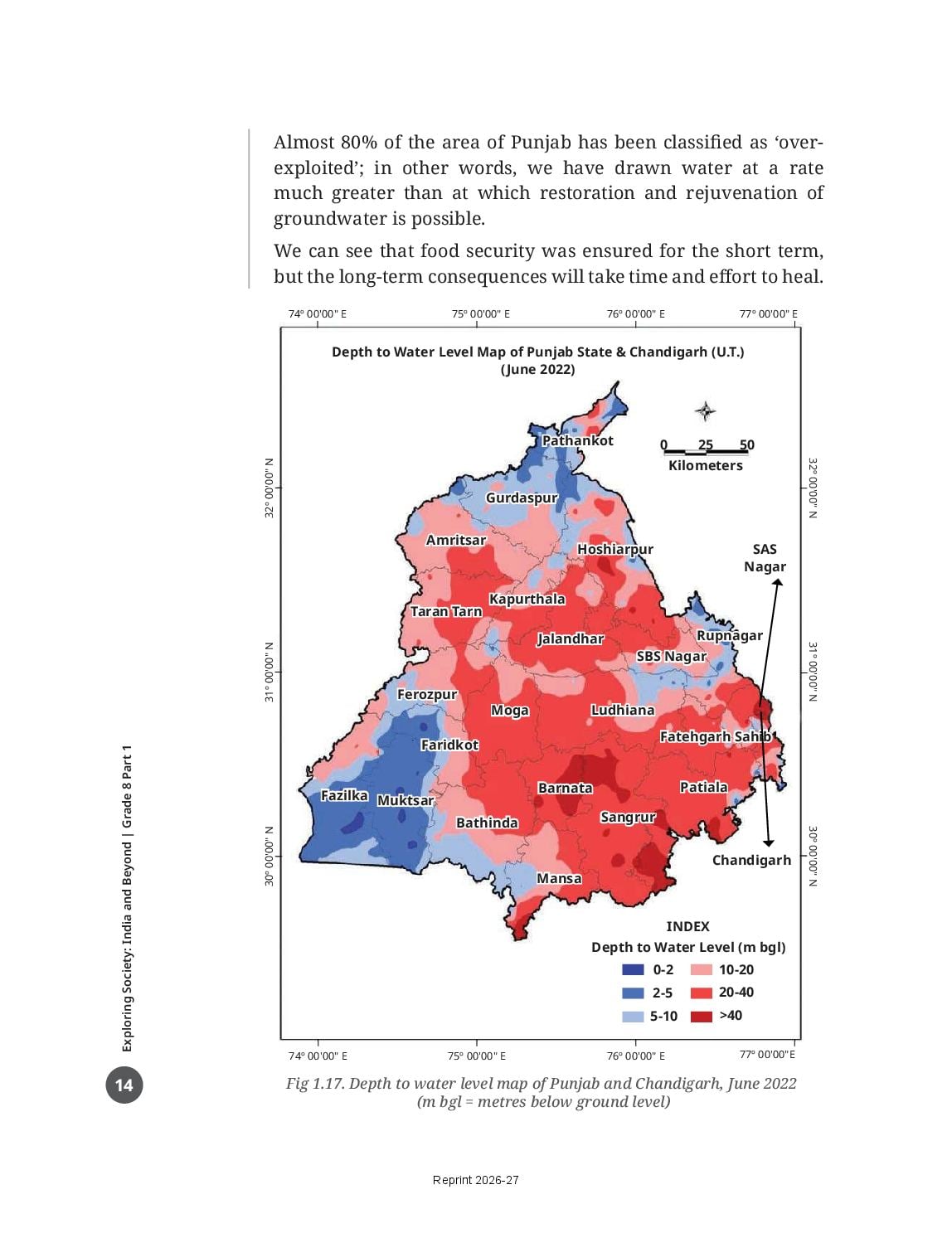
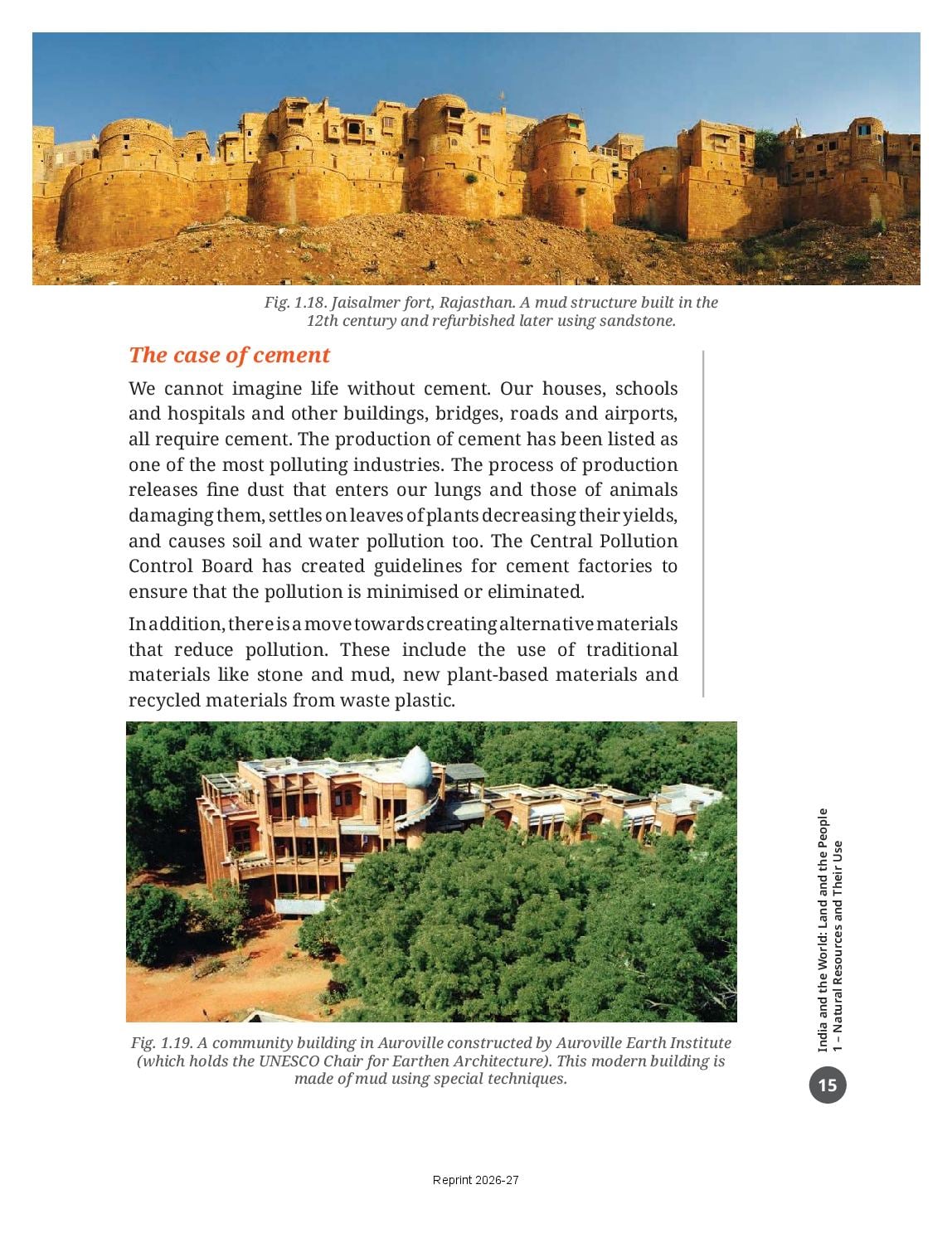
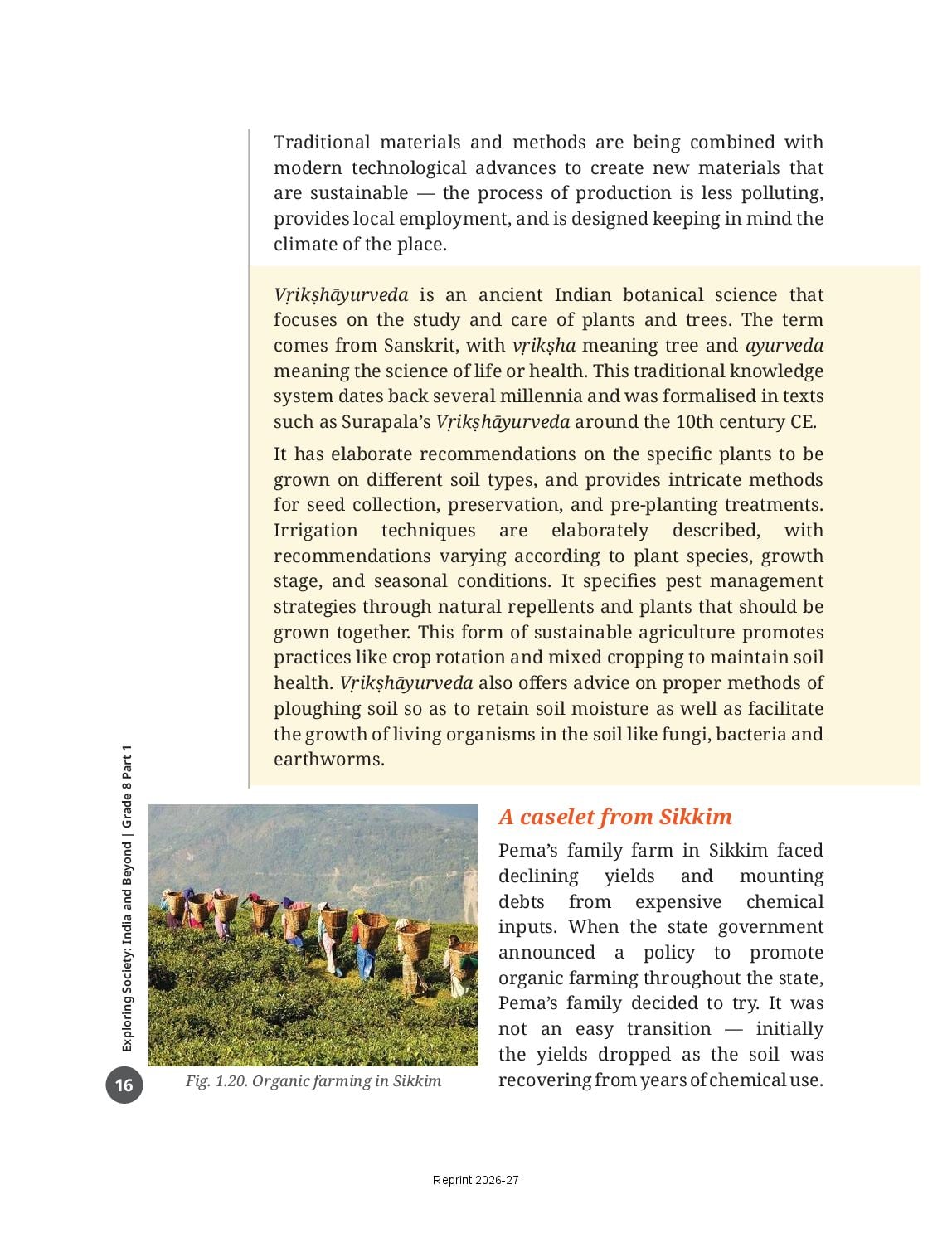
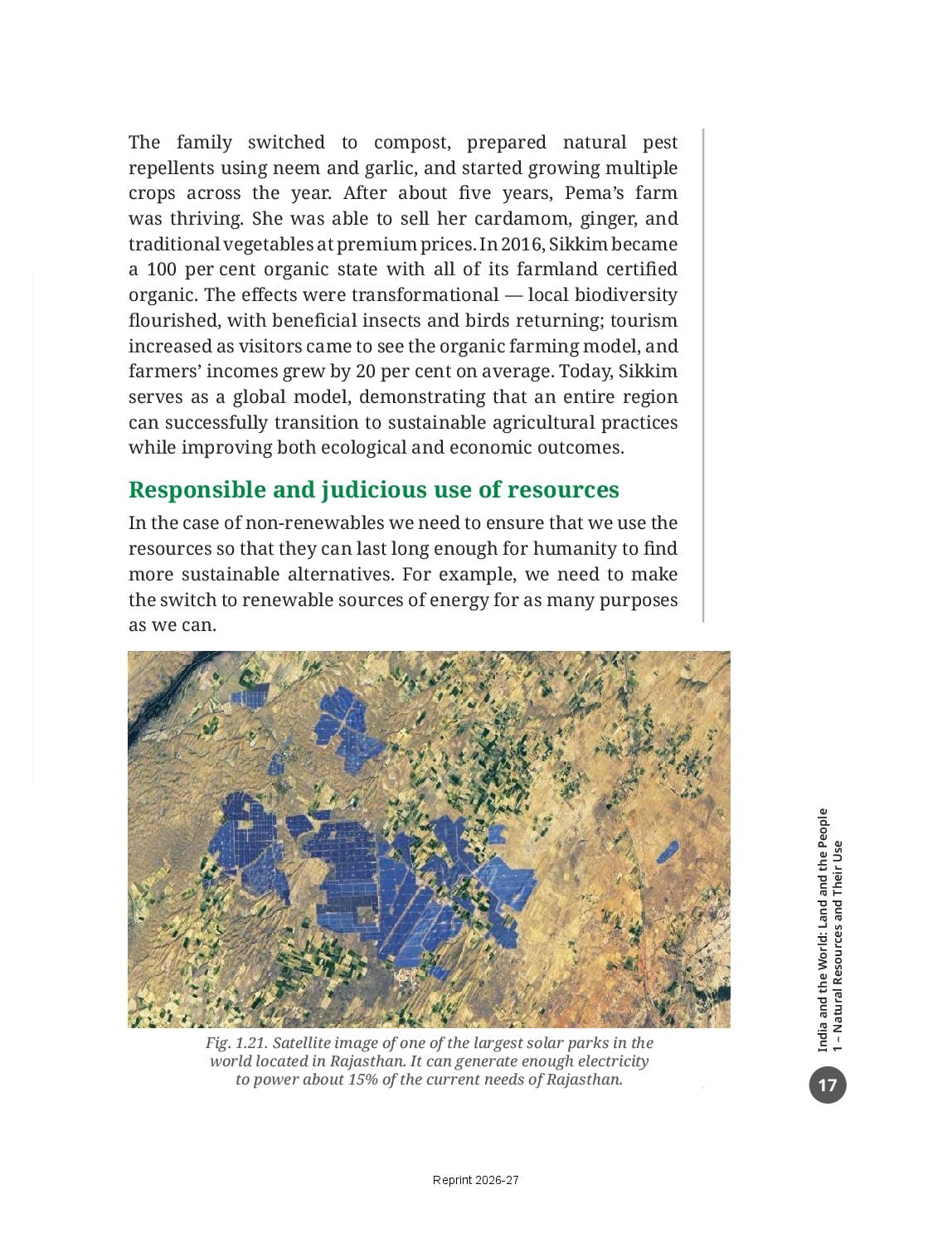
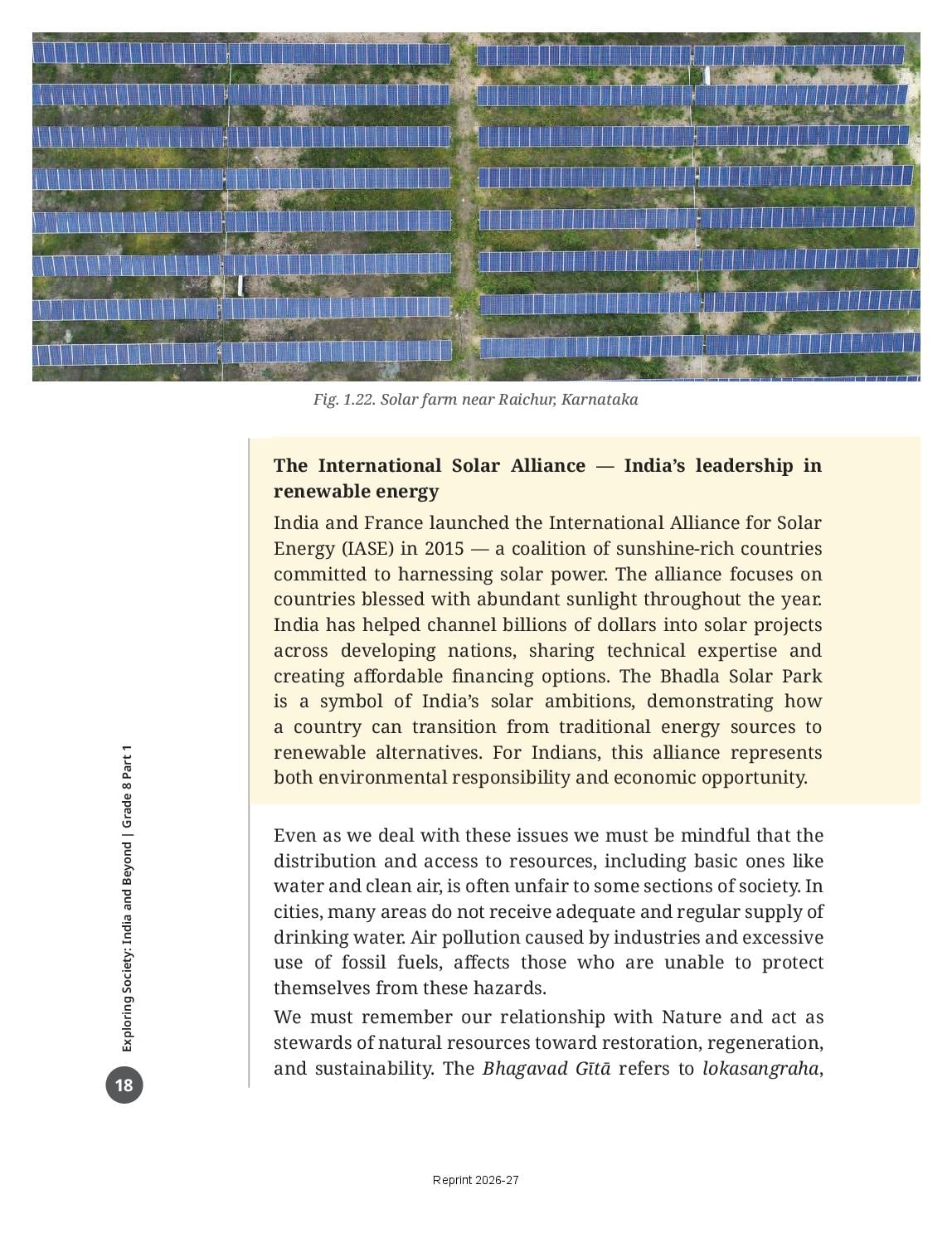
- Stewardship is the chapter’s answer: Punjab’s groundwater (almost 80% of the State classified ‘over-exploited’), the pollution of cement-making, Sikkim’s turn to 100% organic farming in 2016, and the International Solar Alliance of 2015 are its four worked examples.
Quick revision – Natural Resources and Their Use
| Term | What it means | Where it appears in the chapter | Example / detail |
|---|---|---|---|
| Nature | The totality of life and non-life forms that are part of our environment but have not been created by humans | Page 2 — ‘When does Nature become a Resource?’ | A standing tree in a forest |
| Natural resource | Materials and substances that occur in Nature and are valuable to humans | Page 3 | Air, water, soil, coal, petroleum, timber, metal ores, precious stones |
| Exploitation | In this chapter it carries no negative sense — it means the extraction, utilisation and consumption of natural resources | Page 2 (the bracketed note) | Mining coal; pumping groundwater |
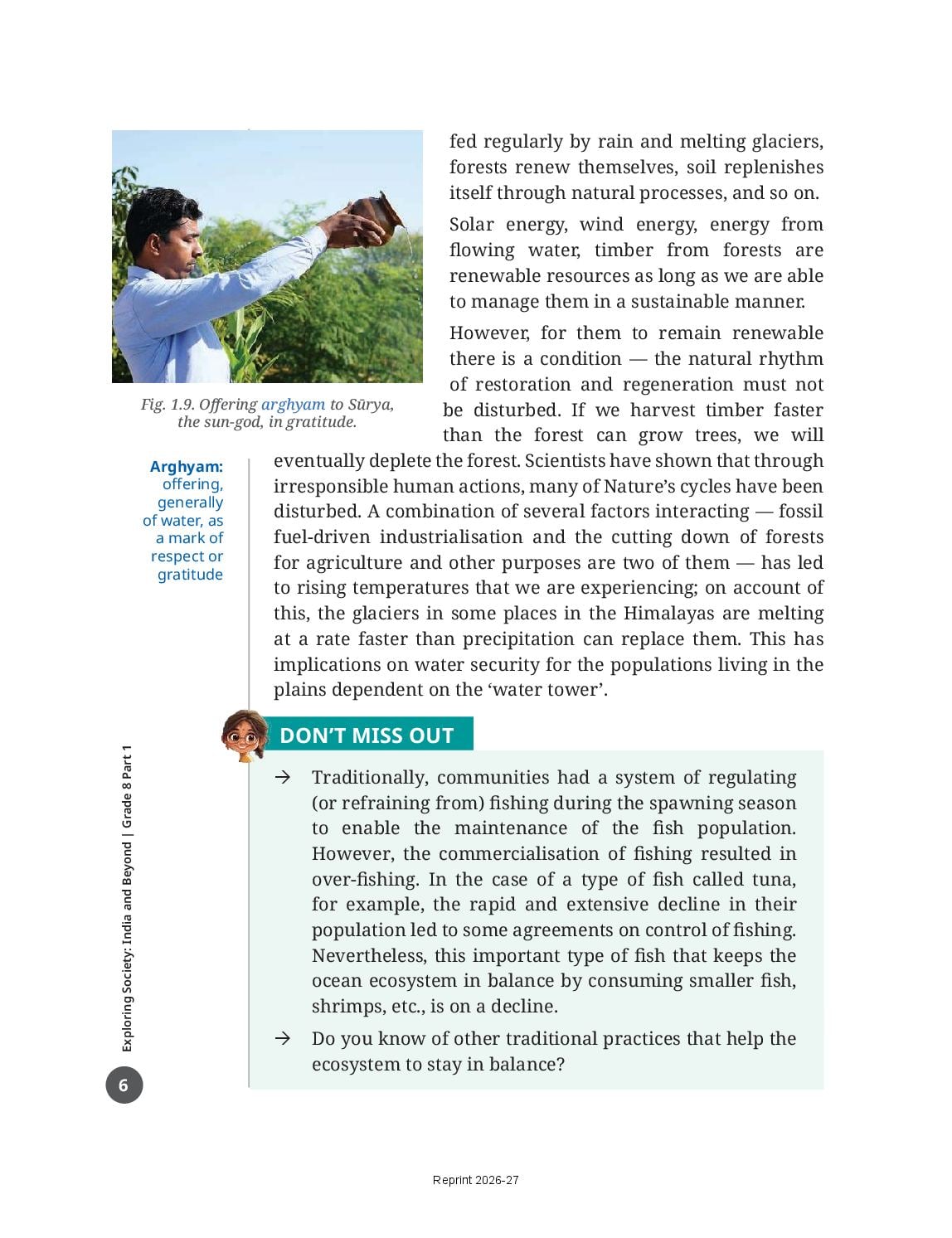
| Renewable resource | A resource Nature restores and regenerates — but only if we do not use it faster than it renews | Pages 5–6 | Solar energy, wind energy, energy from flowing water, timber from forests |
| Non-renewable resource | Created over long periods; cannot be replenished at the rate we use it | Page 8 | Coal, petroleum, iron, copper, gold |
| Restoration | Returning something to its original healthy state after it has been degraded or damaged | Page 5 | A cut on your skin healing; a forest recovering after a wildfire |
| Regeneration | Nature’s ability to create new life and the conditions for thriving — it goes beyond restoration | Page 5 | Planting the original species of trees so birds and squirrels return |
| Ecosystem function | Something Nature does of its own accord | Page 7 — DON’T MISS OUT | A forest filtering water, preventing soil erosion, giving habitat |
| Ecosystem service | An ecosystem function from which humans benefit | Page 7 | Clean water, protected farmland, pollinated crops |
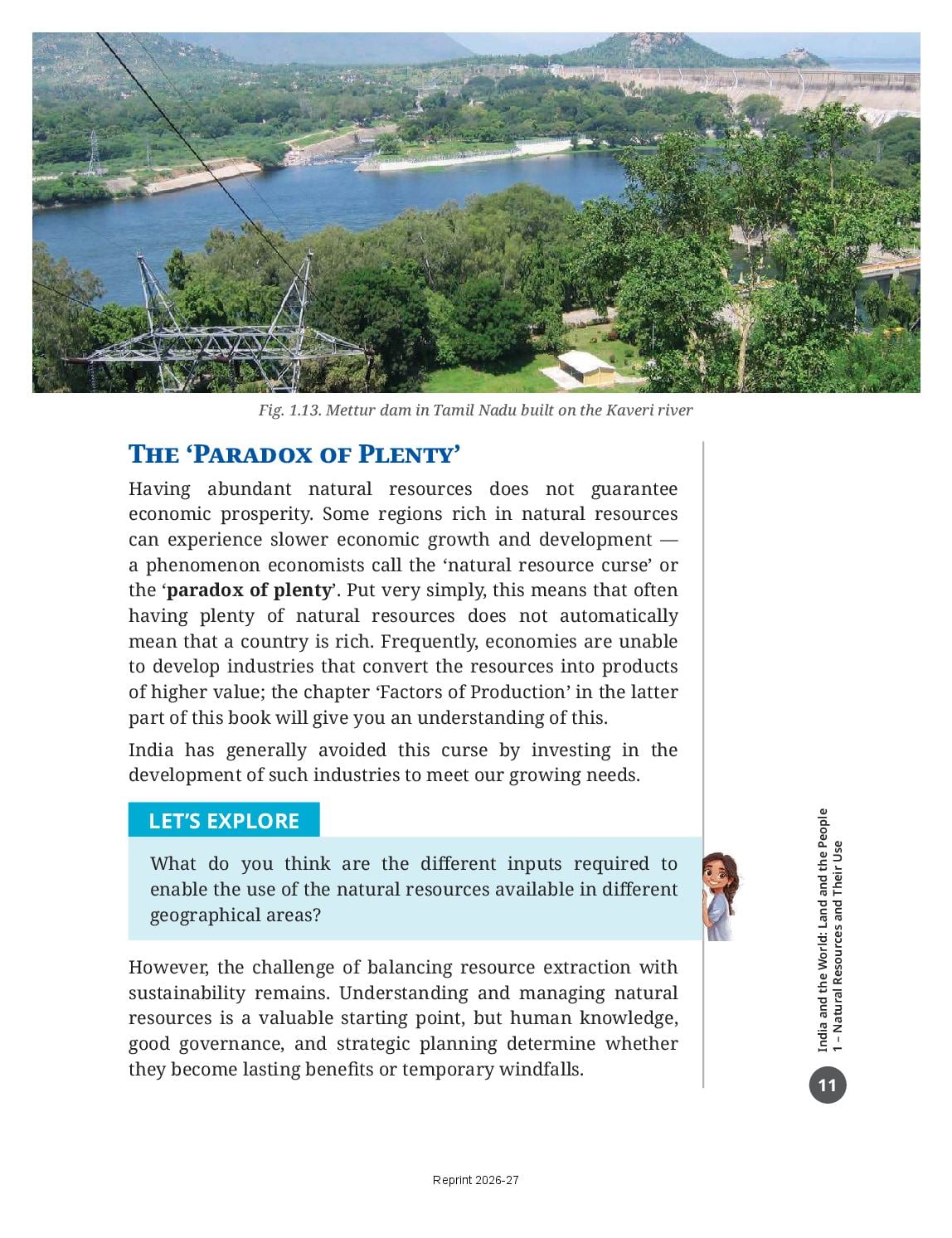
| ‘Paradox of plenty’ / natural resource curse | Regions rich in natural resources sometimes growing more slowly, because they cannot convert those resources into products of higher value | Page 11 | India avoided it by investing in such industries |
| Stewardship | Using resources so that renewables can restore and regenerate, and non-renewables are used responsibly and judiciously | Page 12 | Water harvesting, organic farming, the shift to solar energy |
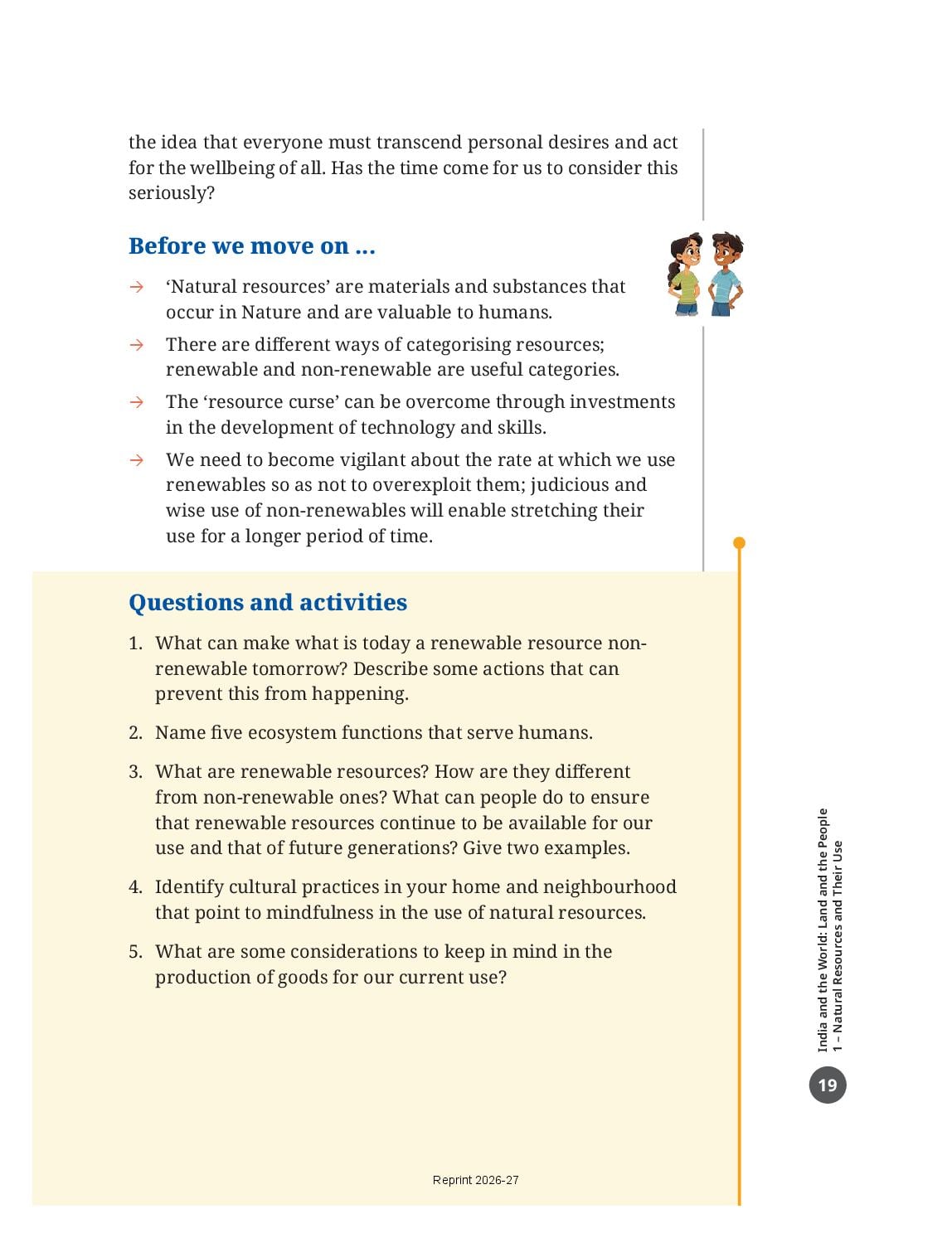
| Lokasangraha | The Bhagavad Gītā’s idea that everyone must transcend personal desires and act for the wellbeing of all | Pages 18–19 | The chapter’s closing appeal to act as stewards of Nature |
Old NCERT vs New – Class 8 Social Science
This chapter is from Exploring Society: India and Beyond, the new NCERT Class 8 Social Science book (NCF-SE 2023, used from 2025-26). It replaced the old book “Our Pasts, Resources and Development and Social and Political Life”, so chapter numbers and names differ from older PDFs.
Solutions and All Chapters
Answers to the exercises and the full chapter list of Exploring Society: India and Beyond:
Natural Resources and Their Use – Overview
| Class | Class 8 |
| Subject | Social Science |
| Book | Exploring Society: India and Beyond – new NCERT book |
| Part | Part I |
| Chapter | 1 of 15 – Natural Resources and Their Use |
| Book pages | 1 – 20 |
| Edition | NCERT Reprint 2026-27 |
| Session | 2026-27 |
| Free – read online or download |
Class 8 Social Science Chapter 1 – FAQs
Where can I download Natural Resources and Their Use Class 8 PDF?
From the download table on this page – the chapter PDF is free, and the full book is linked too.
What is Class 8 Social Science Chapter 1 about?
An element of Nature becomes a resource only when humans can actually use it. The chapter sets three conditions: it must be technologically accessible, its exploitation must be economically feasible, and it must be culturally acceptable. Petroleum too deep to reach, or trees in a sacred grove, are therefore not resources.
Is Natural Resources and Their Use from the new NCERT Class 8 Social Science book?
Yes. It is chapter 1 of exploring society: india and beyond (part i), the new NCERT Class 8 Social Science book for 2026-27.
Is this the latest NCERT edition for 2026-27?
Yes – the PDF is NCERT’s latest edition for the 2026-27 session.
Where are the NCERT Solutions for Class 8 Social Science Chapter 1?
Open the NCERT Solutions link above for answers to the exercise questions.