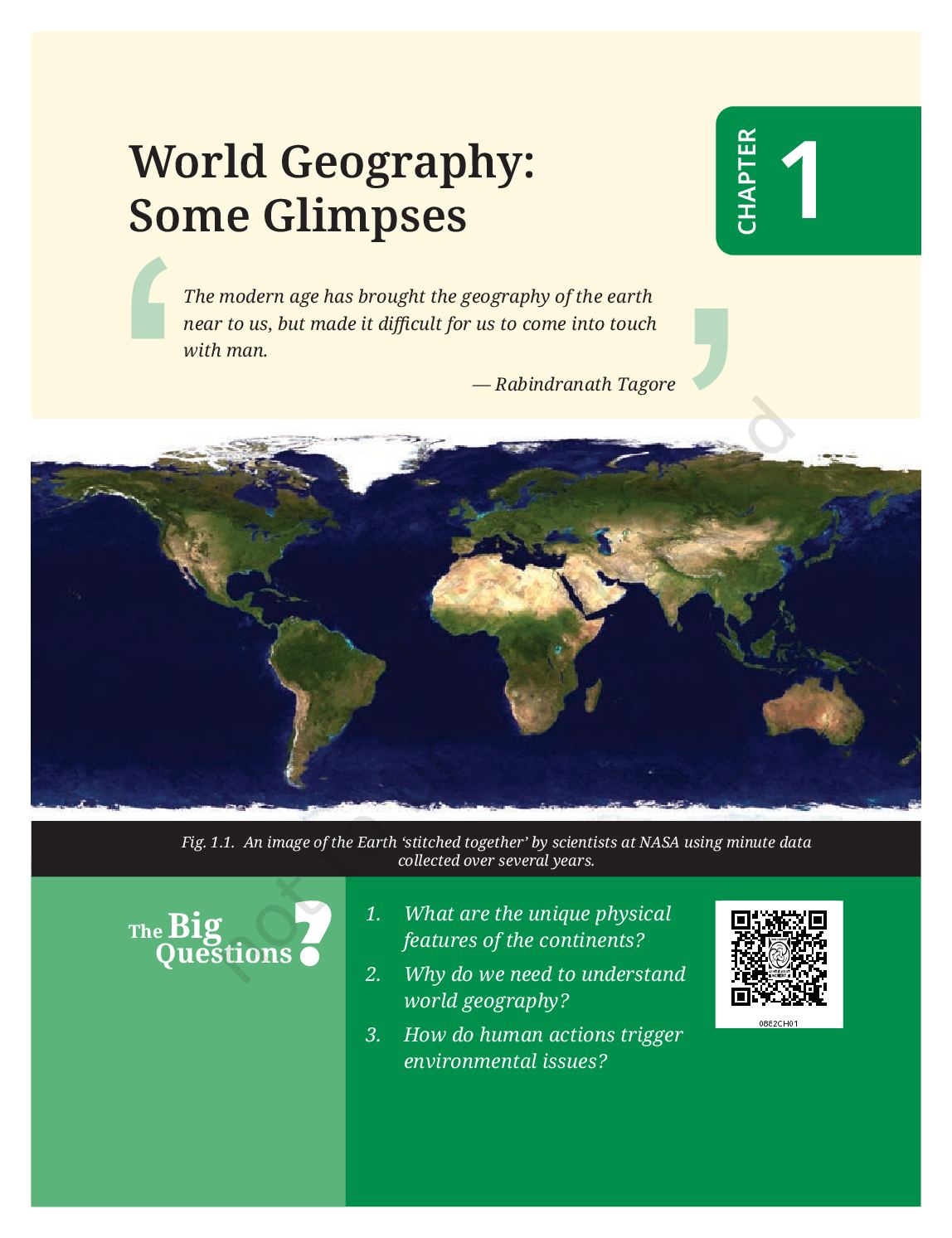
Download World Geography: Some Glimpses – NCERT Class 8 Social Science Chapter 8 PDF from the new NCERT Class 8 Social Science book Exploring Society: India and Beyond (2026-27). Read the chapter online or download the free PDF. The Earth is an oblate spheroid, so no flat map can be perfectly true. Every map projection is a compromise: the Mercator keeps shape and direction but swells sizes near the poles, the Robinson balances size against shape. To understand the world…
World Geography: Some Glimpses PDF – Chapter 8 of Exploring Society: India and Beyond (Part II)
Read the chapter online or download the PDF.
| Chapter | Download | |
|---|---|---|
| Chapter 8 PDF | World Geography: Some Glimpses | View PDF |
| Full book | NCERT Class 8 Social Science – Exploring Society: India and Beyond | View Book |
Read Online
What Is in World Geography: Some Glimpses? (Class 8 Social Science Chapter 8)
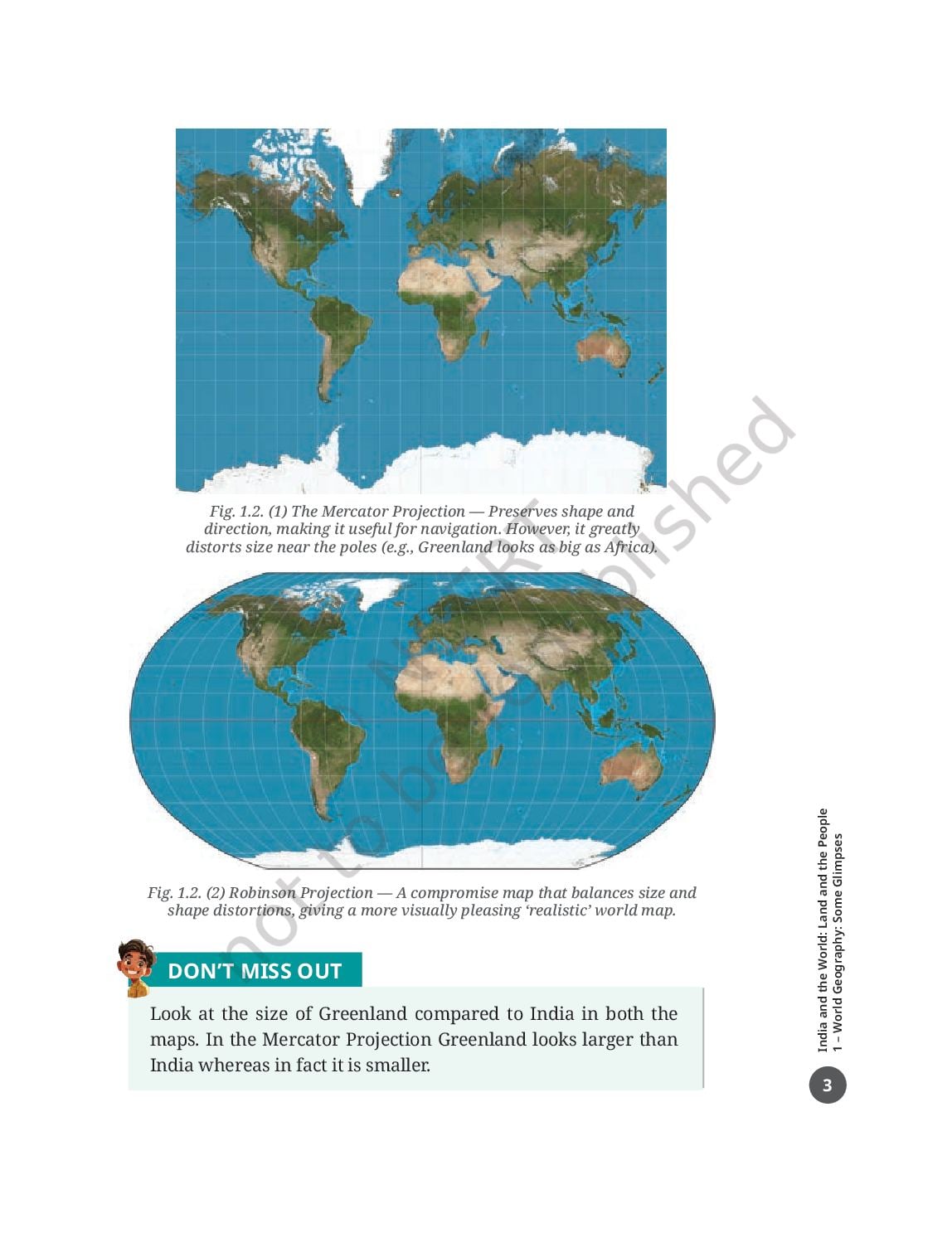
- The Earth is an oblate spheroid, so no flat map can be perfectly true. Every map projection is a compromise: the Mercator keeps shape and direction but swells sizes near the poles, the Robinson balances size against shape. To understand the world fairly, look at more than one projection.
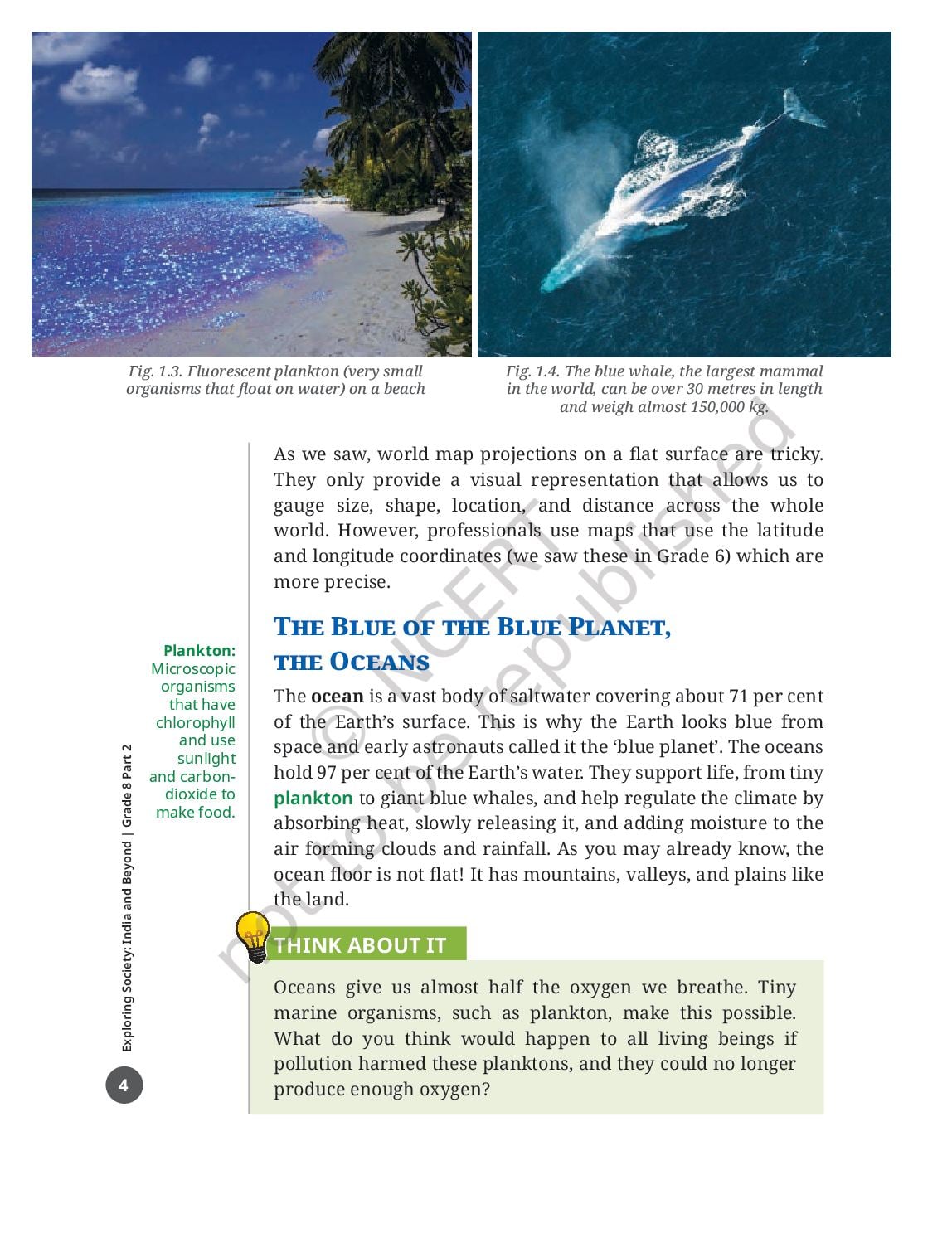
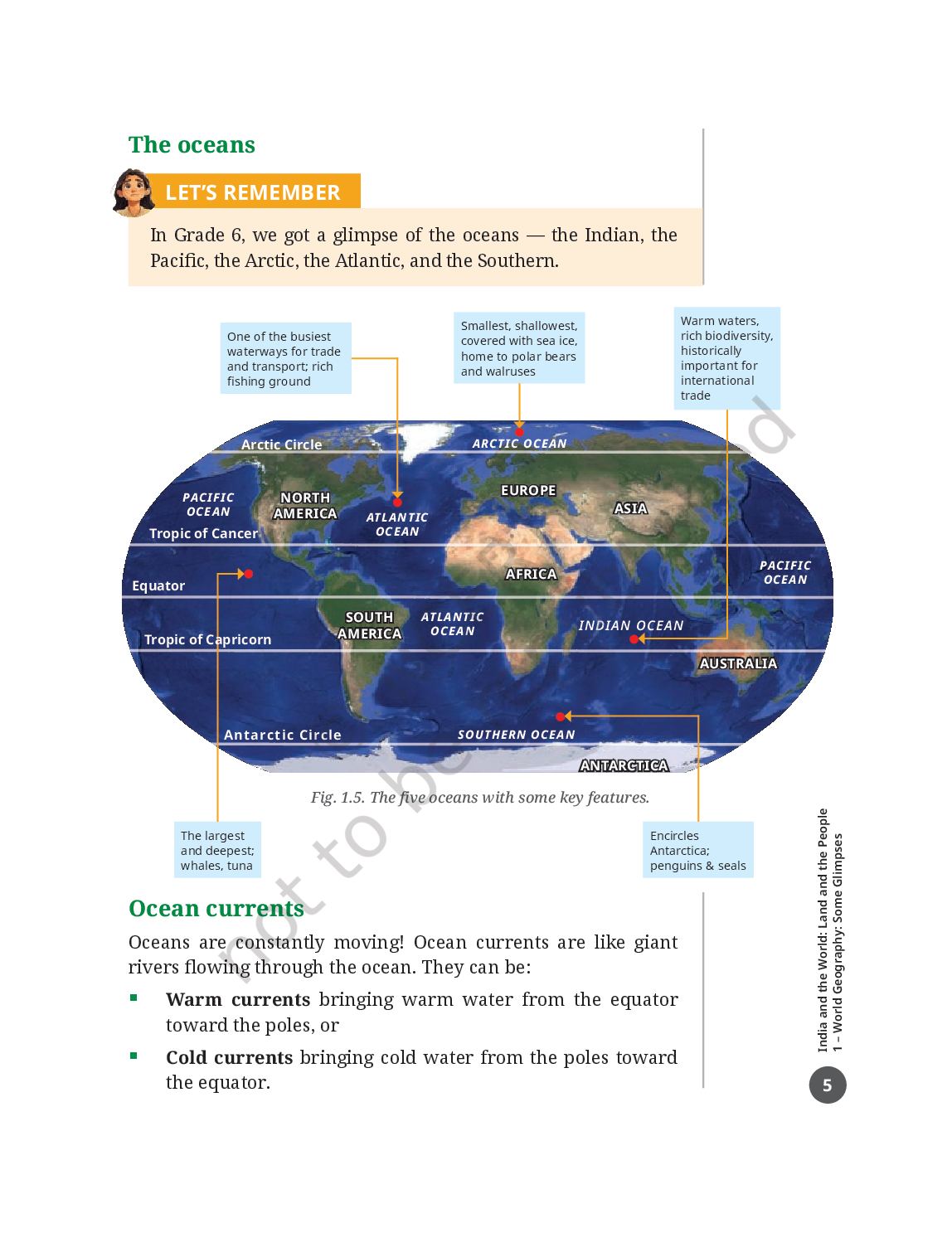
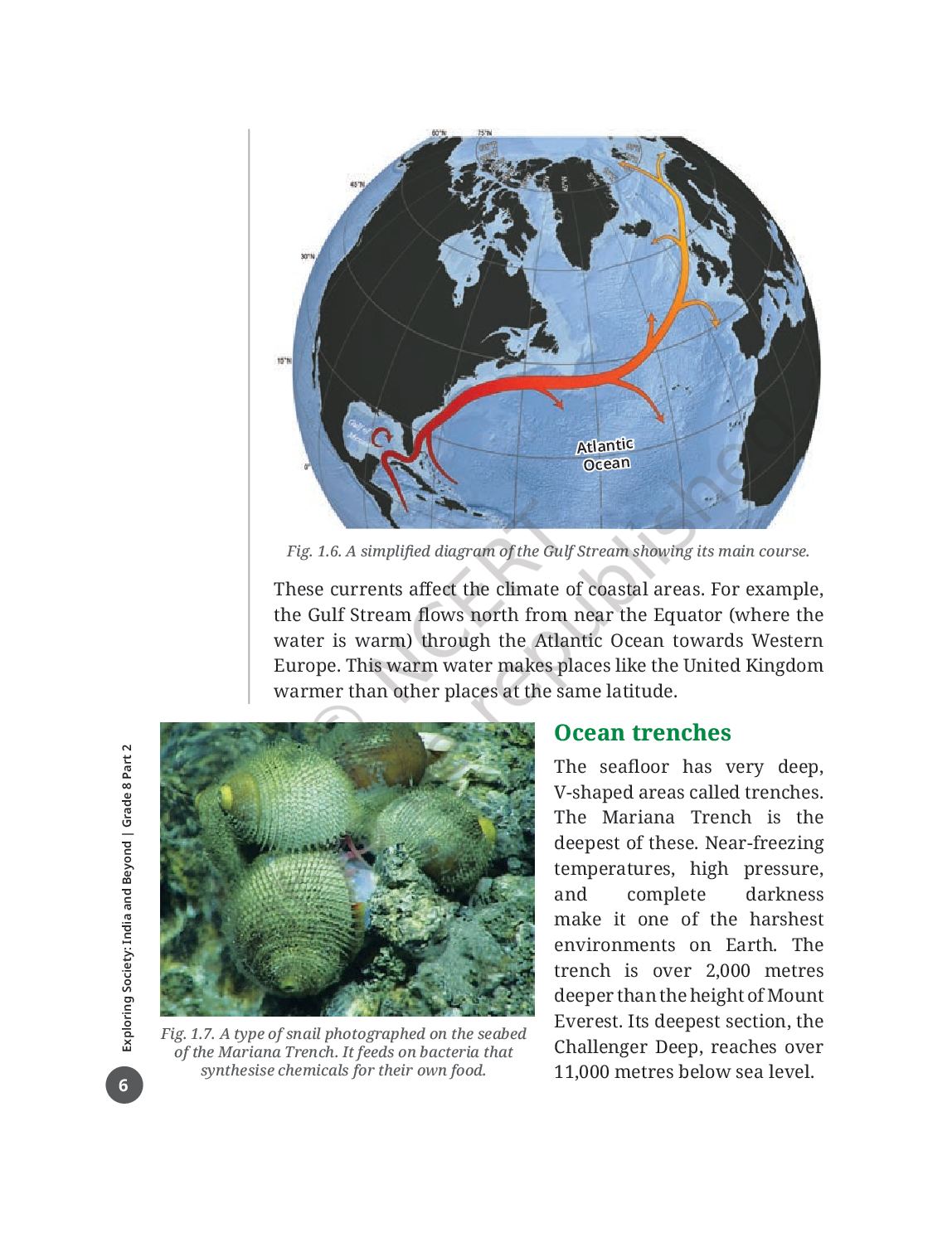
- The oceans cover about 71 per cent of the Earth’s surface and hold 97 per cent of its water. They feed life, give us almost half our oxygen through plankton, and steady the climate by soaking up heat, releasing it slowly and adding moisture to the air. Currents, trenches and reefs make the ocean floor as varied as the land.
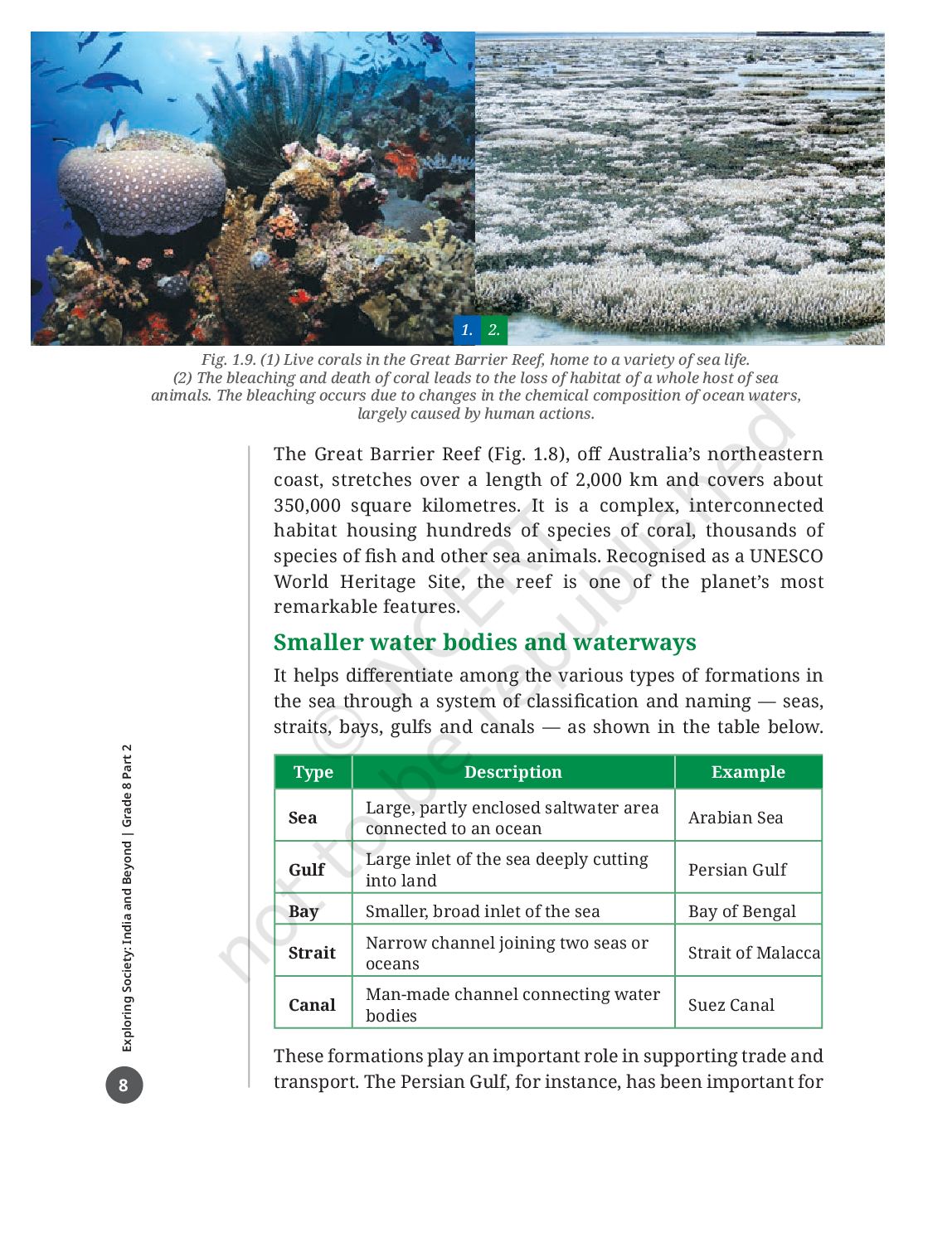
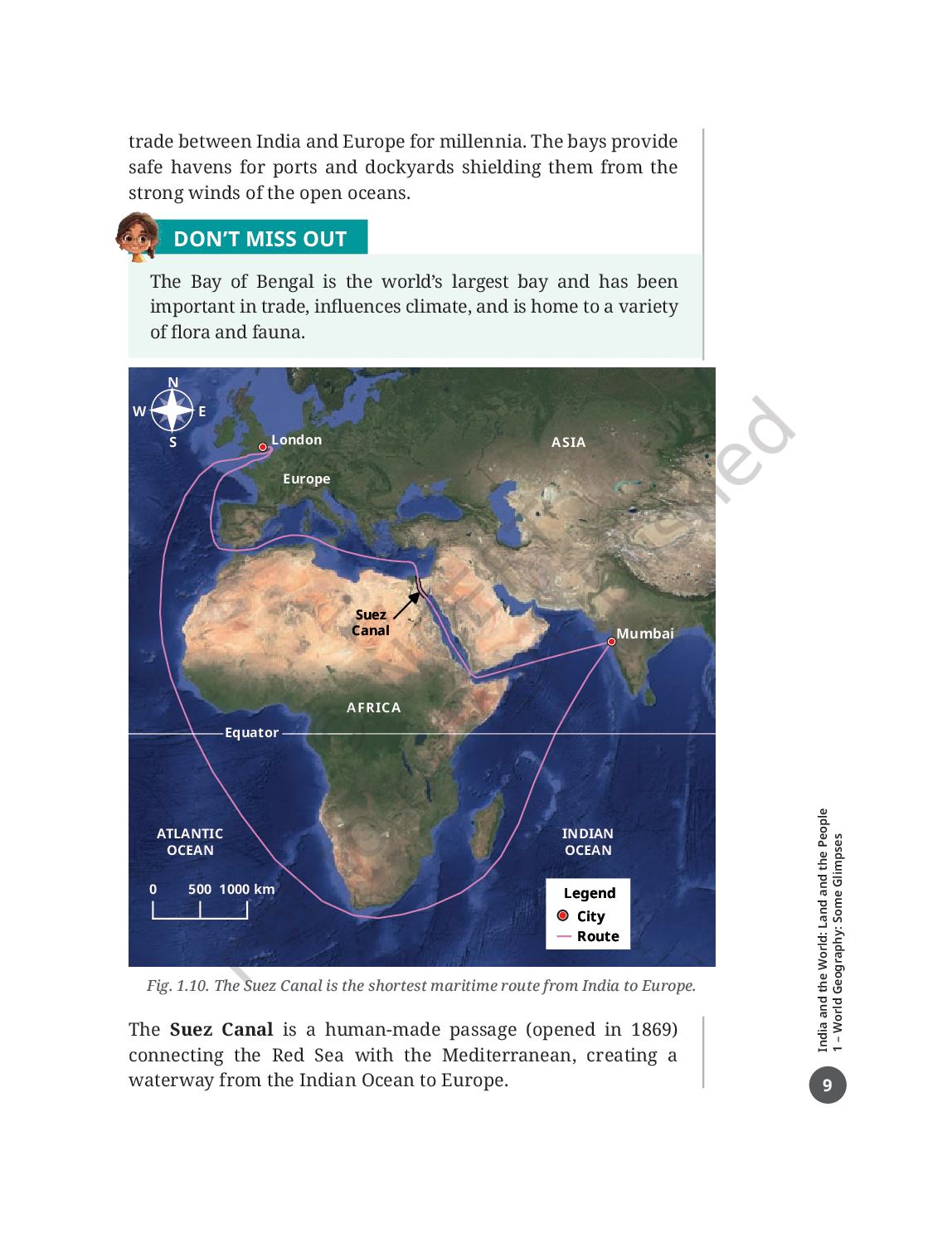
- Seas, gulfs, bays, straits and canals are named according to their shape and their link to the ocean, and each has shaped trade — the Persian Gulf, the Bay of Bengal, the Strait of Malacca and the man-made Suez Canal (1869).
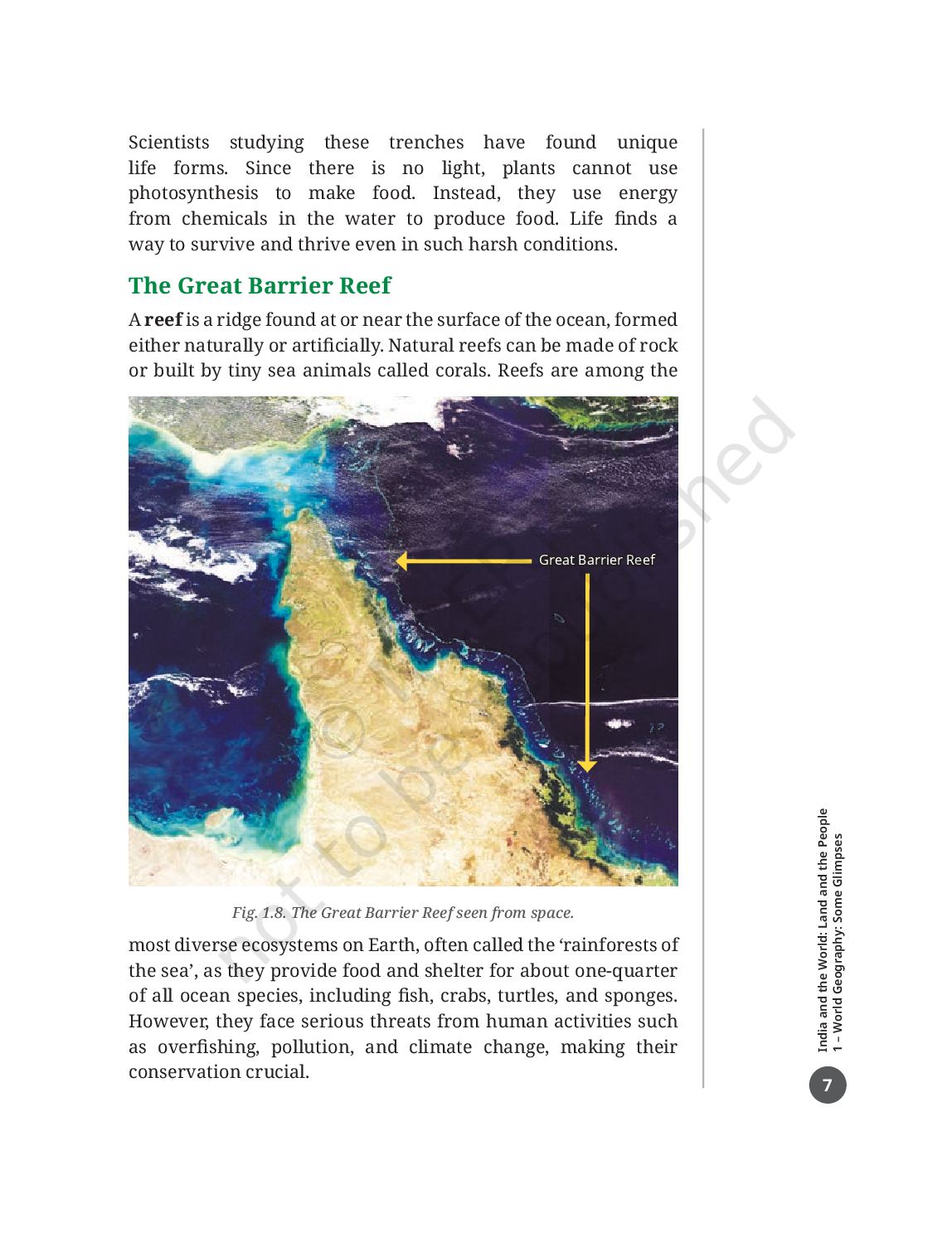
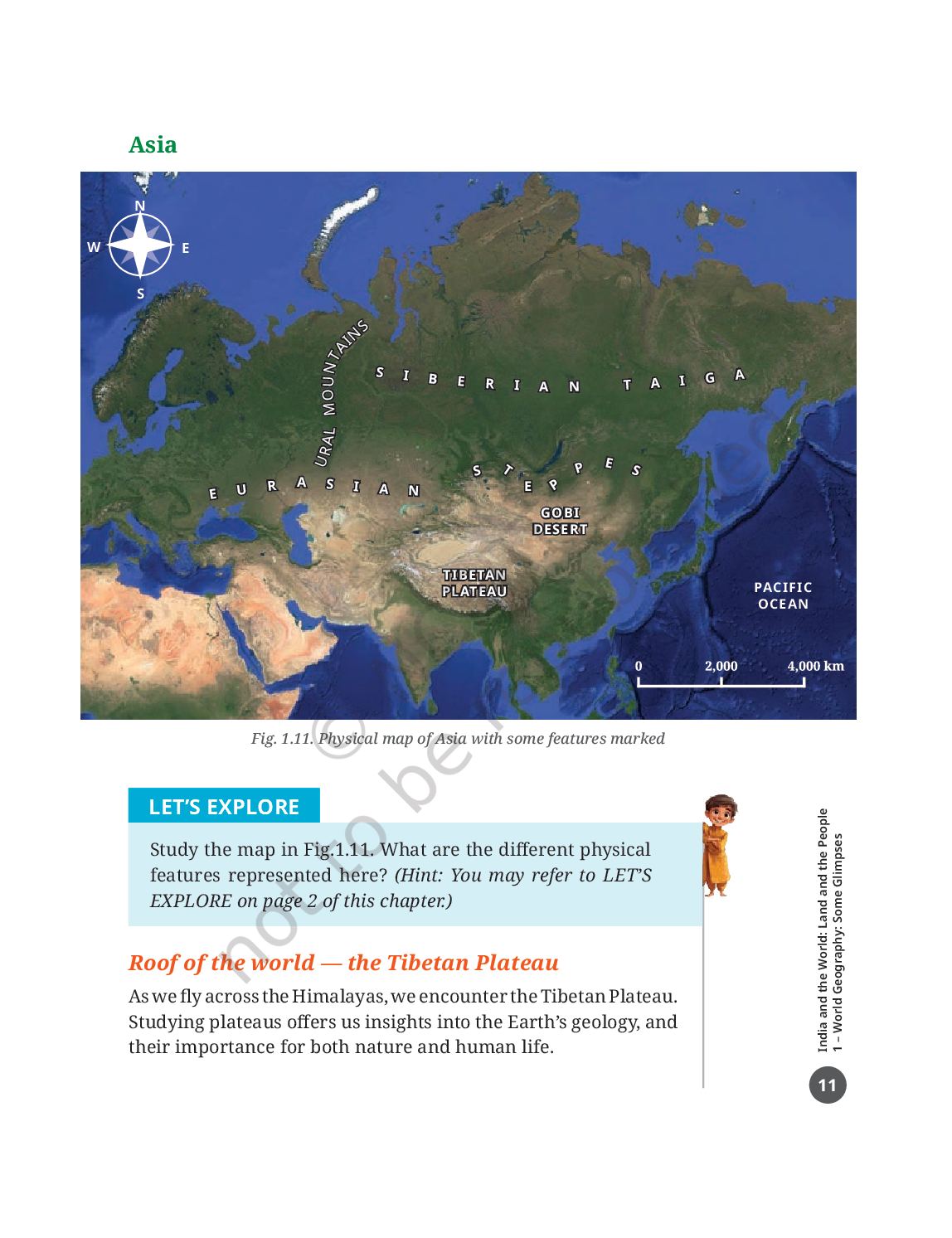
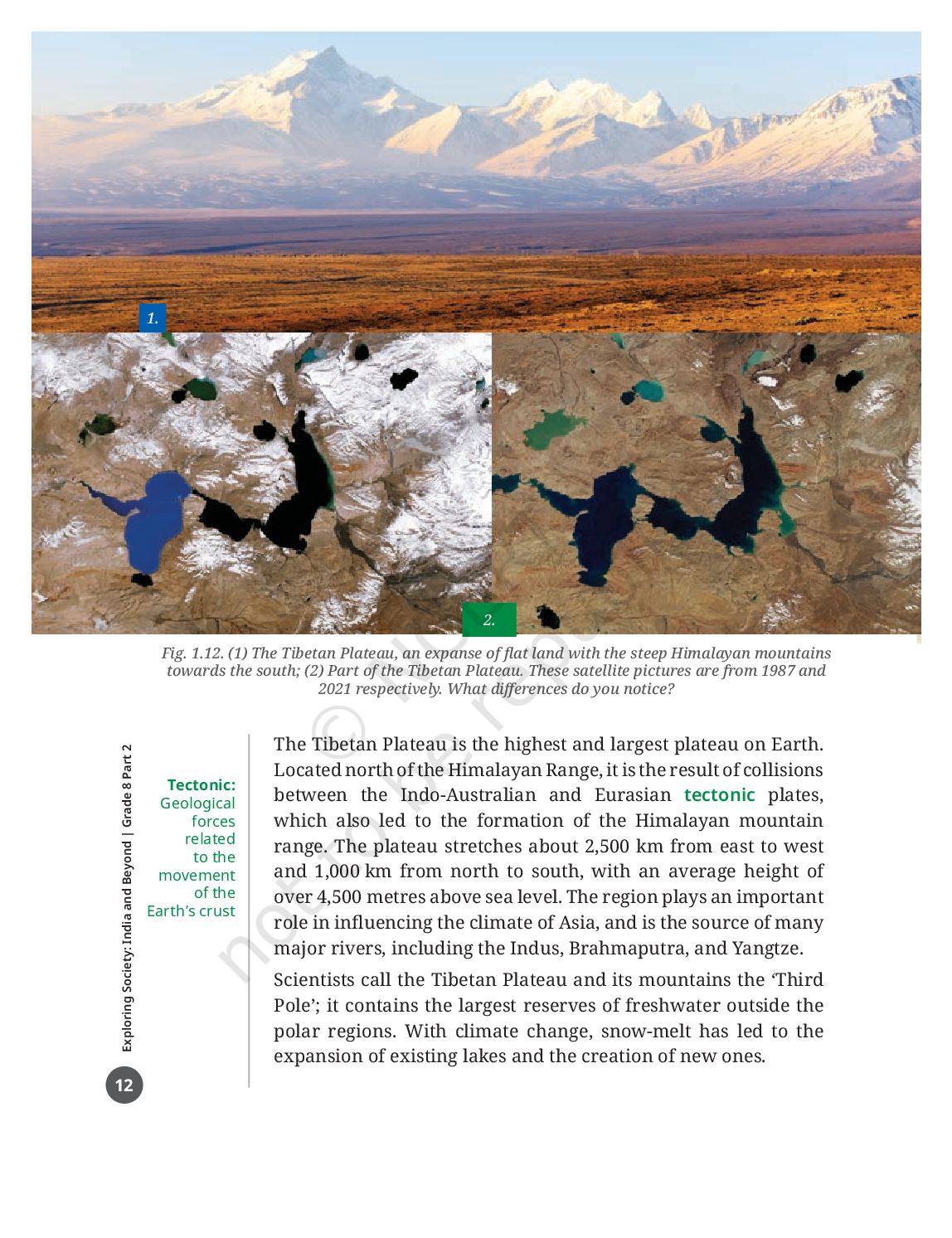
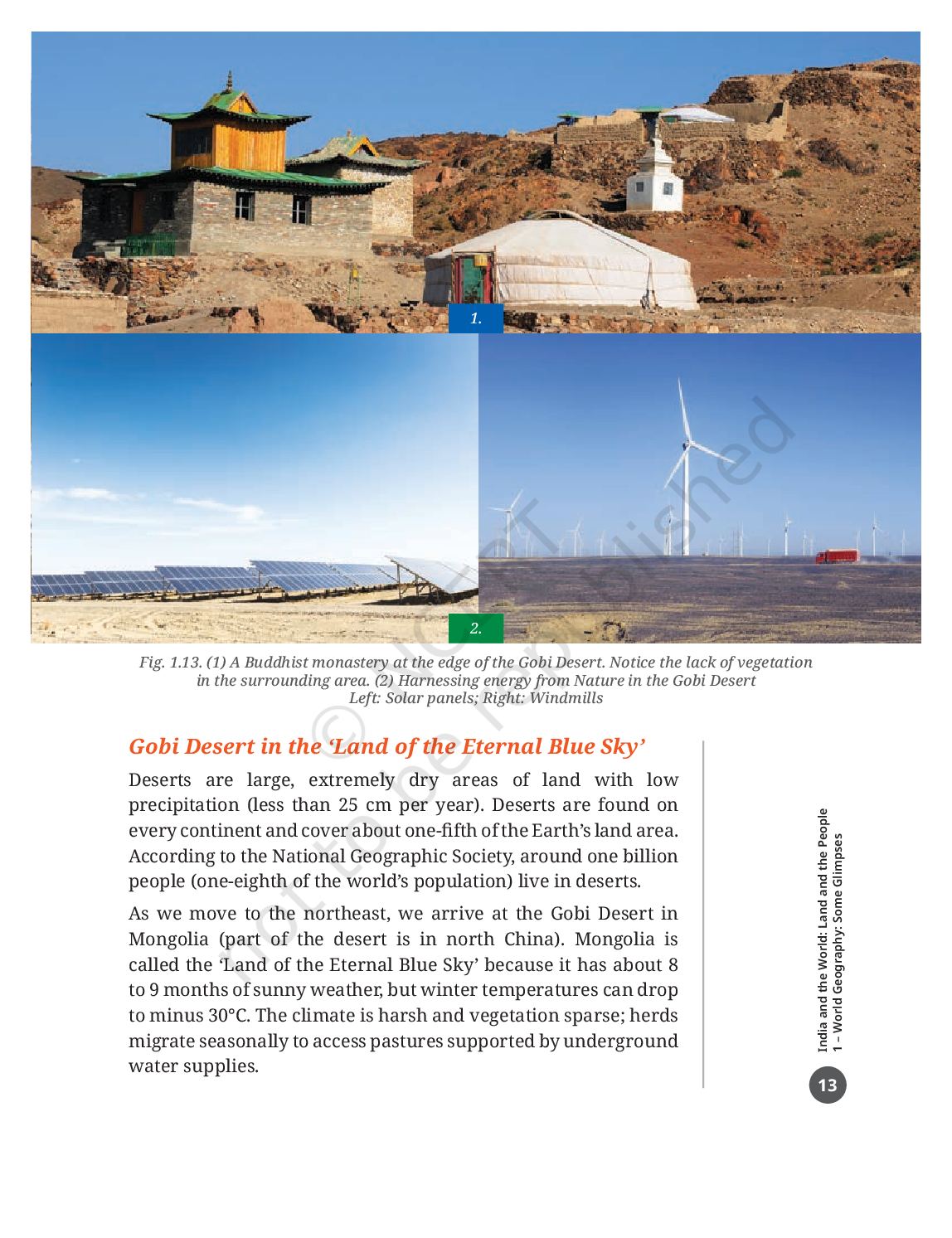
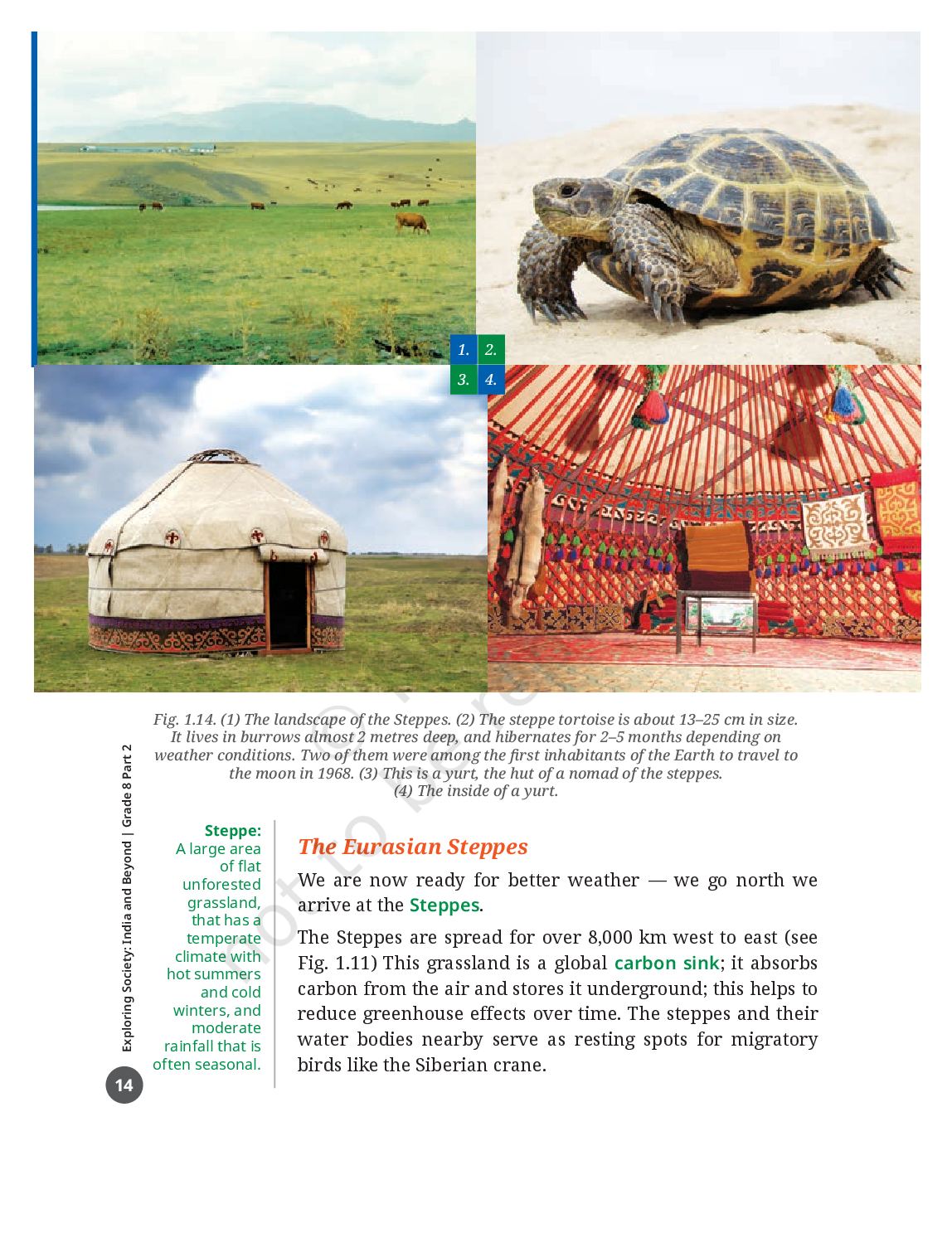
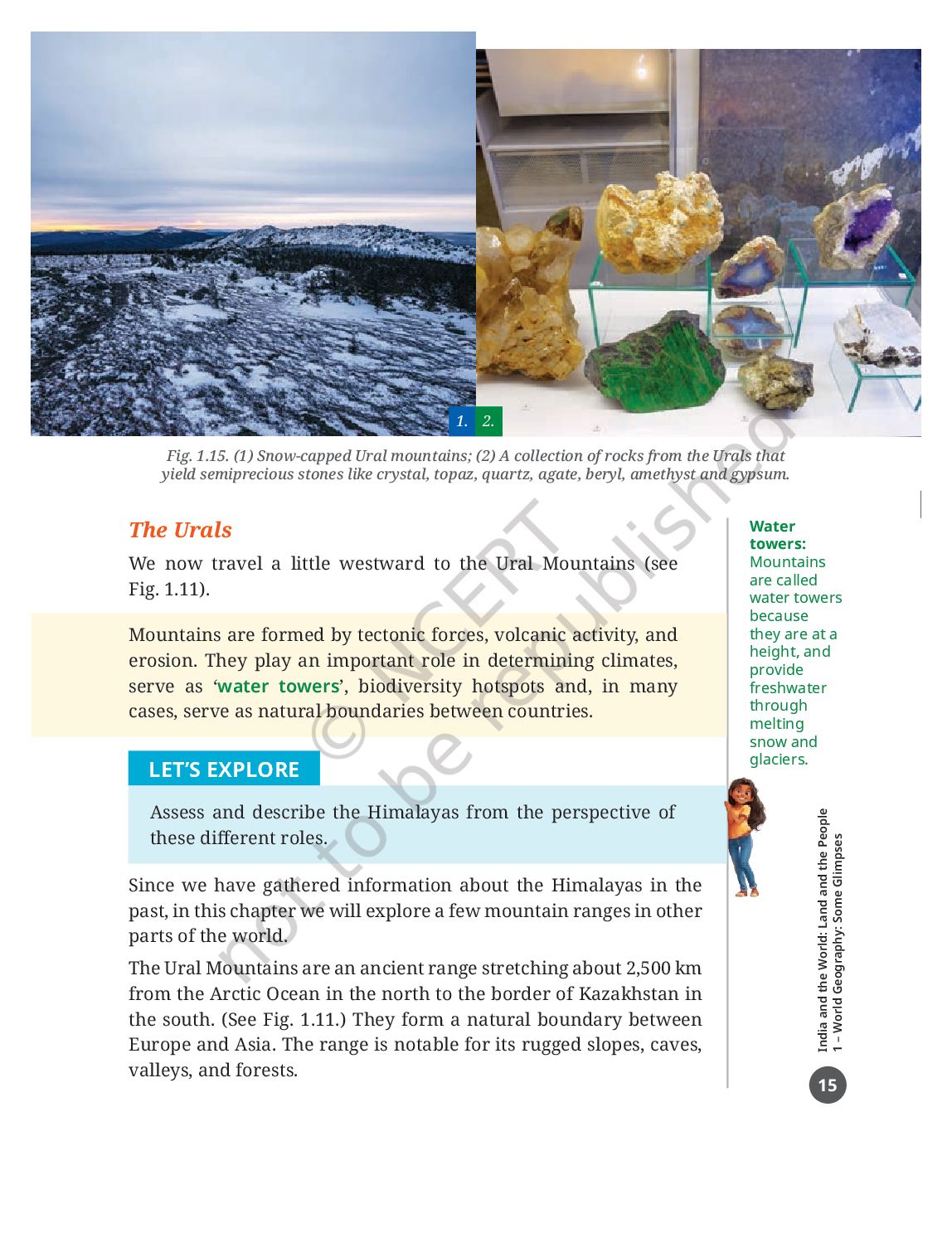
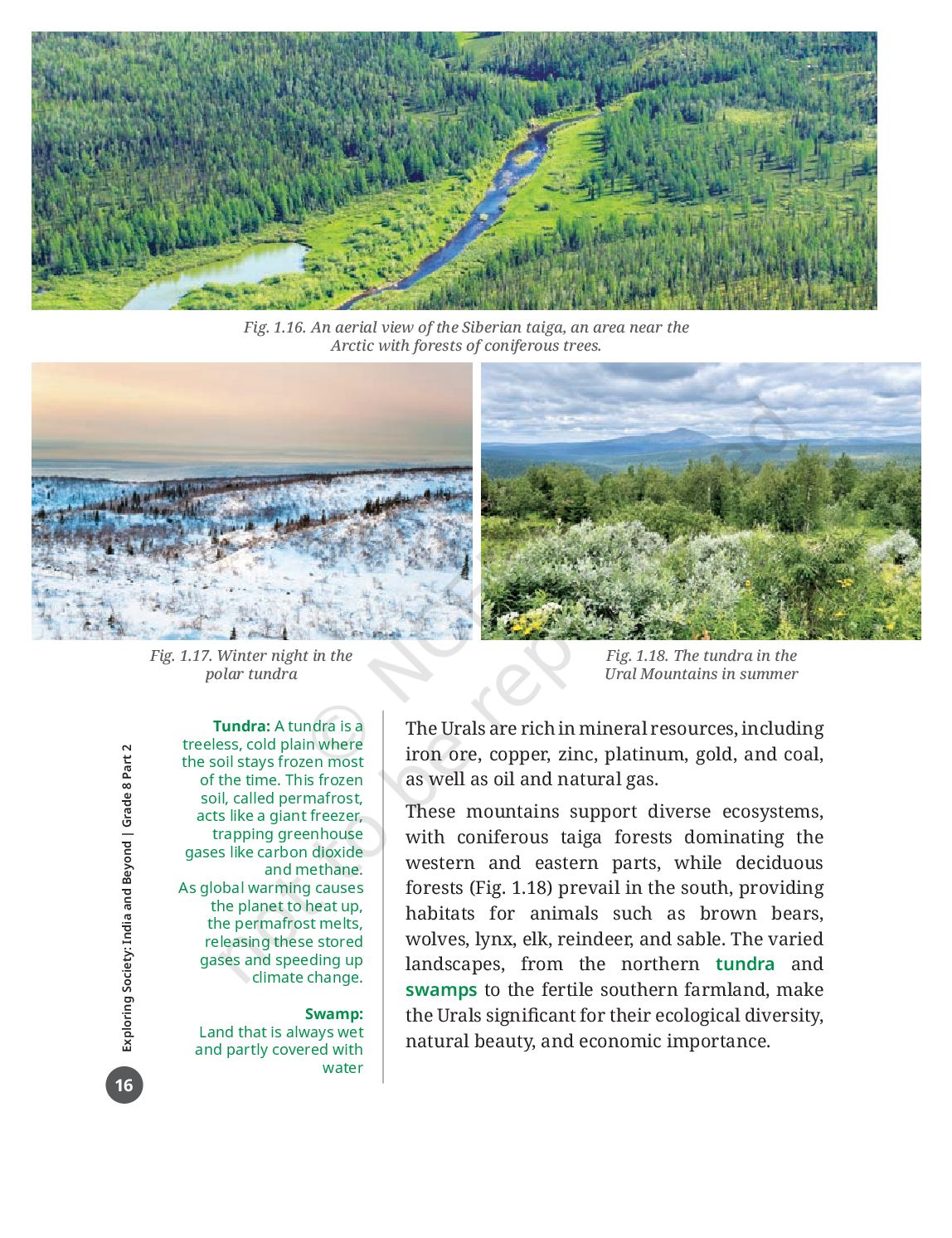
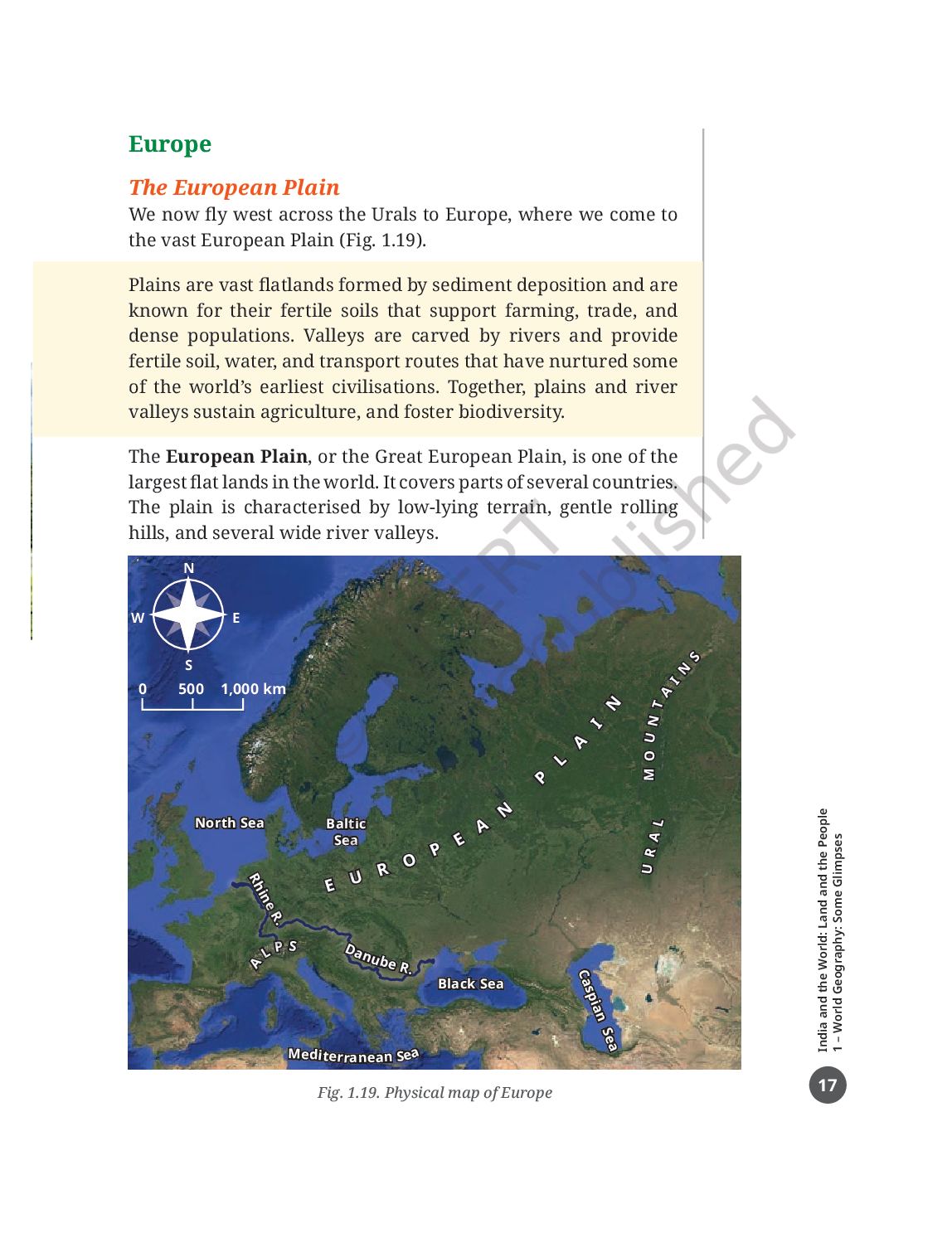
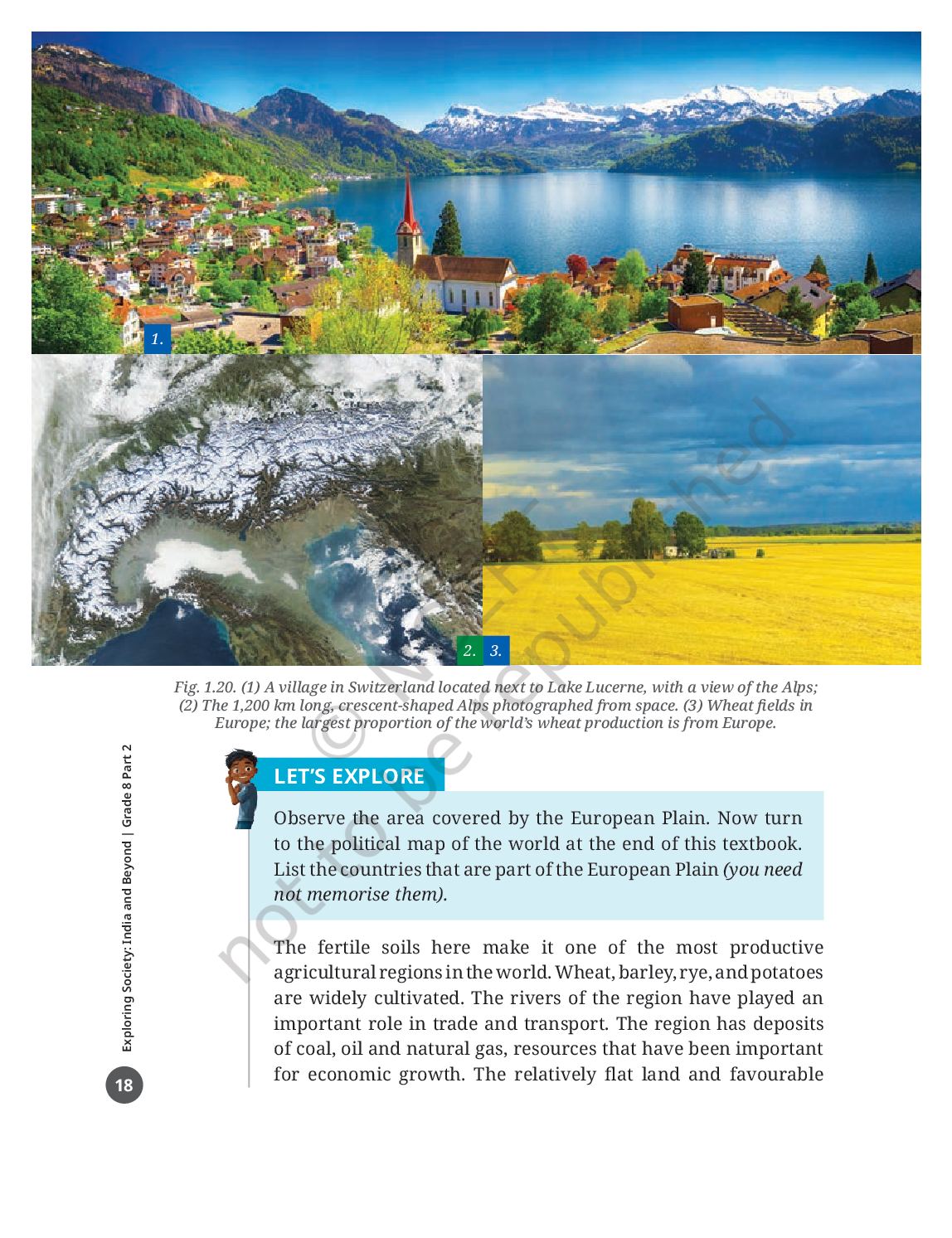
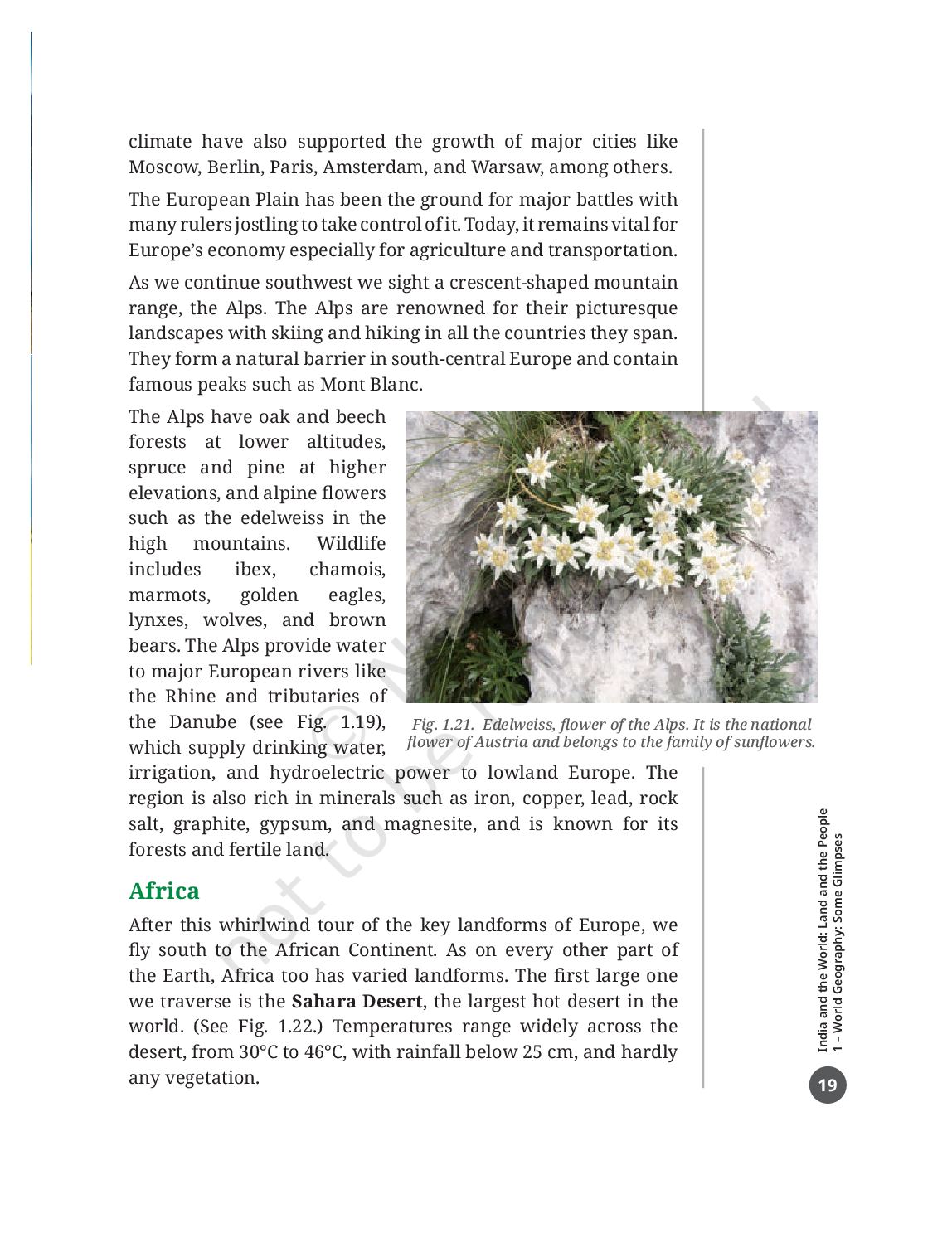
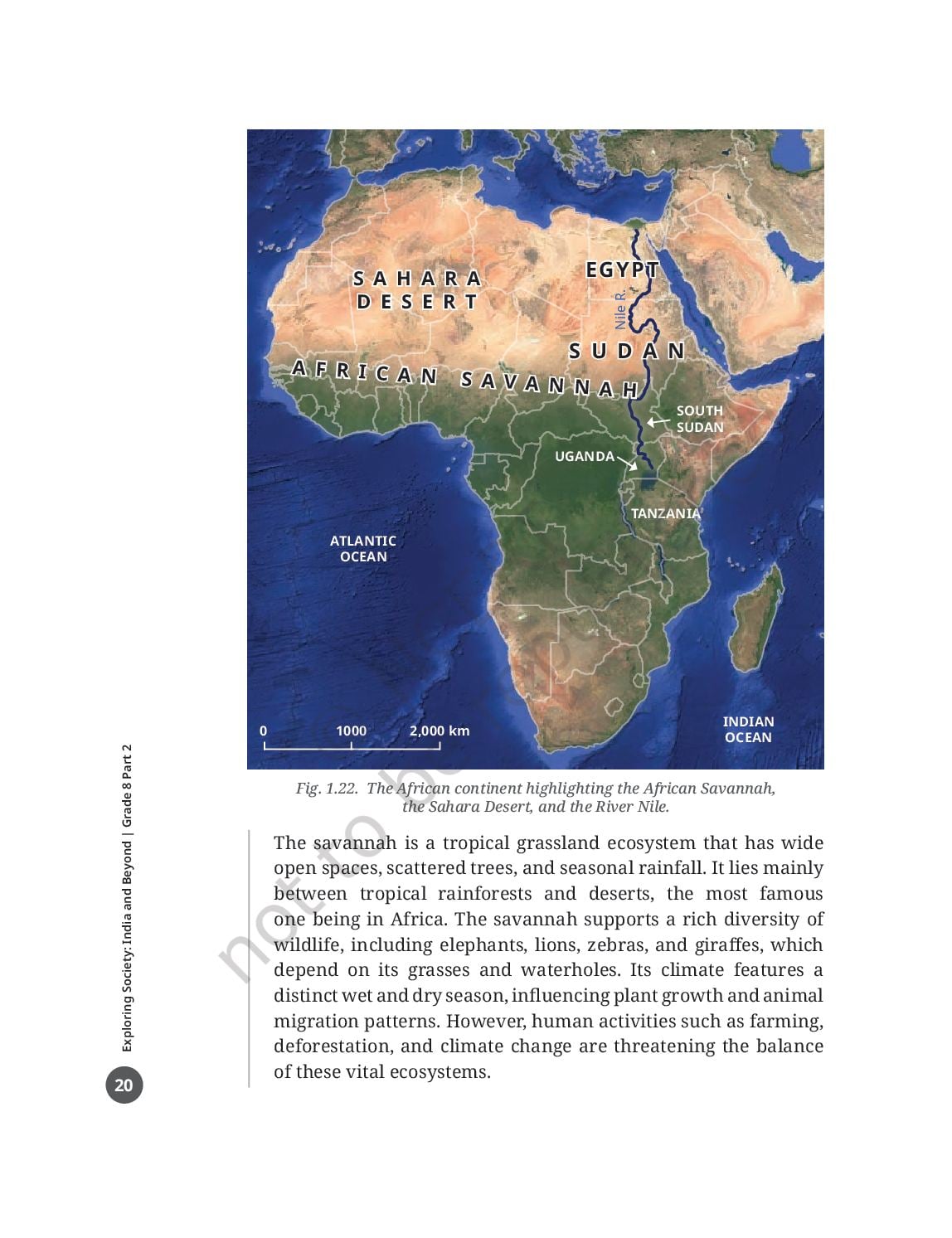
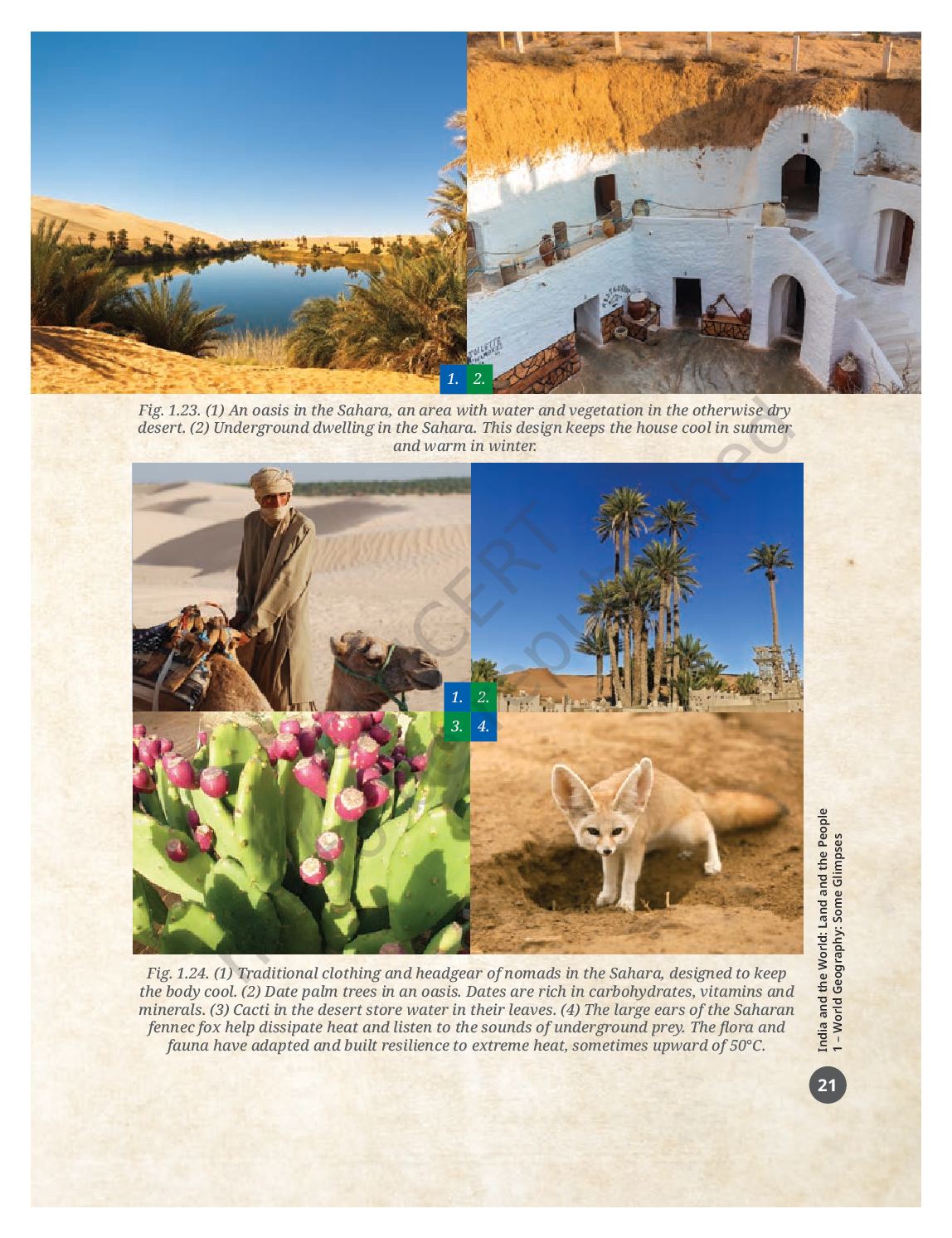
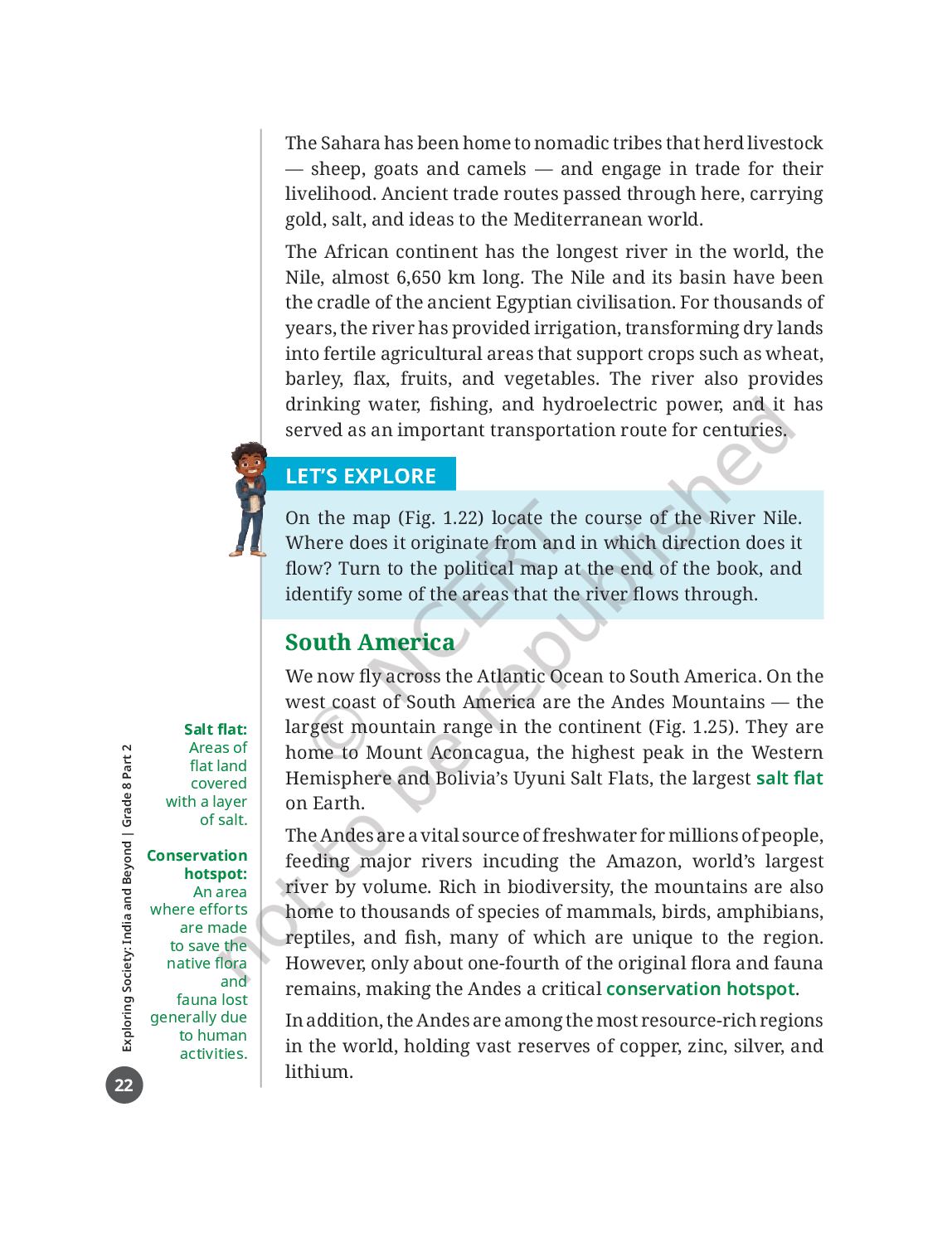
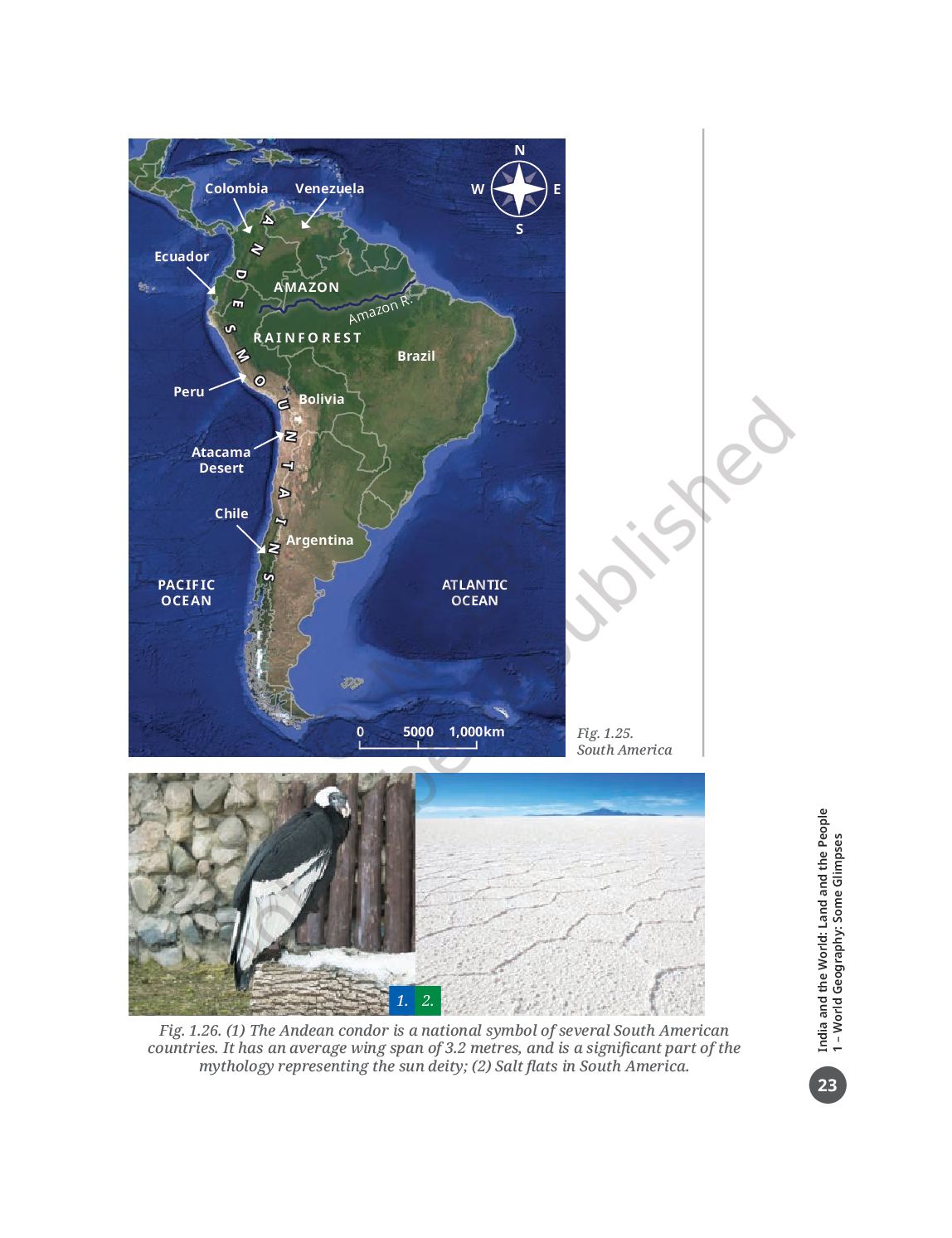
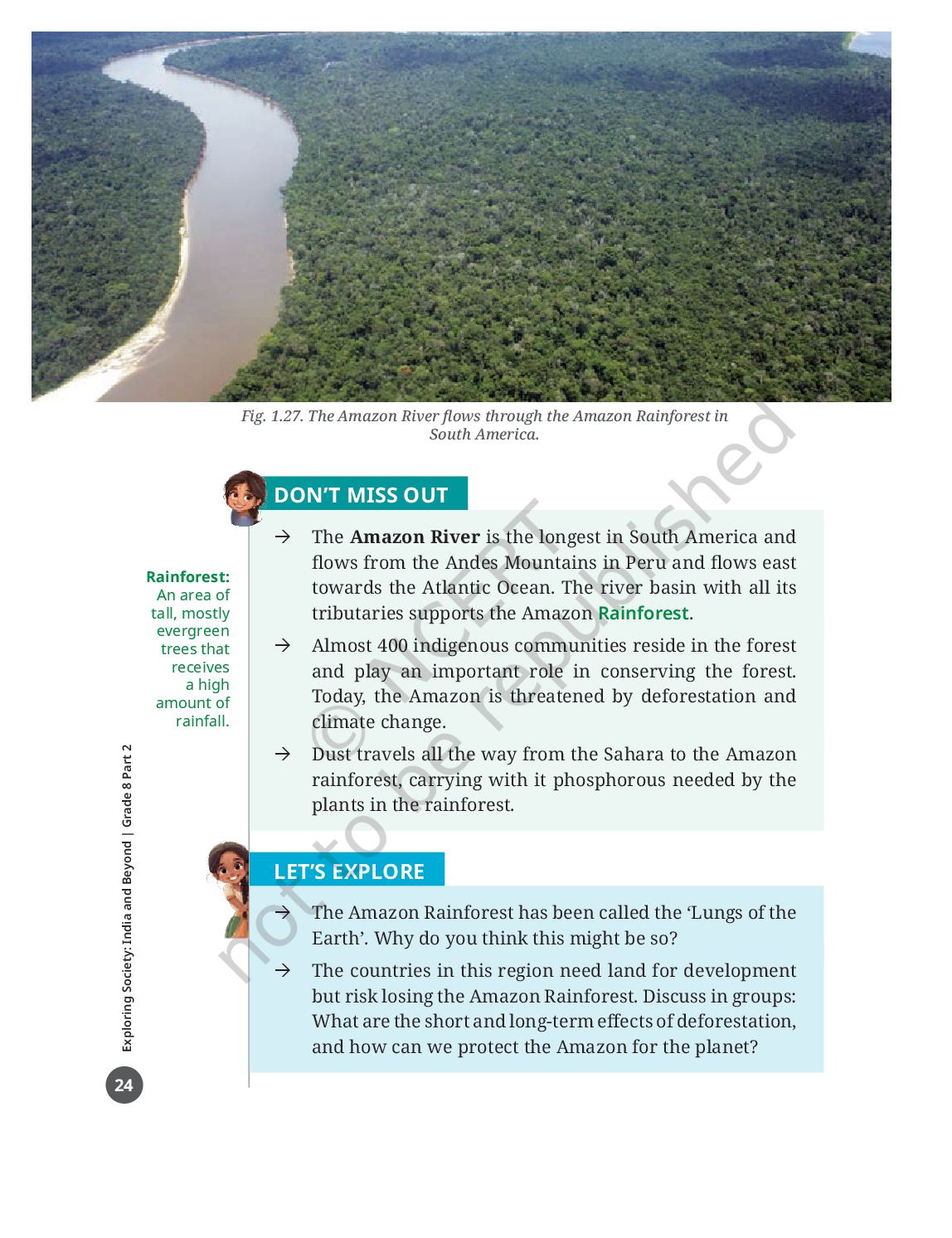
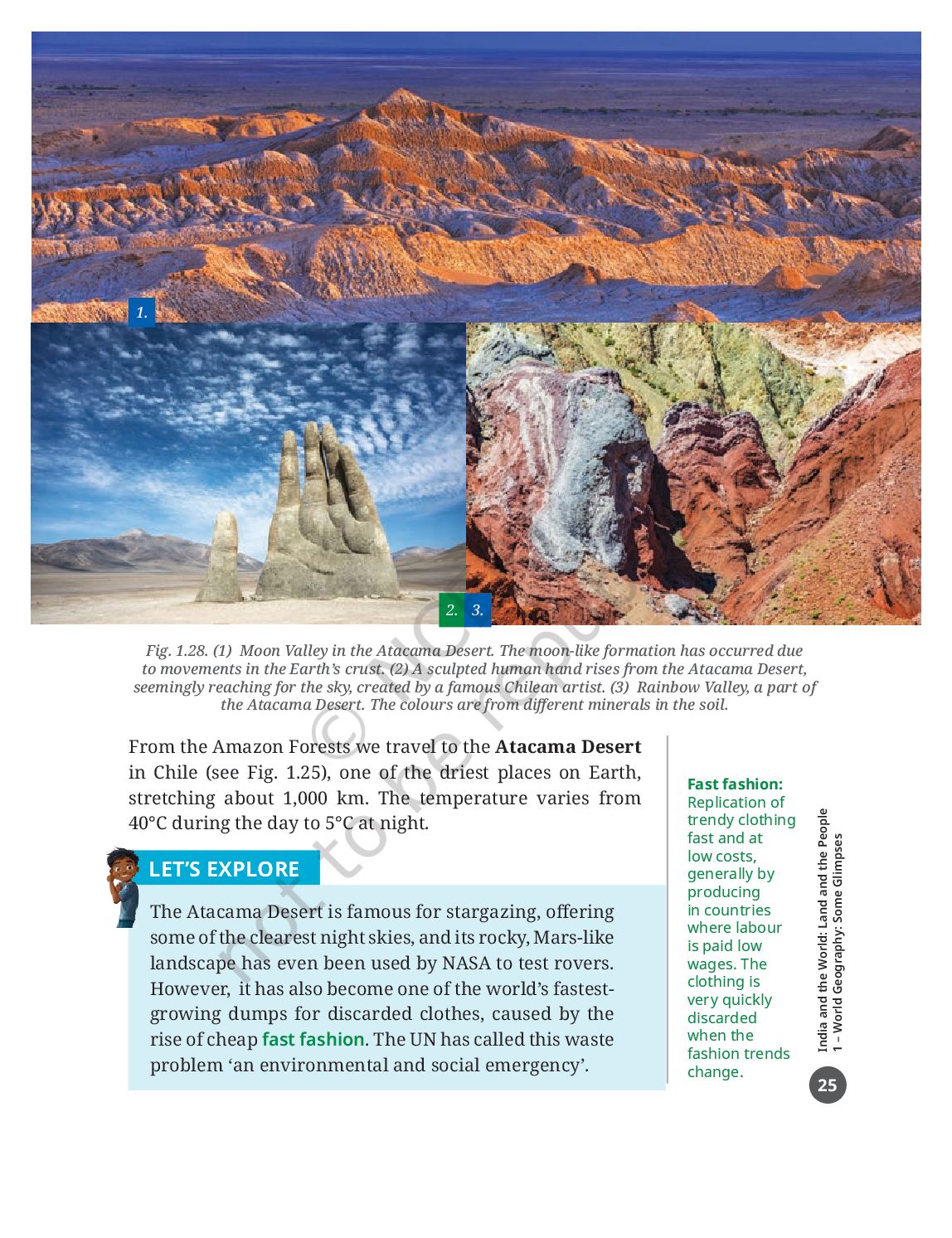
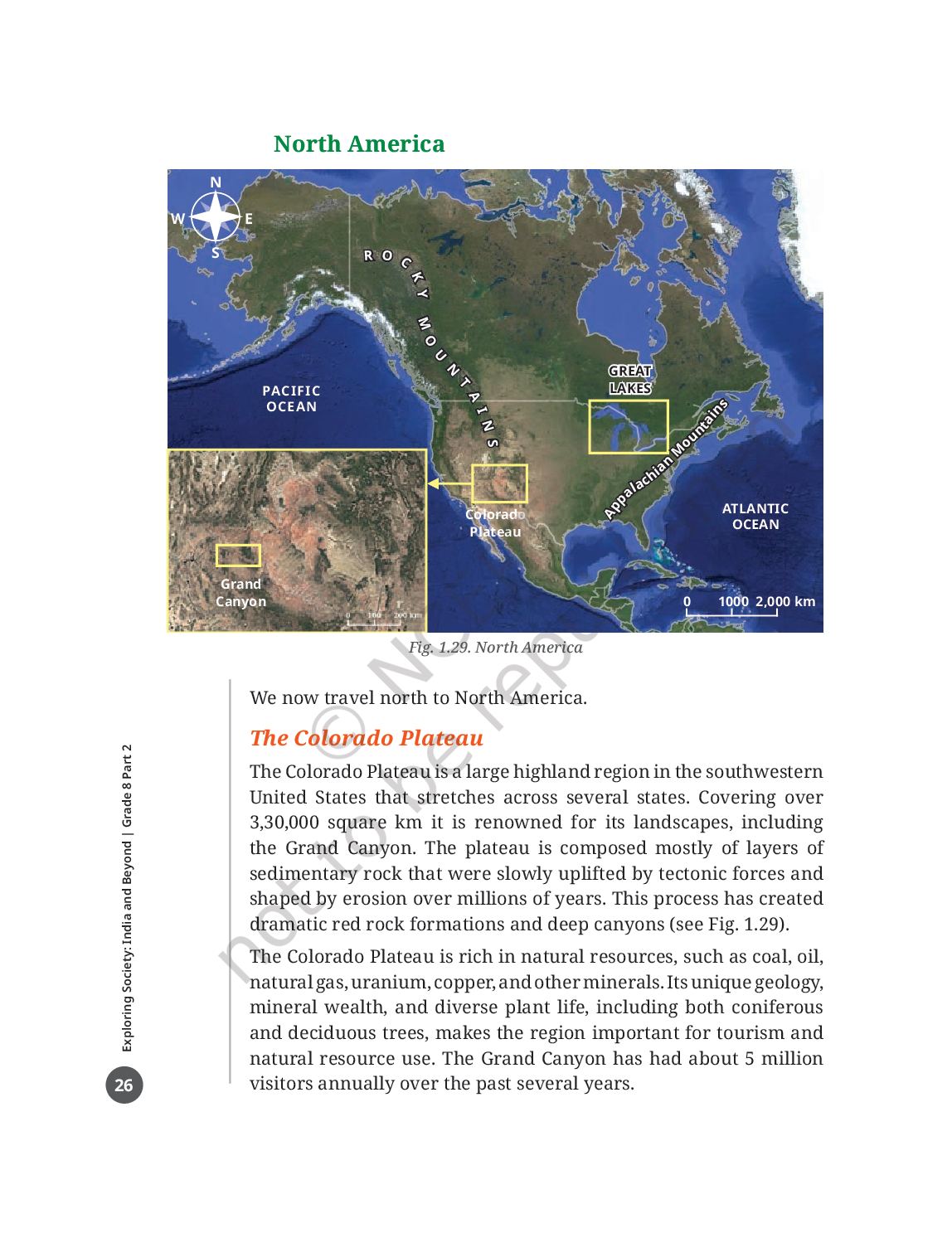
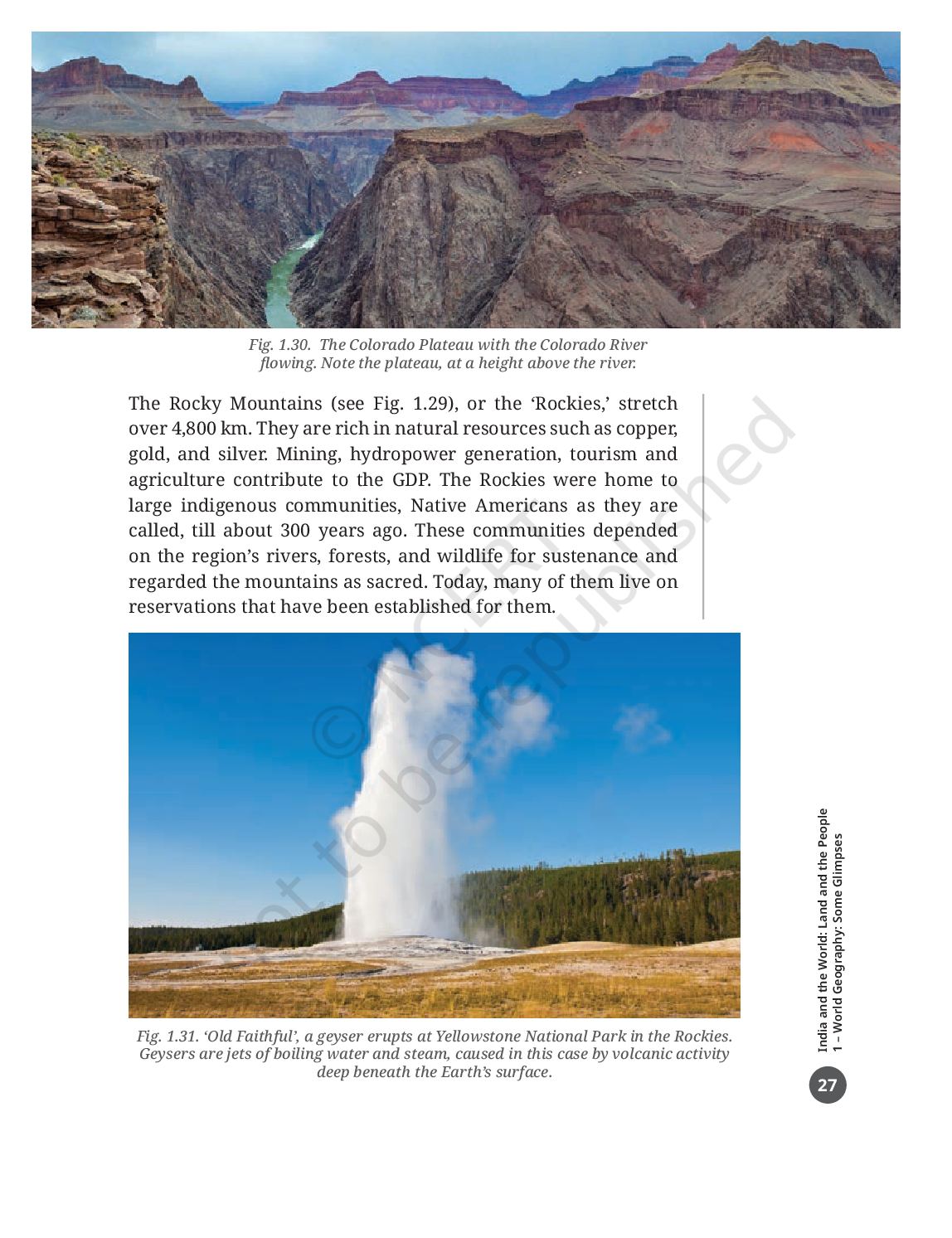
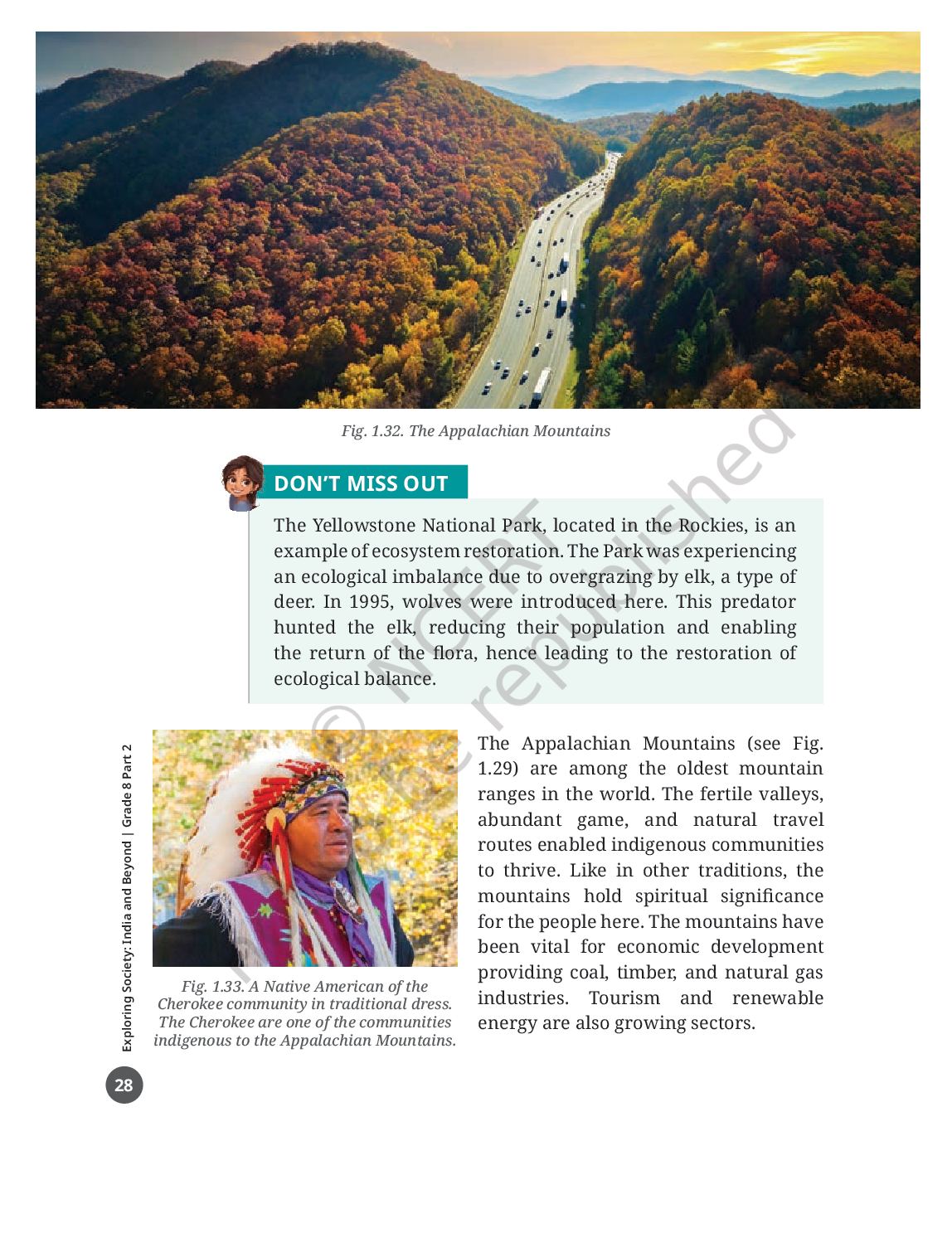
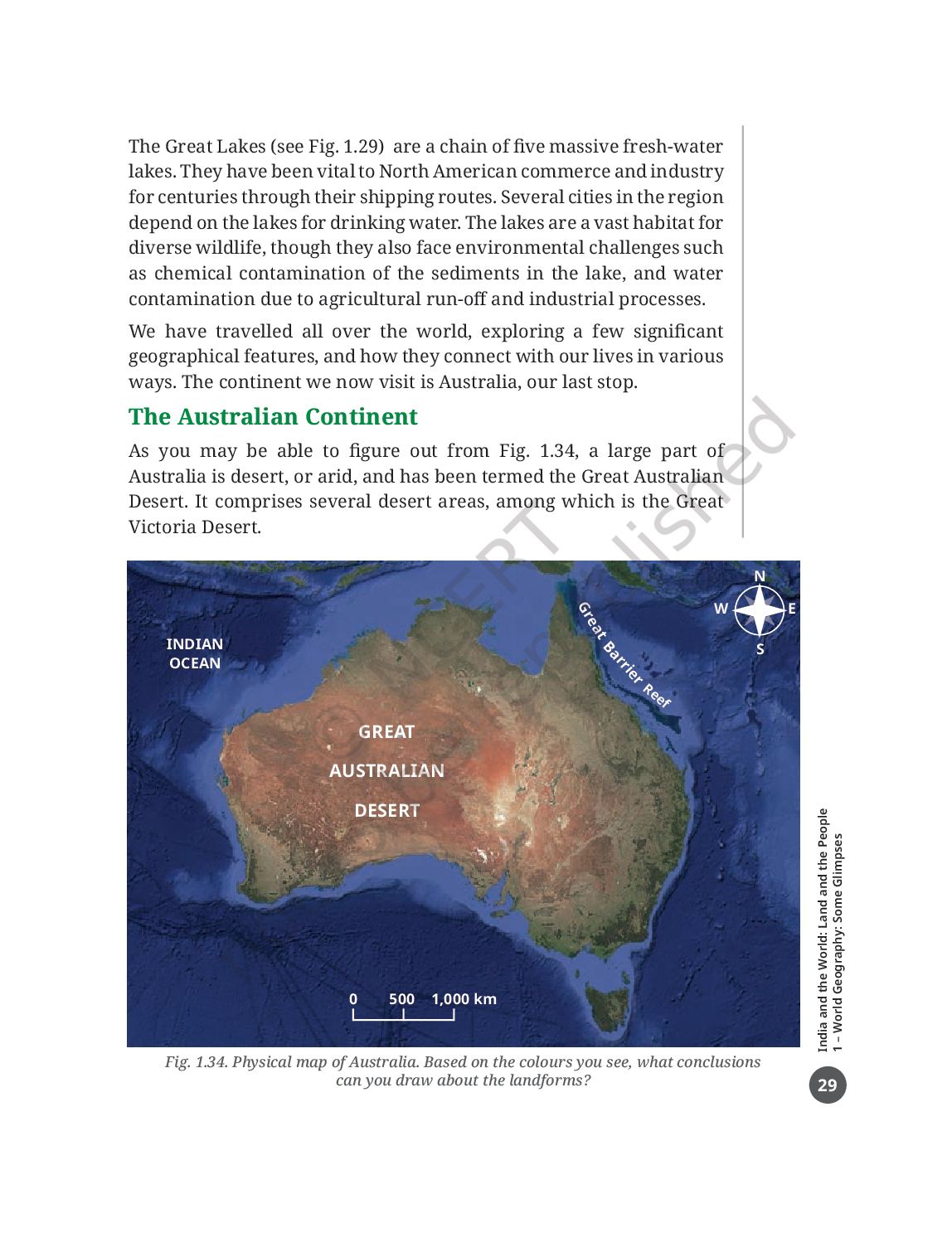
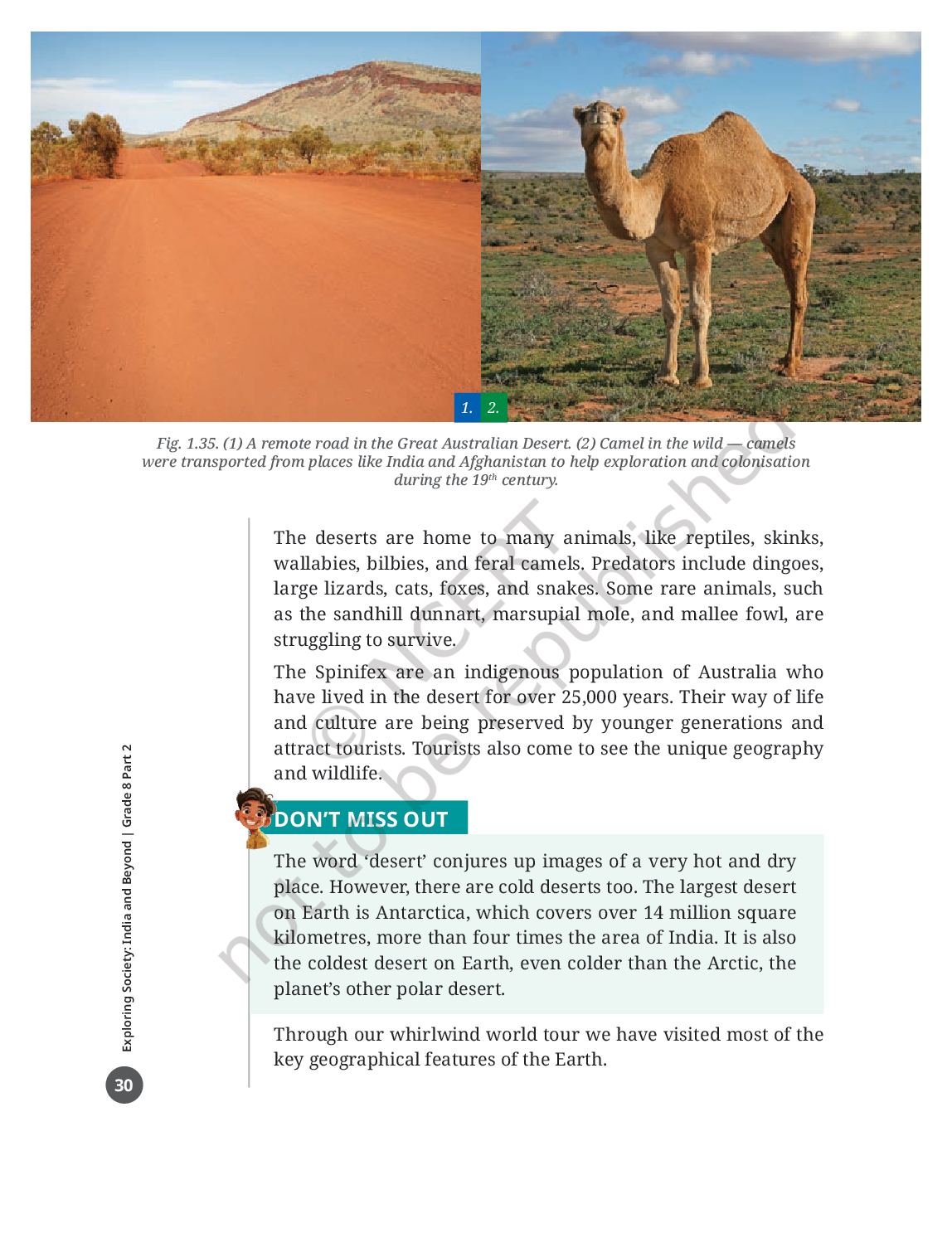
- Each continent is visited through one or two landforms: Asia (Tibetan Plateau, Gobi Desert, Eurasian Steppes, Urals), Europe (European Plain, Alps), Africa (Sahara, savannah, the Nile), South America (Andes, Amazon, Atacama), North America (Colorado Plateau, Rockies, Appalachians, Great Lakes) and Australia (the Great Australian Desert and the Great Barrier Reef).
- Landforms are not scenery — they decide where rain falls, where soil is fertile, where rivers rise and therefore where people settle, farm and trade.
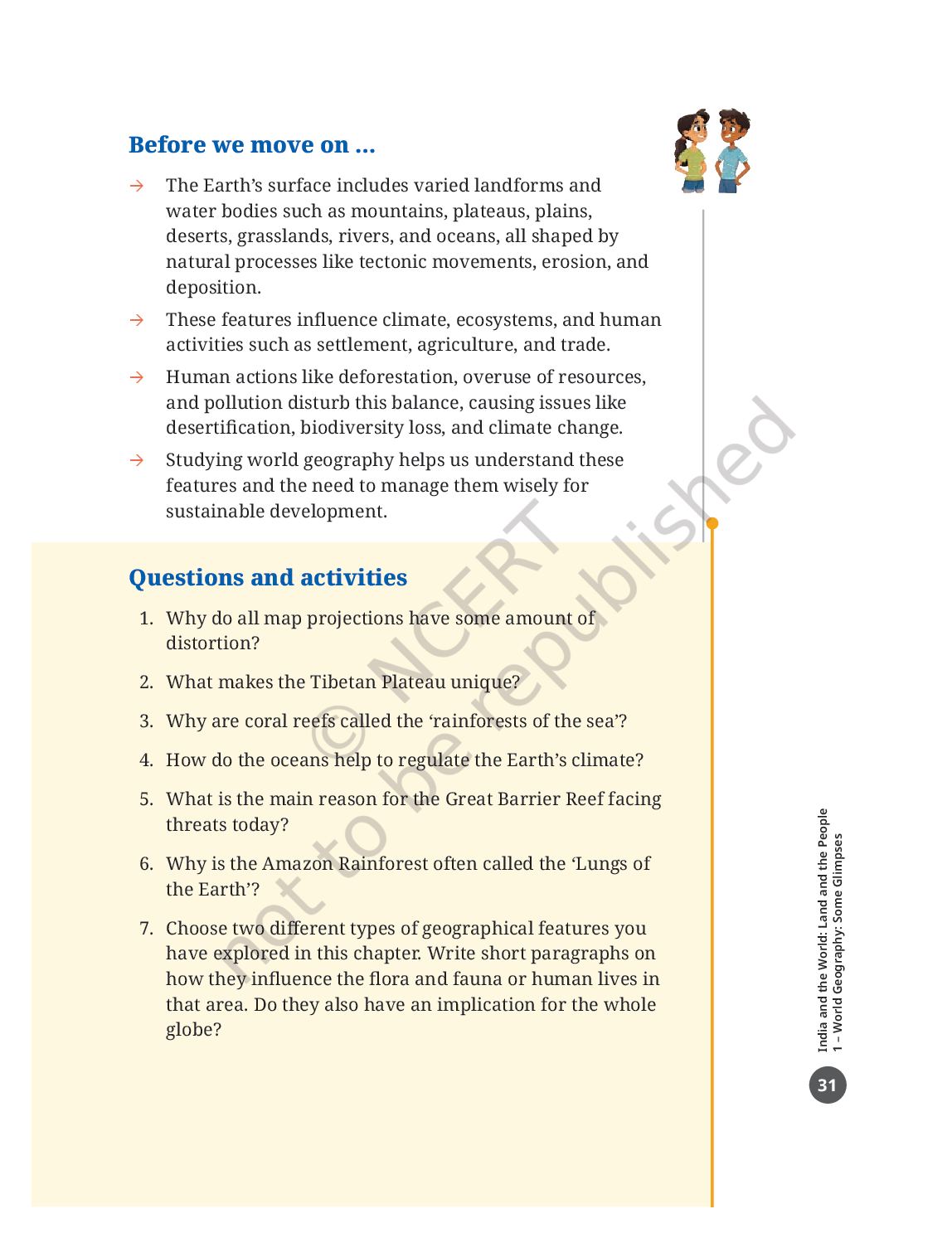
- Human actions — deforestation, overfishing, pollution, overuse of resources, the waste of fast fashion — upset this balance, producing coral bleaching, desertification, loss of biodiversity and climate change. Studying world geography is how we learn to manage these features wisely.
Quick revision – World Geography: Some Glimpses
| Term | What it means | Where the chapter uses it | Fact to remember |
|---|---|---|---|
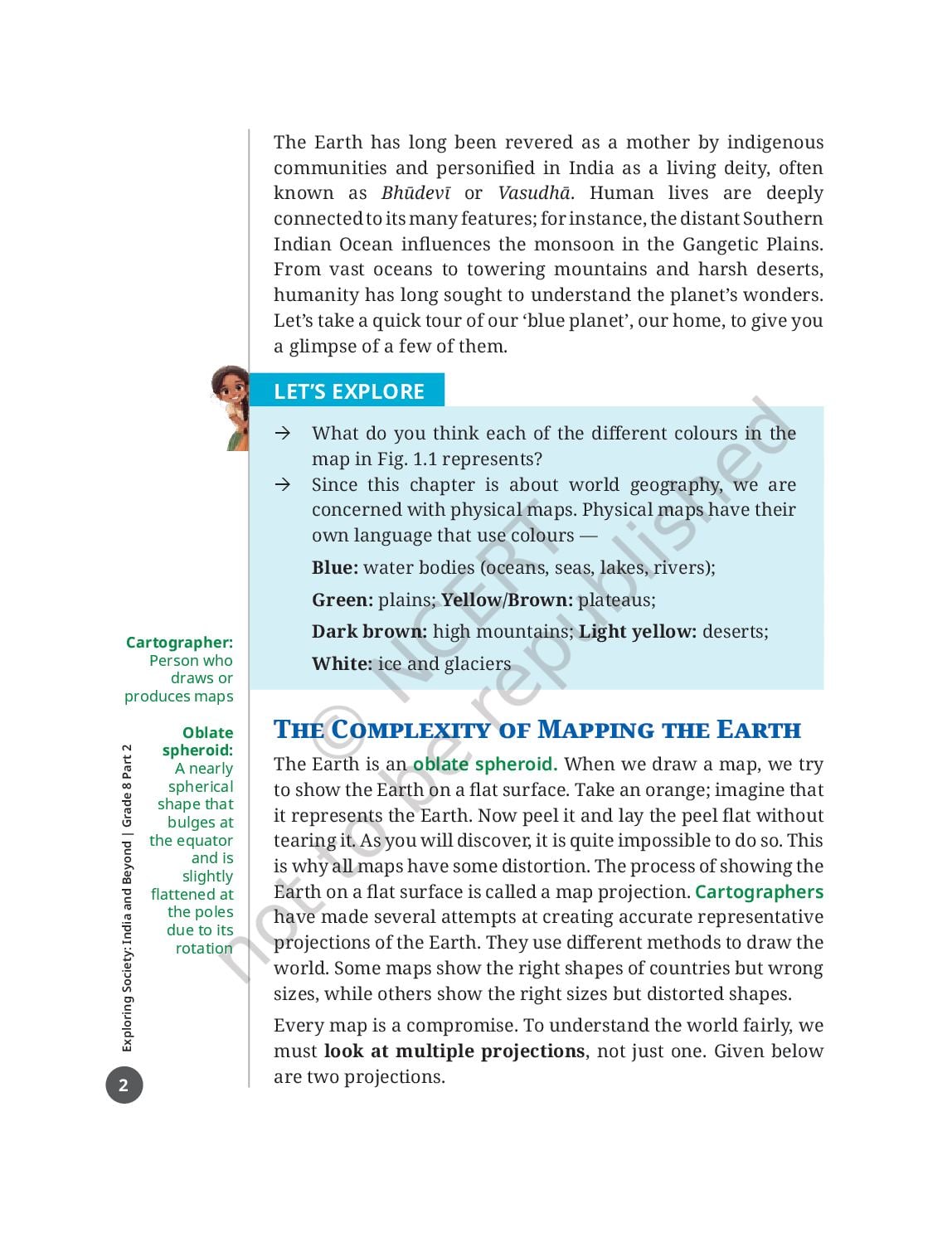
| Oblate spheroid | A nearly spherical shape that bulges at the equator and is slightly flattened at the poles due to its rotation | The Complexity of Mapping the Earth, p. 2 | This curved shape is exactly why a flat map must distort something |
| Map projection | The process of showing the Earth on a flat surface | Pp. 2–3, Fig. 1.2 | Mercator preserves shape and direction; Robinson balances size and shape |
| Plankton | Microscopic organisms that have chlorophyll and use sunlight and carbon-dioxide to make food | THINK ABOUT IT, p. 4 | Oceans give us almost half the oxygen we breathe, and plankton make this possible |
| Ocean currents | Giant ‘rivers’ flowing through the ocean — warm ones from the equator to the poles, cold ones from the poles to the equator | Ocean currents, pp. 5–6 | The Gulf Stream makes the United Kingdom warmer than other places at the same latitude |
| Trench | A very deep, V-shaped area of the seafloor | Ocean trenches, p. 6 | The Challenger Deep in the Mariana Trench reaches over 11,000 metres below sea level |
| Reef | A ridge at or near the surface of the ocean, formed naturally or artificially | The Great Barrier Reef, pp. 7–8 | The Great Barrier Reef stretches over 2,000 km and covers about 350,000 square kilometres |
| Tectonic | Geological forces related to the movement of the Earth’s crust | Tibetan Plateau, p. 12 | The Indo-Australian–Eurasian collision raised both the Himalaya and the plateau behind it |
| Steppe | A large area of flat unforested grassland with a temperate climate, hot summers, cold winters and moderate, often seasonal rainfall | The Eurasian Steppes, p. 14 | Spread over 8,000 km west to east; a global carbon sink |
| Water towers | Mountains that hold water at a height and release freshwater through melting snow and glaciers | The Urals, p. 15 | The Tibetan Plateau is called the ‘Third Pole’ for its freshwater reserves |
| Tundra / permafrost | A treeless, cold plain whose soil stays frozen most of the time; that frozen soil is permafrost | The Urals, p. 16 | Melting permafrost releases carbon dioxide and methane, speeding up climate change |
| Savannah | A tropical grassland with wide open spaces, scattered trees and seasonal rainfall | Africa, p. 20 | It lies mainly between tropical rainforests and deserts |
| Fast fashion | Replication of trendy clothing fast and at low cost, discarded very quickly when trends change | Atacama Desert, p. 25 | The UN has called the Atacama clothing dump ‘an environmental and social emergency’ |
Old NCERT vs New – Class 8 Social Science
This chapter is from Exploring Society: India and Beyond, the new NCERT Class 8 Social Science book (NCF-SE 2023, used from 2025-26). It replaced the old book “Our Pasts, Resources and Development and Social and Political Life”, so chapter numbers and names differ from older PDFs.
Solutions and All Chapters
Answers to the exercises and the full chapter list of Exploring Society: India and Beyond:
World Geography: Some Glimpses – Overview
| Class | Class 8 |
| Subject | Social Science |
| Book | Exploring Society: India and Beyond – new NCERT book |
| Part | Part II |
| Chapter | 8 of 15 – World Geography: Some Glimpses |
| Book pages | Part II, 1 – 34 |
| Edition | NCERT Reprint 2026-27 |
| Session | 2026-27 |
| Free – read online or download |
Class 8 Social Science Chapter 8 – FAQs
Where can I download World Geography: Some Glimpses Class 8 PDF?
From the download table on this page – the chapter PDF is free, and the full book is linked too.
What is Class 8 Social Science Chapter 8 about?
The Earth is an oblate spheroid, so no flat map can be perfectly true. Every map projection is a compromise: the Mercator keeps shape and direction but swells sizes near the poles, the Robinson balances size against shape. To understand the world fairly, look at more than one projection.
Is World Geography: Some Glimpses from the new NCERT Class 8 Social Science book?
Yes. It is chapter 8 of exploring society: india and beyond (part ii), the new NCERT Class 8 Social Science book for 2026-27.
Is this the latest NCERT edition for 2026-27?
Yes – the PDF is NCERT’s latest edition for the 2026-27 session.
Where are the NCERT Solutions for Class 8 Social Science Chapter 8?
Open the NCERT Solutions link above for answers to the exercise questions.