Download Cultural Currents: 13th to 17th Centuries – NCERT Class 8 Social Science Chapter 15 PDF from the new NCERT Class 8 Social Science book Exploring Society: India and Beyond (2026-27). Read the chapter online or download the free PDF. Culture is the shared way of life that defines a group of people, passed down through generations — values, morals, customs and traditions as well as art, music, literature, philosophy and science. Indian culture is among the most ancient in the…
Cultural Currents: 13th to 17th Centuries PDF – Chapter 15 of Exploring Society: India and Beyond (Part II)
Read the chapter online or download the PDF.
| Chapter | Download | |
|---|---|---|
| Chapter 15 PDF | Cultural Currents: 13th to 17th Centuries | View PDF |
| Full book | NCERT Class 8 Social Science – Exploring Society: India and Beyond | View Book |
Read Online
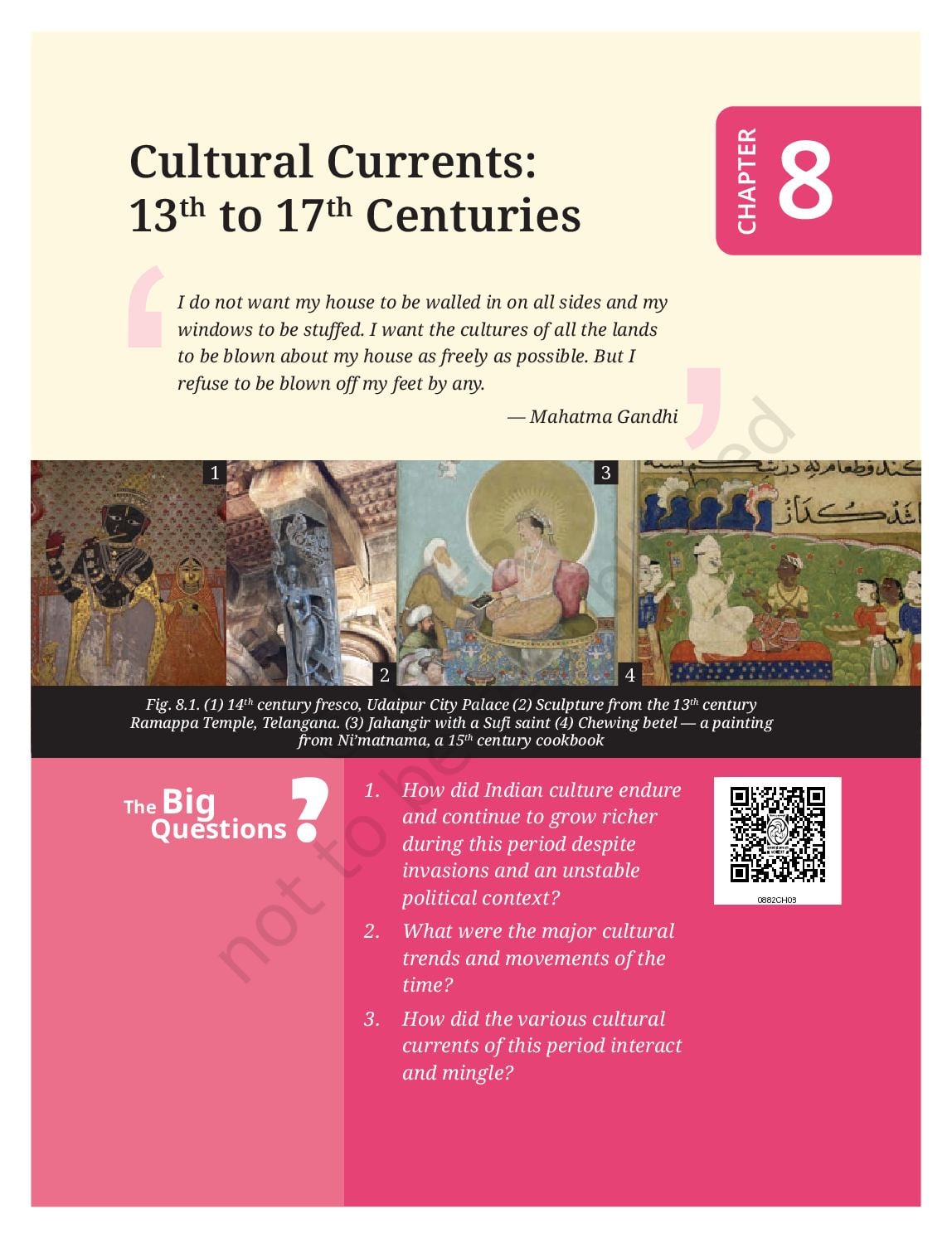
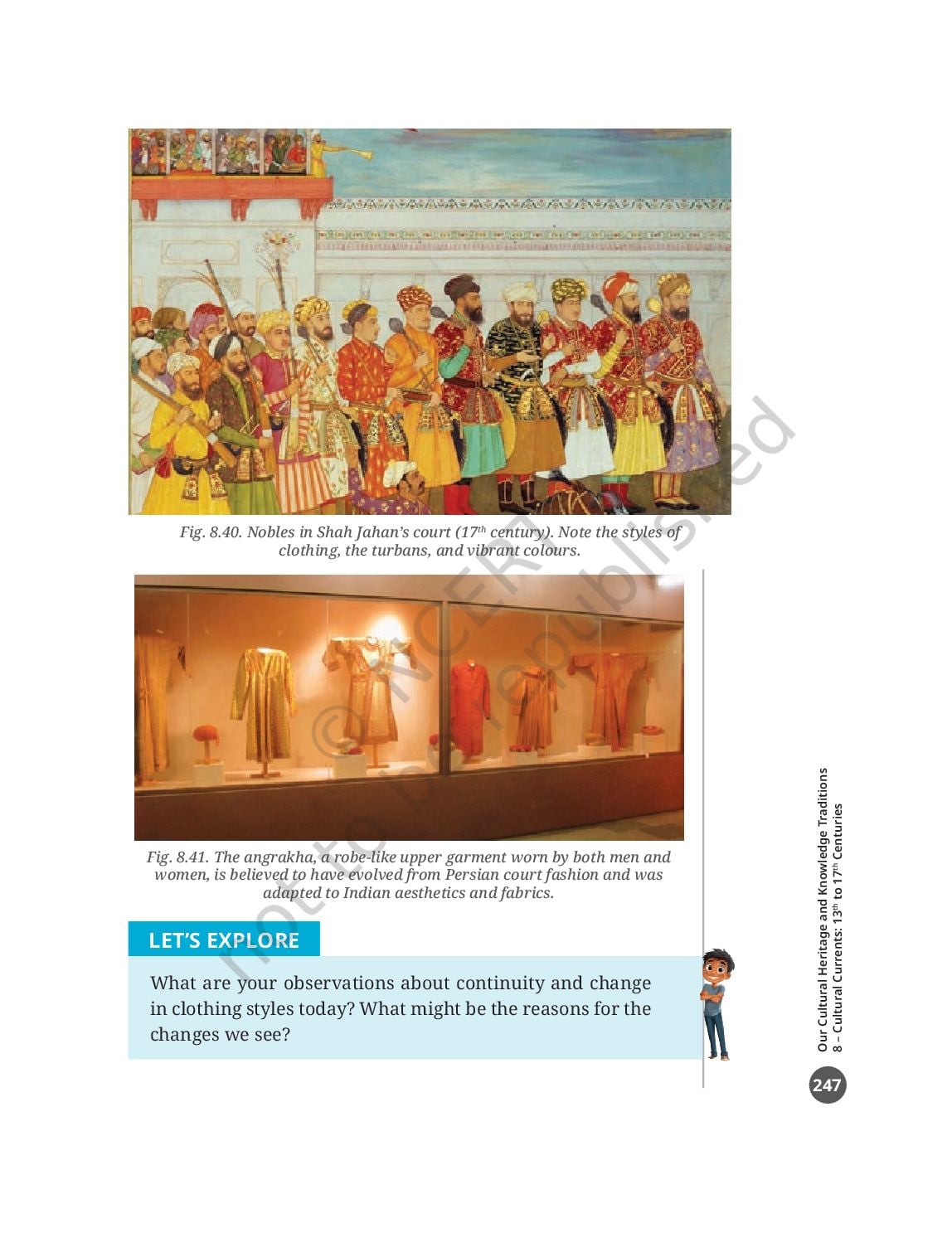
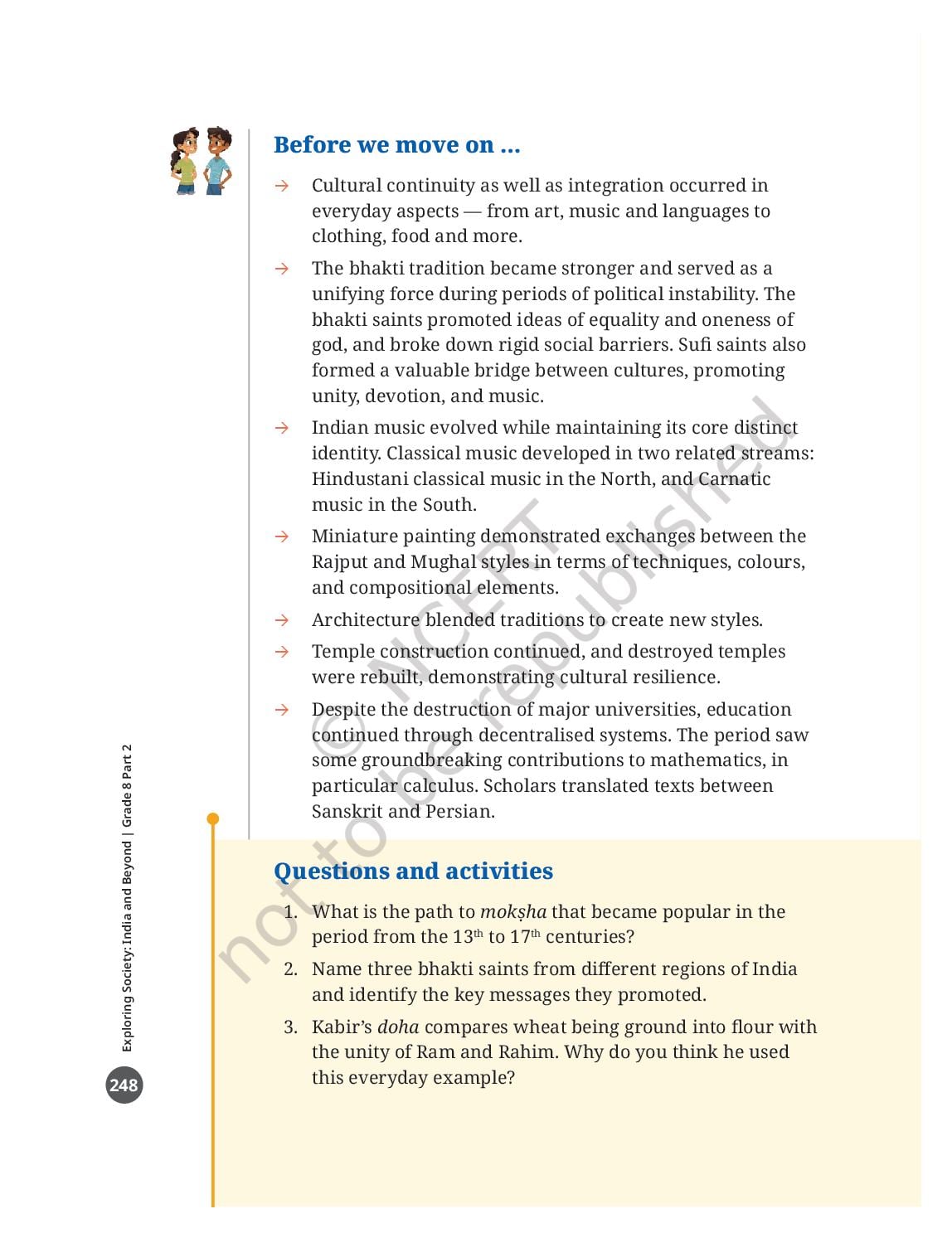
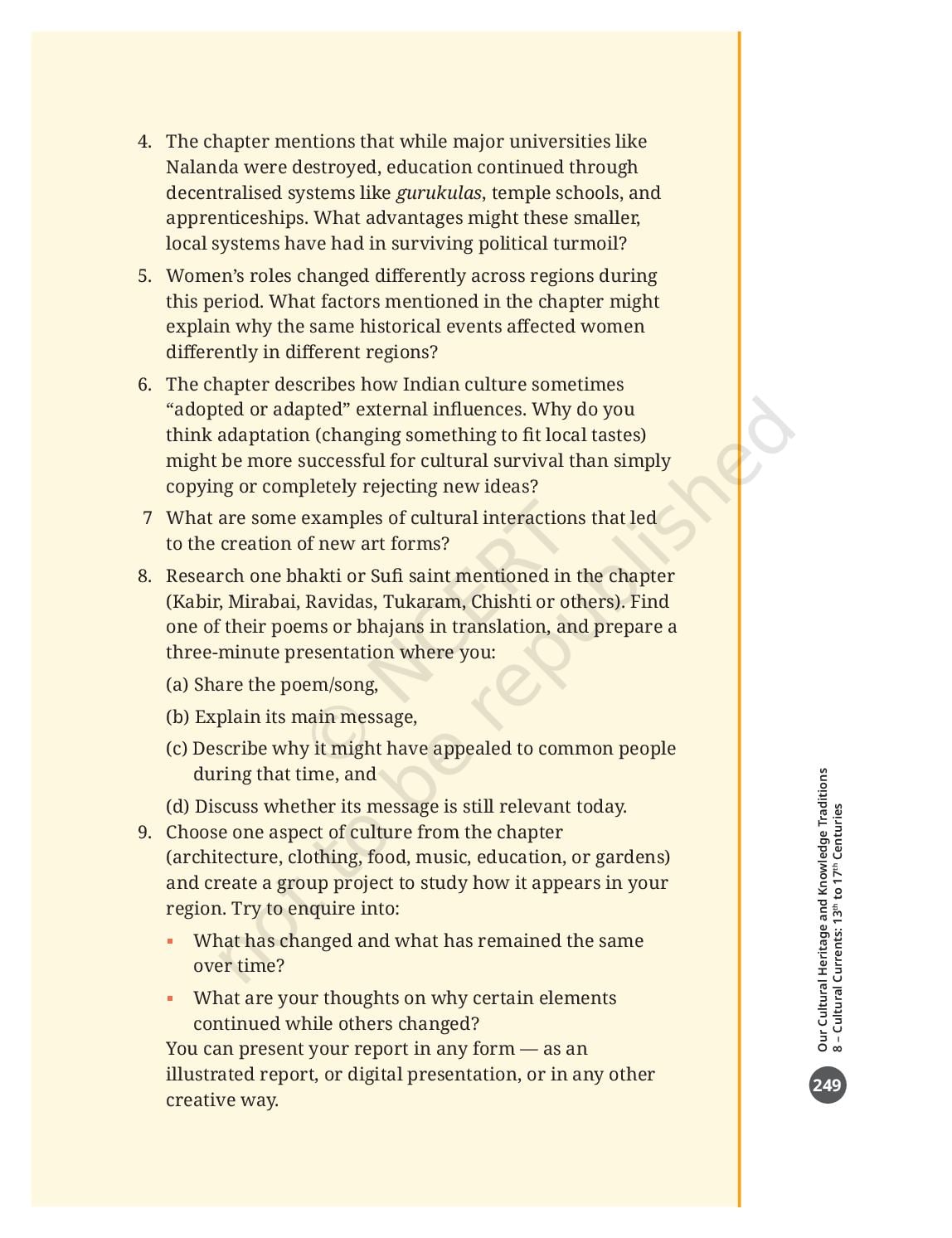
What Is in Cultural Currents: 13th to 17th Centuries? (Class 8 Social Science Chapter 15)
- Culture is the shared way of life that defines a group of people, passed down through generations — values, morals, customs and traditions as well as art, music, literature, philosophy and science. Indian culture is among the most ancient in the world, and unlike those of Mesopotamia, Egypt, Greece and Rome it has stayed alive and continuous.
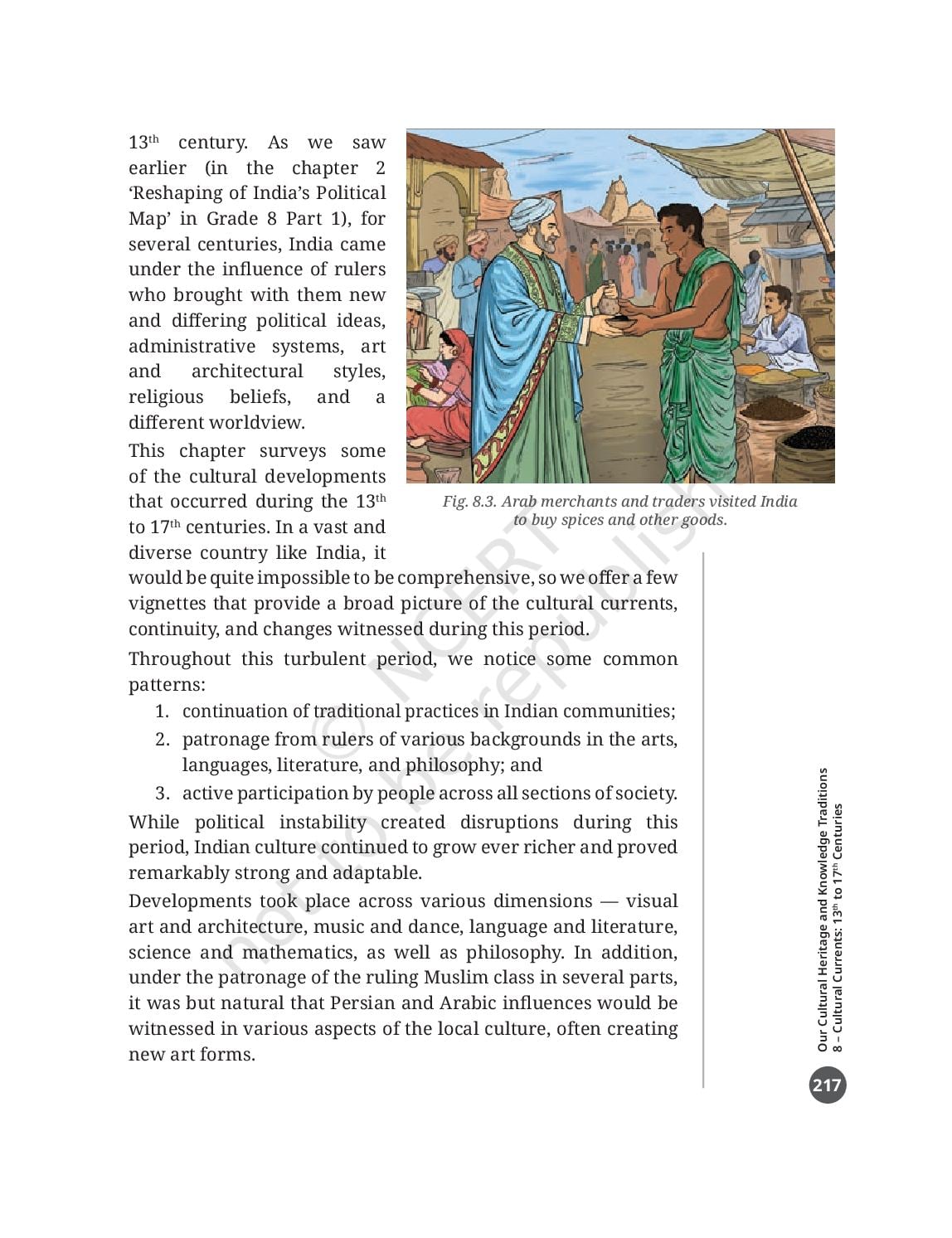
- Through all the turbulence the chapter notices three common patterns: continuation of traditional practices in Indian communities; patronage from rulers of various backgrounds in the arts, languages, literature and philosophy; and active participation by people across all sections of society. Political instability disrupted; it did not stop.
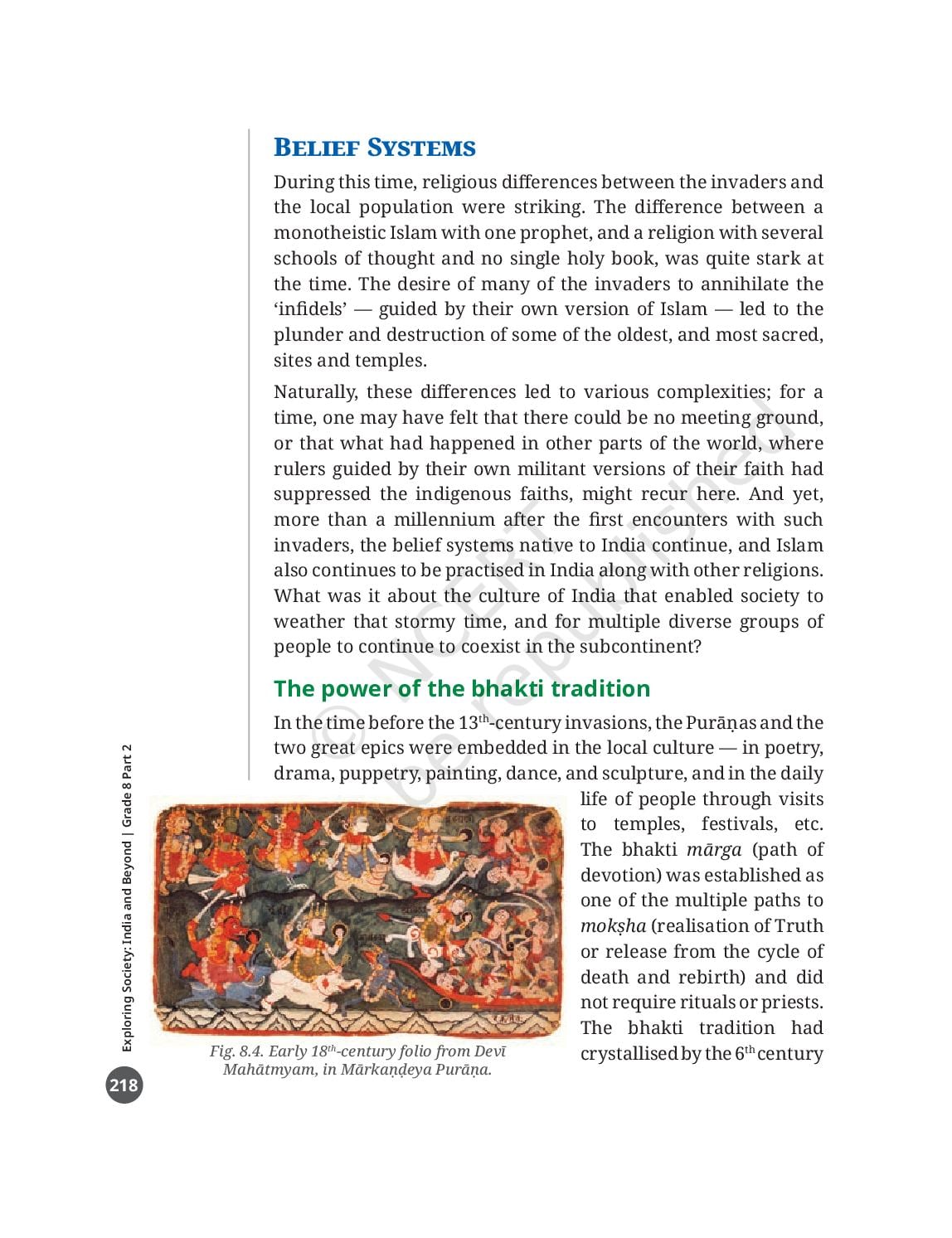
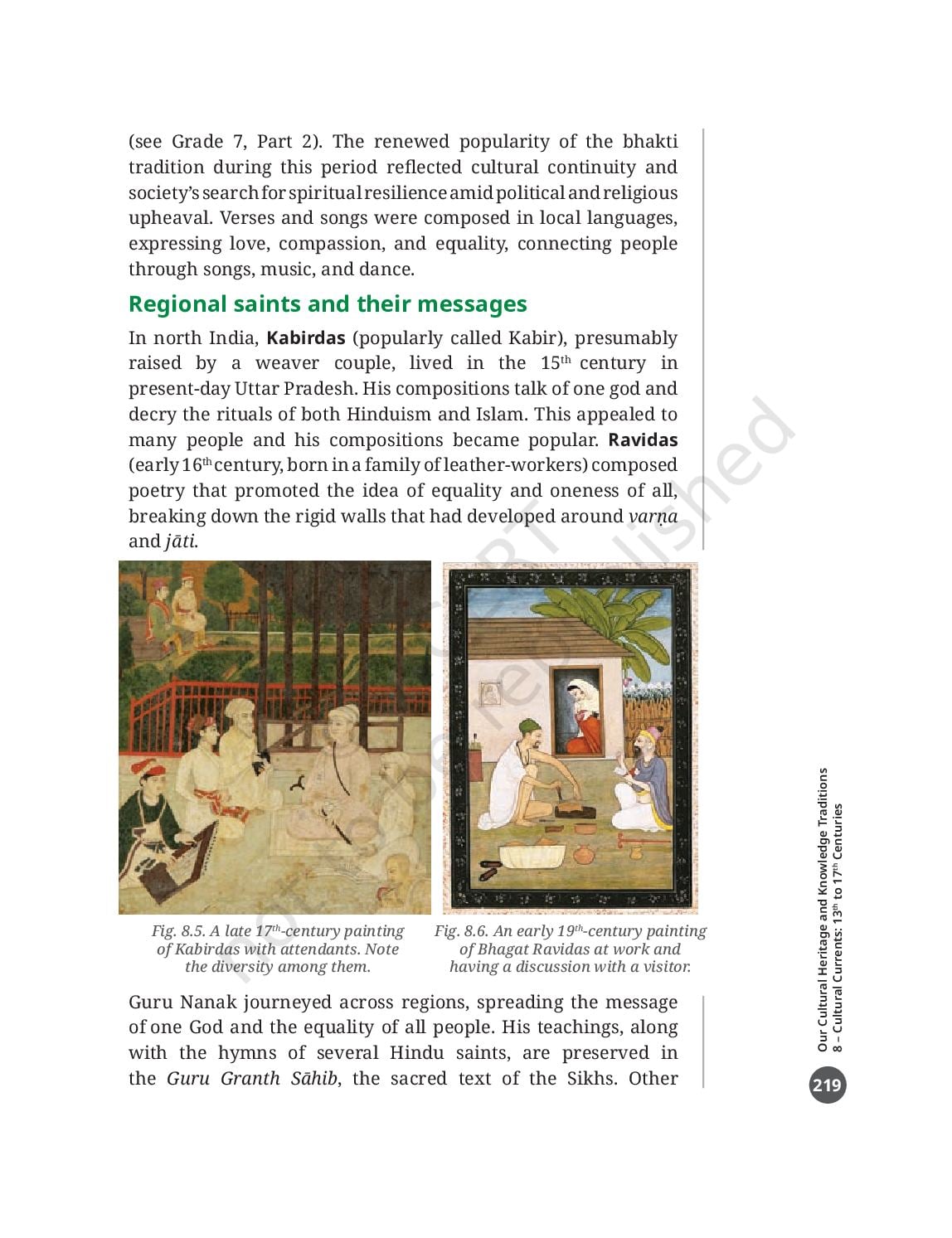
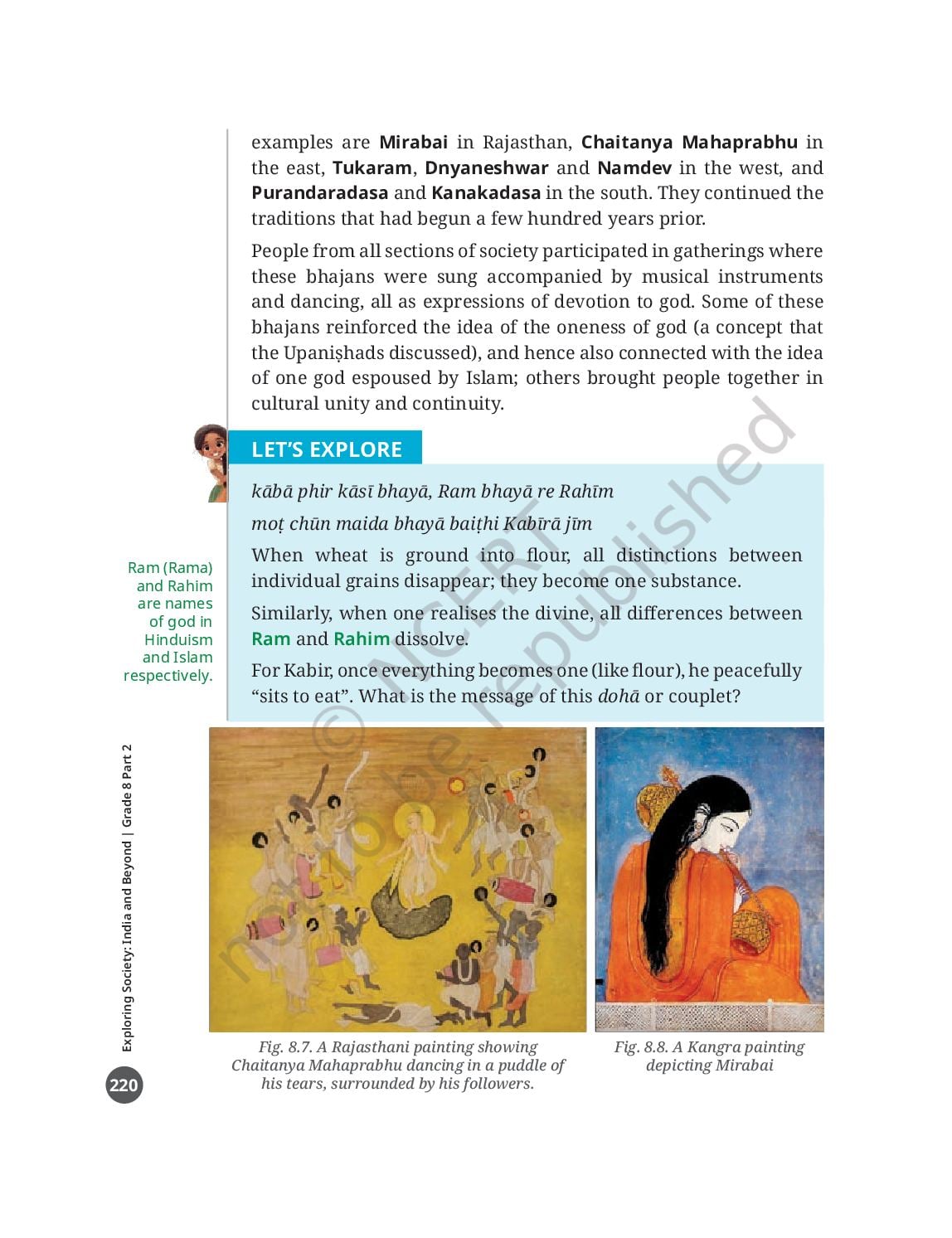
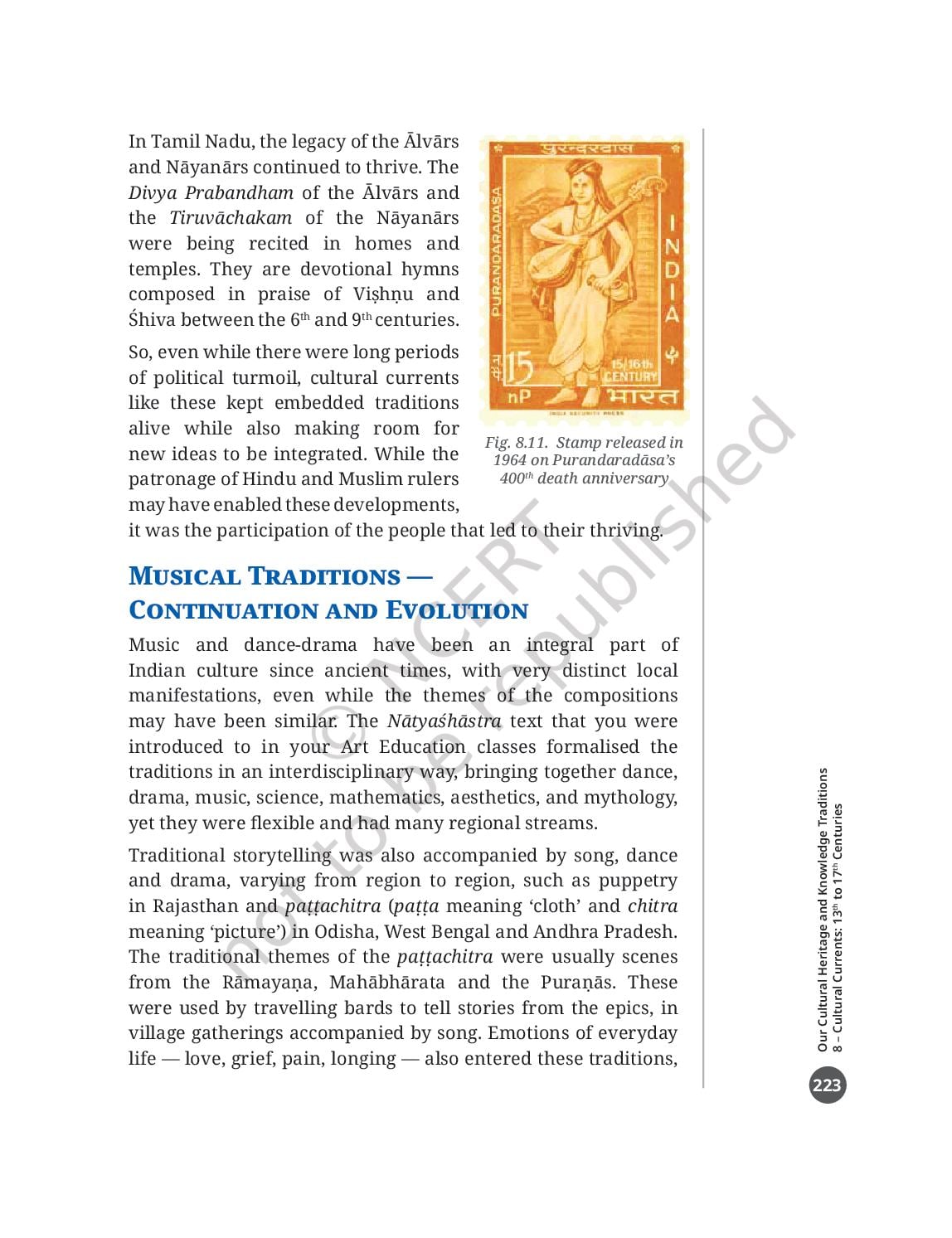
- The bhakti mārga (path of devotion) is one of the multiple paths to mokṣha, and it needs neither rituals nor priests. It had crystallised by the 6th century and became powerfully popular again now — because it was sung, in local languages, at gatherings anyone could join. Kabirdas, Ravidas, Guru Nanak, Mirabai, Chaitanya Mahaprabhu, Tukaram, Dnyaneshwar, Namdev, Purandaradasa and Kanakadasa belong to this current.
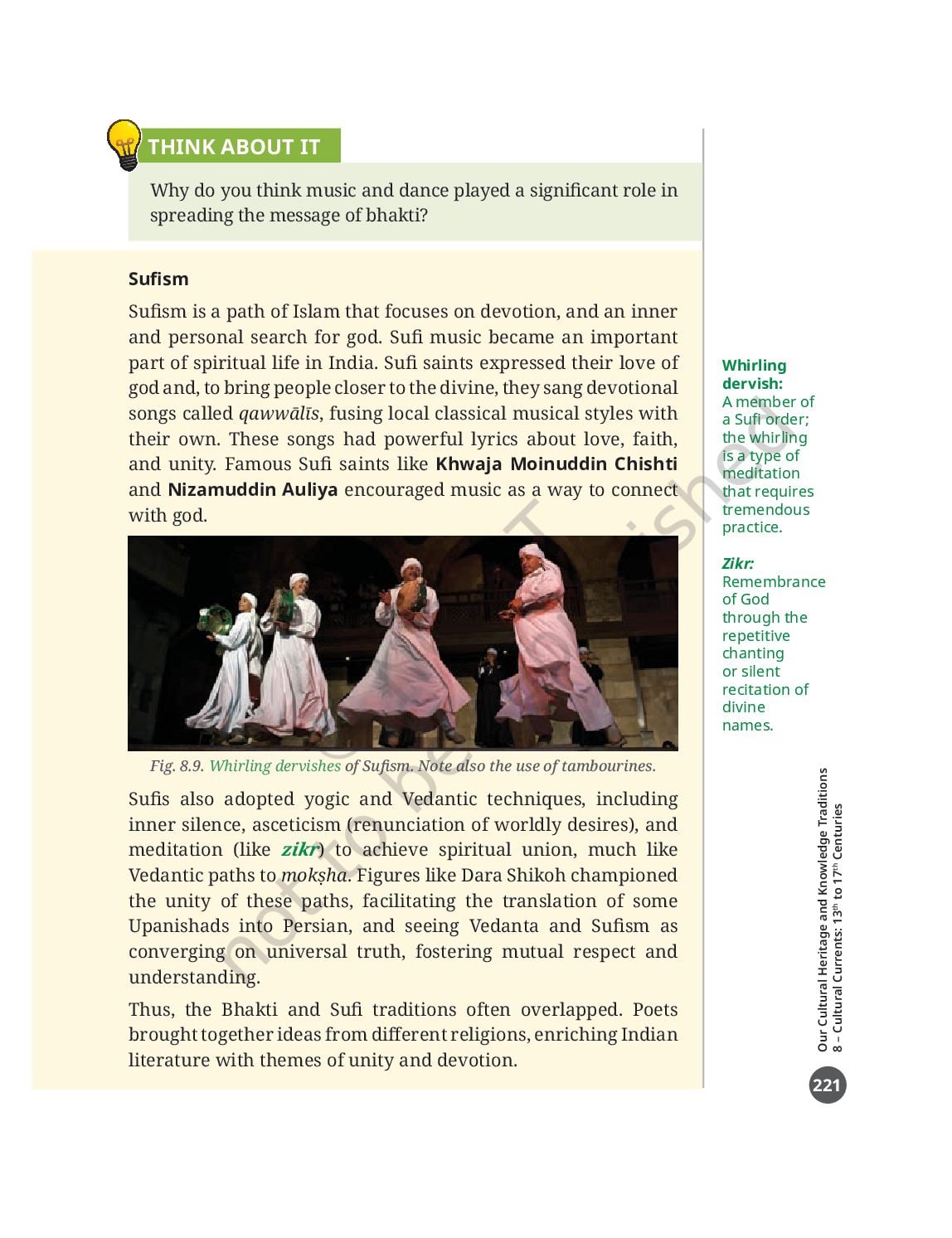
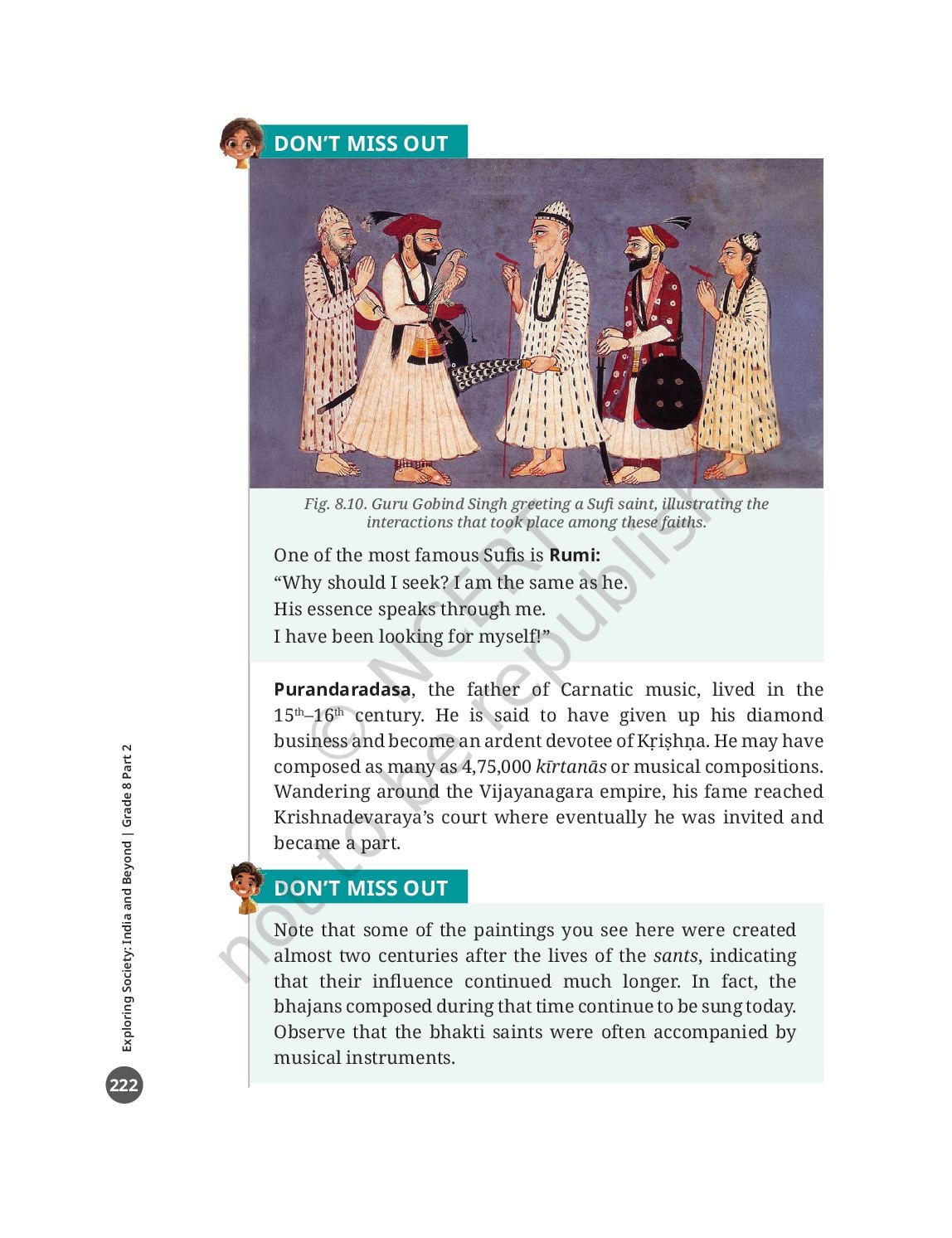
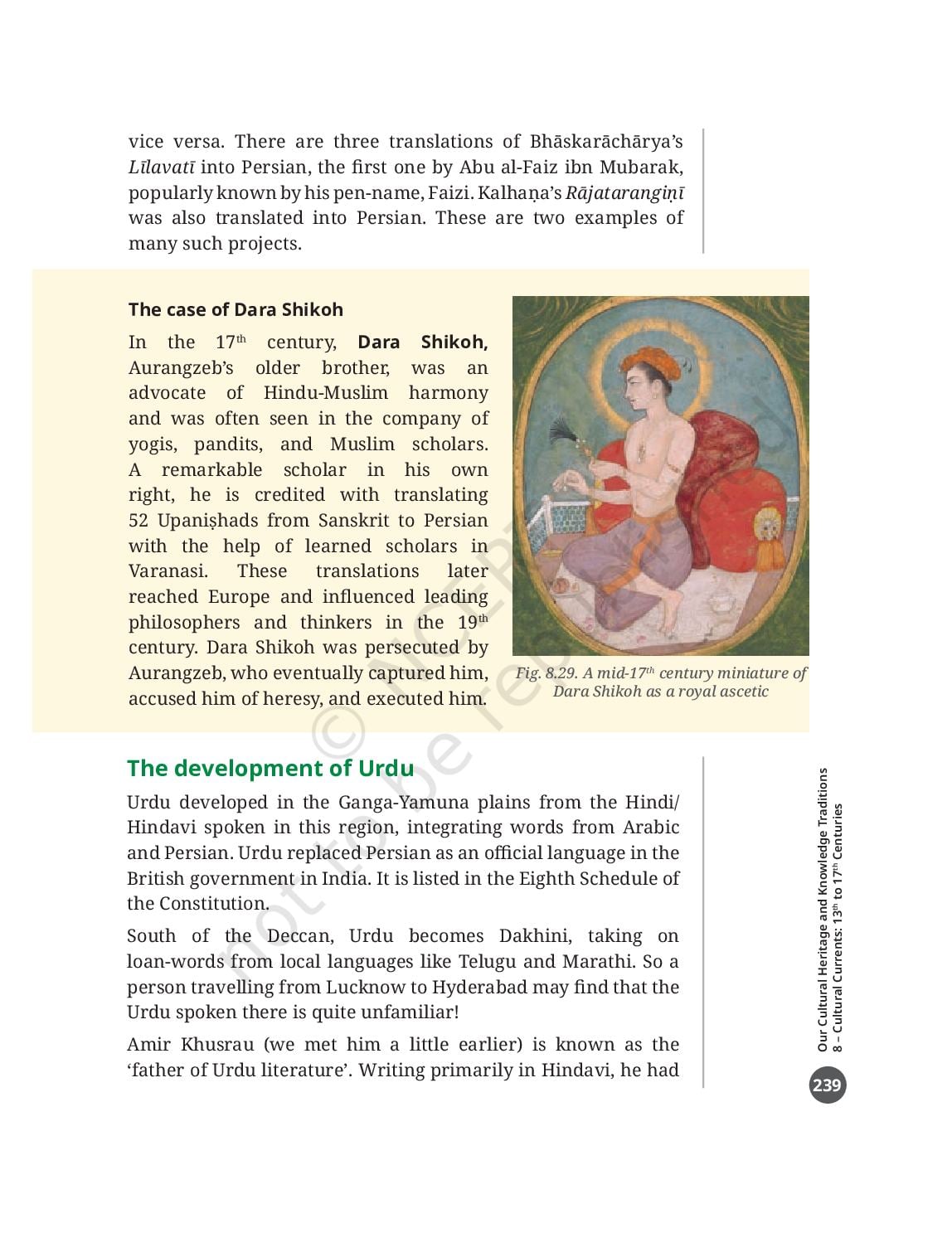
- Sufism is a path of Islam focused on devotion and an inner, personal search for god. Sufi saints such as Khwaja Moinuddin Chishti and Nizamuddin Auliya used music — the qawwālī, developed by Amīr Khusro — to bring people closer to the divine. Sufis also adopted yogic and Vedantic techniques, and Dara Shikoh saw Vedanta and Sufism as converging on universal truth. So the two traditions often overlapped.
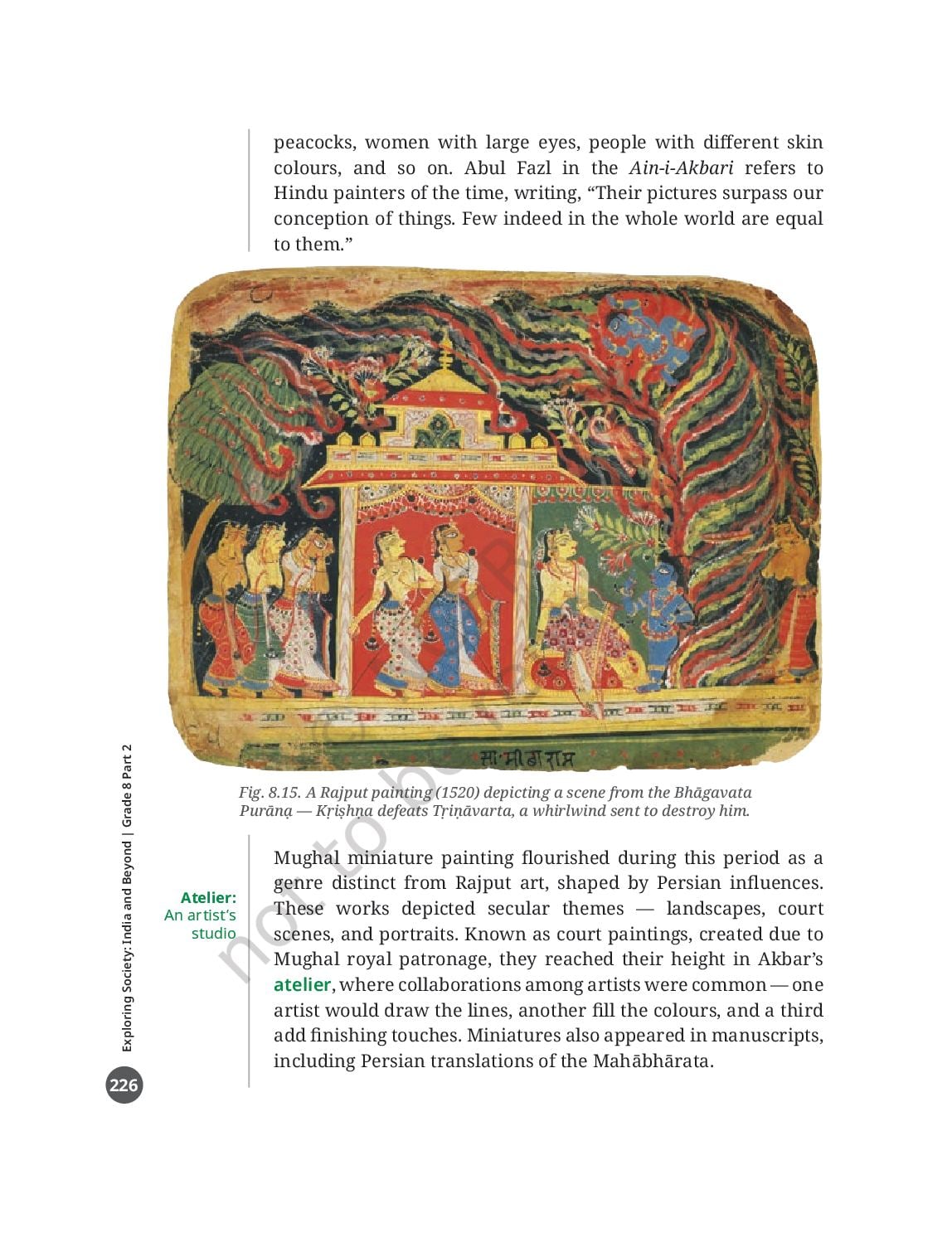
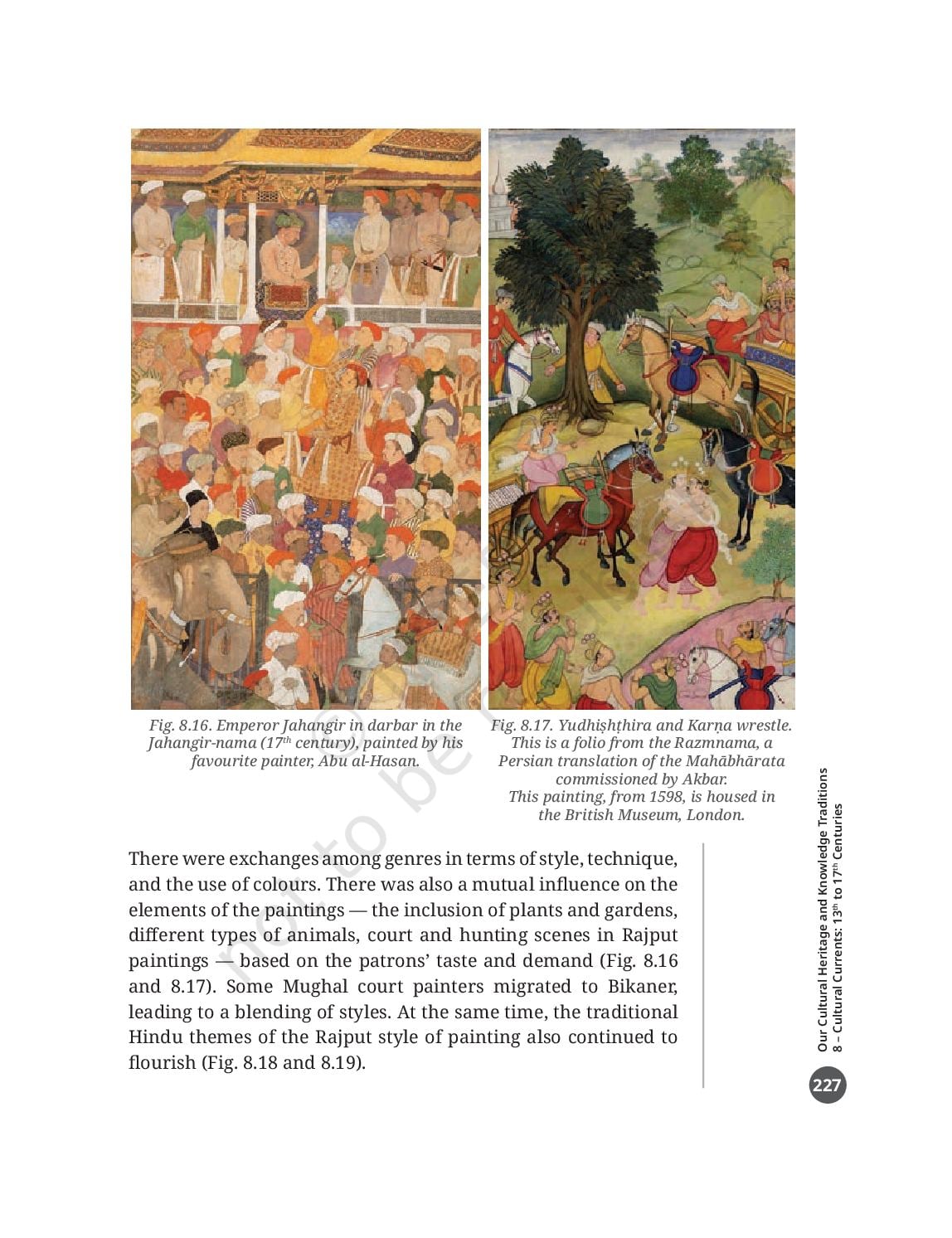
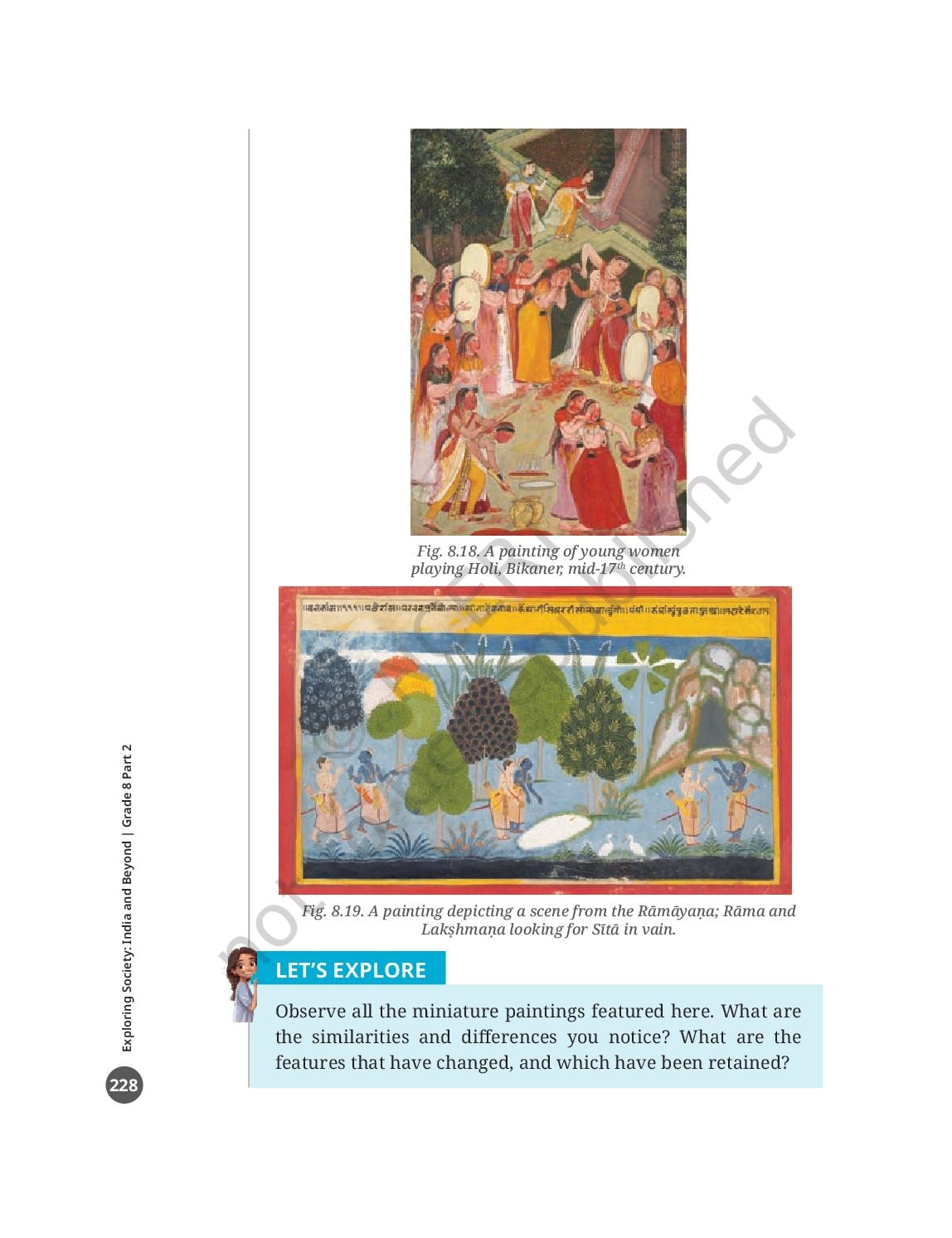
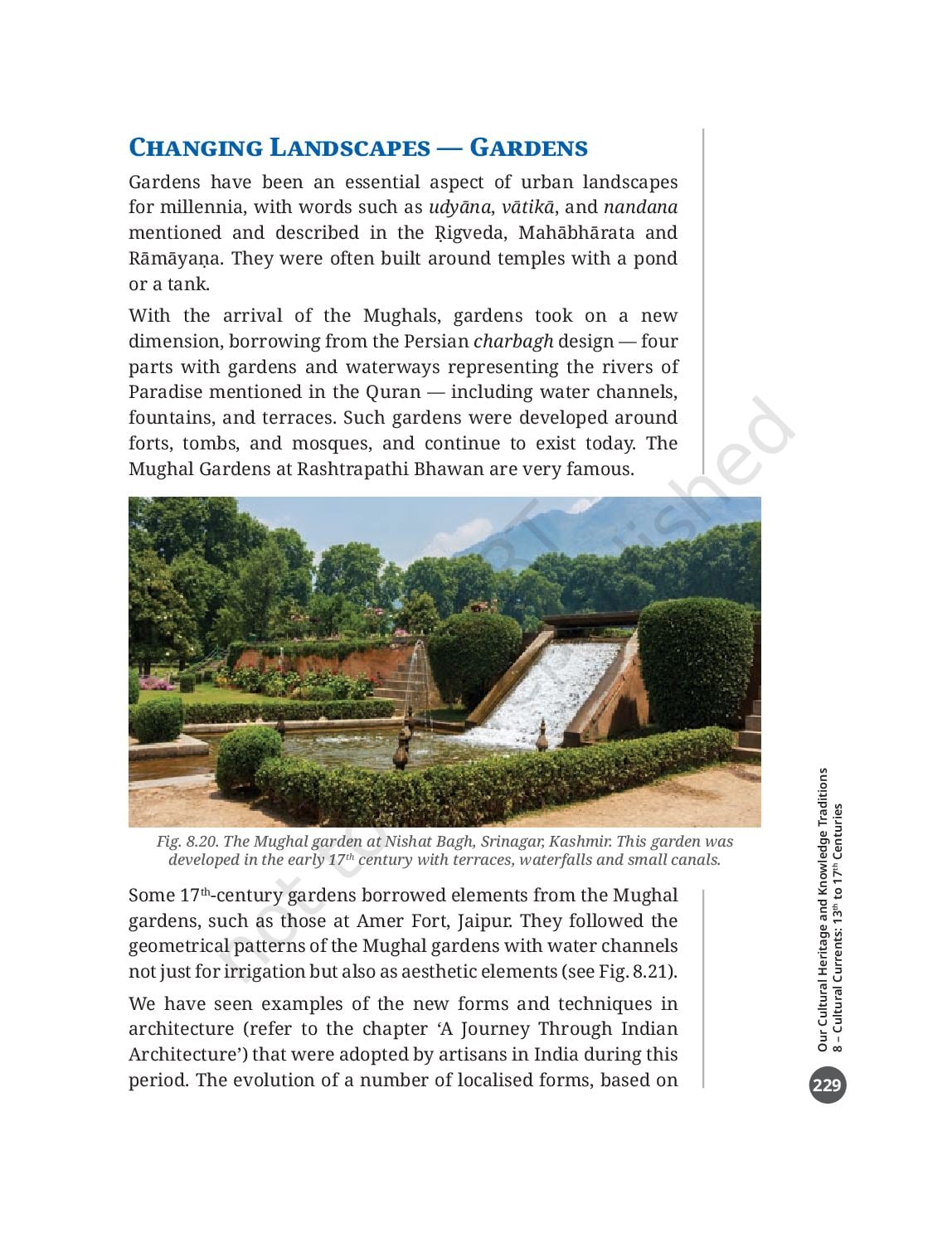
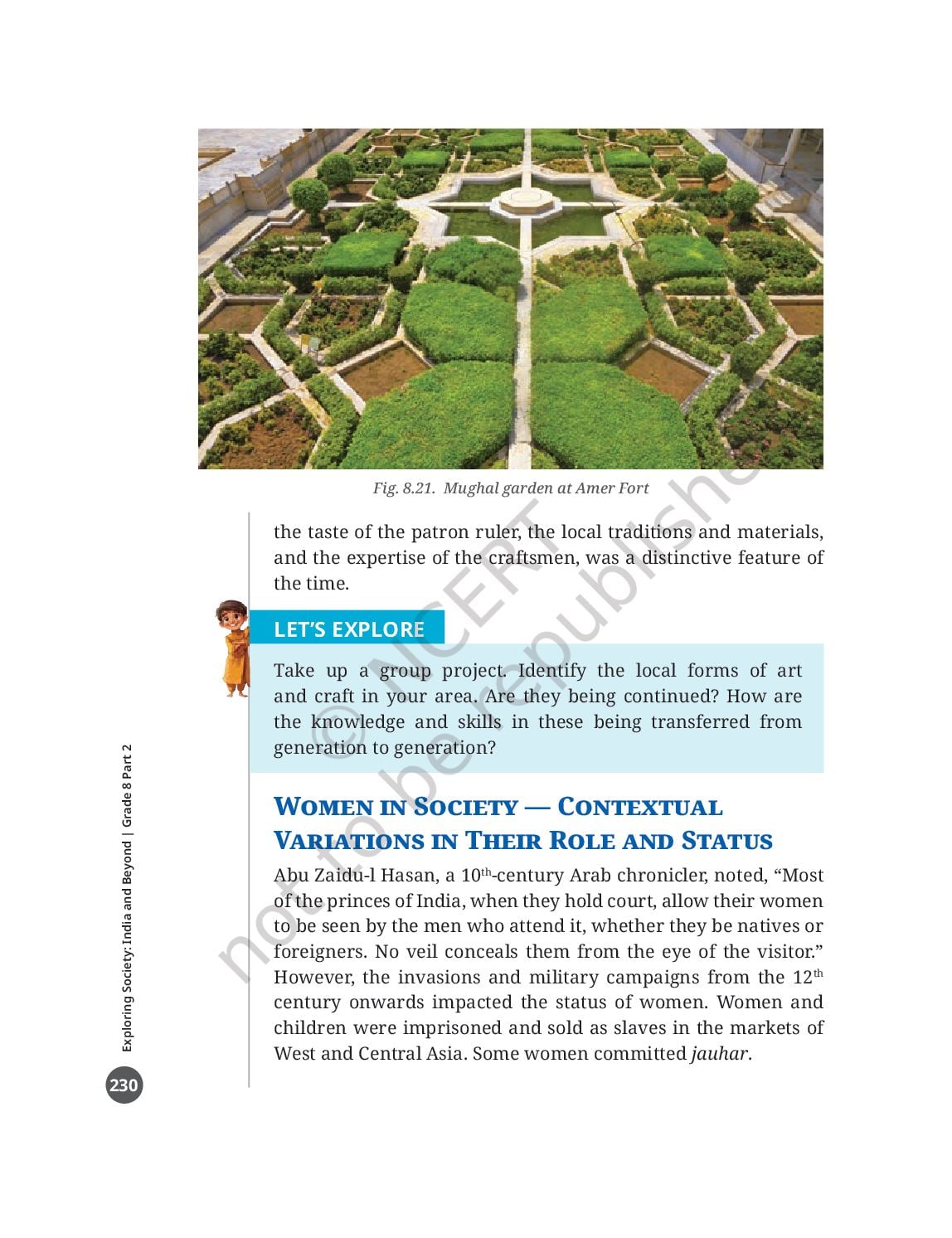
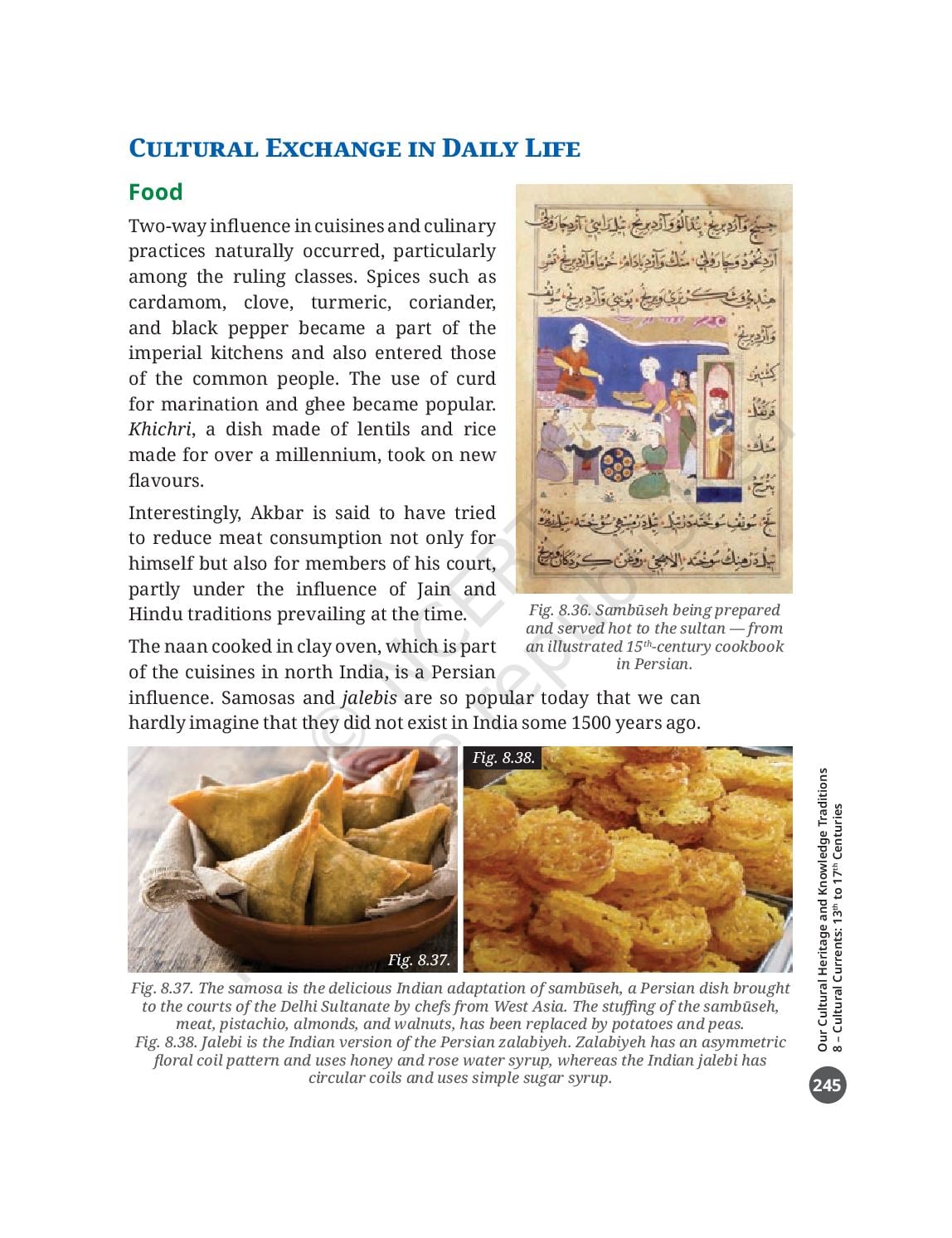
- Every other field shows the same mixture of continuity and exchange: dhrupad raised to new heights under Raja Mansingh Tomar and carried into Akbar’s court by Tansen; Rajput and Mughal miniature painting borrowing from each other; the Persian charbagh garden reworked at Amer Fort; Urdu growing out of Hindavi; sambūseh becoming the samosa.
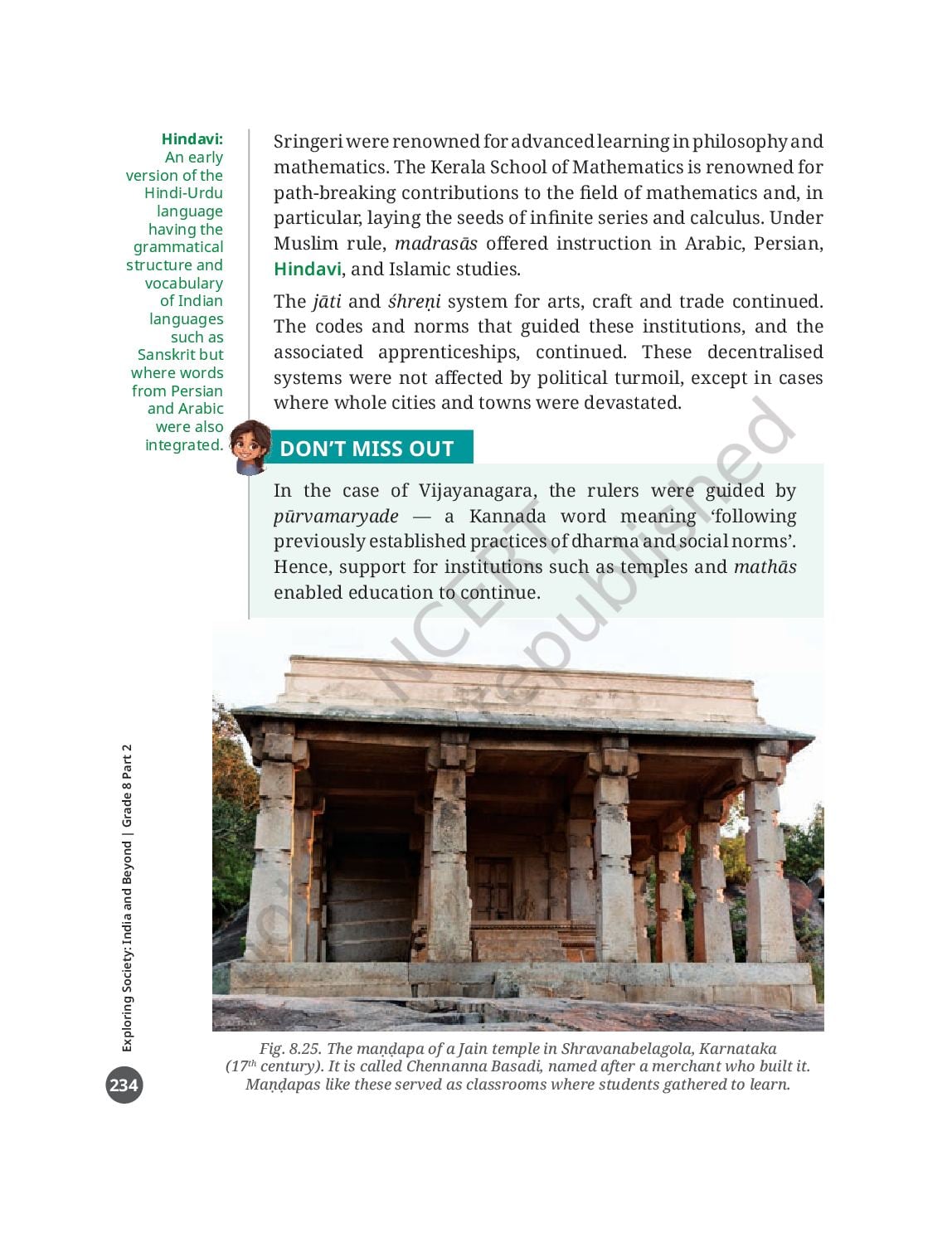
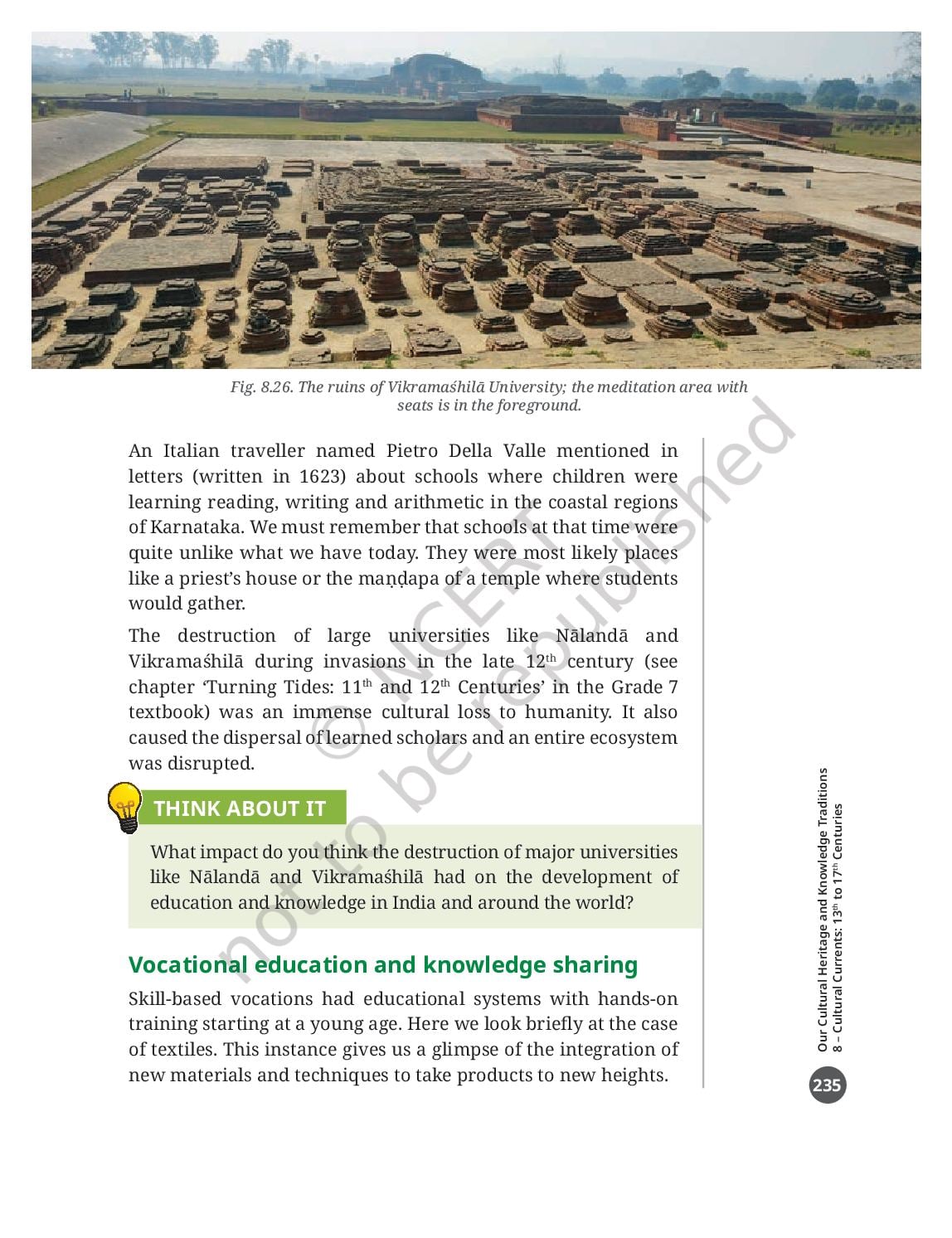
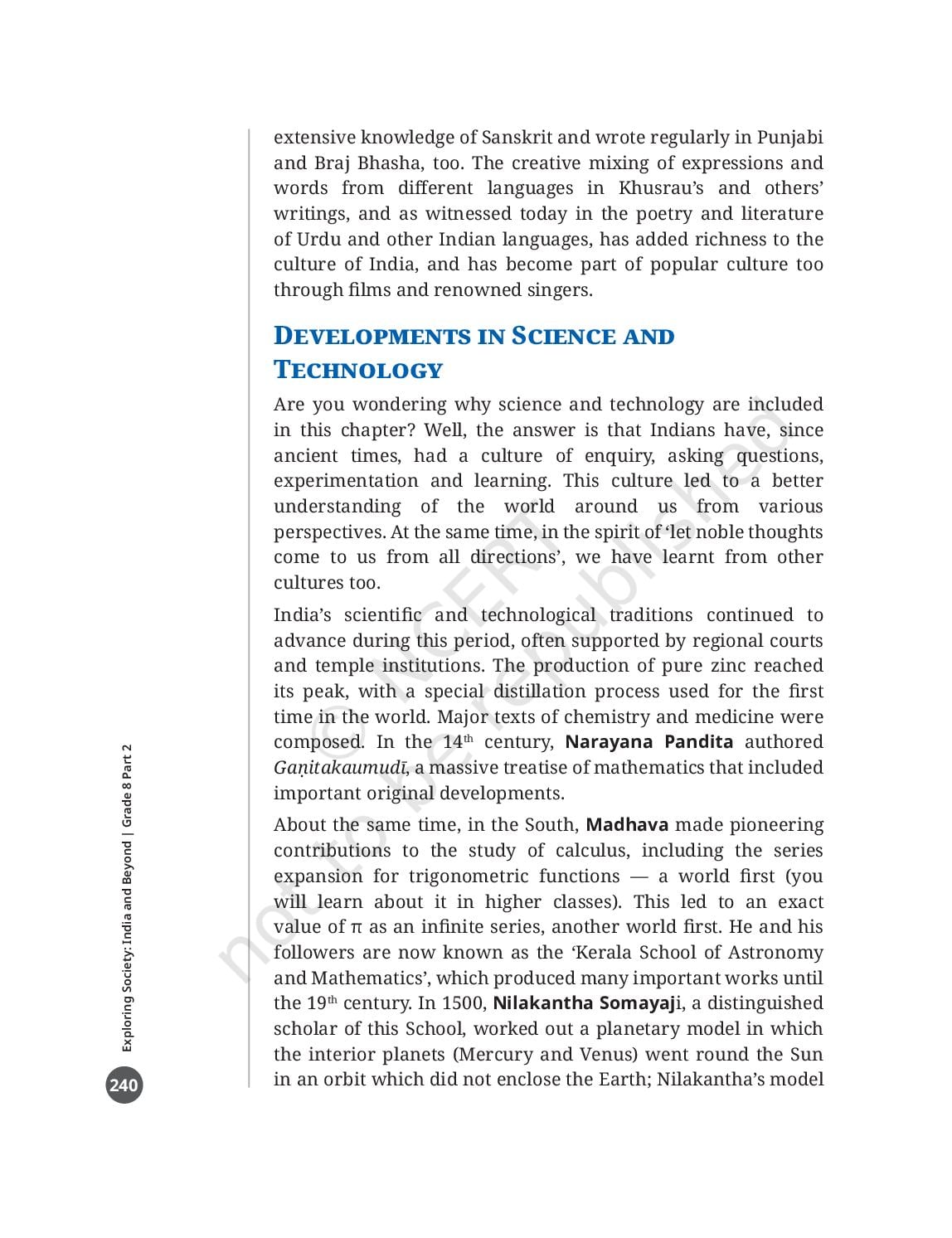
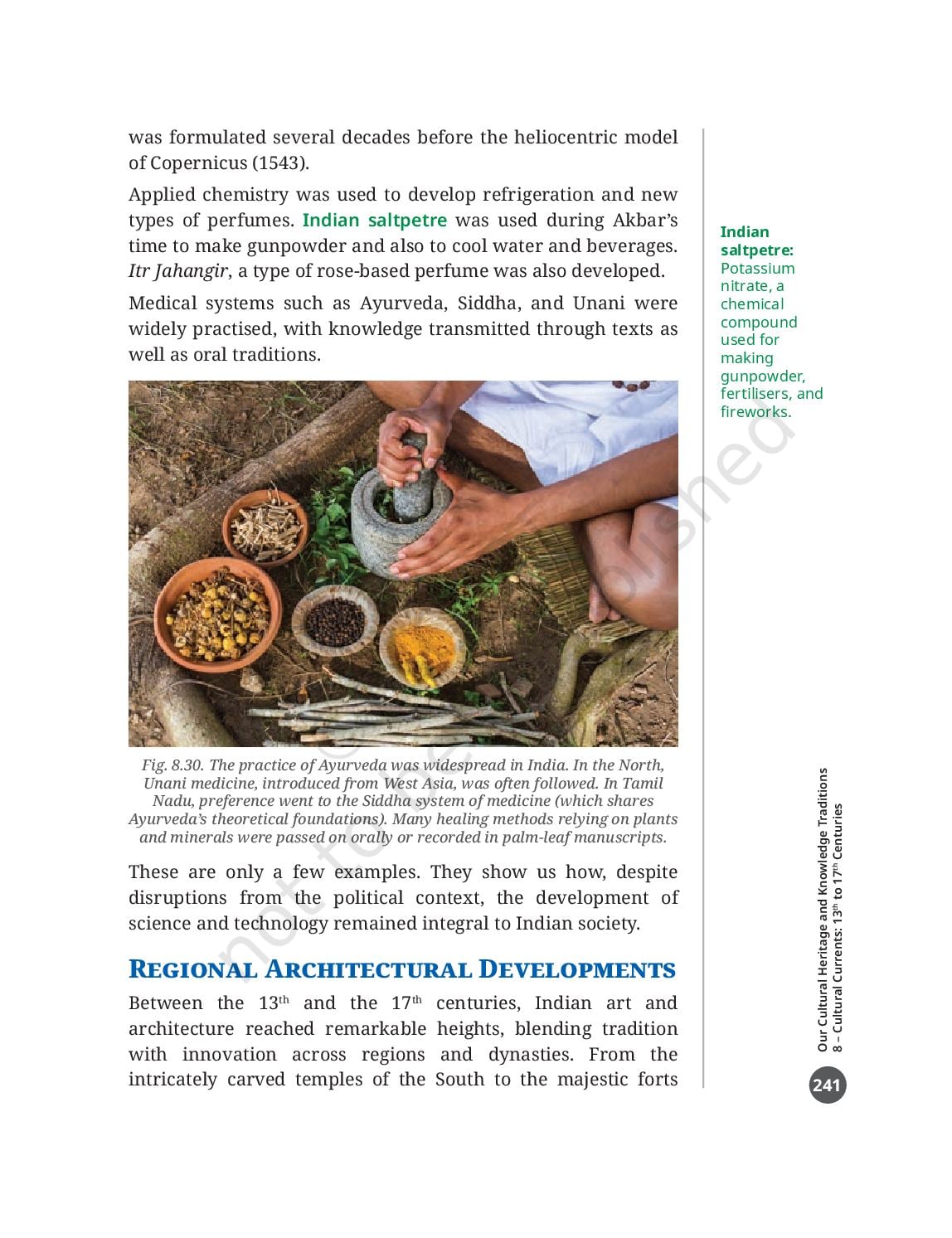
- Learning survived the destruction of Nālandā and Vikramaśhilā because it was decentralised — gurukulas, maṭhas, temple schools, vihāras, Jain pallis, village pāṭhaśhālās, madrasās and guild apprenticeships. The same centuries produced Narayana Pandita’s Gaṇitakaumudī, Madhava’s infinite series for π, and Nilakantha Somayaji’s planetary model of 1500 — decades before Copernicus.
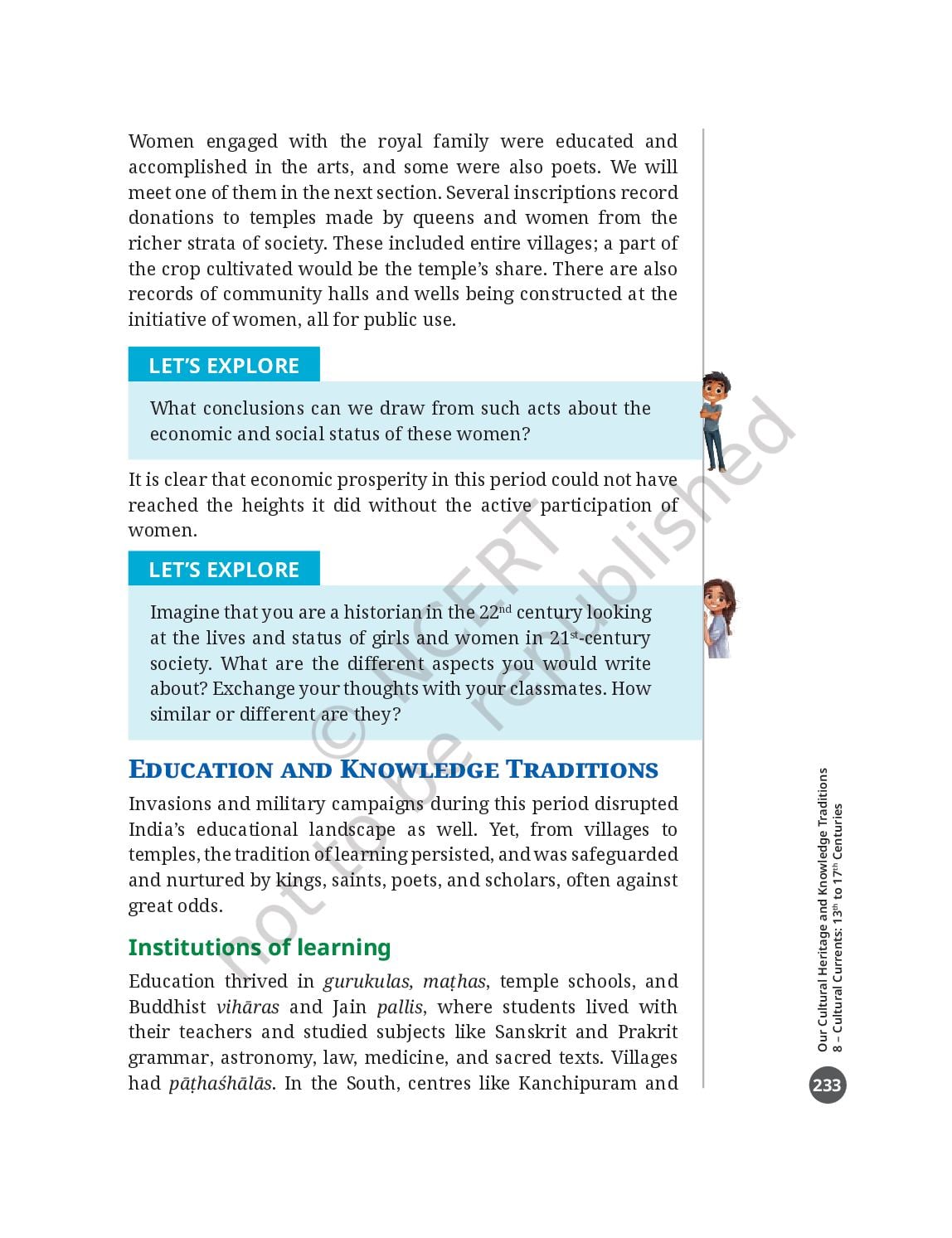
- Women’s position did not change the same way everywhere. Purdah spread in parts of north India after the invasions; in the south, older norms continued and elite women went on issuing grants, running administration, keeping the kingdom’s accounts and endowing temples, villages and wells.
Quick revision – Cultural Currents: 13th to 17th Centuries
| Term | What it means | Where it appears in the chapter | Worth remembering |
|---|---|---|---|
| Culture | The shared way of life that defines a group of people, often passed down through generations — values, customs and traditions as well as art, music, literature, philosophy and science | Opening pages, p. 216 | It shapes how people see the world, deal with each other and live their daily lives |
| Bhakti mārga | The path of devotion — one of the multiple paths to mokṣha | The power of the bhakti tradition, p. 218 | It requires no rituals and no priests; it had crystallised by the 6th century |
| Mokṣha | Realisation of Truth, or release from the cycle of death and rebirth | P. 218 | The chapter gives both meanings side by side |
| Sufism | A path of Islam that focuses on devotion, and an inner and personal search for god | Sufism, p. 221 | Sufis also used yogic and Vedantic techniques — inner silence, asceticism and meditation |
| Qawwālī | A Sufi devotional song fusing Indian, Persian and Arabic singing traditions | P. 221; DON’T MISS OUT, p. 224 | Amīr Khusro (mid-13th to early 14th century) is credited with developing it |
| Zikr | Remembrance of God through the repetitive chanting or silent recitation of divine names | Margin note, p. 221 | Compared in the chapter to Vedantic meditation |
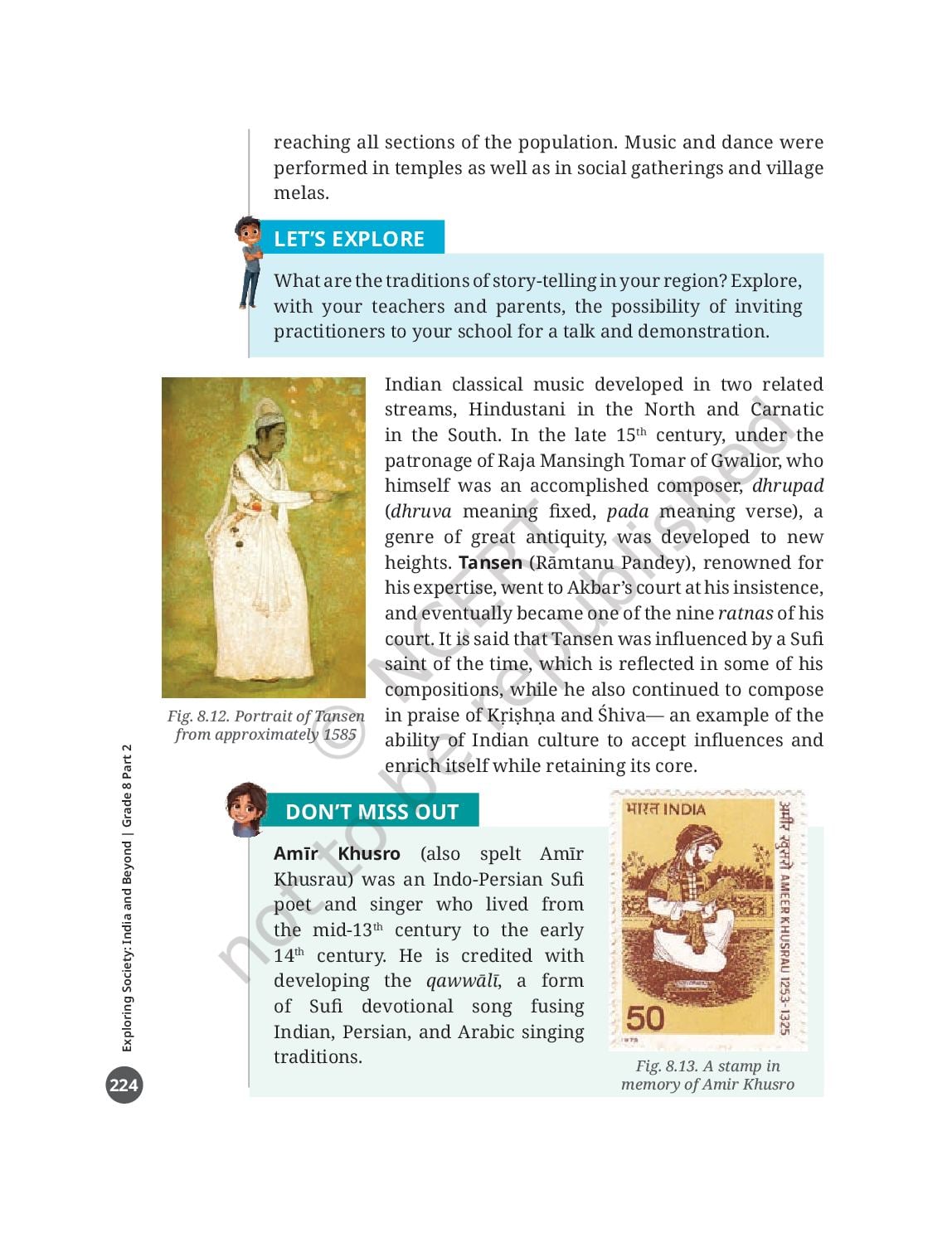
| Dhrupad | Dhruva = fixed, pada = verse — a music genre of great antiquity | Musical Traditions, p. 224 | Raised to new heights under Raja Mansingh Tomar of Gwalior in the late 15th century |
| Paṭṭachitra | Paṭṭa = cloth, chitra = picture — painted cloth storytelling of Odisha, West Bengal and Andhra Pradesh | P. 223 | Themes usually from the Rāmayaṇa, Mahābhārata and the Puraṇās |
| Atelier | An artist’s studio | Margin note, p. 226 | In Akbar’s atelier one artist drew the lines, another filled the colours, a third added the finishing |
| Charbagh | The Persian four-part garden design, with waterways representing the rivers of Paradise mentioned in the Quran | Changing Landscapes — Gardens, p. 229 | Older Indian words for garden — udyāna, vātikā, nandana — are already in the Ṛigveda and the epics |
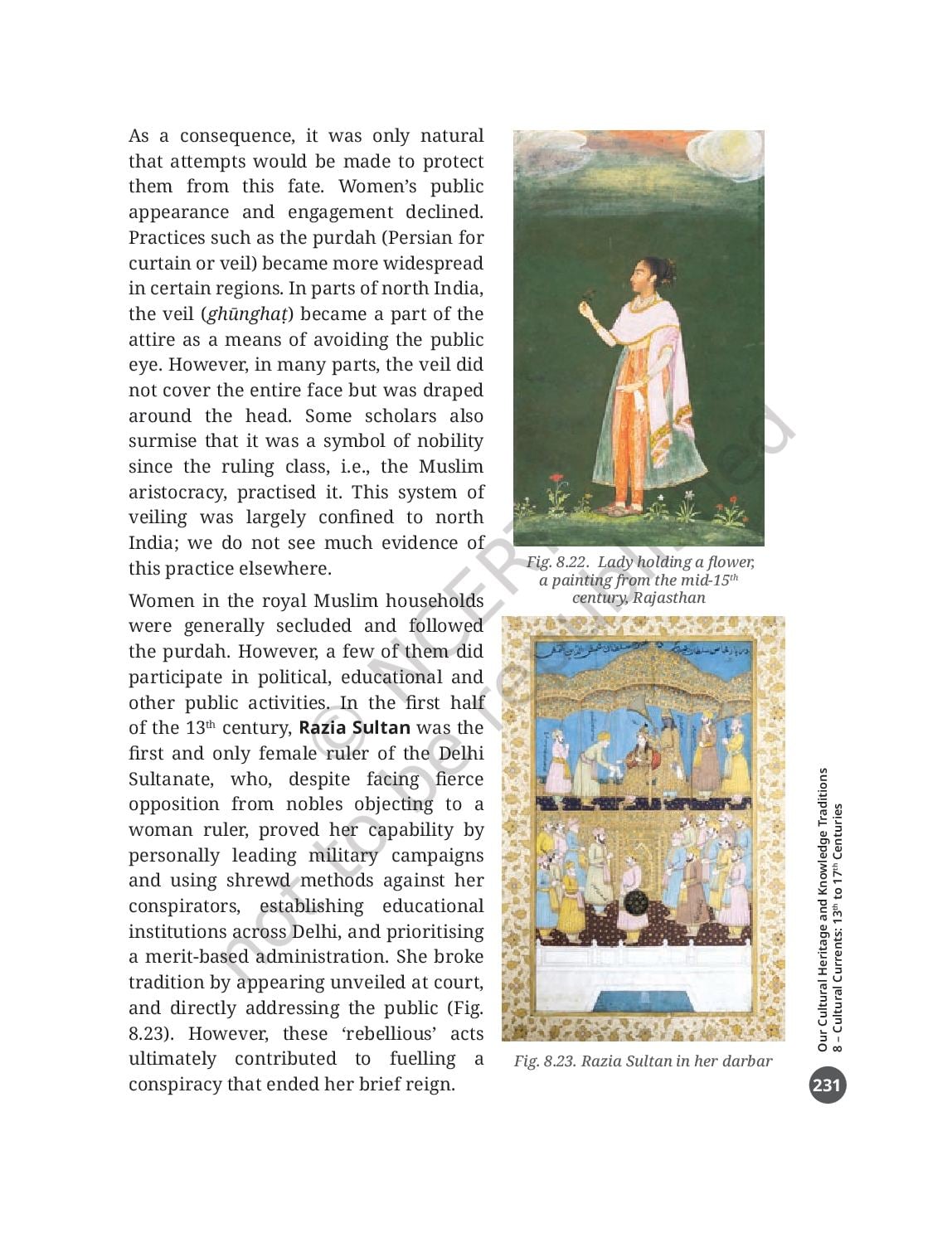
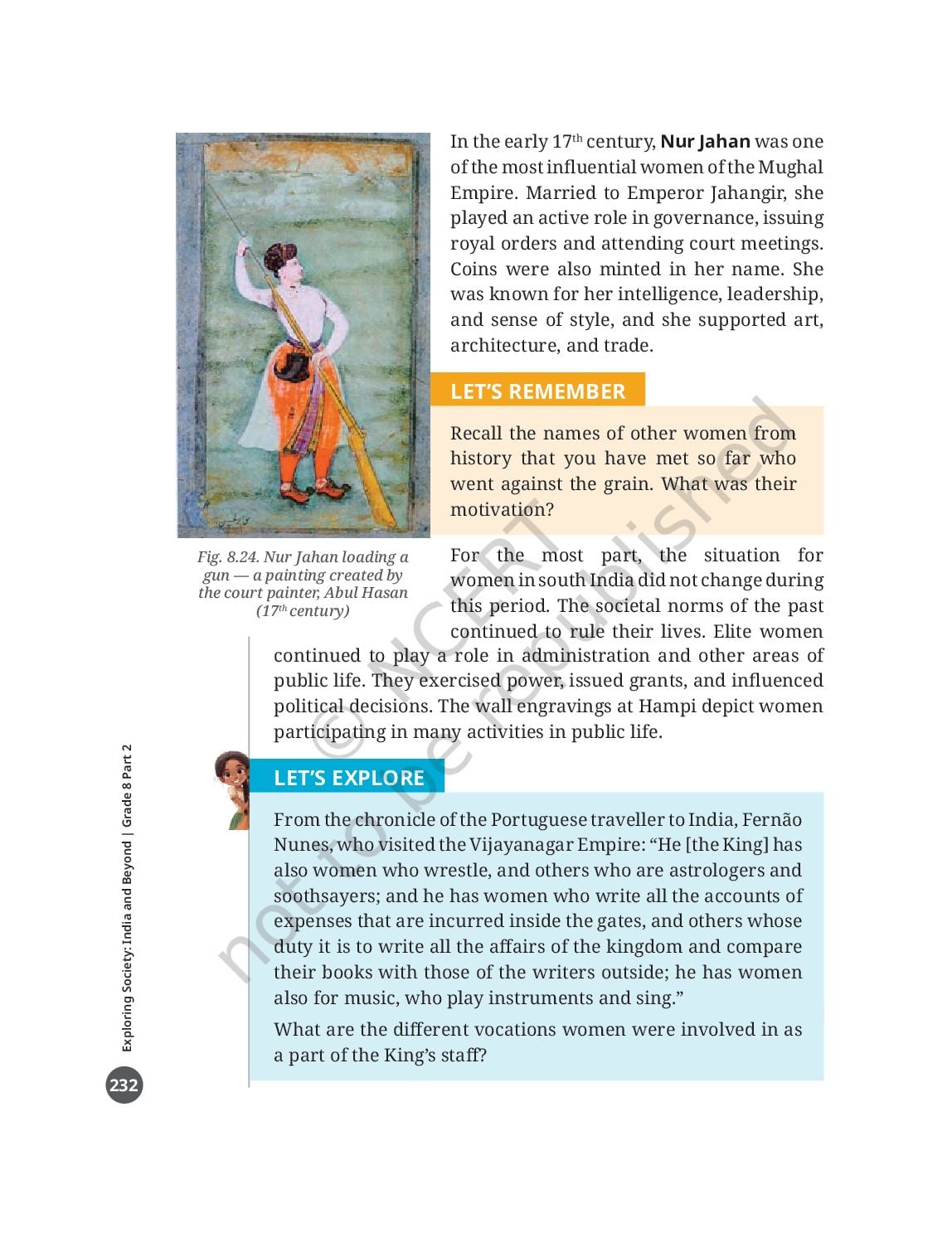
| Purdah | Persian for curtain or veil; in north India the ghūnghaṭ became part of the attire | P. 231 | Largely confined to north India; the chapter finds little evidence of it elsewhere |
| Hindavi | An early version of the Hindi-Urdu language, with the grammar and vocabulary of Indian languages but with Persian and Arabic words integrated | Margin note, p. 234 | Amīr Khusro wrote primarily in Hindavi; Urdu later grew out of it |
| Pūrvamaryade | A Kannada word meaning ‘following previously established practices of dharma and social norms’ | DON’T MISS OUT, p. 234 | It is why Vijayanagara’s rulers kept supporting temples and maṭhas, so education continued |
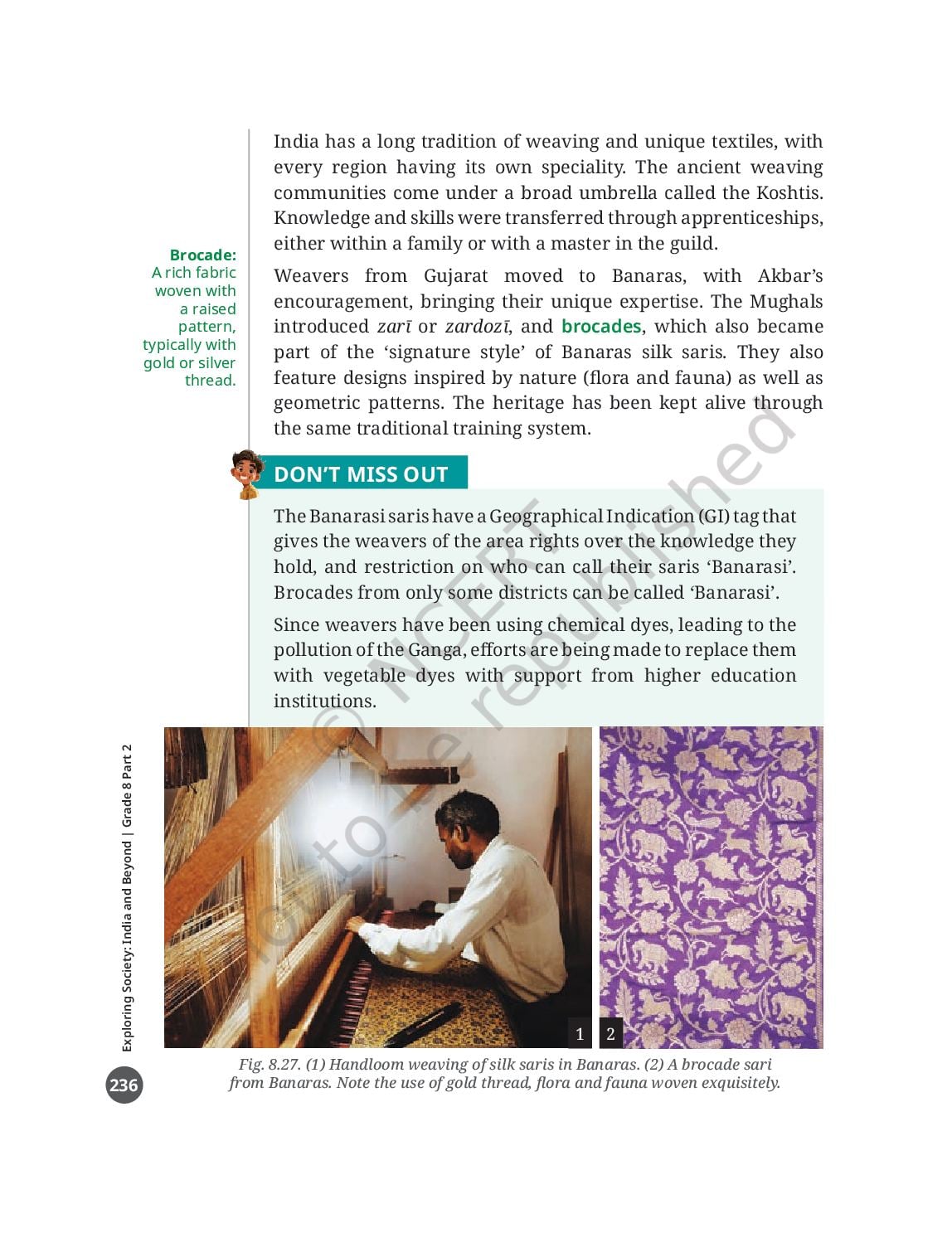
| Brocade | A rich fabric woven with a raised pattern, typically with gold or silver thread | Margin note, p. 236 | Banarasi brocade now carries a Geographical Indication (GI) tag |
Old NCERT vs New – Class 8 Social Science
This chapter is from Exploring Society: India and Beyond, the new NCERT Class 8 Social Science book (NCF-SE 2023, used from 2025-26). It replaced the old book “Our Pasts, Resources and Development and Social and Political Life”, so chapter numbers and names differ from older PDFs.
Solutions and All Chapters
Answers to the exercises and the full chapter list of Exploring Society: India and Beyond:
Cultural Currents: 13th to 17th Centuries – Overview
| Class | Class 8 |
| Subject | Social Science |
| Book | Exploring Society: India and Beyond – new NCERT book |
| Part | Part II |
| Chapter | 15 of 15 – Cultural Currents: 13th to 17th Centuries |
| Book pages | Part II, 215 – 249 |
| Edition | NCERT Reprint 2026-27 |
| Session | 2026-27 |
| Free – read online or download |
Class 8 Social Science Chapter 15 – FAQs
Where can I download Cultural Currents: 13th to 17th Centuries Class 8 PDF?
From the download table on this page – the chapter PDF is free, and the full book is linked too.
What is Class 8 Social Science Chapter 15 about?
Culture is the shared way of life that defines a group of people, passed down through generations — values, morals, customs and traditions as well as art, music, literature, philosophy and science. Indian culture is among the most ancient in the world, and unlike those of Mesopotamia, Egypt, Greece and Rome it has stayed alive and continuous.
Is Cultural Currents: 13th to 17th Centuries from the new NCERT Class 8 Social Science book?
Yes. It is chapter 15 of exploring society: india and beyond (part ii), the new NCERT Class 8 Social Science book for 2026-27.
Is this the latest NCERT edition for 2026-27?
Yes – the PDF is NCERT’s latest edition for the 2026-27 session.
Where are the NCERT Solutions for Class 8 Social Science Chapter 15?
Open the NCERT Solutions link above for answers to the exercise questions.