NCERT Solutions for Class 6 Hindi Chapter 3 Pehli Boond provide clear, step-by-step answers to every exercise and in-text question from the chapter Pehli Boond of the NCERT textbook Malhar. Prepared by subject experts as per the latest NCERT (CBSE) syllabus for 2026-27, these NCERT Solutions for Class 6 Hindi help you understand each concept, write exam-ready answers, and check your own solutions. You can read them online below or download the free Class 6 Hindi Chapter 3 question-answer PDF.
NCERT Solutions for Class 6 Hindi Chapter 3 Pehli Boond
- Class: Class 6
- Subject: Hindi
- Chapter: Chapter 3 – Pehli Boond
- Textbook: Malhar (NCERT)
- Study material: NCERT Solutions – questions with answers, free PDF
These solutions answer all the exercise questions of Chapter 3 Pehli Boond — including the in-text questions, short-answer and long-answer questions, and activities — with complete explanations so you can follow the method, not just the final answer. Read the full solutions below.
NCERT Solutions Class 6 Hindi Chapter 3 पहली बूँद View Download
NCERT Solutions for Class 6 Hindi Chapter 3 PDF Download
You can read the NCERT Solutions for Class 6 Hindi Chapter 3 online above, or download the complete question-answer PDF to study Pehli Boond offline at any time.
NCERT Solutions for Class 6 Hindi Chapter 3 PDF Download Link – Click Here to Download Solutions PDF
Questions Covered in This Chapter
These NCERT Solutions answer all 20 questions of this chapter. The questions solved are:
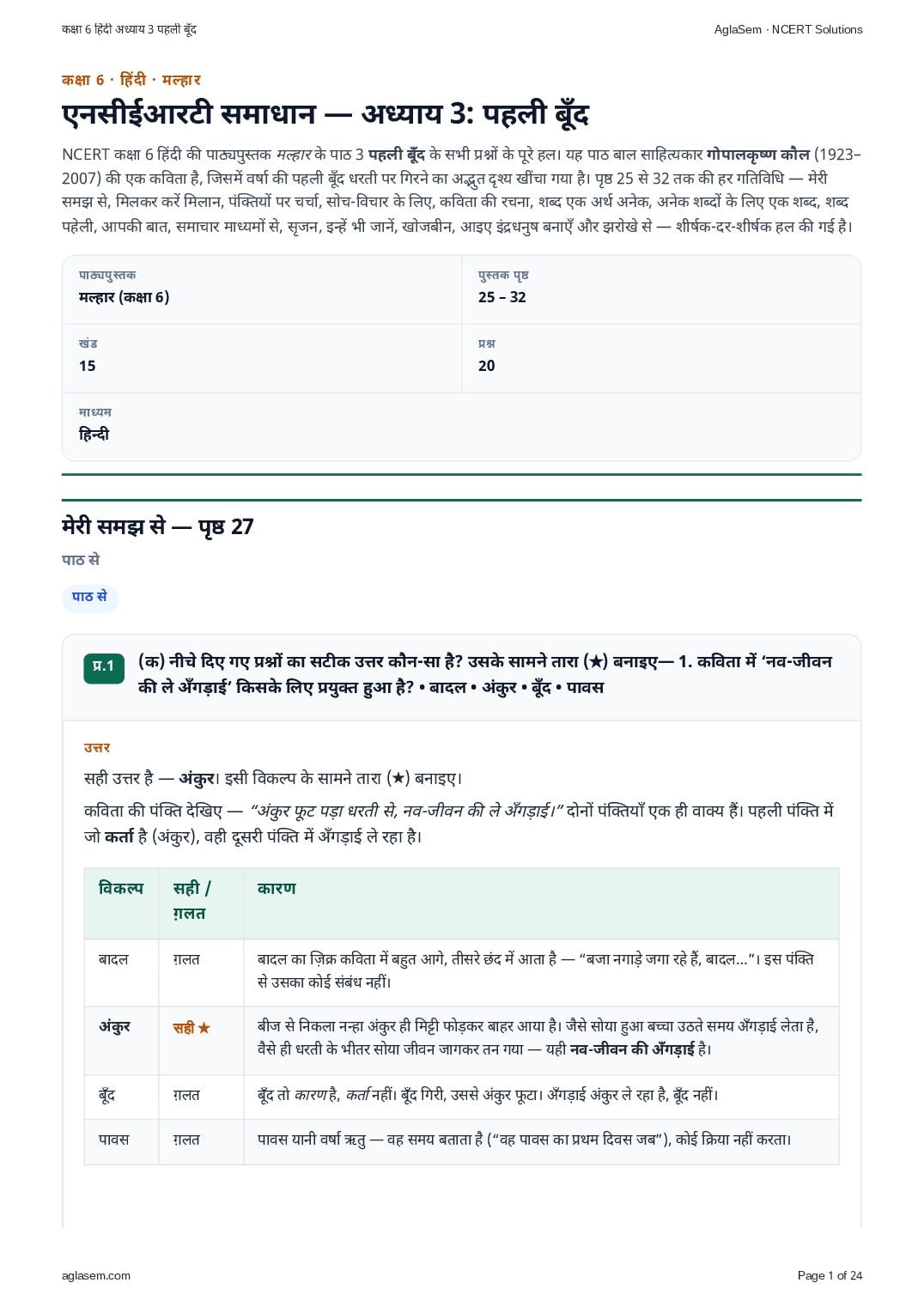
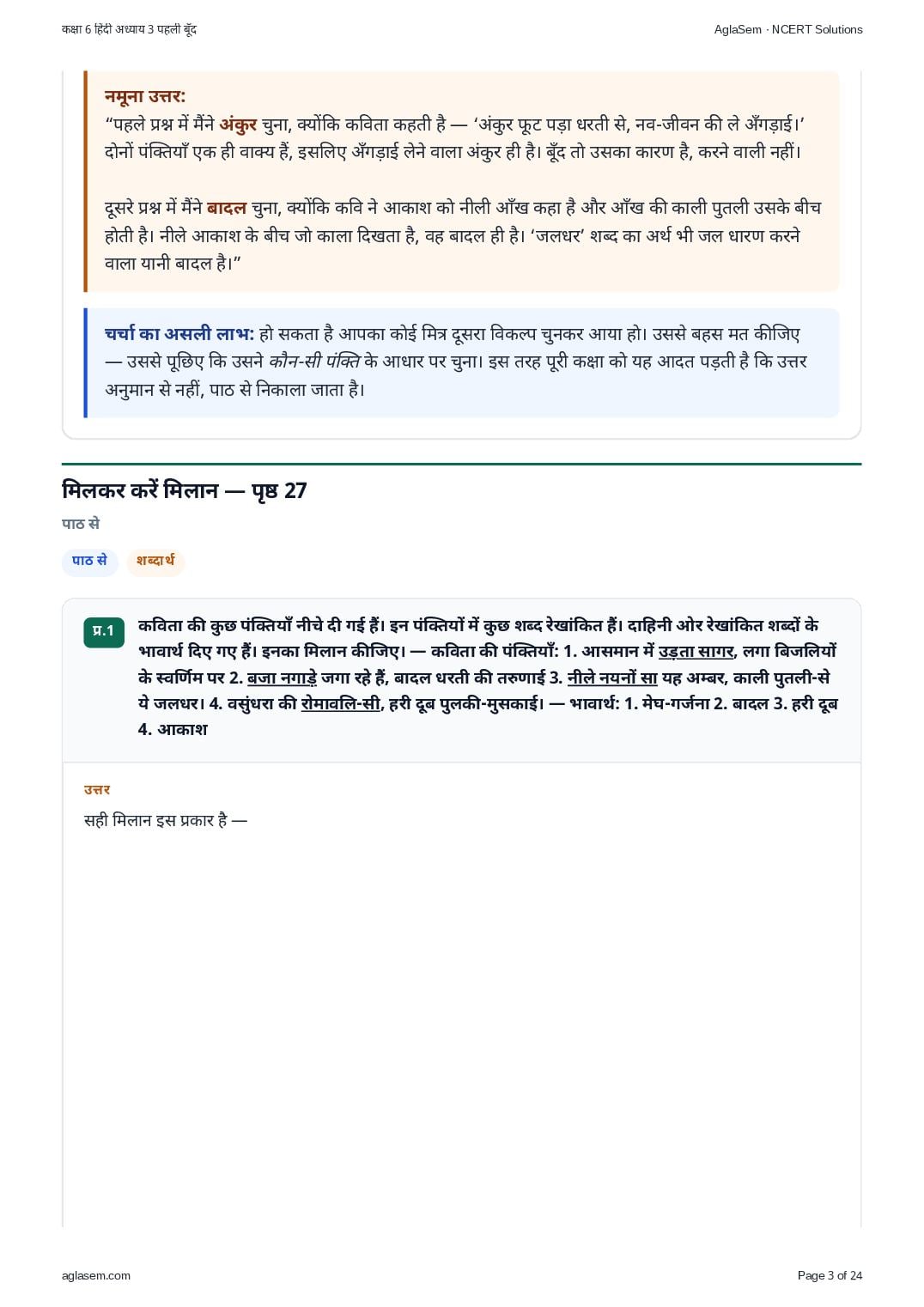
- (क) नीचे दिए गए प्रश्नों का सटीक उत्तर कौन-सा है? उसके सामने तारा (★) बनाइए— 1. कविता में ‘नव-जीवन की ले अँगड़ाई’ किसके लिए प्रयुक्त हुआ है? • बादल • अंकुर • बूँद • पावस
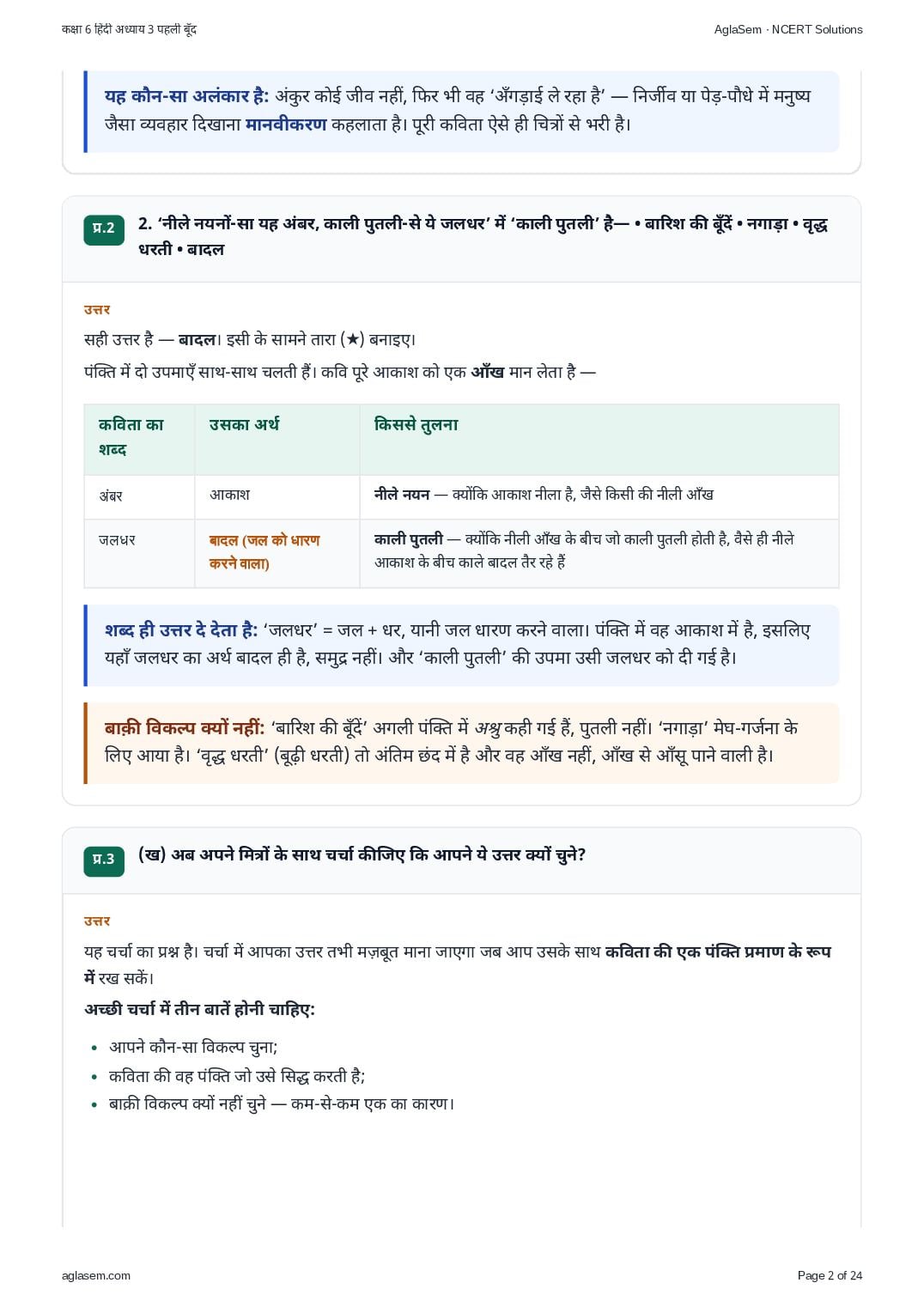
- 2. ‘नीले नयनों-सा यह अंबर, काली पुतली-से ये जलधर’ में ‘काली पुतली’ है— • बारिश की बूँदें • नगाड़ा • वृद्ध धरती • बादल
- (ख) अब अपने मित्रों के साथ चर्चा कीजिए कि आपने ये उत्तर क्यों चुने?
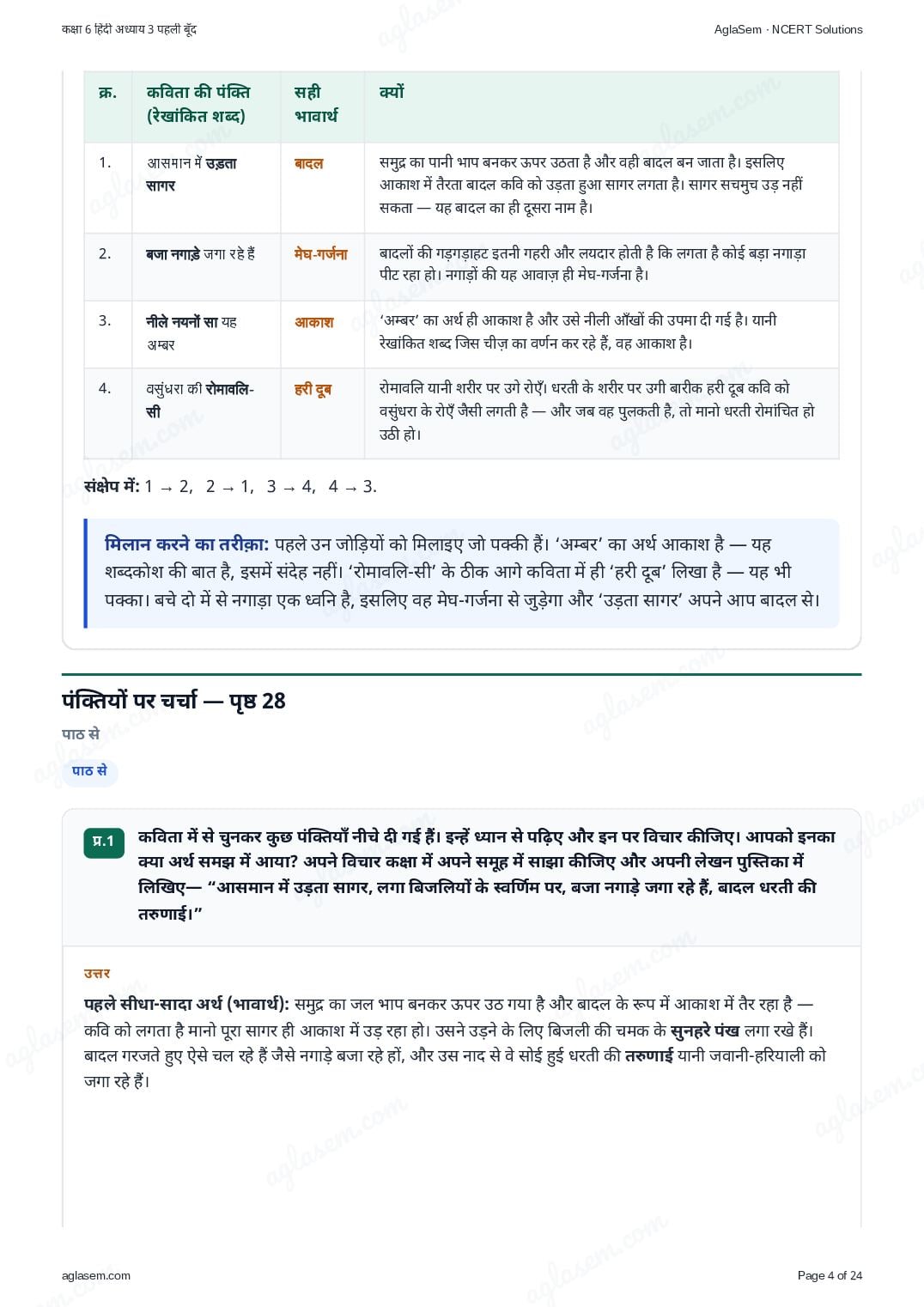
- कविता की कुछ पंक्तियाँ नीचे दी गई हैं। इन पंक्तियों में कुछ शब्द रेखांकित हैं। दाहिनी ओर रेखांकित शब्दों के भावार्थ दिए गए हैं। इनका मिलान कीजिए। — कविता की पंक्तियाँ: 1. आसमान में उड़ता सागर , लगा बिजलियों के स्वर्णिम पर 2. बजा नगाड़े जगा रहे हैं, बादल धरती की तरुणाई 3. नीले नयनों सा यह अम्बर, काली पुतली-से ये जलधर। 4. वसुंधरा की रोमावलि-सी , हरी दूब पुलकी-मुसकाई। — भावार्थ: 1. मेघ-गर्जना 2. बादल 3. हरी दूब 4. आकाश
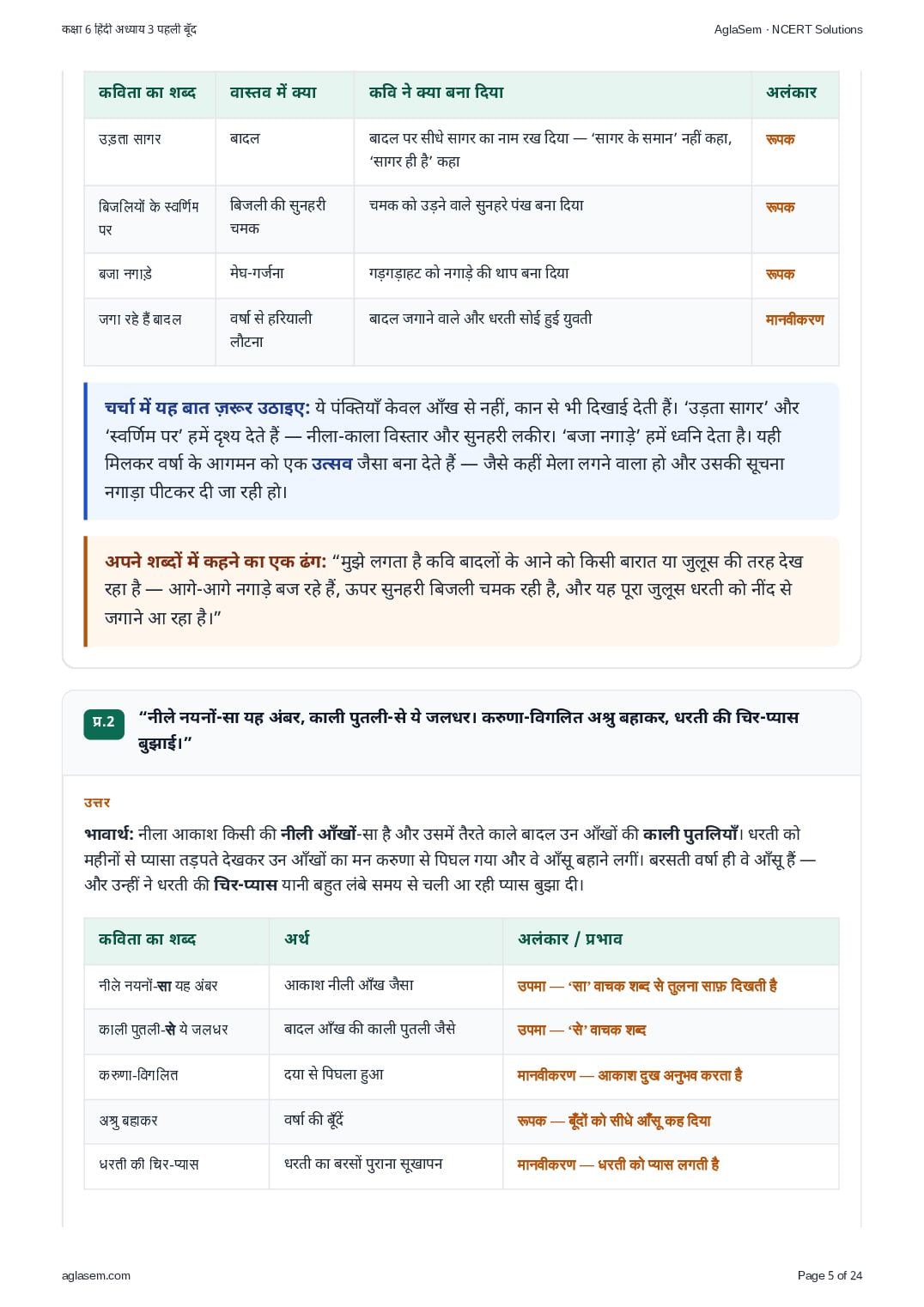
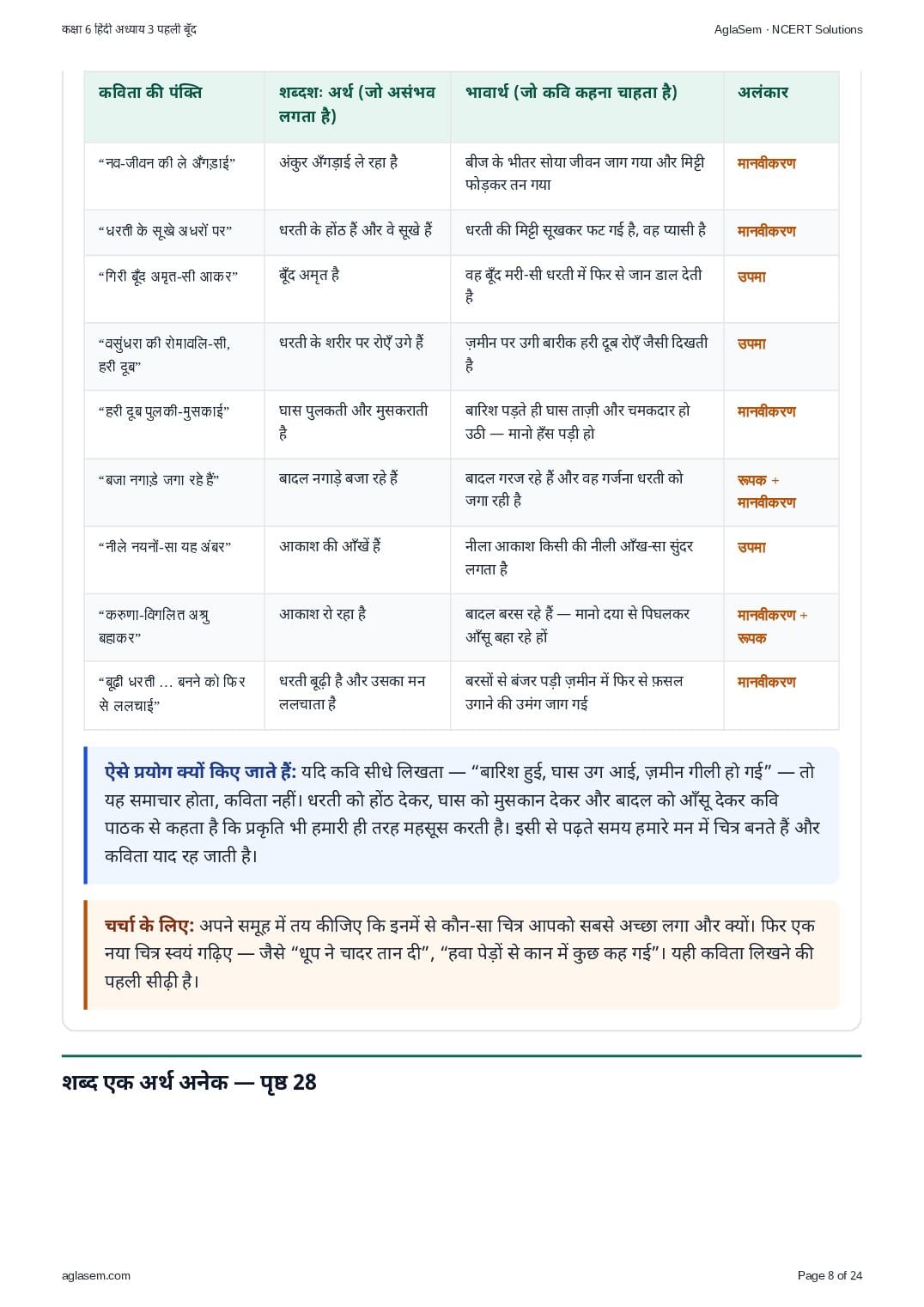
- कविता में से चुनकर कुछ पंक्तियाँ नीचे दी गई हैं। इन्हें ध्यान से पढ़िए और इन पर विचार कीजिए। आपको इनका क्या अर्थ समझ में आया? अपने विचार कक्षा में अपने समूह में साझा कीजिए और अपनी लेखन पुस्तिका में लिखिए— “आसमान में उड़ता सागर, लगा बिजलियों के स्वर्णिम पर, बजा नगाड़े जगा रहे हैं, बादल धरती की तरुणाई।”
- “नीले नयनों-सा यह अंबर, काली पुतली-से ये जलधर। करुणा-विगलित अश्रु बहाकर, धरती की चिर-प्यास बुझाई।”
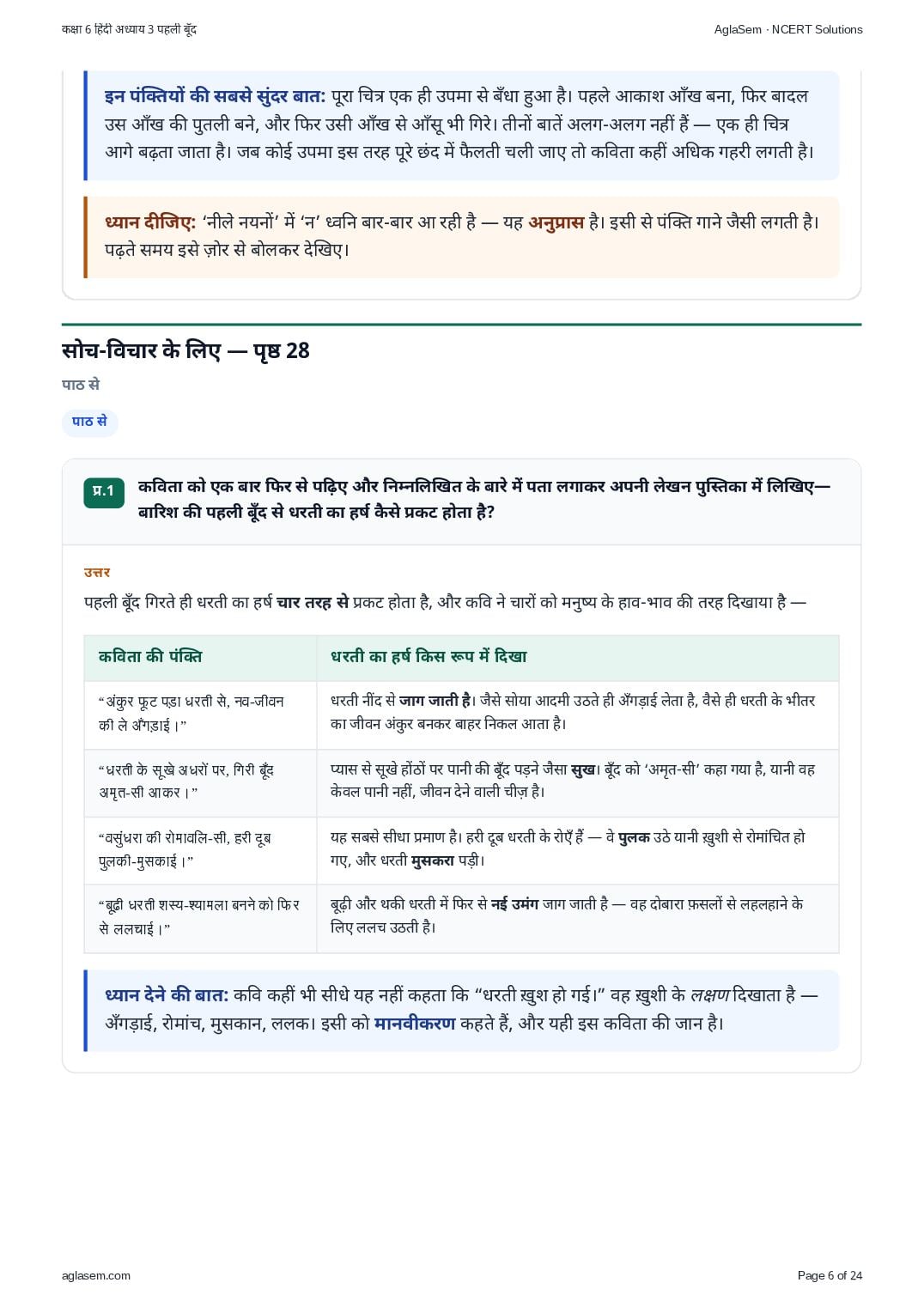
- कविता को एक बार फिर से पढ़िए और निम्नलिखित के बारे में पता लगाकर अपनी लेखन पुस्तिका में लिखिए— बारिश की पहली बूँद से धरती का हर्ष कैसे प्रकट होता है?
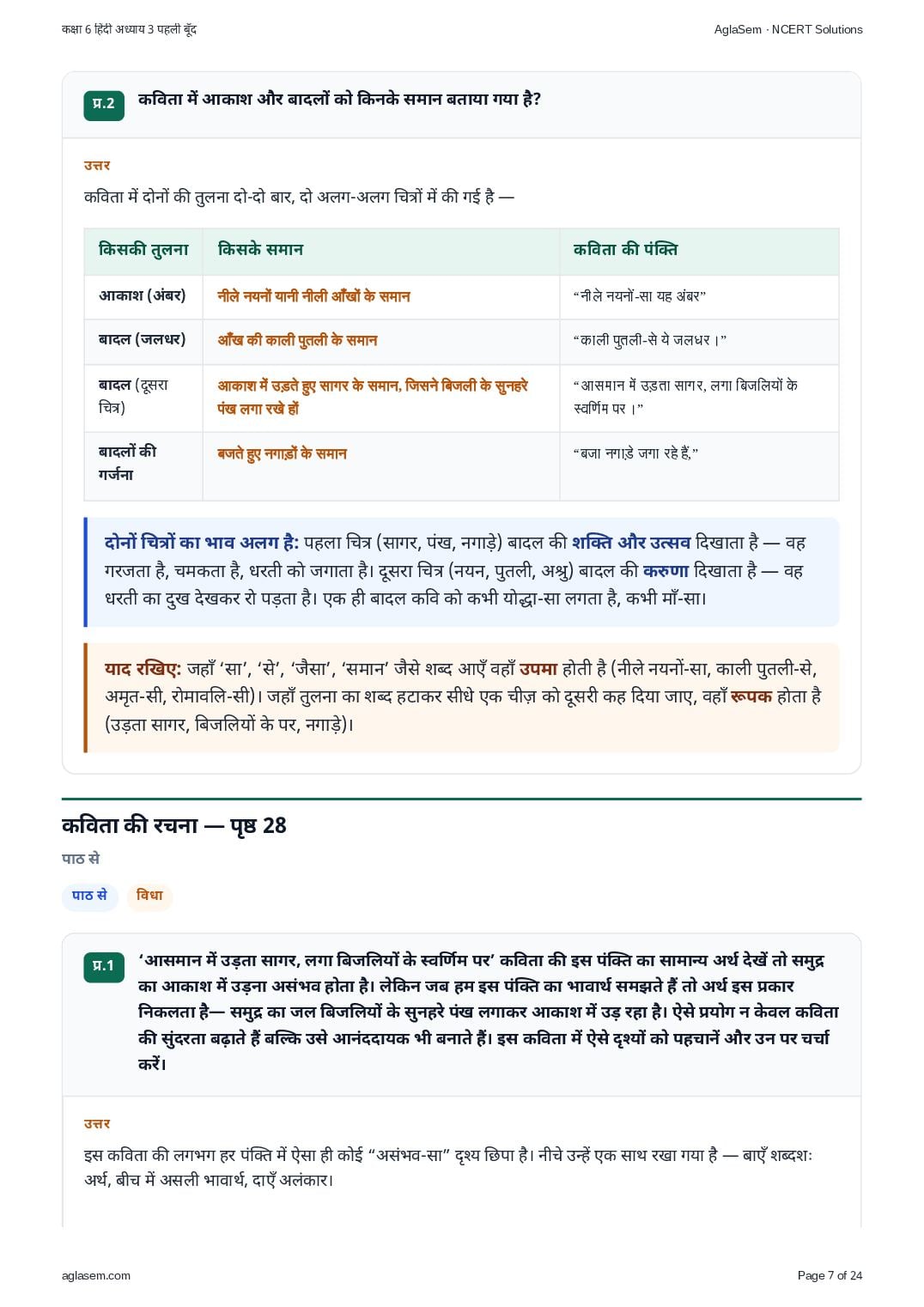
- कविता में आकाश और बादलों को किनके समान बताया गया है?
- ‘आसमान में उड़ता सागर, लगा बिजलियों के स्वर्णिम पर’ कविता की इस पंक्ति का सामान्य अर्थ देखें तो समुद्र का आकाश में उड़ना असंभव होता है। लेकिन जब हम इस पंक्ति का भावार्थ समझते हैं तो अर्थ इस प्रकार निकलता है— समुद्र का जल बिजलियों के सुनहरे पंख लगाकर आकाश में उड़ रहा है। ऐसे प्रयोग न केवल कविता की सुंदरता बढ़ाते हैं बल्कि उसे आनंददायक भी बनाते हैं। इस कविता में ऐसे दृश्यों को पहचानें और उन पर चर्चा करें।
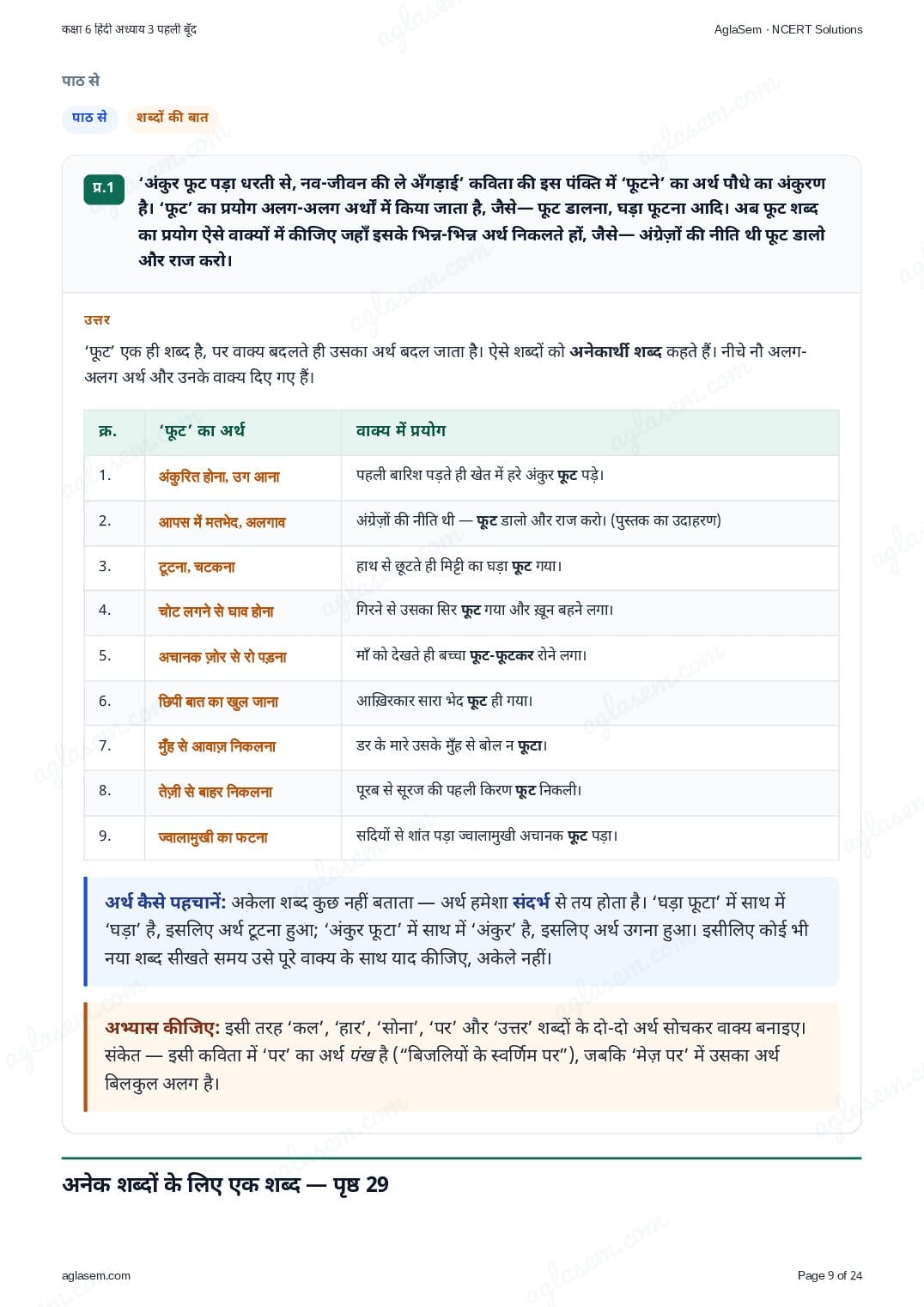
- ‘अंकुर फूट पड़ा धरती से, नव-जीवन की ले अँगड़ाई’ कविता की इस पंक्ति में ‘फूटने’ का अर्थ पौधे का अंकुरण है। ‘फूट’ का प्रयोग अलग-अलग अर्थों में किया जाता है, जैसे— फूट डालना, घड़ा फूटना आदि। अब फूट शब्द का प्रयोग ऐसे वाक्यों में कीजिए जहाँ इसके भिन्न-भिन्न अर्थ निकलते हों, जैसे— अंग्रेज़ों की नीति थी फूट डालो और राज करो।
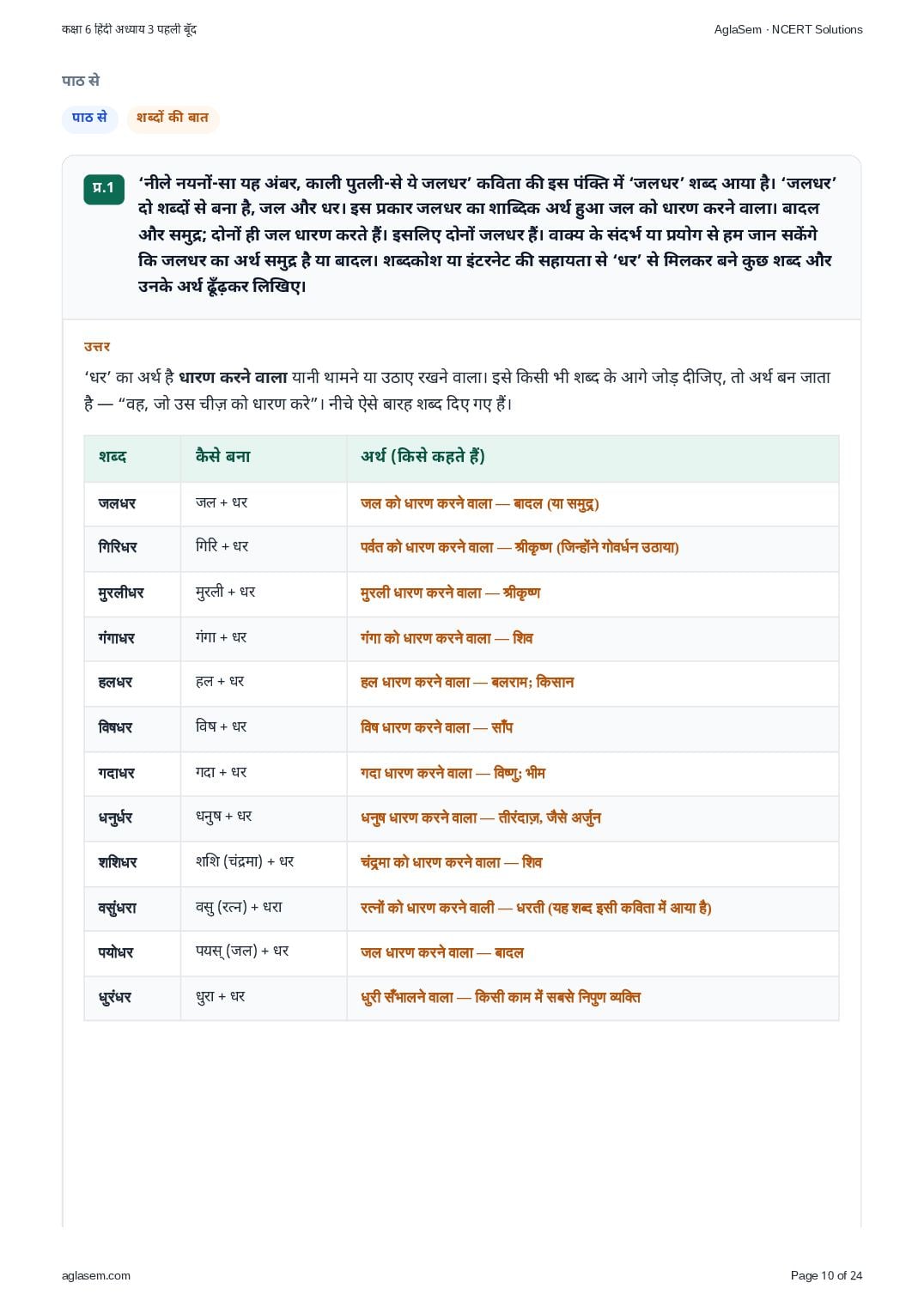
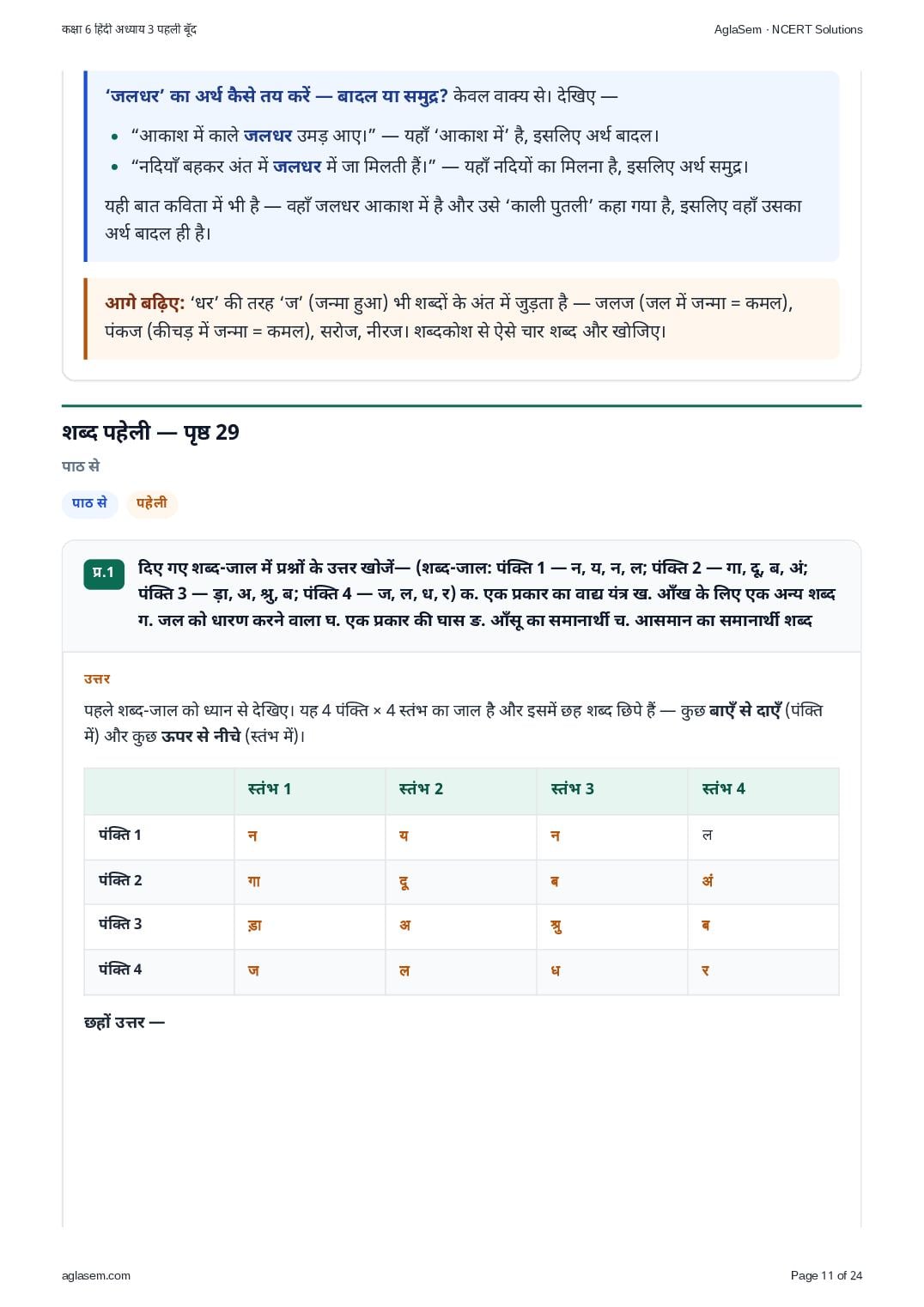
- ‘नीले नयनों-सा यह अंबर, काली पुतली-से ये जलधर’ कविता की इस पंक्ति में ‘जलधर’ शब्द आया है। ‘जलधर’ दो शब्दों से बना है, जल और धर। इस प्रकार जलधर का शाब्दिक अर्थ हुआ जल को धारण करने वाला। बादल और समुद्र; दोनों ही जल धारण करते हैं। इसलिए दोनों जलधर हैं। वाक्य के संदर्भ या प्रयोग से हम जान सकेंगे कि जलधर का अर्थ समुद्र है या बादल। शब्दकोश या इंटरनेट की सहायता से ‘धर’ से मिलकर बने कुछ शब्द और उनके अर्थ ढूँढ़कर लिखिए।
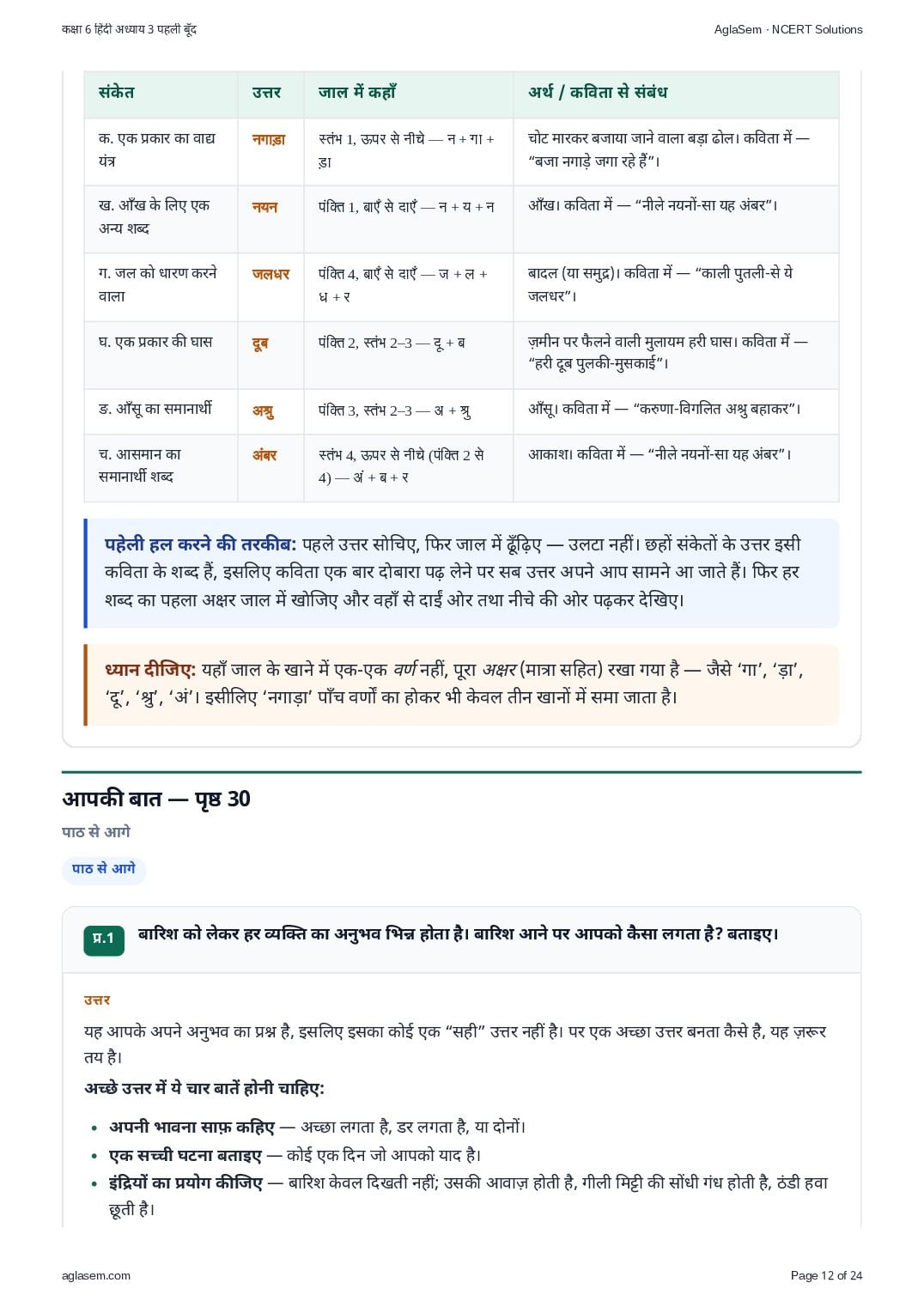
- दिए गए शब्द-जाल में प्रश्नों के उत्तर खोजें— (शब्द-जाल: पंक्ति 1 — न, य, न, ल; पंक्ति 2 — गा, दू, ब, अं; पंक्ति 3 — ड़ा, अ, श्रु, ब; पंक्ति 4 — ज, ल, ध, र) क. एक प्रकार का वाद्य यंत्र ख. आँख के लिए एक अन्य शब्द ग. जल को धारण करने वाला घ. एक प्रकार की घास ङ. आँसू का समानार्थी च. आसमान का समानार्थी शब्द
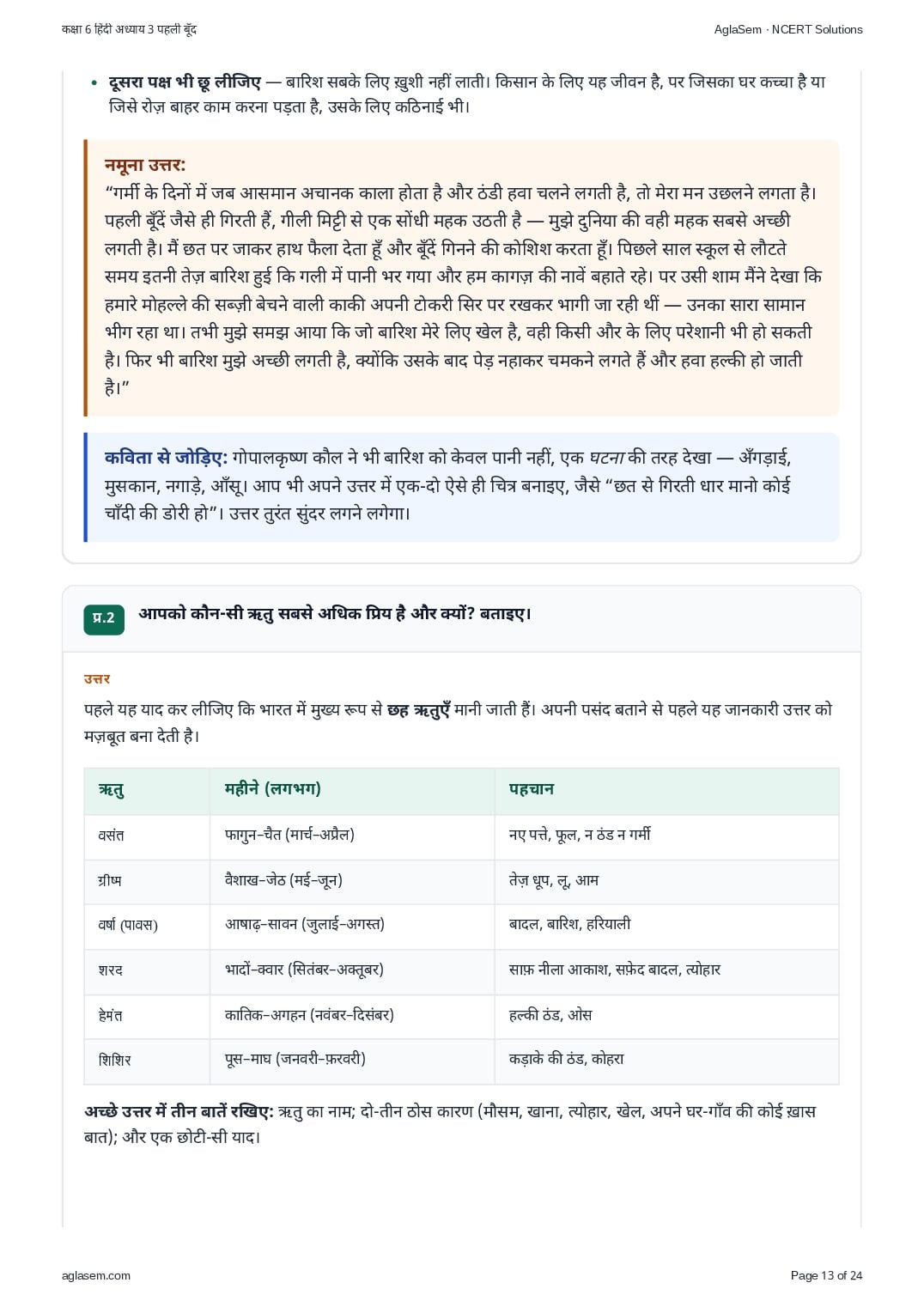
- बारिश को लेकर हर व्यक्ति का अनुभव भिन्न होता है। बारिश आने पर आपको कैसा लगता है? बताइए।
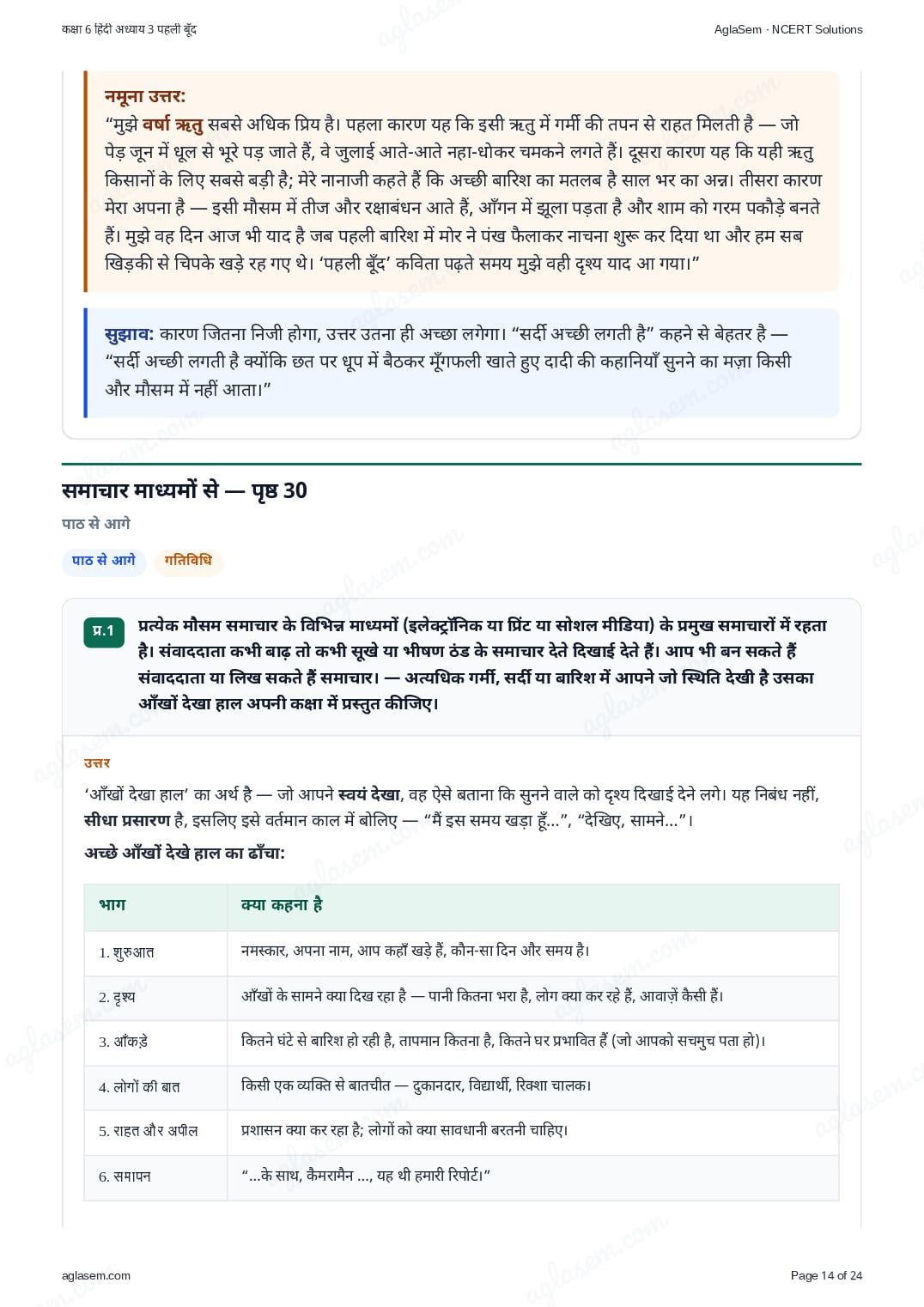
- आपको कौन-सी ऋतु सबसे अधिक प्रिय है और क्यों? बताइए।
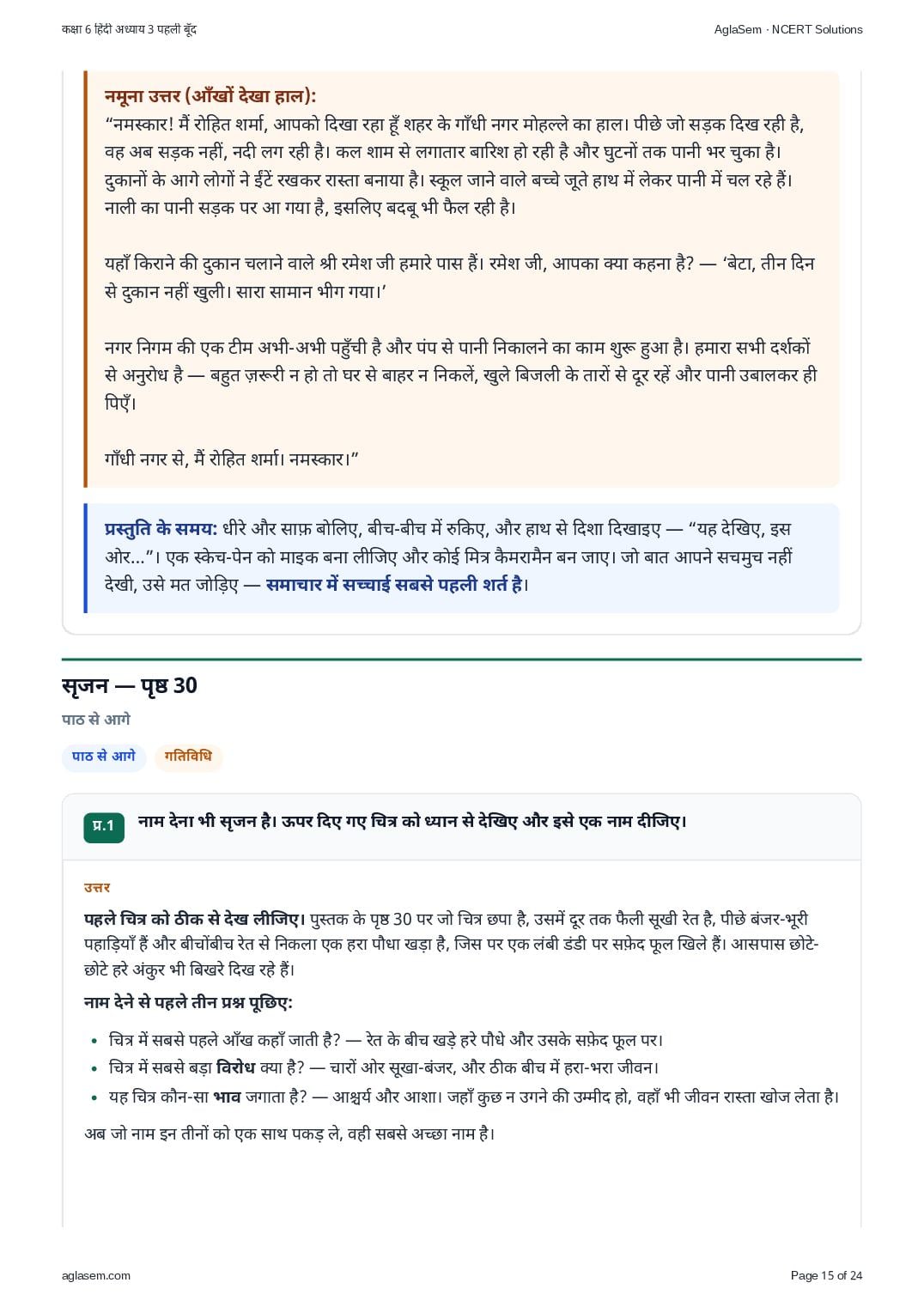
- प्रत्येक मौसम समाचार के विभिन्न माध्यमों (इलेक्ट्रॉनिक या प्रिंट या सोशल मीडिया) के प्रमुख समाचारों में रहता है। संवाददाता कभी बाढ़ तो कभी सूखे या भीषण ठंड के समाचार देते दिखाई देते हैं। आप भी बन सकते हैं संवाददाता या लिख सकते हैं समाचार। — अत्यधिक गर्मी, सर्दी या बारिश में आपने जो स्थिति देखी है उसका आँखों देखा हाल अपनी कक्षा में प्रस्तुत कीजिए।
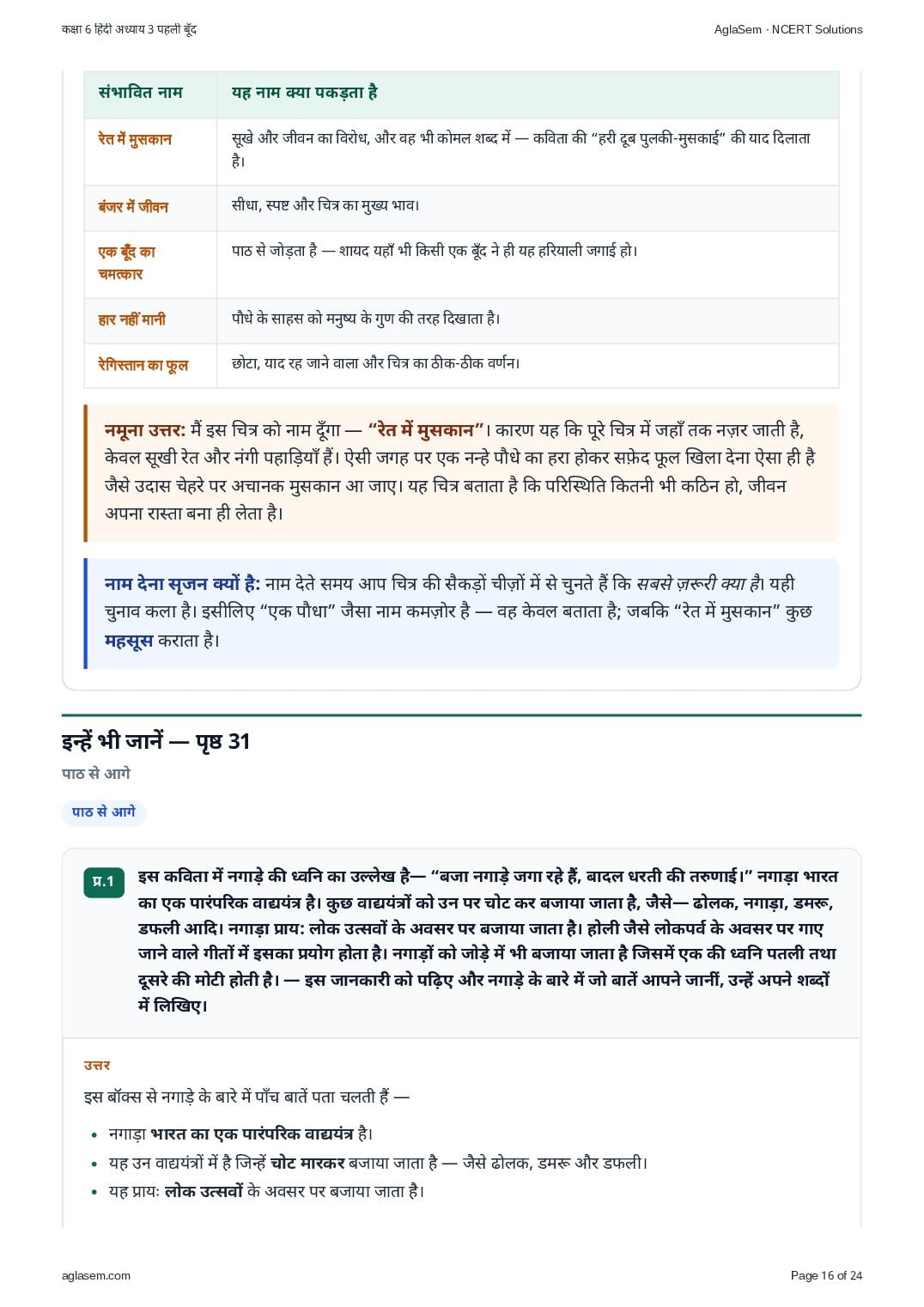
- नाम देना भी सृजन है। ऊपर दिए गए चित्र को ध्यान से देखिए और इसे एक नाम दीजिए।
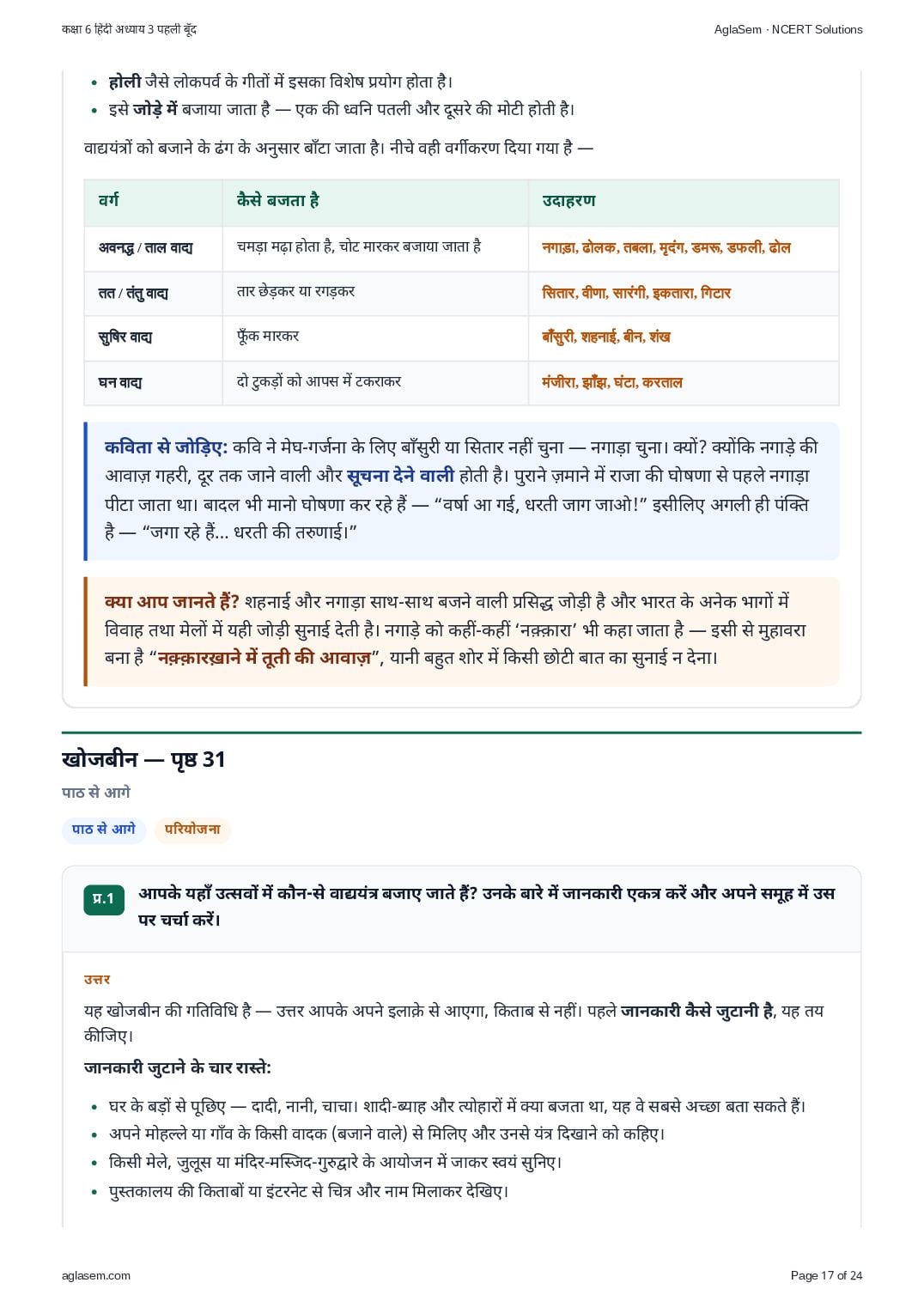
- इस कविता में नगाड़े की ध्वनि का उल्लेख है— “बजा नगाड़े जगा रहे हैं, बादल धरती की तरुणाई।” नगाड़ा भारत का एक पारंपरिक वाद्ययंत्र है। कुछ वाद्ययंत्रों को उन पर चोट कर बजाया जाता है, जैसे— ढोलक, नगाड़ा, डमरू, डफली आदि। नगाड़ा प्राय: लोक उत्सवों के अवसर पर बजाया जाता है। होली जैसे लोकपर्व के अवसर पर गाए जाने वाले गीतों में इसका प्रयोग होता है। नगाड़ों को जोड़े में भी बजाया जाता है जिसमें एक की ध्वनि पतली तथा दूसरे की मोटी होती है। — इस जानकारी को पढ़िए और नगाड़े के बारे में जो बातें आपने जानीं, उन्हें अपने शब्दों में लिखिए।
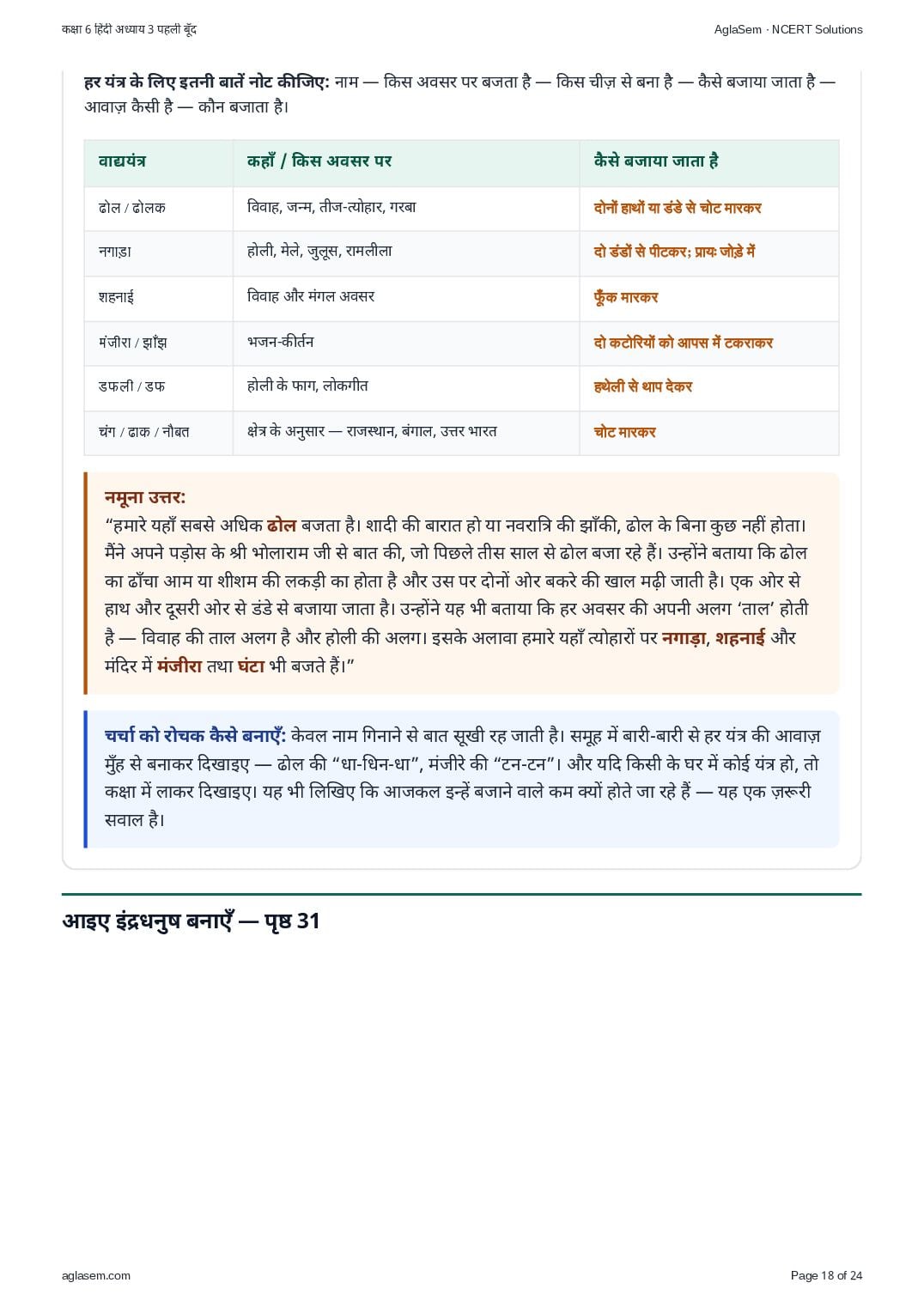
- आपके यहाँ उत्सवों में कौन-से वाद्ययंत्र बजाए जाते हैं? उनके बारे में जानकारी एकत्र करें और अपने समूह में उस पर चर्चा करें।
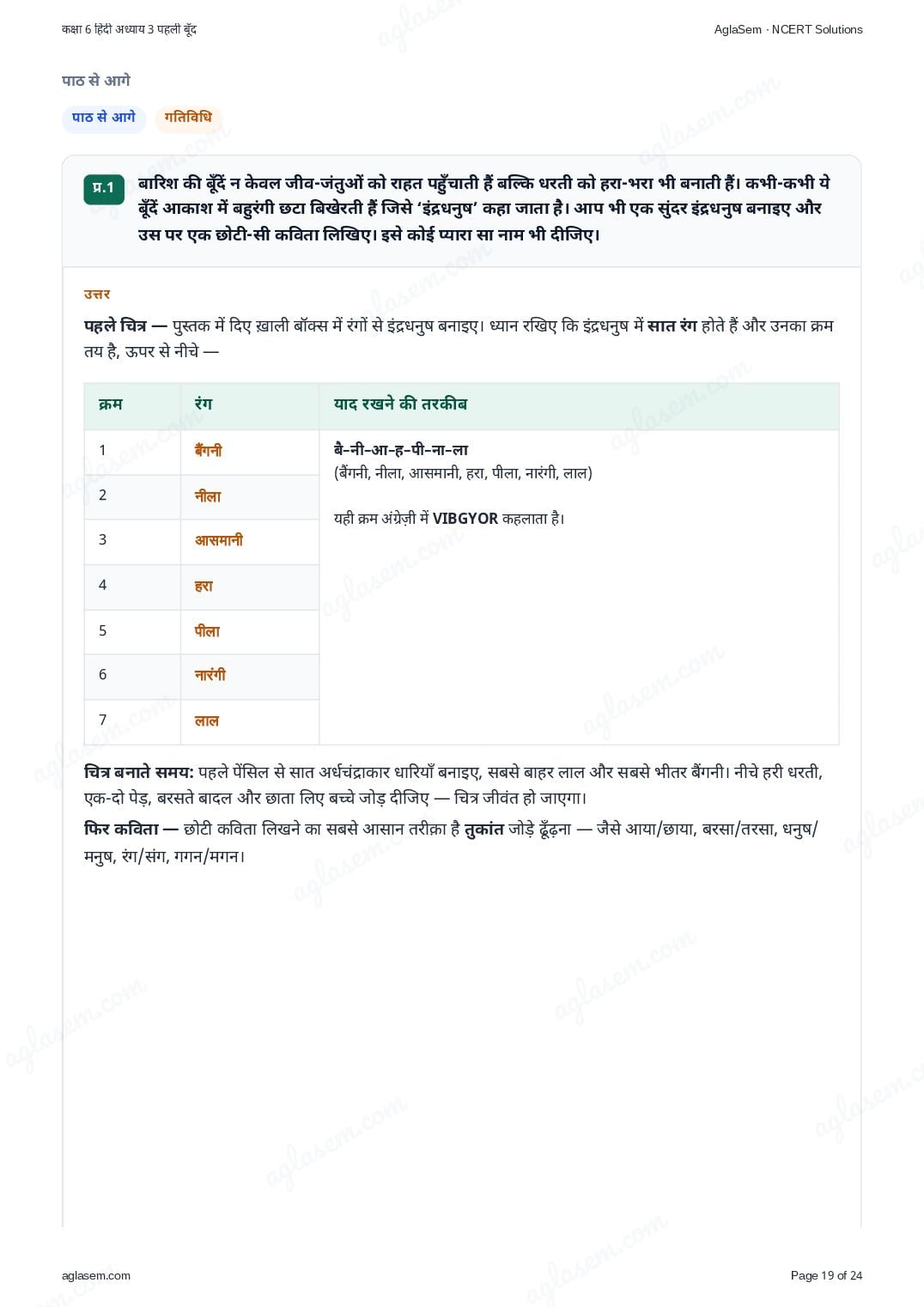
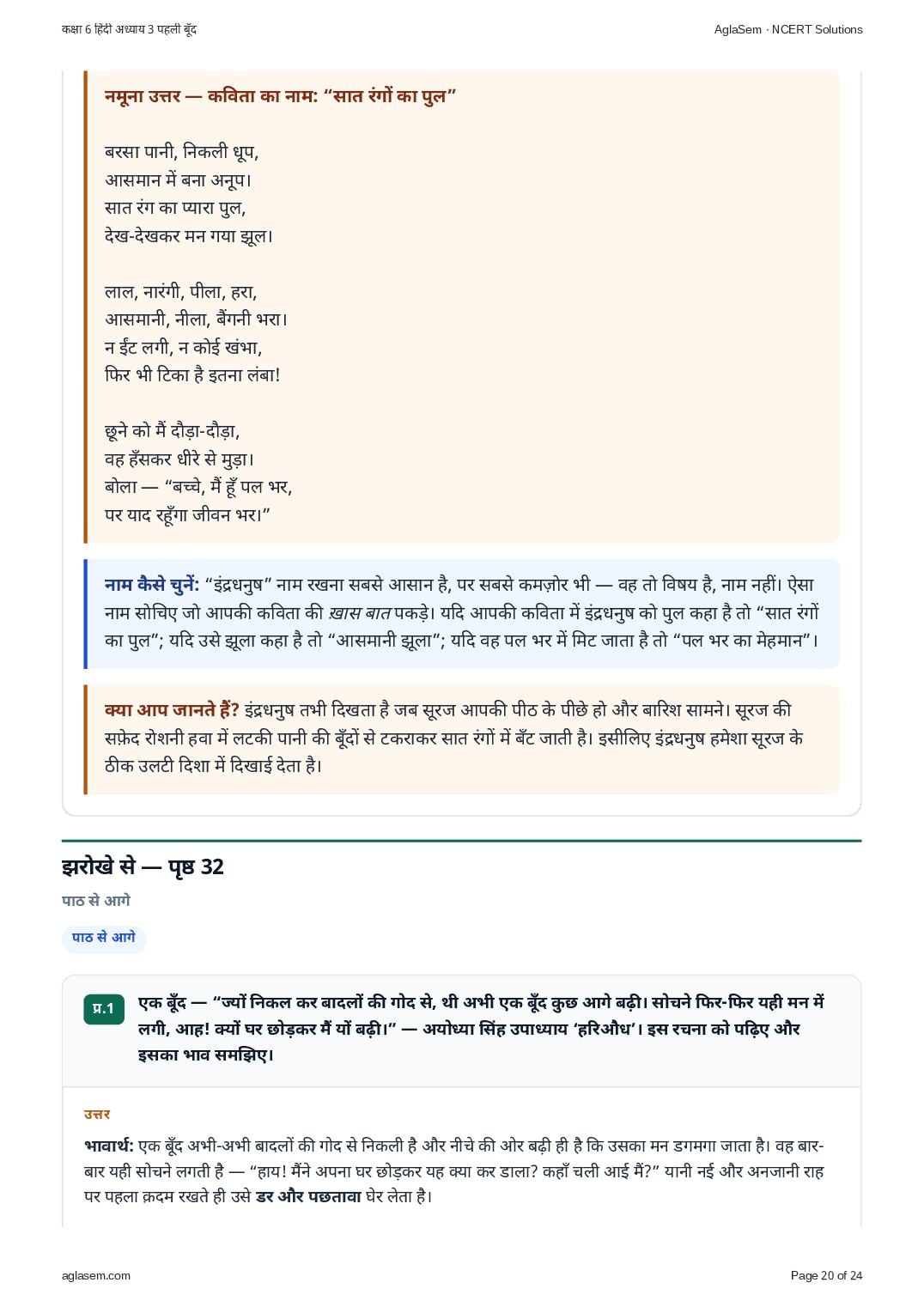
- बारिश की बूँदें न केवल जीव-जंतुओं को राहत पहुँचाती हैं बल्कि धरती को हरा-भरा भी बनाती हैं। कभी-कभी ये बूँदें आकाश में बहुरंगी छटा बिखेरती हैं जिसे ‘इंद्रधनुष’ कहा जाता है। आप भी एक सुंदर इंद्रधनुष बनाइए और उस पर एक छोटी-सी कविता लिखिए। इसे कोई प्यारा सा नाम भी दीजिए।
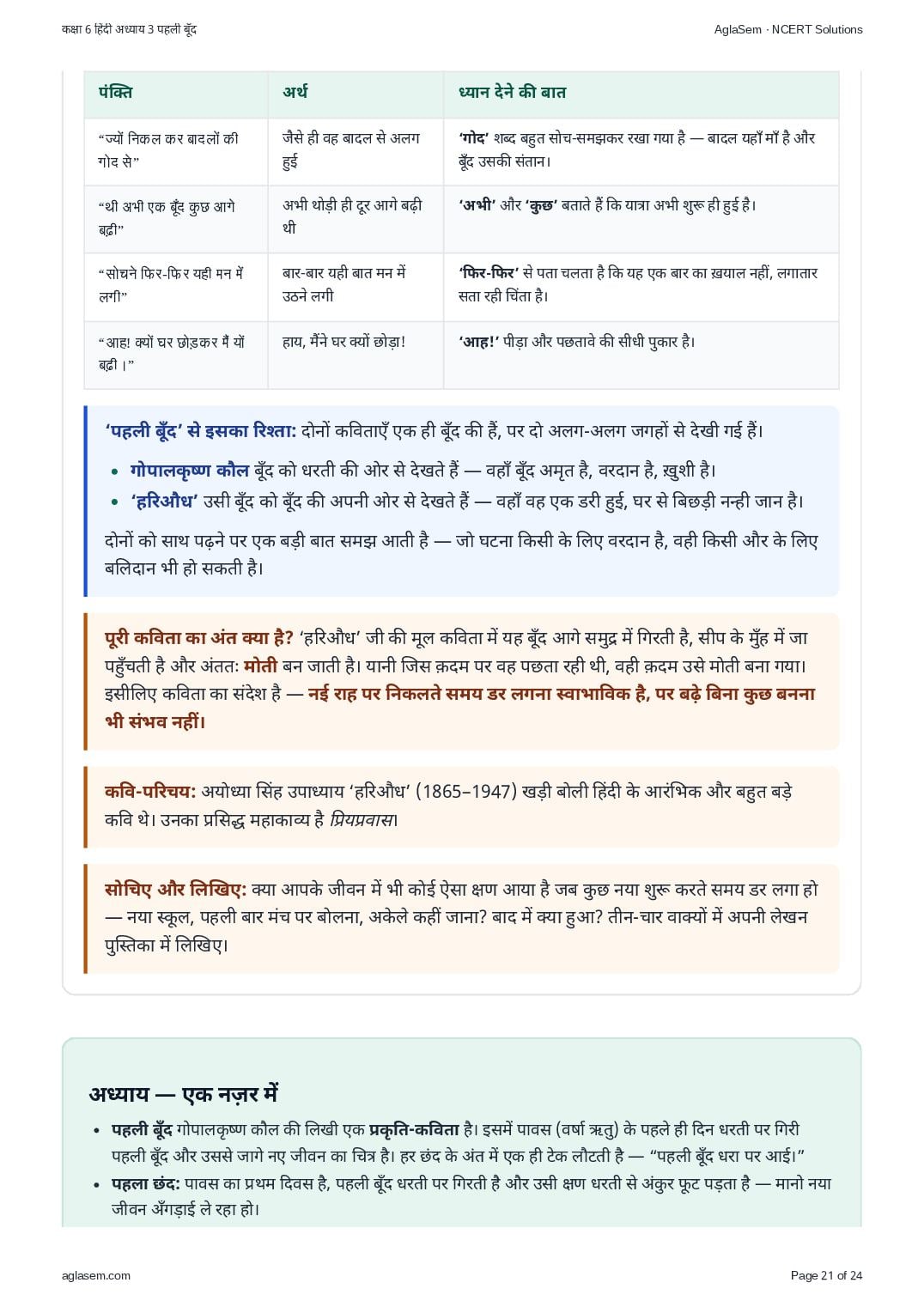
- एक बूँद — “ज्यों निकल कर बादलों की गोद से, थी अभी एक बूँद कुछ आगे बढ़ी। सोचने फिर-फिर यही मन में लगी, आह! क्यों घर छोड़कर मैं यों बढ़ी।” — अयोध्या सिंह उपाध्याय ‘हरिऔध’। इस रचना को पढ़िए और इसका भाव समझिए।
Chapter at a Glance
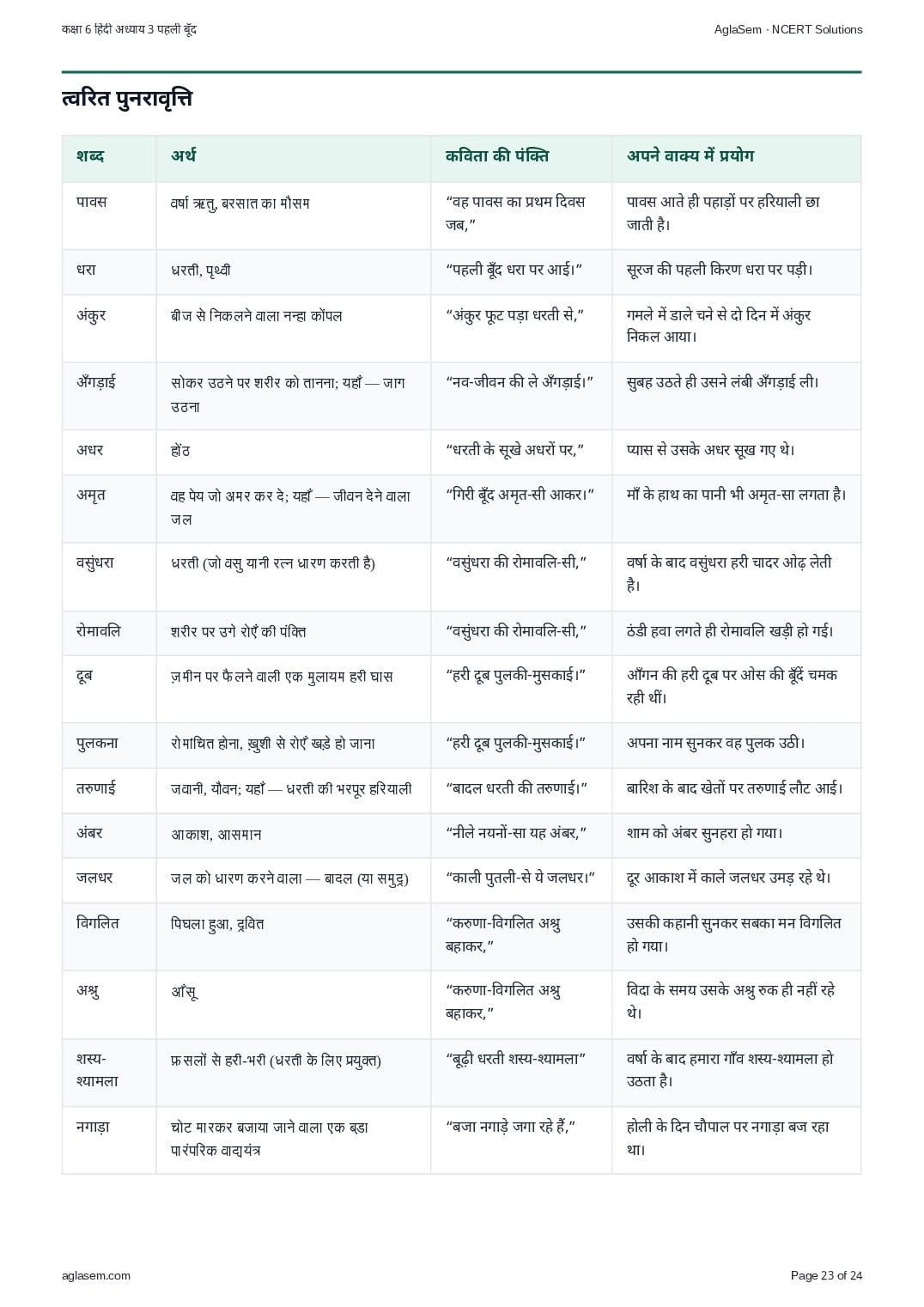
- पहली बूँद गोपालकृष्ण कौल की लिखी एक प्रकृति-कविता है। इसमें पावस (वर्षा ऋतु) के पहले ही दिन धरती पर गिरी पहली बूँद और उससे जागे नए जीवन का चित्र है। हर छंद के अंत में एक ही टेक लौटती है — “पहली बूँद धरा पर आई।”
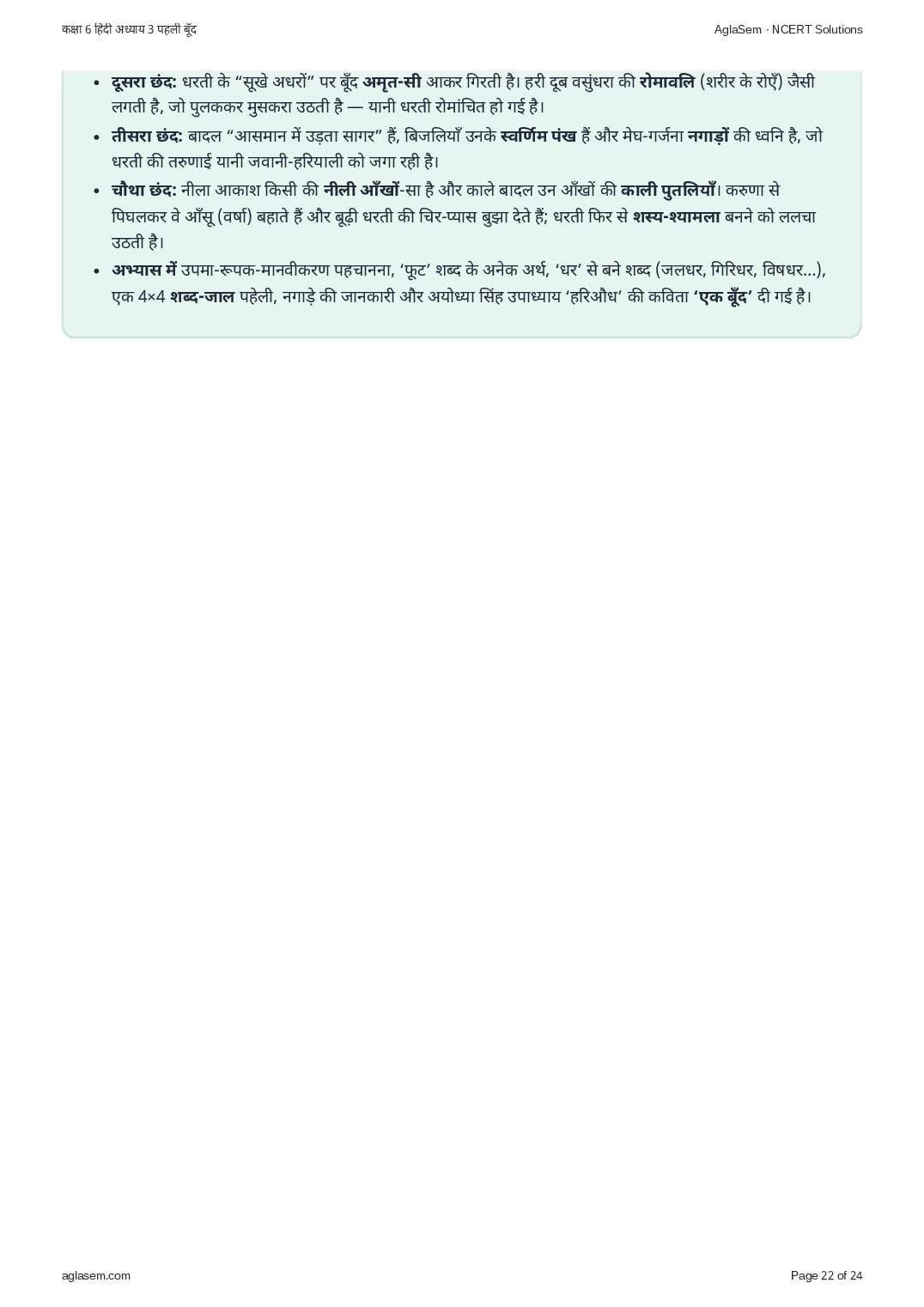
- पहला छंद: पावस का प्रथम दिवस है, पहली बूँद धरती पर गिरती है और उसी क्षण धरती से अंकुर फूट पड़ता है — मानो नया जीवन अँगड़ाई ले रहा हो।
- दूसरा छंद: धरती के “सूखे अधरों” पर बूँद अमृत-सी आकर गिरती है। हरी दूब वसुंधरा की रोमावलि (शरीर के रोएँ) जैसी लगती है, जो पुलककर मुसकरा उठती है — यानी धरती रोमांचित हो गई है।
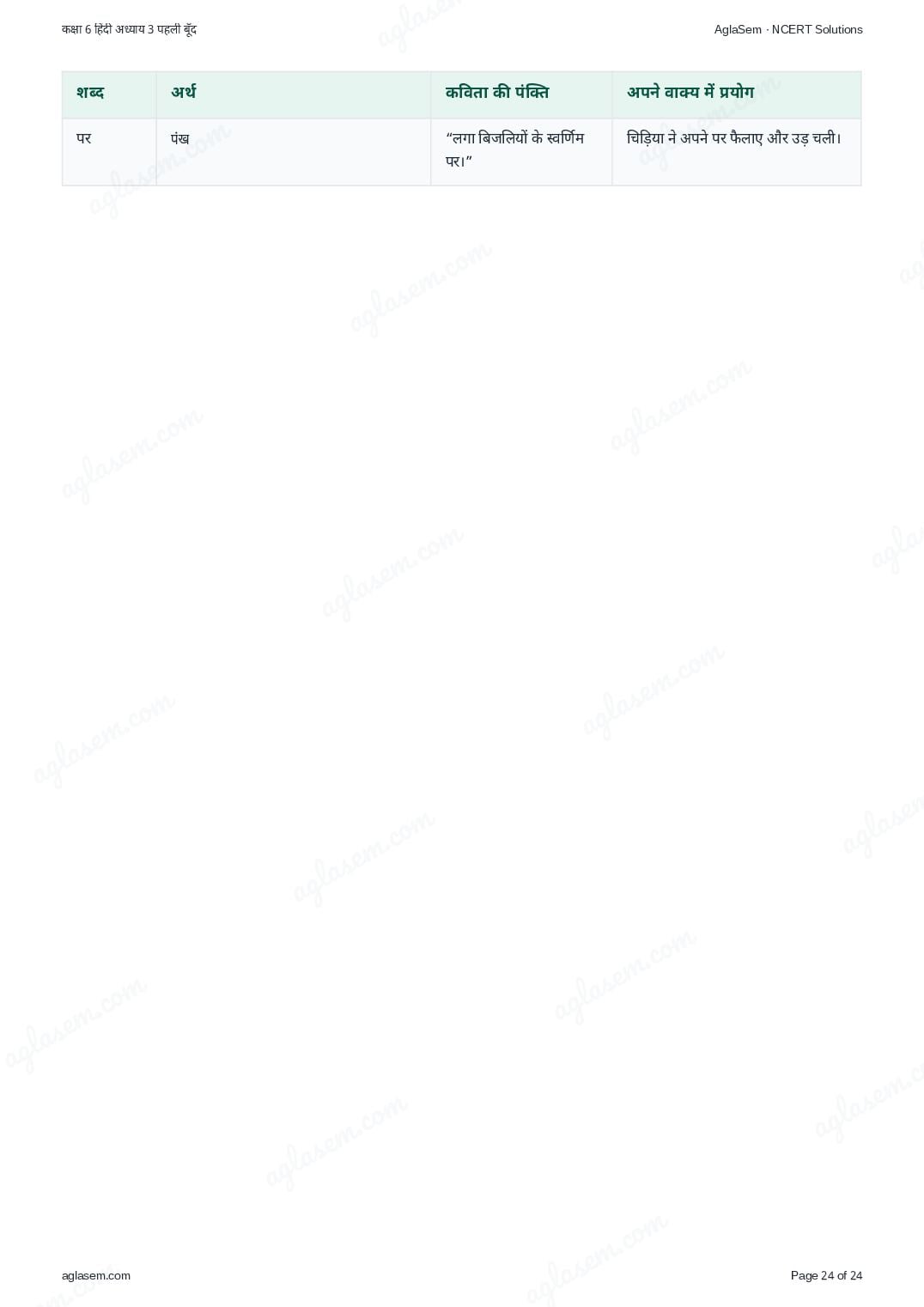
- तीसरा छंद: बादल “आसमान में उड़ता सागर” हैं, बिजलियाँ उनके स्वर्णिम पंख हैं और मेघ-गर्जना नगाड़ों की ध्वनि है, जो धरती की तरुणाई यानी जवानी-हरियाली को जगा रही है।
- चौथा छंद: नीला आकाश किसी की नीली आँखों -सा है और काले बादल उन आँखों की काली पुतलियाँ । करुणा से पिघलकर वे आँसू (वर्षा) बहाते हैं और बूढ़ी धरती की चिर-प्यास बुझा देते हैं; धरती फिर से शस्य-श्यामला बनने को ललचा उठती है।
- अभ्यास में उपमा-रूपक-मानवीकरण पहचानना, ‘फूट’ शब्द के अनेक अर्थ, ‘धर’ से बने शब्द (जलधर, गिरिधर, विषधर…), एक 4×4 शब्द-जाल पहेली, नगाड़े की जानकारी और अयोध्या सिंह उपाध्याय ‘हरिऔध’ की कविता ‘एक बूँद’ दी गई है।
How to Download NCERT Solutions for Class 6 Hindi Chapter 3 PDF
Follow these simple steps to get the Pehli Boond questions-and-answers PDF from Malhar.
- Search NCERT Solutions for Class 6 Hindi Chapter 3 aglasem and open this page.
- Read the exercise questions with answers for Pehli Boond shown above.
- Click the Download PDF link to save the Pehli Boond solutions to your device.
NCERT Solutions for Class 6 Hindi – All Chapters
There are more chapters to study besides Pehli Boond in Hindi. Here are the NCERT Solutions for all chapters of Class 6 Hindi.
- Chapter 1 Matribhumi
- Chapter 2 Gol
- Chapter 3 Pehli Boond
- Chapter 4 Haar Ki Jeet
- Chapter 5 Rahim Ke Dohe
- Chapter 6 Meri Maa
- Chapter 7 Jalate Chalo
- Chapter 8 Sattriya Aur Bihu Nritya
- Chapter 9 Maiya Main Nahin Makhan Khayo
- Chapter 10 Pariksha
- Chapter 11 Chetak Ki Veerta
- Chapter 12 Hind Mahasagar Mein Chhota Sa Hindustan
- Chapter 13 Ped Ki Baat
NCERT Solutions for Class 6 – All Subjects
Just like Chapter 3 of Hindi, you can get the exercise questions with answers for every other subject of Class 6. Here are the NCERT Solutions for all subjects of Class 6.
NCERT Solutions for Class 6 Hindi Chapter 3 – An Overview
The key highlights of this study material are as follows.
| Aspects | Details |
|---|---|
| Class | Class 6 |
| Subject | Hindi |
| Chapter Number | Chapter 3 |
| Chapter Name | Pehli Boond |
| Book Name | Malhar |
| Book By | NCERT (National Council of Educational Research and Training) |
| Educational Resource Here | NCERT Solutions of Class 6 Hindi Chapter 3 for all exercises |
| More Questions Answers of This Subject | NCERT Solutions for Class 6 Hindi |
| Download Book Chapter | NCERT Book Class 6 Hindi |
| All Questions Answers For This Class | NCERT Solutions for Class 6 |
| Complete Solutions | NCERT Solutions |
NCERT Solutions for Class 6 Hindi Chapter 3 Pehli Boond – FAQs
What are the NCERT Solutions for Class 6 Hindi Chapter 3 Pehli Boond?
They are the complete, step-by-step answers to all the exercise and in-text questions of Chapter 3 Pehli Boond from the NCERT Class 6 Hindi textbook Malhar, written by experts as per the latest NCERT syllabus.
How can I download the Class 6 Hindi Chapter 3 solutions PDF for free?
Open this page on aglasem, read the Pehli Boond questions with answers, and click the “Download Solutions PDF” link. The Class 6 Hindi Chapter 3 NCERT Solutions PDF is completely free to download.
Are these NCERT Solutions as per the latest 2026-27 syllabus?
Yes. The NCERT Solutions for Class 6 Hindi Chapter 3 are based on the latest NCERT textbook Malhar and the current 2026-27 CBSE syllabus, so the questions and answers match what you study in class.
Where can I get NCERT Solutions for the other chapters of Class 6 Hindi?
You can find the answers to every chapter on the NCERT Solutions for Class 6 Hindi page, and solutions for every subject on the NCERT Solutions for Class 6 page.
How do NCERT Solutions help in exam preparation?
They show the correct method to solve each question, help you write answers the way they are expected in exams, let you check and correct your own work, and save revision time — which together improve your marks in Class 6 Hindi.
If you have any queries on NCERT Solutions for Class 6 Hindi Chapter 3 Pehli Boond, then please ask in the comments below.