NCERT Solutions for Class 6 Hindi Chapter 5 Rahim Ke Dohe provide clear, step-by-step answers to every exercise and in-text question from the chapter Rahim Ke Dohe of the NCERT textbook Malhar. Prepared by subject experts as per the latest NCERT (CBSE) syllabus for 2026-27, these NCERT Solutions for Class 6 Hindi help you understand each concept, write exam-ready answers, and check your own solutions. You can read them online below or download the free Class 6 Hindi Chapter 5 question-answer PDF.
NCERT Solutions for Class 6 Hindi Chapter 5 Rahim Ke Dohe
- Class: Class 6
- Subject: Hindi
- Chapter: Chapter 5 – Rahim Ke Dohe
- Textbook: Malhar (NCERT)
- Study material: NCERT Solutions – questions with answers, free PDF
These solutions answer all the exercise questions of Chapter 5 Rahim Ke Dohe — including the in-text questions, short-answer and long-answer questions, and activities — with complete explanations so you can follow the method, not just the final answer. Read the full solutions below.
NCERT Solutions Class 6 Hindi Chapter 5 रहीम के दोहे View Download
NCERT Solutions for Class 6 Hindi Chapter 5 PDF Download
You can read the NCERT Solutions for Class 6 Hindi Chapter 5 online above, or download the complete question-answer PDF to study Rahim Ke Dohe offline at any time.
NCERT Solutions for Class 6 Hindi Chapter 5 PDF Download Link – Click Here to Download Solutions PDF
Questions Covered in This Chapter
These NCERT Solutions answer all 17 questions of this chapter. The questions solved are:
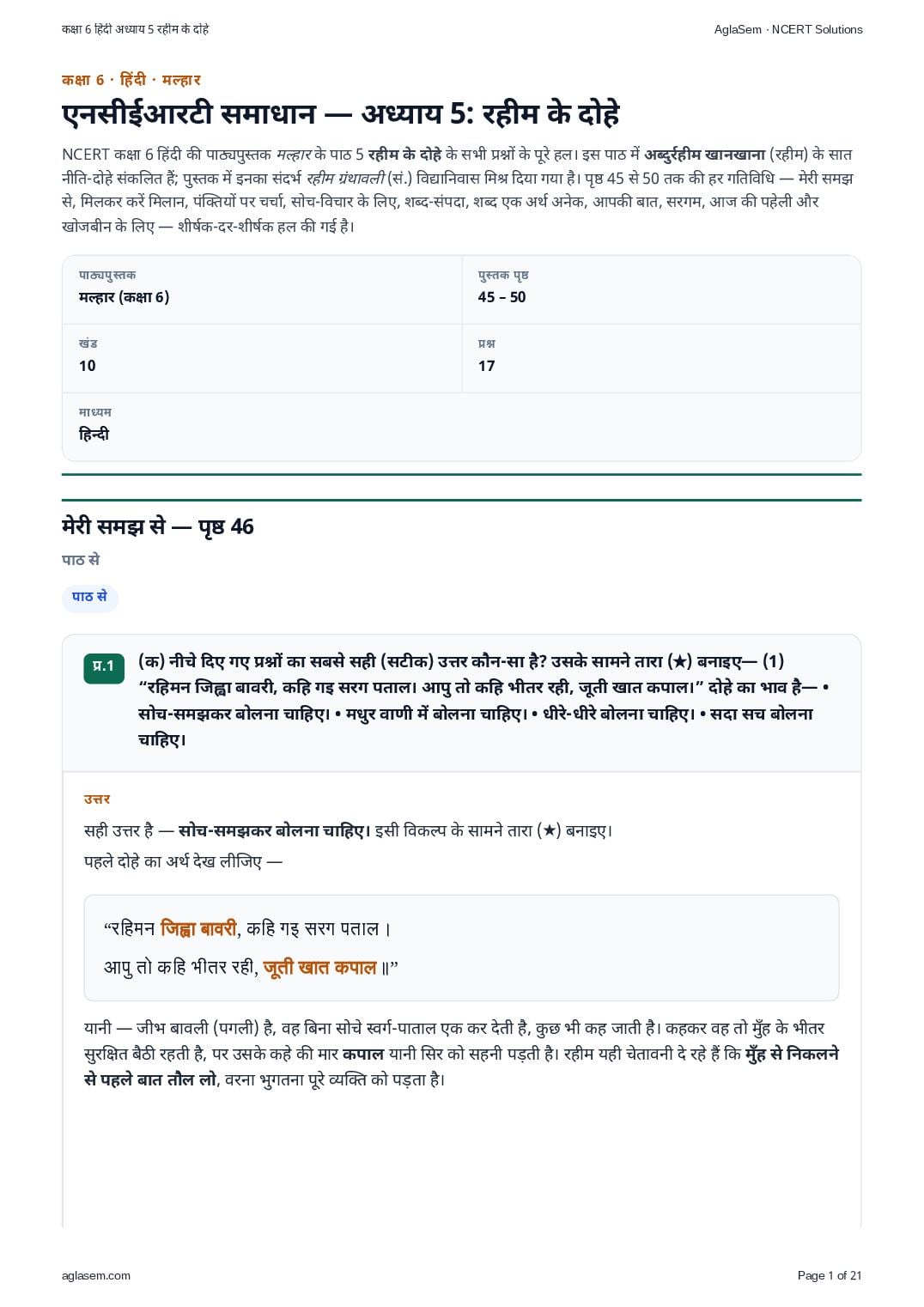
- (क) नीचे दिए गए प्रश्नों का सबसे सही (सटीक) उत्तर कौन-सा है? उसके सामने तारा (★) बनाइए— (1) “रहिमन जिह्वा बावरी, कहि गइ सरग पताल। आपु तो कहि भीतर रही, जूती खात कपाल।” दोहे का भाव है— • सोच-समझकर बोलना चाहिए। • मधुर वाणी में बोलना चाहिए। • धीरे-धीरे बोलना चाहिए। • सदा सच बोलना चाहिए।
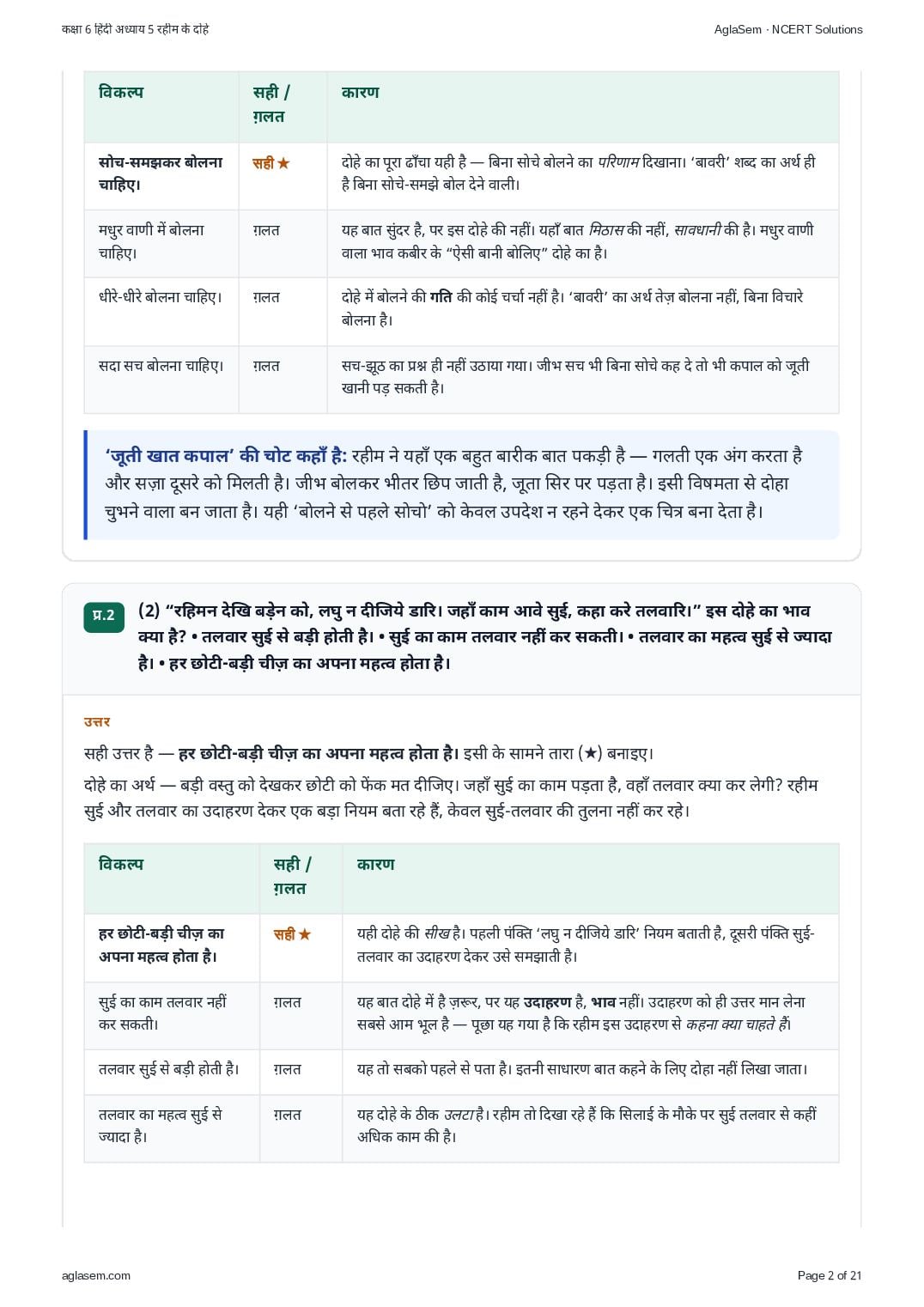
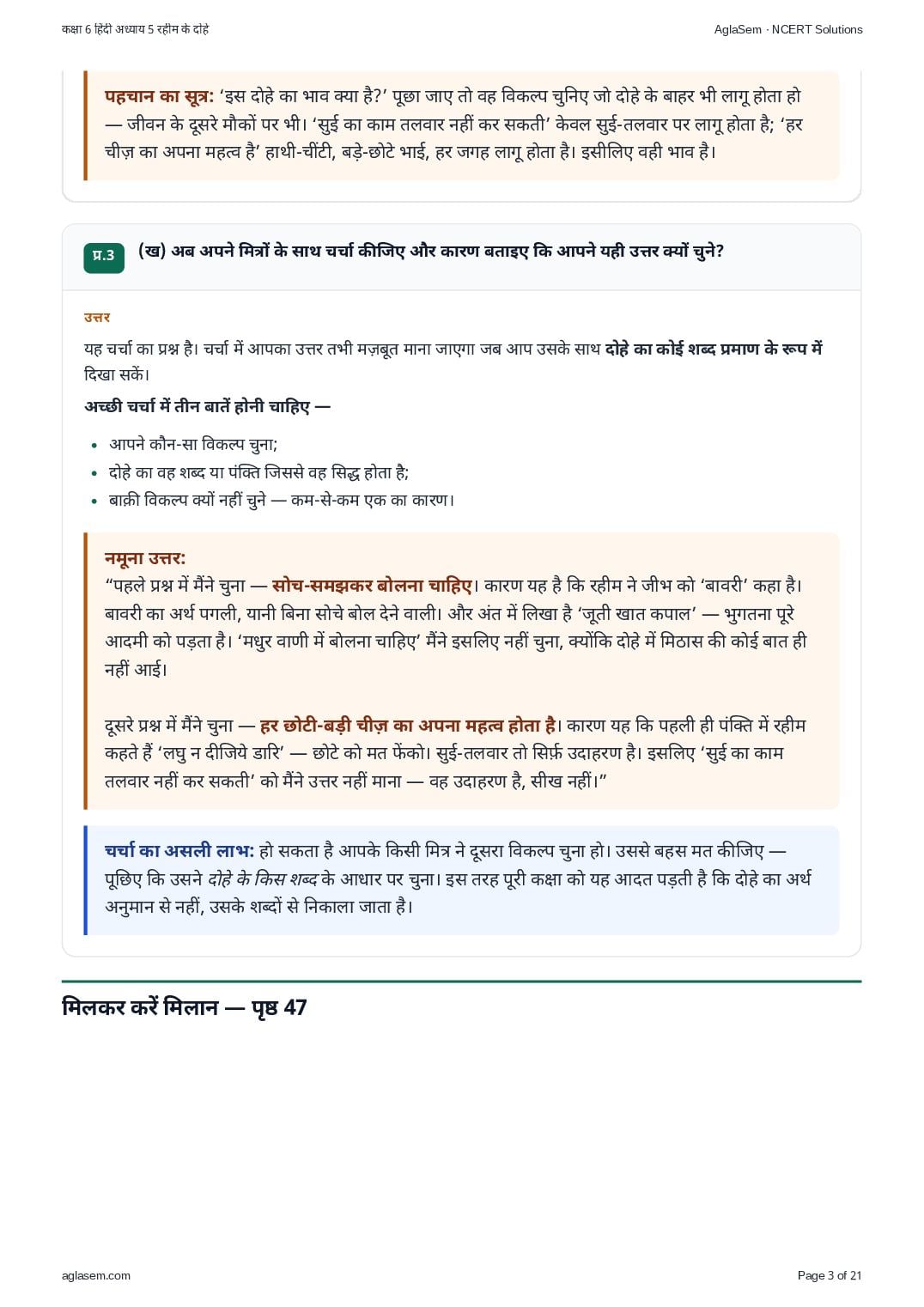
- (2) “रहिमन देखि बड़ेन को, लघु न दीजिये डारि। जहाँ काम आवे सुई, कहा करे तलवारि।” इस दोहे का भाव क्या है? • तलवार सुई से बड़ी होती है। • सुई का काम तलवार नहीं कर सकती। • तलवार का महत्व सुई से ज्यादा है। • हर छोटी-बड़ी चीज़ का अपना महत्व होता है।
- (ख) अब अपने मित्रों के साथ चर्चा कीजिए और कारण बताइए कि आपने यही उत्तर क्यों चुने?
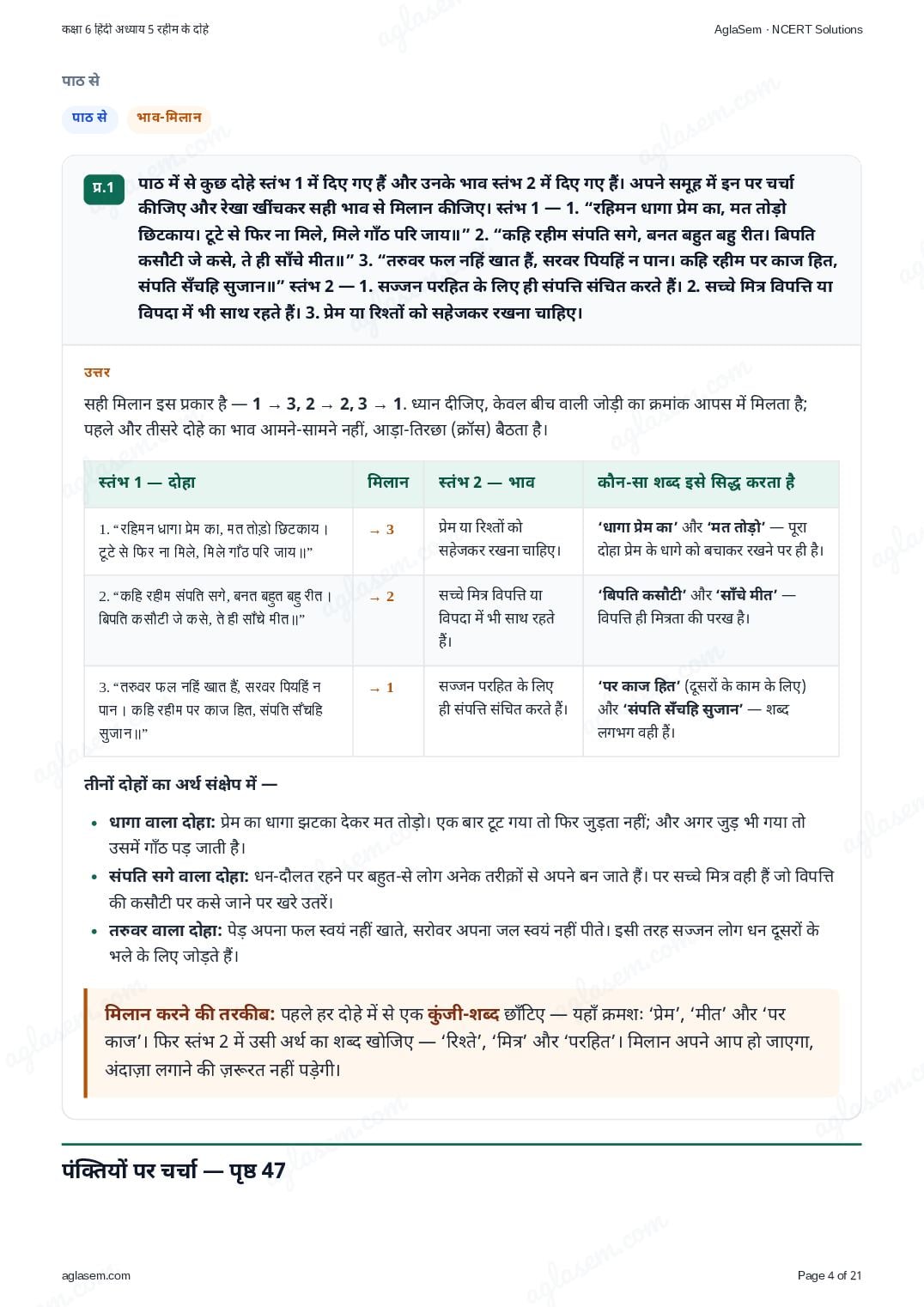
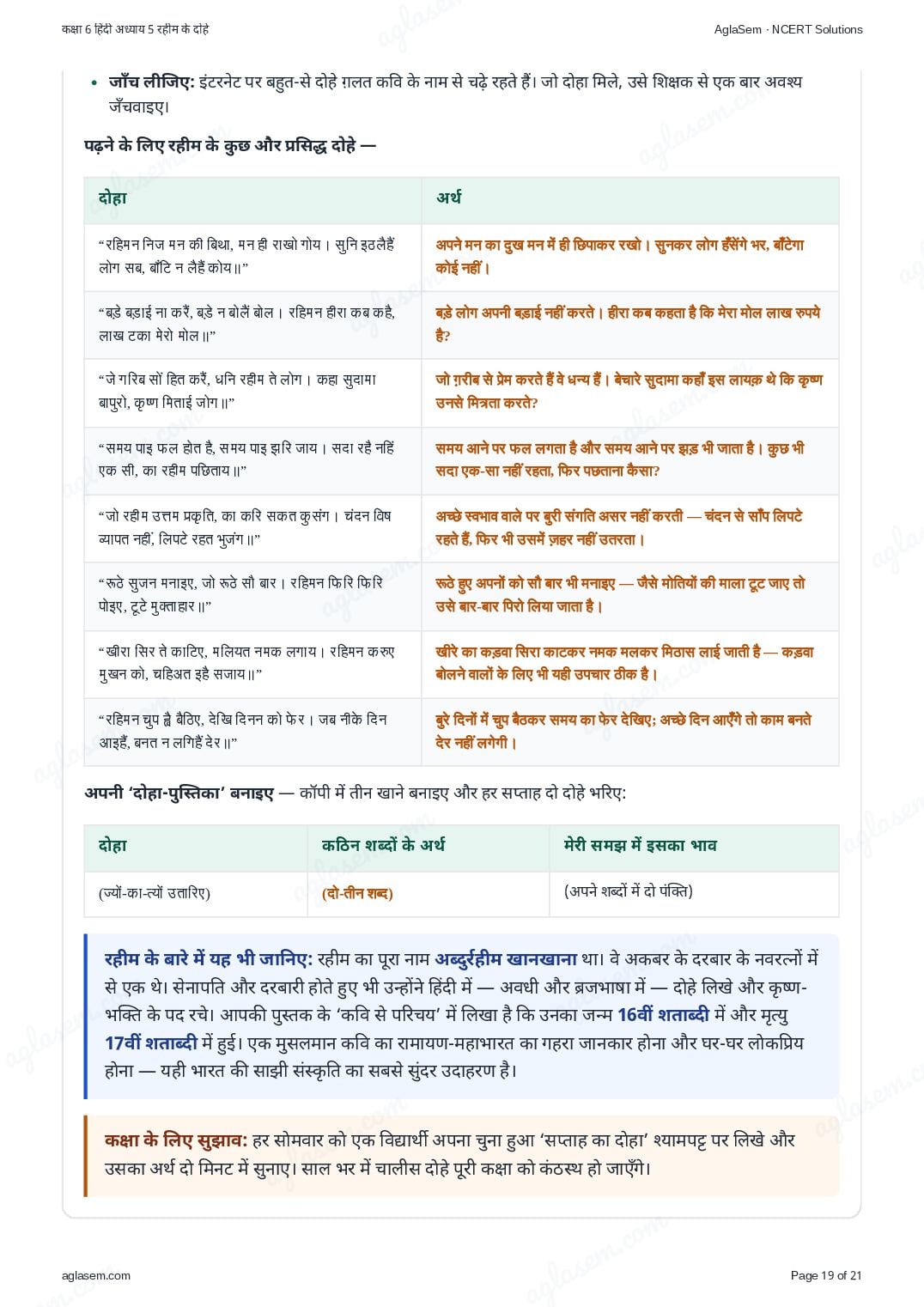
- पाठ में से कुछ दोहे स्तंभ 1 में दिए गए हैं और उनके भाव स्तंभ 2 में दिए गए हैं। अपने समूह में इन पर चर्चा कीजिए और रेखा खींचकर सही भाव से मिलान कीजिए। स्तंभ 1 — 1. “रहिमन धागा प्रेम का, मत तोड़ो छिटकाय। टूटे से फिर ना मिले, मिले गाँठ परि जाय॥” 2. “कहि रहीम संपति सगे, बनत बहुत बहु रीत। बिपति कसौटी जे कसे, ते ही साँचे मीत॥” 3. “तरुवर फल नहिं खात हैं, सरवर पियहिं न पान। कहि रहीम पर काज हित, संपति सँचहि सुजान॥” स्तंभ 2 — 1. सज्जन परहित के लिए ही संपत्ति संचित करते हैं। 2. सच्चे मित्र विपत्ति या विपदा में भी साथ रहते हैं। 3. प्रेम या रिश्तों को सहेजकर रखना चाहिए।
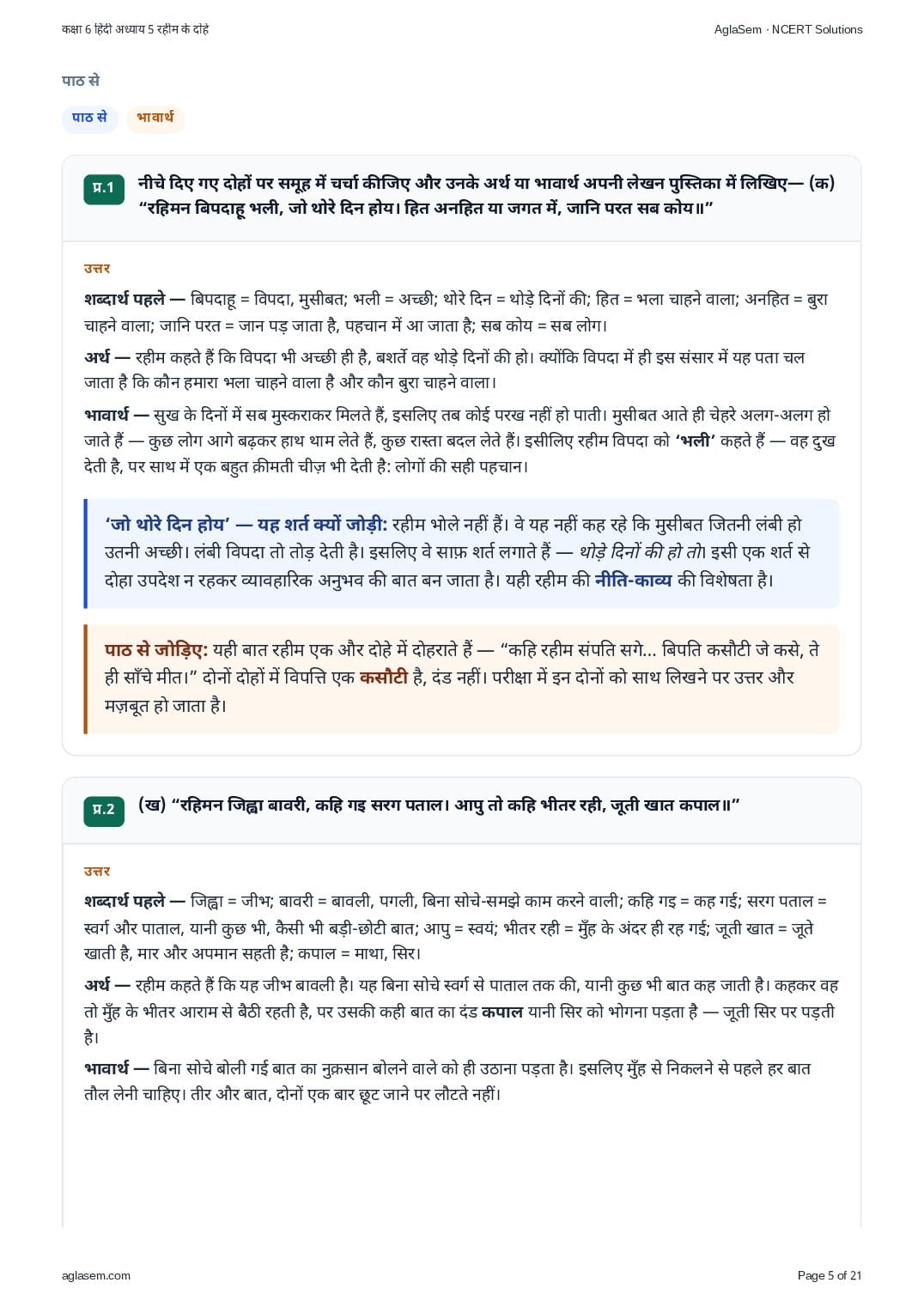
- नीचे दिए गए दोहों पर समूह में चर्चा कीजिए और उनके अर्थ या भावार्थ अपनी लेखन पुस्तिका में लिखिए— (क) “रहिमन बिपदाहू भली, जो थोरे दिन होय। हित अनहित या जगत में, जानि परत सब कोय॥”
- (ख) “रहिमन जिह्वा बावरी, कहि गइ सरग पताल। आपु तो कहि भीतर रही, जूती खात कपाल॥”
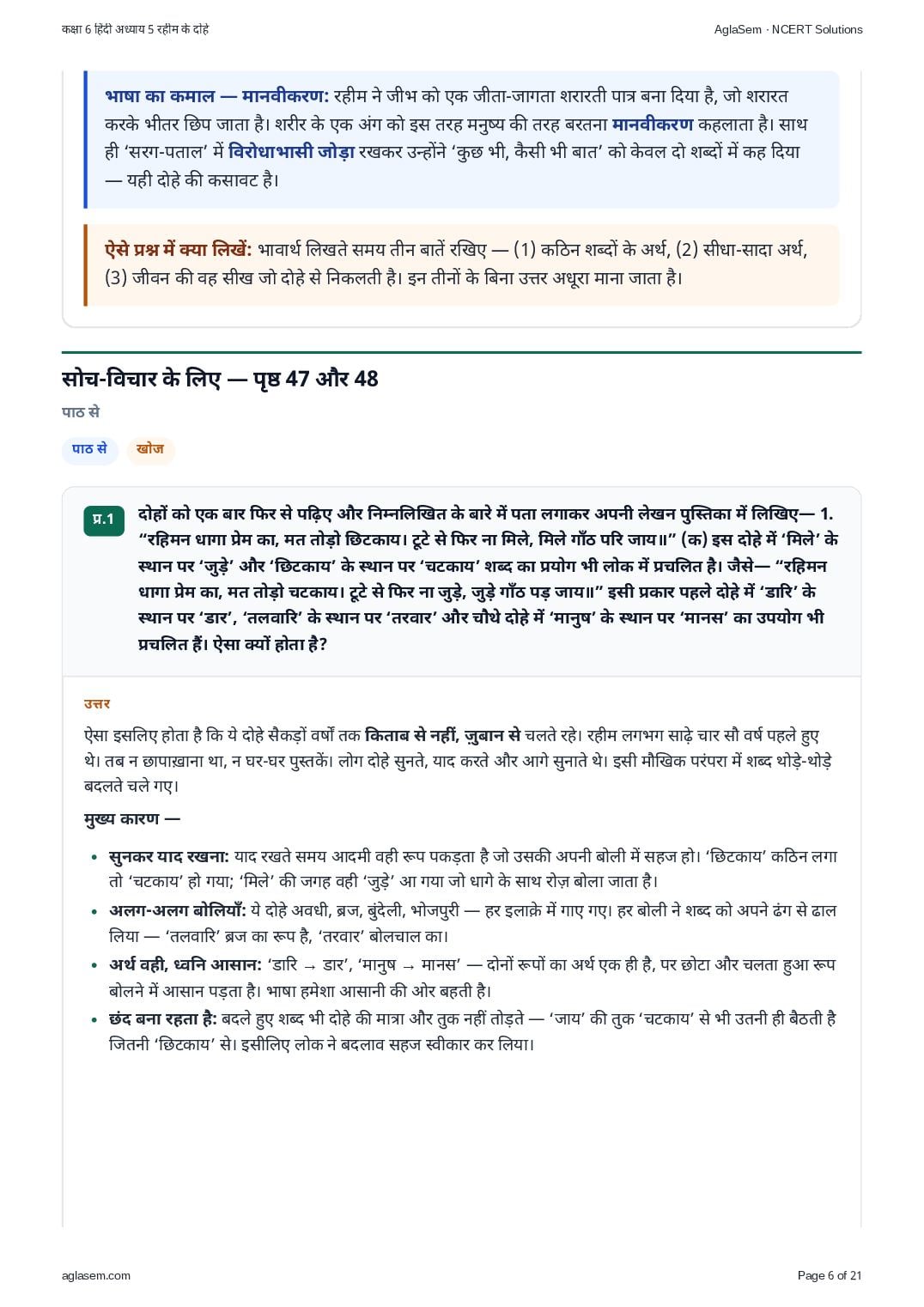
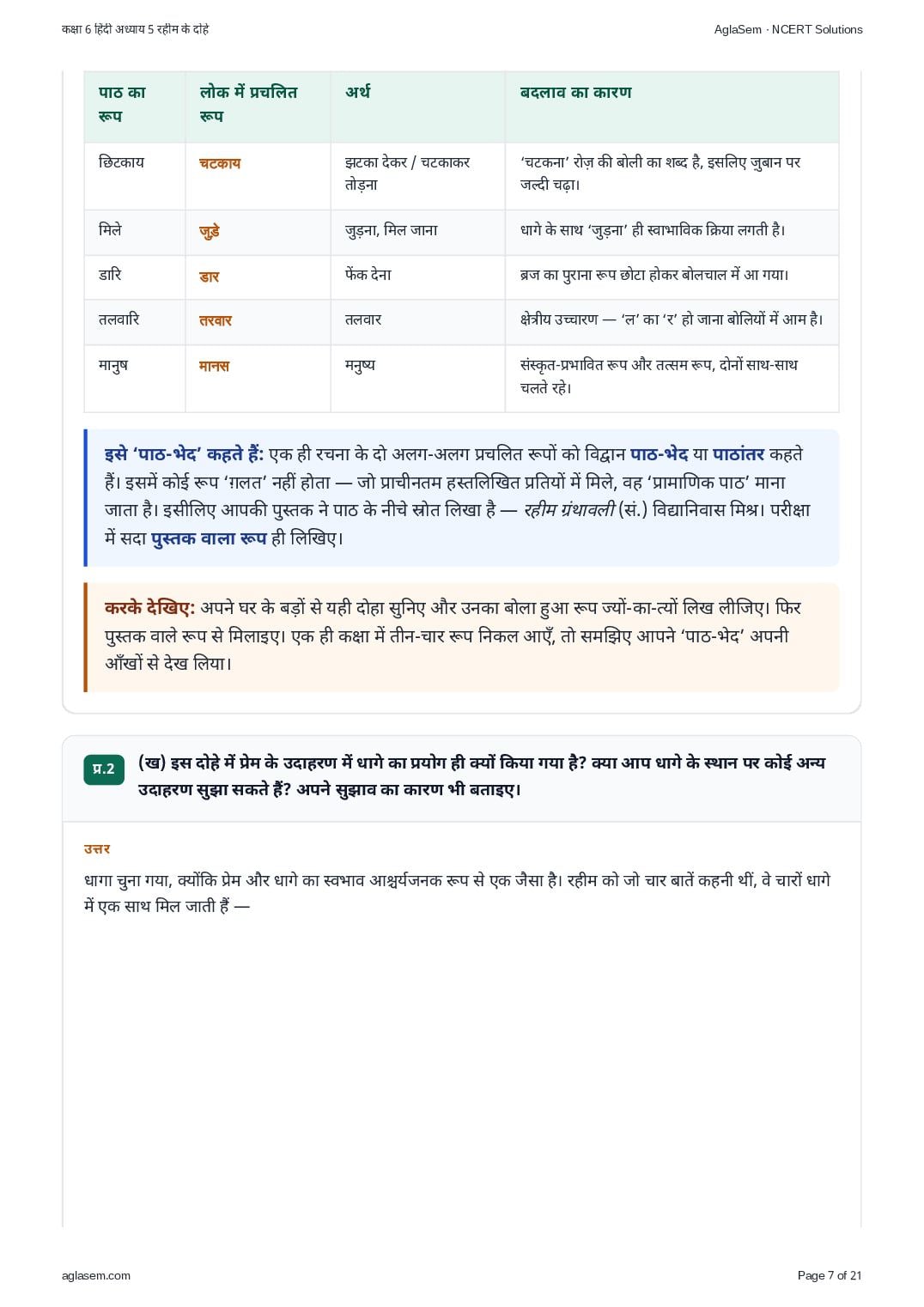
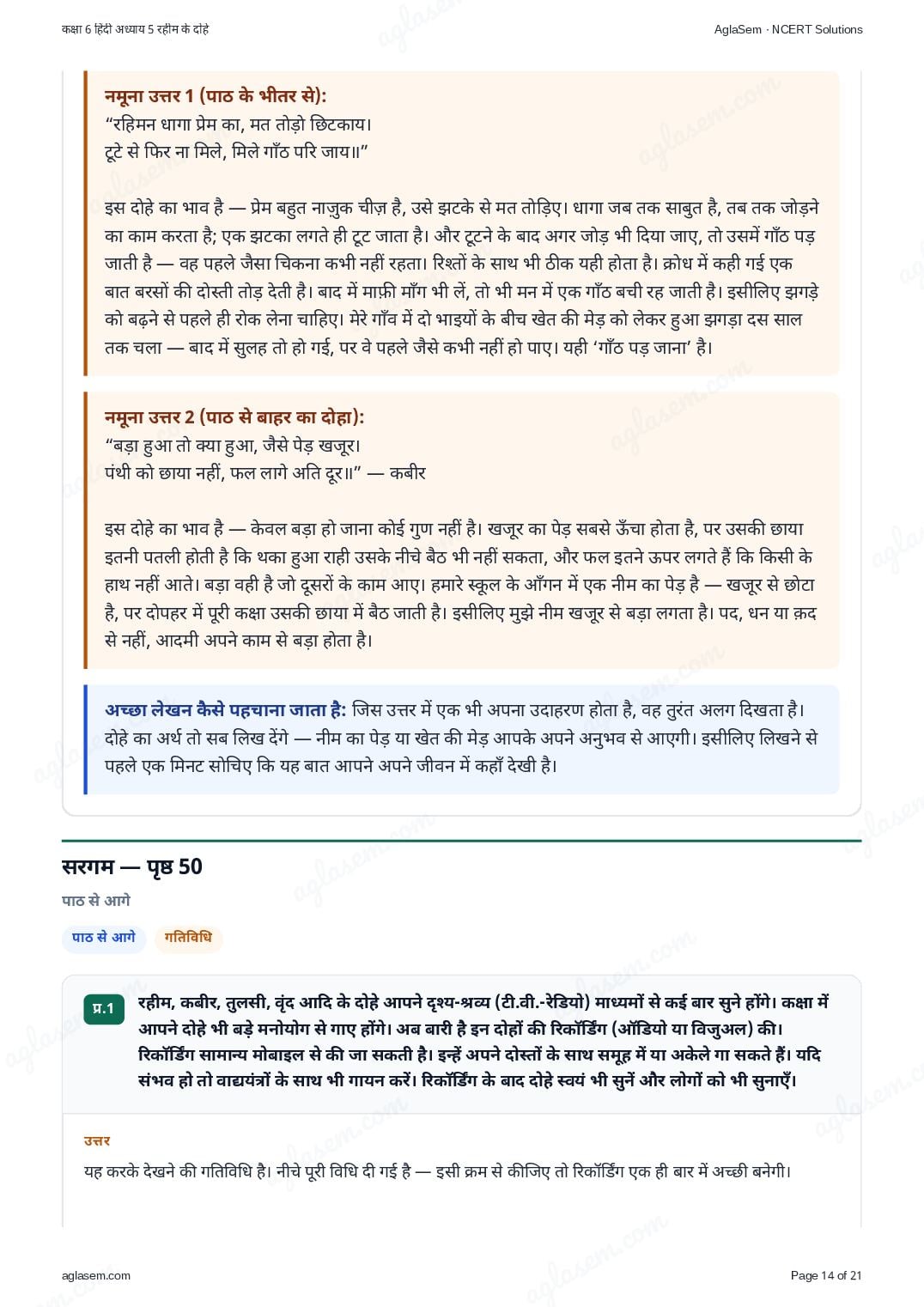
- दोहों को एक बार फिर से पढ़िए और निम्नलिखित के बारे में पता लगाकर अपनी लेखन पुस्तिका में लिखिए— 1. “रहिमन धागा प्रेम का, मत तोड़ो छिटकाय। टूटे से फिर ना मिले, मिले गाँठ परि जाय॥” (क) इस दोहे में ‘मिले’ के स्थान पर ‘जुड़े’ और ‘छिटकाय’ के स्थान पर ‘चटकाय’ शब्द का प्रयोग भी लोक में प्रचलित है। जैसे— “रहिमन धागा प्रेम का, मत तोड़ो चटकाय। टूटे से फिर ना जुड़े, जुड़े गाँठ पड़ जाय॥” इसी प्रकार पहले दोहे में ‘डारि’ के स्थान पर ‘डार’, ‘तलवारि’ के स्थान पर ‘तरवार’ और चौथे दोहे में ‘मानुष’ के स्थान पर ‘मानस’ का उपयोग भी प्रचलित हैं। ऐसा क्यों होता है?
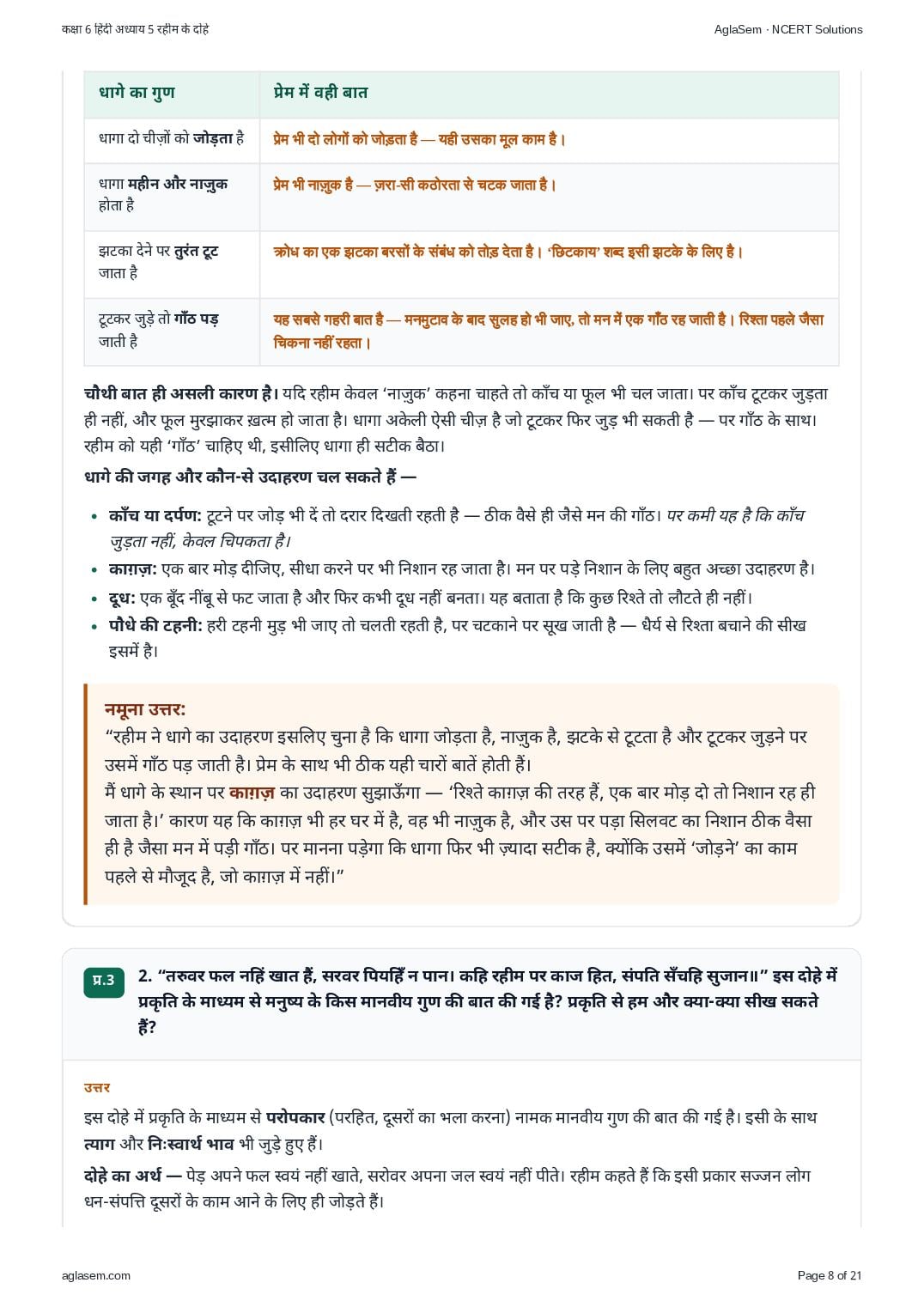
- (ख) इस दोहे में प्रेम के उदाहरण में धागे का प्रयोग ही क्यों किया गया है? क्या आप धागे के स्थान पर कोई अन्य उदाहरण सुझा सकते हैं? अपने सुझाव का कारण भी बताइए।
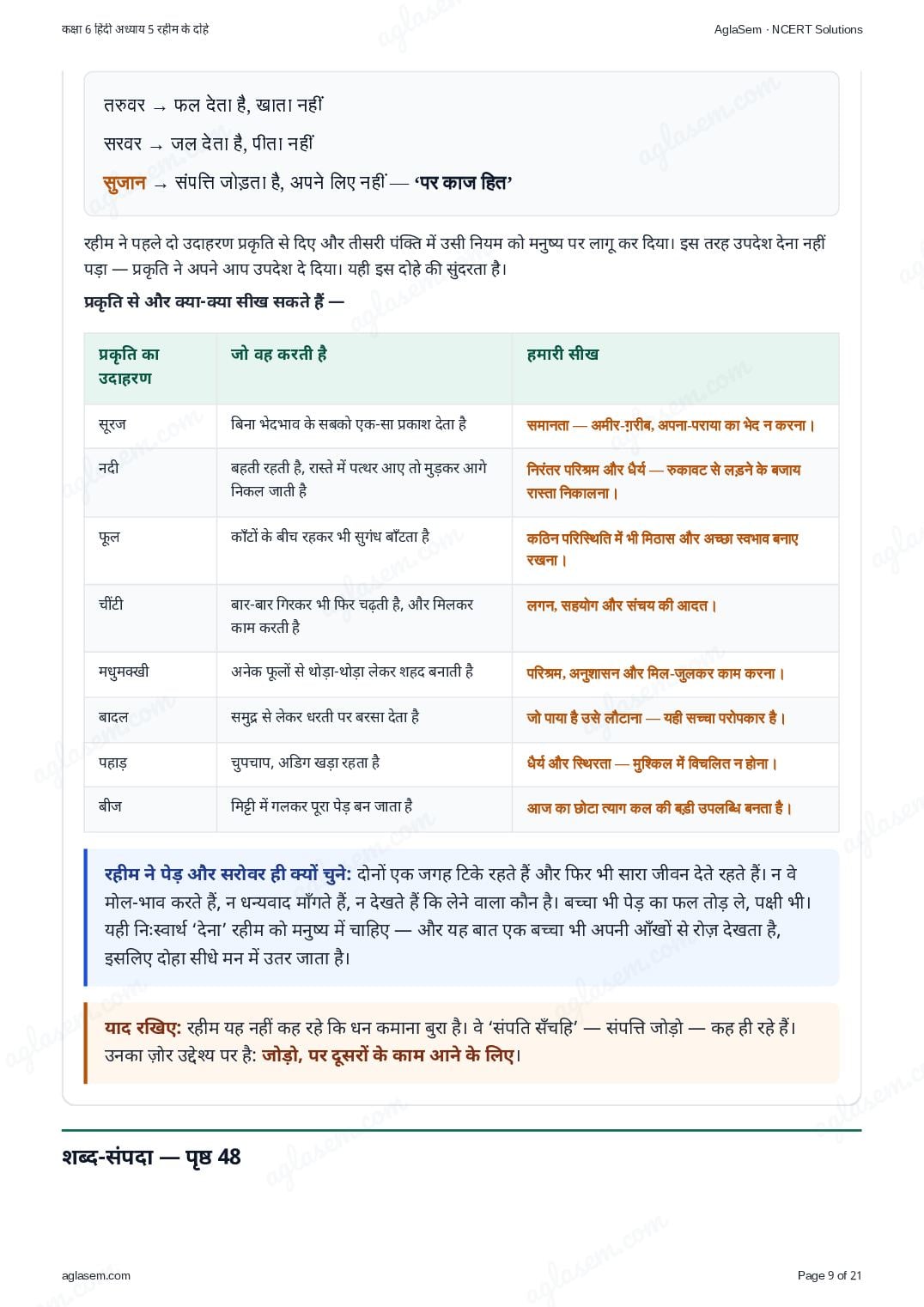
- 2. “तरुवर फल नहिं खात हैं, सरवर पियहिँ न पान। कहि रहीम पर काज हित, संपति सँचहि सुजान॥” इस दोहे में प्रकृति के माध्यम से मनुष्य के किस मानवीय गुण की बात की गई है? प्रकृति से हम और क्या-क्या सीख सकते हैं?
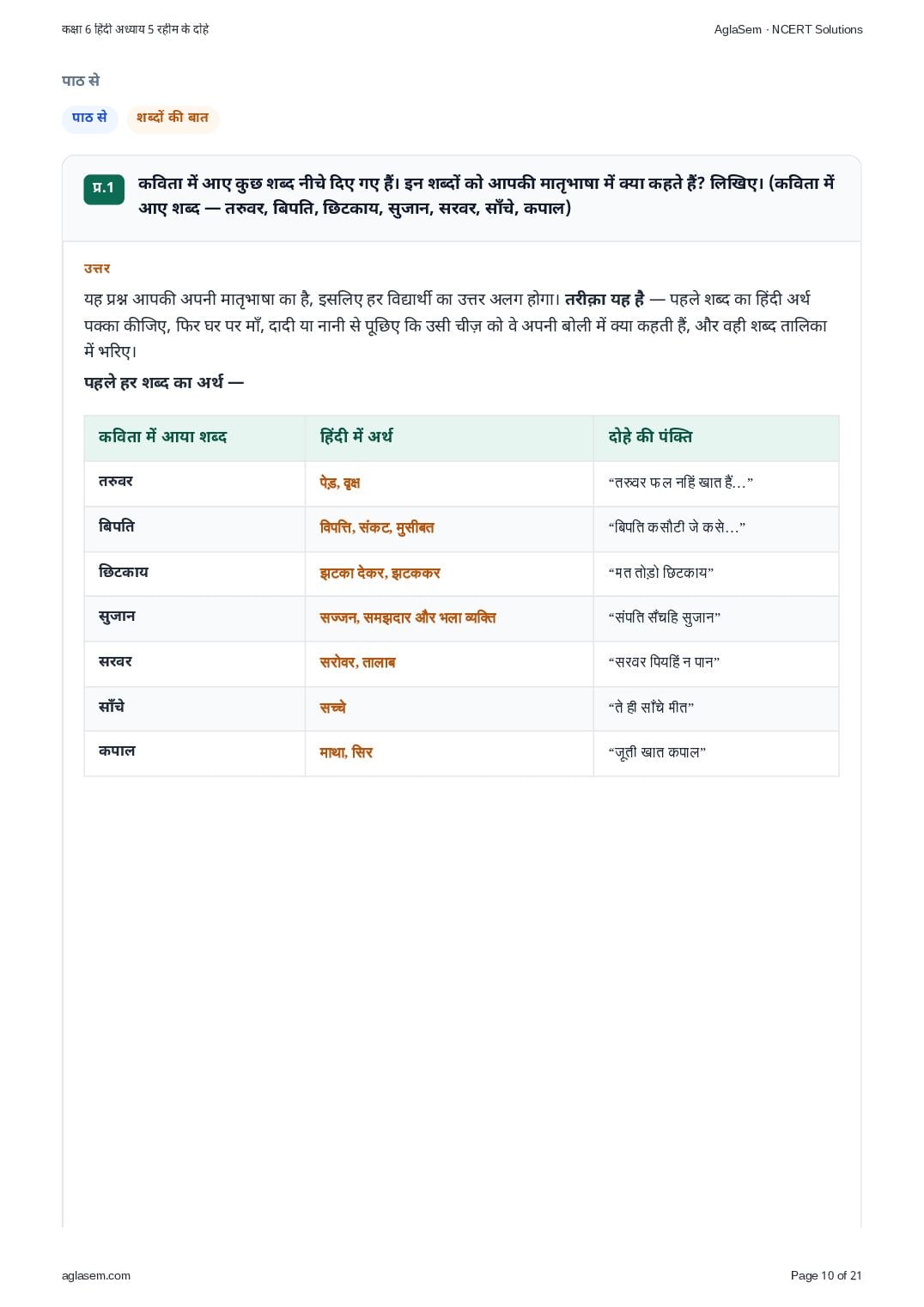
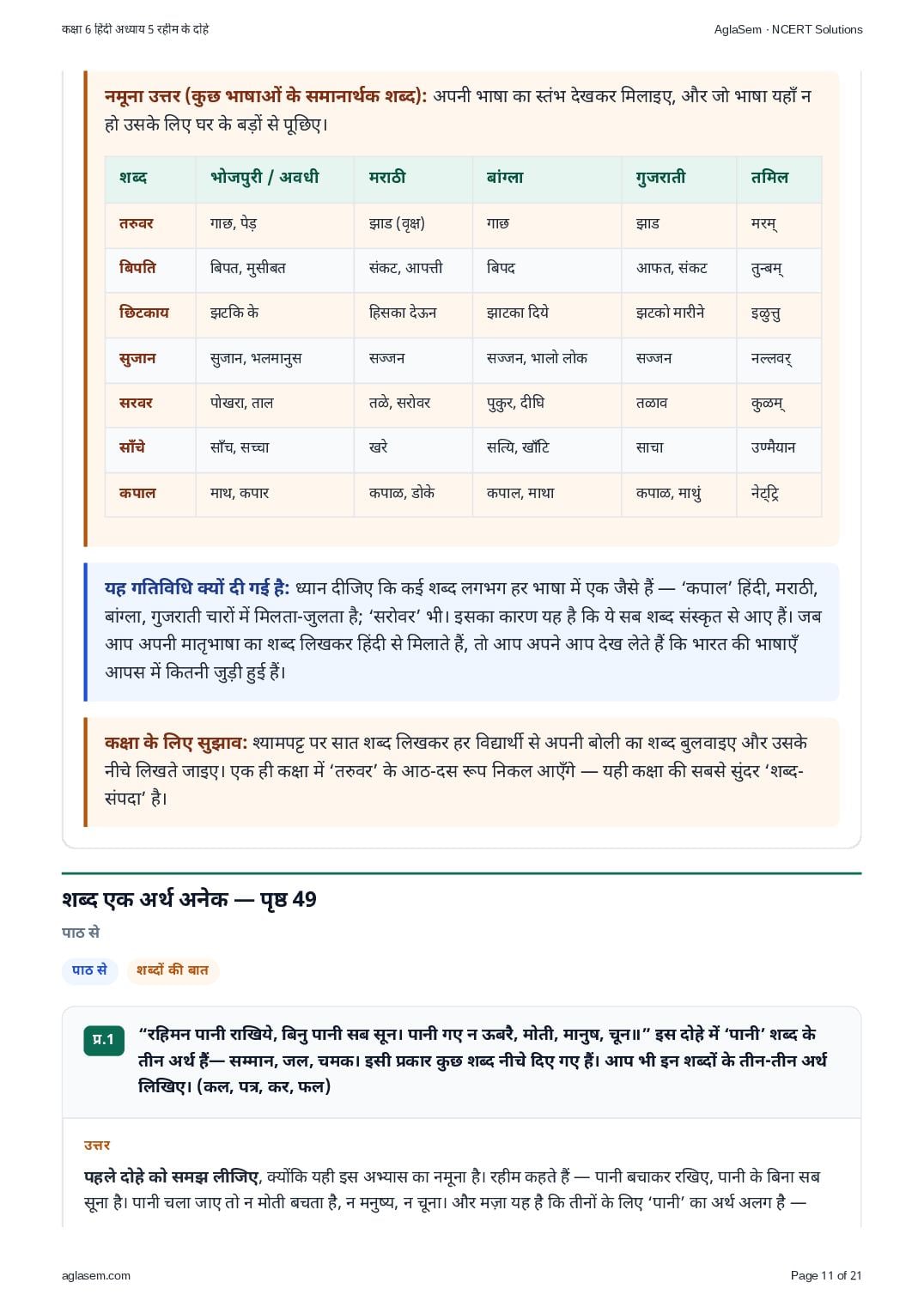
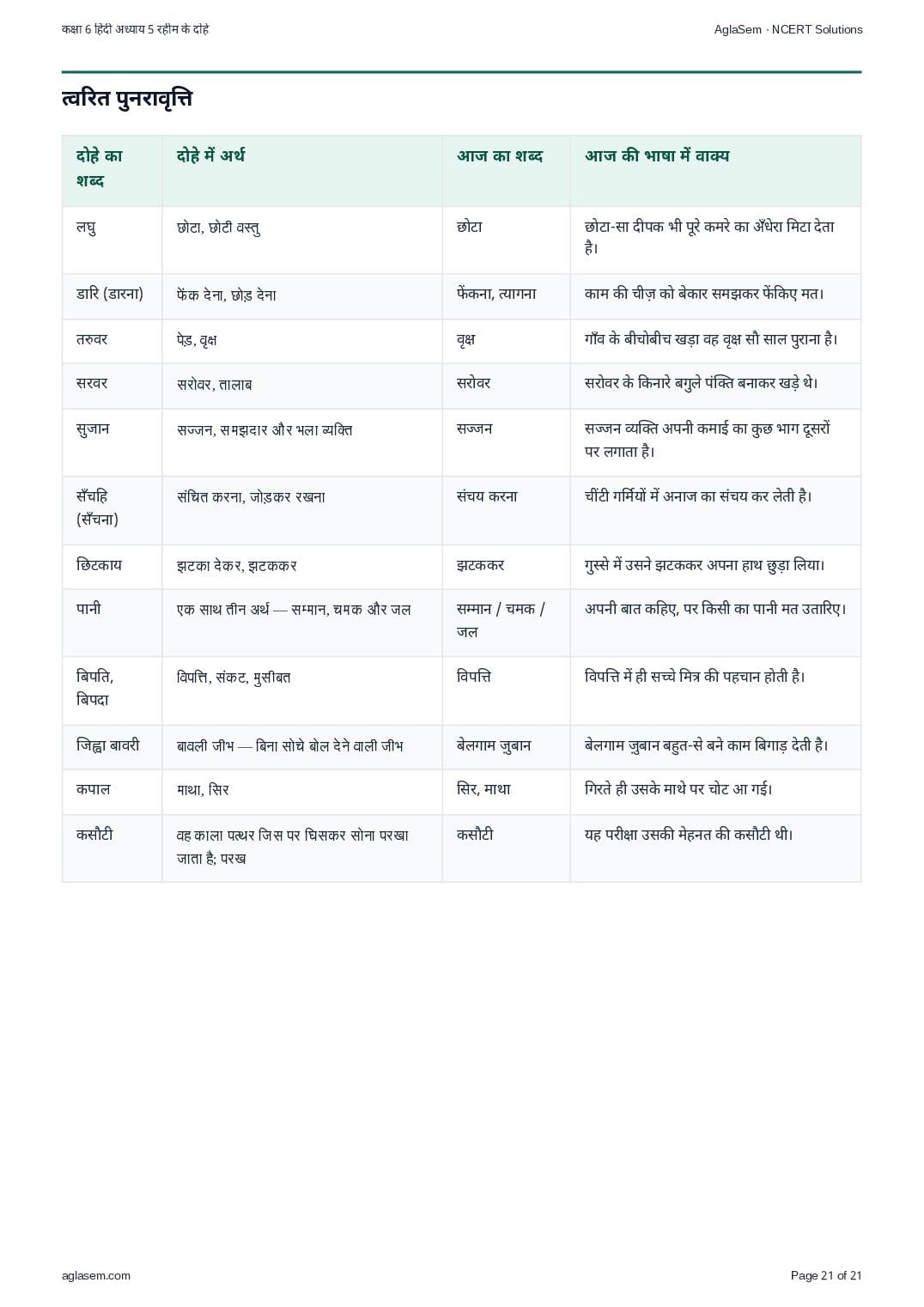
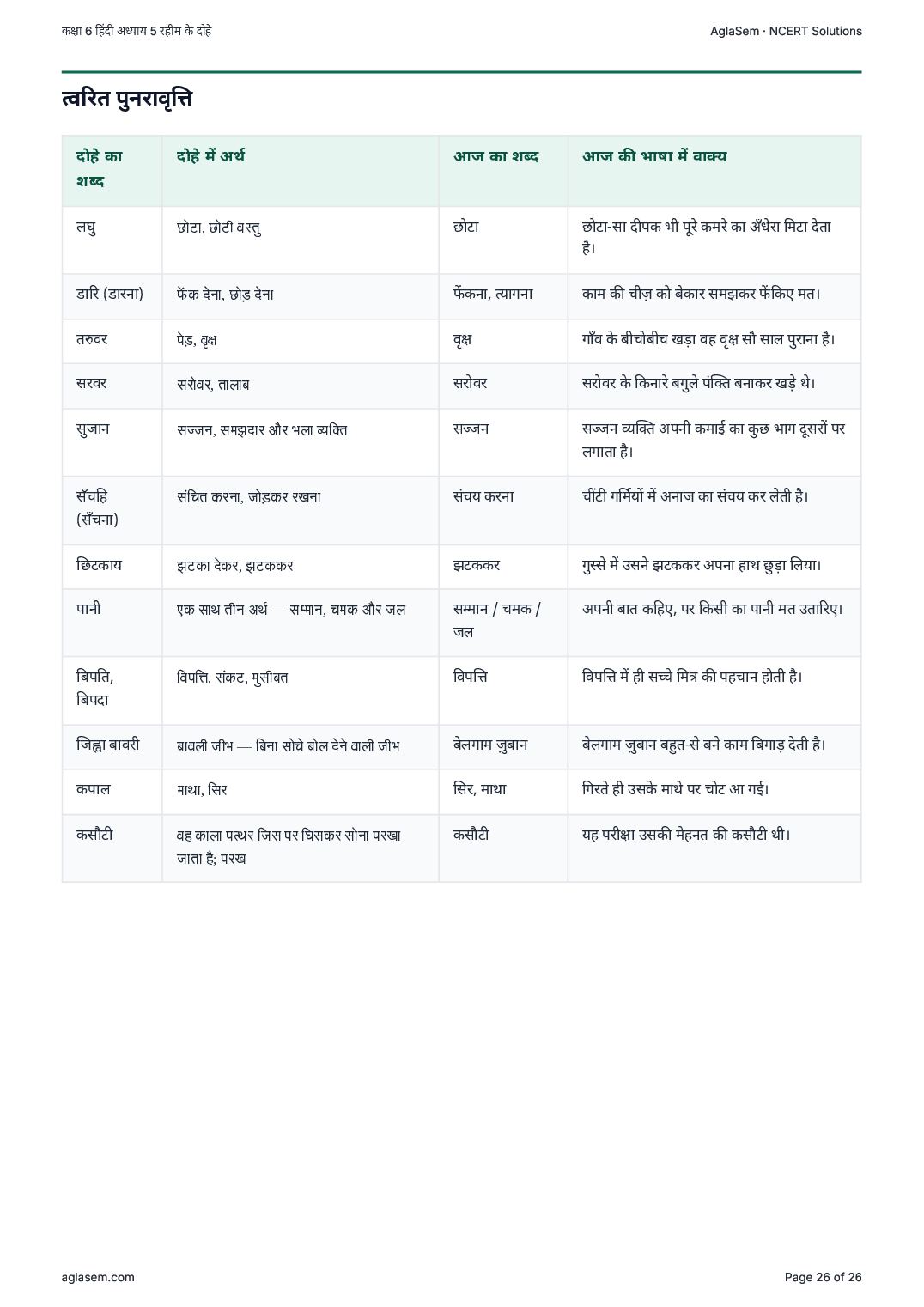
- कविता में आए कुछ शब्द नीचे दिए गए हैं। इन शब्दों को आपकी मातृभाषा में क्या कहते हैं? लिखिए। (कविता में आए शब्द — तरुवर, बिपति, छिटकाय, सुजान, सरवर, साँचे, कपाल)
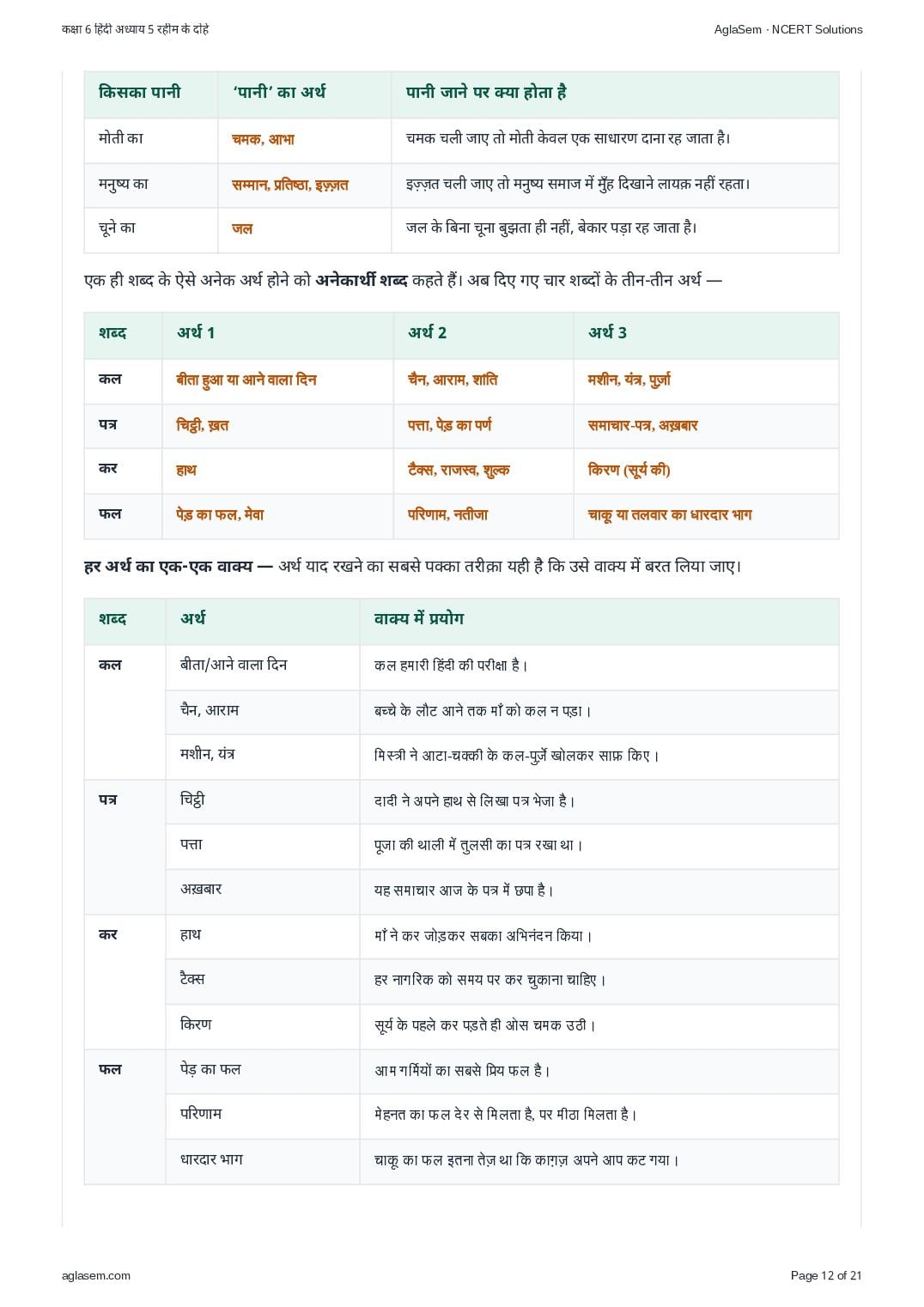
- “रहिमन पानी राखिये, बिनु पानी सब सून। पानी गए न ऊबरै, मोती, मानुष, चून॥” इस दोहे में ‘पानी’ शब्द के तीन अर्थ हैं— सम्मान, जल, चमक। इसी प्रकार कुछ शब्द नीचे दिए गए हैं। आप भी इन शब्दों के तीन-तीन अर्थ लिखिए। (कल, पत्र, कर, फल)
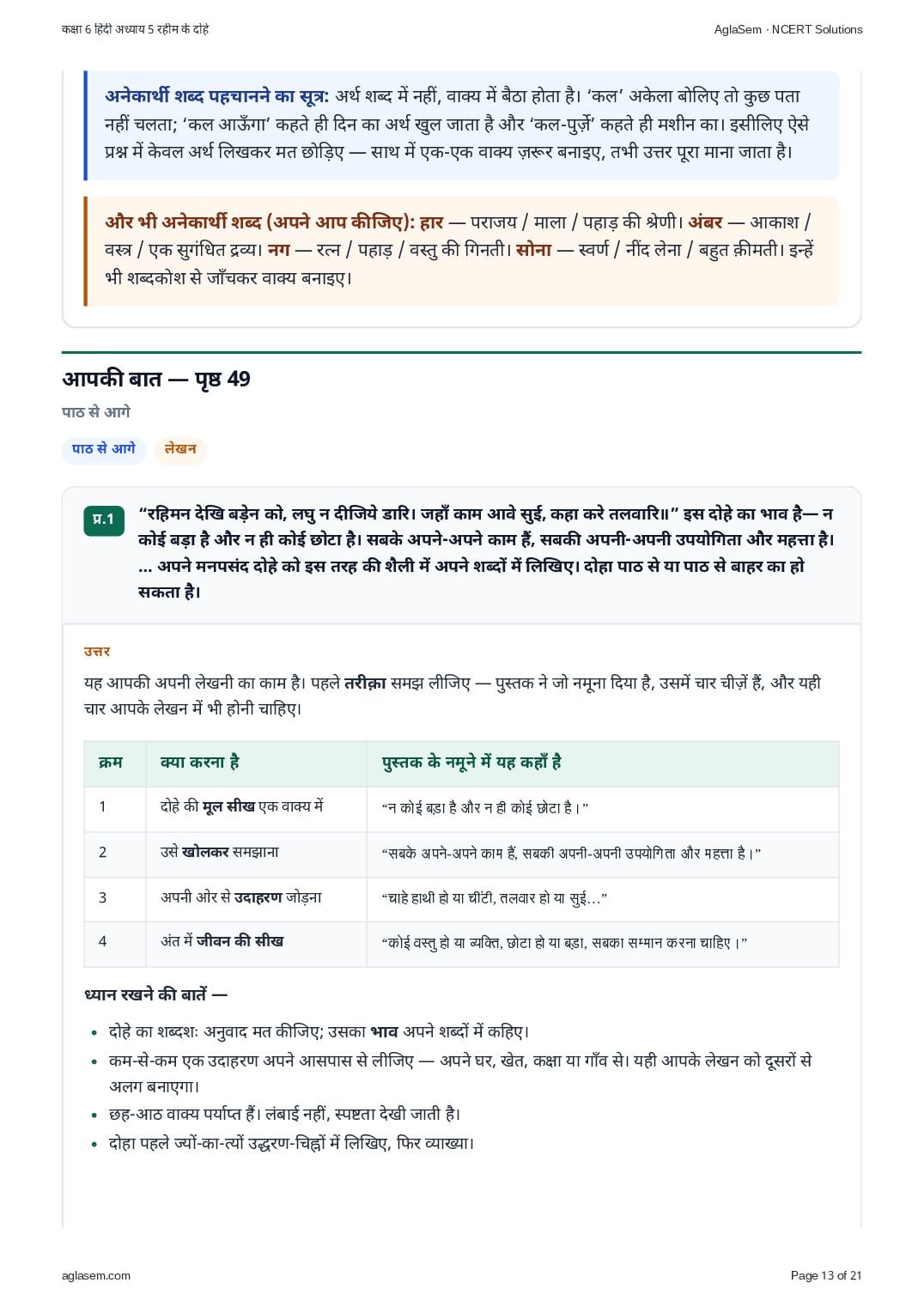
- “रहिमन देखि बड़ेन को, लघु न दीजिये डारि। जहाँ काम आवे सुई, कहा करे तलवारि॥” इस दोहे का भाव है— न कोई बड़ा है और न ही कोई छोटा है। सबके अपने-अपने काम हैं, सबकी अपनी-अपनी उपयोगिता और महत्ता है। … अपने मनपसंद दोहे को इस तरह की शैली में अपने शब्दों में लिखिए। दोहा पाठ से या पाठ से बाहर का हो सकता है।
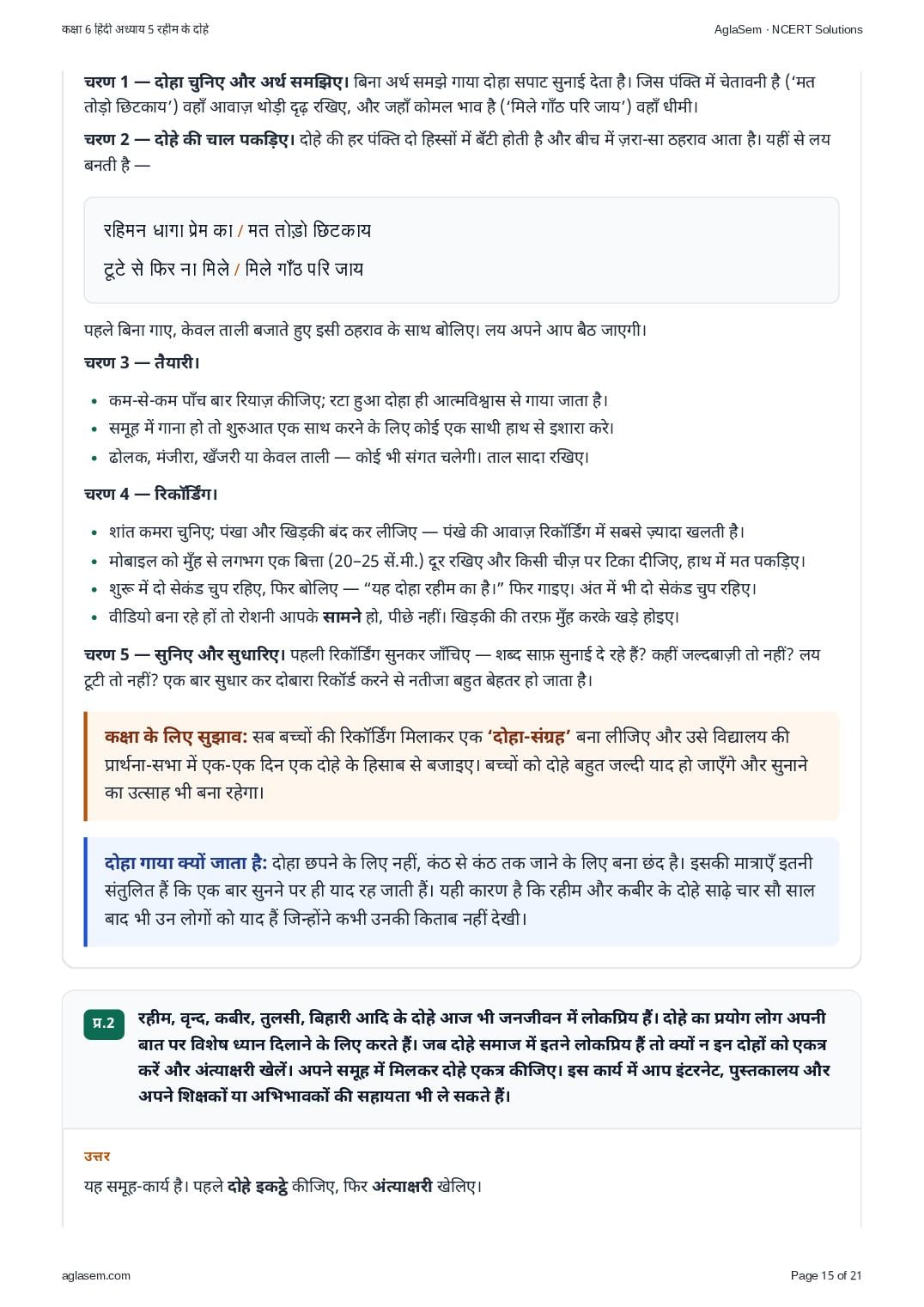
- रहीम, कबीर, तुलसी, वृंद आदि के दोहे आपने दृश्य-श्रव्य (टी.वी.-रेडियो) माध्यमों से कई बार सुने होंगे। कक्षा में आपने दोहे भी बड़े मनोयोग से गाए होंगे। अब बारी है इन दोहों की रिकॉर्डिंग (ऑडियो या विजुअल) की। रिकॉर्डिंग सामान्य मोबाइल से की जा सकती है। इन्हें अपने दोस्तों के साथ समूह में या अकेले गा सकते हैं। यदि संभव हो तो वाद्ययंत्रों के साथ भी गायन करें। रिकॉर्डिंग के बाद दोहे स्वयं भी सुनें और लोगों को भी सुनाएँ।
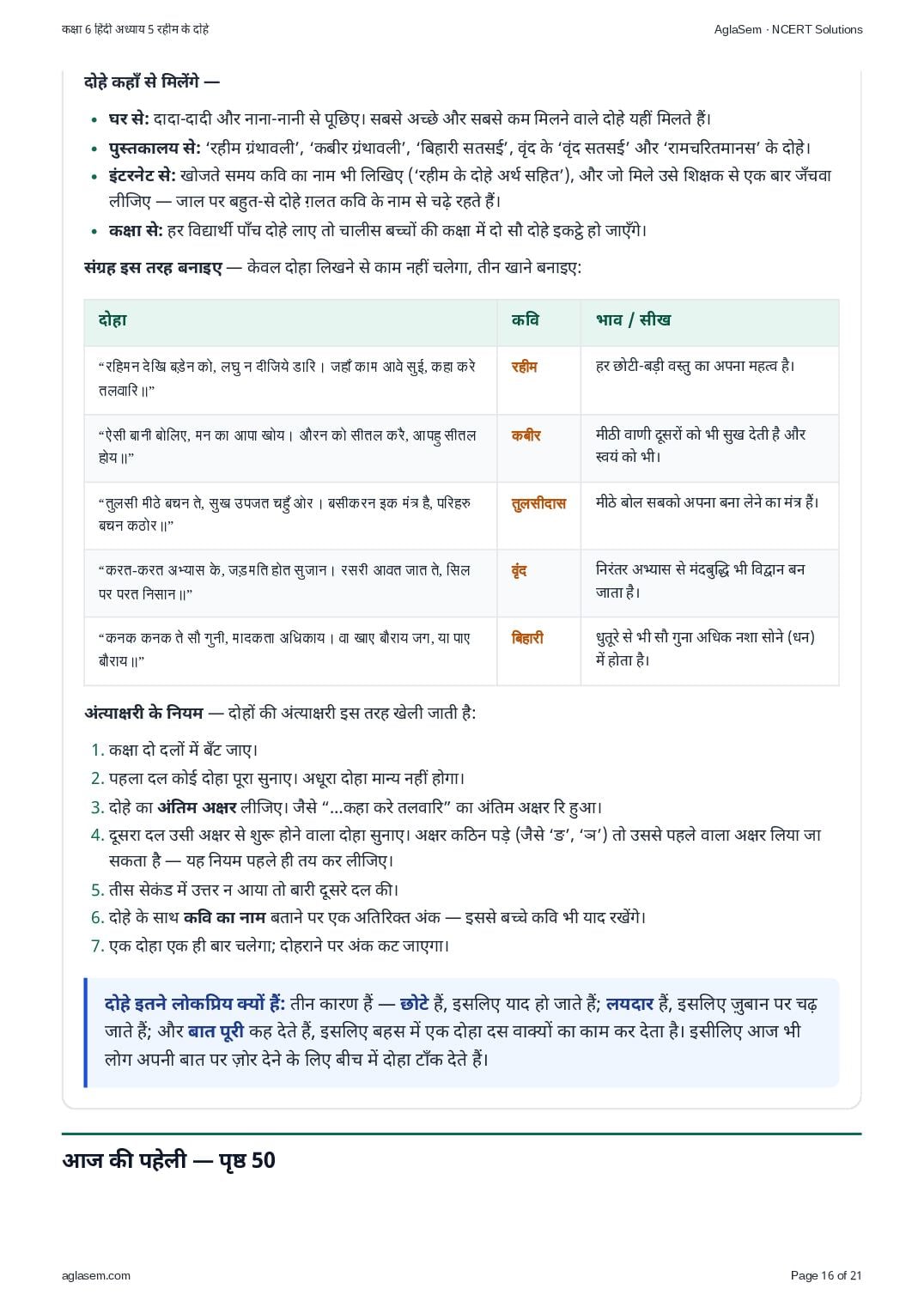
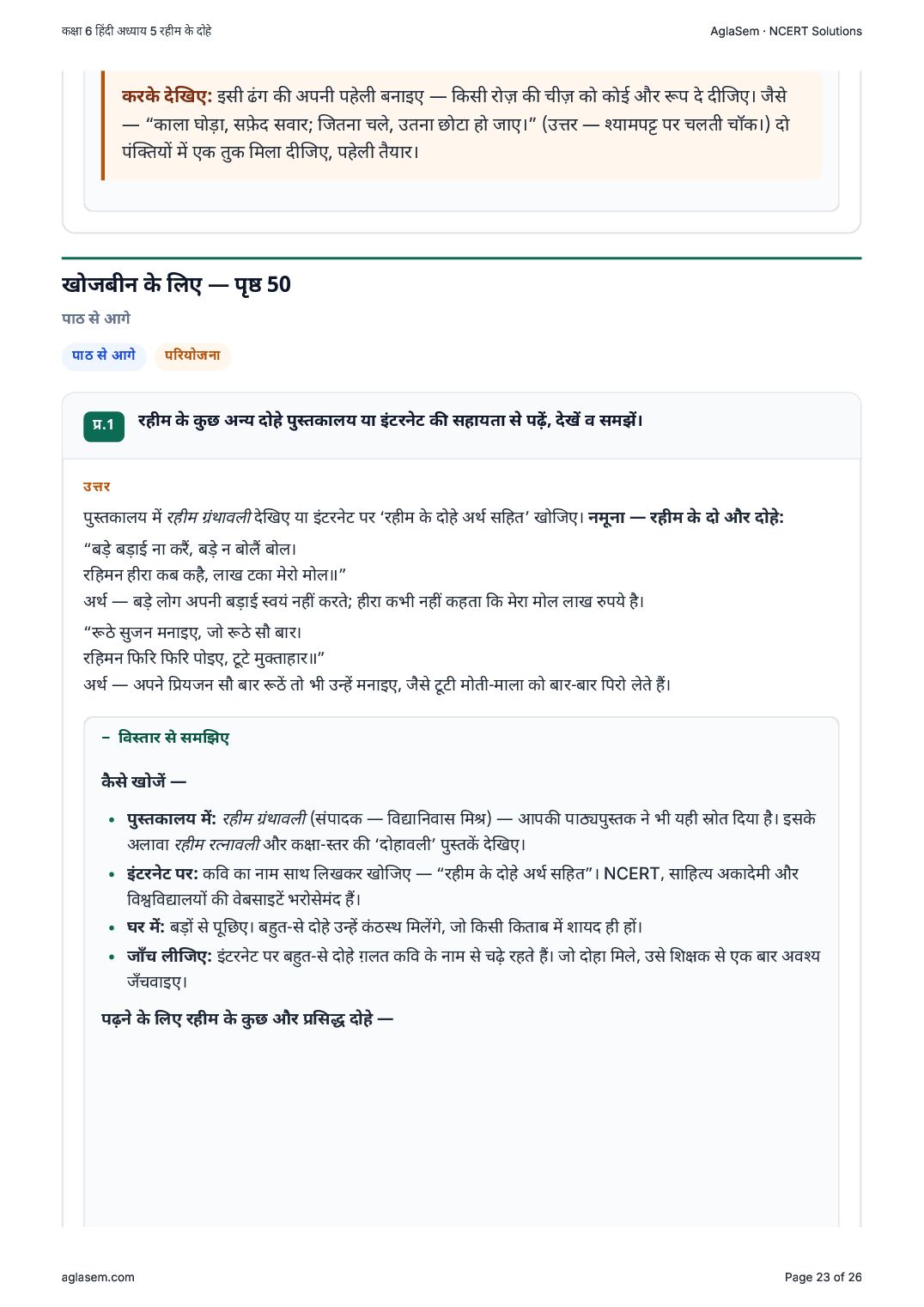
- रहीम, वृन्द, कबीर, तुलसी, बिहारी आदि के दोहे आज भी जनजीवन में लोकप्रिय हैं। दोहे का प्रयोग लोग अपनी बात पर विशेष ध्यान दिलाने के लिए करते हैं। जब दोहे समाज में इतने लोकप्रिय हैं तो क्यों न इन दोहों को एकत्र करें और अंत्याक्षरी खेलें। अपने समूह में मिलकर दोहे एकत्र कीजिए। इस कार्य में आप इंटरनेट, पुस्तकालय और अपने शिक्षकों या अभिभावकों की सहायता भी ले सकते हैं।
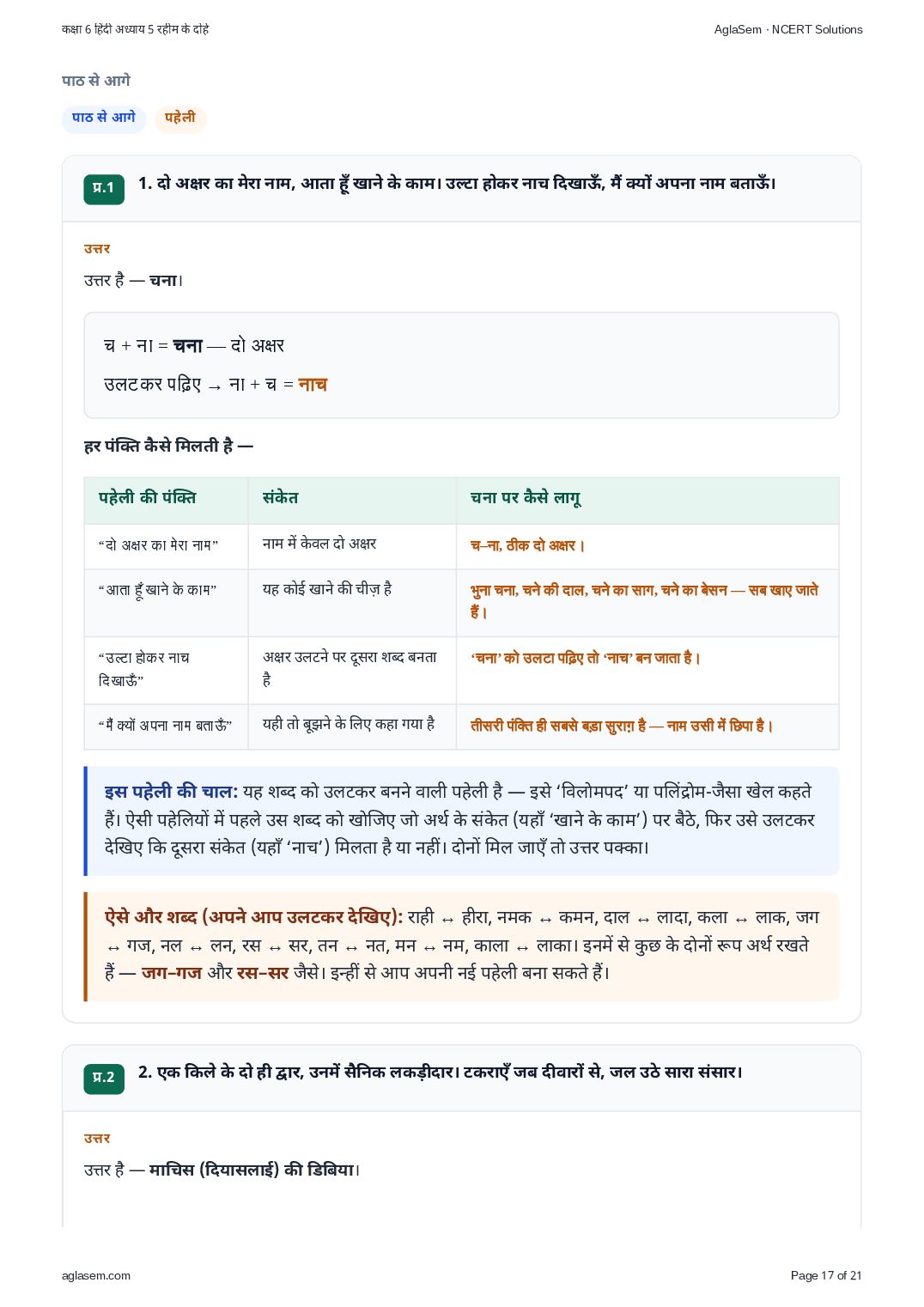
- 1. दो अक्षर का मेरा नाम, आता हूँ खाने के काम। उल्टा होकर नाच दिखाऊँ, मैं क्यों अपना नाम बताऊँ।
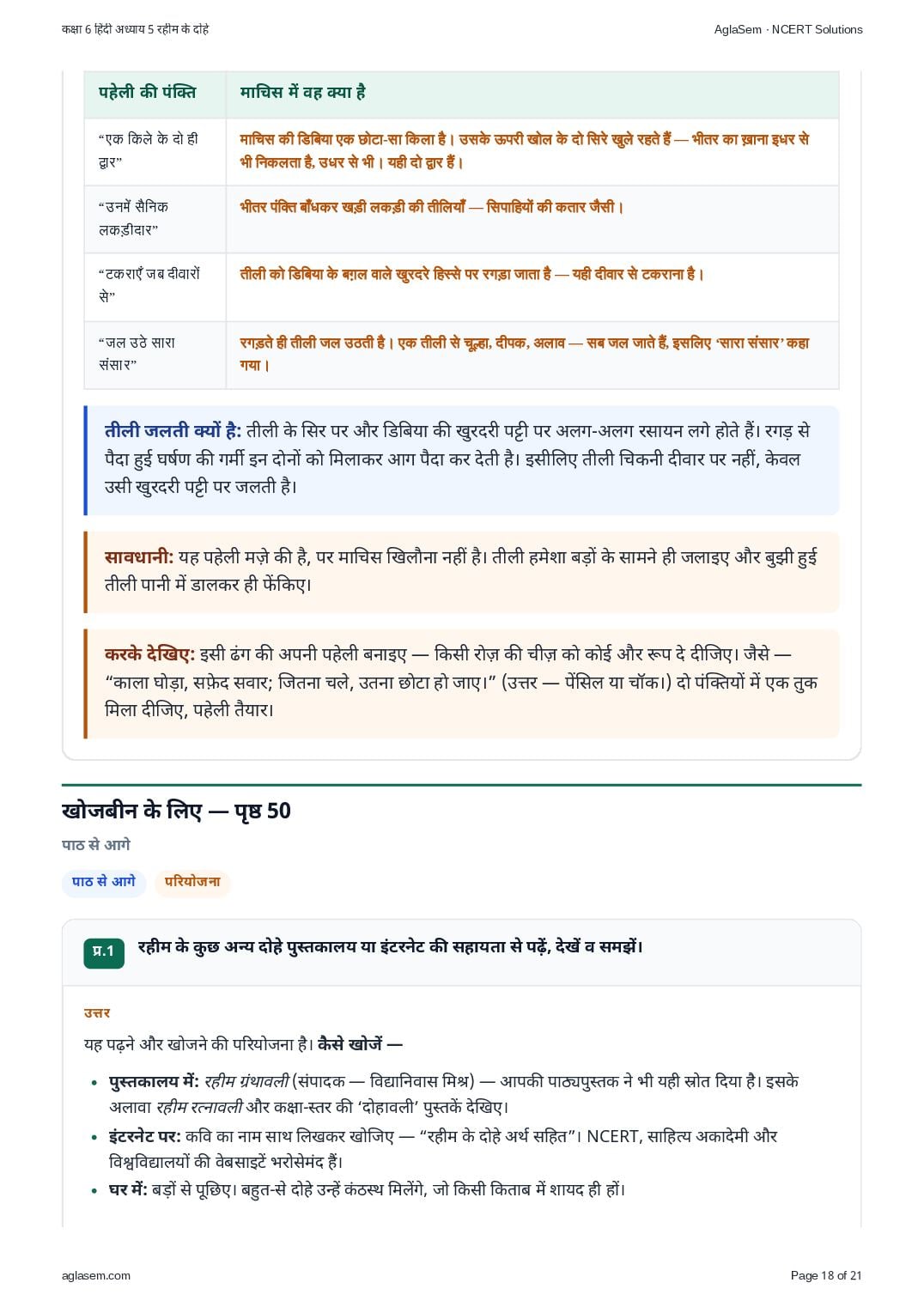
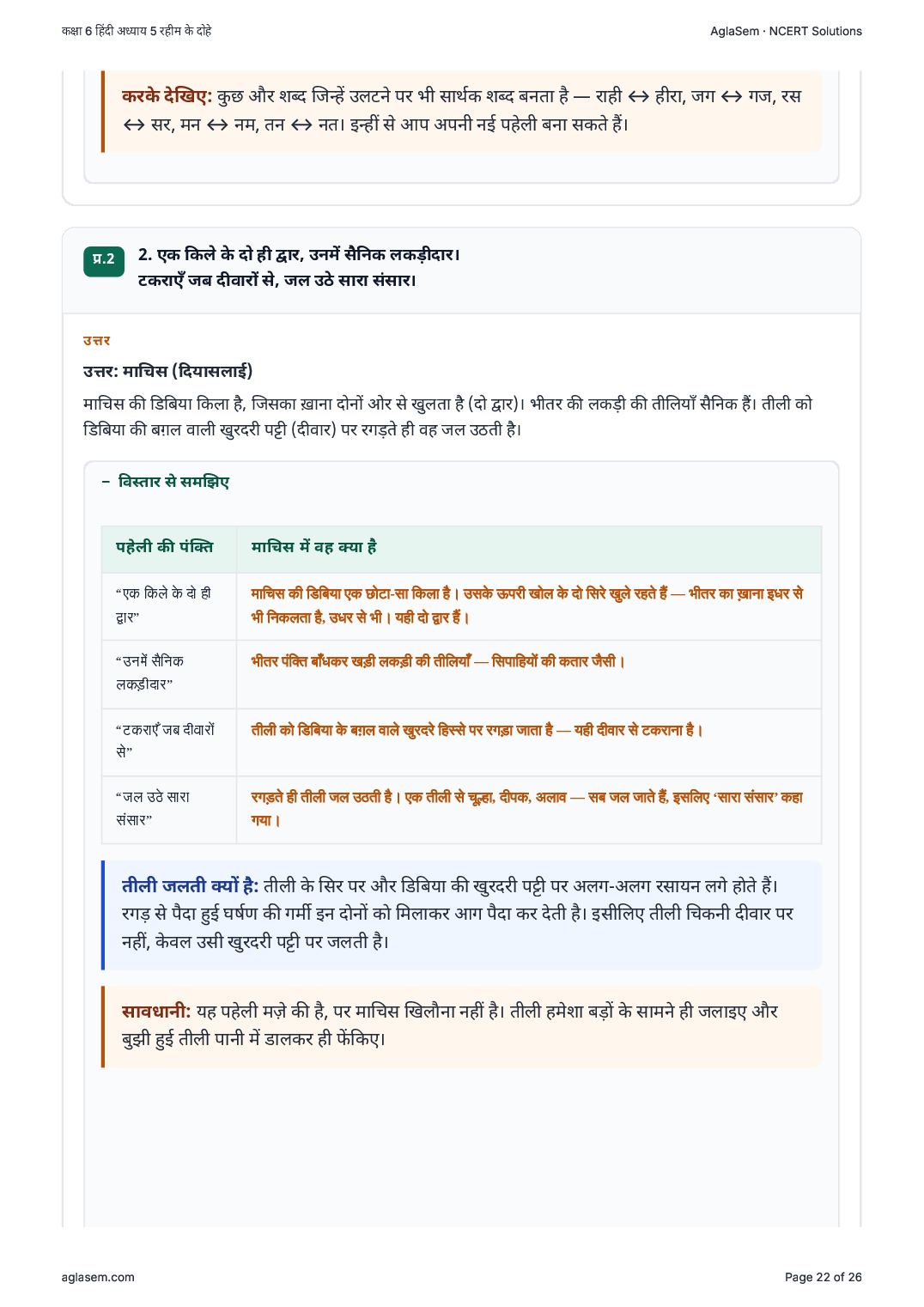
- 2. एक किले के दो ही द्वार, उनमें सैनिक लकड़ीदार। टकराएँ जब दीवारों से, जल उठे सारा संसार।
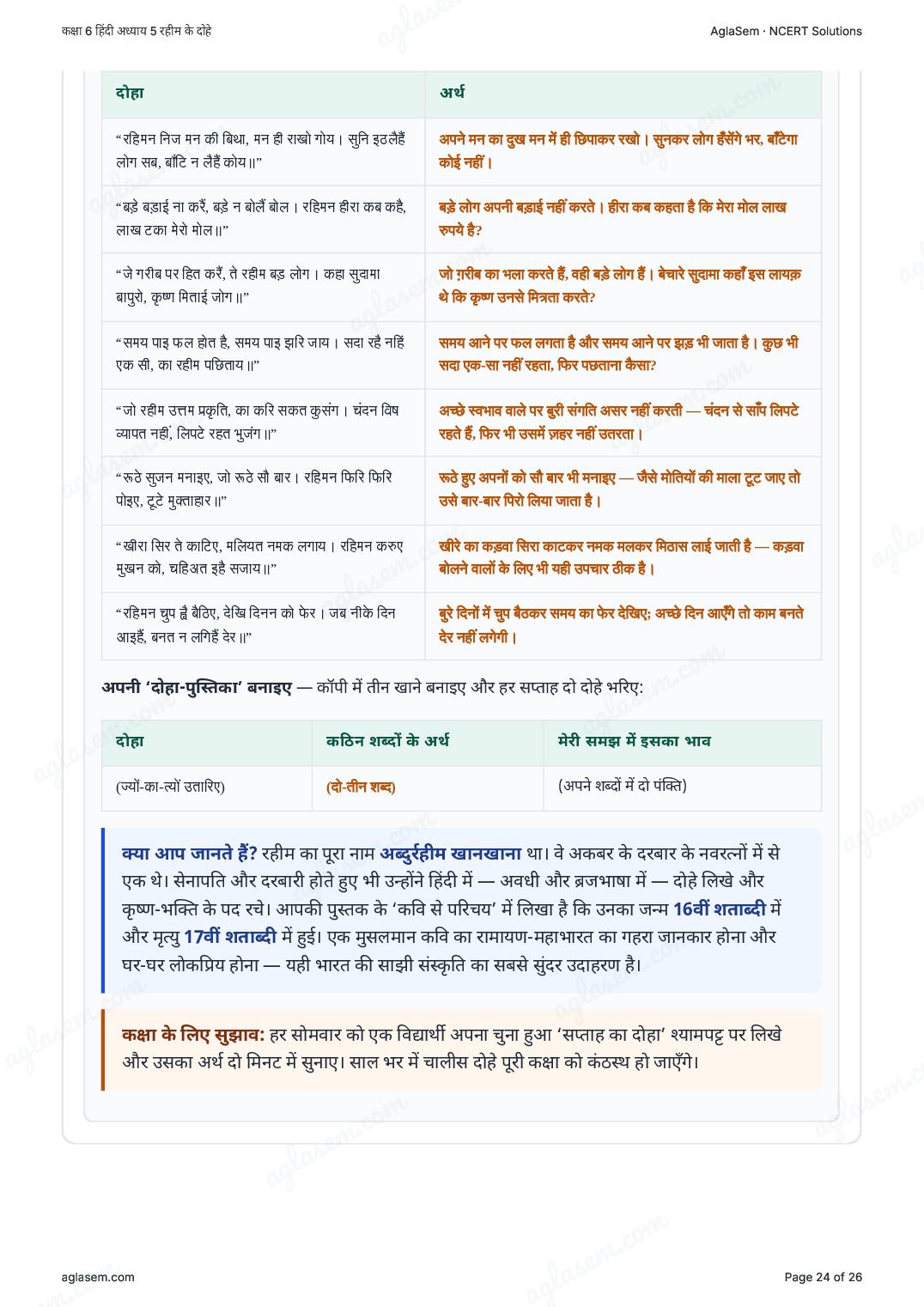
- रहीम के कुछ अन्य दोहे पुस्तकालय या इंटरनेट की सहायता से पढ़ें, देखें व समझें।
Chapter at a Glance
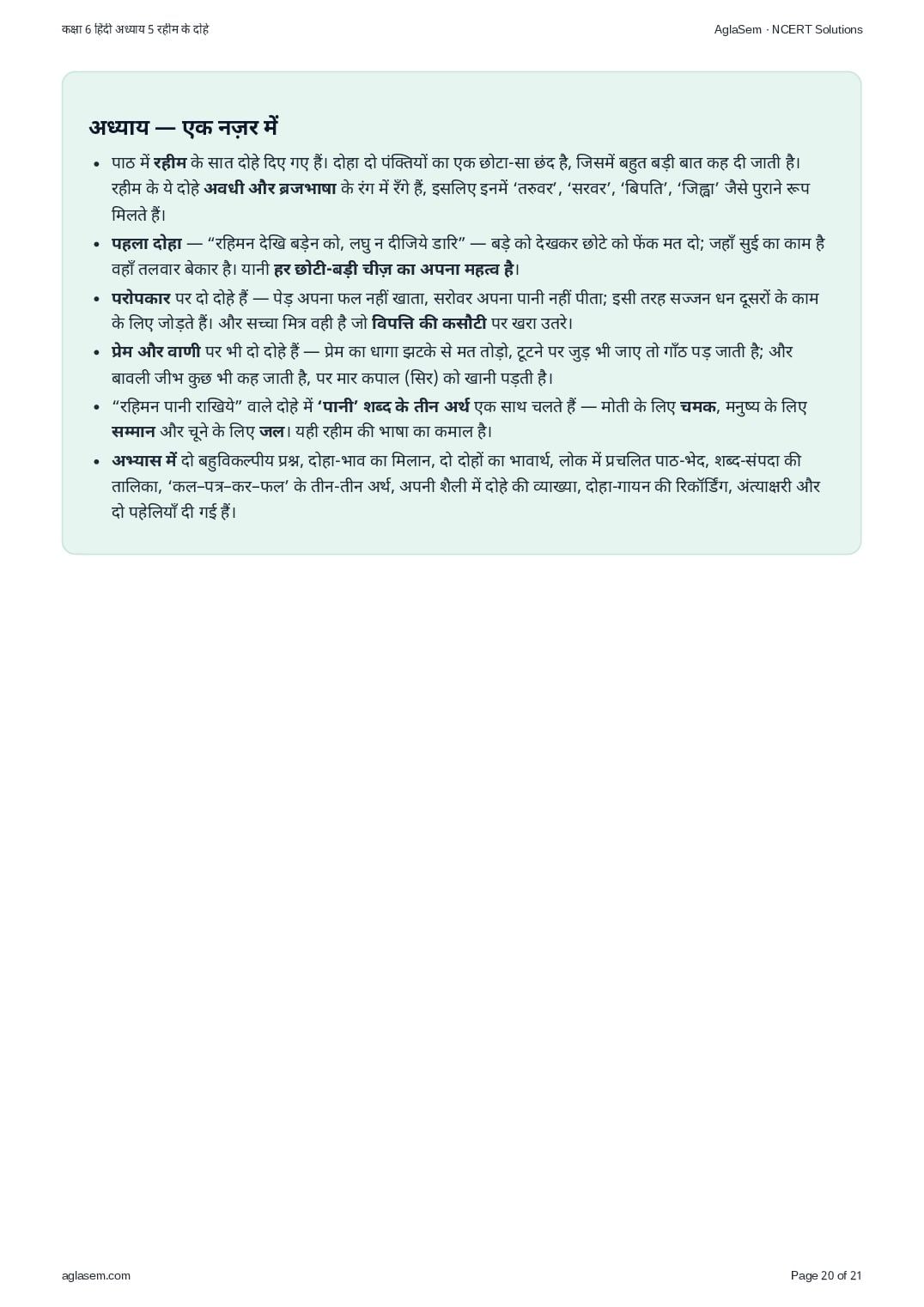
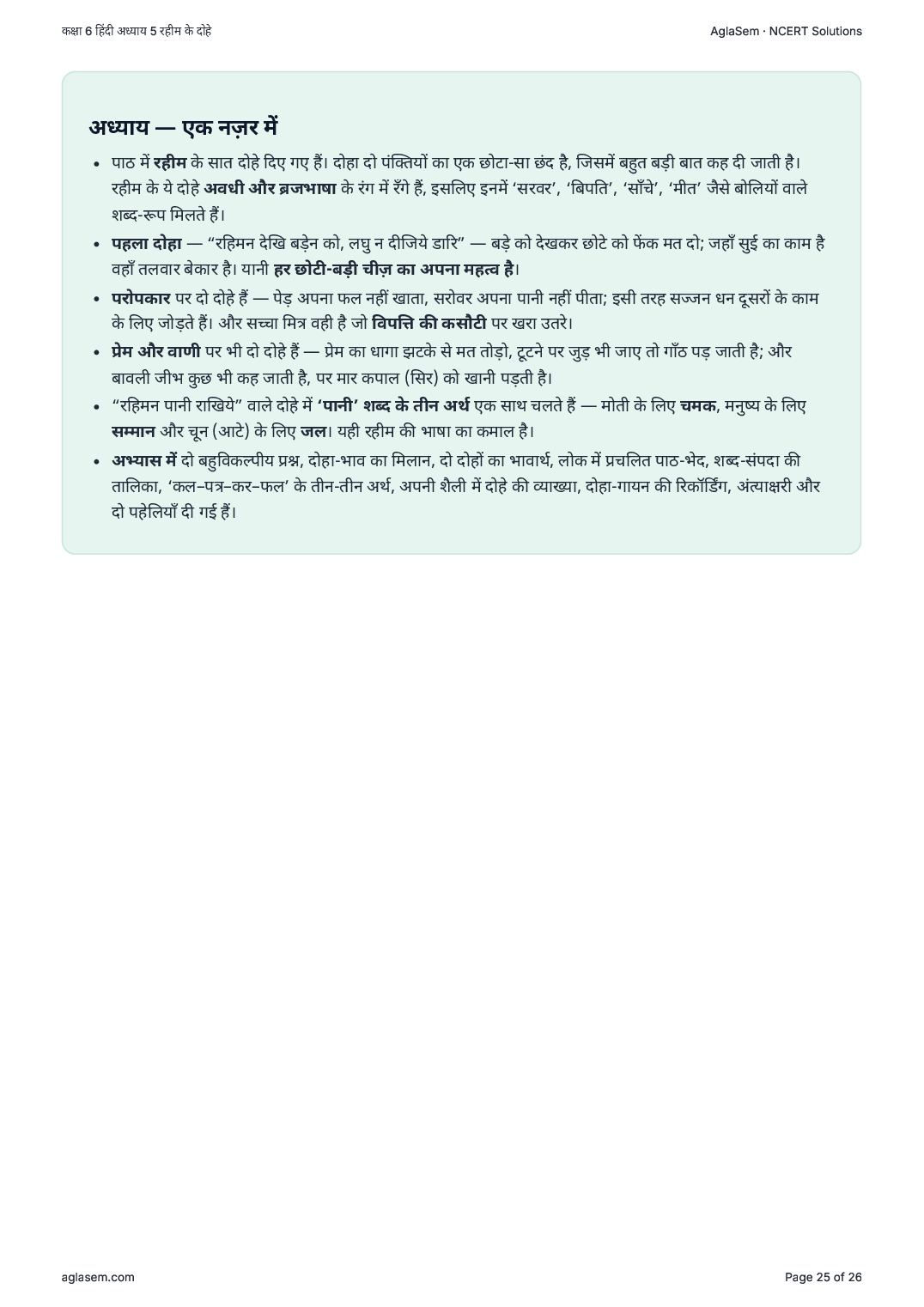
- पाठ में रहीम के सात दोहे दिए गए हैं। दोहा दो पंक्तियों का एक छोटा-सा छंद है, जिसमें बहुत बड़ी बात कह दी जाती है। रहीम के ये दोहे अवधी और ब्रजभाषा के रंग में रँगे हैं, इसलिए इनमें ‘तरुवर’, ‘सरवर’, ‘बिपति’, ‘जिह्वा’ जैसे पुराने रूप मिलते हैं।
- पहला दोहा — “रहिमन देखि बड़ेन को, लघु न दीजिये डारि” — बड़े को देखकर छोटे को फेंक मत दो; जहाँ सुई का काम है वहाँ तलवार बेकार है। यानी हर छोटी-बड़ी चीज़ का अपना महत्व है ।
- परोपकार पर दो दोहे हैं — पेड़ अपना फल नहीं खाता, सरोवर अपना पानी नहीं पीता; इसी तरह सज्जन धन दूसरों के काम के लिए जोड़ते हैं। और सच्चा मित्र वही है जो विपत्ति की कसौटी पर खरा उतरे।
- प्रेम और वाणी पर भी दो दोहे हैं — प्रेम का धागा झटके से मत तोड़ो, टूटने पर जुड़ भी जाए तो गाँठ पड़ जाती है; और बावली जीभ कुछ भी कह जाती है, पर मार कपाल (सिर) को खानी पड़ती है।
- “रहिमन पानी राखिये” वाले दोहे में ‘पानी’ शब्द के तीन अर्थ एक साथ चलते हैं — मोती के लिए चमक , मनुष्य के लिए सम्मान और चूने के लिए जल । यही रहीम की भाषा का कमाल है।
- अभ्यास में दो बहुविकल्पीय प्रश्न, दोहा-भाव का मिलान, दो दोहों का भावार्थ, लोक में प्रचलित पाठ-भेद, शब्द-संपदा की तालिका, ‘कल–पत्र–कर–फल’ के तीन-तीन अर्थ, अपनी शैली में दोहे की व्याख्या, दोहा-गायन की रिकॉर्डिंग, अंत्याक्षरी और दो पहेलियाँ दी गई हैं।
How to Download NCERT Solutions for Class 6 Hindi Chapter 5 PDF
Follow these simple steps to get the Rahim Ke Dohe questions-and-answers PDF from Malhar.
- Search NCERT Solutions for Class 6 Hindi Chapter 5 aglasem and open this page.
- Read the exercise questions with answers for Rahim Ke Dohe shown above.
- Click the Download PDF link to save the Rahim Ke Dohe solutions to your device.
NCERT Solutions for Class 6 Hindi – All Chapters
There are more chapters to study besides Rahim Ke Dohe in Hindi. Here are the NCERT Solutions for all chapters of Class 6 Hindi.
- Chapter 1 Matribhumi
- Chapter 2 Gol
- Chapter 3 Pehli Boond
- Chapter 4 Haar Ki Jeet
- Chapter 5 Rahim Ke Dohe
- Chapter 6 Meri Maa
- Chapter 7 Jalate Chalo
- Chapter 8 Sattriya Aur Bihu Nritya
- Chapter 9 Maiya Main Nahin Makhan Khayo
- Chapter 10 Pariksha
- Chapter 11 Chetak Ki Veerta
- Chapter 12 Hind Mahasagar Mein Chhota Sa Hindustan
- Chapter 13 Ped Ki Baat
NCERT Solutions for Class 6 – All Subjects
Just like Chapter 5 of Hindi, you can get the exercise questions with answers for every other subject of Class 6. Here are the NCERT Solutions for all subjects of Class 6.
NCERT Solutions for Class 6 Hindi Chapter 5 – An Overview
The key highlights of this study material are as follows.
| Aspects | Details |
|---|---|
| Class | Class 6 |
| Subject | Hindi |
| Chapter Number | Chapter 5 |
| Chapter Name | Rahim Ke Dohe |
| Book Name | Malhar |
| Book By | NCERT (National Council of Educational Research and Training) |
| Educational Resource Here | NCERT Solutions of Class 6 Hindi Chapter 5 for all exercises |
| More Questions Answers of This Subject | NCERT Solutions for Class 6 Hindi |
| Download Book Chapter | NCERT Book Class 6 Hindi |
| All Questions Answers For This Class | NCERT Solutions for Class 6 |
| Complete Solutions | NCERT Solutions |
NCERT Solutions for Class 6 Hindi Chapter 5 Rahim Ke Dohe – FAQs
What are the NCERT Solutions for Class 6 Hindi Chapter 5 Rahim Ke Dohe?
They are the complete, step-by-step answers to all the exercise and in-text questions of Chapter 5 Rahim Ke Dohe from the NCERT Class 6 Hindi textbook Malhar, written by experts as per the latest NCERT syllabus.
How can I download the Class 6 Hindi Chapter 5 solutions PDF for free?
Open this page on aglasem, read the Rahim Ke Dohe questions with answers, and click the “Download Solutions PDF” link. The Class 6 Hindi Chapter 5 NCERT Solutions PDF is completely free to download.
Are these NCERT Solutions as per the latest 2026-27 syllabus?
Yes. The NCERT Solutions for Class 6 Hindi Chapter 5 are based on the latest NCERT textbook Malhar and the current 2026-27 CBSE syllabus, so the questions and answers match what you study in class.
Where can I get NCERT Solutions for the other chapters of Class 6 Hindi?
You can find the answers to every chapter on the NCERT Solutions for Class 6 Hindi page, and solutions for every subject on the NCERT Solutions for Class 6 page.
How do NCERT Solutions help in exam preparation?
They show the correct method to solve each question, help you write answers the way they are expected in exams, let you check and correct your own work, and save revision time — which together improve your marks in Class 6 Hindi.
If you have any queries on NCERT Solutions for Class 6 Hindi Chapter 5 Rahim Ke Dohe, then please ask in the comments below.