NCERT Solutions for Class 7 Science Chapter 1 the Ever Evolving World of Science provide clear, step-by-step answers to every exercise and in-text question from the chapter the Ever Evolving World of Science of the NCERT textbook Curiosity. Prepared by subject experts as per the latest NCERT (CBSE) syllabus for 2026-27, these NCERT Solutions for Class 7 Science help you understand each concept, write exam-ready answers, and check your own solutions. You can read them online below or download the free Class 7 Science Chapter 1 question-answer PDF.
NCERT Solutions for Class 7 Science Chapter 1 the Ever Evolving World of Science
- Class: Class 7
- Subject: Science
- Chapter: Chapter 1 – the Ever Evolving World of Science
- Textbook: Curiosity (NCERT)
- Study material: NCERT Solutions – questions with answers, free PDF
These solutions answer all the exercise questions of Chapter 1 the Ever Evolving World of Science — including the in-text questions, short-answer and long-answer questions, and activities — with complete explanations so you can follow the method, not just the final answer. Read the full solutions below.
NCERT Solutions Class 7 Science Chapter 1 the Ever Evolving World of Science View Download
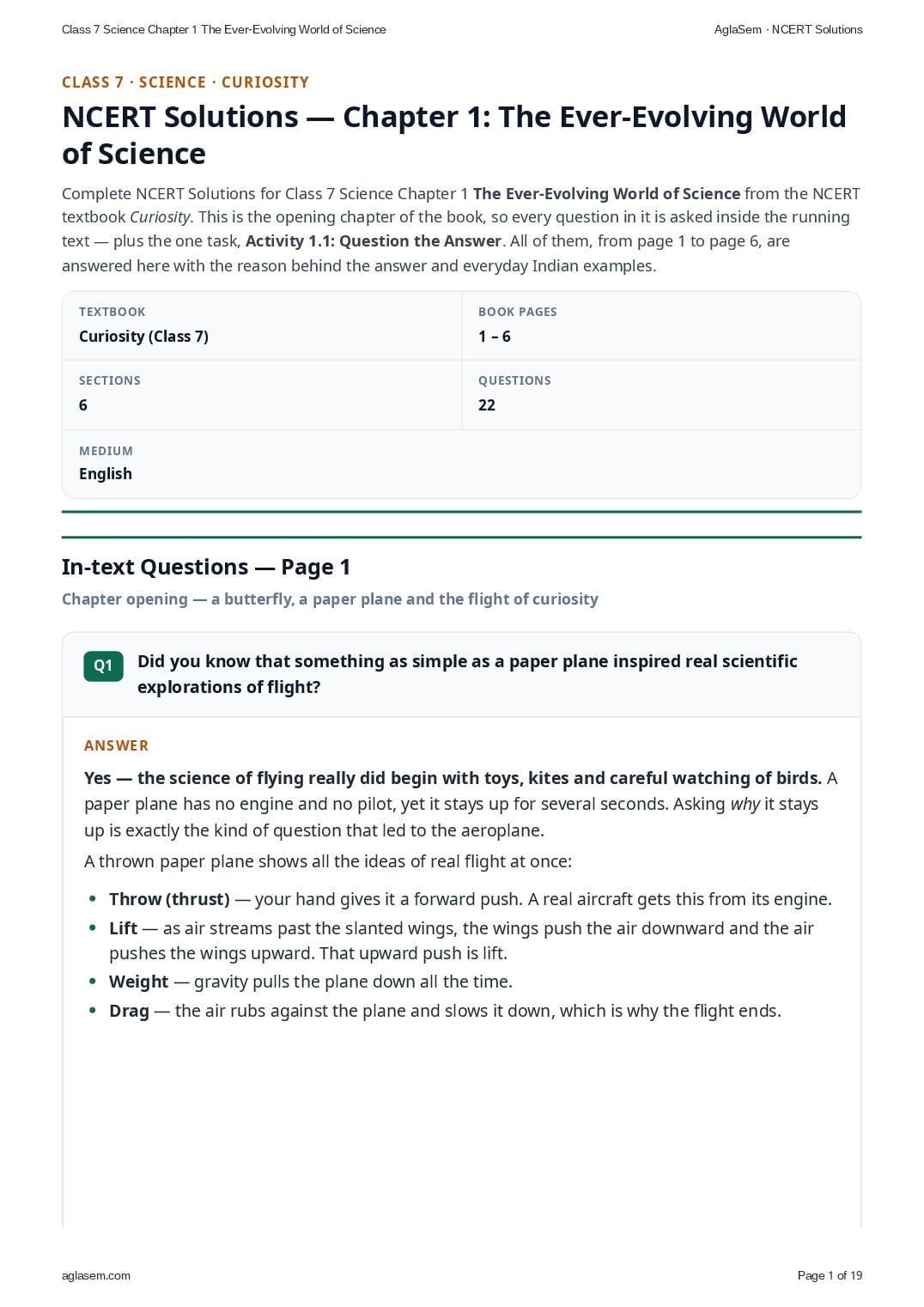
NCERT Solutions for Class 7 Science Chapter 1 PDF Download
You can read the NCERT Solutions for Class 7 Science Chapter 1 online above, or download the complete question-answer PDF to study the Ever Evolving World of Science offline at any time.
NCERT Solutions for Class 7 Science Chapter 1 PDF Download Link – Click Here to Download Solutions PDF
Questions Covered in This Chapter
These NCERT Solutions answer all 22 questions of this chapter. The questions solved are:
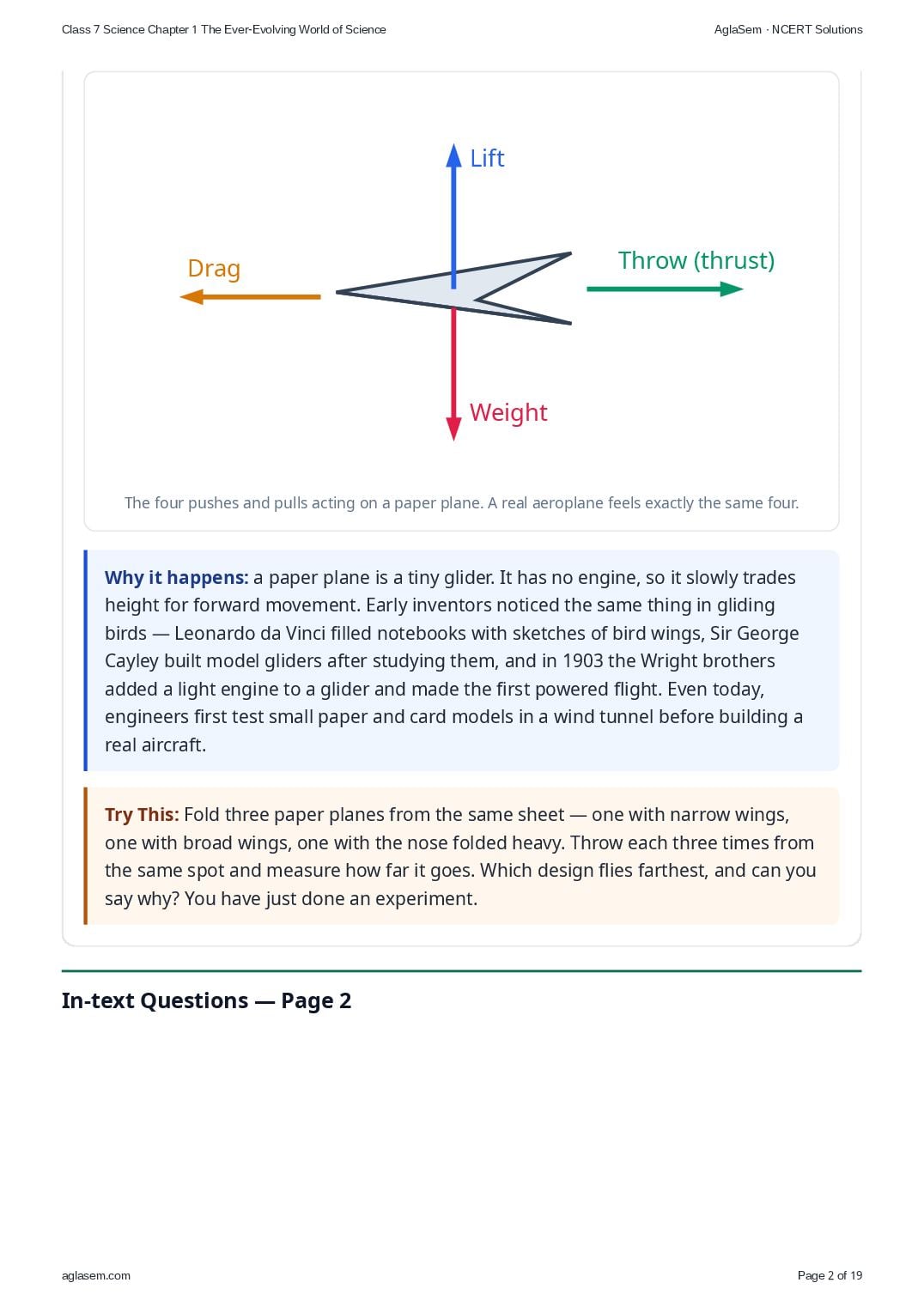
- Did you know that something as simple as a paper plane inspired real scientific explorations of flight?
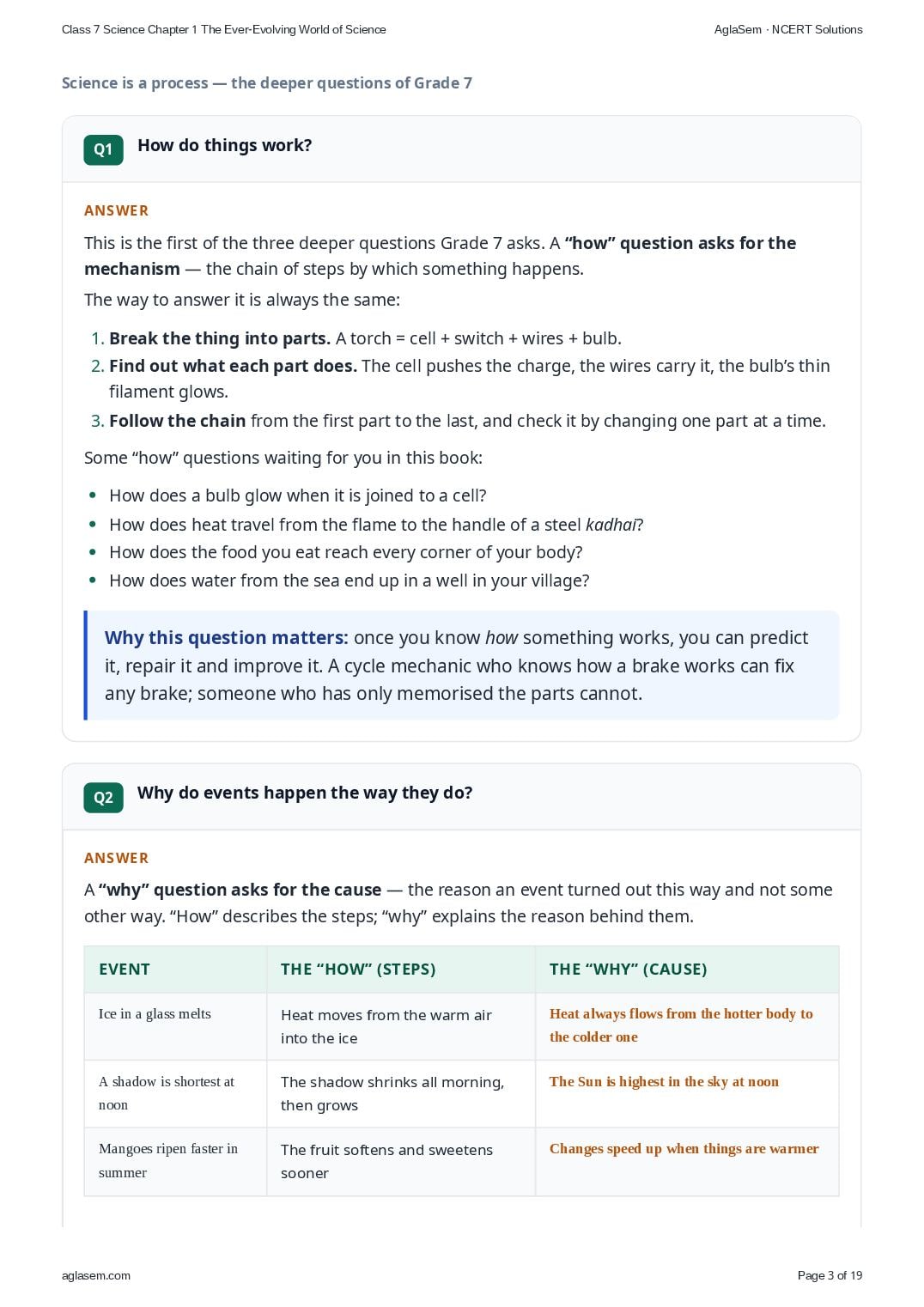
- How do things work?
- Why do events happen the way they do?
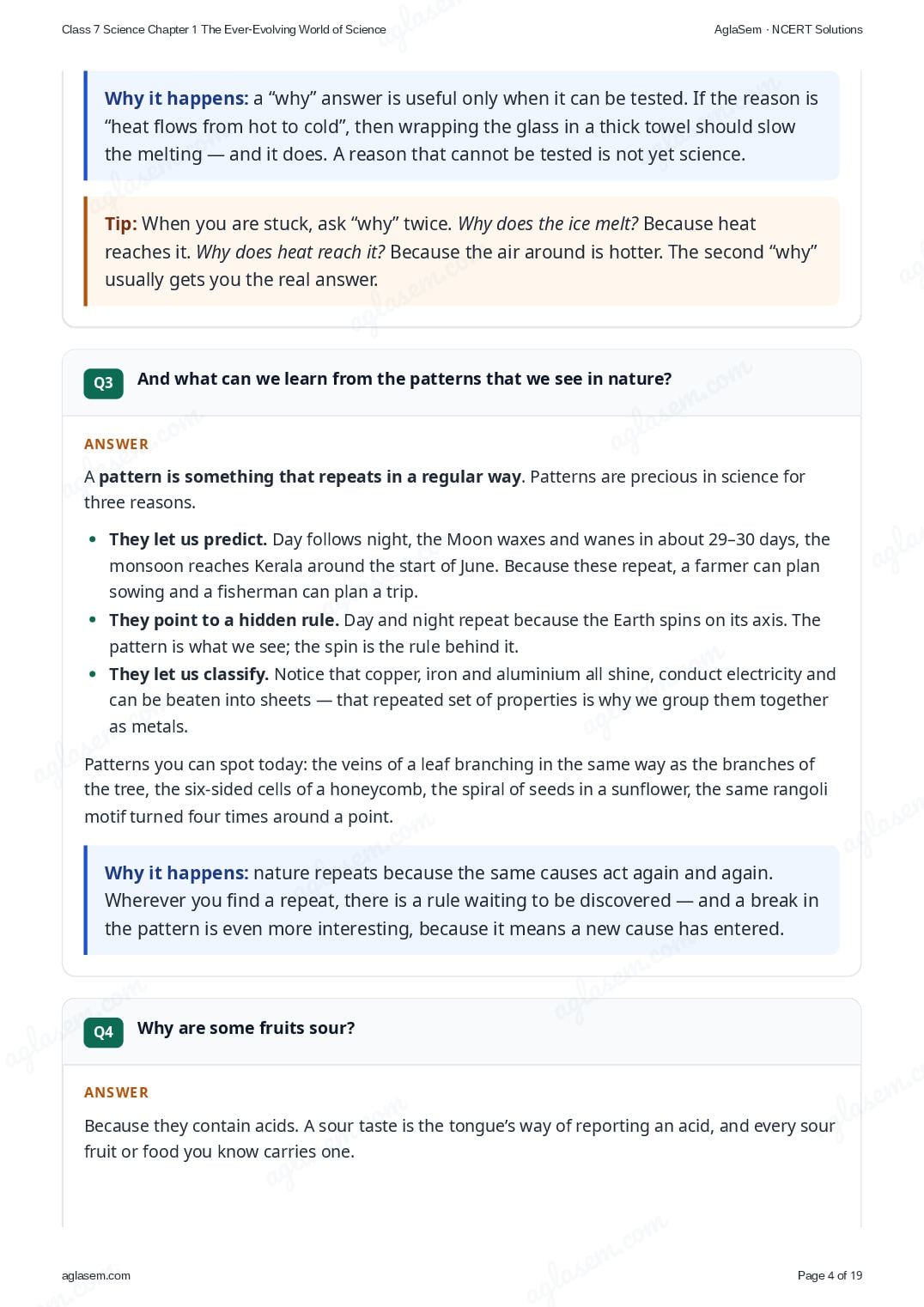
- And what can we learn from the patterns that we see in nature?
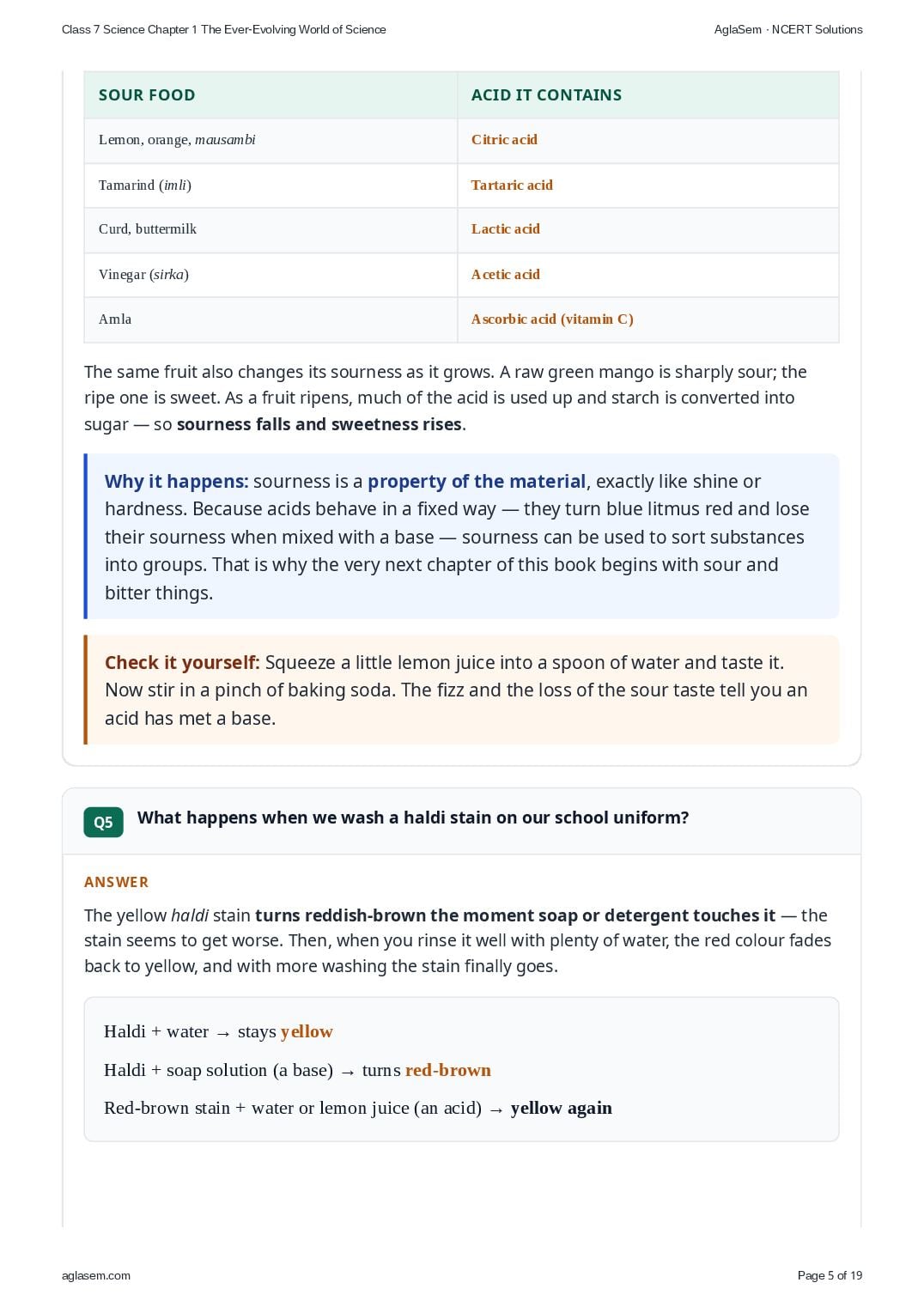
- Why are some fruits sour?
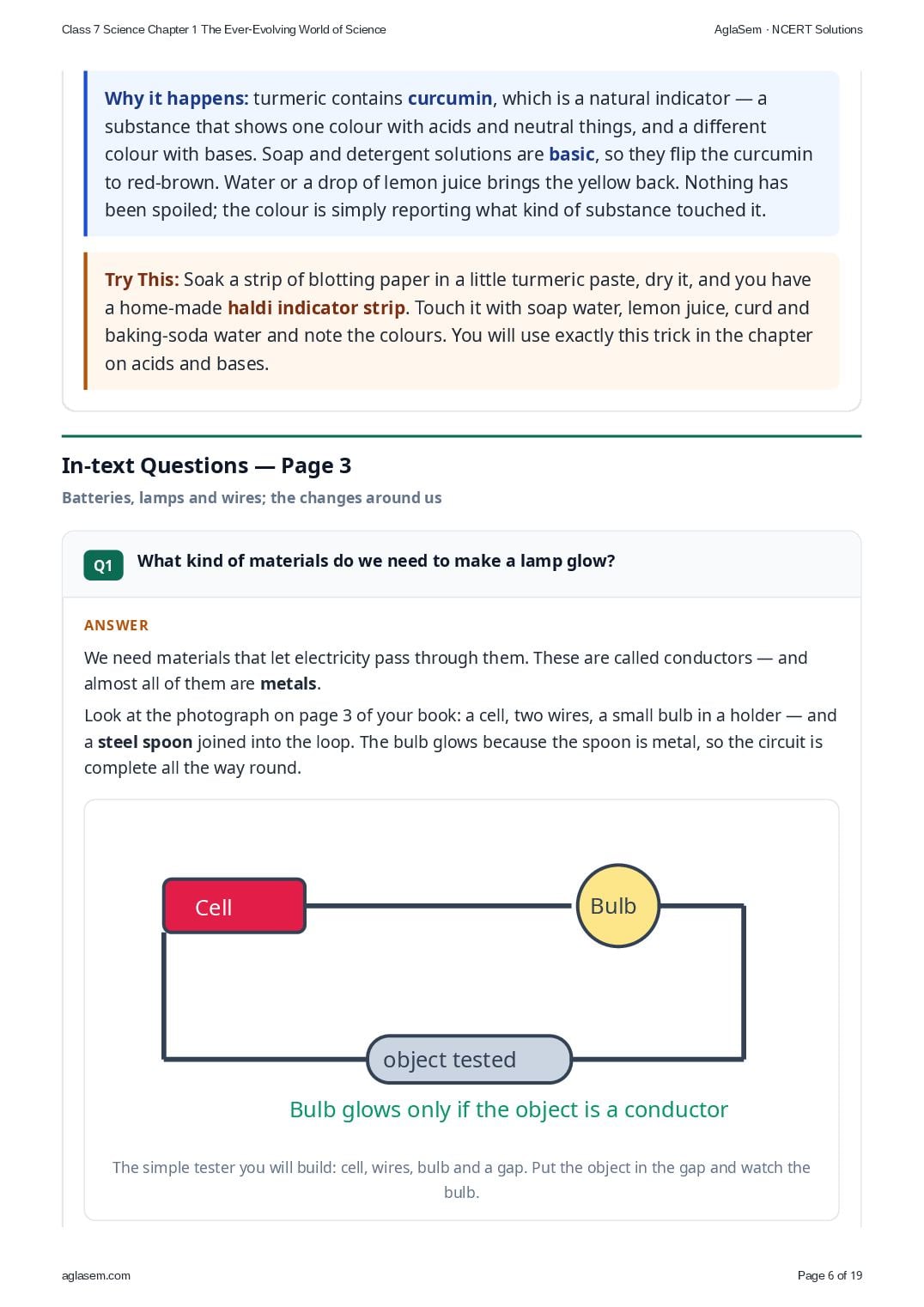
- What happens when we wash a haldi stain on our school uniform?
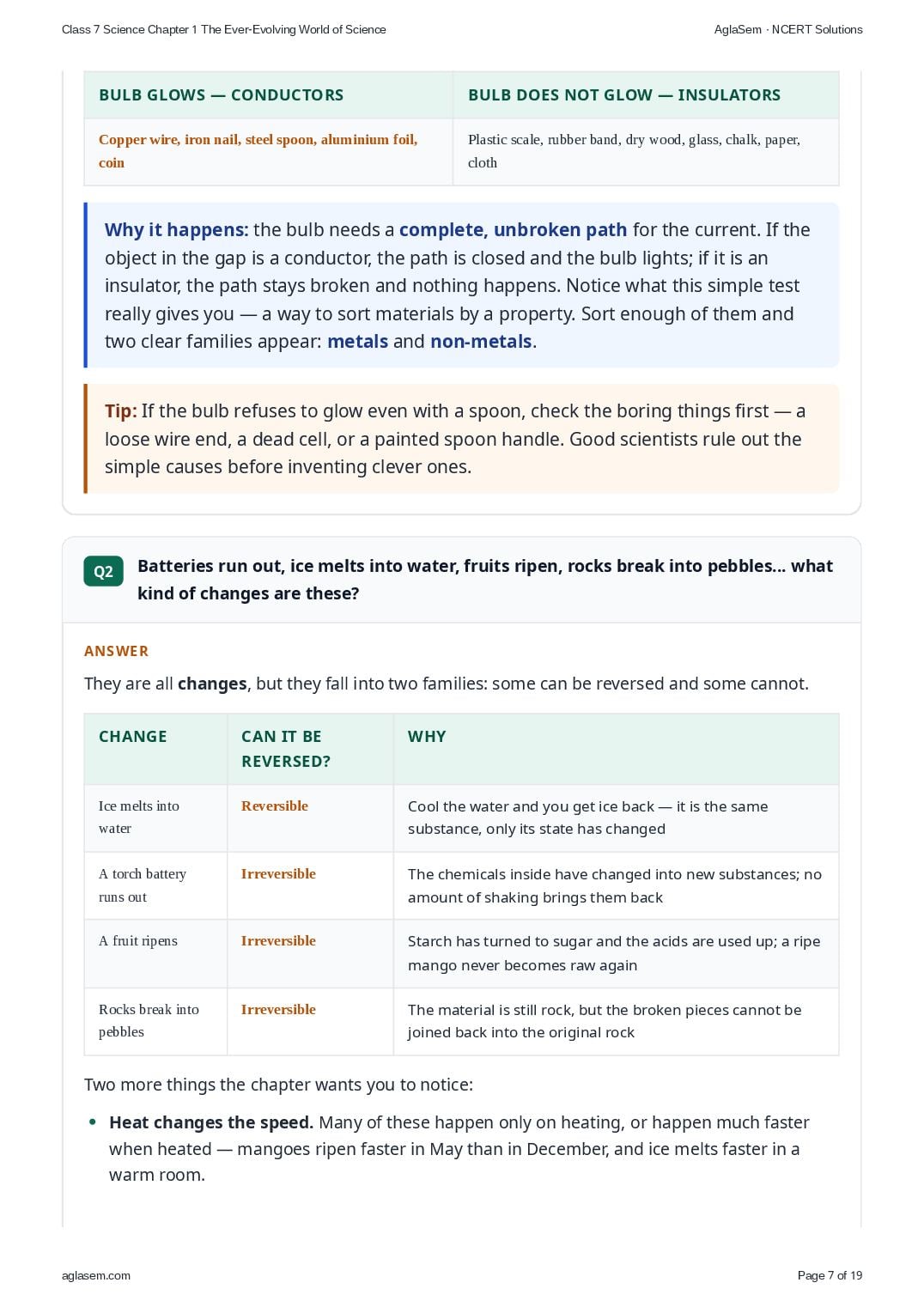
- What kind of materials do we need to make a lamp glow?
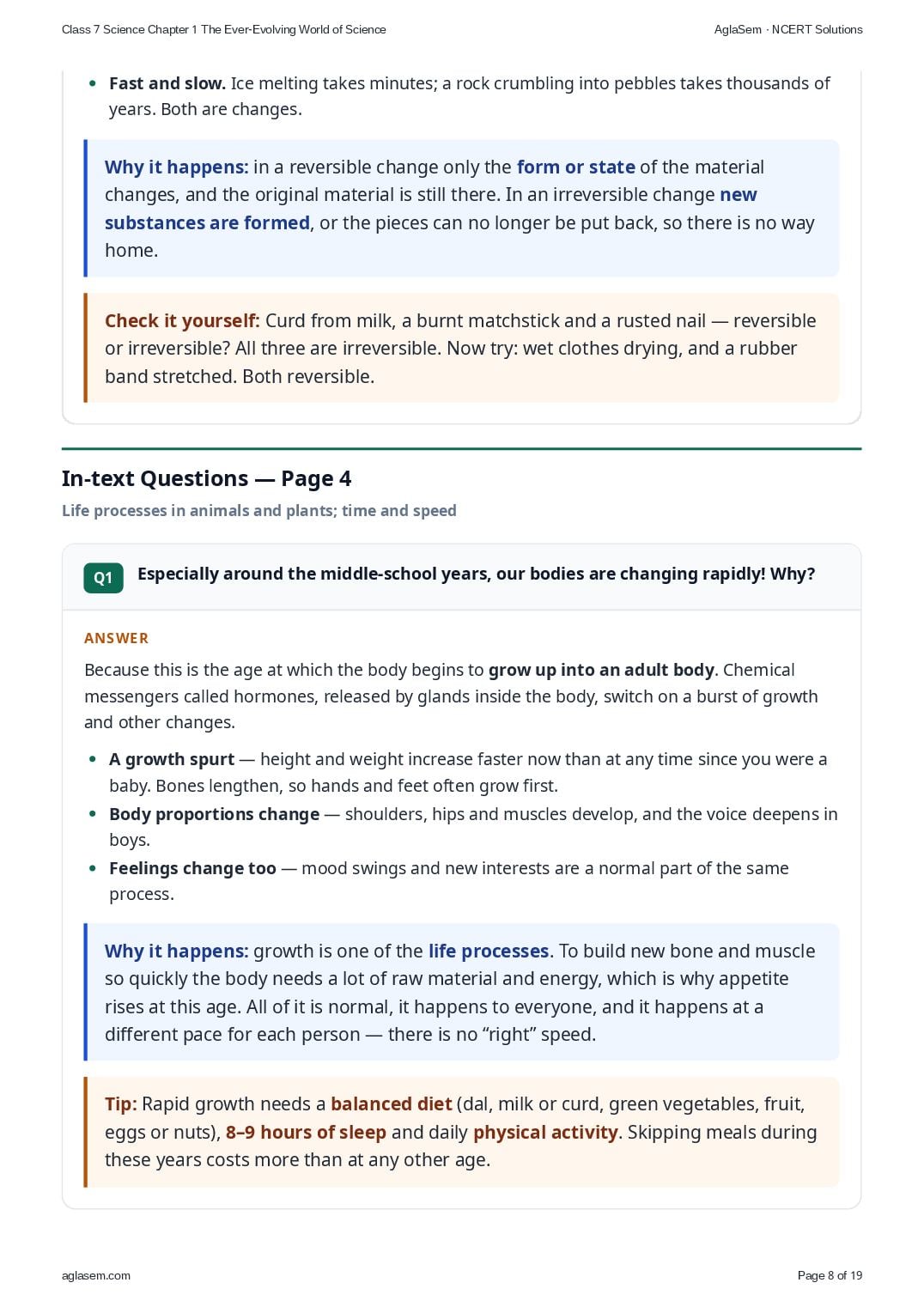
- Batteries run out, ice melts into water, fruits ripen, rocks break into pebbles… what kind of changes are these?
- Especially around the middle-school years, our bodies are changing rapidly! Why?
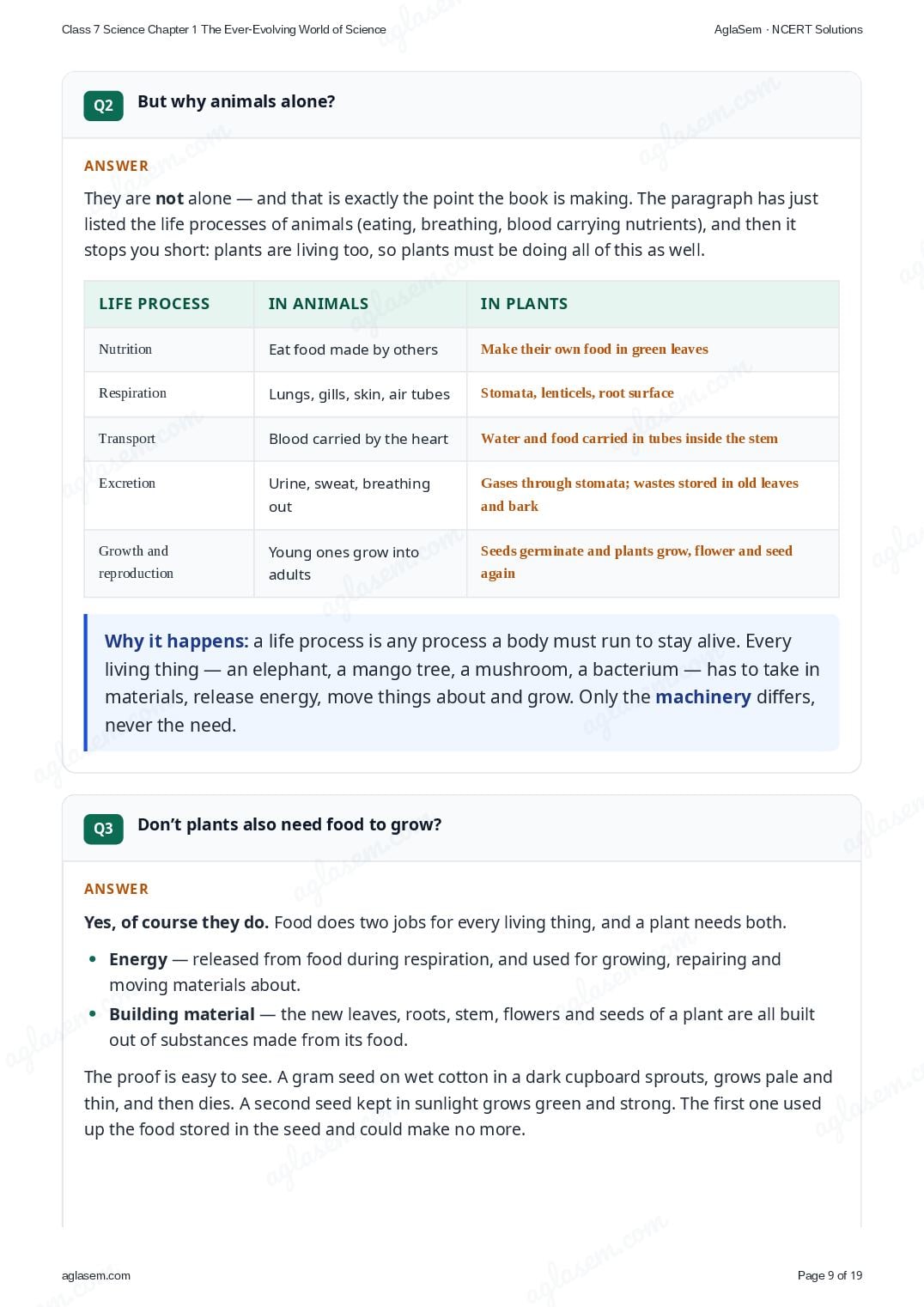
- But why animals alone?
- Don’t plants also need food to grow?
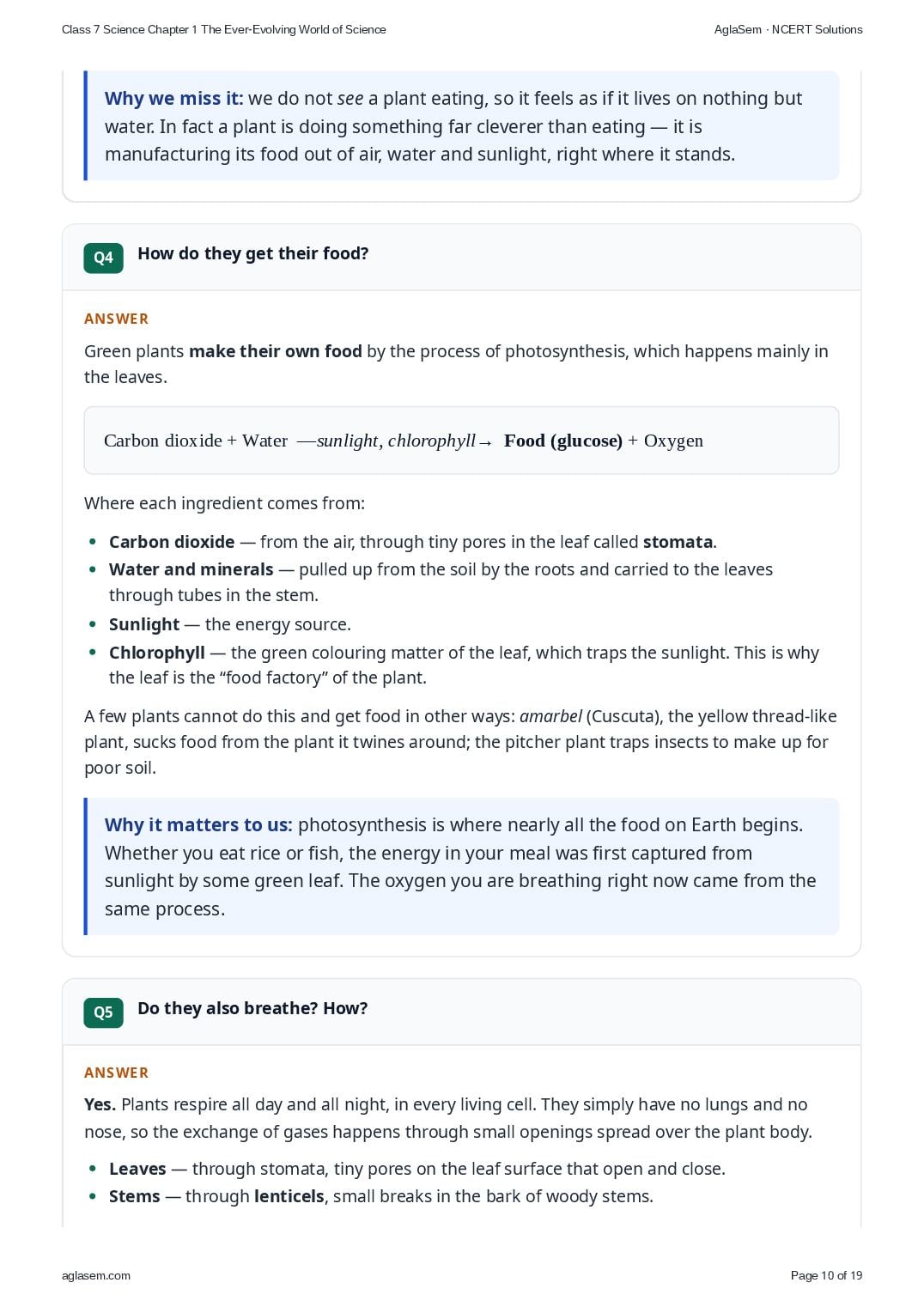
- How do they get their food?
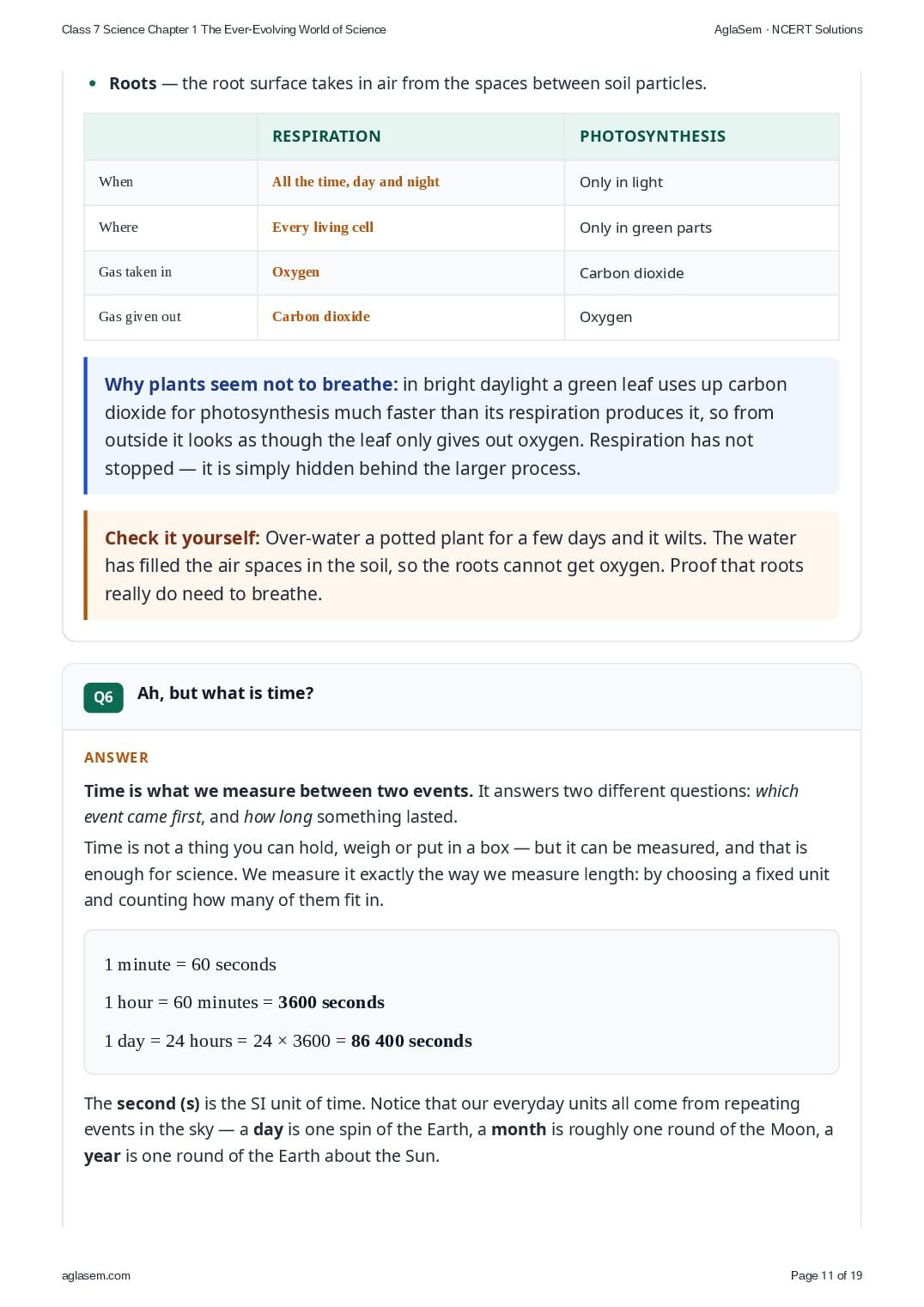
- Do they also breathe? How?
- Ah, but what is time?
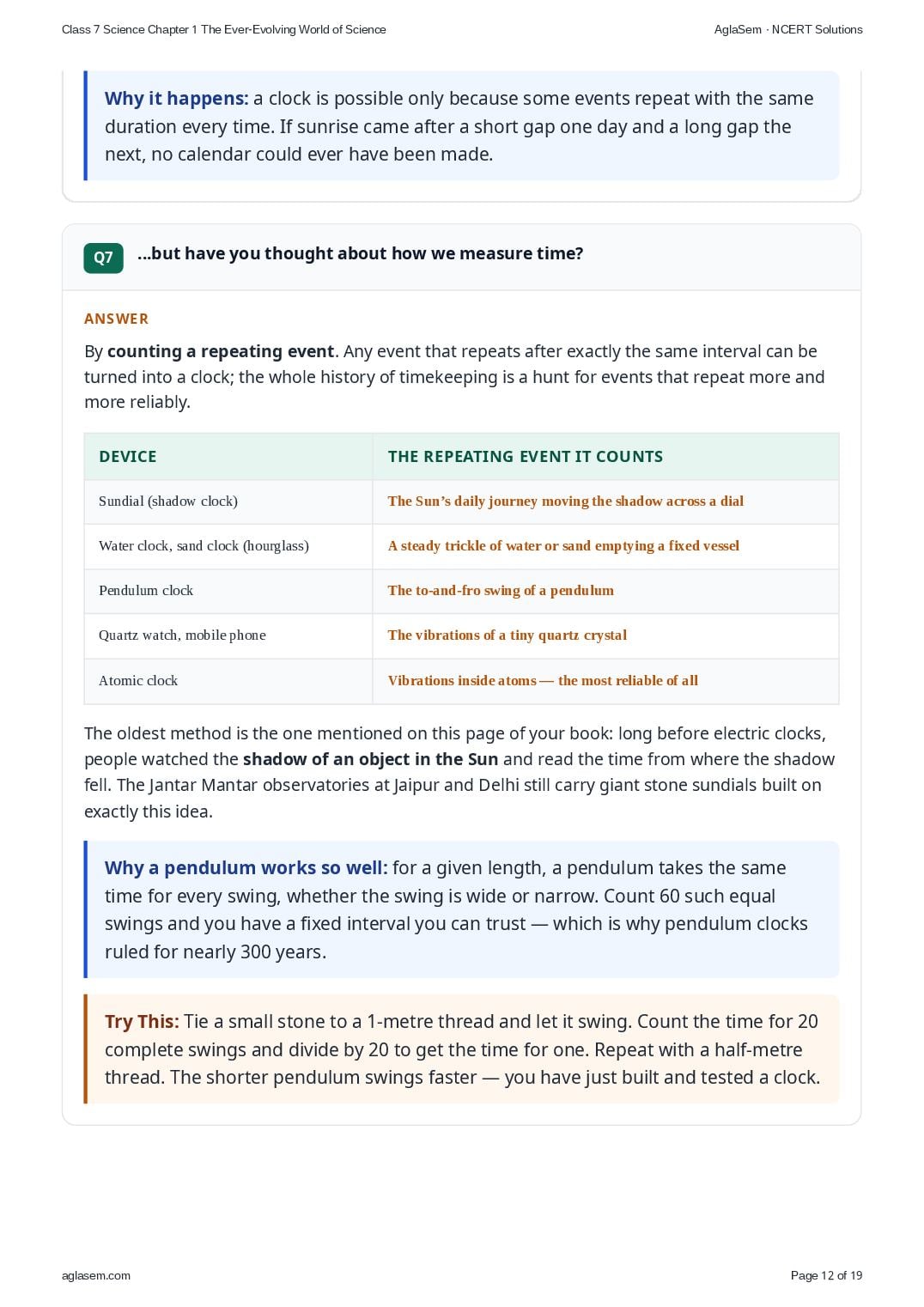
- …but have you thought about how we measure time?
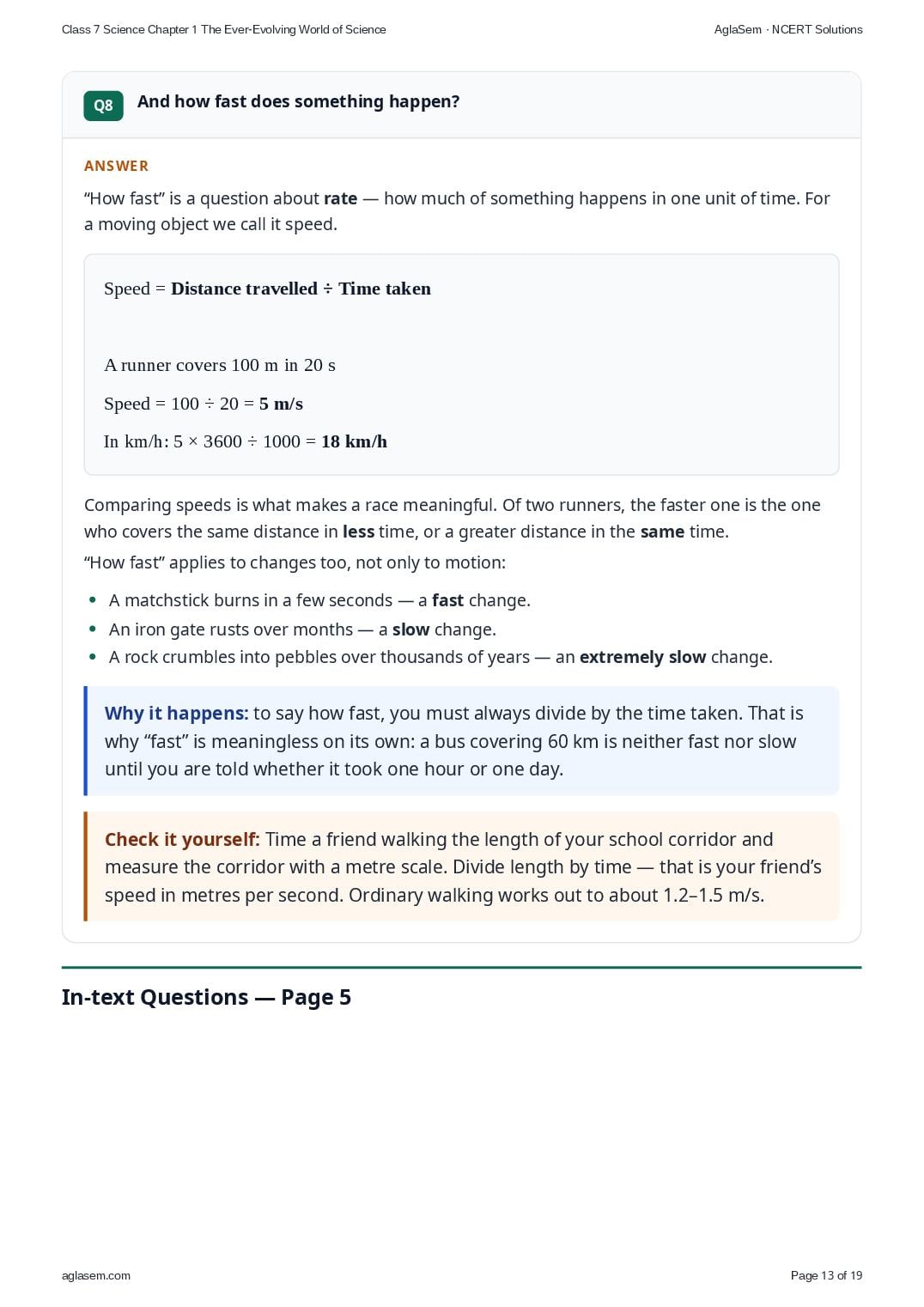
- And how fast does something happen?
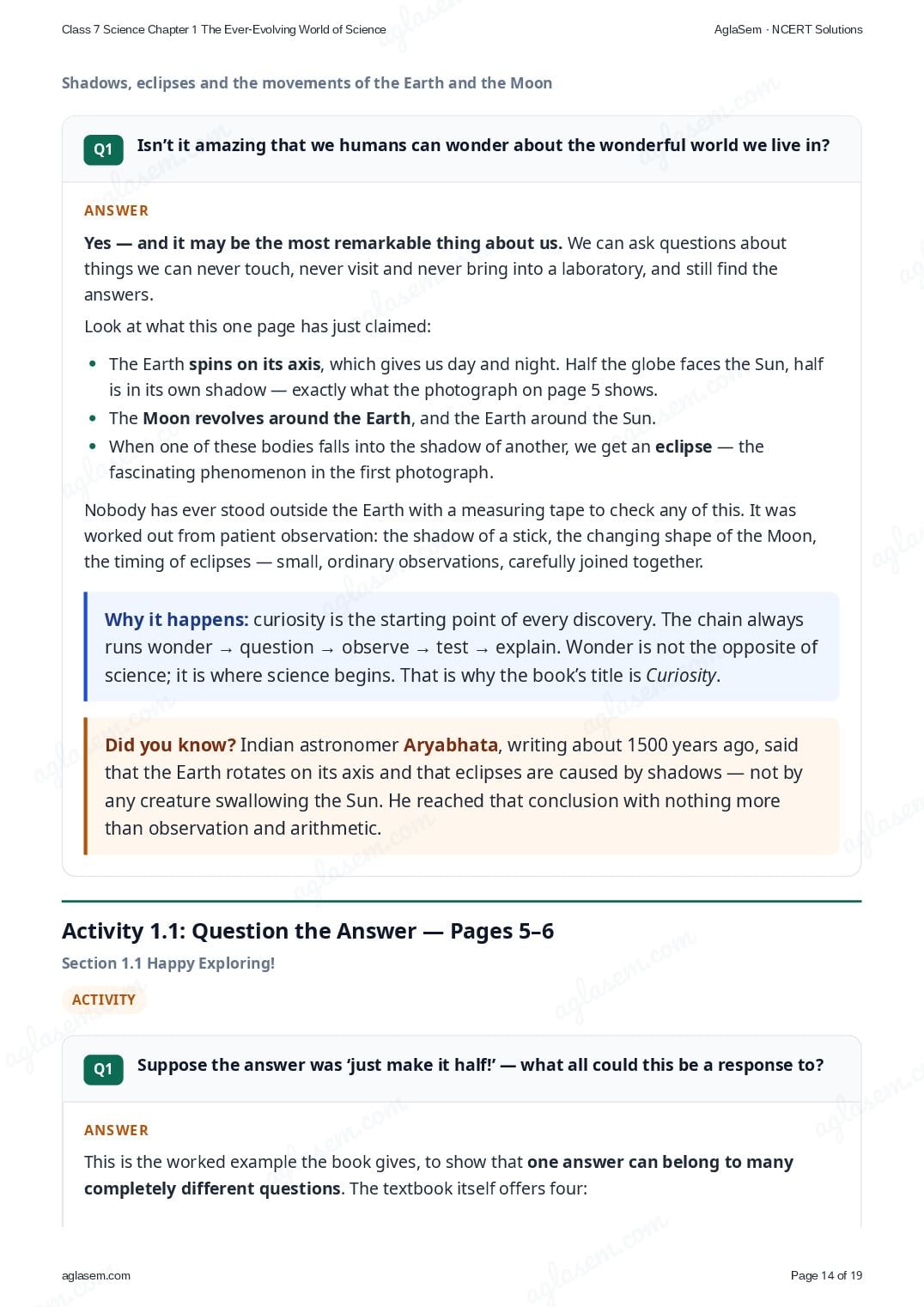
- Isn’t it amazing that we humans can wonder about the wonderful world we live in?
- Suppose the answer was ‘just make it half!’ — what all could this be a response to?
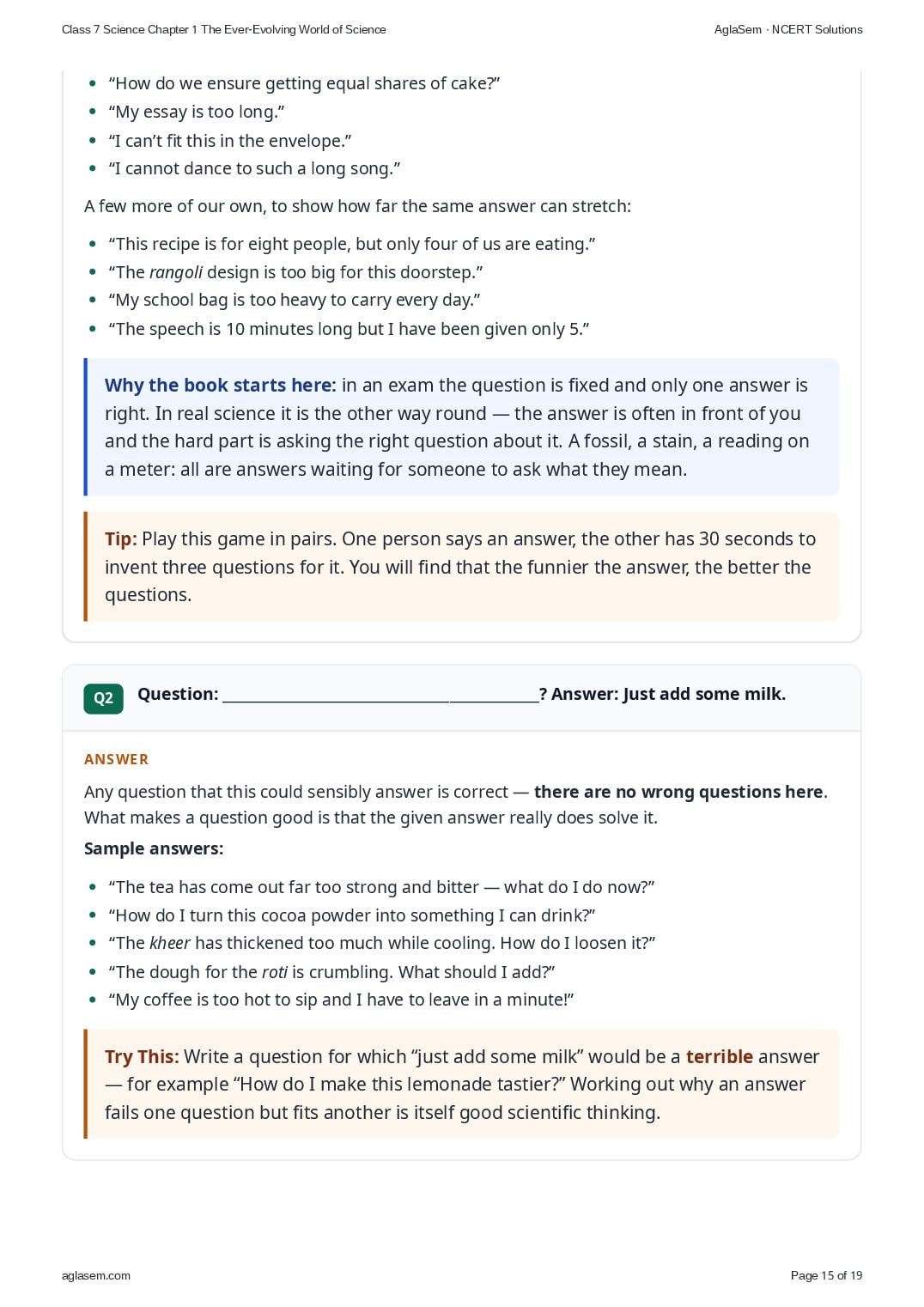
- Question: ______________________________________________? Answer: Just add some milk.
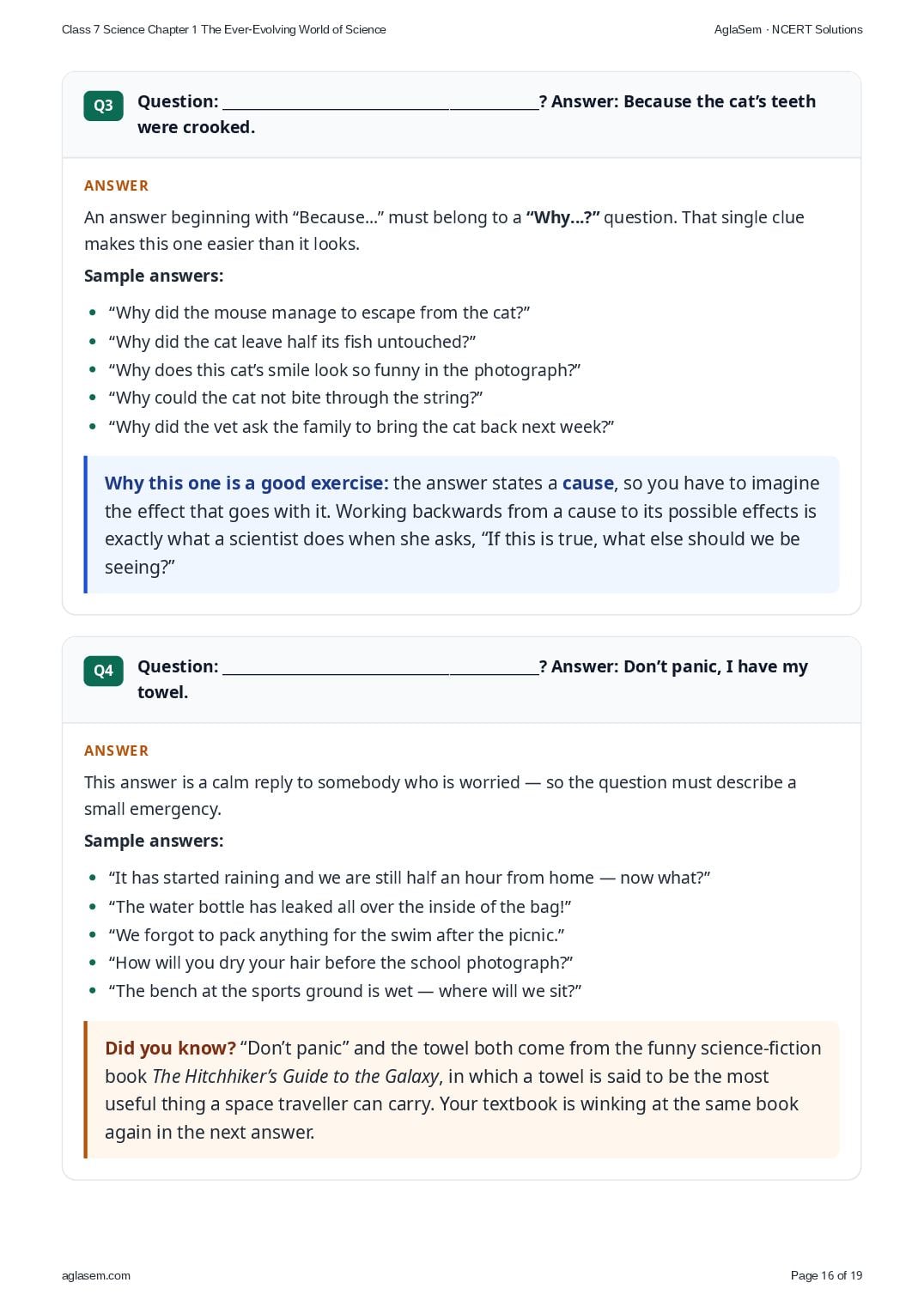
- Question: ______________________________________________? Answer: Because the cat’s teeth were crooked.
- Question: ______________________________________________? Answer: Don’t panic, I have my towel.
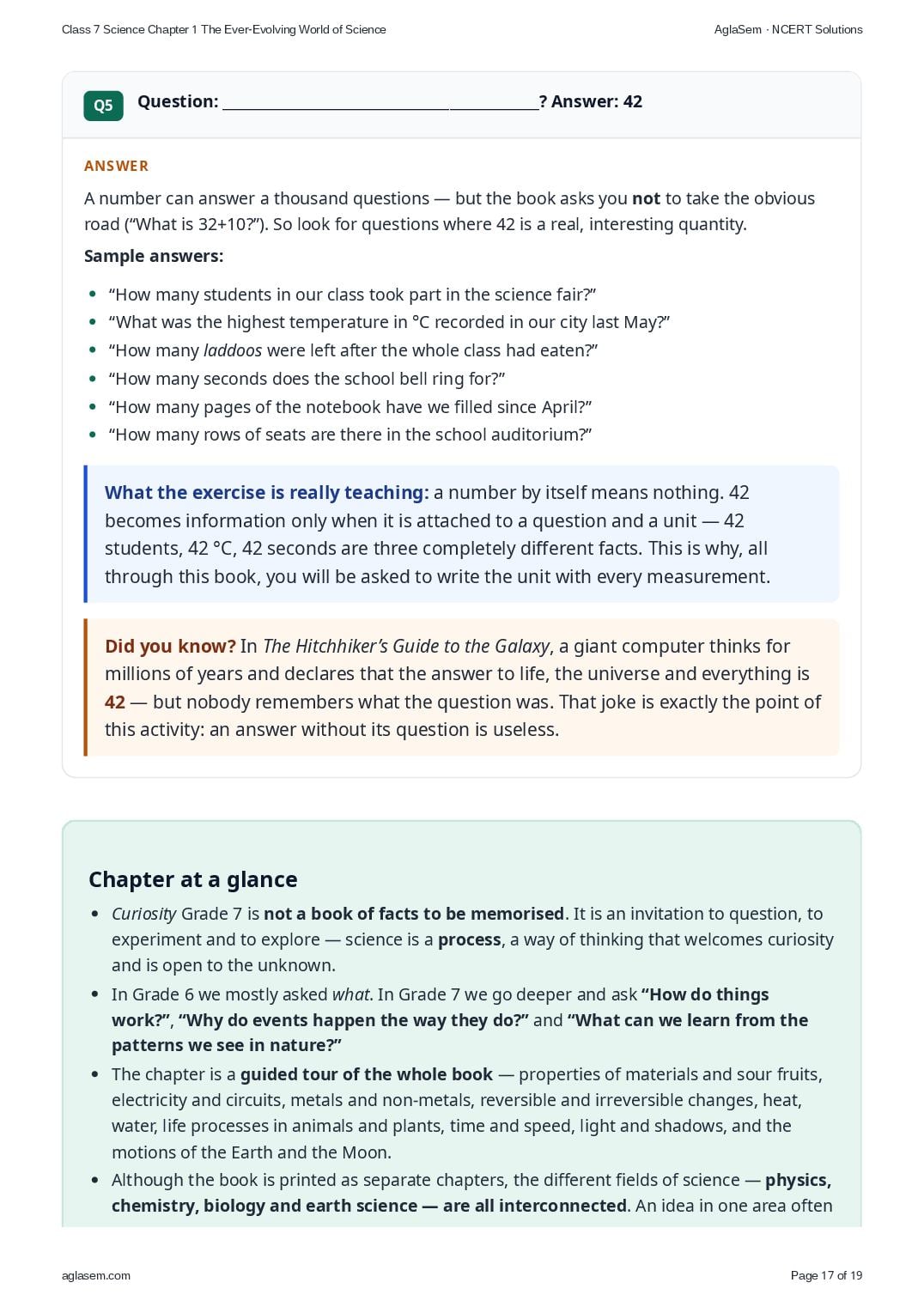
- Question: ______________________________________________? Answer: 42
Chapter at a Glance
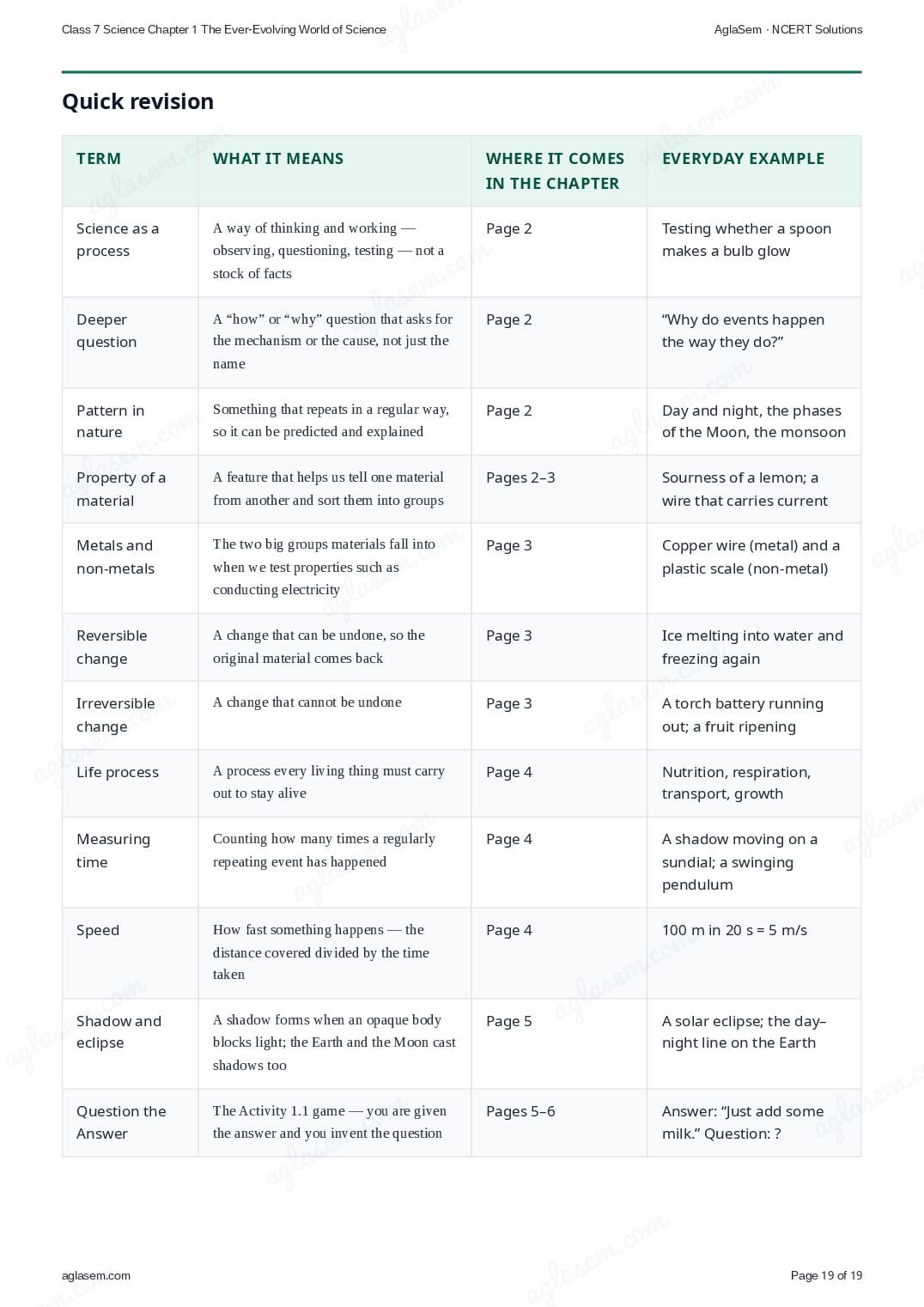
- Curiosity Grade 7 is not a book of facts to be memorised . It is an invitation to question, to experiment and to explore — science is a process , a way of thinking that welcomes curiosity and is open to the unknown.
- In Grade 6 we mostly asked what . In Grade 7 we go deeper and ask “How do things work?” , “Why do events happen the way they do?” and “What can we learn from the patterns we see in nature?”
- The chapter is a guided tour of the whole book — properties of materials and sour fruits, electricity and circuits, metals and non-metals, reversible and irreversible changes, heat, water, life processes in animals and plants, time and speed, light and shadows, and the motions of the Earth and the Moon.
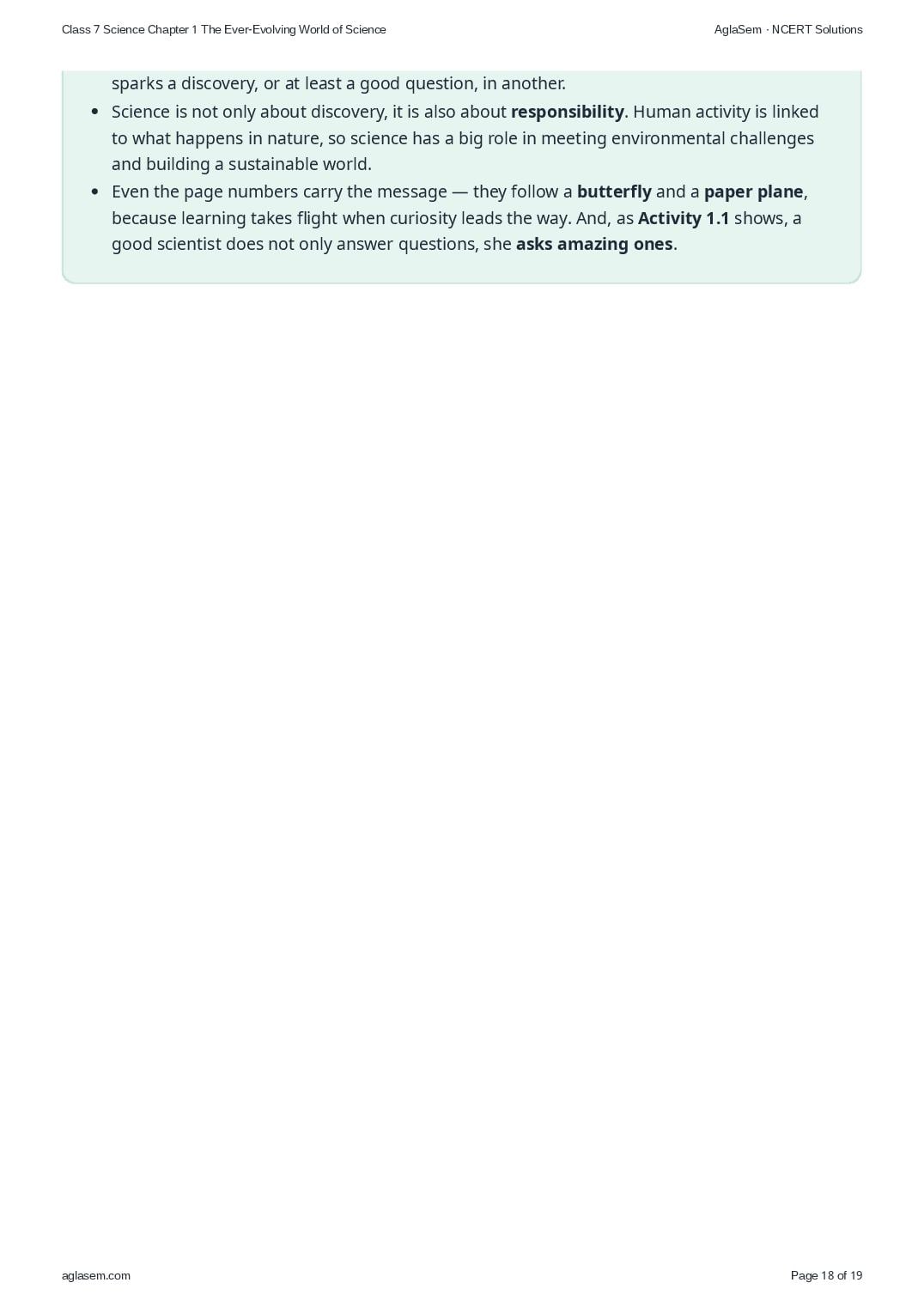
- Although the book is printed as separate chapters, the different fields of science — physics, chemistry, biology and earth science — are all interconnected . An idea in one area often sparks a discovery, or at least a good question, in another.
- Science is not only about discovery, it is also about responsibility . Human activity is linked to what happens in nature, so science has a big role in meeting environmental challenges and building a sustainable world.
- Even the page numbers carry the message — they follow a butterfly and a paper plane , because learning takes flight when curiosity leads the way. And, as Activity 1.1 shows, a good scientist does not only answer questions, she asks amazing ones .
How to Download NCERT Solutions for Class 7 Science Chapter 1 PDF
Follow these simple steps to get the the Ever Evolving World of Science questions-and-answers PDF from Curiosity.
- Search NCERT Solutions for Class 7 Science Chapter 1 aglasem and open this page.
- Read the exercise questions with answers for the Ever Evolving World of Science shown above.
- Click the Download PDF link to save the the Ever Evolving World of Science solutions to your device.
NCERT Solutions for Class 7 Science – All Chapters
There are more chapters to study besides the Ever Evolving World of Science in Science. Here are the NCERT Solutions for all chapters of Class 7 Science.
- Chapter 1 the Ever Evolving World of Science
- Chapter 2 Exploring Substances Acidic Basic and Neutral
- Chapter 3 Electricity Circuits and Their Components
- Chapter 4 the World of Metals and Non Metals
- Chapter 5 Changes Around Us Physical and Chemical
- Chapter 6 Adolescence a Stage of Growth and Change
- Chapter 7 Heat Transfer in Nature
- Chapter 8 Measurement of Time and Motion
- Chapter 9 Life Processes in Animals
- Chapter 10 Life Processes in Plants
- Chapter 11 Light Shadows and Reflections
- Chapter 12 Earth Moon and the Sun
NCERT Solutions for Class 7 – All Subjects
Just like Chapter 1 of Science, you can get the exercise questions with answers for every other subject of Class 7. Here are the NCERT Solutions for all subjects of Class 7.
NCERT Solutions for Class 7 Science Chapter 1 – An Overview
The key highlights of this study material are as follows.
| Aspects | Details |
|---|---|
| Class | Class 7 |
| Subject | Science |
| Chapter Number | Chapter 1 |
| Chapter Name | the Ever Evolving World of Science |
| Book Name | Curiosity |
| Book By | NCERT (National Council of Educational Research and Training) |
| Educational Resource Here | NCERT Solutions of Class 7 Science Chapter 1 for all exercises |
| More Questions Answers of This Subject | NCERT Solutions for Class 7 Science |
| Download Book Chapter | NCERT Book Class 7 Science |
| All Questions Answers For This Class | NCERT Solutions for Class 7 |
| Complete Solutions | NCERT Solutions |
NCERT Solutions for Class 7 Science Chapter 1 the Ever Evolving World of Science – FAQs
What are the NCERT Solutions for Class 7 Science Chapter 1 the Ever Evolving World of Science?
They are the complete, step-by-step answers to all the exercise and in-text questions of Chapter 1 the Ever Evolving World of Science from the NCERT Class 7 Science textbook Curiosity, written by experts as per the latest NCERT syllabus.
How can I download the Class 7 Science Chapter 1 solutions PDF for free?
Open this page on aglasem, read the the Ever Evolving World of Science questions with answers, and click the “Download Solutions PDF” link. The Class 7 Science Chapter 1 NCERT Solutions PDF is completely free to download.
Are these NCERT Solutions as per the latest 2026-27 syllabus?
Yes. The NCERT Solutions for Class 7 Science Chapter 1 are based on the latest NCERT textbook Curiosity and the current 2026-27 CBSE syllabus, so the questions and answers match what you study in class.
Where can I get NCERT Solutions for the other chapters of Class 7 Science?
You can find the answers to every chapter on the NCERT Solutions for Class 7 Science page, and solutions for every subject on the NCERT Solutions for Class 7 page.
How do NCERT Solutions help in exam preparation?
They show the correct method to solve each question, help you write answers the way they are expected in exams, let you check and correct your own work, and save revision time — which together improve your marks in Class 7 Science.
If you have any queries on NCERT Solutions for Class 7 Science Chapter 1 the Ever Evolving World of Science, then please ask in the comments below.