Download The Colonial Era in India – NCERT Class 8 Social Science Chapter 4 PDF from the new NCERT Class 8 Social Science book Exploring Society: India and Beyond (2026-27). Read the chapter online or download the free PDF. Colonialism is one country taking control of another region — settling in it and imposing its political, economic and cultural systems. It is old (the great empires of the 1st millennium BCE; the spread of Christianity and Islam in the 1st…
The Colonial Era in India PDF – Chapter 4 of Exploring Society: India and Beyond (Part I)
Read the chapter online or download the PDF.
| Chapter | Download | |
|---|---|---|
| Chapter 4 PDF | The Colonial Era in India | View PDF |
| Full book | NCERT Class 8 Social Science – Exploring Society: India and Beyond | View Book |
Read Online
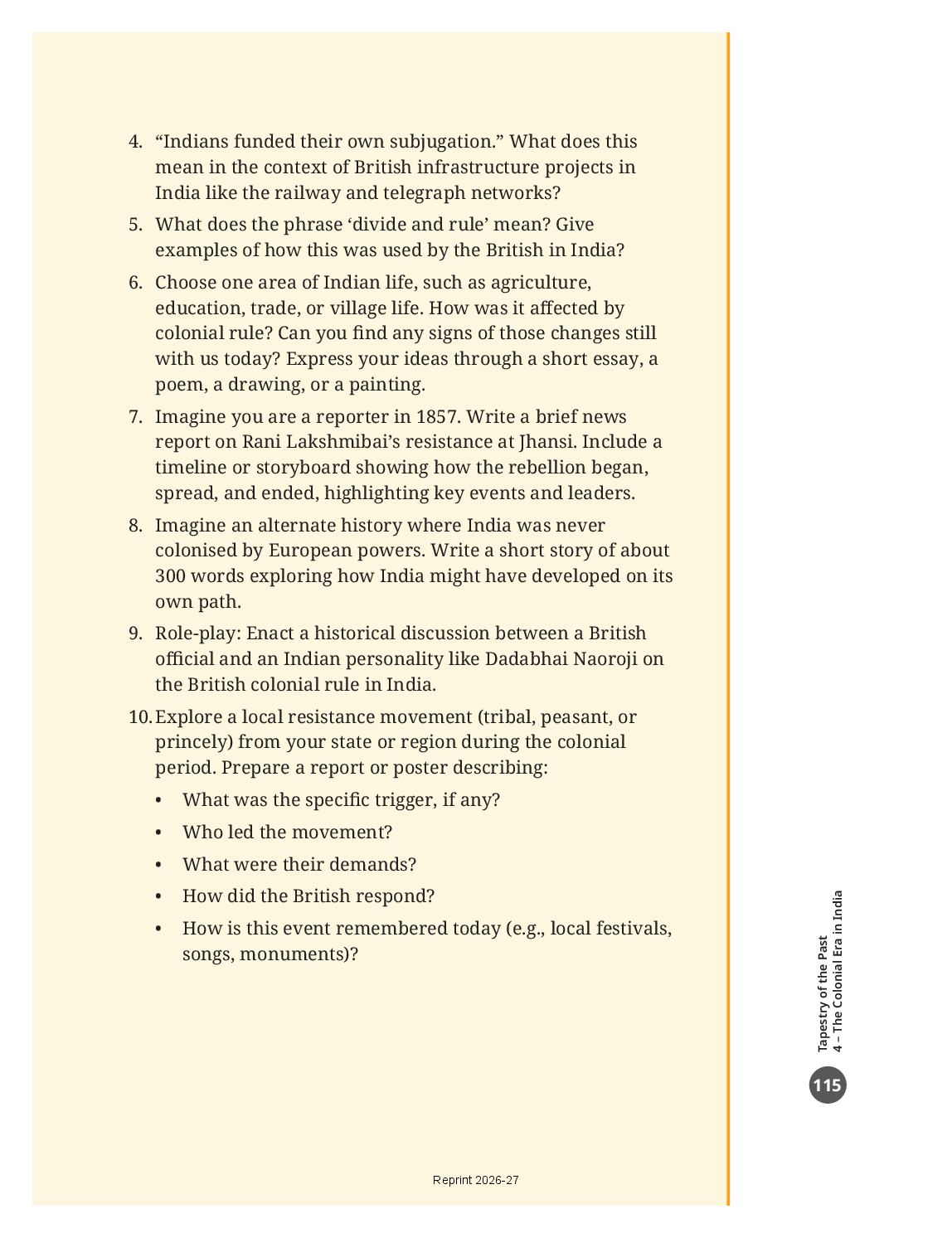
What Is in The Colonial Era in India? (Class 8 Social Science Chapter 4)
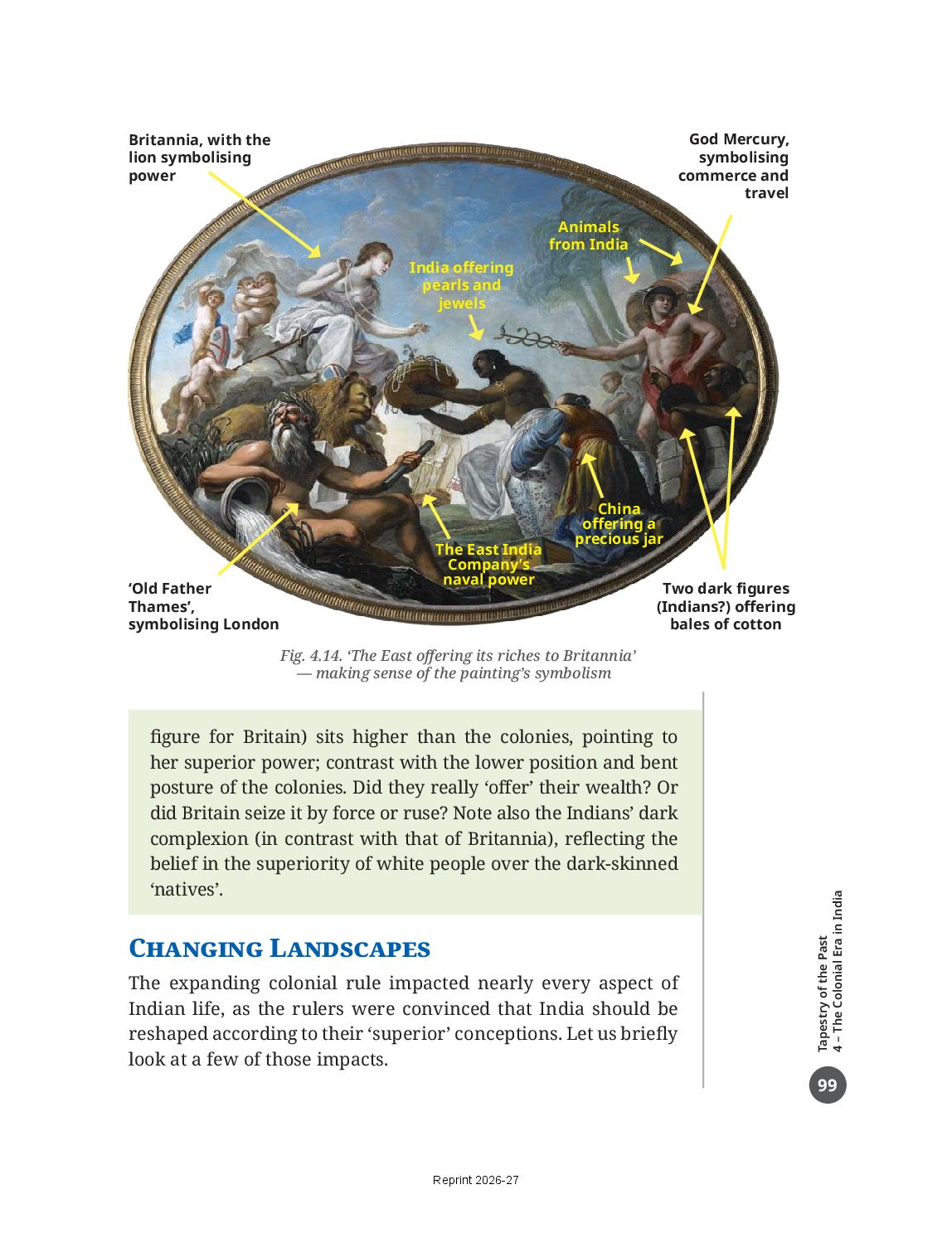
- Colonialism is one country taking control of another region — settling in it and imposing its political, economic and cultural systems. It is old (the great empires of the 1st millennium BCE; the spread of Christianity and Islam in the 1st millennium CE), but the ‘Age of Colonialism’ means Europe’s expansion from the 15th century onward — Spain, Portugal, Britain, France and the Netherlands taking Africa, Asia, the Americas, Australia and the Pacific. Four motives drove it: political competition, economic gain, religious conversion, and — a lesser one — scientific curiosity.
- India was a target because India was rich. She had traded with the Greeks and Romans two millennia earlier; spices, cotton, ivory, gems, sandalwood, teakwood and wootz steel were in demand across the Mediterranean world. On Angus Maddison’s estimates India produced at least one-fourth of world GDP right up to the 16th century, one of the two largest economies alongside China. By Independence her share was hardly 5 per cent.
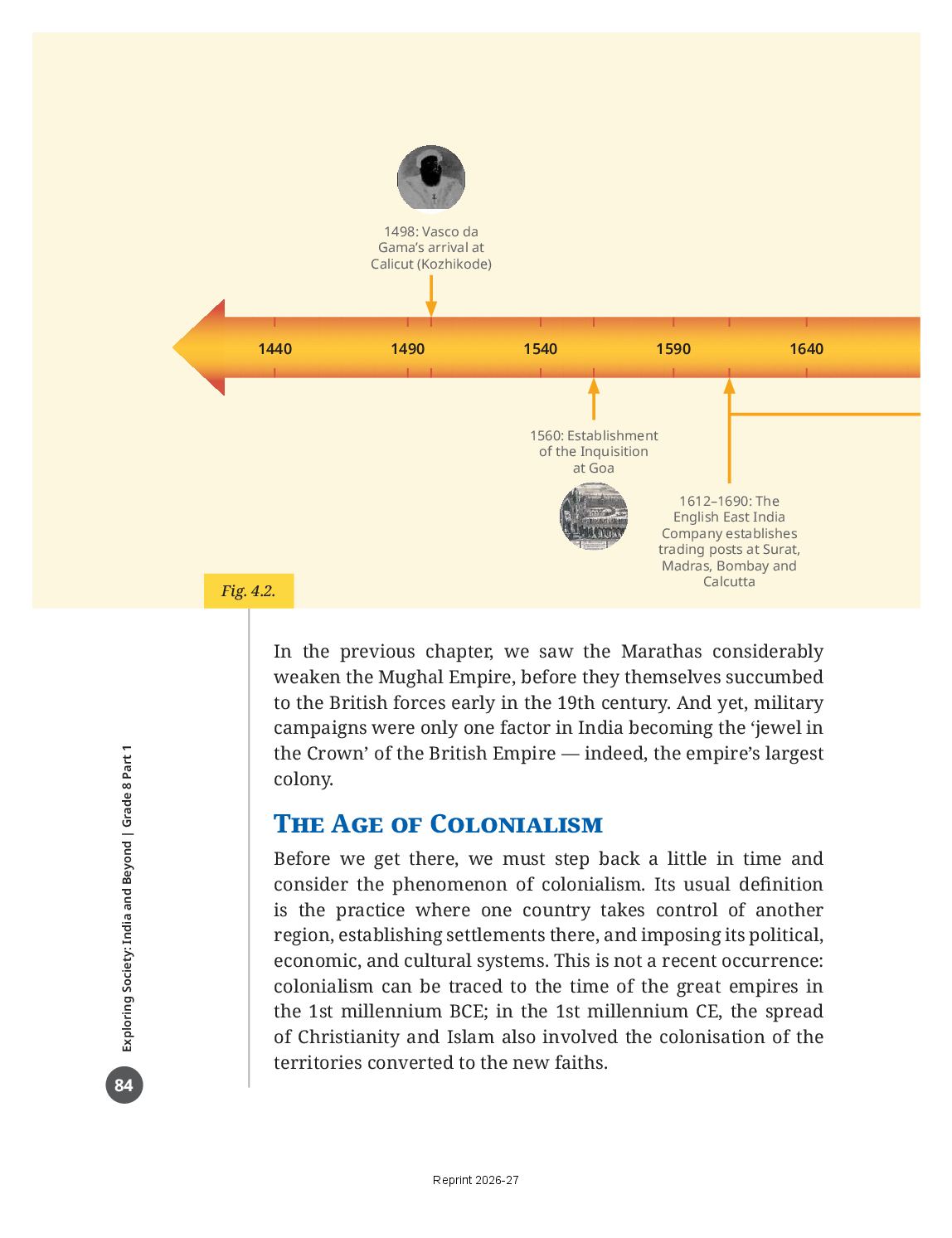
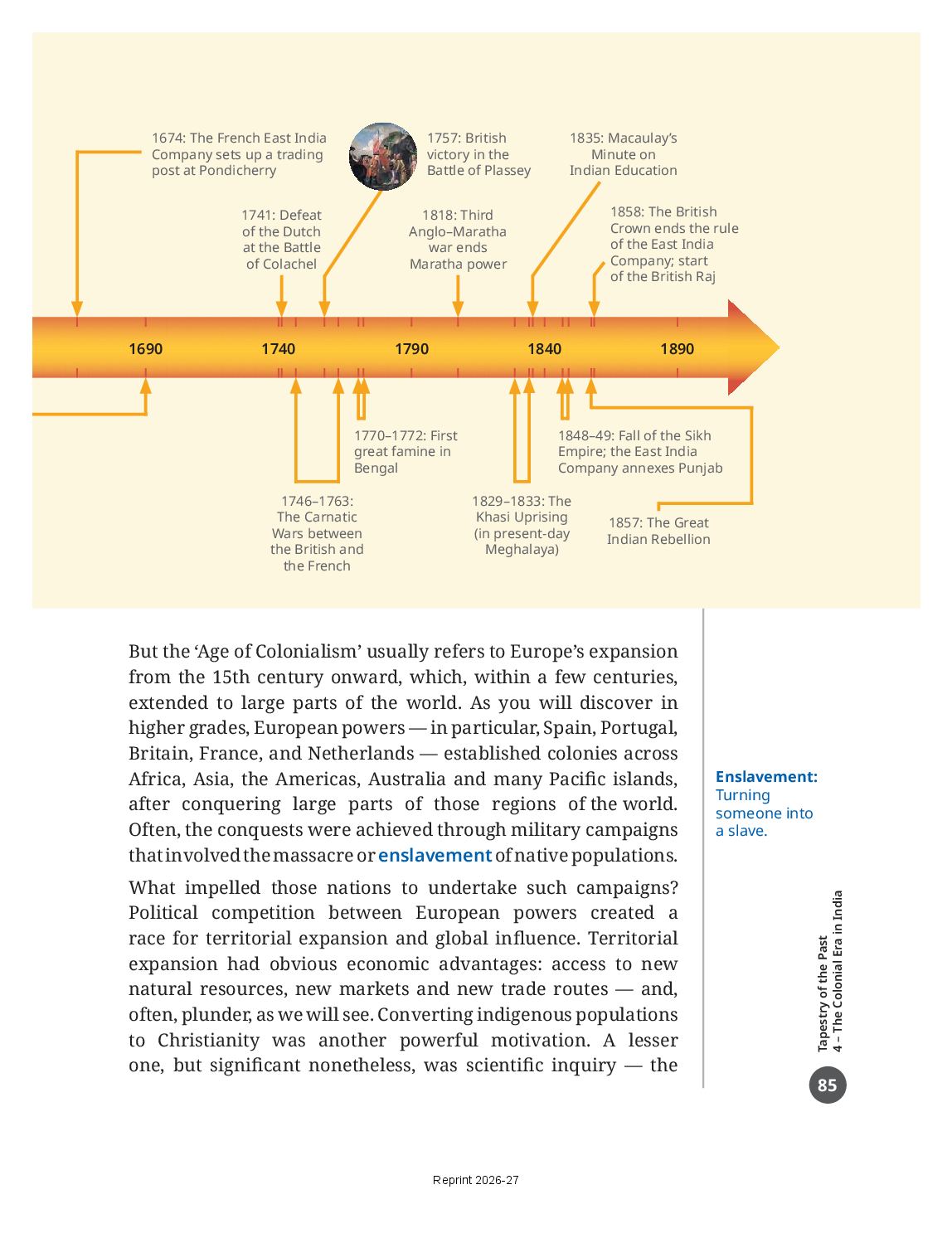
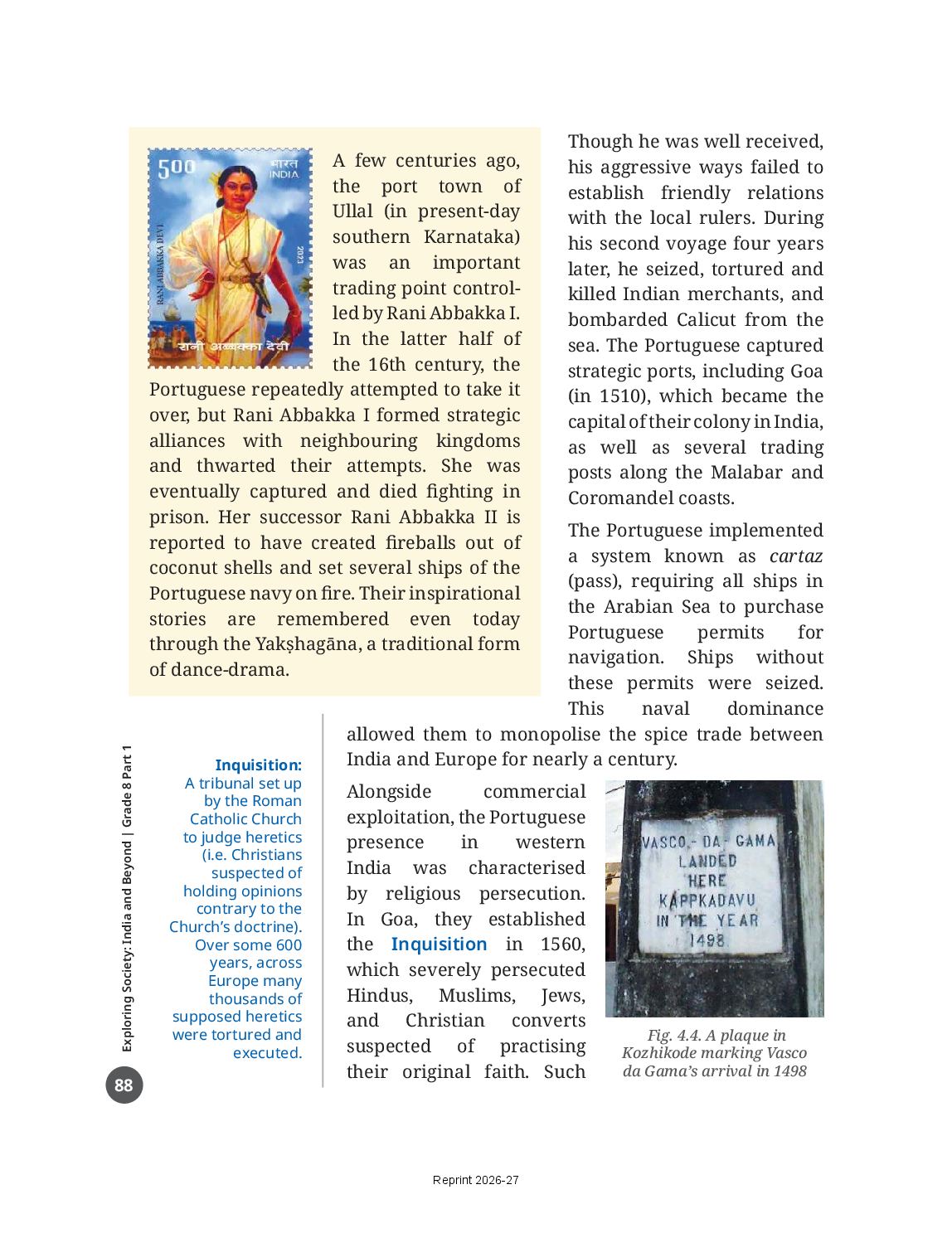
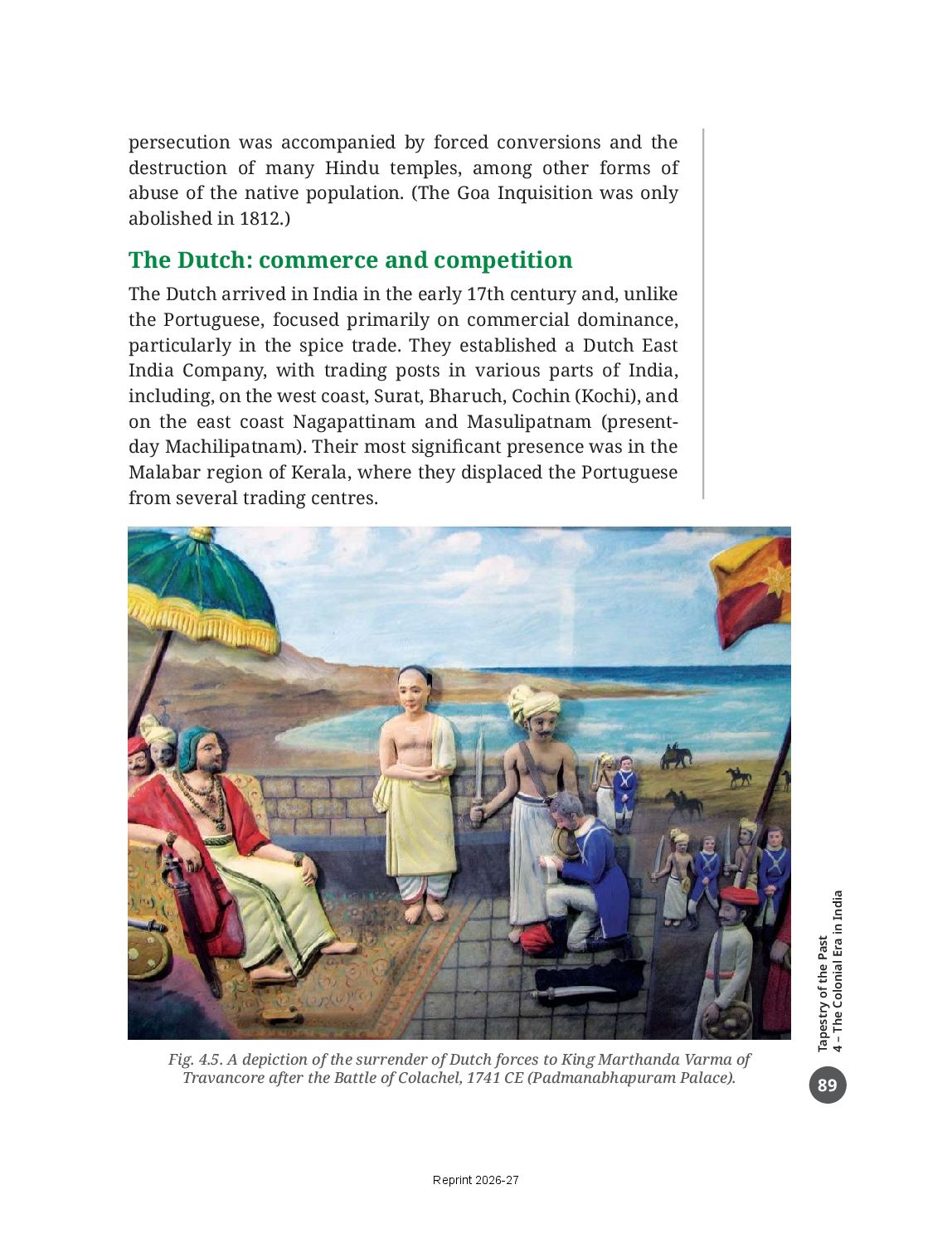
- Four European powers came; the British stayed. The Portuguese (Vasco da Gama, 1498) built naval control through the cartaz pass system and combined trade with religious persecution — the Goa Inquisition (1560–1812). The Dutch focused on commerce and were broken at Colachel (1741) by Marthanda Varma of Travancore. The French under Dupleix invented two tools the British later used — sepoys and indirect rule through puppet rulers — but lost the Carnatic Wars (1746–1763).
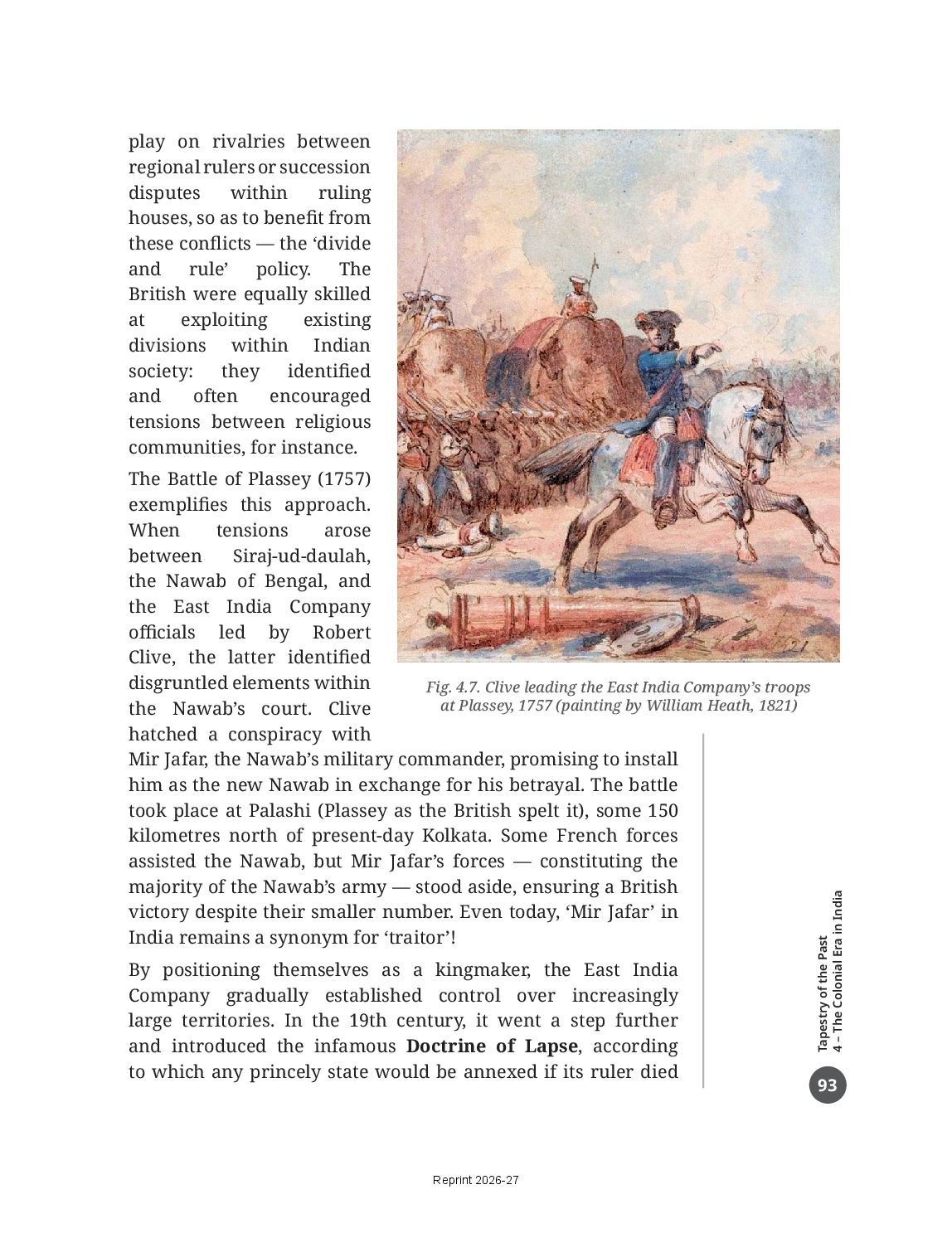
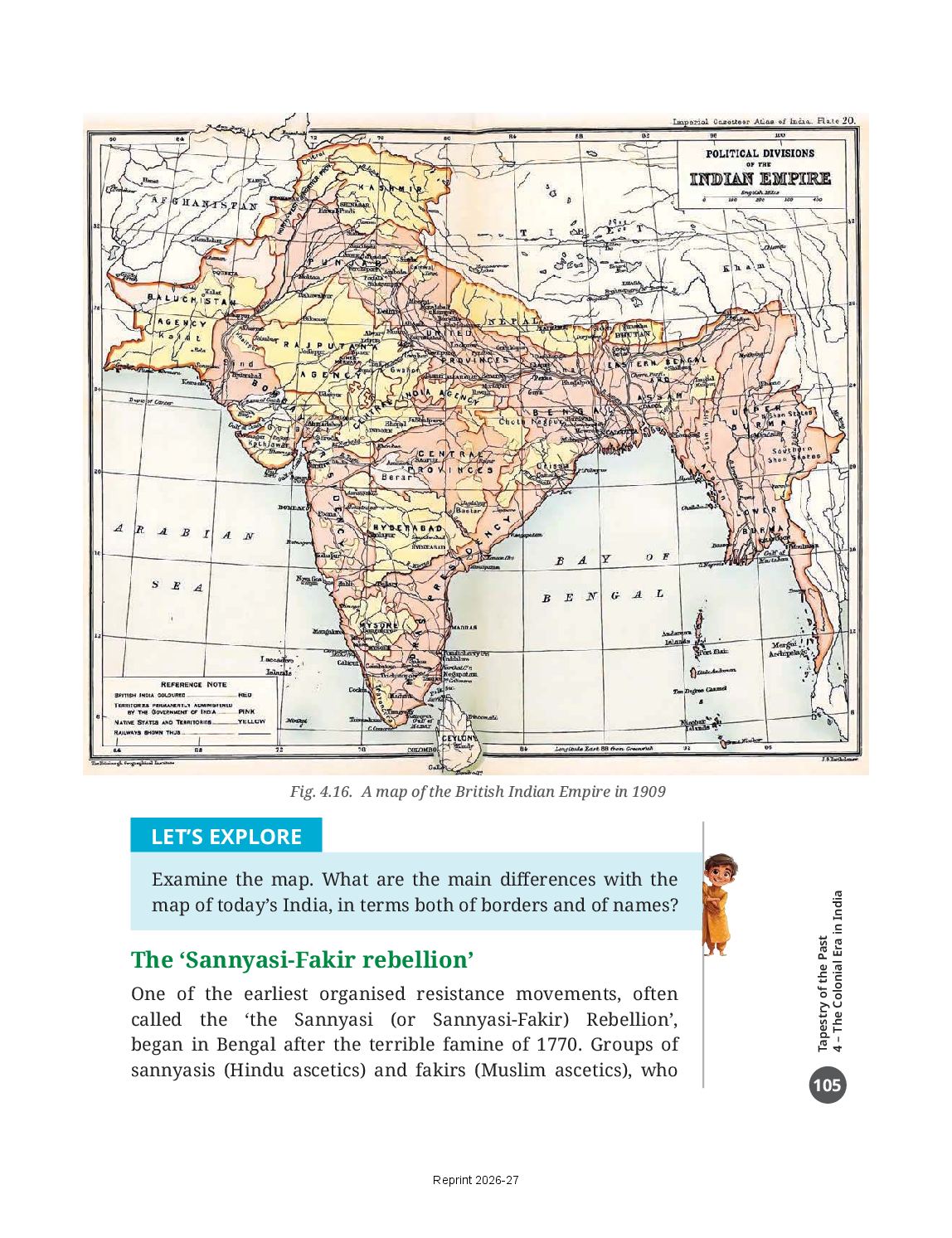
- The English East India Company went from trader to ruler by stealth, not invasion. A royal charter from Elizabeth I let it raise a private army; its agents posed as traders, took coastal footholds, then sold military help to rulers against their rivals. Plassey (1757) was won by Clive’s conspiracy with Mir Jafar, not by numbers. Then came the Doctrine of Lapse and the subsidiary alliance — ‘an empire on the cheap’, with over 500 princely states covering about 40 per cent of the Subcontinent by 1947.
- The human cost was famine. Harsh cash revenue targets, collected regardless of the harvest, turned crop failure into catastrophe: the Bengal famine of 1770–1772 killed about one-third of the province — roughly 10 million people — while the Company raised the land tax. In the Great Famine of 1876–1878 up to 8 million died, mostly in the Deccan, while about a million tonnes of rice a year were exported and Lord Lytton ordered no interference with food prices. Estimates for the whole colonial period run from 50 to 100 million deaths.
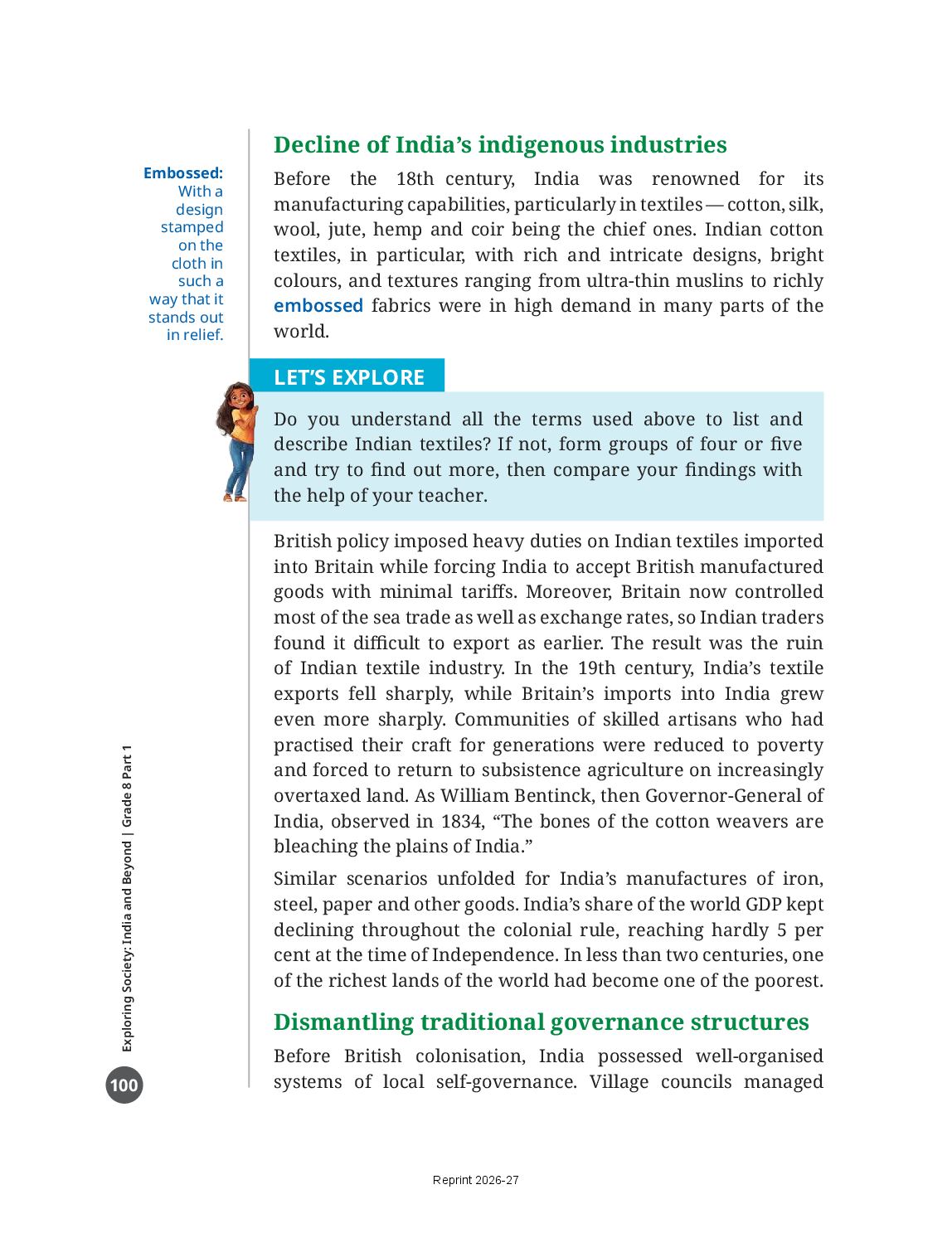
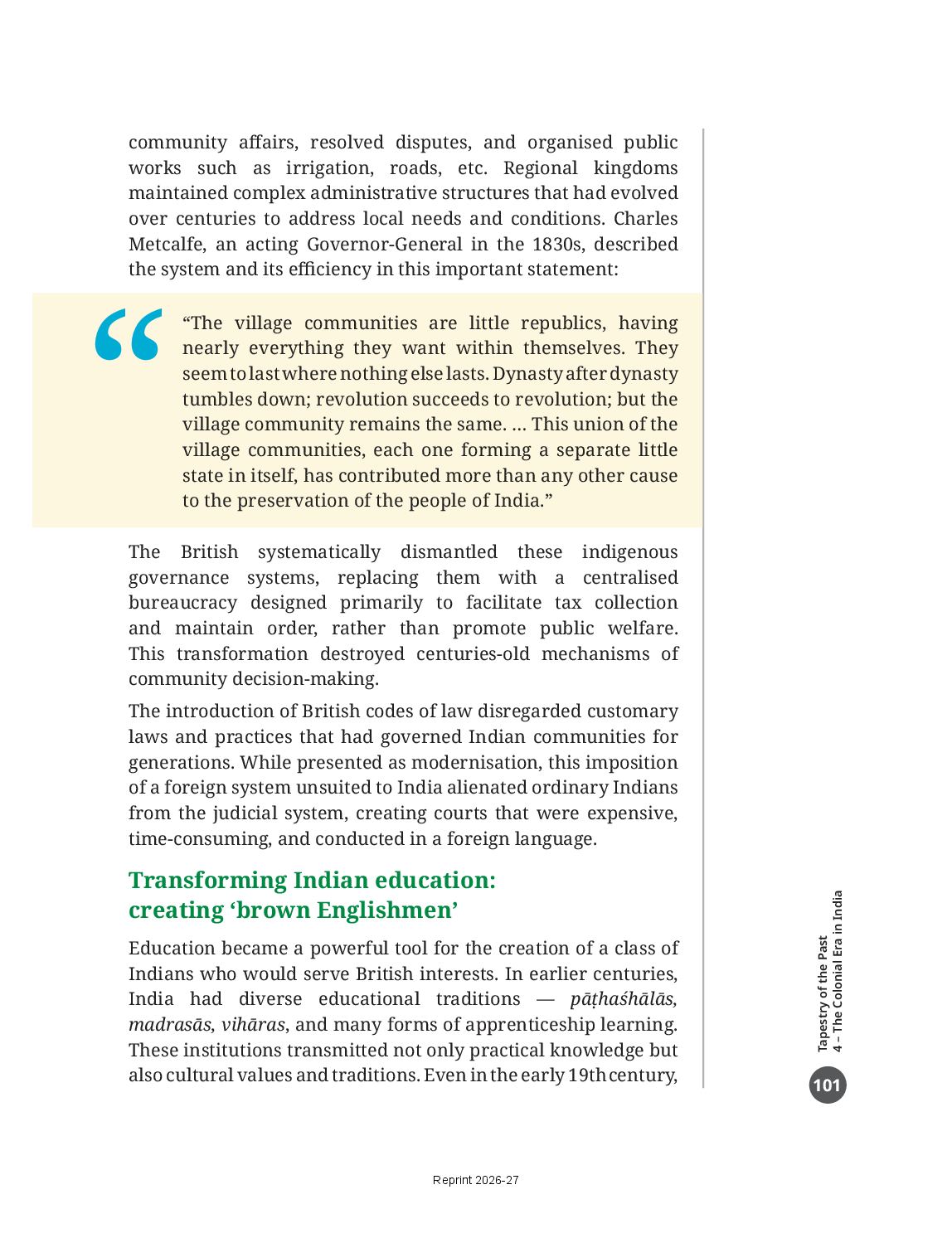
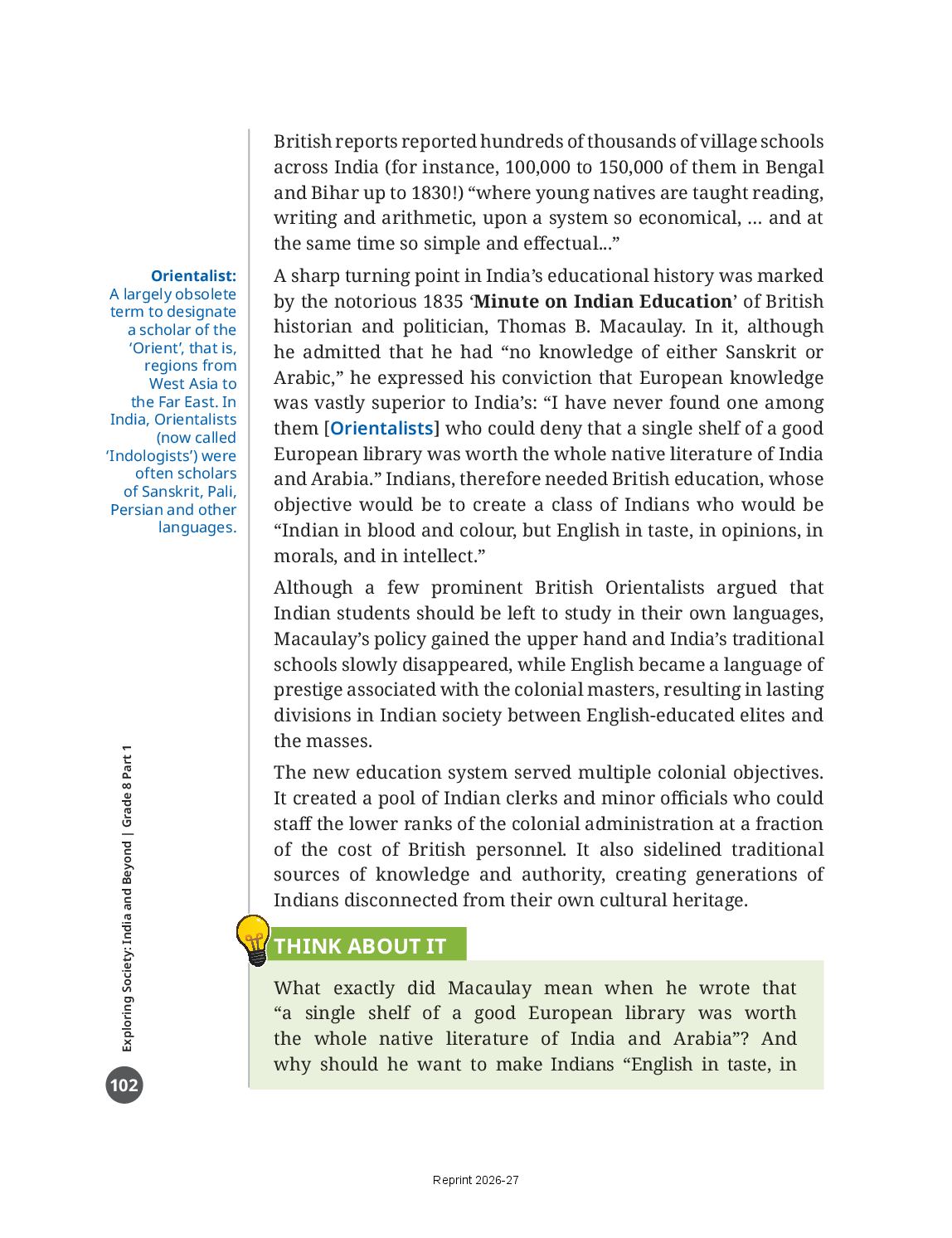
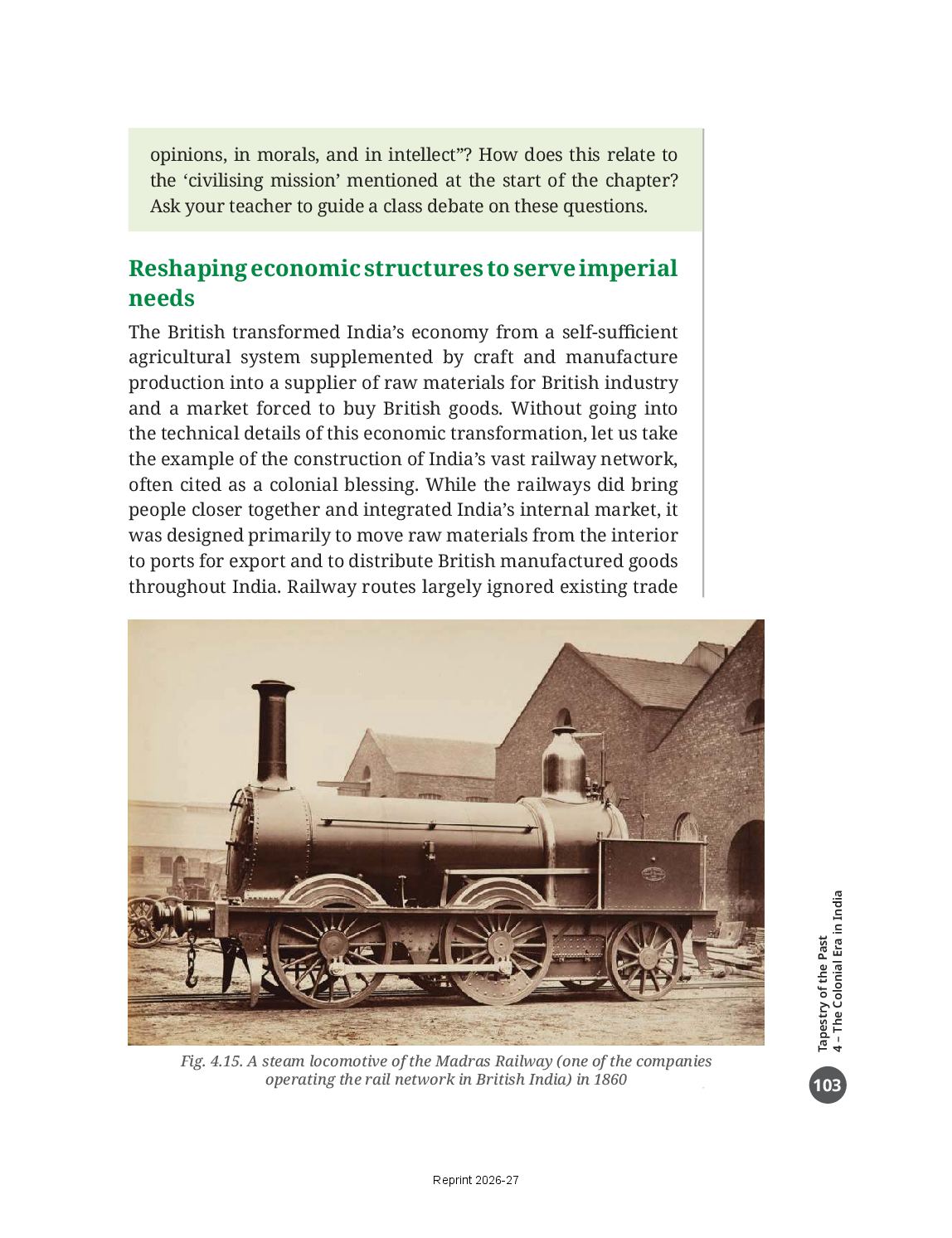
- India’s wealth, industry, governance and schooling were all reshaped for Britain. Heavy duties on Indian textiles in Britain and near-free entry for British goods in India ruined the weavers — Bentinck, 1834: “The bones of the cotton weavers are bleaching the plains of India.” Village councils gave way to a tax-collecting bureaucracy; Macaulay’s 1835 Minute on Indian Education set out to make Indians “English in taste, in opinions, in morals, and in intellect”. Naoroji, Dutt and later Utsa Patnaik measured the drain of wealth. And Indian taxes paid for the railways, the telegraph and the army: Indians funded their own subjugation.
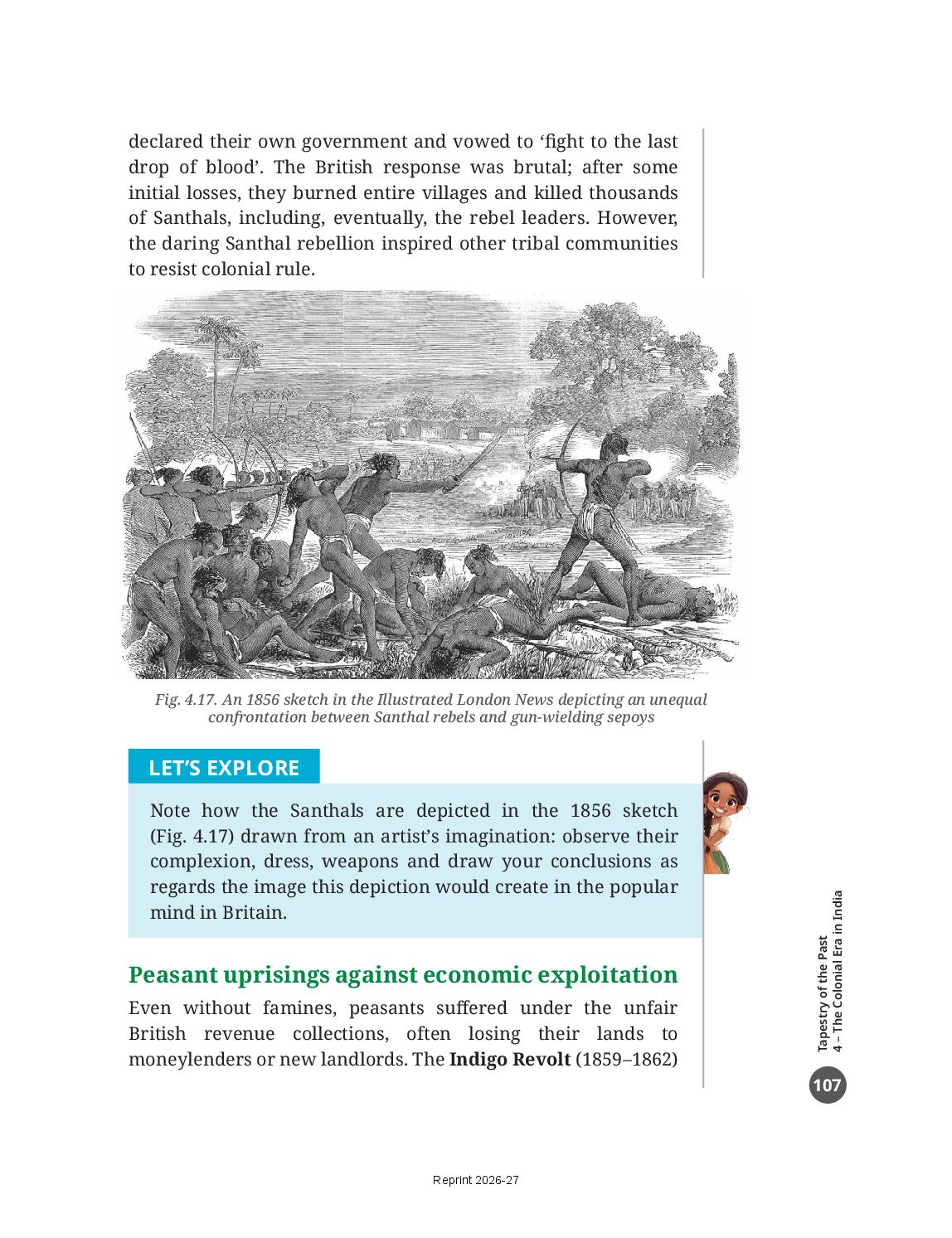
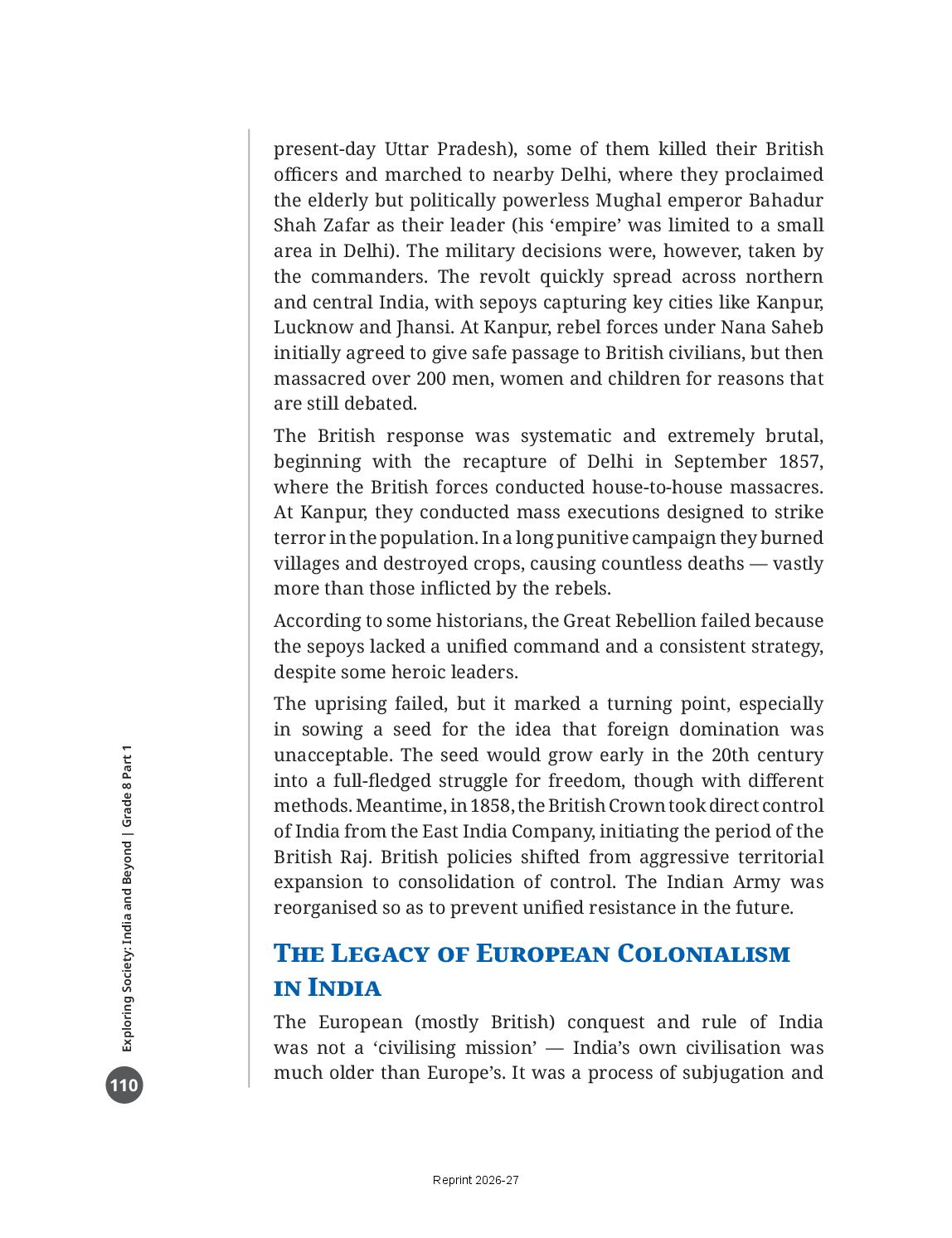
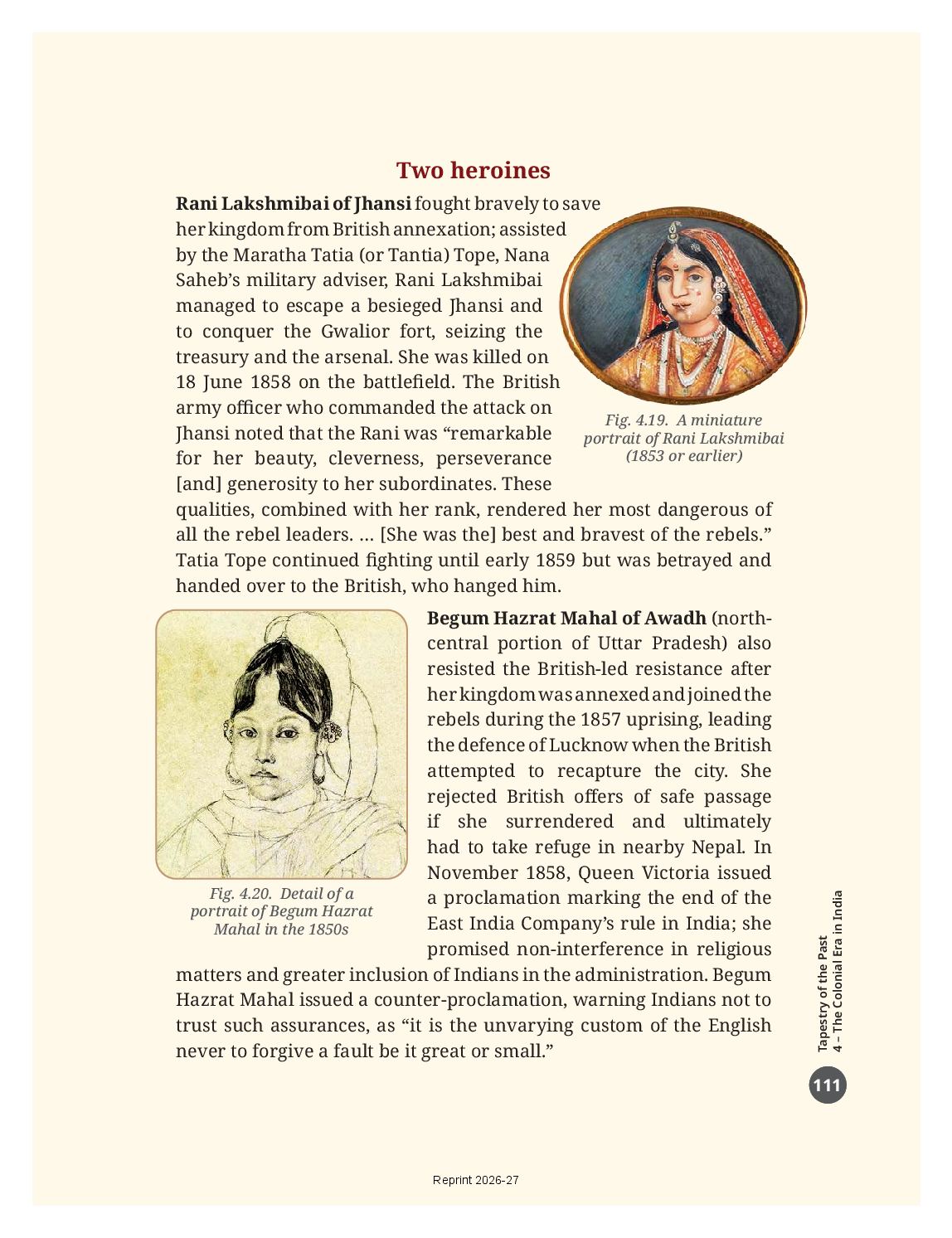
- Resistance never stopped. The Sannyasi-Fakir rebellion after 1770, the Kol Uprising (1831–32), the Khasi Uprising (1829–33), the Santhal Rebellion (1855–56) under Sidhu and Kanhu Murmu, the Indigo Revolt (1859–62) — and then the Great Rebellion of 1857, with Rani Lakshmibai, Tatia Tope, Nana Saheb and Begum Hazrat Mahal. It failed, but it planted the idea that foreign rule was unacceptable. In 1858 the Crown replaced the Company and the British Raj began.
Quick revision – The Colonial Era in India
| Term | What it means | Where it appears in the chapter | What the book says about it |
|---|---|---|---|
| Colonialism | One country takes control of another region, settles there, and imposes its political, economic and cultural systems | ‘The Age of Colonialism’, page 84 | Traceable to the 1st millennium BCE; the ‘Age of Colonialism’ means Europe’s expansion from the 15th century |
| Enslavement | Turning someone into a slave | Margin note, page 85 | European conquests “often” involved the massacre or enslavement of native populations |
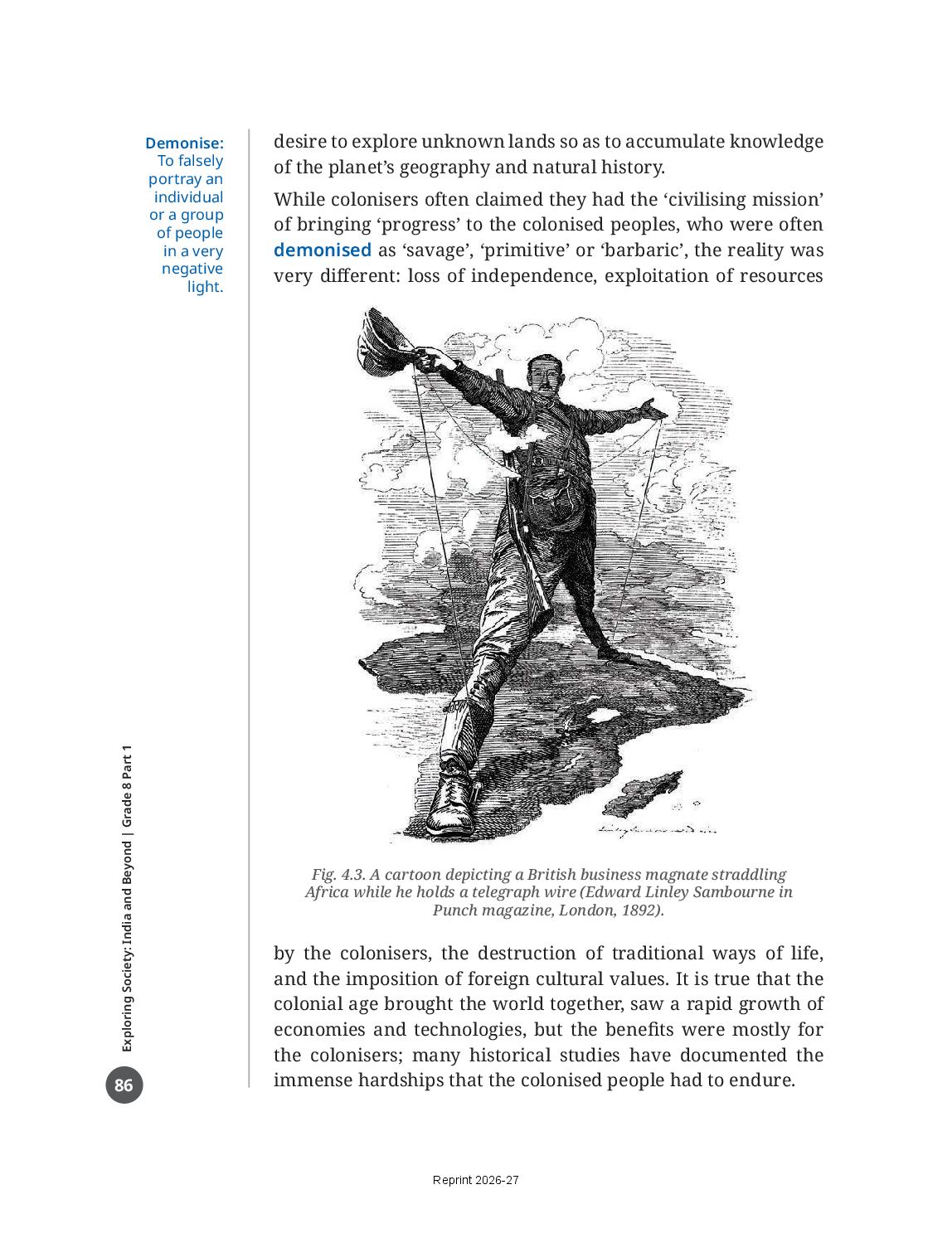
| Demonise | To falsely portray an individual or a group of people in a very negative light | Margin note, page 86 | Colonised peoples were called ‘savage’, ‘primitive’ or ‘barbaric’ to justify the ‘civilising mission’ |
| GDP | Gross domestic product — the value of goods and services produced in one year | Margin note, page 87 | India produced at least one-fourth of world GDP until the 16th century; hardly 5 per cent by Independence |
| Cartaz | A Portuguese pass that every ship in the Arabian Sea had to buy | ‘The Portuguese: commerce and atrocities’, page 88 | Ships without the permit were seized; this gave Portugal a near-century monopoly of the spice trade |
| Inquisition | A Roman Catholic tribunal set up to judge ‘heretics’ | Margin note, page 88 | Established at Goa in 1560; abolished only in 1812; forced conversions and destruction of many Hindu temples |
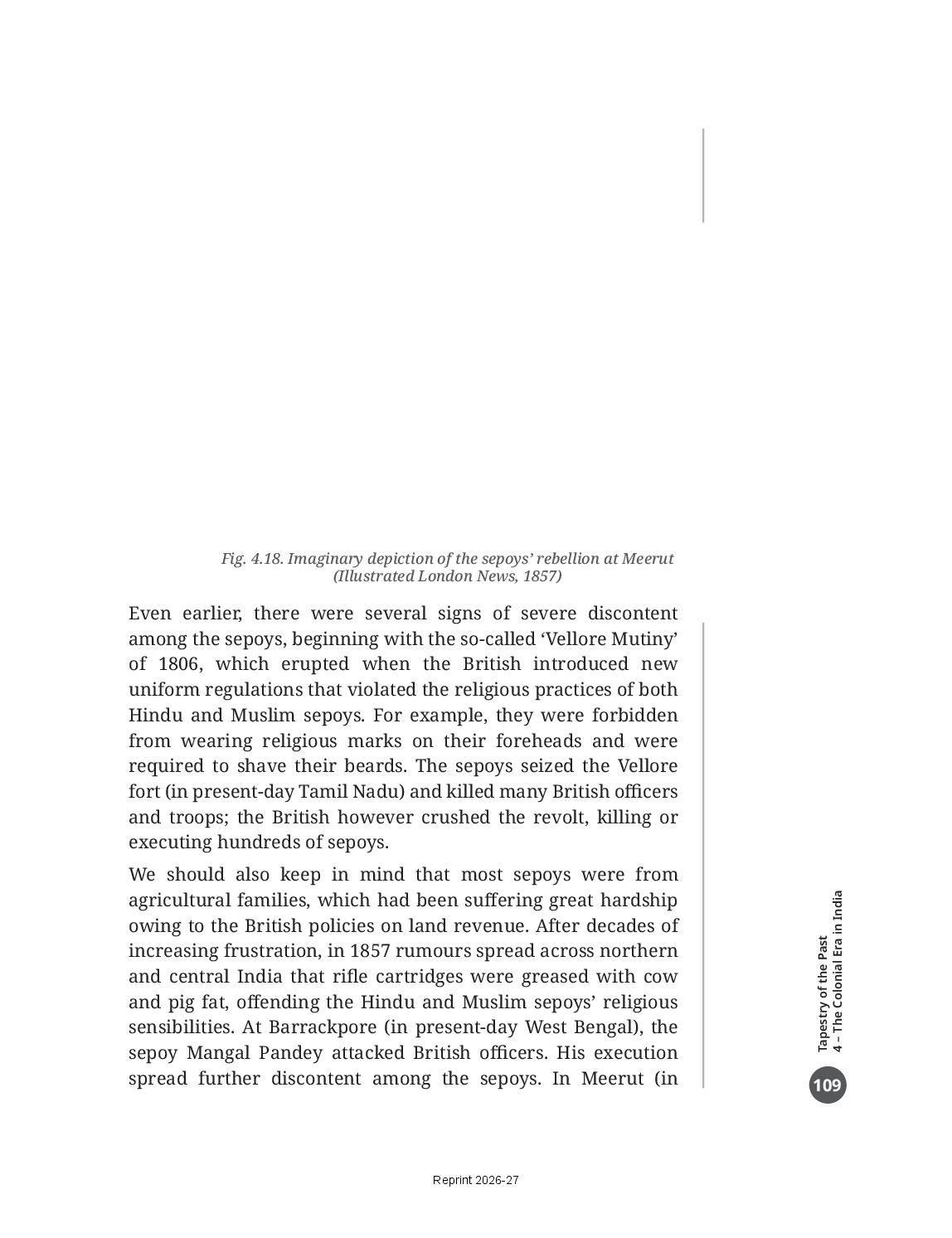
| Sepoy | An Indian soldier trained in European military technique and enrolled in a European company’s army | ‘The French: colonial ambitions’, page 90; ‘The Great Rebellion’, page 108 | Created by Dupleix; the East India Company’s officers were “almost all British” |
| Divide and rule | Playing on rivalries between rulers, on succession disputes, and on tensions between communities, so the ruled cannot unite | Page 92–93 | Plassey (1757): Clive’s conspiracy with Mir Jafar, the Nawab’s military commander |
| Doctrine of Lapse | Any princely state was annexed if its ruler died without a natural male heir | Page 93–94 | It “deliberately disregarded” the Hindu tradition of adoption; it fed the 1857 Rebellion |
| Subsidiary alliance | A British ‘Resident’ in an Indian court; the ruler paid for British troops and conducted foreign relations only through the British | Page 94 | Hyderabad was among the first, in 1798; the British called it ‘an empire on the cheap’ |
| Princely state | A region ruled by an Indian prince, maharaja or nawab that accepted British protection in exchange for internal autonomy | DON’T MISS OUT, page 94 | Over 500 at Independence, covering about 40 per cent of the Subcontinent |
| Drain of wealth | Wealth extracted from India to Britain, through taxes and by charging Indians for colonial expenditure | ‘The drain of India’s wealth’, pages 97–98 | Naoroji (1901) and R.C. Dutt measured it; Utsa Patnaik’s estimate for 1765–1938 is $45 trillion in today’s value |
| Orientalist | A largely obsolete term for a scholar of the ‘Orient’ — now ‘Indologist’ | Margin note, page 102 | A few prominent British Orientalists argued Indian students should study in their own languages; Macaulay’s policy won |
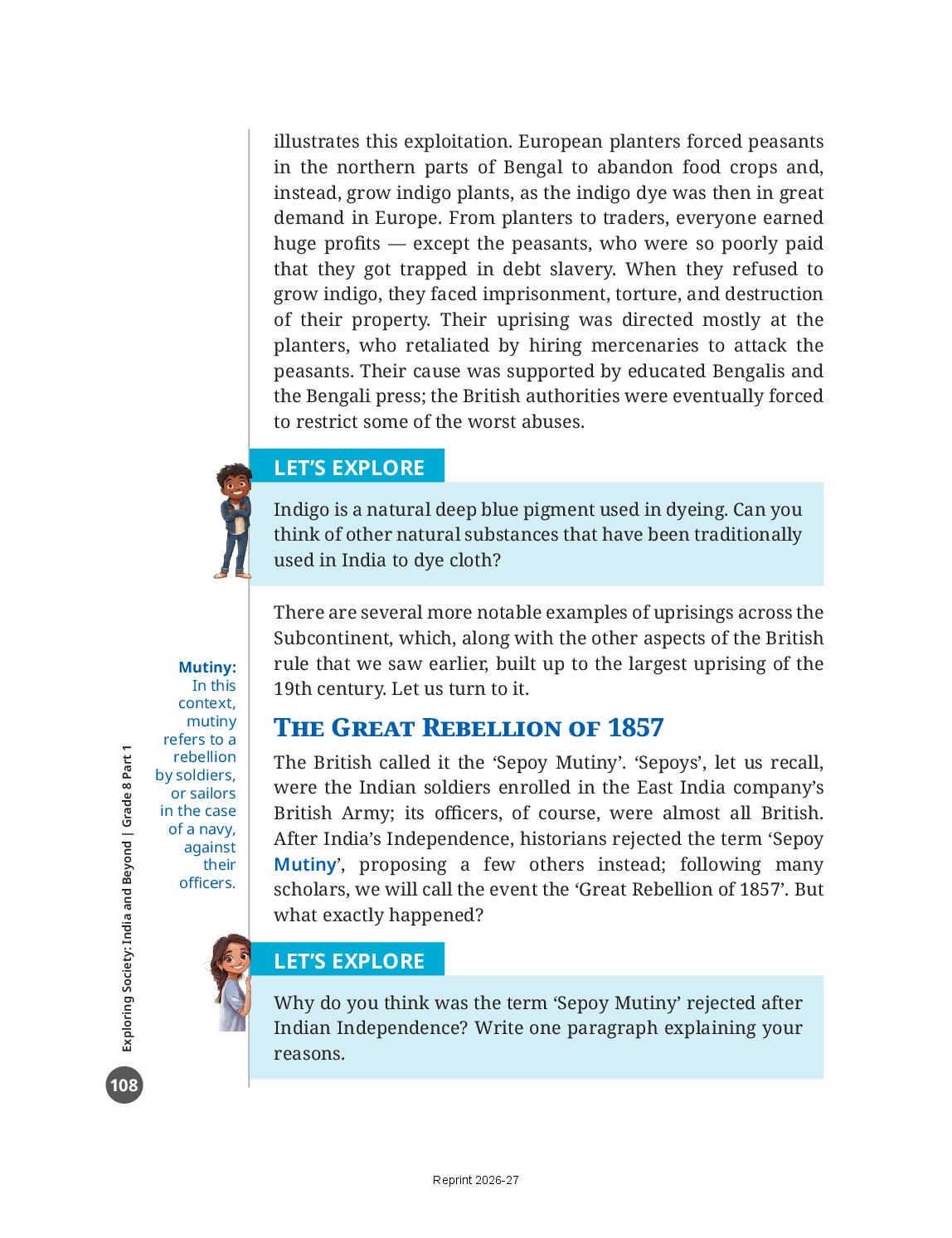
| Mutiny | A rebellion by soldiers (or sailors) against their officers | Margin note, page 108 | This is why historians rejected ‘Sepoy Mutiny’; the book uses ‘the Great Rebellion of 1857’ |
Old NCERT vs New – Class 8 Social Science
This chapter is from Exploring Society: India and Beyond, the new NCERT Class 8 Social Science book (NCF-SE 2023, used from 2025-26). It replaced the old book “Our Pasts, Resources and Development and Social and Political Life”, so chapter numbers and names differ from older PDFs.
Solutions and All Chapters
Answers to the exercises and the full chapter list of Exploring Society: India and Beyond:
The Colonial Era in India – Overview
| Class | Class 8 |
| Subject | Social Science |
| Book | Exploring Society: India and Beyond – new NCERT book |
| Part | Part I |
| Chapter | 4 of 15 – The Colonial Era in India |
| Book pages | 83 – 116 |
| Edition | NCERT Reprint 2026-27 |
| Session | 2026-27 |
| Free – read online or download |
Class 8 Social Science Chapter 4 – FAQs
Where can I download The Colonial Era in India Class 8 PDF?
From the download table on this page – the chapter PDF is free, and the full book is linked too.
What is Class 8 Social Science Chapter 4 about?
Colonialism is one country taking control of another region — settling in it and imposing its political, economic and cultural systems. It is old (the great empires of the 1st millennium BCE; the spread of Christianity and Islam in the 1st millennium CE), but the ‘Age of Colonialism’ means Europe’s expansion from the 15th century onward — Spain, Portugal, Britain, France and the Netherlands taking Africa, Asia, the Americas, Australia and the Pacific. Four motives drove it: political competition, economic gain, religious conversion, and — a lesser one — scientific curiosity.
Is The Colonial Era in India from the new NCERT Class 8 Social Science book?
Yes. It is chapter 4 of exploring society: india and beyond (part i), the new NCERT Class 8 Social Science book for 2026-27.
Is this the latest NCERT edition for 2026-27?
Yes – the PDF is NCERT’s latest edition for the 2026-27 session.
Where are the NCERT Solutions for Class 8 Social Science Chapter 4?
Open the NCERT Solutions link above for answers to the exercise questions.